EP2531580B1 - Fuel compositions - Google Patents
Fuel compositions Download PDFInfo
- Publication number
- EP2531580B1 EP2531580B1 EP11702697.1A EP11702697A EP2531580B1 EP 2531580 B1 EP2531580 B1 EP 2531580B1 EP 11702697 A EP11702697 A EP 11702697A EP 2531580 B1 EP2531580 B1 EP 2531580B1
- Authority
- EP
- European Patent Office
- Prior art keywords
- fuel
- diesel
- additive
- fuel composition
- diesel fuel
- Prior art date
- Legal status (The legal status is an assumption and is not a legal conclusion. Google has not performed a legal analysis and makes no representation as to the accuracy of the status listed.)
- Active
Links
- 0 CCO*N(*)* Chemical compound CCO*N(*)* 0.000 description 2
Images




Classifications
-
- C—CHEMISTRY; METALLURGY
- C10—PETROLEUM, GAS OR COKE INDUSTRIES; TECHNICAL GASES CONTAINING CARBON MONOXIDE; FUELS; LUBRICANTS; PEAT
- C10L—FUELS NOT OTHERWISE PROVIDED FOR; NATURAL GAS; SYNTHETIC NATURAL GAS OBTAINED BY PROCESSES NOT COVERED BY SUBCLASSES C10G OR C10K; LIQUIFIED PETROLEUM GAS; USE OF ADDITIVES TO FUELS OR FIRES; FIRE-LIGHTERS
- C10L1/00—Liquid carbonaceous fuels
- C10L1/10—Liquid carbonaceous fuels containing additives
- C10L1/14—Organic compounds
- C10L1/22—Organic compounds containing nitrogen
-
- C—CHEMISTRY; METALLURGY
- C10—PETROLEUM, GAS OR COKE INDUSTRIES; TECHNICAL GASES CONTAINING CARBON MONOXIDE; FUELS; LUBRICANTS; PEAT
- C10L—FUELS NOT OTHERWISE PROVIDED FOR; NATURAL GAS; SYNTHETIC NATURAL GAS OBTAINED BY PROCESSES NOT COVERED BY SUBCLASSES C10G OR C10K; LIQUIFIED PETROLEUM GAS; USE OF ADDITIVES TO FUELS OR FIRES; FIRE-LIGHTERS
- C10L1/00—Liquid carbonaceous fuels
- C10L1/10—Liquid carbonaceous fuels containing additives
- C10L1/14—Organic compounds
- C10L1/22—Organic compounds containing nitrogen
- C10L1/234—Macromolecular compounds
- C10L1/238—Macromolecular compounds obtained otherwise than by reactions involving only carbon-to-carbon unsaturated bonds
-
- C—CHEMISTRY; METALLURGY
- C10—PETROLEUM, GAS OR COKE INDUSTRIES; TECHNICAL GASES CONTAINING CARBON MONOXIDE; FUELS; LUBRICANTS; PEAT
- C10L—FUELS NOT OTHERWISE PROVIDED FOR; NATURAL GAS; SYNTHETIC NATURAL GAS OBTAINED BY PROCESSES NOT COVERED BY SUBCLASSES C10G OR C10K; LIQUIFIED PETROLEUM GAS; USE OF ADDITIVES TO FUELS OR FIRES; FIRE-LIGHTERS
- C10L1/00—Liquid carbonaceous fuels
- C10L1/10—Liquid carbonaceous fuels containing additives
- C10L1/14—Organic compounds
- C10L1/22—Organic compounds containing nitrogen
- C10L1/234—Macromolecular compounds
- C10L1/238—Macromolecular compounds obtained otherwise than by reactions involving only carbon-to-carbon unsaturated bonds
- C10L1/2383—Polyamines or polyimines, or derivatives thereof (poly)amines and imines; derivatives thereof (substituted by a macromolecular group containing 30C)
-
- C—CHEMISTRY; METALLURGY
- C10—PETROLEUM, GAS OR COKE INDUSTRIES; TECHNICAL GASES CONTAINING CARBON MONOXIDE; FUELS; LUBRICANTS; PEAT
- C10L—FUELS NOT OTHERWISE PROVIDED FOR; NATURAL GAS; SYNTHETIC NATURAL GAS OBTAINED BY PROCESSES NOT COVERED BY SUBCLASSES C10G OR C10K; LIQUIFIED PETROLEUM GAS; USE OF ADDITIVES TO FUELS OR FIRES; FIRE-LIGHTERS
- C10L10/00—Use of additives to fuels or fires for particular purposes
-
- C—CHEMISTRY; METALLURGY
- C10—PETROLEUM, GAS OR COKE INDUSTRIES; TECHNICAL GASES CONTAINING CARBON MONOXIDE; FUELS; LUBRICANTS; PEAT
- C10L—FUELS NOT OTHERWISE PROVIDED FOR; NATURAL GAS; SYNTHETIC NATURAL GAS OBTAINED BY PROCESSES NOT COVERED BY SUBCLASSES C10G OR C10K; LIQUIFIED PETROLEUM GAS; USE OF ADDITIVES TO FUELS OR FIRES; FIRE-LIGHTERS
- C10L10/00—Use of additives to fuels or fires for particular purposes
- C10L10/04—Use of additives to fuels or fires for particular purposes for minimising corrosion or incrustation
-
- C—CHEMISTRY; METALLURGY
- C10—PETROLEUM, GAS OR COKE INDUSTRIES; TECHNICAL GASES CONTAINING CARBON MONOXIDE; FUELS; LUBRICANTS; PEAT
- C10L—FUELS NOT OTHERWISE PROVIDED FOR; NATURAL GAS; SYNTHETIC NATURAL GAS OBTAINED BY PROCESSES NOT COVERED BY SUBCLASSES C10G OR C10K; LIQUIFIED PETROLEUM GAS; USE OF ADDITIVES TO FUELS OR FIRES; FIRE-LIGHTERS
- C10L10/00—Use of additives to fuels or fires for particular purposes
- C10L10/06—Use of additives to fuels or fires for particular purposes for facilitating soot removal
-
- C—CHEMISTRY; METALLURGY
- C10—PETROLEUM, GAS OR COKE INDUSTRIES; TECHNICAL GASES CONTAINING CARBON MONOXIDE; FUELS; LUBRICANTS; PEAT
- C10L—FUELS NOT OTHERWISE PROVIDED FOR; NATURAL GAS; SYNTHETIC NATURAL GAS OBTAINED BY PROCESSES NOT COVERED BY SUBCLASSES C10G OR C10K; LIQUIFIED PETROLEUM GAS; USE OF ADDITIVES TO FUELS OR FIRES; FIRE-LIGHTERS
- C10L1/00—Liquid carbonaceous fuels
- C10L1/10—Liquid carbonaceous fuels containing additives
- C10L1/14—Organic compounds
- C10L1/22—Organic compounds containing nitrogen
- C10L1/221—Organic compounds containing nitrogen compounds of uncertain formula; reaction products where mixtures of compounds are obtained
-
- C—CHEMISTRY; METALLURGY
- C10—PETROLEUM, GAS OR COKE INDUSTRIES; TECHNICAL GASES CONTAINING CARBON MONOXIDE; FUELS; LUBRICANTS; PEAT
- C10L—FUELS NOT OTHERWISE PROVIDED FOR; NATURAL GAS; SYNTHETIC NATURAL GAS OBTAINED BY PROCESSES NOT COVERED BY SUBCLASSES C10G OR C10K; LIQUIFIED PETROLEUM GAS; USE OF ADDITIVES TO FUELS OR FIRES; FIRE-LIGHTERS
- C10L1/00—Liquid carbonaceous fuels
- C10L1/10—Liquid carbonaceous fuels containing additives
- C10L1/14—Organic compounds
- C10L1/22—Organic compounds containing nitrogen
- C10L1/222—Organic compounds containing nitrogen containing at least one carbon-to-nitrogen single bond
- C10L1/2222—(cyclo)aliphatic amines; polyamines (no macromolecular substituent 30C); quaternair ammonium compounds; carbamates
- C10L1/2225—(cyclo)aliphatic amines; polyamines (no macromolecular substituent 30C); quaternair ammonium compounds; carbamates hydroxy containing
-
- C—CHEMISTRY; METALLURGY
- C10—PETROLEUM, GAS OR COKE INDUSTRIES; TECHNICAL GASES CONTAINING CARBON MONOXIDE; FUELS; LUBRICANTS; PEAT
- C10L—FUELS NOT OTHERWISE PROVIDED FOR; NATURAL GAS; SYNTHETIC NATURAL GAS OBTAINED BY PROCESSES NOT COVERED BY SUBCLASSES C10G OR C10K; LIQUIFIED PETROLEUM GAS; USE OF ADDITIVES TO FUELS OR FIRES; FIRE-LIGHTERS
- C10L1/00—Liquid carbonaceous fuels
- C10L1/10—Liquid carbonaceous fuels containing additives
- C10L1/14—Organic compounds
- C10L1/22—Organic compounds containing nitrogen
- C10L1/234—Macromolecular compounds
- C10L1/238—Macromolecular compounds obtained otherwise than by reactions involving only carbon-to-carbon unsaturated bonds
- C10L1/2383—Polyamines or polyimines, or derivatives thereof (poly)amines and imines; derivatives thereof (substituted by a macromolecular group containing 30C)
- C10L1/2387—Polyoxyalkyleneamines (poly)oxyalkylene amines and derivatives thereof (substituted by a macromolecular group containing 30C)
-
- C—CHEMISTRY; METALLURGY
- C10—PETROLEUM, GAS OR COKE INDUSTRIES; TECHNICAL GASES CONTAINING CARBON MONOXIDE; FUELS; LUBRICANTS; PEAT
- C10L—FUELS NOT OTHERWISE PROVIDED FOR; NATURAL GAS; SYNTHETIC NATURAL GAS OBTAINED BY PROCESSES NOT COVERED BY SUBCLASSES C10G OR C10K; LIQUIFIED PETROLEUM GAS; USE OF ADDITIVES TO FUELS OR FIRES; FIRE-LIGHTERS
- C10L2200/00—Components of fuel compositions
- C10L2200/04—Organic compounds
- C10L2200/0407—Specifically defined hydrocarbon fractions as obtained from, e.g. a distillation column
- C10L2200/0438—Middle or heavy distillates, heating oil, gasoil, marine fuels, residua
- C10L2200/0446—Diesel
-
- C—CHEMISTRY; METALLURGY
- C10—PETROLEUM, GAS OR COKE INDUSTRIES; TECHNICAL GASES CONTAINING CARBON MONOXIDE; FUELS; LUBRICANTS; PEAT
- C10L—FUELS NOT OTHERWISE PROVIDED FOR; NATURAL GAS; SYNTHETIC NATURAL GAS OBTAINED BY PROCESSES NOT COVERED BY SUBCLASSES C10G OR C10K; LIQUIFIED PETROLEUM GAS; USE OF ADDITIVES TO FUELS OR FIRES; FIRE-LIGHTERS
- C10L2200/00—Components of fuel compositions
- C10L2200/04—Organic compounds
- C10L2200/0461—Fractions defined by their origin
- C10L2200/0469—Renewables or materials of biological origin
-
- C—CHEMISTRY; METALLURGY
- C10—PETROLEUM, GAS OR COKE INDUSTRIES; TECHNICAL GASES CONTAINING CARBON MONOXIDE; FUELS; LUBRICANTS; PEAT
- C10L—FUELS NOT OTHERWISE PROVIDED FOR; NATURAL GAS; SYNTHETIC NATURAL GAS OBTAINED BY PROCESSES NOT COVERED BY SUBCLASSES C10G OR C10K; LIQUIFIED PETROLEUM GAS; USE OF ADDITIVES TO FUELS OR FIRES; FIRE-LIGHTERS
- C10L2200/00—Components of fuel compositions
- C10L2200/04—Organic compounds
- C10L2200/0461—Fractions defined by their origin
- C10L2200/0469—Renewables or materials of biological origin
- C10L2200/0476—Biodiesel, i.e. defined lower alkyl esters of fatty acids first generation biodiesel
-
- C—CHEMISTRY; METALLURGY
- C10—PETROLEUM, GAS OR COKE INDUSTRIES; TECHNICAL GASES CONTAINING CARBON MONOXIDE; FUELS; LUBRICANTS; PEAT
- C10L—FUELS NOT OTHERWISE PROVIDED FOR; NATURAL GAS; SYNTHETIC NATURAL GAS OBTAINED BY PROCESSES NOT COVERED BY SUBCLASSES C10G OR C10K; LIQUIFIED PETROLEUM GAS; USE OF ADDITIVES TO FUELS OR FIRES; FIRE-LIGHTERS
- C10L2200/00—Components of fuel compositions
- C10L2200/04—Organic compounds
- C10L2200/0461—Fractions defined by their origin
- C10L2200/0469—Renewables or materials of biological origin
- C10L2200/0492—Fischer-Tropsch products
-
- C—CHEMISTRY; METALLURGY
- C10—PETROLEUM, GAS OR COKE INDUSTRIES; TECHNICAL GASES CONTAINING CARBON MONOXIDE; FUELS; LUBRICANTS; PEAT
- C10L—FUELS NOT OTHERWISE PROVIDED FOR; NATURAL GAS; SYNTHETIC NATURAL GAS OBTAINED BY PROCESSES NOT COVERED BY SUBCLASSES C10G OR C10K; LIQUIFIED PETROLEUM GAS; USE OF ADDITIVES TO FUELS OR FIRES; FIRE-LIGHTERS
- C10L2230/00—Function and purpose of a components of a fuel or the composition as a whole
- C10L2230/22—Function and purpose of a components of a fuel or the composition as a whole for improving fuel economy or fuel efficiency
-
- C—CHEMISTRY; METALLURGY
- C10—PETROLEUM, GAS OR COKE INDUSTRIES; TECHNICAL GASES CONTAINING CARBON MONOXIDE; FUELS; LUBRICANTS; PEAT
- C10L—FUELS NOT OTHERWISE PROVIDED FOR; NATURAL GAS; SYNTHETIC NATURAL GAS OBTAINED BY PROCESSES NOT COVERED BY SUBCLASSES C10G OR C10K; LIQUIFIED PETROLEUM GAS; USE OF ADDITIVES TO FUELS OR FIRES; FIRE-LIGHTERS
- C10L2270/00—Specifically adapted fuels
- C10L2270/02—Specifically adapted fuels for internal combustion engines
- C10L2270/026—Specifically adapted fuels for internal combustion engines for diesel engines, e.g. automobiles, stationary, marine
Definitions
- the present invention relates to fuel compositions and additives thereto as defined in and by the appended claims.
- the invention relates to additives for diesel fuel compositions, especially those suitable for use in modern diesel engines with high pressure fuel systems.
- Diesel engines having high pressure fuel systems can include but are not limited to heavy duty diesel engines and smaller passenger car type diesel engines.
- Heavy duty diesel engines can include very powerful engines such as the MTU series 4000 diesel having 20 cylinder variants designed primarily for ships and power generation with power output up to 4300 kW or engines such as the Renault dXi 7 having 6 cylinders and a power output around 240kW.
- a typical passenger car diesel engine is the Ford DW10 having 4 cylinders and power output of 100 kW or less depending on the variant.
- a common feature is a high pressure fuel system. Typically pressures in excess of 1350 bar (1.35 x 10 8 Pa) are used but often pressures of up to 2000 bar (2 x 10 8 Pa) or more may exist.
- high pressure fuel systems Two non-limiting examples of such high pressure fuel systems are: the common rail injection system, in which the fuel is compressed utilizing a high-pressure pump that supplies it to the fuel injection valves through a common rail; and the unit injection system which integrates the high-pressure pump and fuel injection valve in one assembly, achieving the highest possible injection pressures exceeding 2000 bar (2 x 10 8 Pa). In both systems, in pressurising the fuel, the fuel gets hot, often to temperatures around 100°C, or above.
- the fuel is stored at high pressure in the central accumulator rail or separate accumulators prior to being delivered to the injectors. Often, some of the heated fuel is returned to the low pressure side of the fuel system or returned to the fuel tank. In unit injection systems the fuel is compressed within the injector in order to generate the high injection pressures. This in turn increases the temperature of the fuel.
- fuel is present in the injector body prior to injection where it is heated further due to heat from the combustion chamber.
- the temperature of the fuel at the tip of the injector can be as high as 250 - 350 °C.
- a common problem with diesel engines is fouling of the injector, particularly the injector body, and the injector nozzle. Fouling may also occur in the fuel filter. Injector nozzle fouling occurs when the nozzle becomes blocked with deposits from the diesel fuel. Fouling of fuel filters may be related to the recirculation of fuel back to the fuel tank. Deposits increase with degradation of the fuel. Deposits may take the form of carbonaceous coke-like residues or sticky or gum-like residues. Diesel fuels become more and more unstable the more they are heated, particularly if heated under pressure. Thus diesel engines having high pressure fuel systems may cause increased fuel degradation.
- injector fouling may occur when using any type of diesel fuels.
- some fuels may be particularly prone to cause fouling or fouling may occur more quickly when these fuels are used.
- fuels containing biodiesel have been found to produce injector fouling more readily.
- Diesel fuels containing metallic species may also lead to increased deposits.
- Metallic species may be deliberately added to a fuel in additive compositions or may be present as contaminant species. Contamination occurs if metallic species from fuel distribution systems, vehicle distribution systems, vehicle fuel systems, other metallic components and lubricating oils become dissolved or dispersed in fuel.
- Transition metals in particular cause increased deposits, especially copper and zinc species. These may be typically present at levels from a few ppb (parts per billion) up to 50 ppm, but it is believed that levels likely to cause problems are from 0.1 to 50 ppm, for example 0.1 to 10 ppm.
- nitrogen-containing detergents may be added to diesel fuel to reduce coking.
- Typical nitrogen-containing detergents are those formed by the reaction of a polyisobutylene-substituted succinic acid derivative with a polyalkylene polyamine.
- newer engines including finer injector nozzles are more sensitive and current diesel fuels may not be suitable for use with the new engines incorporating these smaller nozzle holes.
- WO 2006/135881 discloses quaternary ammonium salts as additives for fuels which reduce deposits in internal combustion engines.
- the present inventor has developed diesel fuel compositions which when used in diesel engines having high pressure fuel systems provide improved performance compared with diesel fuel compositions of the prior art.
- Such fuel compositions may be considered to perform a "keep clean" function i.e. they prevent or inhibit fouling.
- compositions reduce the fouling of vehicle fuel filters. It would be useful to provide compositions that prevent or inhibit the occurrence of fuel filter deposits i.e, provide a "keep clean” function. It would be useful to provide compositions that remove existing deposits from fuel filter deposits i.e. provide a "clean up” function. Compositions able to provide both of these functions would be especially useful.
- a diesel fuel composition comprising, as an additive, a quaternary ammonium salt formed by the reaction of a compound of formula (A): and a compound formed by the reaction of a hydrocarbyl-substituted acylating agent and an amine of formula (B1) or (B2): wherein R is an optionally substituted alkyl, alkenyl, aryl or alkylaryl group; R 1 is a C 1 to C 22 alkyl, aryl or alkylaryl group; R 2 and R 3 are the same or different alkyl groups having from 1 to 22 carbon atoms; X is an alkylene group having from 1 to 20 carbon atoms; n is from 0 to 20; m is from 1 to 5; and R 4 is hydrogen or a C 1 to C 22 alkyl group; wherein the compound of formula (A) is selected from dimethyl oxalate, methyl 2-nitrobenzoate and methyl salicylate.
- R is an optionally substituted alkyl, alken
- the compound of formula (A) is an ester of a carboxylic acid capable of reacting with a tertiary amine to form a quaternary ammonium salt.
- Compounds of formula (A) include esters of carboxylic acids having a pK a of 3.5 or less.
- the compound of formula (A) is an ester of a carboxylic acid selected from a substituted aromatic carboxylic acid, an ⁇ -hydroxycarboxylic acid and a polycarboxylic acid.
- An especially preferred compound of formula (A) is methyl salicylate.
- One especially preferred compound of formula (A) is dimethyl oxalate.
- the compound of formula (A) is an ester of a carboxylic acid having a pK a of less than 3.5.
- the compound includes more than one acid group, we mean to refer to the first dissociation constant.
- Compounds of formula (A) include dimethyl oxalate, methyl 2-nitrobenzoate and methyl salicylate.
- the compound of formula (A) is reacted with a compound formed by the reaction of a hydrocarbyl substituted acylating agent and an amine of formula (B1) or (B2).
- R 4 is preferably hydrogen or a C 1 to C 16 alkyl group, preferably a C 1 to C 10 alkyl group, more preferably a C 1 to C 6 alkyl group. More preferably R 4 is selected from hydrogen, methyl, ethyl, propyl, butyl and isomers thereof. Most preferably R 4 is hydrogen.
- n is preferably from 0 to 15, preferably 0 to 10, more preferably from 0 to 5. Most preferably n is 0 and the compound of formula (B2) is an alcohol.
- hydrocarbyl substituted acylating agent is reacted with a diamine compound of formula (B1).
- R 2 and R 3 may each independently be a C 1 to C 16 alkyl group, preferably a C 1 to C 10 alkyl group.
- R 2 and R 3 may independently be methyl, ethyl, propyl, butyl, pentyl, hexyl, heptyl, octyl, or an isomer of any of these.
- R 2 and R 3 is each independently C 1 to C 4 alkyl.
- R 2 is methyl.
- R 3 is methyl.
- X is preferably an alkylene group having 1 to 16 carbon atoms, preferably 1 to 12 carbon atoms, more preferably 1 to 8 carbon atoms, for example 2 to 6 carbon atoms or 2 to 5 carbon atoms. Most preferably X is an ethylene, propylene or butylene group, especially a propylene group.
- An especially preferred compound of formula (B1) is dimethylaminopropylamine.
- the amine of formula (B1) or (B2) is reacted with a hydrocarbyl substituted acylating agent.
- the hydrocarbyl substituted acylating agent may be based on a hydrocarbyl substituted mono-di- or polycarboxylic acid or a reactive equivalent thereof.
- the hydrocarbyl substituted acylating agent is a hydrocarbyl substituted succinic acid compound such as a succinic acid or succinic anhydride.
- the hydrocarbyl substituent preferably comprises at least 10, more preferably at least 12, for example 30 or 50 carbon atoms. It may comprise up to about 200 carbon atoms.
- the hydrocarbyl substituent has a number average molecular weight (Mn) of between 170 to 2800, for example from 250 to 1500, preferably from 500 to 1500 and more preferably 500 to 1100. An Mn of 700 to 1300 is especially preferred.
- the hydrocarbyl based substituents may be made from homo- or interpolymers (e.g. copolymers, terpolymers) of mono- and di-olefins having 2 to 10 carbon atoms, for example ethylene, propylene, butane-1, isobutene, butadiene, isoprene, 1-hexene, 1-octene, etc. Preferably these olefins are 1-monoolefins.
- the hydrocarbyl substituent may also be derived from the halogenated (e.g. chlorinated or brominated) analogs of such homo- or interpolymers.
- the substituent may be made from other sources, for example monomeric high molecular weight alkenes (e.g. 1-tetra-contene) and chlorinated analogs and hydrochlorinated analogs thereof, aliphatic petroleum fractions, for example paraffin waxes and cracked and chlorinated analogs and hydrochlorinated analogs thereof, white oils, synthetic alkenes for example produced by the Ziegler-Natta process (e.g. poly(ethylene) greases) and other sources known to those skilled in the art. Any unsaturation in the substituent may if desired be reduced or eliminated by hydrogenation according to procedures known in the art.
- monomeric high molecular weight alkenes e.g. 1-tetra-contene
- chlorinated analogs and hydrochlorinated analogs thereof aliphatic petroleum fractions, for example paraffin waxes and cracked and chlorinated analogs and hydrochlorinated analogs thereof, white oils
- synthetic alkenes for example produced by the Ziegler-Natta process (e
- hydrocarbyl denotes a group having a carbon atom directly attached to the remainder of the molecule and having a predominantly aliphatic hydrocarbon character.
- Suitable hydrocarbyl based groups may contain non-hydrocarbon moieties. For example they may contain up to one non-hydrocarbyl group for every ten carbon atoms provided this non-hydrocarbyl group does not significantly alter the predominantly hydrocarbon character of the group.
- groups which include for example hydroxyl, oxygen, halo (especially chloro and fluoro), alkoxyl, alkyl mercapto, alkyl sulphoxy, etc.
- Preferred hydrocarbyl based substituents are purely aliphatic hydrocarbon in character and do not contain such groups.
- the hydrocarbyl-based substituents are preferably predominantly saturated, that is, they contain no more than one carbon-to-carbon unsaturated bond for every ten carbon-to-carbon single bonds present. Most preferably they contain no more than one carbon-to-carbon unsaturated bond for every 50 carbon-to-carbon bonds present.
- hydrocarbyl-based substituents are poly-(isobutene)s known in the art.
- the hydrocarbyl substituted acylating agent is a polyisobutenyl substituted succinic anhydride.
- polyisobutenyl substituted succinic anhydrides PIBSA
- Suitable processes include thermally reacting polyisobutenes with maleic anhydride (see for example US-A-3,361,673 and US-A-3,018,250 ), and reacting a halogenated, in particular a chlorinated, polyisobutene (PIB) with maleic anhydride (see for example US-A-3,172,892 ).
- PIB chlorinated, polyisobutene
- the polyisobutenyl succinic anhydride can be prepared by mixing the polyolefin with maleic anhydride and passing chlorine through the mixture (see for example GB-A-949,981 ).
- polyisobutenes and so-called "highly-reactive" polyisobutenes are suitable for use in the invention.
- Highly reactive polyisobutenes in this context are defined as polyisobutenes wherein at least 50%, preferably 70% or more, of the terminal olefinic double bonds are of the vinylidene type as described in EP0565285 .
- Particularly preferred polyisobutenes are those having more than 80 mol% and up to 100% of terminal vinylidene groups such as those described in EP1344785 .
- hydrocarbyl groups include those having an internal olefin for example as described in the applicant's published application WO2007/015080 .
- An internal olefin as used herein means any olefin containing predominantly a non-alpha double bond, that is a beta or higher olefin.
- such materials are substantially completely beta or higher olefins, for example containing less than 10% by weight alpha olefin, more preferably less than 5% by weight or less than 2% by weight.
- Typical internal olefins include Neodene 1518IO available from Shell.
- Internal olefins are sometimes known as isomerised olefins and can be prepared from alpha olefins by a process of isomerisation known in the art, or are available from other sources. The fact that they are also known as internal olefins reflects that they do not necessarily have to be prepared by isomerisation.
- the quaternary ammonium salt additives of the present invention are salts of tertiary amines prepared from dimethylamino propylamine and a polyisobutylene-substituted succinic anhydride.
- the average molecular weight of the polysibutylene substituent is preferably from 700 to 1300.
- the quaternary ammonium salt additives of the present invention may be prepared by any suitable methods. Such methods will be known to the person skilled in the art and are exemplified herein. Typically the quaternary ammonium salt additives will be prepared by heating a compound of formula (A) and a compound formed by the reaction of a hydrocarbyl-substituted acylating agent and a compound of formula (B1) or (B2) in an approximate 1:1 molar ratio, optionally in the presence of a solvent. The resulting crude reaction mixture may be added directly to a diesel fuel, optionally following removal of solvent. Any byproducts or residual starting materials still present in the mixture have not been found to cause any deteriment to the performance of the additive.
- the present invention may provide a diesel fuel composition
- a diesel fuel composition comprising the reaction product of a compound of formula (A) and a compound formed by the reaction of a hydrocarbyl-substituted acylating agent and a compound of formula (B1) or (B2).
- composition of the present invention may comprise a further additive, this further additive being the product of a Mannich reaction between:
- the present invention provides a diesel fuel composition comprising a quaternary ammonium salt additive and a Mannich additive.
- aldehyde component (a) of the Mannich additive may be used as aldehyde component (a) of the Mannich additive.
- the aldehyde component (a) is an aliphatic aldehyde.
- the aldehyde has 1 to 10 carbon atoms, preferably 1 to 6 carbon atoms, more preferably 1 to 3 carbon atoms. Most preferably the aldehyde is formaldehyde.
- Polyamine component (b) of the Mannich additive may be selected from any compound including two or more amine groups.
- the polyamine is a polyalkylene polyamine.
- the polyamine is a polyalkylene polyamine in which the alkylene component has 1 to 6, preferably 1 to 4, most preferably 2 to 3 carbon atoms.
- the polyamine is a polyethylene polyamine.
- the polyamine has 2 to 15 nitrogen atoms, preferably 2 to 10 nitrogen atoms, more preferably 2 to 8 nitrogen atoms.
- the polyamine component (b) includes the moiety R 1 R 2 NCHR 3 CHR 4 NR 5 R 6 wherein each of R 1 , R 2 R 3 , R 4 , R 5 and R 6 is independently selected from hydrogen, and an optionally substituted alkyl, alkenyl, alkynyl, aryl, alkylaryl or arylalkyl substituent.
- polyamine reactants used to make the Mannich reaction products of the present invention preferably include an optionally substituted ethylene diamine residue.
- R 1 and R 2 are hydrogen.
- both of R 1 and R 2 are hydrogen.
- R 1 , R 2 , R 5 and R 6 are hydrogen.
- R 3 and R 4 are hydrogen.
- each of R 3 and R 4 is hydrogen.
- R 3 is hydrogen and R 4 is alkyl, for example C 1 to C 4 alkyl, especially methyl.
- R 5 and R 6 is an optionally substituted alkyl, alkenyl, alkynyl, aryl, alkylaryl or arylalkyl substituent.
- each is independently selected from an optionally substituted alkyl, alkenyl, alkynyl, aryl, alkylaryl or arylalkyl moiety.
- each is independently selected from hydrogen and an optionally substituted C(1-6) alkyl moiety.
- each of R 1 , R 2 , R 3 , R 4 and R 5 is hydrogen and R 6 is an optionally substituted alkyl, alkenyl, alkynyl, aryl, alkylaryl or arylalkyl substituent.
- R 6 is an optionally substituted C(1-6) alkyl moiety.
- Such an alkyl moiety may be substituted with one or more groups selected from hydroxyl, amino (especially unsubstituted amino; -NH-, -NH 2 ), sulpho, sulphoxy, C(1-4) alkoxy, nitro, halo (especially chloro or fluoro) and mercapto.
- heteroatoms incorporated into the alkyl chain, for example O, N or S, to provide an ether, amine or thioether.
- R 1 , R 2 , R 3 , R 4 , R 5 or R 6 are hydroxy-C(1-4)alkyl and amino-(C(1-4)alkyl, especially HO-CH 2 -CH 2 - and H 2 N-CH 2 -CH 2 -.
- the polyamine includes only amine functionality, or amine and alcohol functionalities.
- the polyamine may, for example, be selected from ethylenediamine, diethylenetriamine, triethylenetetramine, tetraethylenepentamine, pentaethylenehexamine, hexaethyleneheptamine, heptaethyleneoctamine, propane-1,2-diamine, 2(2-aminoethylamino)ethanol, and N,N-bis (2-aminoethyl) ethylenediamine (N(CH 2 CH 2 NH 2 ) 3 ). Most preferably the polyamine comprises tetraethylenepentamine or ethylenediamine.
- the polyamines used to form the Mannich additives of the present invention may be straight chained or branched, and may include cyclic structures.
- the Mannich additives of the present invention are of relatively low molecular weight.
- molecules of the Mannich additive product have a number average molecular weight of less than 10000, preferably less than 7500, preferably less than 2000, more preferably less than 1500.
- Optionally substituted phenol component (c) may be substituted with 0 to 4 groups on the aromatic ring (in addition to the phenol OH).
- it may be a tri- or di- substituted phenol.
- Most preferably component (c) is a mono-substituted phenol. Substitution may be at the ortho, and/or meta, and/or para position(s).
- Each phenol moiety may be ortho, meta or para substituted with the aldehyde/amine residue.
- Compounds in which the aldehyde residue is ortho or para substituted are most commonly formed. Mixtures of compounds may result.
- the starting phenol is para substituted and thus the ortho substituted product results.
- the phenol may be substituted with any common group, for example one or more of an alkyl group, an alkenyl group, an alkynl group, a nitryl group, a carboxylic acid, an ester, an ether, an alkoxy group, a halo group, a further hydroxyl group, a mercapto group, an alkyl mercapto group, an alkyl sulphoxy group, a sulphoxy group, an aryl group, an arylalkyl group, a substituted or unsubstituted amine group or a nitro group.
- an alkyl group an alkenyl group, an alkynl group, a nitryl group, a carboxylic acid, an ester, an ether, an alkoxy group, a halo group, a further hydroxyl group, a mercapto group, an alkyl mercapto group, an alkyl sulphoxy group, a sulphoxy group
- the phenol carries one or more optionally substituted alkyl substituents.
- the alkyl substituent may be optionally substituted with, for example, hydroxyl, halo, (especially chloro and fluoro), alkoxy, alkyl, mercapto, alkyl sulphoxy, aryl or amino residues.
- the alkyl group consists essentially of carbon and hydrogen atoms.
- the substituted phenol may include a alkenyl or alkynyl residue including one or more double and/or triple bonds.
- the component (c) is an alkyl substituted phenol group in which the alkyl chain is saturated.
- the alkyl chain may be linear or branched.
- component (c) is a monoalkyl phenol, especially a para-substituted monoalkyl phenol.
- component (c) comprises an alkyl substituted phenol in which the phenol carries one or more alkyl chains having a total of less 28 carbon atoms, preferably less than 24 carbon atoms, more preferably less than 20 carbon atoms, preferably less than 18 carbon atoms, preferably less than 16 carbon atoms and most preferably less than 14 carbon atoms.
- each alkyl substituent of component (c) has from 4 to 20 carbons atoms, preferably 6 to 18, more preferably 8 to 16, especially 10 to 14 carbon atoms.
- component (c) is a phenol having a C12 alkyl substituent.
- the or each substituent of phenol component (c) has a molecular weight of less than 400, preferably less than 350, preferably less than 300, more preferably less than 250 and most preferably less than 200.
- the or each substituent of phenol component (c) may suitably have a molecular weight of from 100 to 250, for example 150 to 200.
- Molecules of component (c) preferably have a molecular weight on average of less than 1800, preferably less than 800, preferably less than 500, more preferably less than 450, preferably less than 400, preferably less than 350, more preferably less than 325, preferably less than 300 and most preferably less than 275.
- Components (a), (b) and (c) may each comprise a mixture of compounds and/or a mixture of isomers.
- the Mannich additive is preferably the reaction product obtained by reacting components (a), (b) and (c) in a molar ratio of from 5:1:5 to 0.1:1:0.1, more preferably from 3:1:3 to 0.5:1:0.5.
- components (a) and (b) are preferably reacted in a molar ratio of from 6:1 to 1:4 (aldehyde:polyamine), preferably from 4:1 to 1:2, more preferably from 3:1 to 1:1.
- the molar ratio of component (a) to component (c) (aldehyde:phenol) in the reaction mixture is preferably from 5:1 to 1:4, preferably from 3:1 to 1:2, for example from 1.5:1 to 1:1.1.
- Some preferred compounds used in the present invention are typically formed by reacting components (a), (b) and (c) in a molar ratio of 2 parts (A) to 1 part (b) ⁇ 0.2 parts (b), to 2 parts (c) ⁇ 0.4 parts (c); preferably approximately 2:1:2 (a : b : c).
- Some preferred compounds used in the present invention are typically formed by reacting components (a), (b) and (c) in a molar ratio of 2 parts (A) to 1 part (b) ⁇ 0.2 parts (b), to 1.5 parts (c) ⁇ 0.3 parts (c); preferably approximately 2:1:1.5 (a : b : c).
- Suitable treat rates of the quaternary ammonium salt additive and when present the Mannich additive will depend on the desired performance and on the type of engine in which they are used. For example different levels of additive may be needed to achieve different levels of performance.
- the quaternary ammonium salt additive is present in the diesel fuel composition in an amount of less than 10000ppm, preferably less than 1000 ppm, preferably less than 500 ppm, preferably less than 250 ppm.
- the Mannich additive when used is present in the diesel fuel composition in an amount of less than 10000 ppm, 1000ppm preferably less than 500 ppm, preferably less than 250 ppm.
- the weight ratio of the quaternary ammonium salt additive to the Mannich additive is preferably from 1:10 to 10:1, preferably from 1:4 to 4:1.
- fuels containing biodiesel or metals are known to cause fouling. Severe fuels, for example those containing high levels of metals and/or high levels of biodiesel may require higher treat rates of the quaternary ammonium salt additive and/or Mannich additive than fuels which are less severe.
- the diesel fuel composition of the present invention may include one or more further additives such as those which are commonly found in diesel fuels. These include, for example, antioxidants, dispersants, detergents, metal deactivating compounds, wax anti-settling agents, cold flow improvers, cetane improvers, dehazers, stabilisers, demulsifiers, antifoams, corrosion inhibitors, lubricity improvers, dyes, markers, combustion improvers, metal deactivators, odour masks, drag reducers and conductivity improvers. Examples of suitable amounts of each of these types of additives will be known to the person skilled in the art.
- the compositon comprises a detergent of the type formed by the reaction of a polyisobutene-substituted succinic acid-derived acylating agent and a polyethylene polyamine.
- Suitable compounds are, for example, described in WO2009/040583 .
- diesel fuel we include any fuel suitable for use in a diesel engine, either for road use or non-road use. This includes, but is not limited to, fuels described as diesel, marine diesel, heavy fuel oil, industrial fuel oil etc.
- the diesel fuel composition of the present invention may comprise a petroleum-based fuel oil, especially a middle distillate fuel oil.
- Such distillate fuel oils generally boil within the range of from 110°C to 500°C, e.g. 150°C to 400°C.
- the diesel fuel may comprise atmospheric distillate or vacuum distillate, cracked gas oil, or a blend in any proportion of straight run and refinery streams such as thermally and/or catalytically cracked and hydro-cracked distillates.
- the diesel fuel composition of the present invention may comprise non-renewable Fischer-Tropsch fuels such as those described as GTL (gas-to-liquid) fuels, CTL (coal-to-liquid) fuels and OTL (oil sands-to-liquid).
- GTL gas-to-liquid
- CTL coal-to-liquid
- OTL oil sands-to-liquid
- the diesel fuel composition of the present invention may comprise a renewable fuel such as a biofuel composition or biodiesel composition.
- the diesel fuel composition may comprise 1st generation biodiesel.
- First generation biodiesel contains esters of, for example, vegetable oils, animal fats and used cooking fats. This form of biodiesel may be obtained by transesterification of oils, for example rapeseed oil, soybean oil, safflower oil, palm 25 oil, corn oil, peanut oil, cotton seed oil, tallow, coconut oil, physic nut oil (Jatropha), sunflower seed oil, used cooking oils, hydrogenated vegetable oils or any mixture thereof, with an alcohol, usually a monoalcohol, in the presence of a catalyst.
- oils for example rapeseed oil, soybean oil, safflower oil, palm 25 oil, corn oil, peanut oil, cotton seed oil, tallow, coconut oil, physic nut oil (Jatropha), sunflower seed oil, used cooking oils, hydrogenated vegetable oils or any mixture thereof, with an alcohol, usually a monoalcohol, in the presence of a catalyst.
- the diesel fuel composition may comprise second generation biodiesel.
- Second generation biodiesel is derived from renewable resources such as vegetable oils and animal fats and processed, often in the refinery, often using hydroprocessing such as the H-Bio process developed by Petrobras.
- Second generation biodiesel may be similar in properties and quality to petroleum based fuel oil streams, for example renewable diesel produced from vegetable oils, animal fats etc. and marketed by ConocoPhillips as Renewable Diesel and by Neste as NExBTL.
- the diesel fuel composition of the present invention may comprise third generation biodiesel.
- Third generation biodiesel utilises gasification and Fischer-Tropsch technology including those described as BTL (biomass-to-liquid) fuels.
- BTL biomass-to-liquid
- Third generation biodiesel does not differ widely from some second generation biodiesel, but aims to exploit the whole plant (biomass) and thereby widens the feedstock base.
- the diesel fuel composition may contain blends of any or all of the above diesel fuel compositions.
- the diesel fuel composition of the present invention may be a blended diesel fuel comprising bio-diesel.
- the bio-diesel may be present in an amount of, for example up to 0.5%, up to 1%, up to 2%, up to 3%, up to 4%, up to 5%, up to 10%, up to 20%, up to 30%, up to 40%, up to 50%, up to 60%, up to 70%, up to 80%, up to 90%, up to 95% or up to 99%.
- the diesel fuel composition may comprise a secondary fuel, for example ethanol.
- a secondary fuel for example ethanol.
- the diesel fuel composition does not contain ethanol.
- the diesel fuel composition of the present invention may contain a relatively high sulphur content, for example greater than 0.05% by weight, such as 0.1 % or 0.2%.
- the diesel fuel has a sulphur content of at most 0.05% by weight, more preferably of at most 0.035% by weight, especially of at most 0.015%.
- Fuels with even lower levels of sulphur are also suitable such as, fuels with less than 50 ppm sulphur by weight, preferably less than 20 ppm, for example 10 ppm or less.
- metal-containing species will be present as a contaminant, for example through the corrosion of metal and metal oxide surfaces by acidic species present in the fuel or from lubricating oil.
- fuels such as diesel fuels routinely come into contact with metal surfaces for example, in vehicle fuelling systems, fuel tanks, fuel transportation means etc.
- metal-containing contamination may comprise transition metals such as zinc, iron and copper; group I or group II metals such as sodium; and other metals such as lead.
- metal-containing fuel-borne catalyst species may be added to aid with the regeneration of particulate traps.
- metal-containing fuel-borne catalyst species may be added to aid with the regeneration of particulate traps.
- Such catalysts are often based on metals such as iron, cerium, Group I and Group II metals e.g., calcium and strontium, either as mixtures or alone. Also used are platinum and manganese. The presence of such catalysts may also give rise to injector deposits when the fuels are used in diesel engines having high pressure fuel systems.
- Metal-containing contamination depending on its source, may be in the form of insoluble particulates or soluble compounds or complexes.
- Metal-containing fuel-borne catalysts are often soluble compounds or complexes or colloidal species.
- the metal-containing species comprises a fuel-borne catalyst.
- the metal-containing species comprises zinc.
- the amount of metal-containing species in the diesel fuel is between 0.1 and 50 ppm by weight, for example between 0.1 and 10 ppm by weight, based on the weight of the diesel fuel.
- the fuel compositions of the present invention show improved performance when used in diesel engines having high pressure fuel systems compared with diesel fuels of the prior art. Further disclosed is an additive package which upon addition to a diesel fuel provides a composition of the first aspect.
- the additive package may comprise a mixture of the quaternary ammonium salt addtive, the Mannich additive and optionally further additives, for example those described above.
- the additive package may comprise a solution of additives, suitably in a mixture of hydrocarbon solvents for example aliphatic and/or aromatic solvents; and/or oxygenated solvents for example alcohols and/or ethers.
- a quaternary ammonium salt additive in a diesel fuel composition to improve the engine performance of a diesel engine when using said diesel fuel composition
- the quaternary ammonium salt is formed by the reaction of a compound of formula (A): and a compound formed by the reaction of a hydrocarbyl-substituted acylating agent and an amine of formula (B1) or (B2): wherein R is an optionally substituted alkyl, alkenyl, aryl or alkylaryl group; R 1 is a C 1 to C 22 alkyl, aryl or alkylaryl group; R 2 and R 3 are the same or different alkyl groups having from 1 to 22 carbon atoms; X is an alkylene group having from 1 to 20 carbon atoms; n is from 0 to 20; m is from 1 to 5; and R 4 is hydrogen or a C 1 to C 22 alkyl group; wherein the compound of formula (A) is
- the present invention provides the use of the combination of a quaternary ammonium salt additive and a Mannich additive as defined herein to improve the engine performance of a diesel engine when using said diesel fuel composition.
- the improvement in performance may be achieved by the reduction or the prevention of the formation of deposits in a diesel engine. This may be regarded as an improvement in "keep clean" performance.
- the present invention may provide a method of reducing or preventing the formation of deposits in a diesel engine by combusting in said engine a composition of the first aspect.
- the improvement in performance may be achieved by the removal of existing deposits in a diesel engine. This may be regarded as an improvement in "clean up" performance.
- the present invention may provide a method of removing deposits from a diesel engine by combusting in said engine a composition of the first aspect.
- composition of the first aspect of the present invention may be used to provide an improvement in "keep clean” and “clean up” performance.
- the use may relate to the use of a quaternary ammonium salt additive, optionally in combination with a Mannich additive, in a diesel fuel composition to improve the engine performance of a diesel engine when using said diesel fuel composition wherein the diesel engine has a high pressure fuel system.
- Modern diesel engines having a high pressure fuel system may be characterised in a number of ways. Such engines are typically equipped with fuel injectors having a plurality of apertures, each aperture having an inlet and an outlet.
- Such modern diesel engines may be characterised by apertures which are tapered such that the inlet diameter of the spray-holes is greater than the outlet diameter.
- Such modern engines may be characterised by apertures having an outlet diameter of less than 500 ⁇ m, preferably less than 200 ⁇ m, more preferably less than 150 ⁇ m, preferably less than 100 ⁇ m, most preferably less than 80 ⁇ m or less.
- Such modern diesel engines may be characterised by apertures where an inner edge of the inlet is rounded.
- Such modern diesel engines may be characterised by the injector having more than one aperture, suitably more than 2 apertures, preferably more than 4 apertures, for example 6 or more apertures.
- Such modern diesel engines may be characterised by an operating tip temperature in excess of 250°C.
- Such modern diesel engines may be characterised by a fuel pressure of more than 1350 bar, preferably more than 1500 bar, more preferably more than 2000 bar.
- the use of the present invention preferably improves the performance of an engine having one or more of the above-described characteristics.
- the present invention is particularly useful in the prevention or reduction or removal of deposits on injectors of engines operating at high pressures and temperatures in which fuel may be recirculated and which comprise a plurality of fine apertures through which the fuel is delivered to the engine.
- the present invention finds utility in engines for heavy duty vehicles and passenger vehicles. Passenger vehicles incorporating a high speed direct injection (or HSDI) engine may for example benefit from the present invention.
- HSDI high speed direct injection
- the diesel fuel compositions of the present invention may also provide improved performance when used with traditional diesel engines.
- the improved performance is achieved when using the diesel fuel compositions in modern diesel engines having high pressure fuel systems and when using the compositions in traditional diesel engines. This is important because it allows a single fuel to be provided that can be used in new engines and older vehicles.
- the improvement in performance of the diesel engine system may be measured by a number of ways. Suitable methods will depend on the type of engine and whether "keep clean” and/or “clean up” performance is measured.
- One of the ways in which the improvement in performance can be measured is by measuring the power loss in a controlled engine test.
- An improvement in "keep clean” performance may be measured by observing a reduction in power loss compared to that seen in a base fuel.
- “Clean up” performance can be observed by an increase in power when diesel fuel compositions of the invention are used in an already fouled engine.
- the improvement in performance of the diesel engine having a high pressure fuel system may be measured by an improvement in fuel economy.
- the use may also improve the performance of the engine by reducing, preventing or removing deposits in the vehicle fuel filter.
- the level of deposits in a vehicle fuel filter may be measured quantitatively or qualitatively. In some cases this may only be determined by inspection of the filter once the filter has been removed. In other cases, the level of deposits may be estimated during use.
- a fuel filter which may be visually inspected during use to determine the level of solids build up and the need for filter replacement.
- a filter canister within a transparent housing allowing the filter, the fuel level within the filter and the degree of filter blocking to be observed.
- Using the fuel compositions of the present invention may result in levels of deposits in the fuel filter which are considerably reduced compared with fuel compositions not of the present invention. This allows the filter to be changed much less frequently and can ensure that fuel filters do not fail between service intervals. Thus the use of the compositions of the present invention may lead to reduced maintenance costs.
- the occurrence of deposits in a fuel filter may be inhibited or reduced. Thus a "keep clean” performance may be observed. In some embodiments existing deposits may be removed from a fuel filter. Thus a “clean up” performance may be observed.
- Improvement in performance may also be assessed by considering the extent to which the use of the fuel compositions of the invention reduce the amount of deposit on the injector of an engine. For “keep clean” performance a reduction in occurrence of deposits would be observed. For “clean up” performance removal of existing deposits would be observed.
- Direct measurement of deposit build up is not usually undertaken, but is usually inferred from the power loss or fuel flow rates through the injector.
- the use may improve the performance of the engine by reducing, preventing or removing deposits including gums and lacquers within the injector body.
- CEC F-98-08 the industry body known as CEC
- the test is based on a Peugeot DW10 engine using Euro 5 injectors, and will hereinafter be referred to as the DW10 test. It will be further described in the context of the examples (see example 6).
- the use of the fuel composition of the present invention leads to reduced deposits in the DW10 test.
- a reduction in the occurrence of deposits is preferably observed.
- For "clean up” performance removal of deposits is preferably observed.
- the DW10 test is used to measure the power loss in modern diesel engines having a high pressure fuel system.
- a fuel composition of the present invention may provide a "keep clean" performance in modern diesel engines, that is the formation of deposits on the injectors of these engines may be inhibited or prevented.
- this performance is such that a power loss of less than 5%, preferably less than 2% is observed after 32 hours as measured by the DW10 test.
- a fuel composition of the present invention may provide a "clean up" performance in modern diesel engines, that is deposits on the injectors of an already fouled engine may be removed.
- this performance is such that the power of a fouled engine may be returned to within 1% of the level achieved when using clean injectors within 8 hours as measured in the DW10 test.
- Preferably rapid "clean-up" may be achieved in which the power is returned to within 1% of the level observed using clean injectors within 4 hours, preferably within 2 hours.
- Clean injectors can include new injectors or injectors which have been removed and physically cleaned, for example in an ultrasound bath.
- a fuel composition of the present invention may provide a "keep clean" performance in traditional diesel engines, that is the formation of deposits on the injectors of these engines may be inhibited or prevented.
- this performance is such that a flow loss of less than 50%, preferably less than 30% is observed after 10 hours as measured by the XUD-9 test.
- a fuel composition of the present invention may provide a "clean up" performance in traditional diesel engines, that is deposits on the injectors of an already fouled engine may be removed.
- this performance is such that the flow loss of a fouled engine may be increased by 10% or more within 10 hours as measured in the XUD-9 test.
- Additive B a quaternary ammonium salt additive of the present invention was prepared as follows:
- Additive D a Mannich additive was prepared as follows:
- Diesel fuel compositions were prepared comprising the additives listed in Table 1, added to aliquots all drawn from a common batch of RF06 base fuel, and containing 1 ppm zinc (as zinc neodecanoate).
- Table 2 below shows the specification for RF06 base fuel.
- Diesel fuel compositions were prepared comprising the additive components listed in table 1: Table 1 Composition Additive B (ppm active) Additive C (ppm active) Additive D (ppm active) 1 375 2 23 145 3 12 72 Table 2 Property Units Limits Method Min Max Cetane Number 52.0 54.0 EN ISO 5165 Density at 15°C kg/m 3 833 837 EN ISO 3675 Distillation 50% v/v Point °C 245 - 95% v/v Point °C 345 350 FBP °C - 370 Flash Point °C 55 EN 22719 Cold Filter Plugging Point °C - -5 EN 116 Viscosity at 40°C mm 2 /sec 2.3 3.3 EN ISO 3104 Polycyclic Aromatic Hydrocarbons % m/m 3.0 6.0 IP 391 Sulphur Content mg/kg - 10 ASTM D 5453 Copper Corrosion - 1 EN ISO 2160 Conradson Carbon Residue on 10% Dist.
- Fuel compositions 1 to 3 listed in table 1 were tested according to the CECF-98-08 DW 10 method.
- the engine of the injector fouling test is the PSA DW10BTED4.
- the engine characteristics are:
- This engine was chosen as a design representative of the modern European high-speed direct injection diesel engine capable of conforming to present and future European emissions requirements.
- the common rail injection system uses a highly efficient nozzle design with rounded inlet edges and conical spray holes for optimal hydraulic flow. This type of nozzle, when combined with high fuel pressure has allowed advances to be achieved in combustion efficiency, reduced noise and reduced fuel consumption, but are sensitive to influences that can disturb the fuel flow, such as deposit formation in the spray holes. The presence of these deposits causes a significant loss of engine power and increased raw emissions.
- the test is run with a future injector design representative of anticipated Euro V injector technology.
- the standard CEC F-98-08 test method consists of 32 hours engine operation corresponding to 4 repeats of steps 1-3 above, and 3 repeats of step 4. ie 56 hours total test time excluding warm ups and cool downs.
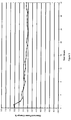
- a second 32 hour cycle was then run as a 'clean up' phase.
- the dirty injectors from the first phase were kept in the engine and the fuel changed to RF-06 base fuel having added thereto 1 ppm Zn (as neodecanoate) and the test additives specified in compositions 1 to 3 of table 1.
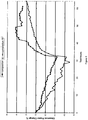
- Figure 2 shows excellent "clean-up" performance using the combination of Mannich additive D and quaternary ammonium salt additive B.
- Additive E a quaternary ammonium salt additive of the present invention was prepared as follows:
- Additive F a quaternary ammonium salt additive of the present invention was prepared as follows:
- Nozzle coking is the result of carbon deposits forming between the injector needle and the needle seat. Deposition of the carbon deposit is due to exposure of the injector needle and seat to combustion gases, potentially causing undesirable variations in engine performance.
- the Peugeot XUD9 A/L engine is a 4 cylinder indirect injection Diesel engine of 1.9 litre swept volume, obtained from Peugeot Citroen Motors specifically for the CEC PF023 method.
- the test engine is fitted with cleaned injectors utilising unflatted injector needles.
- the airflow at various needle lift positions have been measured on a flow rig prior to test.
- the engine is operated for a period of 10 hours under cyclic conditions.
- the propensity of the fuel to promote deposit formation on the fuel injectors is determined by measuring the injector nozzle airflow again at the end of test, and comparing these values to those before test. The results are expressed in terms of percentage airflow reduction at various needle lift positions for all nozzles. The average value of the airflow reduction at 0.1 mm needle lift of all four nozzles is deemed the level of injector coking for a given fuel.
- Additive G a quaternary ammonium salt additive of the present invention was prepared as follows:
- compositions were prepared by adding additive G to an RF06 base fuel meeting the specification given in table 2 (example 5) above, together with 1 ppm zinc as zinc neodecanoate.
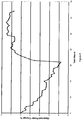
- Composition 9 was tested according to the modified CECF-98-08 DW 10 method described in example 6. The results of this test are shown in figure 4 . As this graph illustrates excellent "clean-up" performance was achieving using this composition.
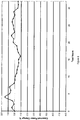
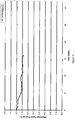
- composition 10 was tested using the CECF-98-08 DW 10 test method without the modification described in example 6, to measure "keep clean” performance. This test did not include the initial 32 hour cycle using base fuel. Instead the fuel composition of the invention (composition 10) was added directly and measured over a 32 hour cycle. As can be seen from the results shown in figure 3 , this composition performed a "keep clean" function with little power change observed over the test period.
- Additive H a quaternary ammonium salt additive of the present invention was prepared as follows:
- Composition 11 was prepared by adding 86.4ppm of active additive H to an RF06 base fuel meeting the specification given in table 2 (example 5) above, together with 1 ppm zinc as zinc neodecanoate.
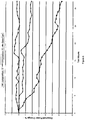
- compositions 12 and 13 in a modern diesel engine were assessed using the procedure described in example 10. The results are shown in figure 6 .
- compositions 18 and 19 in a modern diesel engine were assessed using the procedure described in example 6. The results are shown in figure 8 .
- Additive J a quaternary ammonium salt additive of the present invention was prepared as follows:
- Composition 20 was prepared by adding 102ppm of active additive J to an RF06 base fuel meeting the specification given in table 2 (example 5) above, together with 1ppm zinc as zinc neodecanoate.
- Additive K a quaternary ammonium salt additive of the present invention was prepared as follows:
- Composition 21 was prepared by adding 93ppm of active additive K to an RF06 base fuel meeting the specification given in table 2 (example 5) above, together with 1ppm zinc as zinc neodecanoate.
- Additive L a quaternary ammonium salt additive of the present invention was prepared as follows:
- Additive M a quaternary ammonium salt additive of the present invention was prepared as follows:
- a polyisobutyl-substituted succinic anhydride having a PIB molecular weight of 750 was reacted with dimethylaminopropylamine using a method analogous to that described in example 10. 31.1g (0.034 mol) of this material was mixed with 5.2g (0.034 mol) methyl salicylate and 24.2g 2-ethylhexanol. The mixture was heated to 140 °C for 24 hours.
Landscapes
- Chemical & Material Sciences (AREA)
- Oil, Petroleum & Natural Gas (AREA)
- Engineering & Computer Science (AREA)
- Organic Chemistry (AREA)
- Combustion & Propulsion (AREA)
- Chemical Kinetics & Catalysis (AREA)
- General Chemical & Material Sciences (AREA)
- Solid Fuels And Fuel-Associated Substances (AREA)
- Liquid Carbonaceous Fuels (AREA)
- Organic Low-Molecular-Weight Compounds And Preparation Thereof (AREA)
- Lubricants (AREA)
- Exhaust Gas After Treatment (AREA)
Priority Applications (1)
| Application Number | Priority Date | Filing Date | Title |
|---|---|---|---|
| EP17180248.1A EP3269792B1 (en) | 2010-02-05 | 2011-02-04 | Method of reducing / preventing / removing deposits in a diesel engine |
Applications Claiming Priority (2)
| Application Number | Priority Date | Filing Date | Title |
|---|---|---|---|
| GBGB1001920.6A GB201001920D0 (en) | 2010-02-05 | 2010-02-05 | Fuel compostions |
| PCT/GB2011/050196 WO2011095819A1 (en) | 2010-02-05 | 2011-02-04 | Fuel compositions |
Related Child Applications (2)
| Application Number | Title | Priority Date | Filing Date |
|---|---|---|---|
| EP17180248.1A Division-Into EP3269792B1 (en) | 2010-02-05 | 2011-02-04 | Method of reducing / preventing / removing deposits in a diesel engine |
| EP17180248.1A Division EP3269792B1 (en) | 2010-02-05 | 2011-02-04 | Method of reducing / preventing / removing deposits in a diesel engine |
Publications (2)
| Publication Number | Publication Date |
|---|---|
| EP2531580A1 EP2531580A1 (en) | 2012-12-12 |
| EP2531580B1 true EP2531580B1 (en) | 2017-11-15 |
Family
ID=42082553
Family Applications (2)
| Application Number | Title | Priority Date | Filing Date |
|---|---|---|---|
| EP11702697.1A Active EP2531580B1 (en) | 2010-02-05 | 2011-02-04 | Fuel compositions |
| EP17180248.1A Active EP3269792B1 (en) | 2010-02-05 | 2011-02-04 | Method of reducing / preventing / removing deposits in a diesel engine |
Family Applications After (1)
| Application Number | Title | Priority Date | Filing Date |
|---|---|---|---|
| EP17180248.1A Active EP3269792B1 (en) | 2010-02-05 | 2011-02-04 | Method of reducing / preventing / removing deposits in a diesel engine |
Country Status (18)
| Country | Link |
|---|---|
| US (1) | US9062265B2 (enExample) |
| EP (2) | EP2531580B1 (enExample) |
| JP (1) | JP2013518962A (enExample) |
| KR (1) | KR101818271B1 (enExample) |
| CN (1) | CN102844415B (enExample) |
| AR (1) | AR080136A1 (enExample) |
| AU (1) | AU2011212261B2 (enExample) |
| BR (1) | BR112012018408B1 (enExample) |
| CA (1) | CA2788997C (enExample) |
| ES (2) | ES2913156T3 (enExample) |
| GB (1) | GB201001920D0 (enExample) |
| MX (1) | MX2012009076A (enExample) |
| MY (1) | MY156962A (enExample) |
| NO (1) | NO2531580T3 (enExample) |
| PH (1) | PH12012501405A1 (enExample) |
| RU (1) | RU2562249C2 (enExample) |
| SG (1) | SG182424A1 (enExample) |
| WO (1) | WO2011095819A1 (enExample) |
Cited By (3)
| Publication number | Priority date | Publication date | Assignee | Title |
|---|---|---|---|---|
| US10308888B1 (en) | 2018-06-15 | 2019-06-04 | Afton Chemical Corporation | Quaternary ammonium fuel additives |
| US12043808B2 (en) | 2021-12-28 | 2024-07-23 | Afton Chemical Corporation | Quaternary ammonium salt combinations for injector cleanliness |
| US12169192B2 (en) | 2020-11-02 | 2024-12-17 | Afton Chemical Corporation | Methods of identifying a hydrocarbon fuel |
Families Citing this family (128)
| Publication number | Priority date | Publication date | Assignee | Title |
|---|---|---|---|---|
| EP2534122A4 (en) | 2010-02-08 | 2013-12-18 | Fulcrum Bioenergy Inc | PROCESS FOR THE COMFORTABLE CONVERSION OF SOLID HOUSE MILL IN ETHANOL |
| US12252655B2 (en) | 2010-02-08 | 2025-03-18 | Fulcrum Bioenergy, Inc. | Feedstock processing systems and methods for producing Fischer-Tropsch liquids and transportation fuels |
| US11525097B2 (en) | 2010-02-08 | 2022-12-13 | Fulcrum Bioenergy, Inc. | Feedstock processing systems and methods for producing fischer-tropsch liquids and transportation fuels |
| GB201003973D0 (en) | 2010-03-10 | 2010-04-21 | Innospec Ltd | Fuel compositions |
| KR101822212B1 (ko) | 2010-05-25 | 2018-01-25 | 더루우브리졸코오포레이션 | 기관의 동력 증가를 제공하는 방법 |
| EP2723836B1 (en) | 2011-06-21 | 2018-08-08 | The Lubrizol Corporation | Use in a lubricating composition containing a dispersant |
| US20130133243A1 (en) | 2011-06-28 | 2013-05-30 | Basf Se | Quaternized nitrogen compounds and use thereof as additives in fuels and lubricants |
| EP2540808A1 (de) * | 2011-06-28 | 2013-01-02 | Basf Se | Quaternisierte Stickstoffverbindungen und deren Verwendung als Additive in Kraft- und Schmierstoffen |
| GB201113388D0 (en) * | 2011-08-03 | 2011-09-21 | Innospec Ltd | Fuel compositions |
| GB201113390D0 (en) * | 2011-08-03 | 2011-09-21 | Innospec Ltd | Fuel compositions |
| US9574149B2 (en) | 2011-11-11 | 2017-02-21 | Afton Chemical Corporation | Fuel additive for improved performance of direct fuel injected engines |
| EP2604674A1 (de) * | 2011-12-12 | 2013-06-19 | Basf Se | Verwendung quaternisierter Alkylamine als Additive in Kraft- und Schmierstoffen |
| US8690970B2 (en) | 2012-02-24 | 2014-04-08 | Afton Chemical Corporation | Fuel additive for improved performance in fuel injected engines |
| CN104334698A (zh) | 2012-04-04 | 2015-02-04 | 卢布里佐尔公司 | 用于粉碎设备的轴承润滑剂 |
| US8894726B2 (en) | 2012-06-13 | 2014-11-25 | Afton Chemical Corporation | Fuel additive for improved performance in fuel injected engines |
| JP2015532356A (ja) * | 2012-10-23 | 2015-11-09 | ザ ルブリゾル コーポレイションThe Lubrizol Corporation | 低分子量ペナルティーがないディーゼル清浄剤 |
| US9458400B2 (en) | 2012-11-02 | 2016-10-04 | Afton Chemical Corporation | Fuel additive for improved performance in direct fuel injected engines |
| WO2014096234A1 (en) | 2012-12-21 | 2014-06-26 | Shell Internationale Research Maatschappij B.V. | Liquid diesel fuel compositions containing organic sunscreen compounds |
| CN103923710A (zh) * | 2013-01-11 | 2014-07-16 | 衣芳成 | 无醇清洁柴油 |
| EP2976411A1 (en) | 2013-03-21 | 2016-01-27 | Basf Se | Use of a hydrocarbyl-substituted dicarboxylic acid for improving or boosting the separation of water from fuel oils which comprises detergent additive |
| US9222046B2 (en) | 2013-04-26 | 2015-12-29 | Afton Chemical Corporation | Alkoxylated quaternary ammonium salts and diesel fuels containing the salts |
| US8915977B2 (en) | 2013-04-26 | 2014-12-23 | Afton Chemical Corporation | Gasoline fuel composition for improved performance in fuel injected engines |
| EP2984156A1 (en) * | 2013-05-28 | 2016-02-17 | The Lubrizol Corporation | Asphaltene inhibition |
| JP2016526599A (ja) | 2013-07-12 | 2016-09-05 | ビーエーエスエフ ソシエタス・ヨーロピアBasf Se | 燃料油及びガソリン燃料からの水の分離を改良又は促進するための、ヒドロカルビル置換したジカルボン酸の使用 |
| GB201313423D0 (en) | 2013-07-26 | 2013-09-11 | Innospec Ltd | Compositions and methods |
| KR102453736B1 (ko) | 2013-07-26 | 2022-10-11 | 이노스펙 리미티드 | 연료 조성물 |
| JP6548640B2 (ja) | 2013-10-24 | 2019-07-24 | シエル・インターナシヨネイル・リサーチ・マーチヤツピイ・ベー・ウイShell Internationale Research Maatschappij Besloten Vennootshap | 液体燃料組成物 |
| EP3083905A1 (en) | 2013-12-16 | 2016-10-26 | Shell Internationale Research Maatschappij B.V. | Liquid fuel compositions |
| CN109486539B (zh) | 2014-01-29 | 2020-12-04 | 巴斯夫欧洲公司 | 用于燃料和润滑剂的多羧酸基添加剂 |
| WO2015114029A1 (de) | 2014-01-29 | 2015-08-06 | Basf Se | Korrosionsinhibitoren für kraft- und schmierstoffe |
| US8974551B1 (en) | 2014-02-19 | 2015-03-10 | Afton Chemical Corporation | Fuel additive for improved performance in fuel injected engines |
| EP2949732B1 (en) | 2014-05-28 | 2018-06-20 | Shell International Research Maatschappij B.V. | Use of an oxanilide compound in a diesel fuel composition for the purpose of modifying the ignition delay and/or the burn period |
| US20170101594A1 (en) | 2014-05-30 | 2017-04-13 | The Lubrizol Corporation | Coupled quaternary ammonium salts |
| PL3514220T3 (pl) | 2014-05-30 | 2020-09-07 | The Lubrizol Corporation | Amid/ester o niskiej masie cząsteczkowej zawierający czwartorzędowe sole amoniowe |
| DK3149129T3 (da) | 2014-05-30 | 2019-05-13 | Lubrizol Corp | Anvendelse af imidazolholdige kvaternære ammoniumsalte |
| EP3149127A1 (en) | 2014-05-30 | 2017-04-05 | The Lubrizol Corporation | High molecular weight imide containing quaternary ammonium salts |
| BR112016028067A2 (pt) | 2014-05-30 | 2017-08-22 | Lubrizol Corp | Amida/éster de alto peso molecular contendo sais de amônio quaternário |
| EP3521404A1 (en) | 2014-05-30 | 2019-08-07 | The Lubrizol Corporation | Low molecular weight imide containing quaternary ammonium salts |
| EP3149130B1 (en) | 2014-05-30 | 2019-04-03 | The Lubrizol Corporation | Use of epoxide quaternized quaternary ammonium salts |
| SG11201609885XA (en) | 2014-05-30 | 2016-12-29 | Lubrizol Corp | Branched amine containing quaternary ammonium salts |
| GB201413355D0 (en) * | 2014-07-28 | 2014-09-10 | Innospec Ltd | Compositons and methods |
| US9200226B1 (en) | 2015-01-29 | 2015-12-01 | Afton Chemical Corporation | Esters of alkoxylated quaternary ammonium salts and fuels containing them |
| US9340742B1 (en) | 2015-05-05 | 2016-05-17 | Afton Chemical Corporation | Fuel additive for improved injector performance |
| WO2017009305A1 (de) | 2015-07-16 | 2017-01-19 | Basf Se | Copolymere als additive für kraft- und schmierstoffe |
| GB201513304D0 (en) | 2015-07-28 | 2015-09-09 | Innospec Ltd | Compositions and Methods |
| US11084997B2 (en) | 2015-11-11 | 2021-08-10 | Shell Oil Company | Process for preparing a diesel fuel composition |
| KR102653308B1 (ko) | 2015-12-02 | 2024-03-29 | 더루브리졸코오퍼레이션 | 짧은 탄화수소 꼬리를 지니는 초저분자량 이미드 함유 사차 암모늄 염 |
| SG11201804230PA (en) | 2015-12-02 | 2018-06-28 | Lubrizol Corp | Ultra-low molecular weight amide/ester containing quaternary ammonium salts having short hydrocarbon tails |
| EP3184612A1 (en) | 2015-12-21 | 2017-06-28 | Shell Internationale Research Maatschappij B.V. | Process for preparing a diesel fuel composition |
| WO2017202735A1 (en) | 2016-05-23 | 2017-11-30 | Shell Internationale Research Maatschappij B.V. | Use of a wax anti-settling additive in automotive fuel compositions |
| EP3481920B1 (de) | 2016-07-05 | 2021-08-11 | Basf Se | Verwendung von korrosionsinhibitoren für kraft- und schmierstoffe |
| WO2018007486A1 (de) | 2016-07-07 | 2018-01-11 | Basf Se | Polymere als additive für kraft und schmierstoffe |
| US20190249099A1 (en) | 2016-07-07 | 2019-08-15 | Basf Se | Copolymers as additives for fuels and lubricants |
| BR112019005332A2 (pt) | 2016-09-21 | 2019-06-11 | Lubrizol Corp | componentes antiespumantes de poliacrilato para uso em combustíveis de diesel |
| WO2018077976A1 (en) | 2016-10-27 | 2018-05-03 | Shell Internationale Research Maatschappij B.V. | Process for preparing an automotive gasoil |
| US10947467B2 (en) | 2016-12-15 | 2021-03-16 | Basf Se | Polymers as additives for fuels |
| WO2018114348A1 (de) | 2016-12-19 | 2018-06-28 | Basf Se | Additive zur verbesserung der thermischen stabilität von kraftstoffen |
| GB201705089D0 (en) | 2017-03-30 | 2017-05-17 | Innospec Ltd | Composition, method and use |
| GB201705091D0 (en) | 2017-03-30 | 2017-05-17 | Innospec Ltd | Compositions and methods and uses relating thereto |
| KR102713359B1 (ko) | 2017-03-30 | 2024-10-02 | 이노스펙 리미티드 | 방법 및 용도 |
| GB201705138D0 (en) | 2017-03-30 | 2017-05-17 | Innospec Ltd | Method and use |
| GB201705124D0 (en) | 2017-03-30 | 2017-05-17 | Innospec Ltd | Composition, method and use |
| CN110536954B (zh) | 2017-03-30 | 2023-04-11 | 因诺斯佩克有限公司 | 方法和用途 |
| GB201705088D0 (en) | 2017-03-30 | 2017-05-17 | Innospec Ltd | Composition, method and use |
| GB201705095D0 (en) | 2017-03-30 | 2017-05-17 | Innospec Ltd | Composition and methods and uses relating thereto |
| WO2018178678A1 (en) | 2017-03-30 | 2018-10-04 | Innospec Limited | Method and use |
| WO2018188986A1 (de) | 2017-04-13 | 2018-10-18 | Basf Se | Polymere als additive für kraft und schmierstoffe |
| WO2018206729A1 (en) | 2017-05-11 | 2018-11-15 | Shell Internationale Research Maatschappij B.V. | Process for preparing an automotive gas oil fraction |
| AU2018335769B2 (en) | 2017-09-21 | 2023-11-02 | The Lubrizol Corporation | Polyacrylate antifoam components for use in fuels |
| WO2019183050A1 (en) | 2018-03-21 | 2019-09-26 | The Lubrizol Corporation | Polyacrylamide antifoam components for use in diesel fuels |
| GB201810852D0 (en) | 2018-07-02 | 2018-08-15 | Innospec Ltd | Compositions, uses and methods |
| GB201815257D0 (en) | 2018-09-19 | 2018-10-31 | Innospec Ltd | Compositions and methods and uses relating thereto |
| US11390821B2 (en) | 2019-01-31 | 2022-07-19 | Afton Chemical Corporation | Fuel additive mixture providing rapid injector clean-up in high pressure gasoline engines |
| CN114096648A (zh) | 2019-06-24 | 2022-02-25 | 路博润公司 | 性能添加剂的连续声混合和包含性能添加剂的组合物 |
| US11008526B2 (en) | 2019-07-23 | 2021-05-18 | Croda Inc. | Demulsifier for quaternary ammonium salt containing fuels |
| GB201916246D0 (en) | 2019-11-08 | 2019-12-25 | Innospec Ltd | Compositons, and methods and uses relating thereto |
| GB201916248D0 (en) | 2019-11-08 | 2019-12-25 | Innospec Ltd | Compositions and methods and uses relating thereto |
| EP4077601B1 (en) | 2019-12-18 | 2025-09-24 | The Lubrizol Corporation | Polymeric surfactant compound |
| CA3162063A1 (en) | 2019-12-19 | 2021-06-24 | The Lubrizol Corporation | Wax anti-settling additive composition for use in diesel fuels |
| EP3940043B1 (de) | 2020-07-14 | 2023-08-09 | Basf Se | Korrosionsinhibitoren für kraft- und schmierstoffe |
| US12024686B2 (en) | 2022-09-30 | 2024-07-02 | Afton Chemical Corporation | Gasoline additive composition for improved engine performance |
| JP2023551372A (ja) | 2020-11-04 | 2023-12-08 | ビーエーエスエフ ソシエタス・ヨーロピア | 燃料エマルジョン用のアニオン性界面活性剤を含む水性乳化剤パッケージ |
| US12091618B2 (en) | 2020-11-20 | 2024-09-17 | Basf Se | Mixtures for improving or boosting the separation of water from fuels |
| US20240084208A1 (en) * | 2020-12-16 | 2024-03-14 | Basf Se | New mixtures for improving the stability of additive packages |
| WO2022161803A1 (en) | 2021-01-27 | 2022-08-04 | Basf Se | Branched primary alkyl amines as additives for gasoline fuels |
| EP4074810B1 (en) | 2021-04-15 | 2023-11-15 | Basf Se | New compositions for reducing crystallization of paraffin crystals in fuels |
| JP2024514668A (ja) | 2021-04-22 | 2024-04-02 | ビーエーエスエフ ソシエタス・ヨーロピア | ゴム中の添加剤としてのポリイソブテン誘導体 |
| ES3006982T3 (en) | 2021-06-15 | 2025-03-19 | Basf Se | Gasoline fuel and fuel additive packages comprising an amide compound |
| WO2022263244A1 (en) | 2021-06-16 | 2022-12-22 | Basf Se | Quaternized betaines as additives in fuels |
| US11999917B2 (en) | 2021-08-25 | 2024-06-04 | Afton Chemical Corporation | Mannich-based quaternary ammonium salt fuel additives |
| US12012564B2 (en) | 2021-08-25 | 2024-06-18 | Afton Chemical Corporation | Mannich-based quaternary ammonium salt fuel additives |
| GB202113683D0 (en) | 2021-09-24 | 2021-11-10 | Innospec Ltd | Use and method |
| EP4166633A1 (en) | 2021-10-15 | 2023-04-19 | Innospec Fuel Specialties LLC | Improvements in fuels |
| KR20240089218A (ko) | 2021-10-04 | 2024-06-20 | 이노스펙 퓨얼 스페셜티즈 엘엘씨 | 연료의 개선 |
| EP4163353A1 (de) | 2021-10-06 | 2023-04-12 | Basf Se | Verfahren zur verringerung von ablagerungen auf einlassventilen |
| EP4166630A1 (en) | 2021-10-15 | 2023-04-19 | Basf Se | Process for reduction of asphaltenes from marine fuels |
| EP4166631B1 (en) | 2021-10-15 | 2026-04-29 | Basf Se | Process for reduction of asphaltenes from marine fuels |
| GB202118100D0 (en) | 2021-12-14 | 2022-01-26 | Innospec Ltd | Methods and uses relating to fuel compositions |
| GB202118103D0 (en) | 2021-12-14 | 2022-01-26 | Innospec Ltd | Fuel compositions |
| GB202118104D0 (en) | 2021-12-14 | 2022-01-26 | Innospec Ltd | Methods and uses relating to fuel compositions |
| GB202118107D0 (en) | 2021-12-14 | 2022-01-26 | Innospec Ltd | Fuel compositions |
| US20250028926A1 (en) | 2021-12-21 | 2025-01-23 | Basf Se | Apparatus for generating a digital access element |
| US12195686B2 (en) | 2022-01-13 | 2025-01-14 | Ecolab Usa Inc. | Antistatic fuel additives |
| GB202204084D0 (en) | 2022-03-23 | 2022-05-04 | Innospec Ltd | Compositions, methods and uses |
| GB202206069D0 (en) | 2022-04-26 | 2022-06-08 | Innospec Ltd | Use and method |
| GB2618099A (en) | 2022-04-26 | 2023-11-01 | Innospec Ltd | Use and method |
| GB2618101A (en) * | 2022-04-26 | 2023-11-01 | Innospec Ltd | Use and method |
| EP4269541A1 (en) | 2022-04-29 | 2023-11-01 | Basf Se | New mixtures for improving or boosting the separation of water from fuels |
| CA3259087A1 (en) | 2022-06-24 | 2023-12-28 | Innospec Limited | FUEL COMPOSITIONS COMPRISING AN ADDITIVE, AND ASSOCIATED PROCESSES AND USES |
| WO2024023490A1 (en) | 2022-07-26 | 2024-02-01 | Innospec Fuel Specialties Llc | Improvements in fuels |
| EP4565669A1 (en) | 2022-08-05 | 2025-06-11 | The Lubrizol Corporation | Processes for producing reaction products including quaternary ammonium salts |
| US11873461B1 (en) | 2022-09-22 | 2024-01-16 | Afton Chemical Corporation | Extreme pressure additives with improved copper corrosion |
| WO2024061760A1 (de) | 2022-09-23 | 2024-03-28 | Basf Se | Verminderung der kristallisation von paraffinen in kraftstoffen |
| US12134742B2 (en) | 2022-09-30 | 2024-11-05 | Afton Chemical Corporation | Fuel composition |
| US12624303B2 (en) | 2023-07-28 | 2026-05-12 | Afton Chemical Corporation | Gasoline additive composition for improved engine performance |
| EP4382588A1 (de) | 2022-12-06 | 2024-06-12 | Basf Se | Additive zur verbesserung der thermischen stabilität von kraftstoffen |
| WO2024149635A1 (en) | 2023-01-12 | 2024-07-18 | Basf Se | Branched amines as additives for gasoline fuels |
| EP4658737A1 (en) | 2023-02-03 | 2025-12-10 | The Lubrizol Corporation | Processes for producing reaction products including quaternary ammonium salts |
| US11795412B1 (en) | 2023-03-03 | 2023-10-24 | Afton Chemical Corporation | Lubricating composition for industrial gear fluids |
| GB202311421D0 (en) | 2023-07-25 | 2023-09-06 | Innospec Ltd | Fuel compositions and methods and uses relating thereto |
| US12454653B2 (en) | 2023-12-11 | 2025-10-28 | Afton Chemical Corporation | Gasoline additive composition for improved engine performance |
| US12680041B2 (en) | 2024-03-28 | 2026-07-14 | Afton Chemical Corporation | Multi-functional fuel additive to provide friction reduction and corrosion protection |
| US12662640B2 (en) | 2024-04-17 | 2026-06-23 | Innospec Limited | Method of reducing the impact of deposits in a post combustion system of a diesel engine |
| EP4682227A1 (en) | 2024-07-18 | 2026-01-21 | Basf Se | Novel diesel fuel additive packages |
| GB202411733D0 (en) | 2024-08-08 | 2024-09-25 | Innospec Ltd | Fuel compositions and method and uses relating thereto |
| WO2026046756A1 (en) | 2024-08-29 | 2026-03-05 | Basf Se | Process for improving the injection of direct injection gasoline engines |
| WO2026153801A1 (en) | 2025-01-15 | 2026-07-23 | Basf Se | New additives for diesel fuels |
| US12553003B1 (en) | 2025-02-03 | 2026-02-17 | Afton Chemical Corporation | Quaternary ammonium compounds |
Family Cites Families (25)
| Publication number | Priority date | Publication date | Assignee | Title |
|---|---|---|---|---|
| DE1248643B (de) | 1959-03-30 | 1967-08-31 | The Lubrizol Corporation, Cleveland, Ohio (V. St. A.) | Verfahren zur Herstellung von öllöslichen aeylierten Aminen |
| NL124306C (enExample) | 1959-08-24 | |||
| NL124842C (enExample) | 1959-08-24 | |||
| US3231587A (en) | 1960-06-07 | 1966-01-25 | Lubrizol Corp | Process for the preparation of substituted succinic acid compounds |
| US4171959A (en) * | 1977-12-14 | 1979-10-23 | Texaco Inc. | Fuel composition containing quaternary ammonium salts of succinimides |
| US4248719A (en) * | 1979-08-24 | 1981-02-03 | Texaco Inc. | Quaternary ammonium salts and lubricating oil containing said salts as dispersants |
| US5100632A (en) * | 1984-04-23 | 1992-03-31 | Engelhard Corporation | Catalyzed diesel exhaust particulate filter |
| GB8712442D0 (en) * | 1987-05-27 | 1987-07-01 | Exxon Chemical Patents Inc | Diesel fuel composition |
| GB9208034D0 (en) | 1992-04-10 | 1992-05-27 | Bp Chem Int Ltd | Fuel composition |
| RU2182163C2 (ru) * | 1995-06-07 | 2002-05-10 | Уильям К. Орр | Состав топлива |
| DE10021936A1 (de) * | 2000-05-05 | 2001-11-08 | Basf Ag | Kraftstoffadditivpakete für Ottokraftstoffe mit verbesserten Viskositätseigenschaften und guter IVD Performance |
| US6784317B2 (en) * | 2001-05-02 | 2004-08-31 | Mitsubishi Gas Chemical Company, Inc | Production of quaternary ammonium salt of hydroxycarboxylic acid and quarternary ammonium salt of inorganic acid |
| DE10211418A1 (de) | 2002-03-15 | 2003-09-25 | Bayer Ag | Verfahren zur Herstellung hochreaktiver Polyisobutene |
| US8318629B2 (en) * | 2004-10-14 | 2012-11-27 | Catalytic Solutions, Inc. | Platinum group metal-free catalysts for reducing the ignition temperature of particulates on a diesel particulate filter |
| AU2006257823B2 (en) * | 2005-06-16 | 2011-09-08 | The Lubrizol Corporation | Quaternary ammonium salt detergents for use in fuels |
| GB0515998D0 (en) | 2005-08-03 | 2005-09-07 | Ass Octel | Fuel additives |
| US7771669B2 (en) * | 2006-03-20 | 2010-08-10 | Ford Global Technologies, Llc | Soot oxidation catalyst and method of making |
| US7797931B2 (en) * | 2006-03-20 | 2010-09-21 | Ford Global Technologies, Llc | Catalyst composition for diesel particulate filter |
| US7906470B2 (en) * | 2006-09-01 | 2011-03-15 | The Lubrizol Corporation | Quaternary ammonium salt of a Mannich compound |
| KR101766986B1 (ko) | 2007-09-27 | 2017-08-09 | 이노스펙 리미티드 | 연료 조성물 |
| EP3492562A1 (en) * | 2007-09-27 | 2019-06-05 | Innospec Limited | Fuel compositions |
| WO2009140190A1 (en) * | 2008-05-15 | 2009-11-19 | The Lubrizol Corporation | Quaternary salts for use as surfactants in dispersions |
| US8153570B2 (en) * | 2008-06-09 | 2012-04-10 | The Lubrizol Corporation | Quaternary ammonium salt detergents for use in lubricating compositions |
| ES2690473T5 (es) * | 2009-05-15 | 2021-07-12 | Lubrizol Corp | Sales de amida de amonio cuaternario |
| US9574149B2 (en) * | 2011-11-11 | 2017-02-21 | Afton Chemical Corporation | Fuel additive for improved performance of direct fuel injected engines |
-
2010
- 2010-02-05 GB GBGB1001920.6A patent/GB201001920D0/en not_active Ceased
-
2011
- 2011-02-04 KR KR1020127020470A patent/KR101818271B1/ko active Active
- 2011-02-04 SG SG2012050381A patent/SG182424A1/en unknown
- 2011-02-04 WO PCT/GB2011/050196 patent/WO2011095819A1/en not_active Ceased
- 2011-02-04 US US13/577,000 patent/US9062265B2/en active Active
- 2011-02-04 MY MYPI2012003131A patent/MY156962A/en unknown
- 2011-02-04 ES ES17180248T patent/ES2913156T3/es active Active
- 2011-02-04 EP EP11702697.1A patent/EP2531580B1/en active Active
- 2011-02-04 EP EP17180248.1A patent/EP3269792B1/en active Active
- 2011-02-04 BR BR112012018408-3A patent/BR112012018408B1/pt active IP Right Grant
- 2011-02-04 CA CA2788997A patent/CA2788997C/en active Active
- 2011-02-04 JP JP2012551688A patent/JP2013518962A/ja not_active Withdrawn
- 2011-02-04 AR ARP110100383A patent/AR080136A1/es not_active Application Discontinuation
- 2011-02-04 NO NO11702697A patent/NO2531580T3/no unknown
- 2011-02-04 MX MX2012009076A patent/MX2012009076A/es active IP Right Grant
- 2011-02-04 CN CN201180008151.6A patent/CN102844415B/zh active Active
- 2011-02-04 AU AU2011212261A patent/AU2011212261B2/en active Active
- 2011-02-04 PH PH1/2012/501405A patent/PH12012501405A1/en unknown
- 2011-02-04 RU RU2012137255/04A patent/RU2562249C2/ru active
- 2011-02-04 ES ES11702697.1T patent/ES2655886T3/es active Active
Non-Patent Citations (1)
| Title |
|---|
| None * |
Cited By (3)
| Publication number | Priority date | Publication date | Assignee | Title |
|---|---|---|---|---|
| US10308888B1 (en) | 2018-06-15 | 2019-06-04 | Afton Chemical Corporation | Quaternary ammonium fuel additives |
| US12169192B2 (en) | 2020-11-02 | 2024-12-17 | Afton Chemical Corporation | Methods of identifying a hydrocarbon fuel |
| US12043808B2 (en) | 2021-12-28 | 2024-07-23 | Afton Chemical Corporation | Quaternary ammonium salt combinations for injector cleanliness |
Also Published As
| Publication number | Publication date |
|---|---|
| MX2012009076A (es) | 2012-08-23 |
| PH12012501405A1 (en) | 2012-10-29 |
| KR20120129900A (ko) | 2012-11-28 |
| KR101818271B1 (ko) | 2018-01-12 |
| BR112012018408B1 (pt) | 2020-12-29 |
| US20130031827A1 (en) | 2013-02-07 |
| CN102844415B (zh) | 2015-10-21 |
| GB201001920D0 (en) | 2010-03-24 |
| EP2531580A1 (en) | 2012-12-12 |
| WO2011095819A1 (en) | 2011-08-11 |
| NO2531580T3 (enExample) | 2018-04-14 |
| CN102844415A (zh) | 2012-12-26 |
| RU2562249C2 (ru) | 2015-09-10 |
| ES2913156T3 (es) | 2022-05-31 |
| JP2013518962A (ja) | 2013-05-23 |
| BR112012018408A2 (pt) | 2019-12-10 |
| EP3269792A1 (en) | 2018-01-17 |
| US9062265B2 (en) | 2015-06-23 |
| AU2011212261B2 (en) | 2013-08-15 |
| ES2655886T3 (es) | 2018-02-22 |
| AR080136A1 (es) | 2012-03-14 |
| CA2788997C (en) | 2018-04-24 |
| CA2788997A1 (en) | 2011-08-11 |
| MY156962A (en) | 2016-04-15 |
| RU2012137255A (ru) | 2014-03-10 |
| AU2011212261A1 (en) | 2012-08-09 |
| EP3269792B1 (en) | 2022-03-30 |
| SG182424A1 (en) | 2012-08-30 |
Similar Documents
| Publication | Publication Date | Title |
|---|---|---|
| EP3269792B1 (en) | Method of reducing / preventing / removing deposits in a diesel engine | |
| EP2739707B1 (en) | Fuel compositions | |
| EP2739709B1 (en) | Fuel compositions | |
| EP3174847B1 (en) | Quaternary ammonium compounds and their use as fuel or lubricant additives | |
| EP2545145B1 (en) | Method for reducing deposits in an engine with a fuel composition comprising a detergent and a quaternary ammonium salt additive | |
| EP3585870B1 (en) | Method and use | |
| EP2739710B1 (en) | Fuel compositions | |
| EP3601493B1 (en) | Method and use to prevent deposits in engine | |
| EP3601495B1 (en) | Composition and methods and uses relating thereto |
Legal Events
| Date | Code | Title | Description |
|---|---|---|---|
| PUAI | Public reference made under article 153(3) epc to a published international application that has entered the european phase |
Free format text: ORIGINAL CODE: 0009012 |
|
| 17P | Request for examination filed |
Effective date: 20120716 |
|
| AK | Designated contracting states |
Kind code of ref document: A1 Designated state(s): AL AT BE BG CH CY CZ DE DK EE ES FI FR GB GR HR HU IE IS IT LI LT LU LV MC MK MT NL NO PL PT RO RS SE SI SK SM TR |
|
| DAX | Request for extension of the european patent (deleted) | ||
| STAA | Information on the status of an ep patent application or granted ep patent |
Free format text: STATUS: EXAMINATION IS IN PROGRESS |
|
| 17Q | First examination report despatched |
Effective date: 20161201 |
|
| GRAP | Despatch of communication of intention to grant a patent |
Free format text: ORIGINAL CODE: EPIDOSNIGR1 |
|
| STAA | Information on the status of an ep patent application or granted ep patent |
Free format text: STATUS: GRANT OF PATENT IS INTENDED |
|
| RIC1 | Information provided on ipc code assigned before grant |
Ipc: C10L 1/238 20060101ALI20170512BHEP Ipc: C10L 1/2387 20060101ALI20170512BHEP Ipc: C10L 1/2383 20060101ALI20170512BHEP Ipc: C10L 1/222 20060101ALI20170512BHEP Ipc: C10L 10/06 20060101ALI20170512BHEP Ipc: C10L 10/00 20060101ALI20170512BHEP Ipc: C10L 10/04 20060101ALI20170512BHEP Ipc: C10L 1/22 20060101AFI20170512BHEP |
|
| INTG | Intention to grant announced |
Effective date: 20170612 |
|
| GRAS | Grant fee paid |
Free format text: ORIGINAL CODE: EPIDOSNIGR3 |
|
| GRAJ | Information related to disapproval of communication of intention to grant by the applicant or resumption of examination proceedings by the epo deleted |
Free format text: ORIGINAL CODE: EPIDOSDIGR1 |
|
| GRAL | Information related to payment of fee for publishing/printing deleted |
Free format text: ORIGINAL CODE: EPIDOSDIGR3 |
|
| STAA | Information on the status of an ep patent application or granted ep patent |
Free format text: STATUS: EXAMINATION IS IN PROGRESS |
|
| INTC | Intention to grant announced (deleted) | ||
| GRAP | Despatch of communication of intention to grant a patent |
Free format text: ORIGINAL CODE: EPIDOSNIGR1 |
|
| STAA | Information on the status of an ep patent application or granted ep patent |
Free format text: STATUS: GRANT OF PATENT IS INTENDED |
|
| GRAA | (expected) grant |
Free format text: ORIGINAL CODE: 0009210 |
|
| STAA | Information on the status of an ep patent application or granted ep patent |
Free format text: STATUS: THE PATENT HAS BEEN GRANTED |
|
| INTG | Intention to grant announced |
Effective date: 20170922 |
|
| AK | Designated contracting states |
Kind code of ref document: B1 Designated state(s): AL AT BE BG CH CY CZ DE DK EE ES FI FR GB GR HR HU IE IS IT LI LT LU LV MC MK MT NL NO PL PT RO RS SE SI SK SM TR |
|
| REG | Reference to a national code |
Ref country code: CH Ref legal event code: EP Ref country code: GB Ref legal event code: FG4D Ref country code: AT Ref legal event code: REF Ref document number: 946285 Country of ref document: AT Kind code of ref document: T Effective date: 20171115 |
|
| REG | Reference to a national code |
Ref country code: IE Ref legal event code: FG4D |
|
| REG | Reference to a national code |
Ref country code: DE Ref legal event code: R096 Ref document number: 602011043321 Country of ref document: DE |
|
| REG | Reference to a national code |
Ref country code: FR Ref legal event code: PLFP Year of fee payment: 8 |
|
| REG | Reference to a national code |
Ref country code: NL Ref legal event code: FP |
|
| REG | Reference to a national code |
Ref country code: ES Ref legal event code: FG2A Ref document number: 2655886 Country of ref document: ES Kind code of ref document: T3 Effective date: 20180222 |
|
| REG | Reference to a national code |
Ref country code: SE Ref legal event code: TRGR |
|
| REG | Reference to a national code |
Ref country code: LT Ref legal event code: MG4D |
|
| REG | Reference to a national code |
Ref country code: AT Ref legal event code: MK05 Ref document number: 946285 Country of ref document: AT Kind code of ref document: T Effective date: 20171115 |
|
| REG | Reference to a national code |
Ref country code: NO Ref legal event code: T2 Effective date: 20171115 |
|
| PG25 | Lapsed in a contracting state [announced via postgrant information from national office to epo] |
Ref country code: LT Free format text: LAPSE BECAUSE OF FAILURE TO SUBMIT A TRANSLATION OF THE DESCRIPTION OR TO PAY THE FEE WITHIN THE PRESCRIBED TIME-LIMIT Effective date: 20171115 Ref country code: FI Free format text: LAPSE BECAUSE OF FAILURE TO SUBMIT A TRANSLATION OF THE DESCRIPTION OR TO PAY THE FEE WITHIN THE PRESCRIBED TIME-LIMIT Effective date: 20171115 |
|
| PG25 | Lapsed in a contracting state [announced via postgrant information from national office to epo] |
Ref country code: BG Free format text: LAPSE BECAUSE OF FAILURE TO SUBMIT A TRANSLATION OF THE DESCRIPTION OR TO PAY THE FEE WITHIN THE PRESCRIBED TIME-LIMIT Effective date: 20180215 Ref country code: RS Free format text: LAPSE BECAUSE OF FAILURE TO SUBMIT A TRANSLATION OF THE DESCRIPTION OR TO PAY THE FEE WITHIN THE PRESCRIBED TIME-LIMIT Effective date: 20171115 Ref country code: LV Free format text: LAPSE BECAUSE OF FAILURE TO SUBMIT A TRANSLATION OF THE DESCRIPTION OR TO PAY THE FEE WITHIN THE PRESCRIBED TIME-LIMIT Effective date: 20171115 Ref country code: HR Free format text: LAPSE BECAUSE OF FAILURE TO SUBMIT A TRANSLATION OF THE DESCRIPTION OR TO PAY THE FEE WITHIN THE PRESCRIBED TIME-LIMIT Effective date: 20171115 Ref country code: GR Free format text: LAPSE BECAUSE OF FAILURE TO SUBMIT A TRANSLATION OF THE DESCRIPTION OR TO PAY THE FEE WITHIN THE PRESCRIBED TIME-LIMIT Effective date: 20180216 Ref country code: AT Free format text: LAPSE BECAUSE OF FAILURE TO SUBMIT A TRANSLATION OF THE DESCRIPTION OR TO PAY THE FEE WITHIN THE PRESCRIBED TIME-LIMIT Effective date: 20171115 |
|
| PG25 | Lapsed in a contracting state [announced via postgrant information from national office to epo] |
Ref country code: CZ Free format text: LAPSE BECAUSE OF FAILURE TO SUBMIT A TRANSLATION OF THE DESCRIPTION OR TO PAY THE FEE WITHIN THE PRESCRIBED TIME-LIMIT Effective date: 20171115 Ref country code: CY Free format text: LAPSE BECAUSE OF FAILURE TO SUBMIT A TRANSLATION OF THE DESCRIPTION OR TO PAY THE FEE WITHIN THE PRESCRIBED TIME-LIMIT Effective date: 20171115 Ref country code: DK Free format text: LAPSE BECAUSE OF FAILURE TO SUBMIT A TRANSLATION OF THE DESCRIPTION OR TO PAY THE FEE WITHIN THE PRESCRIBED TIME-LIMIT Effective date: 20171115 Ref country code: EE Free format text: LAPSE BECAUSE OF FAILURE TO SUBMIT A TRANSLATION OF THE DESCRIPTION OR TO PAY THE FEE WITHIN THE PRESCRIBED TIME-LIMIT Effective date: 20171115 Ref country code: SK Free format text: LAPSE BECAUSE OF FAILURE TO SUBMIT A TRANSLATION OF THE DESCRIPTION OR TO PAY THE FEE WITHIN THE PRESCRIBED TIME-LIMIT Effective date: 20171115 |
|
| REG | Reference to a national code |
Ref country code: DE Ref legal event code: R097 Ref document number: 602011043321 Country of ref document: DE |
|
| PG25 | Lapsed in a contracting state [announced via postgrant information from national office to epo] |
Ref country code: RO Free format text: LAPSE BECAUSE OF FAILURE TO SUBMIT A TRANSLATION OF THE DESCRIPTION OR TO PAY THE FEE WITHIN THE PRESCRIBED TIME-LIMIT Effective date: 20171115 Ref country code: PL Free format text: LAPSE BECAUSE OF FAILURE TO SUBMIT A TRANSLATION OF THE DESCRIPTION OR TO PAY THE FEE WITHIN THE PRESCRIBED TIME-LIMIT Effective date: 20171115 Ref country code: SM Free format text: LAPSE BECAUSE OF FAILURE TO SUBMIT A TRANSLATION OF THE DESCRIPTION OR TO PAY THE FEE WITHIN THE PRESCRIBED TIME-LIMIT Effective date: 20171115 |
|
| REG | Reference to a national code |
Ref country code: CH Ref legal event code: PL |
|
| PLBE | No opposition filed within time limit |
Free format text: ORIGINAL CODE: 0009261 |
|
| STAA | Information on the status of an ep patent application or granted ep patent |
Free format text: STATUS: NO OPPOSITION FILED WITHIN TIME LIMIT |
|
| PG25 | Lapsed in a contracting state [announced via postgrant information from national office to epo] |
Ref country code: MC Free format text: LAPSE BECAUSE OF FAILURE TO SUBMIT A TRANSLATION OF THE DESCRIPTION OR TO PAY THE FEE WITHIN THE PRESCRIBED TIME-LIMIT Effective date: 20171115 |
|
| 26N | No opposition filed |
Effective date: 20180817 |
|
| REG | Reference to a national code |
Ref country code: IE Ref legal event code: MM4A |
|
| PG25 | Lapsed in a contracting state [announced via postgrant information from national office to epo] |
Ref country code: CH Free format text: LAPSE BECAUSE OF NON-PAYMENT OF DUE FEES Effective date: 20180228 Ref country code: LI Free format text: LAPSE BECAUSE OF NON-PAYMENT OF DUE FEES Effective date: 20180228 Ref country code: LU Free format text: LAPSE BECAUSE OF NON-PAYMENT OF DUE FEES Effective date: 20180204 Ref country code: SI Free format text: LAPSE BECAUSE OF FAILURE TO SUBMIT A TRANSLATION OF THE DESCRIPTION OR TO PAY THE FEE WITHIN THE PRESCRIBED TIME-LIMIT Effective date: 20171115 |
|
| PG25 | Lapsed in a contracting state [announced via postgrant information from national office to epo] |
Ref country code: IE Free format text: LAPSE BECAUSE OF NON-PAYMENT OF DUE FEES Effective date: 20180204 |
|
| PG25 | Lapsed in a contracting state [announced via postgrant information from national office to epo] |
Ref country code: MT Free format text: LAPSE BECAUSE OF NON-PAYMENT OF DUE FEES Effective date: 20180204 |
|
| PG25 | Lapsed in a contracting state [announced via postgrant information from national office to epo] |
Ref country code: PT Free format text: LAPSE BECAUSE OF FAILURE TO SUBMIT A TRANSLATION OF THE DESCRIPTION OR TO PAY THE FEE WITHIN THE PRESCRIBED TIME-LIMIT Effective date: 20171115 Ref country code: HU Free format text: LAPSE BECAUSE OF FAILURE TO SUBMIT A TRANSLATION OF THE DESCRIPTION OR TO PAY THE FEE WITHIN THE PRESCRIBED TIME-LIMIT; INVALID AB INITIO Effective date: 20110204 |
|
| PG25 | Lapsed in a contracting state [announced via postgrant information from national office to epo] |
Ref country code: MK Free format text: LAPSE BECAUSE OF NON-PAYMENT OF DUE FEES Effective date: 20171115 |
|
| PG25 | Lapsed in a contracting state [announced via postgrant information from national office to epo] |
Ref country code: AL Free format text: LAPSE BECAUSE OF FAILURE TO SUBMIT A TRANSLATION OF THE DESCRIPTION OR TO PAY THE FEE WITHIN THE PRESCRIBED TIME-LIMIT Effective date: 20171115 Ref country code: IS Free format text: LAPSE BECAUSE OF FAILURE TO SUBMIT A TRANSLATION OF THE DESCRIPTION OR TO PAY THE FEE WITHIN THE PRESCRIBED TIME-LIMIT Effective date: 20180315 |
|
| P01 | Opt-out of the competence of the unified patent court (upc) registered |
Effective date: 20230519 |
|
| PGFP | Annual fee paid to national office [announced via postgrant information from national office to epo] |
Ref country code: NL Payment date: 20260218 Year of fee payment: 16 |
|
| PGFP | Annual fee paid to national office [announced via postgrant information from national office to epo] |
Ref country code: SE Payment date: 20260218 Year of fee payment: 16 |
|
| PGFP | Annual fee paid to national office [announced via postgrant information from national office to epo] |
Ref country code: GB Payment date: 20260219 Year of fee payment: 16 |
|
| PGFP | Annual fee paid to national office [announced via postgrant information from national office to epo] |
Ref country code: NO Payment date: 20260220 Year of fee payment: 16 Ref country code: DE Payment date: 20260218 Year of fee payment: 16 |
|
| PGFP | Annual fee paid to national office [announced via postgrant information from national office to epo] |
Ref country code: BE Payment date: 20260218 Year of fee payment: 16 Ref country code: IT Payment date: 20260219 Year of fee payment: 16 |
|
| PGFP | Annual fee paid to national office [announced via postgrant information from national office to epo] |
Ref country code: FR Payment date: 20260218 Year of fee payment: 16 |
|
| PGFP | Annual fee paid to national office [announced via postgrant information from national office to epo] |
Ref country code: TR Payment date: 20260128 Year of fee payment: 16 |
|
| PGFP | Annual fee paid to national office [announced via postgrant information from national office to epo] |
Ref country code: ES Payment date: 20260408 Year of fee payment: 16 |