EP2482124A2 - Vertikale Ausrichtungsschicht und Flüssigkristallanzeige damit - Google Patents
Vertikale Ausrichtungsschicht und Flüssigkristallanzeige damit Download PDFInfo
- Publication number
- EP2482124A2 EP2482124A2 EP11174908A EP11174908A EP2482124A2 EP 2482124 A2 EP2482124 A2 EP 2482124A2 EP 11174908 A EP11174908 A EP 11174908A EP 11174908 A EP11174908 A EP 11174908A EP 2482124 A2 EP2482124 A2 EP 2482124A2
- Authority
- EP
- European Patent Office
- Prior art keywords
- liquid crystal
- alignment layer
- crystal display
- pixel electrode
- resistivity
- Prior art date
- Legal status (The legal status is an assumption and is not a legal conclusion. Google has not performed a legal analysis and makes no representation as to the accuracy of the status listed.)
- Withdrawn
Links
Images



Classifications
-
- G—PHYSICS
- G02—OPTICS
- G02F—OPTICAL DEVICES OR ARRANGEMENTS FOR THE CONTROL OF LIGHT BY MODIFICATION OF THE OPTICAL PROPERTIES OF THE MEDIA OF THE ELEMENTS INVOLVED THEREIN; NON-LINEAR OPTICS; FREQUENCY-CHANGING OF LIGHT; OPTICAL LOGIC ELEMENTS; OPTICAL ANALOGUE/DIGITAL CONVERTERS
- G02F1/00—Devices or arrangements for the control of the intensity, colour, phase, polarisation or direction of light arriving from an independent light source, e.g. switching, gating or modulating; Non-linear optics
- G02F1/01—Devices or arrangements for the control of the intensity, colour, phase, polarisation or direction of light arriving from an independent light source, e.g. switching, gating or modulating; Non-linear optics for the control of the intensity, phase, polarisation or colour
- G02F1/13—Devices or arrangements for the control of the intensity, colour, phase, polarisation or direction of light arriving from an independent light source, e.g. switching, gating or modulating; Non-linear optics for the control of the intensity, phase, polarisation or colour based on liquid crystals, e.g. single liquid crystal display cells
- G02F1/133—Constructional arrangements; Operation of liquid crystal cells; Circuit arrangements
- G02F1/1333—Constructional arrangements; Manufacturing methods
- G02F1/1337—Surface-induced orientation of the liquid crystal molecules, e.g. by alignment layers
- G02F1/133711—Surface-induced orientation of the liquid crystal molecules, e.g. by alignment layers by organic films, e.g. polymeric films
-
- C—CHEMISTRY; METALLURGY
- C09—DYES; PAINTS; POLISHES; NATURAL RESINS; ADHESIVES; COMPOSITIONS NOT OTHERWISE PROVIDED FOR; APPLICATIONS OF MATERIALS NOT OTHERWISE PROVIDED FOR
- C09K—MATERIALS FOR MISCELLANEOUS APPLICATIONS, NOT PROVIDED FOR ELSEWHERE
- C09K19/00—Liquid crystal materials
- C09K19/52—Liquid crystal materials characterised by components which are not liquid crystals, e.g. additives with special physical aspect: solvents, solid particles
- C09K19/54—Additives having no specific mesophase characterised by their chemical composition
- C09K19/56—Aligning agents
-
- G—PHYSICS
- G02—OPTICS
- G02F—OPTICAL DEVICES OR ARRANGEMENTS FOR THE CONTROL OF LIGHT BY MODIFICATION OF THE OPTICAL PROPERTIES OF THE MEDIA OF THE ELEMENTS INVOLVED THEREIN; NON-LINEAR OPTICS; FREQUENCY-CHANGING OF LIGHT; OPTICAL LOGIC ELEMENTS; OPTICAL ANALOGUE/DIGITAL CONVERTERS
- G02F1/00—Devices or arrangements for the control of the intensity, colour, phase, polarisation or direction of light arriving from an independent light source, e.g. switching, gating or modulating; Non-linear optics
- G02F1/01—Devices or arrangements for the control of the intensity, colour, phase, polarisation or direction of light arriving from an independent light source, e.g. switching, gating or modulating; Non-linear optics for the control of the intensity, phase, polarisation or colour
- G02F1/13—Devices or arrangements for the control of the intensity, colour, phase, polarisation or direction of light arriving from an independent light source, e.g. switching, gating or modulating; Non-linear optics for the control of the intensity, phase, polarisation or colour based on liquid crystals, e.g. single liquid crystal display cells
- G02F1/133—Constructional arrangements; Operation of liquid crystal cells; Circuit arrangements
- G02F1/1333—Constructional arrangements; Manufacturing methods
- G02F1/1337—Surface-induced orientation of the liquid crystal molecules, e.g. by alignment layers
- G02F1/133711—Surface-induced orientation of the liquid crystal molecules, e.g. by alignment layers by organic films, e.g. polymeric films
- G02F1/133723—Polyimide, polyamide-imide
-
- G—PHYSICS
- G02—OPTICS
- G02F—OPTICAL DEVICES OR ARRANGEMENTS FOR THE CONTROL OF LIGHT BY MODIFICATION OF THE OPTICAL PROPERTIES OF THE MEDIA OF THE ELEMENTS INVOLVED THEREIN; NON-LINEAR OPTICS; FREQUENCY-CHANGING OF LIGHT; OPTICAL LOGIC ELEMENTS; OPTICAL ANALOGUE/DIGITAL CONVERTERS
- G02F1/00—Devices or arrangements for the control of the intensity, colour, phase, polarisation or direction of light arriving from an independent light source, e.g. switching, gating or modulating; Non-linear optics
- G02F1/01—Devices or arrangements for the control of the intensity, colour, phase, polarisation or direction of light arriving from an independent light source, e.g. switching, gating or modulating; Non-linear optics for the control of the intensity, phase, polarisation or colour
- G02F1/13—Devices or arrangements for the control of the intensity, colour, phase, polarisation or direction of light arriving from an independent light source, e.g. switching, gating or modulating; Non-linear optics for the control of the intensity, phase, polarisation or colour based on liquid crystals, e.g. single liquid crystal display cells
- G02F1/137—Devices or arrangements for the control of the intensity, colour, phase, polarisation or direction of light arriving from an independent light source, e.g. switching, gating or modulating; Non-linear optics for the control of the intensity, phase, polarisation or colour based on liquid crystals, e.g. single liquid crystal display cells characterised by the electro-optical or magneto-optical effect, e.g. field-induced phase transition, orientation effect, guest-host interaction or dynamic scattering
- G02F1/139—Devices or arrangements for the control of the intensity, colour, phase, polarisation or direction of light arriving from an independent light source, e.g. switching, gating or modulating; Non-linear optics for the control of the intensity, phase, polarisation or colour based on liquid crystals, e.g. single liquid crystal display cells characterised by the electro-optical or magneto-optical effect, e.g. field-induced phase transition, orientation effect, guest-host interaction or dynamic scattering based on orientation effects in which the liquid crystal remains transparent
- G02F1/1393—Devices or arrangements for the control of the intensity, colour, phase, polarisation or direction of light arriving from an independent light source, e.g. switching, gating or modulating; Non-linear optics for the control of the intensity, phase, polarisation or colour based on liquid crystals, e.g. single liquid crystal display cells characterised by the electro-optical or magneto-optical effect, e.g. field-induced phase transition, orientation effect, guest-host interaction or dynamic scattering based on orientation effects in which the liquid crystal remains transparent the birefringence of the liquid crystal being electrically controlled, e.g. ECB-, DAP-, HAN-, PI-LC cells
-
- B—PERFORMING OPERATIONS; TRANSPORTING
- B32—LAYERED PRODUCTS
- B32B—LAYERED PRODUCTS, i.e. PRODUCTS BUILT-UP OF STRATA OF FLAT OR NON-FLAT, e.g. CELLULAR OR HONEYCOMB, FORM
- B32B2457/00—Electrical equipment
- B32B2457/20—Displays, e.g. liquid crystal displays, plasma displays
- B32B2457/202—LCD, i.e. liquid crystal displays
-
- C—CHEMISTRY; METALLURGY
- C09—DYES; PAINTS; POLISHES; NATURAL RESINS; ADHESIVES; COMPOSITIONS NOT OTHERWISE PROVIDED FOR; APPLICATIONS OF MATERIALS NOT OTHERWISE PROVIDED FOR
- C09K—MATERIALS FOR MISCELLANEOUS APPLICATIONS, NOT PROVIDED FOR ELSEWHERE
- C09K2323/00—Functional layers of liquid crystal optical display excluding electroactive liquid crystal layer characterised by chemical composition
- C09K2323/02—Alignment layer characterised by chemical composition
-
- C—CHEMISTRY; METALLURGY
- C09—DYES; PAINTS; POLISHES; NATURAL RESINS; ADHESIVES; COMPOSITIONS NOT OTHERWISE PROVIDED FOR; APPLICATIONS OF MATERIALS NOT OTHERWISE PROVIDED FOR
- C09K—MATERIALS FOR MISCELLANEOUS APPLICATIONS, NOT PROVIDED FOR ELSEWHERE
- C09K2323/00—Functional layers of liquid crystal optical display excluding electroactive liquid crystal layer characterised by chemical composition
- C09K2323/02—Alignment layer characterised by chemical composition
- C09K2323/027—Polyimide
Definitions
- Exemplary embodiments of the present invention relate to a liquid crystal display.
- a liquid crystal display is one type of widely-used flat panel displays, and includes a pair of field generating electrodes, two sheets of display panels and a liquid crystal layer disposed therebetween.
- the liquid crystal display generates an electric field in a liquid crystal layer by applying a voltage to the field generating electrodes, which determines a direction of liquid crystal molecules of the liquid crystal layer to display an image by controlling polarization of incident light.
- An alignment layer for aligning the liquid crystal molecules of the liquid crystal layer is formed inside the display panel.
- the liquid crystal molecules are arranged in a predetermined direction by the alignment layer, and when the voltage is applied to the field generating electrodes, the liquid crystal molecules rotate in the direction of the electric field.
- An exemplary embodiment of the present invention discloses a liquid crystal display including a first substrate and a second substrate facing each other.
- a pair of field generating electrodes is disposed on the first substrate and a liquid crystal layer is disposed between the first substrate and the second substrate.
- the liquid crystal layer includes liquid crystal molecules having positive dielectric anisotropy.
- At least one alignment layer is disposed between the first substrate and the second substrate.
- the alignment layer includes a main chain and at least one side chain connected to the main chain.
- the side chain includes a vertical functional group or a polar group.
- the alignment layer includes at least one main chain to which a side chain including a vertical functional group is connected, and includes at least one main chain to which a side chain including a polar functional group is connected.
- the vertical functional group may be originated from the compound represented with Formula 1, and the polar group may be originated from the compound represented with
- X is O, COO, or N
- R 1 is H or a substituted or non-substituted C 1- C 8 alkyl group
- Y is -COOR or -NR 3 (here, R is independently H, a methyl group, or an ethyl group).
- the main chain may include a polyimide.
- the vertical functional group may be disposed at an upper part of the alignment layer, and the polar group may be disposed at a lower part of the alignment layer.
- a difference between a product of permittivity and resistivity of the liquid crystal molecules and a product of permittivity and resistivity of the alignment layer may be minimized.
- the liquid crystal molecules and the alignment layer may satisfy Equation 1:
- ⁇ LC is the permittivity of the liquid crystal molecules
- ⁇ LC is the resistivity of the liquid crystal molecules
- ⁇ AL is the permittivity of the alignment layer
- ⁇ AL is the resistivity of the alignment layer
- Permittivity of the liquid crystal molecules may be about 7 to about 25, and resistivity of the liquid crystal molecules may be greater than about 1X10- 12 ⁇ cm.
- Permittivity of the alignment layer may be about 3.5 to about 4.5, and resistivity of the alignment layer may be greater than about 1X10- 13 ⁇ cm.
- the liquid crystal molecules may be aligned in a vertical direction with respect to the first substrate or the second substrate.
- the liquid crystal molecules may be pre-tilted by about 80 to about 90 degrees in the absence of an applied electric field.
- the pair of field generating electrodes may include the first pixel electrode and the second pixel electrode, and the first pixel electrode and the second pixel electrode may be disposed at the same layer and may be separated from each other.
- the first pixel electrode and the second pixel electrode may receive voltages with opposite polarities with a reference voltage.
- the first pixel electrode and the second pixel electrode may include a stem part and a plurality of branch electrodes extended from the stem part and a branch electrode of the first pixel electrode and a branch electrode of the second pixel electrode may be alternately disposed.
- a distance between a branch of the first pixel electrode and a branch of the second pixel electrode in a first region may be relatively wide, and a distance between a branch of the first pixel electrode and a branch of the second pixel electrode in a second region may be relatively narrow.
- the first region may be disposed in a region in which the stem part of the first pixel electrode and the second pixel electrode is not disposed from among an edge of a pixel area.
- the distance between the branch of the first pixel electrode and the branch of the second pixel electrode in the first region may be constant, and the distance between the branch of the first pixel electrode and the branch of the second pixel electrode in the second region may be constant.
- An exemplary embodiment of the present invention also discloses a liquid crystal display including a first substrate and a second substrate facing each other. A pair of field generating electrodes is disposed on the first substrate. A liquid crystal layer is disposed between the first substrate and the second substrate and the liquid crystal layer includes liquid crystal molecules having positive dielectric anisotropy. At least one alignment layer is disposed between the first substrate and the second substrate. A first resistivity of an upper part of the alignment layer is about ten times greater than a second resistivity of a lower part of the alignment layer.
- the alignment layer may include a main chain and at least one side chain connected to the main chain, and the at least one side chain may include at least one of a vertical functional group, a polar group and a combination thereof
- the upper part of the alignment layer includes about 30 to about 35 wt% of the vertical functional group and about 0 to about 70 wt% of the polar group.
- the upper part of the alignment layer may not include the polar group.
- the lower part of the alignment layer may include about 70 to about 80 wt% of the polar group and about 20 to about 30 wt% of the vertical functional group.
- the lower part of the alignment layer may have a lesser content of the vertical functional group than the upper part of the alignment layer by about 5 to about 10 wt%.
- a thickness ratio of the upper part of the alignment layer versus the lower part of the alignment layer may be about 1:9 to about 1:1.
- FIG. 1 shows a block diagram of a liquid crystal display according to an exemplary embodiment of the present invention.
- FIG. 2 shows an equivalent circuit diagram of a pixel in a liquid crystal display according to an exemplary embodiment of the present invention.
- FIG. 3 shows a cross-sectional view of a liquid crystal display according to an exemplary embodiment of the present invention.
- FIG. 4 shows a cross-sectional view of an alignment layer of a liquid crystal display according to an exemplary embodiment of the present invention.
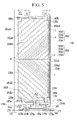
- FIG. 5 shows a layout view of a liquid crystal display according to an exemplary embodiment of the present invention.
- FIG. 6 shows a cross-sectional view of a liquid crystal display shown in FIG. 5 with respect to line VI-VI.
- substituted refers to one substituted with at least a substituent selected from the group consisting of a halogen, a C 1 -C 12 haloalkyl, a C 1 -C 12 alkyl, a C 1 -C 12 alkoxy, a C 6 -C 12 aryl, or a C 6 -C 12 aryloxy.
- FIG. 1 shows a block diagram of a liquid crystal display according to an exemplary embodiment of the present invention
- FIG. 2 shows an equivalent circuit diagram of a pixel in a liquid crystal display according to an exemplary embodiment of the present invention
- FIG. 3 shows a cross-sectional view of a liquid crystal display according to an exemplary embodiment of the present invention
- FIG. 4 shows a cross-sectional view of an alignment layer of a liquid crystal display according to an exemplary embodiment of the present invention.
- the liquid crystal display includes a liquid crystal panel assembly 300, a gate driver 400, a data driver 500, a gray voltage generator 800, and a signal controller 600.
- the liquid crystal panel assembly 300 includes a plurality of signal lines (not shown) and a plurality of pixels PX connected thereto and arranged generally in a matrix form.
- the liquid crystal panel assembly 300 includes a first display panel 100 and a second display panel 200 facing each other, and a liquid crystal layer 3 disposed therebetween.
- the signal lines include a plurality of gate lines for transmitting a gate signal (also called a scanning signal) and a plurality of data lines for transmitting a data voltage.
- the gate lines may be disposed in the row direction and may be substantially in parallel with each other.
- the data lines may be disposed in the column direction and may be substantially in parallel with each other.
- Each pixel PX includes a liquid crystal capacitor Clc having a first pixel electrode (PEa) and a second pixel electrode (PEb) of the first display panel 100 as two terminals, and the liquid crystal layer 3 between the first and second pixel electrodes (PEa, PEb) functions as a dielectric material.
- a pixel electrode (PE) includes the first pixel electrode (PEa) and the second pixel electrode (PEb).
- the liquid crystal layer 3 may have positive dielectric anisotropy, and the long axes of the liquid crystal molecules of the liquid crystal layer 3 may be aligned to be vertical with respect to the surfaces of the first display panel 100 and the second display panel 200 while there is no electric field.
- the pixel electrode (PE) and the common electrode (CE) may be disposed in the same or different layers.
- First and second storage capacitors (Csta, Cstb) for working for the liquid crystal capacitor Clc may be formed when an additional electrode (not shown) installed in the first display panel 100 is overlapped with the first and second pixel electrodes (PEa, PEb), and a dielectric material is disposed between the additional electrode and the first and second pixel electrodes (PEa, PEb).
- the pixel PX is controlled to uniquely represent one of the primary colors (i.e., spatial division) or the pixel PX is controlled to alternately represent the primary colors with respect to time (i.e., temporal division) so that the desired color may be recognized by a spatial and temporal sum of the primary colors.
- the primary colors exemplarily include red, green, and blue.
- FIG. 2 shows an example of spatial division, showing that each pixel PX includes a color filter (CF) for indicating one of the primary colors in a region of the second display panel 200 corresponding to the first and second pixel electrodes (PEa, PEb). Differing from FIG. 2 , the color filter (CF) may be disposed above or below the first and second pixel electrodes (PEa, PEb) of the first display panel 100.
- CF color filter
- At least one polarizer may be disposed in the liquid crystal panel assembly 300.
- a first voltage is applied to the first pixel electrode (PEa), and a second voltage is applied to the second pixel electrode (PEb).
- the first voltage and the second voltage may have different polarities from each other.
- the first voltage and the second voltage correspond to luminance displayed by the pixel PX, and the first voltage and the second voltage have opposite polarities with respect to a reference voltage. That is, the first voltage may be the same magnitude above the reference voltage as the second voltage is below the reference voltage.
- a difference between the first voltage and the second voltage applied to the first pixel electrode (PEa) and the second pixel electrode (PEb) may be represented as a charged voltage of the liquid crystal capacitor Clc, that is, a pixel voltage.
- a potential difference occurs at the liquid crystal capacitor Clc, an electric field in parallel with surfaces of the first display panel 100 and the second display panel 200 may be generated in the liquid crystal layer 3 between the first pixel electrode (PEa) and the second pixel electrode (PEb).
- the liquid crystal molecules 31 have positive dielectric anisotropy, the liquid crystal molecules 31 are declined so that the long axes may be in parallel with the direction of the electric field, and the declined state depends on the pixel voltage.
- the liquid crystal layer 3 is referred to as being in an electrically-induced optical compensation (EOC) mode. Also, a changing state of polarization of the light passing through the liquid crystal layer 3 may be varied according to the declined degree of the liquid crystal molecules 31. A change of polarization may be shown as a change of transmittance of light by a polarizer so the pixel PX may display predetermined luminance.
- an additional electrode (not shown) may be formed on the second display panel 200, and the additional electrode may appropriately control the electric field applied to the liquid crystal layer and the direction of the liquid crystal molecules.
- the driving voltage may be increased, the response speed of the liquid crystal molecules may be increased, and transmittance response of the liquid crystal display may be increased by applying two voltages having different polarities with respect to the reference voltage to a single pixel PX. Further, since the polarities of the two voltages applied to the single pixel PX are opposite to each other with respect to the reference voltage, image degradation caused by flickering may be reduced in the case of column inversion or row inversion of the data driver 500 in a like manner of dot inversion.
- the first display panel 100 and the second display panel 200 may include at least one alignment layer 11 and 21, respectively.
- the liquid crystal molecules 31 with positive dielectric anisotropy may be pre-tilted in the substantially vertical direction with respect to the first display panel 100 and the second display panel 200 by the alignment layers 11 and 21.
- a pre-tilt angle of the liquid crystal molecules caused by the alignment layer may be about 80 to about 95 degrees.
- the alignment layer 11 may be a vertical alignment layer.
- the alignment layer 11 includes a plurality of compounds, and a compound may include a main chain 111 and a side chain 112 attached to the main chain 111.
- the side chain 112 may include at least one of a vertical functional group 112a and a polar group 112b.
- the side chain 112 may further include functional groups such as a flexible functional group, selectively. At least one vertical functional group 112a or at least one polar group 112b may be combined with the main chain 111.
- FIG. 4 exemplifies the alignment layer 11, the polar group 112b may be disposed in the upper part of the alignment layer 11 or may be excluded altogether, and the alignment layer contents of the polar group 112b and the vertical functional group 112a may be variable as described below.
- the vertical functional group 112a may be mainly disposed at the upper part of the alignment layer 11, and the polar group 112b may be mainly disposed at the lower part of the alignment layer 11.
- the vertical functional group 112a may vertically align the liquid crystal molecules 31 with positive dielectric anisotropy to improve black level expression while no electric field is applied without sacrificing alignment.
- the polar group 112b enables charge transfer among a plurality of main chains 111 such that the alignment layer 11 may have a low resistance structure. Because of the above-structured alignment layer 11, an afterimage may be reduced when the liquid crystal display drives the liquid crystal molecules 31 with a high dielectric constant under a high voltage condition. For example, the gray value for eliminating the surface afterimage may be reduced by more than about 40 grays, and the intensity of the surface afterimage may be reduced by more than about 10 times.
- the alignment layers according to the conventional twisted nematic (TN) mode liquid crystal display, the conventional in-plane switching (IPS) mode liquid crystal display, and the conventional fringe field switching (FFS) mode liquid crystal display do not include a vertical functional group, and horizontally align the liquid crystal molecules with positive dielectric anisotropy, so that it is difficult to use an alignment layer for those conventional liquid crystal displays as an alignment layer in the liquid crystal display according to exemplary embodiments of the present invention.
- the alignment layer in the conventional vertically aligned (VA) mode liquid crystal display vertically aligns the liquid crystal molecules with negative dielectric anisotropy so it is difficult to use such alignment layers for the liquid crystal display according to exemplary embodiments of the present invention.
- Resistivity at the upper part of the alignment layer 11 may be greater than resistivity at the lower part of the alignment layer 11 by more than about 10 times, and in this case, charge transfer may be allowable at the lower part of the alignment layer 11 and the alignment layer 11 may have a low resistance structure.
- a thickness ratio of the upper part of the alignment layer 11 to the lower part of the alignment layer may be about 1:9 to 1:1.
- the upper part of the alignment layer 11 may include about 30 to about 35 wt% of the vertical functional group 112a, and in this case, vertical alignment of the liquid crystal molecules 31 may be improved. Also, the upper part of the alignment layer 11 may include about 0 to about 70 wt% of the polar group 112b. Further, the polar group 112b may not be included in the upper part of the alignment layer 11, and in this case, processability and reliability of the alignment layer 11 may be improved.
- the lower part of the alignment layer 11 may include about 70 to about 80 wt% of the polar group 112b, and in this case, the low resistance structure of the alignment layer 11 may be improved. Further, the lower part of the alignment layer 11 may include about 20 to about 30 wt% of the vertical functional group 112a. In addition, the amount of the vertical functional group 112a included in the lower part of the alignment layer 11 may be less than the vertical functional group 112a included in the upper part of the alignment layer 11 by about 5 to about 10 wt%, and in this case, processability and reliability of the alignment layer 11 may be improved.
- the alignment layers 11 and 21 include a polyimide which may be formed by a dianhydride based compound and a diamine based compound.
- a composition for forming the alignment layers 11 and 21 may include at least one kind of a dianhydride based compound, at least one kind of a diamine based compound, and at least one kind of organic solvent. Further, the composition may selectively include an additive such as a cross-linker.
- the dianhydride based compound and the diamine based compound may be formed by the molar ratio of about 1:1.
- the composition for the alignment layer may be coated on the display panels 100 and 200 when the liquid crystal display is manufactured, and the coating method may include Inkjet printing, deposition, slit coating, and spin coating.
- the dianhydride based compound may be pyromellitic dianhydride (PMDA), 3,3', 4,4'-oxydiphtalic dianhydride (ODPA), 3,3', 4,4'-benzophenone tetracarboxylic dianhydride (BTDA), 4,4'-diphtalic (hexafluoroisopropylidene) anhydride (6FDA), benzoquinonetetracarboxylic dianhydride, and ethylenetetracarboxylic dianhydride.
- PMDA pyromellitic dianhydride
- ODPA 3,3', 4,4'-oxydiphtalic dianhydride
- BTDA 3,3', 4,4'-benzophenone tetracarboxylic dianhydride
- 6FDA 4,4'-diphtalic (hexafluoroisopropylidene) anhydride
- benzoquinonetetracarboxylic dianhydride and ethylenetetracarboxylic
- the diamine based compound may include a vertical diamine based compound including the vertical functional group 112a and a polar diamine based compound including the polar functional group 112b. That is, the vertical diamine based compound includes a diamine group and a vertical functional group connected to the diamine group, and the polar diamine based compound includes a diamine group and a polar group connected to the diamine group.
- the vertical diamine based compound may include at least one of the compound represented by Formula 1 and the compound represented by Formula 2.
- X is O, COO, or N
- R 1 is H or a substituted or non-substituted C 1 -C 8 alkyl group
- Y is -COOR or -NR 3 (here, R is independently H, a methyl group, or an ethyl group).
- the compound shown by Formula 1 is a vertical diamine based compound including the vertical functional group 112a
- the compound shown by Formula 2 is a polar diamine based compound including the polar group 112b.
- the main chain 111 may be a polyimide.
- the diamine based compound may include at least one kind of normal diamine based compound including no side chain. That is, the normal diamine based compound includes a diamine group without a side chain.
- the kinds of diamine groups without a side chain may be shown by the compounds of Formulae 3 to 11.
- About 30 wt% to about 35 wt% of the vertical diamine based compound with reference to the solid content may be used at the upper part of the alignment layer 11.
- the vertical diamine based compound is used with the range of about 30 wt% to about 35 wt%, the vertical alignment of the liquid crystal molecule 31 may be improved.
- about 65 wt% to about 70 wt% of the sum of the polar diamine based compound and the normal diamine based compound with reference to the solid content may be used at the upper part of the alignment layer 11, and about 0 to about 70 wt% of the respective polar diamine based compound and the normal diamine based compound may be used with reference to the solid content.
- the vertical diamine based compound about 0 wt% of the polar diamine based compound, and about 70 wt% of the normal diamine based compound with reference to the solid content may be used at the upper part of the alignment layer 11.
- About 70 wt% to about 80 wt% of the polar diamine based compound with reference to the solid content may be used at the lower part of the alignment layer 11.
- resistance of the alignment layer 11 may be reduced.
- about 20 wt% to about 30 wt% of the vertical diamine based compound with reference to the solid content may be used at the lower part of the alignment layer 11.
- the vertical diamine based compound at the lower part of the alignment layer 11 may be about 5 wt% to about 10 wt% with reference to the solid content less than the vertical diamine based compound at the upper part of the alignment layer 11.
- about 0 to about 10 wt% with reference to the solid content of the normal diamine based compound may be used at the lower part of the alignment layer 11.
- At least one kind of general organic solvent may be used, and is not limited.
- At least one kind of general additive may be used, and is not limited.
- a difference between a product of permittivity and resistivity of the liquid crystal molecules 31 and a product of permittivity and resistivity of the alignment layer 11 may be minimized.
- Equation 1 a relationship between the permittivity ( ⁇ Lc ) and the resistivity ( ⁇ LC ) of the liquid crystal molecules 31 and the permittivity ( ⁇ AL ) and the resistivity ( ⁇ AL ) of the alignment layers 11 and 21 may be represented as Equation 1.
- the permittivity ( ⁇ LC ) of the liquid crystal molecules 31 may be about 7-25, and the resistivity ( ⁇ LC ) of the liquid crystal molecules 31 may be greater than about 1x10- 12 ⁇ cm.
- the permittivity ( ⁇ AL ) of the alignment layers 11 and 21 may be about 3.5 to about 4.5, and the resistivity ( ⁇ AL ) of the alignment layers 11 and 21 may be greater than about 1x10 -13 ⁇ cm.
- the resistivity ( ⁇ AL ) of the alignment layers 11 and 21 may be less than about 5x10 -11 ⁇ cm.
- a liquid crystal display according to an exemplary embodiment of the present invention will now be described with reference to FIG. 5 and FIG. 6 .
- FIG. 5 shows a layout view of a liquid crystal display according to an exemplary embodiment of the present invention
- FIG. 6 shows a cross-sectional view of a liquid crystal display shown in FIG. 5 with respect to line VI-VI.
- the liquid crystal display includes a lower panel 100 and an upper panel 200 facing each other, and a liquid crystal layer 3 disposed between the display panels 100 and 200.
- the lower panel 100 will now be described.
- a plurality of gate conductors including a plurality of gate lines 121, a plurality of storage electrode lines 131, and first, second and third connecting conductors 135a, 135b, and 135c are formed on the insulation substrate 110.
- the gate line 121 transmits a gate signal and is disposed in the horizontal direction, and includes a plurality of pairs of a first gate electrode 124a and a second gate electrode 124b that are protruded upwards.
- the storage electrode line 131 receives a predetermined voltage, and is disposed in the horizontal direction.
- the storage electrode line 131 is disposed between the two neighboring gate lines 121 and is disposed nearer the gate line 121 that is disposed lower than the other.
- the storage electrode line 131 includes a plurality of pairs of a first storage electrode 133a and a second storage electrode 133b that are protruded upwards.
- the connecting conductors 135a, 135b, and 135c are disposed on an edge and a center of the pixel area.
- the gate conductor may have a single-layer or multilayer structure.
- a plurality of pairs of a first semiconductor 154a and a second semiconductor 154b including a material such as hydrogenated amorphous silicon or polysilicon are formed on the gate insulating layer 140.
- the first semiconductor 154a and the second semiconductor 154b are disposed on the first gate electrode 124a and the second gate electrode 124b, respectively.
- a pair of ohmic contacts 163a and 165a are formed on the first semiconductor 154a, and a pair of ohmic contacts (not shown) are formed on the second semiconductor 154b.
- the ohmic contacts 163a and 165a may include a material such as n+ hydrogenated amorphous silicon doped with an n-type impurity at a high concentration such as phosphorous, or a material such as a silicide.
- a data conductor including a data line 171, a first voltage transmitting line 172, and a plurality of pairs of a first drain electrode 175a and a second drain electrode 175b is formed on the ohmic contacts 163a and 165a and the gate insulating layer 140.
- the data line 171 transmits a data signal, and is disposed in the vertical direction to cross the gate line 121 and the storage electrode line 131.
- the data line 171 includes a first source electrode 173a that is a bend having a U shape opening toward the first gate electrode 124a.
- the first voltage transmitting line 172 transmits a predetermined first voltage, and is disposed in parallel with the data line 171 to cross the gate line 121 and the storage electrode line 131.
- the first voltage transmitting line 172 includes a second source electrode 173b that is a bend having a U shape opening toward the second gate electrode 124b.
- the first voltage transmitted by the first voltage transmitting line 172 may have a predetermined size, and may have an opposite polarity to the data signal transmitted by the data line 171.
- the first drain electrode 175a and the second drain electrode 175b each include a first end proximate the respective first source electrode 173a and second source electrode 173b, that has a rod shape and a second end that is wide and distal the respective first source electrode 173a and second source electrode 173b.
- the first end of the first drain electrode 175a faces the first source electrode 173a with respect to the first gate electrode 124a, and the first end is partially surrounded by the U-shaped bend of the first source electrode 173a.
- the second end of the first drain electrode 175a is electrically connected to the first pixel electrode 191athrough the first contact hole 185a.
- the first end of the second drain electrode 175b faces the second source electrode 173b with respect to the second gate electrode 124b, and the first end of the second drain electrode 175b is partially surrounded by the U-shaped bend of the second source electrode 173b.
- the second end is electrically connected to the second pixel electrode 191b through the second contact hole 185b.
- the first gate electrode 124a, the first source electrode 173a, and the first drain electrode 175a form a first thin film transistor (TFT) together with the first semiconductor 154a, and a channel of the first thin film transistor is formed in the first semiconductor 154a between the first source electrode 173a and the first drain electrode 175a.
- TFT first thin film transistor
- the second gate electrode 124b, the second source electrode 173b, and the second drain electrode 175b form a second thin film transistor together with the second semiconductor 154b, and a channel of the second thin film transistor is formed in the second semiconductor 154b between the second source electrode 173b and the second drain electrode 175b.
- the data conductors 171, 172, 175a, and 175b may have a single-layer or multilayer structure.
- the ohmic contacts 163a and 165a are disposed between the semiconductors 154a and 154b and the respective data conductors 171, 172, 175a, and 175b, and may reduce contact resistance therebetween.
- the semiconductors 154a and 154b include portions that are not covered by the data conductors 171, 172, 175a, and 175b and portions between the source electrodes 173a and 173b and the drain electrodes 175a and 175b.
- a passivation layer 180 may include a material such as an inorganic insulator or an organic insulator, and is formed on the data conductors 171, 172, 175a, 175b and the exposed portions of the semiconductors 154a and 154b.
- Contact holes 185a and 185b for partially revealing the second ends of the first drain electrode 175a and the second drain electrode 175b, respectively, are formed in the passivation layer 180.
- a plurality of contact holes 186a, 186b, 187a, and 187b for partially revealing the first, second and third connecting conductors 135a, 135b, and 135c are formed in the passivation layer 180 and the gate insulating layer 140.
- a transparent conductive material such as indium tin oxide (ITO) or indium zinc oxide (IZO) or a reflective metal such as aluminum, silver, chromium, or an alloy thereof are formed on the passivation layer 180.
- the pixel electrode 191 is quadrangular, and the first pixel electrode 191a and the second pixel electrode 191b are combined.
- the first pixel electrode 191a and the second pixel electrode 191b form up and down symmetry with respect to an imaginary transverse central line, and are respectively divided into two; forming upper and lower subregions.
- the first pixel electrode 191a includes a lower stem 191a1 and an upper stem 191a3, and a plurality of first branches 191a2 and a plurality of second branches 191a4 extending from the lower stem 191a1 and the upper stem 191a3, respectively.
- the second pixel electrode 191b includes a lower stem 191b1 and an upper stem 191b3, and a plurality of third branches 191b2 and a plurality of fourth branches 191b4 extending from the lower stem 191b1 and the upper stem 191b3, respectively.
- the lower stem 191a1 and the upper stem 191a3 of the first pixel electrode 191a are disposed on the right side and the left side of one pixel electrode, respectively.
- the lower stem 191b1 and the upper stem 191b3 of the second pixel electrode 191b are disposed on the left side and the right side of one pixel electrode, respectively.
- the magnitude of the parasitic capacitance formed by overlapping the data line and the first voltage transmitting line that are disposed on the left side and the right side of one pixel electrode with the pixel electrode may be formed to be symmetrical on the left side and the right side of the pixel electrode such that the magnitudes of the parasitic capacitances between the first pixel electrode 191a and the second pixel electrode 191b, and two left and right signal lines, may be the same, and crosstalk deterioration generated by the deviation of the right and left parasitic capacitances may be prevented.
- the angle of the plurality of branches 191a2, 191a4, 191b2, and 191b4 of the first pixel electrode 191a and the second pixel electrode 191b with respect to the transverse center line may be about 45 degrees.
- the branches of the first pixel electrode 191a and the second pixel electrode 191b engage with each other with a predetermined interval therebetween and are alternately disposed to form a pectinated pattern.
- the gap between the branches 191a2, 191a4, 191b2, and 191b4 of the first pixel electrode 191a and the second pixel electrode 191b may be within about 30 ⁇ m.
- the branches of the first pixel electrode 191a and the second pixel electrode 191b engage with each other and are alternately disposed, thereby forming the pectinated pattern.
- a ratio of the low gray region L and the high gray region H may be in a range of about 4:1 to about 30:1.
- the interval between the branches of the first pixel electrode 191a and the second pixel electrode 191b may be about 10 ⁇ m to about 20 ⁇ m in the low gray region L
- the interval between the branches of the first pixel electrode 191a and the second pixel electrode 191b may be about 3 ⁇ m to about 7 ⁇ m in the high gray region H.
- the low gray region L is disposed to include a portion A that is not enclosed by the stems 191a1, 191a3, 191b1, and 191b3 of the first pixel electrode 191a and the second pixel electrode 191 b at the pixel outer portion of the liquid crystal display according to the present exemplary embodiment, such that this region where the magnitude of the horizontal electric field between the first pixel electrode 191a and the second pixel electrode 191b is relatively weak is disposed in the low gray region L. Accordingly, deterioration in display quality that may be generated by the asymmetry of the direction of the horizontal electric field between the first pixel electrode 191a and the second pixel electrode 191b such as texture may be reduced.
- the shape of the first pixel electrode 191a and the second pixel electrode 191b in one pixel of the liquid crystal display according to an exemplary embodiment of the present invention is not limited thereto, and all shapes of which at least portions of the first pixel electrode 191a and the second pixel electrode 191b are formed the same and are alternately disposed may be applied.
- the first pixel electrode 191a is physically and electrically connected to the first drain electrode 175a through the contact hole 185a, and receives a data voltage from the first drain electrode 175a.
- the second pixel electrode 191b is physically and electrically connected to the second drain electrode 175b through the contact hole 185b, and receives a first voltage from the second drain electrode 175b through the first voltage transmitting line 172.
- the first sub-pixel electrode 191a and the second sub-pixel electrode 191b form the liquid crystal capacitor Clc along with the liquid crystal layer 3 interposed therebetween to maintain the applied voltage after the first thin film transistor and the second thin film transistor are turned off.
- the first pixel electrode lower stem 191a1 of the first pixel electrode 191a is connected to the first connecting conductor 135a through the contact hole 186a, and the first pixel electrode upper stem 191 a3 of the first pixel electrode 191 a is connected to the first connecting conductor 135a through the contact hole 186b, thereby receiving the voltage from the first drain electrode 175a.
- the second pixel electrode lower stem 191b1 of the second pixel electrode 191b is connected to the second connecting conductor 135b through the contact hole 187a, and the second pixel electrode upper stem 191b3 of the second pixel electrode 191b is connected to the third connecting conductor 135c through the contact hole 187b, thereby receiving the first voltage from the second drain electrode 175b.
- a lower alignment layer 11 may be coated on an inner surface of the display panel 100, and the lower alignment layer 11 may be a vertical alignment layer.
- a polymer layer may be formed on the lower alignment layer 11, and the polymer layer may include a polymer branch that is formed according to an initial alignment direction of the liquid crystal molecules 31.
- the polymer layer may be formed by exposing and polymerizing a prepolymer such as a monomer, that is hardened by polymerization with light like ultraviolet rays and the alignment force of the liquid crystal molecules may be controlled according to the polymer branch.
- the upper panel 200 will now be described.
- a light blocking member 220 is formed on an insulation substrate 210 made of transparent glass or plastic.
- the light blocking member 220 prevents light leakage between the pixel electrodes 191, and defines an opening region that faces the pixel electrode 191.
- a plurality of color filters 230 are formed on the substrate 210 and the light blocking member 220.
- the color filters 230 mostly exist within the area surrounded by the light blocking member 220, and may longitudinally extend along the columns of the pixel electrodes 191 in the longitudinal direction.
- the respective color filters 230 may display one of the three primary colors including red, green, and blue.
- the primary colors may further include a transparent color.
- An overcoat 250 is formed on the color filters 230 and the light blocking member 220.
- the overcoat 250 may be made of an inorganic or organic insulator, and prevents the color filters 230 from being exposed and provides a planarized surface.
- the overcoat 250 may be omitted.
- An upper alignment layer 21 is coated on the inner surface of the display panel 200, and the upper alignment layer may be a vertical alignment layer.
- the polymer layer may also be formed on the upper alignment layer.
- the polymer layer may be formed by exposing a prepolymer such as a monomer, which is hardened by polymerization with light like ultraviolet rays such as a monomer, such that the alignment force of the liquid crystal molecules may be controlled.
- the polymer layer may include a polymer branch that is formed according to the initial alignment direction of the liquid crystal molecules.
- a polarizer (not shown) may be disposed on the outer surface of the display panels 100 and 200.
- the liquid crystal layer 3 that is disposed between the lower display panel 100 and the upper display panel 200 includes the liquid crystal molecules 31 that have a positive dielectric anisotropicity, and the liquid crystal molecules 31 may be aligned so that long axes thereof are perpendicular with respect to the surfaces of the two display panels 100 and 200 in a state in which there is no electric field.
- the liquid crystal molecules 31 of the liquid crystal layer 3 that are initially aligned perpendicular to the surfaces of the display panels 100 and 200 are rearranged in response to the electric field such that the long axes thereof are declined parallel to the direction of the electric field, and the change degree of the polarization of the light incident to the liquid crystal layer 3 is different according to the declination degree of the liquid crystal molecules 31.
- the change of the polarization appears as a change of transmittance by the polarizer, and thereby the liquid crystal display displays images.
- the contrast ratio of the liquid crystal display may be improved and the wide viewing angle may be realized.
- the liquid crystal molecules 31 that have positive dielectric anisotropicity have greater dielectric anisotropicity and lower rotation viscosity compared to the liquid crystal molecules 31 that have negative dielectric anisotropicity, it is possible to obtain a rapid response speed.
- the branches of the first pixel electrode 191a and the second pixel electrode 191b engage with each other and are alternately disposed, thereby forming a pectinated pattern.
- a low gray region L is formed where the interval between the neighboring branches is wide and a high gray region H is formed where the interval between the neighboring branches is narrow, and the high gray region H is disposed at the center of the pixel area and is substantially enclosed by the low gray region L. It is possible to vary the inclination angle of the liquid crystal molecules 31 of the liquid crystal layer 3 and display different luminance with respect to one image information set by varying the interval between the first pixel electrode 191a and the second pixel electrode 191b in one pixel.
- the liquid crystal display according to the present exemplary embodiment includes the low gray region L and the high gray region H where the intervals between the branches of the first pixel electrode 191a and the second pixel electrode 191b are different, it is possible to maximize the similarity between an image viewed from the side and an image viewed from the front. Therefore, it is possible to improve side visibility and enhance transmittance.
- a portion A that is not enclosed by the stems 191a1, 191a3, 191b1, and 191b3 of the first pixel electrode 191a and the second pixel electrode 191 b at the pixel outer portion of the liquid crystal display where the magnitude of the horizontal electric field between the first pixel electrode 191a and the second pixel electrode 191b is relatively weak is disposed in the low gray region L. Accordingly, deterioration of display quality that may be generated by asymmetry of the direction of the horizontal electric field between the first pixel electrode 191a and the second pixel electrode 191b, such as texture, may be reduced.
- liquid crystals having positive dielectric anisotropy are vertically aligned and afterimages are reduced.
Landscapes
- Physics & Mathematics (AREA)
- Nonlinear Science (AREA)
- Chemical & Material Sciences (AREA)
- Crystallography & Structural Chemistry (AREA)
- General Physics & Mathematics (AREA)
- Optics & Photonics (AREA)
- Spectroscopy & Molecular Physics (AREA)
- Mathematical Physics (AREA)
- Liquid Crystal (AREA)
- Materials Engineering (AREA)
- Organic Chemistry (AREA)
- Engineering & Computer Science (AREA)
- Compositions Of Macromolecular Compounds (AREA)
Applications Claiming Priority (1)
| Application Number | Priority Date | Filing Date | Title |
|---|---|---|---|
| KR1020110010212A KR101806351B1 (ko) | 2011-02-01 | 2011-02-01 | 액정 표시 장치 |
Publications (2)
| Publication Number | Publication Date |
|---|---|
| EP2482124A2 true EP2482124A2 (de) | 2012-08-01 |
| EP2482124A3 EP2482124A3 (de) | 2013-11-20 |
Family
ID=44512670
Family Applications (1)
| Application Number | Title | Priority Date | Filing Date |
|---|---|---|---|
| EP11174908.1A Withdrawn EP2482124A3 (de) | 2011-02-01 | 2011-07-21 | Vertikale Ausrichtungsschicht und Flüssigkristallanzeige damit |
Country Status (5)
| Country | Link |
|---|---|
| US (2) | US8632862B2 (de) |
| EP (1) | EP2482124A3 (de) |
| JP (2) | JP5986720B2 (de) |
| KR (1) | KR101806351B1 (de) |
| CN (1) | CN102621745A (de) |
Cited By (1)
| Publication number | Priority date | Publication date | Assignee | Title |
|---|---|---|---|---|
| CN110869842A (zh) * | 2017-07-14 | 2020-03-06 | 日产化学株式会社 | 液晶取向剂、液晶取向膜及使用其的液晶表示元件 |
Families Citing this family (21)
| Publication number | Priority date | Publication date | Assignee | Title |
|---|---|---|---|---|
| KR102060791B1 (ko) * | 2013-05-16 | 2019-12-31 | 삼성디스플레이 주식회사 | 액정 표시 장치 |
| CN103293769A (zh) * | 2013-05-24 | 2013-09-11 | 京东方科技集团股份有限公司 | 半透半反液晶显示面板及其制作方法、液晶显示装置 |
| CN103472626B (zh) * | 2013-08-30 | 2016-08-10 | 京东方科技集团股份有限公司 | 液晶显示器、液晶显示器用基板及其制作方法和装置 |
| KR20150040153A (ko) * | 2013-10-04 | 2015-04-14 | 삼성디스플레이 주식회사 | 액정 표시 장치 및 이의 제조 방법 |
| KR20150040616A (ko) * | 2013-10-07 | 2015-04-15 | 삼성디스플레이 주식회사 | 액정 표시 장치 |
| US10379408B2 (en) | 2014-11-05 | 2019-08-13 | Samsung Display Co., Ltd. | Curved display device |
| US10330981B2 (en) | 2014-11-11 | 2019-06-25 | Samsung Display Co., Ltd. | Liquid crystal display device |
| KR102363825B1 (ko) | 2015-03-05 | 2022-02-16 | 삼성디스플레이 주식회사 | 액정 표시 장치 및 그 제조 방법 |
| KR20160108718A (ko) | 2015-03-05 | 2016-09-20 | 삼성디스플레이 주식회사 | 곡면 액정 표시 장치 및 그 제조 방법 |
| KR102326767B1 (ko) | 2015-03-09 | 2021-11-16 | 삼성디스플레이 주식회사 | 액정 표시 장치 |
| KR20160113423A (ko) | 2015-03-19 | 2016-09-29 | 삼성디스플레이 주식회사 | 액정 표시 장치 |
| JP2017003668A (ja) * | 2015-06-05 | 2017-01-05 | 旭硝子株式会社 | 液晶光学素子 |
| KR20170024630A (ko) | 2015-08-25 | 2017-03-08 | 삼성디스플레이 주식회사 | 곡면 액정표시장치 및 이의 제조방법 |
| KR20170037763A (ko) | 2015-09-25 | 2017-04-05 | 삼성디스플레이 주식회사 | 액정표시장치 및 이의 제조방법 |
| KR20170087085A (ko) | 2016-01-19 | 2017-07-28 | 삼성디스플레이 주식회사 | 액정표시장치 |
| CN105733608B (zh) * | 2016-04-22 | 2018-06-01 | 深圳市华星光电技术有限公司 | 液晶材料、液晶显示面板的制作方法、及液晶显示面板 |
| CN105936830A (zh) * | 2016-04-22 | 2016-09-14 | 深圳市华星光电技术有限公司 | 液晶材料、液晶显示面板的制作方法及液晶显示面板 |
| WO2018012525A1 (ja) * | 2016-07-15 | 2018-01-18 | シャープ株式会社 | 液晶用配向剤、液晶パネル及び走査アンテナ |
| JP6798372B2 (ja) * | 2017-03-14 | 2020-12-09 | オムロン株式会社 | 導光体、表示装置及び遊技機 |
| US11082295B2 (en) | 2019-07-01 | 2021-08-03 | Vmware, Inc. | Methods and apparatus to implement cloud specific functionality in a cloud agnostic system |
| CN113359355B (zh) * | 2021-06-09 | 2022-07-29 | 深圳市华星光电半导体显示技术有限公司 | 液晶显示面板及显示装置 |
Citations (2)
| Publication number | Priority date | Publication date | Assignee | Title |
|---|---|---|---|---|
| US20100066961A1 (en) * | 2008-09-16 | 2010-03-18 | Hitachi Displays, Ltd. | Liquid crystal display device |
| WO2010047011A1 (ja) * | 2008-10-21 | 2010-04-29 | シャープ株式会社 | 配向膜、配向膜材料および配向膜を有する液晶表示装置ならびにその形成方法 |
Family Cites Families (36)
| Publication number | Priority date | Publication date | Assignee | Title |
|---|---|---|---|---|
| JPS5758127A (en) * | 1980-09-26 | 1982-04-07 | Canon Inc | Guest-host type liquid crystal display device |
| JPS5758129A (en) | 1980-09-25 | 1982-04-07 | Canon Inc | Liquid crystal display device |
| JP3107380B2 (ja) | 1989-03-24 | 2000-11-06 | 三菱電機株式会社 | 液晶透過率を計算するシミュレーション方法 |
| JPH03107380A (ja) | 1989-09-20 | 1991-05-07 | Hitachi Ltd | 電圧形インバータ装置の回生モード検出方法 |
| DE4139553B4 (de) | 1990-12-05 | 2006-05-04 | Merck Patent Gmbh | Flüssigkristallines Medium |
| KR100367869B1 (ko) * | 1993-09-20 | 2003-06-09 | 가부시끼가이샤 히다치 세이사꾸쇼 | 액정표시장치 |
| JPH0915552A (ja) | 1995-06-30 | 1997-01-17 | Hitachi Ltd | 液晶表示パネル |
| JPH10186351A (ja) * | 1996-12-24 | 1998-07-14 | Hitachi Ltd | 液晶表示装置 |
| JPH11119224A (ja) | 1997-10-15 | 1999-04-30 | Mitsubishi Electric Corp | 反強誘電性液晶表示素子 |
| JP4041610B2 (ja) * | 1998-12-24 | 2008-01-30 | シャープ株式会社 | 液晶表示装置 |
| JP4404983B2 (ja) | 1999-03-16 | 2010-01-27 | 東芝モバイルディスプレイ株式会社 | 液晶表示装置 |
| KR100697365B1 (ko) * | 1999-12-28 | 2007-03-20 | 비오이 하이디스 테크놀로지 주식회사 | 프린지 필드 구동 액정 표시 장치 |
| JP3570974B2 (ja) * | 2000-07-17 | 2004-09-29 | Nec液晶テクノロジー株式会社 | アクティブマトリクス型液晶表示装置 |
| JP2002214646A (ja) | 2001-01-18 | 2002-07-31 | Toshiba Corp | 液晶表示素子 |
| JP2002214615A (ja) * | 2001-01-18 | 2002-07-31 | Toshiba Corp | 液晶表示素子及び液晶表示素子の製造方法 |
| JP3538149B2 (ja) | 2001-01-30 | 2004-06-14 | Nec液晶テクノロジー株式会社 | 反射型液晶表示装置及びその製造方法 |
| JP2003005187A (ja) | 2001-04-06 | 2003-01-08 | Toray Ind Inc | 液晶表示装置 |
| KR100759976B1 (ko) | 2001-06-28 | 2007-09-18 | 삼성전자주식회사 | 액정 표시 장치 |
| KR100806899B1 (ko) | 2001-08-07 | 2008-02-22 | 삼성전자주식회사 | 액정 표시 장치 |
| US20060285052A1 (en) | 2001-08-07 | 2006-12-21 | Cheol-Soo Jung | Liquid crystal display |
| JP2004286993A (ja) | 2003-03-20 | 2004-10-14 | Dainippon Printing Co Ltd | 液晶表示装置およびその製造方法 |
| JP4108589B2 (ja) | 2003-11-05 | 2008-06-25 | Nec液晶テクノロジー株式会社 | 液晶表示装置及びその製造方法 |
| KR100754165B1 (ko) | 2003-11-06 | 2007-09-03 | 삼성전자주식회사 | 반사형 액정표시소자 및 이를 이용한 프로젝터 |
| KR100623273B1 (ko) | 2004-12-06 | 2006-09-19 | 한국화학연구원 | 극성 말단기를 함유한 알킬측쇄 방향족기를 갖는 폴리아믹산 수지, 이를 함유한 수직배향형 조성물 및 이를 이용한 액정 배향막과 액정 셀 |
| KR20070060258A (ko) | 2005-12-08 | 2007-06-13 | 삼성전자주식회사 | 액정 표시 장치 |
| JP2009093143A (ja) | 2007-09-18 | 2009-04-30 | Fujifilm Corp | 液晶デバイス |
| JP2009103756A (ja) | 2007-10-19 | 2009-05-14 | Ricoh Co Ltd | 液晶素子、空間光変調素子、光路偏向素子、および画像投射装置 |
| JP5407261B2 (ja) * | 2007-12-11 | 2014-02-05 | Jnc株式会社 | 液晶配向剤、液晶配向膜および液晶表示素子 |
| WO2009088046A1 (ja) * | 2008-01-11 | 2009-07-16 | Nissan Chemical Industries, Ltd. | 液晶配向処理剤、及びそれを用いた液晶表示素子 |
| JP5034977B2 (ja) * | 2008-01-25 | 2012-09-26 | Jnc株式会社 | 配向膜用組成物 |
| US8184249B2 (en) | 2008-02-19 | 2012-05-22 | Lg Display Co., Ltd. | Method of aligning alignment layer and liquid crystal display device having alignment layer aligned by the same |
| KR101001948B1 (ko) | 2008-04-21 | 2010-12-17 | 전북대학교산학협력단 | 다중 도메인 액정 표시 장치 |
| US8760479B2 (en) * | 2008-06-16 | 2014-06-24 | Samsung Display Co., Ltd. | Liquid crystal display |
| KR101046929B1 (ko) * | 2008-06-16 | 2011-07-06 | 삼성전자주식회사 | 액정 표시 장치 |
| KR101469029B1 (ko) | 2008-11-28 | 2014-12-05 | 삼성디스플레이 주식회사 | 액정 표시 장치 |
| KR101613629B1 (ko) | 2009-01-19 | 2016-04-20 | 삼성디스플레이 주식회사 | 액정표시장치와 이의 제조방법 및 이에 포함되는 배향막 조성물 |
-
2011
- 2011-02-01 KR KR1020110010212A patent/KR101806351B1/ko active Active
- 2011-07-13 US US13/182,128 patent/US8632862B2/en active Active
- 2011-07-21 EP EP11174908.1A patent/EP2482124A3/de not_active Withdrawn
- 2011-08-23 JP JP2011181050A patent/JP5986720B2/ja active Active
- 2011-09-05 CN CN2011102595696A patent/CN102621745A/zh active Pending
-
2013
- 2013-12-16 US US14/107,712 patent/US9244309B2/en active Active
-
2015
- 2015-06-25 JP JP2015127374A patent/JP2015172785A/ja active Pending
Patent Citations (2)
| Publication number | Priority date | Publication date | Assignee | Title |
|---|---|---|---|---|
| US20100066961A1 (en) * | 2008-09-16 | 2010-03-18 | Hitachi Displays, Ltd. | Liquid crystal display device |
| WO2010047011A1 (ja) * | 2008-10-21 | 2010-04-29 | シャープ株式会社 | 配向膜、配向膜材料および配向膜を有する液晶表示装置ならびにその形成方法 |
Cited By (2)
| Publication number | Priority date | Publication date | Assignee | Title |
|---|---|---|---|---|
| CN110869842A (zh) * | 2017-07-14 | 2020-03-06 | 日产化学株式会社 | 液晶取向剂、液晶取向膜及使用其的液晶表示元件 |
| CN110869842B (zh) * | 2017-07-14 | 2022-06-03 | 日产化学株式会社 | 液晶取向剂、液晶取向膜及使用其的液晶表示元件 |
Also Published As
| Publication number | Publication date |
|---|---|
| JP2012159818A (ja) | 2012-08-23 |
| EP2482124A3 (de) | 2013-11-20 |
| JP5986720B2 (ja) | 2016-09-06 |
| KR20120089080A (ko) | 2012-08-09 |
| US20140104555A1 (en) | 2014-04-17 |
| CN102621745A (zh) | 2012-08-01 |
| US20120194770A1 (en) | 2012-08-02 |
| KR101806351B1 (ko) | 2018-01-11 |
| US9244309B2 (en) | 2016-01-26 |
| JP2015172785A (ja) | 2015-10-01 |
| US8632862B2 (en) | 2014-01-21 |
Similar Documents
| Publication | Publication Date | Title |
|---|---|---|
| EP2482124A2 (de) | Vertikale Ausrichtungsschicht und Flüssigkristallanzeige damit | |
| US8427594B2 (en) | Liquid crystal display | |
| EP2485087B1 (de) | Flüssigkristallanzeige | |
| EP2482125B1 (de) | Flüssigkristallanzeige | |
| US9244314B2 (en) | Liquid crystal display | |
| KR101490475B1 (ko) | 액정 표시 장치 및 액정 표시 장치의 구동 방법 | |
| US8153208B2 (en) | Liquid crystal display, a method for manufacturing a liquid crystal display and a liquid crystal composition | |
| CN102096243B (zh) | 液晶显示器 | |
| US8941806B2 (en) | Liquid crystal display | |
| US8094250B2 (en) | Wide viewing angle liquid crystal display with high response speed | |
| KR100347492B1 (ko) | 투과형액정표시장치 | |
| KR101995368B1 (ko) | 박막 트랜지스터 표시판 및 이를 포함하는 액정 표시 장치 | |
| US20120206681A1 (en) | Liquid crystal display | |
| US8947625B2 (en) | Thin film transistor array panel and liquid crystal display device including the same | |
| KR20160124302A (ko) | 곡면형 액정 표시 장치 |
Legal Events
| Date | Code | Title | Description |
|---|---|---|---|
| PUAI | Public reference made under article 153(3) epc to a published international application that has entered the european phase |
Free format text: ORIGINAL CODE: 0009012 |
|
| 17P | Request for examination filed |
Effective date: 20120328 |
|
| AK | Designated contracting states |
Kind code of ref document: A2 Designated state(s): AL AT BE BG CH CY CZ DE DK EE ES FI FR GB GR HR HU IE IS IT LI LT LU LV MC MK MT NL NO PL PT RO RS SE SI SK SM TR |
|
| AX | Request for extension of the european patent |
Extension state: BA ME |
|
| RAP1 | Party data changed (applicant data changed or rights of an application transferred) |
Owner name: SAMSUNG ELECTRONICS CO., LTD. |
|
| RAP1 | Party data changed (applicant data changed or rights of an application transferred) |
Owner name: SAMSUNG DISPLAY CO., LTD. |
|
| PUAL | Search report despatched |
Free format text: ORIGINAL CODE: 0009013 |
|
| AK | Designated contracting states |
Kind code of ref document: A3 Designated state(s): AL AT BE BG CH CY CZ DE DK EE ES FI FR GB GR HR HU IE IS IT LI LT LU LV MC MK MT NL NO PL PT RO RS SE SI SK SM TR |
|
| AX | Request for extension of the european patent |
Extension state: BA ME |
|
| RIC1 | Information provided on ipc code assigned before grant |
Ipc: G02F 1/1337 20060101AFI20131017BHEP |
|
| RAP1 | Party data changed (applicant data changed or rights of an application transferred) |
Owner name: SAMSUNG DISPLAY CO., LTD. |
|
| 17Q | First examination report despatched |
Effective date: 20160224 |
|
| GRAP | Despatch of communication of intention to grant a patent |
Free format text: ORIGINAL CODE: EPIDOSNIGR1 |
|
| INTG | Intention to grant announced |
Effective date: 20200428 |
|
| STAA | Information on the status of an ep patent application or granted ep patent |
Free format text: STATUS: THE APPLICATION IS DEEMED TO BE WITHDRAWN |
|
| 18D | Application deemed to be withdrawn |
Effective date: 20200909 |