EP2479203A1 - Aromatic polyester - Google Patents
Aromatic polyester Download PDFInfo
- Publication number
- EP2479203A1 EP2479203A1 EP10817101A EP10817101A EP2479203A1 EP 2479203 A1 EP2479203 A1 EP 2479203A1 EP 10817101 A EP10817101 A EP 10817101A EP 10817101 A EP10817101 A EP 10817101A EP 2479203 A1 EP2479203 A1 EP 2479203A1
- Authority
- EP
- European Patent Office
- Prior art keywords
- group
- aromatic polyester
- aromatic
- acid
- dimethyl
- Prior art date
- Legal status (The legal status is an assumption and is not a legal conclusion. Google has not performed a legal analysis and makes no representation as to the accuracy of the status listed.)
- Withdrawn
Links
Images


Classifications
-
- C—CHEMISTRY; METALLURGY
- C08—ORGANIC MACROMOLECULAR COMPOUNDS; THEIR PREPARATION OR CHEMICAL WORKING-UP; COMPOSITIONS BASED THEREON
- C08G—MACROMOLECULAR COMPOUNDS OBTAINED OTHERWISE THAN BY REACTIONS ONLY INVOLVING UNSATURATED CARBON-TO-CARBON BONDS
- C08G63/00—Macromolecular compounds obtained by reactions forming a carboxylic ester link in the main chain of the macromolecule
- C08G63/02—Polyesters derived from hydroxycarboxylic acids or from polycarboxylic acids and polyhydroxy compounds
- C08G63/12—Polyesters derived from hydroxycarboxylic acids or from polycarboxylic acids and polyhydroxy compounds derived from polycarboxylic acids and polyhydroxy compounds
- C08G63/16—Dicarboxylic acids and dihydroxy compounds
- C08G63/18—Dicarboxylic acids and dihydroxy compounds the acids or hydroxy compounds containing carbocyclic rings
- C08G63/19—Hydroxy compounds containing aromatic rings
Definitions
- the present invention relates to an aromatic polyester, and in particular relates to an aromatic polyester for optical applications.
- Aromatic polyesters derived from polyhydric phenols for example, bisphenol A, and aromatic polycarboxylic acids or halides thereof, or anhydrides thereof, for instance, isophthaloyl dichloride or terephthalic dichloride, usually have a high glass transition temperature and high heat resistance.
- the aromatic polyesters usually have low melt flowability and thus need to be heated to 300°C or higher during processing such as injection molding. Accordingly, the molded product is colored slightly yellow unsuitable for optical applications such as optical fibers.
- the melt polycondensation involves a polymerization temperature in the range from 160 to 320°C at the initial stage of the polymerization and heating to a higher temperature in the range from 250 to 360 °C after addition of an end-capping agent.
- the resultant polymer is therefore inevitably colored, which is seriously problematic in optical application.
- a method using an antioxidant is also known.
- a method of preparing polyarylate in which an antioxidant is added in a certain amount in a process of preparing specific polyarylate by an interfacial polycondensation reaction of aromatic dicarboxylic halide with dihydric phenol having a biphenyl structure and a bisphenol structure (Patent Literature 2).
- the method has been relatively widely used as a secondary technique which enables an industrial material used for electronic components or other components to be prevented from the degradation due to the coloration.
- the effect of preventing the degradation due to the coloration is not still sufficient for high optical demand characteristics.
- a method of preparing an end-capped polyester having a specified molecular weight in which an aromatic polyhydric alcohol reacts with an aromatic polycarboxylic acid, or halide or anhydride thereof in the presence of a compound represented by Formula (II): X-C(O)-R (Patent Literature 3).
- X represents chlorine, bromine, or iodine
- R represents a linear or branched alkyl group having 1 to 22 carbon atoms, an aryl group having 6 to 30 carbon atoms, an alkaryl or aralkyl group including the alkyl group and aryl group; at least one hydrogen atom of these groups is optionally substituted with fluorine, chlorine, bromine, iodine, an alkoxyl group, a mercapto group, a sulfenato group, a sulfinato group, a sulfo group, an alkoxycarbonyl group, an acyl group, an alkoxysulfinyl group, an alkylthiocarbonyl group, a thiosulfo group, a cyano group, a thiocyano group, an isocyano group, an isocyanato group, an isothiocyanato group, or a nitro group.
- R is preferably a phenyl group in which at least one hydrogen atom is substituted with fluorine, an alkyl group in which at least one hydrogen atom is substituted with fluorine, or a phenyl group in which at least one hydrogen atom is substituted with chlorine or an alkoxyl group.
- fluorobenzoyl chloride, dodecanoyl chloride, chlorobenzoyl chloride, and methoxybenzoyl chloride are employed as the compound represented by the formula X-C(O)-R.
- the polyester prepared by the method has improved thermal resistance
- the object of the disclosure is to prepare a polyester, which has a variable structure at terminals thereof as described above, having a variety of refractive indices. By virtue of this disclosure, an appropriate core material and clad material used for optical fibers can be produced.
- a method of preparing polyarylate which involves an interfacial polycondensation reaction of aromatic dicarboxylic halide with dihydric phenol, in which a specific quarternary ammonium salt is used as a catalyst in an amount ranging from 5 to 20 mol% relative to the dihydric phenol and monocarboxylic halide is added in an amount ranging from 3 to 10 mol% relative to dihydric phenol before the termination of the interfacial polycondensation (Patent Literature 4).
- the catalyst to be used is not a common material having three or more butyl groups, such as tributylbenzylammonium chloride or tetra-n-butylammonium bromide, but a quarternary ammonium salt having three or four ethyl groups.
- quarternary ammonium salts include triethylbenzylammonium chloride, triethylbenzylammonium bromide, triethylbenzylammonium hydroxide, triethylbenzylammonium hydrogen sulfate, tetraethylammonium chloride, tetraethylammonium bromide, tetraethylammonium hydroxide, and tetraethylammonium hydrogen sulfate.
- the amount of the catalyst to be added is significantly large as compared with that of the traditional catalyst. This method, which involves use of a large amount of specific catalyst and addition of the monocarboxylic halide immediately before the termination of a single-step reaction, is aimed to reduce the residual monomers and oxides thereof in the resultant polyarylate as much as possible.
- the present invention provides an aromatic polyester which is substantially free from the occurrence of coloration even after thermal processing at high temperature, retains significantly high transparency, almost does not exhibit birefringence, and has high flowability.
- the aromatic polyester prepared by the method disclosed in Patent Literature 3 has high thermal resistance and transparency and is substantially free from the occurrence of coloration even after processing at high temperature. Although the aromatic polyester is substantially free from the occurrence of coloration, requirements for optical applications are still not sufficiently satisfied.
- the inventors have been intensively studied to prepare an aromatic polyester which has higher transparency after being thermally processed. The inventors have found that the end-capping rate of an aromatic polyester with the compound represented by Formula (II) disclosed in Patent Literature 3, preferably benzoyl chloride, must be increased.
- the inventors have further intensively studied to prepare such an aromatic polyester.
- the multistep synthesis including a first step of preparing an aromatic polyester having a relatively large molecular weight and a subsequent step of attaching the compound represented by Formula (II) disclosed in Patent Literature 3, preferably benzoyl chloride, to the hydroxyl terminals contained in the prepared polyester.
- a purification process is preferably employed between the first and second steps in the present invention, thereby purifying the aromatic polyester prepared in the first step. This process can remove a relatively low-molecular-weight aromatic polyester contained in the aromatic polyester prepared in the first step, and the end-capping rate of the resultant aromatic polyester can be accordingly enhanced.
- the present invention provides:
- Preferred aspects include:
- the present invention also provides:
- Preferred aspects include:
- the aromatic polyester of the invention has significantly high transparency and substantially free from the occurrence of coloration even after being thermally processed at high temperature.
- the polyester has high flowability.
- the aromatic polyester of the invention is remarkably useful for optical applications such as optical fibers.
- the aromatic polyester of the present invention at terminals thereof, has a structure represented by Formula (I): - C (O) - R (I) wherein, R represents any one of an aliphatic group, an alicyclic group, a monocyclic aromatic group, a polycyclic aromatic group, a fused aromatic group, a heterocyclic group, and a combination thereof, at least one hydrogen atom of these groups being optionally substituted with any one of fluorine, chlorine, bromine, iodine, alkoxyl group, a mercapto group, a sulfenato group, a sulfinato group, a sulfo group, an alkoxycarbonyl group, an acyl group, an alkoxysulfinyl group, an alkylthiocarbonyl group, a thiosulfo group, a cyano group, a thiocyano group, an isocyano group, an isocyanato group, an iso
- R represents a monocyclic aromatic group, a polycyclic aromatic group, a fused aromatic group, or a heterocyclic group, at least one hydrogen atom of these groups being optionally substituted with fluorine, chlorine, bromine, iodine, or an alkoxyl group.
- R represents a phenyl group, a naphthyl group, an anthranyl group, or a phenanthryl group, at least one hydrogen atom of these groups being optionally substituted with fluorine, chlorine, or a methoxyl group.
- R represents a phenyl group or a naphthyl group, at least one hydrogen atom of these groups being optionally substituted with fluorine, chlorine, or a methoxyl group.
- R represents a phenyl group or a naphthyl group.
- R represents a phenyl group (namely, a benzoyloxy group).
- a higher end-capping rate of the polyester is more preferred. The end-capping rate is 90 % or higher, preferably 92 % or higher, more preferably 95 % or higher, and further preferably 99 % or higher.
- the end-capping rate of the polyester means a percentage of the number of structures represented by Formula (I) to the sum of the number of polyhydric phenol residues at the terminals of the aromatic polyester and the number of structures represented by Formula (I). Methods of measuring and calculating the end-capping rate will be mentioned later in Examples in detail.
- the lower limit of the weight average molecular weight (Mw) of the aromatic polyester of the present invention is 3,000, preferably 5,000, more preferably 10,000, further preferably 20,000, and even further preferably 25,000.
- the upper limit of the weight average molecular weight is 1,000,000, preferably 500,000, more preferably 250,000, further preferably 100,000, even further preferably 80,000, and especially preferably 60,000. At a weight average molecular weight below the lower limit, the aromatic polyester is unsuitable for optical applications.
- the lower limit of the melt flow rate (MFR, unit: g/10min, measured at 320°C and a load of 10.0 kg) of the aromatic polyester of the present invention is preferably 15.0, more preferably 30.0, further preferably 50.0, and even further preferably 60.0.
- a higher melt flow rate is preferred since it enhances the moldability of the aromatic polyester.
- the upper limit is not specifically defined.
- a melt flow rate below the lower limit is undesirable since it causes poor moldability of the aromatic polyester.
- the aromatic polyester which contains the polyhydric phenol residue and the residue of aromatic polycarboxylic acid, halide thereof, or anhydride thereof and has the structure represented by Formula (I) can be prepared through the reaction of the polyhydric phenol with the aromatic polycarboxylic acid, halide thereof, or anhydride thereof and the compound represented by Formula (II).
- the polyhydric phenol, and the aromatic polycarboxylic acid, halide thereof, and anhydride thereof are known.
- the aromatic polyester of the present invention is synthesized by a method of preparing an aromatic polyester by a reaction of a polyhydric phenol with any one of aromatic polycarboxylic acid, halide thereof, and anhydride thereof, the method including:
- the upper limit of the amount of the compound represented by Formula (II) used in step (i) is 40 mol % , preferably 30 mol % , more preferably 20 mol % , and further preferably 15 mol % relative to the total fed amount of the aromatic polycarboxylic acid, halide thereof, or anhydride thereof.
- the lower limit of the amount is 0 mol % , preferably greater than 0 mol % , and more preferably 4 mol % .
- An amount exceeding the upper limit leads to a decrease in the weight average molecular weight of the produced aromatic polyester, and thus the end product of the aromatic polyester is not suitable for optical applications.
- the upper limit of the amount of the compound represented by Formula (II) used in step (ii) is 80 mol % , preferably 50 mol % , more preferably 35 mol %, and further preferably 20 mol % relative to the total fed amount of the aromatic polycarboxylic acid, halide thereof, or anhydride thereof in step (i).
- the lower limit of the amount is 3 mol % , preferably 5 mol % , more preferably 7 mol % , and further preferably 10 mol % .
- hydroxyl groups remain at some terminals of the produced aromatic polyester, and coloration may occur as a result of high-temperature processing. Since the compound represented by Formula (II) is taken into terminals of the aromatic polyester in a substantially constant amount even though the amount exceeds the upper limit, the coloration after high-temperature processing cannot sufficiently be prevented with the increased amount of the compound.
- Step (i) for synthesizing the aromatic polyester of the present invention may be conducted under known conditions.
- a reaction temperature is preferably in the range from 5 to 60°C, more preferably in the range from 10 to 50°C, and further preferably in the range from 20 to 30°C.
- the reaction time is preferably in the range from 10 to 180 minutes, more preferably in the range from 20 to 120 minutes, and further preferably in the range from 30 to 90 minutes.
- the reaction pressure is preferably in the range from 0.01 to 2 MPa and more preferably in the range from 0.08 to 0.12 MPa.
- the preparation may be performed either by a batch or continuous process. The same conditions as used in step (i) are also employed in step (ii).
- step (ii) the total amount of the compound represented by Formula (II) may be fed at one time or may be gradually added to promote the reaction.
- step (i) for preparing the aromatic polyester of the present invention the polyhydric phenol is fed preferably in an amount of at least 1.0 mol, more preferably in the range from 1.0 to 5.0 mol, and further preferably in the range from 1.1 to 3.0 mol relative to 1.0 mol of the aromatic polycarboxylic acid, halide thereof, or anhydride thereof.
- any known catalyst may be added in an amount typically employed.
- the catalysts include quaternary ammonium salts represented by the following formula.
- the amount of the catalyst to be added is preferably in the range from 0 to 10 mol % , more preferably in the range from 0.001 to 5 mol % , and further preferably in the range from 0.005 to 1 mol % relative to the amount of the polyhydric phenol fed in step (i).
- Y represents H, an ethyl group, a buthyl group, or a benzyl group
- X represents Cl, Br, I, OH, or HSO 4
- n is an integer from one to eight, preferably three to eight.
- Examples of the quaternary ammonium salt include tetrabutylammonium fluoride, tetrabutylammonium fluoride hydrate, tetraethylammonium fluoride hydrate, tetraethylammonium fluoride tetrahydrofluoride, tetraethylammonium fluoride trihydrofluoride, tetrabutylammonium chloride, tetrapropylammonium chloride, tetrapentylammonium chloride, acetylchlorine chloride, (3-acrylamidopropyl)trimethylammonium chloride, benzalkonium chloride, benzoylchlorine chloride, benzylcetyldimethylammonium chloride hydrate, N-benzylcinchonidium chloride, benzyldimethylphenylammonium chloride, benzyldimethylstearylammonium chloride,
- tetra-n-butylammonium bromide preferred are tetra-n-butylammonium bromide, tetrabutylammonium chloride, tetrapropylammonium bromide, tetrapropylammonium chloride, tetrapentylammonium bromide, and tetrapentylammonium chloride.
- the method of preparing an aromatic polyester of the present invention can further include step (iii) between steps (i) and (ii) to purify the solution produced through the reaction in step (i).
- the purification in step (iii) includes separating a solution containig the aromatic polyester from the solution produced through the reaction in step (i) and separating the aromatic polyester itself from the solution produced through the reaction in step (i).
- the separated solution containing the aromatic polyester is used in the reaction in step (ii).
- the separated aromatic polyester itself is used in the reaction in step (ii).
- An example of the purification for separation of the aromatic polyester itself from the solution produced through the reaction in step (i) involves washing the solution produced through the reaction in step (i) preferably with water, for instance, ion-exchanged water, to obtain a solution containg the aromatic polyester, preferably an organic phase containing the aromatic polyester, and then separating the aromatic polyester from the resultant solution.
- examples of a method of separating the aromatic polyester from the solution include a technique in which the solution is mixed with a solvent containing alcohol such as methanol to precipitate the aromatic polyester, and the resultant product is then filtered for the separation.
- the polyhydric phenols may be various known phenols, such as di-, tri-, and tetrahydric phenols.
- Examples of the polyhydric phenols include 2,2'-dihydroxybiphenyl, 3,3'-dihydroxybiphenyl, 3,4'-dihydroxybiphenyl, 4,4'-dihydroxydiphenyl ether, 2,2'-bis-(4-hydroxyphenyl)propane [bisphenol A], 2,4'-dihydroxydiphenyl methane, bis-(4-hydroxyphenyl)methane, bis-(2-hydroxyphenyl)methane, bis-(4-hydroxy-2,6-dimethyl-3-methoxyphenyl)methane, 1,1-bis-(4-hydroxyphenyl)ethane, 1,1-bis-(4-hydroxyphenyl)cyclohexane, 1,2-bis-(4-hydroxyphenyl)ethane, 1,1-bis-(4-hydroxy-2-ch
- 2,2-bis(4-hydroxyphenyl)propane[bisphenol A] is especially preferred.
- fully aromatic hydroxy group-containig compounds having a rigid molecular structure which does not contain an alkylene chain in the main chain for example, biphenols, binaphthalenediols, dihydroxynaphthalenes, dihydroxyfluorenes, dihydroxyoxofluorenes, catechols, resorcinols, and hydroquinones.
- the aromatic polycarboxylic acid may be selected from various known aromatic polycarboxylic acids, such as di-, tri-, and tetracarboxylic acids.
- the polycarboxylic acids include phthalic acid, dimethyl phthalate, diphenyl phthalate, isophthalic acid, dimethyl isophthalate, di(cyanomethyl) isophthalate, diphenyl isophthalate, di(2,4-dinitrophenyl) isophthalate, (1,1-dioxobenzothiophene-3-yl) isophthalate, di(3-benzoisoxazolyl) isophthalate, di(2-benzothiazolyl) isophthalate, (1-benzotriazolyl) isophthalate, S,S'-dipropyl dithioisophthalate, S,S'-di(p-nitrophenyl) dithioisophthalate, S,S'-di(2-benzoxazolyl) dithioiso
- fully aromatic polycarboxylic acids having a rigid molecular structure which does not contain an alkylene chain in the main chain
- phthalic acids terephthalic acids, isophthalic acids, biphenyldicarboxylic acids, naphthalenedicarboxylic acids, oxofluorenedicarboxylic acids, anthracenedicarboxylic acids, anthraquinonedicarboxylic acids, biphenylenedicarboxylic acids, terphenyldicarboxylic acids, quaterphenyldicarboxylic acids, azobenzenedicarboxylic acids, furandicarboxylic acids, thiophenedicarboxylic acids, pyranedicarboxylic acids, dibenzofurandicarboxylic acids, dibenzothiophenedicarboxylic acids, xanthenedicarboxylic acids, dibenzo[1,4]dioxindicarboxylic acids, pheno
- halides or anhydrides of these aromatic dicarboxylic acids can be also used.
- the halides of the aromatic dicarboxylic acids include phthaloyl dichloride and naphthoyl dichloride.
- a GPC LC20AT manufactured by SHIMADZU CORPORATION was used for measurement. Three columns, Shodex KF802, KF804, and KF806, connected in series were used. Chloroform for liquid chromatography was used as an elution medium. Commercially available polystyrenes of known molecular weights were used as standard substances.
- An electric furnace Muffle Furnace FP21 (trade mark) manufactured by YAMATO SCIENTIFIC CO., LTD., was used to heat a sample at 260°C for an hour. The sample was then dissolved in chloroform for absorption spectrometry [UVASOL (trade mark) manufactured by Merck KGaA] into a concentration of 200 mg/5 milliliters. Then, absorbance at a wavelength of 400 nm was measured with a UV spectrophotometer V-550 (trade mark) manufactured by JASCO Corporation.
- UVASOL trade mark
- V-550 UV spectrophotometer
- a Melt Indexer F-W01 (trade mark) manufactured by Toyo Seiki Seisaku-sho, Ltd. was used. Measurement was performed under conditions of 320°C and a load of 10.0 kg in Examples 1 to 4 and Comparative Examples 1 and 2, and under conditions of 260°C and a load of 10.0 kg in Examples 5 to 9 and Comparative Examples 3 and 4.
- An FT-NMR system JNM-ECA500 (trade mark) manufactured by JEOL Ltd. was used for analysis of the end-capping rate of a polyester.
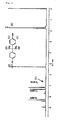
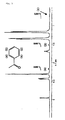
- the end-capping rate of a polyester was calculated from a peak (2) (around 1.75 ppm) of methyl protons of a bisphenol A residue contained in an aromatic polyester, a peak (1) (around 6.73 ppm) of two protons which are at the ortho position to a hydroxyl group that is contained in the bisphenol A residue and is positioned at terminals of the aromatic polyester, a peak (3) (around 7.50 to 7.53 ppm) of two protons of a benzoyl chloride residue which is contained in the bisphenol A residue and is positioned at terminals of the aromatic polyester [protons at the m-position (3- or 5-position) to an ester group], and a peak (4) (around 8.16 to 8.18 ppm) of two protons of a benzoyl chloride residue which is contained in the bisphenol A residue and is positioned at terminals of the
- the peak (2) is an indicator of all of the bisphenol A residues contained in the aromatic polyester
- the peak (1) is an indicaor of the bisphenol A residue contained in the aromatic polyester and having a hydroxyl terminal
- the peaks (3) and (4) are indicators of a bisphenol A residue contained in the aromatic polyester and having a benzoyl terminal.
- the end-capping rate of the polyester was obtained by dividing the sum of the area ratios of the peaks (3) and (4) by the sum of the area ratios of the peaks (3), (4), and (1) and was expressed in percentage.
- the number of bisphenol A residues having hydroxyl terminals is 0.008375 (0.01675/2) from the area ratio of the peak (1).
- the number of bisphenol A residues having benzoyl terminals is 0.04872 [(0.09816+0.09672)/4] from the area ratios of the peaks (3) and (4). These numbers give an end-capping rate of 85.3 % [0.04872 x 100/(0.04872+0.008375)].
- Example 1 the area ratio of the peak (2) around 1.75 ppm is 6.0 (not illustrated), the area ratio of the peak (1) around 6.73 ppm is 0.00415, and the area ratio of the peak (3) around 7.50 to 7.53 ppm and the area ratio of the peak (4) around 8.16 to 8.18 ppm are respectively 0.10648 and 0.13454. Assuming that the entire amount of the bisphenol A residue is 1, the number of bisphenol A residues having hydroxyl terminals is 0.002075 (0.00415/2) from the area ratio of the peak (1).
- the number of bisphenol A residues having benzoyl terminals is 0.060255 [(0.10648+0.13454)/4] from the area ratios of the peaks (3) and (4). These numbers give an end-capping rate of 96.7 % [0.060225 x 100/(0.060225+0.002075)].
- a reaction vessel with a stirrer was prepared and was purged with nitrogen gas. Water (4.4 liters) was then fed into the reaction vessel, and 2,2-bis(4-hydroxyphenyl)propane [bisphenol A] (346 grams,1.515 mol), sodium hydroxide (121 grams, 3.030 mol), and tetra-n-butylammonium bromide (0.977 grams, 0.003 mol) as a catalyst were subsequently added. The resultant product was sufficiently stirred for dissolution. The amount of tetra-n-butylammonium bromide used as a catalyst was 0.2 mol % relative to the total amount of bisphenol A.
- Another vessel with a stirrer was prepared. Methylene chloride (4 liters) was fed into the vessel, and a 1:1 mixture of terephthaloyl dichloride and isophthaloyl dichloride was then added in an amount of 123 grams (0.606 mol). The resultant product was sufficiently stirred for dissolution.
- the entire content in the latter vessel was fed into the former reaction vessel and was then stirred at 25°C for an hour to promote the reaction.
- the entire product in the reaction vessel was transferred to a separatory funnel, and an organic phase was separated.
- An equivalent volume of ion-exchanged water was added to the separated organic phase and was then stirred for 10 minutes.
- the solution was transferred to a separatory funnel, and the aqueous phase was removed. This procedure involving washing of the organic phase with ion-exchanged water was repeated three times, thereby obtaining 4 liters of organic phase (I).
- the organic phase (I) was transferred dropwise into four times in volume of methanol for precipitation of the polymer.
- the precipitated polymer was filtered and was then dried in a vacuum drier under reduced pressure at 120°C for 12 hours, thereby yielding 120 g of aromatic polyester (I).
- a reaction vessel with a stirrer was prepared and purged with nitrogen gas. Water (33 liters) was fed into the reaction vessel, and 2,2-bis(4-hydroxyphenyl)propane [bisphenol A] (1145.5 grams, 5.000 mol), sodium hydroxide (400.0 grams, 10.00 mol), and tetra-n-butylammonium bromide (0.366 grams, 0.001136 mol) as a catalyst were subsequently added. The resultant product was sufficiently stirred for dissolution. The amount of tetra-n-butylammonium bromide used as a catalyst was 0.023 mol% relative to the total amount of bisphenol A.
- Another vessel with a stirrer was prepared. Methylene chloride (30 liters) was fed into the vessel, and a 1:1 mixture of terephthaloyl dichloride and isophthaloyl dichloride was then added in an amount of 922.76 g (4.546 mol) along with benzoyl chloride (77.0 grams, 0.548 mol, 12 mol% relative to the total fed amount of terephthaloyl dichloride and isophthaloyl dichloride). The resultant product was sufficiently stirred and then dissolved.
- the entire content in the latter vessel was fed into the former reaction vessel and was then stirred at 25°C for an hour to promote the reaction.
- the organic phase was separated from the entire solution in the reaction vessel.
- the separated organic phase was returned into a vessel in which an aqueous phase had been removed.
- An equivalent volume of ion-exchanged water was added to the separated organic phase and was then stirred for 10 minutes.
- the aqueous phase was then removed.
- This procedure involving washing of the organic phase with ion-exchanged water was repeated three times, thereby yielding 30 liters of organic phase (II).
- the organic phase (II) was added dropwise into methanol (100 liters) to precipitate the polymer.
- the precipitated polymer was filtered and was then dried in a vacuum drier under reduced pressure at 120°C for 12 hours, thereby producing 1,200 g of aromatic polyester (II).
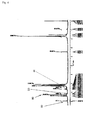
- Fig. 4 illustrates a 1 H-NMR spectrum of the aromatic polyester.
- FT-NMR system JNM-EX270 (trade mark) manufactured by JEOL Ltd. was used. Absorption peaks (7) and (8) ⁇ 4-H around 7 ppm [protons at the p-position (4-position) to the ester group] (unrecognizable in Fig.
- An aromatic polyester was prepared as in Example 1 except that the amount of benzoyl chloride was changed to 0.639 grams [4.5 millimol, 7.5 mol% relative to 0.0606 mol in total of fed terephthaloyl dichloride and isophthaloyl dichloride needed in 1/10-scale preparation of the aromatic polyester (I)].
- An aromatic polyester was prepared as in Example 1 except that the amount of benzoyl chloride was changed to 0.852 grams [6.0 millimol, 10.0 mol% relative to 0.0606 mol in total of fed terephthaloyl dichloride and isophthaloyl dichloride needed in 1/10-scale preparation of the aromatic polyester (I)].
- An aromatic polyester was prepared as in Example 1 except that the amount of benzoyl chloride was changed to 1.064 grams [7.5 millimol, 12.5 mol% relative to 0.0606 mol in total of fed terephthaloyl dichloride and isophthaloyl dichloride needed in 1/10-scale preparation of the aromatic polyester (I)].
- An aromatic polyester was prepared as in Example 1 except that benzoyl chloride was not used [0 mol% relative to 0.0606 mol in total of fed terephthaloyl dichloride and isophthaloyl dichloride needed in 1/10-sclae preparation of the aromatic polyester (I)].
- An aromatic polyester was prepared as in Example 1 except that the amount of benzoyl chloride was changed to 0.213 grams [1.5 millimol, 2.5 mol% relative to 0.0606 mol in total of fed terephthaloyl dichloride and isophthaloyl dichloride needed in 1/10-scale preparation of the aromatic polyester (I)].
- the aromatic polyester (II) (12 grams) and benzoyl chloride [0.213 grams, 1.5 millimol, 3.3 mol% relative to 0.04546 mol in total of fed terephthaloyl dichloride and isophthaloyl dichloride needed in 1/100-scale preparation of the aromatic polyester (II)] were fed into another vessel with a stirrer. The resultant product was sufficiently stirred for dissolution.
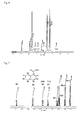
- Fig. 5 illustrates a 1 H-NMR spectrum of the aromatic polyester.
- FT-NMR system JNM-EX270 (trade mark) manufactured by JEOL Ltd. was used. Absorption peaks (7) and (8) ⁇ 4-H around 7 ppm [protons at the p-position (4-position) to the ester group] (unrecognizable in Fig.
- An aromatic polyester was prepared as in Example 5 except that the amount of benzoyl chloride was changed to 0.426 grams [3 millimol, 6.6 mol% relative to 0.04546 mol in total of fed terephthaloyl dichloride and isophthaloyl dichloride needed in 1/100-scale preparation of the aromatic polyester (II)].
- An aromatic polyester was prepared as in Example 5 except that the amount of benzoyl chloride was changed to 0.639 grams [4.5 millimol, 9.9 mol% relative to 0.04546 mol in total of fed terephthaloyl dichloride and isophthaloyl dichloride needed in 1/100-scale preparation of the aromatic polyester (II)].
- An aromatic polyester was prepared as in Example 5 except that the amount of benzoyl chloride was changed to 0.852 grams [6.0 millimol, 13.2 mol% relative to 0.04546 mol in total of fed terephthaloyl dichloride and isophthaloyl dichloride needed in 1/100-scale preparation of the aromatic polyester (II)].
- An aromatic polyester was prepared as in Example 5 except that the amount of benzoyl chloride was changed to 1.064 grams [7.5 millimol, 16.5 mol% relative to 0.04546 mol in total of fed terephthaloyl dichloride and isophthaloyl dichloride needed in 1/100-scale preparation of the aromatic polyester (II)].
- An aromatic polyester was prepared as in Example 5 except that benzoyl chloride was not added [0 mol% relative to 0.04546 mol in total of fed terephthaloyl dichloride and isophthaloyl dichloride needed in 1/100-scale preparation of the aromatic polyester (II)].
- An aromatic polyester was prepared as in Example 5 except that the amount of benzoyl chloride was changed to 0.021 grams [0.15 millimol, 0.33 mol% relative to 0.04546 mol in total of fed terephthaloyl dichloride and isophthaloyl dichloride needed in 1/100-scale preparation of the aromatic polyester (II)].
- An aromatic polyester was prepared as in the preparation of the aromatic polyester (I) except that the amounts of fed bisphenol A, sodium hydride, and tetra-n-butylammonium bromide, respectively, were changed to 37.67 grams (0.165 mol), 14.0 grams (0.35 mol), and 0.01209 grams (0.0375 millimol) and that benzoyl chloride (4.22 grams, 0.03 mol, 20 mol% relative to the total of fed terephthaloyl dichloride and isophthaloyl dichloride) was fed into another vessel, in addition to a 1:1 mixture of terephthaloyl dichloride and isophthaloyl dichloride (30.46 grams, 0.15 mol).
- the entire content in the reaction vessel was transferred to a separatory funnel, and the organic phase was separated.
- An equivalent volume of ion-exchanged water was added to the separated organic phase and was then stirred for 10 minutes.
- the solution was transferred to a separatory funnel, and the aqueous phase was removed. This procedure involving washing of the organic phase with ion-exchanged water was repeated three times, thereby obtaining 1 liters of organic phase (III).
- the organic phase (III) was transferred dropwise into four times in volume of methanol for precipitation of the polymer.
- the precipitated polymer was filtered and was then dried in a vacuum drier under reduced pressure at 120°C for 12 hours, thereby yielding 37.9 grams of aromatic polyester (III).
- the aromatic polyester (III) has a weight average molecular weight Mw of 6,700 and a number average molecular weight Mn of 3,400.
- the weight average molecular weight (Mw), the absorbance (Abs. at 400 nm), the ratio of incorporated benzoyl chloride (BC), the end-capping ratio of polyester (%) (abbreviated to "end-capping rate” in Table 1), the melt flow rate (MFR, g/10 min), and the thermal degradation resistance of the aromatic polyesters prepared in Examples 1 to 9 and Comparative Examples 1 to 5 were determined. The results are listed in Table 1.
- Example 1 Bis-A (mol%) FC (mol%) Step (i) BC amount (mol%) Step (ii) BC amount (mol%) Weight Average Molecular Weight (Mw) Abs (at 400nm) Ratio of Incorporated BC End-capping Rate (%) MFR (g/10min) Thermal Degradation Resistance
- Example 1 250 100 0 5.0 53,000 0.01918 0.060255 96.7 19.02
- Example 2 250 100 0 7.5 50,000 0.01434 0.052063 93.8 50.18
- Example 3 250 100 0 10 50,000 0.02018 0.053805 95.7 66.11
- Example 4 250 100 0 12.5 52,000 0.04403 0.05536 92.7 76.88 G
- Example 5 110 100 12 3.3 29,000 0.02318 0.10721 99.9 9.53
- Example 6 110 100 12 6.6 29,000 0.01612 0.11298 99.9 9.75
- Example 7 110 100 12 9.9 29,000 0.02354 0.11439 99.8 9.60
- Example 8 110 100 12 13.2 2
- Mol% in each item was calculated as a ratio to 100 mol% FC.
- the MFR values were determined under conditions of 320°C and a load of 10.0 kg.
- the MFR values were determined under conditions of 260°C and a load of 10.0 kg.
- Comparative Example 5 a single-step reaction was performed.
- the MFR value was significantly high due to a significantly low weight average molecular weight, and the MFR was not able to be measured even under conditions of 260°C and a load of 10.0 kg.
- a reaction vessel with a stirrer was prepared and was purged with nitrogen gas. Water (1.1 liters) was then fed into the reaction vessel, and 2,2-bis(4-hydroxyphenyl)propane[bisphenol A] (37.67 grams, 0.165 mol), sodium hydroxide (14.0 grams, 0.35 mol), and tetra-n-butylammonium bromide (24.18 milligrams, 0.075 millimol) as a catalyst were subsequently added. The resultant product was sufficiently stirred for dissolution. The amount of tetra-n-butylammonium bromide used as a catalyst was 0.05 mol% relative to the total amount of bisphenol A.
- Another vessel with a stirrer was prepared. Methylene chloride (1 liter) was fed into the vessel, and a 1:1 mixture of terephthaloyl dichloride (15.23 grams, 0.075 mol) and isophthaloyl dichloride (15.23 grams, 0.075 mol) and 1-naphthoyl chloride (8.58 grams, 0.045 mol, 30.0 mol% relative to 0.15 mol of the total amount of fed terephthaloyl dichloride and isophthaloyl dichloride) were then added. The resultant product was sufficiently stirred for dissolution.
- the organic phase was then transferred dropwise into a mixed solvent of methanol (400 liters) and water (25 milliliters) while being stirred for precipitation of the polymer.
- the precipitated polymer was filtered and was then dried in a vacuum drier under reduced pressure at 120°C for 12 hours, thereby yielding an aromatic polyester (5.69 grams).
- the resultant aromatic polyester had a weight average molecular weight of 40,000 and an end-capping rate of 99.6%.
- the MFR value was determined under conditions of 260°C and a load of 10.0 kg and marked a good result of 1.26 g/10min.
- the MFR values were significantly high and were not determined under the conditions of 320°C and a load of 10.0 kg.
- An aromatic polyester was prepared as in Example 10 except that the amount of tetra-n-butylammonium bromide used in the reaction of step (i) was changed to 14.51 milligrams (0.045 millimol) from 24.18 milligrams (0.75 millimol).
- the resultant aromatic polyester had a weight average molecular weight of 24,000 and an end-capping rate of 99.3%.
- the MFR value was determined under conditions of 260°C and a load of 10.0 kg and marked a good result of 22.4 g/10min. The MFR values were significantly high and were not determined under the conditions of 320°C and a load of 10.0 kg.
- the end-capping rates of the aromatic polyesters were analyzed as follows.
- An FT-NMR system JNM-ECA500 (trade mark) manufactured by JEOL Ltd. was used for analysis of the end-capping rate of the polyesters.
- the end-capping rate of the polyester was calculated from a peak (11) (around 7.95 ppm) of one of two protons of a 1-naphthoyl chloride residue which is contained in the bisphenol A residue and is positioned at a terminal of the aromatic polyester ( protons at the 5-position to an ester group) and a peak (12) (around 8.13 ppm) of the other of the two protons (a proton at the 4-position to the ester group), and a peak (13) (around 6.73 ppm) of two protons which are at the ortho position to a hydroxyl group that is contained in the bisphenol A residue and is positioned at a terminal of the aromatic polyester.
- the peak (13) is an indicator of the entire bisphenol A residue contained in the aromatic polyester
- the peaks (11) and (12) are indicators of a bisphenol A residue contained in the aromatic polyester and having a 1-naphthoyl chloride residue terminal.
- the end-capping rate of the polyester was obtained by dividing the sum of the area ratios of the peaks (11) and (12) by the sum of the area ratios of the peaks (11), (12), and (13) and was expressed in percentage.
- Fig. 6 illustrates an NMR spectrum of the aromatic polyester prepared in Example 10.
- the area ratio of the peak (11) around 7.95 ppm is 0.0609
- the area ratio of the peak (12) around 8.13 ppm is 0.0714
- the area ratio of the peak (13) around 6.73 ppm is 0.0005.
- the entire amount of the bisphenol A residue is 1, the number of bisphenol A residues having hydroxyl terminals is 0.00025 (0.0005/2) from the area ratio of the peak (13).
- the number of bisphenol A residues having 1-naphthoyl chloride terminals is 0.06615 [(0.0609+0.0714)/2] from the area ratios of the peaks (11) and (12).
- These numbers give an end-capping rate of 99.6% [0.06615 x 100/(0.06615+0.00025)].
- a compound was prepared as a result of end-capping two hydroxyl groups at the both terminals of 2,2-bis(4-hydroxyphenyl)propane[bisphenol A] with 1-naphthoyl chloride, and assignment of the peaks in the analysis of an end-capping rate in Examples 10 and 11 was determined from NMR analysis of the prepared compound.
- An FT-NMR system JNM-ECA500 (trade mark) manufactured by JEOL Ltd. was used also in this case.
- Fig. 7 illustrates an NMR spectrum and assignment of peaks in that compound.
- the aromatic polyester of the present invention has thermal resistance, is free from coloration during being processed, and has significantly satisfactory optical properties and high flowability.
- the aromatic polyester is accordingly useful for optical applications such as optical fibers, lenses, optical devices, and display substrates.
- the aromatic polyester can be applied to materials for which thermal resistance is especially demanded, such as automobile components and electronic precise components.
Landscapes
- Chemical & Material Sciences (AREA)
- Health & Medical Sciences (AREA)
- Chemical Kinetics & Catalysis (AREA)
- Medicinal Chemistry (AREA)
- Polymers & Plastics (AREA)
- Organic Chemistry (AREA)
- Polyesters Or Polycarbonates (AREA)
Applications Claiming Priority (3)
| Application Number | Priority Date | Filing Date | Title |
|---|---|---|---|
| JP2009213757 | 2009-09-15 | ||
| JP2010190798A JP2011084731A (ja) | 2009-09-15 | 2010-08-27 | 芳香族ポリエステル |
| PCT/JP2010/065535 WO2011033988A1 (ja) | 2009-09-15 | 2010-09-09 | 芳香族ポリエステル |
Publications (1)
| Publication Number | Publication Date |
|---|---|
| EP2479203A1 true EP2479203A1 (en) | 2012-07-25 |
Family
ID=43758596
Family Applications (1)
| Application Number | Title | Priority Date | Filing Date |
|---|---|---|---|
| EP10817101A Withdrawn EP2479203A1 (en) | 2009-09-15 | 2010-09-09 | Aromatic polyester |
Country Status (5)
| Country | Link |
|---|---|
| US (1) | US20120172570A1 (enExample) |
| EP (1) | EP2479203A1 (enExample) |
| JP (1) | JP2011084731A (enExample) |
| TW (1) | TW201114803A (enExample) |
| WO (1) | WO2011033988A1 (enExample) |
Cited By (2)
| Publication number | Priority date | Publication date | Assignee | Title |
|---|---|---|---|---|
| WO2014160333A1 (en) * | 2013-03-13 | 2014-10-02 | Liquid Thermo Plastics, Inc. | Methods for preparation of polyester via base catalysis |
| CN108350162A (zh) * | 2015-11-04 | 2018-07-31 | 三菱瓦斯化学株式会社 | 热塑性树脂的制造方法 |
Families Citing this family (6)
| Publication number | Priority date | Publication date | Assignee | Title |
|---|---|---|---|---|
| US10202487B2 (en) * | 2013-01-24 | 2019-02-12 | Mitsubishi Gas Chemical Company, Inc. | Polyarylate and molded article using same |
| JP6427882B2 (ja) * | 2013-01-24 | 2018-11-28 | 三菱瓦斯化学株式会社 | ポリアリレート及びそれを用いた成形品 |
| JP6655543B2 (ja) * | 2014-10-03 | 2020-02-26 | 株式会社カネカ | ポリカーボネート用およびポリアリレート用流動性向上剤、ポリカーボネート樹脂組成物、ポリアリレート樹脂組成物、並びにその成形品 |
| CN108884308A (zh) * | 2016-04-06 | 2018-11-23 | 株式会社钟化 | 聚碳酸酯树脂组合物及其成型品 |
| EP3848415A4 (en) * | 2019-07-26 | 2021-10-06 | Kinte Materials Science and Technology Co., Ltd. | POLYESTER RESIN AND PROCESS FOR ITS MANUFACTURING, COATING AND WORKPIECE |
| CN115536825A (zh) * | 2022-11-15 | 2022-12-30 | 中国科学院长春应用化学研究所 | 一种氟催化剂催化酸酐和环氧的共聚方法 |
Family Cites Families (5)
| Publication number | Priority date | Publication date | Assignee | Title |
|---|---|---|---|---|
| US4567247A (en) * | 1984-05-17 | 1986-01-28 | Celanese Corporation | Process for forming thermally stable thermotropic liquid crystalline polyesters of predetermined chain length utilizing aromatic hydroxyl monomer and/or aromatic amine monomer |
| JP2004131598A (ja) | 2002-10-10 | 2004-04-30 | Teijin Ltd | 全芳香族ポリエステルカーボネートおよびその製造方法 |
| JP4660183B2 (ja) * | 2004-12-22 | 2011-03-30 | ユニチカ株式会社 | ポリアリレートの製造方法 |
| JP4452258B2 (ja) * | 2006-05-30 | 2010-04-21 | 国立大学法人北海道大学 | ポリエステルからなる光ファイバー |
| JP2008214541A (ja) | 2007-03-06 | 2008-09-18 | Unitika Ltd | ポリアリレートおよびその製造方法 |
-
2010
- 2010-08-27 JP JP2010190798A patent/JP2011084731A/ja active Pending
- 2010-09-09 EP EP10817101A patent/EP2479203A1/en not_active Withdrawn
- 2010-09-09 WO PCT/JP2010/065535 patent/WO2011033988A1/ja not_active Ceased
- 2010-09-09 US US13/496,215 patent/US20120172570A1/en not_active Abandoned
- 2010-09-14 TW TW099130996A patent/TW201114803A/zh unknown
Non-Patent Citations (1)
| Title |
|---|
| See references of WO2011033988A1 * |
Cited By (3)
| Publication number | Priority date | Publication date | Assignee | Title |
|---|---|---|---|---|
| WO2014160333A1 (en) * | 2013-03-13 | 2014-10-02 | Liquid Thermo Plastics, Inc. | Methods for preparation of polyester via base catalysis |
| CN108350162A (zh) * | 2015-11-04 | 2018-07-31 | 三菱瓦斯化学株式会社 | 热塑性树脂的制造方法 |
| CN108350162B (zh) * | 2015-11-04 | 2021-01-15 | 三菱瓦斯化学株式会社 | 热塑性树脂的制造方法 |
Also Published As
| Publication number | Publication date |
|---|---|
| TW201114803A (en) | 2011-05-01 |
| WO2011033988A1 (ja) | 2011-03-24 |
| JP2011084731A (ja) | 2011-04-28 |
| US20120172570A1 (en) | 2012-07-05 |
Similar Documents
| Publication | Publication Date | Title |
|---|---|---|
| US20120172570A1 (en) | Aromatic polyester | |
| EP2152777B1 (en) | Process for the preparation of copolyesters based on 2,2,4,4-tetramethyl-1,3-cyclobutanediol and 1,4-cyclohexandimethanol | |
| US8586701B2 (en) | Process for the preparation of copolyesters based on 2,2,4,4-tetramethyl-1,3-cyclobutanediol and 1,4-cyclohexanedimethanol | |
| TW201231497A (en) | Polyester resin composition and preparing method thereof | |
| KR100733642B1 (ko) | 폴리트리메틸렌 테레프탈레이트의 제조방법 | |
| KR100418170B1 (ko) | 열가소성폴리에스테르의연속제조방법 | |
| US8129493B2 (en) | Aromatic polyester | |
| KR20250065313A (ko) | 투명성 및 열적 특성이 개선된 폴리에스테르 및 그 제조방법 | |
| JP5330447B2 (ja) | 芳香族ポリエステルの製造方法 | |
| JP4452258B2 (ja) | ポリエステルからなる光ファイバー | |
| EP3585828B1 (en) | Process for preparing poly(alkylene furandicarboxylate) | |
| JPS648025B2 (enExample) | ||
| EP0802938A1 (en) | Process for producing polyethylene naphthalate | |
| JP2010254862A (ja) | 芳香族ポリエステル及びその製造方法 | |
| KR20110096045A (ko) | 무수 트리멜리트산 아릴에스테르의 제조방법 | |
| JP2002293944A (ja) | ポリアリレートの製造方法 | |
| US20110224343A1 (en) | Modifier for aromatic polyester and aromatic polyester resin composition comprising the same | |
| JP4832559B2 (ja) | ポリエステル及びその製造法 | |
| TW201209074A (en) | Aromatic polyester and manufacturing method thereof | |
| JP2008255261A (ja) | 芳香族ポリエステルペレットの製造法 | |
| WO2012017540A1 (ja) | 芳香族ポリエステル及びその製造方法 | |
| JP2011157556A (ja) | ポリエステル及びその製造法 | |
| JP2008255264A (ja) | 芳香族ポリエステルペレットの製造法 | |
| JP2008255265A (ja) | 芳香族ポリエステルペレットの製造法 | |
| JP2008255262A (ja) | 芳香族ポリエステルペレットの製造法 |
Legal Events
| Date | Code | Title | Description |
|---|---|---|---|
| PUAI | Public reference made under article 153(3) epc to a published international application that has entered the european phase |
Free format text: ORIGINAL CODE: 0009012 |
|
| 17P | Request for examination filed |
Effective date: 20120326 |
|
| AK | Designated contracting states |
Kind code of ref document: A1 Designated state(s): AL AT BE BG CH CY CZ DE DK EE ES FI FR GB GR HR HU IE IS IT LI LT LU LV MC MK MT NL NO PL PT RO SE SI SK SM TR |
|
| DAX | Request for extension of the european patent (deleted) | ||
| STAA | Information on the status of an ep patent application or granted ep patent |
Free format text: STATUS: THE APPLICATION HAS BEEN WITHDRAWN |
|
| 18W | Application withdrawn |
Effective date: 20130924 |