EP2449129B1 - Verfahren zur bestimmung des vorhandenseins und/oder der konzentration eines analyts in einer probe - Google Patents
Verfahren zur bestimmung des vorhandenseins und/oder der konzentration eines analyts in einer probe Download PDFInfo
- Publication number
- EP2449129B1 EP2449129B1 EP10794686.5A EP10794686A EP2449129B1 EP 2449129 B1 EP2449129 B1 EP 2449129B1 EP 10794686 A EP10794686 A EP 10794686A EP 2449129 B1 EP2449129 B1 EP 2449129B1
- Authority
- EP
- European Patent Office
- Prior art keywords
- analyte
- receptor
- indicator
- citrate
- complex
- Prior art date
- Legal status (The legal status is an assumption and is not a legal conclusion. Google has not performed a legal analysis and makes no representation as to the accuracy of the status listed.)
- Not-in-force
Links
Images



Classifications
-
- C—CHEMISTRY; METALLURGY
- C12—BIOCHEMISTRY; BEER; SPIRITS; WINE; VINEGAR; MICROBIOLOGY; ENZYMOLOGY; MUTATION OR GENETIC ENGINEERING
- C12Q—MEASURING OR TESTING PROCESSES INVOLVING ENZYMES, NUCLEIC ACIDS OR MICROORGANISMS; COMPOSITIONS OR TEST PAPERS THEREFOR; PROCESSES OF PREPARING SUCH COMPOSITIONS; CONDITION-RESPONSIVE CONTROL IN MICROBIOLOGICAL OR ENZYMOLOGICAL PROCESSES
- C12Q1/00—Measuring or testing processes involving enzymes, nucleic acids or microorganisms; Compositions therefor; Processes of preparing such compositions
-
- G—PHYSICS
- G01—MEASURING; TESTING
- G01N—INVESTIGATING OR ANALYSING MATERIALS BY DETERMINING THEIR CHEMICAL OR PHYSICAL PROPERTIES
- G01N33/00—Investigating or analysing materials by specific methods not covered by groups G01N1/00 - G01N31/00
- G01N33/48—Biological material, e.g. blood, urine; Haemocytometers
- G01N33/50—Chemical analysis of biological material, e.g. blood, urine; Testing involving biospecific ligand binding methods; Immunological testing
- G01N33/84—Chemical analysis of biological material, e.g. blood, urine; Testing involving biospecific ligand binding methods; Immunological testing involving inorganic compounds or pH
-
- G—PHYSICS
- G01—MEASURING; TESTING
- G01N—INVESTIGATING OR ANALYSING MATERIALS BY DETERMINING THEIR CHEMICAL OR PHYSICAL PROPERTIES
- G01N35/00—Automatic analysis not limited to methods or materials provided for in any single one of groups G01N1/00 - G01N33/00; Handling materials therefor
- G01N35/08—Automatic analysis not limited to methods or materials provided for in any single one of groups G01N1/00 - G01N33/00; Handling materials therefor using a stream of discrete samples flowing along a tube system, e.g. flow injection analysis
- G01N35/085—Flow Injection Analysis
Definitions
- Continuous renal replacement therapy is a form of extracorporeal blood treatment (EBT) that is performed in the intensive care unit (ICU) for patients with acute renal failure (ARF) or end-stage renal disease (ESRD), who are often hemodynamically unstable with multiple co-morbidities.
- EBT extracorporeal blood treatment
- ICU intensive care unit
- ESRD end-stage renal disease
- CVVH continuous veno-venous hemofiltration
- blood is pumped through a hemofilter and uremic toxin-laden plasma ultrafiltrate is discarded at a rate of 1-10 liters per hour (convective removal of solutes).
- sterile crystalloid solution replacement fluid, CRRT fluid
- physiological electrolyte and base concentrations are simultaneously infused into the blood circuit either before the hemofilter (pre-dilution) or after the hemofilter (post-dilution) to avoid volume depletion and hemodynamic collapse.
- CVVH is the closest of all available renal replacement therapy (RRT) modalities today to replicate the function of the native kidneys and the preferred treatment modality for critically ill patients with renal failure. Nevertheless, 90% of RRT in the ICU is performed as intermittent hemodialysis (IHD), sustained low efficiency dialysis (SLED), or sometimes as continuous veno-venous hemo-diafiltration (CVVHDF). Common to all of these latter methods of RRT is that the removal of most solutes is predominantly by the process of diffusion from blood plasma through the membrane of the hemofilter into the dialysis fluid. Diffusion is less efficient in the removal of larger solutes and also provides less predictable small solute movement than convection and therefore, from a theoretical standpoint, CVVH is a superior method of RRT.
- IHD intermittent hemodialysis
- SLED sustained low efficiency dialysis
- CVVHDF continuous veno-venous hemo-diafiltration
- CVVH cardiovascular disease
- the anticoagulant effect can be fully reversed by the local infusion of free ionized calcium into the venous (return) limb of the EBC. Therefore, theoretically, regional citrate anticoagulation can be both very powerful and fully reversible without systemic (intra-patient) bleeding tendencies.
- the patient's systemic plasma citrate level can fluctuate in the 0-3 mmol/L range depending on the body metabolism of citrate. Since an accumulation of systemic citrate to 3 mM could result in significant systemic ionized hypocalcemia unless the calcium infusion is increased to proportionally increase the plasma total calcium level, it is necessary to monitor the systemic citrate and total calcium levels.
- the effluent fluid contains a wealth of information on the patient's plasma solute composition. This fluid is a clear crystalloid with a small amount of albumin, small peptides, and cytokines also present. The transparency and minimal viscosity of the effluent fluid provide for an ideal environment for an optical- and/or chemical sensor array. However, in current clinical practice, it is discarded without any further analysis.
- hypomagnesemia may lead to weakness, muscle cramps, cardiac arrhythmia, increased irritability of the nervous system with tremors, athetosis, jerking, nystagmus and an extensor plantar reflex.
- a 2.5:1 molar ratio between total plasma calcium and total plasma magnesium is usually maintained by using a high-Mg commercial replacement fluid. Phosphate losses can also be very large and can quickly lead to severe hypophosphatemia with high daily clearance goals during CVVH unless phosphate is added to the CRRT replacement fluid.
- the present disclosure relates generally to methods of determining the presence and/or concentration level of an analyte in a sample as set out in the claims. More particularly, in some embodiments, the present disclosure relates to methods of measuring the concentration of citrate, ionized calcium, magnesium and/or phosphate in a sample.
- the present disclosure provides a method for continuous, real-time monitoring of concentration levels of an analyte in a biological fluid comprising an extracorporeal blood circuit effluent fluid produced on a hemofilter or a dialyzer device with hemofiltration or dialysis or any combination of these two processes, the method comprising: providing an analyte; providing an analyte receptor and an indicator, wherein at least a portion of the analyte receptor and the indicator form a receptor/indicator complex; contacting the receptor/indicator complex with the analyte; and allowing the analyte to interact with the receptor/indicator complex so as to generate a detectable signal; and detecting the signal by using a Flow Injection Analysis instrument.
- the present disclosure provides a system for continuous, real-time monitoring of concentration levels of an analyte in a biological fluid comprising an extracorporeal blood circuit effluent fluid produced on a hemofilter or a dialyzer device with hemofiltration or dialysis or any combination of these two processes, the system comprising: a receptor/indicator complex comprising an analyte receptor and an indicator; and an analyte, wherein the analyte will displace the indicator in the receptor/indicator complex; and wherein the displaced indicator will generate a detectable signal; and a Flow Injection Analysis instrument.
- the present disclosure relates generally to methods of determining the presence and/or concentration level of an analyte in a sample as set out in the claims. More particularly, in some embodiments, the present disclosure relates to methods of determining the presence and/or concentration level of citrate, ionized calcium, magnesium and/or phosphate in a sample.
- the present disclosure provides a method for continuous, real-time monitoring of concentration levels of an analyte in a biological fluid comprising an extracorporeal blood circuit effluent fluid produced on a hemofilter or a dialyzer device with hemofiltration or dialysis or any combination of these two processes, the method comprising: providing an analyte; providing an analyte receptor and an indicator, wherein at least a portion of the analyte receptor and the indicator form a receptor/indicator complex; contacting the receptor/indicator complex with the analyte; and allowing the analyte to interact with the receptor/indicator complex so as to generate a detectable signal; and detecting the signal by using a Flow Injection Analysis instrument.
- the analyte displaces at least a portion of the indicator in the receptor/indicator complex to form a receptor/analyte complex. In other embodiments, the analyte may bind to the receptor/indicator complex.
- the present disclosure provides methods that may solve many of the clinical problems associated with CVVH or similar procedures by providing methods that enable the monitoring of analyte concentration levels, such as citrate, calcium, magnesium and phosphate, in real time.
- the methods may provide a warning of any change in systemic analyte levels so as to prompt the monitoring personnel to review and adjust the treatment settings to ensure the safe continuation of the CVVH or similar procedure.
- the methods of the present disclosure may provide information for the fine-tuning of dosages, including calcium plus magnesium dosing, and also monitor the metabolic function of the liver through monitoring the rate of citrate metabolism.
- the goals of the present disclosure may be achieved by providing a method to measure the concentration levels of an analyte, such as citrate and/or ionized calcium (e.g., free and/or total ionized calcium) in a sample, such as a bodily fluid.
- an analyte such as citrate and/or ionized calcium (e.g., free and/or total ionized calcium) in a sample, such as a bodily fluid.
- a receptor and an indicator may be provided in the filter effluent fluid line during CVVH. This allows for the indirect measurement of the analyte level in the patient's systemic blood.
- the methods of the present disclosure may utilize an indicator displacement assay (IDA) for the quantification of an analyte, such as citrate or a different analyte.
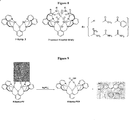
- Figure 1 contains an image depicting an IDA, according to one embodiment of the present disclosure.
- IDA is a process in which an analyte receptor is initially allowed to form a weakly associated complex with an indicator, such as a chromophore or fluorophore, and reach an equilibrium. This equilibrium will be affected when an analyte bearing better structural complimentarity to the receptor than the indicator, is introduced into the system. The receptor/indicator complex will start to diminish allowing the receptor/analyte complex to form.
- the indicator in the cavity of the receptor will be released. Due to the variation of the chemical environment of the indicator, its output signal, usually absorption or emission spectra will be modified. This change may be conveniently used in analysis of the analyte concentration provided necessary parameters describing the related equilibria are known.
- the present disclosure provides for the detection of an analyte by allowing the analyte to bind to a receptor/indicator complex. After analyte binding, a detectable signal is produced.
- Figure 2 contains an image depicting the binding of ionized calcium to the receptor/indicator complex, Fura-2.
- the success of the methods of the present disclosure depend, at least in part, upon the affinity of the receptor or the receptor/indicator complex to bind to the analyte.
- a variety of different receptors may be used.
- the receptor is based upon a 2,4,6-triethylbenzene core.
- the receptor can use any scaffold that brings together the functional groups.
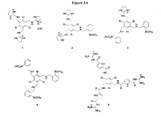
- Various functional groups including but not limited to guanidinium and phenylboronic acids, are substituted in the 1, 3, and 5 positions. Guanidinium is a favorable functional group because its geometry is conducive for the binding of carboxylates present in citrate and it remains protonated over a wide range pH range.
- Phenylboronic acid can form robust boronate ester with the ⁇ -hydroxy carboxylate moiety of citrate via covalent bonds and represents another favorable functional group for citrate binding.
- Figures 3A and 3B illustrate several representative citrate receptors. Each of these citrate receptors can be easily synthesized by one of skill in the art. Initial trials have shown that Receptor 2 may be a preferred receptor for citrate. The interactions between the citrate receptor and glucose, fructose, or lactate are insignificant enough to be neglected. Other compounds or ions such as bicarbonate, chloride, phosphate and ⁇ -hydroxybutyrate are also expected to cause no interferences.
- the analyte is calcium
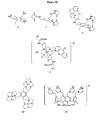
- Ca 2+ receptors (only some of which are shown in Figure 4 ) may be used and are now commercially available from different vendors. Many of them have the common EDTA-mimicking moiety, which forms a stable complex with Ca 2+ in solution. When such a moiety is appended to a chromophore or fluorophore, modified spectroscopic properties occur after complexation.
- the calcium receptor may be Fura-2, which is commercially available from Invitrogen. Owing to its high complexation constant with Ca 2+ , Fura-2 could extract the Ca 2+ from the complexes with competing anions, such as citrate 3- , PO 4 3- , etc.
- Fura-2 shows high selectivity toward Ca 2+ over other ions such as Mg 2+ , Na + , K + , etc.
- the absorption band of Fura-2 is centered at 273 nm. This allows for the detection of Ca 2+ to take place essentially free from interferences caused by residual proteins in the dialysis fluid, which produce absorption generally below 330 nm.
- analyte is magnesium
- Mg 2+ receptors may be used. As would be recognized by one of skill in the art, most current commercially available Mg 2+ receptors show higher affinity towards Ca 2+ . Therefore, when choosing an appropriate Mg 2+ receptor, receptors that show an affinity to Mg 2+ over Ca 2+ may be selected.
- a suitable Mg 2+ receptor may include those receptors shown in Figure 5 .
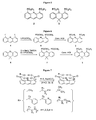
- Receptors 2 and 3 may be synthesized from the corresponding acridine or xanthene precursors, as shown in Figure 6 .
- the two fluorine atoms of 4,5-difluoroacridine (4) may be displaced via SN AR mechanism when treated with an appropriate nucleophile. It was reported that negatively charged phophorous species displace fluorine atoms while neutral phosphine does conjugate addition at C-9.
- Double ortho-lithiation of 9,9-dimethylxanthene (6) is effected by refluxing with n-BuLi and TMEDA in pentane for 10 mins.
- phosphate receptors with various degrees of selectivity are known in the art.
- a suitable phosphate receptor may include those receptors shown in Figure 8 .
- a preferred embodiment uses H-bpmp as reported in ( Han, M. S. et. al. Angew. Chem., Int. Ed. 2002, 41, 3809-3811 ) because it is reported to display selectivity over common anions, such as chloride, bicarbonates, nitrates, etc.
- the receptor may be synthesized by following the literature procedures.
- a sensing mechanism according to one embodiments is shown in Figure 9 .
- PV Pyrocatechol violet
- Indicators that are suitable for use in the present disclose include those indicators that are capable of producing a detectable signal when displaced from a receptor/indicator complex by an analyte or those that are capable of producing a detectable signal when an analyte is bound to the receptor/indicator complex.
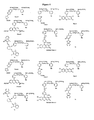
- suitable indicators include, but are not limited to, a chromophore, a fluorophore, alizarin complexone, 5-carboxyfluorescein, pyrocatechol violet, and xylenol orange.
- Figure 11 illustrates some representative indicators, which are featured with either a catechol moiety or multiple anionic residues.
- alizarin complexone is used as the indicator for analysis of citrate concentrations.
- Alizarin complexone displays a relatively high binding affinity with Receptor 2 originating from the reversible boronic acid/diol interaction. This interaction between receptor and indicator is strong enough to allow the receptor/indicator complex to form to a great extent thus a large spectral change is attained. This is particularly advantageous in minimizing the errors when performing the citrate concentrate measurement activities. However, the strength of the association is still moderate enough to allow the indicator to be displaced by citrate to essentially completion.
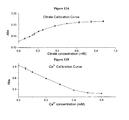
- a calibration curve may be created by plotting the absorbance of a particular wavelength of light at known concentrations of citrate or another analyte. Figures 12A and 12B show representative calibration curves for citrate and calcium. Later, the concentration of an unknown sample may be determined simply by checking the UV-Vis absorption and comparing to the established calibration curve. It is important to account for temperature, however, as temperature affects the equilibrium significantly. Changes of room temperature during the analysis may lead to biased results.
- a detectable signal After a detectable signal has been generated, the signal is detected through the use of a Flow Injection Analysis (FIA) instrument.
- a Sequential Injection Analysis (SIA) System from Ocean Optics, Inc. may be used.
- this method of detection may be particularly advantageous as a general UV/vis spectrophotomer is quite space demanding.
- the SIA System has dimensions of 5"x6"x6" and weighs about 8 lbs. It can also automate liquid transferring and mixing with precise control of volumes with the aid of a personal computer. A build-in compact UV-Vis photometer can then acquire the absorption spectra and the obtained data can be simultaneously analyzed.
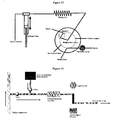
- the working principle of this SIA instrument is shown in Figure 13 .
- sensing solution and dialysis fluid is aspirated into the mixing coil before further pushed into the built-in flowcell for optical signal measurement.
- This SIA device allows intermittent measurements to be done in an automatic fashion.
- the frequency can be as fast as 1 minute or so depending on the programs for a specific application.
- an instrument based on the FIA working principle depicted in Figure 14 may be used to measure in a continuous, real-time fashion.
- dialysis fluid to be tested is pumped into a line leading to the Flow-Injection-Analysis (FIA) instrument at a steady speed.
- An aliquot of sensing ensemble stock solution for a certain analyte, e.g., Ca 2+ , citrate, magnesium, phosphate, etc. is pumped into the line to get mixed with the dialysis fluid and induce an optical signal, which is collected by various detectors, e.g., UV-Vis spectrophotometer, CCD cameras, etc.
- optical signals are generally preferred, other methods may be considered as well if they are advantageous in certain circumstances, including but not limited to near-infrared spectroscopy, Raman spectroscopy, Potentiometry, etc).
- a degassing module could be of use in case gas bubbles are generated during mixing.
- aqueous solution containing all the essential components of a typical dialysis fluid, except for citrate, Ca 2+ , Mg 2+ and CO 2 is prepared.
- a 100 mM HEPES buffer with pH at 7.40 is prepared from the above stock solution.
- the citrate sensing ensemble is prepared as following: 1) mixing 75 mL of MeOH and 25 mL HEPES buffer, 2) dissolving the particular amount of citrate Receptor 2 and alizarin complexone to make their concentrations 100 ⁇ M and 250 ⁇ M respectively.
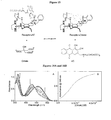
- alizarin complexone Upon the addition of citrate into the sensing ensemble, alizarin complexone is displaced from the cavity of Receptor 2, yielding to the larger affinity constant between Receptor 2 and citrate. Besides the boronic acid/diol interaction, charge pairing provides an extra driving force for the complexation between the citrate and the Receptor 2 ( Figure 15 ).
- Figure 16A demonstrates the change in the absorption spectra of Alizarin complexone when in and outside of the receptor cavity. As the citrate concentration increases, absorption maxima of alizarin complexone at 337 nm and 540 nm increase while the maximum at 447 nm decreases. A calibration curve is made by plotting the solution absorbance at 540 nm vs. the corresponding citrate concentration ( Figure 16B ).
- a solution of Fura-2 at 25 ⁇ M is prepared using the stock solution mentioned above. An aliquot of sample containing Ca 2+ is added and changes in the UV-Vis spectrum are observed. As the Ca 2+ concentration increases, the absorption maxima at 373 nm decreases while the maximum at 330 nm increases ( Figure 17A ). A calibration curve is made by plotting the solution absorbance at 373 nm vs. the corresponding Ca 2+ concentration ( Figure 17B ). The Ca 2+ concentration of an unknown sample may be obtained by its addition into the Fura-2 solution, checking the absorbance at 373 nm and comparing to the calibration curve.
- Fura-2 displays such a high binding constant with Ca 2+ that: 1) Mg 2+ , another prevalent divalent cation present in the dialysate fluid, doesn't interfere, 2) citrate, which has a relatively weak binding affinity to Ca 2+ , doesn't displace Fura-2 in Ca 2+ binding.
- Stdev standard deviation of the absorbance data from multiple replicates.
- VC coefficient of variation calculated by Stdev/Abs.
- Conc the concentration of the analyte of the interest in the original ICU samples in the unit of millimolar. ICU samples are diluted with equal amount of 10mM HEPES buffer at pH 7.4 prior to the Ca 2+ measurements. ICU samples are diluted with 3 volumes of 100mM HEPES buffer at pH 7.4 and 12 volume of MeOH prior to the citrate measurements.
Landscapes
- Life Sciences & Earth Sciences (AREA)
- Chemical & Material Sciences (AREA)
- Health & Medical Sciences (AREA)
- Engineering & Computer Science (AREA)
- Organic Chemistry (AREA)
- Molecular Biology (AREA)
- Immunology (AREA)
- General Health & Medical Sciences (AREA)
- Biomedical Technology (AREA)
- Proteomics, Peptides & Aminoacids (AREA)
- Microbiology (AREA)
- Urology & Nephrology (AREA)
- Analytical Chemistry (AREA)
- Wood Science & Technology (AREA)
- Zoology (AREA)
- Biochemistry (AREA)
- Hematology (AREA)
- Biotechnology (AREA)
- Physics & Mathematics (AREA)
- Cell Biology (AREA)
- Pathology (AREA)
- Genetics & Genomics (AREA)
- General Engineering & Computer Science (AREA)
- Bioinformatics & Cheminformatics (AREA)
- Biophysics (AREA)
- Food Science & Technology (AREA)
- Medicinal Chemistry (AREA)
- General Physics & Mathematics (AREA)
- Inorganic Chemistry (AREA)
- Investigating Or Analysing Biological Materials (AREA)
- External Artificial Organs (AREA)
- Investigating Or Analysing Materials By The Use Of Chemical Reactions (AREA)
- Automatic Analysis And Handling Materials Therefor (AREA)
- Investigating Or Analyzing Non-Biological Materials By The Use Of Chemical Means (AREA)
- Investigating Or Analysing Materials By Optical Means (AREA)
- Measurement Of The Respiration, Hearing Ability, Form, And Blood Characteristics Of Living Organisms (AREA)
Claims (12)
- Verfahren zur kontinuierlichen Echtzeitüberwachung von Konzentrationsspiegeln eines Analyts in einem biologischen Fluid, das ein Ablauffluid eines extrakorporalen Blutkreislaufs umfasst, das an einem Hämofilter oder einer Dialysevorrichtung mit Häfiltration oder Dialyse oder einer Kombination von diesen beiden Verfahren produziert wurde, wobei das Verfahren kontinuierlich umfasst:Bereitstellen eines biologischen Fluids, das einen Analyt umfasst;Bereitstellen eines Analytrezeptors und eines Indikators, wobei mindestens ein Teil des Analytrezeptors und des Indikators einen Rezeptor/Indikator-Komplex bilden;Inkontaktbringen des Rezeptor/Indikator-Komplexes mit dem Analyt;Ermöglichen einer Wechselwirkung des Analyts mit dem Rezeptor/Indikator-Komplex derart, dass ein detektierbares Signal erzeugt wird; undDetektieren des Signals unter Verwendung eines Fließinjektionsanalyse-Instruments.
- System zur kontinuierlichen Echtzeitüberwachung von Konzentrationsspiegeln eines Analyts in einem biologischen Fluid, das ein Ablauffluid eines extrakorporalen Blutkreislaufs umfasst, das an einem Hämofilter oder einer Dialysevorrichtung mit Hämofiltration oder Dialyse oder einer Kombination von diesen beiden Verfahren produziert wurde, wobei das System umfasst:einen Rezeptor/Indikator-Komplex, der einen Analytrezeptor und einen Indikator umfasst; undeinen Analyt, wobei der Analyt den Indikator in dem Rezeptor/Indikator-Komplex verdrängt; und wobei der verdrängte Indikator ein detektierbares Signal erzeugt; undein Fließinjektionsanalyse-Gerät.
- Verfahren nach Anspruch 1 oder System nach Anspruch 2, wobei das biologische Fluid ein Ablauffluid eines extrakorporalen Blutkreislaufs, das an einem Hämofilter oder einer Dialysevorrichtung mit Hämofiltration oder Dialyse oder einer Kombination von diesen beiden Verfahren produziert wurde, umfasst.
- Verfahren nach Anspruch 1 oder 3, wobei der Konzentrationsspiegel des Analyts in dem biologischen Fluid überwacht wird.
- Verfahren nach Anspruch 1, 3 oder 4, das ferner eine Korrelation des detektierbaren Signals mit einer Eichkurve zum Bestimmen einer Konzentration des Analyts umfasst.
- Verfahren nach Anspruch 1 oder System nach Anspruch 2, wobei der Analyt aus der Gruppe von ionisiertem Calcium, Citrat, Phosphat und Magnesium ausgewählt ist.
- Verfahren nach Anspruch 1 oder System nach Anspruch 2, wobei das Ermöglichen einer Wechselwirkung des Analyts mit dem Rezeptor/Indikator-Komplex das Ermöglichen des Verdrängens von mindestens einem Teil des Indikators in dem Rezeptor/Indikator-Komplex durch den Analyt unter Bildung eines Rezeptor/Analyt-Komplexes umfasst.
- Verfahren nach Anspruch 1 oder System nach Anspruch 2, wobei das Ermöglichen einer Wechselwirkung des Analyts mit dem Rezeptor/Indikator-Komplex das Ermöglichen einer Bindung des Analyts an den Rezeptor/Indikator-Komplex umfasst.
- Verfahren nach Anspruch 1 oder System nach Anspruch 2, wobei der Indikator mindestens einen Indikator umfasst, der aus der Gruppe von einem Chromophor, einem Fluorophor, Alizarin-Komplexon, 5-Carboxyfluorescein, Brenzcatechinviolett und Xylenolorange ausgewählt ist.
- Verfahren nach Anspruch 1 oder System nach Anspruch 2, wobei der Analyt Phosphat und Citrat umfasst.
- Verfahren nach Anspruch 10, das ferner die Verwendung einer mathematischen Behandlung zur Extrapolation der Konzentration von Phosphat und Citrat umfasst.
- Verfahren nach Anspruch 11, wobei die mathematische Behandlung ein künstliches neuronales Netz (KNN) umfasst.
Applications Claiming Priority (2)
| Application Number | Priority Date | Filing Date | Title |
|---|---|---|---|
| US22228509P | 2009-07-01 | 2009-07-01 | |
| PCT/US2010/040543 WO2011002850A1 (en) | 2009-07-01 | 2010-06-30 | Methods of determining the presence and/or concentration of an analyte in a sample |
Publications (3)
| Publication Number | Publication Date |
|---|---|
| EP2449129A4 EP2449129A4 (de) | 2012-05-09 |
| EP2449129A1 EP2449129A1 (de) | 2012-05-09 |
| EP2449129B1 true EP2449129B1 (de) | 2014-04-16 |
Family
ID=43411421
Family Applications (1)
| Application Number | Title | Priority Date | Filing Date |
|---|---|---|---|
| EP10794686.5A Not-in-force EP2449129B1 (de) | 2009-07-01 | 2010-06-30 | Verfahren zur bestimmung des vorhandenseins und/oder der konzentration eines analyts in einer probe |
Country Status (6)
| Country | Link |
|---|---|
| US (1) | US20120115248A1 (de) |
| EP (1) | EP2449129B1 (de) |
| JP (2) | JP5823389B2 (de) |
| AU (1) | AU2010266335A1 (de) |
| CA (1) | CA2766597A1 (de) |
| WO (1) | WO2011002850A1 (de) |
Families Citing this family (63)
| Publication number | Priority date | Publication date | Assignee | Title |
|---|---|---|---|---|
| WO2006086490A1 (en) | 2005-02-07 | 2006-08-17 | Medtronic, Inc. | Ion imbalance detector |
| EP2262551A1 (de) | 2008-03-10 | 2010-12-22 | S.E.A. Medical Systems, Inc. | Intravenöse flüssigkeitsüberwachung |
| US9052276B2 (en) | 2009-06-08 | 2015-06-09 | S.E.A. Medical Systems, Inc. | Systems and methods for the identification of compounds using admittance spectroscopy |
| US9399091B2 (en) | 2009-09-30 | 2016-07-26 | Medtronic, Inc. | System and method to regulate ultrafiltration |
| US9456755B2 (en) | 2011-04-29 | 2016-10-04 | Medtronic, Inc. | Method and device to monitor patients with kidney disease |
| US9561316B2 (en) | 2011-04-29 | 2017-02-07 | Medtronic, Inc. | Intersession monitoring for blood fluid removal therapy |
| US9848778B2 (en) | 2011-04-29 | 2017-12-26 | Medtronic, Inc. | Method and device to monitor patients with kidney disease |
| CN103889481B (zh) | 2011-08-02 | 2016-03-09 | 美敦力公司 | 带有具有可控的顺应性容积的流动路径的血液透析系统 |
| US10857277B2 (en) | 2011-08-16 | 2020-12-08 | Medtronic, Inc. | Modular hemodialysis system |
| US9713668B2 (en) | 2012-01-04 | 2017-07-25 | Medtronic, Inc. | Multi-staged filtration system for blood fluid removal |
| US10905816B2 (en) | 2012-12-10 | 2021-02-02 | Medtronic, Inc. | Sodium management system for hemodialysis |
| US11154648B2 (en) | 2013-01-09 | 2021-10-26 | Medtronic, Inc. | Fluid circuits for sorbent cartridge with sensors |
| US11565029B2 (en) | 2013-01-09 | 2023-01-31 | Medtronic, Inc. | Sorbent cartridge with electrodes |
| US9707328B2 (en) | 2013-01-09 | 2017-07-18 | Medtronic, Inc. | Sorbent cartridge to measure solute concentrations |
| US9713666B2 (en) | 2013-01-09 | 2017-07-25 | Medtronic, Inc. | Recirculating dialysate fluid circuit for blood measurement |
| US10850016B2 (en) | 2013-02-01 | 2020-12-01 | Medtronic, Inc. | Modular fluid therapy system having jumpered flow paths and systems and methods for cleaning and disinfection |
| US9623164B2 (en) | 2013-02-01 | 2017-04-18 | Medtronic, Inc. | Systems and methods for multifunctional volumetric fluid control |
| US10543052B2 (en) | 2013-02-01 | 2020-01-28 | Medtronic, Inc. | Portable dialysis cabinet |
| US10010663B2 (en) | 2013-02-01 | 2018-07-03 | Medtronic, Inc. | Fluid circuit for delivery of renal replacement therapies |
| US9526822B2 (en) | 2013-02-01 | 2016-12-27 | Medtronic, Inc. | Sodium and buffer source cartridges for use in a modular controlled compliant flow path |
| US9827361B2 (en) * | 2013-02-02 | 2017-11-28 | Medtronic, Inc. | pH buffer measurement system for hemodialysis systems |
| US9144640B2 (en) | 2013-02-02 | 2015-09-29 | Medtronic, Inc. | Sorbent cartridge configurations for improved dialysate regeneration |
| US20160018347A1 (en) * | 2013-03-11 | 2016-01-21 | S.E.A. Medical Systems, Inc. | Designs, systems, configurations, and methods for immittance spectroscopy |
| EP3102107A4 (de) | 2013-11-04 | 2018-02-07 | Medtronic, Inc. | Verfahren und vorrichtung zur verwaltung von fluidvolumina im körper |
| US10537875B2 (en) | 2013-11-26 | 2020-01-21 | Medtronic, Inc. | Precision recharging of sorbent materials using patient and session data |
| US9884145B2 (en) | 2013-11-26 | 2018-02-06 | Medtronic, Inc. | Parallel modules for in-line recharging of sorbents using alternate duty cycles |
| ES3040293T3 (en) | 2013-11-27 | 2025-10-29 | Mozarc Medical Us Llc | Precision dialysis monitoring and synchonization system |
| US10172991B2 (en) | 2014-06-24 | 2019-01-08 | Medtronic, Inc. | Modular dialysate regeneration assembly |
| US10357757B2 (en) | 2014-06-24 | 2019-07-23 | Medtronic, Inc. | Stacked sorbent assembly |
| US9895479B2 (en) | 2014-12-10 | 2018-02-20 | Medtronic, Inc. | Water management system for use in dialysis |
| US10098993B2 (en) | 2014-12-10 | 2018-10-16 | Medtronic, Inc. | Sensing and storage system for fluid balance |
| US10874787B2 (en) | 2014-12-10 | 2020-12-29 | Medtronic, Inc. | Degassing system for dialysis |
| US9713665B2 (en) | 2014-12-10 | 2017-07-25 | Medtronic, Inc. | Degassing system for dialysis |
| US10335534B2 (en) | 2015-11-06 | 2019-07-02 | Medtronic, Inc. | Dialysis prescription optimization for decreased arrhythmias |
| ES2927062T3 (es) | 2016-03-14 | 2022-11-02 | Lucira Health Inc | Dispositivos y procedimientos para modificar propiedades ópticas |
| DK3429543T3 (da) | 2016-03-14 | 2025-01-27 | Pfizer | Selektivt ventilerede biologiske analyseanordninger og tilhørende fremgangsmåder |
| AU2017232340B2 (en) | 2016-03-14 | 2022-04-28 | Pfizer Inc. | Systems and methods for performing biological assays |
| US10994064B2 (en) | 2016-08-10 | 2021-05-04 | Medtronic, Inc. | Peritoneal dialysate flow path sensing |
| US10874790B2 (en) | 2016-08-10 | 2020-12-29 | Medtronic, Inc. | Peritoneal dialysis intracycle osmotic agent adjustment |
| US12329892B2 (en) | 2016-04-04 | 2025-06-17 | Mozarc Medical Us Llc | Dextrose concentration sensor for a peritoneal dialysis system |
| US11013843B2 (en) | 2016-09-09 | 2021-05-25 | Medtronic, Inc. | Peritoneal dialysis fluid testing system |
| US10981148B2 (en) | 2016-11-29 | 2021-04-20 | Medtronic, Inc. | Zirconium oxide module conditioning |
| US11080848B2 (en) | 2017-04-06 | 2021-08-03 | Lucira Health, Inc. | Image-based disease diagnostics using a mobile device |
| US10960381B2 (en) | 2017-06-15 | 2021-03-30 | Medtronic, Inc. | Zirconium phosphate disinfection recharging and conditioning |
| WO2019055135A1 (en) | 2017-09-14 | 2019-03-21 | Diassess Inc. | MULTIPLEXED BIOLOGICAL ASSAY DEVICE WITH ELECTRONIC READING |
| US11278654B2 (en) | 2017-12-07 | 2022-03-22 | Medtronic, Inc. | Pneumatic manifold for a dialysis system |
| US11033667B2 (en) | 2018-02-02 | 2021-06-15 | Medtronic, Inc. | Sorbent manifold for a dialysis system |
| US11110215B2 (en) | 2018-02-23 | 2021-09-07 | Medtronic, Inc. | Degasser and vent manifolds for dialysis |
| US12089930B2 (en) | 2018-03-05 | 2024-09-17 | Marquette University | Method and apparatus for non-invasive hemoglobin level prediction |
| US12285552B2 (en) | 2018-08-14 | 2025-04-29 | Mozarc Medical Us Llc | Precision dialysis therapy based on sorbent effluent analysis |
| US11213616B2 (en) | 2018-08-24 | 2022-01-04 | Medtronic, Inc. | Recharge solution for zirconium phosphate |
| US11806457B2 (en) | 2018-11-16 | 2023-11-07 | Mozarc Medical Us Llc | Peritoneal dialysis adequacy meaurements |
| US11806456B2 (en) | 2018-12-10 | 2023-11-07 | Mozarc Medical Us Llc | Precision peritoneal dialysis therapy based on dialysis adequacy measurements |
| US12433976B2 (en) | 2019-01-08 | 2025-10-07 | Mozarc Medical Us Llc | Bicarbonate sensor for dialysis |
| WO2021050660A1 (en) | 2019-09-10 | 2021-03-18 | Countertrace Llc | Hexasubstituted benzenes, surfaces modified therewith, and associated methods |
| EP4028767A4 (de) | 2019-09-10 | 2023-11-08 | Countertrace LLC | Fluidanalysen und sensorkonstrukte mit hexasubstituierten benzolen |
| US12128165B2 (en) | 2020-04-27 | 2024-10-29 | Mozarc Medical Us Llc | Dual stage degasser |
| US12397093B2 (en) | 2021-05-18 | 2025-08-26 | Mozarc Medical Us Llc | Sorbent cartridge designs |
| US12154673B2 (en) | 2021-08-02 | 2024-11-26 | Mozarc Medical Us Llc | Artificial intelligence assisted home therapy settings for dialysis |
| US11850344B2 (en) | 2021-08-11 | 2023-12-26 | Mozarc Medical Us Llc | Gas bubble sensor |
| CN113588579B (zh) * | 2021-08-23 | 2024-03-01 | 重庆山外山血液净化技术股份有限公司 | 血液离子浓度探测装置和方法、钙离子浓度探测方法 |
| US11965763B2 (en) | 2021-11-12 | 2024-04-23 | Mozarc Medical Us Llc | Determining fluid flow across rotary pump |
| US11944733B2 (en) | 2021-11-18 | 2024-04-02 | Mozarc Medical Us Llc | Sodium and bicarbonate control |
Family Cites Families (16)
| Publication number | Priority date | Publication date | Assignee | Title |
|---|---|---|---|---|
| JPS612867A (ja) * | 1984-06-15 | 1986-01-08 | 株式会社日立製作所 | 人工腎臓透析監視装置 |
| WO2001006244A2 (en) * | 1999-07-16 | 2001-01-25 | Board Of Regents, The University Of Texas System | General signaling protocols for chemical receptors in immobilized matrices |
| WO2001055704A1 (en) * | 2000-01-31 | 2001-08-02 | Board Of Regents, The University Of Texas System | System for transferring fluid samples through a sensor array |
| WO2002012867A1 (en) * | 2000-07-28 | 2002-02-14 | Japan Science And Technology Corporation | Fluorescent probe for magnesium ion determination |
| CA2437558A1 (en) * | 2001-01-31 | 2002-08-08 | The Board Of Regents Of The University Of Texas System | Method and apparatus for the confinement of materials in a micromachined chemical sensor array |
| JP4128143B2 (ja) * | 2001-11-22 | 2008-07-30 | 独立行政法人科学技術振興機構 | 複数の化学物質の濃度の測定方法並びに複数のイオン種の濃度の測定方法及びそのためのセンサー |
| JP4138331B2 (ja) * | 2002-02-22 | 2008-08-27 | 独立行政法人科学技術振興機構 | リン酸イオンおよびリン酸化ペプチド用蛍光センサー |
| US6801316B2 (en) * | 2002-07-19 | 2004-10-05 | Optix Lp | Measurement of an analyte concentration in a scattering medium |
| US7302349B2 (en) * | 2002-08-16 | 2007-11-27 | Lattec I/S | System and a method for observing and predicting a physiological state of an animal |
| JP4326207B2 (ja) * | 2002-11-12 | 2009-09-02 | キヤノンセミコンダクターエクィップメント株式会社 | 金属の検出方法、およびその装置 |
| DE102004023402A1 (de) * | 2004-05-12 | 2005-12-08 | Roche Diagnostics Gmbh | Verfahren zur Erhöhung des dynamischen Messbereichs von auf spezifischen Bindereaktionen basierenden, insbesondere immunologischen Testelementen |
| US8133194B2 (en) * | 2006-02-22 | 2012-03-13 | Henry Ford Health System | System and method for delivery of regional citrate anticoagulation to extracorporeal blood circuits |
| US8211048B2 (en) * | 2006-02-22 | 2012-07-03 | Henry Ford Health System | System and method for delivery of regional citrate anticoagulation to extracorporeal blood circuits |
| JP4855854B2 (ja) * | 2006-07-10 | 2012-01-18 | 川澄化学工業株式会社 | 血液透析用化学発光式尿素センサ及び血液透析における尿素測定方法 |
| WO2008006152A1 (en) * | 2006-07-11 | 2008-01-17 | Paul Nigel Brockwell | Indicator system for determining analyte concentration |
| JPWO2010024224A1 (ja) * | 2008-08-26 | 2012-01-26 | 財団法人岡山県産業振興財団 | 尿素濃度測定方法及び尿素濃度測定装置 |
-
2010
- 2010-06-30 EP EP10794686.5A patent/EP2449129B1/de not_active Not-in-force
- 2010-06-30 JP JP2012517878A patent/JP5823389B2/ja not_active Expired - Fee Related
- 2010-06-30 AU AU2010266335A patent/AU2010266335A1/en not_active Abandoned
- 2010-06-30 WO PCT/US2010/040543 patent/WO2011002850A1/en not_active Ceased
- 2010-06-30 CA CA2766597A patent/CA2766597A1/en not_active Abandoned
-
2012
- 2012-01-03 US US13/342,598 patent/US20120115248A1/en not_active Abandoned
-
2014
- 2014-04-28 JP JP2014092352A patent/JP2014142361A/ja not_active Withdrawn
Also Published As
| Publication number | Publication date |
|---|---|
| EP2449129A4 (de) | 2012-05-09 |
| WO2011002850A8 (en) | 2011-04-07 |
| AU2010266335A1 (en) | 2012-02-02 |
| JP2014142361A (ja) | 2014-08-07 |
| WO2011002850A1 (en) | 2011-01-06 |
| US20120115248A1 (en) | 2012-05-10 |
| JP5823389B2 (ja) | 2015-11-25 |
| CA2766597A1 (en) | 2011-01-06 |
| EP2449129A1 (de) | 2012-05-09 |
| JP2012532318A (ja) | 2012-12-13 |
Similar Documents
| Publication | Publication Date | Title |
|---|---|---|
| EP2449129B1 (de) | Verfahren zur bestimmung des vorhandenseins und/oder der konzentration eines analyts in einer probe | |
| CN112203578B (zh) | 用于确定体外血液回路中循环的血液的至少一个参数的传感器和设备 | |
| AU2013276453B2 (en) | Method and device for monitoring an extracorporeal blood treatment of a patient | |
| US8133194B2 (en) | System and method for delivery of regional citrate anticoagulation to extracorporeal blood circuits | |
| WO2003097121A2 (en) | 'biosensor for dialysis therapy' | |
| US20030231294A1 (en) | Optical sensor and method for measuring concentration of a chemical constituent using its intrinsic optical absorbance | |
| Uhlin et al. | Estimation of delivered dialysis dose by on-line monitoring of the ultraviolet absorbance in the spent dialysate | |
| EP2577270A1 (de) | Verfahren und vorrichtung zur messung und überwachung der konzentration von stoffen in einer biologischen flüssigkeit | |
| US20200393359A1 (en) | System and method for measuring serum phosphate levels using portable reader device | |
| Robertson | Measurement of ionised calcium in body fluids—A review | |
| Santoro et al. | On-line urea kinetics in haemodiafiltration | |
| Toffaletti et al. | Separation and quantitation of serum constituents associated with calcium by gel filtration. | |
| WO2009071102A1 (en) | Optical method and device for measuring concentrations of substances in biological fluids | |
| CN108593811B (zh) | 一种测定生物体液中百草枯和敌草快含量的方法 | |
| CN110412185B (zh) | 在线渗析-双抑制离子色谱法测定尿液中六种离子的方法 | |
| Koncki | Analytical aspects of hemodialysis | |
| Wolf et al. | The extracellular concentration of the anti-epileptic drug valproate in the rat brain as determined with microdialysis and an automated HPLC procedure | |
| Filutowicz et al. | Remarks on spectra-photometric monitoring of urea in dialysate | |
| Khan et al. | Separation/preconcentration methods for the determination of aluminum in dialysate solution and scalp hair samples of kidney failure patients | |
| CN113588579B (zh) | 血液离子浓度探测装置和方法、钙离子浓度探测方法 | |
| Kondepati et al. | Infrared transmission spectrometry for the determination of urea in microliter sample volumes of blood plasma dialysates | |
| Enberg et al. | Utilization of UV absorbance for estimation of phosphate elimination during hemodiafiltration | |
| Uhlin et al. | Optical online monitoring of uremic toxins beyond urea | |
| Stepanova et al. | Analysis of solute kinetics during hemodialysis treatment by measuring the UV absorption of effluent dialysate at different wavelengths | |
| Chadha et al. | Sieving coefficient inaccuracies during hemodiafiltration in patients with hyperbilirubinemia |
Legal Events
| Date | Code | Title | Description |
|---|---|---|---|
| PUAI | Public reference made under article 153(3) epc to a published international application that has entered the european phase |
Free format text: ORIGINAL CODE: 0009012 |
|
| 17P | Request for examination filed |
Effective date: 20120124 |
|
| A4 | Supplementary search report drawn up and despatched |
Effective date: 20120402 |
|
| AK | Designated contracting states |
Kind code of ref document: A1 Designated state(s): AL AT BE BG CH CY CZ DE DK EE ES FI FR GB GR HR HU IE IS IT LI LT LU LV MC MK MT NL NO PL PT RO SE SI SK SM TR |
|
| DAX | Request for extension of the european patent (deleted) | ||
| 17Q | First examination report despatched |
Effective date: 20130222 |
|
| REG | Reference to a national code |
Ref country code: DE Ref legal event code: R079 Ref document number: 602010015248 Country of ref document: DE Free format text: PREVIOUS MAIN CLASS: C12Q0001000000 Ipc: G01N0033840000 |
|
| RIC1 | Information provided on ipc code assigned before grant |
Ipc: G01N 35/08 20060101ALI20130920BHEP Ipc: G01N 33/84 20060101AFI20130920BHEP Ipc: C12Q 1/00 20060101ALI20130920BHEP |
|
| GRAP | Despatch of communication of intention to grant a patent |
Free format text: ORIGINAL CODE: EPIDOSNIGR1 |
|
| INTG | Intention to grant announced |
Effective date: 20131111 |
|
| GRAS | Grant fee paid |
Free format text: ORIGINAL CODE: EPIDOSNIGR3 |
|
| GRAA | (expected) grant |
Free format text: ORIGINAL CODE: 0009210 |
|
| AK | Designated contracting states |
Kind code of ref document: B1 Designated state(s): AL AT BE BG CH CY CZ DE DK EE ES FI FR GB GR HR HU IE IS IT LI LT LU LV MC MK MT NL NO PL PT RO SE SI SK SM TR |
|
| REG | Reference to a national code |
Ref country code: GB Ref legal event code: FG4D |
|
| REG | Reference to a national code |
Ref country code: CH Ref legal event code: EP |
|
| REG | Reference to a national code |
Ref country code: AT Ref legal event code: REF Ref document number: 662871 Country of ref document: AT Kind code of ref document: T Effective date: 20140515 |
|
| REG | Reference to a national code |
Ref country code: IE Ref legal event code: FG4D |
|
| REG | Reference to a national code |
Ref country code: DE Ref legal event code: R096 Ref document number: 602010015248 Country of ref document: DE Effective date: 20140528 |
|
| REG | Reference to a national code |
Ref country code: AT Ref legal event code: MK05 Ref document number: 662871 Country of ref document: AT Kind code of ref document: T Effective date: 20140416 |
|
| REG | Reference to a national code |
Ref country code: NL Ref legal event code: VDEP Effective date: 20140416 |
|
| REG | Reference to a national code |
Ref country code: LT Ref legal event code: MG4D |
|
| PG25 | Lapsed in a contracting state [announced via postgrant information from national office to epo] |
Ref country code: CY Free format text: LAPSE BECAUSE OF FAILURE TO SUBMIT A TRANSLATION OF THE DESCRIPTION OR TO PAY THE FEE WITHIN THE PRESCRIBED TIME-LIMIT Effective date: 20140416 Ref country code: NL Free format text: LAPSE BECAUSE OF FAILURE TO SUBMIT A TRANSLATION OF THE DESCRIPTION OR TO PAY THE FEE WITHIN THE PRESCRIBED TIME-LIMIT Effective date: 20140416 Ref country code: IS Free format text: LAPSE BECAUSE OF FAILURE TO SUBMIT A TRANSLATION OF THE DESCRIPTION OR TO PAY THE FEE WITHIN THE PRESCRIBED TIME-LIMIT Effective date: 20140816 Ref country code: GR Free format text: LAPSE BECAUSE OF FAILURE TO SUBMIT A TRANSLATION OF THE DESCRIPTION OR TO PAY THE FEE WITHIN THE PRESCRIBED TIME-LIMIT Effective date: 20140717 Ref country code: FI Free format text: LAPSE BECAUSE OF FAILURE TO SUBMIT A TRANSLATION OF THE DESCRIPTION OR TO PAY THE FEE WITHIN THE PRESCRIBED TIME-LIMIT Effective date: 20140416 Ref country code: BG Free format text: LAPSE BECAUSE OF FAILURE TO SUBMIT A TRANSLATION OF THE DESCRIPTION OR TO PAY THE FEE WITHIN THE PRESCRIBED TIME-LIMIT Effective date: 20140716 Ref country code: NO Free format text: LAPSE BECAUSE OF FAILURE TO SUBMIT A TRANSLATION OF THE DESCRIPTION OR TO PAY THE FEE WITHIN THE PRESCRIBED TIME-LIMIT Effective date: 20140716 Ref country code: LT Free format text: LAPSE BECAUSE OF FAILURE TO SUBMIT A TRANSLATION OF THE DESCRIPTION OR TO PAY THE FEE WITHIN THE PRESCRIBED TIME-LIMIT Effective date: 20140416 |
|
| PG25 | Lapsed in a contracting state [announced via postgrant information from national office to epo] |
Ref country code: HR Free format text: LAPSE BECAUSE OF FAILURE TO SUBMIT A TRANSLATION OF THE DESCRIPTION OR TO PAY THE FEE WITHIN THE PRESCRIBED TIME-LIMIT Effective date: 20140416 Ref country code: LV Free format text: LAPSE BECAUSE OF FAILURE TO SUBMIT A TRANSLATION OF THE DESCRIPTION OR TO PAY THE FEE WITHIN THE PRESCRIBED TIME-LIMIT Effective date: 20140416 Ref country code: AT Free format text: LAPSE BECAUSE OF FAILURE TO SUBMIT A TRANSLATION OF THE DESCRIPTION OR TO PAY THE FEE WITHIN THE PRESCRIBED TIME-LIMIT Effective date: 20140416 Ref country code: SE Free format text: LAPSE BECAUSE OF FAILURE TO SUBMIT A TRANSLATION OF THE DESCRIPTION OR TO PAY THE FEE WITHIN THE PRESCRIBED TIME-LIMIT Effective date: 20140416 Ref country code: PL Free format text: LAPSE BECAUSE OF FAILURE TO SUBMIT A TRANSLATION OF THE DESCRIPTION OR TO PAY THE FEE WITHIN THE PRESCRIBED TIME-LIMIT Effective date: 20140416 Ref country code: ES Free format text: LAPSE BECAUSE OF FAILURE TO SUBMIT A TRANSLATION OF THE DESCRIPTION OR TO PAY THE FEE WITHIN THE PRESCRIBED TIME-LIMIT Effective date: 20140416 |
|
| PG25 | Lapsed in a contracting state [announced via postgrant information from national office to epo] |
Ref country code: PT Free format text: LAPSE BECAUSE OF FAILURE TO SUBMIT A TRANSLATION OF THE DESCRIPTION OR TO PAY THE FEE WITHIN THE PRESCRIBED TIME-LIMIT Effective date: 20140818 |
|
| REG | Reference to a national code |
Ref country code: DE Ref legal event code: R097 Ref document number: 602010015248 Country of ref document: DE |
|
| PG25 | Lapsed in a contracting state [announced via postgrant information from national office to epo] |
Ref country code: BE Free format text: LAPSE BECAUSE OF FAILURE TO SUBMIT A TRANSLATION OF THE DESCRIPTION OR TO PAY THE FEE WITHIN THE PRESCRIBED TIME-LIMIT Effective date: 20140416 Ref country code: SK Free format text: LAPSE BECAUSE OF FAILURE TO SUBMIT A TRANSLATION OF THE DESCRIPTION OR TO PAY THE FEE WITHIN THE PRESCRIBED TIME-LIMIT Effective date: 20140416 Ref country code: DK Free format text: LAPSE BECAUSE OF FAILURE TO SUBMIT A TRANSLATION OF THE DESCRIPTION OR TO PAY THE FEE WITHIN THE PRESCRIBED TIME-LIMIT Effective date: 20140416 Ref country code: EE Free format text: LAPSE BECAUSE OF FAILURE TO SUBMIT A TRANSLATION OF THE DESCRIPTION OR TO PAY THE FEE WITHIN THE PRESCRIBED TIME-LIMIT Effective date: 20140416 Ref country code: LU Free format text: LAPSE BECAUSE OF FAILURE TO SUBMIT A TRANSLATION OF THE DESCRIPTION OR TO PAY THE FEE WITHIN THE PRESCRIBED TIME-LIMIT Effective date: 20140630 Ref country code: RO Free format text: LAPSE BECAUSE OF FAILURE TO SUBMIT A TRANSLATION OF THE DESCRIPTION OR TO PAY THE FEE WITHIN THE PRESCRIBED TIME-LIMIT Effective date: 20140416 Ref country code: CZ Free format text: LAPSE BECAUSE OF FAILURE TO SUBMIT A TRANSLATION OF THE DESCRIPTION OR TO PAY THE FEE WITHIN THE PRESCRIBED TIME-LIMIT Effective date: 20140416 Ref country code: MC Free format text: LAPSE BECAUSE OF FAILURE TO SUBMIT A TRANSLATION OF THE DESCRIPTION OR TO PAY THE FEE WITHIN THE PRESCRIBED TIME-LIMIT Effective date: 20140416 |
|
| REG | Reference to a national code |
Ref country code: CH Ref legal event code: PL |
|
| PLBE | No opposition filed within time limit |
Free format text: ORIGINAL CODE: 0009261 |
|
| STAA | Information on the status of an ep patent application or granted ep patent |
Free format text: STATUS: NO OPPOSITION FILED WITHIN TIME LIMIT |
|
| 26N | No opposition filed |
Effective date: 20150119 |
|
| REG | Reference to a national code |
Ref country code: IE Ref legal event code: MM4A |
|
| PG25 | Lapsed in a contracting state [announced via postgrant information from national office to epo] |
Ref country code: LI Free format text: LAPSE BECAUSE OF NON-PAYMENT OF DUE FEES Effective date: 20140630 Ref country code: IE Free format text: LAPSE BECAUSE OF NON-PAYMENT OF DUE FEES Effective date: 20140630 Ref country code: CH Free format text: LAPSE BECAUSE OF NON-PAYMENT OF DUE FEES Effective date: 20140630 |
|
| REG | Reference to a national code |
Ref country code: DE Ref legal event code: R097 Ref document number: 602010015248 Country of ref document: DE Effective date: 20150119 |
|
| PG25 | Lapsed in a contracting state [announced via postgrant information from national office to epo] |
Ref country code: SI Free format text: LAPSE BECAUSE OF FAILURE TO SUBMIT A TRANSLATION OF THE DESCRIPTION OR TO PAY THE FEE WITHIN THE PRESCRIBED TIME-LIMIT Effective date: 20140416 |
|
| PG25 | Lapsed in a contracting state [announced via postgrant information from national office to epo] |
Ref country code: MT Free format text: LAPSE BECAUSE OF FAILURE TO SUBMIT A TRANSLATION OF THE DESCRIPTION OR TO PAY THE FEE WITHIN THE PRESCRIBED TIME-LIMIT Effective date: 20140416 |
|
| PG25 | Lapsed in a contracting state [announced via postgrant information from national office to epo] |
Ref country code: SM Free format text: LAPSE BECAUSE OF FAILURE TO SUBMIT A TRANSLATION OF THE DESCRIPTION OR TO PAY THE FEE WITHIN THE PRESCRIBED TIME-LIMIT Effective date: 20140416 |
|
| REG | Reference to a national code |
Ref country code: FR Ref legal event code: PLFP Year of fee payment: 7 |
|
| PG25 | Lapsed in a contracting state [announced via postgrant information from national office to epo] |
Ref country code: HU Free format text: LAPSE BECAUSE OF FAILURE TO SUBMIT A TRANSLATION OF THE DESCRIPTION OR TO PAY THE FEE WITHIN THE PRESCRIBED TIME-LIMIT; INVALID AB INITIO Effective date: 20100630 Ref country code: TR Free format text: LAPSE BECAUSE OF FAILURE TO SUBMIT A TRANSLATION OF THE DESCRIPTION OR TO PAY THE FEE WITHIN THE PRESCRIBED TIME-LIMIT Effective date: 20140416 |
|
| PGFP | Annual fee paid to national office [announced via postgrant information from national office to epo] |
Ref country code: GB Payment date: 20160627 Year of fee payment: 7 |
|
| PGFP | Annual fee paid to national office [announced via postgrant information from national office to epo] |
Ref country code: FR Payment date: 20160628 Year of fee payment: 7 |
|
| PGFP | Annual fee paid to national office [announced via postgrant information from national office to epo] |
Ref country code: IT Payment date: 20160627 Year of fee payment: 7 Ref country code: DE Payment date: 20160628 Year of fee payment: 7 |
|
| REG | Reference to a national code |
Ref country code: DE Ref legal event code: R119 Ref document number: 602010015248 Country of ref document: DE |
|
| GBPC | Gb: european patent ceased through non-payment of renewal fee |
Effective date: 20170630 |
|
| REG | Reference to a national code |
Ref country code: FR Ref legal event code: ST Effective date: 20180228 |
|
| PG25 | Lapsed in a contracting state [announced via postgrant information from national office to epo] |
Ref country code: DE Free format text: LAPSE BECAUSE OF NON-PAYMENT OF DUE FEES Effective date: 20180103 Ref country code: GB Free format text: LAPSE BECAUSE OF NON-PAYMENT OF DUE FEES Effective date: 20170630 |
|
| PG25 | Lapsed in a contracting state [announced via postgrant information from national office to epo] |
Ref country code: IT Free format text: LAPSE BECAUSE OF NON-PAYMENT OF DUE FEES Effective date: 20170630 Ref country code: FR Free format text: LAPSE BECAUSE OF NON-PAYMENT OF DUE FEES Effective date: 20170630 |
|
| PG25 | Lapsed in a contracting state [announced via postgrant information from national office to epo] |
Ref country code: MK Free format text: LAPSE BECAUSE OF FAILURE TO SUBMIT A TRANSLATION OF THE DESCRIPTION OR TO PAY THE FEE WITHIN THE PRESCRIBED TIME-LIMIT Effective date: 20140416 |
|
| PG25 | Lapsed in a contracting state [announced via postgrant information from national office to epo] |
Ref country code: AL Free format text: LAPSE BECAUSE OF FAILURE TO SUBMIT A TRANSLATION OF THE DESCRIPTION OR TO PAY THE FEE WITHIN THE PRESCRIBED TIME-LIMIT Effective date: 20140416 |