EP2441853B1 - Verfahren zur Herstellung von Werkzeugen aus legiertem Stahl und Werkzeuge insbesondere zur spanabhebenden Bearbeitung von Metallen - Google Patents
Verfahren zur Herstellung von Werkzeugen aus legiertem Stahl und Werkzeuge insbesondere zur spanabhebenden Bearbeitung von Metallen Download PDFInfo
- Publication number
- EP2441853B1 EP2441853B1 EP11450118.2A EP11450118A EP2441853B1 EP 2441853 B1 EP2441853 B1 EP 2441853B1 EP 11450118 A EP11450118 A EP 11450118A EP 2441853 B1 EP2441853 B1 EP 2441853B1
- Authority
- EP
- European Patent Office
- Prior art keywords
- tool
- less
- aluminum
- steel
- diameter
- Prior art date
- Legal status (The legal status is an assumption and is not a legal conclusion. Google has not performed a legal analysis and makes no representation as to the accuracy of the status listed.)
- Active
Links
Images


Classifications
-
- C—CHEMISTRY; METALLURGY
- C21—METALLURGY OF IRON
- C21D—MODIFYING THE PHYSICAL STRUCTURE OF FERROUS METALS; GENERAL DEVICES FOR HEAT TREATMENT OF FERROUS OR NON-FERROUS METALS OR ALLOYS; MAKING METAL MALLEABLE, e.g. BY DECARBURISATION OR TEMPERING
- C21D1/00—General methods or devices for heat treatment, e.g. annealing, hardening, quenching or tempering
- C21D1/18—Hardening; Quenching with or without subsequent tempering
- C21D1/25—Hardening, combined with annealing between 300 degrees Celsius and 600 degrees Celsius, i.e. heat refining ("Vergüten")
-
- C—CHEMISTRY; METALLURGY
- C21—METALLURGY OF IRON
- C21D—MODIFYING THE PHYSICAL STRUCTURE OF FERROUS METALS; GENERAL DEVICES FOR HEAT TREATMENT OF FERROUS OR NON-FERROUS METALS OR ALLOYS; MAKING METAL MALLEABLE, e.g. BY DECARBURISATION OR TEMPERING
- C21D9/00—Heat treatment, e.g. annealing, hardening, quenching or tempering, adapted for particular articles; Furnaces therefor
- C21D9/22—Heat treatment, e.g. annealing, hardening, quenching or tempering, adapted for particular articles; Furnaces therefor for drills; for milling cutters; for machine cutting tools
-
- B—PERFORMING OPERATIONS; TRANSPORTING
- B22—CASTING; POWDER METALLURGY
- B22D—CASTING OF METALS; CASTING OF OTHER SUBSTANCES BY THE SAME PROCESSES OR DEVICES
- B22D7/00—Casting ingots, e.g. from ferrous metals
-
- B—PERFORMING OPERATIONS; TRANSPORTING
- B23—MACHINE TOOLS; METAL-WORKING NOT OTHERWISE PROVIDED FOR
- B23C—MILLING
- B23C5/00—Milling-cutters
-
- C—CHEMISTRY; METALLURGY
- C21—METALLURGY OF IRON
- C21D—MODIFYING THE PHYSICAL STRUCTURE OF FERROUS METALS; GENERAL DEVICES FOR HEAT TREATMENT OF FERROUS OR NON-FERROUS METALS OR ALLOYS; MAKING METAL MALLEABLE, e.g. BY DECARBURISATION OR TEMPERING
- C21D6/00—Heat treatment of ferrous alloys
- C21D6/002—Heat treatment of ferrous alloys containing Cr
-
- C—CHEMISTRY; METALLURGY
- C22—METALLURGY; FERROUS OR NON-FERROUS ALLOYS; TREATMENT OF ALLOYS OR NON-FERROUS METALS
- C22C—ALLOYS
- C22C38/00—Ferrous alloys, e.g. steel alloys
- C22C38/001—Ferrous alloys, e.g. steel alloys containing N
-
- C—CHEMISTRY; METALLURGY
- C22—METALLURGY; FERROUS OR NON-FERROUS ALLOYS; TREATMENT OF ALLOYS OR NON-FERROUS METALS
- C22C—ALLOYS
- C22C38/00—Ferrous alloys, e.g. steel alloys
- C22C38/02—Ferrous alloys, e.g. steel alloys containing silicon
-
- C—CHEMISTRY; METALLURGY
- C22—METALLURGY; FERROUS OR NON-FERROUS ALLOYS; TREATMENT OF ALLOYS OR NON-FERROUS METALS
- C22C—ALLOYS
- C22C38/00—Ferrous alloys, e.g. steel alloys
- C22C38/04—Ferrous alloys, e.g. steel alloys containing manganese
-
- C—CHEMISTRY; METALLURGY
- C22—METALLURGY; FERROUS OR NON-FERROUS ALLOYS; TREATMENT OF ALLOYS OR NON-FERROUS METALS
- C22C—ALLOYS
- C22C38/00—Ferrous alloys, e.g. steel alloys
- C22C38/06—Ferrous alloys, e.g. steel alloys containing aluminium
-
- C—CHEMISTRY; METALLURGY
- C22—METALLURGY; FERROUS OR NON-FERROUS ALLOYS; TREATMENT OF ALLOYS OR NON-FERROUS METALS
- C22C—ALLOYS
- C22C38/00—Ferrous alloys, e.g. steel alloys
- C22C38/10—Ferrous alloys, e.g. steel alloys containing cobalt
-
- C—CHEMISTRY; METALLURGY
- C22—METALLURGY; FERROUS OR NON-FERROUS ALLOYS; TREATMENT OF ALLOYS OR NON-FERROUS METALS
- C22C—ALLOYS
- C22C38/00—Ferrous alloys, e.g. steel alloys
- C22C38/12—Ferrous alloys, e.g. steel alloys containing tungsten, tantalum, molybdenum, vanadium, or niobium
-
- C—CHEMISTRY; METALLURGY
- C22—METALLURGY; FERROUS OR NON-FERROUS ALLOYS; TREATMENT OF ALLOYS OR NON-FERROUS METALS
- C22C—ALLOYS
- C22C38/00—Ferrous alloys, e.g. steel alloys
- C22C38/18—Ferrous alloys, e.g. steel alloys containing chromium
-
- C—CHEMISTRY; METALLURGY
- C22—METALLURGY; FERROUS OR NON-FERROUS ALLOYS; TREATMENT OF ALLOYS OR NON-FERROUS METALS
- C22C—ALLOYS
- C22C38/00—Ferrous alloys, e.g. steel alloys
- C22C38/18—Ferrous alloys, e.g. steel alloys containing chromium
- C22C38/22—Ferrous alloys, e.g. steel alloys containing chromium with molybdenum or tungsten
-
- C—CHEMISTRY; METALLURGY
- C22—METALLURGY; FERROUS OR NON-FERROUS ALLOYS; TREATMENT OF ALLOYS OR NON-FERROUS METALS
- C22C—ALLOYS
- C22C38/00—Ferrous alloys, e.g. steel alloys
- C22C38/18—Ferrous alloys, e.g. steel alloys containing chromium
- C22C38/24—Ferrous alloys, e.g. steel alloys containing chromium with vanadium
-
- C—CHEMISTRY; METALLURGY
- C21—METALLURGY OF IRON
- C21D—MODIFYING THE PHYSICAL STRUCTURE OF FERROUS METALS; GENERAL DEVICES FOR HEAT TREATMENT OF FERROUS OR NON-FERROUS METALS OR ALLOYS; MAKING METAL MALLEABLE, e.g. BY DECARBURISATION OR TEMPERING
- C21D2211/00—Microstructure comprising significant phases
- C21D2211/004—Dispersions; Precipitations
Definitions
- the invention relates to a method for the production of tools for a machining of metallic materials.
- the invention relates to cutting tools.
- Alloy steel tools in particular high speed steel, of a chemical composition in% by weight Carbon (C) 0.7 to 1.3 Silicon (Si) 0.1 to 1.0 Manganese (Mn) 0.1 to 1.0 Chrome (Cr) 3.5 to 5.0 Molybdenum (Mo) 0.1 to 10.0 Tungsten (W) 0.1 to 19.0 Vanadin (V) 0.8 to 5.0 Cobalt (Co) to 8.0 as well as aluminum, nitrogen, iron and impurity elements as the remainder, are essentially known.
- the content of the elements vanadium, tungsten and molybdenum should exceed a sum of 2 wt .-%
- the concentration of silicon plus aluminum is set below a maximum value of 3.5 wt .-%.
- a complex alloyed high-speed steel which is advantageously produced by a special desoxidation, discloses the US 6 200 528 B1 , This material, which is said to have improved high temperature properties, is alloyed with 0.03 to 1.25 weight percent aluminum and has nitrogen contents of greater than 0.03 to greater than 0.04 weight percent.
- alloyed tools are probably only used to a limited extent for reasons of possible quality uncertainty with aluminum.
- Carbon in iron-aluminum alloys expands the gamma region, but reduces solubility for carbon in y-mixed crystal by aluminum.
- Aluminum contents in the tool steel can contribute to the fine grain formation of the material by nitride precipitations according to the specialist literature, whereby, however, a hardening depth in the part is greatly reduced with a thermal tempering can be.
- contents of vanadium as an important monocarbide-forming element lead to about 5% by weight in the presence of elements of group 6 of the periodic table (JUPAC 1988), in particular from molybdenum to 10% by weight, optionally from tungsten to 19% by weight. and chromium to 6 wt .-% in tool steel only a few hard wear-resistant monocarbides, wherein the main carbide content in the hardened tool substantially as mixed carbides of the type Me 2 C and M 6 C is present, which have a lower abrasion resistance than monocarbides.
- the invention seeks to remedy the situation and sets itself the goal of specifying a method by means of which a production of tools with improved wear resistance and / or higher toughness of the tool material in the tempered state while avoiding current causally often not exactly attributable to the skilled tool damage can be done.
- the object is achieved by the method according to claim 1 according to the invention.
- the advantages achieved by the process according to the invention can now be seen in the fact that the addition of aluminum makes it possible for the nitrides and oxides formed in the liquid steel to coagulate and be separated, thus decisively reducing the nitrogen content and the oxygen content of the melt. It is important that the temperature of the melt, the liquidus temperature, is at least 80 ° C higher to achieve a desired nitride, oxide or oxynitride formation with aluminum. Higher superheat temperatures of the melt than 250 ° C are reaction kinetically and casting technology unfavorable.
- Aluminum additions up to 0.4 wt .-% cause a nitrogen bond and oxide formation in the liquid metal.
- Aluminum contents above 0.4% by weight promote coagulation of the nitrogen compounds and coarsening of the oxides and thus deposition into an active slag, so that only inclusions with a diameter of less than 38 ⁇ m advantageously remain in the steel.
- the prerequisite for this, however, is a turbulent movement of the melt in the ladle with an active slag cover, which can be achieved by argon flushing or magnetic traveling fields in the prior art.
- the nitrogen content of the steel can be reduced to less than 0.02% by weight and the oxygen content to less than 0.002% by weight.
- magnesium as a micro-alloying element has a morphogenic effect on carbide precipitation on the one hand and on the other hand on the formation of the composition of the non-metallic inclusions in the tool steel.
- Magnesium has been found to promote the formation of monocarbides (MeC) in vanadium-containing tool steels even at low concentrations, thereby causing a quantitative retraction of mixed carbides of the Me 2 C, Mc 6 C and other low carbon carbides.
- magnesium increases the carbon activity of monocarbide-forming elements in the alloy and thus causes a higher proportion of fine, hard monocarbides in the material, thereby promoting its wear resistance.
- An increase in strength with good toughness of the matrix can be achieved by mixed crystal formation.
- the introduced magnesium nuclides for a magnesium oxide and a magnesium rich Mischoxidausformung and an oxysulfide formation (MgO, MgAlO, MgCaO, Mg (AlCa) O, MgOS), with a largely homogeneous distribution of non-metallic Inclusions with small size in the tool steel is achieved. Larger magnesium-rich reaction products in the molten steel can be discharged by means of their movement in the slag.
- a supply of magnesium to this take place while a dependent of the melt composition casting temperature of the steel in the pan can be adjusted.
- a casting into blocks, advantageously under protective gas, and a further processing of the solidified blocks to die material and the production of cutting tools represent essentially conventional production steps.
- Austenitizing the material at a temperature below 1210 ° C and at least tempering the hardened steel in the temperature range of 500 ° C to 600 ° C are advantageous manufacturing parameters.
- the further object of the invention to provide a tool material, which after a thermal annealing of a tool formed therefrom has a substantially increased service life of the same under the strongest stresses in practical use, is formed with a tool, in particular tool for a machining of metallic materials, from a Alloyed steel with a chemical composition in% by weight Carbon (C) 0.7 to 1.3 Silicon (Si) 0.1 to 1.0 Manganese (Mn) 0.1 to 1.0 Chrome (Cr) 3.5 to 5.0 Molybdenum (Mo) 0.1 to 10.0 Tungsten (W) 0.1 to 19.0 Vanadin (V) 0.8 to 5.0 Cobalt (Co) to 8.0 Aluminum (Al) 0.4 to 1.4 Nitrogen (N) 0.001 to 0.012
- Tool material has a hardness greater than 66 HRC and a homogeneous distribution of nitride inclusions with a maximum diameter of less than 38 ⁇ m and magnesium-rich, non-metallic inclusions of the type MgO, MgAlO, MgCaO, Mg (AlCa) O and MgOS having a maximum diameter of the compounds of 10 microns, dissolved.
- Low nitrogen contents below 0.02% by weight and homogeneously distributed nitrides less than 38 ⁇ m in diameter increase the toughness of the material annealed at 66 HRC and largely prevent tool breakage or cutting edge breakouts that can result from crack initiation of the edges of coarse nitrides.
- a tool is preferred in which the tool material has a content in wt .-% of al 0.5 to 1.3 and or N 0.005 to 0.01 having homogeneous distribution nitrides a diameter of less than 36 microns and the non-metallic, magnesium-rich compounds have a maximum diameter of 8 microns or smaller.
- the trial alloys S 630 B, S 630 C and S 630 D were melted with selected scrap and pure starting materials. After applying a flux sparse slag to the melt, deoxidizing and purging it with argon was performed to achieve a desired steel bath motion when the casting temperature was adjusted.
- the further experimental melts S 630 C and S 630 D were prepared the same, but alloyed with different amounts of aluminum, wherein and / or then carried an introduction of magnesium.
- magnesium it is possible to add magnesium to a slag by dipping magnesium components, for example by introducing a filler wire or the like, means and / or by a crucible reaction which is known to a person skilled in the art. Dipping or introducing magnesium into the liquid steel is considered to be a safe and preferable technology.
- incorporation of magnesium into the melt causes formation of magnesium-rich non-metallic inclusions, thereby demonstrating that at least at temperatures above the liquidus temperature of the alloy, small amounts of magnesium are soluble in the tool steel.
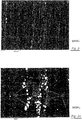
- Fig. 1 shows the coated alloy S 630 B in the etched micrograph, having a content of less than 0.8% by volume of vanadium carbide and a content of more than 3.3% by volume of M 2 C and M 6 C carbides.
- Fig. 1 a shows a section of Fig. 1 with higher magnification.
- Fig. 2 gives the alloy S 630 C with magnesium treatment in the same representation, wherein the proportion of monocarbide or vanadium carbide about 3.3 vol .-% and that of M 6 C carbides of up to 2.8 vol .-% amount.
- Fig. 2a shows with higher magnification a substantial absence of M 2 C carbides.
- Fig. 3 shows the alloy magnesium alloy smelted S 630 D, which samples have an MC-carbide content of about 3.4 vol .-% and M 6 C-carbides in the amount of 2.7 vol .-%.
- Fig. 3a conveys with higher magnification a section of Fig. 3 ,
- the specified fractions are average values from 18 trials each.
- the performance values in% of the drills from the respective alloys are average values from 18 trials in each case, with the performance of the drills made of the S 630 B material being set at 100% as the base value.
- Drills made of the material S 630 C produced a drilling capacity of 210%, while with drills made of the material S 630 D an output of 240% could be achieved.
Landscapes
- Chemical & Material Sciences (AREA)
- Engineering & Computer Science (AREA)
- Mechanical Engineering (AREA)
- Materials Engineering (AREA)
- Metallurgy (AREA)
- Organic Chemistry (AREA)
- Crystallography & Structural Chemistry (AREA)
- Thermal Sciences (AREA)
- Physics & Mathematics (AREA)
- Heat Treatment Of Articles (AREA)
- Cutting Tools, Boring Holders, And Turrets (AREA)
- Treatment Of Steel In Its Molten State (AREA)
- Heat Treatment Of Steel (AREA)
Description
- Die Erfindung bezieht sich auf ein Verfahren zur Herstellung von Werkzeugen für eine spanende Bearbeitung von metallischen Werkstoffen.
- Weiters betrifft die Erfindung spanabhebende Werkzeuge.
- Werkzeuge aus legiertem Stahl, insbesondere Schnellarbeitsstahl, mit einer chemischen Zusammensetzung in Gew.-% von
Kohlenstoff (C) 0.7 bis 1.3 Silicium (Si) 0.1 bis 1.0 Mangan (Mn) 0.1 bis 1.0 Chrom (Cr) 3.5 bis 5.0 Molybdän (Mo) 0.1 bis 10.0 Wolfram (W) 0.1 bis 19.0 Vanadin (V) 0.8 bis 5.0 Cobalt (Co) bis 8.0 - Beispielsweise werden in der
GB 2 096 171 A - Gemäß der
US 2006/0180 249 A1 ist vorgeschlagen worden, einen niedriglegierten Schnellarbeitsstahl (C = 0.5 - 0.75 Gew.-%, Cr = 5.0 - 6.0 Gew.-%, W = 0.5 - 2.0 Gew.-%, V = 0.7 - 1.75 Gew.-%) mit Aluminium bis 0.1 Gew.-% und Stickstoff bis 0.04 Gew.-% zu legieren, wobei das Mo-Äquivalent 2.5 - 5.0 Gew.-% sowie der Wert Mo-Äquivalent gebrochen durch Vanadingehalt 2 bis 4 betragen sollen. - Einen komplex legierter Schnellarbeitsstahl, der vorteilhaft mit einem Sonderdesoxidationsverfahren herstellbar ist, offenbart die
US 6 200 528 B1 . Dieser Werkstoff, der verbesserte Hochtemperatureigenschaften haben soll, ist mit 0.03 bis 1.25 Gew.-% Aluminium legiert und weist Stickstoffgehalte von höher 0.03 bis höher 0.04 Gew.-% auf. - Der überwiegende Teil der vorgeschlagenen, mit Aluminium legierten Werkzeugstähle, insbesondere der Schnellarbeitsstähle, wird für eine Herstellung von spanenden Werkzeugen nicht eingesetzt. Es gibt zwar durchaus Hinweise, dass einzelne spezifische Werkzeugeigenschaften durch Aluminiumgehalte im Stahl gegebenenfalls bis 2 Gew.-% günstig beeinflusst werden können, allerdings scheint eine gewünschte Qualitätssicherheit und ein gesamtes hohes Güteprofil des Werkzeuges nicht im ausreichenden Maße bzw. nicht in überzeugender Weise vorzuliegen. Mit anderen Worten: In modernen Bearbeitungseinrichtungen ist durch die vorgesehenen Arbeitstechnologien das Werkzeug gleichzeitig einer Vielzahl von hohen mechanischen tribologischen und Verschleiß-Beanspruchungen auch bei erhöhter Temperatur ausgesetzt, wobei ein Versagen desselben in nur einer Beanspruchungsart einen zumindest in wirtschaftlicher Hinsicht aufwendigen Werkzeugersatz erfordert.
- In der praktischen Anwendung werden vermutlich auch aus Gründen einer möglichen Güteunsicherheit mit Aluminium legierte Werkzeuge nur in geringem Maße eingesetzt.
- Dem Fachmann ist bekannt, dass Aluminiumgehalte im Stahl das Gammagebiet im Zustandsschaubild stark einschnüren.
- Kohlenstoff in Eisen-Aluminiumlegierungen erweitert das Gammagebiet, wobei jedoch die Löslichkeit für Kohlenstoff in y-Mischkristall durch Aluminium verringert wird.
- Aluminiumgehalte im Werkzeugstahl können gemäß der Fachliteratur durch Nitrid-Ausscheidungen zur Feinkornbildung des Werkstoffes beitragen, wodurch allerdings bei einer thermischen Vergütung eine Einhärtetiefe in das Teil stark herabgesetzt sein kann.
- Bei Schnellarbeitsstählen werden in Fachbüchern oftmals neben den Legierungselementen Chrom, Wolfram, Molybdän und Vanadin auch Titan- und/oder Tantal- und/oder Niobzusätze angeraten, um mit Aluminium und Stickstoff eine höhere Härtetemperatur beim Vergüten des Werkzeugs verwenden zu können, bzw. dessen Überhitzungsempfindlichkeit durch Grobkornbildung zu minimieren.
- Aluminium im Schnellarbeitsstahl kann nach einer Vielzahl von Fachmeinungen nur gegebenenfalls die Fresserscheinungen an der Oberfläche des Werkzeuges verringern und im Bezug auf eine Auskolkung günstig wirken.
- Bei umfassender kritischer Betrachtung einer Vielzahl von Dokumenten zum Stand der Technik sowie von Untersuchungsergebnissen sind diesen keine eindeutigen gesicherten Hinweise über die Wirkung von Aluminium in Werkzeugstählen entnehmbar, wobei auch Ursachen für einen vorzeitigen Ausfall oder einer offenbarten verlängerten Einsatzzeit eines mit Aluminium legierten Werkzeuges dem Fachmann nicht bekannt sind.
- Allgemeine Untersuchungen haben gezeigt, dass mit steigenden Gehalten an Elementen der 4. und 5.Gruppe des Periodensystems (IUPAC 1988) und Kohlenstoff im Werkzeugstahl, Insbesondere im Schnellarbeitsstahl, der Anteil an Monokarbiden in diesem erhöht und derart die Verschleißfestigkeit des Werkzeugwerkstoffes verbessert werden können, wobei sich jedoch in nachteiliger Weise auf Grund der groben Karbidformation dadurch die Materialzähigkeit wesentlich verringert, sodass eine Bruch- und Ausbruchsgefahr des Werkzeuges erhöht ist.
- Überdies bewirken Gehalte von Vanadin als wichtiges monokarbidbildendes Element bis ca. 5 Gew.-% in Anwesenheit von Elementen der Gruppe 6 des Periodensystems (JUPAC 1988), insbesondere von Molybdän bis 10 Gew.-%, gegebenenfalls von Wolfram bis 19 Gew.-% und Chrom bis 6 Gew.-% im Werkzeugstahl nur wenige harte verschleißfeste Monokarbide, wobei der hauptsächliche Karbidanteil im gehärteten Werkzeug im Wesentlichen als Mischkarbide vom Typ Me2C sowie M6C vorliegt, welche eine geringere Abriebfestigkeit als Monokarbide haben.
- Hier will die Erfindung Abhilfe schaffen und setzt sich zum Ziel, ein Verfahren anzugeben, mittels welchem eine Herstellung von Werkzeugen mit verbesserter Verschleißfestigkeit und/oder höherer Zähigkeit des Werkzeugwerkstoffes im vergüteten Zustand bei Vermeidung von derzeit vom Fachmann ursächlich oft nicht genau zuordenbaren Werkzeugschäden erfolgen kann.
- Weiters ist es Aufgabe der Erfindung, einen Werkzeugwerkstoff anzugeben, welcher jeweils nach einem thermischen Vergüten gesichert ein wesentlich verbessertes, gleichbleibend hohes Eigenschaftsprofil des spanabhebenden Werkzeuges aufweist.
- Das Ziel wird mit dem erfindungsgemäßen Verfahren nach Anspruch 1 erreicht.
- Durch Untersuchungen sowie Erprobungen des Werkstoffes hat sich gezeigt, dass in einem nach dem Stand der Technik fertig erschmolzenen, flüssigen Werkzeugstahl, insbesondere in einem Schnellarbeitsstahl, bei einem Legieren mit Aluminium im Ofen oder in der Pfanne grobe Nitride und Oxide gebildet werden, welche Einschlüsse bei einem Erstarren zu Blöcken weiter wachsen und kantige, grobe, nichtmetallische Partikel bilden, die nach einer Weiterverarbeitung zu Werkzeugen gerichtet bzw. inhomogen vorliegen und derart die Werkzeugeigenschaften nachteilig beeinflussen können.
- Die mit dem erfindungsgemäßen Verfahren erzielten Vorteile sind nun darin zu sehen, dass durch die Zugabe von Aluminium die im Flüssigstahl gebildeten Nitride und Oxide koagulieren und abgeschieden werden können und derart der Stickstoff- und der Sauerstoffgehalt der Schmelze entscheidend vermindert werden. Dabei ist es wichtig, dass die Temperatur der Schmelze, die Liquidustemperatur, um mindestens 80°C höher liegt, um eine gewünschte Nitrid-, Oxid- oder Oxinitridbildung mit Aluminium zu erreichen. Höhere Überhitzungstemperaturen der Schmelze als 250°C sind reaktionskinetisch und gießtechnologisch ungünstig.
- Aluminiumzugaben bis 0.4 Gew.-% bewirken eine Stickstoffabbindung und Oxidbildung im Flüssigmetall. Gehalte an Aluminium über 0.4 Gew.-% fördern ein Koagulieren der Stickstoffverbindungen sowie eine Vergröberung der Oxide und derart eine Abscheidung in eine aktive Schlacke, sodass mit Vorteil lediglich Einschlüsse mit einem Durchmesser von kleiner als 38 µm im Stahl verbleiben. Voraussetzung dafür ist jedoch eine turbulente Bewegung der Schmelze in der Pfanne bei einer Abdeckung mit aktiver Schlacke, welche Bewegung nach dem Stand der Technik durch Argonspülung oder durch magnetische Wanderfelder erreicht werden kann. Derart kann erfindungsgemäß der Stickstoffgehalt des Stahles auf unter 0.02 Gew.-% und der Sauerstoffgehalt auf unter 0.002 Gew.-% verringert werden.
- Mit einem Zulegieren von Aluminium zur Schmelze und einem Bewegen derselben im metallurgischen Gefäß ist ein Einbringen von Magnesium in den Flüssigstahl erfindungswesentlich. Magnesium als Mikrolegierungselement wirkt einerseits morphogenetisch auf die Karbidausscheidung und andererseits auf die Ausbildung der Zusammensetzung der nichtmetallischen Einschlüsse im Werkzeugstahl.
- Magnesium fördert, wie gefunden wurde, in vanadinhältigen Werkzeugstählen auch in geringen Konzentrationen die Bildung von Monokarbiden (MeC) und bewirkt dabei ein mengenmäßiges Zurückdrängen von Mischkarbiden vom Typ Me2C, Mc6C und von weiteren Karbiden mit geringem Kohlenstoffanteil. Mit anderen Worten: Magnesium erhöht die Kohlenstoffaktivität von Monokarbidbildenden Elementen in der Legierung und bewirkt derart einen höheren Anteil an feinen, harten Monokarbiden im Werkstoff, wodurch eine Verschleißfestigkeit desselben gefördert wird. Eine Steigerung der Festigkeit bei guter Zähigkeit der Matrix kann durch Mischkristallbildung erfolgen.
- Bei einer weiteren Desoxidation und einer Entschwefelung des Flüssigstahles wirkt das eingebrachte Magnesium keimbildend für eine Magnesiumoxid- sowie eine magnesiumreiche Mischoxidausformung und eine Oxysulfid-Entstehung (MgO, MgAlO, MgCaO, Mg(AlCa)O, MgOS), wobei eine weitgehend homogene Verteilung von nichtmetallischen Einschlüssen mit geringer Größe im Werkzeugstahl erreicht wird. Größere magnesiumreiche Reaktionsprodukte in der Stahlschmelze können mittels deren Bewegung in die Schlacke ausgetragen werden.
- Mögliche Tiegelreaktionen können, wie dem Fachmann bekannt ist, durch entsprechende Maßnahmen genützt werden.
- Mit Vorteil kann bei einer Abscheidungsbehandlung von größeren Nitriden und/oder Oxiden sowie Oxinitriden und Sulfiden aus der Schmelze eine Zufuhr von Magnesium zu dieser erfolgen und dabei eine von der Schmelzenzusammensetzung abhängige Gießtemperatur des Stahles in der Pfanne eingestellt werden.
- Ein Abguss zu Blöcken, in vorteilhafter Weise unter Schutzgas, und ein Weiterverarbeiten der erstarrten Blöcke zu Werkzeugvormaterial sowie die Herstellung von spanabhebenden Werkzeugen stellen im Wesentlichen übliche Erzeugungsschritte dar.
- Ein Austenitisieren des Werkstoffes bei einer Temperatur von unter 1210°C und mindestens ein Anlassen des gehärteten Stahles im Temperaturbereich von 500°C bis 600°C sind vorteilhafte Herstellungsparameter.
- Die weitere Aufgabe der Erfindung, einen Werkzeugwerkstoff anzugeben, welcher nach einem thermischen Vergüten eines daraus gebildeten Werkzeuges eine wesentlich erhöhte Standzeit desselben bei stärksten Beanspruchungen im praktischen Einsatz aufweist, wird mit einem Werkzeug, insbesondere Werkzeug für eine spanabhebende Bearbeitung von metallischen Werkstoffen, gebildet aus einem legierten Stahl mit einer chemischen Zusammensetzung in Gew.-% von
Kohlenstoff (C) 0.7 bis 1.3 Silicium (Si) 0.1 bis 1.0 Mangan (Mn) 0.1 bis 1.0 Chrom (Cr) 3.5 bis 5.0 Molybdän (Mo) 0.1 bis 10.0 Wolfram (W) 0.1 bis 19.0 Vanadin (V) 0.8 bis 5.0 Cobalt (Co) bis 8.0 Aluminium (Al) 0.4 bis 1.4 Stickstoff (N) 0.001 bis 0.012 - Eisen (Fe) und herstellungsbedingte Verunreinigungen als Rest, welcher Werkzeugwerkstoff ein Härte von größer 66 HRC und eine homogene Verteilung von Nitrideinschlüssen mit einem maximalen Durchmesser von unter 38 µm sowie magnesiumreiche, nichtmetallische Einschlüsse und zwar vom Typ MgO, MgAlO, MgCaO, Mg(AlCa)O und MgOS mit einem maximalen Durchmesser der Verbindungen von 10 µm aufweist, gelöst.
- Niedrige Stickstoffgehalte von unter 0.02 Gew.-% sowie homogen verteilte Nitride mit einem Durchmesser von unter 38 µm erhöhen die Zähigkeit des auf 66 HRC vergüteten Werkstoffes und verhindern weitgehend Werkzeugbrüche oder Schneidkantenausbrüche, die durch Rissinitiation der Kanten von groben Nitriden herrühren können.
- Eine exakte Bestimmung bei Raumtemperatur von gelöstem Magnesium in einer Werkzeugstahllegierung erscheint wissenschaftlich noch nicht gelöst zu sein. Das Vorliegen von magnesiumreichen, nichtmetallischen Einschlüssen im Werkstoff vermittelt jedoch die Tatsache einer Wirkung auf Grund einer gewissen Löslichkeit von Magnesium im Stahl bei höheren Temperaturen. Durch einen Aluminiumgehalt von 0.4 bis 1.4 Gew.-% muss jedoch der gelöste Sauerstoff und dgl. Stickstoff im Werkzeugstahl derart gebunden sein, dass das eingebrachte Magnesium als Element eine Ausbildung von Monokarbid, insbesondere von Vanadinkarbid (VC), an welchem eine Härte von etwa 3000 HV0.02 gemessen wurde, intensiviert und dadurch diesen Anteil an harten Karbiden vergrößert bzw. die Verschleißfestigkeit des Werkzeuges erhöht.
- Nach einer Ausführungsform der Erfindung ist ein Werkzeug bevorzugt, bei welchem der Werkzeugwerkstoff einen Gehalt in Gew.-% von
Al 0.5 bis 1.3 N 0.005 bis 0.01 - Im Folgenden wird die Erfindung an Hand von Versuchsergebnissen und Untersuchungsbefunden näher erläutert.
- In einem Vakuum- Induktionsofen wurde eine Vielzahl von Versuchslegierungen erschmolzen und zu Blöcken abgegossen, aus welchen Erprobungsstücke entnommen und nach gleicher Technologie auch Bohrwerkzeuge hergestellt wurden.
- Mit thermisch auf eine Härte von über 66 HRC vergüteten Bohrern erfolgten auch bei schweren Betriebsbedingungen praktische Bohrversuche, bei welchen die maximal erreichbare Standzeit der Werkzeuge ermittelt wurde.
- Um möglichst unbeeinflusst von den Aktivitäten der Legierungselemente in Wechselwirkung die Erfindung darzustellen, wurden drei Werkzeugstähle mit im Wesentlichen gleicher Zusammensetzung ausgewählt, welche Zusammensetzung der Tabelle 1 entnehmbar ist.
- Die Versuchslegierungen S 630 B, S 630 C und S 630 D wurden mit ausgewähltem Schrott und reinen Einsatzstoffen erschmolzen. Nach dem Aufbringen einer flußspathältigen Schlacke auf die Schmelze erfolgte ein Desoxidieren und ein Spülen derselben mit Argon, um bei einer Einstellung der Gießtemperatur eine gewünschte Stahlbadbewegung zu erreichen.
- Nach Einstellung der gewünschten Gießtemperatur erfolgte der Abguss der Schmelze S 630 B zu Blöcken.
- Die weiteren Versuchsschmelzen S 630 C und S 630 D wurden gleich gefertigt, jedoch mit unterschiedlichen Mengen von Aluminium legiert, wobei und/oder danach ein Einbringen von Magnesium erfolgte.
- Prinzipiell kann ein Zusatz von Magnesium zu einer Schlacke durch Tauchen von Magnesiumkomponenten, beispielsweise durch Einführen eines Fülldrahtes oder dgl. Mittel und/oder durch eine Tiegelreaktion, welche einem Fachmann bekannt ist, erfolgen. Ein Tauchen oder Einführen von Magnesium in den Flüssigstahl wird diesseits als sichere und zu bevorzugende Technologie angesehen.
- Ein Abguss von Blöcken erfolgte wie bei der Schmelze S 630 B.
- Eine genaue Zusammensetzung der Legierungen in Gegenüberstellung ist aus Tabelle 1 entnehmbar. Bei einem Vergleich der jeweiligen Konzentrationen der Elemente in den Versuchslegierungen ist festzustellen, dass höhere Aluminiumgehalte entscheidend niedrigere Sauerstoff- und Stickstoffkonzentrationen im Stahl bewirken.
- An verformten Probenteilen der angegebenen Legierungen erfolgten Ermittlungen betreffend Existenz und Größe von magnesiumreichen nichtmetallischen Einschlüssen.
- Die Untersuchungen erfolgten mit einem Rasterelektronen-Mikroskop:
- REM Model: JEOL JSM 6490 HV
- EDX Model: OXFORD INSTRUMENTSINCA-PENTAFET x3Si(Li) 30 mm2
- Software: INCA ENERGY/FEATURE
- Wie die Daten aus Tabelle 2 betreffend S 630 C und S 630 D vermitteln, bewirkt ein Einbringen von Magnesium in die Schmelze eine Ausbildung von magnesiumreichen nichtmetallischen Einschlüssen, wodurch der Nachweis erbracht ist, dass zumindest bei Temperaturen über der Liquidustemperatur der Legierung geringe Mengen von Magnesium im Werkzeugstahl löslich sind.
- Metallographische Untersuchungen der Legierungen S 630 B, S 630 C und S 630 D zeigten, dass ein Einbringen von Magnesium in die Schmelze zu einem vergrößerten Monokarbidanteil im vergüteten Werkstoff bei gleicher Konzentration von Kohlenstoff und den übrigen karbidbildenden Legierungselementen bewirkt.
- Wie auch aus den Gefügebildern
Fig. 1 bis Fig. 3 ersichtlich ist, sind die Anteile an Vanadinkarbid im Mg-behandelten Werkzeugstahl wesentlich erhöht. Wurden bei thermisch vergüteten Proben aus S 630 B (Fig. 1 ) weniger als 0.8 Vol.-% MC-Karbide, also Vanadinkarbide, bei einem Volumenanteil von über 3.3 Vol.-% an M6C- und nadelförmige M2C-Karbiden ermittelt, so ergaben die Untersuchungen an den Proben aus den durch Magnesiumzusätze behandelten Legierungen S 630 C (Fig. 2 ) und S 630 D (Fig. 3 ) einen Vanadin-(Monokarbid)anteil von über 3.0 Vol.-%. - In den
Figuren 1 bis 3 können die Gefügebestandteile auf Grund der Helligkeitstönung der Bereiche ermittelt werden. Diese sind:Grau = Matrix Weiß = Metallkarbide vom Typ M6C Schwarz = Nichtmetallische Einschlüsse Hellgrau = Monokarbide (VC) -
Fig. 1 zeigt die vergütete Legierung S 630 B im geätzten Schliffbild, aufweisend einen Anteil von weniger als 0.8 Vol.-% an Vanadinkarbid und einen Gehalt von mehr als 3.3 Vol.-% an M2C- und M6C-Karbiden. -
Fig. 1 a zeigt einen Ausschnitt vonFig. 1 mit höherer Vergrößerung. -
Fig. 2 vermittelt die Legierung S 630 C mit Magnesiumbehandlung in gleicher Darstellung, wobei der Anteil an Monokarbid bzw. Vanadinkarbid etwa 3.3 Vol.-% und jener an M6C-Karbiden von bis zu 2.8 Vol.-% betragen. -
Fig. 2a zeigt mit höherer Vergrößerung ein weitgehendes Fehlen von M2C-Karbiden. -
Fig. 3 zeigt die mit Magnesiumzusatz erschmolzene Legierung S 630 D, welche Proben einen MC-Karbidanteil von etwa 3.4 Vol.-% und M6C-Karbide im Ausmaß von 2.7 Vol.-% aufweisen. -
Fig. 3a vermittelt mit höherer Vergrößerung einen Ausschnitt vonFig. 3 . - Die angegebenen Gefügeanteile sind Durchschnittswerte aus jeweils 18 Erprobungen.
- Eine Wirkung von durch Magnesiumzusatz zum Werkstoff erzielten höheren Anteilen an hochharten MC-Typ-Karbiden bei verringerten Anteilen an Karbiden des M6C-Typs und insbesondere des M2C-Types sowie weitere geringere Kohlenstoffanteile aufweisende Karbide auf die Leistung von spanabhebenden Werkzeugen wurde mittels Bohrleistungsversuchen ermittelt.
- Mit Bohrern, hergestellt aus den Werkstoffen gemäß den Bezeichnungen S 630 B, S 630 C und S 630 D, mit einem Durchmesser von 6 mm wurden Hohle mit einer Drehzahl von 12 m/min und einem Bohrfortschritt von 0.08 mm/Umdr, in einen Werkstoff 42 CrMo4 eingebracht.
- Die Leistungswerte in % der Bohrer aus den jeweiligen Legierungen sind Durchschnittswerte aus jeweils 18 Versuchen, wobei die Leistung der Bohrer aus dem S 630 B-Werkstoff als Basiswert mit 100% festgelegt wurde.
- Bohrer aus dem Werkstoff S 630 C erbrachten eine Bohrleistung von 210%, wobei mit Bohrern aus dem Werkstoff S 630 D eine Leistung von 240% erzielt werden konnte.
Tab. 1 S630B C Al O Cr Mo V W Si N Co 0,96 0,03 0,0022 4,29 4,02 1,96 3,98 0,400 0,027 0,370 S630C C Al O Cr Mo V W Si N Co 0,96 0,53 0,00090 4,27 3,98 1,93 3,94 0,420 0,018 0,360 S630D C Al O Cr Mo V W Si N Co 0,96 1,07 0,0016 3,95 4,07 1,94 3,95 0,430 0,012 0,320 S630B Mn Zr P S Cu As Ti Nb B Ni 0,300 < 0,005 0,025 0,0012 0,150 0,008 0,007 <0,005 < 0,0005 0,320 S630C Mn Zr P S Cu As Ti Nb B Ni 0,340 < 0,005 0,024 0,0009 0,140 0,008 0,017 0,006 0,001 0,280 S630D Mn Zr P S Cu As Ti Nb B Ni 0,310 < 0,005 0,022 0,0007 0,120 0,007 0,011 0,005 0,001 0,260 Tab. 2 S630B, S630C, S630D, Ø Breite (µm) Ø Länge (µm) Ø Breite (µm) Ø Länge (µm) Ø Breite (µm) Ø Länge (µm) MgO - - 1.67 2.41 1.62 2.25 MgAlO - - 2.24 3.75 1.50 2.05 MgCaO - - 1.37 2.04 1.64 2.28 Mg-(Al, Ca)O - - 2.73 4.27 3.72 5.80 Mg-OS - - 1.73 2.50 1.52 2.07
Claims (6)
- Verfahren zur Herstellung von Werkzeugen, insbesondere von Werkzeugen für eine spanabhebende Bearbeitung von metallischen Werkstoffen, gebildet aus einem legierten Stahl mit einer chemischen Zusammensetzung in Gew.-% von
Kohlenstoff (C) 0.7 bis 1.3 Silicium (Si) 0.1 bis 1.0 Mangan (Mn) 0.1 bis 1.0 Chrom (Cr) 3.5 bis 5.0 Molybdän (Mo) 0.1 bis 10.0 Wolfram (W) 0.1 bis 19.0 Vanadin (V) 0.8 bis 5.0 Cobalt (Co) bis 8.0 - Verfahren nach Anspruch 1, bei im ersten Schritt der desoxidierten Schmelze Aluminium mit einer Konzentration von 0.4 bis 1.3 Gew.-% zulegiert und die Größe der Aluminiumnitride auf einen Durchmesser von kleiner 34 µm eingestellt werden und ein Verringern des Stickstoffgehaltes des Stahles auf unter 0.02 Gew.-% erfolgt.
- Verfahren nach Anspruch 1 oder 2, bei welchem die magnesiumreichen, nichtmetallischen Einschlüsse und zwar vom Typ MgO, MgAlO, MgCaO, Mg(AlCa)O und MgOS auf einen Durchmesser von kleiner 8 µm, eingestellt werden.
- Verfahren nach Anspruch 1 bis 3, bei welchem im dritten Schritt ein Austenitisieren des Werkstoffes beim Härten bei einer Temperatur von 1200°C, vorzugsweise von höchstens 1160°C, mit einer Haltedauer auf dieser von höchstens 15 min. erfolgt.
- Werkzeug, insbesondere Werkzeug für eine spanabhebende Bearbeitung von metallischen Werkstoffen, erhältlich nach einem Verfahren gemäß einem der Ansprüche 1 bis 4, gebildet aus einem legierten Stahl mit einer chemischen Zusammensetzung in Gew.-% von
Kohlenstoff (C) 0.7 bis 1,3 Silicium (Si) 0.1 bis 1.0 Mangan (Mn) 0.1 bis 1.0 Chrom (Cr) 3.5 bis 5.0 Molybdän (Mo) 0.1 bis 10.0 Wolfram (W) 0.1 bis 19.0 Vanadin (V) 0.8 bis 5.0 Cobalt (Co) bis 8.0 Aluminium (Al) 0.4 bis 1.4 Stickstoff (N) 0.001 bis 0.02 - Werkzeug nach Anspruch 5, bei der Werkzeugwerkstoff einen Gehalt in Gew.-% von
Al 0.5 bis 1.3 N 0.005 bis 0.02
Priority Applications (1)
| Application Number | Priority Date | Filing Date | Title |
|---|---|---|---|
| SI201130396T SI2441853T1 (sl) | 2010-10-18 | 2011-09-08 | Postopek za izdelavo orodij iz legiranega jekla in orodja, zlasti za obdelavo kovin z odrezovanjem |
Applications Claiming Priority (1)
| Application Number | Priority Date | Filing Date | Title |
|---|---|---|---|
| AT0173210A AT509598B1 (de) | 2010-10-18 | 2010-10-18 | Verfahren zur herstellung von werkzeugen aus legiertem stahl und werkzeuge insbesondere zur spanabhebenden bearbeitung von metallen |
Publications (2)
| Publication Number | Publication Date |
|---|---|
| EP2441853A1 EP2441853A1 (de) | 2012-04-18 |
| EP2441853B1 true EP2441853B1 (de) | 2014-11-05 |
Family
ID=44740996
Family Applications (1)
| Application Number | Title | Priority Date | Filing Date |
|---|---|---|---|
| EP11450118.2A Active EP2441853B1 (de) | 2010-10-18 | 2011-09-08 | Verfahren zur Herstellung von Werkzeugen aus legiertem Stahl und Werkzeuge insbesondere zur spanabhebenden Bearbeitung von Metallen |
Country Status (7)
| Country | Link |
|---|---|
| US (1) | US9090949B2 (de) |
| EP (1) | EP2441853B1 (de) |
| AT (1) | AT509598B1 (de) |
| BR (1) | BRPI1106943B1 (de) |
| CA (1) | CA2755067C (de) |
| ES (1) | ES2528694T3 (de) |
| SI (1) | SI2441853T1 (de) |
Families Citing this family (6)
| Publication number | Priority date | Publication date | Assignee | Title |
|---|---|---|---|---|
| JP6652226B2 (ja) * | 2017-09-13 | 2020-02-19 | 日本製鉄株式会社 | 転動疲労特性に優れた鋼材 |
| CN110029282B (zh) * | 2018-06-08 | 2022-03-11 | 中南大学 | 一种钨元素偏聚韧化合金及其铸造与热处理方法 |
| CN110433832B (zh) * | 2019-07-04 | 2022-02-22 | 天津大学 | 一种自支撑纳米多孔氮还原催化剂及其制备方法 |
| CN112921236A (zh) * | 2021-01-14 | 2021-06-08 | 上海欣冈贸易有限公司 | 一种高强度焊接用金属组合物 |
| CN113073255A (zh) * | 2021-03-11 | 2021-07-06 | 南京精锋制刀有限公司 | 一种适用于制作高强钢刀片的金属材料的配方及其制备方法 |
| CN114293108A (zh) * | 2021-12-30 | 2022-04-08 | 广州神拓科技有限公司 | 一种盾构机滚刀合金材料及其制备工艺 |
Family Cites Families (7)
| Publication number | Priority date | Publication date | Assignee | Title |
|---|---|---|---|---|
| SE8106207L (sv) | 1980-11-10 | 1982-05-11 | Teledyne Ind | Snabbstal och andra verktygsstal |
| US5458703A (en) * | 1991-06-22 | 1995-10-17 | Nippon Koshuha Steel Co., Ltd. | Tool steel production method |
| JP3028514B2 (ja) * | 1995-05-31 | 2000-04-04 | 株式会社淀川製鋼所 | 耐摩耗性・耐肌荒れ性等にすぐれた圧延用複合ロール |
| US6200528B1 (en) * | 1997-09-17 | 2001-03-13 | Latrobe Steel Company | Cobalt free high speed steels |
| JP2004285444A (ja) | 2003-03-24 | 2004-10-14 | Daido Steel Co Ltd | 安定した靭性を示す低合金高速度工具鋼 |
| AT504331B8 (de) | 2006-10-27 | 2008-09-15 | Boehler Edelstahl | Stahllegierung für spanabhebende werkzeuge |
| DE102007025758A1 (de) * | 2007-06-01 | 2008-12-04 | Mahle International Gmbh | Dichtring |
-
2010
- 2010-10-18 AT AT0173210A patent/AT509598B1/de not_active IP Right Cessation
-
2011
- 2011-09-08 ES ES11450118.2T patent/ES2528694T3/es active Active
- 2011-09-08 SI SI201130396T patent/SI2441853T1/sl unknown
- 2011-09-08 EP EP11450118.2A patent/EP2441853B1/de active Active
- 2011-10-17 CA CA2755067A patent/CA2755067C/en active Active
- 2011-10-17 US US13/274,961 patent/US9090949B2/en active Active
- 2011-10-18 BR BRPI1106943-0A patent/BRPI1106943B1/pt active IP Right Grant
Also Published As
| Publication number | Publication date |
|---|---|
| EP2441853A1 (de) | 2012-04-18 |
| US9090949B2 (en) | 2015-07-28 |
| ES2528694T3 (es) | 2015-02-11 |
| BRPI1106943A2 (pt) | 2016-01-26 |
| AT509598B1 (de) | 2011-10-15 |
| CA2755067C (en) | 2017-07-18 |
| AT509598A4 (de) | 2011-10-15 |
| US20120093679A1 (en) | 2012-04-19 |
| SI2441853T1 (sl) | 2015-04-30 |
| BRPI1106943B1 (pt) | 2021-10-13 |
| CA2755067A1 (en) | 2012-04-18 |
Similar Documents
| Publication | Publication Date | Title |
|---|---|---|
| DE3018537C2 (de) | ||
| AT507215B1 (de) | Verschleissbeständiger werkstoff | |
| DE60202598T2 (de) | Ultra-hochfester ausscheidungshärtbarer rostfreier stahl und daraus hergestellter länglicher band | |
| DE69406512T3 (de) | Rotor für Dampfturbinen und Verfahren zu seiner Herstellung | |
| EP0091897B1 (de) | Kaltverfestigender austenitischer Manganhartstahl und Verfahren zur Herstellung desselben | |
| EP2664684B1 (de) | Verwendung eines Chromstahls mit hoher Härte und Korrosionsbeständigkeit zum Beschichten metallischer Substrate | |
| DE602005005922T2 (de) | Ausscheidunggehärteter martensitischer rostfreier Stahl, dessen Herstellungsverfahren und damit hergestellte Turbinenlaufschaufel und diese benutzende Dampfturbine | |
| EP1249511B1 (de) | PM-Schnellarbeitsstahl mit hoher Warmfestigkeit | |
| AT514133B1 (de) | Ringförmiges Werkzeug | |
| EP3899065B1 (de) | Bohrstrangkomponente mit hoher korrosionsbeständigkeit und verfahren zu ihrer herstellung | |
| EP1274872B1 (de) | Verfahren zur herstellung eines stickstofflegierten, sprühkompaktierten stahls, verfahren zu seiner herstellung | |
| AT509598B1 (de) | Verfahren zur herstellung von werkzeugen aus legiertem stahl und werkzeuge insbesondere zur spanabhebenden bearbeitung von metallen | |
| WO2021084025A1 (de) | Korrosionsbeständiger und ausscheidungshärtender stahl, verfahren zur herstellung eines stahlbauteils und stahlbauteil | |
| DE69601340T2 (de) | Hochfester, hochzaher warmebestandiger stahl und verfahren zu seiner herstellung | |
| DE2830850A1 (de) | Einsatz-legierungsstahl | |
| EP3412790B1 (de) | Ausscheidungshärtender stahl und verwendung eines solchen stahls für warmumformwerkzeuge | |
| KR20100135242A (ko) | 고강도, 고인성 및 내피로성의 석출 경화형 스테인리스강의 제조 방법 | |
| DE2800444A1 (de) | Legierter stahl | |
| EP3323903A1 (de) | Pulvermetallurgisch hergestellter stahlwerkstoff, verfahren zur herstellung eines bauteils aus einem solchen stahlwerkstoff und aus dem stahlwerkstoff hergestelltes bauteil | |
| DE3854091T2 (de) | WÄRMEBESTÄNDIGER AUSTENITISCHER Al-STAHL MIT AUSGEZEICHNETEN WARMVERARBEITUNGSEIGENSCHAFTEN. | |
| US6837945B1 (en) | Steel cold work tool, its use and manufacturing | |
| DE2734408C2 (de) | Verfahren zur Herstellung von Schnellarbeitswerkzeugen | |
| CH642109A5 (de) | Schnellarbeitsstahl. | |
| DE2937908A1 (de) | Te-s-automatenstahl mit niedriger anisotropie und verfahren zu seiner herstellung | |
| DE910309C (de) | Eisen- und Stahllegierungen mit guter Bearbeitbarkeit durch Schneidwerkzeuge |
Legal Events
| Date | Code | Title | Description |
|---|---|---|---|
| PUAI | Public reference made under article 153(3) epc to a published international application that has entered the european phase |
Free format text: ORIGINAL CODE: 0009012 |
|
| AK | Designated contracting states |
Kind code of ref document: A1 Designated state(s): AL AT BE BG CH CY CZ DE DK EE ES FI FR GB GR HR HU IE IS IT LI LT LU LV MC MK MT NL NO PL PT RO RS SE SI SK SM TR |
|
| AX | Request for extension of the european patent |
Extension state: BA ME |
|
| 17P | Request for examination filed |
Effective date: 20120416 |
|
| 17Q | First examination report despatched |
Effective date: 20130305 |
|
| GRAP | Despatch of communication of intention to grant a patent |
Free format text: ORIGINAL CODE: EPIDOSNIGR1 |
|
| INTG | Intention to grant announced |
Effective date: 20140422 |
|
| GRAS | Grant fee paid |
Free format text: ORIGINAL CODE: EPIDOSNIGR3 |
|
| GRAA | (expected) grant |
Free format text: ORIGINAL CODE: 0009210 |
|
| AK | Designated contracting states |
Kind code of ref document: B1 Designated state(s): AL AT BE BG CH CY CZ DE DK EE ES FI FR GB GR HR HU IE IS IT LI LT LU LV MC MK MT NL NO PL PT RO RS SE SI SK SM TR |
|
| REG | Reference to a national code |
Ref country code: GB Ref legal event code: FG4D Free format text: NOT ENGLISH |
|
| REG | Reference to a national code |
Ref country code: CH Ref legal event code: EP |
|
| REG | Reference to a national code |
Ref country code: AT Ref legal event code: REF Ref document number: 694711 Country of ref document: AT Kind code of ref document: T Effective date: 20141115 |
|
| REG | Reference to a national code |
Ref country code: IE Ref legal event code: FG4D Free format text: LANGUAGE OF EP DOCUMENT: GERMAN |
|
| REG | Reference to a national code |
Ref country code: DE Ref legal event code: R096 Ref document number: 502011004873 Country of ref document: DE Effective date: 20141218 |
|
| REG | Reference to a national code |
Ref country code: SE Ref legal event code: TRGR |
|
| REG | Reference to a national code |
Ref country code: CH Ref legal event code: NV Representative=s name: PATWIL AG, CH |
|
| REG | Reference to a national code |
Ref country code: ES Ref legal event code: FG2A Ref document number: 2528694 Country of ref document: ES Kind code of ref document: T3 Effective date: 20150211 |
|
| REG | Reference to a national code |
Ref country code: NL Ref legal event code: VDEP Effective date: 20141105 |
|
| REG | Reference to a national code |
Ref country code: LT Ref legal event code: MG4D |
|
| PG25 | Lapsed in a contracting state [announced via postgrant information from national office to epo] |
Ref country code: NO Free format text: LAPSE BECAUSE OF FAILURE TO SUBMIT A TRANSLATION OF THE DESCRIPTION OR TO PAY THE FEE WITHIN THE PRESCRIBED TIME-LIMIT Effective date: 20150205 Ref country code: FI Free format text: LAPSE BECAUSE OF FAILURE TO SUBMIT A TRANSLATION OF THE DESCRIPTION OR TO PAY THE FEE WITHIN THE PRESCRIBED TIME-LIMIT Effective date: 20141105 Ref country code: NL Free format text: LAPSE BECAUSE OF FAILURE TO SUBMIT A TRANSLATION OF THE DESCRIPTION OR TO PAY THE FEE WITHIN THE PRESCRIBED TIME-LIMIT Effective date: 20141105 Ref country code: LT Free format text: LAPSE BECAUSE OF FAILURE TO SUBMIT A TRANSLATION OF THE DESCRIPTION OR TO PAY THE FEE WITHIN THE PRESCRIBED TIME-LIMIT Effective date: 20141105 Ref country code: PT Free format text: LAPSE BECAUSE OF FAILURE TO SUBMIT A TRANSLATION OF THE DESCRIPTION OR TO PAY THE FEE WITHIN THE PRESCRIBED TIME-LIMIT Effective date: 20150305 Ref country code: IS Free format text: LAPSE BECAUSE OF FAILURE TO SUBMIT A TRANSLATION OF THE DESCRIPTION OR TO PAY THE FEE WITHIN THE PRESCRIBED TIME-LIMIT Effective date: 20150305 |
|
| PG25 | Lapsed in a contracting state [announced via postgrant information from national office to epo] |
Ref country code: GR Free format text: LAPSE BECAUSE OF FAILURE TO SUBMIT A TRANSLATION OF THE DESCRIPTION OR TO PAY THE FEE WITHIN THE PRESCRIBED TIME-LIMIT Effective date: 20150206 Ref country code: CY Free format text: LAPSE BECAUSE OF FAILURE TO SUBMIT A TRANSLATION OF THE DESCRIPTION OR TO PAY THE FEE WITHIN THE PRESCRIBED TIME-LIMIT Effective date: 20141105 Ref country code: PL Free format text: LAPSE BECAUSE OF FAILURE TO SUBMIT A TRANSLATION OF THE DESCRIPTION OR TO PAY THE FEE WITHIN THE PRESCRIBED TIME-LIMIT Effective date: 20141105 Ref country code: RS Free format text: LAPSE BECAUSE OF FAILURE TO SUBMIT A TRANSLATION OF THE DESCRIPTION OR TO PAY THE FEE WITHIN THE PRESCRIBED TIME-LIMIT Effective date: 20141105 Ref country code: LV Free format text: LAPSE BECAUSE OF FAILURE TO SUBMIT A TRANSLATION OF THE DESCRIPTION OR TO PAY THE FEE WITHIN THE PRESCRIBED TIME-LIMIT Effective date: 20141105 Ref country code: HR Free format text: LAPSE BECAUSE OF FAILURE TO SUBMIT A TRANSLATION OF THE DESCRIPTION OR TO PAY THE FEE WITHIN THE PRESCRIBED TIME-LIMIT Effective date: 20141105 |
|
| PG25 | Lapsed in a contracting state [announced via postgrant information from national office to epo] |
Ref country code: SK Free format text: LAPSE BECAUSE OF FAILURE TO SUBMIT A TRANSLATION OF THE DESCRIPTION OR TO PAY THE FEE WITHIN THE PRESCRIBED TIME-LIMIT Effective date: 20141105 Ref country code: DK Free format text: LAPSE BECAUSE OF FAILURE TO SUBMIT A TRANSLATION OF THE DESCRIPTION OR TO PAY THE FEE WITHIN THE PRESCRIBED TIME-LIMIT Effective date: 20141105 Ref country code: EE Free format text: LAPSE BECAUSE OF FAILURE TO SUBMIT A TRANSLATION OF THE DESCRIPTION OR TO PAY THE FEE WITHIN THE PRESCRIBED TIME-LIMIT Effective date: 20141105 Ref country code: CZ Free format text: LAPSE BECAUSE OF FAILURE TO SUBMIT A TRANSLATION OF THE DESCRIPTION OR TO PAY THE FEE WITHIN THE PRESCRIBED TIME-LIMIT Effective date: 20141105 |
|
| REG | Reference to a national code |
Ref country code: DE Ref legal event code: R097 Ref document number: 502011004873 Country of ref document: DE |
|
| PLBE | No opposition filed within time limit |
Free format text: ORIGINAL CODE: 0009261 |
|
| STAA | Information on the status of an ep patent application or granted ep patent |
Free format text: STATUS: NO OPPOSITION FILED WITHIN TIME LIMIT |
|
| 26N | No opposition filed |
Effective date: 20150806 |
|
| PG25 | Lapsed in a contracting state [announced via postgrant information from national office to epo] |
Ref country code: MC Free format text: LAPSE BECAUSE OF FAILURE TO SUBMIT A TRANSLATION OF THE DESCRIPTION OR TO PAY THE FEE WITHIN THE PRESCRIBED TIME-LIMIT Effective date: 20141105 Ref country code: LU Free format text: LAPSE BECAUSE OF FAILURE TO SUBMIT A TRANSLATION OF THE DESCRIPTION OR TO PAY THE FEE WITHIN THE PRESCRIBED TIME-LIMIT Effective date: 20150908 |
|
| PG25 | Lapsed in a contracting state [announced via postgrant information from national office to epo] |
Ref country code: RO Free format text: LAPSE BECAUSE OF FAILURE TO SUBMIT A TRANSLATION OF THE DESCRIPTION OR TO PAY THE FEE WITHIN THE PRESCRIBED TIME-LIMIT Effective date: 20141105 |
|
| REG | Reference to a national code |
Ref country code: IE Ref legal event code: MM4A |
|
| PG25 | Lapsed in a contracting state [announced via postgrant information from national office to epo] |
Ref country code: IE Free format text: LAPSE BECAUSE OF NON-PAYMENT OF DUE FEES Effective date: 20150908 |
|
| REG | Reference to a national code |
Ref country code: FR Ref legal event code: PLFP Year of fee payment: 6 |
|
| PG25 | Lapsed in a contracting state [announced via postgrant information from national office to epo] |
Ref country code: MT Free format text: LAPSE BECAUSE OF FAILURE TO SUBMIT A TRANSLATION OF THE DESCRIPTION OR TO PAY THE FEE WITHIN THE PRESCRIBED TIME-LIMIT Effective date: 20141105 |
|
| PG25 | Lapsed in a contracting state [announced via postgrant information from national office to epo] |
Ref country code: SM Free format text: LAPSE BECAUSE OF FAILURE TO SUBMIT A TRANSLATION OF THE DESCRIPTION OR TO PAY THE FEE WITHIN THE PRESCRIBED TIME-LIMIT Effective date: 20141105 Ref country code: BG Free format text: LAPSE BECAUSE OF FAILURE TO SUBMIT A TRANSLATION OF THE DESCRIPTION OR TO PAY THE FEE WITHIN THE PRESCRIBED TIME-LIMIT Effective date: 20141105 Ref country code: HU Free format text: LAPSE BECAUSE OF FAILURE TO SUBMIT A TRANSLATION OF THE DESCRIPTION OR TO PAY THE FEE WITHIN THE PRESCRIBED TIME-LIMIT; INVALID AB INITIO Effective date: 20110908 |
|
| PG25 | Lapsed in a contracting state [announced via postgrant information from national office to epo] |
Ref country code: BE Free format text: LAPSE BECAUSE OF NON-PAYMENT OF DUE FEES Effective date: 20150930 |
|
| REG | Reference to a national code |
Ref country code: FR Ref legal event code: PLFP Year of fee payment: 7 |
|
| REG | Reference to a national code |
Ref country code: CH Ref legal event code: NV Representative=s name: KAMINSKI HARMANN PATENTANWAELTE AG, CH |
|
| PG25 | Lapsed in a contracting state [announced via postgrant information from national office to epo] |
Ref country code: MK Free format text: LAPSE BECAUSE OF FAILURE TO SUBMIT A TRANSLATION OF THE DESCRIPTION OR TO PAY THE FEE WITHIN THE PRESCRIBED TIME-LIMIT Effective date: 20141105 |
|
| REG | Reference to a national code |
Ref country code: FR Ref legal event code: PLFP Year of fee payment: 8 |
|
| PG25 | Lapsed in a contracting state [announced via postgrant information from national office to epo] |
Ref country code: AL Free format text: LAPSE BECAUSE OF FAILURE TO SUBMIT A TRANSLATION OF THE DESCRIPTION OR TO PAY THE FEE WITHIN THE PRESCRIBED TIME-LIMIT Effective date: 20141105 |
|
| REG | Reference to a national code |
Ref country code: DE Ref legal event code: R082 Ref document number: 502011004873 Country of ref document: DE Representative=s name: MUELLER, THOMAS, DIPL.-ING., DE |
|
| PGFP | Annual fee paid to national office [announced via postgrant information from national office to epo] |
Ref country code: AT Payment date: 20210819 Year of fee payment: 11 |
|
| PGFP | Annual fee paid to national office [announced via postgrant information from national office to epo] |
Ref country code: SE Payment date: 20210929 Year of fee payment: 11 Ref country code: SI Payment date: 20210819 Year of fee payment: 11 |
|
| PGFP | Annual fee paid to national office [announced via postgrant information from national office to epo] |
Ref country code: CH Payment date: 20211004 Year of fee payment: 11 |
|
| REG | Reference to a national code |
Ref country code: CH Ref legal event code: PL |
|
| REG | Reference to a national code |
Ref country code: SE Ref legal event code: EUG |
|
| REG | Reference to a national code |
Ref country code: AT Ref legal event code: MM01 Ref document number: 694711 Country of ref document: AT Kind code of ref document: T Effective date: 20220908 |
|
| REG | Reference to a national code |
Ref country code: SI Ref legal event code: KO00 Effective date: 20230518 |
|
| PG25 | Lapsed in a contracting state [announced via postgrant information from national office to epo] |
Ref country code: LI Free format text: LAPSE BECAUSE OF NON-PAYMENT OF DUE FEES Effective date: 20220930 Ref country code: CH Free format text: LAPSE BECAUSE OF NON-PAYMENT OF DUE FEES Effective date: 20220930 Ref country code: AT Free format text: LAPSE BECAUSE OF NON-PAYMENT OF DUE FEES Effective date: 20220908 |
|
| P01 | Opt-out of the competence of the unified patent court (upc) registered |
Effective date: 20230706 |
|
| PG25 | Lapsed in a contracting state [announced via postgrant information from national office to epo] |
Ref country code: SI Free format text: LAPSE BECAUSE OF NON-PAYMENT OF DUE FEES Effective date: 20220909 Ref country code: SE Free format text: LAPSE BECAUSE OF NON-PAYMENT OF DUE FEES Effective date: 20220909 |
|
| PGFP | Annual fee paid to national office [announced via postgrant information from national office to epo] |
Ref country code: DE Payment date: 20250929 Year of fee payment: 15 |
|
| PGFP | Annual fee paid to national office [announced via postgrant information from national office to epo] |
Ref country code: TR Payment date: 20250822 Year of fee payment: 15 Ref country code: IT Payment date: 20250919 Year of fee payment: 15 |
|
| PGFP | Annual fee paid to national office [announced via postgrant information from national office to epo] |
Ref country code: GB Payment date: 20250929 Year of fee payment: 15 |
|
| PGFP | Annual fee paid to national office [announced via postgrant information from national office to epo] |
Ref country code: FR Payment date: 20250925 Year of fee payment: 15 |
|
| PGFP | Annual fee paid to national office [announced via postgrant information from national office to epo] |
Ref country code: ES Payment date: 20251001 Year of fee payment: 15 |