EP2409752B1 - Method for removing sox from gas using polyethylene glycol - Google Patents
Method for removing sox from gas using polyethylene glycol Download PDFInfo
- Publication number
- EP2409752B1 EP2409752B1 EP10740927.8A EP10740927A EP2409752B1 EP 2409752 B1 EP2409752 B1 EP 2409752B1 EP 10740927 A EP10740927 A EP 10740927A EP 2409752 B1 EP2409752 B1 EP 2409752B1
- Authority
- EP
- European Patent Office
- Prior art keywords
- desulfurization
- solution
- polyethylene glycol
- gas
- sox
- Prior art date
- Legal status (The legal status is an assumption and is not a legal conclusion. Google has not performed a legal analysis and makes no representation as to the accuracy of the status listed.)
- Active
Links
Images



Classifications
-
- B—PERFORMING OPERATIONS; TRANSPORTING
- B01—PHYSICAL OR CHEMICAL PROCESSES OR APPARATUS IN GENERAL
- B01D—SEPARATION
- B01D53/00—Separation of gases or vapours; Recovering vapours of volatile solvents from gases; Chemical or biological purification of waste gases, e.g. engine exhaust gases, smoke, fumes, flue gases, aerosols
- B01D53/34—Chemical or biological purification of waste gases
- B01D53/46—Removing components of defined structure
- B01D53/48—Sulfur compounds
- B01D53/50—Sulfur oxides
- B01D53/507—Sulfur oxides by treating the gases with other liquids
-
- B—PERFORMING OPERATIONS; TRANSPORTING
- B01—PHYSICAL OR CHEMICAL PROCESSES OR APPARATUS IN GENERAL
- B01D—SEPARATION
- B01D53/00—Separation of gases or vapours; Recovering vapours of volatile solvents from gases; Chemical or biological purification of waste gases, e.g. engine exhaust gases, smoke, fumes, flue gases, aerosols
- B01D53/14—Separation of gases or vapours; Recovering vapours of volatile solvents from gases; Chemical or biological purification of waste gases, e.g. engine exhaust gases, smoke, fumes, flue gases, aerosols by absorption
- B01D53/1425—Regeneration of liquid absorbents
-
- B—PERFORMING OPERATIONS; TRANSPORTING
- B01—PHYSICAL OR CHEMICAL PROCESSES OR APPARATUS IN GENERAL
- B01D—SEPARATION
- B01D53/00—Separation of gases or vapours; Recovering vapours of volatile solvents from gases; Chemical or biological purification of waste gases, e.g. engine exhaust gases, smoke, fumes, flue gases, aerosols
- B01D53/14—Separation of gases or vapours; Recovering vapours of volatile solvents from gases; Chemical or biological purification of waste gases, e.g. engine exhaust gases, smoke, fumes, flue gases, aerosols by absorption
- B01D53/1456—Removing acid components
- B01D53/1481—Removing sulfur dioxide or sulfur trioxide
-
- C—CHEMISTRY; METALLURGY
- C01—INORGANIC CHEMISTRY
- C01B—NON-METALLIC ELEMENTS; COMPOUNDS THEREOF; METALLOIDS OR COMPOUNDS THEREOF NOT COVERED BY SUBCLASS C01C
- C01B17/00—Sulfur; Compounds thereof
- C01B17/48—Sulfur dioxide; Sulfurous acid
- C01B17/50—Preparation of sulfur dioxide
- C01B17/60—Isolation of sulfur dioxide from gases
-
- C—CHEMISTRY; METALLURGY
- C01—INORGANIC CHEMISTRY
- C01B—NON-METALLIC ELEMENTS; COMPOUNDS THEREOF; METALLOIDS OR COMPOUNDS THEREOF NOT COVERED BY SUBCLASS C01C
- C01B17/00—Sulfur; Compounds thereof
- C01B17/69—Sulfur trioxide; Sulfuric acid
- C01B17/90—Separation; Purification
-
- B—PERFORMING OPERATIONS; TRANSPORTING
- B01—PHYSICAL OR CHEMICAL PROCESSES OR APPARATUS IN GENERAL
- B01D—SEPARATION
- B01D2252/00—Absorbents, i.e. solvents and liquid materials for gas absorption
- B01D2252/20—Organic absorbents
- B01D2252/202—Alcohols or their derivatives
- B01D2252/2023—Glycols, diols or their derivatives
- B01D2252/2026—Polyethylene glycol, ethers or esters thereof, e.g. Selexol
-
- B—PERFORMING OPERATIONS; TRANSPORTING
- B01—PHYSICAL OR CHEMICAL PROCESSES OR APPARATUS IN GENERAL
- B01D—SEPARATION
- B01D2252/00—Absorbents, i.e. solvents and liquid materials for gas absorption
- B01D2252/40—Absorbents explicitly excluding the presence of water
-
- B—PERFORMING OPERATIONS; TRANSPORTING
- B01—PHYSICAL OR CHEMICAL PROCESSES OR APPARATUS IN GENERAL
- B01D—SEPARATION
- B01D2257/00—Components to be removed
- B01D2257/30—Sulfur compounds
- B01D2257/302—Sulfur oxides
-
- B—PERFORMING OPERATIONS; TRANSPORTING
- B01—PHYSICAL OR CHEMICAL PROCESSES OR APPARATUS IN GENERAL
- B01D—SEPARATION
- B01D2258/00—Sources of waste gases
- B01D2258/02—Other waste gases
-
- B—PERFORMING OPERATIONS; TRANSPORTING
- B01—PHYSICAL OR CHEMICAL PROCESSES OR APPARATUS IN GENERAL
- B01D—SEPARATION
- B01D2258/00—Sources of waste gases
- B01D2258/02—Other waste gases
- B01D2258/0283—Flue gases
-
- Y—GENERAL TAGGING OF NEW TECHNOLOGICAL DEVELOPMENTS; GENERAL TAGGING OF CROSS-SECTIONAL TECHNOLOGIES SPANNING OVER SEVERAL SECTIONS OF THE IPC; TECHNICAL SUBJECTS COVERED BY FORMER USPC CROSS-REFERENCE ART COLLECTIONS [XRACs] AND DIGESTS
- Y02—TECHNOLOGIES OR APPLICATIONS FOR MITIGATION OR ADAPTATION AGAINST CLIMATE CHANGE
- Y02A—TECHNOLOGIES FOR ADAPTATION TO CLIMATE CHANGE
- Y02A50/00—TECHNOLOGIES FOR ADAPTATION TO CLIMATE CHANGE in human health protection, e.g. against extreme weather
- Y02A50/20—Air quality improvement or preservation, e.g. vehicle emission control or emission reduction by using catalytic converters
Definitions
- the current desulfurization processes can generally be classified into two main groups, namely wet processes and dry processes.
- Wet processes include water scrubbing, limestone and lime water process, alkali metal solution process, alkaline solution process, ammonia process, alkanolamine process, etc.
- SOx is removed using iron oxide, zinc oxide, manganese oxide, cobalt oxide, chromium oxide, molybdenum oxide, activated carbon, etc.
- the most common methods are water scrubbing, limestone and lime water process, whereas developed countries prefer limestone and lime water process, alkali metal solution process, alkaline solution process, ammonia process, alkanolamine process, etc.
- Alkali metal solution process, alkaline solution process, ammonia process, alkanolamine process and the like are generally applicable to the desulfurization of, and recovery of sulfur dioxide from, flue gas with a high sulfur dioxide content, such as exhaust gas from smelting industry like steelmaking and copper smelting, in which sulfur dioxide is contained in an amount up to 8% or more.
- Low-temperature methanol desulfurization is commonly used in large chemical industry enterprises for the removal of carbon and sulfur species from raw material gas. In this method, hydrogen sulfide, carbonyl sulfide, carbon disulfide and carbon dioxide are removed by physical adsorption.
- low-temperature methanol desulfurization must work at high pressure, low temperature (as low as -10 °C or less) because of the low boiling point, volatility and high saturated vapor pressure of methanol, and thus is disadvantageous in that it consumes considerable energy, causes severe loss of methanol, is complicated in operation, and operates at high costs.
- methanol desulfurization In normal-temperature methanol desulfurization [5] , a mixed solution of methanol (60%) and diethanolamine (40%) is used to absorb hydrogen sulfide, carbonyl sulfide, carbon disulfide and carbon dioxide from gases, and then the absorbates are released by heating and depressurizing. Because of the low boiling point, volatility and high saturated vapor pressure of methanol, a large quantity of methanol are contained in the released gas, and meanwhile the solution does not have a stable composition as a result of the serious loss of methanol. Diethanolamine is apt to oxidize and decompose when exposed to light and air, which is another cause of the instability of the solution.
- the solution is regenerated only by being heated under reduced pressure.
- the released sulfur-containing gas is generally converted into sulfur by the Claus method.
- normal-temperature methanol desulfurization is also disadvantageous in that it consumes considerable energy, is complicated in operation, and operates at high costs.
- the methods discussed above are not used to get rid of SO 2 and/or SO 3 from gases but to remove hydrogen sulfide and organic sulfur species such as carbonyl sulfide and carbon disulfide.
- a buffer of acetic acid and ammonia containing Fe 2+ and Fe 3+ has found application in the desulfurization of semi-water gas [7-9] .
- This technique is characterized by high desulfurization efficiency and low level of corrosion, but is unsatisfactory for instability of the buffer resulting from ion and salt effects.
- the process of catalytic decarbonization, desulfurization and decyanation of gases by means of iron-alkali solution is a wet desulfurization process capable of removing several sulfur species simultaneously, and it can achieve better effects than conventional wet desulfurization processes when used in the desulfurization of gases with low sulfur content.
- iron ions are instable in the alkali solution so as to create a large quantity of ferric hydroxide or ferrous hydroxide.
- iron-alkali solution comes into contact with the sulfide-containing gas, a large amount of iron sulfide or ferrous sulfide is precipitated from the solution, causing a sharp decrease in the amount of iron ions in the solution, a decrease in desulfurization effect and blocking of the desulfurization tower.
- the iron-alkali solution process is not applicable to the desulfurization of gases with high sulfur content [10] .
- ethylene glycol a solution of ethylene glycol, a mixed solution of ethylene glycol and alkanolamine, a mixed solution of ethylene glycol, alkanolamine and sodium carbonate, a solution of ethylene glycol dimethyl ether or diethylene glycol dimethyl ether, a mixed aqueous solution of diethylamine, diethylene glycol, triethylene glycol and triethylene glycol monomethyl ether, a mixed solution of amine and acetaldehyde, or a mixed aqueous solution of diethylene glycol monomethyl ether and Fe(III) chelate of nitrilotriacetic acid [15-23] .
- US2139375 discloses a method of absorbing SO 2 from a gas by means of a polyethylene glycol solution such as diethylene or triethylene glycol.
- PEG polyethylene glycol
- the PEG solution used in the present invention has PEG as the main ingredient.
- the PEG is a PEG with the degree of polymerization (DP) of 2 or more, or a mixture liquid of PEGs with different DPs.
- the molecular formulae of PEGs with different DPs are shown as below: HO-C 2 H 4 -O-C 2 H 4 -OH with DP of 2; HO-C 2 H 4 -O-C 2 H 4 -O-C 2 H 4 -OH with DP of 3; HO-C 2 H 4 -O-C 2 H 4 -O-C 2 H 4 -O-C 2 H 4 -OH with DP of 4; HO-C 2 H 4 -O-C 2 H 4 -O-C 2 H 4 -O-C 2 H 4 -OH with DP of 4; HO-C 2 H 4 -O-C 2 H 4 -O-C 2 H 4 -O-C 2 H 4 -OH with DP of 5,
- the regenerated PEG solution contains so much water that the desired desulfurization effect cannot be acquired, water in this PEG solution is removed by absorption from the solution to be recycled.
- the total content of SOx in the gas is not special requirement for the total content of SOx in the gas to be desulfurized by the PEG desulfurization method according to the present invention. It is preferred, however, that the total content of SOx in the gas is less than 99.9% by volume so as to obtain a better desulfurization effect.
- the PEG desulfurization method according to the present invention there is no strict limitation on the condition of the process in which the absorption of SOx is carried out, but it is preferred that it is carried out under atmospheric or high pressure at a temperature of -20-200 °C; the PEG solution having absorbed SOx therein is regenerated by one or more of heating, vacuumizing, ultrasonic processing, microwave processing and irradiation at a temperature of preferably 0-300 °C.
- the PEG solution used in the present invention is a PEG-containing liquid composed of 80.00% by mass or more of a PEG and less than 20.00% by mass of water.
- the byproduct is sulfur dioxide and/or sulfur trioxide.
- PEG with a DP of 2 is taken as an example. It is to be understood that a PEG solution used in the present invention is not limited to a solution of PEG with a DP of 2 and the principle should not be interpreted as a limitation to the following claims.
- the PEG solution becomes a S-rich solution, and it is discharged from the bottom of the desulfurization tower and fed into a regenerator wherein it is regenerated by one of more of heating, vacuumizing, ultrasonic processing, microwave processing and irradiation and releases high purity sulfur dioxide and/or sulfur trioxide.
- a regenerator for the S-rich solution following reactions take place:
- the regenerated PEG solution (hereinafter referred to as "desulfurization solution”) can be recycled.
- the first stage i.e. desulfurization absorption may be conducted under atmospheric or high pressure.
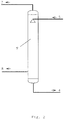
- Fig. 1 is a flow chart of the absorption procedure.
- the desulfurization absorption takes place in the desulfurization tower.
- a SOx-containing gas enters the desulfurization tower from its bottom, and the desulfurization solution (generally known as "S-poor solution") is fed into the desulfurization tower from its top, so they come into contact with each other in a countercurrent manner.
- S-poor solution desulfurization solution
- both the SOx-containing gas and the desulfurization solution may enter the desulrufization tower from its top and come into contact with each other in a cocurrent manner.
- the desulfurization solution is regenerated by one or more of heating, vacuumizing, ultrasonic processing, microwave processing and irradiation.
- Fig. 2 is a schematic diagram of regeneration by heating.
- the desulfurization solution having absorbed SOx therein i.e. the S-rich solution
- the regenerated desulfurization solution generally called “S-poor solution” or “semi-S-poor solution”
- S-poor solution can be directly fed into the desulfurization tower for use in absorption, or further regenerated in another way before entry into the desulfurization tower.
- Fig. 3 is a schematic diagram of regeneration by vacuumizing.
- the desulfurization solution having absorbed SOx therein i.e. the S-rich solution
- the vacuum regenerator wherein it releases SO 2 and/or SO 3 by vacuumizing.
- the regenerated desulfurization solution generally called “S-poor solution” or “semi-S-poor solution”
- S-poor solution can be directly fed into the desulfurization tower for use in absorption, or further regenerated in another way before entry into the desulfurization tower.
- Fig. 4 is a schematic diagram of regeneration by ultrasonic processing, microwave processing or irradiation.
- the desulfurization solution having absorbed SOx therein i.e. the S-rich solution
- the ultrasonic, microwave or irradiation regenerator wherein it releases SO 2 and/or SO 3 by being subjected to ultrasonic processing, microwave processing or irradiation.
- the regenerated desulfurization solution generally called “S-poor solution” or “semi-S-poor solution”
- S-poor solution or “semi-S-poor solution”
- Two or more of heating, vacuumizing, ultrasonic processing, microwave processing and irradiation can be used jointly in one regenerator.
- Water must be removed from the regenerated PEG solution by absorption method using a water-absorbent when its water content is high enough to deteriorate the desulfurization effect.
- the dehydrated PEG solution can be recycled.
- the present invention is superior to conventional wet desulfurization processes such as calcium process and ammonia process in the following aspects.
- the conventional wet sulfurization processes are applicable only to low-sulfur content gases.
- the PEG desulfurization method according to the present invention is applicable not only to low-sulfur content gases but also to high-sulfur content gases.
- Insoluble calcium salts or ammonium salts are generated during the procedures of absorption and regeneration when the conventional wet sulfurization processes are employed, causing the blocking of piping and equipment.
- the PEG desulfurization method according to the present invention almost does not lead to the formation of calcium salts or ammonium salts.
- the byproducts of the conventional wet desulfurization processes when used in the desulfurization of flue gas, high purity liquid sulfur dioxide and/or sulfur trioxide is/are produced as the byproduct(s) of the PEG desulfurization method according to the present invention, which is/are commercially significant raw material(s) for the chemical industry.
- the PEG desulfurization method according to the present invention is such a highly effective purification method that gases desulfurizated by the method can reliably achieve a total sulfur content of 5mg/m 3 or less. Low operational costs, small investment, and being simple to operate and less time consuming also feature the PEG desulfurization method according to the present invention.
- the PEG desulfurization method according to the present invention is applicable to the desulfurization of a variety of gases including flue gas, incineration gas, coke oven gas, synthetic waste gas from dyestuff plants, sewage gas exhausted from chemical fiber plants, Claus tail gas, and other industrial raw material gases or exhaust gases, each of which has a total sulfur content of less than 99.9% by volume.
- gases including flue gas, incineration gas, coke oven gas, synthetic waste gas from dyestuff plants, sewage gas exhausted from chemical fiber plants, Claus tail gas, and other industrial raw material gases or exhaust gases, each of which has a total sulfur content of less than 99.9% by volume.
- the first stage of the PEG desulfurization method according to the present invention is desulfurization absorption as shown in Fig. 1 wherein 1 represents a desulfurization tower, 2 represents a SOx-containing gas, 3 represents a purified gas, 4 represents a S-poor desulfurization solution, and 5 represents a S-rich desulfurization solution.
- the SOx-containing gas 2 is fed into the desulfurization tower 1 from its bottom, and it comes into contact with the S-poor desulfurization solution 4 in a countercurrent manner; SOx in the SOx-containing gas 2 is absorbed by the S-poor desulfurization solution 4 and turns into the purified gas 3, which leaves the desulfurization tower 1 from its top; having absorbed SOx, the S-poor desulfurization solution 4 turns into the S-rich desulfurization solution 5 and is released from the desulfurization tower 1 from its bottom.
- the S-rich desulfurization solution 5 enters a regeneration procedure to be regenerated by one or more of heating, vacuumizing, ultrasonic processing, microwave processing and irradiation.
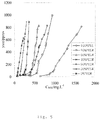
- the inventor studied the absorption of sulfur dioxide in a gaseous mixture of sulfur dioxide and nitrogen by aqueous solutions of PEG (of which the DP is 8-10 and the average molecular weight is 380-420) at 298.15K and 122.61Kpa, and got vapor-liquid equilibrium data (see Table 1 below).
- the content of sulfur dioxide in the gas phase was measured by gas chromatography, and the content of sulfur dioxide in the liquid phase was measured by iodometry.
- Fig. 5 is a vapor-liquid equilibrium diagram plotted according to the data listed in Table 1.
- the second stage of the PEG desulfurization method according to the present invention is the regeneration of the desulfurization solution, in which the desulfurization solution is regenerated by one of more of heating, vacuumizing, ultrasonic processing, microwave processing and irradiation.
- FIG. 2 An embodiment of regeneration by means of heating is shown in Fig. 2 .
- 4 represents a S-poor desulfurization solution
- 5 represents a S-rich desulfurization solution
- 7 represents sulfur dioxide and/or sulfur trioxide
- 8 represents S-containing foam and/or dust
- 9 represents a thermal regenerator.
- the S-rich desulfurization solution 5 is fed into the thermal regenerator 9 wherein it is heated to release the gaseous sulfur dioxide and/or sulfur trioxide 7 which can be transformed into high purity liquid sulfur dioxide and/or sulfur trioxide as the byproduct(s) of the regeneration procedure in a certain way.
- S-containing foam and/or dust 8 also come(s) into being or accumulate and depart(s) from the desulfurization solution.
- the S-containing foam and/or dust 8 can be further processed to become sulfur as the byproduct of the regeneration procedure.
- the regenerated S-rich desulfurization solution 5 turns into the S-poor desulfurization solution 4, which can be directly used in desulfurization absorption or further regenerated by one or more of vacuumizing, ultrasonic processing, microwave processing and irradiation.
- Fig. 3 shows an embodiment of regeneration by means of vacuumizing.
- 4 represents a S-poor desulfurization solution
- 5 represents a S-rich desulfurization solution
- 7 represents sulfur dioxide and/or sulfur trioxide
- 8 represents S-containing foam and/or dust
- 10 represents a vacuum regenerator
- 11 represents a vacuum pump.
- the S-rich desulfurization solution 5 is fed into the vacuum regenerator 10 wherein the gaseous sulfur dioxide and/or sulfur trioxide 7 is/are released under reduced pressure generated by the vacuum pump 11.
- the gaseous sulfur dioxide and/or sulfur trioxide 7 can be transformed into high purity liquid sulfur dioxide and/or sulfur trioxide as the byproduct(s) of the regeneration procedure in a certain way.
- S-containing foam and/or dust 8 also come(s) into being or accumulate and depart(s) from the desulfurization solution.
- the S-containing foam and/or dust 8 can be further processed to become sulfur as the byproduct of the regeneration procedure.
- the regenerated S-rich desulfurization solution 5 turns into the S-poor desulfurization solution 4, which can be directly used in desulfurization absorption or further regenerated by one or more of heating, ultrasonic processing, microwave processing and irradiation.
- Fig. 4 shows an embodiment of regeneration by means of one or more of ultrasonic processing, microwave processing and irradiation.
- 4 represents a S-poor desulfurization solution
- 5 represents a S-rich desulfurization solution
- 6 represents one or more of ultrasonic, microwave and irradiation regenerator
- 7 represents sulfur dioxide and/or sulfur trioxide
- 8 represents S-containing foam and/or dust.
- the S-rich desulfurization solution 5 is fed into one or more of ultrasonic, microwave and irradiation regenerator 6 wherein the gaseous sulfur dioxide and/or sulfur trioxide 7 is/are released by the effect of ultrasonic wave, microwave and irradiation.
- the gaseous sulfur dioxide and/or sulfur trioxide 7 can be transformed into high purity liquid sulfur dioxide and/or sulfur trioxide as the byproduct(s) of the regeneration procedure in a certain way.
- S-containing foam and/or dust 8 also come(s) into being or accumulate and depart(s) from the desulfurization solution.
- the S-containing foam and/or dust 8 can be further processed to become sulfur as the byproduct(s) of the regeneration procedure.
- the regenerated S-rich desulfurization solution 5 turns into the S-poor desulfurization solution 4, which can be directly used in desulfurization absorption or further regenerated by heating and/or vacummizing.
- Methods for the removal of water include absorption method using a water-absorbent, wherein calcium oxide, anhydrous calcium sulfate, silica gel and/or water-absorbent resin are used as the absorbent.
Landscapes
- Chemical & Material Sciences (AREA)
- Engineering & Computer Science (AREA)
- Organic Chemistry (AREA)
- Oil, Petroleum & Natural Gas (AREA)
- Chemical Kinetics & Catalysis (AREA)
- Analytical Chemistry (AREA)
- General Chemical & Material Sciences (AREA)
- Inorganic Chemistry (AREA)
- Environmental & Geological Engineering (AREA)
- Health & Medical Sciences (AREA)
- Biomedical Technology (AREA)
- Treating Waste Gases (AREA)
- Gas Separation By Absorption (AREA)
- Solid-Sorbent Or Filter-Aiding Compositions (AREA)
Priority Applications (1)
| Application Number | Priority Date | Filing Date | Title |
|---|---|---|---|
| PL10740927T PL2409752T3 (pl) | 2009-02-16 | 2010-02-10 | Sposób usuwania SOx z gazu przy użyciu glikolu polietylenowego |
Applications Claiming Priority (2)
| Application Number | Priority Date | Filing Date | Title |
|---|---|---|---|
| CN2009100090581A CN101502741B (zh) | 2009-02-16 | 2009-02-16 | 聚乙二醇脱除气体中SOx的方法 |
| PCT/CN2010/070622 WO2010091638A1 (zh) | 2009-02-16 | 2010-02-10 | 聚乙二醇脱除气体中SOx的方法 |
Publications (3)
| Publication Number | Publication Date |
|---|---|
| EP2409752A1 EP2409752A1 (en) | 2012-01-25 |
| EP2409752A4 EP2409752A4 (en) | 2012-08-15 |
| EP2409752B1 true EP2409752B1 (en) | 2019-10-09 |
Family
ID=40975196
Family Applications (1)
| Application Number | Title | Priority Date | Filing Date |
|---|---|---|---|
| EP10740927.8A Active EP2409752B1 (en) | 2009-02-16 | 2010-02-10 | Method for removing sox from gas using polyethylene glycol |
Country Status (12)
| Country | Link |
|---|---|
| US (1) | US9017454B2 (pl) |
| EP (1) | EP2409752B1 (pl) |
| JP (1) | JP5694957B2 (pl) |
| CN (1) | CN101502741B (pl) |
| AU (1) | AU2010213234B2 (pl) |
| BR (1) | BRPI1007816B1 (pl) |
| CA (1) | CA2752599C (pl) |
| EA (1) | EA021209B1 (pl) |
| ES (1) | ES2760502T3 (pl) |
| MX (1) | MX337698B (pl) |
| PL (1) | PL2409752T3 (pl) |
| WO (1) | WO2010091638A1 (pl) |
Families Citing this family (15)
| Publication number | Priority date | Publication date | Assignee | Title |
|---|---|---|---|---|
| CN101502741B (zh) * | 2009-02-16 | 2011-01-05 | 北京博源恒升高科技有限公司 | 聚乙二醇脱除气体中SOx的方法 |
| ES2406762T3 (es) * | 2009-05-05 | 2013-06-10 | Dorf Ketal Chemicals (I) Private Limited | Método de eliminación de sulfuro de hidrógeno de una corriente de hidrocarburos |
| CN102274676A (zh) * | 2011-06-10 | 2011-12-14 | 常州大学 | 基于微波和真空集成的解吸装置及其油气吸收回收方法 |
| CN102380301A (zh) * | 2011-08-15 | 2012-03-21 | 西安热工研究院有限公司 | 石灰石-石膏湿法烟气脱硫复合增效剂 |
| JP6080651B2 (ja) * | 2013-03-29 | 2017-02-15 | 新コスモス電機株式会社 | ガス検知装置 |
| CN103432890B (zh) | 2013-09-10 | 2015-12-09 | 北京博源恒升高科技有限公司 | 改性聚乙二醇脱除气体中SOx的方法 |
| CN103495340B (zh) | 2013-10-15 | 2015-11-18 | 北京博源恒升高科技有限公司 | 复合醇胺类溶液脱除气体中SOx的方法 |
| CN103623689B (zh) | 2013-12-12 | 2016-06-29 | 北京博源恒升高科技有限公司 | 多元醇复合溶液脱除气体中SOx的方法 |
| CN103611391B (zh) | 2013-12-12 | 2016-01-20 | 北京博源恒升高科技有限公司 | 乙二醇类复合溶液脱除气体中SOx的方法 |
| WO2015163819A1 (en) * | 2014-04-22 | 2015-10-29 | Agency For Science, Technology And Research | Method for regenerating a used sorbent having a gas adsorbate adsorbed thereto |
| CN105214457B (zh) | 2014-06-05 | 2018-04-17 | 魏雄辉 | 一种烟道气脱硫脱硝工艺及设备 |
| CN104190236B (zh) * | 2014-08-27 | 2016-09-07 | 浙江大学 | 一种仿生物钙化的二氧化碳捕获与释放方法及其专用溶液 |
| CN106975323B (zh) * | 2017-04-06 | 2023-12-05 | 西安石油大学 | 一种失效天然气脱硫溶液再生装置 |
| CN111054098B (zh) * | 2018-10-17 | 2023-11-28 | 中国石油化工股份有限公司 | 一种用于含有酸性气体的溶剂的再生方法及装置 |
| CN111921370A (zh) * | 2020-07-16 | 2020-11-13 | 杭州斯曼特建材科技有限公司 | 一种高分子环保脱硫剂及其制备方法 |
Family Cites Families (37)
| Publication number | Priority date | Publication date | Assignee | Title |
|---|---|---|---|---|
| US2139375A (en) * | 1937-06-14 | 1938-12-06 | Shell Dev | Removal of so from gases |
| US3170766A (en) * | 1958-08-29 | 1965-02-23 | Laurence S Reid | Sulfur recovery apparatus |
| FR2213793B2 (pl) * | 1972-09-22 | 1975-08-22 | Inst Francais Du Petrole | |
| DE2333708B2 (de) | 1973-07-03 | 1977-09-15 | Dsd Dillinger Stahlbau Gmbh, 6630 Saarlouis | Verfahren zum selektiven entfernen von schwefelwasserstoff aus kohlenwasserstoffhaltigen gasen |
| US4053575A (en) * | 1974-08-19 | 1977-10-11 | The United States Of America As Represented By The Secretary Of The Interior | Sulfur recovery from H2 S and SO2 -containing gases |
| SU655410A1 (ru) | 1977-10-28 | 1979-04-05 | Всесоюзный научно-исследовательский институт природных газов | Абсорбент дл сушки и очистки углеводородных газов |
| JPS6015376B2 (ja) * | 1977-11-24 | 1985-04-19 | 日本油脂株式会社 | 排ガスの脱硫方法 |
| US4162145A (en) * | 1977-12-09 | 1979-07-24 | Phillips Petroleum Company | Regeneration of liquid absorbents |
| US4240923A (en) * | 1978-05-30 | 1980-12-23 | Exxon Research & Engineering Co. | Process and amine-solvent absorbent for removing acidic gases from gaseous mixtures |
| SU927282A1 (ru) | 1979-04-25 | 1982-05-15 | Всесоюзный Научно-Исследовательский И Проектный Институт По Подготовке @К Транспортировке И Переработке Природного Газа | Абсорбент дл очистки газов от кислых компонентов |
| US4406867A (en) * | 1980-04-17 | 1983-09-27 | Union Carbide Corporation | Process for the purification of non-reacting gases |
| DE3112661A1 (de) | 1981-03-31 | 1982-10-14 | Basf Ag, 6700 Ludwigshafen | Verfahren zur abtrennung von kondensierbaren aliphatischen kohlenwasserstoffen und sauren gasen aus erdgasen |
| US4368178A (en) | 1981-05-26 | 1983-01-11 | Shell Oil Company | Process for the removal of H2 S and CO2 from gaseous streams |
| FR2532190A1 (fr) | 1982-08-25 | 1984-03-02 | Raffinage Cie Francaise | Dispositif pour l'elimination a froid de l'hydrogene sulfure contenu dans un melange gazeux, par reaction sur de l'anhydride sulfureux, et pour la separation du soufre solide ainsi produit |
| DE3237387A1 (de) * | 1982-10-08 | 1984-04-12 | Linde Ag, 6200 Wiesbaden | Verfahren zur entfernung unerwuenschter gasfoermiger bestandteile aus heissen rauchgasen |
| DE3345056A1 (de) * | 1983-12-13 | 1985-06-20 | Linde Ag, 6200 Wiesbaden | Verfahren und vorrichtung zur entfernung von so(pfeil abwaerts)2(pfeil abwaerts) aus rauchgasen |
| DE3501118A1 (de) * | 1985-01-15 | 1986-07-17 | Linde Ag, 6200 Wiesbaden | Verfahren zur entfernung von so(pfeil abwaerts)2(pfeil abwaerts) und no(pfeil abwaerts)x(pfeil abwaerts) aus gasen |
| CH666194A5 (de) * | 1985-04-02 | 1988-07-15 | Rene Meier | Regenerierungseinrichtung. |
| DE3612123A1 (de) * | 1985-09-27 | 1987-04-09 | Linde Ag | Verfahren zum auswaschen von no und/oder so(pfeil abwaerts)2(pfeil abwaerts) aus gasgemischen |
| JPS6295118A (ja) | 1985-10-21 | 1987-05-01 | Mitsubishi Heavy Ind Ltd | グリコ−ルを用いる脱水方法 |
| DE3624768A1 (de) * | 1986-07-22 | 1988-01-28 | Linde Ag | Verfahren zur verhinderung der korrosion von apparateteilen |
| SU1611411A1 (ru) | 1988-06-21 | 1990-12-07 | Всесоюзный Научно-Исследовательский И Проектный Институт По Переработке Газа | Способ очистки углеводородного газа от кислых компонентов |
| AU619375B2 (en) | 1988-12-23 | 1992-01-23 | Baker Hughes Incorporated | Composition and method for sweetening hydrocarbons |
| CN1087110A (zh) | 1992-11-16 | 1994-05-25 | 魏雄辉 | 半水煤气脱硫脱氧新方法 |
| JPH06228573A (ja) | 1993-02-08 | 1994-08-16 | Hitachi Ltd | 石炭ガス化プラントのテールガス処理法 |
| RU2070423C1 (ru) | 1993-09-14 | 1996-12-20 | Акционерное общество Миннибаевский газоперерабатывающий завод | Установка для комплексной очистки нефтяного и природного газов |
| ATE179088T1 (de) * | 1993-11-09 | 1999-05-15 | Union Carbide Chem Plastic | Absorption von mercaptanen |
| CN1133817A (zh) | 1996-02-17 | 1996-10-23 | 魏雄辉 | 加压铁-碱溶液脱碳脱硫 |
| US5876677A (en) * | 1996-04-25 | 1999-03-02 | Mensinger; Michael C. | Ultrasound-assisted liquid redox absorber |
| US6203599B1 (en) * | 1999-07-28 | 2001-03-20 | Union Carbide Chemicals & Plastics Technology Corporation | Process for the removal of gas contaminants from a product gas using polyethylene glycols |
| DE10136484A1 (de) | 2001-07-27 | 2003-02-13 | Uhde Gmbh | Verfahren zur Entfernung von Gasbestandteilen aus technischen Gasen mittels Ethylenglykoldimethylethern bei tieferen Temperaturen |
| US20060156923A1 (en) | 2003-06-05 | 2006-07-20 | Basf Aktiengesellschaft | Method for the deacidification of a fluid stream by means of an inert scrubbing column and corresponding device |
| FR2895273B1 (fr) * | 2005-12-22 | 2008-08-08 | Inst Francais Du Petrole | Procede de desacidification d'un gaz avec une solution absorbante a regeneration fractionnee avec controle de la teneur en eau de la solution |
| CN100584432C (zh) | 2006-12-21 | 2010-01-27 | 南化集团研究院 | 从酸性气流中除去硫醇的吸收剂和方法 |
| CN101053746B (zh) * | 2007-06-06 | 2010-06-09 | 北京大学 | 乙二醇脱除烟道气中sox的方法 |
| CN101502741B (zh) * | 2009-02-16 | 2011-01-05 | 北京博源恒升高科技有限公司 | 聚乙二醇脱除气体中SOx的方法 |
| US8905742B2 (en) | 2010-09-17 | 2014-12-09 | Synerdyne Corporation | Compact rotary platen 3D printer |
-
2009
- 2009-02-16 CN CN2009100090581A patent/CN101502741B/zh active Active
-
2010
- 2010-02-10 ES ES10740927T patent/ES2760502T3/es active Active
- 2010-02-10 PL PL10740927T patent/PL2409752T3/pl unknown
- 2010-02-10 CA CA2752599A patent/CA2752599C/en active Active
- 2010-02-10 EA EA201171061A patent/EA021209B1/ru not_active IP Right Cessation
- 2010-02-10 US US13/201,521 patent/US9017454B2/en active Active
- 2010-02-10 AU AU2010213234A patent/AU2010213234B2/en active Active
- 2010-02-10 MX MX2011008612A patent/MX337698B/es active IP Right Grant
- 2010-02-10 JP JP2011549426A patent/JP5694957B2/ja active Active
- 2010-02-10 BR BRPI1007816-9A patent/BRPI1007816B1/pt active IP Right Grant
- 2010-02-10 WO PCT/CN2010/070622 patent/WO2010091638A1/zh not_active Ceased
- 2010-02-10 EP EP10740927.8A patent/EP2409752B1/en active Active
Non-Patent Citations (1)
| Title |
|---|
| None * |
Also Published As
| Publication number | Publication date |
|---|---|
| BRPI1007816B1 (pt) | 2020-03-10 |
| BRPI1007816A2 (pt) | 2016-02-23 |
| EA021209B1 (ru) | 2015-04-30 |
| JP2012517890A (ja) | 2012-08-09 |
| ES2760502T3 (es) | 2020-05-14 |
| EA201171061A1 (ru) | 2012-04-30 |
| MX2011008612A (es) | 2011-12-06 |
| CA2752599C (en) | 2016-08-16 |
| JP5694957B2 (ja) | 2015-04-01 |
| CN101502741B (zh) | 2011-01-05 |
| US9017454B2 (en) | 2015-04-28 |
| AU2010213234B2 (en) | 2017-07-06 |
| PL2409752T3 (pl) | 2020-04-30 |
| EP2409752A1 (en) | 2012-01-25 |
| MX337698B (es) | 2016-03-14 |
| CA2752599A1 (en) | 2010-08-19 |
| US20110315014A1 (en) | 2011-12-29 |
| WO2010091638A1 (zh) | 2010-08-19 |
| AU2010213234A1 (en) | 2011-09-08 |
| EP2409752A4 (en) | 2012-08-15 |
| CN101502741A (zh) | 2009-08-12 |
Similar Documents
| Publication | Publication Date | Title |
|---|---|---|
| US9017454B2 (en) | Method for removing SOx from gas using polyethylene glycol | |
| AU2014336725B2 (en) | Method for removal of SOx from gas using compound amine alcohol solution | |
| CN103611391B (zh) | 乙二醇类复合溶液脱除气体中SOx的方法 | |
| EP3045219B1 (en) | Method for removing sox from gas using modified polyethylene glycol | |
| KR102114062B1 (ko) | 폴리올 복합용액으로 가스 중의 SOx를 제거하는 방법 | |
| CN101053746B (zh) | 乙二醇脱除烟道气中sox的方法 |
Legal Events
| Date | Code | Title | Description |
|---|---|---|---|
| PUAI | Public reference made under article 153(3) epc to a published international application that has entered the european phase |
Free format text: ORIGINAL CODE: 0009012 |
|
| 17P | Request for examination filed |
Effective date: 20110816 |
|
| AK | Designated contracting states |
Kind code of ref document: A1 Designated state(s): AT BE BG CH CY CZ DE DK EE ES FI FR GB GR HR HU IE IS IT LI LT LU LV MC MK MT NL NO PL PT RO SE SI SK SM TR |
|
| DAX | Request for extension of the european patent (deleted) | ||
| A4 | Supplementary search report drawn up and despatched |
Effective date: 20120717 |
|
| RIC1 | Information provided on ipc code assigned before grant |
Ipc: C01B 17/60 20060101ALI20120706BHEP Ipc: B01D 53/50 20060101ALI20120706BHEP Ipc: B01D 53/14 20060101AFI20120706BHEP |
|
| STAA | Information on the status of an ep patent application or granted ep patent |
Free format text: STATUS: EXAMINATION IS IN PROGRESS |
|
| 17Q | First examination report despatched |
Effective date: 20170502 |
|
| GRAP | Despatch of communication of intention to grant a patent |
Free format text: ORIGINAL CODE: EPIDOSNIGR1 |
|
| STAA | Information on the status of an ep patent application or granted ep patent |
Free format text: STATUS: GRANT OF PATENT IS INTENDED |
|
| INTG | Intention to grant announced |
Effective date: 20190628 |
|
| GRAS | Grant fee paid |
Free format text: ORIGINAL CODE: EPIDOSNIGR3 |
|
| GRAA | (expected) grant |
Free format text: ORIGINAL CODE: 0009210 |
|
| STAA | Information on the status of an ep patent application or granted ep patent |
Free format text: STATUS: THE PATENT HAS BEEN GRANTED |
|
| AK | Designated contracting states |
Kind code of ref document: B1 Designated state(s): AT BE BG CH CY CZ DE DK EE ES FI FR GB GR HR HU IE IS IT LI LT LU LV MC MK MT NL NO PL PT RO SE SI SK SM TR |
|
| REG | Reference to a national code |
Ref country code: GB Ref legal event code: FG4D |
|
| REG | Reference to a national code |
Ref country code: CH Ref legal event code: EP |
|
| REG | Reference to a national code |
Ref country code: DE Ref legal event code: R096 Ref document number: 602010061434 Country of ref document: DE |
|
| REG | Reference to a national code |
Ref country code: IE Ref legal event code: FG4D |
|
| REG | Reference to a national code |
Ref country code: AT Ref legal event code: REF Ref document number: 1188119 Country of ref document: AT Kind code of ref document: T Effective date: 20191115 |
|
| REG | Reference to a national code |
Ref country code: NL Ref legal event code: FP |
|
| REG | Reference to a national code |
Ref country code: LT Ref legal event code: MG4D |
|
| REG | Reference to a national code |
Ref country code: AT Ref legal event code: MK05 Ref document number: 1188119 Country of ref document: AT Kind code of ref document: T Effective date: 20191009 |
|
| PG25 | Lapsed in a contracting state [announced via postgrant information from national office to epo] |
Ref country code: FI Free format text: LAPSE BECAUSE OF FAILURE TO SUBMIT A TRANSLATION OF THE DESCRIPTION OR TO PAY THE FEE WITHIN THE PRESCRIBED TIME-LIMIT Effective date: 20191009 Ref country code: BG Free format text: LAPSE BECAUSE OF FAILURE TO SUBMIT A TRANSLATION OF THE DESCRIPTION OR TO PAY THE FEE WITHIN THE PRESCRIBED TIME-LIMIT Effective date: 20200109 Ref country code: NO Free format text: LAPSE BECAUSE OF FAILURE TO SUBMIT A TRANSLATION OF THE DESCRIPTION OR TO PAY THE FEE WITHIN THE PRESCRIBED TIME-LIMIT Effective date: 20200109 Ref country code: LT Free format text: LAPSE BECAUSE OF FAILURE TO SUBMIT A TRANSLATION OF THE DESCRIPTION OR TO PAY THE FEE WITHIN THE PRESCRIBED TIME-LIMIT Effective date: 20191009 Ref country code: LV Free format text: LAPSE BECAUSE OF FAILURE TO SUBMIT A TRANSLATION OF THE DESCRIPTION OR TO PAY THE FEE WITHIN THE PRESCRIBED TIME-LIMIT Effective date: 20191009 Ref country code: PT Free format text: LAPSE BECAUSE OF FAILURE TO SUBMIT A TRANSLATION OF THE DESCRIPTION OR TO PAY THE FEE WITHIN THE PRESCRIBED TIME-LIMIT Effective date: 20200210 Ref country code: SE Free format text: LAPSE BECAUSE OF FAILURE TO SUBMIT A TRANSLATION OF THE DESCRIPTION OR TO PAY THE FEE WITHIN THE PRESCRIBED TIME-LIMIT Effective date: 20191009 Ref country code: GR Free format text: LAPSE BECAUSE OF FAILURE TO SUBMIT A TRANSLATION OF THE DESCRIPTION OR TO PAY THE FEE WITHIN THE PRESCRIBED TIME-LIMIT Effective date: 20200110 Ref country code: AT Free format text: LAPSE BECAUSE OF FAILURE TO SUBMIT A TRANSLATION OF THE DESCRIPTION OR TO PAY THE FEE WITHIN THE PRESCRIBED TIME-LIMIT Effective date: 20191009 |
|
| REG | Reference to a national code |
Ref country code: ES Ref legal event code: FG2A Ref document number: 2760502 Country of ref document: ES Kind code of ref document: T3 Effective date: 20200514 |
|
| PG25 | Lapsed in a contracting state [announced via postgrant information from national office to epo] |
Ref country code: IS Free format text: LAPSE BECAUSE OF FAILURE TO SUBMIT A TRANSLATION OF THE DESCRIPTION OR TO PAY THE FEE WITHIN THE PRESCRIBED TIME-LIMIT Effective date: 20200224 Ref country code: HR Free format text: LAPSE BECAUSE OF FAILURE TO SUBMIT A TRANSLATION OF THE DESCRIPTION OR TO PAY THE FEE WITHIN THE PRESCRIBED TIME-LIMIT Effective date: 20191009 |
|
| REG | Reference to a national code |
Ref country code: DE Ref legal event code: R097 Ref document number: 602010061434 Country of ref document: DE |
|
| PG2D | Information on lapse in contracting state deleted |
Ref country code: IS |
|
| PG25 | Lapsed in a contracting state [announced via postgrant information from national office to epo] |
Ref country code: DK Free format text: LAPSE BECAUSE OF FAILURE TO SUBMIT A TRANSLATION OF THE DESCRIPTION OR TO PAY THE FEE WITHIN THE PRESCRIBED TIME-LIMIT Effective date: 20191009 Ref country code: EE Free format text: LAPSE BECAUSE OF FAILURE TO SUBMIT A TRANSLATION OF THE DESCRIPTION OR TO PAY THE FEE WITHIN THE PRESCRIBED TIME-LIMIT Effective date: 20191009 Ref country code: CZ Free format text: LAPSE BECAUSE OF FAILURE TO SUBMIT A TRANSLATION OF THE DESCRIPTION OR TO PAY THE FEE WITHIN THE PRESCRIBED TIME-LIMIT Effective date: 20191009 Ref country code: RO Free format text: LAPSE BECAUSE OF FAILURE TO SUBMIT A TRANSLATION OF THE DESCRIPTION OR TO PAY THE FEE WITHIN THE PRESCRIBED TIME-LIMIT Effective date: 20191009 Ref country code: IS Free format text: LAPSE BECAUSE OF FAILURE TO SUBMIT A TRANSLATION OF THE DESCRIPTION OR TO PAY THE FEE WITHIN THE PRESCRIBED TIME-LIMIT Effective date: 20200209 |
|
| PLBE | No opposition filed within time limit |
Free format text: ORIGINAL CODE: 0009261 |
|
| STAA | Information on the status of an ep patent application or granted ep patent |
Free format text: STATUS: NO OPPOSITION FILED WITHIN TIME LIMIT |
|
| PG25 | Lapsed in a contracting state [announced via postgrant information from national office to epo] |
Ref country code: SM Free format text: LAPSE BECAUSE OF FAILURE TO SUBMIT A TRANSLATION OF THE DESCRIPTION OR TO PAY THE FEE WITHIN THE PRESCRIBED TIME-LIMIT Effective date: 20191009 Ref country code: SK Free format text: LAPSE BECAUSE OF FAILURE TO SUBMIT A TRANSLATION OF THE DESCRIPTION OR TO PAY THE FEE WITHIN THE PRESCRIBED TIME-LIMIT Effective date: 20191009 |
|
| 26N | No opposition filed |
Effective date: 20200710 |
|
| REG | Reference to a national code |
Ref country code: CH Ref legal event code: PL |
|
| REG | Reference to a national code |
Ref country code: BE Ref legal event code: MM Effective date: 20200229 |
|
| PG25 | Lapsed in a contracting state [announced via postgrant information from national office to epo] |
Ref country code: LU Free format text: LAPSE BECAUSE OF NON-PAYMENT OF DUE FEES Effective date: 20200210 Ref country code: MC Free format text: LAPSE BECAUSE OF FAILURE TO SUBMIT A TRANSLATION OF THE DESCRIPTION OR TO PAY THE FEE WITHIN THE PRESCRIBED TIME-LIMIT Effective date: 20191009 |
|
| PG25 | Lapsed in a contracting state [announced via postgrant information from national office to epo] |
Ref country code: LI Free format text: LAPSE BECAUSE OF NON-PAYMENT OF DUE FEES Effective date: 20200229 Ref country code: SI Free format text: LAPSE BECAUSE OF FAILURE TO SUBMIT A TRANSLATION OF THE DESCRIPTION OR TO PAY THE FEE WITHIN THE PRESCRIBED TIME-LIMIT Effective date: 20191009 Ref country code: CH Free format text: LAPSE BECAUSE OF NON-PAYMENT OF DUE FEES Effective date: 20200229 |
|
| PG25 | Lapsed in a contracting state [announced via postgrant information from national office to epo] |
Ref country code: IE Free format text: LAPSE BECAUSE OF NON-PAYMENT OF DUE FEES Effective date: 20200210 |
|
| PG25 | Lapsed in a contracting state [announced via postgrant information from national office to epo] |
Ref country code: BE Free format text: LAPSE BECAUSE OF NON-PAYMENT OF DUE FEES Effective date: 20200229 |
|
| PG25 | Lapsed in a contracting state [announced via postgrant information from national office to epo] |
Ref country code: MT Free format text: LAPSE BECAUSE OF FAILURE TO SUBMIT A TRANSLATION OF THE DESCRIPTION OR TO PAY THE FEE WITHIN THE PRESCRIBED TIME-LIMIT Effective date: 20191009 Ref country code: CY Free format text: LAPSE BECAUSE OF FAILURE TO SUBMIT A TRANSLATION OF THE DESCRIPTION OR TO PAY THE FEE WITHIN THE PRESCRIBED TIME-LIMIT Effective date: 20191009 |
|
| PG25 | Lapsed in a contracting state [announced via postgrant information from national office to epo] |
Ref country code: MK Free format text: LAPSE BECAUSE OF FAILURE TO SUBMIT A TRANSLATION OF THE DESCRIPTION OR TO PAY THE FEE WITHIN THE PRESCRIBED TIME-LIMIT Effective date: 20191009 |
|
| P01 | Opt-out of the competence of the unified patent court (upc) registered |
Effective date: 20230519 |
|
| PGFP | Annual fee paid to national office [announced via postgrant information from national office to epo] |
Ref country code: NL Payment date: 20250224 Year of fee payment: 16 |
|
| PGFP | Annual fee paid to national office [announced via postgrant information from national office to epo] |
Ref country code: DE Payment date: 20250225 Year of fee payment: 16 |
|
| PGFP | Annual fee paid to national office [announced via postgrant information from national office to epo] |
Ref country code: ES Payment date: 20250303 Year of fee payment: 16 |
|
| PGFP | Annual fee paid to national office [announced via postgrant information from national office to epo] |
Ref country code: PL Payment date: 20250130 Year of fee payment: 16 Ref country code: FR Payment date: 20250218 Year of fee payment: 16 |
|
| PGFP | Annual fee paid to national office [announced via postgrant information from national office to epo] |
Ref country code: GB Payment date: 20250221 Year of fee payment: 16 Ref country code: IT Payment date: 20250226 Year of fee payment: 16 |
|
| PGFP | Annual fee paid to national office [announced via postgrant information from national office to epo] |
Ref country code: TR Payment date: 20250121 Year of fee payment: 16 |