EP2407705B1 - Baumaschine mit Anwesenheitserkennungssystem - Google Patents
Baumaschine mit Anwesenheitserkennungssystem Download PDFInfo
- Publication number
- EP2407705B1 EP2407705B1 EP10007221.4A EP10007221A EP2407705B1 EP 2407705 B1 EP2407705 B1 EP 2407705B1 EP 10007221 A EP10007221 A EP 10007221A EP 2407705 B1 EP2407705 B1 EP 2407705B1
- Authority
- EP
- European Patent Office
- Prior art keywords
- operator
- sensor
- detection system
- building machine
- presence detection
- Prior art date
- Legal status (The legal status is an assumption and is not a legal conclusion. Google has not performed a legal analysis and makes no representation as to the accuracy of the status listed.)
- Active
Links
Images

Classifications
-
- B—PERFORMING OPERATIONS; TRANSPORTING
- B60—VEHICLES IN GENERAL
- B60K—ARRANGEMENT OR MOUNTING OF PROPULSION UNITS OR OF TRANSMISSIONS IN VEHICLES; ARRANGEMENT OR MOUNTING OF PLURAL DIVERSE PRIME-MOVERS IN VEHICLES; AUXILIARY DRIVES FOR VEHICLES; INSTRUMENTATION OR DASHBOARDS FOR VEHICLES; ARRANGEMENTS IN CONNECTION WITH COOLING, AIR INTAKE, GAS EXHAUST OR FUEL SUPPLY OF PROPULSION UNITS IN VEHICLES
- B60K28/00—Safety devices for propulsion-unit control, specially adapted for, or arranged in, vehicles, e.g. preventing fuel supply or ignition in the event of potentially dangerous conditions
- B60K28/02—Safety devices for propulsion-unit control, specially adapted for, or arranged in, vehicles, e.g. preventing fuel supply or ignition in the event of potentially dangerous conditions responsive to conditions relating to the driver
- B60K28/04—Safety devices for propulsion-unit control, specially adapted for, or arranged in, vehicles, e.g. preventing fuel supply or ignition in the event of potentially dangerous conditions responsive to conditions relating to the driver responsive to presence or absence of the driver, e.g. to weight or lack thereof
-
- F—MECHANICAL ENGINEERING; LIGHTING; HEATING; WEAPONS; BLASTING
- F16—ENGINEERING ELEMENTS AND UNITS; GENERAL MEASURES FOR PRODUCING AND MAINTAINING EFFECTIVE FUNCTIONING OF MACHINES OR INSTALLATIONS; THERMAL INSULATION IN GENERAL
- F16P—SAFETY DEVICES IN GENERAL; SAFETY DEVICES FOR PRESSES
- F16P3/00—Safety devices acting in conjunction with the control or operation of a machine; Control arrangements requiring the simultaneous use of two or more parts of the body
- F16P3/12—Safety devices acting in conjunction with the control or operation of a machine; Control arrangements requiring the simultaneous use of two or more parts of the body with means, e.g. feelers, which in case of the presence of a body part of a person in or near the danger zone influence the control or operation of the machine
- F16P3/14—Safety devices acting in conjunction with the control or operation of a machine; Control arrangements requiring the simultaneous use of two or more parts of the body with means, e.g. feelers, which in case of the presence of a body part of a person in or near the danger zone influence the control or operation of the machine the means being photocells or other devices sensitive without mechanical contact
- F16P3/141—Safety devices acting in conjunction with the control or operation of a machine; Control arrangements requiring the simultaneous use of two or more parts of the body with means, e.g. feelers, which in case of the presence of a body part of a person in or near the danger zone influence the control or operation of the machine the means being photocells or other devices sensitive without mechanical contact using sound propagation, e.g. sonar
-
- F—MECHANICAL ENGINEERING; LIGHTING; HEATING; WEAPONS; BLASTING
- F16—ENGINEERING ELEMENTS AND UNITS; GENERAL MEASURES FOR PRODUCING AND MAINTAINING EFFECTIVE FUNCTIONING OF MACHINES OR INSTALLATIONS; THERMAL INSULATION IN GENERAL
- F16P—SAFETY DEVICES IN GENERAL; SAFETY DEVICES FOR PRESSES
- F16P3/00—Safety devices acting in conjunction with the control or operation of a machine; Control arrangements requiring the simultaneous use of two or more parts of the body
- F16P3/12—Safety devices acting in conjunction with the control or operation of a machine; Control arrangements requiring the simultaneous use of two or more parts of the body with means, e.g. feelers, which in case of the presence of a body part of a person in or near the danger zone influence the control or operation of the machine
- F16P3/14—Safety devices acting in conjunction with the control or operation of a machine; Control arrangements requiring the simultaneous use of two or more parts of the body with means, e.g. feelers, which in case of the presence of a body part of a person in or near the danger zone influence the control or operation of the machine the means being photocells or other devices sensitive without mechanical contact
- F16P3/144—Safety devices acting in conjunction with the control or operation of a machine; Control arrangements requiring the simultaneous use of two or more parts of the body with means, e.g. feelers, which in case of the presence of a body part of a person in or near the danger zone influence the control or operation of the machine the means being photocells or other devices sensitive without mechanical contact using light grids
-
- F—MECHANICAL ENGINEERING; LIGHTING; HEATING; WEAPONS; BLASTING
- F16—ENGINEERING ELEMENTS AND UNITS; GENERAL MEASURES FOR PRODUCING AND MAINTAINING EFFECTIVE FUNCTIONING OF MACHINES OR INSTALLATIONS; THERMAL INSULATION IN GENERAL
- F16P—SAFETY DEVICES IN GENERAL; SAFETY DEVICES FOR PRESSES
- F16P3/00—Safety devices acting in conjunction with the control or operation of a machine; Control arrangements requiring the simultaneous use of two or more parts of the body
- F16P3/12—Safety devices acting in conjunction with the control or operation of a machine; Control arrangements requiring the simultaneous use of two or more parts of the body with means, e.g. feelers, which in case of the presence of a body part of a person in or near the danger zone influence the control or operation of the machine
- F16P3/14—Safety devices acting in conjunction with the control or operation of a machine; Control arrangements requiring the simultaneous use of two or more parts of the body with means, e.g. feelers, which in case of the presence of a body part of a person in or near the danger zone influence the control or operation of the machine the means being photocells or other devices sensitive without mechanical contact
- F16P3/145—Safety devices acting in conjunction with the control or operation of a machine; Control arrangements requiring the simultaneous use of two or more parts of the body with means, e.g. feelers, which in case of the presence of a body part of a person in or near the danger zone influence the control or operation of the machine the means being photocells or other devices sensitive without mechanical contact using magnetic technology
-
- F—MECHANICAL ENGINEERING; LIGHTING; HEATING; WEAPONS; BLASTING
- F16—ENGINEERING ELEMENTS AND UNITS; GENERAL MEASURES FOR PRODUCING AND MAINTAINING EFFECTIVE FUNCTIONING OF MACHINES OR INSTALLATIONS; THERMAL INSULATION IN GENERAL
- F16P—SAFETY DEVICES IN GENERAL; SAFETY DEVICES FOR PRESSES
- F16P3/00—Safety devices acting in conjunction with the control or operation of a machine; Control arrangements requiring the simultaneous use of two or more parts of the body
- F16P3/12—Safety devices acting in conjunction with the control or operation of a machine; Control arrangements requiring the simultaneous use of two or more parts of the body with means, e.g. feelers, which in case of the presence of a body part of a person in or near the danger zone influence the control or operation of the machine
- F16P3/14—Safety devices acting in conjunction with the control or operation of a machine; Control arrangements requiring the simultaneous use of two or more parts of the body with means, e.g. feelers, which in case of the presence of a body part of a person in or near the danger zone influence the control or operation of the machine the means being photocells or other devices sensitive without mechanical contact
- F16P3/148—Safety devices acting in conjunction with the control or operation of a machine; Control arrangements requiring the simultaneous use of two or more parts of the body with means, e.g. feelers, which in case of the presence of a body part of a person in or near the danger zone influence the control or operation of the machine the means being photocells or other devices sensitive without mechanical contact using capacitive technology
-
- B—PERFORMING OPERATIONS; TRANSPORTING
- B60—VEHICLES IN GENERAL
- B60Y—INDEXING SCHEME RELATING TO ASPECTS CROSS-CUTTING VEHICLE TECHNOLOGY
- B60Y2200/00—Type of vehicle
- B60Y2200/40—Special vehicles
- B60Y2200/41—Construction vehicles, e.g. graders, excavators
- B60Y2200/414—Pavers
Definitions
- the invention relates to a construction machine according to the preamble of claim 1 and a method for presence control according to claim 14.
- a work machine must be signaled in time if the operator is no longer able to act or if he is no longer able to run the machine properly. If so, warning signals are sent to the operator to alert him to a potential hazard.
- One safety device used in rail vehicles is the dead man's switch. The driver must operate this at certain intervals to signal the system that he is still awake. If this button remains off, the system will issue a visual or audible warning. If this warning is disproved by the driver, the system assumes that the driver is no longer capable of action and automatically performs emergency braking to prevent a disaster.
- seat contact switches are used to determine whether the driver's seat is occupied.
- the paver assumes that the operator is in the driver's seat, thereby making all work functions available to the operator.
- all work functions are disabled as soon as the seat contact switch opens. The problem with this is that even with small movements or elevations of the operator from the driver's seat opens the seat contact switch and thus interrupts the operation of the paver.
- stopping the operating function of the paver abruptly leads to footprints in the road construction area or damage to the asphalt surface.
- a seat contact switch as it is installed in road pavers, triggers a busy signal not only in persons, but also when storing other objects on the seat. This allows an operator to the paver one Proper occupation of the driver's seat while he is elsewhere on the paver. A safe guidance of the paver by the operator is thus no longer given.
- a seat contact switch is known, which is installed in a vehicle seat. Once two spaced contact surfaces are compressed, the vehicle is signaled that the driver is properly seated in the driver's seat.
- a disadvantage is the use of numerous mechanical springs, which are particularly susceptible to wear.
- the JP 2 034 434 A discloses a construction machine adapted for presence detection of an operator.
- a sensor is arranged on a control panel to recognize the operator.
- the sensor is a photosensor, which is designed as a light source and at the same time as a light receiver. If the sensor detects that the operator is no longer present on the operating handle, this results in the shutdown of the construction machine.
- the disadvantage of this is that the sensor, which is provided on the control panel, is easily susceptible to dirt and moisture. Also, it may happen that the sensor is damaged in harsh working conditions.
- the GB 2 462 580 A describes a safety system for operating a construction machine.
- the security system consists essentially of a warning device, a control unit and recognition units, which are preferably mounted in the safety helmet of the staff. If the recognition unit is recognized by the driver by the warning device, then the construction machine can start or separate operating functions can be released thereby.
- the GB 2 353 180 A describes a presence detection system for a construction machine.
- This system comprises a sensor which is arranged on the housing of the driver's cab above the driver's seat. If the sensor detects a code carried by the operator in any form within a predetermined distance, then the construction machine is ready for operation. Otherwise the construction machine switches off.
- the object of the invention is to provide a construction machine using simple structural means, which ensures both an improved level of occupational safety for the operator and also contributes to improved road construction quality. It is also an object to provide a method that is used to control the presence of an operator on a construction machine without restricting the operator's freedom of movement too much.
- the present invention relates to a construction machine, in particular a paver, with a control panel, a driver's seat or a standing workstation for the operator and a presence detection system comprising a sensor which is adapted to detect whether the operator in the driver's seat or is present at the standing workstation.
- a presence detection system comprising a sensor which is adapted to detect whether the operator in the driver's seat or is present at the standing workstation.
- seat contact switches are used in practice, which are integrated directly in the driver's seat and respond to a load on the driver's seat.
- the sensor of the presence detection system according to the invention is integrated in the control panel of the construction machine. The sensor monitors the presence of the operator on the driver's seat or at the standing workstation, allowing for slight movements of the operator.
- a bypass of the sensor, as would be possible in the seat contact switch by an object placed on the driver's seat is not possible in the invention.
- Another technical advantage of the invention is that the integrated sensor in the control panel is well protected and insensitive to unevenness of the road surface on which the paver moves. In contrast, a seat contact switch is sensitive to an up and down movement of the driver's seat.
- the senor is designed to detect without contact, whether the operator is present.
- non-contact presence detection no components are mechanically deformed, as is common in a conventional seat contact switch. The non-contact measurement is not expected to wear.
- the senor is a capacitive, inductive, ultrasonic or infrared sensor. These sensors can easily detect the proper presence of the operator, reliably responding to different body sizes of the operator.
- the presence detection system is designed to detect based on a distance measurement, whether the operator is present. This provides a reliable and technically improved alternative to the weight-based presence detection of a known seat contact switch.
- the presence detection system defines a middle registration area located between the driver's seat and the standing desk and the control panel.
- the middle approval area creates a framework for the presence detection system, which is accompanied by a safe start-up of the same.
- the presence detection system is designed to shift the registration area horizontally depending on the setting of the driver's seat. This ensures that the presence detection system adapts to the seat adjustment or to the size of the operator.
- the senor is configured to determine the distance between the sensor and the operator, wherein the distance defines a start value. Also, no components are mechanically stressed.
- the presence detection system is configured to detect whether the sensor detected starting value is within the approval range.
- a simple plausibility check is carried out at the beginning, whether the operator has really taken place in the driver's seat or is on a standing workstation.
- the presence detection system is additionally designed to determine a uniform tolerance range around the starting value based on the starting value.
- the tolerance range can prevent the construction machine or paver from being abruptly stopped when the operator moves slightly.
- the senor may be configured to detect if the operator is within the tolerance range.
- the sensor in contrast to the seat contact switch, in which only two operating conditions occur, namely closed or not closed, the sensor thereby offers the technical advantage of permitting a movement of the operator in certain areas.
- Occupational safety for the operator is further enhanced when the presence detection system is adapted to send warning messages to the operator as the operator approaches a tolerance limit.
- the operator can be promptly asked for a proper sitting posture, which is necessary for safe operation of the construction machine.
- the operator as well as other staff present, can be saved from soloing the construction machine if the presence detection system is configured to interrupt the operation of the construction machine when the operator leaves the tolerance range.
- the invention also provides a method for checking the presence of an operator on a driver's seat or at a standing workstation of a construction machine, wherein first a presence detection system comprising a sensor integrated in the control panel is activated, then a measurement with the sensor is performed to determine a distance of the operator to the sensor, and finally it is checked whether the distance is within a tolerance range.
- all functions of the construction machine are preferably available to the operator as long as the distance determined by the sensor is within the tolerance range.
- the method may include determining a seed value, wherein the seed value represents the distance of the operator relative to the sensor.
- An optional check of whether the starting value is within a medium approval range defined by the presence detection system can initially determine whether an operator has been seated properly in the driver's seat or is standing properly at the standing workstation.
- the invention thus offers in particular the technical advantage that slight movements of the operator, whether on the driver's seat or on the standing workstation, do not lead to an abrupt construction machine stop, but depending on the tolerance range small movements for the operator are allowed. These may well be necessary for a safe guidance of the construction machine or the paver as well as for a perfect work result.
- the FIG. 1 shows an operator sitting in front of a control panel 1 in a construction machine on a driver's seat 2. On the control panel 1 different control functions are arranged. Moreover, in the FIG. 1 a presence detection system 3 is shown comprising a sensor 4, which is integrated in the control panel 1. By the lines directed from the control panel 1 towards the operator, a measurement of the sensor 4 is shown, which is to check whether the operator is sitting on the driver's seat 2. In addition, the shows FIG. 1 a starting value 5, which is measured by the sensor 4. The start value 5 marks the distance between the sensor 4 and the operator. Depending on the height or body size of the operator, the starting value 5 is different. Furthermore, in the FIG. 1 a tolerance range 6 is shown. The tolerance range 6 is based on the starting value 5 and extends uniformly from the starting value 5 in the positive or negative direction, ie seen to the right or to the left of the starting value 5.
- the FIG. 2 shows the control panel 1 and the driver's seat 2, with no operator sitting on the driver's seat 2.
- the middle admission area 7 represents a framework condition for putting the presence detection system 3 into operation.
- the presence recognition system 3 can be put into operation when the start value 5 falls within the middle admission area 7.
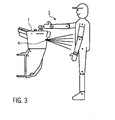
- the FIG. 3 shows an operator who stands in front of the control panel 1 of a construction machine on a standing workstation.
- a sensor 4 can be seen, which is arranged in the control panel 1 and is part of the presence detection system 3.
- the sensor 4 measures the distance from itself to the operator of the construction machine.
- the presence detection system 3 determines whether the operator is properly at the standing workstation or whether the measured distance is within a tolerance range. If the sensor 4 measures a distance which is within the tolerance range, all operating functions of the construction machine are available to the operator. On the other hand, a measured out-of-tolerance distance results in a stop of all operational functions because the presence detection system 3 assumes that the operator has left the standing workstation.
- the presence detection system 3 of the construction machine can be activated.
- the sensor 4 checks whether an operator is seated on the driver's seat 2, or whether he stands at the standing workstation. If the sensor 4 determines a start value 5 which lies within the central admission area 7, the presence detection system 3 is set in motion. In order to provide the operator with sufficient freedom of movement, but without allowing him to leave the driver's seat 2 or the standing workstation, a tolerance range 6 is determined around the starting value 5.
- the sensor 4 measures the distance from itself to the operator.
- the presence detection system 3 compares the distance measured by the sensor 4 relative to the tolerance range 6 and checks whether the operator remains within the tolerance range 6 during the operation of the construction machine or the paver. If this is the case, the system 3 recognizes that the operator is properly in front of the control panel on the driver's seat 2. With a movement of the operator, the distance measured by the sensor 4 changes.
- the presence detection system 3 detects that the measured distance is approaching a limit of the tolerance range 6, acoustic or optical signaling takes place, which stops the operator to properly re-sit on the driver's seat 2 or to position himself correctly on the standing workstation , If, however, the distance measured by the sensor 4 is outside the tolerance range 6, this means that the operator has left the driver's seat 2 or the standing workstation, whereupon all functions of the construction machine are switched off.
- the presence detection system 3 can also be easily used in other construction machines, which are guided by a standing operator. For example, with the presence detection system 3, a vibrating machine can be prevented from continuing to run when the operator leaves the same. This can increase occupational safety, with the result that work injuries are reduced.
Landscapes
- Engineering & Computer Science (AREA)
- General Engineering & Computer Science (AREA)
- Mechanical Engineering (AREA)
- Chemical & Material Sciences (AREA)
- Combustion & Propulsion (AREA)
- Transportation (AREA)
- Radar, Positioning & Navigation (AREA)
- Remote Sensing (AREA)
- Component Parts Of Construction Machinery (AREA)
- Road Paving Machines (AREA)
Priority Applications (6)
| Application Number | Priority Date | Filing Date | Title |
|---|---|---|---|
| EP10007221.4A EP2407705B1 (de) | 2010-07-13 | 2010-07-13 | Baumaschine mit Anwesenheitserkennungssystem |
| PL10007221T PL2407705T3 (pl) | 2010-07-13 | 2010-07-13 | Maszyna budowlana z systemem wykrywania obecności |
| CN201110193324.8A CN102330405B (zh) | 2010-07-13 | 2011-07-11 | 具有存在检测系统的建设机械 |
| US13/180,069 US8459396B2 (en) | 2010-07-13 | 2011-07-11 | Building machine comprising a presence detection system |
| JP2011153059A JP5658628B2 (ja) | 2010-07-13 | 2011-07-11 | 存在検出システムを備える建設用機械 |
| US13/854,586 US8622165B2 (en) | 2010-07-13 | 2013-04-01 | Building machine comprising a presence detection system |
Applications Claiming Priority (1)
| Application Number | Priority Date | Filing Date | Title |
|---|---|---|---|
| EP10007221.4A EP2407705B1 (de) | 2010-07-13 | 2010-07-13 | Baumaschine mit Anwesenheitserkennungssystem |
Publications (2)
| Publication Number | Publication Date |
|---|---|
| EP2407705A1 EP2407705A1 (de) | 2012-01-18 |
| EP2407705B1 true EP2407705B1 (de) | 2013-09-11 |
Family
ID=43067022
Family Applications (1)
| Application Number | Title | Priority Date | Filing Date |
|---|---|---|---|
| EP10007221.4A Active EP2407705B1 (de) | 2010-07-13 | 2010-07-13 | Baumaschine mit Anwesenheitserkennungssystem |
Country Status (5)
| Country | Link |
|---|---|
| US (2) | US8459396B2 (pl) |
| EP (1) | EP2407705B1 (pl) |
| JP (1) | JP5658628B2 (pl) |
| CN (1) | CN102330405B (pl) |
| PL (1) | PL2407705T3 (pl) |
Cited By (1)
| Publication number | Priority date | Publication date | Assignee | Title |
|---|---|---|---|---|
| EP3000641A1 (de) | 2014-09-29 | 2016-03-30 | Joseph Vögele AG | Straßenfertiger mit Bedienmodul und Verfahren zum Aufrufen einer Bedienfunktion |
Families Citing this family (21)
| Publication number | Priority date | Publication date | Assignee | Title |
|---|---|---|---|---|
| EP2363768B1 (de) * | 2010-01-27 | 2012-10-10 | Umberto Calliari | Sicherheitsbremseinrichtung für bewegte Maschinenelemente |
| PL2407705T3 (pl) * | 2010-07-13 | 2014-02-28 | Joseph Voegele Ag | Maszyna budowlana z systemem wykrywania obecności |
| CN103692911A (zh) * | 2012-09-27 | 2014-04-02 | 光阳工业股份有限公司 | 车辆乘坐检知装置 |
| US9427871B2 (en) * | 2013-05-06 | 2016-08-30 | Abb Technology Ag | Human safety provision in mobile automation environments |
| CN104139703A (zh) * | 2013-05-07 | 2014-11-12 | 博世汽车部件(苏州)有限公司 | 车辆驱动力控制单元、控制系统、方法以及车辆 |
| US10425366B2 (en) * | 2014-01-08 | 2019-09-24 | Microsoft Technology Licensing, Llc | Reminder service for email selected for follow-up actions |
| WO2015160002A1 (ko) * | 2014-04-15 | 2015-10-22 | 볼보 컨스트럭션 이큅먼트 에이비 | Isg를 이용한 엔진 제어시스템 |
| CN104085350B (zh) * | 2014-07-31 | 2016-06-01 | 长城汽车股份有限公司 | 一种用于驾驶员坐姿监控的方法、系统及车辆 |
| GB2530720A (en) * | 2014-09-17 | 2016-04-06 | Clancy Plant Hire Ltd | Apparatus and method |
| US10023142B2 (en) * | 2015-01-27 | 2018-07-17 | Hyster-Yale Group, Inc. | Operator presence system |
| CN105133479B (zh) * | 2015-08-04 | 2018-04-10 | 徐州徐工筑路机械有限公司 | 一种中小型铣刨机操作台及其操作方法 |
| US11810032B2 (en) | 2016-03-16 | 2023-11-07 | Triax Technologies, Inc. | Systems and methods for low-energy wireless applications using networked wearable sensors |
| US10769562B2 (en) * | 2016-03-16 | 2020-09-08 | Triax Technologies, Inc. | Sensor based system and method for authorizing operation of worksite equipment using a locally stored access control list |
| US11170616B2 (en) | 2016-03-16 | 2021-11-09 | Triax Technologies, Inc. | System and interfaces for managing workplace events |
| US10528902B2 (en) | 2016-03-16 | 2020-01-07 | Triax Technologies, Inc. | System and interfaces for managing workplace events |
| CN106724378A (zh) * | 2016-12-06 | 2017-05-31 | 南京九致信息科技有限公司 | 高度可调节的智能桌及高度调节方法 |
| JP7526738B2 (ja) * | 2019-03-22 | 2024-08-01 | スリーエム イノベイティブ プロパティズ カンパニー | 監視システムを有する落下防止システム |
| JP7384710B2 (ja) * | 2020-03-06 | 2023-11-21 | 酒井重工業株式会社 | 建設機械のアンテナ装置 |
| CN111636795B (zh) * | 2020-05-27 | 2022-04-15 | 东风汽车有限公司 | 一种汽车车门控制方法、电子设备及汽车车门控制系统 |
| US20220369550A1 (en) * | 2021-05-18 | 2022-11-24 | Excel Industries, Inc. | Electric terrain working vehicle with parking brake |
| US12097760B2 (en) | 2021-07-28 | 2024-09-24 | Caterpillar Inc. | Methods and systems for detecting a machine operator |
Family Cites Families (29)
| Publication number | Priority date | Publication date | Assignee | Title |
|---|---|---|---|---|
| US3015A (en) * | 1843-03-21 | Improvement in gilding, silvering | ||
| JPS62107461A (ja) | 1985-11-01 | 1987-05-18 | Matsushita Electric Ind Co Ltd | 電子スチルカメラの記録装置 |
| JPH0234434Y2 (pl) | 1986-11-21 | 1990-09-17 | ||
| DE3711677A1 (de) | 1987-04-07 | 1988-10-27 | Daimler Benz Ag | Sitzkontaktschalter |
| JPH0234434A (ja) * | 1988-07-22 | 1990-02-05 | Iseki & Co Ltd | 作業車の安全装置 |
| JPH0439145A (ja) * | 1990-06-04 | 1992-02-10 | Hitachi Constr Mach Co Ltd | 建設機械の安全装置 |
| US5219413A (en) * | 1991-09-11 | 1993-06-15 | Carolina Tractor | Engine idle shut-down controller |
| US8152198B2 (en) * | 1992-05-05 | 2012-04-10 | Automotive Technologies International, Inc. | Vehicular occupant sensing techniques |
| JP2569790Y2 (ja) * | 1992-07-14 | 1998-04-28 | セイレイ工業株式会社 | 動力作業機における操作部の安全装置 |
| US5770997A (en) * | 1995-06-26 | 1998-06-23 | Alliedsignal Inc. | Vehicle occupant sensing system |
| JP3357232B2 (ja) * | 1995-11-02 | 2002-12-16 | 日立建機株式会社 | 作業機械の安全装置 |
| US5871232A (en) * | 1997-01-17 | 1999-02-16 | Automotive Systems, Laboratory, Inc. | Occupant position sensing system |
| US6290255B1 (en) * | 1997-03-07 | 2001-09-18 | Automotive Systems Laboratory, Inc. | Occupant detection system |
| US6252240B1 (en) * | 1997-04-25 | 2001-06-26 | Edward J. Gillis | Vehicle occupant discrimination system and method |
| US6145874A (en) * | 1997-10-29 | 2000-11-14 | Trw Inc. | Passenger air bag disable switch |
| JPH11171494A (ja) * | 1997-12-11 | 1999-06-29 | Toyota Autom Loom Works Ltd | 産業車両のシリンダ制御装置 |
| US6598900B2 (en) * | 1999-04-19 | 2003-07-29 | Automotive Systems Laboratory, Inc. | Occupant detection system |
| GB2353180A (en) * | 1999-06-09 | 2001-02-14 | David George Watts | Automatic security system particularly for plant and machinery |
| US6601669B1 (en) * | 2000-10-06 | 2003-08-05 | Continental Teves, Inc. | Safety interlock system for motor vehicles |
| WO2002030706A1 (en) * | 2000-10-13 | 2002-04-18 | Edward Bokhour | Collision avoidance method and system |
| DE10259522A1 (de) * | 2002-12-19 | 2004-07-01 | Robert Bosch Gmbh | Radargestützte Sensierung von Lage und/oder Bewegung des Körpers oder im Körper von Lebewesen |
| JP2005170542A (ja) | 2003-12-08 | 2005-06-30 | Toyota Industries Corp | 産業車両の安全装置 |
| US7891457B2 (en) * | 2008-05-05 | 2011-02-22 | The Raymond Corporation | Vehicle having dual deadman pedals and method of operation |
| US7899597B2 (en) * | 2006-02-24 | 2011-03-01 | Caterpillar Inc. | Work machine with operator presence detection strategy |
| US7675296B2 (en) * | 2006-09-11 | 2010-03-09 | Delphi Technologies, Inc. | Method and apparatus for detecting the head pose of a vehicle occupant |
| US7841266B2 (en) * | 2007-01-22 | 2010-11-30 | Robert Bosch Gmbh | Proximity sensor for stationary power tools |
| JP2009023545A (ja) | 2007-07-20 | 2009-02-05 | Tokai Rika Co Ltd | 飲酒運転防止システム及び車内監視システム |
| GB2462590A (en) * | 2008-08-05 | 2010-02-17 | Elliot Harrison-Croft | Proximity safety system for vehicle and personnel using ID tags, with vehicle immobilization and event logging. |
| PL2407705T3 (pl) * | 2010-07-13 | 2014-02-28 | Joseph Voegele Ag | Maszyna budowlana z systemem wykrywania obecności |
-
2010
- 2010-07-13 PL PL10007221T patent/PL2407705T3/pl unknown
- 2010-07-13 EP EP10007221.4A patent/EP2407705B1/de active Active
-
2011
- 2011-07-11 US US13/180,069 patent/US8459396B2/en active Active
- 2011-07-11 JP JP2011153059A patent/JP5658628B2/ja active Active
- 2011-07-11 CN CN201110193324.8A patent/CN102330405B/zh active Active
-
2013
- 2013-04-01 US US13/854,586 patent/US8622165B2/en active Active
Cited By (1)
| Publication number | Priority date | Publication date | Assignee | Title |
|---|---|---|---|---|
| EP3000641A1 (de) | 2014-09-29 | 2016-03-30 | Joseph Vögele AG | Straßenfertiger mit Bedienmodul und Verfahren zum Aufrufen einer Bedienfunktion |
Also Published As
| Publication number | Publication date |
|---|---|
| JP2012021392A (ja) | 2012-02-02 |
| CN102330405A (zh) | 2012-01-25 |
| US20130220723A1 (en) | 2013-08-29 |
| EP2407705A1 (de) | 2012-01-18 |
| CN102330405B (zh) | 2014-10-01 |
| JP5658628B2 (ja) | 2015-01-28 |
| US20120012415A1 (en) | 2012-01-19 |
| US8459396B2 (en) | 2013-06-11 |
| US8622165B2 (en) | 2014-01-07 |
| PL2407705T3 (pl) | 2014-02-28 |
Similar Documents
| Publication | Publication Date | Title |
|---|---|---|
| EP2407705B1 (de) | Baumaschine mit Anwesenheitserkennungssystem | |
| DE102010005708B4 (de) | Produktionssystem mit überlappendem Bearbeitungsbereich zwischen Mensch und Roboter | |
| DE102014214364B4 (de) | Verfahren zum Betreiben eines Fahrzeugs, Fahrzeug | |
| DE102008020865B4 (de) | Fahrzeugsitz mit einer Einrichtung für eine Fahrzeugsitzbelegungserkennung | |
| EP1945553B1 (de) | Verfahren und vorrichtung zur überwachung eines hubsystems | |
| DE102017008248B4 (de) | Mit Menschen kollaborativer Roboter | |
| DE102015222119A1 (de) | Steuerung für ein Laufband mit einer Steuereinheit und mit einem Laserabstandssensor | |
| DE202012104857U1 (de) | Sicherheitsvorrichtung für ein Hubgerät | |
| DE102017202336B4 (de) | Robotersystem | |
| DE102010063214A1 (de) | Sicherungseinrichtung für eine Handhabungsvorrichtung, insbesondere einen Industrieroboter, sowie Verfahren zum Betreiben der Sicherungseinrichtung | |
| DE202007019363U1 (de) | Bearbeitungsmaschine | |
| DE102016007719B4 (de) | Einen Sichtsensor verwendendes Robotersystem | |
| EP3000641B1 (de) | Straßenfertiger mit Bedienmodul und Verfahren zum Aufrufen einer Bedienfunktion | |
| DE102018005421B4 (de) | Vorrichtung und Verfahren zur beschleunigten Umschaltung aus einer Komfortstellung in eine Fahrstellung | |
| DE102014200141A1 (de) | Totmannschalter für Fahrerassistenzsysteme | |
| DE102013203547A1 (de) | Roboterarbeitsplatzanordnung und Verfahren zum Betreiben der Roboterarbeitsplatzanordnung | |
| EP1064162B1 (de) | Verfahren und vorrichtung zum betreiben eines verstellantriebs in einem kraftfahrzeug | |
| DE102018221136B4 (de) | Vorrichtung und Verfahren zur Detektion eines Objekts beim Verstauen eines Lenkrads | |
| EP2586314B1 (de) | Nahrungsmittelmaschine, insbesondere Maschine zum Verarbeiten und Herstellen von Wurst sowie Verfahren zu deren Betrieb | |
| DE102004047209B4 (de) | Verfahren und Vorrichtung zur Sicherheitsüberwachung für Transportfahrzeuge | |
| EP3377715B1 (de) | Verfahren zum steuern eines sich teilautonom bewegenden fahrzeugs innerhalb einer betriebsumgebung und bauwerk dafür | |
| EP2227348B1 (de) | Überwachungseinheit für einen überwachungsbereich in einer werkzeugmaschine | |
| DE102020212786A1 (de) | Verfahren zur Verstellung eines zusätzlich zu einer Fahrzeugtür vorgesehenen Stellteils an einer Karosserieöffnung | |
| EP2567933A1 (de) | Gewerbliches Fahrzeug mit nach oben gerichteten sensierendem Radarsensor | |
| DE102017123630B4 (de) | System und Verfahren zum Transport von Transportgütern in einer Montagelinie |
Legal Events
| Date | Code | Title | Description |
|---|---|---|---|
| AK | Designated contracting states |
Kind code of ref document: A1 Designated state(s): AL AT BE BG CH CY CZ DE DK EE ES FI FR GB GR HR HU IE IS IT LI LT LU LV MC MK MT NL NO PL PT RO SE SI SK SM TR |
|
| AX | Request for extension of the european patent |
Extension state: BA ME RS |
|
| PUAI | Public reference made under article 153(3) epc to a published international application that has entered the european phase |
Free format text: ORIGINAL CODE: 0009012 |
|
| 17P | Request for examination filed |
Effective date: 20120220 |
|
| 17Q | First examination report despatched |
Effective date: 20120913 |
|
| GRAP | Despatch of communication of intention to grant a patent |
Free format text: ORIGINAL CODE: EPIDOSNIGR1 |
|
| GRAS | Grant fee paid |
Free format text: ORIGINAL CODE: EPIDOSNIGR3 |
|
| GRAA | (expected) grant |
Free format text: ORIGINAL CODE: 0009210 |
|
| AK | Designated contracting states |
Kind code of ref document: B1 Designated state(s): AL AT BE BG CH CY CZ DE DK EE ES FI FR GB GR HR HU IE IS IT LI LT LU LV MC MK MT NL NO PL PT RO SE SI SK SM TR |
|
| REG | Reference to a national code |
Ref country code: GB Ref legal event code: FG4D Free format text: NOT ENGLISH |
|
| REG | Reference to a national code |
Ref country code: CH Ref legal event code: EP |
|
| REG | Reference to a national code |
Ref country code: AT Ref legal event code: REF Ref document number: 631845 Country of ref document: AT Kind code of ref document: T Effective date: 20130915 |
|
| REG | Reference to a national code |
Ref country code: IE Ref legal event code: FG4D Free format text: LANGUAGE OF EP DOCUMENT: GERMAN |
|
| REG | Reference to a national code |
Ref country code: DE Ref legal event code: R096 Ref document number: 502010004667 Country of ref document: DE Effective date: 20131107 |
|
| PG25 | Lapsed in a contracting state [announced via postgrant information from national office to epo] |
Ref country code: CY Free format text: LAPSE BECAUSE OF FAILURE TO SUBMIT A TRANSLATION OF THE DESCRIPTION OR TO PAY THE FEE WITHIN THE PRESCRIBED TIME-LIMIT Effective date: 20130807 Ref country code: NO Free format text: LAPSE BECAUSE OF FAILURE TO SUBMIT A TRANSLATION OF THE DESCRIPTION OR TO PAY THE FEE WITHIN THE PRESCRIBED TIME-LIMIT Effective date: 20131211 Ref country code: SE Free format text: LAPSE BECAUSE OF FAILURE TO SUBMIT A TRANSLATION OF THE DESCRIPTION OR TO PAY THE FEE WITHIN THE PRESCRIBED TIME-LIMIT Effective date: 20130911 Ref country code: LT Free format text: LAPSE BECAUSE OF FAILURE TO SUBMIT A TRANSLATION OF THE DESCRIPTION OR TO PAY THE FEE WITHIN THE PRESCRIBED TIME-LIMIT Effective date: 20130911 Ref country code: HR Free format text: LAPSE BECAUSE OF FAILURE TO SUBMIT A TRANSLATION OF THE DESCRIPTION OR TO PAY THE FEE WITHIN THE PRESCRIBED TIME-LIMIT Effective date: 20130911 |
|
| REG | Reference to a national code |
Ref country code: NL Ref legal event code: VDEP Effective date: 20130911 |
|
| REG | Reference to a national code |
Ref country code: LT Ref legal event code: MG4D |
|
| PG25 | Lapsed in a contracting state [announced via postgrant information from national office to epo] |
Ref country code: FI Free format text: LAPSE BECAUSE OF FAILURE TO SUBMIT A TRANSLATION OF THE DESCRIPTION OR TO PAY THE FEE WITHIN THE PRESCRIBED TIME-LIMIT Effective date: 20130911 Ref country code: GR Free format text: LAPSE BECAUSE OF FAILURE TO SUBMIT A TRANSLATION OF THE DESCRIPTION OR TO PAY THE FEE WITHIN THE PRESCRIBED TIME-LIMIT Effective date: 20131212 Ref country code: LV Free format text: LAPSE BECAUSE OF FAILURE TO SUBMIT A TRANSLATION OF THE DESCRIPTION OR TO PAY THE FEE WITHIN THE PRESCRIBED TIME-LIMIT Effective date: 20130911 Ref country code: SI Free format text: LAPSE BECAUSE OF FAILURE TO SUBMIT A TRANSLATION OF THE DESCRIPTION OR TO PAY THE FEE WITHIN THE PRESCRIBED TIME-LIMIT Effective date: 20130911 |
|
| REG | Reference to a national code |
Ref country code: PL Ref legal event code: T3 |
|
| PG25 | Lapsed in a contracting state [announced via postgrant information from national office to epo] |
Ref country code: CY Free format text: LAPSE BECAUSE OF FAILURE TO SUBMIT A TRANSLATION OF THE DESCRIPTION OR TO PAY THE FEE WITHIN THE PRESCRIBED TIME-LIMIT Effective date: 20130911 |
|
| PG25 | Lapsed in a contracting state [announced via postgrant information from national office to epo] |
Ref country code: RO Free format text: LAPSE BECAUSE OF FAILURE TO SUBMIT A TRANSLATION OF THE DESCRIPTION OR TO PAY THE FEE WITHIN THE PRESCRIBED TIME-LIMIT Effective date: 20130911 Ref country code: NL Free format text: LAPSE BECAUSE OF FAILURE TO SUBMIT A TRANSLATION OF THE DESCRIPTION OR TO PAY THE FEE WITHIN THE PRESCRIBED TIME-LIMIT Effective date: 20130911 Ref country code: IS Free format text: LAPSE BECAUSE OF FAILURE TO SUBMIT A TRANSLATION OF THE DESCRIPTION OR TO PAY THE FEE WITHIN THE PRESCRIBED TIME-LIMIT Effective date: 20140111 Ref country code: SK Free format text: LAPSE BECAUSE OF FAILURE TO SUBMIT A TRANSLATION OF THE DESCRIPTION OR TO PAY THE FEE WITHIN THE PRESCRIBED TIME-LIMIT Effective date: 20130911 Ref country code: CZ Free format text: LAPSE BECAUSE OF FAILURE TO SUBMIT A TRANSLATION OF THE DESCRIPTION OR TO PAY THE FEE WITHIN THE PRESCRIBED TIME-LIMIT Effective date: 20130911 Ref country code: EE Free format text: LAPSE BECAUSE OF FAILURE TO SUBMIT A TRANSLATION OF THE DESCRIPTION OR TO PAY THE FEE WITHIN THE PRESCRIBED TIME-LIMIT Effective date: 20130911 |
|
| PG25 | Lapsed in a contracting state [announced via postgrant information from national office to epo] |
Ref country code: ES Free format text: LAPSE BECAUSE OF FAILURE TO SUBMIT A TRANSLATION OF THE DESCRIPTION OR TO PAY THE FEE WITHIN THE PRESCRIBED TIME-LIMIT Effective date: 20130911 |
|
| REG | Reference to a national code |
Ref country code: DE Ref legal event code: R097 Ref document number: 502010004667 Country of ref document: DE |
|
| PG25 | Lapsed in a contracting state [announced via postgrant information from national office to epo] |
Ref country code: PT Free format text: LAPSE BECAUSE OF FAILURE TO SUBMIT A TRANSLATION OF THE DESCRIPTION OR TO PAY THE FEE WITHIN THE PRESCRIBED TIME-LIMIT Effective date: 20140113 |
|
| PLBE | No opposition filed within time limit |
Free format text: ORIGINAL CODE: 0009261 |
|
| STAA | Information on the status of an ep patent application or granted ep patent |
Free format text: STATUS: NO OPPOSITION FILED WITHIN TIME LIMIT |
|
| 26N | No opposition filed |
Effective date: 20140612 |
|
| REG | Reference to a national code |
Ref country code: DE Ref legal event code: R097 Ref document number: 502010004667 Country of ref document: DE Effective date: 20140612 |
|
| PG25 | Lapsed in a contracting state [announced via postgrant information from national office to epo] |
Ref country code: DK Free format text: LAPSE BECAUSE OF FAILURE TO SUBMIT A TRANSLATION OF THE DESCRIPTION OR TO PAY THE FEE WITHIN THE PRESCRIBED TIME-LIMIT Effective date: 20130911 |
|
| PG25 | Lapsed in a contracting state [announced via postgrant information from national office to epo] |
Ref country code: LU Free format text: LAPSE BECAUSE OF FAILURE TO SUBMIT A TRANSLATION OF THE DESCRIPTION OR TO PAY THE FEE WITHIN THE PRESCRIBED TIME-LIMIT Effective date: 20140713 |
|
| REG | Reference to a national code |
Ref country code: CH Ref legal event code: PL |
|
| REG | Reference to a national code |
Ref country code: IE Ref legal event code: MM4A |
|
| PG25 | Lapsed in a contracting state [announced via postgrant information from national office to epo] |
Ref country code: CH Free format text: LAPSE BECAUSE OF NON-PAYMENT OF DUE FEES Effective date: 20140731 Ref country code: LI Free format text: LAPSE BECAUSE OF NON-PAYMENT OF DUE FEES Effective date: 20140731 |
|
| PG25 | Lapsed in a contracting state [announced via postgrant information from national office to epo] |
Ref country code: IE Free format text: LAPSE BECAUSE OF NON-PAYMENT OF DUE FEES Effective date: 20140713 |
|
| PG25 | Lapsed in a contracting state [announced via postgrant information from national office to epo] |
Ref country code: MC Free format text: LAPSE BECAUSE OF FAILURE TO SUBMIT A TRANSLATION OF THE DESCRIPTION OR TO PAY THE FEE WITHIN THE PRESCRIBED TIME-LIMIT Effective date: 20130911 Ref country code: SM Free format text: LAPSE BECAUSE OF FAILURE TO SUBMIT A TRANSLATION OF THE DESCRIPTION OR TO PAY THE FEE WITHIN THE PRESCRIBED TIME-LIMIT Effective date: 20130911 |
|
| PG25 | Lapsed in a contracting state [announced via postgrant information from national office to epo] |
Ref country code: BG Free format text: LAPSE BECAUSE OF FAILURE TO SUBMIT A TRANSLATION OF THE DESCRIPTION OR TO PAY THE FEE WITHIN THE PRESCRIBED TIME-LIMIT Effective date: 20130911 Ref country code: MT Free format text: LAPSE BECAUSE OF FAILURE TO SUBMIT A TRANSLATION OF THE DESCRIPTION OR TO PAY THE FEE WITHIN THE PRESCRIBED TIME-LIMIT Effective date: 20130911 |
|
| REG | Reference to a national code |
Ref country code: FR Ref legal event code: PLFP Year of fee payment: 7 |
|
| PG25 | Lapsed in a contracting state [announced via postgrant information from national office to epo] |
Ref country code: TR Free format text: LAPSE BECAUSE OF FAILURE TO SUBMIT A TRANSLATION OF THE DESCRIPTION OR TO PAY THE FEE WITHIN THE PRESCRIBED TIME-LIMIT Effective date: 20130911 Ref country code: HU Free format text: LAPSE BECAUSE OF FAILURE TO SUBMIT A TRANSLATION OF THE DESCRIPTION OR TO PAY THE FEE WITHIN THE PRESCRIBED TIME-LIMIT; INVALID AB INITIO Effective date: 20100713 Ref country code: BE Free format text: LAPSE BECAUSE OF FAILURE TO SUBMIT A TRANSLATION OF THE DESCRIPTION OR TO PAY THE FEE WITHIN THE PRESCRIBED TIME-LIMIT Effective date: 20140731 |
|
| REG | Reference to a national code |
Ref country code: AT Ref legal event code: MM01 Ref document number: 631845 Country of ref document: AT Kind code of ref document: T Effective date: 20150713 |
|
| PG25 | Lapsed in a contracting state [announced via postgrant information from national office to epo] |
Ref country code: AT Free format text: LAPSE BECAUSE OF NON-PAYMENT OF DUE FEES Effective date: 20150713 |
|
| REG | Reference to a national code |
Ref country code: FR Ref legal event code: PLFP Year of fee payment: 8 |
|
| PG25 | Lapsed in a contracting state [announced via postgrant information from national office to epo] |
Ref country code: MK Free format text: LAPSE BECAUSE OF FAILURE TO SUBMIT A TRANSLATION OF THE DESCRIPTION OR TO PAY THE FEE WITHIN THE PRESCRIBED TIME-LIMIT Effective date: 20130911 |
|
| REG | Reference to a national code |
Ref country code: FR Ref legal event code: PLFP Year of fee payment: 9 |
|
| PG25 | Lapsed in a contracting state [announced via postgrant information from national office to epo] |
Ref country code: AL Free format text: LAPSE BECAUSE OF FAILURE TO SUBMIT A TRANSLATION OF THE DESCRIPTION OR TO PAY THE FEE WITHIN THE PRESCRIBED TIME-LIMIT Effective date: 20130911 |
|
| P01 | Opt-out of the competence of the unified patent court (upc) registered |
Effective date: 20230524 |
|
| PGFP | Annual fee paid to national office [announced via postgrant information from national office to epo] |
Ref country code: DE Payment date: 20250725 Year of fee payment: 16 |
|
| PGFP | Annual fee paid to national office [announced via postgrant information from national office to epo] |
Ref country code: PL Payment date: 20250707 Year of fee payment: 16 Ref country code: IT Payment date: 20250729 Year of fee payment: 16 |
|
| PGFP | Annual fee paid to national office [announced via postgrant information from national office to epo] |
Ref country code: GB Payment date: 20250725 Year of fee payment: 16 |
|
| PGFP | Annual fee paid to national office [announced via postgrant information from national office to epo] |
Ref country code: FR Payment date: 20250729 Year of fee payment: 16 |