EP2363999B1 - Information processing apparatus, information processing method, information processing system and program thereof - Google Patents
Information processing apparatus, information processing method, information processing system and program thereof Download PDFInfo
- Publication number
- EP2363999B1 EP2363999B1 EP10170960.8A EP10170960A EP2363999B1 EP 2363999 B1 EP2363999 B1 EP 2363999B1 EP 10170960 A EP10170960 A EP 10170960A EP 2363999 B1 EP2363999 B1 EP 2363999B1
- Authority
- EP
- European Patent Office
- Prior art keywords
- playback
- content
- information processing
- processing apparatus
- continuous playback
- Prior art date
- Legal status (The legal status is an assumption and is not a legal conclusion. Google has not performed a legal analysis and makes no representation as to the accuracy of the status listed.)
- Active
Links
Images









Classifications
-
- H—ELECTRICITY
- H04—ELECTRIC COMMUNICATION TECHNIQUE
- H04L—TRANSMISSION OF DIGITAL INFORMATION, e.g. TELEGRAPHIC COMMUNICATION
- H04L12/00—Data switching networks
- H04L12/02—Details
- H04L12/16—Arrangements for providing special services to substations
-
- G—PHYSICS
- G11—INFORMATION STORAGE
- G11B—INFORMATION STORAGE BASED ON RELATIVE MOVEMENT BETWEEN RECORD CARRIER AND TRANSDUCER
- G11B20/00—Signal processing not specific to the method of recording or reproducing; Circuits therefor
- G11B20/10—Digital recording or reproducing
-
- H—ELECTRICITY
- H04—ELECTRIC COMMUNICATION TECHNIQUE
- H04L—TRANSMISSION OF DIGITAL INFORMATION, e.g. TELEGRAPHIC COMMUNICATION
- H04L65/00—Network arrangements, protocols or services for supporting real-time applications in data packet communication
- H04L65/60—Network streaming of media packets
- H04L65/61—Network streaming of media packets for supporting one-way streaming services, e.g. Internet radio
- H04L65/612—Network streaming of media packets for supporting one-way streaming services, e.g. Internet radio for unicast
-
- H—ELECTRICITY
- H04—ELECTRIC COMMUNICATION TECHNIQUE
- H04L—TRANSMISSION OF DIGITAL INFORMATION, e.g. TELEGRAPHIC COMMUNICATION
- H04L65/00—Network arrangements, protocols or services for supporting real-time applications in data packet communication
- H04L65/60—Network streaming of media packets
- H04L65/61—Network streaming of media packets for supporting one-way streaming services, e.g. Internet radio
- H04L65/613—Network streaming of media packets for supporting one-way streaming services, e.g. Internet radio for the control of the source by the destination
-
- H—ELECTRICITY
- H04—ELECTRIC COMMUNICATION TECHNIQUE
- H04L—TRANSMISSION OF DIGITAL INFORMATION, e.g. TELEGRAPHIC COMMUNICATION
- H04L65/00—Network arrangements, protocols or services for supporting real-time applications in data packet communication
- H04L65/60—Network streaming of media packets
- H04L65/75—Media network packet handling
- H04L65/756—Media network packet handling adapting media to device capabilities
-
- H—ELECTRICITY
- H04—ELECTRIC COMMUNICATION TECHNIQUE
- H04L—TRANSMISSION OF DIGITAL INFORMATION, e.g. TELEGRAPHIC COMMUNICATION
- H04L12/00—Data switching networks
- H04L12/28—Data switching networks characterised by path configuration, e.g. LAN [Local Area Networks] or WAN [Wide Area Networks]
- H04L12/2803—Home automation networks
- H04L12/2816—Controlling appliance services of a home automation network by calling their functionalities
- H04L12/282—Controlling appliance services of a home automation network by calling their functionalities based on user interaction within the home
-
- H—ELECTRICITY
- H04—ELECTRIC COMMUNICATION TECHNIQUE
- H04L—TRANSMISSION OF DIGITAL INFORMATION, e.g. TELEGRAPHIC COMMUNICATION
- H04L12/00—Data switching networks
- H04L12/28—Data switching networks characterised by path configuration, e.g. LAN [Local Area Networks] or WAN [Wide Area Networks]
- H04L12/2803—Home automation networks
- H04L2012/2847—Home automation networks characterised by the type of home appliance used
- H04L2012/2849—Audio/video appliances
-
- H—ELECTRICITY
- H04—ELECTRIC COMMUNICATION TECHNIQUE
- H04N—PICTORIAL COMMUNICATION, e.g. TELEVISION
- H04N21/00—Selective content distribution, e.g. interactive television or video on demand [VOD]
- H04N21/40—Client devices specifically adapted for the reception of or interaction with content, e.g. set-top-box [STB]; Operations thereof
- H04N21/43—Processing of content or additional data, e.g. demultiplexing additional data from a digital video stream; Elementary client operations, e.g. monitoring of home network or synchronising decoder's clock; Client middleware
- H04N21/436—Interfacing a local distribution network, e.g. communicating with another STB or one or more peripheral devices inside the home
- H04N21/43615—Interfacing a Home Network, e.g. for connecting the client to a plurality of peripherals
Definitions
- the same content on a server can be played back in cooperation with different client apparatus.
- the same content on the server is played back by a certain apparatus (namely, a moving source apparatus) and played back by another apparatus (namely, a moving destination apparatus) continuously from the middle of the content, that is, continuous playback can be realized.
- a user stops playback at a moving source and moves to a moving destination then, operates the moving destination apparatus to search the content during playback from contents on the server.
- the moving destination apparatus acquires the searched content from the server and plays back the content from a position in the middle of the content.
- the user acquires information of a content and a playback position of the content during playback in an information receiving terminal device as the moving source apparatus through a portable terminal as the moving destination apparatus. After that, the user operates the portable terminal to transmit the playback position of the content until then to the content delivery server, then, the user acquires the content from the playback position through the content delivery server and plays back the content (for example, refer to JP-A-2009-65305 (Patent Document 1).
- US 2008/0133715 describes a content playback system in which a first playback device and a second playback device that can receive and play back content from a server device are connected through a network.
- EP 1545051 describes a method for waking up a sleeping device.
- the sleeping device being coupled to a waking device over a communications network.
- the invention relates to an apparatus, as further defined in claim 1, a method, as further defined in claim 3, a computer program, as further defined in claim 4, an apparatus, as further defined in claim 5, a method, as further defined in claim 8, a computer program, as further defined in claim 9, a system, as further defined in claim 10, and a method, as further defined in claim 11, for continuous playback of content from an apparatus to another apparatus.
- continuous playback can be performed more smoothly.
- Fig. 1 is a view showing a configuration example of an information processing system according to the first embodiment.
- An information processing system 1 is constructed, for example, in a user's home.
- the information processing system 1 includes n-sets of (N is an integer of 1 or more) clients 11-1 to 11-N and a server 12.
- the respective clients 11-1 to 11-N and the server 12 can communicate with one another with wireless or wired connection.
- the clients 11-1 to 11-N can also performed communication with one another.
- the clients 11-1 to 11-N and the server 12 are apparatus physically different from one other. Additionally, a configuration of apparatus in which the server 12 is united with one of the clients 11-1 to 11-N can be also applied.
- the clients 11-1 to 11-N are discriminated from one another, they are appropriately referred to as the client 11 in the following description.
- the client 11 includes apparatus having a function of playing back contents of video, audio and the like in a TV (Television) receiver, a video recorder, an audio device and so on.
- the client 11 requests the server 12 to deliver (transmit) a content, receives the content transmitted from the server 12 in response to the request and plays back the content.
- the server 12 includes, for example, a PC (Personal Computer) and so on.
- the server 12 stores contents and transmits a content to a request source in response to the request from the client 11.
- the server 12 is set at a study, the client 11-1 is set at a living room and the client 11-2 is set at a bed room respectively in the user's home. Assume that continuous playback is performed by using the client 11-1 and the client 11-2. In the example, rooms where the clients 11-3 (not shown) to 11-N are set are not particularly designated.
- a use case of continuous playback using the client 11-1 and the client 11-2 is, for example, as follows. That is, the user views the content to the middle thereof by using the client 11-1 at the living room, and next, he/she moves to the bed room, where he/she views the content from a position of the content viewed at the living room continuously by using the client 11-2.
- the client 11-1 positioned at a moving source is referred to as a client 11 of the moving source and the client 11-2 positioned at a moving destination is referred to as a client 11 of the moving destination according to need.
- preparation for continuous playback by the client 11 of the moving destination is made not by user operation with respect to the client 11 of the moving destination but made by user operation with respect to the client 11 of the moving source as a trigger.
- a method of the continuous playback in which preparation for continuous playback of the client- 11 of the moving destination is made by user operation with respect to the client 11 of the moving source as a trigger is called a method of moving-source trigger continuous playback.
- the client 11 of the moving source performs the following processing. That is, the client 11 of the moving source stops playback of the content at the point as well as instructs the client 11 of the moving destination to make preparation for the continuous playback of the content.
- the client 11 of the moving destination When the client 11 of the moving destination receives the instruction for continuous playback preparation, the client 11 of the moving destination starts preparation for continuous playback in response to the instruction. That is, the client 11 of the moving destination changes a mode of the playback function of the apparatus itself to an available state, seeking the position of the content played back by the client of the moving source. According to the operation, the preparation for continuous playback by the client 11 of the moving destination is completed. After that, when the user moves to the moving destination and the continuous playback is instructed with respect to the client 11 of the moving destination by the user, the client 11 of the moving destination acquires the content from the position where the playback has been stopped from the server 12, which has been already sought, playing back the content from the position where the playback has been stopped.
- the preparation for continuous playback at the client 11 of the moving destination is started by user operation with respect to the client 11 of the moving source as the trigger. Accordingly, the preparation for continuous playback can be completed by using a period of time during which the user moves to another room. Therefore, the preparation for continuous playback can also be completed before user operation with respect to the client 11 of the moving destination. Accordingly, the content can be viewed just after the user operation with respect to the client 11 of the moving destination, therefore, the continuous playback can be performed more smoothly.
- arbitrary two clients 11 of the clients 11-1 to 11-N are connected to each other with wireless or wired connection. Accordingly, control processing such as the instruction for continuous playback preparation is possible between the arbitrary two clients 11.
- an audio visual stream (referred to as an AV stream in the following description) is applied.
- the transmission format of contents is not limited to the AV stream.
- the client 11 and the server 12 having the following configurations are applied on the assumption that they are DLNA models. That is, each of the client 11 and the server 12 includes one or more functional blocks operating in the same apparatus independently.
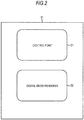
- Fig. 2 is a view showing a configuration example of the client 11.
- the client 11 includes, for example, a control point 31 (referred to as a CP 31 in the following description) and a digital media renderer 32 (referred to as a DMR 32 in the following description).
- a control point 31 referred to as a CP 31 in the following description
- a digital media renderer 32 referred to as a DMR 32 in the following description
- the CP31 performs control of the DMR 32 based on an instruction by the user.
- the DMR 32 requests the server 12 to transmit a content playback of which has been instructed by the user, receives and plays back the content transmitted in response to the request.
- the DMR 32 has not only the function of playing back contents but also a function of controlling the mode of the playback function to the available state as well as to a sleep state.
- the available state not only the communication but also playback of contents is possible.
- the sleep state power consumption is suppressed and the playback of contents is unavailable, however, communication with other clients 11 as well as the server 12 can be performed.
- the CP 31 and the DMR 32 included in the client 11-k (1 ⁇ k ⁇ N) are referred to as a CP31-k and a DMR32-k, respectively.
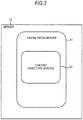
- Fig. 3 is a view showing a configuration example of functional blocks of the server 12.
- the server 12 includes, for example, a digital media server 51 (referred to as a DMS 51 in the following description) .
- the DMS 51 further includes a content directory service 61 (referred to as a CDS 61 in the following description).
- the DMS 51 has a server function of transmitting contents on the server 12 in response to the request from the client 11.
- the CDS 61 has a server function of transmitting a list on which content names are written (referred to as a content list) and actual contents corresponding to the list in response to the request from the client 11.
- the client 11 of the moving source and the client 11 of the moving destination and the server 12 which are configured as described above perform processing in cooperation with one another in the method of moving-source trigger continuous playback.
- a CP31-1 of the moving source (referred to as the CP31 of the moving source in the following description) and a DMR32-1 of the moving source (referred to as the DMR32 of the moving source in the following description) will be respectively main bodies of processing instead of the client 11-1 of the moving source.
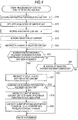
- Fig. 4 is a flowchart for explaining a processing example of the CP31 of the client 11 of the moving source.
- the processing of the CP31 of the moving source is started when display of the content list is instructed with respect to the client 11 of the moving source by the user.
- the user instructs the client 11 of the moving source to display the content list by using a remote controller and so on.
- the CP 31 of the moving source acquires an instruction for displaying the content list in Step S11.
- the CP 31 of the moving source requests the server 12 to supply the content list in Step S12.
- the CP 31 of the moving source issues, for example, a command "CDS: Browse” for requesting the supply of the content list and transmits the command to the server 12.
- the CDS 61 performs the following processing when receiving the request for transmitting the content list from the client 11 of the moving source. That is, the CDS 61 transmits the content list stored in the server 12 to the client 11 of the moving source which is the request source in response to the request for transmitting the content list (Steps S121, S122 of Fig. 9 ).
- Step S13 the CP 31 of the moving source receives the content list from the server 12 and displays respective contents in the content list on a not-shown display screen so as to be selected. According to this, the user can select a content of a desired name in the displayed content list.
- Step S14 the CP 31 of the moving source acquires the selection of the content by user in Step S14.
- the selected content is assumed to be a content #1 in k-pieces of contents #1 to "k" ("k" is an integer of 2 or more) on the server 12.
- Step S15 the CP 31 of the moving source instructs the DMR 32 to play back the content #1 as the selected content.
- the CP 31 of the moving source issues, for example, a command "SETAVTransportURI" for requesting setting of a place of acquiring the selected content (specified by a URI (Uniform Resource Identifier) and transmits the command to the DMR 32 of the moving source.
- the place of acquiring the selected content is a specific place on the server 12.
- the CP 31 of the moving source further issues a command "Play" for instructing playback of the selected content and transmits the command to the DMR 32 of the moving source.
- the DMR 32 of the moving source acquires and plays back the selected content from the server 12 when receiving the instruction for playing back the selected content (Steps S41 to S43 of Fig. 5 ) .
- Step S16 the CP 31 of the moving source determines whether the instruction for stopping playback or the instruction for continuous playback preparation has been acquired or not.
- the user operates, for example, a not-shown continuous playback preparation button when giving instruction for continuous playback preparation.
- the user operates, for example, a not-shown playback stop button when instructing the end of playback.
- Step S16 the determination is negative in Step S16, and process proceeds to Step S21. Processing after Step S21 will be described later.
- Step S16 determination is affirmative in Step S16, and the process proceeds to Step S17.
- the user When the user operates the continuous playback preparation button and gives instruction for continuous playback preparation, the user moves from the living room as the moving source to the bed room as the moving destination after the user operates the continuous playback preparation button.
- the user may or may not operate the client 11 of the moving source to change the playback function from the available state to the sleep state before moving from the room.
- Step S17 the CP 31 of the moving source instructs the DMR 32 of the moving source to stop playback of the selected content.
- the CP 31 of the moving source issues, for example, a command "Stop" for instructing the stop of playing back the selected content and transmits the command to the DMR 32 of the moving source.
- the DMR 32 of the moving source receives the instruction for stopping playback of the selected content from the CP 31 of the moving source and stops the playback of the selected content in response to the instruction (Steps S44, S45 of Fig. 5 ).
- a position where the playback has been stopped is a position where continuous playback is started in the client 11 of the moving destination. Accordingly, the position is written as a continuous playback position PO in the following description.
- Step S18 the CP 31 of the moving source determines whether the instruction by the user determined in Step S16 is the instruction for continuous playback preparation or not.
- Step S18 the determination is negative in Step S18, and the processing of the CP 31 of the moving source ends.
- Step S19 the CP 31 of the moving source instructs the DMR 32 of the moving destination to change of the playback function to the available state .
- the CP 31 of the moving source issues a command "WakeupOnLan" for instructing the change of the playback function to the available state and transmits the command to the client 11 of the moving destination.
- the client 11-1 to the client 11-N may be displayed on a menu screen so as to be selective for allowing the user to select the client 11 of the moving destination.
- the client 11 selected from the menu screen will be the client 11 of the moving destination.
- the client 11 of the moving destination changes the playback function of the apparatus itself to the available state in response to the instruction when receiving the instruction for changing the playback function to the available state (Steps S61, S62 of Fig. 6 ).
- the dedicated continuous playback button is provided as a button for instructing the change of the playback function to the available state, however, it is also preferable that, for example, a pause button normally provided at playback devices and other types of buttons can be used instead of the dedicated continuous playback button.
- a pause button normally provided at playback devices and other types of buttons can be used instead of the dedicated continuous playback button.
- playback of the selected content is temporarily stopped at the client 11 of the moving source as well as the instruction for continuous playback preparation is transmitted to the client 11 of the moving destination.
- Step S20 the CP 31 of the moving source instructs the client 11 of the moving destination to seek the selected content and to allow the content to pause.
- the seeking instruction includes the continuous playback position PO as the seeking position.
- the CP 31 of the moving source issues, for example, the command "SETAVTransportURI" for requesting setting of the place of acquiring the selected content and transmits the command to the client 11 of the moving destination.
- the CP 31 of the moving source further issues a command "Seek” for seeking the continuous playback position PO as the seeking position of the selected content and a command "Pause” for allowing the selected content to pause and transmits the commands to the client 11 of the moving destination. Then, the processing of the CP 31 of the moving source ends.
- the client 11 of the moving destination receives the seeking and pause instructions from the CP 31 of the moving source and seeks the continuous playback position PO of the selected contents and allows the content to pause at the position in response to the instructions (Steps S63, S64 of Fig. 6 ). Accordingly, the continuous playback preparation in the client 11 of the moving destination is completed.
- the above pause operation is not always necessary, however, an effect of allowing the user to recognize the completion of the continuous playback preparation by displaying a pause screen on a display screen of the client 11 of the moving destination can be expected.
- Step S16 when it is determined that neither the instruction for stopping playback nor the instruction for continuous playback preparation has been acquired in Step S16, the process proceeds to Step S21, where the CP31 of the moving source determines whether the playback of the selected content has been completed or not.
- Step S21 the determination is negative in Step S21 and the process returns to Step S16, then, the processing after that is repeated.
- Step S21 the processing of the CP 31 of the moving source ends.
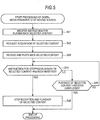
- Fig. 5 is a flowchart for explaining a processing example of the DMR 32 of the client 11 of the moving source.
- the processing of the DMR 32 of the moving source is started when the CP 31 of the moving source transmits the instruction for playing back the selected content in Step S15 of Fig. 4 .
- the DMR 32 of the moving source receives the instruction for playing back the selected content from the CP31 of the moving source.
- the playback instruction includes the place of acquiring the selected content.
- the DMR 32 of the moving source receives the command "SETAVTransportURI" from the CP 31 of the moving source and sets the place of acquiring the content #1 as the selected content based on the command.
- the DMR 32 of the moving source further receives the command "Play” for instructing playback of the selected content from the CP 31 of the moving source.
- Step S42 the DMR 32 of the moving source requests the server 12 to acquire the selected content. Specifically, the DMR 32 of the moving source issues, for example, a command "HTTP_Get" for requesting the acquisition of the selected content and transmits the command to the server 12 where there is the place of acquiring the selected content.
- a command "HTTP_Get" for requesting the acquisition of the selected content and transmits the command to the server 12 where there is the place of acquiring the selected content.
- the server 12 transmits the selected content from the head thereof to the client 11 of the moving source which is a request source in response to the request when receiving the request for acquiring the selected content from the DMR 32 of the moving source (Steps S101, S103 of Fig. 8 ).
- Step S43 the DMR 32 of the moving source receives and plays back the selected content from the server 12.
- Step S44 the DMR 32 of the moving source determines whether the instruction for stopping playback of the selected content which is transmitted from the CP 31 of the moving source in Step S17 of Fig. 4 has been received or not.
- Step S44 the determination is negative in Step S44 and the process proceeds to Step S46. Processing after Step S46 will be described later.
- Step S44 determines whether the instruction for stopping playback of the selected content from the CP31 of the moving source is received. If the instruction for stopping playback of the selected content from the CP31 of the moving source is received, the determination is affirmative in Step S44 and the process proceeds to Step S45, where the DMR 32 of the moving source stops reception and playback of the selected content. Then, the processing of the DMR 32 of the moving source ends.
- Step S44 when it is determined that the instruction for stopping playback of the selected content has not been received in Step S44, the process proceeds to Step S46, where the DMR 32 of the moving source determines whether the playback of the selected content has been completed or not.
- Step S44 the process returns to Step S44 and the processing after that is repeated.
- Step S46 the determination is affirmative in Step S46 and the processing of the DMR 32 of the moving source ends.
- a CP31-2 of the moving destination of the client 11 of the moving destination (referred to as the CP31 of the moving destination in the following description) and a DMR32-2 of the moving destination (referred to as the DMR32 of the moving destination in the following description) will be respectively main bodies of processing.
- Fig. 6 is a flowchart for explaining a processing example of the DMR 32 of the moving destination.
- the processing of the DMR 32 of the moving destination is started when the client 11 of the moving source transmits the instruction for changing the playback function to the available state in Step S19 of Fig. 4 .
- Step S61 the DMR 32 of the client 11 of the moving destination receives the instruction for changing the playback function to the available state from the client 11 of the moving source. Specifically, for example, the DMR 32 of the moving destination receives the command "WakeupOnLan" from the CP 31 of the client 11 of the moving source.
- Step S62 the DMR 32 of the moving destination changes the playback function of the apparatus itself to the available state.
- the DMR 32 of the moving destination not only merely changing the playback function of the apparatus itself to the available state but also changing viewing functions such as a display function and an audio output function to the available state.
- Step S63 the DMR 32 of the moving destination receives the seeking and pause instructions concerning the selected content transmitted from the CP31 of the client 11 of the moving source in Step S20 of Fig. 4 .
- the seeking instruction includes the continuous playback position PO as the seeking position.
- the DMR 32 of the moving destination receives the command "SETAVTransportURI" from the CP 31 of the client 11 of the moving source and sets the place of acquiring the selected content (the specific place in the server 12) based on the command.
- the DRM 32 of the moving destination further receives the command "Seek” for seeking the continuous playback position PO of the selected content and the command "Pause” for allowing the selected content to pause transmitted from the CP 31 of the client 11 of the moving source.
- Step S64 the DMR 32 of the moving destination seeks the continuous playback position PO of the selected content and allows the selected content to pause there.
- Step S65 the DMR 32 of the moving destination receives a request for acquiring playback state information transmitted from the CP 31 of the moving destination in later-described Step S82 of Fig. 7 .
- the DRM 32 of the moving destination receives a command "GetTransportInfo" for requesting acquisition of the playback state.
- the DMR 32 of the moving destination further receives a command "GetPositionInfo" for requesting acquisition of a playback position concerning the selected content and a command "GetMediaInfo” for requesting acquisition of the place of acquiring the selected content from the CP31 of the moving destination.
- Step S66 the DMR 32 of the moving destination transmits playback state information as the information corresponding to the command received in Step S65 to the CP 31 of the moving destination. Specifically, for example, the DMR 32 of the moving destination transmits the playback state (for example, in the pause state) of the DMR 32 of the moving destination, a pause position of the selected content when it is in the pause state and the place of acquiring the selected content.
- the DMR 32 of the moving destination transmits the playback state (for example, in the pause state) of the DMR 32 of the moving destination, a pause position of the selected content when it is in the pause state and the place of acquiring the selected content.
- Step S67 the DMR 32 of the moving destination receives an instruction for playing back the selected content from the continuous playback position PO, which is transmitted from the CP 31 of the moving destination in later-described Step S84 of Fig. 7 .
- the DMR 32 of the moving destination receives the command "Play" for instructing playback of the selected content from the continuous playback position PO transmitted from the CP 31 of the client 11 of the moving source.
- Step S68 the DMR 32 of the moving destination requests the DMS 51 of the server 12 to acquire the content #1 as the selected content from the continuous playback position PO. Specifically, for example, the DMR 32 of the moving destination transmits a command "HTTP_Get (TimeSeekRange) " which is a command "HTTP_Get” in which the continuous playback position PO is designated as a start position "TimeSeekRange” to the DMS 51.
- the DMS 51 receives the request for acquiring the selected content from the continuous playback position PO and transmits the selected contents from the continuous playback position PO to the DMR32 of the moving destination in response to the request (Steps S102, S104 of Fig. 8 ).
- Step S69 the DMR 32 of the moving destination receives and plays back the selected content from the server 12. Then, the processing of the DMR 32 of the moving destination ends.
- Fig. 7 is a flowchart for explaining a processing example of the CP 31 of the client 11 of the moving destination.
- the processing of the CP 31 of the moving destination is started when the continuous playback is instructed to the client 11 of the moving destination by the user.
- Step S81 the user operates the continuous playback button, for example, on a remote controller to thereby instruct the client 11 of the moving destination to perform the continuous playback.
- the CP of the moving destination acquires the instruction for the continuous playback.
- the continuous playback is instructed by using a playback button (PB button) normally prepared on a remote controller of a playback device instead without preparing the above dedicated continuous playback button on the remote controller and so on.
- PB button playback button
- the CP 31 of the moving destination acquires the operation as the instruction for continuous playback in the case where the playback state of the DMR 32 of the moving destination is in the pause state as well as the playback button has been operated.
- Step S82 the CP31 of the moving destination requests the DMR 32 of the moving destination to acquire playback state information.
- the CP 31 of the moving destination transmits the command "GetTransportInfo" for requesting acquisition of the playback state concerning the DMR 32 of the moving destination.
- the command "GetTransportInfo" is not always necessary, however, the command is important because playback state information is transmitted from the DMR 32 of the moving destination in response to the command in Step S66 of Fig. 6 and a playback preparation state can be determined by the command.
- the selected content is in the pause state at the continuous playback position PO (during pause playback). Accordingly, when the playback state of the DMR 32 of the moving destination is in the pause state, it is determined that the DMR 32 is during playback preparation. Therefore, the playback preparation state of the DMR 32 of the moving destination can be determined based on the playback state of the DMR 32 of the moving destination.
- the CP 31 of the moving destination transmits the command "GetPositionInfo" for requesting acquisition of a playback position concerning the content in the pause state (selected content) to the DMR 32 of the moving destination.
- the DMR 32 of the moving destination is in the pause state at the continuous playback position PO when the continuous playback preparation of the selected content has been completed as described above. Therefore, the continuous playback position PO can be acquired by acquiring the pause position.
- the CP 31 of the moving destination transmits the command "GetMediaInfo" for requesting acquisition of the place of acquiring the selected content as the content in the pause state to the DMR 32 of the moving destination.
- the DMR32 of the moving destination transmits the playback state information to the CP 31 of the moving destination which is the request source in response to the request when receiving the request for acquiring playback state information (Step S66 of Fig. 6 ).
- the playback state information includes the playback state, the playback position, the place of acquisition concerning the content and the like.
- Step S83 the CP 31 of the moving destination receives the playback state information and recognizes the content in the pause state as the selected content as well as recognizes the pause position as the continuous playback position PO respectively based on the information as described above.
- Step S84 the CP 31 of the moving destination instructs the DMR 32 of the moving destination to play back the selected content from the continuous playback position PO. Specifically, for example, the CP 31 of the moving destination issues the command "Play" for instructing playback of the selected content from the continuous playback position PO and transmits the command to the DMR 32 of the moving destination. Then, the processing of the CP 31 of the moving destination ends.
- the selected content is played back from the continuous playback position PO in the DMR 32 of the moving destination as has been explained with reference to Fig. 6 (Step S69 of Fig. 6 ).
- Fig. 8 is a flowchart for explaining a processing example of the DMS 51 of the server 12.
- the processing of the DMS 51 is started when the DMR 32 of the client 11 of the moving source or the moving destination transmits the request for acquiring the content (Step S42 of Fig. 5 and Step S68 of Fig. 6 ).
- Step S101 the DMS 51 receives the request for acquiring the content from the DMR 32 of the moving source or the moving destination. Specifically, for example, the DMS 51 receives the command "HTTP_Get” or the command “HTTP_Get (TimeSeekRange) " transmitted from the DRM 32 of the moving source or the moving destination (Step S42 of Fig. 5 and Step S68 of Fig. 6 ).
- Step S102 the DMS 51 determines whether the start position is designated or not in the received request for acquiring the content.
- Step S103 the DMS 51 transmits the content from the head to the request source.
- the DMS 51 transmits the content from the head position when receiving the command "HTTP_Get” transmitted from the DMR 32 of the moving source in the processing of Step S42 of Fig. 5 , because the start position "TimeSeekRange" is not designated in the command. Then, the processing of the DMS 51 ends.
- Step S104 the DMS 51 transmits the content from the start position to the request source. Specifically, for example, the DMS 51 transmits the content from the start position "TimeSeekRange2 when receiving the command "HTTP_Get (TimeSeekRange)" transmitted from the DMR 32 of the moving destination in the processing of Step S68 of Fig. 6 . Then, the processing of the DMS 51 ends.
- the content is transmitted from the server 12 to the client 11.
- Fig. 9 is a flowchart for explaining a processing example of the CDS 61 of the server 12.
- the processing of the CDS 61 is referred to as the first processing of the CDS 61 in the following description to discriminate the processing from processing described later with reference to Fig. 21 .
- the first processing of the CDS 61 is started when the CP 31 of the moving source transmits the request for acquiring the content list (Step S12 of Fig. 4 ).
- Step S121 the CDS 61 receives the request for acquiring the content list from the CP 31 of the moving source (Step S12 of Fig. 4 ). Specifically, for example, the CDS 61 receives the command "CDS: Browse” from the CP 31 of the moving source.
- Step S122 the CDS 61 transmits the content list on the server 12 to the request source.
- the content list is received by the CP 31 of the moving source 31 in Step S13 of Fig. 4 .
- the first processing of the CDS 61 ends.
- the first processing of the CDS 61 is executed also when the request for acquiring the content list from the CP 31 of the moving destination is transmitted.
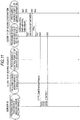
- Fig. 10 and Fig. 11 are flowcharts showing processing examples among the above respective functional blocks in an integrated manner.
- the leftmost flowchart of them represents processing at the server 12, and the second and third flowcharts from the left represent processing of the client 11 of the moving source.
- the fourth flowchart from the left and the rightmost flowchart represent processing of the client 11 of the moving destination.
- the CP 31 of the moving source acquires an instruction for displaying the content list as the processing of Step S11.
- the CP 31 of the moving source transmits the command "CDS: Browse” for requesting supply of the content list to the CDS 61 of the server 12 as the processing of Step S12.
- the CDS 61 transmits the content list stored in the server 12 to the CP 31 of the client 11 of the moving source as the processing of Step S122 when receiving the command "CDS: Browse” as the processing of the Step S121.
- the CP 31 of the moving source receives the content list as the processing of Step S13, displaying respective contents in the content list so as to be selected.
- the CP 31 of the moving source acquires the selection of the content as the processing of Step S14.
- the CP 31 of the moving source executes the following processing as the processing of Step S15. That is, the CP 31 of the moving source transmits the command "SETAVTransportURI" for requesting setting of the place of acquiring the selected content and the command "Play” for instructing playback of the selected content to the DMR 32 of the client 11 of the moving source.
- the DMR 32 of the moving source receives the command "SETAVTransportURI” and sets the place of acquiring the selected content as well as receives the command "Play” as the processing of Step S41.
- the DMR 32 of the moving source transmits the command "HTTP_Get” for requesting the server 12 to acquire the selected content to the server 12 set as the place of acquisition as the processing as Step S42.
- the DMS 51 of the server 12 receives the command "HTTP_Get" as the processing of Step S101.
- the start position is not designated in the command "HTTP_Get", therefore, the determination is negative in the processing of Step S102 and the process proceeds to Step S103.
- the DMS 51 transmits the selected content from the head position which has been requested with respect to the DMR 32 of the client 11 of the moving source which is the request source as the processing of Step S103.
- the DMR 32 of the moving source receives and plays back the selected content from the server 12 as the processing of Step S43.
- the CP 31 of the client 11 of the moving source determines whether the instruction for stopping playback or instruction for continuous playback preparation by the user or not as the processing of Step S16.
- the user operates the continuous playback preparation by operating the continuous playback preparation button. Then, the determination is affirmative in Step S16 and the process proceeds to Step S17.
- the CP 31 of the moving source transmits the command "STOP" for instructing the DMR 32 of the moving source to stop playback of the selected content as the processing of Step S17.
- the DMR 32 of the moving source determines whether the instruction for stopping the playback of the selected content has been received or not as the processing of Step S44. In the case of Fig. 10 , the instruction for stopping playback of the selected content from the CP 31 of the moving source is received, therefore, the determination is affirmative in this case in Step S44 and the process proceeds to Step S45.
- the DMR 32 of the moving source stops reception and playback of the selected content as the processing of Step S45.
- the CP 31 of the moving source determines whether the instruction of the user determined in Step S16 is the instruction for continuous playback preparation or not after transmitting the command "STOP" as the processing of Step S18. When the instruction of the user is the instruction for continuous playback preparation, the determination is affirmative in Step S18 and the processing proceeds to Step S19.
- the CP 31 of the moving source transmits the command "WakeupOnLan" for instructing the change of the playback function to the available state to the DMR 32 of the moving destination as the processing of Step S19.
- the DMR 32 of the client 11 of the moving destination receives the command "WakeupOnLan" as the processing of Step S61 and changes the playback function of the apparatus itself to the available state as the processing of Step S62.
- the CP31 of the moving source executes the following processing after transmitting the command "WakeupOnLan” as the processing of Step S20. That is, the CP 31 of the moving source transmits the command "SETAVTransportURI” for requesting setting of the place of acquiring the selected content to the client 11 of the moving destination. The CP 31 of the moving source further transmits the command "Seek” for seeking the continuous playback position PO as the seek position of the selected content and the command "Pause” for allowing the selected content to pause.
- the DMR 32 of the client 11 of the moving destination sets the place of acquiring the selected content (specific place of the server 12) when receiving the command "SETAVTransportURI" based on the command as the processing of Step S63.
- the DMR 32 of the moving destination further receives the command "Seek” and the command "Pause”.
- the DMR 32 of the moving destination seeks the continuous playback position PO of the selected content and allows the content to pause as the processing of Step S64.
- the CP 31 of the moving destination acquires the instruction for continuous playback as the processing of Step S81 as shown in Fig. 11 .
- the CP 31 of the moving destination transmits the command "GetTransportInfo" for requesting acquisition of the playback state concerning the DMR 32 of the moving destination to the DMR 32 of the moving destination as the processing of Step S82.
- the CP 31 of the moving destination performs the following processing as the processing of Step S82.
- the CP 31 of the moving destination transmits the command "GetPOsitionInfo" for requesting acquisition of the playback position concerning the selected content in the pause state and also the command "GetMedialnfo" for requesting acquisition of the place of acquiring the selected content as the content in the pause state.
- the DMR 32 of the moving destination receives the command "GetTransportInfo", the command "GetPositionInfo” and the command "GetMediaInfo” as the processing of Step S65.
- the DMR 32 of the moving destination transmits playback state information which is the information corresponding to these commands to the CP 31 of the client 11 of the moving destination as the processing of Step S66. That is, the DMR 32 of the moving destination transmits the playback state of the DMR 32 of the moving destination, the pause position of the selected content in the pause state when the content is in the pause state and the place of acquiring the selected content.
- the CP 31 of the moving destination receives playback state information and recognizes the content in the pause state as the selected content and the pause position as the continuous playback position PO respectively based on the information as the processing of Step S83.
- the CP 31 of the moving destination transmits the command "Play" for instructing playback of the selected content from the continuous playback position PO to the DMR 32 of the moving destination as the processing of Step S84.
- the DMR 32 of the moving destination receives the command "Play” as the processing of Step S67.
- the DMR 32 of the moving destination transmits the command "HTTP_Get(TimeSeekRange)" in which the continuous playback position PO is designated as the start position "TimeSeekRange” to the DMR 51 of the server 12 as the processing of Step S68.
- the DMR 51 receives the command "HTTP_Get (TimeSeekRange) " as the processing of Step S101.
- the DMR 51 determines whether the start position TimeSeekRange is designated in the received command "HTTP_Get” or not as the processing of Step S102. In the example of Fig. 11 , the start position TimeSeekRange is designated in the received command "HTTP_Get", therefore, the process proceeds to Step S104.
- the DMS 51 transmits the content from the start position "TimeSeekRange" to the DMR 32 of the client 11 of the moving destination which is the request source as the processing of Step S104.
- the DMR 32 of the moving destination receives and plays back the selected content as the processing of Step S69.
- the user can perform the continuous playback by operating the remote controller and so on just once after moving to another room. That is, the change of the playback function to the available state, the search for the content during continuous playback preparation and the like can be performed without complicated work by the user, namely, automatically. Accordingly, operationality of apparatus can be remarkably improved.
- the client 11 of the moving destination is designated by the user, therefore, the preparation for continuous playback is instructed only to the designated client 11 of the moving destination.
- the continuous playback is desired to be performed without specifying the client 11 of the moving destination.
- preparation for continuous playback is instructed with respect to all the clients 11-2 to 11-N (referred to as clients 11 of moving destination candidates) which can be moving destination candidates in the information processing system 1.
- the method of instructing all the clients 11 of moving destination candidates to make preparation for continuous playback is referred to as a method of instructing continuous playback to all moving destinations.
- the clients 11 of moving destination candidates receive the instruction for continuous playback preparation transmitted from the client 11 of the moving source and make preparation for continuous playback concerning the selected content in response to the instruction. That is, the clients 11 of the moving destination candidates seek the continuous playback position PO in the selected content (the content #1 in this case) and allow the content to pause there.
- the client 11 (the client 11-2 in this case) in the room where the user has actually moved (moving destination) in the clients 11 of moving destination candidates plays back the content #1 as the selected content from the continuous playback position PO in response to the instruction for continuous playback preparation.
- the client 11 of the moving destination instructs remaining clients 11 of moving destination candidates (the client 11-3 to the client 11-N) to change the playback function to the available state. These remaining clients 11 of the moving destination candidates change the playback function of apparatus themselves to a sleep state.
- processing of the CP 31 and the DMR 32 of the client 11 of the moving source will be explained.
- the processing of the DMR 32 of the moving source is the same as the processing of the DMR 32 of the moving source in the method of moving-source trigger continuous playback, therefore, explanation thereof is omitted.
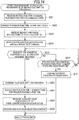
- Fig. 12 is a flowchart for explaining a processing example of the CP 31 of the moving source.
- Step S151 to Step S158 is the same as the processing of Step S11 to Step S18 in Fig. 4 , respectively. Therefore, the explanation of these processing is omitted.
- the CP 31 of the moving source instructs the DMRs 32 of the clients 11 of moving destination candidates (referred to as the DMRs 32 of moving destination candidates in the following description) to change the playback function to the available state. Specifically, the CP 31 of the moving source issues the command "WakeupOnLan" and transmits the command to the clients of moving destination candidates.
- the DMRs 32 of moving destination candidates receive the instruction of changing the playback function to the available state from the CP 31 of the moving source and change the playback function of apparatus themselves to the available state in response to the instruction (Steps S201, S202 of Fig. 14 ).
- Step S160 the CP 31 of the moving source instructs the DRMs 32 of moving destination candidates to seek the selected content and allows the content to pause.
- the seek instruction includes the continuous playback position PO as the seek position.
- the CP 31 of the moving source issues the command "SETVTransportURI" for requesting setting of the place of acquiring the selected content and transmits the command to the DMRs 32 of the moving destination candidates .
- the CP 31 of the moving source further issues the command "Seek” for seeking the selected content at the continuous playback position PO as the seek position and the command "Pause” for allowing the selected content to pause and transmits the commands to the DMRs 32 of moving destination candidates. Then, the processing of the CP 31 of the moving source ends.
- the clients 11 of moving destination candidates seek the selected content at the continuous playback position PO and allow the content to pause there in response to the seeking and pause instructions from the CP 31 of the moving source (Steps S203, S204 of Fig. 14 ). Accordingly, the preparation for continuous playback in the clients 11 of moving destination candidates is completed.
- Step S161 Processing of Step S161 is the same as the processing of Step S21 in Fig. 4 , therefore, the explanation thereof is omitted.
- Fig. 13 is a flowchart for explaining a processing example of the CP 31 of the moving destination.
- Step S181 to Step S183 are the same as the processing of Step S81 to Step S83 in Fig. 7 . Therefore, the explanation of these processing is omitted.
- the CP31 of the moving destination instructs other DMRs 32 of the moving destination candidates to change the playback function to the sleep state in Step S184 after receiving playback state information from the DMR 32 of the moving destination. That is, the client 11 to which the instruction of continuous playback is inputted by the user will be the client 11 of the moving destination from the client 11 of the moving destination candidate. Accordingly, other clients 11 of moving destination candidates are instructed to be the original sleep state by the client 11 of the moving destination.
- Step S185 the CP 31 of the moving destination instructs the DMR 32 of the moving destination to play back the selected content from continuous playback position in the same manner as the processing of Step S64 in Fig. 6 .
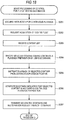
- Fig. 14 is a flowchart for explaining a processing example of the DMRs 32 of moving destination candidates.
- Step S201 to Step S204 Processing of Step S201 to Step S204 is the same as the processing obtained by replacing the DMR 32 of the moving destination in Step S61 to Step S64 in Fig. 6 with processing of the DMRs 32 of the moving destination candidates. Therefore, the explanation of these processing is omitted.
- the DMRs 32 of moving destination candidates determine in Step S205 whether the DMRs have received the request for acquiring playback state information transmitted from the CP 31 of the moving destination in Step S182 of Fig. 13 or not. Specifically, the DMRs of moving destination candidates determine whether they have received all of the command "GetTransportInfo", the command "GetPOsitionInfor” and the command "GetMediainfo” or not.
- Step S205 the determination is negative in Step S205 and the process proceeds to Step S210. Processing after Step S210 will be described later.
- Step S205 when the DMR 32 of moving destination candidate has received the request for acquiring playback state information, the determination is affirmative in Step S205 and the process proceeds to Step S206.
- Step S206 to Step S209 are the same as the processing obtained by replacing the DMR 32 of moving destination with the DMRs 32 of moving destination candidates in Step S66 to Step S69 in Fig. 6 . Therefore, the explanation of these processing is omitted. That is, the processing performed when the moving destination candidate of the DMR 32 becomes the moving destination will be executed.
- Step S210 whether the instruction for changing the playback function to the sleep state transmitted from the CP 31 of the moving destination in Step S184 of Fig. 13 has been received or not is determined in Step S210.
- Step S210 During a period in which the instruction for changing the playback function to the sleep state is not received, the determination is negative in Step S210 and the process returns to Step S205, then, processing after that is repeated.
- the DMRs 32 of moving destination candidates change the playback function to the sleep state. After that, the processing of the DMRs 32 of moving destination candidates ends.
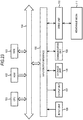
- Fig. 15 is a chart showing processing examples among the above respective functional blocks in an integrated manner.
- the leftmost flowchart in the chart represents processing at the server 12, and the second flowchart from the left represents processing of the client 11 of the moving source.
- the third and fourth flowcharts from the left represent processing of the client 11 of moving destination candidate which has become the moving destination.
- the rightmost flowchart represents processing of the clients 11 of the moving destination candidates which have not become the destination.
- Step S159 In the method of instructing continuous playback to all moving destinations, playback of the content and playback stop based on the instruction for continuous playback are executed by the client 11 and the server 12 in cooperation with each other in the same manner as the method of moving-source trigger continuous playback with reference to Fig. 10 . Accordingly, these processing is omitted in Fig. 15 and processing among respective functional blocks after the processing of Step S159 is described, in which the client 11 of the moving source transmits the command "WakeupOnLan" to the clients 11 of the moving destination candidates.
- the CP 31 of the moving source transmits the command "WakupOnLan" to the DMRs 32 of the clients 11 of moving destination candidates as the processing of Step S159.
- the DMRs 32 of the clients 11 of moving destination candidates receive the command "WakupOnLan" as the processing of Step S201 and change the playback function of the apparatus themselves to the available state.
- the CP 31 of the moving source transmits the command "SETAVTransportURI" for requesting setting of the place of acquiring the selected content to the DMRs 32 of the clients 11 of moving destination candidates as the processing of Step S160.
- the CP 31 of the moving source further executes the following processing as the processing of Step S160. That is, the CP 31 of the moving source transmits the command "Seek” for seeking the selected content at the continuous playback position PO as the seek position and the command "Pause” for allowing the selected content to pause there to the DRMs of the clients 11 of moving destination candidates.
- the DRMs 32 of the clients 11 of moving destination candidates receive the command "SETAVTransportURI" as the processing of Step S203 and set the place of acquiring the selected content (specific place in the server 12) based on the command.
- the DRMs 32 of the clients 11 of moving destination candidates further receive the command "Seek” for seeking the continuous playback position PO of the selected content and the command "Pause” for allowing the selected content to pause transmitted form the CP 31 of the client 11 of the moving source as the processing of Step S203.
- the DMRs 32 of the clients 11 of moving destination candidates seeks the continuous playback position PO of the selected content and allows the content to pause there as the processing of Step S204.
- the CP 31 of the moving destination acquires the instruction for continuous playback as the processing of Step S181.
- the CP 31 of the moving destination transmits the command "GetTransporInfo" for requesting acquisition of the playback state concerning the DMR 32 of the moving destination to the DMR 32 of the moving destination as the processing of Step S182.
- the CP 31 of the moving destination executes the following processing as the processing of Step S182.
- the CP 31 of the moving destination further transmits the command "GetPOsitionInfo" for requesting acquisition of the playback position concerning the selected content in the pause state and the command "GetMediaInfo” for requesting acquisition of the place of acquiring the selected content as the content in the pause state.
- the DMR 32 of the moving destination receives these command "GetTransportInfo", the command "GetPositionInfo” and the command "GetMediaInfo” as the processing of Step S205.
- the DMR 32 of the moving destination transmits playback state information which is the information corresponding to these commands to the CP 31 of the client 11 of the moving destination as the processing of Step S206. That is, the DMR 32 of the moving destination transmits the playback state of the DMR 32 of the moving destination, the pause position of the selected content in the pause state when it is in the pause state and the place of acquiring the selected content.
- the CP 31 of the moving destination receives the playback state information as the processing of S183 and recognizes the content in the pause state as the selected content and the pause position as the continuous playback position PO respectively based on the information.
- the CP 31 of the moving destination instructs other DMRs 32 of moving destination candidates which have not become the moving destination to change the playback function to the sleep state.
- the DMRs 32 of moving destination candidates change the playback function to the sleep state as the processing of Step S211 when receiving the instruction for changing the playback function to the sleep state as the processing of Step S211.
- the CP 31 of the moving destination transmits the command "Play" for instructing playback of the selected content from the continuous playback position PO to the DMR 32 of the moving destination as the processing of Step S185.
- the DMR 32 of the moving destination receives the command "Play” as the processing of Step S207.
- the DMR 32 of the moving destination transmits the command "HTTP_Get(TimeSeekRange)" in which the continuous playback position PO is designated as the continuous playback position "TimeSeekRange” to the DMS 51 of the server 12 as the processing of Step S208.
- the DMS 51 receives the command "HTTP_Get (TimeSeekRange)" as the processing of Step S101.
- the DMS 51 determines whether the start position "TimeSeekRange” is designated in the received command "HTTP_Get” or not as the processing of Step S102. In the example of Fig. 15 , the start position "TimeSeekRange” is designated in the received command "HTTP_Get", therefore, the process proceeds to Step S104.
- the DMS 51 transmits the content from the start position "TimeSeekRange" to the DMR 32 of the client 11 of the moving destination which is the request source as the processing of Step S104.
- the DMR 32 of the moving destination receives and plays back the selected content as the processing of Step S209.
- the CP 31 of the moving destination executes the following processing. That is, the CP 31 of the moving destination recognizes the selected content as the content the continuous playback of which has been instructed and the continuous playback position PO thereof from information (playback state information) acquired from the DMR 32 of the moving destination (Step S83 of Fig. 7 , Fig. 11 and Step S183 in Fig. 13 , Fig. 15 ). However, it is also possible to recognize the selected content as the content the continuous playback of which has been instructed and the continuous playback position PO thereof from information acquired from the CDS 61 of the server 12. A method of recognizing the selected content and the continuous playback position PO thereof from information acquired from the CDS 61 is referred to as a method of continuous playback using the CDS.
- the CDS 61 manages, for example, bookmarks "B" including information (referred to as continuous playback preparation state information in the following description) indicating continuous playback preparation state of respective clients 11 and continuous playback positions "P" according to each content by adding the bookmarks to the content list.
- the continuous playback position "P” simply means a value of the continuous playback position described in the bookmark "B". That is, only when the continuous playback preparation state information indicates that the content is during preparation for continuous playback, the value has a meaning as the continuous playback position PO.
- the bookmark is defined as a vendor unique. That is, the vendor can design the bookmark freely.
- the details of the content list to which the above-described bookmarks "B" are added as an example of the bookmark will be explained with reference to Fig. 16 .
- Fig. 16 is a chart showing an example of the content list.
- Bookmarks B1-1 to BN-1 indicating respective continuous playback states of the DMR 32-1 to the DMR 32-N are associated with the content #1.
- Bookmarks B1-2 to BN-2 indicating respective continuous playback states of the DMR32-1 to the DMR 32-N are associated with the content #2.
- Bookmarks B1-K to BN-K indicating respective continuous playback states of the DMR32-1 to the DMR 32-N are associated with the content #K.
- bookmarks Bi-1 to Bi-K (1 ⁇ i ⁇ N) are not particularly discriminated from one another, they are referred to as a bookmark "Bi".
- the bookmark B1 in the example of Fig. 16 includes an identification number #1 indicating an identification number "bookmarkID” of the bookmark B1 and an identification number "uuid-1” indicating an identification number "uuid” of the DMR 32-1.
- the bookmark B1 includes a continuous playback position P-1 indicating the playback position "P” (also written as a playback position "RelativeTimePosition") in the DMR 32-1.
- the bookmark B1 includes time information "dc.date-1" concerning a time point at which the continuous playback was instructed in the DMR 32-1.
- the bookmark B1 includes a flag "alive-1” indicating whether continuous playback preparation state concerning the DMR 32-1 shows that the content is during continuous playback preparation or not.
- the bookmarks B2 to BN are also the same.
- the CP 31 of the moving destination searches the bookmark "B" indicating that the continuous playback preparation state information showing that the content is during the continuous playback preparation from all bookmarks "B" described above. Then, the CP 31 of the moving destination acquires the selected content as the content corresponding to the searched bookmark "B", namely, the content during continuous playback preparation and the continuous playback position "P" (namely, the continuous playback position PO) of the content.
- the processing of the DMR 32 of the moving source is the same as the processing of the DMR 32 of the moving source in the method of moving-source trigger continuous playback (processing of Fig. 5 ), therefore, explanation of the processing is omitted.
- the first processing of the CDS 61 of the server 12 and the processing of the DMS 51 are the same as the cases explained with reference to Fig. 9 and Fig. 8 , therefore, explanation of these processing is omitted.
- Fig. 17 is a flowchart for explaining a processing example of the CP 31 of the moving source.
- Step S251 to Step S258 and processing of Step S261 to Step S263 is the same as the processing of Step S11 to Step S21 in Fig. 4 .
- Fig. 17 differs from Fig. 4 in a point that Step S259 and Step S260 are inserted between Step S258 and Step S261 corresponding to Step S18 and Step S19 of Fig. 4 .
- the CP 31 (CP31-1) of the moving source When it is determined that the instruction for continuous playback preparation has been made in Step S258, that is, when the instruction for continuous playback preparation is given by the user, the CP 31 (CP31-1) of the moving source generates a bookmark B1-1 indicating that the selected content (the content #1 in this case) is during continuous preparation in the CP 31 of the moving source (CP31-1) in Step S259. Specifically, the CP 31 of the moving source generates, for example, the bookmark B1-1 including the identification number "uuid-1", the continuous playback position PO as the continuous playback position P-1 and TRUE (valid) as the flag alive-1.
- Step S260 the CP 31 of the moving source transmits the generated bookmark B1-1 and a request for registering the bookmark to the CDS 61 of the server 12. Specifically, the CP 31 of the moving source transmits, for example, a command "CDS: Create (Bookmark) " for requesting the CDS 61 to register the bookmark B1-1 to the server 12.
- the CDS 61 registers the bookmark B1-1 in the content list by associating the bookmark with the content having the identification number #1 (content #1) when receiving the bookmark B1-1 and the registration request thereof (Steps S321, S322 of Fig. 20 ).
- Fig. 18 is a flowchart for explaining a processing example of the CP 31 of the moving destination.
- Step S281 the CP 31 of the moving destination acquires the instruction for continuous playback based on the user operation.
- the processing is the same as the processing of Step S81 of Fig. 7 .
- Step S282 the CP 31 of the moving destination requests the CDS 61 of the server 12 to acquire the content list. Specifically, the CP 31 of the moving destination issues, for example, the command "CDS: Browse” for requesting acquisition of the content list to the CDS 61 and transmits the command to the server 12.
- the command "CDS: Browse” for requesting acquisition of the content list to the CDS 61 and transmits the command to the server 12.
- Step S283 the CP 31 of the moving destination receives the content list transmitted by the CDS 61 of the server 12 in Step S122 of Fig. 9 .
- the second embodiment differs from the first embodiment in a point that the bookmarks as shown in Fig. 16 are added to the content list transmitted by the CDS 61. That is, the CDS 61 of the server 12 adds the bookmark B1-1 to the content list in later-described Step 322 of Fig. 20 in accordance with the registration request of Step S260 of Fig. 17 .
- the CP 31 of the moving destination specifies the content (selected content) during the continuous playback preparation by using the bookmark "B" added to the received content list.
- the CP 31 of the moving destination acquires, for example, bookmarks B1-1 to BN-1, B1-2 to BN-2, ...B1-K to BN-K.
- the CP 31 of the moving destination searches the bookmark in which the flag "alive" indicates TRUE (valid) from the bookmarks B1-1 to B1-K concerning the DMR 32 (DMR32-1) of the moving source in these bookmarks.
- the bookmark of the selected content during continuous playback preparation is searched.
- the bookmark B1-1 is searched.
- the CP 31 of the moving destination recognizes the content #1 as the selected content based on the searched bookmark B1-1 as well as recognizes the continuous playback position P-1 of the searched bookmark B1-1 as the continuous playback position PO.
- Step S285 the CP 31 of the moving destination instructs the DMR 32 of the moving destination to play back the selected content from the continuous playback position PO.
- the CP 31 of the moving destination issues, for example, the command "Play" for instructing the DMR 32 of the moving destination to play back the selected content from the continuous playback position PO to the client 11 of the moving destination.
- a specific operation performed by the user at this time is just an operation of a play button.
- the DMR 32 of the moving destination performs reception and playback of the selected content from the server 12 based on the instruction when receiving the instruction of playback of the selected content from the continuous playback position PO (Steps S305 to S307 of Fig. 19 ).
- Step S286 the CP 31 of the moving destination generates the bookmark B1-1 indicating that the selected content (content #1 in this case) is not during continuous playback preparation in the CP 31 (CP31-1) of the moving source.
- the CP 31 of the moving destination generates the bookmark B1-1 including the identification number "uuid-1" of the DMR 32-1 of the moving source, a cleared value as the continuous playback position P-1 and a cleared value as the flag "alive-1".
- Step S287 the CP 31 of the moving destination transmits the generated bookmark B1-1 and the registration request thereof to the server 12. Specifically, the CP 31 of the moving destination transmits, for example, the command "CDS: Create(Bookmark)" for requesting registration of the bookmark to the server 12. Then, the processing of the CP 31 of the moving destination ends.
- the server 12 registers the bookmark B1-1 in the content list by associating the bookmark with the content #1 having the identification number #1 when receiving the bookmark B1-1 and the registration request thereof (Step S322 of Fig. 20 ). Accordingly, the flag "alive-1" of the bookmark B1-1 on the server 12 is cleared.
- bookmark concerning the content during continuous playback preparation is searched by using the flag "alive” in the second embodiment, it is also possible to search the bookmark concerning the content during continuous playback preparation by using the time information "dc.date” and so on.
- the CP 31 of the moving destination searches a bookmark in which the time information "dc.date" is closest to the current time in the bookmarks B1-1 to B1-K concerning the DMR 32 (DMR 32-1) of the moving source as the bookmark of the selected content during continuous playback preparation. Accordingly, the content having the closest time information and thereby having the highest possibility that the content is during continuous playback preparation is searched as the selected content.
- Fig. 19 is a flowchart for explaining a processing example of the DMR 32 of the moving destination.
- Processing of the DMR 32 of the moving destination in Fig. 19 is processing obtained by removing the processing of Step S65 and Step S66 from the processing of the DMR 32 of the moving destination in Fig. 6 . That is, processing of Step S301 to Step S307 in Fig. 19 is the same as the processing of Step S61 to S64 and Step S67 to Step S69 in Fig. 6 respectively. Therefore, explanation of the DMR 32 of the moving destination is omitted.
- Processing of the DMS 51 is the same as the processing of the DMS 51 in the method of moving-source trigger continuous playback (processing of Fig. 8 ), therefore, explanation of the processing is omitted.
- the first processing of the CDS 61 is the same as the first processing of the CDS 61 in the method of moving-source trigger continuous playback (processing of Fig. 9 ), therefore, explanation of the processing is omitted.
- the CDS 61 performs the second processing of registering the bookmark transmitted from the CP31 of the moving source or the moving destination in addition to the first processing.
- Fig. 20 is a flowchart for explaining an example of the second processing of the CDS 61 of the server 12.
- Step S321 the CDS 61 receives the bookmark and the registration request transmitted from the CP 31 of the moving source or the moving destination in Step S260 of Fig. 17 or Step S287 of Fig. 18 .
- the CDS 61 receives the bookmark and the command CDS: Create (Bookmark) for requesting registration of the bookmark transmitted from the CP 31 of the moving source or the moving destination.
- Step S322 the CDS 61 adds (registers) the received bookmark (bookmark B1-1 in this example) in the content list by associating the bookmark with the content #1 having the identification number #1. Then, the second processing of the CDS 61 ends.
- the CDS 61 of the server 12 does not create the bookmark by the apparatus itself but checks the bookmark the registration of which is requested by the CP 31 of the moving source or the moving destination and registers the bookmark. That is, the CDS 61 does not register the bookmark and transmits error information to the request source, for example, when the received bookmark does not have the data configuration shown in Fig. 16 .
- the CDS 61 does not register the bookmark, for example, when the received bookmark is not transmitted from the specified client which is the client 11.
- Fig. 21 and Fig. 22 are flowing charts showing processing examples among the above respective functional blocks in an integrated manner.
- the leftmost flowchart of them represents processing at the server 12, and the second and third flowcharts from the left represent processing of the client 11 of the moving source.
- the fourth flowchart from the left and the rightmost flowchart represent processing of the client 11 of the moving destination.
- the CP 31 of the client 11 of the moving source acquires an instruction for displaying the content list as the processing of Step S251.
- the CP 31 of the moving source transmits the command "CDS: Browse” for requesting supply of the content list to the DMS 51 of the server 12 as the processing of Step S252.
- the CDS 61 transmits the content list stored in the server 12 to the CP 31 of the client 11 of the moving source as the processing of Step S122 when receiving the command "CDS: Browse” as the processing of the Step S121.
- the CP 31 of the moving source receives the content list as the processing of Step S253, displaying respective contents in the content list so as to be selected.
- the CP 31 of the moving source acquires the selection of the content as the processing of Step S254.
- the CP 31 of the moving source executes the following processing as the processing of Step S255. That is, the CP 31 of the moving source transmits the command "SETAVTransportURI" for requesting setting of the place of acquiring the selected content and the command "Play” for instructing playback of the selected content to the DMR 32 of the client 11 of the moving source.
- the DMR 32 of the moving source receives the command "SETAVTransportURI” and sets the place of acquiring the selected content as well as receives the command "Play” as the processing of Step S41.
- the DMR 32 of the moving source transmits the command "HTTP_Get” for requesting the server 12 to acquire the selected content to the server 12 set as the place of acquisition as the processing as Step S42.
- the DMS 51 of the server 12 receives the command "HTTP_Get" as the processing of Step S101.
- the start position is not designated in the command "HTTP_Get", therefore, the determination is negative in the processing of Step S102 and the process proceeds to Step S103.
- the DMS 51 transmits the selected content from the head position which has been requested with respect to the DMR 32 of the client 11 of the moving source which is the request source as the processing of Step S103.
- the DMR 32 of the moving source receives and plays back the selected content from the server 12 as the processing of Step S43.
- the CP 31 of the client 11 of the moving source determines whether the instruction of stopping playback or instruction for continuous playback preparation by the user or not as the processing of Step S256.
- the user operates continuous playback preparation by operating the continuous playback preparation button. Then, the determination is affirmative in Step S256 and the process proceeds to Step S257.
- the CP 31 of the moving source transmits the command "STOP" for instructing the DMR 32 of the moving source to stop playback of the selected content as the processing of Step S257 .
- the DMR 32 of the moving source determines whether the instruction for stopping the playback of the selected content has been received or not as the processing of Step S44. In the case of Fig. 21 , the instruction of stopping playback of the selected content from the CP 31 of the moving source is received, therefore, the determination is affirmative in this case in Step S44 and the process proceeds to Step S45.
- the DMR 32 of the moving source stops reception and playback of the selected content as the processing of Step S45.
- the CP 31 of the moving source determines whether the instruction of the user determined in Step S256 is the instruction for continuous playback preparation or not after transmitting the command "STOP" as the processing of Step S258. When the instruction of the user is the instruction for continuous playback preparation, the determination is affirmative in Step S258 and the processing proceeds to Step S259.
- the CP 31 of the moving source generates the bookmark B1-1 including the identification number "uuid-1", the continuous playback position PO as the continuous playback position P-1 and TRUE (valid) as the flag "alive-1" as the processing of Step S259.
- the CP 31 of the moving source transmits the command "CDS: Create (Bookmark) for requesting registration of the bookmark B1-1 to the CDS 61 of the server 12 as the processing of Step S260.
- the CDS 61 receives the bookmark B1-1 and the command "CDS:Create(Bookmark) for requesting registration thereof as the processing of Step S321.
- the CDS 61 registers the received bookmark B1-1 in the content list by associating the bookmark with the content #1 having the identification number #1 as the processing of Step S322.
- the CP31 of the moving source transmits the command "WakeupOnLan" for instructing the change of the playback function to the available state to the DMR 32 of the client 11 of the moving destination as the processing of Step S261.
- the DMR 32 of the moving destination receives the command "WakeupOnLan" as the processing of Step S301 and changes the playback function of the apparatus itself to the available state as the processing of Step S302.
- the CP31 of the moving source transmits the command "SETAVTransportURI” for requesting setting of a place of acquiring the selected content to the DMR 32 of the client 11 of the moving destination after transmitting the command "WakeupOnLan” as the processing of Step S262.
- the CP 31 of the moving source further transmits the command "Seek” for seeking the continuous playback position PO as the seek position of the selected content and the command "Pause” for allowing the selected content to pause.
- the DMR 32 of the moving destination sets the place of acquiring the selected content (specific place of the server 12) based on the command when receiving the command "SETAVTransportURI" as processing of Step S303.
- the DMR 32 of the moving destination further receives the command "Seek” and the command "Pause” as processing of Step S303.
- the DMR 32 of the moving destination seeks the continuous playback position PO of the selected content and allows the content to pause as processing of Step S304.
- the CP 31 of the moving destination acquires the instruction for continuous playback as the processing of Step S281 as shown in Fig. 11 .
- the CP 31 of the moving destination transmits the command "CDS: Browse” for requesting acquisition of the content list to the CDS 61 of the server 12 as processing of Step S282.
- the CDS 61 receives the command "CDS: Browse” as the processing of Step S121 and transmits the content list to which the bookmark B1-1 registered in the processing of Step S321 of Fig. 21 is added to the CP 31 of the client 11 of the moving destination which is the request source as the processing of Step S122 of Fig. 22 .
- the CP 31 of the moving destination receives the content list as the processing of Step S283.
- the CP 31 of the moving destination executes the following processing as the processing of Step S284. That is, the CP 31 of the moving destination searches the bookmark in which the flag "alive" is TRUE (valid) from bookmarks B1-1 to B1-K concerning the DMR 32 (DMR 32-1) of the moving source added to the received content list. Accordingly, the bookmark of the selected content during continuous playback preparation is searched. In this example, the bookmark B1-1 is searched.
- the CP 31 of the moving destination further recognizes the content #1 as the selected content from the searched bookmark B1-1 and recognizes the continuous playback position P-1 of the bookmark B1-1 as the continuous playback position PO.
- the CP 31 of the moving destination transmits the command "Play" for instructing the DMR 32 of the client 11 of the moving destination to play back the selected content from the continuous playback position PO.
- the DMR 32 of the client 11 of the moving destination receives the command "Play" for instructing playback of the selected content from the continuous playback position PO as the processing of Step S305.
- the CP 31 of the moving destination generates the bookmark B1-1 including the identification number "uuid-1" of the DMR 32-1 of the moving source, the cleared value as the continuous playback position P-1 and the cleared value as the flag "alive-1" as the processing of Step S286.
- the CP 31 of the moving destination transmits the command "CDS: Create (Bookmark)" for requesting registration of the bookmark B1-1 generated to the CDS 61 of the server 12 as the processing of Step S287.
- the CDS 61 receives the bookmark B1-1 and the command "CDS:Create(Bookmark)" for requesting the registration thereof as the processing of Step S321.
- the CDS 61 adds (registers) the bookmark Bl-1 in the content list by associating the bookmark with the content #1 having the identification number #1 as the processing of Step S322.
- the DMR 32 of the moving destination transmits the command "HTTP_Get(TimeSeekRange)" in which the continuous playback position PO is designated as the start position "TimeSeekRange” to the DMS 51 of the server 12 after receiving the command "Play” as the processing of Step S306.
- the DMS 51 receives the command "HTTP_Get (TimeSeekRange)" as the processing of Step S101.
- the DMS 51 determines whether the start position "TimeSeekRange” is designated in the received command "HTTP_Get” or not as the processing of Step S102. In the example of Fig. 22 , the start position "TimeSeekRange” is designated in the command "HTTP_Get", therefore, the process proceeds to Step S104.
- the DMS 51 transmits the content from the start position "TimeSeekRange" to the DMR 32 of the client 11 of the moving destination which is the request source as the processing of Step S104.
- the DMR 32 of the moving destination receives and plays back the selected content as the processing of Step S307.
- the above series of processing can be executed by hardware as well as software.
- programs included in the software are installed from program recording media.
- the programs are installed into, for example, a computer incorporated with dedicated hardware.
- the programs also installed into, for example, a general-purpose computer which is capable of executing various functions by installing various types of programs.
- Fig. 23 is a block diagram showing a configuration example of hardware of a computer executing the above series of processing by programs.
- a CPU 101 In the computer, a CPU 101, a ROM (Read Only Memory) 102, a RAM (Random Access Memory) 103 are mutually connected through a bus 104.
- An input/output interface 105 is further connected to the bus 104.
- an input unit 106 including a keyboard, a mouse, a microphone and the like, an output unit 107 including a display, a speaker and the like and a storage unit 108 including hard disk, a non-volatile memory and the like are connected.
- a communication unit 109 including a network interface and the like, a drive 110 which drives removal media 111 such as a magnetic disc, an optical disc, a magneto-optical disc and a semiconductor memory are further connected to the input/output interface 105.
- the CPU 101 executes programs stored, for example, in the storage unit 108 by loading them to the RAM 103 through the input/output interface 105 and the bus 104, thereby performing the above series of processing.
- Programs executed by the computer (CPU 101) are provided by being recorded in the removal media 111 which are magnetic discs (including flexible discs).
- Programs are provided by being recorded in the removable media 111 which are packaged media.
- the optical disc including CD-ROM (Compact Disc-Read Only Memory), DVD (Digital Versatile Disc) and so on), the magneto-optical disc, the semiconductor memory and the like are used.
- Programs are also provided through wired or wireless transmission media such as local area networks, Internet and digital satellite broadcast.
- the programs can be installed into the storage unit 108 through the input/output interface 105 by mounting the removable media 111 on the drive 110.
- the programs can be also installed into the storage unit 108 by being received by the communication 109 through the wired or wireless transmission media. Additionally, the programs can be installed into the ROM 102 or the storage unit 108 in advance.
- Programs executed by the computer may be programs processed in time series along the order explained in the present specification or may be programs processed in parallel or at necessary timing such as when calling is performed.
Landscapes
- Engineering & Computer Science (AREA)
- Multimedia (AREA)
- Signal Processing (AREA)
- Computer Networks & Wireless Communication (AREA)
- Human Computer Interaction (AREA)
- Automation & Control Theory (AREA)
- Two-Way Televisions, Distribution Of Moving Picture Or The Like (AREA)
- Information Transfer Between Computers (AREA)
- Television Signal Processing For Recording (AREA)
- User Interface Of Digital Computer (AREA)
Applications Claiming Priority (1)
| Application Number | Priority Date | Filing Date | Title |
|---|---|---|---|
| JP2009180478A JP5526642B2 (ja) | 2009-08-03 | 2009-08-03 | 情報処理装置及び方法、情報処理システム、並びにプログラム |
Publications (3)
| Publication Number | Publication Date |
|---|---|
| EP2363999A2 EP2363999A2 (en) | 2011-09-07 |
| EP2363999A3 EP2363999A3 (en) | 2015-04-22 |
| EP2363999B1 true EP2363999B1 (en) | 2020-04-01 |
Family
ID=43414898
Family Applications (1)
| Application Number | Title | Priority Date | Filing Date |
|---|---|---|---|
| EP10170960.8A Active EP2363999B1 (en) | 2009-08-03 | 2010-07-27 | Information processing apparatus, information processing method, information processing system and program thereof |
Country Status (8)
| Country | Link |
|---|---|
| US (1) | US10033782B2 (https=) |
| EP (1) | EP2363999B1 (https=) |
| JP (1) | JP5526642B2 (https=) |
| KR (1) | KR101683079B1 (https=) |
| CN (2) | CN107070850A (https=) |
| BR (1) | BRPI1002713A2 (https=) |
| RU (1) | RU2518494C2 (https=) |
| TW (1) | TWI416958B (https=) |
Families Citing this family (7)
| Publication number | Priority date | Publication date | Assignee | Title |
|---|---|---|---|---|
| WO2005106699A1 (en) | 2004-05-03 | 2005-11-10 | Lg Electronics Inc. | Method and apparatus for managing bookmark information for content stored in a networked media server |
| KR101333879B1 (ko) | 2010-08-24 | 2013-11-27 | 주식회사 팬택 | 이동 단말기 및 이동 단말기를 이용한 제어 방법 |
| KR101220785B1 (ko) * | 2011-07-08 | 2013-01-21 | 주식회사 엘지유플러스 | 미디어 컨텐츠의 디바이스 간의 연계적 재생 방법과 연계적 재생의 컨트롤 기능을 갖춘 이동통신 단말기 |
| US8880648B1 (en) * | 2012-06-27 | 2014-11-04 | Audible, Inc. | Automated transition of content consumption across devices |
| US9071887B2 (en) * | 2012-10-15 | 2015-06-30 | Verizon Patent And Licensing Inc. | Media session heartbeat messaging |
| CN105472452B (zh) * | 2015-11-11 | 2020-06-02 | 惠州Tcl移动通信有限公司 | 通过中介设备在多台终端之间实现数据共享的方法及系统 |
| US9662572B1 (en) * | 2016-08-09 | 2017-05-30 | Le Technology, Inc. | Seamless continuation of entertainment content |
Citations (1)
| Publication number | Priority date | Publication date | Assignee | Title |
|---|---|---|---|---|
| EP1545051A1 (en) * | 2003-12-15 | 2005-06-22 | Alcatel | Method for waking up a sleeping device, a related network element and a related waking device |
Family Cites Families (28)
| Publication number | Priority date | Publication date | Assignee | Title |
|---|---|---|---|---|
| US6138147A (en) * | 1995-07-14 | 2000-10-24 | Oracle Corporation | Method and apparatus for implementing seamless playback of continuous media feeds |
| CN1248504C (zh) * | 1997-01-29 | 2006-03-29 | 数字广告及销售有限公司 | 通过通信网络传送媒体文件的方法 |
| JP3607486B2 (ja) * | 1998-01-21 | 2005-01-05 | 株式会社東芝 | 情報記録再生装置 |
| JP2003016725A (ja) * | 2001-06-27 | 2003-01-17 | Sony Corp | コンテンツデータの送信装置および送信方法、並びにコンテンツデータの処理装置および処理方法 |
| JP3716920B2 (ja) * | 2001-10-16 | 2005-11-16 | ソニー株式会社 | 記録媒体再生装置および方法、記録媒体、並びにプログラム |
| US20050166258A1 (en) * | 2002-02-08 | 2005-07-28 | Alexander Vasilevsky | Centralized digital video recording system with bookmarking and playback from multiple locations |
| JP2004080382A (ja) * | 2002-08-19 | 2004-03-11 | Sony Corp | 電子機器制御装置および電子機器制御方法 |
| US8429696B2 (en) * | 2003-10-31 | 2013-04-23 | Microsoft Corporation | Multimedia presentation resumption within an environment of multiple presentation systems |
| JP4496808B2 (ja) * | 2004-03-16 | 2010-07-07 | ソニー株式会社 | コンテンツ提供装置、コンテンツ提供方法、コンテンツ提供方法のプログラム、コンテンツ提供方法のプログラムを記録した記録媒体及びコンテンツ提供システム |
| US20070005783A1 (en) * | 2005-06-30 | 2007-01-04 | Intel Corporation | Systems, methods, and media for controlling a media connection from within a remoting protocol |
| JP4708128B2 (ja) | 2005-09-08 | 2011-06-22 | 三菱電機株式会社 | 携帯端末及びコンテンツ継続視聴システム |
| US20080235322A1 (en) * | 2005-10-28 | 2008-09-25 | Jan Holm | Media Sharing |
| TWI296889B (en) * | 2005-11-04 | 2008-05-11 | Hon Hai Prec Ind Co Ltd | Channel switching method |
| KR100754196B1 (ko) | 2005-12-10 | 2007-09-03 | 삼성전자주식회사 | 스트리밍 재생 중에 컨텐트 재생 장치를 변경하는 방법 및이를 위한 장치 |
| JP2007243742A (ja) * | 2006-03-10 | 2007-09-20 | Kenwood Corp | 再生システム、サーバ、及び、プログラム |
| JP2007300391A (ja) * | 2006-04-28 | 2007-11-15 | Victor Co Of Japan Ltd | 通信システムおよび再生装置 |
| JP5011917B2 (ja) * | 2006-09-29 | 2012-08-29 | 株式会社日立製作所 | コンテンツ送信装置、再生装置およびコンテンツ再生方法 |
| JP4337866B2 (ja) | 2006-11-10 | 2009-09-30 | セイコーエプソン株式会社 | アナログ回路、電子機器及びオペアンプ |
| JP4905073B2 (ja) * | 2006-11-13 | 2012-03-28 | 株式会社日立製作所 | デジタル情報送信装置、デジタル情報受信装置、デジタル情報送受信システム、デジタル情報送信方法、デジタル情報送受信方法、および、デジタル情報受信方法 |
| JP2008139423A (ja) * | 2006-11-30 | 2008-06-19 | Sony Corp | コンテンツ再生システム、再生装置、再生切替方法及びプログラム |
| JP4379471B2 (ja) | 2006-12-29 | 2009-12-09 | ソニー株式会社 | 再生装置および再生制御方法 |
| CN101682434B (zh) * | 2007-06-18 | 2012-11-14 | 诺基亚公司 | 用于连续回放多媒体的方法和设备 |
| JP2009044416A (ja) | 2007-08-08 | 2009-02-26 | Sony Corp | コンテンツ再生装置、コンテンツ再生方法、プログラム、およびコンテンツ再生システム |
| JP2009065305A (ja) | 2007-09-05 | 2009-03-26 | Hitachi Ltd | 端末連携継続視聴システム、端末、サーバ、方法 |
| JP4766023B2 (ja) * | 2007-09-28 | 2011-09-07 | ソニー株式会社 | Dlna対応機器、dlna接続設定方法およびプログラム |
| US20090178091A1 (en) * | 2008-01-08 | 2009-07-09 | Hiroki Miyamoto | Contents distribution method and receiving device |
| US20090193474A1 (en) * | 2008-01-30 | 2009-07-30 | General Instrument Corporation | Method and Apparatus for Moving Viewing Sessions Among Different Devices in a Home Network |
| US9055269B2 (en) * | 2008-06-06 | 2015-06-09 | Disney Enterprises, Inc. | Messaging with user generated content related to video object timecode |
-
2009
- 2009-08-03 JP JP2009180478A patent/JP5526642B2/ja not_active Expired - Fee Related
-
2010
- 2010-07-22 TW TW099124158A patent/TWI416958B/zh not_active IP Right Cessation
- 2010-07-26 RU RU2010131211/07A patent/RU2518494C2/ru not_active IP Right Cessation
- 2010-07-26 KR KR1020100071904A patent/KR101683079B1/ko not_active Expired - Fee Related
- 2010-07-27 CN CN201610986778.3A patent/CN107070850A/zh active Pending
- 2010-07-27 BR BRPI1002713-0A patent/BRPI1002713A2/pt not_active Application Discontinuation
- 2010-07-27 US US12/844,244 patent/US10033782B2/en active Active
- 2010-07-27 CN CN2010102395784A patent/CN101990127A/zh active Pending
- 2010-07-27 EP EP10170960.8A patent/EP2363999B1/en active Active
Patent Citations (1)
| Publication number | Priority date | Publication date | Assignee | Title |
|---|---|---|---|---|
| EP1545051A1 (en) * | 2003-12-15 | 2005-06-22 | Alcatel | Method for waking up a sleeping device, a related network element and a related waking device |
Also Published As
| Publication number | Publication date |
|---|---|
| BRPI1002713A2 (pt) | 2012-04-03 |
| EP2363999A2 (en) | 2011-09-07 |
| US20110029597A1 (en) | 2011-02-03 |
| RU2010131211A (ru) | 2012-02-10 |
| TWI416958B (zh) | 2013-11-21 |
| JP2011035695A (ja) | 2011-02-17 |
| RU2518494C2 (ru) | 2014-06-10 |
| US10033782B2 (en) | 2018-07-24 |
| CN107070850A (zh) | 2017-08-18 |
| KR101683079B1 (ko) | 2016-12-20 |
| CN101990127A (zh) | 2011-03-23 |
| JP5526642B2 (ja) | 2014-06-18 |
| KR20110014096A (ko) | 2011-02-10 |
| EP2363999A3 (en) | 2015-04-22 |
| TW201121327A (en) | 2011-06-16 |
Similar Documents
| Publication | Publication Date | Title |
|---|---|---|
| EP2363999B1 (en) | Information processing apparatus, information processing method, information processing system and program thereof | |
| US9853830B2 (en) | Information-provision control method, information reproduction system, information-provision apparatus, information reproduction apparatus and information-presentation control program | |
| JP5282447B2 (ja) | 情報処理装置、情報処理方法、プログラムおよび情報処理システム | |
| JP4569649B2 (ja) | 情報処理装置、情報再生装置、情報処理方法、情報再生方法、情報処理システムおよびプログラム | |
| CN102263782B (zh) | 信息处理装置、信息处理方法和信息处理系统 | |
| US20030233469A1 (en) | Content server | |
| US20100211979A1 (en) | Content management device, content reproduction method, and program | |
| JP2010067097A (ja) | 情報処理装置、情報処理方法および情報処理システム | |
| JP2007158854A (ja) | Avサーバ装置、クライアント機器、及びファイル転送システム | |
| JP2007323732A (ja) | 再生制御装置、再生制御方法、及び再生装置 | |
| JP2010061306A (ja) | 情報処理装置、コンテンツ管理サーバ、情報処理方法、接続管理方法および情報処理システム | |
| KR101501923B1 (ko) | Dlna 네트워크 환경에서의 적응적 데이터 전송 방법 및전송 시스템 | |
| EP2261907A1 (en) | Content distributing system and recording and reproducing apparatus | |
| JP2010226523A (ja) | コンテンツサーバ装置、コンテンツ送信方法およびコンテンツ送信プログラム | |
| JP2009252334A (ja) | コンテンツ再生制御装置、およびプログラム | |
| WO2005048116A1 (ja) | 遠隔制御装置 | |
| JP2013239091A (ja) | 通信端末、再生機器、通信システム、通信方法、およびアクセス制御方法 | |
| JP2009282862A (ja) | 情報処理システム、サーバ装置およびその制御方法、ならびに、クライアント端末およびその制御方法 | |
| JP2008011429A (ja) | コンテンツ処理方法及びコンテンツ処理装置 | |
| KR20040083889A (ko) | 홈 네트웍에서 특정 미디어 데이터 재생 기기의 구분 및표시 방법 |
Legal Events
| Date | Code | Title | Description |
|---|---|---|---|
| PUAI | Public reference made under article 153(3) epc to a published international application that has entered the european phase |
Free format text: ORIGINAL CODE: 0009012 |
|
| 17P | Request for examination filed |
Effective date: 20100728 |
|
| AK | Designated contracting states |
Kind code of ref document: A2 Designated state(s): AL AT BE BG CH CY CZ DE DK EE ES FI FR GB GR HR HU IE IS IT LI LT LU LV MC MK MT NL NO PL PT RO SE SI SK SM TR |
|
| AX | Request for extension of the european patent |
Extension state: BA ME RS |
|
| PUAL | Search report despatched |
Free format text: ORIGINAL CODE: 0009013 |
|
| AK | Designated contracting states |
Kind code of ref document: A3 Designated state(s): AL AT BE BG CH CY CZ DE DK EE ES FI FR GB GR HR HU IE IS IT LI LT LU LV MC MK MT NL NO PL PT RO SE SI SK SM TR |
|
| AX | Request for extension of the european patent |
Extension state: BA ME RS |
|
| RIC1 | Information provided on ipc code assigned before grant |
Ipc: H04L 29/08 20060101AFI20150318BHEP Ipc: H04L 29/06 20060101ALI20150318BHEP Ipc: H04L 12/28 20060101ALI20150318BHEP |
|
| RAP1 | Party data changed (applicant data changed or rights of an application transferred) |
Owner name: SATURN LICENSING LLC |
|
| STAA | Information on the status of an ep patent application or granted ep patent |
Free format text: STATUS: EXAMINATION IS IN PROGRESS |
|
| 17Q | First examination report despatched |
Effective date: 20180418 |
|
| RIC1 | Information provided on ipc code assigned before grant |
Ipc: H04N 21/436 20110101ALI20181219BHEP Ipc: H04L 12/28 20060101ALI20181219BHEP Ipc: H04L 29/08 20060101AFI20181219BHEP Ipc: H04L 29/06 20060101ALI20181219BHEP |
|
| GRAP | Despatch of communication of intention to grant a patent |
Free format text: ORIGINAL CODE: EPIDOSNIGR1 |
|
| STAA | Information on the status of an ep patent application or granted ep patent |
Free format text: STATUS: GRANT OF PATENT IS INTENDED |
|
| INTG | Intention to grant announced |
Effective date: 20190208 |
|
| RIN1 | Information on inventor provided before grant (corrected) |
Inventor name: MORINAGA, TAKEO |
|
| GRAJ | Information related to disapproval of communication of intention to grant by the applicant or resumption of examination proceedings by the epo deleted |
Free format text: ORIGINAL CODE: EPIDOSDIGR1 |
|
| STAA | Information on the status of an ep patent application or granted ep patent |
Free format text: STATUS: EXAMINATION IS IN PROGRESS |
|
| INTC | Intention to grant announced (deleted) | ||
| GRAP | Despatch of communication of intention to grant a patent |
Free format text: ORIGINAL CODE: EPIDOSNIGR1 |
|
| STAA | Information on the status of an ep patent application or granted ep patent |
Free format text: STATUS: GRANT OF PATENT IS INTENDED |
|
| INTG | Intention to grant announced |
Effective date: 20191024 |
|
| GRAS | Grant fee paid |
Free format text: ORIGINAL CODE: EPIDOSNIGR3 |
|
| GRAA | (expected) grant |
Free format text: ORIGINAL CODE: 0009210 |
|
| STAA | Information on the status of an ep patent application or granted ep patent |
Free format text: STATUS: THE PATENT HAS BEEN GRANTED |
|
| AK | Designated contracting states |
Kind code of ref document: B1 Designated state(s): AL AT BE BG CH CY CZ DE DK EE ES FI FR GB GR HR HU IE IS IT LI LT LU LV MC MK MT NL NO PL PT RO SE SI SK SM TR |
|
| REG | Reference to a national code |
Ref country code: GB Ref legal event code: FG4D |
|
| REG | Reference to a national code |
Ref country code: CH Ref legal event code: EP Ref country code: AT Ref legal event code: REF Ref document number: 1252836 Country of ref document: AT Kind code of ref document: T Effective date: 20200415 |
|
| REG | Reference to a national code |
Ref country code: DE Ref legal event code: R096 Ref document number: 602010063710 Country of ref document: DE |
|
| REG | Reference to a national code |
Ref country code: IE Ref legal event code: FG4D |
|
| REG | Reference to a national code |
Ref country code: NL Ref legal event code: FP |
|
| PG25 | Lapsed in a contracting state [announced via postgrant information from national office to epo] |
Ref country code: BG Free format text: LAPSE BECAUSE OF FAILURE TO SUBMIT A TRANSLATION OF THE DESCRIPTION OR TO PAY THE FEE WITHIN THE PRESCRIBED TIME-LIMIT Effective date: 20200701 |
|
| REG | Reference to a national code |
Ref country code: LT Ref legal event code: MG4D |
|
| PG25 | Lapsed in a contracting state [announced via postgrant information from national office to epo] |
Ref country code: IS Free format text: LAPSE BECAUSE OF FAILURE TO SUBMIT A TRANSLATION OF THE DESCRIPTION OR TO PAY THE FEE WITHIN THE PRESCRIBED TIME-LIMIT Effective date: 20200801 Ref country code: SE Free format text: LAPSE BECAUSE OF FAILURE TO SUBMIT A TRANSLATION OF THE DESCRIPTION OR TO PAY THE FEE WITHIN THE PRESCRIBED TIME-LIMIT Effective date: 20200401 Ref country code: FI Free format text: LAPSE BECAUSE OF FAILURE TO SUBMIT A TRANSLATION OF THE DESCRIPTION OR TO PAY THE FEE WITHIN THE PRESCRIBED TIME-LIMIT Effective date: 20200401 Ref country code: NO Free format text: LAPSE BECAUSE OF FAILURE TO SUBMIT A TRANSLATION OF THE DESCRIPTION OR TO PAY THE FEE WITHIN THE PRESCRIBED TIME-LIMIT Effective date: 20200701 Ref country code: GR Free format text: LAPSE BECAUSE OF FAILURE TO SUBMIT A TRANSLATION OF THE DESCRIPTION OR TO PAY THE FEE WITHIN THE PRESCRIBED TIME-LIMIT Effective date: 20200702 Ref country code: CZ Free format text: LAPSE BECAUSE OF FAILURE TO SUBMIT A TRANSLATION OF THE DESCRIPTION OR TO PAY THE FEE WITHIN THE PRESCRIBED TIME-LIMIT Effective date: 20200401 Ref country code: PT Free format text: LAPSE BECAUSE OF FAILURE TO SUBMIT A TRANSLATION OF THE DESCRIPTION OR TO PAY THE FEE WITHIN THE PRESCRIBED TIME-LIMIT Effective date: 20200817 Ref country code: LT Free format text: LAPSE BECAUSE OF FAILURE TO SUBMIT A TRANSLATION OF THE DESCRIPTION OR TO PAY THE FEE WITHIN THE PRESCRIBED TIME-LIMIT Effective date: 20200401 |
|
| REG | Reference to a national code |
Ref country code: AT Ref legal event code: MK05 Ref document number: 1252836 Country of ref document: AT Kind code of ref document: T Effective date: 20200401 |
|
| PG25 | Lapsed in a contracting state [announced via postgrant information from national office to epo] |
Ref country code: LV Free format text: LAPSE BECAUSE OF FAILURE TO SUBMIT A TRANSLATION OF THE DESCRIPTION OR TO PAY THE FEE WITHIN THE PRESCRIBED TIME-LIMIT Effective date: 20200401 Ref country code: HR Free format text: LAPSE BECAUSE OF FAILURE TO SUBMIT A TRANSLATION OF THE DESCRIPTION OR TO PAY THE FEE WITHIN THE PRESCRIBED TIME-LIMIT Effective date: 20200401 |
|
| PG25 | Lapsed in a contracting state [announced via postgrant information from national office to epo] |
Ref country code: AL Free format text: LAPSE BECAUSE OF FAILURE TO SUBMIT A TRANSLATION OF THE DESCRIPTION OR TO PAY THE FEE WITHIN THE PRESCRIBED TIME-LIMIT Effective date: 20200401 |
|
| REG | Reference to a national code |
Ref country code: DE Ref legal event code: R097 Ref document number: 602010063710 Country of ref document: DE |
|
| PG25 | Lapsed in a contracting state [announced via postgrant information from national office to epo] |
Ref country code: SM Free format text: LAPSE BECAUSE OF FAILURE TO SUBMIT A TRANSLATION OF THE DESCRIPTION OR TO PAY THE FEE WITHIN THE PRESCRIBED TIME-LIMIT Effective date: 20200401 Ref country code: EE Free format text: LAPSE BECAUSE OF FAILURE TO SUBMIT A TRANSLATION OF THE DESCRIPTION OR TO PAY THE FEE WITHIN THE PRESCRIBED TIME-LIMIT Effective date: 20200401 Ref country code: DK Free format text: LAPSE BECAUSE OF FAILURE TO SUBMIT A TRANSLATION OF THE DESCRIPTION OR TO PAY THE FEE WITHIN THE PRESCRIBED TIME-LIMIT Effective date: 20200401 Ref country code: AT Free format text: LAPSE BECAUSE OF FAILURE TO SUBMIT A TRANSLATION OF THE DESCRIPTION OR TO PAY THE FEE WITHIN THE PRESCRIBED TIME-LIMIT Effective date: 20200401 Ref country code: IT Free format text: LAPSE BECAUSE OF FAILURE TO SUBMIT A TRANSLATION OF THE DESCRIPTION OR TO PAY THE FEE WITHIN THE PRESCRIBED TIME-LIMIT Effective date: 20200401 Ref country code: ES Free format text: LAPSE BECAUSE OF FAILURE TO SUBMIT A TRANSLATION OF THE DESCRIPTION OR TO PAY THE FEE WITHIN THE PRESCRIBED TIME-LIMIT Effective date: 20200401 Ref country code: RO Free format text: LAPSE BECAUSE OF FAILURE TO SUBMIT A TRANSLATION OF THE DESCRIPTION OR TO PAY THE FEE WITHIN THE PRESCRIBED TIME-LIMIT Effective date: 20200401 |
|
| PLBE | No opposition filed within time limit |
Free format text: ORIGINAL CODE: 0009261 |
|
| STAA | Information on the status of an ep patent application or granted ep patent |
Free format text: STATUS: NO OPPOSITION FILED WITHIN TIME LIMIT |
|
| PG25 | Lapsed in a contracting state [announced via postgrant information from national office to epo] |
Ref country code: SK Free format text: LAPSE BECAUSE OF FAILURE TO SUBMIT A TRANSLATION OF THE DESCRIPTION OR TO PAY THE FEE WITHIN THE PRESCRIBED TIME-LIMIT Effective date: 20200401 Ref country code: PL Free format text: LAPSE BECAUSE OF FAILURE TO SUBMIT A TRANSLATION OF THE DESCRIPTION OR TO PAY THE FEE WITHIN THE PRESCRIBED TIME-LIMIT Effective date: 20200401 Ref country code: MC Free format text: LAPSE BECAUSE OF FAILURE TO SUBMIT A TRANSLATION OF THE DESCRIPTION OR TO PAY THE FEE WITHIN THE PRESCRIBED TIME-LIMIT Effective date: 20200401 |
|
| REG | Reference to a national code |
Ref country code: CH Ref legal event code: PL |
|
| 26N | No opposition filed |
Effective date: 20210112 |
|
| REG | Reference to a national code |
Ref country code: BE Ref legal event code: MM Effective date: 20200731 |
|
| PG25 | Lapsed in a contracting state [announced via postgrant information from national office to epo] |
Ref country code: LU Free format text: LAPSE BECAUSE OF NON-PAYMENT OF DUE FEES Effective date: 20200727 Ref country code: CH Free format text: LAPSE BECAUSE OF NON-PAYMENT OF DUE FEES Effective date: 20200731 Ref country code: LI Free format text: LAPSE BECAUSE OF NON-PAYMENT OF DUE FEES Effective date: 20200731 |
|
| PG25 | Lapsed in a contracting state [announced via postgrant information from national office to epo] |
Ref country code: SI Free format text: LAPSE BECAUSE OF FAILURE TO SUBMIT A TRANSLATION OF THE DESCRIPTION OR TO PAY THE FEE WITHIN THE PRESCRIBED TIME-LIMIT Effective date: 20200401 Ref country code: BE Free format text: LAPSE BECAUSE OF NON-PAYMENT OF DUE FEES Effective date: 20200731 |
|
| PG25 | Lapsed in a contracting state [announced via postgrant information from national office to epo] |
Ref country code: IE Free format text: LAPSE BECAUSE OF NON-PAYMENT OF DUE FEES Effective date: 20200727 |
|
| REG | Reference to a national code |
Ref country code: DE Ref legal event code: R079 Ref document number: 602010063710 Country of ref document: DE Free format text: PREVIOUS MAIN CLASS: H04L0029080000 Ipc: H04L0065000000 |
|
| PG25 | Lapsed in a contracting state [announced via postgrant information from national office to epo] |
Ref country code: TR Free format text: LAPSE BECAUSE OF FAILURE TO SUBMIT A TRANSLATION OF THE DESCRIPTION OR TO PAY THE FEE WITHIN THE PRESCRIBED TIME-LIMIT Effective date: 20200401 Ref country code: MT Free format text: LAPSE BECAUSE OF FAILURE TO SUBMIT A TRANSLATION OF THE DESCRIPTION OR TO PAY THE FEE WITHIN THE PRESCRIBED TIME-LIMIT Effective date: 20200401 Ref country code: CY Free format text: LAPSE BECAUSE OF FAILURE TO SUBMIT A TRANSLATION OF THE DESCRIPTION OR TO PAY THE FEE WITHIN THE PRESCRIBED TIME-LIMIT Effective date: 20200401 |
|
| PG25 | Lapsed in a contracting state [announced via postgrant information from national office to epo] |
Ref country code: MK Free format text: LAPSE BECAUSE OF FAILURE TO SUBMIT A TRANSLATION OF THE DESCRIPTION OR TO PAY THE FEE WITHIN THE PRESCRIBED TIME-LIMIT Effective date: 20200401 |
|
| P01 | Opt-out of the competence of the unified patent court (upc) registered |
Effective date: 20230514 |
|
| PGFP | Annual fee paid to national office [announced via postgrant information from national office to epo] |
Ref country code: NL Payment date: 20250724 Year of fee payment: 16 |
|
| PGFP | Annual fee paid to national office [announced via postgrant information from national office to epo] |
Ref country code: DE Payment date: 20250728 Year of fee payment: 16 |
|
| PGFP | Annual fee paid to national office [announced via postgrant information from national office to epo] |
Ref country code: GB Payment date: 20250722 Year of fee payment: 16 |
|
| PGFP | Annual fee paid to national office [announced via postgrant information from national office to epo] |
Ref country code: FR Payment date: 20250725 Year of fee payment: 16 |