EP2356088B1 - Verfahren zur herstellung von acrolein umfassend die aufarbeitung einer rohglycerin-phase - Google Patents
Verfahren zur herstellung von acrolein umfassend die aufarbeitung einer rohglycerin-phase Download PDFInfo
- Publication number
- EP2356088B1 EP2356088B1 EP09745047.2A EP09745047A EP2356088B1 EP 2356088 B1 EP2356088 B1 EP 2356088B1 EP 09745047 A EP09745047 A EP 09745047A EP 2356088 B1 EP2356088 B1 EP 2356088B1
- Authority
- EP
- European Patent Office
- Prior art keywords
- phase
- glycerol
- acrolein
- process according
- acrylic acid
- Prior art date
- Legal status (The legal status is an assumption and is not a legal conclusion. Google has not performed a legal analysis and makes no representation as to the accuracy of the status listed.)
- Not-in-force
Links
Images



Classifications
-
- C—CHEMISTRY; METALLURGY
- C07—ORGANIC CHEMISTRY
- C07C—ACYCLIC OR CARBOCYCLIC COMPOUNDS
- C07C45/00—Preparation of compounds having >C = O groups bound only to carbon or hydrogen atoms; Preparation of chelates of such compounds
- C07C45/78—Separation; Purification; Stabilisation; Use of additives
- C07C45/79—Separation; Purification; Stabilisation; Use of additives by solid-liquid treatment; by chemisorption
-
- C—CHEMISTRY; METALLURGY
- C07—ORGANIC CHEMISTRY
- C07C—ACYCLIC OR CARBOCYCLIC COMPOUNDS
- C07C45/00—Preparation of compounds having >C = O groups bound only to carbon or hydrogen atoms; Preparation of chelates of such compounds
- C07C45/51—Preparation of compounds having >C = O groups bound only to carbon or hydrogen atoms; Preparation of chelates of such compounds by pyrolysis, rearrangement or decomposition
- C07C45/52—Preparation of compounds having >C = O groups bound only to carbon or hydrogen atoms; Preparation of chelates of such compounds by pyrolysis, rearrangement or decomposition by dehydration and rearrangement involving two hydroxy groups in the same molecule
-
- C—CHEMISTRY; METALLURGY
- C07—ORGANIC CHEMISTRY
- C07C—ACYCLIC OR CARBOCYCLIC COMPOUNDS
- C07C45/00—Preparation of compounds having >C = O groups bound only to carbon or hydrogen atoms; Preparation of chelates of such compounds
- C07C45/78—Separation; Purification; Stabilisation; Use of additives
- C07C45/786—Separation; Purification; Stabilisation; Use of additives by membrane separation process, e.g. pervaporation, perstraction, reverse osmosis
-
- C—CHEMISTRY; METALLURGY
- C07—ORGANIC CHEMISTRY
- C07C—ACYCLIC OR CARBOCYCLIC COMPOUNDS
- C07C45/00—Preparation of compounds having >C = O groups bound only to carbon or hydrogen atoms; Preparation of chelates of such compounds
- C07C45/78—Separation; Purification; Stabilisation; Use of additives
- C07C45/81—Separation; Purification; Stabilisation; Use of additives by change in the physical state, e.g. crystallisation
- C07C45/82—Separation; Purification; Stabilisation; Use of additives by change in the physical state, e.g. crystallisation by distillation
Definitions
- the invention generally relates to a process for the preparation of acrolein or acrylic acid.
- Acrylic acid is an important raw material in the plastics industry, as it can be further processed into polyacrylates and copolymers.
- Acrolein serves as a starting material in the industrial synthesis of acrylic acid.
- An important industrial process for the production of acrolein is the partial oxidation of glycerol. This occurs in large quantities in the cleavage or transesterification of glycerides.
- Such glyceride cleavage processes or glyceride transesterification processes produce about 70 to 90, often 75 to 85, but usually about 80 percent, of crude glycerol which, depending on the manufacturing process used, contains further components.
- the largest secondary component is often from about 1% up to about 20% water.
- sodium and potassium salts of various mineral acids are usually included, for example salts of hydrochloric, sulfuric or phosphoric acid.
- organic acids for example citric acid.
- free fatty acids and soaps are found in the crude glycerine.
- the unwanted organic components are called MONG (for " matter organic non-glycerol ").
- the salts in particular chlorides, cause corrosion problems. They must therefore be removed from the crude glycerin.
- the Organic components of the crude glycerol may result in the subsequent synthesis of acrolein to undesirable by-products and problems in the purification.
- a process for the production of acrolein from glycerol and for further processing into acrylic acid is known from WO-A-2006/092272 known.
- glycerol is obtained by the cleavage of triglycerides and processed directly to acrolein.
- the separation of the acrolein from the reaction mixture is carried out by distillation. This process also removes heavy boiling components.
- a remaining mixture containing high levels of water and glycerol is recycled to the original reaction mixture for the synthesis of acrolein.
- acrolein is produced from an aqueous glycerol phase. From the obtained reaction product, the acrolein is depleted. The depleted reaction phase is recycled in a cycle in the reaction area, so that the unreacted glycerol can be converted to acrolein.
- the disadvantage is that in these processes, a portion of the unwanted by-products, especially the salts and the chloride ions, disrupt the long-term industrial use and lead to increased downtime. Therefore, in of the WO-A-2006/092272 proposed to clean the water and glycerol-containing mixture from the high boiler with a membrane. As a result, the described disadvantage is only partially resolved. Many constituents, in particular the salts and the chloride ions, can not be removed completely or not completely with such a membrane. Therefore, there may be a problem that as the reaction progresses for a long time, undesirable components accumulate in the circuit, impairing the reaction or damaging parts of the device by corrosion.
- WO 2008 / 023040A2 discloses a process for producing acrolein by dehydrating glycerol and gas phase oxidation of the dehydration product to obtain acrylic acid. Between the dehydration reactor
- DE 10 2007 004350 A1 discloses a process for regenerating a catalyst used to produce acrolein from glycerine.
- US 2,802,861 A discloses an apparatus comprising a reactor and a means for supplying a solution to the reactor, a distillation unit with a separation means, a filter unit as a cleaning agent and a return line.
- DE 196 36 767 discloses a device comprising a reactor R1 and a means for supplying a solution to the reactor, at least two distillation columns with a separation means, a return line and a second reactor R2.
- US 3,919,306 A discloses an apparatus comprising an oxidation reactor, a means for supplying a solution to the reactor, a flash distillation column with a separation means, a "rotary filtering zone" as separation means and a return conduit.
- WO 2006/087083 A2 discloses the pretreatment of crude glycerol by ion exchange since the presence of sodium salts is said to be particularly detrimental to the catalytic dehydration reaction.
- EP 0 358 255 A1 discloses purification processes for purifying crude glycerol resulting from methanolysis. These methods include distillation, treatment of ion exchange resins and microfiltration or ultrafiltration.
- the present invention is based on the object of at least partially overcoming at least one of the disadvantages resulting from the prior art.
- Another object of the invention is to provide an integrated process for the production of acrolein and secondary products, in which this production process can be performed as trouble-free as possible in a cycle.
- a further object of the invention is to counteract the accumulation of by-products, such as salts and organic constituents, at the stage of the glycerol solution fed in, so that the process also makes it possible to use crude glycerol, which is obtained, for example, as a by-product in the production of biodiesel ,
- Another object of the invention is to optimally connect the process with upstream and downstream processes, so that the implementation of the process in a single integrated process and / or with a single device is possible.
- This particularly relates to processes for the production of acrylic acid and polymerization products of acrylic acid, such as water-absorbing polymer structures.
- a further object of the invention is to provide a process for the preparation of acrolein and secondary products in which glycerol-containing starting solutions and intermediates, in particular the resulting in lipolysis or biodiesel crude glycerol, as little as possible cost and energy-intensive and yet one for the large industrial Purified suitable type and for the production of acrolein and derived products thereof can be used. This applies in particular in connection with a continuous process management.
- the present invention was also based on the object of specifying a method for purifying a glycerol phase, preferably of crude glycerol obtained in glycerol cleavage processes or glycerol transesterification processes, with which glycerol phases can be purified particularly effectively.
- residual substances which are contained in the low-acrolein R1 residual phase are basically all in the dehydration of glycerol resulting in acrolein byproducts and those by-products which are contained in the aqueous glycerol phase used in step (a) G1 or their dehydration optionally formed by-products into consideration.
- the content of the residuals is usually in a range of 0.001 to 20 wt .-%, preferably in a range of 0.001 to 10 wt .-% and particularly preferably in a range of 0.001 to 5 wt .-%, each based on the acrolein-poor residual phase R1.
- solids such as tar or coking products, oligomers of acrolein and oligomer of glycerol or the tar or coking of these oligomers.
- step (a) of the process for producing acrolein according to the invention an aqueous glycerol phase G1 is dehydrated in an acrolein reaction region to give an aqueous acrolein reaction phase.
- acrolein reaction region refers to the part of the device in which the dehydration of the glycerol to acrolein is carried out.
- the dehydration of the glycerol may take place in a preferred embodiment of the invention in a liquid phase. In a further preferred embodiment of the invention, the dehydration takes place in the gas phase.
- the dehydration can also be carried out in a combined process in which the liquid and gas phase dehydration are combined. In this context, reference is expressly made to the corresponding methods described in the WO-A-2006/092272 be revealed.
- the pressure in the acrolein reaction region is at least 50, preferably at least 80 and particularly preferably at least 120, and furthermore preferably at least 140 bar.
- the acrolein reaction region is thus designed as a pressure region, which at its beginning by a pressure generator, such as a pump, and at its end by a Pressure regulator, such as a pressure valve and, moreover, preferably a pressure control valve is delimited.
- the dehydration reaction in process step (a) takes place in at least part of the acrolein reaction region.
- the acrolein reaction region is at least partially tubular and designed up to a maximum pressure load of 500 bar and a maximum temperature load of 600 ° C, which are sufficient for carrying out the method according to the invention.
- the temperature in the acrolein reaction region is at least 80 ° C., preferably at least 180 ° C., more preferably at least 230 ° C. and more preferably at least 280 ° C. and furthermore preferably at least 320 ° C.
- the temperatures can be achieved on the one hand via the pressure conditions in the acrolein reaction region as well as via a corresponding heating of the acrolein reaction region.
- the pressure and / or temperature conditions in the acrolein reaction region are selected so that the acrolein reaction phase and in particular the water contained therein are at least close to or at least partially in the supercritical region.
- the acrolein reaction region has a dehydration catalyst in addition to the reaction mixture. This is preferably in an amount in the range from 0.001: 1000 to 10: 1000, preferably from 0.01: 1000 to 5: 1000 and particularly preferably from 0.04: 1000 to 1: 1000, in each case based on those used in the acrolein reaction phase Amount of glycerol, before.
- the dehydration catalyst can be used either as an acid or as a base or as a Combination of this.
- the dehydration catalyst is acid, it is compounds which have acidic properties in addition to water which also acts as a strong acid near or in the supercritical region.
- the dehydration catalyst is an acid, both inorganic and organic acids are contemplated. Suitable inorganic acids are, in particular, acids of phosphorus such as H 3 PO 4 , sulfur such as H 2 SO 4 , boron such as B (OH) 3 or a mixture thereof. In a further embodiment of the dehydration catalyst, this is present as a superacid, which by definition has a small pKa of ⁇ -1.
- the dehydration catalyst is an organic acid
- alkylsulfonic acids are preferred, with trifluoromethanesulfonic acid or methanesulfonic acid or mixtures thereof being particularly preferred.
- Suitable bases in connection with the dehydration catalyst are, in particular, aluminum, lanthanum, alkali metal or alkaline earth metal oxides, hydroxides, phosphates, pyrophosphates, hydrogenphosphates or carbonates or a mixture of at least two thereof, which may in each case also be supported consideration.
- the dehydration catalyst can be present at room temperature both as a solid and as a liquid.
- Solid-state dehydration catalysts also include liquid dehydration catalysts immobilized on a solid support.
- Preferred solid dehydration catalysts are especially silica-containing compounds such as zeolites.
- a number of dehydration catalysts are described in detail in US Pat DE-A-42 38 493 In this context, reference is made to the disclosure of this document.
- the acrolein reaction phase has a liquid other than water.
- this liquid should also be different from these.
- These liquids have a function as a solubility improver.
- Such liquids are, for example, hydroxypiperidine or aprotic and polar liquids, such as sulfolane, diglyme, tetraglyme, dioxane, trioxane or ⁇ -butyrolactone.
- EDTA EDTA
- NTA DPTA
- Versene® Versenex®
- Entarex® Entarex®
- Detarex ® or crown ethers
- the acrolein reaction region includes a metal or a metal compound or both. These are preferably mono-, di- or polyvalent metals or metal compounds. In addition, it is preferred that this metal or metal compounds differ from the one or more metals used to construct the acrolein reaction region. Nevertheless, it corresponds to an embodiment of the invention that these metals or metal compounds are immobilized on the material used for the construction of the acrolein reaction area directly or indirectly with the aid of an adhesion promoter. However, these metals or metal compounds may also be particulate in the acrolein reaction region.
- these metals or metal compounds are not affected by a liquid or gas stream be discharged from the acrolein reaction area. This can be achieved in addition to the immobilization of these metals or metal compounds in the case of particulate presence by suitable, provided in the acrolein reaction area sieves or filters. It also corresponds to an embodiment of the method according to the invention that the metals or metal compounds are selected so that the aforementioned liquids can coordinate to these metals or metal compounds or even complex. In addition, it is preferred in the process according to the invention that these metals be present as metal compounds, with metal salts or metals complexed with ligands being particularly preferred.
- Suitable ligands are in particular carbon monoxide such as carbonyl, triphenylphosphine, Cp, Cp * or AcAc into consideration.
- the metal salts are used in particular in the form of their sulfates or phosphates.
- metals are tin, in particular as tin sulfate, zinc, in particular as zinc sulfate, lithium, in particular as lithium sulfate, magnesium, in particular as magnesium sulfate, copper, in particular as copper sulfate, palladium, in particular as Palladiumcarbonylkomplex, which is usually used as acetate, rhodium, especially as Rhodium carbonyl complex, which is usually used as acetate, ruthenium, in particular as Rhutheniumcarbonylkomplex, which is usually used as acetate, nickel, especially as Nickelcarbonylkomplex, which is usually used as acetate, iron, especially as Eisencarbonylkomplex, cobalt, especially as Kobaltcarbonylkomplex, cesium, in particular as cesium acetate and lanthanides, in particular lanthanum or a mixture of at least two of them.
- the metals are used as salts with complexing agents, often in the presence of carbon monoxide.
- heteropolyacids may be mentioned as metal compounds. Preferred among these heteropolyacids are those which arise when various acid molecules of a metal such as chromium, tungsten or molybdenum and a non-metal, preferably phosphorus, come together with the leakage of water. Heteropolyacids are, for example, phosphotungstic acids, silicotungstic acids or silicomolybdic acids and also the corresponding vanadium compounds.
- the residence time of the acrolein reaction phase in the acrolein reaction region is in the range of 1 to 10,000, preferably in the range of 5 to 1,000, and more preferably in the range of 10 to 500 seconds.
- the acrolein reaction phase comprises carbon monoxide in a range from 0.0001 to 10% by weight, preferably from 0.001 to 7% by weight and moreover preferably from 0.005 to 5% by weight, in each case based on the acrolein reaction phase. This measure can be advantageous for the reduction of secondary components.
- the acrolein reaction phase at the end of the acrolein reaction region contains a fraction of ⁇ 50, preferably ⁇ 25 and more preferably ⁇ 15% by weight, based in each case on the acrolein reaction phase, of glycerol.
- this process procedure results in an acrolein phase which can be fed into stage (A2) of the process according to the invention for the preparation of acrylic acid over a significantly longer period of time without any significant deterioration in the conversion of acrolein to acrylic acid comes.
- the glycerol concentration at the beginning of the acrolein reaction region is greater than at the end of the acrolein reaction region and preferably decreases continuously towards the end. It is also according to the invention in that the acrolein reaction phase at the end of the acrolein reaction region has a proportion in the range from 0.1 to 50% by weight, preferably from 5 to 45% by weight and even more preferably from 10 to 40% by weight, based in each case on the acrolein reaction phase, of acrolein includes.
- the acrolein reaction phase is present in gaseous form. It is further preferred that the acrolein reaction phase is present in the acrolein reaction region in at least two states of aggregation. These states of aggregation are preferably liquid and gaseous. In the event that at least part of the acrolein reaction phase is present as a gas, it is preferred that the concentration of acrolein in this acrolein reaction gas phase is higher than in that part of the acrolein reaction phase which has a different state of matter from the acrolein reaction gas phase.
- a depletion or separation of the acrolein is much easier possible in which predominantly the acrolein highly concentrated acrolein reaction gas phase from the acrolein reaction region can be discharged by an appropriate pressure control and then by relaxing in high concentration acrolein can be obtained.
- the purer the acrolein thus obtained the less it is necessary that in addition to the relaxation, which can be done for example via a pressure regulator designed as a pressure regulator, a cooling via a heat exchanger and a further separation, which is usually carried out by distillation, in a Separation unit is necessary. It is also possible for the acrolein phase leaving the acrolein reaction region to be passed over a plurality of units consisting of an overflow valve and a heat exchanger, one behind the other, before the acrolein phase thus treated is fed to a separation unit.
- the pressure difference before the pressure regulator in the acrolein reaction region and downstream of the pressure regulator is preferably at least 30, preferably at least 60 and moreover preferably at least 100 bar.
- the acrolein in the acrolein reaction region can be present at least partially in the supercritical state, which contributes to the increase in yield.
- the acrolein reaction phase prior to depletion according to process step (b) is under a higher pressure than when depleted. It is also preferred according to the invention that the acrolein concentration in the acrolein reaction phase prior to depletion according to process step (b) is at least 5, preferably at least 10 and particularly preferably at least 50% higher than after depletion. Furthermore, it is preferred in the process according to the invention that a towing gas is used. This entrainer gas is preferably fed before the acrolein reaction region and serves to discharge the acrolein reaction phase. Also in this context, it is advantageous to find as much acrolein in a gaseous part of the acrolein reaction phase.
- inert gases which are suitable for the skilled person in relation to the compounds involved in the above processes are suitable as towing gases.
- drag gases are nitrogen, air, CO 2 , water or argon.
- the entrainment gas is fed back into the acrolein reaction region at least in part after passing through the acrolein reaction region. This feed can take place immediately before the acrolein reaction region or else at any other point upstream of the acrolein reaction region and can be used, for example, to establish a precursor pressure of the educts, which can be adjusted by a suitable pump the acrolein reaction area necessary compression ratios is further compressed.
- step b) of the process according to the invention for the production of acrolein at least partial separation of the aqueous acrolein reaction phase into acrolein-rich acrolein phase and acrolein-poor residual phase R1 takes place, the remaining phase R1 being glycerol, water and of glycerol and water includes various residues, this separation preferably takes place via a distillation in which the residual phase R1 is preferably obtained as the bottom product.
- step (c) of the process according to the invention for producing acrolein at least part of the residual phase R 1 is recycled in step (a).
- the glycerol phase G2 is a crude glycerol phase which is obtained as a reaction product in the cleavage or transesterification of triglycerides, for example in the course of biodiesel production.
- the glycerol phase G2 usually contains, in addition to the glycerol and water, other residues, in particular from the group consisting of salts, fatty acids, soaps, monoglycerides, diglycerides, triglycerides and condensation products of glycerol.
- the proportion of water in the crude glycerol is usually in a range of about 5 to about 25 wt .-%, in particular in a range of about 15 to 20 wt .-%, each based on the glycerol phase G2, preferably the crude glycerol.
- the proportion of glycerol is usually between 70 and 90 wt .-%, in particular between 75 and 85 wt .-%, each based on the glycerol phase G2, preferably the crude glycerine.
- the salts are in particular alkali metal salts of inorganic and organic acids. These are in particular sodium and potassium salts.
- the salts are usually those of hydrochloric, sulfuric, phosphoric or citric acid.
- composition of a glycerol phase G2 is dependent on whether it originates from lipid cleavage or fatty transesterification (ie, for example, biodiesel production) and, secondly, from how high the purity of the lipolysis or lipid cleavage Fat transesterification is used animal or vegetable oils or fats.
- the separation of residues from the glycerol phase G2 or from the mixed phase M1 means that the proportion of at least one residue from these compositions is at least 10%, preferably at least 20%, more preferably at least 50%, and more preferably at least 80 or 90% is reduced.
- This relates in particular to the proportion of the salts or of individual ions, in particular of the chloride ions.
- the proportion of chloride ions in the glycerol phase G2 or in the mixed phase M1 is reduced such that the proportion of chloride ions in the acrolein reaction phase ⁇ 50 ppm, preferably ⁇ 20 ppm, more preferably ⁇ 5 or ⁇ 10 ppm.
- the glycerol phase G2 and / or the mixed phase M1 after the removal of the residues has such a purity that a reduced or substantially no corrosion of the device takes place and / or the synthesis of the acrolein is not impaired or less.
- the preparation of the crude glycerol is carried out by cleavage of glycerides and the subsequent further processing of the glycerol to acrolein in a single continuous process. It is also possible to produce the crude glycerol separately and to introduce into the process according to the invention.
- each type of separation can represent an embodiment of the method according to the invention.
- the combinations and sequences of the separation types represented by the following numerical sequences likewise each represent an embodiment of the method according to the invention: ⁇ 1 ⁇ 2, ⁇ 1 ⁇ 3, ⁇ 1 ⁇ 4, ⁇ 2 ⁇ 3, ⁇ 2 ⁇ 4, ⁇ 3 ⁇ 4, ⁇ 2 ⁇ 5. It is particularly preferred according to the invention that the separation takes place by nanofiltration, reverse osmosis or both.
- the separation takes place by means of distillation ( ⁇ 1), this can take place in two or more stages.
- the second or each further stage takes place at a lower pressure than the first stage.
- the second or further stage is preferably carried out at a pressure in a range from 20 to 400 mbar, preferably in a range from 30 to 300 mbar and particularly preferably in a range from 50 to 150 mbar.
- the first stage is usually carried out at a pressure in a range of 500 mbar bar 1 bar.
- the separation can be carried out by filtration (a2).
- the separation according to process variants i) and ii) be by nanofiltration, reverse osmosis or by a combination of these methods, but more preferably by nanofiltration.
- Nanofiltration is a membrane separation process that fits between the separation limits of reverse osmosis and ultrafiltration.
- the operating pressure is preferably in the range between 0.3 and 4.0 MPa.
- the exclusion limits are preferably between 100 and 3000 daltons, more preferably between 180 and 2000 daltons.
- the selectivity of a NF membrane is mainly determined by two different parameters. Initially, the retention depends on the size of the compounds, ie on the molecular weight. However, the retention and permeability of NF membranes are also substantially dependent on the electrical charge and valency of the salts and compounds in solution. Diluted solutions of monovalent ions can pass through a NF membrane largely unhindered, while multivalent ions (such as sulfate and carbonate) are retained to a large extent.
- the nanofiltration is preferably carried out by means of a polymeric nanofiltration membrane, which is preferably contained in a so-called wound module.
- winding modules are for example from DE 43 28 407 C1 known. They consist of a housing with a wrapped therein. In such a winding module, the membranes have the form of three-sided welded pockets with a porous membrane carrier inside the bag. They are wound together with a separation mesh ( feed spacer ) around a perforated central tube.
- the solution to be filtered for example, the raw glycerol ( feed ) to be filtered, flows through the gap between the membrane pockets under high pressure in the axial direction, wherein a portion of the water and glycerol permeates through the membrane into the pockets and flows helically in the membrane carrier to the central collection tube , Through the non-welded side of the pocket, which is connected to the central tube, the permeate enters into the same and is directed from there out of the module.
- the raw glycerol ( feed ) to be filtered flows through the gap between the membrane pockets under high pressure in the axial direction, wherein a portion of the water and glycerol permeates through the membrane into the pockets and flows helically in the membrane carrier to the central collection tube , Through the non-welded side of the pocket, which is connected to the central tube, the permeate enters into the same and is directed from there out of the module.
- this has a feed spacer of at least 40 mm, more preferably of at least 45 mm and most preferably of at least 50 mm.
- nanofiltration membrane in particular polymeric nanofiltration membrane, which is made of a polyamide or a polyethersulfone into consideration.
- polymeric nanofiltration membrane which is made of a polyamide or a polyethersulfone into consideration.
- membranes based on polysulfone, polyacrylonitrile, polyethylene, Teflon, porous carbon, ceramic, cellulose acetate, polyurea, aromatic or aliphatic polyamides, sulfonated polyarylethers, polyfuran, polybenzimidazole, various fluoropolymers, polyether aromatics such as polyimide or polyimidazopyrrolidone or similar materials.
- nanofiltration membranes are the membranes available under the name “Nadir N30F” from Microdyn-Nadir GmbH and under the names “DESAL 5DK” or “DESAL 5 DL” from GE Osmonics, USA.
- nanofiltration membranes having an exclusion size of 2,000 kDa or less, more preferably 1,500 kDa or less, even more preferably 1,000 kDa or less, and most preferably 500 kDa or less.
- the separation be carried out with a permeate yield of at least 90% by weight, more preferably at least 95% by weight, and most preferably at least 99% by weight.
- this separation be carried out at a temperature of preferably more than 40 ° C, more preferably more than 45 ° C and most preferably more than 50 ° C, and a transmembrane pressure of preferably more than 30 bar, more preferably more than 40 bar and most preferably more than 50 bar.
- Reverse Osmosis uses pressure to reverse the natural osmosis process.
- the medium in which the concentration of a particular substance is to be reduced is separated from the medium by a semipermeable membrane in which the concentration is to be increased.
- the first medium is subjected to a pressure that must be higher than the pressure created by the osmotic desire to balance the concentration. This allows the molecules of the solvent to migrate towards their "natural" osmotic propagation direction in the area in which the solutes are already less concentrated.
- Ultrafiltration is primarily a particle size dependent, pressure driven mass separation process based on a sieving effect.
- Ultrafiltration membranes preferably have a pore size between 0.5 and 200 nm, in particular between 1 and 100 nm and are preferably able to retain compounds having a molecular weight of more than 200 daltons, in particular more than 300 daltons.
- microfiltration can also be used as a separation process according to variants i) and ii) of the process according to the invention for the production of acrolein.
- a microfiltration is in a preferably pressure-driven process a membrane used to separate particles from aqueous solutions.
- Microfiltration is a filtration of colloidal or other finely divided particles having a linear dimension of about 0.02 ⁇ m to about 10 ⁇ m.
- the typical operating pressure of an MF is relatively low and is between 0.02 MPa and 0.5 MPa.
- Electrodialysis is a separation process in which ions are transported through a semipermeable membrane under the influence of an electrical potential.
- the membranes used are only permeable to positively or negatively charged ions, ie they operate cation- or anion-selectively.
- Cation-selective membranes are polyelectrolytes with negatively charged matter that retain negatively charged ions and are permeable to positively charged ions.
- the arrangement concentrates the ions of the solution in some chambers while allowing them to leave the solution in other chambers.
- the solutions with increased salt concentration are combined to form the "concentrate”, while the low-salt solutions form the "diluate”.
- the concentrated solution circulates until a final concentration is reached and is subsequently knocked off.
- This method is particularly suitable for ion removal from aqueous solutions.
- uncharged particles can not be eliminated.
- Cation-selective membranes are preferably made of sulfonated polystyrene, while anion-selective membranes are preferably constructed of polystyrene with quaternary amines. Partial pre-treatment of the solution is necessary before electrodialysis.
- suspended solids in particular with a diameter over 10 mm, previously removed to avoid blocking of the membrane pores.
- electrodialysis a reversal of the flow direction may be provided. This allows a regular cleaning of coverings can be achieved.
- an ion exchange treatment is carried out on devices with which ions dissolved in the water are exchanged for other ions. These are, for example, columns that are filled with an ion exchange material, the ion exchange resin, and are flowed through by the solution to be treated. The ions to be replaced are bound to the ion exchange material, which in turn releases ions into the solution.
- salt ions of the solution are preferably replaced by protons and hydroxy ions, so that the solution as a whole is desalted.
- the ion exchange treatment according to the invention is not electrodialysis, no electrical voltage is applied and / or no increased pressure is used.
- electrodialysis is followed by an osmotic purification, preferably a further purification by reverse osmosis, wherein the electrodialysis or reverse osmosis may in turn subsequently be followed by an ion exchange treatment.
- the separation of the residual substances other than water and glycerol according to process variants i) or ii) is carried out first by filtration, more preferably by microfiltration, nanofiltration or reverse osmosis, most preferably by microfiltration, followed by electrodialysis, followed by further filtration, more preferably nanofiltration or reverse osmosis and again followed by ion exchange treatment.
- an integrated membrane system for desalting is used to separate residues from the glycerol phase G2, preferably from the crude glycerol, or from the mixed phase M1, are combined in the electrical separation process with separation steps on membranes under elevated pressure. Electrodialysis is combined with nanofiltration or reverse osmosis (reverse osmosis). Corresponding devices are in the WO-A-2006/074259 described, which is incorporated herein by reference. The invention relates in a preferred embodiment to an inventive method for producing acrolein, wherein the purification of a glycerol-containing solution with a device according to WO-A-2006/074259 he follows. It is surprising that such a device can also be used for the purification of highly concentrated glycerol solutions.
- a further glycerol phase G3 is fed to the acrolein reaction region, the glycerol phase G3 having a higher glycerol content than the glycerol phase G2 and a lower salt content than the glycerol phase G2 and a lower content having glycerol-different organic compounds as the glycerol phase G2.
- the levels of glycerol phases G2 and G3 differ with respect to the glycerin, the salt and the organic compounds other than glycerol by at least 1% by weight, preferably at least 2% by weight and especially at least 5% by weight, respectively based on the respective glycerol phase.
- the glycerol phase G3 is the distillate obtained in the distillation of crude glycerol obtained in the cleavage or transesterification of triglycerides. This distillate is commonly referred to as "technical grade glycerin".
- Technical glycerin usually has a glycerol content of at least 70% by weight, in particular at least 80% by weight and preferably at least 90% by weight.
- the proportion of water is usually up to 30 wt .-%, preferably up to 20 wt .-% and preferably up to 10 wt .-%.
- the glycerol phase G3 also preferably contains salts, fatty acids, soaps, monoglycerides, diglycerides, triglycerides and condensation products of glycerol.
- the residual materials otherwise found in the crude glycerine are at least 10 times lower in technical grade glycerol.
- At least part of the bottom product obtained during the distillation of the crude glycerol passes through a salt separator and is subsequently returned to the distillation of the crude glycerol in order to further increase the yield of glycerol in the purification of the crude glycerol.
- the distillation of the crude glycerol it has proven in the distillation of the crude glycerol that at least a portion of the resulting distillate, preferably at least 50 wt .-%, more preferably at least 75 wt .-% or in a range of 60 to 100 wt .-% of the distillate passes through an ion exchanger. Furthermore, it may be advantageous to carry out the distillation in a first and at least one another stage at different pressures, wherein the pressure difference is at least 0.1 bar, preferably at least 1 bar and more preferably at least 2 bar. Furthermore, in the process according to the invention it is preferred to let the distillation take place in a first stage at a higher pressure than the distillation in the at least one further stage.
- the processes described have the advantage that after the removal of the acrolein in the distillation unit and the separation of the depleted reaction phase (process step b)), the further purification takes place without further distillation being necessary.
- the cleaning measures are relatively low in cost and energy and gentle to the respective glycerol-containing solutions due to the relatively low temperatures that are used.
- Another advantage is that the purified glycerol obtained has a good color number since it was not thermally stressed. Due to the special invention Combination of the purification steps also achieves high purity.
- the method is particularly suitable for the purification of crude glycerol with high levels of salts, chlorides and organic substances.
- a part, preferably at least 5 wt .-%, preferably at least 35 wt .-% and even more preferably at least 50 wt .-%, or 15 to 35 wt .-%, of Glycerol of the glycerol phase G1 is circulated as an influx for dehydration in the process for producing acrolein.
- the recycled stream is adjusted so that high acrolein yields are obtained with the highest possible conversions.
- the reflux ratio of the glycerol phase to the recycled low-acrolein residual phase R1 is preferably in the range from 0.01: 10 to 9:10, preferably from 0.1: 10 to 5: 10 and particularly preferably from 0.5: 10 to 3: 10.
- the recycling serves in particular the optimal utilization of the educts, the saving of costs and environmental protection.
- the acrolein phase in step (A2) be in a range of 0.1 to 50, preferably 5 to 30, preferably 7 to 20, weight% and above In addition, preferably from 10 to 20 wt .-%, in each case based on the acrolein phase, acrolein.
- the acrolein phase is less than 10% by weight, Preferably, less than 5 wt .-% and particularly preferably less than 2 wt .-% of components, which are generally referred to as high boilers, and have a higher boiling point than acrolein.
- the acrolein phase also less than 10 wt .-%, preferably less than 5 wt .-% and particularly preferably less than 2 wt .-%, each based on the acrolein phase, low boilers, ie substances having a lower boiling point as acrolein contains. Furthermore, it is preferred that the acrolein phase in addition to acrolein and optionally present light or high boilers substantially inert constituents, in particular gaseous constituents, which affect the oxidation reaction in step (A2), if at all, only insignificantly.
- step (A2) preference is given to producing a gaseous acrylic acid phase containing acrylic acid in the oxidation in step (A2), from which acrylic acid phase depletes acrylic acid and at least a portion of the depleted acrylic acid phase to step (A2). is fed. It is preferred that the portion of the depleted acrylic acid phase prior to the introduction of a combustion, preferably a gas phase combustion, and more preferably a catalytic gas phase combustion, as in WO-A-03/051809 described, is subjected.
- a combustion preferably a gas phase combustion, and more preferably a catalytic gas phase combustion, as in WO-A-03/051809 described, is subjected.
- a depleted acrylic acid phase preferably has less than 5 wt .-%, preferably less than 1 wt .-% and more preferably less than 0.1 wt .-%, each based on the depleted acrylic acid phase, acrylic acid.
- Further constituents of the depleted acrylic acid phase are water, nitrogen and CO 2 .
- the part of the depleted acrylic acid phase in particular after combustion, can be used as a carrier gas in the process according to the invention for the production of acrylic acid.
- the required for an oxidation of the acrolein oxygen or air flow either with simultaneous use as a drag gas in step (a) or for the purpose of oxidation to acrylic acid directly in step (A2) are fed.
- the reactor for the conversion of glycerol to acrolein on a dehydration catalyst is preferably fixedly disposed in the reactor. This can be achieved once by immobilizing the dehydration catalyst on walls of the reactor or, if the dehydration catalyst is in the form of particles or immobilized thereon, suitable sieves and filters in the reactor prevent flooding of these particles.
- the reactor is preferably followed by a neutralization unit from which liquor is fed before the acrolein reaction phase is distilled.
- the cleaning agents are selected from a filtration unit, reverse osmosis agents, an electrodialysis unit, an ion exchanger unit or a combination of at least two thereof.
- the filtration unit serves in particular for the discharge of high boilers and preferably comprises at least one microfilter, ultrafilter, a nanofilter or a combination of at least two thereof, wherein the nanofilter is preferably a membrane.
- the cleaning agent therefore comprises a nanofilter, wherein this nanofilter is preferably a polymeric nanofiltration membrane, which in turn is preferably made of a polyamide or a polyethersulfone.
- Preferred polymeric nanofiltration membranes are those polymeric nanofiltration membranes which have already been mentioned at the outset in connection with the process according to the invention for producing acrolein as preferred polymeric nanofiltration membranes.
- the nanofilter is made of a winding module containing the polymeric nanofiltration membrane and that the winding module has a feed spacer of at least 40 mm.
- the corresponding statements on preferred winding modules with respect to the process according to the invention for the production of acrolein.
- the filtration unit has an upstream filter for separating solid components, followed by a nanofiltration filter and / or reverse osmosis agents.
- the cleaning agents contain a filtration unit and / or means for reverse osmosis and a, preferably downstream, electrodialysis unit. Subsequently, agents for nanofiltration and / or reverse osmosis and / or ion exchange treatment can follow.
- an ion exchanger unit connected downstream of the electrodialysis unit is contained.
- the device preferably contains means for purifying the aqueous glycerol phase prior to the first introduction into the reactor.
- the means for purification are preferably selected from a filtration unit, a distillation unit, means for reverse osmosis, an electrodialysis unit and / or an ion exchanger unit.
- means for removing the depleted acrolein phase may be included after cleaning by the detergents.
- the apparatus for producing acrolein comprises a reactor for producing glycerol from glycerides.
- an apparatus for the production of acrylic acid with the features of the apparatus for the production of acrolein can be used, which additionally comprises an oxidation reactor for the oxidation of Acrolein to acrylic acid comprises, wherein the device for producing acrolein is fluidly connected to the oxidation reactor.
- the oxidation reactor has a multioxide catalyst as a powder, layer or pellet or a combination of at least two thereof. These powders, layers or even pellets can be located on metal walls of metal plates or metal pipes.
- plate reactors for example those with thermoplates, or with a plurality of tubes, also called tube bundle reactors, are preferred, with tube bundle reactors being particularly preferred.
- tube bundle reactors In connection with the composition of the multioxide catalysts, reference is made to the statements in WO-A-03/051809 as part of this disclosure, with molybdenum, vanadium and tungsten based catalysts being particularly preferred.
- the oxidation reactor is preferably followed by a workup unit.
- the workup unit has a quench unit.
- the device for producing acrylic acid has a water separation unit, which is preferably combined with the quench unit and advantageously contributes to the production of the acrylic acid-depleted acrylic acid phase, in which connection reference is made to the disclosure of US Pat WO-A-03/051809 Referenced.
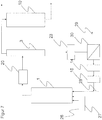
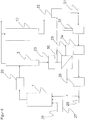
- the device for producing acrylic acid develops without being limited to the embodiments disclosed therein, which are described in US Pat WO-A-2006/092272 and DE-A-10 2005 028 624 disclosed in an inventive manner further, essentially in terms of the formation of the process as a circuit, the purification of the depleted acrolein reaction phase, the purification of the fed Rohglycerins and the possibility of feeding glycerol into the circulation. It is hereby expressly referred to in WO-A-2006/092272 and DE-A-10 2005 028 624 disclosed devices and their features, in particular to the FIGS. 1 to 5 of the WO-A-2006/092272 and the corresponding explanations in the description and on the FIG. 1 of the DE-A-10 2005 028 624 and the corresponding explanations in the description in paragraph [0061].
- the means for supplying the aqueous glycerol phase is carried out in one embodiment by removing the starting material from a tank which can take either glycerol as such or glycerol in the form of an aqueous solution.
- acrolein reaction region reference is first made to the preceding statements.
- the acrolein reaction region in the region in which it is tubular has a longer diameter compared to the cross section.
- the pressure regulator downstream of the acrolein reaction region from the point of view of the educt feed and in terms of the flow of the reactants and reaction products is preferably at least one, possibly two or more, preferably as a pressure control valve, for example as an overflow valve. This in turn is followed downstream by a depletion unit.
- the depletion area can connect directly to the pressure regulator. This is particularly preferred if the depletion of the acrolein from the present before the pressure regulator acrolein reaction phase by relaxing the acrolein reaction phase. By these measures further reaction of the acrolein phase is reduced or even prevented and thus also the formation of undesirable secondary components.
- the depletion unit may comprise a heat exchanger. This is preferably provided at the beginning of the depletion unit.
- a separator on the heat exchanger which is designed as a membrane or crystallizer and in particular as a distillation column. It is further advantageous that in the device either in the acrolein reaction region or in front of the acrolein reaction area or at both locations a heating element is provided. This heating element is preferably thermally coupled with the heat exchanger provided in the depletion unit.
- a further disclosure relates to an apparatus for producing water-absorbing polymer structures having the features of the apparatus for producing acrylic acid, which additionally contains a polymerization reactor, wherein the apparatus for producing acrylic acid is fluid-conductively connected to the polymerization reactor, preferably with the interposition of the workup unit.
- This free-radical polymerization is preferably carried out in the presence of crosslinkers and using the acrylic acid in at least partially neutralized form, so that crosslinked, water-absorbing polymer structures are obtained in this way.
- crosslinkers and using the acrylic acid in at least partially neutralized form, so that crosslinked, water-absorbing polymer structures are obtained in this way.
- the acrylic acid is present in step i) to at least 20 mol%, more preferably at least 50 mol%, based on the monomer, as a salt.
- Water-absorbing polymer structures which contribute at least 25% by weight, preferably at least 50% by weight, more preferably at least 75% by weight and most preferably at least 95% by weight, also contribute to the solution of the abovementioned objects.
- based on acrylic acid wherein at least 80 wt .-%, preferably at least 90 wt .-% and most preferably at least 95 wt .-% of the acrylic acid monomers used to prepare the water-absorbing polymer structures by the above-described method of glycerol on acrolein as Intermediate was obtained and which was coated with 0.01 to 10 wt .-%, based on the weight of the water-absorbing polymer structures, of a coating agent are preferred, wherein as coating agents those coating agents, which have already been mentioned above in connection with the process for the preparation of water-absorbing polymer structures.
- the coating agent is not a surface postcrosslinker.
- these are based on at least 25 wt .-%, preferably at least 35 wt .-% and most preferably at least 45 wt .-% of natural, biodegradable polymers, preferably on carbohydrates such as cellulose or Strength.
- hygiene articles including the water-absorbing polymer structure described above or a water-absorbing polymer structure obtainable by the process.
- a contribution to achieving the abovementioned objects is also made possible by the use of acrolein obtainable by the process according to the invention for the preparation of acrolein, or of acrylic acid obtainable by the process according to the invention for the preparation of acrylic acid, or of both monomers as a base for or in fibers, Films, molding compositions, textile and leather auxiliaries, flocculants, coatings, lacquers, foams, films, cables, sealing materials, liquid-absorbent hygiene articles, in particular diapers and sanitary napkins, carriers for plant- or fungi-growth-regulating agents or crop protection active ingredients, additives for building materials, packaging materials or floor additives.
- Fibers, films, molding compounds, textile and leather auxiliaries, flocculants, coatings, lacquers, foams, films, cables, sealing materials, liquid-absorbent hygiene articles, in particular diapers and sanitary napkins, carriers for plant- or fungi-growth-regulating agents also contribute to the solution of the abovementioned objects or crop protection agents, additives for building materials, packaging materials or soil additives containing or based on acrolein, obtainable by the process according to the invention for the production of acrolein or on acrylic acid, obtainable by the process according to the invention for the production of acrylic acid.
- a contribution to the solution of the abovementioned objects is further provided by a process for the purification of a glycerol phase G4 comprising glycerol, water and various residues of glycerol and water, the glycerol phase G4 having a glycerol content in a range from 20 to 80% by weight, but preferably from at least 30 wt .-%, more preferably at least 40 wt .-% and more preferably of at least 50 wt .-%, each based on the total weight of the glycerol phase G4, and wherein the glycerol phase G4 by nanofiltration to obtain a purified Glycerol phase G5 is subjected.
- the glycerol phase G4 is preferably a crude glycerol phase already described in connection with the process according to the invention for the production of acrolein. Nanofiltration therefore at least partially removes at least one accompanying salt from this crude glycerol phase.
- the nanofiltration takes place by means of a polymeric nanofiltration membrane, which is preferably contained in a wound module.
- a polymeric nanofiltration membrane As polymeric nanofiltration membranes and As winding modules, in turn, those polymeric nanofiltration membranes and winding modules are preferred which have already been mentioned at the outset in connection with the process according to the invention for the production of acrolein.
- the purification takes place at those pressure and temperature conditions which have already been described in connection with the process according to the invention for the production of acrolein, in connection therewith with the purification of the glycerol phase G2 or G2 the mixing phase M1 by nanofiltration, were called preferred pressure and temperature conditions.
- the permeate yield is preferably at least 90% by weight, more preferably at least 95% by weight and most preferably at least 99% by weight.
- nanofiltration is followed by treatment of the permeate with activated carbon.
- a purified glycerol phase G5 obtained by the process according to the invention for purifying a glycerol phase G4, as glycerol phase G3 in the process according to the invention for the production of acrolein, also contributes to the solution of the abovementioned objects.
Landscapes
- Chemical & Material Sciences (AREA)
- Organic Chemistry (AREA)
- Engineering & Computer Science (AREA)
- Water Supply & Treatment (AREA)
- Crystallography & Structural Chemistry (AREA)
- Organic Low-Molecular-Weight Compounds And Preparation Thereof (AREA)
- Addition Polymer Or Copolymer, Post-Treatments, Or Chemical Modifications (AREA)
Applications Claiming Priority (2)
| Application Number | Priority Date | Filing Date | Title |
|---|---|---|---|
| DE102008060888A DE102008060888A1 (de) | 2008-12-09 | 2008-12-09 | Verfahren zur Herstellung von Acrolein umfassend die Aufarbeitung einer Rohglycerin-Phase |
| PCT/EP2009/064500 WO2010066513A1 (de) | 2008-12-09 | 2009-11-03 | Verfahren zur herstellung von acrolein umfassend die aufarbeitung einer rohglycerin-phase |
Publications (2)
| Publication Number | Publication Date |
|---|---|
| EP2356088A1 EP2356088A1 (de) | 2011-08-17 |
| EP2356088B1 true EP2356088B1 (de) | 2018-09-26 |
Family
ID=41668419
Family Applications (1)
| Application Number | Title | Priority Date | Filing Date |
|---|---|---|---|
| EP09745047.2A Not-in-force EP2356088B1 (de) | 2008-12-09 | 2009-11-03 | Verfahren zur herstellung von acrolein umfassend die aufarbeitung einer rohglycerin-phase |
Country Status (8)
| Country | Link |
|---|---|
| US (1) | US8524945B2 (enExample) |
| EP (1) | EP2356088B1 (enExample) |
| JP (1) | JP2012511505A (enExample) |
| CN (1) | CN102245551A (enExample) |
| BR (1) | BRPI0919647B1 (enExample) |
| DE (1) | DE102008060888A1 (enExample) |
| WO (1) | WO2010066513A1 (enExample) |
| ZA (1) | ZA201102268B (enExample) |
Families Citing this family (18)
| Publication number | Priority date | Publication date | Assignee | Title |
|---|---|---|---|---|
| DE102006039203B4 (de) | 2006-08-22 | 2014-06-18 | Evonik Degussa Gmbh | Verfahren zur Herstellung von durch Kristallisation gereinigter Acrylsäure aus Hydroxypropionsäure sowie Vorrichtung dazu |
| FR2953829B1 (fr) | 2009-12-14 | 2011-12-09 | Arkema France | Procede de fabrication d'acroleine et/ou d'acide acrylique a partir de glycerol |
| US9725641B2 (en) * | 2012-03-29 | 2017-08-08 | Axel R. Johnson | Methods fluids by producing and employing oil and gas well drilling and completion fluids as well as hydraulic fracturing fluids employing triglyceride processing by products and propylene glycol recovered from aircraft deicing operations |
| US10676664B2 (en) | 2012-03-29 | 2020-06-09 | Axel R. Johnson | Increased availability and reduced costs for viscoelastic surfactants used in hydrofracturing fluids |
| DE102013000602A1 (de) | 2013-01-16 | 2014-07-17 | Evonik Industries Ag | Verfahren zur Herstellung von Acrylsäure |
| DE102013217386A1 (de) | 2013-09-02 | 2015-03-05 | Evonik Industries Ag | Verfahren zur Herstellung von Acrylsäure |
| JP6228246B2 (ja) | 2015-03-03 | 2017-11-08 | エボニック デグサ ゲーエムベーハーEvonik Degussa GmbH | エテンのオリゴマー化に使用される不均一系触媒の再生 |
| PL3255029T3 (pl) | 2016-06-10 | 2019-04-30 | Evonik Degussa Gmbh | Oligomeryzacja etenu w warunkach nadkrytycznych |
| EP3266757B1 (de) | 2016-07-08 | 2019-12-25 | Evonik Operations GmbH | Herstellung von zumindest 1-hexen und octen aus ethen |
| US10227279B2 (en) | 2016-09-12 | 2019-03-12 | Evonik Degussa Gmbh | Dehydrogenation of LPG or NGL and flexible utilization of the olefins thus obtained |
| US10850261B2 (en) | 2018-03-14 | 2020-12-01 | Evonik Operations Gmbh | Oligomerization catalyst and process for the production thereof |
| US10882027B2 (en) | 2018-03-14 | 2021-01-05 | Evonik Operations Gmbh | Process for producing an oligomerization catalyst |
| US10882028B2 (en) | 2018-03-14 | 2021-01-05 | Evonik Operations Gmbh | Ni-containing catalyst for the oligomerization of olefins |
| US11253844B2 (en) | 2018-03-14 | 2022-02-22 | Evonik Operations Gmbh | Oligomerization catalyst and process for the production thereof |
| US10633302B2 (en) | 2018-07-25 | 2020-04-28 | Evonik Operations Gmbh | Process for oligomerization of butene with determination of the proportion of acidic catalysis |
| PL3680224T3 (pl) | 2019-01-08 | 2023-09-11 | Evonik Operations Gmbh | Sposób usuwania wielonienasyconych węglowodorów ze strumieni węglowodorowych C4 w obecności merkaptanów, disiarczków i węglowodorów C5 |
| US11186782B2 (en) | 2019-01-08 | 2021-11-30 | Evonik Operations Gmbh | Catalyst and process for removing mercaptans from hydrocarbon streams |
| CN110642674B (zh) * | 2019-10-15 | 2022-04-26 | 宁波环洋新材料股份有限公司 | 一种在生物柴油副产粗甘油的精制过程中联产丙烯醛的方法 |
Citations (5)
| Publication number | Priority date | Publication date | Assignee | Title |
|---|---|---|---|---|
| US2802861A (en) * | 1954-07-13 | 1957-08-13 | Shell Dev | Preparation of diesters of terephthalic acid |
| US3919306A (en) * | 1970-05-18 | 1975-11-11 | Atlantic Richfield Co | Purification of recirculated stream for isophthalic acid production |
| EP0358255A1 (en) * | 1988-08-09 | 1990-03-14 | Unichema Chemie B.V. | Process for purifying crude glycerol |
| DE19636767A1 (de) * | 1996-09-10 | 1998-03-12 | Basf Ag | Verfahren zur Herstellung von aliphatischen alpha, omega-Aminonitrilen |
| WO2006087083A2 (en) * | 2005-02-15 | 2006-08-24 | Arkema France | Process for dehydrating glycerol to acrolein |
Family Cites Families (33)
| Publication number | Priority date | Publication date | Assignee | Title |
|---|---|---|---|---|
| US5250182A (en) * | 1992-07-13 | 1993-10-05 | Zenon Environmental Inc. | Membrane-based process for the recovery of lactic acid and glycerol from a "corn thin stillage" stream |
| DE4238493C1 (de) * | 1992-11-14 | 1994-04-21 | Degussa | Verfahren zur Herstellung von Acrolein und dessen Verwendung |
| DE4328407C1 (de) | 1993-08-24 | 1994-09-01 | Sartorius Gmbh | Durch Einwirkung von Hitze sterilisierbarer Wickelmodul |
| SG81982A1 (en) * | 1998-05-18 | 2001-07-24 | Nippon Catalytic Chem Ind | Method for production of acrolein and acrylic acid |
| DE19829747A1 (de) | 1998-07-03 | 2000-01-05 | Huels Infracor Gmbh | Entaluminierter Katalysatorträger, Verfahren zur Herstellung des Katalysatorträgers und Verfahren zur Hydratisierung von C2- oder C3-Olefinen mit Wasser in Gegenwart eines Katalysators, der aus diesem mit Säure getränkten Katalysatorträger besteht |
| DE19838425A1 (de) * | 1998-08-24 | 2000-03-02 | Degussa | Verfahren zur Abtrennung mehrfunktioneller Alkohole von wasserlöslichen Salzen aus wäßrigen Systemen |
| JP3712903B2 (ja) * | 2000-01-28 | 2005-11-02 | 花王株式会社 | グリセリンの製造方法 |
| EP1199096A1 (en) | 2000-10-21 | 2002-04-24 | Degussa AG | Catalyst for destruction of CO, VOC, and halogenated organic emissions |
| DE10138150A1 (de) * | 2001-08-03 | 2003-02-13 | Basf Ag | Verfahren zur Herstellung wasserabsorbierender Harze |
| DE10142620A1 (de) | 2001-08-31 | 2003-03-20 | Degussa | Ammoximation von Ketonen und Aufarbeitung durch Pervaporation/Dampfpermeation |
| DE10153546A1 (de) | 2001-10-30 | 2003-05-22 | Degussa | Direktsynthese von Wasserstoffperoxid und deren Integration in Oxidationsprozesse |
| DE60133473T2 (de) | 2001-12-14 | 2009-05-20 | Evonik Stockhausen Gmbh | Verfahren zur Herstellung von Acrylsäure |
| US7141683B2 (en) | 2002-05-02 | 2006-11-28 | Degussa Ag | Process for the epoxidation of olefins |
| DE10241762A1 (de) | 2002-09-10 | 2004-03-18 | Oxeno Olefinchemie Gmbh | Verfahren zur Herstellung von wasserfreiem tert.-Butanol |
| US6838572B2 (en) | 2002-09-30 | 2005-01-04 | Degussa Ag | Process for the epoxidation of olefins |
| US7722847B2 (en) | 2002-09-30 | 2010-05-25 | Evonik Degussa Gmbh | Aqueous hydrogen peroxide solutions and method of making same |
| US7169945B2 (en) | 2002-11-26 | 2007-01-30 | Degussa Ag | Process for the epoxidation of olefins |
| US6878836B2 (en) | 2003-06-18 | 2005-04-12 | Degussa Ag | Process for the epoxidation of propene |
| DE10335510A1 (de) | 2003-07-31 | 2005-03-10 | Stockhausen Chem Fab Gmbh | Beschichteter Katalysator-Trägerkörper |
| DE102004030943B4 (de) | 2004-06-26 | 2013-10-02 | Evonik Oxeno Gmbh | Verfahren zur Herstellung von tert.-Butanol aus Isobuten-haltigen Kohlenwasserstoffgemischen |
| WO2006074249A1 (en) | 2005-01-06 | 2006-07-13 | Telik, Inc. | Tripeptide and tetrapeptide thioethers |
| US7501064B2 (en) | 2005-01-06 | 2009-03-10 | Eet | Integrated electro-pressure membrane deionization system |
| TWI438187B (zh) | 2005-02-28 | 2014-05-21 | Evonik Degussa Gmbh | 丙烯酸和基於可再生原料之吸水聚合物結構及二者之製備方法 |
| TWI529181B (zh) | 2005-02-28 | 2016-04-11 | 贏創德固賽有限責任公司 | 以可更新原料為基之吸水聚合物結構及其生產的方法 |
| US20090068440A1 (en) * | 2005-06-20 | 2009-03-12 | Gunther Bub | Production of acrolein, acrylic acid and water-absorbent polymer structures made from glycerine |
| DE102005046250B4 (de) | 2005-09-27 | 2020-10-08 | Evonik Operations Gmbh | Anlage zur Abtrennung von organischen Übergangsmetallkomplexkatalysatoren |
| DE102006003618A1 (de) | 2006-01-26 | 2007-08-02 | Oxeno Olefinchemie Gmbh | Verfahren zur Abtrennung von Metall-Komplexkatalysatoren aus Telomerisationsgemischen |
| GB2437516A (en) * | 2006-04-26 | 2007-10-31 | Bai Leng | Method and apparatus for purifying glycerine using filter membranes and a deionisation means |
| DE102006039205A1 (de) | 2006-08-22 | 2008-03-20 | Stockhausen Gmbh | Auf nachwachsenden Rohstoffen basierende Acrylsäure und wasserabsorbierende Polymergebilde sowie Verfahren zu deren Herstellung mittels Dehydratisierung |
| DE102006054519A1 (de) * | 2006-11-20 | 2008-05-21 | Evonik Degussa Gmbh | Verfahren zur Herstellung von Fettsäurealkylestern und Acrolein aus Triglyceriden |
| DE102007004351A1 (de) * | 2007-01-29 | 2008-07-31 | Evonik Degussa Gmbh | Neue Katalysatoren und Verfahren zur Dehydratisierung von Glycerin |
| DE102007004350A1 (de) | 2007-01-29 | 2008-07-31 | Evonik Degussa Gmbh | Verfahren zur Regenerierung eines Katalysators |
| DE102007019379A1 (de) * | 2007-04-23 | 2008-10-30 | Bayer Technology Services Gmbh | Verfahren zur Aufreinigung von Produktgemischen aus Umesterungsreaktionen |
-
2008
- 2008-12-09 DE DE102008060888A patent/DE102008060888A1/de not_active Ceased
-
2009
- 2009-11-03 CN CN2009801492265A patent/CN102245551A/zh active Pending
- 2009-11-03 US US13/128,538 patent/US8524945B2/en not_active Expired - Fee Related
- 2009-11-03 BR BRPI0919647A patent/BRPI0919647B1/pt not_active IP Right Cessation
- 2009-11-03 EP EP09745047.2A patent/EP2356088B1/de not_active Not-in-force
- 2009-11-03 JP JP2011538921A patent/JP2012511505A/ja active Pending
- 2009-11-03 WO PCT/EP2009/064500 patent/WO2010066513A1/de not_active Ceased
-
2011
- 2011-03-28 ZA ZA2011/02268A patent/ZA201102268B/en unknown
Patent Citations (5)
| Publication number | Priority date | Publication date | Assignee | Title |
|---|---|---|---|---|
| US2802861A (en) * | 1954-07-13 | 1957-08-13 | Shell Dev | Preparation of diesters of terephthalic acid |
| US3919306A (en) * | 1970-05-18 | 1975-11-11 | Atlantic Richfield Co | Purification of recirculated stream for isophthalic acid production |
| EP0358255A1 (en) * | 1988-08-09 | 1990-03-14 | Unichema Chemie B.V. | Process for purifying crude glycerol |
| DE19636767A1 (de) * | 1996-09-10 | 1998-03-12 | Basf Ag | Verfahren zur Herstellung von aliphatischen alpha, omega-Aminonitrilen |
| WO2006087083A2 (en) * | 2005-02-15 | 2006-08-24 | Arkema France | Process for dehydrating glycerol to acrolein |
Also Published As
| Publication number | Publication date |
|---|---|
| EP2356088A1 (de) | 2011-08-17 |
| ZA201102268B (en) | 2011-12-28 |
| BRPI0919647A2 (pt) | 2015-12-08 |
| DE102008060888A1 (de) | 2010-06-10 |
| CN102245551A (zh) | 2011-11-16 |
| US8524945B2 (en) | 2013-09-03 |
| WO2010066513A1 (de) | 2010-06-17 |
| JP2012511505A (ja) | 2012-05-24 |
| BRPI0919647B1 (pt) | 2018-11-06 |
| US20110275777A1 (en) | 2011-11-10 |
Similar Documents
| Publication | Publication Date | Title |
|---|---|---|
| EP2356088B1 (de) | Verfahren zur herstellung von acrolein umfassend die aufarbeitung einer rohglycerin-phase | |
| EP2817284B1 (de) | Verfahren und vorrichtung zur hydroformylierung von isobuten und zum auftrennen des produktgemisches | |
| EP0052719A1 (de) | Verfahren zur Abtrennung von Metallkatalysatoren und Verwendung von Membrantrennvorrichtungen | |
| EP4509206B1 (de) | Crossflow-filtration zur kontinuierlichen diafiltration | |
| EP3221287B1 (de) | Optimiertes verfahren zur herstellung von methacrylsäure | |
| EP1492755A1 (de) | (meth)acrylsaeurekristall und verfahren zur herstellung und aufreinigung von waessriger (meth)acrylsaeure | |
| EP3323800B1 (de) | Verfahren zur herstellung von polyoxymethylendimethylethern aus formaldehyd und methanol in wässrigen lösungen | |
| EP3024812B1 (de) | Verfahren zur regulierung des wassergehalts in einem kontinuierlichen verfahren zur herstellung von methacrolein | |
| DE69022983T2 (de) | Behandlung von verunreinigten flüssigen strömen aus ethylenoxid/glycol-herstellungsprozessen mit semipermeablen membranen. | |
| EP2596852A1 (de) | Verfahren zur Aufarbeitung einer wässerigen, Lignin-enthaltenden Lösung mittels Nanofiltration | |
| EP0835860B1 (de) | Verfahren zur Herstellung von Estern oder Alkoholaten unter Abtrennung von Wasser | |
| EP0982283A2 (de) | Verfahren zur Abtrennung mehrfunktioneller Alkohole von wasserlöslichen Salzen aus wässrigen Systemen | |
| DE3244007C2 (de) | Verfahren zur Raffination von Pflanzenölen | |
| EP0571762A1 (de) | Verfahren zur Abtrennung katalysatorfreier Arbeitslösung aus dem Hydrierkreislauf des Anthrachinonverfahrens zur Herstellung von Wasserstoffperoxid | |
| EP2294060B1 (de) | Verfahren zur abtrennung von fumarsäure und anderen nebenkomponenten bei der herstellung von maleinsäureanhydrid | |
| DE102007012774B4 (de) | Verfahren zum Flüssigkeitsentzug und Kristallisation in einem Destillationsmodul | |
| EP2142286A1 (de) | Verfahren zur aufreinigung von produktgemischen aus umesterungsreaktionen | |
| EP1805151A1 (de) | Verfahren zur behandlung von triazinhaltigem wasser einer melaminanlage | |
| DE102010031507A1 (de) | Verfahren zur Reinigung kristalliner Phasen aus Produktgemischen mittels Schichtkristallisation | |
| EP0982284A2 (de) | Verfahren zum Trennen von Trimethylolpropan von wasserlöslichen Salzen aus einer Lösung | |
| AT522938B1 (de) | Katalysator | |
| EP1809574A2 (de) | Verfahren zur herstellung von natriumdithionit | |
| AT520954B1 (de) | Verfahren und Vorrichtung zur katalytischen Umwandlung einer Stoffmischung | |
| DE102013107911A1 (de) | Verbesserung der Trenneigenschaften von Membranen durch gezielte Lösungsmittelzugabe zum verwendeten Standardlösungsmittel | |
| EP4197992A1 (de) | Verfahren zur herstellung eines alkohols und abtrennung des homogenen katalysatorsystems unter verwendung einer membran umfassend eine trennaktive schicht aus paek und einer unterstruktur, die paek umfasst |
Legal Events
| Date | Code | Title | Description |
|---|---|---|---|
| PUAI | Public reference made under article 153(3) epc to a published international application that has entered the european phase |
Free format text: ORIGINAL CODE: 0009012 |
|
| 17P | Request for examination filed |
Effective date: 20110429 |
|
| AK | Designated contracting states |
Kind code of ref document: A1 Designated state(s): AT BE BG CH CY CZ DE DK EE ES FI FR GB GR HR HU IE IS IT LI LT LU LV MC MK MT NL NO PL PT RO SE SI SK SM TR |
|
| DAX | Request for extension of the european patent (deleted) | ||
| RAP1 | Party data changed (applicant data changed or rights of an application transferred) |
Owner name: EVONIK DEGUSSA GMBH |
|
| 17Q | First examination report despatched |
Effective date: 20170207 |
|
| GRAP | Despatch of communication of intention to grant a patent |
Free format text: ORIGINAL CODE: EPIDOSNIGR1 |
|
| INTG | Intention to grant announced |
Effective date: 20180226 |
|
| GRAS | Grant fee paid |
Free format text: ORIGINAL CODE: EPIDOSNIGR3 |
|
| GRAA | (expected) grant |
Free format text: ORIGINAL CODE: 0009210 |
|
| AK | Designated contracting states |
Kind code of ref document: B1 Designated state(s): AT BE BG CH CY CZ DE DK EE ES FI FR GB GR HR HU IE IS IT LI LT LU LV MC MK MT NL NO PL PT RO SE SI SK SM TR |
|
| REG | Reference to a national code |
Ref country code: GB Ref legal event code: FG4D Free format text: NOT ENGLISH |
|
| REG | Reference to a national code |
Ref country code: CH Ref legal event code: EP |
|
| REG | Reference to a national code |
Ref country code: AT Ref legal event code: REF Ref document number: 1045839 Country of ref document: AT Kind code of ref document: T Effective date: 20181015 |
|
| REG | Reference to a national code |
Ref country code: IE Ref legal event code: FG4D Free format text: LANGUAGE OF EP DOCUMENT: GERMAN |
|
| REG | Reference to a national code |
Ref country code: DE Ref legal event code: R096 Ref document number: 502009015315 Country of ref document: DE |
|
| REG | Reference to a national code |
Ref country code: NL Ref legal event code: MP Effective date: 20180926 |
|
| PG25 | Lapsed in a contracting state [announced via postgrant information from national office to epo] |
Ref country code: BG Free format text: LAPSE BECAUSE OF FAILURE TO SUBMIT A TRANSLATION OF THE DESCRIPTION OR TO PAY THE FEE WITHIN THE PRESCRIBED TIME-LIMIT Effective date: 20181226 Ref country code: SE Free format text: LAPSE BECAUSE OF FAILURE TO SUBMIT A TRANSLATION OF THE DESCRIPTION OR TO PAY THE FEE WITHIN THE PRESCRIBED TIME-LIMIT Effective date: 20180926 Ref country code: LT Free format text: LAPSE BECAUSE OF FAILURE TO SUBMIT A TRANSLATION OF THE DESCRIPTION OR TO PAY THE FEE WITHIN THE PRESCRIBED TIME-LIMIT Effective date: 20180926 Ref country code: FI Free format text: LAPSE BECAUSE OF FAILURE TO SUBMIT A TRANSLATION OF THE DESCRIPTION OR TO PAY THE FEE WITHIN THE PRESCRIBED TIME-LIMIT Effective date: 20180926 Ref country code: NO Free format text: LAPSE BECAUSE OF FAILURE TO SUBMIT A TRANSLATION OF THE DESCRIPTION OR TO PAY THE FEE WITHIN THE PRESCRIBED TIME-LIMIT Effective date: 20181226 Ref country code: GR Free format text: LAPSE BECAUSE OF FAILURE TO SUBMIT A TRANSLATION OF THE DESCRIPTION OR TO PAY THE FEE WITHIN THE PRESCRIBED TIME-LIMIT Effective date: 20181227 |
|
| REG | Reference to a national code |
Ref country code: LT Ref legal event code: MG4D |
|
| RAP2 | Party data changed (patent owner data changed or rights of a patent transferred) |
Owner name: EVONIK DEGUSSA GMBH |
|
| PG25 | Lapsed in a contracting state [announced via postgrant information from national office to epo] |
Ref country code: LV Free format text: LAPSE BECAUSE OF FAILURE TO SUBMIT A TRANSLATION OF THE DESCRIPTION OR TO PAY THE FEE WITHIN THE PRESCRIBED TIME-LIMIT Effective date: 20180926 Ref country code: HR Free format text: LAPSE BECAUSE OF FAILURE TO SUBMIT A TRANSLATION OF THE DESCRIPTION OR TO PAY THE FEE WITHIN THE PRESCRIBED TIME-LIMIT Effective date: 20180926 |
|
| PG25 | Lapsed in a contracting state [announced via postgrant information from national office to epo] |
Ref country code: RO Free format text: LAPSE BECAUSE OF FAILURE TO SUBMIT A TRANSLATION OF THE DESCRIPTION OR TO PAY THE FEE WITHIN THE PRESCRIBED TIME-LIMIT Effective date: 20180926 Ref country code: CZ Free format text: LAPSE BECAUSE OF FAILURE TO SUBMIT A TRANSLATION OF THE DESCRIPTION OR TO PAY THE FEE WITHIN THE PRESCRIBED TIME-LIMIT Effective date: 20180926 Ref country code: EE Free format text: LAPSE BECAUSE OF FAILURE TO SUBMIT A TRANSLATION OF THE DESCRIPTION OR TO PAY THE FEE WITHIN THE PRESCRIBED TIME-LIMIT Effective date: 20180926 Ref country code: IT Free format text: LAPSE BECAUSE OF FAILURE TO SUBMIT A TRANSLATION OF THE DESCRIPTION OR TO PAY THE FEE WITHIN THE PRESCRIBED TIME-LIMIT Effective date: 20180926 Ref country code: ES Free format text: LAPSE BECAUSE OF FAILURE TO SUBMIT A TRANSLATION OF THE DESCRIPTION OR TO PAY THE FEE WITHIN THE PRESCRIBED TIME-LIMIT Effective date: 20180926 Ref country code: NL Free format text: LAPSE BECAUSE OF FAILURE TO SUBMIT A TRANSLATION OF THE DESCRIPTION OR TO PAY THE FEE WITHIN THE PRESCRIBED TIME-LIMIT Effective date: 20180926 Ref country code: PL Free format text: LAPSE BECAUSE OF FAILURE TO SUBMIT A TRANSLATION OF THE DESCRIPTION OR TO PAY THE FEE WITHIN THE PRESCRIBED TIME-LIMIT Effective date: 20180926 Ref country code: IS Free format text: LAPSE BECAUSE OF FAILURE TO SUBMIT A TRANSLATION OF THE DESCRIPTION OR TO PAY THE FEE WITHIN THE PRESCRIBED TIME-LIMIT Effective date: 20190126 |
|
| PG25 | Lapsed in a contracting state [announced via postgrant information from national office to epo] |
Ref country code: SK Free format text: LAPSE BECAUSE OF FAILURE TO SUBMIT A TRANSLATION OF THE DESCRIPTION OR TO PAY THE FEE WITHIN THE PRESCRIBED TIME-LIMIT Effective date: 20180926 Ref country code: PT Free format text: LAPSE BECAUSE OF FAILURE TO SUBMIT A TRANSLATION OF THE DESCRIPTION OR TO PAY THE FEE WITHIN THE PRESCRIBED TIME-LIMIT Effective date: 20190126 Ref country code: SM Free format text: LAPSE BECAUSE OF FAILURE TO SUBMIT A TRANSLATION OF THE DESCRIPTION OR TO PAY THE FEE WITHIN THE PRESCRIBED TIME-LIMIT Effective date: 20180926 |
|
| REG | Reference to a national code |
Ref country code: DE Ref legal event code: R097 Ref document number: 502009015315 Country of ref document: DE |
|
| REG | Reference to a national code |
Ref country code: CH Ref legal event code: PL |
|
| PG25 | Lapsed in a contracting state [announced via postgrant information from national office to epo] |
Ref country code: DK Free format text: LAPSE BECAUSE OF FAILURE TO SUBMIT A TRANSLATION OF THE DESCRIPTION OR TO PAY THE FEE WITHIN THE PRESCRIBED TIME-LIMIT Effective date: 20180926 Ref country code: MC Free format text: LAPSE BECAUSE OF FAILURE TO SUBMIT A TRANSLATION OF THE DESCRIPTION OR TO PAY THE FEE WITHIN THE PRESCRIBED TIME-LIMIT Effective date: 20180926 Ref country code: LU Free format text: LAPSE BECAUSE OF NON-PAYMENT OF DUE FEES Effective date: 20181103 |
|
| PLBE | No opposition filed within time limit |
Free format text: ORIGINAL CODE: 0009261 |
|
| STAA | Information on the status of an ep patent application or granted ep patent |
Free format text: STATUS: NO OPPOSITION FILED WITHIN TIME LIMIT |
|
| REG | Reference to a national code |
Ref country code: IE Ref legal event code: MM4A |
|
| GBPC | Gb: european patent ceased through non-payment of renewal fee |
Effective date: 20181226 |
|
| PG25 | Lapsed in a contracting state [announced via postgrant information from national office to epo] |
Ref country code: LI Free format text: LAPSE BECAUSE OF NON-PAYMENT OF DUE FEES Effective date: 20181130 Ref country code: CH Free format text: LAPSE BECAUSE OF NON-PAYMENT OF DUE FEES Effective date: 20181130 |
|
| 26N | No opposition filed |
Effective date: 20190627 |
|
| PG25 | Lapsed in a contracting state [announced via postgrant information from national office to epo] |
Ref country code: SI Free format text: LAPSE BECAUSE OF FAILURE TO SUBMIT A TRANSLATION OF THE DESCRIPTION OR TO PAY THE FEE WITHIN THE PRESCRIBED TIME-LIMIT Effective date: 20180926 Ref country code: IE Free format text: LAPSE BECAUSE OF NON-PAYMENT OF DUE FEES Effective date: 20181103 |
|
| REG | Reference to a national code |
Ref country code: DE Ref legal event code: R081 Ref document number: 502009015315 Country of ref document: DE Owner name: EVONIK SUPERABSORBER GMBH, DE Free format text: FORMER OWNER: EVONIK DEGUSSA GMBH, 45128 ESSEN, DE Ref country code: DE Ref legal event code: R081 Ref document number: 502009015315 Country of ref document: DE Owner name: EVONIK OPERATIONS GMBH, DE Free format text: FORMER OWNER: EVONIK DEGUSSA GMBH, 45128 ESSEN, DE |
|
| PG25 | Lapsed in a contracting state [announced via postgrant information from national office to epo] |
Ref country code: GB Free format text: LAPSE BECAUSE OF NON-PAYMENT OF DUE FEES Effective date: 20181226 |
|
| REG | Reference to a national code |
Ref country code: AT Ref legal event code: MM01 Ref document number: 1045839 Country of ref document: AT Kind code of ref document: T Effective date: 20181103 |
|
| PG25 | Lapsed in a contracting state [announced via postgrant information from national office to epo] |
Ref country code: AT Free format text: LAPSE BECAUSE OF NON-PAYMENT OF DUE FEES Effective date: 20181103 Ref country code: MT Free format text: LAPSE BECAUSE OF FAILURE TO SUBMIT A TRANSLATION OF THE DESCRIPTION OR TO PAY THE FEE WITHIN THE PRESCRIBED TIME-LIMIT Effective date: 20180926 |
|
| PG25 | Lapsed in a contracting state [announced via postgrant information from national office to epo] |
Ref country code: TR Free format text: LAPSE BECAUSE OF FAILURE TO SUBMIT A TRANSLATION OF THE DESCRIPTION OR TO PAY THE FEE WITHIN THE PRESCRIBED TIME-LIMIT Effective date: 20180926 |
|
| PG25 | Lapsed in a contracting state [announced via postgrant information from national office to epo] |
Ref country code: HU Free format text: LAPSE BECAUSE OF FAILURE TO SUBMIT A TRANSLATION OF THE DESCRIPTION OR TO PAY THE FEE WITHIN THE PRESCRIBED TIME-LIMIT; INVALID AB INITIO Effective date: 20091103 Ref country code: CY Free format text: LAPSE BECAUSE OF FAILURE TO SUBMIT A TRANSLATION OF THE DESCRIPTION OR TO PAY THE FEE WITHIN THE PRESCRIBED TIME-LIMIT Effective date: 20180926 Ref country code: MK Free format text: LAPSE BECAUSE OF NON-PAYMENT OF DUE FEES Effective date: 20180926 |
|
| REG | Reference to a national code |
Ref country code: BE Ref legal event code: HC Owner name: EVONIK OPERATIONS GMBH; DE Free format text: DETAILS ASSIGNMENT: CHANGE OF OWNER(S), CHANGEMENT DE NOM DU PROPRIETAIRE; FORMER OWNER NAME: EVONIK DEGUSSA GMBH Effective date: 20200403 |
|
| REG | Reference to a national code |
Ref country code: DE Ref legal event code: R081 Ref document number: 502009015315 Country of ref document: DE Owner name: EVONIK SUPERABSORBER GMBH, DE Free format text: FORMER OWNER: EVONIK OPERATIONS GMBH, 45128 ESSEN, DE |
|
| REG | Reference to a national code |
Ref country code: BE Ref legal event code: PD Owner name: EVONIK SUPERABSORBER GMBH; DE Free format text: DETAILS ASSIGNMENT: CHANGE OF OWNER(S), ASSIGNMENT; FORMER OWNER NAME: EVONIK OPERATIONS GMBH Effective date: 20211209 |
|
| P01 | Opt-out of the competence of the unified patent court (upc) registered |
Effective date: 20230524 |
|
| PGFP | Annual fee paid to national office [announced via postgrant information from national office to epo] |
Ref country code: FR Payment date: 20231120 Year of fee payment: 15 Ref country code: DE Payment date: 20231121 Year of fee payment: 15 |
|
| PGFP | Annual fee paid to national office [announced via postgrant information from national office to epo] |
Ref country code: BE Payment date: 20231120 Year of fee payment: 15 |
|
| REG | Reference to a national code |
Ref country code: DE Ref legal event code: R119 Ref document number: 502009015315 Country of ref document: DE |
|
| REG | Reference to a national code |
Ref country code: BE Ref legal event code: MM Effective date: 20241130 |
|
| PG25 | Lapsed in a contracting state [announced via postgrant information from national office to epo] |
Ref country code: DE Free format text: LAPSE BECAUSE OF NON-PAYMENT OF DUE FEES Effective date: 20250603 |
|
| PG25 | Lapsed in a contracting state [announced via postgrant information from national office to epo] |
Ref country code: BE Free format text: LAPSE BECAUSE OF NON-PAYMENT OF DUE FEES Effective date: 20241130 |
|
| PG25 | Lapsed in a contracting state [announced via postgrant information from national office to epo] |
Ref country code: FR Free format text: LAPSE BECAUSE OF NON-PAYMENT OF DUE FEES Effective date: 20241130 |