EP2344453B1 - Activators of human pyruvate kinase - Google Patents
Activators of human pyruvate kinase Download PDFInfo
- Publication number
- EP2344453B1 EP2344453B1 EP09740795.1A EP09740795A EP2344453B1 EP 2344453 B1 EP2344453 B1 EP 2344453B1 EP 09740795 A EP09740795 A EP 09740795A EP 2344453 B1 EP2344453 B1 EP 2344453B1
- Authority
- EP
- European Patent Office
- Prior art keywords
- dioxinyl
- benzo
- dihydro
- difluorophenyl
- difluoro
- Prior art date
- Legal status (The legal status is an assumption and is not a legal conclusion. Google has not performed a legal analysis and makes no representation as to the accuracy of the status listed.)
- Active
Links
- BCIIMDOZSUCSEN-UHFFFAOYSA-N NC1CCNCC1 Chemical compound NC1CCNCC1 BCIIMDOZSUCSEN-UHFFFAOYSA-N 0.000 description 4
- NGXSWUFDCSEIOO-UHFFFAOYSA-N NC1CNCC1 Chemical compound NC1CNCC1 NGXSWUFDCSEIOO-UHFFFAOYSA-N 0.000 description 4
- VMAXJDJIFGIBGH-UHFFFAOYSA-N NCC1CNC1 Chemical compound NCC1CNC1 VMAXJDJIFGIBGH-UHFFFAOYSA-N 0.000 description 2
- NMWWGQKXOXJVOE-UHFFFAOYSA-N CC1C(CN)CNC1 Chemical compound CC1C(CN)CNC1 NMWWGQKXOXJVOE-UHFFFAOYSA-N 0.000 description 1
- 0 C[C@](*)(C(*)(*)N(C(*)(*)C1(*)*)S(c(c(F)ccc2)c2F)(=O)=O)N1S(c(cc1)cc(O2)c1OCC2I1ClC1)(=O)=O Chemical compound C[C@](*)(C(*)(*)N(C(*)(*)C1(*)*)S(c(c(F)ccc2)c2F)(=O)=O)N1S(c(cc1)cc(O2)c1OCC2I1ClC1)(=O)=O 0.000 description 1
- IZBBQPIJRKNXQT-UHFFFAOYSA-N O=C(C1)NCCN1S([AlH2])(=O)=O Chemical compound O=C(C1)NCCN1S([AlH2])(=O)=O IZBBQPIJRKNXQT-UHFFFAOYSA-N 0.000 description 1
- IWELDVXSEVIIGI-UHFFFAOYSA-N O=C1NCCNC1 Chemical compound O=C1NCCNC1 IWELDVXSEVIIGI-UHFFFAOYSA-N 0.000 description 1
Images


Classifications
-
- A—HUMAN NECESSITIES
- A61—MEDICAL OR VETERINARY SCIENCE; HYGIENE
- A61K—PREPARATIONS FOR MEDICAL, DENTAL OR TOILETRY PURPOSES
- A61K31/00—Medicinal preparations containing organic active ingredients
- A61K31/33—Heterocyclic compounds
- A61K31/395—Heterocyclic compounds having nitrogen as a ring hetero atom, e.g. guanethidine or rifamycins
- A61K31/495—Heterocyclic compounds having nitrogen as a ring hetero atom, e.g. guanethidine or rifamycins having six-membered rings with two or more nitrogen atoms as the only ring heteroatoms, e.g. piperazine or tetrazines
- A61K31/496—Non-condensed piperazines containing further heterocyclic rings, e.g. rifampin, thiothixene or sparfloxacin
-
- A—HUMAN NECESSITIES
- A61—MEDICAL OR VETERINARY SCIENCE; HYGIENE
- A61K—PREPARATIONS FOR MEDICAL, DENTAL OR TOILETRY PURPOSES
- A61K31/00—Medicinal preparations containing organic active ingredients
- A61K31/33—Heterocyclic compounds
- A61K31/395—Heterocyclic compounds having nitrogen as a ring hetero atom, e.g. guanethidine or rifamycins
- A61K31/435—Heterocyclic compounds having nitrogen as a ring hetero atom, e.g. guanethidine or rifamycins having six-membered rings with one nitrogen as the only ring hetero atom
- A61K31/44—Non condensed pyridines; Hydrogenated derivatives thereof
- A61K31/445—Non condensed piperidines, e.g. piperocaine
-
- A—HUMAN NECESSITIES
- A61—MEDICAL OR VETERINARY SCIENCE; HYGIENE
- A61K—PREPARATIONS FOR MEDICAL, DENTAL OR TOILETRY PURPOSES
- A61K31/00—Medicinal preparations containing organic active ingredients
- A61K31/33—Heterocyclic compounds
- A61K31/395—Heterocyclic compounds having nitrogen as a ring hetero atom, e.g. guanethidine or rifamycins
- A61K31/495—Heterocyclic compounds having nitrogen as a ring hetero atom, e.g. guanethidine or rifamycins having six-membered rings with two or more nitrogen atoms as the only ring heteroatoms, e.g. piperazine or tetrazines
- A61K31/50—Pyridazines; Hydrogenated pyridazines
- A61K31/5025—Pyridazines; Hydrogenated pyridazines ortho- or peri-condensed with heterocyclic ring systems
-
- A—HUMAN NECESSITIES
- A61—MEDICAL OR VETERINARY SCIENCE; HYGIENE
- A61P—SPECIFIC THERAPEUTIC ACTIVITY OF CHEMICAL COMPOUNDS OR MEDICINAL PREPARATIONS
- A61P33/00—Antiparasitic agents
-
- A—HUMAN NECESSITIES
- A61—MEDICAL OR VETERINARY SCIENCE; HYGIENE
- A61P—SPECIFIC THERAPEUTIC ACTIVITY OF CHEMICAL COMPOUNDS OR MEDICINAL PREPARATIONS
- A61P35/00—Antineoplastic agents
-
- A—HUMAN NECESSITIES
- A61—MEDICAL OR VETERINARY SCIENCE; HYGIENE
- A61P—SPECIFIC THERAPEUTIC ACTIVITY OF CHEMICAL COMPOUNDS OR MEDICINAL PREPARATIONS
- A61P35/00—Antineoplastic agents
- A61P35/02—Antineoplastic agents specific for leukemia
-
- A—HUMAN NECESSITIES
- A61—MEDICAL OR VETERINARY SCIENCE; HYGIENE
- A61P—SPECIFIC THERAPEUTIC ACTIVITY OF CHEMICAL COMPOUNDS OR MEDICINAL PREPARATIONS
- A61P43/00—Drugs for specific purposes, not provided for in groups A61P1/00-A61P41/00
-
- A—HUMAN NECESSITIES
- A61—MEDICAL OR VETERINARY SCIENCE; HYGIENE
- A61P—SPECIFIC THERAPEUTIC ACTIVITY OF CHEMICAL COMPOUNDS OR MEDICINAL PREPARATIONS
- A61P7/00—Drugs for disorders of the blood or the extracellular fluid
- A61P7/06—Antianaemics
-
- C—CHEMISTRY; METALLURGY
- C07—ORGANIC CHEMISTRY
- C07D—HETEROCYCLIC COMPOUNDS
- C07D295/00—Heterocyclic compounds containing polymethylene-imine rings with at least five ring members, 3-azabicyclo [3.2.2] nonane, piperazine, morpholine or thiomorpholine rings, having only hydrogen atoms directly attached to the ring carbon atoms
- C07D295/22—Heterocyclic compounds containing polymethylene-imine rings with at least five ring members, 3-azabicyclo [3.2.2] nonane, piperazine, morpholine or thiomorpholine rings, having only hydrogen atoms directly attached to the ring carbon atoms with hetero atoms directly attached to ring nitrogen atoms
- C07D295/26—Sulfur atoms
-
- C—CHEMISTRY; METALLURGY
- C07—ORGANIC CHEMISTRY
- C07D—HETEROCYCLIC COMPOUNDS
- C07D319/00—Heterocyclic compounds containing six-membered rings having two oxygen atoms as the only ring hetero atoms
- C07D319/10—1,4-Dioxanes; Hydrogenated 1,4-dioxanes
- C07D319/14—1,4-Dioxanes; Hydrogenated 1,4-dioxanes condensed with carbocyclic rings or ring systems
- C07D319/16—1,4-Dioxanes; Hydrogenated 1,4-dioxanes condensed with carbocyclic rings or ring systems condensed with one six-membered ring
- C07D319/18—Ethylenedioxybenzenes, not substituted on the hetero ring
-
- C—CHEMISTRY; METALLURGY
- C07—ORGANIC CHEMISTRY
- C07D—HETEROCYCLIC COMPOUNDS
- C07D495/00—Heterocyclic compounds containing in the condensed system at least one hetero ring having sulfur atoms as the only ring hetero atoms
- C07D495/12—Heterocyclic compounds containing in the condensed system at least one hetero ring having sulfur atoms as the only ring hetero atoms in which the condensed system contains three hetero rings
- C07D495/14—Ortho-condensed systems
Definitions
- Pyruvate kinase is a critical metabolic enzyme operating at the ultimate step in glycolysis where it catalyzes the transfer of a phosphate group from phosphoenolpyruvate to adenosine diphophate (ADP), yielding one molecule of pyruvate and one molecule of adenosine triphosphate (ATP).
- ADP adenosine diphophate
- ATP adenosine triphosphate
- M1 isozyme that is found in most adult tissues and the M2 isozyme that is present in fetal tissues and is found to be re-expressed in tumors. Therefore, after embryonic development, adult tissues switch to either express PK-M1 or the tissue specific L or R isozymes. However, in all tumors or cell lines of cancer lineage (including those typically expressing either the L or R isozymes), PK gene expression reverts entirely to the M2 isoform.
- PK is a tetrameric enzyme composed of four identical monomers that form a dimer of dimers in the final tetrameric structure.
- the M2, L, and R isozymes are activated by fructose-1,6-bis phosphate (FBP) that binds to a flexible loop region at the interface of the two dimers.
- FBP fructose-1,6-bis phosphate
- Activation of PK shifts the enzyme to a state showing high affinity for phosphoenolpyruvate (PEP).
- PEP phosphoenolpyruvate
- the M1 isoform is not regulated by FBP and displays only high affinity PEP binding similar to the activated state of PK.
- Tumor cells undergo a metabolic transformation that is required to supply the biochemical precursors necessary for rapid cell growth and proliferation.
- PK-M2 Various phosphotyrosine peptides can bind to PK-M2 near the activation loop that results in the removal of FBP from the enzyme which effectively down-regulates PK-M2 activity.
- PK-M2 When PK-M2 is activated, glucose is converted to pyruvate.
- PK-M2 when PK-M2 is inactivated, a build-up of glycolytic intermediates occurs which intermediates can be diverted towards nucleotide and lipid biosynthesis required for cell growth and proliferation.
- PK deficiency is the second most common cause of enzyme-deficient hemolytic anemia, following G6PD deficiency.
- a metabolic block is created in the pathway at the level of the deficient enzyme.
- Intermediate by-products and various glycolytic metabolites proximal to the metabolic block accumulate in the red blood cells, while such cells become depleted of the distal products in the pathway, such as lactate and ATP.
- lactate and ATP The lack of ATP disturbs the cation gradient across the red cell membrane, causing the loss of potassium and water, which causes cell dehydration, contraction, and crenation, and leads to premature destruction of the red blood cell.
- the survival of patients with severe PK deficiency depends on a compensatory expression of the PK-M2 isozyme, widely distributed in various tissues, including red blood cells, in which the PK-M2 is the R isozyme.
- WO 2002/095063 A1 discloses that the anti-proliferative somatostatin analog TT-232 binds to pyruvate kinase isoform M2. The binding of TT-232 to PK-M2 leads to a nuclear translocation and an induction of apoptosis.
- the '063 publication teaches that this result demonstrates that pyruvate kinase is involved in apoptotic processes and represents a target molecule for the development of novel drugs, particularly of drugs against cancer and inflammatory diseases.
- the present invention provides compounds that are activators of the M2 isoform of human pyruvate kinase.
- the present invention provides compositions comprising these compounds and these compounds for use as therapeutic agents in the treatment or prevention of cancer.
- the invention provides a compound.
- the invention also provides a pharmaceutical composition
- a pharmaceutical composition comprising a compound or salt of the invention and a pharmaceutically acceptable carrier.
- the invention further provides a compound of the invention for use in a method for treating cancer comprising administering to a patient in need thereof a therapeutically effective amount of the compound to a mammal afflicted therewith.
- the invention provides a compound of Formula I:
- the compound of formula I is a compound of formula (Ia):
- the compound or salt according to the above described embodiments is a compound wherein R 1 is selected from the group consisting of phenyl, 4-methylphenyl, 2-methylphenyl, 2-fluorophenyl, 4-chlorophenyl, 4-fluorophenyl, 2,6-difluorophenyl, 2,4,5-trifluorophenyl, 4-chloro-2-fluorophenyl, 3-chloro-2-fluorophenyl, 4-trifluoromethylphenyl, 3-trifluoromethylphenyl, 2,6-difluoro-4-trifluoromethylphenyl, 2, 6-difluoro-4-methoxyphenyl, 2,5-difluoro-4-propylphenyl, 2,6-difluoro-3-hydroxyphenyl, 2,4-difluorophenyl, 4-bromo-2-fluorophenyl, 3-methoxyphenyl, 4-methoxyphenyl, 4-methoxyphenyl, 4-
- R 1 is selected from the group consisting of phenyl, 4-methylphenyl, 2-methylphenyl, 2-fluorophenyl, 4-chlorophenyl, 4-fluorophenyl, 2,6-difluorophenyl, 2,4,5-trifluorophenyl, 4-chloro-2-fluorophenyl, 3-chloro-2-fluorophenyl, 4-trifluoromethylphenyl, 3-trifluoromethylphenyl, 2,6-difluoro-4-trifluoromethylphenyl, 2, 6-difluoro-4-methoxyphenyl, 2,5-difluoro-4-propylphenyl, 2,6-difluoro-3-hydroxyphenyl, 2,4-difluorophenyl, 4-bromo-2-fluorophenyl, 3-methoxyphenyl, 4-methoxyphenyl, 4-methoxyphenyl, 4-cyanophenyl, 2-nitrophenyl, 2-pyridy
- X is N.
- n 1
- R 1 is selected from the group consisting of phenyl, 4-methylphenyl, 2-methylphenyl, 2-fluorophenyl, 4-chlorophenyl, 4-fluorophenyl, 4,2-difluorophenyl, 2,6-difluorophenyl, 2,4,5-trifluorophenyl, 4-chloro-2-fluorophenyl, 3-chloro-2-fluorophenyl, 4-trifluoromethylphenyl, 3-trifluoromethylphenyl, 2,6-difluoro-4-trifluoromethylphenyl, 2, 6-difluoro-4-methoxyphenyl, 2,5-difluoro-4-propylphenyl, 2,6-difluoro-3-hydroxyphenyl, 2,4-difluorophenyl, 4-bromo-2-fluorophenyl, 2,6-difluoro-3-hydroxyphenyl, 3-methoxypheny
- R 2 is 6-(2,3-dihydrobenzo[ b ][1,4]dioxinyl), 7-(3,4-dihydro-2 H -benzo[ b ][1,4]dioxepiinyl), 5-benzo[ d ][1,4]dioxinyl, 7-(4-methyl-3,4-dihydro-2 H -pyrido[3,2-b][1,4-oxazinyl), 2-naphthalenyl, 6-(2,2-dimethylchromanyl), 5-(1-methyl-1 H -indolyl), 6-(2-methylbenzo[ d ]thiazolyl), or 4-methoxyphenyl, preferably 6-(2,3-dihydrobenzo[ b ][1,4]dioxinyl).
- X is CH.
- n is 1.
- R 3 , R 4 , and R 5 are H.
- R 1 is selected from the group consisting of 4-methylphenyl, 2-methylphenyl, 2-fluorophenyl, 4,2-difluorophenyl, 2,6-difluorophenyl, 2,4,5-trifluorophenyl, 2,6-difluoro-4-trifluoromethylphenyl, 4-chloro-2-fluoro, 3-chloro-2-fluoro, 4-trifluoromethylphenyl, 4-bromo-2-fluorophenyl, 4-methoxyphenyl, and 2-nitrophenyl, particularly wherein R 1 is selected from the group consisting of 2,6-difluoro-4-trifluoromethylphenyl, 2,6-difluorophenyl, and 4-methoxyphenyl.
- R 5 is methyl and R 3 , R 4 , and R 6 to R 10 are H;
- R 6 is methyl and R 3 to R 5 and R 7 to R 10 are H;
- R 3 is methyl and R 4 to R 10 are H;
- R 4 is methyl and R 3 and R 5 to R 10 are H;
- L is N,N'- (ethane-1,2-diyl), N,N' -(propane-1,3-diyl), N,N' -(butane-1,4-diyl), N,N '-(pentane-1,5-diyl), N,N '-(hexane-1,6-diyl), N,N '-((trans)-cyclohexane-1,4-diyl), N,N '-((cis)-cyclohexane-1,4- or
- R 1 is 2,6-difluorophenyl and R 2 is 6-(2,3-dihydrobenzo[b][1,4]dioxinyl).
- alkyl means a straight-chain or branched alkyl substituent containing from, for example, 1 to about 6 carbon atoms, preferably from 1 to about 4 carbon atoms, more preferably from 1 to 2 carbon atoms.
- substituents include methyl, ethyl, propyl, isopropyl, n -butyl, sec -butyl, isobutyl, tert-butyl, pentyl, isoamyl, hexyl, and the like.
- cycloalkyl means a cyclic alkyl substituent containing from, for example, about 3 to about 8 carbon atoms, preferably from about 4 to about 7 carbon atoms, and more preferably from about 4 to about 6 carbon atoms. Examples of such substituents include cyclopropyl, cyclobutyl, cyclopentyl, cyclohexyl, cycloheptyl, cyclooctyl, and the like.
- cycloalkenyl means the same as the term “cycloalkyl,” however one or more double bonds are present. Examples of such substituents include cyclopentenyl and cyclohexenyl.
- the cyclic alkyl groups may be unsubstituted or further substituted with alkyl groups such as methyl groups, ethyl groups, and the like.
- aryl refers to an unsubstituted or substituted aromatic carbocyclic substituent, as commonly understood in the art, and the term “C 6 -C 10 aryl” includes phenyl and naphthyl. It is understood that the term aryl applies to cyclic substituents that are planar and comprise 4n+2 ⁇ electrons, according to Hückel's Rule.
- the present invention also provides a pharmaceutical composition
- a pharmaceutical composition comprising a compound or salt of any of the embodiments described above and a pharmaceutically acceptable carrier.
- the present invention further provides a compound of Formula I for use in a method of treating a disease responsive to activation of human PK-M2 comprising administering to a patient in need thereof a therapeutically effective amount of the compound:
- the compound of formula I for use in the method, the compound is of formula Ia
- the invention further provides the use of a compound or a pharmaceutically acceptable salt thereof in the manufacture of a medicament for treating a disease responsive to activation of human PK-M2 of a patient, wherein the compound is of formula I: a compound of formula Ia:
- the invention provides a compound selected from the group consisting of 1-(2,3-dihydrobenzo[b][1,4]dioxin-6-ylsulfonyl)-4-(2-fluorophenylsulfonyl)piperazine, 1-(2,3-dihydrobenzo[b][1,4]dioxin-6-ylsulfonyl)-4-(3-fluorophenylsulfonyl)piperazine, 1-(2,3-dihydrobenzo[b][1,4]dioxin-6-ylsulfonyl)-4-(2,4-difluorophenylsulfonyl)piperazine, 1-(2,3-dihydrobenzo[b][1,4]dioxin-6-ylsulfonyl)-4-(2,6-difluorophenylsulfonyl)piperazine, 1-(2,3-dihydrobenzo[b][1,
- 2-(boronic acid)phenyl, 3-(boronic acid)phenyl, and 4-(boronic acid)phenyl refer to a group of the formula: wherein the phenyl group is attached to the sulfonyl group at the 2-, 3-, or 4-position of the phenyl ring.
- the present invention further provides a compound or a pharmaceutically acceptable salt thereof in the manufacture of a medicament for treating a disease responsive to activation of human PK-M2 of a patient, wherein the compound is of formula I: a compound of formula Ia:
- the present invention further provides for the use of a compound or salt as above described in the manufacture of a medicament for treating a disease responsive to activation of the human PKM2.
- phrases "pharmaceutically acceptable salt” is intended to include nontoxic salts synthesized from the parent compound which contains a basic or acidic moiety by conventional chemical methods. Generally, such salts can be prepared by reacting the free acid or base forms of these compounds with a stoichiometric amount of the appropriate base or acid in water or in an organic solvent, or in a mixture of the two. Generally, nonaqueous media such as ether, ethyl acetate, ethanol, isopropanol, or acetonitrile are preferred. Lists of suitable salts are found in Remington's Pharmaceutical Sciences, 18th ed., Mack Publishing Company, Easton, PA, 1990, p. 1445 , and Journal of Pharmaceutical Science, 66, 2-19 (1977 ).
- Suitable bases include inorganic bases such as alkali and alkaline earth metal bases, e.g., those containing metallic cations such as sodium, potassium, magnesium, calcium and the like.
- suitable bases include sodium hydroxide, potassium hydroxide, sodium carbonate, and potassium carbonate.
- Suitable acids include inorganic acids such as hydrochloric acid, hydrobromic acid, hydroiodic acid, sulfuric acid, phosphoric acid, and the like, and organic acids such as p-toluenesulfonic, methanesulfonic acid, benzenesulfonic acid, oxalic acid, p-bromophenylsulfonic acid, carbonic acid, succinic acid, citric acid, benzoic acid, acetic acid, maleic acid, tartaric acid, fatty acids, long chain fatty acids, and the like.
- Preferred pharmaceutically acceptable salts of inventive compounds having an acidic moiety include sodium and potassium salts.
- Preferred pharmaceutically acceptable salts of inventive compounds having a basic moiety include hydrochloride and hydrobromide salts.
- the compounds of the present invention containing an acidic or basic moiety are useful in the form of the free base or acid or in the form of a pharmaceutically acceptable salt thereof.
- any salt of this invention is usually not of a critical nature, so long as the salt as a whole is pharmacologically acceptable and as long as the counterion does not contribute undesired qualities to the salt as a whole.
- solvates refers to a molecular complex wherein the solvent molecule, such as the crystallizing solvent, is incorporated into the crystal lattice.
- the solvent incorporated in the solvate is water, the molecular complex is called a hydrate.
- Pharmaceutically acceptable solvates include hydrates, alcoholates such as methanolates and ethanolates, acetonitrilates and the like. These compounds can also exist in polymorphic forms.
- the present invention is further directed to a pharmaceutical composition
- a pharmaceutical composition comprising a pharmaceutically acceptable carrier and at least one compound or salt described herein.
- the pharmaceutically acceptable carrier be one that is chemically inert to the active compounds and one that has no detrimental side effects or toxicity under the conditions of use.
- compositions for parenteral administration that comprise a solution of the inventive compound or salt dissolved or suspended in an acceptable carrier suitable for parenteral administration, including aqueous and non-aqueous isotonic sterile injection solutions.
- Such solutions can contain anti-oxidants, buffers, bacteriostats, and solutes that render the formulation isotonic with the blood of the intended recipient, and aqueous and non-aqueous sterile suspensions that can include suspending agents, solubilizers, thickening agents, stabilizers, and preservatives.
- the compound or salt of the present invention may be administered in a physiologically acceptable diluent in a pharmaceutical carrier, such as a sterile liquid or mixture of liquids, including water, saline, aqueous dextrose and related sugar solutions, an alcohol, such as ethanol, isopropanol, or hexadecyl alcohol, glycols, such as propylene glycol or polyethylene glycol, dimethylsulfoxide, glycerol ketals, such as 2,2-dimethyl-1,3-dioxolane-4-methanol, ethers, such as poly(ethyleneglycol) 400, an oil, a fatty acid, a fatty acid ester or glyceride, or an acetylated fatty acid glyceride with or without the addition of a pharmaceutically acceptable surfactant, such as a soap or a detergent, suspending agent, such as pectin, carbomers, methylcellulose, hydroxypropylmethylcellulose, or carboxymethyl
- Oils useful in parenteral formulations include petroleum, animal, vegetable, or synthetic oils. Specific examples of oils useful in such formulations include peanut, soybean, sesame, cottonseed, corn, olive, petrolatum, and mineral. Suitable fatty acids for use in parenteral formulations include oleic acid, stearic acid, and isostearic acid. Ethyl oleate and isopropyl myristate are examples of suitable fatty acid esters.
- Suitable soaps for use in parenteral formulations include fatty alkali metal, ammonium, and triethanolamine salts
- suitable detergents include (a) cationic detergents such as, for example, dimethyl dialkyl ammonium halides, and alkyl pyridinium halides, (b) anionic detergents such as, for example, alkyl, aryl, and olefin sulfonates, alkyl, olefin, ether, and monoglyceride sulfates, and sulfosuccinates, (c) nonionic detergents such as, for example, fatty amine oxides, fatty acid alkanolamides, and polyoxyethylenepolypropylene copolymers, (d) amphoteric detergents such as, for example, alkyl-beta-aminopropionates, and 2-alkyl-imidazoline quaternary ammonium salts, and (e) mixtures thereof.
- the parenteral formulations can contain preservatives and buffers.
- such compositions may contain one or more nonionic surfactants having a hydrophile-lipophile balance (HLB) of from about 12 to about 17.
- HLB hydrophile-lipophile balance
- the quantity of surfactant in such formulations will typically range from about 5 to about 15% by weight.
- Suitable surfactants include polyethylene sorbitan fatty acid esters, such as sorbitan monooleate and the high molecular weight adducts of ethylene oxide with a hydrophobic base, formed by the condensation of propylene oxide with propylene glycol.
- parenteral formulations can be presented in unit-dose or multi-dose sealed containers, such as ampules and vials, and can be stored in a freeze-dried (lyophilized) condition requiring only the addition of the sterile liquid excipient, for example, water, for injections, immediately prior to use.
- sterile liquid excipient for example, water
- Extemporaneous injection solutions and suspensions can be prepared from sterile powders, granules, and tablets of the kind previously described.
- Topical formulations including those that are useful for transdermal drug release, are well-known to those of skill in the art and are suitable in the context of the invention for application to skin.
- Formulations suitable for oral administration can consist of (a) liquid solutions, such as a therapeutically effective amount of the inventive compound dissolved in diluents, such as water, saline, or orange juice, (b) capsules, sachets, tablets, lozenges, and troches, each containing a predetermined amount of the active ingredient, as solids or granules, (c) powders, (d) suspensions in an appropriate liquid, and (e) suitable emulsions.
- Liquid formulations may include diluents, such as water and alcohols, for example, ethanol, benzyl alcohol, and the polyethylene alcohols, either with or without the addition of a pharmaceutically acceptable surfactant, suspending agent, or emulsifying agent.
- Capsule forms can be of the ordinary hard- or soft-shelled gelatin type containing, for example, surfactants, lubricants, and inert fillers, such as lactose, sucrose, calcium phosphate, and corn starch.
- Tablet forms can include one or more of lactose, sucrose, mannitol, corn starch, potato starch, alginic acid, microcrystalline cellulose, acacia, gelatin, guar gum, colloidal silicon dioxide, croscarmellose sodium, talc, magnesium stearate, calcium stearate, zinc stearate, stearic acid, and other excipients, colorants, diluents, buffering agents, disintegrating agents, moistening agents, preservatives, flavoring agents, and pharmacologically compatible excipients.
- Lozenge forms can comprise the active ingredient in a flavor, usually sucrose and acacia or tragacanth, as well as pastilles comprising the active ingredient in an inert base, such as gelatin and glycerin, or sucrose and acacia, emulsions, gels, and the like containing, in addition to the active ingredient, such excipients as are known in the art.
- a flavor usually sucrose and acacia or tragacanth
- pastilles comprising the active ingredient in an inert base, such as gelatin and glycerin, or sucrose and acacia, emulsions, gels, and the like containing, in addition to the active ingredient, such excipients as are known in the art.
- the compound or salt of the present invention can be made into aerosol formulations to be administered via inhalation.
- the compounds are preferably supplied in finely divided form along with a surfactant and propellant. Typical percentages of active compound are 0.01%-20% by weight, preferably 1%-10%.
- the surfactant must, of course, be nontoxic, and preferably soluble in the propellant.
- Such surfactants are the esters or partial esters of fatty acids containing from 6 to 22 carbon atoms, such as caproic, octanoic, lauric, palmitic, stearic, linoleic, linolenic, olesteric and oleic acids with an aliphatic polyhydric alcohol or its cyclic anhydride.
- Mixed esters such as mixed or natural glycerides may be employed.
- the surfactant may constitute 0.1%-20% by weight of the composition, preferably 0.25%-5%. The balance of the composition is ordinarily propellant.
- a carrier can also be included as desired, e.g., lecithin for intranasal delivery.
- aerosol formulations can be placed into acceptable pressurized propellants, such as dichlorodifluoromethane, propane, nitrogen, and the like. They also may be formulated as pharmaceuticals for non-pressured preparations, such as in a nebulizer or an atomizer. Such spray formulations may be used to spray mucosa.
- pressurized propellants such as dichlorodifluoromethane, propane, nitrogen, and the like.
- non-pressured preparations such as in a nebulizer or an atomizer.
- Such spray formulations may be used to spray mucosa.
- the compound or salt of the present invention may be made into suppositories by mixing with a variety of bases, such as emulsifying bases or water-soluble bases.
- bases such as emulsifying bases or water-soluble bases.
- Formulations suitable for vaginal administration may be presented as pessaries, tampons, creams, gels, pastes, foams, or spray formulas containing, in addition to the active ingredient, such carriers as are known in the art to be appropriate.
- the compound or salt of the present invention may be formulated as inclusion complexes, such as cyclodextrin inclusion complexes, or liposomes.
- inclusion complexes such as cyclodextrin inclusion complexes, or liposomes.
- Liposomes serve to target the compounds to a particular tissue, such as lymphoid tissue or cancerous hepatic cells. Liposomes can also be used to increase the half-life of the inventive compound.
- Liposomes useful in the present invention include emulsions, foams, micelles, insoluble monolayers, liquid crystals, phospholipid dispersions, lamellar layers and the like.
- the active agent to be delivered is incorporated as part of a liposome, alone or in conjunction with a suitable chemotherapeutic agent.
- liposomes filled with a desired inventive compound or salt thereof can be directed to the site of a specific tissue type, hepatic cells, for example, where the liposomes then deliver the selected compositions.
- Liposomes for use in the invention are formed from standard vesicle-forming lipids, which generally include neutral and negatively charged phospholipids and a sterol, such as cholesterol. The selection of lipids is generally guided by consideration of, for example, liposome size and stability of the liposomes in the blood stream.
- a ligand to be incorporated into the liposome can include, for example, antibodies or fragments thereof specific for cell surface determinants of the targeted tissue type.
- a liposome suspension containing a compound or salt of the present invention may be administered intravenously, locally, topically, etc. in a dose that varies according to the mode of administration, the agent being delivered, and the stage of disease being treated.
- Suitable doses and dosage regimens can be determined by conventional range-finding techniques known to those of ordinary skill in the art. Generally, treatment is initiated with smaller dosages that are less than the optimum dose of the compound. Thereafter, the dosage is increased by small increments until the optimum effect under the circumstances is reached.
- the present method typically will involve the administration of about 0.1 to about 300 mg of one or more of the compounds described above per kg body weight of the individual.
- the invention further provides a compound of the invention for use in a method for treating a disease responsive to activation of PK-M2 in a mammal comprising administering an effective amount of the compound of the invention to a mammal afflicted therewith.
- the invention provides a compound represented by Formula Ia for use in a method of treating a disease responsive to activation of PK-M2 comprising administering to a patient in need thereof a therapeutically effective amount of the compound:
- the disease responsive to activation of PK-M2 can be cancer or anemia.
- the cancer can be any suitable cancer, for example, renal cancer, ovarian cancer, breast cancer, CNS cancer, leukemia, prostate cancer, non-small cell lung cancer, colon cancer, or melanoma, particularly renal cancer, CNS cancer, breast cancer, and ovarian cancer.
- the anemia can be any suitable anemia, for example hemolytic anemia such as human erythrocyte R-type pyruvate kinase deficiency.
- the invention further provides a use of a compound or salt of the invention in the manufacture of a medicament for treating disease responsive to activation of PK-M2.
- the medicament typically is a pharmaceutical composition as described herein.
- the dose administered to a human in accordance with the present invention should be sufficient to effect the desired response.
- Such responses include reversal or prevention of the bad effects of the disease responsive to activation of PK-M2 for which treatment is desired or to elicit the desired benefit.
- dosage will depend upon a variety of factors, including the age, condition, and body weight of the human, as well as the source, particular type of the cancer, and extent of cancer in the human.
- the size of the dose will also be determined by the route, timing and frequency of administration as well as the existence, nature, and extent of any adverse side-effects that might accompany the administration of a particular compound and the desired physiological effect. It will be appreciated by one of skill in the art that various conditions or disease states may require prolonged treatment involving multiple administrations.
- the compounds of the invention can prepared by any suitable method.
- the N,N '-diarylsulfonamides were prepared by a sequence of coupling reaction, deprotection and a second coupling reaction as detailed in Scheme 1. Specifically, mono-boc protected piperazine in methylene chloride at 0 °C in the presence of triethylamine was coupled to numerous aryl sulfonyl chlorides to provide the needed boc-protected N- arylsulfonamides.
- Oxidation to the sulfone was accomplished by reaction with mCPBA in methylene chloride at 0 °C. Following boc deprotection the secondary amine was coupled to various aryl sulfonyl chlorides to provide the 4-(arylsulfonyl)-1-(arylsulfonyl)piperidine analogues (represented by analogues 20 and 30). N,N '-diarylsulfonamide analogues having the piperazin-2-one core were prepared according to Scheme 3. These derivatives were accessed through treatment of piperazin-2-one with 1 equivalent of various aryl sulfonyl chlorides which preferentially coupled to the free amine moiety.
- the resulting intermediate was converted to the 1,4-bis(arylsulfonyl)piperazin-2-ones by deprotonation of the amide with LHMDS in THF at - 78 °C followed by addition of various aryl sulfonyl chlorides to generate the desired products in good yields (represented by analogues 49 and 50).
- reaction temperatures refer to those of the reaction bath, while room temperature (RT) is noted as 25° C.
- RT room temperature
- All solvents were of anhydrous quality purchased form Aldrich Chemical Co. and used as received.
- Commercially available starting materials and reagents were purchased form Aldrich, TCI and Acros and were used as received.
- This example illustrates general methods in preparing compounds of the invention in accordance with an embodiment.
- Method 2 A 3 minute gradient of 4% to 100% Acetonitrile (containing 0.025% trifluoroacetic acid) in water (containing 0.05% trifluoroacetic acid) was used with a 4.5 minute run time at a flow rate of 1 mL/min.
- a Phenomenex Gemini Phenyl column (3 micron, 3 x 100 mm) was used at a temperature of 50 °C.
- Purity determination was performed using an Agilent Diode Array Detector. Mass determination was performed using am Agilent 6130 mass spectrometer with electrospray ionization in the positive mode. 1 H NMR spectra were recorded on Varian 400 MHz spectrometers.
- Method A was used to introduce the 2,6-difluorosulfonyl group.
- the reaction was stirred at -78 °C for 15 minutes then allowed to warm to room temperature and stirred an additional 1 h.
- the reaction was carefully quenched with saturated aqueous ammonium chloride ( ⁇ 5 mL), and diluted with ethyl acetate ( ⁇ 15 mL).
- the organic layer was washed twice with saturated aqueous ammonium chloride, once with brine, dried over sodium sulfate and concentrated. The residue was dissolved in DMSO and purified by reverse phase HPLC.
- Luminescent pyruvate kinase-luciferase coupled assay Production of a luminescent signal based on the generation of ATP by pyruvate kinase was determined by using the ATP-dependent enzyme firefly luciferase.
- Three ⁇ L of substrate mix (at r.t.) in assay buffer 50 mM imidazole pH 7.2, 50 mM KCl, 7 mM MgCl 2 , 0.01% tween 20, 0.05% BSA was dispensed into Kalypsys white solid bottom 1,536 well microtiter plates using a bottle-valve solenoid-based dispenser (Kalypsys).
- the final concentrations of substrates in the assay were 0.1 mM ADP and 0.5 mM PEP. Twenty-three nL of compound were delivered with a 1,536-pin array tool and 1 ⁇ L of enzyme mix in assay buffer (final concentration, 0.1 nM pyruvate kinase, 50 mM imidazole pH 7.2, 0.05% BSA, 4 °C) was added. Microtiter plates were incubated at r.t. for 1 hour and 2 uL of luciferase detection mix (Kinase-Glo, Promega at 4 °C protected from light) was added and luminescence was read with a ViewLux (Perkin Elmer) using a 5 second exposure/plate.
- Fluorescent pyruvate kinase-lactate dehydrogenase coupled secondary assay All compounds were also tested in a kinetic mode by coupling the generation of pyruvate by pyruvate kinase to the depletion of NADH through lactate dehydrogenase.
- 3 ⁇ L of substrate mix (final concentration, 50 mM Tris-Cl pH 8.0, 200 mM KCl, 15 mM MgCl 2 , 0.1 mM PEP, 4.0 mM ADP, and 0.2 mM NADH) was dispensed into Kalypsys black-solid 1,536 well plates using the Aurora Discovery BioRAPTR Flying Reagent Dispenser (FRD; Beckton-Dickenson, Franklin Lakes, NJ) and 23 nL of compounds were delivered a Kalypsys pin tool and then 1 ⁇ L of enzyme mix (final concentrations, 10 nM hPK-M2 and 1 ⁇ M of LDH) was added.
- FGD Aurora Discovery BioRAPTR Flying Reagent Dispenser
- Mode of action The mode of action was examined for each of these lead chemotypes through analysis of the activators on the kinetics of PEP and ADP utilization by the enzyme.
- FBP is known to allosterically activate PKM2 through induction of an enzyme state with a high affinity for PEP.
- hPK shows low affinity for PEP (K M ⁇ 1.5 mM).
- the K M for PEP decreased to 0.26 ⁇ 0.08 mM or 0.1 ⁇ 0.02 mM, respectively.
- Comparison of the ADP titration in the presence and absence of activators shows that these kinetics are not significantly affected (K M for ADP ⁇ 0.1 mM in either condition; V max values within 20% of each other).
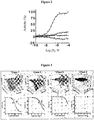
- the primary lead NCGC00030335 (the substituted N,N '-diarylsulfonamide 1 ) increased the affinity of PKM2 for PEP ( Figure 1A ) while having less affect on ADP kinetics ( Figure 1B ).
- NCGC00030355 1
- Class 1 contains complete CRCs showing both upper and lower asymptotes and r 2 values > 0.9
- Class 2 contains incomplete CRCs lacking the lower asymptote and shows r 2 values greater than 0.9.
- Class 3 curves are of the lowest confidence because they are defined by a single concentration point where the minimal acceptable activity is set at 3 SD of the mean activity calculated from the lowest tested concentration.
- class 4 contains compounds that do not show any CRCs and are therefore classified as inactive.
- Figure 3 shows an example qHTS data and classification scheme for assignment of resulting curve-fit data into classes.
- qHTS curve-fit data from AID 361 binned into curve classifications 1-4 based classification criteria.
- Examples of curves fitting the following classification criteria Class 1 curves display two asymptotes, an inflection point, and r2 ⁇ 0.9; subclasses 1a (blue) vs. 1b (orange) are differentiated by full (>80%) vs. partial ( ⁇ 80%) response.
- Class 2 curves display a single left-hand asymptote and inflection point; subclasses 2a (blue) and 2b (orange) are differentiated by a max response and r2, >80% and >0.9 or ⁇ 80% and ⁇ 0.9, respectively.
- Class 3 curves have a single left-hand asymptote, no inflection point, and a response >3SD the mean activity of the sample field.
- Class 4 defines those samples showing no activity across the concentration range.
- the initial focus involved symmetric versions of the N,N '-diarylsulfonamides. As such, symmetry was examined utilizing the 6-(2,3-dihydrobenzo[b][1,4]dioxine) heterocycle (analogue 2 ) and the 4-methoxybenzene ring (analogue 3 ). Each analogue had slightly diminished AC 50 values (270 nM and 171 nM, respectively). From here, one aryl sulfonamide unit was held constant while exploring the SAR of the other aryl sulfonamide.
- the sulfone derivatives that were explored showed loss of potency. Interestingly, this loss was more severe when the sulfone moiety bridged the piperidine ring system to the 6-(2,3-dihydrobenzo[b][1,4]dioxine) system relative to substituted phenyl rings (i.e.
- Cis and trans versions of the cyclohexane-1,4-diamine ligation conferred similar loss in activation potency.
- Numerous analogues with one secondary amine contained in 4-, 5- and 6-membered rings and one exocyclic primary amine were examined (analogues 39-44 ) and found to be less active than the original lead compounds in both assays.
Landscapes
- Health & Medical Sciences (AREA)
- Chemical & Material Sciences (AREA)
- Organic Chemistry (AREA)
- Veterinary Medicine (AREA)
- Animal Behavior & Ethology (AREA)
- Public Health (AREA)
- Medicinal Chemistry (AREA)
- General Health & Medical Sciences (AREA)
- Pharmacology & Pharmacy (AREA)
- Life Sciences & Earth Sciences (AREA)
- Epidemiology (AREA)
- General Chemical & Material Sciences (AREA)
- Nuclear Medicine, Radiotherapy & Molecular Imaging (AREA)
- Chemical Kinetics & Catalysis (AREA)
- Bioinformatics & Cheminformatics (AREA)
- Engineering & Computer Science (AREA)
- Hematology (AREA)
- Tropical Medicine & Parasitology (AREA)
- Oncology (AREA)
- Diabetes (AREA)
- Pharmaceuticals Containing Other Organic And Inorganic Compounds (AREA)
- Indole Compounds (AREA)
- Heterocyclic Compounds That Contain Two Or More Ring Oxygen Atoms (AREA)
- Pyrane Compounds (AREA)
- Plural Heterocyclic Compounds (AREA)
- Heterocyclic Carbon Compounds Containing A Hetero Ring Having Oxygen Or Sulfur (AREA)
- Nitrogen And Oxygen Or Sulfur-Condensed Heterocyclic Ring Systems (AREA)
Priority Applications (1)
| Application Number | Priority Date | Filing Date | Title |
|---|---|---|---|
| EP16207004.9A EP3173415B1 (en) | 2008-10-09 | 2009-10-09 | Activators of human pyruvate kinase |
Applications Claiming Priority (2)
| Application Number | Priority Date | Filing Date | Title |
|---|---|---|---|
| US10409108P | 2008-10-09 | 2008-10-09 | |
| PCT/US2009/060237 WO2010042867A2 (en) | 2008-10-09 | 2009-10-09 | Activators of human pyruvate kinase |
Related Child Applications (1)
| Application Number | Title | Priority Date | Filing Date |
|---|---|---|---|
| EP16207004.9A Division EP3173415B1 (en) | 2008-10-09 | 2009-10-09 | Activators of human pyruvate kinase |
Publications (2)
| Publication Number | Publication Date |
|---|---|
| EP2344453A2 EP2344453A2 (en) | 2011-07-20 |
| EP2344453B1 true EP2344453B1 (en) | 2016-12-28 |
Family
ID=41462200
Family Applications (2)
| Application Number | Title | Priority Date | Filing Date |
|---|---|---|---|
| EP09740795.1A Active EP2344453B1 (en) | 2008-10-09 | 2009-10-09 | Activators of human pyruvate kinase |
| EP16207004.9A Not-in-force EP3173415B1 (en) | 2008-10-09 | 2009-10-09 | Activators of human pyruvate kinase |
Family Applications After (1)
| Application Number | Title | Priority Date | Filing Date |
|---|---|---|---|
| EP16207004.9A Not-in-force EP3173415B1 (en) | 2008-10-09 | 2009-10-09 | Activators of human pyruvate kinase |
Country Status (7)
| Country | Link |
|---|---|
| US (4) | US8841305B2 (enExample) |
| EP (2) | EP2344453B1 (enExample) |
| JP (2) | JP5632379B2 (enExample) |
| AU (2) | AU2009303335B2 (enExample) |
| CA (2) | CA2740148C (enExample) |
| ES (1) | ES2620634T3 (enExample) |
| WO (1) | WO2010042867A2 (enExample) |
Families Citing this family (45)
| Publication number | Priority date | Publication date | Assignee | Title |
|---|---|---|---|---|
| CA2659956C (en) | 2006-08-04 | 2016-01-05 | Lewis C. Cantley | Inhibitors of pyruvate kinase and methods of treating disease |
| AU2009303335B2 (en) | 2008-10-09 | 2016-05-19 | The United States Of America, As Represented By The Secretary, Department Of Health And Human Services | Activators of human pyruvate kinase |
| CN102448951B (zh) | 2009-04-06 | 2017-05-10 | 安吉奥斯医药品有限公司 | 丙酮酸激酶m2调节剂、治疗组合物和相关使用方法 |
| CA2760929C (en) | 2009-05-04 | 2018-01-02 | Agios Pharmaceuticals, Inc. | Pkm2 activators for use in the treatment of cancer |
| PL2448581T3 (pl) | 2009-06-29 | 2017-06-30 | Agios Pharmaceuticals, Inc. | Kompozycje terapeutyczne i odnośne sposoby ich stosowania |
| SMT201700309T1 (it) | 2009-06-29 | 2017-07-18 | Agios Pharmaceuticals Inc | Derivati di chinolin–8–solfonammide aventi un’attività anticancro |
| AU2011235212B2 (en) | 2010-03-31 | 2014-07-31 | The Scripps Research Institute | Reprogramming cells |
| AU2011245441B2 (en) * | 2010-04-29 | 2014-12-18 | The United States Of America, As Represented By The Secretary, Department Of Health And Human Services | Activators of human pyruvate kinase |
| US8692001B2 (en) | 2010-10-27 | 2014-04-08 | Dynamix Pharmaceuticals Ltd. | Sulfonamides for the modulation of PKM2 |
| ES2564952T3 (es) | 2010-12-17 | 2016-03-30 | Agios Pharmaceuticals, Inc. | Nuevos derivados de N-(4-(azetidina-1-carbonil)fenil)-(hetero-)arilsulfonamida como moduladores de piruvato quinasa M2 (PKM2) |
| EP2655350B1 (en) * | 2010-12-21 | 2016-03-09 | Agios Pharmaceuticals, Inc. | Bicyclic pkm2 activators |
| TWI549947B (zh) | 2010-12-29 | 2016-09-21 | 阿吉歐斯製藥公司 | 治療化合物及組成物 |
| SI3406251T1 (sl) | 2011-05-03 | 2024-05-31 | Agios Pharmaceuticals, Inc. | Aktivatorji piruvat kinaze za uporabo v terapiji |
| WO2012151440A1 (en) * | 2011-05-03 | 2012-11-08 | Agios Pharmaceuticals, Inc. | Pyruvate kinase activators for use for increasing lifetime of the red blood cells and treating anemia |
| US9403792B2 (en) | 2011-05-03 | 2016-08-02 | Agios Pharmaceuticals, Inc | Methods of using pyruvate kinase activators |
| WO2013005157A1 (en) * | 2011-07-05 | 2013-01-10 | Lupin Limited | Sulfone derivatives and their use as pkm2 modulators for the treatment of cancer |
| WO2013027168A1 (en) * | 2011-08-22 | 2013-02-28 | Pfizer Inc. | Novel heterocyclic compounds as bromodomain inhibitors |
| DE102012207707A1 (de) * | 2012-05-09 | 2013-11-28 | Deutsches Zentrum für Luft- und Raumfahrt e.V. | Minimalinvasives Instrument für die robotische Chirurgie |
| DK2909181T3 (da) * | 2012-10-16 | 2017-11-20 | Tolero Pharmaceuticals Inc | PKM2-modulatorer og fremgangsmåder til anvendelse deraf |
| EA032007B1 (ru) * | 2012-11-08 | 2019-03-29 | Аджиос Фармасьютикалз, Инк. | Терапевтические соединения и композиции и их использование в качестве модуляторов пк-m2 |
| WO2014139144A1 (en) | 2013-03-15 | 2014-09-18 | Agios Pharmaceuticals, Inc. | Therapeutic compounds and compositions |
| CN104370936A (zh) * | 2014-09-28 | 2015-02-25 | 苏州维泰生物技术有限公司 | 一种新型丙酮酸激酶m2激活剂及其合成方法 |
| DK3307271T3 (da) | 2015-06-11 | 2023-10-09 | Agios Pharmaceuticals Inc | Fremgangsmåder til anvendelse af pyruvatkinase-aktivatorer |
| KR101713678B1 (ko) * | 2015-08-24 | 2017-03-09 | 대우제약 주식회사 | 신규 화합물 4-Ethyl-7-(2-fluoro-benzylsulfanyl)-2-methyl-1-thia-3b, 5, 6-triaza-cyclopenta[a]indene 및 이를 포함하는 항암제용 약제학적 조성물 |
| AU2017212472B2 (en) | 2016-01-25 | 2022-10-13 | SuperMetalix, Inc. | Binder compositions of tungsten tetraboride and abrasive methods thereof |
| MA45614B1 (fr) | 2017-03-20 | 2020-04-30 | Forma Therapeutics Inc | Compositions de pyrrolopyrrole en tant qu'activateurs de la pyruvate kinase (pkr) |
| EP3668881B1 (en) | 2017-08-15 | 2023-10-04 | Agios Pharmaceuticals, Inc. | Pyruvate kinase activators for use in treating blood disorders |
| US20200237766A1 (en) | 2017-10-13 | 2020-07-30 | Tolero Pharmaceuticals, Inc. | Pkm2 activators in combination with reactive oxygen species for treatment of cancer |
| EP3697354B1 (en) | 2017-10-20 | 2026-07-22 | The Regents of The University of Michigan | Compositions and methods for treating eye disorders |
| US10675274B2 (en) | 2018-09-19 | 2020-06-09 | Forma Therapeutics, Inc. | Activating pyruvate kinase R |
| WO2020061255A1 (en) * | 2018-09-19 | 2020-03-26 | Forma Therapeutics, Inc. | Activating pyruvate kinase r |
| WO2020167976A1 (en) * | 2019-02-13 | 2020-08-20 | Agios Pharmaceuticals, Inc. | Thieno[3,2-b] pyrrole[3,2-d]pyridazinone derivatives and their use as pkm2 derivatives for the treatment of cancer, obesity and diabetes related disorders |
| WO2020198077A1 (en) | 2019-03-22 | 2020-10-01 | Sumitomo Dainippon Pharma Oncology, Inc. | Compositions comprising pkm2 modulators and methods of treatment using the same |
| CN110483504B (zh) * | 2019-08-02 | 2022-04-26 | 桂林理工大学 | 以DMF为甲酰化试剂构建2-(2-萘基)咪唑[1,2-a]吡啶-3-醛的新方法 |
| US20220378756A1 (en) | 2019-09-19 | 2022-12-01 | Forma Therapeutics, Inc. | Activating pyruvate kinase r |
| DE102019129527A1 (de) | 2019-10-31 | 2021-05-06 | Forschungszentrum Jülich GmbH | Inhibitoren für Bromodomänen |
| US20230062100A1 (en) | 2019-11-28 | 2023-03-02 | Bayer Aktiengesellschaft | Substituted aminoquinolones as dgkalpha inhibitors for immune activation |
| US12478621B2 (en) | 2019-11-28 | 2025-11-25 | Deutsches Krebsforschungszentrum | Substituted aminoquinolones as dgkalpha inhibitors for immune activation |
| US12337005B2 (en) | 2020-05-26 | 2025-06-24 | University Of Iowa Research Foundation | Methods of treating thrombosis |
| EP4161886A4 (en) | 2020-06-04 | 2023-12-27 | Supermetalix, Inc. | Metal boride ceramic composites and uses thereof |
| AU2021311597B2 (en) * | 2020-07-21 | 2026-08-06 | The Regents Of The University Of Michigan | Compositions and methods for activating pyruvate kinase |
| US12128035B2 (en) | 2021-03-19 | 2024-10-29 | Novo Nordisk Health Care Ag | Activating pyruvate kinase R |
| CA3231728A1 (en) * | 2021-09-30 | 2023-04-06 | Sitryx Therapeutics Limited | Novel compounds |
| CN118434720A (zh) * | 2021-12-22 | 2024-08-02 | 西特瑞治疗有限公司 | 作为丙酮酸激酶调节剂的酞嗪衍生物 |
| CN115010721B (zh) * | 2022-03-14 | 2023-06-13 | 五邑大学 | 一种荧光探针及其制备方法和应用 |
Family Cites Families (40)
| Publication number | Priority date | Publication date | Assignee | Title |
|---|---|---|---|---|
| US3998828A (en) | 1975-01-31 | 1976-12-21 | Pfizer Inc. | 4-[2-(1,3-Dialkyl-1,2,3,4-tetra-hydropyrimidine-2,4-dione-5-carboxamido)ethyl]-1-piperidine sulfonamide |
| US4235871A (en) | 1978-02-24 | 1980-11-25 | Papahadjopoulos Demetrios P | Method of encapsulating biologically active materials in lipid vesicles |
| DE2948434A1 (de) | 1979-12-01 | 1981-06-11 | Hoechst Ag, 6000 Frankfurt | 1-piperidinsulfonylharnstoffe und verfahren zu ihrer herstellung |
| US4501728A (en) | 1983-01-06 | 1985-02-26 | Technology Unlimited, Inc. | Masking of liposomes from RES recognition |
| US4593102A (en) * | 1984-04-10 | 1986-06-03 | A. H. Robins Company, Inc. | N-[(amino)alkyl]-1-pyrrolidine, 1-piperidine and 1-homopiperidinecarboxamides (and thiocarboxamides) with sulfur linked substitution in the 2, 3 or 4-position |
| US5019369A (en) | 1984-10-22 | 1991-05-28 | Vestar, Inc. | Method of targeting tumors in humans |
| JPH0667926B2 (ja) * | 1985-11-12 | 1994-08-31 | 旭化成工業株式会社 | 環状のイソキノリンスルホンアミド誘導体 |
| US4837028A (en) | 1986-12-24 | 1989-06-06 | Liposome Technology, Inc. | Liposomes with enhanced circulation time |
| US5962490A (en) | 1987-09-25 | 1999-10-05 | Texas Biotechnology Corporation | Thienyl-, furyl- and pyrrolyl-sulfonamides and derivatives thereof that modulate the activity of endothelin |
| IT1252567B (it) | 1991-12-20 | 1995-06-19 | Italfarmaco Spa | Derivati di 5-isochinolinsolfonammidi inibitori delle protein-chinasi |
| AU4700896A (en) | 1995-01-20 | 1996-08-07 | G.D. Searle & Co. | Bis-sulfonamide hydroxyethylamino retroviral protease inhibitors |
| US6020357A (en) | 1996-12-23 | 2000-02-01 | Dupont Pharmaceuticals Company | Nitrogen containing heteroaromatics as factor Xa inhibitors |
| CA2362390A1 (en) | 1999-02-09 | 2000-08-17 | 3-Dimensional Pharmaceuticals, Inc. | Heteroaryl amidines, methylamidines and guanidines as protease inhibitors |
| US6211182B1 (en) | 1999-03-08 | 2001-04-03 | Schering Corporation | Imidazole compounds substituted with a six or seven membered heterocyclic ring containing two nitrogen atoms |
| IT1313592B1 (it) * | 1999-08-03 | 2002-09-09 | Novuspharma Spa | Derivati di 1h-pirido 3,4-b indol-1-one. |
| AR032885A1 (es) * | 2000-08-16 | 2003-12-03 | Actelion Pharmaceuticals Ltd | Bis-sulfonamidas, composiciones farmaceuticas, procedimiento para prepararlas y el uso de las mismas para la produccion de las composiciones farmaceuticas |
| CA2448165A1 (en) | 2001-05-23 | 2002-11-28 | Axel Ullrich | Pyruvate-kinase as a novel target molecule |
| JP2005533009A (ja) * | 2002-03-28 | 2005-11-04 | イーライ・リリー・アンド・カンパニー | ピペラジン置換されたアリールベンゾジアゼピン類およびそのドーパミン受容体アンタゴニストとしての精神病性障害の処置のための使用 |
| WO2003106381A2 (en) * | 2002-06-12 | 2003-12-24 | Exelixis, Inc. | Human adam-10 inhibitors |
| AU2003266272A1 (en) * | 2002-08-12 | 2004-03-03 | Amynon Bio Tech Gmbh | Peptide modulators of tumour specific pyruvate kinase subtype m2 (m2-pk) |
| US7754884B2 (en) * | 2005-01-03 | 2010-07-13 | Vanderbilt University | Targeted, NIR imaging agents for therapy efficacy monitoring, deep tissue disease demarcation and deep tissue imaging |
| US20070032418A1 (en) * | 2003-02-25 | 2007-02-08 | Ambion, Inc | Small-molecule inhibitors of angiogenin and rnases and in vivo and in vitro methods of using same |
| US7585850B2 (en) | 2004-02-10 | 2009-09-08 | Adenobio N.V. | Stable and active complexes of adenosine and adenosine phosphates with aminoalcohols for the treatment of pulmonary artery hypertension, cardiac failure and other diseases |
| CA2556589A1 (en) | 2004-02-24 | 2005-09-01 | Bioaxone Therapeutique Inc. | 4-substituted piperidine derivatives |
| EP1773310B9 (en) * | 2004-06-24 | 2012-04-25 | Temple University - Of The Commonwealth System of Higher Education | Alpha, beta-unsaturated sulfones, sulfoxides, sulfonimides, sulfinimides, acylsulfonamides and acylsulfinamides and therapeutic uses thereof |
| TW200606152A (en) | 2004-07-02 | 2006-02-16 | Tanabe Seiyaku Co | Piperidine compound and process for preparing the same |
| FR2872704B1 (fr) | 2004-07-12 | 2007-11-02 | Laurent Schwartz | Pluritherapie contre le cancer |
| WO2006055880A2 (en) | 2004-11-16 | 2006-05-26 | Genzyme Corporation | Diagnostic pkm2 methods and compositions |
| US8399489B2 (en) * | 2005-02-18 | 2013-03-19 | Astrazeneca Ab | Antibacterial piperdine derivatives |
| EP1962851A2 (en) * | 2005-12-22 | 2008-09-03 | SmithKline Beecham Corporation | Compounds |
| AU2006331963A1 (en) | 2005-12-22 | 2007-07-05 | Merck & Co., Inc. | Substituted piperidines as calcium channel blockers |
| BRPI0706654A2 (pt) * | 2006-01-20 | 2011-04-05 | Smithkline Beecham Corp | composição farmacêutica, método para tratar condições ou distìrbios em um mamìfero, uso de um composto, e, composto |
| CA2659956C (en) * | 2006-08-04 | 2016-01-05 | Lewis C. Cantley | Inhibitors of pyruvate kinase and methods of treating disease |
| PE20080932A1 (es) * | 2006-11-10 | 2008-07-13 | Wyeth Corp | Piperidinil 4-arilsulfonamidas n-sustituidas como moduladores de la proteina 1 secretada relacionada con frizzled (sfrp-1) |
| US20100144872A1 (en) * | 2007-03-05 | 2010-06-10 | Biolipox Ab | New Methylenebisphenyl Compounds Useful in the Treatment of Inflammation |
| US7897776B2 (en) * | 2007-04-23 | 2011-03-01 | Salutria Pharmaceuticals Llc | Sulfonamide containing compounds for treatment of inflammatory disorders |
| WO2009025781A1 (en) | 2007-08-16 | 2009-02-26 | Beth Israel Deaconess Medical Center | Activators of pyruvate kinase m2 and methods of treating disease |
| JP2011507910A (ja) * | 2007-12-21 | 2011-03-10 | ユニバーシティー オブ ロチェスター | 真核生物の寿命を変更するための方法 |
| AU2009303335B2 (en) | 2008-10-09 | 2016-05-19 | The United States Of America, As Represented By The Secretary, Department Of Health And Human Services | Activators of human pyruvate kinase |
| SG186885A1 (en) * | 2010-06-04 | 2013-02-28 | Albany Molecular Res Inc | Glycine transporter-1 inhibitors, methods of making them, and uses thereof |
-
2009
- 2009-10-09 AU AU2009303335A patent/AU2009303335B2/en active Active
- 2009-10-09 CA CA2740148A patent/CA2740148C/en active Active
- 2009-10-09 US US13/123,297 patent/US8841305B2/en active Active
- 2009-10-09 JP JP2011531221A patent/JP5632379B2/ja active Active
- 2009-10-09 WO PCT/US2009/060237 patent/WO2010042867A2/en not_active Ceased
- 2009-10-09 ES ES09740795.1T patent/ES2620634T3/es active Active
- 2009-10-09 CA CA3041868A patent/CA3041868C/en active Active
- 2009-10-09 EP EP09740795.1A patent/EP2344453B1/en active Active
- 2009-10-09 EP EP16207004.9A patent/EP3173415B1/en not_active Not-in-force
-
2012
- 2012-03-29 US US13/433,656 patent/US8937067B2/en active Active
-
2014
- 2014-10-09 JP JP2014207672A patent/JP5960770B2/ja active Active
- 2014-12-19 US US14/576,333 patent/US9290512B2/en active Active
-
2016
- 2016-03-21 US US15/076,258 patent/US9707230B2/en active Active
- 2016-08-19 AU AU2016216705A patent/AU2016216705B2/en active Active
Non-Patent Citations (1)
| Title |
|---|
| J.H. COY, ET AL.: "Ambident neighbouring groups. Part V. Mechanism of cyclisation of 2-halogenoethylsulfonamides to aziridines", JOURNAL OF THE CHEMICAL SOCIETY, PERKIN TRANSACTIONS 2, no. 1, 1974, Royal Society of Chemistry, Cambridge, GB, pages 53 - 58, XP055051505, ISSN: 1472-779X, DOI: 10.1039/p29740000053 * |
Also Published As
| Publication number | Publication date |
|---|---|
| CA2740148C (en) | 2019-06-18 |
| US20150105395A1 (en) | 2015-04-16 |
| JP2015078188A (ja) | 2015-04-23 |
| AU2009303335A1 (en) | 2010-04-15 |
| AU2009303335B2 (en) | 2016-05-19 |
| ES2620634T3 (es) | 2017-06-29 |
| US20160199370A1 (en) | 2016-07-14 |
| CA3041868C (en) | 2023-03-07 |
| JP5960770B2 (ja) | 2016-08-02 |
| AU2016216705B2 (en) | 2018-04-26 |
| WO2010042867A3 (en) | 2010-08-05 |
| AU2016216705A1 (en) | 2016-09-08 |
| JP5632379B2 (ja) | 2014-11-26 |
| US8937067B2 (en) | 2015-01-20 |
| US8841305B2 (en) | 2014-09-23 |
| EP2344453A2 (en) | 2011-07-20 |
| WO2010042867A2 (en) | 2010-04-15 |
| EP3173415A3 (en) | 2017-08-23 |
| US9290512B2 (en) | 2016-03-22 |
| EP3173415A2 (en) | 2017-05-31 |
| JP2012505247A (ja) | 2012-03-01 |
| US20120245141A1 (en) | 2012-09-27 |
| EP3173415B1 (en) | 2019-06-05 |
| CA3041868A1 (en) | 2010-04-15 |
| US20110195958A1 (en) | 2011-08-11 |
| US9707230B2 (en) | 2017-07-18 |
| CA2740148A1 (en) | 2010-04-15 |
Similar Documents
| Publication | Publication Date | Title |
|---|---|---|
| US9707230B2 (en) | Activators of human pyruvate kinase | |
| EP3651752B1 (en) | Carboxamides as modulators of sodium channels | |
| EP0987254B1 (en) | Novel cyclic diamine compounds and medicine containing the same | |
| JP2013525438A (ja) | ヒトピルビン酸キナーゼ活性剤 | |
| US9440930B2 (en) | Substituted bicyclic dihydropyrimidinones and their use as inhibitors of neutrophil elastase activity | |
| AU2015295283B2 (en) | Substituted bicyclic dihydropyrimidinones and their use as inhibitors of neutrophil elastase activity | |
| US6969711B2 (en) | Cyclic diamine compounds and medicine containing the same | |
| EP0979823A1 (en) | Novel amide compounds and drugs containing the same | |
| WO1998042680A1 (en) | Novel anilide compounds and drugs containing the same | |
| EP0104611A2 (en) | Thiatriazine derivatives | |
| EP3054947A1 (en) | Cathepsin cysteine protease inhibitors | |
| BR112021014539A2 (pt) | Composto, ativador sirt6, composição farmacêutica, método para tratar e/ou prevenir uma doença inflamatória periférica e uso do composto | |
| US6849647B1 (en) | Amide compounds and medications containing the same technical field | |
| HK40135065A (en) | N-(hydroxyalkyl (hetero)aryl) tetrahydrofuran carboxamides as modulators of sodium channels | |
| JP2025539698A (ja) | 新規シアノピリジンkhk阻害剤化合物 | |
| NZ710293B2 (en) | Amides as modulators of sodium channels |
Legal Events
| Date | Code | Title | Description |
|---|---|---|---|
| PUAI | Public reference made under article 153(3) epc to a published international application that has entered the european phase |
Free format text: ORIGINAL CODE: 0009012 |
|
| 17P | Request for examination filed |
Effective date: 20110408 |
|
| AK | Designated contracting states |
Kind code of ref document: A2 Designated state(s): AT BE BG CH CY CZ DE DK EE ES FI FR GB GR HR HU IE IS IT LI LT LU LV MC MK MT NL NO PL PT RO SE SI SK SM TR |
|
| AX | Request for extension of the european patent |
Extension state: AL BA RS |
|
| DAX | Request for extension of the european patent (deleted) | ||
| 17Q | First examination report despatched |
Effective date: 20130207 |
|
| GRAP | Despatch of communication of intention to grant a patent |
Free format text: ORIGINAL CODE: EPIDOSNIGR1 |
|
| RIC1 | Information provided on ipc code assigned before grant |
Ipc: C07D 407/12 20060101ALI20160125BHEP Ipc: C07D 209/08 20060101AFI20160125BHEP Ipc: C07D 319/18 20060101ALI20160125BHEP Ipc: A61P 35/00 20060101ALI20160125BHEP Ipc: C07D 277/64 20060101ALI20160125BHEP Ipc: C07D 295/26 20060101ALI20160125BHEP Ipc: C07D 243/08 20060101ALI20160125BHEP Ipc: A61K 31/5025 20060101ALI20160125BHEP |
|
| INTG | Intention to grant announced |
Effective date: 20160211 |
|
| GRAP | Despatch of communication of intention to grant a patent |
Free format text: ORIGINAL CODE: EPIDOSNIGR1 |
|
| INTG | Intention to grant announced |
Effective date: 20160711 |
|
| GRAS | Grant fee paid |
Free format text: ORIGINAL CODE: EPIDOSNIGR3 |
|
| GRAA | (expected) grant |
Free format text: ORIGINAL CODE: 0009210 |
|
| AK | Designated contracting states |
Kind code of ref document: B1 Designated state(s): AT BE BG CH CY CZ DE DK EE ES FI FR GB GR HR HU IE IS IT LI LT LU LV MC MK MT NL NO PL PT RO SE SI SK SM TR |
|
| REG | Reference to a national code |
Ref country code: GB Ref legal event code: FG4D |
|
| REG | Reference to a national code |
Ref country code: CH Ref legal event code: EP |
|
| REG | Reference to a national code |
Ref country code: AT Ref legal event code: REF Ref document number: 857143 Country of ref document: AT Kind code of ref document: T Effective date: 20170115 |
|
| REG | Reference to a national code |
Ref country code: IE Ref legal event code: FG4D |
|
| REG | Reference to a national code |
Ref country code: DE Ref legal event code: R096 Ref document number: 602009043387 Country of ref document: DE |
|
| PG25 | Lapsed in a contracting state [announced via postgrant information from national office to epo] |
Ref country code: LV Free format text: LAPSE BECAUSE OF FAILURE TO SUBMIT A TRANSLATION OF THE DESCRIPTION OR TO PAY THE FEE WITHIN THE PRESCRIBED TIME-LIMIT Effective date: 20161228 |
|
| REG | Reference to a national code |
Ref country code: LT Ref legal event code: MG4D |
|
| PG25 | Lapsed in a contracting state [announced via postgrant information from national office to epo] |
Ref country code: NO Free format text: LAPSE BECAUSE OF FAILURE TO SUBMIT A TRANSLATION OF THE DESCRIPTION OR TO PAY THE FEE WITHIN THE PRESCRIBED TIME-LIMIT Effective date: 20170328 Ref country code: GR Free format text: LAPSE BECAUSE OF FAILURE TO SUBMIT A TRANSLATION OF THE DESCRIPTION OR TO PAY THE FEE WITHIN THE PRESCRIBED TIME-LIMIT Effective date: 20170329 Ref country code: LT Free format text: LAPSE BECAUSE OF FAILURE TO SUBMIT A TRANSLATION OF THE DESCRIPTION OR TO PAY THE FEE WITHIN THE PRESCRIBED TIME-LIMIT Effective date: 20161228 Ref country code: SE Free format text: LAPSE BECAUSE OF FAILURE TO SUBMIT A TRANSLATION OF THE DESCRIPTION OR TO PAY THE FEE WITHIN THE PRESCRIBED TIME-LIMIT Effective date: 20161228 |
|
| REG | Reference to a national code |
Ref country code: NL Ref legal event code: MP Effective date: 20161228 |
|
| REG | Reference to a national code |
Ref country code: AT Ref legal event code: MK05 Ref document number: 857143 Country of ref document: AT Kind code of ref document: T Effective date: 20161228 |
|
| PG25 | Lapsed in a contracting state [announced via postgrant information from national office to epo] |
Ref country code: FI Free format text: LAPSE BECAUSE OF FAILURE TO SUBMIT A TRANSLATION OF THE DESCRIPTION OR TO PAY THE FEE WITHIN THE PRESCRIBED TIME-LIMIT Effective date: 20161228 Ref country code: HR Free format text: LAPSE BECAUSE OF FAILURE TO SUBMIT A TRANSLATION OF THE DESCRIPTION OR TO PAY THE FEE WITHIN THE PRESCRIBED TIME-LIMIT Effective date: 20161228 |
|
| REG | Reference to a national code |
Ref country code: ES Ref legal event code: FG2A Ref document number: 2620634 Country of ref document: ES Kind code of ref document: T3 Effective date: 20170629 |
|
| PG25 | Lapsed in a contracting state [announced via postgrant information from national office to epo] |
Ref country code: NL Free format text: LAPSE BECAUSE OF FAILURE TO SUBMIT A TRANSLATION OF THE DESCRIPTION OR TO PAY THE FEE WITHIN THE PRESCRIBED TIME-LIMIT Effective date: 20161228 |
|
| PG25 | Lapsed in a contracting state [announced via postgrant information from national office to epo] |
Ref country code: CZ Free format text: LAPSE BECAUSE OF FAILURE TO SUBMIT A TRANSLATION OF THE DESCRIPTION OR TO PAY THE FEE WITHIN THE PRESCRIBED TIME-LIMIT Effective date: 20161228 Ref country code: EE Free format text: LAPSE BECAUSE OF FAILURE TO SUBMIT A TRANSLATION OF THE DESCRIPTION OR TO PAY THE FEE WITHIN THE PRESCRIBED TIME-LIMIT Effective date: 20161228 Ref country code: IS Free format text: LAPSE BECAUSE OF FAILURE TO SUBMIT A TRANSLATION OF THE DESCRIPTION OR TO PAY THE FEE WITHIN THE PRESCRIBED TIME-LIMIT Effective date: 20170428 Ref country code: RO Free format text: LAPSE BECAUSE OF FAILURE TO SUBMIT A TRANSLATION OF THE DESCRIPTION OR TO PAY THE FEE WITHIN THE PRESCRIBED TIME-LIMIT Effective date: 20161228 Ref country code: SK Free format text: LAPSE BECAUSE OF FAILURE TO SUBMIT A TRANSLATION OF THE DESCRIPTION OR TO PAY THE FEE WITHIN THE PRESCRIBED TIME-LIMIT Effective date: 20161228 |
|
| PG25 | Lapsed in a contracting state [announced via postgrant information from national office to epo] |
Ref country code: PT Free format text: LAPSE BECAUSE OF FAILURE TO SUBMIT A TRANSLATION OF THE DESCRIPTION OR TO PAY THE FEE WITHIN THE PRESCRIBED TIME-LIMIT Effective date: 20170428 Ref country code: PL Free format text: LAPSE BECAUSE OF FAILURE TO SUBMIT A TRANSLATION OF THE DESCRIPTION OR TO PAY THE FEE WITHIN THE PRESCRIBED TIME-LIMIT Effective date: 20161228 Ref country code: SM Free format text: LAPSE BECAUSE OF FAILURE TO SUBMIT A TRANSLATION OF THE DESCRIPTION OR TO PAY THE FEE WITHIN THE PRESCRIBED TIME-LIMIT Effective date: 20161228 Ref country code: BE Free format text: LAPSE BECAUSE OF FAILURE TO SUBMIT A TRANSLATION OF THE DESCRIPTION OR TO PAY THE FEE WITHIN THE PRESCRIBED TIME-LIMIT Effective date: 20161228 Ref country code: AT Free format text: LAPSE BECAUSE OF FAILURE TO SUBMIT A TRANSLATION OF THE DESCRIPTION OR TO PAY THE FEE WITHIN THE PRESCRIBED TIME-LIMIT Effective date: 20161228 Ref country code: BG Free format text: LAPSE BECAUSE OF FAILURE TO SUBMIT A TRANSLATION OF THE DESCRIPTION OR TO PAY THE FEE WITHIN THE PRESCRIBED TIME-LIMIT Effective date: 20170328 |
|
| REG | Reference to a national code |
Ref country code: DE Ref legal event code: R097 Ref document number: 602009043387 Country of ref document: DE |
|
| REG | Reference to a national code |
Ref country code: FR Ref legal event code: PLFP Year of fee payment: 9 |
|
| PLBE | No opposition filed within time limit |
Free format text: ORIGINAL CODE: 0009261 |
|
| STAA | Information on the status of an ep patent application or granted ep patent |
Free format text: STATUS: NO OPPOSITION FILED WITHIN TIME LIMIT |
|
| PG25 | Lapsed in a contracting state [announced via postgrant information from national office to epo] |
Ref country code: DK Free format text: LAPSE BECAUSE OF FAILURE TO SUBMIT A TRANSLATION OF THE DESCRIPTION OR TO PAY THE FEE WITHIN THE PRESCRIBED TIME-LIMIT Effective date: 20161228 |
|
| 26N | No opposition filed |
Effective date: 20170929 |
|
| PG25 | Lapsed in a contracting state [announced via postgrant information from national office to epo] |
Ref country code: SI Free format text: LAPSE BECAUSE OF FAILURE TO SUBMIT A TRANSLATION OF THE DESCRIPTION OR TO PAY THE FEE WITHIN THE PRESCRIBED TIME-LIMIT Effective date: 20161228 |
|
| PG25 | Lapsed in a contracting state [announced via postgrant information from national office to epo] |
Ref country code: MC Free format text: LAPSE BECAUSE OF FAILURE TO SUBMIT A TRANSLATION OF THE DESCRIPTION OR TO PAY THE FEE WITHIN THE PRESCRIBED TIME-LIMIT Effective date: 20161228 |
|
| REG | Reference to a national code |
Ref country code: CH Ref legal event code: PL |
|
| REG | Reference to a national code |
Ref country code: IE Ref legal event code: MM4A |
|
| PG25 | Lapsed in a contracting state [announced via postgrant information from national office to epo] |
Ref country code: CH Free format text: LAPSE BECAUSE OF NON-PAYMENT OF DUE FEES Effective date: 20171031 Ref country code: LU Free format text: LAPSE BECAUSE OF NON-PAYMENT OF DUE FEES Effective date: 20171009 Ref country code: LI Free format text: LAPSE BECAUSE OF NON-PAYMENT OF DUE FEES Effective date: 20171031 |
|
| PG25 | Lapsed in a contracting state [announced via postgrant information from national office to epo] |
Ref country code: MT Free format text: LAPSE BECAUSE OF NON-PAYMENT OF DUE FEES Effective date: 20171009 |
|
| REG | Reference to a national code |
Ref country code: FR Ref legal event code: PLFP Year of fee payment: 10 |
|
| PG25 | Lapsed in a contracting state [announced via postgrant information from national office to epo] |
Ref country code: IE Free format text: LAPSE BECAUSE OF NON-PAYMENT OF DUE FEES Effective date: 20171009 |
|
| PG25 | Lapsed in a contracting state [announced via postgrant information from national office to epo] |
Ref country code: HU Free format text: LAPSE BECAUSE OF FAILURE TO SUBMIT A TRANSLATION OF THE DESCRIPTION OR TO PAY THE FEE WITHIN THE PRESCRIBED TIME-LIMIT; INVALID AB INITIO Effective date: 20091009 |
|
| PG25 | Lapsed in a contracting state [announced via postgrant information from national office to epo] |
Ref country code: CY Free format text: LAPSE BECAUSE OF NON-PAYMENT OF DUE FEES Effective date: 20161228 |
|
| PG25 | Lapsed in a contracting state [announced via postgrant information from national office to epo] |
Ref country code: MK Free format text: LAPSE BECAUSE OF FAILURE TO SUBMIT A TRANSLATION OF THE DESCRIPTION OR TO PAY THE FEE WITHIN THE PRESCRIBED TIME-LIMIT Effective date: 20161228 |
|
| PG25 | Lapsed in a contracting state [announced via postgrant information from national office to epo] |
Ref country code: TR Free format text: LAPSE BECAUSE OF FAILURE TO SUBMIT A TRANSLATION OF THE DESCRIPTION OR TO PAY THE FEE WITHIN THE PRESCRIBED TIME-LIMIT Effective date: 20161228 |
|
| P01 | Opt-out of the competence of the unified patent court (upc) registered |
Effective date: 20230522 |
|
| PGFP | Annual fee paid to national office [announced via postgrant information from national office to epo] |
Ref country code: DE Payment date: 20251029 Year of fee payment: 17 |
|
| PGFP | Annual fee paid to national office [announced via postgrant information from national office to epo] |
Ref country code: GB Payment date: 20251027 Year of fee payment: 17 |
|
| PGFP | Annual fee paid to national office [announced via postgrant information from national office to epo] |
Ref country code: IT Payment date: 20251021 Year of fee payment: 17 |
|
| PGFP | Annual fee paid to national office [announced via postgrant information from national office to epo] |
Ref country code: FR Payment date: 20251027 Year of fee payment: 17 |
|
| PGFP | Annual fee paid to national office [announced via postgrant information from national office to epo] |
Ref country code: ES Payment date: 20251103 Year of fee payment: 17 |