EP2344142B1 - Behandlung von pervasiven entwicklungsstörungen mit redox-aktiven therapeutika - Google Patents
Behandlung von pervasiven entwicklungsstörungen mit redox-aktiven therapeutika Download PDFInfo
- Publication number
- EP2344142B1 EP2344142B1 EP09792325.4A EP09792325A EP2344142B1 EP 2344142 B1 EP2344142 B1 EP 2344142B1 EP 09792325 A EP09792325 A EP 09792325A EP 2344142 B1 EP2344142 B1 EP 2344142B1
- Authority
- EP
- European Patent Office
- Prior art keywords
- compound
- dione
- diene
- formula
- tetramethylhexadecyl
- Prior art date
- Legal status (The legal status is an assumption and is not a legal conclusion. Google has not performed a legal analysis and makes no representation as to the accuracy of the status listed.)
- Active
Links
Classifications
-
- A—HUMAN NECESSITIES
- A61—MEDICAL OR VETERINARY SCIENCE; HYGIENE
- A61K—PREPARATIONS FOR MEDICAL, DENTAL OR TOILETRY PURPOSES
- A61K31/00—Medicinal preparations containing organic active ingredients
- A61K31/12—Ketones
- A61K31/122—Ketones having the oxygen directly attached to a ring, e.g. quinones, vitamin K1, anthralin
-
- A—HUMAN NECESSITIES
- A23—FOODS OR FOODSTUFFS; TREATMENT THEREOF, NOT COVERED BY OTHER CLASSES
- A23L—FOODS, FOODSTUFFS OR NON-ALCOHOLIC BEVERAGES, NOT OTHERWISE PROVIDED FOR; PREPARATION OR TREATMENT THEREOF
- A23L33/00—Modifying nutritive qualities of foods; Dietetic products; Preparation or treatment thereof
- A23L33/10—Modifying nutritive qualities of foods; Dietetic products; Preparation or treatment thereof using additives
-
- A—HUMAN NECESSITIES
- A23—FOODS OR FOODSTUFFS; TREATMENT THEREOF, NOT COVERED BY OTHER CLASSES
- A23L—FOODS, FOODSTUFFS OR NON-ALCOHOLIC BEVERAGES, NOT OTHERWISE PROVIDED FOR; PREPARATION OR TREATMENT THEREOF
- A23L33/00—Modifying nutritive qualities of foods; Dietetic products; Preparation or treatment thereof
- A23L33/40—Complete food formulations for specific consumer groups or specific purposes, e.g. infant formula
-
- A—HUMAN NECESSITIES
- A61—MEDICAL OR VETERINARY SCIENCE; HYGIENE
- A61K—PREPARATIONS FOR MEDICAL, DENTAL OR TOILETRY PURPOSES
- A61K31/00—Medicinal preparations containing organic active ingredients
- A61K31/045—Hydroxy compounds, e.g. alcohols; Salts thereof, e.g. alcoholates
- A61K31/05—Phenols
-
- A—HUMAN NECESSITIES
- A61—MEDICAL OR VETERINARY SCIENCE; HYGIENE
- A61P—SPECIFIC THERAPEUTIC ACTIVITY OF CHEMICAL COMPOUNDS OR MEDICINAL PREPARATIONS
- A61P25/00—Drugs for disorders of the nervous system
-
- A—HUMAN NECESSITIES
- A61—MEDICAL OR VETERINARY SCIENCE; HYGIENE
- A61P—SPECIFIC THERAPEUTIC ACTIVITY OF CHEMICAL COMPOUNDS OR MEDICINAL PREPARATIONS
- A61P25/00—Drugs for disorders of the nervous system
- A61P25/14—Drugs for disorders of the nervous system for treating abnormal movements, e.g. chorea, dyskinesia
-
- A—HUMAN NECESSITIES
- A61—MEDICAL OR VETERINARY SCIENCE; HYGIENE
- A61P—SPECIFIC THERAPEUTIC ACTIVITY OF CHEMICAL COMPOUNDS OR MEDICINAL PREPARATIONS
- A61P25/00—Drugs for disorders of the nervous system
- A61P25/18—Antipsychotics, i.e. neuroleptics; Drugs for mania or schizophrenia
-
- A—HUMAN NECESSITIES
- A61—MEDICAL OR VETERINARY SCIENCE; HYGIENE
- A61P—SPECIFIC THERAPEUTIC ACTIVITY OF CHEMICAL COMPOUNDS OR MEDICINAL PREPARATIONS
- A61P25/00—Drugs for disorders of the nervous system
- A61P25/28—Drugs for disorders of the nervous system for treating neurodegenerative disorders of the central nervous system, e.g. nootropic agents, cognition enhancers, drugs for treating Alzheimer's disease or other forms of dementia
-
- C—CHEMISTRY; METALLURGY
- C07—ORGANIC CHEMISTRY
- C07C—ACYCLIC OR CARBOCYCLIC COMPOUNDS
- C07C39/00—Compounds having at least one hydroxy or O-metal group bound to a carbon atom of a six-membered aromatic ring
- C07C39/02—Compounds having at least one hydroxy or O-metal group bound to a carbon atom of a six-membered aromatic ring monocyclic with no unsaturation outside the aromatic ring
- C07C39/08—Dihydroxy benzenes; Alkylated derivatives thereof
-
- C—CHEMISTRY; METALLURGY
- C07—ORGANIC CHEMISTRY
- C07C—ACYCLIC OR CARBOCYCLIC COMPOUNDS
- C07C50/00—Quinones
- C07C50/02—Quinones with monocyclic quinoid structure
-
- C—CHEMISTRY; METALLURGY
- C07—ORGANIC CHEMISTRY
- C07C—ACYCLIC OR CARBOCYCLIC COMPOUNDS
- C07C50/00—Quinones
- C07C50/02—Quinones with monocyclic quinoid structure
- C07C50/06—Quinones with monocyclic quinoid structure with unsaturation outside the quinoid structure
-
- A—HUMAN NECESSITIES
- A23—FOODS OR FOODSTUFFS; TREATMENT THEREOF, NOT COVERED BY OTHER CLASSES
- A23V—INDEXING SCHEME RELATING TO FOODS, FOODSTUFFS OR NON-ALCOHOLIC BEVERAGES AND LACTIC OR PROPIONIC ACID BACTERIA USED IN FOODSTUFFS OR FOOD PREPARATION
- A23V2002/00—Food compositions, function of food ingredients or processes for food or foodstuffs
-
- C—CHEMISTRY; METALLURGY
- C07—ORGANIC CHEMISTRY
- C07C—ACYCLIC OR CARBOCYCLIC COMPOUNDS
- C07C2601/00—Systems containing only non-condensed rings
- C07C2601/12—Systems containing only non-condensed rings with a six-membered ring
- C07C2601/16—Systems containing only non-condensed rings with a six-membered ring the ring being unsaturated
Definitions
- Asperger's syndrome is closest to autism in signs and likely causes; Rett's disorder and childhood disintegrative disorder share several signs with autism, but may have unrelated causes; PDD-not otherwise specified (PDD-NOS) is diagnosed when the criteria are not met for a more specific disorder ( Lord C, et al. "Autism spectrum disorders” Neuron (2000) 28 (2): 355-63 ).
- autism knows no racial, ethnic, or social boundaries, and family income, lifestyle, and educational levels do not affect the chance of autism's occurrence. However, it has been found to be four times more prevalent in boys than girls. On the other hand, Rett's disorder is more prevalent in girls than boys.
- ADHD attention deficit hyperactivity disorder
- PDD pervasive developmental disorders
- ADHD attention deficit hyperactivity disorder
- ADHD attention deficit/hyperactivity disorder
- PDD pervasive developmental disorders
- ASSQ High-Functioning Autism Spectrum Screening Questionnaire
- ADHD Rating Scale-IV The patients with strictly diagnosed ADHD had many PDD-related symptoms, and the patients with PDD had many ADHD-related symptoms. It therefore seems difficult to make a distinction between ADHD and PDD by using the present diagnostic criteria in the DSM-IV.
- autism Although there is no single known cause for autism, it is generally accepted that it is caused by abnormalities in brain structure or function. The shape and structure of the brain in autistic versus non-autistic children show differences when brain scans are viewed. Currently the links between heredity, genetics and medical problems are being investigated by researchers, as well as a number of other theories. The theory of a genetic basis of the disorder is supported by the fact that, in many families, there appears to be a pattern of autism or related disabilities. While no one gene has been identified as causing autism, researchers are searching for irregular segments of genetic code that autistic children may have inherited. While researchers have not yet identified a single trigger that causes autism to develop, it also appears that some children are born with a susceptibility to autism.
- Some cases of autism have been associated with several different organic conditions, including bioenergetic metabolism deficiency suggested by the detection of high lactate levels in some patients ( Coleman M. et al, Autism and Lactic Acidosis, J. Autism Dev Disord., (1985) 15: 1-8 ; Laszlo et al Serum serotonin, lactate and pyruvate levels in infantile autistic children, Clin. Chim. Acta (1994) 229:205-207 ; and Chugani et al., Evidence of altered energy metabolism in autistic children, Progr.
- Medications have not been proven to correct deficits of ASDs and are not the primary treatment. They are used to treat problems associated with autism disorders, such as associated maladaptive behaviors or psychiatric comorbidities that may interfere with educational progress, socialization, health or safety and quality of life. More than half of U.S. children diagnosed with autistic disorders are prescribed psychoactive drugs or anticonvulsants, with the most common drug classes being antidepressants, stimulants, and antipsychotics.( Oswald DP, et al. "Medication Use Among Children with Autism Spectrum Disorders".
- US Patent Publication 2005/0203066 discloses compounds, compositions and methods for treatment of developmental delay in cognitive, motor, language, executive function or social skills with a pyrimidine nucleotide precursor, but it does not disclose any compounds, compositions or methods of treatment with compounds of the present invention.
- ADHD Attention deficit hyperactivity disorder
- ADD Attention deficit hyperactivity disorder
- Difficulties with concentration, mental focus, and inhibition of impulses and behaviors are chronic and pervasive and impair an individual's daily functioning across various settings - home, school or work, in relationships, etc.
- ADD or attention deficit disorder is a general term frequently used to describe individuals that have attention deficit hyperactivity disorder (ADHD) without the hyperactive and impulsive behaviors. The terms are often used interchangeably for both those who do and those who do not have symptoms of hyperactivity and impulsiveness.
- US 2006/281809 A1 describes redox-active therapeutics for treatment of mitochondrial diseases and other conditions and modulation of energy biomarkers.
- US 2007/0072943 A1 relates to tail variants of redox-active therapeutics for treatment of mitochondrial diseases and other conditions and modulation of energy biomarkers.
- WO 2005/115478 A concerns methods and compositions for autism spectrum disorders. Antalis Caryl J et al. FASEB Journal, vol. 20, no. 5, 7 March 2006, p.
- A1003 relates to the use of high dietary alpha tocopherol in improving attention deficit/hyperactivity (ADHD)-like behaviour in juvenile spontaneously hypertensive rats (SHR).
- ADHD attention deficit/hyperactivity
- SHR juvenile spontaneously hypertensive rats
- the present invention provides methods and redox-active compositions that can reduce the symptoms of autism in a human patient.
- the methods and compositions comprise administering a physiologically effective amount of one or both of in sufficient quantities to reduce the effects of the autism.
- the compositions and methods reduce or improve one or more symptoms of autism, such as increased eye contact, better enunciation and use of pronouns, less fatigue, singing a song for the first time with the melody and words together and the entire song understandable, playing with age appropriate friends for the first time, fewer tantrums, better sleep patterns, improved politeness and coordination, being more loving, acknowledging another individual's emotion, and increased voice and word association.
- the redox-active compounds of the present invention are superior because they show protective effect not only on cells of autistic patients that have a mitochondrial dysfunction but also on cells of patients that do not show any impairment of mitochondrial energy metabolism.
- the invention provides a compound for use in reducing a symptom associated with, or for treating or suppressing a pervasive developmental disorder (PDD), including autistic disorder, Asperger's syndrome, childhood disintegrative disorder (CDD), Rett's disorder, and PDD-Not Otherwise Specified (PDD-NOS) or attention deficit/hyperactivity disorder (ADHD) in a patient in need of such treatment, which compound is a compound of Formula I, Formula II, Formula III, Formula IV, Formula V, or Formula VI, wherein,
- PDD pervasive developmental disorder
- CDD childhood disintegrative disorder
- ADHD attention deficit/hyperactivity disorder
- the bonds indicated with a dashed line can independently be single or double. According to the invention, in one embodiment, the bonds indicated with a dashed line are all single bonds. In another embodiment, the bonds indicated with a dashed line are all double bonds.
- R 1 , R 2 , and R 3 are independently selected from (C 1 -C 4 )alkyl, and in a particular example R 1 , R 2 , and R 3 are methyl. In another embodiment, at least one of R 1 , R 2 , and R 3 is not methyl. In another embodiment, R 1 and R 2 are independently selected from (C 1 -C 4 )alkoxy, and R 3 is (C 1 -C 4 )alkyl. In another embodiment, R 1 and R 2 are methoxy, and R 3 is methyl.
- the compound for use is a compound of Formula Ia, Formula IIa, Formula IIIa, Formula IVa, Formula Va, or Formula VIa, or a stereoisomer, a solvate or a hydrate thereof.
- the compound for use is 2-(3-hydroxy-3,7,11,15-tetramethylhexadeca-6,10,14-trienyl)-3,5,6-trimethylcyclohexa-2,5-diene-1,4-dione (Ib); 2-(3-hydroxy-3,7,11,15-tetramethylhexadecyl)-3, 5, 6-trimethylcyclohexa-2, 5-diene-1,4-dione (Ic); 2-((3R,7R,11R)-3-hydroxy-3,7,11,15-tetramethylhexadecyl)-3,5,6-trimethylcyclohexa-2,5-diene-1,4-dione (Ic-RRR); 2-((3 S,7R,11R)-3-hydroxy-3,7,11,15-tetramethylhexadecyl)-3,5,6-trimethylcyclohexa-2,5-diene-1,4-dione (Ic-S)
- the compound for use is 2-(3-hydroxy-3,7,11,15-tetramethylhexadeca-6,10,14-trienyl)-3,5,6-trimethylcyclohexa-2,5-diene-1,4-dione or a stereoisomer, a solvate or a hydrate thereof.
- the compound for use is 2-(3-hydroxy-3,7,11,15-tetramethylhexadeca-6,10,14-trienyl)-3,5,6-trimethylbenzene-1,4-diol, or a stereoisomer, a solvate or a hydrate thereof.
- the compound for use is 2-(3-hydroxy-3, 7,11,15-tetramethylhexadecyl)-3,5,6-trimethylcyclohexa-2,5-diene-1,4-dione, or a stereoisomer, a solvate or a hydrate thereof.
- the compound for use is 2-(3-hydroxy-3,7,11,15-tetramethylhexadecyl)-3,5,6-trimethylbenzene-1,4-diol, or a stereoisomer, a solvate or a hydrate thereof.
- the compound for use is 2-(3-hydroxy-3,7,11,15-tetramethylhexadeca-6,10,14-trienyl)-3,5,6-trimethylcyclohexa-2,5-diene-1,4-dione.
- the compound for use is 2-((3R,7R,11R)-3-hydroxy-3,7,11,15-tetramethylhexadecyl)-3,5,6-trimethylcyclohexa-2,5-diene-1,4-dione (Ic-RRR).
- the compound for use is or a solvate or a hydrate thereof.
- the compound for use is N-(2-aminoethyl)-2-aminoethyl-N-(2-aminoethyl)-2-aminoethyl-N-(2-aminoethyl)-2-aminoethyl-N-(2-aminoethyl)-2-aminoethyl-N-(2-aminoethyl)-2-aminoethyl-N-oxidethyl-N-(2-aminoethyl)-2-aminoethyl-N-(2-aminoethyl)-2-aminoethyl-N-(2-aminoethyl)-2-aminoethyl-N-(2-aminoethyl)-2-aminoethyl-N-(2-aminoethyl)-2-aminoethyl-N-(2-aminoethyl)-2-aminoethyl
- the compound for use is or a solvate or a hydrate thereof.
- the compound is for use in reducing a symptom associated with, treating or suppressing an autistic spectrum disorder (ASD).
- ASD autistic spectrum disorder
- the compound is for use in reducing a symptom associated with, treating or suppressing Rett's disorder.
- the compound is for use in reducing a symptom associated with, treating or suppressing autistic disorder.
- the compound is for use in reducing a symptom associated with, treating or suppressing Asperger's syndrome.
- the invention provides a medical food, a functional food, a food supplement, or a dietary supplement for use in reducing a symptom associated with, treating or suppressing a pervasive developmental disorder (PDD), in a patient in need of such treatment; comprising a composition of one or more compounds selected from the group consisting of 2-(3-hydroxy-3,7,11,15-tetramethylhexadeca-6,10,14-trienyl)-3,5,6-trimethylcyclohexa-2,5-diene-1,4-dione (Ib); 2-((3R,6E,10E)-3-hydroxy-3, 7,11,15-tetramethylhexadeca-6,10-dienyl)-3,5,6-trimethylcyclohexa-2,5-diene-1,4-dione (Ib-R); 2-((3S,6E,10E)-3-hydroxy-3,7,11,15-tetramethylhexadeca-6,10-dienyl
- the medical food, functional food, food supplement or dietary supplement is for use in reducing a symptom associated with, treating or suppressing a pervasive developmental disorder (PDD) selected from an autistic spectrum disorder (ASD).
- PDD pervasive developmental disorder
- ASD autistic spectrum disorder
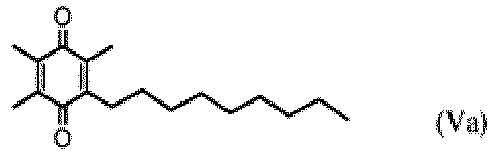
- the invention provides a composition suitable for reducing a symptom associated with, treating or suppressing a pervasive developmental disorder (PDD) in a patient in need of such treatment comprising a compound of Formula Va: or a solvate or a hydrate thereof.
- PDD pervasive developmental disorder
- the composition comprises a compound of Formula Va:
- the invention provides a composition suitable for reducing a symptom associated with, treating or suppressing a pervasive developmental disorder (PDD) in a patient in need of such treatment comprising a compound of Formula VIa:
- the composition is formulated as a pharmaceutical composition comprising a pharmaceutically acceptable excipient, carrier or vehicle.
- the invention provides a medical food, a functional food, a food supplement, or dietary supplement suitable for reducing a symptom associated with, treating or suppressing a pervasive developmental disorder (PDD) in a patient in need of such treatment comprising a composition as defined above, and at least one of the group consisting of a physiologically or nutritionally acceptable carrier, adjuvant, excipient, buffer and diluent.
- a pervasive developmental disorder PDD
- the pervasive developmental disorder can be selected from autistic spectrum disorder (ASD).
- ASD autistic spectrum disorder
- the disorder can be attention deficit/hyperactivity disorder (ADHD)
- the symptoms treated by the compounds of the present invention are selected from the group of symptoms consisting of eye contact avoidance, failure to socialize, attention deficit, poor mood, hyperactivity, anxiety, stimming, poor comprehension, inappropriate speech, abnormal sound sensitivity, poor digestion, disrupted sleep, and perseveration, and where the decreased incidence is measured relative to the incidence in the untreated individual.
- compositions and methods comprise administering a compound of Formula I, Formula II, Formula III, Formula IV, Formula V, Formula VI, Formula Ia, Formula IIa, Formula IIIa, Formula IVa, Formula Va, Formula VIa, Formula Ib, Formula Ib-R, Formula Ib-S, Formula Ic, Formula Ic-RRR, Formula Ic-SRR, Formula Ic-RSR, Formula Ic-RRS, Formula Ic-SSR, Formula Ic-SRS, Formula Ic-RSS, Formula Ic-SSS, Formula IIIb, Formula IIIc, Formula IIIc-RRR, Formula IIIc-SRR, Formula IIIc-RSR, Formula IIIc-RRS, Formula IIIc-SSR, Formula IIIc-SRS, Formula IIIc-RSS, Formula IIIc-SSS, Formula Id, Formula IId, Formula III
- subject By “subject,” “individual,” or “patient” is meant an individual, more preferably a mammal, most preferably a human.
- Treating" a disease with the compounds and methods discussed herein is defined as administering one or more of the compounds discussed herein, with or without additional therapeutic agents, in order to reduce or eliminate either the disease or one or more symptoms of the disease, or to retard the progression of the disease or of one or more symptoms of the disease, or to reduce the severity of the disease or of one or more symptoms of the disease.
- Treatment of a disease with the compounds and methods discussed herein is defined as administering one or more of the compounds discussed herein, with or without additional therapeutic agents, in order to suppress the clinical manifestation of the disease, or to suppress the manifestation of adverse symptoms of the disease.
- treatment occurs after adverse symptoms of the disease are manifest in a subject, while suppression occurs before adverse symptoms of the disease are manifest in a subject. Suppression may be partial, substantially total, or total. Because the autism disorders are inherited, genetic screening can be used to identify patients at risk of the disease. The compounds and methods of the invention can then be administered to asymptomatic patients at risk of developing the clinical symptoms of the disease, in order to suppress the appearance of any adverse symptoms.
- “Therapeutic use” of the compounds discussed herein is defined as using one or more of the compounds discussed herein to treat or suppress a disease, as defined above.
- a "therapeutically effective amount" of a compound is an amount of the compound, which, when administered to a subject, is sufficient to reduce or eliminate either a disease or one or more symptoms of a disease, or to retard the progression of a disease or of one or more symptoms of a disease, or to reduce the severity of a disease or of one or more symptoms of a disease, or to suppress the clinical manifestation of a disease, or to suppress the manifestation of adverse symptoms of a disease.
- a therapeutically effective amount can be given in one or more administrations.
- a "physiologically effective amount" of an active substance indicates an adequate amount of the active substances to have a significant, externally observable effect on the patient.
- a physiologically effective amount affects one or more of the characteristics in the patient without the need for special equipment to determine the effect.
- a physiologically effective amount of a compound of the present invention has a significant, externally observable effect on the behavior of the patient by reducing one or more of the symptoms of autism or other pervasive developmental disorder. Accordingly, one can determine whether an adequate amount of the active substance has been administered by watching the patient and observing whether changes have occurred in the patient due to the active substance.
- the salts of the compounds comprise pharmaceutically acceptable salts.
- Pharmaceutically acceptable salts are those salts which can be administered as drugs or pharmaceuticals to humans and/or animals and which, upon administration, retain at least some of the biological activity of the free compound (neutral compound or non-salt compound).
- the desired salt of a basic compound may be prepared by methods known to those of skill in the art by treating the compound with an acid.
- inorganic acids include, but are not limited to, hydrochloric acid, hydrobromic acid, sulfuric acid, nitric acid, and phosphoric acid.
- organic acids include, but are not limited to, formic acid, acetic acid, propionic acid, glycolic acid, pyruvic acid, oxalic acid, maleic acid, malonic acid, succinic acid, fumaric acid, tartaric acid, citric acid, benzoic acid, cinnamic acid, mandelic acid, sulfonic acids, and salicylic acid. Salts of basic compounds with amino acids, such as aspartate salts and glutamate salts, can also be prepared.
- the desired salt of an acidic compound can be prepared by methods known to those of skill in the art by treating the compound with a base.
- inorganic salts of acid compounds include, but are not limited to, alkali metal and alkaline earth salts, such as sodium salts, potassium salts, magnesium salts, and calcium salts; ammonium salts; and aluminum salts.
- organic salts of acid compounds include, but are not limited to, procaine, dibenzylamine, N-ethylpiperidine, N,N-dibenzylethylenediamine, and triethylamine salts. Salts of acidic compounds with amino acids, such as lysine salts, can also be prepared.
- the invention also includes all stereoisomers of the compounds, including diastereomers and enantiomers.
- the invention also includes mixtures of stereoisomers in any ratio, including, but not limited to, racemic mixtures.
- stereochemistry is explicitly indicated in a structure, the structure is intended to embrace all possible stereoisomers of the compound depicted. If stereochemistry is explicitly indicated for one portion or portions of a molecule, but not for another portion or portions of a molecule, the structure is intended to embrace all possible stereoisomers for the portion or portions where stereochemistry is not explicitly indicated.
- the compounds can be administered in prodrug form.
- Prodrugs are derivatives of the compounds, which are themselves relatively inactive but which convert into the active compound when introduced into the subject in which they are used by a chemical or biological process in vivo, such as an enzymatic conversion.
- Suitable prodrug formulations include, but are not limited to, peptide conjugates of the compounds of the invention and esters of compounds of the inventions. Further discussion of suitable prodrugs is provided in H. Bundgaard, Design of Prodrugs, New York: Elsevier, 1985 ; in R. Silverman, The Organic Chemistry of Drug Design and Drug Action, Boston: Elsevier, 2004 ; in R.L.
- Metabolites of the compounds are also embraced by the invention.
- C 1 -C 6 alkyl is intended to embrace a saturated linear, branched, cyclic, or a combination thereof, hydrocarbon of 1 to 6 carbon atoms.
- Examples of “C 1 -C 6 alkyl” are methyl, ethyl, n-propyl, isopropyl, cyclopropyl, n-butyl, isobutyl, sec-butyl, t-butyl, cyclobutyl, cyclopropyl-methyl, methyl-cyclopropyl, pentyl, cyclopentyl, hexyl, and cyclohexyl, where the point of attachment of the alkyl group to the remainder of the molecule can be at any chemically possible location on the alkyl fragment.
- C 1 -C 4 alkyl is intended to embrace a saturated linear, branched, cyclic, or a combination thereof, hydrocarbon of 1 to 4 carbon atoms.
- Examples of “C 1 -C 4 alkyl” are methyl, ethyl, n-propyl, isopropyl, cyclopropyl, n-butyl, isobutyl, sec-butyl, t-butyl, cyclobutyl.
- Halogen or "halo” designates fluoro, chloro, bromo, and iodo.
- C 1 -C 6 haloalkyl is intended to embrace any C 1 -C 6 alkyl substituent having at least one halogen substituent; the halogen can be attached via any valence on the C 1 -C 6 alkyl group.
- Some examples of C 1 -C 6 haloalkyl are -CF 3 , -CCl 3 , -CHF 2 , -CHCl 2 , -CHBr 2 ,-CH 2 F, -CH 2 Cl.
- the present disclosure provides redox-active compositions that are able to reduce the symptoms of Pervasive Developmental Disorder (PDD), including of Autistic Disorder, Asperger's syndrome, Childhood Disintegrative Disorder (CDD), Rett's Disorder, and PDD-not otherwise specified (PDD-NOS) or attention deficit/hyperactivity disorder (ADHD) in a human patient.
- PDD Pervasive Developmental Disorder
- the compositions are able to reduce or improve one or more symptoms, such as increased eye contact, better enunciation and use of pronouns, less fatigue, fewer tantrums, better sleep patterns, improved politeness and coordination, and increased voice and word association.
- compositions are able to produce an adequate reduction of one or more of the observable characteristics of autism by an amount that is observable to a human observer, such as a parent, physician or caretaker, without the use of special devices such as microscopes or chemical analytical devices.
- compositions reduce such symptoms by providing a physiologically effective amount of one or more compounds of Formula I, Formula II, Formula III, Formula IV, Formula V, Formula VI, Formula Ia, Formula IIa, Formula IIIa, Formula IVa, Formula Va, Formula VIa, Formula Ib, Formula Ib-R, Formula Ib-S, Formula Ic, Formula Ic-RRR, Formula Ic-SRR, Formula Ic-RSR, Formula Ic-RRS, Formula Ic-SSR, Formula Ic-SRS, Formula Ic-RSS, Formula Ic-SSS, Formula IIIb, Formula IIIc, Formula IIIc-RRR, Formula IIIc-SRR, Formula IIIc-RSR, Formula IIIc-RRS, Formula IIIc-SSR, Formula IIIc-SRS, Formula IIIc-RSS, Formula IIIc-SSS, Formula Id, Formula IId, Formula IIId, or Formula IVd, and at least one of the group consisting of a physiologically acceptable carrier, adjuvant, excipient, buffer and diluent, which terms are used
- physiologically acceptable carriers, adjuvants, excipients, buffers and diluents are preferably nontoxic to recipients at the dosages and concentrations employed.
- Representative samples include water, isotonic saline solutions that are preferably buffered at physiological pH (such as phosphate-buffered saline or Tris-buffered saline), mannitol, dextrose, glycerol, and ethanol, as well as selected polypeptides or proteins such as human serum albumin, maltodextrin, L-lysine, lactase and other carbohydratases, lipase and non-specific proteases such as papain.
- compositions disclosed herein may be combined with the compositions disclosed herein to provide compositions either as liquid solutions or, preferably, in solid form.
- the compositions may be produced in any of powder, tablet or capsule form.
- the present invention provides a composition suitable for reducing a symptom associated with, treating or suppressing a pervasive developmental disorder (PDD) in a patient in need of such treatment comprising a compound of Formula Va or a solvate or a hydrate thereof, or comprising a compound of Formula VIa.
- PDD pervasive developmental disorder
- Lactic acid (lactate) levels Some cases of autism have been associated with abnormal levels of lactic acid, as pyruvate levels increase and pyruvate is converted to lactate to maintain capacity for glycolysis (see Coleman, M. et al. Journal of Autism and Developmental Disorders (1985) 15, 1-8 .) Lactate levels can be measured by taking samples of appropriate bodily fluids such as whole blood, plasma, or cerebrospinal fluid. Using magnetic resonance, lactate levels can be measured in virtually any volume of the body desired, such as the brain. Whole blood, plasma, and cerebrospinal fluid lactate levels can be measured by commercially available equipment such as the YSI 2300 STAT Plus Glucose & Lactate Analyzer (YSI Life Sciences, Ohio).
- Lipid Peroxidation has been found to be elevated in autism indicating that oxidative stress is increased in this disease. Lipid peroxidation can be measured by quantifying the levels of malonyldialdehyde (MDA), an end product of fatty acid oxidation.
- MDA malonyldialdehyde
- assays exist for MDA in plasma, urine, and other specimens. Such assays include specific reagents for UV detection by HPLC ( Steghens, J. P., et al., Free Radic Biol Med (2001) 31:242 and Pilz, J. Chromatogr B Biomed Sci appl (2000) 742:315 and capillary electrophoresis ( Korizis, K. N.
- lipid peroxidation products including MDA can be quantified using the thiobarbituric acid reaction ( K Fukanaga et al., Biomed Chromatogr (1998)12:300 ).
- Lipid peroxidation can also be quantified by measurement of urinary levels of isoprostane F(2 ⁇ )-VI, a marker of lipid peroxidation; 2,3-dinor-thromboxane B(2), which reflects platelet activation; and 6-keto-prostaglandin F(1 ⁇ ), a marker of endothelium activation, by means of gas chromatography-mass spectrometry in subjects with autism and healthy control subjects.
- Methods of detecting oxidant stress-related products are likewise known in the art.
- enzyme immunoassay kits are commercially available from Cayman Chemical for determination of isoprostane F(2 ⁇ )-VI (Cayman Chemical cat. no. 516301); for 2,3-dinor-thromboxane B(2) (Cayman Chemical cat. no. 519051), and for 6-keto-prostaglandin F(1 ⁇ ) (Cayman Chemical cat. no. 5152111).
- Antioxidant Proteins Levels of major antioxidant proteins, namely transferrin (iron-binding protein) and ceruloplasmin (copper-binding protein) in the serum, are significantly reduced in autistic children as compared to their developmentally normal non-autistic siblings. A striking correlation was observed between reduced levels of these proteins and loss of previously acquired language skills in children with autism. These results indicate that altered regulation of transferrin and ceruloplasmin in autistic children who lose acquired language skills can be used for diagnosis of disease during evaluation of patients.
- transferrin iron-binding protein
- ceruloplasmin copper-binding protein
- the present disclosure also embraces modulating one or more autism biomarkers, normalizing one or more autism biomarkers, or enhancing one or more autism biomarkers, comprising administering to a subject a therapeutically effective amount or physiologically effective amount of one or more compounds or compositions as described herein.
- the disclosure also embraces compounds and compositions as described herein, which are useful for modulating one or more autism biomarkers, normalizing one or more autism biomarkers, or enhancing one or more autism biomarkers.
- “Autism biomarkers” include free carnitine levels, total carnitine levels, pyruvate levels, ammonia levels, alanine levels, lactate levels, malonyldialdehyde (MDA) levels, isoprostane F(2 ⁇ )-VI levels, 2,3-dinor-thromboxane B(2) levels, 6-keto-prostaglandin F(1 ⁇ ) levels, transferrin levels and ceruloplasmin levels. These biomarkers can be measured in whole blood, serum, plasma, urine, cerebrospinal fluid, cerebral ventricular fluid, or any other biological samples, bodily fluids, or body compartments.
- the compounds and compositions of the invention can be used in subjects or patients to modulate one or more autism biomarkers. Modulation of autism biomarkers can be done to normalize autism biomarkers in a subject, or to enhance autism biomarkers in a subj ect.
- Normalization of one or more autism biomarkers is defined as either restoring the level of one or more such autism biomarkers to normal or near-normal levels in a subject whose levels of one or more autism biomarkers show pathological differences from normal levels (i.e., levels in a healthy subject), or to change the levels of one or more autism biomarkers to alleviate pathological symptoms in a subject.
- levels may show measured values either above or below values in non-autistic subjects. For example, carnitine levels are sometimes reduced in autistic subjects in comparison to non-autistic subjects, and an increase in the carnitine level may be desirable.
- Normalization of autism biomarkers can involve restoring the level of autism biomarkers of an autistic subject to within about at least two standard deviations of the non-autistic value, more preferably to within about at least one standard deviation of the non-autistic value, to within about at least one-half standard deviation of the non-autistic value, or to within about at least one-quarter standard deviation of the non-autistic value.
- the level of the autism biomarker in an autistic subject can be increased to within about at least two standard deviations of the value in a non-autistic subject, more preferably increased to within about at least one standard deviation of the non-autistic value, increased to within about at least one-half standard deviation of the non-autistic value, or increased to within about at least one-quarter standard deviation of the non-autistic value, by administration of one or more compounds or compositions according to the invention.
- the level of one or more of the autism biomarkers can be increased by about at least 10% above the subject's level of the respective one or more autism biomarkers before administration, by about at least 20% above the subject's level of the respective one or more autism biomarkers before administration, by about at least 30% above the subject's level of the respective one or more autism biomarkers before administration, by about at least 40% above the subject's level of the respective one or more autism biomarkers before administration, by about at least 50% above the subject's level of the respective one or more autism biomarkers before administration, by about at least 75% above the subject's level of the respective one or more autism biomarkers before administration, or by about at least 100% above the subject's level of the respective one or more autism biomarkers before administration.
- the level of the one or more autism biomarkers in an autistic subject can be decreased to a level within about at least two standard deviations of the value in a non-autistic subject, more preferably decreased to within about at least one standard deviation of the value in a non-autistic subject, decreased to within about at least one-half standard deviation of the value in a non-autistic subject, or decreased to within about at least one-quarter standard deviation of the value in a non-autistic subject, by administration of one or more compounds or compositions according to the invention.
- the level of the one or more autism biomarkers can be decreased by about at least 10% below the subject's level of the respective one or more autism biomarkers before administration, by about at least 20% below the subject's level of the respective one or more autism biomarkers before administration, by about at least 30% below the subject's level of the respective one or more autism biomarkers before administration, by about at least 40% below the subject's level of the respective one or more autism biomarkers before administration, by about at least 50% below the subject's level of the respective one or more autism biomarkers before administration, by about at least 75% below the subject's level of the respective one or more autism biomarkers before administration, or by about at least 90% below the subject's level of the respective one or more autism biomarkers before administration.
- Enhancement of the level of one or more autism biomarkers is defined as changing the extant levels of one or more autism biomarkers in an autistic subject to a level which provides beneficial or desired effects for the subject. Additional enhancement, beyond normalization, may be necessary in the event that normalizing the level of one or more autism biomarkers does not suffice to bring about an improvement in symptoms.
- enhancement of the one or more autism biomarkers can involve increasing the level of the respective autism biomarker or autism biomarkers in the autistic subject to about at least one-quarter standard deviation above the value in a non-autistic subject, about at least one-half standard deviation above the value in a non-autistic subject, about at least one standard deviation above the value in a non-autistic subject, or about at least two standard deviations above the value in a non-autistic subject.
- the level of the one or more autism biomarkers can be increased by about at least 10% above the subject's level of the respective one or more autism biomarkers before enhancement, by about at least 20% above the subject's level of the respective one or more autism biomarkers before enhancement, by about at least 30% above the subject's level of the respective one or more autism biomarkers before enhancement, by about at least 40% above the subject's level of the respective one or more autism biomarkers before enhancement, by about at least 50% above the subject's level of the respective one or more autism biomarkers before enhancement, by about at least 75% above the subject's level of the respective one or more autism biomarkers before enhancement, or by about at least 100% above the subject's level of the respective one or more autism biomarkers before enhancement.
- the level of the one or more autism biomarkers in an autistic subject can be decreased by an amount of about at least one-quarter standard deviation of the value in a non-autistic subject, decreased by about at least one-half standard deviation of the value in a non-autistic subject, decreased by about at least one standard deviation of the value in a non-autistic subject, or decreased by about at least two standard deviations of the value in a non-autistic subject.
- the level of the one or more autism biomarkers can be decreased by about at least 10% below the subject's level of the respective one or more autism biomarkers before enhancement, by about at least 20% below the subject's level of the respective one or more autism biomarkers before enhancement, by about at least 30% below the subject's level of the respective one or more autism biomarkers before enhancement, by about at least 40% below the subject's level of the respective one or more autism biomarkers before enhancement, by about at least 50% below the subject's level of the respective one or more autism biomarkers before enhancement, by about at least 75% below the subject's level of the respective one or more autism biomarkers before enhancement, or by about at least 90% below the subject's level of the respective one or more autism biomarkers before enhancement.
- the compounds described herein can be formulated as pharmaceutical compositions by formulation with additives such as pharmaceutically acceptable excipients, pharmaceutically acceptable carriers, and pharmaceutically acceptable vehicles, or as nutraceutical or nutritional formulations with additives such as nutraceutically or nutritionally acceptable excipients, nutraceutically or nutritionally acceptable carriers, and nutraceutically or nutritionally acceptable vehicles.
- Suitable pharmaceutically acceptable excipients, carriers and vehicles include processing agents and drug delivery modifiers and enhancers, such as, for example, calcium phosphate, magnesium stearate, talc, monosaccharides, disaccharides, starch, gelatin, cellulose, methyl cellulose, sodium carboxymethyl cellulose, dextrose, hydroxypropyl- ⁇ -cyclodextrin, polyvinylpyrrolidinone, low melting waxes, ion exchange resins, and the like, as well as combinations of any two or more thereof.
- Other suitable pharmaceutically acceptable excipients are described in “ Remington's Pharmaceutical Sciences,” Mack Pub. Co., New Jersey (1991 ), and “ Remington: The Science and Practice of Pharmacy,” Lippincott Williams & Wilkins, Philadelphia, 20th edition (2003) and 21st edition (2005 ).
- a pharmaceutical composition can comprise a unit dose formulation, where the unit dose is a dose sufficient to have a therapeutic or suppressive effect.
- the unit dose may be sufficient as a single dose to have a therapeutic or suppressive effect.
- the unit dose may be a dose administered periodically in a course of treatment or suppression of a disorder.
- a unit dose can contain a therapeutically effective amount of a composition disclosed herein.
- a unit dose can contain a physiologically effective amount of a composition disclosed herein.
- compositions containing the compounds of the invention may be in any form suitable for the intended method of administration, including, for example, a solution, a suspension, or an emulsion.
- Liquid carriers are typically used in preparing solutions, suspensions, and emulsions.
- Liquid carriers contemplated for use in the practice of the present invention include, for example, water, saline, pharmaceutically acceptable organic solvent(s), pharmaceutically acceptable oils or fats, and the like, as well as mixtures of two or more thereof.
- the liquid carrier may contain other suitable pharmaceutically acceptable additives such as solubilizers, emulsifiers, nutrients, buffers, preservatives, suspending agents, thickening agents, viscosity regulators, stabilizers, and the like.
- Suitable organic solvents include, for example, monohydric alcohols, such as ethanol, and polyhydric alcohols, such as glycols.
- Suitable oils include, for example, soybean oil, coconut oil, olive oil, safflower oil, cottonseed oil, and the like.
- the carrier can also be an oily ester such as ethyl oleate, isopropyl myristate, and the like.
- Compositions of the present invention may also be in the form of microparticles, microcapsules, liposomal encapsulates, and the like, as well as combinations of any two or more thereof.
- compositions can be prepared as nutritional formulations such as foods, including medical or functional foods and dietary supplements.
- a "medical or functional food” is defined as being consumed as part of a usual diet but which has been demonstrated to have physiological benefits and/or to reduce the risk of chronic disease, beyond basic nutritional functions.
- a "dietary supplement” is defined as a product that is intended to supplement the human diet and is typically provided in the form of a pill, capsule, tablet, or like formulation.
- a dietary supplement may include one or more of the following ingredients: vitamins, minerals, herbs, botanicals, amino acids, dietary substances intended to supplement the diet by increasing total dietary intake, and concentrates, metabolites, constituents, extracts or combinations of any of the foregoing.
- Dietary supplements may also be incorporated into food stuffs, such as functional foods designed to promote health or to prevent disease or disorders.
- the composition can be administered, either as a prophylaxis or treatment, to a patient in any of a number of methods.
- the subject compositions may be administered alone or in combination with other pharmaceutical agents and can be combined with a physiologically acceptable carrier thereof.
- the effective amount and method of administration of the particular formulation can vary based on the individual subject, the stage of disease, and other factors evident to one skilled in the art.
- the concentration of the subject compositions may be monitored (for example, blood plasma levels may be monitored) to insure that the desired level is maintained.
- compositions falling under the label “nutraceutical” may range from isolated nutrients, dietary supplements and specific diets to genetically engineered designer foods, herbal products, and processed foods such as cereals, soups and beverages.
- the term has been used to refer to a product isolated or purified from foods, and generally sold in medicinal forms not usually associated with food and demonstrated to have a physiological benefit or provide protection against chronic disease.
- Suitable nutraceutically acceptable excipients may include liquid solutions such as a solution comprising a vegetable- and/or animal- and/or fish-derived oil.
- Time-release or controlled release delivery systems may be used, such as a diffusion controlled matrix system or an erodible system, as described for example in: Lee, "Diffusion-Controlled Matrix Systems", pp. 155-198 and Ron and Langer, “Erodible Systems", pp. 199-224 , in “ Treatise on Controlled Drug Delivery", A. Kydonieus Ed., Marcel Dekker, Inc., New York 1992 .
- the matrix may be, for example, a biodegradable material that can degrade spontaneously in situ and in vivo for, example, by hydrolysis or enzymatic cleavage, e.g., by proteases.
- the delivery system may be, for example, a naturally occurring or synthetic polymer or copolymer, for example in the form of a hydrogel.
- exemplary polymers with cleavable linkages include polyesters, polyorthoesters, polyanhydrides, polysaccharides, poly(phosphoesters), polyamides, polyurethanes, poly(imidocarbonates) and poly(phosphazenes).
- the compounds of the invention may be administered enterally, orally, parenterally, buccally, sublingually, by inhalation (e.g. as mists or sprays), rectally, vaginally, or topically in dosage unit formulations containing conventional nontoxic pharmaceutically acceptable carriers, adjuvants, and vehicles as desired.
- suitable modes of administration include oral, subcutaneous, transdermal, transmucosal, iontophoretic, intravenous, intraarterial, intramuscular, intraocular, intraperitoneal, intranasal (e.g. via nasal mucosa), rectal, gastrointestinal, and the like, and directly to a specific or affected organ or tissue.
- Topical administration may also involve the use of transdermal administration such as transdermal patches or iontophoresis devices.
- parenteral as used herein includes subcutaneous injections, intravenous, intramuscular, intrasternal injection, or infusion techniques.
- the compounds are mixed with pharmaceutically acceptable carriers, adjuvants, and vehicles appropriate for the desired route of administration.
- Oral administration is a preferred route of administration, and formulations suitable for oral administration are preferred formulations.
- the compounds described for use herein can be administered in solid form, in liquid form, in aerosol form, or in the form of tablets, pills, powder mixtures, capsules, granules, injectables, creams, solutions, suppositories, enemas, colonic irrigations, emulsions, dispersions, food premixes, and in other suitable forms.
- the compounds can also be administered in liposome formulations.
- the compounds can also be administered as prodrugs, where the prodrug undergoes transformation in the treated subject to a form which is therapeutically effective. Additional methods of administration are known in the art.
- Injectable preparations for example, sterile injectable aqueous or oleaginous suspensions, may be formulated according to the known art using suitable dispersing or wetting agents and suspending agents.
- the sterile injectable preparation may also be a sterile injectable solution or suspension in a nontoxic parenterally acceptable diluent or solvent, for example, as a solution in propylene glycol.
- a nontoxic parenterally acceptable diluent or solvent for example, as a solution in propylene glycol.
- the acceptable vehicles and solvents that may be employed are water, Ringer's solution, and isotonic sodium chloride solution.
- sterile, fixed oils are conventionally employed as a solvent or suspending medium.
- any bland fixed oil may be employed including synthetic mono- or diglycerides.
- fatty acids such as oleic acid find use in the preparation of injectables.
- Solid dosage forms for oral administration may include capsules, tablets, pills, powders, and granules.
- the active compound may be admixed with at least one inert diluent such as sucrose, lactose, or starch.
- Such dosage forms may also comprise additional substances other than inert diluents, e.g., lubricating agents such as magnesium stearate.
- the dosage forms may also comprise buffering agents. Tablets and pills can additionally be prepared with enteric coatings.
- Liquid dosage forms for oral administration may include pharmaceutically acceptable emulsions, solutions, suspensions, syrups, and elixirs containing inert diluents commonly used in the art, such as water.
- Such compositions may also comprise adjuvants, such as wetting agents, emulsifying and suspending agents, cyclodextrins, and sweetening, flavoring, and perfuming agents.
- liposomes are generally derived from phospholipids or other lipid substances. Liposomes are formed by mono- or multi-lamellar hydrated liquid crystals that are dispersed in an aqueous medium. Any non-toxic, physiologically acceptable and metabolizable lipid capable of forming liposomes can be used.
- the present compositions in liposome form can contain, in addition to a compound of the present invention, stabilizers, preservatives, excipients, and the like.
- the preferred lipids are the phospholipids and phosphatidyl cholines (lecithins), both natural and synthetic. Methods to form liposomes are known in the art. See, for example, Prescott, Ed., Methods in Cell Biology, Volume XIV, Academic Press, New York, N.W., p. 33 et seq (1976 ).
- the compositions are provided to the patient as either a food or a food supplement.
- a food when provided as a food the compositions of the present invention are combined with material primarily made up of protein, carbohydrate and/or fat that is used in the body, preferably a human body, to sustain growth, repair, and vital processes, and to furnish energy.
- the compositions comprise selected substances such that they can be eaten at or about the same time as a food.
- the food supplements are generally eaten within about one hour before or after the food is eaten, typically within about one-half hour before or after the food is eaten, preferably within about 15 minutes of when the food is eaten, and further preferably within one to five minutes of the time the food is eaten.
- the food supplement can also be eaten at the same time as the food, or even with the food.
- kits comprising any one or more of the compounds of Formula I, Formula II, Formula III, Formula IV, Formula V, Formula VI, Formula Ia, Formula IIa, Formula IIIa, Formula IVa, Formula Va, Formula VIa, Formula Ib, Formula Ib-R, Formula Ib-S, Formula Ic, Formula Ic-RRR, Formula Ic-SRR, Formula Ic-RSR, Formula Ic-RRS, Formula Ic-SSR, Formula Ic-SRS, Formula Ic-RSS, Formula Ic-SSS, Formula IIIb, Formula IIIc, Formula IIIc-RRR, Formula IIIc-SRR, Formula IIIc-RSR, Formula IIIc-RRS, Formula IIIc-SSR, Formula IIIc-SRS, Formula IIIc-RSS, Formula IIIc-SSS, Formula Id, Formula IId, Formula IIId, or Formula IVd, or mixtures thereof.
- kits comprising any one or more of the compounds of Formula I, Formula II, Formula III, Formula IV, Formula V, Formula VI, Formula Ia, Formula IIa, Formula
- kits may be used for any of the methods described herein, including, for example, to treat an individual with a pervasive developmental disorder, including an autistic spectrum disorder, or to suppress a pervasive developmental disorder, such as an autistic spectrum disorder in an individual.
- kits may be used for any of the methods described herein, including, for example, to treat an individual with an attention deficit disorder, including attention deficit/hyperactivity disorder (ADHD), or to suppress an attention deficit disorder, such as attention deficit/hyperactivity disorder (ADHD) in an individual.
- ADHD attention deficit/hyperactivity disorder
- ADHD attention deficit/hyperactivity disorder
- the amount of active ingredient that may be combined with the carrier materials to produce a single dosage form will vary depending upon the host to which the active ingredient is administered and the particular mode of administration. It will be understood, however, that the specific dose level for any particular patient will depend upon a variety of factors including the activity of the specific compound employed, the age, body weight, body area, body mass index (BMI), general health, sex, diet, time of administration, route of administration, rate of excretion, drug combination, and the type, progression, and severity of the particular disease undergoing therapy.
- the pharmaceutical unit dosage chosen is usually fabricated and administered to provide a defined final concentration of drug in the blood, tissues, organs, or other targeted region of the body.
- the therapeutically effective amount or physiologically effective amount for a given situation can be readily determined by routine experimentation and is within the skill and judgment of the ordinary clinician.
- Examples of dosages which can be used are an effective amount within the dosage range of about 0.1 mg/kg to about 300 mg/kg body weight, or within about 1.0 mg/kg to about 100 mg/kg body weight, or within about 1.0 mg/kg to about 50 mg/kg body weight, or within about 1.0 mg/kg to about 30 mg/kg body weight, or within about 1.0 mg/kg to about 10 mg/kg body weight, or within about 10 mg/kg to about 100 mg/kg body weight, or within about 50 mg/kg to about 150 mg/kg body weight, or within about 100 mg/kg to about 200 mg/kg body weight, or within about 150 mg/kg to about 250 mg/kg body weight, or within about 200 mg/kg to about 300 mg/kg body weight, or within about 250 mg/kg to about 300 mg/kg body weight.
- Compounds of the present invention may be administered in a single daily dose, or the total daily dosage may be administered in divided dosage of two, three or four times daily.
- While the compounds of the invention can be administered as the sole active pharmaceutical agent, they can also be used in combination with one or more other agents used in the treatment or suppression of disorders. If compounds are administered together, they need not be administered by the same route, or in the same formulation. However, they can be combined into one formulation as desired.
- Representative agents useful in combination with the compounds of the invention for the treatment or suppression of PDD, ASD, or ADHD symptoms include, but are not limited to, Coenzyme Q10 and antioxidant compounds and/or drugs, such as but not limited to carnitine, quercetine, mangosteen, acai, uridine, N-acetyl cysteine (NAC), vitamin A, vitamin C, lutein, beta-carotene, lycopene, and glutathione.
- Coenzyme Q10 and antioxidant compounds and/or drugs such as but not limited to carnitine, quercetine, mangosteen, acai, uridine, N-acetyl cysteine (NAC), vitamin A, vitamin C, lutein, beta-carotene, lycopene, and glutathione.
- agents useful in combination with the compounds of the invention are compounds and/or drugs that have an effect on the neurotransmitters, particularly serotonin and dopamine, that include antidepressants, anti-anxiety drugs, antispasmodics, neuroleptics and atypical neuroleptics, and stimulants.
- Antidepressants include but are not limited to Selective Serotonin Reuptake Inhibitors (SSRIs) (fluoxetine (Prozac); fluvoxamine (Luvox); paroxetine (Paxil); sertraline (Zoloft); citalopram (Celexa)); Tricyclic antidepressants (amitriptyline (Elavil); amitriptyline/chlordiazepoxide (Limbitrol); amoxapine (Asendin); clomipramine (Anafranil); desipramine (Norpramin); doxepin (Sinequan); imipramine (Tofranil); nortriptyline (Avenytl, Pamelor); protriptyline (Vivactil); trimipramine (Surmontil)); MAO Inhibitors (moclobemide (Aurorex); phenelzine (Nardil); tranylcypromine sulfate (Parnate)); Buproprion
- Anti-anxiety drugs include but are not limited to alprazolam (Xanax); chlordiazepoxide (Librium); clonazepam (Klonopin); clorazepate (Tranxene); diazepam (Valium); lorazepam (Ativan); oxazepam (Serax); and prazepam (Centrax).
- Antispasmodic medications include but are not limited to carmazepine (Tegretol); clonazepam (Klonopin); ethosuximide (Zarontin); ethotoin (Peganone); fosphenytoin (Cerebyx); gabapentin (Neurontin); lamotrigine (Lamictal); mephenytoin (Mesantoin); phenobarbital (Luminol, Solfoton); phenytoin (Dilantin); primidone (Mysoline); toiramate (Topamax); valproic acid (Depakene); divalproex sodium (Depakote, Depakote Sprinkles); and Gabapentin (Neurontin).
- Stimulants include but are not limited to dextroamphetamine sulfate (Das, Dexampex, Dexedrine, Dexedrine Spansules, Dextrostat, Ferndex, Oxydess); dextroamphetamine/amphetamine (Adderall); methamphetamine (MTH); methylphenidate hydrochloride (Ritalin); and pemoline (Cyclert); and phenylpropanolamine (PPA).
- dextroamphetamine sulfate Dextroamphetamine sulfate
- MTH methamphetamine
- Ritalin methylphenidate hydrochloride
- pemoline Cerclert
- PPA phenylpropanolamine
- Atypical neuroleptics include but are not limited to clozapine (Clozaril); olanzapine (Zyprexa); risperidone (Risperdal); quetiapine (Seroquel); and ziprasidone (Zeldox).
- the compounds of the invention can be administered in combination with one or more minerals, such as, but not limited to, iron, calcium, potassium, zinc, manganese, phosphorous, chromium, magnesium, manganese, molybdenum, tin, nickel, sulfur, selenium, copper, cobalt, chloride, fluoride, and iodine.
- the minerals may be administered in large or trace amounts.
- the compounds can be administered together with the minerals in one formulation, or in different formulations.
- the additional active agents may generally be employed in therapeutic amounts as indicated in the Physicians' Desk Reference (PDR) 53rd Edition (1999 ), or such therapeutically useful amounts as would be known to one of ordinary skill in the art.
- PDR Physicians' Desk Reference
- the compounds of the invention and the other therapeutically active agents can be administered at the recommended maximum clinical dosage or at lower doses. Dosage levels of the active compounds in the compositions of the invention may be varied so as to obtain a desired therapeutic response depending on the route of administration, severity of the disease and the response of the patient.
- the therapeutic agents can be formulated as separate compositions that are given at the same time or different times, or the therapeutic agents can be given as a single composition.
- a screen was performed to identify compounds effective for the amelioration of ASD. Test samples, and solvent controls were tested for their ability to rescue ASD fibroblasts stressed by addition of L-buthionine-(S,R)-sulfoximine (BSO).
- BSO L-buthionine-(S,R)-sulfoximine
- MEM a medium enriched in amino acids and vitamins, catalog no. Gibco 11965
- Fetal Calf Serum a medium enriched in amino acids and vitamins, catalog no. Gibco 11965
- Basic fibroblast growth factor and epidermal growth factor were purchased from PeproTech.
- Penicillin-streptomycin-glutamine mix, L-buthionine (S,R)-sulfoximine, and insulin from bovine pancreas were purchased from Sigma.
- Calcein AM was purchased from Molecular Probes.
- Cell culture medium was made by combining 75 ml Fetal Calf Serum, 100 U/ml penicillin, 100 ⁇ g/ml streptomycin, 2 mM glutamine, 10 ng/ml EGF, and 10 ng/ml bFGF; MEM EBS was added to make the volume up to 500 ml.
- a 10 mM BSO solution was prepared by dissolving 444 mg BSO in 200 ml of medium with subsequent filter-sterilization. During the course of the experiments, this solution was stored at +4°C.
- the cells were obtained from Dr. J.M. Shoffner, Medical Neurogenetics, Atlanta, GA and were grown in 10 cm tissue culture plates. Every week, they were split at a 1:3 ratio.
- the samples were supplied in 1.5 ml glass vials.
- the compounds were diluted with DMSO, ethanol or PBS to result in a 5 mM stock solution. Once dissolved, they were stored at -20°C.
- a culture with ASD fibroblasts was started from a 1 ml vial with approximately 500,000 cells stored in liquid nitrogen. Cells were propagated in 10 cm cell culture dishes by splitting every week in a ratio of 1:3 until nine plates were available. Once confluent, fibroblasts were harvested. For 54 micro titer plates (96 well-MTP) a total of 14.3 million cells (passage eight) were re-suspended in 480 ml medium, corresponding to 100 ⁇ l medium with 3,000 cells/well. The remaining cells were distributed in 10 cm cell culture plates (500,000 cells/plate) for propagation. The plates were incubated overnight at 37°C in an atmosphere with 95% humidity and 5% CO 2 to allow attachment of the cells to the culture plate.
- MTP medium (243 ⁇ l) was added to a well of the microtiter plate.
- the test compounds were unfrozen, and 7.5 ⁇ l of a 5 mM stock solution was dissolved in the well containing 243 ⁇ l medium, resulting in a 150 ⁇ M master solution.
- Serial dilutions from the master solution were made. The period between the single dilution steps was kept as short as possible (generally less than 1 second).
- the compounds were tested three times, i.e., the experiment was performed three times, the passage number of the cells increasing by one with every repetition.
- the solvents DMSO, ethanol, PBS
- DMSO, ethanol, PBS neither had a detrimental effect on the viability of non-BSO treated cells nor did they have a beneficial influence on BSO-treated fibroblasts even at the highest concentration tested (1%). None of the compounds showed auto-fluorescence.
- the viability of non-BSO treated fibroblasts was set as 100%, and the viability of the BSO- and compound-treated cells was calculated as relative to this value.
Landscapes
- Health & Medical Sciences (AREA)
- Chemical & Material Sciences (AREA)
- Organic Chemistry (AREA)
- Life Sciences & Earth Sciences (AREA)
- Engineering & Computer Science (AREA)
- Pharmacology & Pharmacy (AREA)
- Veterinary Medicine (AREA)
- Public Health (AREA)
- General Health & Medical Sciences (AREA)
- Animal Behavior & Ethology (AREA)
- Medicinal Chemistry (AREA)
- Bioinformatics & Cheminformatics (AREA)
- Neurosurgery (AREA)
- Neurology (AREA)
- Biomedical Technology (AREA)
- Epidemiology (AREA)
- Nuclear Medicine, Radiotherapy & Molecular Imaging (AREA)
- General Chemical & Material Sciences (AREA)
- Chemical Kinetics & Catalysis (AREA)
- Food Science & Technology (AREA)
- Nutrition Science (AREA)
- Mycology (AREA)
- Polymers & Plastics (AREA)
- Psychiatry (AREA)
- Pediatric Medicine (AREA)
- Psychology (AREA)
- Hospice & Palliative Care (AREA)
- Acyclic And Carbocyclic Compounds In Medicinal Compositions (AREA)
- Coloring Foods And Improving Nutritive Qualities (AREA)
- Organic Low-Molecular-Weight Compounds And Preparation Thereof (AREA)
- Pharmaceuticals Containing Other Organic And Inorganic Compounds (AREA)
Claims (23)
- Verbindung für die Verwendung beim Reduzieren eines Symptoms, das mit einer tiefgreifenden Entwicklungsstörung (PDD) assoziiert ist, beim Behandeln oder Unterdrücken dieses in einem Patienten, der eine solche Behandlung benötigt, wobei die Verbindung eine Verbindung der Formel I, Formel II, Formel III, Formel IV, Formel V oder Formel VI,
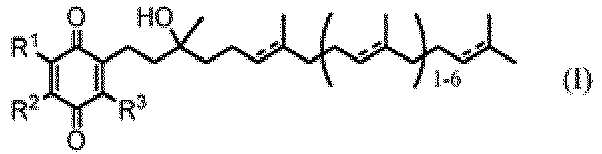


 die mit einer gestrichelten Linie gekennzeichneten Bindungen alle Einfachbindungen oder alle Doppelbindungen sind;R1, R2 und R3 unabhängig voneinander aus der Gruppe ausgewählt sind, bestehend aus H, (C1-C6)-Alkyl, (C1-C6)-Haloalkyl, (C1-C6)-Alkoxy, Halogen und CN;oder ein Stereoisomer, ein Solvat oder ein Hydrat davon ist.
 - Verbindung nach Anspruch 1 für die Verwendung wie in diesem Anspruch definiert, wobei die Verbindung eine Verbindung der Formel Ia, Formel IIa, Formel IIIa, Formel IVa, Formel Va oder der Formel VIa ist,

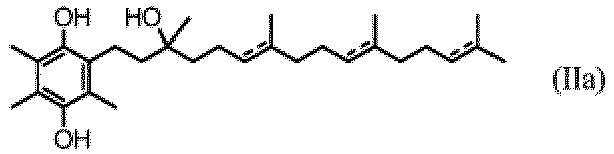



- Verbindung nach Anspruch 2 wie in diesem Anspruch definiert, wobei die Verbindung 2-(3-Hydroxy-3,7,11,15-tetramethylhexadeca-6,10,14-trienyl)-3,5,6-trimethylcyclohexa-2,5-dien-1,4-dion (Ib); 2-(3-Hydroxy-3,7,11,15-tetramethylhexadecyl)-3,5,6-trimethylcyclohexa-2,5-dien-1,4-dion (Ic); 2-((3R,7R,11R)-3-Hydroxy-3,7,11,15-tetramethylhexadecyl)-3,5,6-trimethylcyclohexa-2,5-dien-1,4-dione (Ic-RRR); 2-((3S,7R,11R)-3-Hydroxy-3,7,11,15-tetramethylhexadecyl)-3,5,6-trimethylcyclohexa-2,5-dien-1,4-dione (Ic-SRR); 2-((3R,7S,11R)-3-Hydroxy-3,7,11,15-tetramethylhexadecyl)-3,5,6-trimethylcyclohexa-2,5-dien-1,4-dione (Ic-RSR); 2-((3R,7R,11S)-3-Hydroxy-3,7,11,15-tetramethylhexadecyl)-3,5,6-trimethylcyclohexa-2,5-dien-1,4-dion (Ic-RRS); 2-((3S,7S,11R)-3-Hydroxy-3,7,11,15-tetramethylhexadecyl)-3,5,6-trimethylcyclohexa-2,5-dien-1,4-dion (Ic-SSR); 2-((3S,7R,11S)-3-Hydroxy-3,7,11,15-tetramethylhexadecyl)-3,5,6-trimethylcyclohexa-2,5-dien-1,4-dion (Ic-SRS); 2-((3R,7S,11S)-3-Hydroxy-3,7,11,15-tetramethylhexadecyl)-3,5,6-trimethylcyclohexa-2,5-dien-1,4-dion (Ic-RSS); 2-((3S,7S,11S)-3-Hydroxy-3,7,11,15-tetramethylhexadecyl)-3,5,6-trimethylcyclohexa-2,5-dien-1,4-dion (Ic-SSS); 2,3,5-Trimethyl-6-(3,7,11,15-tetramethylhexadeca-2,6,10,14-tetraenyl)cyclohexa-2,5-dien-1,4-dion (III-b); 2,3,5-Trimethyl-6-(3,7,11,15-tetramethylhexadecyl)cyclohexa-2,5-dien-1,4-dion (IIIc); 2,3,5-Trimethyl-6-((3R,7R,11R)-3,7,11,15-tetramethylhexadecyl)cyclohexa-2,5-dien-1,4-dion (IIIc-RRR); 2,3,5-Trimethyl-6-((3S,7R,11R)-3,7,11,15-tetramethylhexadecyl)cyclohexa-2,5-dien-1,4-dion (IIIc-SRR); 2,3,5-Trimethyl-6-((3R,7S,11R)-3,7,11,15-tetramethylhexadecyl)cyclohexa-2,5-dien-1,4-dion (IIIc-RSR); 2,3,5-Trimethyl-6-((3R,7R,11S)-3,7,11,15-tetramethylhexadecyl)cyclohexa-2,5-dien-1,4-dion (IIIc-RRS); 2,3,5-Trimethyl-6-((3 S,7S,11R)-3,7,11,15-tetramethylhexadecyl)cyclohexa-2,5-dien-1,4-dion (IIIc-SSR); 2,3,5-Trimethyl-6-((3S,7R,11S)-3,7,11,15-tetramethylhexadecyl)cyclohexa-2,5-dien-1,4-dion (IIIc-SRS); 2,3,5-Trimethyl-6-((3R,7S,11S)-3,7,11,15-tetramethylhexadecyl)cyclohexa-2,5-dien-1,4-dion (IIIc-RSS); 2,3,5-Trimethyl-6-((3S,7S,11S)-3,7,11,15-tetramethylhexadecyl)cyclohexa-2,5-dien-1,4-dion (IIIc-SSS); oder 2,3,5-Trimethyl-6-nonylcyclohexa-2,5-dien-1,4-dion oder ein Stereoisomer, ein Solvat oder ein Hydrat davon ist.
- Verbindung nach Anspruch 1 für die Verwendung wie in diesem Anspruch definiert, wobei die Verbindung 2-(3-Hydroxy-3,7,11,15-tetramethylhexadeca-6,10,14-trienyl)-3,5,6-trimethylcyclohexa-2,5-dien-1,4-dion oder ein Stereoisomer, ein Solvat oder ein Hydrat davon ist.
- Verbindung nach Anspruch 1 für die Verwendung wie in diesem Anspruch definiert, wobei die Verbindung 2-(3-Hydroxy-3,7,11,15-tetramethylhexadexa-6,10,14-trienyl)-3,5,6-trimethylbenzol-1,4-diol oder ein Stereoisomer, ein Solvat oder ein Hydrat davon ist.
- Verbindung nach Anspruch 1 für die Verwendung wie in diesem Anspruch definiert, wobei die Verbindung 2-(3-Hydroxy-3,7,11,15-tetramethylhexadecyl)-3,5,6-trimethylcyclohexa-2,5-dien-1,4-dion oder ein Stereoisomer, ein Solvat oder ein Hydrat davon ist.
- Verbindung nach Anspruch 1 für die Verwendung wie in diesem Anspruch definiert, wobei die Verbindung 2-(3-Hydroxy-3,7,11,15-tetramethylhexadecyl)-3,5,6-trimethylbenzol-1,4-dion oder ein Stereoisomer, ein Solvat oder ein Hydrat davon ist.
- Verbindung nach Anspruch 1 für die Verwendung wie in diesem Anspruch definiert, wobei die Verbindung 2-(3-Hydroxy-3,7,11,15-tetramethylhexadeca-6,10,14-trienyl)-3,5,6-trimethylcyclohexa-2,5-dien-1,4-dion ist.
- Verbindung nach Anspruch 1 für die Verwendung wie in diesem Anspruch definiert, wobei die Verbindung 2-((3R,7R,11R)-3-hydroxy-3,7,11,15-tetramehtlyhexadecyl)-3,5,6-trimethylcyclohexa-2,5-dien-1,4-dion (Ic-RRR) ist.
- Verbindung nach Anspruch 1 für die Verwendung wie in diesem Anspruch definiert, wobei die Verbindung

- Verbindung nach Anspruch 1 für die Verwendung wie in diesem Anspruch definiert, wobei die Verbindung

- Verbindung nach Anspruch 1 für die Verwendung wie in diesem Anspruch definiert, wobei die Verbindung

- Verbindung nach einem der Ansprüche 1 bis 12 für die Verwendung zum Reduzieren eines Symptoms, das mit einer Autismus-Spektrum-Störung (ASD) assoziiert ist, zum Behandeln oder Unterdrücken dieses.
- Verbindung nach einem der Ansprüche 1 bis 12 für die Verwendung zum Reduzieren eines Symptoms, das mit der Rett'schen Störung assoziiert ist, zum Behandeln oder Unterdrücken dieses.
- Verbindung nach einem der Ansprüche 1 bis 12 für die Verwendung zum Reduzieren eines Symptoms, das mit einer autistischen Störung assoziiert ist, zum Behandeln oder Unterdrücken dieses.
- Verbindung nach einem der Ansprüche 1 bis 12 für die Verwendung zum Reduzieren eines Symptoms, das mit dem Asperger-Syndrom assoziiert ist, zum Behandeln oder Unterdrücken dieses.
- Medizinisches Nahrungsmittel, funktionelles Nahrungsmittel, Nahrungsergänzungsmittel oder diätetisches Ergänzungsmittel für die Verwendung zum Reduzieren eines Symptoms, das mit einer tiefgreifenden Entwicklungsstörung (PDD) assoziiert ist, zum Behandeln oder Unterdrücken dieses bei einem Patienten, der eine solche Behandlung benötigt; umfassend eine Zusammensetzung aus einer oder mehreren Verbindungen, ausgewählt aus der Gruppe bestehend aus 2-(3-Hydroxy-3,7,11,15-tetramethylhexadeca-6,10,14-trienyl)-3,5,6-trimethylcyclohexa-2,5-dien-1,4-dion (Ib); 2-((3R,6E, 10E)-3-Hydroxy-3,7, 11,15-tetramethylhexadeca-6,10-dienyl)-3,5,6-trimethylcyclohexa-2,5-dien-1,4-dion (Ib-R); 2-((3S,6E,10E)-3-Hydroxy-3,7,11,15-tetramethylhexadeca-6,10-dienyl)-3,5,6-trimethylcyclohexa-2,5-dien-1,4-dion (Ib-S); 2-(3-Hydroxy-3,7,11,15-tetramethylhexadecyl)-3,5,6-trimethylcyclohexa-2,5-dien-1,4-dion (Ic); Ic-RRR; Ic-SRR; Ic-RSR; Ic-RRS; Ic-SSR; Ic-SRS; Ic-RSS; Ic-SSS; 2,3,5-Trimethyl-6-(3,7,11,15-tetramethylhexadeca-2,6,10,14-tetraenyl)cyclohexa-2,5-dien-1,4-dion (III-b); 2,3,5-Trimethyl-6-(3,7,11,15-tetramethylhexadecyl)cyclohexa-2,5-dien-1,4-dion (IIIc); IIIc RRR; IIIc-SRR; IIIc-RSR; IIIc-RRS; IIIc-SSR; IIIc-SRS; IIIc-RSS; IIIc-SSS; und 2,3,5-Trimethyl-6-nonylcyclohexa-2,5-dien-1,4-dion; oder einem Stereoisomer, einem Solvat oder einem Hydrat davon.
- Medizinisches Lebensmittel, funktionelles Lebensmittel, Nahrungsergänzungsmittel oder diätetisches Ergänzungsmittel nach Anspruch 17 für die Verwendung zum, Reduzieren eines Symptoms, das mit einer tiefgreifenden Entwicklungsstörung (PDD) assoziiert ist, ausgewählt aus einer Autismus-Spektrum-Störung (ASD), zum Behandeln oder Unterdrücken dieses.
- Zusammensetzung, geeignet zum Reduzieren eines Symptoms, das mit einer tiefgreifenden Entwicklungsstörung (PDD) assoziiert ist, zum Behandeln oder Unterdrücken dieses bei einem Patienten, der eine solche Behandlung benötigt, umfassend eine Verbindung der Formel Va:

- Zusammensetzung nach Anspruch 19, umfassend eine Verbindung der Formel Va:

- Zusammensetzung, geeignet zum Reduzieren eines Symptoms, das mit einer tiefgreifenden Entwicklungsstörung (PDD) assoziiert ist, zum Behandeln oder Unterdrücken dieses bei einem Patienten, der eine solche Behandlung benötigt, umfassend eine Verbindung der Formel VIa:

- Zusammensetzung nach einem der Ansprüche 19 bis 21, formuliert als eine pharmazeutische Zusammensetzung, die einen pharmazeutisch unbedenklichen Hilfsstoff, Träger oder ein pharmazeutisch unbedenkliches Vehikel umfasst.
- Medizinisches Lebensmittel, funktionelles Lebensmittel, Nahrungsergänzungsmittel oder diätetisches Ergänzungsmittel, geeignet zum Reduzieren eines Symptoms, das mit einer tiefgreifenden Entwicklungsstörung (PDD) assoziiert ist, zum Behandeln oder Unterdrücken dieses bei einem Patienten, der eine solche Behandlung benötigt, umfassend eine Zusammensetzung nach einem der Ansprüche 19 bis 21 und wenigstens eine der Gruppe, bestehend aus einem physiologischen oder ernährungsbedingten unbedenklichen Träger, Adjuvans, Hilfsstoff, Puffer und Verdünnunsgmittel.
Priority Applications (1)
| Application Number | Priority Date | Filing Date | Title |
|---|---|---|---|
| EP20216131.1A EP3827815B1 (de) | 2008-09-10 | 2009-09-08 | Behandlung von pervasiven entwicklungsstörungen mit redox-aktiven therapeutika |
Applications Claiming Priority (2)
| Application Number | Priority Date | Filing Date | Title |
|---|---|---|---|
| US19169608P | 2008-09-10 | 2008-09-10 | |
| PCT/US2009/056254 WO2010030607A1 (en) | 2008-09-10 | 2009-09-08 | Treatment of pervasive developmental disorders with redox-active therapeutics |
Related Child Applications (2)
| Application Number | Title | Priority Date | Filing Date |
|---|---|---|---|
| EP20216131.1A Division-Into EP3827815B1 (de) | 2008-09-10 | 2009-09-08 | Behandlung von pervasiven entwicklungsstörungen mit redox-aktiven therapeutika |
| EP20216131.1A Division EP3827815B1 (de) | 2008-09-10 | 2009-09-08 | Behandlung von pervasiven entwicklungsstörungen mit redox-aktiven therapeutika |
Publications (2)
| Publication Number | Publication Date |
|---|---|
| EP2344142A1 EP2344142A1 (de) | 2011-07-20 |
| EP2344142B1 true EP2344142B1 (de) | 2024-06-26 |
Family
ID=41226405
Family Applications (2)
| Application Number | Title | Priority Date | Filing Date |
|---|---|---|---|
| EP09792325.4A Active EP2344142B1 (de) | 2008-09-10 | 2009-09-08 | Behandlung von pervasiven entwicklungsstörungen mit redox-aktiven therapeutika |
| EP20216131.1A Active EP3827815B1 (de) | 2008-09-10 | 2009-09-08 | Behandlung von pervasiven entwicklungsstörungen mit redox-aktiven therapeutika |
Family Applications After (1)
| Application Number | Title | Priority Date | Filing Date |
|---|---|---|---|
| EP20216131.1A Active EP3827815B1 (de) | 2008-09-10 | 2009-09-08 | Behandlung von pervasiven entwicklungsstörungen mit redox-aktiven therapeutika |
Country Status (8)
| Country | Link |
|---|---|
| US (7) | US8314153B2 (de) |
| EP (2) | EP2344142B1 (de) |
| JP (6) | JP2012502064A (de) |
| BR (1) | BRPI0918139B1 (de) |
| CA (1) | CA2736250C (de) |
| LT (1) | LT3827815T (de) |
| MX (2) | MX363223B (de) |
| WO (1) | WO2010030607A1 (de) |
Families Citing this family (36)
| Publication number | Priority date | Publication date | Assignee | Title |
|---|---|---|---|---|
| WO2005033092A1 (en) | 2003-09-19 | 2005-04-14 | Galileo Pharmaceuticals, Inc. | Chroman derivatives |
| EP2471530B1 (de) * | 2005-06-01 | 2017-01-11 | Edison Pharmaceuticals, Inc. | Redoxaktive therapeutik zur behandlung von mitochondrialen erkrankungen und anderen zuständen sowie modulation von energie-biomarkern |
| US9278085B2 (en) | 2006-02-22 | 2016-03-08 | Edison Pharmaceuticals, Inc. | Side-chain variants of redox-active therapeutics for treatment of mitochondrial diseases and other conditions and modulation of energy biomarkers |
| WO2009061744A2 (en) | 2007-11-06 | 2009-05-14 | Edison Pharmaceuticals, Inc. | 4- (p-quinonyl)-2-hydroxybutanamide derivatives for treatment of mitochondrial diseases |
| EA023618B1 (ru) * | 2008-01-08 | 2016-06-30 | Эдисон Фармасьютикалз, Инк. | Производные (гет)арил-п-хинона для лечения митохондриальных болезней |
| WO2009111576A2 (en) | 2008-03-05 | 2009-09-11 | Edison Pharmaceuticals, Inc. | 2-SUBSTITUTED-p-QUINONE DERIVATIVES FOR TREATMENT OF OXIDATIVE STRESS DISEASES |
| WO2009158348A1 (en) * | 2008-06-25 | 2009-12-30 | Edison Pharmaceuticals, Inc. | 2-heterocyclylaminoalkyl-(p-quinone) derivatives for treatment of oxidative stress diseases |
| EP2344142B1 (de) | 2008-09-10 | 2024-06-26 | PTC Therapeutics, Inc. | Behandlung von pervasiven entwicklungsstörungen mit redox-aktiven therapeutika |
| EP2362726B1 (de) | 2008-10-14 | 2018-08-08 | Bioelectron Technology Corporation | Behandlung von oxidationsstresserkrankungen, darunter kontrast-nephropathie, strahlungsschädigung und störungen der hämatozytenfunktion |
| CA2741767C (en) | 2008-10-28 | 2017-09-12 | Ptc Therapeutics, Inc. | Process for the production of alpha-tocotrienol and derivatives |
| PL2424495T3 (pl) | 2009-04-28 | 2018-06-29 | Bioelectron Technology Corporation | Leczenie dziedzicznej neuropatii nerwów wzrokowych lebera i dominującego zaniku nerwu wzrokowego chinonami tokotrienolu |
| DK2470168T3 (en) * | 2009-08-26 | 2018-05-07 | Bioelectron Tech Corp | PROCEDURES FOR PREVENTION AND TREATMENT OF CEREBRAL ISCAM |
| AU2011238525A1 (en) * | 2010-04-06 | 2012-11-08 | Edison Pharmaceuticals, Inc. | Treatment of Ataxia Telangiectasia |
| CA2797581A1 (en) * | 2010-04-27 | 2011-11-03 | Edison Pharmaceuticals, Inc. | Formulations of quinones for the treatment of ophthalmic diseases |
| US8828453B2 (en) * | 2010-04-29 | 2014-09-09 | Betul Hatipoglu | Herbal-based compositions for alleviating symptoms associated with autism |
| EA201300215A1 (ru) * | 2010-08-06 | 2013-07-30 | Эдисон Фармасьютикалз, Инк. | Лечение митохондриальных болезней нафтохинонами |
| WO2012174286A1 (en) | 2011-06-14 | 2012-12-20 | Edison Pharmaceuticals, Inc. | Catechol derivatives for treatment of oxidative stress diseases |
| JP2014520894A (ja) | 2011-07-19 | 2014-08-25 | エジソン ファーマシューティカルズ, インコーポレイテッド | 非アルファトコトリエノールの存在下でのアルファトコトリエノールの選択的酸化のための方法 |
| EP2859890A3 (de) * | 2011-10-31 | 2015-08-05 | The Johns Hopkins University | Verfahren und Zusammensetzungen zur Behandlung von Autismus |
| CA2883879A1 (en) | 2012-09-07 | 2014-03-13 | Edison Pharmaceuticals, Inc. | Quinone derivatives for use in the modulation of redox status of individuals |
| US9670170B2 (en) | 2013-03-15 | 2017-06-06 | Bioelectron Technology Corporation | Resorufin derivatives for treatment of oxidative stress disorders |
| US9296712B2 (en) | 2013-03-15 | 2016-03-29 | Edison Pharmaceuticals, Inc. | Resorufin derivatives for treatment of oxidative stress disorders |
| US10189830B2 (en) | 2013-03-15 | 2019-01-29 | Bioelectron Technology Corporation | Alkyl-heteroaryl substituted quinone derivatives for treatment of oxidative stress disorders |
| US9868711B2 (en) | 2013-03-15 | 2018-01-16 | Bioelectron Technology Corporation | Phenazine-3-one and phenothiazine-3-one derivatives for treatment of oxidative stress disorders |
| AU2015364640B2 (en) | 2014-12-16 | 2020-08-13 | Ptc Therapeutics, Inc. | Polymorphic and amorphous forms of (R)-2-hydroxy-2-methyl-4-(2,4,5-trimethyl-3,6-dioxocyclohexa-1,4-dienyl)butanamide |
| EP3390377B1 (de) | 2015-12-16 | 2026-03-25 | PTC Therapeutics, Inc. | Verbesserte methoden zur anreicherung von alpha-tocotrienol in tocol zusammensetzungen |
| WO2017106803A1 (en) | 2015-12-17 | 2017-06-22 | Bioelectron Technology Corporation | Flouroalkyl, flouroalkoxy, phenoxy, heteroaryloxy, alkoxy, and amine 1,4-benzoquinone derivatives for treatment of oxidative stress disorders |
| JP2018083799A (ja) | 2016-11-15 | 2018-05-31 | バイオエレクトロン テクノロジー コーポレイション | 2−置換アミノ−ナフト[1,2−d]イミダゾール−5−オン化合物またはその製薬学上許容される塩 |
| KR20210076956A (ko) | 2018-10-17 | 2021-06-24 | 피티씨 테라퓨틱스, 인크. | α-시누클레인병증, 타우병증 및 기타 장애를 억제 및 치료하기 위한 2,3,5-트리메틸-6-노닐사이클로헥사-2,5-디엔-1,4-디온 |
| US11471497B1 (en) | 2019-03-13 | 2022-10-18 | David Gordon Bermudes | Copper chelation therapeutics |
| CN114746430B (zh) | 2019-10-04 | 2026-01-30 | 康德生物医疗有限公司 | 治疗线粒体异常疾病的伐替苯醌的醌-、氢醌-和萘醌-类似物 |
| WO2021077034A1 (en) | 2019-10-18 | 2021-04-22 | Ptc Therapeutics, Inc. | 2,3,5-trimethyl-6-nonylcyclohexa-2,5-diene-1,4-dione for suppressing and treating hemoglobinopathy, thalassemia, sickle cell disease and other disorders |
| US12037350B2 (en) | 2020-04-03 | 2024-07-16 | Stealth Biotherapeutics Inc. | Compositions and methods for the prevention and/or treatment of mitochondrial disease, including Friedreich's ataxia |
| WO2022261347A1 (en) | 2021-06-10 | 2022-12-15 | Stealth Biotherapeutics Inc. | Compounds, compositions and methods for the prevention and/or treatment of various mitochondrial diseases or disorders, including friedreich's ataxia |
| PE20240893A1 (es) | 2021-07-08 | 2024-04-24 | Ptc Therapeutics Inc | Composiciones farmaceuticas que comprenden 2,3,5-trimetil-6-nonilciclohexa-2,5-dien-1,4-diona |
| WO2024050725A1 (en) | 2022-09-07 | 2024-03-14 | Ptc Therapeutics, Inc. | Methods of producing 2, 3, 5, 6-alkyl-1, 4-benzoquinones |
Family Cites Families (242)
| Publication number | Priority date | Publication date | Assignee | Title |
|---|---|---|---|---|
| US2856414A (en) | 1958-10-14 | Oxidation of alpha-tocopherol | ||
| FR5531E (fr) | 1905-03-02 | 1906-05-02 | Gaston Levy Lajeunesse | Perfectionnements aux moteurs à explosions |
| US2398418A (en) | 1943-08-27 | 1946-04-16 | Louis F Fieser | Introduction of organic radicals into quinones |
| FR1201200A (fr) | 1958-08-08 | 1959-12-29 | Sogespar S A | Procédé de fabrication de l'alpha tocophéryl-quinone |
| US3071512A (en) | 1959-01-26 | 1963-01-01 | Sogespar S A | New hypotensive pharmaceutical preparation containing alpha-tocopheryl-quinone |
| US3406188A (en) | 1964-03-27 | 1968-10-15 | Sun Oil Co | Preparation of alpha-tocopherylquinone |
| FR5531M (de) | 1966-02-08 | 1967-11-13 | ||
| FR1536576A (fr) | 1967-08-29 | 1968-08-16 | Eastman Kodak Co | Procédés d'enrichissement et de fractionnement de mélanges à base de tocophérols |
| US3728363A (en) | 1970-03-17 | 1973-04-17 | Takeda Chemical Industries Ltd | Quinone derivatives |
| US3705239A (en) | 1970-10-16 | 1972-12-05 | Roy B Gregory | Pain removing compositions and methods |
| UST917001I4 (en) | 1971-12-02 | 1973-12-04 | Defensive publication | |
| JPS4875564A (de) | 1972-01-08 | 1973-10-11 | ||
| JPS4988862A (de) | 1972-12-29 | 1974-08-24 | ||
| JPS5245698B2 (de) | 1973-04-06 | 1977-11-17 | ||
| FR2235679B1 (de) | 1973-07-02 | 1978-07-21 | Takeda Chemical Industries Ltd | |
| US3909376A (en) | 1974-12-04 | 1975-09-30 | Basf Ag | Electrolytic manufacture of alkyl-substituted hydroquinones |
| JPS52111576A (en) | 1976-03-15 | 1977-09-19 | Teijin Ltd | Synthesis of 5,7,8-trimethyl-3,4-dehydrotocotrienol |
| JPS5938203B2 (ja) | 1976-04-26 | 1984-09-14 | エーザイ株式会社 | 補酵素qを主成分とする脳循環障害治療剤 |
| US4153614A (en) | 1978-05-12 | 1979-05-08 | Hoffmann-La Roche Inc. | Synthesis of (S)-(+)-6-hydroxy-2,5,7,8-tetramethylchroman-2-methanol and intermediates therein |
| LU77344A1 (de) | 1977-05-16 | 1979-01-19 | ||
| US4201879A (en) | 1977-05-16 | 1980-05-06 | Hoffmann-La Roche Inc. | Hydroquinones |
| US4185154A (en) | 1977-05-17 | 1980-01-22 | Hoffmann-La Roche, Inc. | Synthesis of vitamin E |
| US4127608A (en) | 1977-05-17 | 1978-11-28 | Hoffmann-La Roche Inc. | Synthesis of Vitamin E |
| US4243598A (en) | 1977-05-17 | 1981-01-06 | Hoffmann-La Roche Inc. | Synthesis of vitamin E |
| US4201726A (en) | 1977-05-17 | 1980-05-06 | Hoffmann-La Roche Inc. | Synthesis of Vitamin E |
| US4310465A (en) | 1977-05-17 | 1982-01-12 | Hoffmann-La Roche Inc. | Synthesis of vitamin E and quinone intermediates |
| JPS5640651A (en) | 1979-09-12 | 1981-04-16 | Takeda Chem Ind Ltd | Quinone compound and its preparation |
| JPS56147746A (en) | 1980-04-15 | 1981-11-16 | Takeda Chem Ind Ltd | Quinones and their preparation |
| JPS567734A (en) | 1979-06-28 | 1981-01-27 | Takeda Chem Ind Ltd | Preparation of quinone derivative |
| JPS567737A (en) | 1979-07-02 | 1981-01-27 | Takeda Chem Ind Ltd | Physiologically active quinone and its preparation |
| JPS5697223A (en) | 1979-12-30 | 1981-08-05 | Takeda Chem Ind Ltd | Tissue metabolism activator |
| JPS56140943U (de) | 1980-03-19 | 1981-10-24 | ||
| JPH0193554A (ja) | 1980-04-07 | 1989-04-12 | Takeda Chem Ind Ltd | 有機化合物 |
| JPS56140943A (en) | 1980-04-07 | 1981-11-04 | Takeda Chem Ind Ltd | Preparation of organic compound |
| US4393075A (en) | 1980-04-14 | 1983-07-12 | Takeda Chemical Industries, Ltd. | Quinone compounds and their use in suppressing the production of SRS-A in mammals |
| JPS5750935Y2 (de) | 1980-06-03 | 1982-11-06 | ||
| JPS5750935A (en) | 1980-09-12 | 1982-03-25 | Otsuka Pharmaceut Co Ltd | 1,4-benzoquinone derivative |
| JPS57131735A (en) | 1981-02-09 | 1982-08-14 | Takeda Chem Ind Ltd | Preparation of quinones |
| JPS6140236Y2 (de) | 1981-04-03 | 1986-11-17 | ||
| JPS57183782A (en) | 1981-04-30 | 1982-11-12 | Sumitomo Chem Co Ltd | Preparation of coumarone compound |
| JPS5818374A (ja) | 1981-07-27 | 1983-02-02 | Nitsusui Seiyaku Kk | エイコサペンタエン酸トコフエロ−ルエステル |
| JPS5883698A (ja) | 1981-11-13 | 1983-05-19 | Takeda Chem Ind Ltd | キノン化合物およびその製造法 |
| JPS5883698U (ja) | 1981-11-27 | 1983-06-06 | 石川島播磨重工業株式会社 | 熱交換器 |
| JPS6028919Y2 (ja) | 1981-12-28 | 1985-09-02 | 松下電器産業株式会社 | 太陽熱集熱装置 |
| JPS58193689A (ja) | 1982-05-10 | 1983-11-11 | Shiseido Co Ltd | テストステロン−5α−レダクタ−ゼ阻害剤 |
| JPS58193689U (ja) | 1982-06-18 | 1983-12-23 | 三菱電機株式会社 | 電子部材実装装置 |
| DK449983A (da) | 1982-10-27 | 1984-04-28 | Hoffmann La Roche | Fremgangsmaade til fremstilling af optiske aktive forbindelser |
| CH655005A5 (it) | 1983-02-16 | 1986-03-27 | Sigma Tau Ind Farmaceuti | Composizione farmaceutica ad azione metabolica ed energetica utilizzabile in terapia cardiaca e vascolare. |
| JPS59163316A (ja) | 1983-03-08 | 1984-09-14 | Eisai Co Ltd | けいれんの治療・予防剤 |
| JPS6028919A (ja) | 1983-07-28 | 1985-02-14 | Shiseido Co Ltd | 皮膚外用剤 |
| EP0134198A1 (de) | 1983-08-10 | 1985-03-13 | Ciba-Geigy Ag | Verwendung von Chinonderivaten zum Schützen von Kulturpflanzen vor der phytotoxischen Wirkung von Herbiziden |
| JPS60197621A (ja) | 1984-03-19 | 1985-10-07 | Hohnen Oil Co Ltd | コレステロ−ル低下剤 |
| US5304658A (en) | 1984-08-01 | 1994-04-19 | Takeda Chemical Industries, Ltd. | Quinone derivatives, their production and use |
| MX9203040A (es) | 1984-08-01 | 1992-07-31 | Takeda Chemical Industries Ltd | Derivados de quinona y composicion farmaceutica que los contiene. |
| JPS6140236A (ja) | 1984-08-02 | 1986-02-26 | Yamanouchi Pharmaceut Co Ltd | ハイドロキノン誘導体 |
| US4592867A (en) | 1984-10-19 | 1986-06-03 | Energy Conversion Devices, Inc. | Synthesis method for reductant precursor |
| US4617317A (en) | 1984-10-31 | 1986-10-14 | Bennet Justin D | Method of treating ulcerative colitis |
| DE3484473D1 (de) | 1984-12-06 | 1991-05-23 | Kuraray Co | Chroman-verbindungen und deren herstellung. |
| JPH0511467Y2 (de) | 1985-03-19 | 1993-03-22 | ||
| US5229385A (en) | 1986-01-30 | 1993-07-20 | Takeda Chemical Industries, Ltd. | Quinone derivatives, their production and use |
| US4883658A (en) | 1986-04-28 | 1989-11-28 | Holly Frank J | Ophthalmic solution for treatment of dry-eye syndrome |
| US4804539A (en) | 1986-07-28 | 1989-02-14 | Liposome Technology, Inc. | Ophthalmic liposomes |
| JPH0788376B2 (ja) | 1986-09-02 | 1995-09-27 | エーザイ株式会社 | 光学活性α−トコトリエノ−ルの製造方法 |
| GB8626344D0 (en) | 1986-11-04 | 1986-12-03 | Zyma Sa | Bicyclic compounds |
| US5057514A (en) | 1987-02-03 | 1991-10-15 | Suntory Limited | Compounds effective as cerebral schemia treating agents |
| US5278151A (en) | 1987-04-02 | 1994-01-11 | Ocular Research Of Boston, Inc. | Dry eye treatment solution |
| US4914088A (en) | 1987-04-02 | 1990-04-03 | Thomas Glonek | Dry eye treatment solution and method |
| US5292768A (en) | 1987-12-22 | 1994-03-08 | Suntory Limited | Compound effective as cerebral insufficiency improver |
| US5179092A (en) | 1987-12-22 | 1993-01-12 | Suntory Limited | Compound effective as cerebral insufficiency improver |
| DK36389A (da) | 1988-02-05 | 1989-08-06 | Eastman Kodak Co | Praeparat og fremgangsmaade til at forebygge vaevskader ved reperfusion |
| JPH01209445A (ja) | 1988-02-17 | 1989-08-23 | Fuji Photo Film Co Ltd | 放射線感応性材料 |
| JP2685785B2 (ja) | 1988-03-11 | 1997-12-03 | エーザイ株式会社 | 光学活性α−トコトリエノールの製造方法 |
| EP0333472B1 (de) | 1988-03-16 | 1997-10-08 | PALM OIL RESEARCH & DEVELOPMENT BOARD | Herstellung von hochkonzentrierten Tocoferolen und Tocotrienolen als Nebenprodukt des Palmöls |
| DE3818696C1 (en) | 1988-06-01 | 1989-03-30 | Ems-Inventa Ag, Zuerich, Ch | Process for the preparation of hydroquinone and its alkyl derivatives |
| US5075104A (en) | 1989-03-31 | 1991-12-24 | Alcon Laboratories, Inc. | Ophthalmic carboxy vinyl polymer gel for dry eye syndrome |
| JPH08768B2 (ja) | 1989-08-24 | 1996-01-10 | 武田薬品工業株式会社 | 神経成長因子分泌誘導剤 |
| FI102273B1 (fi) | 1989-09-11 | 1998-11-13 | Eisai Co Ltd | Kinonijohdannaiset, niiden valmistaminen ja niiden farmakologinen käyttö |
| US5157132A (en) | 1990-05-18 | 1992-10-20 | Carotech Associates | Integrated process for recovery of carotenoids and tocotrienols from oil |
| US5591772A (en) | 1991-11-22 | 1997-01-07 | Lipogenics, Inc. | Tocotrienols and tocotrienol-like compounds and methods for their use |
| ZA912797B (en) | 1990-05-29 | 1992-12-30 | Boston Ocular Res | Dry eye treatment process and solution |
| DE69115990T2 (de) | 1990-05-29 | 1996-05-30 | Ocular Res Of Bonton Inc | Zusammensetzung zur Behandlung von Dry Eye Erkrankungen |
| JP3086284B2 (ja) | 1991-07-05 | 2000-09-11 | 京セラミタ株式会社 | 電子写真感光体 |
| ZA927277B (en) | 1991-10-02 | 1993-05-19 | Boston Ocular Res | Dry eye treatment process and solution. |
| EP0560568A3 (en) | 1992-03-13 | 1994-06-29 | Takeda Chemical Industries Ltd | Hydroquinone derivatives and intermediates for production thereof |
| ATE271614T1 (de) | 1992-05-28 | 2004-08-15 | Ct For Molecular Biology And M | Quinone-derivate zur verbesserung der zellulare bioenergie |
| CN1093360A (zh) | 1992-10-02 | 1994-10-12 | 武田药品工业株式会社 | 2-o-烷基抗坏血酸的锂盐 |
| ATE184788T1 (de) | 1993-06-18 | 1999-10-15 | Takeda Chemical Industries Ltd | Idebenone-haltige zusammensetzungen zur behandlung von m. alzheimer |
| US5600029A (en) | 1994-03-09 | 1997-02-04 | Takeda Chemical Industries, Ltd. | Process for producing DL-tocopherols and intermediates therefor |
| EP0708646A1 (de) | 1994-05-06 | 1996-05-01 | Alcon Laboratories, Inc. | Verwendung von vitamin e tocopherolderivaten in ophthalmischen präparaten |
| EP0774967A1 (de) | 1994-08-12 | 1997-05-28 | Takeda Chemical Industries, Ltd. | Verwendung von chinon- und hydrochinonderivaten zur behandlung von kachexie |
| US6150402A (en) | 1994-08-15 | 2000-11-21 | Loma Linda University Medical Center | Natriuretic compounds |
| JPH0892151A (ja) | 1994-09-29 | 1996-04-09 | Sagami Chem Res Center | アリルキノンの製造方法 |
| US5547827A (en) | 1994-12-22 | 1996-08-20 | Eastman Kodak Company | Iodochloride emulsions containing quinones having high sensitivity and low fog |
| EP0719552A3 (de) | 1994-12-26 | 1997-08-20 | Takeda Chemical Industries Ltd | Pharmazeutische Zusammensetztung, die ein Chinonderivat oder das Hydrochinon davon enthält, für die Behandlung von Dermatitis |
| SK282144B6 (sk) | 1994-12-28 | 2001-11-06 | Janssen Pharmaceutica N. V. | Liečivo na terapeutické a profylaktické ošetrenie degeneratívnych chorôb vaskulárneho systému a nervovej sústavy, ktoré súvisia s oxidačným stresom |
| US20030134028A1 (en) | 1995-06-01 | 2003-07-17 | Lipton, Division Of Conopco, Inc. | Fat based food products |
| AU6709896A (en) | 1995-08-21 | 1997-03-12 | Takeda Chemical Industries Ltd. | Quinone compound, its production and use |
| US6232060B1 (en) | 1996-01-19 | 2001-05-15 | Galileo Laboratories, Inc. | Assay system for anti-stress agents |
| US5801159A (en) | 1996-02-23 | 1998-09-01 | Galileo Laboratories, Inc. | Method and composition for inhibiting cellular irreversible changes due to stress |
| ES2156633T3 (es) | 1996-03-25 | 2001-07-01 | Alcon Lab Inc | Derivados del acido tiazolidina-4-carboxilico como agentes citoprotectores. |
| DE69712888D1 (de) | 1996-07-11 | 2002-07-04 | Takeda Chemical Industries Ltd | ZUSAMMENSTELLUNGEN DIE beta-AMYLOID PROTEIN BEDINGTE ZYTOTOXIZITÄT VERHINDERN |
| FR2753098B1 (fr) | 1996-09-06 | 1998-11-27 | Sod Conseils Rech Applic | Composition pharmaceutique comprenant au moins un inhibiteur de no synthase et au moins un piegeur des formes reactives de l'oxygene |
| GB9702310D0 (en) | 1997-02-05 | 1997-03-26 | Univ Hertfordshire | Invention |
| GB9722361D0 (en) | 1997-10-24 | 1997-12-17 | Pharma Nord Uk Ltd | Pharmaceutical formulation for treating liver disorders |
| WO1999025336A1 (en) | 1997-11-17 | 1999-05-27 | Lipogenics, Inc. | Methods for preventing restenosis using tocotrienols |
| US6331532B1 (en) | 1998-11-25 | 2001-12-18 | University Of Otago | Mitochondrially targeted antioxidants |
| JP2002501915A (ja) | 1998-01-29 | 2002-01-22 | イーストマン ケミカル カンパニー | トコール含有混合物からのトコールの分離方法 |
| US6433199B1 (en) | 1998-05-22 | 2002-08-13 | Shionogi Bioresearch Corporation | Quinone derivatives |
| US5969133A (en) | 1998-05-22 | 1999-10-19 | Shiongi Bioresearch Corp. | Bioreductive cytotoxic agents |
| WO2000006550A1 (en) | 1998-07-31 | 2000-02-10 | Nippon Soda Co., Ltd. | Phenylazole compounds, process for producing the same and drugs for hyperlipemia |
| US6472378B2 (en) | 1998-08-31 | 2002-10-29 | Pro-Neuron, Inc. | Compositions and methods for treatment of mitochondrial diseases |
| IT1304406B1 (it) | 1998-10-21 | 2001-03-19 | Danital Italia S R L | Preparazione per la veicolazione di principi attivi basata su acidigrassi polinsaturi del gruppo omega 3. |
| US6187811B1 (en) | 1998-10-28 | 2001-02-13 | Lipogenics, Inc. | Methods for treating benign prostatic hyperplasia using tocotrienols |
| CA2272971C (en) | 1998-10-29 | 2008-01-15 | Institut National De La Sante Et De La Recherche Medicale (Inserm) | Quinone derivatives for treating or preventing diseases associated with iron overload |
| DE69939457D1 (de) | 1998-11-06 | 2008-10-16 | Fuji Chem Ind Co Ltd | Tocotrienole enthaltende pulver und tabletten hergestellt durch formpressen dieser pulver |
| US6048891A (en) | 1998-12-17 | 2000-04-11 | Loma Linda University Medical Center | Use of γ-tocopherol and its oxidative metabolite LLU-α in the treatment of natriuretic disease |
| JP2000202297A (ja) | 1999-01-20 | 2000-07-25 | Chemiprokasei Kaisha Ltd | 新規な酸化反応用触媒およびそれを用いたp―ベンゾキノン類の製造方法 |
| IL144964A0 (en) | 1999-02-23 | 2002-06-30 | Pro Neuron Inc | Methods of treatment of mitochondrial disorders |
| US6761903B2 (en) * | 1999-06-30 | 2004-07-13 | Lipocine, Inc. | Clear oil-containing pharmaceutical compositions containing a therapeutic agent |
| US6632443B2 (en) | 2000-02-23 | 2003-10-14 | National Research Council Of Canada | Water-soluble compositions of bioactive lipophilic compounds |
| US6045826A (en) | 1999-04-02 | 2000-04-04 | National Research Council Of Canada | Water-soluble compositions of bioactive lipophilic compounds |
| DE19916801A1 (de) | 1999-04-14 | 2000-11-02 | Bosch Gmbh Robert | Spritzdüse für eine Scheibenwaschanlage |
| WO2000078296A2 (en) | 1999-06-17 | 2000-12-28 | Basf Aktiengesellschaft | Tocotrienol and/or tocotrienol derivatives for the treatment or prophylaxis of glutamate- and/or calcium-induced disorders |
| US6395915B1 (en) | 1999-09-10 | 2002-05-28 | Technikrom, Inc. | Method for producing purified tocotrienols and tocopherols using liquid chromatography |
| US6426362B1 (en) | 1999-10-08 | 2002-07-30 | Galileo Laboratories, Inc. | Formulations of tocopherols and methods of making and using them |
| US6528042B1 (en) | 1999-10-08 | 2003-03-04 | Galileo Laboratories, Inc. | Compositions of flavonoids for use as cytoprotectants and methods of making and using them |
| MY127451A (en) | 1999-11-04 | 2006-12-29 | Malaysian Palm Oil Board | A method of chromatographic isolation for vitamin e isomers |
| US8753675B1 (en) | 2000-01-20 | 2014-06-17 | Raj K. Chopra | Reduced form of Coenzyme Q in high bioavailability stable dosage forms and related applications |
| US6740338B1 (en) | 2000-01-20 | 2004-05-25 | Raj K. Chopra | Reduced form of Cenzyme Q in high bioavailability stable oral dosage form |
| US6346544B2 (en) | 2000-03-02 | 2002-02-12 | Oklahoma Medical Research Foundation | Desmethyl tocopherols for protecting cardiovascular tissue |
| WO2001092215A2 (en) | 2000-06-02 | 2001-12-06 | Us Health | Superoxide-generating diazeniumdiolates, compositions comprising same, and methods for using same |
| DE10034233A1 (de) | 2000-07-14 | 2002-01-24 | Basf Ag | Tocotrienolchinon-Cyclisierungsprodukte |
| US6545184B1 (en) | 2000-08-15 | 2003-04-08 | The Regents Of The University Of California | Practical, cost-effective synthesis of COQ10 |
| US20030206972A1 (en) | 2000-10-13 | 2003-11-06 | Babish John G. | Compositions containing carotenoids and tocotrienols and having synergistic antioxidant effect |
| MXPA03003733A (es) | 2000-10-26 | 2004-10-15 | Fournier Lab Ireland Ltd | Combinacion de fenofibrato y coenzima q10 para el tratamiento de la disfuncion endotelial. |
| AUPR177300A0 (en) | 2000-11-29 | 2000-12-21 | Centre For Molecular Biology And Medicine | Therapeutic methods |
| AU2002236527A1 (en) | 2000-11-30 | 2002-06-11 | The Health Research Institute | Nutrient supplements and methods for treating autism and for preventing the onset of autism |
| WO2002047680A2 (en) | 2000-12-15 | 2002-06-20 | Galileo Laboratories, Inc. | Use of tocopherol, metabolites or derivatives thereof or flavonoid metabolites or derivatives thereof in the manufacture of a medicament for the treatment of tissue ischemia |
| US7034054B2 (en) | 2000-12-15 | 2006-04-25 | Galileo Pharmaceuticals, Inc. | Methods for the prevention and treatment of cerebral ischemia using non-alpha tocopherols |
| US6838104B2 (en) | 2000-12-20 | 2005-01-04 | Archer Daniels Midland Company | Process for the production of tocotrienols |
| US20040043013A1 (en) | 2000-12-28 | 2004-03-04 | Mccleary Edward Larry | Metabolic uncoupling therapy |
| US6300377B1 (en) | 2001-02-22 | 2001-10-09 | Raj K. Chopra | Coenzyme Q products exhibiting high dissolution qualities |
| US6764768B2 (en) | 2001-02-28 | 2004-07-20 | Arch Development Corporation | Controlled release composition |
| US6964969B2 (en) | 2001-04-19 | 2005-11-15 | Mccleary Edward Larry | Composition and method for treating impaired or deteriorating neurological function |
| US6608196B2 (en) | 2001-05-03 | 2003-08-19 | Galileo Pharmaceuticals, Inc. | Process for solid supported synthesis of pyruvate-derived compounds |
| JP2003064017A (ja) | 2001-06-12 | 2003-03-05 | Hokko Chem Ind Co Ltd | オキシスチレン誘導体の蒸留方法 |
| US7172905B2 (en) | 2001-08-07 | 2007-02-06 | The University Of Chicago | Polypeptide immobilization |
| NZ513547A (en) | 2001-08-13 | 2002-09-27 | Antipodean Biotechnology Ltd | Synthesis of triphenylphosphonium quinols (e.g. mitoquinol) and/or quinones (e.g. mitoquinone) |
| WO2003015494A2 (en) | 2001-08-21 | 2003-02-27 | Galileo Pharmaceuticals, Inc. | Tocopherol enriched compositions and amelioration of inflammatory symptoms |
| CA2357053A1 (en) | 2001-09-04 | 2003-03-04 | Unknown | Effectiveness of a combination of antioxidant substances for the treatment of alzheimer's disease |
| JP2003137716A (ja) | 2001-10-30 | 2003-05-14 | Eau De Faveur:Kk | 皮膚の外用剤 |
| AU2002352726A1 (en) | 2001-11-15 | 2003-06-10 | Galileo Laboratories, Inc. | Formulations and methods for treatment or amelioration of inflammatory conditions |
| US6667330B2 (en) | 2002-01-31 | 2003-12-23 | Galileo Pharmaceuticals, Inc. | Furanone derivatives |
| US6653346B1 (en) | 2002-02-07 | 2003-11-25 | Galileo Pharmaceuticals, Inc. | Cytoprotective benzofuran derivatives |
| US7078541B2 (en) | 2002-02-07 | 2006-07-18 | Galileo Pharmaceuticals, Inc. | Benzofuran derivatives |
| US7217133B2 (en) * | 2002-04-04 | 2007-05-15 | Jeanine Thomas | Method for treating pervasive development disorder |
| AT414082B (de) * | 2002-05-03 | 2006-09-15 | Vis Vitalis Lizenz & Handels | Verfahren zur herstellung von tocotrienol-angereicherten präparationen |
| US7327800B2 (en) | 2002-05-24 | 2008-02-05 | Vecima Networks Inc. | System and method for data detection in wireless communication systems |
| DE60211875T2 (de) | 2002-07-01 | 2006-10-26 | Santhera Pharmaceuticals (Schweiz) Ag | Screeningverfahren und Verbindungen zur Behandlung von Friedreich ataxia |
| US6953331B2 (en) | 2002-08-30 | 2005-10-11 | Extreme Components L.P. | Positioning device with bearing mechanism |
| JP4599292B2 (ja) | 2002-10-30 | 2010-12-15 | エジソン ファーマシューティカルズ, インコーポレイテッド | 物理的−化学的特性に基づく治療用化合物の同定 |
| AU2004210013A1 (en) * | 2003-02-10 | 2004-08-19 | Autogen Research Pty Ltd | Therapeutic molecules |
| KR20060082791A (ko) | 2003-06-25 | 2006-07-19 | 찰스 에르윈 | 코엔자임 q10의 전달을 증가시키기 위한 화학적 배합물 및방법 |
| JP2007501846A (ja) | 2003-08-08 | 2007-02-01 | ザ オハイオ ステート ユニバーシティー リサーチ ファウンデーション | トコトリエノールの予防的使用および治療的使用 |
| BRPI0413742B8 (pt) | 2003-08-22 | 2021-05-25 | Antipodean Pharmaceuticals Inc | composto antioxidante quimicamente estável, composição farmacêutica, método de redução do estresse oxidativo em uma célula in vitro e métodos de preparo e de síntese do referido composto antioxidante |
| US7015243B2 (en) | 2003-08-28 | 2006-03-21 | Allergan, Inc. | Cyclohexyl prostaglandin analogs as EP4-receptor agonists |
| WO2005033092A1 (en) | 2003-09-19 | 2005-04-14 | Galileo Pharmaceuticals, Inc. | Chroman derivatives |
| WO2005035490A2 (en) | 2003-10-10 | 2005-04-21 | Yasoo Health, Inc. | PROCESS FOR SYNTHESIZING d-TOCOTRIENOLS |
| EP1718163A1 (de) | 2004-02-23 | 2006-11-08 | The Texas A&M University System | Antioxidationsmittelzusammensetzungen und verfahren zu ihrer verwendung |
| US7022441B2 (en) | 2004-02-25 | 2006-04-04 | Eastman Kodak Company | Silver-free black-and-white thermographic materials containing a benzoquinone and methods of imaging |
| EP1731146A4 (de) | 2004-03-05 | 2009-07-01 | Morishige Fumie | Prävention und massnahme gegen mitochondrien-erkrankung |
| JP5129563B2 (ja) | 2004-03-18 | 2013-01-30 | ラスク・インテレクチュアル・リザーブ・アクチェンゲゼルシャフト | 視神経症に対する感受性を診断または予測するための方法 |
| US7485283B2 (en) | 2004-04-28 | 2009-02-03 | Lantheus Medical Imaging | Contrast agents for myocardial perfusion imaging |
| US7972601B2 (en) | 2004-05-11 | 2011-07-05 | The Regents Of The University Of California | Method of promoting delivery of an antioxidant agent to a cell expression neuroligin |
| EP1766789B1 (de) | 2004-06-22 | 2019-02-27 | Apple Inc. | Verfahren und systeme zur ermöglichung von rückmeldungen in drahtlosen kommunikationsnetzen |
| DE102004032837A1 (de) | 2004-07-02 | 2006-02-09 | Beiersdorf Ag | Verwendung von Wirkstoffkombinationen aus einem oder mehreren Biochinonen und einem oder mehreren Isoflavonen zur Verbesserung der Hautkonturen |
| DE602004022523D1 (de) | 2004-07-02 | 2009-09-24 | Novagali Pharma Sa | Verwendung von Emulsionen zur intra- und periocularen Injection |
| US7393662B2 (en) | 2004-09-03 | 2008-07-01 | Centocor, Inc. | Human EPO mimetic hinge core mimetibodies, compositions, methods and uses |
| CA2599331A1 (en) | 2005-02-28 | 2006-09-08 | Meiji Dairies Corporation | Hydroquinone long-chain derivatives and/or phenoxy long-chain derivatives, and pharmaceuticals preparation comprising the same |
| US20060241174A1 (en) | 2005-04-22 | 2006-10-26 | Anne Mueller | Vitamin E tocotrienols inhibition of intracellularly obligate pathogen Chlamydia and methods of use |
| EP2471530B1 (de) | 2005-06-01 | 2017-01-11 | Edison Pharmaceuticals, Inc. | Redoxaktive therapeutik zur behandlung von mitochondrialen erkrankungen und anderen zuständen sowie modulation von energie-biomarkern |
| CA2613854A1 (en) | 2005-06-30 | 2007-01-11 | Kyowa Chemical Industry Co., Ltd. | Antibacterial agent composed of silver-containing aluminum sulfate hydroxide particles and use thereof |
| CA2622523C (en) * | 2005-09-15 | 2014-02-18 | Edison Pharmaceuticals, Inc. | Tail variants of redox-active therapeutics for treatment of mitochondrial diseases and other conditions and modulation of energy biomarkers |
| EP1924292A2 (de) | 2005-09-16 | 2008-05-28 | Allergan, Inc. | Zusammensetzungen und verfahren zum intraokulären transport therapeutischer arzneimittel |
| EP1957109A2 (de) | 2005-12-02 | 2008-08-20 | Sirtris Pharmaceuticals, Inc. | Modulatoren von cdc2-kinasen und verfahren zu ihrer verwendung |
| WO2007095630A2 (en) | 2006-02-15 | 2007-08-23 | The Regents Of The University Of California | New ubiquinone analogs and methods of use |
| US9278085B2 (en) * | 2006-02-22 | 2016-03-08 | Edison Pharmaceuticals, Inc. | Side-chain variants of redox-active therapeutics for treatment of mitochondrial diseases and other conditions and modulation of energy biomarkers |
| JPWO2007116750A1 (ja) | 2006-03-30 | 2009-08-20 | 出光興産株式会社 | 有機エレクトロルミネッセンス素子用材料、及びこれを用いた有機エレクトロルミネッセンス素子 |
| US8022246B2 (en) | 2006-10-10 | 2011-09-20 | The Burnham Institute For Medical Research | Neuroprotective compositions and methods |
| WO2008086025A2 (en) | 2007-01-10 | 2008-07-17 | Edison Pharmaceuticals, Inc. | Treatment of respiratory chain disorders using compounds having erythropoietin or thrombopoietin activity |
| US10300034B2 (en) * | 2007-02-22 | 2019-05-28 | Children's Hospital Of Oakland Research Institute | Fatty acid formulations and methods of use thereof |
| WO2008142433A1 (en) | 2007-05-24 | 2008-11-27 | Loders Croklaan B.V. | Process for producing compositions comprising tocoherols and tocotrienols |
| WO2008157747A1 (en) | 2007-06-21 | 2008-12-24 | The Jackson Laboratory | Use of inhibition of exonuclease 1 in methods for therapy and diagnostic of neurodegenerative diseases, eye diseases, and mitochondrial disorders |
| US8075909B2 (en) | 2007-09-04 | 2011-12-13 | University Of Florida Research Foundation, Incorporated | Contact lens based bioactive agent delivery system |
| WO2009061744A2 (en) | 2007-11-06 | 2009-05-14 | Edison Pharmaceuticals, Inc. | 4- (p-quinonyl)-2-hydroxybutanamide derivatives for treatment of mitochondrial diseases |
| WO2009088572A2 (en) | 2008-01-07 | 2009-07-16 | Centocor, Inc. | Method of treating erythropoietin hyporesponsive anemias |
| EA023618B1 (ru) * | 2008-01-08 | 2016-06-30 | Эдисон Фармасьютикалз, Инк. | Производные (гет)арил-п-хинона для лечения митохондриальных болезней |
| EP2262519A4 (de) | 2008-03-05 | 2011-03-23 | Edison Pharmaceuticals Inc | Behandlung von gehör- und gleichgewichtsstörungen mit redoxaktiven therapeutika |
| WO2009111576A2 (en) | 2008-03-05 | 2009-09-11 | Edison Pharmaceuticals, Inc. | 2-SUBSTITUTED-p-QUINONE DERIVATIVES FOR TREATMENT OF OXIDATIVE STRESS DISEASES |
| CA2723621A1 (en) | 2008-05-15 | 2009-11-19 | Edison Pharmaceuticals, Inc | Treatment of hearing and balance impairments using compounds having erythropoietin activity |
| WO2009143268A2 (en) | 2008-05-22 | 2009-11-26 | Edison Pharmaceuticals, Inc. | Treatment of mitochondrial diseases with an erythropoietin mimetic |
| WO2009158348A1 (en) | 2008-06-25 | 2009-12-30 | Edison Pharmaceuticals, Inc. | 2-heterocyclylaminoalkyl-(p-quinone) derivatives for treatment of oxidative stress diseases |
| WO2010005989A1 (en) | 2008-07-09 | 2010-01-14 | Edison Pharmaceuticals, Inc. | Dermatological compositions with anti-aging and skin even-toning properties |
| US20100029784A1 (en) | 2008-07-30 | 2010-02-04 | Hinman Andrew W | Naphthoquinone compositions with anti-aging, anti-inflammatory and skin even-toning properties |
| WO2010014758A1 (en) | 2008-07-30 | 2010-02-04 | Edison Pharmaceuticals, Inc. | Use of hydrogenated pyrido[4,3-b] indoles for the treatment of oxidative stress |
| EP2344142B1 (de) * | 2008-09-10 | 2024-06-26 | PTC Therapeutics, Inc. | Behandlung von pervasiven entwicklungsstörungen mit redox-aktiven therapeutika |
| BRPI0920326A2 (pt) | 2008-10-09 | 2016-02-23 | Ramscor Inc | composição e método para tratamento da síndrome do olho ressecado |
| EP2362726B1 (de) | 2008-10-14 | 2018-08-08 | Bioelectron Technology Corporation | Behandlung von oxidationsstresserkrankungen, darunter kontrast-nephropathie, strahlungsschädigung und störungen der hämatozytenfunktion |
| CA2741767C (en) | 2008-10-28 | 2017-09-12 | Ptc Therapeutics, Inc. | Process for the production of alpha-tocotrienol and derivatives |
| EP2424360A4 (de) | 2009-04-28 | 2012-10-03 | Ampere Life Sciences Inc | Topische, periokulare oder intraokulare verwendung von tocotrienolen zur behandlung von augenleiden |
| PL2424495T3 (pl) | 2009-04-28 | 2018-06-29 | Bioelectron Technology Corporation | Leczenie dziedzicznej neuropatii nerwów wzrokowych lebera i dominującego zaniku nerwu wzrokowego chinonami tokotrienolu |
| JP2012525397A (ja) | 2009-04-28 | 2012-10-22 | エジソン ファーマシューティカルズ, インコーポレイテッド | 眼科疾患を治療するためのトコトリエノールキノンの製剤 |
| EP2609921A1 (de) * | 2009-06-25 | 2013-07-03 | Ampere Life Sciences, Inc. | Behandlung von pervasiven Entwicklungsstörungen mithilfe von Tocotrienolen oder mit Tocotrienolen angereicherten Extrakten |
| US9176146B2 (en) * | 2009-08-03 | 2015-11-03 | Theta Biomedical Consulting & Development Co., Inc. | Methods of treating autism spectrum disorders and compositions for same |
| US9050275B2 (en) * | 2009-08-03 | 2015-06-09 | Theta Biomedical Consulting & Development Co., Inc. | Methods of screening for and treating autism spectrum disorders and compositions for same |
| DK2470168T3 (en) | 2009-08-26 | 2018-05-07 | Bioelectron Tech Corp | PROCEDURES FOR PREVENTION AND TREATMENT OF CEREBRAL ISCAM |
| WO2011041452A2 (en) | 2009-10-01 | 2011-04-07 | Ampere Life Sciences, Inc. | Mouse model for identifying compounds for the treatment of oxidative stress |
| US20110172312A1 (en) | 2009-12-31 | 2011-07-14 | Miller Guy M | Treatment of leigh syndrome and leigh-like syndrome with tocotrienol quinones |
| SG184787A1 (en) | 2010-03-09 | 2012-11-29 | Edison Pharmaceuticals Inc | Synthesis of alpha-tocopherolquinone derivatives, and methods of using the same |
| WO2011113018A1 (en) | 2010-03-12 | 2011-09-15 | Ampere Life Sciences, Inc. | Measurement and control of biological time |
| AU2011238525A1 (en) | 2010-04-06 | 2012-11-08 | Edison Pharmaceuticals, Inc. | Treatment of Ataxia Telangiectasia |
| CA2797581A1 (en) | 2010-04-27 | 2011-11-03 | Edison Pharmaceuticals, Inc. | Formulations of quinones for the treatment of ophthalmic diseases |
| US20120101169A1 (en) | 2010-07-14 | 2012-04-26 | Penwest Pharmaceuticals Co. | Methods of providing anticoagulation effects in subjects |
| EP2601168A4 (de) | 2010-08-06 | 2013-12-04 | Ampere Life Sciences Inc | Behandlung mitochondrialer erkrankungen mit vitamin k |
| EA201300215A1 (ru) | 2010-08-06 | 2013-07-30 | Эдисон Фармасьютикалз, Инк. | Лечение митохондриальных болезней нафтохинонами |
| WO2012068552A1 (en) | 2010-11-19 | 2012-05-24 | Edison Pharmaceuticals, Inc. | Methods for improving blood glucose control |
| WO2012154613A1 (en) | 2011-05-06 | 2012-11-15 | Edison Pharmaceuticals, Inc. | Improved process for the preparation of d-alpha-tocotrienol from natural extracts |
| WO2012170773A1 (en) | 2011-06-08 | 2012-12-13 | Edison Pharmaceuticals, Inc. | Adjunctive therapy for the treatment of mitochondrial disorders with quinones and naphthoquinones |
| WO2012174286A1 (en) | 2011-06-14 | 2012-12-20 | Edison Pharmaceuticals, Inc. | Catechol derivatives for treatment of oxidative stress diseases |
| WO2013006736A1 (en) | 2011-07-06 | 2013-01-10 | Edison Pharmaceuticals, Inc | Treatment of leigh syndrome and leigh-like syndrome, including complications of sucla2 mutations, with tocotrienol quinones |
| US20150057363A1 (en) | 2011-07-06 | 2015-02-26 | Guy M. Miller | Treatment of methylmalonic aciduria, isovaleric aciduria, and other organic acidurias with tocotrienol quinones |
| JP2014520894A (ja) | 2011-07-19 | 2014-08-25 | エジソン ファーマシューティカルズ, インコーポレイテッド | 非アルファトコトリエノールの存在下でのアルファトコトリエノールの選択的酸化のための方法 |
| CA2883879A1 (en) | 2012-09-07 | 2014-03-13 | Edison Pharmaceuticals, Inc. | Quinone derivatives for use in the modulation of redox status of individuals |
| EA031098B1 (ru) | 2013-03-08 | 2018-11-30 | Юнилевер Н.В. | Соединения резорцина для дерматологического применения |
| US9296712B2 (en) | 2013-03-15 | 2016-03-29 | Edison Pharmaceuticals, Inc. | Resorufin derivatives for treatment of oxidative stress disorders |
| US9868711B2 (en) | 2013-03-15 | 2018-01-16 | Bioelectron Technology Corporation | Phenazine-3-one and phenothiazine-3-one derivatives for treatment of oxidative stress disorders |
| US10189830B2 (en) | 2013-03-15 | 2019-01-29 | Bioelectron Technology Corporation | Alkyl-heteroaryl substituted quinone derivatives for treatment of oxidative stress disorders |
| US9670170B2 (en) | 2013-03-15 | 2017-06-06 | Bioelectron Technology Corporation | Resorufin derivatives for treatment of oxidative stress disorders |
| US20140275045A1 (en) | 2013-03-15 | 2014-09-18 | Edison Pharmaceuticals, Inc. | Phenazine-3-one and phenothiazine-3-one derivatives for treatment of oxidative stress disorders |
| AU2014273891A1 (en) | 2013-05-31 | 2015-12-24 | Bioelectron Technology Corporation | Carboxylic acid derivatives for treatment of oxidative stress disorders |
| WO2017106803A1 (en) | 2015-12-17 | 2017-06-22 | Bioelectron Technology Corporation | Flouroalkyl, flouroalkoxy, phenoxy, heteroaryloxy, alkoxy, and amine 1,4-benzoquinone derivatives for treatment of oxidative stress disorders |
| WO2018081644A1 (en) | 2016-10-28 | 2018-05-03 | Bioelectron Technology Corporation | Methods of analyzing p-hydroquinone levels and ratios |
-
2009
- 2009-09-08 EP EP09792325.4A patent/EP2344142B1/de active Active
- 2009-09-08 EP EP20216131.1A patent/EP3827815B1/de active Active
- 2009-09-08 BR BRPI0918139-3A patent/BRPI0918139B1/pt active IP Right Grant
- 2009-09-08 WO PCT/US2009/056254 patent/WO2010030607A1/en not_active Ceased
- 2009-09-08 CA CA2736250A patent/CA2736250C/en active Active
- 2009-09-08 MX MX2014004966A patent/MX363223B/es unknown
- 2009-09-08 MX MX2011002318A patent/MX2011002318A/es active IP Right Grant
- 2009-09-08 LT LTEP20216131.1T patent/LT3827815T/lt unknown
- 2009-09-08 US US12/555,700 patent/US8314153B2/en active Active
- 2009-09-08 JP JP2011526277A patent/JP2012502064A/ja not_active Withdrawn
-
2012
- 2012-10-12 US US13/651,330 patent/US8653144B2/en active Active
-
2014
- 2014-01-14 US US14/155,288 patent/US8969420B2/en not_active Expired - Fee Related
-
2015
- 2015-01-26 US US14/605,937 patent/US9399612B2/en active Active
- 2015-03-19 JP JP2015055908A patent/JP6259410B2/ja active Active
- 2015-03-19 JP JP2015055909A patent/JP2015120748A/ja not_active Withdrawn
- 2015-11-02 JP JP2015215902A patent/JP2016020399A/ja active Pending
-
2016
- 2016-07-12 US US15/208,549 patent/US10105325B2/en active Active
-
2017
- 2017-04-07 JP JP2017076681A patent/JP2017122125A/ja not_active Withdrawn
-
2018
- 2018-06-20 JP JP2018116995A patent/JP2018162281A/ja active Pending
- 2018-10-19 US US16/165,985 patent/US10736857B2/en active Active
-
2020
- 2020-08-10 US US16/989,753 patent/US20210128494A1/en not_active Abandoned
Also Published As
| Publication number | Publication date |
|---|---|
| EP2344142A1 (de) | 2011-07-20 |
| MX2011002318A (es) | 2011-05-10 |
| US8653144B2 (en) | 2014-02-18 |
| US20190083419A1 (en) | 2019-03-21 |
| JP6259410B2 (ja) | 2018-01-10 |
| LT3827815T (lt) | 2023-10-10 |
| BRPI0918139B1 (pt) | 2024-04-30 |
| US20210128494A1 (en) | 2021-05-06 |
| JP2015120748A (ja) | 2015-07-02 |
| JP2017122125A (ja) | 2017-07-13 |
| BRPI0918139A2 (pt) | 2015-12-01 |
| US9399612B2 (en) | 2016-07-26 |
| JP2015110674A (ja) | 2015-06-18 |
| US20100063161A1 (en) | 2010-03-11 |
| US8969420B2 (en) | 2015-03-03 |
| US20150239818A1 (en) | 2015-08-27 |
| JP2012502064A (ja) | 2012-01-26 |
| WO2010030607A1 (en) | 2010-03-18 |
| EP3827815A1 (de) | 2021-06-02 |
| MX363223B (es) | 2019-03-15 |
| CA2736250A1 (en) | 2010-03-18 |
| JP2016020399A (ja) | 2016-02-04 |
| US10105325B2 (en) | 2018-10-23 |
| US20130053450A1 (en) | 2013-02-28 |
| JP2018162281A (ja) | 2018-10-18 |
| US8314153B2 (en) | 2012-11-20 |
| CA2736250C (en) | 2016-12-20 |
| US10736857B2 (en) | 2020-08-11 |
| EP3827815B1 (de) | 2023-09-06 |
| US20140206772A1 (en) | 2014-07-24 |
| US20170157065A1 (en) | 2017-06-08 |
Similar Documents
| Publication | Publication Date | Title |
|---|---|---|
| US10736857B2 (en) | Treatment of pervasive developmental disorders with redox-active therapeutics | |
| US20120122969A1 (en) | Treatment of pervasive developmental disorders with tocotrienols or tocotrienol enriched extracts | |
| JP6393684B2 (ja) | 個体のレドックス状態の調節において使用するためのキノン誘導体 | |
| US20130116336A1 (en) | Treatment of ataxia telangiectasia | |
| JP2007501846A (ja) | トコトリエノールの予防的使用および治療的使用 | |
| HK40052915A (en) | Treatment of pervasive developmental disorders with redox-active therapeutics | |
| HK40052915B (en) | Treatment of pervasive developmental disorders with redox-active therapeutics | |
| HK1185017A (en) | Treatment of pervasive developmental disorders with tocotrienols or tocotrienol enriched extracts | |
| HK1184693A (en) | Treatment of pervasive developmental disorders with tocotrienols or tocotrienol enriched extracts |
Legal Events
| Date | Code | Title | Description |
|---|---|---|---|
| PUAI | Public reference made under article 153(3) epc to a published international application that has entered the european phase |
Free format text: ORIGINAL CODE: 0009012 |
|
| 17P | Request for examination filed |
Effective date: 20110406 |
|
| AK | Designated contracting states |
Kind code of ref document: A1 Designated state(s): AT BE BG CH CY CZ DE DK EE ES FI FR GB GR HR HU IE IS IT LI LT LU LV MC MK MT NL NO PL PT RO SE SI SK SM TR |
|
| AX | Request for extension of the european patent |
Extension state: AL BA RS |
|
| DAX | Request for extension of the european patent (deleted) | ||
| REG | Reference to a national code |
Ref country code: HK Ref legal event code: DE Ref document number: 1159499 Country of ref document: HK |
|
| 17Q | First examination report despatched |
Effective date: 20121025 |
|
| RAP1 | Party data changed (applicant data changed or rights of an application transferred) |
Owner name: BIOELECTRON TECHNOLOGY CORPORATION |
|
| STAA | Information on the status of an ep patent application or granted ep patent |
Free format text: STATUS: EXAMINATION IS IN PROGRESS |
|
| 17Q | First examination report despatched |
Effective date: 20181205 |
|
| RAP1 | Party data changed (applicant data changed or rights of an application transferred) |
Owner name: PTC THERAPEUTICS, INC. |
|
| GRAP | Despatch of communication of intention to grant a patent |
Free format text: ORIGINAL CODE: EPIDOSNIGR1 |
|
| STAA | Information on the status of an ep patent application or granted ep patent |
Free format text: STATUS: GRANT OF PATENT IS INTENDED |
|
| INTG | Intention to grant announced |
Effective date: 20230612 |
|
| GRAJ | Information related to disapproval of communication of intention to grant by the applicant or resumption of examination proceedings by the epo deleted |
Free format text: ORIGINAL CODE: EPIDOSDIGR1 |
|
| STAA | Information on the status of an ep patent application or granted ep patent |
Free format text: STATUS: EXAMINATION IS IN PROGRESS |
|
| GRAP | Despatch of communication of intention to grant a patent |
Free format text: ORIGINAL CODE: EPIDOSNIGR1 |
|
| STAA | Information on the status of an ep patent application or granted ep patent |
Free format text: STATUS: GRANT OF PATENT IS INTENDED |
|
| INTC | Intention to grant announced (deleted) | ||
| INTG | Intention to grant announced |
Effective date: 20240201 |
|
| GRAS | Grant fee paid |
Free format text: ORIGINAL CODE: EPIDOSNIGR3 |
|
| GRAA | (expected) grant |
Free format text: ORIGINAL CODE: 0009210 |
|
| STAA | Information on the status of an ep patent application or granted ep patent |
Free format text: STATUS: THE PATENT HAS BEEN GRANTED |
|
| RAP3 | Party data changed (applicant data changed or rights of an application transferred) |
Owner name: PTC THERAPEUTICS, INC. |
|
| P01 | Opt-out of the competence of the unified patent court (upc) registered |
Effective date: 20240510 |
|
| AK | Designated contracting states |
Kind code of ref document: B1 Designated state(s): AT BE BG CH CY CZ DE DK EE ES FI FR GB GR HR HU IE IS IT LI LT LU LV MC MK MT NL NO PL PT RO SE SI SK SM TR |
|
| REG | Reference to a national code |
Ref country code: GB Ref legal event code: FG4D |
|
| REG | Reference to a national code |
Ref country code: CH Ref legal event code: EP |
|
| REG | Reference to a national code |
Ref country code: DE Ref legal event code: R096 Ref document number: 602009065285 Country of ref document: DE |
|
| PG25 | Lapsed in a contracting state [announced via postgrant information from national office to epo] |
Ref country code: BG Free format text: LAPSE BECAUSE OF FAILURE TO SUBMIT A TRANSLATION OF THE DESCRIPTION OR TO PAY THE FEE WITHIN THE PRESCRIBED TIME-LIMIT Effective date: 20240626 |
|
| PG25 | Lapsed in a contracting state [announced via postgrant information from national office to epo] |
Ref country code: FI Free format text: LAPSE BECAUSE OF FAILURE TO SUBMIT A TRANSLATION OF THE DESCRIPTION OR TO PAY THE FEE WITHIN THE PRESCRIBED TIME-LIMIT Effective date: 20240626 Ref country code: HR Free format text: LAPSE BECAUSE OF FAILURE TO SUBMIT A TRANSLATION OF THE DESCRIPTION OR TO PAY THE FEE WITHIN THE PRESCRIBED TIME-LIMIT Effective date: 20240626 |
|
| PGFP | Annual fee paid to national office [announced via postgrant information from national office to epo] |
Ref country code: DE Payment date: 20240724 Year of fee payment: 16 |
|
| REG | Reference to a national code |
Ref country code: LT Ref legal event code: MG9D |
|
| PG25 | Lapsed in a contracting state [announced via postgrant information from national office to epo] |
Ref country code: GR Free format text: LAPSE BECAUSE OF FAILURE TO SUBMIT A TRANSLATION OF THE DESCRIPTION OR TO PAY THE FEE WITHIN THE PRESCRIBED TIME-LIMIT Effective date: 20240927 |
|
| PGFP | Annual fee paid to national office [announced via postgrant information from national office to epo] |
Ref country code: GB Payment date: 20240722 Year of fee payment: 16 |
|
| PGFP | Annual fee paid to national office [announced via postgrant information from national office to epo] |
Ref country code: FR Payment date: 20240722 Year of fee payment: 16 |
|
| PG25 | Lapsed in a contracting state [announced via postgrant information from national office to epo] |
Ref country code: LV Free format text: LAPSE BECAUSE OF FAILURE TO SUBMIT A TRANSLATION OF THE DESCRIPTION OR TO PAY THE FEE WITHIN THE PRESCRIBED TIME-LIMIT Effective date: 20240626 |
|
| REG | Reference to a national code |
Ref country code: NL Ref legal event code: MP Effective date: 20240626 |
|
| PG25 | Lapsed in a contracting state [announced via postgrant information from national office to epo] |
Ref country code: NO Free format text: LAPSE BECAUSE OF FAILURE TO SUBMIT A TRANSLATION OF THE DESCRIPTION OR TO PAY THE FEE WITHIN THE PRESCRIBED TIME-LIMIT Effective date: 20240926 Ref country code: LV Free format text: LAPSE BECAUSE OF FAILURE TO SUBMIT A TRANSLATION OF THE DESCRIPTION OR TO PAY THE FEE WITHIN THE PRESCRIBED TIME-LIMIT Effective date: 20240626 Ref country code: HR Free format text: LAPSE BECAUSE OF FAILURE TO SUBMIT A TRANSLATION OF THE DESCRIPTION OR TO PAY THE FEE WITHIN THE PRESCRIBED TIME-LIMIT Effective date: 20240626 Ref country code: GR Free format text: LAPSE BECAUSE OF FAILURE TO SUBMIT A TRANSLATION OF THE DESCRIPTION OR TO PAY THE FEE WITHIN THE PRESCRIBED TIME-LIMIT Effective date: 20240927 Ref country code: FI Free format text: LAPSE BECAUSE OF FAILURE TO SUBMIT A TRANSLATION OF THE DESCRIPTION OR TO PAY THE FEE WITHIN THE PRESCRIBED TIME-LIMIT Effective date: 20240626 Ref country code: BG Free format text: LAPSE BECAUSE OF FAILURE TO SUBMIT A TRANSLATION OF THE DESCRIPTION OR TO PAY THE FEE WITHIN THE PRESCRIBED TIME-LIMIT Effective date: 20240626 |
|
| PG25 | Lapsed in a contracting state [announced via postgrant information from national office to epo] |
Ref country code: NL Free format text: LAPSE BECAUSE OF FAILURE TO SUBMIT A TRANSLATION OF THE DESCRIPTION OR TO PAY THE FEE WITHIN THE PRESCRIBED TIME-LIMIT Effective date: 20240626 |
|
| REG | Reference to a national code |
Ref country code: AT Ref legal event code: MK05 Ref document number: 1697130 Country of ref document: AT Kind code of ref document: T Effective date: 20240626 |
|
| PG25 | Lapsed in a contracting state [announced via postgrant information from national office to epo] |
Ref country code: NL Free format text: LAPSE BECAUSE OF FAILURE TO SUBMIT A TRANSLATION OF THE DESCRIPTION OR TO PAY THE FEE WITHIN THE PRESCRIBED TIME-LIMIT Effective date: 20240626 |
|
| PGFP | Annual fee paid to national office [announced via postgrant information from national office to epo] |
Ref country code: TR Payment date: 20240904 Year of fee payment: 16 |
|
| PG25 | Lapsed in a contracting state [announced via postgrant information from national office to epo] |
Ref country code: PT Free format text: LAPSE BECAUSE OF FAILURE TO SUBMIT A TRANSLATION OF THE DESCRIPTION OR TO PAY THE FEE WITHIN THE PRESCRIBED TIME-LIMIT Effective date: 20241028 |
|
| PG25 | Lapsed in a contracting state [announced via postgrant information from national office to epo] |
Ref country code: PT Free format text: LAPSE BECAUSE OF FAILURE TO SUBMIT A TRANSLATION OF THE DESCRIPTION OR TO PAY THE FEE WITHIN THE PRESCRIBED TIME-LIMIT Effective date: 20241028 |
|
| PG25 | Lapsed in a contracting state [announced via postgrant information from national office to epo] |
Ref country code: PL Free format text: LAPSE BECAUSE OF FAILURE TO SUBMIT A TRANSLATION OF THE DESCRIPTION OR TO PAY THE FEE WITHIN THE PRESCRIBED TIME-LIMIT Effective date: 20240626 |
|
| PG25 | Lapsed in a contracting state [announced via postgrant information from national office to epo] |
Ref country code: EE Free format text: LAPSE BECAUSE OF FAILURE TO SUBMIT A TRANSLATION OF THE DESCRIPTION OR TO PAY THE FEE WITHIN THE PRESCRIBED TIME-LIMIT Effective date: 20240626 |
|
| PG25 | Lapsed in a contracting state [announced via postgrant information from national office to epo] |
Ref country code: AT Free format text: LAPSE BECAUSE OF FAILURE TO SUBMIT A TRANSLATION OF THE DESCRIPTION OR TO PAY THE FEE WITHIN THE PRESCRIBED TIME-LIMIT Effective date: 20240626 Ref country code: IS Free format text: LAPSE BECAUSE OF FAILURE TO SUBMIT A TRANSLATION OF THE DESCRIPTION OR TO PAY THE FEE WITHIN THE PRESCRIBED TIME-LIMIT Effective date: 20241026 |
|
| PG25 | Lapsed in a contracting state [announced via postgrant information from national office to epo] |
Ref country code: CZ Free format text: LAPSE BECAUSE OF FAILURE TO SUBMIT A TRANSLATION OF THE DESCRIPTION OR TO PAY THE FEE WITHIN THE PRESCRIBED TIME-LIMIT Effective date: 20240626 |
|
| PG25 | Lapsed in a contracting state [announced via postgrant information from national office to epo] |
Ref country code: RO Free format text: LAPSE BECAUSE OF FAILURE TO SUBMIT A TRANSLATION OF THE DESCRIPTION OR TO PAY THE FEE WITHIN THE PRESCRIBED TIME-LIMIT Effective date: 20240626 Ref country code: SK Free format text: LAPSE BECAUSE OF FAILURE TO SUBMIT A TRANSLATION OF THE DESCRIPTION OR TO PAY THE FEE WITHIN THE PRESCRIBED TIME-LIMIT Effective date: 20240626 |
|
| PG25 | Lapsed in a contracting state [announced via postgrant information from national office to epo] |
Ref country code: SM Free format text: LAPSE BECAUSE OF FAILURE TO SUBMIT A TRANSLATION OF THE DESCRIPTION OR TO PAY THE FEE WITHIN THE PRESCRIBED TIME-LIMIT Effective date: 20240626 Ref country code: ES Free format text: LAPSE BECAUSE OF FAILURE TO SUBMIT A TRANSLATION OF THE DESCRIPTION OR TO PAY THE FEE WITHIN THE PRESCRIBED TIME-LIMIT Effective date: 20240626 |
|
| PG25 | Lapsed in a contracting state [announced via postgrant information from national office to epo] |
Ref country code: SM Free format text: LAPSE BECAUSE OF FAILURE TO SUBMIT A TRANSLATION OF THE DESCRIPTION OR TO PAY THE FEE WITHIN THE PRESCRIBED TIME-LIMIT Effective date: 20240626 Ref country code: SK Free format text: LAPSE BECAUSE OF FAILURE TO SUBMIT A TRANSLATION OF THE DESCRIPTION OR TO PAY THE FEE WITHIN THE PRESCRIBED TIME-LIMIT Effective date: 20240626 Ref country code: RO Free format text: LAPSE BECAUSE OF FAILURE TO SUBMIT A TRANSLATION OF THE DESCRIPTION OR TO PAY THE FEE WITHIN THE PRESCRIBED TIME-LIMIT Effective date: 20240626 Ref country code: PL Free format text: LAPSE BECAUSE OF FAILURE TO SUBMIT A TRANSLATION OF THE DESCRIPTION OR TO PAY THE FEE WITHIN THE PRESCRIBED TIME-LIMIT Effective date: 20240626 Ref country code: IS Free format text: LAPSE BECAUSE OF FAILURE TO SUBMIT A TRANSLATION OF THE DESCRIPTION OR TO PAY THE FEE WITHIN THE PRESCRIBED TIME-LIMIT Effective date: 20241026 Ref country code: ES Free format text: LAPSE BECAUSE OF FAILURE TO SUBMIT A TRANSLATION OF THE DESCRIPTION OR TO PAY THE FEE WITHIN THE PRESCRIBED TIME-LIMIT Effective date: 20240626 Ref country code: EE Free format text: LAPSE BECAUSE OF FAILURE TO SUBMIT A TRANSLATION OF THE DESCRIPTION OR TO PAY THE FEE WITHIN THE PRESCRIBED TIME-LIMIT Effective date: 20240626 Ref country code: CZ Free format text: LAPSE BECAUSE OF FAILURE TO SUBMIT A TRANSLATION OF THE DESCRIPTION OR TO PAY THE FEE WITHIN THE PRESCRIBED TIME-LIMIT Effective date: 20240626 Ref country code: AT Free format text: LAPSE BECAUSE OF FAILURE TO SUBMIT A TRANSLATION OF THE DESCRIPTION OR TO PAY THE FEE WITHIN THE PRESCRIBED TIME-LIMIT Effective date: 20240626 |
|
| PG25 | Lapsed in a contracting state [announced via postgrant information from national office to epo] |
Ref country code: IT Free format text: LAPSE BECAUSE OF FAILURE TO SUBMIT A TRANSLATION OF THE DESCRIPTION OR TO PAY THE FEE WITHIN THE PRESCRIBED TIME-LIMIT Effective date: 20240626 |
|
| REG | Reference to a national code |
Ref country code: DE Ref legal event code: R097 Ref document number: 602009065285 Country of ref document: DE |
|
| PG25 | Lapsed in a contracting state [announced via postgrant information from national office to epo] |
Ref country code: DK Free format text: LAPSE BECAUSE OF FAILURE TO SUBMIT A TRANSLATION OF THE DESCRIPTION OR TO PAY THE FEE WITHIN THE PRESCRIBED TIME-LIMIT Effective date: 20240626 |
|
| PG25 | Lapsed in a contracting state [announced via postgrant information from national office to epo] |
Ref country code: MC Free format text: LAPSE BECAUSE OF FAILURE TO SUBMIT A TRANSLATION OF THE DESCRIPTION OR TO PAY THE FEE WITHIN THE PRESCRIBED TIME-LIMIT Effective date: 20240626 |
|
| REG | Reference to a national code |
Ref country code: CH Ref legal event code: PL |
|
| PLBE | No opposition filed within time limit |
Free format text: ORIGINAL CODE: 0009261 |
|
| STAA | Information on the status of an ep patent application or granted ep patent |
Free format text: STATUS: NO OPPOSITION FILED WITHIN TIME LIMIT |
|
| PG25 | Lapsed in a contracting state [announced via postgrant information from national office to epo] |
Ref country code: LU Free format text: LAPSE BECAUSE OF NON-PAYMENT OF DUE FEES Effective date: 20240908 |
|
| 26N | No opposition filed |
Effective date: 20250327 |
|
| REG | Reference to a national code |
Ref country code: BE Ref legal event code: MM Effective date: 20240930 |
|
| PG25 | Lapsed in a contracting state [announced via postgrant information from national office to epo] |
Ref country code: BE Free format text: LAPSE BECAUSE OF NON-PAYMENT OF DUE FEES Effective date: 20240930 |
|
| PG25 | Lapsed in a contracting state [announced via postgrant information from national office to epo] |
Ref country code: CH Free format text: LAPSE BECAUSE OF NON-PAYMENT OF DUE FEES Effective date: 20240930 |
|
| PG25 | Lapsed in a contracting state [announced via postgrant information from national office to epo] |
Ref country code: IE Free format text: LAPSE BECAUSE OF NON-PAYMENT OF DUE FEES Effective date: 20240908 |
|
| PG25 | Lapsed in a contracting state [announced via postgrant information from national office to epo] |
Ref country code: SE Free format text: LAPSE BECAUSE OF FAILURE TO SUBMIT A TRANSLATION OF THE DESCRIPTION OR TO PAY THE FEE WITHIN THE PRESCRIBED TIME-LIMIT Effective date: 20240626 |
|
| PG25 | Lapsed in a contracting state [announced via postgrant information from national office to epo] |
Ref country code: CY Free format text: LAPSE BECAUSE OF FAILURE TO SUBMIT A TRANSLATION OF THE DESCRIPTION OR TO PAY THE FEE WITHIN THE PRESCRIBED TIME-LIMIT; INVALID AB INITIO Effective date: 20090908 |
|
| PG25 | Lapsed in a contracting state [announced via postgrant information from national office to epo] |
Ref country code: HU Free format text: LAPSE BECAUSE OF FAILURE TO SUBMIT A TRANSLATION OF THE DESCRIPTION OR TO PAY THE FEE WITHIN THE PRESCRIBED TIME-LIMIT; INVALID AB INITIO Effective date: 20090908 |
|
| REG | Reference to a national code |
Ref country code: HK Ref legal event code: WD Ref document number: 1159499 Country of ref document: HK |