EP2328488B1 - Zervikal-okklusionsvorrichtung - Google Patents
Zervikal-okklusionsvorrichtung Download PDFInfo
- Publication number
- EP2328488B1 EP2328488B1 EP09789160.0A EP09789160A EP2328488B1 EP 2328488 B1 EP2328488 B1 EP 2328488B1 EP 09789160 A EP09789160 A EP 09789160A EP 2328488 B1 EP2328488 B1 EP 2328488B1
- Authority
- EP
- European Patent Office
- Prior art keywords
- fluid
- support member
- resistant material
- expandable support
- cervical
- Prior art date
- Legal status (The legal status is an assumption and is not a legal conclusion. Google has not performed a legal analysis and makes no representation as to the accuracy of the status listed.)
- Not-in-force
Links
- 239000000463 material Substances 0.000 claims description 85
- 239000012530 fluid Substances 0.000 claims description 78
- 210000001691 amnion Anatomy 0.000 claims description 19
- 210000004381 amniotic fluid Anatomy 0.000 claims description 16
- 239000003814 drug Substances 0.000 claims description 15
- 239000004810 polytetrafluoroethylene Substances 0.000 claims description 9
- 229920001343 polytetrafluoroethylene Polymers 0.000 claims description 9
- 239000007943 implant Substances 0.000 claims description 6
- 239000011148 porous material Substances 0.000 claims description 5
- 238000004891 communication Methods 0.000 claims description 4
- 230000035515 penetration Effects 0.000 claims description 4
- XLYOFNOQVPJJNP-UHFFFAOYSA-N water Substances O XLYOFNOQVPJJNP-UHFFFAOYSA-N 0.000 claims description 4
- 239000000853 adhesive Substances 0.000 claims description 3
- 230000001070 adhesive effect Effects 0.000 claims description 3
- 239000004599 antimicrobial Substances 0.000 claims description 3
- 229920000295 expanded polytetrafluoroethylene Polymers 0.000 claims description 3
- -1 polytetrafluoroethylene Polymers 0.000 claims description 3
- 239000002121 nanofiber Substances 0.000 claims description 2
- 229910001285 shape-memory alloy Inorganic materials 0.000 claims 1
- 206010036603 Premature rupture of membranes Diseases 0.000 description 42
- 230000035935 pregnancy Effects 0.000 description 20
- 210000004291 uterus Anatomy 0.000 description 20
- 229940079593 drug Drugs 0.000 description 16
- 238000000034 method Methods 0.000 description 16
- 239000000126 substance Substances 0.000 description 16
- 210000003679 cervix uteri Anatomy 0.000 description 14
- 210000004379 membrane Anatomy 0.000 description 13
- 239000012528 membrane Substances 0.000 description 13
- 210000001519 tissue Anatomy 0.000 description 13
- 239000000203 mixture Substances 0.000 description 9
- 230000000642 iatrogenic effect Effects 0.000 description 7
- 210000003754 fetus Anatomy 0.000 description 6
- 238000002513 implantation Methods 0.000 description 6
- 229910001000 nickel titanium Inorganic materials 0.000 description 6
- 230000001605 fetal effect Effects 0.000 description 5
- HLXZNVUGXRDIFK-UHFFFAOYSA-N nickel titanium Chemical compound [Ti].[Ti].[Ti].[Ti].[Ti].[Ti].[Ti].[Ti].[Ti].[Ti].[Ti].[Ni].[Ni].[Ni].[Ni].[Ni].[Ni].[Ni].[Ni].[Ni].[Ni].[Ni].[Ni].[Ni].[Ni] HLXZNVUGXRDIFK-UHFFFAOYSA-N 0.000 description 5
- 238000007789 sealing Methods 0.000 description 5
- 208000005107 Premature Birth Diseases 0.000 description 4
- 239000004744 fabric Substances 0.000 description 4
- 229920000642 polymer Polymers 0.000 description 4
- 210000001215 vagina Anatomy 0.000 description 4
- 244000260524 Chrysanthemum balsamita Species 0.000 description 3
- 235000005633 Chrysanthemum balsamita Nutrition 0.000 description 3
- 229920000544 Gore-Tex Polymers 0.000 description 3
- 239000004433 Thermoplastic polyurethane Substances 0.000 description 3
- 210000003815 abdominal wall Anatomy 0.000 description 3
- 230000001580 bacterial effect Effects 0.000 description 3
- 230000008901 benefit Effects 0.000 description 3
- 208000015181 infectious disease Diseases 0.000 description 3
- 238000003780 insertion Methods 0.000 description 3
- 230000037431 insertion Effects 0.000 description 3
- 231100000252 nontoxic Toxicity 0.000 description 3
- 230000003000 nontoxic effect Effects 0.000 description 3
- 230000000717 retained effect Effects 0.000 description 3
- 230000002269 spontaneous effect Effects 0.000 description 3
- 229920002803 thermoplastic polyurethane Polymers 0.000 description 3
- 206010036590 Premature baby Diseases 0.000 description 2
- 206010036595 Premature delivery Diseases 0.000 description 2
- 210000001015 abdomen Anatomy 0.000 description 2
- 230000002411 adverse Effects 0.000 description 2
- 230000001174 ascending effect Effects 0.000 description 2
- 230000004888 barrier function Effects 0.000 description 2
- 230000003115 biocidal effect Effects 0.000 description 2
- 230000036760 body temperature Effects 0.000 description 2
- 230000001413 cellular effect Effects 0.000 description 2
- 230000006735 deficit Effects 0.000 description 2
- 230000008175 fetal development Effects 0.000 description 2
- 230000006870 function Effects 0.000 description 2
- RVTZCBVAJQQJTK-UHFFFAOYSA-N oxygen(2-);zirconium(4+) Chemical compound [O-2].[O-2].[Zr+4] RVTZCBVAJQQJTK-UHFFFAOYSA-N 0.000 description 2
- 230000002035 prolonged effect Effects 0.000 description 2
- 238000003466 welding Methods 0.000 description 2
- 206010001052 Acute respiratory distress syndrome Diseases 0.000 description 1
- 208000035143 Bacterial infection Diseases 0.000 description 1
- GHXZTYHSJHQHIJ-UHFFFAOYSA-N Chlorhexidine Chemical compound C=1C=C(Cl)C=CC=1NC(N)=NC(N)=NCCCCCCN=C(N)N=C(N)NC1=CC=C(Cl)C=C1 GHXZTYHSJHQHIJ-UHFFFAOYSA-N 0.000 description 1
- 208000001951 Fetal Death Diseases 0.000 description 1
- 206010055690 Foetal death Diseases 0.000 description 1
- 206010022840 Intraventricular haemorrhage Diseases 0.000 description 1
- 206010051606 Necrotising colitis Diseases 0.000 description 1
- 208000001184 Oligohydramnios Diseases 0.000 description 1
- 208000013616 Respiratory Distress Syndrome Diseases 0.000 description 1
- 240000004808 Saccharomyces cerevisiae Species 0.000 description 1
- BQCADISMDOOEFD-UHFFFAOYSA-N Silver Chemical compound [Ag] BQCADISMDOOEFD-UHFFFAOYSA-N 0.000 description 1
- FAPWRFPIFSIZLT-UHFFFAOYSA-M Sodium chloride Chemical compound [Na+].[Cl-] FAPWRFPIFSIZLT-UHFFFAOYSA-M 0.000 description 1
- 208000035010 Term birth Diseases 0.000 description 1
- 230000003187 abdominal effect Effects 0.000 description 1
- 230000002159 abnormal effect Effects 0.000 description 1
- 230000002745 absorbent Effects 0.000 description 1
- 239000002250 absorbent Substances 0.000 description 1
- WYTGDNHDOZPMIW-RCBQFDQVSA-N alstonine Natural products C1=CC2=C3C=CC=CC3=NC2=C2N1C[C@H]1[C@H](C)OC=C(C(=O)OC)[C@H]1C2 WYTGDNHDOZPMIW-RCBQFDQVSA-N 0.000 description 1
- 238000002669 amniocentesis Methods 0.000 description 1
- 210000003484 anatomy Anatomy 0.000 description 1
- 238000004873 anchoring Methods 0.000 description 1
- 239000003242 anti bacterial agent Substances 0.000 description 1
- 230000000844 anti-bacterial effect Effects 0.000 description 1
- 230000002924 anti-infective effect Effects 0.000 description 1
- 208000022362 bacterial infectious disease Diseases 0.000 description 1
- 230000009286 beneficial effect Effects 0.000 description 1
- 239000012620 biological material Substances 0.000 description 1
- 230000000903 blocking effect Effects 0.000 description 1
- 230000021164 cell adhesion Effects 0.000 description 1
- 239000003795 chemical substances by application Substances 0.000 description 1
- 229960003260 chlorhexidine Drugs 0.000 description 1
- 239000011248 coating agent Substances 0.000 description 1
- 238000000576 coating method Methods 0.000 description 1
- 150000001875 compounds Chemical class 0.000 description 1
- 230000006835 compression Effects 0.000 description 1
- 238000007906 compression Methods 0.000 description 1
- 238000010276 construction Methods 0.000 description 1
- 230000008878 coupling Effects 0.000 description 1
- 238000010168 coupling process Methods 0.000 description 1
- 238000005859 coupling reaction Methods 0.000 description 1
- 230000003247 decreasing effect Effects 0.000 description 1
- 230000007547 defect Effects 0.000 description 1
- 238000009792 diffusion process Methods 0.000 description 1
- 230000010339 dilation Effects 0.000 description 1
- 230000003292 diminished effect Effects 0.000 description 1
- 230000000694 effects Effects 0.000 description 1
- 230000003203 everyday effect Effects 0.000 description 1
- 231100000479 fetal death Toxicity 0.000 description 1
- 238000010348 incorporation Methods 0.000 description 1
- 230000003902 lesion Effects 0.000 description 1
- 230000014759 maintenance of location Effects 0.000 description 1
- 238000004519 manufacturing process Methods 0.000 description 1
- 230000008384 membrane barrier Effects 0.000 description 1
- QSHDDOUJBYECFT-UHFFFAOYSA-N mercury Chemical compound [Hg] QSHDDOUJBYECFT-UHFFFAOYSA-N 0.000 description 1
- 229910052753 mercury Inorganic materials 0.000 description 1
- 210000003097 mucus Anatomy 0.000 description 1
- 208000004995 necrotizing enterocolitis Diseases 0.000 description 1
- 230000009984 peri-natal effect Effects 0.000 description 1
- 201000006195 perinatal necrotizing enterocolitis Diseases 0.000 description 1
- 239000008194 pharmaceutical composition Substances 0.000 description 1
- 230000000144 pharmacologic effect Effects 0.000 description 1
- 230000004962 physiological condition Effects 0.000 description 1
- 229920001296 polysiloxane Polymers 0.000 description 1
- 230000002980 postoperative effect Effects 0.000 description 1
- 230000002265 prevention Effects 0.000 description 1
- 230000008569 process Effects 0.000 description 1
- 230000000750 progressive effect Effects 0.000 description 1
- 239000011347 resin Substances 0.000 description 1
- 229920005989 resin Polymers 0.000 description 1
- 239000012781 shape memory material Substances 0.000 description 1
- 230000000391 smoking effect Effects 0.000 description 1
- 239000007787 solid Substances 0.000 description 1
- 239000000725 suspension Substances 0.000 description 1
- 238000013268 sustained release Methods 0.000 description 1
- 239000012730 sustained-release form Substances 0.000 description 1
- 238000002560 therapeutic procedure Methods 0.000 description 1
- 238000012800 visualization Methods 0.000 description 1
- 239000011800 void material Substances 0.000 description 1
Images





Classifications
-
- A—HUMAN NECESSITIES
- A61—MEDICAL OR VETERINARY SCIENCE; HYGIENE
- A61B—DIAGNOSIS; SURGERY; IDENTIFICATION
- A61B17/00—Surgical instruments, devices or methods
- A61B17/0057—Implements for plugging an opening in the wall of a hollow or tubular organ, e.g. for sealing a vessel puncture or closing a cardiac septal defect
-
- A—HUMAN NECESSITIES
- A61—MEDICAL OR VETERINARY SCIENCE; HYGIENE
- A61B—DIAGNOSIS; SURGERY; IDENTIFICATION
- A61B17/00—Surgical instruments, devices or methods
- A61B17/12—Surgical instruments, devices or methods for ligaturing or otherwise compressing tubular parts of the body, e.g. blood vessels or umbilical cord
- A61B17/12022—Occluding by internal devices, e.g. balloons or releasable wires
-
- A—HUMAN NECESSITIES
- A61—MEDICAL OR VETERINARY SCIENCE; HYGIENE
- A61B—DIAGNOSIS; SURGERY; IDENTIFICATION
- A61B17/00—Surgical instruments, devices or methods
- A61B17/12—Surgical instruments, devices or methods for ligaturing or otherwise compressing tubular parts of the body, e.g. blood vessels or umbilical cord
- A61B17/12022—Occluding by internal devices, e.g. balloons or releasable wires
- A61B17/12027—Type of occlusion
- A61B17/12031—Type of occlusion complete occlusion
-
- A—HUMAN NECESSITIES
- A61—MEDICAL OR VETERINARY SCIENCE; HYGIENE
- A61B—DIAGNOSIS; SURGERY; IDENTIFICATION
- A61B17/00—Surgical instruments, devices or methods
- A61B17/12—Surgical instruments, devices or methods for ligaturing or otherwise compressing tubular parts of the body, e.g. blood vessels or umbilical cord
- A61B17/12022—Occluding by internal devices, e.g. balloons or releasable wires
- A61B17/12027—Type of occlusion
- A61B17/12036—Type of occlusion partial occlusion
-
- A—HUMAN NECESSITIES
- A61—MEDICAL OR VETERINARY SCIENCE; HYGIENE
- A61B—DIAGNOSIS; SURGERY; IDENTIFICATION
- A61B17/00—Surgical instruments, devices or methods
- A61B17/12—Surgical instruments, devices or methods for ligaturing or otherwise compressing tubular parts of the body, e.g. blood vessels or umbilical cord
- A61B17/12022—Occluding by internal devices, e.g. balloons or releasable wires
- A61B17/12027—Type of occlusion
- A61B17/1204—Type of occlusion temporary occlusion
-
- A—HUMAN NECESSITIES
- A61—MEDICAL OR VETERINARY SCIENCE; HYGIENE
- A61B—DIAGNOSIS; SURGERY; IDENTIFICATION
- A61B17/00—Surgical instruments, devices or methods
- A61B17/12—Surgical instruments, devices or methods for ligaturing or otherwise compressing tubular parts of the body, e.g. blood vessels or umbilical cord
- A61B17/12022—Occluding by internal devices, e.g. balloons or releasable wires
- A61B17/12099—Occluding by internal devices, e.g. balloons or releasable wires characterised by the location of the occluder
-
- A—HUMAN NECESSITIES
- A61—MEDICAL OR VETERINARY SCIENCE; HYGIENE
- A61B—DIAGNOSIS; SURGERY; IDENTIFICATION
- A61B17/00—Surgical instruments, devices or methods
- A61B17/12—Surgical instruments, devices or methods for ligaturing or otherwise compressing tubular parts of the body, e.g. blood vessels or umbilical cord
- A61B17/12022—Occluding by internal devices, e.g. balloons or releasable wires
- A61B17/12131—Occluding by internal devices, e.g. balloons or releasable wires characterised by the type of occluding device
- A61B17/12136—Balloons
-
- A—HUMAN NECESSITIES
- A61—MEDICAL OR VETERINARY SCIENCE; HYGIENE
- A61B—DIAGNOSIS; SURGERY; IDENTIFICATION
- A61B17/00—Surgical instruments, devices or methods
- A61B17/12—Surgical instruments, devices or methods for ligaturing or otherwise compressing tubular parts of the body, e.g. blood vessels or umbilical cord
- A61B17/12022—Occluding by internal devices, e.g. balloons or releasable wires
- A61B17/12131—Occluding by internal devices, e.g. balloons or releasable wires characterised by the type of occluding device
- A61B17/12168—Occluding by internal devices, e.g. balloons or releasable wires characterised by the type of occluding device having a mesh structure
- A61B17/12172—Occluding by internal devices, e.g. balloons or releasable wires characterised by the type of occluding device having a mesh structure having a pre-set deployed three-dimensional shape
-
- A—HUMAN NECESSITIES
- A61—MEDICAL OR VETERINARY SCIENCE; HYGIENE
- A61B—DIAGNOSIS; SURGERY; IDENTIFICATION
- A61B17/00—Surgical instruments, devices or methods
- A61B17/42—Gynaecological or obstetrical instruments or methods
-
- A—HUMAN NECESSITIES
- A61—MEDICAL OR VETERINARY SCIENCE; HYGIENE
- A61B—DIAGNOSIS; SURGERY; IDENTIFICATION
- A61B17/00—Surgical instruments, devices or methods
- A61B2017/00831—Material properties
- A61B2017/00889—Material properties antimicrobial, disinfectant
-
- A—HUMAN NECESSITIES
- A61—MEDICAL OR VETERINARY SCIENCE; HYGIENE
- A61B—DIAGNOSIS; SURGERY; IDENTIFICATION
- A61B17/00—Surgical instruments, devices or methods
- A61B2017/00831—Material properties
- A61B2017/00893—Material properties pharmaceutically effective
-
- A—HUMAN NECESSITIES
- A61—MEDICAL OR VETERINARY SCIENCE; HYGIENE
- A61B—DIAGNOSIS; SURGERY; IDENTIFICATION
- A61B17/00—Surgical instruments, devices or methods
- A61B2017/00831—Material properties
- A61B2017/00938—Material properties hydrophobic
-
- A—HUMAN NECESSITIES
- A61—MEDICAL OR VETERINARY SCIENCE; HYGIENE
- A61B—DIAGNOSIS; SURGERY; IDENTIFICATION
- A61B17/00—Surgical instruments, devices or methods
- A61B2017/00831—Material properties
- A61B2017/00951—Material properties adhesive
-
- A—HUMAN NECESSITIES
- A61—MEDICAL OR VETERINARY SCIENCE; HYGIENE
- A61B—DIAGNOSIS; SURGERY; IDENTIFICATION
- A61B17/00—Surgical instruments, devices or methods
- A61B17/42—Gynaecological or obstetrical instruments or methods
- A61B2017/4216—Operations on uterus, e.g. endometrium
-
- A—HUMAN NECESSITIES
- A61—MEDICAL OR VETERINARY SCIENCE; HYGIENE
- A61B—DIAGNOSIS; SURGERY; IDENTIFICATION
- A61B17/00—Surgical instruments, devices or methods
- A61B17/42—Gynaecological or obstetrical instruments or methods
- A61B2017/4216—Operations on uterus, e.g. endometrium
- A61B2017/4225—Cervix uteri
-
- A—HUMAN NECESSITIES
- A61—MEDICAL OR VETERINARY SCIENCE; HYGIENE
- A61M—DEVICES FOR INTRODUCING MEDIA INTO, OR ONTO, THE BODY; DEVICES FOR TRANSDUCING BODY MEDIA OR FOR TAKING MEDIA FROM THE BODY; DEVICES FOR PRODUCING OR ENDING SLEEP OR STUPOR
- A61M2210/00—Anatomical parts of the body
- A61M2210/14—Female reproductive, genital organs
- A61M2210/1433—Uterus
-
- A—HUMAN NECESSITIES
- A61—MEDICAL OR VETERINARY SCIENCE; HYGIENE
- A61M—DEVICES FOR INTRODUCING MEDIA INTO, OR ONTO, THE BODY; DEVICES FOR TRANSDUCING BODY MEDIA OR FOR TAKING MEDIA FROM THE BODY; DEVICES FOR PRODUCING OR ENDING SLEEP OR STUPOR
- A61M5/00—Devices for bringing media into the body in a subcutaneous, intra-vascular or intramuscular way; Accessories therefor, e.g. filling or cleaning devices, arm-rests
- A61M5/14—Infusion devices, e.g. infusing by gravity; Blood infusion; Accessories therefor
- A61M5/142—Pressure infusion, e.g. using pumps
- A61M5/14244—Pressure infusion, e.g. using pumps adapted to be carried by the patient, e.g. portable on the body
- A61M5/14276—Pressure infusion, e.g. using pumps adapted to be carried by the patient, e.g. portable on the body specially adapted for implantation
Definitions
- This patent document pertains generally to apparatus to treat physiological conditions of pregnancy. More particularly, but not by way of limitation, this patent document pertains to apparatus and kits which, when installed or used, occlude or partially occlude a cervix or other location of membrane rupture to contain amniotic fluid within the uterine cavity.
- PROM preterm-PROM
- US United States
- PROM is most commonly caused by a bacterial infection, by smoking, or by a defect in the structure of the amniotic membrane, uterus, or cervix. This condition is termed spontaneous PROM. In rare cases, the rupture can heal, but in most cases of preterm PROM, labor begins within one week after rupture. Accordingly, one of the most common complications of preterm PROM is premature delivery and its associated risks, including perinatal and neonatal complications. Neonates surviving preterm PROM may develop sequelae, such as malpresentation, cord compression, oligohydramnios, necrotizing enterocolitis, neurologic impairment, intraventricular hemorrhage, or respiratory distress syndrome, and 1- 2% even face the risk of fetal death. These sequelae are most common when PROM occurs before 32 weeks gestation and results in premature delivery.
- PROM can also be the result of iatrogenic causes due to surgical manipulations during pregnancy. Fetoscopic procedures, amniocentesis, and amnioreduction are associated with a risk for PROM.
- WO 2008/046050 A relates to methods and apparatus for occluding a lumen of a body cavity, more preferably the lower uterine segment and/or cervix of a woman, according to the preamble of claim 1.
- US 6,375,970 B1 relates to materials and methods for reducing the incidence of preterm birth involving the use of polymeric compositions.
- US 2003/219492 A1 relates to compositions and methods for use in treatment of premature rupture of membranes.
- US 6,350,463 B1 relates to a method of treatment for premature rupture of membranes in pregnancy.
- the present inventors have recognized, among other things, that it would be useful to provide a means to not only prolong pregnancy and advance fetal development, particularly when PROM occurs before 32 weeks, but to also prevent continuing leakage of amniotic fluid while pregnancy is prolonged, such as to reduce or minimize adverse fetal outcomes.
- the present apparatus is configured to occlude or partially occlude a cervical canal, the internal opening of the cervical canal (cervical os), or a uterine side wall rupture location, such as to inhibit or prevent bacterial access and leakage of amniotic fluid resulting from PROM.
- the present apparatus can include an expandable scaffold, frame, cage or stent, or other support member of a biocompatible and non-toxic material.
- the support member can include a top portion having a first diameter and a bottom portion having a second diameter less, which is less than the first diameter.
- the support member can include an expandable stent of a suitable length and substantially uniform diameter to be inserted into a non-dilated cervical canal.
- the support member can be self-expanding or actively expandable, such as by a catheter-delivered balloon.
- the apparatus further includes a fluid-resistant fabric, polymer, mesh, substance or other material placed over or otherwise coupled to at least the top portion of the support member (i.e., an innermost portion of the support member, which, when implanted, is inserted nearest to the internal cervical os).
- Fluid-resistant materials can include water-resistant, water-impermeable, fluid-impermeable or similarly impervious or repellant materials.
- the fluid-resistant material can be made of any biocompatible and non-toxic material, such as GORE-TEX® or other tightly woven fluid-resistant, nano-fiber material, polytetrafluoroethylene (PTFE), or expanded PTFE.
- the fluid-resistant material includes a coating, such as a silicone-coated material.
- an exemplary method of using the present apparatus or kits can include temporarily occluding or partially occluding a cervical canal, an internal cervical os, or a uterine side wall rupture location to extend pregnancy after PROM.
- the method can comprise inserting into the cervical canal for spontaneous PROM or through an abdominal wall for iatrogenic PROM, an expandable support member that has been covered, coated or otherwise coupled on at least a top side portion with a fluid-resistant material.
- the methodology may also be employed in an effort to prevent fluid loss after fetoscopic manipulations within the uterus to minimize the frequency of post-operative PROM.
- Preterm or premature birth is a complication in approximately 12% of US pregnancies, and about 30-40% of these cases are due to PROM.
- the causes vary, including inflection, and a number of anatomical or medical conditions are implicated. Twenty-three weeks is considered by many to be the earliest possible gestational age for viability-if PROM occurs before 23 weeks, it will often lead to loss of a fetus through natural or surgical means. Every day of extension of pregnancy can decrease the severity of fetal impairment due to prematurity between 23 and 28 weeks gestation; thus, maximizing the duration of pregnancy is clinically important.
- apparatus and kits configured to occlude or partially occlude a cervical canal, an internal cervical os, or a uterine side wall rupture location, such as to inhibit or prevent leakage of amniotic fluid resulting from PROM, are disclosed.
- the apparatus provides a replacement membrane and potentially a barrier to ascending infection, insertable by a treating physician, which may allow an otherwise abnormal pregnancy to progress normally. It is believed, and initial studies have shown, the apparatus can reduce fetal mortality and morbidity, allow for simple and safe insertion and removal, restore anatomical function, minimize infection, and allow for full-term or near full-term birth, such as from an early PROM event to between about 28 to about 34 weeks gestation.
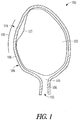
- FIG. 1 illustrates some anatomical tissue structures 100 associated with pregnancy, including an amniotic membrane 102 for enclosing a fetus, a uterus 104, a uterine side wall 106, and a cervix (including a cervical canal 108 and an internal cervical os 110 ).
- the amniotic membrane 102 is not vascularized, slow to heal, uniquely configured, and is not easily accessible. Moreover, the location of an amniotic membrane rupture can be difficult to determine.
- the present apparatus and kits which are configured to inhibit or prevent leakage of amniotic fluid from the uterus 104 due to PROM, can provide great benefits not currently achievable in a safe and effective manner.
- a transvaginal access route 112 is used to implant a present apparatus including a support member and a fluid-resistant material.
- the transvaginal route 112 can traverse the vagina and the cervical canal 108 before entering the internal cervical os 110. Because a PROM patient has leakage of amniotic fluid due to an amniotic membrane 102 rupture, position of the patient so that the cervical canal 108 is raised above the uterus 104, i.e., the Trendelenburg position, can help create space in the uterus 104 near the internal cervical os 110 for insertion of the apparatus.
- a transabdominal access route 114 is used to implant a present apparatus including a support member and a fluid-resistant material.
- the transabdominal access route 114 extends though a portion of an abdominal wall 116 and provides a means to inhibit or prevent leakage of amniotic fluid from an amniotic membrane rupture 116, near a uterine side wall 106, directly in cases of surgical manipulations within the uterus 104.
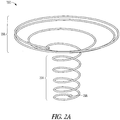
- FIGS. 2A-2B illustrate isometric views of example support members 202.
- the support member 202 can include a stent-like or other expandable structure that is transvaginally insertable 112 ( FIG. 1 ) and can be deployed through, and fixated with, walls of the cervix.
- the support member 202 includes a stent-like structure, such as Boston Scientific's WALLSTENTTM ILIAC ENDOPROSTHESIS product.
- the support member 202 can include a locating cylinder portion 204 and an integrated or attached diaphragm portion 206.
- the locating cylinder portion 204 can be configured to remain in the cervical canal 108 ( FIG. 1 ) and serve anchoring purposes by expanding against wall portions of the cervical canal 108.
- the diaphragm portion 206 can be configured to support a fluid-resistant material, as shown in FIGS. 3A-3C , which contact wall portions of an amniotic membrane 102 ( FIG. 1 ) or a uterus 104 ( FIG. 1 ) to reduce or prevent loss of amniotic fluid.
- the support member 202 does not include a locating cylinder portion 204.
- the support member 202 does not include a diaphragm portion 206, but rather assumes a uniform diameter, expandable stent structure.
- the support member 202 can include various dimensions, materials, and structure configurations.
- the locating cylinder portion 204 can have a deployed, expanded diameter between about 0.25 centimeters (cm) to about 2.0 cm, and more preferably between about 1.0 cm to about 1.5 cm, and a pre-deployment (i.e., unexpanded) diameter between about 3 millimeters (mm) to about 8 mm.
- the locating cylinder portion 204 can have a length of about 0.75 cm to about 2.5 cm.
- the diaphragm portion 206 can have a deployed, expanded diameter of about 3 cm to about 4 cm, and a pre-deployment diameter between about 3 mm to about 8 mm.
- the support member 202 can include a coil-like structure. In some examples, as shown in FIG. 2B , the support member 202 can include a mushroom-like structure. To aid in removal, the support member 202 can include a retrieval loop 208 at or near a bottom end portion (i.e., an outermost portion of the support member, which, when implanted, is nearest the exterior of a patient).
- the support member 202 or portions thereof can be configured to flex to fit local tissue variation at the time of implantation.
- the support member 202 or portions thereof can be configured to conform to progressive changes in tissue over time, such as can be common during the gestational cycle.
- the support member 202 includes Nitinol (a nickel titanium alloy) or other shape memory or expandable, conformable material.
- the support member 202 can include 0.254 mm (0.010 inch) diameter elastic Nitinol wire, which when exposed to body temperatures, assumes a pre-formed shape upon implantation.
- the support member 202 resists cellular in-growth and adhesions, while in other examples, the support member 202 allows for or promotes selected cellular in-growth or adhesions.
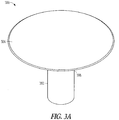
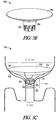
- FIGS. 3A-3C illustrate an isometric view of various biocompatible apparatus 300 including a support member 302 and a fluid-resistant material 304.
- the apparatus 300 includes an expandable, biocompatible support member 302 and a fluid-resistant material 304 in the form of a fluid-resistant fabric or polymer.
- one or both of the support member 302 or the fluid-resistant material 304 is coated or impregnated with bacterial control compounds to provide antibacterial release during use.
- one or both of the support member 302 or the fluid-resistant material 304 is coated or impregnated with an antimicrobial agent, such as nano silver or chlorhexidine.
- the antimicrobial agents can provide broad antibiotic and yeast coverage to a patient.
- the fluid-resistant material 304 can have a deployed, expanded diameter of about 3 cm to about 4 cm, and a pre-deployment diameter between about 3 mm to about 8 mm.
- FIGS. 3A and 3B illustrate that a top portion 308 of the support member 302 (i.e., an innermost portion of the support member, which, when implanted, is inserted nearest to an internal cervical os 110 ( FIG. 1 )) can open and position the fluid-resistant material 304 over the uterine side of the internal cervical os (see, e.g., FIG. 4 ).
- the fluid-resistant material 304 can then extend at least partially down a length of the support member 302 for sealing purposes.
- the fluid-resistant material 304 extends completely down the length of the support member 302; while in the example of FIG. 3B , the fluid-resistant material 304 extends only about 30-50% down the length of the support member 302. In some examples, it has proven helpful to not cover a bottom portion of the support member 302 to aid in apparatus removal via an exposed retrieval loop.
- the fluid-resistant material 304 shown in FIGS. 3A and 3B includes PTFE or ePTFE, both of which are biocompatible and conformal materials.
- PTFE or ePTFE tube of material can be heated and blow-molded using gas pressure.
- This blow-molded polymer tube can be coupled with the top portion 308 of the support member 302 using one or more crimps, one or more stitches, an adhesive, heat or other similar types of bonding, for example.
- FIG. 3C illustrates that a top portion 308 of the support member 302 can be coupled to more than one fluid-resistant member 304.
- the expandable support member 302 can be covered or coated on the top side portion 308 with a fluid-resistant material 305, such as GORE-TEX's® DUALMESH® PLUS Biomaterial product or other piece of fabric that is pliable, easy to work with, repels water, and optionally can be impregnated with anti-infection agents.
- Materials like GORE-TEX's® DUALMESH® PLUS include a plurality of small holes that can allow for tissue incorporation. Thus, over time, portions of the material can become integral with surrounding bodily tissue via tissue in-growth.
- the fluid-resistant material 305 has a thickness about 0.25 cm to about 0.75 cm and is stitched to the support member 302 using a biocompatible thread.
- a second fluid-resistant material 306 can be coupled to the top portion 308 of the support member 302 in a manner similar to a parachute coupling to a pack.
- a first side 330 of the second fluid-resistant material 306 can be configured to promote cell adhesion.
- a second side 332 of the second fluid resistant material 306 can be coated with a water-activated adhesive to help bond the material 306 to underlying uterine tissues to promote sealing. It is believed that an apparatus 300 including more than one fluid-resistant member 304, as shown in FIG. 3C , can provide enhanced functionality (e.g., via redundant sealing) and may ease deployment during implantation via an atraumatic, extremely flexible top end portion.
- an apparatus 400 can be transvaginally inserted 112 and can be deployed through a cervical canal 108 and an internal cervical os 110 such that a fluid-resistant material 404 is centered over the area of the cervix and maintained in position with a support member 402 that projects through the cervical canal 108.
- An outer edge portion of the fluid-resistant material 404 can rest on an upper-facing surface of the uterus 104, as shown schematically in FIG. 4 . It has been found that cervical changes often occur as the gestation period advances.
- these changes can include: a decrease in the cervical canal 108 length, a dilation of the cervical canal 108, a softening of the cervix, or a changing of the cervix from a posterior to an anterior position.
- one or both of the support member 402 and the fluid-resistant material 404 can be configured to conform to the cervical changes to help ensure proper sealing and diminish leaking of amniotic fluid from the uterus 104.
- the resistance of the fluid-resistant material 404 can be directional, such that it can be resistant to fluid penetration from a first direction 410 (e.g., from a uterus toward a vagina), but can permit fluid penetration from a second direction 412 (e.g., from within the support member 402 or administered from outside the body, through the vagina and support member 402, to the underside of the fluid-resistant material 404 ).
- the fluid-resistant material 404 is fluid-impermeable in the first direction 410 at intrauterine pressures of about 20 millimeter of mercury (mmHg) to about 33 mmHg. This fluid-impermeability can allow amniotic fluid to refill the uterus 104 and fetal space without leaking through the cervical canal 108.
- the fluid-resistance directionality of the fluid-resistant material 404 can be particularly useful to permit the apparatus 400 to be configured to allow diffusion or other delivery of a pharmaceutical drug composition (e.g., an antibiotic) or other substance through the covering material 404 while the support member 402 is implanted within the cervical canal 412 of a patient.
- a pharmaceutical drug composition e.g., an antibiotic
- the fluid-resistant material 404 can be infused or coated with a pharmaceutical drug or other substance composition.
- FIG. 5 illustrates an example apparatus 500 including a reservoir 520.
- the reservoir 520 is configured to store a pharmaceutical drug composition or other substance to be delivered to a patient.
- the reservoir can be carried at least partially within a support member 502, and can include means to allow drug or other substance delivery on a sustained release basis (e.g., days, weeks, or months) to the patient.
- a top portion 522 of the apparatus i.e., an innermost portion of the apparatus, which, when implanted, is inserted nearest to an amniotic membrane 102 ( FIG. 1 )
- the pore 524 can be constructed with a specific geometry appropriate to control the rate of release of the pharmaceutical drug composition or other substance to the uterus 104 ( FIG. 1 ) or tissues within or near the uterus.
- a micro-pump could be employed within the apparatus 500 to forcibly expel the drug composition or other substance from the reservoir 520 at a desired rate.
- the reservoir 520 can include a distally-located port or other opening 526 allowing the reservoir 520 to be filled or re-filled after the apparatus 500 is deployed within a cervical canal 108 ( FIG. 1 ) and internal cervical os 110 ( FIG. 1 ). In this way, the apparatus 500 can optionally remain small enough to easily pass through a transvaginal access route 112 ( FIG. 1 ), for example, to a desired membrane rupture location.
- the pharmaceutical composition can be in the form of a solid, a concentrated aqueous or other solution, a resin suspension, or combination thereof.
- the reservoir 520 can be molded or otherwise formed from a flexible material that is impermeable to the drug or other substance which will fill the reservoir 520.
- the reservoir 520 can be formed by a channel through an interior of the support member 502.
- a wick extension from the reservoir 520 can be provided to aid in medication release to the uterus 104 or tissues within or near the uterus.
- the wick extension can be secured within the reservoir 520 in fluid communication with the drug or other substance stored therein, and can extend through the pore 524, for example.
- the wick extension can be formed of a material suitable to transmit medication from the reservoir 520 to the patient, such as an absorbent, cloth-like material. The use of a wick extension can help assure constant contact between the drug or other substance stored within the reservoir 520 and desired tissues of the patient.
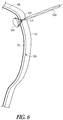
- FIG. 6 illustrates a schematic view of an example apparatus 600 including a support member 602 and a fluid-resistant material 604 retained within a uterine side wall 106 adjacent an abdomen wall 116.
- This second type of PROM is known as iatrogenic PROM and occurs most commonly as a complication of fetoscopy.
- iatrogenic PROM an amniotic membrane 102 rupture occurs somewhere on the side of the uterus 104 with amniotic fluid tracking between the membrane 102 and the uterine side wall 106 for a distance until it gets to the internal cervical os 110.
- an apparatus 600 which is smaller than the apparatus disclosed above and configured for cervical placement.
- This smaller apparatus 600 can be implanted via a transabdominal access route 114 for the prevention of iatrogenic PROM.
- a location cylinder portion of the support member 602 can have a deployed, expanded diameter between about 0.25 cm to about 0.5 cm and a length of about 0.25 cm to about 0.5 cm.
- the fluid-resistant material 604 can have a deployed, expanded diameter of about 0.75 cm to about 1.25 cm, such as about 1.0 cm.
- a detachable string 630 can be used to pull the fluid-resistant material 604 back up against the rupture in the amniotic membrane 102 during implantation.
- the transabdominal apparatus 600 can be implanted using a catheter. While it is not always possible to determine the location of an iatrogenic rupture accurately, when the location can be determined, direct sealing of the rupture using the apparatus 600 can be beneficial.
- a larger apparatus configured for cervical placement can be used in conjunction with apparatus 600 to further prevent amniotic fluid from leaking out of the uterus 104 and through a cervical canal 108 ( FIG. 1 ).
- a retail kit may also be packaged for consumer purchase.
- the kit may include an apparatus comprising a support member and a fluid-resistant material covering or otherwise coupled to a portion of the support member.
- the kit may also include a set of instructions for using the apparatus.
- the kit includes a pharmaceutical drug composition or other substance incorporated with the fluid-resistant material or stored in a reservoir carried by the support member, thereby allowing a treating physician to customize an amount and delivery means of drug or other substance applied to a patient.
- the kit includes one or more insertion or removal tools for implanting and withdrawing the apparatus.
- FIG. 7 illustrates an example method of using an apparatus including a support member and a fluid-resistant material to temporarily occlude or partially occlude a cervical canal, a cervical os, or a uterine side wall rupture location after PROM.
- an apparatus including an expandable support member and a fluid-resistant material, is optionally positioned in an applicator device, such as a delivery catheter, having an adjustable mechanical stop to ensure proper implant depth.
- the apparatus can be configured to be implanted with a single hand of a treating physician through a vagina to the cervical canal. Implantation can be facilitated by the applicator device.
- the applicator device can have an inner diameter between about 0.25 cm to about 1 cm and a length of about 35 cm. In other examples, the length of the applicator device can be less than 35 cm.
- the expandable support member e.g., Nitinol wire coil
- the coil shape see, e.g., FIG. 2A
- the fluid-resistant material coupled to a top portion of the support member can also be at least partially pulled into the cannula.
- the apparatus is implanted adjacent at least one of an amniotic membrane, a cervix, or a uterine side wall.
- the applicator device is advanced through the cervix or abdomen (either visually or under guidance).
- the expandable support member starts to emerge from the cannula, it is no longer constrained and beings to recover its coiled or otherwise expanded shape.
- the support member “remembers” its shape, it can pull and expand the fluid-resistant material into position and form a cupped, domed or disc-shaped cap.
- the bottom portions of the support member can expand in the cervical canal or an abdominal access route, at 706.
- the fluid-resistant material can extend partially into the cervix or an amniotic membrane to help ensure a seal with bodily tissue. Proper placement/implantation of the apparatus can be verified by physician visualization or sonography.
- the method can further include performing cerclage stitching about the cervix, to temporarily seal or occlude the cervical canal and assure the apparatus is not expelled from the cervical canal until delivery of the fetus is to occur or until desired.
- the method of 710 is only used to treat spontaneous PROM and not iatrogenic PROM.
- the apparatus can be removed.
- removal of the apparatus is performed using a special remover device.
- removal of the apparatus is performed using existing hospital tools or equipment.
- the remover device can be configured to hook a retrieval loop at an outermost, bottom end of an implanted apparatus, force can then be applied, and the apparatus can be removed.
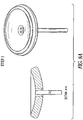
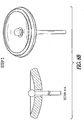
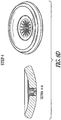
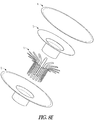
- FIGS. 8A-8E illustrate an example of an apparatus and method of use such as for cervical occlusion.
- an occlusion device delivery cannula can be inserted through the cervix just proximal of the cervical os on the uterine side.
- the occlusion device can be inflated, such as with isotonic saline (or similar medical fluid), such as for providing a cushion against the fetal head, and forming a deployment void in the uterine cavity.
- the occlusion device can be fully inflated, and released from the delivery cannula.
- the proximal end of the device can include exposed Nitinol (NiTi) struts in a serpentine (or "daisy) configuration, which can expand due to body temperature, and can purchase the cervical canal wall.
- the exposed struts can also enable reformation of the mucus plug, such as for providing a secondary barrier to ascending infection.
- the isotonic fluid drains from the occlusion device, forming a membrane barrier at the uterine side cervical os, such as for forming a plug positioned and partially sealed by the NiTi wire "daisy" and allowing the membrane to form a flap-type seal.
- FIG. 8E shows an example of an exploded view of the device, with these components:
- construction can include RF welding or other bonding of items 2 & 3, encapsulating item 1 therebetween, and then RF welding or bonding item 4 on top.
- the present apparatus can include an expandable support member of a biocompatible and non-toxic material.
- the support member can include a top portion having a first diameter and a bottom portion having a second diameter, which is less than the first diameter.
- the support member can include an expandable stent of a suitable length and substantially uniform diameter to be inserted in a non-dilated cervical canal or a transabdominal access route.
- the apparatus further includes a fluid-resistant fabric, polymer, substance or other material placed over or otherwise coupled to at least the top portion of the support member.
- the present apparatus and kits are believed to provide a safe and effective means to inhibit or prevent continuing loss of amniotic fluid from the uterus (thereby restoring membrane function) after PROM has occurred. In this way, pregnancy can be prolonged to advance fetal development and adverse events to the fetus resulting from decreased amniotic fluid can be diminished. Additionally, the present apparatus and kits can provide a patient the benefit of a continuous pharmacologic effect via drug or other substance release from a reservoir.
- the terms “a” or “an” are used, as is common in patent documents, to include one or more than one, independent of any other instances or usages of "at least one” or “one or more.”
- the term “or” is used to refer to a nonexclusive or, such that “A or B” includes “A but not B,” “B but not A,” and “A and B,” unless otherwise indicated.
- the terms “about” and “approximately” are used to refer to an amount that is nearly, almost, or in the vicinity of being equal to a stated amount.
- the membranes of pregnancy or similar is used to refer to the particular anatomy of the human membrane system that is formed to enclose a fetus.
Landscapes
- Health & Medical Sciences (AREA)
- Surgery (AREA)
- Life Sciences & Earth Sciences (AREA)
- Molecular Biology (AREA)
- General Health & Medical Sciences (AREA)
- Veterinary Medicine (AREA)
- Engineering & Computer Science (AREA)
- Biomedical Technology (AREA)
- Heart & Thoracic Surgery (AREA)
- Medical Informatics (AREA)
- Public Health (AREA)
- Animal Behavior & Ethology (AREA)
- Nuclear Medicine, Radiotherapy & Molecular Imaging (AREA)
- Reproductive Health (AREA)
- Vascular Medicine (AREA)
- Cardiology (AREA)
- Gynecology & Obstetrics (AREA)
- Pregnancy & Childbirth (AREA)
- Surgical Instruments (AREA)
- Prostheses (AREA)
Claims (20)
- Implantierbare Verschlussvorrichtung zum Zurückhalten von Fruchtwasser innerhalb der Gebärmutterhöhle, wobei die Vorrichtung Folgendes umfasst:ein ausdehnbares Stützelement (302), das sich von einem ersten Endabschnitt bis zu einem zweiten Endabschnitt erstreckt, wobei das ausdehnbare Stützelement (302) dafür bemessen ist, durch einen Zervikalkanal oder einen transabdominalen Zugangsweg hindurch zu treten und innerhalb wenigstens eines von einer Fruchtblase, einem Os cervicale oder einer Gebärmutter-Seitenwand angeordnet zu werden,ein erstes fluidbeständiges Material (305), das wenigstens einen ersten Endabschnitt des ausdehnbaren Stützelements bedeckt oder auf denselben schichtförmig aufgetragen ist,gekennzeichnet durch ein zweites fluidbeständiges Material (306),wobei das zweite fluidbeständige Material (306) von dem ersten Endabschnitt des ausdehnbaren Stützelements (302) beabstandet und mit demselben verbunden ist, wobei es eine hohle, gewölbte oder scheibenförmige Kappe bildet, wenn die Vorrichtung innerhalb einer Fruchtblase, eines Os cervicale oder einer Gebärmutter-Seitenwand angeordnet ist,wobei eines oder beide von dem ersten und dem zweiten fluidbeständigen Material (305; 306) dafür konfiguriert sind, das Os cervicale oder einen Riss der Fruchtblase nahe der Gebärmutter-Seitenwand zu verschließen oder teilweise zu verschließen.
- Vorrichtung nach Anspruch 1, wobei das ausdehnbare Stützelement (302) eine stentartige Struktur einschließt, die von dem ersten Endabschnitt bis zu dem zweiten Endabschnitt einen gleichförmigen Durchmesser hat.
- Vorrichtung nach Anspruch 1 oder 2, wobei wenigstens eines von dem ersten oder dem zweiten fluidbeständigen Material (305; 306) über eine oder mehrere Klemmverbindungen oder Nähte mit dem ersten Endabschnitt des ausdehnbaren Stützelements (302) verbunden ist.
- Vorrichtung nach einem der Ansprüche 1 bis 3, wobei eine Fläche des zweiten fluidbeständigen Materials (306) mit einem wasseraktivierten Klebstoff beschichtet ist.
- Vorrichtung nach einem der Ansprüche 1 bis 4, wobei der erste Endabschnitt des ausdehnbaren Stützelements (302) einen größeren Durchmesser einschließt als der zweite Endabschnitt des ausdehnbaren Stützelements (302).
- Vorrichtung nach einem der Ansprüche 1 bis 5, wobei sich das erste fluidbeständige Material (305) wenigstens teilweise eine Länge des ausdehnbaren Stützelements (302) hinab erstreckt.
- Vorrichtung nach einem der Ansprüche 1 bis 6, wobei der zweite Endabschnitt des ausdehnbaren Stützelements (302) einen ausgedehnten Durchmesser zwischen etwa 0,25 cm und etwa 2,0 cm und einen vorausgedehnten Durchmesser zwischen etwa 3 mm bis etwa 8 mm einschließt.
- Vorrichtung nach einem der Ansprüche 1 bis 7, wobei das zweite fluidbeständige Material (306) einen implantierten Durchmesser zwischen etwa 3 cm und etwa 4 cm hat.
- Vorrichtung nach einem der Ansprüche 1 bis 8, wobei das zweite fluidbeständige Material (306) einen implantierten Durchmesser zwischen etwa 0,75 cm und etwa 1,25 cm hat.
- Vorrichtung nach einem der Ansprüche 1 bis 9, wobei die ausdehnbare Stützstruktur (302) eine Formgedächtnislegierung einschließt.
- Vorrichtung nach einem der Ansprüche 1 bis 10, wobei wenigstens eines von dem ersten oder dem zweiten fluidbeständigen Material Polytetrafluorethylen, expandiertes Polytetrafluorethylen, ein eng gewebtes fluidbeständiges Material oder ein Nanofasermaterial einschließt.
- Vorrichtung nach einem der Ansprüche 1 bis 11, wobei wenigstens eines von dem ersten oder dem zweiten fluidbeständigen Material (305; 306) beständig ist gegen ein Fluiddurchdringen in einer ersten Richtung und ein Fluiddurchdringen in einer zweiten Richtung, entgegengesetzt zu der ersten Richtung, ermöglicht.
- Vorrichtung nach einem der Ansprüche 1 bis 12, wobei eines oder mehrere von dem ausdehnbaren Stützelement (302), dem ersten fluidbeständigen Material (305) oder dem zweiten fluidbeständigen Material (306) mit einem antimikrobiellen Wirkstoff beschichtet oder getränkt sind.
- Vorrichtung nach einem der Ansprüche 1 bis 13, wobei wenigstens eines von dem ersten oder dem zweiten fluidbeständigen Material (305; 306) wenigstens eine pharmazeutische Substanz einschließt.
- Vorrichtung nach einem der Ansprüche 1 bis 14, die ein Reservoir (520) umfasst, das wenigstens teilweise innerhalb des ausdehnbaren Stützelements (502) enthalten ist, wobei das Reservoir dafür konfiguriert ist, eine pharmazeutische Substanz zu führen.
- Vorrichtung nach Anspruch 15, welche die pharmazeutische Substanz umfasst.
- Vorrichtung nach Anspruch 15 oder 16, wobei wenigstens eines von dem ersten oder dem zweiten fluidbeständigen Material wenigstens eine Pore (524) in Fluidverbindung mit dem Reservoir (520) einschließt, wobei die wenigstens eine Pore eine Größe und eine Form hat, die dafür konfiguriert sind, eine Freisetzungsrate der pharmazeutischen Substanz zu steuern.
- Vorrichtung nach einem der Ansprüche 15 bis 17, die eine Dochtverlängerung umfasst, die innerhalb des Reservoirs (520) befestigt ist und in Fluidverbindung mit der in demselben gespeicherten pharmazeutischen Substanz steht.
- Besteck, das Folgendes umfasst:die Vorrichtung nach einem der Ansprüche 1 bis 18 undeinen Satz von Anweisungen zur Verwendung der Vorrichtung zum Verschließen oder teilweisen Verschließen wenigstens eines von einer Fruchtblase, einem Os cervicale oder einer Gebärmutter-Seitenwand.
- Besteck nach Anspruch 19, das eine Applikatorvorrichtung umfasst, die einen einstellbaren mechanischen Anschlag hat, um eine richtige Implantationstiefe sicherzustellen, wobei die Applikatorvorrichtung dafür konfiguriert ist, auf wenigstens eines von der Fruchtblase, dem Os cervicale oder der Gebärmutter-Seitenwand zuzugreifen.
Applications Claiming Priority (2)
| Application Number | Priority Date | Filing Date | Title |
|---|---|---|---|
| US8960908P | 2008-08-18 | 2008-08-18 | |
| PCT/US2009/004707 WO2010021695A1 (en) | 2008-08-18 | 2009-08-18 | Cervical occluder |
Publications (2)
| Publication Number | Publication Date |
|---|---|
| EP2328488A1 EP2328488A1 (de) | 2011-06-08 |
| EP2328488B1 true EP2328488B1 (de) | 2018-04-11 |
Family
ID=41259830
Family Applications (1)
| Application Number | Title | Priority Date | Filing Date |
|---|---|---|---|
| EP09789160.0A Not-in-force EP2328488B1 (de) | 2008-08-18 | 2009-08-18 | Zervikal-okklusionsvorrichtung |
Country Status (6)
| Country | Link |
|---|---|
| US (1) | US8408212B2 (de) |
| EP (1) | EP2328488B1 (de) |
| CN (1) | CN102368966B (de) |
| AU (1) | AU2009283197A1 (de) |
| CA (1) | CA2734513C (de) |
| WO (1) | WO2010021695A1 (de) |
Families Citing this family (34)
| Publication number | Priority date | Publication date | Assignee | Title |
|---|---|---|---|---|
| US10463530B2 (en) | 2008-08-15 | 2019-11-05 | Viatechmd Llc | Cervical stabilization device |
| US11607248B1 (en) | 2008-08-15 | 2023-03-21 | Via Techmd Llc | Cervical stabilization device |
| CN102368966B (zh) | 2008-08-18 | 2014-12-03 | 约翰·M·奥布莱恩 | 子宫颈阻塞体 |
| JP5693475B2 (ja) * | 2009-03-04 | 2015-04-01 | ペイタント・ソリューションズ・インコーポレイテッドPeytant Solutions, Inc. | 羊膜組織を含む材料で修飾されたステント及び対応する方法 |
| NL2003794C2 (nl) * | 2009-11-12 | 2011-05-16 | Heijmcomb B V | Intra-uterien systeem. |
| US20130019374A1 (en) | 2011-01-04 | 2013-01-24 | Schwartz Alan N | Gel-based seals and fixation devices and associated systems and methods |
| US11045246B1 (en) | 2011-01-04 | 2021-06-29 | Alan N. Schwartz | Apparatus for effecting feedback of vaginal cavity physiology |
| WO2013044166A1 (en) | 2011-09-23 | 2013-03-28 | Schwartz Alan N | Non-invasive and minimally invasive and tightly targeted minimally invasive therapy methods and devices for parathyroid treatment |
| US8932805B1 (en) * | 2011-10-31 | 2015-01-13 | BioDlogics, LLC | Birth tissue material and method of preparation |
| US9107737B2 (en) | 2011-11-21 | 2015-08-18 | Alan Schwartz | Goggles with facial conforming eyepieces |
| WO2013173810A2 (en) | 2012-05-17 | 2013-11-21 | Schwartz Alan N | Localization of the parathyroid |
| US20140163599A1 (en) * | 2012-12-06 | 2014-06-12 | Bandula Wijay | Lumen Occluding Stent, Delivery Catheter and Method |
| US20140296867A1 (en) * | 2013-04-01 | 2014-10-02 | Lsi Solutions, Inc. | Anatomic vaginal occluder |
| US10835303B2 (en) | 2013-06-07 | 2020-11-17 | Kebomed Ag | Device for thermal ablation |
| CN106456182B (zh) * | 2013-12-20 | 2021-04-09 | 泰尔茂株式会社 | 血管闭塞装置 |
| WO2015159291A1 (en) | 2014-04-14 | 2015-10-22 | Tel Hashomer Medical Research Infrastructure And Services Ltd. | Delaying pre-term birth |
| US10010659B1 (en) * | 2014-12-30 | 2018-07-03 | BioDlogics, LLC | Method of sterile collection of amniotic fluid |
| CA2970831C (en) | 2015-01-10 | 2024-01-09 | Nine Medical, Inc. | Methods and devices to prevent premature birth |
| US20160287228A1 (en) * | 2015-03-31 | 2016-10-06 | Ruben Quintero | Amnio opening occlusion device |
| EP3307205B1 (de) * | 2015-06-09 | 2021-03-03 | Via TechMD LLC | Vorrichtung zur gebärmutterhalsstabilisierung |
| CN105107079B (zh) * | 2015-06-25 | 2018-06-01 | 南通伊凯医疗器械有限公司 | 一种不孕治疗封堵塞 |
| KR101962373B1 (ko) * | 2017-01-13 | 2019-03-26 | 포항공과대학교 산학협력단 | 양막 수복용 플러그 |
| CN110996805B (zh) | 2017-05-25 | 2024-03-19 | 泰尔茂株式会社 | 粘合封堵系统 |
| WO2018232289A1 (en) | 2017-06-15 | 2018-12-20 | Wiesman Holdings, LLC | Device for delivery of a solution into a body orifice |
| USD918388S1 (en) | 2018-06-15 | 2021-05-04 | Wiesman Holdings, LLC | Solution diffusing head |
| BR112020026131A2 (pt) | 2018-06-21 | 2021-03-16 | Pregnantech Ltd. | Dispositivo e método para retardamento de nascimento prematuro |
| US11564692B2 (en) | 2018-11-01 | 2023-01-31 | Terumo Corporation | Occlusion systems |
| EP3902506A4 (de) | 2018-12-28 | 2022-09-28 | Nine Medical, Inc. | Verfahren und vorrichtungen zur verhinderung von vorzeitiger geburt, stillgeburt, fehlgeburt, infektion oder schwangerschaft |
| US11872395B2 (en) | 2019-06-18 | 2024-01-16 | Obstetric Solutions, Llc | Pessary device and methods for preventing premature births |
| US12011602B2 (en) | 2019-06-18 | 2024-06-18 | Obstetric Solutions Llc | Wireless power for pessary device |
| EP3753495A1 (de) * | 2019-06-20 | 2020-12-23 | Fundació Cellex | Flicken zur abdichtung einer amniotischen membran und vorrichtung zur platzierung des flickens auf einer amniotischen membran |
| WO2021222392A1 (en) | 2020-04-28 | 2021-11-04 | Terumo Corporation | Occlusion systems |
| CN112137677A (zh) * | 2020-10-21 | 2020-12-29 | 上海市第十人民医院 | 一种妇科腹腔镜手术用阴道封堵器 |
| CN113171164B (zh) * | 2021-04-13 | 2023-02-17 | 清华大学 | 用于体内原位生物制造的胎膜早破修补装置 |
Citations (1)
| Publication number | Priority date | Publication date | Assignee | Title |
|---|---|---|---|---|
| US6350463B1 (en) * | 1998-05-23 | 2002-02-26 | Andre Bieniarz | Method of treatment for premature rupture of membranes in pregnancy (PROM) |
Family Cites Families (15)
| Publication number | Priority date | Publication date | Assignee | Title |
|---|---|---|---|---|
| SE445884B (sv) | 1982-04-30 | 1986-07-28 | Medinvent Sa | Anordning for implantation av en rorformig protes |
| SE453258B (sv) | 1986-04-21 | 1988-01-25 | Medinvent Sa | Elastisk, sjelvexpanderande protes samt forfarande for dess framstellning |
| US5613950A (en) | 1988-07-22 | 1997-03-25 | Yoon; Inbae | Multifunctional manipulating instrument for various surgical procedures |
| DE9010130U1 (de) | 1989-07-13 | 1990-09-13 | American Medical Systems, Inc., Minnetonka, Minn. | Instrument zum Anbringen eines Aufweitimplantats |
| ES2089342T3 (es) | 1992-10-31 | 1996-10-01 | Schneider Europ Ag | Disposicion de introduccion de una endoprotesis autoexpansible. |
| US6464712B1 (en) * | 1997-02-11 | 2002-10-15 | Biointerventional Corporation | Expansile device for use in blood vessels and tracts in the body and method |
| US6152144A (en) * | 1998-11-06 | 2000-11-28 | Appriva Medical, Inc. | Method and device for left atrial appendage occlusion |
| JP2000300571A (ja) * | 1999-04-19 | 2000-10-31 | Nissho Corp | 経カテーテル手術用閉鎖栓 |
| US6375970B1 (en) | 1999-07-07 | 2002-04-23 | Andre Bieniarz | Methods and materials for preterm birth prevention |
| US7175647B2 (en) * | 2000-04-18 | 2007-02-13 | David Berry | Repair of ruptured membrane by injection of naturally occurring protein in amniotic fluid sac |
| DE602004018282D1 (de) * | 2003-03-17 | 2009-01-22 | Ev3 Endovascular Inc | Stent mit laminierter dünnfilmverbund |
| AU2005209844B2 (en) * | 2004-02-02 | 2010-07-08 | Bayer Essure, Inc. | Contraceptive with permeable and impermeable components |
| US7972359B2 (en) * | 2005-09-16 | 2011-07-05 | Atritech, Inc. | Intracardiac cage and method of delivering same |
| CN101657172A (zh) * | 2006-10-12 | 2010-02-24 | 伊姆普雷斯医疗公司 | 用于闭塞腔管的方法和装置 |
| CN102368966B (zh) | 2008-08-18 | 2014-12-03 | 约翰·M·奥布莱恩 | 子宫颈阻塞体 |
-
2009
- 2009-08-18 CN CN200980141408.8A patent/CN102368966B/zh not_active Expired - Fee Related
- 2009-08-18 AU AU2009283197A patent/AU2009283197A1/en not_active Abandoned
- 2009-08-18 WO PCT/US2009/004707 patent/WO2010021695A1/en not_active Ceased
- 2009-08-18 EP EP09789160.0A patent/EP2328488B1/de not_active Not-in-force
- 2009-08-18 CA CA2734513A patent/CA2734513C/en not_active Expired - Fee Related
- 2009-08-18 US US12/543,397 patent/US8408212B2/en not_active Expired - Fee Related
Patent Citations (1)
| Publication number | Priority date | Publication date | Assignee | Title |
|---|---|---|---|---|
| US6350463B1 (en) * | 1998-05-23 | 2002-02-26 | Andre Bieniarz | Method of treatment for premature rupture of membranes in pregnancy (PROM) |
Also Published As
| Publication number | Publication date |
|---|---|
| CN102368966A (zh) | 2012-03-07 |
| AU2009283197A1 (en) | 2010-02-25 |
| CN102368966B (zh) | 2014-12-03 |
| EP2328488A1 (de) | 2011-06-08 |
| US20100043802A1 (en) | 2010-02-25 |
| CA2734513C (en) | 2019-06-18 |
| WO2010021695A1 (en) | 2010-02-25 |
| US8408212B2 (en) | 2013-04-02 |
| CA2734513A1 (en) | 2010-02-25 |
Similar Documents
| Publication | Publication Date | Title |
|---|---|---|
| EP2328488B1 (de) | Zervikal-okklusionsvorrichtung | |
| JP4113672B2 (ja) | 閉塞装置及び使用方法 | |
| EP1711143B1 (de) | Kontrazeptivum mit permeablen und impermeablen komponenten | |
| AU2006252147B2 (en) | Method and apparatus for creating intrauterine adhesions | |
| EP3189817B1 (de) | Vorrichtungen zum einsetzen und lösen eines interimsimplantats im körper | |
| AU2007307639B2 (en) | Method and apparatus for occluding a lumen | |
| BR102019001379A2 (pt) | Dispositivo para aneurisma e sistema de implantação | |
| KR20160045802A (ko) | 외과용 임플란트 | |
| EP3007756B1 (de) | Kathetergestützte tumorbehandlung | |
| US20060089658A1 (en) | Method and apparatus for treating abnormal uterine bleeding | |
| CN107530538B (zh) | 用于在身体内部署并释放临时植入物的方法和装置 | |
| JP2015165977A (ja) | 便失禁のための膣内デバイス | |
| AU2004201816A1 (en) | Occluding Device and Method of Use | |
| US20230218286A1 (en) | Biological fluid drainage devices, systems, and methos | |
| US11324567B2 (en) | Expandable tissue cavity marker devices, systems and deployment methods | |
| WO2024086844A2 (en) | Customizable inflatable bolster apparatus |
Legal Events
| Date | Code | Title | Description |
|---|---|---|---|
| PUAI | Public reference made under article 153(3) epc to a published international application that has entered the european phase |
Free format text: ORIGINAL CODE: 0009012 |
|
| 17P | Request for examination filed |
Effective date: 20110318 |
|
| AK | Designated contracting states |
Kind code of ref document: A1 Designated state(s): AT BE BG CH CY CZ DE DK EE ES FI FR GB GR HR HU IE IS IT LI LT LU LV MC MK MT NL NO PL PT RO SE SI SK SM TR |
|
| AX | Request for extension of the european patent |
Extension state: AL BA RS |
|
| DAX | Request for extension of the european patent (deleted) | ||
| 17Q | First examination report despatched |
Effective date: 20130927 |
|
| GRAP | Despatch of communication of intention to grant a patent |
Free format text: ORIGINAL CODE: EPIDOSNIGR1 |
|
| INTG | Intention to grant announced |
Effective date: 20170531 |
|
| GRAS | Grant fee paid |
Free format text: ORIGINAL CODE: EPIDOSNIGR3 |
|
| GRAA | (expected) grant |
Free format text: ORIGINAL CODE: 0009210 |
|
| AK | Designated contracting states |
Kind code of ref document: B1 Designated state(s): AT BE BG CH CY CZ DE DK EE ES FI FR GB GR HR HU IE IS IT LI LT LU LV MC MK MT NL NO PL PT RO SE SI SK SM TR |
|
| REG | Reference to a national code |
Ref country code: GB Ref legal event code: FG4D |
|
| REG | Reference to a national code |
Ref country code: CH Ref legal event code: EP |
|
| REG | Reference to a national code |
Ref country code: AT Ref legal event code: REF Ref document number: 987148 Country of ref document: AT Kind code of ref document: T Effective date: 20180415 |
|
| REG | Reference to a national code |
Ref country code: IE Ref legal event code: FG4D |
|
| REG | Reference to a national code |
Ref country code: DE Ref legal event code: R096 Ref document number: 602009051754 Country of ref document: DE |
|
| REG | Reference to a national code |
Ref country code: NL Ref legal event code: MP Effective date: 20180411 |
|
| REG | Reference to a national code |
Ref country code: LT Ref legal event code: MG4D Ref country code: FR Ref legal event code: PLFP Year of fee payment: 10 |
|
| PG25 | Lapsed in a contracting state [announced via postgrant information from national office to epo] |
Ref country code: NL Free format text: LAPSE BECAUSE OF FAILURE TO SUBMIT A TRANSLATION OF THE DESCRIPTION OR TO PAY THE FEE WITHIN THE PRESCRIBED TIME-LIMIT Effective date: 20180411 |
|
| PG25 | Lapsed in a contracting state [announced via postgrant information from national office to epo] |
Ref country code: BG Free format text: LAPSE BECAUSE OF FAILURE TO SUBMIT A TRANSLATION OF THE DESCRIPTION OR TO PAY THE FEE WITHIN THE PRESCRIBED TIME-LIMIT Effective date: 20180711 Ref country code: FI Free format text: LAPSE BECAUSE OF FAILURE TO SUBMIT A TRANSLATION OF THE DESCRIPTION OR TO PAY THE FEE WITHIN THE PRESCRIBED TIME-LIMIT Effective date: 20180411 Ref country code: PL Free format text: LAPSE BECAUSE OF FAILURE TO SUBMIT A TRANSLATION OF THE DESCRIPTION OR TO PAY THE FEE WITHIN THE PRESCRIBED TIME-LIMIT Effective date: 20180411 Ref country code: LT Free format text: LAPSE BECAUSE OF FAILURE TO SUBMIT A TRANSLATION OF THE DESCRIPTION OR TO PAY THE FEE WITHIN THE PRESCRIBED TIME-LIMIT Effective date: 20180411 Ref country code: SE Free format text: LAPSE BECAUSE OF FAILURE TO SUBMIT A TRANSLATION OF THE DESCRIPTION OR TO PAY THE FEE WITHIN THE PRESCRIBED TIME-LIMIT Effective date: 20180411 Ref country code: ES Free format text: LAPSE BECAUSE OF FAILURE TO SUBMIT A TRANSLATION OF THE DESCRIPTION OR TO PAY THE FEE WITHIN THE PRESCRIBED TIME-LIMIT Effective date: 20180411 Ref country code: NO Free format text: LAPSE BECAUSE OF FAILURE TO SUBMIT A TRANSLATION OF THE DESCRIPTION OR TO PAY THE FEE WITHIN THE PRESCRIBED TIME-LIMIT Effective date: 20180711 |
|
| PG25 | Lapsed in a contracting state [announced via postgrant information from national office to epo] |
Ref country code: LV Free format text: LAPSE BECAUSE OF FAILURE TO SUBMIT A TRANSLATION OF THE DESCRIPTION OR TO PAY THE FEE WITHIN THE PRESCRIBED TIME-LIMIT Effective date: 20180411 Ref country code: GR Free format text: LAPSE BECAUSE OF FAILURE TO SUBMIT A TRANSLATION OF THE DESCRIPTION OR TO PAY THE FEE WITHIN THE PRESCRIBED TIME-LIMIT Effective date: 20180712 Ref country code: HR Free format text: LAPSE BECAUSE OF FAILURE TO SUBMIT A TRANSLATION OF THE DESCRIPTION OR TO PAY THE FEE WITHIN THE PRESCRIBED TIME-LIMIT Effective date: 20180411 |
|
| REG | Reference to a national code |
Ref country code: AT Ref legal event code: MK05 Ref document number: 987148 Country of ref document: AT Kind code of ref document: T Effective date: 20180411 |
|
| PG25 | Lapsed in a contracting state [announced via postgrant information from national office to epo] |
Ref country code: PT Free format text: LAPSE BECAUSE OF FAILURE TO SUBMIT A TRANSLATION OF THE DESCRIPTION OR TO PAY THE FEE WITHIN THE PRESCRIBED TIME-LIMIT Effective date: 20180813 |
|
| REG | Reference to a national code |
Ref country code: DE Ref legal event code: R097 Ref document number: 602009051754 Country of ref document: DE |
|
| PG25 | Lapsed in a contracting state [announced via postgrant information from national office to epo] |
Ref country code: SK Free format text: LAPSE BECAUSE OF FAILURE TO SUBMIT A TRANSLATION OF THE DESCRIPTION OR TO PAY THE FEE WITHIN THE PRESCRIBED TIME-LIMIT Effective date: 20180411 Ref country code: RO Free format text: LAPSE BECAUSE OF FAILURE TO SUBMIT A TRANSLATION OF THE DESCRIPTION OR TO PAY THE FEE WITHIN THE PRESCRIBED TIME-LIMIT Effective date: 20180411 Ref country code: CZ Free format text: LAPSE BECAUSE OF FAILURE TO SUBMIT A TRANSLATION OF THE DESCRIPTION OR TO PAY THE FEE WITHIN THE PRESCRIBED TIME-LIMIT Effective date: 20180411 Ref country code: AT Free format text: LAPSE BECAUSE OF FAILURE TO SUBMIT A TRANSLATION OF THE DESCRIPTION OR TO PAY THE FEE WITHIN THE PRESCRIBED TIME-LIMIT Effective date: 20180411 Ref country code: EE Free format text: LAPSE BECAUSE OF FAILURE TO SUBMIT A TRANSLATION OF THE DESCRIPTION OR TO PAY THE FEE WITHIN THE PRESCRIBED TIME-LIMIT Effective date: 20180411 Ref country code: DK Free format text: LAPSE BECAUSE OF FAILURE TO SUBMIT A TRANSLATION OF THE DESCRIPTION OR TO PAY THE FEE WITHIN THE PRESCRIBED TIME-LIMIT Effective date: 20180411 |
|
| PLBE | No opposition filed within time limit |
Free format text: ORIGINAL CODE: 0009261 |
|
| STAA | Information on the status of an ep patent application or granted ep patent |
Free format text: STATUS: NO OPPOSITION FILED WITHIN TIME LIMIT |
|
| PG25 | Lapsed in a contracting state [announced via postgrant information from national office to epo] |
Ref country code: IT Free format text: LAPSE BECAUSE OF FAILURE TO SUBMIT A TRANSLATION OF THE DESCRIPTION OR TO PAY THE FEE WITHIN THE PRESCRIBED TIME-LIMIT Effective date: 20180411 Ref country code: SM Free format text: LAPSE BECAUSE OF FAILURE TO SUBMIT A TRANSLATION OF THE DESCRIPTION OR TO PAY THE FEE WITHIN THE PRESCRIBED TIME-LIMIT Effective date: 20180411 |
|
| 26N | No opposition filed |
Effective date: 20190114 |
|
| PG25 | Lapsed in a contracting state [announced via postgrant information from national office to epo] |
Ref country code: MC Free format text: LAPSE BECAUSE OF FAILURE TO SUBMIT A TRANSLATION OF THE DESCRIPTION OR TO PAY THE FEE WITHIN THE PRESCRIBED TIME-LIMIT Effective date: 20180411 |
|
| REG | Reference to a national code |
Ref country code: CH Ref legal event code: PL |
|
| PG25 | Lapsed in a contracting state [announced via postgrant information from national office to epo] |
Ref country code: LI Free format text: LAPSE BECAUSE OF NON-PAYMENT OF DUE FEES Effective date: 20180831 Ref country code: LU Free format text: LAPSE BECAUSE OF NON-PAYMENT OF DUE FEES Effective date: 20180818 Ref country code: CH Free format text: LAPSE BECAUSE OF NON-PAYMENT OF DUE FEES Effective date: 20180831 |
|
| REG | Reference to a national code |
Ref country code: BE Ref legal event code: MM Effective date: 20180831 |
|
| PG25 | Lapsed in a contracting state [announced via postgrant information from national office to epo] |
Ref country code: SI Free format text: LAPSE BECAUSE OF FAILURE TO SUBMIT A TRANSLATION OF THE DESCRIPTION OR TO PAY THE FEE WITHIN THE PRESCRIBED TIME-LIMIT Effective date: 20180411 |
|
| PG25 | Lapsed in a contracting state [announced via postgrant information from national office to epo] |
Ref country code: BE Free format text: LAPSE BECAUSE OF NON-PAYMENT OF DUE FEES Effective date: 20180831 |
|
| PG25 | Lapsed in a contracting state [announced via postgrant information from national office to epo] |
Ref country code: MT Free format text: LAPSE BECAUSE OF NON-PAYMENT OF DUE FEES Effective date: 20180818 |
|
| PG25 | Lapsed in a contracting state [announced via postgrant information from national office to epo] |
Ref country code: TR Free format text: LAPSE BECAUSE OF FAILURE TO SUBMIT A TRANSLATION OF THE DESCRIPTION OR TO PAY THE FEE WITHIN THE PRESCRIBED TIME-LIMIT Effective date: 20180411 |
|
| PG25 | Lapsed in a contracting state [announced via postgrant information from national office to epo] |
Ref country code: HU Free format text: LAPSE BECAUSE OF FAILURE TO SUBMIT A TRANSLATION OF THE DESCRIPTION OR TO PAY THE FEE WITHIN THE PRESCRIBED TIME-LIMIT; INVALID AB INITIO Effective date: 20090818 |
|
| PG25 | Lapsed in a contracting state [announced via postgrant information from national office to epo] |
Ref country code: CY Free format text: LAPSE BECAUSE OF FAILURE TO SUBMIT A TRANSLATION OF THE DESCRIPTION OR TO PAY THE FEE WITHIN THE PRESCRIBED TIME-LIMIT Effective date: 20180411 Ref country code: MK Free format text: LAPSE BECAUSE OF NON-PAYMENT OF DUE FEES Effective date: 20180411 |
|
| PG25 | Lapsed in a contracting state [announced via postgrant information from national office to epo] |
Ref country code: IS Free format text: LAPSE BECAUSE OF FAILURE TO SUBMIT A TRANSLATION OF THE DESCRIPTION OR TO PAY THE FEE WITHIN THE PRESCRIBED TIME-LIMIT Effective date: 20180811 |
|
| PGFP | Annual fee paid to national office [announced via postgrant information from national office to epo] |
Ref country code: FR Payment date: 20200825 Year of fee payment: 12 Ref country code: GB Payment date: 20200827 Year of fee payment: 12 Ref country code: IE Payment date: 20200827 Year of fee payment: 12 Ref country code: DE Payment date: 20200827 Year of fee payment: 12 |
|
| REG | Reference to a national code |
Ref country code: DE Ref legal event code: R119 Ref document number: 602009051754 Country of ref document: DE |
|
| GBPC | Gb: european patent ceased through non-payment of renewal fee |
Effective date: 20210818 |
|
| PG25 | Lapsed in a contracting state [announced via postgrant information from national office to epo] |
Ref country code: IE Free format text: LAPSE BECAUSE OF NON-PAYMENT OF DUE FEES Effective date: 20210818 Ref country code: GB Free format text: LAPSE BECAUSE OF NON-PAYMENT OF DUE FEES Effective date: 20210818 Ref country code: FR Free format text: LAPSE BECAUSE OF NON-PAYMENT OF DUE FEES Effective date: 20210831 Ref country code: DE Free format text: LAPSE BECAUSE OF NON-PAYMENT OF DUE FEES Effective date: 20220301 |