EP2320161B1 - Climatiseur - Google Patents
Climatiseur Download PDFInfo
- Publication number
- EP2320161B1 EP2320161B1 EP11154491.2A EP11154491A EP2320161B1 EP 2320161 B1 EP2320161 B1 EP 2320161B1 EP 11154491 A EP11154491 A EP 11154491A EP 2320161 B1 EP2320161 B1 EP 2320161B1
- Authority
- EP
- European Patent Office
- Prior art keywords
- heat source
- refrigerant
- line
- units
- user
- Prior art date
- Legal status (The legal status is an assumption and is not a legal conclusion. Google has not performed a legal analysis and makes no representation as to the accuracy of the status listed.)
- Expired - Lifetime
Links
Images





Classifications
-
- F—MECHANICAL ENGINEERING; LIGHTING; HEATING; WEAPONS; BLASTING
- F25—REFRIGERATION OR COOLING; COMBINED HEATING AND REFRIGERATION SYSTEMS; HEAT PUMP SYSTEMS; MANUFACTURE OR STORAGE OF ICE; LIQUEFACTION SOLIDIFICATION OF GASES
- F25B—REFRIGERATION MACHINES, PLANTS OR SYSTEMS; COMBINED HEATING AND REFRIGERATION SYSTEMS; HEAT PUMP SYSTEMS
- F25B13/00—Compression machines, plants or systems, with reversible cycle
-
- F—MECHANICAL ENGINEERING; LIGHTING; HEATING; WEAPONS; BLASTING
- F25—REFRIGERATION OR COOLING; COMBINED HEATING AND REFRIGERATION SYSTEMS; HEAT PUMP SYSTEMS; MANUFACTURE OR STORAGE OF ICE; LIQUEFACTION SOLIDIFICATION OF GASES
- F25B—REFRIGERATION MACHINES, PLANTS OR SYSTEMS; COMBINED HEATING AND REFRIGERATION SYSTEMS; HEAT PUMP SYSTEMS
- F25B41/00—Fluid-circulation arrangements
-
- F—MECHANICAL ENGINEERING; LIGHTING; HEATING; WEAPONS; BLASTING
- F25—REFRIGERATION OR COOLING; COMBINED HEATING AND REFRIGERATION SYSTEMS; HEAT PUMP SYSTEMS; MANUFACTURE OR STORAGE OF ICE; LIQUEFACTION SOLIDIFICATION OF GASES
- F25B—REFRIGERATION MACHINES, PLANTS OR SYSTEMS; COMBINED HEATING AND REFRIGERATION SYSTEMS; HEAT PUMP SYSTEMS
- F25B2313/00—Compression machines, plants or systems with reversible cycle not otherwise provided for
- F25B2313/006—Compression machines, plants or systems with reversible cycle not otherwise provided for two pipes connecting the outdoor side to the indoor side with multiple indoor units
-
- F—MECHANICAL ENGINEERING; LIGHTING; HEATING; WEAPONS; BLASTING
- F25—REFRIGERATION OR COOLING; COMBINED HEATING AND REFRIGERATION SYSTEMS; HEAT PUMP SYSTEMS; MANUFACTURE OR STORAGE OF ICE; LIQUEFACTION SOLIDIFICATION OF GASES
- F25B—REFRIGERATION MACHINES, PLANTS OR SYSTEMS; COMBINED HEATING AND REFRIGERATION SYSTEMS; HEAT PUMP SYSTEMS
- F25B2313/00—Compression machines, plants or systems with reversible cycle not otherwise provided for
- F25B2313/023—Compression machines, plants or systems with reversible cycle not otherwise provided for using multiple indoor units
- F25B2313/0233—Compression machines, plants or systems with reversible cycle not otherwise provided for using multiple indoor units in parallel arrangements
-
- F—MECHANICAL ENGINEERING; LIGHTING; HEATING; WEAPONS; BLASTING
- F25—REFRIGERATION OR COOLING; COMBINED HEATING AND REFRIGERATION SYSTEMS; HEAT PUMP SYSTEMS; MANUFACTURE OR STORAGE OF ICE; LIQUEFACTION SOLIDIFICATION OF GASES
- F25B—REFRIGERATION MACHINES, PLANTS OR SYSTEMS; COMBINED HEATING AND REFRIGERATION SYSTEMS; HEAT PUMP SYSTEMS
- F25B2313/00—Compression machines, plants or systems with reversible cycle not otherwise provided for
- F25B2313/023—Compression machines, plants or systems with reversible cycle not otherwise provided for using multiple indoor units
- F25B2313/0233—Compression machines, plants or systems with reversible cycle not otherwise provided for using multiple indoor units in parallel arrangements
- F25B2313/02331—Compression machines, plants or systems with reversible cycle not otherwise provided for using multiple indoor units in parallel arrangements during cooling
-
- F—MECHANICAL ENGINEERING; LIGHTING; HEATING; WEAPONS; BLASTING
- F25—REFRIGERATION OR COOLING; COMBINED HEATING AND REFRIGERATION SYSTEMS; HEAT PUMP SYSTEMS; MANUFACTURE OR STORAGE OF ICE; LIQUEFACTION SOLIDIFICATION OF GASES
- F25B—REFRIGERATION MACHINES, PLANTS OR SYSTEMS; COMBINED HEATING AND REFRIGERATION SYSTEMS; HEAT PUMP SYSTEMS
- F25B2313/00—Compression machines, plants or systems with reversible cycle not otherwise provided for
- F25B2313/023—Compression machines, plants or systems with reversible cycle not otherwise provided for using multiple indoor units
- F25B2313/0234—Compression machines, plants or systems with reversible cycle not otherwise provided for using multiple indoor units in series arrangements
- F25B2313/02344—Compression machines, plants or systems with reversible cycle not otherwise provided for using multiple indoor units in series arrangements during heating
-
- F—MECHANICAL ENGINEERING; LIGHTING; HEATING; WEAPONS; BLASTING
- F25—REFRIGERATION OR COOLING; COMBINED HEATING AND REFRIGERATION SYSTEMS; HEAT PUMP SYSTEMS; MANUFACTURE OR STORAGE OF ICE; LIQUEFACTION SOLIDIFICATION OF GASES
- F25B—REFRIGERATION MACHINES, PLANTS OR SYSTEMS; COMBINED HEATING AND REFRIGERATION SYSTEMS; HEAT PUMP SYSTEMS
- F25B2313/00—Compression machines, plants or systems with reversible cycle not otherwise provided for
- F25B2313/025—Compression machines, plants or systems with reversible cycle not otherwise provided for using multiple outdoor units
- F25B2313/0253—Compression machines, plants or systems with reversible cycle not otherwise provided for using multiple outdoor units in parallel arrangements
-
- F—MECHANICAL ENGINEERING; LIGHTING; HEATING; WEAPONS; BLASTING
- F25—REFRIGERATION OR COOLING; COMBINED HEATING AND REFRIGERATION SYSTEMS; HEAT PUMP SYSTEMS; MANUFACTURE OR STORAGE OF ICE; LIQUEFACTION SOLIDIFICATION OF GASES
- F25B—REFRIGERATION MACHINES, PLANTS OR SYSTEMS; COMBINED HEATING AND REFRIGERATION SYSTEMS; HEAT PUMP SYSTEMS
- F25B2313/00—Compression machines, plants or systems with reversible cycle not otherwise provided for
- F25B2313/031—Sensor arrangements
- F25B2313/0314—Temperature sensors near the indoor heat exchanger
-
- F—MECHANICAL ENGINEERING; LIGHTING; HEATING; WEAPONS; BLASTING
- F25—REFRIGERATION OR COOLING; COMBINED HEATING AND REFRIGERATION SYSTEMS; HEAT PUMP SYSTEMS; MANUFACTURE OR STORAGE OF ICE; LIQUEFACTION SOLIDIFICATION OF GASES
- F25B—REFRIGERATION MACHINES, PLANTS OR SYSTEMS; COMBINED HEATING AND REFRIGERATION SYSTEMS; HEAT PUMP SYSTEMS
- F25B2313/00—Compression machines, plants or systems with reversible cycle not otherwise provided for
- F25B2313/031—Sensor arrangements
- F25B2313/0315—Temperature sensors near the outdoor heat exchanger
-
- F—MECHANICAL ENGINEERING; LIGHTING; HEATING; WEAPONS; BLASTING
- F25—REFRIGERATION OR COOLING; COMBINED HEATING AND REFRIGERATION SYSTEMS; HEAT PUMP SYSTEMS; MANUFACTURE OR STORAGE OF ICE; LIQUEFACTION SOLIDIFICATION OF GASES
- F25B—REFRIGERATION MACHINES, PLANTS OR SYSTEMS; COMBINED HEATING AND REFRIGERATION SYSTEMS; HEAT PUMP SYSTEMS
- F25B2400/00—General features or devices for refrigeration machines, plants or systems, combined heating and refrigeration systems or heat-pump systems, i.e. not limited to a particular subgroup of F25B
- F25B2400/06—Several compression cycles arranged in parallel
-
- F—MECHANICAL ENGINEERING; LIGHTING; HEATING; WEAPONS; BLASTING
- F25—REFRIGERATION OR COOLING; COMBINED HEATING AND REFRIGERATION SYSTEMS; HEAT PUMP SYSTEMS; MANUFACTURE OR STORAGE OF ICE; LIQUEFACTION SOLIDIFICATION OF GASES
- F25B—REFRIGERATION MACHINES, PLANTS OR SYSTEMS; COMBINED HEATING AND REFRIGERATION SYSTEMS; HEAT PUMP SYSTEMS
- F25B2400/00—General features or devices for refrigeration machines, plants or systems, combined heating and refrigeration systems or heat-pump systems, i.e. not limited to a particular subgroup of F25B
- F25B2400/07—Details of compressors or related parts
- F25B2400/075—Details of compressors or related parts with parallel compressors
-
- F—MECHANICAL ENGINEERING; LIGHTING; HEATING; WEAPONS; BLASTING
- F25—REFRIGERATION OR COOLING; COMBINED HEATING AND REFRIGERATION SYSTEMS; HEAT PUMP SYSTEMS; MANUFACTURE OR STORAGE OF ICE; LIQUEFACTION SOLIDIFICATION OF GASES
- F25B—REFRIGERATION MACHINES, PLANTS OR SYSTEMS; COMBINED HEATING AND REFRIGERATION SYSTEMS; HEAT PUMP SYSTEMS
- F25B2400/00—General features or devices for refrigeration machines, plants or systems, combined heating and refrigeration systems or heat-pump systems, i.e. not limited to a particular subgroup of F25B
- F25B2400/16—Receivers
- F25B2400/161—Receivers arranged in parallel
-
- F—MECHANICAL ENGINEERING; LIGHTING; HEATING; WEAPONS; BLASTING
- F25—REFRIGERATION OR COOLING; COMBINED HEATING AND REFRIGERATION SYSTEMS; HEAT PUMP SYSTEMS; MANUFACTURE OR STORAGE OF ICE; LIQUEFACTION SOLIDIFICATION OF GASES
- F25B—REFRIGERATION MACHINES, PLANTS OR SYSTEMS; COMBINED HEATING AND REFRIGERATION SYSTEMS; HEAT PUMP SYSTEMS
- F25B2400/00—General features or devices for refrigeration machines, plants or systems, combined heating and refrigeration systems or heat-pump systems, i.e. not limited to a particular subgroup of F25B
- F25B2400/19—Pumping down refrigerant from one part of the cycle to another part of the cycle, e.g. when the cycle is changed from cooling to heating, or before a defrost cycle is started
-
- F—MECHANICAL ENGINEERING; LIGHTING; HEATING; WEAPONS; BLASTING
- F25—REFRIGERATION OR COOLING; COMBINED HEATING AND REFRIGERATION SYSTEMS; HEAT PUMP SYSTEMS; MANUFACTURE OR STORAGE OF ICE; LIQUEFACTION SOLIDIFICATION OF GASES
- F25B—REFRIGERATION MACHINES, PLANTS OR SYSTEMS; COMBINED HEATING AND REFRIGERATION SYSTEMS; HEAT PUMP SYSTEMS
- F25B2500/00—Problems to be solved
- F25B2500/16—Lubrication
-
- F—MECHANICAL ENGINEERING; LIGHTING; HEATING; WEAPONS; BLASTING
- F25—REFRIGERATION OR COOLING; COMBINED HEATING AND REFRIGERATION SYSTEMS; HEAT PUMP SYSTEMS; MANUFACTURE OR STORAGE OF ICE; LIQUEFACTION SOLIDIFICATION OF GASES
- F25B—REFRIGERATION MACHINES, PLANTS OR SYSTEMS; COMBINED HEATING AND REFRIGERATION SYSTEMS; HEAT PUMP SYSTEMS
- F25B2500/00—Problems to be solved
- F25B2500/27—Problems to be solved characterised by the stop of the refrigeration cycle
-
- F—MECHANICAL ENGINEERING; LIGHTING; HEATING; WEAPONS; BLASTING
- F25—REFRIGERATION OR COOLING; COMBINED HEATING AND REFRIGERATION SYSTEMS; HEAT PUMP SYSTEMS; MANUFACTURE OR STORAGE OF ICE; LIQUEFACTION SOLIDIFICATION OF GASES
- F25B—REFRIGERATION MACHINES, PLANTS OR SYSTEMS; COMBINED HEATING AND REFRIGERATION SYSTEMS; HEAT PUMP SYSTEMS
- F25B2700/00—Sensing or detecting of parameters; Sensors therefor
- F25B2700/19—Pressures
- F25B2700/193—Pressures of the compressor
- F25B2700/1931—Discharge pressures
-
- F—MECHANICAL ENGINEERING; LIGHTING; HEATING; WEAPONS; BLASTING
- F25—REFRIGERATION OR COOLING; COMBINED HEATING AND REFRIGERATION SYSTEMS; HEAT PUMP SYSTEMS; MANUFACTURE OR STORAGE OF ICE; LIQUEFACTION SOLIDIFICATION OF GASES
- F25B—REFRIGERATION MACHINES, PLANTS OR SYSTEMS; COMBINED HEATING AND REFRIGERATION SYSTEMS; HEAT PUMP SYSTEMS
- F25B2700/00—Sensing or detecting of parameters; Sensors therefor
- F25B2700/19—Pressures
- F25B2700/193—Pressures of the compressor
- F25B2700/1933—Suction pressures
-
- F—MECHANICAL ENGINEERING; LIGHTING; HEATING; WEAPONS; BLASTING
- F25—REFRIGERATION OR COOLING; COMBINED HEATING AND REFRIGERATION SYSTEMS; HEAT PUMP SYSTEMS; MANUFACTURE OR STORAGE OF ICE; LIQUEFACTION SOLIDIFICATION OF GASES
- F25B—REFRIGERATION MACHINES, PLANTS OR SYSTEMS; COMBINED HEATING AND REFRIGERATION SYSTEMS; HEAT PUMP SYSTEMS
- F25B2700/00—Sensing or detecting of parameters; Sensors therefor
- F25B2700/21—Temperatures
- F25B2700/2104—Temperatures of an indoor room or compartment
-
- F—MECHANICAL ENGINEERING; LIGHTING; HEATING; WEAPONS; BLASTING
- F25—REFRIGERATION OR COOLING; COMBINED HEATING AND REFRIGERATION SYSTEMS; HEAT PUMP SYSTEMS; MANUFACTURE OR STORAGE OF ICE; LIQUEFACTION SOLIDIFICATION OF GASES
- F25B—REFRIGERATION MACHINES, PLANTS OR SYSTEMS; COMBINED HEATING AND REFRIGERATION SYSTEMS; HEAT PUMP SYSTEMS
- F25B2700/00—Sensing or detecting of parameters; Sensors therefor
- F25B2700/21—Temperatures
- F25B2700/2106—Temperatures of fresh outdoor air
-
- F—MECHANICAL ENGINEERING; LIGHTING; HEATING; WEAPONS; BLASTING
- F25—REFRIGERATION OR COOLING; COMBINED HEATING AND REFRIGERATION SYSTEMS; HEAT PUMP SYSTEMS; MANUFACTURE OR STORAGE OF ICE; LIQUEFACTION SOLIDIFICATION OF GASES
- F25B—REFRIGERATION MACHINES, PLANTS OR SYSTEMS; COMBINED HEATING AND REFRIGERATION SYSTEMS; HEAT PUMP SYSTEMS
- F25B2700/00—Sensing or detecting of parameters; Sensors therefor
- F25B2700/21—Temperatures
- F25B2700/2115—Temperatures of a compressor or the drive means therefor
- F25B2700/21151—Temperatures of a compressor or the drive means therefor at the suction side of the compressor
-
- F—MECHANICAL ENGINEERING; LIGHTING; HEATING; WEAPONS; BLASTING
- F25—REFRIGERATION OR COOLING; COMBINED HEATING AND REFRIGERATION SYSTEMS; HEAT PUMP SYSTEMS; MANUFACTURE OR STORAGE OF ICE; LIQUEFACTION SOLIDIFICATION OF GASES
- F25B—REFRIGERATION MACHINES, PLANTS OR SYSTEMS; COMBINED HEATING AND REFRIGERATION SYSTEMS; HEAT PUMP SYSTEMS
- F25B2700/00—Sensing or detecting of parameters; Sensors therefor
- F25B2700/21—Temperatures
- F25B2700/2115—Temperatures of a compressor or the drive means therefor
- F25B2700/21152—Temperatures of a compressor or the drive means therefor at the discharge side of the compressor
-
- F—MECHANICAL ENGINEERING; LIGHTING; HEATING; WEAPONS; BLASTING
- F25—REFRIGERATION OR COOLING; COMBINED HEATING AND REFRIGERATION SYSTEMS; HEAT PUMP SYSTEMS; MANUFACTURE OR STORAGE OF ICE; LIQUEFACTION SOLIDIFICATION OF GASES
- F25B—REFRIGERATION MACHINES, PLANTS OR SYSTEMS; COMBINED HEATING AND REFRIGERATION SYSTEMS; HEAT PUMP SYSTEMS
- F25B31/00—Compressor arrangements
- F25B31/002—Lubrication
- F25B31/004—Lubrication oil recirculating arrangements
Definitions
- the present invention relates to an air conditioner, and more particularly to an air conditioner having a plurality of heat source units.
- heat source side branch liquid lines and heat source side branch gas lines of the plurality of heat source units are connected to a separately provided line unit, and the heat source side branch liquid lines and the heat source side branch gas lines are merged together inside the line unit as a refrigerant liquid junction line and a refrigerant gas junction line and connected to user units.
- This line unit not only functions to integrate the aforementioned heat source side branch liquid lines and the heat source side branch gas lines into a refrigerant liquid junction line and a refrigerant gas junction line, but when some of the plurality of heat source units stop operating in response to the operational burden of the user units, the line unit also functions to accumulate refrigerant inside the stopped heat source units to prevent a shortage in the refrigerant that flows between the user units and the operating heat source units.
- the heat source side branch liquid lines and the heat source side branch gas lines of each heat source unit can be merged together into a refrigerant liquid junction line and a refrigerant gas junction line by simply connecting the heat source side branch liquid lines and the heat source side branch gas lines to the line unit, and thus the ability to construct the air conditioner at the location in which it is to be installed can be improved (see, for example, Japanese Published Unexamined Patent Application No. H06-249527 ).
- JP 11-142210 A and JP11-118266 A relate to air conditioning systems.
- An object of the present invention is to eliminate the line unit in an air conditioner that includes a plurality of heat source units, and hold increases in onsite line construction to a minimum while making it possible to adjust the amount of refrigerant in the air conditioner. This object is solved with an air conditioner as defined in claim 1.
- refrigerant gas discharged from the compressor mechanisms is merged together in the refrigerant gas junction line, the refrigerant gas is condensed by the user side heat exchangers of the user units into refrigerant liquid, the refrigerant liquid is sent to the operating heat source units via the refrigerant liquid junction line, the refrigerant liquid is evaporated into refrigerant gas by the heat source side heat exchangers, and the refrigerant gas is drawn into the compressor mechanisms of the operating heat source units.
- refrigerant liquid will be unequally distributed to each heat source unit in situations in which all of the heat source units are operating and the refrigerant that flows in the refrigerant liquid junction line is in the gas-liquid phase. In this type of situation, the quantity of refrigerant liquid to be supplied to certain heat source units will be reduced, and a refrigerant shortage will be created.
- heat source unit includes the receiver depressurization circuits
- the quantity of refrigerant that will flow from the refrigerant liquid junction line into the heat source units in which there is a refrigerant shortage can be increased by making refrigerant flow from the receivers of the heat source units in which there is a shortage of refrigerant to the intake sides of the compressor mechanisms thereof.
- This allows refrigerant shortages to be eliminated, and allows the quantity of refrigerant to be sent from the refrigerant liquid junction line to each heat source unit to be maintained at an appropriate flow rate balance.
- This allows the line unit provided in the prior art to be eliminated, and allows increases in onsite line construction to be held to a minimum while preventing refrigerant shortages.
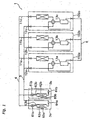
- FIG. 1 is a block diagram showing the configuration of an air conditioner according to an embodiment of the present invention.
- An air conditioner 1 includes first, second, and third heat source units 102a - 102c (three units in the present embodiment), a refrigerant liquid junction line 4 and a refrigerant gas junction line 5 that serve to serially connect the heat source units 102a - 102c, and a plurality of user units 3a, 3b (2 units in this embodiment) that are parallel connected to the refrigerant liquid junction line 4 and the refrigerant gas junction line 5.
- heat source side branch liquid lines 11a-lie of the heat source units 102a - 102c are respectively connected to the refrigerant liquid junction line 4, and the heat source side branch gas lines 12a - 12c of the heat source units 102a - 102c are respectively connected to the refrigerant gas junction line 5.
- the heat source units 102a - 102c include compression mechanisms 13a - 13c that include one or more compressors.
- An oil equalization line 6 is provided between these compression mechanisms 13a - 13c, and allows oil to be exchanged between the heat source units 102a - 102c.
- This air conditioner can increase or decrease the number of heat source units 142a - 102c in operation in response to the operational burden of the user units 3a, 3b.
- the user units 3a, 3b will be described. Note that because the configurations of the user unit 3a and the user unit 3b are the same, only details regarding the user unit 3a will be disclosed, and a description of the user unit 3b will be omitted.
- the user unit 3a primarily includes a user side expansion valve 61a, a user side heat exchanger 62a, and a line that that connects these.
- the user side expansion valve 61a is an electric expansion valve that is connected to the liquid side of the user side heat exchanger 62a, and serves to adjust the refrigerant flow rate and the like.
- the user side heat exchanger 62a is a cross fin tube type of heat exchanger, and serves to exchange heat with indoor air.
- the user unit 3a takes in indoor air into the interior thereof, includes an indoor fan for blowing (not shown in the figures), and is capable of exchanging heat between the indoor air and the refrigerant that flows in the user side heat exchanger 62a.
- a liquid side temperature sensor 63a that detects the refrigerant liquid temperature is arranged on the liquid side of the user side heat exchanger 62a
- a gas side temperature sensor 64a that detects the refrigerant gas temperature is arranged on the gas side of the user side heat exchanger 62a.
- a room temperature sensor 65a that detects the temperature of indoor air is provided in the user unit 3 a.
- Fig. 2 shows an outline of a refrigerant circuit of the first heat source unit 102a. Note that in the description below, only the details of the first heat source unit 102a will be disclosed, and a description of the second and third heat source units 102b, 102c will be omitted because the first heat source unit 102a has the same configuration as the second and third heat source units 102b, 102c.
- the heat source unit 102a primarily includes a compression mechanism 13a, a four way switching valve 14a, a heat source side heat exchanger 15a, a bridge circuit 16a, a receiver 17a a liquid side gate valve 18a, a gas side gate valve 19a, an oil removal line 20a, a refrigerant removal line 21a, a receiver pressurization circuit 22a, a receiver depressurization circuit 23a, and a line that connects these.
- the compression mechanism 13a primarily includes a compressor 31a, an oil separator (not shown in the figures), and a check valve 32a that is provided on the discharge side of the compressor 31a.
- the compressor 31a is an electric motor driven scroll type compressor, and serves to compress refrigerant gas that has been drawn therein.
- the four way switching valve 14a serves to switch the direction of the refrigerant flow.
- the four way switching valve 14a connects the discharge side of the compression mechanism 13a and the gas side of the heat source side heat exchanger 15a, and connects the intake side of the compression mechanism 13a and the heat source side branch gas line 12a (refer to the solid line of the four way switching valve 14a in Fig. 2 ).
- the four way switching valve 14a connects the discharge side of the compression mechanism 13a and the heat source side branch liquid line 11a and connects the intake side of the compression mechanism 13a and the gas side of the heat source side heat exchanger 15a (refer to the broken line of the four way switching valve 14a in Fig. 2 ).
- the heat source side heat exchanger 15a is a cross fin tube type of heat exchanger, and serves to exchange heat between air and refrigerant that acts as a heat source.
- the heat source unit 102a takes in outdoor air into the interior thereof, includes an outdoor fan for blowing (not shown in the figures), and is capable of exchanging heat between the outdoor air and the refrigerant that flows in the heat source side heat exchanger 15a.
- the receiver 17a is a vessel that serves to temporarily accumulate refrigerant that flows between the heat source side heat exchanger 15a and the user side heat exchangers 62a, 62b of the user units 3a, 3b.
- the receiver 17a includes an intake port on the upper portion of the vessel, and a discharge port on the lower portion of the vessel. The intake port and the discharge port of the receiver 17a are respectively connected to the heat source side branch liquid line 11a via the bridge circuit 16a.
- the bridge circuit 15a includes three check valves 33a - 35a that are connected to the heat source side branch liquid line 11 a, a heat source side expansion valve 36a, and a first open/close mechanism 37a.
- the bridge circuit 16a functions to make refrigerant flow from the intake port side of the receiver 17a into the receiver 17a, as well as return refrigerant liquid from the discharge port of the receiver 17a to the heat source side branch liquid line 11a, either when refrigerant that flows in the refrigerant circuit between the heat source side heat exchanger 15a and the user side heat exchangers 62a, 62b flows from the heat source side heat exchanger 15a to the receiver 17a, or when refrigerant that flows in the refrigerant circuit between the heat source side heat exchanger 15a and the user side heat exchangers 62a, 62b flows from the user side heat exchangers 62a, 62b to the receiver 17a.
- the check valve 33a is connected such that refrigerant that flows in the direction from the user side heat exchangers 62a, 62b to the heat source side heat exchanger 15a is guided to the intake port of the receiver 17a.
- the check valve 34a is connected such that refrigerant that flows in the direction from the heat source side heat exchangers 15a to the user side heat exchangers 62a, 62b is guided to the intake port of the receiver 17a.
- the check valve 35a is connected such that refrigerant can flow from the discharge port of the receiver 17a to the user side heat exchangers 62a, 62b.
- the heat source side expansion valve 36a is connected such that refrigerant can flow from the discharge port of the receiver 17a to the heat source side heat exchanger 15a.
- the heat source side expansion valve 36a is an electric expansion valve that serves to adjust the refrigerant flow rate between the heat source side heat exchanger 15a and the user side heat exchangers 62a, 62b.
- the first open/close mechanism 37a is arranged so that it can allow or prevent the refrigerant to flow from the liquid side gate valve 18a toward the receiver 17a.
- the first open/close mechanism 37a is a solenoid valve that is arranged on the liquid side gate valve 18a side of the check valve 33a.
- the refrigerant that flows from the heat source side branch liquid line 11a into the receiver 17a will always flow therein from the intake port of the receiver 17a, and the refrigerant from the discharge port of the receiver 17a will always be returned to the heat source side branch liquid line 11a.
- the oil removal line 20a is an oil line that serves to exchange oil between the compression mechanism 13a and the second heat source unit 102b and the third heat source unit 102c, and includes an oil discharge line 38a that discharges oil to the exterior of the compressor 31a when the quantity of oil in an oil accumulation portion of the compressor 31a exceeds a predetermined quantity, and an oil return line 39a that is branched from the oil discharge line 38a and which can return oil to the intake side of the compression mechanism 13a.
- the oil discharge line 38a is formed from a check valve 40a, a capillary 41a, an oil gate valve 42a, and an oil line that connects these.
- the oil return line 39a is formed from an oil return valve 43a that is a solenoid valve, a check valve 44a, and an oil line that connects these. Then, an oil equalization circuit that serves to exchange the oil of the compression mechanisms of each heat source unit 102a - 102c is formed by the oil removal line 20a and the oil equalization line 6 that serves to connect the compression mechanisms of the heat source units 102a - 102c.
- the refrigerant removal line 21a is a refrigerant line that is arranged such that refrigerant from between the four way switching valve 14a and the heat source side heat exchanger 15a can be removed to the exterior of the heat source unit, and includes a second open/close mechanism 45a that is a solenoid valve, a check valve 46a, and a refrigerant line that connects these.
- the refrigerant removal line 21a is connected to the oil removal line 20a, and refrigerant is removed to the exterior of the heat source unit via the oil equalization line 6 that serves to connect the compression mechanisms of each heat source unit 102a - 102c.
- a refrigerant supply circuit that serves to exchange refrigerant between each heat source unit 102a - 102c is formed by the refrigerant removal line 21a, the oil removal line 20a, and the oil equalization line 6.
- the receiver pressurization circuit 22a is a refrigerant line that is arranged such that refrigerant from between the discharge side of the compression mechanism 13a and the four way switching valve 14a can be sent directly to the intake port of the receiver 17a, and includes a third open/closed mechanism 47a that is a solenoid valve, a check valve 48a, a capillary 49a, and a refrigerant line that connects these.
- the receiver depressurization circuit 23a is a refrigerant line that is arranged such that refrigerant from the upper portion of the receiver 17a can flow to the intake side of the compression mechanism 13a, and includes a fourth open/close valve 50a that is a solenoid valve, and a refrigerant line that connects these.
- various sensors are provided in the heat source unit 102a.
- a discharge temperature sensor 5 1a that detects the discharge refrigerant temperature of the compression mechanism 13a and a discharge pressure sensor 52a are provided on the discharge side of the compression mechanism 13a.
- An intake temperature sensor 53a that detects the intake refrigerant temperature of the compression mechanism 13a and an intake pressure sensor 54a are provided on the intake side of the compression mechanism 13a.
- a heat exchange temperature sensor 55a that detects refrigerant temperature is provided on the liquid side of the heat source side heat exchanger 15a.
- An outside air temperature sensor 56a that detects the temperature of the outside air is provided near the heat source side heat exchanger 15a.
- the apertures of the user side expansion valves 61a, 6 1 b and the heat source side expansion valve 36a heat source side expansion valves 36b, 36c in the case of the heat source units 102b, 102c
- the capacity of the compression mechanism 13a the compression mechanisms 13b, 13c in the case of the heat source units 102b, 102c
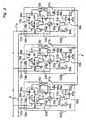
- Fig. 3 is an outline of the refrigeration circuits of the heat source units 102a - 102c when all of the heat source units 102a - 102c are performing cooling operations (the arrows in the figure show the direction of the refrigerant and oil flows).
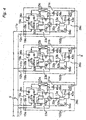
- Figs. 4 and 5 are outlines of the refrigeration circuits of the heat source units 102a - 102c when the heat source units 102a, 102c are performing cooling operations and the heat source unit 102b is stopped (the arrows in the figure show the direction of the refrigerant and oil flows).
- Fig. 3 is an outline of the refrigeration circuits of the heat source units 102a - 102c when all of the heat source units 102a - 102c are performing cooling operations (the arrows in the figure show the direction of the refrigerant and oil flows).
- Fig. 4 and 5 are outlines of the refrigeration circuits of the heat source units 102a - 102c when the heat source units 102a, 102c are performing cooling operations
- FIG. 6 is an outline of the refrigeration circuits of the heat source units 102a - 102c when all of the heat source units 102a - 102c are performing heating operations (the arrows in the figure show the direction of the refrigerant and oil flows).
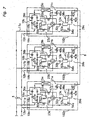
- Figs. 7 and 8 are outlines of the refrigeration circuits of the heat source units 102a - 102c when the heat source units 102a, 102c are performing heating operations and the heat source unit 142b is stopped (the arrows in the figure show the direction of the refrigerant and oil flows).
- the four way switching valves 14a - 14c of each heat source unit 102a - 102c are in the state illustrated by the solid lines in Fig. 3 , i.e., the state in which the discharge sides of the compression mechanisms 13a - 13c are respectively connected to the gas sides of the heat source side heat exchangers 15a - 15c, and the intake sides of the compression mechanisms 13a - 13c are respectively connected to the heat source side branch gas lines 12a - 12c.
- the liquid side gate valves 18a - 18c, the gas side gate valve 19a - 19c, the oil gate valves 42a - 42c, and the first open/close mechanisms 37a - 37c of each heat source unit are open.
- the oil return line 39a is placed into a state in which it can be used, and the refrigerant removal line 21a, the receiver pressurization circuit 22a, and the receiver depressurization circuit 23a are placed into a state in which they will not be used.
- the oil return valves 43a - 43c are completely open, and the second open/close mechanisms 45a - 45c, the third open/close mechanisms 47a - 47c, and the fourth open/close mechanisms 50a - 50c are closed.
- the apertures of the user side expansion valves 61a, 61b of the user units 3a, 3b shown in Fig. 1 are adjusted so that the refrigerant pressure is reduced.
- the heat source side expansion valve 36a - 36c are in the closed state.
- each heat source unit refrigeration circuit With the heat source unit refrigeration circuits in this state, the compression mechanisms 13a - 13c of each heat source units 102a - 102c begin operating. When this occurs, the high pressure refrigerant gas discharged from each compression mechanism 13a - 13c is condensed by each heat source side heat exchanger 15a - 15c and becomes refrigerant liquid, and this refrigerant liquid is merged into the refrigerant liquid junction line 4 via the bridge circuits 16a - 16c (more specifically the check valves 34a - 34c), the receivers 17a - 17c, the bridge circuits 16a - 16c (more specifically the check valves 35a - 35c), and the heat source side branch liquid lines 11a- 11c.
- the bridge circuits 16a - 16c more specifically the check valves 34a - 34c
- the receivers 17a - 17c the bridge circuits 16a - 16c (more specifically the check valves 35a - 35c)
- the pressure of the refrigerant liquid is reduced by the user side expansion valves 61a 61b of the user unit 3a, 3b, and then the refrigerant liquid is evaporated by the user side heat exchangers 62a, 62b and becomes a low pressure refrigerant gas.
- This refrigerant gas is branched from the refrigerant gas junction line 5 to each heat source side branch gas line 12a - 12c, returns to the compressor mechanisms 13a - 13c of each heat source unit 102a - 102c, and then repeats this circulation operation.
- each oil discharged from the oil accumulation portion of each compression mechanism 13a - 13c to each oil discharge line 38a - 38c is returned to the intake side of the compression mechanisms 13a - 13c by each oil return line 39a - 39c, and is drawn into each compression mechanism 13a - 13c together with the low pressure refrigerant.
- equipment control will be performer in response to this that reduces the number of operational heat source units 102a - 102c.
- a situation in which only the heat source unit 102b is stopped and the other two heat source units 102a, 102c are operating will -be described below with reference to Figs. 4 and 5 .
- the compression mechanism 13b of the heat source unit 102b is stopped, and the first open/close mechanism 37b and oil return valve 43b are closed.
- the refrigerant pressure from the discharge side of the compression mechanism 13b of the heat source unit 102b to the heat source side branch liquid line 11b will be reduced.
- the first open/close mechanism 37b is closed, refrigerant liquid will not flow from the refrigerant liquid junction line 4 into the heat source unit 102b.
- the oil discharged from the accumulation portion of the compressor 31a of the compression mechanism 13b to the oil discharge line 38b passes through the oil equalization line 6 and the oil return lines 39a, 39c, and is sent to the intake side of the compression mechanisms 13a, 13c of the heat source units 102a, 102c.
- refrigerant will be accumulated inside the stopped heat source unit 102b, and the quantity of refrigerant that circulates between the user units 3a, 3b and the operating heat source units 102a, 102c will be reduced (a refrigerant shortage state).
- a refrigerant shortage state can be determined from the refrigerant temperature detected by the temperature sensors 63a, 64a, 63b, 64b of the user units 3a, 3b and the apertures of the user side expansion valves 61a, 61b. Then, as shown in Fig.
- the refrigerant accumulated between the receiver 17b and the check valve 32b arranged on the discharge side of the compressor 31b of the heat source unit 102b passes through the refrigerant removal line 21a and the oil equalization line 6 and is supplied to the operating heat source units 102a, 102c by opening the second open/close mechanism 45b of the stopped heat source unit 102b for only a predetermined time period.
- the refrigerant liquid accumulated in the receiver 17a of the heat source unit 102b is evaporated by the heat source side heat exchanger 15b, and then supplied to the intake side of the compression mechanisms 13a, 13c.
- this refrigerant gas passes through the oil return lines 39a, 39c of the heat source units 102a, 102c and is supplied to the intake side of the compression mechanisms 13a, 13c.
- the second open/close mechanism 45b will be closed after the expiration of the predetermined time period, but if it is determined after closing the second openlclose mechanism 45b that the refrigerant shortage state has not been eliminated and that the refrigerant shortage state still exists, the second open/close mechanism 45b will be opened again for only the predetermined time period. In this way, the quantity of refrigerant that circulates between the user units 3a, 3b and the user heat source units 102a, 102c will be increased and the refrigerant shortage state will be eliminated.
- the second open/close mechanism 45b of the stopped heat source unit 102b will be closed, and refrigerant will not be discharged from the interior of the heat source unit 102b.
- the refrigerant liquid will be made to flow into the receiver 17b from the refrigerant liquid junction line 4 via the heat source side branch line 11b by opening the first open/close mechanism 37b, and the excessive refrigerant state will be eliminated.
- the first open/close mechanism 37b is opened for only a predetermined time period and then closed, and will be re-opened for only the predetermined period of time if there is an excessive refrigerant state.
- an appropriate refrigerant circulation quantity can be maintained by opening and closing the first and second open/close mechanisms 37b, 45b of the stopped heat source unit 102b.
- the four way switching valves 14a - 14c of each heat source unit 102a - 102c are in the state illustrated by the broken lines in Fig. 6 , i.e., the state in which the discharge sides of the compression mechanisms 13a - 13c are respectively connected to the heat source side branch gas lines 12a - 12c, and the intake sides of the compression mechanisms 13a- 13c are respectively connected to the gas sides of the heat source side heat exchangers 15a - 15c.
- the liquid side gate valves 18a - 18c, the gas side gate valve 19a - 19c, the oil gate valves 42a - 42c, and the first open/close mechanisms 37a - 37c of each heat source unit are open.
- the oil return line 39a is placed into a state in which it can be used, and the refrigerant removal line 21a, the receiver pressurization circuit 22a, and the receiver depressurization circuit 23a are placed into a state in which they will not be used.
- the oil return valves 43a - 43c are completely open, and the second open/close mechanisms 45a - 45c, the third open/close mechanisms 47a - 47c, and the fourth open/close mechanisms 50a - 50c are closed.
- the apertures of the user side expansion valves 61a, 61b of the user unit 3a, 3b are adjusted in response to the heating burden of the user units 3a, 3b.
- the apertures of the heat source side expansion valves 36a - 36c are respectively adjusted based upon the degree of refrigerant gas superheating calculated from the refrigerant temperature and pressure detected by the temperature sensor 53a and the pressure sensor 54a.
- each heat source unit refrigeration circuits With the heat source unit refrigeration circuits in this state, the compression mechanisms 13a - 13c of each heat source units 102a - 102c begin operating. When this occurs, high pressure refrigerant gas discharged from each compression mechanism 13a - 13c is merged into the refrigerant gas junction line 5 via each heat source side branch gas line 12a - 12c. After that, the refrigerant gas is condensed by the user side heat exchangers 62a, 62b of the user units 3a, 3b and becomes refrigerant liquid, and the pressure of the refrigerant liquid is reduced by the user side expansion valves 61a, 61b.
- This refrigerant liquid is branched from the refrigerant liquid junction line 4 to each heat source side branch liquid line 11a - 11c, flows through the bridge circuits 16a - 16c (more specifically the first open/close mechanisms 37a - 37c and the check valves 33a - 33c), the receivers 17a - 17c, and the bridge circuits 16a -16c (more specifically the check valves 36a - 36c), is evaporated by the heat source side heat exchangers 15a - 15c of each heat source side unit 102a - 102c, then returns to the compressor mechanisms 13a - 13c, and then repeats this circulation operation.
- each compression mechanism 13a - 13c the oil discharged from the oil accumulation portion of each compression mechanism 13a - 13c to each oil discharge line 38a - 38c passes through the oil return lines 39a - 39c, is returned to the intake side of the compression mechanisms 13a - 13c, and is drawn into each compression mechanism 13a - 13c together with the low pressure refrigerant gas.
- the air conditioner 1 of the present embodiment can operate to eliminate unequal flow when this state is created.
- the operation of the heat source unit 102b when the quantity of refrigerant sent from the refrigerant liquid junction line 4 to the heat source unit 102b is less than that sent to the other heat source units 102a, 102c will be described below.
- the aperture of the heat source side expansion valve 36b is adjusted based upon the degree of refrigerant gas superheating calculated from the refrigerant temperature and pressure detected by the temperature sensor 53b and the pressure sensor 54b. Because of this, the quantity of refrigerant supplied inside the unit will be reduced, the degree of refrigerant gas superheating will increase, and the aperture of the heat source side expansion valve 36b will increase. However, even if the heat source side expansion valve 36b is completely open, if the degree of refrigerant gas superheating increases, it will be determined that the quantity of refrigerant supplied inside the unit is insufficient, and the fourth open/close mechanism 50b will open for only a predetermined time period.
- the refrigerant inside the receiver 17b will be discharged to the intake side of the compression mechanism 13b via the receiver depressurization circuit 23b, and the pressure inside the receiver 17b will be reduced. In this way, the quantity of refrigerant supplied from the refrigerant liquid junction line 4 to the heat source unit 102b will increase. Then, if the time period that the fourth open/close mechanism 50b equals the predetermined time period, the degree of refrigerant gas superheating has been reduced, or the heat source side expansion valve 36b has begun to close, the fourth open/close mechanism 50b will close. By operating the fourth open/close mechanism 50b in this way, a refrigerant shortage in the heat source unit 102b will be eliminated. Even with the other heat source units 102a, 102c, the quantity of refrigerant sent from the refrigerant liquid junction line 4 to each heat source unit will be maintained at an appropriate flow rate balance.
- the compression mechanism 13b of the heat source unit 102 is stopped, and the first open/close mechanism 37b and oil return valve 43b are closed. At this point, because the first open/close mechanism 37b is closed, refrigerant liquid will not flow from the refrigerant liquid junction line 4 into the heat source unit 102b.
- the oil discharged from the accumulation portion of the compressor 31a of the compression mechanism 13b to the oil discharge line 38b passes through the oil equalization line 6, and is sent to the intake side of the compression mechanisms 13a, 13c of the heat source units 102a, 102c.
- refrigerant will accumulate inside the stopped heat source unit 102b, and the quantity of refrigerant that circulates in the refrigerant circuit will be reduced (a refrigerant shortage state).
- a refrigerant shortage state can be determined from the refrigerant temperature detected by the temperature sensors 63a, 64a, 63b, 64b of the user units 3a, 3b and the apertures of the user side expansion valves 61a, 61b. Then, if it is determined that a refrigerant shortage state exists, the refrigerant accumulated in the stopped heat source unit 102b will be supplied to the operating heat source units 102a, 102c.
- the speed with which refrigerant liquid accumulates in the receiver 17b may increase immediately after the heat source units conducting heating operations are stopped. If this occurs, like during cooling operations, a sufficient refrigerant discharge speed may not be obtained by simply opening the second open/close mechanism 45b. Because of this, as shown in Fig. 7 , high pressure refrigerant gas from the refrigerant gas junction line 5 will be supplied to the receiver 17b via the heat source side branch gas line 12b, the four way switching valve 14b, and the receiver pressurization circuit 22b by opening the third open/close mechanism 47b.
- the refrigerant liquid inside the receiver 17b will be discharged to the exterior of the heat source unit via the heat source side branch liquid line 11b because the receiver 17b is pressurized and the pressure thereof is higher than the pressure of the refrigerant liquid junction line 4.
- the refrigerant shortage state will be eliminated.
- the refrigerant accumulated inside the heat source unit 102b may be supplied in excess to the operating heat source units 102a, 102c and thus an excessive refrigerant state will be created.
- the third open/close mechanism 47b of the stopped heat source unit 102b will be closed, and refrigerant will not be discharged from the interior of the heat source unit 102b.
- the refrigerant liquid will be made to flow into the receiver 17b from the refrigerant liquid junction line 4 via the heat source side branch line 11b by opening the first open/close mechanism 37b, and the excessive refrigerant state will be eliminated.
- an appropriate refrigerant circulation quantity can be maintained by opening and closing the first and third open/close mechanisms 37b, 47b of the stopped heat source unit 102b.
- the line unit in an air conditioner that incl udes a plurality of heat source units can be eliminated, and increases in the onsite line construction can be held to a minimum while making it possible to adjust the amount of refrigerant in the air conditioner.
Landscapes
- Engineering & Computer Science (AREA)
- Physics & Mathematics (AREA)
- Mechanical Engineering (AREA)
- Thermal Sciences (AREA)
- General Engineering & Computer Science (AREA)
- Compression-Type Refrigeration Machines With Reversible Cycles (AREA)
- Air Conditioning Control Device (AREA)
Claims (1)
- Climatiseur (1), comprenant : une pluralité d'unités de source de chaleur (102a-102c) qui comportent des mécanismes de compression (13a-13c) et, des échangeurs de chaleur côté sources de chaleur (15a-15c) reliés à des côtés admission des mécanismes de compression ;
une ligne de jonction de liquide réfrigérant (4) et une ligne de jonction de gaz réfrigérant (5) qui relient en parallèle chaque unité de source de chaleur ; et
des unités d'utilisateur (3a, 3b) qui comportent des échangeurs de chaleur côté utilisateur (62a, 62b) ; les unités d'utilisateur (3a, 3b) étant reliées à la ligne de jonction de liquide réfrigérant et à la ligne de jonction de gaz réfrigérant ; caractérisé par :des récepteurs (17a-17c) qui sont reliés à des côtés liquide des échangeurs de chaleur côté sources de chaleur ; etdes circuits de dépressurisation de récepteur (23a-23c) configurés pour amener un réfrigérant à s'écouler à partir des récepteurs (17a-17c) des unités de source de chaleur qui présentent un manque de réfrigérant jusqu'aux côtés admission des mécanismes de compression de celles-ci, moyennant quoi la quantité de réfrigérant qui s'écoule à partir de la ligne de jonction de liquide réfrigérant dans les unités de source de chaleur dans lesquelles existe le manque de réfrigérant est augmentée et la quantité de réfrigérant devant être envoyée à partir de la ligne de jonction de liquide réfrigérant à chaque unité de source de chaleur est maintenue à un équilibre de débit approprié.
Applications Claiming Priority (2)
| Application Number | Priority Date | Filing Date | Title |
|---|---|---|---|
| JP2002339697A JP3940840B2 (ja) | 2002-11-22 | 2002-11-22 | 空気調和装置 |
| EP03772833A EP1564505A4 (fr) | 2002-11-22 | 2003-11-17 | Climatiseur |
Related Parent Applications (1)
| Application Number | Title | Priority Date | Filing Date |
|---|---|---|---|
| EP03772833.4 Division | 2003-11-17 |
Publications (2)
| Publication Number | Publication Date |
|---|---|
| EP2320161A1 EP2320161A1 (fr) | 2011-05-11 |
| EP2320161B1 true EP2320161B1 (fr) | 2013-10-16 |
Family
ID=32375783
Family Applications (2)
| Application Number | Title | Priority Date | Filing Date |
|---|---|---|---|
| EP11154491.2A Expired - Lifetime EP2320161B1 (fr) | 2002-11-22 | 2003-11-17 | Climatiseur |
| EP03772833A Withdrawn EP1564505A4 (fr) | 2002-11-22 | 2003-11-17 | Climatiseur |
Family Applications After (1)
| Application Number | Title | Priority Date | Filing Date |
|---|---|---|---|
| EP03772833A Withdrawn EP1564505A4 (fr) | 2002-11-22 | 2003-11-17 | Climatiseur |
Country Status (8)
| Country | Link |
|---|---|
| US (1) | US7140198B2 (fr) |
| EP (2) | EP2320161B1 (fr) |
| JP (1) | JP3940840B2 (fr) |
| KR (1) | KR100629554B1 (fr) |
| CN (3) | CN100541049C (fr) |
| AU (1) | AU2003284698B2 (fr) |
| ES (1) | ES2441583T3 (fr) |
| WO (1) | WO2004048863A1 (fr) |
Families Citing this family (15)
| Publication number | Priority date | Publication date | Assignee | Title |
|---|---|---|---|---|
| JP4120682B2 (ja) * | 2006-02-20 | 2008-07-16 | ダイキン工業株式会社 | 空気調和装置および熱源ユニット |
| KR101266657B1 (ko) * | 2006-10-17 | 2013-05-28 | 엘지전자 주식회사 | 공기조화기 |
| JP2008128498A (ja) * | 2006-11-16 | 2008-06-05 | Hitachi Appliances Inc | マルチ型空気調和機 |
| JP5125116B2 (ja) * | 2007-01-26 | 2013-01-23 | ダイキン工業株式会社 | 冷凍装置 |
| JP5263522B2 (ja) * | 2008-12-11 | 2013-08-14 | 株式会社富士通ゼネラル | 冷凍装置 |
| CN102483273B (zh) * | 2009-09-09 | 2014-09-17 | 三菱电机株式会社 | 空气调节装置 |
| CN102734989B (zh) * | 2011-04-08 | 2014-05-07 | 约克广州空调冷冻设备有限公司 | 一种快速排出气液分离器中积存的液体的热泵空调系统及方法 |
| KR20120129111A (ko) * | 2011-05-19 | 2012-11-28 | 엘지전자 주식회사 | 공기조화기 |
| JP5805186B2 (ja) * | 2011-06-09 | 2015-11-04 | 三菱電機株式会社 | 空気調和機の室内機 |
| JP5288020B1 (ja) * | 2012-03-30 | 2013-09-11 | ダイキン工業株式会社 | 冷凍装置 |
| CA2945474C (fr) * | 2014-05-20 | 2020-10-13 | Halliburton Energy Services, Inc. | Amelioration de la performance de l'etude de puits |
| JP6293647B2 (ja) * | 2014-11-21 | 2018-03-14 | ヤンマー株式会社 | ヒートポンプ |
| CN104764192A (zh) * | 2015-03-27 | 2015-07-08 | 宁波奥克斯电气有限公司 | 模块式风冷热泵热水机组 |
| JP2018013286A (ja) * | 2016-07-20 | 2018-01-25 | 三菱重工サーマルシステムズ株式会社 | 制御装置、空気調和機及び制御方法 |
| CN111271892B (zh) * | 2018-12-05 | 2021-11-05 | 约克广州空调冷冻设备有限公司 | 制冷系统 |
Citations (2)
| Publication number | Priority date | Publication date | Assignee | Title |
|---|---|---|---|---|
| JPH05203270A (ja) * | 1992-01-27 | 1993-08-10 | Matsushita Electric Ind Co Ltd | 二段圧縮式冷凍サイクル装置 |
| EP1207359A2 (fr) * | 2000-11-15 | 2002-05-22 | Carrier Corporation | Régulation de la haute pression d'un cycle de compression à vapeur surcritique |
Family Cites Families (16)
| Publication number | Priority date | Publication date | Assignee | Title |
|---|---|---|---|---|
| US4055963A (en) * | 1975-06-25 | 1977-11-01 | Daikin Kogyo Co., Ltd. | Heating system |
| US4259848A (en) * | 1979-06-15 | 1981-04-07 | Voigt Carl A | Refrigeration system |
| JP3143142B2 (ja) * | 1991-04-23 | 2001-03-07 | 三洋電機株式会社 | 冷凍装置 |
| JP3208151B2 (ja) * | 1991-05-28 | 2001-09-10 | 三洋電機株式会社 | 冷凍装置 |
| JP2966641B2 (ja) | 1992-04-09 | 1999-10-25 | 三洋電機株式会社 | 空気調和装置 |
| TW212224B (fr) * | 1992-02-28 | 1993-09-01 | Sanyo Denki Kk | |
| JP3060770B2 (ja) | 1993-02-26 | 2000-07-10 | ダイキン工業株式会社 | 冷凍装置 |
| TW299393B (fr) * | 1995-03-09 | 1997-03-01 | Sanyo Electric Co | |
| US5894735A (en) * | 1996-09-05 | 1999-04-20 | Yamaha Hatsudoki Kabushiki Kaisha | Heat pump system using energy-supplying mechanism to control refrigerant pressure |
| EP0838640A3 (fr) * | 1996-10-28 | 1998-06-17 | Matsushita Refrigeration Company | Système d'équilibrage du niveau d'huile pour plusieurs compresseurs |
| JPH10238879A (ja) | 1997-02-21 | 1998-09-08 | Mitsubishi Heavy Ind Ltd | マルチ型ヒートポンプ式空気調和機及びその運転方法 |
| JPH10281578A (ja) * | 1997-04-02 | 1998-10-23 | Mitsubishi Heavy Ind Ltd | マルチ型空気調和機 |
| JP4035871B2 (ja) * | 1997-10-21 | 2008-01-23 | ダイキン工業株式会社 | 冷媒回路 |
| JPH11142010A (ja) * | 1997-11-12 | 1999-05-28 | Mitsubishi Electric Corp | 冷凍空気調和装置 |
| JP3085296B2 (ja) * | 1998-12-25 | 2000-09-04 | ダイキン工業株式会社 | 冷凍装置 |
| JP2002195705A (ja) * | 2000-12-28 | 2002-07-10 | Tgk Co Ltd | 超臨界冷凍サイクル |
-
2002
- 2002-11-22 JP JP2002339697A patent/JP3940840B2/ja not_active Expired - Fee Related
-
2003
- 2003-11-17 WO PCT/JP2003/014601 patent/WO2004048863A1/fr not_active Ceased
- 2003-11-17 CN CNB2007101526207A patent/CN100541049C/zh not_active Expired - Fee Related
- 2003-11-17 ES ES11154491.2T patent/ES2441583T3/es not_active Expired - Lifetime
- 2003-11-17 KR KR1020047013217A patent/KR100629554B1/ko not_active Expired - Fee Related
- 2003-11-17 US US10/503,214 patent/US7140198B2/en not_active Expired - Fee Related
- 2003-11-17 EP EP11154491.2A patent/EP2320161B1/fr not_active Expired - Lifetime
- 2003-11-17 AU AU2003284698A patent/AU2003284698B2/en not_active Ceased
- 2003-11-17 CN CNB2007101526160A patent/CN100520223C/zh not_active Expired - Fee Related
- 2003-11-17 CN CNB2003801004758A patent/CN100380068C/zh not_active Expired - Fee Related
- 2003-11-17 EP EP03772833A patent/EP1564505A4/fr not_active Withdrawn
Patent Citations (2)
| Publication number | Priority date | Publication date | Assignee | Title |
|---|---|---|---|---|
| JPH05203270A (ja) * | 1992-01-27 | 1993-08-10 | Matsushita Electric Ind Co Ltd | 二段圧縮式冷凍サイクル装置 |
| EP1207359A2 (fr) * | 2000-11-15 | 2002-05-22 | Carrier Corporation | Régulation de la haute pression d'un cycle de compression à vapeur surcritique |
Also Published As
| Publication number | Publication date |
|---|---|
| US20050103045A1 (en) | 2005-05-19 |
| CN101126559A (zh) | 2008-02-20 |
| ES2441583T3 (es) | 2014-02-05 |
| US7140198B2 (en) | 2006-11-28 |
| CN1692259A (zh) | 2005-11-02 |
| WO2004048863A1 (fr) | 2004-06-10 |
| JP2004170047A (ja) | 2004-06-17 |
| EP1564505A4 (fr) | 2010-09-22 |
| EP2320161A1 (fr) | 2011-05-11 |
| CN100541049C (zh) | 2009-09-16 |
| CN100520223C (zh) | 2009-07-29 |
| AU2003284698B2 (en) | 2005-11-24 |
| AU2003284698A1 (en) | 2004-06-18 |
| EP1564505A1 (fr) | 2005-08-17 |
| KR20040081805A (ko) | 2004-09-22 |
| JP3940840B2 (ja) | 2007-07-04 |
| CN100380068C (zh) | 2008-04-09 |
| KR100629554B1 (ko) | 2006-09-27 |
| CN101153751A (zh) | 2008-04-02 |
Similar Documents
| Publication | Publication Date | Title |
|---|---|---|
| EP2320161B1 (fr) | Climatiseur | |
| EP2339256B1 (fr) | Climatiseur et procédé de commande correspondant | |
| JP6685415B2 (ja) | 空調システム、空調方法、及び制御装置 | |
| EP2375188B1 (fr) | Climatiseur | |
| US8307668B2 (en) | Air conditioner | |
| EP2320159A1 (fr) | Dispositif de réfrigération | |
| US6883346B2 (en) | Freezer | |
| US6938430B2 (en) | Refrigerating device | |
| JP3925545B2 (ja) | 冷凍装置 | |
| US20030226370A1 (en) | Refrigeration system | |
| EP1860390A2 (fr) | Cycle frigorifique à compression de vapeur | |
| US7028502B2 (en) | Refrigeration equipment | |
| JP2009109065A (ja) | 冷凍装置 | |
| KR100619756B1 (ko) | 열교환용량 조절가능한 실외기 및 이를 구비한 공기조화기 | |
| US20070245768A1 (en) | Refrigeration System | |
| EP1643196B1 (fr) | Conditioneur d'air | |
| JP2008128498A (ja) | マルチ型空気調和機 | |
| JP7407920B2 (ja) | 冷凍サイクル装置 | |
| US11788759B2 (en) | Refrigeration system and heat source unit | |
| JP4601392B2 (ja) | 冷凍装置 | |
| EP3792568B1 (fr) | Dispositif à cycle frigorifique | |
| JP3966345B2 (ja) | 過冷却装置 | |
| KR100199813B1 (ko) | 멀티형 공기조화기의 냉매 사이클 | |
| JP2013178067A (ja) | コンテナ用冷凍装置 | |
| JP2013036686A (ja) | コンデンシングユニットセット及び冷凍装置 |
Legal Events
| Date | Code | Title | Description |
|---|---|---|---|
| PUAI | Public reference made under article 153(3) epc to a published international application that has entered the european phase |
Free format text: ORIGINAL CODE: 0009012 |
|
| 17P | Request for examination filed |
Effective date: 20110309 |
|
| AC | Divisional application: reference to earlier application |
Ref document number: 1564505 Country of ref document: EP Kind code of ref document: P |
|
| AK | Designated contracting states |
Kind code of ref document: A1 Designated state(s): AT BE BG CH CY CZ DE DK EE ES FI FR GB GR HU IE IT LI LU MC NL PT RO SE SI SK TR |
|
| RIN1 | Information on inventor provided before grant (corrected) |
Inventor name: MATSUOKA, SHINYA Inventor name: SADA, SHINRI Inventor name: HORI, YASUSHI |
|
| 17Q | First examination report despatched |
Effective date: 20120402 |
|
| R17C | First examination report despatched (corrected) |
Effective date: 20120402 |
|
| GRAP | Despatch of communication of intention to grant a patent |
Free format text: ORIGINAL CODE: EPIDOSNIGR1 |
|
| INTG | Intention to grant announced |
Effective date: 20130508 |
|
| GRAS | Grant fee paid |
Free format text: ORIGINAL CODE: EPIDOSNIGR3 |
|
| GRAA | (expected) grant |
Free format text: ORIGINAL CODE: 0009210 |
|
| AC | Divisional application: reference to earlier application |
Ref document number: 1564505 Country of ref document: EP Kind code of ref document: P |
|
| AK | Designated contracting states |
Kind code of ref document: B1 Designated state(s): AT BE BG CH CY CZ DE DK EE ES FI FR GB GR HU IE IT LI LU MC NL PT RO SE SI SK TR |
|
| REG | Reference to a national code |
Ref country code: GB Ref legal event code: FG4D |
|
| REG | Reference to a national code |
Ref country code: CH Ref legal event code: EP |
|
| REG | Reference to a national code |
Ref country code: IE Ref legal event code: FG4D |
|
| REG | Reference to a national code |
Ref country code: AT Ref legal event code: REF Ref document number: 636697 Country of ref document: AT Kind code of ref document: T Effective date: 20131115 |
|
| REG | Reference to a national code |
Ref country code: DE Ref legal event code: R096 Ref document number: 60345120 Country of ref document: DE Effective date: 20131212 |
|
| PGFP | Annual fee paid to national office [announced via postgrant information from national office to epo] |
Ref country code: GB Payment date: 20131118 Year of fee payment: 11 Ref country code: FR Payment date: 20131106 Year of fee payment: 11 Ref country code: DE Payment date: 20131115 Year of fee payment: 11 |
|
| REG | Reference to a national code |
Ref country code: ES Ref legal event code: FG2A Ref document number: 2441583 Country of ref document: ES Kind code of ref document: T3 Effective date: 20140205 |
|
| REG | Reference to a national code |
Ref country code: NL Ref legal event code: VDEP Effective date: 20131016 |
|
| REG | Reference to a national code |
Ref country code: AT Ref legal event code: MK05 Ref document number: 636697 Country of ref document: AT Kind code of ref document: T Effective date: 20131016 |
|
| PG25 | Lapsed in a contracting state [announced via postgrant information from national office to epo] |
Ref country code: BE Free format text: LAPSE BECAUSE OF FAILURE TO SUBMIT A TRANSLATION OF THE DESCRIPTION OR TO PAY THE FEE WITHIN THE PRESCRIBED TIME-LIMIT Effective date: 20131016 Ref country code: SE Free format text: LAPSE BECAUSE OF FAILURE TO SUBMIT A TRANSLATION OF THE DESCRIPTION OR TO PAY THE FEE WITHIN THE PRESCRIBED TIME-LIMIT Effective date: 20131016 Ref country code: NL Free format text: LAPSE BECAUSE OF FAILURE TO SUBMIT A TRANSLATION OF THE DESCRIPTION OR TO PAY THE FEE WITHIN THE PRESCRIBED TIME-LIMIT Effective date: 20131016 Ref country code: FI Free format text: LAPSE BECAUSE OF FAILURE TO SUBMIT A TRANSLATION OF THE DESCRIPTION OR TO PAY THE FEE WITHIN THE PRESCRIBED TIME-LIMIT Effective date: 20131016 |
|
| PG25 | Lapsed in a contracting state [announced via postgrant information from national office to epo] |
Ref country code: AT Free format text: LAPSE BECAUSE OF FAILURE TO SUBMIT A TRANSLATION OF THE DESCRIPTION OR TO PAY THE FEE WITHIN THE PRESCRIBED TIME-LIMIT Effective date: 20131016 Ref country code: CY Free format text: LAPSE BECAUSE OF FAILURE TO SUBMIT A TRANSLATION OF THE DESCRIPTION OR TO PAY THE FEE WITHIN THE PRESCRIBED TIME-LIMIT Effective date: 20131016 |
|
| PGFP | Annual fee paid to national office [announced via postgrant information from national office to epo] |
Ref country code: IT Payment date: 20131111 Year of fee payment: 11 |
|
| PG25 | Lapsed in a contracting state [announced via postgrant information from national office to epo] |
Ref country code: PT Free format text: LAPSE BECAUSE OF FAILURE TO SUBMIT A TRANSLATION OF THE DESCRIPTION OR TO PAY THE FEE WITHIN THE PRESCRIBED TIME-LIMIT Effective date: 20140217 |
|
| REG | Reference to a national code |
Ref country code: CH Ref legal event code: PL |
|
| REG | Reference to a national code |
Ref country code: DE Ref legal event code: R097 Ref document number: 60345120 Country of ref document: DE |
|
| PG25 | Lapsed in a contracting state [announced via postgrant information from national office to epo] |
Ref country code: CH Free format text: LAPSE BECAUSE OF NON-PAYMENT OF DUE FEES Effective date: 20131130 Ref country code: EE Free format text: LAPSE BECAUSE OF FAILURE TO SUBMIT A TRANSLATION OF THE DESCRIPTION OR TO PAY THE FEE WITHIN THE PRESCRIBED TIME-LIMIT Effective date: 20131016 Ref country code: LI Free format text: LAPSE BECAUSE OF NON-PAYMENT OF DUE FEES Effective date: 20131130 Ref country code: MC Free format text: LAPSE BECAUSE OF FAILURE TO SUBMIT A TRANSLATION OF THE DESCRIPTION OR TO PAY THE FEE WITHIN THE PRESCRIBED TIME-LIMIT Effective date: 20131016 |
|
| PLBE | No opposition filed within time limit |
Free format text: ORIGINAL CODE: 0009261 |
|
| STAA | Information on the status of an ep patent application or granted ep patent |
Free format text: STATUS: NO OPPOSITION FILED WITHIN TIME LIMIT |
|
| REG | Reference to a national code |
Ref country code: IE Ref legal event code: MM4A |
|
| PG25 | Lapsed in a contracting state [announced via postgrant information from national office to epo] |
Ref country code: CZ Free format text: LAPSE BECAUSE OF FAILURE TO SUBMIT A TRANSLATION OF THE DESCRIPTION OR TO PAY THE FEE WITHIN THE PRESCRIBED TIME-LIMIT Effective date: 20131016 Ref country code: SK Free format text: LAPSE BECAUSE OF FAILURE TO SUBMIT A TRANSLATION OF THE DESCRIPTION OR TO PAY THE FEE WITHIN THE PRESCRIBED TIME-LIMIT Effective date: 20131016 Ref country code: RO Free format text: LAPSE BECAUSE OF FAILURE TO SUBMIT A TRANSLATION OF THE DESCRIPTION OR TO PAY THE FEE WITHIN THE PRESCRIBED TIME-LIMIT Effective date: 20131016 |
|
| 26N | No opposition filed |
Effective date: 20140717 |
|
| PG25 | Lapsed in a contracting state [announced via postgrant information from national office to epo] |
Ref country code: DK Free format text: LAPSE BECAUSE OF FAILURE TO SUBMIT A TRANSLATION OF THE DESCRIPTION OR TO PAY THE FEE WITHIN THE PRESCRIBED TIME-LIMIT Effective date: 20131016 |
|
| REG | Reference to a national code |
Ref country code: DE Ref legal event code: R097 Ref document number: 60345120 Country of ref document: DE Effective date: 20140717 |
|
| PG25 | Lapsed in a contracting state [announced via postgrant information from national office to epo] |
Ref country code: IE Free format text: LAPSE BECAUSE OF NON-PAYMENT OF DUE FEES Effective date: 20131117 |
|
| PGFP | Annual fee paid to national office [announced via postgrant information from national office to epo] |
Ref country code: ES Payment date: 20141013 Year of fee payment: 12 Ref country code: TR Payment date: 20141024 Year of fee payment: 12 |
|
| PG25 | Lapsed in a contracting state [announced via postgrant information from national office to epo] |
Ref country code: SI Free format text: LAPSE BECAUSE OF FAILURE TO SUBMIT A TRANSLATION OF THE DESCRIPTION OR TO PAY THE FEE WITHIN THE PRESCRIBED TIME-LIMIT Effective date: 20131016 |
|
| REG | Reference to a national code |
Ref country code: DE Ref legal event code: R119 Ref document number: 60345120 Country of ref document: DE |
|
| GBPC | Gb: european patent ceased through non-payment of renewal fee |
Effective date: 20141117 |
|
| PG25 | Lapsed in a contracting state [announced via postgrant information from national office to epo] |
Ref country code: LU Free format text: LAPSE BECAUSE OF NON-PAYMENT OF DUE FEES Effective date: 20131117 Ref country code: HU Free format text: LAPSE BECAUSE OF FAILURE TO SUBMIT A TRANSLATION OF THE DESCRIPTION OR TO PAY THE FEE WITHIN THE PRESCRIBED TIME-LIMIT; INVALID AB INITIO Effective date: 20031117 Ref country code: BG Free format text: LAPSE BECAUSE OF FAILURE TO SUBMIT A TRANSLATION OF THE DESCRIPTION OR TO PAY THE FEE WITHIN THE PRESCRIBED TIME-LIMIT Effective date: 20131016 |
|
| REG | Reference to a national code |
Ref country code: FR Ref legal event code: ST Effective date: 20150731 |
|
| PG25 | Lapsed in a contracting state [announced via postgrant information from national office to epo] |
Ref country code: GR Free format text: LAPSE BECAUSE OF NON-PAYMENT OF DUE FEES Effective date: 20131016 |
|
| PG25 | Lapsed in a contracting state [announced via postgrant information from national office to epo] |
Ref country code: DE Free format text: LAPSE BECAUSE OF NON-PAYMENT OF DUE FEES Effective date: 20150602 Ref country code: GB Free format text: LAPSE BECAUSE OF NON-PAYMENT OF DUE FEES Effective date: 20141117 |
|
| PG25 | Lapsed in a contracting state [announced via postgrant information from national office to epo] |
Ref country code: FR Free format text: LAPSE BECAUSE OF NON-PAYMENT OF DUE FEES Effective date: 20141201 |
|
| PG25 | Lapsed in a contracting state [announced via postgrant information from national office to epo] |
Ref country code: IT Free format text: LAPSE BECAUSE OF NON-PAYMENT OF DUE FEES Effective date: 20141117 |
|
| PG25 | Lapsed in a contracting state [announced via postgrant information from national office to epo] |
Ref country code: GR Free format text: LAPSE BECAUSE OF FAILURE TO SUBMIT A TRANSLATION OF THE DESCRIPTION OR TO PAY THE FEE WITHIN THE PRESCRIBED TIME-LIMIT Effective date: 20140117 |
|
| PG25 | Lapsed in a contracting state [announced via postgrant information from national office to epo] |
Ref country code: ES Free format text: LAPSE BECAUSE OF NON-PAYMENT OF DUE FEES Effective date: 20151118 |
|
| PG25 | Lapsed in a contracting state [announced via postgrant information from national office to epo] |
Ref country code: TR Free format text: LAPSE BECAUSE OF NON-PAYMENT OF DUE FEES Effective date: 20151117 |
|
| REG | Reference to a national code |
Ref country code: ES Ref legal event code: FD2A Effective date: 20180705 |