EP2300799B1 - Verfahren für einen histochemischen prozess und verwendung einer zusammensetzung in histochemischen prozessen - Google Patents
Verfahren für einen histochemischen prozess und verwendung einer zusammensetzung in histochemischen prozessen Download PDFInfo
- Publication number
- EP2300799B1 EP2300799B1 EP09759174.7A EP09759174A EP2300799B1 EP 2300799 B1 EP2300799 B1 EP 2300799B1 EP 09759174 A EP09759174 A EP 09759174A EP 2300799 B1 EP2300799 B1 EP 2300799B1
- Authority
- EP
- European Patent Office
- Prior art keywords
- composition
- histochemical
- edta
- cell conditioning
- solution
- Prior art date
- Legal status (The legal status is an assumption and is not a legal conclusion. Google has not performed a legal analysis and makes no representation as to the accuracy of the status listed.)
- Active
Links
Images

Classifications
-
- G—PHYSICS
- G01—MEASURING; TESTING
- G01N—INVESTIGATING OR ANALYSING MATERIALS BY DETERMINING THEIR CHEMICAL OR PHYSICAL PROPERTIES
- G01N1/00—Sampling; Preparing specimens for investigation
- G01N1/28—Preparing specimens for investigation including physical details of (bio-)chemical methods covered elsewhere, e.g. G01N33/50, C12Q
- G01N1/30—Staining; Impregnating ; Fixation; Dehydration; Multistep processes for preparing samples of tissue, cell or nucleic acid material and the like for analysis
-
- B—PERFORMING OPERATIONS; TRANSPORTING
- B82—NANOTECHNOLOGY
- B82Y—SPECIFIC USES OR APPLICATIONS OF NANOSTRUCTURES; MEASUREMENT OR ANALYSIS OF NANOSTRUCTURES; MANUFACTURE OR TREATMENT OF NANOSTRUCTURES
- B82Y30/00—Nanotechnology for materials or surface science, e.g. nanocomposites
-
- Y—GENERAL TAGGING OF NEW TECHNOLOGICAL DEVELOPMENTS; GENERAL TAGGING OF CROSS-SECTIONAL TECHNOLOGIES SPANNING OVER SEVERAL SECTIONS OF THE IPC; TECHNICAL SUBJECTS COVERED BY FORMER USPC CROSS-REFERENCE ART COLLECTIONS [XRACs] AND DIGESTS
- Y10—TECHNICAL SUBJECTS COVERED BY FORMER USPC
- Y10T—TECHNICAL SUBJECTS COVERED BY FORMER US CLASSIFICATION
- Y10T436/00—Chemistry: analytical and immunological testing
- Y10T436/10—Composition for standardization, calibration, simulation, stabilization, preparation or preservation; processes of use in preparation for chemical testing
-
- Y—GENERAL TAGGING OF NEW TECHNOLOGICAL DEVELOPMENTS; GENERAL TAGGING OF CROSS-SECTIONAL TECHNOLOGIES SPANNING OVER SEVERAL SECTIONS OF THE IPC; TECHNICAL SUBJECTS COVERED BY FORMER USPC CROSS-REFERENCE ART COLLECTIONS [XRACs] AND DIGESTS
- Y10—TECHNICAL SUBJECTS COVERED BY FORMER USPC
- Y10T—TECHNICAL SUBJECTS COVERED BY FORMER US CLASSIFICATION
- Y10T436/00—Chemistry: analytical and immunological testing
- Y10T436/10—Composition for standardization, calibration, simulation, stabilization, preparation or preservation; processes of use in preparation for chemical testing
- Y10T436/101666—Particle count or volume standard or control [e.g., platelet count standards, etc.]
-
- Y—GENERAL TAGGING OF NEW TECHNOLOGICAL DEVELOPMENTS; GENERAL TAGGING OF CROSS-SECTIONAL TECHNOLOGIES SPANNING OVER SEVERAL SECTIONS OF THE IPC; TECHNICAL SUBJECTS COVERED BY FORMER USPC CROSS-REFERENCE ART COLLECTIONS [XRACs] AND DIGESTS
- Y10—TECHNICAL SUBJECTS COVERED BY FORMER USPC
- Y10T—TECHNICAL SUBJECTS COVERED BY FORMER US CLASSIFICATION
- Y10T436/00—Chemistry: analytical and immunological testing
- Y10T436/10—Composition for standardization, calibration, simulation, stabilization, preparation or preservation; processes of use in preparation for chemical testing
- Y10T436/107497—Preparation composition [e.g., lysing or precipitation, etc.]
-
- Y—GENERAL TAGGING OF NEW TECHNOLOGICAL DEVELOPMENTS; GENERAL TAGGING OF CROSS-SECTIONAL TECHNOLOGIES SPANNING OVER SEVERAL SECTIONS OF THE IPC; TECHNICAL SUBJECTS COVERED BY FORMER USPC CROSS-REFERENCE ART COLLECTIONS [XRACs] AND DIGESTS
- Y10—TECHNICAL SUBJECTS COVERED BY FORMER USPC
- Y10T—TECHNICAL SUBJECTS COVERED BY FORMER US CLASSIFICATION
- Y10T436/00—Chemistry: analytical and immunological testing
- Y10T436/10—Composition for standardization, calibration, simulation, stabilization, preparation or preservation; processes of use in preparation for chemical testing
- Y10T436/108331—Preservative, buffer, anticoagulant or diluent
Definitions
- the present invention concerns a method for performing histochemical processes and the use of compositions comprising nanoparticles for performing histochemical processes.
- Histology is the microscopic examination of tissue samples to identify structural and other changes in cells, tissues and organs. Histochemical processes include examining biological molecules that cause or are otherwise associated with disease to elucidate information about patient diagnosis, prognosis, and treatment options, and generally are divided into two main areas: (i) analysis of DNA, mRNA, and proteins in intact cells ( in - situ ); and (ii) analysis of these biological materials after they have been extracted from tissues.
- the first category allows a pathologist to study the histopathologic architecture or morphology of the tissue specimen while nucleic acids or proteins are being assayed. These techniques include immunohistochemistry (IHC) for analyzing proteins, in-situ hybridization (ISH) for analyzing nucleic acids, histochemistry (HC) for analyzing carbohydrates, and enzyme histochemistry (EHC) for enzyme chemistry.
- IHC immunohistochemistry
- ISH in-situ hybridization
- HC histochemistry
- EHC enzyme histochemistry
- IHC uses antibodies to bind specifically to unique epitopes, such as epitopes found on proteins that may be expressed only in certain types of diseased cellular tissue, and more particularly involves selectively detecting such epitopes in a tissue section or cells (e.g. blood or bone marrow) mounted on a glass slide.
- tissue section or cells e.g. blood or bone marrow
- Typical IHC process steps include pretreating the tissue section to remove embedding paraffin and to reduce non-specific binding, retrieval of antigens masked by cross-linking of proteins by chemical fixatives, antibody treatment and incubation, enzyme labeled secondary antibody treatment and incubation, substrate reaction with the enzyme to produce a fluorophore or chromophore highlighting areas of the tissue section having epitopes bound with the antibody, counterstaining, and the like.
- antigen retrieval typically is performed at elevated temperatures.
- ISH uses nucleic acid probes to detect target nucleic acid sequences in a sample.
- ISH can be used to detect oncogenes, such as Her2, EGFR and TOPIIA gene sequences.
- ISH can be used to detect a genetic abnormality or condition, such as amplification of cancer causing genes specifically in cells that, when viewed under a microscope, morphologically appear to be malignant.
- ISH also is useful for diagnosing infectious diseases.
- Typical ISH process steps include pretreating the tissue section to remove embedding paraffin and to reduce non-specific binding, retrieval of target nucleic acid sequences, hybridization of nucleic acid probes to target sequences, and detection of the probe bound to its target.
- target retrieval and probe hybridization steps are performed at elevated temperatures.
- Automated sample staining systems have been developed to reduce human labor, error rate and expense.
- Representative microprocessor-controlled systems include a slide carousel that is rotated by a stepper motor to serially place sample slides adjacent dispensers to receive processing reagents or compositions for performing histochemical processes. Bar codes on the slides and dispensers allow the computer to control different treatment regimens for various tissue samples.
- These staining systems also include a heat source to heat the samples for steps requiring elevated temperatures, or steps that are facilitated by temperatures greater than ambient, such as to increase reaction kinetics.
- anomalous staining results under certain conditions, particularly during processing of samples using steps performed at temperatures above room temperature, and more particularly at temperatures near the boiling point of water or aqueous solutions.
- staining protocols that include processing steps performed at temperatures above 60 °C, such as temperatures between about 90 °C and about 101 °C.
- Certain such staining protocols result in well-defined, generally circular, areas of anomalously reduced staining intensity surrounded by areas of appropriately stained tissue. These areas of reduced staining intensity are referred to herein as spots. While spots are not known to have compromised sample examination, a preferred staining process nevertheless would address production of anomalously stained samples.
- the present invention concerns a method for histochemically processing a sample and the use of a processing solution.
- the invention is defined in independent claims 1 and 6.
- compositions comprising nanoparticles also may be referred to herein as nanosolutions.
- compositions comprising nanoparticles and nanosolutions per se are not part of the claimed invention.
- an exemplary cell conditioning composition comprises Tris borate-ethylene diamine tetraacetic acid (EDTA) buffer, at a pH of about 8, and from greater than zero to at least about 25 parts per million, more typically from about 2 parts per million to about 20 parts per million, and even more typically from about 2.5 parts per million to about 15 parts per million, of at least one nanoparticle.
- EDTA Tris borate-ethylene diamine tetraacetic acid
- CC2 Another exemplary embodiment of a cell conditioning composition, referred to as CC2, comprises from about 5 mM to about 50 mM citrate buffer at a pH of from about 4 to about 8, about 1% to about 10% ethylene glycol, about 0.1 to about 10 mM sodium metabisulfite, about 0.1% to about 10% sodium dodecyl sulfate (SDS), and again from greater than zero to at least about 25 parts per million, more typically from about 2 parts per million to about 20 parts per million, and even more typically from about 2.5 parts per million to about 15 parts per million, of at least one nanoparticle.
- the nanoparticle or nanoparticles used include nanoparticles selected from the group of alumina (Al 2 O 3 ), silica (SiO 2 ) and titania (TiO2) nanoparticles, or combinations thereof.
- Embodiments of a method for using histochemical process nanosolutions also are disclosed.
- One embodiment concerns applying a histochemical process composition to a sample, the composition comprising at least one nanoparticle in an amount effective to reduce the average number of spots per slide relative to performing the process without using a nanosolution.
- a histochemical staining process is then performed on the sample.
- the method may concern performing cell conditioning on the sample using a cell conditioning composition.
- the method also can include performing at least one or plural additional process steps typically practiced in a sample staining protocol. Additional staining processes, such as counter staining, also can be performed.
- Particular embodiments concern automated histochemical processes comprising dispensing a nanosolution onto a sample using an automated system, heating the sample, and performing a sample staining process on the sample.
- Certain disclosed cell conditioning compositions comprise 10 mM Tris base, 7.5 mM boric acid, 1 mM EDTA (disodium salt), 0.05% ProClinTM300 (Supelco, Inc., Bellefonte, Pa.) at pH 8.5.
- Other embodiments contemplated include the basic formulation wherein the Tris base concentration ranges from about 5 mM to about 20 mM, wherein the boric acid concentration ranges from about 5 mM to about 40 mM, wherein the EDTA concentration ranges from about 0.5 mM to about 2 mM or wherein the pH ranges from about pH 7 to about pH 9.
- citrate buffer (a combination of sodium citrate trisodium salt dihydrate and citric acid hydrate); 10 mM Tris+20 mM boric acid+1 mM EDTA; 10 mM Tris+20 mM boric acid; 10 mM Tris+1 mM EDTA; 10 mM Tris; 20 mM boric acid; 1 mM EDTA; 20 mM Tris+20 mM boric acid+1 mM EDTA; 5 mM Tris+20 mM boric acid+1 mM EDTA; 10 mM Tris+20 mM boric acid+2 mM EDTA; 10 mM Tris+20 mM boric acid+0.5 mM EDTA; 10 mM Tris+40 mM boric acid+1 mM EDTA; 10 mM Tris+10 mM boric acid+1 mM EDTA; 10 mM Tris+5
- Additive, Component, Reagent and Solution may include, but are not limited to, the following reagent, reagents, or compositions thereof, where the reagents are available commercially, such as from Sigma Chemical: deionized water, de-ionized water with about 0.1% Triton X-100, 10 mM phosphate at around pH 6.1, 10 mM phosphate with about 0.1% Triton X-100 at around pH 6.1, 10 mM citrate at around pH 6, 10 mM citrate with about 0.1% Triton X-100, 2XSSC, 10 mM Tris[hydroxymethyl]aminomethane chloride (i.e., Tris-Cl) at around pH 8.2, 10 mM Tris-Cl with about 0.1% Triton X-100 at around pH 8.2.
- concentration i.e., Tris-Cl
- Amplification Detecting a target using plural visualization complexes, where the complexes can be the same or different.
- Animal Living multi-cellular vertebrate organisms, a category that includes, for example, mammals and birds.
- mammal includes both human and non-human mammals.
- subject includes both human and veterinary subjects, for example, humans, non-human primates, dogs, cats, horses, and cows.
- Antibody collectively refers to immunoglobulins or immunoglobulin-like molecules (including by way of example and without limitation, IgA, IgD, IgE, IgG and IgM, combinations thereof, and similar molecules produced during an immune response in any vertebrate, for example, in mammals such as humans, goats, rabbits and mice) and antibody fragments that specifically bind to a molecule of interest (or a group of highly similar molecules of interest) to the substantial exclusion of binding to other molecules (for example, antibodies and antibody fragments that have a binding constant for the molecule of interest that is at least 10 3 M -1 greater, at least 10 4 M -1 greater or at least 10 5 M -1 greater than a binding constant for other molecules in a biological sample).
- antibody refers to a polypeptide ligand comprising at least a light chain or heavy chain immunoglobulin variable region which specifically recognizes and binds an epitope of an antigen.
- Antibodies are composed of a heavy and a light chain, each of which has a variable region, termed the variable heavy (V H ) region and the variable light (V L ) region. Together, the V H region and the V L region are responsible for binding the antigen recognized by the antibody.
- Antibody fragments include proteolytic antibody fragments [such as F(ab') 2 fragments, Fab' fragments, Fab'-SH fragments and Fab fragments as are known in the art], recombinant antibody fragments (such as sFv fragments, dsFv fragments, bispecific sFv fragments, bispecific dsFv fragments, F(ab)' 2 fragments, single chain Fv proteins ("scFv”), disulfide stabilized Fv proteins ("dsFv”), diabodies, and triabodies (as are known in the art), and camelid antibodies (see, for example, U.S. Patent Nos.
- proteolytic antibody fragments such as F(ab') 2 fragments, Fab' fragments, Fab'-SH fragments and Fab fragments as are known in the art
- recombinant antibody fragments such as sFv fragments, dsFv fragments, bispecific sFv fragments, bispecific dsFv
- a scFv protein is a fusion protein in which a light chain variable region of an immunoglobulin and a heavy chain variable region of an immunoglobulin are bound by a linker, while in dsFvs, the chains have been mutated to introduce a disulfide bond to stabilize the association of the chains.
- the term also includes genetically engineered forms such as chimeric antibodies (for example, humanized murine antibodies), heteroconjugate antibodies (such as, bispecific antibodies). See also, Pierce Catalog and Handbook, 1994-1995 (Pierce Chemical Co., Rockford, IL ); Kuby, J., Immunology, 3rd Ed., W.H. Freeman & Co., New York, 1997 .
- Antigen A compound, composition, or substance that may be specifically bound by the products of specific humoral or cellular immunity, such as an antibody molecule or T-cell receptor.
- Antigens can be any type of molecule including, for example, haptens, simple intermediary metabolites, sugars (e.g., oligosaccharides), lipids, and hormones as well as macromolecules such as complex carbohydrates (e.g., polysaccharides), phospholipids, nucleic acids and proteins.
- antigens include, but are not limited to, viral antigens, bacterial antigens, fungal antigens, protozoa and other parasitic antigens, tumor antigens, antigens involved in autoimmune disease, allergy and graft rejection, toxins, and other miscellaneous antigens.
- an antigen is a Bacillus antigen, such as ⁇ PGA.
- Automated or Automatic refers to a system and/or process at least partially, and potentially substantially completely, controlled by one or more computers.
- Biological Sample This term includes, but is not limited to, any collection of cells (either loose or in tissue) that can be mounted on a standard glass microscope slide including, without limitation, sections of organs, tumors sections, bodily fluids, smears, frozen sections, blood, cytology preps, microorganisms, tissue arrays and cell lines.
- Blocking Solution A solution useful for preventing nonspecific binding of a labeled target to a nucleic acid on a microarray.
- blocking solution comprises phosphate buffer of any total salt concentration; proteinaceous material (e.g., gamma globulins, casein, or any other protein suitable for blocking nonspecific binding); and nonionic detergent.
- blocking solutions include (a) a solution comprising phosphate buffer of 10-200 mM total salt concentration, 0.5-6% goat gamma globulins, 5-15% hydrolyzed casein, and 0.005-1% nonionic detergent, and (b) a solution comprising 75 mM potassium phosphate, 25 mM sodium phosphate, 55 mM NaCl, 3% goat gamma globulins, 13.4% hydrolyzed casein, and 0.05% "blocking detergent” and is referred to as "CHIPPREPTM2.”
- Blocking Detergent A constituent of blocking solution, such as a nonionic detergent that comprises polyoxyethylene(23) lauryl ether, having a molecular formula of C 12 H 25 (OCH 2 CH 2 ) n OH, where n is about 23. Suitable products are obtained from Sigma-Aldrich, Inc., St. Louis, Mo., in 2000, Product No. 858366, sold under the trademark BRIJ ® 35.
- Cell Conditioning A process of improving accessibility of histochemical process reagents or compositions, both biological and chemical reagents or compositions, to a desired molecular target.
- Cell Conditioning Reagent An aqueous solution useful for conditioning cell samples prior to hybridization.
- Exemplary cell conditioning reagents include those disclosed herein and in U.S. Patent No. 6,855,552 , which is incorporated herein by reference.
- Cell Conditioning Solution An example of a cell conditioning reagent.
- Exemplary cell conditioning solutions include (A) a composition comprising sodium citrate, citric acid, "cell conditioning preservative," and nonionic detergent; (B) a composition comprising a cell conditioning solution comprising 0.4-8.2 mM sodium citrate, 1.8-10 mM citric acid, 0.1-1% cell conditioning preservative, and 0.05-5% cell conditioning detergent, and (C) a composition comprising cell conditioning solution comprising 8.2 mM sodium citrate, 1.8 mM citric acid, 0.05% cell conditioning preservative, and 0.1% RIBOCCTM cell conditioning detergent. Additional information concerning such solutions appears in Analytical Morphology, Gu, ed., Eaton Publishing Co. (1997) at pp. 1-40 , which is incorporated herein by reference.
- Cell Conditioning Preservative A constituent of cell conditioning solution.
- Exemplary cell conditioning preservatives include a composition comprising 2.3% 5-chloro-2-methyl-4-isothiazolin-3-one, 0.7% 2-methyl-4-isothiazolin-3-one, 94-95% modified glycol, and 2-3% alkyl carboxylate, as obtained from Sigma-Aldrich, Inc., St. Louis, Mo., Catalog No. 48125, and sold under the trademark PROCLIN ® 300, a registered trademark of Rohm and Haas Company.
- Cell Conditioning Detergent Another constituent of cell conditioning solution.
- Exemplary cell conditioning detergents include a product obtained from Sigma-Aldrich, Inc., St. Louis, Mo., and sold under the trademark TWEEN ® , such as TWEEN ® 20 (polyoxyethylenesorbitan monolaurate), a registered trademark of ICI Americas, Inc.
- Detectable Label A detectable compound or composition that is attached directly or indirectly to another molecule, such as an antibody or a protein, to facilitate detection of that molecule.
- molecule such as an antibody or a protein
- labels include fluorescent tags, enzymes, and radioactive isotopes.
- Epitope An antigenic determinant. These are particular chemical groups or contiguous or non-contiguous peptide sequences on a molecule that are antigenic, that is, that elicit a specific immune response. An antibody binds a particular antigenic epitope.
- First Primary Prehybridization Detergent refers to a constituent of a primary prehybridization solution.
- Exemplary first primary prehybridization detergents include a product comprising t -octylphenoxypolyethoxyethanol as obtained from Sigma-Aldrich, Inc., St. Louis, Mo., having Product No. 21123, and sold under the trademark TRITON ® X-100, a registered trademark of Union Carbide Corp.
- First Wash Detergent refers to a constituent of wash solution.
- Exemplary first wash detergents include nonionic detergents that comprise octylphenol ethylene oxide condensate, such as TRITON ® X-100.
- Hapten A molecule, typically a small molecule that can combine specifically with an antibody, but typically is substantially incapable of being immunogenic except in combination with a carrier molecule.
- Hybridization Solution An aqueous solution useful for hybridizing a nucleic acid probe to a target nucleic acid.
- Hybridization solution includes “in situ hybridization solution” and “microarray hybridization solution.”
- Immune Response A response of a cell of the immune system, such as a B-cell, T-cell, macrophage or polymorphonucleocyte, to a stimulus.
- An immune response can include any cell of the body involved in a host defense response, for example, an epithelial cell that secretes interferon or a cytokine.
- An immune response includes, but is not limited to, an innate immune response or inflammation.
- In situ Hybridization Detergent A constituent of in situ hybridization solution.
- exemplary embodiments of in situ hybridization detergents include (A) nonionic detergents that comprise polyoxyethylene(23) lauryl ether, having a molecular formula of C 12 H 25 (OCH 2 CH 2 )nOH, where n is about 23 as obtained from Sigma-Aldrich, Inc., St. Louis, Mo., Product No. 858366, sold under the trademark BRIJ ® 35.
- In situ Hybridization Solution An aqueous solution useful for hybridizing a probe to a target nucleic acid for in situ hybridization processes.
- exemplary embodiments of in situ hybridization solutions include SSPE, dextran sulfate sodium salt, average molecular weight 10,000, formamide, and nonionic detergents, such as an "in situ hybridization detergent.” More particular embodiments of in situ hybridization solutions include (A) 1X-5X SSPE, 10-50% dextran sulfate sodium salt, average molecular weight 10,000, 50-80% formamide, and 0.01-1% in situ hybridization detergent, and (B) 2X SSPE, 20% dextran sulfate sodium salt, average molecular weight 10,000, 80% formamide, and 0.05% in situ hybridization detergent, referred to as "RIBOHYBETM.”
- RIBOHYBETM is disclosed in U.S. Patent No. 6,656,685 , which is incorporated herein by reference.
- Isolated An "isolated" microorganism (such as a virus, bacterium, fungus, or protozoan) has been substantially separated or purified away from microorganisms of different types, strains, or species. Microorganisms can be isolated by a variety of techniques, including serial dilution and culturing. An "isolated” biological component (such as a nucleic acid molecule, protein or organelle) has been substantially separated or purified away from other biological components in the cell of the organism in which the component naturally occurs, such as other chromosomal and extra-chromosomal DNA and RNA, proteins, and organelles.
- Mammal This term includes both human and non-human mammals. Similarly, the term “subject” includes both human and veterinary subjects.
- Microarray Hybridization Solution An aqueous solution useful for hybridizing a probe to a target nucleic acid on a microarray.
- exemplary embodiments of microarray hybridization solutions include SSPE, dextran sulfate sodium salt, average molecular weight 10,000, and formamide.
- a particular embodiment of a microarray hybridization solution comprises 6X SSPE, 20% dextran sulfate sodium salt, average molecular weight 10,000, and 10% formamide, and is referred to as "CHIPHYBETM" as disclosed in U.S. Patent No. 6,656,685 , incorporated herein by reference.
- Microarray Cleaning Solution A solution useful for removing LIQUID COVERSLPTM (see, e.g., U.S. Patent Nos. 5,225,325 and 5,418,138 , each of which is incorporated herein by reference) from a microarray following the hybridization and washing steps of microarray hybridization methods, thereby reducing the background signal observed upon analysis of the microarray.
- Microarray cleaning solution comprises "microarray cleaning detergent" diluted in water, preferably deionized water.
- a particular embodiment of a microarray cleaning solution comprises 0.1-5% microarray cleaning detergent, even more typically 1% microarray cleaning detergent, and is referred to as "CHIPCLEANTM.”
- Microarray Cleaning Detergent A constituent of microarray cleaning solution and refers to any detergent that effectively removes LIQUID COVERSLIPTM, or compounds or compositions having similar function, from a microarray.
- Microarray cleaning detergents typically comprise biodegradable anionic and nonionic surfactants and no phosphate.
- An exemplary microarray cleaning detergent is a product manufactured by Procter & Gamble, Inc., Cincinnati, Ohio, 45202, as disclosed in U.S. Patent Nos. 5,990,065 and 6,069,122 (both of which are incorporated herein by reference), and sold under the trademark DAWNTM, a registered trademark of Procter & Gamble, Inc.
- LIQUID COVERSLIPTM refers to compositions comprising paraffin (Norpar 15) and Oil Red O.
- Molecule of Interest or Target A molecule for which the presence, location and/or concentration is to be determined.
- molecules of interest include proteins and nucleic acid sequences tagged with haptens.
- Monoclonal Antibody An antibody produced by a single clone of B-lymphocytes or by a cell into which the light and heavy chain genes of a single antibody have been transfected.
- Multiplex, -ed, -ing Detection of multiple targets in a sample substantially simultaneously, or sequentially, as desired, using plural different conjugates.
- Multiplexing can include identifying and/or quantifying nucleic acids generally, DNA, RNA, peptides, proteins, both individually and in any and all combinations.
- Multiplexing also can include detecting two or more of a gene, a messenger and a protein in a cell in its anatomic context.
- Nanoparticle A particle having at least one dimension, such as a diameter, of less than about 100 nanometers. Suitable nanoparticles can be used for various purposes, including visualization and controlling and/or modifying thermal properties, such as heat transfer, of a composition. For instance, nanoparticles can control and/or modify the thermal properties of a composition by modifying properties, e.g., surface tension, of fluids as they interact with a surface.
- Nanosolution is any solution useful for practicing a histochemical process having at least one nanoparticle, and potentially plural different nanoparticles, in an amount effective to reduce or eliminate anomalous staining results, such as spots.
- An effective amount may vary but for working embodiments typically is from greater than zero to at least about 25 parts per million.
- Prehybridization Solution A solution applied to tissue samples prior to the hybridization step in automated in situ hybridization processes.
- Prehybridization solution includes “primary prehybridization solution” and “secondary prehybridization solution.
- Primary Prehybridization Solution An aqueous solution useful for treating tissue samples prior to hybridization, including for fixing samples after deparaffinization.
- exemplary embodiments include (A) an aqueous solution comprising sodium chloride, sodium phosphate dibasic, sodium phosphate monobasic, EDTA, "first primary prehybridization detergent,” “second primary prehybridization detergent,” and formalin; (B) a solution comprising 0.15-1.5 M sodium chloride, 8-80 mM sodium phosphate dibasic, 2-20 mM sodium phosphate monobasic, 1-10 mM EDTA, 0.0125-0.125% first primary prehybridization detergent, 0.00375-0.0375% second primary prehybridization detergent, and 10-40% formalin; and (C) 0.3 M sodium chloride, 16 mM sodium phosphate dibasic, 4 mM sodium phosphate monobasic, 2 mM EDTA, 0.025% first primary prehybridization detergent, 0.00
- Polypeptide A polymer comprising amino acid residues joined by amide bonds.
- Polypeptide and protein encompass any amino acid sequence and include modified sequences such as glycoproteins.
- the term “polypeptide” is specifically intended to cover naturally occurring proteins, as well as those which are recombinantly or synthetically produced.
- Post-Hybridization Fixing Solution A solution useful for fixing samples after hybridization for in situ hybridization processes.
- One embodiment of a post-hybridization fixing solution is RIBOFIXTM, which is identical to RIBOPREPTM.
- Protein A molecule, particularly a polypeptide, comprised of amino acids.
- Residue or “amino acid residue” includes reference to an amino acid that is incorporated into a protein, polypeptide, or peptide.
- Sample A biological specimen containing a biological molecule, such as DNA, RNA (including mRNA), protein, or combinations thereof, obtained from a subject.
- a biological molecule such as DNA, RNA (including mRNA), protein, or combinations thereof, obtained from a subject. Examples include, but are not limited to, peripheral blood, urine, saliva, tissue biopsy, surgical specimen, amniocentesis samples and autopsy material.
- Second Primary Prehybridization Detergent A constituent of primary prehybridization solution.
- Exemplary second primary prehybridization detergents include (A) a nonionic detergent comprising polyoxyethylene (23) lauryl ether, having a molecular formula of C 12 H 25 (OCH 2 CH 2 ) n OH, where n is about 23, and (B) a product obtained from Sigma-Aldrich, Inc., St. Louis, Mo., Product No. 858366, sold under the trademark BRIJ ® 35, a registered trademark of ICI Americas, Inc.
- Secondary Prehybridization Solution A hydrochloric acid solution suitable as a secondary pretreatment reagent in in situ hybridization protocols.
- Exemplary embodiments of secondary prehybridization solution comprise (A) 0.1-1 N HCl, and (B) a 0.3 N HCl composition referred to as RIBOCLEARTM.
- Second Wash Detergent A constituent of wash solution, such as BRIJ ® 35.
- SES Spreading Enhancer Solution
- exemplary SESs comprise a buffer (e.g., SSPE) and a nonionic detergent.
- SSPE buffer
- Particular SES embodiments include (A) a composition comprising 4X-8X SSPE and 8-12% "spreading enhancer detergent;" and (B) a composition comprising 6X SSPE and 10% spreading enhancer detergent, referred to as CHIPPREPTM 1.
- Spreading Enhancer Detergent A constituent of spreading enhancer solution, such as a detergent comprising polyoxyethylene (20) sorbitan monolaurate.
- a particular embodiment of a spreading enhancer detergent is a product obtained from Sigma-Aldrich, Inc., St. Louis, Mo., in 2000, Product No. 274348, sold under the trademark TWEEN ® 20.
- SSC A solution comprising sodium chloride and sodium citrate.
- SSPE Another constituent of in situ hybridization solution, and which is a common buffer used in many biochemical methods.
- SSPE comprises 3 M NaCl, 40 mM sodium phosphate monobasic, 160 mM sodium phosphate dibasic, and 20 mM EDTA.
- Specific Binding Moiety A member of a specific-binding pair.
- Specific binding pairs are pairs of molecules that are characterized in that they bind each other to the substantial exclusion of binding to other molecules.
- Particular examples of specific binding moieties include specific binding proteins (for example, antibodies, lectins, avidins such as streptavidins, and protein A), nucleic acids sequences, and protein-nucleic acids.
- Hybridization refers to the formation of hybrids between a probe polynucleotide (e.g., a polynucleotide of the invention which may include substitutions, deletion, and/or additions) and a specific target polynucleotide (e.g., an analyte polynucleotide) wherein the probe preferentially hybridizes to the specific target polynucleotide and substantially does not hybridize to polynucleotides consisting of sequences which are not substantially identical to the target polynucleotide.
- a probe polynucleotide e.g., a polynucleotide of the invention which may include substitutions, deletion, and/or additions
- a specific target polynucleotide e.g., an analyte polynucleotide
- Stain Any biological or chemical entity which, when applied to targeted molecules in biological sample, renders the molecules detectable under microscopic examination. Stains include, without limitation, detectable nucleic acid probes, antibodies, dyes and other reagents which in combination or by themselves result in a colored end product (by bright field or fluorescence detection methodologies).
- Stringent Hybridization Includes conditions that will typically include salt concentrations of less than about 1M, more usually less than about 500 mM, and preferably less than about 200 mM.
- Hybridization temperatures can be as low as 5 °C, but are typically greater than 22 °C, more typically greater than about 30 °C, and preferably in excess of about 37 °C.
- Targeted Molecules Detectable molecules found in cells including, without limitation, nucleic acids, proteins, carbohydrates, lipids, and small molecules.
- Tissue Any collection of cells that can be mounted on a standard glass microscope slide including, without limitation, sections of organs, tumors sections, bodily fluids, smears, frozen sections, cytology preps, and cell lines.
- Treating or Treatment Concerns applying a stain to a tissue as well as other processes associated with such application including, without limitation, heating, cooling, washing, rinsing, drying, evaporation inhibition, deparaffinization, cell conditioning, mixing, incubating, evaporation, and any and all combinations of such processes.
- Wash Solution An aqueous solution useful for washing samples after the hybridization step for in situ hybridization and microarray hybridization processes. Wash solution is useful for washing samples either when an RNA probe (riboprobe) or a DNA probe (oligoprobe) is used.
- wash solution examples include (A) a composition comprising sodium chloride, phosphate buffer, EDTA, and one or more nonionic detergents, (B) a composition comprising two nonionic detergents, a "first wash detergent” and “second wash detergent;” (C) a composition comprising 0.1-0.5 M sodium chloride, 5-30 mM sodium phosphate dibasic, 1-10 mM sodium phosphate monobasic, 0.5-5 mM EDTA, 0.01-0.1% first wash detergent, and 0.0025-0.025% second wash detergent; and (D) a composition comprising 0.3 M sodium chloride, 16 mM sodium phosphate dibasic, 4 mM sodium phosphate monobasic, 2 mM EDTA, 0.025% first wash detergent, and 0.0075% second wash detergent, referred to as RIBOWASHTM.
- 10XSSC A 10 molar concentration of sodium chloride/sodium citrate solution, comprising deionized water as needed to make a liter solution, 87.66 grams NaCl, 44.12 grams citric acid trisodium salt, adjusted to pH 7.0 with HCl or NaOH, as appropriate. 0.5 ml ProClin 300 is added as preservative.
- Ventana Medical Systems, Inc. is a world leading authority in compositions and methods for performing histochemical analyses, as well as automated apparatuses therefore, including the commercially available Benchmark, Benchmark XT, Discovery, Discovery XT and Sympony apparatuses.
- automated molecular pathology apparatuses, methods for their use and compositions used for such methods are described in U.S. Patent Nos. 6,045,759 , 6,296,809 , 6,544,798 , 6,582,962 , 6,855,552 , 6,855,559 , 6,933,117 , 7,067,325 , 7,270,785 .
- a brief discussion of such apparatuses and methods for their use is provided below.
- Automated apparatuses are designed to automatically stain or otherwise treat tissue mounted on microscope slides with an appropriate reagent, reagents, or compositions thereof, in a desired sequence, for a particular time and at a temperature effective to provide the desired result. Stained tissue sections are then viewed under a microscope by a medical practitioner. Automated apparatuses also typically include other components, such as a host computer, a monitor, an input device, such as a keyboard and mouse, bulk fluid containers, at least one waste container and related equipment. Additional staining modules or other instruments may be added to form a network.
- the apparatus is a microprocessor-controlled staining instrument.
- a slide carousel supporting radially positioned glass slides is revolved by a stepper motor to place each slide under one of a series of reagent dispensers.
- the apparatus controls reagent dispensing, washing, mixing, and heating.
- the slide carousel may include a plurality of thermal platforms that are mounted radially about the perimeter of a carousel upon which standard glass slides with tissue samples may be placed.
- a circuit board is also mounted to the slide carousel to monitor the sensors and to control the heaters.
- the slide heating system rapidly heats the useful area of the slide to about 95 °C in under two minutes.
- a processor controls the temperature of the slides by modifying the heat to the slides in order for the slides' temperature to be at the target temperature. If the temperature of the slide is less than the target
- a slide heater is activated. If the temperature of the slide is greater than the target temperature, a cooler is activated.
- a reagent carousel includes reagent dispensers for dispensing reagents onto slides.
- Reagents may include any chemical or biological material conventionally applied to slides including nucleic acid probes or primers, polymerase, primary and secondary antibodies, digestion enzymes, pre-fixatives, post-fixatives, readout chemistry, and counterstains.
- a reagent or reagents is applied and then incubated for a precise time period in a temperature-controlled environment. After the appropriate incubation period, the reagent is washed off the slide using wash dispense nozzles. Remaining wash buffer volume is adjusted using a volume adjust nozzle. CoverslipTM solution is applied to inhibit evaporation using a dispense nozzle.
- Automated histochemical apparatuses may be used to perform in situ hybridization (ISH), in situ PCR, immunohistochemistry (IHC), other chemical (non-biological) tissue staining techniques, etc. Many of the process steps must be carefully temperature controlled for a precise period of time. Different specimens may require different temperatures depending on the process being used, how the tissue was prepared and fixed, etc. For example, heating the tissue in an appropriate aqueous solution improves the accessibility of the target molecule to the stain (e.g., protein, nucleic acid, carbohydrate, lipid, or small molecule).
- stain e.g., protein, nucleic acid, carbohydrate, lipid, or small molecule
- citrate buffer is a suitable conditioning solution for: DNA, at a temperature of up to about 95 °C; for protein targets at a temperature up to about 100 °C, for about 42 minutes; and for RNA targets at a temperature up to about 75 °C for about one hour.
- Many alternative cell conditioning reagents or compositions, in addition to citrate buffer, may be used, including those described specifically herein as well as the definition section.
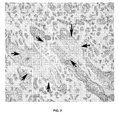
- FIG. 1 is a photograph of stained bovine brain tissue illustrating the presence of spots.
- FIG. 2 also illustrates the production of spots when human placenta is stained. Accordingly, disclosed embodiments of the present invention concern embodiments of a method for making and using histochemical nanosolutions to address the production of undesired spotting.
- ISH in situ hybridization
- IHC immunohistochemistry
- biodetection a variety of chemical (non-biological) tissue staining techniques, to which a nanoparticle, or nanoparticles, is added to reduce or eliminate spots.
- Histochemical nanosolutions are even more particularly used in process steps, particularly automated processes, that are practiced at temperatures greater than ambient, and more typically at temperature of from about 60 °C to about 101 °C.
- Reagents or compositions used for histochemical processes can be aqueous or organic suspensions or solutions, but most typically are aqueous solutions of a single reagent or multiple reagents.
- nanoparticles to a fluid substantially improves the fluid's capability to transfer heat. See, for example, I.C. Bang et al., "Boiling Heat Transfer Performance and Phenomena of Al2O3-Water Nano-fluids from a Plain Surface in a Pool,” Int. J. Heat Mass Transfer 48, pp. 2407-2419 (2005 ).
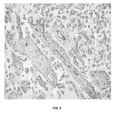
- Using histochemical process solutions that include nanoparticles substantially eliminates the occurrence of spots. See FIG. 3 .
- nanoparticles can be added to various additives, buffers, reagents, cell conditioners, etc. to enhance the ability of such materials for use in histochemical analyses. Exemplary process solutions, and exemplary suitable nanoparticles useful for making histochemical nanosolutions, are discussed in more detail below.
- a cell conditioning solution may be a nanosolution of EDTA comprising from greater than 0 to about 25 ppm of a suitable nanoparticle.
- Such solutions are typically used at a common temperature setting of about 95 °C for an effective period of time, such as from about 2 to about 90 minutes.
- the reagents used for cell conditioning can be the same as those for exposing the embedded biological sample.
- another example of a cell conditioning solution may be a nanosolution of SSC comprising from greater than 0 to about 25 ppm of a suitable nanoparticle.
- Such compositions typically are used at a common temperature of about 95 °C for a duration ranging from about 2 to about 90 minutes.
- the cell conditioning solution may be a nanosolution of sodium citrate comprising from greater than 0 to about 25 ppm of a suitable nanoparticle.
- Such compositions typically are used at a common temperature of about 90 °C for a duration ranging from about 2 to about 90 minutes.
- a suitable cell conditioning solution may be a nanosolution of SSC comprising from greater than 0 to about 25 ppm of a suitable nanoparticle.
- Such solutions typically are used at a common temperature of about 75 °C for an effective period of time of from about 2 to about 90 minutes.
- a suitable cell conditioning solution is a nanosolution of boric acid buffer comprising from greater than 0 to about 25 ppm of a suitable nanoparticle. Such solutions typically are used at a common temperature setting of greater than about 100 °C for an effective period of time, such as from about 2 to about 90 minutes.
- a cell conditioning solution for protein targets is a nanosolution of phosphate buffer comprising from greater than 0 to about 25 ppm of a suitable nanoparticle.
- Such compositions typically are used at a common temperature setting in excess of 100 °C for an effective period of time such as from about 2 to about 90 minutes.
- a cell conditioning solution may be a nanosolution of urea comprising from greater than 0 to about 25 ppm of a suitable nanoparticle.
- Such compositions typically are used at a common temperature setting of greater than 100 °C for an effective period ranging from about 2 to about 90 minutes.
- a cell conditioning nanosolution may be treated de-ionized water comprising from greater than 0 to about 25 ppm of a suitable nanoparticle.
- Such solutions typically are used at a temperature of from about 60 °C to about 80 °C for an effective period of time of from about 2 to about 90 minutes.
- Sodium dodecyl sulfate (SDS) and/or ethylene glycol also may be added to the conditioning solution.
- a cell conditioning nanosolution may be Bouins fixative [750 ml picric acid, saturated aqueous solution, 250 ml 37-40% formalin (formaldehyde), 50 ml glacial acetic acid] comprising from greater than 0 to about 25 ppm of a suitable nanoparticle.
- Such compositions are used at a temperature of from about 60 °C to about 80 °C for an effective period of time of from about 2 to about 30 minutes.
- a cell conditioning nanosolution may be peanut oil comprising from greater than 0 to about 25 ppm of a suitable nanoparticle and a common temperature range is from about 60 °C to about 70 °C.
- a cell conditioning solution may be a nanosolution of a lower (10 carbon atoms or fewer) alkyl alcohol, such as methanol. Such compositions are used at ambient conditions for an effective period ranging from about 4 to about 10 minutes.
- compositions also can include, either as a replacement for water, or as an additive in addition to water, an alcohol, glycol or polyglycol.
- solutions can include ethylene glycol as a replacement for or in addition to the water used to formulate such compositions.
- a cell conditioner (cell conditioning solution 1 or CC1) is a composition comprising Tris borate-ethylene diamine tetraacetic acid (EDTA) buffer, at a pH of about 8.
- CC1 can be formulated as a nanosolution by adding an effective amount, e.g. greater than 0 to at least about 25 parts per million, of at least one nanoparticle to the composition.
- a second disclosed embodiment of a cell conditioner (cell conditioning solution 2 or CC2) comprises about 10 mM citrate buffer at about pH 6, about 5% ethylene glycol, about 1 mM sodium metabisulfite (MorphosaveTM, Ventana Medical Systems, Inc., Arlington, Ariz.; U.S. Patent No. 5,432,056 ) and about 0.3% sodium dodecyl sulfate (SDS).
- the concentration of citrate may range from about 5 mM to about 50 mM.
- the pH of the buffer may range from about 4 to about 8.
- the concentration of ethylene glycol may range from about 1% to about 10%.
- the concentration of sodium metabisulfite may range from about 0.1 mM to about 10 mM, preferably from about 0.5 mM to about 1.5 mM.
- the concentration of SDS may range from about 0.1% to about 1%, preferably from about 0.25% to about 0.5%.
- CC2 can be formulated as a nanosolution by adding an effective amount, e.g. greater than 0 to at least about 25 parts per million, of at least one nanoparticle to the composition.
- Table 1 EZ Prep Nanosolution Component Amount Deionized Water as required to 1 L Triton ® X-100 (Sigma) 10 ml ProClin ® 300 (Sigma) 0.5 ml Nanoparticle 0-25 parts per million
- ProClin ® 300 is a composition available from Sigma-Aldrich comprising 2.3% 5-chloro-2-methyl-4-isothiazolin-3-one, 0.70 % 2-methyl-4-isothiazolin-3-one, 2-3% of an alkyl carboxylate and a 93-95% of a modified glycol.
- the nanoparticles used in the method of the present invention are alumina (Al 2 O 3 ), silica (SiO2), titania (TiO 2 ) nanoparticles, and combinations thereof.
- alumina Al 2 O 3
- silica SiO2
- titania TiO 2
- preferred nanoparticles based on availability, cost and spot reduction, are silica nanoparticles.
- nanoparticles mentioned are added to various compositions useful for performing histochemical analyses, such as cell conditioning compositions, at suitable concentrations for performing such analyses.
- a nanoparticle, or combinations of nanoparticles are added to such compositions at a concentration of greater than zero to at least about 25 ppm, more typically from about 2 ppm to about 20 ppm, and even more typically from about 2.5 ppm to about 15 ppm.
- concentrations reduce or substantially eliminate the average number of staining spots that occur relative to compositions that do not include the nanoparticle or nanoparticles.
- Tissue slides of cow brain (30 slides) were prepared.
- tissue samples were fixed in formalin, embedded in paraffin, gross cut into approximately one inch cubes, sliced into 8 ⁇ m sections, and placed onto glass slides.
- a Benchmark, or Benchmark XT, instrument was used to further process the slides.
- the slide-mounted tissue samples were deparaffinized using EZ Prep solution, followed by cell conditioning with a cell conditioning solution as indicated in below in Table 5. Histochemical analysis was then performed.
- a first group of slides was prepared using a cell conditioning composition, such as CC1, but without the addition of nanoparticles to establish a control for the average number of spots per slide, and the standard deviation thereof.
- CC1 and new tissue block + 5 mg/L Al 2 O 3 0.6 0.5 8. CC1 and new tissue block + 10 mg/L Al 2 O 3 1.2 0.8 9. CC1 and new tissue block + 5 mg/L TiO 2 4.2 2.7 9. CC1 and new tissue block + 10 mg/L TiO 2 3.0 2 . 3 10. CC1 and new tissue block + 2.5 mg/L SiO 2 3.0 1.8 11. CC1 and new tissue block + 5 mg/L SiO 2 2.7 2.4 12. CC1 and new tissue block + 10 mg/L SiO 2 2.1 2 . 1 13. CC1 and new tissue block + 15 mg/L SiO 2 1.8 2.0 14. CC1 and new tissue block + 15 mg/L TiO 2 2.0 2 . 1 15.
Landscapes
- Chemical & Material Sciences (AREA)
- Engineering & Computer Science (AREA)
- Health & Medical Sciences (AREA)
- Life Sciences & Earth Sciences (AREA)
- General Physics & Mathematics (AREA)
- Physics & Mathematics (AREA)
- Nanotechnology (AREA)
- Pathology (AREA)
- Biochemistry (AREA)
- Immunology (AREA)
- General Health & Medical Sciences (AREA)
- Biomedical Technology (AREA)
- Molecular Biology (AREA)
- Analytical Chemistry (AREA)
- Crystallography & Structural Chemistry (AREA)
- Composite Materials (AREA)
- Condensed Matter Physics & Semiconductors (AREA)
- Materials Engineering (AREA)
- Measuring Or Testing Involving Enzymes Or Micro-Organisms (AREA)
- Sampling And Sample Adjustment (AREA)
- Investigating Or Analysing Biological Materials (AREA)
- Compositions Of Macromolecular Compounds (AREA)
Claims (12)
- Verfahren zur Verarbeitung einer biologischen Probe, welches umfasst:Bereitstellen einer biologischen Probe;Anwendung einer wässrigen histochemischen Verarbeitungszusammensetzung auf die Probe, wobei die Zusammensetzung mehr als 0 bis 25 Teile pro Million (parts per million) von mindestens einem Nanopartikel, ausgewählt aus Aluminiumoxid (Al2O3), Siliciumdioxid (SiO2), Titandioxid (TiO2) oder Kombinationen davon, in einer wirksamen Menge umfasst, um die mittlere Anzahl der Flächen mit verringerter Färbungsintensität pro Objektträger zu verringern;Anfärben der biologischen Probe undAnwenden von mindestens einem weiteren histochemischen Schritt auf die Probe.
- Verfahren gemäß Anspruch 1, wobei die Anwendung einer histochemischen Verarbeitung die Anwendung von Zellkonditionierung auf die Probe mit Hilfe einer Zellkonditionierungszusammensetzug umfasst.
- Verfahren gemäß Anspruch 1, wobei die biologische Probe und die histochemische Verarbeitungszusammensetzung auf eine Temperatur von 60°C bis 101°C erhitzt werden.
- Verfahren gemäß Anspruch 1, wobei die Zusammensetzung eine Nanopartikelkonzentration von 2 Teilen pro Million bis 20 Teilen pro Million besitzt.
- Verfahren gemäß Anspruch 1, wobei die Zusammensetzung eine Nanopartikelkonzentration von 2,5 Teilen pro Million bis 15 Teilen pro Million besitzt.
- Verwendung einer wässrigen Zusammensetzung, umfassend mehr als 0 und weniger als 25 Teile pro Million von mindestens einem Nanopartikel, ausgewählt aus Aluminiumoxid (Al2O3), Siliciumdioxid (SiO2), Titandioxid (TiO2) und Kombinationen davon, zur Anwendung einer histochemischen Verarbeitung, einschließlich eines Färbungsschritts, um die mittlere Anzahl von Flächen mit verringerter Färbungsintensität pro Objektträger zu verringern.
- Verwendung gemäß Anspruch 6, wobei die Zusammensetzung ein Zellkonditionierungsmittel umfasst.
- Verwendung gemäß Anspruch 7, wobei die histochemische Verarbeitung mit einer biologischen Probe ausgeführt wird, welche eine Nucleinsäure umfasst, und wobei die Zellkonditionierungszusammensetzung eine Lösung von EDTA, SSC, Citronensäure oder eine Kombination davon umfasst.
- Verwendung gemäß Anspruch 8, wobei die Nucleinsäure DNA ist und die Zellkonditionierungszusammensetzung EDTA umfasst.
- Verwendung gemäß Anspruch 8, wobei die Nucleinsäure RNA ist und die Zellkonditionierungsprobe SSC umfasst.
- Verwendung gemäß Anspruch 7, wobei die histochemische Verarbeitung mit einer biologischen Probe durchgeführt wird, die ein Protein umfasst, und die Zellkonditionierungszusammensetzung einen Phosphatpuffer, eine Borsäurepufferlösung, Harnstoff oder eine Kombination davon umfasst.
- Verwendung gemäß Anspruch 6, wobei die Zusammensetzung Tris-Borat-Ethylendiamintetraessigsäure (EDTA)-Puffer bei einem pH-Wert von etwa 8 umfasst.
Priority Applications (2)
| Application Number | Priority Date | Filing Date | Title |
|---|---|---|---|
| EP15189792.3A EP2995925B1 (de) | 2008-06-05 | 2009-06-01 | Zusammensetzung zur histochemischen verarbeitung |
| DK15189792.3T DK2995925T3 (da) | 2008-06-05 | 2009-06-01 | Sammensætning til histokemisk processering |
Applications Claiming Priority (2)
| Application Number | Priority Date | Filing Date | Title |
|---|---|---|---|
| US13120508P | 2008-06-05 | 2008-06-05 | |
| PCT/US2009/045841 WO2009149013A2 (en) | 2008-06-05 | 2009-06-01 | Compositions comprising nanomaterials and method for using such compositions for histochemical processes |
Related Child Applications (2)
| Application Number | Title | Priority Date | Filing Date |
|---|---|---|---|
| EP15189792.3A Division-Into EP2995925B1 (de) | 2008-06-05 | 2009-06-01 | Zusammensetzung zur histochemischen verarbeitung |
| EP15189792.3A Division EP2995925B1 (de) | 2008-06-05 | 2009-06-01 | Zusammensetzung zur histochemischen verarbeitung |
Publications (2)
| Publication Number | Publication Date |
|---|---|
| EP2300799A2 EP2300799A2 (de) | 2011-03-30 |
| EP2300799B1 true EP2300799B1 (de) | 2015-11-25 |
Family
ID=40972822
Family Applications (2)
| Application Number | Title | Priority Date | Filing Date |
|---|---|---|---|
| EP09759174.7A Active EP2300799B1 (de) | 2008-06-05 | 2009-06-01 | Verfahren für einen histochemischen prozess und verwendung einer zusammensetzung in histochemischen prozessen |
| EP15189792.3A Active EP2995925B1 (de) | 2008-06-05 | 2009-06-01 | Zusammensetzung zur histochemischen verarbeitung |
Family Applications After (1)
| Application Number | Title | Priority Date | Filing Date |
|---|---|---|---|
| EP15189792.3A Active EP2995925B1 (de) | 2008-06-05 | 2009-06-01 | Zusammensetzung zur histochemischen verarbeitung |
Country Status (7)
| Country | Link |
|---|---|
| US (2) | US8703490B2 (de) |
| EP (2) | EP2300799B1 (de) |
| AU (1) | AU2009256349B2 (de) |
| CA (2) | CA2720728C (de) |
| DK (2) | DK2995925T3 (de) |
| ES (2) | ES2557594T3 (de) |
| WO (1) | WO2009149013A2 (de) |
Families Citing this family (10)
| Publication number | Priority date | Publication date | Assignee | Title |
|---|---|---|---|---|
| JP5275518B2 (ja) | 2010-02-02 | 2013-08-28 | ヴェンタナ メディカル システムズ, インク. | 蛍光粒子を安定化するための組成物及び方法 |
| US10126216B2 (en) | 2011-02-17 | 2018-11-13 | Ventana Medical Systems, Inc. | Method for tissue sample fixation |
| CN102372544A (zh) * | 2010-08-23 | 2012-03-14 | 中国石油化工股份有限公司 | 乙醇催化脱水的方法 |
| CN103834397B (zh) * | 2014-03-11 | 2015-07-08 | 太原理工大学 | 一种水溶性荧光碳点的制备方法 |
| US9145492B1 (en) * | 2014-04-01 | 2015-09-29 | King Fahd University Of Petroleum And Minerals | Method to produce ultra-high molecular weight polyethylene |
| WO2016041890A2 (en) * | 2014-09-17 | 2016-03-24 | Ventana Medical Systems, Inc. | Compositions, methods, and systems for tissue fixation |
| KR101826558B1 (ko) * | 2016-02-03 | 2018-02-07 | 현대자동차 주식회사 | 산화 그래핀-나노 다이아몬드 결합체, 이의 제조 방법, 및 이를 포함하는 나노 유체 |
| CN108436077B (zh) * | 2018-03-30 | 2019-10-01 | 河北工业大学 | 一种添加有纳米TiO2的合金粉末的制备方法 |
| CN112830471B (zh) * | 2021-01-11 | 2022-05-10 | 大连理工大学盘锦产业技术研究院 | 一种超级电容器用二维氮掺杂多孔炭材料的制备方法 |
| WO2024243119A2 (en) * | 2023-05-19 | 2024-11-28 | Spectrum Solutions L.L.C. | Products and methods for preserving and detecting biomolecules in human saliva samples |
Family Cites Families (152)
| Publication number | Priority date | Publication date | Assignee | Title |
|---|---|---|---|---|
| US3892530A (en) | 1974-09-23 | 1975-07-01 | Hoffmann La Roche | Colorimetric and fluorometric method |
| US4230683A (en) | 1978-08-09 | 1980-10-28 | Abbott Laboratories | Hapten conjugated antibody for antibody or antigen detection |
| US4495296A (en) | 1979-05-21 | 1985-01-22 | New York Blood Center, Inc. | Labeled anti-hapten antibodies and their use as a universal reagent for solid phase radio- and/or enzyme-immunoassays |
| US4425427A (en) | 1980-03-13 | 1984-01-10 | Vitafin N.V. | Simultaneous, kinetic, spectrophotometric analysis of blood serum for multiple components |
| US4469797A (en) | 1982-09-23 | 1984-09-04 | Miles Laboratories, Inc. | Digoxigenin immunogens, antibodies, labeled conjugates, and related derivatives |
| US4490473A (en) | 1983-03-28 | 1984-12-25 | Panab | Labeled antibodies and methods |
| US4879224A (en) | 1985-01-10 | 1989-11-07 | Biogen, Inc. | DNA sequences, recombinant DNA molecules and processes for producing human phospholipase inhibitor polypeptides |
| US5756696A (en) | 1986-01-16 | 1998-05-26 | Regents Of The University Of California | Compositions for chromosome-specific staining |
| US5447841A (en) | 1986-01-16 | 1995-09-05 | The Regents Of The Univ. Of California | Methods for chromosome-specific staining |
| US6280929B1 (en) | 1986-01-16 | 2001-08-28 | The Regents Of The University Of California | Method of detecting genetic translocations identified with chromosomal abnormalities |
| US5544650A (en) * | 1988-04-08 | 1996-08-13 | Neuromedical Systems, Inc. | Automated specimen classification system and method |
| DE3836656A1 (de) | 1988-10-27 | 1990-05-03 | Boehringer Mannheim Gmbh | Neue digoxigenin-derivate und ihre verwendung |
| US5595707A (en) | 1990-03-02 | 1997-01-21 | Ventana Medical Systems, Inc. | Automated biological reaction apparatus |
| US5225325A (en) | 1990-03-02 | 1993-07-06 | Ventana Medical Systems, Inc. | Immunohistochemical staining method and reagents therefor |
| US5403747A (en) | 1992-04-01 | 1995-04-04 | Thomas Jefferson University | Protein assay using microwave energy |
| US5350686A (en) | 1992-04-16 | 1994-09-27 | Pioneer Hi-Bred International, Inc. | Microwave acceleration of enzyme-catalyzed modification of macromolecules |
| US5834202A (en) | 1992-08-04 | 1998-11-10 | Replicon, Inc. | Methods for the isothermal amplification of nucleic acid molecules |
| ATE427968T1 (de) | 1992-08-21 | 2009-04-15 | Univ Bruxelles | Immunoglobuline ohne leichtkette |
| US6005079A (en) | 1992-08-21 | 1999-12-21 | Vrije Universiteit Brussels | Immunoglobulins devoid of light chains |
| US5679582A (en) | 1993-06-21 | 1997-10-21 | Scriptgen Pharmaceuticals, Inc. | Screening method for identifying ligands for target proteins |
| US5661040A (en) | 1993-07-13 | 1997-08-26 | Abbott Laboratories | Fluorescent polymer labeled conjugates and intermediates |
| US5731171A (en) | 1993-07-23 | 1998-03-24 | Arch Development Corp. | Sequence independent amplification of DNA |
| US5643761A (en) | 1993-10-27 | 1997-07-01 | The Trustees Of Columbia University In The City Of New York | Method for generating a subtracted cDNA library and uses of the generated library |
| US5487975A (en) | 1993-11-15 | 1996-01-30 | Ventana Medical Systems, Inc. | Biotin/avidin formulation |
| US5432056A (en) | 1993-11-15 | 1995-07-11 | Ventana Medical Systems, Inc. | Bisulfite-based tissue fixative |
| US5648211A (en) | 1994-04-18 | 1997-07-15 | Becton, Dickinson And Company | Strand displacement amplification using thermophilic enzymes |
| US6429199B1 (en) | 1994-07-15 | 2002-08-06 | University Of Iowa Research Foundation | Immunostimulatory nucleic acid molecules for activating dendritic cells |
| US6239116B1 (en) | 1994-07-15 | 2001-05-29 | University Of Iowa Research Foundation | Immunostimulatory nucleic acid molecules |
| CA2560114A1 (en) | 1994-07-15 | 1996-02-01 | The University Of Iowa Research Foundation | Immunomodulatory oligonucleotides |
| US6207646B1 (en) | 1994-07-15 | 2001-03-27 | University Of Iowa Research Foundation | Immunostimulatory nucleic acid molecules |
| GB9420355D0 (en) | 1994-10-10 | 1994-11-23 | Univ Nottingham | Preparation of protein microspheres, films and coatings |
| US6057099A (en) | 1994-12-02 | 2000-05-02 | Intelligene Ltd. | Detection of nucleic acid sequences |
| US5648245A (en) | 1995-05-09 | 1997-07-15 | Carnegie Institution Of Washington | Method for constructing an oligonucleotide concatamer library by rolling circle replication |
| US5684142A (en) | 1995-06-07 | 1997-11-04 | Oncor, Inc. | Modified nucleotides for nucleic acid labeling |
| US5883081A (en) | 1995-07-26 | 1999-03-16 | The Regents Of The University Of California | Isolation of novel HIV-2 proviruses |
| US5854033A (en) | 1995-11-21 | 1998-12-29 | Yale University | Rolling circle replication reporter systems |
| US6582921B2 (en) | 1996-07-29 | 2003-06-24 | Nanosphere, Inc. | Nanoparticles having oligonucleotides attached thereto and uses thereof |
| US6361944B1 (en) | 1996-07-29 | 2002-03-26 | Nanosphere, Inc. | Nanoparticles having oligonucleotides attached thereto and uses therefor |
| US6506564B1 (en) | 1996-07-29 | 2003-01-14 | Nanosphere, Inc. | Nanoparticles having oligonucleotides attached thereto and uses therefor |
| US6750016B2 (en) | 1996-07-29 | 2004-06-15 | Nanosphere, Inc. | Nanoparticles having oligonucleotides attached thereto and uses therefor |
| US6767702B2 (en) | 1996-07-29 | 2004-07-27 | Nanosphere, Inc. | Nanoparticles having oligonucleotides attached thereto and uses therefor |
| EP0951566B1 (de) | 1996-10-04 | 2002-12-18 | Universität Heidelberg | Verfahren zur aufreinigung von dns |
| FR2754544B1 (fr) | 1996-10-10 | 1998-11-06 | Lorraine Laminage | Tole aluminiee a faible emissivite |
| US6069122A (en) | 1997-06-16 | 2000-05-30 | The Procter & Gamble Company | Dishwashing detergent compositions containing organic diamines for improved grease cleaning, sudsing, low temperature stability and dissolution |
| US5990065A (en) | 1996-12-20 | 1999-11-23 | The Procter & Gamble Company | Dishwashing detergent compositions containing organic diamines for improved grease cleaning, sudsing, low temperature stability and dissolution |
| US5952890A (en) | 1997-02-05 | 1999-09-14 | Fox Enterprises, Inc. | Crystal oscillator programmable with frequency-defining parameters |
| EP1039935A4 (de) | 1997-02-28 | 2005-04-27 | Univ Iowa Res Found | VERWENDUNG VON NUCLEINSÄUREN ENTHALTEND NICHT-METHYLIERTEN CpG-DINUKLEOTIDEN IN DER BEHANDLUNG VON LIPOPOLYSACCHARID-ASSOZIERTEN ERKRANKUNGEN |
| US6406705B1 (en) | 1997-03-10 | 2002-06-18 | University Of Iowa Research Foundation | Use of nucleic acids containing unmethylated CpG dinucleotide as an adjuvant |
| US5994071A (en) | 1997-04-04 | 1999-11-30 | Albany Medical College | Assessment of prostate cancer |
| ATE370740T1 (de) | 1997-05-20 | 2007-09-15 | Ottawa Health Research Inst | Verfahren zur herstellung von nukleinsäurekonstrukten |
| US6045759A (en) | 1997-08-11 | 2000-04-04 | Ventana Medical Systems | Fluid dispenser |
| US6124120A (en) | 1997-10-08 | 2000-09-26 | Yale University | Multiple displacement amplification |
| US6322901B1 (en) | 1997-11-13 | 2001-11-27 | Massachusetts Institute Of Technology | Highly luminescent color-selective nano-crystalline materials |
| US6358682B1 (en) | 1998-01-26 | 2002-03-19 | Ventana Medical Systems, Inc. | Method and kit for the prognostication of breast cancer |
| WO1999043434A1 (en) | 1998-02-27 | 1999-09-02 | Ventana Medical Systems, Inc. | System and method of aspirating and dispensing reagent |
| US6582962B1 (en) | 1998-02-27 | 2003-06-24 | Ventana Medical Systems, Inc. | Automated molecular pathology apparatus having independent slide heaters |
| US6855559B1 (en) | 1998-09-03 | 2005-02-15 | Ventana Medical Systems, Inc. | Removal of embedding media from biological samples and cell conditioning on automated staining instruments |
| US6235480B1 (en) | 1998-03-13 | 2001-05-22 | Promega Corporation | Detection of nucleic acid hybrids |
| CA2323929C (en) | 1998-04-03 | 2004-03-09 | University Of Iowa Research Foundation | Methods and products for stimulating the immune system using immunotherapeutic oligonucleotides and cytokines |
| US7410753B2 (en) * | 1998-09-03 | 2008-08-12 | Ventana Medical Systems, Inc. | Removal of embedding media from biological samples and cell conditioning on automated staining instruments |
| US6855552B2 (en) | 1998-09-03 | 2005-02-15 | Ventana Medical Systems | Automated immunohistochemical and in situ hybridization assay formulations |
| US7550298B2 (en) * | 1998-09-03 | 2009-06-23 | Ventana Medical Systems, Inc. | Automated immunohistochemical and in situ hybridization assay formulations |
| CA2345376C (en) | 1998-09-24 | 2010-03-16 | Advanced Research And Technology Institute, Inc. | Water-soluble luminescent quantum dots and bioconjugates thereof |
| US6414133B1 (en) | 1998-10-13 | 2002-07-02 | Ventana Medical Systems, Inc. | Multiple fusion probes |
| US7569344B2 (en) | 1998-10-26 | 2009-08-04 | Ventana Medical Systems, Inc. | Detection of human papilloma virus in papanicolaou (Pap) smears |
| US6432320B1 (en) | 1998-11-02 | 2002-08-13 | Patrick Bonsignore | Refrigerant and heat transfer fluid additive |
| US6699973B1 (en) | 1998-11-19 | 2004-03-02 | Elan Corporation, Plc | Antibodies to peptides that target GIT receptors and related methods |
| AU2410500A (en) | 1999-01-11 | 2000-08-01 | President And Fellows Of Harvard College | Isothermal amplification of dna |
| US6344337B1 (en) | 1999-02-19 | 2002-02-05 | Board Of Trustees Of Michigan State University | Antigen test to detect equine protozoal myeloencephalitis in horse serum and cerebrospinal fluid |
| US6696304B1 (en) | 1999-02-24 | 2004-02-24 | Luminex Corporation | Particulate solid phase immobilized protein quantitation |
| US6544798B1 (en) * | 1999-02-26 | 2003-04-08 | Ventana Medical Systems, Inc. | Removal of embedding media from biological samples and cell conditioning on automated staining instruments |
| US6673214B1 (en) | 1999-04-09 | 2004-01-06 | Rocky Mountain Biosystems, Inc. | Energy enhanced reaction catalysis and uses thereof |
| EP1173765B1 (de) | 1999-04-13 | 2007-01-03 | Wilex AG | Diagnostischer und therapeutischer einsatz von antikörpern gegen den urokinase-rezeptor |
| US6180349B1 (en) | 1999-05-18 | 2001-01-30 | The Regents Of The University Of California | Quantitative PCR method to enumerate DNA copy number |
| DE19933701A1 (de) | 1999-07-19 | 2001-01-25 | Wilex Biotechnology Gmbh | Zyklische peptidomimetische Urokinaserezeptorantagonisten |
| WO2001029265A1 (en) | 1999-10-15 | 2001-04-26 | Ventana Medical Systems, Inc. | Method of detecting single gene copies in-situ |
| US20060275784A1 (en) | 1999-10-26 | 2006-12-07 | Ventana Medical Systems, Inc. | Detection of Human Papilloma Virus in Papanicolaou (Pap) Smears |
| MXPA02006778A (es) | 2000-01-12 | 2004-04-05 | Ventana Inc | Metodo para determinar la respuesta a una terapia de cancer. |
| CA2403620C (en) | 2000-03-20 | 2012-01-10 | Massachusetts Institute Of Technology | Inorganic chromophore bioconjugates |
| ES2322888T3 (es) | 2000-04-14 | 2009-07-01 | Ventana Medical Systems, Inc. | Metodo para la cuantificacion de la expresion de proteina akt. |
| US6291187B1 (en) | 2000-05-12 | 2001-09-18 | Molecular Staging, Inc. | Poly-primed amplification of nucleic acid sequences |
| US6828097B1 (en) | 2000-05-16 | 2004-12-07 | The Childrens Mercy Hospital | Single copy genomic hybridization probes and method of generating same |
| IL152727A0 (en) | 2000-05-16 | 2003-06-24 | Childrens Mercy Hospital | Single copy genomic hybridization probes and method of generating same |
| US6794362B1 (en) | 2000-05-30 | 2004-09-21 | Connective Tissue Imagineering Llc | Asparagine containing elastin peptide analogs |
| US7763421B2 (en) | 2000-06-05 | 2010-07-27 | Ventana Medical Systems, Inc. | Methods for producing nucleic acid hybridization probes that amplify hybridization signal by promoting network formation |
| US6323009B1 (en) | 2000-06-28 | 2001-11-27 | Molecular Staging, Inc. | Multiply-primed amplification of nucleic acid sequences |
| US6447692B1 (en) | 2000-08-04 | 2002-09-10 | Hrl Laboratories, Llc | Nanometer sized phase change materials for enhanced heat transfer fluid performance |
| US6942970B2 (en) | 2000-09-14 | 2005-09-13 | Zymed Laboratories, Inc. | Identifying subjects suitable for topoisomerase II inhibitor treatment |
| US20040209303A1 (en) | 2000-10-03 | 2004-10-21 | Martin Mark T. | Methods and compositions for directed microwave chemistry |
| US6649138B2 (en) | 2000-10-13 | 2003-11-18 | Quantum Dot Corporation | Surface-modified semiconductive and metallic nanoparticles having enhanced dispersibility in aqueous media |
| US6576291B2 (en) | 2000-12-08 | 2003-06-10 | Massachusetts Institute Of Technology | Preparation of nanocrystallites |
| AU2002229046B2 (en) | 2000-12-11 | 2006-05-18 | President And Fellows Of Harvard College | Nanosensors |
| US20020083888A1 (en) | 2000-12-28 | 2002-07-04 | Zehnder Donald A. | Flow synthesis of quantum dot nanocrystals |
| US20030022166A1 (en) | 2001-01-19 | 2003-01-30 | Colin Collins | Repeat-free probes for molecular cytogenetics |
| US6656685B2 (en) | 2001-01-29 | 2003-12-02 | Ventana Medical Systems, Inc. | Hybridization buffers using low molecular weight dextran sulfate and methods for their use |
| WO2003004944A2 (en) | 2001-01-30 | 2003-01-16 | Materials And Electrochemical Research (Mer) Corporation | Nano carbon materials for enhancing thermal transfer in fluids |
| DE10105912A1 (de) | 2001-02-09 | 2002-08-14 | Roche Diagnostics Gmbh | Rekombinante Proteinase K |
| WO2002088670A1 (en) | 2001-04-30 | 2002-11-07 | Ventana Medical Systems, Inc. | Method and composition for staining microorganisms |
| CA2445881C (en) | 2001-04-30 | 2010-06-22 | Ventana Medical Systems, Inc. | Reagents and methods for automated hybridization |
| WO2003000853A2 (en) | 2001-06-20 | 2003-01-03 | Caprion Pharmaceuticals Inc. | Protein aggregation assays and uses thereof |
| ATE556845T1 (de) | 2001-07-20 | 2012-05-15 | Life Technologies Corp | Lumineszierende nanopartikel und ihre herstellung |
| US20030066998A1 (en) | 2001-08-02 | 2003-04-10 | Lee Howard Wing Hoon | Quantum dots of Group IV semiconductor materials |
| US6617137B2 (en) | 2001-10-15 | 2003-09-09 | Molecular Staging Inc. | Method of amplifying whole genomes without subjecting the genome to denaturing conditions |
| US6977148B2 (en) | 2001-10-15 | 2005-12-20 | Qiagen Gmbh | Multiple displacement amplification |
| US7270785B1 (en) | 2001-11-02 | 2007-09-18 | Ventana Medical Systems, Inc. | Automated molecular pathology apparatus having fixed slide platforms |
| US20030165485A1 (en) | 2001-11-09 | 2003-09-04 | Goran Bertilsson | Functional role and potential therapeutic use of Reelin, Gas6 and Protein S in relation to adult neural stem or progenitor cells |
| WO2003048317A2 (en) | 2001-11-30 | 2003-06-12 | Children's Hospital Medical Center | Antibodies to magmas and uses thereof |
| US20050019901A1 (en) | 2002-01-31 | 2005-01-27 | Evgenia Matveeva | Methods for synthesis of bio-active nanoparticles and nanocapsules for use in optical bio-disc assays and disc assembly including same |
| US20040248151A1 (en) | 2002-04-05 | 2004-12-09 | Ventana Medical Systems, Inc. | Method for predicting the response to HER2-directed therapy |
| US7285289B2 (en) | 2002-04-12 | 2007-10-23 | Nagy Jon O | Nanoparticle vaccines |
| US20040057958A1 (en) | 2002-05-17 | 2004-03-25 | Waggoner David W. | Immunogenicity-enhancing carriers and compositions thereof and methods of using the same |
| US7476442B2 (en) | 2002-07-17 | 2009-01-13 | Massachusetts Institute Of Technology | Nanoparticle chains and preparation thereof |
| US7200252B2 (en) | 2002-10-28 | 2007-04-03 | Ventana Medical Systems, Inc. | Color space transformations for use in identifying objects of interest in biological specimens |
| US7233817B2 (en) | 2002-11-01 | 2007-06-19 | Brian Yen | Apparatus and method for pattern delivery of radiation and biological characteristic analysis |
| US20040101822A1 (en) | 2002-11-26 | 2004-05-27 | Ulrich Wiesner | Fluorescent silica-based nanoparticles |
| GB0227738D0 (en) | 2002-11-28 | 2003-01-08 | Univ Liverpool | Nanoparticle conjugates and method of production thereof |
| US20040115727A1 (en) | 2002-12-11 | 2004-06-17 | Allergan, Inc., A Corporation | Evolved clostridial toxins with altered protease specificity |
| US7056471B1 (en) | 2002-12-16 | 2006-06-06 | Agency For Science Technology & Research | Ternary and quarternary nanocrystals, processes for their production and uses thereof |
| WO2004094652A2 (en) | 2003-04-22 | 2004-11-04 | Neurobiotex, Inc. | Zinc-based screening test and kit for early diagnosis of prostate cancer |
| US6944333B2 (en) | 2003-04-30 | 2005-09-13 | Ventana Medical Systems, Inc. | Color image compression via spectral decorrelation and elimination of spatial redundancy |
| US7981667B2 (en) | 2003-05-07 | 2011-07-19 | Indiana University Research And Technology Corporation | Alloyed semiconductor quantum dots and concentration-gradient alloyed quantum dots, series comprising the same and methods related thereto |
| WO2004104557A2 (en) | 2003-05-19 | 2004-12-02 | Ventana Medical Systems, Inc. | Electrophoretic in situ tissue staining |
| US20050181394A1 (en) | 2003-06-20 | 2005-08-18 | Illumina, Inc. | Methods and compositions for whole genome amplification and genotyping |
| ES2330441T3 (es) | 2003-06-24 | 2009-12-10 | Ventana Medical Systems, Inc. | Deposito de metal catalizado por una enzima para la deteccion in situ mejorada de epitopos inmunohistoquimicos y secuencias de acido nucleico. |
| KR100657891B1 (ko) | 2003-07-19 | 2006-12-14 | 삼성전자주식회사 | 반도체 나노결정 및 그 제조방법 |
| US20050048498A1 (en) | 2003-08-29 | 2005-03-03 | Applera Corporation | Compositions, methods, and kits for assembling probes |
| US7169375B2 (en) * | 2003-08-29 | 2007-01-30 | General Electric Company | Metal oxide nanoparticles, methods of making, and methods of use |
| KR100571817B1 (ko) | 2003-09-19 | 2006-04-17 | 삼성전자주식회사 | 태그 서열에 혼성화하는 검출 프로브를 이용하는 표적핵산의 검출방법 |
| US20050112636A1 (en) | 2003-09-23 | 2005-05-26 | Atom Sciences | Polymeric nucleic acid hybridization probes |
| WO2005047331A2 (en) | 2003-11-07 | 2005-05-26 | Immunex Corporation | Antibodies that bind interleukin-4 receptor |
| TW200526224A (en) | 2003-12-22 | 2005-08-16 | Alcon Inc | Short form c-Maf transcription factor antagonists for treatment of glaucoma |
| WO2005064018A2 (en) | 2003-12-22 | 2005-07-14 | Ventana Medical Systems, Inc. | Microwave mediated synthesis of nucleic acid probes |
| US7104313B2 (en) | 2003-12-31 | 2006-09-12 | Intel Corporation | Apparatus for using fluid laden with nanoparticles for application in electronic cooling |
| US7244665B2 (en) | 2004-04-29 | 2007-07-17 | Micron Technology, Inc. | Wafer edge ring structures and methods of formation |
| US20050272032A1 (en) | 2004-05-04 | 2005-12-08 | Ventana Medical Systems, Inc., A Corporation Of The State Of Delaware | Internal control for in situ hybridization |
| EP1901067A3 (de) * | 2004-08-03 | 2009-05-13 | On-Chip Cellomics Consortium | Cellomics-System |
| WO2007013881A2 (en) * | 2004-09-27 | 2007-02-01 | Auburn University | Selection and deposition of nanoparticles using co2-expanded liquids |
| US20060110744A1 (en) | 2004-11-23 | 2006-05-25 | Sampas Nicolas M | Probe design methods and microarrays for comparative genomic hybridization and location analysis |
| KR100624447B1 (ko) * | 2004-11-25 | 2006-09-18 | 삼성전자주식회사 | 은 나노 입자를 이용한 핵산의 정제 방법 |
| US20060160116A1 (en) | 2004-12-16 | 2006-07-20 | The Regents Of The University Of California | Repetitive sequence-free DNA libraries |
| AU2006239154A1 (en) | 2005-04-28 | 2006-11-02 | Ventana Medical Systems, Inc | Nanoparticle conjugates |
| US7615800B2 (en) | 2005-09-14 | 2009-11-10 | Eastman Kodak Company | Quantum dot light emitting layer |
| DK2963011T3 (en) | 2005-11-23 | 2018-08-06 | Ventana Med Syst Inc | MOLECULAR CONJUGATE |
| WO2007074722A1 (ja) * | 2005-12-27 | 2007-07-05 | The Furukawa Electric Co., Ltd. | 蛍光ナノシリカ粒子、ナノ蛍光材料、それを用いたバイオチップ及びそのアッセイ法 |
| EP1977246B1 (de) | 2005-12-30 | 2010-01-20 | Ventana Medical Systems, Inc. | Na+, k+-atpase-expression bei zervixdysplasie und -krebs |
| US20090130050A1 (en) * | 2006-03-24 | 2009-05-21 | Toto Ltd. | Titanium Oxide Composite Particles, Dispersion Liquid Thereof, and Process for Producing Them |
| EP2069537B1 (de) | 2006-09-01 | 2011-08-31 | Ventana Medical Systems, Inc. | Verfahren zur herstellung von nukleinsäuresonden |
| CN101162201A (zh) | 2006-10-11 | 2008-04-16 | 中国人民解放军军事医学科学院放射与辐射医学研究所 | 一种基因芯片的tsa-纳米金标记银染检测法 |
| DK3564674T3 (da) | 2006-11-01 | 2021-10-18 | Ventana Med Syst Inc | Haptener, haptenkonjugater, sammensætninger deraf og fremgangsmåde til fremstilling og anvendelse deraf |
| KR100891096B1 (ko) * | 2007-02-13 | 2009-03-31 | 삼성전자주식회사 | 올리고머 프로브 어레이 및 이의 제조 방법 |
| WO2008112277A2 (en) * | 2007-03-13 | 2008-09-18 | Wake Forest University | Compositions and methods for treating cancer |
| US7682789B2 (en) | 2007-05-04 | 2010-03-23 | Ventana Medical Systems, Inc. | Method for quantifying biomolecules conjugated to a nanoparticle |
-
2009
- 2009-06-01 EP EP09759174.7A patent/EP2300799B1/de active Active
- 2009-06-01 CA CA2720728A patent/CA2720728C/en active Active
- 2009-06-01 DK DK15189792.3T patent/DK2995925T3/da active
- 2009-06-01 DK DK09759174.7T patent/DK2300799T3/en active
- 2009-06-01 AU AU2009256349A patent/AU2009256349B2/en active Active
- 2009-06-01 ES ES09759174.7T patent/ES2557594T3/es active Active
- 2009-06-01 WO PCT/US2009/045841 patent/WO2009149013A2/en not_active Ceased
- 2009-06-01 CA CA2979353A patent/CA2979353C/en active Active
- 2009-06-01 ES ES15189792T patent/ES2906426T3/es active Active
- 2009-06-01 EP EP15189792.3A patent/EP2995925B1/de active Active
- 2009-06-01 US US12/995,790 patent/US8703490B2/en active Active
-
2014
- 2014-02-27 US US14/192,271 patent/US10718693B2/en active Active
Also Published As
| Publication number | Publication date |
|---|---|
| US8703490B2 (en) | 2014-04-22 |
| CA2979353A1 (en) | 2009-12-10 |
| WO2009149013A3 (en) | 2010-02-04 |
| CA2979353C (en) | 2020-06-30 |
| US10718693B2 (en) | 2020-07-21 |
| ES2557594T3 (es) | 2016-01-27 |
| ES2906426T3 (es) | 2022-04-18 |
| AU2009256349B2 (en) | 2014-06-26 |
| EP2300799A2 (de) | 2011-03-30 |
| AU2009256349A1 (en) | 2009-12-10 |
| DK2300799T3 (en) | 2015-12-14 |
| US20140178929A1 (en) | 2014-06-26 |
| CA2720728A1 (en) | 2009-12-10 |
| EP2995925B1 (de) | 2021-12-15 |
| EP2995925A1 (de) | 2016-03-16 |
| CA2720728C (en) | 2018-04-03 |
| US20110091897A1 (en) | 2011-04-21 |
| WO2009149013A2 (en) | 2009-12-10 |
| DK2995925T3 (da) | 2022-02-21 |
Similar Documents
| Publication | Publication Date | Title |
|---|---|---|
| EP2300799B1 (de) | Verfahren für einen histochemischen prozess und verwendung einer zusammensetzung in histochemischen prozessen | |
| EP3651902B1 (de) | Verfahren zur in-situ-antigenrückgewinnung einer biologischen probe und abbildung davon | |
| CN102597740B (zh) | 用于抗原提取过程的方法和装置 | |
| AU762085B2 (en) | Histological reconstruction and automated image analysis | |
| CN108181155B (zh) | 改进了对革兰氏阴性细菌的结晶紫-碘复合物的脱色的革兰氏染色方法 | |
| JP2003510571A (ja) | 組織試料中の分子標的の臨床的有用性を評価するための高処理量システム | |
| WO2019171064A1 (en) | A method of detecting magea4 | |
| AU2014208296B2 (en) | Compositions comprising nanomaterials and method for using such compositions for histochemical processes | |
| CN110050070B (zh) | 用于组织样品的全自动化核酸提取方法 | |
| WO2018100017A1 (en) | Method and system for treating biological samples | |
| AU2024240948A1 (en) | Methods for antigen retrieval of a fixed sample for multiple applications | |
| HK1173494B (en) | Method and apparatus for antigen retrieval process |
Legal Events
| Date | Code | Title | Description |
|---|---|---|---|
| PUAI | Public reference made under article 153(3) epc to a published international application that has entered the european phase |
Free format text: ORIGINAL CODE: 0009012 |
|
| 17P | Request for examination filed |
Effective date: 20101223 |
|
| AK | Designated contracting states |
Kind code of ref document: A2 Designated state(s): AT BE BG CH CY CZ DE DK EE ES FI FR GB GR HR HU IE IS IT LI LT LU LV MC MK MT NL NO PL PT RO SE SI SK TR |
|
| AX | Request for extension of the european patent |
Extension state: AL BA RS |
|
| DAX | Request for extension of the european patent (deleted) | ||
| GRAP | Despatch of communication of intention to grant a patent |
Free format text: ORIGINAL CODE: EPIDOSNIGR1 |
|
| RIC1 | Information provided on ipc code assigned before grant |
Ipc: B82Y 30/00 20110101ALI20141128BHEP Ipc: G01N 1/30 20060101AFI20141128BHEP |
|
| INTG | Intention to grant announced |
Effective date: 20141223 |
|
| GRAP | Despatch of communication of intention to grant a patent |
Free format text: ORIGINAL CODE: EPIDOSNIGR1 |
|
| INTG | Intention to grant announced |
Effective date: 20150417 |
|
| GRAP | Despatch of communication of intention to grant a patent |
Free format text: ORIGINAL CODE: EPIDOSNIGR1 |
|
| INTG | Intention to grant announced |
Effective date: 20150610 |
|
| GRAS | Grant fee paid |
Free format text: ORIGINAL CODE: EPIDOSNIGR3 |
|
| GRAA | (expected) grant |
Free format text: ORIGINAL CODE: 0009210 |
|
| AK | Designated contracting states |
Kind code of ref document: B1 Designated state(s): AT BE BG CH CY CZ DE DK EE ES FI FR GB GR HR HU IE IS IT LI LT LU LV MC MK MT NL NO PL PT RO SE SI SK TR |
|
| REG | Reference to a national code |
Ref country code: GB Ref legal event code: FG4D |
|
| REG | Reference to a national code |
Ref country code: CH Ref legal event code: EP |
|
| REG | Reference to a national code |
Ref country code: DK Ref legal event code: T3 Effective date: 20151207 |
|
| REG | Reference to a national code |
Ref country code: AT Ref legal event code: REF Ref document number: 762852 Country of ref document: AT Kind code of ref document: T Effective date: 20151215 Ref country code: CH Ref legal event code: NV Representative=s name: BOHEST AG, CH |
|
| REG | Reference to a national code |
Ref country code: IE Ref legal event code: FG4D |
|
| RIN2 | Information on inventor provided after grant (corrected) |
Inventor name: COCKAYNE, SCOTT Inventor name: FERREA, HEATHER Inventor name: HERMAN, MICHAEL Inventor name: JACKSON, MERRILL Inventor name: HOBEN, GRACE Inventor name: SEBASTIAO, NOEMI |
|
| REG | Reference to a national code |
Ref country code: DE Ref legal event code: R096 Ref document number: 602009034986 Country of ref document: DE |
|
| REG | Reference to a national code |
Ref country code: ES Ref legal event code: FG2A Ref document number: 2557594 Country of ref document: ES Kind code of ref document: T3 Effective date: 20160127 |
|
| REG | Reference to a national code |
Ref country code: LT Ref legal event code: MG4D |
|
| REG | Reference to a national code |
Ref country code: NL Ref legal event code: MP Effective date: 20160225 |
|
| REG | Reference to a national code |
Ref country code: AT Ref legal event code: MK05 Ref document number: 762852 Country of ref document: AT Kind code of ref document: T Effective date: 20151125 |
|
| PG25 | Lapsed in a contracting state [announced via postgrant information from national office to epo] |
Ref country code: NL Free format text: LAPSE BECAUSE OF FAILURE TO SUBMIT A TRANSLATION OF THE DESCRIPTION OR TO PAY THE FEE WITHIN THE PRESCRIBED TIME-LIMIT Effective date: 20151125 Ref country code: HR Free format text: LAPSE BECAUSE OF FAILURE TO SUBMIT A TRANSLATION OF THE DESCRIPTION OR TO PAY THE FEE WITHIN THE PRESCRIBED TIME-LIMIT Effective date: 20151125 Ref country code: NO Free format text: LAPSE BECAUSE OF FAILURE TO SUBMIT A TRANSLATION OF THE DESCRIPTION OR TO PAY THE FEE WITHIN THE PRESCRIBED TIME-LIMIT Effective date: 20160225 Ref country code: IS Free format text: LAPSE BECAUSE OF FAILURE TO SUBMIT A TRANSLATION OF THE DESCRIPTION OR TO PAY THE FEE WITHIN THE PRESCRIBED TIME-LIMIT Effective date: 20160325 Ref country code: LT Free format text: LAPSE BECAUSE OF FAILURE TO SUBMIT A TRANSLATION OF THE DESCRIPTION OR TO PAY THE FEE WITHIN THE PRESCRIBED TIME-LIMIT Effective date: 20151125 |
|
| PG25 | Lapsed in a contracting state [announced via postgrant information from national office to epo] |
Ref country code: PT Free format text: LAPSE BECAUSE OF FAILURE TO SUBMIT A TRANSLATION OF THE DESCRIPTION OR TO PAY THE FEE WITHIN THE PRESCRIBED TIME-LIMIT Effective date: 20160325 Ref country code: GR Free format text: LAPSE BECAUSE OF FAILURE TO SUBMIT A TRANSLATION OF THE DESCRIPTION OR TO PAY THE FEE WITHIN THE PRESCRIBED TIME-LIMIT Effective date: 20160226 Ref country code: AT Free format text: LAPSE BECAUSE OF FAILURE TO SUBMIT A TRANSLATION OF THE DESCRIPTION OR TO PAY THE FEE WITHIN THE PRESCRIBED TIME-LIMIT Effective date: 20151125 Ref country code: PL Free format text: LAPSE BECAUSE OF FAILURE TO SUBMIT A TRANSLATION OF THE DESCRIPTION OR TO PAY THE FEE WITHIN THE PRESCRIBED TIME-LIMIT Effective date: 20151125 Ref country code: FI Free format text: LAPSE BECAUSE OF FAILURE TO SUBMIT A TRANSLATION OF THE DESCRIPTION OR TO PAY THE FEE WITHIN THE PRESCRIBED TIME-LIMIT Effective date: 20151125 Ref country code: LV Free format text: LAPSE BECAUSE OF FAILURE TO SUBMIT A TRANSLATION OF THE DESCRIPTION OR TO PAY THE FEE WITHIN THE PRESCRIBED TIME-LIMIT Effective date: 20151125 Ref country code: SE Free format text: LAPSE BECAUSE OF FAILURE TO SUBMIT A TRANSLATION OF THE DESCRIPTION OR TO PAY THE FEE WITHIN THE PRESCRIBED TIME-LIMIT Effective date: 20151125 |
|
| REG | Reference to a national code |
Ref country code: FR Ref legal event code: PLFP Year of fee payment: 8 |
|
| PG25 | Lapsed in a contracting state [announced via postgrant information from national office to epo] |
Ref country code: CZ Free format text: LAPSE BECAUSE OF FAILURE TO SUBMIT A TRANSLATION OF THE DESCRIPTION OR TO PAY THE FEE WITHIN THE PRESCRIBED TIME-LIMIT Effective date: 20151125 |
|
| REG | Reference to a national code |
Ref country code: DE Ref legal event code: R097 Ref document number: 602009034986 Country of ref document: DE |
|
| PG25 | Lapsed in a contracting state [announced via postgrant information from national office to epo] |
Ref country code: RO Free format text: LAPSE BECAUSE OF FAILURE TO SUBMIT A TRANSLATION OF THE DESCRIPTION OR TO PAY THE FEE WITHIN THE PRESCRIBED TIME-LIMIT Effective date: 20151125 Ref country code: SK Free format text: LAPSE BECAUSE OF FAILURE TO SUBMIT A TRANSLATION OF THE DESCRIPTION OR TO PAY THE FEE WITHIN THE PRESCRIBED TIME-LIMIT Effective date: 20151125 Ref country code: EE Free format text: LAPSE BECAUSE OF FAILURE TO SUBMIT A TRANSLATION OF THE DESCRIPTION OR TO PAY THE FEE WITHIN THE PRESCRIBED TIME-LIMIT Effective date: 20151125 |
|
| PLBE | No opposition filed within time limit |
Free format text: ORIGINAL CODE: 0009261 |
|
| STAA | Information on the status of an ep patent application or granted ep patent |
Free format text: STATUS: NO OPPOSITION FILED WITHIN TIME LIMIT |
|
| 26N | No opposition filed |
Effective date: 20160826 |
|
| PG25 | Lapsed in a contracting state [announced via postgrant information from national office to epo] |
Ref country code: SI Free format text: LAPSE BECAUSE OF FAILURE TO SUBMIT A TRANSLATION OF THE DESCRIPTION OR TO PAY THE FEE WITHIN THE PRESCRIBED TIME-LIMIT Effective date: 20151125 |
|
| PG25 | Lapsed in a contracting state [announced via postgrant information from national office to epo] |
Ref country code: BE Free format text: LAPSE BECAUSE OF FAILURE TO SUBMIT A TRANSLATION OF THE DESCRIPTION OR TO PAY THE FEE WITHIN THE PRESCRIBED TIME-LIMIT Effective date: 20151125 |
|
| PG25 | Lapsed in a contracting state [announced via postgrant information from national office to epo] |
Ref country code: MC Free format text: LAPSE BECAUSE OF FAILURE TO SUBMIT A TRANSLATION OF THE DESCRIPTION OR TO PAY THE FEE WITHIN THE PRESCRIBED TIME-LIMIT Effective date: 20151125 |
|
| REG | Reference to a national code |
Ref country code: IE Ref legal event code: MM4A |
|
| REG | Reference to a national code |
Ref country code: FR Ref legal event code: PLFP Year of fee payment: 9 |
|
| PG25 | Lapsed in a contracting state [announced via postgrant information from national office to epo] |
Ref country code: IE Free format text: LAPSE BECAUSE OF NON-PAYMENT OF DUE FEES Effective date: 20160601 |
|
| REG | Reference to a national code |
Ref country code: FR Ref legal event code: PLFP Year of fee payment: 10 |
|
| PG25 | Lapsed in a contracting state [announced via postgrant information from national office to epo] |
Ref country code: CY Free format text: LAPSE BECAUSE OF FAILURE TO SUBMIT A TRANSLATION OF THE DESCRIPTION OR TO PAY THE FEE WITHIN THE PRESCRIBED TIME-LIMIT Effective date: 20151125 Ref country code: HU Free format text: LAPSE BECAUSE OF FAILURE TO SUBMIT A TRANSLATION OF THE DESCRIPTION OR TO PAY THE FEE WITHIN THE PRESCRIBED TIME-LIMIT; INVALID AB INITIO Effective date: 20090601 |
|
| PG25 | Lapsed in a contracting state [announced via postgrant information from national office to epo] |
Ref country code: MT Free format text: LAPSE BECAUSE OF NON-PAYMENT OF DUE FEES Effective date: 20160630 Ref country code: TR Free format text: LAPSE BECAUSE OF FAILURE TO SUBMIT A TRANSLATION OF THE DESCRIPTION OR TO PAY THE FEE WITHIN THE PRESCRIBED TIME-LIMIT Effective date: 20151125 Ref country code: MK Free format text: LAPSE BECAUSE OF FAILURE TO SUBMIT A TRANSLATION OF THE DESCRIPTION OR TO PAY THE FEE WITHIN THE PRESCRIBED TIME-LIMIT Effective date: 20151125 Ref country code: LU Free format text: LAPSE BECAUSE OF NON-PAYMENT OF DUE FEES Effective date: 20160601 |
|
| PG25 | Lapsed in a contracting state [announced via postgrant information from national office to epo] |
Ref country code: BG Free format text: LAPSE BECAUSE OF FAILURE TO SUBMIT A TRANSLATION OF THE DESCRIPTION OR TO PAY THE FEE WITHIN THE PRESCRIBED TIME-LIMIT Effective date: 20151125 |
|
| REG | Reference to a national code |
Ref country code: DE Ref legal event code: R082 Ref document number: 602009034986 Country of ref document: DE Representative=s name: PATENTANWAELTE ISENBRUCK BOESL HOERSCHLER PART, DE |
|
| PGFP | Annual fee paid to national office [announced via postgrant information from national office to epo] |
Ref country code: DE Payment date: 20250520 Year of fee payment: 17 |
|
| PGFP | Annual fee paid to national office [announced via postgrant information from national office to epo] |
Ref country code: DK Payment date: 20250520 Year of fee payment: 17 Ref country code: GB Payment date: 20250520 Year of fee payment: 17 |
|
| PGFP | Annual fee paid to national office [announced via postgrant information from national office to epo] |
Ref country code: IT Payment date: 20250520 Year of fee payment: 17 |
|
| PGFP | Annual fee paid to national office [announced via postgrant information from national office to epo] |
Ref country code: FR Payment date: 20250520 Year of fee payment: 17 |
|
| PGFP | Annual fee paid to national office [announced via postgrant information from national office to epo] |
Ref country code: ES Payment date: 20250701 Year of fee payment: 17 |
|
| PGFP | Annual fee paid to national office [announced via postgrant information from national office to epo] |
Ref country code: CH Payment date: 20250701 Year of fee payment: 17 |