EP2249308A1 - Vorrichtung und verfahren zur bildverarbeitung sowie vorrichtung und verfahren zur bildanzeige - Google Patents
Vorrichtung und verfahren zur bildverarbeitung sowie vorrichtung und verfahren zur bildanzeige Download PDFInfo
- Publication number
- EP2249308A1 EP2249308A1 EP09718403A EP09718403A EP2249308A1 EP 2249308 A1 EP2249308 A1 EP 2249308A1 EP 09718403 A EP09718403 A EP 09718403A EP 09718403 A EP09718403 A EP 09718403A EP 2249308 A1 EP2249308 A1 EP 2249308A1
- Authority
- EP
- European Patent Office
- Prior art keywords
- image
- frequency component
- enlarging
- horizontal
- enlarged
- Prior art date
- Legal status (The legal status is an assumption and is not a legal conclusion. Google has not performed a legal analysis and makes no representation as to the accuracy of the status listed.)
- Granted
Links
Images








Classifications
-
- H—ELECTRICITY
- H04—ELECTRIC COMMUNICATION TECHNIQUE
- H04N—PICTORIAL COMMUNICATION, e.g. TELEVISION
- H04N5/00—Details of television systems
- H04N5/14—Picture signal circuitry for video frequency region
- H04N5/20—Circuitry for controlling amplitude response
- H04N5/205—Circuitry for controlling amplitude response for correcting amplitude versus frequency characteristic
- H04N5/208—Circuitry for controlling amplitude response for correcting amplitude versus frequency characteristic for compensating for attenuation of high frequency components, e.g. crispening, aperture distortion correction
-
- G—PHYSICS
- G06—COMPUTING OR CALCULATING; COUNTING
- G06T—IMAGE DATA PROCESSING OR GENERATION, IN GENERAL
- G06T3/00—Geometric image transformations in the plane of the image
- G06T3/40—Scaling of whole images or parts thereof, e.g. expanding or contracting
- G06T3/4053—Scaling of whole images or parts thereof, e.g. expanding or contracting based on super-resolution, i.e. the output image resolution being higher than the sensor resolution
-
- H—ELECTRICITY
- H04—ELECTRIC COMMUNICATION TECHNIQUE
- H04N—PICTORIAL COMMUNICATION, e.g. TELEVISION
- H04N1/00—Scanning, transmission or reproduction of documents or the like, e.g. facsimile transmission; Details thereof
- H04N1/387—Composing, repositioning or otherwise geometrically modifying originals
- H04N1/393—Enlarging or reducing
- H04N1/3935—Enlarging or reducing with modification of image resolution, i.e. determining the values of picture elements at new relative positions
-
- H—ELECTRICITY
- H04—ELECTRIC COMMUNICATION TECHNIQUE
- H04N—PICTORIAL COMMUNICATION, e.g. TELEVISION
- H04N1/00—Scanning, transmission or reproduction of documents or the like, e.g. facsimile transmission; Details thereof
- H04N1/40—Picture signal circuits
- H04N1/409—Edge or detail enhancement; Noise or error suppression
- H04N1/4092—Edge or detail enhancement
-
- H—ELECTRICITY
- H04—ELECTRIC COMMUNICATION TECHNIQUE
- H04N—PICTORIAL COMMUNICATION, e.g. TELEVISION
- H04N23/00—Cameras or camera modules comprising electronic image sensors; Control thereof
- H04N23/60—Control of cameras or camera modules
- H04N23/69—Control of means for changing angle of the field of view, e.g. optical zoom objectives or electronic zooming
-
- H—ELECTRICITY
- H04—ELECTRIC COMMUNICATION TECHNIQUE
- H04N—PICTORIAL COMMUNICATION, e.g. TELEVISION
- H04N5/00—Details of television systems
- H04N5/14—Picture signal circuitry for video frequency region
- H04N5/142—Edging; Contouring
-
- H—ELECTRICITY
- H04—ELECTRIC COMMUNICATION TECHNIQUE
- H04N—PICTORIAL COMMUNICATION, e.g. TELEVISION
- H04N7/00—Television systems
- H04N7/01—Conversion of standards, e.g. involving analogue television standards or digital television standards processed at pixel level
- H04N7/0117—Conversion of standards, e.g. involving analogue television standards or digital television standards processed at pixel level involving conversion of the spatial resolution of the incoming video signal
-
- H—ELECTRICITY
- H04—ELECTRIC COMMUNICATION TECHNIQUE
- H04N—PICTORIAL COMMUNICATION, e.g. TELEVISION
- H04N7/00—Television systems
- H04N7/01—Conversion of standards, e.g. involving analogue television standards or digital television standards processed at pixel level
- H04N7/0135—Conversion of standards, e.g. involving analogue television standards or digital television standards processed at pixel level involving interpolation processes
- H04N7/0142—Conversion of standards, e.g. involving analogue television standards or digital television standards processed at pixel level involving interpolation processes the interpolation being edge adaptive
-
- G—PHYSICS
- G09—EDUCATION; CRYPTOGRAPHY; DISPLAY; ADVERTISING; SEALS
- G09G—ARRANGEMENTS OR CIRCUITS FOR CONTROL OF INDICATING DEVICES USING STATIC MEANS TO PRESENT VARIABLE INFORMATION
- G09G2340/00—Aspects of display data processing
- G09G2340/04—Changes in size, position or resolution of an image
- G09G2340/0407—Resolution change, inclusive of the use of different resolutions for different screen areas
- G09G2340/0414—Vertical resolution change
-
- G—PHYSICS
- G09—EDUCATION; CRYPTOGRAPHY; DISPLAY; ADVERTISING; SEALS
- G09G—ARRANGEMENTS OR CIRCUITS FOR CONTROL OF INDICATING DEVICES USING STATIC MEANS TO PRESENT VARIABLE INFORMATION
- G09G2340/00—Aspects of display data processing
- G09G2340/04—Changes in size, position or resolution of an image
- G09G2340/0407—Resolution change, inclusive of the use of different resolutions for different screen areas
- G09G2340/0421—Horizontal resolution change
Definitions
- the present invention relates to an image processing apparatus and method and an image display apparatus and method for enlarging a digitized image, in which an enlarged image with high perceived resolution is obtained by generating high-frequency components when the image is enlarged.
- an image processing apparatus When the number of pixels in an output image is greater than the number of pixels in the input image, an image processing apparatus must generally carry out an image enlargement process.
- the image In conventional image processing apparatus, the image is enlarged by taking weighted sums of the pixel values of pixels neighboring the pixel of interest.
- the image processing apparatus described in Patent Document 1 has a computational circuit for multiplying the data of five pixels mutually adjacent in the main scanning direction, which are output from shift registers, by predetermined weighting constants, and adding the resulting products obtained from the pixel data; in image data enlargement processing, the result of this computation in the computational circuit is selected by a selector as the pixel data at the center of these pixel data.
- Patent Document 1 Japanese Patent Application Publication No. H6-311346 ( Fig. 1 )
- Weighting and adding the pixel values of pixels in a vicinity of the pixel of interest is a low-pass filtering process that passes only low-frequency components of the input image.
- a problem with the above conventional art is accordingly that the perceived resolution of the enlarged image is lost, because the enlarged image cannot be given adequate high-frequency components.
- an image processing apparatus includes:
- the present invention can provide an enlarged image with adequate high-frequency components, producing an enlarged image with a sense of resolution.
- 1 high-frequency component image generating means 2A image enlarging means, 2B image enlarging means, 3 high-frequency component image processing means, 4 adding means, Din input image, D1 high-frequency component image, D2A enlarged image, D2B enlarged image, D3 high-frequency component image, Dout output image
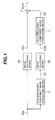
- FIG. 1 is a diagram showing the structure of the image processing apparatus according to a first embodiment of the invention, which can be used as, for example, the image processing unit U1 in the image display apparatus shown in FIG. 24 .
- the image display apparatus shown in FIG. 24 includes the image processing unit U1 and a display unit 9 for displaying images.
- the image processing apparatus in the first embodiment has an image enlarging means 2A, a high-frequency component image generating means 1, an image enlarging means 2B, a high-frequency component image processing means 3, and an adding means 4.
- Image enlarging means 2A enlarges an input image Din to generate an enlarged image D2A.
- the high-frequency component image generating means 1 extracts only the high-frequency components in the input image Din to generate a high-frequency component image D1.
- Image enlarging means 2B enlarges the high-frequency component image D1 output from the high-frequency component image generating means 1 to generate an enlarged image D2B.
- the high-frequency component image processing means 3 extracts the high-frequency components of the enlarged image D2B output from image enlarging means 2B to generate a high-frequency component image D3.
- the adding means 4 adds the enlarged image D2A output from image enlarging means 2A and the high-frequency component image D3 output from the high-frequency component image processing means 3 and outputs the result as a final enlarged image: specifically, as an output image Dout.
- the output of the adding means 4 is supplied to the display unit 9 in the image display apparatus shown in FIG. 24 and used for image display by the display unit 9.
- Processes such as enlargement, high frequency generation, and high-frequency component processing are described as being performed on 'images' in the preset embodiment, but they are actually performed on digital data representing the images.
- the term 'image' as used herein may also mean 'image data'.
- the frequency components of high-frequency component image D3 are in a higher frequency band than the frequency components of enlarged image D2A. Accordingly, an enlarged image Dout including many high-frequency components can be obtained by adding high-frequency component image D3 to enlarged image D2A in the adding means 4.
- Image enlarging means 2A enlarges the image in at least one of the horizontal and vertical directions; it may, for example, enlarge by the same factor in both the horizontal and vertical directions; alternatively, it may enlarge by different factors in the horizontal and vertical directions.
- Image enlarging means 2A may enlarge the image in just the horizontal direction or just the vertical direction; for example, if the display screen is horizontally wider than the input image, the image may be enlarged only in the horizontal direction.
- image enlarging means 2A the high-frequency component image generating means 1, image enlarging means 2B, and the high-frequency component image processing means 3 will now be described in more detail. This description will further clarify the actions and
- FIG. 2 shows the detailed structure of the image processing apparatus in the first embodiment of the invention shown in FIG. 1 , particularly illustrating the structure of the high-frequency component image processing means 3.
- the high-frequency component image processing means 3 comprises a high-frequency component passing means 32A, a nonlinear processing means 31, a high-frequency component passing means 32B, and an adding means 5.
- High-frequency component passing means 32A extracts only the high-frequency components included in enlarged image D2B to generate an intermediate image D32A.
- the nonlinear processing means 31 carries out nonlinear processing on enlarged image D2B to sharpen edges as described later and generates a nonlinearly processed image D31; high-frequency component passing means 32B extracts only the high-frequency components included in the nonlinearly processed image D31 to generate an intermediate image D32B.
- the result of the addition of intermediate image D32A and intermediate image D32B by adding means 5 is then output as high-frequency component image D3.
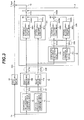
- FIG. 3 shows the still more detailed structure of the image processing apparatus in the first embodiment of the invention shown in FIG. 1 , particularly illustrating the detailed structure of the high-frequency component image generating means 1, image enlarging means 2B, high-frequency component passing means 32A, nonlinear processing means 31, and high-frequency component passing means 32B.
- the operation of the components of the image processing apparatus shown in FIG. 3 will be described below.
- the high-frequency component image generating means 1 comprises a horizontal high-frequency component image generating means 1h and a vertical high-frequency component image generating means 1v, which respectively generate a horizontal high-frequency component image D1h and a vertical high-frequency component image D1v. These high-frequency component images D1h and D1v constitute high-frequency component image D1.
- Image enlarging means 2B comprises an image enlarging means 2Bh for generating an enlarged image D2Bh by enlarging the horizontal high-frequency component image D1h and an image enlarging means 2Bv for generating an enlarged image D2Bv by enlarging the vertical high-frequency component image D1v.
- These enlarged images D2Bh and D2Bv constitute enlarged image D2B.
- image enlarging means 2A performs enlargement in both the horizontal and vertical directions
- image enlarging means 2Bh enlarges the horizontal high-frequency component image D1h in both the horizontal and vertical directions
- image enlarging means 2Bv enlarges the vertical high-frequency component image D1v in both the horizontal and vertical directions.
- the horizontal and vertical high-frequency component images D1h and D1v are enlarged by image enlarging means 2Bh and 2Bv with the same horizontal and vertical enlargement factors as used by image enlarging means 2A.
- High-frequency component passing means 32A comprises a horizontal high-frequency component passing means 32Ah for extracting only the horizontal high-frequency components included in enlarged image D2Bh to generate an intermediate image D32Ah, a vertical high-frequency component passing means 32Av for extracting only the vertical high-frequency components included in enlarged image D2Bv to generate an intermediate image D32Av, and an adding means 6A for adding intermediate image D32Ah and intermediate image D32Av; the result of the addition of the intermediate images D32Ah and D32Av in adding means 6A is output as intermediate image D32A.
- the nonlinear processing means 31 comprises a horizontal nonlinear processing means 31h that nonlinearly processes enlarged image D2Bh by a method described later to generate a nonlinearly processed image D31h which has been nonlinearly processed to sharpen edges including step variations in the signal values of horizontally aligned pixels, and a vertical nonlinear processing means 31v that nonlinearly processes enlarged image D2Bv by a method described later to generate a nonlinearly processed image D31v which has been nonlinearly processed to sharpen edges including step variations in the signal values of vertically aligned pixels.
- These nonlinearly processed images D31h and D31v constitute nonlinearly processed image D31.
- High-frequency component passing means 32B comprises a horizontal high-frequency component passing means 32Bh for extracting only the high-frequency components included in nonlinearly processed image D31h to generate an intermediate image D32Bh, a vertical high-frequency component passing means 32Bv for extracting only the high-frequency components included in nonlinearly processed image D31v to generate an intermediate image D32Bv, and an adding means 6B for adding intermediate image D32Bh and intermediate image D32Bv; the result of addition of the intermediate images D32Bh and D32Bv in adding means 6A is output as intermediate image D32B.
- Image enlarging means 2A enlarges the input image Din by a factor of two in both the horizontal and vertical directions to generate enlarged image D2A.
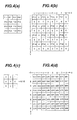
- FIGs. 4(a) to 4(d) schematically illustrate an exemplary procedure for generating enlarged image D2A in image enlarging means 2A;
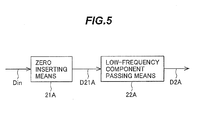
- FIG. 5 is a drawing showing an example of image enlarging means 2A.
- Image enlarging means 2A comprises a zero inserting means 21A and a low-frequency component passing means 22A.
- the operation of the zero inserting means 21A and the low-frequency component passing means 22A will now be described with reference to FIGs. 4(a) to 4(d).
- FIG. 4(a) represents the input image Din (more particularly, the pixel array constituting a part of the image);
- FIG. 4(b) represents a zero inserted image D21A generated in the zero inserting means 21A;
- FIG. 4(c) represents the filtering coefficients used in generating enlarged image D2A in the low-frequency component passing means 22A;
- FIG. 4(d) represents the enlarged image D2A generated in the low-frequency component passing means 22A.
- the zero inserting means 21A generates the zero inserted image D21A by inserting pixels with pixel value zero into the input image Din, one for each pixel (of the input image Din), in the horizontal direction (inserting one pixel between each two mutually adjacent pixels) and inserting one line for each line (of the input image Din) in the vertical direction (inserting one line between each two mutually adjacent lines).
- the low-frequency component passing means 22A performs the filtering operation represented by the filter coefficients shown in FIG. 4(c) on the zero inserted image D21A to generate the enlarged image D2A shown in FIG. 4(d) .
- the pixel value QXY of the pixel at coordinates (X, Y) in enlarged image D2A is calculated as in equation (1) below.
- the filtering coefficients represented in FIG. 4(c) are for low-pass filtering, so the process represented by equation (1) which is performed in the low-frequency component passing means 22A is equivalent to extracting a low frequency component of the zero inserted image D21A.
- the horizontal high-frequency component image generating means 1h performs a high-pass filtering operation on the input image Din by using the pixels in the input image Din and, for example, a given number of pixels neighboring each pixel in the horizontal direction to generate the horizontal high-frequency component image D1h.
- the vertical high-frequency component image generating means 1v performs a high-pass filtering operation on the input image Din by using the pixels in the input image Din and, for example, a given number of pixels neighboring each pixel in the vertical direction to generate the vertical high-frequency component image D1v.
- the horizontal high-frequency component image D1h includes horizontal high-frequency components of the input image Din; the vertical high-frequency component image D1v includes vertical high-frequency components of the input image Din.
- the high-pass filtering operation in the horizontal high-frequency component image generating means 1h can be performed by, for example, subtracting the low frequency component in the horizontal direction (or, for each pixel, the simple average or a weighted average of the values of the pixels in a local area consisting of a given number of pixels aligned in the horizontal direction) from the signal input to the horizontal high-frequency component image generating means 1h to extract the high-frequency component.
- the high-pass filtering operation in the vertical high-frequency component image generating means 1v can be performed by, for example, subtracting the low frequency component in the vertical direction (or, for each pixel, the simple average or a weighted average of the values of the pixels in a local area consisting of a given number of pixels aligned in the vertical direction) from the signal input to the vertical high-frequency component image generating means 1v to extract the high-frequency component.
- Image enlarging means 2Bh enlarges the horizontal high-frequency component image D1h by a factor of two in both the horizontal and vertical directions to generate enlarged image D2Bh;
- image enlarging means 2Bv enlarges the horizontal high-frequency component image D1v by a factor of two in both the horizontal and vertical directions to generate enlarged image D2Bv.
- Image enlarging means 2Bh and image enlarging means 2Bv can be structured in the same way as the image enlarging means 2A described with reference to FIG. 5 . Accordingly, image enlarging means 2B, comprising image enlarging means 2Bh and image enlarging means 2Bv, can be represented as in FIG. 6 .
- the input to image enlarging means 2Bh is the horizontal high-frequency component image D1h and the output from image enlarging means 2Bh is enlarged image D2Bh.
- Image enlarging means 2Bh comprises a zero inserting means 21Bh and a low-frequency component passing means 22Bh; image enlarging means 2Bv comprises a zero inserting means 21Bv and a low-frequency component passing means 22Bv.
- Zero inserting means 21Bh and 212Bv are both similar to the zero inserting means 21A in FIG. 5 ; low-frequency component passing means 22Bh and 22Bv are both similar to the low-frequency component passing means 22A in FIG. 5 .
- the zero inserted image D21Bh output from zero inserting means 21Bh and the zero inserted image D21Bv output from zero inserting means 21Bv constitute the zero inserted image D21B output from zero inserting means 21B.
- the enlarged image D2Bh output from low-frequency component passing means 22Bh and the enlarged image D2Bv output from low-frequency component passing means 22Bv constitute the enlarged image D2B output from low-frequency component passing means 22B.
- High-frequency component passing means 32A includes horizontal high-frequency component passing means 32Ah, vertical high-frequency component passing means 32Av, and adding means 6A.
- Horizontal high-frequency component passing means 32Ah performs a high-pass filtering operation on enlarged image D2Bh to generate an intermediate image D32Ah.
- Vertical high-frequency component passing means 32Av performs a high-pass filtering operation on enlarged image D2Bv to generate an intermediate image D32Av.
- Adding means 6A adds intermediate image D32Ah and intermediate image D32Av to generate intermediate image D32A.
- the intermediate image D32A generated in this way is output from high-frequency component passing means 32A.
- the high-pass filtering processing in horizontal high-frequency component passing means 32Ah is performed in the same way as in the horizontal high-frequency component image generating means 1h; the high-pass filtering processing in vertical high-frequency component passing means 32Av can be performed in the same way as in the vertical high-frequency component image generating means 1v.
- the high-pass filtering processing in horizontal high-frequency component passing means 32Ah can be performed by, for example, subtracting the low frequency component in the horizontal direction (or, for each pixel, the simple average or a weighted average of the values of the pixels in a local area consisting of a given number of pixels aligned in the horizontal direction) from the signal input to horizontal high-frequency component passing means 32Ah to extract the high-frequency component.
- the high-pass filtering processing in vertical high-frequency component passing means 32Av can be performed by, for example, subtracting the low frequency component in the vertical direction (or, for each pixel, the simple average or a weighted average of the values of the pixels in a local area consisting of a given number of pixels aligned in the vertical direction) from the signal input to vertical high-frequency component passing means 32Av to extract the high-frequency component.
- the nonlinear processing means 31 comprises a horizontal nonlinear processing means 31h and a vertical nonlinear processing means 31v.
- the horizontal nonlinear processing means 31h and vertical nonlinear processing means 31v have similar structures.
- the horizontal nonlinear processing means 31h performs horizontal processing and the vertical nonlinear processing means 31v performs vertical processing.
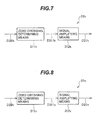
- FIG. 7 illustrates the internal structure of the horizontal nonlinear processing means 31h.
- the horizontal nonlinear processing means 31h comprises a zero crossing determining means 311h and a signal amplifying means 312h.
- the zero crossing determining means 311h checks variations in the pixel values of the input enlarged image D2Bh in the horizontal direction.
- the zero crossing determining means 311h takes points where the pixel values change from positive to negative or vice versa as zero crossing points and informs the signal amplifying means 312h of the positions of the pixels before and after (in the example shown, one pixel just before and one pixel just after) the zero crossing points by a signal D311h.
- the pixels positioned on the left and right of a zero crossing point are regarded as the pixels before and after the zero crossing point.
- the signal amplifying means 312h identifies the pixels before and after a zero crossing point from signal D311h, and amplifies the pixel values (increases the absolute values) of only the pixels before and after the zero crossing point to generate nonlinearly processed image D31h. That is, the amplification factor of the pixel values of the pixels before and after a zero crossing point is set to a value greater than 1, and the amplification factor of the pixel values of other pixels is set to 1.
- This type of processing sharpens edges including step variations in the signal values of horizontally aligned pixels.
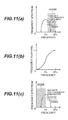
- FIG. 8 is a drawing illustrating the internal structure of the vertical nonlinear processing means 31v.
- the vertical nonlinear processing means 31v comprises a zero crossing determining means 311v and a signal amplifying means 312v.
- Zero crossing determining means 311v checks variations in the pixel values of the input enlarged image D2Bh in the vertical direction. Zero crossing determining means 311v takes points where the pixel values change from positive to negative or vice versa as zero crossing points and informs signal amplifying means 312v of the positions of the pixels before and after (in the example shown, one pixel just before and one pixel just after) the zero crossing points by a signal D311v. In the vertical nonlinear processing means 31v, the pixels positioned above and below a zero crossing point are regarded as the pixels before and after the zero crossing point.
- Signal amplifying means 312v identifies the pixels before and after a zero crossing point from signal D311v, and amplifies the pixel values (increases the absolute values) of only the pixels before and after the zero crossing point to generate nonlinearly processed image D31v. That is, the amplification factor of the pixel values of the pixels before and after a zero crossing point is set to a value greater than 1, and the amplification factor of the pixel values of other pixels is set to 1. This type of processing sharpens edges including step variations in the signal values of vertically aligned pixels.
- High-frequency component passing means 32B comprises a horizontal high-frequency component passing means 32Bh, a vertical high-frequency component passing means 32Bv, and an adding means 6B.
- Horizontal high-frequency component passing means 32Bh performs a high-pass filtering operation on enlarged image D2Bh to generate an intermediate image D32Bh.
- Vertical high-frequency component passing means 32Bv performs a high-pass filtering operation on enlarged image D2Bv to generate an intermediate image D32Bv.
- Adding means 6B adds intermediate image D32Bh and intermediate image D32Bv to generate intermediate image D32B.
- the intermediate image D32B generated in this way is output from high-frequency component passing means 32B.
- the high-pass filtering processing in horizontal high-frequency component passing means 32Bh can be performed in the same way as in the horizontal high-frequency component image generating means 1h; the high-pass filtering operation in vertical high-frequency component passing means 32Bv can be performed in the same way as in the vertical high-frequency component image generating means 1v.
- the high-pass filtering processing in horizontal high-frequency component passing means 32Bh can be performed by, for example, subtracting the low frequency component in the horizontal direction (or, for each pixel, the simple average or a weighted average of the values of the pixels in a local area consisting of a given number of pixels aligned in the horizontal direction) from the signal input to horizontal high-frequency component passing means 32Bh to extract the high-frequency component.
- the high-pass filtering processing in vertical high-frequency component passing means 32Bv can be performed by, for example, subtracting the low frequency component in the vertical direction (or, for each pixel, the simple average or a weighted average of the values of the pixels in a local area consisting of a given number of pixels aligned in the vertical direction) from the signal input to vertical high-frequency component passing means 32Bv to extract the high-frequency component.
- adding means 5 adds the intermediate images D32A and D32B and outputs the result as a high-frequency component image D3.
- adding means 4 adds enlarged image D2A and high-frequency component image D3.
- the image obtained by the addition of enlarged image D2A and high-frequency component image D3 in adding means 4 is output from the image processing apparatus as the final enlarged image Dout.
- adding means 4 is not limited to simple addition; it may be performed by weighting enlarged image D2A and high-frequency component image D3 with different values. This is also true for the adding means 5 in the high-frequency component image processing means 3.
- the image processing apparatus in the present invention adds enlarged image D2A and high-frequency component image D3 to generate the final enlarged image (output image) Dout.
- Enlarged image D2A includes frequency components equivalent to frequencies lower than the Nyquist frequency Fn of the input image Din; high-frequency component image D3 includes frequency components equivalent to frequencies higher than the Nyquist frequency Fn of the input image Din.
- the enlarged image Dout generated by addition of enlarged image D2A and high-frequency component image D3 includes all frequency components up to the enlarged-image Nyquist frequency.
- enlarged image D2A includes frequency components equivalent to frequencies lower than the Nyquist frequency Fn of the input image Din.
- FIGS. 9(a) to 9(d) are diagrams schematically illustrating the actions that take place when enlarged image D2A is generated from the input image Din:
- FIG. 9(a) represents the frequency spectrum of the input image Din;
- FIG. 9(b) represents the frequency spectrum of zero inserted image D21A;
- FIG. 9(c) represents the frequency response of low-frequency component passing means 22A;
- FIG. 9(d) represents the frequency spectrum of enlarged image D2A.
- the frequency spectrum of the input image Din will be described.
- natural images and the like are input as the input image Din, and their spectral intensities are concentrated around the origin of the frequency space. Accordingly, the frequency spectrum of the input image Din can be represented as FIG. 9(a) .
- the vertical axis represents spectral intensity
- the horizontal axis represents spatial frequency
- Fn represents the Nyquist frequency of the input image Din.
- the input image Din is generally a two-dimensional image
- its frequency spectrum is represented in a frequency space that is also two dimensional, but its shape is the shape of the frequency spectrum shown in FIG. 9(a) expanding isotropically from the origin. Accordingly, for a minimal description of frequency spectra, it is only necessary to indicate the shape of a one-dimensional segment, and unless otherwise noted, shapes in frequency space will be described below by showing only a one dimensional segment.
- low-frequency component passing means 22A is low-pass filtering, so as shown in FIG. 9 (c) , the frequency response of low-frequency component passing means 22A decreases as the frequency increases.
- Enlarged image D2A is generated by passage of the zero inserted image D21A with the frequency spectrum shown in FIG. 9(b) through the low-frequency component passing means 22A with the frequency response shown in FIG. 9(c) . Accordingly, the frequency spectrum of enlarged image D2A is the frequency spectrum of the zero inserted image D21A with the high frequency region R2AH indicated by hatching eliminated.
- enlarged image D2A mainly includes frequency components equivalent to frequencies lower than the Nyquist frequency Fn of the input image Din.
- High-frequency component image D3 mainly includes frequency components equivalent to frequencies higher than the Nyquist frequency Fn of the input image Din.
- High-frequency component image D3 is obtained by adding intermediate image D32A and intermediate image D32B.
- Intermediate image D32A includes, in particular, frequency components equivalent to frequencies close to the Nyquist frequency of the input image Din and intermediate image D32B includes, in particular, frequency components equivalent to frequencies higher than the Nyquist frequency of the input image Din, and because the frequency components of intermediate image D32A and intermediate image D32B are added together in high-frequency component image D3, it includes frequency components equivalent to frequencies higher than the Nyquist frequency Fn of the input image Din.
- FIGS. 10(a) to 10(f) are drawings schematically illustrating the actions that take place when intermediate image D32A is generated:
- FIG. 10(a) represents the frequency response of the high-frequency component image generating means 1;
- FIG. 10(b) represents the frequency spectrum of high-frequency component image D1 (or D1h or D1v);
- FIG. 10(c) represents the frequency spectrum of the zero inserted image D21B (or D21Bh or D21Bv) generated by the zero inserting means 21B in image enlarging means 2B;
- FIG. 10(d) represents the frequency spectrum of enlarged image D2B (or D2Bh or D2Bv);
- FIG. 10(a) represents the frequency response of the high-frequency component image generating means 1
- FIG. 10(b) represents the frequency spectrum of high-frequency component image D1 (or D1h or D1v)
- FIG. 10(c) represents the frequency spectrum of the zero inserted image D21B (or D21Bh or D21B
- FIG. 10(e) represents the frequency response of high-frequency component passing means 32A (or 32Ah or 32Av);
- FIG. 10(f) represents the frequency spectrum of the intermediate image D32A (or D32Ah or D32Av) output from high-frequency component passing means 32A.
- the high-frequency component image generating means 1 generates high-frequency component image D1 by high-pass filtering, so as shown in FIG. 10(a) , the frequency response of the high-frequency component image generating means 1 increases as the frequency increases.
- High-frequency component image D1 is obtained by passage of the input image Din with the frequency spectrum shown in FIG. 9(a) through a high-pass filter with the frequency response shown in FIG. 10(a) , so the frequency spectrum of high-frequency component image D1 falls off in the lower frequency region and has a reasonable intensity only in the higher frequency region as shown in FIG. 10(b) .
- the frequency spectrum of the zero inserted image D21B in image enlarging means 2B will be described. Because aliasing occurs in the zero inserting means 21B, as explained in the description of the zero inserting means 21A in image enlarging means 2A, the frequency spectrum of the zero inserted image D21B in image enlarging means 2B is as shown in FIG. 10(c) .
- High-frequency component passing means 32A is a high-pass filter, so its frequency response increases with increasing frequency as shown in FIG. 10(e) .
- Intermediate image D32A is generated by passage of the enlarged image D2B with the frequency spectrum shown in FIG. 10(d) through a high-pass filter with the frequency response shown in FIG. 10(e) .
- the frequency response of intermediate image D32A is, as shown in FIG. 10(f) , the frequency spectrum of the enlarged image D2B shown in FIG. 10(d) with the low frequency region R32AL also eliminated.
- intermediate image D32A mainly includes frequency components equivalent to frequencies near the Nyquist frequency Fn of the input image Din.
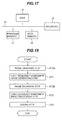
- FIGs. 11(a) to 11(c) are drawings schematically illustrating the actions that take place when intermediate image D32B is generated: FIG. 11(a) indicates how high-frequency components are generated by the nonlinear processing means 31 (or 31h or 31v); FIG. 11(b) represents the frequency response of high-frequency component passing means 32B; FIG. 11(c) represents the frequency spectrum of intermediate image D32B.
- FIG. 11(a) schematically shows how this takes place.
- Intermediate image D32B is generated by passage of nonlinearly processed image D31 through high-frequency component passing means 32B.
- High-frequency component passing means 32B is a high-pass filter and, as shown in FIG. 11(b) , its frequency response increases as the frequency increases. Accordingly, the frequency spectrum of intermediate image D32B is, as shown in FIG. 11(c) , the frequency spectrum of nonlinearly processed image D31 with the low frequency region R32BL eliminated, so it is equivalent to frequencies higher than the Nyquist frequency Fn of the input image Din.
- FIGs. 12(a) to 12(e) represent a step edge signal representing an image (step image) in which brightness, saturation, or another component value varies stepwise, signals obtained when the step edge signal is sampled with mutually differing sampling frequencies, and their high-frequency component signals.
- FIG. 12(a) represents the step edge signal.
- FIG. 12(b) represents a signal obtained by sampling the step edge signal with a sampling interval S1;
- FIG. 12(c) represents the high-frequency component of the signal obtained by sampling the step edge signal with the interval S1;
- FIG. 12(d) represents a signal obtained by sampling the step edge signal with a sampling interval S2;
- FIG. 12(e) represents the high-frequency component of the signal obtained by sampling the step edge signal with the interval S2.
- Sampling interval S1 is shorter than sampling interval S2. Shortening the sampling interval is analogous to enlarging the image.
- FIGS. 12(b) and 12(c) and FIGS. 12(d) and 12(e) the center of the edge appears as a zero crossing point Z in the high-frequency component signals ( FIG. 12(c) and FIG. 12(e) ).
- FIG. 12(b) and FIG. 12(c) and of FIG. 12(d) and FIG. 12(e) As is clear from a comparison of FIG. 12(b) and FIG. 12(c) and of FIG. 12(d) and FIG. 12(e) , as the sampling interval is shortened (or as the image is enlarged), the slope of the high-frequency component signal before and after the zero crossing point Z grows steeper, and the positions of points indicating the local maximum and minimum values of the high-frequency components near the zero crossing point Z move closer to the zero crossing point Z.
- the high-frequency components in the input image Din are extracted, their variation is made steeper in the zero crossing vicinity, and the points at which their local maximum and minimum values occur in the zero crossing vicinity are brought closer to the zero crossing point, whereby high-frequency components that are not included in the resolution of the input image Din (or are equivalent to frequencies higher than the Nyquist frequency of the input image Din) are generated, sharpening the edges.
- FIG. 13(a) to FIG. 13(f) are drawings schematically illustrating the procedure by which the high-frequency component image generating means 1, image enlarging means 2B, nonlinear processing means 31, and high-frequency component passing means 32B generate high-frequency components:
- FIG. 13(a) represents an image (step image) with a step variation in brightness, saturation, or another component value;
- FIG. 13(b) represents the input image Din corresponding to this step image;
- FIG. 13(c) represents high-frequency component image D1;
- FIG. 13(d) represents enlarged image D2B;
- FIG. 13(e) represents nonlinearly processed image D31;
- FIG. 13(f) represents intermediate image D32B.
- each is shown as a one-dimensional signal.
- a description of the input image Din and high-frequency component image D1 for the step image will be omitted because they were described with reference to FIG. 12(a) to FIG. 12(e) ; the description will start with the enlarged image D1.
- the enlarged image D1 (or D1h or D1v) can be obtained by inserting one zero-valued pixel for each pixel (in the image D1) in high-frequency component image D1 in the zero inserting means 21B, and then by extracting the low frequency components in low-frequency component passing means 22B. Extracting low frequency components is analogous to determining the average pixel value in a local region of high-frequency component image D1 ( FIG. 13(c) ), so as shown in FIG. 13(d) , enlarged image D2B (or D2Bh or D2Bv) is a signal with substantially the same shape as high-frequency component image D1 but with an increased number of samples.
- nonlinearly processed image D31 will be described.
- the nonlinear processing means 31 detects the zero crossing point Z in the enlarged image D1, amplifies the values of the pixels before and after the zero crossing point Z, and outputs the resultant nonlinearly processed image D31. Accordingly, nonlinearly processed image D31 (or D31h or D31v) is a signal like the one shown in FIG. 13(e) .
- Intermediate image D32B is obtained by extracting the high-frequency components of nonlinearly processed image D31 ( FIG. 13(e) ) in high-frequency component passing means 32B.
- nonlinearly processed image D31 ( FIG. 13(e) ) because the pixel values of the pixels before and after the zero crossing point Z are amplified in the signal amplifying means 312h, 312v, the differences from the average pixel value in the local region increase. The pixel values of other pixels near the zero crossing point, however, are not amplified, so the differences from the average pixel value are small. Accordingly, in comparison with enlarged image D2B ( FIG. 13(d) ), in intermediate image D32B ( FIG. 13(f) ), the positions of the points indicating the local maximum and minimum values near the zero crossing point Z move closer to the zero crossing point Z. The closer to the zero crossing point Z the positions of points indicating the local maximum and minimum values near the zero crossing point Z move, the steeper the change in the signal near the zero crossing point Z becomes.
- intermediate image D32B includes high-frequency components not included in the resolution of the input image Din.
- the nonlinear processing means 31 generates high-frequency components equivalent to frequencies higher than the Nyquist frequency Fn of the input image Din by amplifying the pixel values before and after the zero crossing point of enlarged image D2B.
- Intermediate image D32B is generated when the high-frequency components generated in the nonlinear processing means 31 are extracted in high-frequency component passing means 32B, so the image includes high-frequency components equivalent to frequencies higher than the Nyquist frequency Fn of the input image Din.
- High-frequency component image D3 is obtained by adding intermediate image D32A and intermediate image D32B, so high-frequency component image D3 includes both the frequency components of intermediate image D32A and the frequency components of intermediate image D32B.
- High-frequency component passing means 32A includes frequency components equivalent to frequencies near the Nyquist frequency Fn of the input image Din, and high-frequency component passing means 32B includes frequency components equivalent to frequencies higher than the Nyquist frequency Fn of the input image Din, so high-frequency component image D3 includes frequency components equivalent to frequencies equal to or higher than the Nyquist frequency Fn.
- a high-frequency component image D3 including frequency components equivalent to the frequencies equal to or higher than the Nyquist frequency Fn can be obtained by enlarging the high-frequency component image D1 generated by the high-frequency component image generating means 1 in image enlarging means 2B, and further processing it in the high-frequency component image processing means 3.
- Enlarged image D2A mainly includes frequency components equivalent to frequencies lower than the Nyquist frequency Fn of the input image Din shown in a region RL.
- high-frequency component image D3 includes frequency components equivalent to frequencies near the Nyquist frequency Fn of the input image Din shown in region RM and equivalent to frequencies higher than the Nyquist frequency Fn of the input image Din in region RH. In other words, it includes frequency components equivalent to frequencies equal to or higher than the Nyquist frequency Fn of the input image Din.
- the high-frequency component image D1 generated in the high-frequency component image generating means 1 is enlarged by image enlarging means 2B to generate an enlarged image D2B, which is processed by the high-frequency component image processing means 3, whereby a high-frequency component image D3 including frequency components equivalent to frequencies equal to or higher than the Nyquist frequency Fn of the input image Din can be obtained.
- Adding means 4 generates the enlarged image Dout by adding enlarged image D2A, which includes frequency components equivalent to frequencies in the region lower than the Nyquist frequency Fn of the input image Din, and high-frequency component image D3, which includes frequency components equivalent to frequencies in the region equal to and higher than the Nyquist frequency Fn in the input image Din, so the enlarged image Dout can be provided with adequate high-frequency components, producing an enlarged image Dout with a sense of resolution.
- the high-frequency component image generating means 1 generates the horizontal high-frequency component image D1h obtained by extracting the horizontal high-frequency components and the vertical high-frequency component image D1v obtained by extracting the vertical high-frequency components, thereby making it possible to generate frequency components equivalent to frequencies equal to or higher than the Nyquist frequency Fn of the input image Din in either of the horizontal or vertical direction in the image.
- horizontal high-frequency component passing means 32Ah horizontally high-pass filters the enlarged image D2Bh obtained by enlarging the horizontal high-frequency component image D1h in image enlarging means 2Bh, whereby an intermediate image D32Ah including frequency components equivalent to frequencies near the Nyquist frequency Fn of the input image Din in the horizontal direction is generated;
- vertical high-frequency component passing means 32Av vertically high-pass filters the enlarged image D2Bv obtained by enlarging the vertical high-frequency component image D1v in image enlarging means 2Bv, whereby an intermediate image D32Av including frequency components equivalent to frequencies near the Nyquist frequency Fn of the input image Din in the vertical direction is generated;
- adding means 6A generates intermediate image D32A by adding intermediate image D32Ah and intermediate image D32Av, whereby intermediate image D32A including frequency components equivalent to frequencies near the Nyquist frequency Fn of the input image Din in both the horizontal and vertical directions.
- Horizontal high-frequency component passing means 32Bh performs high-pass filtering on the nonlinearly processed image D31h that the horizontal nonlinear processing means 31h generates by performing nonlinear processing on enlarged image D2Bh, whereby an intermediate image D32Bh including frequency components equivalent to frequencies higher than the Nyquist frequency Fn of the input image Din in the horizontal direction is generated;
- vertical high-frequency component passing means 32Bv performs high-pass filtering on the nonlinearly processed image D31v that the vertical nonlinear processing means 31v generates by performing nonlinear processing on enlarged image D2Bv, whereby an intermediate image D32Bv including frequency components equivalent to frequencies higher than the Nyquist frequency Fn of the input image Din in the vertical direction is generated.
- high-frequency component image D3 is obtained by adding intermediate image D32A and high-frequency component passing means 32B in adding means 5, a high-frequency component image D3 including frequency components equivalent to frequencies equal to or higher than the Nyquist frequency Fn of the input image Din in arbitrary directions can be obtained.
- image enlarging means 2A may generate enlarged image D2A by enlarging the input image Din with any desired enlargement factor in both the horizontal and vertical directions
- the high-frequency component image generating means 1 may generate high-frequency component image D1 from the input image Din
- image enlarging means 2B may generate enlarged image D2B by enlarging high-frequency component image D1 with the desired enlargement factor in both the horizontal and vertical directions
- the high-frequency component image processing means 3 may generate high-frequency component image D3 from enlarged image D2B
- adding means 4 may add enlarged image D2A and high-frequency component image D3 to obtain the final enlarged image Dout.
- the high-frequency component image generating means 1 includes the horizontal high-frequency component image generating means 1h and vertical high-frequency component image generating means 1v
- image enlarging means 2B includes image enlarging means 2Bh and image enlarging means 2Bv
- high-frequency component passing means 32A includes horizontal high-frequency component passing means 32Ah and vertical high-frequency component passing means 32Av
- the nonlinear processing means 31 includes the horizontal nonlinear processing means 31h and vertical nonlinear processing means 31v
- high-frequency component passing means 32B includes horizontal high-frequency component passing means 32Bh and vertical high-frequency component passing means 32Bv.
- the high-frequency component image generating means 1 includes only the horizontal high-frequency component image generating means 1h
- image enlarging means 2B includes only image enlarging means 2Bh
- the nonlinear processing means 31 includes only the horizontal nonlinear processing means 31h
- high-frequency component passing means 32A includes only horizontal high-frequency component passing means 32Ah
- the nonlinear processing means 31 includes only the horizontal nonlinear processing means 31h
- high-frequency component passing means 32B includes only horizontal high-frequency component passing means 32Bh
- the high-frequency component image generating means 1 includes only the vertical high-frequency component image generating means 1v
- image enlarging means 2B includes only image enlarging means 2Bv
- high-frequency component passing means 32A includes only vertical high-frequency component passing means 32Av
- the nonlinear processing means 31 includes only the vertical nonlinear processing means 31v
- high-frequency component passing means 32B includes only vertical high-frequency component passing means 32Bv.
- control of the amplification factor is not limited to this scheme; for example, the scheme may be varied depending on the enlargement factor. A description will be given below with reference to FIGs. 15(a) to 15(e) and FIGs. 16(a) to 16(f) .
- FIG. 15(a) represents a step edge signal.
- FIG. 15(b) represents a signal obtained by sampling the step edge signal with a sampling interval S1;
- FIG. 15(c) represents the high-frequency component of the signal (the signal shown in FIG. 15(b) ) obtained by sampling the step edge signal with the interval S1;
- FIG. 15(d) represents a signal obtained by sampling the step edge signal with a sampling interval S3, three times the interval S1;
- FIG. 15(e) represents the high-frequency component of the signal obtained by sampling the step edge signal with interval S3.
- pixel positions PL1 and PR1 indicate boundaries (starting and ending points of variation in brightness).
- the positions of pixels indicating the local maximum and minimum values of the high-frequency components near the zero crossing point Z substantially coincide with the positions of these boundaries of the step edge signal.
- FIGs. 16(a) to 16(f) are drawings schematically illustrating the procedure by which the high-frequency component image generating means 1, image enlarging means 2B, nonlinear processing means 31, and high-frequency component passing means 32B generate high-frequency components:
- FIG. 16(a) represents an image (step image) with a step variation in brightness, saturation, or another component value;
- FIG. 16(b) represents the input image Din corresponding to this step image;
- FIG. 16(c) represents high-frequency component image D1;
- FIG. 16(d) represents enlarged image D2B;
- FIG. 16(e) represents nonlinearly processed image D31;
- FIG. 16(f) represents intermediate image D32B.
- each is shown as a one-dimensional signal.
- the positions PL1, PR1 of pixels indicating the local maximum and minimum values near the zero crossing point Z in enlarged image D2B also coincide substantially with the positions of the boundaries in enlarged image D2B.
- the positions of PL1 and PR1 remain unchanged while the number of pixels between the positions indicated by PL1 and PR1 and the zero crossing point Z increases.
- the number of pixels between the positions indicated by PL1 and PR1 and the zero crossing point Z increases when the enlargement factor for generating enlarged image D2B is increased (or when the sampling interval is shortened).
- the positions of pixels indicating the local maximum and minimum values near the zero crossing point Z move closer to the zero crossing point Z and the amplitude of the signal representing the high-frequency component increases at the positions of pixels closer to the zero crossing point Z.
- nonlinearly processed image D31 when nonlinearly processed image D31 is generated by amplifying only the signals before and after the zero crossing point Z, it is desirable to perform processing so that the pixel amplitude increases as the pixels move closer to the zero crossing point Z from PL1 and PR1; for example, a nonlinearly processed image D31 in which the pixel amplitude increases as the pixels approach the zero crossing point Z, as shown in FIG. 16(e) , can be generated by amplifying the pixel values of pixels closer to the zero crossing point Z than PL1 and PR1 in enlarged image D2B with amplification factors that increase as the pixels approach the zero crossing point Z, and amplifying the pixel values of pixels farther than PL1 or PR1 from the zero crossing point Z with an amplification factor of 1.
- the invention is not limited to this scheme, however; the amplification factor may have a fixed value greater than 1 for pixels in a given area including the zero crossing point.
- An intermediate image D23B corresponding to sampling interval S1 can then be generated by using a high-pass filter to extract only the high-frequency component of the enlarged image D2B generated in this way, as shown in PIG. 16(f).
- the amplification factors may be set to any values larger than 1 for the pixels in a given region including the zero crossing point Z and may be set to 1 for pixels other than these; the number of pixels between the positions PL1 and PR1 and the zero crossing point Z differs responsive to the enlargement factor used when enlarged image D2B was generated, so when the nonlinearly processed image D31 is generated from enlarged image D2B, the number of pixels (the number of pixels in the given region) for which the amplification factor is set to a value greater than 1 before and after the zero crossing point Z and/or the amplification factor may be varied responsive to the enlargement factor of the image.
- the amplification factors for these pixels may also be varied depending on their distances from the zero crossing point Z. For example, the amplification factor may be increased as a pixel approaches the zero crossing point Z.
- the horizontal nonlinear processing means 31h and vertical nonlinear processing means 31v may use different amplification factors and given regions of different sizes.
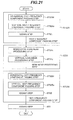
- FIG. 17 illustrates the image processing apparatus in the second embodiment.
- the illustrated image processing apparatus has a CPU 11, a program memory 12, a data memory 13, an interface 15, and a bus 14 that interconnects these elements, and can be used as, for example, the image processing unit U1 in the image processing apparatus shown in FIG. 24 .
- the CPU 11 operates according to a program stored in the program memory 12. During the course of operation, it stores various data in the data memory 13.
- the enlarged image Dout generated as the result of the processing is supplied through the interface 15 to the display unit 9 in the image display apparatus shown in FIG. 24 , and is displayed by the display unit 9.
- the processing performed by the CPU 11 will be described below with reference to FIGs. 18 to 23 .
- FIG. 18 is a drawing showing the flow of an image processing method practiced in the image processing apparatus in FIG. 17 ; the image processing method shown in FIG. 18 comprises an image enlarging step ST2A, a high-frequency component image generating step ST1, an image enlarging step ST2B, a high-frequency component image processing step ST3, and an adding step ST4.
- enlarged image D2A is generated by enlarging the input image Din input in an image input step (not shown) by the same processing as performed by the image enlarging means 2A in FIGs. 1 , 2 , and 3 .
- the high-frequency component image generating step ST1 comprises a horizontal high-frequency component image generating step ST1h and a vertical high-frequency component image generating step ST1v.
- the horizontal high-frequency component image generating step ST1h the horizontal high-frequency component image D1h is generated by carrying out the same processing as performed by the horizontal high-frequency component image generating means 1h in FIG. 3 on the input image Din.
- the vertical high-frequency component image generating step ST1v the vertical high-frequency component image D1v is generated by carrying out the same processing as performed by the vertical high-frequency component image generating means 1v in FIG. 3 on the input image Din.
- the image enlarging step ST2B comprises an image enlarging step ST2Bh and an image enlarging step ST2Bv.
- enlarged image D2Bh is generated by carrying out the same processing as performed by image enlarging means 2Bh in FIG. 3 on the horizontal high-frequency component image D1h generated in the horizontal high-frequency component image generating step ST1h.
- enlarged image D2Bh is generated by carrying out the same processing as performed by image enlarging means 2Bh in FIG. 3 on the vertical high-frequency component image D1v generated in the vertical high-frequency component image generating step ST1v.
- the high-frequency component image processing step ST3 comprises a high-frequency component passing step ST32A, a nonlinear processing step ST31, a high-frequency component passing step ST32B, and an adding step ST5.
- the high-frequency component passing step ST32A comprises a horizontal high-frequency component passing step ST32Ah, a vertical high-frequency component passing step ST32Av, and an adding step ST6A.
- the nonlinear processing step ST31 comprises a horizontal nonlinear processing step ST31h and a vertical nonlinear processing step ST31v.
- the high-frequency component passing step ST32B comprises a horizontal high-frequency component passing step ST32Bh, a vertical high-frequency component passing step ST32Bv, and an adding step ST6B.
- an intermediate image D32Ah is generated by carrying out the same processing as performed in horizontal high-frequency component passing means 32Ah in FIG. 3 on the enlarged image D2Bh generated in the image enlarging step ST2Bh.
- an intermediate image D32Av is generated by carrying out the same processing as performed in vertical high-frequency component passing means 32Av in FIG. 3 on the enlarged image D2Bv generated in the image enlarging step ST2Bv.
- intermediate image D32A is generated by adding intermediate image D32Ah generated in the horizontal high-frequency component passing step ST32Ah and intermediate image D32Av generated in the vertical frequency component passing step ST32Av.
- high-frequency component passing means 32A in FIGs. 2 and 3 are thereby performed in the high-frequency component passing step ST232A.
- the horizontal nonlinear processing step ST31h comprises a zero crossing determination step ST311h and a signal amplification step ST312h.
- the operation in the horizontal nonlinear processing step ST31h is as described below.
- variations in pixel values of the enlarged image D2Bh generated in the image enlarging step ST2Bh are checked in the horizontal direction. Then points where the pixel values change from positive to negative or vice versa are taken as zero crossing points, and pixels to the left and right of the zero crossing points are identified.
- the pixel values of the pixels to the left and right of the zero crossing point in enlarged image D2Bh identified in the zero crossing determination step ST311h are amplified, and the resultant image is generated as nonlinearly processed image D31h.
- the vertical nonlinear processing step ST31v comprises a zero crossing determination step ST311v and a signal amplification step ST312v.
- the operation in the vertical nonlinear processing step ST31v is as described below.
- the zero crossing determination step ST311v variations in pixel values of the enlarged image D2Bv generated in the image enlarging step ST2Bv are checked in the vertical direction. Points where the pixel values change from positive to negative or vice versa are taken as zero crossing points and pixels just above and below the zero crossing points are identified.
- the signal amplification step ST312h the pixel values of the pixels just above and below the zero crossing points in the enlarged image D2Bv identified in the zero crossing determination step ST311v are amplified, and the resultant image is generated as nonlinearly processed image D31v.
- the same operations as performed by the nonlinear processing means 31 in FIGs. 2 and 3 are thereby performed in the nonlinear processing step ST31.
- a high-pass filtering operation is performed on the nonlinearly processed image D31h generated in the horizontal nonlinear processing step ST31h to generate intermediate image D32Bh.
- a high-pass filtering operation is performed on the nonlinearly processed image D31v generated in the vertical nonlinear processing step ST31v to generate intermediate image D32Bv.
- the adding step ST6B generates intermediate image D32B by adding intermediate image D32Bh and intermediate image D32Bv. That is, the same operations as performed by high-frequency component passing means 32B in FIGs. 2 and 3 in the high-frequency component passing step ST32B are performed.
- the intermediate image D32A generated in the high-frequency component passing step ST32A and the intermediate image D32B generated in the high-frequency component passing step ST32B are added to obtain high-frequency component image D3.
- the same operations as performed by the high-frequency component image processing means 3 in FIGs. 1 , 2 , and 3 are thereby performed in the high-frequency component image processing step ST3.
- the adding step ST4 the enlarged image D2A generated in the image enlarging step ST2A and the high-frequency component image D3 generated in the high-frequency component image processing step ST3 are added to generate an image Dout.
- the generated image Donut is then output as the final enlarged image in a step that is not shown.
- an image can be enlarged by the same processing as in the image processing apparatus described in the first embodiment, so the same effect is obtained as from the image processing apparatus described in the first embodiment.
- the image processing apparatus in the second embodiment can be incorporated into an image display apparatus, and an image display apparatus for displaying the image Dout generated by the image processing apparatus according to the second embodiment can also produce the same effect as obtained from the image processing apparatus described in the first embodiment.
- the image processing methods carried out by using the image processing apparatus in the first and second embodiments and image display methods using these methods can also produce the same effect.
- the structure of an image display apparatus using the image processing apparatus described in the first or second embodiment is not limited to the structure shown in FIG. 24 .
Landscapes
- Engineering & Computer Science (AREA)
- Multimedia (AREA)
- Signal Processing (AREA)
- Physics & Mathematics (AREA)
- General Physics & Mathematics (AREA)
- Theoretical Computer Science (AREA)
- Computer Graphics (AREA)
- Image Processing (AREA)
- Editing Of Facsimile Originals (AREA)
- Facsimile Image Signal Circuits (AREA)
Applications Claiming Priority (2)
| Application Number | Priority Date | Filing Date | Title |
|---|---|---|---|
| JP2008051837 | 2008-03-03 | ||
| PCT/JP2009/053015 WO2009110328A1 (ja) | 2008-03-03 | 2009-02-20 | 画像処理装置及び方法、並びに画像表示装置及び方法 |
Publications (3)
| Publication Number | Publication Date |
|---|---|
| EP2249308A1 true EP2249308A1 (de) | 2010-11-10 |
| EP2249308A4 EP2249308A4 (de) | 2012-06-20 |
| EP2249308B1 EP2249308B1 (de) | 2014-12-17 |
Family
ID=41055889
Family Applications (1)
| Application Number | Title | Priority Date | Filing Date |
|---|---|---|---|
| EP09718403.0A Active EP2249308B1 (de) | 2008-03-03 | 2009-02-20 | Vorrichtung und verfahren zur bildverarbeitung und anzeige |
Country Status (5)
| Country | Link |
|---|---|
| US (1) | US8339421B2 (de) |
| EP (1) | EP2249308B1 (de) |
| JP (1) | JP4767345B2 (de) |
| CN (1) | CN101960487B (de) |
| WO (1) | WO2009110328A1 (de) |
Families Citing this family (17)
| Publication number | Priority date | Publication date | Assignee | Title |
|---|---|---|---|---|
| KR101548285B1 (ko) * | 2009-01-20 | 2015-08-31 | 삼성전자주식회사 | 고해상도 영상 획득 장치 및 그 방법 |
| JP5247627B2 (ja) * | 2009-08-24 | 2013-07-24 | 三菱電機株式会社 | 画像処理装置及び方法、並びに画像表示装置 |
| JP5300656B2 (ja) * | 2009-08-24 | 2013-09-25 | 三菱電機株式会社 | 画像処理装置及び方法、並びに画像表示装置 |
| JP5247628B2 (ja) * | 2009-08-24 | 2013-07-24 | 三菱電機株式会社 | 画像処理装置及び方法、並びに画像表示装置及び方法 |
| JP5383385B2 (ja) * | 2009-08-27 | 2014-01-08 | 三菱電機株式会社 | 画像処理装置及び方法、並びに画像表示装置及び方法 |
| JP5247633B2 (ja) * | 2009-08-27 | 2013-07-24 | 三菱電機株式会社 | 画像処理装置及び方法、並びに画像表示装置及び方法 |
| US20120189208A1 (en) * | 2009-09-16 | 2012-07-26 | Pioneer Corporation | Image processing apparatus, image processing method, image processing program, and storage medium |
| US8718395B2 (en) * | 2010-02-26 | 2014-05-06 | Sharp Kabushiki Kaisha | Image processing apparatus, display apparatus provided with same, and image processing method |
| RU2012141557A (ru) * | 2010-03-01 | 2014-04-10 | Шарп Кабусики Кайся | Устройство для увеличения изображения, программа для увеличения изображения, запоминающая среда, в которой хранится программа для увеличения изображения, и устройство отображения |
| JP2013165476A (ja) | 2011-11-11 | 2013-08-22 | Mitsubishi Electric Corp | 画像処理装置、画像処理方法、画像表示装置、プログラム及び記録媒体 |
| CN102752480A (zh) * | 2011-12-01 | 2012-10-24 | 新奥特(北京)视频技术有限公司 | 一种实现图像锐化特技效果的方法 |
| JP5403450B1 (ja) * | 2013-02-25 | 2014-01-29 | 清一 合志 | 画像処理装置、画像処理方法 |
| JP5730362B2 (ja) * | 2013-08-30 | 2015-06-10 | 合志 清一 | 画像処理装置及び画像処理方法 |
| JP6627528B2 (ja) * | 2016-01-25 | 2020-01-08 | 株式会社Jvcケンウッド | 画像処理方法及び画像処理装置 |
| CN107808361B (zh) * | 2017-10-30 | 2021-08-10 | 努比亚技术有限公司 | 图像处理方法、移动终端及计算机可读存储介质 |
| JP2020009185A (ja) * | 2018-07-09 | 2020-01-16 | キヤノン株式会社 | 画像処理装置、画像処理方法、プログラム |
| TWI698116B (zh) * | 2018-11-02 | 2020-07-01 | 瑞昱半導體股份有限公司 | 影像處理電路及相關的影像處理方法 |
Family Cites Families (20)
| Publication number | Priority date | Publication date | Assignee | Title |
|---|---|---|---|---|
| JPH06311346A (ja) | 1993-04-19 | 1994-11-04 | Sanyo Electric Co Ltd | 画像処理装置 |
| JPH06309452A (ja) | 1993-04-27 | 1994-11-04 | Oki Electric Ind Co Ltd | 解像度変換処理装置 |
| JP3738788B2 (ja) * | 1995-09-29 | 2006-01-25 | 富士写真フイルム株式会社 | 画像のダイナミックレンジ圧縮処理方法および装置 |
| JP3816151B2 (ja) * | 1995-09-29 | 2006-08-30 | 富士写真フイルム株式会社 | 画像処理方法および装置 |
| US6339479B1 (en) | 1996-11-22 | 2002-01-15 | Sony Corporation | Video processing apparatus for processing pixel for generating high-picture-quality image, method thereof, and video printer to which they are applied |
| JP3210264B2 (ja) * | 1997-03-05 | 2001-09-17 | キヤノン株式会社 | 画像処理装置及び方法 |
| US6295322B1 (en) * | 1998-07-09 | 2001-09-25 | North Shore Laboratories, Inc. | Processing apparatus for synthetically extending the bandwidth of a spatially-sampled video image |
| US6307569B1 (en) * | 1999-03-18 | 2001-10-23 | Sharp Laboratories Of America, Inc. | POCS-based method for digital image interpolation |
| JP3167120B2 (ja) * | 1999-05-25 | 2001-05-21 | キヤノン株式会社 | 画像処理装置及び方法 |
| JP3654420B2 (ja) * | 2000-02-25 | 2005-06-02 | インターナショナル・ビジネス・マシーンズ・コーポレーション | 画像変換方法、画像処理装置、および画像表示装置 |
| US6724398B2 (en) * | 2000-06-20 | 2004-04-20 | Mitsubishi Denki Kabushiki Kaisha | Image processing method and apparatus, and image display method and apparatus, with variable interpolation spacing |
| JP2002149105A (ja) * | 2000-11-14 | 2002-05-24 | Hitachi Ltd | 画像拡大制御装置 |
| EP1580692A4 (de) | 2002-12-20 | 2007-07-18 | Mitsubishi Electric Corp | Bildverarbeitungsvorrichtung, bildanzeigevorrichtung, bildverarbeitungsverfahren, bildanzeigeverfahren |
| CN101002468A (zh) * | 2004-08-10 | 2007-07-18 | 皇家飞利浦电子股份有限公司 | 图像变换单元和方法 |
| CN100366050C (zh) * | 2005-03-11 | 2008-01-30 | 华亚微电子(上海)有限公司 | 一种图像缩放方法及图像缩放器系统 |
| JP4157568B2 (ja) * | 2006-04-11 | 2008-10-01 | 株式会社東芝 | 画像の高解像度化方法及び装置 |
| JP4999392B2 (ja) | 2006-07-28 | 2012-08-15 | キヤノン株式会社 | 画像処理装置及びその制御方法、並びに、コンピュータプログラム及びコンピュータ可読記憶媒体 |
| JP2008096956A (ja) * | 2006-09-15 | 2008-04-24 | Olympus Corp | 画像表示方法および画像表示装置 |
| JP2008141391A (ja) * | 2006-11-30 | 2008-06-19 | Toshiba Corp | 電子透かし埋め込み方法、装置およびプログラム |
| US20080174694A1 (en) * | 2007-01-22 | 2008-07-24 | Horizon Semiconductors Ltd. | Method and apparatus for video pixel interpolation |
-
2009
- 2009-02-20 EP EP09718403.0A patent/EP2249308B1/de active Active
- 2009-02-20 JP JP2009508021A patent/JP4767345B2/ja active Active
- 2009-02-20 WO PCT/JP2009/053015 patent/WO2009110328A1/ja not_active Ceased
- 2009-02-20 US US12/526,231 patent/US8339421B2/en active Active
- 2009-02-20 CN CN200980106627.2A patent/CN101960487B/zh active Active
Also Published As
| Publication number | Publication date |
|---|---|
| US20100134518A1 (en) | 2010-06-03 |
| CN101960487A (zh) | 2011-01-26 |
| CN101960487B (zh) | 2012-11-28 |
| WO2009110328A1 (ja) | 2009-09-11 |
| EP2249308A4 (de) | 2012-06-20 |
| JPWO2009110328A1 (ja) | 2011-07-14 |
| EP2249308B1 (de) | 2014-12-17 |
| HK1152406A1 (en) | 2012-02-24 |
| JP4767345B2 (ja) | 2011-09-07 |
| US8339421B2 (en) | 2012-12-25 |
Similar Documents
| Publication | Publication Date | Title |
|---|---|---|
| EP2249308B1 (de) | Vorrichtung und verfahren zur bildverarbeitung und anzeige | |
| EP3113104B1 (de) | Verfahren zur signalverarbeitung | |
| Kim et al. | An advanced contrast enhancement using partially overlapped sub-block histogram equalization | |
| US8648859B2 (en) | Image display apparatus, image processing apparatus and method to output an image with high perceived resolution | |
| US8498499B2 (en) | Image processing apparatus and method and image display apparatus | |
| US8537179B2 (en) | Image processing apparatus and method and image display apparatus | |
| JP5300656B2 (ja) | 画像処理装置及び方法、並びに画像表示装置 | |
| JP2004236185A (ja) | 信号処理装置および方法、記録媒体、並びにプログラム | |
| JP5247633B2 (ja) | 画像処理装置及び方法、並びに画像表示装置及び方法 | |
| JP5247628B2 (ja) | 画像処理装置及び方法、並びに画像表示装置及び方法 | |
| JP5349204B2 (ja) | 画像処理装置及び方法、並びに画像表示装置及び方法 | |
| JP5247632B2 (ja) | 画像処理装置及び方法、並びに画像表示装置及び方法 | |
| JP5247634B2 (ja) | 画像処理装置及び方法、並びに画像表示装置及び方法 | |
| JP5247627B2 (ja) | 画像処理装置及び方法、並びに画像表示装置 | |
| JP5383385B2 (ja) | 画像処理装置及び方法、並びに画像表示装置及び方法 | |
| CN105075232A (zh) | 图像处理装置、图像处理方法 | |
| HK1152406B (en) | Image processing device and method, and image display device and method | |
| KR100905524B1 (ko) | 확대된 영상의 흐려짐 선명화 장치 및 방법 | |
| CN101902558A (zh) | 图像处理电路及其图像处理方法 | |
| US9531922B2 (en) | Image processing apparatus, image processing method, and computer readable storage medium for improving sharpness | |
| JP2001016480A (ja) | 画像処理装置および方法、並びに媒体 | |
| KR100625576B1 (ko) | 플라즈마 표시 패널의 화상처리방법 및 화상처리장치 | |
| TWI653893B (zh) | 影像梯度提升方法與影像梯度提升電路 | |
| JP2008271085A (ja) | 映像スケーリング装置 | |
| JP2004258751A (ja) | 画像分割方法および装置 |
Legal Events
| Date | Code | Title | Description |
|---|---|---|---|
| PUAI | Public reference made under article 153(3) epc to a published international application that has entered the european phase |
Free format text: ORIGINAL CODE: 0009012 |
|
| 17P | Request for examination filed |
Effective date: 20100720 |
|
| AK | Designated contracting states |
Kind code of ref document: A1 Designated state(s): AT BE BG CH CY CZ DE DK EE ES FI FR GB GR HR HU IE IS IT LI LT LU LV MC MK MT NL NO PL PT RO SE SI SK TR |
|
| AX | Request for extension of the european patent |
Extension state: AL BA RS |
|
| DAX | Request for extension of the european patent (deleted) | ||
| A4 | Supplementary search report drawn up and despatched |
Effective date: 20120522 |
|
| RIC1 | Information provided on ipc code assigned before grant |
Ipc: H04N 5/208 20060101ALI20120515BHEP Ipc: H04N 1/393 20060101ALI20120515BHEP Ipc: H04N 5/14 20060101ALI20120515BHEP Ipc: G06T 5/20 20060101ALI20120515BHEP Ipc: H04N 1/409 20060101ALI20120515BHEP Ipc: G06T 3/40 20060101AFI20120515BHEP Ipc: G09G 3/20 20060101ALI20120515BHEP Ipc: G09G 5/36 20060101ALI20120515BHEP |
|
| REG | Reference to a national code |
Ref country code: DE Ref legal event code: R079 Ref document number: 602009028366 Country of ref document: DE Free format text: PREVIOUS MAIN CLASS: G06T0003400000 Ipc: H04N0007010000 |
|
| RIC1 | Information provided on ipc code assigned before grant |
Ipc: H04N 7/01 20060101AFI20140520BHEP |
|
| GRAP | Despatch of communication of intention to grant a patent |
Free format text: ORIGINAL CODE: EPIDOSNIGR1 |
|
| INTG | Intention to grant announced |
Effective date: 20140708 |
|
| GRAS | Grant fee paid |
Free format text: ORIGINAL CODE: EPIDOSNIGR3 |
|
| GRAA | (expected) grant |
Free format text: ORIGINAL CODE: 0009210 |
|
| AK | Designated contracting states |
Kind code of ref document: B1 Designated state(s): AT BE BG CH CY CZ DE DK EE ES FI FR GB GR HR HU IE IS IT LI LT LU LV MC MK MT NL NO PL PT RO SE SI SK TR |
|
| REG | Reference to a national code |
Ref country code: GB Ref legal event code: FG4D |
|
| REG | Reference to a national code |
Ref country code: CH Ref legal event code: EP |
|
| REG | Reference to a national code |
Ref country code: IE Ref legal event code: FG4D |
|
| REG | Reference to a national code |
Ref country code: AT Ref legal event code: REF Ref document number: 702569 Country of ref document: AT Kind code of ref document: T Effective date: 20150115 |
|
| REG | Reference to a national code |
Ref country code: DE Ref legal event code: R096 Ref document number: 602009028366 Country of ref document: DE Effective date: 20150129 |
|
| PG25 | Lapsed in a contracting state [announced via postgrant information from national office to epo] |
Ref country code: LT Free format text: LAPSE BECAUSE OF FAILURE TO SUBMIT A TRANSLATION OF THE DESCRIPTION OR TO PAY THE FEE WITHIN THE PRESCRIBED TIME-LIMIT Effective date: 20141217 Ref country code: FI Free format text: LAPSE BECAUSE OF FAILURE TO SUBMIT A TRANSLATION OF THE DESCRIPTION OR TO PAY THE FEE WITHIN THE PRESCRIBED TIME-LIMIT Effective date: 20141217 Ref country code: NO Free format text: LAPSE BECAUSE OF FAILURE TO SUBMIT A TRANSLATION OF THE DESCRIPTION OR TO PAY THE FEE WITHIN THE PRESCRIBED TIME-LIMIT Effective date: 20150317 |
|
| REG | Reference to a national code |
Ref country code: LT Ref legal event code: MG4D |
|
| PG25 | Lapsed in a contracting state [announced via postgrant information from national office to epo] |
Ref country code: GR Free format text: LAPSE BECAUSE OF FAILURE TO SUBMIT A TRANSLATION OF THE DESCRIPTION OR TO PAY THE FEE WITHIN THE PRESCRIBED TIME-LIMIT Effective date: 20150318 Ref country code: HR Free format text: LAPSE BECAUSE OF FAILURE TO SUBMIT A TRANSLATION OF THE DESCRIPTION OR TO PAY THE FEE WITHIN THE PRESCRIBED TIME-LIMIT Effective date: 20141217 Ref country code: LV Free format text: LAPSE BECAUSE OF FAILURE TO SUBMIT A TRANSLATION OF THE DESCRIPTION OR TO PAY THE FEE WITHIN THE PRESCRIBED TIME-LIMIT Effective date: 20141217 Ref country code: SE Free format text: LAPSE BECAUSE OF FAILURE TO SUBMIT A TRANSLATION OF THE DESCRIPTION OR TO PAY THE FEE WITHIN THE PRESCRIBED TIME-LIMIT Effective date: 20141217 |
|
| REG | Reference to a national code |
Ref country code: AT Ref legal event code: MK05 Ref document number: 702569 Country of ref document: AT Kind code of ref document: T Effective date: 20141217 |
|
| PG25 | Lapsed in a contracting state [announced via postgrant information from national office to epo] |
Ref country code: NL Free format text: LAPSE BECAUSE OF FAILURE TO SUBMIT A TRANSLATION OF THE DESCRIPTION OR TO PAY THE FEE WITHIN THE PRESCRIBED TIME-LIMIT Effective date: 20141217 |
|
| PG25 | Lapsed in a contracting state [announced via postgrant information from national office to epo] |
Ref country code: RO Free format text: LAPSE BECAUSE OF FAILURE TO SUBMIT A TRANSLATION OF THE DESCRIPTION OR TO PAY THE FEE WITHIN THE PRESCRIBED TIME-LIMIT Effective date: 20141217 Ref country code: EE Free format text: LAPSE BECAUSE OF FAILURE TO SUBMIT A TRANSLATION OF THE DESCRIPTION OR TO PAY THE FEE WITHIN THE PRESCRIBED TIME-LIMIT Effective date: 20141217 Ref country code: SK Free format text: LAPSE BECAUSE OF FAILURE TO SUBMIT A TRANSLATION OF THE DESCRIPTION OR TO PAY THE FEE WITHIN THE PRESCRIBED TIME-LIMIT Effective date: 20141217 Ref country code: ES Free format text: LAPSE BECAUSE OF FAILURE TO SUBMIT A TRANSLATION OF THE DESCRIPTION OR TO PAY THE FEE WITHIN THE PRESCRIBED TIME-LIMIT Effective date: 20141217 Ref country code: CZ Free format text: LAPSE BECAUSE OF FAILURE TO SUBMIT A TRANSLATION OF THE DESCRIPTION OR TO PAY THE FEE WITHIN THE PRESCRIBED TIME-LIMIT Effective date: 20141217 |
|
| PG25 | Lapsed in a contracting state [announced via postgrant information from national office to epo] |
Ref country code: AT Free format text: LAPSE BECAUSE OF FAILURE TO SUBMIT A TRANSLATION OF THE DESCRIPTION OR TO PAY THE FEE WITHIN THE PRESCRIBED TIME-LIMIT Effective date: 20141217 Ref country code: PL Free format text: LAPSE BECAUSE OF FAILURE TO SUBMIT A TRANSLATION OF THE DESCRIPTION OR TO PAY THE FEE WITHIN THE PRESCRIBED TIME-LIMIT Effective date: 20141217 Ref country code: IS Free format text: LAPSE BECAUSE OF FAILURE TO SUBMIT A TRANSLATION OF THE DESCRIPTION OR TO PAY THE FEE WITHIN THE PRESCRIBED TIME-LIMIT Effective date: 20150417 |
|
| REG | Reference to a national code |
Ref country code: DE Ref legal event code: R097 Ref document number: 602009028366 Country of ref document: DE |
|
| PG25 | Lapsed in a contracting state [announced via postgrant information from national office to epo] |
Ref country code: LU Free format text: LAPSE BECAUSE OF FAILURE TO SUBMIT A TRANSLATION OF THE DESCRIPTION OR TO PAY THE FEE WITHIN THE PRESCRIBED TIME-LIMIT Effective date: 20150220 |
|
| REG | Reference to a national code |
Ref country code: CH Ref legal event code: PL |
|
| PLBE | No opposition filed within time limit |
Free format text: ORIGINAL CODE: 0009261 |
|
| STAA | Information on the status of an ep patent application or granted ep patent |
Free format text: STATUS: NO OPPOSITION FILED WITHIN TIME LIMIT |
|
| PG25 | Lapsed in a contracting state [announced via postgrant information from national office to epo] |
Ref country code: CH Free format text: LAPSE BECAUSE OF NON-PAYMENT OF DUE FEES Effective date: 20150228 Ref country code: MC Free format text: LAPSE BECAUSE OF FAILURE TO SUBMIT A TRANSLATION OF THE DESCRIPTION OR TO PAY THE FEE WITHIN THE PRESCRIBED TIME-LIMIT Effective date: 20141217 Ref country code: LI Free format text: LAPSE BECAUSE OF NON-PAYMENT OF DUE FEES Effective date: 20150228 Ref country code: DK Free format text: LAPSE BECAUSE OF FAILURE TO SUBMIT A TRANSLATION OF THE DESCRIPTION OR TO PAY THE FEE WITHIN THE PRESCRIBED TIME-LIMIT Effective date: 20141217 |
|
| REG | Reference to a national code |
Ref country code: IE Ref legal event code: MM4A |
|
| 26N | No opposition filed |
Effective date: 20150918 |
|
| GBPC | Gb: european patent ceased through non-payment of renewal fee |
Effective date: 20150317 |
|
| REG | Reference to a national code |
Ref country code: FR Ref legal event code: ST Effective date: 20151030 |
|
| PG25 | Lapsed in a contracting state [announced via postgrant information from national office to epo] |
Ref country code: IT Free format text: LAPSE BECAUSE OF FAILURE TO SUBMIT A TRANSLATION OF THE DESCRIPTION OR TO PAY THE FEE WITHIN THE PRESCRIBED TIME-LIMIT Effective date: 20141217 |
|
| PG25 | Lapsed in a contracting state [announced via postgrant information from national office to epo] |
Ref country code: IE Free format text: LAPSE BECAUSE OF NON-PAYMENT OF DUE FEES Effective date: 20150220 Ref country code: GB Free format text: LAPSE BECAUSE OF NON-PAYMENT OF DUE FEES Effective date: 20150317 |
|
| PG25 | Lapsed in a contracting state [announced via postgrant information from national office to epo] |
Ref country code: SI Free format text: LAPSE BECAUSE OF FAILURE TO SUBMIT A TRANSLATION OF THE DESCRIPTION OR TO PAY THE FEE WITHIN THE PRESCRIBED TIME-LIMIT Effective date: 20141217 Ref country code: FR Free format text: LAPSE BECAUSE OF NON-PAYMENT OF DUE FEES Effective date: 20150302 |
|
| PG25 | Lapsed in a contracting state [announced via postgrant information from national office to epo] |
Ref country code: BE Free format text: LAPSE BECAUSE OF FAILURE TO SUBMIT A TRANSLATION OF THE DESCRIPTION OR TO PAY THE FEE WITHIN THE PRESCRIBED TIME-LIMIT Effective date: 20141217 |
|
| PG25 | Lapsed in a contracting state [announced via postgrant information from national office to epo] |
Ref country code: MT Free format text: LAPSE BECAUSE OF FAILURE TO SUBMIT A TRANSLATION OF THE DESCRIPTION OR TO PAY THE FEE WITHIN THE PRESCRIBED TIME-LIMIT Effective date: 20141217 |
|
| REG | Reference to a national code |
Ref country code: DE Ref legal event code: R084 Ref document number: 602009028366 Country of ref document: DE |
|
| PG25 | Lapsed in a contracting state [announced via postgrant information from national office to epo] |
Ref country code: HU Free format text: LAPSE BECAUSE OF FAILURE TO SUBMIT A TRANSLATION OF THE DESCRIPTION OR TO PAY THE FEE WITHIN THE PRESCRIBED TIME-LIMIT; INVALID AB INITIO Effective date: 20090220 Ref country code: BG Free format text: LAPSE BECAUSE OF FAILURE TO SUBMIT A TRANSLATION OF THE DESCRIPTION OR TO PAY THE FEE WITHIN THE PRESCRIBED TIME-LIMIT Effective date: 20141217 |
|
| PG25 | Lapsed in a contracting state [announced via postgrant information from national office to epo] |
Ref country code: CY Free format text: LAPSE BECAUSE OF FAILURE TO SUBMIT A TRANSLATION OF THE DESCRIPTION OR TO PAY THE FEE WITHIN THE PRESCRIBED TIME-LIMIT Effective date: 20141217 |
|
| PG25 | Lapsed in a contracting state [announced via postgrant information from national office to epo] |
Ref country code: PT Free format text: LAPSE BECAUSE OF FAILURE TO SUBMIT A TRANSLATION OF THE DESCRIPTION OR TO PAY THE FEE WITHIN THE PRESCRIBED TIME-LIMIT Effective date: 20150417 |
|
| PG25 | Lapsed in a contracting state [announced via postgrant information from national office to epo] |
Ref country code: TR Free format text: LAPSE BECAUSE OF FAILURE TO SUBMIT A TRANSLATION OF THE DESCRIPTION OR TO PAY THE FEE WITHIN THE PRESCRIBED TIME-LIMIT Effective date: 20141217 |
|
| PG25 | Lapsed in a contracting state [announced via postgrant information from national office to epo] |
Ref country code: MK Free format text: LAPSE BECAUSE OF FAILURE TO SUBMIT A TRANSLATION OF THE DESCRIPTION OR TO PAY THE FEE WITHIN THE PRESCRIBED TIME-LIMIT Effective date: 20141217 |
|
| P01 | Opt-out of the competence of the unified patent court (upc) registered |
Effective date: 20230512 |
|
| PGFP | Annual fee paid to national office [announced via postgrant information from national office to epo] |
Ref country code: DE Payment date: 20241231 Year of fee payment: 17 |