EP2241940A2 - Beleuchtungsvorrichtung und Bildlesevorrichtung - Google Patents
Beleuchtungsvorrichtung und Bildlesevorrichtung Download PDFInfo
- Publication number
- EP2241940A2 EP2241940A2 EP10159917A EP10159917A EP2241940A2 EP 2241940 A2 EP2241940 A2 EP 2241940A2 EP 10159917 A EP10159917 A EP 10159917A EP 10159917 A EP10159917 A EP 10159917A EP 2241940 A2 EP2241940 A2 EP 2241940A2
- Authority
- EP
- European Patent Office
- Prior art keywords
- light
- light guide
- guide body
- image reading
- exit surface
- Prior art date
- Legal status (The legal status is an assumption and is not a legal conclusion. Google has not performed a legal analysis and makes no representation as to the accuracy of the status listed.)
- Granted
Links
Images



Classifications
-
- H—ELECTRICITY
- H04—ELECTRIC COMMUNICATION TECHNIQUE
- H04N—PICTORIAL COMMUNICATION, e.g. TELEVISION
- H04N1/00—Scanning, transmission or reproduction of documents or the like, e.g. facsimile transmission; Details thereof
- H04N1/024—Details of scanning heads ; Means for illuminating the original
- H04N1/028—Details of scanning heads ; Means for illuminating the original for picture information pick-up
- H04N1/02815—Means for illuminating the original, not specific to a particular type of pick-up head
- H04N1/0282—Using a single or a few point light sources, e.g. a laser diode
- H04N1/02825—Using a single or a few point light sources, e.g. a laser diode in combination with at least one reflector which is fixed in relation to the light source
-
- G—PHYSICS
- G03—PHOTOGRAPHY; CINEMATOGRAPHY; ANALOGOUS TECHNIQUES USING WAVES OTHER THAN OPTICAL WAVES; ELECTROGRAPHY; HOLOGRAPHY
- G03G—ELECTROGRAPHY; ELECTROPHOTOGRAPHY; MAGNETOGRAPHY
- G03G15/00—Apparatus for electrographic processes using a charge pattern
- G03G15/60—Apparatus which relate to the handling of originals
-
- H—ELECTRICITY
- H04—ELECTRIC COMMUNICATION TECHNIQUE
- H04N—PICTORIAL COMMUNICATION, e.g. TELEVISION
- H04N1/00—Scanning, transmission or reproduction of documents or the like, e.g. facsimile transmission; Details thereof
- H04N1/024—Details of scanning heads ; Means for illuminating the original
- H04N1/028—Details of scanning heads ; Means for illuminating the original for picture information pick-up
- H04N1/02815—Means for illuminating the original, not specific to a particular type of pick-up head
-
- H—ELECTRICITY
- H04—ELECTRIC COMMUNICATION TECHNIQUE
- H04N—PICTORIAL COMMUNICATION, e.g. TELEVISION
- H04N1/00—Scanning, transmission or reproduction of documents or the like, e.g. facsimile transmission; Details thereof
- H04N1/024—Details of scanning heads ; Means for illuminating the original
- H04N1/028—Details of scanning heads ; Means for illuminating the original for picture information pick-up
- H04N1/02815—Means for illuminating the original, not specific to a particular type of pick-up head
- H04N1/0282—Using a single or a few point light sources, e.g. a laser diode
- H04N1/02835—Using a single or a few point light sources, e.g. a laser diode in combination with a light guide, e.g. optical fibre, glass plate
-
- G—PHYSICS
- G02—OPTICS
- G02B—OPTICAL ELEMENTS, SYSTEMS OR APPARATUS
- G02B6/00—Light guides; Structural details of arrangements comprising light guides and other optical elements, e.g. couplings
- G02B6/0001—Light guides; Structural details of arrangements comprising light guides and other optical elements, e.g. couplings specially adapted for lighting devices or systems
- G02B6/0011—Light guides; Structural details of arrangements comprising light guides and other optical elements, e.g. couplings specially adapted for lighting devices or systems the light guides being planar or of plate-like form
- G02B6/0075—Arrangements of multiple light guides
- G02B6/0076—Stacked arrangements of multiple light guides of the same or different cross-sectional area
-
- G—PHYSICS
- G02—OPTICS
- G02B—OPTICAL ELEMENTS, SYSTEMS OR APPARATUS
- G02B6/00—Light guides; Structural details of arrangements comprising light guides and other optical elements, e.g. couplings
- G02B6/0001—Light guides; Structural details of arrangements comprising light guides and other optical elements, e.g. couplings specially adapted for lighting devices or systems
- G02B6/0011—Light guides; Structural details of arrangements comprising light guides and other optical elements, e.g. couplings specially adapted for lighting devices or systems the light guides being planar or of plate-like form
- G02B6/0075—Arrangements of multiple light guides
- G02B6/0078—Side-by-side arrangements, e.g. for large area displays
-
- G—PHYSICS
- G03—PHOTOGRAPHY; CINEMATOGRAPHY; ANALOGOUS TECHNIQUES USING WAVES OTHER THAN OPTICAL WAVES; ELECTROGRAPHY; HOLOGRAPHY
- G03G—ELECTROGRAPHY; ELECTROPHOTOGRAPHY; MAGNETOGRAPHY
- G03G2215/00—Apparatus for electrophotographic processes
- G03G2215/00172—Apparatus for electrophotographic processes relative to the original handling
- G03G2215/00177—Apparatus for electrophotographic processes relative to the original handling for scanning
-
- G—PHYSICS
- G03—PHOTOGRAPHY; CINEMATOGRAPHY; ANALOGOUS TECHNIQUES USING WAVES OTHER THAN OPTICAL WAVES; ELECTROGRAPHY; HOLOGRAPHY
- G03G—ELECTROGRAPHY; ELECTROPHOTOGRAPHY; MAGNETOGRAPHY
- G03G2215/00—Apparatus for electrophotographic processes
- G03G2215/00172—Apparatus for electrophotographic processes relative to the original handling
- G03G2215/00177—Apparatus for electrophotographic processes relative to the original handling for scanning
- G03G2215/00181—Apparatus for electrophotographic processes relative to the original handling for scanning concerning the original's state of motion
- G03G2215/00185—Apparatus for electrophotographic processes relative to the original handling for scanning concerning the original's state of motion original at rest
-
- H—ELECTRICITY
- H04—ELECTRIC COMMUNICATION TECHNIQUE
- H04N—PICTORIAL COMMUNICATION, e.g. TELEVISION
- H04N1/00—Scanning, transmission or reproduction of documents or the like, e.g. facsimile transmission; Details thereof
- H04N1/04—Scanning arrangements, i.e. arrangements for the displacement of active reading or reproducing elements relative to the original or reproducing medium, or vice versa
- H04N1/10—Scanning arrangements, i.e. arrangements for the displacement of active reading or reproducing elements relative to the original or reproducing medium, or vice versa using flat picture-bearing surfaces
- H04N1/1013—Scanning arrangements, i.e. arrangements for the displacement of active reading or reproducing elements relative to the original or reproducing medium, or vice versa using flat picture-bearing surfaces with sub-scanning by translatory movement of at least a part of the main-scanning components
Definitions
- the present invention relates to an illuminating device used for an image reading apparatus.
- an image reading apparatus used for a digital copying machine, in order to read an image of one line extending in a main scanning direction, a linear light extending in the main scanning direction is irradiated to a document from a light source, the reflected light from the document is condensed by a lens or the like and is made incident on an image sensor.
- an illuminating device includes a light source to generate an illumination light used for reading of an image, a light guide body that extends in a specified direction, includes a reflecting surface to diffuse or reflect the illumination light from the light source and an exit surface from which the illumination light diffused or reflected by the reflecting surface exits, and shifts a peak value of a first light intensity distribution formed by the illumination light, which directly reaches an image reading area from the exit surface, in one direction with respect to a reference position of the image reading area, and a reflecting member which diffuses or reflects a part of the illumination light exiting from the light guide body to the image reading area, and shifts a peak value of a second light intensity distribution formed by the diffused or reflected light in the other direction with respect to the reference position.
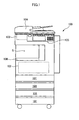
- FIG. 1 is a front view showing the outline of the image forming apparatus.
- the image forming apparatus 100 includes plural paper feed cassettes 101, and each of the paper feed cassettes 101 contains plural sheets.
- the plural sheets contained in each of the paper feed cassettes 101 are separated by a pick up roller one by one and are supplied to a sheet conveyance path.
- the sheet passes through the sheet conveyance path and is supplied to an image forming section 102.
- the image reading apparatus 103 scans an image of a sheet document and a book document, and generates image data.
- FIG. 1 shows a part of the image reading apparatus 103.
- a device (ADF: Auto Document Feeder) for automatically feeding documents to the image reading apparatus 103 is disposed above the image reading apparatus 103.
- An operation panel 105 for inputting various information to the image forming apparatus 100 is disposed at an upper part of the image forming apparatus 100.
- the operation panel 105 can be composed of, for example, a button switch or a liquid crystal panel.
- the image forming section 102 specifically, after an electrostatic latent image corresponding to the image data is formed on a photoconductive surface of a photoreceptor, a developer is supplied to form a developer image.
- the developer image formed on the photoconductive surface of the photoreceptor is transferred to a sheet.
- the sheet is brought into contact with the surface of the photoreceptor, so that the developer image can be transferred to the sheet.
- the developer image on the photoreceptor is transferred to an intermediate transfer belt, it can be transferred from the intermediate transfer belt to the sheet.
- the developer image transferred to the sheet is heated and fixed to the sheet by a fixing unit (not shown).
- the sheet on which the developer image is fixed passes through the sheet conveyance path and is discharged to a paper discharge space S.
- a storage tray 106 on which sheets are stacked is disposed in the paper discharge space S.
- FIG. 2 is a sectional view of the image reading apparatus 103 along a sub-scanning direction.
- a document 12 is placed on an upper surface of a platen glass 11, and a read surface of the document 12 faces the upper surface of the platen glass 11.
- a platen cover 13 can rotate with respect to a main body of the image reading apparatus 103, and moves between a position where the upper surface of the platen glass 11 is opened and a position where the upper surface of the platen glass 11 is closed. When the platen cover 13 is moved to the closed position, the document 12 is pressed to the platen glass 11. Incidentally, the platen cover 13 constitutes part of the ADF 104.
- An illuminating device 20 irradiates an illumination light to the document 12.
- the illuminating device 20 extends in a direction (main scanning direction) perpendicular to the paper plane of FIG. 2 , and the illuminating device 20 irradiates a linear illumination light extending in the longitudinal direction of the illuminating device 20.
- the linear illumination light is irradiated to an image area of one line extending in the main scanning direction in the document 12. A specific structure of the illuminating device 20 will be described later.
- the illumination light of the illuminating device 20 is reflected by the document 12, and the reflected light from the document 12 is reflected by folding mirrors 14a, 14b and 14c, and is directed to an imaging lens 15.
- the imaging lens 15 condenses the light from the folding mirror 14c and forms an image on an image sensor 16.
- the image sensor 16 includes plural light receiving elements 16a arranged in a direction perpendicular to the paper plane of FIG. 2 .
- the plural light receiving elements 16a are disposed correspondingly to the linear illumination light, and are disposed to be capable of receiving the linear illumination light.
- the respective light receiving elements 16a output electric signals corresponding to the amount of incident light by photoelectric conversion.
- a CCD sensor can be used as the image sensor 16, for example.
- the reflected light from the document 12 is incident on the plural light receiving elements 16a, so that an image area of one line extending in the main scanning direction in the document 12 can be read.
- the first carriage 31 and the second carriage 32 relatively move in the sub-scanning direction, and keep the optical path length from the surface of the document 12 (reflecting surface of the illumination light) to the imaging surface of the image sensor 16 constant.
- the first carriage 31 and the second carriage 32 synchronize with the timing (signal to control the output of the image sensor 16) when the image sensor 16 reads an image, and move in the sub-scanning direction.
- the first carriage 31 and the second carriage 32 are moved, so that the illumination light from the illuminating device 20 can be scanned in the sub-scanning direction. While the first carriage 31 and the second carriage 32 are moved in the sub-scanning direction, the image area of one line extending in the main scanning direction in the document 12 is successively read. Then, the whole surface of the document 12 can be read.
- FIG. 3 shows the image reading area of the document 12 in the sub-scanning direction.
- an interval (length in the sub-scanning direction) between the adjacent CCD image sensors is an interval of four lines.
- a width (length in the sub-scanning direction) of each of image reading areas Rr, Rg and Rb of the respective colors is 0.0423 [mm]
- an interval (length in the sub-scanning direction) W1 between the adjacent image reading areas is 0.169 [mm].
- the interval W1 is based on the center of each of the image reading areas Rr, Rg and Rb.
- a width (length in the sub-scanning direction) of an image reading area W2 of one line extending in the main scanning direction is 0.381 [mm] .
- each of both ends of the illumination area W3 is spaced by ⁇ /2 from each of both ends of the image reading area W2.
- the difference ⁇ between the width of the illumination area W3 and the width of the image reading area W2 can be appropriately set.
- FIG. 3 shows an example illustrating the structure of the image sensor 16, and another structure may be adopted. For example, when the number of lines of the image sensor or the interval between the adjacent image sensors is changed, the image reading area W2 and the illumination area W3 have only to be set in the structure after the change.
- the illuminating device 20 includes a light guide body 21 extending in the main scanning direction, and a light source 22 fixed to one end of the light guide body 21.
- a light source 22 for example, a light emitting diode (LED) can be used, and one or more light emitting diodes can be provided.
- the length of the light guide body 21 in the main scanning direction is set to the length corresponding to the length of the document 12 in the main scanning direction.
- the illumination light irradiated from the light source 22 is incident on the inside of the light guide body 21 from the incident surface 21a of the light guide body 21, travels along the longitudinal direction of the light guide body 21. Specifically, the light incident on the light guide body 21 travels along the longitudinal direction of the light guide body 21 while being reflected in the inside of the light guide body 21.
- the light source 22 is disposed at one end of the light guide body 21, the light sources 22 can be disposed at both ends of the light guide body 21, and the light amount of the illuminating devices 20 can be increased.
- the light guide body 21 includes a light guide prism 23 and a case 24 covering a part of the light guide prism 23.
- the light guide prism 23 can be made of a resin having a high optical transmittance, such as acryl or polycarbonate, or optical glass.
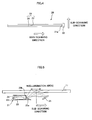
- the light guide prism 23 has a first exit surface 23a formed of a plane and a second exit surface 23b, and each of the exit surfaces 23a and 23b extends in the longitudinal direction of the light guide body 21.
- the light guide prism 23 has a reflecting surface 23r to diffuse or reflect the incident light from the light source 22 to the first exit surface 23a and the second exit surface 23b.
- the reflecting surface 23r is formed of, for example, minute irregularities or prints.
- the case 24 covers the area of the light guide prism 23 except for the exit surfaces 23a and 23b. The light incident on the light guide prism 23 from the light source 22 is reflected or diffused by the reflecting surface 23r, and exits only from the exit surfaces 23a and 23b.
- the case 24 can be formed of a metal plate having a high reflectivity, and as the metal plate, for example, an aluminum plate or a stainless plate can be used. Besides, the case 24 can be formed of a white resin, or a reflecting coating can be applied to the inner wall surface (surface in contact with the light guide prism 23) of the case 24.
- the case 24 has only to reflect the light incident on the light guide prism 23. When the illumination light from the light source 22 is totally reflected in the inside of the light guide prism 23, the case 24 can be omitted.
- the light irradiated from the light source 22 is incident from the one end of the light guide body 21, and travels in the longitudinal direction of the light guide body 21 while being reflected in the inside of the light guide body 21. Besides, the light traveling in the inside of the light guide body 21 exits from the exit surfaces 23a and 23b of the light guide prism 23 to the outside of the light guide body 21. When the light traveling in the inside of the light guide body 21 is totally reflected, the light from the light source 22 can be efficiently made to exit from the exit surfaces 23a and 23b.
- the first exit surface 23a is inclined with respect to the surface of the platen glass 11, and faces the platen glass 11. The light exiting from the first exit surface 23a reaches the platen glass 11.
- the second exit surface 23b is substantially perpendicular to the surface of the platen glass 11, and is positioned at a side closer to the platen glass 11 than the first exit surface 23a.
- a reflecting member 25 is provided at a position opposite to the second exit surface 23b in the sub-scanning direction. The light exiting from the second exit surface 23b travels along the sub-scanning direction, and reaches the reflecting member 25.
- the reflecting member 25 diffuses or reflects the light from the second exit surface 23b, and guides it to the platen glass 11.
- the reflecting member 25 When the reflecting member 25 is formed of a member having a shiny reflecting surface or a reflecting coating is applied to a reflecting surface, the light from the second exit surface 23b can be efficiently reflected to the platen glass 11. Besides, the reflecting surface of the reflecting member 25 can be formed into a shape satisfying a total reflection condition. Besides, a member to diffuse light may be used for the reflecting member 25. The light diffused or reflected by the reflecting member 25 is superimposed on the light exiting from the first exit surface 23a at the platen glass 11. The illumination lights reach the platen glass 11 from directions different from each other.
- At least one of the first exit surface 23a and the second exit surface 23b can be made to have a positive or negative optical power (an inverse of a focal distance). Specifically, consideration is given to the illumination area W3, and the first exit surface 23a or the second exit surface 23b can be made to have the optical power.
- the second exit surface 23b is made to have the positive optical power
- the reflecting member 25 can be formed of a convex surface.
- the second exit surface 23b is made to have the negative optical power
- the reflecting member 25 can be formed of a concave surface.
- the reflected light from the document 12 passes through between the light guide body 21 and the reflecting member 25, and is directed to the folding mirror 14a.
- the interval (length in the sub-scanning direction) between the light guide body 21 and the reflecting member 25 has only to be set so that the reflected light from the document 12 (image reading area) can reach the folding mirror 14a.
- the light exiting from the second exit surface 23b travels in the direction substantially parallel to the platen glass 11, the light exiting from the second exit surface 23b can be directed to the direction of moving away from the platen glass 11.
- the reflecting member 25 has only to be disposed on the optical path of the light exiting from the second exit surface 23b.
- the light guide body 21 has the structure shown in FIG. 5 , another structure may be adopted. That is, the light guide body 21 has only to have the function to divide the light from the light source 22 into the component directly directed to the platen glass 11 and the component directed to the reflecting member 25.
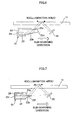
- Modified examples (one example) of the light guide body 21 will be described with reference to FIG. 6 and FIG. 7 .
- the structures shown in FIG. 6 and FIG. 7 are the modified examples different from each other.
- a member having the same function as that of a member described in this embodiment is denoted by the same reference numeral.
- a light guide body 21 includes a light guide prism 23 and a case 24.
- a first exit surface 23c of the light guide prism 23 is disposed substantially in parallel to a surface of a platen glass 11, and faces the platen glass 11. The light exiting from the first exit surface 23c directly reaches the platen glass 11.
- the first exit surface 23c is formed of a plane surface, it can be formed of another surface.
- the first exit surface 23c can be made a surface to give a positive refractive power (positive optical power) to the exit light.
- the first exit surface 23c can be inclined with respect to the platen glass 11.
- a second exit surface 23d extends in a direction perpendicular to the surface of the platen glass 11, and is disposed at a position more distant from the platen glass 11 than the first exit surface 23c.
- the second exit surface 23d is provided at a position departing from an optical path of the illumination light passing through the first exit surface 23c.
- the light exiting from the second exit surface 23d travels in the sub-scanning direction, and reaches a reflecting member 25.
- the reflecting member 25 reflects the light from the second exit surface 23d, and guides it to the platen glass 11.
- the light guide prism 23 is covered with the case 24 except for the exit surfaces 23c and 23d and the total reflecting surface 23e.
- the reflecting surface 23e may not have the shape satisfying the total reflection condition, and the reflecting surface 23e can be covered with the case 24.
- the case 24 can be omitted.
- a light guide body 21 includes a light guide prism 23 and a case 24.
- a first exit surface 23f of the light guide prism 23 is disposed substantially in parallel to the surface of a platen glass 11, and faces the platen glass 11. Light exiting from the first exit surface 23f directly reaches the platen glass 11.
- light reflected by a reflecting surface 23h of the light guide prism 23 is directed to the first exit surface 23f, and the reflecting surface 23h is formed into a shape satisfying the total reflection condition.
- a second exit surface 23g extends in a direction perpendicular to the surface of the platen glass 11, and is positioned at a side closer to the platen glass 11 than the first exit surface 23f. Light exiting from the second exit surface 23g travels along the sub-scanning direction, and reaches a reflecting member 25.
- the reflecting member 25 reflects the light from the second exit surface 23g and guides it to the platen glass 11.
- the light guide prism 23 is covered with the case 24 except for the exit surfaces 23f and 23g and the total reflecting surface 23h.
- the reflecting surface 23h may not have the shape satisfying the total reflection condition, and the reflecting surface 23h can be covered with the case 24.
- the case 24 can be omitted.
- FIG. 8 is a top view of an illuminating device 20 of this embodiment when viewed from a platen glass 11.
- Each of the light guide bodies 21 extends in the main scanning direction, and the two light guide bodies 21 are disposed side by side in the main scanning direction.
- a leading end 21b of one light guide body 21 is opposite to a leading end 21b of the other light guide body 21 in the main scanning direction.
- the two leading ends 21b may be separate from each other in the main scanning direction, or may contact with each other. It is desirable that the two leading ends 21b are disposed to be close to each other.
- the leading end 21b of the light guide body 21 is provided with a projection 21c for positioning the light guide body 21 in a case of the illuminating device 20.
- the projection 21c is provided on a surface different from an exit surface of the light guide body 21.
- the case of the illuminating device 20 is formed with a groove engaging with the projection 21c.
- a light source 22 is disposed at a base end (incident surface) 21a of each of the light guide bodies 21, and the illumination light generated by the light source 22 is incident on the inside of the light guide body 21 from the incident surface formed on the base end 21a of each of the light guide bodies 21.
- the two light sources 22 are disposed at positions corresponding to both ends of the image reading area W2 in the main scanning direction.
- the two light guide bodies 21 have the same shape. Specifically, the lengths of the respective light guide bodies 21 in the main scanning direction are substantially equal to each other.
- each of the light guide bodies 21 can be appropriately set.
- the light guide body 21 described in embodiment 1 can be used as the light guide body 21 in this embodiment.
- the reflecting member in addition to the light guide body 21, it is necessary to provide the reflecting member described in embodiment 1.
- the reflecting member can be provided correspondingly to each of the light guide bodies 21, or one reflecting member can be provided for the two light guide bodies 21.
- the length of the reflecting member in the main scanning direction is set to the length corresponding to the length of the image reading area W2 in the main scanning direction.
- the illumination light exiting from the light guide body 21 may be made to directly reach the image reading area W2.
- the length of the light guide body 21 in the main scanning direction can be shortened. Since the length of the light guide body 21 is shortened, the light guide body 21 can be easily manufactured.
- FIG. 9 shows a structure of an illuminating device 20 of a modified example of this embodiment.
- FIG. 9 is a top view when the illuminating device 20 is shown from a platen glass 11.
- two light guide bodies 21 are disposed side by side in the main scanning direction, and a pair of light guide bodies 21 are disposed at positions between which an image reading area W2 is sandwiched in the sub-scanning direction.
- the light guide body 21 described in embodiment 1 is used as the light guide body 21, it is necessary to provide the reflecting member 25 described in embodiment 1.
- the reflecting member 25 may be disposed at a position where an interference with the light guide body 21 is avoided.
- the illuminance in the image reading area W2 can be improved. Besides, the illumination lights can be irradiated to the image reading area W2 from directions different from each other, and the variation of light amount in the image reading area W2 can be suppressed.
- the two light guide bodies 21 disposed side by side in the main scanning direction are formed into the same shape, they may be formed into shapes different from each other. Specifically, the lengths of the light guide bodies 21 in the main scanning direction can be made different from each other. When the two light guide bodies 21 having lengths different from each other are used, the total length of the two light guide bodies 21 (length in the main scanning direction) has only to correspond to the length of the image reading area W2.
- FIG. 10 is a schematic view showing a structure of an illuminating device 20 of this embodiment, and is a view when the illuminating device 20 is viewed from a main scanning direction.
- Illumination light generated by a light source 22 is incident on a light guide body 21 extending in the main scanning direction, and the illumination light exiting from the light guide body 21 reaches an image reading area.
- the structure of the light guide body 21 can be made to have the same structure as the structure of the light guide body 21 described in embodiment 1, or can be made a structure different from the structure of the light guide body 21 described in embodiment 1.
- the reflecting member 26 reflects the illumination light from the light guide body 21 to the platen glass 11.
- the light guide body 21 (including the light source 22) is disposed so that the intensity of the illumination light directly reaching the platen glass 11 from the light guide body 21 becomes maximum at a position shifted in the sub-scanning direction from the center C of the image reading area W2.
- the light guide body 21 is shifted in a direction (direction of an arrow S of FIG. 11 ) of moving away from a center line CL with respect to a position of the light guide body 21 where the intensity of the illumination light becomes maximum at the center C.
- the direction of the shift of the light guide body 21 is the direction along the surface of the platen glass 11.
- the center C of the image reading area W2 is the center of the image reading area W2 in the sub-scanning direction.
- the center line CL is the line (virtual line) passing through the center C and perpendicular to the surface of the platen glass 11.
- the intensity of the illumination light is the intensity of the illumination light in the sub-scanning direction.
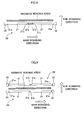
- FIG. 12 shows the light intensity distribution in the sub-scanning direction when the illuminating device 20 shown in FIG. 11 is used.
- the horizontal axis of FIG. 12 indicates a position in the sub-scanning direction, and the vertical axis indicates relative illuminance.
- FIG. 12 the sub-scanning position of the center C of the image reading area W2 is made 0.
- a minus range shown in FIG. 12 corresponds to an area positioned at the left side of FIG. 11 with respect to the center C
- a plus range shown in FIG. 12 corresponds to an area positioned at the right side of FIG. 11 with respect to the center C.
- the intensity distribution of the illumination light reaching the platen glass 11 from the reflecting member 26 is indicated as a distribution LD2.
- the relative illuminance in the plus range of the sub-scanning position is higher than the relative illuminance in the minus range of the sub-scanning position.
- the reflecting member 26 is disposed so that the light intensity distribution LD2 shown in FIG. 12 is obtained.
- the light intensity distributions LD1 and LD2 are set as described above, so that the light intensity distribution of the illuminating device 20 becomes a distribution LD3 shown in FIG. 12 .
- the peak values of the light intensity distributions LD1 and LD2 are made to appear at both sides of the center C in the sub-scanning direction, so that the variation of the whole light intensity distribution LD3 of the illuminating device 20 can be suppressed.
- the range in which the variation of the relative illuminance is suppressed can be widened in the sub-scanning direction.
- the light component which is not directed to the image reading area W2 can be directed to the image reading area W2 by using the reflecting member 26, and the light from the light guide body 21 can be efficiently used.
- FIG. 13 is a view for explaining the arrangement of an illuminating device 20 of a comparative example of this embodiment.
- the reflecting member 26 is omitted from the structure described in FIG. 11 , and all illumination light exiting from the light guide body 21 is made to directly reach a platen glass 11.
- the orientation of the light guide body 21 is set so that the intensity of the illumination light from the light guide body 21 becomes highest at the center C of the image reading area W2.
- the light guide body 21 is disposed at a position closer to the center line CL than the position of the light guide body 21 shown in FIG. 11 .
- the interval between the platen glass 11 and the light guide body 21 and the inclination angle of the light guide body 21 with respect to the surface of the platen glass 11 are that same as those of the structure shown in FIG. 11 .
- FIG. 14 shows a light intensity distribution on an image reading area W2 in the structure shown in FIG. 13 .
- the light intensity in the image reading area is reduced.
- the illumination area is defined as described below, according to the structure of this embodiment, as compared with the structure shown in FIG. 13 , the illumination area can be widened while the variation of illuminance is suppressed.
- FIG. 15 shows a relation between the relative illuminance of light incident on the image sensor 16 and the output signal of the image sensor.
- the width of the illumination area in the structure of this embodiment is wider than the width of the illumination area in the structure of the comparative example.
- the value of the decreasing rate of the relative illuminance defining the illumination area W3 can be appropriately set.
- the peak value of the intensity distribution LD1 is shifted with respect to the center line CL to the side where the light guide body 21 is disposed
- the peak value of the intensity distribution LD1 can be shifted with respect to the center line CL to the side where the light guide body 21 is not disposed.
- the relative illuminance at the side of the light guide body 21 with respect to the center line CL has only to be higher than the relative illuminance at the side opposite to the light guide body 21.
- the peak values of the light intensity distributions LD1 and LD2 are shifted with respect to the center C of the image reading area W2, another reference position different from the center C is set, and the peak values of the light intensity distributions LD1 and LD2 can be shifted with respect to the set reference position.
- the peak value of the light intensity distribution LD1 is shifted with respect to the center C, and the light intensity distribution LD2 can be determined in view of the light intensity distribution LD1 in the state where the peak value is shifted with respect to the center C.
- the light intensity distribution LD2 can be set by changing the shape or the angle of the reflecting surface of the reflecting member 26.
Landscapes
- Physics & Mathematics (AREA)
- Engineering & Computer Science (AREA)
- Multimedia (AREA)
- Signal Processing (AREA)
- Optics & Photonics (AREA)
- General Physics & Mathematics (AREA)
- Facsimile Scanning Arrangements (AREA)
- Light Sources And Details Of Projection-Printing Devices (AREA)
- Facsimile Heads (AREA)
Applications Claiming Priority (3)
| Application Number | Priority Date | Filing Date | Title |
|---|---|---|---|
| US17057409P | 2009-04-17 | 2009-04-17 | |
| US17057609P | 2009-04-17 | 2009-04-17 | |
| US17057309P | 2009-04-17 | 2009-04-17 |
Publications (3)
| Publication Number | Publication Date |
|---|---|
| EP2241940A2 true EP2241940A2 (de) | 2010-10-20 |
| EP2241940A3 EP2241940A3 (de) | 2011-01-19 |
| EP2241940B1 EP2241940B1 (de) | 2012-02-29 |
Family
ID=42372320
Family Applications (1)
| Application Number | Title | Priority Date | Filing Date |
|---|---|---|---|
| EP10159917A Not-in-force EP2241940B1 (de) | 2009-04-17 | 2010-04-14 | Beleuchtungsvorrichtung und Bildlesevorrichtung |
Country Status (5)
| Country | Link |
|---|---|
| US (1) | US20100265551A1 (de) |
| EP (1) | EP2241940B1 (de) |
| JP (1) | JP2010252340A (de) |
| CN (1) | CN101867676A (de) |
| AT (1) | ATE547745T1 (de) |
Cited By (1)
| Publication number | Priority date | Publication date | Assignee | Title |
|---|---|---|---|---|
| JP2012128212A (ja) * | 2010-12-16 | 2012-07-05 | Konica Minolta Business Technologies Inc | 画像読取用照明装置及び画像読取装置 |
Families Citing this family (19)
| Publication number | Priority date | Publication date | Assignee | Title |
|---|---|---|---|---|
| US8526076B2 (en) * | 2010-03-26 | 2013-09-03 | Kabushiki Kaisha Toshiba | Illumination apparatus, image reading apparatus, and image forming apparatus |
| CN102271204A (zh) | 2010-06-04 | 2011-12-07 | 株式会社东芝 | 照明装置、图像读取装置、图像形成装置及图像读取方法 |
| US8724128B2 (en) | 2010-10-04 | 2014-05-13 | Kabushiki Kaisha Toshiba | Image reading device and image forming apparatus |
| JP2012119900A (ja) * | 2010-11-30 | 2012-06-21 | Kyocera Document Solutions Inc | 画像読取装置,画像形成装置 |
| JP5358550B2 (ja) * | 2010-11-30 | 2013-12-04 | 京セラドキュメントソリューションズ株式会社 | 画像読取装置及び画像形成装置 |
| JP2012195709A (ja) * | 2011-03-15 | 2012-10-11 | Omron Corp | 光照射装置及び画像読取装置 |
| JP5994229B2 (ja) * | 2011-10-11 | 2016-09-21 | 株式会社リコー | 照明ユニット、原稿読取装置、および画像形成装置 |
| JP2013090197A (ja) * | 2011-10-19 | 2013-05-13 | Toshiba Tec Corp | 照明装置および画像形成装置 |
| JP2013090268A (ja) * | 2011-10-21 | 2013-05-13 | Ricoh Co Ltd | 原稿照明ユニット、原稿読取装置、画像形成装置 |
| JP2013090266A (ja) * | 2011-10-21 | 2013-05-13 | Ricoh Co Ltd | 原稿照明ユニット、原稿読取装置及び画像形成装置 |
| JP5963455B2 (ja) * | 2012-01-30 | 2016-08-03 | 三菱電機株式会社 | 照射装置及び画像読取装置 |
| JP5995459B2 (ja) * | 2012-02-24 | 2016-09-21 | キヤノン株式会社 | 導光体、照明装置、および画像読取装置 |
| JP6150465B2 (ja) | 2012-05-31 | 2017-06-21 | キヤノン株式会社 | 導光体および画像読取装置 |
| CN103716496B (zh) * | 2012-10-01 | 2018-02-16 | 优志旺电机株式会社 | 线照明装置及光源装置 |
| JP6123989B2 (ja) * | 2013-02-19 | 2017-05-10 | 株式会社リコー | 光照射光学系、画像読取装置、画像形成装置 |
| JP2016208419A (ja) * | 2015-04-27 | 2016-12-08 | 富士ゼロックス株式会社 | 画像読み取り装置 |
| JP2018028522A (ja) * | 2016-08-19 | 2018-02-22 | 東芝テック株式会社 | 情報処理装置、測位システム、及びプログラム |
| US20190192706A1 (en) | 2017-12-22 | 2019-06-27 | Inikoa Medical, Inc. | Disinfecting Methods and Apparatus |
| JP7501104B2 (ja) * | 2020-05-22 | 2024-06-18 | 富士フイルムビジネスイノベーション株式会社 | 読取装置、出力装置及び画像形成装置 |
Family Cites Families (7)
| Publication number | Priority date | Publication date | Assignee | Title |
|---|---|---|---|---|
| US5101285A (en) * | 1989-07-24 | 1992-03-31 | Canon Kabushiki Kaisha | Photoelectric conversion device having an improved illuminating system and information processing apparatus mounting the device |
| JP3043239B2 (ja) * | 1994-10-07 | 2000-05-22 | シャープ株式会社 | 画像読み取り装置 |
| JPH08279885A (ja) * | 1995-04-04 | 1996-10-22 | Sankyo Seiki Mfg Co Ltd | イメージスキャナの照明装置 |
| JP4174899B2 (ja) * | 1999-03-23 | 2008-11-05 | コニカミノルタホールディングス株式会社 | 映像形成光学系 |
| JP2001222076A (ja) * | 1999-12-01 | 2001-08-17 | Canon Inc | 原稿照明装置 |
| EP1511289B1 (de) * | 2003-08-19 | 2011-11-23 | Ricoh Company, Ltd. | Beleuchtungsanordnung, Bildlesevorrichtung und Bilderzeugungsgerät |
| TW200846601A (en) * | 2007-05-22 | 2008-12-01 | Asia Optical Co Inc | Light-guide element and optical source module |
-
2010
- 2010-04-14 EP EP10159917A patent/EP2241940B1/de not_active Not-in-force
- 2010-04-14 AT AT10159917T patent/ATE547745T1/de active
- 2010-04-15 CN CN201010150669A patent/CN101867676A/zh active Pending
- 2010-04-15 US US12/760,810 patent/US20100265551A1/en not_active Abandoned
- 2010-04-16 JP JP2010095398A patent/JP2010252340A/ja active Pending
Non-Patent Citations (1)
| Title |
|---|
| None |
Cited By (1)
| Publication number | Priority date | Publication date | Assignee | Title |
|---|---|---|---|---|
| JP2012128212A (ja) * | 2010-12-16 | 2012-07-05 | Konica Minolta Business Technologies Inc | 画像読取用照明装置及び画像読取装置 |
Also Published As
| Publication number | Publication date |
|---|---|
| ATE547745T1 (de) | 2012-03-15 |
| US20100265551A1 (en) | 2010-10-21 |
| EP2241940B1 (de) | 2012-02-29 |
| CN101867676A (zh) | 2010-10-20 |
| JP2010252340A (ja) | 2010-11-04 |
| EP2241940A3 (de) | 2011-01-19 |
Similar Documents
| Publication | Publication Date | Title |
|---|---|---|
| EP2241940B1 (de) | Beleuchtungsvorrichtung und Bildlesevorrichtung | |
| US8830542B2 (en) | Illumination apparatus and image reading apparatus | |
| KR20140048958A (ko) | 이미지 센서 유닛 및 이것을 사용한 화상 판독 장치 | |
| KR20100083529A (ko) | 조명장치와 이를 갖는 화상독취장치 및 화상형성장치 | |
| US9277082B2 (en) | Image reading apparatus | |
| JP5995459B2 (ja) | 導光体、照明装置、および画像読取装置 | |
| JP6299636B2 (ja) | 照明装置、及び画像読取装置 | |
| JP2007005860A (ja) | 光照射ユニット、画像読取機構、画像読取装置及び画像形成装置 | |
| KR101486215B1 (ko) | 문서 조사기용 광학 소자 | |
| US8570616B2 (en) | Lighting device, image reading device, and image forming apparatus | |
| US8526076B2 (en) | Illumination apparatus, image reading apparatus, and image forming apparatus | |
| US7760434B2 (en) | Document illuminator with surface lens | |
| US8724128B2 (en) | Image reading device and image forming apparatus | |
| JP4928598B2 (ja) | ライン状照明装置、及び、画像読取装置 | |
| US20240103222A1 (en) | Diffusing member, illuminating device, image reading apparatus, and image forming apparatus | |
| JP2013090197A (ja) | 照明装置および画像形成装置 | |
| JP5994477B2 (ja) | 原稿照明ユニット、原稿読取装置、および画像形成装置 | |
| JP5994229B2 (ja) | 照明ユニット、原稿読取装置、および画像形成装置 | |
| US9294648B2 (en) | Image reading device | |
| JP6136155B2 (ja) | 原稿照明ユニット、原稿読取装置、及び画像形成装置 | |
| JP2013090266A (ja) | 原稿照明ユニット、原稿読取装置及び画像形成装置 | |
| JP2013090268A (ja) | 原稿照明ユニット、原稿読取装置、画像形成装置 | |
| JP2016225737A (ja) | 光照射装置、画像読取装置及び画像形成装置 | |
| JP2010177863A (ja) | 画像読取装置 |
Legal Events
| Date | Code | Title | Description |
|---|---|---|---|
| PUAI | Public reference made under article 153(3) epc to a published international application that has entered the european phase |
Free format text: ORIGINAL CODE: 0009012 |
|
| 17P | Request for examination filed |
Effective date: 20100527 |
|
| AK | Designated contracting states |
Kind code of ref document: A2 Designated state(s): AT BE BG CH CY CZ DE DK EE ES FI FR GB GR HR HU IE IS IT LI LT LU LV MC MK MT NL NO PL PT RO SE SI SK SM TR |
|
| AX | Request for extension of the european patent |
Extension state: AL BA ME RS |
|
| PUAL | Search report despatched |
Free format text: ORIGINAL CODE: 0009013 |
|
| AK | Designated contracting states |
Kind code of ref document: A3 Designated state(s): AT BE BG CH CY CZ DE DK EE ES FI FR GB GR HR HU IE IS IT LI LT LU LV MC MK MT NL NO PL PT RO SE SI SK SM TR |
|
| AX | Request for extension of the european patent |
Extension state: AL BA ME RS |
|
| GRAP | Despatch of communication of intention to grant a patent |
Free format text: ORIGINAL CODE: EPIDOSNIGR1 |
|
| GRAS | Grant fee paid |
Free format text: ORIGINAL CODE: EPIDOSNIGR3 |
|
| GRAA | (expected) grant |
Free format text: ORIGINAL CODE: 0009210 |
|
| AK | Designated contracting states |
Kind code of ref document: B1 Designated state(s): AT BE BG CH CY CZ DE DK EE ES FI FR GB GR HR HU IE IS IT LI LT LU LV MC MK MT NL NO PL PT RO SE SI SK SM TR |
|
| REG | Reference to a national code |
Ref country code: GB Ref legal event code: FG4D Ref country code: CH Ref legal event code: EP |
|
| REG | Reference to a national code |
Ref country code: AT Ref legal event code: REF Ref document number: 547745 Country of ref document: AT Kind code of ref document: T Effective date: 20120315 |
|
| REG | Reference to a national code |
Ref country code: IE Ref legal event code: FG4D |
|
| REG | Reference to a national code |
Ref country code: DE Ref legal event code: R096 Ref document number: 602010000908 Country of ref document: DE Effective date: 20120426 |
|
| REG | Reference to a national code |
Ref country code: NL Ref legal event code: VDEP Effective date: 20120229 |
|
| LTIE | Lt: invalidation of european patent or patent extension |
Effective date: 20120229 |
|
| PG25 | Lapsed in a contracting state [announced via postgrant information from national office to epo] |
Ref country code: NO Free format text: LAPSE BECAUSE OF FAILURE TO SUBMIT A TRANSLATION OF THE DESCRIPTION OR TO PAY THE FEE WITHIN THE PRESCRIBED TIME-LIMIT Effective date: 20120529 Ref country code: LT Free format text: LAPSE BECAUSE OF FAILURE TO SUBMIT A TRANSLATION OF THE DESCRIPTION OR TO PAY THE FEE WITHIN THE PRESCRIBED TIME-LIMIT Effective date: 20120229 Ref country code: HR Free format text: LAPSE BECAUSE OF FAILURE TO SUBMIT A TRANSLATION OF THE DESCRIPTION OR TO PAY THE FEE WITHIN THE PRESCRIBED TIME-LIMIT Effective date: 20120229 Ref country code: IS Free format text: LAPSE BECAUSE OF FAILURE TO SUBMIT A TRANSLATION OF THE DESCRIPTION OR TO PAY THE FEE WITHIN THE PRESCRIBED TIME-LIMIT Effective date: 20120629 Ref country code: NL Free format text: LAPSE BECAUSE OF FAILURE TO SUBMIT A TRANSLATION OF THE DESCRIPTION OR TO PAY THE FEE WITHIN THE PRESCRIBED TIME-LIMIT Effective date: 20120229 |
|
| PG25 | Lapsed in a contracting state [announced via postgrant information from national office to epo] |
Ref country code: PT Free format text: LAPSE BECAUSE OF FAILURE TO SUBMIT A TRANSLATION OF THE DESCRIPTION OR TO PAY THE FEE WITHIN THE PRESCRIBED TIME-LIMIT Effective date: 20120629 Ref country code: GR Free format text: LAPSE BECAUSE OF FAILURE TO SUBMIT A TRANSLATION OF THE DESCRIPTION OR TO PAY THE FEE WITHIN THE PRESCRIBED TIME-LIMIT Effective date: 20120530 Ref country code: LV Free format text: LAPSE BECAUSE OF FAILURE TO SUBMIT A TRANSLATION OF THE DESCRIPTION OR TO PAY THE FEE WITHIN THE PRESCRIBED TIME-LIMIT Effective date: 20120229 Ref country code: FI Free format text: LAPSE BECAUSE OF FAILURE TO SUBMIT A TRANSLATION OF THE DESCRIPTION OR TO PAY THE FEE WITHIN THE PRESCRIBED TIME-LIMIT Effective date: 20120229 Ref country code: BE Free format text: LAPSE BECAUSE OF FAILURE TO SUBMIT A TRANSLATION OF THE DESCRIPTION OR TO PAY THE FEE WITHIN THE PRESCRIBED TIME-LIMIT Effective date: 20120229 |
|
| REG | Reference to a national code |
Ref country code: AT Ref legal event code: MK05 Ref document number: 547745 Country of ref document: AT Kind code of ref document: T Effective date: 20120229 |
|
| PG25 | Lapsed in a contracting state [announced via postgrant information from national office to epo] |
Ref country code: CY Free format text: LAPSE BECAUSE OF FAILURE TO SUBMIT A TRANSLATION OF THE DESCRIPTION OR TO PAY THE FEE WITHIN THE PRESCRIBED TIME-LIMIT Effective date: 20120229 |
|
| PG25 | Lapsed in a contracting state [announced via postgrant information from national office to epo] |
Ref country code: RO Free format text: LAPSE BECAUSE OF FAILURE TO SUBMIT A TRANSLATION OF THE DESCRIPTION OR TO PAY THE FEE WITHIN THE PRESCRIBED TIME-LIMIT Effective date: 20120229 Ref country code: EE Free format text: LAPSE BECAUSE OF FAILURE TO SUBMIT A TRANSLATION OF THE DESCRIPTION OR TO PAY THE FEE WITHIN THE PRESCRIBED TIME-LIMIT Effective date: 20120229 Ref country code: SE Free format text: LAPSE BECAUSE OF FAILURE TO SUBMIT A TRANSLATION OF THE DESCRIPTION OR TO PAY THE FEE WITHIN THE PRESCRIBED TIME-LIMIT Effective date: 20120229 Ref country code: PL Free format text: LAPSE BECAUSE OF FAILURE TO SUBMIT A TRANSLATION OF THE DESCRIPTION OR TO PAY THE FEE WITHIN THE PRESCRIBED TIME-LIMIT Effective date: 20120229 Ref country code: CZ Free format text: LAPSE BECAUSE OF FAILURE TO SUBMIT A TRANSLATION OF THE DESCRIPTION OR TO PAY THE FEE WITHIN THE PRESCRIBED TIME-LIMIT Effective date: 20120229 Ref country code: DK Free format text: LAPSE BECAUSE OF FAILURE TO SUBMIT A TRANSLATION OF THE DESCRIPTION OR TO PAY THE FEE WITHIN THE PRESCRIBED TIME-LIMIT Effective date: 20120229 Ref country code: SI Free format text: LAPSE BECAUSE OF FAILURE TO SUBMIT A TRANSLATION OF THE DESCRIPTION OR TO PAY THE FEE WITHIN THE PRESCRIBED TIME-LIMIT Effective date: 20120229 |
|
| PG25 | Lapsed in a contracting state [announced via postgrant information from national office to epo] |
Ref country code: MC Free format text: LAPSE BECAUSE OF NON-PAYMENT OF DUE FEES Effective date: 20120430 Ref country code: SK Free format text: LAPSE BECAUSE OF FAILURE TO SUBMIT A TRANSLATION OF THE DESCRIPTION OR TO PAY THE FEE WITHIN THE PRESCRIBED TIME-LIMIT Effective date: 20120229 Ref country code: IT Free format text: LAPSE BECAUSE OF FAILURE TO SUBMIT A TRANSLATION OF THE DESCRIPTION OR TO PAY THE FEE WITHIN THE PRESCRIBED TIME-LIMIT Effective date: 20120229 |
|
| PLBE | No opposition filed within time limit |
Free format text: ORIGINAL CODE: 0009261 |
|
| STAA | Information on the status of an ep patent application or granted ep patent |
Free format text: STATUS: NO OPPOSITION FILED WITHIN TIME LIMIT |
|
| REG | Reference to a national code |
Ref country code: IE Ref legal event code: MM4A |
|
| PG25 | Lapsed in a contracting state [announced via postgrant information from national office to epo] |
Ref country code: IE Free format text: LAPSE BECAUSE OF NON-PAYMENT OF DUE FEES Effective date: 20120414 Ref country code: AT Free format text: LAPSE BECAUSE OF FAILURE TO SUBMIT A TRANSLATION OF THE DESCRIPTION OR TO PAY THE FEE WITHIN THE PRESCRIBED TIME-LIMIT Effective date: 20120229 |
|
| 26N | No opposition filed |
Effective date: 20121130 |
|
| PG25 | Lapsed in a contracting state [announced via postgrant information from national office to epo] |
Ref country code: MK Free format text: LAPSE BECAUSE OF FAILURE TO SUBMIT A TRANSLATION OF THE DESCRIPTION OR TO PAY THE FEE WITHIN THE PRESCRIBED TIME-LIMIT Effective date: 20120229 |
|
| REG | Reference to a national code |
Ref country code: DE Ref legal event code: R097 Ref document number: 602010000908 Country of ref document: DE Effective date: 20121130 |
|
| PG25 | Lapsed in a contracting state [announced via postgrant information from national office to epo] |
Ref country code: ES Free format text: LAPSE BECAUSE OF FAILURE TO SUBMIT A TRANSLATION OF THE DESCRIPTION OR TO PAY THE FEE WITHIN THE PRESCRIBED TIME-LIMIT Effective date: 20120609 |
|
| PG25 | Lapsed in a contracting state [announced via postgrant information from national office to epo] |
Ref country code: BG Free format text: LAPSE BECAUSE OF FAILURE TO SUBMIT A TRANSLATION OF THE DESCRIPTION OR TO PAY THE FEE WITHIN THE PRESCRIBED TIME-LIMIT Effective date: 20120529 Ref country code: MT Free format text: LAPSE BECAUSE OF FAILURE TO SUBMIT A TRANSLATION OF THE DESCRIPTION OR TO PAY THE FEE WITHIN THE PRESCRIBED TIME-LIMIT Effective date: 20120229 |
|
| PG25 | Lapsed in a contracting state [announced via postgrant information from national office to epo] |
Ref country code: TR Free format text: LAPSE BECAUSE OF FAILURE TO SUBMIT A TRANSLATION OF THE DESCRIPTION OR TO PAY THE FEE WITHIN THE PRESCRIBED TIME-LIMIT Effective date: 20120229 |
|
| PG25 | Lapsed in a contracting state [announced via postgrant information from national office to epo] |
Ref country code: LU Free format text: LAPSE BECAUSE OF NON-PAYMENT OF DUE FEES Effective date: 20120414 Ref country code: SM Free format text: LAPSE BECAUSE OF FAILURE TO SUBMIT A TRANSLATION OF THE DESCRIPTION OR TO PAY THE FEE WITHIN THE PRESCRIBED TIME-LIMIT Effective date: 20120229 |
|
| PG25 | Lapsed in a contracting state [announced via postgrant information from national office to epo] |
Ref country code: HU Free format text: LAPSE BECAUSE OF FAILURE TO SUBMIT A TRANSLATION OF THE DESCRIPTION OR TO PAY THE FEE WITHIN THE PRESCRIBED TIME-LIMIT Effective date: 20100414 |
|
| REG | Reference to a national code |
Ref country code: CH Ref legal event code: PL |
|
| PG25 | Lapsed in a contracting state [announced via postgrant information from national office to epo] |
Ref country code: LI Free format text: LAPSE BECAUSE OF NON-PAYMENT OF DUE FEES Effective date: 20140430 Ref country code: CH Free format text: LAPSE BECAUSE OF NON-PAYMENT OF DUE FEES Effective date: 20140430 |
|
| REG | Reference to a national code |
Ref country code: FR Ref legal event code: PLFP Year of fee payment: 7 |
|
| REG | Reference to a national code |
Ref country code: FR Ref legal event code: PLFP Year of fee payment: 8 |
|
| REG | Reference to a national code |
Ref country code: FR Ref legal event code: PLFP Year of fee payment: 9 |
|
| PGFP | Annual fee paid to national office [announced via postgrant information from national office to epo] |
Ref country code: GB Payment date: 20180329 Year of fee payment: 9 |
|
| PGFP | Annual fee paid to national office [announced via postgrant information from national office to epo] |
Ref country code: FR Payment date: 20180315 Year of fee payment: 9 |
|
| PGFP | Annual fee paid to national office [announced via postgrant information from national office to epo] |
Ref country code: DE Payment date: 20180404 Year of fee payment: 9 |
|
| REG | Reference to a national code |
Ref country code: DE Ref legal event code: R119 Ref document number: 602010000908 Country of ref document: DE |
|
| GBPC | Gb: european patent ceased through non-payment of renewal fee |
Effective date: 20190414 |
|
| PG25 | Lapsed in a contracting state [announced via postgrant information from national office to epo] |
Ref country code: GB Free format text: LAPSE BECAUSE OF NON-PAYMENT OF DUE FEES Effective date: 20190414 Ref country code: DE Free format text: LAPSE BECAUSE OF NON-PAYMENT OF DUE FEES Effective date: 20191101 |
|
| PG25 | Lapsed in a contracting state [announced via postgrant information from national office to epo] |
Ref country code: FR Free format text: LAPSE BECAUSE OF NON-PAYMENT OF DUE FEES Effective date: 20190430 |