EP2206705B1 - Verfahren zur Herstellung von Benzomorpholinderivaten durch Hydrierung von o-Nitrophenoxycarbonylverbindungen - Google Patents
Verfahren zur Herstellung von Benzomorpholinderivaten durch Hydrierung von o-Nitrophenoxycarbonylverbindungen Download PDFInfo
- Publication number
- EP2206705B1 EP2206705B1 EP09178883A EP09178883A EP2206705B1 EP 2206705 B1 EP2206705 B1 EP 2206705B1 EP 09178883 A EP09178883 A EP 09178883A EP 09178883 A EP09178883 A EP 09178883A EP 2206705 B1 EP2206705 B1 EP 2206705B1
- Authority
- EP
- European Patent Office
- Prior art keywords
- catalyst
- hydrogenation
- process according
- nickel
- metal catalyst
- Prior art date
- Legal status (The legal status is an assumption and is not a legal conclusion. Google has not performed a legal analysis and makes no representation as to the accuracy of the status listed.)
- Not-in-force
Links
- 238000000034 method Methods 0.000 title claims description 21
- -1 o-nitrophenoxycarbonyl compounds Chemical class 0.000 title claims description 7
- YRLORWPBJZEGBX-UHFFFAOYSA-N 3,4-dihydro-2h-1,4-benzoxazine Chemical class C1=CC=C2NCCOC2=C1 YRLORWPBJZEGBX-UHFFFAOYSA-N 0.000 title claims description 6
- 238000004519 manufacturing process Methods 0.000 title claims description 4
- 230000036571 hydration Effects 0.000 title 1
- 238000006703 hydration reaction Methods 0.000 title 1
- 239000003054 catalyst Substances 0.000 claims description 123
- PXHVJJICTQNCMI-UHFFFAOYSA-N Nickel Chemical compound [Ni] PXHVJJICTQNCMI-UHFFFAOYSA-N 0.000 claims description 68
- XEEYBQQBJWHFJM-UHFFFAOYSA-N Iron Chemical compound [Fe] XEEYBQQBJWHFJM-UHFFFAOYSA-N 0.000 claims description 38
- 238000005984 hydrogenation reaction Methods 0.000 claims description 37
- 229910052759 nickel Inorganic materials 0.000 claims description 33
- 229910052739 hydrogen Inorganic materials 0.000 claims description 31
- 239000001257 hydrogen Substances 0.000 claims description 31
- UFHFLCQGNIYNRP-UHFFFAOYSA-N Hydrogen Chemical compound [H][H] UFHFLCQGNIYNRP-UHFFFAOYSA-N 0.000 claims description 28
- 229910052751 metal Inorganic materials 0.000 claims description 28
- 239000002184 metal Substances 0.000 claims description 28
- 229910052782 aluminium Inorganic materials 0.000 claims description 26
- XAGFODPZIPBFFR-UHFFFAOYSA-N aluminium Chemical compound [Al] XAGFODPZIPBFFR-UHFFFAOYSA-N 0.000 claims description 26
- 229910052742 iron Inorganic materials 0.000 claims description 16
- ZOKXTWBITQBERF-UHFFFAOYSA-N Molybdenum Chemical compound [Mo] ZOKXTWBITQBERF-UHFFFAOYSA-N 0.000 claims description 13
- 239000004411 aluminium Substances 0.000 claims description 12
- GUTLYIVDDKVIGB-UHFFFAOYSA-N cobalt atom Chemical compound [Co] GUTLYIVDDKVIGB-UHFFFAOYSA-N 0.000 claims description 12
- 229910052750 molybdenum Inorganic materials 0.000 claims description 10
- 239000011733 molybdenum Substances 0.000 claims description 10
- 239000000725 suspension Substances 0.000 claims description 10
- 229910017052 cobalt Inorganic materials 0.000 claims description 9
- 239000010941 cobalt Substances 0.000 claims description 9
- 150000002431 hydrogen Chemical group 0.000 claims description 7
- 239000011877 solvent mixture Substances 0.000 claims description 5
- 239000003849 aromatic solvent Substances 0.000 claims description 4
- 229910052760 oxygen Inorganic materials 0.000 claims description 4
- 239000001301 oxygen Substances 0.000 claims description 4
- NINIDFKCEFEMDL-UHFFFAOYSA-N Sulfur Chemical group [S] NINIDFKCEFEMDL-UHFFFAOYSA-N 0.000 claims description 3
- QVGXLLKOCUKJST-UHFFFAOYSA-N atomic oxygen Chemical group [O] QVGXLLKOCUKJST-UHFFFAOYSA-N 0.000 claims description 3
- 150000001875 compounds Chemical class 0.000 claims description 3
- 150000002828 nitro derivatives Chemical class 0.000 claims description 3
- 125000000008 (C1-C10) alkyl group Chemical group 0.000 claims description 2
- 125000001997 phenyl group Chemical group [H]C1=C([H])C([H])=C(*)C([H])=C1[H] 0.000 claims description 2
- 239000005864 Sulphur Chemical group 0.000 claims 1
- 239000000376 reactant Substances 0.000 claims 1
- 238000001953 recrystallisation Methods 0.000 claims 1
- OKKJLVBELUTLKV-UHFFFAOYSA-N Methanol Chemical compound OC OKKJLVBELUTLKV-UHFFFAOYSA-N 0.000 description 72
- YXFVVABEGXRONW-UHFFFAOYSA-N Toluene Chemical compound CC1=CC=CC=C1 YXFVVABEGXRONW-UHFFFAOYSA-N 0.000 description 33
- 238000006243 chemical reaction Methods 0.000 description 24
- PYVMIAYOZLGBQM-UHFFFAOYSA-N 1-(2-nitrophenoxy)propan-2-one Chemical compound CC(=O)COC1=CC=CC=C1[N+]([O-])=O PYVMIAYOZLGBQM-UHFFFAOYSA-N 0.000 description 20
- HEMHJVSKTPXQMS-UHFFFAOYSA-M Sodium hydroxide Chemical compound [OH-].[Na+] HEMHJVSKTPXQMS-UHFFFAOYSA-M 0.000 description 15
- MRCKRGSNLOHYRA-UHFFFAOYSA-N (2-nitrophenyl) acetate Chemical compound CC(=O)OC1=CC=CC=C1[N+]([O-])=O MRCKRGSNLOHYRA-UHFFFAOYSA-N 0.000 description 12
- OKTJSMMVPCPJKN-UHFFFAOYSA-N Carbon Chemical compound [C] OKTJSMMVPCPJKN-UHFFFAOYSA-N 0.000 description 11
- 229910045601 alloy Inorganic materials 0.000 description 11
- 239000000956 alloy Substances 0.000 description 11
- 239000000539 dimer Substances 0.000 description 11
- 229910000510 noble metal Inorganic materials 0.000 description 11
- KFZMGEQAYNKOFK-UHFFFAOYSA-N Isopropanol Chemical compound CC(C)O KFZMGEQAYNKOFK-UHFFFAOYSA-N 0.000 description 10
- 238000002474 experimental method Methods 0.000 description 10
- 239000000047 product Substances 0.000 description 10
- 238000010924 continuous production Methods 0.000 description 8
- VYZAMTAEIAYCRO-UHFFFAOYSA-N Chromium Chemical compound [Cr] VYZAMTAEIAYCRO-UHFFFAOYSA-N 0.000 description 6
- LFQSCWFLJHTTHZ-UHFFFAOYSA-N Ethanol Chemical compound CCO LFQSCWFLJHTTHZ-UHFFFAOYSA-N 0.000 description 6
- 238000002386 leaching Methods 0.000 description 6
- KDLHZDBZIXYQEI-UHFFFAOYSA-N Palladium Chemical compound [Pd] KDLHZDBZIXYQEI-UHFFFAOYSA-N 0.000 description 5
- 238000004817 gas chromatography Methods 0.000 description 5
- 229960004592 isopropanol Drugs 0.000 description 5
- 239000000203 mixture Substances 0.000 description 5
- BASFCYQUMIYNBI-UHFFFAOYSA-N platinum Substances [Pt] BASFCYQUMIYNBI-UHFFFAOYSA-N 0.000 description 5
- 238000002360 preparation method Methods 0.000 description 5
- 238000006722 reduction reaction Methods 0.000 description 5
- 235000011121 sodium hydroxide Nutrition 0.000 description 5
- BSDVKBWLRCKPFB-UHFFFAOYSA-N 3-methyl-3,4-dihydro-2h-1,4-benzoxazine Chemical compound C1=CC=C2NC(C)COC2=C1 BSDVKBWLRCKPFB-UHFFFAOYSA-N 0.000 description 4
- 229910052804 chromium Inorganic materials 0.000 description 4
- 239000011651 chromium Substances 0.000 description 4
- 229910000604 Ferrochrome Inorganic materials 0.000 description 3
- 229910003271 Ni-Fe Inorganic materials 0.000 description 3
- 229910003296 Ni-Mo Inorganic materials 0.000 description 3
- NPXOKRUENSOPAO-UHFFFAOYSA-N Raney nickel Chemical class [Al].[Ni] NPXOKRUENSOPAO-UHFFFAOYSA-N 0.000 description 3
- DDTIGTPWGISMKL-UHFFFAOYSA-N molybdenum nickel Chemical compound [Ni].[Mo] DDTIGTPWGISMKL-UHFFFAOYSA-N 0.000 description 3
- 125000000449 nitro group Chemical group [O-][N+](*)=O 0.000 description 3
- 229910052763 palladium Inorganic materials 0.000 description 3
- 229910052697 platinum Inorganic materials 0.000 description 3
- XLYOFNOQVPJJNP-UHFFFAOYSA-N water Substances O XLYOFNOQVPJJNP-UHFFFAOYSA-N 0.000 description 3
- QGZKDVFQNNGYKY-UHFFFAOYSA-N Ammonia Chemical compound N QGZKDVFQNNGYKY-UHFFFAOYSA-N 0.000 description 2
- NLXLAEXVIDQMFP-UHFFFAOYSA-N Ammonia chloride Chemical compound [NH4+].[Cl-] NLXLAEXVIDQMFP-UHFFFAOYSA-N 0.000 description 2
- OAKJQQAXSVQMHS-UHFFFAOYSA-N Hydrazine Chemical compound NN OAKJQQAXSVQMHS-UHFFFAOYSA-N 0.000 description 2
- 150000001412 amines Chemical class 0.000 description 2
- 238000000889 atomisation Methods 0.000 description 2
- 230000015572 biosynthetic process Effects 0.000 description 2
- 239000006227 byproduct Substances 0.000 description 2
- 239000007795 chemical reaction product Substances 0.000 description 2
- 230000000052 comparative effect Effects 0.000 description 2
- 239000000463 material Substances 0.000 description 2
- 150000002739 metals Chemical class 0.000 description 2
- 238000002156 mixing Methods 0.000 description 2
- 125000004430 oxygen atom Chemical group O* 0.000 description 2
- 230000009257 reactivity Effects 0.000 description 2
- 238000007363 ring formation reaction Methods 0.000 description 2
- 239000000126 substance Substances 0.000 description 2
- 229910052717 sulfur Inorganic materials 0.000 description 2
- IQUPABOKLQSFBK-UHFFFAOYSA-N 2-nitrophenol Chemical compound OC1=CC=CC=C1[N+]([O-])=O IQUPABOKLQSFBK-UHFFFAOYSA-N 0.000 description 1
- PFJJMJDEVDLPNE-UHFFFAOYSA-N Benoxacor Chemical compound C1=CC=C2N(C(=O)C(Cl)Cl)C(C)COC2=C1 PFJJMJDEVDLPNE-UHFFFAOYSA-N 0.000 description 1
- 0 CC1(C(N)=C(*)C(N)=C(*)C1*C(*)(C(*)=O)N)N Chemical compound CC1(C(N)=C(*)C(N)=C(*)C1*C(*)(C(*)=O)N)N 0.000 description 1
- RYGMFSIKBFXOCR-UHFFFAOYSA-N Copper Chemical compound [Cu] RYGMFSIKBFXOCR-UHFFFAOYSA-N 0.000 description 1
- MYMOFIZGZYHOMD-UHFFFAOYSA-N Dioxygen Chemical compound O=O MYMOFIZGZYHOMD-UHFFFAOYSA-N 0.000 description 1
- 229910001182 Mo alloy Inorganic materials 0.000 description 1
- 229910000990 Ni alloy Inorganic materials 0.000 description 1
- BPQQTUXANYXVAA-UHFFFAOYSA-N Orthosilicate Chemical compound [O-][Si]([O-])([O-])[O-] BPQQTUXANYXVAA-UHFFFAOYSA-N 0.000 description 1
- 229910000564 Raney nickel Inorganic materials 0.000 description 1
- ATJFFYVFTNAWJD-UHFFFAOYSA-N Tin Chemical compound [Sn] ATJFFYVFTNAWJD-UHFFFAOYSA-N 0.000 description 1
- HCHKCACWOHOZIP-UHFFFAOYSA-N Zinc Chemical compound [Zn] HCHKCACWOHOZIP-UHFFFAOYSA-N 0.000 description 1
- 239000003513 alkali Substances 0.000 description 1
- 125000000217 alkyl group Chemical group 0.000 description 1
- 229910021529 ammonia Inorganic materials 0.000 description 1
- 235000019270 ammonium chloride Nutrition 0.000 description 1
- 238000004458 analytical method Methods 0.000 description 1
- 239000008346 aqueous phase Substances 0.000 description 1
- 150000001491 aromatic compounds Chemical class 0.000 description 1
- 125000003118 aryl group Chemical group 0.000 description 1
- 229910052799 carbon Inorganic materials 0.000 description 1
- 239000012876 carrier material Substances 0.000 description 1
- 238000006555 catalytic reaction Methods 0.000 description 1
- BULLHNJGPPOUOX-UHFFFAOYSA-N chloroacetone Chemical compound CC(=O)CCl BULLHNJGPPOUOX-UHFFFAOYSA-N 0.000 description 1
- 229910052802 copper Inorganic materials 0.000 description 1
- 239000010949 copper Substances 0.000 description 1
- 238000002425 crystallisation Methods 0.000 description 1
- 230000008025 crystallization Effects 0.000 description 1
- 238000000354 decomposition reaction Methods 0.000 description 1
- 238000001514 detection method Methods 0.000 description 1
- 238000010586 diagram Methods 0.000 description 1
- 239000000975 dye Substances 0.000 description 1
- 230000000694 effects Effects 0.000 description 1
- 230000002349 favourable effect Effects 0.000 description 1
- 239000007789 gas Substances 0.000 description 1
- 239000011521 glass Substances 0.000 description 1
- 239000004009 herbicide Substances 0.000 description 1
- 239000002815 homogeneous catalyst Substances 0.000 description 1
- 125000004435 hydrogen atom Chemical group [H]* 0.000 description 1
- 239000007788 liquid Substances 0.000 description 1
- 238000011068 loading method Methods 0.000 description 1
- 238000005259 measurement Methods 0.000 description 1
- 229910001092 metal group alloy Inorganic materials 0.000 description 1
- 125000002496 methyl group Chemical group [H]C([H])([H])* 0.000 description 1
- 239000012071 phase Substances 0.000 description 1
- 239000002574 poison Substances 0.000 description 1
- 231100000614 poison Toxicity 0.000 description 1
- 238000000746 purification Methods 0.000 description 1
- 239000011541 reaction mixture Substances 0.000 description 1
- 238000004064 recycling Methods 0.000 description 1
- 238000006268 reductive amination reaction Methods 0.000 description 1
- 230000002829 reductive effect Effects 0.000 description 1
- 238000007086 side reaction Methods 0.000 description 1
- 239000002904 solvent Substances 0.000 description 1
- 230000002269 spontaneous effect Effects 0.000 description 1
- 239000010935 stainless steel Substances 0.000 description 1
- 229910001220 stainless steel Inorganic materials 0.000 description 1
- 239000011593 sulfur Substances 0.000 description 1
- 125000004434 sulfur atom Chemical group 0.000 description 1
- 239000011135 tin Substances 0.000 description 1
- 229910052718 tin Inorganic materials 0.000 description 1
- 238000005406 washing Methods 0.000 description 1
- 239000011701 zinc Substances 0.000 description 1
- 229910052725 zinc Inorganic materials 0.000 description 1
Images
Classifications
-
- C—CHEMISTRY; METALLURGY
- C07—ORGANIC CHEMISTRY
- C07D—HETEROCYCLIC COMPOUNDS
- C07D265/00—Heterocyclic compounds containing six-membered rings having one nitrogen atom and one oxygen atom as the only ring hetero atoms
- C07D265/28—1,4-Oxazines; Hydrogenated 1,4-oxazines
- C07D265/34—1,4-Oxazines; Hydrogenated 1,4-oxazines condensed with carbocyclic rings
- C07D265/36—1,4-Oxazines; Hydrogenated 1,4-oxazines condensed with carbocyclic rings condensed with one six-membered ring
Definitions
- the invention relates to a process for the preparation of Benzomorpholinderivaten in which an o-NitrophenoxycarbonylENS is hydrogenated in the presence of doped with foreign metals sponge metal catalysts based on nickel or cobalt with ring formation.
- the hydrogenation of ortho-nitrophenoxyacetone (oNPA) to 3-methylbenzomorpholine (3MBM) is a commercially used chemical reaction with hydrogen under pressure in the presence of a catalyst.
- the reaction is industrially catalyzed by noble metal catalysts, especially Pt catalysts on activated carbon.
- 3-Methylbenzomorpholine is a technically produced intermediate for the manufacture of dyes and in the crop protection industry.
- the production of 3-MBM is currently being carried out by the reaction under moderate hydrogen overpressure on a noble metal catalyst. Disadvantages of this method are the low service life of the catalyst, the specified discontinuous procedure and the relatively long hydrogenation times at the same time high cost of the noble metal-containing catalyst. In addition, a number of by-products are formed which reduce the yield and purity of the product. This procedure is used in the US2006 / 0017946A1 described.
- sponge-metal catalysts also called skeletal catalysts
- nickel could be used instead of the expensive, noble metal-containing catalysts, as in US Pat US 2381935 described by way of example.
- Such a catalyst is prepared by leaching an aluminum-nickel alloy with, for example, caustic soda. There was hydrogenated under relatively drastic conditions at 120 ° C-170 ° C, a 56 wt .-% solution of oNPA in methanol with an unspecified Raney nickel catalyst. In the example given, about 20 g of oNPA per g of catalyst were reacted.
- a number of catalysts are suitable for nitroreductions, starting from nickel or cobalt catalysts (in the form of the corresponding "sponge metal catalysts" or finely divided on support materials). Mixtures of nickel and other metals, such as iron, molybdenum, chromium (all also referred to as "sponge metal catalysts") are also suitable in principle.
- Such catalysts are obtained by leaching an aluminum-containing metal alloy, the contains the appropriate elements, usually prepared with alkali at elevated temperatures. These alloys can also be used at low temperature in the aqueous phase with the addition of ammonium chloride for nitroreduction, such as Bhaumik (Canadian Journal of Chemistry (2003), 81 (3), 197-198 ) reports.
- noble metal catalysts on support materials are also suitable for the nitroreduction, for example platinum or palladium on activated carbon, which, like the sponge metal catalysts, also have a specific reactivity in the reactivity with the addition of ammonia or another amine or catalyst poison can be braked.
- These catalysts have two disadvantages compared to the sponge-metal catalysts based on nickel or cobalt: on the one hand, they are generally difficult to filter and the associated catalyst losses are greater, on the other hand, the acquisition and recycling costs for noble metal-containing catalysts in the rule significantly higher.
- the object of the present invention was to provide a process for the preparation of benzomorpholine derivatives by hydrogenating o-nitrophenoxycarbonyl compounds, in which the hydrogenation of these nitrophenoxycarbonyl compounds is carried out at as low a temperature as possible and in the presence of a low-cost catalyst.
- Spontaneous metal catalysts based on undoped cobalt and based on undoped nickel are completely unsuitable for the reaction at low temperatures, while a molybdenum doped nickel-containing catalyst turned out to be particularly favorable and showed a comparable result with the noble metal-containing catalyst.
- a molybdenum doped catalyst e.g. with a nickel-based sponge metal catalyst which, in addition to nickel and aluminum, still contains between 0.5 and 3% molybdenum, e.g. under the trade name AMPERKAT Ni-Mo 3706 from H.C. Starck (Goslar, Germany) is available.
- AMPERKAT Ni-Mo 3706 from H.C. Starck (Goslar, Germany)
- the master alloy is melted, then cooled rapidly by atomization in water and then leached with sodium hydroxide solution.
- iron-containing nickel-based sponge metal catalysts having an iron content of 12-15% iron in the finished catalyst (for example the AMPERKAT Ni-Fe 6606 from the company HC Starck (Goslar, Germany) made of an iron-containing nickel-aluminum master alloy, can be produced by atomization in water).
- the sponge metal catalyst used in the process according to the invention under the selected experimental conditions with> 90 g of nitro compound per gram of catalyst (without intermediate washing of the catalyst) surprisingly a significantly longer service life than a noble metal-containing catalyst.
- the hydrogenation is carried out in a solvent mixture of a C 1 -C 3 -alcohol such as methanol, ethanol or isopropanol in a mixture with an aromatic solvent such as toluene, or else only in the corresponding alcohol, if the solubility of the oNPa at sufficient for the existing low temperatures.
- a C 1 -C 3 -alcohol such as methanol, ethanol or isopropanol
- an aromatic solvent such as toluene
- the mixing ratios are between 1: 100 aromatic solvent to alcohol up to 20: 100 aromatic solvent to alcohol, so that even taking into account the resulting water of reaction preferably (but not necessarily) a single phase of the reaction mixture is ensured at the end of the reaction , Preference is given to a toluene / methanol mixture as solvent for the hydrogenation with a mixing ratio of 9.7: 100 toluene to methanol. Based on the description from US2006 / 0017946A1 However, solvent mixtures with a significantly higher proportion of toluene can also be used.
- the hydrogen pressure during hydrogenation is usually between 10 and 400 bar, preferably between 200 and 240 bar, particularly preferably 220 bar.
- the reaction temperature in the hydrogenation usually in the range between 30 and 90 ° C, preferably at 60 ° C, lie.
- the hydrogenation can be carried out batchwise or, preferably, continuously.
- the residence time of the educt solution may be between 30 and 180 minutes, preferably 60 minutes and the catalyst loading in the range of 0.1 to 20 g, preferably 1.5 to 3 g, nitro compound per gram of catalyst and hour.
- Benzomorpholine derivatives of the indicated formula (I) can generally be prepared by the process according to the invention. These are understood to mean those in which X is a Oxygen atom is understood (benzomorpholine derivatives), but also those in which X is a sulfur atom (Benzoparathiazinderivate). Preferably, X is an oxygen atom.
- 3-MBM can be further processed to give 4- (dichloroacetyl) -3,4-dihydro-3-methyl-H-1,4-benzoxazine (Benoxacor), which is used as safener in herbicides.
- the 3MBM contents are% by weight information obtained from calibrated GC measurements. Nevertheless, this information is subject to uncertainties, so that even measured values can be slightly higher than 100%.
- the specified The content of 3MBM dimers was not calibrated (the reported values are area percentages of the GC method), so this information can only be taken as a guide and in a relative comparison.
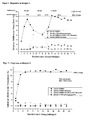
- the yield of 3MBM was almost always well below the economically necessary 90% for all experimental parameters (see FIG. 1 : Diagram for example 3), the content at Secondary components were comparatively high. Nevertheless, the catalyst can be used under these conditions in a continuous process as a hydrogenation catalyst and it was possible to realize a conversion of 66 g of o-nitrophenoxyacetone per gram of catalyst. Total conversion to 3MBM was 78% and 11% 3MBM dimer based on the formed 3MBM was determined.
- the catalyst can be used under these conditions in a continuous process as a hydrogenation catalyst.
- the measured in the total sample yield of 3MBM was 81% based on the o-Nitrophenoxyaceton. However, the content of 3-MBM dimer was too high at around 10% relative to the 3MBM.
- the catalyst can be used under these conditions in a continuous process as a hydrogenation catalyst.
- Example 3 In a test set-up as described in Example 3, 40 g of catalyst 5 (calculated as dried product) were initially charged in 200 g of methanol. In this stirred suspension under a hydrogen pressure of 200 bar, the oNPA solution from Example 3 (diluted with methanol to a content of 16.5 wt .-% diluted) so quickly metered, so that the average residence time was 40 minutes.
- the measured in the total sample yield of 3MBM was 97% based on the o-Nitrophenoxyaceton. However, the content of 3-MBM dimer was too high at around 3.6% based on the 3MBM.
- the catalyst can be used under these conditions in a continuous process as a hydrogenation catalyst.
- the measured in the total sample yield of 3MBM was 82% based on the o-Nitrophenoxyaceton. However, the content of 3-MBM dimer was too high at around 3.3% based on the 3MBM.
- the catalyst can be used under these conditions in a continuous process as a hydrogenation catalyst.
- Example 3 In a test set-up as described in Example 3, 25 g of catalyst 2 (calculated as dried product) were initially charged in 200 g of methanol. The oNPA solution from Example 3 (diluted with methanol to a content of 16.4% by weight) was metered into this stirred suspension at a pressure of 220 bar hydrogen so rapidly that the average residence time was 66 minutes.
- the measured in the total sample yield of 3MBM was 74% based on the o-Nitrophenoxyaceton. 3 MBM dimer could not be detected in the samples.
- the catalyst can be used under these conditions in a continuous process as a hydrogenation catalyst.
- Example 3 In a test set-up as described in Example 3, 25 g of catalyst 2 (calculated as dried product) were initially charged in 200 g of methanol. The oNPA solution from Example 3 (diluted with methanol to a content of 16.4% by weight) was metered into this stirred suspension at a pressure of 220 bar hydrogen so rapidly that the average residence time was 66 minutes.
- the measured in the total sample yield of 3MBM was 96% based on the o-Nitrophenoxyaceton. However, 3-MBM dimer was detected at 3.3% relative to the formed 3MBM.
- the catalyst can be used under these conditions in a continuous process as a hydrogenation catalyst.
- Example 3 In a test set-up as described in Example 3, 25 g of catalyst 2 (calculated as dried product) were initially charged in 200 g of methanol. The oNPA solution from Example 3 (diluted to a content of 16.4% by weight with methanol and adjusted to a pH of 8 with NaOH) was metered into this stirred suspension under a pressure of 220 bar hydrogen, so that the mean residence time was 66 minutes.
- the catalyst can be used under these conditions in a continuous process as a hydrogenation catalyst.
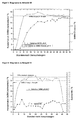
- the 3MBM yield measured in the total sample was nearly quantitative. Formed secondary components were at the detection limit. Details see figure.
Landscapes
- Chemical & Material Sciences (AREA)
- Organic Chemistry (AREA)
- Organic Low-Molecular-Weight Compounds And Preparation Thereof (AREA)
- Low-Molecular Organic Synthesis Reactions Using Catalysts (AREA)
Description
- Die Erfindung betrifft ein Verfahren zur Herstellung von Benzomorpholinderivaten, bei dem eine o-Nitrophenoxycarbonylverbindung in Gegenwart von mit Fremdmetallen dotierten Sponge-Metal-Katalysatoren auf der Basis von Nickel oder Kobalt unter Ringbildung hydriert wird..
- Die Hydrierung von ortho-Nitrophenoxyaceton (oNPA) zu 3-Methylbenzomorpholin (3MBM) ist eine kommerziell verwendete chemische Umsetzung mit Wasserstoff unter Druck in Gegenwart eines Katalysators. Die Reaktion wird großtechnisch durch Edelmetallkatalysatoren, hier vor allem Pt-Katalysatoren auf Aktivkohle, katalysiert.
- 3-Methylbenzomorpholin (3MBM) ist ein technisch hergestelltes Zwischenprodukt für die Herstellung von Farbstoffen und in der Pflanzenschutzmittelindustrie. Die Herstellung von 3-MBM geschieht zurzeit durch die Umsetzung unter mäßigem Wasserstoffüberdruck an einem Edelmetallkatalysator. Nachteile dieses Verfahrens sind die niedrigen Standzeiten des Katalysators, die angegebene diskontinuierliche Fahrweise und die vergleichsweise langen Hydrierzeiten bei gleichzeitig hohen Kosten für den edelmetallhaltigen Katalysator. Zusätzlich wird eine Reihe von Nebenprodukten gebildet, die die Ausbeute und Reinheit des Produktes reduzieren. Dieses Verfahren wird in der
US2006/0017946A1 beschrieben. - Anstelle der teuren, edelmetallhaltigen Katalysatoren könnten grundsätzlich auch sogenannte Sponge-Metal-Katalysatoren (auch Skelett-Katalysatoren genannt) auf Nickel-Basis eingesetzt werden, wie in der
US 2381935 anhand eines Beispiels beschrieben. Ein solcher Katalysator wird durch Laugung einer Aluminium-Nickel-Legierung mit zum Beispiel Natronlauge hergestellt. Dort wurde unter vergleichsweise drastischen Bedingungen bei 120°C-170°C eine 56 Gew.-%ige Lösung von oNPA in Methanol mit einem nicht näher beschriebenen Raney-Nickel-Katalysator hydriert. Es wurden in dem angeführten Beispiel etwa 20g oNPA pro g Katalysator umgesetzt. - Die Reduktion von aromatischen Nitrogruppen mit Wasserstoff zu den entsprechenden Aminen als eine (in der vorliegenden Reaktion nicht isolierte und nur vermutete) Zwischenstufe wird in der chemischen Industrie weltweit großtechnisch durchgeführt. Grundsätzlich sind für Nitroreduktionen eine ganze Reihe von Katalysatoren geeignet, angefangen von Nickel- oder Kobaltkatalysatoren (in Form der entsprechenden "Sponge-Metal-Katalysatoren" oder auch fein verteilt auf Trägermaterialien). Gemische aus Nickel und anderen Metallen, wie zum Beispiel Eisen, Molybdän, Chrom (alle ebenfalls als "Sponge- Metal -Katalysatoren" bezeichnet) sind ebenfalls prinzipiell geeignet. Solche Katalysatoren werden durch Laugung einer aluminiumhaltigen Metalllegierung, die die entsprechenden Elemente enthält, in der Regel mit Alkalilauge bei erhöhten Temperaturen hergestellt. Diese Legierungen können auch bei niedriger Temperatur in wässriger Phase unter Zugabe von Ammoniumchlorid zur Nitroreduktion eingesetzt werden, wie Bhaumik (Canadian Journal of Chemistry (2003), 81(3), 197-198) berichtet.
- Neben diesen vergleichsweise kostengünstigen Katalysatortypen kommen für die Nitroreduktion auch Edelmetallkatalysatoren auf Trägermaterialien in Frage, zum Beispiel Platin oder Palladium auf Aktivkohle, die wie die Sponge-Metal-Katalysatoren auch mit der Zugabe von Ammoniak oder einem anderen Amin oder einem andere Katalysatorgift gezielt in der Reaktivität gebremst werden können. Diese Katalysatoren haben dabei zwei Nachteile gegenüber den Sponge-Metal-Katalysatoren auf Nickel- oder Kobaltbasis: zum einen sind sie in der Regel schlechter filtrierbar und die damit verbundenen Katalysatorverluste sind größer, zum anderen sind die Anschaffungs- und Recyclingkosten für edelmetallhaltige Katalysatoren in der Regel deutlich höher.
- Aus diesen Gründen werden in der Technik in der Regel sehr häufig Sponge-Metal -Katalysatoren eingesetzt.
- Andere Möglichkeiten, Nitrogruppen zu reduzieren, wie etwa die im Organikum (21. Auflage, S. 627 ff., Wiley VCH, Weinheim) vorgeschlagene Reduktion mit Zink, Zinn oder Eisen in HCl, spielen in der chemischen Industrie ebenso eine nur untergeordnete Rolle wie die Reduktion mit zum Beispiel Hydrazin, wie sie unter anderem von Han et al. (Tetrahedron Letters (1985), 26(50), 6233-4) beschrieben wurde. Auch homogene Katalysatoren auf Basis von Edelmetallen wurden für die Reduktion bereits erwähnt, zum Beispiel durch Sandra et al. (Journal of Molecular Catalysis (1987), 39(3), 279-92). In den oben angegebenen Beispiele wurde außerdem immer nur die Nitrogruppe am Aromaten hydriert, eine weitere, intramolekular reduktive Aminierung wie bei der Herstellung von 3MBM vermutet, wurde hier nicht betrachtet.
- Es gibt auch die Möglichkeit, zur Reduktion Metallkatalysatoren auf einem anorganischen Träger zu verwenden, wie etwa einen Kupferkatalysator in Gegenwart von Nickel und / oder Palladium auf einem Silikat (Patent:
CN1861253 ). Ebenso wurde durch Lu et al. (Zhejiang Gongye Daxue Xuebao (2002), 30(5), 464-466) von Carbonanotubes als Trägermaterial berichtet. - Aufgrund der thermischen Instabilität von oNPA (in einer etwa 20 Gew.-%ige Lösung oNPA in einem Gemisch mit etwa 20 Gew.-% Toluol und etwa 60 Gew.-% Methanol beginnt bereits bei etwa 130°C eine deutliche Exothermie durch Zersetzung des Eduktes) und der zu erwartenden Wärmeentwicklung während der Reaktion sowie wegen der beobachteten geringen Umsätze von nur etwa 70% ist eine solche Reaktionsführung großtechnisch nicht ausführbar.
- Aufgabe der vorliegenden Erfindung war es, ein Verfahren zur Herstellung von Benzomorpholinderivaten durch Hydrierung von o-Nitrophenoxycarbonylverbindungen zur Verfügung zu stellen, bei dem die Hydrierung dieser Nitrophenoxycarbonylverbindungen bei einer möglichst niedrigen Temperatur und in Gegenwart eines kostengünstigen Katalysators durchgeführt wird.
- Es wurde nun das erfindungsgemäße Verfahren gefunden, das diese Aufgabe löst.
- Gegenstand der Erfindung ist daher ein Verfahren zur Herstellung von Benzomorpholinderivaten der allgemeinen Formel (I)

- R
- Wasserstoff, ein C1-C10-Alkyl-, Phenyl- oder Tetrahydrofurfurylrest sein kann,
- Z1 bis Z6
- jeweils unabhängig Wasserstoff oder ein C1-C10-Alkylrest und
- X
- Sauerstoff oder Schwefel sein kann,
- Für die Hydrierung der o-Nitrophenoxycarbonylverbindung konnte überraschenderweise gezeigt werden, dass sich diese Reaktion in Gegenwart von Sponge-Metal-Katalysatoren auf Basis einer Nickel/Molybdän-Legierung praktisch ohne wesentliche Nebenreaktionen (zum Beispiel zu Dimeren des 3-Methyl-Benzomorpholin oder zu teilhydrierten oder kernhydrierten Verbindungen oder zu anderen, unerwünschten Nebenprodukten) bei niedrigen Temperaturen (30-90°C) und niedrigen Verweilzeiten (etwa 1 Stunde) im technischen Maßstab durchführen lässt.
- Sponge-Metal-Katalysatoren auf Basis von undotiertem Kobalt sowie auf Basis von undotiertem Nickel sind für die Umsetzung bei niedrigen Temperaturen völlig ungeeignet, während sich ein Molybdän dotierter nickelhaltiger Katalysator als besonders günstig herausstellte und ein mit dem edelmetallhaltigen Katalysator vergleichbares Ergebnis zeigte. Bevorzugt wird ein mit Molybdän dotierter Katalysator, z.B. mit ein Sponge-Metall-Katalysator auf Nickel-Basis, der neben Nickel und Aluminium noch zwischen 0,5 und 3% Molybdän enthält, wie er z.B. unter dem Handelsnamen AMPERKAT Ni-Mo 3706 von der Fa. H.C. Starck (Goslar, Germany) erhältlich ist, eingesetzt. Für die Herstellung des Katalysators muss bereits in der Vorlegierung Molybdän enthalten sein. Die Vorlegierung wird geschmolzen, dann durch Verdüsen in Wasser sehr rasch abgekühlt und anschließend mit Natronlauge gelaugt. Neben dem molybdänhaltigen Katalysatoren können auch eisenhaltige Sponge-Metall-Katalysatoren auf Nickelbasis mit einem Eisengehalt von 12-15% Eisen im fertigen Katalysator verwendet werden (zum Beispiel der AMPERKAT Ni-Fe 6606 von der Fa. H.C. Starck (Goslar, Germany), der aus einer eisenhaltigen Nickel-Aluminium-Vorlegierung, durch Verdüsen in Wasser hergestellt werden kann). Außerdem kommt als Dotierungselement auch Chrom in Betracht, vor allem in Kombination mit Eisen, Nickel und Aluminium und in Form einer langsam erstarrten Vorlegierung, die anschließend zerkleinert und gelaugt wird (zum Beispiel der AMPERKAT Ni-FeCr 4546 von der Fa. H.C. Starck (Goslar, Germany)).
- Außerdem zeigt der im erfindungsgemäßen Verfahren eingesetzte Sponge-Metal- Katalysator unter den gewählten Versuchsbedingungen mit >90g Nitroverbindung pro Gramm Katalysator (ohne Zwischenwäsche des Katalysators) überraschend eine deutlich höhere Standzeit als ein edelmetallhaltiger Katalysator.
- Im allgemeinen führt man die Hydrierung in einem Lösungsmittelgemisch aus einem C1-C3-Alkohol wie Methanol, Ethanol oder iso-Propanol im Gemisch mit einen aromatischen Lösungsmittel wie Toluol aus, oder auch ausschließlich in dem entsprechenden Alkohol, sofern die Löslichkeit des oNPa bei den vorhandenen niedrigen Temperaturen ausreicht. Die Mischungsverhältnisse (in Gewichtsanteilen) liegen zwischen 1:100 aromatisches Lösungsmittel zu Alkohol bis zu 20:100 aromatisches Lösungsmittel zu Alkohol, so dass auch unter der Berücksichtigung des entstandenen Reaktionswasser bevorzugt (aber nicht notwendigerweise) eine Einphasigkeit des Reaktionsgemisches am Ende der Reaktion gewährleistet bleibt. Bevorzugt ist ein Toluol/Methanol - Gemisch als Lösungsmittel für die Hydrierung mit einem Mischungsverhältnis von 9,7:100 Toluol zu Methanol. In Anlehnung an die Beschreibung aus
US2006/0017946A1 können aber auch Lösungsmittelgemische mit einem deutlich höheren Anteil an Toluol verwendet werden. - Der Einfluss des im Lösungsmittelgemisch gemessenen "pH-Wertes" (der Begriff pH-Wert könnte im vorliegenden Fall eigentlich durch eine gemessene Spannung gegen eine Referenzelektrode ersetzt werden, da in einem nicht-wässrigen System gemessen wurde) hat einen überraschenden Einfluss auf die Bildung von Nebenkomponenten und die Standzeit des Katalysators. Als günstig hat sich ein pH-Wert zwischen 7 und 10, vorzugsweise zwischen 8 und 10, besonders bevorzugt 8-9, erwiesen. Üblicherweise wird der pH-Wert dabei mit einer handelsüblichen pH-Glaselektrode gemessen.
- Der Wasserstoffdruck liegt während der Hydrierung üblicherweise zwischen 10 und 400 bar, bevorzugt zwischen 200 und 240 bar, besonders bevorzugt bei 220 bar.
- Die Reaktionstemperatur kann bei der Hydrierung üblicherweise im Bereich zwischen 30 und 90°C, bevorzugt bei 60°C, liegen.
- Die Hydrierung kann diskontinuierlich oder bevorzugt kontinuierlich ausgeführt werden. Z. B. kann in einer kontinuierlichen Verfahrensweise die Verweilzeit der Eduktlösung zwischen 30 und 180 Minuten, bevorzugt 60 Minuten betragen und die Katalysatorbelastung im Bereich von 0,1 bis 20 g, bevorzugt 1,5 bis 3g, Nitroverbindung pro Gramm Katalysator und Stunde liegen.
- Durch Wahl dieser Versuchsparameter konnte die Anzahl und Menge der Nebenkomponenten minimiert werden. Besonders relevant ist hier unter anderem die Bildung des 3-MBM-Dimeren, welche sonst bei der Wahl falscher Reaktionsbedingungen ansteigt und die Ausbeute und Reinheit an 3-MBM spürbar verringert.
- Nach dem erfindungsgemäßen Verfahren können allgemein Benzomorpholinderivate der angegebenen Formel (I) hergestellt werden. Hierunter werden solcher verstanden, bei denen X ein Sauerstoffatom ist (Benzomorpholinderivate), aber auch solche verstanden, bei denen X ein Schwefelatom ist (Benzoparathiazinderivate). Bevorzugt ist X ein Sauerstoffatom.
- Besonders bevorzugt wird nach dem erfindungsgemäßen Verfahren o-Nitrophenoxyaceton, das z.B. aus der Umsetzung von o-Nitrophenol mit Chloraceton hergestellt werden kann, zum 3,4-Dihydro-3-methyl-2H-1,4-benzoxazin (3-MBM) hydriert (Z1-Z6 = Wasserstoff, X = Sauerstoff und R = Methyl in Formel (I)). 3-MBM kann z.B. zum 4-(Dichloracetyl)-3,4-dihydro-3-methyl-H-1,4-benzoxazin (Benoxacor) weiterverarbeitet werden, das als Safener in Herbiziden eingesetzt wird.
- Die folgenden Beispiele sollen die Erfindung weiter erläutern, ohne sie jedoch in ihrem Umfang zu begrenzen.
- Bei den beschriebenen Beispielen 1, 2 und 11 wurde immer von reinem, kristallisiertem o-NPA ausgegangen, das in Anlehnung an die Vorschrift aus
US2006/0017946A1 abschließend durch Kristallisation aus einem isopropanolhaltigen Lösungsmittelgemisch hergestellt wurde. - Folgende Katalysatoren wurden in den Beispielen verwendet (alle Angaben in Gew.-%) :
- Katalysator 1:
- Amperkat SK Co 3706 der Firma HC Starck, Goslar, aus verdüster und damit rascherstarrter Vorlegierung, die im wesentlichen Kobalt und Aluminium enthält. Der eingesetzte Katalysator enthält 94-98% Kobalt, 1-5% Aluminium, maximal 1,5% Nickel, maximal 1% Eisen
- Katalysator 2:
- Amperkat SK Ni-Mo 3706 der Firma HC Starck, hergestellt durch Laugung einer verdüsten (rascherstarrten) Vorlegierung, die Nickel, Aluminium und Molybdän enthält. Der eingesetzte Katalysator enthält 91-96% Nickel, 4-7% Aluminium, 0,5- 3% Molybdän sowie maximal 1% Eisen
- Katalysator 3:
- Amperkat SK Ni 3706 der Firma HC Starck, Goslar, hergestellt durch Laugung einer verdüsten (rascherstarrten) Vorlegierung, die Nickel und Aluminium enthält. Der eingesetzte Katalysator enthält 93-96% Nickel, 3-7% Aluminium sowie maximal 1% Eisen
- Katalysator 4:
- Amperkat SK Ni-Fe 6606 der Firma HC Starck, Goslar, hergestellt durch Laugung einer verdüsten (rascherstarrten) Vorlegierung, die Nickel, Eisen und Aluminium enthält. Der eingesetzte Katalysator enthält 77-82% Nickel, 4-7% Aluminium sowie 12-15% Eisen
- Katalysator 5:
- Amperkat SK Ni-FeCr 4546 der Firma HC Starck, Goslar, hergestellt durch Laugung einer in Barren (langsam erstarrten) Vorlegierung, die Nickel, Eisen, Chrom und Aluminium enthält. Der eingesetzte Katalysator enthält 82-90% Nickel, 6-10% Aluminium, 2-5% Chrom sowie 2-5% Eisen
- Katalysator 6:
- K-0126 10% Pt-Metall auf Aktivkohle der Firma Heraeus, Hanau (Vergleich)
- Katalysator 7:
- K-8610 1% Pt-Metall auf Kohle der Firma Heraeus, Hanau (Vergleich)
- Katalysator 8:
- 5% Pd-Metall auf Aktivkohle (Vergleich)
- Katalysator 9:
- hergestellt aus einer Vorlegierung nach Vorschrift aus der Patentanmeldung
DE197 53501A1 , Beispiel 3 und gelaugt in Natronlauge. - Bei den Angaben zu den Gehalten von 3MBM handelt es sich um Gew.-% Angaben, die aus kalibrierten GC-Messungen erhalten wurden. Trotzdem sind diese Angaben mit Unsicherheiten behaftet, so dass auch Messwerte geringfügig höher als 100% entstehen können. Der angegebene Gehalt an 3MBM-Dimeren wurde nicht kalibriert (bei den angegebenen Messwerte handelt es sich um Flächenprozente der GC-Methode), so dass diese Angaben nur als Richtwert und im relativen Vergleich verstanden werden können.
- In sechs identischen Hochdruckreaktoren wurden jeweils 1,3 g o-Nitrophenoxyaceton (mit nahezu 100%iger Reinheit laut GC-Analyse), 1,7g Iso-Propanol (zur Analyse), und 6,9g Toluol zusammen mit 0,6g Katalysator (bezogen auf das Trockengewicht) eingewogen.
- Es wurde ein Wasserstoffdruck von 100bar eingestellt und die Temperatur auf 40°C erhöht und für 30 Minuten unter diesen Bedingungen belassen. Dann wurde der Druck in den Reaktoren auf Umgebungsdruck erniedrigt und das Reaktionsprodukt per GC-Analytik untersucht.
Katalysator Gehalt 3MBM
(Gew.-%)Gehalt oNPA
(Gew.-%)Anzahl Nebenkomponenten Summe Nebenkomponenten
(Flächen-%)1 0 7,0 3 1,5 2 9,1 0 1 1,7 3 1,4 0 2 0,9 4 2,8 0 1 2,5 5 7,2 0 1 2,8 6 (Vergleich) 8,7 0 0 0 - In sechs identischen Hochdruckreaktoren wurden jeweils 8 g einer 16,4 Gew.-% o-Nitrophenoxyaceton-Lösung (gelöst in einem Gemisch aus 55,6 Gew.-% Methanol und 28 Gew.-% Toluol), zusammen mit 0,6g Katalysator (bezogen auf das Trockengewicht) eingewogen.
- Es wurde ein Wasserstoffdruck von 200bar eingestellt und die Temperatur auf 85°C erhöht und für 15 Minuten unter diesen Bedingungen belassen. Dann wurde der Druck in den Reaktoren auf Umgebungsdruck erniedrigt und das Reaktionsprodukt per GC-Analytik untersucht.
Katalysator Gehalt 3MBM
(Gew.-%)Gehalt oNPA
(Gew.-%)Anzahl Nebenkomponenten Summe Nebenkomponenten
(Flächen-%)5 6,5 0,1 12 3,4 7 9,2 0 8 2,4 1 9,6 0 8 1,6 4 8,8 0,2 8 2,1 8 (Vergleich) 9,5 0 9 3,0 9 7,4 0,2 11 2,4 - In einem Autoklaven aus Edelstahl, der mit einer Fritte an einen Überlauf angeschlossen wurde (so dass das innere, für Flüssigkeiten verfügbare Volumen auf etwa 455 ml begrenzt wurde), wurden 15g Katalysator 2 (gerechnet als getrocknete Ware) in 200g Methanol vorgelegt. In diese gerührte Suspension wurde unter einem Wasserstoffdruck von 150 bar eine etwa 20 Gew.-%iger o-NPA-Lösung (mit 20 Gew.-% Toluol und 60 Gew.-% Methanol, hergestellt nach dem in
US2006/0017946A1 beschriebenen Verfahren ohne weitere Aufreinigung) eindosiert, so dass die anfängliche mittlere Verweilzeit der Lösung bei etwa 60 Minuten lag. Im Verlauf des Versuches wurde die Temperatur erhöht und die Verweilzeit verlängert. In zeitlichen Abständen von 1 bis 2 Stunden wurden Proben gezogen und gemessen. - Die Ausbeute an 3MBM lag bei allen Versuchsparametern fast immer deutlich unterhalb der wirtschaftlich notwendigen 90% (siehe
Figur 1 : Diagramm zu Beispiel 3), der Gehalt an Nebenkomponenten war vergleichsweise hoch. Dennoch kann der Katalysator unter diesen Bedingungen in einem kontinuierlichen Prozess als Hydrierkatalysator verwendet werden und es konnte ein Umsatz von 66g o-Nitrophenoxyaceton pro Gramm Katalysator realisiert werden. Der Gesamtumsatz zu 3MBM lag bei 78 % und es wurden 11% 3MBM-Dimeres bezogen auf das gebildete 3MBM ermittelt. - In einem Versuchsaufbau wie unter Beispiel 3 beschrieben wurden 45g Katalysator 2 (gerechnet als getrocknete Ware) in 200g Methanol vorgelegt. In diese gerührte Suspension wurde unter einem Druck von 200 bar Wasserstoff die oNPA-Lösung aus Beispiel 3 (mit Methanol verdünnt auf eine Konzentration von etwa 14,8 Gew.-%iger o-NPA) eindosiert, so dass die mittlere Verweilzeit bei etwa 1 Stunde lag. In Abständen von ein bis zwei Stunden wurden Proben gezogen und per GC-Analytik gemessen, Ergebnisse siehe Figur. Die analytische Ausbeute an 3MBM war über den Versuchszeitraum fast immer in der Nähe der rechnerischen Ausbeute. Der Gehalt an 3-MBM-Dimerem allerdings lag mit 5% bezogen auf das 3MBM recht hoch. Die in der Gesamtprobe gemessene Ausbeute an 3MBM lag über 90%.
- Dennoch kann der Katalysator unter diesen Bedingungen in einem kontinuierlichen Prozess als Hydrierkatalysator verwendet werden. Es konnte im vorliegenden Versuch ein Umsatz von 40g o-Nitrophenoxyaceton pro Gramm Katalysator realisiert werden.
- In einem Versuchsaufbau wie unter Beispiel 3 beschrieben wurden 27g Katalysator 5 (gerechnet als getrocknete Ware) in 200g Methanol vorgelegt. In diese gerührte Suspension wurde unter einem Druck von 200 bar Wasserstoff die oNPA-Lösung aus Beispiel 3 (mit Methanol auf einen Gehalt von 16,2 Gew.-% verdünnt) so schnell eindosiert, dass die mittlere Verweilzeit bei etwa einer Stunde lag.
- Die in der Gesamtprobe gemessene Ausbeute an 3MBM lag bei 81 % bezogen auf das eingesetzte o-Nitrophenoxyaceton. Der Gehalt an 3-MBM-Dimerem allerdings lag mit rund 10% bezogen auf das 3MBM zu hoch.
- Dennoch kann der Katalysator unter diesen Bedingungen in einem kontinuierlichen Prozess als Hydrierkatalysator verwendet werden. Es konnte im vorliegenden Versuch ein Umsatz von 30g o-Nitrophenoxyaceton pro Gramm Katalysator realisiert werden.
- In einem Versuchsaufbau wie unter Beispiel 3 beschrieben wurden 40g Katalysator 5 (gerechnet als getrocknete Ware) in 200g Methanol vorgelegt. In diese gerührte Suspension wurde unter einem Wasserstoffdruck von 200 bar die oNPA-Lösung aus Beispiel 3 (mit Methanol auf einen Gehalt von 16,5 Gew.-% verdünnt) so schnell eindosiert, so dass die mittlere Verweilzeit bei 40 Minuten lag.
- Die in der Gesamtprobe gemessene Ausbeute an 3MBM lag bei 97% bezogen auf das eingesetzte o-Nitrophenoxyaceton. Der Gehalt an 3-MBM-Dimerem allerdings lag mit rund 3,6% bezogen auf das 3MBM zu hoch.
- Dennoch kann der Katalysator unter diesen Bedingungen in einem kontinuierlichen Prozess als Hydrierkatalysator verwendet werden. Es konnte im vorliegenden Versuch ein Umsatz von 12g o-Nitrophenoxyaceton pro Gramm Katalysator realisiert werden.
- In einem Versuchsaufbau wie unter Beispiel 3 beschrieben wurden 27g Katalysator 5 (gerechnet als getrocknete Ware) in 200g Methanol vorgelegt. In diese gerührte Suspension wurde unter einem Wasserstoffdruck von 200 bar die oNPA-Lösung aus Beispiel 3 (mit Methanol auf einen Gehalt von 16,5 Gew.-% verdünnt) so schnell eindosiert, so dass die mittlere Verweilzeit bei 55 Minuten lag.
- Die in der Gesamtprobe gemessene Ausbeute an 3MBM lag bei 82% bezogen auf das eingesetzte o-Nitrophenoxyaceton. Der Gehalt an 3-MBM-Dimerem allerdings lag mit rund 3,3% bezogen auf das 3MBM zu hoch.
- Dennoch kann der Katalysator unter diesen Bedingungen in einem kontinuierlichen Prozess als Hydrierkatalysator verwendet werden. Es konnte im vorliegenden Versuch ein Umsatz von 36g o-Nitrophenoxyaceton pro Gramm Katalysator realisiert werden.
- In einem Versuchsaufbau wie unter Beispiel 3 beschrieben wurden 25g Katalysator 2 (gerechnet als getrocknete Ware) in 200g Methanol vorgelegt. In diese gerührte Suspension wurde unter einem Druck von 220 bar Wasserstoff die oNPA-Lösung aus Beispiel 3 (mit Methanol auf einen Gehalt von 16,4 Gew.-% verdünnt) so schnell eindosiert, so dass die mittlere Verweilzeit bei 66 Minuten lag.
- Die in der Gesamtprobe gemessene Ausbeute an 3MBM lag bei 74% bezogen auf das eingesetzte o-Nitrophenoxyaceton. 3-MBM-Dimeres konnte in den Proben nicht nachgewiesen werden.
- Dennoch kann der Katalysator unter diesen Bedingungen in einem kontinuierlichen Prozess als Hydrierkatalysator verwendet werden. Es konnte im vorliegenden Versuch ein Umsatz von über 40g o-Nitrophenoxyaceton pro Gramm Katalysator realisiert werden.
- In einem Versuchsaufbau wie unter Beispiel 3 beschrieben wurden 25g Katalysator 2 (gerechnet als getrocknete Ware) in 200g Methanol vorgelegt. In diese gerührte Suspension wurde unter einem Druck von 220 bar Wasserstoff die oNPA-Lösung aus Beispiel 3 (mit Methanol auf einen Gehalt von 16,4 Gew.-% verdünnt) so schnell eindosiert, so dass die mittlere Verweilzeit bei 66 Minuten lag.
- Die in der Gesamtprobe gemessene Ausbeute an 3MBM lag bei 96% bezogen auf das eingesetzte o-Nitrophenoxyaceton. Allerdings wurde 3-MBM-Dimeres zu 3,3 % bezogen auf das gebildete 3MBM nachgewiesen.
- Dennoch kann der Katalysator unter diesen Bedingungen in einem kontinuierlichen Prozess als Hydrierkatalysator verwendet werden. Es konnte im vorliegenden Versuch ein Umsatz von etwa 40g o-Nitrophenoxyaceton pro Gramm Katalysator realisiert werden.
- In einem Versuchsaufbau wie unter Beispiel 3 beschrieben wurden 25g Katalysator 2 (gerechnet als getrocknete Ware) in 200g Methanol vorgelegt. In diese gerührte Suspension wurde unter einem Druck von 220 bar Wasserstoff die oNPA-Lösung aus Beispiel 3 (mit Methanol auf einen Gehalt von 16,4 Gew.-% verdünnt und mit NaOH auf einen pH-Wert von 8 eingestellt) so schnell eindosiert, so dass die mittlere Verweilzeit bei 66 Minuten lag.
- Die in der Gesamtprobe gemessene Ausbeute an 3MBM lag bei über 90% bezogen auf das eingesetzte o-Nitrophenoxyaceton. Allerdings wurde 3-MBM-Dimeres zu 3,1 % bezogen auf das gebildete 3MBM nachgewiesen. Die Einzelwerte sind in Figur aufgetragen.
- Dennoch kann der Katalysator unter diesen Bedingungen in einem kontinuierlichen Prozess als Hydrierkatalysator verwendet werden. Es konnte im vorliegenden Versuch ein Umsatz von 62g o-Nitrophenoxyaceton pro Gramm Katalysator realisiert werden.
- In einem Versuchsaufbau wie unter Beispiel 3 beschrieben, allerdings in einem Autoklaven mit einem Volumen von 900ml, wurden 50g Katalysator 2 (gerechnet als getrocknete Ware) in 900ml Methanol vorgelegt. In diese gerührte Suspension wurde unter einem Druck von 220 bar Wasserstoff eine 17,5 Gew.-%ige oNPA-Lösung (hergestellt aus kristallisisertem oNPA mit einem Gehalt >99% und 6,7 Gew.-% Toluol und 75,7 Gew.-% Methanol und gelagert bei 40°C und mit NaOH auf einem pH-Wert zwischen 8 und 9 eingestellt) so schnell eindosiert, so dass die mittlere Verweilzeit bei etwa 60 Minuten lag.
- Die in der Gesamtprobe gemessene Ausbeute an 3MBM war nahezu quantitativ. Gebildete Nebenkomponenten lagen an der Nachweisgrenze. Details siehe Figur.
- Es konnte im vorliegenden Versuch ein Umsatz von 92g o-Nitrophenoxyaceton pro Gramm Katalysator realisiert werden.
- Dieses Beispiel wurde in fünf Versuchen reproduziert.

R, Z1 bis Z6 und X die für Formel (I) angegebene Bedeutung haben,
dadurch gekennzeichnet, dass die Hydrierung von Verbindungen der allgemeinen Formel (II) unter Ringbildung mit Wasserstoff-Gas in Gegenwart eines mit Molybdän und/oder Eisen und/oder Aluminium dotierten Sponge-Metal-Katalysators auf der Basis von Nickel oder Kobalt durchgeführt wird und der pH-Wert während der Hydrierung auf einen Wert zwischen 7 und 10 eingestellt wird.
Claims (9)
- Verfahren zur Herstellung von Benzomorpholinderivaten der allgemeinen Formel (I)
 R Wasserstoff, ein C1-C10-Alkyl-, Phenyl- oder Tetrahydrofurfurylrest ist,Z1, bis Z6 jeweils unabhängig Wasserstoff oder ein C1-C10-Alkylrest undX Sauerstoff- oder Schwefel ist,durch Hydrierung von o-Nitrophenoxycarbonylverbindungen der allgemeinen Formel (II)
R, Z1 bis Z6 und X die für Formel (I) angegebene Bedeutung haben,
dadurch gekennzeichnet, dass die Hydrierung von Verbindungen der allgemeinen Formel (II) mit Wasserstoff-Gas in Gegenwart eines mit Molybdän und/oder Eisen und/oder Aluminium und/oder Chrom dotierten Sponge-Metal-Katalysators auf der Basis von Nickel oder Kobalt durchgeführt wird und der pH-Wert während der Hydrierung auf einen Wert zwischen 7 und 10 eingestellt wird. - Verfahren nach Anspruch 1, dadurch gekennzeichnet, dass die o-Nitrophenoxycarbonylverbindung der allgemeinen Formel (II) vor der Hydrierung durch Umkristallisation gereinigt wurde.
- Verfahren nach Anspruch 1 oder 2, dadurch gekennzeichnet, dass der Druck des Wasserstoff-Gases im Bereich zwischen 10 und 400 bar liegt.
- Verfahren nach einem der Ansprüche 1 bis 3, dadurch gekennzeichnet, dass, die Temperatur während der Hydrierung im Bereich zwischen 40 und 90°C liegt.
- Verfahren nach einem der Ansprüche 1 bis 4, dadurch gekennzeichnet, dass die Hydrierung kontinuierlich mit einer mittleren Verweilzeit der Eduktlösung in der Katalysatorsuspension zwischen 30 und 180 Minuten und einer Katalysatorbelastung von 0,1 bis 20 g Nitroverbindung pro Gramm Katalysator und Stunde durchgeführt wird.
- Verfahren nach einem der Ansprüche 1 bis 5, dadurch gekennzeichnet, dass die Hydrierung in einem Lösungsmittelgemisch aus einem C1-C3-Alkohol und einem aromatischen Lösungsmittel durchgeführt wird.
- Verfahren nach einem der Ansprüche 1 bis 6, dadurch gekennzeichnet, dass der Sponge-Metal-Katalysator ein Sponge-Metal-Katalysator auf der Basis von Nickel mit 0-15 Gew.-% Eisen ist.
- Verfahren nach einem der Ansprüche 1 bis 6, dadurch gekennzeichnet, dass der Sponge-Metal-Katalysator ein Sponge-Metal-Katalysator auf der Basis von Nickel mit 0-4 Gew.-% Molybdän ist.
- Verfahren nach einem der Ansprüche 1 bis 6, dadurch gekennzeichnet, dass der Sponge-Metal-Katalysator ein Sponge-Metal-Katalysator auf der Basis von Kobalt mit 0-5 Gew.-% Aluminium ist.
Priority Applications (1)
| Application Number | Priority Date | Filing Date | Title |
|---|---|---|---|
| PL09178883T PL2206705T3 (pl) | 2008-12-23 | 2009-12-11 | Sposób wytwarzania pochodnych benzomorfoliny przez uwodornianie związków o-nitrofenoksykarbonylowych |
Applications Claiming Priority (1)
| Application Number | Priority Date | Filing Date | Title |
|---|---|---|---|
| DE102008062906A DE102008062906A1 (de) | 2008-12-23 | 2008-12-23 | Verfahren zur Herstellung von Benzomorpholinderivaten durch Hydrierung von o-Nitrophenoxycarbonylverbindungen |
Publications (2)
| Publication Number | Publication Date |
|---|---|
| EP2206705A1 EP2206705A1 (de) | 2010-07-14 |
| EP2206705B1 true EP2206705B1 (de) | 2013-03-13 |
Family
ID=41693474
Family Applications (1)
| Application Number | Title | Priority Date | Filing Date |
|---|---|---|---|
| EP09178883A Not-in-force EP2206705B1 (de) | 2008-12-23 | 2009-12-11 | Verfahren zur Herstellung von Benzomorpholinderivaten durch Hydrierung von o-Nitrophenoxycarbonylverbindungen |
Country Status (5)
| Country | Link |
|---|---|
| US (1) | US8252924B2 (de) |
| EP (1) | EP2206705B1 (de) |
| CN (1) | CN101768131A (de) |
| DE (1) | DE102008062906A1 (de) |
| PL (1) | PL2206705T3 (de) |
Families Citing this family (1)
| Publication number | Priority date | Publication date | Assignee | Title |
|---|---|---|---|---|
| CN117447419A (zh) * | 2023-10-27 | 2024-01-26 | 上虞颖泰精细化工有限公司 | 一种合成解草酮的方法 |
Family Cites Families (10)
| Publication number | Priority date | Publication date | Assignee | Title |
|---|---|---|---|---|
| US2381935A (en) | 1940-11-16 | 1945-08-14 | Eastman Kodak Co | Process for producing morpholine compounds |
| US4638067A (en) * | 1982-09-09 | 1987-01-20 | Warner-Lambert Co. | Antibacterial agents |
| US4623650A (en) * | 1984-12-06 | 1986-11-18 | Pfizer Inc. | Antibiotic derivatives of 7-phenyl-1,4-dihydro-4-oxo-3-quinolinecarboxylic acids |
| DE19753501A1 (de) | 1997-12-03 | 1999-06-10 | Bayer Ag | Raney-Nickel-Katalysatoren, ein Verfahren zu deren Herstellung und deren Verwendung zur Hydrierung organischer Verbindungen |
| US6309758B1 (en) * | 1999-05-06 | 2001-10-30 | W. R. Grace & Co.-Conn. | Promoted porous catalyst |
| DE60129126T2 (de) * | 2000-05-23 | 2008-03-13 | Syngenta Participations Ag | Verfahren zur herstellung von acylamiden durch synthesierung und acylierung von benzoxazinen |
| US6638067B2 (en) * | 2001-09-04 | 2003-10-28 | Ultradent Products, Inc. | Flocked endodontic files and other flocked devices |
| US20060017946A1 (en) | 2004-07-26 | 2006-01-26 | Peiro Jose A | Font and text management in documents |
| US7196223B2 (en) * | 2005-05-03 | 2007-03-27 | Solutia, Inc. | Higher alcohols for solvents in amine production |
| CN1861253A (zh) | 2006-06-13 | 2006-11-15 | 吉化集团公司 | 邻硝基甲苯沸腾床气相加氢制邻甲基苯胺催化剂及工艺 |
-
2008
- 2008-12-23 DE DE102008062906A patent/DE102008062906A1/de not_active Withdrawn
-
2009
- 2009-12-11 PL PL09178883T patent/PL2206705T3/pl unknown
- 2009-12-11 EP EP09178883A patent/EP2206705B1/de not_active Not-in-force
- 2009-12-18 US US12/641,426 patent/US8252924B2/en not_active Expired - Fee Related
- 2009-12-22 CN CN200910261348A patent/CN101768131A/zh active Pending
Also Published As
| Publication number | Publication date |
|---|---|
| DE102008062906A1 (de) | 2010-06-24 |
| US8252924B2 (en) | 2012-08-28 |
| EP2206705A1 (de) | 2010-07-14 |
| US20110040089A1 (en) | 2011-02-17 |
| PL2206705T3 (pl) | 2013-08-30 |
| CN101768131A (zh) | 2010-07-07 |
Similar Documents
| Publication | Publication Date | Title |
|---|---|---|
| EP0324983B1 (de) | Ruthenium-Trägerkatalysator, seine Herstellung und sein Einsatz bei der Herstellung von gegebenenfalls substituiertem Cyclohexylamin und gegebenenfalls substituiertem Dicyclohexylamin | |
| EP0324984A1 (de) | Verfahren zur Herstellung eines Gemisches aus Cyclohexylamin und Dicyclohexylamin unter Einsatz eines Ruthenium-Katalysators | |
| DE2503187B2 (de) | Verfahren zur Herstellung durch Chlor meta-substituierte Aniline | |
| DE1543672A1 (de) | Verfahren zur Herstellung von substituierten Diphenylalkylaminen | |
| EP0004958B1 (de) | Verfahren zur Herstellung von 2,6-Dialkyl-N-alkylanilinen | |
| EP2206706B1 (de) | Verfahren zur Herstellung von Acylamid-Verbindungen | |
| EP0415158B1 (de) | Verfahren zur Herstellung von chlorsubstituierten aromatischen Aminen | |
| EP2206705B1 (de) | Verfahren zur Herstellung von Benzomorpholinderivaten durch Hydrierung von o-Nitrophenoxycarbonylverbindungen | |
| DE3856098T2 (de) | Verfahren zur selektiven Reduktion von 2-Chinoxalinol-4-Oxiden zu 2-Chinoxalinolen | |
| EP1373232B1 (de) | Verfahren zur herstellung von n-substituierten 2,6-dialkylmorpholinen | |
| EP2097363A1 (de) | Verfahren zur herstellung von 3-alkoxypropan-1-ole | |
| DE2609530C2 (de) | Verfahren zur Herstellung von Hydrazobenzolen | |
| EP1527042A2 (de) | Verfahren zur herstellung von aminoalkoxybenzylaminen und aminoalkoxybenzonitrilen als zwischenprodukte | |
| EP0560127B1 (de) | Verfahren zur Herstellung von cycloaliphatischen Aminen | |
| EP0039810A1 (de) | Verfahren zur Herstellung von 2-Trifluormethylanilin | |
| EP0479877B1 (de) | Verfahren zur herstellung von n-alkyl-halogenanilinen | |
| DD142331A5 (de) | Verfahren zur herstellung von p-amino-diphenylamin | |
| DE2409313A1 (de) | Neue pyrrolyl-verbindungen und verfahren zu ihrer herstellung | |
| DE3146471C2 (de) | Verfahren zur Herstellung von 1-(3,5-Dimethoxy-4-hydroxyphenyl)-2-(N-methylamino)-ethanol-hydrochlorid | |
| EP0542086B1 (de) | Verfahren zur Herstellung von N-[(2-Chlor-pyridin-5-yl)methyl]-ethylendiamin | |
| DE2245248C2 (de) | 1-Phenyl-4-aminopyridaziniumsalze | |
| DE3586739T2 (de) | Verfahren zur herstellung von indolen. | |
| DE2414772C3 (de) | H33-Diphenylpropyl)-2-methyl-3phenylaziridin und Verfahren zu seiner Herstellung | |
| DE2062984A1 (en) | 2-unsubstd-5-formyl-pyrrole prepn - by catalytic hydrogenation of 2-halo-5-formyl-pyrroles | |
| AT251560B (de) | Verfahren zur Herstellung von neuen Phenylisopropylaminen und deren Salzen |
Legal Events
| Date | Code | Title | Description |
|---|---|---|---|
| PUAI | Public reference made under article 153(3) epc to a published international application that has entered the european phase |
Free format text: ORIGINAL CODE: 0009012 |
|
| AK | Designated contracting states |
Kind code of ref document: A1 Designated state(s): AT BE BG CH CY CZ DE DK EE ES FI FR GB GR HR HU IE IS IT LI LT LU LV MC MK MT NL NO PL PT RO SE SI SK SM TR |
|
| AX | Request for extension of the european patent |
Extension state: AL BA RS |
|
| 17P | Request for examination filed |
Effective date: 20110114 |
|
| 17Q | First examination report despatched |
Effective date: 20110201 |
|
| GRAP | Despatch of communication of intention to grant a patent |
Free format text: ORIGINAL CODE: EPIDOSNIGR1 |
|
| GRAS | Grant fee paid |
Free format text: ORIGINAL CODE: EPIDOSNIGR3 |
|
| GRAA | (expected) grant |
Free format text: ORIGINAL CODE: 0009210 |
|
| AK | Designated contracting states |
Kind code of ref document: B1 Designated state(s): AT BE BG CH CY CZ DE DK EE ES FI FR GB GR HR HU IE IS IT LI LT LU LV MC MK MT NL NO PL PT RO SE SI SK SM TR |
|
| REG | Reference to a national code |
Ref country code: GB Ref legal event code: FG4D Free format text: NOT ENGLISH |
|
| REG | Reference to a national code |
Ref country code: CH Ref legal event code: EP Ref country code: AT Ref legal event code: REF Ref document number: 600730 Country of ref document: AT Kind code of ref document: T Effective date: 20130315 |
|
| REG | Reference to a national code |
Ref country code: IE Ref legal event code: FG4D Free format text: LANGUAGE OF EP DOCUMENT: GERMAN |
|
| REG | Reference to a national code |
Ref country code: DE Ref legal event code: R096 Ref document number: 502009006471 Country of ref document: DE Effective date: 20130508 |
|
| PG25 | Lapsed in a contracting state [announced via postgrant information from national office to epo] |
Ref country code: NO Free format text: LAPSE BECAUSE OF FAILURE TO SUBMIT A TRANSLATION OF THE DESCRIPTION OR TO PAY THE FEE WITHIN THE PRESCRIBED TIME-LIMIT Effective date: 20130613 Ref country code: SE Free format text: LAPSE BECAUSE OF FAILURE TO SUBMIT A TRANSLATION OF THE DESCRIPTION OR TO PAY THE FEE WITHIN THE PRESCRIBED TIME-LIMIT Effective date: 20130313 Ref country code: ES Free format text: LAPSE BECAUSE OF FAILURE TO SUBMIT A TRANSLATION OF THE DESCRIPTION OR TO PAY THE FEE WITHIN THE PRESCRIBED TIME-LIMIT Effective date: 20130624 Ref country code: LT Free format text: LAPSE BECAUSE OF FAILURE TO SUBMIT A TRANSLATION OF THE DESCRIPTION OR TO PAY THE FEE WITHIN THE PRESCRIBED TIME-LIMIT Effective date: 20130313 Ref country code: BG Free format text: LAPSE BECAUSE OF FAILURE TO SUBMIT A TRANSLATION OF THE DESCRIPTION OR TO PAY THE FEE WITHIN THE PRESCRIBED TIME-LIMIT Effective date: 20130613 |
|
| REG | Reference to a national code |
Ref country code: NL Ref legal event code: VDEP Effective date: 20130313 |
|
| REG | Reference to a national code |
Ref country code: LT Ref legal event code: MG4D |
|
| PG25 | Lapsed in a contracting state [announced via postgrant information from national office to epo] |
Ref country code: GR Free format text: LAPSE BECAUSE OF FAILURE TO SUBMIT A TRANSLATION OF THE DESCRIPTION OR TO PAY THE FEE WITHIN THE PRESCRIBED TIME-LIMIT Effective date: 20130614 Ref country code: SI Free format text: LAPSE BECAUSE OF FAILURE TO SUBMIT A TRANSLATION OF THE DESCRIPTION OR TO PAY THE FEE WITHIN THE PRESCRIBED TIME-LIMIT Effective date: 20130313 Ref country code: FI Free format text: LAPSE BECAUSE OF FAILURE TO SUBMIT A TRANSLATION OF THE DESCRIPTION OR TO PAY THE FEE WITHIN THE PRESCRIBED TIME-LIMIT Effective date: 20130313 Ref country code: LV Free format text: LAPSE BECAUSE OF FAILURE TO SUBMIT A TRANSLATION OF THE DESCRIPTION OR TO PAY THE FEE WITHIN THE PRESCRIBED TIME-LIMIT Effective date: 20130313 |
|
| REG | Reference to a national code |
Ref country code: PL Ref legal event code: T3 |
|
| PG25 | Lapsed in a contracting state [announced via postgrant information from national office to epo] |
Ref country code: HR Free format text: LAPSE BECAUSE OF FAILURE TO SUBMIT A TRANSLATION OF THE DESCRIPTION OR TO PAY THE FEE WITHIN THE PRESCRIBED TIME-LIMIT Effective date: 20130313 |
|
| PG25 | Lapsed in a contracting state [announced via postgrant information from national office to epo] |
Ref country code: EE Free format text: LAPSE BECAUSE OF FAILURE TO SUBMIT A TRANSLATION OF THE DESCRIPTION OR TO PAY THE FEE WITHIN THE PRESCRIBED TIME-LIMIT Effective date: 20130313 Ref country code: SK Free format text: LAPSE BECAUSE OF FAILURE TO SUBMIT A TRANSLATION OF THE DESCRIPTION OR TO PAY THE FEE WITHIN THE PRESCRIBED TIME-LIMIT Effective date: 20130313 Ref country code: NL Free format text: LAPSE BECAUSE OF FAILURE TO SUBMIT A TRANSLATION OF THE DESCRIPTION OR TO PAY THE FEE WITHIN THE PRESCRIBED TIME-LIMIT Effective date: 20130313 Ref country code: RO Free format text: LAPSE BECAUSE OF FAILURE TO SUBMIT A TRANSLATION OF THE DESCRIPTION OR TO PAY THE FEE WITHIN THE PRESCRIBED TIME-LIMIT Effective date: 20130313 Ref country code: PT Free format text: LAPSE BECAUSE OF FAILURE TO SUBMIT A TRANSLATION OF THE DESCRIPTION OR TO PAY THE FEE WITHIN THE PRESCRIBED TIME-LIMIT Effective date: 20130715 Ref country code: IS Free format text: LAPSE BECAUSE OF FAILURE TO SUBMIT A TRANSLATION OF THE DESCRIPTION OR TO PAY THE FEE WITHIN THE PRESCRIBED TIME-LIMIT Effective date: 20130713 |
|
| RAP2 | Party data changed (patent owner data changed or rights of a patent transferred) |
Owner name: SALTIGO GMBH |
|
| PG25 | Lapsed in a contracting state [announced via postgrant information from national office to epo] |
Ref country code: CY Free format text: LAPSE BECAUSE OF FAILURE TO SUBMIT A TRANSLATION OF THE DESCRIPTION OR TO PAY THE FEE WITHIN THE PRESCRIBED TIME-LIMIT Effective date: 20130313 |
|
| PLBE | No opposition filed within time limit |
Free format text: ORIGINAL CODE: 0009261 |
|
| STAA | Information on the status of an ep patent application or granted ep patent |
Free format text: STATUS: NO OPPOSITION FILED WITHIN TIME LIMIT |
|
| PG25 | Lapsed in a contracting state [announced via postgrant information from national office to epo] |
Ref country code: DK Free format text: LAPSE BECAUSE OF FAILURE TO SUBMIT A TRANSLATION OF THE DESCRIPTION OR TO PAY THE FEE WITHIN THE PRESCRIBED TIME-LIMIT Effective date: 20130313 |
|
| PGFP | Annual fee paid to national office [announced via postgrant information from national office to epo] |
Ref country code: CZ Payment date: 20131210 Year of fee payment: 5 Ref country code: DE Payment date: 20131204 Year of fee payment: 5 Ref country code: GB Payment date: 20131211 Year of fee payment: 5 Ref country code: CH Payment date: 20131212 Year of fee payment: 5 |
|
| 26N | No opposition filed |
Effective date: 20131216 |
|
| PG25 | Lapsed in a contracting state [announced via postgrant information from national office to epo] |
Ref country code: IT Free format text: LAPSE BECAUSE OF FAILURE TO SUBMIT A TRANSLATION OF THE DESCRIPTION OR TO PAY THE FEE WITHIN THE PRESCRIBED TIME-LIMIT Effective date: 20130313 |
|
| PGFP | Annual fee paid to national office [announced via postgrant information from national office to epo] |
Ref country code: FR Payment date: 20131209 Year of fee payment: 5 Ref country code: PL Payment date: 20131023 Year of fee payment: 5 |
|
| REG | Reference to a national code |
Ref country code: DE Ref legal event code: R097 Ref document number: 502009006471 Country of ref document: DE Effective date: 20131216 |
|
| BERE | Be: lapsed |
Owner name: SALTIGO G.M.B.H. Effective date: 20131231 |
|
| PG25 | Lapsed in a contracting state [announced via postgrant information from national office to epo] |
Ref country code: LU Free format text: LAPSE BECAUSE OF FAILURE TO SUBMIT A TRANSLATION OF THE DESCRIPTION OR TO PAY THE FEE WITHIN THE PRESCRIBED TIME-LIMIT Effective date: 20131211 Ref country code: MC Free format text: LAPSE BECAUSE OF FAILURE TO SUBMIT A TRANSLATION OF THE DESCRIPTION OR TO PAY THE FEE WITHIN THE PRESCRIBED TIME-LIMIT Effective date: 20130313 |
|
| REG | Reference to a national code |
Ref country code: IE Ref legal event code: MM4A |
|
| PG25 | Lapsed in a contracting state [announced via postgrant information from national office to epo] |
Ref country code: IE Free format text: LAPSE BECAUSE OF NON-PAYMENT OF DUE FEES Effective date: 20131211 Ref country code: BE Free format text: LAPSE BECAUSE OF NON-PAYMENT OF DUE FEES Effective date: 20131231 |
|
| PG25 | Lapsed in a contracting state [announced via postgrant information from national office to epo] |
Ref country code: SM Free format text: LAPSE BECAUSE OF FAILURE TO SUBMIT A TRANSLATION OF THE DESCRIPTION OR TO PAY THE FEE WITHIN THE PRESCRIBED TIME-LIMIT Effective date: 20130313 |
|
| PG25 | Lapsed in a contracting state [announced via postgrant information from national office to epo] |
Ref country code: TR Free format text: LAPSE BECAUSE OF FAILURE TO SUBMIT A TRANSLATION OF THE DESCRIPTION OR TO PAY THE FEE WITHIN THE PRESCRIBED TIME-LIMIT Effective date: 20130313 |
|
| REG | Reference to a national code |
Ref country code: DE Ref legal event code: R119 Ref document number: 502009006471 Country of ref document: DE |
|
| PG25 | Lapsed in a contracting state [announced via postgrant information from national office to epo] |
Ref country code: MK Free format text: LAPSE BECAUSE OF FAILURE TO SUBMIT A TRANSLATION OF THE DESCRIPTION OR TO PAY THE FEE WITHIN THE PRESCRIBED TIME-LIMIT Effective date: 20130313 Ref country code: HU Free format text: LAPSE BECAUSE OF FAILURE TO SUBMIT A TRANSLATION OF THE DESCRIPTION OR TO PAY THE FEE WITHIN THE PRESCRIBED TIME-LIMIT; INVALID AB INITIO Effective date: 20091211 Ref country code: CZ Free format text: LAPSE BECAUSE OF NON-PAYMENT OF DUE FEES Effective date: 20141211 |
|
| REG | Reference to a national code |
Ref country code: CH Ref legal event code: PL |
|
| GBPC | Gb: european patent ceased through non-payment of renewal fee |
Effective date: 20141211 |
|
| PG25 | Lapsed in a contracting state [announced via postgrant information from national office to epo] |
Ref country code: MT Free format text: LAPSE BECAUSE OF FAILURE TO SUBMIT A TRANSLATION OF THE DESCRIPTION OR TO PAY THE FEE WITHIN THE PRESCRIBED TIME-LIMIT Effective date: 20130313 |
|
| REG | Reference to a national code |
Ref country code: FR Ref legal event code: ST Effective date: 20150831 |
|
| PG25 | Lapsed in a contracting state [announced via postgrant information from national office to epo] |
Ref country code: GB Free format text: LAPSE BECAUSE OF NON-PAYMENT OF DUE FEES Effective date: 20141211 Ref country code: LI Free format text: LAPSE BECAUSE OF NON-PAYMENT OF DUE FEES Effective date: 20141231 Ref country code: CH Free format text: LAPSE BECAUSE OF NON-PAYMENT OF DUE FEES Effective date: 20141231 Ref country code: DE Free format text: LAPSE BECAUSE OF NON-PAYMENT OF DUE FEES Effective date: 20150701 |
|
| PG25 | Lapsed in a contracting state [announced via postgrant information from national office to epo] |
Ref country code: FR Free format text: LAPSE BECAUSE OF NON-PAYMENT OF DUE FEES Effective date: 20141231 |
|
| REG | Reference to a national code |
Ref country code: AT Ref legal event code: MM01 Ref document number: 600730 Country of ref document: AT Kind code of ref document: T Effective date: 20141211 |
|
| PG25 | Lapsed in a contracting state [announced via postgrant information from national office to epo] |
Ref country code: AT Free format text: LAPSE BECAUSE OF NON-PAYMENT OF DUE FEES Effective date: 20141211 Ref country code: PL Free format text: LAPSE BECAUSE OF NON-PAYMENT OF DUE FEES Effective date: 20141211 |
|
| PG25 | Lapsed in a contracting state [announced via postgrant information from national office to epo] |
Ref country code: MT Free format text: LAPSE BECAUSE OF FAILURE TO SUBMIT A TRANSLATION OF THE DESCRIPTION OR TO PAY THE FEE WITHIN THE PRESCRIBED TIME-LIMIT Effective date: 20131211 |