EP2194985B1 - Antimalarial compounds with flexible side-chains - Google Patents
Antimalarial compounds with flexible side-chains Download PDFInfo
- Publication number
- EP2194985B1 EP2194985B1 EP08837766.8A EP08837766A EP2194985B1 EP 2194985 B1 EP2194985 B1 EP 2194985B1 EP 08837766 A EP08837766 A EP 08837766A EP 2194985 B1 EP2194985 B1 EP 2194985B1
- Authority
- EP
- European Patent Office
- Prior art keywords
- compound
- diamino
- propoxy
- ethyl
- substituted
- Prior art date
- Legal status (The legal status is an assumption and is not a legal conclusion. Google has not performed a legal analysis and makes no representation as to the accuracy of the status listed.)
- Active
Links
- 0 CCC1=NC(N)=*CC(N*)=C1OCCCOc1ccccc1OCC=C* Chemical compound CCC1=NC(N)=*CC(N*)=C1OCCCOc1ccccc1OCC=C* 0.000 description 3
Images

Classifications
-
- C—CHEMISTRY; METALLURGY
- C07—ORGANIC CHEMISTRY
- C07D—HETEROCYCLIC COMPOUNDS
- C07D401/00—Heterocyclic compounds containing two or more hetero rings, having nitrogen atoms as the only ring hetero atoms, at least one ring being a six-membered ring with only one nitrogen atom
- C07D401/02—Heterocyclic compounds containing two or more hetero rings, having nitrogen atoms as the only ring hetero atoms, at least one ring being a six-membered ring with only one nitrogen atom containing two hetero rings
- C07D401/04—Heterocyclic compounds containing two or more hetero rings, having nitrogen atoms as the only ring hetero atoms, at least one ring being a six-membered ring with only one nitrogen atom containing two hetero rings directly linked by a ring-member-to-ring-member bond
-
- A—HUMAN NECESSITIES
- A61—MEDICAL OR VETERINARY SCIENCE; HYGIENE
- A61P—SPECIFIC THERAPEUTIC ACTIVITY OF CHEMICAL COMPOUNDS OR MEDICINAL PREPARATIONS
- A61P33/00—Antiparasitic agents
- A61P33/02—Antiprotozoals, e.g. for leishmaniasis, trichomoniasis, toxoplasmosis
- A61P33/06—Antimalarials
-
- C—CHEMISTRY; METALLURGY
- C07—ORGANIC CHEMISTRY
- C07D—HETEROCYCLIC COMPOUNDS
- C07D239/00—Heterocyclic compounds containing 1,3-diazine or hydrogenated 1,3-diazine rings
- C07D239/02—Heterocyclic compounds containing 1,3-diazine or hydrogenated 1,3-diazine rings not condensed with other rings
- C07D239/24—Heterocyclic compounds containing 1,3-diazine or hydrogenated 1,3-diazine rings not condensed with other rings having three or more double bonds between ring members or between ring members and non-ring members
- C07D239/28—Heterocyclic compounds containing 1,3-diazine or hydrogenated 1,3-diazine rings not condensed with other rings having three or more double bonds between ring members or between ring members and non-ring members with hetero atoms or with carbon atoms having three bonds to hetero atoms with at the most one bond to halogen, directly attached to ring carbon atoms
- C07D239/46—Two or more oxygen, sulphur or nitrogen atoms
- C07D239/48—Two nitrogen atoms
-
- C—CHEMISTRY; METALLURGY
- C07—ORGANIC CHEMISTRY
- C07D—HETEROCYCLIC COMPOUNDS
- C07D401/00—Heterocyclic compounds containing two or more hetero rings, having nitrogen atoms as the only ring hetero atoms, at least one ring being a six-membered ring with only one nitrogen atom
- C07D401/02—Heterocyclic compounds containing two or more hetero rings, having nitrogen atoms as the only ring hetero atoms, at least one ring being a six-membered ring with only one nitrogen atom containing two hetero rings
- C07D401/12—Heterocyclic compounds containing two or more hetero rings, having nitrogen atoms as the only ring hetero atoms, at least one ring being a six-membered ring with only one nitrogen atom containing two hetero rings linked by a chain containing hetero atoms as chain links
-
- Y—GENERAL TAGGING OF NEW TECHNOLOGICAL DEVELOPMENTS; GENERAL TAGGING OF CROSS-SECTIONAL TECHNOLOGIES SPANNING OVER SEVERAL SECTIONS OF THE IPC; TECHNICAL SUBJECTS COVERED BY FORMER USPC CROSS-REFERENCE ART COLLECTIONS [XRACs] AND DIGESTS
- Y02—TECHNOLOGIES OR APPLICATIONS FOR MITIGATION OR ADAPTATION AGAINST CLIMATE CHANGE
- Y02A—TECHNOLOGIES FOR ADAPTATION TO CLIMATE CHANGE
- Y02A50/00—TECHNOLOGIES FOR ADAPTATION TO CLIMATE CHANGE in human health protection, e.g. against extreme weather
- Y02A50/30—Against vector-borne diseases, e.g. mosquito-borne, fly-borne, tick-borne or waterborne diseases whose impact is exacerbated by climate change
Definitions
- the present invention relates to antimalarial compounds or antifolates for use in the treatment of malaria and methods of making the compounds.
- Malaria is a mosquito-borne disease that causes over 2.7 million deaths per year according to estimates by the World Health Organization (WHO). Malaria is a potentially fatal blood disease caused by a parasite that is transmitted to human and animal hosts by the Anopheles mosquito.
- WHO World Health Organization
- Malaria is a potentially fatal blood disease caused by a parasite that is transmitted to human and animal hosts by the Anopheles mosquito.
- There are four human parasites including Plasmodium falciparum (P. falciparum), Plasmodium vivax (P. vivax), Plasmodium malariae (P. malariae) and Plasmodium ovale (P. ovale) of which P. falciparum is responsible for most of the mortality in humans.
- P. falciparum Plasmodium falciparum
- Plasmodium vivax P. vivax
- Plasmodium malariae P. malariae
- Plasmodium ovale Plasmodium ovale
- falciparum is dangerous not only because it digests the red blood cell's hemoglobin, but also because it changes the adhesive properties of the cell it inhabits, which causes the cell to stick to the walls of blood vessels. This becomes dangerous when the infected blood cells stick to the blood vessels, obstructing blood flow.
- the life cycle of the malaria parasite in a human or animal begins when an infected mosquito injects malaria sporozoites into a new host during a blood meal.
- the sporozoites travel to the liver, where they invade hepatocytes (liver cells) and undergo a replication cycle which leads to the release of thousands of merozoites into the blood stream which happens approximately two weeks later. Released merozoites then invade red blood cells and undergo an intraerythrocytic cycle of development.
- a parasite goes through several phases of development. The first phase is the ring stage, in which the parasite begins to metabolize hemoglobin.
- the next phase is the trophozoite stage, during which the parasite metabolizes most of the hemoglobin, gets larger, and prepares to produce more parasites. Finally, the parasite divides asexually to form a multinucleated schizont.
- the red blood cell bursts open and the released merozoites invade new red blood cells (see MicroWorldsTM electronic science magazine; Lawrence Berkeley National Laboratory, University of California ).
- the parasite modifies the adhesive properties of the cell it inhabits which becomes especially dangerous as these infected blood cells stick to the capillaries in the brain, obstructing blood flow, a condition called cerebral malaria.
- Drug resistant malaria has become one of the most important problems in malaria control. Clinical resistance in vivo has been reported to all antimalarial drugs except artemisinin and its derivatives. The WHO recommendations for the treatment of drug resistant infections include the use of artemisinins in combination with other classes of antimalarials. However, the high cost of these drugs limits their accessibility to poor countries. In some parts of the world, artemisinin drugs constitute the first line of treatment, and are used indiscriminately as monotherapy for self treatment of suspected uncomplicated malaria, which in turn increases the risk of developing drug resistance. The problem of drug resistance can be attributed primarily to increased selection pressures on P. falciparum in particular, due to indiscriminate and incomplete drug use for self treatment. Resistance to chloroquine in P.
- mutants by the drugs themselves appears to be an important mechanism.
- those parasites which have resistance through their natural variation or through mutations clearly have an important biological advantage. This means that even though the resistant strains were initially in the minority, the continued drug mediated elimination of intra-specific competition from the non-resistant strains has allowed the resistant strains to attain numerical superiority, in fact, resistance to conventional antimalarial drugs such as chloroquine and sulfadoxine-pyrimethamine (SP) is widespread.
- Multidrug resistant P. falciparum malaria is highly prevalent in Southeast Asia, South America and Africa.
- antimalarials that are associated with drug-resistance are the antibiotic doxycycline, certain antifolates such as proguanil, pyrimethamine and sulfonamides, quinolines such as chloroquine, mefloquine and quinine, and naphthoquinones such as atovaquone.
- DHFR dihydrofolate reductase
- DHFR-TS dihydrofolate reductase-thymidylate synthase
- TS thymidylate synthase
- DHFR thymidylate synthase
- antifolates are therefore potentially useful drugs against infectious agents, provided that they can selectively inhibit DHFR of the target parasites without substantially affecting the cells of the host.
- Inhibitors of DHFR include cycloguanil (Cyc), a 1,2-dihydrotriazine and pyrimethamine (Pyr), a 2,4-diaminopyrimidine, and derivatives thereof, with different substituents on positions 1 and 2 of the dihydrotriazine, and on positions 5 and 6 of the diaminopyrimidine.
- Some compounds in these classes are also good inhibitors of bacterial DHFR, and have antibacterial activity.
- cycloguanil, pyrimethamine and other described 1,2-dihydrotriazine, 2,4-diaminopyrimidine and 2,4-diaminoquinazoline derivatives are effective against wild type malaria parasites, they are not effective in vivo after oral administration against antifolate-resistant parasites, which have been shown to bear mutations in the DHFR and dihydropteroate synthase (DHPS).
- DHPS dihydropteroate synthase
- these drugs Since the human host also has DHFR, these drugs must have selectivity for the parasite DHFR over the corresponding host enzyme, or inhibit it to a much lesser degree, as otherwise they may have toxicity to the host. Other characteristics of the drugs must also not lead to host toxicity. It is also preferable that these drugs do not have significant antibacterial activity, since they will have to be administered frequently in malaria endemic areas, to treat malaria re-infections, with the added danger of developing resistant strains of bacteria co-existing during the anti-malarial treatment.
- the present invention relates to antimalarial compounds or antifolates for the treatment and prophylaxis of malaria and methods of making and using the compounds.
- the antifolates act as novel inhibitors of dihydrofolate reductase (DHFR) of Plasmodium falciparum in the treatment of malaria, including non-resistant and drug-resistant malaria.
- DHFR dihydrofolate reductase
- the present invention provides a compound of Formula I as shown below: wherein
- Ar is an aromatic ring, selected from a substituted phenyl or substituted naphthyl.
- Ar is an aromatic ring, it is substituted by at least one group selected from acyl, carboxyl, carboxyalkylC(1-3), carboxyalkylC(1-3)oxy, alkylC(1-3)oxycarbonylalkylC(1-3), and alkylC(1-3)oxycarbonylalkylC(1-3)oxy.
- Ar is optionally substituted by additional substituents.
- Ar is substituted at one or more available positions with at least one group selected from alkyl, trifluoromethyl, aryl, substituted aryl, halogen, amino, substituted amino, alkoxy, aryloxy, and hydroxyl.
- R is C 1-4 alkyl. In another embodiment, R is ethyl.
- the present invention further contemplates substances useful to treat a subject in need of treatment for malaria, which method includes administering to the subject an effective amount of compound I or derivatives thereof.
- the subject is in need of treatment for a drug-resistant or non-resistant strain of malaria.
- the drug-resistant strain (e.g., antifolate-resistant strain) of malaria is a strain that is resistant to at least one drug (e.g., anti-DHFR drug).
- antifolate drugs include, but are not limited to, cycloguanil, chlorcycloguanil, and pyrimethamine.
- the antifolate-resistant strain of malaria has at least one mutation in its DHFR protein sequence, including 16(Ala ⁇ )Val), 51(Asn ⁇ Ile), 59(Cys ⁇ Arg), 108(Ser ⁇ Asn), 108(Ser ⁇ Thr), and 164(Ile ⁇ Leu).
- the antifolate-resistant strain of malaria is a strain of malaria that has at least two mutations in its DHFR protein sequence, including 16(Ala ⁇ Val), 51(Asn ⁇ Ile), 59(Cys ⁇ Arg), 108(Ser ⁇ Asn), 108(Ser ⁇ Thr), and 164(Ile ⁇ Leu).
- the antifolate-resistant strain of malaria is a strain of malaria that has at least two mutations in its DHFR protein sequence, including 16(Ala ⁇ Val) and 108(Ser ⁇ Thr).
- the treatment for uncomplicated malaria including intermittent and/or preventative treatment is preferably via an oral route.
- the treatment for complicated or severe malaria is preferably via a parenteral route.
- other forms of administration are also contemplated.
- the present invention provides novel inhibitors which are effective against malaria, in particular antifolate-resistant malaria arising from mutations in dihydrofolate reductase (DHFR) of Plasmodium falciparum (P. falciparum).
- DHFR dihydrofolate reductase
- P. falciparum strains have mutations at positions 108 (serine to asparagine), 51 (asparagine to isoleucine), 59 (cysteine to arginine) and/or 164 (isoleucine to leucine).
- Another antifolate-resistant strain of P. falciparum carries mutations at positions 16 (alanine to valine) and 108 (serine to threonine).
- the antimalarial compounds of the present invention have relatively low toxicity to the mammalian host and are potent when administered in pharmaceutical compositions.
- One major advantage of the invention is that the novel compounds show little or no antibacterial activity and are, thus, highly unlikely to lead to resistant strains of bacteria.
- antifolates As antifolates, “antifols” and “DHFR inhibitors” are interchangeably used herein and, for the purpose of this invention, refer to compounds that can be used in the treatment or prophylaxis of malaria. These compounds are effective inhibitors of the mutant and wild-type dihydrofolate reductase (DHFR) of Plasmodium falciparum (P. falciparum).
- DHFR dihydrofolate reductase
- P. falciparum and " P. falciparum” are interchangeably used herein and refer to the parasite that is transmitted to human and animal hosts, resulting in the host showing one or more symptoms of malaria. More specifically, P. falciparum is a protozoan that causes malaria.
- alkyl straight-chain, branched-chain and cyclic monovalent hydrocarbyl radicals, and combinations of these, which contain only C and H when they are unsubstituted. Examples include methyl, ethyl, isobutyl, cyclohexyl, cyclopentylethyl, 2-propenyl, 3-butynyl, and the like.
- the total number of carbon atoms in each such group is sometimes described herein, e.g., when the group can contain up to ten carbon atoms it can be represented as 1-10C or as C1-C10 or C1-10.
- heteroatoms N, O and S typically
- the numbers describing the group though still written as e.g. C1-C6, represent the sum of the number of carbon atoms in the group plus the number of such heteroatoms that are included as replacements for carbon atoms in the ring or chain being described.
- the alkyl, alkenyl and alkynyl substituents of the invention contain 1-10C (alkyl) or 2-10C (alkenyl or alkynyl). Preferably they contain 1-8C (alkyl) or 2-8C (alkenyl or alkynyl). Sometimes they contain 1-4C (alkyl) or 2-4C (alkenyl or alkynyl).
- a single group can include more than one type of multiple bond, or more than one multiple bond; such groups are included within the definition of the term "alkenyl" when they contain at least one carbon-carbon double bond, and are included within the term "alkynyl" when they contain at least one carbon-carbon triple bond.
- Alkyl, alkenyl and alkynyl groups can also be substituted by C1-C8 acyl, C2-C8 heteroacyl, C6-C10 aryl or C5-C10 heteroaryl, each of which can be substituted by the substituents that are appropriate for the particular group.
- alkyl as used herein includes cycloalkyl and cycloalkylalkyl groups
- cycloalkyl may be used herein to describe a carbocyclic non-aromatic group that is connected via a ring carbon atom
- cycloalkylalkyl may be used to describe a carbocyclic non-aromatic group that is connected to the molecule through an alkyl linker.
- heterocyclyl may be used to describe a non-aromatic cyclic group that contains at least one heteroatom as a ring member and that is connected to the molecule via a ring atom, which may be C or N; and “heterocyclylalkyl” may be used to describe such a group that is connected to another molecule through a linker.
- the sizes and substituents that are suitable for the cycloalkyl, cycloalkylalkyl, heterocyclyl, and heterocyclylalkyl groups are the same as those described above for alkyl groups. As used herein, these terms also include rings that contain a double bond or two, as long as the ring is not aromatic.
- Aromaatic moiety or aryl moiety refers to a monocyclic or fused bicyclic moiety having the well-known characteristics of aromaticity; examples include phenyl and naphthyl.
- heteroaryl refers to such monocyclic or fused bicyclic ring systems which contain as ring members one or more heteroatoms selected from O, S and N. The inclusion of a heteroatom permits aromaticity in 5-membered rings as well as 6-membered rings.
- Typical heteroaromatic systems include monocyclic C5-C6 aromatic groups such as pyridyl, pyrimidyl, pyrazinyl, thienyl, furanyl, pyrrolyl, pyrazolyl, thiazolyl, oxazolyl, and imidazolyl, and the fused bicyclic moieties formed by fusing one of these monocyclic groups with a phenyl ring or with any of the heteroaromatic monocyclic groups to form a C8-C10 bicyclic group such as indolyl, benzimidazolyl, indazolyl, benzotriazolyl, isoquinolyl, quinolyl, benzothiazolyl, benzofuranyl, pyrazolopyridyl, quinazolinyl, quinoxalinyl, cinnolinyl, and the like.
- monocyclic C5-C6 aromatic groups such as pyridyl, pyrimid
- any monocyclic or fused ring bicyclic system which has the characteristics of aromaticity in terms of electron distribution throughout the ring system is included in this definition. It also includes bicyclic groups where at least the ring which is directly attached to the remainder of the molecule has the characteristics of aromaticity.
- the ring systems contain 5-12 ring member atoms.
- the monocyclic heteroaryls contain 5-6 ring members, and the bicyclic heteroaryls contain 8-10 ring members.
- Aryl and heteroaryl moieties may be substituted with a variety of substituents including C1-C8 alkyl, C2-C8 alkenyl, C2-C8 alkynyl, C5-C12 aryl, C1-C8 acyl, and heteroforms of these, each of which can itself be further substituted; other substituents for aryl and heteroaryl moieties include halo, OR, NR 2 , SR, SO 2 R, SO 2 NR 2 , NRSO 2 R, NRCONR 2 , NRCOOR, NRCOR, CN, COOR, CONR 2 , OOCR, COR, and NO 2 , wherein each R is independently H, C1-C8 alkyl, C2-C8 heteroalkyl, C2-C8 alkenyl, C2-C8 heteroalkenyl, C2-C8 alkynyl, C2-C8 heteroalkynyl, C6-C10 aryl, C5-C10 heteroaryl
- an arylalkyl substituent may be substituted on the aryl portion with substituents described herein as typical for aryl groups, and it may be further substituted on the alkyl portion with substituents described herein as typical or suitable for alkyl groups.
- the group takes up two available valences, so the total number of substituents that may be included is reduced according to the number of available valences.
- strain refers to a specific genetic variant of a particular organism.
- microorganisms can be described as being drug resistant or non-resistant strains according to their susceptibility to a particular drug or therapy.
- a drug-resistant strain will have one or more genetic mutations.
- a non-resistant strain is a strain that is normally fully responsive to a particular drug or therapy. Such a strain may or may not have genetic mutations.
- a resistant strain is a strain that is less responsive than a non-resistant strain to the same drug or therapy.
- non-resistant and wild type are interchangeably used herein and refer to strains of the parasite that are normally fully responsive to a particular drug or therapy.
- the invention provides a series of novel antimalarial compounds which are effective against both, wild type- and drug-resistant-, including antifolate-resistant malaria caused by Plasmodium falciparum (P. falciparum ). These compounds belong to the class of dihydrofolate reductase inhibitors.
- the novel compounds are based on Formula I as shown below:
- R in compounds of Formula (I) is H or C 1 -C 4 alkyl, and in some embodiments it is C 1-4 alkyl. In certain embodiments, R is ethyl or methyl; ethyl is sometimes preferred.
- Ar is an aromatic ring selected from subsituted phenyl and substituted naphthyl, it must be substituted by at least one group, selected from the group consisting of acyl, carboxyl, carboxyalkylC(1-3), carboxyalkylC(1-3)oxy, alkylC(1-3)oxycarbonylalkylC(1-3), and alkylC(1-3)oxycarbonylalkylC(1-3)oxy; and Ar is optionally substituted by additional substituents as defined above or a pharmaceutically acceptable salt thereof.
- Ar is substituted by at least one group selected from the group consisting of CO 2 R', (CH 2 ) 1-3 COOR', O(CH 2 ) 1-3 COOR', wherein R' is H or C 1-4 alkyl.
- Ar may be further substituted at one or more available positions by an optional substituent selected from alkyl, trifluoromethyl, aryl, substituted aryl, halogen, amino, substituted amino, alkoxy, aryloxy, and hydroxyl.
- Preferred optional substituents for Ar include halo, CF 3 , methoxy, and methyl, and Ar typically contains 0-2 and preferably 0 or 1 such optional substituents.
- a compound according to claim 1 wherein said compound is selected from the group consisting of: 2,4-diamino-6-ethyl-5-(3-(2-(3-carboxypropoxy)phenoxy)propoxy)pyrimidine (P135); 2,4-diamino-6-ethyl-5-(3-(2-(3-carboxypropoxy)phenoxy)propoxy)pyrimidine ethyl ester (P217); 2,4-diamino-6-ethyl-5-(3-(2-(2-carboxyethyl)phenoxy)propoxy)pyrimidine (P218); 2,4-diamino-6-ethyl-5-(3-(2-(2-carboxyethyl)phenoxy)propoxy)pyrimidine ethyl ester (P195); or a pharmaceutically acceptable salt thereof.
- a compound of the invention wherein said compound is P195, or a pharmaceutically acceptable salt thereof.
- a compound of the invention wherein said compound is P218, or a pharmaceutically acceptable salt thereof.
- a compound of the invention wherein said compound is 2,4-diamino-6-ethyl-5-(3-(2-(2-carboxyethyl)phenoxy)propoxy)pyrimidine hydrochloride (P218 salt).
- a compound of the invention for use as a medicament.
- a pharmaceutical composition comprising at least one compound according to the invention admixed with at least one pharmaceutically acceptable excipient.
- R is hydrogen or C 1-4 alkyl
- W-X-Y is O(CH 2 ) 2-4 O
- Ar is an aromatic ring selected from substituted phenyl and substituted naphthyl wherein the term "substituted” refers to groups substituted by at least one group selected from the group consisting of acyl, carboxyl, carboxyalkylC(1-3), carboxyalkylC(1-3)oxy, alkylC(1-3)oxycarbonylalkylC(1-3), and alkylC(1-3)oxycarbonyl alkylC(1-3)oxy; and wherein Ar is optionally substituted by additional substituents selected from the group consisting of alkyl, trifluoromethyl, aryl, substituted aryl, halogen, amino, substituted amino, alkoxy, aryloxy and hydroxyl; or a pharmaceutically acceptable salt thereof for use in the treatment of malaria.
- a compound for use in the treatment of malaria wherein the strain of malaria is resistant to at least one antifolate drug.
- the strain of malaria is an antifolate-resistant strain having one or more mutations in its DHFR sequence.
- the antimalarial compounds of the presented invention include their tautomers and pharmaceutically acceptable salts.
- the invention also includes pharmaceutical compositions containing at least one compound of Formula (I) admixed with at least one pharmaceutically acceptable excipient.
- the excipient is not water.
- the invention includes each individual enantiomer or diastereomer of the compound as well as mixtures of enantiomers or diastereomers, including racemic mixtures.
- prodrugs that are readily transformed in vivo into a compound of Formula (I).
- examples of these prodrugs include substituted derivatives wherein an amine nitrogen is substituted with an acyl group, typically a C1-C6 acyl group that may be substituted, and compounds wherein a carboxyl group is esterified into a C1-C6 alkoxycarbonyl group.
- Prodrugs substituted with an N acyl that is a C1-C4 acyl group or an acyl group derived from an amino acid such as glycine, alanine, serine, glutamine, valine, leucine, isoleucine, glutamate, aspartate, and the like, or dipeptides or tripeptides of these amino acids, are often preferred because they are readily deacylated by endogenous amidases and esterases.
- the invention provides compounds for use in the treatment of malaria, including non-resistant and drug-resistant strains of malaria.
- the disclosed compounds are effective inhibitors against both wild-type and resistant Plasmodium falciparum dihydrofolate reductase (pf DHFR).
- pf DHFR Plasmodium falciparum carrying wild-type or mutant dihydrofolate reductase
- mutant strains described herein having at least one mutation in the DHFR protein sequence, or other strains containing at least one of the point mutations described herein, and more preferably mutant strains containing at least two of the mutations described herein.
- the flexible side-chain part of the compounds wherein Ar is a heteroaromatic group is preferably constructed by an alkylation reaction of Ar or ArOH with an alkylating agent as illustrated in Scheme 1 below.
- Suitable alkylating agents that produce an alkylated compound useful in synthesis of compounds of Formula (I) are well known.
- 1,3-dibromopropane or 1-bromo-3-chloropropane can be used in the reactions illustrated above to make compounds having the Formula Ar-(CH 2 ) 3 -Br or Ar-O-(CH 2 ) 3 -Br.
- These intermediates are readily used to alkylate a 5-hydroxy group on a 2,4-diaminopyrimidine to provide compounds of Formula (I).
- Suitable leaving groups (LG) include, but are not limited to, chemicals such as chloride, bromide, iodide, mesylate, benzenesulfonate, tosylate, and triflate.
- Suitable nucleophiles include, but are not limited to, phenols, other aryl and heteroaryl alcohols, aryl and heteroaryl thiols, thiophenol, aryl and heteroaryl amines, and heteroaromatic compounds that are readily alkylated on a ring atom such as indoles, triazoles, imidazoles, and their substituted derivatives and conjugated bases.
- a ⁇ -halogenated alcohol such as 2-bromoethanol, 3-bromopropanol or 3-chloropropanol
- the OH group in the intermediate alcohol should be changed to a more reactive leaving group provided that it is compatible with the structures of the other parts of the molecule.
- bromination can be affected by PBr 3 , aq HBr, Ph 3 PBr 2 , CBr 4 /Ph 3 P, NBS/Ph 3 P while mesylation can be affected by MsCl/Et 3 N.
- a Mitsunobu reaction (DEAD/Ph 3 P or DIAD/Ph 3 P) between the halogenated alcohol and the nucleophile (ArYH) allows for a direct synthesis of the necessary intermediate having a reactive side chain linked to Ar.
- a further alkylation reaction of the Ar-(CH 2 ) 1-4 -LG species with 5-hydroxy-6-substituted-2,4-diaminopyrimidines in the presence of a base yields the compounds of the present invention.
- 5-Hydroxy-6-substituted-2,4-diaminopyrimidines are readily available from commercial sources.
- the base can be selected from LiH, LiOH, KOH, NaH and K 2 CO 3 , wherein the most preferred base is LiOH.
- the base can be added at 1-10 equivalents relative to the hydroxypyrimidines.
- the reaction is preferably carried out in an inert solvent, wherein N,N -dimethylformamide is the preferred solvent.
- the reaction can be carried out between about 25-80 °C but preferably at 25-30 °C.
- U.S. Patent Nos. 4,179,562 and 4,374,136 ; GB 2086386 Other methods for making compounds of this general structure are well known in the art, and are readily adapted for preparation of these compounds by the skilled practitioner.
- Hydrochloride and other pharmaceutically acceptable salts of the compounds of Formula (I) are readily prepared by admixing the compound with an appropriate acid corresponding to the desired salt, as is well known in the art.
- the acid is often added to a solution or suspension of the compound of Formula (I) in a solvent comprising water, methanol and/or ethanol, followed by evaporation to remove any undesired solvent.
- the diaminopyrimidines are often converted to a di-salt such as a dihydrochloride salt.
- the antimalarial compounds or antifolates may be formulated as pharmaceuticals to be used in the methods of the invention.
- a composition or compound that can stimulate a biological response associated with the binding of the antimalarial compound to wild type and mutant (e.g., single mutant, multiple mutant) dihydrofolate reductase (DHFR) of P. falciparum in drug resistant and non-resistant malaria can be used as a pharmaceutical in the invention. Examples of such general details on techniques for formulation and administration are well described in the scientific literature (see Remington's Pharmaceutical Sciences, Maack Publishing Co., Easton Pa .).
- Antifolate pharmaceutical formulations can be prepared according to any method known in the art for the manufacture of pharmaceuticals.
- the antifolates used in the methods of the invention can be formulated for administration in any conventionally acceptable way including via oral administration and via parenteral routes. Oral administration is preferred for treatment of uncomplicated malaria while parenteral administration is preferred for treatment of complicated (severe) malaria. Illustrative examples are set forth below. Table 1: Anti-malarial activity and oral bioavailability of triazines compared to pyrimidine. IC 50 against P. falciparum in vitro ( ⁇ M) ED 90 P. chabaudi AS (mg/kg) Oral BA in rats (%) Wild Type Resistant mutant s.c. oral WR99210 0.0006 0.018 1.1 74.2 ⁇ 1 Cycloguanil 0.037 >100 3.7 6.2 59.3 Pyrimethamine 0.079 >100 0.25 0.88 ⁇ 100
- Table 1 above shows the anti-malarial activity and oral bioavailability of conventional dihydrotriazines compared to conventional pyrimidine.
- WR99210 is active against non-resistant and pyrimethamine resistant strains of P. falciparum parasites in vitro and in vivo after subcutaneous administration to mice infected with P. chabaudi AS, its efficacy is substantially reduced if the compound is administered by the oral route ( i.e., high ED 90 value). This reduction has been found to be due to the poor oral bioavailability of WR99210 compared to cycloguanil and pyrimethamine.
- Table 2 Antibacterial activities of the novel 2,4-diaminopyrimidine derivative compounds compared to trimethoprim and pyrimethamine.
- Compounds Minimal inhibitory concentration ( ⁇ M) S. aureus E. coli Trimethoprim 1 ⁇ MIC ⁇ 10 1 ⁇ MIC ⁇ 10 Pyrimethamine > 50 > 50 P135 > 50 > 50 P149 1 ⁇ MIC ⁇ 10 10 ⁇ MIC ⁇ 50 P153 10 ⁇ MIC ⁇ 50 10 ⁇ MIC ⁇ 50 P154 > 50 10 ⁇ MIC ⁇ 50 P157 > 25 > 25 P171 > 50 > 50 > 50 > 50 ⁇ M S. aureus E. coli Trimethoprim 1 ⁇ MIC ⁇ 10 1 ⁇ MIC ⁇ 10 Pyrimethamine > 50 > 50 P135 > 50 > 50 > 50 P149 1 ⁇ MIC ⁇ 10 10 ⁇ MIC ⁇ 50 P153 10 ⁇ MIC ⁇ 50 10 ⁇ MIC ⁇ 50 P154 > 50 10 ⁇ MIC ⁇ 50 P157
- Table 2 above shows the anti-bacterial activities of the new 2,4-diaminopyrimidine derivative compounds of the present invention. These selected compounds are inactive against S. aureus and E. coli and require very high micromolar concentrations to completely inhibit bacterial growth on agar plates, whereas other 2,4-diaminopyrimidine derivatives such as trimethoprim are clinically efficacious antibiotics.
- compositions and preparations for oral administration can be prepared using pharmaceutically acceptable carriers well known in the art in dosages suitable for oral administration. Such carriers enable the pharmaceutical formulations to be formulated in unit dosage forms as tablets, pills, powder, capsules, liquids, lozenges, gels, syrups, slurries, suspensions, and the like, suitable for ingestion by the patient.
- Pharmaceutical preparations for oral use can be prepared by combining antifolate compounds with a solid excipient, optionally grinding a resulting mixture, and processing the mixture of granules, after adding suitable additional compounds, if desired, to obtain tablets or pills.
- Suitable solid excipients are carbohydrate or protein fillers which include, but are not limited to, sugars, including lactose, sucrose, mannitol, or sorbitol; starch from corn, wheat, rice, potato, or other plants; cellulose such as methyl cellulose, hydroxypropylmethyl-cellulose, or sodium carboxymethylcellulose; and gums including arabic and tragacanth; as well as proteins such as gelatin and collagen.
- disintegrating or solubilizing agents may be added, such as the cross-linked polyvinyl pyrrolidone, agar, alginic acid, or a salt thereof, such as sodium alginate.
- compositions of the invention that can also be used orally are, for example, push-fit capsules made of gelatin, as well as soft, sealed capsules made of gelatin and a coating such as glycerol or sorbitol.
- Push-fit capsules can contain antifolate mixed with a filler or binders such as lactose or starches, lubricants such as talc or magnesium stearate, and, optionally, stabilizers.
- the antifolate compounds may be dissolved or suspended in suitable liquids, such as fatty oils, liquid paraffin, or liquid polyethylene glycol with or without stabilizers.
- Aqueous suspensions of the invention contain an antifolate in admixture with excipients suitable for the manufacture of aqueous suspensions.
- excipients include a suspending agent, such as sodium carboxymethylcellulose, methylcellulose, hydroxypropylnethylcellulose, sodium alginate, polyvinylpyrrolidone, gum tragacanth and gum acacia, and dispersing or wetting agents such as a naturally occurring phosphatide (e.g., lecithin), a condensation product of an alkylene oxide with a fatty acid ( e.g., polyoxyethylene stearate), a condensation product of ethylene oxide with a long chain aliphatic alcohol ( e.g., heptadecaethylene oxycetanol), a condensation product of ethylene oxide with a partial ester derived from a fatty acid and a hexitol ( e.g., polyoxyethylene sorbitol mono-oleate), or a condensation
- the aqueous suspension can also contain one or more preservatives such as ethyl or n-propyl p-hydroxybenzoate, one or more coloring agents, one or more flavoring agents and one or more sweetening agents, such as sucrose, aspartame or saccharin.
- preservatives such as ethyl or n-propyl p-hydroxybenzoate
- coloring agents such as a coloring agent
- flavoring agents such as aqueous suspension
- sweetening agents such as sucrose, aspartame or saccharin.
- Formulations can be adjusted for osmolarity.
- Oil suspensions can be formulated by suspending an antifolate in a vegetable oil, such as arachis oil, olive oil, sesame oil or coconut oil, or in a mineral oil such as liquid paraffin.
- the oil suspensions can contain a thickening agent, such as beeswax, hard paraffin or cetyl alcohol.
- Sweetening agents can be added to provide a palatable oral preparation.
- These formulations can be preserved by the addition of an antioxidant such as ascorbic acid.
- Dispersible powders and granules of the invention suitable for preparation of an aqueous suspension by the addition of water can be formulated from an antifolate in admixture with a dispersing, suspending and/or wetting agent, and one or more preservatives.
- a dispersing, suspending and/or wetting agent e.g., glycerol, glycerol, glycerol, glycerin, glycerin, glycerin, glycerin, glycerin, glycerin, sorbitol, sorbitol, sorbitol, sorbitol, sorbitol, sorbitol, sorbitol, sorbitol, sorbitol, sorbitol, sorbitol, sorbitol, glycerol, glycerol, glycerol, glycerol, glycerol, glycerol,
- the pharmaceutical formulations of the invention can also be in the form of oil-in-water emulsions.
- the oily phase can be a vegetable oil, such as olive oil or arachis oil, a mineral oil, such as liquid paraffin, or a mixture of these.
- Suitable emulsifying agents include naturally-occurring gums, such as gum acacia and gum tragacanth, naturally occurring phosphatides, such as soybean lecithin, esters or partial esters derived from fatty acids and hexitol anhydrides, such as sorbitan mono-oleate, and condensation products of these partial esters with ethylene oxide, such as polyoxyethylene sorbitan mono-oleate.
- the emulsion can also contain sweetening and flavoring agents.
- Syrups and elixirs can be formulated with sweetening agents, such as glycerol, sorbitol or sucrose. Such formulations can also contain a demulcent, a preservative, a flavoring or a coloring agent.
- sweetening agents such as glycerol, sorbitol or sucrose.
- Such formulations can also contain a demulcent, a preservative, a flavoring or a coloring agent.
- the antifolate pharmaceutical formulations of the invention can be in the form of a sterile injectable preparation, such as a sterile injectable aqueous solution.
- the sterile injectable preparation can also be a sterile injectable solution in a nontoxic parenterally-acceptable diluent or solvent.
- sterile fixed oils can conventionally be employed as a solvent or suspending medium.
- any bland fixed oil can be employed including synthetic mono- or diglycerides.
- fatty acids such as oleic acid can likewise be used in the preparation of injectables.
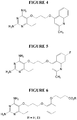
- Example 1 2,4-diamino-6-ethyl-5-(3-(quinolin-4-yloxy)propoxy)pyrimidine (P113) (see Figure 1).
- step a) A solution of the 3-(quinolin-4-yloxy)propan-1-ol obtained in step a) (0.5298 g, 2.6 mmol) was treated with triethylamine (0.60 mL) and methanesulfonyl chloride (0.55 g, 4.8 mmol) in dichloromethane (5 mL). After the starting material was consumed, the reaction was diluted with dichloromethane, washed with water, aq NaHCO 3 and evaporated. The residue was purified by column chromatography on SiO 2 and eluted with ethyl acetate. The product was obtained as a light yellow solid (0.3868 g, 53%).
- 2,4-diamino-6-ethyl-5-hydroxypyrimidine (0.3963 g, 2.6 mmol) was added to a stirred solution of lithium hydroxide monohydrate (497.2 mg, 11.8 mmol) in DMF (2 mL) and the reaction mixture was stirred for 1 hour.
- a solution of 3-(quinolin-4-yloxy)-propyl mesylate (0.3868 g, 1.37 mmol) in DMF (1 mL) was slowly added and the reaction mixture was left stirring at 25°C overnight.
- the reaction was diluted with dichloromethane and extracted with water. The dichloromethane layer was evaporated followed by crystallization of the residue from aqueous methanol.
- the brown solid was purified by digestion with ether followed by distillation under reduced pressure to give 6-chloroquinolin-4-ol as light-yellow solid in 55% yield (1.7533 g, m.p. 281-282.5 °C (see Riegel et al., (1946) J. Am. Chem. Soc. 68:1264-1266 , m.p. 274-275 °C).
- triphenylphosphine (6.56 g, 25 mmol)
- 3-bromo-1-propanol (2.3 mL, 25 mmol) in dry tetrahydrofuran (30 mL)
- diisopropyl azodicarboxylate (4.9 mL, 25 mmol) at 25°C over 30 minutes under nitrogen and the reaction mixture was left stirring for one hour.
- Hydrobromic acid (2.8 mL of 48% aqueous solution, 25 mmol) was added, resulting in precipitation of the titled compound.
- the product was collected by suction filtration and washed with THF, acetone and ether to give a light yellow crystalline solid (4.17 g, 51%).
- 2,4-Diamino-6-ethyl-5-hydroxypyrimidine (3.00 g, 19.5 mmol) was added to a stirred solution of lithium hydroxide monohydrate (1.74 g, 41.50 mmol) in DMF (5 mL) and the reaction mixture was stirred at 25°C for 1 hour.
- Example 6 2,4-diamino-6-ethyl-5-(3-(1-indolyl)propoxy)pyrimidine monohydrochloride.
- 2,4-diamino-6-ethyl-5-hydroxypyrimidine (0.4625 g, 3 mmol) was added to a stirred solution of lithium hydroxide monohydrate (0.3147 g, 7.5 mmol) in DMF (2 mL) and the reaction mixture was stirred for 1 hour.
- a solution of 1-(3-bromopropyl)indole (0.7144 g, 3 mmol) in DMF (1 mL) was added and the reaction mixture was left stirring at 25°C overnight.
- the reaction was diluted with dichloromethane and extracted with water. The dichloromethane layer was evaporated and the residue was recrystallized from aqueous methanol.
- Example 7 2,4-diamino-6-ethyl-5-(3-(2-(3 - carboxypropoxy)phenoxy)propoxy)pyrimidine (P135) and its ethyl ester (P217) (see Figure 6).
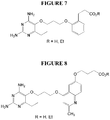
- Example 8 2,4-diamino-6-ethyl-5-(3-(2-(2-carboxyethyl)phenoxy)propoxy)pyrimidine (P218) and its ethyl ester (P195) (see Figure 7).
- Example 9 2,4-diamino-6-ethyl-5-(3-(6-(3-carboxypropoxy)-2-methylquinolin-4-yloxy)-propoxy)pyrimidine (P169) and its ethyl ester (P219) (see Figure 8).
- step (c) A suspension of the ethyl ester obtained in step (c) (0.314 g, 0.65 mmol) and aqueous KOH solution (10 equiv) was stirred at 25°C overnight. The solution was neutralized by addition of dilute HCl. The precipitate formed was separated by filtration and dried in an oven at 80 °C to give a light yellow solid (0.2487 g, 84%).
- the compounds were designed by an iterative method based on consideration of the following compound properties: interaction with the target enzyme (i.e., Plasmodial DHFR) modeled using experimentally derived crystal structures, antimalarial activities in vitro and in vivo, metabolic stability, oral bioavailability and pharmacokinetic properties.
- the structures of specific compounds complexed with the wild-type and the quadruple mutant enzyme were determined through X-ray diffraction via a known procedure (see Yuvaniyama et al., (2003) Nat. Struct. Biol. 10:357-365 ). This process provides spatial and electronic information about the DHFR active site that was used in the design and optimization of chemical compounds with high affinity and specificity for wild type and quadruple mutant P.
- the inhibitory activities against Plasmodium falciparum were measured by an in vitro method (see Example 13). In addition, the cytotoxicity of the compounds was measured and determined to be minimal (see Example 14). In vivo activities of the compounds against P. chabaudi AS and ASP ( i.e. pyrimethamine sensitive and pyrimethamine resistant strains respectively) were also measured following oral administration (see Example 15). The bioavailability of the compounds in rats and mice were measured in Example 16. The obtained results were then considered together in order to optimize the properties of the compounds: high binding affinity to wild type and mutant DHFR enzymes (low K i value), effective antimalarial activities against both P. falciparum in vitro, specially the antifolate resistant parasites (low IC 50 value) and P. chabaudi in vivo (low ED 90 value), and good oral bioavailability of the compounds.
- high binding affinity to wild type and mutant DHFR enzymes low K i value
- the compounds were designed such that they have the general formula of Het-X-R (I), where -X-R is a flexible side chain of a heterocyclic ring selected from pyrimidine, 1,3,5-triazine, quinazoline, and saturated or partially saturated analogues thereof.
- the flexibility was needed so that any steric hindrance between the side chain and the mutated residue at position 108 (serine to asparagine) of the mutant enzyme could be avoided.
- other mutations caused further changes in the active site which required further optimization of the side chain.
- the compounds with good affinities for the targets were shown to be active, both in vitro and in vivo and further shown to be sufficiently bioavailable.
- Example 12 Enzyme Inhibitory Activities.
- the present invention provides 2,4-diaminopyrimidine derivative compounds, and pharmaceutically acceptable salts thereof, for inhibiting dihydrofolate reductase (DHFR) enzymes of P. falciparum including, wild type (WT), double mutants (C59R+S108N), triple mutants (N51I+C59R+S108N, C59R+S108N+I164L), and quadruple mutants (N51I+C59R+S108N+I164L).
- WT, double-, triple-, and quadruple mutants were prepared with the help of an E. coli expression system ( E. coli BL21(DE3)pLysS) containing the corresponding genes.
- the activity of the enzymes was determined spectrophotometrically at 25 °C.
- the reaction (1 mL) contained 1xDHFR buffer (50 mM TES, pH 7.0, 75 mM ⁇ -mercaptoethanol, 1 mg/mL Bovine Serum Albumin), 100 ⁇ M each of the substrate dihydrofolate and cofactor NADPH, and appropriate amount of affinity-purified enzyme to initiate the reaction (0.001-0.005 units in phosphate buffer containing 50 mM KCl).
- IC50 Ki (1+([S]/Km)), where IC50 is the concentration of inhibitor which inhibits 50% of the enzyme activity under the standard assay condition and Km is the Michaelis constant for the substrate dihydrofolate.
- Ki The inhibition constants (Ki) of the compounds against the wild type and mutant enzymes of dihydrofolate reductase (DHFR) of Plasmodium falciparum (Pf DHFR) are summarized in Table 3 below.
- Low values of Ki indicate avid binding, consistent with the X-ray co-crystal structures which show optimal interactions between the compounds and the enzyme active sites, including hydrophobic, van de Waals, polar and charge-charge interactions.
- introduction of a carboxylic side chain provides additional binding with R122 in the active site, thus giving a lower Ki-value than its comparator without a carboxylic side chain.
- K i Inhibition Constants (K i ) of 2,4-diaminopyrimidine derivative compounds for binding with wild type and mutant Pf DHFRs.
- K i -Pf DHFR (nM) WT C59R+S108N N51I+C59R +S108N C59R+S108N +I164L N51I+C59R +S108N+I164L pyrimethamine 0.6 ⁇ 0.2 53.9 ⁇ 6.5 67.1 ⁇ 4.2 112.37 ⁇ 17.49 385.0 ⁇ 163.0 P65 0.49 ⁇ 0.1 3.15 ⁇ 0.13 2.61 ⁇ 0.22 4.21 ⁇ 0.23 5.59 ⁇ 0.1 P111 0.92 ⁇ 0.13 1.23 ⁇ 0.12 1.20 ⁇ 0.05 5.02 ⁇ 0.44 4.07 ⁇ 0.72 K i -Pf DHFR (nM) P112 1.49 ⁇ 0.13 2.22 ⁇ 0.37 3.27 ⁇ 0.21 2.86 ⁇ 0.62 4.61 ⁇ 0.38 P113 1.21
- Example 13 In vitro Activity Against P. falciparum.
- the invention provides 2,4-diaminopyrimidine derivative compounds for treatment of malaria, including non-resistant and drug-resistant malaria.
- the compounds can be used alone or in combination with sulfonamides, which act on the DHPS enzyme in the folate biosynthetic pathway, and/or other agents which may act through a non-antifolate mechanism.
- P. falciparum strains were maintained continuously in human erythrocytes at 37 °C under 3% CO 2 in standard RPMI 1640 culture media supplemented with 25 mM HEPES, pH 7.4, 0.2% NaHCO 3 , 40 ⁇ g/mL gentamicin and 10% human serum ( Trager et al., (1976) Science 193: 673-675 ).
- In vitro antimalarial activity was determined by using the [ 3 H]-hypoxanthine incorporation method ( Desjardins et al., (1979) Antimicrob. Agents Chemother. 16:710-718 ), which measures parasite growth through accumulation of a metabolic precursor, hypoxanthine.
- the compounds were initially dissolved in DMSO and diluted with the same standard culture media Aliquots (25 ⁇ L) of the drug of different concentrations were dispensed in 96-well plates and 200 ⁇ L of 1.5% cell suspension of parasitized erythrocytes containing 1-2% parasitemia were added. The final concentration of DMSO (0.1%) did not affect the parasite growth. The mixtures were incubated in a 3% CO 2 incubator at 37 °C.
- Table 4 below shows the results obtained with the following mutant strains: K1CB1 (C59R+S108N), W2 (N51I+C59R+S108N), Csl-2 (C59R+S108N+I164L) and V1/S (N51I+C59R+S108N+I164L).
- Table 4 Anti-plasmodial activities ( IC 50 ) of 2,4-diaminopyrimidine derivative compounds against P.
- TM4/8.2 wild type
- K1CB1 C59R+S108N
- W2 N51I+C59R+S108N
- Csl-2 C59R+S108N+I164L
- V1/S N51I+C59R+S108N+I164L
- Table 4 above shows various 2,4-diaminopyrimidine derivative compounds. Notably, these compounds are very active against pyrimethamine-resistant parasite strains. The IC 50 values of these examples were far less than that of pyrimethamine against the mutant strains.
- Example 14 Determination of Cytotoxicity in Mammalian Cells (IC 50 ).
- the in vivo anti-malarial activity of the compounds was assessed using the Plasmodium chabaudi and Plasmodium berghei models by the standard 4-day Peters' test including pyrimethamine as a comparator drug in each experiment. Briefly, 20gr CD1 male mice (Charles Rivers, UK) were kept in specific pathogen-free conditions and fed ad libitum.
- mice were dissolved in standard suspending formula (SSV) [0.5% sodium carboxymethylcellulose, 0.5% benzyl alcohol, 0.4% Tween 80, 0.9% NaCl (all Sigma)] and for intraperitoneal or subcutaneous administration compounds were dissolved in 0.5% w/v hydroxypropylmethylcellulose, 0.4% v/v Tween 80, 0.5% v/v benzyl alcohol in de-ionised water].
- SSV standard suspending formula
- Mice were infected intravenously with 4 x 10 6 infected red cells and treated orally (p.o.) with 0.2 ml of a solution of the test compounds two hours (day 0) and on days 1, 2 and 3 post-infection.
- Parasitaemia was determined by microscopic examination of Giemsa stained blood films taken on day 4. Microscopic counts of blood films from each mouse were processed using GraphPad Prism 4 (GraphPad Software, Inc., CA, USA) and expressed as percentages of inhibition from the arithmetic mean parasitaemias of each group in relation to the untreated group. Compounds were tested in an initial screening at 30mg/kg/day against P. chabaudi AS (non-resistant) over the period described and percentages of inhibition calculated in relation to the untreated controls. Compounds giving 80% inhibition or above were then tested in the same model under a range of doses over the period described in order to obtain dose response curves and calculate their ED 50 and ED 90 values.
- test compounds were administered to fasted male Sprague Dawley rats weighing 270-300 g (see Table 8 below). Rats had free access to water throughout the pre- and post-dose sampling period, and access to food was re-instated 4 hours post-dosing. Test compounds were administered intravenously as a 5 minute constant rate infusion (1.0 mL per rat) and orally by gavage (1.0 mL per rat). The IV formulations were typically buffered aqueous solutions containing a co-solvent if required for solubilization.
- the oral formulations were prepared as suspensions in hydroxypropylmethyl cellulose or carboxymethyl cellulose, each with the addition of Tween 80 and benzyl alcohol.
- Samples of arterial blood and total urine were collected up to 24 hours post-dose. Arterial blood was collected directly into borosilicate vials (at 4 °C) containing heparin, a protease inhibitor cocktail, potassium fluoride, and EDTA to minimise the potential for ex vivo degradation of the test compound in blood/plasma samples. Once collected, blood samples were centrifuged, supernatant plasma was removed and stored at -20 °C, and plasma concentrations of test compound were determined by LCMS. Table 8. Pharmacokinetic parameters for selected compounds determined following i.v.
- Table 8 shows the different pharmacokinetic profiles and bioavailability properties of the various compounds. There is a range of values in terms of oral bioavailability, clearance, t 1/2 and V D for the individual compounds.
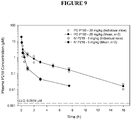
- mice Male Swiss outbred mice were administered P218 (the free acid) intravenously by bolus tail vein injection at a nominal dose of 5 mg/kg and P195 (the ester pro-drug) orally by gavage at a nominal dose of 20 mg/kg. Dosing formulations were comparable to those used in the rat studies described above. Blood sampling was conducted by cardiac puncture with a single sample per mouse, and two mice per time point over 16 hours post dosing. Blood samples were separated and plasma analyzed by LCMS as described above.
- Plasma concentration versus time profiles for P218 following IV administration of P218 and following oral administration of the pro-drug P195 are shown in Figure 9 .
- plasma concentration of the acid P218 remained above the LLQ for 16 hours post dosing, and the bioavailability of P218 was approximately 50% (determined by comparison of the dose normalized AUC value for P218 following oral administration of P195 to the AUC for P218 following IV administration of P218).
- Cmax The maximum plasma concentration (Cmax) of P218 following oral administration of P195 was observed at the time of the first blood sample (15 min) and plasma concentrations of the pro-drug P195 were below the lower limit of quantitation (0.0014 ⁇ M) at all time points.
Landscapes
- Organic Chemistry (AREA)
- Chemical & Material Sciences (AREA)
- Health & Medical Sciences (AREA)
- Tropical Medicine & Parasitology (AREA)
- Veterinary Medicine (AREA)
- Chemical Kinetics & Catalysis (AREA)
- Medicinal Chemistry (AREA)
- Nuclear Medicine, Radiotherapy & Molecular Imaging (AREA)
- General Chemical & Material Sciences (AREA)
- Pharmacology & Pharmacy (AREA)
- Life Sciences & Earth Sciences (AREA)
- Animal Behavior & Ethology (AREA)
- General Health & Medical Sciences (AREA)
- Public Health (AREA)
- Pharmaceuticals Containing Other Organic And Inorganic Compounds (AREA)
- Plural Heterocyclic Compounds (AREA)
Priority Applications (4)
| Application Number | Priority Date | Filing Date | Title |
|---|---|---|---|
| EP19157867.3A EP3546452A1 (en) | 2007-10-08 | 2008-10-08 | Antimalarial compounds with flexible side-chains |
| PL08837766T PL2194985T3 (pl) | 2007-10-08 | 2008-10-08 | Związki przeciwmalaryczne z elastycznymi łańcuchami bocznymi |
| HRP20190589TT HRP20190589T1 (hr) | 2007-10-08 | 2008-10-08 | Antimalarijski spojevi sa fleksibilnim bočnim-lancima |
| SI200832053T SI2194985T1 (sl) | 2007-10-08 | 2008-10-08 | Protimalarijske spojine z gibkimi stranskimi verigami |
Applications Claiming Priority (2)
| Application Number | Priority Date | Filing Date | Title |
|---|---|---|---|
| US97837507P | 2007-10-08 | 2007-10-08 | |
| PCT/US2008/079210 WO2009048957A1 (en) | 2007-10-08 | 2008-10-08 | Antimalarial compounds with flexible side-chains |
Related Child Applications (1)
| Application Number | Title | Priority Date | Filing Date |
|---|---|---|---|
| EP19157867.3A Division EP3546452A1 (en) | 2007-10-08 | 2008-10-08 | Antimalarial compounds with flexible side-chains |
Publications (3)
| Publication Number | Publication Date |
|---|---|
| EP2194985A1 EP2194985A1 (en) | 2010-06-16 |
| EP2194985A4 EP2194985A4 (en) | 2012-01-25 |
| EP2194985B1 true EP2194985B1 (en) | 2019-02-20 |
Family
ID=40534843
Family Applications (2)
| Application Number | Title | Priority Date | Filing Date |
|---|---|---|---|
| EP08837766.8A Active EP2194985B1 (en) | 2007-10-08 | 2008-10-08 | Antimalarial compounds with flexible side-chains |
| EP19157867.3A Withdrawn EP3546452A1 (en) | 2007-10-08 | 2008-10-08 | Antimalarial compounds with flexible side-chains |
Family Applications After (1)
| Application Number | Title | Priority Date | Filing Date |
|---|---|---|---|
| EP19157867.3A Withdrawn EP3546452A1 (en) | 2007-10-08 | 2008-10-08 | Antimalarial compounds with flexible side-chains |
Country Status (22)
| Country | Link |
|---|---|
| US (1) | US8530491B2 (enExample) |
| EP (2) | EP2194985B1 (enExample) |
| JP (1) | JP5603775B2 (enExample) |
| KR (1) | KR101578949B1 (enExample) |
| CN (1) | CN101820879B (enExample) |
| AU (1) | AU2008310898B2 (enExample) |
| BR (1) | BRPI0818618B8 (enExample) |
| CA (1) | CA2700880C (enExample) |
| CY (1) | CY1121598T1 (enExample) |
| DK (1) | DK2194985T3 (enExample) |
| ES (1) | ES2727015T3 (enExample) |
| HR (1) | HRP20190589T1 (enExample) |
| HU (1) | HUE044398T2 (enExample) |
| LT (1) | LT2194985T (enExample) |
| MX (1) | MX2010003739A (enExample) |
| PL (1) | PL2194985T3 (enExample) |
| PT (1) | PT2194985T (enExample) |
| RU (1) | RU2485107C2 (enExample) |
| SI (1) | SI2194985T1 (enExample) |
| TR (1) | TR201904913T4 (enExample) |
| UA (1) | UA105759C2 (enExample) |
| WO (1) | WO2009048957A1 (enExample) |
Families Citing this family (11)
| Publication number | Priority date | Publication date | Assignee | Title |
|---|---|---|---|---|
| WO2012108845A1 (en) * | 2011-02-09 | 2012-08-16 | National Science And Technology Development Agency | A bacterial surrogate for testing of antimalarials: thya knockout and fola knockout bacteria for testing of inhibition of malarial dihydrofolate reductase-thymidylate synthase |
| WO2012121682A2 (en) * | 2011-03-10 | 2012-09-13 | National Science And Technology Development Agency | Anti-folate antimalarials with dual-binding modes and their preparation |
| WO2015047199A2 (en) | 2013-09-30 | 2015-04-02 | National Science And Technology Development Agency | A bacterial surrogate for testing of antimalarials: thya knockout, fola knockout, folp knockout, and folk knockout bacteria for testing of inhibition of antifolate pathway |
| CN104593406A (zh) * | 2015-01-08 | 2015-05-06 | 山西医科大学 | pIRES/TgDHFR-TS真核表达重组质粒及其构建和应用 |
| WO2017052479A1 (en) * | 2015-09-23 | 2017-03-30 | National Science And Technology Development Agency | 2,4-diamino-6-ethylpyrimidine derivatives with antimalarial activities against plasmodium falciparum |
| CN106083742A (zh) * | 2016-05-31 | 2016-11-09 | 广东工业大学 | 一种2,4‑二胺基喹唑啉衍生物及其制备方法和应用 |
| WO2021155748A1 (en) * | 2020-02-04 | 2021-08-12 | Tsinghua University | Inhibitors of malarial and plasmodium falciparum hexose transporter and uses thereof |
| CN112961106A (zh) * | 2021-03-13 | 2021-06-15 | 德州学院 | 一种4-羟基-6氯喹啉合成新工艺 |
| EP4438596A1 (en) * | 2023-03-28 | 2024-10-02 | Université de Lille | Diaminopyrimidine derivatives as hdac and dhfr dual-targeting inhibitors and use thereof in preventing and treating malaria |
| WO2025053796A1 (en) * | 2023-09-04 | 2025-03-13 | National Science And Technology Development Agency | Hybrid molecules between pyrimidine derivatives and idasanutlin |
| CN117263804A (zh) * | 2023-09-07 | 2023-12-22 | 中国烟草总公司郑州烟草研究院 | 邻羟基苯丙酸酯及其制备方法和应用 |
Family Cites Families (10)
| Publication number | Priority date | Publication date | Assignee | Title |
|---|---|---|---|---|
| US4033962A (en) * | 1975-06-26 | 1977-07-05 | Hoffman-La Roche Inc. | 2,4-Diamino-pyrimidine derivatives and processes |
| GB1546937A (en) | 1976-07-29 | 1979-05-31 | Beecham Group Ltd | 2,4-diaminopyrimidine derivatives |
| FR2397407A2 (fr) * | 1977-07-11 | 1979-02-09 | Dick Pierre | Derives de 2,4-diamino pyrimidines et leur mise en solution en association avec des sulfamides |
| OA07362A (fr) * | 1980-10-27 | 1984-06-30 | May & Baker Ltd | Dérivés de la pyrimidine, leur procédé de préparation et les compositions les contenant. |
| GB2086386B (en) | 1980-10-27 | 1984-01-18 | May & Baker Ltd | Pyrimidine derivatives |
| US5322858A (en) | 1992-02-14 | 1994-06-21 | Jacobus Pharmaceutical Co. Inc. | N,N'-substituted imidodicarbonimidic diamides derived from hydroxylamines |
| RU95113597A (ru) * | 1992-12-02 | 1997-06-10 | ФМК Корпорейшн (US) | Инсектицидная композиция, способы борьбы с насекомыми |
| PL352159A1 (en) | 1999-05-24 | 2003-07-28 | Sankyo Co | Pharmaceutical compositions containing antibody against the fas |
| IT1317826B1 (it) * | 2000-02-11 | 2003-07-15 | Dompe Spa | Ammidi, utili nell'inibizione della chemiotassi dei neutrofiliindotta da il-8. |
| US7371758B2 (en) * | 2003-03-13 | 2008-05-13 | National Science & Technology Development Agency | Antimalarial pyrimidine derivatives and methods of making and using them |
-
2008
- 2008-10-08 WO PCT/US2008/079210 patent/WO2009048957A1/en not_active Ceased
- 2008-10-08 US US12/247,953 patent/US8530491B2/en active Active
- 2008-10-08 TR TR2019/04913T patent/TR201904913T4/tr unknown
- 2008-10-08 RU RU2010117193/04A patent/RU2485107C2/ru active
- 2008-10-08 MX MX2010003739A patent/MX2010003739A/es active IP Right Grant
- 2008-10-08 UA UAA201004117A patent/UA105759C2/uk unknown
- 2008-10-08 JP JP2010528223A patent/JP5603775B2/ja active Active
- 2008-10-08 BR BRPI0818618A patent/BRPI0818618B8/pt active IP Right Grant
- 2008-10-08 AU AU2008310898A patent/AU2008310898B2/en active Active
- 2008-10-08 CN CN2008801106805A patent/CN101820879B/zh active Active
- 2008-10-08 SI SI200832053T patent/SI2194985T1/sl unknown
- 2008-10-08 HR HRP20190589TT patent/HRP20190589T1/hr unknown
- 2008-10-08 KR KR1020107010151A patent/KR101578949B1/ko active Active
- 2008-10-08 EP EP08837766.8A patent/EP2194985B1/en active Active
- 2008-10-08 ES ES08837766T patent/ES2727015T3/es active Active
- 2008-10-08 PL PL08837766T patent/PL2194985T3/pl unknown
- 2008-10-08 EP EP19157867.3A patent/EP3546452A1/en not_active Withdrawn
- 2008-10-08 HU HUE08837766 patent/HUE044398T2/hu unknown
- 2008-10-08 LT LTEP08837766.8T patent/LT2194985T/lt unknown
- 2008-10-08 PT PT08837766T patent/PT2194985T/pt unknown
- 2008-10-08 DK DK08837766.8T patent/DK2194985T3/da active
- 2008-10-08 CA CA2700880A patent/CA2700880C/en active Active
-
2019
- 2019-04-19 CY CY20191100432T patent/CY1121598T1/el unknown
Non-Patent Citations (1)
| Title |
|---|
| None * |
Also Published As
Similar Documents
| Publication | Publication Date | Title |
|---|---|---|
| EP2194985B1 (en) | Antimalarial compounds with flexible side-chains | |
| US10010536B2 (en) | Method of modulating stress-activated protein kinase system | |
| EP2748147B1 (en) | Substituted 2-alkyl-1-oxo-n-phenyl-3-heteroaryl-1,2,3,4-tetrahydroisoquinoline-4-carboxamides for antimalarial therapies | |
| US9914709B2 (en) | Compositions and methods of treating HIV-1 infections using same | |
| HK40014875A (en) | Antimalarial compounds with flexible side-chains | |
| US7371758B2 (en) | Antimalarial pyrimidine derivatives and methods of making and using them | |
| US20240294491A1 (en) | Salt of heterocyclic compound with anti-malaria activity, and crystals thereof | |
| WO2016175264A1 (ja) | 抗マラリア活性を有する新規ヘテロアリール誘導体 | |
| HK1199443B (en) | Substituted 2-alkyl-1-oxo-n-phenyl-3-heteroaryl-1,2,3,4-tetrahyd roisoquinoline-4-carboxamides for antimalarial therapies |
Legal Events
| Date | Code | Title | Description |
|---|---|---|---|
| PUAI | Public reference made under article 153(3) epc to a published international application that has entered the european phase |
Free format text: ORIGINAL CODE: 0009012 |
|
| 17P | Request for examination filed |
Effective date: 20100326 |
|
| AK | Designated contracting states |
Kind code of ref document: A1 Designated state(s): AT BE BG CH CY CZ DE DK EE ES FI FR GB GR HR HU IE IS IT LI LT LU LV MC MT NL NO PL PT RO SE SI SK TR |
|
| AX | Request for extension of the european patent |
Extension state: AL BA MK RS |
|
| DAX | Request for extension of the european patent (deleted) | ||
| A4 | Supplementary search report drawn up and despatched |
Effective date: 20111229 |
|
| RIC1 | Information provided on ipc code assigned before grant |
Ipc: A61K 31/495 20060101ALI20111222BHEP Ipc: A61K 31/496 20060101ALI20111222BHEP Ipc: C07D 401/12 20060101ALI20111222BHEP Ipc: C07D 239/48 20060101AFI20111222BHEP Ipc: C07D 401/04 20060101ALI20111222BHEP |
|
| RAP1 | Party data changed (applicant data changed or rights of an application transferred) |
Owner name: MMV MEDICINES FOR MALARIA VENTURE |
|
| 17Q | First examination report despatched |
Effective date: 20140224 |
|
| GRAP | Despatch of communication of intention to grant a patent |
Free format text: ORIGINAL CODE: EPIDOSNIGR1 |
|
| INTG | Intention to grant announced |
Effective date: 20180815 |
|
| GRAJ | Information related to disapproval of communication of intention to grant by the applicant or resumption of examination proceedings by the epo deleted |
Free format text: ORIGINAL CODE: EPIDOSDIGR1 |
|
| GRAL | Information related to payment of fee for publishing/printing deleted |
Free format text: ORIGINAL CODE: EPIDOSDIGR3 |
|
| GRAS | Grant fee paid |
Free format text: ORIGINAL CODE: EPIDOSNIGR3 |
|
| GRAR | Information related to intention to grant a patent recorded |
Free format text: ORIGINAL CODE: EPIDOSNIGR71 |
|
| GRAA | (expected) grant |
Free format text: ORIGINAL CODE: 0009210 |
|
| INTC | Intention to grant announced (deleted) | ||
| RIN1 | Information on inventor provided before grant (corrected) |
Inventor name: CHARMAN, WILLIAM Inventor name: CHARMAN, SUSAN Inventor name: CHITNUMSUB, PENCHIT Inventor name: KAMCHONWONGPAISAN, SUMALEE Inventor name: YUTHAVONG, YONGYUTH Inventor name: VIVAS, LIVIA Inventor name: TARCHOMPOO, BONGKOCH Inventor name: MATTHEWS, DAVID Inventor name: VILAVAIN, TIRAYUT Inventor name: YUVANIYAMA, JIRUNDON Inventor name: KATIYAR, SANJAY, BABU Inventor name: THONGPANCHANG, CHAWANEE |
|
| AK | Designated contracting states |
Kind code of ref document: B1 Designated state(s): AT BE BG CH CY CZ DE DK EE ES FI FR GB GR HR HU IE IS IT LI LT LU LV MC MT NL NO PL PT RO SE SI SK TR |
|
| INTG | Intention to grant announced |
Effective date: 20190111 |
|
| REG | Reference to a national code |
Ref country code: GB Ref legal event code: FG4D |
|
| REG | Reference to a national code |
Ref country code: CH Ref legal event code: EP |
|
| REG | Reference to a national code |
Ref country code: DE Ref legal event code: R096 Ref document number: 602008059055 Country of ref document: DE |
|
| REG | Reference to a national code |
Ref country code: CH Ref legal event code: PK Free format text: BERICHTIGUNGEN Ref country code: AT Ref legal event code: REF Ref document number: 1097990 Country of ref document: AT Kind code of ref document: T Effective date: 20190315 |
|
| REG | Reference to a national code |
Ref country code: IE Ref legal event code: FG4D |
|
| REG | Reference to a national code |
Ref country code: HR Ref legal event code: TUEP Ref document number: P20190589 Country of ref document: HR |
|
| REG | Reference to a national code |
Ref country code: CH Ref legal event code: NV Representative=s name: REUTELER AND CIE S.A., CH |
|
| REG | Reference to a national code |
Ref country code: DE Ref legal event code: R083 Ref document number: 602008059055 Country of ref document: DE |
|
| RIN2 | Information on inventor provided after grant (corrected) |
Inventor name: THONGPANCHANG, CHAWANEE Inventor name: YUTHAVONG, YONGYUTH Inventor name: TARNCHOMPOO, BONGKOCH Inventor name: CHARMAN, WILLIAM Inventor name: CHITNUMSUB, PENCHIT Inventor name: VIVAS, LIVIA Inventor name: KAMCHONWONGPAISAN, SUMALEE Inventor name: CHARMAN, SUSAN Inventor name: YUVANIYAMA, JIRUNDON Inventor name: MATTHEWS, DAVID Inventor name: VILAIVAN, TIRAYUT Inventor name: KATIYAR, SANJAY, BABU |
|
| REG | Reference to a national code |
Ref country code: RO Ref legal event code: EPE |
|
| REG | Reference to a national code |
Ref country code: DK Ref legal event code: T3 Effective date: 20190513 |
|
| REG | Reference to a national code |
Ref country code: NL Ref legal event code: FP |
|
| REG | Reference to a national code |
Ref country code: PT Ref legal event code: SC4A Ref document number: 2194985 Country of ref document: PT Date of ref document: 20190530 Kind code of ref document: T Free format text: AVAILABILITY OF NATIONAL TRANSLATION Effective date: 20190510 |
|
| REG | Reference to a national code |
Ref country code: HR Ref legal event code: T1PR Ref document number: P20190589 Country of ref document: HR |
|
| REG | Reference to a national code |
Ref country code: NO Ref legal event code: T2 Effective date: 20190220 |
|
| REG | Reference to a national code |
Ref country code: SE Ref legal event code: TRGR |
|
| REG | Reference to a national code |
Ref country code: EE Ref legal event code: FG4A Ref document number: E017455 Country of ref document: EE Effective date: 20190507 |
|
| REG | Reference to a national code |
Ref country code: GR Ref legal event code: EP Ref document number: 20190401253 Country of ref document: GR Effective date: 20190620 |
|
| REG | Reference to a national code |
Ref country code: SK Ref legal event code: T3 Ref document number: E 31463 Country of ref document: SK |
|
| REG | Reference to a national code |
Ref country code: ES Ref legal event code: FG2A Ref document number: 2727015 Country of ref document: ES Kind code of ref document: T3 Effective date: 20191011 |
|
| REG | Reference to a national code |
Ref country code: HR Ref legal event code: ODRP Ref document number: P20190589 Country of ref document: HR Payment date: 20190923 Year of fee payment: 12 |
|
| REG | Reference to a national code |
Ref country code: HU Ref legal event code: AG4A Ref document number: E044398 Country of ref document: HU |
|
| REG | Reference to a national code |
Ref country code: DE Ref legal event code: R097 Ref document number: 602008059055 Country of ref document: DE |
|
| PLBE | No opposition filed within time limit |
Free format text: ORIGINAL CODE: 0009261 |
|
| STAA | Information on the status of an ep patent application or granted ep patent |
Free format text: STATUS: NO OPPOSITION FILED WITHIN TIME LIMIT |
|
| 26N | No opposition filed |
Effective date: 20191121 |
|
| REG | Reference to a national code |
Ref country code: AT Ref legal event code: UEP Ref document number: 1097990 Country of ref document: AT Kind code of ref document: T Effective date: 20190220 |
|
| REG | Reference to a national code |
Ref country code: HR Ref legal event code: ODRP Ref document number: P20190589 Country of ref document: HR Payment date: 20200929 Year of fee payment: 13 |
|
| PGFP | Annual fee paid to national office [announced via postgrant information from national office to epo] |
Ref country code: LT Payment date: 20200921 Year of fee payment: 13 Ref country code: RO Payment date: 20200925 Year of fee payment: 13 |
|
| PGFP | Annual fee paid to national office [announced via postgrant information from national office to epo] |
Ref country code: LU Payment date: 20201021 Year of fee payment: 13 Ref country code: NL Payment date: 20201028 Year of fee payment: 13 Ref country code: HR Payment date: 20200929 Year of fee payment: 13 Ref country code: MT Payment date: 20200923 Year of fee payment: 13 Ref country code: TR Payment date: 20201007 Year of fee payment: 13 |
|
| PGFP | Annual fee paid to national office [announced via postgrant information from national office to epo] |
Ref country code: CZ Payment date: 20201008 Year of fee payment: 13 Ref country code: PT Payment date: 20201002 Year of fee payment: 13 Ref country code: CY Payment date: 20201005 Year of fee payment: 13 Ref country code: IE Payment date: 20201022 Year of fee payment: 13 Ref country code: GB Payment date: 20201022 Year of fee payment: 13 Ref country code: BG Payment date: 20201022 Year of fee payment: 13 Ref country code: HU Payment date: 20201125 Year of fee payment: 13 Ref country code: DK Payment date: 20201026 Year of fee payment: 13 Ref country code: NO Payment date: 20201026 Year of fee payment: 13 Ref country code: AT Payment date: 20201022 Year of fee payment: 13 Ref country code: EE Payment date: 20201023 Year of fee payment: 13 Ref country code: MC Payment date: 20201023 Year of fee payment: 13 Ref country code: IT Payment date: 20201026 Year of fee payment: 13 Ref country code: FI Payment date: 20201022 Year of fee payment: 13 Ref country code: ES Payment date: 20201224 Year of fee payment: 13 Ref country code: GR Payment date: 20201023 Year of fee payment: 13 Ref country code: FR Payment date: 20201022 Year of fee payment: 13 Ref country code: SE Payment date: 20201028 Year of fee payment: 13 |
|
| PGFP | Annual fee paid to national office [announced via postgrant information from national office to epo] |
Ref country code: PL Payment date: 20201007 Year of fee payment: 13 Ref country code: LV Payment date: 20201016 Year of fee payment: 13 Ref country code: SI Payment date: 20200924 Year of fee payment: 13 Ref country code: BE Payment date: 20201028 Year of fee payment: 13 Ref country code: SK Payment date: 20201006 Year of fee payment: 13 Ref country code: IS Payment date: 20201012 Year of fee payment: 13 |
|
| REG | Reference to a national code |
Ref country code: LT Ref legal event code: MM4D Effective date: 20211008 |
|
| REG | Reference to a national code |
Ref country code: EE Ref legal event code: MM4A Ref document number: E017455 Country of ref document: EE Effective date: 20211031 |
|
| REG | Reference to a national code |
Ref country code: HR Ref legal event code: PBON Ref document number: P20190589 Country of ref document: HR Effective date: 20211008 |
|
| REG | Reference to a national code |
Ref country code: NO Ref legal event code: MMEP Ref country code: DK Ref legal event code: EBP Effective date: 20211031 |
|
| REG | Reference to a national code |
Ref country code: FI Ref legal event code: MAE |
|
| REG | Reference to a national code |
Ref country code: SE Ref legal event code: EUG |
|
| PG25 | Lapsed in a contracting state [announced via postgrant information from national office to epo] |
Ref country code: CZ Free format text: LAPSE BECAUSE OF NON-PAYMENT OF DUE FEES Effective date: 20211008 |
|
| REG | Reference to a national code |
Ref country code: NL Ref legal event code: MM Effective date: 20211101 |
|
| REG | Reference to a national code |
Ref country code: SK Ref legal event code: MM4A Ref document number: E 31463 Country of ref document: SK Effective date: 20211008 Ref country code: AT Ref legal event code: MM01 Ref document number: 1097990 Country of ref document: AT Kind code of ref document: T Effective date: 20211008 |
|
| REG | Reference to a national code |
Ref country code: BE Ref legal event code: MM Effective date: 20211031 |
|
| GBPC | Gb: european patent ceased through non-payment of renewal fee |
Effective date: 20211008 |
|
| PG25 | Lapsed in a contracting state [announced via postgrant information from national office to epo] |
Ref country code: MC Free format text: LAPSE BECAUSE OF NON-PAYMENT OF DUE FEES Effective date: 20211102 |
|
| REG | Reference to a national code |
Ref country code: DE Ref legal event code: R081 Ref document number: 602008059055 Country of ref document: DE Owner name: NATIONAL SCIENCE AND TECHNOLOGY DEVELOPMENT AG, TH Free format text: FORMER OWNER: MMV MEDICINES FOR MALARIA VENTURE, GENEVA, CH |
|
| PG25 | Lapsed in a contracting state [announced via postgrant information from national office to epo] |
Ref country code: SK Free format text: LAPSE BECAUSE OF NON-PAYMENT OF DUE FEES Effective date: 20211008 Ref country code: SE Free format text: LAPSE BECAUSE OF NON-PAYMENT OF DUE FEES Effective date: 20211009 Ref country code: RO Free format text: LAPSE BECAUSE OF NON-PAYMENT OF DUE FEES Effective date: 20211008 Ref country code: PT Free format text: LAPSE BECAUSE OF NON-PAYMENT OF DUE FEES Effective date: 20220408 Ref country code: NO Free format text: LAPSE BECAUSE OF NON-PAYMENT OF DUE FEES Effective date: 20211031 Ref country code: NL Free format text: LAPSE BECAUSE OF NON-PAYMENT OF DUE FEES Effective date: 20211101 Ref country code: LU Free format text: LAPSE BECAUSE OF NON-PAYMENT OF DUE FEES Effective date: 20211008 Ref country code: LT Free format text: LAPSE BECAUSE OF NON-PAYMENT OF DUE FEES Effective date: 20211008 Ref country code: HU Free format text: LAPSE BECAUSE OF NON-PAYMENT OF DUE FEES Effective date: 20211009 Ref country code: HR Free format text: LAPSE BECAUSE OF NON-PAYMENT OF DUE FEES Effective date: 20211008 Ref country code: GB Free format text: LAPSE BECAUSE OF NON-PAYMENT OF DUE FEES Effective date: 20211008 Ref country code: EE Free format text: LAPSE BECAUSE OF NON-PAYMENT OF DUE FEES Effective date: 20211031 Ref country code: CY Free format text: LAPSE BECAUSE OF NON-PAYMENT OF DUE FEES Effective date: 20211008 Ref country code: BG Free format text: LAPSE BECAUSE OF NON-PAYMENT OF DUE FEES Effective date: 20220430 Ref country code: BE Free format text: LAPSE BECAUSE OF NON-PAYMENT OF DUE FEES Effective date: 20211031 |
|
| PG25 | Lapsed in a contracting state [announced via postgrant information from national office to epo] |
Ref country code: SI Free format text: LAPSE BECAUSE OF NON-PAYMENT OF DUE FEES Effective date: 20211009 Ref country code: LV Free format text: LAPSE BECAUSE OF NON-PAYMENT OF DUE FEES Effective date: 20211008 Ref country code: GR Free format text: LAPSE BECAUSE OF NON-PAYMENT OF DUE FEES Effective date: 20220506 Ref country code: FI Free format text: LAPSE BECAUSE OF NON-PAYMENT OF DUE FEES Effective date: 20211008 Ref country code: AT Free format text: LAPSE BECAUSE OF NON-PAYMENT OF DUE FEES Effective date: 20211008 |
|
| PG25 | Lapsed in a contracting state [announced via postgrant information from national office to epo] |
Ref country code: FR Free format text: LAPSE BECAUSE OF NON-PAYMENT OF DUE FEES Effective date: 20211031 |
|
| PG25 | Lapsed in a contracting state [announced via postgrant information from national office to epo] |
Ref country code: IT Free format text: LAPSE BECAUSE OF NON-PAYMENT OF DUE FEES Effective date: 20211008 Ref country code: IE Free format text: LAPSE BECAUSE OF NON-PAYMENT OF DUE FEES Effective date: 20211008 Ref country code: DK Free format text: LAPSE BECAUSE OF NON-PAYMENT OF DUE FEES Effective date: 20211031 |
|
| REG | Reference to a national code |
Ref country code: ES Ref legal event code: FD2A Effective date: 20230207 |
|
| PG25 | Lapsed in a contracting state [announced via postgrant information from national office to epo] |
Ref country code: ES Free format text: LAPSE BECAUSE OF NON-PAYMENT OF DUE FEES Effective date: 20211009 |
|
| PG25 | Lapsed in a contracting state [announced via postgrant information from national office to epo] |
Ref country code: PL Free format text: LAPSE BECAUSE OF NON-PAYMENT OF DUE FEES Effective date: 20211008 |
|
| PG25 | Lapsed in a contracting state [announced via postgrant information from national office to epo] |
Ref country code: MT Free format text: LAPSE BECAUSE OF NON-PAYMENT OF DUE FEES Effective date: 20210810 |
|
| PG25 | Lapsed in a contracting state [announced via postgrant information from national office to epo] |
Ref country code: TR Free format text: LAPSE BECAUSE OF NON-PAYMENT OF DUE FEES Effective date: 20211008 |
|
| PGFP | Annual fee paid to national office [announced via postgrant information from national office to epo] |
Ref country code: DE Payment date: 20240904 Year of fee payment: 17 |
|
| PGFP | Annual fee paid to national office [announced via postgrant information from national office to epo] |
Ref country code: CH Payment date: 20241101 Year of fee payment: 17 |
|
| PG25 | Lapsed in a contracting state [announced via postgrant information from national office to epo] |
Ref country code: IS Free format text: LAPSE BECAUSE OF NON-PAYMENT OF DUE FEES Effective date: 20220505 |