EP2180848B1 - All-barrier elastomeric gel-filled breast prothesis - Google Patents
All-barrier elastomeric gel-filled breast prothesis Download PDFInfo
- Publication number
- EP2180848B1 EP2180848B1 EP08782335.7A EP08782335A EP2180848B1 EP 2180848 B1 EP2180848 B1 EP 2180848B1 EP 08782335 A EP08782335 A EP 08782335A EP 2180848 B1 EP2180848 B1 EP 2180848B1
- Authority
- EP
- European Patent Office
- Prior art keywords
- shell
- silicone
- implant
- gel
- layer
- Prior art date
- Legal status (The legal status is an assumption and is not a legal conclusion. Google has not performed a legal analysis and makes no representation as to the accuracy of the status listed.)
- Not-in-force
Links
- 210000000481 breast Anatomy 0.000 title description 25
- 239000007943 implant Substances 0.000 claims description 116
- 239000010410 layer Substances 0.000 claims description 106
- 239000000463 material Substances 0.000 claims description 101
- 229920001296 polysiloxane Polymers 0.000 claims description 90
- 229920002379 silicone rubber Polymers 0.000 claims description 85
- 125000006267 biphenyl group Chemical group 0.000 claims description 43
- 238000000034 method Methods 0.000 claims description 27
- 229920000642 polymer Polymers 0.000 claims description 21
- -1 polysiloxane backbone Polymers 0.000 claims description 20
- 125000003636 chemical group Chemical group 0.000 claims description 12
- 239000004205 dimethyl polysiloxane Substances 0.000 claims description 12
- 235000013870 dimethyl polysiloxane Nutrition 0.000 claims description 12
- 229920000435 poly(dimethylsiloxane) Polymers 0.000 claims description 12
- 229920006395 saturated elastomer Polymers 0.000 claims description 12
- 239000002243 precursor Substances 0.000 claims description 10
- 125000001997 phenyl group Chemical group [H]C1=C([H])C([H])=C(*)C([H])=C1[H] 0.000 claims description 9
- 238000004519 manufacturing process Methods 0.000 claims description 6
- NYMPGSQKHIOWIO-UHFFFAOYSA-N hydroxy(diphenyl)silicon Chemical group C=1C=CC=CC=1[Si](O)C1=CC=CC=C1 NYMPGSQKHIOWIO-UHFFFAOYSA-N 0.000 claims description 5
- 239000000203 mixture Substances 0.000 claims description 5
- 125000000725 trifluoropropyl group Chemical group [H]C([H])(*)C([H])([H])C(F)(F)F 0.000 claims description 3
- 239000013047 polymeric layer Substances 0.000 claims 1
- 239000011257 shell material Substances 0.000 description 136
- 239000000499 gel Substances 0.000 description 89
- 239000004305 biphenyl Substances 0.000 description 36
- 230000004888 barrier function Effects 0.000 description 32
- 235000010290 biphenyl Nutrition 0.000 description 29
- ZUOUZKKEUPVFJK-UHFFFAOYSA-N phenylbenzene Natural products C1=CC=CC=C1C1=CC=CC=C1 ZUOUZKKEUPVFJK-UHFFFAOYSA-N 0.000 description 29
- 208000015943 Coeliac disease Diseases 0.000 description 22
- 239000002904 solvent Substances 0.000 description 19
- 238000001175 rotational moulding Methods 0.000 description 18
- 239000006185 dispersion Substances 0.000 description 16
- 230000008569 process Effects 0.000 description 15
- 239000002356 single layer Substances 0.000 description 14
- 239000011248 coating agent Substances 0.000 description 13
- 238000000576 coating method Methods 0.000 description 13
- 230000000740 bleeding effect Effects 0.000 description 9
- 230000015572 biosynthetic process Effects 0.000 description 8
- 238000012360 testing method Methods 0.000 description 8
- 238000010276 construction Methods 0.000 description 7
- 125000000118 dimethyl group Chemical group [H]C([H])([H])* 0.000 description 7
- KPUWHANPEXNPJT-UHFFFAOYSA-N disiloxane Chemical class [SiH3]O[SiH3] KPUWHANPEXNPJT-UHFFFAOYSA-N 0.000 description 6
- 238000005266 casting Methods 0.000 description 5
- 239000000945 filler Substances 0.000 description 5
- 230000008961 swelling Effects 0.000 description 5
- IJGRMHOSHXDMSA-UHFFFAOYSA-N Atomic nitrogen Chemical compound N#N IJGRMHOSHXDMSA-UHFFFAOYSA-N 0.000 description 4
- 230000008901 benefit Effects 0.000 description 4
- 238000007598 dipping method Methods 0.000 description 4
- 229920001971 elastomer Polymers 0.000 description 4
- 239000000806 elastomer Substances 0.000 description 4
- 210000001519 tissue Anatomy 0.000 description 4
- 230000007423 decrease Effects 0.000 description 3
- 239000007789 gas Substances 0.000 description 3
- 238000002513 implantation Methods 0.000 description 3
- 239000007788 liquid Substances 0.000 description 3
- 125000002496 methyl group Chemical group [H]C([H])([H])* 0.000 description 3
- 239000012778 molding material Substances 0.000 description 3
- 238000000465 moulding Methods 0.000 description 3
- 229920001225 polyester resin Polymers 0.000 description 3
- 239000004645 polyester resin Substances 0.000 description 3
- 229920002635 polyurethane Polymers 0.000 description 3
- 239000004814 polyurethane Substances 0.000 description 3
- 238000007514 turning Methods 0.000 description 3
- 239000004593 Epoxy Substances 0.000 description 2
- XQFRJNBWHJMXHO-RRKCRQDMSA-N IDUR Chemical compound C1[C@H](O)[C@@H](CO)O[C@H]1N1C(=O)NC(=O)C(I)=C1 XQFRJNBWHJMXHO-RRKCRQDMSA-N 0.000 description 2
- 239000004677 Nylon Substances 0.000 description 2
- 239000004698 Polyethylene Substances 0.000 description 2
- 239000004743 Polypropylene Substances 0.000 description 2
- VYPSYNLAJGMNEJ-UHFFFAOYSA-N Silicium dioxide Chemical compound O=[Si]=O VYPSYNLAJGMNEJ-UHFFFAOYSA-N 0.000 description 2
- 229920006362 Teflon® Polymers 0.000 description 2
- 229910052782 aluminium Inorganic materials 0.000 description 2
- XAGFODPZIPBFFR-UHFFFAOYSA-N aluminium Chemical compound [Al] XAGFODPZIPBFFR-UHFFFAOYSA-N 0.000 description 2
- 210000001217 buttock Anatomy 0.000 description 2
- 244000309466 calf Species 0.000 description 2
- 239000002131 composite material Substances 0.000 description 2
- 150000001875 compounds Chemical class 0.000 description 2
- 230000032798 delamination Effects 0.000 description 2
- 238000013461 design Methods 0.000 description 2
- 238000011161 development Methods 0.000 description 2
- 229920000840 ethylene tetrafluoroethylene copolymer Polymers 0.000 description 2
- 125000001153 fluoro group Chemical group F* 0.000 description 2
- 229920002313 fluoropolymer Polymers 0.000 description 2
- 239000004811 fluoropolymer Substances 0.000 description 2
- 229960004716 idoxuridine Drugs 0.000 description 2
- 229910052757 nitrogen Inorganic materials 0.000 description 2
- 229920001778 nylon Polymers 0.000 description 2
- 230000000704 physical effect Effects 0.000 description 2
- 229920000573 polyethylene Polymers 0.000 description 2
- 229920001155 polypropylene Polymers 0.000 description 2
- 230000009467 reduction Effects 0.000 description 2
- 238000009738 saturating Methods 0.000 description 2
- 229920005573 silicon-containing polymer Polymers 0.000 description 2
- 229920002545 silicone oil Polymers 0.000 description 2
- 239000000126 substance Substances 0.000 description 2
- 125000003944 tolyl group Chemical group 0.000 description 2
- 206010006187 Breast cancer Diseases 0.000 description 1
- 208000026310 Breast neoplasm Diseases 0.000 description 1
- 229920006051 Capron® Polymers 0.000 description 1
- 241001092081 Carpenteria Species 0.000 description 1
- RYGMFSIKBFXOCR-UHFFFAOYSA-N Copper Chemical compound [Cu] RYGMFSIKBFXOCR-UHFFFAOYSA-N 0.000 description 1
- CTQNGGLPUBDAKN-UHFFFAOYSA-N O-Xylene Chemical compound CC1=CC=CC=C1C CTQNGGLPUBDAKN-UHFFFAOYSA-N 0.000 description 1
- 239000004809 Teflon Substances 0.000 description 1
- 230000001464 adherent effect Effects 0.000 description 1
- 239000000853 adhesive Substances 0.000 description 1
- 230000001070 adhesive effect Effects 0.000 description 1
- 125000001931 aliphatic group Chemical group 0.000 description 1
- 238000013459 approach Methods 0.000 description 1
- 125000003118 aryl group Chemical group 0.000 description 1
- QVGXLLKOCUKJST-UHFFFAOYSA-N atomic oxygen Chemical compound [O] QVGXLLKOCUKJST-UHFFFAOYSA-N 0.000 description 1
- 230000003190 augmentative effect Effects 0.000 description 1
- 230000009286 beneficial effect Effects 0.000 description 1
- 230000008859 change Effects 0.000 description 1
- 238000006243 chemical reaction Methods 0.000 description 1
- 229910052802 copper Inorganic materials 0.000 description 1
- 239000010949 copper Substances 0.000 description 1
- 238000004132 cross linking Methods 0.000 description 1
- 239000013078 crystal Substances 0.000 description 1
- 238000009792 diffusion process Methods 0.000 description 1
- SZPIKCAXBLKNNK-UHFFFAOYSA-N dimethyl-phenoxy-phenylsilane Chemical group C=1C=CC=CC=1[Si](C)(C)OC1=CC=CC=C1 SZPIKCAXBLKNNK-UHFFFAOYSA-N 0.000 description 1
- 238000005516 engineering process Methods 0.000 description 1
- 239000012530 fluid Substances 0.000 description 1
- 239000011261 inert gas Substances 0.000 description 1
- 238000003754 machining Methods 0.000 description 1
- 210000005075 mammary gland Anatomy 0.000 description 1
- 230000013011 mating Effects 0.000 description 1
- 238000002844 melting Methods 0.000 description 1
- 230000008018 melting Effects 0.000 description 1
- 229910052751 metal Inorganic materials 0.000 description 1
- 239000002184 metal Substances 0.000 description 1
- 238000013508 migration Methods 0.000 description 1
- 230000005012 migration Effects 0.000 description 1
- 238000002156 mixing Methods 0.000 description 1
- 230000003204 osmotic effect Effects 0.000 description 1
- 239000001301 oxygen Substances 0.000 description 1
- 229910052760 oxygen Inorganic materials 0.000 description 1
- 239000002245 particle Substances 0.000 description 1
- 239000011148 porous material Substances 0.000 description 1
- 230000002980 postoperative effect Effects 0.000 description 1
- 239000000843 powder Substances 0.000 description 1
- 238000012545 processing Methods 0.000 description 1
- 230000001737 promoting effect Effects 0.000 description 1
- 230000004800 psychological effect Effects 0.000 description 1
- 239000002994 raw material Substances 0.000 description 1
- 230000000979 retarding effect Effects 0.000 description 1
- 238000007789 sealing Methods 0.000 description 1
- 238000000926 separation method Methods 0.000 description 1
- 230000035939 shock Effects 0.000 description 1
- 239000000377 silicon dioxide Substances 0.000 description 1
- 210000004872 soft tissue Anatomy 0.000 description 1
- 239000007787 solid Substances 0.000 description 1
- 238000005507 spraying Methods 0.000 description 1
- 238000003860 storage Methods 0.000 description 1
- 238000007920 subcutaneous administration Methods 0.000 description 1
- 125000001424 substituent group Chemical group 0.000 description 1
- 238000001356 surgical procedure Methods 0.000 description 1
- 210000001550 testis Anatomy 0.000 description 1
- 229920001169 thermoplastic Polymers 0.000 description 1
- 239000004416 thermosoftening plastic Substances 0.000 description 1
- 238000012546 transfer Methods 0.000 description 1
- 239000008096 xylene Substances 0.000 description 1
Images



Classifications
-
- A—HUMAN NECESSITIES
- A61—MEDICAL OR VETERINARY SCIENCE; HYGIENE
- A61F—FILTERS IMPLANTABLE INTO BLOOD VESSELS; PROSTHESES; DEVICES PROVIDING PATENCY TO, OR PREVENTING COLLAPSING OF, TUBULAR STRUCTURES OF THE BODY, e.g. STENTS; ORTHOPAEDIC, NURSING OR CONTRACEPTIVE DEVICES; FOMENTATION; TREATMENT OR PROTECTION OF EYES OR EARS; BANDAGES, DRESSINGS OR ABSORBENT PADS; FIRST-AID KITS
- A61F2/00—Filters implantable into blood vessels; Prostheses, i.e. artificial substitutes or replacements for parts of the body; Appliances for connecting them with the body; Devices providing patency to, or preventing collapsing of, tubular structures of the body, e.g. stents
- A61F2/02—Prostheses implantable into the body
- A61F2/12—Mammary prostheses
-
- A—HUMAN NECESSITIES
- A61—MEDICAL OR VETERINARY SCIENCE; HYGIENE
- A61F—FILTERS IMPLANTABLE INTO BLOOD VESSELS; PROSTHESES; DEVICES PROVIDING PATENCY TO, OR PREVENTING COLLAPSING OF, TUBULAR STRUCTURES OF THE BODY, e.g. STENTS; ORTHOPAEDIC, NURSING OR CONTRACEPTIVE DEVICES; FOMENTATION; TREATMENT OR PROTECTION OF EYES OR EARS; BANDAGES, DRESSINGS OR ABSORBENT PADS; FIRST-AID KITS
- A61F2210/00—Particular material properties of prostheses classified in groups A61F2/00 - A61F2/26 or A61F2/82 or A61F9/00 or A61F11/00 or subgroups thereof
- A61F2210/0076—Particular material properties of prostheses classified in groups A61F2/00 - A61F2/26 or A61F2/82 or A61F9/00 or A61F11/00 or subgroups thereof multilayered, e.g. laminated structures
Definitions
- the present invention relates to soft prosthetic implants and more specifically relates to silicone gel-filled breast implants and construction thereof.
- Implantable prostheses are commonly used to replace or augment body tissue. In the treatment of breast cancer, it is sometimes necessary to remove some or all of the mammary gland and surrounding tissue. Reconstruction of the breast commonly involves surgical implantation of a prosthesis which both supports surrounding tissue and restores the appearance of the breast. The restoration of the normal appearance of the body has an extremely beneficial psychological effect on post-operative patients, eliminating much of the shock and depression that often follows extensive surgical procedures. Implantable prostheses are also used more generally for restoring the normal appearance of soft tissue in various areas of the body, such as the buttocks, chin, calf, etc.
- Soft implantable gel-filled prostheses typically include a flexible envelope or shell made of cured silicone-based elastomer encasing a silicone gel core. Obviously, a shell that is highly resistant to both rupture and the possibility of silicone gel bleeding through the shell is highly desirable. Breast implants have been designed with these goals in mind.
- Conventional breast implant shells are multilayered or laminated. Specifically, such shells include outer "rupture-resistant” layers, and an inner “barrier” layer, sandwiched between the outer layers and effective to resist gel bleed.
- some silicone-filled breast implants available from Allergan, Inc. include a low diffusion silicone elastomer shell made with outer layers of a dimethyl-diphenyl silicone elastomer, having a diphenyl polymer mole percent of 5%, and a barrier layer of dimethyl-diphenyl silicone elastomer having a diphenyl polymer mole percent of 15%.
- gel-filled breast implants which include a layered silicone elastomer shell made with outer layers of a dimethyl silicone elastomer and an intermediate barrier layer of a dimethyl diphenyl silicone copolymer having a diphenyl polymer mole percentage of 15%.
- EP-A-0029292 discloses a prosthesis for subcutaneous implantation in a patient comprising a flexible sac and a silicone gel contained within the sac.
- the wall of the sac is comprised of at least one continuous layer of silicone elastomer which substantially impedes the migration of said silicone gel from the sac.
- the present invention provides a gel-filled soft prosthetic implant, for example, a breast implant, comprising a silicone gel core and a flexible shell containing the core.
- the shell includes a layer of a silicone elastomer in direct contact with and enveloping the core such that the substantially homogenous layer is substantially saturated with said silicone gel.
- the present invention is based, at least in part, on the surprising discovery that the silicone elastomer layer of the shell has a wet strength, that is, a strength when saturated with said silicone gel, that is at least as great as its dry strength, that is, its strength in the absence of said gel.
- the shell is defined by a substantially homogenous layer of a silicone elastomer comprising a polysiloxane backbone and having a minimum mole percent of at least 10% of a substituted or pendant chemical group that sterically retards permeation of said silicone gel through the layer.
- the silicone elastomer is a polydimethly siloxane and the pendant chemical group is one of a phenyl group, for example, a diphenyl group or a methyl-phenyl group, a trifluoropropyl group, and mixtures thereof.
- the silicone elastomer comprises a polymer comprising dimethly siloxane units interspersed with sufficient diphenyl siloxane units to provide said pendant chemical group that sterically retards permeation.
- the mole percentage of said diphenyl siloxane units is about 15%.
- the shell may be substantially entirely defined by said substantially homogenous layer of said silicone elastomer.
- the shell consists essentially of the single layer of the silicone elastomer material.
- the shell may further include at least one additional layer of another material located outwardly of the substantially homogenous layer, the at least one additional layer enveloping the substantially homogenous layer.
- the shell preferably has a substantially uniform thickness of between about 0.1mm to about 0.5mm.
- the shell has a substantially uniform thickness of about 0.3mm.
- the shell of the present implants has a bleed rate that is superior to, that is, less than, the bleed rate of a substantially similar shell having a conventional three layer structure when used in an identical manner and filled with an identical silicone gel.
- a substantially similar shell having a conventional three layer structure when used in an identical manner and filled with an identical silicone gel.
- the single layer shells of the present implants when compared to a "layered" shell consisting of an intermediate silicone elastomer layer with 15% mole percent of the diphenyl group sandwiched between two outer silicone elastomer layers each with 5% mole percent of the diphenyl group, the single layer shells of the present implants have a significantly lower bleed rate.
- the bleed rate of the shells of the present implants is less than about 40% of the bleed rate of a shell constructed of a sandwich of an inner layer of 15% mole percent diphenyl between at least two layers of 5% mole percent diphenyl silicone elastomer.
- a method of preparing a silicone gel-filled implant in accordance with the invention generally comprises the steps of forming an envelope comprising a substantially homogenous layer of a silicone elastomer comprising a polysiloxane backbone and having a minimum mole percent of at least 10% of a pendant chemical group that sterically retards permeation of said silicone gel through the shell.
- the method further includes introducing a silicone gel precursor material into the shell such that the material is in direct contact with the shell inner surface, and curing the silicone gel precursor material to obtain a soft, silicone gel filled prosthetic implant.
- the silicone elastomer is a polydimethyl siloxane having a mole percent of about 15% of a diphenyl group.
- the step of introducing the silicone gel precursor material may be performed when the shell is in a dry or cured state. For example, once the shell has been formed, it may be placed in storage and removed later for filling with the silicone gel precursor material, and cured to form a silicone gel filled implant product.
- the step of forming the shell comprises coating a mandrel with a liquid silicone elastomer.
- the shell may be formed by dipping a conventional, suitably shaped mandrel into a dispersion of a silicone elastomer and a solvent, allowing the solvent to evaporate, and allowing or causing the elastomer to cure or solidify while on the mandrel.
- the step of forming the shell comprises rotationally molding the shell, for example, using an uncured silicone elastomer material.
- the casting process may include using a multi-axis rotational molding machine in which a suitably shaped mold is mounted. In operation, silicone elastomer or other suitable material is inserted into the mold while a vacuum is applied. The mold is rotated, for example, about at least two different axes, so that the silicone elastomer coats the inside walls of the mold and forms a single layer implant shell.
- a product made by the process comprising the steps of forming a silicone elastomer dispersion, coating a form with the dispersion; allowing solvent of the dispersion to evaporate to form a silicone elastomer film on the form, and removing the silicone elastomer film from the form.
- the process comprises saturating the silicone elastomer film with a silicone gel and curing the silicone gel saturating the silicone elastomer film to form a composite.
- the composite has a comparable tensile strength to that of a substantially identical silicone elastomer film that is not saturated with silicone gel.
- the present implants are suitable for implantation in the human breast and the flexible shell is accordingly sized and shaped.
- the present invention provides a gel-filled implant, or prosthesis, constructed of an effective bleed resistant, rupture resistant shell surrounding and in direct contact with a silicone gel core.
- the shell is defined by, for example, substantially entirely defined by, a single, substantially homogenous silicone elastomer layer. That is, the shells of many of the implants of the present invention are made of a single material of homogeneous or uniform composition, as opposed to a laminated or layered configuration common in conventional prosthetic implants.
- the implants of the present invention may be suitable for use in reconstruction or augmenting the human breast.
- Other potential applications are implants for the buttocks, testes, calf, among other body areas, as well as tissue expanders therefor.
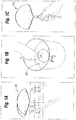
- Figures 1A-1C illustrate, in somewhat simplified form, a suitable process for forming flexible implant shells for implantable prostheses, or implant, of the present invention.
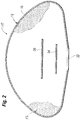
- a silicone gel breast implant 10 comprises a silicone gel core 12 and a shell 14 comprising a substantially homogenous silicone elastomer layer 16 comprising a silicone elastomer polymer having a mole percent of at least 10%, for example, at least 13%, of a substituted chemical group that sterically retards permeation of the silicone gel through the shell 14.
- a suitable process generally involves coating a form, or mandrel 20 ( Fig. 1A ) with a silicone elastomer dispersion 22 ( Fig. 1B ).
- the dispersion 22 is a liquid, uncured elastomer material in a suitable solvent.
- the solvent may be any one or more of an aromatic or linear aliphatic of C 6 or greater, for example, xylene.
- the mandrel 20 is dipped into the dispersion 22 ( Fig. 1B ) and withdrawn therefrom.
- Excess silicone elastomer dispersion is allowed to drain from the coated mandrel 20a ( Fig. 1C ) and at least a portion of solvent of the dispersion is allowed to evaporate to stabilize the silicone elastomer coating on the mandrel.
- the process may be repeated several times to form a coating of a desired thickness.
- the solvent is allowed to evaporate after each coating.
- the coated mandrel is preferably repeatedly dipped into the same or an identical silicone elastomer dispersion, until a substantially homogenous elastomeric shell of a desired thickness is formed.
- the silicone elastomer dispersion coating is cured on the mandrel using conventional means.
- the coating 20a is heat cured. Curing may be accelerated by the use of circulating air or other known means.
- the cured material is soft, flexible and elastic.
- the cured material is removed from the mandrel by stretching the hole in the coating at the mandrel attachment site.
- the coating is in the form of a hollow, substantially homogenous, silicone elastomer envelope which, when filled with uncured silicone gel, will make up at least 20%, more preferably, at least 30%, more preferably, at least 50% or greater in terms of average thickness of the shell 14 of the implant 10 shown in Fig. 2 .
- the substantially homogenous, silicone elastomer envelope makes up substantially the entire thickness of the shell 14.
- the hole 32 on the shell 14 (formed at the mandrel attachment site) is sealed, for example, by attaching an uncured silicone elastomer portion 34 and a cured silicone elastomer portion 36 to a periphery of the hole 32.
- an uncured or precursor silicone gel material which will form the core 12 is introduced, for example, injected, into the shell 14, for example, with the aid of a needle inserted through the patch site 34, 36.
- the silicone gel precursor may be supplied as a two-part liquid system with a primary gel component and a cross-linking component.
- the needle entrance may be sealed using suitable means, for example by applying an adhesive thereto.
- Such silicone gel precursor materials and their uses in the manufacture of breast implants are well known in the art and will therefore not be described in greater detail herein.
- silicone gel material making up the core 12 is in direct contact with the silicone elastomer shell 14.
- the silicone elastomer shell 14 may be defined by a single, substantially homogenous layer of elastomeric polymer having a polysiloxane backbone and having a minimum mole percent of about 10% of a pendant chemical group that sterically retards permeation of said silicone gel through the substantially homogenous layer 16.
- the silicone gel saturates, or substantially saturates the inner surface of the substantially homogenous layer 16.
- the polymeric material making up layer 16, absent such saturation with silicone gel may be substantially equivalent or identical to the polymeric material which forms a conventional intermediate, or so called "barrier layer", of a multilayered implant shell of the prior art.
- Fig. 3 illustrates, in cross-section, a portion of a PRIOR ART breast implant 2 including a silicone gel core 6 and a smooth-walled, multilayered shell 8.
- the primary barrier to silicone gel bleed through the shell wall 8 is provided by an inner so called “barrier layer" 40.
- two base coat layers 42, 44 lie radially inward from the barrier layer 40, with one of said base coat layers 42 being in direct contact with and substantially saturated with the silicone gel material making up the core 6.
- three further base coat layers 46, 48, 50 are provided on the outer side of the barrier layer 40 as shown.
- the base coat layers 42-50 are a dimethyl silicone copolymer with no diphenyl substituted groups, or a dimethyl-diphenyl silicone copolymer including a small percentage of diphenyl polymer substituted groups (e.g., mole percent of 5%).
- the base coat layers 42-50 are designed to be rupture resistant.
- the intermediate barrier layer 40 is a dimethyl diphenyl silicone copolymer having a relatively higher percentage of a diphenyl polymer component (mole percent of 15%), as is designed to reduce gel bleed through the shell 8.
- the multilayered shell 8 of the PRIOR ART implant has an average thickness of about 0.5 mm.
- the thickness of the barrier layer 40 is typically no greater than about 10% of the total shell wall thickness, or between about 0.025-.050 mm.
- the barrier layer 40 is limited to a relatively minor proportion of the overall wall thickness of the shell. This is based on the conventional wisdom that this polymer is a generally relatively weak elastomer, for example, in terms of tensile strength, and is only included as an "intermediate layer” for promoting bleed resistance. It is also conventionally believed that these silicone elastomers, including those that make up the so called barrier layer materials, decrease in tensile strength when saturated with silicone gel,. the thin barrier layer 40 is also conventionally "sandwiched" between the base coat layers, and is not placed in direct contact with the silicone gel filling making up the core 6.
- Figure 4 illustrates in cross-section a layered portion of a textured implant 9 of the PRIOR ART.
- the primary barrier to gel bleed through the shell wall is provided by an inner barrier layer 60.
- Two so-called base coat layers 62, 64 lie radially inward from the barrier layer 60.
- three further base coat layers 66, 68, 70 are provided on the outer side of the barrier layer 60.
- a tack coat layer 72, a layer of textured crystals 74, and an overcoat layer 78 are provided outside of the outer base coat layers 60-70.
- the base coat layers 62-70 are a dimethyl silicone copolymer or a dimethyl-diphenyl silicone copolymer with a small mole percentage of diphenyl component (e.g., 5%), and the barrier layer 60 is a dimethyl-diphenyl silicone copolymer having a higher mole percentage of diphenyl polymer (e.g. 15%).
- a surprising discovery made during development of the present invention is that the material typically used as an intermediate layer, or barrier layer, (for example, layer 40 shown in Fig. 3 , and layer 60 shown in Fig. 4 ) in conventional multilayered implant shells has a comparable tensile strength or perhaps even a higher tensile strength when the barrier layer material is placed in direct contact with, or is substantially saturated with, the silicone gel during filling of the implant and is in direct contact with the silicone gel in the finished implant product.
- many of the implants of the present invention comprise such barrier layer materials which envelope and are in direct contact with the silicone gel core.
- barrier layer materials having a relatively higher mold percentage (i.e. greater than 10%) of pendant diphenyl groups are minimized in terms of the amount of such materials making up the shell of the implant
- many of the implants of the present invention include such barrier layer materials which make up of a significant percentage, in terms of thickness, of the implant shell.
- the shell comprises a substantially homogenous layer having a mole percentage of at least about 10% of diphenyl siloxane units which said substantially homogenous layer makes up at least about 20%, or at least about 30%, or at least about 50% or more of the thickness of the shell.
- said substantially homogenous layer makes up between about 50% and about 90% of the average thickness of the shell.
- said substantially homogenous layer makes up the substantial entire thickness of the shell.
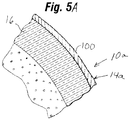
- Fig. 5 illustrates a close up view, in cross-section, of a portion of the exemplary implant 10 of the present invention shown in Fig. 2 .
- the shell 14 comprises a single, substantially uniform barrier layer 16 comprising a homogeneous silicone elastomer having a minimum mole percent of at least 10%, and more preferably, about 13%, for example, about 15%, of a substituted chemical group that sterically retards permeation of the silicone gel through the shell 14.
- the shell 14 is substantially entirely defined by the single barrier layer 16.
- Layer 16 includes an inner surface 16a which is in direct contact with, and is substantially saturated with the gel material 12a which makes up the core 12.
- Implant 10a may be identical to implant 10, except that rather than comprising a shell 14 substantially entirely comprising or consisting of a single substantially homogenous layer 16, shell 14a of implant 10a includes at least one additional layer 100 overlying and enveloping said substantially homogenous layer 16.
- Additional layer 100 may comprise a dimethyl silicone copolymer with no diphenyl substituted groups, or a dimethyl-diphenyl silicone copolymer including a relatively small percentage of diphenyl polymer substituted groups (e.g., mole percent of less than 10%, for example, about 5%).
- an implant 10b in accordance with another embodiment of the invention may comprise a shell 14b having a textured outer surface 106, wherein implant 10 and implant 10b may be substantially identical to one another with the exception of the texturing of the shell 14a.
- Such texturing can be formed by a variety of processes including texturing on the mold used to form the outer surface 106 of the shell 14a.
- siloxane is defined as any of various compounds based on a polysiloxane backbone of alternating silica and oxygen molecules.
- side chain substituents or pendants are organic radicals, they are silicones.
- Polydimethyl siloxane consists of a siloxane with two methyl (CH 3 ) substituted groups
- polydiphenyl siloxane consists of a siloxane with two phenyl (C 6 H 5 ) substituted groups.
- the materials are polysiloxanes, or silicone polymers. These materials are commercially available from suppliers such as NuSil Technology based in Carpenteria, Califonria.
- the basic formula of medical grade polysiloxanes is a polydimethylsiloxane (silicone elastomer chain) with or without other radical groups substituted for the methyl groups.
- the following formula is a polydimethylsiloxane or dimethyl silicone elastomer, which is currently used as the outer layers in the Mentor MemoryGelTM implants:
- the steric hindrance of the large phenyl group significantly prohibits high concentrations of diphenyl units on the polymer chain.
- Steric hindrance or steric resistance occurs when the size of groups within a molecule prevents chemical reactions that are observed in related smaller molecules.
- a molecule that sterically hinders other molecules generally hinders their free movement.
- Steric hindrance between adjacent groups can also restrict torsional bond angles.
- pendant groups that are well known in the art may be present in the polymer at a mole percent greater than 25%.
- some pendant groups, for example, the flouro groups may be present in a mole percent of nearly up to 100% of the substituted chemical groups without loss of stability of the polymer.
- Such polymers may be useful as components of the shells of the implants of the present invention, and are considered to be included within the scope of the invention.
- the filler gels in soft prosthetic implants are 10-20% crosslinked silicone including silicone oils.
- the compatibility of the silicone gel and surrounding silicone elastomer shell causes some of the silicone oil to absorb into and swell the shell. Such swelling lowers shell tensile strength.
- some bleeding of the gel through the shell occurs, once the shell is saturated or swelled the presence of silicone on the outside of the shell reduces the tendency of the gel to further bleed through the shell. This is a result of the reduced chemical gradient across the shell and thus reduced osmotic pressure that leads to bleeding.
- silicone-based shells tend to bleed at least a small amount, the material properties of softness or suppleness make them practically the only material choice.
- the large phenyl groups sterically retard permeation or bleeding of the silicone gel through the shell. This occurs because the larger phenyl groups physically restrict the free movement of the gel filler throughout the shell. This reduces solubility of gel in the shell and lowers the saturation point which, consequently, helps maintain the physical properties, such as strength, of the shell, relative to shells or layers made of silicone elastomers having a lower percentage of such substituted groups or those that are absent of such substituted groups.
- the extent of saturation and bleeding may be based on the solubility of the gel in the silicone elastomer. For example, a mole percent of about 15% of the substituted phenyl groups allows a lower degree of saturation because the higher , or more preferably about 13% or
- the minimum mole percent of the substituted diphenyl group that sterically retards permeation of the silicone gel through the shell is at least about 10%, for example, about 13%.
- the preferred material for the barrier layers 16 forming at least a portion of the shell 12 is a substantially homogeneous layer, for example, a single, substantially homogenous layer, of dimethyl polysiloxane having a minimum mole percent of about 15% of a pendant or substituted diphenyl group (see Formula III. above). Therefore, the preferred material for the shells of the present implants is a dimethyl polysiloxane having a mole percent of between about 10%, and more preferably, between about 13% and about 25% of a substituted diphenyl group.
- substituted diphenyl groups are known, though other a substituted groups may also work.
- the substituted group may be a fluoro group.
- Formula IV. below is a polydimethylsiloxane above with a trifluoropropyl substituted group:
- the minimum mole percent of the substituted fluoro group that sterically retards permeation of the silicone gel through the shell will be different than that for the diphenyl substituted group.
- the materials described herein may be empirically tested to determine their capacity for sterically retarding silicone gel permeation. One method is to test the materials to see how much swelling occurs upon contact with silicone gel on one side. Such testing can be performed on sheets of the material. Though not wishing to be bound by any particular theory of operation, it is believed that the greater the amount of swelling of the material, the lesser the capacity of the material for retardation of gel permeation.
- cast shells may be formed and filled with gel after which a gel bleed test is conducted.
- a bleed test essentially measures the amount of gel that passes through the implant shell over a period of time. Testing is done according to ASTM standard F703, and the bleed results are typically given the units mass/surface area/time, e.g., ⁇ g/cm 2 /days.
- ASTM standard F703 ASTM standard F703
- the bleed results are typically given the units mass/surface area/time, e.g., ⁇ g/cm 2 /days.
- the following table quantifies the bleed rate of the number of materials discussed herein relative to the bleed rate for a dimethyl silicone elastomer, which will be arbitrarily assigned a value of 100. Note that the percent units in the shell material column refer to the mole percent.
- the present invention of a shell made entirely of a 15% diphenyl silicone elastomer has a bleed rate that is approximately 40% less.
- the homogeneous nature of the single layer shell eliminates the possibility of both clouding and delamination which may occur with layered shells.
- suitable implant shells In addition to the ability to retard gel bleeding, suitable implant shells must also possess a minimum strength to resist rupture. Indeed, the primary design criteria for implant shells have been and continue to be the ability to resist rupture. That was the reason for using a layered approach in the past, with presumably stronger materials coupled with the inner, weaker barrier layer.
- the standard methodology of measuring the strength of silicone materials such as used in the shells of the present invention is the well-known ASTM tensile strength test utilizing a dog-bone sample. Samples are either manufactured in the requisite shape, or are cut from a formed implant shell. The ends of the sample are uni-axially pulled in opposite directions until the sample fails.
- the single layer shells of the present invention are weaker than previous layered shells when dry, they have a comparable strength, perhaps a greater strength, when wet or saturated with gel. That is, after an implant shell is filled with the silicone gel, it swells and becomes saturated. The strength of silicone shells typically decreases after swelling. However, the reduction in strength is less or insignificant for shells of the present invention perhaps due to the reduced swelling with gel relative to conventional layer materials and earlier shell constructions.
- shells of some implants of the present invention are constructed of a substantially homogeneous barrier material in a single layer whose wet strength is comparable to or greater than the wet strength of conventional layered materials.
- the wall thickness of the substantially homogenous layer 16 is preferably between about 0.1 mm and about 0.5 mm, for example, at least about 0.3 mm. It should be noted that the thickness at any one point around the shell 14 may be greater or less because of casting imprecision. For example, in some embodiments, the thickness of the substantially homogenous layer 16 ranges from about 0.3 mm to about 1 mm.
- the thickness varies due to the peaks and valleys of the rough surface 106.
- the textured outer surface106 may be formed by texturing the casting surface, or other suitable means.
- the textured shell 14b of the implant 10b shown in Fig. 6 which may be substantially entirely defined by single substantially homogenous layer 14b, can be made much thinner than conventional layered textured shells, resulting in an extremely supple textured implant, relative to prior art layered textured implants.
- the Young's Modulus (E) of the shells 14 and 14b made with the single layer construction may be less than the prior art shells of a sandwiched or layered construction.
- the single homogeneous layer 14, 14b is formed exclusively of dimethyl polysiloxane having a minimum mole percent of about 15% of a substituted diphenyl group, and the Young's Modulus of such a material is less than that of a dimethyl-diphenyl silicone copolymer with a mole percent of 5% of a diphenyl component, which is what is used in the layered shells of Figures 3 and 4 .
- shells 14, 14a and 14b in accordance with the present invention can be formed in a number of ways, including the dipping method described above with respect to Figures 1A-1C , a preferred system and method is disclosed in U.S. Patent No. 6,602,452 to Schuessler .
- Schuessler discloses a rotational molding machine for forming medical articles, in particular for molding silicone elastomer shells for breast implants.
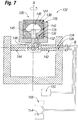
- Figure 7 is a schematic of an embodiment of a rotational molding system similar to that disclosed in Schuessler, which can be used to form implant shells of the present invention.
- a two-piece case mold 120 is fixed to a multi-axis rotational mold machine 122 by clamps securing top mold piece 124 and bottom mold piece 126 to clamp base 128 at top locking groove 130 and bottom locking groove 132 respectively.
- Vacuum connection 134 runs through one arm of the mold machine 122 to the vacuum opening 135.
- material connection tube 136 through which silicone elastomer, liner materials, and/or air are injected into the mold cavity 140, may run through or along the same arm 142 as the vacuum connection 134 or by means of another arm 144.
- the sprue tube 145 defines a hollow bore that allows materials to enter into the two-piece case mold 120 when the bottom mold piece 122 and the top mold piece 124 mate.
- Two-piece case mold 120 may be manufactured from copper, aluminum, or other materials.
- the top mold piece 124 and bottom mold piece 126 are fitted together at their mating surfaces, sealed with O-ring 150, and then locked into clamp base 128 of multi-axis rotational molding machine 122.
- Material reservoir 152 is fluidly coupled to connection tube 136 for providing silicone elastomer, liner material and/or air to cavity 140.
- Vacuum source 154 and solvent condenser 156 are fluidly coupled to vacuum connection 134.
- the hollow bore of the sprue tube 145 communicates with an inner vacuum tube (not shown) which in turn is connected to vacuum opening 135 and vacuum connection 134.
- the rotational molding system of Figure 7 has at least two distinct advantages over earlier methods for forming soft implant shells.
- a second advantage of the rotational molding system is that is enables the formation of seamless articles.
- the mold parting lines that would otherwise be formed at intersection of the mold halves are eliminated in the process of the present invention by first coating the inside of the assembled, multi-part mold with a thin layer of molding material such as polyethylene, polypropylene, nylon, fluoropolymer, polyester resin, polyurethane, epoxy or the like to create a mold liner. After the liner is cast, then the raw material, e.g. silicone elastomer, for the desired implant shell is injected into the mold cavity and similarly rotationally cast inside the liner, resulting in a temporary laminated construct. When the mold is disassembled and the construct is removed from the mold, the liner material and the implant are physically separated resulting in the desired article having a seamless configuration.
- the first step in manufacturing an implant shell utilizing the multi-axis rotational molding system of Figure 7 is to make a liner which coats the internal mold surface of the two-piece case mold 120.
- the liner should cover the interior domed surfaces of top and the bottom mold halves 124, 126. Covering the internal mold surfaces thus masks any interruptions in the surface, such as the mold parting lines, machining marks located on the internal mold surface, or minor damage to the internal mold surface.
- the liner may be any suitable material but should meet several requirements.
- the liner should have a low extractability level so it is biocompatible with the implant shell or other molded article.
- the liner should also be resistant to any solvent or solvents being used in the silicone elastomer used in making the implant shell or other molded article.
- the liner material should be able to completely and uniformly coat the internal mold surface during the rotation of the mold by the multi-axis rotational molding machine. If heat is used to cure the silicone elastomer during the molding process, the liner should have a high level of heat resistance.
- the liner should be easily removable or releaseable from the mold surface and from the cured shell.
- the liner may be used to impart a desired surface finish to the silicone elastomer, e.g. glossy, matte, textured, etc.
- Suitable liner materials include: polyethylene (EquistarTM #MP658-662), polypropylene (A. SchulmanTM #PD 8020), nylon (Capron® #8280); fluoropolymers (DuPont® Teflon® PFA), polyester resin (HypolTM #320300-10), polyurethane (Smooth-On Smooth Cast #305) and epoxy (Polytek® Development Corp. Polypoxy® 1010), all of which can be found on the open market. A skilled artisan in the field will recognize that other similar materials can replace these listed liner materials.
- a predetermined volume or weight of the chosen liner material is dispensed into the mold so as to produce a lining of the desired thickness.
- the liner material is either in the form of a fine powder or a liquid depending on the selection of the liner material as long as the selected material is free flowing.
- the liner material is inserted into the two-piece case mold 120 through circular sprue tube 145.
- the sprue tube 145 extends approximately halfway into the interior cavity 140 of case mold 120 and remains in this position during the entire process of forming a liner and shell or other article.
- the liner material can be inserted into the case mold prior to the case mold being locked into the rotational arms of the multi-axis rotational molding machine or after the case mold has been locked into the rotational arms.
- the closed mold 120 is rotated about two or more axes allowing the liner material inside to form a consistent coating along the internal surface of cavity 140.
- the rotation of the mold about the axes forms a liner of uniform thickness.
- the liner material is composed of thermoplastics, heat is applied so as to cause the liner material to melt and coat the inside mold surface as per conventional rotational molding techniques.
- a chemical set is used for the liner material system, such as a polyester resin, no heat needs to be applied.
- air pressure, vacuum, inert gas such as nitrogen or other vapors or solid particles may be applied to the interior of the mold to minimize bubbles or to affect the surface finish of the liner in the desired manner.
- Circular sprue tube 145 remains extending into the mold cavity 140 during the entire process of curing the liner and the molding material.
- the exterior end of the sprue has a removable cap.
- Silicone elastomer is injected into the interior of the mold.
- a predetermined amount of molding material is inserted based on the desired size and thickness of the finished shell or article. The desired polysiloxanes with substituted groups to retard gel bleeding used to form the single layer implants are described above.
- the mold is rotated around at least two axes while a vacuum is applied to its interior.
- the vacuum may be applied in different fashions.
- the vacuum can be applied to the sprue of a sealed mold by way of the vacuum opening 135.
- the vacuum may also be applied to the interior cavity or chamber in which an open sprue mold is rotating.
- the mold may be constructed of a porous material and a vacuum applied to the exterior of such porous mold.
- positive pressure using either, or in combination, air, nitrogen, or other gases may be applied intermittently to aid in bubble removal within the silicone elastomer. Bubbles need to be removed to allow for a uniform smooth surface of the liner, and ultimately the shell or other molded article.
- the silicone elastomer is rotated and allowed to cure as the arms of the rotational molding machine rotate around their axes, thereby forming the desired shape. Rotating the mold at different speeds can compensate for different viscosities of the inserted materials. Heat is applied if necessary or to accelerate the curing process. The silicone elastomer sets up and stops flowing as it is rotated and cures in place on the liner material. If additional wall thickness is desired for the shell or other molded article, the steps may also repeated, though the finished product should be a single homogenous materials or layer. That is, the rotational molding process (and indeed the dip process described previously) may be done in multiple stages or steps, each step adding more material. However, the finished product exhibits no distinct layers and the entire shell wall is homogenous or uniform in composition.
- the formed shell or article surrounded by the liner is removed from the mold.
- the shell or other molded article is separated from the liner by one of the following methods appropriate to the liner system: dissolving the liner in a suitable solvent; melting or burning the liner away from the more temperature resistant shell or molded article; tearing or breaking the liner away from the shell; or peeling the flexible formed shell away from the liner and removing it through the opening in the liner created by the sprue opening.
- the liner may be discarded, or if the liner has not been damaged or dissolved depending on the separation process of the liner from the shell or molded article, the liner may be reused in the process again.
- Figures 8-13 illustrate an alternative mold 200 for a rotational molding system, such as that described with reference to Figure 7 , which can be used to form implant shells of the present invention.
- the mold 200 comprises a top mold piece 202 and bottom mold piece 204 held together by bolts 206 across respective flanges 208, and an inner liner 210 illustrated in cross-section in Figure 9 .
- the presence of the inner liner 210 is a significant advantage because the implant shells may be formed without a seam that otherwise would result at the intersection of the two mold pieces 202, 204.
- the mold pieces 202, 204 are formed of a metal such as aluminum
- the inner liner 210 is formed of a non-adherent material such as Teflon, for instance ETFE (ethylene-tetrafluoroethylene).
- the inner liner 210 is intended to be reused every time a prosthetic implant shell is formed by the mold.
- the inner liner 210 remains within the cavity formed by the mold pieces 202, 204, and thus defines the inner surface of the mold 200, during the formation of a number of implants.
- the inner liner 210 may remain within the mold pieces 202, 204 for hundreds of uses.
- the inner liner 210 is initially formed by rotational molding by injecting free-flowing liner material within the mold pieces 202, 204.
- the mold 200 functions much like the aforementioned two-piece case mold 120, in that it includes a relatively large circular opening 212 within a lower flange 214 through or into which inserts a sprue tube (such as the sprue tube 145 of Figure 7 ).
- a sprue tube such as the sprue tube 145 of Figure 7 .
- the sprue tube defines a hollow bore that provides a passage for materials to enter into the mold 200 for forming a prosthetic implant shell, and for solvents or other gases to escape.
- the preferred implant materials are described above.
- the mold 200 may be used to form a layered shell, the preferred embodiment is to form a single layer implant shell.
- a single layer implant shell may be formed in multiple steps by a sequence of thin layers such that the finished product exhibits no distinct layers and the entire shell wall is homogenous or uniform in composition.
- the specific steps for using the mold 200 to form implant shells will not be described further herein as they are essentially the same as previously described with respect to the system of Figure 7 .
- Another difference in the mold 200 with comparison to the earlier mold 120 is its relatively thinner wall thickness such that the exterior shape substantially mirrors the interior molded article shape. This design improves the heat transfer properties of the mold 200 such that the uniformity of the temperature at the inner wall, or at the inner liner 210, may be better controlled.
- Figures 10-13 illustrate several steps in the formation of the mold 200.
- Figure 10 illustrates a liner plug or sprue tube 220 exploded below the two mold parts 202, 204.
- Figure 11 is a close-up of the lower end of the mold 200 with the liner sprue tube 220 closely fitted within the circular opening of the lower flange 214.
- the liner sprue tube 220 defines a central throughbore 222 through which liner material may pass and gases vent during formation of the inner liner 210.
- a secondary sprue tube 224 tube that extends into the mold cavity is preferably used to help prevent material from exiting the mold cavity.
- Figure 11 illustrates the inner liner 210 after formation.
- Figure 12 illustrates a neck of the mold 200 after boring a tubular neck opening through the liner material from the inside. That is, a small annular section 230 seen in Figure 11 is removed to form the neck opening having a diameter A.
- the diameter A is between about 2.413-2.540 cm (0.950-1.000 inches).
- Figure 13 is a close-up of one corner 232 of the neck opening formed by the liner material 210. The liner material is bored in such a way that the corner 232 is square and closely fits around a sprue tube used to form the implant prosthesis.
- the formed shell is ready for further assembly or processing consistent with the usual manner in creating a final breast implant product. For example, a patch over the hole left by the sprue is installed.
- the implant shell is filled with a filler material of silicone gel or other biocompatible gel material well known to those of skill in the art.
Landscapes
- Health & Medical Sciences (AREA)
- Cardiology (AREA)
- Oral & Maxillofacial Surgery (AREA)
- Transplantation (AREA)
- Engineering & Computer Science (AREA)
- Biomedical Technology (AREA)
- Heart & Thoracic Surgery (AREA)
- Vascular Medicine (AREA)
- Life Sciences & Earth Sciences (AREA)
- Animal Behavior & Ethology (AREA)
- General Health & Medical Sciences (AREA)
- Public Health (AREA)
- Veterinary Medicine (AREA)
- Prostheses (AREA)
- Materials For Medical Uses (AREA)
Priority Applications (3)
| Application Number | Priority Date | Filing Date | Title |
|---|---|---|---|
| EP20156117.2A EP3677222A1 (en) | 2007-07-27 | 2008-07-24 | All-barrier elastomeric gel-filled breast prosthesis |
| EP14155732.2A EP2735285A1 (en) | 2007-07-27 | 2008-07-24 | All-barrier elastomeric gel-filled breast prosthesis |
| EP16190096.4A EP3150168B1 (en) | 2007-07-27 | 2008-07-24 | All-barrier elastomeric gel-filled breast prosthesis |
Applications Claiming Priority (2)
| Application Number | Priority Date | Filing Date | Title |
|---|---|---|---|
| US95230407P | 2007-07-27 | 2007-07-27 | |
| PCT/US2008/071068 WO2009018105A1 (en) | 2007-07-27 | 2008-07-24 | All-barrier elastomeric gel-filled breast prothesis |
Related Child Applications (5)
| Application Number | Title | Priority Date | Filing Date |
|---|---|---|---|
| EP16190096.4A Division EP3150168B1 (en) | 2007-07-27 | 2008-07-24 | All-barrier elastomeric gel-filled breast prosthesis |
| EP16190096.4A Division-Into EP3150168B1 (en) | 2007-07-27 | 2008-07-24 | All-barrier elastomeric gel-filled breast prosthesis |
| EP14155732.2A Division EP2735285A1 (en) | 2007-07-27 | 2008-07-24 | All-barrier elastomeric gel-filled breast prosthesis |
| EP14155732.2A Division-Into EP2735285A1 (en) | 2007-07-27 | 2008-07-24 | All-barrier elastomeric gel-filled breast prosthesis |
| EP20156117.2A Division EP3677222A1 (en) | 2007-07-27 | 2008-07-24 | All-barrier elastomeric gel-filled breast prosthesis |
Publications (2)
| Publication Number | Publication Date |
|---|---|
| EP2180848A1 EP2180848A1 (en) | 2010-05-05 |
| EP2180848B1 true EP2180848B1 (en) | 2017-02-01 |
Family
ID=39745102
Family Applications (4)
| Application Number | Title | Priority Date | Filing Date |
|---|---|---|---|
| EP08782335.7A Not-in-force EP2180848B1 (en) | 2007-07-27 | 2008-07-24 | All-barrier elastomeric gel-filled breast prothesis |
| EP16190096.4A Active EP3150168B1 (en) | 2007-07-27 | 2008-07-24 | All-barrier elastomeric gel-filled breast prosthesis |
| EP20156117.2A Withdrawn EP3677222A1 (en) | 2007-07-27 | 2008-07-24 | All-barrier elastomeric gel-filled breast prosthesis |
| EP14155732.2A Withdrawn EP2735285A1 (en) | 2007-07-27 | 2008-07-24 | All-barrier elastomeric gel-filled breast prosthesis |
Family Applications After (3)
| Application Number | Title | Priority Date | Filing Date |
|---|---|---|---|
| EP16190096.4A Active EP3150168B1 (en) | 2007-07-27 | 2008-07-24 | All-barrier elastomeric gel-filled breast prosthesis |
| EP20156117.2A Withdrawn EP3677222A1 (en) | 2007-07-27 | 2008-07-24 | All-barrier elastomeric gel-filled breast prosthesis |
| EP14155732.2A Withdrawn EP2735285A1 (en) | 2007-07-27 | 2008-07-24 | All-barrier elastomeric gel-filled breast prosthesis |
Country Status (9)
| Country | Link |
|---|---|
| US (2) | US8043373B2 (enExample) |
| EP (4) | EP2180848B1 (enExample) |
| JP (1) | JP2010534551A (enExample) |
| AU (1) | AU2008282479B2 (enExample) |
| BR (1) | BRPI0814135A2 (enExample) |
| CA (1) | CA2694917C (enExample) |
| ES (2) | ES2787705T3 (enExample) |
| PT (1) | PT2180848T (enExample) |
| WO (1) | WO2009018105A1 (enExample) |
Families Citing this family (50)
| Publication number | Priority date | Publication date | Assignee | Title |
|---|---|---|---|---|
| WO2009113745A1 (en) * | 2008-03-12 | 2009-09-17 | Jong-Soo Choi | Medical implant |
| AU2009241578B2 (en) * | 2008-04-28 | 2014-01-23 | Allergan, Inc. | Flush patch for elastomeric implant shell |
| US8377128B2 (en) * | 2008-04-28 | 2013-02-19 | Allergan, Inc. | Flush patch for elastomeric implant shell |
| US8690943B2 (en) | 2008-08-20 | 2014-04-08 | Allergan, Inc. | Self-sealing shell for inflatable prostheses |
| US20100114311A1 (en) * | 2008-11-05 | 2010-05-06 | Hilton Becker | Multi-Lumen Breast Prothesis and Improved Valve Assembly Therefor |
| EP2467175B1 (en) | 2009-08-18 | 2015-02-25 | Allergan, Inc. | Reinforced prosthetic implant with flexible shell |
| BR112012008774A2 (pt) * | 2009-10-16 | 2020-08-18 | Won-Seok Yu | protese de silicone artificial em silicone que minimiza a concentração da pressão e o método de produção |
| US20110282444A1 (en) | 2010-05-11 | 2011-11-17 | Allergan, Inc. | Porous materials, methods of making and uses |
| US9138308B2 (en) | 2010-02-03 | 2015-09-22 | Apollo Endosurgery, Inc. | Mucosal tissue adhesion via textured surface |
| AU2011213037A1 (en) | 2010-02-05 | 2012-08-16 | Allergan, Inc. | Inflatable prostheses and methods of making same |
| KR101910204B1 (ko) | 2010-05-10 | 2018-10-19 | 알러간, 인코포레이티드 | 다공성 재료, 제조 방법 및 용도 |
| CN102971018B (zh) | 2010-05-11 | 2016-02-03 | 阿勒根公司 | 致孔剂组合物、制备方法及用途 |
| CA2802856A1 (en) | 2010-06-16 | 2011-12-22 | Jordan M. Thompson | Open-cell surface foam materials |
| KR20120032392A (ko) * | 2010-09-28 | 2012-04-05 | 유원석 | 내구성이 향상된 쉘을 갖는 실리콘 보형물 제조방법 |
| US20120232652A1 (en) * | 2011-03-07 | 2012-09-13 | Rolando Mora | Implant with a visual indicator of a barrier layer |
| KR101235284B1 (ko) * | 2011-06-23 | 2013-02-21 | 유원석 | 응력집중을 최소화한 실리콘 인공유방 보형물 및 그 제조방법 |
| EP2581193B1 (en) * | 2011-10-14 | 2015-11-25 | Polytech Health&Aesthetics GmbH | Process for the manufacture of implants or intermediate products of such implants as well as implants and intermediate products obtained by such process |
| US8556968B2 (en) * | 2011-11-09 | 2013-10-15 | Ideal Implant Incorporated | Breast implant with low coefficient of friction between internal shells in an aqueous fluid environment |
| US9144488B2 (en) | 2012-06-13 | 2015-09-29 | Elwha Llc | Breast implant with analyte sensors responsive to external power source |
| US8808373B2 (en) | 2012-06-13 | 2014-08-19 | Elwha Llc | Breast implant with regionalized analyte sensors responsive to external power source |
| US9211185B2 (en) | 2012-06-13 | 2015-12-15 | Elwha Llc | Breast implant with analyte sensors and internal power source |
| US8795359B2 (en) | 2012-06-13 | 2014-08-05 | Elwha Llc | Breast implant with regionalized analyte sensors and internal power source |
| US9144489B2 (en) | 2012-06-13 | 2015-09-29 | Elwha Llc | Breast implant with covering, analyte sensors and internal power source |
| US8790400B2 (en) | 2012-06-13 | 2014-07-29 | Elwha Llc | Breast implant with covering and analyte sensors responsive to external power source |
| WO2014022657A1 (en) | 2012-08-02 | 2014-02-06 | Allergan, Inc. | Mucosal tissue adhesion via textured surface |
| EP2897658A1 (en) | 2012-09-24 | 2015-07-29 | Allergan, Inc. | Porous materials, methods of making and uses |
| WO2014052724A1 (en) | 2012-09-28 | 2014-04-03 | Allergan, Inc. | Porogen compositions, methods of making and uses |
| US9757572B2 (en) * | 2013-06-28 | 2017-09-12 | Autonomic Technologies, Inc. | Implantable medical device and method for laser processing |
| US9532867B2 (en) | 2013-07-11 | 2017-01-03 | Tepha, Inc. | Absorbable implants for plastic surgery |
| WO2015176014A1 (en) * | 2014-05-16 | 2015-11-19 | Allergan, Inc. | Soft filled prosthesis shell with variable texture |
| USD736372S1 (en) * | 2014-12-07 | 2015-08-11 | Robert G. Anderson | Implant insertion device |
| KR102612116B1 (ko) | 2015-03-12 | 2023-12-08 | 지 & 지 바이오테크놀로지 엘티디 | 복합 이식물 재료 |
| US9737395B2 (en) | 2015-06-26 | 2017-08-22 | Phi Nguyen | Systems and methods for reducing scarring |
| CN110022796A (zh) * | 2016-11-21 | 2019-07-16 | 威廉·A·布伦南 | 整形植入物 |
| ES2953544T3 (es) | 2018-02-09 | 2023-11-14 | Tepha Inc | Implante mamario de contorno completo |
| USD889654S1 (en) | 2018-02-09 | 2020-07-07 | Tepha, Inc. | Three dimensional mastopexy implant |
| CN111770739B (zh) * | 2018-02-18 | 2024-10-25 | G&G生物技术有限公司 | 具有增强的壳粘附性的植入物 |
| KR101966979B1 (ko) * | 2018-04-25 | 2019-08-27 | 김한조 | 인체 주입 필러를 이용한 가슴보형물의 제조방법 |
| USD892329S1 (en) | 2018-07-03 | 2020-08-04 | Tepha, Inc. | Three dimensional mastopexy implant |
| WO2020021482A2 (en) | 2018-07-25 | 2020-01-30 | Establishment Labs S.A. | Implants with symmetric shape |
| CA3112634A1 (en) | 2018-09-13 | 2020-03-19 | Allergan, Inc. | Tissue expansion device |
| USD896383S1 (en) | 2018-09-13 | 2020-09-15 | Allergan, Inc. | Tissue expansion device |
| WO2020072349A1 (en) | 2018-10-02 | 2020-04-09 | Tepha, Inc. | Medical devices to limit movement of breast implants |
| US11324585B2 (en) * | 2018-10-12 | 2022-05-10 | Biosense Webster (Israel) Ltd. | Method for producing shell and foam filler for a breast implant |
| MX2022006292A (es) | 2019-11-25 | 2022-08-15 | Tepha Inc | Envolturas de implantes de mama que limitan el movimiento de los implantes de mama, y metodos relacionados. |
| JP6952209B1 (ja) | 2021-02-21 | 2021-10-20 | キム ジェホンKim, Jae Hong | 豊胸用インプラントバッグ及び豊胸用インプラントバッグの異常感知装置 |
| EP4295752A4 (en) | 2021-02-21 | 2024-12-25 | W.Al Co., Ltd. | BREAST PROSTHESIS AND APPARATUS FOR DETECTING ABNORMALITIES IN A BREAST PROSTHESIS |
| US12059341B2 (en) * | 2021-03-05 | 2024-08-13 | Mentor Worldwide Llc | Systems, devices and methods of making prosthetic implants having self-sealing membranes for closing punctures and preventing leaks |
| US12648843B2 (en) | 2021-08-19 | 2026-06-09 | Mentor Worldwide Llc | Prosthetic implants having shells with flexible needle stop patches made of two or more layers of textile material |
| KR102639503B1 (ko) | 2021-10-03 | 2024-02-22 | 주식회사 더블유닷에이아이 | 보형물 이상 감지 장치 및 보형물 이상 감지 시스템 |
Family Cites Families (11)
| Publication number | Priority date | Publication date | Assignee | Title |
|---|---|---|---|---|
| US4455691A (en) * | 1979-10-03 | 1984-06-26 | Minnesota Mining And Manufacturing Company | Silicone gel filled prosthesis |
| BR8008981A (pt) * | 1979-12-17 | 1981-10-20 | Dow Corning | Artigo de borracha de silicone, enchido com gel de silicone, possuindo reduzida exsudacao superficial |
| US4650487A (en) * | 1980-10-27 | 1987-03-17 | Memorial Hospital For Cancer And Allied Diseases | Multi-lumen high profile mammary implant |
| US4773909A (en) * | 1981-10-06 | 1988-09-27 | Memorial Hospital For Cancer And Allied Diseases | Multi-lumen high profile mammary implant |
| US4592755A (en) * | 1985-06-11 | 1986-06-03 | Ethyl Corporation | Mammary implant |
| US5534609A (en) * | 1995-02-03 | 1996-07-09 | Osi Specialties, Inc. | Polysiloxane compositions |
| US6099565A (en) * | 1995-06-07 | 2000-08-08 | Sakura, Jr.; Chester Y. | Prosthetic tissue implant and filler therefor |
| ES2128187T3 (es) | 1997-04-05 | 1999-05-01 | Medisyn Technologies Limited | Protesis de senos, sin costura. |
| US6602452B2 (en) * | 2001-07-18 | 2003-08-05 | Mcghan Medical Corporation | Rotational molding of medical articles |
| US20030163197A1 (en) * | 2002-02-28 | 2003-08-28 | David Chen | Detachable multi-chamber breast form with permanently grown adhesive |
| US8690943B2 (en) * | 2008-08-20 | 2014-04-08 | Allergan, Inc. | Self-sealing shell for inflatable prostheses |
-
2008
- 2008-07-24 EP EP08782335.7A patent/EP2180848B1/en not_active Not-in-force
- 2008-07-24 PT PT87823357T patent/PT2180848T/pt unknown
- 2008-07-24 CA CA2694917A patent/CA2694917C/en not_active Expired - Fee Related
- 2008-07-24 EP EP16190096.4A patent/EP3150168B1/en active Active
- 2008-07-24 AU AU2008282479A patent/AU2008282479B2/en not_active Ceased
- 2008-07-24 EP EP20156117.2A patent/EP3677222A1/en not_active Withdrawn
- 2008-07-24 ES ES16190096T patent/ES2787705T3/es active Active
- 2008-07-24 BR BRPI0814135-5A2A patent/BRPI0814135A2/pt not_active IP Right Cessation
- 2008-07-24 JP JP2010520079A patent/JP2010534551A/ja active Pending
- 2008-07-24 US US12/179,340 patent/US8043373B2/en active Active
- 2008-07-24 WO PCT/US2008/071068 patent/WO2009018105A1/en not_active Ceased
- 2008-07-24 EP EP14155732.2A patent/EP2735285A1/en not_active Withdrawn
- 2008-07-24 ES ES08782335.7T patent/ES2622833T3/es active Active
-
2011
- 2011-07-13 US US13/181,893 patent/US20110270392A1/en not_active Abandoned
Non-Patent Citations (1)
| Title |
|---|
| None * |
Also Published As
| Publication number | Publication date |
|---|---|
| WO2009018105A1 (en) | 2009-02-05 |
| AU2008282479A1 (en) | 2009-02-05 |
| EP2735285A1 (en) | 2014-05-28 |
| EP3150168B1 (en) | 2020-02-12 |
| EP3677222A1 (en) | 2020-07-08 |
| US20090030515A1 (en) | 2009-01-29 |
| JP2010534551A (ja) | 2010-11-11 |
| CA2694917A1 (en) | 2009-02-05 |
| CA2694917C (en) | 2016-02-16 |
| US8043373B2 (en) | 2011-10-25 |
| AU2008282479B2 (en) | 2013-05-02 |
| EP2180848A1 (en) | 2010-05-05 |
| BRPI0814135A2 (pt) | 2015-02-03 |
| ES2787705T3 (es) | 2020-10-16 |
| EP3150168A1 (en) | 2017-04-05 |
| US20110270392A1 (en) | 2011-11-03 |
| ES2622833T3 (es) | 2017-07-07 |
| PT2180848T (pt) | 2017-05-03 |
Similar Documents
| Publication | Publication Date | Title |
|---|---|---|
| EP3150168B1 (en) | All-barrier elastomeric gel-filled breast prosthesis | |
| EP2227175B1 (en) | Soft prosthesis shell texturing method | |
| US5061276A (en) | Multi-layered poly(tetrafluoroethylene)/elastomer materials useful for in vivo implantation | |
| US4816339A (en) | Multi-layered poly(tetrafluoroethylene)/elastomer materials useful for in vivo implantation | |
| CA2941286C (en) | Implants and methods for manufacturing same | |
| US6605116B2 (en) | Reinforced radius mammary prostheses and soft tissue expanders | |
| KR20150127127A (ko) | 이식물에 적합한 내구성 고강도 고분자 복합체 및 이로부터 제조된 물품 | |
| EP0478279A2 (en) | Biocompatible body implant having a textured surface | |
| MXPA04000575A (es) | Moldeo rotatorio de articulos medicos. | |
| EP2724688A2 (en) | Silicon breast implant which minimizes stress concentration and method for manufacturing same | |
| EP1890640A2 (en) | Implantable devices with reduced needle puncture site leakage | |
| CA2744062A1 (en) | System and method for molding soft fluid-filled implant shells | |
| AU2002318248A1 (en) | Rotational molding of medical articles | |
| BR112017017502B1 (pt) | Dispositivo espaçador e método para fabricar o mesmo | |
| ES2961874T3 (es) | Procedimiento para la producción de un implante a partir de una silicona biocompatible | |
| AU2013211533A1 (en) | All-barrier elastomeric gel-filled breast prothesis | |
| US20070276485A1 (en) | Implant With Improved Homogeneity for Plastic Surgery and Method for the Production Thereof | |
| Hanusiak | Polymeric replamineform biomaterials and a new membrane structure. | |
| Luis et al. | Silicone 3D printing technologies and processes: a review | |
| CURTIS et al. | Chemical Structure and Nomenclature | |
| HK1168747B (en) | Implants and methods for manufacturing same |
Legal Events
| Date | Code | Title | Description |
|---|---|---|---|
| PUAI | Public reference made under article 153(3) epc to a published international application that has entered the european phase |
Free format text: ORIGINAL CODE: 0009012 |
|
| 17P | Request for examination filed |
Effective date: 20100211 |
|
| AK | Designated contracting states |
Kind code of ref document: A1 Designated state(s): AT BE BG CH CY CZ DE DK EE ES FI FR GB GR HR HU IE IS IT LI LT LU LV MC MT NL NO PL PT RO SE SI SK TR |
|
| AX | Request for extension of the european patent |
Extension state: AL BA MK RS |
|
| DAX | Request for extension of the european patent (deleted) | ||
| 17Q | First examination report despatched |
Effective date: 20120209 |
|
| GRAP | Despatch of communication of intention to grant a patent |
Free format text: ORIGINAL CODE: EPIDOSNIGR1 |
|
| INTG | Intention to grant announced |
Effective date: 20160603 |
|
| GRAJ | Information related to disapproval of communication of intention to grant by the applicant or resumption of examination proceedings by the epo deleted |
Free format text: ORIGINAL CODE: EPIDOSDIGR1 |
|
| GRAP | Despatch of communication of intention to grant a patent |
Free format text: ORIGINAL CODE: EPIDOSNIGR1 |
|
| INTC | Intention to grant announced (deleted) | ||
| INTG | Intention to grant announced |
Effective date: 20160922 |
|
| GRAS | Grant fee paid |
Free format text: ORIGINAL CODE: EPIDOSNIGR3 |
|
| GRAA | (expected) grant |
Free format text: ORIGINAL CODE: 0009210 |
|
| AK | Designated contracting states |
Kind code of ref document: B1 Designated state(s): AT BE BG CH CY CZ DE DK EE ES FI FR GB GR HR HU IE IS IT LI LT LU LV MC MT NL NO PL PT RO SE SI SK TR |
|
| REG | Reference to a national code |
Ref country code: GB Ref legal event code: FG4D |
|
| REG | Reference to a national code |
Ref country code: CH Ref legal event code: EP Ref country code: AT Ref legal event code: REF Ref document number: 864917 Country of ref document: AT Kind code of ref document: T Effective date: 20170215 |
|
| REG | Reference to a national code |
Ref country code: IE Ref legal event code: FG4D |
|
| REG | Reference to a national code |
Ref country code: DE Ref legal event code: R096 Ref document number: 602008048658 Country of ref document: DE |
|
| REG | Reference to a national code |
Ref country code: PT Ref legal event code: SC4A Ref document number: 2180848 Country of ref document: PT Date of ref document: 20170503 Kind code of ref document: T Free format text: AVAILABILITY OF NATIONAL TRANSLATION Effective date: 20170419 |
|
| REG | Reference to a national code |
Ref country code: NL Ref legal event code: MP Effective date: 20170201 |
|
| REG | Reference to a national code |
Ref country code: LT Ref legal event code: MG4D |
|
| REG | Reference to a national code |
Ref country code: AT Ref legal event code: MK05 Ref document number: 864917 Country of ref document: AT Kind code of ref document: T Effective date: 20170201 |
|
| REG | Reference to a national code |
Ref country code: ES Ref legal event code: FG2A Ref document number: 2622833 Country of ref document: ES Kind code of ref document: T3 Effective date: 20170707 |
|
| REG | Reference to a national code |
Ref country code: FR Ref legal event code: PLFP Year of fee payment: 10 |
|
| PG25 | Lapsed in a contracting state [announced via postgrant information from national office to epo] |
Ref country code: IS Free format text: LAPSE BECAUSE OF FAILURE TO SUBMIT A TRANSLATION OF THE DESCRIPTION OR TO PAY THE FEE WITHIN THE PRESCRIBED TIME-LIMIT Effective date: 20170601 Ref country code: LT Free format text: LAPSE BECAUSE OF FAILURE TO SUBMIT A TRANSLATION OF THE DESCRIPTION OR TO PAY THE FEE WITHIN THE PRESCRIBED TIME-LIMIT Effective date: 20170201 Ref country code: NO Free format text: LAPSE BECAUSE OF FAILURE TO SUBMIT A TRANSLATION OF THE DESCRIPTION OR TO PAY THE FEE WITHIN THE PRESCRIBED TIME-LIMIT Effective date: 20170501 Ref country code: FI Free format text: LAPSE BECAUSE OF FAILURE TO SUBMIT A TRANSLATION OF THE DESCRIPTION OR TO PAY THE FEE WITHIN THE PRESCRIBED TIME-LIMIT Effective date: 20170201 Ref country code: HR Free format text: LAPSE BECAUSE OF FAILURE TO SUBMIT A TRANSLATION OF THE DESCRIPTION OR TO PAY THE FEE WITHIN THE PRESCRIBED TIME-LIMIT Effective date: 20170201 Ref country code: GR Free format text: LAPSE BECAUSE OF FAILURE TO SUBMIT A TRANSLATION OF THE DESCRIPTION OR TO PAY THE FEE WITHIN THE PRESCRIBED TIME-LIMIT Effective date: 20170502 |
|
| PG25 | Lapsed in a contracting state [announced via postgrant information from national office to epo] |
Ref country code: AT Free format text: LAPSE BECAUSE OF FAILURE TO SUBMIT A TRANSLATION OF THE DESCRIPTION OR TO PAY THE FEE WITHIN THE PRESCRIBED TIME-LIMIT Effective date: 20170201 Ref country code: SE Free format text: LAPSE BECAUSE OF FAILURE TO SUBMIT A TRANSLATION OF THE DESCRIPTION OR TO PAY THE FEE WITHIN THE PRESCRIBED TIME-LIMIT Effective date: 20170201 Ref country code: NL Free format text: LAPSE BECAUSE OF FAILURE TO SUBMIT A TRANSLATION OF THE DESCRIPTION OR TO PAY THE FEE WITHIN THE PRESCRIBED TIME-LIMIT Effective date: 20170201 Ref country code: LV Free format text: LAPSE BECAUSE OF FAILURE TO SUBMIT A TRANSLATION OF THE DESCRIPTION OR TO PAY THE FEE WITHIN THE PRESCRIBED TIME-LIMIT Effective date: 20170201 Ref country code: BG Free format text: LAPSE BECAUSE OF FAILURE TO SUBMIT A TRANSLATION OF THE DESCRIPTION OR TO PAY THE FEE WITHIN THE PRESCRIBED TIME-LIMIT Effective date: 20170501 Ref country code: PL Free format text: LAPSE BECAUSE OF FAILURE TO SUBMIT A TRANSLATION OF THE DESCRIPTION OR TO PAY THE FEE WITHIN THE PRESCRIBED TIME-LIMIT Effective date: 20170201 |
|
| PG25 | Lapsed in a contracting state [announced via postgrant information from national office to epo] |
Ref country code: CZ Free format text: LAPSE BECAUSE OF FAILURE TO SUBMIT A TRANSLATION OF THE DESCRIPTION OR TO PAY THE FEE WITHIN THE PRESCRIBED TIME-LIMIT Effective date: 20170201 Ref country code: EE Free format text: LAPSE BECAUSE OF FAILURE TO SUBMIT A TRANSLATION OF THE DESCRIPTION OR TO PAY THE FEE WITHIN THE PRESCRIBED TIME-LIMIT Effective date: 20170201 Ref country code: RO Free format text: LAPSE BECAUSE OF FAILURE TO SUBMIT A TRANSLATION OF THE DESCRIPTION OR TO PAY THE FEE WITHIN THE PRESCRIBED TIME-LIMIT Effective date: 20170201 Ref country code: SK Free format text: LAPSE BECAUSE OF FAILURE TO SUBMIT A TRANSLATION OF THE DESCRIPTION OR TO PAY THE FEE WITHIN THE PRESCRIBED TIME-LIMIT Effective date: 20170201 |
|
| REG | Reference to a national code |
Ref country code: DE Ref legal event code: R097 Ref document number: 602008048658 Country of ref document: DE |
|
| PG25 | Lapsed in a contracting state [announced via postgrant information from national office to epo] |
Ref country code: DK Free format text: LAPSE BECAUSE OF FAILURE TO SUBMIT A TRANSLATION OF THE DESCRIPTION OR TO PAY THE FEE WITHIN THE PRESCRIBED TIME-LIMIT Effective date: 20170201 |
|
| PLBE | No opposition filed within time limit |
Free format text: ORIGINAL CODE: 0009261 |
|
| STAA | Information on the status of an ep patent application or granted ep patent |
Free format text: STATUS: NO OPPOSITION FILED WITHIN TIME LIMIT |
|
| 26N | No opposition filed |
Effective date: 20171103 |
|
| PG25 | Lapsed in a contracting state [announced via postgrant information from national office to epo] |
Ref country code: SI Free format text: LAPSE BECAUSE OF FAILURE TO SUBMIT A TRANSLATION OF THE DESCRIPTION OR TO PAY THE FEE WITHIN THE PRESCRIBED TIME-LIMIT Effective date: 20170201 |
|
| REG | Reference to a national code |
Ref country code: CH Ref legal event code: PL |
|
| REG | Reference to a national code |
Ref country code: IE Ref legal event code: MM4A |
|
| PG25 | Lapsed in a contracting state [announced via postgrant information from national office to epo] |
Ref country code: IE Free format text: LAPSE BECAUSE OF NON-PAYMENT OF DUE FEES Effective date: 20170724 Ref country code: LI Free format text: LAPSE BECAUSE OF NON-PAYMENT OF DUE FEES Effective date: 20170731 Ref country code: CH Free format text: LAPSE BECAUSE OF NON-PAYMENT OF DUE FEES Effective date: 20170731 |
|
| REG | Reference to a national code |
Ref country code: BE Ref legal event code: MM Effective date: 20170731 |
|
| PG25 | Lapsed in a contracting state [announced via postgrant information from national office to epo] |
Ref country code: LU Free format text: LAPSE BECAUSE OF NON-PAYMENT OF DUE FEES Effective date: 20170724 |
|
| REG | Reference to a national code |
Ref country code: FR Ref legal event code: PLFP Year of fee payment: 11 |
|
| PG25 | Lapsed in a contracting state [announced via postgrant information from national office to epo] |
Ref country code: BE Free format text: LAPSE BECAUSE OF NON-PAYMENT OF DUE FEES Effective date: 20170731 |
|
| PG25 | Lapsed in a contracting state [announced via postgrant information from national office to epo] |
Ref country code: MT Free format text: LAPSE BECAUSE OF NON-PAYMENT OF DUE FEES Effective date: 20170724 |
|
| PG25 | Lapsed in a contracting state [announced via postgrant information from national office to epo] |
Ref country code: MC Free format text: LAPSE BECAUSE OF FAILURE TO SUBMIT A TRANSLATION OF THE DESCRIPTION OR TO PAY THE FEE WITHIN THE PRESCRIBED TIME-LIMIT Effective date: 20170201 Ref country code: HU Free format text: LAPSE BECAUSE OF FAILURE TO SUBMIT A TRANSLATION OF THE DESCRIPTION OR TO PAY THE FEE WITHIN THE PRESCRIBED TIME-LIMIT; INVALID AB INITIO Effective date: 20080724 |
|
| PG25 | Lapsed in a contracting state [announced via postgrant information from national office to epo] |
Ref country code: CY Free format text: LAPSE BECAUSE OF NON-PAYMENT OF DUE FEES Effective date: 20170201 |
|
| PG25 | Lapsed in a contracting state [announced via postgrant information from national office to epo] |
Ref country code: TR Free format text: LAPSE BECAUSE OF FAILURE TO SUBMIT A TRANSLATION OF THE DESCRIPTION OR TO PAY THE FEE WITHIN THE PRESCRIBED TIME-LIMIT Effective date: 20170201 |
|
| PGFP | Annual fee paid to national office [announced via postgrant information from national office to epo] |
Ref country code: IT Payment date: 20210721 Year of fee payment: 14 Ref country code: FR Payment date: 20210726 Year of fee payment: 14 |
|
| PGFP | Annual fee paid to national office [announced via postgrant information from national office to epo] |
Ref country code: DE Payment date: 20210728 Year of fee payment: 14 Ref country code: GB Payment date: 20210727 Year of fee payment: 14 Ref country code: ES Payment date: 20210802 Year of fee payment: 14 |
|
| PGFP | Annual fee paid to national office [announced via postgrant information from national office to epo] |
Ref country code: PT Payment date: 20210706 Year of fee payment: 14 |
|
| REG | Reference to a national code |
Ref country code: DE Ref legal event code: R119 Ref document number: 602008048658 Country of ref document: DE |
|
| GBPC | Gb: european patent ceased through non-payment of renewal fee |
Effective date: 20220724 |
|
| PG25 | Lapsed in a contracting state [announced via postgrant information from national office to epo] |
Ref country code: PT Free format text: LAPSE BECAUSE OF NON-PAYMENT OF DUE FEES Effective date: 20230124 Ref country code: FR Free format text: LAPSE BECAUSE OF NON-PAYMENT OF DUE FEES Effective date: 20220731 |
|
| PG25 | Lapsed in a contracting state [announced via postgrant information from national office to epo] |
Ref country code: GB Free format text: LAPSE BECAUSE OF NON-PAYMENT OF DUE FEES Effective date: 20220724 Ref country code: DE Free format text: LAPSE BECAUSE OF NON-PAYMENT OF DUE FEES Effective date: 20230201 |
|
| PG25 | Lapsed in a contracting state [announced via postgrant information from national office to epo] |
Ref country code: IT Free format text: LAPSE BECAUSE OF NON-PAYMENT OF DUE FEES Effective date: 20220724 |
|
| REG | Reference to a national code |
Ref country code: ES Ref legal event code: FD2A Effective date: 20230901 |
|
| PG25 | Lapsed in a contracting state [announced via postgrant information from national office to epo] |
Ref country code: ES Free format text: LAPSE BECAUSE OF NON-PAYMENT OF DUE FEES Effective date: 20220725 |