EP2177440B2 - Gegenüber Abnutzung optimierter Transportbehälter - Google Patents
Gegenüber Abnutzung optimierter Transportbehälter Download PDFInfo
- Publication number
- EP2177440B2 EP2177440B2 EP08018237.1A EP08018237A EP2177440B2 EP 2177440 B2 EP2177440 B2 EP 2177440B2 EP 08018237 A EP08018237 A EP 08018237A EP 2177440 B2 EP2177440 B2 EP 2177440B2
- Authority
- EP
- European Patent Office
- Prior art keywords
- transport container
- container according
- walls
- indentations
- base
- Prior art date
- Legal status (The legal status is an assumption and is not a legal conclusion. Google has not performed a legal analysis and makes no representation as to the accuracy of the status listed.)
- Active
Links
Images

Classifications
-
- B—PERFORMING OPERATIONS; TRANSPORTING
- B65—CONVEYING; PACKING; STORING; HANDLING THIN OR FILAMENTARY MATERIAL
- B65D—CONTAINERS FOR STORAGE OR TRANSPORT OF ARTICLES OR MATERIALS, e.g. BAGS, BARRELS, BOTTLES, BOXES, CANS, CARTONS, CRATES, DRUMS, JARS, TANKS, HOPPERS, FORWARDING CONTAINERS; ACCESSORIES, CLOSURES, OR FITTINGS THEREFOR; PACKAGING ELEMENTS; PACKAGES
- B65D1/00—Rigid or semi-rigid containers having bodies formed in one piece, e.g. by casting metallic material, by moulding plastics, by blowing vitreous material, by throwing ceramic material, by moulding pulped fibrous material or by deep-drawing operations performed on sheet material
- B65D1/22—Boxes or like containers with side walls of substantial depth for enclosing contents
- B65D1/24—Boxes or like containers with side walls of substantial depth for enclosing contents with moulded compartments or partitions
- B65D1/243—Crates for bottles or like containers
-
- B—PERFORMING OPERATIONS; TRANSPORTING
- B65—CONVEYING; PACKING; STORING; HANDLING THIN OR FILAMENTARY MATERIAL
- B65D—CONTAINERS FOR STORAGE OR TRANSPORT OF ARTICLES OR MATERIALS, e.g. BAGS, BARRELS, BOTTLES, BOXES, CANS, CARTONS, CRATES, DRUMS, JARS, TANKS, HOPPERS, FORWARDING CONTAINERS; ACCESSORIES, CLOSURES, OR FITTINGS THEREFOR; PACKAGING ELEMENTS; PACKAGES
- B65D2501/00—Containers having bodies formed in one piece
- B65D2501/24—Boxes or like containers with moulded compartments or partitions
- B65D2501/24006—Details relating to bottle crates
- B65D2501/24012—Materials
- B65D2501/24019—Mainly plastics
-
- B—PERFORMING OPERATIONS; TRANSPORTING
- B65—CONVEYING; PACKING; STORING; HANDLING THIN OR FILAMENTARY MATERIAL
- B65D—CONTAINERS FOR STORAGE OR TRANSPORT OF ARTICLES OR MATERIALS, e.g. BAGS, BARRELS, BOTTLES, BOXES, CANS, CARTONS, CRATES, DRUMS, JARS, TANKS, HOPPERS, FORWARDING CONTAINERS; ACCESSORIES, CLOSURES, OR FITTINGS THEREFOR; PACKAGING ELEMENTS; PACKAGES
- B65D2501/00—Containers having bodies formed in one piece
- B65D2501/24—Boxes or like containers with moulded compartments or partitions
- B65D2501/24006—Details relating to bottle crates
- B65D2501/2405—Construction
- B65D2501/24063—Construction of the walls
- B65D2501/24082—Plain
-
- B—PERFORMING OPERATIONS; TRANSPORTING
- B65—CONVEYING; PACKING; STORING; HANDLING THIN OR FILAMENTARY MATERIAL
- B65D—CONTAINERS FOR STORAGE OR TRANSPORT OF ARTICLES OR MATERIALS, e.g. BAGS, BARRELS, BOTTLES, BOXES, CANS, CARTONS, CRATES, DRUMS, JARS, TANKS, HOPPERS, FORWARDING CONTAINERS; ACCESSORIES, CLOSURES, OR FITTINGS THEREFOR; PACKAGING ELEMENTS; PACKAGES
- B65D2501/00—Containers having bodies formed in one piece
- B65D2501/24—Boxes or like containers with moulded compartments or partitions
- B65D2501/24006—Details relating to bottle crates
- B65D2501/2405—Construction
- B65D2501/24146—Connection between walls or of walls with bottom
- B65D2501/24152—Integral
-
- B—PERFORMING OPERATIONS; TRANSPORTING
- B65—CONVEYING; PACKING; STORING; HANDLING THIN OR FILAMENTARY MATERIAL
- B65D—CONTAINERS FOR STORAGE OR TRANSPORT OF ARTICLES OR MATERIALS, e.g. BAGS, BARRELS, BOTTLES, BOXES, CANS, CARTONS, CRATES, DRUMS, JARS, TANKS, HOPPERS, FORWARDING CONTAINERS; ACCESSORIES, CLOSURES, OR FITTINGS THEREFOR; PACKAGING ELEMENTS; PACKAGES
- B65D2501/00—Containers having bodies formed in one piece
- B65D2501/24—Boxes or like containers with moulded compartments or partitions
- B65D2501/24006—Details relating to bottle crates
- B65D2501/24197—Arrangements for locating the bottles
- B65D2501/24203—Construction of locating arrangements
- B65D2501/2421—Partitions
-
- B—PERFORMING OPERATIONS; TRANSPORTING
- B65—CONVEYING; PACKING; STORING; HANDLING THIN OR FILAMENTARY MATERIAL
- B65D—CONTAINERS FOR STORAGE OR TRANSPORT OF ARTICLES OR MATERIALS, e.g. BAGS, BARRELS, BOTTLES, BOXES, CANS, CARTONS, CRATES, DRUMS, JARS, TANKS, HOPPERS, FORWARDING CONTAINERS; ACCESSORIES, CLOSURES, OR FITTINGS THEREFOR; PACKAGING ELEMENTS; PACKAGES
- B65D2501/00—Containers having bodies formed in one piece
- B65D2501/24—Boxes or like containers with moulded compartments or partitions
- B65D2501/24006—Details relating to bottle crates
- B65D2501/24197—Arrangements for locating the bottles
- B65D2501/24203—Construction of locating arrangements
- B65D2501/24235—Pillars
- B65D2501/24248—Pillars of square or rectangular cross-section
-
- B—PERFORMING OPERATIONS; TRANSPORTING
- B65—CONVEYING; PACKING; STORING; HANDLING THIN OR FILAMENTARY MATERIAL
- B65D—CONTAINERS FOR STORAGE OR TRANSPORT OF ARTICLES OR MATERIALS, e.g. BAGS, BARRELS, BOTTLES, BOXES, CANS, CARTONS, CRATES, DRUMS, JARS, TANKS, HOPPERS, FORWARDING CONTAINERS; ACCESSORIES, CLOSURES, OR FITTINGS THEREFOR; PACKAGING ELEMENTS; PACKAGES
- B65D2501/00—Containers having bodies formed in one piece
- B65D2501/24—Boxes or like containers with moulded compartments or partitions
- B65D2501/24006—Details relating to bottle crates
- B65D2501/24197—Arrangements for locating the bottles
- B65D2501/24343—Position pattern
- B65D2501/2435—Columns and rows
-
- B—PERFORMING OPERATIONS; TRANSPORTING
- B65—CONVEYING; PACKING; STORING; HANDLING THIN OR FILAMENTARY MATERIAL
- B65D—CONTAINERS FOR STORAGE OR TRANSPORT OF ARTICLES OR MATERIALS, e.g. BAGS, BARRELS, BOTTLES, BOXES, CANS, CARTONS, CRATES, DRUMS, JARS, TANKS, HOPPERS, FORWARDING CONTAINERS; ACCESSORIES, CLOSURES, OR FITTINGS THEREFOR; PACKAGING ELEMENTS; PACKAGES
- B65D2501/00—Containers having bodies formed in one piece
- B65D2501/24—Boxes or like containers with moulded compartments or partitions
- B65D2501/24006—Details relating to bottle crates
- B65D2501/24363—Handles
- B65D2501/24509—Integral handles
- B65D2501/24522—Integral handles provided near to or at the uper edge or rim
-
- B—PERFORMING OPERATIONS; TRANSPORTING
- B65—CONVEYING; PACKING; STORING; HANDLING THIN OR FILAMENTARY MATERIAL
- B65D—CONTAINERS FOR STORAGE OR TRANSPORT OF ARTICLES OR MATERIALS, e.g. BAGS, BARRELS, BOTTLES, BOXES, CANS, CARTONS, CRATES, DRUMS, JARS, TANKS, HOPPERS, FORWARDING CONTAINERS; ACCESSORIES, CLOSURES, OR FITTINGS THEREFOR; PACKAGING ELEMENTS; PACKAGES
- B65D2501/00—Containers having bodies formed in one piece
- B65D2501/24—Boxes or like containers with moulded compartments or partitions
- B65D2501/24006—Details relating to bottle crates
- B65D2501/24866—Other details
- B65D2501/24936—Means for handling
- B65D2501/24949—Roughened bottom or side surfaces
Definitions
- the present invention relates to a transport container according to the preamble of claim 1.
- Such transport containers are usually made of plastic and are used for transporting numerous products, with a large market for bottle crates.
- bottle crates have a base and a circumferential side wall consisting of four walls, between which receptacles for certain beverage bottles are provided.
- the object of the present invention is therefore to provide a transport container in which traces of wear are either avoided or at least do not appear optically to the same extent as with transport containers that have been used so far, so that such transport containers can be kept in circulation longer under the same transport conditions the previously used.
- the transport container according to the invention is characterized in that a structure with groove-like depressions is provided at least in some areas on one or more outer surfaces of the container, the depths and widths of which are in the range from 0.01 to 1 mm, the distance between the depressions in one area from 0.01 to 0.7 mm is provided.
- the depressions are present in a multiplicity and very closely spaced, so that a so-called brush structure is formed by the depressions, i. a structure such as is created, for example, by a rotating brush or grinding belt guided on a smooth surface when building up a structure of a ski bearing.
- a structure of such furrow-like depressions can cover up traces of wear which are caused during transport and which are present in the form of scratches.
- such a brush structure results in a visually pleasing design.
- the structure is particularly preferably applied so as to run essentially parallel or perpendicular to a delimiting edge of the walls or of the floor. Then the structure runs essentially in the direction in which the wear occurs during transport.
- the depressions of a structure preferably run essentially parallel to one another, since scratches running parallel can then be largely concealed.
- the depressions of all structures preferably run essentially parallel to one another. However, it can be provided that the depressions are oriented differently in certain structures, even if the course of wear is different here due to handling.
- the structure is provided on the boundary edges between the walls. Furthermore, the structure can advantageously also be provided on the delimiting edges between the walls and the floor and, moreover, the structure can advantageously be provided on the upper edge of the wall, in particular in the area of the handle recess.
- one or more, in particular central areas of the outer surfaces of the walls are arranged set back inwardly with respect to the other areas. These recessed areas are then subject to less wear and tear and can preferably be used for the application of prints and the like. For identification, advertising and the like. ⁇ . Be used.
- the brush structure is provided in the surface area and / or in the area near the surface.
- the depressions preferably have a depth of 0.03 mm to 0.07 mm, in particular 0.05 mm to 0.06 mm. Then wear and tear are concealed particularly comprehensively. Wear is also comprehensively concealed or completely prevented if the width of the depressions, at least in the area of the surface of the bottom wall, is preferably 0.03 to 0.07 mm, in particular 0.05 to 0.06 mm.
- the width of the depressions at the bottom of the depression is then dependent on the geometric shape of the depressions, with wedge-like or rounded shapes being preferred.
- the distances between adjacent furrows are also advantageously in the aforementioned areas.
- the structure is a brush structure that can be easily produced, for example, by etching or eroding.
- the length of the depressions is advantageously between 1 mm and 50 mm, preferably 2 mm to 10 mm and in particular not all depressions are of the same length, that is to say that the length of the multiplicity of depressions in a structure follows a statistical distribution within the specified length limits.
- the possibility of concealing wear and tear can be increased in that the depressions have a distance of 0.05 to 0.7 mm, in particular 0.3 mm, from one another.
- the distance to one another is determined by the outer edges of the depressions.
- Such brush structures are generally known, but up to now they have only been used for the surface design of foils, for example, in order to increase the grip, but not for transport boxes. In this context, the inventors recognized that such brush structures can be used advantageously for concealing scratches.
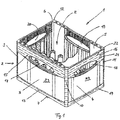
- Fig. 1 shows purely schematically a first embodiment of the transport container according to the invention in the form of a bottle crate 1, which has a circumferential side wall 2, consisting of the four walls 3, 4, 5, 6, a base 7 and a receiving area 8 for numerous bottles (not shown).
- the boundary edges 9, 10, 11, 12 between the walls 3, 4, 5, 6, the boundary edges 13, 14 between the walls 3, 4, 5, 6 and the bottom 7 and the upper edge 15, 16 of the walls 3, 4, 5, 6, in particular in the area of the handle recesses 17, 18, 19, 20 of the walls 3, 4, 5, 6 are provided with a structure 21 which has a plurality of substantially parallel recesses 22.
- the recesses 22 are in Fig. 1 indicated only schematically by the dash-dotted lines.
- the recesses 22 are aligned essentially parallel to the delimiting edges 13, 14 between the walls 3, 4, 5, 6 and the base 7.
- areas 23, 24 are provided, which are set back inwardly to the receiving area 8 of the bottle crate 1 with respect to the areas provided with the structure 21.
- These areas are centrally arranged areas 23, 24 which are provided as areas for product identification. Prints or stickers can be attached here.
- the bottle crate 1 When transporting the bottle crate 1 or its general manipulation in use, the bottle crate 1 will often come into contact with walls, guide aids or other bottle crates 1, in most cases a horizontal displacement of the bottle crate 1 relative to these other objects, i.e. H. a displacement parallel to the floor 7. In this way, the surface areas 9, 10, 11, 12, 13, 14, 15, 16 of the bottle crate 1 that come into contact with the other objects show signs of wear due to scraping and scratch marks.
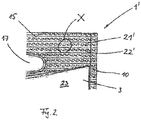
- Fig. 2 a corner area of the same bottle crate 1 'is shown, which is provided in the same areas 9, 10, 11, 12, 13, 14, 15, 16 with a structure 21', which, however, consists of recesses 22 running closer together than the closer ones the drawn lines indicate purely schematically.
- the structure 21 ' is a brush structure that is shown in FIG Fig. 3 for area X.
- Fig. 2 Partially enlarged is shown.
- Fig. 3 It can be seen that the depressions 22 'are not exactly parallel but essentially parallel to one another, ie that the depressions as a whole follow a preferred direction, namely in this case the alignment of the structure 21' along the upper delimiting edge 30 of the wall 4.
- the brush structure was produced by erosion, the depressions 22 'having a length of approximately 2 to 10 mm and a depth of approximately 0.05 to 0.06 mm.
- the present invention can provide transport containers in which traces of wear are either avoided or at least do not appear to the same extent visually as with transport containers that have been customary so far, so that the transport containers are identical Transport conditions can be kept in circulation longer than previously used.
Landscapes
- Engineering & Computer Science (AREA)
- Ceramic Engineering (AREA)
- Mechanical Engineering (AREA)
- Details Of Rigid Or Semi-Rigid Containers (AREA)
- Wrappers (AREA)
- Packaging Of Annular Or Rod-Shaped Articles, Wearing Apparel, Cassettes, Or The Like (AREA)
- Containers Having Bodies Formed In One Piece (AREA)
- Polyesters Or Polycarbonates (AREA)
Description
- Die vorliegende Erfindung betrifft einen Transportbehälter nach dem Oberbegriff von Anspruch 1.
- Solche Transportbehälter bestehen üblicherweise aus Kunststoff und werden zum Transport zahlreicher Produkte angewandt, wobei ein großer Markt für Flaschenkästen besteht. Solche Flaschenkästen weisen einen Boden sowie eine aus vier Wänden bestehende umlaufende Seitenwand auf, zwischen denen Aufnahmen für bestimmte Getränkeflaschen vorgesehen sind.
- Beim Transport solcher Transportbehälter werden diese häufig auf Förderbändern zwischen verschiedenen Stationen befördert. Beidseitig der Förderbänder sind dabei üblicherweise seitliche Führungen in Form von Schienen, Stützen oder dgl. vorgesehen, damit die Transportbehälter nicht vom Förderband herabfallen können. Hierbei kommt es jedoch häufig vor, dass die seitlichen Führungen an den Transportbehältern scheuem und dadurch Kratzer in der Oberfläche des Transportbehälters entstehen, wodurch zum einen eine Abnutzung des Transportbehälters erfolgt und zum anderen der optische Gesamteindruck des Transportbehälters leidet. Dies macht es notwendig, Transportbehälter nach einer gewissen Zeit auszutauschen, damit der mit solchen Transportbehältern auch verbundene Werbeeffekt aufgrund eines optisch sich verschlechternden Gesamteindrucks nicht verloren geht. Aus der
EP 0 208 020 A2 sind Stapelnuten und Stapelrippen in Seitenwänden von Transportbehältern bekannt, um ein Verrutschen der Behältern im Stapelverbund auf einer Palette zu vermeiden. - Aufgabe der vorliegenden Erfindung ist es daher, einen Transportbehälter bereitzustellen, bei dem Abnutzungsspuren entweder vermieden werden oder zumindest doch nicht in gleichem Maße optisch in Erscheinung treten, wie bei bisher gebräuchlichen Transportbehältern, so dass solche Transportbehälter bei gleichen Transportbedingungen länger im Umlauf gehalten werden können als die bisher gebräuchlichen.
- Diese Aufgabe wird gelöst mit einem Transportbehälter gemäß Anspruch 1. Vorteilhafte Weiterbildungen dieses Gegenstand sind in den abhängigen Ansprüchen angegeben.
- Der erfindungsgemäße Transportbehälter zeichnet sich also dadurch aus, dass zumindest bereichsweise an einer oder mehreren Außenflächen des Behälters eine Struktur mit furchenartigen Vertiefungen vorgesehen ist, deren Tiefen und Breiten im Bereich von 0,01 bis 1 mm liegen, wobei der Abstand der Vertiefungen in einem Bereich von 0,01 bis 0,7 mm vorgesehen ist. Nach einem Aspekt der Erfindung liegen die Vertiefungen in einer Vielzahl und sehr eng beabstandet vor, so dass durch die Vertiefungen eine sogenannte Bürstenstruktur gebildet wird, d.h. eine Struktur wie sie beispielsweise durch eine auf einer glatten Fläche geführte rotierende Bürste oder Schleifband beim Strukturaufbau eines Schibelagers erzeugt wird. Überraschenderweise hat sich nämlich gezeigt, dass durch eine Struktur aus solchen furchenartigen Vertiefungen beim Transport hervorgerufenen Abnutzungsspuren, die in Form von Kratzern vorliegen vertuscht werden können. Zusätzlich ergibt sich durch eine solche Bürstenstruktur ein optisch gefälliges Design.
- Besonders bevorzugt wird die Struktur im Wesentlichen parallel oder senkrecht zu einer Begrenzungskante der Wände bzw. des Bodens verlaufend aufgebracht. Dann verläuft die Struktur im Wesentlichen in der Richtung, in der auch die Abnutzung während des Transports erfolgt. Bevorzugt verlaufen dabei die Vertiefungen einer Struktur im Wesentlichen parallel zueinander, da dann parallel verlaufende Kratzer sehr weitgehend kaschiert werden können.
- Vorzugsweise verlaufen die Vertiefungen aller Strukturen im Wesentlichen parallel zu einander. Es kann jedoch auf vorgesehen sein, dass die Vertiefungen in bestimmten Strukturen anders ausgerichtet sind, wenn hier auch der Abnutzungsverlauf handhabungsbedingt anders verläuft.
- In einer vorteilhaften Ausgestaltung ist die Struktur an den Begrenzungskanten zwischen den Wänden vorgesehen. Weiterhin vorteilhaft kann die Struktur auch an den Begrenzungskanten zwischen den Wänden und dem Boden vorgesehen sein und außerdem kann die Struktur vorteilhaft an dem oberen Rand der Wand, insbesondere im Bereich der Griffausnehmung, vorgesehen sein.
- Zweckmäßigerweise sind nur die nach außen vorstehenden Teile der Wände mit der Struktur versehen, da im Wesentlichen nur diese beim Transport einer Abnutzung unterzogen sind.
- In einer vorteilhaften Ausgestaltung sind ein oder mehrere, insbesondere zentrale Bereiche der Außenflächen der Wände gegenüber den anderen Bereichen nach innen zurückversetzt angeordnet. Diese zurückversetzten Bereiche sind dann weniger Abnutzung unterzogen und können vorzugsweise für die Anbringung von Aufdrucken und dgl. zur Kennzeichnung, Werbung u. ä. verwendet werden.
- In einer besonders bevorzugten Ausgestaltung der Erfindung ist die Bürstenstruktur im Oberflächenbereich und/oder im oberflächennahen Bereich vorgesehen. Vorzugsweise weisen die Vertiefungen eine Tiefe von 0,03 mm bis 0,07 mm, insbesondere 0,05 mm bis 0,06 mm auf. Dann werden Abnutzungen besonders umfassend kaschiert. Ebenso werden Abnutzungen umfassend kaschiert bzw. gänzlich verhindert, wenn die Breite derVertiefungen zumindest im Bereich der Oberfläche der Wand Bodens bevorzugt, 0,03 bis 0,07 mm, insbesondere 0,05 bis 0,06 mm beträgt. Die Breite der Vertiefungen am Boden der Vertiefung ist dann abhängig von der geometrischen Formgebung der Vertiefungen, wobei keilartige bzw. gerundete Formen bevorzugt werden. Vorteilhaft liegen die Abstände benachbarter Furchen auch in den vorgenannten Bereichen.
- Erfindungsgemäß ist die Struktur eine Bürstenstruktur, die beispielsweise durch Ätzen oder Erodieren einfach hergestellt werden kann. Vorteilhaft beträgt die Länge der Vertiefungen zwischen 1 mm bis 50 mm, bevorzugt 2 mm bis 10 mm und insbesondere sind nicht alle Vertiefungen gleich lang, d. h. dass die Länge der Vielzahl von Vertiefungen in einer Struktur einer statistischen Verteilung innerhalb der angegebenen Längengrenzen folgt.
- Schließlich lässt sich die Kaschierungsmöglichkeit von Abnutzungen dadurch erhöhen, dass die Vertiefungen einen Abstand von 0,05 bis 0,7 mm, insbesondere 0,3 mm voneinander aufweisen. Der Abstand wird dabei von den Außenkanten der Vertiefungen zueinander bestimmt.
- Solche Bürstenstrukturen sind zwar allgemein bekannt, allerdings wurden sie bisher nur zur Oberflächengestaltung von beispielsweise Folien verwendet, um die Griffigkeit zu erhöhen, nicht jedoch für Transportkästen. Von den Erfindern wurde in diesem Zusammenhang erkannt, das solche Bürstenstrukturen sich vorteilhaft für die Kaschierung von Kratzern verwenden lassen.
- Die Merkmale und Kennzeichen sowie weitere Vorteile der vorliegenden Erfindung werden nun anhand der Darstellung bevorzugter Ausführungsbeispiele unter Hinzuziehung der Zeichnungen beschrieben. Dabei zeigen
- Fig. 1
- eine perspektivische Ansicht eines Flaschenkastens gemäß einer ersten Ausführungsform der Erfindung,
- Fig. 2
- eine Ansicht eines Eckausschnitts eines erfindungsgemäßen Flaschenkastens gemäß einer zwei- ten Ausführungsform der Erfindung und
- Fig. 3
- eine Detaildarstellung eines Bereichs X des erfindungsgemäßen Flaschenkastens gemäß
Fig. 3 . - Im Folgenden werden gleiche Bezugszeichen für gleiche Elemente verwendet.
-
Fig. 1 zeigt rein schematisch eine erste Ausführungsform des erfindungsgemäßen Transportbehälters in Form eines Flaschenkastens 1, der eine umlaufende Seitenwand 2, bestehend aus den vier Wänden 3, 4, 5, 6, einen Boden 7 und einen Aufnahmebereich 8 für zahlreiche Flaschen (nicht gezeigt) aufweist. Die Begrenzungskanten 9, 10, 11, 12 zwischen den Wänden 3, 4, 5, 6, die Begrenzungskanten 13, 14 zwischen den Wänden 3, 4, 5, 6 und dem Boden 7 und der obere Rand 15, 16 der Wände 3, 4, 5, 6, insbesondere im Bereich der Griffausnehmungen 17, 18, 19, 20 der Wände 3, 4, 5, 6 sind mit einer Struktur 21 versehen, die mehrere im Wesentlichen parallel verlaufende Vertiefungen 22 aufweist. Die Vertiefungen 22 sind inFig. 1 nur schematisch durch die strichpunktierten Linien angedeutet. Die Vertiefungen 22 sind dabei im Wesentlichen parallel zu den Begrenzungskanten 13, 14 zwischen den Wänden 3, 4, 5, 6 und dem Boden 7 ausgerichtet. In den Wänden 3, 4, 5, 6 sind Bereiche 23, 24 vorgesehen, die gegenüber den mit der Struktur 21 versehenen Bereichen nach innen zum Aufnahmebereich 8 des Flaschenkastens 1 zurückversetzt angeordnet sind. Bei diesen Bereichen handelt es sich um zentral angeordnete Bereiche 23, 24, die als Flächen für die Produktkennzeichnung vorgesehen sind. Hier können dazu Aufdrucke oder Aufkleber angebracht werden. - Beim Transport des Flaschenkastens 1 oder dessen allgemeiner Manipulation im Gebrauch wird der Flaschenkasten 1 häufig mit Wänden, Führungshilfen oder anderen Flaschenkästen 1 in Kontakt kommen, wobei in den meisten Fällen eine horizontale Verschiebung des Flaschenkastens 1 gegenüber diesen anderen Objekten erfolgt, d. h. eine Verschiebung parallel zum Boden 7. Auf diese Weise kommt es bei den mit den anderen Objekten in Kontakt gelangenden Oberflächenbereichen 9, 10, 11, 12, 13, 14, 15, 16 des Flaschenkastens 1 zu Abnutzungserscheinungen durch Schabe- und Kratzspuren. Während bei normalen Transportbehältern diese Abnutzungserscheinungen zu einer Veränderung der Oberflächenstruktur führen und sind dadurch optisch sehr schnell negativ bemerkbar machen, werden diese Abnutzungserscheinungen beim erfindungsgemäßen Flaschenkasten 1 durch die Vertiefungen 22 der aufgebrachten Struktur 21 dadurch verborgen, dass diese Struktur im Wesentlichen von vornherein der durch die Abnutzungserscheinungen hervorgerufenen Struktur entspricht und damit durch die Abnutzung im Wesentlichen keine Veränderung der Oberflächenstruktur und damit des optischen Eindrucks erfolgt. Im Übrigen wird auch die Abnutzung des Flaschenkastens 1 durch die Struktur 21 auch real dadurch gemindert, dass in den Bereichen 9, 10, 11, 12, 13, 14, 15, 16, in denen Vertiefungen 21 vorgesehen sind, eine solche Abnutzung nicht stattfinden, da dort der Flaschenkasten 1 nicht mit anderen Objekten in Kontakt treten kann.
- In
Fig. 2 ist ein Eckbereich des gleichen Flaschenkastens 1' abgebildet, der in den gleichen Bereichen 9, 10, 11, 12, 13, 14, 15, 16 mit einer Struktur 21' versehen ist, die allerdings aus dichter verlaufenden Vertiefungen 22 besteht, wie die dichter gezeichneten Strichlierungen rein schematisch andeuten. Die Struktur 21' ist eine Bürstenstruktur, die inFig. 3 für den Bereich X ausFig. 2 ausschnittsweise vergrößert abgebildet ist. - In
Fig. 3 ist zu erkennen, dass die Vertiefungen 22' nicht exakt parallel aber doch im Wesentlichen parallel zu einander ausgerichtet sind, d.h. dass die Vertiefungen insgesamt einer Vorzugsrichtung folgen, nämlich in diesem Fall der Ausrichtung der Struktur 21' entlang der oberen Begrenzungskante 30 der Wand 4. Die Bürstenstruktur wurde durch Erodieren hergestellt, wobei die Vertiefungen 22' eine Länge von ca. 2 bis 10 mm und eine Tiefe von ca. 0,05 bis 0,06 mm aufweisen. - Werden die Flaschenkästen 1, 1' nun beim Transport manipuliert, können sie in den Bereichen 9, 10, 11, 12, 13, 14, 15, 16 mit anderen Transportbehältern 1, 1', Wänden von Lagerräumen und dgl. sowie Führungsschienen von Transportbändern in Kontaktgeraten und dadurch Abnutzung unterliegen. Diese Abnutzung wird sich jedoch im Vergleich zu herkömmlichen Transportbehältern zum einen rein materialmäßig nicht so stark auswirken, da durch den Kontakt in den Vertiefungen 22, 22' selbst kein Material mehr entfernt werden wird, und zum anderen auch optisch wesentlich weniger stark auswirken, da die Abnutzung im Wesentlichen parallel zum Boden 7 erfolgt und daher die Abnutzungsspuren in den ebenfalls parallel zum Boden 7 ausgerichteten Vertiefungen 22, 22 "untergehen".
- Aus den vorstehenden Ausführungen ist deutlich geworden, dass mit der vorliegenden Erfindung Transportbehälter zur Verfügung gestellt werden können, bei denen Abnutzungsspuren entweder vermieden werden oder zumindest doch nicht in gleichem Maße optisch in Erscheinung treten, wie bei bisher gebräuchlichen Transportbehältern, so dass die Transportbehälter bei gleichen Transportbedingungen länger im Umlauf gehalten werden können als die bisher gebräuchlichen.
Claims (12)
- Transportbehälter aus Kunststoff, insbesondere Flaschenkasten (1; 1') oder dgl. mit einem Boden (7) und zumindest einer Wand (3, 4, 5, 6), dadurch gekennzeichnet, dass zumindest bereichsweise an einer Außenfläche einer oder mehrerer Wände (3, 4, 5, 6) an den nach außen vorstehenden Teilen (9, 10, 11, 12, 13, 14, 15, 16) der Wand (3, 4, 5, 6) eine Struktur (21; 21') in Art einer Bürstenstruktur mit furchenartigen Vertiefungen (22; 22') mit Tiefen und Breiten im Bereich von 0,01 bis 1 mm und mit einem Abstand der Vertiefungen in einem Bereich von 0,01 bis 0,7 mm vorgesehen ist.
- Transportbehälter nach Anspruch 1, dadurch gekennzeichnet, dass die Struktur (21, 21') im Wesentlichen parallel oder senkrecht zu einer Begrenzungskante (9, 10, 11, 12, 13, 14) der Wände (3, 4, 5, 6) bzw. des Bodens (7) verläuft.
- Transportbehälter nach Anspruch 1 oder 2, dadurch gekennzeichnet, dass die Vertiefungen (22; 22') einer Struktur (21; 21') im Wesentlichen parallel oder senkrecht zu einer Begrenzungskante (9, 10, 11, 12, 13, 14) der Wand (3, 4, 5, 6) bzw. des Bodens (7) verlaufen.
- Transportbehälter nach einem der vorherigen Ansprüche, dadurch gekennzeichnet, dass die Vertiefungen (22; 22') einer Struktur (21; 21') im Wesentlichen parallel zueinander verlaufen.
- Transportbehälter nach einem der vorherigen Ansprüche, dadurch gekennzeichnet, dass die Struktur (21; 21') zumindest an einer Begrenzungskante (9, 10, 11, 12) zwischen zwei Wänden (3, 4, 5, 6) vorgesehen ist.
- Transportbehälter nach einem der vorherigen Ansprüche, dadurch gekennzeichnet, dass die Struktur (21; 21') zumindest an einer Begrenzungskante (13, 14) zwischen einer Wand (3, 4, 5, 6) und dem Boden (7) vorgesehen ist.
- Transportbehälter nach einem der vorherigen Ansprüche, dadurch gekennzeichnet, dass ein oder mehrere, insbesondere zentral angeordnete Bereiche (23, 24) der Außenflächen der Wände (3, 4, 5, 6) gegenüber den anderen Bereichen der Wände (3, 4, 5, 6) bzw. des Bodens nach innen zurückversetzt angeordnet sind.
- Transportbehälter nach einem der vorherigen Ansprüche, dadurch gekennzeichnet, dass an dem oberen Rand (15, 16) der Außenfläche der Wand (3, 4, 5, 6), insbesondere im Bereich der Griffausnehmung (17, 18), die Struktur (21; 21') vorgesehen ist.
- Transportbehälter nach einem der vorherigen Ansprüche, dadurch gekennzeichnet, dass die Tiefe der Vertiefungen (22; 22') im Bereich von 0,01 bis 1 mm, vorzugsweise 0,03 mm bis 0,07 mm, insbesondere 0,05 mm bis 0,06 mm beträgt.
- Transportbehälter nach einem der vorherigen Ansprüche, dadurch gekennzeichnet, dass die Breite der Vertiefungen (22; 22') zumindestens im Bereich der Oberfläche der Wand (3, 4, 5, 6), 0,03 bis 0,07 mm, insbesondere 0,05 bis 0,06 mm beträgt.
- Transportbehälter nach einem der vorherigen Ansprüche, dadurch gekennzeichnet, dass die Länge der Vertiefungen (22; 22') zwischen 1 mm bis 50 mm, bevorzugt 2 mm bis 10 mm beträgt und nicht alle Vertiefungen (22; 22') gleich lang sind.
- Transportbehälter nach einem der vorherigen Ansprüche, dadurch gekennzeichnet, dass entlang der Längsausdehnung der Vertiefungen (22; 22') zwischen den Vertiefungen (22; 22') ein Abstand von 0,05 bis 0,7 mm, insbesondere 0,3 mm besteht.
Priority Applications (4)
| Application Number | Priority Date | Filing Date | Title |
|---|---|---|---|
| PL08018237T PL2177440T3 (pl) | 2008-10-17 | 2008-10-17 | Pojemnik transportowy optymalizowany pod względem zużycia |
| DE502008003295T DE502008003295D1 (de) | 2008-10-17 | 2008-10-17 | Gegenüber Abnutzung optimierter Transportbehälter |
| AT08018237T ATE506264T1 (de) | 2008-10-17 | 2008-10-17 | Gegenüber abnutzung optimierter transportbehälter |
| EP08018237.1A EP2177440B2 (de) | 2008-10-17 | 2008-10-17 | Gegenüber Abnutzung optimierter Transportbehälter |
Applications Claiming Priority (1)
| Application Number | Priority Date | Filing Date | Title |
|---|---|---|---|
| EP08018237.1A EP2177440B2 (de) | 2008-10-17 | 2008-10-17 | Gegenüber Abnutzung optimierter Transportbehälter |
Publications (3)
| Publication Number | Publication Date |
|---|---|
| EP2177440A1 EP2177440A1 (de) | 2010-04-21 |
| EP2177440B1 EP2177440B1 (de) | 2011-04-20 |
| EP2177440B2 true EP2177440B2 (de) | 2020-11-18 |
Family
ID=40445336
Family Applications (1)
| Application Number | Title | Priority Date | Filing Date |
|---|---|---|---|
| EP08018237.1A Active EP2177440B2 (de) | 2008-10-17 | 2008-10-17 | Gegenüber Abnutzung optimierter Transportbehälter |
Country Status (4)
| Country | Link |
|---|---|
| EP (1) | EP2177440B2 (de) |
| AT (1) | ATE506264T1 (de) |
| DE (1) | DE502008003295D1 (de) |
| PL (1) | PL2177440T3 (de) |
Families Citing this family (1)
| Publication number | Priority date | Publication date | Assignee | Title |
|---|---|---|---|---|
| DE102011109108B4 (de) | 2011-08-02 | 2022-11-17 | Oberland M & V Gmbh | Flaschenkasten mit Prägefolie |
Family Cites Families (5)
| Publication number | Priority date | Publication date | Assignee | Title |
|---|---|---|---|---|
| DE7315492U (de) * | 1973-08-30 | Spumalit Anstalt | Stapelbarer Flaschenkasten | |
| DE8403475U1 (de) * | 1984-02-07 | 1984-04-26 | Götz, Wilhelm, 7954 Bad Wurzach | Quaderfoermiger Flaschenkasten aus Kunststoff |
| DE3526691A1 (de) * | 1985-05-04 | 1987-01-15 | Schoeller & Co Ag A | Flaschenkasten, insbesondere hoch- oder niederbordkasten |
| DE9211568U1 (de) * | 1992-09-01 | 1993-06-17 | Berolina Kunststoff Gesellschaft mbH & Co Verpackungssysteme KG, 1000 Berlin | Flaschenkasten |
| DE102006058031B3 (de) * | 2006-12-07 | 2008-07-24 | Linpac Materials Handling (Germany) Gmbh | Flaschenkasten aus Kunststoff |
-
2008
- 2008-10-17 DE DE502008003295T patent/DE502008003295D1/de active Active
- 2008-10-17 PL PL08018237T patent/PL2177440T3/pl unknown
- 2008-10-17 EP EP08018237.1A patent/EP2177440B2/de active Active
- 2008-10-17 AT AT08018237T patent/ATE506264T1/de active
Also Published As
| Publication number | Publication date |
|---|---|
| PL2177440T3 (pl) | 2011-09-30 |
| ATE506264T1 (de) | 2011-05-15 |
| EP2177440B1 (de) | 2011-04-20 |
| EP2177440A1 (de) | 2010-04-21 |
| DE502008003295D1 (de) | 2011-06-01 |
Similar Documents
| Publication | Publication Date | Title |
|---|---|---|
| EP1791765B1 (de) | Deckel, insbesondere für eine lebensmittelverpackung, oder etikett, insbesondere flaschenhalsetikett | |
| EP0253363B1 (de) | Stapelbarer Flaschenkasten | |
| DE102007018358B4 (de) | Relief-Overmolding | |
| DE202015106745U1 (de) | Etikettiervorrichtung umfassend einen Greiferzylinder mit einer Vielzahl von Greifern mit Greiferschwämmen | |
| DE102011109108B4 (de) | Flaschenkasten mit Prägefolie | |
| EP2177440B1 (de) | Gegenüber Abnutzung optimierter Transportbehälter | |
| DE202009016050U1 (de) | Warentrennstab | |
| DE102017107675A1 (de) | Behälter aus Kunststoff mit In-Mould-Label | |
| DE102007002368A1 (de) | Kasten aus Kunststoff, insbesondere Flaschenkasten | |
| EP1182141B1 (de) | Vorrichtung für die Sicherung von Gegenständen beim Transport, bestehend aus kammartigen Steckleisten | |
| DE102005003725A1 (de) | Rutschhemmende Beschichtung eines Transportkastens einer Palette oder eines Tablars aus Kunststoff und Verfahren zu deren Herstellung | |
| EP0525623B1 (de) | Behälterelement | |
| DE29821954U1 (de) | Warentrennstab | |
| DE102006017483B4 (de) | Stapelbarer Kasten, insbesondere Flaschenkasten aus Kunststoff | |
| AT510852B1 (de) | Kunststoffbehälter, insbesondere flaschenkasten | |
| DE202004011244U1 (de) | Transportstern | |
| EP3967616B1 (de) | Flaschenkasten | |
| DE20320695U1 (de) | Kunststoffprodukt, insbesondere Flaschenkasten, und Werkzeug zur Herstellung eines Kunststoffprodukts | |
| EP0606073B2 (de) | Flaschenkasten | |
| EP3015382B1 (de) | Teilbarer kasten | |
| DE102004027555B4 (de) | Verpackung | |
| DE202024104782U1 (de) | Mehrwegpflanztopf | |
| EP0972712A1 (de) | Verpackungsbehälter | |
| DE8906423U1 (de) | Flaschenkasten aus Kunststoff | |
| DE1862778U (de) | Zuschnitt fuer gefachstreifen. |
Legal Events
| Date | Code | Title | Description |
|---|---|---|---|
| PUAI | Public reference made under article 153(3) epc to a published international application that has entered the european phase |
Free format text: ORIGINAL CODE: 0009012 |
|
| 17P | Request for examination filed |
Effective date: 20090421 |
|
| AK | Designated contracting states |
Kind code of ref document: A1 Designated state(s): AT BE BG CH CY CZ DE DK EE ES FI FR GB GR HR HU IE IS IT LI LT LU LV MC MT NL NO PL PT RO SE SI SK TR |
|
| AX | Request for extension of the european patent |
Extension state: AL BA MK RS |
|
| GRAP | Despatch of communication of intention to grant a patent |
Free format text: ORIGINAL CODE: EPIDOSNIGR1 |
|
| AKX | Designation fees paid |
Designated state(s): AT BE BG CH CY CZ DE DK EE ES FI FR GB GR HR HU IE IS IT LI LT LU LV MC MT NL NO PL PT RO SE SI SK TR |
|
| GRAS | Grant fee paid |
Free format text: ORIGINAL CODE: EPIDOSNIGR3 |
|
| RAP1 | Party data changed (applicant data changed or rights of an application transferred) |
Owner name: SCHOELLER ARCA SYSTEMS GMBH |
|
| GRAA | (expected) grant |
Free format text: ORIGINAL CODE: 0009210 |
|
| AK | Designated contracting states |
Kind code of ref document: B1 Designated state(s): AT BE BG CH CY CZ DE DK EE ES FI FR GB GR HR HU IE IS IT LI LT LU LV MC MT NL NO PL PT RO SE SI SK TR |
|
| REG | Reference to a national code |
Ref country code: GB Ref legal event code: FG4D Free format text: NOT ENGLISH |
|
| REG | Reference to a national code |
Ref country code: CH Ref legal event code: EP |
|
| REG | Reference to a national code |
Ref country code: IE Ref legal event code: FG4D Free format text: LANGUAGE OF EP DOCUMENT: GERMAN |
|
| REF | Corresponds to: |
Ref document number: 502008003295 Country of ref document: DE Date of ref document: 20110601 Kind code of ref document: P |
|
| REG | Reference to a national code |
Ref country code: DE Ref legal event code: R096 Ref document number: 502008003295 Country of ref document: DE Effective date: 20110601 |
|
| REG | Reference to a national code |
Ref country code: NL Ref legal event code: T3 |
|
| LTIE | Lt: invalidation of european patent or patent extension |
Effective date: 20110420 |
|
| REG | Reference to a national code |
Ref country code: PL Ref legal event code: T3 |
|
| PG25 | Lapsed in a contracting state [announced via postgrant information from national office to epo] |
Ref country code: NO Free format text: LAPSE BECAUSE OF FAILURE TO SUBMIT A TRANSLATION OF THE DESCRIPTION OR TO PAY THE FEE WITHIN THE PRESCRIBED TIME-LIMIT Effective date: 20110720 Ref country code: PT Free format text: LAPSE BECAUSE OF FAILURE TO SUBMIT A TRANSLATION OF THE DESCRIPTION OR TO PAY THE FEE WITHIN THE PRESCRIBED TIME-LIMIT Effective date: 20110822 Ref country code: LT Free format text: LAPSE BECAUSE OF FAILURE TO SUBMIT A TRANSLATION OF THE DESCRIPTION OR TO PAY THE FEE WITHIN THE PRESCRIBED TIME-LIMIT Effective date: 20110420 Ref country code: HR Free format text: LAPSE BECAUSE OF FAILURE TO SUBMIT A TRANSLATION OF THE DESCRIPTION OR TO PAY THE FEE WITHIN THE PRESCRIBED TIME-LIMIT Effective date: 20110420 Ref country code: SE Free format text: LAPSE BECAUSE OF FAILURE TO SUBMIT A TRANSLATION OF THE DESCRIPTION OR TO PAY THE FEE WITHIN THE PRESCRIBED TIME-LIMIT Effective date: 20110420 |
|
| REG | Reference to a national code |
Ref country code: IE Ref legal event code: FD4D |
|
| PG25 | Lapsed in a contracting state [announced via postgrant information from national office to epo] |
Ref country code: CY Free format text: LAPSE BECAUSE OF FAILURE TO SUBMIT A TRANSLATION OF THE DESCRIPTION OR TO PAY THE FEE WITHIN THE PRESCRIBED TIME-LIMIT Effective date: 20110420 Ref country code: ES Free format text: LAPSE BECAUSE OF FAILURE TO SUBMIT A TRANSLATION OF THE DESCRIPTION OR TO PAY THE FEE WITHIN THE PRESCRIBED TIME-LIMIT Effective date: 20110731 Ref country code: FI Free format text: LAPSE BECAUSE OF FAILURE TO SUBMIT A TRANSLATION OF THE DESCRIPTION OR TO PAY THE FEE WITHIN THE PRESCRIBED TIME-LIMIT Effective date: 20110420 Ref country code: SI Free format text: LAPSE BECAUSE OF FAILURE TO SUBMIT A TRANSLATION OF THE DESCRIPTION OR TO PAY THE FEE WITHIN THE PRESCRIBED TIME-LIMIT Effective date: 20110420 Ref country code: LV Free format text: LAPSE BECAUSE OF FAILURE TO SUBMIT A TRANSLATION OF THE DESCRIPTION OR TO PAY THE FEE WITHIN THE PRESCRIBED TIME-LIMIT Effective date: 20110420 Ref country code: IS Free format text: LAPSE BECAUSE OF FAILURE TO SUBMIT A TRANSLATION OF THE DESCRIPTION OR TO PAY THE FEE WITHIN THE PRESCRIBED TIME-LIMIT Effective date: 20110820 Ref country code: GR Free format text: LAPSE BECAUSE OF FAILURE TO SUBMIT A TRANSLATION OF THE DESCRIPTION OR TO PAY THE FEE WITHIN THE PRESCRIBED TIME-LIMIT Effective date: 20110721 |
|
| PLBI | Opposition filed |
Free format text: ORIGINAL CODE: 0009260 |
|
| PG25 | Lapsed in a contracting state [announced via postgrant information from national office to epo] |
Ref country code: IE Free format text: LAPSE BECAUSE OF FAILURE TO SUBMIT A TRANSLATION OF THE DESCRIPTION OR TO PAY THE FEE WITHIN THE PRESCRIBED TIME-LIMIT Effective date: 20110420 Ref country code: EE Free format text: LAPSE BECAUSE OF FAILURE TO SUBMIT A TRANSLATION OF THE DESCRIPTION OR TO PAY THE FEE WITHIN THE PRESCRIBED TIME-LIMIT Effective date: 20110420 Ref country code: CZ Free format text: LAPSE BECAUSE OF FAILURE TO SUBMIT A TRANSLATION OF THE DESCRIPTION OR TO PAY THE FEE WITHIN THE PRESCRIBED TIME-LIMIT Effective date: 20110420 |
|
| PLAX | Notice of opposition and request to file observation + time limit sent |
Free format text: ORIGINAL CODE: EPIDOSNOBS2 |
|
| 26 | Opposition filed |
Opponent name: D W PLASTICS N.V. Effective date: 20120119 |
|
| PG25 | Lapsed in a contracting state [announced via postgrant information from national office to epo] |
Ref country code: SK Free format text: LAPSE BECAUSE OF FAILURE TO SUBMIT A TRANSLATION OF THE DESCRIPTION OR TO PAY THE FEE WITHIN THE PRESCRIBED TIME-LIMIT Effective date: 20110420 |
|
| REG | Reference to a national code |
Ref country code: DE Ref legal event code: R026 Ref document number: 502008003295 Country of ref document: DE Effective date: 20120119 |
|
| PG25 | Lapsed in a contracting state [announced via postgrant information from national office to epo] |
Ref country code: IT Free format text: LAPSE BECAUSE OF FAILURE TO SUBMIT A TRANSLATION OF THE DESCRIPTION OR TO PAY THE FEE WITHIN THE PRESCRIBED TIME-LIMIT Effective date: 20110420 Ref country code: MC Free format text: LAPSE BECAUSE OF NON-PAYMENT OF DUE FEES Effective date: 20111031 |
|
| PLAF | Information modified related to communication of a notice of opposition and request to file observations + time limit |
Free format text: ORIGINAL CODE: EPIDOSCOBS2 |
|
| REG | Reference to a national code |
Ref country code: FR Ref legal event code: ST Effective date: 20120629 |
|
| PLBB | Reply of patent proprietor to notice(s) of opposition received |
Free format text: ORIGINAL CODE: EPIDOSNOBS3 |
|
| PG25 | Lapsed in a contracting state [announced via postgrant information from national office to epo] |
Ref country code: FR Free format text: LAPSE BECAUSE OF NON-PAYMENT OF DUE FEES Effective date: 20111102 |
|
| PG25 | Lapsed in a contracting state [announced via postgrant information from national office to epo] |
Ref country code: MT Free format text: LAPSE BECAUSE OF FAILURE TO SUBMIT A TRANSLATION OF THE DESCRIPTION OR TO PAY THE FEE WITHIN THE PRESCRIBED TIME-LIMIT Effective date: 20110420 |
|
| PG25 | Lapsed in a contracting state [announced via postgrant information from national office to epo] |
Ref country code: LU Free format text: LAPSE BECAUSE OF NON-PAYMENT OF DUE FEES Effective date: 20111017 |
|
| REG | Reference to a national code |
Ref country code: CH Ref legal event code: PL |
|
| PLAY | Examination report in opposition despatched + time limit |
Free format text: ORIGINAL CODE: EPIDOSNORE2 |
|
| GBPC | Gb: european patent ceased through non-payment of renewal fee |
Effective date: 20121017 |
|
| PG25 | Lapsed in a contracting state [announced via postgrant information from national office to epo] |
Ref country code: BG Free format text: LAPSE BECAUSE OF FAILURE TO SUBMIT A TRANSLATION OF THE DESCRIPTION OR TO PAY THE FEE WITHIN THE PRESCRIBED TIME-LIMIT Effective date: 20110720 |
|
| PG25 | Lapsed in a contracting state [announced via postgrant information from national office to epo] |
Ref country code: GB Free format text: LAPSE BECAUSE OF NON-PAYMENT OF DUE FEES Effective date: 20121017 Ref country code: LI Free format text: LAPSE BECAUSE OF NON-PAYMENT OF DUE FEES Effective date: 20121031 Ref country code: CH Free format text: LAPSE BECAUSE OF NON-PAYMENT OF DUE FEES Effective date: 20121031 |
|
| PG25 | Lapsed in a contracting state [announced via postgrant information from national office to epo] |
Ref country code: TR Free format text: LAPSE BECAUSE OF FAILURE TO SUBMIT A TRANSLATION OF THE DESCRIPTION OR TO PAY THE FEE WITHIN THE PRESCRIBED TIME-LIMIT Effective date: 20110420 |
|
| PLAH | Information related to despatch of examination report in opposition + time limit modified |
Free format text: ORIGINAL CODE: EPIDOSCORE2 |
|
| PG25 | Lapsed in a contracting state [announced via postgrant information from national office to epo] |
Ref country code: HU Free format text: LAPSE BECAUSE OF FAILURE TO SUBMIT A TRANSLATION OF THE DESCRIPTION OR TO PAY THE FEE WITHIN THE PRESCRIBED TIME-LIMIT Effective date: 20110420 |
|
| PLAT | Information related to reply to examination report in opposition deleted |
Free format text: ORIGINAL CODE: EPIDOSDORE3 |
|
| PLBC | Reply to examination report in opposition received |
Free format text: ORIGINAL CODE: EPIDOSNORE3 |
|
| PLBC | Reply to examination report in opposition received |
Free format text: ORIGINAL CODE: EPIDOSNORE3 |
|
| PLAH | Information related to despatch of examination report in opposition + time limit modified |
Free format text: ORIGINAL CODE: EPIDOSCORE2 |
|
| PLAT | Information related to reply to examination report in opposition deleted |
Free format text: ORIGINAL CODE: EPIDOSDORE3 |
|
| PLBC | Reply to examination report in opposition received |
Free format text: ORIGINAL CODE: EPIDOSNORE3 |
|
| RDAF | Communication despatched that patent is revoked |
Free format text: ORIGINAL CODE: EPIDOSNREV1 |
|
| APAH | Appeal reference modified |
Free format text: ORIGINAL CODE: EPIDOSCREFNO |
|
| APBM | Appeal reference recorded |
Free format text: ORIGINAL CODE: EPIDOSNREFNO |
|
| APBP | Date of receipt of notice of appeal recorded |
Free format text: ORIGINAL CODE: EPIDOSNNOA2O |
|
| APBQ | Date of receipt of statement of grounds of appeal recorded |
Free format text: ORIGINAL CODE: EPIDOSNNOA3O |
|
| PLBP | Opposition withdrawn |
Free format text: ORIGINAL CODE: 0009264 |
|
| APBU | Appeal procedure closed |
Free format text: ORIGINAL CODE: EPIDOSNNOA9O |
|
| PLAY | Examination report in opposition despatched + time limit |
Free format text: ORIGINAL CODE: EPIDOSNORE2 |
|
| PLBC | Reply to examination report in opposition received |
Free format text: ORIGINAL CODE: EPIDOSNORE3 |
|
| PGFP | Annual fee paid to national office [announced via postgrant information from national office to epo] |
Ref country code: PL Payment date: 20191015 Year of fee payment: 12 |
|
| PGFP | Annual fee paid to national office [announced via postgrant information from national office to epo] |
Ref country code: AT Payment date: 20191018 Year of fee payment: 12 |
|
| PUAH | Patent maintained in amended form |
Free format text: ORIGINAL CODE: 0009272 |
|
| STAA | Information on the status of an ep patent application or granted ep patent |
Free format text: STATUS: PATENT MAINTAINED AS AMENDED |
|
| 27A | Patent maintained in amended form |
Effective date: 20201118 |
|
| AK | Designated contracting states |
Kind code of ref document: B2 Designated state(s): AT BE BG CH CY CZ DE DK EE ES FI FR GB GR HR HU IE IS IT LI LT LU LV MC MT NL NO PL PT RO SE SI SK TR |
|
| REG | Reference to a national code |
Ref country code: DE Ref legal event code: R102 Ref document number: 502008003295 Country of ref document: DE |
|
| REG | Reference to a national code |
Ref country code: NL Ref legal event code: FP |
|
| REG | Reference to a national code |
Ref country code: AT Ref legal event code: MM01 Ref document number: 506264 Country of ref document: AT Kind code of ref document: T Effective date: 20201017 |
|
| PG25 | Lapsed in a contracting state [announced via postgrant information from national office to epo] |
Ref country code: AT Free format text: LAPSE BECAUSE OF NON-PAYMENT OF DUE FEES Effective date: 20201017 |
|
| PG25 | Lapsed in a contracting state [announced via postgrant information from national office to epo] |
Ref country code: PL Free format text: THE PATENT HAS BEEN ANNULLED BY A DECISION OF A NATIONAL AUTHORITY Effective date: 20210218 |
|
| PG25 | Lapsed in a contracting state [announced via postgrant information from national office to epo] |
Ref country code: PL Free format text: THE PATENT HAS BEEN ANNULLED BY A DECISION OF A NATIONAL AUTHORITY Effective date: 20210218 |
|
| PGFP | Annual fee paid to national office [announced via postgrant information from national office to epo] |
Ref country code: NL Payment date: 20241023 Year of fee payment: 17 |
|
| PGFP | Annual fee paid to national office [announced via postgrant information from national office to epo] |
Ref country code: BE Payment date: 20241022 Year of fee payment: 17 |
|
| PGFP | Annual fee paid to national office [announced via postgrant information from national office to epo] |
Ref country code: DE Payment date: 20251223 Year of fee payment: 18 |