EP2167639B1 - Kulturmedium für haemophilus-influenzae vom typ b - Google Patents
Kulturmedium für haemophilus-influenzae vom typ b Download PDFInfo
- Publication number
- EP2167639B1 EP2167639B1 EP08806147.8A EP08806147A EP2167639B1 EP 2167639 B1 EP2167639 B1 EP 2167639B1 EP 08806147 A EP08806147 A EP 08806147A EP 2167639 B1 EP2167639 B1 EP 2167639B1
- Authority
- EP
- European Patent Office
- Prior art keywords
- medium
- peptone
- protoporphyrin
- prp
- concentration
- Prior art date
- Legal status (The legal status is an assumption and is not a legal conclusion. Google has not performed a legal analysis and makes no representation as to the accuracy of the status listed.)
- Revoked
Links
Images


Classifications
-
- C—CHEMISTRY; METALLURGY
- C12—BIOCHEMISTRY; BEER; SPIRITS; WINE; VINEGAR; MICROBIOLOGY; ENZYMOLOGY; MUTATION OR GENETIC ENGINEERING
- C12N—MICROORGANISMS OR ENZYMES; COMPOSITIONS THEREOF; PROPAGATING, PRESERVING, OR MAINTAINING MICROORGANISMS; MUTATION OR GENETIC ENGINEERING; CULTURE MEDIA
- C12N1/00—Microorganisms; Compositions thereof; Processes of propagating, maintaining or preserving microorganisms or compositions thereof; Processes of preparing or isolating a composition containing a microorganism; Culture media therefor
- C12N1/20—Bacteria; Culture media therefor
-
- A—HUMAN NECESSITIES
- A61—MEDICAL OR VETERINARY SCIENCE; HYGIENE
- A61K—PREPARATIONS FOR MEDICAL, DENTAL OR TOILETRY PURPOSES
- A61K39/00—Medicinal preparations containing antigens or antibodies
- A61K39/02—Bacterial antigens
- A61K39/102—Pasteurellales, e.g. Actinobacillus, Pasteurella; Haemophilus
-
- A—HUMAN NECESSITIES
- A61—MEDICAL OR VETERINARY SCIENCE; HYGIENE
- A61P—SPECIFIC THERAPEUTIC ACTIVITY OF CHEMICAL COMPOUNDS OR MEDICINAL PREPARATIONS
- A61P31/00—Antiinfectives, i.e. antibiotics, antiseptics, chemotherapeutics
- A61P31/04—Antibacterial agents
-
- A—HUMAN NECESSITIES
- A61—MEDICAL OR VETERINARY SCIENCE; HYGIENE
- A61P—SPECIFIC THERAPEUTIC ACTIVITY OF CHEMICAL COMPOUNDS OR MEDICINAL PREPARATIONS
- A61P31/00—Antiinfectives, i.e. antibiotics, antiseptics, chemotherapeutics
- A61P31/12—Antivirals
- A61P31/14—Antivirals for RNA viruses
- A61P31/16—Antivirals for RNA viruses for influenza or rhinoviruses
-
- A—HUMAN NECESSITIES
- A61—MEDICAL OR VETERINARY SCIENCE; HYGIENE
- A61P—SPECIFIC THERAPEUTIC ACTIVITY OF CHEMICAL COMPOUNDS OR MEDICINAL PREPARATIONS
- A61P37/00—Drugs for immunological or allergic disorders
-
- C—CHEMISTRY; METALLURGY
- C12—BIOCHEMISTRY; BEER; SPIRITS; WINE; VINEGAR; MICROBIOLOGY; ENZYMOLOGY; MUTATION OR GENETIC ENGINEERING
- C12P—FERMENTATION OR ENZYME-USING PROCESSES TO SYNTHESISE A DESIRED CHEMICAL COMPOUND OR COMPOSITION OR TO SEPARATE OPTICAL ISOMERS FROM A RACEMIC MIXTURE
- C12P21/00—Preparation of peptides or proteins
-
- C—CHEMISTRY; METALLURGY
- C12—BIOCHEMISTRY; BEER; SPIRITS; WINE; VINEGAR; MICROBIOLOGY; ENZYMOLOGY; MUTATION OR GENETIC ENGINEERING
- C12P—FERMENTATION OR ENZYME-USING PROCESSES TO SYNTHESISE A DESIRED CHEMICAL COMPOUND OR COMPOSITION OR TO SEPARATE OPTICAL ISOMERS FROM A RACEMIC MIXTURE
- C12P7/00—Preparation of oxygen-containing organic compounds
- C12P7/02—Preparation of oxygen-containing organic compounds containing a hydroxy group
- C12P7/04—Preparation of oxygen-containing organic compounds containing a hydroxy group acyclic
- C12P7/18—Preparation of oxygen-containing organic compounds containing a hydroxy group acyclic polyhydric
-
- C—CHEMISTRY; METALLURGY
- C12—BIOCHEMISTRY; BEER; SPIRITS; WINE; VINEGAR; MICROBIOLOGY; ENZYMOLOGY; MUTATION OR GENETIC ENGINEERING
- C12P—FERMENTATION OR ENZYME-USING PROCESSES TO SYNTHESISE A DESIRED CHEMICAL COMPOUND OR COMPOSITION OR TO SEPARATE OPTICAL ISOMERS FROM A RACEMIC MIXTURE
- C12P9/00—Preparation of organic compounds containing a metal or atom other than H, N, C, O, S or halogen
-
- C—CHEMISTRY; METALLURGY
- C12—BIOCHEMISTRY; BEER; SPIRITS; WINE; VINEGAR; MICROBIOLOGY; ENZYMOLOGY; MUTATION OR GENETIC ENGINEERING
- C12N—MICROORGANISMS OR ENZYMES; COMPOSITIONS THEREOF; PROPAGATING, PRESERVING, OR MAINTAINING MICROORGANISMS; MUTATION OR GENETIC ENGINEERING; CULTURE MEDIA
- C12N2500/00—Specific components of cell culture medium
- C12N2500/90—Serum-free medium, which may still contain naturally-sourced components
- C12N2500/92—Medium free of human- or animal-derived components
-
- C—CHEMISTRY; METALLURGY
- C12—BIOCHEMISTRY; BEER; SPIRITS; WINE; VINEGAR; MICROBIOLOGY; ENZYMOLOGY; MUTATION OR GENETIC ENGINEERING
- C12R—INDEXING SCHEME ASSOCIATED WITH SUBCLASSES C12C - C12Q, RELATING TO MICROORGANISMS
- C12R2001/00—Microorganisms ; Processes using microorganisms
- C12R2001/01—Bacteria or Actinomycetales ; using bacteria or Actinomycetales
- C12R2001/21—Haemophilus
Definitions
- the subject of the invention is a culture medium of Haemohilus influenzae type b, in which the protein nitrogen source comprises at least one plant peptone and in which the heme source is constituted by protoporphyrin IX.
- the invention also relates to a process for the production of polyribosyl ribitol phosphate (PRP) used in the manufacture of a vaccine against Haemophilus influenzae type b meningitis .
- PRP polyribosyl ribitol phosphate
- the capsule is the major virulence factor of Haemophilus influenzae type b strains. It is a polysaccharide formed from the sequence of repeating units of ribosylribitol phosphate. Polyribosylribitol phosphate (PRP) or capsular polysaccharide type b is used interchangeably to refer to the Haemophilus influenzae type b capsule .
- PRP Polyribosylribitol phosphate
- capsular polysaccharide type b is used interchangeably to refer to the Haemophilus influenzae type b capsule .
- Haemophilus influenzae type b populations are often heterogeneous; encapsulated bacteria coexist with uncapsulated bacteria. Non-encapsulated bacteria lose their ability to express the capsule as a result of genetic mutations that occur spontaneously. According to Hoiseth et al. (Infectious and Immunity (1985), 49: 389-395 ), the loss of capsule expression occurs at a frequency of 0.1 to 0.3% at each bacterial generation. On the genetic level, it has been shown that the cap locus is involved in the expression of the capsule on the surface of these bacteria ( Kroll, JS, et al. J. Bacteriol. (1988) 170: 859-864 ). Capped bacteria have a cap locus that contains at least two copies of an 18Kb gene.
- Non-encapsulated bacteria no longer have an 18 Kb gene or only a single copy of this gene.
- the bacterial agglutination test is usually used in the presence of anti-PRP antibodies or molecular biology techniques characterizing the cap locus are used .
- PRP or PRP vaccines coupled by covalent binding to a carrier protein are used to prevent Haemophilus influenzae type b infections.
- the subject of the invention is a new culture medium of Haemophilus influenzae type b, characterized in that the source of protein nitrogen is of non-animal origin and comprises at least one plant peptone and in that the heme source consists of protoporphyrin IX.
- a medium is particularly suitable for the industrial production of PRP. It offers greater biological safety since peptones of animal origin have been replaced by plant peptones. It also responds to production cost contingencies since it takes 10 to 20 times less protoporphyrin IX than hemin to obtain PRP levels in culture supernatants that can be exploited industrially (rate ⁇ 0.2g / L).
- protein nitrogen source is meant a preparation in which the amount of amino acids, peptides, polypeptides, peptones and / or proteins represent at least 50% of the dry weight of this preparation.
- protein source of non-animal origin is meant a source of protein nitrogen which has a non-animal origin. Therefore, the preparation is not produced from animal cells, animal tissues, organs or animal organisms. It is usually produced from plants, algae, bacteria, yeasts or fungi.
- the culture medium according to the invention firstly designates a liquid medium but it can also be in solid form.
- the solid form is obtained by addition to the liquid medium of a gelling substance, such as the agar which is usually used in a concentration range of 10 to 30 g / l.
- the heme source according to the invention is represented by protoporphyrin IX of formula:
- R denotes indifferently H, or a salt, preferably an alkali metal salt, in particular a sodium salt.
- Protoporphyrin IX in the case of the present invention is not complexed with iron.
- all the media recommended for producing PRP contained, as a source of heme, either a protoporphyrin IX complexed with iron (this is heme) or a protoporphyrin IX complexed with FeCl (this involves hemin), or finally and more rarely a protoporphyrin IX complexed with FeOH (it is haematin).
- strains of Haemophilus influenzae serotype b possess a ferrochelatase that allows them to transform protoporphyrin IX into a form complexed with iron ( Loeb et al., J.
- protoporphyrin IX as a source of heme and a vegetable peptone as a source of protein nitrogen
- the protoporphyrin IX concentrations required were 10 to 100 times lower than those used when the source Heme is a protoporphyrin IX complexed with iron.
- a protoporphyrin IX concentration of between 100 and 200 ⁇ g / l is sufficient to obtain a maximum production of PRP (the concentration in the culture supernatant is ⁇ 0.4 g / l) while a concentration 10 to 20 times higher in hemin is required to obtain an equivalent production of PRP.
- the protoporphyrin IX that is suitable for the purpose of the invention may be of animal origin and produced from animal tissues (cattle, pigs, etc.).
- the degree of purity of these preparations is generally at least 80%, preferably at least 90%, and even more preferably at least 95% (w / w).
- the contaminants may contain residual amounts of amino acids, peptides and / or proteins
- the protoporphyrin IX preparations can not be considered as a source of protein nitrogen in the sense of the invention insofar as the amounts Residual amino acids, peptides and / or proteins, if present, generally represent less than 5%, generally less than 1% of the dry weight of the preparations.
- protoporphyrin IX which is free of any contaminant of animal origin.
- the production method as described in the French patent application registered under the registration number can be used. 07/02334 and deposited the 30/03/2007 using the steps that are described in Figure 2.
- the culture medium according to the invention comprises a protoporphyrin IX free of any contaminant of animal origin.
- the main source of protein nitrogen is represented by one or more plant peptones. They are usually in the form of hydrolysates. They are obtained by enzymatic or chemical treatment of the proteins generally extracted from the parts of the plant which have the highest protein contents. Preferably, plants that have not been genetically modified are used.
- one of the methods is to treat the protein extract with hydrochloric acid under hot and under pressure. The hydrolyzate is then neutralized with sodium hydroxide and freed of solid byproducts.
- the enzymatic pathway one of the conventional methods is to treat the protein extract with papain.
- Plant peptones are preparations containing mainly a mixture of amino acids, and small peptides whose PM is ⁇ 1 KD. Peptides whose PM is> 1 KD generally represent less than 40% of the mixture. Ultrafiltered hydrolysates can also be used as needed to enrich or select small peptides. The ultrafiltered hydrolyzate can also be subjected to an additional chromatography step to select hydrolyzate fractions having a PM ⁇ 1 KD, or ⁇ 500 Daltons, or even ⁇ 350 Daltons.
- Vegetable peptone preparations are thus obtained in which more than 40% of the peptides, more than 50% of the peptides, or even more than 60% of the peptides have a PM ⁇ 1KD, or ⁇ 500 Daltons, or even ⁇ 350 Daltons.
- the plant peptones that are suitable for the purpose of the invention come in particular from potatoes such as those provided by Organotechnie (plant peptone E1 or plant peptone ET1), soya bean like those supplied by Organotechnie or Kerry, cotton (Hy cotton provided by Quest), rice (Hy rice provided by Kerry), Solabia supplied bean, wheat as provided by Oganotechnie (wheat peptone E1) or Kerry (Hypep TM 4602, Hypep TM 4601) or pea, including Kerry's enzymatic pea hydrolysates (HY pea 7404) or oxoid (VG 100) or acid hydrolysates pea provided by Oxoid referred to as "Acid hydrolysed vegetable peptone".
- the plant peptone suitable for the purpose of the invention is a peptone of wheat and even more preferably the plant peptone is a pea peptone.
- the protein nitrogen contents of plant peptones that are suitable for the purpose of the invention are between 8% and 15% per gram of peptone (weight / weight). In this range, good results are obtained when the concentration of plant peptone in a culture medium according to the invention corresponds to a protein nitrogen concentration ranging from 0.08 to 2.25 g / l and preferably in a range of concentration ranging from 0.4 to 1.5 g / l.
- the subject of the invention is a medium in which the total concentration of plant peptone is equivalent to a protein nitrogen concentration ranging from 0.08 g / l to 2.25 g / l.
- ⁇ NAD also called factor V or ⁇ nicotinamide adenine dinucleotide
- a purified preparation of ⁇ NAD itself or a purified preparation containing a derivative of ⁇ NAD selected from nicotinamide riboside (NR), ⁇ nicotinamide adenine mononucleotide (NMN), or ⁇ nicotinamide adenine dinucleotide phosphate (NADP).
- the degree of purity of the preparation is generally at least 80%, preferably at least 90% and even more preferably at least 95%.
- These purified preparations are used at a concentration of at least 1 .mu.M.
- ⁇ NAD is used at a concentration ranging from 2 to 50 mg / l of culture medium.
- any sugar that is metabolized by Haemophilus influenzae type b such as fructose, ribose, xylose, fucose, glycerol, or more particularly glucose, can be used.
- the source of carbohydrate has a non-animal origin and the concentration of carbohydrate in the culture medium is at least 10 mM.
- glucose when used, its concentration in the culture medium is generally between 2 and 20 g / l.
- the culture medium according to the invention also comprises a source of vitamins and growth factors.
- a yeast extract is used which comes from the soluble fraction of the autolysis product of the yeast of beer resulting from the cultivation of Saccharomyces sp. It contains in its composition many amino acids, vitamins such as vitamins B5, B1, B2, B6, PP, H and B12, trace elements, oligonucleotide derivatives.
- the commercially available autolytic yeast extracts produced by Quest, Difco or Solabia are suitable for the purpose of the invention.
- the concentration of the yeast extract in the medium according to the invention is usually in a concentration range ranging from 0.2 g / l to 15 g / l, preferably in a concentration range from 0.2 g / l to 10 g / l and even more advantageously in a concentration range of 0.2 to 5 g / l. It was observed that the PRP production by the bacteria was better when the concentration of yeast extract was in the concentration range of 0.2 to 5g / L.
- Yeast extract also represents an accessory source of protein nitrogen of non-animal origin.
- the protein nitrogen contents in the yeast extracts are in fact generally 9 to 11% (w / w).
- the concentrations in vegetable peptone (s) and in yeast extract are generally adjusted so that the content of Total protein nitrogen in the medium does not exceed 2.5 g / l.
- the concentrations of plant peptone (s) and yeast extract are adjusted so that the total protein nitrogen content in the medium according to the invention is 0.5 to 2.5 g / l.
- the culture medium according to the invention also comprises inorganic salts.
- the mineral salts used are generally in the form of saline solutions, at least one of which has sufficient buffering capacity so that the initial pH of the medium, before seeding of the bacteria, is preferably between 6.5 and 7.5 and so particularly preferred between 7 and 7.5.
- a mixture of monovalent cations such as Na + and / or K + , divalent cations such as Ca ++ and / or Mg ++ , phosphate anions in the form HPO 4 - , H 2 PO 4 - and and / or PO4 - and anions SO 4 - , and Cl - in the form of saline solutions whose molarities may vary usually in a concentration range ranging from 10 -2 mM to 100 mM.
- a culture medium according to the invention may incorporate in its composition, one or more other mineral and / or organic components provided that they do not negatively interfere in the PRP production.
- components from a non-animal source are introduced.
- amino acids produced by chemical synthesis, or by microbiological fermentation such as tryptophan and / or cystine, mineral nitrogen generally in the form of saline solutions providing NH 4 + ions and / or even other substances such as sodium lactate.
- These additives are generally used at low concentrations.
- the complement of amino acids in the culture medium is generally at a concentration ⁇ 1 mM.
- ammonium salts and / or sodium lactate are generally at a concentration of ⁇ 10 mM.
- a solution of iron salt may be added as a precaution to the culture medium, in a concentration range of from 0.5 to 10 mg / l to prevent any deficiency of iron that may be present during bacterial growth.
- the culture medium according to the invention is free of any protein, polypeptide, peptide and / or amino acid of human or bovine origin or even free of any protein, polypeptide, peptide and / or amino acid d animal origin, or more advantageously free of any contaminant of animal origin.
- this media composition By using this media composition, the growth of non-encapsulated revertant bacteria is prevented during culture in a liquid medium. It has been noted that by sowing in this medium a population which initially contains 100% of capsulated bacteria (the genome of the entire bacterial population has a cap locus which contains two copies of the 18Kb gene), we obtain after a period of culture equivalent to 40 bacterial generations, a bacterial population which always contains 100% of capsulated bacteria.
- This composition of medium which includes in particular that which is cited in Example 3.2.2.1 and which is used in Example 4, contributes to improving the yields of PRP by exerting a stabilizing role on the population of encapsulated bacteria (cf. example 4).
- step (i) it is possible to proceed in step (i) to one or more successive cultures of Haemophilus influenzae of serotype b in a liquid medium according to the invention. Successive crops can increase biomass.
- the bacteria from a lyophilisate or frozen are inoculated in a medium volume generally not exceeding 1 liter.
- this first culture is transferred to a second culture medium identical to the first, but whose volume can be up to 10 to 20 times greater.
- the amount of bacteria seeded in the second medium is adjusted so that the initial optical density (OD) of the second culture medium at 600 nm is between 0.2 and 0.4 to promote rapid growth of the bacterial population.
- This second culture is usually performed in fermenters but other types of containers can be used (flasks, spinners, ). When the culture is carried out as a fermentor, a temperature of 37.degree. C. +/- 1.degree.
- a nutrient supplement in carbohydrate is added to the medium during the exponential phase of growth so as to prolong the bacterial multiplication and to obtain, at the end of the exponential phase of growth, a greater bacterial density.
- the amount of carbohydrate added is evaluated according to the level of lactate present in the medium at the time of addition.
- the supernatant is finally removed from the last culture after inactivation of the bacteria. Inactivation is conventionally carried out using a formalin solution at a final concentration of 0.35% -0.37% (V / V). The supernatant is conventionally separated from the bacteria by a centrifugation step. The PRP contained in the resulting supernatant is then extracted and purified according to conventional methods well known to those skilled in the art.
- a preliminary step of culture in a solid medium is conventionally used.
- bacteria from a lyophilizate or frozen are resuspended and then seeded on a solid carbon-based medium supplemented with horse blood. After 16 to 20 hours of culture in an incubator at 37 ° C. under 10% of CO2, bacterial colonies are taken which are amplified in a liquid medium.
- This method has the disadvantage of using a solid medium which contains proteins of animal origin as a source of protein nitrogen. The inventors have therefore sought to identify compositions of solid media in which the source of protein nitrogen is devoid of any protein of animal origin.
- the inventors have demonstrated that it is possible to use a solid medium in which the yeast extract could serve both as a source of protein nitrogen and a source of vitamins and growth factors, the sources heme, ⁇ NAD, carbohydrate, and mineral salts having the same characteristics as those previously described.
- a minimum concentration of 0.05 mg / L of protoporhyrin IX, 0.1 ⁇ M for the source of ⁇ NAD and 0.1 mM for the source of carbohydrate are recommended while the concentration of yeast extract in the medium corresponds to a protein nitrogen content of 0.2 to 1.5 g / l.
- the colonies obtained are viable, even if the growth symbolized by the size of the colonies is not always optimal. They can be transferred directly into a liquid culture medium according to the invention. We then proceed as before to amplify the culture volumes, extract and purify the PRP.
- the solid culture medium comprises as a source of protein nitrogen at least one peptone of plant origin used in the form of a chemical or enzymatic hydrolyzate.
- the yeast extract it is possible to use at least one plant peptone derived from wheat, cotton, rice, soybean, faba bean, potato, pea, or a mixture of these. ci at a protein nitrogen concentration ranging from 0.02 g / l to 2 g / l, the total protein nitrogen concentration in the solid medium preferably not exceeding 2.5 g / l.
- mixtures of plant peptones that can be used is a mixture of soybean, cotton and rice peptones or a mixture of pea peptones, cotton and wheat or finally a mixture of base of peas and potatoes.
- the inventors have indeed noted that when the solid medium also comprises a plant peptone as a source of protein nitrogen bacterial growth and viability of bacteria were better than those observed on a solid medium based on coal ("agar charcoal") added of blood cooked and defibrinated horse. They are maximum when the plant peptone used is a pea peptone.
- the subject of the invention is also a method for producing PRP in which the protein nitrogen source of the solid medium is free of animal protein and comprises at least one plant peptone.
- the plant peptone is a pea peptone.
- the solid culture medium according to the invention is free of any protein, any polypeptide, any peptide and / or any amino acid of human or bovine origin or even more advantageously free of any contaminant of animal origin.
- the source of heme is constituted by synthetic protoporphyrin IX, the source of ⁇ NAD and carbohydrate being also of non-animal origin, the source of vitamins and growth factors being provided by a yeast extract and the gelling substance being agar (a product derived from algae).
- the subject of the invention is also a method for producing PRP according to which the solid culture medium and the liquid culture medium are free of any contaminant of animal origin.
- the carbohydrate used is preferably a non-animal sugar metabolizable by the bacterium, such as fructose, ribose, xylose, fucose, glycerol, or in particular glucose. Good results have been obtained with glucose at a concentration of at least 0.1 g / l. Usually glucose is used at a concentration of 0.1 g / l to 20 g / l and preferably 0.1 g / l to 10 g / l.
- the detoxifying agents promote the growth of bacteria by neutralizing the inhibitory substances that may be present in the agar preparations as reported by Evans N.M. et al (J. Med.Microbiol.Vol.7, pp 305-309, 1974 ).
- detoxifying agent is preferably used, coal, starch, Tween ®, polyvinyl alcohol, sodium oleate or dithionite. Good results were observed with tween 80 ® (polyoxyethylene sorbitan monooleate) used at a concentration of 0.5 to 10 mg / l whereas a solid composition without tween® produced small colonies indistinguishable on the morphological plane.
- the amounts of yeast extract and vegetable peptone are such that the total protein nitrogen concentration is at least 0.2 g / l.
- the ratio between the amount of plant peptone and the amount of yeast extract in the medium can vary to a large extent from 0.1 to 9 as long as the protein nitrogen concentration in the culture medium does not exceed 0, 8 g / l.
- this ratio is less than 1.
- the white colonies obtained from this medium composition produce up to 400 times more PRP than the gray colonies.
- Their cap locus was studied by digesting genomic DNA using the restriction enzymes Smal and KpnI. The pulsed-field electrophoresis was then carried out on the digestion product followed by a revelation using a specific PvuII probe according to the operating conditions described in Example 3.
- all the electrophoretic profiles of the colonies white have a 45 Kb electrophoretic band. No electrophoretic band of 18 Kb is observed.
- the cape locus of these colonies therefore contains at least two copies of the 18 Kb gene, which means that the bacterial population from the white colonies is completely encapsulated.
- the electrophoretic profiles of the gray colonies mainly comprise an electrophoretic band of 18 Kb.
- This selective medium composition particularly The preferred method also makes it possible to select white colonies whose bacterial populations are fully encapsulated.
- one of the additional means for increasing the yields in the PRP production process which comprises a preliminary phase of culture in a solid medium is to transfer to a liquid medium only the white colonies which have been obtained from a composition. of selective solid medium.
- a solid medium composition is used which provides white colonies consisting essentially of capsulated bacteria.
- the object of the invention is also, in a preferred embodiment, a method for producing PRP in which only the white colonies obtained on a selective solid medium composition are transferred to the liquid culture medium.
- these white colonies are transferred to a liquid culture medium which has a stabilizing role on the encapsulated bacterial population.
- this method also makes it possible to optimize the production of PRP when the population of Haemophilus influeuzae serotype b is heterogeneous and contains both capsulated bacteria and uncapsulated bacteria.
- the solid medium culture step selects the white colonies that contain a population of fully encapsulated bacteria.
- the step of amplifying the biomass in the liquid medium stabilizes, as has been seen previously, the population of capsulated bacteria by preventing the development of non-encapsulated revertants.
- the yields of PRP / liter of culture finally obtained are then maximal (see Example 4).
- This method can also be used to produce a population of fully encapsulated bacteria.
- the bacterial population obtained is fully encapsulated when the electrophoretic profile of the genomic DNA of this population shows that the cap locus contains at least two copies of the 18 Kb gene (cf protocol of Example 3) and that the seeding of an aliquot of this population on a Selective solid medium composition according to the invention produces more than 95% of white colonies, and preferably at least 98% of white colonies.
- a stabilizing liquid medium ie which prevents the appearance of non-encapsulated revertant bacteria
- the bacterial population obtained is preserved by lyophilization or by freezing (in this case, a freezing agent is added to the culture medium. non-animal origin such as glycerol).
- seed lots containing a homogeneous population of fully encapsulated bacteria that provide an additional guarantee of biological safety since they were obtained using culture media free of any contaminant of animal origin. These seed lots can be used in turn to produce PRP.
- the subject of the invention is a vaccine against Haemophilus influenzae type b meningitis comprising PRP obtained from one of the embodiments of the process according to the invention.
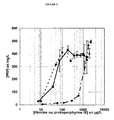
- the figure 1 represents the PRP production rates (in mg / l) in a culture medium in which the peptones of animal origin were replaced by pea peptone as a function of hemin (- ⁇ -) or protoporphyrin IX concentrations of animal origin (- ⁇ -) or synthetic (- ⁇ -) (in ⁇ g / L).
- the figure 2 represents the production rates in PRP (in mg / L) in a culture medium in which the peptones of animal origin were replaced by wheat peptone according to the concentrations of hemin (- ⁇ -) or protoporphyrin IX animal (- ⁇ -) or synthetic (- ⁇ -) in ⁇ g / L).
- the figure 3 represents the electrophoretic profiles of different bacterial populations of Haemophilus influenzae serotype b : the M band represents the electrophoretic profile of a heterogeneous mother population with two bands of 18 Kb and 45 Kb, the band F the electrophoretic profile of its daughter population (F ) after selection on a selective solid medium with a single 45 Kb band; bands B represent the profiles of different white bacterial colonies (B) with a single band of 45 Kb and bands G, the profiles of different bacterial colonies gray (G) with a single band of 18 Kb.
- the MW band shows the positioning of the molecular weight markers (Kb).
- Example 1 Influence of protoporphyrin IX on the production of PRP in a plant peptone culture medium.
- a Pea peptone enzymatic hydrolyzate supplied by Kerry (Hy pea 7404) and a wheat peptone supplied by Organotechnie (19559) were tested at a concentration in the culture medium equivalent to 0.87 g / l of protein nitrogen. .
- the production of PRP was also measured in a medium which contains a peptone of animal origin, such as casein hydrolyzate (HAC) supplied by Solabia at a concentration of 0, 87 g / l of protein nitrogen in the presence of increasing concentrations of hemin (see Table 3).
- HAC casein hydrolyzate
- the stock solutions of hemin and protoporphyrin IX were checked for their respective levels of active compounds after sterilizing filtration.
- the contents of protoporphyrin IX and hemin were determined by reverse phase high performance liquid chromatography (RP-HPLC).
- the chromatographic chain comprises a pump module with two heads for the production of a binary gradient, a programmable automatic injector, a UV detector with a diode array and a 4 ⁇ m Synergi chromatography column, Polar RP-80A (150x4.6). mm, ref 00F-4336-E0, Phenomenex.
- It consists of 40 ml of yeast extract stock solution, 43 ml of glucose stock solution and 5 ml of ⁇ NAD stock solution.
- the basal medium is finally sterilized by autoclaving at 121 ° C for 30 minutes.
- the culture was carried out in 500 ml Erlens.
- 100 ml of base medium containing either wheat peptone or small peptone are introduced.
- Each Erlen is inoculated with the contents of a serotype b Haemophilus influenzae freeze which contains 10 8 to 10 10 bacteria / ml at an inoculation rate of 0.2% (V / V). incubation with stirring at 175 rpm in an incubator at 37 ° C is measured in each Erlen, the OD of the bacterial suspension obtained and the concentration of PRP by taking a little culture supernatant.
- PRP productivity was determined based on a sandwich ELISA assay performed in duplicate on culture supernatants.
- the culture supernatants to be assayed are also introduced, also making successive dilutions in the dilution buffer. After a further incubation of about 2 hours at 37 ° C., followed by a microplate rinsing phase, 100 ⁇ L of a solution of biotinylated rabbit antibodies obtained by treating the sera of rabbits vaccinated with the microbiota were introduced into the microwells.
- the reaction is blocked by adding 50 ⁇ l / well of 2N H 2 SO 4.
- the reading of the microplates is at 492 and 620 nm (to take into account the absorption of the plastic). From the optical densities obtained on the samples tested, the content of PRP in the different culture supernatants is interpolated by means of the calibration range.
- Table 1 porcine protoporphyrin IX in ⁇ g / L Pea + porcine protoporphyrin IX PRP in mg / L Dosage 1 PRP in mg / L Dosage 2 Average PRP in mg / L PRP standard deviation 7.48 15.1 16.1 15.6 0.71 37.4 143 149 146 4.24 74.8 344 354 349 7.07 187 450 490 470 28.28 374 415 432 423.5 12,02 748 495 523 509 19.80 1122 492 550 521 41.01 1496 466 493 479 19,09 synthetic protoporphyrin IX in ⁇ g / L Pois + synthetic Protoporphyrin IX PRP in mg / L Dosage 1 PRP in mg / L Dosage 2 Average PRP in mg / L PRP standard deviation 9.96 11.3 11.8 11.55 0.35 49.8 139 134 136.5 3.54 99
- the figure 1 reproduces the results of Table I by showing the PRP production curves obtained as a function of the concentration and source of heme used in a medium containing pea peptone.
- the production curves in PRP are equivalent according to whether a synthetic protoporphyrin IX or a protoporphyrin IX of animal origin is used as a heme source.
- the production of PRP is significantly lower when the medium contains hemin compared to a medium containing protoporphyrin IX and this in all the concentration range tested.
- the figure 2 reproduces the results of Table II by showing the PRP production curves obtained as a function of the concentration and source of heme used in a medium containing wheat peptone.
- the production curves in PRP are equivalent according to whether a synthetic protoporphyrin IX or a protoporphyrin IX of animal origin is used as a heme source.
- the production of PRP is lower when the medium contains hemin compared with a medium which contains protoporphyrin IX at equivalent concentrations and this appears all the more clearly that the concentration of hemin is low.
- protoporphyrin IX Just put about 100 ⁇ g / L of protoporphyrin IX to have an optimal production of PRP ( ⁇ 400mg / ml) whereas it takes about 1500 ⁇ g / L of hemine to have an equivalent production of PRP. About 15 times less protoporphyrin IX than hemin is required in a wheat peptone culture medium to obtain the same productivities in PRP.
- the concentration of hemin in order to obtain a concentration of about 400 mg / l of PRP in a casein hydrolyzate and hemin-based medium the concentration of hemin must be at least 500 ⁇ g / l, whereas concentration of about 100 ⁇ g / l in protoporphyrin IX is sufficient in a medium based on wheat or pea peptone and protoporphyrin IX.
- the vegetable peptone and protoporphyrin IX media therefore appear to be more advantageous than the current media containing animal peptone and hemin used for the production of PRP.
- a lyophilizate of a heterogeneous population of Haemophilus influenzae serotype b bacteria containing about 10 8 seeds is taken up in 1 ml of Dubelcco PBS buffer (Gibco ref 14040-083). Successive dilutions of reason 10 are made in this buffer.
- each of the dilutions 10 -5 , 10 -6 and 10 -7 which are seeded are taken, either on petri dishes containing different compositions of selective solid media according to the invention, or on a petri dish containing a standard solid medium containing agar-agar agar (Difco, Ref 289410) supplemented with 10% (V / V) of defibrinated cooked horse blood (BioMérieux, Ref 55832).
- Quantification of PRP is done by assaying ribitol which is one of the components of the repeating unit of the polysaccharide and which is released quantitatively after acid hydrolysis.
- Each colony is taken up in 500 .mu.l of ultrafiltered water and then 100 .mu.l of the suspension are taken and diluted in 300 .mu.l of ultrafiltered water.
- ribitol From a stock solution of ribitol at 1 mg / l in purified ultra-filtered water, a standard range of ribitol ranging from 0 to 20 ⁇ g / ml is carried out. The final volume of each sample in the standard range is also 400 ⁇ l.
- the calibration curve (amount of ribitol as a function of the surface of the chromatographic peaks) is established from the calibration range and then the amount of ribitol contained in each of the sample preparations is interpolated. The amount of PRP contained in each sample and the concentration of PRP in each colony is deduced, knowing that ribitol represents 41% of the weight of PRP.
- the protein content of each colony determined by the MicroBCA method reflects the biomass of each colony. For this, the colonies are taken individually and then taken up in 200 .mu.l of sterile ultrafiltered water. The mixture is vortexed 30 seconds. Samples (10 ⁇ l to 40 ⁇ l) are taken to perform the protein assay using the MicroBCA kit (pierce) according to the manufacturer's recommendations. A standard range is prepared from a solution of bovine serum albumin at 100 ⁇ g / ml. The samples and the standard range are read with a spectrophotometer at 562 nm. The protein concentrations of the samples expressed in ⁇ g / colony are calculated using the standard range.
- Two methods of producing PRP were compared.
- the contents of a freeze ( ⁇ 10 8 bacteria / ml) of a population of Haemophilus influenzae type b bacteria are seeded directly into a liquid culture medium according to the invention.
- the characteristics of the mother population were previously analyzed (see next paragraph).
- a daughter population is derived from the parent population using a selective solid medium according to the invention which makes it possible to select a daughter population from the white colonies which contain 100% capsulated bacteria.
- the girl population is then seeded in the same culture medium as the mother population.
- the production of PRP by the mother and daughter populations was then measured and compared in a third step.
- the labeled PvuII-specific probe was obtained from a DNA preparation from plasmid pBR322-pU038 (Department of Pediatrics - University of Oxford - John Radcliffe Hospital). 20 ⁇ g of plasmid DNA are digested for 2 hours at 37 ° C. in the presence of 40 units of pvuII enzyme (NEBIOLABS reference # R0151-S) in 10X buffer 4 (NEBIOLABS reference # B7002-S) diluted 10 times in sterile water without nuclease.
- the digestion product was then subjected to 1% agarose gel electrophoresis on a weight / volume basis in the presence of an IX TAE buffer in which 0.25% volume / volume blue bromophenol, 0.25% was added.
- volume / volume of xylene cyanol FF, 30% v / v glycerol was added.
- the 2.1 Kb band of interest corresponding to the PvuII DNA fragment is taken.
- the DNA is then extracted from the agarose gel by passage over a "Nucleospin" column (Macherey -Nalgel Ref: 740590.250) and its integrity is then checked by spectrophotometric reading at 260 nm.
- the PvuII probe is labeled with digoxygenin using the "DIG-Chem-Link Labeling and Detection Set" marking kit (ROCHE Ref: 1836463). The labeled probe is stored at -20 ° C.
- a vial from the stockpile is thawed on a petri dish containing a standard solid agar-agar medium (Difco, ref 289410) supplemented with 10% (V / V) cooked horse blood. defibrinated (BioMérieux, ref 55832). After an incubation of 18h at 37 ° in an oven containing 10% CO 2 , the resulting colonies are collected and suspended in a Pett IV Buffer so that the OD 680 nm is ⁇ 1.8. The volume-to-volume bacterial suspension is mixed with low-melting 2% (V / V) agarose (Ref: BioRad, ref 162-0138), tempered at 50 ° C. and then this mixture is distributed in molds.
- V / V agarose
- each "plug” is placed in 1 ml of 1X lysis solution. After incubation for 6 hours at 37 ° C., this solution is replaced with 1 ml of an ESP solution. After a further overnight incubation at 50 ° C, each "plug” is washed 3 times with 4 ml of a TE solution for 30 min. The genomic DNA of the lysed bacteria contained in each plug is then digested overnight at 25 ° C.
- the digested "plugs" are inserted into a 0.8% V / V-certified agarose gel (BIORAD ref: 162-0138) and then subjected to pulsed-field gel electrophoresis performed in 0.5X TBE buffer for 13 hours, using a " chefs map” type apparatus (Biorad) set to apply 6 volts / cm, an angle of 120 °, a linear progression, an initial switch time of 0.09s, and a time of final switch "of 11.54 seconds.
- the gel is transferred to a positively charged nylon filter (Roche Ref: 1209272) by semi-dry transfer using the Vacugene XL Vacuum Blotting System (Pharmacia) according to the manufacturer's recommendations.
- the DNA transferred to the nylon filter is UV fixed for 3 minutes at 312 nm.
- the filter is then pre-hybridized for 2 hours at 42 ° C. in "DIG easy hyb” buffer (Roche ref: 1585738), then hybridized overnight at 42 ° C in "DIG easy hyb” buffer containing 20-50 ng of a digoxygenin-labeled PvuII specific probe / ml buffer. This probe specifically recognizes the cape locus of Haemophilus influenzae serotype b.
- the filter is then washed twice with a low stringency buffer at 65 ° C followed by washing in a high stringency buffer.
- the filter is then revealed using a luminescent substrate (CDP -star: Roche Ref: 2041677) after adding a solution of anti-digoxygenin antibody labeled with alkaline phopshatase using the kit "Dig-Chem-link-labeling". Detection Set "(Roche).
- the electrophoretic profile obtained is represented at figure 3 . Two bands of 18 Kb and 45 Kb are observed, indicating that the structure of the cap locus of the mother population is heterogeneous. Part of the population has a cap locus that contains two copies of the 18 Kb gene, corresponding to the 45 Kb electrophoretic band, while the other part has a cap locus in an unduplicated form, corresponding to the electrophoretic band of 18 Kb.
- the mother population is a mixture of capsulated and non-encapsulated bacteria. This heterogeneity is furthermore confirmed by using the test for determining the percentage of white colonies obtained after seeding the mother population on a selective solid medium (see Example 2).
- the step of culture in a selective solid medium and the morphological analysis of the colonies obtained are carried out according to the same operating conditions described in Example 2.
- the composition of the selective solid medium corresponds to that of the selective medium A of Example 2.
- the number of white colonies per 100 colonies visualized is determined. 60% of the colonies are in the form of white colonies, which confirms that the initial parent population is heterogeneous and contains a mixture of capsulated and non-encapsulated bacteria.
- the Erlenmeyer is placed in an oven at 37 ° C. with stirring. When the OD at 600 nm is close to 2, we add a volume of glycerol such that its final concentration in the bacterial suspension is 20% (V / V).
- the bacterial suspension is distributed in Nunc tubes under 1 ml before being frozen at -70 ° C. A daughter bacterial population in the form of a freeze produced from a white colony obtained on a selective solid medium composition and derived from a bacterium from the parent population has thus been derived.
- the analysis of the cape locus of the daughter population was performed according to the protocol described in section 3.1.1.2.
- the electrophoretic profile shows a single 45 Kb band, which indicates that the cape locus of the daughter population is essentially in a duplicated form of the 18 Kb gene (cf. figure 3 ). Therefore, the population Bacterial daughter is essentially made up of encapsulated bacteria. The homogeneity of this population is confirmed by the fact that it also produces 100% white colonies when seeded on a selective solid medium.
- the PRP production of the daughter population consisting of a homogeneous population of capsulated bacteria is improved by a factor of 3. Therefore, the method consisting of using a culture step on a selective solid medium which makes it possible to select white colonies containing 100% capsulated bacteria, improves the yields of PRP obtained.
- This method can also be used to form a population of fully encapsulated bacteria from an initial population that contains a mixture of capsulated and non-encapsulated bacteria.
- the starting bacterial population consists of a population of fully encapsulated bacteria whose cap locus contains at least two copies of the 18 Kb gene and produces 100% white colonies on a selective solid medium.
- a frozen product containing 10 8 to 10 10 bacteria from the selected daughter population are inoculated according to the operating procedure of paragraph 3.2.2.1 in a 1-liter fermenter containing 500 ml of a liquid medium whose composition is that indicated in paragraph 3.2.2.1. After incubation for 14 hours at 37 ° C. with stirring, a volume of the first culture is transferred to a second 1-liter fermenter containing 500 ml of the same liquid medium so as to have an initial OD equal to 0.3.
- a volume of the second culture is transferred into a third fermenter of 1 liter containing 500 ml of medium so as to have an initial OD equal to 0 , 3 and then after an incubation of ⁇ 3 hours (OD obtained close to 4), the volume is poured into a fourth fermenter of 1 liter containing 500 ml of the same liquid medium.
- This operating procedure is a laboratory-scale transposition of the steps that are normally performed for the industrial production of PRP in a 13,000 liter fermenter.
- the number of cumulative bacterial generations obtained at the end of the fourth fermenter culture of 1 liter corresponds in fact to the number of bacterial generations obtained at the end of the culture in a fermenter of 13,000 liters.
- the locus cap was characterized and the percentage of bacteria which formed white colonies on a selective solid medium was determined according to the methods described in Example 3. The results obtained are summarized in the table below.
- the number of generations accumulated at the end of the fourth crop is 24.09 generations.
- Successive cultures do not modify the characteristics of the bacterial population that remains fully encapsulated during successive cultures.
- PRP production also remains stable throughout the crop at a very high level.
- the composition of this medium therefore has a stabilizing role on the encapsulated bacterial population since the characteristics of the bacterial population do not change appreciably during the course of the culture.
Landscapes
- Health & Medical Sciences (AREA)
- Life Sciences & Earth Sciences (AREA)
- Chemical & Material Sciences (AREA)
- Organic Chemistry (AREA)
- Engineering & Computer Science (AREA)
- Wood Science & Technology (AREA)
- Zoology (AREA)
- General Health & Medical Sciences (AREA)
- Bioinformatics & Cheminformatics (AREA)
- Biotechnology (AREA)
- Genetics & Genomics (AREA)
- Microbiology (AREA)
- Medicinal Chemistry (AREA)
- General Engineering & Computer Science (AREA)
- General Chemical & Material Sciences (AREA)
- Chemical Kinetics & Catalysis (AREA)
- Biochemistry (AREA)
- Virology (AREA)
- Public Health (AREA)
- Pharmacology & Pharmacy (AREA)
- Animal Behavior & Ethology (AREA)
- Veterinary Medicine (AREA)
- Biomedical Technology (AREA)
- Immunology (AREA)
- Nuclear Medicine, Radiotherapy & Molecular Imaging (AREA)
- Tropical Medicine & Parasitology (AREA)
- Communicable Diseases (AREA)
- Molecular Biology (AREA)
- Oncology (AREA)
- Mycology (AREA)
- Epidemiology (AREA)
- Pulmonology (AREA)
- Micro-Organisms Or Cultivation Processes Thereof (AREA)
- Preparation Of Compounds By Using Micro-Organisms (AREA)
- Medicines Containing Antibodies Or Antigens For Use As Internal Diagnostic Agents (AREA)
Claims (21)
- Medium für die Kultur von Haemophilus influenzae Serotyp b, dadurch gekennzeichnet, dass die Protein-Stickstoffquelle nicht-tierischen Ursprungs ist und mindestens ein pflanzliches Pepton umfasst, und dadurch, dass die Quelle von Häm aus Protoporphyrin IX besteht.
- Medium nach Anspruch 1, wobei die Konzentration an Protoporphyrin IX mindestens 0,01 mg/l beträgt.
- Medium nach Anspruch 2, wobei die Konzentration an Protoporphyrin IX zwischen 0,1 mg/l und 5 mg/l beträgt.
- Medium nach einem der Ansprüche 1 bis 3, wobei es sich bei dem pflanzlichen Pepton um ein Weizenpepton handelt.
- Medium nach einem der Ansprüche 1 bis 4, wobei es sich bei dem pflanzlichen Pepton um ein Erbsenpepton handelt.
- Medium nach einem der Ansprüche 1 bis 5, wobei die Gesamtkonzentration an pflanzlichem Pepton in dem Kulturmedium einer Protein-Stickstoffkonzentration zwischen 0,08 g/l und 2,25 g/l entspricht.
- Medium nach einem der Ansprüche 1 bis 6, das von jeglicher Verunreinigung tierischen Ursprungs frei ist.
- Medium nach einem der Ansprüche 5 bis 7, dadurch gekennzeichnet, dass das Medium flüssig ist und Folgendes umfasst:- 0,1 mg/l bis 5 mg/l Protoporphyrin IX,- 2 bis 50 mg/l β-NAD,- 2 bis 20 g/l Glucose,- 2 bis 5 g/l eines Hefeextrakts,- ein Erbsenpepton entsprechend einer Protein-Stickstoffkonzentration zwischen 0,4 g/l und 1,5 g/l und- einen Cocktail anorganischer Ionen, der die Ionen Na+, NH4+, Ca++, Mg++, BPO4--, H2PO4-, SO4-- und Cl- in Form von Salzlösungen derart umfasst, dass der pH des Mediums zwischen 6,5 und 7,5, bevorzugt zwischen 7,0 und 7,5, liegt.
- Verfahren zur Produktion von Polyribosylribitphosphat (PRP), wobei:(i) man Haemophilus influenzae Serotyp b in einem Kulturmedium nach einem der Ansprüche 1 bis 8 kultiviert,(ii) den Überstand der in (i) erhaltenen Kultur entnimmt und(iii) PRP aus dem Kulturüberstand extrahiert.
- Verfahren zur Produktion von Polyribosylribitphosphat (PRP), wobei:(i) man Haemophilus influenzae Serotyp b auf einem festen Kulturmedium kultiviert,(ii) eine oder mehrere in (i) erhaltene Kolonien in ein Kulturmedium nach einem der Ansprüche 1 bis 8 überführt und kultiviert,(iii) den Überstand der in (ii) erhaltenen Kultur entnimmt und(iv) PRP aus dem Kulturüberstand extrahiert.
- Verfahren nach Anspruch 10, wobei die Protein-Stickstoffquelle des festen Kulturmediums nichttierischen Ursprungs ist und mindestens ein pflanzliches Pepton enthält.
- Verfahren nach Anspruch 11, wobei es sich bei dem pflanzlichen Pepton des festen Kulturmediums um ein Erbsenpepton handelt.
- Verfahren nach Anspruch 11 oder 12, wobei die Quelle von Häm des festen Kulturmediums aus Protoporphyrin IX besteht.
- Verfahren nach einem der Ansprüche 10 bis 13, wobei das feste Medium Folgendes umfasst:- mindestens 1 mg/l β-NAD,- mindestens 0,5 mg/l Protoporphyrin IX,- mindestens ein pflanzliches Pepton und einen Hefeextrakt in einer ausreichenden Menge, dass die Protein-Stickstoffkonzentration in dem festen Medium mindestens 0,2 g/l beträgt, und in einem derartigen Anteil, dass das Verhältnis zwischen der Menge an pflanzlichem Pepton und der Menge an Hefeextrakt in dem Medium von 0,1 bis 9 reicht, wenn die Protein-Stickstoffkonzentration des Mediums 0,2 g/l bis 0,8 g/l beträgt, und dass es von 1 bis 9 reicht, wenn die Protein-Stickstoffkonzentration des Mediums > 0,8 g/l ist,- ein Kohlenhydrat,- ein Detoxifikans und- einen Cocktail anorganischer Ionen, der die Ionen Na+, K+, Ca++, Mg++, Fe+++, HPO4--, H2PO4-, SO4-- und Cl- in Form von Salzlösungen derart umfasst, dass der pH des Mediums zwischen 6,5 und 7,5, bevorzugt zwischen 7,0 und 7,5, liegt.
- Verfahren nach Anspruch 14, wobei das feste Medium Folgendes umfasst:- 5 bis 50 mg/l β-NAD,- 0,5 bis 5 mg/l Protoporphyrin IX,- 1 bis 10 g/l Glucose,- 1 bis 10 mg/l Tween 80,- 3 bis 4 g/l K2HPO4,- 0,9 bis 3 g/l KH2PO4,- 0,5 bis 2 g/l K2SO4,- 20 bis 500 mg/l MgCl2,- 2 bis 50 mg/l CaCl2, 2H2O,- 1 bis 5 mg/l FeCl3, 6H2O,- 4 bis 8 g/l NaCl,- 4 bis 8 g/l eines Hefeextrakts und- 4 bis 8 g/l eines Erbsenpeptons, derart, dass das Verhältnis zwischen der Menge an Erbsenpepton und der Menge an Hefeextrakt ≥ 1 ist, wenn die Protein-Stickstoffkonzentration des Mediums > 0,8 g/l ist.
- Verfahren nach Anspruch 14 oder 15, wobei man in das flüssige Kulturmedium nur weiße Kolonien überführt.
- Verfahren nach einem der Ansprüche 10 bis 16, wobei das feste Kulturmedium und das flüssige Kulturmedium von jeglicher Verunreinigung tierischen Ursprungs frei sind.
- Verfahren zur Produktion einer vollständig eingekapselten Bakterienpopulation von Haemophilus influenzae Serotyp b, wobei:(i) man Haemophilus influenzae Serotyp b auf einem festen Medium kultiviert, umfassend:- 5 bis 50 mg/l β-NAD,- 0,5 bis 5 mg/l Protoporphyrin IX,- 1 bis 10 g/l Glucose,- 1 bis 10 mg/l Tween 80,- 3 bis 4 g/l K2HPO4,- 0,9 bis 3 g/l KH2PO4,- 0,5 bis 2 g/l K2SO4,- 20 bis 500 mg/l MgCl2,- 2 bis 50 mg/l CaCl2, 2H2O,- 1 bis 5 mg/l FeCl3, 6H2O,- 4 bis 8 g/l NaCl- 4 bis 8 g/l eines Hefeextrakts und- 4 und 8 g/l eines Erbsenpeptons, derart, dass das Verhältnis zwischen der Menge an Erbsenpepton und der Menge an Hefeextrakt ≥ 1 ist, wenn die Protein-Stickstoffkonzentration des Mediums > 0,8 g/l ist,(ii) man eine oder mehrere in (i) erhaltene weiße Kolonien in ein flüssiges Kulturmedium überführt und darin kultiviert, das Folgendes umfasst:- 0,1 bis 5 mg/l Protoporphyrin IX,- 2 bis 50 mg/l β-NAD,- 2 bis 20 g/l Glucose,- 2 bis 5 g/l eines Hefeextrakts,- ein Erbsenpepton entsprechend einer Protein-Stickstoffkonzentration von 0,4 g/l bis 1,5 g/l und- einen Cocktail anorganischer Ionen, der die Ionen Na+, NH4+, Ca++, Mg++, BPO4--, H2PO4-, SO4-- und Cl- in Form von Salzlösungen derart umfasst, dass der pH des Mediums zwischen 6,5 und 7,5, bevorzugt zwischen 7,0 und 7,5, liegt,
und(iii) man die in (ii) erhaltene Bakterienpopulation einfriert oder lyophilisiert. - Verfahren nach Anspruch 18, wobei alle Schritte mithilfe von Medien durchgeführt werden, die von jeglicher Verunreinigung tierischen Ursprungs frei sind.
- Festes Kulturmedium für Haemophilus influenzae Serotyp b, dessen Quelle für Protein-Stickstoff nichttierischen Ursprungs ist und das Folgendes umfasst:- mindestens 1 mg/l β-NAD,- mindestens 0,5 mg/l Protoporphyrin IX,- ein pflanzliches Pepton und einen Hefeextrakt in einer ausreichenden Menge, dass die Protein-Stickstoffkonzentration in dem Medium mindestens 0,2 g/l Protein-Stickstoff beträgt, und in einem derartigen Anteil, dass das Verhältnis zwischen der Menge an pflanzlichem Pepton und der Menge an Hefeextrakt in dem Medium von 0,1 bis 9 reicht, wenn die Protein-Stickstoffkonzentration des Mediums 0,2 g/l bis 0,8 g/l beträgt, und dass es von 1 bis 9 reicht, wenn die Protein-Stickstoffkonzentration des Mediums > 0,8 g/l ist,- ein Kohlenhydrat,- einem Detoxifikans und- einen Cocktail anorganischer Ionen, der die Ionen Na+, K+, Ca++, Mg++, Fe+++, HPO4--, H2PO4-, SO4-- und Cl- in Form von Salzlösungen derart umfasst, dass der pH des Mediums zwischen 6,5 und 7,5, bevorzugt zwischen 7,0 und 7,5, liegt.
- Festes Medium nach Anspruch 20, das Folgendes umfasst:- 5 bis 50 mg/l β-NAD,- 0,5 bis 5 mg/l Protoporphyrin IX,- 1 bis 10 g/l Glucose,- 1 bis 10 mg/l Tween 80,- 3 bis 4 g/l K2HPO4,- 0,9 bis 3 g/l KH2PO4,- 0,5 bis 2 g/l K2SO4,- 20 bis 500 mg/l MgCl2,- 2 bis 50 mg/l CaCl2, 2H2O,- 1 bis 5 mg/l FeCl3, 6H2O,- 4 bis 8 g/l NaCl,- 4 bis 8 g/l eines Hefeextrakts und- 4 bis 8 g/l eines Erbsenpeptons, derart, dass das Verhältnis zwischen der Menge an Erbsenpepton und der Menge an Hefeextrakt ≥ 1 ist, wenn die Protein-Stickstoffkonzentration des Mediums > 0,8 g/l ist.
Applications Claiming Priority (2)
| Application Number | Priority Date | Filing Date | Title |
|---|---|---|---|
| FR0756371A FR2918671B1 (fr) | 2007-07-10 | 2007-07-10 | Milieu de culture d'haemophilus influenzae type b. |
| PCT/FR2008/051223 WO2009007641A2 (fr) | 2007-07-10 | 2008-07-01 | Milieu de culture pour haemophilus influenzae de type b |
Publications (2)
| Publication Number | Publication Date |
|---|---|
| EP2167639A2 EP2167639A2 (de) | 2010-03-31 |
| EP2167639B1 true EP2167639B1 (de) | 2016-08-17 |
Family
ID=39027590
Family Applications (1)
| Application Number | Title | Priority Date | Filing Date |
|---|---|---|---|
| EP08806147.8A Revoked EP2167639B1 (de) | 2007-07-10 | 2008-07-01 | Kulturmedium für haemophilus-influenzae vom typ b |
Country Status (14)
| Country | Link |
|---|---|
| US (1) | US8673617B2 (de) |
| EP (1) | EP2167639B1 (de) |
| JP (1) | JP5611822B2 (de) |
| KR (1) | KR101545641B1 (de) |
| CN (1) | CN101688174B (de) |
| AR (1) | AR067131A1 (de) |
| AU (1) | AU2008273968B2 (de) |
| BR (1) | BRPI0814217A2 (de) |
| CA (1) | CA2693101A1 (de) |
| FR (1) | FR2918671B1 (de) |
| IL (1) | IL202495A (de) |
| MX (1) | MX2009013634A (de) |
| WO (1) | WO2009007641A2 (de) |
| ZA (1) | ZA200908450B (de) |
Families Citing this family (20)
| Publication number | Priority date | Publication date | Assignee | Title |
|---|---|---|---|---|
| EP2405759B1 (de) | 2009-03-11 | 2018-12-26 | Monsanto Technology LLC | Herbizide formulierungen, die glyphosate und alkoxylierte glyceride umfassen |
| PT105484A (pt) | 2011-01-14 | 2012-07-16 | Univ Nova De Lisboa | Um método de ambientómica funcional para engenharia de meio de cultura celular |
| FR2992656B1 (fr) * | 2012-07-02 | 2016-10-07 | Sanofi Pasteur | Procede de production d'antigenes haemophilus influenzae type b |
| CN104487086B (zh) * | 2012-07-07 | 2019-08-30 | 巴拉特生物技术国际有限公司 | 无动物源的不含酒精的疫苗组合物及其制备方法 |
| WO2014200656A1 (en) | 2013-06-13 | 2014-12-18 | Danisco Us Inc. | Alpha-amylase from streptomyces umbrinus |
| WO2014200657A1 (en) | 2013-06-13 | 2014-12-18 | Danisco Us Inc. | Alpha-amylase from streptomyces xiamenensis |
| WO2014200658A1 (en) | 2013-06-13 | 2014-12-18 | Danisco Us Inc. | Alpha-amylase from promicromonospora vindobonensis |
| EP3011020A1 (de) | 2013-06-17 | 2016-04-27 | Danisco US Inc. | Alpha-amylase aus einem mitglied der bacillaceae-familie |
| WO2015050724A1 (en) | 2013-10-03 | 2015-04-09 | Danisco Us Inc. | Alpha-amylases from a subset of exiguobacterium, and methods of use, thereof |
| US20160160199A1 (en) | 2013-10-03 | 2016-06-09 | Danisco Us Inc. | Alpha-amylases from exiguobacterium, and methods of use, thereof |
| MX2016006489A (es) | 2013-11-20 | 2016-08-03 | Danisco Us Inc | Alfa-amilasas variantes que tienen susceptibilidad reducida a la escision por proteasas y metodos de uso. |
| KR101723167B1 (ko) * | 2015-04-28 | 2017-04-05 | 주식회사 대웅 | 보툴리눔 독소의 제조를 위한 배지 조성물 |
| KR101729251B1 (ko) * | 2015-04-28 | 2017-04-21 | 주식회사 대웅 | 보툴리눔 독소의 제조를 위한 배지 조성물 |
| KR101723168B1 (ko) * | 2015-04-28 | 2017-04-05 | 주식회사 대웅 | 보툴리눔 독소의 제조를 위한 배지 조성물 |
| CN105199998B (zh) * | 2015-11-04 | 2016-06-29 | 长春长生生物科技有限责任公司 | Hib综合培养基、b型流感嗜血杆菌结合疫苗及其制备方法 |
| WO2017173190A2 (en) | 2016-04-01 | 2017-10-05 | Danisco Us Inc. | Alpha-amylases, compositions & methods |
| WO2017173324A2 (en) | 2016-04-01 | 2017-10-05 | Danisco Us Inc. | Alpha-amylases, compositions & methods |
| PL244159B1 (pl) | 2018-12-17 | 2023-12-11 | Univ Gdanski | Odczynnik do ochrony bakterii podczas liofilizacji i zastosowanie odczynnika do ochrony bakteryjnych szczepów probiotycznych podczas liofilizacji |
| WO2021108502A1 (en) * | 2019-11-27 | 2021-06-03 | Evelo Biosciences, Inc. | Methods and compositions for culturing hemoglobin-dependent bacteria |
| CN110747148A (zh) * | 2019-12-02 | 2020-02-04 | 天津瑞普生物技术股份有限公司 | 一种副鸡禽杆菌培养基的制备方法 |
Citations (4)
| Publication number | Priority date | Publication date | Assignee | Title |
|---|---|---|---|---|
| EP0528635A1 (de) | 1991-08-16 | 1993-02-24 | Merck & Co. Inc. | Verfahren zum Umwandeln von lipid-haltigen Bakterienkapseln Polysaccharide zu lipid-freien Polysacchariden |
| EP0489392B1 (de) | 1990-12-06 | 1997-01-22 | Becton, Dickinson and Company | Ein Mediumsupplement für anspruchsvolle Organismen |
| WO2000005342A1 (en) | 1998-07-24 | 2000-02-03 | Institut National De La Recherche Agronomique | Process for preparing starter cultures of lactic acid bacteria |
| US20050089968A1 (en) | 1997-05-28 | 2005-04-28 | Chiron S.P.A. | Culture medium with yeast or soy bean extract as amino acid source and no protein complexes of animal origin |
Family Cites Families (5)
| Publication number | Priority date | Publication date | Assignee | Title |
|---|---|---|---|---|
| US4459286A (en) * | 1983-01-31 | 1984-07-10 | Merck & Co., Inc. | Coupled H. influenzae type B vaccine |
| US5371197A (en) | 1991-09-24 | 1994-12-06 | Merck & Co., Inc. | Protein-dimeric polysaccharide conjugate vaccine |
| PL184872B1 (pl) * | 1995-06-23 | 2003-01-31 | Smithkline Beecham Biolog | Kombinowana szczepionkaĆ zestaw do przygotowania kombinowanej szczepionkiĆ sposób wytwarzania kombinowanej szczepionki i jej zastosowanie |
| DE69838383T2 (de) | 1997-05-28 | 2008-06-05 | Novartis Vaccines And Diagnostics S.R.L. | Kulturmedium mit sojabohnenextrakt als aminosäuren-quelle und ohne proteinkomplexe tierischen ursprungs |
| CN1709505B (zh) * | 2005-07-13 | 2010-06-16 | 北京绿竹生物制药有限公司 | 多价细菌荚膜多糖-蛋白质结合物联合疫苗 |
-
2007
- 2007-07-10 FR FR0756371A patent/FR2918671B1/fr not_active Expired - Fee Related
-
2008
- 2008-06-23 AR ARP080102690A patent/AR067131A1/es not_active Application Discontinuation
- 2008-07-01 CA CA2693101A patent/CA2693101A1/en not_active Abandoned
- 2008-07-01 MX MX2009013634A patent/MX2009013634A/es active IP Right Grant
- 2008-07-01 KR KR1020107001212A patent/KR101545641B1/ko active Active
- 2008-07-01 CN CN200880023989.0A patent/CN101688174B/zh active Active
- 2008-07-01 JP JP2010515566A patent/JP5611822B2/ja not_active Expired - Fee Related
- 2008-07-01 WO PCT/FR2008/051223 patent/WO2009007641A2/fr not_active Ceased
- 2008-07-01 AU AU2008273968A patent/AU2008273968B2/en active Active
- 2008-07-01 EP EP08806147.8A patent/EP2167639B1/de not_active Revoked
- 2008-07-01 BR BRPI0814217-3A2A patent/BRPI0814217A2/pt not_active Application Discontinuation
- 2008-07-10 US US12/170,625 patent/US8673617B2/en active Active
-
2009
- 2009-11-30 ZA ZA2009/08450A patent/ZA200908450B/en unknown
- 2009-12-03 IL IL202495A patent/IL202495A/en active IP Right Grant
Patent Citations (4)
| Publication number | Priority date | Publication date | Assignee | Title |
|---|---|---|---|---|
| EP0489392B1 (de) | 1990-12-06 | 1997-01-22 | Becton, Dickinson and Company | Ein Mediumsupplement für anspruchsvolle Organismen |
| EP0528635A1 (de) | 1991-08-16 | 1993-02-24 | Merck & Co. Inc. | Verfahren zum Umwandeln von lipid-haltigen Bakterienkapseln Polysaccharide zu lipid-freien Polysacchariden |
| US20050089968A1 (en) | 1997-05-28 | 2005-04-28 | Chiron S.P.A. | Culture medium with yeast or soy bean extract as amino acid source and no protein complexes of animal origin |
| WO2000005342A1 (en) | 1998-07-24 | 2000-02-03 | Institut National De La Recherche Agronomique | Process for preparing starter cultures of lactic acid bacteria |
Non-Patent Citations (24)
| Title |
|---|
| "BD Bionutrients Technical Manual", ADVANCE BIOPROCESSING, 2006, pages 19 - 22 |
| "M17 Agar M17 Broth", DIFCO BBL MANUAL, pages 1 - 2, XP055383743 |
| BURTEAU ET AL.: "FORTIFICATION OF A PROTEIN-FREE CELL CULTURE MEDIUM WITH PALTN PEPTONES IMPROVES CULTIVATION AND PRODUCTIVITIY OF AN INTERFERON-GAMMA-PRODUCING CHO", IN VITRO CELL . DEV. BIOL - ANIMAL, vol. 39, 1 July 2003 (2003-07-01), pages 291 - 296, XP009047754 |
| FDA DATABASE ENTRY FOR TRYPTICASE SOY BROTH, January 2001 (2001-01-01) |
| FITZGERALD ET AL., NU-TEK BIOSCIENCE LLC RESEARCH PUBLICATION |
| GILDER, H. ET AL.: "STUDIES ON THE HEMOPHILUS GROUP OF ORGANISMS", J GEN PHYSIOL, vol. 31, 20 November 1947 (1947-11-20), pages 103 - 117, XP055383685 |
| GRANICK, S. ET AL.: "THE PORPHYRIN REQUIREMENTS OF HAEMOPHILUS INFLUENZAE AND SOME FUNCTIONS OF THE VINYL AND PROPIONIC ACID SIDE CHAINS OF HEME*", J GEN PHYSIOL, vol. 30, 20 September 1946 (1946-09-20), pages 1 - 13, XP055383700 |
| HERRINGTON ET AL.: "Haemophilus influenzae Can Use Human Transferrin as a Sole Source for Required Iron", INFECTION AND IMMUNITY, vol. 48, no. 1, 1985, pages 248 - 251, XP055383694 |
| HERRIOTT ET AL.: "DEFINED MEDIUM FOR GROWTH OF HAEMOPHILUS-INFLUENZAE", J BACTERIOL, vol. 101, no. 2, 1 January 1970 (1970-01-01), pages 513 - 516, XP002451186 |
| JAYME ET AL.: "Media formulation options and manufacturing process controls to safeguard against introduction of animal origin contaminants in animal cell culture", CYTOTECHNOLOGY, vol. 33, 1 July 2000 (2000-07-01), pages 27 - 36, XP055129711 |
| KLEIN ET AL.: "SHORT COMMUNICATION Simplified Media for the Growth of Haemopllilus injluenzae from Clinical and Normal FJora Sources", JOURNAL OF GENERAL MICROBIOLOGY, vol. 113, 1979, pages 409 - 411, XP055383729 |
| LOEB: "Ferrochelatase Activity and Protoporphyrin IX Utilizationin Haemophilus infiuenzae", JOURNAL OF BACTERIOLOGY, vol. 177, no. 12, June 1995 (1995-06-01), pages 3613 - 3615, XP055383692 |
| MERRITT: "Development and scale-up of a fed-batch process for the production of capsular polysaccharide from Haemophilus influenzae", JOURNAL OF BIOTECHNOLOGY, vol. 81, 25 August 2000 (2000-08-25), pages 189 - 197, XP004210490 |
| MERTEN ET AL.: "THE NEW MEDIUM MDSS2N, FREE OF ANY ANIMAL PROTEIN SUPPORTS CELL GROWTH AND PRODUCTION OF VARIOUS VIRUSES", CYTOTECHNOLOGY, vol. 30, no. 1-3, 1 January 1999 (1999-01-01), pages 191 - 201, XP000978974 |
| MORTON ET AL.: "Identification of a haem-utilization protein (Hup) in Haemophilus influenzae", MICROBIOLOGY, vol. 150, 2004, pages 3923 - 3933, XP055383698 |
| PANEK ET AL.: "A whole genome view of prokaryotk haem biosynthesis", MICROBIOLOGY, vol. 148, 2002, pages 2273 - 2282, XP055383690 |
| PARAMAESVARAN ET AL.: "Porphyrin-Mediated Cell Surface Heme Capture from Hemoglobin by P01 phyromonas gingivalis", JOURNAL OF BACTERIOLOGY, vol. 185, no. 8, April 2003 (2003-04-01), pages 2528 - 2537, XP055383680 |
| STRLIC ET AL.: "THE EFFECT OF METAL ION, pH AND TEMPERATURE ON THE YIELD OFOXIDISING SPECIES IN A FENTON-LIKE SYSTEM DETERMINED BYAROMATIC HYDROXYLATION*", ACTA CHIM. SLOV., vol. 46, no. 4, 1999, pages 555 - 566, XP055383710 |
| STROM ET AL.: "Stimulation of the Growth of Cutaneous Strains of Peptococcus saccharolyticus by Iron, Haematin and Blood", JOURNAL OF GENERAL MICROBIOLOGY, vol. 128, 1982, pages 387 - 391, XP055382873 |
| TAKAGI ET AL.: "Improved cultivation conditions for polysaccharide production by H-influenzae type b", J CHEM TECHNOL BIOTECHNOL, vol. 81, no. 2, 1 February 2006 (2006-02-01), pages 182 - 188, XP002469212 |
| TAKAGI: "CHARACTERIZATION OF POLYSACCHARIDE PRODUCTION OF HAEMOPHILUS INFLUENZA TYPE B AND ITS RELATIONSHIP TO BACTERIAL CELL GROWTH", APPLIED BIOCHEMISTRY AND BIOTECHNOLOGY, vol. 110, no. 2, 1 August 2003 (2003-08-01), pages 91 - 100, XP009041761 |
| TALMADGE ET AL.: "A chemically defined medium for growth, transformation, and isolation of nutritional mutants of Hemophilus influenzae", BIOCHEMICAL AND BIOPHYSICAL RESEARCH COMMUNICATIONS, vol. 2, no. 3, 1 March 1960 (1960-03-01), pages 203 - 206, XP024776317 |
| TERZAGHI ET AL.: "IMPROVED MEDIUM FOR LACTIC STREPTOCOCCI AND THEIR BACTERIO PHAGES", APPLIED MICROBIOLOGY, vol. 29, no. 6, 1 January 1975 (1975-01-01), pages 807 - 813, XP002583724 |
| WOLIN: "Defined medium for Haemophilus influenzae type B", J BACTERIOL, vol. 85, 1963, pages 253 - 254, XP002451187 |
Also Published As
| Publication number | Publication date |
|---|---|
| KR20100049546A (ko) | 2010-05-12 |
| JP2010532985A (ja) | 2010-10-21 |
| CN101688174A (zh) | 2010-03-31 |
| AR067131A1 (es) | 2009-09-30 |
| WO2009007641A3 (fr) | 2009-02-26 |
| IL202495A (en) | 2014-01-30 |
| US20090017074A1 (en) | 2009-01-15 |
| BRPI0814217A2 (pt) | 2014-10-21 |
| JP5611822B2 (ja) | 2014-10-22 |
| MX2009013634A (es) | 2010-01-26 |
| WO2009007641A8 (fr) | 2009-11-05 |
| CN101688174B (zh) | 2015-07-29 |
| US8673617B2 (en) | 2014-03-18 |
| CA2693101A1 (en) | 2009-01-15 |
| ZA200908450B (en) | 2011-02-23 |
| AU2008273968B2 (en) | 2014-04-24 |
| IL202495A0 (en) | 2011-08-01 |
| WO2009007641A2 (fr) | 2009-01-15 |
| KR101545641B1 (ko) | 2015-08-21 |
| EP2167639A2 (de) | 2010-03-31 |
| FR2918671B1 (fr) | 2010-10-15 |
| AU2008273968A1 (en) | 2009-01-15 |
| FR2918671A1 (fr) | 2009-01-16 |
Similar Documents
| Publication | Publication Date | Title |
|---|---|---|
| EP2167639B1 (de) | Kulturmedium für haemophilus-influenzae vom typ b | |
| CA2137170C (fr) | Milieu nutritif pour la culture de microorganismes | |
| JP5583927B2 (ja) | C.ヒストリチカムのための哺乳動物源成分を含まない増殖培地 | |
| WO2014064359A1 (fr) | Utilisation d'un composé antioxydant pour la culture de bactéries sensibles à la tension en oxygène | |
| FR2530472A1 (fr) | Procede pour stabiliser un facteur de necrose tumorale et solution aqueuse ou poudre stables contenant ce facteur | |
| JP3434820B2 (ja) | ストレプトコッカス ニューモニエ(Streptococcus pneumoniae)のクローンの培養法 | |
| CA2878053C (fr) | Procede de production d'antigenes haemophilus influenzae type b | |
| WO2014082773A1 (fr) | Utilisation de microorganismes pour diminuer le taux de triméthylamine dans une cavité du corps humain, notamment pour le traitement de la triméthylaminurie ou d'une vaginose bactérienne et la prévention des maladies cardiovasculaires | |
| EP2326708B1 (de) | An selen angereicherte photosynthetische mikroorganismen unter verwendung von selenohydroxysäureverbindungen, verwendungen davon bei ernährung, kosmetik und pharmazie | |
| US20220267716A1 (en) | Methods and compositions for culturing hemoglobin-dependent bacteria | |
| EP4263801B1 (de) | Kulturmedium, herstellungsverfahren und verfahren zur kultivierung von bakterien | |
| EP1877538B1 (de) | Verfahren zur herstellung von stämmen von überproduktivem staphylococcus aureus | |
| FR3146898A1 (fr) | Compositions de neurotoxine de Clostridium botulinum de sérotype A | |
| FR3149906A1 (fr) | Nouvel agent de biostimulation et ses utilisations | |
| BE896383A (fr) | Procede pour stabiliser un facteur de necrose tumorale et solution aqueuse ou poudre stables contenant ce facteur | |
| FR3146897A1 (fr) | Variantes de séquence de la neurotoxine de Clostridium botulinum de sérotype A (BoNT/A) | |
| KR20200007903A (ko) | 세균성 다당류의 생산 |
Legal Events
| Date | Code | Title | Description |
|---|---|---|---|
| PUAI | Public reference made under article 153(3) epc to a published international application that has entered the european phase |
Free format text: ORIGINAL CODE: 0009012 |
|
| 17P | Request for examination filed |
Effective date: 20100210 |
|
| AK | Designated contracting states |
Kind code of ref document: A2 Designated state(s): AT BE BG CH CY CZ DE DK EE ES FI FR GB GR HR HU IE IS IT LI LT LU LV MC MT NL NO PL PT RO SE SI SK TR |
|
| AX | Request for extension of the european patent |
Extension state: AL BA MK RS |
|
| 17Q | First examination report despatched |
Effective date: 20101223 |
|
| DAX | Request for extension of the european patent (deleted) | ||
| GRAP | Despatch of communication of intention to grant a patent |
Free format text: ORIGINAL CODE: EPIDOSNIGR1 |
|
| INTG | Intention to grant announced |
Effective date: 20160129 |
|
| GRAS | Grant fee paid |
Free format text: ORIGINAL CODE: EPIDOSNIGR3 |
|
| GRAA | (expected) grant |
Free format text: ORIGINAL CODE: 0009210 |
|
| AK | Designated contracting states |
Kind code of ref document: B1 Designated state(s): AT BE BG CH CY CZ DE DK EE ES FI FR GB GR HR HU IE IS IT LI LT LU LV MC MT NL NO PL PT RO SE SI SK TR |
|
| REG | Reference to a national code |
Ref country code: GB Ref legal event code: FG4D Free format text: NOT ENGLISH |
|
| REG | Reference to a national code |
Ref country code: CH Ref legal event code: EP |
|
| REG | Reference to a national code |
Ref country code: IE Ref legal event code: FG4D Free format text: LANGUAGE OF EP DOCUMENT: FRENCH |
|
| REG | Reference to a national code |
Ref country code: AT Ref legal event code: REF Ref document number: 821132 Country of ref document: AT Kind code of ref document: T Effective date: 20160915 |
|
| REG | Reference to a national code |
Ref country code: DE Ref legal event code: R096 Ref document number: 602008045762 Country of ref document: DE |
|
| REG | Reference to a national code |
Ref country code: NL Ref legal event code: MP Effective date: 20160817 |
|
| REG | Reference to a national code |
Ref country code: LT Ref legal event code: MG4D |
|
| REG | Reference to a national code |
Ref country code: AT Ref legal event code: MK05 Ref document number: 821132 Country of ref document: AT Kind code of ref document: T Effective date: 20160817 |
|
| PG25 | Lapsed in a contracting state [announced via postgrant information from national office to epo] |
Ref country code: NL Free format text: LAPSE BECAUSE OF FAILURE TO SUBMIT A TRANSLATION OF THE DESCRIPTION OR TO PAY THE FEE WITHIN THE PRESCRIBED TIME-LIMIT Effective date: 20160817 Ref country code: HR Free format text: LAPSE BECAUSE OF FAILURE TO SUBMIT A TRANSLATION OF THE DESCRIPTION OR TO PAY THE FEE WITHIN THE PRESCRIBED TIME-LIMIT Effective date: 20160817 Ref country code: FI Free format text: LAPSE BECAUSE OF FAILURE TO SUBMIT A TRANSLATION OF THE DESCRIPTION OR TO PAY THE FEE WITHIN THE PRESCRIBED TIME-LIMIT Effective date: 20160817 Ref country code: NO Free format text: LAPSE BECAUSE OF FAILURE TO SUBMIT A TRANSLATION OF THE DESCRIPTION OR TO PAY THE FEE WITHIN THE PRESCRIBED TIME-LIMIT Effective date: 20161117 Ref country code: LT Free format text: LAPSE BECAUSE OF FAILURE TO SUBMIT A TRANSLATION OF THE DESCRIPTION OR TO PAY THE FEE WITHIN THE PRESCRIBED TIME-LIMIT Effective date: 20160817 |
|
| PG25 | Lapsed in a contracting state [announced via postgrant information from national office to epo] |
Ref country code: PL Free format text: LAPSE BECAUSE OF FAILURE TO SUBMIT A TRANSLATION OF THE DESCRIPTION OR TO PAY THE FEE WITHIN THE PRESCRIBED TIME-LIMIT Effective date: 20160817 Ref country code: LV Free format text: LAPSE BECAUSE OF FAILURE TO SUBMIT A TRANSLATION OF THE DESCRIPTION OR TO PAY THE FEE WITHIN THE PRESCRIBED TIME-LIMIT Effective date: 20160817 Ref country code: SE Free format text: LAPSE BECAUSE OF FAILURE TO SUBMIT A TRANSLATION OF THE DESCRIPTION OR TO PAY THE FEE WITHIN THE PRESCRIBED TIME-LIMIT Effective date: 20160817 Ref country code: AT Free format text: LAPSE BECAUSE OF FAILURE TO SUBMIT A TRANSLATION OF THE DESCRIPTION OR TO PAY THE FEE WITHIN THE PRESCRIBED TIME-LIMIT Effective date: 20160817 Ref country code: PT Free format text: LAPSE BECAUSE OF FAILURE TO SUBMIT A TRANSLATION OF THE DESCRIPTION OR TO PAY THE FEE WITHIN THE PRESCRIBED TIME-LIMIT Effective date: 20161219 Ref country code: GR Free format text: LAPSE BECAUSE OF FAILURE TO SUBMIT A TRANSLATION OF THE DESCRIPTION OR TO PAY THE FEE WITHIN THE PRESCRIBED TIME-LIMIT Effective date: 20161118 Ref country code: ES Free format text: LAPSE BECAUSE OF FAILURE TO SUBMIT A TRANSLATION OF THE DESCRIPTION OR TO PAY THE FEE WITHIN THE PRESCRIBED TIME-LIMIT Effective date: 20160817 |
|
| PG25 | Lapsed in a contracting state [announced via postgrant information from national office to epo] |
Ref country code: EE Free format text: LAPSE BECAUSE OF FAILURE TO SUBMIT A TRANSLATION OF THE DESCRIPTION OR TO PAY THE FEE WITHIN THE PRESCRIBED TIME-LIMIT Effective date: 20160817 Ref country code: RO Free format text: LAPSE BECAUSE OF FAILURE TO SUBMIT A TRANSLATION OF THE DESCRIPTION OR TO PAY THE FEE WITHIN THE PRESCRIBED TIME-LIMIT Effective date: 20160817 |
|
| REG | Reference to a national code |
Ref country code: DE Ref legal event code: R026 Ref document number: 602008045762 Country of ref document: DE |
|
| PLBI | Opposition filed |
Free format text: ORIGINAL CODE: 0009260 |
|
| PG25 | Lapsed in a contracting state [announced via postgrant information from national office to epo] |
Ref country code: BG Free format text: LAPSE BECAUSE OF FAILURE TO SUBMIT A TRANSLATION OF THE DESCRIPTION OR TO PAY THE FEE WITHIN THE PRESCRIBED TIME-LIMIT Effective date: 20161117 Ref country code: CZ Free format text: LAPSE BECAUSE OF FAILURE TO SUBMIT A TRANSLATION OF THE DESCRIPTION OR TO PAY THE FEE WITHIN THE PRESCRIBED TIME-LIMIT Effective date: 20160817 Ref country code: DK Free format text: LAPSE BECAUSE OF FAILURE TO SUBMIT A TRANSLATION OF THE DESCRIPTION OR TO PAY THE FEE WITHIN THE PRESCRIBED TIME-LIMIT Effective date: 20160817 Ref country code: SK Free format text: LAPSE BECAUSE OF FAILURE TO SUBMIT A TRANSLATION OF THE DESCRIPTION OR TO PAY THE FEE WITHIN THE PRESCRIBED TIME-LIMIT Effective date: 20160817 |
|
| REG | Reference to a national code |
Ref country code: FR Ref legal event code: PLFP Year of fee payment: 10 |
|
| PLAX | Notice of opposition and request to file observation + time limit sent |
Free format text: ORIGINAL CODE: EPIDOSNOBS2 |
|
| 26 | Opposition filed |
Opponent name: MASCHIO & SOAMES IP LIMITED Effective date: 20170516 |
|
| PG25 | Lapsed in a contracting state [announced via postgrant information from national office to epo] |
Ref country code: SI Free format text: LAPSE BECAUSE OF FAILURE TO SUBMIT A TRANSLATION OF THE DESCRIPTION OR TO PAY THE FEE WITHIN THE PRESCRIBED TIME-LIMIT Effective date: 20160817 |
|
| PGFP | Annual fee paid to national office [announced via postgrant information from national office to epo] |
Ref country code: TR Payment date: 20170620 Year of fee payment: 10 |
|
| PLBB | Reply of patent proprietor to notice(s) of opposition received |
Free format text: ORIGINAL CODE: EPIDOSNOBS3 |
|
| REG | Reference to a national code |
Ref country code: FR Ref legal event code: PLFP Year of fee payment: 11 |
|
| PG25 | Lapsed in a contracting state [announced via postgrant information from national office to epo] |
Ref country code: LU Free format text: LAPSE BECAUSE OF NON-PAYMENT OF DUE FEES Effective date: 20170701 |
|
| PGFP | Annual fee paid to national office [announced via postgrant information from national office to epo] |
Ref country code: FR Payment date: 20180612 Year of fee payment: 11 Ref country code: BE Payment date: 20180614 Year of fee payment: 11 |
|
| PLAB | Opposition data, opponent's data or that of the opponent's representative modified |
Free format text: ORIGINAL CODE: 0009299OPPO |
|
| REG | Reference to a national code |
Ref country code: DE Ref legal event code: R064 Ref document number: 602008045762 Country of ref document: DE Ref country code: DE Ref legal event code: R103 Ref document number: 602008045762 Country of ref document: DE |
|
| PG25 | Lapsed in a contracting state [announced via postgrant information from national office to epo] |
Ref country code: MT Free format text: LAPSE BECAUSE OF FAILURE TO SUBMIT A TRANSLATION OF THE DESCRIPTION OR TO PAY THE FEE WITHIN THE PRESCRIBED TIME-LIMIT Effective date: 20160817 |
|
| RDAF | Communication despatched that patent is revoked |
Free format text: ORIGINAL CODE: EPIDOSNREV1 |
|
| STAA | Information on the status of an ep patent application or granted ep patent |
Free format text: STATUS: THE PATENT HAS BEEN GRANTED |
|
| R26 | Opposition filed (corrected) |
Opponent name: MASCHIO & SOAMES IP LIMITED Effective date: 20170516 |
|
| PGFP | Annual fee paid to national office [announced via postgrant information from national office to epo] |
Ref country code: IT Payment date: 20180713 Year of fee payment: 11 Ref country code: GB Payment date: 20180627 Year of fee payment: 11 Ref country code: IE Payment date: 20180710 Year of fee payment: 11 Ref country code: DE Payment date: 20180619 Year of fee payment: 11 |
|
| PGFP | Annual fee paid to national office [announced via postgrant information from national office to epo] |
Ref country code: CH Payment date: 20180713 Year of fee payment: 11 |
|
| RDAG | Patent revoked |
Free format text: ORIGINAL CODE: 0009271 |
|
| STAA | Information on the status of an ep patent application or granted ep patent |
Free format text: STATUS: PATENT REVOKED |
|
| REG | Reference to a national code |
Ref country code: CH Ref legal event code: PL |
|
| 27W | Patent revoked |
Effective date: 20180910 |
|
| GBPR | Gb: patent revoked under art. 102 of the ep convention designating the uk as contracting state |
Effective date: 20180910 |
|
| PG25 | Lapsed in a contracting state [announced via postgrant information from national office to epo] |
Ref country code: MC Free format text: LAPSE BECAUSE OF FAILURE TO SUBMIT A TRANSLATION OF THE DESCRIPTION OR TO PAY THE FEE WITHIN THE PRESCRIBED TIME-LIMIT Effective date: 20160817 |
|
| PG25 | Lapsed in a contracting state [announced via postgrant information from national office to epo] |
Ref country code: CY Free format text: LAPSE BECAUSE OF FAILURE TO SUBMIT A TRANSLATION OF THE DESCRIPTION OR TO PAY THE FEE WITHIN THE PRESCRIBED TIME-LIMIT Effective date: 20160817 |
|
| PG25 | Lapsed in a contracting state [announced via postgrant information from national office to epo] |
Ref country code: IS Free format text: LAPSE BECAUSE OF FAILURE TO SUBMIT A TRANSLATION OF THE DESCRIPTION OR TO PAY THE FEE WITHIN THE PRESCRIBED TIME-LIMIT Effective date: 20161217 |