EP2166130A1 - Kunststoffilm mit guter Barrierewirkung nach einer Sterilisierbehandlung - Google Patents
Kunststoffilm mit guter Barrierewirkung nach einer Sterilisierbehandlung Download PDFInfo
- Publication number
- EP2166130A1 EP2166130A1 EP20080405229 EP08405229A EP2166130A1 EP 2166130 A1 EP2166130 A1 EP 2166130A1 EP 20080405229 EP20080405229 EP 20080405229 EP 08405229 A EP08405229 A EP 08405229A EP 2166130 A1 EP2166130 A1 EP 2166130A1
- Authority
- EP
- European Patent Office
- Prior art keywords
- barrier layer
- nitrogen
- carbon
- amorphous hydrogenated
- plastic film
- Prior art date
- Legal status (The legal status is an assumption and is not a legal conclusion. Google has not performed a legal analysis and makes no representation as to the accuracy of the status listed.)
- Withdrawn
Links
Images
Classifications
-
- C—CHEMISTRY; METALLURGY
- C23—COATING METALLIC MATERIAL; COATING MATERIAL WITH METALLIC MATERIAL; CHEMICAL SURFACE TREATMENT; DIFFUSION TREATMENT OF METALLIC MATERIAL; COATING BY VACUUM EVAPORATION, BY SPUTTERING, BY ION IMPLANTATION OR BY CHEMICAL VAPOUR DEPOSITION, IN GENERAL; INHIBITING CORROSION OF METALLIC MATERIAL OR INCRUSTATION IN GENERAL
- C23C—COATING METALLIC MATERIAL; COATING MATERIAL WITH METALLIC MATERIAL; SURFACE TREATMENT OF METALLIC MATERIAL BY DIFFUSION INTO THE SURFACE, BY CHEMICAL CONVERSION OR SUBSTITUTION; COATING BY VACUUM EVAPORATION, BY SPUTTERING, BY ION IMPLANTATION OR BY CHEMICAL VAPOUR DEPOSITION, IN GENERAL
- C23C16/00—Chemical coating by decomposition of gaseous compounds, without leaving reaction products of surface material in the coating, i.e. chemical vapour deposition [CVD] processes
- C23C16/22—Chemical coating by decomposition of gaseous compounds, without leaving reaction products of surface material in the coating, i.e. chemical vapour deposition [CVD] processes characterised by the deposition of inorganic material, other than metallic material
- C23C16/26—Deposition of carbon only
-
- C—CHEMISTRY; METALLURGY
- C08—ORGANIC MACROMOLECULAR COMPOUNDS; THEIR PREPARATION OR CHEMICAL WORKING-UP; COMPOSITIONS BASED THEREON
- C08J—WORKING-UP; GENERAL PROCESSES OF COMPOUNDING; AFTER-TREATMENT NOT COVERED BY SUBCLASSES C08B, C08C, C08F, C08G or C08H
- C08J7/00—Chemical treatment or coating of shaped articles made of macromolecular substances
- C08J7/04—Coating
- C08J7/048—Forming gas barrier coatings
-
- C—CHEMISTRY; METALLURGY
- C08—ORGANIC MACROMOLECULAR COMPOUNDS; THEIR PREPARATION OR CHEMICAL WORKING-UP; COMPOSITIONS BASED THEREON
- C08J—WORKING-UP; GENERAL PROCESSES OF COMPOUNDING; AFTER-TREATMENT NOT COVERED BY SUBCLASSES C08B, C08C, C08F, C08G or C08H
- C08J7/00—Chemical treatment or coating of shaped articles made of macromolecular substances
- C08J7/12—Chemical modification
- C08J7/123—Treatment by wave energy or particle radiation
-
- C—CHEMISTRY; METALLURGY
- C23—COATING METALLIC MATERIAL; COATING MATERIAL WITH METALLIC MATERIAL; CHEMICAL SURFACE TREATMENT; DIFFUSION TREATMENT OF METALLIC MATERIAL; COATING BY VACUUM EVAPORATION, BY SPUTTERING, BY ION IMPLANTATION OR BY CHEMICAL VAPOUR DEPOSITION, IN GENERAL; INHIBITING CORROSION OF METALLIC MATERIAL OR INCRUSTATION IN GENERAL
- C23C—COATING METALLIC MATERIAL; COATING MATERIAL WITH METALLIC MATERIAL; SURFACE TREATMENT OF METALLIC MATERIAL BY DIFFUSION INTO THE SURFACE, BY CHEMICAL CONVERSION OR SUBSTITUTION; COATING BY VACUUM EVAPORATION, BY SPUTTERING, BY ION IMPLANTATION OR BY CHEMICAL VAPOUR DEPOSITION, IN GENERAL
- C23C16/00—Chemical coating by decomposition of gaseous compounds, without leaving reaction products of surface material in the coating, i.e. chemical vapour deposition [CVD] processes
- C23C16/02—Pretreatment of the material to be coated
- C23C16/0272—Deposition of sub-layers, e.g. to promote the adhesion of the main coating
-
- C—CHEMISTRY; METALLURGY
- C23—COATING METALLIC MATERIAL; COATING MATERIAL WITH METALLIC MATERIAL; CHEMICAL SURFACE TREATMENT; DIFFUSION TREATMENT OF METALLIC MATERIAL; COATING BY VACUUM EVAPORATION, BY SPUTTERING, BY ION IMPLANTATION OR BY CHEMICAL VAPOUR DEPOSITION, IN GENERAL; INHIBITING CORROSION OF METALLIC MATERIAL OR INCRUSTATION IN GENERAL
- C23C—COATING METALLIC MATERIAL; COATING MATERIAL WITH METALLIC MATERIAL; SURFACE TREATMENT OF METALLIC MATERIAL BY DIFFUSION INTO THE SURFACE, BY CHEMICAL CONVERSION OR SUBSTITUTION; COATING BY VACUUM EVAPORATION, BY SPUTTERING, BY ION IMPLANTATION OR BY CHEMICAL VAPOUR DEPOSITION, IN GENERAL
- C23C16/00—Chemical coating by decomposition of gaseous compounds, without leaving reaction products of surface material in the coating, i.e. chemical vapour deposition [CVD] processes
- C23C16/22—Chemical coating by decomposition of gaseous compounds, without leaving reaction products of surface material in the coating, i.e. chemical vapour deposition [CVD] processes characterised by the deposition of inorganic material, other than metallic material
- C23C16/30—Deposition of compounds, mixtures or solid solutions, e.g. borides, carbides, nitrides
- C23C16/34—Nitrides
- C23C16/347—Carbon nitride
-
- C—CHEMISTRY; METALLURGY
- C23—COATING METALLIC MATERIAL; COATING MATERIAL WITH METALLIC MATERIAL; CHEMICAL SURFACE TREATMENT; DIFFUSION TREATMENT OF METALLIC MATERIAL; COATING BY VACUUM EVAPORATION, BY SPUTTERING, BY ION IMPLANTATION OR BY CHEMICAL VAPOUR DEPOSITION, IN GENERAL; INHIBITING CORROSION OF METALLIC MATERIAL OR INCRUSTATION IN GENERAL
- C23C—COATING METALLIC MATERIAL; COATING MATERIAL WITH METALLIC MATERIAL; SURFACE TREATMENT OF METALLIC MATERIAL BY DIFFUSION INTO THE SURFACE, BY CHEMICAL CONVERSION OR SUBSTITUTION; COATING BY VACUUM EVAPORATION, BY SPUTTERING, BY ION IMPLANTATION OR BY CHEMICAL VAPOUR DEPOSITION, IN GENERAL
- C23C16/00—Chemical coating by decomposition of gaseous compounds, without leaving reaction products of surface material in the coating, i.e. chemical vapour deposition [CVD] processes
- C23C16/22—Chemical coating by decomposition of gaseous compounds, without leaving reaction products of surface material in the coating, i.e. chemical vapour deposition [CVD] processes characterised by the deposition of inorganic material, other than metallic material
- C23C16/30—Deposition of compounds, mixtures or solid solutions, e.g. borides, carbides, nitrides
- C23C16/40—Oxides
- C23C16/401—Oxides containing silicon
-
- C—CHEMISTRY; METALLURGY
- C23—COATING METALLIC MATERIAL; COATING MATERIAL WITH METALLIC MATERIAL; CHEMICAL SURFACE TREATMENT; DIFFUSION TREATMENT OF METALLIC MATERIAL; COATING BY VACUUM EVAPORATION, BY SPUTTERING, BY ION IMPLANTATION OR BY CHEMICAL VAPOUR DEPOSITION, IN GENERAL; INHIBITING CORROSION OF METALLIC MATERIAL OR INCRUSTATION IN GENERAL
- C23C—COATING METALLIC MATERIAL; COATING MATERIAL WITH METALLIC MATERIAL; SURFACE TREATMENT OF METALLIC MATERIAL BY DIFFUSION INTO THE SURFACE, BY CHEMICAL CONVERSION OR SUBSTITUTION; COATING BY VACUUM EVAPORATION, BY SPUTTERING, BY ION IMPLANTATION OR BY CHEMICAL VAPOUR DEPOSITION, IN GENERAL
- C23C16/00—Chemical coating by decomposition of gaseous compounds, without leaving reaction products of surface material in the coating, i.e. chemical vapour deposition [CVD] processes
- C23C16/56—After-treatment
-
- B—PERFORMING OPERATIONS; TRANSPORTING
- B65—CONVEYING; PACKING; STORING; HANDLING THIN OR FILAMENTARY MATERIAL
- B65D—CONTAINERS FOR STORAGE OR TRANSPORT OF ARTICLES OR MATERIALS, e.g. BAGS, BARRELS, BOTTLES, BOXES, CANS, CARTONS, CRATES, DRUMS, JARS, TANKS, HOPPERS, FORWARDING CONTAINERS; ACCESSORIES, CLOSURES, OR FITTINGS THEREFOR; PACKAGING ELEMENTS; PACKAGES
- B65D2565/00—Wrappers or flexible covers; Packaging materials of special type or form
- B65D2565/38—Packaging materials of special type or form
- B65D2565/381—Details of packaging materials of special type or form
- B65D2565/387—Materials used as gas barriers
-
- Y—GENERAL TAGGING OF NEW TECHNOLOGICAL DEVELOPMENTS; GENERAL TAGGING OF CROSS-SECTIONAL TECHNOLOGIES SPANNING OVER SEVERAL SECTIONS OF THE IPC; TECHNICAL SUBJECTS COVERED BY FORMER USPC CROSS-REFERENCE ART COLLECTIONS [XRACs] AND DIGESTS
- Y02—TECHNOLOGIES OR APPLICATIONS FOR MITIGATION OR ADAPTATION AGAINST CLIMATE CHANGE
- Y02W—CLIMATE CHANGE MITIGATION TECHNOLOGIES RELATED TO WASTEWATER TREATMENT OR WASTE MANAGEMENT
- Y02W30/00—Technologies for solid waste management
- Y02W30/50—Reuse, recycling or recovery technologies
- Y02W30/80—Packaging reuse or recycling, e.g. of multilayer packaging
Definitions
- the invention relates to a plastic film for packaging purposes, with good penetration barrier action against gases, water vapor and flavorings after a sterilizing treatment, wherein the plastic film has a plasma-enhanced chemical vapor deposition (PECVD) barrier layer made of amorphous hydrogenated carbon (a-C: H).
- PECVD plasma-enhanced chemical vapor deposition
- a-C amorphous hydrogenated carbon
- Known sterilizable packaging materials with good barrier effect after a sterilization treatment consist of single or multilayer Kunststofffllmen and a water vapor and gas impermeable barrier layer in the form of an aluminum foil.
- Metal foils are excellently suited for sterilizable packaging materials and also have excellent barrier properties. For various reasons, however, today increasingly transparent packaging is required, which can not be achieved with metal foils as barrier layers.
- Known transparent packaging materials with barrier properties consist of multilayer plastic films, wherein one of the plastic films has an oxide layer, for example in the form of SiO x , as a barrier layer.
- Other known transparent packaging films used for food packaging have as a barrier layer a film of polyvinylidene chloride (PVDC) or ethylene-vinyl alcohol copolymer (EVOH).
- PVDC polyvinylidene chloride
- EVOH ethylene-vinyl alcohol copolymer
- a plasma-enhanced chemical vapor deposition (PECVD) plasma deposited chemical vapor deposited on a polymer substrate of SiO x with x between 1.5 and 2.3 is known.
- the barrier layer of SiO x is provided with a protective layer of amorphous hydrogenated carbon (aC: H).
- the hydrogenated carbon film serves to prevent the microcracks in the SiO x barrier layer occurring during deformations of the polymer substrate.
- the deposition of the protective layer of aC: H is carried out by PECVD a hydrocarbon compound, preferably acetylene.
- the deposition of the barrier layer of SiO x is carried out by PECVD an organic silicon compound in the presence of an excess of oxygen.
- an intermediate layer of a mixture of silicon, carbon, oxygen, nitrogen and hydrogen can be cut off on the polymer substrate.
- Starting materials are, for example, disiloxanes, such as hexamethyldisiloxane (HMDSO) or tetramethyldisiloxane (TMDSO).
- a carrier gas, preferably nitrogen, may be used.
- the coated polymer substrate relates in particular to polyethylene terephthalate (PET) bottles. The inside coated bottles are used to package oxygen-sensitive products such as beer, fruit juices and carbonated drinks.
- JP 2008/094447 A discloses a plastic container with excellent gas barrier properties.
- a first, deposited by PECVD film of aC: H is arranged on the plastic surface.
- a second layer of silicon oxide is deposited on this first layer.
- acetylene is preferably used as the process gas for forming the carbon limit.
- nitrogen-containing carbon compounds may also be used to form the carbon film.
- a mixture of hexamethydisiloxane and oxygen as a process gas is preferable.
- the described plastic container is an internally coated bottle and is used for the packaging of beverages.
- a packaging laminate composed of two PET films with an intervening hydrogenated carbon (aC: H) film having excellent gas barrier properties.
- the hydrogenated carbon film is deposited by PECVD with acetylene as a process gas on a first plastic film.
- the coated first plastic film is laminated with a second PET film coated with an adhesive.
- the second plastic film protects the hydrogenated carbon film from damage and delamination.
- the plastic films may consist of a polyester, a polyamide or a polyolefin. It has been observed that the oxygen permeability of the amorphous carbon film decreases with increasing doping of the carbon film with oxygen and nitrogen.
- the packaging laminate which is equipped with a gas barrier, is said to be suitable for packaging beverages, foods, medicines, cosmetics, among others.
- the invention is based on the object to provide a plastic film of the type mentioned with improved temperature resistance for Sterilisieranassembleen.
- the barrier layer of amorphous hydrogenated carbon (a-C, N: H) is doped with nitrogen (N).
- a second barrier layer of a metal, a metal oxide or a metal nitride may be disposed on the barrier layer of amorphous hydrogenated and nitrogen (N) doped carbon (aC: N: H) may be disposed a second barrier layer of a metal, a metal oxide or a metal nitride.
- This second barrier layer If, for example, a ceramic thin film, in particular a silicon oxide of the formula SiO x , where x is a number from 1 to 2, or an aluminum oxide of the formula Al y O z , where y / z represents a number from 0.2 to 1.5, or a mixture of them.
- the ceramic thin film can also contain, in addition to the silicon and aluminum oxides mentioned, oxides and / or nitrides of metals and / or semimetals, for example those of iron, nickel, chromium, tantalum, molybdenum, hafnium, titanium, yttrium, zirconium, magnesium and mixtures thereof Contain or consist of substances.
- Further possible second barrier layers can be deposited as metal on the substrate.
- Preferred metals are Al, Zn, Sn, Ag or Tl.
- the oxides of the further mentioned metals can also be used, for example SnO 2 , ZnO or mixtures thereof, also with SiO x .
- the above-mentioned barrier layer of SiO x which can also be deposited by PECVD from a mixture of HMDSO and O 2 .
- the second barrier layer can be applied, for example, by a vacuum thin-bed method, such as physical proofing (PVD) or chemical coating (CVD), with and without plasma assist, or by sputtering. Preference is given to physical coating methods, in particular based on electron beam evaporation.
- PVD physical proofing
- CVD chemical coating
- barrier layer of amorphous hydrogenated and nitrogen doped carbon (aC: N: H) and the second barrier layer of metal, metal oxide or metal nitride another barrier layer of amorphous hydrogenated nitrogen doped with silicon (Si) carbon (aC : N: Si: H) be arranged as an intermediate layer.
- a barrier layer is formed from a mixture of a gaseous carbon and a gaseous nitrogen source as the process gas by PECVD of amorphous hydrogenated and nitrogen (N) doped carbon (aC: N: H).
- a mixture of acetylene (C 2 H 2 ) and nitrogen (N 2 ) is used as the process gas.
- the volumetric mixing ratio of nitrogen (N 2 ) to acetylene (C 2 H 2 ) in the process gas is set to a value of 3 to 19, preferably 6 to 8.
- a second barrier layer of a metal, a metal oxide or a metal nitride may be formed on the barrier layer of amorphous hydrogenated and nitrogen (N) doped carbon (aC: N: H).
- the second barrier layer may also be formed from a mixture of hexamethyldisiloxane (HMDSO) and oxygen (O 2 ) as the process gas by PECVD, a second barrier layer of silicon oxide (SiO x ).
- a metal oxide or a metal nitride can be prepared from a mixture of hexamethyldisiloxane (HMDSO), acetylene (C 2 H 2 ) and nitrogen (N 2 ) as the process gas, a further barrier layer of amorphous hydrogenated and nitrogen (N) and silicon (Si) doped carbon (aC: N: Si: H) are produced as an intermediate layer.
- plastic films all single or multi-layer plastic films suitable for packaging can be used. These are in particular films of polyolefins, such as polypropylene (PP) and polyethylene (PE), polyamide (PA), polyesters, in particular polyethylene terephthalate (PET), in the form of mono- or multilayer films.
- polyolefins such as polypropylene (PP) and polyethylene (PE), polyamide (PA), polyesters, in particular polyethylene terephthalate (PET), in the form of mono- or multilayer films.
- Preferred field of application of the inventive Kunststofffllms are Packaging, in particular in the form of containers and bags of all kinds for oxygen-sensitive food and non-food products.
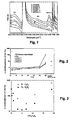
- Fig. 1 shows ATR / FTIR spectra of different coatings of aC: N: H on a polypropylene substrate.
- the coatings were deposited on the substrate by PECVD.
- As the process gas mixtures of acetylene (C 2 H 2 ) and nitrogen (N 2 ) having a volumetric mixing ratio of nitrogen to acetylene (N 2 : C 2 H 2 ) in the process gas of 3 to 19 were used.
- the spectra can be interpreted as follows:
- the strong absorption bands at the wavenumbers 1360 cm -1 , 1450 cm -1 , 2913 cm -1 and 2966 cm -1 can be attributed to CH absorption bands of the polypropylene substrate.
- N 2 mixing ratio
- a narrower, attributable to the nitrile groups band is observed, which also increases with increasing nitrogen content.
- Another, broader absorption band in the range of 3300-3500 cm -1 is characteristic of the NH stretching vibration. The last two are terminal groups and reduce the degree of overcoordination in the amorphous carbon network and therefore reduce the internal stress in the coating.
- PECVD plasma assisted vapor deposition
- a first layer of aC: N: H, a second layer of aC: N: Si: H and a third layer of SiO x were deposited on top of the polypropylene film by PECVD.
- the process gases used were a mixture of acetylene and nitrogen for the first layer, and a mixture of acetylene, nitrogen and HMDSO for the second layer serving as the intermediate layer.
- the process parameters are shown in Table 1.
- the measured at 25 ° C Oxygen permeability of the coated substrate was 5 cm 3 / m 2 / 24h / bar. Comparatively, the corresponding value for the uncoated substrate is about 3000 cm 3 / m 2 / 24h / bar.
- a first layer of aC: N: H and a second layer of SiO x were vapor deposited on the polypropylene film by PECVD on top of each other.
- the process parameters are shown in Table 2.
- Fig. 2 It can also be seen that the substrate coated with two layers exhibits significantly better barrier properties under dry sterilization conditions at 120 ° C. and 140 ° C. for 30 minutes in comparison to the barrier properties of a substrate coated only with SiO x of the same thickness.
- the layer In comparison to the first layer of a-C: N: H in Example 1, the layer had an approximately five-fold thickness and exhibited a considerable brown color, so that this coated substrate can not be used for all packaging applications.
- Fig. 2 As can be seen, the substrate coated with only one layer under dry sterilization conditions at 140 ° C. for 30 min. In Vergielch to the barrier properties of only coated with SiO x same thickness substrate significantly better barrier properties.
Landscapes
- Chemical & Material Sciences (AREA)
- Organic Chemistry (AREA)
- Chemical Kinetics & Catalysis (AREA)
- General Chemical & Material Sciences (AREA)
- Mechanical Engineering (AREA)
- Materials Engineering (AREA)
- Engineering & Computer Science (AREA)
- Metallurgy (AREA)
- Inorganic Chemistry (AREA)
- Health & Medical Sciences (AREA)
- Medicinal Chemistry (AREA)
- Polymers & Plastics (AREA)
- Laminated Bodies (AREA)
- Chemical Vapour Deposition (AREA)
Abstract
Description
- Die Erfindung betrifft einen Kunststofffilm für Verpackungszwecke, mit guter Durchtrittssperrwirkung gegenüber Gasen, Wasserdampf und Aromastoffen nach einer Sterilisierbehandlung, wobei der Kunststofffilm eine durch Plasma unterstützte chemische Gasphasenabscheidung (PECVD) erzeugte Sperrschicht aus amorphem hydriertem Kohlenstoff (a-C:H) aufweist. Im Rahmen der Erfindung liegt auch ein zur Herstellung der Sperrschicht auf dem Kunststofffilm geeignetes Verfahren.
- Bekannte sterilisierbare Verpackungsmaterialien mit guten Barrierewirkung nach einer Sterilisierbehandlung bestehen aus ein- oder mehrschichtigen Kunststofffllmen und einer wasserdampf- und gasundurchlässigen Sperrschicht in Form einer Aluminiumfolie. Metallfolien eignen sich ausgezeichnet für sterilislerbare Verpackungsmaterialien und weisen zudem ausgezeichnete Barriereelgenschaften auf. Aus verschiedenen Gründen werden Jedoch heute zunehmend transparente Verpackungen verlangt, welche mit Metallfolien als Sperrschichten nicht zu erreichen sind.
- Bekannte transparente Verpackungsmaterialien mit Sperrelgenschaften bestehen aus mehrschichtigen Kunststofffilmen, wobei einer der Kunststofffilme eine Oxidschicht, z.B. In der Form von SiOx, als Barriereschicht aufweist. Andere bekannte und zur Verpackung von Lebensmitteln eingesetzte transparente Verpackungsfilme weisen als Barriereschicht einen Film aus Polyvinylidenchlorid (PVDC) oder Ethylen-Vinylalkohol Copolymer (EVOH) auf. Die thermische Beanspruchung dieser transparenten Verpackungsmaterialien während der Sterilisation führt jedoch in der Regel zu einer Verschlechterung der Barriereeigenschaften. Besonders unter extremen Sterilisationsbedlngungen kann eine massive, irreversible Beeinträchtigung der Sperrwirkung auftreten. So kann z.B. die Zunahme der Sauerstoffdurchlässigkelt eines herkömmlichen steriiisierbaren Verpackungsfllms unter extremen Sterilisationsbedingungen um einen Faktor 3 bis 20 betragen.
- Aus
US 2005/0003124 A1 ist eine durch Plasma unterstützte chemische Gasphasenabscheldung (PECVD, plasma enhanced chemical vapour deposition) auf ein Polymersubstrat aufgedampfte Barriereschicht aus SiOx mit x zwischen 1.5 und 2.3 bekannt. Die Barriereschicht aus SiOx ist mit einer Schutzschicht aus amorphem hydriertem Kohlenstoff (a-C:H) versehen. Der hydrierte Kohlenstofffilm dient dazu, die bei Deformationen des Polymersubstrats auftretenden Mikrorisse in der Barriereschicht aus SiOx zu verhindern. Die Abscheidung der Schutzschicht aus a-C:H erfolgt durch PECVD einer Kohlenwasserstoffverbindung, bevorzugt Acetylen. Die Abscheldung der Barriereschicht aus SiOx erfolgt durch PECVD einer organischen Siliziumverbindung in Gegenwart eines Sauerstoffüberschusses. Vor der Abscheidung der Barriereschicht aus SiOx kann auf dem Polymersubstrat eine Zwischenschicht aus einer Mischung von Silicium, Kohlenstoff, Sauerstoff, Stickstoff und Wasserstoff abgeschleden werden. Ausgangsmaterialien sind z.B. Disiloxane, wie Hexamethyldisiloxan (HMDSO) oder Tstramethyldisiloxan (TMDSO). Es kann ein Trägergas, bevorzugt Stickstoff, verwendet werden. Das beschichtete Polymersubstrat betrifft insbesondere Flaschen aus Polyethylenterephthalat (PET). Die auf der Innenseite beschichteten Flaschen werden zur Verpackung von sauerstoffempfindlichen Produkten, wie z.B. Bier, Fruchtsäfte und stark kohlensäurehaltige Getränke, verwendet. -
JP 2008/094447 A - Aus
JP 2004/314407 A - Der Erfindung liegt die Aufgabe zu Grunde, einen Kunststofffilm der eingangs genannten Art mit verbesserter Temperaturbeständigkeit für Sterilisieranwendungen bereitzustellen.
- Zur erfindungsgemässen Lösung der Aufgabe führt, dass die Sperrschicht aus amorphem hydriertem Kohlenstoff (a-C;N:H) mit Stickstoff (N) dotiert ist.
- Auf der Sperrschicht aus amorphem hydriertem und mit Stickstoff (N) dotiertem Kohlenstoff (a-C:N:H) kann eine zweite Sperrschicht aus einem Metall, einem Metalloxid oder einem Metallnitrid angeordnet sein. Diese zweite Sperrschicht Ist beispielsweise eine keramische Dünnschicht, Insbesondere ein Siliziumoxid der Formel SiOx, wobei x eine Zahl von 1 bis 2 ist, oder ein Aluminiumoxid der Formel AlyOz, wobei y/z eine Zahl von 0,2 bis 1,5 darstellt, oder eine Mischung daraus. Die keramische Dünnschicht kann neben den genannten Silizium- und Aluminiumoxiden ferner auch Oxide und/oder Nitride von Metallen und/oder Halbmetallen, z.B. diejenigen des Eisens, Nickels, Chroms, Tantals, Molybdäns, Hafniums, Titans, Yttriums, Zirkons, Magnesiums sowie Mischungen dieser Substanzen enthalten oder daraus bestehen. Weiter mögliche zweite Sperrschichten können als Metall auf dem Substrat abgeschieden werden. Bevorzugte Metalle sind Al, Zn, Sn, Ag oder Tl. Als Metalloxidbarriereschichten können neben den vorstehend erwähnten Silizium- und Aluminiumoxiden auch die Oxide der weiter genannten Metalle verwendet werden, beispielsweise SnO2, ZnO oder Mischungen davon, auch mit SiOx. Bevorzugt wird jedoch die vorstehend erwähnte Sperrschicht aus SiOx, die auch durch PECVD aus einer Mischung von HMDSO und O2 abgeschieden werden kann.
- Die zweite Sperrschicht kann beispielsweise durch ein Vakuumdünnschlchtverfahren, wie physikalische Beschlchtungsverfahren (PVD-Verfahren) oder chemische Beschichtungsverfahren (CVD-Verfahren) mit und ohne Plasmaunterstützung, oder durch Sputtern aufgebracht werden. Bevorzugt werden physikalische Beschichtungsverfahren, insbesondere auf der Basis von Elektronenstrahlverdampfen.
- Zwischen der Sperrschicht aus amorphem hydriertem und mit Stickstoff dotiertem Kohlenstoff (a-C:N:H) und der zweiten Sperrschicht aus einem Metall, elnem Metalloxid oder einem Metallnitrid kann eine weitere Sperrschicht aus amorphem hydriertem und mit Stickstoff und Silizium (Si) dotiertem Kohlenstoff (a-C:N:Si:H) als Zwischenschicht angeordnet sein.
- Bei einem zur Herstellung des erfindungsgemässen Kunststofffilms geeigneten Verfahren wird aus einer Mischung einer gasförmigen Kohlenstoff- und einer gasförmigen Stickstoffquelle als Prozessgas durch PECVD eine Sperrschicht aus amorphem hydriertem und mit Stickstoff (N) dotiertem Kohlenstoff (a-C:N:H) erzeugt.
- Bevorzugt wird eine Mischung aus Acetylen (C2H2) und Stickstoff (N2) als Prozessgas verwendet.
- Für eine optimale Sauerstoffbarrierewirkung wird das volumetrische Mischungsverhältnis von Stickstoff (N2) zu Acetylen (C2H2) im Prozessgas auf elnen Wert von 3 bis 19, vorzugsweise 6 bis 8, eingestellt.
- Auf der Sperrschicht aus amorphem hydriertem und mit Stickstoff (N) dotiertem Kohlenstoff (a-C:N:H) kann eine zweite Sperrschicht aus einem Metall, einem Metalloxid oder einem Metallnitrid erzeugt werden. Die zweite Sperrschicht kann auch aus einer Mischung von Hexamethyldisiloxan (HMDSO) und Sauerstoff (O2) als Prozessgas durch PECVD eine zweite Sperrschicht aus Siliziumoxid (SiOx) erzeugt werden.
- Zwischen der Sperrschicht aus amorphem hydriertem und mit Stickstoff (N) dotiertem Kohlenstoff (a-C:N:H) und der zweiten Sperrschicht aus einem Metall, einem Metalloxid oder einem Metallnitrid kann aus einer Mischung von Hexamethyldisiloxan (HMDSO), Acetylen (C2H2) und Stickstoff (N2) als Prozessgas eine weitere Sperrschicht aus amorphem hydriertem und mit Stickstoff (N) und Silizium (Si) dotiertem Kohlenstoff (a-C:N:Si:H) als Zwischenschicht erzeugt werden.
- Als Kunststofffilme können alle ein oder mehrschichtigen, zur Verpackung geeigneten Kunststofffilme verwendet werden. Dies sind insbesondere Filme aus Polyolefinen, wie Polypropylen (PP) und Polyethylen (PE), Polyamid (PA), Polyester, insbesondere Polyethylenterephthalat (PET), in der Form von Mono- oder Mehrschichtfilmen.
- Bevorzugtes Anwendungsgebiet des erfindungsgemässen Kunststofffllms sind Verpackungen, insbesondere In der Form von Behältern und Beuteln aller Art für sauerstoffempfindilche Produkte aus dem Food- und Nonfood-Bereich.
- Weitere Vorteile, Merkmale und Einzelheiten der Erfindung ergeben sich aus der nachfolgenden Beschreibung bevorzugter Ausführungsbeispiele, sowie anhand der Zeichnung; diese zeigt In
- Fig. 1
- ATR/FTIR-Spektren von verschiedenen Kohlenstoffbeschlchtungen auf einem Substrat aus Polypropylen;
- Fig. 2
- die Sauerstoffdurchlässlgkelt von Substraten mit unterschledlicher Beschichtung vor und nach einer Sterilisierbehandlung;
- Fig. 3
- die Abhängigkeit der Sauerstoffdurchlässigkeit von amorphen hydrierten Kohlenstofffilmen von der Prozessgasmlschung.
-
Fig. 1 zeigt ATR/FTIR-Spektren von unterschiedlichen Beschichtungen aus a-C:N:H auf einem Polypropylensubstrat. Die Beschichtungen wurden durch PECVD auf das Substrat abgeschieden. Als Prozessgas wurden Mischungen von Acetylen (C2H2) und Stickstoff (N2) mit einem volumetrischen Mischungsverhältnis von Stickstoff zu Acetylen (N2: C2H2) im Prozessgas von 3 bis 19 verwendet. - Die Spektren lassen sich wie folgt interpretieren: Die starken Absorptionsbänder bei den Wellenzahlen 1360 cm-1, 1450 cm-1, 2913 cm-1 und 2966 cm-1 können C-H-Absorptionsbändem des Polypropylensubstrats zugeschrieben werden. Bei einer Wellenzahl von 1600 cm-1 kann ein mit steigendem Mischungsverhältnis N2:C2H2 im Prozessgas zunehmendes Absorptionsband beobachtet werden. Das Band kann dem Raman G Band zugeschrieben werden, welches durch eine Änderung in der Ladungsvertellungssymmetrie durch die Bildung der C=N Bindung hervorgerufen wird. Bei einer Wellenzahl von 2200 cm-1 wird ein schmäleres, den Nitrilgruppen zuzuordnendes Band beobachtet, welches ebenfalls mit steigendem Stickstoffgehalt ansteigt. Ein weiteres, breiteres Absorptionsband im Bereich von 3300-3500 cm-1 ist charakteristisch für die N-H Streckschwingung. Die beiden letzten sind endständige Gruppen und reduzieren den Grad der Überkoordination im amorphen Kohlenstoffnetzwerk und reduzieren deshalb die innere Spannung in der Beschichtung.
- Zur Beschichtung von Substraten mittels Plasma unterstützter Gasphasenabscheidung (PECVD) stand eine mit einem 13.56 Mhz RF Plasmagenerator ausgestattete Laboranlage mit kapazitiv gekoppelter Elektrode mit einem Durchmesser von 140 mm zur Verfügung. Als Substratmaterial diente ein 30 µm dlcker Polypropylenfilm, der zur Durchführung der Beschichtungen auf der Elektrode platziert wurde.
- Es wurden übereinander eine erste Schicht aus a-C:N:H, eine zweite Schicht aus a-C:N:Si:H und eine dritte Schicht aus SiOx durch PECVD auf den Polypropylenfilm aufgedampft. Als Prozessgase wurde für die erste Schicht eine Mischung von Acetylen und Stickstoff, für die als Zwischenschicht dienende zweite Schicht eine Mischung von Acetylen, Stickstoff und HMDSO eingesetzt. Die Prozessparameter sind aus Tabelle 1 ersichtlich.
Tabelle 1: Prozessparameter für Beispiel 1 Prozessparameter Schicht 1 a-C:N:H Schicht 2 a-C:N:Si:H Schicht 3 SiOx RF Leistung [W] 50 75 100 Prozessdruck [mbar] 0.1 0.1 0.1 C2H2 Durchflussrate [sccm] 7.5 3 - HDMSO Durchflussrate [sccm] - 2 2 N2 Durchflussrate [sccm] 52.5 55 - O2 Durchflussrate [sccm] - - 60 Abscheldungszeit [s] 3 x 4 3 x 4 15 x 4 Schichtdicke [nm] ca. 18 45 190 Self-bias Ub [V] -225 -274 -362 - Die bei 25°C gemessene Sauerstoffdurchlässigkeit des beschichteten Substrats betrug 5 cm3/m2/24h/bar. Vergleichsweise liegt der entsprechende Wert für das unbeschichtete Substrat bei etwa 3000 cm3/m2/24h/bar. Die hervorragenden Barriereelgenschaften des mit drei Schichten beschichteten Substrats unter Trockensterilisationsbedingungen bei 120 °C und 140 °C während 30 Min. sowie eine Sterilisation im Autoklaven bei 121 °C und 2.1 bar während 30 Min. Im Vergleich zu den Barriereeigenschaften eines nur mit SiOx gleicher Dicke beschichteten Substrats ergeben sich aus der Betrachtung der
Fig. 2 . - Es wurden übereinander eine erste Schicht aus a-C:N:H und eine zweite Schicht aus SiOx durch PECVD auf den Polypropylenfilm aufgedampft. Als Prozessgase wurde für gleiche Schichten die gleichen Mischung wie in Beispiel 1 verwendet. Die Prozessparameter sind aus Tabelle 2 ersichtlich.
Tabelle 2: Prozessparameter für Beispiel 2 Prozessparameter Schicht 1
a-C:N:HSchicht 2
SiOxRF Leistung [W] 50 100 Prozessdruck [mbar] 0.1 0.1 C2H2 Durchflussrate [sccm] 7.5 - HDMSO Durchflussrate [sccm] - 2 N2 Durchflussrate [sccm] 52.5 - O2 Durchflussrate [sccm] - 60 Abscheldungszeit [s] 6 x 4 15 x 4 Schichtdicke [nm] ca. 35 190 Self-bias Ub [V] -225 -362 - Wie aus
Fig. 2 ersichtlich, zeigt auch das mit zwei Schichten beschichtete Substrat unter Trockensterilisationsbedingungen bei 120 °C und 140 °C während 30 Min. im Vergleich zu den Barriereeigenschaften eines nur mit SiOx gleicher Dicke beschichteten Substrats wesentlich bessere Barriereeigenschaften. - Es wurde lediglich eine einzige Schicht aus a-C:N:H durch PECVD auf den Polypropylenfilm aufgedampft. Als Prozessgase wurde die gleiche Mischung wie für die erste Schicht In Beispiel 1 verwendet. Die Prozessparameter sind aus Tabelle 3 ersichtlich.
Tabelle 3: Prozessparameter für Beispiel 3 Prozessparameter a-C:N:H RF Leistung [W] 60 Prozessdruck [mbar] 0.1 C2H2 Durchflussrate [sccm] 7.5 HDMSO Durchflussrate [sccm] - N2 Durchflussrate [sccm] 52.5 O2 Durchflussrate [sccm] - Abscheidungszeit [s] 15 x 4 Schichtdicke [nm] 90 Self-bias Ub [V] -225 - Die Schicht wies im Vergleich zur ersten Schicht aus a-C:N:H In Beisplei 1 eine etwa fünffache Dicke auf und zeigte eine beträchtliche Braunfärbung, so dass diese beschichtete Substrat nicht für alle Anwendungsbereiche als Verpackung einsetzbar ist.
- Wie aus
Fig. 2 ersichtlich, zeigt auch das mit nur einer Schicht beschichtete Substrat unter Trockensterilisationsbedingungen bei 140 °C während 30 Min. Im Vergielch zu den Barriereelgenschaften eines nur mit SiOx gleicher Dicke beschichteten Substrats wesentlich bessere Barriereeigenschaften. - Aus
Fig. 3 ist ersichtlich dass die besten Barriereeigenschaften gegenüber Sauerstoffdurchtritt bei einem volumetrische Mischungsverhältnis von Stickstoff zu Acetylen (N2 : C2H2) im Prozessgas von etwa 3 bis 12, insbesondere von etwa 6 bis 8, erreicht werden.
Claims (9)
- Kunststofffilm für Verpackungszwecke, mit guter Durchtrittssperrwirkung gegenüber Gasen, Wasserdampf und Aromastoffen nach einer Sterilisierbehandlung, wobei der Kunststofffilm eine durch Plasma unterstützte chemische Gasphasenabscheldung (PECVD) erzeugte Sperrschicht aus amorphem hydriertem Kohlenstoff (a-C:H) aufweist,
dadurch gekennzeichnet,
dass die Sperrschicht aus amorphem hydriertem Kohlenstoff (a-C:N:H) mit Stickstoff (N) dotiert ist. - Kunststoffilm nach Anspruch 1, dadurch gekennzeichnet, dass auf der Sperrschicht aus amorphem hydriertem und mit Stickstoff (N) dotiertem Kohlenstoff (a-C:N:H) eine zweite Sperrschicht aus Metallen, Metalloxiden, vorzugsweise Siliziumoxid (SiOx), oder Metallnitriden angeordnet ist.
- Kunststofffilm nach Anspruch 2, dadurch gekennzeichnet, dass zwischen der Sperrschicht aus amorphem hydriertem und mit Stickstoff (N) dotiertem Kohlenstoff (a-C:N:H) und der zweiten Sperrschicht aus Metallen, Metalloxiden oder Metallnitriden eine weitere Sperrschicht aus amorphem hydriertem und mit Stickstoff (N) und Silizium (Si) dotiertem Kohlenstoff (a-C:N:Si:H) als Zwischenschicht angeordnet ist.
- Verfahren zur Herstellung eines Kunststofffilms für Verpackungszwecke, mit guter Durchtrittssperrwirkung gegenüber Gasen, Wasserdampf und Aromastoffen nach einer Sterilisierbehandlung, wobei der Kunststoffilm eine durch Plasma unterstützte chemische Gasphasenabscheidung (PECVD) erzeugte Sperrschicht aus amorphem hydriertem Kohlenstoff (a-C:H) aufweist,
dadurch gekennzeichnet, dass aus einer Mischung einer gasförmigen Kohlenstoff- und einer gasförmigen Stickstoffquelle als Prozessgas durch PECVD eine Sperrschicht aus amorphem hydriertem und mit Stickstoff (N) dotiertem Kohlenstoff (a-C:N:H) erzeugt wird. - Verfahren nach Anspruch 2, dadurch gekennzeichnet, dass eine Mischung aus Acetylen (C2H2) und Stickstoff (N2) als Prozessgas verwendet wird.
- Verfahren nach Anspruch 3 dadurch gekennzeichnet, dass das volumetrische Mischungsverhältnis von Stickstoff zu Acetylen (N2 : C2H2) im Prozessgas auf einen Wert von 3 bis 19, vorzugsweise 6 bis 8, eingestellt wird.
- Verfahren nach einem der Ansprüche 4 bis 6, dadurch gekennzeichnet, dass auf der Sperrschicht aus amorphem hydriertem und mit Stickstoff (N) dotiertem Kohlenstoff (a-C:N:H) eine zweite Sperrschicht aus Metallen, Metalloxiden, vorzugsweise aus Siliziumoxid (SiOx), gegebenenfalls aus einer Mischung von Hexamethyldisiloxan (HMDSO) und Sauerstoff (O2) als Prozessgas durch PECVD, oder Metalinitriden erzeugt wird.
- Verfahren nach Anspruch 7, dadurch gekennzeichnet, dass zwischen der Sperrschicht aus amorphem hydriertem und mit Stickstoff (N) dotiertem Kohlenstoff (a-C:N:H) und der zweiten Sperrschicht aus Metallen, Metalloxiden oder Metallnitriden aus einer Mischung von Hexamethyldisiloxan (HMDSO), Acetylen (C2H2) und Stickstoff (N2) als Prozessgas eine weitere Sperrschicht aus amorphem hydriertem und mit Stickstoff (N) und Silizium (Si) dotiertem Kohlenstoff (a-C:N:Si:H) als Zwischenschicht erzeugt wird.
- Verwendung eines nach einem der Ansprüche 1 bis 3 oder eines mit dem Verfahren nach einem der Ansprüche 4 bis 8 hergestellten Kunststofffilms zur Verpackung von sauerstoffempfindlichen Produkten.
Priority Applications (3)
| Application Number | Priority Date | Filing Date | Title |
|---|---|---|---|
| EP20080405229 EP2166130A1 (de) | 2008-09-17 | 2008-09-17 | Kunststoffilm mit guter Barrierewirkung nach einer Sterilisierbehandlung |
| PCT/EP2009/005405 WO2010031461A1 (de) | 2008-09-17 | 2009-07-27 | Kunstoffprodukt mit guter barrierewirkung nach sterilisierbehandlung |
| EP09814086A EP2326743A1 (de) | 2008-09-17 | 2009-07-27 | Kunstoffprodukt mit guter barrierewirkung nach sterilisierbehandlung |
Applications Claiming Priority (1)
| Application Number | Priority Date | Filing Date | Title |
|---|---|---|---|
| EP20080405229 EP2166130A1 (de) | 2008-09-17 | 2008-09-17 | Kunststoffilm mit guter Barrierewirkung nach einer Sterilisierbehandlung |
Publications (1)
| Publication Number | Publication Date |
|---|---|
| EP2166130A1 true EP2166130A1 (de) | 2010-03-24 |
Family
ID=40280524
Family Applications (2)
| Application Number | Title | Priority Date | Filing Date |
|---|---|---|---|
| EP20080405229 Withdrawn EP2166130A1 (de) | 2008-09-17 | 2008-09-17 | Kunststoffilm mit guter Barrierewirkung nach einer Sterilisierbehandlung |
| EP09814086A Withdrawn EP2326743A1 (de) | 2008-09-17 | 2009-07-27 | Kunstoffprodukt mit guter barrierewirkung nach sterilisierbehandlung |
Family Applications After (1)
| Application Number | Title | Priority Date | Filing Date |
|---|---|---|---|
| EP09814086A Withdrawn EP2326743A1 (de) | 2008-09-17 | 2009-07-27 | Kunstoffprodukt mit guter barrierewirkung nach sterilisierbehandlung |
Country Status (2)
| Country | Link |
|---|---|
| EP (2) | EP2166130A1 (de) |
| WO (1) | WO2010031461A1 (de) |
Citations (6)
| Publication number | Priority date | Publication date | Assignee | Title |
|---|---|---|---|---|
| JP2004314407A (ja) | 2003-04-15 | 2004-11-11 | Hokkai Can Co Ltd | ガスバリア性プラスチックフィルム |
| US20040227197A1 (en) * | 2003-02-28 | 2004-11-18 | Shinji Maekawa | Composition of carbon nitride, thin film transistor with the composition of carbon nitride, display device with the thin film transistor, and manufacturing method thereof |
| US20050003124A1 (en) | 2000-08-01 | 2005-01-06 | Sidel | Barrier coating |
| JP2006289836A (ja) * | 2005-04-12 | 2006-10-26 | Mitsubishi Heavy Ind Ltd | アモルファスカーボン膜及び容器 |
| JP2007327089A (ja) * | 2006-06-07 | 2007-12-20 | Kirin Brewery Co Ltd | 被覆プラスチック製品及び被膜 |
| JP2008094447A (ja) | 2006-10-13 | 2008-04-24 | Toppan Printing Co Ltd | 薄膜被覆されたプラスチック容器 |
Family Cites Families (2)
| Publication number | Priority date | Publication date | Assignee | Title |
|---|---|---|---|---|
| US7811669B2 (en) * | 2004-08-17 | 2010-10-12 | Dai Nippon Printing Co., Ltd. | Gas barrier laminated film and process for producing the same |
| JP2006116731A (ja) * | 2004-10-19 | 2006-05-11 | Dainippon Printing Co Ltd | バリア性フィルムおよびそれを使用した積層材 |
-
2008
- 2008-09-17 EP EP20080405229 patent/EP2166130A1/de not_active Withdrawn
-
2009
- 2009-07-27 WO PCT/EP2009/005405 patent/WO2010031461A1/de not_active Ceased
- 2009-07-27 EP EP09814086A patent/EP2326743A1/de not_active Withdrawn
Patent Citations (6)
| Publication number | Priority date | Publication date | Assignee | Title |
|---|---|---|---|---|
| US20050003124A1 (en) | 2000-08-01 | 2005-01-06 | Sidel | Barrier coating |
| US20040227197A1 (en) * | 2003-02-28 | 2004-11-18 | Shinji Maekawa | Composition of carbon nitride, thin film transistor with the composition of carbon nitride, display device with the thin film transistor, and manufacturing method thereof |
| JP2004314407A (ja) | 2003-04-15 | 2004-11-11 | Hokkai Can Co Ltd | ガスバリア性プラスチックフィルム |
| JP2006289836A (ja) * | 2005-04-12 | 2006-10-26 | Mitsubishi Heavy Ind Ltd | アモルファスカーボン膜及び容器 |
| JP2007327089A (ja) * | 2006-06-07 | 2007-12-20 | Kirin Brewery Co Ltd | 被覆プラスチック製品及び被膜 |
| JP2008094447A (ja) | 2006-10-13 | 2008-04-24 | Toppan Printing Co Ltd | 薄膜被覆されたプラスチック容器 |
Also Published As
| Publication number | Publication date |
|---|---|
| EP2326743A1 (de) | 2011-06-01 |
| WO2010031461A1 (de) | 2010-03-25 |
Similar Documents
| Publication | Publication Date | Title |
|---|---|---|
| EP1388593B1 (de) | Schnelles Verfahren zur Herstellung von Mehrfachlagen-Barriereschichten | |
| JP4050800B2 (ja) | バリヤー皮膜を有するプラスチック容器及びその製造方法 | |
| EP2106461B1 (de) | Behälter mit verbesserter restenleerbarkeit und verfahren zu dessen herstellung | |
| EP2134773B1 (de) | Verpackungslaminat; verfahren zur herstellung des verpackungsaminats und daraus hergestellter verpackungsbehälter | |
| EP1388594B1 (de) | Verfahren zum Herstellen von glatten Barriereschichten und Verbundmaterial mit glatter Barriereschicht | |
| JP6075080B2 (ja) | 紙容器用バリアフィルム、並びにそれよりなる紙容器用積層材及び液体用紙容器 | |
| KR20070051332A (ko) | 가스 배리어성 적층 필름 및 그 제조 방법 | |
| DE69304819T2 (de) | Verfahren zur Herstellung einer Silizium-enthaltenden Schicht auf ein metallisches Substrat sowie Anti-Korrosionsbehandlung | |
| EP2179842B1 (de) | Biologisch abbaubarer harzbehälter mit aufgetragenem film und verfahren zur herstellung des aufgetragenen films | |
| EP1634699A1 (de) | Metallisierter Mehrschichtfilm und Verfahren zur Herstellung | |
| EP1028994B1 (de) | Folienförmiger packstoff | |
| JP4090551B2 (ja) | 透明バリア性フィルム | |
| EP3063079A1 (de) | KUNSTSTOFFAUSGIEßER (SPOUT) FÜR STANDBEUTELVERPACKUNGEN, STANDBEUTELVERPACKUNG SOWIE HERSTELLUNGSVERFAHREN | |
| JP5332281B2 (ja) | ガスバリア性積層フィルム | |
| EP2236284B1 (de) | Mehrschichtfilm | |
| US20200370165A1 (en) | Laminate and method of producing the same, and gas barrier film and method of producing the same | |
| JPH11322979A (ja) | 透明バリア性フィルムおよびその製造法 | |
| EP0787582B2 (de) | Verfahren zum Bedrucken und/oder Kaschieren einer metallisierten Polypropylenfolie und danach hergestellte Folie | |
| JP2905328B2 (ja) | 積層体の製造方法 | |
| EP2326743A1 (de) | Kunstoffprodukt mit guter barrierewirkung nach sterilisierbehandlung | |
| JP3809655B2 (ja) | ガスバリア性セラミック被覆フィルムおよびその製造方法 | |
| JP2000233476A (ja) | 透明バリア性フィルム | |
| JP3438555B2 (ja) | 高透明酸化珪素蒸着フィルム | |
| DE102016226191A1 (de) | Verfahren und Vorrichtung zur Herstellung eines mit einer Sperrschicht und einer Schutzschicht beschichteten Substrats | |
| JP2007211320A (ja) | 透明蒸着フィルム、およびその製造方法 |
Legal Events
| Date | Code | Title | Description |
|---|---|---|---|
| PUAI | Public reference made under article 153(3) epc to a published international application that has entered the european phase |
Free format text: ORIGINAL CODE: 0009012 |
|
| AK | Designated contracting states |
Kind code of ref document: A1 Designated state(s): AT BE BG CH CY CZ DE DK EE ES FI FR GB GR HR HU IE IS IT LI LT LU LV MC MT NL NO PL PT RO SE SI SK TR |
|
| AX | Request for extension of the european patent |
Extension state: AL BA MK RS |
|
| RAP1 | Party data changed (applicant data changed or rights of an application transferred) |
Owner name: 3A TECHNOLOGY & MANAGEMENT AG |
|
| AKY | No designation fees paid | ||
| REG | Reference to a national code |
Ref country code: DE Ref legal event code: 8566 |
|
| STAA | Information on the status of an ep patent application or granted ep patent |
Free format text: STATUS: THE APPLICATION IS DEEMED TO BE WITHDRAWN |
|
| 18D | Application deemed to be withdrawn |
Effective date: 20100925 |