EP2152885B1 - Polynucleotide markers - Google Patents
Polynucleotide markers Download PDFInfo
- Publication number
- EP2152885B1 EP2152885B1 EP08759990.8A EP08759990A EP2152885B1 EP 2152885 B1 EP2152885 B1 EP 2152885B1 EP 08759990 A EP08759990 A EP 08759990A EP 2152885 B1 EP2152885 B1 EP 2152885B1
- Authority
- EP
- European Patent Office
- Prior art keywords
- seq
- sugar beet
- sequence
- annual
- primer
- Prior art date
- Legal status (The legal status is an assumption and is not a legal conclusion. Google has not performed a legal analysis and makes no representation as to the accuracy of the status listed.)
- Not-in-force
Links
Images





Classifications
-
- C—CHEMISTRY; METALLURGY
- C07—ORGANIC CHEMISTRY
- C07K—PEPTIDES
- C07K14/00—Peptides having more than 20 amino acids; Gastrins; Somatostatins; Melanotropins; Derivatives thereof
- C07K14/415—Peptides having more than 20 amino acids; Gastrins; Somatostatins; Melanotropins; Derivatives thereof from plants
Definitions
- the present invention is in the area of marker-assisted breeding and quality control of sugar beet seed.
- the invention relates to polynucleotides that are closely linked to or residing within the bolting gene or B gene within the sugar beet genome and can be used for the development of molecular markers.
- the invention further relates to molecular markers that can be used for mapping, identification and isolation of the bolting gene or B gene in the sugar beet genome and to discriminate between the annual and biennial genotype or between different haplotypes within plant groupings of sugar beet plants exhibiting a biennial genotype.
- the cultivated sugar beet ( Beta vulgaris ssp. vulgaris L.) is a biennial plant which forms a storage root and a leaf rosette in the first year. Shoot elongation (bolting) and flower formation starts after a period of low temperature.
- many wild beets of the genus B. vulgaris ssp. maritima show an annual growing habit due to the presence of the bolting gene B at the B locus, which was mapped to the central region of chromosome II.
- the dominant allele of locus B. is abundant in wild beets and causes bolting under long days without the cold requirement usually essential for biennial cultivars (Abe et al. , 1997) carrying the recessive allele.
- Bolting stem elongation is the first step clearly visible in the transition from vegetative to reproductive growth.
- a marker-based approach could also be advantageously used in sugar beet breeding, e.g., to speed up the breeding process, or to introduce new variation from wild sea beets. In these cases, it is important to have a marker tightly linked to the B gene to be able to select annuals or biennials accurately.
- EL-MEZAWY et al. (Theor Appl Genet (2002) 105: 100-105 ) constructed a high-density map of the region around the B locus and mapped two AFLP markers to positions 0.14 and 0.23 cM form the B gene, respectively. Based on these two markers and additional other markers, HOHMANN et al. (Mol Gen Genomics (2003) 269: 126-136 ) later constructed a first physical map including the B gene. BAC clones selected by HOHMANN et al. were later used by GAAFAR et al.
- the present invention now provides the means to develop such markers.
- the present invention relates to a polynucleotide, particularly an isolated polynucleotide, identified in the sugar beet genome including variants and derivatives thereof, which polynucleotide is genetically closely linked to, or, preferably, located within the bolting gene or B gene.
- the invention further relates to the use of said polynucleotide for the development of markers that can be used for mapping, identification and isolation of the bolting gene or B gene in the sugar beet genome.
- the polynucleotide according to the invention shows perfect co-segregation with the bolting gene ( B gene) associated phenotype in sugar beet.
- the invention relates to a polynucleotide including informative fragments thereof, which polynucleotide is obtainable from a genomic DNA region that maps at a distance of 1 cM upstream of markers MP0176 and GJ01 and co-segregates with marker GJ131, shows perfect co-segregation with the bolting gene (B gene) associated phenotype in sugar beet, wherein said polynucleotide is obtainable from a genomic sugar beet DNA genetically linked to the bolting gene or B gene in the sugar beet genome and comprises an intronic region that yields an amplification product of approximately 0.5 kb in a PCR reaction with forward primer PRR7 -F and reverse primer PRR7-R as given in SEQ ID NO: 7 and SEQ ID NO: 8, respectively, or a primer pair having at least 90% sequence identity with a sequence as given in SEQ ID NO: 7 and SEQ ID NO: 8, respectively, when using genomic sugar beet DNA as a template.
- a polynucleotide of the invention including an informative fragment thereof, is provided which polynucleotide is obtainable from a genomic sugar beet DNA genetically linked to the bolting gene or B gene in the sugar beet genome
- the polynucleotide according to the invention comprises a nucleotide sequence that has the nucleotide sequence depicted in SEQ ID NO: 1.
- the polynucleotide according to the Invention comprises a nucleotide sequence that has the nucleotide sequence depicted in SEQ ID NO: 2.
- the polynucleotide according to the invention comprises a nucleotide sequence that has the nucleotide sequence depicted in SEQ ID NO: 3.
- the polynucleotide according to the invention comprises a nucleotide sequence that has the nucleotide sequence depicted in SEQ ID NO: 4.
- the polynucleotide according to the invention comprises a nucleotide sequence that has the nucleotide sequence depicted in SEQ ID NO: 5.
- the polynucleotide according to the invention comprises a nucleotide sequence that has the nucleotide sequence depicted in SEQ ID NO: 51.
- the polynucleotide according to the invention comprises a nucleotide sequence that has the nucleotide sequence depicted in SEQ ID NO: 52.
- the polynucleotide according to the invention comprises a nucleotide sequence that has the nucleotide sequence depicted in SEQ ID NO: 5, wherein said sequence has a G at position 3695, a C at position 3827, a T at position 3954, a T at position 5284, a G at position 5714, a G at position 10954, a T at position 11043, a C at position 11143, a C at position 11150, an A at position 11220, a C at position 11238, an A at position 11299, an A at position 11391, a G at position 12053, a G at position 12086, a T at position 12127, an A at position 12193, a G at position 12337, and a G at position 12837, representing annual allele 1.
- the polynucleotide according to the invention comprises a nucleotide sequence that has the nucleotide sequence depicted in SEQ ID NO: 5, wherein said sequence has a T at position 3695, a C at position 3827, a T at position 3954, a T at position 5284, a G at position 5714, a G at position 10954, a T at position 11043, a C at position 11143, a C at position 11150, an A at position 11220, an A at position 11238, an T at position 11299, an A at position 11391, a G at position 12053, a G at position 12086, a T at position 12127, a G at position 12193, a G at position 12337, and a G at position 12837, representing annual allele 2.
- the polynucleotide according to the invention comprises a nucleotide sequence that has the nucleotide sequence depicted in SEQ ID NO: 5, wherein said sequence has a G at position 3695, a C at position 3827, a T at position 3954, a T at position 5284, a G at position 5714, a G at position 10954, a G at position 11043, a T at position 11143, a C at position 11150, an A at position 11220, a C at position 11238, a T at position 11299, an A at position 11391, a G at position 12053, a G at position 12086, a T at position 12127, a G at position 12193, a G at position 12337, and a G at position 12837, representing annual allele 3.
- the polynucleotide according to the invention comprises a nucleotide sequence that has the nucleotide sequence depicted in SEQ ID NO: 5, wherein said sequence has a G at position 3695, a C at position 3827, a T at position 3954, a T at position 5284, a G at position 5714, a G at position 10954, a T at position 11043, a C at position 11143, a T at position 11150, an A at position 11220, a C at position 11238, a T at position 11299, an A at position 11391, a G at position 12053, a G at position 12086, a T at position 12127, an A at position 12193, a G at position 12337, and a G at position 12837, representing annual allele 4.
- the polynucleotide according to the invention comprises a nucleotide sequence that has the nucleotide sequence depicted in SEQ ID NO: 5, wherein said sequence has a G at position 3695, a C at position 3827, a T at position 3954, a T at position 5284, a G at position 5714, a G at position 10954, a T at position 11043, a C at position 11143, a C at position 11150, an A at position 11220, a C at position 11238, a T at position 11299, an A at position 11391, a G at position 12053, an A at position 12086, a T at position 12127, an A at position 12193, an A at position 12337, and a G at position 12837, representing annual allele 5.
- the polynucleotide according to the invention comprises a nucleotide sequence that has the nucleotide sequence depicted in SEQ ID NO: 5, wherein said sequence has a G at position 3695, a C at position 3827, a T at position 3954, a T at position 5284, a G at position 5714, a G at position 10954, a T at position 11043, a C at position 11143, a C at position 11150, an A at position 11220, a C at position 11238, a T at position 11299, an A at position 11391, a G at position 12053, a G at position 12086, a T at position 12127, an A at position 12193, an A at position 12337, and a G at position 12837, representing annual allele 6.
- the polynucleotide according to the invention comprises a nucleotide sequence that has the nucleotide sequence depicted in SEQ ID NO: 5, wherein said sequence has a G at position 3695, an A at position 3827, an A at position 3954, a C at position 5284, a T at position 5714, an A at position 10954, a G at position 11043, a C at position 11143, a C at position 11150, a C at position 11220, a C at position 11238, a T at position 11299, a G at position 11391, an A at position 12053, a G at position 12086, a C at position 12127, a G at position 12193, a G at position 12337, and an A at position 12837, representing biennial allele 7.
- the polynucleotide according to the invention comprises a nucleotide sequence that has the nucleotide sequence which encodes a polypeptide having an amino acid sequence as depicted in SEQ ID NO: 6.
- the invention relates to an amplification product of approximately 0.5 kb including an informative fragment, which is obtainable in a PCR reaction with forward primer PRR7 -F and reverse primer PRR7 -R as given in SEQ ID NO: 7 and SEQ ID NO: 8, respectively, when using genomic sugar beet DNA as a template.
- a polyncleotide marker is disclosed which can be developed from a polynucleotide molecule or an informative fragment thereof selected from the group of polynucleotides as depicted in SEQ ID NO:1, SEQ ID NO:2, SEQ ID NO: 3, SEQ ID NO: 4, SEQ ID NO: 5, SEQ ID NO: 51, SEQ ID NO: 52 and a polynucleotide encoding a polypeptide comprising a amino acid sequence as depicted in SEQ ID NO: 6, wherein said polynucleotide comprises one or more polymorphisms, particularly a polymorphism that is based on an SNP, an SSR, a deletion or an insertion of at least one nucleotide, but especially a polymorphism based on an SNP, which polymorphism is diagnostic for the B allele at the B locus and allows to discriminate between the annual and biennial genotype or between different haplotypes within a plant grouping of sugar beet plants exhibiting a biennial
- a polynuleotide marker is disclosed which is developed based on a polynucleotide as depicted in SEQ ID NO: 2, which marker is capable of detecting at least one of the following SNPs in the 3 rd intron of the BvPRR7 gene:
- a pair of primers consisting of a forward primer and a reverse primer which primers anneal to a nucleotide sequence within a genomic region of the sugar beet genome that is genetically closely linked to the B gene and amplify an informative fragment thereof, which is diagnostic for the B allele at the B locus and allows to discriminate between plants having an annual and a biennial genotype or between different haplotypes within a plant grouping of sugar beet plants exhibiting a biennial or annual genotype, wherein said pair of primers in the pair of primers comprising a forward primer PRR7 -F as depicted in SEQ ID NO: 7 and a reverse primer PRR7 -R as depicted in SEQ ID NO: 8 for amplifying a fragment comprising the SNP #160.
- a second pair of primers comprises a forward primer F3768 as depicted in SEQ ID NO 21 and a reverse primer R3769 as depicted in SEQ ID NO 22 for amplifying a fragment comprising the SNP #5714.
- a third pair of primers comprises a forward primer F3857 as depicted in SEQ ID NO 37 and a reverse primer R3858 as depicted in SEQ ID NO 38 for amplifying a fragment comprising the SNP #11220.
- a fourth pair of primers comprises a forward primer F3859 as depicted in SEQ ID NO 39 and a reverse primer R3860 as depicted in SEQ ID NO 40 for amplifying a fragment comprising the SNP #11391.
- a fifth pair of primers comprises a forward primer F3861 as depicted in SEQ ID NO 41 and a reverse primer R3862 as depicted in SEQ ID NO 42 for amplifying a fragment comprising the SNP #12053 and SNP #12127.
- a pair of primers is provided which is represented by primer pair F3808 (SEQ ID NO 29) and R3809 (SEQ ID NO 30) yielding an amplification product of 0.6 Kb; primer pair F3855 (SEQ ID NO 35) and R3809 (SEQ ID NO 30) yielding an amplification product of 1.0 Kb; and primer pair F3855 (SEQ ID NO 35) and R3856 (SEQ ID NO 36) (Table 4) yielding an amplifications product of 0.8, provided that a genomic DNA from biennial lines is used as template, but does not provide amplification for the annual lines.
- Said informative fragment may further comprise one or more polymorphisms, particularly a polymorphism that is based on an SNP, an SSR, a deletion or an insertion of at least one nucleotide, but especially a polymorphism based on an SNP, which is diagnostic for the B allele at the B locus and allows to discriminate between plants having an annual and a biennial genotype or between different haplotypes within a plant grouping of sugar beet plants exhibiting a biennial or annual genotype.
- polymorphisms particularly a polymorphism that is based on an SNP, an SSR, a deletion or an insertion of at least one nucleotide, but especially a polymorphism based on an SNP, which is diagnostic for the B allele at the B locus and allows to discriminate between plants having an annual and a biennial genotype or between different haplotypes within a plant grouping of sugar beet plants exhibiting a biennial or annual genotype.
- the above probe molecules and/or primers can be used in a method of identifying annual contaminations in commercial sugar beet seed.
- the invention relates to a set of probe polynucleotides comprising at least two separate probe molecules that are complementary to a sub-region within an informative polynucleotide fragment according to the invention and as described herein before comprising a polymorphic site and amplify partially overlapping fragments which differ only by one or two base mismatches in the area of overlap, wherein a first probe labelled with a first fluorescent dye represents one allele and a second probe labelled with a second fluorescent dye, which is not identical with the first dye, represents the other allele.
- said informative polynucleotide fragment comprises a polymorphism, wherein said polymorphism is based on SNP #3827.
- said polymorphism is based on SNP #3827.
- the invention relates to the use of a polynucleotide according to the invention and as described herein before, or any informative fragment thereof, for developing a marker that may be used in an allelic discrimination assay for detecting a polymorphism in the sugar beet genome, which polymorphism is diagnostic for the B allele at the B locus and allows to discriminate between the annual and biennial genotype or between different haplotypes within plant groupings of sugar beet plants exhibiting a biennial genotype or for mapping the B gene to the sugar beet genome.
- the invention relates to the use of one or a plurality of primers, particularly one or a plurality of primer pairs, according to the invention and as described herein before in an allelic discrimination assay for detecting a polymorphism in the sugar beet genome, particularly a polymorphism that is based on an SNP, an SSR, a deletion or an insertion of at least one nucleotide, but especially a polymorphism based on an SNP, which polymorphism is diagnostic for the B allele at the B locus and allows to discriminate between the annual and biennial genotype or between different haplotypes within plant groupings of sugar beet plants exhibiting a biennial genotype.
- a set of probe molecules according to the invention and as described herein before may in addition be employed in said allelic discrimination assay.
- the invention relates to a method of identifying the absence or presence of an allele associated with annuality in a sugar beet plant, comprising
- a primer pair is used in said method selected from the group of primer pair F3808 (SEQ ID NO 29) and R3809 (SEQ ID NO 30) yielding an amplification product of 0.6 Kb; primer pair F3855 (SEQ ID NO 35) and R3809 (SEQ ID NO 30) yielding an amplification product of 1.0 Kb; and primer pair F3855 (SEQ ID NO 35) and R3856 (SEQ ID NO 36) (Table 4) yielding an amplifications product of 0.8, provided that a genomic DNA from biennial lines is used as template, but does not provide amplification for the annual lines.
- sequence analysis is carried out using a molecular marker based on a polynucleotide or an informative fragment thereof or on one or a plurality of primers, particularly on one or a plurality of primer pairs, but especially on one or a plurality of primer pairs consisting of a forward primer and a reverse primer as described herein before.
- a method of identifying the absence or presence of an allele associated with annuality in a sugar beet plant comprising
- the intronic region has a nucleotide sequence as shown in SEQ ID NO: 2.
- a method is further described wherein within a genomic sample from a sugar beet plant the intronic region of a polynucleotide according to the invention and as described herein before is analyzed using a forward and a reverse primer flanking a sub-region within said intronic region known to comprise a polymorphic site, amplifying said sub-region and comparing the amplified fragment with an allelic sequence known to be associated with the biennial phenotype and the annual phenotype, respectively.
- the markers according to the present invention can be used in an allelic discrimination assay, particularly in an assay for discriminating between different haplotypes within plant groupings of sugar beet plants exhibiting a biennial genotype.
- Said assay is based on a set of probe polynucleotides comprising two separate probe molecules that are complementary, for example, to a subregion of the BvPRR7 gene obtainable by PCR amplification based on forward primer PRR7- F and reverse primer PRR7-R as given in SEQ ID NO: 7 and SEQ ID NO: 8, respectively, which probe molecules differ only by one base mismatch, particularly a base mismatch at position #631.
- a first probe molecule particularly a probe molecule which has a sequence as depicted in SEQ ID NO: 9 and is labelled with a first fluorescent dye such as, for example, FAM, represents one allele and a second probe molecule, particularly a probe molecule which has a sequence as depicted in SEQ ID NO: 10 and is labelled with a second fluorescent dye, which is not identical with the first dye, such as, for example VIC, represents the other allele.
- a first fluorescent dye such as, for example, FAM
- an allelic discrimination assay for detecting a polymorphism in a genomic region of the sugar beet genome co-segregating with the annuality phenotype, particularly a polymorphism that is based on an SNP, an SSR, a deletion or an insertion of at least one nucleotide, but especially a polymorphism based on an SNP, which polymorphism is diagnostic for the B allele at the B locus and allows to discriminate between the annual and biennial genotype, comprising a molecular marker developed based on a polynucleotide according to the invention and as described herein before or any informative fragment thereof.
- said molecular marker comprises a pair of primers according to the invention and as described herein before,
- an allelic discrimination assay for detecting a single-base polymorphism in an intronic region obtainable from the sugar beet genome by PCR amplification based on forward primer PRR7 -F as depicted in SEQ ID NO: 7 and a reverse primer PRR7 -R as depicted in SEQ ID NO: 8, comprising a set of primers and/or probe polynucleotides according to the invention and as described herein before.
- the intronic region has a nucleotide sequence as shown in SEQ ID NO: 2.
- the invention relates to the use of a polynucleotide according to the invention and as described herein before for the development of a molecular marker to be used for identifying the absence or presence of an allele associated with annuality in a sugar beet genome, comprising
- the invention relates to a method of identifying annual contaminations in commercial seed using a polynucleotide according to the invention and as described herein before or an informative fragment thereof as a marker for determining the presence or absence of the annuality allele in a plant sample.
- the invention relates to a method of identifying annual contaminations in commercial seed using a polynucleotide according to the invention and as described herein before or an informative fragment thereof as a marker for identifying annual contaminations in commercial seed.
- the invention relates to a method of identifying annual contaminations in commercial seed using a marker-based allelic discrimination assay according to the invention and as described herein before.
- “Sugar beet” refers to all species and subspecies within the genus Beta as well as all kinds of cultivated beets of Beta vulgaris. Cultivated beets have been separated into four groups: leaf beet, garden beet, fodder beet and sugar beet. “Sugar beet” refers also to all cultivated beets including those grown for other purposes than the production of sugar, such as ethanol, plastics or industrial products. In particular, “Sugar beet” refers to fodder beet and sugar beet, but especially to sugar beet.
- An "annual sugar beet line” refers to a sugar beet plant containing the dominant allele b at the B locus in a heterozygous or homozygous state.
- a "biennial sugar beet line” refers to a sugar beet plant containing the recessive allele b at the B locus in a homozygous state
- “Bolting” refers to the transition from the vegetative rosette stage to the inflorescence or reproductive growth stage.
- B gene refers to a gene that is responsible for early bolting in sugarbeet. Plants carrying the dominant allele make shoot elongation followed by flowering without prior exposure to cold temperatures.
- “Vernalization” refers to the process by which floral induction in some plants is promoted by exposing the plants to chilling for certain duration.
- an "allele” is understood within the scope of the invention to refer to alternative forms of various genetic units associated with different forms of a gene or of any kind of identifiable genetic element, which are alternative in inheritance because they are situated at the same locus in homologous chromosomes.
- the two alleles of a given gene (or marker) typically occupy corresponding loci on a pair of homologous chromosomes.
- breeding refers to any process that generates a progeny individual. Breedings can be sexual or asexual, or any combination thereof. Exemplary non-limiting types of breedings include crossings, selfings, doubled haploid derivative generation, and combinations thereof.
- Locus is understood within the scope of the invention to refer to a region on a chromosome, which comprises a gene or any other genetic element or factor contributing to a trait.
- the phrase "genetic marker” refers to a feature of an individual's genome (e.g., a nucleotide or a polynucleotide sequence that is present in an individual's genome) that is associated with one or more loci of interest.
- a genetic marker is polymorphic in a population of interest, or the locus occupied by the polymorphism, depending on context.
- Genetic markers include, for example, single nucleotide polymorphism (SNPs), indels ( i.e ., insertions/deletions), simple sequence repeats (SSRs), restriction fragment length polymorphisms (RFLPs), random amplified polymorphic DNAs (RAPDs), cleaved amplified polymorphic sequence (CAPS) markers, Diversity Arrays Technology (DArT) markers, and amplified fragment length polymorphisms (AFLPs), among many other examples. Genetic markers can, for example, be used to locate genetic loci containing alleles that contribute to variability in expression of phenotypic traits on a chromosome.
- the phrase "genetic marker” can also refer to a polynucleotide sequence complementary to a genomic sequence, such as a sequence of a nucleic acid used as probes.
- a genetic marker can be physically located in a position on a chromosome that is within or outside of to the genetic locus with which it is associated ( i.e ., is intragenic or extragenic, respectively). Stated another way, whereas genetic markers are typically employed when the location on a chromosome of the gene that corresponds to the locus of interest has not been identified and there is a non-zero rate of recombination between the genetic marker and the locus of interest, the presently disclosed subject matter can also employ genetic markers that are physically within the boundaries of a genetic locus ( e.g ., inside a genomic sequence that corresponds to a gene such as, but not limited to a polymorphism within an intron or an exon of a gene). In some embodiments of the presently disclosed subject matter, the one or more genetic markers comprise between one and ten markers, and in some embodiments the one or more genetic markers comprise more than ten genetic markers.
- the phrase "informative fragment” refers to a polynucleotide fragment with an information content that is a retrievable and can assist in the determination and/or characterization of a genetic locus of interest.
- This information content may be represented by a polymorphism which is associated with said locus of interest such as, for example, a single nucleotide polymorphisms (SNPs), indels (i.e., insertions/deletions), simple sequence repeats (SSRs), restriction fragment length polymorphisms (RFLPs), random amplified polymorphic DNAs (RAPDs), cleaved amplified polymorphic sequence (CAPS) markers, Diversity Arrays Technology (DArT) markers, and amplified fragment length polymorphisms (AFLPs), among many other examples and may be used for the development of a genetic marker.
- SNPs single nucleotide polymorphisms
- indels i.e., insertions/deletions
- SSRs
- phenotypic trait refers to the appearance or other detectable characteristic of an individual, resulting from the interaction of its genome with the environment.
- Marker-based selection is understood within the scope of the invention to refer to the use of genetic markers to detect one or more nucleic acids from the plant, where the nucleic acid is associated with a desired trait to identify plants that carry genes for desirable (or undesirable) traits, so that those plants can be used (or avoided) in a selective breeding program.
- tellite or SSRs Simple sequence repeats
- Marker is understood within the scope of the invention to refer to a type of genetic marker that consists of numerous repeats of short sequences of DNA bases, which are found at loci throughout the plant's DNA and have a likelihood of being highly polymorphic.
- PCR Polymerase chain reaction
- PCR primer is understood within the scope of the invention to refer to rrelatively short fragments of single-stranded DNA used in the PCR amplification of specific regions of DNA.
- Phenotype is understood within the scope of the invention to refer to a distinguishable characteristic(s) of a genetically controlled trait.
- Polymorphism is understood within the scope of the invention to refer to the presence in a population of two or more different forms of a gene, genetic marker, or inherited trait.
- Selective breeding is understood within the scope of the invention to refer to a program of breeding that uses plants that possess or display desirable traits as parents.
- polynucleotide is understood herein to refer to polymeric molecule of high molecular weight which can be single-stranded or double-stranded, composed of monomers (nucleotides) containing a sugar, phosphate and a base which is either a purine or pyrimidine.
- a "polynucleotide fragment” is a fraction of a given polynucleotide molecule.
- deoxyribonucleic acid (DNA) is the genetic material while ribonucleic acid (RNA) is involved in the transfer of information contained within DNA into proteins.
- a “genome” is the entire body of genetic material contained in each cell of an organism.
- polynucleotide thus refers to a polymer of DNA or RNA which can be single- or double-stranded, optionally containing synthetic, non-natural or altered nucleotide bases capable of incorporation into DNA or RNA polymers. Unless otherwise indicated, a particular nucleic acid sequence of this invention also implicitly encompasses conservatively modified variants thereof (e.g. degenerate codon substitutions) and complementary sequences and as well as the sequence explicitly indicated.
- degenerate codon substitutions may be achieved by generating sequences in which the third position of one or more selected (or all) codons is substituted with mixed-base and/or deoxyinosine residues (Batzer et a / ., 1991; Ohtsuka et a / ., 1985; Rossolini et al., 1994).
- polynucleotide is used interchangeably with nucleic, acid, nucleotide sequence and may include genes, cDNAs, and mRNAs encoded by a gene, etc.
- the polynucleotide of the invention is understood to be provided in isolated form.
- isolated means that the polynucleotide disclosed and claimed herein is not a polynucleotide as it occurs in its natural context, if it indeed has a naturally occurring counterpart. Accordingly, the other compounds of the invention described further below are understood to be isolated. If claimed in the context of a plant genome, the polynucleotide of the invention is distinguished over naturally occurring counterparts by the insertion side in the genome and the flanking sequences at the insertion side.
- nucleic acid refers to any physical string of monomer units that can be corresponded to a string of nucleotides, including a polymer of nucleotides (e.g ., a typical DNA or RNA polymer), modified oligonucleotides (e.g ., oligonucleotides comprising bases that are not typical tn biological RNA or DNA, such as 2'-O-methylated oligonucleotides), and the like.
- a nucleic acid can be single-stranded, double-stranded, multi-stranded, or combinations thereof.
- a particular nucleic acid sequence of the presently disclosed subject matter optionally comprises or encodes complementary sequences, in addition to any sequence explicitly indicated.
- genes include coding sequences and/or the regulatory sequences required for their expression.
- gene refers to a nucleic acid fragment that expresses mRNA or functional RNA, or encodes a specific protein, and which includes regulatory sequences.
- Genes also include nonexpressed DNA segments that, for example, form recognition sequences for other proteins.
- Genes can be obtained from a variety of sources, including cloning from a source of interest or synthesizing from known or predicted sequence information, and may include sequences designed to have desired parameters.
- a "marker gene” encodes a selectable or screenable trait.
- protein protein
- Coding sequence refers to a DNA or RNA sequence that codes for a specific amino acid sequence and excludes the non-coding sequences. It may constitute an "uninterrupted coding sequence", i.e ., lacking an intron, such as in a cDNA or it may include one or more introns bounded by appropriate splice junctions.
- An "intron” is a sequence of RNA which is contained in the primary transcript but which is removed through cleavage and re-ligation of the RNA within the cell to create the mature mRNA that can be translated into a protein.
- hybridize refers to conventional hybridization conditions, preferably to hybridization conditions at which 5xSSPE, 1% SDS, 1xDenhardts solution is used as a solution and/or hybridization temperatures are between 35°C and 70°C, preferably 65°C.
- washing is preferably carried out first with 2xSSC, 1% SDS and subsequently with 0.2xSSC at temperatures between 35°C and 75°C, particularly between 45°C and 65°C, but especially at 59°C (regarding the definition of SSPE, SSC and Denhardts solution see Sambrook et al. loc. cit. ).
- High stringency hybridization conditions as for instance described in Sambrook et al, supra, are particularly preferred.
- Particularly preferred stringent hybridization conditions are for instance present if hybridization and washing occur at 65°C as indicated above.
- Non-stringent hybridization conditions for instance with hybridization and washing carried out at 45°C are less preferred and at 35°C even less.
- sequence Homology or Sequence Identity is used herein interchangeably.
- sequence identity in the context of two or more nucleic acid or protein sequences, refer to two or more sequences or subsequences that are the same or have a specified percentage of amino acid residues or nucleotides that are the same, when compared and aligned for maximum correspondence, as measured using one of the following sequence comparison algorithms or by visual inspection. If two sequences which are to be compared with each other differ in length, sequence identity preferably relates to the percentage of the nucleotide residues of the shorter sequence which are identical with the nucleotide residues of the longer sequence.
- Sequence identity can be determined conventionally with the use of computer programs such as the Bestfit program (Wisconsin Sequence Analysis Package, Version 8 for Unix, Genetics Computer Group, University Research Park, 575 Science Drive Madison, WI 53711). Bestfit utilizes the local homology algorithm of Smith and Waterman, Advances in Applied Mathematics 2 (1981), 482-489 , in order to find the segment having the highest sequence identity between two sequences.
- Bestfit or another sequence alignment program to determine whether a particular sequence has for instance 95% identity with a reference sequence of the present invention, the parameters are preferably so adjusted that the percentage of identity is calculated over the entire length of the reference sequence and that homology gaps of up to 5% of the total number of the nucleotides in the reference sequence are permitted.
- the so-called optional parameters are preferably left at their preset ("default") values.
- the deviations appearing in the comparison between a given sequence and the above-described sequences of the invention may be caused for instance by addition, deletion, substitution, insertion or recombination.
- Such a sequence comparison can preferably also be carried out with the program "fasta20u66” (version 2.0u66, September 1998 by William R. Pearson and the University of Virginia; see also Pearson, 1990, appended examples and http://workbench.sdsc.edu/).
- the "default" parameter settings may be used.
- hybridizing specifically to refers to the binding, duplexing, or hybridizing of a molecule only to a particular nucleotide sequence under stringent conditions when that sequence is present in a complex mixture (e.g., total cellular) DNA or RNA.
- Bod(s) substantially refers to complementary hybridization between a probe nucleic acid and a target nucleic acid and embraces minor mismatches that can be accommodated by reducing the stringency of the hybridization media to achieve the desired detection of the target nucleic acid sequence.
- Stringent hybridization conditions and “stringent hybridization wash conditions” in the context of nucleic acid hybridization experiments such as Southern and Northern hybridizations are sequence dependent, and are different under different environmental parameters. Longer sequences hybridize specifically at higher temperatures. An extensive guide to the hybridization of nucleic acids is found in Tijssen P., 1993 Laboratory Techniques in Biochemistry and Molecular Biology-Hybridization with Nucleic Acid Probes part I chapter 2 "Overview of principles of hybridization and the strategy of nucleic acid probe assays” Elsevier, New York . Generally, highly stringent hybridization and wash conditions are selected to be about 5.degree. C. lower than the thermal melting point (T.sub.m) for the specific sequence at a defined ionic strength and pH. Typically, under “stringent conditions” a probe will hybridize to its target subsequence, but to no other sequences.
- T.sub.m thermal melting point
- the T.sub.m is the temperature (under defined ionic strength and pH) at which 50% of the target sequence hybridizes to a perfectly matched probe.
- Very stringent conditions are selected to be equal to the T.sub,m for a particular probe.
- An example of stringent hybridization conditions for hybridization of complementary nucleic acids which have more than 100 complementary residues on a filter in a Southern or northern blot is 50% formamide with 1 mg of heparin at 42.degree C, with the hybridization being carried out overnight.
- An example of highly stringent wash conditions is 0.1 5M NaCl at 72.degree C for about 15 minutes.
- An example of stringent wash conditions is a 0.2.times.SSC wash at 65.degree C for 15 minutes (see, Sambrook, infra, for a description of SSC buffer). Often, a high stringency wash is preceded by a low stringency wash to remove background probe signal.
- An example medium stringency wash for a duplex of, e.g ., more than 100 nucleotides, is 1 time.SSC at 45 degree C for 15 minutes.
- An example low stringency wash for a duplex of, e.g., more than 100 nucleotides, is 4-6.times.SSC at 40.degree C for 15 minutes.
- stringent conditions typically involve salt concentrations of less than about 1.0M Na ion, typically about 0.01 to 1.0 M Na ion concentration (or other salts) at pH 7.0 to 8.3, and the temperature is typically at least about 30.degree C.
- Stringent conditions can also be achieved with the addition of destabilizing agents such as formamide.
- a signal to noise ratio of 2.times. (or higher) than that observed for an unrelated probe in the particular hybridization assay indicates detection of a specific hybridization.
- Nucleic acids that do not hybridize to each other under stringent conditions are still substantially identical if the proteins that they encode are substantially identical. This occurs, e.g ., when a copy of a nucleic acid is created using the maximum codon degeneracy permitted by the genetic code.
- a "plant” is any plant at any stage of development, particularly a seed plant.
- a "plant cell” is a structural and physiological unit of a plant, comprising a protoplast and a cell wall.
- the plant cell may be in form of an isolated single cell or a cultured cell, or as a part of higher organized unit such as, for example, plant tissue, a plant organ, or a whole plant.
- Plant cell culture means cultures of plant units such as, for example, protoplasts, cell culture cells, cells in plant tissues, pollen, pollen tubes, ovules, embryo sacs, zygotes and embryos at various stages of development.
- Plant material refers to leaves, stems, roots, flowers or flower parts, fruits, pollen, egg cells, zygotes, seeds, cuttings, cell or tissue cultures, or any other part or product of a plant.
- a "plant organ” is a distinct and visibly structured and differentiated part of a plant such as a root, stem, leaf, flower bud, or embryo.
- Plant tissue as used herein means a group of plant cells organized into a structural and functional unit. Any tissue of a plant in planta or in culture is included. This term includes, but is not limited to, whole plants, plant organs, plant seeds, tissue culture and any groups of plant cells organized into structural and/or functional units. The use of this term in conjunction with, or in the absence of, any specific type of plant tissue as listed above or otherwise embraced by this definition is not intended to be exclusive of any other type of plant tissue.
- the present invention discloses polynucleotides identified in the sugar beet genome including variants and derivatives thereof, which polynucleotides were demonstrated to show perfect co-segregation with the bolting gene (B gene) associated phenotype in sugar beet, and the use of said polynucleotides for the development of markers that can be used for mapping and identification of the bolting gene or B gene.
- the polynucleotide markers according to the invention may also be used for quality control of commercial seed lots by screening of commercial biennial sugar beet seed for annual contaminants and for identifying annuals/biennials in breeding programs, which use the annual trait to speed up the breeding process, or when the annual trait is introduced together with new sources of genetic variation.
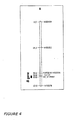
- the present invention provides a polynucleotide which maps at or in close vicinity to the B locus, particularly at a distance of 1 cM upstream of markers MP0176 and GJ01 and co-segregates with marker GJ131 (Millering S. et al, 2004; Gaafar R. M. et al , 2005) ( Figure 5 ).
- the invention relates to a polynucleotides including an informative fragment thereof according to the invention and as described herein before, which is obtainable from a genomic DNA region that maps at a distance of less than 1 cM. relative to the B gene.
- the polynucleotides according to the invention can further be used to fully characterize the region around the B locus including the B gene and to identify further putative flowering time control candidate genes.
- a BAC library has been established with DNA from the biennial commercial sugar beet cultivar H20. Partially (HindIII) digested HMW DNA of fragments in the size of 100-400 kb were size selected two times. The DNA fragments were ligated into the vector pBeloBAC-Kan. The library contains 57,600 clones with an average insert size of approximately 120 kb, corresponding to an 8x coverage of the beet genome. The redundancy has been tested by screening with single-copy probes and the frequency of clones from mitochondrial or plastid DNA was estimated to be lower than 1 %.
- This BAC library was used to recover the full-length genomic sequence of the sugar beet PRR7 gene.
- primers PRR7-F and PRR7-R were used to screen the sugar beet BAC library using standard PCR techniques well known to those skilled in the art.
- the PCR conditions for the screening of the DNA pools were as follows: primary denaturation was accomplished at a temperature of between 90°C and 98°C, particularly at about 95°C for 2 to 10 min, particularly for about 5 min followed by between 30 and 40 amplification cycles of between 25 and 35 seconds, particularly about 35 amplification cycles of about 30 seconds at a temperature of between 90°C and 98°C, particularly at about 95°C, between 25 and 35 seconds, particularly 30 seconds at a temperature of between 55 °C and 65 °C, particularly at about 60°C and between 25 and 35 seconds, particularly 30 seconds at a temperature of between 68 °C and 75 °C, particularly at about 72°C and followed by between 2 and 8 min, particularly about 5 min, at a temperature of between 68 °C and 75 °C, particularly at about 72°C.
- PCR experiments are carried out using an appropriate reaction mix including a suitable polymerase, particularly a Taq polymerase. Subsequent screenings of the DNA pools for fragment BvPRR7 resulted in the positive identification of a BAC clone carrying the respective fragment.
- a suitable polymerase particularly a Taq polymerase.
- the previously identified BAC clone is sequenced using standard sequencing technology such as, for example, the pyrosequencing technology developed by 454 Life Sciences. Two non-overlapping contigs that both share sequence homology with EST CV301305 can then be combined into one single sequence (SEQ ID NO 5). Based on the alignment of the BAC sequence contigs to EST CV301305 and on sequence homology to the PRR7 gene from Arabidopsis, the putative gene structure of the beet BvPRR7 gene comprising introns and exons can be predicted as shown in Figure 5 .
- the genomic sequence can be shown to span the entire BvPRR7 gene with 3.6 Kb of sequence upstream of the ATG stop codon and 2.2 Kb downstream of the coding region.
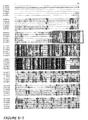
- the corresponding amino acid sequence of BvPRR7 is shown under SEQ ID NO 6. Alignment of the amino acid sequence of BvPRR7 to all members of the PRR gene family from Arabidopsis including TOC1 (PRR1), PRR3, PRR5, PRR7 and PRR9 illustrates the strong conservation of the Pseudo Response Regulator receiver domain (PRR) motif (pfam00072) near the NH2-terminus and the CCT motif (pfam06203) at the COOH-terminus ( Figure 6 ).
- PRR Pseudo Response Regulator receiver domain
- BvPRR7 In addition to the PRR gene family from Arabidopsis, BvPRR7 also shares strong homology to the PRR7 homologue in cereals as illustrated by the phylogenetic tree shown in Figure 7 .
- RFLP restriction fragment length polymorphism
- RAPD random amplification of polymorphic DNA
- AFLP amplified restriction fragment length polymorphism
- SSR single sequence repeats
- SNPs single nucleotide polymorphisms
- the information content of the different types of markers may be different depending on the method that was used to obtain the marker data and the population in which the markers were scored. For example, it is not always possible to distinguish genome fragments that are present in homozygous condition from heterozygous fragments.
- co-dominant markers like restriction fragment length polymorphisms (RFLPs, Botstein et al., 1980 ⁇ and co-dominantly scored amplified fragment length polymorphisms (AFLPs, Vos et al., 1995) yield more information than dominant markers like random amplified polymorphic DNAs (RAPDs, Welsh and McCleland, 1990) and dominantly scored AFLPs.
- RFLPs are co-dominant and are able to identify a unique locus.
- RFLP involves the use of restriction enzymes to cut chromosomal DNA at specific short restriction sites, polymorphisms result from duplications or deletions between the sites or mutations at the restriction sites.
- AFLP requires digestion of cellular DNA with a restriction enzyme before using PCR and selective nucleotides in the primers to amplify specific fragments. With this method up to 100 polymorphic loci can be measured and only relatively small DNA sample are required for each test.
- PCR polymerase chain reaction
- PCR-based techniques require only a small percentage (approximately 10%) of the DNA amount as template to produce large quantities of the target sequence by PCR amplification.
- RAPD PCR based technique
- PCR polymerase chain reaction
- Microsatellites or simple sequence repeats (SSRs), simple sequence length polymorphisms (SSLPs), short tandem repeats (STRs), simple sequence motifs (SSMs), and sequence target microsatellites (STMs) represent a class of repetitive sequences which are widely dispersed throughout the genome of eukaryotes. The variation in number and length of the repeats is a source of polymorphism even between closely related individuals. SSR analysis is based on these (short-repeat) sequences which are selectively amplified to detect variations in simple sequence repeats.
- microsatellite sequences can be easily amplified by PCR using a pair of flanking locus-specific oligonucleotides as primers and detect DNA length polymorphisms (Litt and Luty, 1989; Weber and May, 1989).
- SNPs single nucleotide polymorphisms or SNPs, which occur approximately every 1.3 kb in human (Cooper et al., 1985; Kwok et al., 1996). Most polymorphisms of this type have only two alleles and are also called biallelic loci. Positional cloning based on SNPs may accelerate the identification of disease traits and a range of biologically informative mutations (Wang et al., 1998).
- PCR extension assays that efficiently pick up point mutations may be used to detect SNPs. The procedure requires little DNA per sample.
- Three widely used types of SNP detection assays using PCR method are cleaved amplified polymorphic sequences (CAPS) (Konieczny and Ausubel, 1993; Thiel et al., 2004), derived CAPS (dCAPS) (Michaels and Amasino, 1998; Neff et al., 1998), and single strand conformation polymorphism (SSCP) (Orita et al., 1989).
- CAPS cleaved amplified polymorphic sequences
- dCAPS derived CAPS
- SSCP single strand conformation polymorphism
- CAPS polymorphisms are differences in restriction fragment lengths caused by SNPs or INDELs that create or abolish restriction endonuclease recognition sites in PCR amplicons produced by locus-specific oligonucleotide primers.
- CAPS assays are performed by digesting locus-specific PCR amplicons with one or more restriction enzymes and then separating the digested DNA on agarose or polyacrylamide gels.
- dCAPS is a modification of the CAPS technique that allows detection of most single-nucleotide changes by utilizing mismatched PCR primers.
- a restriction enzyme recognition site that includes the SNP is introduced into the PCR product by a primer containing one or more mismatches to template DNA.
- the PCR product modified in this manner is then subjected to restriction enzyme digestion, and the presence or absence of the SNP is determined by the resulting restriction pattern.
- the SSCP technique separates denatured double stranded DNA on a non-denaturing gel, and thus allows the secondary structure, as well as the molecular weight, of single stranded DNA to determine gel mobility.
- the ARMS (amplification refractory mutation system)-PCR procedure involves the use of a single PCR for SNP genotyping (Fan et a/., 2003; Chiapparino et al., 2004).
- a tetra-primer employing two primer pairs, is used to amplify two different alleles of a SNP in a single PCR reaction.
- LCR Low-Ligase Chain Reaction
- Alternative methods may be employed to amplify such fragments, such as the "Ligase Chain Reaction” ("LCR”) (Barany, F., 1991)), which uses two pairs of oligonucleotide probes to exponentially amplify a specific target.
- the sequences of each pair of oligonucleotides are selected to permit the pair to hybridize to abutting sequences of the same strand of the target.
- Such hybridization forms a substrate for a template-dependent ligase.
- the resulting products thus serve as a template in subsequent cycles and an exponential amplification of the desired sequence is obtained.
- LCR can be performed with oligonucleotides having the proximal and distal sequences of the same strand of a polymorphic site.
- either oligonucleotides will be designed to include the actual polymorphic site of the polymorphism.
- the reaction conditions are selected such that the oligonucleotides can be ligated together only if the target molecule either contains or lacks the specific nucleotide that is complementary to the polymorphic site present on the oligonucleotide.
- the oligonucleotides may be selected such that they do not include the polymorphic site (see, Segev, PCT Application WO 90/01069 ).
- OLA Oligonucleotide Ligation Assay
- Molecular markers preferentially End point TaqMan®, can be developed based on SNPs characterized from sequenced PCR products that are amplified from annual and biennial plants. Here, several PCR amplifications will be performed in order to cover the whole sequence of the gene.
- New molecular markers will then be tested within different annual and biennial genetic backgrounds to evaluate the robustness of the molecular test.
- a molecular marker is a DNA fragment amplified by PCR, e.g., a SSR marker or a RAPD marker.
- the presence or absence of an amplified DNA fragment is indicative of the presence or absence of the trait itself or of a particular allele of the trait.
- a difference in the length of an amplified DNA fragment is indicative of the presence of a particular allele of a trait, and thus enables to distinguish between different alleles of a trait.
- simple sequence repeat (SSR) markers are used to identify invention-relevant alleles in the parent plants and/or the ancestors thereof, as well as in the progeny plants resulting from a cross of said parent plants.
- a marker based on a single nucleotide polymorphism is used to identify invention-releyant alleles in the parent plants and/or the ancestors thereof, as well as in the progeny plants resulting from a cross of said parent plants.
- a marker based on a deletion or an insertion (“INDEL") of at least one nucleotide is used to identify invention-relevant alleles in the parent plants and/or the ancestors thereof, as well as in the progeny plants resulting from a cross of said parent plants.
- markers can be developed based on the sequence of the polynucleotides according to the invention and as described herein before.
- markers may be developed and used which are not explicitly disclosed herein or markers even yet to be identified. Based on the information provided in this application it will be possible, for a skilled person, to identify or develop markers not explicitly disclosed herein but genetically closely linked to, or, preferably, located within the bolting gene or B gene or linked to the markers disclosed herein. The skilled person knows that other markers may provide at least equal utility in screening assays and marker assisted selection.
- the markers according to the present invention can be used in an allelic discrimination assay, particularly in an assay for discriminating between different haplotypes within plant groupings of sugar beet plants exhibiting a biennial genotype.
- Said assay is based on a set of probe polynucleotides comprising two separate probe molecules that are complementary, for example, to a subregion of the BvPRR7 gene obtainable by PCR amplification based on forward primer PRR7- F and reverse primer PRR7-R as given in SEQ ID NO: 7 and SEQ ID NO: 8, respectively, which probe molecules differ only by one base mismatch, particularly a base mismatch at position #631.
- an assay is provided involving markers that can discriminate specifically between annual plants and biennial plants and can thus be used, for example, for quality control of seed lots.
- the invention relates to an assay, which is based on a set of probe polynucleotides comprising two separate probe molecules that are complementary, for example, to a to a subregion of the BvPRR7 gene obtainable by PCR amplification based on forward primer PRR7- F and reverse primer PRR7-R as given in SEQ ID NO: 7 and SEQ ID NO: 8, respectively, which probe molecules differ only by one base mismatch, particularly a base mismatch at position #631.
- the annual plant habit conferred by the B gene behaves as a single dominant trait; the requirement for vernalization in biennial plants accordingly is recessive.
- the transformation of an annual allele of BvPRR7 into a biennial genotype thus is predicted to bestow the annual flowering behavior onto the biennial acceptor genotype.
- the coding sequence of an annual allele of BvPRR7 under the control of an annual promoter and terminator fragment is transformed into biennial genotype such as, for example G018. Transformation can be accomplished by methods known in art such as that disclosed by Chang et al , 2002 using sugar beet meristems as explant material and the phosphomannose isomerase (PMI) gene as selectable marker...
- PMI phosphomannose isomerase
- Transgenic shoots are checked for expression of the selection marker such as, for example, PMI activity (Joersbo et al. 1998) and subsequently rooted, potted in soil and transferred to the greenhouse.
- Negative controls consist of non-transgenic shoots that are subjected to the same in vitro regeneration procedure, but without Agrobacterium infection and selection. Plants are grown in growth chambers at a constant temperature of 18 °C and a photoperiod of 17 hours light and 7 hours dark. Under these conditions none of the non-transgenic controls are supposed to show any signs of bolting during the observation period, whereas annual control plants are supposed to bolt normally within 8 weeks.
- transgenic plants that bolted and flowered are cross-pollinated with a biennial maintainer line to produce offspring. Progeny plants are tested for selection marker activity and subsequently monitored for bolting and flowering without vernalization. Most progenies should show a one to one segregation ratio and a perfect correlation between PMI activity and the annual habit.
- the EST sequence with accession number CV301305 was identified as the putative beet homologue of PRR7 by means of homology searches using BLAST.
- SEQ ID 1 shows the nucleotide sequence of EST CV301305.
- the corresponding amino acid sequence shows the partial presence of a Pseudo Response Regulator receiver (PRR, pfam00072) or Signal Receiver (REC, cd00156) domain ( Figure 1 ), a hallmark of the PRR gene family that appear to be crucial for certain circadian-associated events (Nakamichi et al , 2005).
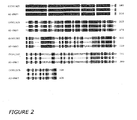
- FIG 2 shows the alignment of the amino acid sequence of CV301305 with PRR7, its closest Arabidopsis homologue, which has been described as a component of the temperature-sensitive circadian system (Nakamichi et al , 2007; Salomé and McClung 2005).
- the circadian clock is known to control several developmental processes in plants including flowering time (i.e; bolting) control (Imaizumi and Kay, 2006; Zhou et al, 2007).
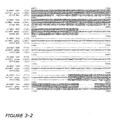
- the putative gene structure of the partial beet PRR7 fragment was deduced using the alignment between the genomic sequence and the mRNA of the Arabidopsis PRR7 gene (AT5G02810 and NM_120359 respectively) to the BvPRR7 sugar beet EST (CV301305), which revealed the presence of several putative intronic regions ( Figure 3 ).
- Primers PRR7- F and -R (SEQ ID NO 7 and 8) encompassing the third putative intronic region delivered an amplification product of approximately 0.5 Kb when using genomic beet DNA as template.
- PCR conditions for the amplification reaction were as follows: primary denaturation at 95°C for 5 min followed by 35 amplification cycles of 30 seconds at 95°C, 30 seconds at 60°C and 30 seconds at 72°C and followed by 5 min at 72°C.
- PCR experiments were run at a GeneAMP PCR System 9600 instrument from Applied Biosystems Inc. using Platinum Taq DNA polymerase and the corresponding reaction mix from Invitrogen Corporation as recommended by the supplier. Sequence analysis of the PCR product enabled the reconstruction of the genomic sequence around intron 3 of the BvPRR7 gene fragment, and confirmed the presence of an intron of 296 base pairs in length (SEQ ID NO 4).
- the genomic fragment of the BvPRR7 gene was amplified and sequenced across a panel of sugar beet parental lines consisting of 15 biennial and one annual line. All biennial lines revealed monomorphic for BvPRR7 as only two different haplotypes were observed: one biennial allele and one annual allele (Table1).
- an assay was developed targeting the SNP at position #160 (SEQ ID NO 4) using the EndPoint TaqMan® technology.
- Table 2 summarizes the nucleotide sequences of the primers and probes designed for the PRR7 (T1) TaqMan® assay targeting SNP at position #160; the reactions further consisted of the TaqMan® Universal PCR Master Mix, No AmpErase® UNG (2X) from Applied Biosystems Inc. according to the manufacturer's recommendations.
- the PCR amplification was performed as follows: 95°C for 10 min followed by 40 cycles of 95°C for 15 sec and 60°C for 1 min, using an ABI PRISM 7700 Sequence Detector instrument, EndPoint measurement was performed using the Sequence Detection System 2.0 software.
- the BvPRR7 gene was mapped in a F2 population of 198 individuals derived from a cross between the annual line and a biennial line polymorphic for the SNP at position #160.
- BvPRR7 maps at chromosome II at an approximate distance of 1 cM downstream of the GJ131 marker ( Figure 4 ), a region known to contain the. B gene for vernalization-independent flowering (Millering et al , 2004; Gaafar et al , 2005).
- the results of the PRR7(T1) assay show a perfect match between the predicted genotype of the B gene and the genotype of the BvPRR7 gene.
- the genotype of the B gene was predicted based on phenotypic evaluation of the F3 populations derived from the individual F2 plants for vernalization-independent flowering.
- Table 3 summarizes the graphical representation of the fine-map of the B gene region for 9 individual progeny plants comprising the closest recombination events.
- the combination of its map position and its biological function relating to the temperature-sensitive circadian rhythm (Salomé and McClung, 2005) obviously make BvPRR7 a strong candidate for the B gene.
- a sugar beet BAC library was screened by means of PCR.
- the library was developed from the biennial commercial cultivar H20 and calculated to represent 6 genome equivalents with an average insert size of 120 Kb (McGrath et al, 2004).
- DNA pools for this library are distributed by Amplicon Express, Pullman WA.
- the PCR conditions for the screening of the DNA pools were as follows: primary denaturation at 95°C for 5 min followed by 35 amplification cycles of 30 seconds at 95°C, 30 seconds at 60°C and 30 seconds at 72°C and followed by 5 min at 72°C.
- PCR experiments were run at a GeneAMP PCR System 9700 instrument from Applied Biosystems Inc.
- BAC SBA079-L24 was sent to MWG Biotech AG, Germany for sequence analysis by means of the 454 sequencing technology, Where necessary, gaps between the obtained contigs were filled by regular Sanger sequencing to yield one single genomic sequence for the BvPRR7 gene (SEQ ID NO 5). Based on the alignment of the genomic sequence to EST CV301305 and on sequence homology to the PRR7 gene from Arabidopsis, the putative gene structure of the beet BvPRR7 gene comprising introns and exons was predicted as shown in Figure 5 .
- the genomic sequence spans the entire BvPRR7 gene with 3.6 Kb of sequence upstream of the ATG start codon and 2.2 Kb downstream of the coding region.
- the corresponding amino acid sequence of BvPRR7 is shown under SEQ ID NO 6. Alignment of the amino acid sequence of BvPRR7 to all members of the PRR gene family from Arabidopsis including TOC1 ( PRR1 ), PRR3, PRR5, PRR7 and PRR9 illustrates the strong conservation of the Pseudo Response Regulator receiver domain (PRR) motif (pfam00072) near the NH2-terminus and the CCT motif (pfam06203) at the COOH-terminus ( Figure 6 ).
- PRR Pseudo Response Regulator receiver domain
- BvPRR7 In addition to the PRR gene family from Arabidopsis, BvPRR7 also shares strong homology to the PRR7 homologue in cereals as illustrated by the phylogenetic tree shown in Figure 7 . Surprisingly, the PRR7 homologue in cereals, better known as Ppd, is known to represent a major determinant of the photoperiod response (Tumer et al, 2005; Beales et al, 2007) rather than the vernalization response as suggested here for sugar beet.
- RNA samples were harvested every two hours over a period of 24 hours and total RNA was isolated using the RNAqueous®-4PCR Kit commercialized by Ambion, basically following the supplier's instructions. Plant RNA Isolation Aid (Ambion) was added to the RNA isolation steps to remove contaminants such as polysaccharides and polyphenolics and the RNA samples were treated with DNase I (Ambion) for removal of DNA residues. The RNA samples were converted to cDNA using the RETROscript® Kit (Ambion) starting from 1 ⁇ g of total RNA as template.
- the expression of the BvPRR7 gene was measured by means of quantitative PCR (qPCR) using the Power SYBR® Green PCR Master Mix (Applied Biosystems Inc.) on an ABI PRISM 7700 Sequence Detector instrument.
- the PCR conditions were as follows: primary denaturation at 95°C for 10 min followed by 40 amplification cycles of 15 seconds at 95°C and 1 min at 60°C.
- the nucleotide sequences of the forward and reverse primer for BvPRR7 are as follows: 5'-TTGGAGGAGGTGTCACAGTTCTAG-3' (SEQ ID NO: 49) and 5'-TGTCATTGTCCGACTCTTCAGC-3' (SEQ ID NO: 50), respectively.
- the beta tubulin ( BvBTU ) and isocitrate dehydrogenase ( BvICDH ) genes were used as reference genes for normalizing the expression of BvPRR7.
- the primer sequences designed for these two reference genes consisted of 5'-TTGTTGAAAATGCAGACGAGTGT-3' (SEQ ID NO: 13) and 5'-AAGATCGCCAAAGCTTGGTG-3' for BvBTU (AW063029) (SEQ ID NO: 14) and 5'-CACACCAGATGAAGGCCGT-3' (SEQ ID NO: 15) and 5'-CCCTGAAGACCGTGCCAT-3' (SEQ ID NO: 16) for BvICDH (AF173666).
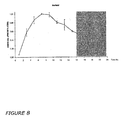
- the biennial allele is unique for the biennial lines and is never found in the annual entries, which suggest a strong correlation between the allelic variation observed for BvPRR7 and the annual or biennial plant habit. This observation further strengthens the causal relationship between BvPRR7 and the B locus for vernalization independent flowering in sugar beet. Amongst the 19 SNPs characterized in the coding regions, 7 of them lead to amino acid changes in the predicted protein sequence between the annual and the biennial alleles.
- any of the SNPs at positions #3827, #3954, #5284, #5714, #10954, #11220, #11391, #12053, #12127, and #12837 can be used to distinguish all annual alleles from the biennial allele by means of molecular markers targeting one or more of these SNPs.
- the promoter region also revealed polymorphic between annual and biennial lines.
- primers F3808 (SEQ ID NO 29) and R3809 (SEQ ID NO 30) an amplification product of 0.6 Kb is obtained when using genomic DNA from biennial lines as template, but no amplification for the annual lines.
- PCR conditions for the amplification reaction were as follows: primary denaturation at 95°C for 5 min followed by 35 amplification cycles of 30 seconds at 95°C, 30 seconds at 60°C and 30 seconds at 72°C and followed by 5 min at 72°C.
- PCR experiments were run at a GeneAMP PCR System 9600 instrument from Applied Biosystems Inc. using Platinum Taq DNA polymerase and the corresponding reaction mix from Invitrogen Corporation as recommended by the supplier. This primer pair thus specifically amplifies the biennial alleles, but not the annual alleles.
- the header row indicates the nucleotide position at the genomic sequence of the BvPRR7 gene fragment (SEQ ID NO 5). The remaining rows represent the 2 haplotypes observed across the panel of 16 lines.
- Table 2 Nucleotide sequences of primers and probes corresponding to the TaqMan assay PRR7 (T1) for the genotyping of SNP #160 precursor names sequence (5' to 3') PRR7(T1)-F GAGGTGTCACAGTGTAAGTGTCT PRR7(T1)-R AAAGACTGCTACACGAACCACTAAG PRR7(T1)-FAM FAM-CTGATGAAAAGCTG-MGB-NFQ PRR7(T1)-VIC VIC-CTGATGGAAAGCTG-MGB-NFQ
- Table 4 Nucleotide sequences of the PCR primers used to amplify and sequence all exons of BvPRR7 and part of the introns and promoter or terminator regions.
- the Table shows the 19 polymorphisms identified in the coding regions when comparing the annual and biennial alleles. Polymorphisms in the Pseudo-receiver and CCT domains are indicated by bolded lines. Amino acid substitutions are indicated by small stars. Amino acid changes specific for the biennial allele are indicated by big starts.
- the SNP position indicated in the header row are numbered according to SEQ ID NO 5.
- the annual plant habit conferred by the B gene behaves as a single dominant trait; the requirement for vernalization in biennial plants accordingly is recessive.
- the transformation of an annual allele of BvPRR7 into a biennial genotype thus is predicted to bestow the annual flowering behavior onto the biennial acceptor genotype.
- the coding sequence of an annual allele of BvPRR7 under the control of an annual promoter and terminator fragment is transformed into biennial genotype G018.
- the experimental procedure for the transformation of sugar beet is essentially as disclosed by Chang et al, 2002 using sugar beet meristems as explant material and the phosphomannose isomerase (PMI) gene as selectable marker.
- PMI phosphomannose isomerase
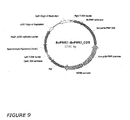
- the plasmid map of the binary vector carrying the gene cassettes for both the PMI selectable marker gene and the annual BvPRR7 allele is shown in Figure 9 .
- Transgenic shoots are checked for PMI activity (Joersbo et al, 1998) and subsequently rooted, potted in soil and transferred to the greenhouse.
- Negative controls consist of non-transgenic shoots that underwent the same in vitro regeneration procedure, but without Agrobacterium infection and mannose selection. Plants are grown in growth chambers at a constant temperature of 18 °C and a photoperiod of 17 hours light and 7 hours dark. Under these conditions none of the non-transgenic controls are supposed to show any signs of bolting during the observation period, whereas annual control plants are supposed to bolt normally within 8 weeks.
- transgenic plants that bolted and flowered are cross-pollinated with a biennial maintainer line to produce offspring.
- Progeny plants are tested for PMI activity and subsequently monitored for bolting and flowering without vernalization.
- Most progenies should show a one to one segregation ratio and a perfect correlation between PMI activity and the annual habit.
- BvPRR7 plays a key role in the vernalization response in sugar beet
- BvPRR7 represents an obvious candidate for engineering bolting resistance by suppressing the vernalization response.
- a BvPRR7 cDNA fragment of 0.6 Kb (SEQ ID NO. 1) is assembled into an RNAi cassette under the control of the constitutive Ubi3 promoter from Arabidopsis (Norris et al, 1993).
- the inverted repeat of the BvPRR7 fragment is separated by the second intron from the potato StLS1 gene (Eckes et al, 1986; Vancanneyt et al, 1990) to stabilize the RNAi cassette, but also to improve the efficiency of the RNAi phenomenon (Wang and Waterhouse, 2001; Smith et al, 2000).
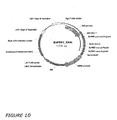
- the plasmid map of the binary vector carrying the RNAi gene cassette for BvPRR7 and the PMI selectable marker gene is shown in Figure 10 .
- the RNAi cassette is transformed into the biennial genotype G018 as described in the previous example. PMI-positive shoots and non-transgenic controls are rooted and transferred to the greenhouse for an acclimatization period of two weeks minimum at 18 °C prior to the vernalization treatment.
- the transgenic plants are exposed to the vernalization treatment consisting of a period of 14 weeks at a constant temperature of 6 °C and 12 hours low artificial light.
- vernalized plants Prior to applying bolting-inductive conditions, vernalized plants are slowly acclimatized for two weeks in climate chambers by stepwise increasing the temperature from 10 to 18 °C. Plants are subsequently repotted into to larger pots (2 liter), and monitored for bolting while exposed to a constant temperature of 18 °C and a long-day photoperiod of 17 hours light / 7 hours dark.
- Non-transgenic control plants routinely start bolting between four to six weeks post vernalization.
- Transgenic plants suppressed for BvPRR7 frequently show a delay in bolting ranging from only two weeks to more than two months. A few events may never bolt under the conditions applied in the greenhouse. Apart from the delay in bolting and flowering, transgenic plants develop normally and show no phenotypic aberrations. In general, plants delayed in bolting show a higher leaf number at the time of bolting as a result of the prolonged vegetative stage.
Landscapes
- Chemical & Material Sciences (AREA)
- Organic Chemistry (AREA)
- Health & Medical Sciences (AREA)
- Life Sciences & Earth Sciences (AREA)
- Molecular Biology (AREA)
- Medicinal Chemistry (AREA)
- Biophysics (AREA)
- General Health & Medical Sciences (AREA)
- Genetics & Genomics (AREA)
- Botany (AREA)
- Proteomics, Peptides & Aminoacids (AREA)
- Biochemistry (AREA)
- Gastroenterology & Hepatology (AREA)
- Measuring Or Testing Involving Enzymes Or Micro-Organisms (AREA)
- Breeding Of Plants And Reproduction By Means Of Culturing (AREA)
- Micro-Organisms Or Cultivation Processes Thereof (AREA)
- Peptides Or Proteins (AREA)
- Saccharide Compounds (AREA)
Priority Applications (3)
| Application Number | Priority Date | Filing Date | Title |
|---|---|---|---|
| EP11161309A EP2390335A3 (en) | 2007-05-23 | 2008-05-23 | Polynucleotide markers |
| PL08759990T PL2152885T3 (pl) | 2007-05-23 | 2008-05-23 | Markery polinukleotydowe |
| EP08759990.8A EP2152885B1 (en) | 2007-05-23 | 2008-05-23 | Polynucleotide markers |
Applications Claiming Priority (3)
| Application Number | Priority Date | Filing Date | Title |
|---|---|---|---|
| EP07108777 | 2007-05-23 | ||
| PCT/EP2008/056390 WO2008142167A2 (en) | 2007-05-23 | 2008-05-23 | Polynucleotide markers |
| EP08759990.8A EP2152885B1 (en) | 2007-05-23 | 2008-05-23 | Polynucleotide markers |
Related Child Applications (1)
| Application Number | Title | Priority Date | Filing Date |
|---|---|---|---|
| EP11161309A Division-Into EP2390335A3 (en) | 2007-05-23 | 2008-05-23 | Polynucleotide markers |
Publications (2)
| Publication Number | Publication Date |
|---|---|
| EP2152885A2 EP2152885A2 (en) | 2010-02-17 |
| EP2152885B1 true EP2152885B1 (en) | 2014-06-18 |
Family
ID=39529427
Family Applications (3)
| Application Number | Title | Priority Date | Filing Date |
|---|---|---|---|
| EP08759990.8A Not-in-force EP2152885B1 (en) | 2007-05-23 | 2008-05-23 | Polynucleotide markers |
| EP08156812A Withdrawn EP1995320A3 (en) | 2007-05-23 | 2008-05-23 | Polynucleotide markers |
| EP11161309A Withdrawn EP2390335A3 (en) | 2007-05-23 | 2008-05-23 | Polynucleotide markers |
Family Applications After (2)
| Application Number | Title | Priority Date | Filing Date |
|---|---|---|---|
| EP08156812A Withdrawn EP1995320A3 (en) | 2007-05-23 | 2008-05-23 | Polynucleotide markers |
| EP11161309A Withdrawn EP2390335A3 (en) | 2007-05-23 | 2008-05-23 | Polynucleotide markers |
Country Status (13)
| Country | Link |
|---|---|
| US (2) | US20100209919A1 (enExample) |
| EP (3) | EP2152885B1 (enExample) |
| JP (2) | JP2010527598A (enExample) |
| CN (2) | CN101772575B (enExample) |
| BR (1) | BRPI0812387A2 (enExample) |
| CA (2) | CA2687760C (enExample) |
| DK (1) | DK2152885T3 (enExample) |
| EA (1) | EA022877B1 (enExample) |
| MA (1) | MA31495B1 (enExample) |
| PL (1) | PL2152885T3 (enExample) |
| UA (2) | UA100855C2 (enExample) |
| WO (1) | WO2008142167A2 (enExample) |
| ZA (1) | ZA200907678B (enExample) |
Families Citing this family (17)
| Publication number | Priority date | Publication date | Assignee | Title |
|---|---|---|---|---|
| EP2152885B1 (en) * | 2007-05-23 | 2014-06-18 | Syngenta Participations AG | Polynucleotide markers |
| DK2291525T3 (en) * | 2008-05-23 | 2015-06-15 | Syngenta Participations Ag | TRANSGENE sugarbeet |
| EP2291525B1 (en) * | 2008-05-23 | 2015-04-15 | Syngenta Participations AG | Transgenic sugar beet plants |
| CN107368705B (zh) * | 2011-04-14 | 2021-07-13 | 完整基因有限公司 | 分析生物体的基因组dna的方法和计算机系统 |
| US20130180007A1 (en) * | 2012-01-06 | 2013-07-11 | Pioneer Hi Bred International Inc | Somatic Ovule Specific Promoters and Methods of Use |
| NZ706930A (en) * | 2012-09-13 | 2017-01-27 | Seminis Vegetable Seeds Inc | Genetic markers for myb28 |
| KR101962636B1 (ko) * | 2016-06-08 | 2019-03-27 | 동아대학교 산학협력단 | 실린드로카폰 데스트럭탄스균을 선별하기 위한 프라이머 선별방법 및 프라이머 세트 |
| KR101962669B1 (ko) * | 2016-06-08 | 2019-03-27 | 동아대학교 산학협력단 | 푸자리움 푸지쿠로이 종복합체 구분을 위한 프라이머 선별방법 및 프라이머 세트 |
| CN107267660B (zh) * | 2017-08-21 | 2020-10-09 | 黑龙江大学 | 检测甜菜雄蕊育性的ssr分子标记及其应用 |
| US11180796B2 (en) | 2018-06-13 | 2021-11-23 | International Business Machines Corporation | Detection of mutations regarding one or more deoxyribonucleic acid sequences using deterministic lateral displacement arrays |
| US11149298B2 (en) | 2018-06-13 | 2021-10-19 | International Business Machines Corporation | Detection of nucleic acid sequences using deterministic lateral displacement arrays |
| CN109825604B (zh) * | 2019-04-03 | 2022-12-13 | 中国农业科学院郑州果树研究所 | 与桃抗蚜性状紧密连锁的分子标记,用于检测桃抗蚜性状的引物、试剂盒、方法及其应用 |
| CN110305981A (zh) * | 2019-08-05 | 2019-10-08 | 辽宁省果树科学研究所 | 一种杏果实硬度关键基因的分子标记pg1524及其检测方法和应用 |
| CN110527740B (zh) * | 2019-09-11 | 2022-03-22 | 东北农业大学 | 一种与印度南瓜强雌基因紧密连锁的分子标记、引物及应用 |
| CN111518916B (zh) * | 2020-02-28 | 2022-07-15 | 南京农业大学 | 猪13号染色体与二花脸猪产活仔数显著相关的snp标记及其检测方法与应用 |
| CN116121437B (zh) * | 2022-11-07 | 2023-10-13 | 中国热带农业科学院南亚热带作物研究所 | 一种杧果品种的snp标记组合及杧果育种中的应用 |
| CN117625635A (zh) * | 2023-10-31 | 2024-03-01 | 长江大学 | 甘蓝型油菜BnPPD基因、突变体及其应用 |
Family Cites Families (29)
| Publication number | Priority date | Publication date | Assignee | Title |
|---|---|---|---|---|
| NL8300698A (nl) | 1983-02-24 | 1984-09-17 | Univ Leiden | Werkwijze voor het inbouwen van vreemd dna in het genoom van tweezaadlobbige planten; agrobacterium tumefaciens bacterien en werkwijze voor het produceren daarvan; planten en plantecellen met gewijzigde genetische eigenschappen; werkwijze voor het bereiden van chemische en/of farmaceutische produkten. |
| EP0138341B1 (en) | 1983-09-03 | 1988-10-26 | Bass Public Limited Company | Beer and other beverages and their manufacture |
| US4945050A (en) | 1984-11-13 | 1990-07-31 | Cornell Research Foundation, Inc. | Method for transporting substances into living cells and tissues and apparatus therefor |
| US4987071A (en) | 1986-12-03 | 1991-01-22 | University Patents, Inc. | RNA ribozyme polymerases, dephosphorylases, restriction endoribonucleases and methods |
| EP0292435B1 (en) | 1987-05-20 | 1995-07-26 | Ciba-Geigy Ag | Zea mays plants and transgenic zea mays plants regenerated from protoplasts or protoplast-derived cells |
| US5350689A (en) | 1987-05-20 | 1994-09-27 | Ciba-Geigy Corporation | Zea mays plants and transgenic Zea mays plants regenerated from protoplasts or protoplast-derived cells |
| NZ225044A (en) | 1987-06-19 | 1990-01-29 | Plant Cell Res Inst | Bertholletia excelsa dna molecule; sulphur rich storage protein |
| ES2097746T3 (es) | 1988-03-08 | 1997-04-16 | Ciba Geigy Ag | Regeneracion de plantas gramineas de la subfamilia pooideae partiendo de protoplastos. |
| ATE138106T1 (de) | 1988-07-20 | 1996-06-15 | David Segev | Verfahren zur amplifizierung und zum nachweis von nukleinsäuresequenzen |
| US5501967A (en) | 1989-07-26 | 1996-03-26 | Mogen International, N.V./Rijksuniversiteit Te Leiden | Process for the site-directed integration of DNA into the genome of plants |
| US5270163A (en) | 1990-06-11 | 1993-12-14 | University Research Corporation | Methods for identifying nucleic acid ligands |
| FR2673642B1 (fr) | 1991-03-05 | 1994-08-12 | Rhone Poulenc Agrochimie | Gene chimere comprenant un promoteur capable de conferer a une plante une tolerance accrue au glyphosate. |
| HU218034B (hu) | 1992-01-09 | 2000-05-28 | Novartis Ag. | Új növényi promoter |
| US6140466A (en) | 1994-01-18 | 2000-10-31 | The Scripps Research Institute | Zinc finger protein derivatives and methods therefor |
| JP4012243B2 (ja) | 1994-01-18 | 2007-11-21 | ザ スクリップス リサーチ インスティチュート | 亜鉛フィンガータンパク質誘導体およびそのための方法 |
| CA2196419C (en) | 1994-08-20 | 2007-08-21 | Yen Choo | Improvements in or relating to binding proteins for recognition of dna |
| US6506559B1 (en) | 1997-12-23 | 2003-01-14 | Carnegie Institute Of Washington | Genetic inhibition by double-stranded RNA |
| DK1068311T3 (da) | 1998-04-08 | 2011-08-08 | Commw Scient Ind Res Org | Fremgangsmåder og midler til opnåelse af modificerede fænotyper |
| AR020078A1 (es) | 1998-05-26 | 2002-04-10 | Syngenta Participations Ag | Metodo para alterar la expresion de un gen objetivo en una celula de planta |
| US20040031072A1 (en) * | 1999-05-06 | 2004-02-12 | La Rosa Thomas J. | Soy nucleic acid molecules and other molecules associated with transcription plants and uses thereof for plant improvement |
| US20100293669A2 (en) * | 1999-05-06 | 2010-11-18 | Jingdong Liu | Nucleic Acid Molecules and Other Molecules Associated with Plants and Uses Thereof for Plant Improvement |
| US20070234438A1 (en) * | 2000-05-08 | 2007-10-04 | Abad Mark S | Nucleic acid molecules and other molecules associated with plants |
| US20040181830A1 (en) * | 2001-05-07 | 2004-09-16 | Kovalic David K. | Nucleic acid molecules and other molecules associated with plants and uses thereof for plant improvement |
| CN1452660A (zh) | 2000-08-11 | 2003-10-29 | 辛根塔参与股份公司 | 植物稳定转化的方法 |
| CN1860231A (zh) * | 2003-06-06 | 2006-11-08 | 阿博根有限公司 | 转录因子 |
| US20060150283A1 (en) * | 2004-02-13 | 2006-07-06 | Nickolai Alexandrov | Sequence-determined DNA fragments and corresponding polypeptides encoded thereby |
| AU2006266251A1 (en) * | 2005-06-30 | 2007-01-11 | Syngenta Participations Ag | Methods for screening for gene specific hybridization polymorphisms (GSHPs) and their use in genetic mapping and marker development |
| EP2013350A1 (en) * | 2006-04-21 | 2009-01-14 | Syngenta Participations AG | Transgenic plants and methods for controlling bolting in sugar beet |
| EP2152885B1 (en) * | 2007-05-23 | 2014-06-18 | Syngenta Participations AG | Polynucleotide markers |
-
2008
- 2008-05-23 EP EP08759990.8A patent/EP2152885B1/en not_active Not-in-force
- 2008-05-23 JP JP2010508869A patent/JP2010527598A/ja active Pending
- 2008-05-23 WO PCT/EP2008/056390 patent/WO2008142167A2/en not_active Ceased
- 2008-05-23 UA UAA200913022A patent/UA100855C2/ru unknown
- 2008-05-23 EA EA200901525A patent/EA022877B1/ru not_active IP Right Cessation
- 2008-05-23 US US12/601,386 patent/US20100209919A1/en not_active Abandoned
- 2008-05-23 PL PL08759990T patent/PL2152885T3/pl unknown
- 2008-05-23 EP EP08156812A patent/EP1995320A3/en not_active Withdrawn
- 2008-05-23 CA CA2687760A patent/CA2687760C/en active Active
- 2008-05-23 EP EP11161309A patent/EP2390335A3/en not_active Withdrawn
- 2008-05-23 CN CN200880100228.0A patent/CN101772575B/zh not_active Expired - Fee Related
- 2008-05-23 BR BRPI0812387-0A2A patent/BRPI0812387A2/pt not_active Application Discontinuation
- 2008-05-23 DK DK08759990.8T patent/DK2152885T3/da active
-
2009
- 2009-05-25 JP JP2011510002A patent/JP2011520461A/ja active Pending
- 2009-05-25 UA UAA201015429A patent/UA105489C2/uk unknown
- 2009-05-25 CA CA2724419A patent/CA2724419C/en active Active
- 2009-05-25 CN CN200980121061.0A patent/CN102057045B/zh not_active Expired - Fee Related
- 2009-05-25 US US12/994,452 patent/US8796506B2/en not_active Expired - Fee Related
- 2009-11-02 ZA ZA200907678A patent/ZA200907678B/xx unknown
- 2009-11-20 MA MA32367A patent/MA31495B1/fr unknown
Also Published As
| Publication number | Publication date |
|---|---|
| US8796506B2 (en) | 2014-08-05 |
| US20110138492A1 (en) | 2011-06-09 |
| JP2010527598A (ja) | 2010-08-19 |
| EA022877B1 (ru) | 2016-03-31 |
| EP1995320A3 (en) | 2009-01-07 |
| MA31495B1 (fr) | 2010-07-01 |
| CA2687760C (en) | 2017-10-31 |
| EP2390335A3 (en) | 2012-03-21 |
| CN101772575B (zh) | 2015-03-11 |
| UA100855C2 (en) | 2013-02-11 |
| EP2152885A2 (en) | 2010-02-17 |
| DK2152885T3 (da) | 2014-08-18 |
| EA200901525A1 (ru) | 2010-10-29 |
| UA105489C2 (uk) | 2014-05-26 |
| EP2390335A2 (en) | 2011-11-30 |
| CN102057045B (zh) | 2018-06-05 |
| US20100209919A1 (en) | 2010-08-19 |
| WO2008142167A3 (en) | 2009-03-12 |
| EP1995320A2 (en) | 2008-11-26 |
| WO2008142167A2 (en) | 2008-11-27 |
| ZA200907678B (en) | 2010-07-28 |
| PL2152885T3 (pl) | 2014-11-28 |
| CA2724419C (en) | 2018-11-13 |
| CA2687760A1 (en) | 2008-11-27 |
| JP2011520461A (ja) | 2011-07-21 |
| CN102057045A (zh) | 2011-05-11 |
| CA2724419A1 (en) | 2009-11-26 |
| BRPI0812387A2 (pt) | 2014-11-04 |
| CN101772575A (zh) | 2010-07-07 |
Similar Documents
| Publication | Publication Date | Title |
|---|---|---|
| US20100209919A1 (en) | Polynucleotide markers | |
| Liu et al. | TaTPP‐7A positively feedback regulates grain filling and wheat grain yield through T6P‐SnRK1 signalling pathway and sugar–ABA interaction | |
| Julio et al. | A eukaryotic translation initiation factor 4E (eIF4E) is responsible for the “va” tobacco recessive resistance to potyviruses | |
| Zhang et al. | Structure, phylogeny, allelic haplotypes and expression of sucrose transporter gene families in Saccharum | |
| US20040025202A1 (en) | Nucleic acid molecules associated with oil in plants | |
| Boutrot et al. | Wheat non-specific lipid transfer protein genes display a complex pattern of expression in developing seeds | |
| CN108291234B (zh) | 倍数孢子体形成基因 | |
| Wu et al. | Mapping SNP-anchored genes using high-resolution melting analysis in almond | |
| Coles et al. | Development and use of an expressed sequenced tag library in quinoa (Chenopodium quinoa Willd.) for the discovery of single nucleotide polymorphisms | |
| Razi et al. | Does sequence polymorphism of FLC paralogues underlie flowering time QTL in Brassica oleracea? | |
| WO2016128898A1 (en) | Semi-dwarf drought tolerant rice and related methods and materials | |
| Chen et al. | CsUFO is involved in the formation of flowers and tendrils in cucumber | |
| Mizumoto et al. | Altered expression of wheat AINTEGUMENTA homolog, WANT-1, in pistil and pistil-like transformed stamen of an alloplasmic line with Aegilops crassa cytoplasm | |
| DK2291525T3 (en) | TRANSGENE sugarbeet | |
| Harinder et al. | Isolation and characterization of stress inducible protein (TaSti/Hop) from heat-tolerant wheat cultivar C306 | |
| EP2291525B1 (en) | Transgenic sugar beet plants | |
| US9085771B2 (en) | Sequence-determined DNA fragments with regulatory functions | |
| KR20080004538A (ko) | Eg1117과 eg307 폴리뉴클레오티드 및 그것의 용도 | |
| Ding et al. | Structure and expression analysis of TaGW5 in common wheat | |
| Tang et al. | Identification of a major QTL and candidate gene for photoperiodic flowering in industrial hemp via BSA-seq and fine mapping | |
| WO2012095841A1 (en) | Improved tomato plants | |
| CN106350525A (zh) | 一种水稻粒型基因dss及其编码蛋白质和应用 | |
| US20110173723A1 (en) | EG82013 and EG81345 Nucleic Acids and Uses Thereof | |
| Li et al. | Genome-wide analysis and expression profiles of the StR2R3-MYB transcription factor superfamily in Solanum Tuberosum | |
| WO2010002276A1 (en) | Compositions and methods for improving trees |
Legal Events
| Date | Code | Title | Description |
|---|---|---|---|
| PUAI | Public reference made under article 153(3) epc to a published international application that has entered the european phase |
Free format text: ORIGINAL CODE: 0009012 |
|
| 17P | Request for examination filed |
Effective date: 20091112 |
|
| AK | Designated contracting states |
Kind code of ref document: A2 Designated state(s): AT BE BG CH CY CZ DE DK EE ES FI FR GB GR HR HU IE IS IT LI LT LU LV MC MT NL NO PL PT RO SE SI SK TR |
|
| AX | Request for extension of the european patent |
Extension state: AL BA MK RS |
|
| 17Q | First examination report despatched |
Effective date: 20100426 |
|
| DAX | Request for extension of the european patent (deleted) | ||
| GRAP | Despatch of communication of intention to grant a patent |
Free format text: ORIGINAL CODE: EPIDOSNIGR1 |
|
| TPAC | Observations by third parties |
Free format text: ORIGINAL CODE: EPIDOSNTIPA |
|
| GRAJ | Information related to disapproval of communication of intention to grant by the applicant or resumption of examination proceedings by the epo deleted |
Free format text: ORIGINAL CODE: EPIDOSDIGR1 |
|
| INTG | Intention to grant announced |
Effective date: 20130708 |
|
| INTC | Intention to grant announced (deleted) | ||
| GRAP | Despatch of communication of intention to grant a patent |
Free format text: ORIGINAL CODE: EPIDOSNIGR1 |
|
| TPAC | Observations by third parties |
Free format text: ORIGINAL CODE: EPIDOSNTIPA |
|
| INTG | Intention to grant announced |
Effective date: 20131004 |
|
| GRAP | Despatch of communication of intention to grant a patent |
Free format text: ORIGINAL CODE: EPIDOSNIGR1 |
|
| INTG | Intention to grant announced |
Effective date: 20140310 |
|
| GRAS | Grant fee paid |
Free format text: ORIGINAL CODE: EPIDOSNIGR3 |
|
| GRAA | (expected) grant |
Free format text: ORIGINAL CODE: 0009210 |
|
| AK | Designated contracting states |
Kind code of ref document: B1 Designated state(s): AT BE BG CH CY CZ DE DK EE ES FI FR GB GR HR HU IE IS IT LI LT LU LV MC MT NL NO PL PT RO SE SI SK TR |
|
| REG | Reference to a national code |
Ref country code: GB Ref legal event code: FG4D |
|
| REG | Reference to a national code |
Ref country code: CH Ref legal event code: EP |
|
| REG | Reference to a national code |
Ref country code: AT Ref legal event code: REF Ref document number: 673397 Country of ref document: AT Kind code of ref document: T Effective date: 20140715 |
|
| REG | Reference to a national code |
Ref country code: IE Ref legal event code: FG4D |
|
| REG | Reference to a national code |
Ref country code: DE Ref legal event code: R096 Ref document number: 602008032855 Country of ref document: DE Effective date: 20140731 |
|
| REG | Reference to a national code |
Ref country code: DK Ref legal event code: T3 Effective date: 20140814 |
|
| REG | Reference to a national code |
Ref country code: NL Ref legal event code: T3 |
|
| PG25 | Lapsed in a contracting state [announced via postgrant information from national office to epo] |
Ref country code: NO Free format text: LAPSE BECAUSE OF FAILURE TO SUBMIT A TRANSLATION OF THE DESCRIPTION OR TO PAY THE FEE WITHIN THE PRESCRIBED TIME-LIMIT Effective date: 20140918 Ref country code: CY Free format text: LAPSE BECAUSE OF FAILURE TO SUBMIT A TRANSLATION OF THE DESCRIPTION OR TO PAY THE FEE WITHIN THE PRESCRIBED TIME-LIMIT Effective date: 20140618 Ref country code: GR Free format text: LAPSE BECAUSE OF FAILURE TO SUBMIT A TRANSLATION OF THE DESCRIPTION OR TO PAY THE FEE WITHIN THE PRESCRIBED TIME-LIMIT Effective date: 20140919 Ref country code: LT Free format text: LAPSE BECAUSE OF FAILURE TO SUBMIT A TRANSLATION OF THE DESCRIPTION OR TO PAY THE FEE WITHIN THE PRESCRIBED TIME-LIMIT Effective date: 20140618 Ref country code: FI Free format text: LAPSE BECAUSE OF FAILURE TO SUBMIT A TRANSLATION OF THE DESCRIPTION OR TO PAY THE FEE WITHIN THE PRESCRIBED TIME-LIMIT Effective date: 20140618 |
|
| REG | Reference to a national code |
Ref country code: AT Ref legal event code: MK05 Ref document number: 673397 Country of ref document: AT Kind code of ref document: T Effective date: 20140618 |
|
| REG | Reference to a national code |
Ref country code: GB Ref legal event code: 732E Free format text: REGISTERED BETWEEN 20141023 AND 20141029 |
|
| REG | Reference to a national code |
Ref country code: LT Ref legal event code: MG4D |
|
| PG25 | Lapsed in a contracting state [announced via postgrant information from national office to epo] |
Ref country code: LV Free format text: LAPSE BECAUSE OF FAILURE TO SUBMIT A TRANSLATION OF THE DESCRIPTION OR TO PAY THE FEE WITHIN THE PRESCRIBED TIME-LIMIT Effective date: 20140618 Ref country code: HR Free format text: LAPSE BECAUSE OF FAILURE TO SUBMIT A TRANSLATION OF THE DESCRIPTION OR TO PAY THE FEE WITHIN THE PRESCRIBED TIME-LIMIT Effective date: 20140618 Ref country code: SE Free format text: LAPSE BECAUSE OF FAILURE TO SUBMIT A TRANSLATION OF THE DESCRIPTION OR TO PAY THE FEE WITHIN THE PRESCRIBED TIME-LIMIT Effective date: 20140618 |
|
| REG | Reference to a national code |
Ref country code: PL Ref legal event code: T3 |
|
| PG25 | Lapsed in a contracting state [announced via postgrant information from national office to epo] |
Ref country code: ES Free format text: LAPSE BECAUSE OF FAILURE TO SUBMIT A TRANSLATION OF THE DESCRIPTION OR TO PAY THE FEE WITHIN THE PRESCRIBED TIME-LIMIT Effective date: 20140618 Ref country code: PT Free format text: LAPSE BECAUSE OF FAILURE TO SUBMIT A TRANSLATION OF THE DESCRIPTION OR TO PAY THE FEE WITHIN THE PRESCRIBED TIME-LIMIT Effective date: 20141020 Ref country code: EE Free format text: LAPSE BECAUSE OF FAILURE TO SUBMIT A TRANSLATION OF THE DESCRIPTION OR TO PAY THE FEE WITHIN THE PRESCRIBED TIME-LIMIT Effective date: 20140618 Ref country code: SK Free format text: LAPSE BECAUSE OF FAILURE TO SUBMIT A TRANSLATION OF THE DESCRIPTION OR TO PAY THE FEE WITHIN THE PRESCRIBED TIME-LIMIT Effective date: 20140618 Ref country code: RO Free format text: LAPSE BECAUSE OF FAILURE TO SUBMIT A TRANSLATION OF THE DESCRIPTION OR TO PAY THE FEE WITHIN THE PRESCRIBED TIME-LIMIT Effective date: 20140618 Ref country code: CZ Free format text: LAPSE BECAUSE OF FAILURE TO SUBMIT A TRANSLATION OF THE DESCRIPTION OR TO PAY THE FEE WITHIN THE PRESCRIBED TIME-LIMIT Effective date: 20140618 |
|
| PG25 | Lapsed in a contracting state [announced via postgrant information from national office to epo] |
Ref country code: AT Free format text: LAPSE BECAUSE OF FAILURE TO SUBMIT A TRANSLATION OF THE DESCRIPTION OR TO PAY THE FEE WITHIN THE PRESCRIBED TIME-LIMIT Effective date: 20140618 Ref country code: IS Free format text: LAPSE BECAUSE OF FAILURE TO SUBMIT A TRANSLATION OF THE DESCRIPTION OR TO PAY THE FEE WITHIN THE PRESCRIBED TIME-LIMIT Effective date: 20141018 |
|
| REG | Reference to a national code |
Ref country code: DE Ref legal event code: R097 Ref document number: 602008032855 Country of ref document: DE |
|
| PLBE | No opposition filed within time limit |
Free format text: ORIGINAL CODE: 0009261 |
|
| STAA | Information on the status of an ep patent application or granted ep patent |
Free format text: STATUS: NO OPPOSITION FILED WITHIN TIME LIMIT |
|
| PG25 | Lapsed in a contracting state [announced via postgrant information from national office to epo] |
Ref country code: IT Free format text: LAPSE BECAUSE OF FAILURE TO SUBMIT A TRANSLATION OF THE DESCRIPTION OR TO PAY THE FEE WITHIN THE PRESCRIBED TIME-LIMIT Effective date: 20140618 |
|
| 26N | No opposition filed |
Effective date: 20150319 |
|
| REG | Reference to a national code |
Ref country code: DE Ref legal event code: R097 Ref document number: 602008032855 Country of ref document: DE Effective date: 20150319 |
|
| PG25 | Lapsed in a contracting state [announced via postgrant information from national office to epo] |
Ref country code: SI Free format text: LAPSE BECAUSE OF FAILURE TO SUBMIT A TRANSLATION OF THE DESCRIPTION OR TO PAY THE FEE WITHIN THE PRESCRIBED TIME-LIMIT Effective date: 20140618 |
|
| REG | Reference to a national code |
Ref country code: CH Ref legal event code: PL |
|
| PG25 | Lapsed in a contracting state [announced via postgrant information from national office to epo] |
Ref country code: LI Free format text: LAPSE BECAUSE OF NON-PAYMENT OF DUE FEES Effective date: 20150531 Ref country code: MC Free format text: LAPSE BECAUSE OF FAILURE TO SUBMIT A TRANSLATION OF THE DESCRIPTION OR TO PAY THE FEE WITHIN THE PRESCRIBED TIME-LIMIT Effective date: 20140618 Ref country code: LU Free format text: LAPSE BECAUSE OF FAILURE TO SUBMIT A TRANSLATION OF THE DESCRIPTION OR TO PAY THE FEE WITHIN THE PRESCRIBED TIME-LIMIT Effective date: 20150523 Ref country code: CH Free format text: LAPSE BECAUSE OF NON-PAYMENT OF DUE FEES Effective date: 20150531 |
|
| REG | Reference to a national code |
Ref country code: IE Ref legal event code: MM4A |
|
| REG | Reference to a national code |
Ref country code: FR Ref legal event code: PLFP Year of fee payment: 9 |
|
| PG25 | Lapsed in a contracting state [announced via postgrant information from national office to epo] |
Ref country code: IE Free format text: LAPSE BECAUSE OF NON-PAYMENT OF DUE FEES Effective date: 20150523 |
|
| PG25 | Lapsed in a contracting state [announced via postgrant information from national office to epo] |
Ref country code: MT Free format text: LAPSE BECAUSE OF FAILURE TO SUBMIT A TRANSLATION OF THE DESCRIPTION OR TO PAY THE FEE WITHIN THE PRESCRIBED TIME-LIMIT Effective date: 20140618 |
|
| REG | Reference to a national code |
Ref country code: FR Ref legal event code: PLFP Year of fee payment: 10 |
|
| PG25 | Lapsed in a contracting state [announced via postgrant information from national office to epo] |
Ref country code: HU Free format text: LAPSE BECAUSE OF FAILURE TO SUBMIT A TRANSLATION OF THE DESCRIPTION OR TO PAY THE FEE WITHIN THE PRESCRIBED TIME-LIMIT; INVALID AB INITIO Effective date: 20080523 Ref country code: BG Free format text: LAPSE BECAUSE OF FAILURE TO SUBMIT A TRANSLATION OF THE DESCRIPTION OR TO PAY THE FEE WITHIN THE PRESCRIBED TIME-LIMIT Effective date: 20140618 |
|
| PGFP | Annual fee paid to national office [announced via postgrant information from national office to epo] |
Ref country code: NL Payment date: 20170510 Year of fee payment: 10 |
|
| PGFP | Annual fee paid to national office [announced via postgrant information from national office to epo] |
Ref country code: FR Payment date: 20170418 Year of fee payment: 10 Ref country code: DE Payment date: 20170531 Year of fee payment: 10 Ref country code: GB Payment date: 20170426 Year of fee payment: 10 Ref country code: DK Payment date: 20170426 Year of fee payment: 10 |
|
| PG25 | Lapsed in a contracting state [announced via postgrant information from national office to epo] |
Ref country code: TR Free format text: LAPSE BECAUSE OF FAILURE TO SUBMIT A TRANSLATION OF THE DESCRIPTION OR TO PAY THE FEE WITHIN THE PRESCRIBED TIME-LIMIT Effective date: 20140618 |
|
| PGFP | Annual fee paid to national office [announced via postgrant information from national office to epo] |
Ref country code: PL Payment date: 20170426 Year of fee payment: 10 Ref country code: BE Payment date: 20170510 Year of fee payment: 10 |
|
| REG | Reference to a national code |
Ref country code: DE Ref legal event code: R119 Ref document number: 602008032855 Country of ref document: DE |
|
| REG | Reference to a national code |
Ref country code: DK Ref legal event code: EBP Effective date: 20180531 Ref country code: NL Ref legal event code: MM Effective date: 20180601 |
|
| GBPC | Gb: european patent ceased through non-payment of renewal fee |
Effective date: 20180523 |
|
| REG | Reference to a national code |
Ref country code: BE Ref legal event code: FP Effective date: 20140814 Ref country code: BE Ref legal event code: MM Effective date: 20180531 |
|
| PG25 | Lapsed in a contracting state [announced via postgrant information from national office to epo] |
Ref country code: GB Free format text: LAPSE BECAUSE OF NON-PAYMENT OF DUE FEES Effective date: 20180523 Ref country code: FR Free format text: LAPSE BECAUSE OF NON-PAYMENT OF DUE FEES Effective date: 20180531 Ref country code: DE Free format text: LAPSE BECAUSE OF NON-PAYMENT OF DUE FEES Effective date: 20181201 Ref country code: NL Free format text: LAPSE BECAUSE OF NON-PAYMENT OF DUE FEES Effective date: 20180601 |
|
| PG25 | Lapsed in a contracting state [announced via postgrant information from national office to epo] |
Ref country code: BE Free format text: LAPSE BECAUSE OF NON-PAYMENT OF DUE FEES Effective date: 20180531 Ref country code: DK Free format text: LAPSE BECAUSE OF NON-PAYMENT OF DUE FEES Effective date: 20180531 |
|
| PG25 | Lapsed in a contracting state [announced via postgrant information from national office to epo] |
Ref country code: PL Free format text: LAPSE BECAUSE OF NON-PAYMENT OF DUE FEES Effective date: 20180523 |