EP2149554A1 - Indolylamide als Modulatoren des EP2-Rezeptors - Google Patents
Indolylamide als Modulatoren des EP2-Rezeptors Download PDFInfo
- Publication number
- EP2149554A1 EP2149554A1 EP08161444A EP08161444A EP2149554A1 EP 2149554 A1 EP2149554 A1 EP 2149554A1 EP 08161444 A EP08161444 A EP 08161444A EP 08161444 A EP08161444 A EP 08161444A EP 2149554 A1 EP2149554 A1 EP 2149554A1
- Authority
- EP
- European Patent Office
- Prior art keywords
- alkyl
- acyl
- con
- cycloalkyl
- nhch
- Prior art date
- Legal status (The legal status is an assumption and is not a legal conclusion. Google has not performed a legal analysis and makes no representation as to the accuracy of the status listed.)
- Withdrawn
Links
- 229910052739 hydrogen Inorganic materials 0.000 claims abstract description 80
- 125000001424 substituent group Chemical group 0.000 claims abstract description 72
- 229910052757 nitrogen Inorganic materials 0.000 claims abstract description 61
- 125000006297 carbonyl amino group Chemical group [H]N([*:2])C([*:1])=O 0.000 claims abstract description 47
- 229910052731 fluorine Inorganic materials 0.000 claims abstract description 37
- 239000003814 drug Substances 0.000 claims abstract description 34
- 229910052801 chlorine Inorganic materials 0.000 claims abstract description 32
- 238000000034 method Methods 0.000 claims abstract description 22
- 229910052760 oxygen Inorganic materials 0.000 claims abstract description 22
- 229910052717 sulfur Inorganic materials 0.000 claims abstract description 21
- 150000003839 salts Chemical class 0.000 claims abstract description 19
- WXXRCNKKYCNYFF-UHFFFAOYSA-N 1h-indole-2,6-dicarboxylic acid Chemical compound C1=C(C(O)=O)C=C2NC(C(=O)O)=CC2=C1 WXXRCNKKYCNYFF-UHFFFAOYSA-N 0.000 claims abstract description 16
- 229920000858 Cyclodextrin Polymers 0.000 claims abstract description 15
- HBAQYPYDRFILMT-UHFFFAOYSA-N 8-[3-(1-cyclopropylpyrazol-4-yl)-1H-pyrazolo[4,3-d]pyrimidin-5-yl]-3-methyl-3,8-diazabicyclo[3.2.1]octan-2-one Chemical class C1(CC1)N1N=CC(=C1)C1=NNC2=C1N=C(N=C2)N1C2C(N(CC1CC2)C)=O HBAQYPYDRFILMT-UHFFFAOYSA-N 0.000 claims abstract description 13
- HFHDHCJBZVLPGP-UHFFFAOYSA-N schardinger α-dextrin Chemical compound O1C(C(C2O)O)C(CO)OC2OC(C(C2O)O)C(CO)OC2OC(C(C2O)O)C(CO)OC2OC(C(O)C2O)C(CO)OC2OC(C(C2O)O)C(CO)OC2OC2C(O)C(O)C1OC2CO HFHDHCJBZVLPGP-UHFFFAOYSA-N 0.000 claims abstract description 13
- 125000005842 heteroatom Chemical group 0.000 claims abstract description 12
- 238000002360 preparation method Methods 0.000 claims abstract description 11
- CGIGDMFJXJATDK-UHFFFAOYSA-N indomethacin Chemical compound CC1=C(CC(O)=O)C2=CC(OC)=CC=C2N1C(=O)C1=CC=C(Cl)C=C1 CGIGDMFJXJATDK-UHFFFAOYSA-N 0.000 claims abstract description 6
- RZJQGNCSTQAWON-UHFFFAOYSA-N rofecoxib Chemical compound C1=CC(S(=O)(=O)C)=CC=C1C1=C(C=2C=CC=CC=2)C(=O)OC1 RZJQGNCSTQAWON-UHFFFAOYSA-N 0.000 claims abstract description 6
- RZEKVGVHFLEQIL-UHFFFAOYSA-N celecoxib Chemical compound C1=CC(C)=CC=C1C1=CC(C(F)(F)F)=NN1C1=CC=C(S(N)(=O)=O)C=C1 RZEKVGVHFLEQIL-UHFFFAOYSA-N 0.000 claims abstract description 5
- TZRHLKRLEZJVIJ-UHFFFAOYSA-N parecoxib Chemical compound C1=CC(S(=O)(=O)NC(=O)CC)=CC=C1C1=C(C)ON=C1C1=CC=CC=C1 TZRHLKRLEZJVIJ-UHFFFAOYSA-N 0.000 claims abstract description 4
- BSYNRYMUTXBXSQ-UHFFFAOYSA-N Aspirin Chemical compound CC(=O)OC1=CC=CC=C1C(O)=O BSYNRYMUTXBXSQ-UHFFFAOYSA-N 0.000 claims abstract description 3
- KHBQMWCZKVMBLN-UHFFFAOYSA-N Benzenesulfonamide Chemical compound NS(=O)(=O)C1=CC=CC=C1 KHBQMWCZKVMBLN-UHFFFAOYSA-N 0.000 claims abstract description 3
- HEFNNWSXXWATRW-UHFFFAOYSA-N Ibuprofen Chemical compound CC(C)CC1=CC=C(C(C)C(O)=O)C=C1 HEFNNWSXXWATRW-UHFFFAOYSA-N 0.000 claims abstract description 3
- ZRVUJXDFFKFLMG-UHFFFAOYSA-N Meloxicam Chemical compound OC=1C2=CC=CC=C2S(=O)(=O)N(C)C=1C(=O)NC1=NC=C(C)S1 ZRVUJXDFFKFLMG-UHFFFAOYSA-N 0.000 claims abstract description 3
- CMWTZPSULFXXJA-UHFFFAOYSA-N Naproxen Natural products C1=C(C(C)C(O)=O)C=CC2=CC(OC)=CC=C21 CMWTZPSULFXXJA-UHFFFAOYSA-N 0.000 claims abstract description 3
- 229960001138 acetylsalicylic acid Drugs 0.000 claims abstract description 3
- 229960000590 celecoxib Drugs 0.000 claims abstract description 3
- 229960004945 etoricoxib Drugs 0.000 claims abstract description 3
- MNJVRJDLRVPLFE-UHFFFAOYSA-N etoricoxib Chemical compound C1=NC(C)=CC=C1C1=NC=C(Cl)C=C1C1=CC=C(S(C)(=O)=O)C=C1 MNJVRJDLRVPLFE-UHFFFAOYSA-N 0.000 claims abstract description 3
- 229960001680 ibuprofen Drugs 0.000 claims abstract description 3
- 229960000905 indomethacin Drugs 0.000 claims abstract description 3
- 229960000994 lumiracoxib Drugs 0.000 claims abstract description 3
- KHPKQFYUPIUARC-UHFFFAOYSA-N lumiracoxib Chemical compound OC(=O)CC1=CC(C)=CC=C1NC1=C(F)C=CC=C1Cl KHPKQFYUPIUARC-UHFFFAOYSA-N 0.000 claims abstract description 3
- 229960001929 meloxicam Drugs 0.000 claims abstract description 3
- CMWTZPSULFXXJA-VIFPVBQESA-N naproxen Chemical compound C1=C([C@H](C)C(O)=O)C=CC2=CC(OC)=CC=C21 CMWTZPSULFXXJA-VIFPVBQESA-N 0.000 claims abstract description 3
- 229960002009 naproxen Drugs 0.000 claims abstract description 3
- 229960004662 parecoxib Drugs 0.000 claims abstract description 3
- 229960000371 rofecoxib Drugs 0.000 claims abstract description 3
- 229960002004 valdecoxib Drugs 0.000 claims abstract description 3
- LNPDTQAFDNKSHK-UHFFFAOYSA-N valdecoxib Chemical compound CC=1ON=C(C=2C=CC=CC=2)C=1C1=CC=C(S(N)(=O)=O)C=C1 LNPDTQAFDNKSHK-UHFFFAOYSA-N 0.000 claims abstract description 3
- 125000005913 (C3-C6) cycloalkyl group Chemical group 0.000 claims description 132
- -1 Amino, hydroxy Chemical group 0.000 claims description 108
- IJGRMHOSHXDMSA-UHFFFAOYSA-N Atomic nitrogen Chemical compound N#N IJGRMHOSHXDMSA-UHFFFAOYSA-N 0.000 claims description 102
- 150000001875 compounds Chemical class 0.000 claims description 90
- 239000001257 hydrogen Substances 0.000 claims description 78
- 150000002431 hydrogen Chemical class 0.000 claims description 64
- UFHFLCQGNIYNRP-UHFFFAOYSA-N Hydrogen Chemical compound [H][H] UFHFLCQGNIYNRP-UHFFFAOYSA-N 0.000 claims description 53
- PXGOKWXKJXAPGV-UHFFFAOYSA-N Fluorine Chemical compound FF PXGOKWXKJXAPGV-UHFFFAOYSA-N 0.000 claims description 52
- 238000011282 treatment Methods 0.000 claims description 48
- ZAMOUSCENKQFHK-UHFFFAOYSA-N Chlorine atom Chemical compound [Cl] ZAMOUSCENKQFHK-UHFFFAOYSA-N 0.000 claims description 39
- 125000004093 cyano group Chemical group *C#N 0.000 claims description 39
- 125000001072 heteroaryl group Chemical group 0.000 claims description 37
- 239000011737 fluorine Substances 0.000 claims description 35
- 239000000460 chlorine Substances 0.000 claims description 31
- WKBOTKDWSSQWDR-UHFFFAOYSA-N Bromine atom Chemical compound [Br] WKBOTKDWSSQWDR-UHFFFAOYSA-N 0.000 claims description 28
- 229910052736 halogen Inorganic materials 0.000 claims description 28
- 150000002367 halogens Chemical class 0.000 claims description 28
- 208000037265 diseases, disorders, signs and symptoms Diseases 0.000 claims description 27
- 125000004178 (C1-C4) alkyl group Chemical group 0.000 claims description 25
- GDTBXPJZTBHREO-UHFFFAOYSA-N bromine Substances BrBr GDTBXPJZTBHREO-UHFFFAOYSA-N 0.000 claims description 25
- 229910052794 bromium Inorganic materials 0.000 claims description 25
- 125000002887 hydroxy group Chemical group [H]O* 0.000 claims description 24
- 239000001301 oxygen Substances 0.000 claims description 21
- 201000010099 disease Diseases 0.000 claims description 20
- 238000011321 prophylaxis Methods 0.000 claims description 18
- 125000003118 aryl group Chemical group 0.000 claims description 17
- MUABQYJAPOQWCH-UHFFFAOYSA-N 1h-indole-2,5-dicarboxylic acid Chemical compound OC(=O)C1=CC=C2NC(C(=O)O)=CC2=C1 MUABQYJAPOQWCH-UHFFFAOYSA-N 0.000 claims description 15
- QVGXLLKOCUKJST-UHFFFAOYSA-N atomic oxygen Chemical compound [O] QVGXLLKOCUKJST-UHFFFAOYSA-N 0.000 claims description 15
- 230000008569 process Effects 0.000 claims description 14
- 125000001495 ethyl group Chemical group [H]C([H])([H])C([H])([H])* 0.000 claims description 13
- 206010028980 Neoplasm Diseases 0.000 claims description 12
- 150000001408 amides Chemical class 0.000 claims description 12
- QJGQUHMNIGDVPM-UHFFFAOYSA-N nitrogen group Chemical group [N] QJGQUHMNIGDVPM-UHFFFAOYSA-N 0.000 claims description 12
- UUEVFMOUBSLVJW-UHFFFAOYSA-N oxo-[[1-[2-[2-[2-[4-(oxoazaniumylmethylidene)pyridin-1-yl]ethoxy]ethoxy]ethyl]pyridin-4-ylidene]methyl]azanium;dibromide Chemical compound [Br-].[Br-].C1=CC(=C[NH+]=O)C=CN1CCOCCOCCN1C=CC(=C[NH+]=O)C=C1 UUEVFMOUBSLVJW-UHFFFAOYSA-N 0.000 claims description 12
- 201000011510 cancer Diseases 0.000 claims description 10
- 230000035558 fertility Effects 0.000 claims description 9
- 125000003006 2-dimethylaminoethyl group Chemical group [H]C([H])([H])N(C([H])([H])[H])C([H])([H])C([H])([H])* 0.000 claims description 8
- XMSZANIMCDLNKA-UHFFFAOYSA-N methyl hypofluorite Chemical compound COF XMSZANIMCDLNKA-UHFFFAOYSA-N 0.000 claims description 8
- GBXQPDCOMJJCMJ-UHFFFAOYSA-M trimethyl-[6-(trimethylazaniumyl)hexyl]azanium;bromide Chemical compound [Br-].C[N+](C)(C)CCCCCC[N+](C)(C)C GBXQPDCOMJJCMJ-UHFFFAOYSA-M 0.000 claims description 8
- 229940124638 COX inhibitor Drugs 0.000 claims description 7
- 201000009273 Endometriosis Diseases 0.000 claims description 7
- 208000019255 Menstrual disease Diseases 0.000 claims description 7
- 208000002193 Pain Diseases 0.000 claims description 7
- 208000021267 infertility disease Diseases 0.000 claims description 7
- 208000024827 Alzheimer disease Diseases 0.000 claims description 6
- 150000001412 amines Chemical class 0.000 claims description 6
- CPELXLSAUQHCOX-UHFFFAOYSA-M Bromide Chemical compound [Br-] CPELXLSAUQHCOX-UHFFFAOYSA-M 0.000 claims description 5
- 208000022559 Inflammatory bowel disease Diseases 0.000 claims description 5
- 208000001132 Osteoporosis Diseases 0.000 claims description 5
- 208000018737 Parkinson disease Diseases 0.000 claims description 5
- 239000000825 pharmaceutical preparation Substances 0.000 claims description 5
- 201000001320 Atherosclerosis Diseases 0.000 claims description 4
- 206010009900 Colitis ulcerative Diseases 0.000 claims description 4
- 208000011231 Crohn disease Diseases 0.000 claims description 4
- 201000006704 Ulcerative Colitis Diseases 0.000 claims description 4
- 208000030761 polycystic kidney disease Diseases 0.000 claims description 4
- 230000000740 bleeding effect Effects 0.000 claims description 3
- 208000015181 infectious disease Diseases 0.000 claims description 3
- 238000004519 manufacturing process Methods 0.000 claims description 3
- 125000004458 methylaminocarbonyl group Chemical group [H]N(C(*)=O)C([H])([H])[H] 0.000 claims description 3
- 125000006239 protecting group Chemical group 0.000 claims description 3
- BJUIIXKBLFVQON-UHFFFAOYSA-N S(=O)(=O)=C(C(=O)NC1=CC=C(C=C1)C=1C(=NOC1C)C1=CC=CC=C1)C Chemical compound S(=O)(=O)=C(C(=O)NC1=CC=C(C=C1)C=1C(=NOC1C)C1=CC=CC=C1)C BJUIIXKBLFVQON-UHFFFAOYSA-N 0.000 claims description 2
- 210000002345 respiratory system Anatomy 0.000 claims description 2
- 125000003178 carboxy group Chemical group [H]OC(*)=O 0.000 claims 8
- UITJWFPIKWOIJS-UHFFFAOYSA-N C1CCC(CC1)OC2=C(C=CC(=C2)[N+](=O)[O-])S(=O)(=O)N Chemical class C1CCC(CC1)OC2=C(C=CC(=C2)[N+](=O)[O-])S(=O)(=O)N UITJWFPIKWOIJS-UHFFFAOYSA-N 0.000 claims 1
- XFXPMWWXUTWYJX-UHFFFAOYSA-N Cyanide Chemical compound N#[C-] XFXPMWWXUTWYJX-UHFFFAOYSA-N 0.000 claims 1
- 208000017169 kidney disease Diseases 0.000 claims 1
- 239000008194 pharmaceutical composition Substances 0.000 claims 1
- 230000002035 prolonged effect Effects 0.000 claims 1
- LMBFAGIMSUYTBN-MPZNNTNKSA-N teixobactin Chemical compound C([C@H](C(=O)N[C@@H]([C@@H](C)CC)C(=O)N[C@@H](CO)C(=O)N[C@H](CCC(N)=O)C(=O)N[C@H]([C@@H](C)CC)C(=O)N[C@@H]([C@@H](C)CC)C(=O)N[C@@H](CO)C(=O)N[C@H]1C(N[C@@H](C)C(=O)N[C@@H](C[C@@H]2NC(=N)NC2)C(=O)N[C@H](C(=O)O[C@H]1C)[C@@H](C)CC)=O)NC)C1=CC=CC=C1 LMBFAGIMSUYTBN-MPZNNTNKSA-N 0.000 claims 1
- 125000000896 monocarboxylic acid group Chemical group 0.000 abstract description 19
- 239000002253 acid Substances 0.000 abstract description 14
- XEYBRNLFEZDVAW-ARSRFYASSA-N dinoprostone Chemical compound CCCCC[C@H](O)\C=C\[C@H]1[C@H](O)CC(=O)[C@@H]1C\C=C/CCCC(O)=O XEYBRNLFEZDVAW-ARSRFYASSA-N 0.000 abstract description 10
- 125000005843 halogen group Chemical group 0.000 abstract description 8
- 230000000694 effects Effects 0.000 abstract description 6
- 230000003042 antagnostic effect Effects 0.000 abstract description 4
- 150000002475 indoles Chemical class 0.000 abstract description 4
- RZYHJVPWKQYXQJ-UHFFFAOYSA-N 2-cyclohexyloxy-n-methyl-4-nitrobenzenesulfonamide Chemical compound CNS(=O)(=O)C1=CC=C([N+]([O-])=O)C=C1OC1CCCCC1 RZYHJVPWKQYXQJ-UHFFFAOYSA-N 0.000 abstract description 2
- 238000000338 in vitro Methods 0.000 abstract description 2
- 125000000217 alkyl group Chemical group 0.000 abstract 4
- 125000000753 cycloalkyl group Chemical group 0.000 abstract 3
- 125000002252 acyl group Chemical group 0.000 abstract 2
- 125000003545 alkoxy group Chemical group 0.000 abstract 2
- 229960002986 dinoprostone Drugs 0.000 abstract 2
- XEYBRNLFEZDVAW-UHFFFAOYSA-N prostaglandin E2 Natural products CCCCCC(O)C=CC1C(O)CC(=O)C1CC=CCCCC(O)=O XEYBRNLFEZDVAW-UHFFFAOYSA-N 0.000 abstract 2
- 229940122204 Cyclooxygenase inhibitor Drugs 0.000 abstract 1
- 230000000202 analgesic effect Effects 0.000 abstract 1
- 230000003110 anti-inflammatory effect Effects 0.000 abstract 1
- 230000000845 anti-microbial effect Effects 0.000 abstract 1
- 230000000648 anti-parkinson Effects 0.000 abstract 1
- 230000000767 anti-ulcer Effects 0.000 abstract 1
- 239000000939 antiparkinson agent Substances 0.000 abstract 1
- 239000003433 contraceptive agent Substances 0.000 abstract 1
- 230000002254 contraceptive effect Effects 0.000 abstract 1
- 239000000824 cytostatic agent Substances 0.000 abstract 1
- 230000001085 cytostatic effect Effects 0.000 abstract 1
- 230000010534 mechanism of action Effects 0.000 abstract 1
- 230000000324 neuroprotective effect Effects 0.000 abstract 1
- 230000001777 nootropic effect Effects 0.000 abstract 1
- 125000002924 primary amino group Chemical group [H]N([H])* 0.000 abstract 1
- 239000002599 prostaglandin synthase inhibitor Substances 0.000 abstract 1
- 229940075993 receptor modulator Drugs 0.000 abstract 1
- 108020003175 receptors Proteins 0.000 description 79
- 102000005962 receptors Human genes 0.000 description 79
- 229910006074 SO2NH2 Inorganic materials 0.000 description 55
- 125000000565 sulfonamide group Chemical group 0.000 description 55
- IAZDPXIOMUYVGZ-WFGJKAKNSA-N Dimethyl sulfoxide Chemical compound [2H]C([2H])([2H])S(=O)C([2H])([2H])[2H] IAZDPXIOMUYVGZ-WFGJKAKNSA-N 0.000 description 32
- 125000004169 (C1-C6) alkyl group Chemical group 0.000 description 30
- 239000000126 substance Substances 0.000 description 28
- 125000003917 carbamoyl group Chemical group [H]N([H])C(*)=O 0.000 description 23
- 239000003446 ligand Substances 0.000 description 20
- LFQSCWFLJHTTHZ-UHFFFAOYSA-N Ethanol Chemical compound CCO LFQSCWFLJHTTHZ-UHFFFAOYSA-N 0.000 description 19
- 125000006823 (C1-C6) acyl group Chemical group 0.000 description 17
- 239000000243 solution Substances 0.000 description 17
- IAZDPXIOMUYVGZ-UHFFFAOYSA-N Dimethylsulphoxide Chemical compound CS(C)=O IAZDPXIOMUYVGZ-UHFFFAOYSA-N 0.000 description 16
- ZMXDDKWLCZADIW-UHFFFAOYSA-N N,N-Dimethylformamide Chemical compound CN(C)C=O ZMXDDKWLCZADIW-UHFFFAOYSA-N 0.000 description 16
- 239000005557 antagonist Substances 0.000 description 16
- 150000003180 prostaglandins Chemical class 0.000 description 15
- 239000000556 agonist Substances 0.000 description 14
- 229940094443 oxytocics prostaglandins Drugs 0.000 description 14
- 238000006243 chemical reaction Methods 0.000 description 13
- 238000012360 testing method Methods 0.000 description 13
- OKKJLVBELUTLKV-UHFFFAOYSA-N Methanol Chemical compound OC OKKJLVBELUTLKV-UHFFFAOYSA-N 0.000 description 12
- WYURNTSHIVDZCO-UHFFFAOYSA-N Tetrahydrofuran Chemical compound C1CCOC1 WYURNTSHIVDZCO-UHFFFAOYSA-N 0.000 description 12
- 239000000203 mixture Substances 0.000 description 9
- 239000002464 receptor antagonist Substances 0.000 description 9
- 229940044551 receptor antagonist Drugs 0.000 description 9
- YLQBMQCUIZJEEH-UHFFFAOYSA-N Furan Chemical compound C=1C=COC=1 YLQBMQCUIZJEEH-UHFFFAOYSA-N 0.000 description 8
- 125000001951 carbamoylamino group Chemical group C(N)(=O)N* 0.000 description 8
- 210000004027 cell Anatomy 0.000 description 8
- 230000002265 prevention Effects 0.000 description 8
- 239000000018 receptor agonist Substances 0.000 description 8
- 229940044601 receptor agonist Drugs 0.000 description 8
- ZMANZCXQSJIPKH-UHFFFAOYSA-N Triethylamine Chemical compound CCN(CC)CC ZMANZCXQSJIPKH-UHFFFAOYSA-N 0.000 description 7
- 230000008485 antagonism Effects 0.000 description 7
- 230000015572 biosynthetic process Effects 0.000 description 7
- 208000035475 disorder Diseases 0.000 description 7
- 230000004720 fertilization Effects 0.000 description 7
- 150000003254 radicals Chemical class 0.000 description 7
- 230000019491 signal transduction Effects 0.000 description 7
- WEVYAHXRMPXWCK-UHFFFAOYSA-N Acetonitrile Chemical compound CC#N WEVYAHXRMPXWCK-UHFFFAOYSA-N 0.000 description 6
- MYMOFIZGZYHOMD-UHFFFAOYSA-N Dioxygen Chemical compound O=O MYMOFIZGZYHOMD-UHFFFAOYSA-N 0.000 description 6
- XEKOWRVHYACXOJ-UHFFFAOYSA-N Ethyl acetate Chemical compound CCOC(C)=O XEKOWRVHYACXOJ-UHFFFAOYSA-N 0.000 description 6
- HEMHJVSKTPXQMS-UHFFFAOYSA-M Sodium hydroxide Chemical compound [OH-].[Na+] HEMHJVSKTPXQMS-UHFFFAOYSA-M 0.000 description 6
- 210000001771 cumulus cell Anatomy 0.000 description 6
- 230000006870 function Effects 0.000 description 6
- 239000012442 inert solvent Substances 0.000 description 6
- 238000003786 synthesis reaction Methods 0.000 description 6
- 206010013935 Dysmenorrhoea Diseases 0.000 description 5
- 125000005605 benzo group Chemical group 0.000 description 5
- 238000001514 detection method Methods 0.000 description 5
- 230000001404 mediated effect Effects 0.000 description 5
- VLKZOEOYAKHREP-UHFFFAOYSA-N n-Hexane Chemical compound CCCCCC VLKZOEOYAKHREP-UHFFFAOYSA-N 0.000 description 5
- 230000000624 ovulatory effect Effects 0.000 description 5
- 230000002829 reductive effect Effects 0.000 description 5
- 238000011160 research Methods 0.000 description 5
- XLYOFNOQVPJJNP-UHFFFAOYSA-N water Substances O XLYOFNOQVPJJNP-UHFFFAOYSA-N 0.000 description 5
- 208000005171 Dysmenorrhea Diseases 0.000 description 4
- XTMJVFAWSWXWJX-UHFFFAOYSA-N FClOC Chemical compound FClOC XTMJVFAWSWXWJX-UHFFFAOYSA-N 0.000 description 4
- 239000007821 HATU Substances 0.000 description 4
- YZCKVEUIGOORGS-UHFFFAOYSA-N Hydrogen atom Chemical compound [H] YZCKVEUIGOORGS-UHFFFAOYSA-N 0.000 description 4
- JGFZNNIVVJXRND-UHFFFAOYSA-N N,N-Diisopropylethylamine (DIPEA) Chemical compound CCN(C(C)C)C(C)C JGFZNNIVVJXRND-UHFFFAOYSA-N 0.000 description 4
- JUJWROOIHBZHMG-UHFFFAOYSA-N Pyridine Chemical compound C1=CC=NC=C1 JUJWROOIHBZHMG-UHFFFAOYSA-N 0.000 description 4
- QAOWNCQODCNURD-UHFFFAOYSA-N Sulfuric acid Chemical compound OS(O)(=O)=O QAOWNCQODCNURD-UHFFFAOYSA-N 0.000 description 4
- 210000004204 blood vessel Anatomy 0.000 description 4
- 230000001413 cellular effect Effects 0.000 description 4
- 125000004435 hydrogen atom Chemical group [H]* 0.000 description 4
- 208000000509 infertility Diseases 0.000 description 4
- 230000002757 inflammatory effect Effects 0.000 description 4
- 238000002347 injection Methods 0.000 description 4
- 239000007924 injection Substances 0.000 description 4
- 229910052740 iodine Inorganic materials 0.000 description 4
- 238000011813 knockout mouse model Methods 0.000 description 4
- 208000007106 menorrhagia Diseases 0.000 description 4
- BDAGIHXWWSANSR-UHFFFAOYSA-N methanoic acid Natural products OC=O BDAGIHXWWSANSR-UHFFFAOYSA-N 0.000 description 4
- 125000002496 methyl group Chemical group [H]C([H])([H])* 0.000 description 4
- 239000002674 ointment Substances 0.000 description 4
- 230000016087 ovulation Effects 0.000 description 4
- 229940127293 prostanoid Drugs 0.000 description 4
- 150000003814 prostanoids Chemical class 0.000 description 4
- 239000007787 solid Substances 0.000 description 4
- 239000002904 solvent Substances 0.000 description 4
- 239000000829 suppository Substances 0.000 description 4
- 239000000725 suspension Substances 0.000 description 4
- HJORCZCMNWLHMB-UHFFFAOYSA-N 1-(3-aminopropyl)pyrrolidin-2-one Chemical compound NCCCN1CCCC1=O HJORCZCMNWLHMB-UHFFFAOYSA-N 0.000 description 3
- ZCYVEMRRCGMTRW-UHFFFAOYSA-N 7553-56-2 Chemical compound [I] ZCYVEMRRCGMTRW-UHFFFAOYSA-N 0.000 description 3
- 241000894006 Bacteria Species 0.000 description 3
- 208000035473 Communicable disease Diseases 0.000 description 3
- YMWUJEATGCHHMB-UHFFFAOYSA-N Dichloromethane Chemical compound ClCCl YMWUJEATGCHHMB-UHFFFAOYSA-N 0.000 description 3
- RTZKZFJDLAIYFH-UHFFFAOYSA-N Diethyl ether Chemical compound CCOCC RTZKZFJDLAIYFH-UHFFFAOYSA-N 0.000 description 3
- WSFSSNUMVMOOMR-UHFFFAOYSA-N Formaldehyde Chemical compound O=C WSFSSNUMVMOOMR-UHFFFAOYSA-N 0.000 description 3
- 208000010412 Glaucoma Diseases 0.000 description 3
- 241000699670 Mus sp. Species 0.000 description 3
- 208000036110 Neuroinflammatory disease Diseases 0.000 description 3
- 102000008866 Prostaglandin E receptors Human genes 0.000 description 3
- 108010088540 Prostaglandin E receptors Proteins 0.000 description 3
- PXIPVTKHYLBLMZ-UHFFFAOYSA-N Sodium azide Chemical compound [Na+].[N-]=[N+]=[N-] PXIPVTKHYLBLMZ-UHFFFAOYSA-N 0.000 description 3
- 208000036029 Uterine contractions during pregnancy Diseases 0.000 description 3
- 206010000210 abortion Diseases 0.000 description 3
- 231100000176 abortion Toxicity 0.000 description 3
- 230000004913 activation Effects 0.000 description 3
- 230000008484 agonism Effects 0.000 description 3
- 208000026935 allergic disease Diseases 0.000 description 3
- 230000033228 biological regulation Effects 0.000 description 3
- CODNYICXDISAEA-UHFFFAOYSA-N bromine monochloride Chemical compound BrCl CODNYICXDISAEA-UHFFFAOYSA-N 0.000 description 3
- 125000000484 butyl group Chemical group [H]C([*])([H])C([H])([H])C([H])([H])C([H])([H])[H] 0.000 description 3
- 239000002775 capsule Substances 0.000 description 3
- 150000001732 carboxylic acid derivatives Chemical group 0.000 description 3
- KRKNYBCHXYNGOX-UHFFFAOYSA-N citric acid Chemical compound OC(=O)CC(O)(C(O)=O)CC(O)=O KRKNYBCHXYNGOX-UHFFFAOYSA-N 0.000 description 3
- 238000011161 development Methods 0.000 description 3
- 230000018109 developmental process Effects 0.000 description 3
- 238000002866 fluorescence resonance energy transfer Methods 0.000 description 3
- 238000009472 formulation Methods 0.000 description 3
- RAXXELZNTBOGNW-UHFFFAOYSA-N imidazole Natural products C1=CNC=N1 RAXXELZNTBOGNW-UHFFFAOYSA-N 0.000 description 3
- 230000002519 immonomodulatory effect Effects 0.000 description 3
- 230000005764 inhibitory process Effects 0.000 description 3
- 230000000977 initiatory effect Effects 0.000 description 3
- 239000011630 iodine Substances 0.000 description 3
- 230000005906 menstruation Effects 0.000 description 3
- 239000007858 starting material Substances 0.000 description 3
- 230000000638 stimulation Effects 0.000 description 3
- 150000003512 tertiary amines Chemical class 0.000 description 3
- 0 *c1c(CCN)c(c(*)c(*)c(*)c2*)c2[n]1 Chemical compound *c1c(CCN)c(c(*)c(*)c(*)c2*)c2[n]1 0.000 description 2
- LVEYOSJUKRVCCF-UHFFFAOYSA-N 1,3-bis(diphenylphosphino)propane Chemical compound C=1C=CC=CC=1P(C=1C=CC=CC=1)CCCP(C=1C=CC=CC=1)C1=CC=CC=C1 LVEYOSJUKRVCCF-UHFFFAOYSA-N 0.000 description 2
- AZUYLZMQTIKGSC-UHFFFAOYSA-N 1-[6-[4-(5-chloro-6-methyl-1H-indazol-4-yl)-5-methyl-3-(1-methylindazol-5-yl)pyrazol-1-yl]-2-azaspiro[3.3]heptan-2-yl]prop-2-en-1-one Chemical compound ClC=1C(=C2C=NNC2=CC=1C)C=1C(=NN(C=1C)C1CC2(CN(C2)C(C=C)=O)C1)C=1C=C2C=NN(C2=CC=1)C AZUYLZMQTIKGSC-UHFFFAOYSA-N 0.000 description 2
- IHWDSEPNZDYMNF-UHFFFAOYSA-N 1H-indol-2-amine Chemical class C1=CC=C2NC(N)=CC2=C1 IHWDSEPNZDYMNF-UHFFFAOYSA-N 0.000 description 2
- OMXDJCAJLDYKQP-UHFFFAOYSA-N 2-(7-fluoro-2,4-dimethyl-1h-indol-3-yl)ethanamine;hydrochloride Chemical compound Cl.C1=CC(C)=C2C(CCN)=C(C)NC2=C1F OMXDJCAJLDYKQP-UHFFFAOYSA-N 0.000 description 2
- HZAXFHJVJLSVMW-UHFFFAOYSA-N 2-Aminoethan-1-ol Chemical compound NCCO HZAXFHJVJLSVMW-UHFFFAOYSA-N 0.000 description 2
- WKNMKGVLOWGGOU-UHFFFAOYSA-N 2-aminoacetamide;hydron;chloride Chemical compound Cl.NCC(N)=O WKNMKGVLOWGGOU-UHFFFAOYSA-N 0.000 description 2
- APIXJSLKIYYUKG-UHFFFAOYSA-N 3 Isobutyl 1 methylxanthine Chemical class O=C1N(C)C(=O)N(CC(C)C)C2=C1N=CN2 APIXJSLKIYYUKG-UHFFFAOYSA-N 0.000 description 2
- FNVOFDGAASRDQY-UHFFFAOYSA-N 3-amino-2,2-dimethylpropan-1-ol Chemical compound NCC(C)(C)CO FNVOFDGAASRDQY-UHFFFAOYSA-N 0.000 description 2
- PDLNHDSYGLTYDS-UHFFFAOYSA-N 3-aminopropanoic acid;hydrochloride Chemical compound Cl.NCCC(O)=O PDLNHDSYGLTYDS-UHFFFAOYSA-N 0.000 description 2
- OSWFIVFLDKOXQC-UHFFFAOYSA-N 4-(3-methoxyphenyl)aniline Chemical compound COC1=CC=CC(C=2C=CC(N)=CC=2)=C1 OSWFIVFLDKOXQC-UHFFFAOYSA-N 0.000 description 2
- XXSBZQMPTRNBFC-UHFFFAOYSA-N 6-bromo-n-[2-(7-fluoro-2,4-dimethyl-1h-indol-3-yl)ethyl]-1h-indole-2-carboxamide Chemical compound C1=C(Br)C=C2NC(C(=O)NCCC=3C4=C(C)C=CC(F)=C4NC=3C)=CC2=C1 XXSBZQMPTRNBFC-UHFFFAOYSA-N 0.000 description 2
- 206010065687 Bone loss Diseases 0.000 description 2
- 208000024172 Cardiovascular disease Diseases 0.000 description 2
- VEXZGXHMUGYJMC-UHFFFAOYSA-M Chloride anion Chemical compound [Cl-] VEXZGXHMUGYJMC-UHFFFAOYSA-M 0.000 description 2
- IVOMOUWHDPKRLL-KQYNXXCUSA-N Cyclic adenosine monophosphate Chemical compound C([C@H]1O2)OP(O)(=O)O[C@H]1[C@@H](O)[C@@H]2N1C(N=CN=C2N)=C2N=C1 IVOMOUWHDPKRLL-KQYNXXCUSA-N 0.000 description 2
- XTHFKEDIFFGKHM-UHFFFAOYSA-N Dimethoxyethane Chemical compound COCCOC XTHFKEDIFFGKHM-UHFFFAOYSA-N 0.000 description 2
- ROSDSFDQCJNGOL-UHFFFAOYSA-N Dimethylamine Chemical compound CNC ROSDSFDQCJNGOL-UHFFFAOYSA-N 0.000 description 2
- 102000004190 Enzymes Human genes 0.000 description 2
- 108090000790 Enzymes Proteins 0.000 description 2
- 108010037362 Extracellular Matrix Proteins Proteins 0.000 description 2
- 102000010834 Extracellular Matrix Proteins Human genes 0.000 description 2
- 229930195212 Fischerindole Natural products 0.000 description 2
- 208000032843 Hemorrhage Diseases 0.000 description 2
- VEXZGXHMUGYJMC-UHFFFAOYSA-N Hydrochloric acid Chemical compound Cl VEXZGXHMUGYJMC-UHFFFAOYSA-N 0.000 description 2
- 208000004454 Hyperalgesia Diseases 0.000 description 2
- 208000035154 Hyperesthesia Diseases 0.000 description 2
- SIKJAQJRHWYJAI-UHFFFAOYSA-N Indole Chemical compound C1=CC=C2NC=CC2=C1 SIKJAQJRHWYJAI-UHFFFAOYSA-N 0.000 description 2
- GUBGYTABKSRVRQ-QKKXKWKRSA-N Lactose Natural products OC[C@H]1O[C@@H](O[C@H]2[C@H](O)[C@@H](O)C(O)O[C@@H]2CO)[C@H](O)[C@@H](O)[C@H]1O GUBGYTABKSRVRQ-QKKXKWKRSA-N 0.000 description 2
- 102000009151 Luteinizing Hormone Human genes 0.000 description 2
- 108010073521 Luteinizing Hormone Proteins 0.000 description 2
- 241001465754 Metazoa Species 0.000 description 2
- AFVFQIVMOAPDHO-UHFFFAOYSA-N Methanesulfonic acid Chemical compound CS(O)(=O)=O AFVFQIVMOAPDHO-UHFFFAOYSA-N 0.000 description 2
- KDLHZDBZIXYQEI-UHFFFAOYSA-N Palladium Chemical compound [Pd] KDLHZDBZIXYQEI-UHFFFAOYSA-N 0.000 description 2
- NBIIXXVUZAFLBC-UHFFFAOYSA-N Phosphoric acid Chemical compound OP(O)(O)=O NBIIXXVUZAFLBC-UHFFFAOYSA-N 0.000 description 2
- 208000006399 Premature Obstetric Labor Diseases 0.000 description 2
- 206010036600 Premature labour Diseases 0.000 description 2
- 102100038277 Prostaglandin G/H synthase 1 Human genes 0.000 description 2
- 108050003243 Prostaglandin G/H synthase 1 Proteins 0.000 description 2
- 102100038280 Prostaglandin G/H synthase 2 Human genes 0.000 description 2
- 108050003267 Prostaglandin G/H synthase 2 Proteins 0.000 description 2
- 102000004005 Prostaglandin-endoperoxide synthases Human genes 0.000 description 2
- 108090000459 Prostaglandin-endoperoxide synthases Proteins 0.000 description 2
- SMWDFEZZVXVKRB-UHFFFAOYSA-N Quinoline Chemical compound N1=CC=CC2=CC=CC=C21 SMWDFEZZVXVKRB-UHFFFAOYSA-N 0.000 description 2
- NINIDFKCEFEMDL-UHFFFAOYSA-N Sulfur Chemical compound [S] NINIDFKCEFEMDL-UHFFFAOYSA-N 0.000 description 2
- YTPLMLYBLZKORZ-UHFFFAOYSA-N Thiophene Chemical compound C=1C=CSC=1 YTPLMLYBLZKORZ-UHFFFAOYSA-N 0.000 description 2
- IVOMOUWHDPKRLL-UHFFFAOYSA-N UNPD107823 Natural products O1C2COP(O)(=O)OC2C(O)C1N1C(N=CN=C2N)=C2N=C1 IVOMOUWHDPKRLL-UHFFFAOYSA-N 0.000 description 2
- 208000036142 Viral infection Diseases 0.000 description 2
- 125000000641 acridinyl group Chemical group C1(=CC=CC2=NC3=CC=CC=C3C=C12)* 0.000 description 2
- 230000009471 action Effects 0.000 description 2
- 239000004480 active ingredient Substances 0.000 description 2
- 239000002671 adjuvant Substances 0.000 description 2
- 239000000443 aerosol Substances 0.000 description 2
- 230000001270 agonistic effect Effects 0.000 description 2
- 230000033115 angiogenesis Effects 0.000 description 2
- 230000002491 angiogenic effect Effects 0.000 description 2
- 150000008064 anhydrides Chemical class 0.000 description 2
- 208000006673 asthma Diseases 0.000 description 2
- 239000012298 atmosphere Substances 0.000 description 2
- 125000004931 azocinyl group Chemical group N1=C(C=CC=CC=C1)* 0.000 description 2
- 239000002585 base Substances 0.000 description 2
- 125000000499 benzofuranyl group Chemical group O1C(=CC2=C1C=CC=C2)* 0.000 description 2
- WPYMKLBDIGXBTP-UHFFFAOYSA-N benzoic acid Chemical compound OC(=O)C1=CC=CC=C1 WPYMKLBDIGXBTP-UHFFFAOYSA-N 0.000 description 2
- 125000005872 benzooxazolyl group Chemical group 0.000 description 2
- 125000004196 benzothienyl group Chemical group S1C(=CC2=C1C=CC=C2)* 0.000 description 2
- QRUDEWIWKLJBPS-UHFFFAOYSA-N benzotriazole Chemical compound C1=CC=C2N[N][N]C2=C1 QRUDEWIWKLJBPS-UHFFFAOYSA-N 0.000 description 2
- 239000011230 binding agent Substances 0.000 description 2
- 238000009835 boiling Methods 0.000 description 2
- 210000000988 bone and bone Anatomy 0.000 description 2
- 239000007853 buffer solution Substances 0.000 description 2
- 125000000609 carbazolyl group Chemical group C1(=CC=CC=2C3=CC=CC=C3NC12)* 0.000 description 2
- 125000004432 carbon atom Chemical group C* 0.000 description 2
- 238000004113 cell culture Methods 0.000 description 2
- 239000013592 cell lysate Substances 0.000 description 2
- 125000000259 cinnolinyl group Chemical group N1=NC(=CC2=CC=CC=C12)* 0.000 description 2
- 230000008602 contraction Effects 0.000 description 2
- 239000006071 cream Substances 0.000 description 2
- 229940095074 cyclic amp Drugs 0.000 description 2
- 125000004122 cyclic group Chemical group 0.000 description 2
- 230000016117 decidualization Effects 0.000 description 2
- ZUOUZKKEUPVFJK-UHFFFAOYSA-N diphenyl Chemical compound C1=CC=CC=C1C1=CC=CC=C1 ZUOUZKKEUPVFJK-UHFFFAOYSA-N 0.000 description 2
- 239000008298 dragée Substances 0.000 description 2
- 239000003995 emulsifying agent Substances 0.000 description 2
- 239000000839 emulsion Substances 0.000 description 2
- 150000002084 enol ethers Chemical class 0.000 description 2
- 150000002148 esters Chemical class 0.000 description 2
- 210000002744 extracellular matrix Anatomy 0.000 description 2
- 235000019253 formic acid Nutrition 0.000 description 2
- 125000002541 furyl group Chemical group 0.000 description 2
- 239000000499 gel Substances 0.000 description 2
- 229930195733 hydrocarbon Natural products 0.000 description 2
- 150000002430 hydrocarbons Chemical class 0.000 description 2
- NPZTUJOABDZTLV-UHFFFAOYSA-N hydroxybenzotriazole Substances O=C1C=CC=C2NNN=C12 NPZTUJOABDZTLV-UHFFFAOYSA-N 0.000 description 2
- 125000002883 imidazolyl group Chemical group 0.000 description 2
- 208000026278 immune system disease Diseases 0.000 description 2
- 230000001771 impaired effect Effects 0.000 description 2
- 125000003453 indazolyl group Chemical group N1N=C(C2=C1C=CC=C2)* 0.000 description 2
- 125000003406 indolizinyl group Chemical group C=1(C=CN2C=CC=CC12)* 0.000 description 2
- 125000001041 indolyl group Chemical group 0.000 description 2
- 230000036512 infertility Effects 0.000 description 2
- 231100000535 infertility Toxicity 0.000 description 2
- 238000003780 insertion Methods 0.000 description 2
- 238000010255 intramuscular injection Methods 0.000 description 2
- 239000007927 intramuscular injection Substances 0.000 description 2
- 230000004410 intraocular pressure Effects 0.000 description 2
- 125000000959 isobutyl group Chemical group [H]C([H])([H])C([H])(C([H])([H])[H])C([H])([H])* 0.000 description 2
- 125000000904 isoindolyl group Chemical group C=1(NC=C2C=CC=CC12)* 0.000 description 2
- AWJUIBRHMBBTKR-UHFFFAOYSA-N isoquinoline Chemical compound C1=NC=CC2=CC=CC=C21 AWJUIBRHMBBTKR-UHFFFAOYSA-N 0.000 description 2
- 125000001786 isothiazolyl group Chemical group 0.000 description 2
- 125000000842 isoxazolyl group Chemical group 0.000 description 2
- 239000008101 lactose Substances 0.000 description 2
- 208000032839 leukemia Diseases 0.000 description 2
- 239000007788 liquid Substances 0.000 description 2
- 229940040129 luteinizing hormone Drugs 0.000 description 2
- 239000012139 lysis buffer Substances 0.000 description 2
- HQKMJHAJHXVSDF-UHFFFAOYSA-L magnesium stearate Chemical compound [Mg+2].CCCCCCCCCCCCCCCCCC([O-])=O.CCCCCCCCCCCCCCCCCC([O-])=O HQKMJHAJHXVSDF-UHFFFAOYSA-L 0.000 description 2
- 230000007246 mechanism Effects 0.000 description 2
- 239000002207 metabolite Substances 0.000 description 2
- 230000004048 modification Effects 0.000 description 2
- 238000012986 modification Methods 0.000 description 2
- 230000004660 morphological change Effects 0.000 description 2
- DILRJUIACXKSQE-UHFFFAOYSA-N n',n'-dimethylethane-1,2-diamine Chemical compound CN(C)CCN DILRJUIACXKSQE-UHFFFAOYSA-N 0.000 description 2
- 125000004593 naphthyridinyl group Chemical group N1=C(C=CC2=CC=CN=C12)* 0.000 description 2
- 210000000287 oocyte Anatomy 0.000 description 2
- 125000001715 oxadiazolyl group Chemical group 0.000 description 2
- CTSLXHKWHWQRSH-UHFFFAOYSA-N oxalyl chloride Chemical compound ClC(=O)C(Cl)=O CTSLXHKWHWQRSH-UHFFFAOYSA-N 0.000 description 2
- 125000002971 oxazolyl group Chemical group 0.000 description 2
- 125000003585 oxepinyl group Chemical group 0.000 description 2
- LXNAVEXFUKBNMK-UHFFFAOYSA-N palladium(II) acetate Substances [Pd].CC(O)=O.CC(O)=O LXNAVEXFUKBNMK-UHFFFAOYSA-N 0.000 description 2
- YJVFFLUZDVXJQI-UHFFFAOYSA-L palladium(ii) acetate Chemical compound [Pd+2].CC([O-])=O.CC([O-])=O YJVFFLUZDVXJQI-UHFFFAOYSA-L 0.000 description 2
- 238000007911 parenteral administration Methods 0.000 description 2
- 230000000144 pharmacologic effect Effects 0.000 description 2
- 125000001791 phenazinyl group Chemical group C1(=CC=CC2=NC3=CC=CC=C3N=C12)* 0.000 description 2
- 125000001484 phenothiazinyl group Chemical group C1(=CC=CC=2SC3=CC=CC=C3NC12)* 0.000 description 2
- 125000001644 phenoxazinyl group Chemical group C1(=CC=CC=2OC3=CC=CC=C3NC12)* 0.000 description 2
- XHXFXVLFKHQFAL-UHFFFAOYSA-N phosphoryl trichloride Chemical compound ClP(Cl)(Cl)=O XHXFXVLFKHQFAL-UHFFFAOYSA-N 0.000 description 2
- 125000004592 phthalazinyl group Chemical group C1(=NN=CC2=CC=CC=C12)* 0.000 description 2
- BWHMMNNQKKPAPP-UHFFFAOYSA-L potassium carbonate Chemical compound [K+].[K+].[O-]C([O-])=O BWHMMNNQKKPAPP-UHFFFAOYSA-L 0.000 description 2
- 208000026440 premature labor Diseases 0.000 description 2
- 125000001042 pteridinyl group Chemical group N1=C(N=CC2=NC=CN=C12)* 0.000 description 2
- 125000000561 purinyl group Chemical group N1=C(N=C2N=CNC2=C1)* 0.000 description 2
- 125000003373 pyrazinyl group Chemical group 0.000 description 2
- 125000003226 pyrazolyl group Chemical group 0.000 description 2
- 125000002098 pyridazinyl group Chemical group 0.000 description 2
- UMJSCPRVCHMLSP-UHFFFAOYSA-N pyridine Natural products COC1=CC=CN=C1 UMJSCPRVCHMLSP-UHFFFAOYSA-N 0.000 description 2
- 125000004076 pyridyl group Chemical group 0.000 description 2
- 125000000714 pyrimidinyl group Chemical group 0.000 description 2
- 125000000168 pyrrolyl group Chemical group 0.000 description 2
- 125000002943 quinolinyl group Chemical group N1=C(C=CC2=CC=CC=C12)* 0.000 description 2
- 230000009467 reduction Effects 0.000 description 2
- 230000001850 reproductive effect Effects 0.000 description 2
- 238000007363 ring formation reaction Methods 0.000 description 2
- 125000006413 ring segment Chemical group 0.000 description 2
- FSYKKLYZXJSNPZ-UHFFFAOYSA-N sarcosine Chemical compound C[NH2+]CC([O-])=O FSYKKLYZXJSNPZ-UHFFFAOYSA-N 0.000 description 2
- 239000011877 solvent mixture Substances 0.000 description 2
- 239000011593 sulfur Substances 0.000 description 2
- 239000004094 surface-active agent Substances 0.000 description 2
- 239000003826 tablet Substances 0.000 description 2
- 239000000454 talc Substances 0.000 description 2
- 229910052623 talc Inorganic materials 0.000 description 2
- 125000001113 thiadiazolyl group Chemical group 0.000 description 2
- 125000001544 thienyl group Chemical group 0.000 description 2
- FYSNRJHAOHDILO-UHFFFAOYSA-N thionyl chloride Chemical compound ClS(Cl)=O FYSNRJHAOHDILO-UHFFFAOYSA-N 0.000 description 2
- 125000004306 triazinyl group Chemical group 0.000 description 2
- 125000001425 triazolyl group Chemical group 0.000 description 2
- RIOQSEWOXXDEQQ-UHFFFAOYSA-N triphenylphosphine Chemical compound C1=CC=CC=C1P(C=1C=CC=CC=1)C1=CC=CC=C1 RIOQSEWOXXDEQQ-UHFFFAOYSA-N 0.000 description 2
- 230000009385 viral infection Effects 0.000 description 2
- 125000001834 xanthenyl group Chemical group C1=CC=CC=2OC3=CC=CC=C3C(C12)* 0.000 description 2
- CUGDYSSBTWBKII-LXGUWJNJSA-N (2r,3r,4r,5s)-6-(dimethylamino)hexane-1,2,3,4,5-pentol Chemical compound CN(C)C[C@H](O)[C@@H](O)[C@H](O)[C@H](O)CO CUGDYSSBTWBKII-LXGUWJNJSA-N 0.000 description 1
- IKXCHOUDIPZROZ-LXGUWJNJSA-N (2r,3r,4r,5s)-6-(ethylamino)hexane-1,2,3,4,5-pentol Chemical compound CCNC[C@H](O)[C@@H](O)[C@H](O)[C@H](O)CO IKXCHOUDIPZROZ-LXGUWJNJSA-N 0.000 description 1
- JYEUMXHLPRZUAT-UHFFFAOYSA-N 1,2,3-triazine Chemical compound C1=CN=NN=C1 JYEUMXHLPRZUAT-UHFFFAOYSA-N 0.000 description 1
- RYHBNJHYFVUHQT-UHFFFAOYSA-N 1,4-Dioxane Chemical compound C1COCCO1 RYHBNJHYFVUHQT-UHFFFAOYSA-N 0.000 description 1
- ASOKPJOREAFHNY-UHFFFAOYSA-N 1-Hydroxybenzotriazole Chemical compound C1=CC=C2N(O)N=NC2=C1 ASOKPJOREAFHNY-UHFFFAOYSA-N 0.000 description 1
- ZGCHLAJIRWDGFE-UHFFFAOYSA-N 1-aminopropane-1,1-diol Chemical compound CCC(N)(O)O ZGCHLAJIRWDGFE-UHFFFAOYSA-N 0.000 description 1
- YBYIRNPNPLQARY-UHFFFAOYSA-N 1H-indene Natural products C1=CC=C2CC=CC2=C1 YBYIRNPNPLQARY-UHFFFAOYSA-N 0.000 description 1
- NGNBDVOYPDDBFK-UHFFFAOYSA-N 2-[2,4-di(pentan-2-yl)phenoxy]acetyl chloride Chemical compound CCCC(C)C1=CC=C(OCC(Cl)=O)C(C(C)CCC)=C1 NGNBDVOYPDDBFK-UHFFFAOYSA-N 0.000 description 1
- FWGCYBKQUFBFFS-UHFFFAOYSA-N 2-[2-(7-fluoro-2,4-dimethyl-1h-indol-3-yl)ethylcarbamoyl]-1h-indole-5-carboxylic acid Chemical compound OC(=O)C1=CC=C2NC(C(=O)NCCC=3C4=C(C)C=CC(F)=C4NC=3C)=CC2=C1 FWGCYBKQUFBFFS-UHFFFAOYSA-N 0.000 description 1
- LANSQYOAJOHHOU-UHFFFAOYSA-N 2-[2-(7-fluoro-2,4-dimethyl-1h-indol-3-yl)ethylcarbamoyl]-1h-indole-6-carboxylic acid Chemical compound C1=C(C(O)=O)C=C2NC(C(=O)NCCC=3C4=C(C)C=CC(F)=C4NC=3C)=CC2=C1 LANSQYOAJOHHOU-UHFFFAOYSA-N 0.000 description 1
- MSWZFWKMSRAUBD-IVMDWMLBSA-N 2-amino-2-deoxy-D-glucopyranose Chemical compound N[C@H]1C(O)O[C@H](CO)[C@@H](O)[C@@H]1O MSWZFWKMSRAUBD-IVMDWMLBSA-N 0.000 description 1
- KJJPLEZQSCZCKE-UHFFFAOYSA-N 2-aminopropane-1,3-diol Chemical compound OCC(N)CO KJJPLEZQSCZCKE-UHFFFAOYSA-N 0.000 description 1
- YOETUEMZNOLGDB-UHFFFAOYSA-N 2-methylpropyl carbonochloridate Chemical compound CC(C)COC(Cl)=O YOETUEMZNOLGDB-UHFFFAOYSA-N 0.000 description 1
- WIFPJDJJFUSIFP-UHFFFAOYSA-N 4-aminobutane-1,2,3-triol Chemical compound NCC(O)C(O)CO WIFPJDJJFUSIFP-UHFFFAOYSA-N 0.000 description 1
- YAULOOYNCJDPPU-UHFFFAOYSA-N 5-bromo-1h-indole-2-carboxylic acid Chemical compound BrC1=CC=C2NC(C(=O)O)=CC2=C1 YAULOOYNCJDPPU-UHFFFAOYSA-N 0.000 description 1
- MOVAZVWJDLMVKA-UHFFFAOYSA-N 5-bromo-n-[2-(7-fluoro-2,4-dimethyl-1h-indol-3-yl)ethyl]-1h-indole-2-carboxamide Chemical compound BrC1=CC=C2NC(C(=O)NCCC=3C4=C(C)C=CC(F)=C4NC=3C)=CC2=C1 MOVAZVWJDLMVKA-UHFFFAOYSA-N 0.000 description 1
- SVBVYRYROZWKNJ-UHFFFAOYSA-N 6-bromo-1h-indole-2-carboxylic acid Chemical compound C1=C(Br)C=C2NC(C(=O)O)=CC2=C1 SVBVYRYROZWKNJ-UHFFFAOYSA-N 0.000 description 1
- WBDYUBOQSGMRIY-UHFFFAOYSA-N 9h-pyrido[3,2-a]pyrrolizine Chemical class N1=CC=CC2=C3CC=CN3C=C21 WBDYUBOQSGMRIY-UHFFFAOYSA-N 0.000 description 1
- 108010006533 ATP-Binding Cassette Transporters Proteins 0.000 description 1
- 102000005416 ATP-Binding Cassette Transporters Human genes 0.000 description 1
- 244000215068 Acacia senegal Species 0.000 description 1
- 102000013455 Amyloid beta-Peptides Human genes 0.000 description 1
- 108010090849 Amyloid beta-Peptides Proteins 0.000 description 1
- 208000035143 Bacterial infection Diseases 0.000 description 1
- 239000005711 Benzoic acid Substances 0.000 description 1
- 208000020084 Bone disease Diseases 0.000 description 1
- 206010006187 Breast cancer Diseases 0.000 description 1
- 208000026310 Breast neoplasm Diseases 0.000 description 1
- LYFOUNLREHZUBZ-UHFFFAOYSA-N CC(C)(CNC(c(cc1)cc2c1[nH]c(C(NCCc(c1c(C)cc3)c(C)[nH]c1c3F)=O)c2)=O)CO Chemical compound CC(C)(CNC(c(cc1)cc2c1[nH]c(C(NCCc(c1c(C)cc3)c(C)[nH]c1c3F)=O)c2)=O)CO LYFOUNLREHZUBZ-UHFFFAOYSA-N 0.000 description 1
- OKTJSMMVPCPJKN-UHFFFAOYSA-N Carbon Chemical compound [C] OKTJSMMVPCPJKN-UHFFFAOYSA-N 0.000 description 1
- 239000004215 Carbon black (E152) Substances 0.000 description 1
- 208000017667 Chronic Disease Diseases 0.000 description 1
- 206010009944 Colon cancer Diseases 0.000 description 1
- 229920002261 Corn starch Polymers 0.000 description 1
- 206010011831 Cytomegalovirus infection Diseases 0.000 description 1
- FEWJPZIEWOKRBE-JCYAYHJZSA-N Dextrotartaric acid Chemical compound OC(=O)[C@H](O)[C@@H](O)C(O)=O FEWJPZIEWOKRBE-JCYAYHJZSA-N 0.000 description 1
- 241000196324 Embryophyta Species 0.000 description 1
- 241000792859 Enema Species 0.000 description 1
- 108010011631 Equine Gonadotropins Proteins 0.000 description 1
- 208000010228 Erectile Dysfunction Diseases 0.000 description 1
- 208000000461 Esophageal Neoplasms Diseases 0.000 description 1
- 206010016654 Fibrosis Diseases 0.000 description 1
- 102000003688 G-Protein-Coupled Receptors Human genes 0.000 description 1
- 108090000045 G-Protein-Coupled Receptors Proteins 0.000 description 1
- 108010010803 Gelatin Proteins 0.000 description 1
- 206010018364 Glomerulonephritis Diseases 0.000 description 1
- 229920000084 Gum arabic Polymers 0.000 description 1
- 208000031886 HIV Infections Diseases 0.000 description 1
- 208000005176 Hepatitis C Diseases 0.000 description 1
- 206010020751 Hypersensitivity Diseases 0.000 description 1
- 206010020772 Hypertension Diseases 0.000 description 1
- XQFRJNBWHJMXHO-RRKCRQDMSA-N IDUR Chemical compound C1[C@H](O)[C@@H](CO)O[C@H]1N1C(=O)NC(=O)C(I)=C1 XQFRJNBWHJMXHO-RRKCRQDMSA-N 0.000 description 1
- DGAQECJNVWCQMB-PUAWFVPOSA-M Ilexoside XXIX Chemical compound C[C@@H]1CC[C@@]2(CC[C@@]3(C(=CC[C@H]4[C@]3(CC[C@@H]5[C@@]4(CC[C@@H](C5(C)C)OS(=O)(=O)[O-])C)C)[C@@H]2[C@]1(C)O)C)C(=O)O[C@H]6[C@@H]([C@H]([C@@H]([C@H](O6)CO)O)O)O.[Na+] DGAQECJNVWCQMB-PUAWFVPOSA-M 0.000 description 1
- 206010061218 Inflammation Diseases 0.000 description 1
- 206010065390 Inflammatory pain Diseases 0.000 description 1
- 208000002979 Influenza in Birds Diseases 0.000 description 1
- KDXKERNSBIXSRK-YFKPBYRVSA-N L-lysine Chemical compound NCCCC[C@H](N)C(O)=O KDXKERNSBIXSRK-YFKPBYRVSA-N 0.000 description 1
- 206010058467 Lung neoplasm malignant Diseases 0.000 description 1
- KDXKERNSBIXSRK-UHFFFAOYSA-N Lysine Natural products NCCCCC(N)C(O)=O KDXKERNSBIXSRK-UHFFFAOYSA-N 0.000 description 1
- 239000004472 Lysine Substances 0.000 description 1
- MBBZMMPHUWSWHV-BDVNFPICSA-N N-methylglucamine Chemical compound CNC[C@H](O)[C@@H](O)[C@H](O)[C@H](O)CO MBBZMMPHUWSWHV-BDVNFPICSA-N 0.000 description 1
- 150000001204 N-oxides Chemical class 0.000 description 1
- 206010030155 Oesophageal carcinoma Diseases 0.000 description 1
- 108700020796 Oncogene Proteins 0.000 description 1
- ZCQWOFVYLHDMMC-UHFFFAOYSA-N Oxazole Chemical compound C1=COC=N1 ZCQWOFVYLHDMMC-UHFFFAOYSA-N 0.000 description 1
- 208000031481 Pathologic Constriction Diseases 0.000 description 1
- 229940099471 Phosphodiesterase inhibitor Drugs 0.000 description 1
- 102000015433 Prostaglandin Receptors Human genes 0.000 description 1
- 108010050183 Prostaglandin Receptors Proteins 0.000 description 1
- 206010060862 Prostate cancer Diseases 0.000 description 1
- 208000000236 Prostatic Neoplasms Diseases 0.000 description 1
- WTKZEGDFNFYCGP-UHFFFAOYSA-N Pyrazole Chemical compound C=1C=NNC=1 WTKZEGDFNFYCGP-UHFFFAOYSA-N 0.000 description 1
- CZPWVGJYEJSRLH-UHFFFAOYSA-N Pyrimidine Chemical compound C1=CN=CN=C1 CZPWVGJYEJSRLH-UHFFFAOYSA-N 0.000 description 1
- LCTONWCANYUPML-UHFFFAOYSA-M Pyruvate Chemical compound CC(=O)C([O-])=O LCTONWCANYUPML-UHFFFAOYSA-M 0.000 description 1
- 244000117054 Rungia klossii Species 0.000 description 1
- 235000002492 Rungia klossii Nutrition 0.000 description 1
- 108010077895 Sarcosine Proteins 0.000 description 1
- VYPSYNLAJGMNEJ-UHFFFAOYSA-N Silicium dioxide Chemical compound O=[Si]=O VYPSYNLAJGMNEJ-UHFFFAOYSA-N 0.000 description 1
- 208000000453 Skin Neoplasms Diseases 0.000 description 1
- PMZURENOXWZQFD-UHFFFAOYSA-L Sodium Sulfate Chemical compound [Na+].[Na+].[O-]S([O-])(=O)=O PMZURENOXWZQFD-UHFFFAOYSA-L 0.000 description 1
- 208000027520 Somatoform disease Diseases 0.000 description 1
- 229920002472 Starch Polymers 0.000 description 1
- FEWJPZIEWOKRBE-UHFFFAOYSA-N Tartaric acid Natural products [H+].[H+].[O-]C(=O)C(O)C(O)C([O-])=O FEWJPZIEWOKRBE-UHFFFAOYSA-N 0.000 description 1
- FZWLAAWBMGSTSO-UHFFFAOYSA-N Thiazole Chemical compound C1=CSC=N1 FZWLAAWBMGSTSO-UHFFFAOYSA-N 0.000 description 1
- 240000008042 Zea mays Species 0.000 description 1
- 235000005824 Zea mays ssp. parviglumis Nutrition 0.000 description 1
- 235000002017 Zea mays subsp mays Nutrition 0.000 description 1
- 239000000205 acacia gum Substances 0.000 description 1
- 235000010489 acacia gum Nutrition 0.000 description 1
- 125000002777 acetyl group Chemical group [H]C([H])([H])C(*)=O 0.000 description 1
- 230000002378 acidificating effect Effects 0.000 description 1
- 102000030621 adenylate cyclase Human genes 0.000 description 1
- 108060000200 adenylate cyclase Proteins 0.000 description 1
- 239000003513 alkali Substances 0.000 description 1
- 229910052783 alkali metal Inorganic materials 0.000 description 1
- 229910000147 aluminium phosphate Inorganic materials 0.000 description 1
- 150000001448 anilines Chemical class 0.000 description 1
- 125000000129 anionic group Chemical group 0.000 description 1
- 125000002178 anthracenyl group Chemical group C1(=CC=CC2=CC3=CC=CC=C3C=C12)* 0.000 description 1
- 230000007234 antiinflammatory process Effects 0.000 description 1
- 230000006907 apoptotic process Effects 0.000 description 1
- 238000013459 approach Methods 0.000 description 1
- 239000007864 aqueous solution Substances 0.000 description 1
- 150000005840 aryl radicals Chemical class 0.000 description 1
- 238000003556 assay Methods 0.000 description 1
- 230000003143 atherosclerotic effect Effects 0.000 description 1
- 206010064097 avian influenza Diseases 0.000 description 1
- 125000002393 azetidinyl group Chemical group 0.000 description 1
- 125000004069 aziridinyl group Chemical group 0.000 description 1
- 208000022362 bacterial infectious disease Diseases 0.000 description 1
- 125000003785 benzimidazolyl group Chemical group N1=C(NC2=C1C=CC=C2)* 0.000 description 1
- 235000010233 benzoic acid Nutrition 0.000 description 1
- 239000012964 benzotriazole Substances 0.000 description 1
- 125000003236 benzoyl group Chemical group [H]C1=C([H])C([H])=C(C([H])=C1[H])C(*)=O 0.000 description 1
- MSWZFWKMSRAUBD-UHFFFAOYSA-N beta-D-galactosamine Natural products NC1C(O)OC(CO)C(O)C1O MSWZFWKMSRAUBD-UHFFFAOYSA-N 0.000 description 1
- 239000003613 bile acid Substances 0.000 description 1
- 230000004071 biological effect Effects 0.000 description 1
- 239000004305 biphenyl Substances 0.000 description 1
- 235000010290 biphenyl Nutrition 0.000 description 1
- 239000008280 blood Substances 0.000 description 1
- 210000004369 blood Anatomy 0.000 description 1
- 239000000872 buffer Substances 0.000 description 1
- 150000001720 carbohydrates Chemical class 0.000 description 1
- 229910052799 carbon Inorganic materials 0.000 description 1
- 150000001735 carboxylic acids Chemical class 0.000 description 1
- 239000000969 carrier Substances 0.000 description 1
- 239000012876 carrier material Substances 0.000 description 1
- 239000003054 catalyst Substances 0.000 description 1
- 125000002091 cationic group Chemical group 0.000 description 1
- 230000006037 cell lysis Effects 0.000 description 1
- 230000008859 change Effects 0.000 description 1
- 239000003153 chemical reaction reagent Substances 0.000 description 1
- 239000003795 chemical substances by application Substances 0.000 description 1
- 125000003790 chinazolinyl group Chemical group 0.000 description 1
- 125000003787 chinoxalinyl group Chemical group 0.000 description 1
- 238000004587 chromatography analysis Methods 0.000 description 1
- QAHREYKOYSIQPH-UHFFFAOYSA-L cobalt(II) acetate Chemical compound [Co+2].CC([O-])=O.CC([O-])=O QAHREYKOYSIQPH-UHFFFAOYSA-L 0.000 description 1
- 230000002860 competitive effect Effects 0.000 description 1
- 238000007796 conventional method Methods 0.000 description 1
- 238000001816 cooling Methods 0.000 description 1
- 235000005822 corn Nutrition 0.000 description 1
- 230000008878 coupling Effects 0.000 description 1
- 238000010168 coupling process Methods 0.000 description 1
- 238000005859 coupling reaction Methods 0.000 description 1
- 239000013078 crystal Substances 0.000 description 1
- 125000000392 cycloalkenyl group Chemical group 0.000 description 1
- 125000001047 cyclobutenyl group Chemical group C1(=CCC1)* 0.000 description 1
- 125000001995 cyclobutyl group Chemical group [H]C1([H])C([H])([H])C([H])(*)C1([H])[H] 0.000 description 1
- 125000001162 cycloheptenyl group Chemical group C1(=CCCCCC1)* 0.000 description 1
- 125000000596 cyclohexenyl group Chemical group C1(=CCCCC1)* 0.000 description 1
- 125000000113 cyclohexyl group Chemical group [H]C1([H])C([H])([H])C([H])([H])C([H])(*)C([H])([H])C1([H])[H] 0.000 description 1
- 125000000058 cyclopentadienyl group Chemical group C1(=CC=CC1)* 0.000 description 1
- 125000002433 cyclopentenyl group Chemical group C1(=CCCC1)* 0.000 description 1
- 125000001511 cyclopentyl group Chemical group [H]C1([H])C([H])([H])C([H])([H])C([H])(*)C1([H])[H] 0.000 description 1
- 125000000298 cyclopropenyl group Chemical group [H]C1=C([H])C1([H])* 0.000 description 1
- 125000001559 cyclopropyl group Chemical group [H]C1([H])C([H])([H])C1([H])* 0.000 description 1
- 230000007547 defect Effects 0.000 description 1
- 230000007123 defense Effects 0.000 description 1
- 239000003405 delayed action preparation Substances 0.000 description 1
- 125000002147 dimethylamino group Chemical group [H]C([H])([H])N(*)C([H])([H])[H] 0.000 description 1
- 230000003292 diminished effect Effects 0.000 description 1
- 239000007884 disintegrant Substances 0.000 description 1
- 239000002552 dosage form Substances 0.000 description 1
- 229940079593 drug Drugs 0.000 description 1
- 239000000975 dye Substances 0.000 description 1
- 210000000613 ear canal Anatomy 0.000 description 1
- 210000000959 ear middle Anatomy 0.000 description 1
- 230000004406 elevated intraocular pressure Effects 0.000 description 1
- 239000003480 eluent Substances 0.000 description 1
- ZSWFCLXCOIISFI-UHFFFAOYSA-N endo-cyclopentadiene Natural products C1C=CC=C1 ZSWFCLXCOIISFI-UHFFFAOYSA-N 0.000 description 1
- 210000004696 endometrium Anatomy 0.000 description 1
- 239000007920 enema Substances 0.000 description 1
- 229940079360 enema for constipation Drugs 0.000 description 1
- 201000004101 esophageal cancer Diseases 0.000 description 1
- 229940031098 ethanolamine Drugs 0.000 description 1
- 125000004494 ethyl ester group Chemical group 0.000 description 1
- 230000005284 excitation Effects 0.000 description 1
- 238000002474 experimental method Methods 0.000 description 1
- 210000001508 eye Anatomy 0.000 description 1
- 239000003925 fat Substances 0.000 description 1
- 230000004761 fibrosis Effects 0.000 description 1
- 239000000945 filler Substances 0.000 description 1
- 238000001914 filtration Methods 0.000 description 1
- 239000000796 flavoring agent Substances 0.000 description 1
- 125000003983 fluorenyl group Chemical group C1(=CC=CC=2C3=CC=CC=C3CC12)* 0.000 description 1
- 235000013355 food flavoring agent Nutrition 0.000 description 1
- 235000003599 food sweetener Nutrition 0.000 description 1
- 125000002485 formyl group Chemical group [H]C(*)=O 0.000 description 1
- 235000011389 fruit/vegetable juice Nutrition 0.000 description 1
- GDSRMADSINPKSL-HSEONFRVSA-N gamma-cyclodextrin Chemical compound OC[C@H]([C@H]([C@@H]([C@H]1O)O)O[C@H]2O[C@@H]([C@@H](O[C@H]3O[C@H](CO)[C@H]([C@@H]([C@H]3O)O)O[C@H]3O[C@H](CO)[C@H]([C@@H]([C@H]3O)O)O[C@H]3O[C@H](CO)[C@H]([C@@H]([C@H]3O)O)O[C@H]3O[C@H](CO)[C@H]([C@@H]([C@H]3O)O)O[C@H]3O[C@H](CO)[C@H]([C@@H]([C@H]3O)O)O3)[C@H](O)[C@H]2O)CO)O[C@@H]1O[C@H]1[C@H](O)[C@@H](O)[C@@H]3O[C@@H]1CO GDSRMADSINPKSL-HSEONFRVSA-N 0.000 description 1
- 229940080345 gamma-cyclodextrin Drugs 0.000 description 1
- 239000008273 gelatin Substances 0.000 description 1
- 229920000159 gelatin Polymers 0.000 description 1
- 235000019322 gelatine Nutrition 0.000 description 1
- 235000011852 gelatine desserts Nutrition 0.000 description 1
- 229960002442 glucosamine Drugs 0.000 description 1
- ZDXPYRJPNDTMRX-UHFFFAOYSA-N glutamine Natural products OC(=O)C(N)CCC(N)=O ZDXPYRJPNDTMRX-UHFFFAOYSA-N 0.000 description 1
- 150000004676 glycans Chemical class 0.000 description 1
- 150000004820 halides Chemical class 0.000 description 1
- 208000006454 hepatitis Diseases 0.000 description 1
- 231100000283 hepatitis Toxicity 0.000 description 1
- 208000002672 hepatitis B Diseases 0.000 description 1
- 150000002390 heteroarenes Chemical class 0.000 description 1
- 125000000623 heterocyclic group Chemical group 0.000 description 1
- 125000000592 heterocycloalkyl group Chemical group 0.000 description 1
- GNOIPBMMFNIUFM-UHFFFAOYSA-N hexamethylphosphoric triamide Chemical compound CN(C)P(=O)(N(C)C)N(C)C GNOIPBMMFNIUFM-UHFFFAOYSA-N 0.000 description 1
- 125000004051 hexyl group Chemical group [H]C([H])([H])C([H])([H])C([H])([H])C([H])([H])C([H])([H])C([H])([H])* 0.000 description 1
- 125000003707 hexyloxy group Chemical group [H]C([H])([H])C([H])([H])C([H])([H])C([H])([H])C([H])([H])C([H])([H])O* 0.000 description 1
- 238000004128 high performance liquid chromatography Methods 0.000 description 1
- 150000002429 hydrazines Chemical class 0.000 description 1
- XMBWDFGMSWQBCA-UHFFFAOYSA-N hydrogen iodide Chemical compound I XMBWDFGMSWQBCA-UHFFFAOYSA-N 0.000 description 1
- 230000007062 hydrolysis Effects 0.000 description 1
- 238000006460 hydrolysis reaction Methods 0.000 description 1
- 229960004716 idoxuridine Drugs 0.000 description 1
- 230000037189 immune system physiology Effects 0.000 description 1
- 201000001881 impotence Diseases 0.000 description 1
- 230000000415 inactivating effect Effects 0.000 description 1
- 238000011534 incubation Methods 0.000 description 1
- 125000003454 indenyl group Chemical group C1(C=CC2=CC=CC=C12)* 0.000 description 1
- PZOUSPYUWWUPPK-UHFFFAOYSA-N indole Natural products CC1=CC=CC2=C1C=CN2 PZOUSPYUWWUPPK-UHFFFAOYSA-N 0.000 description 1
- RKJUIXBNRJVNHR-UHFFFAOYSA-N indolenine Natural products C1=CC=C2CC=NC2=C1 RKJUIXBNRJVNHR-UHFFFAOYSA-N 0.000 description 1
- 230000004054 inflammatory process Effects 0.000 description 1
- 230000002401 inhibitory effect Effects 0.000 description 1
- 150000007529 inorganic bases Chemical class 0.000 description 1
- 230000037431 insertion Effects 0.000 description 1
- 230000003834 intracellular effect Effects 0.000 description 1
- 238000007912 intraperitoneal administration Methods 0.000 description 1
- 208000028867 ischemia Diseases 0.000 description 1
- 230000000302 ischemic effect Effects 0.000 description 1
- 125000001972 isopentyl group Chemical group [H]C([H])([H])C([H])(C([H])([H])[H])C([H])([H])C([H])([H])* 0.000 description 1
- 125000001449 isopropyl group Chemical group [H]C([H])([H])C([H])(*)C([H])([H])[H] 0.000 description 1
- 125000002183 isoquinolinyl group Chemical group C1(=NC=CC2=CC=CC=C12)* 0.000 description 1
- 125000005956 isoquinolyl group Chemical group 0.000 description 1
- 150000002576 ketones Chemical class 0.000 description 1
- 150000002632 lipids Chemical class 0.000 description 1
- 239000002502 liposome Substances 0.000 description 1
- 239000012280 lithium aluminium hydride Substances 0.000 description 1
- 230000005923 long-lasting effect Effects 0.000 description 1
- 239000000314 lubricant Substances 0.000 description 1
- 210000004072 lung Anatomy 0.000 description 1
- 201000005202 lung cancer Diseases 0.000 description 1
- 208000020816 lung neoplasm Diseases 0.000 description 1
- 239000006166 lysate Substances 0.000 description 1
- 210000002540 macrophage Anatomy 0.000 description 1
- 235000019359 magnesium stearate Nutrition 0.000 description 1
- 239000012528 membrane Substances 0.000 description 1
- FDDNOVLSPCYWTD-UHFFFAOYSA-N methyl 2-[2-(7-fluoro-2,4-dimethyl-1h-indol-3-yl)ethylcarbamoyl]-1h-indole-5-carboxylate Chemical compound C1=CC(C)=C2C(CCNC(=O)C=3NC4=CC=C(C=C4C=3)C(=O)OC)=C(C)NC2=C1F FDDNOVLSPCYWTD-UHFFFAOYSA-N 0.000 description 1
- OIKQVHODTSBNIO-UHFFFAOYSA-N methyl 2-[2-(7-fluoro-2,4-dimethyl-1h-indol-3-yl)ethylcarbamoyl]-1h-indole-6-carboxylate Chemical compound C1=CC(C)=C2C(CCNC(=O)C3=CC4=CC=C(C=C4N3)C(=O)OC)=C(C)NC2=C1F OIKQVHODTSBNIO-UHFFFAOYSA-N 0.000 description 1
- 125000006261 methyl amino sulfonyl group Chemical group [H]N(C([H])([H])[H])S(*)(=O)=O 0.000 description 1
- ZGEGCLOFRBLKSE-UHFFFAOYSA-N methylene hexane Natural products CCCCCC=C ZGEGCLOFRBLKSE-UHFFFAOYSA-N 0.000 description 1
- 235000013336 milk Nutrition 0.000 description 1
- 239000008267 milk Substances 0.000 description 1
- 210000004080 milk Anatomy 0.000 description 1
- 150000007522 mineralic acids Chemical class 0.000 description 1
- 125000002950 monocyclic group Chemical group 0.000 description 1
- 125000002757 morpholinyl group Chemical group 0.000 description 1
- 201000006417 multiple sclerosis Diseases 0.000 description 1
- 150000002790 naphthalenes Chemical class 0.000 description 1
- 125000001624 naphthyl group Chemical group 0.000 description 1
- 210000003928 nasal cavity Anatomy 0.000 description 1
- 230000004770 neurodegeneration Effects 0.000 description 1
- 208000015122 neurodegenerative disease Diseases 0.000 description 1
- 230000003959 neuroinflammation Effects 0.000 description 1
- 150000002826 nitrites Chemical class 0.000 description 1
- 230000009935 nitrosation Effects 0.000 description 1
- 238000007034 nitrosation reaction Methods 0.000 description 1
- 230000036963 noncompetitive effect Effects 0.000 description 1
- 239000003921 oil Substances 0.000 description 1
- 235000019198 oils Nutrition 0.000 description 1
- 150000002482 oligosaccharides Polymers 0.000 description 1
- 150000007524 organic acids Chemical class 0.000 description 1
- 150000007530 organic bases Chemical class 0.000 description 1
- 239000012074 organic phase Substances 0.000 description 1
- 230000003204 osmotic effect Effects 0.000 description 1
- 210000001672 ovary Anatomy 0.000 description 1
- 208000027753 pain disease Diseases 0.000 description 1
- 229910052763 palladium Inorganic materials 0.000 description 1
- 210000003695 paranasal sinus Anatomy 0.000 description 1
- 244000045947 parasite Species 0.000 description 1
- 239000006072 paste Substances 0.000 description 1
- 231100000915 pathological change Toxicity 0.000 description 1
- 230000036285 pathological change Effects 0.000 description 1
- 125000001147 pentyl group Chemical group C(CCCC)* 0.000 description 1
- 125000001997 phenyl group Chemical group [H]C1=C([H])C([H])=C(*)C([H])=C1[H] 0.000 description 1
- 239000002571 phosphodiesterase inhibitor Substances 0.000 description 1
- 150000003904 phospholipids Chemical class 0.000 description 1
- UHZYTMXLRWXGPK-UHFFFAOYSA-N phosphorus pentachloride Chemical compound ClP(Cl)(Cl)(Cl)Cl UHZYTMXLRWXGPK-UHFFFAOYSA-N 0.000 description 1
- 125000004193 piperazinyl group Chemical group 0.000 description 1
- 125000003386 piperidinyl group Chemical group 0.000 description 1
- 230000007505 plaque formation Effects 0.000 description 1
- 229920001515 polyalkylene glycol Polymers 0.000 description 1
- 239000008389 polyethoxylated castor oil Substances 0.000 description 1
- 229920001282 polysaccharide Polymers 0.000 description 1
- 239000005017 polysaccharide Substances 0.000 description 1
- 229910000027 potassium carbonate Inorganic materials 0.000 description 1
- NNFCIKHAZHQZJG-UHFFFAOYSA-N potassium cyanide Chemical compound [K+].N#[C-] NNFCIKHAZHQZJG-UHFFFAOYSA-N 0.000 description 1
- 229920001592 potato starch Polymers 0.000 description 1
- 230000003389 potentiating effect Effects 0.000 description 1
- 239000000843 powder Substances 0.000 description 1
- 238000011533 pre-incubation Methods 0.000 description 1
- 239000002243 precursor Substances 0.000 description 1
- 239000003755 preservative agent Substances 0.000 description 1
- 230000035755 proliferation Effects 0.000 description 1
- 230000000069 prophylactic effect Effects 0.000 description 1
- 125000001501 propionyl group Chemical group O=C([*])C([H])([H])C([H])([H])[H] 0.000 description 1
- 125000001436 propyl group Chemical group [H]C([*])([H])C([H])([H])C([H])([H])[H] 0.000 description 1
- 230000002685 pulmonary effect Effects 0.000 description 1
- 238000000746 purification Methods 0.000 description 1
- 150000003235 pyrrolidines Chemical class 0.000 description 1
- 125000000719 pyrrolidinyl group Chemical group 0.000 description 1
- QRGZLKNNVGYPQL-UHFFFAOYSA-N pyrrolo[2,1-f][1,6]naphthyridine Chemical class C12=CC=CN=C2C=CN2C1=CC=C2 QRGZLKNNVGYPQL-UHFFFAOYSA-N 0.000 description 1
- 125000002294 quinazolinyl group Chemical group N1=C(N=CC2=CC=CC=C12)* 0.000 description 1
- 125000005493 quinolyl group Chemical group 0.000 description 1
- 125000001567 quinoxalinyl group Chemical group N1=C(C=NC2=CC=CC=C12)* 0.000 description 1
- 238000010992 reflux Methods 0.000 description 1
- 230000031777 regulation of ovulation Effects 0.000 description 1
- 230000010410 reperfusion Effects 0.000 description 1
- 230000027272 reproductive process Effects 0.000 description 1
- 210000005000 reproductive tract Anatomy 0.000 description 1
- 208000037803 restenosis Diseases 0.000 description 1
- 230000002441 reversible effect Effects 0.000 description 1
- 229940043230 sarcosine Drugs 0.000 description 1
- 229920006395 saturated elastomer Polymers 0.000 description 1
- 230000035945 sensitivity Effects 0.000 description 1
- 230000011664 signaling Effects 0.000 description 1
- 239000000741 silica gel Substances 0.000 description 1
- 229910002027 silica gel Inorganic materials 0.000 description 1
- 201000000849 skin cancer Diseases 0.000 description 1
- 210000002460 smooth muscle Anatomy 0.000 description 1
- 210000000329 smooth muscle myocyte Anatomy 0.000 description 1
- 229910052708 sodium Inorganic materials 0.000 description 1
- 239000011734 sodium Substances 0.000 description 1
- 239000012279 sodium borohydride Substances 0.000 description 1
- 229910000033 sodium borohydride Inorganic materials 0.000 description 1
- 229910052938 sodium sulfate Inorganic materials 0.000 description 1
- 235000011152 sodium sulphate Nutrition 0.000 description 1
- 239000003381 stabilizer Substances 0.000 description 1
- 239000008107 starch Substances 0.000 description 1
- 235000019698 starch Nutrition 0.000 description 1
- 239000007929 subcutaneous injection Substances 0.000 description 1
- 238000010254 subcutaneous injection Methods 0.000 description 1
- 125000004434 sulfur atom Chemical group 0.000 description 1
- 230000001629 suppression Effects 0.000 description 1
- 239000003765 sweetening agent Substances 0.000 description 1
- 230000009885 systemic effect Effects 0.000 description 1
- 235000012222 talc Nutrition 0.000 description 1
- 239000011975 tartaric acid Substances 0.000 description 1
- 235000002906 tartaric acid Nutrition 0.000 description 1
- 238000002560 therapeutic procedure Methods 0.000 description 1
- 229930192474 thiophene Natural products 0.000 description 1
- JOXIMZWYDAKGHI-UHFFFAOYSA-N toluene-4-sulfonic acid Chemical compound CC1=CC=C(S(O)(=O)=O)C=C1 JOXIMZWYDAKGHI-UHFFFAOYSA-N 0.000 description 1
- 230000000699 topical effect Effects 0.000 description 1
- ITMCEJHCFYSIIV-UHFFFAOYSA-N triflic acid Chemical compound OS(=O)(=O)C(F)(F)F ITMCEJHCFYSIIV-UHFFFAOYSA-N 0.000 description 1
- LENZDBCJOHFCAS-UHFFFAOYSA-N tris Chemical compound OCC(N)(CO)CO LENZDBCJOHFCAS-UHFFFAOYSA-N 0.000 description 1
- 150000004043 trisaccharides Chemical class 0.000 description 1
- 210000004291 uterus Anatomy 0.000 description 1
- 235000015112 vegetable and seed oil Nutrition 0.000 description 1
- 239000008158 vegetable oil Substances 0.000 description 1
- 239000003981 vehicle Substances 0.000 description 1
- 239000001993 wax Substances 0.000 description 1
- 239000000080 wetting agent Substances 0.000 description 1
- 150000003953 γ-lactams Chemical class 0.000 description 1
Classifications
-
- C—CHEMISTRY; METALLURGY
- C07—ORGANIC CHEMISTRY
- C07D—HETEROCYCLIC COMPOUNDS
- C07D209/00—Heterocyclic compounds containing five-membered rings, condensed with other rings, with one nitrogen atom as the only ring hetero atom
- C07D209/02—Heterocyclic compounds containing five-membered rings, condensed with other rings, with one nitrogen atom as the only ring hetero atom condensed with one carbocyclic ring
- C07D209/04—Indoles; Hydrogenated indoles
- C07D209/30—Indoles; Hydrogenated indoles with hetero atoms or with carbon atoms having three bonds to hetero atoms with at the most one bond to halogen, directly attached to carbon atoms of the hetero ring
- C07D209/42—Carbon atoms having three bonds to hetero atoms with at the most one bond to halogen, e.g. ester or nitrile radicals
-
- A—HUMAN NECESSITIES
- A61—MEDICAL OR VETERINARY SCIENCE; HYGIENE
- A61P—SPECIFIC THERAPEUTIC ACTIVITY OF CHEMICAL COMPOUNDS OR MEDICINAL PREPARATIONS
- A61P1/00—Drugs for disorders of the alimentary tract or the digestive system
-
- A—HUMAN NECESSITIES
- A61—MEDICAL OR VETERINARY SCIENCE; HYGIENE
- A61P—SPECIFIC THERAPEUTIC ACTIVITY OF CHEMICAL COMPOUNDS OR MEDICINAL PREPARATIONS
- A61P11/00—Drugs for disorders of the respiratory system
-
- A—HUMAN NECESSITIES
- A61—MEDICAL OR VETERINARY SCIENCE; HYGIENE
- A61P—SPECIFIC THERAPEUTIC ACTIVITY OF CHEMICAL COMPOUNDS OR MEDICINAL PREPARATIONS
- A61P13/00—Drugs for disorders of the urinary system
- A61P13/12—Drugs for disorders of the urinary system of the kidneys
-
- A—HUMAN NECESSITIES
- A61—MEDICAL OR VETERINARY SCIENCE; HYGIENE
- A61P—SPECIFIC THERAPEUTIC ACTIVITY OF CHEMICAL COMPOUNDS OR MEDICINAL PREPARATIONS
- A61P15/00—Drugs for genital or sexual disorders; Contraceptives
-
- A—HUMAN NECESSITIES
- A61—MEDICAL OR VETERINARY SCIENCE; HYGIENE
- A61P—SPECIFIC THERAPEUTIC ACTIVITY OF CHEMICAL COMPOUNDS OR MEDICINAL PREPARATIONS
- A61P15/00—Drugs for genital or sexual disorders; Contraceptives
- A61P15/18—Feminine contraceptives
-
- A—HUMAN NECESSITIES
- A61—MEDICAL OR VETERINARY SCIENCE; HYGIENE
- A61P—SPECIFIC THERAPEUTIC ACTIVITY OF CHEMICAL COMPOUNDS OR MEDICINAL PREPARATIONS
- A61P19/00—Drugs for skeletal disorders
- A61P19/08—Drugs for skeletal disorders for bone diseases, e.g. rachitism, Paget's disease
- A61P19/10—Drugs for skeletal disorders for bone diseases, e.g. rachitism, Paget's disease for osteoporosis
-
- A—HUMAN NECESSITIES
- A61—MEDICAL OR VETERINARY SCIENCE; HYGIENE
- A61P—SPECIFIC THERAPEUTIC ACTIVITY OF CHEMICAL COMPOUNDS OR MEDICINAL PREPARATIONS
- A61P25/00—Drugs for disorders of the nervous system
- A61P25/28—Drugs for disorders of the nervous system for treating neurodegenerative disorders of the central nervous system, e.g. nootropic agents, cognition enhancers, drugs for treating Alzheimer's disease or other forms of dementia
-
- A—HUMAN NECESSITIES
- A61—MEDICAL OR VETERINARY SCIENCE; HYGIENE
- A61P—SPECIFIC THERAPEUTIC ACTIVITY OF CHEMICAL COMPOUNDS OR MEDICINAL PREPARATIONS
- A61P29/00—Non-central analgesic, antipyretic or antiinflammatory agents, e.g. antirheumatic agents; Non-steroidal antiinflammatory drugs [NSAID]
-
- A—HUMAN NECESSITIES
- A61—MEDICAL OR VETERINARY SCIENCE; HYGIENE
- A61P—SPECIFIC THERAPEUTIC ACTIVITY OF CHEMICAL COMPOUNDS OR MEDICINAL PREPARATIONS
- A61P35/00—Antineoplastic agents
-
- A—HUMAN NECESSITIES
- A61—MEDICAL OR VETERINARY SCIENCE; HYGIENE
- A61P—SPECIFIC THERAPEUTIC ACTIVITY OF CHEMICAL COMPOUNDS OR MEDICINAL PREPARATIONS
- A61P9/00—Drugs for disorders of the cardiovascular system
- A61P9/10—Drugs for disorders of the cardiovascular system for treating ischaemic or atherosclerotic diseases, e.g. antianginal drugs, coronary vasodilators, drugs for myocardial infarction, retinopathy, cerebrovascula insufficiency, renal arteriosclerosis
-
- C—CHEMISTRY; METALLURGY
- C07—ORGANIC CHEMISTRY
- C07D—HETEROCYCLIC COMPOUNDS
- C07D403/00—Heterocyclic compounds containing two or more hetero rings, having nitrogen atoms as the only ring hetero atoms, not provided for by group C07D401/00
- C07D403/14—Heterocyclic compounds containing two or more hetero rings, having nitrogen atoms as the only ring hetero atoms, not provided for by group C07D401/00 containing three or more hetero rings
Definitions
- the present invention relates to indolylamide derivatives as EP 2 receptor modulators, processes for their preparation and their use as medicaments.
- prostaglandins key molecules in the processes of female reproductive biology, such as. The regulation of ovulation, fertilization, nidation, decidualization (e.g., plaque formation), and menstruation. Prostaglandins also play an important role in the pathological changes in the reproductive tract, including menorrhagia, dysmenorrhea, endometriosis and cancer. So far, the mechanism by which prostaglandins cause these changes is not fully understood. Recent evidence indicates that prostaglandins, their receptors and their signal transduction pathways are involved in processes such as angiogenesis, apoptosis, proliferation and inflammatory / anti-inflammatory and immunological processes.
- prostaglandins are mediated by their G protein-coupled receptors located on the cell surface.
- PGE 2 prostaglandin E 2
- the receptor subtypes to which the prostaglandin binds E 2 appear to be of particular interest for the receptor-mediated effects involved in fertility regulation.
- EP 2 knock-out mice EP 2 knock-out mice
- these EP 2 knock-out mice Hizaki et al. Proc Natl Acad Sci USA 1999 Aug 31; 96 (18): 10501-10506
- the EP 2 receptor therefore represents an important target for the development of drugs for the regulation of female fertility.
- the existence of the 4 subclasses of the PGE 2 receptor opens up the possibility for the targeted development of selectively active compounds. So far, however, hardly any selective EP 2 receptor ligands are known which bind to the EP 2 subtypes of the PGE 2 receptor, since most of the known compounds are also linked to the other PGE 2 receptor subtypes, for example to EP 4 Receptor, bind.
- EP 2 receptor antagonists are used, for example, in the applications US2005059742 and EP1467738 described (Jabbour, Medical Research Concil). Claimed is a method in which an EP 2 and / or an EP 4 antagonist for the treatment of menorrhagia and dysmenorrhea can be used. AH6809 is disclosed as an antagonist of the EP 2 or EP 4 receptor, no other specific antagonists and no new compounds are disclosed.
- Naphthalene derivatives as EP 4 receptor ligands are available from SmithKline Beecham Corporation in the application US2004102508 disclosed.
- the claimed compounds find their use for the treatment or prophylaxis of pain, allergic reactions and neurodegenerative diseases.
- EP 4 antagonists ( ⁇ -lactams) are mentioned in the application WO03 / 103604 claims (Applied Research Systems).
- the compounds bind approximately 60 times better to the EP 4 than to the EP 2 receptor and are claimed, inter alia, for the treatment of premature labor, dysmenorrhea, asthma, infertility or fertility disorders.
- the same company will appear in the applications WO03 / 053923 (substituted pyrrolidines) or WO03 / 035064 (substituted pyrazolidiones) compounds for the treatment of diseases associated with prostaglandins, such as infertility, hypertension and osteoporosis claims.
- the compounds bind to the EP 4 and to the EP 2 receptor subtypes.
- WO03 / 037433 are claimed ⁇ -cycloalkyl, 17 heteroaryl prostaglandin derivatives as EP 2 receptor antagonists, in particular for the treatment of elevated intraocular pressure.
- Tani et al claim in the application US2005124577 8- Azaprostaglandinderivate for the treatment of immunological diseases, allergic diseases, premature labor, abortion, etc.
- the compounds bind to the EP 2 and to the EP 4 receptor.
- EP 1306087 EP 2 receptor agonists are described which find their use in the treatment of erectile dysfunction (Ono Pharmaceuticals).
- the same structural class is used in the European patent EP 860430 (Ono Pharmaceuticals), their use for the manufacture of a medicament for the treatment of immunological diseases, asthma and abortion is claimed.
- EP 2 and EP 4 receptor agonists are described for the treatment of diseases caused by uterine contraction, for example menstrual disorders (Ono Pharmaceuticals).
- EP 2 and EP 4 receptor are frequently described in connection with the treatment of osteoporosis ( WO99 / 19300 (Pfizer), US2003 / 0166631 (Dumont Francis ) WO03 / 77910 (Pfizer), WO03 / 45371 (Pfizer), WO03 / 74483 and WO03 / 09872 (Ono Pharmaceuticals)) and for glaucoma treatment ( WO04 / 37813 . WO04 / 37786 . WO04 / 19938 . WO03 / 103772 . WO03 / 103664 . WO03 / 40123 . WO03 / 47513 . WO03 / 47417 (Merck Frosst Canada) and US6410591 . US6747037 (Allergan)).
- the object of the present invention was therefore to provide more potent, selective antagonists of the EP 2 receptor.
- the compounds of the invention have an antagonistic effect on the EP 2 receptor and thus serve the purpose of female fertility control.
- C 1 -C 4 -alkyl or C 1 -C 6 -alkyl is in each case a straight-chain or branched alkyl radical, such as, for example, methyl, ethyl, propyl, isopropyl, butyl, isobutyl, sec. Butyl, tert. Butyl, pentyl, isopentyl and hexyl, to understand.
- the alkyl radicals may optionally be monosubstituted or polysubstituted, identically or differently, by halogen.
- C 1 -C 4 -alkoxy or C 1 -C 6 -alkoxy is in each case a straight-chain or branched alkoxy radical, such as, for example, methoxy, ethoxy, n-propoxy, isopropoxy, n-butoxy, sec- Butoxy, iso-butoxy, tert. Butyloxy, pentoxy, iso-pentoxy and hexoxy, to understand.
- the alkoxy radicals may optionally be monosubstituted or polysubstituted by the same or different halogen.
- C 1 -C 4 -acyl or C 1 -C 6 -acyl is in each case to be understood as meaning a straight-chain or branched radical, such as, for example, formyl, acetyl, propionyl, butyroyl, isobutyl, valeroyl and benzoyl.
- the acyl radicals may optionally be monosubstituted or polysubstituted, identically or differently, by halogen.
- C 3 -C 6 -cycloalkyl are meant monocyclic alkyl rings such as cyclopropyl, cyclobutyl, cyclopentyl and cyclohexyl.
- the cycloalkylyl radicals may contain one or more heteroatoms, such as oxygen, sulfur and / or nitrogen, instead of the carbon atoms. Preference is given to those heterocycloalkyls having 3 to 6 ring atoms, for example aziridinyl, azetidinyl, pyrrolidinyl, piperidinyl, piperazinyl, morpholinyl.
- ring systems which may optionally contain one or more possible double bonds in the ring are, for example, cycloalkenyls such as cyclopropenyl, cyclobutenyl, cyclopentenyl, cyclopentadienyl, cyclohexenyl, cycloheptenyl to understand the attachment to both the double bond and to the single bonds can be done.
- cycloalkenyls such as cyclopropenyl, cyclobutenyl, cyclopentenyl, cyclopentadienyl, cyclohexenyl, cycloheptenyl to understand the attachment to both the double bond and to the single bonds can be done.
- Halogen is in each case fluorine, chlorine, bromine or iodine.
- the C 6 -C 12 aryl radical comprises in each case 6 to 12 carbon atoms and may be benzo-fused, for example. Examples include: phenyl, tropyl, cyclooctadienyl, indenyl, naphthyl, biphenyl, fluorenyl, anthracenyl, etc.
- the monocyclic C 5 -C 12 heteroaryl radical is to be understood as meaning ring systems which each contain 5 to 16 ring atoms and which instead of the carbon may contain one or more, identical or different heteroatoms, such as oxygen, sulfur or nitrogen, and the C 5 -C 16 heteroaryl may be mono-, bi- or tricyclic and may additionally be benzo-fused in each case.
- the heteroaryl radical may each be benzo-fused.
- Heteroatoms are oxygen, nitrogen or sulfur atoms.
- suitable salts are the physiologically tolerated salts of organic and inorganic bases, such as, for example, the readily soluble alkali and alkaline earth salts and N-methyl-glucamine, dimethylglucamine, ethyl-glucamine, lysine, 1,6-hexadiamine, ethanolamine , Glucosamine, sarcosine, serinol, tris-hydroxy-methyl-amino-methane, aminopropanediol, Sovak base, 1-amino-2,3,4-butanetriol.
- organic and inorganic bases such as, for example, the readily soluble alkali and alkaline earth salts and N-methyl-glucamine, dimethylglucamine, ethyl-glucamine, lysine, 1,6-hexadiamine, ethanolamine , Glucosamine, sarcosine, serinol, tris-hydroxy-methyl-amino-methane, aminopropaned
- physiologically acceptable salts of organic and inorganic acids are suitable, such as hydrochloric acid, sulfuric acid, phosphoric acid, citric acid, tartaric acid and the like.
- the present invention relates to the use of the compounds according to the invention for the preparation of medicaments which contain at least one of the compounds according to formula I.
- medicaments containing the compounds according to the invention with suitable formulation and carrier substances.
- the new EP 2 agonists and antagonists are characterized by greater selectivity and stability.
- the present invention relates to medicaments for the treatment and prophylaxis of diseases which include fertility disorders, infectious diseases, cancer, viral infections, cardiovascular diseases, increased intraocular pressure, glaucoma, diseases of the bone apparatus, angiogenic disorders, disorders of the contraction of the uterus, pain, neuroinflammatory diseases, immunomodulatory infections and nephrological diseases.
- diseases which include fertility disorders, infectious diseases, cancer, viral infections, cardiovascular diseases, increased intraocular pressure, glaucoma, diseases of the bone apparatus, angiogenic disorders, disorders of the contraction of the uterus, pain, neuroinflammatory diseases, immunomodulatory infections and nephrological diseases.
- Fertility disorders are diseases that cause no ovulation, no fertilization of a fertilized egg and no decidualisation, infectious diseases, unicellular parasite-related diseases, cancerous tumors and leukemia, viral Infections z. Cytomegalovirus infections, hepatitis, hepatitis B and C and HIV diseases, among immunomodulatory infections e.g. Avian flu, cardiovascular diseases, ischemic reperfusion disease, stenoses, atherosclerosis and restenosis, angiogenic diseases e.g. Endometriosis and fibrosis, with increased intraocular pressure glaucoma, with disorders of uterine contraction e.g.
- immunomodulatory infections e.g. Avian flu, cardiovascular diseases, ischemic reperfusion disease, stenoses, atherosclerosis and restenosis, angiogenic diseases e.g. Endometriosis and fibrosis, with increased intraocular pressure glaucoma, with disorders of uterine contraction e.g
- Menstrual disorders diseases of the bone apparatus, osteoporosis, neuroinflammatory diseases, multiple sclerosis, Alzheimer's disease, Parkinson's disease, Crohn's disease, ulcerative colitis, pain, and nephrological disorders, polycystic kidney disease, glomerulonephritis.
- medicaments for the treatment and prophylaxis of the abovementioned disorders which contain at least one compound according to the general formula I, as well as medicaments with suitable formulating and carrier substances.
- a pharmaceutical preparation in addition to the active ingredient for enteral or parenteral administration suitable pharmaceutical, organic or inorganic inert carrier materials, such as, for example, water, gelatin, gum arabic, lactose, starch , Magnesium stearate, talc, vegetable oils, polyalkylene glycols, etc.
- suitable pharmaceutical, organic or inorganic inert carrier materials such as, for example, water, gelatin, gum arabic, lactose, starch , Magnesium stearate, talc, vegetable oils, polyalkylene glycols, etc.
- the pharmaceutical preparations may be in solid form, for example as tablets, dragees, suppositories, capsules, in semi-solid form, for example as ointments, Creams, gels, suppositories, emulsions or in liquid form, for example as solutions, suspensions or emulsions.
- auxiliaries which are intended to act, for example, as fillers, binder, disintegrant, lubricant, solvent, solubilizer, flavoring agent, dye, emulsifier.
- Auxiliaries for the purposes of the invention are, for example, saccharides (mono-, di-, tri-, oligo- and / or polysaccharides), fats, waxes, oils, hydrocarbons, anionic, nonionic, cationic natural, synthetic or semisynthetic surfactants.
- they also contain adjuvants, such as preservatives, stabilizers, wetting agents or emulsifiers; Salts for changing the osmotic pressure or buffer.
- tablets, dragees or capsules with talc and / or hydrocarbon carriers or binders, such as lactose, corn or potato starch are suitable.
- the application can also take place in liquid form, for example as juice, which may be accompanied by a sweetener.
- Clathrates are likewise suitable for the oral administration of such compounds, examples being the clathrates with alpha-, beta-, gamma-cyclodextrin or else beta-hydroxypropyl-cyclodextrin.
- sterile, injectable, aqueous or oily solutions are used for parenteral administration.
- Particularly suitable are injection solutions or suspensions, in particular aqueous solutions of the active compounds in polyethoxylated castor oil.
- vaginal administration For vaginal administration z. As suppositories, tampons or an intrauterine system suitable and common.
- crystal suspensions For intraarticular injection, appropriately prepared crystal suspensions may be used.
- aqueous and oily injection solutions or suspensions and corresponding depot preparations can be used.
- the new compounds may be used in the form of suppositories, capsules, solutions (e.g., in the form of enemas) and ointments for both systemic and local therapy.
- these can be used in the form of aerosols and inhalants.
- the new compounds may be used as drops, ointments and tinctures in appropriate pharmaceutical preparations.
- formulations in gels, ointments, greases, creams, pastes, powders, milk and tinctures are possible.
- the dosage of the compounds of general formula I should be in these preparations 0.01% - 20% in order to achieve a sufficient pharmacological effect.
- the dosage of the active ingredients may vary depending on the route of administration, the age and weight of the patient, the nature and severity of the disease being treated, and similar factors. Treatment may be by single doses or by a variety of doses over an extended period of time.
- the daily dose is 0.5-1000 mg, preferably 50-200 mg, which dose may be given as a single dose to be administered once or divided into 2 or more daily doses.
- Surfactant auxiliaries such as salts of bile acids or animal or plant phospholipids, but also mixtures thereof and liposomes or components thereof can also be used as carrier systems.
- Administration of the compounds of the invention may be by any conventional method, including oral and parenteral, e.g. by subcutaneous or intramuscular injections.
- the enteral, parenteral, vaginal and oral applications are also the subject of the present invention.
- the compounds of the general formula I according to the invention bind to the EP 2 receptor and have agonistic or antagonistic action. It can be determined by an agonism test (see Example 1.2.1 of the biological examples) or by an antagonism test (see Example 1.2.2 of the biological examples) whether an agonistic or antagonistic effect is present.
- antagonists are meant those molecules which bind to their respective receptors and which inhibit the initiation of the receptor coupled signal transduction pathways by the or the naturally occurring ligand (s).
- the antagonists compete with the naturally occurring ligand of the receptor for binding to the receptor.
- other modifications of the receptor by molecules that prevent the receptor-coupled signal transduction pathways from being activated by the naturally occurring ligand or ligands are also possible (eg, non-competitive, steric modifications of the receptor).
- Receptor antagonists typically bind selectively to their particular receptor and not to other receptors. They usually have a higher binding affinity than the natural ligand. Although antagonists that have a higher affinity for the receptor than the natural ligand are preferred, antagonists with a lower affinity can also be used. Preferably, the antagonists reversibly bind to their corresponding receptors.
- the EP 2 receptor antagonist has a preferential affinity for the EP 2 receptor over any other EP receptor.
- Antagonism is measured in the presence of the natural agonist (PGE 2 ).
- agonists are meant those molecules which bind to their respective receptors and usually compete with the naturally occurring ligand of the receptor for binding to the receptor and which stimulate the initiation of the signal transduction pathway coupled to the receptor. Agonists may also aid in the binding of the natural ligand.
- Receptor agonists typically bind selectively to their particular receptor and not to other receptors. They usually have a higher binding affinity than the natural ligand. Although agonists that have a higher affinity for the receptor than the natural ligand are preferred, agonists with a lower affinity can also be used. Preferably, the agonists reversibly bind to their corresponding receptors.
- the EP 2 receptor agonist has a preferential affinity for the EP 2 receptor over any other EP receptor.
- Agonists are tested via the initiation of the corresponding receptor-mediated signal transduction and / or physiological action.
- Ligands are the compounds or low molecular weight substances that bind to a receptor. Their binding is usually reversible. By binding a ligand to the corresponding receptor, the signal transduction pathway coupled to the receptor is activated or inactivated. In this way, the ligand mediates its intracellular action. Ligands are to be understood as agonists and antagonists of a receptor.
- the substances according to the invention as EP 2 receptor antagonists for the treatment of diseases which are caused by disorders in the signal transduction chain in which the EP 2 receptor is involved, such as pain and fertility disorders, and the are also suitable for fertility control.
- the oocyte In the pre-ovulatory antral follicle, the oocyte is surrounded by cumulus cells, which form a dense cell ring around the egg. After the luteinizing hormone peak (LH peak), a series of processes is activated, which results in a strong morphological change of this cell cluster of cumulus cells. The cumulus cells form an extracellular matrix, which leads to the so-called cumulus expansion ( Vanderhyden et al. Dev Biol. 1990 Aug; 140 (2): 307-317 ). This cumulus expansion is an important part of the ovulatory process and the subsequent possibility of fertilization.
- LH peak luteinizing hormone peak
- Prostanoid EP 2 knock-out mice show markedly reduced cumulus expansion and strong subfertility, demonstrating the importance of the prostanoid EP 2 receptor for this process.
- the substances according to the invention have inhibitory effects in cumulus expansion tests.
- the present invention is the use of the substances according to the invention for fertility control.
- Prostaglandins play an important role in angiogenesis ( Sales, Jabbour, 2003, Reproduction 126, 559-567 ; Kuwano et al., 2004, FASEB J. 18, 300-310 ; Kamiyama et al., 2006, Oncogene 25, 7019-7028 ; Chang et al. 2005, Prostaglandins & other Lipid Mediators 76, 48-58 ).
- Endometriosis is a chronic condition caused by blood vessel disorders. About 10% of women regularly suffer from heavy bleeding during menstruation, caused by changes in the blood vessels of the endometrium. In addition, structural differences in the blood vessels were observed, such as incomplete smooth muscle cell layer formation ( Abberton et al., 1999, Hum. Reprod. 14, 1072-1079 ). Since blood loss during menstruation is in part governed by the constriction of the blood vessels, it is obvious that the smooth muscle defects contribute significantly to the bleeding.
- the present invention is the use of the substances of general formula I for the treatment of endometriosis.
- the present invention is the use of the substances of general formula I for the treatment of menstrual disorders.
- Prostaglandins also play an important role in the processes that counteract bone loss.
- the present invention therefore relates to the use of the substances according to the invention for the treatment of Bone loss.
- Reinold et al. J. Clin. Invest. 115, 673-679 (2005 ) describes PGE 2 receptors of the EP 2 subtype as the key signaling elements in the inflammatory Hyperalgesia. Mice that no longer carry this receptor (EP 2 - / - ) do not experience spinal inflammatory pain. There are indications that an inflammatory, increased sensitivity to pain can be treated by specifically modulating EP 2 receptors.
- the present invention is the use of the substances according to the invention for the treatment of inflammatory hyperalgesia.
- Prostaglandins and especially the EP 2 receptor are also associated with ⁇ -amyloid genesis in Alzheimer's disease ( Hoshino et al. 2007 J Biol Chem .; 282 (45): 32676-3288 ).
- the present invention is the use of the substances according to the invention for the prevention and treatment of Alzheimer's disease.
- EP 2 receptor-mediated effects of PGE 2 are also associated with Parkinson's disease ( Jin et al. 2007; Journal of Neuroinflammation 1186 / 1742-2094-4-2 ).
- the present invention is the use of the substances according to the invention for the prevention and treatment of Parkinson's disease.
- the EP 2 receptor plays a role in inflammatory bowel disease (Crohn's disease, ulcerative colitis) because of its immunomodulatory effects ( Sheibanie et al. 2007; The Journal of Immunology, 178: 8138-8147 .)
- the present invention is the use of the substances according to the invention for the prevention and treatment of inflammatory bowel diseases such as Crohn's disease, ulcerative colitis.
- EP 2 receptor antagonists can enter Approach to the prevention and treatment of this disease ( Elberg et al. 2007, Am J Physiol Renal Physiol 293: F1622-F1632 .)
- the present invention is the use of the substances according to the invention for the prevention and treatment of polycystic kidney diseases.
- the EP 2 receptor is also associated with atherosclerotic engraftment processes ( Lie et al. 2006, Circ. Res.; 98: 642-650 ).
- the present invention is the use of the substances according to the invention for the prevention and treatment of atherosclerosis.
- Serezani et al. (At Respir Cell Mol Biol Vol. 37. pp 562-570, 2007 ) describes that via activation of the EP 2 receptor by PGE 2 , macrophages of the respiratory tract are impaired in their ability to destroy bacteria. Bacterial infections lead to increased production of prostaglandins, including PGE 2 , which weakens the body's defense against bacteria via this mechanism. As shown in this publication, by inactivating the EP 2 receptor (and the EP 4 receptor), this ability to fight bacteria can be restored. Other relevant publications that explain these relationships are: Sadikot et al. Eur. J. Immunol. 2007. 37: 1001-1009 and Aronoff et al. The Journal of Immunology, 2004, 173: 559-565 , The present invention is the use of the substances according to the invention for the treatment of infectious diseases of the lung.
- the present invention therefore also relates to medicaments comprising a compound of the general formula (I) in combination with a COX inhibitor for the treatment of diseases.
- COX inhibitors which may be mentioned are the non-selective COX inhibitors such as aspirin, naproxen, indomethacin, ibuprofen or the selective COX inhibitors meloxicam, celecoxib (4- [5- (4-methylphenyl) -3- (trifluoromethyl) -1H- pyrazol-1-yl] benzenesulfonamides) parecoxib (N- [4- (5-methyl-3-phenyl-4-isoxazolyl) phenyl] sulfonylpropionamide), rofecoxib (4- (4-mesylphenyl) -3-phenylfuran-2 (5H ) -one), valdecoxib (4- [5-methyl-3-phenyl-4-isoxazoyl) benzenesulf
- carboxylic acid of general formula II by reagents such as HOBt (N-hydroxybenzotriazole) or HATU (o- (7-azabenzotriazol-1-yl) -N, N, N ', N'-te-tramethyluronium hexafluorophosphate).
- HOBt N-hydroxybenzotriazole
- HATU o- (7-azabenzotriazol-1-yl) -N, N, N ', N'-te-tramethyluronium hexafluorophosphate
- Another possibility is to convert the acid function in the compounds of general formula II first by means of, for example, thionyl chloride, phosphorus oxychloride, phosphorus pentachloride or oxalyl chloride in the corresponding acid chloride and then the reaction to the compounds of general formula I, for example in pyridine or an inert solvent such as For example, DMF in the presence of the corresponding amine of the general formula III or IV and a tertiary Amine such as ethyldiisopropylamine at temperatures between - 50 ° C and + 60 ° C, preferably at 0 ° C to 30 ° C to perform.
- the compounds of the general formula V by the methods known in the art in a CO 2 atmosphere, optionally under elevated pressure in the presence of a palladium catalyst, such as palladium diacetate, and a ligand, such as 1,3-bis (diphenylphosphino) -propane, and in the presence of an alcohol, preferably methanol or ethanol, and an inert solvent, such as dimethyl sulfoxide, converted into the corresponding methyl or ethyl esters and then by subsequent reaction, for example with aqueous sodium hydroxide solution in methanol and / or tetrahydrofuran, at 0 ° C to the boiling point of the solvent used, preferably between 30 ° C and 60 ° C, converted into the compounds of general formula II.
- a palladium catalyst such as palladium diacetate
- a ligand such as 1,3-bis (diphenylphosphino) -propane
- an alcohol preferably methanol or ethanol
- the compounds of the general formula V which are used as starting materials are either known or can be prepared, for example, by reacting carboxylic acids of the general formula VI in a manner known per se, wherein R 6 , R 9 , A 1 , A 2 , X and Y have the abovementioned meaning, with the amines of the general formula VII wherein R 1 to R 5 has the abovementioned meaning, according to the methods known in the art by activation of the acid function, analogously as in the methods for preparing the compounds of the general formula I as described above, are reacted.
- the compounds of general formula XII are then refluxed by reaction of sodium or potassium cyanide in a solvent mixture, preferably DMF / water, into the C-extended nitrites which are subsequently reduced by lithium aluminum hydride in an inert solvent such as diethyl ether or tetrahydrofuran under reflux or alternatively by means of sodium borohydride / cobalt diacetate in ethanol or methanol, preferably at temperatures between 10 ° C and 40 ° C, the compounds of general formula VII.
- a solvent mixture preferably DMF / water
- protective groups are necessary for reactions, these can be prepared on precursors or for the required step according to the methods known to the person skilled in the art ( Protective groups in organic synthesis, TW Greene and PGM Wuts, John Wiley & Sons, 1999 ) and, if appropriate, subsequently split again or at a later stage of the synthesis.
- Example 1 1H-Indole-2,5-dicarboxylic acid 5-carbamoylmethyl-amide 2 - ⁇ [2- (7-fluoro-2,4-dimethyl-1H-indol-3-yl) -ethyl] -amide ⁇
- Example 2 1H-Indole-2,5-dicarboxylic acid 5 - [(2-dimethylamino-ethyl) -amide] 2 - ⁇ [2- (7-fluoro-2,4-dimethyl-1H-indol-3-yl) ethyl] amide ⁇
- Example 3 1H-Indole-2,5-dicarboxylic acid 2 - ⁇ [2- (7-fluoro-2,4-dimethyl-1H-indol-3-yl) -ethyl] -amide ⁇ 5 - ⁇ [3- (3) 2-oxo-pyrrolidin-1-yl) -propyl] -amide ⁇
- Example 4 1H-Indole-2,5-dicarboxylic acid 2 - ⁇ [2- (7-fluoro-2,4-dimethyl-1H-indol-3-yl) -ethyl] -amide ⁇ 5 - [(3-hydroxy -2,2-dimethyl-propyl) -amide]
- Example 5 1H-Indole-2,5-dicarboxylic acid 5 - [(2-carbamoyl-ethyl) -amide] 2 - ⁇ [2- (7-fluoro-2,4-dimethyl-1H-indol-3-yl) ethyl] amide ⁇
- Example 6 1H-Indole-2,6-dicarboxylic acid 6-carbamoylmethyl-amide 2 - ⁇ [2- (7-fluoro-2,4-dimethyl-1H-indol-3-yl) -ethyl] -amide ⁇
- Example 7 1H-Indole-2,6-dicarboxylic acid 6 - [(2-dimethylamino-ethyl) -amide] 2 - ⁇ [2- (7-fluoro-2,4-dimethyl-1H-indol-3-yl) ethyl] amide ⁇
- Example 8 1H-Indole-2,6-dicarboxylic acid 2 - ⁇ [2- (7-fluoro-2,4-dimethyl-1H-indol-3-yl) -ethyl] -amide ⁇ 6 - [(3-hydroxy -2,2-dimethyl-propyl) -amide]
- Example 9 1H-Indole-2,6-dicarboxylic acid 2 - ⁇ [2- (7-fluoro-2,4-dimethyl-1H-indol-3-yl) -ethyl] -amide ⁇ 6 - ⁇ [3- (3) 2-oxo-pyrrolidin-1-yl) -propyl] -amide ⁇
- Example 10 1H-Indole-2,6-dicarboxylic acid 6 - [(2-carbamoyl-ethyl) -amide] 2 - ⁇ [2- (7-fluoro-2,4-dimethyl-1H-indol-3-yl) ethyl] amide ⁇
- the binding of PGE 2 to the EP 2 subtype of the human PGE 2 receptor induces the activation of membrane-bound adenylate cyclases and leads to the formation of cAMP.
- the cAMP accumulated by this stimulation and liberated by cell lysis is used in a competitive detection procedure.
- the cAMP in the lysate competes with cAMP-XL665 for the binding of an Eu-cryptate labeled anti-cAMP antibody.
- Dissolved substance solutions (0.75 ⁇ l) in a test plate and 30% DMSO were dissolved in 16 ⁇ l of a KRSB + IBMX stimulation solution (1 X Krebs-Ringer bicarbonate buffer, Sigma-Aldrich # K-4002, including 750 ⁇ M 3-isobutyl-1 -methylxanthines Sigma-Aldrich # I-7018), then 15 ⁇ l thereof were transferred to a media-free cell culture plate which had been washed with KRSB shortly before.
- IBMX stimulation solution (1 X Krebs-Ringer bicarbonate buffer, Sigma-Aldrich # K-4002, including 750 ⁇ M 3-isobutyl-1 -methylxanthines Sigma-Aldrich # I-7018
- Dissolved substance solutions (0.75 ⁇ l) in a test plate and 30% DMSO were dissolved in 16 ⁇ l of a KRSB + IBMX stimulation solution (1 X Krebs-Ringer bicarbonate buffer, Sigma-Aldrich # K-4002, including 750 ⁇ M 3-isobutyl 1-methylxanthine Sigma-Aldrich # I-7018), then 15 ⁇ l thereof were transferred to a media-free cell culture plate which had been washed with KRSB shortly before. After a 60 minute incubation at room temperature (RT, volume: ⁇ 15 ⁇ l), the reaction was then stopped by addition of 5 ⁇ l lysis buffer and incubated for a further 20 min at RT (volume: ⁇ 20 ⁇ l). The cell lysate was then transferred to a measuring plate and measured according to the manufacturer's instructions (cyclic AMP kit Cisbio International # 62AMPPEC).
- the oocyte In the pre-ovulatory antral follicle, the oocyte is surrounded by cumulus cells, which form a dense cell ring around the egg. After the LH peak (Luteinizing Hormone), a number of processes are activated, resulting in a strong morphological change of this cell cluster of cumulus cells. Here, the cumulus cells form an extracellular matrix, the so-called cumulus expansion leads ( Vanderhyden et al. Dev Biol. 1990 Aug; 140 (2): 307-317 ). This cumulus expansion is an important part of the ovulatory process and the subsequent possibility of fertilization.
- LH peak Liuteinizing Hormone
- Prostanoid EP 2 knock-out mice show markedly reduced cumulus expansion and strong subfertility, demonstrating the importance of the prostanoid EP 2 receptor for this process.
Landscapes
- Health & Medical Sciences (AREA)
- Chemical & Material Sciences (AREA)
- Organic Chemistry (AREA)
- General Health & Medical Sciences (AREA)
- Pharmacology & Pharmacy (AREA)
- Engineering & Computer Science (AREA)
- Veterinary Medicine (AREA)
- Animal Behavior & Ethology (AREA)
- Chemical Kinetics & Catalysis (AREA)
- General Chemical & Material Sciences (AREA)
- Medicinal Chemistry (AREA)
- Nuclear Medicine, Radiotherapy & Molecular Imaging (AREA)
- Bioinformatics & Cheminformatics (AREA)
- Public Health (AREA)
- Life Sciences & Earth Sciences (AREA)
- Rheumatology (AREA)
- Physical Education & Sports Medicine (AREA)
- Neurology (AREA)
- Neurosurgery (AREA)
- Reproductive Health (AREA)
- Urology & Nephrology (AREA)
- Biomedical Technology (AREA)
- Endocrinology (AREA)
- Orthopedic Medicine & Surgery (AREA)
- Vascular Medicine (AREA)
- Pain & Pain Management (AREA)
- Heart & Thoracic Surgery (AREA)
- Cardiology (AREA)
- Pulmonology (AREA)
- Hospice & Palliative Care (AREA)
- Psychiatry (AREA)
- Gynecology & Obstetrics (AREA)
- Pharmaceuticals Containing Other Organic And Inorganic Compounds (AREA)
Abstract
Description
- Die vorliegende Erfindung betrifft Indolylamid-Derivate als EP2 Rezeptor Modulatoren, Verfahren zu ihrer Herstellung sowie ihre Verwendung als Arzneimittel.
- Es ist schon lange bekannt, dass Prostaglandine Schlüsselmoleküle bei den Prozessen der weiblichen Reproduktionsbiologie, wie z. B. der Regulation der Ovulation, der Fertilisation, der Nidation, der Dezidualisierung (z.B. Plazentabildung) und der Menstruation, sind. Prostaglandine spielen ebenfalls eine wichtige Rolle bei den pathologischen Veränderungen im reproduktiven Trakt, einschließlich der Menorrhagie, Dysmenorrhoe, Endometriose und Krebs. Bisher ist der Mechanismus, durch den Prostaglandine diese Veränderungen bewirken, noch nicht vollständig geklärt. Neuere Erkenntnisse weisen darauf hin, dass Prostaglandine, ihre Rezeptoren und deren Signaltransduktionswege an Prozessen wie Angiogenese, Apoptose, Proliferation sowie an inflammatorischen/antiinflammatorischen und immunologischen Prozessen beteiligt sind.
- Die Wirkungen der Prostaglandine werden durch ihre G-Protein-gekoppelten Rezeptoren, die auf der Zelloberfläche lokalisiert sind, vermittelt. Von besonderem Interesse ist das Prostaglandin E2 (PGE2), das unterschiedlichste zelluläre Wirkungen erzielt, indem es an funktionell verschiedene Rezeptorensubtypen, nämlich die EP1, EP2, EP3 und EP4 Rezeptoren, bindet. Die Rezeptor-Subtypen, an denen das Prostaglandin E2 bindet, scheinen für die Rezeptor vermittelten Wirkungen, die bei der Fertilitätsregulation eine Rolle spielen, von besonderem Interesse zu sein. So konnte gezeigt werden, dass die reproduktiven Funktionen bei EP2 Knock-out Mäusen (EP2 -/-), d.h. bei Mäusen, die keinen funktionstüchtigen PGE2-Rezeptor Subtyp EP2 mehr besitzen, beeinträchtigt sind, und dass diese Tiere eine kleinere "Wurfanzahl" haben (Matsumoto et al., 2001, Biology of Reproduction 64, 1557-1565). Ebenso konnte gezeigt werden, dass diese EP2 Knock-out Mäuse (Hizaki et al. Proc Natl Acad Sci U. S. A. 1999 Aug 31; 96(18):10501-10506) eine deutlich verminderte Kumulus Expansion und starke Subfertilität aufweisen, was in ursächlichem Zusammenhang mit verminderten Reproduktionsprozessen wie der Ovulation und Fertilisierung zu sehen ist.
- Der EP2-Rezeptor stellt demnach ein wichtiges Ziel für die Entwicklung von Arzneimitteln für die Regulation der weiblichen Fertilität dar. Die Existenz der 4 Subklassen des PGE2-Rezeptors eröffnet die Möglichkeit zur gezielten Entwicklung selektiv wirksamer Verbindungen. Bisher sind allerdings kaum selektive EP2-Rezeptor-Liganden bekannt, die an den EP2-Subtypen des PGE2-Rezeptors binden, da die meisten bekannten Verbindungen auch an die anderen PGE2-Rezeptor-Subtypen, wie beispielsweise an den EP4-Rezeptor, binden.
- EP2-Rezeptor Antagonisten werden beispielsweise in den Anmeldungen
US2005059742 undEP1467738 beschrieben (Jabbour, Medical Research Concil). Beansprucht wird eine Methode, bei der ein EP2 und/oder ein EP4 Antagonist zur Behandlung von Menorrhagie und Dysmenorrhoe eingesetzt werden kann. AH6809 wird als Antagonist des EP2 oder EP4 Rezeptors offenbart, es werden keine anderen spezifischen Antagonisten und keine neuen Verbindungen offenbart. - Ono Pharmaceutical beansprucht in der Anmeldung
WO03/016254 WO04/032964 - In der Anmeldung
WO04/39807 - Naphathalinderivate als EP4-Rezeptor Liganden werden von der SmithKline Beecham Corporation in der Anmeldung
US2004102508 offenbart. Die beanspruchten Verbindungen finden ihre Verwendung für die Behandlung oder Prophylaxe von Schmerz, allergischen Reaktionen und neurodegenerativer Erkrankungen. - EP4-Antagonisten (y-Lactame) werden in der Anmeldung
WO03/103604 WO03/053923 WO03/035064 WO03/037433 - In der Anmeldung
WO03/064391 - Tani et al. beanspruchen in der Anmeldung
US2005124577 8- Azaprostaglandinderivate für die Behandlung von immunologischen Erkrankungen, allergischen Erkrankungen, vorzeitigen Wehen, Abort usw. Die Verbindungen binden an den EP2 und an den EP4 Rezeptor. - In der europäischen Patentanmeldung
EP 1306087 werden EP2-Rezeptor Agonisten beschrieben, die ihre Verwendung bei der Behandlung der erektilen Dysfunktion finden (Ono Pharmaceuticals). Die gleiche Strukturklasse wird in dem europäischen PatentEP 860430 WO04/009117 - In den Anmeldungen
WO03/74483 WO03/09872 - Die Agonisten des EP2 und des EP4 Rezeptors werden häufig im Zusammenhang mit der Behandlung der Osteoporose beschrieben (
WO99/19300 US2003/0166631 (Dumont Francis ),WO03/77910 WO03/45371 WO03/74483 WO03/09872 WO04/37813 WO04/37786 WO04/19938 WO03/103772 WO03/103664 WO03/40123 WO03/47513 WO03/47417 US6410591 ,US6747037 (Allergan)). - In der Patentanmeldung
WO04/12656
In der PatentanmeldungWO03/77919 - In den Anmeldungen
WO05/035514 JP2007045752 WO05/035514 - In den Patentanmeldungen der Bayer Schering Pharma AG (
WO2007/057232 ,W02007/071456 ,WO2008/028689 ,WO2008/028690 WO2008/028691 werden erstmalig selektive Antagonisten des EP2 Rezeptors beansprucht. Jedoch binden die beanspruchten Verbindungen nur mit einer Bindungsaffinität im mikromolaren Bereich. - Daher sind bisher nur schwach wirksame EP2-Rezeptor Agonisten und Antagonisten bekannt. Für die Regulation der Prozesse, die letztendlich für die Ovulation, Fertilisierung, Nidation und Dezidualisierung verantwortlich sind und die somit zur Förderung oder Hemmung der Fertilität beitragen, werden jedoch Verbindungen benötigt, die mit einer hohen Bindungsaffinität selektiv an den EP2-Rezeptor binden.
- Aufgabe der vorliegenden Erfindung war es daher, potentere, selektive Antagonisten des EP2-Rezeptor zur Verfügung zu stellen.
- Diese Aufgabe wird gelöst durch die Bereitstellung der Verbindungen der allgemeinen Formel I

- X
- ein CH oder Stickstoff,
- Y
- ein Sauerstoff, Stickstoff, eine S, NH, -CH=N-, -N=CH- oder - N=N- Gruppe und unter der Voraussetzung, dass X ein Stickstoff bedeutet, kann Y auch -CH=CH- sein,
- R1
- ein Wasserstoff, ein C1-C6-Alkylrest, der gegebenenfalls substituiert sein kann,
- R2
- ein Wasserstoff, Halogen, Cyano, ein -S(O)q-CH3, wobei q für 0 - 2 steht, ein C1-C4-Alkoxyrest oder C1-C6-Alkyl, wobei dieser Rest beliebig substituiert sein kann,
- R3
- ein Wasserstoff, ein C1-C4-Alkoxyrest oder Halogen,
- R4
- ein Wasserstoff oder Fluor,
- R5
- ein Wasserstoff oder Halogen,
- R6, R9
- unabhängig voneinander ein Wasserstoff, Fluor oder Chlor,
- R7
- ein Wasserstoff, wobei R8 die Bedeutung von R10 haben muss, oder
- R8
- ein Wasserstoff, wobei R7 die Bedeutung von R10 haben muss,
- R10
- ein CO-NH-R11 oder CO-NR11R12,
- R11
- ein C1-C6-Alkyl,
welches ein- oder mehrfach, gleich oder verschieden substituiert ist mit -S(O)p-R13, wobei p für 0 - 2 steht, Hydroxy, Cyano, COOH, CO-NH2, SO2NH2, SO2NH-R13, CO-NH-SO2-R13, SO2-NH-CO-R13, C1-C6-Acyl, O-R13, CO2- R13, -NR13R14, NH-R13, CO-NHR13, CO-NR13R14, NH- COR13, NH-SO2R13, NR15-COR13, NH-CO-NH2, NH-CO- NHR13, NH-CO-NR13R14, NR15-CO-NH-R13 oder NR15-CO- N(C1-C6-Alkyl)-R13,
oder mit C3-C6-Cycloalkyl,
welches ein- oder zweifach, gleich oder verschieden substituiert ist mit CONH2, SO2NH2, CONHCH3, CON(CH3)2, SO2NHCH3, CO-NH-SO2CH3 oder C1- C6-Acyl,
oder mit C6-C12-Aryl,
welches ein- oder zweifach, gleich oder verschieden substituiert ist mit CONH2, SO2NH2, CONHCH3, CON(CH3)2, SO2NHCH3, CO-NH-SO2CH3 oder C1-C6- Acyl,
oder mit C5-C12-Heteroaryl,
welches ein- oder zweifach, gleich oder verschieden substituiert ist mit CONH2, SO2NH2, CONHCH3, CON(CH3)2, SO2NHCH3, CO-NH-SO2CH3 oder C1- C6-Acyl,
ein C3-C6-Cycloalkyl,
welches ein-, zwei- oder dreifach, gleich oder verschieden substituiert ist mit CO-NH2, SO2NH2, CONHCH3, CON(CH3)2, SO2NHCH3, CO-NH-SO2CH3, C1-C6-Acyl, NH- (C3-C6-Cycloalkyl), CO-NH(C1-C6-Alkyl) oder CO-N(C1-C6- Alkyl)2,
ein C6-C12-Aryl,
welches ein, zwei- oder dreifach, gleich oder verschieden substituiert ist mit CO-NH2, SO2NH2, CONHCH3, CON(CH3)2, SO2NHCH3, CO-NH-SO2CH3, C1-C6-Acyl, NH- (C3-C6-Cycloalkyl), CO-NH(C1-C6-Alkyl) oder CO-N(C1-C6- Alkyl)2 oder
ein C5-C12-Heteroaryl,
welches ein- oder mehrfach, gleich oder verschieden substituiert ist mit CO-NH2, SO2NH2, CONHCH3, CON(CH3)2, SO2NHCH3, CO-NH-SO2CH3, C1-C6-Acyl, NH- (C3-C6-Cycloalkyl), CO-NH(C1-C6-Alkyl) oder CO-N(C1-C6- Alkyl)2, - R12
- ein C1-C6-Alkyl,
welches ein- oder mehrfach, gleich oder verschieden substituiert ist mit -S(O)p-R13, wobei p für 0 - 2 steht, Hydroxy, Cyano, COOH, CO-NH2, SO2NH2, SO2NH-R13, CO-NH-SO2-R13, SO2-NH-CO-R13, C1-C6-Acyl, O-R13, CO2- R13, -NR13R14, NH-R13, CO-NHR13, CO-NR13R14, NH- COR13, NH-SO2R13, NR15-COR13, NH-CO-NH2, NH-CO- NHR13, NH-CO-NR13R14, NR15-CO-NH-R13 oder NR15-CO- N(C1-C6-Alkyl)-R13,
oder mit C3-C6-Cycloalkyl,
welches ein- oder zweifach, gleich oder verschieden CH3, CON(CH3)2, SO2NHCH3, CO-NH-SO2CH3 oder C1-C6-Acyl,
oder mit C6-C12-Aryl,
welches ein- oder zweifach, gleich oder verschieden substituiert ist mit CONH2, SO2NH2, CONHCH3, CON(CH3)2, SO2NHCH3, CO-NH-SO2CH3 oder C1- C6-Acyl,
oder mit C5-C12-Heteroaryl,
welches ein- oder zweifach, gleich oder verschieden substituiert ist mit CONH2, SO2NH2, CONHCH3, CON(CH3)2, SO2NHCH3, CO-NH-SO2CH3 oder C1- C6-Acyl,
ein C3-C6-Cycloalkyl,
welches ein-, zwei- oder dreifach, gleich oder verschieden substituiert ist mit CO-NH2, SO2NH2, CONHCH3, CON(CH3)2, SO2NHCH3, CO-NH-SO2CH3, C1-C6-Acyl, NH- (C3-C6-Cycloalkyl), CO-NH(C1-C6-Alkyl) oder CO-N(C1-C6- Alkyl)2,
ein C6-C12-Aryl,
welches ein, zwei- oder dreifach, gleich oder verschieden substituiert ist mit CO-NH2, SO2NH2, CONHCH3, CON(CH3)2, SO2NHCH3, CO-NH-SO2CH3, C1-C6-Acyl, NH- (C3-C6-Cycloalkyl), CO-NH(C1-C6-Alkyl) oder CO-N(C1-C6- Alkyl)2 oder
ein C5-C12-Heteroaryl,
welches ein- oder mehrfach, gleich oder verschieden substituiert ist mit CO-NH2, SO2NH2, CONHCH3, CON(CH3)2, SO2NHCH3, CO-NH-SO2CH3, C1-C6-Acyl, NH- (C3-C6-Cycloalkyl), CO-NH(C1-C6-Alkyl) oder CO-N(C1-C6- Alkyl)2, - R13 R14, R15
- unabhängig voneinander ein C1-C6-Alkyl, C3-C6-Cycloalkyl, C6-C12- Aryl, C5-C12-Heteroaryl, CH2-C6-C12-Aryl oder CH2-C5-C12- Heteroaryl,
- R13 und R15
- gemeinsam mit der N-CO- bzw. N-CO-NH-Gruppe einen 5 oder 6 gliedrigen Ring bilden, welcher gegebenenfalls zusätzliche Heteroatome enthält und gegebenenfalls ein-, zwei- oder dreifach, gleich oder verschieden mit Halogen, Amino, Hydroxy, Cyano oder C1-C6-Alkyl substituiert sein kann,
- Die erfindungsgemäßen Verbindungen haben eine antagonistische Wirkung am EP2-Rezeptor und dienen somit der weiblichen Fertilitätskontrolle.
- Unter C1-C4-Alkyl bzw. C1-C6-Alkyl ist jeweils ein geradkettiger oder verzweigter Alkylrest, wie beispielsweise Methyl, Ethyl, Propyl, Isopropyl, Butyl, Isobutyl, sek. Butyl, tert. Butyl, Pentyl, Isopentyl und Hexyl, zu verstehen.
Die Alkylreste können gegebenenfalls ein- oder mehrfach, gleich oder verschieden durch Halogen substituiert sein. - Unter C1-C4-Alkoxy bzw. C1-C6-Alkoxy ist jeweils ein geradkettiger oder verzweigter Alkoxyrest, wie beispielsweise Methoxy-, Ethoxy-, n-Propoxy-, iso-Propoxy-, n-Butoxy-, sec-Butoxy-, iso-Butoxy-, tert. Butyloxy-, Pentoxy-, iso-Pentoxy- und Hexoxy-, zu verstehen.
Die Alkoxyreste können gegebenenfalls ein- oder mehrfach, gleich oder verschieden durch Halogen substituiert sein. - Unter C1-C4-Acyl bzw. C1-C6-Acyl ist jeweils ein geradkettiger oder verzweigter Rest, wie beispielsweise Formyl, Acetyl, Propionyl, Butyroyl, iso-Butyroyl, Valeroyl und Benzoyl zu verstehen.
Die Acylreste können gegebenenfalls ein- oder mehrfach, gleich oder verschieden durch Halogen substituiert sein. - Unter C3-C6-Cycloalkyl sind monocyclische Alkylringe wie Cyclopropyl, Cyclobutyl, Cyclopentyl und Cyclohexyl zu verstehen.
- Die Cycloalklyreste können anstelle der Kohlenstoffatome ein oder mehrere Heteroatome, wie Sauerstoff, Schwefel und/oder Stickstoff enthalten. Bevorzugt sind solche Heterocycloalkyle mit 3 bis 6 Ringatomen, wie beispielsweise Aziridinyl, Azetidinyl, Pyrrolidinyl, Piperidinyl, Piperazinyl, Morpholinyl. Unter den Ringsystemen, bei denen gegebenenfalls ein- oder mehrere mögliche Doppelbindungen im Ring enthalten sein können, sind zum Beispiel Cycloalkenyle wie Cyclopropenyl, Cyclobutenyl, Cyclopentenyl, Cyclopentadienyl, Cyclohexenyl, Cycloheptenyl zu verstehen, wobei die Anknüpfung sowohl an der Doppelbindung wie auch an den Einfachbindungen erfolgen kann.
- Unter Halogen ist jeweils Fluor, Chlor, Brom oder Jod zu verstehen.
- Der C6-C12-Arylrest umfasst jeweils 6 - 12 Kohlenstoffatome und kann beispielsweise benzokondensiert sein. Beispielsweise genannt seien: Phenyl, Tropyl, Cyclooctadienyl, Indenyl, Naphthyl, Biphenyl, Fluorenyl, Anthracenyl etc.
- Unter dem monocyclischen C5-C12-Heteroarylrest, sind Ringsysteme zu verstehen, die jeweils 5 - 16 Ringatome enthalten und die anstelle des Kohlenstoffs ein- oder mehrere, gleiche oder verschiedene Heteroatome, wie Sauerstoff, Schwefel oder Stickstoff enthalten können, und wobei der C5-C16-Heteroarylrest mono-, bi- oder tricyclisch sein kann und zusätzlich jeweils benzokondensiert sein kann.
- Beispielsweise seien genannt:
- Thienyl, Furanyl, Pyrrolyl, Oxazolyl, Imidazolyl, Pyrazolyl, Isoxazolyl, Isothiazolyl, Oxadiazolyl, Triazolyl, Thiadiazolyl, etc. und Benzoderivate davon, wie z.B. Benzofuranyl, Benzothienyl, Benzooxazolyl, Benzimdazolyl, Indazolyl, Indolyl, Isoindolyl, etc; oder Pyridinyl, Pyridazinyl, Pyrimidinyl, Pyrazinyl, Triazinyl, etc. und Benzoderivate davon wie z.B. Chinolyl, Isochinolyl, etc; oder Azocinyl, Indolizinyl, Purinyl, etc. und Benzoderivate davon; oder Chinolinyl, Isochinolinyl, Cinnolinyl, Phthalazinyl, Chinazolinyl, Chinoxalinyl, Naphthyridinyl, Pteridinyl, Carbazolyl, Acridinyl, Phenazinyl, Phenothiazinyl, Phenoxazinyl, Xanthenyl, Oxepinyl, Benzotriazol, etc.
- Der Heteroarylrest kann jeweils benzokondensiert sein. Beispielsweise seien als 5-Ringheteroaromaten genannt: Thiophen, Furan, Oxazol, Thiazol, Imidazol, Pyrazol und Benzoderivate davon und als 6-Ring-Heteroaromaten Pyridin, Pyrimidin, Triazin, Chinolin, Isochinolin und Benzoderivate.
- Unter Heteroatomen sind Sauerstoff-, Stickstoff- oder Schwefel-Atome zu verstehen.
- Ist eine saure Funktion enthalten, sind als Salze die physiologisch verträglichen Salze organischer und anorganischer Basen geeignet, wie beispielsweise die gut löslichen Alkali- und Erdalkalisalze sowie N-Methyl-glukamin, Dimethylglukamin, Ethyl-glukamin, Lysin, 1,6-Hexadiamin, Ethanolamin, Glukosamin, Sarkosin, Serinol, Tris-hydroxy-methyl-amino-methan, Aminopropandiol, Sovak-Base, 1-Amino-2,3,4-butantriol.
- Ist eine basische Funktion enthalten, sind die physiologisch verträglichen Salze organischer und anorganischer Säuren geeignet wie Salzsäure, Schwefelsäure, Phosphorsäure, Zitronensäure, Weinsäure u.a.
- Bevorzugt sind solche Verbindungen der allgemeinen Formel (I),
wobei - X
- ein CH oder Stickstoff,
- Y
- ein Sauerstoff, Stickstoff, eine S, NH, -CH=N-, -N=CH- oder - N=N- Gruppe und unter der Voraussetzung, dass X ein Stickstoff bedeutet, kann Y auch -CH=CH- sein,
- R1
- ein Wasserstoff, ein C1-C4-Alkylrest, der gegebenenfalls substituiert sein kann,
- R2
- ein Wasserstoff, Halogen, ein C1-C4-Alkoxyrest oder C1-C6-Alkyl, wobei dieser Rest beliebig substituiert sein kann,
- Ebenfalls bevorzugt sind solche Verbindungen der allgemeinen Formel (I), wobei
- X
- ein CH oder Stickstoff,
- Y
- ein Sauerstoff, Stickstoff, eine S, NH, -CH=N-, -N=CH- oder - N=N- Gruppe und unter der Voraussetzung, dass X ein Stickstoff bedeutet, kann Y auch -CH=CH- sein,
- R1
- ein Wasserstoff, ein C1-C4-Alkylrest, der gegebenenfalls substituiert sein kann,
- R2
- ein Wasserstoff, Fluor, Chlor, Brom oder C1-C4-Alkyl, wobei dieser Rest beliebig substituiert sein kann,
- R3
- ein Wasserstoff, ein Methoxy, Fluor, Chlor oder Brom,
- R4
- ein Wasserstoff oder Fluor,
- R5
- ein Wasserstoff, Fluor, Chlor oder Brom,
- Ebenfalls bevorzugt sind solche Verbindungen der allgemeinen Formel (I), wobei
- X
- ein CH oder Stickstoff,
- Y
- ein Sauerstoff, Stickstoff, eine S, NH, -CH=N-, -N=CH- oder - N=N- Gruppe und unter der Voraussetzung, dass X ein Stickstoff bedeutet, kann Y auch -CH=CH- sein,
- R1
- ein Wasserstoff, ein C1-C4-Alkylrest,
- R2
- ein Wasserstoff, Fluor, Chlor, Brom oder C1-C4-Alkyl,
- R3
- ein Wasserstoff, ein Methoxy, Fluor, Chlor oder Brom,
- R4
- ein Wasserstoff oder Fluor,
- R5
- ein Wasserstoff, Fluor, Chlor oder Brom,
- R6, R9
- unabhängig voneinander ein Wasserstoff, Fluor oder Chlor,
- R7
- ein Wasserstoff, wobei R8 die Bedeutung von R10 haben muss, oder
- R8
- ein Wasserstoff, wobei R7 die Bedeutung von R10 haben muss,
- R10
- ein CO-NH-R11 oder CO-NR11R12,
- R11
- ein C1-C6-Alkyl,
welches ein-, zwei oder dreifach, gleich oder verschieden substituiert ist mit -S(O)p-R13, wobei p für 0 - 2 steht, Hydroxy, Cyano, COOH, CO-NH2, SO2NH2, SO2NH-R13, CO-NH-SO2-R13, SO2-NH-CO-R13, C1-C6-Acyl, O-R13, CO2- R13, -NR13R14, NH-R13, CO-NHR13, CO-NR13R14, NH- COR13, NH-SO2R13, NR15-COR13, NH-CO-NH2, NH-CO- NHR13, NH-CO-NR13R14, NR15-CO-NH-R13 oder NR15-CO- N(C1-C6-Alkyl)-R13,
oder mit C3-C6-Cycloalkyl,
welches ein- oder zweifach, gleich oder verschieden substituiert ist mit CONH2, SO2NH2, CONHCH3, CON(CH3)2, SO2NHCH3, CO-NH-SO2CH3 oder C1- C6-Acyl,
oder mit C6-C12-Aryl,
welches ein- oder zweifach, gleich oder verschieden substituiert ist mit CONH2, SO2NH2, CONHCH3, CON(CH3)2, SO2NHCH3, CO-NH-SO2CH3 oder C1- C6-Acyl,
oder mit C5-C12-Heteroaryl,
welches ein- oder zweifach, gleich oder verschieden substituiert ist mit CONH2, SO2NH2, CONHCH3, CON(CH3)2, SO2NHCH3, CO-NH-SO2CH3 oder C1- C6-Acyl oder,
ein C3-C6-Cycloalkyl,
welches ein-, zwei- oder dreifach, gleich oder verschieden substituiert ist mit CO-NH2, SO2NH2, CONHCH3, CON(CH3)2, SO2NHCH3, CO-NH-SO2CH3, C1-C6-Acyl, NH- (C3-C6-Cycloalkyl), CO-NH(C1-C6-Alkyl) oder CO-N(C1-C6- Alkyl)2,
ein C6-C12-Aryl,
welches ein, zwei- oder dreifach, gleich oder verschieden substituiert ist mit CO-NH2, SO2NH2, CONHMe, CONMe2, SO2NHMe, CO-NH-SO2Me, C1-C6-Acyl, NH-(C3-C6- Cycloalkyl), CO-NH(C1-C6-Alkyl) oder CO-N(C1-C6-Alkyl)2,
ein C5-C12-Heteroaryl,
welches ein- oder mehrfach, gleich oder verschieden substituiert ist mit CO-NH2, SO2NH2, CONHCH3, CON(CH3)2, SO2NHCH3, CO-NH-SO2CH3, C1-C6-Acyl, NH- (C3-C6-Cycloalkyl), CO-NH(C1-C6-Alkyl) oder CO-N(C1-C6- Alkyl)2, - R12
- ein C1-C6-Alkyl,
welches ein-, zwei oder dreifach, gleich oder verschieden substituiert ist mit -S(O)p-R13, wobei p für 0 - 2 steht, Hydroxy, Cyano, COOH, CO-NH2, SO2NH2, SO2NH-R13, CO-NH-SO2-R13, SO2-NH-CO-R13, C1-C6-Acyl, O-R13, CO2- R13, -NR13R14, NH-R13, CO-NHR13, CO-NR13R14, NH- COR13, NH-SO2R13, NR15-COR13, NH-CO-NH2, NH-CO- NHR13, NH-CO-NR13R14, NR15-CO-NH-R13 oder NR15-CO- N(C1-C6-Alkyl)-R13,
oder mit C3-C6-Cycloalkyl,
welches ein- oder zweifach, gleich oder verschieden substituiert ist mit CONH2, SO2NH2, CONHCH3, CON(CH3)2, SO2NHCH3, CO-NH-SO2CH3 oder C1- C6-Acyl
oder mit C6-C12-Aryl,
welches ein- oder zweifach, gleich oder verschieden substituiert ist mit CONH2, SO2NH2, CONHCH3, CON(CH3)2, SO2NHCH3, CO-NH-SO2CH3 oder C1- C6-Acyl,
oder mit C5-C12-Heteroaryl,
welches ein- oder zweifach, gleich oder verschieden substituiert ist mit CONH2, SO2NH2, CONHCH3, CON(CH3)2, SO2NHCH3, CO-NH-SO2CH3 oder C1- C6-Acyl,
ein C3-C6-Cycloalkyl,
welches ein-, zwei- oder dreifach, gleich oder verschieden substituiert ist mit CO-NH2, SO2NH2, CONHCH3, CON(CH3)2, SO2NHCH3, CO-NH-SO2CH3, C1-C6-Acyl, NH- (C3-C6-Cycloalkyl), CO-NH(C1-C6-Alkyl) oder CO-N(C1-C6- Alkyl)2,
ein C6-C12-Aryl,
welches ein, zwei- oder dreifach, gleich oder verschieden substituiert ist mit CO-NH2, SO2NH2, CONHCH3, CON(CH3)2, SO2NHCH3, CO-NH-SO2CH3, C1-C6-Acyl, NH- (C3-C6-Cycloalkyl), CO-NH(C1-C6-Alkyl) oder CO-N(C1-C6- Alkyl)2,
ein C5-C12-Heteroaryl,
welches ein- oder mehrfach, gleich oder verschieden substituiert ist mit CO-NH2, SO2NH2, CONHCH3, CON(CH3)2, SO2NHCH3, CO-NH-SO2CH3, C1-C6-Acyl, NH- (C3-C6-Cycloalkyl), CO-NH(C1-C6-Alkyl) oder CO-N(C1-C6- Alkyl)2, - R13, R14, R15
- unabhängig voneinander ein C1-C6-Alkyl, C3-C6-Cycloalkyl, C6-C12- Aryl, C5-C12-Heteroaryl, CH2-C6-C12-Aryl oder CH2-C5-C12- Heteroaryl,
- R13 und R15
- gemeinsam mit der N-CO- bzw. N-CO-NH-Gruppe einen 5 oder 6 gliedrigen Ring bilden, welcher gegebenenfalls zusätzliche Heteroatome enthält und gegebenenfalls ein-, zwei- oder dreifach, gleich oder verschieden mit Halogen, Amino, Hydroxy, Cyano oder C1-C6-Alkyl substituiert sein kann,
- Ebenfalls bevorzugt sind solche Verbindungen der allgemeinen Formel (I), wobei
- X
- CH oder Stickstoff,
- Y
- ein Sauerstoff, Stickstoff, eine S, NH, -CH=N-, -N=CH- oder - N=N- Gruppe und unter der Voraussetzung, dass X ein Stickstoff bedeutet, kann Y auch -CH=CH- sein,
- R1
- ein Wasserstoff, ein C1-C4-Alkylrest,
- R2
- ein Wasserstoff, Fluor, Chlor, Brom oder C1-C4-Alkyl,
- R3
- ein Wasserstoff, ein Methoxy, Fluor, Chlor oder Brom,
- R4
- ein Wasserstoff oder Fluor,
- R5
- ein Wasserstoff, Fluor, Chlor oder Brom,
- R6, R9
- unabhängig voneinander ein Wasserstoff, Fluor oder Chlor,
- R7
- ein Wasserstoff, wobei R8 die Bedeutung von R10 haben muss,
oder - R8
- ein Wasserstoff, wobei R7 die Bedeutung von R10 haben muss,
- R10
- ein CO-NH-R11 oder CO-NR11R12,
- R11
- ein C1-C6-Alkyl,
welches ein-, zwei oder dreifach, gleich oder verschieden substituiert ist mit -S(O)p-R13, wobei p für 0 - 2 steht, Hydroxy, Cyano, COOH, CO-NH2, SO2NH2, SO2NH-R13, CO-NH-SO2-R13, SO2-NH-CO-R13, C1-C4-Acyl, O-R13, CO2- R13, -NR13R14, NH-R13, CO-NHR13, CO-NR13R14, NH- COR13, NH-SO2R13, NR15-COR13, NH-CO-NH2, NH-CO- NHR13, NH-CO-NR13R14, NR15-CO-NH-R13 oder NR15-CO- N(C1-C4-Alkyl)-R13,
oder mit C3-C6-Cycloalkyl,
welches ein- oder zweifach, gleich oder verschieden substituiert ist mit CONH2, SO2NH2, CONHCH3, CON(CH3)2, SO2NHCH3, CO-NH-SO2CH3 oder C1- C4-Acyl,
oder mit C6-C12-Aryl,
welches ein- oder zweifach, gleich oder verschieden substituiert ist mit CONH2, SO2NH2, CONHCH3, CON(CH3)2, SO2NHCH3, CO-NH-SO2CH3 oder C1- C4-Acyl,
oder mit C5-C12-Heteroaryl,
welches ein- oder zweifach, gleich oder verschieden substituiert ist mit CONH2, SO2NH2, CONHCH3, CON(CH3)2, SO2NHCH3, CO-NH-SO2CH3 oder C1- C4-Acyl,
ein C3-C6-Cycloalkyl,
welches ein-, zwei- oder dreifach, gleich oder verschieden substituiert ist mit CO-NH2, SO2NH2, CONHCH3, CON(CH3)2, SO2NHCH3, CO-NH-SO2CH3, C1-C4-Acyl, NH- (C3-C6-Cycloalkyl), CO-NH(C1-C4-Alkyl) oder CO-N(C1-C4- Alkyl)2,
ein C6-C12-Aryl,
welches ein, zwei- oder dreifach, gleich oder verschieden substituiert ist mit CO-NH2, SO2NH2, CONHCH3, CON(CH3)2, SO2NHCH3, CO-NH-SO2CH3, C1-C4-Acyl, NH- (C3-C6-Cycloalkyl), CO-NH(C1-C4-Alkyl) oder CO-N(C1-C4- Alkyl)2,
ein C5-C12-Heteroaryl,
welches ein- oder mehrfach, gleich oder verschieden substituiert ist mit CO-NH2, SO2NH2, CONHCH3, CON(CH3)2, SO2NHCH3, CO-NH-SO2CH3, C1-C4-Acyl, NH- (C3-C6-Cycloalkyl), CO-NH(C1-C4-Alkyl) oder CO-N(C1-C4- Alkyl)2, - R12
- ein C1-C6-Alkyl,
welches ein-, zwei oder dreifach, gleich oder verschieden substituiert ist mit -S(O)p-R13, wobei p für 0 - 2 steht, Hydroxy, Cyano, COOH, CO-NH2, SO2NH2, SO2NH-R13, CO-NH-SO2-R13, SO2-NH-CO-R13, C1-C4-Acyl, O-R13, CO2- R13, -NR13R14, NH-R13, CO-NHR13, CO-NR13R14, NH- COR13, NH-SO2R13, NR15-COR13, NH-CO-NH2, NH-CO- NHR13, NH-CO-NR13R14, NR15-CO-NH-R13 oder NR15-CO- N(C1-C4-Alkyl)-R13,
oder mit C3-C6-Cycloalkyl,
welches ein- oder zweifach, gleich oder verschieden substituiert ist mit CONH2, SO2NH2, CONHCH3, CON(CH3)2, SO2NHCH3, CO-NH-SO2CH3, CO- oder C1-C4-Acyl,
oder mit C6-C12-Aryl,
welches ein- oder zweifach, gleich oder verschieden substituiert ist mit CONH2, SO2NH2, CONHCH3, CON(CH3)2, SO2NHCH3, CO-NH-SO2CH3, oder C1- C4-Acyl,
oder mit C5-C12-Heteroaryl,
welches ein- oder zweifach, gleich oder verschieden substituiert ist mit CONH2, SO2NH2, CONHCH3, CON(CH3)2, SO2NHCH3, CO-NH-SO2CH3, oder C1- C4-Acyl oder
ein C3-C6-Cycloalkyl,
welches ein-, zwei- oder dreifach, gleich oder verschieden substituiert ist mit CO-NH2, SO2NH2, CONHCH3, CON(CH3)2, SO2NHCH3, CO-NH-SO2CH3, C1-C4-Acyl, NH- (C3-C6-Cycloalkyl), CO-NH(C1-C4-Alkyl) oder CO-N(C1-C4- Alkyl)2,
ein C6-C12-Aryl,
welches ein, zwei- oder dreifach, gleich oder verschieden substituiert ist mit CO-NH2, SO2NH2, CONHCH3, CON(CH3)2, SO2NHCH3, CO-NH-SO2CH3, C1-C4-Acyl, NH- (C3-C6-Cycloalkyl), CO-NH(C1-C4-Alkyl) oder CO-N(C1-C4- Alkyl)2,
ein C5-C12-Heteroaryl,
welches ein- oder mehrfach, gleich oder verschieden substituiert ist mit CO-NH2, SO2NH2, CONHCH3, CON(CH3)2, SO2NHCH3, CO-NH-SO2CH3, C1-C4-Acyl, NH- (C3-C6-Cycloalkyl), CO-NH(C1-C4-Alkyl) oder CO-N(C1-C4- Alkyl)2, - R13, R14, R15
- unabhängig voneinander ein C1-C4-Alkyl, C3-C6-Cycloalkyl, C6-C12- Aryl, C5-C12-Heteroaryl, CH2-C6-C12-Aryl oder CH2-C5-C12- Heteroaryl,
- R13 und R15
- gemeinsam mit der N-CO- bzw. N-CO-NH-Gruppe einen 5 oder 6 gliedrigen Ring bilden, welcher gegebenenfalls zusätzliche Heteroatome enthält und gegebenenfalls ein-, zwei- oder dreifach, gleich oder verschieden mit Halogen, Amino, Hydroxy, Cyano oder C1-C4-Alkyl substituiert sein kann,
- Ebenfalls bevorzugt sind solche Verbindungen der allgemeinen Formel (I), wobei
- X
- CH oder Stickstoff
- Y
- ein Sauerstoff, Stickstoff, eine S, NH, -CH=N-, -N=CH- oder - N=N- Gruppe und unter der Voraussetzung, dass X ein Stickstoff bedeutet, kann Y auch -CH=CH- sein,
- R1
- ein Wasserstoff, ein C1-C4-Alkylrest,
- R2
- ein Wasserstoff, Fluor, Chlor oder C1-C4-Alkyl,
- R3
- ein Wasserstoff, ein Methoxy, Fluor, Chlor oder Brom,
- R4
- ein Wasserstoff oder Fluor,
- R5
- ein Wasserstoff, Fluor, Chlor oder Brom,
- R6, R9
- unabhängig voneinander ein Wasserstoff oder Fluor,
- R7
- ein Wasserstoff, wobei R8 die Bedeutung von R10 haben muss,
oder - R8
- ein Wasserstoff, wobei R7 die Bedeutung von R10 haben muss,
- R10
- ein CO-NH-R11 oder CO-NR11R12,
- R11
- ein C1-C6-Alkyl,
welches ein-, zwei oder dreifach, gleich oder verschieden substituiert ist mit -S(O)p-R13, wobei p für 0 - 2 steht, Hydroxy, Cyano, COOH, CO-NH2, SO2NH2, SO2NH-R13, CO-NH-SO2-R13, SO2-NH-CO-R13, C1-C4-Acyl, O-R13, CO2- R13, -NR13R14, NH-R13, CO-NHR13, CO-NR13R14, NH- COR13, NH-SO2R13, NR15-COR13, NH-CO-NH2, NH-CO- NHR13, NH-CO-NR13R14, NR15-CO-NH-R13 oder NR15-CO- N(C1-C4-Alkyl)-R13,
oder mit C3-C6-Cycloalkyl,
welches ein- oder zweifach, gleich oder verschieden substituiert ist mit CONH2, SO2NH2, CONHCH3, CON(CH3)2, SO2NHCH3, CO-NH-SO2CH3 oder C1-C4- Acyl,
oder mit C6-C12-Aryl,
welches ein- oder zweifach, gleich oder verschieden substituiert ist mit CONH2, SO2NH2, CONHCH3, CON(CH3)2, SO2NHCH3, CO-NH-SO2CH3 oder C1- C4-Acyl,
oder mit C5-C12-Heteroaryl,
welches ein- oder zweifach, gleich oder verschieden substituiert ist mit CONH2, SO2NH2, CONHCH3, CON(CH3)2, SO2NHCH3, CO-NH-SO2CH3 oder C1- C4-Acyl,
ein C3-C6-Cycloalkyl,
welches ein-, zwei- oder dreifach, gleich oder verschieden substituiert ist mit CO-NH2, SO2NH2, CONHCH3, CON(CH3)2, SO2NHCH3, CO-NH-SO2CH3, C1-C4-Acyl, NH- (C3-C6-Cycloalkyl), CO-NH(C1-C4-Alkyl) oder CO-N(C1-C4- Alkyl)2,
ein C6-C12-Aryl,
welches ein, zwei- oder dreifach, gleich oder verschieden substituiert ist mit CO-NH2, SO2NH2, CONHCH3, CON(CH3)2, SO2NHCH3, CO-NH-SO2CH3, C1-C4-Acyl, NH- (C3-C6-Cycloalkyl), CO-NH(C1-C4-Alkyl) oder CO-N(C1-C4- Alkyl)2,
ein C5-C12-Heteroaryl,
welches ein- oder mehrfach, gleich oder verschieden substituiert ist mit CO-NH2, SO2NH2, CONHCH3, CON(CH3)2, SO2NHCH3, CO-NH-SO2CH3,,C1-C4-Acyl, NH- (C3-C6-Cycloalkyl), CO-NH(C1-C4-Alkyl) oder CO-N(C1-C4- Alkyl)2, - R12
- ein C1-C6-Alkyl,
welches ein-, zwei oder dreifach, gleich oder verschieden substituiert ist mit -S(O)p-R13, wobei p für 0 - 2 steht, Hydroxy, Cyano, COOH, CO-NH2, SO2NH2, SO2NH-R13, CO-NH-SO2-R13, SO2-NH-CO-R13, C1-C4-Acyl, O-R13, CO2- R13, -NR13R14, NH-R13, CO-NHR13, CO-NR13R14, NH- COR13, NH-SO2R13, NR15-COR13, NH-CO-NH2, NH-CO- NHR13, NH-CO-NR13R14, NR15-CO-NH-R13 oder NR15-CO- N(C1-C4-Alkyl)-R13,
oder ein C3-C6-Cycloalkyl,
welches ein- oder zweifach, gleich oder verschieden substituiert ist mit CONH2, SO2NH2, CONHCH3, CON(CH3)2, SO2NHCH3, CO-NH-SO2CH3 oder C1- C4-Acyl,
oder ein C6-C12-Aryl,
welches ein- oder zweifach, gleich oder verschieden substituiert ist mit CONH2, SO2NH2, CONHCH3, CON(CH3)2, SO2NHCH3, CO-NH-SO2CH3 oder C1- C4-Acyl,
oder ein C5-C12-Heteroaryl,
welches ein- oder zweifach, gleich oder verschieden substituiert ist mit CONH2, SO2NH2, CONHCH3, CON(CH3)2, SO2NHCH3, CO-NH-SO2CH3 oder C1- C4-Acyl,
ein C3-C6-Cycloalkyl,
welches ein-, zwei- oder dreifach, gleich oder verschieden substituiert ist mit CO-NH2, SO2NH2, CONHCH3, CON(CH3)2, SO2NHCH3, CO-NH-SO2CH3, C1-C4-Acyl, NH- (C3-C6-Cycloalkyl), CO-NH(C1-C4-Alkyl) oder CO-N(C1-C4- Alkyl)2,
ein C6-C12-Aryl,
welches ein, zwei- oder dreifach, gleich oder verschieden substituiert ist mit CO-NH2, SO2NH2, CONHCH3, CON(CH3)2, SO2NHCH3, CO-NH-SO2CH3, C1-C4-Acyl, NH- (C3-C6-Cycloalkyl), CO-NH(C1-C4-Alkyl) oder CO-N(C1-C4- Alkyl)2
ein C5-C12-Heteroaryl,
welches ein- oder mehrfach, gleich oder verschieden substituiert ist mit CO-NH2, SO2NH2, CONHCH3, CON(CH3)2, SO2NHCH3, CO-NH-SO2CH3, C1-C4-Acyl, NH- (C3-C6-Cycloalkyl), CO-NH(C1-C4-Alkyl) oder CO-N(C1-C4- Alkyl)2, - R13, R14, R15
- unabhängig voneinander ein C1-C4-Alkyl, C3-C6-Cycloalkyl, C6-C12- Aryl, C5-C12-Heteroaryl, CH2-C6-C12-Aryl oder CH2-C5-C12- Heteroaryl,
- R13 und R15
- gemeinsam mit der N-CO- bzw. N-CO-NH-Gruppe einen 5 oder 6 gliedrigen Ring bilden, welcher gegebenenfalls zusätzliche Heteroatome enthält und gegebenenfalls ein-, zwei- oder dreifach, gleich oder verschieden mit Halogen, Amino, Hydroxy, Cyano oder C1-C4-Alkyl substituiert sein kann,
- Die folgenden Verbindungen entsprechend der vorliegenden Erfindung sind ganz besonders bevorzugt:
- 1. 1H-Indol-2,5-dicarbonsäure 5-carbamoylmethyl-amid 2-{[2-(7-fluor-2,4-dimethyl-1H-indol-3-yl)-ethyl]-amid}
- 2. 1H-Indol-2,5-dicarbonsäure 5-[(2-dimethylamino-ethyl)-amid] 2-{[2-(7-fluor-2,4-dimethyl-1H-indol-3-yl)-ethyl]-amid}
- 3. 1H-Indol-2,5-dicarbonsäure 2-{[2-(7-fluor-2,4-dimethyl-1H-indol-3-yl)-ethyl]-amid} 5-{[3-(2-oxo-pyrrolidin-1-yl)-propyl]-amid}
- 4. 1H-Indol-2,5-dicarbonsäure 2-{[2-(7-fluor-2,4-dimethyl-1H-indol-3-yl)-ethyl]-amid} 5-[(3-hydroxy-2,2-dimethyl-propyl)-amid]
- 5. 1H-Indol-2,5-dicarbonsäure 5-[(2-carbamoyl-ethyl)-amid] 2-{[2-(7-fluor-2,4-dimethyl-1H-indol-3-yl)-ethyl]-amid}
- 6. 1H-Indol-2,6-dicarbonsäure 6-carbamoylmethyl-amid 2-{[2-(7-fluor-2,4-dimethyl-1H-indol-3-yl)-ethyl]-amid}
- 7. 1H-Indol-2,6-dicarbonsäure 6-[(2-dimethylamino-ethyl)-amid] 2-{[2-(7-fluor-2,4-dimethyl-1H-indol-3-yl)-ethyl]-amid}
- 8. 1H-Indol-2,6-dicarbonsäure 2-{[2-(7-fluor-2,4-dimethyl-1H-indol-3-yl)-ethyl]-amid} 6-[(3-hydroxy-2,2-dimethyl-propyl)-amid]
- 9. 1H-Indol-2,6-dicarbonsäure 2-{[2-(7-fluor-2,4-dimethyl-1H-indol-3-yl)-ethyl]-amid} 6-([3-(2-oxo-pyrrolidin-1-yl)-propyl]-amid)
- 10. 1H-Indol-2,6-dicarbonsäure 6-[(2-carbamoyl-ethyl)-amid] 2-{[2-(7-fluor-2,4-dimethyl-1H-indol-3-yl)-ethyl]-amid}
- Gegenstand der vorliegenden Erfindung ist die Verwendung der erfindungsgemäßen Verbindungen für die Herstellung von Arzneimitteln, die mindestens eine der Verbindungen gemäß Formel I enthalten.
- Ebenfalls Gegenstand der vorliegenden Erfindung sind Arzneimittel, die die erfindungsgemäßen Verbindungen enthalten mit geeigneten Formulierungs- und Trägerstoffen.
- Im Vergleich zu bekannten Prostaglandin E2-Liganden zeichnen sich die neuen EP2-Agonisten und Antagonisten durch größere Selektivität und Stabilität aus.
- Gegenstand der vorliegenden Erfindung sind Arzneimittel zur Behandlung und Prophylaxe von Erkrankungen, zu denen Fertilitätsstörungen, infektiöse Erkrankungen, Krebs, virale Infektionen, Herz-Kreislauf-Erkrankungen, erhöhter Augeninnendruck, Glaukoma, Erkrankungen des Knochenapparates, angiogenetische Erkrankungen, Störungen der Uteruskontraktion, Schmerz, neuroinflammatorische Erkrankungen, immunomodulatorische Infektionen und nephrologische Erkrankungen zählen.
- Unter Fertilitätsstörungen sind die Erkrankungen zu verstehen, die dazu führen, dass keine Ovulation erfolgt, dass es nicht zur Nidation einer befruchteten Eizelle kommt und keine Dezidualisierung stattfindet, unter infektiösen Erkrankungen sind durch unizelluläre Parasiten hervorgerufene Erkrankungen, unter Krebs solide Tumoren und Leukämie, unter viralen Infektionen z. B. Cytomegalus-Infektionen, Hepatitis, Hepatitis B und C und HIV Erkrankungen, unter immunmodulatorischen Infektionen z.B. Vogelgrippe, unter Herz-Kreislauf-Erkrankungen ischämische Reperfusionserkrankung, Stenosen, Arteriosklerosen und Restenosen, unter angiogenetischen Erkrankungen z.B. Endometriose und Fibrose, unter erhöhtem Augeninnendruck Glaukom, unter Störungen der Uteruskontraktion z.B. Menstruationsbeschwerden, unter Erkrankungen des Knochenapparates Osteoporose, unter neuroinflammatorischen Erkrankungen Multiple Sklerose, Morbus Alzheimer, Morbus Parkinson, Morbus Crohn, Colitis Ulcerosa, Schmerz und unter nephrologischen Erkrankungen polyzystische Nierenerkrankungen, Glomerulonephritis, zu verstehen.
- Ebenfalls Gegenstand der vorliegenden Erfindung sind Arzneimittel zur Behandlung und Prophylaxe der oben aufgeführten Erkrankungen, die mindestens eine Verbindung gemäß der allgemeinen Formel I enthalten, sowie Arzneimittel mit geeigneten Formulierungs- und Trägerstoffen.
- Zur Verwendung der erfindungsgemäßen Verbindungen als Arzneimittel werden diese in die Form eines pharmazeutischen Präparats gebracht, das neben dem Wirkstoff für die enterale oder parenterale Applikation geeignete pharmazeutische, organische oder anorganische inerte Trägermaterialien, wie zum Beispiel, Wasser, Gelatine, Gummi arabicum, Milchzucker, Stärke, Magnesiumstearat, Talk, pflanzliche Öle, Polyalkylenglykole usw. enthält. Die pharmazeutischen Präparate können in fester Form, zum Beispiel als Tabletten, Dragees, Suppositorien, Kapseln, in halbfester Form, zum Beispiel als Salben, Cremes, Gele, Suppositiorien, Emulsionen oder in flüssiger Form, zum Beispiel als Lösungen, Suspensionen oder Emulsionen vorliegen.
- Gegebenenfalls enthalten sie Hilfsstoffe, die beispielsweise als Füllstoffe, Bindemeittel, Sprengmittel, Gleitmittel, Lösungsmittel, Lösungsvermittler, Geschmackskorrigentien, Farbstoff, Emulgatoren, fungieren sollen. Hilfsstoffarten im Sinne der Erfindung sind beispielsweise Saccharide (Mono-, Di-, Tri-, Oligo-, und/oder Polysaccharide), Fette, Wachse, Öle, Kohlenwasserstoffe, anionische, nichtionische, kationische natürliche, synthetische oder halbsynthestische Tenside. Gegebenenfalls enthalten sie darüber hinaus Hilfsstoffe, wie Konservierungs-, Stabilisierungs-, Netzmittel oder Emulgatoren; Salze zur Veränderung des osmotischen Drucks oder Puffer. Diese pharmazeutischen Präparate sind ebenfalls Gegenstand der vorliegenden Erfindung.
- Zur Inhalation werden zweckmäßigerweise Aerosollösungen hergestellt.
- Für die orale Anwendung sind insbesondere Tabletten, Dragees oder Kapseln mit Talkum und/oder Kohlenwasserstoffträger oder -binder, wie zum Beispiel Lactose, Mais- oder Kartoffelstärke, geeignet. Die Anwendung kann auch in flüssiger Form erfolgen, wie zum Beispiel als Saft, dem gegebenenfalls ein Süßstoff beigefügt ist. Für die orale Anwendung derartiger Verbindungen sind ebenfalls auch Clathrate geeignet, beispielsweise seien genannt die Clathrate mit alpha-, beta-, gamma-Cyclodextrin oder auch beta-hydroxypropyl-Cyclodextrin.
- Für die parenterale Verabreichung werden sterile, injizierbare, wässrige oder ölige Lösungen benutzt. Besonders geeignet sind Injektionslösungen oder Suspensionen, insbesondere wässrige Lösungen der aktiven Verbindungen in polyethoxyliertem Rizinusöl.
- Für die vaginale Applikation sind z. B. Zäpfchen, Tampons oder ein intrauterines System geeignet und üblich.
- Für die intraartikuläre Injektion können entsprechend zubereitete Kristallsuspensionen verwendet werden.
- Für die intramuskuläre Injektion können wässrige und ölige Injektionslösungen oder Suspensionen und entsprechende Depotpräparationen Verwendung finden.
- Für die rektale Applikation können die neuen Verbindungen in Form von Suppositorien, Kapseln, Lösungen (z.B. in Form von Klysmen) und Salben sowohl zur systemischen, als auch zur lokalen Therapie verwendet werden.
- Zur pulmonalen Applikation der neuen Verbindungen können diese in Form von Aerosolen und Inhalaten verwendet werden.
- Für die lokale Anwendung an Augen, äußerem Gehörgang, Mittelohr, Nasenhöhle und Nasennebenhöhlen können die neuen Verbindungen als Tropfen, Salben und Tinkturen in entsprechenden pharmazeutischen Zubereitungen verwendet werden.
- Für die topische Auftragung sind Formulierungen in Gelen, Salben, Fettsalben, Cremes, Pasten, Puder, Milch und Tinkturen möglich. Die Dosierung der Verbindungen der allgemeinen Formel I sollte in diesen Zubereitungen 0.01 % - 20 % betragen, um eine ausreichende pharmakologische Wirkung zu erzielen.
- Die Dosierung der Wirkstoffe kann je nach Verabfolgungsweg, Alter und Gewicht des Patienten, Art und Schwere der zu behandelnden Erkrankung und ähnlichen Faktoren variieren. Die Behandlung kann durch Einzeldosierungen oder durch eine Vielzahl von Dosierungen über einen längeren Zeitraum erfolgen. Die tägliche Dosis beträgt 0,5 - 1000 mg, vorzugsweise 50 - 200 mg, wobei die Dosis als einmal zu verabreichende Einzeldosis oder unterteilt in 2 oder mehrere Tagesdosen gegeben werden kann.
- Als Trägersysteme können auch grenzflächenaktive Hilfsstoffe wie Salze der Gallensäuren oder tierische oder pflanzliche Phospholipide, aber auch Mischungen davon sowie Liposome oder deren Bestandteile verwendet werden.
- Die oben beschrieben Formulierungen und Darreichungsformen sind ebenfalls Gegenstand der vorliegenden Erfindung.
- Die Administration der erfindungsgemäßen Verbindungen kann durch jede konventionelle Methode erfolgen, einschließlich oraler und parenteraler, z.B. durch subcutane oder intramuskuläre Injektionen. Die enteralen, parenteralen, vaginalen und oralen Applikationen sind ebenfalls Gegenstand der vorliegenden Erfindung.
- Die erfindungsgemäßen Verbindungen der allgemeinen Formel I binden an den EP2 Rezeptor und haben agonistische oder antagonistische Wirkung. Es kann durch einen Agonismustest (siehe Beispiel 1.2.1. der biologischen Beispiele) oder durch einen Antagonismustest (siehe Beispiel 1.2.2. der biologischen Beispiele) bestimmt werden, ob eine agonistische oder antagonistische Wirkung vorl iegt.
- Unter Antagonisten sind solche Moleküle zu verstehen, die an ihre entsprechenden Rezeptoren binden und welche die Initiierung des/der mit dem Rezeptor gekoppelten Signaltransduktionswege/s durch den oder die natürlich vorkommenden Liganden inhibieren. Üblicherweise kompetitieren die Antagonisten mit dem natürlich vorkommenden Liganden des Rezeptors um die Bindung an den Rezeptor. Aber auch andere Modifikationen des Rezeptors durch Moleküle, die verhindern, dass die mit dem Rezeptor gekoppelten Signaltransduktionswege durch den oder die natürlich vorkommenden Liganden aktiviert werden, sind möglich (z.B. nicht-kompetitive, sterische Modifikationen des Rezeptors).
- Rezeptorantagonisten binden typischerweise selektiv an ihren bestimmten Rezeptor und nicht an andere Rezeptoren. Sie weisen normalerweise eine höhere Bindungsaffinität als der natürliche Ligand auf. Obwohl Antagonisten, die eine höhere Affinität zum Rezeptor haben als der natürliche Ligand, bevorzugt sind, können ebenfalls Antagonisten mit einer geringeren Affinität eingesetzt werden.
Bevorzugterweise binden die Antagonisten reversibel an ihre korrespondierenden Rezeptoren. - Der EP2 Rezeptor Antagonist hat eine bevorzugte Affinität für den EP2 Rezeptor gegenüber jedem anderen EP-Rezeptor. Der Antagonismus wird in Gegenwart des natürlichen Agonisten gemessen (PGE2).
- Unter Agonisten sind solche Moleküle zu verstehen, die an ihre entsprechenden Rezeptoren binden und üblicherweise mit dem natürlich vorkommenden Liganden des Rezeptors um die Bindung an den Rezeptor kompetitieren und welche die Initiierung des mit dem Rezeptor gekoppelten Signaltransduktionsweges stimulieren. Agonisten können auch die Bindung des natürlichen Liganden unterstützen.
- Rezeptoragonisten binden typischerweise selektiv an ihren bestimmten Rezeptor und nicht an andere Rezeptoren. Sie haben normalerweise eine höhere Bindungsaffinität als der natürliche Ligand. Obwohl Agonisten, die eine höhere Affinität zum Rezeptor haben als der natürliche Ligand, bevorzugt sind, können ebenfalls Agonisten mit einer geringeren Affinität eingesetzt werden. Bevorzugterweise binden die Agonisten reversibel an ihre korrespondierenden Rezeptoren.
- Der EP2 Rezeptor Agonist hat eine bevorzugte Affinität für den EP2 Rezeptor gegenüber jedem anderen EP-Rezeptor.
- Agonisten werden über die Initiierung der entspechenden Rezeptor vermittelten Signaltransduktion und/oder physiologischen Wirkung getestet.
- Als Liganden werden die Verbindungen oder niedermolekulare Substanzen bezeichnet, die an einen Rezeptor binden. Ihre Bindung ist üblicherweise reversibel. Durch die Bindung eines Liganden an den entsprechenden Rezeptor wird der mit dem Rezeptor gekoppelte Signaltransduktionsweg aktiviert oder inaktiviert. Auf diese Art und Weise vermittelt der Ligand seine intrazelluläre Wirkung. Unter Liganden sind Agonisten und Antagonisten eines Rezeptors zu verstehen.
- Die Substanz gemäß Beispiel 6 zeigt im zellulären Agonismustest keine Inhibition, im Antagonismustest jedoch eine gute Wirksamkeit (IC50 = 0,022 x 10 E-6 M).
Ebenfalls Gegenstand der vorliegenden Erfindung ist die Verwendung der erfindungsgemäßen Substanzen als EP2-Rezeptor Antagonisten für die Behandlung von Erkrankungen, die verursacht werden durch Störungen in der Signaltransduktionskette, an der der EP2-Rezeptor beteiligt ist, wie beispielsweise Schmerz und Fertilitätsstörungen, und die ebenfalls geeignet sind für die Fertilitätskontrolle. - Im prä-ovulatorischen antralen Follikel ist die Eizelle von Kumulus Zellen umgeben, die einen dichten Zellkranz um die Eizelle bilden. Nach dem Peak des Lutenisierenden Hormons (LH-Peak) wird eine Reihe von Prozessen aktiviert, die eine starke morphologische Veränderung dieses Zellkranzes aus Kumulus Zellen zur Folge hat. Hierbei bilden die Kumulus Zellen eine extrazelluläre Matrix, die zur sogenannten Kumulus Expansion führt (Vanderhyden et al. Dev Biol. 1990 Aug;140(2):307-317). Diese Kumulus Expansion ist ein wichtiger Bestandteil des ovulatorischen Prozesses und der nachfolgenden Möglichkeit zur Fertilisation.
- Bei der Kumulus Expansion sind Prostaglandine und hier das Prostaglandin E2, dessen Synthese durch den LH-Peak induziert wird, von entscheidender Bedeutung. Prostanoid EP2 Knock-out Mäuse (Hizaki et al.. Proc Natl Acad Sci U S A. 1999 Aug 31;96(18):10501-6.) zeigen eine deutlich verminderte Kumulus Expansion und starke Subfertilität, was die Bedeutung des Prostanoid EP2-Rezeptors für diesen Prozess demonstriert.
- Die erfindungsgemäßen Substanzen haben inhibitorische Wirkungen in Kumulus Expansionstests.
Gegenstand der vorliegenden Erfindung ist die Verwendung der erfindungsgemäßen Substanzen zur Fertilitätskontrolle. - Während der EP2-Rezeptor Antagonist AH 6809 die Expansion des Kumulus erst bei einer Konzentration von 100 - 200 µM um nur ca. 30 % unterdrückt, kann in Anwesenheit von der Substanz gemäß Beispiel 6 eine ca. 67%ige Unterdrückung der Kumulus Expansion bereits bei einer 20 - 40-fach geringeren Konzentration (5 µM) erreicht werden. Bei diesen Versuchen kompetitieren die Testsubstanzen mit dem natürlichen EP2-Rezeptor Agonisten PGE2.Gegenstand der vorliegenden Erfindung ist die Verwendung der erfindungsgemäßen Substanzen für die Hemmung der Kumulus Expansion und dadurch der Ovulation und Fertilisation zur Kontrazeption.
- Prostaglandine spielen eine wichtige Rolle bei der Angiogenese (Sales, Jabbour, 2003, Reproduction 126, 559 - 567; Kuwano et al., 2004, FASEB J. 18, 300-310; Kamiyama et al., 2006, Oncogene 25, 7019-7028; Chang et al. 2005, Prostaglandins & other Lipid Mediators 76, 48-58).
- Endometriose ist eine chronische Erkrankung, die verursacht wird durch Störungen der Blutgefäße. Circa 10 % der Frauen leiden regelmäßig an starken Blutungen während der Menstruation, verursacht durch Änderungen der Blutgefäße des Endometriums. Zusätzlich wurden strukturelle Unterschiede in den Blutgefäßen beobachtet, wie zum Beispiel die unvollständige Ausbildung der glatten Muskelzellschicht (Abberton et al., 1999, Hum. Reprod. 14, 1072-1079). Da der Blutverlust während der Menstruation zum Teil durch die Konstriktion der Blutgefäße geregelt wird, ist es naheliegend, dass die Defekte der glatten Muskulatur wesentlich zur Blutung beitragen. Gegenstand der vorliegenden Erfindung ist die Verwendung der Substanzen der allgemeinen Formel I für die Behandlung von Endometriose.
- Prostaglandine spielen eine wichtige Rolle bei der Uteruskontraktion, zu starke Kontraktionen sind verantwortlich für Menstruationsbeschwerden (Sales, Jabbour, 2003, Reproduction 126, 559 - 567, Jabbour, Molecular and Cellular Endocrinology 252 (2006) 191-200). Neuere Untersuchungen weisen darauf hin dass bei starken Blutungen während der Menstruation der EP2-Rezeptor beteiligt ist (Smith et al. Human Reproduction 2007; 22(5): 1450-1456). Gegenstand der vorliegenden Erfindung ist die Verwendung der Substanzen der allgemeinen Formel I für die Behandlung von Menstruationsbeschwerden.
- Zunehmende Forschungsergebnisse belegen auch die Bedeutung der EP-Rezeptoren, und insbesondere auch des EP2-Rezeptoren bei einer Vielzahl von Krebsarten (z. B. Brustkrebs, Kolonkarzinom, Lungenkrebs, Prostatakrebs, Leukämie, Hautkrebs, Ösophaguskrebs), was auf zukünftige Möglichkeiten des Einsatzes von Modulatoren (Antagonisten oder Agonisten) des EP2-Rezeptors für die Therapie und Vorbeugung (prophylaktisch und/oder adjuvant) von Krebs schließen lässt (Fulton et al. Cancer Res 2006; 66(20): 9794-7; Pan et al. 2008; The Journal of Biological Chemistry 283(17): 11155-11163; Subbaramaiah et al. 2008; The Journal of Biological Chemistry 283(6): 3433-3444; Castellone et al. Science VOL 310 2005, 1504-1510; Chang et al. Cancer Res 2005; 65(11): 4496-9); Hull et al. Mol Cancer Ther 2004;3(8):1031-9; Richards et al. J Clin Endocrinol Metab 88: 2810-2816, 2003; Sinha et al. 2007, Cancer Res; 67(9):4507-13; Wang et al. 2004, Seminars in Oncology, Vol 31, No 1, Suppl 3: pp 64-73 ; Yu et al. 2008; JPET Published on June 26, 2008 as DOI:10.1124/jpet.108.141275).
Gegenstand der vorliegenden Erfindung ist die Verwendung der Substanzen der allgemeinen Formel I für die Behandlung und Vorbeugung von Krebserkrankungen. - Prostaglandine spielen auch eine wichtige Rolle bei den Prozessen, die dem Knochenschwund entgegen wirken.
Gegenstand der vorliegenden Erfindung ist daher die Verwendung der erfindungsgemäßen Substanzen für die Behandlung von Knochenschwund. Reinold et al. (J. Clin. Invest. 115, 673-679 (2005)) beschreibt PGE2 Rezeptoren vom EP2-Subtyp als die Schlüssel-Signalelemente bei der inflammatorischen Hyperalgesie. Mäuse, die diesen Rezeptor nicht mehr tragen (EP2 -/-), empfinden keinen spinalen inflammatorischen Schmerz. Es gibt Hinweise, dass eine inflammatorische, gesteigerte Schmerzempfindlichkeit behandelt werden kann, indem gezielt EP2-Rezeptoren moduliert werden.
Gegenstand der vorliegenden Erfindung ist die Verwendung der erfindungsgemäßen Substanzen für die Behandlung von inflammatorischer Hyperalgesie. - Prostaglandine und speziell der EP2-Rezeptor stehen auch im Zusammenhang mit der β-Amyloid Genese bei Alzheimerschen Erkrankung (Hoshino et al. 2007 J Biol Chem.; 282(45):32676-3288).
Gegenstand der vorliegenden Erfindung ist die Verwendung der erfindungsgemäßen Substanzen für die Vorbeugung und Behandlung der Alzheimerschen Erkrankung. - Über den EP2-Rezeptor vermittelte Effekte von PGE2 stehen ebenfalls in Zusammenhang mit der Parkinsonschen Erkrankung (Jin et al. 2007; Journal of Neuroinflammation 1186/1742-2094-4-2).
Gegenstand der vorliegenden Erfindung ist die Verwendung der erfindungsgemäßen Substanzen für die Vorbeugung und Behandlung von Parkinsonschen Erkrankung. - Der EP2-Rezeptor spielt wegen seiner immunmodulatorische Effekte eine Rolle bei entzündlichen Darmerkrankungen (Morbus Crohn, Colitis Ulcerosa) (Sheibanie et al. 2007; The Journal of Immunology, 178: 8138-8147.)
Gegenstand der vorliegenden Erfindung ist die Verwendung der erfindungsgemäßen Substanzen für die Vorbeugung und Behandlung von entzündlichen Darmerkrankungen wie beispielsweise Morbus Crohn, Colitis Ulcerosa. - Neuere Forschungen zeigen, dass der EP2-Rezeptor an der Entstehung polyzystischer Nieren beteiligt ist. EP2-Rezeptor Antagonisten können ein Ansatz zur Prävention und Therapie dieser Erkrankung sein (Elberg et al. 2007, Am J Physiol Renal Physiol 293: F1622-F1632.)
Gegenstand der vorliegenden Erfindung ist die Verwendung der erfindungsgemäßen Substanzen für die Vorbeugung und Behandlung von polyzystischen Nierenerkrankungen. - Der EP2- Rezeptor wird ebenfalls in Zusammenhang mit atherosklerotischen Enstehungsprozessen gebracht (Lie et al. 2006, Circ Res. ;98:642-650). Gegenstand der vorliegenden Erfindung ist die Verwendung der erfindungsgemäßen Substanzen für die Vorbeugung und Behandlung von Atheriosklerose.
- Serezani et al. (Am Respir Cell Mol Biol Vol 37. pp 562-570, 2007) beschreibt, dass über die Aktivierung des EP2-Rezeptors durch PGE2, Makrophagen des Atmungstraktes in ihrer Fähigkeit beeinträchtigt werden, Bakterien zu zerstören. Bakterieninfektionen führen zu einer vermehrten Produktion von Prostaglandinen, unter anderem PGE2, das über diesen Mechanismus die körpereigene Abwehr gegen Bakterien schwächt. Wie in dieser Publikation gezeigt, kann durch eine Inaktivierung des EP2-Rezeptors (und des EP4-Rezeptors) diese Fähigkeit der Bakterienbekämpfung wieder hergestellt werden. Weitere relevante Publikationen, die diese Zusammenhänge darlegen sind: Sadikot et al. Eur. J. Immunol. 2007. 37: 1001-1009 und Aronoff et al. The Journal of Immunology, 2004, 173: 559-565.
Gegenstand der vorliegenden Erfindung ist die Verwendung der erfindungsgemäßen Substanzen für die Behandlung von Infektionskrankheiten der Lunge. - Der natürliche Ligand (Agonist) des EP2 Rezeptors ist das PGE2 dessen Synthese über Cyclooxygenases (COX)-Enzyme (COX-1, COX-2) vermittelt wird. Diese Enzyme sind in den erwähnten Krankheitsbildern, Indikationen und deren Entstehung meist über eine verstärkte Expression und Aktivität beteiligt. Deshalb ist bei allen erwähnten Anwendungsmöglichkeiten eine Kombination eines COX-Inhibitors (COX-2 und/oder COX-1) möglich, mit dem Ziel
- a) eine höhere und effektivere pharmakologische Wirksamkeit als mit einer Substanzklasse zu erreichen und
- b) eine niedrigere Dosierung einer der beiden oder beider Substanzklassen zu ermöglichen, was zu einer Reduzierung möglicher Nebenwirkungen und einer beseren Vertäglichkeit führt.
- Gegenstand der vorliegenden Erfindung sind daher auch Arzneimittel enthaltend eine Verbindung der allgemeinen Formel (I) in Kombination mit einem COX-Inhibitor zur Behandlung von Erkrankungen. Als COX-Inhibitoren seien beispielsweise die nicht selektiven COX-Inhbitoren wie Aspirin, Naproxen, Indomethacin, Ibuprofen genannt oder die selektiven COX-Inhibitoren Meloxicam, Celecoxib (4-[5-(4-methylphenyl)-3-(trifluoromethyl)-1H-pyrazol-1-yl]benzenesulfonamide) Parecoxib (N-[4-(5-methyl-3-phenyl-4-isoxazolyl)phenyl]sulfonylpropionamide), Rofecoxib (4-(4-mesylphenyl)-3-phenylfuran-2(5H)-one), Valdecoxib (4-[5-methyl-3-phenyl-4-isoxazoyl)benzenesulfonamide), NS-398 (N-methyl-2-cyclohexanoxy-4-nitrobenzenesulfonamide), Lumiracoxib [2-(2'-chloro-6'-fluorophenyl)-amino-5-methylbenzeneacetic acid, Ceracoxib und Etoricoxib.
- Außerdem betrifft die Erfindung ein Verfahren zur Herstellung der erfindungsgemäßen Verbindungen der allgemeinen Formel I, das dadurch gekennzeichnet ist, dass man die Säurefunktion in den Verbindungen der allgemeinen Formel II

- a) für den Fall das Q2 ein H-Atom ist, ist Q1 eine COOH-Gruppe oder
- b) für den Fall das Q1 ein H-Atom ist, ist Q2 eine COOH-Gruppe ist
- Eine weitere Möglichkeit besteht darin, die Carbonsäure der allgemeinen Formel II durch Reagenzien wie beispielsweise HOBt (N-Hydroxybenzotriazol) oder HATU (o-(7-Azabenzotriazol-1-yl)-N,N,N',N'-te-tramethyluronium hexafluorophosphat) zu aktivieren. Hierbei erhält man die Verbindungen der allgemeinen Formel I durch die Umsetzung der Säure der allgemeinen Formel II z.B. mit HATU in einem inerten Lösungsmittel wie beispielsweise DMF oder DMSO in Gegenwart des entsprechenden Amins der allgemeinen Formel III oder IV und einem tertiären Amin wie beispielsweise Ethyldiisopropylamin bei Temperaturen zwischen - 50°C und + 60°C, vorzugsweise bei 0°C bis 30°C, bzw. alternativ zwischen 80°C und 140°C in der Mikrowelle.
- Eine weitere Möglichkeit besteht darin die Säurefunktion in den Verbindungen der allgemeinen Formel II zunächst mittels beispielsweise Thionylchlorid, Phosphoroxychlorid, Phosphorpentachlorid oder auch Oxalylchlorid in das entsprechende Säurechlorid zu überführen und dann die Umsetzung zu den Verbindungen der allgemeinen Formel I beispielsweise in Pyridin oder einem inerten Lösungsmittel wie beispielsweise DMF in Gegenwart des entsprechenden Amins der allgemeinen Formel III oder IV und einem tertiären Amin wie beispielsweise Ethyldiisopropylamin bei Temperaturen zwischen - 50°C und + 60°C, vorzugsweise bei 0°C bis 30°C, durchzuführen.
- Für den Fall, daß die Verbindungen der allgemeinen Formel II nicht bekannt sind, können sie aus den Halogeniden der allgemeinen Formel V

- c) für den Fall das A2 ein H-Atom ist, ist A1 ein Halogenatom, vorzugsweise ein lod oder Brom oder
- d) für den Fall das A1 ein H-Atom ist, ist A2 ein Halogenatom, vorzugsweise ein lod oder Brom ist
- Hierbei werden die Verbindungen der allgemeinen Formel V nach dem den Fachmann bekannten Methoden in einer CO2-Atmosphäre gegebenenfalls auch unter erhöhtem Druck in Gegenwart eines Palladium-Katalysators, wie beispielsweise Palladiumdiacetat, und einem Liganden, wie beispielsweise 1,3-Bis(diphenylphosphino)-propan, und in Gegenwart eines Alkohols, bevorzugt ist Methanol oder Ethanol, und einem inerten Lösungsmittel, wie beispielsweise Dimethylsulfoxid, in die entsprechenden Methyl- oder Ethyl-Ester überführt und diese dann durch anschließende Umsetzung, beispielsweise mit wässriger Natriumhydroxid-Lösung in Methanol und/oder Tetrahydrofuran, bei 0°C bis zum Siedepunkt der verwendeten Lösungsmittels, vorzugsweise zwischen 30°C und 60°C, in die Verbindungen der allgemeinen Formel II überführt.
- Die als Ausgangsmaterialien dienenden Verbindungen der allgemeinen Formel V sind entweder bekannt oder können beispielsweise hergestellt werden, indem man in an sich bekannter Weise Carbonsäuren der allgemeinen Formel VI,
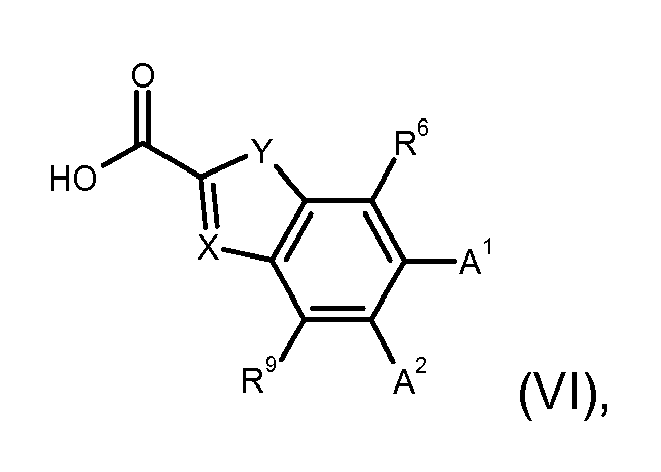

- Weiterhin sind die Amine der allgemeinen Formel VII bekannt oder können aus den bekannten Hydrazinen VIII, gegebenenfalls hergestellt aus den entsprechenden bekannten Anilinen, durch Nitrosierung gefolgt von einer Reduktion,

- a) mit einem Keton der allgemeinen Formel IX, worin R1 die oben angegebene Bedeutung aufweist, in einer Fischer-Indol-Zyklisierung hergestellt werden,

- b) mit einem Enolether der allgemeinen Formel X, worin R1 die oben angegebene Bedeutung aufweist, in einer Fischer-Indol-Zyklisierung umgesetzt werden (Org. Lett. 2004, 79ff),
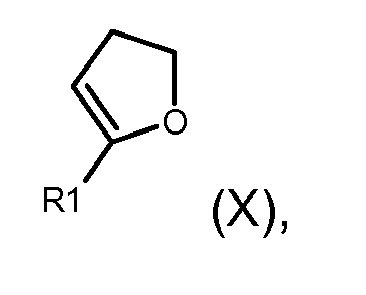
- Eine weitere Alternative zur Darstellung der Verbindungen der allgemeinen Formel VII wäre zunächst die Umsetzung von bekannten Indolen XI, worin R1 bis R5 die oben angegebene Bedeutung aufweist, oder nach dem Fachmann bekannten Indolsynthesen (Chem. Rev. 2006, 2875 bzw. J. Chem. Soc., Perkin Trans 1, 2000, 1045) aufzubauenden Indolen XI


- Sollten für Umsetzungen Schutzgruppen nötig sein, so können diese auf Vorstufen oder für den benötigten Schritt nach dem den Fachmann bekannten Methoden (Protective groups in organic synthesis, T. W. Greene und P. G. M. Wuts, John Wiley & Sons, 1999) eingeführt werden und gegebenenfalls anschließend oder auf einer späteren Stufe der Synthese auch wieder gespalten werden.
- Die nachfolgenden Beispiele erläutern die Herstellung der erfindungsgemäßen Verbindungen der allgemeinen Formel (I), ohne den Umfang der beanspruchten Verbindungen auf diese Beispiele zu beschränken.
Die erfindungsgemäßen Verbindungen der allgemeinen Formel (I) lassen sich wie nachstehend beschrieben herstellen. -

- Zu einer Lösung von 50 mg der in Beispiel 1c) hergestellten Carbonsäure in 0.9 ml Dimethylsulfoxid (oder Dimethylformamid) wurden 53 mg N-[(Dimethylamino)-1H-1,2,3-triazolo[4,5-b]pyridin-1-ylmethylen]-N-Methylmethanaminiumhexafluorophosphat-N-oxid (HATU) und 21.1 mg Glycinamid Hydrochlorid gegeben. Bei 0°C wurden dann 0.08 ml Ethyldiisopropylamin zugetropft und 20 Stunden bei 25°C gerührt. Die Mischung wurde im Vakuum eingeengt und der so erhaltene Rückstand durch per HPLC (Säule: XBridge C18 5µ 100x30 mm, Laufmittel: 99% eines Gemisches aus Wasser mit 0.1% Ameisensäure / 1% Acetonitril bis zu 1% eines Gemisches aus Wasser mit 0.1% Ameisensäure / 99% Acetonitril, Detektion per MS ESI (+)) gereinigt. Ausbeute: 39 mg der Titelverbindung.
NMR (300 MHz, DMSO-d6): δ = 2.34 (3H), 2.66 (3H), 3.03 (2H), 3.42 (2H), 3.83 (2H), 6.58-6.72 (2H), 7.04 (1H), 7.21 (1H), 7.36 (1H), 7.45 (1H), 7.74 (1H), 8.25 (1H), 8.55 (1H), 8.78 (1H), 11.18 (1H), 11.88 (1H). - Das Ausgangsmaterial für die obige Titelverbindung wurde wie folgt hergestellt:
-

- Zu einer Lösung von 742 mg 5-Brom-1H-indol-2-carbonsäure in 5 ml Dimethylformamid wurden 1.29 g N-[(Dimethylamino)-1H-1,2,3-triazolo[4,5-b]pyridin-1-ylmethylen]-N-Methylmethanaminiumhexafluorophosphat-N-oxid (HATU) und 500 mg 2-(7-Fluoro-2,4-dimethyl-1H-indol-3-yl)-ethylamin Hydrochlorid gegeben. Bei 0°C wurden dann 5 ml Ethyldiisopropylamin zugetropft und 10 Minuten auf 120°C in der Mikrowelle erhitzt. Die Mischung wurde im Vakuum eingeengt und der so erhaltene Rückstand durch Chromatographie an Kieselgel mit Hexan / 0 - 70 % Ethylacetat gereinigt. Ausbeute: 740 mg der Titelverbindung.
NMR (300 MHz, DMSO-d6): δ = 2.33 (3H), 2.65 (3H), 3.02 (2H), 3.41 (2H), 6.57-6.73 (2H), 7.11 (1H), 7.17 (1H), 7.58 (1H), 7.60 (1H), 8.77 (1H), 11.17 (1H), 11.77 (1H). -

- Zu einer Lösung von 735 mg des in Beispiel 1a) hergestellten Bromids in 2.7 ml Methanol und 5.3 ml DMSO wurden 21.2 mg Bis-1,3-diphenylphosphin, 10.4 mg Palladiumdiacetat und 0.45 ml Triethylamin gegeben und in einer CO2-Atmosphäre (initialer Druck 10 bar) auf 60°C erhitzt. Nach dem Abkühlen wurde die Mischung im Vakuum eingeengt und der so erhaltene Rückstand aus Methylenchlorid/Hexan umkristallisiert. Ausbeute: 358 mg der Titelverbindung als gelbgefärbten Feststoff.
NMR (300 MHz, DMSO-d6): δ = 2.29 (3H), 2.61 (3H), 2.98 (2H), 3.38 (2H), 3.83 (3H), 6.54-6.67 (2H), 7.13 (1H), 7.60 (1H), 7.69 (1H), 8.06 (1H), 8.83 (1H), 11.13 (1H), 12.04 (1H). -

- Zu einer Lösung von 345 mg des in Beispiel 1b) hergestellten Esters in 10 ml Ethanol wurde eine frisch hergestellte Lösung von 627 mg Natriumhydroxyd in 5 ml Wasser gegeben und 68 Stunden bei 25°C gerührt. Anschließend wurde mit ca. 5%iger Schwefelsäure der pH Wert auf 1 eingestellt und zweimal mit je 100 ml Ethylacetat extrahiert. Die vereinigten organischen Phasen wurden über Natriumsulfat getrocknet und nach Filtration im Vakuum eingeengt. Ausbeute: ohne weitere Reinigung 157 mg der Titelverbindung.
NMR (300 MHz, DMSO-d6): δ = 2.29 (3H), 2.61 (3H), 2.98 (2H), 3.38 (2H), 6.54-6.67 (2H), 7.11 (1H), 7.58 (1H), 7.66 (1H), 8.05 (1H), 8.79 (1H), 11.13 (1H), 11.97 (1H), 12.54 (1H). -

- In Analogie zu Beispiel 1 wurden aus 50 mg der in Beispiel 1c) hergestellten Säure und 0.021 ml 2-Dimethylamino-ethylamin 46 mg der Titelverbindung erhalten.
NMR (300 MHz, DMSO-d6): δ = 2.34 (3H), 2.67 (3H), 2.87 (3H), 2.88 (3H), 3.03 (2H), 3.29 (2H), 3.42 (2H), 3.63 (2H), 6.58-6.73 (2H), 7.22 (1H), 7.48 (1H), 7.74 (1H), 8.23 (1H), 8.59 (1H), 8.79 (1H), 11.18 (1H), 11.95 (1H). -
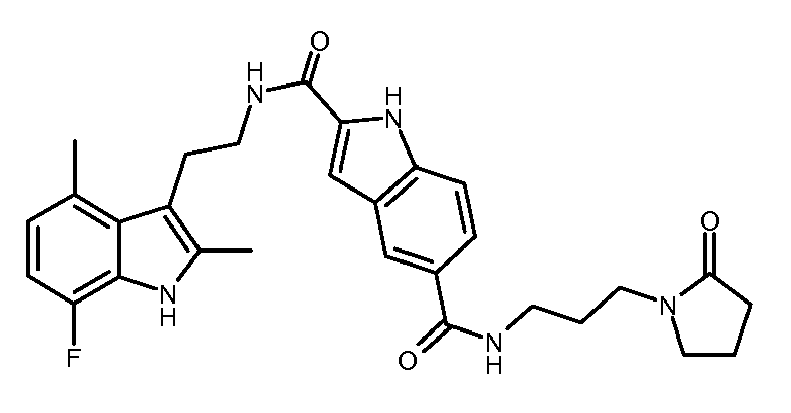
- In Analogie zu Beispiel 1 wurden aus 50 mg der in Beispiel 1c) hergestellten Säure und 27.1 mg 1-(Aminopropyl)-2-pyrrolidinon 48 mg der Titelverbindung erhalten.
NMR (300 MHz, DMSO-d6): δ = 1.73 (2H), 1.94 (2H), 2.24 (2H), 2.34 (3H), 2.66 (3H), 3.03 (2H), 3.25 (4H), 3.37 (2H), 3.41 (2H), 6.58-6.72 (2H), 7.20 (1H), 7.44 (1H), 7.71 (1H), 8.19 (1H), 8.35 (1H), 8.77 (1H), 11.17 (1H), 11.86 (1H). -

- In Analogie zu Beispiel 1 wurden aus 50 mg der in Beispiel 1c) hergestellten Säure und 19.7 mg 3-Hydroxy-2,2-dimethyl-propan-1-amin 30 mg der Titelverbindung erhalten.
NMR (300 MHz, DMSO-d6): δ = 0.81 (6H), 2.29 (3H), 2.62 (3H), 2.98 (2H), 3.09 (2H), 3.13 (2H), 3.37 (2H), 4.65 (1H), 6.53-6.67 (2H), 7.15 (1H), 7.40 (1H), 7.67 (1H), 8.16 (1H), 8.30 (1H), 8.73 (1H), 11.13 (1H), 11.83 (1H). -

- In Analogie zu Beispiel 1 wurden aus 50 mg der in Beispiel 1c) hergestellten Säure und 23.8 mg β-Alanin Hydrochlorid 46 mg der Titelverbindung erhalten.
NMR (300 MHz, DMSO-d6): δ = 2.29 (3H), 2.33 (2H), 2.61 (3H), 2.98 (2H), 3.37 (2H), 3.42 (2H), 6.53-6.70 (2H), 6.79 (1H), 7.15 (1H), 7.32 (1H), 7.39 (1H), 7.66 (1H), 8.13 (1H), 8.34 (1H), 8.72 (1H), 11.13 (1H), 11.81 (1H). -

- In Analogie zu Beispiel 1 wurden aus 50 mg der in Beispiel 6c) hergestellten Säure und 21.1 mg Glycinamid Hydrochlorid 23 mg der Titelverbindung erhalten.
NMR (300 MHz, DMSO-d6): δ = 2.30 (3H), 2.62 (3H), 2.98 (2H), 3.37 (2H), 3.79 (2H), 6.55-6.67 (2H), 6.99 (1H), 7.09 (1H), 7.32 (1H), 7.54 (1H), 7.64 (1H), 7.95 (1H), 8.55 (1H), 8.75 (1H), 11.13 (1H), 11.93 (1H). - Das Ausgangsmaterial für die obige Titelverbindung wird wie folgt hergestellt:
-

- In Analogie zu Beispiel 1a) wurden aus 742 mg 6-Brom-1H-indol-2-carbonsäure und 500 mg 2-(7-Fluoro-2,4-dimethyl-1H-indol-3-yl)-ethylamin Hydrochlorid 920 mg der Titelverbindung erhalten.
NMR (300 MHz, DMSO-d6): δ = 2.33 (3H), 2.65 (3H), 3.01 (2H), 3.40 (2H), 6.58-6.72 (2H), 7.08 (1H), 7.29 (1H), 7.38 (1H), 7.86 (1H), 8.78 (1H), 11.17 (1H), 11.84 (1H). -

- In Analogie zu Beispiel 1b) wurden aus 915 mg des in Beispiel 6a) hergestellten Bromids 462 mg der Titelverbindung als gelbgefärbten Feststoff erhalten.
NMR (300 MHz, DMSO-d6): δ = 2.29 (3H), 2.61 (3H), 2.98 (2H), 3.37 (2H), 3.81 (3H), 6.54-6.67 (2H), 7.20 (1H), 7.45 (1H), 7.76 (1H), 8.31 (1H), 8.79 (1H), 11.13 (1H), 11.99 (1H). -

- In Analogie zu Beispiel 1c) wurden aus 441 mg des in Beispiel 6b) hergestellten Esters 116 mg der Titelverbindung erhalten.
NMR (300 MHz, DMSO-d6): δ = 2.29 (3H), 2.61 (3H), 2.98 (2H), 3.37 (2H), 6.53-6.68 (2H), 7.18 (1H), 7.42 (1H), 7.75 (1H), 8.27 (1H), 8.77 (1H), 11.12 (1H), 11.92 (1H), 12.21 (1H). -
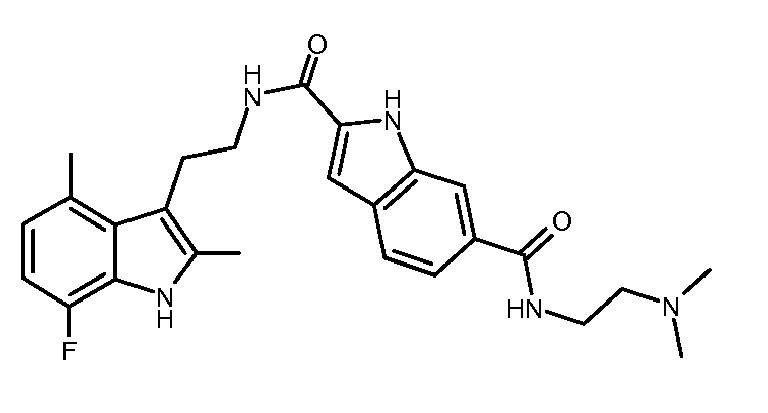
- In Analogie zu Beispiel 1 wurden aus 50 mg der in Beispiel 6c) hergestellten Säure und 0.021 ml 2-Dimethylamino-ethylamin 35 mg der Titelverbindung erhalten.
NMR (300 MHz, DMSO-d6): δ = 2.30 (3H), 2.62 (3H), 2.70 (6H), 2.98 (2H), 3.08 (2H), 3.37 (2H), 3.53 (2H), 6.55-6.68 (2H), 7.10 (1H), 7.51 (1H), 7.66 (1H), 7.94 (1H), 8.54 (1H), 8.78 (1H), 11.14 (1H), 11.97 (1H). -

- In Analogie zu Beispiel 1 wurden aus 50 mg der in Beispiel 6c) hergestellten Säure und 19.7 mg 3-Hydroxy-2,2-dimethyl-propan-1-amin 15 mg der Titelverbindung erhalten.
NMR (300 MHz, DMSO-d6): δ = 0.81 (6H), 2.29 (3H), 2.61 (3H), 2.98 (2H), 3.06-3.18 (4H), 3.37 (2H), 4.67 (1H), 6.53-6.67 (2H), 7.08 (1H), 7.49 (1H), 7.63 (1H), 7.92 (1H), 8.36 (1H), 8.79 (1H), 11.13 (1H), 11.95 (1H). -

- In Analogie zu Beispiel 1 erhält wurden aus 50 mg der in Beispiel 6c) hergestellten Säure und 27.1 mg 1-(Aminopropyl)-2-pyrrolidinon 28 mg der Titelverbindung erhalten.
NMR (300 MHz, DMSO-d6): δ = 1.68 (2H), 1.89 (2H), 2.19 (2H), 2.29 (3H), 2.62 (3H), 2.98 (2H), 3.20 (4H), 3.32 (2H), 3.37 (2H), 6.54-6.67 (2H), 7.08 (1H), 7.49 (1H), 7.62 (1H), 7.91 (1H), 8.37 (1H), 8.74 (1H), 11.13 (1H), 11.90 (1H). -

- In Analogie zu Beispiel 1 wurden aus 50 mg der in Beispiel 6c) hergestellten Säure und 23.8 mg β-Alanin Hydrochlorid 25 mg der Titelverbindung erhalten.
NMR (300 MHz, DMSO-d6): δ = 2.34 (3H), 2.38 (2H), 2.66 (3H), 3.03 (2H), 3.44 (4H), 6.56-6.72 (2H), 6.85 (1H), 7.13 (1H), 7.38 (1H), 7.53 (1H), 7.66 (1H), 7.95 (1H), 8.45 (1H), 8.79 (1H), 11.18 (1H), 11.94 (1H). - Die Bindung von PGE2 an den EP2-Subtyp des humanen PGE2-Rezeptors induziert die Aktivierung membranständiger Adenylatzyklasen und führt zur Bildung von cAMP. In Gegenwart des Phosphodiesteraseinhibitors IBMX wird das durch diese Stimulation akkumulierte und mittels Zell-Lyse freigesetzte cAMP in einem kompetitiven Nachweisverfahren eingesetzt. In diesem Test konkurriert das cAMP im Lysat mit cAMP-XL665 um die Bindung eines Eu-Kryptat markierten Anti-cAMP Antikörpers.
- Dabei entsteht in Abwesenheit von zellulärem cAMP ein maximales Signal, welches auf der Kopplung dieses Antikörpers an das cAMP-XL665 Molekül beruht. Dadurch entsteht nach Anregung bei 337 nm ein auf FRET (fluorescence resonance energy transfer) basierendes, langanhaltendes Emissionssignal bei 665 nm (und bei 620 nm). Beide Signale werden in einem geeigneten Messgerät zeitlich versetzt, d.h. nach Abklingen der Hintergrundsfluoreszenz gemessen. Jegliche Erhöhung des durch Prostglandin-E2-Gabe bedingten niedrigen FRET-Signals (gemessen als Well-Ratio-Veränderung = Emission665nm/Emission620nm * 10000) zeigt die Wirkung von Antagonisten.
- Die in einer Testplatte und 30 % DMSO vorgelegten Substanzlösungen (0.75 µl) wurden in 16 µl einer KRSB+IBMX-Stimulationslösung gelöst (1 X Krebs-Ringer Bicarbonate Buffer; Sigma-Aldrich # K-4002; inklusive 750 µM 3-Isobutyl-1-methylxanthine Sigma-Aldrich # I-7018), anschließend wurden 15 µl davon in eine medienfreie Zellkulturplatte überführt, die kurz zuvor mit KRSB gewaschen worden war.
- Nach einer 30-minütigen Vorinkubation bei Raumtemperatur (RT) wurden 5 µl einer 4xPGE2 Lösung (11 nM) zugegeben und in Gegenwart des Agonisten für weitere 60 min bei RT inkubiert (Volumen: ∼ 20 µl), bevor die Reaktion anschließend durch Zugabe von 5 µl Lysispuffer gestoppt und für weitere 20 min bei RT inkubiert wird (Volumen: ∼ 25 µl). Das Zell-Lysat wurde anschließend in eine Messplatte überführt und entsprechend den Herstellerangaben (cyclic AMP kit Cisbio International # 62AMPPEC) gemessen.
- Die in einer in einer Testplatte und 30 % DMSO vorgelegten Substanzlösungen (0.75 µl) wurden in 16 µl einer KRSB+IBMX-Stimulationslösung gelöst (1 X Krebs-Ringer Bicarbonate Buffer; Sigma-Aldrich # K-4002; inklusive 750 µM 3-Isobutyl-1-methylxanthine Sigma-Aldrich # I-7018), anschließend wurden 15 µl davon in eine medienfreie Zellkulturplatte überführt, die kurz zuvor mit KRSB gewaschen worden war.
Nach einer 60-minütigen Inkubation bei Raumtemperatur (RT; Volumen: ∼ 15 µl) wurde die Reaktion anschließend durch Zugabe von 5 µl Lysisbuffer gestoppt und für weitere 20 min bei RT inkubiert (Volumen: ∼ 20 µl). Das Zell-Lysat wurde anschließend in eine Messplatte überführt und entsprechend den Herstellerangaben (cyclic AMP kit Cisbio International # 62AMPPEC) gemessen. - Im prä-ovulatorischen antralen Follikel ist die Eizelle von Kumulus Zellen umgeben, die einen dichten Zellkranz um die Eizelle bilden. Nach dem LH-Peak (Lutenisierendes Hormon) wird eine Reihe von Prozessen aktiviert, die eine starke morphologische Veränderung dieses Zellkranzes aus Kumulus Zellen zur Folge hat. Hierbei bilden die Kumulus Zellen eine extrazelluläre Matrix, die zur sogenannten Kumulus Expansion führt (Vanderhyden et al. Dev Biol. 1990 Aug;140(2):307-317). Diese Kumulus Expansion ist ein wichtiger Bestandteil des ovulatorischen Prozesses und der nachfolgenden Möglichkeit zur Fertilisation. Bei der Kumulus Expansion sind Prostaglandine und hier das Prostaglandin E2, dessen Synthese durch den LH-Peak induziert wird, von entscheidender Bedeutung. Prostanoid EP2 Knock-out Mäuse (Hizaki et al. Proc Natl Acad Sci U S A. 1999 Aug 31 ;96(18):10501-6.) zeigen eine deutlich verminderte Kumulus Expansion und starke Subfertilität, was die Bedeutung des Prostanoid EP2-Rezeptors für diesen Prozess demonstriert.
- In immaturen weiblichen Mäusen (Stamm : CD1 (ICR) von Charles River) wurde in einem Alter von 14 - 18 Tagen die Follikulogenese durch eine einmalige Gabe (intraperitoneal) von 10 I.E. PMSG (Pregnant Mare Serum Gonadotropine; Sigma G-4877, Lot 68H0909) induziert. 47 - 50 Stunden nach der Injektion wurden die Ovarien entnommen und die Kumulus-Eizell Komplexe entnommen. Der Kumulus Komplex ist in diesem Stadium noch nicht expandiert.
Die Kumulus-Eizell Komplexe wurden nun für 20-24 Stunden mit Prostaglandin E 2 (PGE 2 ) (0,3 µM), Vehikel Kontrolle (Ethanol) oder Testsubstanzen inkubiert. Medium: alpha- MEM Medium mit 0,1 mM IBMX, Pyruvate (0,23 mM) Glutamine (2 mM), Pen/Strep 100 IU/ml Pen. und 100 µg/ml Strep.) und HSA (8 mg/ml)). Danach wurde die Kumulus Expansion durch die Einteilung in vier Stadien (nach Vanderhyden et al. Dev Biol. 1990 Aug;140(2):307-317) festgestellt.Tabelle 1: Beispiel für die biologische Wirksamkeit der erfindungsgemäßen Verbindungen (gemessen mittels cAMP Antagonismustest): Substanz gemäß Beispiel Antagonismus [IC50, µM] 5 0.297 6 0.022 8 0.122 10 0.046
H2N-R11 (III) oder HNR11R12 (IV),
in einem inerten Lösungsmittel oder Lösungsmittelgemisch, wie beispielsweise Tetrahydrofuran, Dimethoxyethan, Dimethylformamid, Hexamethylphosphorsäuretriamid, bei Temperaturen zwischen - 30°C und + 60°C, vorzugsweise bei 0°C bis 30°C, liefert dann die Verbindungen der allgemeinen Formel I.
Claims (27)
- Verbindungen der allgemeinen Formel I
 X ein CH oder Stickstoff,Y ein Sauerstoff, Stickstoff, eine S, NH, -CH=N-, -N=CH- oder - N=N- Gruppe und unter der Voraussetzung, dass X ein Stickstoff bedeutet, kann Y auch -CH=CH- sein,R1 ein Wasserstoff, ein C1-C6-Alkylrest, der gegebenenfalls substituiert sein kann,R2 ein Wasserstoff, Halogen, Cyano, ein -S(O)q-CH3, wobei q für 0 - 2 steht, ein C1-C4-Alkoxyrest oder C1-C6-Alkyl, wobei dieser Rest beliebig substituiert sein kann,R3 ein Wasserstoff, ein C1-C4-Alkoxyrest oder Halogen,R4 ein Wasserstoff oder Fluor,R5 ein Wasserstoff oder Halogen,R6, R9 unabhängig voneinander ein Wasserstoff, Fluor oder Chlor,R7 ein Wasserstoff, wobei R8 die Bedeutung von R10 haben muss, oderR8 ein Wasserstoff, wobei R7 die Bedeutung von R10 haben muss,R10 ein CO-NH-R11 oder CO-NR11R12,R11 ein C1-C6-Alkyl,
welches ein- oder mehrfach, gleich oder verschieden substituiert ist mit -S(O)p-R13, wobei p für 0 - 2 steht, Hydroxy, Cyano, COOH, CO-NH2, SO2NH2, SO2NH-R13, CO-NH-SO2-R13, SO2-NH-CO-R13, C1-C6-Acyl, O-R13, CO2- R13, -NR13R14, NH-R13, CO-NHR13, CO-NR13R14, NH- COR13, NH-SO2R13, NR15-COR13, NH-CO-NH2, NH-CO- NHR13, NH-CO-NR13R14, NR15-CO-NH-R13 oder NR15-CO- N(C1-C6-Alkyl)-R13,
oder mit C3-C6-Cycloalkyl,
welches ein- oder zweifach, gleich oder verschieden substituiert ist mit CONH2, SO2NH2, CONHCH3, CON(CH3)2, SO2NHCH3, CO-NH-SO2CH3 oder C1- C6-Acyl,
oder mit C6-C12-Aryl,
welches ein- oder zweifach, gleich oder verschieden substituiert ist mit CONH2, SO2NH2, CONHCH3, CON(CH3)2, SO2NHCH3, CO-NH-SO2CH3 oder C1-C6- Acyl,
oder mit C5-C12-Heteroaryl,
welches ein- oder zweifach, gleich oder verschieden substituiert ist mit CONH2, SO2NH2, CONHCH3, CON(CH3)2, SO2NHCH3, CO-NH-SO2CH3 oder C1- C6-Acyl,
ein C3-C6-Cycloalkyl,
welches ein-, zwei- oder dreifach, gleich oder verschieden substituiert ist mit CO-NH2, SO2NH2, CONHCH3, CON(CH3)2, SO2NHCH3, CO-NH-SO2CH3, C1-C6-Acyl, NH- (C3-C6-Cycloalkyl), CO-NH(C1-C6-Alkyl) oder CO-N(C1-C6- Alkyl)2,
ein C6-C12-Aryl,
welches ein, zwei- oder dreifach, gleich oder verschieden substituiert ist mit CO-NH2, SO2NH2, CONHCH3, CON(CH3)2, SO2NHCH3, CO-NH-SO2CH3, C1-C6-Acyl, NH- (C3-C6-Cycloalkyl), CO-NH(C1-C6-Alkyl) oder CO-N(C1-C6- Alkyl)2 oder
ein C5-C12-Heteroaryl,
welches ein- oder mehrfach, gleich oder verschieden substituiert ist mit CO-NH2, SO2NH2, CONHCH3, CON(CH3)2, SO2NHCH3, CO-NH-SO2CH3, C1-C6-Acyl, NH- (C3-C6-Cycloalkyl), CO-NH(C1-C6-Alkyl) oder CO-N(C1-C6- Alkyl)2,R12 ein C1-C6-Alkyl,
welches ein- oder mehrfach, gleich oder verschieden substituiert ist mit -S(O)p-R13, wobei p für 0 - 2 steht, Hydroxy, Cyano, COOH, CO-NH2, SO2NH2, SO2NH-R13, CO-NH-SO2-R13, SO2-NH-CO-R13, C1-C6-Acyl, O-R13, CO2- R13, -NR13R14, NH-R13, CO-NHR13, CO-NR13R14, NH- COR13, NH-SO2R13, NR15-COR13, NH-CO-NH2, NH-CO- NHR13, NH-CO-NR13R14, NR15-CO-NH-R13 oder NR15-CO- N(C1-C6-Alkyl)-R13,
oder mit C3-C6-Cycloalkyl,
welches ein- oder zweifach, gleich oder verschieden CH3, CON(CH3)2, SO2NHCH3, CO-NH-SO2CH3 oder C1-C6-Acyl,
oder mit C6-C12-Aryl,
welches ein- oder zweifach, gleich oder verschieden substituiert ist mit CONH2, SO2NH2, CONHCH3, CON(CH3)2, SO2NHCH3, CO-NH-SO2CH3 oder C1- C6-Acyl,
oder mit C5-C12-Heteroaryl,
welches ein- oder zweifach, gleich oder verschieden substituiert ist mit CONH2, SO2NH2, CONHCH3, CON(CH3)2, SO2NHCH3, CO-NH-SO2CH3 oder C1- C6-Acyl,
ein C3-C6-Cycloalkyl,
welches ein-, zwei- oder dreifach, gleich oder verschieden substituiert ist mit CO-NH2, SO2NH2, CONHCH3, CON(CH3)2, SO2NHCH3, CO-NH-SO2CH3, C1-C6-Acyl, NH- (C3-C6-Cycloalkyl), CO-NH(C1-C6-Alkyl) oder CO-N(C1-C6- Alkyl)2,
ein C6-C12-Aryl,
welches ein, zwei- oder dreifach, gleich oder verschieden substituiert ist mit CO-NH2, SO2NH2, CONHCH3, CON(CH3)2, SO2NHCH3, CO-NH-SO2CH3, C1-C6-Acyl, NH- (C3-C6-Cycloalkyl), CO-NH(C1-C6-Alkyl) oder CO-N(C1-C6- Alkyl)2 oder
ein C5-C12-Heteroaryl,
welches ein- oder mehrfach, gleich oder verschieden substituiert ist mit CO-NH2, SO2NH2, CONHCH3, CON(CH3)2, SO2NHCH3, CO-NH-SO2CH3, C1-C6-Acyl, NH- (C3-C6-Cycloalkyl), CO-NH(C1-C6-Alkyl) oder CO-N(C1-C6- Alkyl)2,R13, R14, R15 unabhängig voneinander ein C1-C6-Alkyl, C3-C6-Cycloalkyl, C6-C12- Aryl, C5-C12-Heteroaryl, CH2-C6-C12-Aryl oder CH2-C5-C12- Heteroaryl,R13 und R15 gemeinsam mit der N-CO- bzw. N-CO-NH-Gruppe einen 5 oder 6 gliedrigen Ring bilden, welcher gegebenenfalls zusätzliche Heteroatome enthält und gegebenenfalls ein-, zwei- oder dreifach, gleich oder verschieden mit Halogen, Amino, Hydroxy, Cyano oder C1-C6-Alkyl substituiert sein kann,bedeuten, sowie deren Isomere, Diastereomere, Enantiomere und Salze bzw. Cyclodextrinclathrate. - Verbindungen gemäß Anspruch 1, wobeiX ein CH oder Stickstoff,Y ein Sauerstoff, Stickstoff, eine S, NH, -CH=N-, -N=CH- oder - N=N- Gruppe und unter der Voraussetzung, dass X ein Stickstoff bedeutet, kann Y auch -CH=CH- sein,R1 ein Wasserstoff, ein C1-C4-Alkylrest, der gegebenenfalls substituiert sein kann,R2 ein Wasserstoff, Halogen, ein C1-C4-Alkoxyrest oder C1-C6-Alkyl, wobei dieser Rest beliebig substituiert sein kann,bedeuten, und wobei die Reste R3-R15 die in Anspruch 1 angegebene Bedeutung haben, sowie deren Isomere, Diastereomere, Enantiomere und Salze bzw. Cyclodextrinclathrate.
- Verbindungen gemäß Anspruch 1-2, wobeiX ein CH oder Stickstoff,Y ein Sauerstoff, Stickstoff, eine S, NH, -CH=N-, -N=CH- oder - N=N- Gruppe und unter der Voraussetzung, dass X ein Stickstoff bedeutet, kann Y auch -CH=CH- sein,R1 ein Wasserstoff, ein C1-C4-Alkylrest, der gegebenenfalls substituiert sein kann,R2 ein Wasserstoff, Fluor, Chlor, Brom oder C1-C4-Alkyl, wobei dieser Rest beliebig substituiert sein kann,R3 ein Wasserstoff, ein Methoxy, Fluor, Chlor oder Brom,R4 ein Wasserstoff oder Fluor,R5 ein Wasserstoff, Fluor, Chlor oder Brom,bedeuten, und die Reste R6 bis R15 die in Anspruch 1 angegebene Bedeutung haben, sowie deren Isomere, Diastereomere, Enantiomere und Salze bzw. Cyclodextrinclathrate.
- Verbindungen geäß Anspruch 1-3, wobeiX ein CH oder Stickstoff,Y ein Sauerstoff, Stickstoff, eine S, NH, -CH=N-, -N=CH- oder - N=N- Gruppe und unter der Voraussetzung, dass X ein Stickstoff bedeutet, kann Y auch -CH=CH- sein,R1 ein Wasserstoff, ein C1-C4-Alkylrest,R2 ein Wasserstoff, Fluor, Chlor, Brom oder C1-C4-Alkyl,R3 ein Wasserstoff, ein Methoxy, Fluor, Chlor oder Brom,R4 ein Wasserstoff oder Fluor,R5 ein Wasserstoff, Fluor, Chlor oder Brom,R6, R9 unabhängig voneinander ein Wasserstoff, Fluor oder Chlor,R7 ein Wasserstoff, wobei R8 die Bedeutung von R10 haben muss,
oderR8 ein Wasserstoff, wobei R7 die Bedeutung von R10 haben muss,R10 ein CO-NH-R11 oder CO-NR11R12,R11 ein C1-C6-Alkyl,
welches ein-, zwei oder dreifach, gleich oder verschieden substituiert ist mit -S(O)p-R13, wobei p für 0 - 2 steht, Hydroxy, Cyano, COOH, CO-NH2, SO2NH2, SO2NH-R13, CO-NH-SO2-R13, SO2-NH-CO-R13, C1-C6-Acyl, O-R13, CO2- R13, -NR13R14, NH-R13, CO-NHR13, CO-NR13R14, NH- COR13, NH-SO2R13, NR15-COR13, NH-CO-NH2, NH-CO- NHR13, NH-CO-NR13R14, NR15-CO-NH-R13 oder NR15-CO- N(C1-C6-Alkyl)-R13,
oder mit C3-C6-Cycloalkyl,
welches ein- oder zweifach, gleich oder verschieden substituiert ist mit CONH2, SO2NH2, CONHCH3, CON(CH3)2, SO2NHCH3, CO-NH-SO2CH3 oder C1- C6-Acyl,
oder mit C6-C12-Aryl,
welches ein- oder zweifach, gleich oder verschieden substituiert ist mit CONH2, SO2NH2, CONHCH3, CON(CH3)2, SO2NHCH3, CO-NH-SO2CH3 oder C1- C6-Acyl,
oder mit C5-C12-Heteroaryl,
welches ein- oder zweifach, gleich oder verschieden substituiert ist mit CONH2, SO2NH2, CONHCH3, CON(CH3)2, SO2NHCH3, CO-NH-SO2CH3 oder C1- C6-Acyl oder,
ein C3-C6-Cycloalkyl,
welches ein-, zwei- oder dreifach, gleich oder verschieden substituiert ist mit CO-NH2, SO2NH2, CONHCH3, CON(CH3)2, SO2NHCH3, CO-NH-SO2CH3, C1-C6-Acyl, NH- (C3-C6-Cycloalkyl), CO-NH(C1-C6-Alkyl) oder CO-N(C1-C6- Alkyl)2,
ein C6-C12-Aryl,
welches ein, zwei- oder dreifach, gleich oder verschieden substituiert ist mit CO-NH2, SO2NH2, CONHMe, CONMe2, SO2NHMe, CO-NH-SO2Me, C1-C6-Acyl, NH-(C3-C6- Cycloalkyl), CO-NH(C1-C6-Alkyl) oder CO-N(C1-C6-Alkyl)2,
ein C5-C12-Heteroaryl,
welches ein- oder mehrfach, gleich oder verschieden substituiert ist mit CO-NH2, SO2NH2, CONHCH3, CON(CH3)2, SO2NHCH3, CO-NH-SO2CH3, C1-C6-Acyl, NH- (C3-C6-Cycloalkyl), CO-NH(C1-C6-Alkyl) oder CO-N(C1-C6- Alkyl)2,R12 ein C1-C6-Alkyl,
welches ein-, zwei oder dreifach, gleich oder verschieden substituiert ist mit -S(O)p-R13, wobei p für 0 - 2 steht, Hydroxy, Cyano, COOH, CO-NH2, SO2NH2, SO2NH-R13, CO-NH-SO2-R13, SO2-NH-CO-R13, C1-C6-Acyl, O-R13, CO2- R13, -NR13R14, NH-R13, CO-NHR13, CO-NR13R14, NH- COR13, NH-SO2R13, NR15-COR13, NH-CO-NH2, NH-CO- NHR13, NH-CO-NR13R14, NR15-CO-NH-R13 oder NR15-CO- N(C1-C6-Alkyl)-R13,
oder mit C3-C6-Cycloalkyl,
welches ein- oder zweifach, gleich oder verschieden substituiert ist mit CONH2, SO2NH2, CONHCH3, CON(CH3)2, SO2NHCH3, CO-NH-SO2CH3 oder C1- C6-Acyl
oder mit C6-C12-Aryl,
welches ein- oder zweifach, gleich oder verschieden substituiert ist mit CONH2, SO2NH2, CONHCH3, CON(CH3)2, SO2NHCH3, CO-NH-SO2CH3 oder C1- C6-Acyl,
oder mit C5-C12-Heteroaryl,
welches ein- oder zweifach, gleich oder verschieden substituiert ist mit CONH2, SO2NH2, CONHCH3, CON(CH3)2, SO2NHCH3, CO-NH-SO2CH3 oder C1- C6-Acyl,
ein C3-C6-Cycloalkyl,
welches ein-, zwei- oder dreifach, gleich oder verschieden substituiert ist mit CO-NH2, SO2NH2, CONHCH3, CON(CH3)2, SO2NHCH3, CO-NH-SO2CH3, C1-C6-Acyl, NH- (C3-C6-Cycloalkyl), CO-NH(C1-C6-Alkyl) oder CO-N(C1-C6- Alkyl)2,
ein C6-C12-Aryl,
welches ein, zwei- oder dreifach, gleich oder verschieden substituiert ist mit CO-NH2, SO2NH2, CONHCH3, CON(CH3)2, SO2NHCH3, CO-NH-SO2CH3, C1-C6-Acyl, NH- (C3-C6-Cycloalkyl), CO-NH(C1-C6-Alkyl) oder CO-N(C1-C6- Alkyl)2,
ein C5-C12-Heteroaryl,
welches ein- oder mehrfach, gleich oder verschieden substituiert ist mit CO-NH2, SO2NH2, CONHCH3, CON(CH3)2, SO2NHCH3, CO-NH-SO2CH3, C1-C6-Acyl, NH- (C3-C6-Cycloalkyl), CO-NH(C1-C6-Alkyl) oder CO-N(C1-C6- Alkyl)2,R13, R14, R15 unabhängig voneinander ein C1-C6-Alkyl, C3-C6-Cycloalkyl, C6-C12- Aryl, C5-C12-Heteroaryl, CH2-C6-C12-Aryl oder CH2-C5-C12- Heteroaryl,R13 und R15 gemeinsam mit der N-CO- bzw. N-CO-NH-Gruppe einen 5 oder 6 gliedrigen Ring bilden, welcher gegebenenfalls zusätzliche Heteroatome enthält und gegebenenfalls ein-, zwei- oder dreifach, gleich oder verschieden mit Halogen, Amino, Hydroxy, Cyano oder C1-C6-Alkyl substituiert sein kann, - Verbindungen gemäß Anspruch 1-4, wobeiX CH oder Stickstoff,Y ein Sauerstoff, Stickstoff, eine S, NH, -CH=N-, -N=CH- oder - N=N- Gruppe und unter der Voraussetzung, dass X ein Stickstoff bedeutet, kann Y auch -CH=CH- sein,R1 ein Wasserstoff, ein C1-C4-Alkylrest,R2 ein Wasserstoff, Fluor, Chlor, Brom oder C1-C4-Alkyl,R3 ein Wasserstoff, ein Methoxy, Fluor, Chlor oder Brom,R4 ein Wasserstoff oder Fluor,R5 ein Wasserstoff, Fluor, Chlor oder Brom,R6, R9 unabhängig voneinander ein Wasserstoff, Fluor oder Chlor,R7 ein Wasserstoff, wobei R8 die Bedeutung von R10 haben muss, oderR8 ein Wasserstoff, wobei R7 die Bedeutung von R10 haben muss,R10 ein CO-NH-R11 oder CO-NR11R12,R11 ein C1-C6-Alkyl,
welches ein-, zwei oder dreifach, gleich oder verschieden substituiert ist mit -S(O)p-R13, wobei p für 0 - 2 steht, Hydroxy, Cyano, COOH, CO-NH2, SO2NH2, SO2NH-R13, CO-NH-SO2-R13, SO2-NH-CO-R13, C1-C4-Acyl, O-R13, CO2- R13, -NR13R14, NH-R13, CO-NHR13, CO-NR13R14, NH- COR13, NH-SO2R13, NR15-COR13, NH-CO-NH2, NH-CO- NHR13, NH-CO-NR13R14 NR15-CO-NH-R13 oder NR15-CO- N(C1-C4-Alkyl)-R13,
oder mit C3-C6-Cycloalkyl,
welches ein- oder zweifach, gleich oder verschieden substituiert ist mit CONH2, SO2NH2, CONHCH3, CON(CH3)2, SO2NHCH3, CO-NH-SO2CH3 oder C1- C4-Acyl,
oder mit C6-C12-Aryl,
welches ein- oder zweifach, gleich oder verschieden substituiert ist mit CONH2, SO2NH2, CONHCH3, CON(CH3)2, SO2NHCH3, CO-NH-SO2CH3 oder C1- C4-Acyl,
oder mit C5-C12-Heteroaryl,
welches ein- oder zweifach, gleich oder verschieden substituiert ist mit CONH2, SO2NH2, CONHCH3, CON(CH3)2, SO2NHCH3, CO-NH-SO2CH3 oder C1- C4-Acyl,
ein C3-C6-Cycloalkyl,
welches ein-, zwei- oder dreifach, gleich oder verschieden substituiert ist mit CO-NH2, SO2NH2, CONHCH3, CON(CH3)2, SO2NHCH3, CO-NH-SO2CH3, C1-C4-Acyl, NH- (C3-C6-Cycloalkyl), CO-NH(C1-C4-Alkyl) oder CO-N(C1-C4- Alkyl)2,
ein C6-C12-Aryl,
welches ein, zwei- oder dreifach, gleich oder verschieden substituiert ist mit CO-NH2, SO2NH2, CONHCH3, CON(CH3)2, SO2NHCH3, CO-NH-SO2CH3, C1-C4-Acyl, NH- (C3-C6-Cycloalkyl), CO-NH(C1-C4-Alkyl) oder CO-N(C1-C4- Alkyl)2,
ein C5-C12-Heteroaryl,
welches ein- oder mehrfach, gleich oder verschieden substituiert ist mit CO-NH2, SO2NH2, CONHCH3, CON(CH3)2, SO2NHCH3, CO-NH-SO2CH3, C1-C4-Acyl, NH- (C3-C6-Cycloalkyl), CO-NH(C1-C4-Alkyl) oder CO-N(C1-C4- Alkyl)2,R12 ein C1-C6-Alkyl,
welches ein-, zwei oder dreifach, gleich oder verschieden substituiert ist mit -S(O)p-R13, wobei p für 0 - 2 steht, Hydroxy, Cyano, COOH, CO-NH2, SO2NH2, SO2NH-R13, CO-NH-SO2-R13, SO2-NH-CO-R13, C1-C4-Acyl, O-R13, CO2- R13, -NR13R14, NH-R13, CO-NHR13, CO-NR13R14, NH- COR13, NH-SO2R13, NR15-COR13, NH-CO-NH2, NH-CO- NHR13, NH-CO-NR13R14, NR15-CO-NH-R13 oder NR15-CO- N(C1-C4-Alkyl)-R13,
oder mit C3-C6-Cycloalkyl,
welches ein- oder zweifach, gleich oder verschieden substituiert ist mit CONH2, SO2NH2, CONHCH3, CON(CH3)2, SO2NHCH3, CO-NH-SO2CH3, CO- oder C1-C4-Acyl,
oder mit C6-C12-Aryl,
welches ein- oder zweifach, gleich oder verschieden substituiert ist mit CONH2, SO2NH2, CONHCH3, CON(CH3)2, SO2NHCH3, CO-NH-SO2CH3, oder C1- C4-Acyl,
oder mit C5-C12-Heteroaryl,
welches ein- oder zweifach, gleich oder verschieden substituiert ist mit CONH2, SO2NH2, CONHCH3, CON(CH3)2, SO2NHCH3, CO-NH-SO2CH3, oder C1- C4-Acyl oder
ein C3-C6-Cycloalkyl,
welches ein-, zwei- oder dreifach, gleich oder verschieden substituiert ist mit CO-NH2, SO2NH2, CONHCH3, CON(CH3)2, SO2NHCH3, CO-NH-SO2CH3, C1-C4-Acyl, NH- (C3-C6-Cycloalkyl), CO-NH(C1-C4-Alkyl) oder CO-N(C1-C4- Alkyl)2,
ein C6-C12-Aryl,
welches ein, zwei- oder dreifach, gleich oder verschieden substituiert ist mit CO-NH2, SO2NH2, CONHCH3, CON(CH3)2, S02NHCH3, CO-NH-SO2CH3, C1-C4-Acyl, NH- (C3-C6-Cycloalkyl), CO-NH(C1-C4-Alkyl) oder CO-N(C1-C4- Alkyl)2,
ein C5-C12-Heteroaryl,
welches ein- oder mehrfach, gleich oder verschieden substituiert ist mit CO-NH2, SO2NH2, CONHCH3, CON(CH3)2, SO2NHCH3, CO-NH-SO2CH3, C1-C4-Acyl, NH- (C3-C6-Cycloalkyl), CO-NH(C1-C4-Alkyl) oder CO-N(C1-C4- Alkyl)2,R13, R14, R15 unabhängig voneinander ein C1-C4-Alkyl, C3-C6-Cycloalkyl, C6-C12- Aryl, C5-C12-Heteroaryl, CH2-C6-C12-Aryl oder CH2-C5-C12- Heteroaryl,R13 und R15 gemeinsam mit der N-CO- bzw. N-CO-NH-Gruppe einen 5 oder 6 gliedrigen Ring bilden, welcher gegebenenfalls zusätzliche Heteroatome enthält und gegebenenfalls ein-, zwei- oder dreifach, gleich oder verschieden mit Halogen, Amino, Hydroxy, Cyano oder C1-C4-Alkyl substituiert sein kann,bedeuten, sowie deren Isomere, Diastereomere, Enantiomere und Salze bzw. Cyclodextrinclathrate. - Verbindungen gemäß Anspruch 1-5, wobeiX CH oder StickstoffY ein Sauerstoff, Stickstoff, eine S, NH, -CH=N-, -N=CH- oder - N=N- Gruppe und unter der Voraussetzung, dass X ein Stickstoff bedeutet, kann Y auch -CH=CH- sein,R1 ein Wasserstoff, ein C1-C4-Alkylrest,R2 ein Wasserstoff, Fluor, Chlor oder C1-C4-Alkyl,R3 ein Wasserstoff, ein Methoxy, Fluor, Chlor oder Brom,R4 ein Wasserstoff oder Fluor,R5 ein Wasserstoff, Fluor, Chlor oder Brom,R6, R9 unabhängig voneinander ein Wasserstoff oder Fluor,R7 ein Wasserstoff, wobei R8 die Bedeutung von R10 haben muss, oderR8 ein Wasserstoff, wobei R7 die Bedeutung von R10 haben muss,R10 ein CO-NH-R11 oder CO-NR11R12,R11 ein C1-C6-Alkyl,
welches ein-, zwei oder dreifach, gleich oder verschieden substituiert ist mit -S(O)p-R13, wobei p für 0 - 2 steht, Hydroxy, Cyano, COOH, CO-NH2, SO2NH2, SO2NH-R13, CO-NH-SO2-R13, SO2-NH-CO-R13, C1-C4-Acyl, O-R13, CO2- R13, -NR13R14, NH-R13, CO-NHR13, CO-NR13R14, NH- COR13, NH-SO2R13, NR15-COR13, NH-CO-NH2, NH-CO- NHR13, NH-CO-NR13R14, NR15-CO-NH-R13 oder NR15-CO- N(C1-C4-Alkyl)-R13,
oder mit C3-C6-Cycloalkyl,
welches ein- oder zweifach, gleich oder verschieden substituiert ist mit CONH2, SO2NH2, CONHCH3, CON(CH3)2, SO2NHCH3, CO-NH-SO2CH3 oder C1-C4- Acyl,
oder mit C6-C12-Aryl,
welches ein- oder zweifach, gleich oder verschieden substituiert ist mit CONH2, SO2NH2, CONHCH3, CON(CH3)2, SO2NHCH3, CO-NH-SO2CH3 oder C1- C4-Acyl,
oder mit C5-C12-Heteroaryl,
welches ein- oder zweifach, gleich oder verschieden substituiert ist mit CONH2, SO2NH2, CONHCH3, CON(CH3)2, SO2NHCH3, CO-NH-SO2CH3 oder C1- C4-Acyl,
ein C3-C6-Cycloalkyl,
welches ein-, zwei- oder dreifach, gleich oder verschieden substituiert ist mit CO-NH2, SO2NH2, CONHCH3, CON(CH3)2, SO2NHCH3, CO-NH-SO2CH3, C1-C4-Acyl, NH- (C3-C6-Cycloalkyl), CO-NH(C1-C4-Alkyl) oder CO-N(C1-C4- Alkyl)2,
ein C6-C12-Aryl,
welches ein, zwei- oder dreifach, gleich oder verschieden substituiert ist mit CO-NH2, SO2NH2, CONHCH3, CON(CH3)2, SO2NHCH3, CO-NH-SO2CH3, C1-C4-Acyl, NH- (C3-C6-Cycloalkyl), CO-NH(C1-C4-Alkyl) oder CO-N(C1-C4- Alkyl)2,
ein C5-C12-Heteroaryl,
welches ein- oder mehrfach, gleich oder verschieden substituiert ist mit CO-NH2, SO2NH2, CONHCH3, CON(CH3)2, SO2NHCH3, CO-NH-SO2CH3,, C1-C4-Acyl, NH- (C3-C6-Cycloalkyl), CO-NH(C1-C4-Alkyl) oder CO-N(C1-C4- Alkyl)2,R12 ein C1-C6-Alkyl,
welches ein-, zwei oder dreifach, gleich oder verschieden substituiert ist mit -S(O)p-R13, wobei p für 0 - 2 steht, Hydroxy, Cyano, COOH, CO-NH2, SO2NH2, SO2NH-R13, CO-NH-SO2-R13, SO2-NH-CO-R13, C1-C4-Acyl, O-R13, CO2- R13, -NR13R14, NH-R13, CO-NHR13, CO-NR13R14, NH- COR13, NH-SO2R13, NR15-COR13, NH-CO-NH2, NH-CO- NHR13, NH-CO-NR13R14 NR15-CO-NH-R13 oder NR15-CO- N(C1-C4-Alkyl)-R13,
oder ein C3-C6-Cycloalkyl,
welches ein- oder zweifach, gleich oder verschieden substituiert ist mit CONH2, SO2NH2, CONHCH3, CON(CH3)2, SO2NHCH3, CO-NH-SO2CH3 oder C1- C4-Acyl,
oder ein C6-C12-Aryl,
welches ein- oder zweifach, gleich oder verschieden substituiert ist mit CONH2, SO2NH2, CONHCH3, CON(CH3)2, SO2NHCH3, CO-NH-SO2CH3 oder C1- C4-Acyl,
oder ein C5-C12-Heteroaryl,
welches ein- oder zweifach, gleich oder verschieden substituiert ist mit CONH2, SO2NH2, CONHCH3, CON(CH3)2, SO2NHCH3, CO-NH-SO2CH3 oder C1- C4-Acyl,
ein C3-C6-Cycloalkyl,
welches ein-, zwei- oder dreifach, gleich oder verschieden substituiert ist mit CO-NH2, SO2NH2, CONHCH3, CON(CH3)2, SO2NHCH3, CO-NH-SO2CH3, C1-C4-Acyl, NH- (C3-C6-Cycloalkyl), CO-NH(C1-C4-Alkyl) oder CO-N(C1-C4- Alkyl)2,
ein C6-C12-Aryl,
welches ein, zwei- oder dreifach, gleich oder verschieden substituiert ist mit CO-NH2, SO2NH2, CONHCH3, CON(CH3)2, SO2NHCH3, CO-NH-SO2CH3, C1-C4-Acyl, NH- (C3-C6-Cycloalkyl), CO-NH(C1-C4-Alkyl) oder CO-N(C1-C4- Alkyl)2
ein C5-C12-Heteroaryl,
welches ein- oder mehrfach, gleich oder verschieden substituiert ist mit CO-NH2, SO2NH2, CONHCH3, CON(CH3)2, SO2NHCH3, CO-NH-SO2CH3, C1-C4-Acyl, NH- (C3-C6-Cycloalkyl), CO-NH(C1-C4-Alkyl) oder CO-N(C1-C4- Alkyl)2,R13, R14, R15 unabhängig voneinander ein C1-C4-Alkyl, C3-C6-Cycloalkyl, C6-C12- Aryl, C5-C12-Heteroaryl, CH2-C6-C12-Aryl oder CH2-C5-C12- Heteroaryl,R13 und R15 gemeinsam mit der N-CO- bzw. N-CO-NH-Gruppe einen 5 oder 6 gliedrigen Ring bilden, welcher gegebenenfalls zusätzliche Heteroatome enthält und gegebenenfalls ein-, zwei- oder dreifach, gleich oder verschieden mit Halogen, Amino, Hydroxy, Cyano oder C1-C4-Alkyl substituiert sein kann,bedeuten, sowie deren Isomere, Diastereomere, Enantiomere und Salze bzw. Cyclodextrinclathrate. - Verbindungen gemäß den Ansprüchen 1-6, ausgewählt aus einer Gruppe, die die folgenden Verbindungen enthält:1. 1H-Indol-2,5-dicarbonsäure 5-carbamoylmethyl-amid 2-{[2-(7-fluor-2,4-dimethyl-1H-indol-3-yl)-ethyl]-amid}2. 1H-Indol-2,5-dicarbonsäure 5-[(2-dimethylamino-ethyl)-amid] 2-{[2-(7-fluor-2,4-dimethyl-1H-indol-3-yl)-ethyl]-amid}3. 1H-Indol-2,5-dicarbonsäure 2-{[2-(7-fluor-2,4-dimethyl-1H-indol-3-yl)-ethyl]-amid} 5-{[3-(2-oxo-pyrrolidin-1-yl)-propyl]-amid}4. 1H-Indol-2,5-dicarbonsäure 2-{[2-(7-fluor-2,4-dimethyl-1H-indol-3-yl)-ethyl]-amid} 5-[(3-hydroxy-2,2-dimethyl-propyl)-amid]5. 1H-Indol-2,5-dicarbonsäure 5-[(2-carbamoyl-ethyl)-amid] 2-{[2-(7-fluor-2,4-dimethyl-1H-indol-3-yl)-ethyl]-amid}6. 1H-Indol-2,6-dicarbonsäure 6-carbamoylmethyl-amid 2-{[2-(7-fluor-2,4-dimethyl-1H-indol-3-yl)-ethyl]-amid}7. 1H-Indol-2,6-dicarbonsäure 6-[(2-dimethylamino-ethyl)-amid] 2-{[2-(7-fluor-2,4-dimethyl-1H-indol-3-yl)-ethyl]-amid}8. 1H-Indol-2,6-dicarbonsäure 2-{[2-(7-fluor-2,4-dimethyl-1H-indol-3-yl)-ethyl]-amid} 6-[(3-hydroxy-2,2-dimethyl-propyl)-amid]9. 1H-Indol-2,6-dicarbonsäure 2-{[2-(7-fluor-2,4-dimethyl-1H-indol-3-yl)-ethyl]-amid} 6-{[3-(2-oxo-pyrrolidin-1-yl)-propyl]-amid}10. 1H-Indol-2,6-dicarbonsäure 6-[(2-carbamoyl-ethyl)-amid] 2-{[2-(7-fluor-2,4-dimethyl-1H-indol-3-yl)-ethyl]-amid}
- Verwendung der Verbindungen gemäß Formel I für die Herstellung eines Arzneimittels.
- Verwendung der Arzneimittel gemäß Anspruch 8, dadurch gekennzeichnet, dass das Arzneimittel zur Behandlung und Prophylaxe von Erkrankungen verwendet wird.
- Verwendung der Arzneimittel gemäß Anspruch 8, zur Behandlung und Prophylaxe von Erkrankungen, die im Zusammenhang mit dem EP2-Rezeptor stehen.
- Verwendung der Arzneimittel gemäß Anspruch 8 zur Behandlung und Prophylaxe von Fertilitätsstörungen.
- Verwendung der Arzneimittel gemäß Anspruch 8 zur Behandlung und Prophylaxe von Menstruationsbeschwerden, wobei es sich bei den Menstruationsbeschwerden um starke und langanhaltende Blutungen handeln kann.
- Verwendung der Arzneimittel gemäß Anspruch 8 zur Behandlung und Prophylaxe von Endometriose.
- Verwendung der Arzneimittel gemäß Anspruch 8 zur Behandlung und Prophylaxe von Schmerz.
- Verwendung der Verbindungen gemäß Anspruch 1 - 7 und der Arzneimittel gemäß Anspruch 8 zur Fertilitätskontrolle/Kontrazeption.
- Verwendung der Arzneimittel gemäß Anspruch 8 zur Behandlung und Prophylaxe von Osteoporose.
- Verwendung der Arzneimittel gemäß Anspruch 8 zur Behandlung und Prophylaxe von Krebs.
- Verwendung der Arzneimittel gemäß Anspruch 8 zur Behandlung und Prophylaxe der Alzheimerschen Erkrankung.
- Verwendung der Arzneimittel gemäß Anspruch 8 zur Behandlung und Prophylaxe der Parkinsonschen Erkrankung.
- Verwendung der Arzneimittel gemäß Anspruch 8 zur Behandlung und Prophylaxe von entzündlichen Darmerkrankungen, wobei es sich bei den entzündichen Darmerkrankungen um Morbus Crohn und Colitis Ulcerosa handeln kann.
- Verwendung der Arzneimittel gemäß Anspruch 8 zur Behandlung und Prophylaxe von polizystischen Nierenerkrankungen.
- Verwendung der Arzneimittel gemäß Anspruch 8 zur Behandlung und Prophylaxe von Artherosklerose.
- Arzneimittel enthaltend eine Verbindung der allgemeinen Formel (I) in Kombination mit einem COX-Inhibitor zur Behandlung von Erkrankungen, wobei es sich bei den COX-Inhibitoren um beispielsweise um Aspirin, Naproxen, Indomethacin, Meloxicam, Ibuprofen, Celecoxib (4-[5-(4-Methylphenyl)-3-(Trifluoromethyl)-1H-Pyrazol-1-yl]Benzenesulfonamid), Parecoxib (N-[4-(5-Methyl-3-Phenyl-4-Isoxazolyl)Phenyl]Sulfonylpropionamide), Rofecoxib (4-(4-Mesylphenyl)-3-Phenylfuran-2(5H)-one), Valdecoxib (4-[5-Methyl-3-Phenyl-4-isoxazoyl)Benzenesulfonamide), NS-398 (N-Methyl-2-Cyclohexanoxy-4-Nitrobenzenesulfonamide), Lumiracoxib [2-(2'-chloro-6'-fluorophenyl)-amino-5-methylbenzeneacetic, Ceracoxib und Etoricoxib handelt.
- Arzneimittel gemäß Anspruch 23, wobei es sich bei den Erkrankungen um Fertilitätsstörungen, Menstruationsbeschwerden, Endometriose, Schmerz, Oesteoporose, Krebs, Morbus Alzheimer, Morbus Parkinson, entzündliche Darmerkrankungen, polyzystische Nierenerkrankungen, Arteriosklerose handeln kann bzw. die zur Fertilitätskontrolle eingesetzt werden kann.
- Verwendung der Arzneimittel gemäß Anspruch 8 zur Behandlung und Prophylaxe von Infektionen der Atmungswege.
- Verwendung der Verbindungen der allgemeinen Formel I, gemäß den Ansprüchen 1 - 7, in Form eines pharmazeutischen Präparates für die enterale, parenterale, vaginale und orale Applikation.
- Verfahren zur Herstellung der Verbindungen der allgemeinen Formel (I), dadurch gekennzeichnet, dass eine Verbindung der Formel II,

H2N-R11 (III) oder HNR11R12 (IV),
worin R11 und R12 die in Anspruch 1 angegebene Bedeutung aufweist, umgesetzt wird und/oder gegebenenfalls benötigte Schutzgruppen anschließend gespalten und/oder gegebenenfalls vorhandene Doppelbindungen hydriert werden und/oder ein Bromid gegen ein Cyanid substituiert wird, zu den Verbindungen der allgemeinen Formel (I) umgesetzt werden.
Priority Applications (2)
| Application Number | Priority Date | Filing Date | Title |
|---|---|---|---|
| EP08161444A EP2149554A1 (de) | 2008-07-30 | 2008-07-30 | Indolylamide als Modulatoren des EP2-Rezeptors |
| PCT/EP2009/005267 WO2010012399A1 (de) | 2008-07-30 | 2009-07-21 | Indolytamide als modulatoren des ep2-rezeptors |
Applications Claiming Priority (1)
| Application Number | Priority Date | Filing Date | Title |
|---|---|---|---|
| EP08161444A EP2149554A1 (de) | 2008-07-30 | 2008-07-30 | Indolylamide als Modulatoren des EP2-Rezeptors |
Publications (1)
| Publication Number | Publication Date |
|---|---|
| EP2149554A1 true EP2149554A1 (de) | 2010-02-03 |
Family
ID=39938245
Family Applications (1)
| Application Number | Title | Priority Date | Filing Date |
|---|---|---|---|
| EP08161444A Withdrawn EP2149554A1 (de) | 2008-07-30 | 2008-07-30 | Indolylamide als Modulatoren des EP2-Rezeptors |
Country Status (2)
| Country | Link |
|---|---|
| EP (1) | EP2149554A1 (de) |
| WO (1) | WO2010012399A1 (de) |
Families Citing this family (3)
| Publication number | Priority date | Publication date | Assignee | Title |
|---|---|---|---|---|
| WO2017126635A1 (ja) * | 2016-01-22 | 2017-07-27 | 武田薬品工業株式会社 | 複素環化合物およびその用途 |
| US20250074902A1 (en) * | 2021-12-27 | 2025-03-06 | Shanghai Jingxin Biomedical Co., Ltd. | Fused bicyclic heteroaryl amide compound as protein aggregation inhibitor |
| WO2025002040A1 (zh) * | 2023-06-25 | 2025-01-02 | 上海京新生物医药有限公司 | 双环杂芳基酰胺化合物的晶型及盐、制备方法和用途 |
Citations (40)
| Publication number | Priority date | Publication date | Assignee | Title |
|---|---|---|---|---|
| EP0860430A2 (de) | 1997-02-04 | 1998-08-26 | Ono Pharmaceutical Co., Ltd. | Omega-Zykloalkyl-Prostaglandin E2 Derivate |
| WO1999019300A1 (en) | 1997-10-10 | 1999-04-22 | Pfizer Inc. | Prostaglandin agonists and their use to treat bone disorders |
| WO2000018744A1 (en) * | 1998-09-25 | 2000-04-06 | Fujisawa Pharmaceutical Co., Ltd. | Oxazole compounds as prostaglandin e2 agonists or antagonists |
| US6410591B1 (en) | 2001-05-08 | 2002-06-25 | Allergan Sales, Inc. | 3,7 or 3 and 7 thia or oxa prostanoic acid derivatives as agents for lowering intraocular pressure |
| WO2003009872A1 (fr) | 2001-07-23 | 2003-02-06 | Ono Pharmaceutical Co., Ltd. | Medicaments contenant un agoniste de ep4 en tant que principe actif destines aux maladies associees a une perte de la masse osseuse |
| WO2003016254A1 (en) | 2001-08-09 | 2003-02-27 | Ono Pharmaceutical Co., Ltd. | Carboxylic acid derivative compounds and drugs comprising these compounds as the active ingredient |
| WO2003035064A1 (en) | 2001-10-23 | 2003-05-01 | Applied Research Systems Ars Holding N.V. | Pyrazolidinone compounds as ligands of the prostaglandin ep2 and/or ep4 receptors |
| EP1306087A1 (de) | 2000-07-31 | 2003-05-02 | Ono Pharmaceutical Co., Ltd. | Heilmittel zur behandlung von erektionsstörungen enthaltend prostaglandinderivate als aktive komponenten |
| WO2003037433A1 (en) | 2001-10-26 | 2003-05-08 | Allergan, Inc. | Co-cycloalkyl 17-heteroaryl prostaglandin e2 analogs as ep2-receptor agonists |
| WO2003040123A1 (en) | 2001-11-07 | 2003-05-15 | Biosilvio Munkfors Ab | Zeolites as matrices |
| WO2003045371A1 (en) | 2001-11-30 | 2003-06-05 | Pfizer Products Inc. | Pharmaceutical compositions and methods for administering ep2 receptor selective agonists |
| WO2003047417A2 (en) | 2001-12-03 | 2003-06-12 | Merck & Co., Inc. | Ep4 receptor agonist, compositions and methods thereof |
| WO2003047513A2 (en) | 2001-12-03 | 2003-06-12 | Merck & Co., Inc. | Method for treating ocular hypertension |
| WO2003053923A2 (en) | 2001-12-20 | 2003-07-03 | Applied Research Systems Ars Holding N.V. | Pyrrolidine derivatives as prostaglandin modulators |
| WO2003064391A1 (en) | 2002-01-31 | 2003-08-07 | Pfizer Products Inc. | Metabolites of (3-{[4-tert-butyl-benzyl)-(pyridine-3-sulfonyl)-amino]-methyl}-phenoxy)-acetic acid |
| WO2003074483A1 (en) | 2002-03-05 | 2003-09-12 | Ono Pharmaceutical Co., Ltd. | 8-azaprostaglandin derivative compounds and drugs containing the compounds as the active ingredient |
| WO2003077919A1 (en) | 2002-03-13 | 2003-09-25 | Merck & Co., Inc. | Fluorinated 4-azasteroid derivatives as androgen receptor modulators |
| WO2003077910A1 (en) | 2002-03-18 | 2003-09-25 | Pfizer Products Inc. | Methods of treatment with selective ep4 receptor agonists |
| WO2003103772A1 (en) | 2002-06-06 | 2003-12-18 | Merck Frosst Canada & Co. | 1,5-distributed pyrrolid-2-one derivatives for use as ep4 receptor agonists in the teatment of eye diseases such as glaucoma |
| WO2003103664A1 (en) | 2002-06-06 | 2003-12-18 | Merck Frosst Canada & Co. | 1,5-disubstituted imidazolidin-2-one derivatives for use as ep4 receptor agonists in the treatment of eye and bone diseases |
| WO2003103604A2 (en) | 2002-06-01 | 2003-12-18 | Applied Research Systems Ars Holding N.V | Gamma lactams as prostaglandin agonists and use thereof |
| WO2004009117A1 (ja) | 2002-07-18 | 2004-01-29 | Ono Pharmaceutical Co., Ltd. | Ep2アゴニストを有効成分とする子宮収縮抑制剤 |
| WO2004012656A2 (en) | 2002-08-02 | 2004-02-12 | Applied Research Systems Ars Holding N.V. | Thiophene and furan derivatives as prostaglandin agonists and use thereof |
| WO2004019938A1 (en) | 2002-08-28 | 2004-03-11 | Merck Frosst Canada & Co. | Oxazolidin-2-one and thiazolidin-2-one derivatives for use as ep4 receptor agonists in the treatment of glaucoma |
| WO2004032964A1 (ja) | 2002-10-10 | 2004-04-22 | Ono Pharmaceutical Co., Ltd. | アレルギー性疾患治療剤 |
| WO2004037786A2 (en) | 2002-10-25 | 2004-05-06 | Merck Frosst Canada & Co. | 2-pyrrolidones as ep4 receptor agonists |
| WO2004037813A1 (en) | 2002-10-25 | 2004-05-06 | Merck Frosst Canada & Co. | Pyrrolidin-2-on derivatives as ep4 receptor agonists |
| WO2004039807A1 (en) | 2002-10-30 | 2004-05-13 | Merck Frosst Canada & Co. | Pyridopyrrolizine and pyridoindolizine derivatives |
| US20040102508A1 (en) | 2000-12-21 | 2004-05-27 | Giblin Gerard Martin Paul | Naphathalene derivatives which bind to the ep4 receptor |
| US6747037B1 (en) | 2003-06-06 | 2004-06-08 | Allergan, Inc. | Piperidinyl prostaglandin E analogs |
| EP1467738A1 (de) | 2001-10-08 | 2004-10-20 | Medical Research Council | Verwendung von prostaglandin e synthase inhibitoren, oder ep2/ep4 rezeptor antagonisten, zur behandlung von uterine krankheiten |
| US20050059742A1 (en) | 2001-10-31 | 2005-03-17 | Jabbour Henry Nicolas | Antagonists of prostaglandin receptors ep2 and/or ep4 for the treatment of dysmenorrhea and menorphagia |
| WO2005035514A2 (en) | 2003-10-08 | 2005-04-21 | Vertex Pharmaceuticals Incorporated | Modulators of atp-binding cassette transporters containing cycloalkyl or pyranyl groups |
| WO2005080367A1 (en) * | 2004-02-12 | 2005-09-01 | Pharmagene Laboratories Limited | Ep2 receptor agonists |
| JP2007045752A (ja) | 2005-08-10 | 2007-02-22 | Takeda Chem Ind Ltd | 5員芳香族複素環誘導体、その製造法および用途 |
| WO2007057232A1 (en) | 2005-11-21 | 2007-05-24 | Bayer Schering Pharma Aktiengesellschaft | 9-chloro-15-deoxyprostaglandin derivatives, process for their preparation and their use as medicaments |
| WO2007071456A1 (en) | 2005-12-22 | 2007-06-28 | Bayer Schering Pharma Aktiengesellschaft | Fluorenes and carbazoles as ligands of the ep2 receptor |
| WO2008028690A1 (en) | 2006-09-07 | 2008-03-13 | Bayer Schering Pharma Aktiengesellschaft | 1-(het)aryl-3-[hetaryl-piperidin-4-yl]-thioureas as modulators of the ep2 receptor |
| WO2008028691A1 (en) | 2006-09-07 | 2008-03-13 | Bayer Schering Pharma Aktiengesellschaft | N-(1-hetarylpiperidin-4-yl)(het)arylamides as ep2 receptor modulators |
| WO2008028689A1 (en) | 2006-09-07 | 2008-03-13 | Bayer Schering Pharma Aktiengesellschaft | N-(1-phthalazin-1-ylpiperidin-4-yl)amides as ep2 receptor modulators |
Family Cites Families (1)
| Publication number | Priority date | Publication date | Assignee | Title |
|---|---|---|---|---|
| EP2002834A1 (de) * | 2007-06-13 | 2008-12-17 | Bayer Schering Pharma Aktiengesellschaft | Aryl/Hetarylamide als Modulatoren des EP2-Rezeptors |
-
2008
- 2008-07-30 EP EP08161444A patent/EP2149554A1/de not_active Withdrawn
-
2009
- 2009-07-21 WO PCT/EP2009/005267 patent/WO2010012399A1/de not_active Ceased
Patent Citations (43)
| Publication number | Priority date | Publication date | Assignee | Title |
|---|---|---|---|---|
| EP0860430A2 (de) | 1997-02-04 | 1998-08-26 | Ono Pharmaceutical Co., Ltd. | Omega-Zykloalkyl-Prostaglandin E2 Derivate |
| WO1999019300A1 (en) | 1997-10-10 | 1999-04-22 | Pfizer Inc. | Prostaglandin agonists and their use to treat bone disorders |
| WO2000018744A1 (en) * | 1998-09-25 | 2000-04-06 | Fujisawa Pharmaceutical Co., Ltd. | Oxazole compounds as prostaglandin e2 agonists or antagonists |
| EP1306087A1 (de) | 2000-07-31 | 2003-05-02 | Ono Pharmaceutical Co., Ltd. | Heilmittel zur behandlung von erektionsstörungen enthaltend prostaglandinderivate als aktive komponenten |
| US20040102508A1 (en) | 2000-12-21 | 2004-05-27 | Giblin Gerard Martin Paul | Naphathalene derivatives which bind to the ep4 receptor |
| US6410591B1 (en) | 2001-05-08 | 2002-06-25 | Allergan Sales, Inc. | 3,7 or 3 and 7 thia or oxa prostanoic acid derivatives as agents for lowering intraocular pressure |
| WO2003009872A1 (fr) | 2001-07-23 | 2003-02-06 | Ono Pharmaceutical Co., Ltd. | Medicaments contenant un agoniste de ep4 en tant que principe actif destines aux maladies associees a une perte de la masse osseuse |
| EP1431267A1 (de) * | 2001-08-09 | 2004-06-23 | Ono Pharmaceutical Co., Ltd. | Carbonsäurederivatverbindungen und arzneimittel, die diese verbindung als wirkstoff enthalten |
| WO2003016254A1 (en) | 2001-08-09 | 2003-02-27 | Ono Pharmaceutical Co., Ltd. | Carboxylic acid derivative compounds and drugs comprising these compounds as the active ingredient |
| EP1467738A1 (de) | 2001-10-08 | 2004-10-20 | Medical Research Council | Verwendung von prostaglandin e synthase inhibitoren, oder ep2/ep4 rezeptor antagonisten, zur behandlung von uterine krankheiten |
| WO2003035064A1 (en) | 2001-10-23 | 2003-05-01 | Applied Research Systems Ars Holding N.V. | Pyrazolidinone compounds as ligands of the prostaglandin ep2 and/or ep4 receptors |
| WO2003037433A1 (en) | 2001-10-26 | 2003-05-08 | Allergan, Inc. | Co-cycloalkyl 17-heteroaryl prostaglandin e2 analogs as ep2-receptor agonists |
| US20050059742A1 (en) | 2001-10-31 | 2005-03-17 | Jabbour Henry Nicolas | Antagonists of prostaglandin receptors ep2 and/or ep4 for the treatment of dysmenorrhea and menorphagia |
| WO2003040123A1 (en) | 2001-11-07 | 2003-05-15 | Biosilvio Munkfors Ab | Zeolites as matrices |
| WO2003045371A1 (en) | 2001-11-30 | 2003-06-05 | Pfizer Products Inc. | Pharmaceutical compositions and methods for administering ep2 receptor selective agonists |
| US20030166631A1 (en) | 2001-11-30 | 2003-09-04 | Francis Dumont | Pharmaceutical compositions and methods for administering EP2 receptor selective agonists |
| WO2003047513A2 (en) | 2001-12-03 | 2003-06-12 | Merck & Co., Inc. | Method for treating ocular hypertension |
| WO2003047417A2 (en) | 2001-12-03 | 2003-06-12 | Merck & Co., Inc. | Ep4 receptor agonist, compositions and methods thereof |
| WO2003053923A2 (en) | 2001-12-20 | 2003-07-03 | Applied Research Systems Ars Holding N.V. | Pyrrolidine derivatives as prostaglandin modulators |
| US20050124577A1 (en) | 2002-01-22 | 2005-06-09 | Kousuke Tani | 8-Azaprostaglandin derivative compounds and drugs containing the compounds as the active ingredient |
| WO2003064391A1 (en) | 2002-01-31 | 2003-08-07 | Pfizer Products Inc. | Metabolites of (3-{[4-tert-butyl-benzyl)-(pyridine-3-sulfonyl)-amino]-methyl}-phenoxy)-acetic acid |
| WO2003074483A1 (en) | 2002-03-05 | 2003-09-12 | Ono Pharmaceutical Co., Ltd. | 8-azaprostaglandin derivative compounds and drugs containing the compounds as the active ingredient |
| WO2003077919A1 (en) | 2002-03-13 | 2003-09-25 | Merck & Co., Inc. | Fluorinated 4-azasteroid derivatives as androgen receptor modulators |
| WO2003077910A1 (en) | 2002-03-18 | 2003-09-25 | Pfizer Products Inc. | Methods of treatment with selective ep4 receptor agonists |
| WO2003103604A2 (en) | 2002-06-01 | 2003-12-18 | Applied Research Systems Ars Holding N.V | Gamma lactams as prostaglandin agonists and use thereof |
| WO2003103664A1 (en) | 2002-06-06 | 2003-12-18 | Merck Frosst Canada & Co. | 1,5-disubstituted imidazolidin-2-one derivatives for use as ep4 receptor agonists in the treatment of eye and bone diseases |
| WO2003103772A1 (en) | 2002-06-06 | 2003-12-18 | Merck Frosst Canada & Co. | 1,5-distributed pyrrolid-2-one derivatives for use as ep4 receptor agonists in the teatment of eye diseases such as glaucoma |
| WO2004009117A1 (ja) | 2002-07-18 | 2004-01-29 | Ono Pharmaceutical Co., Ltd. | Ep2アゴニストを有効成分とする子宮収縮抑制剤 |
| WO2004012656A2 (en) | 2002-08-02 | 2004-02-12 | Applied Research Systems Ars Holding N.V. | Thiophene and furan derivatives as prostaglandin agonists and use thereof |
| WO2004019938A1 (en) | 2002-08-28 | 2004-03-11 | Merck Frosst Canada & Co. | Oxazolidin-2-one and thiazolidin-2-one derivatives for use as ep4 receptor agonists in the treatment of glaucoma |
| WO2004032964A1 (ja) | 2002-10-10 | 2004-04-22 | Ono Pharmaceutical Co., Ltd. | アレルギー性疾患治療剤 |
| WO2004037813A1 (en) | 2002-10-25 | 2004-05-06 | Merck Frosst Canada & Co. | Pyrrolidin-2-on derivatives as ep4 receptor agonists |
| WO2004037786A2 (en) | 2002-10-25 | 2004-05-06 | Merck Frosst Canada & Co. | 2-pyrrolidones as ep4 receptor agonists |
| WO2004039807A1 (en) | 2002-10-30 | 2004-05-13 | Merck Frosst Canada & Co. | Pyridopyrrolizine and pyridoindolizine derivatives |
| US6747037B1 (en) | 2003-06-06 | 2004-06-08 | Allergan, Inc. | Piperidinyl prostaglandin E analogs |
| WO2005035514A2 (en) | 2003-10-08 | 2005-04-21 | Vertex Pharmaceuticals Incorporated | Modulators of atp-binding cassette transporters containing cycloalkyl or pyranyl groups |
| WO2005080367A1 (en) * | 2004-02-12 | 2005-09-01 | Pharmagene Laboratories Limited | Ep2 receptor agonists |
| JP2007045752A (ja) | 2005-08-10 | 2007-02-22 | Takeda Chem Ind Ltd | 5員芳香族複素環誘導体、その製造法および用途 |
| WO2007057232A1 (en) | 2005-11-21 | 2007-05-24 | Bayer Schering Pharma Aktiengesellschaft | 9-chloro-15-deoxyprostaglandin derivatives, process for their preparation and their use as medicaments |
| WO2007071456A1 (en) | 2005-12-22 | 2007-06-28 | Bayer Schering Pharma Aktiengesellschaft | Fluorenes and carbazoles as ligands of the ep2 receptor |
| WO2008028690A1 (en) | 2006-09-07 | 2008-03-13 | Bayer Schering Pharma Aktiengesellschaft | 1-(het)aryl-3-[hetaryl-piperidin-4-yl]-thioureas as modulators of the ep2 receptor |
| WO2008028691A1 (en) | 2006-09-07 | 2008-03-13 | Bayer Schering Pharma Aktiengesellschaft | N-(1-hetarylpiperidin-4-yl)(het)arylamides as ep2 receptor modulators |
| WO2008028689A1 (en) | 2006-09-07 | 2008-03-13 | Bayer Schering Pharma Aktiengesellschaft | N-(1-phthalazin-1-ylpiperidin-4-yl)amides as ep2 receptor modulators |
Non-Patent Citations (35)
| Title |
|---|
| ABBERTON ET AL., HUM. REPROD, vol. 14, 1999, pages 1072 - 1079 |
| ARONOFF ET AL., JOURNAL OF IMMUNOLOGY, vol. 173, 2004, pages 559 - 565 |
| CASTELLONE ET AL., SCIENCE, vol. 310, 2005, pages 1504 - 1510 |
| CHANG ET AL., CANCER RES, vol. 65, no. 11, 2005, pages 4496 - 9 |
| CHANG ET AL., PROSTAGLANDINS & OTHER LIPID MEDIATORS, vol. 76, 2005, pages 48 - 58 |
| CHEM. REV., 2006, pages 2875 |
| ELBERG ET AL., AM J PHYSIOL RENAL PHYSIOL, vol. 293, 2007, pages F1622 - F1632 |
| FULTON ET AL., CANCER RES, vol. 66, no. 20, 2006, pages 9794 - 7 |
| HERMAN Z S ET AL: "Basic pharmacological properties of a novel anti-inflammatory drug tryptamide", POLISH JOURNAL OF PHARMACOLOGY AND PHARMACY, PHARMACOLOGY, KRAKOW, vol. 39, no. 6, 1 January 1987 (1987-01-01), pages 729 - 736, XP008085789, ISSN: 0301-0244 * |
| HIZAKI ET AL., PROC NATL ACAD SCI U. S. A., vol. 96, no. 18, 31 August 1999 (1999-08-31), pages 10501 - 10506 |
| HIZAKI ET AL., PROC NATL ACAD SCI USA., vol. 96, no. 18, 31 August 1999 (1999-08-31), pages 10501 - 6 |
| HOSHINO ET AL., J BIOL CHEM., vol. 282, no. 45, 2007, pages 32676 - 3288 |
| HULL ET AL., MOL CANCER THER, vol. 3, no. 8, 2004, pages 1031 - 9 |
| J. CHEM. SOC., PERKIN TRANS 1, 2000, pages 1045 |
| JABBOUR, MOLECULAR AND CELLULAR ENDOCRINOLOGY, vol. 252, 2006, pages 191 - 200 |
| JIN ET AL., JOURNAL OF NEUROINFLAMMATION, 2007 |
| KAMIYAMA ET AL., ONCOGENE, vol. 25, 2006, pages 7019 - 7028 |
| KUWANO ET AL., FASEB J., vol. 18, 2004, pages 300 - 310 |
| LIE ET AL., CIRC RES., vol. 98, 2006, pages 642 - 650 |
| MATSUMOTO ET AL., BIOLOGY OF REPRODUCTION, vol. 64, 2001, pages 1557 - 1565 |
| ORG. LETT., 2004, pages 79FF |
| PAN ET AL., THE JOURNAL OF BIOLOGICAL CHEMISTRY, vol. 283, no. 17, 2008, pages 11155 - 11163 |
| REINOLD ET AL., J. CLIN. INVEST., vol. 115, 2005, pages 673 - 679 |
| RICHARDS ET AL., J CLIN ENDOCRINOL METAB, vol. 88, 2003, pages 2810 - 2816 |
| SADIKOT ET AL., EUR. J. IMMUNOL, vol. 37, 2007, pages 1001 - 1009 |
| SALES; JABBOUR, REPRODUCTION, vol. 126, 2003, pages 559 - 567 |
| SEREZANI ET AL., AM RESPIR CELL MOL BIOL, vol. 37, 2007, pages 562 - 570 |
| SHEIBANIE ET AL., JOURNAL OF IMMUNOLOGY, vol. 178, 2007, pages 8138 - 8147 |
| SINHA ET AL., CANCER RES, vol. 67, no. 9, 2007, pages 4507 - 13 |
| SMITH ET AL., HUMAN REPRODUCTION, vol. 22, no. 5, 2007, pages 1450 - 1456 |
| SUBBARAMAIAH ET AL., THE JOURNAL OF BIOLOGICAL CHEMISTRY, vol. 283, no. 6, 2008, pages 3433 - 3444 |
| T. W. GREENE; P. G. M. WUTS: "Protective groups in organic synthesis", 1999, JOHN WILEY & SONS |
| VANDERHYDEN ET AL., DEV BIOL, vol. 140, no. 2, August 1990 (1990-08-01), pages 307 - 317 |
| VANDERHYDEN ET AL., DEV BIOL., vol. 140, no. 2, August 1990 (1990-08-01), pages 307 - 317 |
| WANG ET AL., SEMINARS IN ONCOLOGY, vol. 31, no. 1, 2004, pages 64 - 73 |
Also Published As
| Publication number | Publication date |
|---|---|
| WO2010012399A1 (de) | 2010-02-04 |
Similar Documents
| Publication | Publication Date | Title |
|---|---|---|
| EP2149551A1 (de) | N-(Indol-3-ylalkyl)-(hetero)arylamidderivate als Modulatoren des EP2-Rezeptors | |
| EP2002834A1 (de) | Aryl/Hetarylamide als Modulatoren des EP2-Rezeptors | |
| EP2003118A1 (de) | Zimtsäurederivate als Modulatoren des EP2-Rezeptors | |
| EP2928884B1 (de) | Neuartige benzimidazolderivate als ep4-antagonisten | |
| EP3083603B1 (de) | Benzimidazolderivate als ep4-liganden | |
| DE60112272T2 (de) | Imidazopyridin-derivate | |
| DE60118564T2 (de) | Propan-1,3-dion-derivate | |
| EP2149552A1 (de) | 5,6 substituierte Benzamid-Derivate als Modulatoren des EP2-Rezeptors | |
| DE69906940T2 (de) | Bizyclische pyrrolverbindungen, deren pharmazeutische zusammensetzungen und ihre verwendung als entzündungshemmende und immunmodulierende mittel | |
| DE60005355T2 (de) | Bradikinin b1 rezeptor antagonisten | |
| EP2014657A1 (de) | Diaminopyrimidine als Modulatoren des EP2-Rezeptors | |
| EP2002838A1 (de) | Verwendung von Aryl/Hetarylamid-Derivaten als Modulatoren des EP2-Rezeptors | |
| DE69118388T2 (de) | Substituierte bizyklische arylderivate mit selektiver leukotrien b4 antagonistischer wirkung | |
| EP1903038A1 (de) | N-(1-Hetaryl-piperidin-4-yl)-(het)arylamide als EP2-Rezeptor Modulatoren | |
| JPH07215947A (ja) | 1−ベンゼンスルホニル−1,3−ジヒドロ−2h−ベンズイミダゾール−2−オン誘導体 | |
| DE4333254A1 (de) | Piperidine und Piperazine | |
| CN104606194A (zh) | Pde4的双环杂芳基抑制剂 | |
| JP2006509014A (ja) | メラノコルチンレセプターの調節因子 | |
| WO2000068206A1 (de) | Heterozyklisch substituierte benzimidazole, deren herstellung und anwendung | |
| JP2021152056A (ja) | 疾患を治療するためのmct4阻害剤 | |
| EP1900731A1 (de) | N-(1-Phthalazin-1-yl-piperidin-4-yl)-amide als EP2-Rezeptor Modulatoren | |
| EP2014663A1 (de) | Thienopyrimidylamine als Modulatoren des EP2-Rezeptors | |
| WO2008028690A1 (en) | 1-(het)aryl-3-[hetaryl-piperidin-4-yl]-thioureas as modulators of the ep2 receptor | |
| EP2003119A1 (de) | Substituierte Acetamide als Modulatoren des EP2-Rezeptors | |
| KR20180114057A (ko) | 피리미딘 7-원 고리 화합물, 이의 제조 방법, 이의 약제학적 조성물, 및 이의 용도 |
Legal Events
| Date | Code | Title | Description |
|---|---|---|---|
| PUAI | Public reference made under article 153(3) epc to a published international application that has entered the european phase |
Free format text: ORIGINAL CODE: 0009012 |
|
| AK | Designated contracting states |
Kind code of ref document: A1 Designated state(s): AT BE BG CH CY CZ DE DK EE ES FI FR GB GR HR HU IE IS IT LI LT LU LV MC MT NL NO PL PT RO SE SI SK TR |
|
| AX | Request for extension of the european patent |
Extension state: AL BA MK RS |
|
| AKY | No designation fees paid | ||
| STAA | Information on the status of an ep patent application or granted ep patent |
Free format text: STATUS: THE APPLICATION IS DEEMED TO BE WITHDRAWN |
|
| 18D | Application deemed to be withdrawn |
Effective date: 20100804 |
|
| REG | Reference to a national code |
Ref country code: DE Ref legal event code: R108 Effective date: 20110309 Ref country code: DE Ref legal event code: 8566 |