EP2141173B1 - Methods and compositions for the inhibition of gene expression - Google Patents
Methods and compositions for the inhibition of gene expression Download PDFInfo
- Publication number
- EP2141173B1 EP2141173B1 EP09171679A EP09171679A EP2141173B1 EP 2141173 B1 EP2141173 B1 EP 2141173B1 EP 09171679 A EP09171679 A EP 09171679A EP 09171679 A EP09171679 A EP 09171679A EP 2141173 B1 EP2141173 B1 EP 2141173B1
- Authority
- EP
- European Patent Office
- Prior art keywords
- oligonucleotide
- composition
- cell
- gene
- cancer
- Prior art date
- Legal status (The legal status is an assumption and is not a legal conclusion. Google has not performed a legal analysis and makes no representation as to the accuracy of the status listed.)
- Expired - Lifetime
Links
Images











Classifications
-
- C—CHEMISTRY; METALLURGY
- C12—BIOCHEMISTRY; BEER; SPIRITS; WINE; VINEGAR; MICROBIOLOGY; ENZYMOLOGY; MUTATION OR GENETIC ENGINEERING
- C12N—MICROORGANISMS OR ENZYMES; COMPOSITIONS THEREOF; PROPAGATING, PRESERVING, OR MAINTAINING MICROORGANISMS; MUTATION OR GENETIC ENGINEERING; CULTURE MEDIA
- C12N15/00—Mutation or genetic engineering; DNA or RNA concerning genetic engineering, vectors, e.g. plasmids, or their isolation, preparation or purification; Use of hosts therefor
- C12N15/09—Recombinant DNA-technology
- C12N15/11—DNA or RNA fragments; Modified forms thereof; Non-coding nucleic acids having a biological activity
- C12N15/113—Non-coding nucleic acids modulating the expression of genes, e.g. antisense oligonucleotides; Antisense DNA or RNA; Triplex- forming oligonucleotides; Catalytic nucleic acids, e.g. ribozymes; Nucleic acids used in co-suppression or gene silencing
- C12N15/1135—Non-coding nucleic acids modulating the expression of genes, e.g. antisense oligonucleotides; Antisense DNA or RNA; Triplex- forming oligonucleotides; Catalytic nucleic acids, e.g. ribozymes; Nucleic acids used in co-suppression or gene silencing against oncogenes or tumor suppressor genes
-
- A—HUMAN NECESSITIES
- A61—MEDICAL OR VETERINARY SCIENCE; HYGIENE
- A61K—PREPARATIONS FOR MEDICAL, DENTAL OR TOILETRY PURPOSES
- A61K31/00—Medicinal preparations containing organic active ingredients
- A61K31/70—Carbohydrates; Sugars; Derivatives thereof
-
- A—HUMAN NECESSITIES
- A61—MEDICAL OR VETERINARY SCIENCE; HYGIENE
- A61P—SPECIFIC THERAPEUTIC ACTIVITY OF CHEMICAL COMPOUNDS OR MEDICINAL PREPARATIONS
- A61P35/00—Antineoplastic agents
-
- A—HUMAN NECESSITIES
- A61—MEDICAL OR VETERINARY SCIENCE; HYGIENE
- A61P—SPECIFIC THERAPEUTIC ACTIVITY OF CHEMICAL COMPOUNDS OR MEDICINAL PREPARATIONS
- A61P35/00—Antineoplastic agents
- A61P35/02—Antineoplastic agents specific for leukemia
-
- A—HUMAN NECESSITIES
- A61—MEDICAL OR VETERINARY SCIENCE; HYGIENE
- A61K—PREPARATIONS FOR MEDICAL, DENTAL OR TOILETRY PURPOSES
- A61K48/00—Medicinal preparations containing genetic material which is inserted into cells of the living body to treat genetic diseases; Gene therapy
-
- C—CHEMISTRY; METALLURGY
- C12—BIOCHEMISTRY; BEER; SPIRITS; WINE; VINEGAR; MICROBIOLOGY; ENZYMOLOGY; MUTATION OR GENETIC ENGINEERING
- C12N—MICROORGANISMS OR ENZYMES; COMPOSITIONS THEREOF; PROPAGATING, PRESERVING, OR MAINTAINING MICROORGANISMS; MUTATION OR GENETIC ENGINEERING; CULTURE MEDIA
- C12N2310/00—Structure or type of the nucleic acid
- C12N2310/10—Type of nucleic acid
- C12N2310/11—Antisense
-
- C—CHEMISTRY; METALLURGY
- C12—BIOCHEMISTRY; BEER; SPIRITS; WINE; VINEGAR; MICROBIOLOGY; ENZYMOLOGY; MUTATION OR GENETIC ENGINEERING
- C12N—MICROORGANISMS OR ENZYMES; COMPOSITIONS THEREOF; PROPAGATING, PRESERVING, OR MAINTAINING MICROORGANISMS; MUTATION OR GENETIC ENGINEERING; CULTURE MEDIA
- C12N2310/00—Structure or type of the nucleic acid
- C12N2310/30—Chemical structure
- C12N2310/33—Chemical structure of the base
- C12N2310/334—Modified C
- C12N2310/3341—5-Methylcytosine
Definitions
- the present invention relates to methods and compositions for the inhibition of gene expression.
- the present invention provides oligonucleotide-based therapeutics for the inhibition of oncogenes involved in cancers.
- Oncogenes have become the central concept in understanding cancer biology and may provide valuable targets for therapeutic drugs. All oncogenes and their products operate inside the cell. This makes protein-based drugs ineffective since their specificity involves ligand-receptor recognition.
- Antisense oligodeoxyribonucleotides are under investigation of therapeutic compound for specifically targeting oncogenes ( Wickstrom, E. (ed). Prospects for antisense nucleic acid therapy of cancer and Aids. New York: Wiley-Liss, Inc. 1991 ; Murray, J. A. H. (ed). Antisense RNA and DNA New York: Wiley-Liss, Inc. 1992 ).
- Antisense drugs are modified synthetic oligonucleotides that work by interfering with ribosomal translation of the target mRNA. The antisense drugs developed thus far destroy the targeted mRNA by binding to it and triggering ribonuclease H (RNase H) degradation of mRNA.
- RNase H ribonuclease H
- Oligonucleotides have a half-life of about 20 minutes and they are therefore rapidly degraded in most cells ( Fisher, T. L. et al., Nucleic Acids Res. 21:3857-3865 (1993 )).
- they are often chemically modified, e.g ., they are protected by a sulfur replacing one of the phosphate oxygens in the backbone (phosphorothioate) ( Milligan, J. F. et al., J. Med. Chem. 36:1923-1937 (1993 ); Wagner, R. W. et al., Science 260:1510-1513 (1993 )).
- this modification can only slow the degradation of antisense and therefore large dosages of antisense drug are required to be effective.
- antisense drugs Despite the optimism surrounding the use of antisense therapies, there are a number of serious problems with the use of antisense drugs such as difficulty in getting a sufficient amount of antisense into the cell, non-sequence-specific effects, toxicity due to the large amount of sulfur containing phosphothioates oligonucleotides and their inability to get into their target cells, and high cost due to continuous delivery of large doses.
- An additional problem with antisense drugs has been their nonspecific activities.
- TFO triplex-forming oligonucleotides
- Nucleic Acids Research, (2011), Vol. 29, No. 3, 622-628 describes triplex forming oligonucleotides targeted to the 3'-untranslated region (3'UTR) and thereby down regulating the expression of the bcl-2 proto-oncogene in HeLa cells.
- Current Pharmaceuticals Design (2004), 10, 805-819 describes anti-gene strategies to down-regulate gene expression in mammalian cells and suggest triplex-forming oligonucleotides for this purpose. In particular it is suggested to down regulate the expression of genes that are normally deregulated in the majority of human tumours, for instance Ki-ras, c-myc, bcr/abl and bcl-2.
- the present invention relates to methods and compositions for the inhibition of gene expression.
- the present invention provides oligonucleotide-based therapeutics for the inhibition of oncogenes involved in cancers.
- the invention provides a composition comprising an oligonucleotide that hybridizes under physiological conditions to a promoter region of a bcl-2 gene, wherein said first oligonucleotide is SEQ ID NO: 1438, and complements thereof.
- the invention further refers to a pharmaceutical composition
- a pharmaceutical composition comprising an oligonucleotide having the nucleic acid sequence of SEQ ID NO: 1438 and a liposome.
- the invention refers to a composition for use as a medicament to reduce proliferation of a cell, wherein the cell is capable of expressing a bcl-2 gene, and wherein said cell is capable of proliferation.
- the cytosine bases in the first oligonucleotide is 5-methylcytosine. In some embodiments, all of the cytosine bases in the first oligonucleotide are 5-methylcytosine.
- the hybridization of the first oligonucleotide to the promoter region of a bcl-2 gene inhibits expression of the bcl-2 gene. In some embodiments, the bcl-2 gene is on a chromosome of a cell, and the hybridization of the first oligonucleotide to the promoter region of bcl-2 gene reduces proliferation of the cell. In some embodiments, the composition further comprises a second oligonucleotide.
- the at least one (e.g. all) of the cytosines in the second oligonucleotide are 5-methylcytosine.
- the second oligonucleotide comprises SEQ ID NOs: 3, 7, 8 or 9, and is different than the first oligonucleotide.
- the second oligonucleotide hybridizes to a promoter region of a second gene, wherein the second gene is not bcl-2.
- the second gene is an oncogene (e.g., c-ki-Ras, c-Ha-Ras, c-myc, Her-2, or TGF- ⁇ ).
- the introducing the oligonucleotide to the cell results in the reduction of proliferation of the cell. In certain embodiments, the introducing results in inhibition of expression of the bcl-2 gene.
- the cell is a cancer cell. In other embodiments, the cell is in a host animal (e.g., a non-human mammal or a human).
- the oligonucleotide is introduced to the host animal at a dosage of between 0.01 ⁇ g to 100 g, and preferably at a dosage of between 1mg to 100 mg per kg of body weight. In some embodiments, the oligonucleotide is introduced to the host animal one or more times per day.
- the oligonucleotide is introduced to the host animal continuously.
- the cell is in cell culture.
- the method further comprises the step of introducing a test compound to the cell.
- the test compound is a known chemotherapy agent.
- the cancer is pancreatic cancer, colon cancer, breast cancer, bladder cancer, lung cancer, leukemia, prostate, lymphoma, ovarian, or melanoma.
- at least one (e.g., all) of the cytosine bases in the oligonucleotide are 5-methylcytosine.
- compound for use is provided in a drug delivery system.
- the drug delivery system comprises a liposome (e.g., a liposome comprising a neutral lipid or a lipid like compound).
- the drug delivery system comprises a cell targeting component (e.g., a ligand or ligand like molecule for a cell surface receptor or a nuclear receptor).
- the drug delivery system is for use in vivo, and the oligonucleotide and the liposome are present in the ratio of from 2:1 to 1:3/1 ⁇ g to 100 mg per kg body weight.
- the present invention allows providing an oligonucleotide that hybridizes to the promoter region of a bcl-2 gene; and a cell comprising a bcl-2 gene; and introducing the oligonucleotide to the cell.
- the oligonucleotide comprises at least one CG dinucleotide pair, wherein at least one of the cytosine bases in the CG dinucleotide pair is 5-methylcytosine.
- the oligonucleotide is completely complementary to the promoter region of the bcl-2 gene. In other embodiments, the oligonucleotide is partially complementary to the promoter region of the bcl-2 gene.
- the.oligonucleotide contains one mismatch to the promoter region of the bcl-2 gene.
- the oligonucleotide is complementary only to the promoter region of the bcl-2 gene and is not completely complementary to other regions of the human genome.
- the oligonucleotide is between 10 nucleotides and 60, and preferably between 15 and 35 nucleotides in length.
- the present invention further provides a composition comprising an oligonucleotide that hybridizes under physiological conditions to the promoter region of a bcl-2 gene under conditions such that expression of the bcl-2 gene is inhibited.
- the present invention additionally provides a composition comprising an oligonucleotide that hybridizes under physiological conditions to the promoter region of a bcl-2 gene located on a chromosome of a cell under conditions such that proliferation of the cell is reduced.
- the present invention also provides a composition
- a composition comprising a first oligonucleotide that hybridizes under physiological conditions to the promoter region of a bcl-2 gene, the oligonucleotide comprising at least on CG dinucleotide pair, wherein at least one of the cytosine bases in the CG dinucleotide pair comprises 5-methylcytosine; and a second oligonucleotide, the second oligonucleotide comprising at least on CG dinucleotide pair, wherein at least one of the cytosine bases in the CG dinucleotide pair comprises 5-methylcytosine.
- the present invention provides a kit comprising an oligonucleotide that hybridizes under physiological conditions to the promoter region of a bcl-2 gene, the oligonucleotide comprising at least on CG dinucleotide pair, wherein at least one of the cytosine bases in the CG dinucleotide pair is 5-methylcytosine; and instructions for using the kit for reducing proliferation of a cell comprising a bcl-2 gene on a chromosome of the cell or inhibiting gene expression.
- the composition in the kit are used for treating cancer in a subject and the instructions comprise instructions for using the kit to treat cancer in the subject.
- the instructions are instructions required by the U.S. Food and Drug Agency for labeling of pharmaceuticals.
- the present invention also allows a method, comprising: providing a biological sample from a subject diagnosed with a cancer; and reagents for detecting the present or absence of expression of a oncogene in the sample; and detecting the presence or absence of expression of an oncogene in the sample; introducing an oligonucleotide that hybridizes under physiological conditions to the promoter region of an oncogene expressed in the biological sample, the oligonucleotide comprising at least on CG dinucleotide pair, wherein at least one of the cytosine bases in the CG dinucleotide pair is 5-methylcytosine to the subject.
- the present invention provides a pharmaceutical composition
- a pharmaceutical composition comprising (e.g., consisting of) a cationic, neutral, or anionic liposome and an oligonucleotide.
- the liposome is a cardiolipin based cationic liposome (e.g., NEOPHECTIN).
- the charge ration of NEOPHECTIN to oligonucleotide is 6:1.
- the liposome comprises N-[1-(2,3-Dioleoyloxy)propyl]-N,N,N-trimethylammonium methyl-sulfate (DOTAP).
- DOTAP N-[1-(2,3-Dioleoyloxy)propyl]-N,N,N-trimethylammonium methyl-sulfate
- the present invention provides a kit, comprising an oligonucleotide (e.g., an oligonuculeotide that hybridizes to the promoter region of an onocogene) and a first pharmaceutical composition comprising (e.g., consisting of) a cationic, neutral, or anionic liposome comprises an optional second pharmaceutical composition, wherein the second pharmaceutical composition comprises a known chemotherapy agent (e.g., TAXOTERE, TAXOL, or VINCRISTINE), and wherein the known chemotherapy agent is formulated separately from the first pharmaceutical composition.
- the chemotherapy agent is present at less than one half the standard dose, more preferably less than one third, even more preferably less than one forth and still more preferable less than one tenth, and yet more preferably less than one hundredth the standard dose.
- the present invention provides a method, comprising providing a pharmaceutical composition consisting of a cationic, neutral, or anionic liposome and an oligonucleotide (e.g., an oligonuculeotide that hybridizes to the promoter region of an onocogene); and exposing the pharmaceutical composition to a cancer cell.
- the liposome is a cardiolipin based cationic liposome (e.g., NEOPHECTIN).
- the charge ration of NEOPHECTIN to oligonucleotide is 6:1.
- the liposome comprises N-[1-(2,3-Dioleoyloxy)propyl]-N,N,N-trimethylammonium methyl-sulfate (DOTAP).
- the cancer cell is a prostate cancer cell, an ovarian cancer cell, a breast cancer cell, a leukemia cell, or lymphoma cell.
- the cell is in a host animal (e.g., a human).
- the pharmaceutical composition is introduced to the host animal one or more times per day (e.g., continuously).
- the method further comprises the step of administering a known chemotherapeutic agent to the subject (e.g., TAXOTERE, TAXOL, or VINCRISTINE), wherein the known chemotherapeutic agent is formulated separately from the cationic, neutral or anionic liposome.
- a known chemotherapeutic agent e.g., TAXOTERE, TAXOL, or VINCRISTINE
- the known chemotherapeutic agent is administered separately from the pharmaceutical composition.
- the chemotherapy agent is present at less than one half the standard dose, more preferably less than one third, even more preferably less than one forth and still more preferable less than one tenth, and yet more preferably less than one hundredth the standard dose.
- the term "wherein said chemotherapy agent is present at less than one half the standard dose” refers to a dosage that is less than one half (e.g., less than 50%, preferably less than 40%, even more preferably less than 10% and still more preferably less than 1%) of the minimum value of the standard dosage range used for dosing humans.
- the standard dosage range is the dosage range recommended by the manufacturer.
- the standard dosage range is the range utilized by a medical doctor in the field.
- the standard dosage range is the range considered the normal standard of care in the field. The particular dosage within the dosage range is determined, for example by the age, weight, and health of the subject as well as the type of cancer being treated.
- the term "under conditions such that expression of said gene is inhibited” refers to conditions where an oligonucleotide of the present invention hybridizes to a gene (e.g ., the promoter region of the gene) and inhibits transcription of the gene by at least 10%, preferably at least 25%, even more preferably at least 50%, and still more preferably at least 90% relative to the level of transcription in the absence of the oligonucleotide.
- the present invention is not limited to the inhibition of expression of a particular gene.
- Exemplary genes include, but are not limited to, c-ki-Ras, c-Ha-ras, c-myc, her-2, TGF- ⁇ and bcl-2.
- the term "under conditions such that growth of said cell is reduced” refers to conditions where an oligonucleotide of the present invention, when administered to a cell (e.g ., a cancer) reduces the rate of growth of the cell by at least 10%, preferably at least 25%, even more preferably at least 50%, and still more preferably at least 90% relative to the rate of growth of the cell in the absence of the oligonucleotide.
- epitope refers to that portion of an antigen that makes contact with a particular antibody.
- an antigenic determinant may compete with the intact antigen (i.e ., the "immunogen" used to elicit the immune response) for binding to an antibody.
- the term “subject” refers to any animal (e.g ., a mammal), including, but not limited to, humans, non-human primates, rodents, and the like, which is to be the recipient of a particular treatment.
- the terms “subject” and “patient” are used interchangeably herein in reference to a human subject.
- computer memory and “computer memory device” refer to any storage media readable by a computer processor.
- Examples of computer memory include, but are not limited to, RAM, ROM, computer chips, digital video disc (DVDs), compact discs (CDs), hard disk drives (HDD), and magnetic tape.
- computer readable medium refers to any device or system for storing and providing information (e.g ., data and instructions) to a computer processor.
- Examples of computer readable media include, but are not limited to, DVDs, CDs, hard disk drives, magnetic tape and servers for streaming media over networks.
- processor and "central processing unit” or “CPU” are used interchangeably and refer to a device that is able to read a program from a computer memory (e.g ., ROM or other computer memory) and perform a set of steps according to the program.
- a computer memory e.g ., ROM or other computer memory
- non-human animals refers to all non-human animals including, but are not limited to, vertebrates such as rodents, non-human primates, ovines, bovines, ruminants, lagomorphs, porcines, caprines, equines, canines, felines, aves, etc. and and non-vertebrate animals such as drosophila and nematode.
- non-human animals further refers to prokaryotes and viruses such as bacterial pathogens, viral pathogens.
- nucleic acid molecule refers to any nucleic acid containing molecule, including but not limited to, DNA or RNA.
- the term encompasses sequences that include any of the known base analogs of DNA and RNA including, but not limited to, 4-acetylcytosine, 8-hydroxy-N6-methyladenosine, aziridinylcytosine, pseudoisocytosine, 5-(carboxyhydroxylmethyl) uracil, 5-fluorouracil, 5-bromouracil, 5-carboxymeihylaminomethyl-2-thiouracil, 5-carboxymethylaminomethyluracil, dihydrouracil, inosine, N6-isopentenyladenine, 1-methyladenine, 1-methylpseudouracil, 1-methylguanine, 1-methylinosine, 2,2-dimethylguanine, 2-methyladenine, 2-methylguanine, 3-methylcytosine, 5-methylcytosine, N6-methyla
- gene refers to a nucleic acid (e.g ., DNA) sequence that comprises coding sequences necessary for the production of a polypeptide, precursor, or RNA (e.g ., rRNA, tRNA).
- the polypeptide can be encoded by a full length coding sequence or by any portion of the coding sequence so long as the desired activity or functional properties (e.g ., enzymatic activity, ligand binding, signal transduction, immunogenicity, etc.) of the full-length or fragment are retained.
- the term also encompasses the coding region of a structural gene and the sequences located adjacent to the coding region on both the 5' and 3' ends for a distance of about 1 kb or more on either end such that the gene corresponds to the length of the full-length mRNA. Sequences located 5' of the coding region and present on the mRNA are referred to as 5' non-translated sequences. Sequences located 3' or downstream of the coding region and present on the mRNA are referred to as 3' non-translated sequences.
- the term "gene” encompasses both cDNA and genomic forms of a gene.
- a genomic form or clone of a gene contains the coding region interrupted with noncoding sequences termed “introns” or “intervening regions” or “intervening sequences.”
- Introns are segments of a gene that are transcribed into nuclear RNA (hnRNA); introns may contain regulatory elements such as enhancers. Introns are removed or “spliced out” from the nuclear or primary transcript; introns therefore are absent in the messenger RNA (mRNA) transcript.
- mRNA messenger RNA
- heterologous gene refers to a gene that is not in its natural environment.
- a heterologous gene includes a gene from one species introduced into another species.
- a heterologous gene also includes a gene native to an organism that has been altered in some way (e.g ., mutated, added in multiple copies, linked to non-native regulatory sequences, etc).
- Heterologous genes are distinguished from endogenous genes in that the heterologous gene sequences are typically joined to DNA sequences that are not found naturally associated with the gene sequences in the chromosome or are associated with portions of the chromosome not found in nature ( e.g ., genes expressed in loci where the gene is not normally expressed).
- RNA expression refers to the process of converting genetic information encoded in a gene into RNA (e.g ., mRNA, rRNA, tRNA, or snRNA) through "transcription" of the gene (i.e ., via the enzymatic action of an RNA polymerase), and for protein encoding genes, into protein through “translation” of mRNA.
- Gene expression can be regulated at many stages in the process.
- Up-regulation” or “activation” refers to regulation that increases the production of gene expression products (i.e ., RNA or protein), while “down-regulation” or “repression” refers to regulation that decrease production.
- Molecules e.g ., transcription factors
- activators e.g ., transcription factors
- genomic forms of a gene may also include sequences located on both the 5' and 3' end of the sequences that are present on the RNA transcript. These sequences are referred to as "flanking" sequences or regions (these flanking sequences are located 5' or 3' to the non-translated sequences present on the mRNA transcript).
- the 5' flanking region may contain regulatory sequences such as promoters and enhancers that control or influence the transcription of the gene.
- the 3' flanking region may contain sequences that direct the termination of transcription, post-transcriptional cleavage and polyadenylation.
- wild-type refers to a gene or gene product isolated from a naturally occurring source.
- a wild-type gene is that which is most frequently observed in a population and is thus arbitrarily designed the "normal” or “wild-type” form of the gene.
- modified refers to a gene or gene product that displays modifications in sequence and or functional properties (i.e ., altered characteristics) when compared to the wild-type gene or gene product. It is noted that naturally occurring mutants can be isolated; these are identified by the fact that they have altered characteristics (including altered nucleic acid sequences) when compared to the wild-type gene or gene product.
- nucleic acid molecule encoding As used herein, the terms “nucleic acid molecule encoding,” “DNA sequence encoding,” and “DNA encoding” refer to the order or sequence of deoxyribonucleotides along a strand of deoxyribonucleic acid. The order of these deoxyribonucleotides determines the order of amino acids along the polypeptide (protein) chain. The DNA sequence thus codes for the amino acid sequence.
- an oligonucleotide having a nucleotide sequence encoding a gene and “polynucleotide having a nucleotide sequence encoding a gene,” means a nucleic acid sequence comprising the coding region of a gene or in other words the nucleic acid sequence that encodes a gene product.
- the coding region may be present in a cDNA, genomic DNA or RNA form.
- the oligonucleotide or polynucleotide may be single-stranded ( i.e ., the sense strand) or double-stranded.
- Suitable control elements such as enhancers/promoters, splice junctions, polyadenylation signals, etc. may be placed in close proximity to the coding region of the gene if needed to permit proper initiation of transcription and/or correct processing of the primary RNA transcript.
- the coding region utilized in the expression vectors of the present invention may contain endogenous enhancers/promoters, splice junctions, intervening sequences, polyadenylation signals, etc. or a combination of both endogenous and exogenous control elements.
- oligonucleotide refers to a short length of single-stranded polynucleotide chain. Oligonucleotides are typically less than 200 residues long ( e.g ., between 8 and 100), however, as used herein, the term is also intended to encompass longer polynucleotide chains (e.g., as large as 5000 residues). Oligonucleotides are often referred to by their length. For example a 24 residue oligonucleotide is referred to as a "24-mer”. Oligonucleotides can form secondary and tertiary structures by self-hybridizing or by hybridizing to other polynucleotides. Such structures can include, but are not limited to, duplexes, hairpins, cruciforms, bends, and triplexes.
- oligonucleotides are "antigenes.”
- the term “antigene” refers to an oligonucleotide that hybridizes to the promoter region of a gene. In some embodiments, the hybridization of the antigene to the promoter inhibits expression of the gene.
- complementarity are used in reference to polynucleotides (i.e ., a sequence of nucleotides) related by the base-pairing rules. For example, for the sequence “A-G-T,” is complementary to the sequence “T-C-A.” Complementarity may be “partial,” in which only some of the nucleic acids' bases are matched according to the base pairing rules. Or, there may be “complete” or “total” complementarity between the nucleic acids. The degree of complementarity between nucleic acid strands has significant effects on the efficiency and strength of hybridization between nucleic acid strands. This is of particular importance in amplification reactions, as well as detection methods that depend upon binding between nucleic acids.
- the term "completely complementary,” for example when used in reference to an oligonucleotide of the present invention refers to an oligonucleotide where all of the nucleotides are complementary to a target sequence (e.g ., a gene).
- partially complementary refers to an oligonucleotide where at least one nucleotide is not complementary to the target sequence.
- Preferred partially complementary oligonucleotides are those that can still hybridize to the target sequence under physiological conditions.
- partially complementary refers to oligonucleotides that have regions of one or more non-complementary nucleotides both internal to the oligonucleotide or at either end. Oligonucleotides with mismatches at the ends may still hybridize to the target sequence.
- a partially complementary sequence is a nucleic acid molecule that at least partially inhibits a completely complementary nucleic acid molecule from hybridizing to a target nucleic acid is "substantially homologous.”
- the inhibition of hybridization of the completely complementary sequence to the target sequence may be examined using a hybridization assay (Southern or Northern blot, solution hybridization and the like) under conditions of low stringency.
- a substantially homologous sequence or probe will compete for and inhibit the binding ( i.e ., the hybridization) of a completely homologous nucleic acid molecule to a target under conditions of low stringency.
- low stringency conditions are such that non-specific binding is permitted; low stringency conditions require that the binding of two sequences to one another be a specific ( i.e ., selective) interaction.
- the absence of non-specific binding may be tested by the use of a second target that is substantially non-complementary (e.g ., less than about 30% identity); in the absence of non-specific binding the probe will not hybridize to the second non-complementary target.
- substantially homologous refers to any probe that can hybridize to either or both strands of the double-stranded nucleic acid sequence under conditions of low stringency as described above.
- a gene may produce multiple RNA species that are generated by differential splicing of the primary RNA transcript.
- cDNAs that are splice variants of the same gene will contain regions of sequence identity or complete homology (representing the presence of the same exon or portion of the same exon on both cDNAs) and regions of complete non-identity (for example, representing the presence of exon "A” on cDNA 1 wherein cDNA 2 contains exon "B" instead). Because the two cDNAs contain regions of sequence identity they will both hybridize to a probe derived from the entire gene or portions of the gene containing sequences found on both cDNAs; the two splice variants are therefore substantially homologous to such a probe and to each other.
- substantially homologous refers to any probe that can hybridize (i.e ., it is the complement of) the single-stranded nucleic acid sequence under conditions of low stringency as described above.
- hybridization is used in reference to the pairing of complementary nucleic acids. Hybridization and the strength of hybridization (i.e ., the strength of the association between the nucleic acids) is impacted by such factors as the degree of complementary between the nucleic acids, stringency of the conditions involved, the T m of the formed hybrid, and the G:C ratio within the nucleic acids. A single molecule that contains pairing of complementary nucleic acids within its structure is said to be “self-hybridized.”
- T m is used in reference to the "melting temperature.”
- the melting temperature is the temperature at which a population of double-stranded nucleic acid molecules becomes half dissociated into single strands.
- stringency is used in reference to the conditions of temperature, ionic strength, and the presence of other compounds such as organic solvents, under which nucleic acid hybridizations are conducted.
- low stringency conditions a nucleic acid sequence of interest will hybridize to its exact complement, sequences with single base mismatches, closely related sequences ( e.g ., sequences with 90% or greater homology), and sequences having only partial homology ( e.g ., sequences with 50-90% homology).
- intermediate stringency conditions a nucleic acid sequence of interest will hybridize only to its exact complement, sequences with single base mismatches, and closely relation sequences ( e.g ., 90% or greater homology).
- a nucleic acid sequence of interest will hybridize only to its exact complement, and (depending on conditions such a temperature) sequences with single base mismatches. In other words, under conditions of high stringency the temperature can be raised so as to exclude hybridization to sequences with single base mismatches.
- High stringency conditions when used in reference to nucleic acid hybridization comprise conditions equivalent to binding or hybridization at 42°C in a solution consisting of X SSPE (43.8 g/l NaCl, 6.9 g/l NaH 2 PO 4 H 2 O and 1.85 g/l EDTA, pH adjusted to 7.4 with NaOH), 0.5% SDS, 5X Denhardt's reagent and 100 ⁇ g/ml denatured salmon sperm DNA followed by washing in a solution comprising 0.1X SSPE, 1.0% SDS at 42°C when a probe of about 500 nucleotides in length is employed.
- X SSPE 43.8 g/l NaCl, 6.9 g/l NaH 2 PO 4 H 2 O and 1.85 g/l EDTA, pH adjusted to 7.4 with NaOH
- SDS 5X Denhardt's reagent
- 100 ⁇ g/ml denatured salmon sperm DNA followed by washing in a solution comprising 0.1X SSPE, 1.0%
- “Medium stringency conditions” when used in reference to nucleic acid hybridization comprise conditions equivalent to binding or hybridization at 42°C in a solution consisting of 5X SSPE (43.8 g/l NaCl, 6.9 g/l NaH 2 PO 4 H 2 O and 1.85 g/l EDTA, pH adjusted to 7.4 with NaOH), 0.5% SDS, 5X Denhardt's reagent and 100 ⁇ g/ml denatured salmon sperm DNA followed by washing in a solution comprising 1.0X SSPE, 1.0% SDS at 42°C when a probe of about 500 nucleotides in length is employed.
- Low stringency conditions comprise conditions equivalent to binding or hybridization at 42°C in a solution consisting of X SSPE (43.8 g/l NaCl, 6.9 g/l NaH 2 PO 4 H 2 O and 1.85 g/l EDTA, pH adjusted to 7.4 with NaOH), 0.1% SDS, 5X Denhardt's reagent [50X Denhardt's contains per 500 ml: 5 g Ficoll (Type 400, Pharamcia), 5 g BSA (Fraction V; Sigma)] and 100 ⁇ g/ml denatured salmon sperm DNA followed by washing in a solution comprising 5X SSPE, 0.1% SDS at 42°C when a probe of about 500 nucleotides in length is employed.
- X SSPE 43.8 g/l NaCl, 6.9 g/l NaH 2 PO 4 H 2 O and 1.85 g/l EDTA, pH adjusted to 7.4 with NaOH
- 5X Denhardt's reagent 50X Denhardt
- the present invention is not limited to the hybridization of probes of about 500 nucleotides in length.
- the present invention contemplates the use of probes between approximately 8 nucleotides up to several thousand ( e.g ., at least 5000) nucleotides in length.
- stringency conditions may be altered for probes of other sizes (See e.g ., Anderson and Young, Quantitative Filter Hybridization, in Nucleic Acid Hybridization [1985 ] and Sambrook et al., Molecular Cloning: A Laboratory Manual, Cold Spring Harbor Press, NY [1989 ]).
- low stringency conditions factors such as the length and nature (DNA, RNA, base composition) of the probe and nature of the target (DNA, RNA, base composition, present in solution or immobilized, etc.) and the concentration of the salts and other components (e.g., the presence or absence of formamide, dextran sulfate, polyethylene glycol) are considered and the hybridization solution may be varied to generate conditions of low stringency hybridization different from, but equivalent to, the above listed conditions.
- conditions that promote hybridization under conditions of high stringency e.g ., increasing the temperature of the hybridization and/or wash steps, the use of formamide in the hybridization solution, etc.) (see definition above for "stringency").
- physiological conditions refers to specific stringency conditions that approximate or are conditions inside an animal (e.g ., a human).
- exemplary physiological conditions for use in vitro include, but are not limited to, 37°C, 95% air, 5% CO 2 , commercial medium for culture of mammalian cells (e.g ., DMEM media available from Gibco, MD), 5-10% serum (e.g ., calf serum or horse serum), additional buffers, and optionally hormone (e.g ., insulin and epidermal growth factor).
- isolated when used in relation to a nucleic acid, as in “an isolated oligonucleotide” or “isolated polynucleotide” refers to a nucleic acid sequence that is identified and separated from at least one component or contaminant with which it is ordinarily associated in its natural source. Isolated nucleic acid is such present in a form or setting that is different from that in which it is found in nature. In contrast, non-isolated nucleic acids as nucleic acids such as DNA and RNA found in the state they exist in nature.
- a given DNA sequence e.g ., a gene
- RNA sequences such as a specific mRNA sequence encoding a specific protein
- isolated nucleic acid encoding a given protein includes, by way of example, such nucleic acid in cells ordinarily expressing the given protein where the nucleic acid is in a chromosomal location different from that of natural cells, or is otherwise flanked by a different nucleic acid sequence than that found in nature.
- the isolated nucleic acid, oligonucleotide, or polynucleotide may be present in single-stranded or double-stranded form.
- the oligonucleotide or polynucleotide will contain at a minimum the sense or coding strand (i.e ., the oligonucleotide or polynucleotide may be single-stranded), but may contain both the sense and anti-sense strands ( i.e ., the oligonucleotide or polynucleotide may be double-stranded).
- the term "purified” or “to purify” refers to the removal of components (e.g ., contaminants) from a sample.
- antibodies are purified by removal of contaminating non-immunoglobulin proteins; they are also purified by the removal of immunoglobulin that does not bind to the target molecule.
- the removal of non-immunoglobulin proteins and/or the removal of immunoglobulins that do not bind to the target molecule results in an increase in the percent of target-reactive immunoglobulins in the sample.
- recombinant polypeptides are expressed in bacterial host cells and the polypeptides are purified by the removal of host cell proteins; the percent of recombinant polypeptides is thereby increased in the sample.
- amino acid sequence and terms such as “polypeptide” or “protein” are not meant to limit the amino acid sequence to the complete, native amino acid sequence associated with the recited protein molecule.
- native protein as used herein to indicate that a protein does not contain amino acid residues encoded by vector sequences; that is, the native protein contains only those amino acids found in the protein as it occurs in nature.
- a native protein may be produced by recombinant means or may be isolated from a naturally occurring source.
- portion when in reference to a protein (as in “a portion of a given protein”) refers to fragments of that protein.
- the fragments may range in size from four amino acid residues to the entire amino acid sequence minus one amino acid.
- Southern blot refers to the analysis of DNA on agarose or acrylamide gels to fractionate the DNA according to size followed by transfer of the DNA from the gel to a solid support, such as nitrocellulose or a nylon membrane.
- the immobilized DNA is then probed with a labeled probe to detect DNA species complementary to the probe used.
- the DNA may be cleaved with restriction enzymes prior to electrophoresis. Following electrophoresis, the DNA may be partially depurinated and denatured prior to or during transfer to the solid support.
- Southern blots are a standard tool of molecular biologists ( J. Sambrook et al., Molecular Cloning: A Laboratory Manual, Cold Spring Harbor Press, NY, pp 9.31-9.58 [1989 ]).
- Northern blot refers to the analysis of RNA by electrophoresis of RNA on agarose gels to fractionate the RNA according to size followed by transfer of the RNA from the gel to a solid support, such as nitrocellulose or a nylon membrane. The immobilized RNA is then probed with a labeled probe to detect RNA species complementary to the probe used.
- Northern blots are a standard tool of molecular biologists (J. Sambrook, et al., supra, pp 7.39-7.52 [1989]).
- the term "Western blot” refers to the analysis of protein(s) (or polypeptides) immobilized onto a support such as nitrocellulose or a membrane.
- the proteins are run on acrylamide gels to separate the proteins, followed by transfer of the protein from the gel to a solid support, such as nitrocellulose or a nylon membrane.
- the immobilized proteins are then exposed to antibodies with reactivity against an antigen of interest.
- the binding of the antibodies may be detected by various methods, including the use of radiolabeled antibodies.
- cell culture refers to any in vitro culture of cells. Included within this term are continuous cell lines (e.g ., with an immortal phenotype), primary cell cultures, transformed cell lines, finite cell lines (e.g ., non-transformed cells), and any other cell population maintained in vitro:
- eukaryote refers to organisms distinguishable from “prokaryotes.” It is intended that the term encompass all organisms with cells that exhibit the usual characteristics of eukaryotes, such as the presence of a true nucleus bounded by a nuclear membrane, within which lie the chromosomes, the presence of membrane-bound organelles, and other characteristics commonly observed in eukaryotic organisms. Thus, the term includes, but is not limited to such organisms as fungi, protozoa, and animals ( e.g ., humans).
- in vitro refers to an artificial environment and to processes or reactions that occur within an artificial environment.
- in vitro environments can consist of, but are not limited to, test tubes and cell culture.
- in vivo refers to the natural environment (e.g ., an animal or a cell) and to processes or reaction that occur within a natural environment.
- test compound and “candidate compound” refer to any chemical entity, pharmaceutical, drug, and the like that is a candidate for use to treat or prevent a disease, illness, sickness, or disorder of bodily function (e.g ., cancer).
- Test compounds comprises both known and potential therapeutic compounds.
- a test compound can be determined to be therapeutic by screening using the screening methods of the present invention.
- test compounds include antisense compounds.
- chemotherapeutic agents refers to compounds known to be useful in the treatment of disease (e.g., cancer).
- chemotherapeutic agents affective against cancer include, but are not limited to, daunorubicin, dactinomycin, doxorubicin, bleomycin, mitomycin, nitrogen mustard, chlorambucil, melphalan, cyclophosphamide, 6-mercaptopurine, 6-thioguanine, cytarabine (CA), 5-fluorouracil (5-FU), floxuridine (5-FUdR), methotrexate (MTX), colchicine, vincristine, vinblastine, etoposide, teniposide, cisplatin and diethylstilbestrol (DES).
- daunorubicin dactinomycin
- doxorubicin bleomycin
- mitomycin nitrogen mustard
- chlorambucil melphalan
- cyclophosphamide 6-mercaptopurine
- sample is used in its broadest sense. In one sense, it is meant to include a specimen or culture obtained from any source, as well as biological and environmental samples. Biological samples may be obtained from animals (including humans) and encompass fluids, solids, tissues, and gases. Biological samples include blood products, such as plasma, serum and the like. Environmental samples include environmental material such as surface matter, soil, water, crystals and industrial samples. Such examples are not however to be construed as limiting the sample types applicable to the present invention.
- the present invention relates to methods and compositions for the treatment of cancers.
- the present invention provides oligonucleotide-based therapeutics for the inhibition of oncogenes involved in a variety of cancers.
- the present invention is not limited to the treatment of a particular cancer. Any cancer can be targeted, including, but not limited to, breast cancers.
- the present invention provides antigene inhibitors of oncogenes.
- the human bcl-2 gene is overexpressed, and may be associated with tumorigenicity ( Tsujimoto et al., Science 228:1440-1443 [1985 ]).
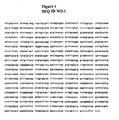
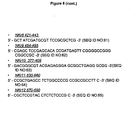
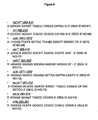
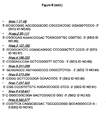
- the nucleic acid sequence of the promoter region of bcl-2 is shown in Figure 1 .
- High levels of expression of the human bcl-2 gene have been found in all lymphomas with t (14; 18) chromosomal translocations including most follicular B cell lymphomas and many large cell non-Hodgkin's lymphomas.
- the present invention provides oligonucleotide therapeutics that are methylated at specific sites.
- the present invention is not limited to a particular mechanism. Indeed, an understanding of the mechanism is not necessary to practice the present invention. Nonetheless, it is contemplated that one mechanism for the regulation of gene activity is methylation of cytosine residues in DNA.
- 5-methylcytosine (5-MeC) is the only naturally occurring modified base detected in DNA ( Ehrlick et al., Science 212:1350-1357 (1981 )).
- 5-methylcytosine (5-MeC) is the only naturally occurring modified base detected in DNA ( Ehrlick et al., Science 212:1350-1357 (1981 )).
- 5-methylcytosine 5-MeC
- hypomethylation at specific sites or in specific regions in a number of genes is correlated with active transcription ( Doerfler, Annu. Rev. Biochem.
- DNA methylation in vitro can prevent efficient transcription of genes in a cell-free system or
- regions within the promoter region of an oncogene are further defined as preferred regions for hybridization of oligonucleotides. In some embodiments, these preferred regions are referred to as "hot zones.”
- hot zones are defined based on oligonucleotide compounds that are demonstrated to be effective (see above section on oligonucleotides) and those that are contemplated to be effective based on the preferred criteria for oligonucleotides described above.
- Preferred hot zones encompass 10 bp upstream and downstream of each compound included in each hot zone and have at least 1 CG or more within an increment of 40 bp further upstream or downstream of each compound.
- hot zones encompass a maximum of 100 bp upstream and downstream of each oligonucleotide compound included in the hot zone.
- hot zones are defined at beginning regions of each promoter.
- hot zones are defined either based on effective sequence(s) or contemplated sequences and have a preferred maximum length of 200 bp. Based on the above described criteria, exemplary hot zones were designed. These hot zones are shown in Table 1. Numbering is based on the sequences described in the Figures of the present invention. Table 1 Exemplary Hot Zones Gene Hot Zones Bcl-2 1-40 161-350 401-590 1002-1260
- modified oligonucleotide synthesis can be used to prepare the modified oligonucleotides of the present invention.
- dC is replaced by 5-methyl-dC where appropriate, as taught by the present invention.
- the modified or unmodified oligonucleotides of the present invention are most conveniently prepared by using any of the commercially available automated nucleic acid synthesizers. They can also be obtained from commercial sources that synthesize custom oligonucleotides pursuant to customer specifications.
- oligonucleotides are a preferred form of compound
- the present invention comprehends other oligomeric oligonucleotide compounds, including but not limited to oligonucleotide mimetics such as are described below.
- the oligonucleotide compounds in accordance with this invention preferably comprise from about 18 to about 30 nucleobases ( i.e ., from about 18 to about 30 linked bases), although both longer and shorter sequences may find use with the present invention.
- oligonucleotides containing modified backbones or non-natural internucleoside linkages include those that retain a phosphorus atom in the backbone and those that do not have a phosphorus atom in the backbone.
- modified oligonucleotides that do not have a phosphorus atom in their internucleoside backbone can also be considered to be oligonucleosides.
- Preferred modified oligonucleotide backbones include, for example, phosphorothioates, chiral phosphorothioates, phosphorodithioates, phosphotriesters, aminoalkylphosphotriesters, methyl and other alkyl phosphonates including 3'-alkylene phosphonates and chiral phosphonates, phosphinates, phosphoramidates including 3'-amino phosphoramidate and aminoalkylphosphoramidates, thionophosphoramidates, thionoalkylphosphonates, thionoalkylphosphotriesters, and boranophosphates having normal 3'-5' linkages, 2'-5' linked analogs of these, and those having inverted polarity wherein the adjacent pairs of nucleoside units are linked 3'-5' to 5'-3' or 2'-5' to 5'-2'.
- Various salts, mixed salts and free acid forms are also included.
- Preferred modified oligonucleotide backbones that do not include a phosphorus atom therein have backbones that are formed by short chain alkyl or cycloalkyl internucleoside linkages, mixed heteroatom and alkyl or cycloalkyl internucleoside linkages, or one or more short chain heteroatomic or heterocyclic internucleoside linkages.
- morpholino linkages formed in part from the sugar portion of a nucleoside
- siloxane backbones sulfide, sulfoxide and sulfone backbones
- formacetyl and thioformacetyl backbones methylene formacetyl and thioformacetyl backbones
- alkene containing backbones sulfamate backbones
- sulfonate and sulfonamide backbones amide backbones; and others having mixed N, O, S and CH 2 component parts.
- both the sugar and the internucleoside linkage (i.e ., the backbone) of the nucleotide units are replaced with novel groups.
- the base units are maintained for hybridization with an appropriate nucleic acid target compound.
- an oligonucleotide mimetic that has been shown to have excellent hybridization properties, is referred to as a peptide nucleic acid (PNA).
- PNA peptide nucleic acid
- the sugar-backbone of an oligonucleotide is replaced with an amide containing backbone, in particular an aminoethylglycine backbone.
- nucleobases are retained and are bound directly or indirectly to aza nitrogen atoms of the amide portion of the backbone.
- Representative United States patents that teach the preparation of PNA compounds include, but are not limited to, U.S. Pat. Nos.: 5,539,082 ; 5,714,331 ; and 5,719,262 , each of which is herein incorporated by reference. Further teaching of PNA compounds can be found in Nielsen et al., Science 254:1497 (1991 ).
- oligonucleotides of the invention are oligonucleotides with phosphorothioate backbones and oligonucleosides with heteroatom backbones; and in particular --CH 2 , -NH--O--CH 2 --, --CH 2 --N(CH 3 )--O--CH 2 -- [known as a methylene (methylimino) or MMI backbone], -CH 2 --O--N(CH 3 )--CH 2 --, -CH 2 --N(CH 3 )--N(CH 3 )-CH 2 --, and --O--N(CH 3 )-CH 2 --CH 2 -- [wherein the native phosphodiester backbone is represented as --O--P--O--CH 2 --] of the above referenced U.S.
- Modified oligonucleotides may also contain one or more substituted sugar moieties.
- Preferred oligonucleotides comprise one of the following at the 2' position: OH; F; O-, S-, or N-alkyl; O-, S-, or N-alkenyl; O-, S- or N-alkynyl; or O-alkyl-O-alkyl, wherein the alkyl, alkenyl and alkynyl may be substituted or unsubstituted C 1 to C 10 alkyl or C 2 to C 10 alkenyl and alkynyl.
- oligonucleotides comprise one of the following at the 2' position: C 1 to C 10 lower alkyl, substituted lower alkyl, alkaryl, aralkyl, O-alkaryl or O-aralkyl, SH, SCH 3 , OCN, Cl, Br, CN, CF 3 , OCF 3 , SOCH 3 , SO 2 CH 3 , ONO 2 , NO 2 , N 3 , NH 2 , heterocycloalkyl, heterocycloalkaryl, aminoalkylamino, polyalkylamino, substituted silyl, an RNA cleaving group, a reporter group, an intercalator, a group for improving the pharmacokinetic properties of an oligonucleotide, or a group for improving the pharmacodynamic properties of an oligonucleotide, and other substituents having similar properties.
- a preferred modification includes 2'-methoxyethoxy (2'-O--CH 2 CH 2 OCH 3 , also known as 2'-O-(2-methoxyethyl) or 2'-MOE) ( Martin et al., Helv. Chim. Acta 78:486 [1995 ]) i.e., an alkoxyalkoxy group.
- a further preferred modification includes 2'-dimethylaminooxyethoxy (i.e ., a O(CH 2 ) 2 ON(CH 3 ) 2 group), also known as 2'-DMAOE, and 2'-dimethylaminoethoxyethoxy (also known in the art as 2'-O-dimethylaminoethoxyethyl or 2'-DMAEOE), i.e ., 2'-O--CH 2 --O--CH 2 --N(CH 2 ) 2 .
- Oligonucleotides may also have sugar mimetics such as cyclobutyl moieties in place of the pentofuranosyl sugar.
- Oligonucleotides may also include nucleobase (often referred to in the art simply as “base”) modifications or substitutions.
- nucleobases include the purine bases adenine (A) and guanine (G), and the pyrimidine bases thymine (T), cytosine (C) and uracil (U).
- Modified nucleobases include other synthetic and natural nucleobases such as 5-methylcytosine (5-me-C), 5-hydroxymethyl cytosine, xanthine, hypoxanthine, 2-aminoadenine, 6-methyl and other alkyl derivatives of adenine and guanine, 2-propyl and other alkyl derivatives of adenine and guanine, 2-thiouracil, 2-thiothymine and 2-thiocytosine, 5-halouracil and cytosine, 5-propynyl uracil and cytosine, 6-azo uracil, cytosine and thymine, 5-uracil (pseudouracil), 4-thiouracil, 8-halo, 8-amino, 8-thiol, 8-thioalkyl, 8-hydroxyl and other 8-substituted adenines and guanines, 5-halo particularly 5-bromo, 5-trifluoromethyl and other 5-substitute
- nucleobases include those disclosed in U.S. Pat. No. 3,687,808 . Certain of these nucleobases are particularly useful for increasing the binding affinity of the oligomeric compounds of the invention. These include 5-substituted pyrimidines, 6-azapyrimidines and N-2, N-6 and O-6 substituted purines, including 2-aminopropyladenine, 5-propynyluracil and 5-propynylcytosine. 5-methylcytosine substitutions have been shown to increase nucleic acid duplex stability by 0.6-1.2°C and are presently preferred base substitutions, even more particularly when combined with 2'-O-methoxyethyl sugar modifications.
- oligonucleotides of the present invention involves chemically linking to the oligonucleotide one or more moieties or conjugates that enhance the activity, cellular distribution or cellular uptake of the oligonucleotide.
- moieties include but are not limited to lipid moieties such as a cholesterol moiety, cholic acid, a thioether, ( e.g ., hexyl-S-tritylthiol), a thiocholesterol, an aliphatic chain, ( e.g ., dodecandiol or undecyl residues), a phospholipid, ( e.g ., di-hexadecyl-rac-glycerol or triethylammonium 1,2-di-O-hexadecyl-rac-glycero-3-H-phosphonate), a polyamine or a polyethylene glycol chain or adamantane acetic acid, a
- oligonucleotides containing the above-described modifications are not limited to the antisense oligonucleotides described above. Any suitable modification or substitution may be utilized.
- the present invention also includes pharmaceutical compositions and formulations that include the antisense compounds of the present invention as described below.
- the present invention provides cocktails comprising two or more oligonucleotides directed towards promoter regions of genes (e.g., oncogenes).
- the two oligonucleotides hybridize to different regions of the promoter of the same gene.
- the two or more oligonucleotides hybridize to promoters of two different genes.
- the present invention is not limited to a particular mechanism. Indeed, an understanding of the mechanism is not necessary to practice the present invention. Nonetheless, it is contemplated that the combination of two or more compounds of the present invention provides an inhibition of cancer cell growth that is greater than the additive inhibition of each of the compounds administered separately.
- the present invention is not limited to therapeutic applications.
- the present invention provides compositions and methods for the use of oligonucleotides as a research tool.
- kits comprising oligonucleotides specific for inhibition of a gene of interest, and optionally cell lines (e.g ., cancer cells lines) known to express the gene.
- cell lines e.g ., cancer cells lines
- the kits find use, for example, in the identification of metabolic pathways or the involvement of genes in disease ( e.g ., cancer), as well as in diagnostic applications.
- the kits further comprise buffer and other necessary reagents, as well as instructions for using the kits.
- the present invention provides methods and compositions for use in the validation of gene targets (e.g., genes suspected of being involved in disease).
- gene targets e.g., genes suspected of being involved in disease
- the expression of genes identified in broad screening applications e.g., gene expression arrays
- the methods and compositions of the present invention are suitable for use in vitro and in vivo (e.g., in a non-human animal) for the purpose of target validation.
- the compounds of the present invention find use in transplantation research (e.g., HLA inhibition).
- the methods and compositions of the present invention are used in drug screening applications.
- oligonucleotides of the present invention are administered to a cell (e.g., in culture or in a non-human animal) in order to inhibit the expression of a gene of interest.
- the inhibition of the gene of interest mimics a physiological or disease condition.
- an oncogene is inhibited.
- Test compounds e.g., small molecule drugs or oligonucleotide mimetics
- test compounds of the present invention can be obtained using any of the numerous approaches in combinatorial library methods known in the art, including biological libraries; peptoid libraries (libraries of molecules having the functionalities of peptides, but with a novel, non-peptide backbone, which are resistant to enzymatic degradation but which nevertheless remain bioactive; see, e.g ., Zuckennann et al., J. Med. Chem. 37: 2678-85 [1994 ]); spatially addressable parallel solid phase or solution phase libraries; synthetic library methods requiring deconvolution; the'one-bead one-compound' library method; and synthetic library methods using affinity chromatography selection.
- the biological library and peptoid library approaches are preferred for use with peptide libraries, while the other four approaches are applicable to peptide, non-peptide oligomer or small molecule libraries of compounds ( Lam (1997) Anticancer Drug Des. 12:145 ).
- the oligonucleotide compounds of the present invention are formulated as pharmaceutical compositions for delivery to a subject as a pharmaceutical.
- the novel antigen compounds of the present invention find use in the treatment of a variety of disease states and conditions in which it is desirable to inhibit the expression of a gene or the growth of a cell.
- the compounds are used to treat disease states resulting from uncontrolled cell growth, for example including, but not limited to, cancer.
- the present invention is not limited to the treatment of a particular cancer.
- the oligonucleotide compounds of the present invention are suitable for the treatment of a variety of cancers including, but not limited to, breast, colon, lung, stomach, pancreatic, bladder, leukemia, and lymphoma.
- the below discussion provides exemplary, non-limiting examples of formulations and dosages.
- the present invention further provides pharmaceutical compositions (e.g ., comprising the oligonucleotide compounds described above).
- the pharmaceutical compositions of the present invention may be administered in a number of ways depending upon whether local or systemic treatment is desired and upon the area to be treated. Administration may be topical (including ophthalmic and to mucous membranes including vaginal and rectal delivery), pulmonary ( e.g ., by inhalation or insufflation of powders or aerosols, including by nebulizer, intratracheal, intranasal, epidermal and transdermal), oral or parenteral. Parenteral administration includes intravenous, intraarterial, subcutaneous, intraperitoneal or intramuscular injection or infusion; or intracranial, e.g., intrathecal or intraventricular, administration.
- compositions and formulations for topical administration may include transdermal patches, ointments, lotions, creams, gels, drops, suppositories, sprays, liquids and powders.
- Conventional pharmaceutical carriers, aqueous, powder or oily bases, thickeners and the like may be necessary or desirable.
- compositions and formulations for oral administration include powders or granules, suspensions or solutions in water or non-aqueous media, capsules, sachets or tablets. Thickeners, flavoring agents, diluents, emulsifiers, dispersing aids or binders may be desirable.
- compositions and formulations for parenteral, intrathecal or intraventricular administration may include sterile aqueous solutions that may also contain buffers, diluents and other suitable additives such as, but not limited to, penetration enhancers, carrier compounds and other pharmaceutically acceptable carriers or excipients.
- compositions of the present invention include, but are not limited to, solutions, emulsions, and liposome-containing formulations. These compositions may be generated from a variety of components that include, but are not limited to, preformed liquids, self-emulsifying solids and self-emulsifying semisolids.
- the pharmaceutical formulations of the present invention may be prepared according to conventional techniques well known in the pharmaceutical industry. Such techniques include the step of bringing into association the active ingredients with the pharmaceutical carrier(s) or excipient(s). In general the formulations are prepared by uniformly and intimately bringing into association the active ingredients with liquid carriers or finely divided solid carriers or both, and then, if necessary, shaping the product.
- compositions of the present invention may be formulated into any of many possible dosage forms such as, but not limited to, tablets, capsules, liquid syrups, soft gels, suppositories, and enemas.
- the compositions of the present invention may also be formulated as suspensions in aqueous, non-aqueous or mixed media.
- Aqueous suspensions may further contain substances that increase the viscosity of the suspension including, for example, sodium carboxymethylcellulose, sorbitol and/or dextran.
- the suspension may also contain stabilizers.
- the pharmaceutical compositions may be formulated and used as foams.
- Pharmaceutical foams include formulations such as, but not limited to, emulsions, microemulsions, creams, jellies and liposomes. While basically similar in nature these formulations vary in the components and the consistency of the final product.
- Agents that enhance uptake of oligonucleotides at the cellular level may also be added to the pharmaceutical and other compositions of the present invention.
- cationic lipids such as lipofectin ( U.S. Pat. No. 5,705,188 ), cationic glycerol derivatives, and polycationic molecules, such as polylysine ( WO 97/30731 ), also enhance the cellular uptake of oligonucleotides.
- compositions of the present invention may additionally contain other adjunct components conventionally found in pharmaceutical compositions.
- the compositions may contain additional, compatible, pharmaceutically-active materials such as, for example, antipruritics, astringents, local anesthetics or anti-inflammatory agents, or may contain additional materials useful in physically formulating various dosage forms of the compositions of the present invention, such as dyes, flavoring agents, preservatives, antioxidants, opacifiers, thickening agents and stabilizers.
- additional materials useful in physically formulating various dosage forms of the compositions of the present invention such as dyes, flavoring agents, preservatives, antioxidants, opacifiers, thickening agents and stabilizers.
- such materials when added, should not unduly interfere with the biological activities of the components of the compositions of the present invention.
- the formulations can be sterilized and, if desired, mixed with auxiliary agents, e.g ., lubricants, preservatives, stabilizers, wetting agents, emulsifiers, salts for influencing osmotic pressure; buffers, colorings, flavorings and/or aromatic substances and the like which do not deleteriously interact with the nucleic acid(s) of the formulation.
- auxiliary agents e.g ., lubricants, preservatives, stabilizers, wetting agents, emulsifiers, salts for influencing osmotic pressure
- buffers colorings, flavorings and/or aromatic substances and the like which do not deleteriously interact with the nucleic acid(s) of the formulation.
- compositions and formulations for oral administration include powders or granules, microparticulates, nanoparticulates, suspensions or solutions in water or non-aqueous media, capsules, gel capsules, sachets, tablets or minitablets. Thickeners, flavoring agents, diluents, emulsifiers, dispersing aids or binders may be desirable.
- Preferred oral formulations are those in which oligonucleotides of the invention are administered in conjunction with one or more penetration enhancers surfactants and chelators.
- Preferred surfactants include fatty acids and/or esters or salts thereof, bile acids and/or salts thereof.
- Prefered bile acids/salts include chenodeoxycholic acid (CDCA) and ursodeoxychenodeoxycholic acid (UDCA), cholic acid, dehydrocholic acid, deoxycholic acid, glucholic acid, glycholic acid, glycodeoxycholic acid, taurocholic acid, taurodeoxycholic acid, sodium tauro-24,25-dihydro-fusidate, sodium glycodihydrofusidate.
- DCA chenodeoxycholic acid
- UDCA ursodeoxychenodeoxycholic acid
- Prefered fatty acids include arachidonic acid, undecanoic acid, oleic acid, lauric acid, caprylic acid, capric acid, myristic acid, palmitic acid, stearic acid, linoleic acid, linolenic acid, dicaprate, tricaprate, monoolein, dilaurin, glyceryl 1-monocaprate, 1-dodecylazacycloheptan-2-one, an acylcamitine, an acylcholine, or a monoglyceride, a diglyceride or a pharmaceutically acceptable salt thereof (e.g . sodium).
- arachidonic acid arachidonic acid, undecanoic acid, oleic acid, lauric acid, caprylic acid, capric acid, myristic acid, palmitic acid, stearic acid, linoleic acid, linolenic acid, dicaprate, tricaprate, monoolein, dilaurin, g
- penetration enhancers for example, fatty acids/salts in combination with bile acids/salts.
- a particularly prefered combination is the sodium salt of lauric acid, capric acid and UDCA.
- Further penetration enhancers include polyoxyethylene-9-lauryl ether, polyoxyethylene-20-cetyl ether.
- Oligonucleotides of the invention may be delivered orally in granular form including sprayed dried particles, or complexed to form micro or nanoparticles.
- Oligonucleotide complexing agents include poly-amino acids; polyimines; polyacrylates; polyalkylacrylates, polyoxethanes, polyalkylcyanoacrylates; cationized gelatins, albumins, starches, acrylates, polyethyleneglycols (PEG) and starches; polyalkylcyanoacrylates; DEAE-derivatized polyimines, pollulans, celluloses and starches.
- Particularly preferred complexing agents include chitosan, N-trimethylchitosan, poly-L-lysine, polyhistidine, polyomithine, polyspermines, protamine, polyvinylpyridine, polythiodiethylamino-methylethylene P(TDAE), polyaminostyrene ( e.g .
- compositions containing (a) one or more oligonucleotide compounds and (b) one or more other chemotherapeutic agents that function by a non-oligonucleotide mechanism.
- chemotherapeutic agents include, but are not limited to, anticancer drugs such as daunorubicin, dactinomycin, doxorubicin, bleomycin, mitomycin, nitrogen mustard, chlorambucil, melphalan, cyclophosphamide, 6-mercaptopurine, 6-thioguanine, cytarabine (CA), 5-fluorouracil (5-FU), floxuridine (5-FUdR), methotrexate (MTX), colchicine, vincristine, vinblastine, etoposide, teniposide, cisplatin and diethylstilbestrol (DES).
- anticancer drugs such as daunorubicin, dactinomycin, doxorubicin, bleomycin, mitomycin
- Anti-inflammatory drugs including but not limited to nonsteroidal anti-inflammatory drugs and corticosteroids, and antiviral drugs, including but not limited to ribivirin, vidarabine, acyclovir and ganciclovir, may also be combined in compositions of the invention.
- Other non-oligonucleotide chemotherapeutic agents are also within the scope of this invention. Two or more combined compounds may be used together or sequentially.
- oligonucleotide compounds of the present invention may be delivered using any suitable method.
- naked DNA is administered.
- lipofection is utilized for the delivery of nucleic acids to a subject.
- oligonucleotides are modified with phosphothiolates for delivery (See e.g ., U.S. Patent 6,169,177 , herein incorporated by reference).
- nucleic acids for delivery are compacted to aid in their uptake (See e.g ., U.S. Patents 6,008,366 , 6,383,811 wherein incorporated by reference).
- compacted nucleic acids are targeted to a particular cell type (e.g ., cancer cell) via a target cell binding moiety (See e.g ., U.S. Patents 5,844,107 , 6,077,835 , each of which is herein incorporated by reference).
- oligonucleotides are conjugated to other compounds to aid in their delivery.
- nucleic acids are conjugated to polyethylene glycol to aid in delivery (See e.g ., U.S. Patents 6,177,274 , 6,287,591 , 6,447,752 , 6,447,753 , and 6,440,743 , each of which is herein incorporated by reference).
- oligonucleotides are conjugated to protected graft copolymers, which are chargeable" drug nano-caniers (PharmaIn).
- oligonucleotides are conjugated to nanoparticles (e.g ., NanoMed Pharmaceuticals; Kalamazoo, MI).
- oligonucleotides are enclosed in lipids (e.g ., liposomes or micelles) to aid in delivery (See e.g., U.S. Patents 6,458,382 , 6,429,200 ; each of which is herein incorporated by reference).
- lipids e.g ., liposomes or micelles
- Preferred liposomes include, but are not limited to, cardiolipin based cationic liposomes (e.g., NEOPHECTIN, available from NeoPharm, Forest Lake, IL).
- the charge ration of NEOPHECTIN to oligonucleotide is 6:1.
- oligonucleotides are complexed with additional polymers to aid in delivery (See e.g., U.S. Patents 6,379,966 , 6,339,067 , 5,744,335 ; each of which is herein incorporated by reference and Intradigm Corp., Rockville, MD).
- the controlled high pressure delivery system developed by Mirus is utilized for delivery of oligonucleotides.
- Dosing is dependent on severity and responsiveness of the disease state to be treated, with the course of treatment lasting from several days to several months, or until a cure is effected or a diminution of the disease state is achieved.
- Optimal dosing schedules can be calculated from measurements of drug accumulation in the body of the patient. The administering physician can easily determine optimum dosages, dosing methodologies and repetition rates. Optimum dosages may vary depending on the relative potency of individual oligonucleotides, and the delivery means, and can generally be estimated based on EC 50 s found to be effective in in vitro and in vivo animal models or based on the examples described herein.
- dosage is from 0.01 ⁇ g to 100 g per kg of body weight, and may be given once or more daily, weekly, monthly or yearly.
- dosage is continuous (e.g ., intravenously) for a period of from several hours to several days or weeks.
- treatment is given continuously for a defined period followed by a treatment free period.
- the pattern of continuous dosing followed by a treatment free period is repeated several times ( e.g ., until the disease state is diminished).
- the treating physician can estimate repetition rates for dosing based on measured residence times and concentrations of the drug in bodily fluids or tissues.
- compositions of the present invention are provided in combination with existing therapies. In other embodiments, two or more compounds of the present invention are provided in combination. In some embodiments, the compounds of the present invention are provided in combination with known cancer chemotherapy agents. The present invention is not limited to a particular chemotherapy agent.
- antineoplastic e.g ., anticancer
- Anticancer agents suitable for use with the present invention include, but are not limited to, agents that induce apoptosis, agents that inhibit adenosine deaminase function, inhibit pyrimidine biosynthesis, inhibit purine ring biosynthesis, inhibit nucleotide interconversions, inhibit ribonucleotide reductase, inhibit thymidine monophosphate (TMP) synthesis, inhibit dihydrofolate reduction, inhibit DNA synthesis, form adducts with DNA, damage DNA, inhibit DNA repair, intercalate with DNA, deaminate asparagines, inhibit RNA synthesis, inhibit protein synthesis or stability, inhibit microtubule synthesis or function, and the like.
- exemplary anticancer agents suitable for use in compositions and methods of the present invention include, but are not limited to: 1) alkaloids, including microtubule inhibitors (e.g ., vincristine, vinblastine, and vindesine, etc .), microtubule stabilizers (e.g ., paclitaxel (TAXOL), and docetaxel, etc .), and chromatin function inhibitors, including topoisomerase inhibitors, such as epipodophyllotoxins (e.g.
- etoposide VP-16
- VM-26 teniposide
- agents that target topoisomerase I e.g., camptothecin and isirinotecan (CPT-11), etc .
- covalent DNA-binding agents alkylating agents
- nitrogen mustards e.g ., mechlorethamine, chlorambucil, cyclophosphamide, ifosphamide, and busulfan (MYLERAN), etc.
- nitrosoureas e.g ., carmustine, lomustine, and semustine, etc.
- nucleic acid inhibitors e.g ., dactinomycin (actinomycin D), etc .
- anthracyclines e.g ., daunorubicin (daunomycin, and cerubidine
- doxorubicin adriamycin
- idarubicin idamycin
- anthracenediones e.g ., anthracycline analogues, such as mitoxantrone, etc .
- bleomycins BLENOXANE
- antimetabolites including antifolates (e.g ., methotrexate, FOLEX, and MEXATE, etc .), purine antimetabolites (e.g ., 6-mercaptopurine (6-MP, PURINETHOL), 6-thioguanine (6-TG), azathioprine, acyclovir, ganciclovir, chlorodeoxyadenosine, 2-chlorodeoxyadenosine (CdA), and 2'-deoxycoformycin (pentostatin), etc .), pyrimidine antagonists (e.g ., fluoropyrimidines (e.g ., 5-fluorouracil (ADRUCIL), 5-fluorodeoxyuridine (FdUrd) (floxuridine)) etc .), and cytosine arabinosides (e.g ., CYTOSAR (ara-C)
- antifolates e.g ., methotrexate, FOLEX, and
- any oncolytic agent that is routinely used in a cancer therapy context finds use in the compositions and methods of the present invention.
- the U.S. Food and Drug Administration maintains a formulary of oncolytic agents approved for use in the United States. International counterpart agencies to the U.S.F.D.A. maintain similar formularies.
- Table 3 provides a list of exemplary antineoplastic agents approved for use in the U.S. Those skilled in the art will appreciate that the "product labels" required on all U.S. approved chemotherapeutics describe approved indications, dosing information, toxicity data, and the like, for the exemplary agents.
- the present invention provides customized patient care.
- the compositions of the present invention are targeted to specific genes unique to a patient's diseae (e.g., cancer).
- a sample of the patient's cancer or other affected tissue e.g ., a biopsy
- the biopsy is analyzed for the presence of expression of a particular gene (e.g., oncogene).
- the level of expression of an gene in a patient is analyzed. Expression may be detected by monitoring for the presence of RNA or DNA corresponding to a particular oncogene. Any suitable detection method may be utilized, including, but not limited to, those disclosed below.
- oligonucleotide compounds specific for genes that are aberrantly expressed in the patient are combined in a treatment cocktail.
- the treatment cocktail further includes additional chemotherapeutic agents (e.g ., those described above). The cocktail is then administered to the patient as described above.
- the analysis of cancer samples and the selection of oligonucleotides for a treatment compound is automated.
- a software program that analyses the expression levels of a series of oncogenes to arrive at the optimum selection and concentration of oligonucleotides is utilized.
- the analysis is performed by the clinical laboratory analyzing the patient sample and is transmitted to a second provider for formulation of the treatment cocktail.
- the information is transmitted over the Internet, thus allowing for the shortest possible time in between diagnosis and the beginning of treatment.
- detection of oncogenes is detected by measuring the expression of corresponding mRNA in a tissue sample (e.g ., cancer tissue).
- expression of mRNA is measured in bodily fluids, including, but not limited to, blood, serum, mucus, and urine.
- the level of mRNA expression in measured quantitatively. RNA expression may be measured by any suitable method, including but not limited to, those disclosed below.
- RNA is detected by Northern blot analysis.
- Northern blot analysis involves the separation of RNA and hybridization of a complementary labeled probe.
- RNA expression is detected by enzymatic cleavage of specific structures (INVADER assay, Third Wave Technologies; See e.g., U.S. Patent Nos. 5,846,717 , 6,090,543 ; 6,001,567 ; 5,985,557 ; and 5,994,069 ; each of which is herein incorporated by reference).
- the INVADER assay detects specific nucleic acid (e.g ., RNA) sequences by using structure-specific enzymes to cleave a complex formed by the hybridization of overlapping oligonucleotide probes.
- RNA is detected by hybridization to a oligonucleotide probe.
- a variety of hybridization assays using a variety of technologies for hybridization and detection are available.
- TaqMan assay PE Biosystems, Foster City, CA; See e.g., U.S. Patent Nos. 5,962,233 and 5,538,848 , each of which is herein incorporated by reference
- the assay is performed during a PCR reaction.
- the TaqMan assay exploits the 5'-3' exonuclease activity of the AMPLITAQ GOLD DNA polymerase.
- a probe consisting of an oligonucleotide with a 5'-reporter dye (e.g ., a fluorescent dye) and a 3'-quencher dye is included in the PCR reaction.
- a 5'-reporter dye e.g ., a fluorescent dye
- a 3'-quencher dye is included in the PCR reaction.
- the 5'-3' nucleolytic activity of the AMPLITAQ GOLD polymerase cleaves the probe between the reporter and the quencher dye.
- the separation of the reporter dye from the quencher dye results in an increase of fluorescence.
- the signal accumulates with each cycle of PCR and can be monitored with a fluorimeter.
- RNA reverse-transcriptase PCR
- RNA is enzymatically converted to complementary DNA or "cDNA" using a reverse transcriptase enzyme.
- the cDNA is then used as a template for a PCR reaction.
- PCR products can be detected by any suitable method, including but not limited to, gel electrophoresis and staining with a DNA specific stain or hybridization to a labeled probe.
- the quantitative reverse transcriptase PCR with standardized mixtures of competitive templates method described in U.S. Patents 5,639,606 , 5,643,765 , and 5,876,978 (each of which is herein incorporated by reference) is utilized.
- gene expression of oncogenes is detected by measuring the expression of the corresponding protein or polypeptide.
- protein expression is detected in a tissue sample.
- protein expression is detected in bodily fluids.
- the level of protein expression is quantitated.
- Protein expression may be detected by any suitable method.
- proteins are detected by their binding to an antibody raised against the protein. The generation of antibodies is well known to those skilled in the art.
- Antibody binding is detected by techniques known in the art (e.g ., radioimmunoassay, ELISA (enzyme-linked immunosorbant assay), "sandwich” immunoassays, immunoradiometric assays, gel diffusion precipitation reactions, immunodiffusion assays, in situ immunoassays (e.g., radioimmunoassay, ELISA (enzyme-linked immunosorbant assay), "sandwich” immunoassays, immunoradiometric assays, gel diffusion precipitation reactions, immunodiffusion assays, in situ immunoassays (e.g.
- agglutination assay e.g ., gel agglutination assays, hemagglutination assays, etc.
- complement fixation assays immunofluorescence assays, protein A assays, and immunoelectrophoresis assays, etc.
- antibody binding is detected by detecting a label on the primary antibody.
- the primary antibody is detected by detecting binding of a secondary antibody or reagent to the primary antibody.
- the secondary antibody is labeled. Many methods are known in the art for detecting binding in an immunoassay and are within the scope of the present invention.
- an automated detection assay is utilized.
- Methods for the automation of immunoassays include those described in U.S. Patents 5,885,530 , 4,981,785 , 6,159,750 , and 5,358,691 , each of which is herein incorporated by reference.
- the analysis and presentation of results is also automated.
- software that generates an expression profile based on the presence or absence of a series of proteins corresponding to oncogenes is utilized.
- N normal
- M molar
- mM millimolar
- ⁇ M micromolar
- mol molecular weight
- mmol millimoles
- ⁇ mol micromol
- nmol nanomoles
- pmol picomoles
- g grams
- mg milligrams
- ⁇ g micrograms
- ng nanograms
- 1 or L L
- ml milliliters
- ⁇ l microliters
- cm centimeters
- mm millimeters
- ⁇ m micrometers
- nm nanometers
- °C degrees Centigrade
- Tissue adenocarcinoma; mammary gland; breast; pleural effusion
- Tumorigenic forms adenocarcinoma grade III Receptors expressed: Epidermal Growth Factor (EGF) and Transforming growth factor ( TGF-alpha )
- EGF Epidermal Growth Factor
- TGF-alpha Transforming growth factor
- Tissue adenocarcinoma, mammary gland, breast Metastatic site: pleural effusion Receptors: estrogen receptor + Oncogenes: wnt7h + This cell line is also known to moderately express c-erbB-2 and overexpress c-myc oncogene
- Cellular product Insulin like growth factor binding protein (IGFBP) References: Soule HD et al. Ahuman cell line from a pleural effusion derived from a breast carcinoma. J. Natl. Cancer Inst. 51: 1409-1416, 1973 Landers JE et al. Translational enhancement of mdm2 oncogene expression in human tumor cells containing a stabilized wild-type p53 protein. Cancer Res.
- MCF10 cells are derived from benign breast tissue from a woman with fibrocystic disease.
- MCF10 lines consists of several lines, one is MCF10A, an immortalized normal human breast cell line. MCF10A was transformed with T24 Ha-ras to make MCF10AneoT cells.
- MCF10AT with neoplastic progression potential was derived from xenograft passaged MCF10-AneoT. MCF10AT generates carcinoma in about 25% of xenografts.
- Fully malignant MCF10CA1 lines were derived from several xenograft passages of MCF10AT.
- MCF10CA1a forms tumors 100% of the time and it metastasizes.
- a kariotype of MCF10CA1a shows an extra copy of chromosome 1. It metastasizes into the lung 36 days after IV injection of the cells.
- a female MMTV-C-MYC transgenic mouse developed a mammary tumor.
- the tumor was isolated and a small fresh tissue is put into culture with a medium conditioned by Dr. Jushoa Liao at Karmanos Cancer Institute. This tumor cell line was established after 10 passages.
- NMuMG Tissue Mouse normal mammary gland, epithelial Strain: NAMRU, female Tumorigenic: produce benign tumor in mice References: Owens RB. Glandular epithelial cells from mice: a method for selective cultivation. J. Natl. Cancer Inst. 52: 1375-1378, 1974 Owens RB et al. Epithelial cell cultures from normal glandular tissue of mice. J. Natl. Cancer Inst.
- Tissue adenocarcinoma, pancreas Cellular product: mucin, pancreatic cancer specific antigen; CEA, carcinoma embryonic antigen.
- Source 61 year old female Tumorigenic: yes Oncogenes: c-Ki-ras References: Tan MH et al. Characterization of a new primary human pancreatic tumor line. Cancer Invest. 4: 15-23, 1986 Loor R et al. Use of pancreas-specific antigen in immunodiagnosis of pancreatic cancer. Clin. Lab. Med. 2: 567-578, 1982 Lan MS et al. Polypeptide core of a human pancreatic tumor mucin antigen. Cancer Res. 50: 2997-3001, 1990 Chambers JA and Harris A. Expression of the cystic fibrosis gene and the major pancreatic mucin gene, MUC1, in human ductal epithelial cells. J. Cell Sci. 105: 417-422, 1993
- Tissue ductal carcinoma, mammary gland, breast, duct Metastatic site: pleural effusion
- Source pleural effusion of a 54 years old female with infiltrating ductal carcinoma of the breast Receptor expression: estrogen, androgen, calcitonin, progesteron, glucocorticoid and prolactin positive.
- Oncogenes wnt3+ and wnt7h+ This cell line is also know to overexpress c-erbB-2 References: Keydar I et al., Establishment and characterization of a cell line of human breast carcinoma origin. Eur. J. Cancer 15: 659-670,1979 Judge SM and Chatterton RT Jr.
- 1,25-Dihydroxyvitamin D3 specifically binds to a human breast cancer cell line (T-47D) and stimulates growth.
- Tissue ductal carcinoma, mammary gland, breast Source: 60 year old female Oncogene: c-erbB-2 References: Lasfargues EY et al. Isolation of two human tumor epithelial cell lines from solid breast carcinomas. J. Natl. Cancer Inst. 61: 967-978, 1978 Lasfargues EY et al. A human breast tumor cell line (BT-474) that supports mouse mammary tumor virus replication. In vitro 15: 723-729, 1979 Littlewood-Evans AJ et al. The osteoclast-associated protease cathepsin K is expressed in human breast carcinoma. Cancer Res. 57: 5386-5390, 1997
- MCF7 Human breast cancer cells, MCF7, MCF10CA1a, MDA-MB 231, MDA-MB 435.eB, and human normal breast cells, MCF10A were all obtained from Karmanos Cancer Institute. All cells were cultured in DMEM/F12 media (Gibco, MD) supplemented with 10 mM HEPES, 29 mM sodium bicarbonate, penicillin (100 units/ml) and streptomycin (100 ⁇ g/ml). In addition, 10% calf serum, 10 ⁇ g/ml insulin (Sigma Chemical, St Louis, MO), and 0.5 nM estradiol was used in MCF7 media.
- MCF10Cala 5% horse serum and insulin (10 ⁇ g/ml) was used for MCF10Cala, and 10% fetal calf serum was used for MDA-MB 231 and 435 lines.
- MCF 1.0A culture was supplemented with 5% horse serum, insulin. (10 ⁇ g/ml), 100 ng/ml cholera enterotoxin (Calbiochem, CA), 0.5 ⁇ g/ml hydrocortisone (Sigma Chemical) and 20 ng/ml epidermal growth factor (Sigma Chemical). All flasks and plates were incubated in a humidified atmosphere of 95% air and 5% CO 2 at 37°C.
- MYC-MT-1 cells were also cultured in DMEM/F12 media containing 10 ng/ml EGF (epithelial growth factor), 1 nM estradiol, 10 ⁇ g/ml insulin and 10% FBS (fetal bovine serum).
- EGF epidermal growth factor
- FBS fetal bovine serum
- BxPC-3 pancreatic carcinoma cell line and BT-474, breast tumor cell line were cultured in RPMI 1640 with 10% FBS.
- Breast tumor cell line, T-47D was cultured in the same media as BT-474 with the addition of 2.5 ⁇ g/ml insulin.
- NMuMG (normal mouse mammary gland cells) cell line was grown in DMEM media with 4.5 g/l glucose, 10 ⁇ g/ml insulin and 10% FBS.
- All the above cells were seeded at 2500 to 5,000 cells/well in 96 well plates.
- the cells were treated with oligonucleotide compounds in fresh media (100 ⁇ l total volume) 24 hours after seeding.
- the media was replaced with fresh media without oligonucleotides 24 hours after treatment and every 48 hours for 6 to 7 days or until the control cells were 80 to 100% confluent.
- the inhibitory effect of oligonucleotide was evaluated using an MTT staining technique.
- FSCCL cells grow as a single cell suspension in tissue culture. The culture was maintained in RPMI 1640 supplemented with 10% fetal bovine serum, 1% L-glutamine, 100 units/ml penicillin and 1.00 ⁇ g/ml streptomycin. FSCCL cells were treated in 24 well plates (2x10 5 cells/well/ml) with oligonucleotide compounds and incubated in a humidified atmosphere of 95% air and 5% CO 2 at 37°C. The cells were counted every 24 hours using a hemocytometer.
- oligonucleotides were synthesized, gel purified anal lyophilized by BIOSYNTHESIS (Lewisville, Texas) or Qiagen (Valencia, CA). Methylated oligonucleotides were methylated at all CpG sites. Methylated Oligonucleotides were dissolved in pure sterile water (Gibco, Invitrogen Corporation) and used to treat cells in culture.
- MTT 3-[4,5-Dimethyl-thiazol-2-yl]-2,5diphenyltetrazolium bromide (MTT) purchased from Sigma Chemical (St. Louis, MO). Cells were resuspended in culture media at 50,000 cells /ml and 100 ⁇ l was distributed into each well of a 96-well, flat bottomed plate (Costar Coming, NY, USA) and incubated for 24 hours. Media was changed to 100 ⁇ l fresh media containing the desired concentration of oligonucleotides and incubated for 24 hours. Controls had media with pure sterile water equal to the volume of oligonucleotide solution.
- the media was changed without further addition of oligonucleotides every 24 hours until the control cultures were confluent (6 to 7 days). Thereafter the media was removed and plates were washed two times with phosphate-buffered saline (PBS) and 100 ⁇ l of serum free media containing 0.5 mg/ml MTT dye was added into each well and incubated for 1 hour at 37°C. The media with dye was removed, washed with PBS and 100 ⁇ l of dimethyl sulfoxide (DMSO) was added to solubilize the reactive dye. The absorbance values were read using an automatic multiwell spectrophotometer (Bio-Tek Microplate Autoreader, Winooski, VT, USA). Each treatment was repeated at least 3 times with 8 independent wells each time.
- PBS phosphate-buffered saline
- DMSO dimethyl sulfoxide
- the cells were seeded and cultured in T25 tissue culture flasks (Costar, Coming, NY, USA) at 200,000 cells/flask. The cells were allowed to attach for 24 hours. The media was replaced with fresh media containing 10 to 20 ⁇ M oligonucleotides and incubated for 24 hours. The media was changed every 48 hours without further addition of inhibitors and cell cultures were continued until the control flasks were confluent (6-7 days). Cells were harvested using 1x trypsin: EDTA (Invitrogen, Gibco, MD) and collected by centrifugation at 2000 rpm for 5 min.
- EDTA Invitrogen, Gibco, MD
- TBSTe Tris buffered saline, Tween 20
- Antibodies to human c-myc, c-ha-ras and erbB-2 were mice IgG (Pharmingen San Diego, CA).
- Membranes were washed 3 times, 15 min each in TBST, then incubated with secondary antibodies conjugated with peroxidase for 1 hr.
- the membranes were washed 5 times, 10 min each in TBST and incubated with 2 ml each of Lumino/Enhancer and Stable peroxide solution (PIERCE) for 1 min.
- PIERCE Lumino/Enhancer and Stable peroxide solution
- This example describes the ability of oligonucleotide compounds targeted against the promoter of the bcl-2 gene to inhibit the growth of cancer cell lines. Experiments were performed as described in Example 1. The results are shown in Figures 14 and 20 . The sequences of the oligonucleotides targeted against bcl-2 as well as the sequence of bcl-2 gene are shown in Figures 1 and 2 .
- This example describes the inhibition of growth of lymphoma cell lines by non-methylated oligonucleotides targeted towards Bcl-2.
- the MABL2 oligonucleotide is targeted to the promoter region of Bcl-2 [5'- CAX GCA XGX GCA TCC CXG CCX GTG -3'].
- Pho-Mabl-2 is an unmethylated version of MABL-2 [5'- CAC GCA CGC GCA TCC CCG CCC GTG -3'].
- WSU-FSCCL - derived from human B cell lymphoma (low-grade follicular small-cleaved cell lymphoma). The experimental protocol is shown in Table 2. Table 2 Group Target Gene Compound Cells Conc.
- This example describes the inhibition of tumor growth by oligonucleotides of the present invention in a human prostate carcinoma model.
- the human PC-3 GFP prostate carcinoma subcutaneous model was utilized (See e.g., Yang et al., Cancer Research 59, 781-786, [1999 ]; Glinskii et al., Cancer Research 63, 4239-4243, [2003 ]; and Kalikin et al., Cancer Biology and Therapy 2:6, 17-21 [2003 ]).
- Male athymic NCr nude mice between 5 and 6 weeks of age were used.
- the anmilas were bred and maintained in a HEPA filtered environment with cages, food and bedding sterilized by autoclaving.
- the breeding painrs were obtained from Taconic Quality Laboratory Animals and services for Research (Germantown, NY).
- the animal diets 5010 autoclavable rodent diet) were obtained from PMI nutrition International Inc. (Brentwood, MO). A total of 60 male animals were used for the study.
- Study drugs Nucleic acid based oligo compound PNT100 and scrambled oligo control PNT-C with cationic liposomal delivery (LDV) formulation.
- GFP expression vector pLEIN was purchased from Clontech (Palo Alto, CA). The vector expresses enhanced GFP and the neomycin resistance gene on the same bicistronic message that contains an internal ribosome entry site.
- PT67 an NIH3T3 derived packaging cell line, expressing the 10 AI viral envelopes
- DMEM fetal bovine serum
- packaging cells at 70% confluence, were incubated with a precipitated mixture ofN- [1- (2 ,3 - dioleoyloxyl ) propyl]-N, N, trimethylammoniummethyl sulfate reagent and saturating amounts of pLEIN plasmid for 18 h. Fresh medium was replenished at this time. The cells were examined by fluorescence microscopy 48 h posttransfection. For selection, the cells were cultured in the presence of 200-1000 ⁇ g/ml G418 for 7 days.
- GFP gene transduction of PC-3-GFP cells For GFP gene fransduction, 20% confluent PC-3 cells (ATCC, CRL 1435) were incubated with a 1:1 precipitated mixture of retroviral supernatants of PT67 cells and Ham's F-12 K containing 7% fetal bovine serum for 72 h. Fresh medium was replenished at this time. PC-3 cells were harvested by trypsin EDTA 72 h posttransduction and subcultured at a ratio of 1:15 into selective medium that contained 200 ⁇ g/ml 6418. The level of 6418 was increased to 1000 Ng/ml stepwise. The brightest PC-3 cell clones expressing GFP were selected, combined, and then amplified and transferred by conventional culture methods.
- Tumor stocks were made by subcutaneously injecting PC-3-GFP cells at the concentration of 5 x 10 6 cells /200 ⁇ l into the flank of nude mice.
- the strong GFP expression of tumors grown in the subcutis of mice was certified before harvest.
- the tumor tissues harvested from subcutaneous growth in nude mice were inspected, and any grossly necrotic or suspected necrotic or non GFP tumor tissues were removed. Tumor tissues were subsequently cut into small fragments of approximately 2 mm 3 .
- Subcutaneous tissue fragment implantation Tumor stock of the prostate cancer PC-3 GFP was established by subcutaneously injecting PC-3 GFP cells to the flank of nude mice. The tumor was maintained in nude mice subcutaneously as tumor stock prior to use. Before implantation, strong GFP expression of the PC-3 GFP tumor tissue was confirmed by the fluorescent light. On the day of implantation, the tumor was harvested from the subcutaneous site and placed in RPMI-1640 medium. Necrotic tissues were removed and viable tissues were cut into 2 mm 3 pieces. The tissue fragments were then implanted subcutaneously to right flank of the nude nice.
- Study animals A total of 60 mice used for the study were divided into 6 groups 12 days after surgery. Groups for each of the cohort conditions were randomly chosen.
- Treatment Initiation When primary tumors reach between 50-100 mm 3 estimated volume.
- Tumor sizes Each animal was checked once a week for tumor growth by caliper measurements until the end of the study. Measurements over a 40 days period were taken to calculate tumor volume response over time. An approximate tumor volume was calculated using the formula 1/2 (a x b), where b is the smaller of two perpendicular diameters. Approximate tumor volume was calculated by the formula (Wx L) x 1/2.
- GFP Imaging 12 days after implantation, whole body optical imaging of GFPexpressing tumors was taken once a week.
- Body weights Body weights for all animals was weighed once per week for the duration of the study. An electronic balance was used to measure the body weight.
- Termination The final tumor weights were acquired after animals were sacrificed at the fortysixth day of the study. Each tumor was weighed using an electronic balance.
- Figures 32-35 The results are shown in Figures 32-35 .
- Figure 32 shows mean tumor volume of tumors in the PC-3 GFP prostate carcinoma subcutaneous model following treatment with PNT-100 and/or TAXOTERE.
- Figure 33 shows mean body weight of tumors in the PC-3 GFP prostate carcinoma subcutaneous model following treatment with PNT-100 and/or TAXOTERE.
- Figure 34 shows mean tumor volume of tumors in the PC-3 GFP prostate carcinoma subcutaneous model following treatment with PNT-100 and/or TAXOTERE.
- Figure 35 shows mean final tumor volume of tumors in the PC-3 GFP prostate carcinoma subcutaneous model following treatment with PNT-100 and/or TAXOTERE.
- the results indicate that PNT-100 decreased tumor size. The effect was increased in the presence of TAXOTERE.
- This example describes the inhibition of tumor growth by in vivo delivery of oligonucleotides of the present invention in a human prostate carcinoma model.
Landscapes
- Health & Medical Sciences (AREA)
- Life Sciences & Earth Sciences (AREA)
- Chemical & Material Sciences (AREA)
- Genetics & Genomics (AREA)
- Engineering & Computer Science (AREA)
- Biomedical Technology (AREA)
- General Health & Medical Sciences (AREA)
- Molecular Biology (AREA)
- Organic Chemistry (AREA)
- Veterinary Medicine (AREA)
- Animal Behavior & Ethology (AREA)
- Public Health (AREA)
- Zoology (AREA)
- Wood Science & Technology (AREA)
- Medicinal Chemistry (AREA)
- Bioinformatics & Cheminformatics (AREA)
- General Engineering & Computer Science (AREA)
- Pharmacology & Pharmacy (AREA)
- Biotechnology (AREA)
- Oncology (AREA)
- Biophysics (AREA)
- Nuclear Medicine, Radiotherapy & Molecular Imaging (AREA)
- Chemical Kinetics & Catalysis (AREA)
- Plant Pathology (AREA)
- General Chemical & Material Sciences (AREA)
- Microbiology (AREA)
- Epidemiology (AREA)
- Physics & Mathematics (AREA)
- Biochemistry (AREA)
- Hematology (AREA)
- Pharmaceuticals Containing Other Organic And Inorganic Compounds (AREA)
- Medicinal Preparation (AREA)
- Medicines That Contain Protein Lipid Enzymes And Other Medicines (AREA)
- Measuring Or Testing Involving Enzymes Or Micro-Organisms (AREA)
Priority Applications (1)
| Application Number | Priority Date | Filing Date | Title |
|---|---|---|---|
| PL09171679T PL2141173T3 (pl) | 2004-06-01 | 2005-06-01 | Sposoby i kompozycje do hamowania ekspresji genów |
Applications Claiming Priority (9)
| Application Number | Priority Date | Filing Date | Title |
|---|---|---|---|
| US10/858,145 US7498315B2 (en) | 2004-06-01 | 2004-06-01 | Methods and compositions for the inhibition of gene expression |
| US10/858,013 US20060135455A1 (en) | 2004-06-01 | 2004-06-01 | Methods and compositions for the inhibition of gene expression |
| US10/858,146 US20060229267A1 (en) | 2004-06-01 | 2004-06-01 | Methods and compositions for the inhibition of gene expression |
| US10/858,164 US7524827B2 (en) | 2004-06-01 | 2004-06-01 | Methods and compositions for the inhibition of gene expression |
| US10/858,341 US20050287667A1 (en) | 2004-06-01 | 2004-06-01 | Methods and compositions for the inhibition of gene expression |
| US10/858,094 US20080152700A1 (en) | 2004-06-01 | 2004-06-01 | Methods and compositions for the inhibition of gene expression |
| US61197404P | 2004-09-22 | 2004-09-22 | |
| US63721204P | 2004-12-17 | 2004-12-17 | |
| EP05804859A EP1773859A4 (en) | 2004-06-01 | 2005-06-01 | METHODS AND COMPOSITIONS INHIBITING GENE EXPRESSION |
Related Parent Applications (2)
| Application Number | Title | Priority Date | Filing Date |
|---|---|---|---|
| EP05804859A Division EP1773859A4 (en) | 2004-06-01 | 2005-06-01 | METHODS AND COMPOSITIONS INHIBITING GENE EXPRESSION |
| EP05804859.6 Division | 2005-06-01 |
Publications (2)
| Publication Number | Publication Date |
|---|---|
| EP2141173A1 EP2141173A1 (en) | 2010-01-06 |
| EP2141173B1 true EP2141173B1 (en) | 2013-01-02 |
Family
ID=35463455
Family Applications (2)
| Application Number | Title | Priority Date | Filing Date |
|---|---|---|---|
| EP09171679A Expired - Lifetime EP2141173B1 (en) | 2004-06-01 | 2005-06-01 | Methods and compositions for the inhibition of gene expression |
| EP05804859A Withdrawn EP1773859A4 (en) | 2004-06-01 | 2005-06-01 | METHODS AND COMPOSITIONS INHIBITING GENE EXPRESSION |
Family Applications After (1)
| Application Number | Title | Priority Date | Filing Date |
|---|---|---|---|
| EP05804859A Withdrawn EP1773859A4 (en) | 2004-06-01 | 2005-06-01 | METHODS AND COMPOSITIONS INHIBITING GENE EXPRESSION |
Country Status (10)
| Country | Link |
|---|---|
| US (6) | US7498315B2 (https=) |
| EP (2) | EP2141173B1 (https=) |
| JP (3) | JP4906717B2 (https=) |
| CN (1) | CN101014608B (https=) |
| AU (1) | AU2005250453B2 (https=) |
| BR (1) | BRPI0511770A (https=) |
| CA (1) | CA2569183A1 (https=) |
| ES (1) | ES2402532T3 (https=) |
| PL (1) | PL2141173T3 (https=) |
| WO (1) | WO2005118824A2 (https=) |
Families Citing this family (29)
| Publication number | Priority date | Publication date | Assignee | Title |
|---|---|---|---|---|
| JP3111258B2 (ja) | 1991-03-14 | 2000-11-20 | 古野電気株式会社 | 水中探知装置 |
| US7498315B2 (en) * | 2004-06-01 | 2009-03-03 | Pronai Therapeutics, Inc. | Methods and compositions for the inhibition of gene expression |
| US8815599B2 (en) | 2004-06-01 | 2014-08-26 | Pronai Therapeutics, Inc. | Methods and compositions for the inhibition of gene expression |
| CA2631677C (en) * | 2005-12-01 | 2014-08-12 | Pronai Therapeutics, Inc. | Amphoteric liposome formulation |
| EP1971371B1 (en) * | 2005-12-01 | 2015-08-05 | Pronai Therapeutics, Inc. | Cancer therapies and pharmaceutical compositions used therein |
| EP2302395B1 (en) * | 2006-06-07 | 2015-04-15 | Health Diagnostic Laboratory, Inc. | Markers associated with arteriovascular events and methods of use thereof |
| EP2121925A2 (en) * | 2007-03-02 | 2009-11-25 | MDRNA, Inc. | Nucleic acid compounds for inhibiting ras gene expression and uses thereof |
| US9023819B2 (en) * | 2008-06-09 | 2015-05-05 | National Chung Cheng University | Treatment of a disease or a condition associated with aberrant gene hypomethylation by a method involving tailored epigenomic modification |
| WO2011078301A1 (ja) * | 2009-12-25 | 2011-06-30 | ファーマロジカルズ・リサーチ プライベート リミテッド | Nog樹立癌細胞株が移植された非ヒト動物モデルを用いた抗癌剤ターゲット探索及びスクリーニング法 |
| JP6230789B2 (ja) | 2010-10-06 | 2017-11-15 | 中外製薬株式会社 | 癌幹細胞集団及びその作製方法 |
| US9095606B1 (en) | 2010-11-13 | 2015-08-04 | Sirbal Ltd. | Molecular and herbal combinations for treating psoriasis |
| US9066974B1 (en) | 2010-11-13 | 2015-06-30 | Sirbal Ltd. | Molecular and herbal combinations for treating psoriasis |
| US8597695B1 (en) | 2010-11-13 | 2013-12-03 | Sirbal Ltd. | Herbal combinations for treatment of a skin condition |
| US8541382B2 (en) | 2010-11-13 | 2013-09-24 | Sirbal Ltd. | Cardiac glycoside analogs in combination with emodin for cancer therapy |
| US20170049687A1 (en) | 2015-07-29 | 2017-02-23 | Sirbal Ltd. | Herbal Combinations For Treating Scalp Conditions |
| JP6077997B2 (ja) | 2011-09-07 | 2017-02-08 | 中外製薬株式会社 | 癌幹細胞の分離 |
| US20140302511A1 (en) | 2011-10-28 | 2014-10-09 | Pharmalogicals Research Pte. Ltd. | Cancer stem cell-specific molecule |
| ITMI20120275A1 (it) * | 2012-02-24 | 2013-08-25 | Biogenera Societa A Responsabilita Limitata | Oligonucleotidi per la modulazione dell'espressione genica e loro usi |
| WO2013183964A1 (ko) * | 2012-06-07 | 2013-12-12 | 한양대학교 산학협력단 | 폐암 진단 및 치료를 위한 표적 단백질 |
| LT4406594T (lt) | 2012-09-17 | 2025-12-29 | Madrigal Pharmaceuticals, Inc. | Skydliaukės hormono analogai |
| BR112015010220A2 (pt) | 2012-11-05 | 2017-12-05 | Pronai Therapeutics Inc | métodos de utilização de biomarcadores para tratamento de câncer |
| US20160040163A1 (en) * | 2013-03-15 | 2016-02-11 | Pronai Therapeutics, Inc. | Dnai for the modulation of genes |
| EP3076984B1 (en) | 2013-12-02 | 2018-11-14 | Sirbal Ltd. | Herbal combinations for treatment of a skin condition |
| US10266828B2 (en) | 2013-12-16 | 2019-04-23 | Syddansk Universitet | RAS exon 2 skipping for cancer treatment |
| CN105581979A (zh) * | 2016-02-24 | 2016-05-18 | 南京大学 | 一种抑制her-2表达的核酸脂质体纳米药物及其制备方法和应用 |
| IL266054B2 (en) | 2016-10-18 | 2023-10-01 | Madrigal Pharmaceuticals Inc | Methods for treating liver disorders or lipid disorders using a THR-BETA agonist |
| US20210100828A1 (en) * | 2017-05-04 | 2021-04-08 | Sanofi | Methods for Treatment of Alport Syndrome |
| JP7427227B2 (ja) * | 2020-01-21 | 2024-02-05 | 学校法人産業医科大学 | 腫瘍細胞の生存を低下させるkrasアンチセンスオリゴヌクレオチド及びその用途 |
| US12377104B1 (en) | 2024-02-06 | 2025-08-05 | Madrigal Pharmaceuticals, Inc. | Methods for treating a fatty liver disease |
Family Cites Families (66)
| Publication number | Priority date | Publication date | Assignee | Title |
|---|---|---|---|---|
| US5034506A (en) | 1985-03-15 | 1991-07-23 | Anti-Gene Development Group | Uncharged morpholino-based polymers having achiral intersubunit linkages |
| US5276019A (en) | 1987-03-25 | 1994-01-04 | The United States Of America As Represented By The Department Of Health And Human Services | Inhibitors for replication of retroviruses and for the expression of oncogene products |
| US5264423A (en) * | 1987-03-25 | 1993-11-23 | The United States Of America As Represented By The Department Of Health And Human Services | Inhibitors for replication of retroviruses and for the expression of oncogene products |
| US4981785A (en) | 1988-06-06 | 1991-01-01 | Ventrex Laboratories, Inc. | Apparatus and method for performing immunoassays |
| US5831066A (en) | 1988-12-22 | 1998-11-03 | The Trustees Of The University Of Pennsylvania | Regulation of bcl-2 gene expression |
| US5108921A (en) | 1989-04-03 | 1992-04-28 | Purdue Research Foundation | Method for enhanced transmembrane transport of exogenous molecules |
| US5602240A (en) | 1990-07-27 | 1997-02-11 | Ciba Geigy Ag. | Backbone modified oligonucleotide analogs |
| US5489677A (en) | 1990-07-27 | 1996-02-06 | Isis Pharmaceuticals, Inc. | Oligonucleoside linkages containing adjacent oxygen and nitrogen atoms |
| WO1992020698A1 (en) * | 1991-05-17 | 1992-11-26 | Uab Research Foundation | Sequence specific dna binding drugs |
| WO1994008003A1 (en) * | 1991-06-14 | 1994-04-14 | Isis Pharmaceuticals, Inc. | ANTISENSE OLIGONUCLEOTIDE INHIBITION OF THE ras GENE |
| US5539082A (en) | 1993-04-26 | 1996-07-23 | Nielsen; Peter E. | Peptide nucleic acids |
| US5714331A (en) | 1991-05-24 | 1998-02-03 | Buchardt, Deceased; Ole | Peptide nucleic acids having enhanced binding affinity, sequence specificity and solubility |
| US5719262A (en) | 1993-11-22 | 1998-02-17 | Buchardt, Deceased; Ole | Peptide nucleic acids having amino acid side chains |
| US5582986A (en) * | 1991-06-14 | 1996-12-10 | Isis Pharmaceuticals, Inc. | Antisense oligonucleotide inhibition of the ras gene |
| US5474796A (en) * | 1991-09-04 | 1995-12-12 | Protogene Laboratories, Inc. | Method and apparatus for conducting an array of chemical reactions on a support surface |
| US5846717A (en) | 1996-01-24 | 1998-12-08 | Third Wave Technologies, Inc. | Detection of nucleic acid sequences by invader-directed cleavage |
| US5994069A (en) | 1996-01-24 | 1999-11-30 | Third Wave Technologies, Inc. | Detection of nucleic acids by multiple sequential invasive cleavages |
| US5792608A (en) * | 1991-12-12 | 1998-08-11 | Gilead Sciences, Inc. | Nuclease stable and binding competent oligomers and methods for their use |
| US5376313A (en) | 1992-03-27 | 1994-12-27 | Abbott Laboratories | Injection molding a plastic assay cuvette having low birefringence |
| WO1994017086A1 (en) | 1993-01-25 | 1994-08-04 | Apollon, Inc. | Gene regulation by targeting putative intramolecular triple helix |
| US6020317A (en) * | 1993-02-19 | 2000-02-01 | Nippon Shinyaku Co. Ltd. | Glycerol derivative, device and pharmaceutical composition |
| US5643765A (en) | 1993-04-06 | 1997-07-01 | University Of Rochester | Method for quantitative measurement of gene expression using multiplex competitive reverse transcriptase-polymerase chain reaction |
| US5639606A (en) | 1993-04-06 | 1997-06-17 | The University Of Rochester | Method for quantitative measurement of gene expression using multiplex competitive reverse transcriptase-polymerase chain reaction |
| US5876978A (en) | 1993-04-06 | 1999-03-02 | Medical College Of Ohio | Method for quantitative measurement of gene expression using multiplex competitive reverse transcriptase-polymerase chain reaction |
| US5840497A (en) * | 1993-06-11 | 1998-11-24 | The Commonwealth Of Australia Commonwealth Scientific And Industrial Research Organization | Method for specific silencing of genes by DNA methylation |
| US5538848A (en) | 1994-11-16 | 1996-07-23 | Applied Biosystems Division, Perkin-Elmer Corp. | Method for detecting nucleic acid amplification using self-quenching fluorescence probe |
| US6365345B1 (en) * | 1993-12-23 | 2002-04-02 | Biognostik Gesellscahft Für Biomokekulare Diagnostik mbH | Antisense nucleic acids for the prevention and treatment of disorders in which expression of c-erbB plays a role |
| US5599677A (en) | 1993-12-29 | 1997-02-04 | Abbott Laboratories | Immunoassays for prostate specific antigen |
| US5599922A (en) * | 1994-03-18 | 1997-02-04 | Lynx Therapeutics, Inc. | Oligonucleotide N3'-P5' phosphoramidates: hybridization and nuclease resistance properties |
| US5844107A (en) | 1994-03-23 | 1998-12-01 | Case Western Reserve University | Compacted nucleic acids and their delivery to cells |
| US6077835A (en) | 1994-03-23 | 2000-06-20 | Case Western Reserve University | Delivery of compacted nucleic acid to cells |
| US5518885A (en) * | 1994-04-19 | 1996-05-21 | The United States Of America As Represented By The Department Of Health & Human Services | ERBB2 promoter binding protein in neoplastic disease |
| US6221959B1 (en) * | 1994-11-18 | 2001-04-24 | Supratek Pharma, Inc. | Polynucleotide compositions |
| WO1996018732A2 (en) | 1994-12-15 | 1996-06-20 | Board Of Trustees Of The University Of Illinois | Sequence-specific inhibition of dna synthesis by triplex-forming oligonucleotides |
| US5744335A (en) | 1995-09-19 | 1998-04-28 | Mirus Corporation | Process of transfecting a cell with a polynucleotide mixed with an amphipathic compound and a DNA-binding protein |
| WO1997014440A1 (en) | 1995-10-19 | 1997-04-24 | Johnson & Johnson Interventional Systems | Conjugation of c-myc antisense oligonucleotides with cholesterol to significantly enhance their inhibitory effect on neointimal hyperplasia |
| DE19542372A1 (de) | 1995-11-14 | 1997-05-15 | Bayer Ag | Acylierte 5-Aminoisothiazole |
| US6379966B2 (en) | 1999-02-26 | 2002-04-30 | Mirus Corporation | Intravascular delivery of non-viral nucleic acid |
| WO1997023782A1 (en) | 1995-12-22 | 1997-07-03 | Abbott Laboratories | Fluorescence polarization immunoassay diagnostic method |
| US6126964A (en) | 1996-01-04 | 2000-10-03 | Mirus Corporation | Process of making a compound by forming a polymer from a template drug |
| US5985557A (en) | 1996-01-24 | 1999-11-16 | Third Wave Technologies, Inc. | Invasive cleavage of nucleic acids |
| US5994316A (en) | 1996-02-21 | 1999-11-30 | The Immune Response Corporation | Method of preparing polynucleotide-carrier complexes for delivery to cells |
| US6254854B1 (en) | 1996-05-24 | 2001-07-03 | The Penn Research Foundation | Porous particles for deep lung delivery |
| US5885529A (en) | 1996-06-28 | 1999-03-23 | Dpc Cirrus, Inc. | Automated immunoassay analyzer |
| US6977244B2 (en) * | 1996-10-04 | 2005-12-20 | Board Of Regents, The University Of Texas Systems | Inhibition of Bcl-2 protein expression by liposomal antisense oligodeoxynucleotides |
| CA2289702C (en) * | 1997-05-14 | 2008-02-19 | Inex Pharmaceuticals Corp. | High efficiency encapsulation of charged therapeutic agents in lipid vesicles |
| US6291673B1 (en) | 1997-10-17 | 2001-09-18 | Purdue Research Foundation | Folic acid derivatives |
| US5874416A (en) * | 1997-11-07 | 1999-02-23 | Sheikhnejad; Gholamreza | RAS antisense inhibition |
| US6383811B2 (en) | 1997-12-30 | 2002-05-07 | Mirus Corporation | Polyampholytes for delivering polyions to a cell |
| US5968748A (en) * | 1998-03-26 | 1999-10-19 | Isis Pharmaceuticals, Inc. | Antisense oligonucleotide modulation of human HER-2 expression |
| MXPA00011312A (es) * | 1998-05-20 | 2003-04-22 | Expression Genetics Inc | Un vehiculo de gen polimerico de poli-l.lisina injertada con polietilenglicol con porcion de enfoque hepatocitos. |
| US6429200B1 (en) | 1998-07-17 | 2002-08-06 | Mirus Corporation | Reverse micelles for delivery of nucleic acids |
| US6169177B1 (en) | 1998-11-06 | 2001-01-02 | Isis Pharmaceuticals, Inc. | Processes for the synthesis of oligomeric compounds |
| US6458382B1 (en) | 1999-11-12 | 2002-10-01 | Mirus Corporation | Nucleic acid transfer complexes |
| AU2001250572A1 (en) * | 2000-04-07 | 2001-10-23 | Epigenomics Ag | Detection of single nucleotide polymorphisms (snp's) and cytosine-methylations |
| US20040006036A1 (en) * | 2000-04-12 | 2004-01-08 | Gmr, A Delaware Corporation | Silencing transcription by methylation |
| EP1389209B1 (en) | 2001-04-24 | 2009-04-08 | Purdue Research Foundation | Folate mimetics and folate-receptor binding conjugates thereof |
| US20050176025A1 (en) | 2001-05-18 | 2005-08-11 | Sirna Therapeutics, Inc. | RNA interference mediated inhibition of B-cell CLL/Lymphoma-2 (BCL-2) gene expression using short interfering nucleic acid (siNA) |
| ITMI20012367A1 (it) * | 2001-11-09 | 2003-05-09 | Visufarma S R L | Oligonucleotidi antisenso che regolano l'espressione del gene antiapoptotico bcl-2 |
| WO2003099830A2 (en) | 2002-05-24 | 2003-12-04 | Neopharm, Inc. | Cardiolipin compositions, methods of preparation and use |
| EP1572970A4 (en) * | 2002-11-14 | 2006-11-15 | Genta Salus Llc | OLIOGONUCLEOTIDES INHIBITORS DIRECTED ON BCL-2 |
| JP2006509010A (ja) | 2002-12-05 | 2006-03-16 | インペリアル・カレッジ・イノベイションズ・リミテッド | アポトーシスの制御 |
| WO2004056971A2 (en) * | 2002-12-19 | 2004-07-08 | Genta Incorporated | Methods of treatment of a bcl-2 disorder using bcl-2 antisense oligomers |
| RU2377301C2 (ru) | 2003-12-23 | 2009-12-27 | Сантарис Фарма А/С | ОЛИГОМЕРНОЕ СОЕДИНЕНИЕ, ПОНИЖАЮЩЕЕ ЭКСПРЕССИЮ ЧЕЛОВЕЧЕСКОГО ГЕНА Bcl-2, КОНЪЮГАТ, ФАРМАЦЕВТИЧЕСКАЯ КОМПОЗИЦИЯ И ПРИМЕНЕНИЕ ОЛИГОМЕРНОГО СОЕДИНЕНИЯ ДЛЯ ЛЕЧЕНИЯ РАКА |
| DE102004054730A1 (de) * | 2004-03-28 | 2006-05-11 | Novosom Ag | Serumstabile amphotere Liposomen |
| US7498315B2 (en) * | 2004-06-01 | 2009-03-03 | Pronai Therapeutics, Inc. | Methods and compositions for the inhibition of gene expression |
-
2004
- 2004-06-01 US US10/858,145 patent/US7498315B2/en not_active Expired - Fee Related
- 2004-06-01 US US10/858,094 patent/US20080152700A1/en not_active Abandoned
- 2004-06-01 US US10/858,341 patent/US20050287667A1/en not_active Abandoned
- 2004-06-01 US US10/858,013 patent/US20060135455A1/en not_active Abandoned
- 2004-06-01 US US10/858,146 patent/US20060229267A1/en not_active Abandoned
- 2004-06-01 US US10/858,164 patent/US7524827B2/en not_active Expired - Fee Related
-
2005
- 2005-06-01 JP JP2007515472A patent/JP4906717B2/ja not_active Expired - Fee Related
- 2005-06-01 CA CA002569183A patent/CA2569183A1/en not_active Abandoned
- 2005-06-01 EP EP09171679A patent/EP2141173B1/en not_active Expired - Lifetime
- 2005-06-01 WO PCT/US2005/018993 patent/WO2005118824A2/en not_active Ceased
- 2005-06-01 EP EP05804859A patent/EP1773859A4/en not_active Withdrawn
- 2005-06-01 PL PL09171679T patent/PL2141173T3/pl unknown
- 2005-06-01 ES ES09171679T patent/ES2402532T3/es not_active Expired - Lifetime
- 2005-06-01 CN CN200580025490XA patent/CN101014608B/zh not_active Expired - Fee Related
- 2005-06-01 AU AU2005250453A patent/AU2005250453B2/en not_active Ceased
- 2005-06-01 BR BRPI0511770-4A patent/BRPI0511770A/pt not_active IP Right Cessation
-
2011
- 2011-11-16 JP JP2011250762A patent/JP5922913B2/ja not_active Expired - Fee Related
-
2015
- 2015-02-09 JP JP2015023485A patent/JP2015133967A/ja active Pending
Also Published As
| Publication number | Publication date |
|---|---|
| ES2402532T3 (es) | 2013-05-06 |
| EP1773859A4 (en) | 2008-03-26 |
| BRPI0511770A (pt) | 2008-01-08 |
| HK1107098A1 (en) | 2008-03-28 |
| JP2012085642A (ja) | 2012-05-10 |
| WO2005118824A3 (en) | 2006-11-09 |
| AU2005250453A1 (en) | 2005-12-15 |
| EP2141173A1 (en) | 2010-01-06 |
| CA2569183A1 (en) | 2005-12-15 |
| PL2141173T3 (pl) | 2013-08-30 |
| US20080152700A1 (en) | 2008-06-26 |
| JP4906717B2 (ja) | 2012-03-28 |
| US7498315B2 (en) | 2009-03-03 |
| JP5922913B2 (ja) | 2016-05-24 |
| US20060198828A1 (en) | 2006-09-07 |
| JP2015133967A (ja) | 2015-07-27 |
| WO2005118824A2 (en) | 2005-12-15 |
| WO2005118824A8 (en) | 2007-01-25 |
| US7524827B2 (en) | 2009-04-28 |
| US20060229267A1 (en) | 2006-10-12 |
| US20060073596A1 (en) | 2006-04-06 |
| CN101014608A (zh) | 2007-08-08 |
| EP1773859A2 (en) | 2007-04-18 |
| JP2008500838A (ja) | 2008-01-17 |
| WO2005118824A9 (en) | 2006-06-15 |
| CN101014608B (zh) | 2011-07-06 |
| US20060135455A1 (en) | 2006-06-22 |
| US20050287667A1 (en) | 2005-12-29 |
| AU2005250453B2 (en) | 2012-02-23 |
Similar Documents
| Publication | Publication Date | Title |
|---|---|---|
| EP2141173B1 (en) | Methods and compositions for the inhibition of gene expression | |
| EP1718767B1 (en) | Compositions for treating breast and pancreatic cancer | |
| US20080019961A1 (en) | Hedgehog signaling pathway antagonist cancer treatment | |
| US20160040163A1 (en) | Dnai for the modulation of genes | |
| US20070243192A1 (en) | Growth hormone receptor antagonist cancer treatment | |
| US20090324596A1 (en) | Methods of identifying and treating poor-prognosis cancers | |
| US9352039B2 (en) | Method of reducing the number of EMT and MET type breast cancer stem cells | |
| US20170173180A1 (en) | Cancer immunotherapy compositions and methods | |
| US9393258B2 (en) | Methods and compositions for the inhibition of gene expression | |
| US20110206697A1 (en) | Spink1 targeted therapy | |
| US7807647B2 (en) | Methods and compositions for cancer therapy | |
| US8697407B2 (en) | Compositions and methods for inhibiting MMSET | |
| EP2911748B1 (en) | Cancer stem cell vaccination and treatment | |
| AU2012202547B2 (en) | Methods and compositions for the inhibition of gene expression | |
| US20200121703A1 (en) | Cancer treatment | |
| US20110223171A1 (en) | Methods and Compositions for the Diagnosis and Treatment of Cyclin A-1 Associated Conditions | |
| AU2005314078A1 (en) | Methods and compositions for modulating apoptotic pathways | |
| EP2369014A1 (en) | Compositions and methods for characterizing, regulating, diagnosing and treating cancer | |
| US7335382B1 (en) | Compositions and methods for the treatment and prevention of cancer | |
| US20080260720A1 (en) | Systems and Methods for Inhibiting Metastasis |
Legal Events
| Date | Code | Title | Description |
|---|---|---|---|
| PUAI | Public reference made under article 153(3) epc to a published international application that has entered the european phase |
Free format text: ORIGINAL CODE: 0009012 |
|
| AC | Divisional application: reference to earlier application |
Ref document number: 1773859 Country of ref document: EP Kind code of ref document: P |
|
| AK | Designated contracting states |
Kind code of ref document: A1 Designated state(s): AT BE BG CH CY CZ DE DK EE ES FI FR GB GR HU IE IS IT LI LT LU MC NL PL PT RO SE SI SK TR |
|
| RIN1 | Information on inventor provided before grant (corrected) |
Inventor name: OLSON, DAVID Inventor name: SOOCH, MINA PATEL Inventor name: GOODWIN, NEAL Inventor name: SHEIKHNEHJAD, GHOLAMREZA |
|
| 17P | Request for examination filed |
Effective date: 20100629 |
|
| 17Q | First examination report despatched |
Effective date: 20100722 |
|
| GRAP | Despatch of communication of intention to grant a patent |
Free format text: ORIGINAL CODE: EPIDOSNIGR1 |
|
| GRAS | Grant fee paid |
Free format text: ORIGINAL CODE: EPIDOSNIGR3 |
|
| GRAP | Despatch of communication of intention to grant a patent |
Free format text: ORIGINAL CODE: EPIDOSNIGR1 |
|
| GRAA | (expected) grant |
Free format text: ORIGINAL CODE: 0009210 |
|
| AC | Divisional application: reference to earlier application |
Ref document number: 1773859 Country of ref document: EP Kind code of ref document: P |
|
| AK | Designated contracting states |
Kind code of ref document: B1 Designated state(s): AT BE BG CH CY CZ DE DK EE ES FI FR GB GR HU IE IS IT LI LT LU MC NL PL PT RO SE SI SK TR |
|
| REG | Reference to a national code |
Ref country code: GB Ref legal event code: FG4D |
|
| REG | Reference to a national code |
Ref country code: AT Ref legal event code: REF Ref document number: 591570 Country of ref document: AT Kind code of ref document: T Effective date: 20130115 Ref country code: CH Ref legal event code: EP |
|
| REG | Reference to a national code |
Ref country code: IE Ref legal event code: FG4D |
|
| REG | Reference to a national code |
Ref country code: DE Ref legal event code: R096 Ref document number: 602005037768 Country of ref document: DE Effective date: 20130228 |
|
| REG | Reference to a national code |
Ref country code: SE Ref legal event code: TRGR |
|
| REG | Reference to a national code |
Ref country code: ES Ref legal event code: FG2A Ref document number: 2402532 Country of ref document: ES Kind code of ref document: T3 Effective date: 20130506 |
|
| REG | Reference to a national code |
Ref country code: NL Ref legal event code: T3 |
|
| PG25 | Lapsed in a contracting state [announced via postgrant information from national office to epo] |
Ref country code: SI Free format text: LAPSE BECAUSE OF FAILURE TO SUBMIT A TRANSLATION OF THE DESCRIPTION OR TO PAY THE FEE WITHIN THE PRESCRIBED TIME-LIMIT Effective date: 20130102 |
|
| REG | Reference to a national code |
Ref country code: LT Ref legal event code: MG4D |
|
| PG25 | Lapsed in a contracting state [announced via postgrant information from national office to epo] |
Ref country code: IS Free format text: LAPSE BECAUSE OF FAILURE TO SUBMIT A TRANSLATION OF THE DESCRIPTION OR TO PAY THE FEE WITHIN THE PRESCRIBED TIME-LIMIT Effective date: 20130502 Ref country code: LT Free format text: LAPSE BECAUSE OF FAILURE TO SUBMIT A TRANSLATION OF THE DESCRIPTION OR TO PAY THE FEE WITHIN THE PRESCRIBED TIME-LIMIT Effective date: 20130102 Ref country code: BG Free format text: LAPSE BECAUSE OF FAILURE TO SUBMIT A TRANSLATION OF THE DESCRIPTION OR TO PAY THE FEE WITHIN THE PRESCRIBED TIME-LIMIT Effective date: 20130402 Ref country code: CZ Free format text: LAPSE BECAUSE OF FAILURE TO SUBMIT A TRANSLATION OF THE DESCRIPTION OR TO PAY THE FEE WITHIN THE PRESCRIBED TIME-LIMIT Effective date: 20130102 |
|
| PG25 | Lapsed in a contracting state [announced via postgrant information from national office to epo] |
Ref country code: GR Free format text: LAPSE BECAUSE OF FAILURE TO SUBMIT A TRANSLATION OF THE DESCRIPTION OR TO PAY THE FEE WITHIN THE PRESCRIBED TIME-LIMIT Effective date: 20130403 Ref country code: PT Free format text: LAPSE BECAUSE OF FAILURE TO SUBMIT A TRANSLATION OF THE DESCRIPTION OR TO PAY THE FEE WITHIN THE PRESCRIBED TIME-LIMIT Effective date: 20130502 Ref country code: FI Free format text: LAPSE BECAUSE OF FAILURE TO SUBMIT A TRANSLATION OF THE DESCRIPTION OR TO PAY THE FEE WITHIN THE PRESCRIBED TIME-LIMIT Effective date: 20130102 |
|
| REG | Reference to a national code |
Ref country code: PL Ref legal event code: T3 |
|
| PG25 | Lapsed in a contracting state [announced via postgrant information from national office to epo] |
Ref country code: SK Free format text: LAPSE BECAUSE OF FAILURE TO SUBMIT A TRANSLATION OF THE DESCRIPTION OR TO PAY THE FEE WITHIN THE PRESCRIBED TIME-LIMIT Effective date: 20130102 Ref country code: RO Free format text: LAPSE BECAUSE OF FAILURE TO SUBMIT A TRANSLATION OF THE DESCRIPTION OR TO PAY THE FEE WITHIN THE PRESCRIBED TIME-LIMIT Effective date: 20130102 Ref country code: DK Free format text: LAPSE BECAUSE OF FAILURE TO SUBMIT A TRANSLATION OF THE DESCRIPTION OR TO PAY THE FEE WITHIN THE PRESCRIBED TIME-LIMIT Effective date: 20130102 Ref country code: EE Free format text: LAPSE BECAUSE OF FAILURE TO SUBMIT A TRANSLATION OF THE DESCRIPTION OR TO PAY THE FEE WITHIN THE PRESCRIBED TIME-LIMIT Effective date: 20130102 |
|
| PLBE | No opposition filed within time limit |
Free format text: ORIGINAL CODE: 0009261 |
|
| STAA | Information on the status of an ep patent application or granted ep patent |
Free format text: STATUS: NO OPPOSITION FILED WITHIN TIME LIMIT |
|
| PG25 | Lapsed in a contracting state [announced via postgrant information from national office to epo] |
Ref country code: CY Free format text: LAPSE BECAUSE OF FAILURE TO SUBMIT A TRANSLATION OF THE DESCRIPTION OR TO PAY THE FEE WITHIN THE PRESCRIBED TIME-LIMIT Effective date: 20130102 |
|
| 26N | No opposition filed |
Effective date: 20131003 |
|
| REG | Reference to a national code |
Ref country code: DE Ref legal event code: R097 Ref document number: 602005037768 Country of ref document: DE Effective date: 20131003 |
|
| PG25 | Lapsed in a contracting state [announced via postgrant information from national office to epo] |
Ref country code: MC Free format text: LAPSE BECAUSE OF FAILURE TO SUBMIT A TRANSLATION OF THE DESCRIPTION OR TO PAY THE FEE WITHIN THE PRESCRIBED TIME-LIMIT Effective date: 20130102 |
|
| REG | Reference to a national code |
Ref country code: CH Ref legal event code: PL |
|
| REG | Reference to a national code |
Ref country code: IE Ref legal event code: MM4A |
|
| PG25 | Lapsed in a contracting state [announced via postgrant information from national office to epo] |
Ref country code: LI Free format text: LAPSE BECAUSE OF NON-PAYMENT OF DUE FEES Effective date: 20130630 Ref country code: IE Free format text: LAPSE BECAUSE OF NON-PAYMENT OF DUE FEES Effective date: 20130601 Ref country code: CH Free format text: LAPSE BECAUSE OF NON-PAYMENT OF DUE FEES Effective date: 20130630 |
|
| PG25 | Lapsed in a contracting state [announced via postgrant information from national office to epo] |
Ref country code: TR Free format text: LAPSE BECAUSE OF FAILURE TO SUBMIT A TRANSLATION OF THE DESCRIPTION OR TO PAY THE FEE WITHIN THE PRESCRIBED TIME-LIMIT Effective date: 20130102 |
|
| PG25 | Lapsed in a contracting state [announced via postgrant information from national office to epo] |
Ref country code: LU Free format text: LAPSE BECAUSE OF NON-PAYMENT OF DUE FEES Effective date: 20130601 Ref country code: HU Free format text: LAPSE BECAUSE OF FAILURE TO SUBMIT A TRANSLATION OF THE DESCRIPTION OR TO PAY THE FEE WITHIN THE PRESCRIBED TIME-LIMIT; INVALID AB INITIO Effective date: 20050601 |
|
| REG | Reference to a national code |
Ref country code: FR Ref legal event code: PLFP Year of fee payment: 12 |
|
| PGFP | Annual fee paid to national office [announced via postgrant information from national office to epo] |
Ref country code: GB Payment date: 20160627 Year of fee payment: 12 Ref country code: ES Payment date: 20160627 Year of fee payment: 12 |
|
| PGFP | Annual fee paid to national office [announced via postgrant information from national office to epo] |
Ref country code: NL Payment date: 20160626 Year of fee payment: 12 Ref country code: BE Payment date: 20160627 Year of fee payment: 12 Ref country code: FR Payment date: 20160628 Year of fee payment: 12 Ref country code: AT Payment date: 20160705 Year of fee payment: 12 Ref country code: SE Payment date: 20160629 Year of fee payment: 12 |
|
| PGFP | Annual fee paid to national office [announced via postgrant information from national office to epo] |
Ref country code: IT Payment date: 20160722 Year of fee payment: 12 Ref country code: DE Payment date: 20160628 Year of fee payment: 12 |
|
| PGFP | Annual fee paid to national office [announced via postgrant information from national office to epo] |
Ref country code: PL Payment date: 20160707 Year of fee payment: 12 |
|
| REG | Reference to a national code |
Ref country code: DE Ref legal event code: R119 Ref document number: 602005037768 Country of ref document: DE |
|
| REG | Reference to a national code |
Ref country code: SE Ref legal event code: EUG |
|
| REG | Reference to a national code |
Ref country code: NL Ref legal event code: MM Effective date: 20170701 |
|
| REG | Reference to a national code |
Ref country code: AT Ref legal event code: MM01 Ref document number: 591570 Country of ref document: AT Kind code of ref document: T Effective date: 20170601 |
|
| GBPC | Gb: european patent ceased through non-payment of renewal fee |
Effective date: 20170601 |
|
| PG25 | Lapsed in a contracting state [announced via postgrant information from national office to epo] |
Ref country code: SE Free format text: LAPSE BECAUSE OF NON-PAYMENT OF DUE FEES Effective date: 20170602 |
|
| PG25 | Lapsed in a contracting state [announced via postgrant information from national office to epo] |
Ref country code: NL Free format text: LAPSE BECAUSE OF NON-PAYMENT OF DUE FEES Effective date: 20170701 |
|
| REG | Reference to a national code |
Ref country code: FR Ref legal event code: ST Effective date: 20180228 |
|
| PG25 | Lapsed in a contracting state [announced via postgrant information from national office to epo] |
Ref country code: DE Free format text: LAPSE BECAUSE OF NON-PAYMENT OF DUE FEES Effective date: 20180103 Ref country code: GB Free format text: LAPSE BECAUSE OF NON-PAYMENT OF DUE FEES Effective date: 20170601 |
|
| PG25 | Lapsed in a contracting state [announced via postgrant information from national office to epo] |
Ref country code: FR Free format text: LAPSE BECAUSE OF NON-PAYMENT OF DUE FEES Effective date: 20170630 Ref country code: AT Free format text: LAPSE BECAUSE OF NON-PAYMENT OF DUE FEES Effective date: 20170601 Ref country code: IT Free format text: LAPSE BECAUSE OF NON-PAYMENT OF DUE FEES Effective date: 20170601 |
|
| REG | Reference to a national code |
Ref country code: BE Ref legal event code: MM Effective date: 20170630 |
|
| REG | Reference to a national code |
Ref country code: ES Ref legal event code: FD2A Effective date: 20180626 |
|
| PG25 | Lapsed in a contracting state [announced via postgrant information from national office to epo] |
Ref country code: ES Free format text: LAPSE BECAUSE OF NON-PAYMENT OF DUE FEES Effective date: 20170602 |
|
| PG25 | Lapsed in a contracting state [announced via postgrant information from national office to epo] |
Ref country code: BE Free format text: LAPSE BECAUSE OF NON-PAYMENT OF DUE FEES Effective date: 20170630 |
|
| PG25 | Lapsed in a contracting state [announced via postgrant information from national office to epo] |
Ref country code: PL Free format text: LAPSE BECAUSE OF NON-PAYMENT OF DUE FEES Effective date: 20170601 |