EP2135094B1 - Kennzeichnung von n-glycanen mithilfe von exoglycosidasen - Google Patents
Kennzeichnung von n-glycanen mithilfe von exoglycosidasen Download PDFInfo
- Publication number
- EP2135094B1 EP2135094B1 EP08745865.9A EP08745865A EP2135094B1 EP 2135094 B1 EP2135094 B1 EP 2135094B1 EP 08745865 A EP08745865 A EP 08745865A EP 2135094 B1 EP2135094 B1 EP 2135094B1
- Authority
- EP
- European Patent Office
- Prior art keywords
- glycan
- exoglycosidase
- glycans
- glycoprotein
- procedure
- Prior art date
- Legal status (The legal status is an assumption and is not a legal conclusion. Google has not performed a legal analysis and makes no representation as to the accuracy of the status listed.)
- Not-in-force
Links
Images




Classifications
-
- C—CHEMISTRY; METALLURGY
- C12—BIOCHEMISTRY; BEER; SPIRITS; WINE; VINEGAR; MICROBIOLOGY; ENZYMOLOGY; MUTATION OR GENETIC ENGINEERING
- C12Q—MEASURING OR TESTING PROCESSES INVOLVING ENZYMES, NUCLEIC ACIDS OR MICROORGANISMS; COMPOSITIONS OR TEST PAPERS THEREFOR; PROCESSES OF PREPARING SUCH COMPOSITIONS; CONDITION-RESPONSIVE CONTROL IN MICROBIOLOGICAL OR ENZYMOLOGICAL PROCESSES
- C12Q1/00—Measuring or testing processes involving enzymes, nucleic acids or microorganisms; Compositions therefor; Processes of preparing such compositions
- C12Q1/34—Measuring or testing processes involving enzymes, nucleic acids or microorganisms; Compositions therefor; Processes of preparing such compositions involving hydrolase
-
- F—MECHANICAL ENGINEERING; LIGHTING; HEATING; WEAPONS; BLASTING
- F28—HEAT EXCHANGE IN GENERAL
- F28D—HEAT-EXCHANGE APPARATUS, NOT PROVIDED FOR IN ANOTHER SUBCLASS, IN WHICH THE HEAT-EXCHANGE MEDIA DO NOT COME INTO DIRECT CONTACT
- F28D15/00—Heat-exchange apparatus with the intermediate heat-transfer medium in closed tubes passing into or through the conduit walls ; Heat-exchange apparatus employing intermediate heat-transfer medium or bodies
- F28D15/02—Heat-exchange apparatus with the intermediate heat-transfer medium in closed tubes passing into or through the conduit walls ; Heat-exchange apparatus employing intermediate heat-transfer medium or bodies in which the medium condenses and evaporates, e.g. heat pipes
- F28D15/0266—Heat-exchange apparatus with the intermediate heat-transfer medium in closed tubes passing into or through the conduit walls ; Heat-exchange apparatus employing intermediate heat-transfer medium or bodies in which the medium condenses and evaporates, e.g. heat pipes with separate evaporating and condensing chambers connected by at least one conduit; Loop-type heat pipes; with multiple or common evaporating or condensing chambers
-
- G—PHYSICS
- G06—COMPUTING OR CALCULATING; COUNTING
- G06F—ELECTRIC DIGITAL DATA PROCESSING
- G06F1/00—Details not covered by groups G06F3/00 - G06F13/00 and G06F21/00
- G06F1/16—Constructional details or arrangements
- G06F1/20—Cooling means
-
- H—ELECTRICITY
- H05—ELECTRIC TECHNIQUES NOT OTHERWISE PROVIDED FOR
- H05K—PRINTED CIRCUITS; CASINGS OR CONSTRUCTIONAL DETAILS OF ELECTRIC APPARATUS; MANUFACTURE OF ASSEMBLAGES OF ELECTRICAL COMPONENTS
- H05K7/00—Constructional details common to different types of electric apparatus
- H05K7/20—Modifications to facilitate cooling, ventilating, or heating
- H05K7/20709—Modifications to facilitate cooling, ventilating, or heating for server racks or cabinets; for data centers, e.g. 19-inch computer racks
- H05K7/208—Liquid cooling with phase change
- H05K7/20809—Liquid cooling with phase change within server blades for removing heat from heat source
-
- H—ELECTRICITY
- H10—SEMICONDUCTOR DEVICES; ELECTRIC SOLID-STATE DEVICES NOT OTHERWISE PROVIDED FOR
- H10W—GENERIC PACKAGES, INTERCONNECTIONS, CONNECTORS OR OTHER CONSTRUCTIONAL DETAILS OF DEVICES COVERED BY CLASS H10
- H10W40/00—Arrangements for thermal protection or thermal control
- H10W40/70—Fillings or auxiliary members in containers or in encapsulations for thermal protection or control
- H10W40/73—Fillings or auxiliary members in containers or in encapsulations for thermal protection or control for cooling by change of state
-
- G—PHYSICS
- G01—MEASURING; TESTING
- G01N—INVESTIGATING OR ANALYSING MATERIALS BY DETERMINING THEIR CHEMICAL OR PHYSICAL PROPERTIES
- G01N2333/00—Assays involving biological materials from specific organisms or of a specific nature
- G01N2333/90—Enzymes; Proenzymes
- G01N2333/914—Hydrolases (3)
- G01N2333/924—Hydrolases (3) acting on glycosyl compounds (3.2)
-
- G—PHYSICS
- G01—MEASURING; TESTING
- G01N—INVESTIGATING OR ANALYSING MATERIALS BY DETERMINING THEIR CHEMICAL OR PHYSICAL PROPERTIES
- G01N2400/00—Assays, e.g. immunoassays or enzyme assays, involving carbohydrates
- G01N2400/10—Polysaccharides, i.e. having more than five saccharide radicals attached to each other by glycosidic linkages; Derivatives thereof, e.g. ethers, esters
-
- G—PHYSICS
- G06—COMPUTING OR CALCULATING; COUNTING
- G06F—ELECTRIC DIGITAL DATA PROCESSING
- G06F2200/00—Indexing scheme relating to G06F1/04 - G06F1/32
- G06F2200/20—Indexing scheme relating to G06F1/20
- G06F2200/201—Cooling arrangements using cooling fluid
Definitions
- glycosylation pattern of a glycoprotein often plays a significant role in the function of that glycoprotein.
- a glycoprotein's glycosylation pattern may affect its ability to fold correctly, its stability (e.g ., resistance to proteolytic and/or other degradation), catalytic activity, pharmacodynamic and/or pharmacokinetic properties, and/or the ability of that glycoprotein to properly interact with other molecules.
- a glycoprotein's glycosylation pattern can affect transport and targeting of the glycoprotein.
- a glycoproteins' glycosylation pattern may affect whether the glycoprotein remains intracellular (including, e.g ., the correct targeting of the glycoprotein to the proper subcellular compartment or compartments), whether the glycoprotein will be membrane-bound and/or whether the glycoprotein will be secreted from the cell.
- the present disclosure provides methods of analyzing the composition and/or structure of N -linked glycans.
- Methods described herein can be used to analyze a preparation of N -glycans (e.g., a mixture of N -glycans), and to measure the relative levels within the preparation of specific structural groups and/or unusual modifications (e.g. , core or antennary fucose, lactosamine extensions, high mannose and hybrid glycans, sulfation, and phosphorylation).
- Methods described herein may generally involve steps of obtaining an N- glycan preparation; digesting N -linked glycans with exoglycosidase enzymes to specifically cleave monosaccharides from the non-reducing ends; and analyzing the cleavage products. Comparing the results of multiple treatments with exoglycosidase enzymes ( e.g ., simultaneous and various sequential treatments) can provide surprising information about glycan structure, e.g., can identify glycan species that are present at very low levels in a preparation of N -glycans.
- a glycan preparation may be obtained by any method available in the art.
- obtaining an N -glycan preparation comprises steps of (1) obtaining a glycoprotein or other glycoconjugate preparation; and (2) obtaining an N -glycan preparation from the glycoconjugate preparation.
- a glycoconjugate (e.g. , glycoprotein) preparation may be obtained from any source including, but not limited to, therapeutic formulations, commercial biological products, and biological samples.
- an N -glycan preparation is obtained by providing a glycoprotein population and removing N -glycans from the glycoproteins of the glycoprotein population.
- N -glycans can be associated with a detectable label (e.g. , fluorescent and/or radioactive moiety).
- N -glycan populations are digested with one or more exoglycosidases, and the structure and/or composition of the digestion products is analyzed.
- exoglycosidases used in accordance with the present disclosure recognize and cleave only one particular type of glycosidic linkage. In some embodiments, exoglycosidases used in accordance with the present disclosure recognize and cleave more than one particular type of glycosidic linkage.
- exoglycosidases that can be used in accordance with the present disclosure include, but are not limited to, sialidase, galactosidase, hexosaminidase, fucosidase, and mannosidase.
- an N -glycan population can be digested with any exoglycosidase.
- N -glycans are digested by subjecting a population of N -glycans to a plurality of exoglycosidases.
- a population of N -glycans may be subjected to 2, 3, 4, 5, 6, 7, 8, 9, 10, or more exoglycosidases.
- multiple exoglycosidases are administered simultaneously.
- multiple exoglycosidases are administered sequentially.
- varying the identity of the exoglycosidases which are administered reveals information about N -glycan structure and/or composition. In some embodiments, varying the sequence in which multiple exoglycosidases are administered reveals information about N -glycan structure and/or composition.
- sequential digestion with multiple exoglycosidases reveals information about N -glycan structure and/or composition that is different from information revealed by simultaneous digestion with the same set of exoglycosidases. In some embodiments, sequential digestion with multiple exoglycosidases reveals information about N -glycan structure and/or composition that is the same information revealed by simultaneous digestion with the same set of exoglycosidases.
- the structure and/or identity of cleaved glycans is analyzed.
- at least one sample may be removed from the glycan preparation during the course of exoglycosidase treatment ( e.g ., at any point in time prior to completion of the exoglycosidase treatment).
- structures and/or identities of cleaved glycans are analyzed in at least one of the removed samples.
- the step of analyzing comprises comparing the structure and/or function of cleaved glycans in one or more of the removed samples to structure and/or function of cleaved glycans in at least one other removed sample. In some embodiments, the step of analyzing comprises comparing the structure and/or function of cleaved glycans in one or more of the removed samples to structure and/or function of cleaved glycans in a reference sample.
- Structure and composition of digested N -glycans can be analyzed by any available method (e.g ., chromatographic methods, mass spectrometry, nuclear magnetic resonance, capillary electrophoresis, etc. ). In some embodiments, methods described herein allow for detection of N -glycan species that are present at low levels within a population of N -glycans.
- methods described herein allow for detection of N -glycan species that are present at levels less than 10%, less than 5%, less than 4%, less than 3%, less than 2%, less than 1.5%, less than 1%, less than 0.75%, less than 0.5%, less than 0.25%, or less than 0.1% within a population of N -glycans.
- methods described herein allow for detection of particular linkages that are present at low levels within a population of N -glycans. For example, according to the present disclosure, methods described herein allow for detection of particular linkages that are present at levels less than 10%, less than 5%, less than 4%, less than 3%, less than 2%, less than 1.5 %, less than 1%, less than 0.75%, less than 0.5%, less than 0.25%, less than 0.1%, less than 0.075%, less than 0.05%, less than 0.025%, or less than 0.01% within a population of N- glycans.
- methods described herein allow for detection of relative levels of individual N -glycan species within a population of N -glycans. For example, the area under each peak of a liquid chromatograph can be measured and expressed as a percentage of the total. Such an analysis provides a relative percent amount of each N -glycan species within a population of N -glycans.
- methods described herein can be used to analyze the glycosylation pattern of glycoproteins that are used as therapeutic agents (e.g ., interferons, colony stimulating factors, blood-clotting factors, etc. ).
- therapeutic agents e.g ., interferons, colony stimulating factors, blood-clotting factors, etc.
- the glycosylation patterns of these therapeutic glycoprotein agents can potentially affect their therapeutic properties. As such, it is important to accurately characterize the glycosylation pattern of an expressed glycoprotein of interest.
- methods in accordance with the disclosure are useful in the accurate characterization of the glycosylation pattern of such therapeutic glycoproteins.
- a therapeutic glycoprotein of interest is produced in a cell and is secreted from the cell after production. Methods in accordance with the disclosure may be used to predict the glycosylation pattern of such secreted therapeutic glycoproteins.
- methods in accordance with the disclosure may be used to monitor the glycosylation pattern of glycoproteins during the course of their production by cells.
- production of a glycoprotein e.g ., commercial production
- such methods may further comprise a step of comparing the glycosylation patterns of produced glycoproteins in each obtained sample to one another.
- such methods may further comprise a step of comparing the glycosylation patterns of produced glycoproteins in each obtained sample to the glycosylation pattern of a reference sample.
- a therapeutic glycoprotein of interest is a commercially available glycoprotein (e.g ., antibodies, polypeptides, interleukins, receptor analogs, receptor antagonists, etc ., and/or characteristic portions thereof which are used to treat a disease, condition, or disorder). Methods in accordance with the disclosure can be used to determine the glycosylation patterns of such commercially available glycoproteins.
- a commercially available glycoprotein e.g ., antibodies, polypeptides, interleukins, receptor analogs, receptor antagonists, etc ., and/or characteristic portions thereof which are used to treat a disease, condition, or disorder.
- Biological sample refers to any solid or fluid sample obtained from, excreted by or secreted by any living cell or organism, including, but not limited to, tissue culture, bioreactor sample, human or animal tissue, plants, fruits, vegetables, single-celled microorganisms (such as bacteria and yeasts) and multicellular organisms.
- a biological sample can be a biological fluid obtained from, e.g., blood, plasma, serum, urine, bile, seminal fluid, cerebrospinal fluid, aqueous or vitreous humor, or any bodily secretion, a transudate, an exudate (e.g ., fluid obtained from an abscess or any other site of infection or inflammation), or fluid obtained from a joint ( e.g., a normal joint or ajoint affected by disease such as a rheumatoid arthritis, osteoarthritis, gout or septic arthritis).
- a biological sample can also be, e.g., a sample obtained from any organ or tissue (including a biopsy or autopsy specimen), can comprise cells (whether primary cells or cultured cells), medium conditioned by any cell, tissue or organ, tissue culture.
- Cell-surface glycoprotein refers to a glycoprotein, at least a portion of which is present on the exterior surface of a cell.
- a cell-surface glycoprotein is a protein that is positioned on the cell surface such that at least one of the glycan structures is present on the exterior surface of the cell.
- Cell-surface glycan is a glycan that is present on the exterior surface of a cell.
- a cell-surface glycan is covalently linked to a polypeptide as part of a cell-surface glycoprotein.
- a cell-surface glycan can also be linked to a cell membrane lipid.
- Glycans are sugars. Glycans can be monomers or polymers of sugar residues, but typically contain at least three sugars, and can be linear or branched. A glycan may include natural sugar residues (e.g., glucose, N-acetylglucosamine, N-acetyl neuraminic acid, galactose, mannose, fucose, hexose, arabinose, ribose, xylose, etc.) and/or modified sugars (e.g., 2'-fluororibose, 2'-deoxyribose, phosphomannose, 6'sulfo N-acetylglucosamine, etc).
- natural sugar residues e.g., glucose, N-acetylglucosamine, N-acetyl neuraminic acid, galactose, mannose, fucose, hexose, arabinose, ribose, xylose, etc
- glycocan includes homo and heteropolymers of sugar residues.
- glycan also encompasses a glycan component of a glycoconjugate (e.g., of a glycoprotein, glycolipid, proteoglycan, etc.).
- a glycoconjugate e.g., of a glycoprotein, glycolipid, proteoglycan, etc.
- free glycans including glycans that have been cleaved or otherwise released from a glycoconjugate.
- Glycan preparation refers to a set of glycans obtained according to a particular production method. In some embodiments, glycan preparation refers to a set of glycans obtained from a glycoprotein preparation (see definition of glycoprotein preparation below).
- Glycoconjugate encompasses all molecules in which at least one sugar moiety is covalently linked to at least one other moiety.
- the term specifically encompasses all biomolecules with covalently attached sugar moieties, including for example N -linked glycoproteins, O -linked glycoproteins, glycolipids, proteoglycans, etc .
- glycoform is used herein to refer to a particular form of a glycoconjugate. That is, when the same backbone moiety (e.g ., polypeptide, lipid, etc) that is part of a glycoconjugate has the potential to be linked to different glycans or sets of glycans, then each different version of the glycoconjugate ( i.e ., where the backbone is linked to a particular set of glycans) is referred to as a "glycoform.”
- backbone moiety e.g ., polypeptide, lipid, etc
- Glycolipid refers to a lipid that contains one or more covalently linked sugar moieties (i.e., glycans).
- the sugar moiety(ies) may be in the form of monosaccharides, disaccharides, oligosaccharides, and/or polysaccharides.
- the sugar moiety(ies) may comprise a single unbranched chain of sugar residues or may be comprised of one or more branched chains.
- sugar moieties may include sulfate and/or phosphate groups.
- glycoproteins contain O-linked sugar moieties; in certain embodiments, glycoproteins contain N-linked sugar moieties.
- Glycoprotein refers to a protein that contains a peptide backbone covalently linked to one or more sugar moieties (i.e., glycans).
- the peptide backbone typically comprises a linear chain of amino acid residues.
- the peptide backbone spans the cell membrane, such that it comprises a transmembrane portion and an extracellular portion.
- a peptide backbone of a glycoprotein that spans the cell membrane comprises an intracellular portion, a transmembrane portion, and an extracellular portion.
- methods of the present disclosure comprise cleaving a cell surface glycoprotein with a protease to liberate the extracellular portion of the glycoprotein, or a portion thereof, wherein such exposure does not substantially rupture the cell membrane.
- the sugar moiety(ies) may be in the form of monosaccharides, disaccharides, oligosaccharides, and/or polysaccharides.
- the sugar moiety(ies) may comprise a single unbranched chain of sugar residues or may comprise one or more branched chains.
- sugar moieties may include sulfate and/or phosphate groups. Alternatively or additionally, sugar moieties may include acetyl, glycolyl, propyl or other alkyl modifications.
- glycoproteins contain O-linked sugar moieties; in certain embodiments, glycoproteins contain N-linked sugar moieties.
- methods disclosed herein comprise a step of analyzing any or all of cell surface glycoproteins, liberated fragments (e.g., glycopeptides) of cell surface glycoproteins, cell surface glycans attached to cell surface glycoproteins, peptide backbones of cell surface glycoproteins, fragments of such glycoproteins, glycans and/or peptide backbones, and combinations thereof.
- glycosidase refers to an agent that cleaves a covalent bond between sequential sugars in a glycan or between the sugar and the backbone moiety (e.g., between sugar and peptide backbone of glycoprotein).
- a glycosidase is an enzyme.
- a glycosidase is a protein (e.g., a protein enzyme) comprising one or more polypeptide chains.
- a glycosidase is a chemical cleavage agent.
- glycosylation pattern refers to the set of glycan structures present on a particular sample.
- a particular glycoconjugate e.g. , glycoprotein
- set of glycoconjugates e.g., set of glycoproteins
- a glycosylation pattern can be characterized by, for example, the identities of glycans, amounts (absolute or relative) of individual glycans or glycans of particular types, degree of occupancy of glycosylation sites, etc ., or combinations of such parameters.
- Glycoprotein preparation refers to a set of individual glycoprotein molecules, each of which comprises a polypeptide having a particular amino acid sequence (which amino acid sequence includes at least one glycosylation site) and at least one glycan covalently attached to the at least one glycosylation site.
- Individual molecules of a particular glycoprotein within a glycoprotein preparation typically have identical amino acid sequences but may differ in the occupancy of the at least one glycosylation sites and/or in the identity of the glycans linked to the at least one glycosylation sites. That is, a glycoprotein preparation may contain only a single glycoform of a particular glycoprotein, but more typically contains a plurality of glycoforms. Different preparations of the same glycoprotein may differ in the identity of glycoforms present ( e.g., a glycoform that is present in one preparation may be absent from another) and/or in the relative amounts of different glycoforms.
- N-glycan refers to a polymer of sugars that has been released from a glycoconjugate but was formerly linked to the glycoconjugate via a nitrogen linkage (see definition of N-linked glycan below).
- N-linked glycans are glycans that are linked to a glycoconjugate via a nitrogen linkage.
- a diverse assortment of N-linked glycans exists, but is typically based on the common core pentasaccharide (Man) 3 (GlcNAc)(GlcNAc).
- O-glycan refers to a polymer of sugars that has been released from a glycoconjugate but was formerly linked to the glycoconjugate via an oxygen linkage (see definition of O-linked glycan below).
- O-linked glycans are glycans that are linked to a glycoconjugate via an oxygen linkage.
- O-linked glycans are typically attached to glycoproteins via N-acetyl-D-galactosamine (GalNAc) or via N-acetyl-D-glucosamine (GlcNAc) to the hydroxyl group of L-serine (Ser) or L-threonine (Thr).
- Some O-linked glycans also have modifications such as acetylation and sulfation.
- O-linked glycans are attached to glycoproteins via fucose or mannose to the hydroxyl group of L-serine (Ser) or L-threonine (Thr).
- Phosphorylation refers to the process of covalently adding one or more phosphate groups to a molecule ( e.g. , to a glycan).
- protease refers to an agent that cleaves a peptide bond between sequential amino acids in a polypeptide chain.
- a protease is an enzyme (i.e ., a proteolytic enzyme).
- a protease is a protein (e.g., a protein enzyme) comprising one or more polypeptide chains.
- a protease is a chemical cleavage agent.
- Protein In general, a "protein” is a polypeptide (i.e ., a string of at least two amino acids linked to one another by peptide bonds). Proteins may include moieties other than amino acids (e.g., may be glycoproteins) and/or may be otherwise processed or modified. Those of ordinary skill in the art will appreciate that a "protein” can be a complete polypeptide chain as produced by a cell (with or without a signal sequence), or can be a functional portion thereof. Those of ordinary skill will further appreciate that a protein can sometimes include more than one polypeptide chain, for example linked by one or more disulfide bonds or associated by other means.
- Sialic acid is a generic term for the N- or O- substituted derivatives of neuraminic acid, a nine-carbon monosaccharide.
- the amino group of neuraminic acid typically bears either an acetyl or a glycolyl group in a sialic acid.
- the hydroxyl substituents present on the sialic acid may be modified by acetylation, methylation, sulfation, and phosphorylation.
- the predominant sialic acid is N-acetylneuraminic acid (Neu5Ac).
- Sialic acids impart a negative charge to glycans, because the carboxyl group tends to dissociate a proton at physiological pH.
- Exemplary deprotonated sialic acids are as follows:
- the term “substantially” refers to the qualitative condition of exhibiting total or near-total extent or degree of a characteristic or property of interest.
- One of ordinary skill in the biological arts will understand that biological and chemical phenomena rarely, if ever, go to completion and/or proceed to completeness or achieve or avoid an absolute result.
- the term “substantially” is therefore used herein to capture the potential lack of completeness inherent in many biological and chemical phenomena.
- a treatment does not “substantially” rupture the cell membranes, it is meant to indicate that all or most of the cell membranes remain intact during and after the treatment, for example so that intracellular glycoproteins or glycopeptides are thus not released from the cells.
- the term “substantially,” as applied to unruptured cell membranes, refers to condition wherein 15%, 10%, 9%, 8%, 7%, 6%, 5%, 4%, 3%, 2%, 1%, or fewer of the cells subjected to a particular treatment exhibit measurable ruptured cell membranes. In certain embodiments, the term “substantially,” as applied to unruptured cell membranes, refers to condition wherein none of the cells subjected to a particular treatment exhibit measurable ruptured cell membranes.
- the present disclosure provides methods of analyzing the composition of N -linked glycans.
- methods described herein can be used to analyze a mixture of N -glycans, and to measure the relative levels within this mixture of specific structural groups and unusual modifications (e.g ., core or antennary fucose, lactosamine extensions, high mannose and hybrid glycans, sulfation, phosphorylation, etc .).
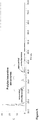
- Figure 6 demonstrates how antennary fucosylation prevents digestion of glcNAc by hexosaminidase.
- the present disclosure provides methods involving steps of obtaining an N- glycan preparation; digesting N -linked glycans with exoglycosidase enzymes to specifically cleave monosaccharides from the non-reducing ends; and analyzing the cleavage products.
- a glycan refers to a carbohydrate moiety which, in some embodiments, is covalently attached to a glycoprotein.
- Carbohydrate moieties e.g. , oligosaccharide chains
- N-linked oligosaccharide chains are added to glycoproteins in the lumen of the endoplasmic reticulum (see Alberts et al., Molecular Biology of the Cell, 1994 ).
- Carbohydrate moieties are added to the amino group on the side chain of an asparagine residue contained within the target consensus sequence of Asn-X-Ser/Thr, where X may be any amino acid except proline.
- the initial oligosaccharide chain is usually trimmed by specific glycosidase enzymes in the endoplasmic reticulum, resulting in a short, branched core oligosaccharide composed of two N -acetylglucosamine and three mannose residues.
- N -glycans can be subdivided into three distinct groups called “high mannose type,” “hybrid type,” and “complex type,” with a common pentasaccharide core (Manp( ⁇ 1,6)-(Manp( ⁇ 1,3))-Manp( ⁇ 1,4)-GlcpNAc( ⁇ 1,4)- GlcpNAc( ⁇ 1,N)-Asn) occurring in all three groups.
- Modifications to the core include, for example, additional glycosylation, providing a bisecting GlcNAc, attachment of a fucosyl residue on the innermost GlcNAc, and capping with sialic acid (Neu) residues.
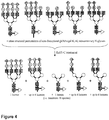
- Exemplary N -glycans are depicted in Figure 1 .
- N -linked glycans are commonly found as components of peptides (i.e ., a glycopeptide) and proteins (i.e ., a glycoprotein).
- glycoproteins are then transported to the Golgi where further processing may take place.
- Trimmed N -linked oligosaccharide chains may be modified by addition of several mannose residues, resulting in a "high-mannose oligosaccharide.”
- one or more monosaccharide units of N -acetylglucosamine may be added to the core mannose subunits to form "complex oligosaccharides.”
- Galactose may be added to N -acetylglucosamine subunits, and sialic acid subunits may be added to galactose subunits, resulting in chains that terminate with any of a sialic acid, a galactose, or an N -acetylglucosamine residue.
- a fucose residue may be added to an N -acetylglucosamine residue of the core oligosaccharide.
- N -linked glycans are involved in a variety of cellular processes.
- N- glycans contribute to proper protein folding in eukaryotic cells.
- Chaperone proteins in the endoplasmic reticulum bind to the three glucose residues present on the N -glycan core. Chaperone proteins typically aid in the folding of the protein to which the glycan is attached. Following proper folding, the three glucose residues are removed, and the glycan can move on to further processing reactions. If the protein fails to fold properly, the three glucose residues are reattached, allowing the protein to re-associate with chaperones. This cycle may repeat several times until a protein reaches it proper conformation. If a protein repeatedly fails to properly fold, it is usually excreted from the endoplasmic reticulum and degraded by cytoplasmic proteases.
- N -glycans contribute to protein folding by steric effects.
- cysteine residues in a peptide may be temporarily blocked from forming disulfide bonds with other cysteine residues, due to the size of a nearby glycan. Presence of an N -linked glycan, therefore, can allow a cell to control which cysteine residues will form disulfide bonds.
- N -glycans can be involved in cell-cell interactions.
- tumor cells frequently produce abnormal N -glycan structures, which can be recognized by the CD337 receptor on natural killer cells as a sign that the cell in question is cancerous.
- N -glycans can be involved in targeting of degradative lysosomal enzymes to the lysosome.
- modification of an N -glycan with a mannose-6-phosphate residue can serve as a signal that the protein to which this glycan is attached should be targeted to the lysosome.
- the present disclosure encompasses the recognition that it is important to determine the glycosylation pattern of N -glycans (e.g ., N -glycans which are conjugated to glycoproteins). Methods described herein may be used to analyze the characteristics (e.g. , composition and/or structure) of any N -glycan.
- a glycan preparation may be obtained by any method available in the art.
- obtaining an N -glycan preparation comprises steps of (1) obtaining a glycoprotein preparation; and (2) obtaining an N -glycan preparation from the glycoprotein preparation.
- obtaining an N -glycan preparation optionally comprises a step of labeling the N -glycan preparation with a detectable label.
- a glycoprotein preparation may be obtained from any source including, but not limited to, therapeutic formulations (e.g., erythropoietin, insulin, human growth hormone, etc. ), commercial biological products (e.g ., those presented in Table 3), and biological samples.
- therapeutic formulations e.g., erythropoietin, insulin, human growth hormone, etc.
- commercial biological products e.g ., those presented in Table 3
- biological samples refers to any solid or fluid sample obtained from, excreted by or secreted by any living cell or organism, including, but not limited to, tissue culture, human or animal tissue, plants, fruits, vegetables, single-celled microorganisms (such as bacteria and yeasts) and multicellular organisms.
- a biological sample can be a biological fluid obtained from, for example, blood, plasma, serum, urine, bile, seminal fluid, cerebrospinal fluid, aqueous or vitreous humor, or any bodily secretion, a transudate, an exudate (e.g. , fluid obtained from an abscess or any other site of infection or inflammation), or fluid obtained from a joint ( e.g., a normal joint or a joint affected by disease such as a rheumatoid arthritis, osteoarthritis, gout or septic arthritis).
- a biological sample can also be, for example, a sample obtained from any organ or tissue (including a biopsy or autopsy specimen), can comprise cells (whether primary cells or cultured cells), medium conditioned by any cell, tissue or organ, tissue culture.
- a glycoprotein preparation may be received by any machine, person, or entity. In some embodiments, a glycoprotein preparation may be received by a machine, which may then perform one or more tests, processes, or refinements of the glycoprotein preparation. In some embodiments, a glycoprotein preparation may be received by a person. In some embodiments, a glycoprotein preparation may be received from an outside entity. In some embodiments, a glycoprotein preparation may be received by a person or business performing characterization services for a second person or business. For example, a business may be operated in which the business receives glycoprotein preparations to be characterized from other businesses or laboratories. A glycoprotein preparation may be preprocessed in any manner. For example, a glycoprotein preparation may be preprocessed to isolate one or more glycoforms.
- an N -glycan preparation is obtained by providing a glycoprotein population and removing N -glycans from the glycoproteins of the glycoprotein population.
- N -glycans are removed from glycoproteins by digestion.
- glycanases to be used in accordance with the present disclosure cleave between GlcNAc-Asn, GlcNAc-GlcNAc, or Man-GlcNAc residues of the core.
- Exemplary enzymes which can be used to remove N -glycans from glycoproteins include, but are not limited to, N- glycanase F and/or N -glycanase-A, O-glycanase and/or Endo H.
- N -glycans are removed from glycoproteins by chemical cleavage.
- hydrazine, sodium borohydride, and/or trifluoromethanesulfonic acid (TFMS) can be used to remove glycans from a glycoprotein.
- N -glycans e.g ., N -glycans that have been removed from a glycoprotein population
- Detectable labels are typically associated with the reducing ends of N -glycans.
- detectable labels are fluorescent moieties.
- Exemplary fluorophores that can be used in accordance with the present disclosure include, but are not limited to, 2-aminobenzoic acid (2AA), 2-aminobenzamide (2AB), and/or 2-aminopurine (2AP).
- fluorophores for use in accordance with the present disclosure are characterized by having reactivity with the reducing end of an oligosaccharide and/or monosaccharide under conditions that do not damage and/or destroy the glycan.
- fluorescent moieties are attached to reducing ends directly.
- direct attachment can be accomplished by direct conjugation by reductive amination.
- fluorescent moieties are attached to reducing ends indirectly.
- indirect attachment can be accomplished by a reactive linker arm.
- detectable labels comprise radioactive moieties or isotopically-labelled molecules.
- radioactive moieties that can be used in accordance with the present disclosure include, but are not limited to, tritium ( 3 H), deuterium ( 2 H), and/or 35 S. Typically, such moieties are directly attached to or otherwise associated with the fluorophore.
- 2AP can be modified such that all hydrogens are deuterated.
- the present disclosure provides improved methods of determining glycosylation patterns of glycoproteins. Such methods generally involve subjecting an N -glycan population to one or more exoglycosidases and analyzing the structure and/or composition of the digestion products.
- exoglycosidases used in accordance with the present disclosure recognize and cleave only one particular type of glycosidic linkage.
- exoglycosidases used in accordance with the present disclosure recognize and cleave more than one particular type of glycosidic linkage.
- Exoglycosidases are enzymes which cleave terminal glycosidic bonds from the non-reducing end of glycans. They are typically highly specific to particular monosaccharide linkages and anomericity ( ⁇ / ⁇ ). In some embodiments, neighboring branching patterns can affect exoglycosidase specificity. Exoglycosidase treatment usually results in glycans of standard antennary linkages being cleaved down to the pentasaccharide core (M3N2) containing 3 mannose and 2 glcNAc residues. However, unusually-modified species (e.g.
- antennary or core fucosylated species are resistant to exoglycosidase treatment and can be chromatographically resolved and quantified relative to the M3N2 pentasaccharide.
- exoglycosidases that can be used in accordance with the present disclosure include, but are not limited to, sialidase, galactosidase, hexosaminidase, fucosidase, and mannosidase.
- Exoglycosidases can be obtained from any source, including commercial sources ( e.g., from QA-Bio, ProZyme, Roche, Sigma, NEB, EMD, Glyko, etc. ).
- exoglycosidases can be isolated and/or purified from a cellular source (e.g. , bacteria, yeast, plant, etc .) .
- exoglycosidases e.g. , sialidases, galactosidases, hexosaminidases, fucosidases, and mannosidases
- exoglycosidases can be divided into multiple categories or "subsets.”
- the different subsets display different abilities to cleave different types of linkages.
- Table 1 presents some exemplary exoglycosidases, their linkage specificities, and the organism from which each is derived.
- Exoglycosidases Enzyme class EC #* Activity Organism ⁇ -Sialidase 3.2.1.18 ⁇ -2/3,6,8 (usually not linkage-specific) Arthrobacter ureafaciens Vibrio cholerae Clostridium perfringens ⁇ -2,3 (NeuAc from oligosaccharides) Salmonella typhimurium Streptococcus pneumonia ⁇ -2/3,6 (NeuAc from complex) Clostridium perfringens ⁇ -Galactosidase 3.2.1.23 ⁇ -1/3,4,6 Gal linkages Bovine testis Xanthamonas species Streptococcus species E.
- an N -glycan population can be digested with any exoglycosidase or any set of exoglycosidases.
- exoglycosidase reactions take place under conditions that are compatible with enzyme activity. For example, pH, temperature, reaction solution components and concentration (e.g., salt, detergent, etc .), and length of reaction time can be optimized in order to achieve a desired level of exoglycosidase activity.
- exoglycosidase reactions take place under neutral or acidic conditions. In some embodiments, exoglycosidase reactions take place under conditions that are substantially neutral. In some embodiments, neutral conditions refer to a pH ranging between approximately 6 and approximately 8. In some embodiments, neutral conditions refer to a pH of approximately 7. In some embodiments, neutral conditions refer to a pH of approximately 6.5. In some embodiments, neutral conditions refer to a pH of approximately 7.5. In some embodiments, neutral conditions refer to a pH of approximately 6. In some embodiments, neutral conditions refer to a pH of approximately 8.
- exoglycosidase reactions take place under conditions that are acidic.
- acidic conditions refer to a pH of less than approximately 7. In some embodiments, acidic conditions refer to a pH ranging between approximately 1 and approximately 7. In some embodiments, acidic conditions refer to a pH ranging between approximately 2 and approximately 7. In some embodiments, acidic conditions refer to a pH ranging between approximately 3 and approximately 7. In some embodiments, acidic conditions refer to a pH ranging between approximately 4 and approximately 7. In some embodiments, acidic conditions refer to a pH ranging between approximately 5 and approximately 7. In some embodiments, acidic conditions refer to a pH ranging between approximately 6 and approximately 7.
- acidic conditions refer to a pH ranging between approximately 2 and approximately 6. In some embodiments, acidic conditions refer to a pH ranging between approximately 3 and approximately 6. In some embodiments, acidic conditions refer to a pH ranging between approximately 4 and approximately 6. In some embodiments, acidic conditions refer to a pH ranging between approximately 5 and approximately 6.
- acidic conditions refer to a pH ranging between approximately 1 and approximately 2. In some embodiments, acidic conditions refer to a pH ranging between approximately 2 and approximately 3. In some embodiments, acidic conditions refer to a pH ranging between approximately 4 and approximately 5.
- acidic conditions refer to a pH of approximately 6.5. In some embodiments, acidic conditions refer to a pH of approximately 6. In some embodiments, acidic conditions refer to a pH of approximately 5.5. In some embodiments, acidic conditions refer to a pH of approximately 5. In some embodiments, acidic conditions refer to a pH of approximately 4.5. In some embodiments, acidic conditions refer to a pH of approximately 4. In some embodiments, acidic conditions refer to a pH of approximately 3.5. In some embodiments, acidic conditions refer to a pH of approximately 3. In some embodiments, acidic conditions refer to a pH of approximately 2.5. In some embodiments, acidic conditions refer to a pH of approximately 2. In some embodiments, acidic conditions refer to a pH of approximately 1.5. In some embodiments, acidic conditions refer to a pH of approximately 1. In some embodiments, acidic conditions refer to a pH of approximately 0.5.
- exoglycosidase reactions take place at pH ranging from approximately 5 to approximately 6. In certain embodiments, exoglycosidase reactions take place at pH of approximately 5.5. In certain embodiments, exoglycosidase reactions take place at pH ranging from approximately 6 to approximately 8.
- exoglycosidase reactions take place at temperatures ranging between approximately 20°C to approximately 45°C, e.g., from approximately 30°C to approximately 40°C. In some embodiments, exoglycosidase reactions take place at temperatures ranging between approximately 25°C to approximately 40°C. In some embodiments, exoglycosidase reactions take place at approximately 20°C, approximately 25°C, approximately 30°C, approximately 35°C, approximately 36°C, approximately 37°C, approximately 38°C, approximately 39°C, approximately 40°C, approximately 42°C, or approximately 45°C. In certain embodiments, exoglycosidase reactions take place at temperatures ranging between approximately 35°C to approximately 40°C. In certain embodiments, exoglycosidase reactions take place at temperatures ranging between approximately 36°C and approximately 38°C. In certain embodiments, exoglycosidase reactions take place at temperatures of approximately 37°C.
- exoglycosidase reactions are performed for lengths of time ranging between approximately 10 minutes to approximately 20 hours. In some embodiments, exoglycosidase reactions are performed for approximately 10 minutes, approximately 30 minutes, approximately 1 hour, approximately 2 hours, approximately 5 hours, approximately 10 hours, approximately 12 hours, approximately 15 hours, approximately 18 hours, approximately 20 hours, approximately 24 hours, approximately 36 hours, or approximately 48 hours. In some embodiments, exoglycosidase reactions are performed overnight.
- exoglycosidase reactions are performed in the presence of detergent, e.g., up to 25% detergent.
- detergents e.g., up to 25% detergent.
- Exemplary detergents that can be utilized in exoglycosidase reactions in accordance with the disclosure include sodium dodecyl sulfate (SDS), sodium lauryl sulfate (SLS), sorbitan fatty acid esters ( e.g., Tween, Span, Myrj, etc.), polyethylene glycol fatty acid esters (e.g., cremophor), Brij, Triton, nonyl phenoxylpolyethoxylethanol (NP-40).
- exoglycosidase reactions are performed in the presence of approximately 0.1%, approximately 0.5%, approximately 1%, approximately 5%, approximately 10%, approximately 15%, approximately 20%, approximately 25%, or more than 25% detergent. In some embodiments, exoglycosidase reactions are performed in the absence of any detergent.
- exoglycosidase reactions are performed in the presence of salt.
- exemplary detergents that can be utilized in exoglycosidase reactions in accordance with the disclosure include, but are not limited to, sodium chloride, calcium chloride, sodium phosphate, sodium acetate, sodium bicarbonate, magnesium chloride, manganese chloride, and/or combinations thereof.
- exoglycosidase reactions are performed in the presence of approximately 1 mM to approximately 500 mM salt.
- exoglycosidase reactions are performed in the presence of approximately 1 mM, approximately 2 mM, approximately 5 mM, approximately 10 mM, approximately 25 mM, approximately 50 mM, approximately 100 mM, approximately 150 mM, approximately 200 mM, approximately 250 mM, approximately 300 mM, approximately 400 mM, approximately or mM, approximately 500 mM salt.
- exoglycosidase reactions are performed in the presence of approximately 100 mM salt.
- exoglycosidase reactions are performed in the absence of any salt.
- N -glycans are digested by subjecting a population of N- glycans to a plurality of exoglycosidases.
- a population of N -glycans may be subjected to 2, 3, 4, 5, 6, 7, 8, 9, 10, 15, or more exoglycosidases.
- a population of N -glycans is digested with two or more exoglycosidases that are all present in substantially equal amounts.
- a population of N -glycans is digested with two or more exoglycosidases that are not all present in substantially equal amounts.
- a population of N -glycans may be digested with exoglycosidases A, B, and C at a ratio of 1:2:1.
- exoglycosidases A, B, and C at a ratio of 1:2:1.
- multiple exoglycosidases are administered simultaneously.
- multiple exoglycosidases are administered sequentially.
- simultaneous digestion with multiple exoglycosidases can be used to analyze glycan structure and/or function.
- simultaneous digestion can be performed in order to determine the presence of particular types of linkages and/or glycan modifications.
- glycan structure shown below:
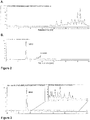
- Simultaneous treatment with galactosidase and hexosaminidase is predicted to leave only the antennae which initially contained terminal sialic acid residues. These sialic acid residues may then optionally be removed, and the resulting glycan mixture analyzed by HPLC, to reveal the profile of mono-, di-, tri-, and tetra-sialyated antennary species that were present in the original mixture. Examples of simultaneous digestion approaches and analyses of such approaches are described in Example 2.
- N -glycans may be digested by subjecting a population of N -glycans to a first exoglycosidase for a first period of time, after which the population of N -glycans is subjected to a second exoglycosidase for a second period of time.
- the first exoglycosidase Prior to treatment with the second exoglycosidase, the first exoglycosidase may optionally be removed and/or inactivated.
- the first exoglycosidase may be inactivated incubating the exoglycosidase at a temperature for a time sufficient to inactivate it.
- the first exoglycosidase may be inactivated by incubating it with an inhibitor that is specific to the exoglycosidase (e.g ., an antibody or other molecule that specifically binds the first exoglycosidase and inhibits its catalytic activity).
- an inhibitor that is specific to the exoglycosidase e.g ., an antibody or other molecule that specifically binds the first exoglycosidase and inhibits its catalytic activity.
- Other methods of inactivating the first exoglycosidase will be known to those of ordinary skill in the art.
- the first exoglycosidase is inactivated by incubating it with a specific inhibitor, it will be appreciated that the presence of the inhibitor should not substantially inhibit the activity of the second exoglycosidase.
- methods for inactivating or removing a first exoglycosidase before addition of a second exoglycosidase include heating the reaction mixture, cooling the reaction mixture, adding organic solvents, adding proteases, and/or combinations thereof.
- the first exoglycosidase is removed from the reaction before addition of a second exoglycosidase, e.g ., by chromatography, solid phase extraction cartridges, molecular weight filters, centrifugation, precipitation, and/or combinations thereof.
- sequential digestion with multiple exoglycosidases reveals information about N -glycan structure and/or composition that is different from information revealed by simultaneous digestion with the same set of exoglycosidases.
- sequential digestion with multiple exoglycosidases reveals information about N -glycan structure and/or composition that is the same information revealed by simultaneous digestion with the same set of exoglycosidases.
- varying the sequence in which multiple exoglycosidases are administered reveals information about N -glycan structure and/or composition.
- subjecting a particular N -glycan to (1) a sialidase, (2) a galactosidase, (3) a hexosaminidase, (4) a fucosidase, and (5) a mannosidase, in that particular order might yield a set of digestion products that is different from the digestion products obtained by subjecting the same N -glycan to (1) a hexosaminidase, (2) mannosidase, (3) sialidase, (4) fucosidase, and (5) a sialidase, in that order.
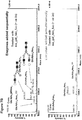
- Performing both series of sequential digests, analyzing the different sets of digestion products obtained by both sequential digests, and comparing the different sets of digestion products may provide information about the structure and/or composition of the N -glycan that would not have been obtained by performing only one of the series of sequential digests and analyzing the digestion products obtained from only one of the series of sequential digests. Examples of sequential digestion approaches and analyses of such approaches are described in Example 3.
- the individual enzymes that constitute a set of enzymes to be used in sequential and/or simultaneous digests are chosen in order to maximize the information that may be obtained by performing digests.
- the treatments shown in Table 2 exemplify selection of enzymatic treatments to identify specific glycan modification on sialyated glycans. Table 2.
- Exemplary Enzymatic Treatments for Identifying Modifications on Sialyated Glycans Examples of glycan modification to be identified Examples of enzymatic treatments applicable for the identification of the selected glycan modification* Polylactosamine Comparison between sequential and simultaneous reactions with sialidase, galactosidase, galactosidase, hexosaminidase without sialidase, and N -acetylhexosaminidase. Antennary fucosylation Comparison between sequential and simultaneous treatments with sialidase, galactosidase, hexosaminidase, and fucosidase.
- Sulfated glycans Comparison between sequential and simultaneous reactions with sialidase, galactosidase, galactosidase, hexosaminidase without sialidase, and N -acetylhexosaminidase.
- Phosphorylated glycans Comparison between treatments ( e.g. , sequential and/or simultaneous) with and without mannosidase.
- Sialic acid linked to GlcNAc Comparison between sequential and simultaneous reactions with sialidase, galactosidase, galactosidase, hexosaminidase without sialidase, and N -acetylhexosaminidase.
- enzymatic treatments for identifying modifications on non-sialyated glycans can be performed as described in Table 2, except that sialidase is omitted from the reactions exemplified in Table 2.
- methods in accordance with the disclosure comprise subjecting a glycan preparation to an exoglycosidase treatment.
- an exoglycosidase treatment once an exoglycosidase treatment has been carried out to completion, the structure and/or identity of cleaved glycans is analyzed.
- a sample may be removed from the glycan preparation during the course of exoglycosidase treatment.
- a plurality of samples, which are separated in time e.g.
- exoglycosidase treatment comprises administration of at least one exoglycosidase
- the step of removing comprises removing at least one sample during the course of administration of at least one exoglycosidase (e.g. , after the exoglycosidase has been added to the glycan preparation but before the exoglycosidase has been inactivated and/or removed from the glycan preparation).
- exoglycosidase treatment comprises sequential administration of at least first and second exoglycosidases (e.g ., first, second, third, fourth, fifth, sixth, seventh, and/or more exoglycosidases), and the step of removing comprises (i) removing at least a first sample after administration of the first exoglycosidase but before administration of the second exoglycosidase; and (ii) removing at least a second sample after administration of the second exoglycosidase.
- the structure and/or identity of cleaved glycans is analyzed in at least one of the removed samples.
- the step of analyzing comprises comparing the structure and/or function of cleaved glycans in one or more of the removed samples to structure and/or function of cleaved glycans in at least one other removed sample. In some embodiments, the step of analyzing comprises comparing the structure and/or function of cleaved glycans in one or more of the removed samples to structure and/or function of cleaved glycans in a reference sample.
- N -glycan structure and composition can be analyzed by any available method.
- N -glycan structure and composition can be analyzed by chromatographic methods, mass spectrometry (MS) methods, chromatographic methods followed by MS, electrophoretic methods, electrophoretic methods followed by MS, nuclear magnetic resonance (NMR) methods, and combinations thereof.
- N -glycan structure and composition can be analyzed by chromatographic methods, including but not limited to, liquid chromatography (LC), high performance liquid chromatography (HPLC), ultra performance liquid chromatography (UPLC), thin layer chromatography (TLC), amide column chromatography, and combinations thereof.
- LC liquid chromatography
- HPLC high performance liquid chromatography
- UPLC ultra performance liquid chromatography
- TLC thin layer chromatography
- amide column chromatography and combinations thereof.
- N -glycan structure and composition can be analyzed by mass spectrometry (MS) and related methods, including but not limited to, tandem MS, LC-MS, LC-MS/MS, matrix assisted laser desorption ionisation mass spectrometry (MALDI-MS), Fourier transform mass spectrometry (FTMS), ion mobility separation with mass spectrometry (IMS-MS), electron transfer dissociation (ETD-MS), and combinations thereof.
- MS mass spectrometry
- MS mass spectrometry
- MALDI-MS matrix assisted laser desorption ionisation mass spectrometry
- FTMS Fourier transform mass spectrometry
- IMS-MS ion mobility separation with mass spectrometry
- ETD-MS electron transfer dissociation
- N -glycan structure and composition can be analyzed by electrophoretic methods, including but not limited to, capillary electrophoresis (CE), CE-MS, gel electrophoresis, agarose gel electrophoresis, acrylamide gel electrophoresis, SDS-polyacrylamide gel electrophoresis (SDS-PAGE) followed by Western blotting using antibodies that recognize specific glycan structures, and combinations thereof.
- electrophoretic methods including but not limited to, capillary electrophoresis (CE), CE-MS, gel electrophoresis, agarose gel electrophoresis, acrylamide gel electrophoresis, SDS-polyacrylamide gel electrophoresis (SDS-PAGE) followed by Western blotting using antibodies that recognize specific glycan structures, and combinations thereof.
- N -glycan structure and composition can be analyzed by nuclear magnetic resonance (NMR) and related methods, including but not limited to, one-dimensional NMR (1D-NMR), two-dimensional NMR (2D-NMR), correlation spectroscopy magnetic-angle spinning NMR (COSY-NMR), total correlated spectroscopy NMR (TOCSY-NMR), heteronuclear single-quantum coherence NMR (HSQC-NMR), heteronuclear multiple quantum coherence (HMQC-NMR), rotational nuclear overhauser effect spectroscopy NMR (ROESY-NMR), nuclear overhauser effect spectroscopy (NOESY-NMR), and combinations thereof.
- NMR nuclear magnetic resonance
- methods described herein allow for detection of N -glycan species that are present at low levels within a population of N -glycans.
- the present methods allow for detection of N -glycan species that are present at levels less than 10%, less than 5%, less than 4%, less than 3%, less than 2%, less than 1.5%, less than 1%, less than 0.75%, less than 0.5%, less than 0.25%, less than 0.1%, less than 0.075%, less than 0.05%, less than 0.025%, or less than 0.01% within a population of N -glycans.
- methods described herein allow for detection of particular linkages that are present at low levels within a population of N -glycans.
- the present methods allow for detection of particular linkages that are present at levels less than 10%, less than 5%, less than 4%, less than 3%, less than 2%, less than 1.5%, less than 1%, less than 0.75%, less than 0.5%, less than 0.25%, less than 0.1%, less than 0.075%, less than 0.05%, less than 0.025%, or less than 0.01% within a population of N -glycans.
- methods described herein allow for detection of relative levels of individual N -glycan species within a population of N -glycans. For example, the area under each peak of a liquid chromatograph can be measured and expressed as a percentage of the total. Such an analysis provides a relative percent amount of each N -glycan species within a population of N -glycans.
- the present disclosure provides methods for analyzing the structure and/or composition of any glycan. To give but one example, the present disclosure provides methods for analyzing the glycosylation pattern of a glycoprotein. The present disclosure encompasses the recognition that determining the glycosylation pattern of a glycoprotein has many potential commercial, industrial, and/or therapeutic applications.
- Methods in accordance with the disclosure can be applied to glycans obtained from a wide variety of sources including, but not limited to, therapeutic formulations (e.g ., erythropoietin, insulin, human growth hormone, etc. ), commercial biological products (e.g. , those presented in Table 3), and biological samples.
- therapeutic formulations e.g ., erythropoietin, insulin, human growth hormone, etc.
- commercial biological products e.g. , those presented in Table 3
- a biological sample may undergo one or more analysis and/or purification steps prior to or after being analyzed according to the present disclosure.
- a biological sample is treated with one or more proteases and/or exoglycosidases (e.g ., so that glycans are released); in some embodiments, glycans in a biological sample are labeled with one or more detectable markers or other agents that may facilitate analysis by, for example, mass spectrometry or NMR. Any of a variety of separation and/or isolation steps may be applied to a biological sample in accordance with the present disclosure.
- Methods of the present disclosure can be utilized to analyze glycans in any of a variety of states including, for instance, free glycans, glycoconjugates (e.g., glycopeptides, glycolipids, proteoglycans, etc.), cell-associated glycans (e.g., nucleus-, cytoplasm-, cell-membrane-associated glycans, etc.); glycans associated with cellular, extracellular, intracellular, and/or subcellular components (e.g., proteins); glycans in extracellular space (e.g., cell culture medium), etc.
- glycoconjugates e.g., glycopeptides, glycolipids, proteoglycans, etc.
- cell-associated glycans e.g., nucleus-, cytoplasm-, cell-membrane-associated glycans, etc.
- Methods of the present disclosure may be used in one or more stages of process development for the production of a therapeutic or other commercially relevant glycoprotein of interest.
- process development stages that can employ methods of the present disclosure include cell selection, clonal selection, media optimization, culture conditions, process conditions, and/or purification procedure.
- process development stages include cell selection, clonal selection, media optimization, culture conditions, process conditions, and/or purification procedure.
- the present disclosure can also be utilized to monitor the extent and/or type of glycosylation occurring in a particular cell culture, thereby allowing adjustment or possibly termination of the culture in order, for example, to achieve a particular desired glycosylation pattern or to avoid development of a particular undesired glycosylation pattern.
- the present disclosure can also be utilized to assess glycosylation characteristics of cells or cell lines that are being considered for production of a particular desired glycoprotein (for example, even before the cells or cell lines have been engineered to produce the glycoprotein, or to produce the glycoprotein at a commercially relevant level).
- the target glycoprotein is a therapeutic glycoprotein, for example having undergone regulatory review in one or more countries, it will often be desirable to monitor cultures to assess the likelihood that they will generate a product with a glycosylation pattern as close to the established glycosylation pattern of the pharmaceutical product as possible, whether or not it is being produced by exactly the same route.
- "close” refers to a glycosylation pattern having at least about a 75%, 80%, 85%, 90%, 95%, 98%, or 99% correlation to the established glycosylation pattern of the pharmaceutical product.
- samples of the production culture are typically taken at multiple time points and are compared with an established standard or with a control culture in order to assess relative glycosylation.
- methods for monitoring production of a glycoprotein may comprise steps of (i) during production of a glycoprotein, removing at least first and second glycan-containing samples from the production system; (ii) subjecting each of the first and second glycan-containing samples to an exoglycosidase procedure, to specifically cleave monosaccharides from the non-reducing ends of N -linked glycans in the glycan-containing samples; and (iii) comparing the cleavage products obtained from the first glycan-containing sample with those obtained from the second glycan-containing sample so that differences are determined and therefore progress of glycoprotein production is monitored.
- methods for monitoring production of a glycoprotein involve removing at least one glycan-containing sample at some point during the exoglycosidase reaction (e.g ., exoglycosidase procedure). In some embodiments, methods for monitoring production of a glycoprotein involve removing at least one glycan-containing sample before the exoglycosidase reaction has gone to completion. In some embodiments, methods for monitoring production of a glycoprotein involve removing at least one glycan-containing sample once the exoglycosidase reaction has gone to completion.
- At least one glycan-containing sample is removed when the exoglycosidase procedure is about 10%, about 20%, about 25%, about 30%, about 40%, about 50% complete, about 60%, about 70%, about 75%, about 80%, about 90%, about 95%, about 99%, almost 100%, substantially 100%, or 100% complete. In some embodiments, at least one glycan-containing sample is removed when the exoglycosidase reaction is almost 100% complete. In some embodiments, at least one glycan-containing sample is removed when the exoglycosidase reaction is 100% complete. In some embodiments, at least one glycan-containing sample is removed before the exoglycosidase reaction is 100% complete.
- glycan-containing samples comprise glycoconjugates (e.g. , glycoproteins).
- at least one glycan-containing sample is removed before 100% of the glycoconjugates have been cleaved.
- at least one glycan-containing sample is removed when 100% of the glycoconjugates have been cleaved.
- at least one glycan-containing sample is removed when the about 10%, about 20%, about 25%, about 30%, about 40%, about 50% complete, about 60%, about 70%, about 75%, about 80%, about 90%, about 95%, about 99%, almost 100%, substantially 100%, or 100% of glycoconjugates have been cleaved.
- At least one glycan-containing sample is removed when 100% of glycoconjugates have been cleaved. In some embodiments, at least one glycan-containing sample is removed before 100% of glycoconjugates have been cleaved.
- glycan-containing samples are removed at regular intervals. In some embodiments, glycan-containing samples are removed at about 30 second, about 1 minute, about 2 minute, about 5 minute, about 10 minute, about 30 minute, about 1 hour, about 2 hour, about 3 hour, about 4 hour, about 5 hour, about 10 hour, about 12 hour, or about 18 hour intervals, or at even longer intervals. In some embodiments, glycan-containing samples are removed at irregular intervals. In some embodiments, glycan-containing samples are removed at 5 hour intervals.
- a desired glycosylation pattern will be more extensive.
- a desired glycosylation pattern shows high (e.g., greater than about 60%, about 65%, about 70%, about 75%, about 80%, about 85%, about 90%, about 95%, about 98%, about 99%, or more) occupancy of glycosylation sites; in some embodiments, a desired glycosylation pattern shows, a high degree of branching (e.g., greater than about 60%, about 65%, about 70%, about 75%, about 80%, about 85%, about 90%, about 95%, about 98%, about 99% or more have tri or tetra-antennary structures).
- a desired glycosylation pattern will be less extensive.
- a desired cell surface glycosylation pattern shows low (e.g., less than about 50%, about 45%, about 40%, about 35%, about 30%, about 25%, about 20%, about 15%, about 15%, about 5%, about 1%, or less) occupancy of glycosylation sites; and/or a low degree of branching (e.g., less than about 20%, about 15%, about 10%, about 5%, about 1% or less have tri or tetra-antennary structures).
- a desired glycosylation pattern will be more extensive in some aspects and less extensive in others. For example, it may be desirable to employ a cell line that tends to produce glycoproteins with long, unbranched oligosaccharide chains. Alternatively, it may be desirable employ a cell line that tends to produce glycoproteins with short, highly branched oligosaccharide chains.
- a desired glycosylation pattern will be enriched for a particular type of glycan structure.
- a desired glycosylation pattern will have low levels (e.g. , less than about 20%, about 15%, about 10%, about 5%, about 1%, or less) of high mannose or hybrid structures, high levels ( e.g. , greater than about 60%, about 65%, about 70%, about 75%, about 80%, about 85%, about 90%, about 95%, about 98%, about 99%, or more) of high mannose structures, high levels (e.g.
- phosphorylated high mannose greater than about 60%, about 65%, about 70%, about 75%, about 80%, about 85%, about 90%, about 95%, about 98%, about 99%, or more; for example at least one per glycoprotein) phosphorylated high mannose, or low levels ( e.g., less than about 20%, about 15%, about 10%, about 5%, about 1%, or less) of phosphorylated high mannose.
- a desired glycosylation pattern will include at least about one sialic acid. In some embodiments, a desired glycosylation pattern will include a high level (e.g., greater than about 60%, about 65%, about 70%, about 75%, about 80%, about 85%, about 90%, about 95%, about 98%, about 99%, or more) of termini that are sialylated.
- a desired glycosylation pattern that includes sialyation will show at least about 85%, about 90%, about 95%, about 98%, about 99%, or more N -acetylneuraminic acid and/or less than about 20%, about 15%, about 10%, about 5%, about 1%, or less N -glycolylneuraminic acid.
- a desired glycosylation pattern shows specificity of branch elongation (e.g ., greater than about 60%, about 65%, about 70%, about 75%, about 80%, about 85%, about 90%, about 95%, about 98%, about 99%, or more of extension is on ⁇ 1,6 mannose branches; or greater than about 60%, about 65%, about 70%, about 75%, about 80%, about 85%, about 90%, about 95%, about 98%, about 99%, or more of extension is on ⁇ 1,3 mannose branches).
- a desired glycosylation pattern will include a low level (e.g., less than about 20%, about 15%, about 10%, about 5%, about 1%, or less) or high level (e.g. , greater than about 60%, about 65%, about 70%, about 75%, about 80%, about 85%, about 90%, about 95%, about 98%, about 99%, or more) of core fucosylation.
- a low level e.g., less than about 20%, about 15%, about 10%, about 5%, about 1%, or less
- high level e.g., greater than about 60%, about 65%, about 70%, about 75%, about 80%, about 85%, about 90%, about 95%, about 98%, about 99%, or more
- a desired glycosylation pattern will include a low level (e.g., less than about 20%, about 15%, about 10%, about 5%, about 1%, or less) or high level (e.g. , greater than about 60%, about 65%, about 70%, about 75%, about 80%, about 85%, about 90%, about 95%, about 98%, about 99%, or more) of a sulfated glycan
- a desired glycosylation pattern will include a low level (e.g., less than about 20%, about 15%, about 10%, about 5%, about 1%, or less) or high level (e.g. , greater than about 60%, about 65%, about 70%, about 75%, about 80%, about 85%, about 90%, about 95%, about 98%, about 99%, or more) of a phosphorylated glycan.
- a low level e.g., less than about 20%, about 15%, about 10%, about 5%, about 1%, or less
- high level e.g. , greater than about 60%, about 65%, about 70%, about 75%, about 80%, about 85%, about 90%, about 95%, about 98%, about 99%, or more
- a desired glycosylation pattern will include a low level (e.g., less than about 20%, about 15%, about 10%, about 5%, about 1%, or less) or high level (e.g. , greater than about 60%, about 65%, about 70%, about 75%, about 80%, about 85%, about 90%, about 95%, about 98%, about 99%, or more) of a sialic acid linked to an N -acetylglucosamine.
- a low level e.g., less than about 20%, about 15%, about 10%, about 5%, about 1%, or less
- high level e.g. , greater than about 60%, about 65%, about 70%, about 75%, about 80%, about 85%, about 90%, about 95%, about 98%, about 99%, or more
- a desired glycosylation pattern will include a low level (e.g., less than about 20%, about 15%, about 10%, about 5%, about 1%, or less) or high level (e.g. , greater than about 60%, about 65%, about 70%, about 75%, about 80%, about 85%, about 90%, about 95%, about 98%, about 99%, or more) of an acetylated glycan.
- a low level e.g., less than about 20%, about 15%, about 10%, about 5%, about 1%, or less
- high level e.g. , greater than about 60%, about 65%, about 70%, about 75%, about 80%, about 85%, about 90%, about 95%, about 98%, about 99%, or more
- the present disclosure may be utilized, for example, to monitor glycosylation at particular stages of development, or under particular growth conditions.
- methods described herein can be used to characterize and/or control or compare the quality of therapeutic products.
- the present methodologies can be used to assess glycosylation in cells producing a therapeutic protein product. Particularly given that glycosylation can often affect the activity, bioavailability, or other characteristics of a therapeutic protein product, methods for assessing cellular glycosylation during production of such a therapeutic protein product are particularly desirable.
- the present disclosure can facilitate real time analysis of glycosylation in production systems for therapeutic proteins.
- Representative therapeutic glycoprotein products whose production and/or quality can be monitored in accordance with the present disclosure include, for example, any of a variety of hematologic agents (including, for instance, erythropoietin, blood-clotting factors, etc. ), interferons, colony stimulating factors, antibodies, enzymes, and hormones.
- glycoprotein products include, for example, those presented in Table 3: Table 3: Exemplary Commercially Available Glycoprotein Products Protein Product Reference Drug interferon gamma-1b Actimmune ® alteplase; tissue plasminogen activator Activase ® /Cathflo ® Recombinant antihemophilic factor Advate human albumin Albutein ® laronidase Aldurazyme ® interferon alfa-N3, human leukocyte derived Alferon N ® human antihemophilic factor Alphanate ® virus-filtered human coagulation factor IX AlphaNine ® SD Alefacept; recombinant, dimeric fusion protein LFA3-Ig Amevive ® bivalirudin Angiomax ® darbepoetin alfa Aranesp TM bevacizumab Avastin TM interferon beta-1a; recombinant Avonex ® coagulation factor IX BeneFix TM Interferon
- the disclosure provides methods in which glycans from different sources or samples are compared with one another.
- multiple samples from the same source are obtained over time, so that changes in glycosylation patterns (and particularly in cell surface glycosylation patterns) are monitored.
- one of the samples is a historical sample or a record of a historical sample.
- one of the samples is a reference sample.
- glycans from different cell culture samples prepared under conditions that differ in one or more selected parameters e.g., cell type, culture type [e.g., continuous feed vs batch feed, etc.], culture conditions [e.g., type of media, presence or concentration of particular component of particular medium(a), osmolarity, pH, temperature, timing or degree of shift in one or more components such as osmolarity, pH, temperature, etc.], culture time, isolation steps, etc.) but are otherwise identical, are compared, so that effects of the selected parameter on N-glycosylation patterns are determined.
- selected parameters e.g., cell type, culture type [e.g., continuous feed vs batch feed, etc.]
- culture conditions e.g., type of media, presence or concentration of particular component of particular medium(a), osmolarity, pH, temperature, timing or degree of shift in one or more components such as osmolarity, pH, temperature, etc.
- culture time, isolation steps, etc. e.g
- glycans from different cell culture samples prepared under conditions that differ in a single selected parameter are compared so that effects of the single selected parameter on glycosylation patterns is determined.
- use of techniques as described herein may facilitate determination of the effects of particular parameters on glycosylation patterns in cells.
- glycans from different batches of a glycoprotein of interest are compared.
- the present disclosure facilitates quality control of glycoprotein preparation.
- some such embodiments facilitate monitoring of progress of a particular culture producing a glycoprotein of interest (e.g., when samples are removed from the culture at different time points and are analyzed and compared to one another).
- multiple samples from the same source are obtained over time, so that changes in glycosylation patterns are monitored.
- glycan-containing samples are removed at about 30 second, about 1 minute, about 2 minute, about 5 minute, about 10 minute, about 30 minute, about 1 hour, about 2 hour, about 3 hour, about 4 hour, about 5 hour, about 10 hour, about 12 hour, or about 18 hour intervals, or at even longer intervals. In some embodiments, glycan-containing samples are removed at irregular intervals. In some embodiments, glycan-containing samples are removed at 5 hour intervals.
- methods in accordance with the disclosure may be used to monitor the glycosylation pattern of glycoproteins during the course of their production by cells.
- production of a glycoprotein may involve steps of (1) culturing cells that produce the glycoprotein, (2) obtaining samples at regular or irregular intervals during the culturing, and (3) analyzing the glycosylation pattern of produced glycoprotein(s) in obtained sample(s).
- such methods may comprise a step of comparing the glycosylation patterns of produced glycoprotein(s) in obtained samples to one another.
- such methods may comprise a step of comparing glycosylation patterns of produced glycoprotein(s) in obtained sample(s) to the glycosylation pattern of a reference sample.
- features of the glycan analysis can be recorded, for example in a quality control record.
- a comparison is with a historical record of a prior, or standard batch and/or with a reference sample of glycoprotein.
- glycans from different batches of a glycoprotein of interest are compared to one another and/or to a reference sample.
- batch-to-batch comparison may comprise steps of (i) providing a first glycan preparation from a first batch of the glycoprotein; (ii) providing a second glycan preparation from a second batch of the glycoprotein; (iii) subjecting each of the first and second glycan preparations to an exoglycosidase procedure (e.g ., sequential and/or simultaneous treatment with 1, 2, 3, 4, 5, 6, 7, or more exoglycosidases), to specifically cleave monosaccharides from the non-reducing ends of N -linked glycans in the glycan preparations; and (iv) comparing the cleavage products obtained from the first glycan preparation with the cleavage products obtained from the second preparation so that consistency of the two batches is assessed.
- exoglycosidase procedure e.g ., sequential and/or simultaneous treatment with 1, 2, 3, 4, 5, 6, 7, or more exoglycosidases
- glycan preparations can be provided by removing at least one N -glycan from at least one glycoprotein from a batch and, optionally, isolating removed N- glycans.
- glycan preparations may be labeled as described herein (e.g., fluorescently and/or radioactively; e.g ., prior to and/or after isolation).
- the present disclosure facilitates quality control of glycoprotein preparation.
- Features of the glycan analysis can be recorded, for example in a quality control record.
- a comparison is with a historical record of a prior or standard batch of glycoprotein.
- a comparison is with a reference glycoprotein sample.
- the present disclosure may be utilized in studies to modify the glycosylation characteristics of a cell, for example to establish a cell line and/or culture conditions with one or more desirable glycosylation characteristics. Such a cell line and/or culture conditions can then be utilized, if desired, for production of a particular target glycoconjugate (e.g ., glycoprotein) for which such glycosylation characteristic(s) is/are expected to be beneficial.
- a particular target glycoconjugate e.g ., glycoprotein
- techniques in accordance with the disclosure are applied to glycans that are present on the surface of cells.
- the analyzed glycans are substantially free of non-cell-surface glycans.
- the analyzed glycans, when present on the cell surface are present in the context of one or more cell surface glycoconjugates (e.g ., glycoproteins or glycolipids).
- the glycosylation pattern of a membrane-bound or transmembrane cell-surface glycoprotein can be determined by (1) liberating the glycoprotein by treatment with one or more proteases; (2) isolating a glycan population by digesting the liberated glycoprotein with glycanase; (3) digesting the glycan population by exoglycosidase digestion according to any of the methods described herein; and (4) analyzing the digestion products using any method available to one of ordinary skill in the art.
- cell surface glycans are analyzed in order to assess glycosylation of one or more target glycoproteins of interest, particularly where such target glycoproteins are not cell surface glycoproteins.
- the present disclosure provides methods of using cell-surface glycans as a readout of or proxy for glycan structures on an expressed glycoprotein of interest. In certain embodiments, such methods include, but are not limited to, post process, batch, screening or "in line" measurements of product quality.
- Such methods can provide for an independent measure of the glycosylation pattern of a produced glycoprotein of interest using a byproduct of the production reaction (e.g., the cells) without requiring the use of destruction of any produced glycoprotein. Furthermore, methods in accordance with the disclosure can avoid the effort required for isolation of product and the potential selection of product glycoforms that may occur during isolation.
- techniques in accordance with the disclosure are applied to glycans that are secreted from cells.
- the analyzed glycans are produced by cells in the context of a glycoconjugate (e.g ., a glycoprotein or glycolipid).
- techniques described herein can be used to detect desirable or undesirable glycans, for example to detect or quantify the presence of one or more contaminants in a product, or to detect or quantify the presence of one or more active or desired species.
- the methods can be used to detect biomarkers indicative of, e.g., a disease state, prior to the appearance of symptoms and/or progression of the disease state to an untreatable or less treatable condition, by detecting one or more specific glycans whose presence or level (whether absolute or relative) may be correlated with a particular disease state (including susceptibility to a particular disease) and/or the change in the concentration of such glycans over time.
- methods described herein facilitate detection of glycans that are present at very low levels in a source (e.g., a biological sample, glycan preparation, etc.).
- a source e.g., a biological sample, glycan preparation, etc.
- glycans comprising between 0.1% and 5%, e.g., between 0.1% and 2%, e.g., between 0.1% and 1% of a glycan preparation. In certain embodiments, it is possible to detect and/or optionally quantify the levels of cell surface glycans at between about 0.1 fmol to about 1 mmol.
- methods described herein allow for detection of particular linkages that are present at low levels within a population of glycans.
- the present methods allow for detection of particular linkages that are present at levels less than 10%, less than 5%, less than 4%, less than 3%, less than 2%, less than 1.5%, less than 1%, less than 0.75%, less than 0.5%, less than 0.25%, less than 0.1%, less than 0.075%, less than 0.05%, less than 0.025%, or less than 0.01% within a population of glycans.
- methods described herein allow for detection of relative levels of individual glycan species within a population of glycans. For example, the area under each peak of a liquid chromatograph can be measured and expressed as a percentage of the total. Such an analysis provides a relative percent amount of each glycan species within a population of glycans.
- glycans are analyzed in accordance with the present disclosure using one or more available methods (to give but a few examples, see Anumula, Anal. Biochem. 350(1):1, 2006 ; Klein et al., Anal. Biochem., 179:162, 1989 ; and/or Townsend, R.R. Carbohydrate Analysis" High Permofrmance Liquid Chromatography and Capillary Electrophoresis., Ed. Z. El Rassi, pp 181-209, 1995 ).
- glycans are characterized using one or more of chromatographic methods, electrophoretic methods, nuclear magnetic resonance methods, and combinations thereof.
- chromatographic methods include, for example, NMR, mass spectrometry, liquid chromatography, 2-dimensional chromatography, SDS-PAGE, antibody staining, lectin staining, monosaccharide quantitation, capillary electrophoresis, fluorophore-assisted carbohydrate electrophoresis (FACE), micellar electrokinetic chromatography (MEKC), exoglycosidase or endoglycosidase treatments, and combinations thereof.
- FACE fluorophore-assisted carbohydrate electrophoresis
- MEKC micellar electrokinetic chromatography
- exoglycosidase or endoglycosidase treatments and combinations thereof.
- glycan structure and composition can be analyzed by chromatographic methods, including but not limited to, liquid chromatography (LC), high performance liquid chromatography (HPLC), ultra performance liquid chromatography (UPLC), thin layer chromatography (TLC), amide column chromatography, and combinations thereof.
- LC liquid chromatography
- HPLC high performance liquid chromatography
- UPLC ultra performance liquid chromatography
- TLC thin layer chromatography
- amide column chromatography amide column chromatography
- glycan structure and composition can be analyzed by mass spectrometry (MS) and related methods, including but not limited to, tandem MS, LC-MS, LC-MS/MS, matrix assisted laser desorption ionisation mass spectrometry (MALDI-MS), Fourier transform mass spectrometry (FTMS), ion mobility separation with mass spectrometry (IMS-MS), electron transfer dissociation (ETD-MS), and combinations thereof.
- MS mass spectrometry
- MS mass spectrometry
- MALDI-MS matrix assisted laser desorption ionisation mass spectrometry
- FTMS Fourier transform mass spectrometry
- IMS-MS ion mobility separation with mass spectrometry
- ETD-MS electron transfer dissociation
- glycan structure and composition can be analyzed by electrophoretic methods, including but not limited to, capillary electrophoresis (CE), CE-MS, gel electrophoresis, agarose gel electrophoresis, acrylamide gel electrophoresis, SDS-polyacrylamide gel electrophoresis (SDS-PAGE) followed by Western blotting using antibodies that recognize specific glycan structures, and combinations thereof.
- electrophoretic methods including but not limited to, capillary electrophoresis (CE), CE-MS, gel electrophoresis, agarose gel electrophoresis, acrylamide gel electrophoresis, SDS-polyacrylamide gel electrophoresis (SDS-PAGE) followed by Western blotting using antibodies that recognize specific glycan structures, and combinations thereof.
- glycan structure and composition can be analyzed by nuclear magnetic resonance (NMR) and related methods, including but not limited to, one-dimensional NMR (1D-NMR), two-dimensional NMR (2D-NMR), correlation spectroscopy magnetic-angle spinning NMR (COSY-NMR), total correlated spectroscopy NMR (TOCSY-NMR), heteronuclear single-quantum coherence NMR (HSQC-NMR), heteronuclear multiple quantum coherence (HMQC-NMR), rotational nuclear overhauser effect spectroscopy NMR (ROESY-NMR), nuclear overhauser effect spectroscopy (NOESY-NMR), and combinations thereof.
- NMR nuclear magnetic resonance
- Example 1 Stepwise Digestion of N-Glycans with Exoglycosidases
- N -glycans were released from a purified exemplary glycoprotein by N -glycanase F, followed by a clean-up step to remove salts, detergents, proteins, and non-glycan material. Proteins were first heat denatured and then treated with an excess of N -glycanase F overnight at 37°C in the presence of SDS. Released glycans were isolated from the salts and enzyme using a graphitized carbon column ( e.g ., EnviCarb). N -glycans were fluorescently labeled on the reducing end ( N -glycan-2AB) and the excess label was removed by an additional clean-up step.
- N -glycans were fluorescently labeled on the reducing end ( N -glycan-2AB) and the excess label was removed by an additional clean-up step.
- the 2-AB label was first dissolved in 30% acetic acid in DMSO solution and sodium cyanoborohydride was added to a final concentration of 1.2 M. About 5-10 ⁇ l of this labeling solution was added to the dried glycans and heated to 65°C for 3 hours to allow labeling to go to completion. Labeled glycans are then isolated from free label and salts by applying the sample to a Glycoclean S cartridge, washing with 96% acetonitrile, and eluting with water.
- Glycan mixtures (0.25 nmol/ ⁇ l - 0.5 nmol/ ⁇ l) were subjected to stepwise treatment with at least two exoglycosidases (1 ⁇ l - 2 ⁇ l of sequence-grade glycosidase per 20 ⁇ l - 40 ⁇ l reaction volume) selected from the group consisting of sialidase, galactosidase, hexosaminidase, and fucosidase. Typically, reactions were performed at pH ⁇ 5.5. After each step of a stepwise analysis, enzyme was inactivated before the next enzyme was added.
- Digestion products were resolved by liquid chromatography (LC) on an amide column which is coupled to mass spectrometry (MS).
- MS mass spectrometry
- the structural identification of glycan peaks was accomplished by matrix assisted laser desorption ionisation mass spectrometry (MALDI-MS). Glycan retention times were compared with those of known standards and with those of a glucose ladder.
- MALDI-MS matrix assisted laser desorption ionisation mass spectrometry
- N -glycans were prepared and digestion products were analyzed as described in Example 1.
- Glycan mixtures (0.25 nmol/ ⁇ l - 0.5 nmol/ ⁇ l) were subjected to simultaneous treatment with at least two exoglycosidases (1 ⁇ - 2 ⁇ l of sequence-grade glycosidase per 20 ⁇ l - 40 ⁇ l reaction volume) selected from the group consisting of sialidase, galactosidase, hexosaminidase, and fucosidase. Typically, reactions were performed at pH ⁇ 5.5.
- N -glycans were simultaneously treated with two or more exoglycosidases, most of the N -glycan structures collapsed to a conserved core (M3N2). Lactosamine extensions are eliminated due to the simultaneous presence of galactosidase and hexosaminidase activities.
- M3N2 conserved core
- Lactosamine extensions are eliminated due to the simultaneous presence of galactosidase and hexosaminidase activities.
- FIG 3 there are some species with LC retention times of 30 - 70 minutes that were resistant to all of the exoglycosidases used.
- the fact that these species are refractory to conventional exoglycosidase treatment indicates that they contain unusual modifications, which can be identified by MS analysis and can be quantified by measuring the peak areas as a percentage of the total.
- Example 3 Determination of the Presence of Lactosamine Groups in an N -glycan Using
- Sequential vs. simultaneous exoglycosidase digestion protocols can be used to obtain information about structure and/or composition of N -glycans in a glycan preparation.
- the presence of lactosamine groups can be determined by comparing the digestion products generated by a sequential and a simultaneous digestion, as outlined in Table 4 for the hypothetical N -glycan structure:
- Rx04 (S) and Rx04 (Q) each represent digestion of the same N- glycan with identical sets of enzymes (broad specificity sialidase, galactosidase, and hexosaminidase). However, simultaneous (S) and sequential (Q) digests generate distinct digestion products. Likewise, Rx05 (S) and Rx05 (Q) each represent digestion of the same N- glycan with identical sets of enzymes (broad specificity sialidase, galactosidase, hexosaminidase, and fucosidase). However, simultaneous (S) and sequential (Q) digests generate distinct digestion products. This example demonstrates one way in which comparing digestion products generated by simultaneous and sequential digests can provide information about glycan structure and/or composition.
- Figure 7 shows how polylactosamine structures can be elucidated by sequential vs. simultaneous digestion.
- the sample contains a glycan population.
- sialidase, galactosidase, and hexosaminidase the majority of the glycans are cleaved down to the Man3Gn2 core structures as indicate by liquid chromatography (LC; Figure 7A ) and mass spectrometry (MS; Figure 7B ).
- LC liquid chromatography
- MS mass spectrometry
- Sequential vs. simultaneous exoglycosidase digestion protocols can be used to obtain information about structure and/or composition of N -glycans in a glycan preparation.
- the presence and/or type of sialic acid linkages can be determined by comparing the digestion products generated by a sequential and a simultaneous digestion, as outlined in Table 5 for the hypothetical N -glycan structure:
- Table 5 presents a group of sialidases, each having a different substrate linkage specificity.
- the present example demonstrates how terminal ⁇ -2,3 sialic acid linkages can be distinguished from ⁇ -2,6-linkages.
- Table 5. Determination of Sialic Acid Linkages in N-glycans Enzyme Rx11 Rx12 S Rx12 Q Rx13 S Rx13 Q Rx14 S or Q Rx15 S Rx15 Q Rx16 S or Q ⁇ -2/3,6,8,9-sialidase --- X X --- --- X --- --- --- --- ⁇ -2/3-sialidase --- --- X X --- --- --- X ⁇ -1/3,4,6-galactosidase --- X X X X X X X X ⁇ -1,4-hexosaminidase --- X X X X --- X - Digestion Products
- Rx12 (S) and Rx12 (Q) each represent digestion of the same N-glycan with identical sets of enzymes ( ⁇ -2/3,6,8,9-sialidase, ⁇ -1/3,4,6-galactosidase, and ⁇ -1,4-hexosaminidase).
- simultaneous (S) and sequential (Q) digests generate distinct digestion products.
- the comparison between the sequential and the simultaneous digestion elucidates polylactosamine structures, and that the 2,6-linked sialic acid is present on the polylactosamine extension, while the 2,3-linked sialic acid is on the arm with only one lactosamine.
- This example demonstrates one way in which comparing digestion products generated by simultaneous and sequential digests can provide information about glycan structure and/or composition.
- treatment Rx15 (Q) cleaves all non-sialyated antennae in a glycan population down to the core trimannosyl glycan.
- Cleavage products comprise mono-, bi-, tri- and tetra-antennary species, which can be chromatographically profiled.
- profiling provides a read-out of the antennary composition of the original glycan mixture.
- profiling provides a read-out of the antennary composition of sialylated branches.
- Figure 4 represents an exemplary N-glycan population that is subjected to the digestion conditions of Rx05 (Q), as shown in Table 5.
- Rx05 Q
- this example shows how sequential treatment can yield a population of digestion products. Digestion products can be analyzed, and their structures and/or compositions can be determined.
- Simultaneous exoglycosidase digestion protocols can be used to obtain information about structure and/or composition of N -glycans in a glycan preparation. For example, digestion with various combinations of exoglycosidases can be used to distinguish arm (antennary) ⁇ -1/3,4 fucosylation from core ⁇ -1,6 fucosylation of a previously-desialyated N -glycan. The effects of each treatment shown in Table 6 are illustrated in the case of the following exemplary glycan structure: Table 6.
- exoglycosidase digestion with different combinations of enzymes generates various digestion products.
- an analysis based only on mass indicates the presence of two fucose residues.
- the location of the two fucose residues can be determined (i.e ., one fucose is on the core and one fucose is on the branch vs. both fucose residues appearing on the branches).
- This example demonstrates one way in which comparing digestion products generated by simultaneous digestion can provide information about glycan structure and/or composition.
- N -linked glycans were released from a model glycoprotein using Peptide: N- Glycosidase F (PNGase-F), yielding a glycan sample.
- PNGase-F is an amidase that cleaves between the innermost GlcNAc and asparagine residues of high mannose, hybrid, and complex oligosaccharides from N -linked glycoproteins ( Maley et al., 1989, Anal. Biochem., 180:195 ).
- PNGase F can hydrolyze nearly all types of N -glycan chains from glycopeptides and/or glycoproteins.
- the resulting glycan sample was purified using activated graphitized carbon solid phase extraction cartridges.
- the glycan mixture was then fluorescently-labeled with 2-benzamide.
- the glycan sample was split into two equal parts, and each part reacted with a set of exoglycosidases (i.e ., sialidase, galactosidase, and N -acetylhexosaminidase) in a simultaneous and sequential fashion, respectively.
- the reaction products were subsequently analyzed by normal phase fluorescent HPLC using an amide column or MALDI-MS. The results of the analysis are presented in Figure 8 (chromatograms) and Figure 9 (MALDI-MS).
- the disclosure includes embodiments in which more than one, or all of the group members are present in, employed in, or otherwise relevant to a given product or process. Furthermore, it is to be understood that the disclosure encompasses all variations, combinations, and permutations in which one or more limitations, elements, clauses, descriptive terms, etc ., from one or more of the listed claims is introduced into another claim. For example, any claim that is dependent on another claim can be modified to include one or more limitations found in any other claim that is dependent on the same base claim.
- any particular embodiment of the present disclosure that falls within the prior art may be explicitly excluded from any one or more of the claims. Since such embodiments are deemed to be known to one of ordinary skill in the art, they may be excluded even if the exclusion is not set forth explicitly herein. Any particular embodiment of the compositions in accordance with the disclosure (e.g ., any exoglycosidase, any glycosidic linkage, any reaction condition, any method of purification, any method of product analysis, etc .) can be excluded from any one or more claims, for any reason, whether or not related to the existence of prior art.
Landscapes
- Engineering & Computer Science (AREA)
- Chemical & Material Sciences (AREA)
- Life Sciences & Earth Sciences (AREA)
- Organic Chemistry (AREA)
- General Engineering & Computer Science (AREA)
- Physics & Mathematics (AREA)
- Zoology (AREA)
- Proteomics, Peptides & Aminoacids (AREA)
- Health & Medical Sciences (AREA)
- Wood Science & Technology (AREA)
- Genetics & Genomics (AREA)
- Thermal Sciences (AREA)
- Microbiology (AREA)
- Immunology (AREA)
- Biophysics (AREA)
- Biochemistry (AREA)
- Bioinformatics & Cheminformatics (AREA)
- Analytical Chemistry (AREA)
- General Health & Medical Sciences (AREA)
- Biotechnology (AREA)
- Theoretical Computer Science (AREA)
- Molecular Biology (AREA)
- Mechanical Engineering (AREA)
- Computer Hardware Design (AREA)
- Microelectronics & Electronic Packaging (AREA)
- Human Computer Interaction (AREA)
- General Physics & Mathematics (AREA)
- Sustainable Development (AREA)
- Measuring Or Testing Involving Enzymes Or Micro-Organisms (AREA)
- Other Investigation Or Analysis Of Materials By Electrical Means (AREA)
- Polysaccharides And Polysaccharide Derivatives (AREA)
Claims (16)
- Verfahren zum Analysieren eines Glycanpräparats, wobei das Verfahren folgende Schritte umfasst:Bereitstellen eines Glycanpräparats;Durchführen eines ersten Exoglycosidase-Vorgangs mit einer ersten Probe des Glycanpräparats, wobei der erste Exoglycosidase-Vorgang die aufeinanderfolgende Behandlung der ersten Probe mit einem Satz von mindestens zwei Exoglycosidasen umfasst, wobei die Exoglycosidasen der Reihe nach an die erste Probe verabreicht werden;Durchführen eines zweiten Exoglycosidase-Vorgangs mit einer zweiten Probe des Glycanpräparats, wobei sich der zweite Exoglycosidase-Vorgang von dem ersten Exoglycosidase-Vorgang unterscheidet und die gleichzeitige Behandlung der zweiten Probe mit demselben Satz von Exoglycosidasen umfasst;Charakterisieren der Spaltprodukte des ersten und des zweiten Exoglycosidase-Vorgangs; undVergleichen der Charakterisierung der Spaltprodukte des ersten Exoglycosidase-Vorgangs mit der Charakterisierung der Spaltprodukte des zweiten Exoglycosidase-Vorgangs.
- Verfahren nach Anspruch 1, wobei der Schritt des Vergleichens das Vergleichen der Charakterisierung der Spaltprodukte des ersten oder des zweiten Exoglycosidase-Vorgangs mit den Spaltprodukten einer Referenzprobe umfasst.
- Verfahren nach Anspruch 1, wobei das Verfahren umfasst:(a) Behandeln der ersten und der zweiten Probe mit einer Exoglycosidase, ausgewählt aus der Gruppe bestehend aus einer Sialidase, einer Galactosidase, einer Hexosaminidase, einer Fucosidase, einer Mannosidase sowie Kombinationen davon; oder(b) Behandeln der ersten und der zweiten Probe mit mindestens zwei Exoglycosidasen, ausgewählt aus der Gruppe bestehend aus einer Sialidase, einer Galactosidase, einer Hexosaminidase, einer Fucosidase, einer Mannosidase sowie Kombinationen davon.
- Verfahren nach Anspruch 1, wobei mindestens ein Spaltprodukt ein sulfatiertes Glycan, ein phosphoryliertes Glycan, eine mit einem N-Acetylglucosamin verknüpfte Sialinsäure, ein acetyliertes Glycan, eine Antennen-Fucosylierung, eine Lactosamin-Extension oder einen Pentasaccharid-Kern umfassend drei Mannose- und 2 N-Acetylglucosaminreste umfasst.
- Verfahren nach Anspruch 1, wobei der Schritt des Bereitstellens eines Glycanpräparats Folgendes umfasst:a) Bereitstellen einer Mehrzahl von Glycoproteinen, wobei jedes Glycoprotein mindestens ein N-Glycan umfasst, wobei das N-Glycan mit einem Glycoprotein der Mehrzahl verknüpft ist;b) Entfernen von mindestens einem N-Glycan von mindestens einem Glycoprotein;c) gegebenenfalls Isolieren der entfernten N-Glycane.
- Verfahren nach Anspruch 1, wobei der Schritt des Charakterisierens das Durchführen eines Vorgangs, ausgewählt aus der Gruppe bestehend aus chromatographischen Verfahren, Flüssigkeitschromatographie (LC), Hochdruckflüssigkeitschromatographie (HPLC), Ultra Performance Liquid Chromatographie (UPLC), Dünnschichtchromatographie (TLC), Amid-Säulenchromatographie, Massenspektrometrie (MS), Tandem-MS, LC-MS, LC-MS/MS, Matrix Assisted Laser Desorption Ionisation Mass Spectrometry (MALDI-MS), Fourier-Transform-Massenspektrometrie (FTMS), Ionenmobilitätstrennung mittels Massenspektrometrie (IMS-MS), Elektronentransferdissoziation (ETD-MS), elektrophoretischen Verfahren, Kapillarelektrophorese (KE), KE-MS, Gelelektrophorese, Agarose-Gelelektrophorese, Acrylamid-Gelelektrophorese, SDS-Polyacrylamid-Gelelektrophorese (SDS-PAGE) und anschließendem Western-Blotting unter Verwendung von Antikörpern, die spezifische Glycanstrukturen erkennen, magnetischer Kernresonanz (NMR), eindimensionaler NMR (1D-NMR), zweidimensionaler NMR (2D-NMR), Correlation Spectroscopy Magnetic-Angle Spinning NMR (COSY-NMR), Total Correlated Spectroscopy NMR (TOCSY-NMR), Heteronuclear Single Quantum Coherence NMR (HSQC-NMR), Heteronuclear Multiple Quantum Coherence (HMQC-NMR), Rotational Nuclear Overhauser Effect Spectroscopy NMR (ROESY-NMR), Nuclear Overhauser Effect Spectroscopy (NOESY-NMR) und Kombinationen davon, mit den Spaltprodukten umfasst.
- Verfahren nach Anspruch 1, wobei es sich bei dem Glycanpräparat um ein N-Glycanpräparat handelt und das Verfahren weiterhin umfasst: Auswerten des Vorhandenseins von Modifikationen in dem N-Glycanpräparat, ausgewählt aus der Gruppe bestehend aus Phosphorylierung, Sulfatierung, Acetylierung, Lactosamin-Extensionen und Antennen-Fucosylierung.
- Verfahren zum Charakterisieren einer Mehrzahl von mit Protein verknüpften N-Glycanen, das Folgendes umfasst:a) Bereitstellen einer Mehrzahl von Glycoproteinen, wobei jedes Glycoprotein mindestens ein N-Glycan umfasst, wobei das N-Glycan mit einem Glycoprotein der Mehrzahl verknüpft ist; wobei sich das Glycosylierungsmuster von mindestens einem Mitglied der Mehrzahl von dem Glycosylierungsmuster von mindestens einem anderen Mitglied der Mehrzahl unterscheidet;b) Entfernen von mindestens zwei N-Glycanen von mindestens einem Glycoprotein;c) gegebenenfalls Isolieren der entfernten N-Glycane;d) Spalten von mindestens einer terminalen glycosidischen Bindung vom nicht-reduzierenden Ende eines zuerst entfernten N-Glycans durch Durchführen einer aufeinanderfolgenden Behandlung an dem ersten entfernten N-Glycan mit einem Satz von mindestens zwei Exoglycosidase-Enzymen, wodurch man zu einer Mehrzahl von Spaltprodukten gelangt, wobei die Exoglycosidase-Enzyme der Reihe nach an das zuerst entfernte N-Glycan verabreicht werden;e) Spalten von mindestens einer terminalen glycosidischen Bindung vom nicht-reduzierenden Ende eines zweiten entfernten N-Glycans durch Durchführen einer gleichzeitigen Behandlung mit demselben Satz von Exoglycosidase-Enzymen an dem zweiten entfernten N-Glycan, wodurch man zu einer Mehrzahl von Spaltprodukten gelangt;f) Charakterisieren der von dem ersten entfernten N-Glycan erhaltenen Spaltprodukte mit den von dem zweiten entfernten N-Glycan erhaltenen Spaltprodukten; undg) gegebenenfalls Vergleichen der Charakterisierung der Spaltprodukte mit einer Referenzprobe.
- Verfahren zum Vergleichen von Chargen eines Glycoproteins, wobei das Verfahren folgende Schritte umfasst:Bereitstellen eines ersten Glycanpräparats von einer ersten Charge des Glycoproteins;Bereitstellen eines zweiten Glycanpräparats von einer zweiten Charge des Glycoproteins; Durchführen eines ersten Exoglycosidase-Vorgangs mit einem ersten Glycanpräparat, um spezifisch Monosaccharide von den nicht-reduzierenden Enden der über N verknüpften Glycane in dem ersten Glycanpräparat abzuspalten, wobei der erste Exoglycosidase-Vorgang die aufeinanderfolgende Behandlung des ersten Glycanpräparats mit einem Satz von mindestens zwei Exoglycosidasen umfasst, wobei die Exoglycosidasen der Reihe nach an das erste Glycanpräparat verabreicht werden;Durchführen eines zweiten Exoglycosidase-Vorgangs mit dem zweiten Glycanpräparat, um spezifisch Monosaccharide von den nicht-reduzierenden Enden von über N verknüpften Glycanen in dem zweiten Glycanpräparat abzuspalten, wobei sich der zweite Exoglycosidase-Vorgang von dem ersten Exoglycosidase-Vorgang unterscheidet und die gleichzeitige Behandlung des zweiten Glycanpräparats mit demselben Satz von Exoglycosidasen umfasst; undVergleichen der von dem ersten Glycanpräparat erhaltenen Spaltprodukte mit den von dem zweiten Präparat erhaltenen Spaltprodukten, so dass die Übereinstimmung der beiden Chargen beurteilt wird.
- Verfahren nach Anspruch 9, wobei das erste und das zweite Glycanpräparat mit mindestens einer Exoglycosidase, ausgewählt aus der Gruppe bestehend aus einer Sialidase, einer Galactosidase, einer Hexosaminidase, einer Fucosidase, einer Mannosidase und Kombinationen davon, behandelt werden.
- Verfahren nach Anspruch 9, wobei mindestens ein Spaltprodukt eine Glycoform, ausgewählt aus der Gruppe bestehend auseinem Pentasaccharid-Kern, umfassend drei Mannose- und 2 N-Acetylglucosaminreste;einer Antennen-Fucosylierung;einer Lactosamin-Extension;einem sulfatierten Glycan;einem phosphorylierten Glycan;einer mit einem N-Acetylglucosamin verknüpften Sialinsäure; undeinem acetylierten Glycan, umfasst.
- Verfahren nach Anspruch 9, wobei das Verfahren Folgendes umfasst:a) Entfernen von mindestens einem N-Glycan von mindestens einem Glycoprotein von der ersten oder zweiten Charge; undb) gegebenenfalls Isolieren des mindestens einen entfernten N-Glycans.
- Verfahren zum Überwachen der Produktion eines Glycoproteins, wobei das Verfahren die folgenden Schritte umfasst:Entfernen von mindestens ersten und zweiten glycanhaltigen Proben aus dem Produktionssystem während der Produktion eines Glycoproteins;Durchführen eines ersten Exoglycosidase-Vorgangs mit der ersten glycanhaltigen Probe, um spezifisch Monosaccharide von den nicht-reduzierenden Enden von über N verknüpften Glycanen in der ersten glycanhaltigen Probe abzuspalten, wobei der erste Exoglycosidase-Vorgang die aufeinanderfolgende Behandlung der ersten glycanhaltigen Probe mit einem Satz von mindestens zwei Exoglycosidasen umfasst, wobei die Exoglycosidasen der Reihe nach an die erste glycanhaltige Probe verabreicht werden;Durchführen eines zweiten Exoglycosidase-Vorgangs mit der zweiten glycanhaltigen Probe, um spezifisch Monosaccharide von den nicht-reduzierenden Enden von über N verknüpften Glycanen in der zweiten glycanhaltigen Probe abzuspalten, wobei sich der zweite Exoglycosidase-Vorgang von dem ersten Exoglycosidase-Vorgang unterscheidet und die gleichzeitige Behandlung der zweiten glycanhaltigen Probe mit demselben Satz von Exoglycosidasen umfasst; undVergleichen der von der ersten glycanhaltigen Probe erhaltenen Spaltprodukte mit den von der zweiten glycanhaltigen Probe erhaltenen Spaltprodukten, so dass Unterschiede bestimmt werden und damit das Voranschreiten der Glycoproteinproduktion verfolgt wird.
- Verfahren nach Anspruch 13, wobei mindestens eine glycanhaltige Probe entfernt wird, wenn der Exoglycosidase-Vorgang ungefähr 10% vollständig ist.
- Verfahren nach Anspruch 13, wobei mindestens eine glycanhaltige Probe entfernt wird, bevor der Exoglycosidase-Vorgang 100% vollständig ist.
- Verfahren nach Anspruch 13, wobei mindestens eine glycanhaltige Probe entfernt wird, bevor die Glycane zu 100% gespalten sind.
Applications Claiming Priority (2)
| Application Number | Priority Date | Filing Date | Title |
|---|---|---|---|
| US92368807P | 2007-04-16 | 2007-04-16 | |
| PCT/US2008/060343 WO2008130926A2 (en) | 2007-04-16 | 2008-04-15 | Characterization of n-glycans using exoglycosidases |
Publications (2)
| Publication Number | Publication Date |
|---|---|
| EP2135094A2 EP2135094A2 (de) | 2009-12-23 |
| EP2135094B1 true EP2135094B1 (de) | 2017-03-08 |
Family
ID=39590692
Family Applications (1)
| Application Number | Title | Priority Date | Filing Date |
|---|---|---|---|
| EP08745865.9A Not-in-force EP2135094B1 (de) | 2007-04-16 | 2008-04-15 | Kennzeichnung von n-glycanen mithilfe von exoglycosidasen |
Country Status (10)
| Country | Link |
|---|---|
| US (2) | US8361705B2 (de) |
| EP (1) | EP2135094B1 (de) |
| JP (1) | JP5552421B2 (de) |
| CN (1) | CN101657725A (de) |
| AU (1) | AU2008243007A1 (de) |
| BR (1) | BRPI0810065A2 (de) |
| CA (1) | CA2682695A1 (de) |
| ES (1) | ES2626080T3 (de) |
| RU (1) | RU2475759C2 (de) |
| WO (1) | WO2008130926A2 (de) |
Families Citing this family (49)
| Publication number | Priority date | Publication date | Assignee | Title |
|---|---|---|---|---|
| ES2626080T3 (es) | 2007-04-16 | 2017-07-21 | Momenta Pharmaceuticals, Inc. | Caracterización de N-glicanos utilizando exoglicosidasas |
| BRPI0810472A2 (pt) | 2007-04-16 | 2014-11-11 | Momenta Pharmaceuticals Inc | Métodos relacionados à glicosilação da superfície celular |
| US20100113294A1 (en) * | 2007-04-16 | 2010-05-06 | Momenta Pharmaceuticals, Inc. | Defined glycoprotein products and related methods |
| WO2010071824A2 (en) | 2008-12-19 | 2010-06-24 | Momenta Pharmaceuticals, Inc. | Methods related to modified glycans |
| NZ593816A (en) | 2009-01-22 | 2012-11-30 | Momenta Pharmaceuticals Inc | Galactose-alpha-1, 3-galactose-containing n-glycans in glycoprotein products derived from cho cells |
| US20100190146A1 (en) * | 2009-01-29 | 2010-07-29 | Bynum Magdalena A | Microfluidic Glycan Analysis |
| US8655600B2 (en) * | 2009-04-15 | 2014-02-18 | Micromass Uk Limited | Method and system of estimating the cross-sectional area of a molecule for use in the prediction of ion mobility |
| EP2499245B1 (de) | 2009-11-11 | 2016-09-14 | Momenta Pharmaceuticals, Inc. | Glycosyltransferase aus dem chinesischen hamster und entsprechende verfahren |
| WO2011069056A2 (en) | 2009-12-04 | 2011-06-09 | Momenta Pharmaceuticals, Inc. | Antennary fucosylation in glycoproteins from cho cells |
| CA2794697A1 (en) | 2010-04-07 | 2011-10-13 | Momenta Pharmaceuticals, Inc. | High mannose glycans |
| US9170249B2 (en) | 2011-03-12 | 2015-10-27 | Momenta Pharmaceuticals, Inc. | N-acetylhexosamine-containing N-glycans in glycoprotein products |
| US9062106B2 (en) | 2011-04-27 | 2015-06-23 | Abbvie Inc. | Methods for controlling the galactosylation profile of recombinantly-expressed proteins |
| JP6111387B2 (ja) * | 2012-04-13 | 2017-04-12 | 日本電子株式会社 | Nmr測定方法 |
| WO2013158273A1 (en) | 2012-04-20 | 2013-10-24 | Abbvie Inc. | Methods to modulate c-terminal lysine variant distribution |
| US9067990B2 (en) | 2013-03-14 | 2015-06-30 | Abbvie, Inc. | Protein purification using displacement chromatography |
| WO2013158279A1 (en) | 2012-04-20 | 2013-10-24 | Abbvie Inc. | Protein purification methods to reduce acidic species |
| US20150140608A1 (en) * | 2012-06-01 | 2015-05-21 | Momenta Pharmaceuticals, Inc. | Methods related to omalizumab |
| EP2856159A4 (de) | 2012-06-01 | 2016-04-13 | Momenta Pharmaceuticals Inc | Verfahren im zusammenhang mit denosumab |
| EP2877589B1 (de) | 2012-07-26 | 2024-03-06 | Momenta Pharmaceuticals, Inc. | Glykoproteine mit entzündungshemmenden eigenschaften |
| US9512214B2 (en) | 2012-09-02 | 2016-12-06 | Abbvie, Inc. | Methods to control protein heterogeneity |
| SG11201507230PA (en) | 2013-03-12 | 2015-10-29 | Abbvie Inc | Human antibodies that bind human tnf-alpha and methods of preparing the same |
| WO2014151878A2 (en) | 2013-03-14 | 2014-09-25 | Abbvie Inc. | Methods for modulating protein glycosylation profiles of recombinant protein therapeutics using monosaccharides and oligosacharides |
| US8956830B2 (en) | 2013-03-14 | 2015-02-17 | Momenta Pharmaceuticals, Inc. | Methods of cell culture |
| US9217168B2 (en) | 2013-03-14 | 2015-12-22 | Momenta Pharmaceuticals, Inc. | Methods of cell culture |
| US9017687B1 (en) | 2013-10-18 | 2015-04-28 | Abbvie, Inc. | Low acidic species compositions and methods for producing and using the same using displacement chromatography |
| EP2855533A4 (de) | 2013-03-15 | 2015-11-25 | Momenta Pharmaceuticals Inc | Verfahren in zusammenhang mit ctla4-fc-fusionsproteinen |
| EP2991666B1 (de) | 2013-05-02 | 2020-03-25 | Momenta Pharmaceuticals, Inc. | Sialylierte glycoproteine |
| US10464996B2 (en) | 2013-05-13 | 2019-11-05 | Momenta Pharmaceuticals, Inc. | Methods for the treatment of neurodegeneration |
| ES2875327T3 (es) * | 2013-09-10 | 2021-11-10 | Chr Hansen Hmo Gmbh | Producción de oligosacáridos |
| EP3052640A2 (de) | 2013-10-04 | 2016-08-10 | AbbVie Inc. | Verwendung von metallionen zur modulation von proteinglykosylierungsprofilen rekombinanter proteine |
| WO2015057622A1 (en) | 2013-10-16 | 2015-04-23 | Momenta Pharmaceuticals, Inc. | Sialylated glycoproteins |
| US9181337B2 (en) | 2013-10-18 | 2015-11-10 | Abbvie, Inc. | Modulated lysine variant species compositions and methods for producing and using the same |
| US9085618B2 (en) | 2013-10-18 | 2015-07-21 | Abbvie, Inc. | Low acidic species compositions and methods for producing and using the same |
| WO2015073884A2 (en) | 2013-11-15 | 2015-05-21 | Abbvie, Inc. | Glycoengineered binding protein compositions |
| CN104677971B (zh) * | 2013-11-26 | 2017-12-26 | 杭州九源基因工程有限公司 | 一种epo突变体的毛细管电泳检测方法 |
| EP4310503A3 (de) | 2015-12-30 | 2024-03-20 | Momenta Pharmaceuticals, Inc. | Verfahren im zusammenhang mit biologika |
| CN105651853B (zh) * | 2016-01-21 | 2018-08-07 | 江南大学 | 一种亚细胞结构的特征性n-连接糖链及其应用 |
| CN110709700A (zh) | 2017-04-14 | 2020-01-17 | 朱诺治疗学股份有限公司 | 评估细胞表面糖基化的方法 |
| CN109100410B (zh) * | 2017-06-20 | 2020-11-13 | 江苏先思达生物科技有限公司 | 肝硬化的血清糖蛋白n-糖组图谱模型的建立方法 |
| CN107449650B (zh) * | 2017-06-28 | 2020-07-31 | 华中科技大学鄂州工业技术研究院 | 基于maldi-ms及稳定同位素标记n聚糖快速定量分析方法及应用 |
| US20200246792A1 (en) * | 2017-09-28 | 2020-08-06 | Charm Sciences, Inc. | Single unit assay device, method, and assembly |
| CN108982737B (zh) * | 2018-08-07 | 2021-06-22 | 中国人民解放军军事科学院军事医学研究院 | 一种规模化的核心岩藻糖基化修饰位点占有率定量方法 |
| JP7571010B2 (ja) | 2018-09-06 | 2024-10-22 | モメンタ ファーマシューティカルズ インコーポレイテッド | 連続細胞培養の方法 |
| BR112021006852A2 (pt) | 2018-10-11 | 2021-08-17 | Momenta Pharmaceuticals, Inc. | tratamento com composições de igg altamente sialilada |
| AU2019419372B2 (en) | 2018-12-31 | 2026-03-26 | Momenta Pharmaceuticals, Inc. | Methods of producing ustekinumab |
| JP7348675B2 (ja) * | 2019-05-21 | 2023-09-21 | 高麗大学校産学協力団 | α-及びβ-1,4-グリコシド結合を全て切断する酵素の用途 |
| CN110376235B (zh) * | 2019-07-18 | 2020-09-15 | 浙江大学 | 基于核磁共振技术的三尖杉宁碱的空间相关谱测试方法 |
| HUP2100356A1 (hu) * | 2021-10-14 | 2023-09-28 | Pannon Egyetem | Jelölt exoglikozidáz enzimek és a glikán szekvenálás megközelítése azok immobilizációjával |
| CN113960232B (zh) * | 2021-10-28 | 2024-02-20 | 苏州大学 | 一种基于唾液特异性岩藻糖基化结构糖谱及其检测方法和应用 |
Family Cites Families (5)
| Publication number | Priority date | Publication date | Assignee | Title |
|---|---|---|---|---|
| CN100347306C (zh) * | 2001-10-29 | 2007-11-07 | 克鲁塞尔荷兰公司 | 生产具有预定的翻译后修饰的蛋白质的方法和手段 |
| US20060057638A1 (en) * | 2004-04-15 | 2006-03-16 | Massachusetts Institute Of Technology | Methods and products related to the improved analysis of carbohydrates |
| US20060127950A1 (en) * | 2004-04-15 | 2006-06-15 | Massachusetts Institute Of Technology | Methods and products related to the improved analysis of carbohydrates |
| ES2337704T3 (es) * | 2005-04-26 | 2010-04-28 | National Institute for Bioprocessing Research and Training Limited | Estrategia automatizada de identificacion del perfil de glucosilacion. |
| ES2626080T3 (es) | 2007-04-16 | 2017-07-21 | Momenta Pharmaceuticals, Inc. | Caracterización de N-glicanos utilizando exoglicosidasas |
-
2008
- 2008-04-15 ES ES08745865.9T patent/ES2626080T3/es active Active
- 2008-04-15 AU AU2008243007A patent/AU2008243007A1/en not_active Abandoned
- 2008-04-15 CN CN200880011806A patent/CN101657725A/zh active Pending
- 2008-04-15 BR BRPI0810065-9A patent/BRPI0810065A2/pt not_active Application Discontinuation
- 2008-04-15 CA CA002682695A patent/CA2682695A1/en not_active Abandoned
- 2008-04-15 JP JP2010504186A patent/JP5552421B2/ja not_active Expired - Fee Related
- 2008-04-15 US US12/595,925 patent/US8361705B2/en active Active
- 2008-04-15 RU RU2009141964/15A patent/RU2475759C2/ru not_active IP Right Cessation
- 2008-04-15 WO PCT/US2008/060343 patent/WO2008130926A2/en not_active Ceased
- 2008-04-15 EP EP08745865.9A patent/EP2135094B1/de not_active Not-in-force
-
2012
- 2012-12-19 US US13/720,192 patent/US9029081B2/en active Active
Non-Patent Citations (1)
| Title |
|---|
| None * |
Also Published As
| Publication number | Publication date |
|---|---|
| US8361705B2 (en) | 2013-01-29 |
| WO2008130926A3 (en) | 2008-12-24 |
| JP5552421B2 (ja) | 2014-07-16 |
| RU2009141964A (ru) | 2011-05-27 |
| US20100129843A1 (en) | 2010-05-27 |
| AU2008243007A1 (en) | 2008-10-30 |
| CN101657725A (zh) | 2010-02-24 |
| JP2010527584A (ja) | 2010-08-19 |
| BRPI0810065A2 (pt) | 2020-01-14 |
| CA2682695A1 (en) | 2008-10-30 |
| ES2626080T3 (es) | 2017-07-21 |
| EP2135094A2 (de) | 2009-12-23 |
| WO2008130926A2 (en) | 2008-10-30 |
| US9029081B2 (en) | 2015-05-12 |
| RU2475759C2 (ru) | 2013-02-20 |
| US20130184180A1 (en) | 2013-07-18 |
Similar Documents
| Publication | Publication Date | Title |
|---|---|---|
| US8361705B2 (en) | Characterization of N-glycans using exoglycosidases | |
| EP2358760B1 (de) | Kennzeichnung o-vernetzter glycane | |
| EP2358731B1 (de) | Verfahren bezüglich modifizierter glykane | |
| EP2135081B1 (de) | Verfahren in zusammenhang mit oberflächenglycosylierung | |
| EP2389586B2 (de) | Galactose-alpha-1, 3-galactose enthaltende n-glykane in aus cho-zellen gewonnenen glykoproteinprodukten | |
| EP2135093B1 (de) | Analyse phosphorylierter glycane, glycopeptide oder glycoproteine durch imac | |
| US8043863B2 (en) | MS methods to evaluate glycans | |
| US20100151499A1 (en) | Proteolytic release of glycans | |
| US20110136682A1 (en) | Antennary fucosylation in glycoproteins from cho cells | |
| US20100279269A1 (en) | Characterization of n-glycan mixtures by nuclear magnetic resonance |
Legal Events
| Date | Code | Title | Description |
|---|---|---|---|
| PUAI | Public reference made under article 153(3) epc to a published international application that has entered the european phase |
Free format text: ORIGINAL CODE: 0009012 |
|
| 17P | Request for examination filed |
Effective date: 20090928 |
|
| AK | Designated contracting states |
Kind code of ref document: A2 Designated state(s): AT BE BG CH CY CZ DE DK EE ES FI FR GB GR HR HU IE IS IT LI LT LU LV MC MT NL NO PL PT RO SE SI SK TR |
|
| 17Q | First examination report despatched |
Effective date: 20101019 |
|
| DAX | Request for extension of the european patent (deleted) | ||
| GRAP | Despatch of communication of intention to grant a patent |
Free format text: ORIGINAL CODE: EPIDOSNIGR1 |
|
| INTG | Intention to grant announced |
Effective date: 20161025 |
|
| GRAS | Grant fee paid |
Free format text: ORIGINAL CODE: EPIDOSNIGR3 |
|
| GRAA | (expected) grant |
Free format text: ORIGINAL CODE: 0009210 |
|
| AK | Designated contracting states |
Kind code of ref document: B1 Designated state(s): AT BE BG CH CY CZ DE DK EE ES FI FR GB GR HR HU IE IS IT LI LT LU LV MC MT NL NO PL PT RO SE SI SK TR |
|
| REG | Reference to a national code |
Ref country code: GB Ref legal event code: FG4D |
|
| REG | Reference to a national code |
Ref country code: CH Ref legal event code: EP Ref country code: AT Ref legal event code: REF Ref document number: 874000 Country of ref document: AT Kind code of ref document: T Effective date: 20170315 |
|
| REG | Reference to a national code |
Ref country code: IE Ref legal event code: FG4D |
|
| REG | Reference to a national code |
Ref country code: DE Ref legal event code: R096 Ref document number: 602008049086 Country of ref document: DE |
|
| REG | Reference to a national code |
Ref country code: FR Ref legal event code: PLFP Year of fee payment: 10 |
|
| REG | Reference to a national code |
Ref country code: NL Ref legal event code: FP |
|
| REG | Reference to a national code |
Ref country code: LT Ref legal event code: MG4D |
|
| REG | Reference to a national code |
Ref country code: ES Ref legal event code: FG2A Ref document number: 2626080 Country of ref document: ES Kind code of ref document: T3 Effective date: 20170721 |
|
| PG25 | Lapsed in a contracting state [announced via postgrant information from national office to epo] |
Ref country code: GR Free format text: LAPSE BECAUSE OF FAILURE TO SUBMIT A TRANSLATION OF THE DESCRIPTION OR TO PAY THE FEE WITHIN THE PRESCRIBED TIME-LIMIT Effective date: 20170609 Ref country code: NO Free format text: LAPSE BECAUSE OF FAILURE TO SUBMIT A TRANSLATION OF THE DESCRIPTION OR TO PAY THE FEE WITHIN THE PRESCRIBED TIME-LIMIT Effective date: 20170608 Ref country code: FI Free format text: LAPSE BECAUSE OF FAILURE TO SUBMIT A TRANSLATION OF THE DESCRIPTION OR TO PAY THE FEE WITHIN THE PRESCRIBED TIME-LIMIT Effective date: 20170308 Ref country code: LT Free format text: LAPSE BECAUSE OF FAILURE TO SUBMIT A TRANSLATION OF THE DESCRIPTION OR TO PAY THE FEE WITHIN THE PRESCRIBED TIME-LIMIT Effective date: 20170308 Ref country code: HR Free format text: LAPSE BECAUSE OF FAILURE TO SUBMIT A TRANSLATION OF THE DESCRIPTION OR TO PAY THE FEE WITHIN THE PRESCRIBED TIME-LIMIT Effective date: 20170308 |
|
| REG | Reference to a national code |
Ref country code: AT Ref legal event code: MK05 Ref document number: 874000 Country of ref document: AT Kind code of ref document: T Effective date: 20170308 |
|
| PG25 | Lapsed in a contracting state [announced via postgrant information from national office to epo] |
Ref country code: LV Free format text: LAPSE BECAUSE OF FAILURE TO SUBMIT A TRANSLATION OF THE DESCRIPTION OR TO PAY THE FEE WITHIN THE PRESCRIBED TIME-LIMIT Effective date: 20170308 Ref country code: BG Free format text: LAPSE BECAUSE OF FAILURE TO SUBMIT A TRANSLATION OF THE DESCRIPTION OR TO PAY THE FEE WITHIN THE PRESCRIBED TIME-LIMIT Effective date: 20170608 Ref country code: SE Free format text: LAPSE BECAUSE OF FAILURE TO SUBMIT A TRANSLATION OF THE DESCRIPTION OR TO PAY THE FEE WITHIN THE PRESCRIBED TIME-LIMIT Effective date: 20170308 |
|
| PG25 | Lapsed in a contracting state [announced via postgrant information from national office to epo] |
Ref country code: CZ Free format text: LAPSE BECAUSE OF FAILURE TO SUBMIT A TRANSLATION OF THE DESCRIPTION OR TO PAY THE FEE WITHIN THE PRESCRIBED TIME-LIMIT Effective date: 20170308 Ref country code: EE Free format text: LAPSE BECAUSE OF FAILURE TO SUBMIT A TRANSLATION OF THE DESCRIPTION OR TO PAY THE FEE WITHIN THE PRESCRIBED TIME-LIMIT Effective date: 20170308 Ref country code: SK Free format text: LAPSE BECAUSE OF FAILURE TO SUBMIT A TRANSLATION OF THE DESCRIPTION OR TO PAY THE FEE WITHIN THE PRESCRIBED TIME-LIMIT Effective date: 20170308 Ref country code: RO Free format text: LAPSE BECAUSE OF FAILURE TO SUBMIT A TRANSLATION OF THE DESCRIPTION OR TO PAY THE FEE WITHIN THE PRESCRIBED TIME-LIMIT Effective date: 20170308 Ref country code: AT Free format text: LAPSE BECAUSE OF FAILURE TO SUBMIT A TRANSLATION OF THE DESCRIPTION OR TO PAY THE FEE WITHIN THE PRESCRIBED TIME-LIMIT Effective date: 20170308 |
|
| PG25 | Lapsed in a contracting state [announced via postgrant information from national office to epo] |
Ref country code: PL Free format text: LAPSE BECAUSE OF FAILURE TO SUBMIT A TRANSLATION OF THE DESCRIPTION OR TO PAY THE FEE WITHIN THE PRESCRIBED TIME-LIMIT Effective date: 20170308 Ref country code: PT Free format text: LAPSE BECAUSE OF FAILURE TO SUBMIT A TRANSLATION OF THE DESCRIPTION OR TO PAY THE FEE WITHIN THE PRESCRIBED TIME-LIMIT Effective date: 20170710 |
|
| REG | Reference to a national code |
Ref country code: CH Ref legal event code: PL |
|
| REG | Reference to a national code |
Ref country code: DE Ref legal event code: R097 Ref document number: 602008049086 Country of ref document: DE |
|
| PLBE | No opposition filed within time limit |
Free format text: ORIGINAL CODE: 0009261 |
|
| STAA | Information on the status of an ep patent application or granted ep patent |
Free format text: STATUS: NO OPPOSITION FILED WITHIN TIME LIMIT |
|
| PG25 | Lapsed in a contracting state [announced via postgrant information from national office to epo] |
Ref country code: MC Free format text: LAPSE BECAUSE OF FAILURE TO SUBMIT A TRANSLATION OF THE DESCRIPTION OR TO PAY THE FEE WITHIN THE PRESCRIBED TIME-LIMIT Effective date: 20170308 Ref country code: DK Free format text: LAPSE BECAUSE OF FAILURE TO SUBMIT A TRANSLATION OF THE DESCRIPTION OR TO PAY THE FEE WITHIN THE PRESCRIBED TIME-LIMIT Effective date: 20170308 |
|
| 26N | No opposition filed |
Effective date: 20171211 |
|
| PG25 | Lapsed in a contracting state [announced via postgrant information from national office to epo] |
Ref country code: CH Free format text: LAPSE BECAUSE OF NON-PAYMENT OF DUE FEES Effective date: 20170430 Ref country code: SI Free format text: LAPSE BECAUSE OF FAILURE TO SUBMIT A TRANSLATION OF THE DESCRIPTION OR TO PAY THE FEE WITHIN THE PRESCRIBED TIME-LIMIT Effective date: 20170308 Ref country code: LU Free format text: LAPSE BECAUSE OF NON-PAYMENT OF DUE FEES Effective date: 20170415 Ref country code: LI Free format text: LAPSE BECAUSE OF NON-PAYMENT OF DUE FEES Effective date: 20170430 |
|
| REG | Reference to a national code |
Ref country code: BE Ref legal event code: MM Effective date: 20170430 |
|
| REG | Reference to a national code |
Ref country code: FR Ref legal event code: PLFP Year of fee payment: 11 |
|
| PG25 | Lapsed in a contracting state [announced via postgrant information from national office to epo] |
Ref country code: BE Free format text: LAPSE BECAUSE OF NON-PAYMENT OF DUE FEES Effective date: 20170430 |
|
| PG25 | Lapsed in a contracting state [announced via postgrant information from national office to epo] |
Ref country code: MT Free format text: LAPSE BECAUSE OF NON-PAYMENT OF DUE FEES Effective date: 20170415 |
|
| PGFP | Annual fee paid to national office [announced via postgrant information from national office to epo] |
Ref country code: IS Payment date: 20190319 Year of fee payment: 12 |
|
| PG25 | Lapsed in a contracting state [announced via postgrant information from national office to epo] |
Ref country code: HU Free format text: LAPSE BECAUSE OF FAILURE TO SUBMIT A TRANSLATION OF THE DESCRIPTION OR TO PAY THE FEE WITHIN THE PRESCRIBED TIME-LIMIT; INVALID AB INITIO Effective date: 20080415 |
|
| PGFP | Annual fee paid to national office [announced via postgrant information from national office to epo] |
Ref country code: NL Payment date: 20190426 Year of fee payment: 12 |
|
| PGFP | Annual fee paid to national office [announced via postgrant information from national office to epo] |
Ref country code: IE Payment date: 20190429 Year of fee payment: 12 Ref country code: DE Payment date: 20190429 Year of fee payment: 12 Ref country code: ES Payment date: 20190503 Year of fee payment: 12 Ref country code: IT Payment date: 20190423 Year of fee payment: 12 |
|
| PGFP | Annual fee paid to national office [announced via postgrant information from national office to epo] |
Ref country code: FR Payment date: 20190425 Year of fee payment: 12 |
|
| PG25 | Lapsed in a contracting state [announced via postgrant information from national office to epo] |
Ref country code: CY Free format text: LAPSE BECAUSE OF NON-PAYMENT OF DUE FEES Effective date: 20170308 |
|
| PGFP | Annual fee paid to national office [announced via postgrant information from national office to epo] |
Ref country code: GB Payment date: 20190429 Year of fee payment: 12 |
|
| PG25 | Lapsed in a contracting state [announced via postgrant information from national office to epo] |
Ref country code: TR Free format text: LAPSE BECAUSE OF FAILURE TO SUBMIT A TRANSLATION OF THE DESCRIPTION OR TO PAY THE FEE WITHIN THE PRESCRIBED TIME-LIMIT Effective date: 20170308 |
|
| REG | Reference to a national code |
Ref country code: DE Ref legal event code: R119 Ref document number: 602008049086 Country of ref document: DE |
|
| REG | Reference to a national code |
Ref country code: NL Ref legal event code: MM Effective date: 20200501 |
|
| PG25 | Lapsed in a contracting state [announced via postgrant information from national office to epo] |
Ref country code: DE Free format text: LAPSE BECAUSE OF NON-PAYMENT OF DUE FEES Effective date: 20201103 Ref country code: FR Free format text: LAPSE BECAUSE OF NON-PAYMENT OF DUE FEES Effective date: 20200430 |
|
| GBPC | Gb: european patent ceased through non-payment of renewal fee |
Effective date: 20200415 |
|
| PG25 | Lapsed in a contracting state [announced via postgrant information from national office to epo] |
Ref country code: NL Free format text: LAPSE BECAUSE OF NON-PAYMENT OF DUE FEES Effective date: 20200501 |
|
| PG25 | Lapsed in a contracting state [announced via postgrant information from national office to epo] |
Ref country code: GB Free format text: LAPSE BECAUSE OF NON-PAYMENT OF DUE FEES Effective date: 20200415 Ref country code: IE Free format text: LAPSE BECAUSE OF NON-PAYMENT OF DUE FEES Effective date: 20200415 |
|
| REG | Reference to a national code |
Ref country code: ES Ref legal event code: FD2A Effective date: 20210902 |
|
| PG25 | Lapsed in a contracting state [announced via postgrant information from national office to epo] |
Ref country code: IT Free format text: LAPSE BECAUSE OF NON-PAYMENT OF DUE FEES Effective date: 20200415 |
|
| PG25 | Lapsed in a contracting state [announced via postgrant information from national office to epo] |
Ref country code: ES Free format text: LAPSE BECAUSE OF NON-PAYMENT OF DUE FEES Effective date: 20200416 |
|
| PG25 | Lapsed in a contracting state [announced via postgrant information from national office to epo] |
Ref country code: IS Free format text: LAPSE BECAUSE OF NON-PAYMENT OF DUE FEES Effective date: 20201120 |