EP2114863B1 - Solid forms comprising (-)-o-desmethylvenlafaxine and uses thereof - Google Patents
Solid forms comprising (-)-o-desmethylvenlafaxine and uses thereof Download PDFInfo
- Publication number
- EP2114863B1 EP2114863B1 EP08725968.5A EP08725968A EP2114863B1 EP 2114863 B1 EP2114863 B1 EP 2114863B1 EP 08725968 A EP08725968 A EP 08725968A EP 2114863 B1 EP2114863 B1 EP 2114863B1
- Authority
- EP
- European Patent Office
- Prior art keywords
- desmethylvenlafaxine
- certain embodiments
- crystal
- sample
- hydrochloride salt
- Prior art date
- Legal status (The legal status is an assumption and is not a legal conclusion. Google has not performed a legal analysis and makes no representation as to the accuracy of the status listed.)
- Active
Links
Images





















Classifications
-
- C—CHEMISTRY; METALLURGY
- C07—ORGANIC CHEMISTRY
- C07C—ACYCLIC OR CARBOCYCLIC COMPOUNDS
- C07C215/00—Compounds containing amino and hydroxy groups bound to the same carbon skeleton
- C07C215/46—Compounds containing amino and hydroxy groups bound to the same carbon skeleton having hydroxy groups bound to carbon atoms of at least one six-membered aromatic ring and amino groups bound to acyclic carbon atoms or to carbon atoms of rings other than six-membered aromatic rings of the same carbon skeleton
- C07C215/64—Compounds containing amino and hydroxy groups bound to the same carbon skeleton having hydroxy groups bound to carbon atoms of at least one six-membered aromatic ring and amino groups bound to acyclic carbon atoms or to carbon atoms of rings other than six-membered aromatic rings of the same carbon skeleton with rings other than six-membered aromatic rings being part of the carbon skeleton
-
- A—HUMAN NECESSITIES
- A61—MEDICAL OR VETERINARY SCIENCE; HYGIENE
- A61K—PREPARATIONS FOR MEDICAL, DENTAL OR TOILETRY PURPOSES
- A61K31/00—Medicinal preparations containing organic active ingredients
- A61K31/13—Amines
- A61K31/135—Amines having aromatic rings, e.g. ketamine, nortriptyline
- A61K31/137—Arylalkylamines, e.g. amphetamine, epinephrine, salbutamol, ephedrine or methadone
-
- A—HUMAN NECESSITIES
- A61—MEDICAL OR VETERINARY SCIENCE; HYGIENE
- A61P—SPECIFIC THERAPEUTIC ACTIVITY OF CHEMICAL COMPOUNDS OR MEDICINAL PREPARATIONS
- A61P13/00—Drugs for disorders of the urinary system
- A61P13/10—Drugs for disorders of the urinary system of the bladder
-
- A—HUMAN NECESSITIES
- A61—MEDICAL OR VETERINARY SCIENCE; HYGIENE
- A61P—SPECIFIC THERAPEUTIC ACTIVITY OF CHEMICAL COMPOUNDS OR MEDICINAL PREPARATIONS
- A61P15/00—Drugs for genital or sexual disorders; Contraceptives
-
- A—HUMAN NECESSITIES
- A61—MEDICAL OR VETERINARY SCIENCE; HYGIENE
- A61P—SPECIFIC THERAPEUTIC ACTIVITY OF CHEMICAL COMPOUNDS OR MEDICINAL PREPARATIONS
- A61P15/00—Drugs for genital or sexual disorders; Contraceptives
- A61P15/12—Drugs for genital or sexual disorders; Contraceptives for climacteric disorders
-
- A—HUMAN NECESSITIES
- A61—MEDICAL OR VETERINARY SCIENCE; HYGIENE
- A61P—SPECIFIC THERAPEUTIC ACTIVITY OF CHEMICAL COMPOUNDS OR MEDICINAL PREPARATIONS
- A61P25/00—Drugs for disorders of the nervous system
-
- A—HUMAN NECESSITIES
- A61—MEDICAL OR VETERINARY SCIENCE; HYGIENE
- A61P—SPECIFIC THERAPEUTIC ACTIVITY OF CHEMICAL COMPOUNDS OR MEDICINAL PREPARATIONS
- A61P25/00—Drugs for disorders of the nervous system
- A61P25/04—Centrally acting analgesics, e.g. opioids
-
- A—HUMAN NECESSITIES
- A61—MEDICAL OR VETERINARY SCIENCE; HYGIENE
- A61P—SPECIFIC THERAPEUTIC ACTIVITY OF CHEMICAL COMPOUNDS OR MEDICINAL PREPARATIONS
- A61P25/00—Drugs for disorders of the nervous system
- A61P25/14—Drugs for disorders of the nervous system for treating abnormal movements, e.g. chorea, dyskinesia
-
- A—HUMAN NECESSITIES
- A61—MEDICAL OR VETERINARY SCIENCE; HYGIENE
- A61P—SPECIFIC THERAPEUTIC ACTIVITY OF CHEMICAL COMPOUNDS OR MEDICINAL PREPARATIONS
- A61P25/00—Drugs for disorders of the nervous system
- A61P25/22—Anxiolytics
-
- A—HUMAN NECESSITIES
- A61—MEDICAL OR VETERINARY SCIENCE; HYGIENE
- A61P—SPECIFIC THERAPEUTIC ACTIVITY OF CHEMICAL COMPOUNDS OR MEDICINAL PREPARATIONS
- A61P25/00—Drugs for disorders of the nervous system
- A61P25/24—Antidepressants
-
- A—HUMAN NECESSITIES
- A61—MEDICAL OR VETERINARY SCIENCE; HYGIENE
- A61P—SPECIFIC THERAPEUTIC ACTIVITY OF CHEMICAL COMPOUNDS OR MEDICINAL PREPARATIONS
- A61P29/00—Non-central analgesic, antipyretic or antiinflammatory agents, e.g. antirheumatic agents; Non-steroidal antiinflammatory drugs [NSAID]
-
- C—CHEMISTRY; METALLURGY
- C07—ORGANIC CHEMISTRY
- C07C—ACYCLIC OR CARBOCYCLIC COMPOUNDS
- C07C213/00—Preparation of compounds containing amino and hydroxy, amino and etherified hydroxy or amino and esterified hydroxy groups bound to the same carbon skeleton
- C07C213/10—Separation; Purification; Stabilisation; Use of additives
-
- C—CHEMISTRY; METALLURGY
- C07—ORGANIC CHEMISTRY
- C07B—GENERAL METHODS OF ORGANIC CHEMISTRY; APPARATUS THEREFOR
- C07B2200/00—Indexing scheme relating to specific properties of organic compounds
- C07B2200/07—Optical isomers
-
- C—CHEMISTRY; METALLURGY
- C07—ORGANIC CHEMISTRY
- C07B—GENERAL METHODS OF ORGANIC CHEMISTRY; APPARATUS THEREFOR
- C07B2200/00—Indexing scheme relating to specific properties of organic compounds
- C07B2200/13—Crystalline forms, e.g. polymorphs
-
- C—CHEMISTRY; METALLURGY
- C07—ORGANIC CHEMISTRY
- C07C—ACYCLIC OR CARBOCYCLIC COMPOUNDS
- C07C2601/00—Systems containing only non-condensed rings
- C07C2601/12—Systems containing only non-condensed rings with a six-membered ring
- C07C2601/14—The ring being saturated
Definitions
- Each pharmaceutical compound has an optimal therapeutic blood concentration and a lethal concentration.
- the bioavailability of the compound determines the dosage strength in the drug formulation necessary to obtain the ideal blood level. If the drug can crystallize as two or more crystal forms differing in bioavailability, the optimal dose will depend on the crystal form present in the formulation. Some drugs show a narrow margin between therapeutic and lethal concentrations.
- Chloramphenicol-3-palmitate (CAPP) for example, is a broad-spectrum antibiotic known to crystallize in at least three polymorphic crystal forms and one amorphous form. The most stable form, A, is marketed.
- a solid form comprising a salt or free base of a compound with optimal physical and chemical properties will advance the development of the compound as a pharmaceutical.
- Useful physical and chemical properties include: reproducible preparation, non-hygroscopicity, aqueous solubility, stability to visible and ultraviolet light, low rate of degradation under accelerated stability conditions of temperature and humidity, low rate of isomerization of between isomeric forms, and safety for long-term administration to humans. Crystallinity is often desirable, although in some instances enhanced dissociation profiles may be attained via preparation of an amorphous form.
- the present invention provides a novel solid form in accordance with claim 1, having particular utility in the manufacture of a medicament for use in the treatment, prevention or management of conditions and disorders including, affective disorders such as depression, bipolar and manic disorders, attention deficit disorder, attention deficit disorder with hyperactivity, anxiety disorders, panic disorder, social anxiety disorder, post traumatic stress disorder, premenstrual dysphoric disorder, borderline personality disorder, fibromyalgia, agoraphobia, obsessive compulsive disorder, anorexia and bulimia nervosa, obesity, weight gain, Gilles de la Tourette Syndrome, Shy-Drager syndrome, Alzheimer's disease, Parkinson's disease, epilepsy, narcolepsy, smoking cessation, drug craving, neurally mediated sexual dysfunction, pain, including chronic and neuropathic pain, cerebral function disorders, senile dementia, memory loss, amnesia/amnestic syndrome; disturbances of consciousness, coma, speech disorders, Lennox syndrome, autism, hyperkinetic syndrome, schizophrenia, migraine, obesity and weight
- the present invention provides crystalline salts of (-)-O-desmethylvenlafaxine in particular crystalline hydrochloride salts of (-)-O-desmethylvenlafaxine.
- crystalline hydrochloride salts of (-)-O-desmethylvenlafaxine possess unexpected excellent properties, described in detail below.
- the present invention provides the polymorph of claim 1 of the hydrochloric acid salts of (-)-O-desmethylvenlafaxine.
- the present invention provides hydrates of the hydrochloride salts of (-)-O-desmethylvenlafaxine.
- the present disclosure provides methods of making, isolating and/or characterizing the solid forms of the invention.
- the novel solid form of the invention is useful as active pharmaceutical ingredients for the preparation of formulations for use in animals or humans.
- the present invention encompasses the use of this solid form as a final drug product.
- the solid form of the invention is useful, for example, for the treatment, prevention or management of conditions and disorders listed above.
- solvated solvate refers to a crystal form of a substance which can be prepared by removing the solvent from a solvate.
- the series may be composed of solvates, including hydrates, and desolvated solvate crystal forms of the substance.
- Solvated members of an isostructural family of crystal forms typically contain one or more solvents, including water, in the crystal lattice.
- the solvent or solvents in the crystal lattice may be the solvent or solvents of crystallization used in preparing the crystal form.
- Typical solvents of crystallization include water and all classes of organic and other types of laboratory solvents, including, but not limited to: alcohols, such as methanol, ethanol, n -propanol, isopropanol, n -butanol, sec -butanol, t -butanol, hydroxyphenyl, glycerol, and the like; carbonyl-containing solvents, such as acetone, methyl ethyl ketone, formic acid, acetic acid, ethyl acetate, butyl acetate, N , N -dimethylformamide, and the like; hydrocarbons, such as pentane, hexane, cyclohexane, benzene, toluene, xylenes, and the like; halogenated solvents, such as dichlormethane, chloroform, carbon tetrachloride, and the like; and laboratory solvents containing other heteroatoms
- the terms “about” and “approximately,” when used in connection with a numeric value or range of values which is provided to describe a particular solid form e.g., a specific temperature or temperature range, such as, for example, that describing a melting, dehydration, desolvation or glass transition; a mass change, such as, for example, a mass change as a function of temperature or humidity; a solvent or water content, in terms of, for example, mass or a percentage; or a peak position, such as, for example, in analysis by IR or Raman spectroscopy or XRPD; indicate that the value or range of values may deviate to an extent deemed reasonable to one of ordinary skill in the art while still describing the particular solid form.
- substantially optically pure (-)-O-desmethylvenlafaxine refers to (-)-O-desmethylvenlafaxine that is substantially free of its (+) stereoisomer.
- substantially optically pure (-)-O-desmethylvenlafaxine refers to (-)-O-desmethylvenlafaxine that is substantially free of its (+) stereoisomer.
- the terms “treat,” “treating” and “treatment” refer to the eradication or amelioration of a disease or disorder, or of one or more symptoms associated with the disease or disorder. In certain embodiments, the terms refer to minimizing the spread or worsening of the disease or disorder resulting from the administration of one or more prophylactic or therapeutic agents to a subject with such a disease or disorder. In some embodiments, the terms refer to the administration of a compound provided herein, with or without other additional active agent, after the onset of symptoms of the particular disease.
- treating, preventing or managing obesity or weight gain means reduction of weight, or prevention of or relief from being overweight, gaining weight, or obesity; all of which are usually due to extensive consumption of food.
- the term "treating, preventing or managing incontinence” means prevention of or relief from the symptoms of incontinence including involuntary voiding of feces or urine, and dribbling or leakage or feces or urine which may be due to one or more causes including but not limited to pathology altering sphincter control, loss of cognitive function, overdistention of the bladder, hyper-reflexia and/or involuntary urethral relaxation, weakness of the muscles associated with the bladder or neurologic abnormalities.
- Prodrugs of the compounds are structurally modified forms of the compound that readily undergo chemical changes under physiological conditions to provide the compound. Additionally, prodrugs can be converted to the compound by chemical or biochemical methods in an ex vivo environment. For example, prodrugs can be slowly converted to a compound when placed in a transdermal patch reservoir with a suitable enzyme or chemical reagent. Prodrugs are often useful because, in some situations, they may be easier to administer than the compound, or parent drug. They may, for instance, be bioavailable by oral administration whereas the parent drug is not. The prodrug may also have improved solubility in pharmaceutical compositions over the parent drug.
- the present invention is directed to solid forms comprising stereomerically pure (-)-O-desmethylvenlafaxine and salts thereof, in accordance with claim 1 and compositions comprising the solid form alone or in combination with other active ingredients, its use in the manufacture of a medicament for the treatment, prevention and or management of conditions and disorders including and compositions comprising the solid form its affective disorders such as depression, bipolar and manic disorders, attention deficit disorder, attention deficit disorder with hyperactivity, anxiety disorders, panic disorder, social anxiety disorder, post traumatic stress disorder, premenstrual dysphoric disorder, borderline personality disorder, fibromyalgia, agoraphobia, obsessive compulsive disorder, anorexia and bulimia nervosa, obesity, weight gain, Gilles de la Tourette Syndrome, Shy-Drager syndrome, Alzheimer's disease, Parkinson's disease, epilepsy, narcolepsy, smoking cessation, drug craving, neurally mediated sexual dysfunction, pain, including chronic and neuropathic pain, cerebral function disorders, senile
- the present invention provides a hydrochloride salt of stereomerically pure (-)-O-desmethylvenlafaxine.
- (-)-O-desmethylvenlafaxine has the general formula (I):
- the acid is according to the formula HCl.
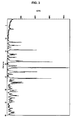
- Form A crystal forms of the invention have major X-ray powder diffraction pattern peaks at about 12.7, 14.5, 19.1, 21.4, 23.0, 25.5, 27.3 °2 ⁇ using Cu K ⁇ radiation.
- the Form A crystal form of the invention has both a water content of about 5.7 % of the total mass of the sample and major X-ray powder diffraction pattern peaks at about 12.7, 14.5, 19.1, 21.4, 23.0, 25.5, 27.3 °2 ⁇ using Cu K ⁇ radiation.
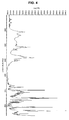
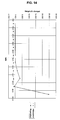
- Form A has an infrared spectrum similar to that of FIG. 4 .
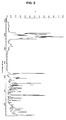
- Form A has a Raman spectrum similar to that of FIG. 5 .
- Form A of the hydrochloride salt of (-)-O-desmethylvenlafaxine can be made by any method of making Form A apparent to those of skill in the art based upon the teachings herein.
- Form A can be prepared by crystallization of the hydrochloride salt of (-)-O-desmethylvenlafaxine from a solvent system containing one or more solvents, such as, but not limited to, water, acetone, acetonitrile, ethanol, isopropanol, methanol, methyl ethyl ketone, methyl t-butyl ether, heptane, hexanes toluene and mixtures thereof.
- Form A may be obtained by crystal form conversion from another crystal or amorphous form of the hydrochloride salt of (-)-O-desmethylvenlafaxine, for instance, via a solvent-mediated and/or water-mediated form conversion process.
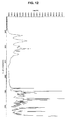
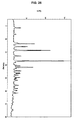
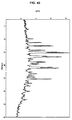
- the Form B crystal form of the hydrochloride salt of (-)-O-desmethylvenlafaxine has an X-ray powder diffraction pattern similar to that of FIG. 11 using Cu K ⁇ radiation.
- Form B crystal forms have major X-ray powder diffraction pattern peaks at about 13.1, 14.7, 18.8, 21.1, 24.2, 26.3, 29.4 °2 ⁇ using Cu K ⁇ radiation.
- Form C a crystal form of the monohydrochloride salt of (-)-O-desmethylvenlafaxine that contains one or more of the solvents ethyl acetate, ethyl ether and water in the crystal lattice.
- ethyl acetate is present in the approximate ratio of 0.2 molar equivalents of ethyl acetate per mole of the hydrochloride salt of (-)-O-desmethylvenlafaxine. In terms of mass, this equates to an ethyl acetate content of approximately 6% of the total mass of a sample of Form C.
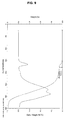
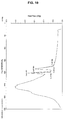
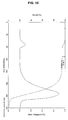
- ethyl ether is present in the approximate ratio of 0.2 molar equivalents of ethyl ether per mole of the hydrochloride salt of (-)-O-desmethylvenlafaxine. In terms of mass, this equates to an ethyl ether content of approximately 5% of the total mass of a sample of Form C. In a particular embodiment, the combined content of ethyl acetate, ethyl ether and water ranges from about 3% to about 8% of the total mass of the sample of Form C. In certain embodiments, Form C has a thermal gravimetric analysis thermogram similar to that of FIG. 15 .
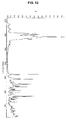
- the Form C crystal form of the hydrochloride salt of (-)-O-desmethylvenlafaxine has an X-ray powder diffraction pattern similar to that of FIG. 17 using Cu K ⁇ radiation.
- Particular Form C crystal forms have major X-ray powder diffraction pattern peaks at about 5.8, 11.7, 14.7, 18.8, 21.0, 21.2 °2 ⁇ using ⁇ radiation.
- the Form C crystal form has major X-ray powder diffraction pattern peaks at one, two, three, four, five or six of the X-ray powder diffraction pattern positions of about 5.8, 11.7, 14.7, 18.8, 21.0, 21.2 °2 ⁇ using Cu K ⁇ radiation.
- the present disclosure provides Form D, a crystal form of the monohydrochloride salt of (-)-O-desmethylvenlafaxine that contains isopropyl alcohol (IPA) and/or water in the crystal lattice.
- IPA isopropyl alcohol
- a sample of the Form D crystal form of the hydrochloride salt of (-)-O-desmethylvenlafaxine has a combined IPA and water content ranging between about 2% and about 8% of the total mass of the sample.
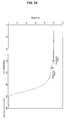
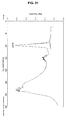
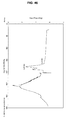
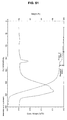
- the Form D crystal form has a thermal gravimetric analysis thermogram similar to that of FIG. 21 .
- Form D when examined by thermal gravimetric analysis according to the methods described herein, Form D has a weight loss corresponding to about 5.6% of the total mass of the sample occurring in the range of about 25 to about 150 °C.
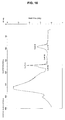
- the Form D crystal form has a differential scanning calorimetry thermogram similar to that of FIG. 22 .
- Form D when examined by differential scanning calorimetry according to the methods described herein, Form D has an endotherm with an onset temperature at about 85 °C.
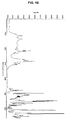
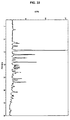
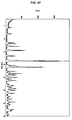
- the Form D crystal form of the hydrochloride salt of (-)-O-desmethylvenlafaxine has an X-ray powder diffraction pattern similar to that of FIG. 23 using Cu K ⁇ radiation.
- the Form D crystal form has both a combined IPA and water content ranging between about 2% and about 8% of the total mass of the sample and major X-ray powder diffraction peaks at one, two, three, four, five, six or seven of the X-ray powder diffraction pattern positions of about 2.4, 5.7, 6.0, 15.9, 19.1, 19.8, 20.3 °2 ⁇ using Cu K ⁇ radiation.
- Form D of the hydrochloride salt of (-)-O-desmethylvenlafaxine can be made by any method of making Form D apparent to those of skill in the art based upon the teachings herein.
- Form D can be prepared by crystallization from solutions of the hydrochloride salt of (-)-desmethylvenlafaxine in IPA.
- the present disclosure provides Form E, a crystal form of the hydrochloride salt of (-)-O-desmethylvenlafaxine IPA disclosure monohydrochloride salt of (-)-O-desmethylvenlafaxine that contains methyl t-butyl ether (MTBE) and/or water in the crystal lattice.
- a sample of the Form E crystal form of the hydrochloride salt of (-)-O-desmethylvenlafaxine has a combined MTBE and water content ranging between about 4% and about 10% of the total mass of the sample.
- Form E when examined by differential scanning calorimetry according to the methods described herein, has an endotherm with an onset temperature at about 93 °C, followed by an endotherm with an onset temperature at about 167 °C.
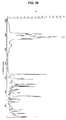
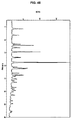
- the Form E crystal form of the hydrochloride salt of (-)-O-desmethylvenlafaxine has an X-ray powder diffraction pattern similar to that of FIG. 26 using Cu K ⁇ radiation.
- Particular Form E crystal forms have major X-ray powder diffraction pattern peaks at about 5.8, 11.9, 13.0, 14.4, 18.5, 20.9 °2 ⁇ using Cu K ⁇ radiation.
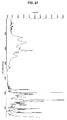
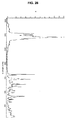
- the Form E crystal form has an infrared spectrum similar to that of FIG. 27 . In certain embodiments, the Form E crystal form has a Raman spectrum similar to that of FIG. 28 . In certain embodiments. Form E has a dynamic vapor sorption isotherm similar to that of FIG. 29 . In certain embodiments, when examined by dynamic vapor sorption according to the methods described herein, Form E exhibits a net gain in mass of about 4.7% when increased from 5% to 95% relative humidity, followed by a loss in mass of about 5.8% when decreased from 95% to 5% relative humidity.
- Form E of the hydrochloride salt of (-)-O-desmethylvenlafaxine can be made by any method of making Form E apparent to those of skill in the art based upon the teachings herein.
- Form E can be prepared by the dissolution of a solid form comprising the hydrochloride salt of (-)-O-desmethylvenlafaxine in a solvent or solvent mixture containing, for example, methanol and water, followed by subsequent crystallization brought about by the addition of an anti-solvent, such as methyl t-butyl ether.
- the present disclosure provides From F, a hydrate crystal about by the addition of an anti-solvent, such as methyl t-butyl ether.
- disclosure form of the monohydrochloride salt of (-)-O-desmethylvenlafaxine in one embodiment, a sample of the Form F crystal form of the hydrochloride salt of (-)-O-desmethylvenlafaxine has a water content ranging between about 4% and about 8% of the total mass of the sample. In certain embodiments, the Form F crystal form has a water content of about 6% of the total mass of the sample, which is equal to about one molar equivalent of water per mole of (-)-O-desmethylvenlafaxine.
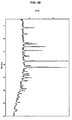
- the Form F crystal form of the hydrochloride salt of (-)-O-desmethylvenlafaxine has an X-ray powder diffraction pattern similar to that of FIG. 32 .
- the Form F crystal form of the hydrochloride salt of (-)-O-desmethylvenlafaxine has an X-ray powder diffraction pattern similar to that of FIG. 33 , which was simulated for Cu K ⁇ radiation using single-crystal X-ray diffraction structural data obtained on Form F.
- Particular Form F crystal forms have major X-ray powder diffraction pattern peaks at about 14.4, 16.0, 17.4, 19.0, 25.5, 26.8 °2 ⁇ using Cu K ⁇ radiation.
- the Form F crystal form has major X-ray powder diffraction peaks at one, two, three, four, five or six of the X-ray powder diffraction pattern positions of about 14.4, 16.0, 17.4, 19.0, 25.5, 26.8 °2 ⁇ using Cu K ⁇ radiation.
- the Form F crystal form has both a water content of about 6% of the total mass of the sample and major X-ray powder diffraction peaks at one, two, three, four, five or six of the X-ray powder diffraction pattern positions of about 14.4, 16.0, 17.4, 19.0, 25.5, 26.8 °2 ⁇ using Cu K ⁇ radiation.
- Form F crystallizes in space group P 2 1 .
- Form F of the hydrochloride salt of (-)-O-desmethylvenlafaxine can be made by any method of making Form F apparent to those of skill in the art based upon the teachings herein.
- Form F can be prepared by the dissolution of a solid form comprising the hydrochloride salt of (-)-O-desmethylvenlafaxine in a solvent mixture containing, for example, methanol and water, followed by subsequent crystallization brought about by the addition of an anti-solvent, such as methyl t-butyl ether.
- the present disclosure provides Form G, a crystal form of the addition of an anti-solvent, such as methyl t-butyl ether.
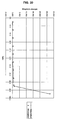
- disclosure monohydrochloride salt of (-)-O-desmethylvenlafaxine In one embodiment, a sample of the Form G crystal form of the hydrochloride salt of (-)-O-desmethylvenlafaxine has a water content ranging between 0% and 6% of the total mass of the sample. In certain embodiments, the Form G crystal form has a water content of about 3% of the total mass of the sample, which is equal to about a half molar equivalent of water per mole of (-)-O-desmethylvenlafaxine. In certain embodiments, Form G has a thermal gravimetric analysis thermogram similar to that of FIG.
- Form G of the hydrochloride salt of (-)-O-desmethylvenlafaxine can be made by any method of making Form G apparent to those of skill in the art based upon the teachings herein.
- Form G is prepared by drying the Form A crystal form of this invention, described above and in the examples below, over a suitable drying agent, such as, for example, P 2 O 5 .
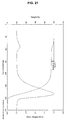
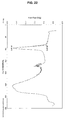
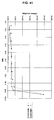
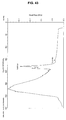
- Form H has a thermal gravimetric analysis thermogram similar to that of FIG. 42 . In certain embodiments, when examined by thermal gravimetric analysis according to the methods described herein, Form H has a weight loss corresponding to about 3.7% of the total mass of the sample occurring between about 25 and about 180 °C. In certain embodiments, the Form H crystal form has a differential scanning calorimetry thermogram similar to that of FIG. 43 . In certain embodiments, when examined by differential scanning calorimetry according to the methods described herein, Form H has an endotherm with a peak temperature at about 180 °C. In certain embodiments, Form H has an additional endotherm with a peak temperature at about 154 °C.
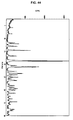
- the Form H crystal form has both an acetone content of about 4% of the total mass of the sample and major X-ray powder diffraction pattern peaks at one, two, three, four, five or six of the X-ray powder diffraction pattern positions of about 12.1, 14.6, 18.7, 21.1, 26.3 °2 ⁇ using Cu K ⁇ radiation.
- the isopropanol content of Form I ranges from about 2% to about 6% of the total mass of the sample of Form I.
- Form I has a thermal gravimetric analysis thermogram similar to that of FIG. 45 .
- Form I when examined by thermal gravimetric analysis according to the methods described herein, Form I has a weight loss corresponding to about 4.2% of the total mass of the sample occurring between about 25 and about 180 °C.
- the Form I crystal form has a differential scanning calorimetry thermogram similar to that of FIG. 46 .
- Form I when examined by differential scanning calorimetry according to the methods described herein, Form I has endotherm with a peak temperature at about 178 °C.
- Form I of the hydrochloride salt of (-)-O-desmethylvenlafaxine can be made by any method of making Form I apparent to those of skill in the art based upon the teachings herein.
- Form I can be obtained by precipitation from a solution of the hydrochloride salt of (-)-O-desmethylvenlafaxine in isopropanol followed by filtration.
- Form I can be obtained by fast evaporation of an isopropanol solution of the hydrochloride salt of (-)-O-desmethylvenlafaxine.
- Form J of the hydrochloride salt of (-)-O-desmethylvenlafaxine can be made by any method of making Form J apparent to those of skill in the art based upon the teachings herein.
- Form J can be obtained by precipitation from a solution of the hydrochloride salt of (-)-O-desmethylvenlafaxine in acetonitrile followed by filtration.
- Form J can be obtained by slurrying Form A of the hydrochloride salt of (-)-O-desmethylvenlafaxine in acetonitrile followed by filtration.
- the present disclosure provides Form K, a crystal form of the monohydrochloride salt of (-)-O-desmethylvenlafaxine that contains the solvent ethanol in the crystal lattice.
- the ethanol content of Form K is less than about 13% of the total mass of the sample of Form K, which is less than about one molar equivalent of ethanol per mole of the hydrochloride salt of (-)-O-desmethylvenlafaxine.
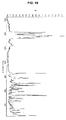
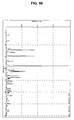
- the Form K crystal form of the hydrochloride salt of (-)-O-desmethylvenlafaxine has an X-ray powder diffraction pattern similar to that of FIG. 49 .
- Form K of the hydrochloride salt of (-)-O-desmethylvenlafaxine can be made by any method of making Form K apparent to those of skill in the art based upon the teachings herein.
- Form K can be obtained by crystallization from a solution of the hydrochloride salt of (-)-O-desmethylvenlafaxine in an ethanol/acetone solvent system.
- a member of isostructural family 1 of crystal forms comprising the hydrochloric acid salt of (-)-O-desmethylvenlafaxine has one, two, three, four, five or six characteristic X-ray powder diffraction pattern peaks at the positions of about 5.8, 13.0, 14.6. 18.7, 21.1 and 26.3 °2 ⁇ using Cu K ⁇ radiation.
- desolvated solvate crystal forms that are members of isostructural family 2.
- desolvated solvate crystal forms that are members of isostructural family 2 are formed by the desolvation and/or dehydration of a crystal form that is a member of the isostructural family 2.
- the amorphous form of the hydrochloride salt of (-)-O-desmethylvenlafaxine when examined by modulated differential scanning calorimetry according to the methods described herein, has a glass transition temperature of approximately 24 °C. In certain embodiments, the amorphous form of the hydrochloride salt of (-)-O-desmethylvenlafaxine has an X-ray powder diffraction pattern similar to that of FIG. 57 using Cu K ⁇ radiation. Particular embodiments of the amorphous form has an X-ray powder diffraction pattern do not contain sharp diffraction peaks in the range of about 2.5 to 40.0 °2 ⁇ , measured using Cu K ⁇ radiation.
- a solid form comprising a HCl salt of (-)-O-desmethylvenlafaxine is dissolved in a suitable solvent or solvents, e.g., water, then subjected to a freeze drying procedure to yield the amorphous forms of the invention.
- a suitable solvent or solvents e.g., water
- a hydrate, solvate, or anhydrous crystal form of the HCl salt of (-)-O-desmethylvenlafaxine such as, for example, Form A, is heated to a temperature above its dehydration, desolvation, or melting temperature to yield the amorphous forms of the invention.
- dosage forms include, but are not limited to: tablets; caplets; capsules, such as hard gelatin or soft elastic gelatin capsules; cachets; troches; lozenges; dispersions; suppositories; ointments; cataplasms (poultices); pastes; powders; dressings; creams; plasters; solutions; patches; aerosols ( e.g., nasal sprays or inhalers); gels; liquid dosage forms suitable for oral or mucosal administration to a patient, including suspensions ( e.g., aqueous or non-aqueous liquid suspensions, oil-in-water emulsions, or a water-in-oil liquid emulsions), solutions, and elixirs; liquid dosage forms suitable for parenteral administration to a patient; and sterile solids (e.g., crystalline or amorphous solids) that can be reconstituted to provide liquid dosage forms suitable for parenteral administration to a patient.
- suspensions e.g
- an active ingredient can be combined in an intimate admixture with a pharmaceutical carrier according to conventional pharmaceutical compounding techniques.
- the carrier can take a wide variety of forms depending on the form of preparation desired for administration.
- any of the usual pharmaceutical media can be employed as carriers, such as, for example, water, glycols, oils, alcohols, flavoring agents, preservatives, coloring agents, and the like in the case of oral liquid preparations (such as suspensions, solutions, and elixirs) or aerosols; or carriers such as starches, sugars, micro-crystalline cellulose, diluents, granulating agents, lubricants, binders, and disintegrating agents can be used in the case of oral solid preparations, preferably without employing the use of lactose.
- suitable carriers include powders, capsules, and tablets, with the solid oral preparations being preferred over the liquid preparations.
- Tablets are often a preferred dosage form because of the advantages afforded both to the patient (e.g., accuracy of dosage, compactness, portability, blandness of taste as well as ease of administration) and to the manufacturer ( e.g ., simplicity and economy of preparation, stability as well as convenience in packaging, shipping and dispensing). Tablets are solid pharmaceutical dosage forms containing therapeutic drug substances with or without suitable additives.
- compositions or unit dosage, forms of the present invention in the form of prolonged-action tablets may comprise compressed tablets formulated to release the drug substance in a manner to provide medication over a period of time.
- tablet types that include delayed-action tablets in which the release of the drug substance is prevented for an interval of time after administration or until certain physiological conditions exist.
- Repeat action tablets may be formed that periodically release a complete dose of the drug substance to the gastrointestinal fluids.
- extended release tablets that continuously release increments of the contained drug substance to the gastrointestinal fluids may be formed.
- a binder is used to provide a free-flowing powder from the mix of tablet ingredients so that the material will flow when used on a tablet machine.
- the binder also provides a cohesiveness to the tablet. Too little binder will give flow problems and yield tablets that do not maintain their integrity, while too much can adversely affect the release (dissolution rate) of the drugs or active ingredients from the tablet. Thus, a sufficient amount of binder should be incorporated into the tablet to provide a free-flowing mix of the tablet ingredients without adversely affecting the dissolution rate of the drug ingredients from the tablet. With lower dose tablets, the need for good compressibility can be eliminated to a certain extent by the use of suitable diluting excipients called compression aids.
- the amount of binder used varies upon the type of formulation and mode of administration, and is readily discernible to those of ordinary skill in the art.
- filler used varies upon the type of formulation and mode of administration, and is readily discernible to those of ordinary skill in the art.
- examples of fillers include, but are not limited to, lactose, glucose, sucrose, fructose, talc, calcium carbonate ( e.g. , granules or powder), microcrystalline cellulose, powdered cellulose, dextrates, kaolin, mannitol, silicic acid, sorbitol, starch, pre-gelatinized starch, or mixtures thereof.
- Disintegrants are used to cause the dose form (e.g ., tablet) to disintegrate when exposed to an aqueous environment. Too much of a disintegrant will produce tablets which may disintegrate in the bottle due to atmospheric moisture. Too little may be insufficient for disintegration to occur and may thus alter the rate and extent of release of drug(s) or active ingredient(s) from the dosage form. Thus, a sufficient amount of disintegrant that is neither too little nor too much to detrimentally alter the release of the drug ingredients should be used to form the dosage forms made according to the present invention. The amount of disintegrant used varies based upon the type of formulation and mode of administration, and is readily discernible to the skilled artisan.
- disintegrants include, but are not limited to, agar-agar, alginic acid, calcium carbonate, microcrystalline cellulose, croscarmellose sodium, crospovidone, polacrilin potassium, sodium starch glycolate, potato or tapioca starch, other starches, pre-gelatinized starch, clays, other algins, other celluloses, gums, or mixtures thereof.
- the lubricant is used to enhance the flow of the tableting powder mix to the tablet machine and to prevent sticking of the tablet in the die after the tablet is compressed. Too little lubricant will not permit satisfactory tablets to be made and too much may produce a tablet with a water-impervious hydrophobic coating, which can form because lubricants are usually hydrophobic materials such as stearic acid, magnesium stearate, calcium stearate and the like. Further, a water-impervious hydrophobic coating can inhibit disintegration of the tablet and dissolution of the drug ingredient(s). Thus, a sufficient amount of lubricant should be used that readily allows release of the compressed tablet from the die without forming a water-impervious hydrophobic coating that detrimentally interferes with the desired disintegration and/or dissolution of the drug ingredient(s).
- Suitable lubricants for use with the present invention include, but are not limited to, calcium stearate, magnesium stearate, mineral oil, light mineral oil, glycerin, sorbitol, mannitol, polyethylene glycol, other glycols, stearic acid, sodium lauryl sulfate, talc, hydrogenated vegetable oil (e.g ., peanut oil, cottonseed oil, sunflower oil, sesame oil, olive oil, corn oil, and soybean oil), zinc stearate, ethyl oleate, ethyl laurate, agar, or mixtures thereof.
- Additional lubricants include, for example, a syloid silica gel (AEROSIL 200, manufactured by W.R.
- Surfactants are used in dosage forms to improve the wetting characteristics and/or to enhance dissolution, and are particularly useful in pharmaceutical compositions or dosage forms containing poorly soluble or insoluble drug(s) or active ingredients.
- surfactants include, but are not limited to, polyoxyethylene sorbitan fatty acid esters, such as those commercially available as TWEENs ( e.g .
- Tween 20 and Tween 80 polyethylene glycols, polyoxyethylene stearates, polyvinyl alcohol, polyvinylpyrrolidone, poly(oxyethylene)/ poly(oxypropylene) block co-polyers such as poloxamers ( e.g ., commercially available as PLURONICs), and tetrafunctional block copolymers derived from sequential addition of propylene oxide and ethylene oxide to ethylenediamine, such as polyxamines ( e.g ., commercially as TETRONICs (BASF)), dextran, lecithin, dialkylesters of sodium sulfosuccinic acid, such as Aerosol OT, sodium lauryl sulfate, alkyl aryl polyether sulfonates or alcohols, such as TRITON X-200 or tyloxapol, p -isononylphenoxypoly (glycidol) (e.g .
- poloxamers e
- Olin-10G or Surfactant 10-G Olin Chemicals
- Other pharmaceutically acceptable surfactants are well known in the art, and are described in detail in the Handbook of Pharmaceutical Excipients, 4th ed., Pharmaceutical Press, London, UK and American Pharmaceutical Association, Washington, DC (2003 ).
- additives for use with the pharmaceutical compositions or dosage forms of the present invention include, but are not limited to, anti-caking or antiadherent agents, antimicrobial preservatives, coating agents, colorants, desiccants, flavors and perfumes, plasticizers, viscosity increasing agents, sweeteners, buffering agents, humectants and the like.
- antimicrobial preservatives include, but are not limited to, benzalkonium chloride solution, benzethonium chloride, benzoic acid, benzyl alcohol, butyl paraben, cetylpyridinium chloride, chlorobutanol, cresol, dehydroacetic acid, ethylparaben, methylparaben, hydroxyphenyl, phenylethyl alcohol, phenylmercuric acetate, phenylmercuric nitrate, potassium sorbate, propylparaben, sodium benzoate, sodium dehydroacetate, sodium propionate, sorbic acid, thimersol, thymol, or mixtures thereof.
- Flavors that may be used include, but are not limited to, acacia, tragacanth, almond oil, anethole, anise oil, benzaldehyde, caraway, caraway oil, cardamom oil, cardamom seed, compound cardamom tincture, cherry juice, cinnamon, cinnamon oil, clove oil, cocoa, coriander oil, eriodictyon, eriodictyon fluidextract, ethyl acetate, ethyl vanillin, eucalyptus oil, fennel oil, glycyrrhiza, pure glycyrrhiza extract, glycyrrhiza fluidextract, lavender oil, lemon oil, menthol, methyl salicylate, monosodium glutamate, nutmeg oil, orange flower oil, orange flower water, orange oil, sweet orange peel tincture, compound orange spirit, peppermint, peppermint oil, peppermint spirit, pine needle oil, rose
- plasticizers for use with the present invention include, but are not limited to, castor oil, diacetylated monoglycerides, diethyl phthalate, glycerin, mono-and diacetylated monoglycerides, polyethylene glycol, propylene glycol, and triacetin or mixtures thereof.
- a coating of a film forming polymer may optionally be applied to a tablet or caplet (e.g., a capsule shaped tablet) in accordance with the present invention by using one of several types of equipment such as a conventional coating pan, Accelacota, High-Cola or Worster air suspension column. Such equipment typically has an exhaust-system to remove dust and solvent or water vapors to facilitate quick drying. Spray guns or other suitable atomizing equipment may be introduced into the coating pans to provide spray patterns conducive to rapid and uniform coverage of the tablet bed. Normally, heated or cold drying air is introduced over the tablet bed in a continuous or alternate fashion with a spray cycle to expedite drying of the film coating solution.
- a conventional coating pan Accelacota, High-Cola or Worster air suspension column.
- Spray guns or other suitable atomizing equipment may be introduced into the coating pans to provide spray patterns conducive to rapid and uniform coverage of the tablet bed. Normally, heated or cold drying air is introduced over the tablet bed in a continuous or alternate fashion with a spray cycle to expedit
- the coating solution may be sprayed by using positive pneumatic displacement or peristaltic pump systems in a continuous or intermittent spray-dry cycle.
- the particular type of spray application is selected depending upon the drying efficiency of the coating pan. In most cases, the coating material is sprayed until the tablets are uniformly coated to the desired thickness and the desired appearance of the tablet is achieved.
- Many different types of coatings may be applied such as enteric, slow release coatings or rapidly dissolving type coatings for fast acting tablets.
- rapidly dissolving type coatings are used to permit more rapid release of the active ingredients, resulting in hastened onset.
- the thickness of the coating of the film forming polymer applied to a tablet may vary.
- the method of preparation and the excipients or additives to be incorporated into dosage form are selected in order to give the tablet formulation the desirable physical characteristics while allowing for ease of manufacture (e.g., the rapid compression of tablets).
- the dose form preferably should have a number of additional attributes, for example, for tablets, such attributes include appearance, hardness, disintegration ability and uniformity, which are influenced both by the method of preparation and by the additives present in the tablet formulation.
- tablets or other dosage forms of the pharmaceutical compositions of the invention should retain their original size, shape, weight and color under normal handling and storage conditions throughout their shelf life.
- excessive powder or solid particles at the bottom of the container, cracks or chips on the face of a tablet, or appearance of crystals on the surface of tablets or on container walls are indicative of physical instability of uncoated tablets.
- the effect of mild, uniform and reproducible shaking and tumbling of tablets should be undertaken to insure that the tablets have sufficient physical stability.
- Tablet hardness can be determined by commercially available hardness testers.
- the in vitro availability of the active ingredients should not change appreciably with time.
- the tablets, and other dosage forms of the pharmaceutical compositions of the present invention may optionally be scored or prepared with coatings and shells, such as enteric coatings and other coatings well known in the pharmaceutical formulating art.
- a lubricant in pharmaceutical composition and dosage forms of the invention that include an ARB that is poorly soluble or insoluble in water.
- Parenteral dosage forms can be administered to patients by various routes including, but not limited to, subcutaneous, intravenous (including bolus injection), intramuscular, and intraarterial. Because their administration typically bypasses patients' natural defenses against contaminants, parenteral dosage forms are preferably sterile or capable of being sterilized prior to administration to a patient. Examples of parenteral dosage forms include, but are not limited to, solutions ready for injection, dry products ready to be dissolved or suspended in a pharmaceutically acceptable vehicle for injection, suspensions ready for injection, and emulsions.
- Suitable vehicles that can be used to provide parenteral dosage forms of the invention are well known to those skilled in the art. Examples include, but are not limited to: Water for Injection USP; aqueous vehicles such as, but not limited to, Sodium Chloride Injection, Ringer's Injection, Dextrose Injection, Dextrose and Sodium Chloride Injection, and Lactated Ringer's Injection; water-miscible vehicles such as, but not limited to, ethyl alcohol, polyethylene glycol, and polypropylene glycol; and non-aqueous vehicles such as, but not limited to, corn oil, cottonseed oil, peanut oil, sesame oil, ethyl oleate, isopropyl myristate, and benzyl benzoate.
- water for Injection USP Water for Injection USP
- aqueous vehicles such as, but not limited to, Sodium Chloride Injection, Ringer's Injection, Dextrose Injection, Dextrose and Sodium Chloride
- additional components may be used prior to, in conjunction with, or subsequent to treatment with active ingredients of the invention.
- penetration enhancers can be used to assist in delivering the active ingredients to the tissue.
- the pH of a pharmaceutical composition or dosage form, or of the tissue to which the pharmaceutical composition or dosage form is applied may also be adjusted to improve delivery of one or more active ingredients.
- the polarity of a solvent carrier, its ionic strength, or tonicity can be adjusted to improve delivery.
- Compounds such as stearates can also be added to pharmaceutical compositions or dosage forms to advantageously alter the hydrophilicity or lipophilicity of one or more active ingredients so as to improve delivery.
- stearates can serve as a lipid vehicle for the formulation, as an emulsifying agent or surfactant, and as a delivery-enhancing or penetration-enhancing agent.
- Different crystal or amorphous forms of the active ingredients can be used to further adjust the properties of the resulting composition.
- the suitability of a particular excipient may also depend on the specific active ingredients in the dosage form.
- the decomposition of some active ingredients may be accelerated by some excipients such as lactose, or when exposed to water.
- Active ingredients that comprise primary or secondary amines are particularly susceptible to such accelerated decomposition.
- This invention encompasses pharmaceutical compositions and dosage forms that contain little, if any, lactose other mono- or di-saccharides.
- lactose-free means that the amount of lactose present, if any, is insufficient to substantially increase the degradation rate of an active ingredient.
- Lactose-free compositions of the invention can comprise excipients that are well known in the art and are listed, for example, in the U.S. Pharmacopeia (USP) 25-NF20 (2002).
- lactose-free compositions comprise active ingredients, a binder/filler, and a lubricant in pharmaceutically compatible and pharmaceutically acceptable amounts.
- Preferred lactose-free dosage forms comprise active ingredients, microcrystalline cellulose, pre-gelatinized starch, and magnesium stearate.
- This invention further encompasses anhydrous pharmaceutical compositions and dosage forms comprising active ingredients, since water can facilitate the degradation of some compounds.
- water e.g ., 5%
- water is widely accepted in the pharmaceutical arts as a means of simulating long-term storage in order to determine characteristics such as shelf-life or the stability of formulations over time. See, e.g ., Carstensen, Drug Stability: Principles & Practice, 2nd ed., Marcel Dekker, New York, NY, pp. 379-80 (1995 ).
- water and heat accelerate the decomposition of some compounds.
- the effect of water on a formulation can be of great significance since moisture and/or humidity are commonly encountered during manufacture, handling, packaging, storage, shipment, and use of formulations.
- Anhydrous pharmaceutical compositions and dosage forms of the invention can be prepared using anhydrous or low moisture containing ingredients and low moisture or low humidity conditions.
- Pharmaceutical compositions and dosage forms that comprise lactose and at least one active ingredient that comprises a primary or secondary amine are preferably anhydrous if substantial contact with moisture and/or humidity during manufacturing, packaging, and/or storage is expected.
- anhydrous pharmaceutical composition should be prepared and stored such that its anhydrous nature is maintained. Accordingly, anhydrous compositions are preferably packaged using materials known to prevent exposure to water such that they can be included in suitable formulary kits. Examples of suitable packaging include, but are not limited to, hermetically sealed foils, plastics, unit dose containers (e.g ., vials), blister packs, and strip packs.
- Active ingredients of the invention can be administered by controlled release means or by delivery devices that are well known to those of ordinary skill in the art. Examples include, but are not limited to, those described in U.S. Patent Nos.: 3,845,770 ; 3,916,899 ; 3,536,809 ; 3,598,123 ; and 4,008,719 , 5,674,533 , 5,059,595 , 5,591,767 , 5,120,548 , 5,073,543 , 5,639,476 , 5,354,556 , and 5,733,566 .
- controlled-release pharmaceutical products have a common goal of improving drug therapy over that achieved by their non-controlled counterparts.
- the use of an optimally designed controlled-release preparation in medical treatment is characterized by a minimum of drug substance being employed to cure or control the condition in a minimum amount of time.
- Advantages of controlled-release formulations include extended activity of the drug, reduced dosage frequency, and increased patient compliance.
- controlled-release formulations can be used to affect the time of onset of action or other characteristics, such as blood levels of the drug, and can thus affect the occurrence of side ( e.g ., adverse) effects.
- the delayed-release formulation comprising (-)-O-desmethylvenlafaxine, including salts thereof, has an advantageous, e.g., slowed, dissolution profile of the (-)-O-desmethylvenlafaxine, including salts and derivatives thereof.
- the formulation comprises the ingredients as described in the "Formulation of Premix” and "Final Formulation” as provided in the Examples section, infra.
- active ingredients of the invention are preferably not administered to a patient at the same time or by the same route of administration.
- This disclosure encompasses kits which, when used by the medical practitioner, can simplify the administration of appropriate amounts of active ingredients to a patient.
- kits of the invention comprises a single unit dosage form of the compounds of this invention, or a pharmaceutically acceptable salt, prodrug, solvate, hydrate, clathrate or stereoisomer thereof, and a single unit dosage form of another agent that may be used in combination with the compounds of this invention.
- Kits of the invention can further comprise devices that are used to administer the active ingredients. Examples of such devices include, but are not limited to, syringes, drip bags, patches, and inhalers.
- Kits of the disclosure can further comprise pharmaceutically acceptable vehicles that can be used to administer one or more active ingredients.
- the kit can comprise a sealed container of a suitable vehicle in which the active ingredient can be dissolved to form a particulate-free sterile solution that is suitable for parenteral administration.
- Examples of pharmaceutically acceptable vehicles include, but are not limited to: Water for Injection USP; aqueous vehicles such as, but not limited to, Sodium Chloride Injection, Ringer's Injection, Dextrose Injection, Dextrose and Sodium Chloride Injection, and Lactated Ringer's Injection; water-miscible vehicles such as, but not limited to, ethyl alcohol, polyethylene glycol, and polypropylene glycol; and non-aqueous vehicles such as, but not limited to, corn oil, cottonseed oil, peanut oil, sesame oil, ethyl oleate, isopropyl myristate, and benzyl benzoate.
- aqueous vehicles such as, but not limited to, Sodium Chloride Injection, Ringer's Injection, Dextrose Injection, Dextrose and Sodium Chloride Injection, and Lactated Ringer's Injection
- water-miscible vehicles such as, but not limited to, ethyl alcohol
- utilizing optically pure or substantially optically pure (-)-O-desmethylvenlafaxine or salts thereof in the treatment, prevention and/or management of the conditions described herein results in clearer dose-related definitions of efficacy, diminished adverse effects, and accordingly an improved therapeutic index as compared to venlafaxine itself.
- diseases, disorders or conditions include, but are not limited to, affective disorders such as depression, bipolar and manic disorders, attention deficit disorder, attention deficit disorder with hyperactivity, anxiety disorders, panic disorder, social anxiety disorder, post traumatic stress disorder, premenstrual dysphoric disorder, borderline personality disorder, fibromyalgia, agoraphobia, obsessive compulsive disorder, anorexia and bulimia nervosa, obesity, weight gain, Gilles de la Tourette Syndrome, Shy-Drager syndrome, Alzheimer's disease, Parkinson's disease, epilepsy, narcolepsy, smoking cessation, drug craving, neurally mediated sexual dysfunction, pain, including chronic and neuropathic pain, cerebral function disorders, senile dementia, memory loss, amnesia/amnestic syndrome, disturbances of consciousness, coma, speech disorders, Lennox syndrome, autism, hyperkinetic syndrome, schizophrenia, migraine, obesity and weight gain, incontinence, chronic fatigue
- the magnitude of a prophylactic or therapeutic dose of (-)-O-desmethylvenlafaxine (herein also referred to as an "active ingredient"), in the acute or chronic management of a disease will vary with the severity of the condition to be treated and the route of administration.
- the dose, and in certain embodiments the dose frequency, will also vary according to age, body weight, response, and the past medical history of the individual patient.
- the recommended daily dose range for the conditions described herein lie within the range of from about 10 mg to about 1000 mg per day.
- the recommended daily dose is given as a single once-a-day dose, e.g. in the morning.
- the recommended daily dose is given as divided doses throughout the day taken with food.
- a daily dose range is from about 50 mg to about 500 mg per day. In certain embodiments, a daily dose range is between about 75 mg and about 300 mg per day. In certain embodiments, a daily dose range is from about 50 mg to about 200 mg per day. In certain embodiments, a daily dose range is from about 25 mg to about 250 mg per day.
- the therapy should be initiated at a lower dose, perhaps about 50 mg to about 75 mg, and increased if necessary up to about 250 mg to about 325 mg per day as either a single dose or divided doses, depending on the patient's global response. If a dosage is increased, it is preferably done in intervals of about 75 mg separated by at least 4 days.
- X-ray powder diffraction (XRPD) data were obtained by one of the two following methods.
- XRPD analyses were performed using an Inel XRG-3000 diffractometer equipped with a CPS (Curved Position Sensitive) detector with a 29 range of 120°.
- Real time data were collected using Cu-K ⁇ radiation starting at approximately 2.5 °29 at a resolution of 0.03 °2 ⁇ .
- the tube voltage and amperage were set to 40 kV and 30 mA, respectively.
- the slit was set at 5 mm by 130 or 160 ⁇ m.
- Samples were prepared for analysis by packing them into thin-walled glass capillaries. Each capillary was mounted onto a goniometer head that is motorized to permit spinning of the capillary during data acquisition. The samples were analyzed for five or ten minutes. Instrument calibration was performed using a silicon reference standard.
- the experimental error associated with a measured XRPD peak position is about ⁇ 0.1 °2 ⁇ .
- Hot stage microscopy was performed using a Linkam hot stage (model FTIR 600) mounted on a Leica DM LP microscope. Samples were observed using a 20x objective and a lambda plate with crossed polarizers. Samples were placed on a coverslip, and another coverslip was then placed over the sample. Each sample was visually observed as the stage was heated. Images were captured using a SPOT InsightTM color digital camera with SPOT Software v. 3.5.8. The hot stage was calibrated using USP melting point standards.
- TG-IR analyses were acquired on a TA Instruments 2050 TGA analyzer interfaced to a Magna 560® FT-IR spectrophotometer (Thermo Nicolet) equipped with an Ever-Glo mid/far IR source, a potassium bromide (KBr) beamsplitter, and a deuterated triglycine sulfate (DTGS) detector.
- the TGA instrument was operated under a flow of helium at 90 and 10 cc/min for the purge and balance, respectively. Each sample was placed in a platinum sample pan, inserted into the TGA furnace, accurately weighed by the instrument, and the furnace was heated from 20 °C to 200 or 250 °C at a rate of 20 °C/min.
- Moisture sorption/ desorption data were collected on a VTI SGA-100 Vapor Sorption Analyzer. Sorption and desorption data were collected over a range of 5% to 95% relative humidity (RH) at 10% RH intervals under a nitrogen purge. For some samples, a step at 90% RH was added to the sorption cycle. Samples were not dried prior to analysis. Equilibrium criteria used for analysis were less than 0.0100% weight change in 5 minutes, with a maximum equilibration time of 3 hours if the weight criterion was not met. Data were not corrected for the initial moisture content of the samples. NaCl and PVP were used as calibration standards.
- FT-Raman spectra were acquired on an FT-Raman 960 spectrometer (Thermo Nicolet). This module used an excitation wavelength of 1064 nm and an indium gallium arsenide (InGaAs) detector. Approximately 1 W of Nd:YVO 4 laser power was used to irradiate the sample. The samples were prepared for analysis by placing the material in a glass tube or capillary, which was then positioned in a gold-coated tube or capillary holder in the accessory. A total of 256 sample scans were collected at a spectral resolution of 4 cm -1 , using Happ-Genzel apodization. Wavelength calibration was performed using sulfur and cyclohexane.
- a first method comprises the isolation of (-)-venlafaxine, followed by selective demethylation.
- a second method comprises separating a racemic mixture of ( ⁇ )-O-desmethylvenlafaxine into its optically pure components.
- a third method comprises synthesizing ( ⁇ )-O-benzyl-O-desmethylvenlafaxine, separating the resulting optically pure components, and debenzylating said components.
- the aqueous layer was cooled in ice/water and was basified by slow addition of 50% NaOH.
- the aqueous layer was extracted with ethyl acetate (3x75 mL). Combined ethyl acetate layer was washed with water (3 ⁇ 25 mL), brine (1 ⁇ 25 mL) and dried (Na 2 SO 4 ). Ethyl acetate was evaporated in vacuo to give yellow gum that turned slowly in to pale yellow solid (34.0 g, 92.6% yield).
- the reaction was cooled to room temperature and was poured slowly into 30 mL cold 3N HCl maintaining the temperature below 15 °C. After stirring for 10 minutes, the aqueous layer was extracted with ethyl acetate (3 ⁇ 30 mL). The aqueous layer was adjusted to pH 6.8-6.9 by slow addition of solid NaHCO 3 . It was then saturated by adding NaCl and was extracted with ethyl acetate (6 ⁇ 30 mL). Combined ethyl acetate layer was dried (Na 2 SO 4 ), ethyl acetate was evaporated in vacuo to give colorless solid.
- (-)-O-desmethylvenlafaxine was prepared from (-)-venlafaxine by following the procedure described above.
- (-)-O-desmethylvenlafaxine can also be directly prepared from (-)-venlafaxine-hemi-DTTA salt by following the procedure described below.
- a solution of lithium diphenylphosphide was generated by adding 6.2 kg of n-butyllithium, 1.6M (15%wt) to a mixture of 22.9 kg of tetrahydrofuran and 2.2 kg of diphenylphosphine.
- the THF solution of (-)-venlafaxine was added to the lithium diphenylphosphide.
- the mixture was stirred at 50 °C and hold until reaction is complete (approximately 24 hr).
- the mixture was cooled to 22 °C, 11.95 kg of DI water and 3.94 kg of 6N HCl was added. The mixture was stirred for 15 minutes, the stirring stopped and the upper organic phase was removed and discarded.
- the aqueous layer was washed twice with 7.98 kg of methylene chloride.
- the pH of the aqueous was adjusted to 9.5 using concentrated ammonium hydroxide.
- 19.4 kg of 2-methyltetrahydrofuran was added.
- the mixture was heated to 65°C and the aqueous phase was removed.
- the organic was washed at 65 °C with 8 kg of water and the organic was concentrated to 4.5 L. 14.3 kg of ethyl acetate was added and the mixture stirred at 45-55 °C for 30 minutes.
- the mixture was stirred at 0 °C for 30 min.
- the slurry was filtered and the cake was washed twice with 2.8 kg of ethyl acetate.
- (-)-O-Desmethylvenlafaxine was prepared by synthesizing and resolving ( ⁇ )-O-desmethylvenlafaxine.
- the temperature was adjusted to 15 °C to 25 °C and the contents were agitated for 17 minutes at this temperature range after which the reaction was complete.
- To the reactor was charged 55.8 kg of sodium bis(2-methoxyethoxy)aluminum hydride (65 wt% in toluene) while maintaining the temperature at 15 °C to 35 °C.
- the contents were agitated for 10 h ( ⁇ 3% starting material remained).
- the reaction mixture was added to 334.1 kg of 22% citric acid solution cooled to 0 °C to 2 °C.
- THF (22.9 kg) and n-heptane (63.3 kg) were added to the reaction.
- the mixture was agitated for 15 minutes then the stirring was stopped and the phases were allowed to separate.
- the top layer was removed and the reactor was charged with 45.4 kg of 50% sodium hydroxide.
- the reactor was charged 169.9 kg of MTBE and the temperature was adjusted to 40-50 °C.
- the contents were agitated for 14 minutes and the agitation was stopped to allow the phases to separate for 15 minutes.
- the aqueous layer was removed and 115 L of USP purified water was added.
- the temperature was adjusted to 40 °C to 50 °C.
- the contents were agitated for 15 minutes and the agitation was stopped to allow the phases to separate for 13 minutes.
- the aqueous bottom layer was removed.
- the reactor was charged with 115 L of USP purified water and the temperature was adjusted to 40 °C to 50 °C.
- the following procedure was employed. To a reactor was charged 60.64 kg of 1-(2-(dimethylamino)-1-(4-benzyloxyphenyl)ethyl) cyclohexanol, 42.01 kg of D-di-p-toluoyltartaric acid, 512.7 kg of acetone, and 61 L of USP purified water. The temperature was adjusted to 50 °C to 55 °C, and the contents were agitated at this temperature range for 16 minutes. The mixture was cooled to 36 °C and stirred at 36 °C for a period of 35 minutes. The mixture was cooled to -2 °C to 2 °C over 105 minutes and agitated for 122 minutes.
- the mixture was agitated at 48 °C to 52 °C for 25 minutes, the agitation was stopped and the phases were allowed to separate for a period of 7 minutes.
- the aqueous bottom phase was removed and 179.8 kg of USP purified water was added.
- the mixture was agitated at 48 °C to 52 °C for 17 minutes, the agitation was stopped and the phases were allowed to separate for a period of 7 minutes.
- the aqueous bottom layer was removed and the solution was distilled to a final volume of 170 L. 265.7 kg of methanol was added and the solution was distilled to a final volume of 170 L.
- the reaction was cooled to 23 °C to 27 °C over 1 hour and 9 minutes.
- the following procedure was employed. 1.0 kg of (R)-1-(2-(dimethylamino)-1-(4-benzyloxyphenyl)ethyl)cyclohexanol, 20 g of 10% palladium on carbon, 1.76 kg of ethanol and 550 g of 20 wt% hydrochloric acid were charged to a hydrogenation vessel. The mixture was reacted with hydrogen until all the starting material had been consumed. The resulting mixture was filtered and the catalyst was washed with 380 g of ethanol. The combined filtrate and mother liquor was added to 4.96 kg of MTBE at 40 °C.
- the mixture was cooled to 20 °C and seeded with 20 g of 1-(2-(dimethylamino)-1-(4-hydroxyphenyl)ethyl) cyclohexanol hydrochloride monohydrate.
- the mixture was stirred for 2 h at 40 °C and 6.06 kg of MtBE was added over 8 hours.
- the mixture was stirred for 2h and cooled to 0 °C.
- the slurry was filtered, washed with 1.67 kg of MTBE:ethanol (5.4:1) and 1.66 kg of MTBE to yield after drying 1.1 kg of 1-(2-(dimethylamino)-1-(4-hydroxyphenyl)ethyl) cyclohexanol hydrochloride monohydrate.
- the resulting product was confirmed to be form A.
- the following procedure was employed.
- the reactor was charged with 31.80 kg of ( R )-1-(2-(dimethylamino)-1-(4-benzyloxyphenyl)ethyl) cyclohexanol.
- the atmosphere of the reactor was evacuated and replaced with nitrogen three times to exclude air.
- the reactor was charged with 56.1 kg of ethanol followed by 17.4 kg of 20 wt% HCl solution.
- the temperature was adjusted to 20-25 °C.
- the solids completely dissolved after 35 minutes while bubbling nitrogen through the solution to degas.
- the reaction was pressurized once with 45 to 55 psig of hydrogen, vented, and then repressurized to 45 to 55 psig with hydrogen.
- the mixture was agitated at 20 to 30 °C until the reaction was complete.
- the hydrogen was vented and the reactor was pressurized with nitrogen to 50 to 60 psig three times.
- the reaction mixture was filtered through a 3 ⁇ m filter and the reactor/filter was rinsed with 12.0 kg of ethanol.
- the combined filtrate/washes were added to 157.0 kg of MTBE at 40 °C to 45 °C. Seeds of the hydrochloride salt of (-)-O-desmethylvenlafaxine (635g) were added and the mixture was mixed for 2 hours and 4 minutes at 35 °C to 45 °C.
- Determination of receptor binding of the compounds of this invention preferably is performed by the methods disclosed by Muth et al ., and using the protocols summarized in U.S. Patent Nos. 6,342,533 B1 , 6,441,048 B1 and 6,911,479 B2 .
- tissue homogenates used are preferably whole brain except cerebellum (histamine-1 and opiate binding), cortex ( ⁇ 1 adrenergic receptor binding, monoamine uptake); and striatum (dopamine-2 and muscarinic cholinergic receptor binding).
- a P2 pellet is prepared from fresh rat brain tissue by sucrose density gradient centrifugation using a vertical rotor.
- all components are dissolved in the following buffer: 135 mM NaCl, 5 mM KCl, 1.2 mM MgCl 2 , 2.5 mM CaCl 2 , 10 mM glucose, 1 mM ascorbic acid, 20 mM Tris, pH 7.4, gassed with O 2 for 30 min prior to use.
- test drug Various concentrations of test drug are preincubated with 0.1 ⁇ M [ 3 H]dopamine or 0.1 ⁇ M [ 3 H]norepinephrine (130,000 dpm/tube) and 0.1 ⁇ M [ 14 C]serotonin (7,500 dpm/tube) in 0.9 ml buffer for 5 min at 37 °C.
- One-tenth milliliter of synaptosomal preparation is added to each tube and incubated for a further 4 min at 37 °C.
- the reaction is then terminated by the addition of 2.5 ml buffer, after which the mixture was filtered under vacuum using cellulose acetate filters (0.45 ⁇ M pore size).
- the filters are then counted in a scintillation counter, and the results are expressed as pmoles uptake/mg protein/min.
- the IC50 values for uptake inhibition are calculated by linear regression of log [percent of Na + -dependent uptake] vs. log [concentration of test drug].
- Reversal of reserpine-induced hypothermia in male CF-1 mice (20-25 g., Charles River) may be performed according to an adaptation of the method of Askew, B. Life Sci. 1:725-730 (1963 ).
- Test compounds, suspended or solubilized in 0.25% Tween80® in water are then administered i.p. at several dose levels to male mice (8/dose level) who had been treated 18 hr previously with 45.0 mg/kg reserpine s.c.
- a vehicle control group is run simultaneously with drug groups.
- Test compounds, vehicle, and reserpine are administered at a volume of 0.01 ml/g.
- Reserpine is solubilized by the addition of a small amount (approximately 4 drops) of concentrated acetic acid and then brought to the proper volume by the addition of distilled water. Rectal temperatures are recorded by a Yellow Springs Instruments thermistor probe at a depth of 2 cm. Measurements are taken 18 hr after reserpine pretreatment and at hourly intervals for 3 hr following administration of either test compound or vehicle.
- Rectal temperatures for all time periods are subjected to a two-way analysis of variance for repeated measures with subsequent Dunnett's comparison to control values to determine the minimum effective dose (MED) for antagonizing reserpine-induced hypothermia.
- MED minimum effective dose
- Suitable rats are male Sprague-Dawley rats (250-300 g, Charles River) which should be maintained in continuous light throughout all experiments so as to attenuate the diurnal fluctuation in beta-adrenergic receptor density in the pineal gland and to maintain a consistent supersensitive response to noradrenergic agonists ( Moyer, J. A. et al. Soc. Neurosci. Abstract 10:261 (1984 )). After 2 days of continuous light exposure, the rats are then injected twice daily with either saline or test compound (10 mg/kg i.p.) for 5 days (total of 9 injections).
- Another group of rats should receive saline injections twice daily for 4 days followed by a single injection of test compound (10 mg/kg i.p.) on the 5th day.
- test compound 10 mg/kg i.p.
- animals are administered either 0.1 % ascorbic acid (controls), or isoproterenol (2 ⁇ mol/kg i.p. in 0.1 % ascorbic acid).
- Rats are decapitated 2.5 minutes later, the time at which preliminary experiments have shown that the isoproterenol-induced increases in cyclic AMP levels in pineal glands are maximal ( Moyer, J. A. et al. Mol. Pharmacol. 19:187-193 (1981 )).
- Pineal glands are removed and frozen on dry ice within 30 seconds to minimize any post-decapitation increase in cAMP concentration.
- the pineal glands Prior to radioimmunoassay for cAMP, the pineal glands are placed in 1 ml of ice-cold 2.5% perchloric acid and sonicated for approximately 15 seconds. The sonicate is then centrifuged at 49.000 g for 15 min at 4 °C and then resulting supernatant fluid is removed, neutralized with excess CaCO 3 , and centrifuged at 12,000 g for 10 min at 4 °C.
- the cAMP content of the neutralized extract may be measured by a standard radioimmunoassay using 1251-labeled antigen and antiserum (New England Nuclear Corp., Boston, Mass.; Steiner, A. L. et al. J. Biol. Chem.
- the firing rates of individual neurons of the locus coeruleus (LC) or dorsal raphe nucleus (DR) in the chloral-hydrate anesthetized rat are measured using single-barreled glass micro-electrodes as previously described in LC. Haskins, J. T. et al. Eur. J. Pharmacol. 115:139-146 (1985 ). Using the stereotaxic orientation of Konig, J. F. R., and Klippel, R. A.
- the rat brain A stereotaxic atlas of the forebrain and lower parts of the brain stem Baltimore: Williams and Wilkins (1963 ), the electrode tips should be lowered via a hydraulic microdrive from a point 1.00 mm above the locus coeruleus (AP 2.00 mm caudal to the interaural line and 1.03 mm lateral to midline). Drugs are administered i.v. through a lateral tail vein cannula. Only one cell should be studied in each rat in order to avoid residual drug effects.
- compositions of this invention may be administered in a variety of ways, including orally.
- Formulation A (mg) Formulation B (mg) Formulation C (mg) Premix 687.00 687.00 687.00 Methocel K4M CR 30.25 60.5 121.00 Mag. Stearate 7.00 7.00 8.00 Tablet weight 724.25 754.50 816.00
- (-)-O-desmethylvenlafaxine was crystallized as Form A of the HCl salt of (-)-O-desmethylvenlafaxine.
- the freebase of (-)-O-desmethylvenlafaxine was prepared according to Example 1.
- Form A of the HCl salt of (-)-O-desmethylvenlafaxine was prepared from Form B of (-)-O-desmethylvenlafaxine HCl salt, described below, according to the following procedure: A 3.09 gram sample of (-)-O-desmethylvenlafaxine hydrochloride salt (form B) was placed in a 70 X 50 mm crystallization dish and stored at 40°C/75%RH for 3 days. The sample was then dried under vacuum at ambient temperature for 2 days.
- the Form A crystal form of the HCl salt of (-)-O-desmethylvenlafaxine prepared according to the procedure above was characterized by analytical techniques including thermal gravimetric analysis, differential scanning calorimetry, X-ray powder diffraction, moisture sorption, infrared spectroscopy and Raman spectroscopy, according to the analytical parameters described supra.
- Crystals of Form A of the HCl salt of (-)-O-desmethylvenlafaxine suitable for single crystal X-ray diffraction were prepared by solvent/antisolvent techniques from a water/2-methyl-tetrahydrofuran solvent system.
- Refined mosaicity was obtained using DENZO/SCALEPACK ( Otwinowski and Minor, Methods Enzymol. 276:307 (1997 )).
- the space group was determined using the program XPREP (Bruker AXS Inc., Madison, Wisconsin, USA, (2002)).
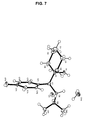
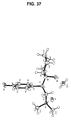
- FIG. 7 An ORTEP drawing of the asymmetric unit from the single crystal structure solution of the Form A crystal form of the HCl salt of (-)-O-desmethylvenlafaxine is shown in FIG. 7 ( ORTEP-3 for Windows , v. 1.05. Farrugia, J. Appl. Cryst., 30:565 (1997 )).
- the asymmetric unit shown in the drawing contains one (-)-O-desmethylvenlafaxine cation, one chloride anion and one water molecule.
- Table I Crystal Data and Data Collection Parameters for Form A of the HCl salt of (-)-O-desmethylvenlafaxine. formula C 16 H 28 ClNO 3 formula weight 317.85 space group P 2 1 2 1 2 1 (No.
- a simulated X-ray powder diffraction pattern was generated for Cu radiation using PowderCell 2.3 ( Kraus and Nolze, Federal Institute for Materials Research and Testing, Berlin, Germany, (1999 )) with the atomic coordinates, space group, and unit cell parameters from the single crystal data of Form A; see FIG. 8 .
- the Form A experimental X-ray powder diffraction pattern matched the pattern simulated from the single crystal X-ray diffraction data. Slight shifts in XRPD peak location resulted from small changes in the unit cell parameters due to temperature differences: the calculated X-ray powder diffraction pattern was generated from the single crystal data which was collected at 150 K, while the experimental powder pattern was collected at ambient temperature. Collecting data at low temperature is typically used in single crystal analysis to improve the quality of the data.
- (-)-O-Desmethylvenlafaxine was crystallized as Form C of the HCl salt of (-)-O-desmethylvenlafaxine.
- (-)-O-Desmethylvenlafaxine was prepared according to Example 1. 0.18 g of (-)-O-desmethylvenlafaxine and 0.35 mL of 37 wt% aqueous hydrochloric acid were mixed at 60 °C for 1 h. The mixture was cooled to 0 °C, filtered and washed with ethyl acetate. The solid was dried in vacuo at ambient temperature to yield 0.22 g of 1-(2-(dimethylamino)-1-(4-hydroxyphenyl)ethyl) cyclohexanol hydrochloride.
- Form C crystal form of the HCl salt of (-)-O-desmethylvenlafaxine prepared according to the procedure above was characterized by techniques such as X-ray powder diffraction, differential scanning calorimetry, thermal gravimetric analysis, moisture sorption, infrared spectroscopy and Raman spectroscopy, according to the analytical parameters described above.
- (-)-O-desmethylvenlafaxine was crystallized as Form D of the HCl salt of (-)-O-desmethylvenlafaxine.
- (-)-O-desmethylvenlafaxine was prepared according to Example 1.
- Form A (42.8 mg) of (-)-O-desmethylvenlafaxine HCl salt, obtained as described in Example 4, was weighed into a vial, and 0.5 mL of IPA was added. The sample was sonicated, and became very thick. The solids were isolated by vacuum filtration, and the sample was air dried in a hood. After a day of drying, the sample was stored at ambient conditions for four days, at which point the XRPD analysis was performed.
- Form D crystal form of the HCl salt of (-)-O-desmethylvenlafaxine prepared according to the procedure above was characterized by techniques such as X-ray powder diffraction, differential scanning calorimetry and thermal gravimetric analysis, according to the analytical parameters described above.
- (-)-O-Desmethylvenlafaxine was crystallized as Form E of the HCl salt of (-)-O-desmethylvenlafaxine.
- (-)-O-Desmethylvenlafaxine was prepared according to Example 1. 0.35 mL of 37 wt% aqueous hydrochloric acid was added to 5.0 g of (-)-O-desmethylvenlafaxine in 25 mL of methanol. The resulting solution was stirred at 25 °C for 20 minutes. The methanol/hydrochloric acid solution was added with stirring to 300 mL of methyl-tert butyl ether at 25 °C.
- Form E crystal form of the HCl salt of (-)-O-desmethylvenlafaxine prepared according to the procedure above was characterized by techniques such as X-ray powder diffraction, differential scanning calorimetry, thermal gravimetric analysis, moisture sorption, infrared spectroscopy and Raman spectroscopy, according to the analytical parameters described above.
- Form A of the HCl salt of (-)-O-desmethylvenlafaxine (19.47 mg) was weighed into a vial, and 3 mL of ethyl acetate was added. Solids remained after sonication.
- the sample was placed on a hot plate set at 75 °C, and stirred using a magnetic stirrer set at 350 rpm. After approximately 2.5 hours of stirring at 75 °C, the sample was syringe filtered into a warm, 1-dram vial. (Prior to filtering, the filter, syringe, and vial were warmed on the hot plate with the sample.) The sample was capped, set on the bench top, and allowed to cool to ambient temperature. The sample was vacuum filtered and analyzed as Form F.
- Form F crystal form of the HCl salt of (-)-O-desmethylvenlafaxine prepared according to the procedure above was characterized by techniques such as X-ray powder diffraction, differential scanning calorimetry, thermal gravimetric analysis, moisture sorption, infrared spectroscopy and Raman spectroscopy, according to the analytical parameters described above.
- Crystals of Form F of the HCl salt of (-)-O-desmethylvenlafaxine suitable for single crystal X-ray diffraction were prepared by a vapor diffusion technique. Three milliliters of 2-butanone were added to 7.71 mg of Form A, obtained as described above. Not all of the solids dissolved. The sample was filtered into a 1 dram vial. The vial was placed into a 20 mL scintillation vial containing toluene. The larger vial was then capped, and the sample was allowed to equilibrate. Single crystals of Form F were isolated, and the structure was solved.
- FIG. 37 An ORTEP drawing of the asymmetric unit from the single crystal structure solution of the Form F crystal form of the HCl salt of (-)-O-desmethylvenlafaxine is shown in FIG. 37 (ORTEP-3 for Windows, v. 1.05. Farrugia, J. Appl. Cryst., 30:565 (1997 )).
- the asymmetric unit shown in the drawing contains one (-)-O-desmethylvenlafaxine cation, one chloride anion and one water of hydration.
- Table 2 Crystal Data and Data Collection Parameters for Form F of the HCl salt of (-)-O-desmethylvenlafaxine.
- a simulated X-ray powder diffraction pattern was generated for Cu radiation using PowderCell 2.3 ( Kraus and Nolze, Federal Institute for Materials Research and Testing, Berlin, Germany, (1999 )) and the atomic coordinates, space group, and unit cell parameters from the single crystal data of Form F; see FIG. 33 .
- the Form F experimental X-ray powder diffraction pattern matched the pattern simulated from the single crystal X-ray diffraction data. Differences in intensities may have resulted from preferred orientation.
- Preferred orientation is the tendency for crystals, usually plates or needles, to align in a non-random manner. Preferred orientation affects peak intensities in X-ray powder diffraction patterns.
- (-)-O-desmethylvenlafaxine was crystallized as Form G of the HCl salt of (-)-O-desmethylvenlafaxine.
- (-)-O-desmethylvenlafaxine was prepared according to Example 1.
- the Form A crystal form of (-)-O-desmethylvenlafaxine (31.50 mg), prepared according to Example 4, was placed into a 20 mL scintillation vial, which was placed, uncapped, into a P 2 O 5 chamber at ambient temperature. After three days, the chamber containing the sample was placed into a 70 °C oven. Analysis performed ten days after the sample was placed in the oven indicated that the sample was Form G.
- Form G crystal form of the HCl salt of (-)-O-desmethylvenlafaxine prepared according to the procedure above was characterized by techniques such as X-ray powder diffraction, differential scanning calorimetry, thermal gravimetric analysis and moisture sorption, according to the analytical parameters described above.
- (-)-O-desmethylvenlafaxine was crystallized as Form H of the HCl salt of (-)-O-desmethylvenlafaxine.
- (-)-O-desmethylvenlafaxine was prepared according to Example 1.
- Form H was prepared by slurring Form A of the HCl salt of (-)-O-desmethylvenlafaxine in acetone on a hot plate set at 55 °C. The samples were stirred in half dram vials on the hot plate using a magnetic stirrer set at 300 rpm. In each case, 0.5 mL of acetone was used.
- Form H crystal form of the HCl salt of (-)-O-desmethylvenlafaxine prepared according to the procedure above was characterized by techniques such as X-ray powder diffraction, differential scanning calorimetry and thermal gravimetric analysis, according to the analytical parameters described above.
- (-)-O-desmethylvenlafaxine was crystallized as Form I of the HCl salt of (-)-O-desmethylvenlafaxine.
- (-)-O-desmethylvenlafaxine was prepared according to Example 1. Form I was precipitated from isopropanol. One sample was prepared by dissolving 46.01 mg of Form A of the HCl salt of (-)-O-desmethylvenlafaxine in 0.5 mL isopropanol using sonication. The sample was prepared in a 1-dram vial. Precipitation was observed after approximately 10-15 minutes. The solids were isolated by vacuum filtration.
- the second sample was prepared using the procedure described for the first sample, except that 25.86 mg of Form A of the HCl salt of (-)-O-desmethylvenlafaxine was dissolved. Precipitation for this second sample was observed after approximately ten minutes. Following synthesis, solids were isolated and characterized as the Form I crystal form of the HCl salt of (-)-O-desmethylvenlafaxine.
- Form I crystal form of the HCl salt of (-)-O-desmethylvenlafaxine prepared according to the procedure above was characterized by techniques such as X-ray powder diffraction, differential scanning calorimetry and thermal gravimetric analysis, according to the analytical parameters described above.
- (-)-O-desmethylvenlafaxine was crystallized as Form J of the HCl salt of (-)-O-desmethylvenlafaxine.
- (-)-O-desmethylvenlafaxine was prepared according to Example 1.
- Form J of the HCl salt of (-)-O-desmethylvenlafaxine was prepared by slurring Form A in acetonitrile for approximately one day on a hot plate set at 55 °C.
- Form A of the HCl salt of (-)-O-desmethylvenlafaxine (43.66 mg) was weighed into a 1-dram vial, and 0.5 mL of acetonitrile was added. Solids remained after sonication.
- the sample was stirred on the hot plate using a magnetic stirrer set at 300 rpm. After a day, the solvent was decanted.
- the solids thus obtained were characterized as the Form J crystal form of the HCl salt of (-)-O-desmethylvenlafaxine.
- the Form J crystal form of the HCl salt of (-)-O-desmethylvenlafaxine prepared according to the procedure above was characterized by techniques such as X-ray powder diffraction, and NMR spectroscopy, according to the analytical parameters described above. About 0.2 mole of acetonitrile per mole of the HCl salt of (-)-O-desmethylvenlafaxine was present in a Form J sample, as observed using NMR spectroscopy.
- (-)-O-desmethylvenlafaxine was crystallized as Form K of the HCl salt of (-)-O-desmethylvenlafaxine.
- (-)-O-desmethylvenlafaxine was prepared according to Example 1.
- Form K of the HCl salt of (-)-O-desmethylvenlafaxine was prepared from a vapor diffusion experiment using ethanol as the solvent and acetone as the antisolvent.
- the sample was prepared by adding 0.3 mL of ethanol to 22.20 mg of Form A of the HCl salt of (-)-O-desmethylvenlafaxine.
- the sample dissolved and was filtered into a 1-dram vial.
- the vial was placed into a 20 mL scintillation vial containing acetone.
- the larger vial was then capped, and the sample was allowed to equilibrate. Single crystals were isolated from this experiment. The crystals thus obtained were characterized as the Form K crystal form of the HCl salt of (-)-O-desmethylvenlafaxine.
- Crystals of Form K of the HCl salt of (-)-O-desmethylvenlafaxine suitable for single crystal X-ray diffraction were prepared by the technique described above.
- Data collection, indexing and initial cell refinements were all carried out using the software APEX II (Bruker AXS, Inc., Madison, WI, USA (2005)).
- Frame integration and final cell refinements were done using the software SAINT (v. 6.45A, Bruker AXS, Inc., Madison, WI, USA (2003)).
- the space group was determined by the program XPREP (SHELXTL v.
- the complete contents of the asymmetric unit of the crystal structure of Form K includes two (-)-O-desmethylvenlafaxine cations, two chloride anions and one partially occupied, highly disordered ethanol molecule. Since the ethanol molecule is not fully occupied, Form K is termed a partial ethanol solvate.
- Table 3 Crystal Data and Data Collection Parameters for Form K of the HCl salt of (-)-O-desmethylvenlafaxine.
- (-)-O-desmethylvenlafaxine was crystallized as Form L of the HCl salt of (-)-O-desmethylvenlafaxine.
- (-)-O-desmethylvenlafaxine was prepared according to Example 1.
- Form L was prepared from a prolonged ambient temperature slurry in 2-methyl-tetrahydrofuran. The sample was prepared by adding 20 mL of 2-methyl-tetrahydrofuran to 38.75 mg of Form A of the HCl salt of (-)-O-desmethylvenlafaxine. A 20 mL scintillation vial was used for the experiment, and the 2-methyl-tetrahydrofuran was added slowly. Solids were present after the solvent addition, and the sample was capped and placed on a rotating wheel at ambient temperature. After 97 days on the wheel, the sample of Form L was removed, vacuum filtered, and submitted for analysis. The solids thus obtained were characterized as the Form L crystal form of the HCl salt of (-)-O-desmethylvenlafaxine.
- the Form L crystal form of the HCl salt of (-)-O-desmethylvenlafaxine prepared according to the procedure above was characterized by techniques such as X-ray powder diffraction, differential scanning calorimetry, thermal gravimetric analysis and NMR spectroscopy, according to the analytical parameters described above. Between about 0.13 and 0.14 mole of 2-methyl-tetrahydrofuran per mole of the HCl salt of (-)-O-desmethylvenlafaxine was present in a Form L sample, as observed using NMR spectroscopy.
- Form C of the HCl salt of (-)-O-desmethylvenlafaxine was prepared as described above. Form C was heated to 100 °C in a TGA furnace, according to the procedure described above, and a weight loss of 5.4% was observed. The material was removed from the furnace; analysis confirmed that the material was a desolvated solvate.
- the desolvated solvate was analyzed by X-ray powder diffraction. The locations of the peaks in the X-ray powder diffraction pattern of the desolvated solvate were similar to the locations of the XRPD peaks in the Form C starting material. This data, in conjunction with the TGA weight loss data, indicated that the solvent evacuated the crystal lattice of Form C while maintaining structural features of Form C in the form of a desolvated solvate.
- (-)-O-desmethylvenlafaxine was prepared as an amorphous form of the HCl salt of (-)-O-desmethylvenlafaxine.
- An aqueous solution of the HCl salt of (-)-O-desmethylvenlafaxine was prepared, filtered and frozen. The sample was then placed under vacuum on a freeze dryer and lyophilized until all solvent had been removed.
- the resulting product was characterized by X-ray powder diffraction and modulated differential scanning calorimetry. XRPD data confirmed that the material was amorphous. Based on modulated differential scanning calorimetry data, the glass transition temperature of the amorphous form of the HCl salt of (-)-O-desmethylvenlafaxine was approximately 24 °C.
Landscapes
- Health & Medical Sciences (AREA)
- Chemical & Material Sciences (AREA)
- Organic Chemistry (AREA)
- Life Sciences & Earth Sciences (AREA)
- Veterinary Medicine (AREA)
- Public Health (AREA)
- General Health & Medical Sciences (AREA)
- Animal Behavior & Ethology (AREA)
- Medicinal Chemistry (AREA)
- Pharmacology & Pharmacy (AREA)
- Nuclear Medicine, Radiotherapy & Molecular Imaging (AREA)
- General Chemical & Material Sciences (AREA)
- Chemical Kinetics & Catalysis (AREA)
- Engineering & Computer Science (AREA)
- Bioinformatics & Cheminformatics (AREA)
- Biomedical Technology (AREA)
- Neurology (AREA)
- Neurosurgery (AREA)
- Pain & Pain Management (AREA)
- Reproductive Health (AREA)
- Endocrinology (AREA)
- Psychology (AREA)
- Psychiatry (AREA)
- Rheumatology (AREA)
- Urology & Nephrology (AREA)
- Emergency Medicine (AREA)
- Epidemiology (AREA)
- Pharmaceuticals Containing Other Organic And Inorganic Compounds (AREA)
- Acyclic And Carbocyclic Compounds In Medicinal Compositions (AREA)
- Organic Low-Molecular-Weight Compounds And Preparation Thereof (AREA)
- Medicinal Preparation (AREA)
Priority Applications (1)
| Application Number | Priority Date | Filing Date | Title |
|---|---|---|---|
| EP12164795A EP2500337A3 (en) | 2007-02-21 | 2008-02-21 | Solid form comprising (-) o-desmethylvenlafaxine and uses thereof |
Applications Claiming Priority (2)
| Application Number | Priority Date | Filing Date | Title |
|---|---|---|---|
| US90295007P | 2007-02-21 | 2007-02-21 | |
| PCT/US2008/002379 WO2008103461A2 (en) | 2007-02-21 | 2008-02-21 | Solid forms comprising (-) o-desmethylvenlafaxine and uses thereof |
Related Child Applications (2)
| Application Number | Title | Priority Date | Filing Date |
|---|---|---|---|
| EP12164795A Division-Into EP2500337A3 (en) | 2007-02-21 | 2008-02-21 | Solid form comprising (-) o-desmethylvenlafaxine and uses thereof |
| EP12164795A Division EP2500337A3 (en) | 2007-02-21 | 2008-02-21 | Solid form comprising (-) o-desmethylvenlafaxine and uses thereof |
Publications (2)
| Publication Number | Publication Date |
|---|---|
| EP2114863A2 EP2114863A2 (en) | 2009-11-11 |
| EP2114863B1 true EP2114863B1 (en) | 2016-10-05 |
Family
ID=39432564
Family Applications (2)
| Application Number | Title | Priority Date | Filing Date |
|---|---|---|---|
| EP08725968.5A Active EP2114863B1 (en) | 2007-02-21 | 2008-02-21 | Solid forms comprising (-)-o-desmethylvenlafaxine and uses thereof |
| EP12164795A Withdrawn EP2500337A3 (en) | 2007-02-21 | 2008-02-21 | Solid form comprising (-) o-desmethylvenlafaxine and uses thereof |
Family Applications After (1)
| Application Number | Title | Priority Date | Filing Date |
|---|---|---|---|
| EP12164795A Withdrawn EP2500337A3 (en) | 2007-02-21 | 2008-02-21 | Solid form comprising (-) o-desmethylvenlafaxine and uses thereof |
Country Status (18)
| Country | Link |
|---|---|
| US (2) | US20090005457A1 (enExample) |
| EP (2) | EP2114863B1 (enExample) |
| JP (1) | JP5666140B2 (enExample) |
| KR (1) | KR101528326B1 (enExample) |
| CN (1) | CN101663263A (enExample) |
| AR (1) | AR065431A1 (enExample) |
| AU (1) | AU2008218997B2 (enExample) |
| BR (1) | BRPI0807604A2 (enExample) |
| CA (1) | CA2678599C (enExample) |
| ES (1) | ES2609264T3 (enExample) |
| IL (1) | IL200514A (enExample) |
| MX (1) | MX2009008705A (enExample) |
| NZ (2) | NZ599480A (enExample) |
| RU (1) | RU2477269C2 (enExample) |
| SG (1) | SG175611A1 (enExample) |
| TW (1) | TWI446903B (enExample) |
| WO (1) | WO2008103461A2 (enExample) |
| ZA (1) | ZA200905698B (enExample) |
Families Citing this family (12)
| Publication number | Priority date | Publication date | Assignee | Title |
|---|---|---|---|---|
| AR065989A1 (es) * | 2007-04-09 | 2009-07-15 | Sepracor Inc | Metodos y composiciones para el tratamiento de trastornos de la respiracion relacionados con el sueno |
| CZ2008756A3 (cs) * | 2008-11-27 | 2010-03-24 | Zentiva, A. S. | Zpusob prípravy desvenlafaxinu a jeho solí |
| CZ2009454A3 (cs) * | 2009-07-15 | 2010-11-10 | Zentiva, K. S. | Zpusob prípravy desvenlafaxinu a jeho solí |
| CN102249936B (zh) * | 2010-05-19 | 2014-09-17 | 江苏豪森医药集团有限公司 | O-去甲基文拉法辛盐酸盐的水合物及其制备方法 |
| US20120263838A1 (en) * | 2011-04-12 | 2012-10-18 | Geo. Pfau's Sons Company, Inc. | Method for rendering animal materials |
| CN103772220A (zh) * | 2013-12-03 | 2014-05-07 | 镇江圣安医药有限公司 | 1-[2-二甲基氨基-1-(4-甲氧基苯基)乙基]环己醇的新型衍生物及其应用 |
| CN105348119B (zh) * | 2015-11-04 | 2017-09-15 | 江苏豪森药业集团有限公司 | 晶状的文拉法辛代谢物及其制备方法 |
| EP3580198B1 (en) * | 2017-02-09 | 2023-08-09 | R L Finechem Private Limited | A process for preparation of1-[2-(dimethylamino)-1-(4-hydroxyphenyl) ethyl]-cyclohexanol and salts thereof |
| CN109771380A (zh) * | 2017-11-10 | 2019-05-21 | 连云港恒运药业有限公司 | 去甲文拉法辛盐酸盐药物组合物及其制备方法 |
| JP7315256B2 (ja) | 2018-12-05 | 2023-07-26 | ヘッジホッグ,インコーポレイテッド | エンドセリン受容体a活性調節抗体 |
| US20230240335A1 (en) * | 2020-05-26 | 2023-08-03 | Mars, Incorporated | Process for preparing pet food and pet food obtainable thereby |
| CN116199590B (zh) * | 2022-12-26 | 2024-12-24 | 湖北美林药业有限公司 | 一种盐酸多巴酚丁胺及其注射剂 |
Family Cites Families (21)
| Publication number | Priority date | Publication date | Assignee | Title |
|---|---|---|---|---|
| US3536809A (en) | 1969-02-17 | 1970-10-27 | Alza Corp | Medication method |
| US3598123A (en) | 1969-04-01 | 1971-08-10 | Alza Corp | Bandage for administering drugs |
| US3845770A (en) | 1972-06-05 | 1974-11-05 | Alza Corp | Osmatic dispensing device for releasing beneficial agent |
| US3916899A (en) | 1973-04-25 | 1975-11-04 | Alza Corp | Osmotic dispensing device with maximum and minimum sizes for the passageway |
| US4008719A (en) | 1976-02-02 | 1977-02-22 | Alza Corporation | Osmotic system having laminar arrangement for programming delivery of active agent |
| US4535186A (en) | 1983-04-19 | 1985-08-13 | American Home Products Corporation | 2-Phenyl-2-(1-hydroxycycloalkyl or 1-hydroxycycloalk-2-enyl)ethylamine derivatives |
| IE58110B1 (en) * | 1984-10-30 | 1993-07-14 | Elan Corp Plc | Controlled release powder and process for its preparation |
| US5073543A (en) | 1988-07-21 | 1991-12-17 | G. D. Searle & Co. | Controlled release formulations of trophic factors in ganglioside-lipsome vehicle |
| IT1229203B (it) | 1989-03-22 | 1991-07-25 | Bioresearch Spa | Impiego di acido 5 metiltetraidrofolico, di acido 5 formiltetraidrofolico e dei loro sali farmaceuticamente accettabili per la preparazione di composizioni farmaceutiche in forma a rilascio controllato attive nella terapia dei disturbi mentali organici e composizioni farmaceutiche relative. |
| US5120548A (en) | 1989-11-07 | 1992-06-09 | Merck & Co., Inc. | Swelling modulated polymeric drug delivery device |
| US5213738A (en) | 1990-05-15 | 1993-05-25 | L. Perrigo Company | Method for making a capsule-shaped tablet |
| US5733566A (en) | 1990-05-15 | 1998-03-31 | Alkermes Controlled Therapeutics Inc. Ii | Controlled release of antiparasitic agents in animals |
| US5580578A (en) | 1992-01-27 | 1996-12-03 | Euro-Celtique, S.A. | Controlled release formulations coated with aqueous dispersions of acrylic polymers |
| US5591767A (en) | 1993-01-25 | 1997-01-07 | Pharmetrix Corporation | Liquid reservoir transdermal patch for the administration of ketorolac |
| IT1270594B (it) | 1994-07-07 | 1997-05-07 | Recordati Chem Pharm | Composizione farmaceutica a rilascio controllato di moguisteina in sospensione liquida |
| US6342533B1 (en) * | 1998-12-01 | 2002-01-29 | Sepracor, Inc. | Derivatives of (−)-venlafaxine and methods of preparing and using the same |
| AU5738700A (en) * | 1999-06-15 | 2001-01-02 | American Home Products Corporation | Enantiomers of o-desmethyl venlafaxine |
| EP2319826A1 (en) * | 2001-02-12 | 2011-05-11 | Wyeth LLC | Succinate salt of O-desmethyl-venlafaxin |
| AU2002348266A1 (en) * | 2001-12-05 | 2003-06-23 | Wyeth | Novel crystalline polymorph of venlafaxine hydrochloride and methods for the preparation thereof |
| AU2003247515A1 (en) | 2002-06-10 | 2003-12-22 | Wyeth | Novel formate salt of o-desmethyl-venlafaxine |
| AU2006265008A1 (en) * | 2005-07-06 | 2007-01-11 | Sepracor Inc. | Combinations of eszopiclone and O-desmethylvenlafaxine, and methods of treatment of menopause and mood, anxiety, and cognitive disorders |
-
2008
- 2008-02-21 KR KR1020097019715A patent/KR101528326B1/ko not_active Expired - Fee Related
- 2008-02-21 NZ NZ599480A patent/NZ599480A/xx not_active IP Right Cessation
- 2008-02-21 SG SG2011074085A patent/SG175611A1/en unknown
- 2008-02-21 ZA ZA200905698A patent/ZA200905698B/xx unknown
- 2008-02-21 EP EP08725968.5A patent/EP2114863B1/en active Active
- 2008-02-21 JP JP2009550930A patent/JP5666140B2/ja not_active Expired - Fee Related
- 2008-02-21 RU RU2009135016/04A patent/RU2477269C2/ru active
- 2008-02-21 US US12/070,888 patent/US20090005457A1/en not_active Abandoned
- 2008-02-21 TW TW097106132A patent/TWI446903B/zh not_active IP Right Cessation
- 2008-02-21 CA CA2678599A patent/CA2678599C/en active Active
- 2008-02-21 WO PCT/US2008/002379 patent/WO2008103461A2/en not_active Ceased
- 2008-02-21 NZ NZ579137A patent/NZ579137A/en not_active IP Right Cessation
- 2008-02-21 MX MX2009008705A patent/MX2009008705A/es active IP Right Grant
- 2008-02-21 AU AU2008218997A patent/AU2008218997B2/en not_active Ceased
- 2008-02-21 CN CN200880012483A patent/CN101663263A/zh active Pending
- 2008-02-21 AR ARP080100726A patent/AR065431A1/es not_active Application Discontinuation
- 2008-02-21 EP EP12164795A patent/EP2500337A3/en not_active Withdrawn
- 2008-02-21 BR BRPI0807604-9A patent/BRPI0807604A2/pt not_active Application Discontinuation
- 2008-02-21 ES ES08725968.5T patent/ES2609264T3/es active Active
-
2009
- 2009-08-20 IL IL200514A patent/IL200514A/en active IP Right Grant
-
2016
- 2016-05-25 US US15/164,394 patent/US20160355457A1/en not_active Abandoned
Also Published As
| Publication number | Publication date |
|---|---|
| KR101528326B1 (ko) | 2015-06-11 |
| TWI446903B (zh) | 2014-08-01 |
| EP2500337A3 (en) | 2012-12-26 |
| AU2008218997A1 (en) | 2008-08-28 |
| ES2609264T3 (es) | 2017-04-19 |
| CN101663263A (zh) | 2010-03-03 |
| WO2008103461A2 (en) | 2008-08-28 |
| ZA200905698B (en) | 2010-10-27 |
| CA2678599A1 (en) | 2008-08-28 |
| IL200514A0 (en) | 2010-04-29 |
| AR065431A1 (es) | 2009-06-10 |
| BRPI0807604A2 (pt) | 2014-07-22 |
| NZ579137A (en) | 2012-05-25 |
| RU2009135016A (ru) | 2011-03-27 |
| CA2678599C (en) | 2015-11-10 |
| JP5666140B2 (ja) | 2015-02-12 |
| RU2477269C2 (ru) | 2013-03-10 |
| US20160355457A1 (en) | 2016-12-08 |
| EP2500337A2 (en) | 2012-09-19 |
| JP2010519300A (ja) | 2010-06-03 |
| SG175611A1 (en) | 2011-11-28 |
| NZ599480A (en) | 2013-10-25 |
| AU2008218997B2 (en) | 2013-06-20 |
| EP2114863A2 (en) | 2009-11-11 |
| IL200514A (en) | 2013-12-31 |
| TW200901955A (en) | 2009-01-16 |
| MX2009008705A (es) | 2009-09-10 |
| KR20090113904A (ko) | 2009-11-02 |
| US20090005457A1 (en) | 2009-01-01 |
| WO2008103461A3 (en) | 2008-11-13 |
Similar Documents
| Publication | Publication Date | Title |
|---|---|---|
| CA2678599C (en) | Solid forms comprising (-)-o-desmethylvenlafaxine and uses thereof | |
| US6197828B1 (en) | Derivatives of (+)-venlafaxine and methods of preparing and using the same | |
| US6441048B1 (en) | Methods of treating affective disorders using derivatives of (-)-venlafaxine | |
| EP1466889A1 (en) | Derivatives of venlafaxine and methods of preparing and using the same | |
| HK1141271A (en) | Solid forms comprising (-) o-desmethylvenlafaxine and uses thereof | |
| US7696383B2 (en) | N-oxides of venlafaxine and o-desmethylvenlafaxine as prodrugs | |
| AU3106200A (en) | Derivatives of (+)-venlafaxine and methods of preparing and using the same | |
| HK1121133A (en) | Derivatives of (-)-venlafaxine and methods of preparing and using the same |
Legal Events
| Date | Code | Title | Description |
|---|---|---|---|
| PUAI | Public reference made under article 153(3) epc to a published international application that has entered the european phase |
Free format text: ORIGINAL CODE: 0009012 |
|
| 17P | Request for examination filed |
Effective date: 20090825 |
|
| AK | Designated contracting states |
Kind code of ref document: A2 Designated state(s): AT BE BG CH CY CZ DE DK EE ES FI FR GB GR HR HU IE IS IT LI LT LU LV MC MT NL NO PL PT RO SE SI SK TR |
|
| AX | Request for extension of the european patent |
Extension state: AL BA MK RS |
|
| RIN1 | Information on inventor provided before grant (corrected) |
Inventor name: KIM, NORMAN Inventor name: MOUSAW, PATRICK Inventor name: SNOONIAN, JOHN Inventor name: BAKALE, ROGER, P. Inventor name: PLUNKETT, KEVIN Inventor name: LAUGHLIN, SHARON, M. Inventor name: WILKINSON, HAROLD, S. Inventor name: SIZENSKY, MICHAEL |
|
| 17Q | First examination report despatched |
Effective date: 20100419 |
|
| REG | Reference to a national code |
Ref country code: DE Ref legal event code: R079 Ref document number: 602008046636 Country of ref document: DE Free format text: PREVIOUS MAIN CLASS: C07C0215640000 Ipc: C07C0213100000 |
|
| GRAP | Despatch of communication of intention to grant a patent |
Free format text: ORIGINAL CODE: EPIDOSNIGR1 |
|
| GRAJ | Information related to disapproval of communication of intention to grant by the applicant or resumption of examination proceedings by the epo deleted |
Free format text: ORIGINAL CODE: EPIDOSDIGR1 |
|
| GRAP | Despatch of communication of intention to grant a patent |
Free format text: ORIGINAL CODE: EPIDOSNIGR1 |
|
| RIC1 | Information provided on ipc code assigned before grant |
Ipc: C07C 215/64 20060101ALI20160324BHEP Ipc: C07C 213/10 20060101AFI20160324BHEP |
|
| INTG | Intention to grant announced |
Effective date: 20160414 |
|
| INTG | Intention to grant announced |
Effective date: 20160425 |
|
| GRAS | Grant fee paid |
Free format text: ORIGINAL CODE: EPIDOSNIGR3 |
|
| GRAA | (expected) grant |
Free format text: ORIGINAL CODE: 0009210 |
|
| AK | Designated contracting states |
Kind code of ref document: B1 Designated state(s): AT BE BG CH CY CZ DE DK EE ES FI FR GB GR HR HU IE IS IT LI LT LU LV MC MT NL NO PL PT RO SE SI SK TR |
|
| AX | Request for extension of the european patent |
Extension state: AL BA MK RS |
|
| REG | Reference to a national code |
Ref country code: GB Ref legal event code: FG4D |
|
| REG | Reference to a national code |
Ref country code: CH Ref legal event code: EP |
|
| REG | Reference to a national code |
Ref country code: AT Ref legal event code: REF Ref document number: 834492 Country of ref document: AT Kind code of ref document: T Effective date: 20161015 |
|
| REG | Reference to a national code |
Ref country code: IE Ref legal event code: FG4D |
|
| REG | Reference to a national code |
Ref country code: DE Ref legal event code: R096 Ref document number: 602008046636 Country of ref document: DE |
|
| REG | Reference to a national code |
Ref country code: DE Ref legal event code: R082 Ref document number: 602008046636 Country of ref document: DE Representative=s name: WALLINGER RICKER SCHLOTTER TOSTMANN PATENT- UN, DE Ref country code: DE Ref legal event code: R081 Ref document number: 602008046636 Country of ref document: DE Owner name: SUNOVION PHARMACEUTICALS INC.( NACH DEN GESETZ, US Free format text: FORMER OWNER: SEPRACOR INC., MARLBOROUGH, MASS., US |
|
| REG | Reference to a national code |
Ref country code: FR Ref legal event code: PLFP Year of fee payment: 10 |
|
| REG | Reference to a national code |
Ref country code: NL Ref legal event code: MP Effective date: 20161005 |
|
| REG | Reference to a national code |
Ref country code: LT Ref legal event code: MG4D |
|
| PG25 | Lapsed in a contracting state [announced via postgrant information from national office to epo] |
Ref country code: LV Free format text: LAPSE BECAUSE OF FAILURE TO SUBMIT A TRANSLATION OF THE DESCRIPTION OR TO PAY THE FEE WITHIN THE PRESCRIBED TIME-LIMIT Effective date: 20161005 |
|
| REG | Reference to a national code |
Ref country code: AT Ref legal event code: MK05 Ref document number: 834492 Country of ref document: AT Kind code of ref document: T Effective date: 20161005 |
|
| REG | Reference to a national code |
Ref country code: ES Ref legal event code: FG2A Ref document number: 2609264 Country of ref document: ES Kind code of ref document: T3 Effective date: 20170419 |
|
| PG25 | Lapsed in a contracting state [announced via postgrant information from national office to epo] |
Ref country code: NO Free format text: LAPSE BECAUSE OF FAILURE TO SUBMIT A TRANSLATION OF THE DESCRIPTION OR TO PAY THE FEE WITHIN THE PRESCRIBED TIME-LIMIT Effective date: 20170105 Ref country code: LT Free format text: LAPSE BECAUSE OF FAILURE TO SUBMIT A TRANSLATION OF THE DESCRIPTION OR TO PAY THE FEE WITHIN THE PRESCRIBED TIME-LIMIT Effective date: 20161005 Ref country code: GR Free format text: LAPSE BECAUSE OF FAILURE TO SUBMIT A TRANSLATION OF THE DESCRIPTION OR TO PAY THE FEE WITHIN THE PRESCRIBED TIME-LIMIT Effective date: 20170106 Ref country code: SE Free format text: LAPSE BECAUSE OF FAILURE TO SUBMIT A TRANSLATION OF THE DESCRIPTION OR TO PAY THE FEE WITHIN THE PRESCRIBED TIME-LIMIT Effective date: 20161005 |
|
| PG25 | Lapsed in a contracting state [announced via postgrant information from national office to epo] |
Ref country code: BE Free format text: LAPSE BECAUSE OF FAILURE TO SUBMIT A TRANSLATION OF THE DESCRIPTION OR TO PAY THE FEE WITHIN THE PRESCRIBED TIME-LIMIT Effective date: 20161005 Ref country code: IS Free format text: LAPSE BECAUSE OF FAILURE TO SUBMIT A TRANSLATION OF THE DESCRIPTION OR TO PAY THE FEE WITHIN THE PRESCRIBED TIME-LIMIT Effective date: 20170205 Ref country code: NL Free format text: LAPSE BECAUSE OF FAILURE TO SUBMIT A TRANSLATION OF THE DESCRIPTION OR TO PAY THE FEE WITHIN THE PRESCRIBED TIME-LIMIT Effective date: 20161005 Ref country code: HR Free format text: LAPSE BECAUSE OF FAILURE TO SUBMIT A TRANSLATION OF THE DESCRIPTION OR TO PAY THE FEE WITHIN THE PRESCRIBED TIME-LIMIT Effective date: 20161005 Ref country code: PL Free format text: LAPSE BECAUSE OF FAILURE TO SUBMIT A TRANSLATION OF THE DESCRIPTION OR TO PAY THE FEE WITHIN THE PRESCRIBED TIME-LIMIT Effective date: 20161005 Ref country code: PT Free format text: LAPSE BECAUSE OF FAILURE TO SUBMIT A TRANSLATION OF THE DESCRIPTION OR TO PAY THE FEE WITHIN THE PRESCRIBED TIME-LIMIT Effective date: 20170206 Ref country code: AT Free format text: LAPSE BECAUSE OF FAILURE TO SUBMIT A TRANSLATION OF THE DESCRIPTION OR TO PAY THE FEE WITHIN THE PRESCRIBED TIME-LIMIT Effective date: 20161005 Ref country code: FI Free format text: LAPSE BECAUSE OF FAILURE TO SUBMIT A TRANSLATION OF THE DESCRIPTION OR TO PAY THE FEE WITHIN THE PRESCRIBED TIME-LIMIT Effective date: 20161005 |
|
| REG | Reference to a national code |
Ref country code: DE Ref legal event code: R097 Ref document number: 602008046636 Country of ref document: DE |
|
| REG | Reference to a national code |
Ref country code: FR Ref legal event code: CD Owner name: SUNOVION PHARMACEUTICALS INC., US Effective date: 20170616 |
|
| PG25 | Lapsed in a contracting state [announced via postgrant information from national office to epo] |
Ref country code: CZ Free format text: LAPSE BECAUSE OF FAILURE TO SUBMIT A TRANSLATION OF THE DESCRIPTION OR TO PAY THE FEE WITHIN THE PRESCRIBED TIME-LIMIT Effective date: 20161005 Ref country code: EE Free format text: LAPSE BECAUSE OF FAILURE TO SUBMIT A TRANSLATION OF THE DESCRIPTION OR TO PAY THE FEE WITHIN THE PRESCRIBED TIME-LIMIT Effective date: 20161005 Ref country code: RO Free format text: LAPSE BECAUSE OF FAILURE TO SUBMIT A TRANSLATION OF THE DESCRIPTION OR TO PAY THE FEE WITHIN THE PRESCRIBED TIME-LIMIT Effective date: 20161005 Ref country code: SK Free format text: LAPSE BECAUSE OF FAILURE TO SUBMIT A TRANSLATION OF THE DESCRIPTION OR TO PAY THE FEE WITHIN THE PRESCRIBED TIME-LIMIT Effective date: 20161005 Ref country code: DK Free format text: LAPSE BECAUSE OF FAILURE TO SUBMIT A TRANSLATION OF THE DESCRIPTION OR TO PAY THE FEE WITHIN THE PRESCRIBED TIME-LIMIT Effective date: 20161005 |
|
| PLBE | No opposition filed within time limit |
Free format text: ORIGINAL CODE: 0009261 |
|
| STAA | Information on the status of an ep patent application or granted ep patent |
Free format text: STATUS: NO OPPOSITION FILED WITHIN TIME LIMIT |
|
| PG25 | Lapsed in a contracting state [announced via postgrant information from national office to epo] |
Ref country code: BG Free format text: LAPSE BECAUSE OF FAILURE TO SUBMIT A TRANSLATION OF THE DESCRIPTION OR TO PAY THE FEE WITHIN THE PRESCRIBED TIME-LIMIT Effective date: 20170105 |
|
| 26N | No opposition filed |
Effective date: 20170706 |
|
| PG25 | Lapsed in a contracting state [announced via postgrant information from national office to epo] |
Ref country code: MC Free format text: LAPSE BECAUSE OF FAILURE TO SUBMIT A TRANSLATION OF THE DESCRIPTION OR TO PAY THE FEE WITHIN THE PRESCRIBED TIME-LIMIT Effective date: 20161005 |
|
| REG | Reference to a national code |
Ref country code: CH Ref legal event code: PL |
|
| PG25 | Lapsed in a contracting state [announced via postgrant information from national office to epo] |
Ref country code: LI Free format text: LAPSE BECAUSE OF NON-PAYMENT OF DUE FEES Effective date: 20170228 Ref country code: CH Free format text: LAPSE BECAUSE OF NON-PAYMENT OF DUE FEES Effective date: 20170228 |
|
| REG | Reference to a national code |
Ref country code: IE Ref legal event code: MM4A |
|
| PG25 | Lapsed in a contracting state [announced via postgrant information from national office to epo] |
Ref country code: SI Free format text: LAPSE BECAUSE OF FAILURE TO SUBMIT A TRANSLATION OF THE DESCRIPTION OR TO PAY THE FEE WITHIN THE PRESCRIBED TIME-LIMIT Effective date: 20161005 |
|
| PG25 | Lapsed in a contracting state [announced via postgrant information from national office to epo] |
Ref country code: LU Free format text: LAPSE BECAUSE OF NON-PAYMENT OF DUE FEES Effective date: 20170221 |
|
| REG | Reference to a national code |
Ref country code: FR Ref legal event code: PLFP Year of fee payment: 11 |
|
| PG25 | Lapsed in a contracting state [announced via postgrant information from national office to epo] |
Ref country code: IE Free format text: LAPSE BECAUSE OF NON-PAYMENT OF DUE FEES Effective date: 20170221 |
|
| PG25 | Lapsed in a contracting state [announced via postgrant information from national office to epo] |
Ref country code: MT Free format text: LAPSE BECAUSE OF NON-PAYMENT OF DUE FEES Effective date: 20170221 |
|
| PG25 | Lapsed in a contracting state [announced via postgrant information from national office to epo] |
Ref country code: HU Free format text: LAPSE BECAUSE OF FAILURE TO SUBMIT A TRANSLATION OF THE DESCRIPTION OR TO PAY THE FEE WITHIN THE PRESCRIBED TIME-LIMIT; INVALID AB INITIO Effective date: 20080221 |
|
| PG25 | Lapsed in a contracting state [announced via postgrant information from national office to epo] |
Ref country code: CY Free format text: LAPSE BECAUSE OF NON-PAYMENT OF DUE FEES Effective date: 20161005 |
|
| PG25 | Lapsed in a contracting state [announced via postgrant information from national office to epo] |
Ref country code: TR Free format text: LAPSE BECAUSE OF FAILURE TO SUBMIT A TRANSLATION OF THE DESCRIPTION OR TO PAY THE FEE WITHIN THE PRESCRIBED TIME-LIMIT Effective date: 20161005 |
|
| PGFP | Annual fee paid to national office [announced via postgrant information from national office to epo] |
Ref country code: GB Payment date: 20220225 Year of fee payment: 15 Ref country code: DE Payment date: 20220225 Year of fee payment: 15 |
|
| PGFP | Annual fee paid to national office [announced via postgrant information from national office to epo] |
Ref country code: IT Payment date: 20220222 Year of fee payment: 15 Ref country code: FR Payment date: 20220223 Year of fee payment: 15 Ref country code: ES Payment date: 20220301 Year of fee payment: 15 |
|
| REG | Reference to a national code |
Ref country code: DE Ref legal event code: R119 Ref document number: 602008046636 Country of ref document: DE |
|
| GBPC | Gb: european patent ceased through non-payment of renewal fee |
Effective date: 20230221 |
|
| PG25 | Lapsed in a contracting state [announced via postgrant information from national office to epo] |
Ref country code: GB Free format text: LAPSE BECAUSE OF NON-PAYMENT OF DUE FEES Effective date: 20230221 |
|
| PG25 | Lapsed in a contracting state [announced via postgrant information from national office to epo] |
Ref country code: IT Free format text: LAPSE BECAUSE OF NON-PAYMENT OF DUE FEES Effective date: 20230221 Ref country code: GB Free format text: LAPSE BECAUSE OF NON-PAYMENT OF DUE FEES Effective date: 20230221 Ref country code: FR Free format text: LAPSE BECAUSE OF NON-PAYMENT OF DUE FEES Effective date: 20230228 Ref country code: DE Free format text: LAPSE BECAUSE OF NON-PAYMENT OF DUE FEES Effective date: 20230901 |
|
| REG | Reference to a national code |
Ref country code: ES Ref legal event code: FD2A Effective date: 20240405 |
|
| PG25 | Lapsed in a contracting state [announced via postgrant information from national office to epo] |
Ref country code: ES Free format text: LAPSE BECAUSE OF NON-PAYMENT OF DUE FEES Effective date: 20230222 |
|
| PG25 | Lapsed in a contracting state [announced via postgrant information from national office to epo] |
Ref country code: ES Free format text: LAPSE BECAUSE OF NON-PAYMENT OF DUE FEES Effective date: 20230222 |