EP2107810B1 - Receiving apparatus and control method thereof - Google Patents
Receiving apparatus and control method thereof Download PDFInfo
- Publication number
- EP2107810B1 EP2107810B1 EP09156988.9A EP09156988A EP2107810B1 EP 2107810 B1 EP2107810 B1 EP 2107810B1 EP 09156988 A EP09156988 A EP 09156988A EP 2107810 B1 EP2107810 B1 EP 2107810B1
- Authority
- EP
- European Patent Office
- Prior art keywords
- content data
- vod content
- unit
- broadcast program
- broadcast
- Prior art date
- Legal status (The legal status is an assumption and is not a legal conclusion. Google has not performed a legal analysis and makes no representation as to the accuracy of the status listed.)
- Not-in-force
Links
- 238000000034 method Methods 0.000 title claims description 165
- 238000001514 detection method Methods 0.000 claims description 43
- 239000000725 suspension Substances 0.000 claims description 29
- 230000008859 change Effects 0.000 claims description 7
- 230000008569 process Effects 0.000 description 133
- 238000010586 diagram Methods 0.000 description 23
- 230000006870 function Effects 0.000 description 20
- 230000007704 transition Effects 0.000 description 15
- 230000004044 response Effects 0.000 description 10
- 230000003111 delayed effect Effects 0.000 description 9
- 230000015572 biosynthetic process Effects 0.000 description 7
- 238000003786 synthesis reaction Methods 0.000 description 7
- 230000005236 sound signal Effects 0.000 description 5
- 238000012545 processing Methods 0.000 description 4
- 230000002093 peripheral effect Effects 0.000 description 3
- 230000001960 triggered effect Effects 0.000 description 3
- 238000012790 confirmation Methods 0.000 description 2
- 238000004364 calculation method Methods 0.000 description 1
- 238000004891 communication Methods 0.000 description 1
- 230000006835 compression Effects 0.000 description 1
- 238000007906 compression Methods 0.000 description 1
- 238000007796 conventional method Methods 0.000 description 1
- 239000000284 extract Substances 0.000 description 1
- 238000007562 laser obscuration time method Methods 0.000 description 1
- 238000012986 modification Methods 0.000 description 1
- 230000004048 modification Effects 0.000 description 1
- 230000003252 repetitive effect Effects 0.000 description 1
- 230000003068 static effect Effects 0.000 description 1
- 230000002194 synthesizing effect Effects 0.000 description 1
Images









Classifications
-
- H—ELECTRICITY
- H04—ELECTRIC COMMUNICATION TECHNIQUE
- H04N—PICTORIAL COMMUNICATION, e.g. TELEVISION
- H04N7/00—Television systems
- H04N7/16—Analogue secrecy systems; Analogue subscription systems
- H04N7/173—Analogue secrecy systems; Analogue subscription systems with two-way working, e.g. subscriber sending a programme selection signal
- H04N7/17309—Transmission or handling of upstream communications
- H04N7/17318—Direct or substantially direct transmission and handling of requests
-
- H—ELECTRICITY
- H04—ELECTRIC COMMUNICATION TECHNIQUE
- H04N—PICTORIAL COMMUNICATION, e.g. TELEVISION
- H04N21/00—Selective content distribution, e.g. interactive television or video on demand [VOD]
- H04N21/40—Client devices specifically adapted for the reception of or interaction with content, e.g. set-top-box [STB]; Operations thereof
- H04N21/43—Processing of content or additional data, e.g. demultiplexing additional data from a digital video stream; Elementary client operations, e.g. monitoring of home network or synchronising decoder's clock; Client middleware
- H04N21/433—Content storage operation, e.g. storage operation in response to a pause request, caching operations
- H04N21/4333—Processing operations in response to a pause request
-
- H—ELECTRICITY
- H04—ELECTRIC COMMUNICATION TECHNIQUE
- H04N—PICTORIAL COMMUNICATION, e.g. TELEVISION
- H04N21/00—Selective content distribution, e.g. interactive television or video on demand [VOD]
- H04N21/40—Client devices specifically adapted for the reception of or interaction with content, e.g. set-top-box [STB]; Operations thereof
- H04N21/43—Processing of content or additional data, e.g. demultiplexing additional data from a digital video stream; Elementary client operations, e.g. monitoring of home network or synchronising decoder's clock; Client middleware
- H04N21/442—Monitoring of processes or resources, e.g. detecting the failure of a recording device, monitoring the downstream bandwidth, the number of times a movie has been viewed, the storage space available from the internal hard disk
- H04N21/44204—Monitoring of content usage, e.g. the number of times a movie has been viewed, copied or the amount which has been watched
-
- H—ELECTRICITY
- H04—ELECTRIC COMMUNICATION TECHNIQUE
- H04N—PICTORIAL COMMUNICATION, e.g. TELEVISION
- H04N21/00—Selective content distribution, e.g. interactive television or video on demand [VOD]
- H04N21/40—Client devices specifically adapted for the reception of or interaction with content, e.g. set-top-box [STB]; Operations thereof
- H04N21/45—Management operations performed by the client for facilitating the reception of or the interaction with the content or administrating data related to the end-user or to the client device itself, e.g. learning user preferences for recommending movies, resolving scheduling conflicts
- H04N21/458—Scheduling content for creating a personalised stream, e.g. by combining a locally stored advertisement with an incoming stream; Updating operations, e.g. for OS modules ; time-related management operations
- H04N21/4583—Automatically resolving scheduling conflicts, e.g. when a recording by reservation has been programmed for two programs in the same time slot
-
- H—ELECTRICITY
- H04—ELECTRIC COMMUNICATION TECHNIQUE
- H04N—PICTORIAL COMMUNICATION, e.g. TELEVISION
- H04N21/00—Selective content distribution, e.g. interactive television or video on demand [VOD]
- H04N21/40—Client devices specifically adapted for the reception of or interaction with content, e.g. set-top-box [STB]; Operations thereof
- H04N21/45—Management operations performed by the client for facilitating the reception of or the interaction with the content or administrating data related to the end-user or to the client device itself, e.g. learning user preferences for recommending movies, resolving scheduling conflicts
- H04N21/462—Content or additional data management, e.g. creating a master electronic program guide from data received from the Internet and a Head-end, controlling the complexity of a video stream by scaling the resolution or bit-rate based on the client capabilities
- H04N21/4622—Retrieving content or additional data from different sources, e.g. from a broadcast channel and the Internet
-
- H—ELECTRICITY
- H04—ELECTRIC COMMUNICATION TECHNIQUE
- H04N—PICTORIAL COMMUNICATION, e.g. TELEVISION
- H04N21/00—Selective content distribution, e.g. interactive television or video on demand [VOD]
- H04N21/40—Client devices specifically adapted for the reception of or interaction with content, e.g. set-top-box [STB]; Operations thereof
- H04N21/47—End-user applications
- H04N21/472—End-user interface for requesting content, additional data or services; End-user interface for interacting with content, e.g. for content reservation or setting reminders, for requesting event notification, for manipulating displayed content
- H04N21/47202—End-user interface for requesting content, additional data or services; End-user interface for interacting with content, e.g. for content reservation or setting reminders, for requesting event notification, for manipulating displayed content for requesting content on demand, e.g. video on demand
-
- H—ELECTRICITY
- H04—ELECTRIC COMMUNICATION TECHNIQUE
- H04N—PICTORIAL COMMUNICATION, e.g. TELEVISION
- H04N21/00—Selective content distribution, e.g. interactive television or video on demand [VOD]
- H04N21/40—Client devices specifically adapted for the reception of or interaction with content, e.g. set-top-box [STB]; Operations thereof
- H04N21/47—End-user applications
- H04N21/482—End-user interface for program selection
- H04N21/4825—End-user interface for program selection using a list of items to be played back in a given order, e.g. playlists
Definitions
- This invention relates to a content receiving apparatus and a control method thereof.
- VOD video on demand
- contents such as movies and dramas broadcast on TV in the past are distributed.
- the VOD content is expected to come to be distributed simultaneously with the broadcast program. Then, the user, who begins to view and becomes interested in a broadcast program midway, will switch the viewing to the VOD content and thus can view the particular broadcast program from the very beginning. Also, the user viewing a broadcast program and desirous of performing the operation such as "rapid feed” or "skip" can view the images of the unbroadcast part of the broadcast program by switching to the VOD content. In other words, the user may be able to freely manipulate and view the real-time broadcast program in the same way as a recorded program.
- Japanese Patent Application Laid-Open No. 2005-136974 discloses a method of switching the viewing from a broadcast program to a VOD content.
- the same VOD content as a program being broadcast is obtained from an archive and rewound to an unrecorded part or rapidly fed to an unbroadcast part.
- WO 2004/047432 discloses a system for content selection.
- a consumer apparatus receives content from a plurality of sources, both internal and external.
- the available content items are presented in a content set indication comprising indications of the earliest and latest items of availability for each content item.
- a user may thus select a content item simply by considering the availability times and need not consider the nature or source of origin of a content item.
- WO 2005/002214 discloses a method enabling automatic recording of a plurality of content programs that are listed for being broadcast. The method identifies alternative sources for supply of a specific one of the content programs and conditionally selects a suitable one of the alternative sources of supply of the specific content program in order to avoid a scheduling conflict between recordings.
- the VOD content and the broadcast program have not always exactly the same time length.
- the VOD content may be shorter than the corresponding broadcast program in time length.
- the VOD content added to which the scene deleted in the broadcast program may have a longer time than the broadcast program.
- the operation for rapid feed or rewind on the part of the viewer may end the viewing time of the VOD content earlier or later than the broadcast program.
- the VOD content viewing end time is different from the broadcast program end time
- the viewer switches to the broadcasting after viewing the VOD content.
- the viewer switching to the broadcast program after the end of the VOD content may be required against his/her will to view the scene already viewed on VOD.
- the viewer switching to the broadcast program after the VOD content ends unwillingly begins to view the next program midway following the program that has been viewed on the VOD content. This poses the problem that the leading part of the next program is missed.
- this invention provides a technique for alleviating the inconveniences experienced by the viewer after viewing the same VOD content as the broadcast program even in the case where the broadcast program and the VOD content proceed at different rates.
- the present invention in its first aspect provides a receiving apparatus as specified in claims 1 to 7.
- the present invention in its second aspect provides a control method of a receiving apparatus as specified in claims 8 to 14.
- the present invention in its third aspect provides a receiving apparatus as specified in claim 15.
- the present invention in its fourth aspect provides a control method of a receiving apparatus as specified in claim 16.
- the receiving apparatus includes a broadcast receiving unit (for example, a broadcast reception/play unit 101 shown in Fig. 1 ) which receives and reproduces a broadcast program. Also, the receiving apparatus includes a content obtaining unit which obtains a video content from a content archive and a play unit which reproduces the video content (for example, a VOD reception/play unit 102 shown in Fig. 1 ).
- the broadcast program is defined as a video program distributed through the terrestrial broadcasting, the satellite broadcasting, the cable broadcasting or the IP broadcasting which can be viewed only in real time (i. e. of which the play position or the play speed cannot be changed).
- the video content obtained from the content archive includes a VOD content provided by a VOD server, a movie content that can be downloaded from a movie site and a recorded content obtained by recording a broadcast program.
- the receiving apparatus has the function of reproducing, in addition to the broadcast program being broadcast, the video content obtained from the content archive and having the same content as the broadcast program.
- the "video content having the same content” is not necessarily identical in content exactly but may be an image having a somewhat different image quality such as the resolution, compression ratio or tone.
- the same content is defined as the content of an image substantially identical as viewed from the user.
- the difference in the ending time may occur between the video content being played and the broadcast program being broadcast.
- the simple switching to the broadcast program at the end of the playing the video content would undesirably display an image already viewed or miss the start of the next program.
- the receiving apparatus includes a difference detection unit (for example, the difference detection unit 106 shown in Fig. 1 ) which detects the difference of the ending time between the video content (first video content) being played and the broadcast program (first broadcast program) being broadcast, and a control unit which controls the various operations based on the result of detection by the difference detection unit (as in the embodiment described later, "a control unit" is configured by collaboration between a content search unit 107, a usability judgment unit 108 and a play control unit 109).
- the control unit controls the content obtaining unit (obtaining control operation) to obtain, from the content archive, a second video content having the same content as the next broadcast program (second broadcast program) to be broadcast following the program being broadcast.
- control unit controls the play unit (play control operation) to reproduce the second video content having the same content as the next broadcast program immediately following the first video content being played (refer to the first to third embodiments).
- the control unit may control the broadcast receiving unit to reproduce the next broadcast program following the first video content being played.
- the play control operation can be performed as described below.
- still another video content (third video content) is obtained from the content archive and played during the period from the end of the first video content to the start of the next broadcast program (refer to the second embodiment).
- the “another video content” may include a CF (commercial film), a short-time information program or a given one corner (scene) of a VOD content.
- the "another video content” obtained from the content archive preferably has the same time length as the difference of the ending time between the first video content and the current program being broadcast. As a result, the sense of incongruence is eliminated in the switching operation from the first video content to the "another" video content to the next broadcast program.
- the apparatus may include a recording unit (for example, a suspended information recording unit 1202 shown in Fig. 12 ) which records, in a storage unit (memory), the suspension information required for restarting the play of the first video content from the suspension point where the play of the first video content is suspended.
- a recording unit for example, a suspended information recording unit 1202 shown in Fig. 12
- a storage unit memory
- the second video content if capable to be obtained, having the same content as the next broadcast program is played. If it is preferable to give priority to the play of the broadcast program over the play video content (in order to reduce the communication load or the cost, etc.), however, the play control operation described below may be carried out. Specifically, in the case where the first video content being played ends earlier than the broadcast program being broadcast (regardless of the presence or absence of the video content of the same content), another video content is obtained from the content archive and played during the vacant time. As a result, the vacant time from the end of play of the first video content to the start of the next broadcast program can be filled to obviate the viewing inconvenience.
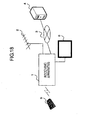
- Fig. 18 shows the general configuration of the video display system according to an embodiment of the invention.
- This video display system is configured of a receiving apparatus 1 and a monitor 6.
- the receiving apparatus 1 can receive the broadcast wave from a broadcasting station (not shown) through an antenna 2 on the one hand and a VOD content from a VOD server 4 (content archive) through a network 3 on the other hand. Also, the receiving apparatus 1 selects the channel, plays the VOD content or displays a menu screen in response to the operation information received from a remote controller 5.
- Fig. 19 is a block diagram showing the internal configuration of the receiving apparatus 1 shown in Fig. 18 .
- a main decoder 7 receives the audio/video data from a tuner 8 and a network card 9, and outputs the video signal to a video output circuit 12 and an audio signal to an audio output circuit (not shown).
- the main decoder 7 analyzes and separates the audio/video data received, and decodes the coded data. Also, the main decoder 7 performs such a control operation as to change the play method in accordance with the internal state of the receiving apparatus 1 or the state of the signal input from an external source.
- the signal input from an external source is a user command input through a remote controller 5.
- the tuner 8 executes the process of receiving the broadcast wave and retrieving the broadcast signal.
- the tuner 8 upon reception of a command from the main decoder 7 to tune to a specified frequency, selects the channel of the particular frequency, extracts the broadcast signal contained in the particular frequency and transfers it to the main decoder 7.
- the tuner 8 is a terrestrial digital broadcast tuner or a BS/broadband CS digital broadcast tuner.
- the network card 9 is a block constituting an interface with the network 3.
- the VOD content is transmitted to the main decoder 7 through the network card 9.
- An infrared light receiving unit 10 receives an infrared light signal transmitted from the remote controller 5 and transmits the received signal to the main decoder 7.
- the invention is not limited to this embodiment in which the signal is received by infrared light from the remote controller 5.
- the memory 11 temporarily stores the data generated by the main decoder 7 and other component circuits.
- a specific example of the memory 11 is a SRAM (Static Random Access Memory), a DRAM (Dynamic Random Access Memory), a flash memory or an EEPROM (Electronically Erasable Programmable Read-Only Memory).
- the video output circuit 12 receives the video signal output from the main decoder 7 and outputs by converting the signal into a format suitable for the monitor 6.
- the video output circuit 12 also executes the process of controlling the video signal output and outputs the video signal to the monitor 6 in accordance with an output frame rate.
- the internal bus 13 is used to transmit/receive the data between the component blocks in the receiving apparatus 1.
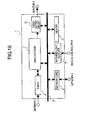
- Fig. 1 is a block diagram showing the internal functions of the main decoder 7 of the receiving apparatus 1 according to the first embodiment of the invention. Each function block is described below with reference to Fig. 1 .
- a broadcast reception/play unit 101 receives the multiplexed broadcast program data from the broadcast wave input through the antenna 2 and separates the signal into the video and audio data.
- the broadcast reception/play unit 101 decodes the video and audio signals and outputs the signals to the video output circuit 12 shown in Fig. 19 and the speaker (not shown) through an input switching unit 110 thereby to convert the data into the program attribute information.
- the video and audio signals making up the broadcast program data are multiplexed using the MPEG2 (Moving Picture Experts Group 2; the second standard of the color moving picture coding scheme standardization group) transport stream (TS).
- MPEG2 Moving Picture Experts Group 2
- TS transport stream
- the video and audio signals separated by the broadcast reception/play unit 101 which are coded by the MPEG2 Video and the MPEG2 Audio schemes, are decoded also by the broadcast reception/play unit 101 into the video and the audio data, respectively.
- the program attribute information includes the program broadcast channels and the program titles used in the electronic program guide or the program recommendation.
- the program attribute information is transmitted to and managed by a program information management unit 105.
- the broadcast reception/play unit 101 also has the function of managing the present time based on the present time point and the present date contained in the program attribute information.
- the VOD reception/play unit 102 receives, from the VOD server 4 on the network 3 shown in Fig. 18 , the VOD content data of which the location is designated, and reproduces the content in accordance with the play control command from the play control unit 109.
- the "location” described above is defined as a URI (Uniform Resource Identifier) assigned to the information resources on the network 3.
- the "play control command” includes the play control command designating the absolute position as in the reproduction from the head of the content or the reproduction of a scene, the play control command designating the relative positions such as the play by skipping 15 seconds ahead or the control command to change the play speed such as the rapid feed play or the pause.
- the user interface unit 103 has the function to receive various commands from the user and notify the user commands to the tuning control unit 104 and the play control unit 109 to perform the operation in response to the commands.
- the command from the user includes the "tuning command" for selecting the broadcast channel or the play control command described above which are normally issued from the remote controller 5 shown in Fig. 18 .
- the tuning control unit 104 instructs the broadcast reception/play unit 101 to select the channel in accordance with the tuning command received from the user interface unit 103.
- the tuning request is issued by the depression of a specified button on the remote controller 5 or the tuning operation on the electronic program guide.
- the program information management unit 105 holds the program attribute information of the programs being broadcast or scheduled to be broadcast. These program attribute information are periodically updated by the broadcast reception/play unit 101.
- the difference detection unit 106 detects a difference based on the "program progress correspondence table" transmitted from the VOD reception/play unit 102, the "program attribute information” transmitted from the program information management unit 105 and the "present time information” transmitted from the broadcast reception/play unit 101.
- the “difference” is defined as the difference between the play position of the program being broadcast and the play position of the content being played.
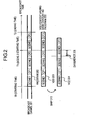
- Fig. 2 is a diagram showing a case in which the VOD 203, i.e. the video content having the same content as the program 202 is played during the time zone in which the program 202 started at time point T0 is being broadcast in the broadcast channel 201.
- the VOD 203 is a VOD content on the server, and therefore, the reproduction thereof can be variously controlled.
- the content having the time length cf2 can be skipped.
- the VOD 203 is changed to the VOD content having the length indicated by the VOD 204, with the result that a difference 205 is generated between the time length of the VOD 204 and that of the program 202.
- This is an example of the "difference” described above.
- the "program progress correspondence table” is described later.
- the content search unit 107 obtains the program attribute information on a designated program from the program information management unit 105 and detects by search whether the program defined by the program attribute information exists as a VOD content in the VOD server 4 on the network 3. The result of the search is transmitted to a usability judgment unit 108 described later, whereby the content location information is transmitted to the VOD reception/play unit 102 from the usability judgment unit 108.
- a trigger for the content search unit 107 to start the content search is issued by the broadcast reception/play unit 101 or the usability judgment unit 108.
- the usability judgment unit 108 judges the usability of a content based on the search result from the content search unit 107 and, upon judgment that it is usable, issues a command to the VOD reception/play unit 102 to obtain the retrieved content.
- the play control unit 109 instructs the VOD reception/play unit 102 to control the play operation in accordance with the play control request such as the trick play received from the user interface unit 103.
- the "trick play” is to change the play position such as "skip 15 seconds ahead” or “rapid feed”. In the case where the trick play request is received while viewing the broadcast program, the operation is switched to the VOD play.
- the input switching unit 110 executes the process by which the image output to the monitor is switched in accordance with the switch command from the play control unit 109 or the usability judgment unit 108.
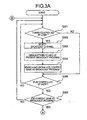
- Fig. 3 shows the processing flow for transition from the normal state of viewing the broadcast program to the viewing of the VOD content in response to a user command.
- the process in this flowchart generates the difference between the broadcast play position and the VOD play position as shown in the example of Fig. 2 .
- the flow shown in Fig. 3 is realized by the collaboration among the function blocks shown in Fig. 1 .
- the control signals between the function blocks are shown by arrows in Fig. 1 .
- which function block executes the processing operation in each step of the flow shown in Fig. 3 is described later with reference to each step.
- step S301 judges whether the user has issued a tuning control request or not.
- the tuning control request from the user is issued by the remote controller 5 through the user interface unit 103 shown in Fig. 1 .
- the process proceeds to step S302, otherwise to step S305.
- step S302 executes the tuning process for selecting the broadcast channel based on the tuning control request from the user generated in step S301.
- the process of step S302 is executed by the broadcast reception/play unit 101 through the tuning control unit 104 shown in Fig. 1 .
- the broadcast reception/play unit 101 in order to obtain the designated broadcast channel, controls the tuner 8 shown in Fig. 19 , and after thus changing the channel to the desired one, receives the broadcast signal MPEG2 TS.
- the video and audio signals contained in the MPEG2 TS are decoded in the broadcast reception/play unit 101 and output to the input switching unit 110 shown in Fig. 1 .
- step S303 the attribute information about the program being broadcast in the broadcast channel selected by tuning is obtained from the broadcast signal.
- This obtaining process is executed by the broadcast reception/play unit 101 shown in Fig. 1 .
- the broadcast attribute information thus obtained is transmitted to and managed by the program information management unit 105 shown in Fig. 1 .
- step S304 Based on the broadcast program attribute information obtained in step S303, the process of retrieving and acquiring from the VOD server the content having the same content as the VOD content being broadcast is executed in step S304.
- the process in step S304 is executed by the content search unit 107, the usability judgment unit 108 and the VOD reception/play unit 102 shown in Fig. 1 .
- the content search unit 107 executes the process of retrieving the same content from the VOD server.
- the search command is issued to the content search unit 107 from the broadcast reception/play unit 101.
- the result of search is transmitted to the usability judgment unit 108 from the content search unit 107.
- the search result thus transmitted includes the information as to whether the same content exists in the VOD server or not and, if it exists so, the URI information thereof.
- the usability judgment unit 108 based on the search result obtained from the content search unit 107, issues a VOD obtaining command to the VOD reception/play unit 102.
- the VOD content obtaining command is issued to the VOD reception/play unit 102 as soon as the same VOD content is found in the server.
- Step S305 executes the process of judging whether a play control request is issued from the user or not.
- the play control request from the user is issued by the remote controller 5 through the user interface unit 103 shown in Fig. 1 .
- the process proceeds to step S306, otherwise, to step S301.
- Step S306 judges whether the VOD content having the same content as the broadcast program could be obtained in step S304. In the presence of the same VOD content, the play control request of the user can be fulfilled, and therefore, the process proceeds to step S307. Otherwise, the process proceeds to step S301.
- steps S307 to S311 represents the procedure for detecting the play position of the VOD content (the difference information between the broadcast play position and the VOD content play position) required for transition from the broadcast play process to the VOD content play process.
- the process of steps S307 to S311 is executed by the difference detection unit 106 shown in Fig. 1 .
- Step S307 obtains the information on the channel being selected and the present date/hour from the broadcast reception/play unit 101.
- step S308 based on the channel information and the present date/hour obtained in step S307, obtains the broadcast start date/hour of the program being broadcast.
- the broadcast start date/hour information is stored as a kind of the broadcast program attribute information in the program information management unit 105 shown in Fig. 1 .
- Step S309 based on the present date/hour obtained in step S307 and the broadcast start date/hour obtained in step S308, calculates the elapsed broadcast time indicating the degree to which the present broadcasting has proceeded.
- the elapsed broadcast time is calculated by subtracting the program broadcast start date/hour from the present date/hour.
- step S310 calculates the VOD content play position based on the elapsed broadcast time calculated in step S309 and the program progress correspondence table.
- the program progress correspondence table is the information accompanying the VOD content and defined as the data obtained from the VOD reception/play unit 102 shown in Fig. 1 .
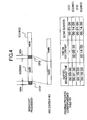
- FIG. 4 is a diagram showing the program progress correspondence table 403 accompanying the VOD content 402.
- the program progress correspondence table 403 indicates the VOD content play time in correspondence with the elapsed time of the broadcast program 401 having the same content as the VOD content 402.
- the VOD content play time can be calculated from the elapsed time of the broadcast program 401.
- a particular time point at which the present VOD play position is scheduled to be played in the actual broadcasting can be calculated from the VOD content play time.
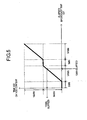
- Fig. 5 is a diagram showing the correspondence between the elapsed broadcast time 501 and the VOD content play time 502 prepared based on the program progress correspondence table shown in Fig. 4 .
- the VOD play position can be calculated as 12 minutes using the graph of Fig. 5 .
- the VOD play position calculated in step S310 is output to the play control unit 109 of Fig. 1 in step S311.
- step S312 the process of controlling the switching to the VOD content is executed based on the VOD content play position information obtained in step S311.
- the process of step S312 is executed by the play control unit 109 shown in Fig. 1 .
- the play control unit 109 based on the VOD content play position information obtained from the lag time detection unit 106, determines the VOD play position, and issues a play start command to the VOD reception/play unit 102.
- the play control unit 109 transmits a command to the input switching unit 110 to switch the video output of the broadcast wave to the video output which reproduces the VOD content. In this way, the process of switching from the viewing of the broadcast program to the VOD content play is executed in step S312.
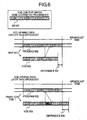
- the play position of the broadcast program i.e. the progress position of the program being broadcast is different from the VOD content play position, and a difference develops between them.
- this difference may represent either the state in which the progress of the broadcast program is delayed behind the VOD content or the state in which the progress of the broadcast program is ahead of the VOD content.
- This difference is shown in Fig. 6 .
- the difference 604 indicates that the skip process executed within the range of the broadcast program 602 ends the reproduction before the broadcast ending time.
- the lag time 606 in Fig. 6 indicates that the reproduction ends later than the end of the broadcasting due to the pause carried out by the user at a given point within the broadcast program 602.
- the difference assumes various different values depending on the play control request of the user.
- Fig. 3 shows only an example of the method of transition from the state in which the broadcast program is viewed to the reproduction (play) of the VOD content.
- the present invention therefore, is not limited to the transition method shown in Fig. 3 .
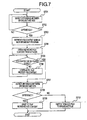
- Fig. 7 is a diagram showing the process executed during and at the end of the VOD content play in the state switched to the VOD content play but not to the viewing of the broadcast program of the broadcast wave.
- the processing flow of Fig. 7 is realized by the collaboration between the function blocks shown in Fig. 1 . Each step shown in Fig. 7 is described in detail below.
- step S701 the difference is detected between the progress position of the broadcast program being broadcast and the VOD play position.
- the process of step S701 is executed by the difference detection unit 106 shown in Fig. 1 . Also, this difference detection method is carried out based on the program progress correspondence table described above.
- step S702 judges whether a difference has developed or not, and in the absence of a difference, the process of step S701 is executed again. Specifically, steps S701 and S702 indicate that the difference detection process is steadily carried out during the VOD content reproduction (play). Incidentally, the process of step S702 is executed by the difference detection unit 106 shown in Fig. 1 .
- step S703 Upon detection of a difference in step S702, the VOD content having the same content as the next broadcast program scheduled to be started following the current program being broadcast is retrieved in step S703.
- the process of step S703 is executed by the content search unit 107 shown in Fig. 1 .
- the search process is triggered in such a manner that upon detection of the occurrence of the difference in step S702, the difference detection signal is transmitted to the usability judgment unit 108 shown in Fig. 1 , after which the usability judgment unit 108 triggers the content search unit 107.
- the content search unit 107 upon reception of the search command, first obtains, from the program information management unit 105 shown in Fig. 1 , the information on the next program started following the current program being broadcast.
- EIT Event Information Table
- SI Service Information
- This information is periodically received by the broadcast reception/play unit 101 shown in Fig. 1 and accumulated in the program information management unit 105.
- the content search unit 107 through the network card 9 of Fig. 1 and utilizing the obtained program information, executes the process of retrieving the corresponding VOD content from the VOD server 4 located on the network 3 shown in Fig. 18 .
- the result of search is transmitted to the usability judgment unit 108 from the content search unit 107.
- the search result thus transmitted includes the information indicating whether the content having the same content exists in the VOD server 4 and, if it exists so, the URI information thereof.
- step 704 the usability judgment unit 108, based on the result obtained from the content search unit 107, issues a VOD content obtaining command to the VOD reception/play unit 102.
- the VOD reception/play unit 102 obtains the VOD content from the network 3 in accordance with the VOD content obtaining command.
- Step S705 judges whether the VOD content play has ended or not.
- the length of the VOD content can be obtained from the program progress correspondence table described above.
- the process proceeds to step S707.
- the VOD content play is yet to end, on the other hand, as shown in step S706, the VOD content continues to be played, until the repetitive judgment in step S705 as to whether the VOD content play is ended or not.
- the process of judging whether or not the VOD content play is ended is executed by the play control unit 109 shown in Fig. 1 .
- the result of judgment is transmitted to the usability judgment unit 108.
- step S707 like in step S701, the difference detection process is executed.
- Step S708 like step S702, judges whether the difference exists or not. Upon judgment in step S708 that the difference exists, the process proceeds to step S709, otherwise, to step S710.
- the difference detection process of steps S707 and S708 is executed by the difference detection unit 106 shown in Fig. 1 .
- step S709 the process is executed so that the VOD content obtained in step S704 is played following the end of the VOD content being played.
- step S709 first, a VOD content play control command is transmitted to the play control unit 109 shown in Fig. 1 from the usability judgment unit 108 shown in Fig. 1 .
- the information thus transmitted is for designating the VOD content obtained in step S704.
- the play control unit 109 in response to the command from the usability judgment unit 108, instructs the VOD reception/play unit 102 shown in Fig. 1 to play the VOD content already obtained.
- the play control unit 109 instructs the input switching unit 110 shown in Fig. 1 to continue to play the VOD image. Due to the process executed in step S709, the VOD content having the same content as the next broadcast program obtained in advance starts to be played at the end of the VOD content being played.
- step S710 executes the process of switching to the reproduction of the broadcast program after the end of the VOD content play.
- the process of step S710 is started when the usability judgment unit 108 receives the notification from the play control unit 109 of Fig. 1 that the VOD content play has ended. After that, the usability judgment unit 108 issues a tuning command to the tuning control unit 104.
- the broadcast channel selected thereby is the one selected already before starting the play of the VOD content.
- the tuning control unit 104 instructs the input switching unit 110 to switch to the video display of the broadcast channel.
- the input switching unit 110 switches to the video display of the broadcast channel in accordance with this command.
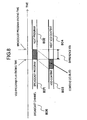
- Figs. 8 and 9 an explanation is given about a particular state to which the transition is made at the end of the VOD content play in the case where the difference exists between the progress position of the program being broadcast and the VOD play position as the result of the process execution shown in Fig. 7 .
- Fig. 8 shows a case in which the progress of the program being broadcast is delayed behind the VOD play position
- Fig. 9 a case in which the progress of the program being broadcast is ahead of the VOD play position.
- the broadcast channel 806 contains the broadcast program 801 and the next broadcast program 802 following the broadcast program 801. Also, the VOD content having the same content as the broadcast program 801 is the VOD program 803, and the VOD content having the same content as the next broadcast program 802 is the next VOD program 804. As shown in Fig. 8 , a difference 805 is developed in the case where the VOD program 803 being played is advanced ahead of the broadcast program 801. With this difference 805, assume that the broadcast channel 806 is selected after the end of play of the VOD program 803. The content of the content already viewed in the VOD program 803 would be undesirably viewed in the broadcast program 801 for the length of the difference 805.
- next VOD program 804 constituting the VOD content having the same content as the next broadcast program is obtained in advance, and by reproducing the next VOD program 804 following the play of the VOD program 803, the problem described above is solved.
- the next VOD program 804 is the content obtained in step 704 shown in Fig. 7 .
- the broadcast channel 906 includes the broadcast program 901 and the next broadcast program 902. Also, the VOD content having the same content as the broadcast program 901 is the VOD program 903, and the VOD content having the same content as the next broadcast program 902 is the next VOD program 904. As shown in Fig. 9 , the difference 905 is developed in the case where the VOD program 903 being played is delayed behind the broadcast program 901. In the case where the broadcast channel 906 is selected at the end of play of the VOD program 903 in the presence of the difference 905, the head portion of the broadcast program 902 as long as the difference 905 would be missed. In the presence of the difference, however, as shown in the flowchart of Fig.
- next VOD program 904 constituting the VOD content having the same content as the next broadcast program is obtained in advance, and by reproducing the next VOD program 904 following the play of the VOD program 903, the problem described above is solved.
- the next VOD program 904 is the content obtained in step 704 shown in Fig. 7 .
- the first embodiment of the invention can obviate the various inconveniences for the user which otherwise would be caused at the end of the VOD content play in the case where the viewing is switched to the VOD content in response to the play control request from the user during the viewing of the broadcast program.
- a second embodiment of the invention is described below with reference to the drawings.
- the second embodiment relates to a method effectively applicable in the case where the method described in the first embodiment cannot be used in the state in which the VOD content having the same content as the broadcast program is played ahead of the progress of the broadcast program.
- the case shown in Fig. 6 above is an example of the state discussed in the second embodiment in which the VOD content being played is ahead of the progress of the broadcast program.
- the receiving apparatus 1 and the peripheral devices are connected to each other similarly to the first embodiment shown in Fig. 18 .
- the internal configuration of the receiving apparatus 1 is also similar to that shown in Fig. 19 .
- the internal function blocks of the main decoder 7 shown in Fig. 19 are also similar to those of the first embodiment shown in Fig. 1 . Therefore, the function blocks shown in Figs. 18 , 19 and 1 are not described any further.
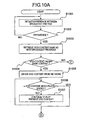
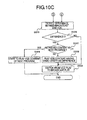
- Fig. 10 is a diagram showing the steps of the process executed during and at the end of the play of the VOD content in the case where the operation is switched to the VOD content play instead of to the viewing of the broadcast program of the broadcast wave.
- the process shown in Fig. 10 is realized by the collaboration between the function blocks shown in Fig. 1 .
- the steps of the process shown in Fig. 10 are described in detail individually.
- step S1001 the difference is detected between the progress position of the broadcast program being broadcast and the VOD play position.
- the process of step S1001 is executed by the difference detection unit 106 shown in Fig. 1 .
- the difference detection method is carried out based on the program progress correspondence table described above.
- step S1002 judges whether a difference is developed or not, and in the absence of the difference, the process of step S1001 is executed again. Specifically, steps S1001 and S1002 show that the difference detection process is steadily conducted during the VOD content play. The process of step S1002 is carried out by the difference detection unit 106 shown in Fig. 1 .
- step S1003 retrieves the VOD content having the same content as the next broadcast program scheduled to be started following the broadcast program being broadcast.
- the process of step S1003 is carried out by the content search unit 107 shown in Fig. 1 .
- the search process is triggered in such a manner that upon detection of a difference in step S1002, the difference detection signal is transmitted to the usability judgment unit 108 shown in Fig. 1 , after which the usability judgment unit 108 issues a search command to the content search unit 107.
- the content search unit 107 upon reception of the search command, first obtains the information on the next program following the program being broadcast, from the program information management unit 105.
- the content search unit 107 uses the obtained program information, executes the process of retrieving the corresponding VOD content from the VOD server 4 located on the network 3 shown in Fig. 18 .
- the search result is transmitted from the content search 107 to the usability judgment unit 108.
- the search result thus transmitted includes the information indicating whether the corresponding content exists in the VOD server 4 and the URI information in the presence of the corresponding content.
- Step S1004 searches the VOD server for the content of the same content and judges whether such content is found or not.
- the process of step S1004 is carried out by the usability judgment unit 108 shown in Fig. 1 .
- the process proceeds to step S1005.
- the process proceeds to step S1008.
- step S1005 the usability judgment unit 108 issues a command to the VOD reception/play unit 102 to obtain the VOD content based on the search result obtained from the content search unit 107.
- the VOD reception/play unit 102 obtains the VOD content from the network 3 shown in Fig. 18 .
- Step S1006 judges whether the VOD content being played has ended or not.
- the length of the VOD content can be obtained from the program progress correspondence table described above.
- the process proceeds to step S1015.
- the VOD content continues to be played as indicated by step S1007, followed by the judgment again in step S1006 whether the VOD content play has ended or not.
- the process of judging in step S1006 whether the VOD content play is ended or not is carried out by the play control unit 109 shown in Fig. 1 . Also, the judgment result is transmitted to the usability judgment unit 108 from the play control unit 109.
- step S1004 The steps of the process executed upon judgment in step S1004 that the content of the same content cannot be found on the VOD server are described below.
- Step S1008 executes the process of searching the VOD server for the content having substantially the same length as the difference.
- the detail of this content search process is similar to but different only in the search condition thereof from that of step S1003.
- the program having the same content as the next program following the program being broadcast is designated as the search condition.
- the content having about the same time length as the difference detected in step S1001 is designated as the search condition.
- the wording "about the same time length" indicates that the precision on the order of seconds is not required.
- the content of the content searched for is described later.
- An example of the content searched for includes a CF, an information program for a short time or one corner (scene) in the VOD content.
- Step S1009 executes the process of temporarily holding the difference value used for the search. This difference value is temporarily held in the memory 11 shown in Fig. 19 .
- the process of holding the difference value shown in step S1009 is carried out by the usability judgment unit 108.
- step S1010 the VOD content retrieved is obtained from the VOD server 4 on the network 3 shown in Fig. 18 .
- the process executed in step S1010 is similar to the process executed in step S1005.
- Step S1011 judges whether the VOD content play has ended or not.
- the process of step S1011 is similar to the process executed in step S1006. Upon judgment in step S1011 that the VOD content play is ended, the control proceeds to step S1015. In the case where the VOD content play has yet to end, on the other hand, the control proceeds to step S1012 and the VOD content continues to be played.
- Step S1013 executes the process of detecting again the difference between the progress position of the broadcast program and the VOD play position.
- the process of step S1013 is similar to the process executed in step S1001.
- step S1014 the difference value obtained in step S1013 is compared with the difference value stored in step S1009.
- step S1008 searches for the content having about the same time length as the difference obtained newly again.
- the control proceeds to step S1011, and the process of judging whether the VOD content play is ended or not is repeated.
- the difference comparison process in step S1014 is carried out by the usability judgment unit 108.
- step S1015 the difference detection process similar to step S1001 is executed in step S1015.
- Step S1016 like step S1002, judges whether a difference exists or not. Upon judgment in step S1016 that a difference exists, the process proceeds to step S1017, otherwise, to step S1020.
- Step S1017 judges whether the content retrieved from the VOD server has the same content as the next program to be broadcast or has about the same time length as the difference.
- the judgment in step S1017 is carried out by the usability judgment unit 108 shown in Fig. 1 . Also, the judgment as to which of the two content types described above is carried out, in accordance with the instruction from the usability judgment unit 108, based on the information recorded in the memory 11 shown in Fig. 19 .
- step S1017 judges that the content retrieved has the same content as the next broadcast program, the process proceeds to step S1018.
- step S1017 judges that the VOD content retrieved has about the same time length as the difference, on the other hand, the process proceeds to step S1019.
- Step S1018 executes the process in which the VOD content obtained in step S1005 is reproduced continuously after the end of the VOD content being played.
- the usability judgment unit 108 shown in Fig. 1 issues a VOD content play control command to the play control unit 109 shown in Fig. 1 .
- the information thus transmitted is for designating the VOD content obtained in step S1005.
- the play control unit 109 in response to the command from the usability judgment unit 108, controls the VOD reception/play unit 102 shown in Fig. 1 to play the VOD content already obtained.
- the play control unit 109 transmits a command to the input switching unit 110 shown in Fig. 1 to continue to play the VOD image.
- the process executed in step S1018 starts the play of the VOD content having the same content as the next broadcast program after the end of the VOD content being played.
- Step S1019 executes the process of reproducing the VOD content having about the same time length as the difference, continuously after the end of the VOD content being played.
- the process executed in step S1019 is similar to but different only in the content played from the process of step S1018.
- step S1020 executes the process of switching to the play of the broadcast program.
- the process of step S1020 is started with the usability judgment unit 108 receiving the notification from the play control unit 109 shown in Fig. 1 that the play of the VOD content is ended.
- the usability judgment unit 108 issues a tuning command to the tuning control unit 104.
- the broadcast channel selected in this case is the one already selected before starting the play of the VOD content.
- the tuning control unit 104 issues a command to the input switching unit 110 to switch to the video display of the broadcast channel. In compliance with this command, the input switching unit 110 switches the operation to the video display of the broadcast channel.
- Fig. 11 is a diagram for explaining a case in which the progress of the program being broadcast is delayed behind the VOD play position in the absence of the VOD content having the same content as the next broadcast program.
- the broadcast channel 1106 includes a broadcast program 1101 and the next broadcast program 1102 immediately following the broadcast program 1101.
- the VOD content having the same content as the broadcast program 1101 is the VOD program 1103.
- a difference 1105 is developed in the case where the VOD program 1103 being played is ahead of the broadcast program 1101.
- the broadcast channel 1106 is selected at the end of play of the VOD program 1103 in the presence of the difference 1105, the content viewed already in the VOD program 1103 would be undesirably viewed again in the broadcast program 1101 by the length of the difference 1105.
- a method of retrieving the content having about the same length as the difference is described below. Incidentally, the content having about the same length as the difference is retrieved in step S1008 shown in Fig. 10 .
- the content retrieved in step S1008 shown in Fig. 10 may be basically as long as the difference and not limited in any other way. In accordance with the play control operation of the user performed before the occurrence of the difference, however, the content to be retrieved is changed, so that the content more useful to the user can be retrieved.
- the same CF as the one contained in the VOD content is retrieved and supplied to the user.
- This method makes it possible for the user to repeatedly view the CF interesting to him/her, and the receiving apparatus 1 can provide the user with a content meaningful to him/her.
- the various disadvantages caused to the user at the end of the VOD content play can be obviated in the state where the viewing is switched to the VOD content at the play control request of the user while viewing the broadcast program.
- a third embodiment of the invention is described below with reference to the drawings.
- the method according to the third embodiment is effectively applicable to a case in which the method according to the first embodiment cannot be used in the reproduction of the VOD content having the same content as the broadcast program while the reproduction of the VOD content is delayed behind the progress of the broadcast program.
- An example of the case according to the third embodiment in which the reproduction of the VOD content is delayed behind the progress of the broadcast program is described above with reference to Fig. 6 .
- the connection between the receiving apparatus 1 and the peripheral devices to realize the third embodiment is similar to the one of the first embodiment shown in Fig. 18 .
- the internal configuration of the receiving apparatus 1 is also similar to the one shown in Fig. 19 . Therefore, Figs. 18 and 19 are not further described.
- FIG. 12 A function block diagram of the main decoder 7 for realizing the third embodiment is shown in Fig. 12 .
- the function blocks having the function equivalent to those in Fig. 1 are designated by the same reference numerals, respectively, and will not be repeated. Only the new function blocks added to realize the third embodiment are described below.
- a display image generating unit 1201 in accordance with the command from the usability judgment unit 108, executes the process of generating an image for displaying the various information such as a message to the monitor 6.
- the various information display images generated by the display image generating unit 1201 are transmitted to a synthesis unit 1203.
- a specific example of the message icon generated by the display image generating unit 1201 includes a message informing the user that the next broadcast program is started soon or a message indicating the method of starting the VOD content play. These messages are described in detail later.
- a suspension information recording unit 1202 records the suspension information making it possible to restart the play from the suspension point.
- the suspension information required for restarting the play includes the title of the VOD content of which the play is suspended, the URI and the time from the start of the VOD content play to the suspension point.
- the read/write operation of the suspension information is controlled by the play control unit 109. Also, the suspension information is stored in the memory 11 shown in Fig. 19 .
- the synthesis unit 1203 executes the process of synthesizing the display image generated by the display image generating unit 1201 and the broadcast image or the VOD content image transmitted from the input switching unit 110.
- the image thus synthesized is transmitted to the monitor 6 shown in Fig. 18 and presented to the viewer through the video output circuit 12 shown in Fig. 19 .
- the viewing transition process from the broadcast program to the VOD content presupposed in the third embodiment is similar to the process of the flowchart of Fig. 3 described above in the first embodiment.
- the transition to the VOD content play mode, therefore, is not described.
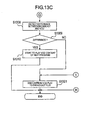
- Fig. 13 is a diagram showing the process executed during or at the end of reproduction of the VOD content in the state in which the viewing is switched to the VOD content but not to the broadcast program of the broadcast wave.
- the processing flow shown in Fig. 13 is realized by the collaboration between the function blocks shown in Fig. 1 .
- the steps shown in Fig. 13 are individually described in detail below.
- step S1301 a difference between the progress position of the program being broadcast and the VOD play position is detected.
- the process of step S1301 is executed by the difference detection unit 106 shown in Fig. 12 .
- the difference detection method is carried out in accordance with the program progress correspondence table.
- step S1302 executes the process of judging whether the difference is developed or not. In the case where no difference is developed, the process of step S1301 is executed again. Specifically, steps S1301 and S1302 indicate that the difference detection process is executed steadily during the VOD content reproduction.
- step S1303 retrieves the VOD content having the same content as the next broadcast program to be started following the broadcast program being broadcast.
- the process of step S1303 is executed by the content search unit 107 shown in Fig. 12 .
- the search process is triggered in such a manner that upon detection of a difference in step S1302, a difference detection signal is transmitted to the usability judgment unit 108 shown in Fig. 12 , after which the usability judgment unit 108 issues a search command to the content search unit 107.
- the content search unit 107 upon reception of the search command, obtains the information on the next program to be started following the program being broadcast, from the program information management unit 105 shown in Fig. 12 .
- the content search unit 107 utilizing the program information thus obtained, executes the process of retrieving the corresponding VOD content from the VOD server 4 located on the network 3 shown in Fig. 18 .
- the search result is transmitted to the usability judgment unit 108 from the content search unit 107.
- the search result thus transmitted includes the information as to whether the content having the same content is existent in the VOD server and, if present, the URI information thereof.
- Step S1304 judges whether the content having the same content is found or not on the VOD server as the result of the search.
- the process of step S1304 is carried out by the usability judgment unit 108 shown in Fig. 12 .
- the process proceeds to step S1305.
- the process proceeds to step S1311.
- step S1305 the usability judgment unit 108 issues a command to the VOD reception/play unit 102 to obtain the VOD content based on the result obtained from the content search unit 107.
- the VOD reception/play unit 102 obtains the VOD content from the network 3 in compliance with the obtaining command.
- Step 1306 judges whether the VOD content play has endedornot.
- the length of the VOD content can be obtained from the program progress correspondence table described above.
- the process proceeds to step S1308.
- the VOD content play has yet to be ended on the other hand, the VOD content continues to be played as shown in step S1307, and the judgment is repeated in step S1306 whether the VOD content play is ended or not.
- step S1308 Upon complete reproduction of the VOD content being played, the difference detection process is carried out in step S1308 in similar fashion to step S1301.
- Step 1309 like step S1302, judges whether a difference exists or not. Upon judgment in step S1309 that a difference exists, the process proceeds to step S1310, otherwise, to step S1321.
- step S1310 the VOD content obtained in step S1305 is reproduced continuously following the end of the VOD content being played.
- the process of step S1310 is started by transmitting a VOD content replay control command to the play control unit 109 shown in Fig. 12 from the usability judgment unit 108 shown in Fig. 12 .
- the information transmitted includes the information designating the VOD content obtained in step S1305.
- the play control unit 109 in accordance with the command from the usability judgment unit 108, controls the VOD reception/play unit 102 shown in Fig. 12 to play the VOD content already obtained.
- the play control unit 109 transmits a command to the input switching unit 110 of Fig. 1 to continue the reproduction of the VOD image.
- the process of step S1310 makes it possible to play the VOD content having the same content as the next broadcast already obtained, after the end of the VOD content being played.
- Step S1311 confirms the broadcast starting time of the next broadcast program following the broadcast program being broadcast and having the same content as the VOD content being played.
- the process of step S1311 is carried out by the usability judgment unit 108 shown in Fig. 12 .
- the usability judgment unit 108 first obtains the starting time of the next broadcast program from the program information management unit 105 shown in Fig. 12 on the one hand and the present time point from the broadcast reception/play unit 101 on the other hand.
- the present time point is compared with the starting time of the next broadcast program, and the process proceeds to step S1313 ten minutes before starting the next broadcast program.
- step S1312 continues to play the VOD content and the time confirmation in step S1311 is repeated.
- the length of 10 minutes is only an example and may be replaced by another time length.
- step S1313 the receiving apparatus 1 suspends the play (reproduction) of the VOD content and issues a message to the user urging him/her to decide whether the viewing is to be switched to the broadcast program or not.
- the process of step S1313 is carried out by the usability judgment unit 108, the display image generating unit 1201 and the synthesis unit 1203.
- the usability judgment unit 108 sends a message generation request to the display image generating unit 1201.
- the display image generating unit 1201 in accordance with the request, generates and transmits a display image to the synthesis unit 1203.
- the synthesis unit 1203 synthesizes the reproduced image of the VOD content with the image generated by the display image generation unit 1201 and outputs it to the monitor 6 through the video output circuit 12 shown in Fig. 19 .
- the image after synthesis is shown in Fig. 14 .
- Step S1314 judges whether the time to start the next broadcast program has been reached or not.
- the process of step S1314 is equivalent to the process of step S1311 for comparing the present time with the time to start the next broadcast program.
- the process proceeds to step S1316.
- the VOD content continues to be played in step S1315, and the judgment as to whether the time to start the next broadcast program is reached or not is repeated in step S1314.
- Step 1316 judges whether a tuning command is issued from the user by the time of arrival at the time to start the next broadcast program. Although a message is presented to the user urging him/her to make the decision in step S1313, the subsequent user commands are judged in step S1316. Each user command is transmitted to the usability judgment unit 108 through the user interface unit 103 shown in Fig. 12 . In the case where the user issues a command to switch to the reproduction of the broadcast wave with the arrival of the time to start the next broadcast program, the process proceeds to step S317. Otherwise, the process proceeds to step S1319.
- step S1317 the VOD content play is suspended and switched to the play process of the broadcast wave play.
- the VOD suspension information is held in step S1318 in order to make the VOD content play suspension point usable subsequently.
- the process executed in step S1318 is realized by the play control unit 109 issuing a suspension information write request to the suspension information recording unit 1202. Incidentally, the suspension information is described above.
- Steps S1319 and S1320 judge whether the VOD content being played has ended or not. In the case where the VOD content being played is ended, the process proceeds to step S1321.
- Step S1321 executes the process of switching to the reproduction of the broadcast program.
- the process of step S1321 is started by the usability judgment unit 108 receiving the message that the VOD content play is ended, from the play control unit 109 shown in Fig. 12 .
- the usability judgment unit 108 issues a tuning command to the tuning control unit 104.
- the broadcast channel selected in this case is the one already selected before starting the VOD content play.
- the tuning control unit 104 issues a command to the input switching unit 110 to switch to the video display of the broadcast channel.
- the input switching unit 110 switches to the video display of the broadcast channel in response to the command.
- Fig. 15 is a diagram for explaining a case in which the VOD content of the next broadcast program is not existent with the broadcast program ahead of the VOD content play position. An explanation is also made about a case in which an affirmative response is obtained from the user in return to the inquiry about the channel selection in step S1313 as described above in Fig. 13 .
- the broadcast channel 1506 includes the broadcast program 1501 and the next broadcast program 1502. Also, the VOD content having the same content as the broadcast program 1501 is the VOD program 1503. As shown in Fig. 15 , a difference 1505 is developed in the case where the VOD program 1503 being played is delayed behind the broadcast program 1501. In the case where the broadcast channel 1506 is selected at the end of the reproduction of the VOD program 1503 with this difference 1505, the leading portion of the broadcast program 1502 would be missed by the length of the difference 1505. As shown in the flowchart of Fig. 13 , however, the confirmation of the user is sought for channel selection in the absence of the VOD content having the same content as the next broadcast program with a difference.
- the operation Upon reception of a "tuning" command from the user, the operation is switched to the broadcast channel 1506 with the arrival at the broadcast program ending time.
- the suspension information 1504 of the VOD program 1503 is held at the same time. As shown in Fig. 15 , the next broadcast program 1502 can be viewed without being missed by switching to the broadcast channel 1506.
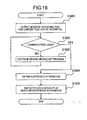
- Fig. 16 shows the flowchart of the process to restart the viewing of the suspended VOD content in the state of the operation switched to the viewing of the broadcast wave in response to the user command to suspend the VOD content.
- step S1601 proposes to the user that the suspended VOD content play can be restarted.
- the proposition in step S1601 is made after the usability judgment unit 108 shown in Fig. 12 requests the display image generating unit 1201 to generate an image and the synthesis unit 1203 synthesizes the generated image with the broadcast image.
- the image of the screen presented to the user through the process of step S1601 is shown in Fig. 17 .
- the image displayed in step S1601 may be configured to be erased upon lapse of a predetermined time.
- step S1602 confirms whether the user has performed the operation issuing a command to restart the play or not.
- the operation signal from the user is transmitted to the usability judgment unit 108 shown in Fig. 12 through the interface unit 103 shown in Fig. 12 .
- the process proceeds to step S1604, while in the absence of the operation signal from the user, the broadcast program continues to be played in step S1603.
- the suspension information is read in step S1604.
- the suspension information is read from the suspension information recording unit 1202 shown in Fig. 12 by the play control unit 109 shown in Fig. 12 .
- the suspension information is recorded also in the memory 11 shown in Fig. 19 .
- step S1605 the play of the VOD content is restarted based on the suspension information that has been read.
- the process of step S1605 is carried out by the play control unit 109.
- the play control unit 109 using the suspension information read from the suspension information recording unit 1202, issues a command to the VOD reception/play unit 102 to restart the play of the VOD content. Also, the play control unit 109 issues a command to the input switching unit 110 to switch from the video display of the broadcast program to the video display of the VOD content.
- the viewing of the VOD content can be easily restarted even in the case where the VOD content play is suspended in the flow of Fig. 13 .
- the various disadvantages against the user can be obviated which otherwise might be generated at the end of the VOD content play in the case where the viewing of the broadcast program is switched to the viewing of the VOD content in response to the play control request from the user.
- this invention is effectively applicable to a case in which the VOD content is being played in the absence of the VOD content of the next scheduled broadcast program and the VOD content play is delayed behind the progress of the broadcast program.
Landscapes
- Engineering & Computer Science (AREA)
- Multimedia (AREA)
- Signal Processing (AREA)
- Databases & Information Systems (AREA)
- Human Computer Interaction (AREA)
- Software Systems (AREA)
- Computer Networks & Wireless Communication (AREA)
- Two-Way Televisions, Distribution Of Moving Picture Or The Like (AREA)
Applications Claiming Priority (1)
| Application Number | Priority Date | Filing Date | Title |
|---|---|---|---|
| JP2008094617A JP5078710B2 (ja) | 2008-04-01 | 2008-04-01 | 受信装置とその制御方法 |
Publications (3)
| Publication Number | Publication Date |
|---|---|
| EP2107810A2 EP2107810A2 (en) | 2009-10-07 |
| EP2107810A3 EP2107810A3 (en) | 2011-05-25 |
| EP2107810B1 true EP2107810B1 (en) | 2013-10-09 |
Family
ID=40886768
Family Applications (1)
| Application Number | Title | Priority Date | Filing Date |
|---|---|---|---|
| EP09156988.9A Not-in-force EP2107810B1 (en) | 2008-04-01 | 2009-03-31 | Receiving apparatus and control method thereof |
Country Status (4)
| Country | Link |
|---|---|
| US (1) | US8316403B2 (enExample) |
| EP (1) | EP2107810B1 (enExample) |
| JP (1) | JP5078710B2 (enExample) |
| CN (1) | CN101552906B (enExample) |
Families Citing this family (4)
| Publication number | Priority date | Publication date | Assignee | Title |
|---|---|---|---|---|
| US9832528B2 (en) * | 2010-10-21 | 2017-11-28 | Sony Corporation | System and method for merging network-based content with broadcasted programming content |
| CN103024289B (zh) * | 2012-12-28 | 2016-06-15 | 天脉聚源(北京)传媒科技有限公司 | 一种基于m3u8列表协议直播流的编辑方法及装置 |
| CN103747282A (zh) * | 2013-12-27 | 2014-04-23 | 乐视网信息技术(北京)股份有限公司 | 一种节目单编排方法和设备 |
| JP6910900B2 (ja) * | 2017-09-12 | 2021-07-28 | シャープ株式会社 | 番組表生成装置、表示装置、テレビジョン受像機、メタデータ生成装置、番組表生成方法、メタデータ生成方法、制御プログラム及び記録媒体 |
Family Cites Families (15)
| Publication number | Priority date | Publication date | Assignee | Title |
|---|---|---|---|---|
| JPH1198216A (ja) * | 1997-09-22 | 1999-04-09 | Ntt Data Corp | 通信方式選択方法および装置と該方法を実施するプログラムを記録した記録媒体 |
| JPH1198217A (ja) * | 1997-09-22 | 1999-04-09 | Ntt Data Corp | 放送周期切替方法および装置と該方法を実施するプログラムを記録した記録媒体 |
| JP3250509B2 (ja) | 1998-01-08 | 2002-01-28 | 日本電気株式会社 | 放送番組の視聴方法および視聴装置 |
| JP3448709B2 (ja) * | 2000-11-20 | 2003-09-22 | 株式会社ブランドゥ | コンテンツ再生装置および方法 |
| GB2375674A (en) | 2001-05-15 | 2002-11-20 | British Broadcasting Corp | Virtual Media Channel |
| JP4040316B2 (ja) * | 2002-02-01 | 2008-01-30 | キヤノン株式会社 | 受信装置 |
| US7818764B2 (en) * | 2002-06-20 | 2010-10-19 | At&T Intellectual Property I, L.P. | System and method for monitoring blocked content |
| WO2004047432A1 (en) | 2002-11-18 | 2004-06-03 | Koninklijke Philips Electronics N.V. | Method and apparatus for content selection |
| CN1813471A (zh) | 2003-06-27 | 2006-08-02 | 皇家飞利浦电子股份有限公司 | 可选择节目源避免了dvr时间安排的冲突 |
| JP2005136974A (ja) * | 2003-10-09 | 2005-05-26 | Matsushita Electric Ind Co Ltd | 放送アーカイブ利用方法及び放送アーカイブ受信装置 |
| US20050097624A1 (en) * | 2003-10-31 | 2005-05-05 | Nokia Corporation | System and associated terminal, method and computer program product for providing broadcast content |
| JP2008523681A (ja) * | 2004-12-09 | 2008-07-03 | コーニンクレッカ フィリップス エレクトロニクス エヌ ヴィ | 番組再生方法及び装置 |
| US8768146B2 (en) * | 2005-10-24 | 2014-07-01 | Microsoft Corporation | Strategies for controlling presentation of media information based on a sampling of customer playback behavior |
| JP5052788B2 (ja) * | 2005-12-27 | 2012-10-17 | 京セラ株式会社 | デジタル放送受信装置およびデジタル放送受信方法 |
| JP2007274558A (ja) * | 2006-03-31 | 2007-10-18 | Toshiba Corp | 受信装置及び受信方法 |
-
2008
- 2008-04-01 JP JP2008094617A patent/JP5078710B2/ja active Active
-
2009
- 2009-03-30 US US12/414,223 patent/US8316403B2/en not_active Expired - Fee Related
- 2009-03-31 EP EP09156988.9A patent/EP2107810B1/en not_active Not-in-force
- 2009-04-01 CN CN2009101323803A patent/CN101552906B/zh not_active Expired - Fee Related
Also Published As
| Publication number | Publication date |
|---|---|
| CN101552906B (zh) | 2011-09-28 |
| EP2107810A3 (en) | 2011-05-25 |
| CN101552906A (zh) | 2009-10-07 |
| JP5078710B2 (ja) | 2012-11-21 |
| US8316403B2 (en) | 2012-11-20 |
| US20090249411A1 (en) | 2009-10-01 |
| EP2107810A2 (en) | 2009-10-07 |
| JP2009253311A (ja) | 2009-10-29 |
Similar Documents
| Publication | Publication Date | Title |
|---|---|---|
| JP5156594B2 (ja) | 再生装置及びその制御方法 | |
| KR101007881B1 (ko) | 방송 프로그램의 연속 녹화 제어 방법 | |
| MXPA04010504A (es) | Presentacion de imagen en vivo mientras se graba video digital. | |
| US12058419B2 (en) | Apparatus, systems and methods for song play using a media device having a buffer | |
| JP5224862B2 (ja) | コンテンツ切換装置およびコンテンツ切換方法 | |
| EP2107810B1 (en) | Receiving apparatus and control method thereof | |
| KR100731189B1 (ko) | 신호처리장치, 화상표시장치 및 화상표시방법 | |
| JP2010176786A (ja) | コントローラ、録画機器及びメニュー表示方法 | |
| JP2003018538A (ja) | コマーシャルカット装置とコマーシャルカット方法及びコマーシャルカット機能を備えた記録再生装置並びにコマーシャルカットプログラム | |
| JP5153311B2 (ja) | 放送番組視聴システム | |
| JP5024616B2 (ja) | 記録装置および方法、プログラム、並びに記録媒体 | |
| JP2008092216A (ja) | 放送受信装置、サーバ装置及び放送受信装置の番組推薦方法 | |
| JP4921211B2 (ja) | 記録制御装置及び記録制御装置の制御方法 | |
| KR100708132B1 (ko) | 미녹화된 방송 프로그램 부분의 녹화 방법 및 장치 | |
| US20060147181A1 (en) | Method of providing rebroadcast information, and method and apparatus for recording broadcast program | |
| JP2005033253A (ja) | 蓄積情報検索システム、端末装置およびサーバ装置 | |
| JP4914102B2 (ja) | 受信装置 | |
| JP2007158441A (ja) | 番組表作成装置及び番組表作成方法 | |
| JP2004363804A (ja) | 映像信号出力装置及び映像信号出力方法 | |
| JP2010016587A (ja) | 映像再生装置及び映像再生方法 | |
| JP2008167251A (ja) | コンテンツ再生装置、及びコンテンツ案内方法 | |
| CN114731384A (zh) | 显示装置以及用于显示装置的方法 | |
| JPH11252476A (ja) | ディジタル衛星放送受信機 | |
| WO2006123292A2 (en) | Presentation of content at a client device |
Legal Events
| Date | Code | Title | Description |
|---|---|---|---|
| PUAI | Public reference made under article 153(3) epc to a published international application that has entered the european phase |
Free format text: ORIGINAL CODE: 0009012 |
|
| AK | Designated contracting states |
Kind code of ref document: A2 Designated state(s): AT BE BG CH CY CZ DE DK EE ES FI FR GB GR HR HU IE IS IT LI LT LU LV MC MK MT NL NO PL PT RO SE SI SK TR |
|
| AX | Request for extension of the european patent |
Extension state: AL BA RS |
|
| PUAL | Search report despatched |
Free format text: ORIGINAL CODE: 0009013 |
|
| AK | Designated contracting states |
Kind code of ref document: A3 Designated state(s): AT BE BG CH CY CZ DE DK EE ES FI FR GB GR HR HU IE IS IT LI LT LU LV MC MK MT NL NO PL PT RO SE SI SK TR |
|
| AX | Request for extension of the european patent |
Extension state: AL BA RS |
|
| 17P | Request for examination filed |
Effective date: 20111125 |
|
| 17Q | First examination report despatched |
Effective date: 20111222 |
|
| AKX | Designation fees paid |
Designated state(s): DE FR GB IT |
|
| REG | Reference to a national code |
Ref country code: DE Ref legal event code: R079 Ref document number: 602009019298 Country of ref document: DE Free format text: PREVIOUS MAIN CLASS: H04N0007173000 Ipc: H04N0021472000 |
|
| GRAP | Despatch of communication of intention to grant a patent |
Free format text: ORIGINAL CODE: EPIDOSNIGR1 |
|
| RIC1 | Information provided on ipc code assigned before grant |
Ipc: H04N 21/442 20110101ALI20121119BHEP Ipc: H04N 21/472 20110101AFI20121119BHEP Ipc: H04N 21/433 20110101ALI20121119BHEP Ipc: H04N 21/462 20110101ALI20121119BHEP Ipc: H04N 21/458 20110101ALI20121119BHEP Ipc: H04N 21/482 20110101ALI20121119BHEP |
|
| GRAP | Despatch of communication of intention to grant a patent |
Free format text: ORIGINAL CODE: EPIDOSNIGR1 |
|
| INTG | Intention to grant announced |
Effective date: 20130419 |
|
| GRAS | Grant fee paid |
Free format text: ORIGINAL CODE: EPIDOSNIGR3 |
|
| GRAA | (expected) grant |
Free format text: ORIGINAL CODE: 0009210 |
|
| AK | Designated contracting states |
Kind code of ref document: B1 Designated state(s): DE FR GB IT |
|
| REG | Reference to a national code |
Ref country code: GB Ref legal event code: FG4D |
|
| REG | Reference to a national code |
Ref country code: DE Ref legal event code: R096 Ref document number: 602009019298 Country of ref document: DE Effective date: 20131205 |
|
| REG | Reference to a national code |
Ref country code: DE Ref legal event code: R097 Ref document number: 602009019298 Country of ref document: DE |
|
| PLBE | No opposition filed within time limit |
Free format text: ORIGINAL CODE: 0009261 |
|
| STAA | Information on the status of an ep patent application or granted ep patent |
Free format text: STATUS: NO OPPOSITION FILED WITHIN TIME LIMIT |
|
| PG25 | Lapsed in a contracting state [announced via postgrant information from national office to epo] |
Ref country code: IT Free format text: LAPSE BECAUSE OF FAILURE TO SUBMIT A TRANSLATION OF THE DESCRIPTION OR TO PAY THE FEE WITHIN THE PRESCRIBED TIME-LIMIT Effective date: 20131009 |
|
| 26N | No opposition filed |
Effective date: 20140710 |
|
| REG | Reference to a national code |
Ref country code: DE Ref legal event code: R119 Ref document number: 602009019298 Country of ref document: DE |
|
| REG | Reference to a national code |
Ref country code: DE Ref legal event code: R097 Ref document number: 602009019298 Country of ref document: DE Effective date: 20140710 |
|
| REG | Reference to a national code |
Ref country code: FR Ref legal event code: ST Effective date: 20141128 |
|
| REG | Reference to a national code |
Ref country code: DE Ref legal event code: R119 Ref document number: 602009019298 Country of ref document: DE Effective date: 20141001 |
|
| PG25 | Lapsed in a contracting state [announced via postgrant information from national office to epo] |
Ref country code: FR Free format text: LAPSE BECAUSE OF NON-PAYMENT OF DUE FEES Effective date: 20140331 Ref country code: DE Free format text: LAPSE BECAUSE OF NON-PAYMENT OF DUE FEES Effective date: 20141001 |
|
| PGFP | Annual fee paid to national office [announced via postgrant information from national office to epo] |
Ref country code: GB Payment date: 20160329 Year of fee payment: 8 |
|
| GBPC | Gb: european patent ceased through non-payment of renewal fee |
Effective date: 20170331 |
|
| PG25 | Lapsed in a contracting state [announced via postgrant information from national office to epo] |
Ref country code: GB Free format text: LAPSE BECAUSE OF NON-PAYMENT OF DUE FEES Effective date: 20170331 |