EP2085656A2 - System zum Einschätzen einer Fahrzeugmasse - Google Patents
System zum Einschätzen einer Fahrzeugmasse Download PDFInfo
- Publication number
- EP2085656A2 EP2085656A2 EP08171019A EP08171019A EP2085656A2 EP 2085656 A2 EP2085656 A2 EP 2085656A2 EP 08171019 A EP08171019 A EP 08171019A EP 08171019 A EP08171019 A EP 08171019A EP 2085656 A2 EP2085656 A2 EP 2085656A2
- Authority
- EP
- European Patent Office
- Prior art keywords
- mass
- vehicle
- signal
- processor
- operable
- Prior art date
- Legal status (The legal status is an assumption and is not a legal conclusion. Google has not performed a legal analysis and makes no representation as to the accuracy of the status listed.)
- Withdrawn
Links
Images




Classifications
-
- F—MECHANICAL ENGINEERING; LIGHTING; HEATING; WEAPONS; BLASTING
- F16—ENGINEERING ELEMENTS AND UNITS; GENERAL MEASURES FOR PRODUCING AND MAINTAINING EFFECTIVE FUNCTIONING OF MACHINES OR INSTALLATIONS; THERMAL INSULATION IN GENERAL
- F16H—GEARING
- F16H59/00—Control inputs to control units of change-speed- or reversing-gearings for conveying rotary motion
- F16H59/50—Inputs being a function of the status of the machine, e.g. position of doors or safety belts
- F16H59/52—Inputs being a function of the status of the machine, e.g. position of doors or safety belts dependent on the weight of the machine, e.g. change in weight resulting from passengers boarding a bus
-
- F—MECHANICAL ENGINEERING; LIGHTING; HEATING; WEAPONS; BLASTING
- F16—ENGINEERING ELEMENTS AND UNITS; GENERAL MEASURES FOR PRODUCING AND MAINTAINING EFFECTIVE FUNCTIONING OF MACHINES OR INSTALLATIONS; THERMAL INSULATION IN GENERAL
- F16H—GEARING
- F16H61/00—Control functions within control units of change-speed- or reversing-gearings for conveying rotary motion ; Control of exclusively fluid gearing, friction gearing, gearings with endless flexible members or other particular types of gearing
- F16H61/02—Control functions within control units of change-speed- or reversing-gearings for conveying rotary motion ; Control of exclusively fluid gearing, friction gearing, gearings with endless flexible members or other particular types of gearing characterised by the signals used
- F16H61/0202—Control functions within control units of change-speed- or reversing-gearings for conveying rotary motion ; Control of exclusively fluid gearing, friction gearing, gearings with endless flexible members or other particular types of gearing characterised by the signals used the signals being electric
- F16H61/0204—Control functions within control units of change-speed- or reversing-gearings for conveying rotary motion ; Control of exclusively fluid gearing, friction gearing, gearings with endless flexible members or other particular types of gearing characterised by the signals used the signals being electric for gearshift control, e.g. control functions for performing shifting or generation of shift signal
- F16H61/0213—Control functions within control units of change-speed- or reversing-gearings for conveying rotary motion ; Control of exclusively fluid gearing, friction gearing, gearings with endless flexible members or other particular types of gearing characterised by the signals used the signals being electric for gearshift control, e.g. control functions for performing shifting or generation of shift signal characterised by the method for generating shift signals
Definitions
- This invention relates to vehicle systems, specifically to such systems used for estimating a mass of a vehicle.
- Vehicles utilizing automatic or automated mechanical transmissions such as trucks, buses, and cars, depend on gear shifting logic or algorithms to determine the appropriate gear to use for a wide variety of conditions. Each shift decision may be based on a balance between fuel efficiency and performance to provide a desired driving experience.
- One of the significant parameters impacting this balance is the total mass or weight of the vehicle. For example, a truck carrying no payload may shift to a higher gear by skipping one or more gears to improve fuel efficiency and yet still maintain an adequate level of performance. However, a truck carrying a relatively heavy payload may up-shift through each gear and engage each gear for a longer period of time to improve performance by transmitting an increased amount of power from the engine.
- force mass x acceleration
- the force is related to the engine torque, which propels the vehicle.
- the vehicle mass may be derived through a calculation based on the vehicle's acceleration.
- a system may repeat the calculation several times to provide a mass or weight value with a better accuracy.
- the vehicle must be in motion for this mass determination method to work because it requires measurement of a useful acceleration value. Also, this method typically uses an average of several calculations, and a single inaccurate calculation may adversely impact the mass or weight value. Furthermore, collecting and averaging several calculations takes time during which shifting performance may be negatively affected.
- a vehicle mass estimation system for use in a vehicle including a tractor, a trailer, and a transmission.
- a signal device may be operable to generate an indication signal.
- a processor may be operable to communicate with the signal device and operable to receive the indication signal from the signal device.
- the processor may be further operable to determine whether a vehicle trailer is connected to the vehicle tractor based on the indication signal.
- the processor may be further operable to estimate a vehicle mass based, at least in part, on the indication signal.
- the processor may be further operable to select a desired gear ratio for engagement in a transmission based, at least in part, on the estimated vehicle mass.
- a vehicle mass estimation system for use in a vehicle including a tractor, a trailer, and a transmission.
- a processor in a vehicle may be operable to communicate with a remote station.
- the remote station may be operable to transmit a mass signal indicative of the mass of at least a portion of the vehicle.
- the processor may be further operable to receive the mass signal.
- the processor may be further operable to select a desired gear ratio for engagement in the transmission based, at least in part, on the mass signal.
- a vehicle mass estimation system for use in a vehicle including a tractor, a trailer, and a transmission.
- An input device on or in a vehicle may be operable to receive an input from an operator and to generate a first mass signal.
- the input may be indicative of a mass of at least a portion of the vehicle.
- a processor may be operable to communicate with the input device and operable to receive the first mass signal from the input device.
- the processor may be further operable to estimate the vehicle mass based, at least in part, on the first mass signal.
- the processor may be further operable to select a desired gear ratio for engagement in the transmission based, at least in part, on the estimated vehicle mass.
- a method of estimating a vehicle mass An indication signal may be received. Whether a vehicle trailer is connected to a vehicle tractor may be determined based on the indication signal. A vehicle mass may be estimated based, at least in part, on the indication signal. A desired gear ratio for engagement in a transmission may be selected based, at least in part, on the estimated vehicle mass.
- a method of estimating a vehicle mass is provided.
- a mass signal may be received from a remote station.
- the mass signal may be indicative of a mass of at least a portion of a vehicle.
- a desired gear ratio for engagement in a transmission may be selected based, at least in part, on the mass signal.
- a method of estimating a vehicle mass is provided.
- An input may be received from an operator.
- the input may be indicative of a mass of at least a portion of the vehicle.
- a first mass signal may be generated based on the input.
- a vehicle mass may be estimated based, at least in part, on the first mass signal.
- a desired gear ratio for engagement in a transmission may be selected based, at least in part, on the estimated mass.
- Figure 1 is a two-dimensional drawing illustrating a basic structure of a vehicle.
- Figure 2 is a diagram illustrating an exemplary embodiment of a vehicle mass estimation system.
- Figure 3 is a diagram illustrating an alternate exemplary embodiment of a vehicle mass estimation system.
- Figure 4 is a diagram illustrating another alternate exemplary embodiment of a vehicle mass estimation system.
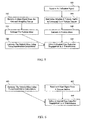
- Figure 5 is a flowchart illustrating an example of a method of estimating a vehicle mass.
- Figure 6 is a flowchart illustrating an alternate example of a method of estimating a vehicle mass.
- Figure 7 is a flowchart illustrating another alternate example of a method of estimating a vehicle mass.
- Figure 8 is a flowchart illustrating an example of a method of updating a vehicle mass estimation.
- Figure 1 is a two-dimensional drawing illustrating a basic structure of a vehicle 100.
- the vehicle 100 may be a car, bus, truck, or any other known or future vehicle that utilizes an automatic or automated mechanical transmission.
- the vehicle 100 may be a semi-trailer truck or any other vehicle including a vehicle tractor 104 and a vehicle trailer 108.
- the vehicle 100 may comprise only the vehicle tractor 104.
- the vehicle tractor 104 may include, but is not limited to, a cab, a door for entering and exiting the cab, windows, seats for a driver, operator, and/or passenger, an engine, a transmission, a front or steer axle having two wheels, and two rear drive axles having double wheels on each side.
- the tractor 104 may have a single drive axle (known as a "six wheeler") used to pull shorter trailers.
- the vehicle trailer 108 may include, but is not limited to, two tandem axles at the rear, and each of the axles may include dual wheels on each side (eight wheels on the trailer).
- the trailer 108 may comprise a box trailer, a cement trailer, a reefer trailer, a tanker trailer, a dry bulk trailer, a flatbed trailer, a lowboy trailer, or any known or future trailer.
- FIG. 2 is a diagram illustrating an exemplary embodiment of a vehicle mass estimation system.
- the vehicle mass estimation system may be in or on a vehicle 200, such as the vehicle 100 previously described.
- any number of or all the components of the vehicle mass estimation system may be in or on a vehicle tractor, such as the vehicle tractor 104, or any number of or all the components of the vehicle mass estimation system may be in or on a vehicle trailer, such as the vehicle trailer 108,
- the vehicle mass estimation system may include, but is not limited to, a transmission system 209, a power take-off assembly 213, a memory 205, a processor 201, a signal device 203, a weighing device 217, and a display 221.
- the transmission system 209 may include, but is not limited to, a transmission, such as an automatic or automated mechanical transmission, one or more sensors, at least one transmission controller, and the power take-off assembly 213.
- the power-take off (“PTO") assembly 213 may include, but is not limited to, a PTO component, such as a gear or shaft, that may engage with the transmission to provide power for any variety of PTO operations. For example, when an engine is providing power to the transmission, a PTO component may be driven by a gear or shaft of the transmission. Consequently, the PTO component may provide power or energy to a pump, a generator, a ladder, a gear or pulley system, or any known or future mechanical, fluid, and/or electrical system.
- Any PTO component of the PTO assembly 213 may be in or on the vehicle tractor and/or the vehicle trailer.
- the PTO assembly 213 and a respective PTO component may be on a vehicle not associated with a trailer, such as a fire engine or other non-trailer vehicle.
- the memory 205 may be a "computer-readable medium,” “machine-readable medium,” “propagated-signal” medium, and/or “signal-bearing medium” and may comprise any device that contains, stores, communicates, propagates, or transports software, data, and/or predetermined values indicative of one or more vehicle trailer masses or weights for use by or in connection with an instruction executable system, apparatus, or device.
- the memory 205 may be in any part of the vehicle 200.
- the machine-readable medium may selectively be, but not limited to, an electronic, magnetic, optical, electromagnetic, infrared, or semiconductor system, apparatus, device, or propagation medium.
- a non-exhaustive list of examples of a machine-readable medium would include; an electrical connection "electronic” having one or more wires, a portable magnetic or optical disk, a volatile memory such as a Random Access Memory “RAM” (electronic), a Read-Only Memory “ROM” (electronic), an Erasable Programmable Read-Only Memory (EPROM or Flash memory) (electronic), or an optical fiber (optical).
- a machine-readable medium may also include a tangible medium upon which software is printed, as the software may be electronically stored as an image or in another format (e.g., through an optical scan), then compiled, and/or interpreted or otherwise processed. The processed medium may then be stored in a computer and/or machine memory.
- the processor 201 may be in communication with or operable to communicate with the memory 205, the transmission system 209, the signal device 203, the weighing device 217, and the display 221.
- the processor 201 may be in communication with any other component of the vehicle 200.
- the processor 201 may be in any part of the vehicle 200.
- the processor 201 may be a main processor or a plurality of processors operable to communicate with electronics and controllers of the vehicle 200.
- the processor 201 may be part of a public or private communications area network ("CAN").
- the processor 201 may utilize a public electronic communication protocol, such as SAE J 1939 or SAE J 1587, and/or may utilize a proprietary electronic communication protocol or any other type of public or private communication technique.
- the processor 201 may be able to determine whether a vehicle trailer is connected to a vehicle tractor based on an indication signal. Additionally, the processor 201 may be operable to estimate a vehicle mass or weight (hereinafter “mass or weight” will be referred to as “mass”) at least in part on the indication signal, and the processor 201 may be operable to select a desired gear ratio for engagement in a transmission based, at least in part, on the estimated vehicle mass.
- mass or weight hereinafter “mass or weight” will be referred to as “mass”
- the signal device 203 may be in communication with the transmission system 209 and may be operable to communicate with the processor 201.
- the signal device 203 may be a mechanical and/or electrical sensor or a plurality of sensors operable to detect contact of a vehicle trailer, such as the vehicle trailer 108, with a vehicle tractor, such as the vehicle tractor 104.
- the signal device 203 may be a voltage or current supply or a processor on or in the vehicle tractor or trailer.
- the signal device 203 may be on a tractor bed or any other part of the vehicle tractor, and when the vehicle trailer is physically attached to the vehicle tractor, the signal device 203 may sense the attachment by a mechanical and/or electrical contact and transmit an indication signal to the processor 201.
- the signal device may transmit an alternating or direct current ("AC" or "DC") and/or voltage as an indication signal directly or indirectly to the processor 201.
- the indication signal may be a digital or analog signal.
- the signal device may transmit the indication signal to the processor 201 through electrical wires or traces or it may transmit the indication signal wirelessly.
- the indication signal may also be a MID137 signal.
- Trailers manufactured after 2001 may be equipped with the ability to broadcast a MID137 signal, which may be used to identify that the trailer has been added, on the vehicle's computer communications network.
- the indication signal may contain information or data that indicates what type of trailer is being attached, what the mass or weight of the trailer is, what type of payload the trailer is carrying, and/or the amount of payload the trailer is carrying.
- the signal device 203 may transmit the indication signal to the processor 201.
- the indication signal may be a low or high AC or DC signal or a MID137 signal.
- the processor 201 may determine whether the vehicle trailer is attached or not. If the vehicle trailer is not attached, a predetermined value of the mass of the vehicle tractor, which may be stored in the memory 205, may be used in a shifting logic or algorithm to select a desired gear ratio for engagement in a transmission based on the vehicle tractor mass.
- the processor 201 may retrieve a predetermined value of the mass of the vehicle trailer from the memory 205, such as a mass signal representing the value of the mass of the vehicle trailer.
- the "value of the mass” may be an estimation, calculation, or measurement of mass that may or may not be equal to an actual mass.
- the predetermined value of the mass of the vehicle trailer may be used to estimate a total mass of the vehicle 200.
- a desired gear ratio is selected for engagement in a transmission based, at least in part, on the estimated vehicle mass.
- the processor 201 may retrieve a predetermined value of the mass of the whole vehicle 200 from the memory 205.
- the indication signal may include one or more data indicative of a type of the vehicle trailer, whether the vehicle trailer is carrying a payload, and/or the amount of payload in or on the vehicle trailer.
- the memory 205 may store data concerning the mass of the vehicle 200 and or the vehicle trailer based on the type of trailer, the amount of payload in or on the trailer, and/or the material or physical properties of the payload. For example, if a tanker full of petroleum is attached to a vehicle tractor, the processor 201 may intelligently retrieve a specific mass value for the vehicle trailer and/or the vehicle 200 based on the criteria that the trailer is a tanker, the tanker is full, and the tanker is carrying petroleum. If an empty lowboy is attached to the vehicle tractor, the processor 201 may intelligently retrieve a different specific vehicle mass value for the trailer and/or the vehicle 200 based on the criteria that the trailer is a lowboy and is empty.
- the indication signal may include the mass of the vehicle trailer to be attached to the vehicle tractor.
- the mass of the vehicle trailer may be measured or estimated and a corresponding mass value may be stored in the signal device 203, the memory 205, or any other component on or in the vehicle trailer.
- the indication signal containing the mass information of the vehicle trailer may be transmitted to the processor 201.
- the processor 201 may use the mass information to estimate a total mass of the vehicle 200 and to select a desired gear for engagement in a transmission based, at least in part, on the estimated vehicle mass
- the signal device 203 may be an electronic and/or mechanical component operable to monitor a PTO component of the PTO assembly 213.
- the signal device 203 may be a sensor and/or controller that may continuously or periodically monitor whether a PTO component is engaged in operation.
- the signal device 203 may transmit a signal to the processor 201 indicating whether or not the PTO component is engaged.
- the processor 201 also may determine whether or not a vehicle trailer is attached to a vehicle tractor based on the PTO operation.
- the PTO component of the PTO assembly 213 may be used to operate a PTO pump or generator in conjunction with the vehicle trailer.
- the signal device 203 may periodically or continuously monitor the PTO component and transmit a PTO message signal to the processor 201.
- the processor 201 may determine whether or not a vehicle trailer is attached to the vehicle tractor.
- the processor 201 may retrieve a predetermined value of the mass of the vehicle trailer or the vehicle 200 from the memory 205 as previously described.
- the predetermined value of the mass may be used to estimate a total mass of the vehicle 200.
- a desired gear ratio may be selected for engagement in a transmission based, at least in part, on the estimated vehicle mass.
- a PTO operation may occur even when a vehicle trailer may not be attached to a vehicle tractor.
- additional information may be transmitted in the PTO message signal or another signal alerting the system that a vehicle trailer is not attached.
- a manual input may be used to indicate the difference between a PTO operation using a vehicle trailer and a PTO operation without a vehicle trailer.
- the PTO message signal may be used to calculate a time period of the PTO operation.
- the PTO component may be used to drive a PTO pump that pumps fluid into and out of a vehicle trailer.
- the processor 201 may continuously or periodically receive the PTO message signal indicating that a vehicle trailer is attached to the vehicle tractor, and based on the reception of the PTO message signal, the processor 201 may estimate the amount of time the PTO operation has been occurring.
- the processor 201 may determine a change in the mass of the vehicle trailer. For example, the material and other information of the payload, such as density and/or volume, or dimensional characteristics of the PTO pump may be stored in the memory 205 or may be coded or entered into the vehicle mass estimation system. As time passes, the processor 201 may determine the volumetric flow rate of the liquid being pumped in and/or out of the vehicle trailer.
- payload data e.g., type of payload, density of payload material
- the processor 201 may determine a change in the mass of the vehicle trailer. For example, the material and other information of the payload, such as density and/or volume, or dimensional characteristics of the PTO pump may be stored in the memory 205 or may be coded or entered into the vehicle mass estimation system. As time passes, the processor 201 may determine the volumetric flow rate of the liquid being pumped in and/or out of the vehicle trailer.
- the processor 201 may determine the amount of liquid entering or exiting the vehicle trailer based on pump or PTO component characteristics (e.g., features such as area, volume, or power) and/or information related to the payload (e.g., density, volume, quantity) in relation to a time of operation.
- the PTO message signal itself may include information indicative of the time of the PTO operation and/or the payload material or amount entry and exit rates.
- the processor 201 may determine the change in mass of the vehicle trailer.
- the processor 201 may estimate a vehicle mass based, at least in part, on the change in mass and select a desired gear ratio for engagement in a transmission based, at least in part, on the estimated vehicle mass.
- the vehicle estimation system may also include the weighing device 217.
- the weighing device 217 may be one or more strain gauges, weight sensors, pressure or temperature sensors, or any other known or future weighing device located on a suspension, in a wheel, or any other part of the vehicle 200.
- the weighing device 217 may be operable to measure a mass of at least a portion of the vehicle 200.
- the weighing device 217 may transmit a mass signal indicative of a mass of at least the portion of the vehicle to the processor 201.
- the mass information determined by the weighing device 217 as well as other mass information derived from force/acceleration calculations may be used with any other vehicle mass estimation technique previously described.
- the processor 201 may use the mass information to select a desired gear ratio for engagement in a transmission in conjunction with the estimation techniques.
- the mass estimated by the techniques previously described may be replaced or confirmed by the mass determined by the weighing device 217 and/or force/acceleration calculations or vice versa.
- the display 221 may be any mechanical and/or electronic display positioned for accessible viewing by a driver, operator, and/or passenger of the vehicle 200.
- the display 221 may be a light emitting diode, ("LED”), display, liquid crystal display, (“LCD”), or a cathode ray tube (“CRT”) display, or any other known or future display in the cab of the vehicle tractor or at any other location in or on the vehicle 200.
- the display 221 may be capable of showing or illuminating various measurements or estimations including mass values of all or some of the vehicle 200.
- FIG 3 is a diagram illustrating an alternate exemplary embodiment of a vehicle mass estimation system.
- the vehicle mass estimation system of Figure 3 may include a vehicle 300, such as the vehicle 100 or 200 previously described, and the vehicle 300 may be operable to communicate with a remote station 304.
- a processor 308 and a receiver circuit 312 may be on or in the vehicle 300.
- the processor 308 may be substantially similar to the processor 201.
- More components, such as the transmission system 209, the power take-off assembly 213, the memory 205, the signal device 203, the weighing device 217, and the display 221 of Figure 2 may be included in or on the vehicle 300. Alternatively, fewer components may be utilized.
- the vehicle mass estimation system may not include the receiver circuit 312.
- the remote station 304 may be an area, a scale, an unmanned structure, a manned structure, and/or any known or future facility to measure or estimate a mass of a vehicle, such as the vehicle 300.
- the remote station 304 may be located by a loading dock of a shipping company, retailer, and/or manufacturer, or it may be located on the premises of a vehicle company that designs, tests, repairs, and/or manufactures vehicles, such as trucks. Alternatively, the remote station may be located on public highways, weigh stations, and/or rest areas.
- the remote station 304 may include an area for all or part of a vehicle to be weighed, such as a scale.
- a scale For example, the vehicle 300, including a vehicle tractor and a vehicle trailer, may park on top of the scale, and the scale may measure the mass of the vehicle 300. Alternatively, the vehicle tractor and/or the vehicle trailer may be weighed separately.
- the weight measurement may be stored in a memory of the remote station 304 and may be transmitted to the processor 308 by a wired or wireless transmission.
- a cable or wire may be connected to the vehicle 300 during, before, or after the weighing of the vehicle 300.
- the wire connection may be any known or future connection, such as plug or jack connection.
- the cable or wire connection may be made on the vehicle trailer and/or the vehicle tractor.
- a wireless communication may be utilized.
- the remote station 304 may wirelessly transmit the mass information via a mass signal to the vehicle 300.
- the mass signal may be a radio frequency (“RF") signal, an infrared (“IR”) signal , a Wi-Fi signal, a Bluetooth signal, and/or any other known or future wireless signal.
- the mass signal may be received by the receiver circuit 312 on or in the vehicle 300.
- the receiver circuit 312 may include an optical sensor or any other wireless sensor and/or an antenna.
- the receiver circuit 312 may include electrical components, such as resistors, capacitors, inductors, filters, and/or power amplifiers. Such components may be discrete components on a circuit board or may be integrated on or in a semiconductor device. Portions or all of the receiver circuit 312 may be manufactured as an integrated circuit (“IC") module.
- IC integrated circuit
- the receiver circuit 312 may receive the mass signal from the remote station 304 and transmit the mass signal or a portion of the signal including the mass information to the processor 308. For example, the receiver circuit 312 may receive the mass signal and amplify the mass signal via a power amplifier. The amplified signal may then be converted into a digital signal via an analog-to-digital converter ("ADC"). The digital signal may include one or more data indicative of the mass of the portion of the vehicle 300 that was weighed. The digital signal may then be transmitted to the processor 308.
- ADC analog-to-digital converter
- the processor 308 may use the mass information in a shifting logic or algorithm to select a desired gear ratio for engagement in a transmission.
- the measured mass information may be used to select a desired gear ratio for engagement in a transmission in conjunction with the estimation techniques previously discussed.
- the mass measured by the remote station 304 may replace or confirm any of the mass values estimated by the techniques previously discussed or vice versa.
- the vehicle 300 or a portion of the vehicle 300 may be weighed in a resting state.
- the remote station 304 may weigh the vehicle 300 or a portion of the vehicle 300 while the vehicle 300 is in motion.
- the vehicle 300 may pass by or through the remote station 304.
- the remote station 304 may make a mass measurement of all or part of the vehicle 300 during this time and then transmit the mass information to the vehicle 300 in substantially real time or at a delayed time.
- Velocity sensors and/or calculations may be used by the remote station 304 to determine accurate mass information of the passing vehicle.
- FIG 4 is a diagram illustrating another alternate exemplary embodiment of a vehicle mass estimation system
- the vehicle mass estimation system of Figure 4 may include a vehicle 400, such as the vehicle 100,200, or 300 previously described.
- a processor 403, an input device 407, and a weighing device 411 may be on or in the vehicle 400.
- the processor 403 may be substantially similar to the processor 201 or 308, and the weighing device 411 may be substantially similar to the weighing device 217.
- the vehicle 400 also may include other components, such as the transmission system 209, the power take-off assembly 213, the memory 205, the signal device 203, and the display 221 of Figure 2 .
- the input device 407 may be any mechanical and/or electrical device enabling an operator or passenger of the vehicle 400 to enter mass information for all or a portion of the vehicle 400.
- the input device 407 may be a mechanical and/or electrical switch, such as a button or a lever, on or in the vehicle tractor and/or the vehicle trailer.
- An operator of the vehicle 400 may activate the switch a number of times to indicate a specific mass value.
- the number of activations may correspond to the mass of the vehicle 400 including both the vehicle tractor and the vehicle trailer. For example, if a vehicle trailer is attached to the vehicle tractor and the operator knows that the vehicle trailer is 9,000 kg, then the operator may push a button nine times or pull a lever nine times.
- a signal may be generated and transmitted to the processor 403 or an intermediate component, such as a counter.
- the input device 407 may transmit a signal indicative of the number of activations after all of the activations have been made.
- the input device 407 may be a keyboard or a voice recognition circuit in or on the vehicle 400.
- the keyboard may be a pad having a plurality of buttons or a touch screen. The operator may input the mass of all or part of the vehicle 400 using the keyboard.
- the voice recognition circuit may be any known or future voice recognition circuit used to extract one or more data from an audible signal.
- the voice recognition circuit may include electrical components, such as resistors, capacitors, inductors, filters, power amplifiers, ADC's, and/or beamformers. Such components may be discrete components on a circuit board or may be integrated on or in a semiconductor device. Portions or all of the voice recognition circuit may be manufactured as an integrated circuit ("IC") or module.
- IC integrated circuit
- An operator may verbally recite the mass of the vehicle as an audible signal.
- the audible signal may be received by the voice recognition circuit via a microphone, a plurality of microphones, or any other known or future audible signal receiver.
- the audible signal may be sampled and converted into a digital signal by an ADC.
- the digital signal may be indicative of the mass of the vehicle 400 and may be transmitted to the processor 403.
- the processor 403 may interpret the digital signal to acquire mass information, such as processing text data from the speech to obtain a mass value.
- Various voice encryption and security features may be utilized to allow for certain operators to use the voice recognition circuit.
- the processor 403 may use the mass information obtained from the input device 407 in a shifting logic or algorithm to select a desired gear ratio for engagement in a transmission.
- the inputted mass information may be used to select a desired gear ratio for engagement in a transmission in conjunction with the estimation techniques previously discussed.
- the inputted mass information may replace or confirm any of the mass values estimated by the techniques previously discussed or vice versa.
- the weighing device 411 and/or force/acceleration calculations may also be used in conjunction with the input device 407.
- the weighing device 411 may determine the mass of the vehicle trailer or the whole vehicle 400, such as the weighing device 217.
- the mass information measured by the weighing device 411 may replace or confirm the mass information generated by the input device and/or any of the estimation techniques previously discussed or vice versa.
- FIG. 5 is a flowchart illustrating an example of a method of estimating a vehicle mass. Fewer or more steps may be provided, and the steps may be arranged in different orders.
- an indication signal may be received.
- the indication signal may indicate that a vehicle trailer is attached to a vehicle tractor.
- the indication signal may be a low or high AC or DC signal and/or a MID137 signal.
- the indication signal may be indicative of a type of the vehicle trailer and/or may be indicative of a mass of all or a portion of a vehicle, such as the vehicle trailer.
- the indication signal may indicate that a PTO operation is occurring and/or indicate a time period of the PTO operation, such as how long the PTO operation has been occurring.
- the indication signal may also indicate a type and/or amount of payload that may be entering or exiting the vehicle trailer during the PTO operation.
- a determination is made based on the indication signal whether or not a vehicle trailer is connected to a vehicle tractor.
- a vehicle mass may be estimated based, at least in part, on the indication signal. For example, when an indication signal indicates that a vehicle trailer is present, a predetermined value indicative of the mass of the vehicle trailer or the entire vehicle may be retrieved from a memory to estimate the vehicle mass. The retrieval of the predetermined value may be based on the vehicle trailer type, the type of payload, and/or the amount of payload in or on the vehicle trailer. Alternatively, the indication signal itself may include one or more data indicative of the vehicle trailer mass. Also, a change in mass may be estimated based on how long a PTO operation is occurring and whether a payload is exiting or entering the vehicle trailer due to the PTO operation.
- a mass signal generated by an onboard weighing device may be received.
- the mass signal may be indicative of at least a portion of the vehicle, such as the vehicle trailer.
- the onboard weighing device may be any weighing device previously described.
- the vehicle mass may be estimated based in part on the mass signal.
- the mass information from the mass signal may replace or confirm the mass information estimated in step 508 or vice versa.
- the vehicle mass may be estimated using force and acceleration calculations previously mentioned.
- the estimated mass based on the force and acceleration calculations may replace or confirm the mass information estimated in steps 508 and 516 or vice versa.
- a desired gear ratio may be selected for engagement in a transmission based, at least in part, on the estimated vehicle mass.
- a shifting logic or algorithm may utilize the estimated vehicle mass in selecting the gear ratio by replacing or confirming a previous or simultaneous mass determination.
- FIG. 6 is a flowchart illustrating an alternate example of a method of estimating a vehicle mass. Fewer or more steps may be provided, and the steps may be arranged in different orders.
- a mass signal may be received from a remote station.
- the remote station may be any remote station previously described.
- the mass signal may be indicative of a mass of at least a portion of the vehicle.
- the mass signal may be received wirelessly or via a wired transmission as previously described. Also, the mass signal may be received while the vehicle may be at rest or in motion.
- the vehicle mass may be estimated using force and acceleration calculations previously mentioned.
- the estimated mass based on the force and acceleration calculations may replace or confirm the mass information in step 601 or vice versa.
- any other mass estimation technique may be used, such as utilizing an onboard weighing device and/or an indication signal, as previously mentioned.
- a desired gear ratio may be selected for engagement in a transmission based, at least in part, on the mass signal from the remote station and/or the estimated vehicle mass.
- a shifting logic or algorithm may utilize the vehicle mass information in selecting the gear ratio by replacing or confirming a previous or simultaneous mass determination or estimation.
- FIG. 7 is a flowchart illustrating another alternate example of a method of estimating a vehicle mass. Fewer or more steps may be provided, and the steps may be arranged in different orders.
- an input may be received from an operator.
- the operator may be a driver, a passenger, or any other person or machine working on or with the vehicle.
- the input may be activations of a mechanical and/or electrical device.
- the input may be a switch, such as a button or a lever, and the number of activations of the switch may correspond to a specific mass value of all or a portion of the vehicle.
- the input may be a manual entry or an audible signal of the mass of the vehicle.
- an operator may verbally recite the mass of the vehicle.
- a first mass signal may be generated based on the input.
- the first mass signal may be indicative of a mass of at least a portion of the vehicle. For example, a signal may be generated every time an input device, such as the input device 407, is activated, or a signal indicative of the number of activations may be generated. Alternatively, the operator may enter a specific mass using a keyboard, and a signal may be generated based on the entered mass. Also, a voice or audible signal from the operator may be converted into the first mass signal. Any known or future voice recognition technique may be utilized.
- a vehicle mass may be estimated based, at least in part, on the first mass signal.
- the mass value entered by the operator may be used as the actual mass of all or a portion of the vehicle, such as a vehicle trailer.
- the entered value may be an estimation because the input may not exactly correspond to the actual mass.
- an operator may activate a switch nine times corresponding to 9,000 kg when the actual mass may be 9,400 kg.
- only a vehicle trailer mass may be entered, and the total mass of the vehicle may be estimated by using any known or future mathematical calculation.
- a second mass signal generated by an onboard weighing device may be received.
- the second mass signal may be indicative of at least a portion of the vehicle, such as the vehicle trailer.
- the onboard weighing device may be any weighing device previously described.
- the vehicle mass may be estimated based in part on the second mass signal.
- the mass information from the second mass signal may replace or confirm the mass information estimated in step 708 or vice versa.
- the vehicle mass may be estimated using force and acceleration calculations previously mentioned.
- the estimated mass based on the force and acceleration calculations may replace or confirm the mass information in steps 708 and 716 or vice versa.
- any other mass estimation technique may be used, such as utilizing a remote station and/or an indication signal, as previously mentioned.
- a desired gear ratio may be selected for engagement in a transmission based, at least in part, on the estimated vehicle mass.
- a shirting logic or algorithm may utilize the estimated vehicle mass in selecting the gear ratio by replacing or confirming a previous or simultaneous mass determination.
- FIG 8 is a flowchart illustrating an example of a method of updating a vehicle mass estimation. Fewer or more steps may be provided, and the steps may be arranged in different orders.
- conditions for determining if a remote station may be utilized for estimating a vehicle mass may be determined.
- the conditions may include, but are not limited to, detection of a mass signal from a remote station, user input or programmed condition, an environmental condition, or any other condition criteria. If the use of a remote station is confirmed by a condition, a vehicle mass is estimated or determined based on the remote station, in step 805, such as previously described in step 601.
- step 809 conditions for determining if an indication signal may be utilized for estimating a vehicle mass may be determined.
- the conditions may include, but are not limited to, detection of an indication signal, as previously described, user input or programmed condition, an environmental condition, or any other condition criteria. If the use of an indication signal is confirmed by a condition, a vehicle mass is determined based on the indication signal, in step 813, such as previously described in steps 500, 504, and 508.
- step 817 conditions for determining if an operator input may be utilized for estimating a vehicle mass may be determined.
- the conditions may include, but are not limited to, detection of a mass signal from an input device, as previously described, a programmed setting enabling the system to accept a mass signal from an input device, an environmental condition, or any other condition criteria. If the use of a mass signal from an input device is confirmed by a condition, a vehicle mass is determined based on the mass signal, in step 821, such as previously described in steps 700, 704, and 708.
- conditions for determining if an onboard weighing device may be utilized for estimating a vehicle mass may be determined.
- the conditions may include, but are not limited to, detection of a mass signal from an onboard weighing device, as previously described, detection of the onboard weighing device itself, a programmed setting enabling the system to accept a mass signal from an onboard weighing device, an environmental condition, or any other condition criteria. If the use of a mass signal from an onboard weighing device is confirmed by a condition, a vehicle mass is determined based on the mass signal, in step 829, such as previously described in steps 512, 516, 712, and 716.
- step 833 conditions for determining if force and acceleration calculations, as previously mentioned, may be utilized for estimating a vehicle mass may be determined.
- the conditions may include, but are not limited to, detection of programmed logic or functions to calculate force and acceleration, detection of sensors for supplying information for the calculations, user input or a programmed setting enabling the system to accept force and acceleration calculations, an environmental condition, or any other condition criteria. If the use of force and acceleration calculations are confirmed by a condition, a vehicle mass is determined based on the calculations, in step 837, such as previously described in steps 520, 605, and 720.
- step 841 updating shifting based on an estimated or determined vehicle mass may be determined. For example, if none of the conditions previously mentioned are met, then the system may continue to use the present mass information in the shifting logic for the transmission. However, if a condition is met, then the shifting logic may be updated by updating the present vehicle mass information with a more recent estimated vehicle mass.
- a priority or hierarchy order may be programmed into the system for choosing a vehicle mass estimation of one method over another. For example, if a condition associated with an indication signal is confirmed as well as a condition associated with a remote station, preprogrammed logic may assign a higher priority to a vehicle mass determination by a remote station. Therefore, the vehicle mass determined by the remote station may be used for selecting a desired gear ratio for engagement in the transmission.
- the priority logic may be based on the precision of estimation of each of the different techniques, environmental conditions, or any other criteria.
- the vehicle mass estimation system previously described may include instructions that may be executable by the processor 201, 308, or 403.
- the instructions may be stored in a computer-readable medium, such as the memory 205.
- the instructions may implement the methods, acts, and processes previously described.
- the instructions for implementing the processes, methods and/or techniques previously discussed may be provided on computer-readable storage media or memories, such as a cache, buffer, RAM, removable media, hard drive or other computer readable storage media.
- Computer readable storage media may include various types of volatile and nonvolatile storage media.
- the functions, acts, or tasks illustrated in the figures or described herein may be executed in response to one or more sets of instructions stored in or on computer readable storage media.
- the functions, acts, or tasks may be independent of the particular type of instructions set, storage media, processor or processing strategy and may be performed by software, hardware, integrated circuits, firmware, micro code and the like, operating alone or in combination.
- processing strategies may include multiprocessing, multitasking, parallel processing and the like.
- the instructions may be stored on a removable media device for reading by local or remote systems.
- the instructions may be stored in a remote location for transfer through a computer network or over telephone lines.
- the instructions may be stored within a given computer, CPU, GPU, or system.
Landscapes
- Engineering & Computer Science (AREA)
- General Engineering & Computer Science (AREA)
- Mechanical Engineering (AREA)
- Control Of Transmission Device (AREA)
- Control Of Driving Devices And Active Controlling Of Vehicle (AREA)
Applications Claiming Priority (1)
| Application Number | Priority Date | Filing Date | Title |
|---|---|---|---|
| US12/021,972 US7818140B2 (en) | 2008-01-29 | 2008-01-29 | System for estimating a vehicle mass |
Publications (2)
| Publication Number | Publication Date |
|---|---|
| EP2085656A2 true EP2085656A2 (de) | 2009-08-05 |
| EP2085656A3 EP2085656A3 (de) | 2011-11-02 |
Family
ID=40547953
Family Applications (1)
| Application Number | Title | Priority Date | Filing Date |
|---|---|---|---|
| EP08171019A Withdrawn EP2085656A3 (de) | 2008-01-29 | 2008-12-09 | System zum Einschätzen einer Fahrzeugmasse |
Country Status (2)
| Country | Link |
|---|---|
| US (3) | US7818140B2 (de) |
| EP (1) | EP2085656A3 (de) |
Cited By (3)
| Publication number | Priority date | Publication date | Assignee | Title |
|---|---|---|---|---|
| WO2012005670A1 (en) * | 2010-07-09 | 2012-01-12 | Scania Cv Ab | Method and device for estimation of weight of a vehicle |
| WO2015194999A1 (en) * | 2014-06-17 | 2015-12-23 | Volvo Construction Equipment Ab | A control unit and a method for controlling a vehicle comprising a platform for carrying a load. |
| WO2017211341A1 (de) | 2016-06-09 | 2017-12-14 | Schaeffler Technologies AG & Co. KG | Verfahren zur bestimmung einer masse eines fahrzeugs |
Families Citing this family (25)
| Publication number | Priority date | Publication date | Assignee | Title |
|---|---|---|---|---|
| US9395233B2 (en) * | 2010-01-08 | 2016-07-19 | Fca Us Llc | Mass, drag coefficient and inclination determination using accelerometer sensor |
| AU2011200095B2 (en) * | 2010-02-15 | 2015-07-16 | Transport Certification Australia Limited | System and method for monitoring vehicle mass tamper events |
| US8983752B2 (en) * | 2011-08-22 | 2015-03-17 | Trimble Navigation Limited | System and method for identifying characteristics of a vehicle |
| US8798887B2 (en) * | 2011-11-30 | 2014-08-05 | GM Global Technology Operations LLC | System and method for estimating the mass of a vehicle |
| US8768587B2 (en) | 2012-07-25 | 2014-07-01 | Caterpillar Inc. | Worksite management system with gear recommendation |
| US10570839B2 (en) * | 2012-11-29 | 2020-02-25 | Ford Global Technologies, Llc | System and method for improving vehicle performance |
| US10284659B2 (en) * | 2013-01-25 | 2019-05-07 | Apple Inc. | Hybrid unicast/multicast DNS-based service discovery |
| US10166980B2 (en) * | 2013-02-28 | 2019-01-01 | Ford Global Technologies, Llc | Vehicle mass computation |
| US9429463B2 (en) * | 2013-03-04 | 2016-08-30 | International Road Dynamics, Inc. | System and method for measuring moving vehicle information using electrical time domain reflectometry |
| US20140324302A1 (en) * | 2013-04-26 | 2014-10-30 | Caterpillar Inc. | Method of Estimating Mass of a Payload in a Hauling Machine |
| JP2017096639A (ja) * | 2015-11-18 | 2017-06-01 | アイシン精機株式会社 | 車両重量推定装置 |
| US10214222B2 (en) * | 2016-10-20 | 2019-02-26 | Hall Labs Llc | Determining weight of a vehicle in reverse gear |
| US10071742B2 (en) * | 2017-01-09 | 2018-09-11 | Newvistas Capital, Llc | Determining weight of electric and hybrid vehicles |
| EP3379222B1 (de) | 2017-03-22 | 2020-12-30 | Methode Electronics Malta Ltd. | Auf magnetoelastik basierte sensoranordnung |
| US10583736B2 (en) * | 2017-12-11 | 2020-03-10 | Caterpillar Inc. | System for controlling a drive operation of a machine |
| US10612961B2 (en) * | 2017-12-20 | 2020-04-07 | Gm Global Technology Operateons Llc | Method for real-time mass estimation of a vehicle system |
| US11221262B2 (en) | 2018-02-27 | 2022-01-11 | Methode Electronics, Inc. | Towing systems and methods using magnetic field sensing |
| EP3758959B1 (de) | 2018-02-27 | 2025-11-05 | Methode Electronics, Inc. | Schleppsysteme und -verfahren mit verwendung von magnetfeldmessung |
| US11491832B2 (en) | 2018-02-27 | 2022-11-08 | Methode Electronics, Inc. | Towing systems and methods using magnetic field sensing |
| US11084342B2 (en) | 2018-02-27 | 2021-08-10 | Methode Electronics, Inc. | Towing systems and methods using magnetic field sensing |
| US11135882B2 (en) | 2018-02-27 | 2021-10-05 | Methode Electronics, Inc. | Towing systems and methods using magnetic field sensing |
| US11014417B2 (en) | 2018-02-27 | 2021-05-25 | Methode Electronics, Inc. | Towing systems and methods using magnetic field sensing |
| US12045353B2 (en) * | 2019-05-29 | 2024-07-23 | Denso Corporation | System and method for enhancing vehicle occupant voice data privacy |
| US11821781B2 (en) | 2020-07-20 | 2023-11-21 | Progress Mfg. Llc | Apparatus and method for determining weight distribution |
| US11787418B1 (en) * | 2022-11-07 | 2023-10-17 | Embark Trucks Inc. | Systems and methods for real-time tractor-trailer mass estimation |
Citations (1)
| Publication number | Priority date | Publication date | Assignee | Title |
|---|---|---|---|---|
| US20070271017A1 (en) | 2006-05-18 | 2007-11-22 | Farzad Samie | Weight dependent trailering switch |
Family Cites Families (46)
| Publication number | Priority date | Publication date | Assignee | Title |
|---|---|---|---|---|
| GB2094585B (en) * | 1981-03-10 | 1984-10-03 | Weighwrite Ltd | Remote control of weigh stations |
| DE3246201A1 (de) * | 1982-12-14 | 1984-06-14 | Wabco Westinghouse Fahrzeugbremsen GmbH, 3000 Hannover | Verfahren und einrichtung zur ermittlung des gewichtes eines fahrzeuges |
| US4839835A (en) * | 1984-04-27 | 1989-06-13 | Hagenbuch Roy George Le | Apparatus and method responsive to the on-board measuring of the load carried by a truck body |
| US5631835A (en) * | 1984-04-27 | 1997-05-20 | Hagenbuch; Leroy G. | Apparatus for identifying containers from which refuse is collected and compiling a historical record of the containers |
| DE3429184C2 (de) * | 1984-08-08 | 1987-02-19 | Daimler-Benz Ag, 7000 Stuttgart | Vorrichtung zur Messung der Masse eines Kraftfahrzeuges |
| US4706768A (en) * | 1986-03-03 | 1987-11-17 | Gagik Kozozian | Onboard truck scale |
| DE3815625A1 (de) * | 1988-05-07 | 1989-11-16 | Koelner Verkehrs Betriebe Ag | Verfahren zur automatischen vorgabe von antriebsparametern im ein automatisches getriebe aufweisenden antriebsstrang eines linienbusses sowie einrichtung zur durchfuehrung des verfahrens |
| DE3843818C1 (de) * | 1988-12-24 | 1990-05-10 | Daimler-Benz Aktiengesellschaft, 7000 Stuttgart, De | |
| US5272939B1 (en) | 1992-07-06 | 1994-12-06 | Eaton Corp | Shift enable control method/system |
| US5335566A (en) | 1992-07-06 | 1994-08-09 | Eaton Corporation | Shift control method/system |
| US5490063A (en) * | 1994-02-07 | 1996-02-06 | Eaton Corporation | Control method/system including determination of an updated value indicative of gross combination weight of vehicles |
| US5482359A (en) * | 1994-04-22 | 1996-01-09 | Eaton Corporation | System and method for determining relative vehicle mass |
| US5803502A (en) * | 1994-12-23 | 1998-09-08 | Noll; Virginia | Method and structure for properly positioning freight in a trailer, container or other freight receptacle |
| JPH09257553A (ja) | 1996-03-22 | 1997-10-03 | Yazaki Corp | 自重測定装置 |
| US5727939A (en) * | 1996-08-19 | 1998-03-17 | Praxair Technology, Inc. | Deflector system for reducing air infiltration into a furnace |
| US6118083A (en) | 1996-11-08 | 2000-09-12 | Creative Microsystems | Weight measurement apparatus for vehicles |
| US6037550A (en) | 1997-09-30 | 2000-03-14 | Weigh-Tronix, Inc. | On-board vehicle weighing apparatus and method |
| US5877455A (en) | 1998-01-21 | 1999-03-02 | Meritor Heavy Vehicle Systems, Llc | Payload monitoring for a tractor-trailer |
| DE19802630A1 (de) | 1998-01-24 | 1999-09-16 | Daimler Chrysler Ag | Vorrichtung zur Bestimmung der Masse eines Kraftfahrzeuges |
| US6167357A (en) * | 1998-04-23 | 2000-12-26 | Cummins Engine Company, Inc. | Recursive vehicle mass estimation |
| DE19837380A1 (de) | 1998-08-18 | 2000-02-24 | Zahnradfabrik Friedrichshafen | Verfahren und Einrichtung zur Ermittlung der Masse eines Fahrzeuges |
| US6149545A (en) | 1999-01-14 | 2000-11-21 | Eaton Corporation | Automated transmission upshift control |
| DE19946559A1 (de) * | 1999-09-29 | 2001-04-05 | Zahnradfabrik Friedrichshafen | Steuerung eines automatischen oder automatisierten Getriebes über Spracheingabe |
| US6449582B1 (en) | 2000-05-09 | 2002-09-10 | The University Of British Columbia | Vehicle weight and cargo load determination using tire pressure |
| GB0018184D0 (en) | 2000-07-26 | 2000-09-13 | Eaton Corp | Automatic selection of start gear |
| DE10053603B4 (de) | 2000-10-28 | 2012-01-12 | Robert Bosch Gmbh | Fahrbahnsteigungserkennung und Anhängerlastbestimmung |
| US6598010B2 (en) | 2001-07-11 | 2003-07-22 | Uri Zefira | Method for achieving accurate measurement of true weight |
| US20030040885A1 (en) | 2001-08-14 | 2003-02-27 | Schoess Jeffrey N. | Apparatus and method for determining vehicle load weight status |
| US6567734B2 (en) | 2001-08-23 | 2003-05-20 | Cummins, Inc. | System and method for estimating vehicle mass |
| DE10148091A1 (de) | 2001-09-28 | 2003-04-17 | Bayerische Motoren Werke Ag | Verfahren zur Ermittlung der Masse eines Kraftfahrzeugs unter Berücksichtigung unterschiedlicher Fahrsituationen |
| EP1788363B1 (de) | 2002-02-15 | 2015-04-08 | Ford Global Technologies, LLC | Gewichtsüberwachungssystem für ein Kraftfahrzeug |
| US6980093B2 (en) * | 2002-05-07 | 2005-12-27 | The Johns Hopkins University | Commercial vehicle electronic screening hardware/software system with primary and secondary sensor sets |
| DE10243516A1 (de) | 2002-09-19 | 2004-04-01 | Robert Bosch Gmbh | Vorrichtung zur Bestimmung einer Gesamtmasse eines Fahrzeugs |
| DE10307511B4 (de) | 2003-02-21 | 2004-12-09 | Knorr-Bremse Systeme für Nutzfahrzeuge GmbH | Verfahren und Vorrichtung zur computergestützten Schätzung der Masse eines Fahrzeugs, insbesondere eines Nutzfahrzeugs |
| US6803530B2 (en) * | 2003-03-15 | 2004-10-12 | International Truck Intellectual Property Company, Llc | System and method for vehicle axle load measurement with hysteresis compensation and acceleration filter |
| JP4066864B2 (ja) | 2003-03-28 | 2008-03-26 | アイシン精機株式会社 | 車両重量推定装置 |
| DE10344210B4 (de) | 2003-09-24 | 2015-03-19 | Robert Bosch Gmbh | Verfahren zur Ermittlung eines Schätzwerts der Masse eines Kraftfahrzeugs |
| JP2005121405A (ja) | 2003-10-15 | 2005-05-12 | Yazaki Corp | 車両用自重計 |
| US7761351B2 (en) | 2004-04-29 | 2010-07-20 | Ford Motor Company | Method and system for assessing the risk of a vehicle dealership defaulting on a financial obligation |
| SE527573C2 (sv) * | 2004-06-24 | 2006-04-11 | Scania Cv Abp | Metod, system, datorprogram och elektronisk styrenhet för att skatta ett fordons vikt |
| US7414527B2 (en) * | 2005-07-07 | 2008-08-19 | Mcnay James H | Security, tracking, and damage control system for cargo containers |
| US7141746B1 (en) | 2005-07-18 | 2006-11-28 | Scott Dale W | Device for determining on board weight of tractor-trailers and method |
| WO2007030057A1 (en) * | 2005-09-08 | 2007-03-15 | Volvo Lastvagnar Ab | A method for adapting gear selection in a vehicle |
| US7430491B2 (en) * | 2005-10-11 | 2008-09-30 | International Truck Intecllectual Property Company, Llc | Tractor-trailer having self-contained apparatus on-board tractor for estimating trailer weight |
| US7445079B2 (en) * | 2005-11-21 | 2008-11-04 | Gm Global Technology Operations, Inc. | Automatic calibration of vehicle transmission using load sensing |
| US7899584B2 (en) * | 2007-02-28 | 2011-03-01 | Caterpillar Inc. | Method of controlling a vehicle based on operation characteristics |
-
2008
- 2008-01-29 US US12/021,972 patent/US7818140B2/en not_active Expired - Fee Related
- 2008-12-09 EP EP08171019A patent/EP2085656A3/de not_active Withdrawn
-
2010
- 2010-09-16 US US12/883,968 patent/US20110004382A1/en not_active Abandoned
- 2010-09-16 US US12/883,959 patent/US20110015808A1/en not_active Abandoned
Patent Citations (1)
| Publication number | Priority date | Publication date | Assignee | Title |
|---|---|---|---|---|
| US20070271017A1 (en) | 2006-05-18 | 2007-11-22 | Farzad Samie | Weight dependent trailering switch |
Cited By (6)
| Publication number | Priority date | Publication date | Assignee | Title |
|---|---|---|---|---|
| WO2012005670A1 (en) * | 2010-07-09 | 2012-01-12 | Scania Cv Ab | Method and device for estimation of weight of a vehicle |
| RU2563309C2 (ru) * | 2010-07-09 | 2015-09-20 | Сканиа Св Аб | Способ и устройство для оценки веса транспортного средства |
| WO2015194999A1 (en) * | 2014-06-17 | 2015-12-23 | Volvo Construction Equipment Ab | A control unit and a method for controlling a vehicle comprising a platform for carrying a load. |
| CN106574862A (zh) * | 2014-06-17 | 2017-04-19 | 沃尔沃建筑设备公司 | 对包括用于承载负载的平台的车辆进行控制的控制单元和方法 |
| WO2017211341A1 (de) | 2016-06-09 | 2017-12-14 | Schaeffler Technologies AG & Co. KG | Verfahren zur bestimmung einer masse eines fahrzeugs |
| DE102016210222A1 (de) | 2016-06-09 | 2017-12-14 | Schaeffler Technologies AG & Co. KG | Verfahren zur Bestimmung einer Masse eines Fahrzeugs |
Also Published As
| Publication number | Publication date |
|---|---|
| US7818140B2 (en) | 2010-10-19 |
| EP2085656A3 (de) | 2011-11-02 |
| US20090192760A1 (en) | 2009-07-30 |
| US20110004382A1 (en) | 2011-01-06 |
| US20110015808A1 (en) | 2011-01-20 |
Similar Documents
| Publication | Publication Date | Title |
|---|---|---|
| US7818140B2 (en) | System for estimating a vehicle mass | |
| US7572988B1 (en) | Method for onboard vehicle weight measurement | |
| JP7762788B2 (ja) | 特装車の積載重量推定システム | |
| US20130253814A1 (en) | System and Method for Gauging Safe Towing Parameters | |
| CN111693128A (zh) | 控制重量分布的方法 | |
| EP0625697B1 (de) | Fahrzeuginstalliertes Wägesystem | |
| US6449582B1 (en) | Vehicle weight and cargo load determination using tire pressure | |
| US20130338848A1 (en) | Method and Apparatus for Leveling Recreational Vehicles | |
| US7092804B2 (en) | Method and apparatus for providing refill or bleed alerts in a tire pressure monitoring system | |
| CN1866265B (zh) | 用于暖胎充气压力调节的系统和方法 | |
| US20080001729A1 (en) | Hand held tire pressure monitoring system | |
| US6952160B1 (en) | Method and apparatus, for identifying the location of pressure sensors in a tire pressure monitoring system | |
| US20150019165A1 (en) | Weight detection by tire pressure sensing | |
| MX2008010211A (es) | Bascula de a bordo para camion de carga. | |
| US7026922B1 (en) | Method and apparatus for automatically identifying the location of pressure sensors in a tire pressure monitoring system | |
| WO2009001039A1 (en) | A sensor unit and a vehicle load and parking warning system incorporating such sensor units | |
| US20230128284A1 (en) | Methods and systems for estimating the current weight of commercial vehicles | |
| US6850155B1 (en) | Method and system of notifying of overuse of a mini-spare tire in a tire pressure monitoring system for an automotive vehicle | |
| CN113167635A (zh) | 车载传送装置和移动终端以及包含它们的装载载荷信息显示系统 | |
| CN103648871B (zh) | 用于车辆的电子制动控制装置以及诊断仪器和接收站 | |
| CN111225017B (zh) | 信息获取装置、信息获取方法 | |
| US20220097718A1 (en) | Commercial vehicle and method of operating a commercial vehicle | |
| CN103459303A (zh) | 消耗材料的自动供给系统 | |
| CN113514139B (zh) | 车辆载荷称重方法和车辆载荷称重装置 | |
| US12552207B2 (en) | Method and apparatus for inflation of a vehicle tire |
Legal Events
| Date | Code | Title | Description |
|---|---|---|---|
| PUAI | Public reference made under article 153(3) epc to a published international application that has entered the european phase |
Free format text: ORIGINAL CODE: 0009012 |
|
| AK | Designated contracting states |
Kind code of ref document: A2 Designated state(s): AT BE BG CH CY CZ DE DK EE ES FI FR GB GR HR HU IE IS IT LI LT LU LV MC MT NL NO PL PT RO SE SI SK TR |
|
| AX | Request for extension of the european patent |
Extension state: AL BA MK RS |
|
| PUAL | Search report despatched |
Free format text: ORIGINAL CODE: 0009013 |
|
| AK | Designated contracting states |
Kind code of ref document: A3 Designated state(s): AT BE BG CH CY CZ DE DK EE ES FI FR GB GR HR HU IE IS IT LI LT LU LV MC MT NL NO PL PT RO SE SI SK TR |
|
| AX | Request for extension of the european patent |
Extension state: AL BA MK RS |
|
| RIC1 | Information provided on ipc code assigned before grant |
Ipc: F16H 61/02 20060101ALI20110927BHEP Ipc: F16H 59/52 20060101AFI20110927BHEP |
|
| 17P | Request for examination filed |
Effective date: 20120502 |
|
| AKX | Designation fees paid |
Designated state(s): DE SE |
|
| STAA | Information on the status of an ep patent application or granted ep patent |
Free format text: STATUS: THE APPLICATION IS DEEMED TO BE WITHDRAWN |
|
| 18D | Application deemed to be withdrawn |
Effective date: 20150701 |