EP2070992A1 - Lacksysteme - Google Patents
Lacksysteme Download PDFInfo
- Publication number
- EP2070992A1 EP2070992A1 EP07122862A EP07122862A EP2070992A1 EP 2070992 A1 EP2070992 A1 EP 2070992A1 EP 07122862 A EP07122862 A EP 07122862A EP 07122862 A EP07122862 A EP 07122862A EP 2070992 A1 EP2070992 A1 EP 2070992A1
- Authority
- EP
- European Patent Office
- Prior art keywords
- aerosil
- silica
- hydrophilic
- grindometer
- value
- Prior art date
- Legal status (The legal status is an assumption and is not a legal conclusion. Google has not performed a legal analysis and makes no representation as to the accuracy of the status listed.)
- Withdrawn
Links
- VYPSYNLAJGMNEJ-UHFFFAOYSA-N Silicium dioxide Chemical compound O=[Si]=O VYPSYNLAJGMNEJ-UHFFFAOYSA-N 0.000 claims abstract description 93
- 239000000377 silicon dioxide Substances 0.000 claims description 35
- 239000004922 lacquer Substances 0.000 claims description 2
- 229910021485 fumed silica Inorganic materials 0.000 abstract description 9
- 239000011248 coating agent Substances 0.000 abstract description 3
- 238000000576 coating method Methods 0.000 abstract description 3
- 235000012239 silicon dioxide Nutrition 0.000 description 18
- 239000006185 dispersion Substances 0.000 description 14
- 238000012986 modification Methods 0.000 description 14
- 230000004048 modification Effects 0.000 description 14
- 239000003973 paint Substances 0.000 description 14
- 229910002016 Aerosil® 200 Inorganic materials 0.000 description 12
- 229910002018 Aerosil® 300 Inorganic materials 0.000 description 12
- 239000000203 mixture Substances 0.000 description 12
- 230000000052 comparative effect Effects 0.000 description 9
- 229910002012 Aerosil® Inorganic materials 0.000 description 8
- XLYOFNOQVPJJNP-UHFFFAOYSA-N water Substances O XLYOFNOQVPJJNP-UHFFFAOYSA-N 0.000 description 8
- 238000003801 milling Methods 0.000 description 7
- 238000006748 scratching Methods 0.000 description 7
- 230000002393 scratching effect Effects 0.000 description 7
- 230000008719 thickening Effects 0.000 description 7
- 230000000694 effects Effects 0.000 description 6
- 238000000227 grinding Methods 0.000 description 6
- 238000012360 testing method Methods 0.000 description 6
- 239000011324 bead Substances 0.000 description 5
- 238000001035 drying Methods 0.000 description 5
- 239000000945 filler Substances 0.000 description 5
- 238000004519 manufacturing process Methods 0.000 description 5
- 238000000034 method Methods 0.000 description 5
- 239000004033 plastic Substances 0.000 description 5
- 229920003023 plastic Polymers 0.000 description 5
- 239000011347 resin Substances 0.000 description 5
- 229920005989 resin Polymers 0.000 description 5
- 239000000126 substance Substances 0.000 description 5
- 238000005259 measurement Methods 0.000 description 4
- 239000002245 particle Substances 0.000 description 4
- 239000011230 binding agent Substances 0.000 description 3
- 239000004848 polyfunctional curative Substances 0.000 description 3
- 238000002360 preparation method Methods 0.000 description 3
- 239000000243 solution Substances 0.000 description 3
- 239000007858 starting material Substances 0.000 description 3
- CTQNGGLPUBDAKN-UHFFFAOYSA-N O-Xylene Chemical compound CC1=CC=CC=C1C CTQNGGLPUBDAKN-UHFFFAOYSA-N 0.000 description 2
- 229910004298 SiO 2 Inorganic materials 0.000 description 2
- 239000000443 aerosol Substances 0.000 description 2
- 239000003153 chemical reaction reagent Substances 0.000 description 2
- 239000000805 composite resin Substances 0.000 description 2
- 238000011156 evaluation Methods 0.000 description 2
- 238000001595 flow curve Methods 0.000 description 2
- 238000009472 formulation Methods 0.000 description 2
- 239000002783 friction material Substances 0.000 description 2
- 239000011521 glass Substances 0.000 description 2
- 239000012188 paraffin wax Substances 0.000 description 2
- 239000000049 pigment Substances 0.000 description 2
- 229920001225 polyester resin Polymers 0.000 description 2
- 239000004645 polyester resin Substances 0.000 description 2
- 230000001698 pyrogenic effect Effects 0.000 description 2
- 239000002002 slurry Substances 0.000 description 2
- 239000002904 solvent Substances 0.000 description 2
- 239000007921 spray Substances 0.000 description 2
- 229920006337 unsaturated polyester resin Polymers 0.000 description 2
- 239000008096 xylene Substances 0.000 description 2
- AWFYPPSBLUWMFQ-UHFFFAOYSA-N 2-[5-[2-(2,3-dihydro-1H-inden-2-ylamino)pyrimidin-5-yl]-1,3,4-oxadiazol-2-yl]-1-(1,4,6,7-tetrahydropyrazolo[4,3-c]pyridin-5-yl)ethanone Chemical compound C1C(CC2=CC=CC=C12)NC1=NC=C(C=N1)C1=NN=C(O1)CC(=O)N1CC2=C(CC1)NN=C2 AWFYPPSBLUWMFQ-UHFFFAOYSA-N 0.000 description 1
- CCTFMNIEFHGTDU-UHFFFAOYSA-N 3-methoxypropyl acetate Chemical compound COCCCOC(C)=O CCTFMNIEFHGTDU-UHFFFAOYSA-N 0.000 description 1
- 229910018072 Al 2 O 3 Inorganic materials 0.000 description 1
- DKPFZGUDAPQIHT-UHFFFAOYSA-N Butyl acetate Natural products CCCCOC(C)=O DKPFZGUDAPQIHT-UHFFFAOYSA-N 0.000 description 1
- OKTJSMMVPCPJKN-UHFFFAOYSA-N Carbon Chemical compound [C] OKTJSMMVPCPJKN-UHFFFAOYSA-N 0.000 description 1
- 229910010413 TiO 2 Inorganic materials 0.000 description 1
- 238000005054 agglomeration Methods 0.000 description 1
- 230000002776 aggregation Effects 0.000 description 1
- 125000000484 butyl group Chemical group [H]C([*])([H])C([H])([H])C([H])([H])C([H])([H])[H] 0.000 description 1
- 239000003795 chemical substances by application Substances 0.000 description 1
- 230000007423 decrease Effects 0.000 description 1
- 238000010790 dilution Methods 0.000 description 1
- 239000012895 dilution Substances 0.000 description 1
- 238000009826 distribution Methods 0.000 description 1
- 238000010438 heat treatment Methods 0.000 description 1
- FUZZWVXGSFPDMH-UHFFFAOYSA-N hexanoic acid Chemical compound CCCCCC(O)=O FUZZWVXGSFPDMH-UHFFFAOYSA-N 0.000 description 1
- 230000002209 hydrophobic effect Effects 0.000 description 1
- 230000001771 impaired effect Effects 0.000 description 1
- 239000007788 liquid Substances 0.000 description 1
- 239000000463 material Substances 0.000 description 1
- 239000002184 metal Substances 0.000 description 1
- 230000003287 optical effect Effects 0.000 description 1
- 238000004806 packaging method and process Methods 0.000 description 1
- 238000005498 polishing Methods 0.000 description 1
- 239000011164 primary particle Substances 0.000 description 1
- 239000010453 quartz Substances 0.000 description 1
- 239000000376 reactant Substances 0.000 description 1
- 230000000284 resting effect Effects 0.000 description 1
- 238000001507 sample dispersion Methods 0.000 description 1
- 238000005507 spraying Methods 0.000 description 1
- 238000003756 stirring Methods 0.000 description 1
- 238000003860 storage Methods 0.000 description 1
- 238000005496 tempering Methods 0.000 description 1
- 229920001567 vinyl ester resin Polymers 0.000 description 1
Images

Classifications
-
- C—CHEMISTRY; METALLURGY
- C09—DYES; PAINTS; POLISHES; NATURAL RESINS; ADHESIVES; COMPOSITIONS NOT OTHERWISE PROVIDED FOR; APPLICATIONS OF MATERIALS NOT OTHERWISE PROVIDED FOR
- C09C—TREATMENT OF INORGANIC MATERIALS, OTHER THAN FIBROUS FILLERS, TO ENHANCE THEIR PIGMENTING OR FILLING PROPERTIES ; PREPARATION OF CARBON BLACK ; PREPARATION OF INORGANIC MATERIALS WHICH ARE NO SINGLE CHEMICAL COMPOUNDS AND WHICH ARE MAINLY USED AS PIGMENTS OR FILLERS
- C09C1/00—Treatment of specific inorganic materials other than fibrous fillers; Preparation of carbon black
- C09C1/28—Compounds of silicon
- C09C1/30—Silicic acid
- C09C1/3009—Physical treatment, e.g. grinding; treatment with ultrasonic vibrations
- C09C1/3018—Grinding
-
- C—CHEMISTRY; METALLURGY
- C09—DYES; PAINTS; POLISHES; NATURAL RESINS; ADHESIVES; COMPOSITIONS NOT OTHERWISE PROVIDED FOR; APPLICATIONS OF MATERIALS NOT OTHERWISE PROVIDED FOR
- C09C—TREATMENT OF INORGANIC MATERIALS, OTHER THAN FIBROUS FILLERS, TO ENHANCE THEIR PIGMENTING OR FILLING PROPERTIES ; PREPARATION OF CARBON BLACK ; PREPARATION OF INORGANIC MATERIALS WHICH ARE NO SINGLE CHEMICAL COMPOUNDS AND WHICH ARE MAINLY USED AS PIGMENTS OR FILLERS
- C09C1/00—Treatment of specific inorganic materials other than fibrous fillers; Preparation of carbon black
- C09C1/28—Compounds of silicon
- C09C1/30—Silicic acid
-
- C—CHEMISTRY; METALLURGY
- C08—ORGANIC MACROMOLECULAR COMPOUNDS; THEIR PREPARATION OR CHEMICAL WORKING-UP; COMPOSITIONS BASED THEREON
- C08K—Use of inorganic or non-macromolecular organic substances as compounding ingredients
- C08K3/00—Use of inorganic substances as compounding ingredients
- C08K3/34—Silicon-containing compounds
- C08K3/36—Silica
-
- C—CHEMISTRY; METALLURGY
- C09—DYES; PAINTS; POLISHES; NATURAL RESINS; ADHESIVES; COMPOSITIONS NOT OTHERWISE PROVIDED FOR; APPLICATIONS OF MATERIALS NOT OTHERWISE PROVIDED FOR
- C09D—COATING COMPOSITIONS, e.g. PAINTS, VARNISHES OR LACQUERS; FILLING PASTES; CHEMICAL PAINT OR INK REMOVERS; INKS; CORRECTING FLUIDS; WOODSTAINS; PASTES OR SOLIDS FOR COLOURING OR PRINTING; USE OF MATERIALS THEREFOR
- C09D7/00—Features of coating compositions, not provided for in group C09D5/00; Processes for incorporating ingredients in coating compositions
- C09D7/40—Additives
- C09D7/60—Additives non-macromolecular
- C09D7/61—Additives non-macromolecular inorganic
-
- C—CHEMISTRY; METALLURGY
- C01—INORGANIC CHEMISTRY
- C01P—INDEXING SCHEME RELATING TO STRUCTURAL AND PHYSICAL ASPECTS OF SOLID INORGANIC COMPOUNDS
- C01P2006/00—Physical properties of inorganic compounds
- C01P2006/11—Powder tap density
-
- C—CHEMISTRY; METALLURGY
- C01—INORGANIC CHEMISTRY
- C01P—INDEXING SCHEME RELATING TO STRUCTURAL AND PHYSICAL ASPECTS OF SOLID INORGANIC COMPOUNDS
- C01P2006/00—Physical properties of inorganic compounds
- C01P2006/12—Surface area
-
- C—CHEMISTRY; METALLURGY
- C01—INORGANIC CHEMISTRY
- C01P—INDEXING SCHEME RELATING TO STRUCTURAL AND PHYSICAL ASPECTS OF SOLID INORGANIC COMPOUNDS
- C01P2006/00—Physical properties of inorganic compounds
- C01P2006/19—Oil-absorption capacity, e.g. DBP values
Definitions
- the invention relates to paint systems.
- silanized, structurally modified pyrogenically prepared silica in paints, wherein the binder is mixed with solvent and to this mixture, the silicon dioxide is mixed by means of high-speed mixer. The mixture is then dispersed by means of a bead mill ( WO 2004/020532 ).
- the invention relates to coating systems which are characterized in that they contain 0.5% by weight to 30% by weight of a hydrophilic, structurally modified and optionally post-milled pyrogenically prepared silicon dioxide.
- the structure-modified hydrophilic, pyrogenically prepared silicon dioxide used according to the invention can have a tamped density of 100 to 250 g / l.
- the structure-modified silica used according to the invention may have a DBP number of 160 to 240 g / 100 g (DIN 53601).
- the structure-modified silicon dioxide used according to the invention may have a DBP number of 180 to 250.
- the water content of both the silicon dioxides used as starting material and the structure-modified silicas used according to the invention may be less than 1.5% by weight.
- the post-milled, structure-modified silicas used according to the invention may have a grindometer value of equal to or less than 60 ⁇ m, preferably equal to / less than 40 ⁇ m.
- the structure-modified silica used in accordance with the invention may have a water content which is higher than that of the silicon dioxides used as starting material. It can amount to a maximum of 3.5% by weight.
- a method for producing the hydrophilic, pyrogenically prepared silicon dioxide used according to the invention can be characterized in that hydrophilic, pyrogenically prepared silicon dioxide is structurally modified and optionally post-milled.
- the structure modification is carried out by means of a ball mill or a continuous ball mill. Before and / or during the structure modification can be added to the silica water. This may take place in an amount of from 0.5 to 5% by weight, preferably from 0.5 to 2% by weight. It causes a lower thickening effect.
- the DBP number is lower or can not be determined.
- the structure modification increases the grindometer value (marginal grain). However, the increased grindometer value is lowered again during the post-grinding.
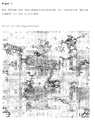
- FIG. 1 shows the original pyrogenic silica while FIG. 2 is the structurally modified, pyrogenically produced silicon dioxide.
- the structurally modified, pyrogenically produced silicon dioxide has a higher tamped density.
- the individual remaining aggregates are more spherical. They can have a thickening effect of ⁇ 1400.
- the thickening effect may be ⁇ 1000.
- the thickening effect may be ⁇ 1400.
- Post-milling reduces the grindometer value, shifting the particle size distribution to smaller particles.
- the structure of the fumed silica remaining after the structural modification is not impaired by the post-milling.
- the remilling has little influence on the performance properties of the structure-modified, pyrogenic silica, since the energy input in the post-milling is lower than in the ball mill.
- the following devices may be used: air jet mill, toothed disc mill or pin mill.
- an air jet mill can be used.
- a tempering can be carried out.
- This heat treatment can be carried out batchwise, for example in a drying oven or continuously, for example in a flow or fluidized bed.
- hydrophilic, pyrogenically prepared silicas it is possible to use hydrophilic pyrogenically prepared silicas which have a BET surface area of 50 ⁇ 30 to 380 ⁇ 30 m 2 / g. Particular preference may be given to using hydrophilic, pyrogenically prepared silicon dioxides which have a BET surface area of 200 ⁇ 25 or 300 ⁇ 30 m 2 / g.
- hydrophilic, pyrogenically prepared silicas listed in Table 1 can be used.
- Table 1 ⁇ / u> AEROSIL® 200 AEROSIL® 300 CAS-Reg number Behavior towards water Appearance Surface according to BET 1) m 2 / g 200 ⁇ 25 300 ⁇ 30 Mean size of the primary particles mm 12 7 Tamped density 2) normal goods g / l approx. 50 approx.
- hydrophilic, pyrogenically produced silica Aerosil® 200 or the hydrophilic, pyrogenically produced silica Aerosil® 300 are structurally modified by means of a ball mill. As indicated in Table 2, water is added and regrind.
- the obtained structure-modified silicas have a higher loss of drying than the starting silica.
- Table 3 shows the effects of structure modification and post-milling on the hydrophilic, pyrogenic silicon dioxides AEROSIL® 200 and AEROSIL® 300 on the basis of various physico-chemical data.
- the AEROSIL® 200 in the untreated state has a surface area of 202 m 2 / g. This is not influenced or changed by the structure modification and post-milling (see Comparative Example 1 and Examples 1 to 6).
- the tamped density is increased by the structure modification. Subsequent regrinding, however, again lowers the tapped density (see Examples 5 and 6).
- the DBP number is lowered by the structure modification. However, it remains unaffected by the regrooving.
- the grindometer value is increased by the structure modification and returned to the original value by post-grinding when the air jet mill is used for post-milling.
- the thickening effect of the hydrophilic, pyrogenic silicon dioxide is significantly reduced by the structure modification, but slightly increased by the post-milling.
- the degree of dispersion determines the performance properties of Aerosil thickened liquid.
- the measurement of Grindometer value is used to assess the degree of dispersion.
- the grindometer value is understood as the boundary layer thickness below which the present specks or aggregates become visible on the surface of the smeared sample.
- the sample is spread with a scraper in a groove whose depth at one end is twice as large as the diameter of the largest particles of Aerosil and decreases steadily to 0 at the other end.
- the value for the depth in microns is read, below which a larger number of aerosol particles become visible through specks or scratches on the surface of the binder system.
- the read value is the grindometer value of the present system.
- test instruction is as follows:
- the plastic cup is sealed in a laboratory centrifuge for 2.5 min at 2500 min -1 centrifuged. The dispersion remains for 1 h 50 min in the covered beaker in the temperature control cabinet at 22 ° C.
- Resins eg polyester resin, UP resin, vinyl ester resin
- Resins generally contain fillers to improve the performance properties.
- the type and concentration of the filler used influence the rheological behavior of the resin.
- a Brookfield DV III rheometer is used. Using a spatula, mix the mixture in the storage container for 1 minute. There should be no bubbles. Then the mixture is poured into a 180 ml beaker until it is almost full. Without delay, the measuring head of the rheometer is completely immersed in the mixture and measured as follows: 5 rpm Read off value after 60 s 50 rpm Read off value after 30 s
- the readings are the viscosities [Pa * s] at the respective rpm.
- a grindometer block after Hegmann is used.
- the grindometer block is placed on a flat, non-slip surface and wiped clean immediately before the test. Then a bubble-free sample at the deepest point of the gutter is filled so that it flows over the edge of the gutter.
- the scraper is then grasped with both hands and placed perpendicular to the grindometer block and at a right angle to its longitudinal edge with slight pressure on the deep end of the channel. Then the sample is spread over the block by slowly pulling the scraper slowly into the groove. The granularity is read no later than 3 seconds after the sample has been stripped off.
- the surface of the sample is considered transversely to the channel obliquely from above (at an angle of 20-30 ° to the surface).
- the block is held to the light so that the surface structure of the sample is clearly visible.
- the granularity is the value in microns below which a larger number of silica grains are visible as specks or scratches on the surface. Individual, randomly occurring specks or scratches are not taken into account.
- Graininess is evaluated at least twice, each time on a newly spread dispersion.
- Wave scan (history) The course is assessed by means of a Wave-scan plus device from Byk-Gardner Scratch resistance wet Scrub tester from Braive Instruments using scrub brushes with pig bristles, 40 double strokes with SiO 2 slurry.
- the slurry was newly prepared for each scrub process (4 sheets): strong: 400 g deion.
- the scratching tests were carried out one week after application of the lacquers. Measure the gloss and the fog 10 minutes after scratching against the scratch marks. The residual gloss is given in%.
- Scratch resistance dry Crockmeter Model 670 (Schröder), five double strokes using Polishing Paper Grade 9MIC blue (281Q Wetordry Production - 3M)
- Table 5 Viscosity run-out time, optical properties zero sample Dispersion according to WO 07/128636 Dispersion according to WO 04/020532 Silica according to Comparative Example 1 Silica according to Example 1 Flow time DIN 4 mm (s) 44 63 64 89 60 Wave scan L 3 9 15 7 5 S 0.3 3 13 2 3 Course visually * 1 2 3-4 2 2 * School grading system
- Table 6 Scratching tests 5% Sikron SF500 Black number M ⁇ Shine before scratching Shine after scratching Residual gloss [%] Haze from scratching Haze scratching ⁇ Haze zero sample 289 88.0 32.3 36.7 8th 102 94 Dispersion according to WO 07/128636 270 83.8 63.9 76.3 9 33 24 Dispersion according to WO 04/020532 278 84.7 54.1 63.8 9 52 43 Silica according to Comparative Example 1 283 87.3 51.6 59.1 9 62 53 Silica according to Example 1 281 86.5 54.0 62.4 8th 60 51 Crock
- the coating properties are not appreciably influenced during the grinding according to variant / 1; It is therefore surprising that method / 2 significantly improves the grindometer value and the haze in the case of the AEROSIL 200 and the AEROSIL 300 variant.
Landscapes
- Chemical & Material Sciences (AREA)
- Organic Chemistry (AREA)
- Health & Medical Sciences (AREA)
- Chemical Kinetics & Catalysis (AREA)
- Medicinal Chemistry (AREA)
- Polymers & Plastics (AREA)
- Inorganic Chemistry (AREA)
- Life Sciences & Earth Sciences (AREA)
- Engineering & Computer Science (AREA)
- Materials Engineering (AREA)
- Wood Science & Technology (AREA)
- Paints Or Removers (AREA)
- Silicon Compounds (AREA)
- Compositions Of Macromolecular Compounds (AREA)
- Pigments, Carbon Blacks, Or Wood Stains (AREA)
Priority Applications (6)
| Application Number | Priority Date | Filing Date | Title |
|---|---|---|---|
| EP07122862A EP2070992A1 (de) | 2007-12-11 | 2007-12-11 | Lacksysteme |
| CN200880120231.9A CN101896557B (zh) | 2007-12-11 | 2008-11-20 | 涂层系统 |
| KR1020107012796A KR20100106372A (ko) | 2007-12-11 | 2008-11-20 | 코팅 시스템 |
| PCT/EP2008/065912 WO2009074438A1 (en) | 2007-12-11 | 2008-11-20 | Coating systems |
| JP2010537362A JP5661469B2 (ja) | 2007-12-11 | 2008-11-20 | 被覆系 |
| US12/741,393 US8038788B2 (en) | 2007-12-11 | 2008-11-20 | Coating systems |
Applications Claiming Priority (1)
| Application Number | Priority Date | Filing Date | Title |
|---|---|---|---|
| EP07122862A EP2070992A1 (de) | 2007-12-11 | 2007-12-11 | Lacksysteme |
Publications (1)
| Publication Number | Publication Date |
|---|---|
| EP2070992A1 true EP2070992A1 (de) | 2009-06-17 |
Family
ID=39467249
Family Applications (1)
| Application Number | Title | Priority Date | Filing Date |
|---|---|---|---|
| EP07122862A Withdrawn EP2070992A1 (de) | 2007-12-11 | 2007-12-11 | Lacksysteme |
Country Status (6)
| Country | Link |
|---|---|
| US (1) | US8038788B2 (enExample) |
| EP (1) | EP2070992A1 (enExample) |
| JP (1) | JP5661469B2 (enExample) |
| KR (1) | KR20100106372A (enExample) |
| CN (1) | CN101896557B (enExample) |
| WO (1) | WO2009074438A1 (enExample) |
Families Citing this family (4)
| Publication number | Priority date | Publication date | Assignee | Title |
|---|---|---|---|---|
| WO2012164018A1 (en) * | 2011-06-01 | 2012-12-06 | Basf Se | Water-absorbing material having a coating of elastic film-forming polyurethane with high wicking and high permeability |
| DE102015204896A1 (de) * | 2015-03-18 | 2016-09-22 | Evonik Degussa Gmbh | Lacksystem enthaltend ein bewuchshemmendes Metalloxid und eine pyrogene Kieselsäure |
| EP3467052B1 (de) | 2017-10-06 | 2022-04-13 | Evonik Operations GmbH | Wässrige dispersion enthaltend siliziumdioxid und trimethyl 1,6-hexamethylendiamin |
| EP3954743A1 (de) | 2020-08-12 | 2022-02-16 | Evonik Operations GmbH | Verwendung von siliziumdioxid zur verbesserung der leitfähigkeit von beschichtungen |
Citations (6)
| Publication number | Priority date | Publication date | Assignee | Title |
|---|---|---|---|---|
| US5959005A (en) * | 1996-04-26 | 1999-09-28 | Degussa-Huls Aktiengesellschaft | Silanized silica |
| WO2004020532A1 (en) | 2002-08-28 | 2004-03-11 | Degussa Ag | Silica |
| WO2004020531A1 (en) * | 2002-08-28 | 2004-03-11 | Degussa Ag | Silicas |
| WO2005095525A1 (en) * | 2004-03-05 | 2005-10-13 | Degussa Ag | Silanised silicas |
| EP1736505A1 (en) * | 2005-06-25 | 2006-12-27 | Degussa AG | Thermoplastic matrix comprising silanised pyrogenic silica |
| WO2007128636A2 (en) | 2006-05-04 | 2007-11-15 | Evonik Degussa Gmbh | Fumed silica dispersion |
Family Cites Families (13)
| Publication number | Priority date | Publication date | Assignee | Title |
|---|---|---|---|---|
| AU556491B2 (en) * | 1983-09-06 | 1986-11-06 | Ppg Industries, Inc. | Coating |
| JP3291588B2 (ja) * | 1992-05-27 | 2002-06-10 | 日本アエロジル株式会社 | 樹脂充填材用二酸化珪素微粉末 |
| DE19616781A1 (de) * | 1996-04-26 | 1997-11-06 | Degussa | Silanisierte Kieselsäure |
| FI110431B (fi) * | 2000-04-14 | 2003-01-31 | Ashland Inc A Kentucky Corp | Menetelmä autosäätöpastojen valmistamiseksi ja niiden käyttö |
| ATE496098T1 (de) * | 2000-10-21 | 2011-02-15 | Evonik Degussa Gmbh | Strahlenhärtende lacksysteme |
| EP1199336B1 (de) * | 2000-10-21 | 2014-01-15 | Evonik Degussa GmbH | Funktionalisierte, strukturmodifizierte Kieselsäuren |
| ATE492607T1 (de) * | 2000-10-21 | 2011-01-15 | Evonik Degussa Gmbh | Funktionalisierte kieselsäuren |
| DE10250712A1 (de) * | 2002-10-31 | 2004-05-19 | Degussa Ag | Pulverförmige Stoffe |
| JP2004249370A (ja) * | 2003-02-18 | 2004-09-09 | Hitachi Maxell Ltd | 研磨体及び研磨体の製造方法 |
| KR100901045B1 (ko) * | 2003-05-06 | 2009-06-04 | 가부시끼가이샤 도꾸야마 | 소수성 퓸드 실리카 |
| DE10326049A1 (de) * | 2003-06-10 | 2004-12-30 | Degussa Ag | Flammenhydrolytisch hergestelltes Siliciumdioxid, Verfahren zu seiner Herstellung und Verwendung |
| DE102005007753A1 (de) * | 2005-02-18 | 2006-08-31 | Wacker Chemie Ag | Partikel mit geringer spezifischer Oberfläche und hoher Verdickungswirkung |
| EP1801073B1 (de) * | 2005-12-20 | 2011-05-18 | Evonik Degussa GmbH | Pyrogen hergestelltes Siliciumdioxid |
-
2007
- 2007-12-11 EP EP07122862A patent/EP2070992A1/de not_active Withdrawn
-
2008
- 2008-11-20 US US12/741,393 patent/US8038788B2/en not_active Expired - Fee Related
- 2008-11-20 JP JP2010537362A patent/JP5661469B2/ja not_active Expired - Fee Related
- 2008-11-20 WO PCT/EP2008/065912 patent/WO2009074438A1/en not_active Ceased
- 2008-11-20 KR KR1020107012796A patent/KR20100106372A/ko not_active Withdrawn
- 2008-11-20 CN CN200880120231.9A patent/CN101896557B/zh not_active Expired - Fee Related
Patent Citations (6)
| Publication number | Priority date | Publication date | Assignee | Title |
|---|---|---|---|---|
| US5959005A (en) * | 1996-04-26 | 1999-09-28 | Degussa-Huls Aktiengesellschaft | Silanized silica |
| WO2004020532A1 (en) | 2002-08-28 | 2004-03-11 | Degussa Ag | Silica |
| WO2004020531A1 (en) * | 2002-08-28 | 2004-03-11 | Degussa Ag | Silicas |
| WO2005095525A1 (en) * | 2004-03-05 | 2005-10-13 | Degussa Ag | Silanised silicas |
| EP1736505A1 (en) * | 2005-06-25 | 2006-12-27 | Degussa AG | Thermoplastic matrix comprising silanised pyrogenic silica |
| WO2007128636A2 (en) | 2006-05-04 | 2007-11-15 | Evonik Degussa Gmbh | Fumed silica dispersion |
Non-Patent Citations (1)
| Title |
|---|
| DATABASE CAPLUS [online] CHEMICAL ABSTRACTS SERVICE, COLUMBUS, OHIO, US; 7 October 2002 (2002-10-07), LEDER G, LADWIG T, VALTER V, FRAHN S, MEYER J: "New effects of fumed silica in modern coatings", retrieved from STN Database accession no. 2002:759845 * |
Also Published As
| Publication number | Publication date |
|---|---|
| JP5661469B2 (ja) | 2015-01-28 |
| WO2009074438A1 (en) | 2009-06-18 |
| CN101896557A (zh) | 2010-11-24 |
| KR20100106372A (ko) | 2010-10-01 |
| CN101896557B (zh) | 2014-02-19 |
| JP2011506657A (ja) | 2011-03-03 |
| US20100236451A1 (en) | 2010-09-23 |
| US8038788B2 (en) | 2011-10-18 |
Similar Documents
| Publication | Publication Date | Title |
|---|---|---|
| EP1477457B1 (de) | Oberflächenmodifizierte Fällungskieselsäuren | |
| EP2350210B9 (de) | Pigmentgranulat, verfahren zu dessen herstellung und verwendung | |
| EP2580291B1 (de) | Neuartige mattierungsmittel für uv-überdrucklacke | |
| EP1607421B1 (de) | Lackformulierung mit verbesserten rheologischen Eigenschaften | |
| DE10239423A1 (de) | Kieselsäure | |
| EP1199335B1 (de) | Funktionalisierte Kieselsäuren | |
| DE69510219T2 (de) | Mit boroxid modifizierte kieselsäure und aluminiumoxid beschichtetes titandioxidpigment | |
| DE69005926T2 (de) | Verfahren zum Beschichten von Titandioxidpigmenten. | |
| EP1398301B1 (de) | Effiziente Mattierungsmittel basierend auf Fällungskieselsäuren | |
| DE102007024100A1 (de) | Pyrogen hergestellte silanisierte und vermahlene Kieselsäure | |
| EP2483202B1 (de) | Neuartige mattierungsmittel für uv-lacke | |
| DE60203642T2 (de) | Siliciumdioxid-mattierungsmittel | |
| DE102007024365A1 (de) | Pyrogen hergestellte silanisierte und vermahlene Kieselsäure | |
| DE102004029069A1 (de) | Oberflächenmodifizierte Silicagele | |
| EP1199336B1 (de) | Funktionalisierte, strukturmodifizierte Kieselsäuren | |
| EP0922671B1 (de) | Fällungskieselsäure | |
| EP1078957B1 (de) | Oberflächenmodifiziertes Titandioxid | |
| DE69304931T2 (de) | Kieselsäuren | |
| DE10239424A1 (de) | Kieselsäuren | |
| DE3718277A1 (de) | Verfahren zur herstellung von bariumsulfat mit chemoreaktiver oberflaeche | |
| DE102006020987A1 (de) | Dispersion von pyrogen hergestelltem Siliciumdioxid | |
| DE2622902C2 (enExample) | ||
| DE69108071T3 (de) | Si02-Mattierungsmittel, Verfahren zu seiner Herstellung und seine Verwendung. | |
| DE2700940A1 (de) | Russ fuer lacke und farben | |
| DE69503047T2 (de) | Mit wachs beschichtete kieselsäure als mattierungsmittel |
Legal Events
| Date | Code | Title | Description |
|---|---|---|---|
| PUAI | Public reference made under article 153(3) epc to a published international application that has entered the european phase |
Free format text: ORIGINAL CODE: 0009012 |
|
| 17P | Request for examination filed |
Effective date: 20071211 |
|
| AK | Designated contracting states |
Kind code of ref document: A1 Designated state(s): AT BE BG CH CY CZ DE DK EE ES FI FR GB GR HU IE IS IT LI LT LU LV MC MT NL PL PT RO SE SI SK TR |
|
| AX | Request for extension of the european patent |
Extension state: AL BA HR MK RS |
|
| 17Q | First examination report despatched |
Effective date: 20100118 |
|
| AKX | Designation fees paid |
Designated state(s): AT BE BG CH CY CZ DE DK EE ES FI FR GB GR HU IE IS IT LI LT LU LV MC MT NL PL PT RO SE SI SK TR |
|
| STAA | Information on the status of an ep patent application or granted ep patent |
Free format text: STATUS: THE APPLICATION IS DEEMED TO BE WITHDRAWN |
|
| 18D | Application deemed to be withdrawn |
Effective date: 20121207 |