EP2054044B1 - Arzneimittel gegen lct-vergiftungen - Google Patents
Arzneimittel gegen lct-vergiftungen Download PDFInfo
- Publication number
- EP2054044B1 EP2054044B1 EP07722473.1A EP07722473A EP2054044B1 EP 2054044 B1 EP2054044 B1 EP 2054044B1 EP 07722473 A EP07722473 A EP 07722473A EP 2054044 B1 EP2054044 B1 EP 2054044B1
- Authority
- EP
- European Patent Office
- Prior art keywords
- tcdb
- amino acid
- acid sequence
- swissprot
- lcts
- Prior art date
- Legal status (The legal status is an assumption and is not a legal conclusion. Google has not performed a legal analysis and makes no representation as to the accuracy of the status listed.)
- Active
Links
Images




Classifications
-
- C—CHEMISTRY; METALLURGY
- C07—ORGANIC CHEMISTRY
- C07K—PEPTIDES
- C07K14/00—Peptides having more than 20 amino acids; Gastrins; Somatostatins; Melanotropins; Derivatives thereof
- C07K14/195—Peptides having more than 20 amino acids; Gastrins; Somatostatins; Melanotropins; Derivatives thereof from bacteria
- C07K14/33—Peptides having more than 20 amino acids; Gastrins; Somatostatins; Melanotropins; Derivatives thereof from bacteria from Clostridium (G)
-
- A—HUMAN NECESSITIES
- A61—MEDICAL OR VETERINARY SCIENCE; HYGIENE
- A61K—PREPARATIONS FOR MEDICAL, DENTAL OR TOILETRY PURPOSES
- A61K31/00—Medicinal preparations containing organic active ingredients
- A61K31/04—Nitro compounds
-
- A—HUMAN NECESSITIES
- A61—MEDICAL OR VETERINARY SCIENCE; HYGIENE
- A61K—PREPARATIONS FOR MEDICAL, DENTAL OR TOILETRY PURPOSES
- A61K31/00—Medicinal preparations containing organic active ingredients
- A61K31/33—Heterocyclic compounds
- A61K31/335—Heterocyclic compounds having oxygen as the only ring hetero atom, e.g. fungichromin
- A61K31/336—Heterocyclic compounds having oxygen as the only ring hetero atom, e.g. fungichromin having three-membered rings, e.g. oxirane, fumagillin
-
- A—HUMAN NECESSITIES
- A61—MEDICAL OR VETERINARY SCIENCE; HYGIENE
- A61K—PREPARATIONS FOR MEDICAL, DENTAL OR TOILETRY PURPOSES
- A61K31/00—Medicinal preparations containing organic active ingredients
- A61K31/66—Phosphorus compounds
- A61K31/661—Phosphorus acids or esters thereof not having P—C bonds, e.g. fosfosal, dichlorvos, malathion or mevinphos
-
- A—HUMAN NECESSITIES
- A61—MEDICAL OR VETERINARY SCIENCE; HYGIENE
- A61K—PREPARATIONS FOR MEDICAL, DENTAL OR TOILETRY PURPOSES
- A61K31/00—Medicinal preparations containing organic active ingredients
- A61K31/66—Phosphorus compounds
- A61K31/661—Phosphorus acids or esters thereof not having P—C bonds, e.g. fosfosal, dichlorvos, malathion or mevinphos
- A61K31/6615—Compounds having two or more esterified phosphorus acid groups, e.g. inositol triphosphate, phytic acid
-
- A—HUMAN NECESSITIES
- A61—MEDICAL OR VETERINARY SCIENCE; HYGIENE
- A61K—PREPARATIONS FOR MEDICAL, DENTAL OR TOILETRY PURPOSES
- A61K31/00—Medicinal preparations containing organic active ingredients
- A61K31/70—Carbohydrates; Sugars; Derivatives thereof
- A61K31/7024—Esters of saccharides
-
- A—HUMAN NECESSITIES
- A61—MEDICAL OR VETERINARY SCIENCE; HYGIENE
- A61K—PREPARATIONS FOR MEDICAL, DENTAL OR TOILETRY PURPOSES
- A61K39/00—Medicinal preparations containing antigens or antibodies
- A61K39/02—Bacterial antigens
- A61K39/08—Clostridium, e.g. Clostridium tetani
-
- A—HUMAN NECESSITIES
- A61—MEDICAL OR VETERINARY SCIENCE; HYGIENE
- A61P—SPECIFIC THERAPEUTIC ACTIVITY OF CHEMICAL COMPOUNDS OR MEDICINAL PREPARATIONS
- A61P31/00—Antiinfectives, i.e. antibiotics, antiseptics, chemotherapeutics
- A61P31/04—Antibacterial agents
-
- A—HUMAN NECESSITIES
- A61—MEDICAL OR VETERINARY SCIENCE; HYGIENE
- A61P—SPECIFIC THERAPEUTIC ACTIVITY OF CHEMICAL COMPOUNDS OR MEDICINAL PREPARATIONS
- A61P37/00—Drugs for immunological or allergic disorders
- A61P37/02—Immunomodulators
- A61P37/04—Immunostimulants
-
- A—HUMAN NECESSITIES
- A61—MEDICAL OR VETERINARY SCIENCE; HYGIENE
- A61P—SPECIFIC THERAPEUTIC ACTIVITY OF CHEMICAL COMPOUNDS OR MEDICINAL PREPARATIONS
- A61P39/00—General protective or antinoxious agents
- A61P39/02—Antidotes
-
- A—HUMAN NECESSITIES
- A61—MEDICAL OR VETERINARY SCIENCE; HYGIENE
- A61P—SPECIFIC THERAPEUTIC ACTIVITY OF CHEMICAL COMPOUNDS OR MEDICINAL PREPARATIONS
- A61P43/00—Drugs for specific purposes, not provided for in groups A61P1/00-A61P41/00
-
- C—CHEMISTRY; METALLURGY
- C07—ORGANIC CHEMISTRY
- C07K—PEPTIDES
- C07K16/00—Immunoglobulins [IG], e.g. monoclonal or polyclonal antibodies
- C07K16/12—Immunoglobulins [IG], e.g. monoclonal or polyclonal antibodies against material from bacteria
- C07K16/1267—Gram-positive bacteria
- C07K16/1282—Clostridium (G)
-
- C—CHEMISTRY; METALLURGY
- C07—ORGANIC CHEMISTRY
- C07K—PEPTIDES
- C07K16/00—Immunoglobulins [IG], e.g. monoclonal or polyclonal antibodies
- C07K16/40—Immunoglobulins [IG], e.g. monoclonal or polyclonal antibodies against enzymes
-
- C—CHEMISTRY; METALLURGY
- C12—BIOCHEMISTRY; BEER; SPIRITS; WINE; VINEGAR; MICROBIOLOGY; ENZYMOLOGY; MUTATION OR GENETIC ENGINEERING
- C12N—MICROORGANISMS OR ENZYMES; COMPOSITIONS THEREOF; PROPAGATING, PRESERVING, OR MAINTAINING MICROORGANISMS; MUTATION OR GENETIC ENGINEERING; CULTURE MEDIA
- C12N9/00—Enzymes; Proenzymes; Compositions thereof; Processes for preparing, activating, inhibiting, separating or purifying enzymes
- C12N9/99—Enzyme inactivation by chemical treatment
-
- A—HUMAN NECESSITIES
- A61—MEDICAL OR VETERINARY SCIENCE; HYGIENE
- A61K—PREPARATIONS FOR MEDICAL, DENTAL OR TOILETRY PURPOSES
- A61K39/00—Medicinal preparations containing antigens or antibodies
- A61K2039/505—Medicinal preparations containing antigens or antibodies comprising antibodies
-
- C—CHEMISTRY; METALLURGY
- C07—ORGANIC CHEMISTRY
- C07K—PEPTIDES
- C07K2317/00—Immunoglobulins specific features
- C07K2317/70—Immunoglobulins specific features characterized by effect upon binding to a cell or to an antigen
- C07K2317/76—Antagonist effect on antigen, e.g. neutralization or inhibition of binding
Definitions
- the invention relates to active substances for use in the treatment for the prevention or alleviation of poisoning by Large Clostridial Cytotoxins (LCTs), in particular Clostridium difficile toxins A and B (TcdA and TcdB), Clostridium sordellii lethal toxin (TcsL) and Clostridium novyi ⁇ -toxin ( Tcn ⁇ ).
- LCTs Large Clostridial Cytotoxins
- TcdA and TcdB Clostridium difficile toxins A and B
- TcsL Clostridium sordellii lethal toxin
- Tcn ⁇ Clostridium novyi ⁇ -toxin
- Clostridium difficile is a strictly anaerobic, spore-forming, gram-positive bacterium that was identified in the late 1970s as the etiological agent of antibiotic-associated diarrhea and pseudomembranous colitis. Since the 1990s, C. difficile has been considered the most important hospital germ in developed countries. As a consequence of the steadily increasing use of broadband antibiotics, the incidence of C. difficile infections continues to increase, especially in inpatients.
- C. difficile-associated diseases are caused by C. difficile-produced exotoxins toxin A (TcdA) and toxin B (TcdB).
- TcdA C. difficile-produced exotoxins toxin A
- TcdB toxin B
- the toxins TcdA and TcdB belong to the group of so-called Large Clostridial Cytotoxins (LCTs) and each consist of a peptide chain with three functional domains, namely the C-terminal domain, which is responsible for binding the toxin to the host cell membrane, the hydrophobic middle domain responsible for the translocation process through the cellular membranes (with) and the N-terminal domain, which has a glycosyltransferase function and mediates the toxic activity of the molecule.
- LCTs Large Clostridial Cytotoxins
- the uptake process of the toxins into the host cell has not been fully elucidated, it is a matter of fact that after binding to a host cell receptor the toxins enter the host cell via endocytosis and that the N-terminal catalytic domain is cleaved to release their toxicity is transported into the cytosol of the host cell.
- the catalytic domain specifically glycosylates GTPases of the Rho subfamily (Rho, Rac, and Cdc42), which in turn are involved in a plethora of signal transduction cascades, thus blocking the relevant signal transduction processes, ultimately leading to disaggregation of the cytoskeleton and cell death.
- Rode et al. 2003 describe studies on the influence of divalent ions directly on the glycosyltransferase activity in the toxic domain of LCTs using the example of the interaction of TcdB with calcium. Their test system is a cell-free mixture of LCTs, small G-proteins and radioactively labeled UDP-glucose.
- TeNt bacterial protein tetanus toxin
- Clostridium tetani belongs to the family of zinc endopeptidases and causes the cleavage of the protein synaptobrevin in the neurotransmitter exocytosis apparatus of eukaryotic cells.
- Tetanus toxin is not a toxin of the Large Clostridial Toxin (LCT) family.
- the WO 99/24461 describes a compound of general chemical structural formula (I) and pharmaceutical compositions containing the same, which are proposed for inhibiting the activity of the clostridial toxins tetanus toxin and botulinum neurotoxin (serotypes A to G). (see description p.1 paragraph 1). Tetanus toxin and botulinum neurotoxin are not toxins of the Large Clostridial Toxin (LCT) family.
- LCT Clostridial Toxin
- TcdA and TcdB are autocatalytic processes initiated by inositol phosphate (IP) and, consequently, the Clostridium difficile toxins in addition to their catalytic Function of the glycosyltransferase also have the function of a protease for self-cleavage or autocatalytic cleavage.
- IP inositol phosphate
- protease function was identified as aspartic protease.
- the catalytic region of the protease function was identified as the protein region comprising the amino acid sequence from amino acid position AS 1653 to AS 1678 of TcdB according to Sequence No. P18177 (SwissProt / TrEMBL).
- the motif DXG characteristic of aspartate proteases (Rao et al., 1998) is located at amino acid position 1665.
- the inositol phosphate binding site was identified as the protein region comprising the amino acid sequence from amino acid position AS 1517 to AS 2142 of the TcdB protein according to Sequence No. P18177 (SwissProt / TrEMBL).
- This amino acid sequence represents an inosine 5-monophosphate dehydrogenase (IMPDH) motif composed of two regions, namely, AS 1517 - AS 1593 and AS 1918 - AS 2142, which are separated by a 325 amino acid long protein segment with no sequence homology.
- IMPDH inosine 5-monophosphate dehydrogenase
- the triggering antibiotic is first discontinued as far as possible. Further treatment is exclusively symptomatic. In the case of prolonged or severe disease progression, as well as if discontinuation of the triggering antibiotic is not possible for other reasons, metron- tiazole or vancomycin is administered for therapy.
- the object of the present invention is to provide such a medicament.
- a solution of the stated object consists in the provision of active compounds of the aforementioned type, the inhibitors or activators of the autocatalytic protease activity of LCTs (Large Clostridial Cytotoxins), in particular the autocatalytic protease activity of Clostridium difficile toxin A (TcdA) and / or Clostridium difficile toxin B. (TcdB) and / or Clostridium sordellii lethal toxin (TcsL) and / or Clostridium novyi ⁇ -toxin (Tcn ⁇ ) and are specified in the claims.
- LCTs Large Clostridial Cytotoxins
- both activators and inhibitors of the autocatalytic protease activity of LCTs are referred to as effectors of the autocatalytic protease activity of LCTs.
- the active substance or effector is an inhibitor
- its antitoxic action is based on its inhibiting the protease activity of the intact toxin, in particular of the TcdB or TcdA or TcsL or Tcn ⁇ , and thus splitting off the cytotoxically effective fragment with glucosyltranferase function (in the case of TcdB and TcdA is the 63kDa fragment).
- Suitable inhibitors are chemical substances which inhibit the protease activity of the toxins.
- Preferred inhibitors are those chemicals which irreversibly inhibit protease activity.
- An example of this is the substance EPNP (1,2-epoxy-3- (p-nitrophenoxy) propane).
- EPNP 1,2-epoxy-3- (p-nitrophenoxy) propane
- the substance reacts irreversibly with aspartate residues in the catalytic center of proteases and thus inhibits the proteolytic action.
- Other protease inhibitors are known to the person skilled in the art or can easily be identified by him using known methods (computer modeling, high-throughput screening). For example, to perform a high-throughput screening, a peptide whose amino acid sequence corresponds to the sequence of the protease cleavage site of the LCTs can be synthesized. By coupling this peptide e.g.
- a probe can be generated.
- the labeled probe is then contacted with the toxin and the candidate substances. If the probe is cleaved, changes occur in the fluorescence spectrum. These changes are easy to detect with methods familiar to the person skilled in the art (fluorescence detectors). Approaches in which no change in the fluorescence spectrum can be observed then contain potential protease inhibitors.
- the holotoxin or also suitable toxin fragments which are used e.g. are coupled with a dye whose fluorescence is quenched in the uncleaved toxin or toxin fragment. Due to the autocatalytic cleavage of the toxin or toxin fragments, the quenching effect is abolished.
- the changes in the fluorescence spectrum can be easily detected as described.
- Particularly suitable inhibitors are chemical substances, in particular proteins, and in particular antibodies, which are the antibodies inhibit the autocatalytic protease activity of the LCTs by interacting with the active site of the protease.
- interacting in the present context means any type of interaction between the LCTs and a chemical substance, in particular a protein, and in particular includes covalent bonds such as e.g. Disulfide bonds and noncovalent bonds such as e.g. van der Waals forces, hydrophobic or electrostatic interactions, and hydrogen bonding.
- proteins Preference is given here to proteins, and in particular to antibodies which have the TcdB protein region from AS 1500 to AS 1800, in particular from AS 1653 to AS 1678 and above all to the DXG motif at position 1665, in each case according to TcdB amino acid sequence No. P18177 (SwissProt / TrEMBL) or the equivalent or homologous protein regions of TcdA or TcsL or Tcn ⁇ interact.
- these equivalent / homologous protein regions are the amino acid sequence section from AS 1651 to AS 1675 according to TcdA amino acid sequence No.
- inhibitors effectors with inhibitor function
- suitable inhibitors are chemical substances, in particular proteins, and especially antibodies, which inhibit the autocatalytic protease activity of the LCTs by inhibiting the interaction of the inositol phosphate with the toxin. Preventing IP binding prevents proteolytic cleavage of the toxins.
- amino acid sequence No. P18177 (SwissProt / TrEMBL) - or interact with the equivalent or homologous protein regions of the toxins TcdA or TcsL or Tcn ⁇ .
- antibodies or other proteins which do not interact directly with the inositol phosphate binding site, in particular the abovementioned protein regions, but are directed against neighboring regions and sterically hinder the IP binding and thus prevent the proteolytic cleavage of the toxins.
- antibodies or other proteins can be generated that do not interact directly with the DXG motif of the protease function of the LCTs, but prevent binding by proteolytic cleavage in adjacent protein sections.
- Suitable activators i. Activator-type effectors are chemical substances that activate the protease activity of the toxins.
- the antitoxic effect of an activator is based on the fact that it initiates the protease activity of the intact toxin, in particular the TcdB or TcdA or TcsL or Tcn ⁇ , even before the toxin has bound to the host cell in such a way that the cleaved fragment could reach the cell interior (cytosol) ,
- the activator thus causes cleavage of the cytotoxic fragment having glucosyl transferase function (in the case of TcdB and TcdA, this is the 63kDa fragment) outside the host cell.
- the cytotoxic effective fragment can then no longer enter the cell interior and unfold there its cytotoxic effect.
- a particularly suitable activator is isolated (as opposed to cytosolic) inositol phosphate (IP), preferably inositol hexaphosphate (IP6).
- IP inositol phosphate
- IP6 inositol hexaphosphate
- a drug with this drug has the advantage that in the patient's intestine existing LCT, in particular TcdB and / or TcdA and / or TcsL and / or Tcn ⁇ , caused by the drug supplied IP already in the intestine to cleavage, that is, even before it to intestinal cells or other body cells and can be toxic.
- TedB 10463 200-400 ⁇ g TedB 10463 (tgcBIOMICS, Mainz, Germany) were labeled with the dye Cy3 according to the manufacturer (Amersham Biosciences) by incubating the toxin together with the dye dissolved in dimethylformamide for 1 hour at 4 ° C. Unbound dye was then removed by size exclusion chromatography (SEC) using 10 mM Tris-HCl pH 8.5 as the running buffer. The molar ratio between dye and Cy3-labeled TcdB 10463 was 0.8-1.6 . Labeled TedB 10463 was aliquoted and stored at -80 ° C until further use.
- This porcine spleen cell extract was prepared as follows: Freshly collected porcine spleens were taken up in phosphate buffer (PBS) and minced into a single cell suspension. By addition of low salt buffer, namely 150 mM NH 4 Cl, 1 mM KHCO 3 , 0.1 mM EDTA, pH 7.6, existing erythrocytes were lysed and thus removed. Subsequently, the spleen cells were washed twice with 10 mM Tris-HCl pH 8.5 and immediately frozen at -80 ° C.
- PBS phosphate buffer
- TcdB 10463 The two characteristic 63 kDa and 207 kDa fragments of TcdB 10463 were obtained in all test assays . This shows that the aqueous and protein-free fraction of the spleen cell extract still possesses the property of cleaving TcdB 10463 into its two characteristic partial fragments.
- IP 6 Inositol hexaphosphate
- Structural analogs or other inositol phosphate related substances that possess initiator activity are known to those skilled in the art or can be readily determined by known methods (e.g., computer modeling). For example, the "high-throughput assays" described above can also be used.
- TcdB 10463 purified from C. difficile culture supernatant used in the experiments was contaminated with proteases.
- This TcdB 10463 was purified by affinity chromatography using monoclonal antibody 2CV (DSM ACC 2321) as follows:
- TcdB-specific monoclonal antibody 2CV Protein G-purified supernatant from a serum-free hybridoma culture
- 2CV Protein G-purified supernatant from a serum-free hybridoma culture
- a HiTrap NHS Sepharose Column commercially available from GE Healthcare, Freiburg, FRG
- Coupling and elution were carried out according to the manufacturer's instructions.
- the finished column was charged with about 4 mg TcdB 10463 and unbound proteins by washing three times with 50 mM Tris / HCl, pH 7.0; 125 mM NaCl removed. Elution was carried out in one step with 0.1 M triethanolamine HCl pH11.
- the toxin eluted in three 4 ml fractions with concentrations between 450-185 ⁇ g / ml.
- the eluted toxin was immediately neutralized with 1M Tris-HCl pH 7.5 in the 1/10 volume ratio, which ensured that this neutralizing solution was already in solution before initiation of elution the collection tube for the fractions had been submitted. Subsequently, the absence of contaminating proteins was detected by SDS-PAGE and subsequent zinc staining (see Fig. 1 e "-").
- the control consisted of incubation of such purified unlabelled TcdB 10463 with IP 6 and subsequent SDS-PAGE and detection of the toxin or toxin fragments by zinc staining.
- the result of this experiment is shown in FIG . 1e and shows the complete breakdown of the holotoxin into the two known fragments 63 kDa and 207 kDa.
- Example 2 Inactivation of TcdB-10463 by incubation with a protease inhibitor
- TcdB 10463 was purified by affinity chromatography using monoclonal antibody 2CV as described in Example 1 (D) followed by either (i) protease inhibitor EPNP (10 mM 1,2-epoxy-3- (p-nitrophenoxy) propane). or (ii) - as a control - with buffer (50 mM HEPES, 1 M NaCl, 1 mM EDTA, pH 8.0) pretreated for 60 minutes at room temperature.
- protease inhibitor EPNP 10 mM 1,2-epoxy-3- (p-nitrophenoxy) propane
- - as a control - with buffer 50 mM HEPES, 1 M NaCl, 1 mM EDTA, pH 8.0
- Example 1 (A) An in vitro cleavage assay was carried out analogously to Example 1 (A).
- the test preparations each comprised a volume of 10 ⁇ l and contained in each case 50-100 ng of unlabelled TcdB 10463 , 100 ⁇ M IP6 and 10 mM Tris-HCl pH 8.5. These assays were followed by incubation (1 h at room temperature) SDS-PAGE (10%) and the toxins and toxin fragments subsequently visualized by zinc staining.
- Fig. 2 shows the result of this experiment:
- the incubation of TcdB 10463 alone with IP6 (lane 3) shows a marked band in the molecular weight range of 63 kDa. If the toxin is previously pretreated with EPNP (lane 2), the typical 63 kD band is weak. This finding shows that the addition of EPNP almost completely inhibits the proteolytic activity (protease activity) of TcdB 10463 .
- the toxin pretreated with EPNP was also tested in the CHO test according to Moos et al. (2000) for residual activity (cytotoxic effect).
- the CHO test was carried out as follows: In a 96-well microtiter plate CHO cells (Chinese hamster ovary cells) were seeded (5000 cells / well) and 16 hours under standard conditions (5% CO 2 , 37 ° C, DMEM F12 supplemented with 2 mM L-glutamine, 5% FCS). Subsequently, the toxins were added to the cells after gradual dilution in growth medium. Dilution steps between 10 ° and 10 -8 were tested. The cells were incubated for 3 hours under standard conditions. Subsequently, the proportion of rounded cells was determined microscopically by photographing several representative sections of the well and counting outstretched and rounded cells. (See also Moos et al., Meth Enzymol. 2000, 325: 114-125 , The contents of this publication are hereby incorporated by reference.)
- the results of this CHO test show that the EPNP pretreated TcdB 10463 has a significantly lower cytotoxic activity than the untreated TcdB 10463 (see Table 2). Since the inhibitory effect of EPNP is known to be due to covalent interactions of EPNP with catalytic aspartate residues, thereby causing irreversible inactivation of the protease (Salto et al., 1994), the results of the present experiment show that inhibition of TcdB 10463 activity based on the inhibition of protease activity of this toxin molecule.
- the EPNP experiment described here demonstrates that the toxic effect of TcdB- 0463 and other LCTs is significantly reduced by pretreatment of the toxins with a suitable protease inhibitor.
- EPNP represents a model substance for a covalent inhibitor of LCTs.
- covalently acting or competitively inhibiting inhibitors are known to the person skilled in the art or can be determined therefrom by known methods, for example with the "high-throughput assays" already described.
- TcdB 1063 was incubated with 100 ⁇ M IP6 as described in Example 1 (C). Following incubation, the smaller, 63 kDa fragment of the toxin protein cleaved by the protease activity was separated by purifying the batch via Microcon tubes (Millipore, cut-off size 100 kD). This 63 kDa fragment of TcdB 10463 was subsequently amplified in the Moos et al. CHO test described in Example 2. (2000) examined for rounding off the cells. The protein was given undiluted and in dilution stages to the cells.
- the cytotoxic effect of TcdB 10463 and other LCTs can thus be inhibited by inducing the proteolytic cleavage of the toxins even before the toxins enter the cells.
- EPNP inactivated see Example 2
- untreated TcdB 10463 were separated by SDS gel and displayed with zinc staining. Subsequently, the bands corresponding to the proteins were excised and cut into small pieces. This was decolorized and dried, then reduced in 2 mM DTT and alkylated with 20 mM iodoacetamide. After washing and re-drying the gel fragments, they were digested with trypsin overnight at 37 ° C. The resulting peptides were subsequently separated by HPLC (NanoAcquity ultraperformance Liquid Chromatography, Waters, Milford, USA).
- the eluted fragments were then analyzed by mass spectrometry.
- mass spectrometry For this purpose, a Q-Tof Premier mass spectrometer Waters was used. The device was loaded with a [Glu-1] fibrinogen peptide solution (500 fmol / ⁇ l at 300 nl / min) over the Calibrated the reference sprayer of the NanoLockSpray source (Waters). To analyze the results, the MassLnyx4.1 software (Waters) was used.
- the analysis of the results shows that the untreated TcdB differs from the EPNP-treated toxin only in one tryptic fragment ( Fig. 3 ).
- This fragment comprises the amino acids AS 1653 to 1678 of the TcdB protein according to TcdB amino acid sequence No. P 18177 (SwissProt / TrEMBL) with the DXG motif at position 1665 characteristic for aspartate proteases.
- the person skilled in the art can therefore generate by known methods antibodies or other proteins which interact specifically with the active site of the protease domain of the toxins and thus prevent, for example, the autocatalytic cleavage of the LCTs. It is equally possible to generate antibodies or proteins which do not directly block the active site, but are directed towards adjacent regions, thus hindering the autoproteolytic cleavage of the toxin.
- Example 5 Inhibition of TcdB activity by antibodies following immunization with inactivated TcdB
- TcdB fragments were expressed by methods known in the art in the plasmid pET-19 (Novagen) and purified on the attached His-tag. Subsequently, the His-tag was cleaved by enterokinase digestion. The purity of the protein was checked in the SDS gel (data not shown)
- rabbits were first primed with the antigen and subsequently subjected to several booster immunizations. Polyclonal antisera was finally obtained from rabbit blood.
- TcdB was first pretreated with polyclonal antiserum (dilution level 1: 100) and incubated for 1 h at room temperature. Subsequently, the neutralizing activity of the antisera as described in Example 2 was checked by the CHO test. The measure of the neutralizing effect of the sera was how long the cells were protected from the cytotoxic effect of TcdB.
- the rabbits immunized with preparation A had only a low antibody titer (see Table 4), in addition the serum of these rabbits did not have a neutralizing effect. This finding corresponds to the results of immunization experiments with formalized LCTs known to those skilled in the art.
- the rabbits immunized with preparations C to E also had antibody titer, and moreover, their polyclonal sera showed a markedly neutralizing effect in the CHO test (Table 4).
- the polyclonal serum generated by immunization with preparation E showed the best neutralizing properties.
- the neutralizing effect of the region around the DSG motif proves that antibodies directed against the active site of the protease can inhibit proteolytic activity. With such antibodies, a protection against the toxic effects of the LCTs can thus also be achieved in vivo.
- the autocatalytic cleavage of the toxins is important, since only so the N-terminal, the actual toxic activity mediating fragment is released in the target cells.
- the binding of specific antibodies in the vicinity of the DSG motif of the aspartate protease and the inositol phosphate binding site prevents the autocatalytic cleavage of the toxins.
- effective use of toxin fragments necessary for the autocatalytic cleavage of LCTs can provide effective immunization against LCTs.
Landscapes
- Health & Medical Sciences (AREA)
- Chemical & Material Sciences (AREA)
- Life Sciences & Earth Sciences (AREA)
- Medicinal Chemistry (AREA)
- General Health & Medical Sciences (AREA)
- Organic Chemistry (AREA)
- Animal Behavior & Ethology (AREA)
- Pharmacology & Pharmacy (AREA)
- Public Health (AREA)
- Veterinary Medicine (AREA)
- Epidemiology (AREA)
- Genetics & Genomics (AREA)
- Molecular Biology (AREA)
- Immunology (AREA)
- Biochemistry (AREA)
- Bioinformatics & Cheminformatics (AREA)
- Engineering & Computer Science (AREA)
- General Chemical & Material Sciences (AREA)
- Biophysics (AREA)
- Proteomics, Peptides & Aminoacids (AREA)
- Zoology (AREA)
- Microbiology (AREA)
- Wood Science & Technology (AREA)
- Chemical Kinetics & Catalysis (AREA)
- Nuclear Medicine, Radiotherapy & Molecular Imaging (AREA)
- Gastroenterology & Hepatology (AREA)
- General Engineering & Computer Science (AREA)
- Mycology (AREA)
- Biotechnology (AREA)
- Biomedical Technology (AREA)
- Toxicology (AREA)
- Communicable Diseases (AREA)
- Oncology (AREA)
- Medicines That Contain Protein Lipid Enzymes And Other Medicines (AREA)
- Peptides Or Proteins (AREA)
- Medicines Containing Antibodies Or Antigens For Use As Internal Diagnostic Agents (AREA)
- Pharmaceuticals Containing Other Organic And Inorganic Compounds (AREA)
- Investigating Or Analysing Biological Materials (AREA)
Description
- Die Erfindung betrifft Wirkstoffe zur Verwendung bei der Behandlung zur Vermeidung oder Linderung einer Vergiftung durch Large Clostridial Cytotoxins (LCTs), insbesondere Clostridium difficile Toxine A und B (TcdA und TcdB), Clostridium sordellii letales Toxin (TcsL) und Clostridium novyi α-Toxin (Tcnα).
- Clostridium difficile ist ein strikt anaerob wachsender, Sporen bildender, grampositiver Keim, der erst Ende der 70er Jahre als etiologisches Agenz der Antibiotika-assoziierten Diarrhoe und der Pseudomembranösen Kolitis identifiziert wurde. Seit den 90er Jahren wird C. difficile als der bedeutendste Krankenhauskeim der entwickelten Länder angesehen. Als Konsequenz des sich ständig weiter ausbreitenden Einsatzes von Breitbandantibiotika steigt die Inzidenz von C. difficile Infektionen vor allem bei stationär behandelten Patienten weiter stetig an.
- Für die C. difficile-assozierten Erkrankungen sind die von C. difficile produzierten Exotoxine Toxin A (TcdA) und Toxin B (TcdB) verantwortlich. Es existieren verschiedene Stämme mit unterschiedlicher Virulenz und Toxinproduktion. Ungefähr ein Viertel aller Stämme produziert keine Toxine. Toxinbildende Stämme produzieren fast immer beide Toxine. TcdA ist ein Enterotoxin, das durch zytotoxische Schädigung der Enterozyten die Permeabilität der Darmschleimhaut erhöht und damit eine Diarrhoe auslöst. TcdB ist ein Zytotoxin, das den Elektrolyttransport stört und für Flüssigkeitsverlust und Funktionsstörungen des Darmes verantwortlich ist. Die Toxine TcdA und TcdB gehören zur Gruppe der sogenannten Large Clostridial Cytotoxins (LCTs) und bestehen jeweils aus einer Peptidkette mit drei funktionalen Domänen, nämlich der C-terminalen Domäne, die für das Anbinden des Toxins an die Wirtszellmembran verantwortlich ist, der hydrophoben mittleren Domäne, die für den Translokationsprozess durch die zellulären Membranen (mit) verantwortlich gemacht wird, und die N-terminale Domäne, die eine Glykosyltransferase-Funktion aufweist und die toxische Aktivität des Moleküls vermittelt.
- Zwar ist der Aufnahmeprozess der Toxine in die Wirtszelle noch nicht vollständig aufgeklärt, es gilt jedoch als Tatsache, dass die Toxine nach dem Anbinden an einen Wirtszellrezeptor per Endozytose in die Wirtszelle gelangen, und dass zur Entfaltung ihrer Toxizität die N-terminale katalytische Domäne abgespalten und in das Cytosol der Wirtszelle befördert wird. Dort glykosiliert die katalytische Domäne spezifisch GTPasen der Rho-Subfamilie (Rho, Rac und Cdc42), welche ihrerseits an einer Fülle von Signaltransduktionskaskaden beteiligt sind, und blockiert auf diese Weise die betreffenden Signaltransduktionsprozesse, was letztendlich zur Disaggregation des Cytoskeletts und zum Zelltod führt.
- Im Stand der Technik wurde bisher davon ausgegangen, dass die Abspaltung der katalytischen N-terminalen Domäne der Toxin-Peptidketten von TcdA und TcdB und auch anderer "Large Clostridial Toxines" LCT von einer zellulären Protease katalysiert wird (Rupnik et al., 2005 und Pfeiffer et al., 2003). Ein entsprechender Nachweis konnte jedoch nicht erbracht werden.
- Rupnik et al. 2005 beschreiben in-vitro-Experimente die zeigen, dass TcdB in einem einzigen proteolytischen Schritt in zwei Fragmente gespalten wird, von denen das kleinere, N-terminale Fragment die zytotoxische Funktion und die Glucosyltransferase-Funktion aufweist. Die Autoren vertreten die Auffassung, dass der Spaltungsprozess von einer eukaryontischen Pepstatin-sensitiven Protease der Wirtszelle katalysiert wird, die im Zytoplasma und an der zytoplasmischen Oberfläche intrazellulärer Membranen lokalisiert ist. Es wird gezeigt, dass bereits abgespaltete N-terminale Fragmente nicht in eukaryonte Zellen aufgenommen werden. In den beschriebenen "in-vitro assay" zur Identifizierung von Substanzen, die die proteolytische Spaltungsreaktion hemmen oder fordern, ist die Protease in der "cytosolic fraction" der Wirtszelle das Target für die Testsubstanzen.
- Rode et al. 2003 beschreiben Untersuchungen zum Einfluss von zweiwertigen Ionen direkt auf die Glykosyltransferase-Aktivität in der toxischen Domäne der LCTs am Beispiel der Interaktion von TcdB mit Kalzium. Ihr Test-System ist eine zellfreie Mischung aus LCTs, kleinen G-Proteinen und radioaktiv-markierter UDP-Glukose.
- Faruki et al 1987 beschreiben die Wirkung des Antibiotikums LY146032 auf das Wachstum von Clostridium difficile und den Einfluss von Kalzium-Ionen auf diese antimikrobielle Aktivität dieses Antibiotikums. Test-System sind C. difficile Bakterien in vitro auf Petrischalen. Es wird gezeigt, dass der Zusatz von Kalzium-Ionen die Effizienz des Antibiotikums LY146032 als Wachstumshemmer von C. difficile signifikant verstärkt.
- Supuran et al. 2002 beschreiben in ihrem Übersichtsartikel die gegenwärtige Situation der Antibiotika gegen Bakterien, die zunehmende bakterielle Resistenzentwicklung und Möglichkeiten der Generierung neuer Generationen von antibakteriellen Antibiotika mit anderen Wirkungsmechanismen als den bekannten. Es wird der Stand der Technik im Design solcher Enzym-Inhibitoren mit potenziellen therapeutischen Anwendungen präsentiert sowie jüngste Fortschritte beim Einsatz von einigen dieser Proteasen in der Therapie. Die Aspartat-Protease von LCTs ist nicht erwähnt.
- Martin et al. 1999 beschreiben Untersuchungen zum bakteriellen Protein Tetanustoxin (TeNt), das von dem Bakterium Clostridium tetani gebildet wird, zur Familie der Zink-Endopeptidasen gehört, und die Spaltung des Proteins Synaptobrevin im Neurotransmitter-Exocytose-Apparat eukaryontischer Zellen bewirkt. Tetanustoxin ist kein Toxine der "Large clostridial Toxin (LCT) family".
- Die
WO 99/24461 - Chrzanowska et al. 1995 beschreiben eine saure Proteinase von Penicillium camemberti. Als Substrat dieser Pilz-Protease sind ausschließlich eukaryontische Proteine bekannt.
- Im Verlauf der Untersuchungen, die der vorliegenden Erfindung zugrunde liegen, wurde nun aber überraschend gefunden, dass die Spaltung von TcdA und TcdB ein autokatalytischer Prozess ist, der von Inositolphosphat (IP) initiiert wird, und dass folglich die Toxine von Clostridium difficile neben ihrer katalytischen Funktion der Glykosyltransferase auch noch die Funktion einer Protease zur Selbstspaltung bzw. autokatalytischen Spaltung besitzen.
- Diese Proteasefunktion wurde als Aspartat-Protease identifiziert. Als katalytisches Zentrum der Protease funktion wurde die Proteinregion identifiziert, die die Aminosäuresequenz von Aminosäureposition AS 1653 bis AS 1678 des TcdB gemäß Sequenz Nr P18177 (SwissProt/TrEMBL) umfasst. Das für Aspartat-Proteasen charakteristische Motiv DXG (Rao et al. 1998) liegt an der Aminosäureseposition 1665.
- Als Inositolphosphat-Bindungsstelle wurde die Proteinregion identifiziert, die die Aminosäuresequenz von Aminosäureposition AS 1517 bis AS 2142 des TcdB-Proteins gemäß Sequenz Nr. P18177 (SwissProt/TrEMBL) umfasst. Dieses Aminosäuresequenz stellt ein Inosin-5-Monophosphat-Dehydrogenase (IMPDH) Motiv dar, das sich aus zwei Bereichen, nämlich AS 1517 - AS 1593 und AS 1918 - AS 2142 zusammensetzt, die durch einen 325 Aminosäure langen Proteinabschnitt ohne Sequenzhomologie getrennt sind.
- Zur Behandlung von Patienten mit C. difficile Infektionen wird zunächst das auslösende Antibiotikum abgesetzt, soweit dies möglich. Die weitere Behandlung erfolgt ausschließlich symptomatisch. Bei länger andauerndem oder schwerwiegendem Krankheitsverlauf, sowie wenn ein Absetzen des auslösenden Antibiotikums aus anderen Gründen nicht möglich ist, wird zur Therapie Metrondiazol oder Vancomycin verabreicht.
- Die Nachteile der gängigen antimikrobiellen Therapie sind vielfältig. Entscheidend ist hierbei vor allem, daß sich eine Erkrankung, die infolge der Behandlung einer anderen Infektionssituation mit Antibiotika ausgelöst wurde, nicht effektiv mit einer antimikrobiellen Therapie heilen läßt. Hintergrund dafür ist die Tatsache, daß C. difficile im Darm gesunder Menschen nur verhältnismäßig selten vorkommt und sich gegenüber der normalen Darmflora nicht durchsetzen kann. Wird die normale Darmflora durch Antibiotika-Therapie zerstört, kann sich C. difficile durchsetzen und den Darm effektiv besiedeln. Die gegen C. difficile gerichtete Antibiotika-Therapie führt wiederum zur Zerstörung der Darmflora und verhindert damit ursächlich auch das Entstehen einer gesunden Darmflora. Dies erklärt auch die hohe Anzahl an Remissionen, die nach Beendigung der antimikrobiellen Therapie zu beobachten sind. Ein zusätzlicher Nachteil der gängigen Therapie ist das zunehmende Auftreten von multiresistenten C. difficile Stämmen in jüngster Zeit. Damit droht, daß auch die bislang einzige Therapie für C. difficile induzierte Erkrankungen nutzlos wird und die Anzahl an Todesfällen infolge von C. difficile Erkrankungen steigt. Hinzu kommt, daß die zur Behandlung einer C. difficile Infektion nötigen Antibiotika sehr teuer sind und normalerweise nur in begründeten Fällen als Reserveantibiotika eingesetzt werden.
- Es besteht daher ein dringender Bedarf nach Medikamenten, die zur spezifischen Bekämpfung (Vermeidung, Beseitigung, Linderung) von C. difficile Infektionen geeignet sind, ohne dass das Risiko der Entwicklung von Resistenzen bei den Clostridien oder auch anderen Bakterien besteht, und ohne die natürliche Bakterienflora der betroffenen Patienten - insbesondere deren Darmflora - zu schädigen.
- Aufgabe der vorliegenden Erfindung ist die Bereitstellung eines solchen Medikaments.
- Eine Lösung der genannten Aufgabe besteht in der Bereitstellung von Wirkstoffen der eingangs genannten Art, die Inhibitoren oder Aktivatoren der autokatalytischen Proteaseaktivität von LCTs (Large Clostridial Cytotoxins), insbesondere der autokatalytischen Proteaseaktivität von Clostridium difficile Toxin A (TcdA) und/oder Clostridium difficile Toxin B (TcdB) und/oder Clostridium sordellii letales Toxin (TcsL) und/oder Clostridium novyi α-Toxin (Tcnα) darstellen und in den Ansprüchen spezifiziert sind.
- Als Effektoren der autokatalytischen Proteaseaktivität von LCTs werden im folgenden sowohl Aktivatoren als auch Inhibitoren der autokatalytischen Proteaseaktivität von LCTs bezeichnet.
- Ist der Wirkstoff bzw. Effektor ein Inhibitor, so beruht seine antitoxische Wirkung darauf, dass er die Proteaseaktivität des intakten Toxins, insbesondere des TcdB oder TcdA oder TcsL oder Tcnα, hemmt und somit die Abspaltung des cytotoxisch wirksamen Fragments mit Glucosyltranferasefunktion (im Fall von TcdB und TcdA ist das das 63kDa-Fragment) unterbindet.
- Geeignete Inhibitoren sind chemische Substanzen, welche die Protease-Aktivität der Toxine inhibieren.
- Der Begriff "chemische Substanz" bezeichnet in den vorstehenden und nachfolgenden Ausführungen sowohl anorganische als auch organische Verbindungen, Ionen und Peptide oder Proteine.
- Bevorzugte Inhibitoren sind solche chemischen Substanzen, die die Protease-Aktivität irreversibel inhibieren. Ein Beispiel hierfür ist die Substanz EPNP (1,2-Epoxy-3-(p-Nitrophenoxy)-Propan). Die Substanz reagiert irreversibel mit Aspartatresten im katalytischen Zentrum von Proteasen und inhibiert so die proteolytische Wirkung. Weitere Protease-Inhibitoren sind dem Fachmann bekannt oder können von ihm mit bekannten Methoden (Computer-Modelling, High-Throughput-Screening) leicht identifizieren werden. Beispielsweise kann zur Durchführung eines "High-Troughput-Screenings" ein Peptid synthetisiert werden, dessen Aminosäure-Sequenz der Sequenz der Proteasespaltstelle der LCTs entspricht. Durch Kopplung dieses Peptids z.B. mit dem Farbstoff AMC (7-Amino,4-Methyl-Cumarin) mit Methoden, die dem Fachmann bekannt sind, kann eine Sonde generiert werden. Zur Durchführung des "High-Troughput-Screenings" wird anschließend die gelabelte Sonde mit dem Toxin und den Kandidaten-Substanzen zusammengebracht. Wird die Sonde gespalten, so kommt es zu Änderungen im Fluoreszenz-Spektrums. Diese Änderungen sind mit dem Fachmann geläufigen Methoden (Fluoreszenzdetektoren) leicht zu erfassen. Ansätze, in denen keine Änderung des Fluoreszenz-Spektrum zu beobachten sind, enthalten dann potentielle Protease-Inhibitoren.
- Beispielhaft sei noch ein weiteres Verfahren zur Identifizierung von Substanzen, die die Aktivierung der autokatalytischen Protease-Aktivität der LCTs beeinflussen, beschrieben. Dazu können das Holotoxin oder auch geeignete Toxinfragmente verwendet werden, die z.B. mit einem Farbstoff gekoppelt sind, dessen Fluoreszenz im ungespaltenen Toxin oder Toxin-Fragment gequencht ist. Durch die autokatalytische Spaltung des Toxins bzw. der Toxinfragmente wird die quenchende Wirkung aufgehoben. Die Änderungen im Fluoreszenz-Spektrum können, wie beschrieben, leicht erfasst werden.
- Besonders geeignete Inhibitoren, d.h. Effektoren mit Inhibitorfunktion sind chemische Substanzen, insbesondere Proteine und hierunter vor allem Antikörper, die die autokatalytische Proteaseaktivität der LCTs hemmen, indem sie mit dem aktive Zentrum der Protease interagieren.
- Der Begriff "interagieren" bedeutet im vorliegenden Kontext jede Art von Wechselwirkung zwischen den LCTs und einer chemischen Substanz, insbesondere einem Protein, und umfasst insbesondere kovalente Bindungen wie z.B. DisulfidBindungen und nichtkovalente Bindungen wie z.B. van-der-Waals-Kräfte, hydrophobe oder elektrostatische Wechselwirkungen sowie Wasserstoffbrücken-Bindungen.
- Bevorzugt sind dabei Proteine und hierunter vor allem Antikörper, die mit der TcdB-Proteinregion von AS 1500 bis AS 1800 , insbesondere von AS 1653 bis AS 1678 und vor allem mit dem DXG-Motiv an Position 1665 - jeweils gemäß TcdB-Aminosäuresequenz Nr. P18177 (SwissProt/TrEMBL) oder den hierzu äquivalenten bzw. homologen Proteinregionen von TcdA oder TcsL oder Tcnα interagieren. Bei diesen äquivalenten/homologen Proteinregionen handelt es sich im Fall von TcdA um den Aminosäuresequenzabschnitt von AS 1651 bis AS 1675 gemäß TcdA-Aminosäuresequenz Nr. P16154 (SwissProt/TrEMBL) mit dem DXG-Motiv an Aminosäureposition AS 1662, im Fall von TcsL um den Aminosäuresequenzabschnitt von AS 1654 bis AS 1679 gemäß TcsL-Aminosäuresequenz Nr. Q46342 (SwissProt/TrEMBL) mit dem DXG-Motiv an Aminosäureposition AS 1666, und im Fall von Tcnα um den Aminosäuresequenzabschnitt von AS 1641 bis AS 1665 gemäß Tcnα -Aminosäuresequenz Nr. Q46149 (SwissProt/TrEMBL).
- Weitere geeignete Inhibitoren (Effektoren mit Inhibitorfunktion) sind chemische Substanzen, insbesondere Proteine und hierunter vor allem Antikörper, die die autokatalytische Proteaseaktivität der LCTs hemmen, indem sie die Interaktion des Inositolphosphates mit dem Toxin inhibieren. Indem die IP-Bindung verhindert wird, unterbleibt die proteolytische Spaltung der Toxine.
- Bevorzugt sind dabei Proteine und hierunter vor allem Antikörper, die mit der TcdB-Proteinregion von AS 1400 bis AS 2300 , insbesondere von AS 1517 bis AS 2142 und vor allem von AS 1517 bis AS 1593 oder AS 1918 bis AS 2142 - jeweils gemäß TcdB-Aminosäuresequenz Nr. P18177 (SwissProt/TrEMBL) - oder mit den hierzu äquivalenten bzw. homologen Proteinregionen der Toxine TcdA oder TcsL oder Tcnα interagieren.
- Ebensogut können auch Antikörper oder andere Proteine generiert werden, die nicht direkt mit der Inositolphosphat-Bindungsstelle, insbesondere den vorgenannten Proteinregionen interagieren, sondern gegen benachbarte Regionen gerichtet sind und die IP-Bindung sterisch behindern und damit die proteolytische Spaltung der Toxine verhindern. Außerdem können Antikörper oder andere Proteine generiert werden, die nicht direkt mit dem DXG-Motiv der Proteasefunktion der LCTs interagieren, sondern durch Bindung in benachbarten Proteinabschnitten die proteolytische Spaltung verhindern.
- Geeignete Aktivatoren, d.h. Effektoren mit Aktivatorfunktion, sind chemische Substanzen, welche die Protease-Aktivität der Toxine aktivieren.
- Die antitoxische Wirkung eines Aktivators beruht darauf, dass er die Proteaseaktivität des intakten Toxins, insbesondere des TcdB oder TcdA oder TcsL oder Tcnα initiert, noch bevor das Toxin derart an die Wirtszelle gebunden hat, dass das abgespaltenen Fragment in das Zellinnere (Cytosol) gelangen könnte. Der Aktivator bewirkt folglich eine Abspaltung des cytotoxisch wirksamen Fragments mit Glucosyltranferasefunktion (im Fall von TcdB und TcdA ist das das 63kDa-Fragment) außerhalb der Wirtszelle. Das cytotoxisch wirksame Fragment kann dann nicht mehr in das Zellinnere gelangen und dort seine cytotoxische Wirkung entfalten.
- Ein besonders geeigneter Aktivator (Effektor mit Aktivatorfunktion) ist isoliertes (im Unterschied zu cytosolischem) Inositolphosphat (IP), vorzugsweise Inositolhexaphosphat (IP6).
- Ein Medikament mit diesem Wirkstoff hat den Vorteil, dass im Patientendarm vorhandenes LCT, insbesondere TcdB und/oder TcdA und/oder TcsL und/oder Tcnα, durch das medikamentös zugeführte IP schon im Darm zur Spaltung veranlasst wird, das heißt noch bevor es an Darmzellen oder andere Körperzellen binden und toxisch wirken kann.
- Die katalytischen Zentren der Proteasefunktion der LCTs können erfindungsgemäß auch als gezielt verabreichte Antigene (Impfungstoffe) zur Erzeugung einer Immunisierung gegen die Toxine verwendet werden. Gegenstand der vorliegenden Erfindung ist deshalb auch die Verwendung von LCT-Proteinfragmenten als Vaccine-Wirkstoff bei der Behandlung zur Vermeidung oder Linderung einer Vergiftung durch LCT (= Large Clostridial Cytotoxins), die dadurch gekennzeichnet ist, dass der oder die antigene(n) Wirkstoff(e) aus der folgenden Gruppe von Proteinfragmenten ausgewählt ist/sind :
- DXG-Motiv an Position 1665 der TcdB-Aminosäuresequenz Nr. P18177 (SwissProt/TrEMBL),
- die Aminosäurepositionen AS 1653 bis AS 1678 der TcdB-Aminosäuresequenz Nr. P 18177 (SwissProt/TrEMBL),
- die Aminosäurepositionen AS 1500 bis AS 1800 der TcdB-Aminosäuresequenz Nr. P 18177 (SwissProt/TrEMBL),
- das DXG-Motiv an Position 1662 der TcdA-Aminosäuresequenz Nr. P16154 (SwissProt/TrEMBL),
- die Aminosäurepositionen AS 1651 bis AS 1675 der TcdA-Aminosäuresequenz Nr. P 16154 (SwissProt/TrEMBL)
- das DXG-Motiv an Position 1666 der TcsL-Aminosäuresequenz Nr. Q46342 (SwissProt/TrEMBL)
- die Aminosäurepositionen AS 1654 bis AS 1679 der TcsL-Aminosäuresequenz Nr. Q46342 (SwissProt/TrEMBL),
- die Aminosäurepositionen AS 1641 bis AS 1665 der Tcnα-Aminosäuresequenz Nr. Q46149 (SwissProt/TrEMBL).
- Die Erfindung wird im folgenden anhand von Ausführungsbeispielen und Figuren näher erläutert. Es zeigen
- Figur 1:
- Aufspaltung des TcdB10463 (270 kDa) Holotoxins in die Translokations/Ligandendomäne (207 kDa) und die N-terminale katalytische Domäne (63 kDa) in der SDS-PAGE, durchgeführt mit
- a: einer Mischung aus Cy3-markiertem TcdB10463 und Schweine-Milzzell-Extrakt (Beispiel 1 A);
- b: einer Mischung aus Cy3-markiertem TcdB10463 und von Protein befreitem Schweine-Milzzell-Extrakt (Beispiel 1 B);
- c: einer Mischung aus Cy3-markiertem TedB10463. und Inositolphosphat;
- d: einer Mischung aus unmarkiertem TedB10463. und Inositolphosphat;
- e: einer Mischung aus unmarkiertem (mittels Affinitätschromatographie gereinigtem) TedB10463 und Inositolphosphat;
- a-e jeweils im Anschluß an eine Inkubation bei Raumtemperatur für 1 Stunde
- Figur 2:
- SDS-PAGE einer Mischung von TcdB10463 und/oder IP6, mit oder ohne Vorbehandlung des Toxins mit EPNP;
- Spur 1: TcdB10463 nach Vorbehandlung mit EPNP und ohne IP6, keine Bande im 63kDa Bereich nachweisbar;
- Spur 2: TcdB10463 nach Vorbehandlung mit EPNP und nach Inkubation mit IP6, die typische 63kD Bande ist nur schwach ausgeprägt;
- Spur 3: TcdB10463 ohne Vorbehandlung mit EPNP und nach Inkubation mit IP6, es ist eine deutlich ausgeprägte Bande im Molekulargewichtsbereich von 63kDa erkennbar;
- Spur 4: TcdB10463 ohne Vorbehandlung mit EPNP und ohne IP6, keine Bande im 63kDa Bereich nachweisbar.
- Figur 3:
- ESI-LCMSMS-Analyse nach tryptischem Verdau des nativen (a) und des EPNP-mödifizierten (b) TcdB-Proteins. MS-Survey Scans (großes Bild) und Fragmentation Spektren (Einschub).
- Alle in den folgenden Beispielen genannten Verfahren sind dem Fachmann bekannt und z.B. in Ausubel et al. (2003) beschrieben.
- Clostridium difficile Toxin B (270 kDa) des Referenzstammes VPI10463, im folgenden kurz TedB10463 benannt, wurde zunächst mit Cy3 fluoreszenzmarkiert.
- Hierfür wurden 200-400 µg TedB10463 (tgcBIOMICS, Mainz, Germany) mit dem Farbstoff Cy3 nach Angaben des Herstellers (Amersham Biosciences) markiert, indem das Toxin zusammen mit dem in Dimethylformamid gelösten Farbstoff für 1 Stunde bei 4°C inkubiert wurde. Ungebundener Farbstoff wurde anschließend mittels Größenausschlußchromatographie (Size Exclusion Chromatographie = SEC) entfernt, wobei 10 mM Tris-HCl pH 8.5 als Laufpuffer diente. Das molare Verhältnis zwischen Farbstoff und Cy3-markiertem TcdB10463 betrug 0.8 - 1.6. Markiertes TedB10463 wurde aliquotiert und bei -80 °C bis zur weiteren Verwendung gelagert.
- (A) Für die Durchführung des im Stand der Technik bekannten "In-vitro-cleavage-assay" (siehe hierzu insbesondere Rupnik et al (2005); auf den Inhalt dieser Publikation wird hiermit ausdrücklich Bezug genommen) wurde ein auf Raumtemperatur aufgetautes Aliquot Cy3-markiertes TcdB10463 für 1 Stunde bei Raumtemperatur mit Schweine-Milzzell-Extrakt inkubiert.
- Dieser Schweine-Milzzell-Extrakt wurde wie folgt hergestellt: Frisch gewonnene Schweinemilz wurde in Phosphat Puffer (PBS) aufgenommen und zu einer Einzelzellsuspension zerkleinert. Durch Zugabe von Niedrigsalzpuffer (Low Salt Buffer), - nämlich 150 mM NH4Cl, 1 mM KHCO3, 0.1 mM EDTA, pH 7.6 -, wurden vorhandene Erythrozyten lysiert und somit entfernt. Anschließend wurden die Milzzellen zweimal mit 10 mM Tris-HCl pH 8.5 gewaschen und sofort bei -80 °C tiefgefroren. Für den gewünschten Zellextrakt wurde bei Bedarf ein Aliquot dieser tiefgefrorenen Milzzellen in einem Aliquot 10 mM Tris-HCl pH 8.5 aufgetaut und suspensiert und diese Suspension anschließend einer Ultraschallbehandlung unterworfen. Das erhaltene Lysat wurde 1 Stunde bei 200 000 x g und 4 °C zentrifugiert und der Überstand für die anstehenden Experimente verwendet.
- Am Ende der Inkubationsphase wurde die Mischung aus Cy3-markiertem TcdB10463 und Schweine-Milzzell-Extrakt einer SDS-PAGE unterworfen, um die während der Inkubation entstandenen TcdB-Fragmente zu separieren und nachzuweisen. Das Ergebnis dieser SDS-PAGE ist in
Fig. 1a dargestellt: Es wurden erwartungsgemäß die beiden bekannten und charakteristischen 63 kDa- und 207 kDa-Fragmente des Clostridium difficile Toxins B - hier des TcdB10463 - erhalten. - Als Negativ-Kontrollen dienten Aliquots von TcdB10463 ohne Beimischung von Milzzell-Extrakt (siehe
Fig. 1 "-"). - (B) In einem Parallelversuch wurde der in (A) beschriebene Milzell-Extrakt vor der Inkubation mit dem Cy3-markierten TedB10463 von Protein gereinigt. Zu diesem Zweck wurde ein Aliquot des gemäß (A) hergestellten Schweine-Milzzell-Extrakts im Anschluß an die Untraschallbehandlung sechs Phenol-Chloroform-Extraktionen unterworfen, die wie folgt durchgeführt wurden: Schweine-Milzzell-Extrakt wurde mit Phenol-Chloroform-Isoamylalkohol (25/24/1) im Volumenverhältnis 1:1 gemischt. Diese Mischung wurde 10 Minuten bei 1.700 x g, und 4°C zentrifugiert. Die wässrige oberste Schicht wurde in eine frisches Zentrifugengefäß dekantiert und Zentrifugation und Dekantierung noch fünf mal wiederholt. Um auch letzte Reste von Phenol zu entfernen, wurde abschließend eine Chloroform-Exktraktion durchgeführt.
- Aliquots der auf diese Weise gewonnenen wässrigen und proteinfreien Fraktion des Milzzell-Extraktes wurden im Volumenverhältnis 1:30 (30), 1:100 (100) oder 1:300 (300) mit 10mM Tris-HCL pH8,5 verdünnt und wie unter (A) beschrieben mit auf Raumtemperatur aufgetauten Aliquots von Cy3-markiertem TcdB10463 gemischt und für 1 Stunde bei Raumtemperatur inkubiert. Am Ende der Inkubationsphase wurden diese Mischungen einer SDS-PAGE unterworfen, um die während der Inkubation entstandenen TcdB-Fragmente zu separieren und nachzuweisen. Das Ergebnis dieser SDS-PAGE wurde mit Hilfe des Gel Doc EQ System Image Readers (BIO-RAD München, Deutschland) sichtbar gemacht und ist in
Fig. 1b dargestellt: Es wurden bei allen Testansätzen die beiden charakteristischen 63 kDa- und 207 kDa-Fragmente von TcdB10463 erhalten. Das zeigt, dass die wässrige und proteinfreie Fraktion des Milzzell-Extraktes nach wie vor die Eigenschaft besitzt bzw. besaß, TcdB10463 in seine beiden charakteristischen Teilfragmente zu spalten. - In einem weiteren Parallelversuch wurde der in (A) beschriebene Milzzell-Extrakte mit Hitze (96°C, 30 Minuten) behandelt, bevor er wie in (A) beschrieben mit Cy3-markiertem TcdB10463 inkubiert und der SDS-PAGE unterworfen wurde. Das Ergebnis dieser SDS-PAGE ist ebenfalls in
Fig. 1b dargestellt: Es wurden wiederum die beiden charakteristischen 63 kDa- und 207 kDa-Fragmente von TcdB10463 erhalten. - Das Ergebnis zeigt, dass der hitzeinduzierte Milzzell-Extrakt weiterhin die Eigenschaft besitzt, TcdB10463 in seine charakteristischen Teilfragmente zu spalten.
- (C) In einer weiteren Versuchsreihe wurde Cy3-markiertes TcdB10463 und unmarkiertes TcdB10463 allein (d.h. ohne Beimischung von Milzzell-Extrakt) mit verschiedenen Inositolphosphaten für 1 Stunde bei Raumtemperatur inkubiert und die jeweiligen Mischungen anschließend einer SDS-PAGE unterworfen. Das Ergebnis dieser Untersuchungen ist in Tabelle 1 und den
Figuren 1c -e dargestellt. Es lieferte die überraschenden Kernaussagen, dass die proteolytische Spaltung von TcdB10463 allein durch eine chemische Substanz wie IP initiierbar ist, und dass es sich bei dieser proteolytischen Spaltung folglich um einen autokatalytischen Prozess des ToxinProteins handelt. - Aus Tabelle 1 ist ersichtlich, dass eine Reihe von Inositolphosphaten die autokatalytische Spaltung von TcdB10463 initieren können. Inositolhexaphosphat (IP6) ruft unter den getesteten Inositolphosphaten die stärkste Spaltungsaktivität hervor, und das heißt, IP6 besitzt die höchste Initiatoraktivität (siehe auch
Fig. 1c -e). - Strukturanaloga oder andere den Inositolphosphaten verwandte Substanzen, die eine Initiatoraktivität besitzen, sind dem Fachmann bekannt oder können mit bekannten Methoden (z.B. Computer-Modelling) leicht ermittelt werden. Beispielsweise können auch die vorstehend beschriebenen "High-Troughput-Assays" verwendet werden.
- Die Austestung unterschiedlicher Konzentrationen an IP6 im Inkubationsversuch mit TcdB10463 zeigt (siehe
Fig. 1c und 1d ), daß zur Spaltung von fluoreszenzmarkiertem Toxin B eine IP-Konzentrationen von 10 µM (Fig 1c ) ausreichend ist, während zur Spaltung von unmarkiertem (und erst in der SDS-PAGE durch Zinkfärbung (Zinc Stain and Destain Kit, Biorad, Hercules, USA) sichtbar gemachtem) Toxin B noch niedrigere Konzentrationen bis zu 1 µM (Fig 1d ) genügen. - Analoge Experimente wurden auch mit den LCTs TcdA10463, TcsL von C. sordellii und Tcnα durchgeführt. Dabei zeigte sich, daß Inositolphosphate aktivierend auf die autokatalytische Spaltung aller untersuchter Toxine der LCT-Familie wirken.
- (D) Um auszuschließen, dass das in den Versuchen eingesetzte, aus Kulturüberstand von C. difficile aufgereinigte TcdB10463 mit Proteasen kontaminiert war, wurde ein Kontrollversuch mit speziell gereinigtem TcdB10463 durchgeführt. Diese Reinigung des TcdB10463 erfolgte mittels Affinitätschromatographie unter Einsatz des monoklonalen Antikörpers 2CV (DSM ACC 2321) wie folgt:
- 7mg des TcdB spezifischen monoklonalen Antikörper 2CV (ProteinG-gereinigter Überstand einer serumfreien Hybridoma-Kultur) wurde an eine HiTrap NHS Sepharose Säule (kommerziell erhältlich bei GE Healthcare, Freiburg, FRG) gekoppelt. Kopplung und Elution wurden gemäß Herstellerangaben durchgeführt. Die fertige Säule wurde mit ca. 4 mg TcdB10463 beschickt und ungebundene Proteine durch dreimaliges Waschen mit 50mM Tris/HCl, pH 7.0; 125 mM NaCl entfernt. Die Elution erfolgte in einem Schritt mit 0.1 M Triethanolamin-HCl pH11. Das Toxin eluierte in drei 4ml Fraktionen mit Konzentrationen zwischen 450-185 µg/ml Das eluierte Toxin wurde sofort mit 1M Tris-HCl pH 7.5 im Volumenverhältnis 1/10 neutralisiert, was dadurch gewährleistet war, daß diese Neutralisierungslösung bereits vor dem Start der Elution in den Auffangröhrchen für die Fraktionen vorgelegt worden war. Anschließend wurde die Abwesenheit von kontaminierenden Proteinen durch SDS-PAGE und nachfolgende Zinkfärbung nachgewiesen (siehe
Fig. 1 e "-"). - Der Kontrollversuch bestand aus der Inkubation von derart gereinigtem unmarkiertem TcdB10463 mit IP6 und nachfolgender SDS-PAGE und Nachweis des Toxins oder der Toxinfragmente mittels Zinkfärbung. Das Ergebnis dieses Versuchs ist in Figur le dargestellt und zeigt die vollständige Aufspaltung des Holotoxins in die beiden bekannten Fragmente 63 kDa und 207 kDa.
- TcdB10463 wurde wie in Beispiel 1 (D) beschrieben mittels Affinitätschromatographie unter Einsatz des monoklonalen Antikörpers 2CV gereinigt und anschließend entweder (i) mit dem Protease-Inhibitor EPNP (10mM 1,2-Epoxy-3-(p-Nitrophenoxy)-Propan) oder (ii) - als Kontrolle - mit Puffer (50mM HEPES, 1M NaCl, 1mM EDTA, pH 8,0) 60 Minuten bei Raumtemperatur vorbehandelt.
- Anschließend wurde ein in-vitro-Cleavage-Assay analog Beispiel 1 (A) durchgeführt.. Die Testansätze umfaßten jeweils ein Volumen von 10 µl, und enthielten jeweils 50-100 ng unmarkiertes TcdB10463, 100 µM IP6 und 10 mM Tris-HCl pH 8.5. Diese Testansätze wurden im Anschluß an die Inkubation (1 h bei Raumtemperatur) einer SDS-PAGE (10%) unterworfen und die Toxine und Toxinfragmente anschließend mittels Zinkfärbung sichtbar gemacht.
-
Fig. 2 zeigt das Ergebnis dieses Experimentes: Die Inkubation von TcdB10463 allein mit IP6 (Spur 3) zeigt eine deutlich ausgeprägte Bande im Molekulargewichtsbereich von 63kDa. Wenn das Toxin vorher mit EPNP vorbehandelt wird (Spur 2), ist die typische 63kD Bande nur schwach ausgeprägt. Dieser Befund zeigt, dass durch die Zugabe von EPNP die proteolytische Aktivität (Protease-Aktivität) des TcdB10463 nahezu vollständig gehemmt ist. - Das mit EPNP vorbehandelte Toxin wurde außerdem im CHO-Test nach Moos et al. (2000) auf seine Restaktivität (zytotoxische Wirkung) hin untersucht.
- Der CHO-Test wurde wie folgt durchgeführt: In einer 96well-Mikrotiterplatte wurden CHO-Zellen (= Chinese-Hamster-Ovarialcells) ausgesät (5000 Zellen/well) und 16 Stunden unter Standardbedingungen (5% CO2, 37°C, DMEM F12 ergänzt mit 2mM L-Glutamine, 5% FCS) inkubiert. Anschließend wurden die Toxine nach stufenweiser Verdünnung in Wachstumsmedium zu den Zellen gegeben. Verdünnungstufen zwischen 10° und 10-8 wurden ausgetestet. Die Zellen wurden 3 Stunden unter Standardbedingungen inkubiert. Anschließend wurde der Anteil an abgerundeten Zellen mikroskopisch bestimmt, indem mehrere repräsentative Ausschnitte des Wells photographiert und die ausgestreckten, sowie die abgerundeten Zellen ausgezählt wurden. (Siehe auch Moos et al., Meth Enzymol. 2000, 325: 114-125. Auf den Inhalt dieser Publikation wird hier ausdrücklich Bezug genommen.)
- Die Ergebnisse dieses CHO-Tests zeigen, daß das mit EPNP vorbehandelte TcdB10463 eine wesentlich schwächere zytotoxische Aktivität aufweist als das unbehandelte TcdB10463 (vgl. Tabelle 2). Da die inhibierende Wirkung von EPNP bekanntermaßen darauf beruht, daß EPNP mit katalytischen Aspartatresten in kovalente Wechselwirkungen tritt und dadurch eine irreversible Inaktivierung der Protease herbeiführt (Salto et al. 1994), zeigen die Ergebnisse des vorliegenden Versuchs, dass die Hemmung der TcdB10463-Aktivität auf der Hemmung einer Protease-Aktivität dieses Toxinmoleküls beruht.
- Das hier beschriebene Experiment mit EPNP belegt, daß die toxische Wirkung von TcdB-0463 und anderer LCTs durch Vorbehandlung der Toxine mit einem geeigneten Protease-Inhibitor signifikant reduziert wird.
- EPNP stellt eine Modellstubstanz für einen kovalenten Inhibitor der LCTs dar. Weitere vergleichbar kovalent wirkende oder kompetitiv hemmende Inhibitoren sind dem Fachmann bekannt oder können von diesem mit bekannten Methoden, beispielsweise mit den bereits beschriebenen "High-Troughput-Assays" ermittelt werden.
- TcdB1063 wurde wie in Beispiel 1 (C) beschrieben mit 100 µM IP6 inkubiert. Im Anschluß an die Inkubation wurde das durch die Protease-Aktivität abgespaltene kleinere, 63kDa Fragment des Toxinproteins abgetrennt, indem der Ansatz über Microcon-Röhrchen (Millipore, Ausschlußgröße 100kD) aufgereinigt wurde. Dieses 63kDa Fragment von TcdB10463 wurde anschließend in dem in Beispiel 2 beschriebenen CHO-Test nach Moos et al. (2000) auf Abrundung der Zellen untersucht. Dabei wurde das Protein unverdünnt und in Verdünnungsstufen zu den Zellen gegeben.
- Es zeigte sich in diesem Versuch, dass das 63 kDa-Fragment, welches die Glucosyltransferasefunktion von TcdB10463 aufweist, unter den gegebenen Bedingungen alleine nicht in der Lage ist/war, eine zytotoxische Wirkung hervorzurufen. Weder in verdünntem noch in unverdünntem Zustand konnte eine Abrundung der Zellen (infolge einer Glukosilierung spezifischer GTPasen der Rho-Subfamilie, daraus resultierender Blockierung von Signaltransduktionsprozessen und daraus resultierender Disaggregation des Cytoskeletts) beobachtet werden. Dieser Befund, dass das mittels Autokatalyse generierte Toxinfragment extrazellulär inaktiv ist, bestätigt die Ergebnisse von Pfeifer et al. (2003) und Rupnik et al (2005), die zeigen, dass die abgespaltene katalytische Domäne von TedB10463 nicht in eukaryonte Zellen aufgenommen wird und daher im Zellmedium inaktiv ist. (Während in diesen Arbeiten jedoch eine autokatalytische Aktivität der LCTs explizit ausgeschlossen wird [Pfeiffer et al., 2003] bzw. über eine zelluläre Protease zur Aktivierung der LCTs spekuliert wird [Rupnik et al., 2005], zeigen die im Zusammenhang mit der vorliegenden Erfindung gewonnenen Versuchsergebnisse erstmals, dass das N-terminale Toxinfragment autokatalytisch abgespalten wird.)
- Die zytotoxische Wirkung von TcdB10463 und anderen LCTs kann folglich dadurch gehemmt werden, dass die proteolytische Spaltung der Toxine bereits vor Eindringen der Toxine in die Zellen induziert wird.
- EPNP-inaktiviertes (vergl. Beispiel 2) und unbehandeltes TcdB 10463 wurden mittels SDS-Gel aufgetrennt und mit Zinkfärbung dargestellt. Anschließend wurden die den Proteinen entsprechenden Banden ausgeschnitten und in kleine Stücke zerteilt. Diese wurde entfärbt und getrocknet, anschließend in 2mM DTT reduziert und mit 20mM Iodacetamid alkyliert. Nach dem Waschen und erneuten Trocknen der Gelfragmente wurden diese mit Trypsin über Nacht bei 37°C verdaut. Die resultierenden Peptide wurden anschließend über HPLC (NanoAcquity ultraperformance Liquid Chromatography, Waters, Milford, USA) aufgetrennt. Dazu wurden 2µl der Proben auf eine reverse-phase Säule (NanoEase BEH C18 (75µm x 10cm) von Waters, Milford, USA) in 2% mobile Phase B-Puffer (0,1% Ameisensäure in Acetonitril) aufgetragen. Mobile Phase A-Puffer enthielt 0,1% Ameisensäure in H2O. Anschließend wurden die Fragmente durch einen Gradienten von 3-40% mobile Phase B-Puffer (90min bei 300nl/min) von der Säule eluiert.
- Die eluierten Fragmente wurden anschließend massenspektrometrisch untersucht. Dazu wurde ein Q-Tof Premier Massenspektrometer der Firma Waters verwendet. Das Gerät wurde mit einer [Glu-1]-Fibrinogenpeptid-Lösung (500fmol/µl bei 300nl/min) über den Referenz-Sprayer der NanoLockSpray-Quelle (Waters) kalibiert. Zur Analyse der Ergebnisse wurde die MassLnyx4.1 Software (Waters) verwendet.
- Die Analyse der Ergebnisse zeigt, dass sich das unbehandelte TcdB von dem EPNPbehandelten Toxin nur in einem tryptischen Fragment unterscheidet (
Abb. 3 ). Dieses Fragment umfasst die Aminosäuren AS 1653 bis 1678 des TcdB-Proteins gemäß TcdB-Aminosäuresequenz Nr. P 18177 (SwissProt/TrEMBL) mit dem für Aspartat-Proteasen charakteristischen DXG-Motiv an Position 1665. - Ein Vergleich der Aminosäuresequenz AS 1653 bis AS 1678 des katalytischen Zentrums von TcdB mit den entsprechenden katalytischen Zentren und Proteinregionen der Toxine TcdA, TcsL und Tcnα zeigt, dass die Region hoch konserviert ist (siehe Tab. 3).
- Der Fachmann kann daher mit bekannten Methoden Antikörper oder andere Proteine generieren, die spezifisch mit dem aktiven Zentrum der Protease-Domäne der Toxine interagieren und somit beispielsweise die autokatalytische Spaltung der LCTs verhindern. Ebensogut können auch Antikörper oder Proteine generiert werden, die nicht direkt das aktive Zentrum blockieren, sondern gegen benachbarte Regionen gerichtet sind und somit die autoproteolytische Spaltung der Toxin sterisch behindern.
- Um einen Schutz gegen die zytotoxischen Effekte des TcdB zu induzieren, wurden folgende TcdB-Präparationen hergestellt und zur Immunisierung in Kaninchen eingesetzt:
- Präparation A: TcdB, inaktiviert mit Formalin
- Präparation B: TcdB, inaktiviert mit EPNP (vergl. Beispiel 2)
- Präparation C: TcdB-Fragment AS1601-1716 (DSG-Motiv)
- Präparation D: TcdB-Fragment AS1508-1601 (Teil des Inosin-bindenden Motiv)
- Präparation E: TcdB-Fragmente AS 1508-2157
(DSG-Motiv und gesamtes Inosin-bindendes Motiv) - Die TcdB-Fragmente wurden mit dem Fachmann bekannten Methoden im Plasmid pET-19 (Novagen) exprimiert und über den angehängten His-Tag gereinigt. Anschließend wurde der His-Tag mittels Enterokinase-Verdau abgespalten. Die Reinheit des Proteins wurde im SDS-Gel überprüft (Daten nicht gezeigt)
- Zur Immunisierung wurden Kaninchen mit dem Antigen zunächst grundimmunisiert und nachfolgend mehreren Boosterimmunisierungen unterworfen. Aus dem Blut der Kaninchen wurden schließlich polyklonale Antiseren erhalten.
- Um die neutralisierende Wirkung der polyklonalen Antiseren zu überprüfen, wurde zunächst TcdB mit polyklonalem Antiserum vorbehandelt (Verdünnungsstufe 1:100) und 1h bei Raumtemperatur inkubiert. Anschließend wurde die neutralisierende Wirkung der Antiseren wie in Beispiel 2 beschrieben anhand des CHO-Tests überprüft. Das Maß für die neutralisierende Wirkung der Seren war, wie lange die Zellen vor der zytotoxischen Wirkung des TcdB geschützt waren.
- Die mit Präparation A immunisierten Kaninchen wiesen nur einen geringen Antikörper-Titer auf (vergl. Tab. 4), zudem wirkte das Serum dieser Kaninchen nicht neutralisierend. Dieser Befund entspricht den dem Fachmann bekannten Ergebnissen von Immunisierungsversuchen mit formalisierten LCTs.
- Die Tiere, die mit Präparation B immunisiert wurden, entwickelten zwar einen deutlichen Titer (ausverdünnbar bis 1:1500), allerdings wies auch dieses Antiserum keine neutralisierende Wirkung im CHO-Test auf (Tab. 4).
- Die Kaninchen, die mit den Präparationen C bis E immunisiert worden waren, wiesen ebenfalls einen Antikörper-Titer auf, und zudem zeigten ihre polyklonalen Seren im CHO-Test eine deutlich neutralisierende Wirkung (Tab. 4). Das polyklonale Serum, das durch Immuniserung mit Präparation E generiert wurde, wies dabei die besten neutralisierenden Eigenschaften auf.
- Die Seren, die durch separate Immunisierung mit den Präparationen C und D hergestellt wurden, zeigten demgegenüber eine geringere neutralisierende Wirkungen.
- Der Erfolg der Immunisierung mit Fragment D, welches einen Teil der Inositolbindende Region umfasst, beweist, dass es sich bei diesem Abschnitt der LCTs um eine für die Aktivierung der Toxine wichtige Region handelt. Die Bindung des IP6 in diesem Toxin-Abschnitt führt zur Aktivierung der autokatalytischen Protease-Aktivität und somit auch zur Aktivierung der LCTs
- Die neutralisierende Wirkung der Region um das DSG-Motif beweist, dass Antikörper, die gegen das aktive Zentrum der Protease gerichtet sind, die proteolytische Aktivität inhibieren können. Mit solchen Antikörpern kann somit auch in vivo ein Schutz vor den toxischen Effekten der LCTs erreicht werden.
- Bei der Immunisierung mit Präparation E wurden nur die beiden Fragmente der erfolgreichen Präparationen C und D zusammen eingesetzt worden. Der Erfolg der Immunisierung mit beiden TcdB-Fragmenten beruht darauf, dass in den Tieren Antikörper induziert werden, die sowohl gegen das aktive Zentrum der Protease gerichtet sind, als auch solche Antikörper, die an die Inositol-Phosphat-bindende Region binden. Die Wirkung des Antiserums beruht also darauf, dass erstmals spezifische Antikörper induziert werden konnten, die gezielt die Aktivierung des Toxins verhindern.
- Für die natürliche Aufnahme der LCTs in ihre Zielzellen ist die autokatalytische Spaltung der Toxine wichtig, da nur so das N-terminale, die eigentliche toxische Aktivität vermittelnde Fragment in den Zielzellen freigesetzt wird. Die Bindung spezifischer Antikörper in der Umgebung des DSG-Motifs der Aspartat-Protease und der Inositol-Phosphat-Bindungsstelle verhindert die autokatalytische Spaltung der Toxine. In Patienten kann somit durch Einsatz von Toxin-Fragmenten, die für die autokatalytische Spaltung der LCTs notwendig sind, eine wirksame Immunisierung gegen LCTs erreicht werden.
-
- Ausubel, F.M. et al.: "Current Protocols in Molecular Biology" (2003), John Wiley and Sons. Inc.
- Rupnik et al. (2005) "Characterization of the cleavage site and function of resulting cleavage fragments after limited proteolysis of Clostridium difficile toxin B(TcdB) by host cells." Mikrobiol 151, 199-208.
- Moos et al. (2000) "Purification and evaluation of large clostridial cytotoxins that inhibit small GTPases of Rho and Ras subfamilies" Meth Enzymol. 325: 114-125.
- Pfeifer et al. (2003) "Cellular Uptake of Clostridium difficile toxins B" J. Biol. Chem. 278: 44535-41.
- Rao et al. (1998) "Molecular and biotechnological aspects of microbial proteases" Microbiol. Mol. Biol. Rev. 62: 597-635.
- Salto et al. (1994) "In vitro characterization of nonpeptide irreversible inhibitors of HIV proteases", J. Biol. Chem. 269: 10691-8.
- Tang (1971) "Specific and irreversible inactivation of pepsin by substrate-like Epoxides", J. Biol. Chem. 246: 4510-17.
-
- <110> Johannes Gutenberg-universität Mainz
- <120> Arzneimittel gegen LCT-vergiftungen
- <130>
PCT/DE2007/000957 - <140>
EP07722473.1
<141> 2007-05-26 - <150>
DE102006036373.6
<151> 2006-08-02 - <150>
DE102007004938.4
<151> 2007-01-26 - <160> 19
- <170> PatentIn version 3.3
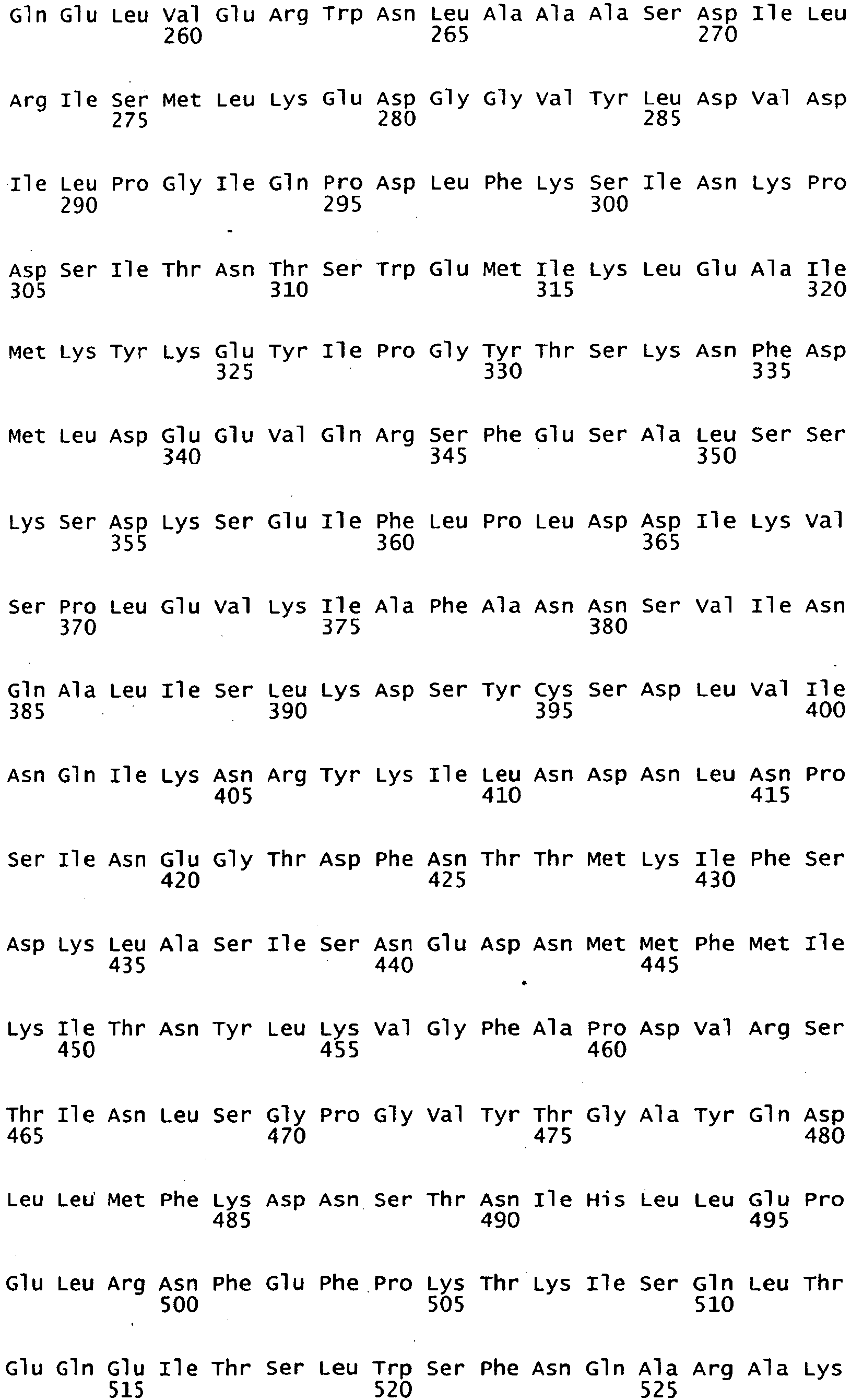
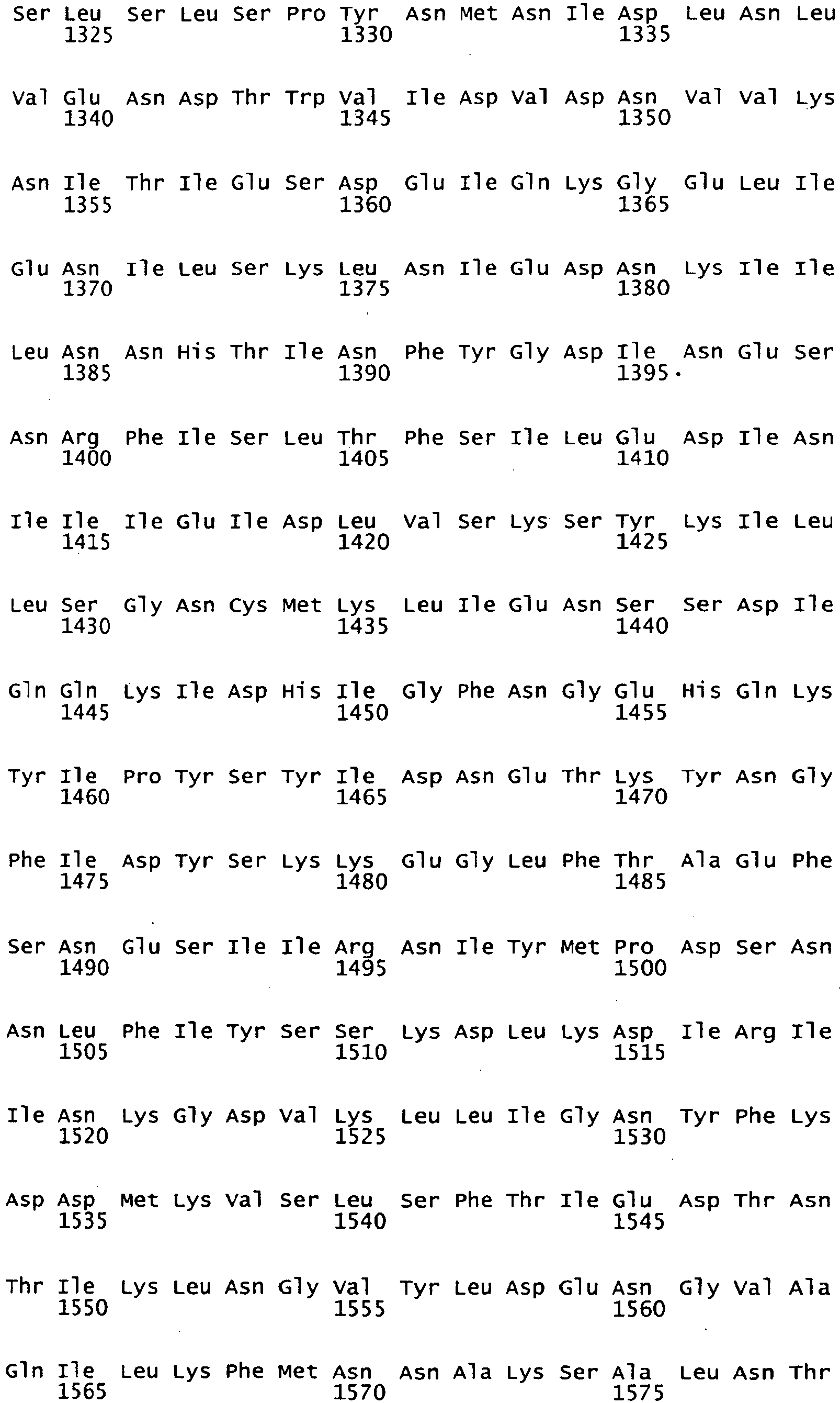
- <210> 1
<211> 3
<212> PRT
<213> Clostridium difficile - <300>
<308> P16154
<309> 1990-04-01
<313> (1662)..(1664) - <400> 1

- <210> 2
<211> 25
<212> PRT
<213> Clostridium difficile - <300>
<308> P16154
<309> 1990-04-01
<313> (1651)..(1675) - <400> 2

- <210> 3
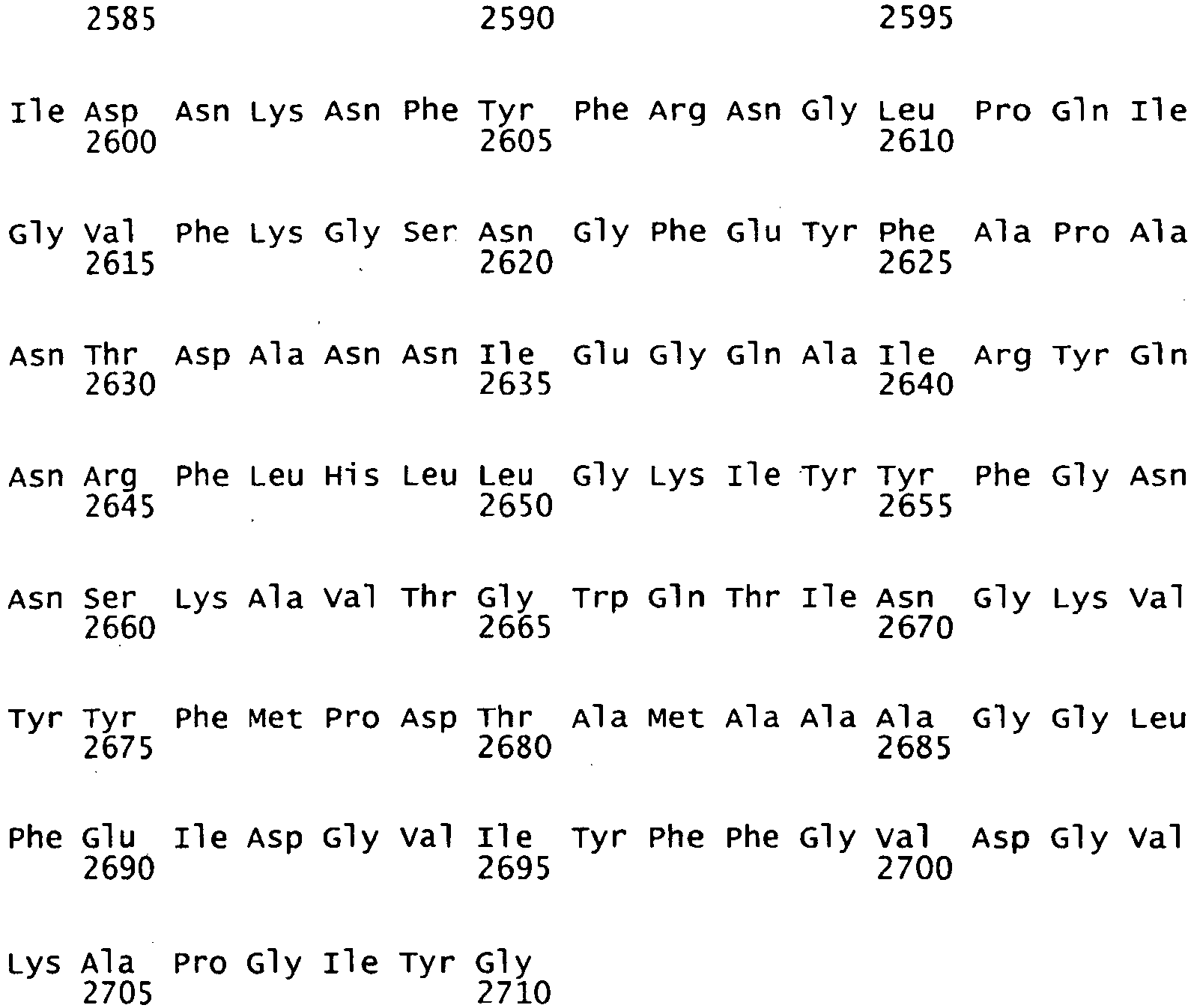
<211> 2710
<212> PRT
<213> Clostridium sordellii - <220>
<221> MISC_FEATURE
<222> (1662)..(1664)
<223> DXG motive - <300>
<308> P16154
<309> 1990-04-01
<313> (1)..(2710) - <400> 3


- <210> 4
<211> 3
<212> PRT
<213> Clostridium difficile - <300>
<308> P18177
<309> 1990-01-11
<313> (1665)..(1667) - <400> 4

- <210> 5
<211> 26
<212> PRT
<213> Clostridium difficile - <300>
<308> P18177
<309> 1990-11-01
<313> (1653)..(1678) - <400> 5


- <210> 6
<211> 301
<212> PRT
<213> Clostridium difficile - <300>
<308> P18177
<309> 1990-11-01
<313> (1500)..(1800) - <400> 6


- <210> 7
<211> 901
<212> PRT
<213> Clostridium difficile - <400> 7


- <210> 8
<211> 626
<212> PRT
<213> Clostridium difficile - <400> 8


- <210> 9
<211> 77
<212> PRT
<213> Clostridium difficile - <400> 9

- <210> 10
<211> 225
<212> PRT
<213> Clostridium difficile - <400> 10


- <210> 11
<211> 116
<212> PRT
<213> Clostridium difficile - <400> 11


- <210> 12
<211> 94
<212> PRT
<213> Clostridium difficile - <400> 12

- <210> 13
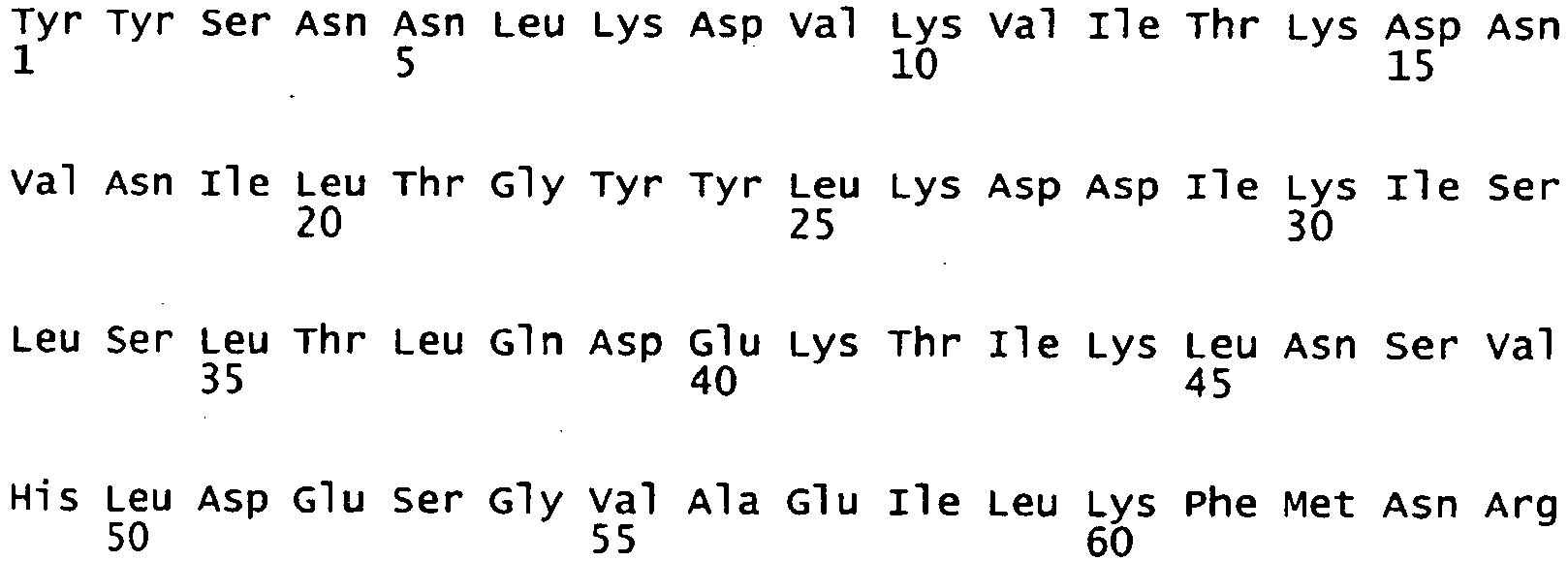
<211> 650
<212> PRT
<213> Clostridium difficile - <400> 13


- <210> 14
<211> 2366
<212> PRT
<213> Clostridium difficile - <220>
<221> MISC_FEATURE
<222> (1665)..(1667)
<223> DXG motive - <300>
<308> P18177
<309> 1990-11-01
<313> (1)..(2366) - <400> 14


- <210> 15
<211> 25
<212> PRT
<213> Clostridium novyi - <300>
<308> Q46149
<309> 1996-11-01
<313> (1641)..(1665) - <400> 15

- <210> 16
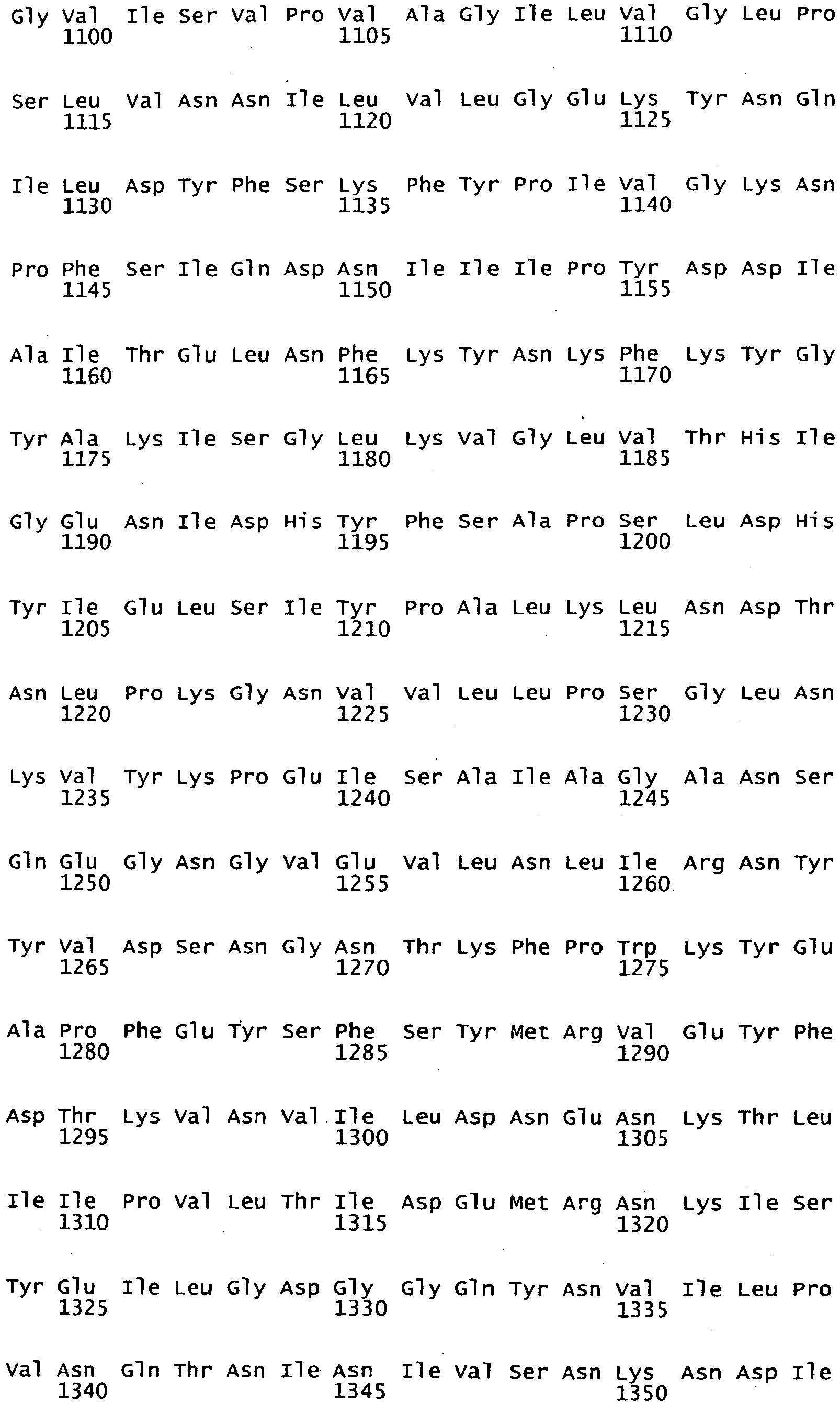
<211> 2178
<212> PRT
<213> Clostridium novyi - <300>
<308> Q46149
<309> 1996-11-01
<313> (1)..(2178) - <400> 16




- <210> 17
<211> 3
<212> PRT
<213> Clostridium sordellii - <300>
<308> Q46342
<309> 1996-11-01
<313> (1666)..(1668) - <400> 17

- <210> 18
<211> 26
<212> PRT
<213> Clostridium sordellii - <300>
<308> Q46342
<309> 1996-11-01
<313> (1654)..(1679) - <400> 18

- <210> 19
<211> 2364
<212> PRT
<213> Clostridium sordellii - <220>
<221> MISC_FEATURE
<222> (1666)..(1668)
<223> DXG motive - <300>
<308> Q46342
<309> 1996-11-01
<313> (1)..(2364) - <400> 19





| IP | Konzentration | ||
| 1mM | 100µM | 10µM | |
| 1,5 | - | - | - |
| 1,4 | - | - | - |
| 4,5 | - | - | - |
| 1,4,5 | - | - | - |
| 2,3,5 | - | - | - |
| 1,3,5 | - | - | - |
| 1,3,5,6 | - | - | - |
| 1,2,3,4,6 | - | - | - |
| 1,3,4 | + | - | - |
| 1,3,4,5 | + | - | - |
| 3,4,6 | + | - | - |
| 1,2,3,4 | + | - | - |
| 1,2,3,4,5 | + | - | - |
| 1,2,3,5,6 | + | + | - |
| 1,3,4,5,6 | + | + | - |
| 3,4,5,6 | + | + | - |
| 2,3,4,5,6 | + | + | - |
| 1,4,5,6 | + | + | - |
| 1,2,3,4,5,6 | + | + | + |
| Verdünnung | Abgerundete Zellen [%] nach 3h | |
| TcdB-10463 | TcdB-10463 + EPNP | |
| 10-3 | 100% | 100% |
| 10-4 | 100% | 100% |
| 10-5 | 100% | 50% |
| 10-6 | 100% | 10% |
| 10-7 | 10% | <5% |
| 10-8 | <5% | <5% |
| Toxin | Homologer Sequenz-Bereich |
| TcdB-10463 | 1653-QNMIVEPNYDLDDSGDISSTVINFSQ-1678 |
| TcdA-10463 | 1651-RNVVVEPIYNPDTGEDISTSL-DFSY-1675 |
| TcsL | 1654-QNLIVEPSYHLDDSGNISSTVINFSQ-1679 |
| Tcnα | 1641-CNVIVSGSNKLNSEGDLADT-IDVLD-1665 |
| Präparation | Antikörper-Titer | Beginn der Zellabrundung nach |
| A | 1:100 | 1,5h |
| B | 1:1500 | 3h |
| C | 1:750 | 12-15h |
| D | 1:500 | 9-12h |
| E | 1:1000 | >24h |
Claims (15)
Applications Claiming Priority (3)
| Application Number | Priority Date | Filing Date | Title |
|---|---|---|---|
| DE102006036373A DE102006036373A1 (de) | 2006-08-02 | 2006-08-02 | Arzneimittel gegen LCT-Vergiftungen |
| DE102007004938A DE102007004938A1 (de) | 2007-01-26 | 2007-01-26 | Arzneimittel gegen LCT-Vergiftungen |
| PCT/DE2007/000957 WO2008014733A1 (de) | 2006-08-02 | 2007-05-26 | Arzneimittel gegen lct-vergiftungen |
Publications (2)
| Publication Number | Publication Date |
|---|---|
| EP2054044A1 EP2054044A1 (de) | 2009-05-06 |
| EP2054044B1 true EP2054044B1 (de) | 2014-07-23 |
Family
ID=38521891
Family Applications (1)
| Application Number | Title | Priority Date | Filing Date |
|---|---|---|---|
| EP07722473.1A Active EP2054044B1 (de) | 2006-08-02 | 2007-05-26 | Arzneimittel gegen lct-vergiftungen |
Country Status (9)
| Country | Link |
|---|---|
| US (3) | US20090311258A1 (de) |
| EP (1) | EP2054044B1 (de) |
| JP (2) | JP5345532B2 (de) |
| AU (1) | AU2007280861B2 (de) |
| CA (1) | CA2659684A1 (de) |
| ES (1) | ES2507553T3 (de) |
| RU (1) | RU2465893C2 (de) |
| UA (1) | UA96768C2 (de) |
| WO (1) | WO2008014733A1 (de) |
Families Citing this family (8)
| Publication number | Priority date | Publication date | Assignee | Title |
|---|---|---|---|---|
| JP5345532B2 (ja) * | 2006-08-02 | 2013-11-20 | ヨハネス・グーテンベルク−ウニヴェルジテート・マインツ | Lct中毒に対する医薬品 |
| US20110243991A1 (en) * | 2008-12-03 | 2011-10-06 | Boehringer Ingelheim Vetmedica Gmbh | Process for production of vaccines |
| EP3521294A1 (de) * | 2011-09-29 | 2019-08-07 | ETH Zürich | Pharmazeutische verbindungen zur verwendung in der behandlung einer clostridium-difficile-infektion |
| EP2788022B1 (de) | 2011-12-08 | 2018-10-31 | GlaxoSmithKline Biologicals SA | Auf clostridium difficile-toxin basierender impfstoff |
| NZ714516A (en) * | 2012-03-02 | 2017-06-30 | Regeneron Pharma | Human antibodies to clostridium difficile toxins |
| GB201206070D0 (en) | 2012-04-04 | 2012-05-16 | Health Prot Agency | Clostridium difficile antigens |
| CN111499738B (zh) * | 2020-06-03 | 2022-04-05 | 郑州师范学院 | 一种抗艰难梭菌肠毒素a的抗体 |
| WO2025097230A1 (pt) * | 2023-11-08 | 2025-05-15 | Fundação Oswaldo Cruz | Molécula de ácido nucleico recombinante, epítopo de alfa toxina de c. novyi recombinante e seu uso, vetor de expressão, composição vacinal, método para prevenir ou tratar clostridioses em um indivíduo sofrendo do mesmo e método para produzir uma composição vacinal contra clostridiose |
Citations (1)
| Publication number | Priority date | Publication date | Assignee | Title |
|---|---|---|---|---|
| WO1999024461A1 (fr) * | 1997-11-10 | 1999-05-20 | Institut National De La Sante Et De La Recherche Medicale (Inserm) | Inhibiteurs de toxines clostridiales et compositions pharmaceutiques les contenant |
Family Cites Families (35)
| Publication number | Priority date | Publication date | Assignee | Title |
|---|---|---|---|---|
| GB8705811D0 (en) * | 1987-03-11 | 1987-04-15 | Research Corp Ltd | Inositol derivatives |
| JPH0429621Y2 (de) * | 1988-01-23 | 1992-07-17 | ||
| JPH01287035A (ja) * | 1988-05-13 | 1989-11-17 | Sanwa Kagaku Kenkyusho Co Ltd | 薬物並びにアルコール性中毒の予防剤とその治療剤 |
| US5736139A (en) * | 1989-10-31 | 1998-04-07 | Ochidian Pharmaceuticals, Inc. | Treatment of Clostridium difficile induced disease |
| US5977078A (en) * | 1996-09-20 | 1999-11-02 | The Regents Of The Univesity Of California | Inositol polyphosphate derivatives and methods of using same |
| US5922766A (en) * | 1997-07-02 | 1999-07-13 | Acosta; Phyllis J. B. | Palatable elemental medical food |
| US6969520B2 (en) * | 1997-10-20 | 2005-11-29 | Acambis Inc. | Active immunization against clostridium difficile disease |
| US6013635A (en) * | 1998-05-28 | 2000-01-11 | Synsorb Biotech, Inc. | Treatment of C. difficile toxin B associated conditions |
| US6415234B1 (en) * | 1998-08-03 | 2002-07-02 | Glyco Design Inc. | Designing inhibitors for glycosyltransferases |
| US6733760B1 (en) * | 1999-04-09 | 2004-05-11 | Techlab, Inc. | Recombinant toxin A/toxin B vaccine against Clostridium difficile |
| WO2000061613A2 (en) * | 1999-04-09 | 2000-10-19 | The Johns Hopkins University | Channel forming toxins as antiviral agents |
| IL150223A0 (en) * | 1999-12-15 | 2002-12-01 | Cubist Pharm Inc | Lipopeptides and pharmaceutical compositions containing the same |
| CA2488230C (en) * | 2002-04-29 | 2013-04-09 | Yves Claude Nicolau | Inositol pyrophosphates, and methods of use thereof |
| DE60324924D1 (de) * | 2002-06-26 | 2009-01-08 | Nestec Sa | |
| US8038986B2 (en) * | 2002-07-26 | 2011-10-18 | The Walter And Eliza Hall Institute Of Medical Research | Immunogenic compositions and diagnostic and therapeutic uses thereof |
| JP4557514B2 (ja) * | 2003-07-15 | 2010-10-06 | 住友電工焼結合金株式会社 | 内接歯車式ポンプ及びそのポンプのインナーロータ |
| EP2857418B1 (de) * | 2004-02-06 | 2017-07-26 | University of Massachusetts | Antikörper gegen Clostridium difficile Toxine und ihre Verwendung |
| US7514088B2 (en) * | 2005-03-15 | 2009-04-07 | Allergan, Inc. | Multivalent Clostridial toxin derivatives and methods of their use |
| KR100852824B1 (ko) * | 2004-07-26 | 2008-08-18 | 메르츠 파마 게엠베하 운트 코. 카가아 | 보툴리눔 신경독소를 포함하는 치료 조성물 |
| US20060093592A1 (en) * | 2004-10-04 | 2006-05-04 | Nutracea | Synbiotics |
| EP1802349A1 (de) * | 2004-10-13 | 2007-07-04 | Ilypsa, Inc. | Pharmazeutische zusammensetzungen mit einem toxin-bindenden oligosaccharid und einem polymerteilchen |
| US20090170790A1 (en) * | 2004-10-25 | 2009-07-02 | Biswajit Das | Ketolide derivatives as antibacterial agents |
| EP1960413A2 (de) * | 2005-11-23 | 2008-08-27 | Ranbaxy Laboratories Limited | Makrolidderivate als antibakterielle mittel |
| US20080003329A1 (en) * | 2006-06-30 | 2008-01-03 | Ricardo Rueda | Enriched infant formulas |
| JP5345532B2 (ja) * | 2006-08-02 | 2013-11-20 | ヨハネス・グーテンベルク−ウニヴェルジテート・マインツ | Lct中毒に対する医薬品 |
| US20110218176A1 (en) * | 2006-11-01 | 2011-09-08 | Barbara Brooke Jennings-Spring | Compounds, methods, and treatments for abnormal signaling pathways for prenatal and postnatal development |
| US8110551B2 (en) * | 2008-01-22 | 2012-02-07 | The Trustees Of The University Of Pennsylvania | Cytolethal distending toxin and use thereof |
| US20100137563A1 (en) * | 2008-12-03 | 2010-06-03 | Northwestern University | Cysteine Protease Autoprocessing of Fusion Proteins |
| US20110243991A1 (en) * | 2008-12-03 | 2011-10-06 | Boehringer Ingelheim Vetmedica Gmbh | Process for production of vaccines |
| US20130012687A1 (en) * | 2009-09-21 | 2013-01-10 | The Board Of Trustees Of The Leland Stanford Junior University | Inducible self-cleaving protease tag and method of purifying recombinant proteins using the same |
| RU2557290C2 (ru) * | 2009-09-25 | 2015-07-20 | Шайр Орфан Терапис ГмбХ | Новые агонисты npr-b |
| US20120258936A1 (en) * | 2011-04-06 | 2012-10-11 | The Board Of Regents Of The University Of Texas System | Inositol hexakisphosphate analogs and uses thereof |
| ES2969952T3 (es) * | 2011-04-22 | 2024-05-23 | Wyeth Llc | Composiciones relacionadas con una toxina mutante de Clostridium difficile y sus procedimientos |
| WO2012166991A1 (en) * | 2011-05-31 | 2012-12-06 | The Board Of Regents Of The University Of Texas Systeem | S-nitrosylation of glucosylating toxins and uses therefor |
| EP3521294A1 (de) * | 2011-09-29 | 2019-08-07 | ETH Zürich | Pharmazeutische verbindungen zur verwendung in der behandlung einer clostridium-difficile-infektion |
-
2007
- 2007-05-26 JP JP2009522078A patent/JP5345532B2/ja not_active Expired - Fee Related
- 2007-05-26 RU RU2009107138/15A patent/RU2465893C2/ru not_active IP Right Cessation
- 2007-05-26 AU AU2007280861A patent/AU2007280861B2/en not_active Ceased
- 2007-05-26 WO PCT/DE2007/000957 patent/WO2008014733A1/de not_active Ceased
- 2007-05-26 UA UAA200901716A patent/UA96768C2/uk unknown
- 2007-05-26 US US12/376,036 patent/US20090311258A1/en not_active Abandoned
- 2007-05-26 CA CA002659684A patent/CA2659684A1/en not_active Abandoned
- 2007-05-26 ES ES07722473.1T patent/ES2507553T3/es active Active
- 2007-05-26 EP EP07722473.1A patent/EP2054044B1/de active Active
-
2012
- 2012-05-30 US US13/483,701 patent/US9066961B2/en not_active Expired - Fee Related
- 2012-11-12 JP JP2012248267A patent/JP5777594B2/ja not_active Expired - Fee Related
-
2015
- 2015-05-29 US US14/724,846 patent/US20150344531A1/en not_active Abandoned
Patent Citations (1)
| Publication number | Priority date | Publication date | Assignee | Title |
|---|---|---|---|---|
| WO1999024461A1 (fr) * | 1997-11-10 | 1999-05-20 | Institut National De La Sante Et De La Recherche Medicale (Inserm) | Inhibiteurs de toxines clostridiales et compositions pharmaceutiques les contenant |
Non-Patent Citations (2)
| Title |
|---|
| J. CHRZANOWSKA ET AL: "Aspartic proteinase from Penicillium camemberti: Purification, properties, and substrate specificity", ENZYME AND MICROBIAL TECHNOLOGY, vol. 17, no. 8, 1 August 1995 (1995-08-01), pages 719 - 724, XP055042411, ISSN: 0141-0229, DOI: 10.1016/0141-0229(94)00129-F * |
| MARTIN ET AL: "Metallopeptidase inhibitors of tetanus toxin: A combinatorial approach", JOURNAL OF MEDICINAL CHEMISTRY, AMERICAN CHEMICAL SOCIETY, US, vol. 42, 1 January 1999 (1999-01-01), pages 515 - 525, XP002160420, ISSN: 0022-2623, DOI: 10.1021/JM981066W * |
Also Published As
| Publication number | Publication date |
|---|---|
| US20130280286A1 (en) | 2013-10-24 |
| JP5345532B2 (ja) | 2013-11-20 |
| CA2659684A1 (en) | 2008-02-07 |
| UA96768C2 (uk) | 2011-12-12 |
| US9066961B2 (en) | 2015-06-30 |
| RU2465893C2 (ru) | 2012-11-10 |
| US20150344531A1 (en) | 2015-12-03 |
| ES2507553T3 (es) | 2014-10-15 |
| AU2007280861A1 (en) | 2008-02-07 |
| AU2007280861B2 (en) | 2013-02-07 |
| JP2009545536A (ja) | 2009-12-24 |
| US20090311258A1 (en) | 2009-12-17 |
| JP5777594B2 (ja) | 2015-09-09 |
| JP2013067630A (ja) | 2013-04-18 |
| EP2054044A1 (de) | 2009-05-06 |
| WO2008014733A9 (de) | 2009-01-29 |
| WO2008014733A1 (de) | 2008-02-07 |
| RU2009107138A (ru) | 2010-09-10 |
Similar Documents
| Publication | Publication Date | Title |
|---|---|---|
| WO2008014733A1 (de) | Arzneimittel gegen lct-vergiftungen | |
| EP1844150B1 (de) | Rekombinante expression von proteinen in einer disulfidverbrückten, zweikettigen form | |
| CN103717234A (zh) | 治疗和预防金黄色葡萄球菌感染及相关病状的方法 | |
| Cheng et al. | Effects of purification on the bioavailability of botulinum neurotoxin type A | |
| US12280110B2 (en) | Method for the treatment or prevention of infection-related immune conditions using a composition comprising IgM | |
| Rucavado et al. | Neutralization of myonecrosis, hemorrhage, and edema induced by Bothrops asper snake venom by homologous and heterologous pre-existing antibodies in mice | |
| AU2011365688B2 (en) | Peptides with antimicrobial activity, drug compositions for the prophylaxis and treatment of animals, compositions for the prophylaxis and treatment of plants, uses of said peptides, and uses of Paenibacillus elgii ourofinensis extract | |
| US11208471B2 (en) | Method for treating infectious diseases using a composition comprising plasma-derived immunoglobulin M (IgM) | |
| DE102007004938A1 (de) | Arzneimittel gegen LCT-Vergiftungen | |
| DE102006036373A1 (de) | Arzneimittel gegen LCT-Vergiftungen | |
| US9463216B2 (en) | Poly-glutamic acid anti-anthrax compositions and methods for using the same | |
| DE68905183T2 (de) | Verfahren und zusammensetzungen fuer die behandlung von infektionen bei saeugetieren durch verwendung von arzneimitteln mit einem gehalt an hymenopteragift, eiweissartigen oder polypeptidkomponenten hiervon, oder analogen solcher eiweissartigen oder polypeptidkomponenten. | |
| HK1231903A1 (en) | Method for treating infectious diseases using a composition comprising plasma-derived immunoglobulin m (igm) | |
| HK1231896A1 (en) | Method for the treatment or prevention of infection-related immune conditions using a composition comprising igm | |
| NZ722524A (en) | Method for treating infectious diseases using a composition comprising plasma-derived immunoglobulin m (igm) |
Legal Events
| Date | Code | Title | Description |
|---|---|---|---|
| PUAI | Public reference made under article 153(3) epc to a published international application that has entered the european phase |
Free format text: ORIGINAL CODE: 0009012 |
|
| 17P | Request for examination filed |
Effective date: 20090216 |
|
| AK | Designated contracting states |
Kind code of ref document: A1 Designated state(s): AT BE BG CH CY CZ DE DK EE ES FI FR GB GR HU IE IS IT LI LT LU LV MC MT NL PL PT RO SE SI SK TR |
|
| AX | Request for extension of the european patent |
Extension state: AL BA HR MK RS |
|
| RAX | Requested extension states of the european patent have changed |
Extension state: BA Payment date: 20090216 Extension state: RS Payment date: 20090216 Extension state: AL Payment date: 20090216 |
|
| 17Q | First examination report despatched |
Effective date: 20120920 |
|
| RIC1 | Information provided on ipc code assigned before grant |
Ipc: A61K 31/6615 20060101ALI20131202BHEP Ipc: A61K 39/08 20060101ALI20131202BHEP Ipc: C07K 16/12 20060101ALI20131202BHEP Ipc: C07K 14/33 20060101ALI20131202BHEP Ipc: C07K 16/40 20060101ALI20131202BHEP Ipc: A61K 31/04 20060101AFI20131202BHEP Ipc: A61K 31/661 20060101ALI20131202BHEP Ipc: A61K 31/336 20060101ALI20131202BHEP |
|
| GRAP | Despatch of communication of intention to grant a patent |
Free format text: ORIGINAL CODE: EPIDOSNIGR1 |
|
| INTG | Intention to grant announced |
Effective date: 20140303 |
|
| GRAS | Grant fee paid |
Free format text: ORIGINAL CODE: EPIDOSNIGR3 |
|
| GRAA | (expected) grant |
Free format text: ORIGINAL CODE: 0009210 |
|
| AK | Designated contracting states |
Kind code of ref document: B1 Designated state(s): AT BE BG CH CY CZ DE DK EE ES FI FR GB GR HU IE IS IT LI LT LU LV MC MT NL PL PT RO SE SI SK TR |
|
| AX | Request for extension of the european patent |
Extension state: AL BA RS |
|
| REG | Reference to a national code |
Ref country code: GB Ref legal event code: FG4D Free format text: NOT ENGLISH |
|
| REG | Reference to a national code |
Ref country code: CH Ref legal event code: EP |
|
| REG | Reference to a national code |
Ref country code: IE Ref legal event code: FG4D Free format text: LANGUAGE OF EP DOCUMENT: GERMAN |
|
| REG | Reference to a national code |
Ref country code: AT Ref legal event code: REF Ref document number: 678449 Country of ref document: AT Kind code of ref document: T Effective date: 20140815 |
|
| REG | Reference to a national code |
Ref country code: DE Ref legal event code: R096 Ref document number: 502007013311 Country of ref document: DE Effective date: 20140828 |
|
| REG | Reference to a national code |
Ref country code: CH Ref legal event code: NV Representative=s name: PATENTANWALT DIPL.-ING. (UNI.) WOLFGANG HEISEL, CH |
|
| REG | Reference to a national code |
Ref country code: ES Ref legal event code: FG2A Ref document number: 2507553 Country of ref document: ES Kind code of ref document: T3 Effective date: 20141015 |
|
| REG | Reference to a national code |
Ref country code: NL Ref legal event code: T3 |
|
| REG | Reference to a national code |
Ref country code: LT Ref legal event code: MG4D |
|
| PG25 | Lapsed in a contracting state [announced via postgrant information from national office to epo] |
Ref country code: PT Free format text: LAPSE BECAUSE OF FAILURE TO SUBMIT A TRANSLATION OF THE DESCRIPTION OR TO PAY THE FEE WITHIN THE PRESCRIBED TIME-LIMIT Effective date: 20141124 Ref country code: SE Free format text: LAPSE BECAUSE OF FAILURE TO SUBMIT A TRANSLATION OF THE DESCRIPTION OR TO PAY THE FEE WITHIN THE PRESCRIBED TIME-LIMIT Effective date: 20140723 Ref country code: FI Free format text: LAPSE BECAUSE OF FAILURE TO SUBMIT A TRANSLATION OF THE DESCRIPTION OR TO PAY THE FEE WITHIN THE PRESCRIBED TIME-LIMIT Effective date: 20140723 Ref country code: GR Free format text: LAPSE BECAUSE OF FAILURE TO SUBMIT A TRANSLATION OF THE DESCRIPTION OR TO PAY THE FEE WITHIN THE PRESCRIBED TIME-LIMIT Effective date: 20141024 Ref country code: LT Free format text: LAPSE BECAUSE OF FAILURE TO SUBMIT A TRANSLATION OF THE DESCRIPTION OR TO PAY THE FEE WITHIN THE PRESCRIBED TIME-LIMIT Effective date: 20140723 Ref country code: BG Free format text: LAPSE BECAUSE OF FAILURE TO SUBMIT A TRANSLATION OF THE DESCRIPTION OR TO PAY THE FEE WITHIN THE PRESCRIBED TIME-LIMIT Effective date: 20141023 |
|
| PG25 | Lapsed in a contracting state [announced via postgrant information from national office to epo] |
Ref country code: LV Free format text: LAPSE BECAUSE OF FAILURE TO SUBMIT A TRANSLATION OF THE DESCRIPTION OR TO PAY THE FEE WITHIN THE PRESCRIBED TIME-LIMIT Effective date: 20140723 Ref country code: PL Free format text: LAPSE BECAUSE OF FAILURE TO SUBMIT A TRANSLATION OF THE DESCRIPTION OR TO PAY THE FEE WITHIN THE PRESCRIBED TIME-LIMIT Effective date: 20140723 Ref country code: CY Free format text: LAPSE BECAUSE OF FAILURE TO SUBMIT A TRANSLATION OF THE DESCRIPTION OR TO PAY THE FEE WITHIN THE PRESCRIBED TIME-LIMIT Effective date: 20140723 Ref country code: IS Free format text: LAPSE BECAUSE OF FAILURE TO SUBMIT A TRANSLATION OF THE DESCRIPTION OR TO PAY THE FEE WITHIN THE PRESCRIBED TIME-LIMIT Effective date: 20141123 |
|
| REG | Reference to a national code |
Ref country code: DE Ref legal event code: R097 Ref document number: 502007013311 Country of ref document: DE |
|
| PG25 | Lapsed in a contracting state [announced via postgrant information from national office to epo] |
Ref country code: SK Free format text: LAPSE BECAUSE OF FAILURE TO SUBMIT A TRANSLATION OF THE DESCRIPTION OR TO PAY THE FEE WITHIN THE PRESCRIBED TIME-LIMIT Effective date: 20140723 Ref country code: DK Free format text: LAPSE BECAUSE OF FAILURE TO SUBMIT A TRANSLATION OF THE DESCRIPTION OR TO PAY THE FEE WITHIN THE PRESCRIBED TIME-LIMIT Effective date: 20140723 Ref country code: CZ Free format text: LAPSE BECAUSE OF FAILURE TO SUBMIT A TRANSLATION OF THE DESCRIPTION OR TO PAY THE FEE WITHIN THE PRESCRIBED TIME-LIMIT Effective date: 20140723 Ref country code: RO Free format text: LAPSE BECAUSE OF FAILURE TO SUBMIT A TRANSLATION OF THE DESCRIPTION OR TO PAY THE FEE WITHIN THE PRESCRIBED TIME-LIMIT Effective date: 20140723 Ref country code: EE Free format text: LAPSE BECAUSE OF FAILURE TO SUBMIT A TRANSLATION OF THE DESCRIPTION OR TO PAY THE FEE WITHIN THE PRESCRIBED TIME-LIMIT Effective date: 20140723 |
|
| PLBE | No opposition filed within time limit |
Free format text: ORIGINAL CODE: 0009261 |
|
| STAA | Information on the status of an ep patent application or granted ep patent |
Free format text: STATUS: NO OPPOSITION FILED WITHIN TIME LIMIT |
|
| 26N | No opposition filed |
Effective date: 20150424 |
|
| PG25 | Lapsed in a contracting state [announced via postgrant information from national office to epo] |
Ref country code: SI Free format text: LAPSE BECAUSE OF FAILURE TO SUBMIT A TRANSLATION OF THE DESCRIPTION OR TO PAY THE FEE WITHIN THE PRESCRIBED TIME-LIMIT Effective date: 20140723 |
|
| PG25 | Lapsed in a contracting state [announced via postgrant information from national office to epo] |
Ref country code: MC Free format text: LAPSE BECAUSE OF FAILURE TO SUBMIT A TRANSLATION OF THE DESCRIPTION OR TO PAY THE FEE WITHIN THE PRESCRIBED TIME-LIMIT Effective date: 20140723 Ref country code: LU Free format text: LAPSE BECAUSE OF FAILURE TO SUBMIT A TRANSLATION OF THE DESCRIPTION OR TO PAY THE FEE WITHIN THE PRESCRIBED TIME-LIMIT Effective date: 20150526 |
|
| REG | Reference to a national code |
Ref country code: IE Ref legal event code: MM4A |
|
| PG25 | Lapsed in a contracting state [announced via postgrant information from national office to epo] |
Ref country code: IE Free format text: LAPSE BECAUSE OF NON-PAYMENT OF DUE FEES Effective date: 20150526 |
|
| REG | Reference to a national code |
Ref country code: FR Ref legal event code: PLFP Year of fee payment: 10 |
|
| PGFP | Annual fee paid to national office [announced via postgrant information from national office to epo] |
Ref country code: NL Payment date: 20160523 Year of fee payment: 10 |
|
| PGFP | Annual fee paid to national office [announced via postgrant information from national office to epo] |
Ref country code: GB Payment date: 20160523 Year of fee payment: 10 Ref country code: CH Payment date: 20160526 Year of fee payment: 10 Ref country code: ES Payment date: 20160523 Year of fee payment: 10 Ref country code: DE Payment date: 20160531 Year of fee payment: 10 |
|
| PGFP | Annual fee paid to national office [announced via postgrant information from national office to epo] |
Ref country code: AT Payment date: 20160519 Year of fee payment: 10 Ref country code: FR Payment date: 20160503 Year of fee payment: 10 Ref country code: TR Payment date: 20160517 Year of fee payment: 10 Ref country code: IT Payment date: 20160524 Year of fee payment: 10 |
|
| PG25 | Lapsed in a contracting state [announced via postgrant information from national office to epo] |
Ref country code: MT Free format text: LAPSE BECAUSE OF FAILURE TO SUBMIT A TRANSLATION OF THE DESCRIPTION OR TO PAY THE FEE WITHIN THE PRESCRIBED TIME-LIMIT Effective date: 20140723 |
|
| PG25 | Lapsed in a contracting state [announced via postgrant information from national office to epo] |
Ref country code: HU Free format text: LAPSE BECAUSE OF FAILURE TO SUBMIT A TRANSLATION OF THE DESCRIPTION OR TO PAY THE FEE WITHIN THE PRESCRIBED TIME-LIMIT; INVALID AB INITIO Effective date: 20070526 |
|
| PG25 | Lapsed in a contracting state [announced via postgrant information from national office to epo] |
Ref country code: BE Free format text: LAPSE BECAUSE OF NON-PAYMENT OF DUE FEES Effective date: 20150531 |
|
| REG | Reference to a national code |
Ref country code: DE Ref legal event code: R119 Ref document number: 502007013311 Country of ref document: DE |
|
| REG | Reference to a national code |
Ref country code: CH Ref legal event code: PL |
|
| REG | Reference to a national code |
Ref country code: NL Ref legal event code: MM Effective date: 20170601 |
|
| REG | Reference to a national code |
Ref country code: AT Ref legal event code: MM01 Ref document number: 678449 Country of ref document: AT Kind code of ref document: T Effective date: 20170526 |
|
| GBPC | Gb: european patent ceased through non-payment of renewal fee |
Effective date: 20170526 |
|
| PG25 | Lapsed in a contracting state [announced via postgrant information from national office to epo] |
Ref country code: AT Free format text: LAPSE BECAUSE OF NON-PAYMENT OF DUE FEES Effective date: 20170526 |
|
| PG25 | Lapsed in a contracting state [announced via postgrant information from national office to epo] |
Ref country code: LI Free format text: LAPSE BECAUSE OF NON-PAYMENT OF DUE FEES Effective date: 20170531 Ref country code: CH Free format text: LAPSE BECAUSE OF NON-PAYMENT OF DUE FEES Effective date: 20170531 |
|
| REG | Reference to a national code |
Ref country code: FR Ref legal event code: ST Effective date: 20180131 |
|
| PG25 | Lapsed in a contracting state [announced via postgrant information from national office to epo] |
Ref country code: NL Free format text: LAPSE BECAUSE OF NON-PAYMENT OF DUE FEES Effective date: 20170601 |
|
| PG25 | Lapsed in a contracting state [announced via postgrant information from national office to epo] |
Ref country code: GB Free format text: LAPSE BECAUSE OF NON-PAYMENT OF DUE FEES Effective date: 20170526 Ref country code: DE Free format text: LAPSE BECAUSE OF NON-PAYMENT OF DUE FEES Effective date: 20171201 |
|
| PG25 | Lapsed in a contracting state [announced via postgrant information from national office to epo] |
Ref country code: IT Free format text: LAPSE BECAUSE OF NON-PAYMENT OF DUE FEES Effective date: 20170526 Ref country code: FR Free format text: LAPSE BECAUSE OF NON-PAYMENT OF DUE FEES Effective date: 20170531 |
|
| REG | Reference to a national code |
Ref country code: ES Ref legal event code: FD2A Effective date: 20180626 |
|
| PG25 | Lapsed in a contracting state [announced via postgrant information from national office to epo] |
Ref country code: ES Free format text: LAPSE BECAUSE OF NON-PAYMENT OF DUE FEES Effective date: 20170527 |
|
| PG25 | Lapsed in a contracting state [announced via postgrant information from national office to epo] |
Ref country code: TR Free format text: LAPSE BECAUSE OF NON-PAYMENT OF DUE FEES Effective date: 20170526 |