EP2053977B1 - Okklusionsanordnung - Google Patents
Okklusionsanordnung Download PDFInfo
- Publication number
- EP2053977B1 EP2053977B1 EP07785098.0A EP07785098A EP2053977B1 EP 2053977 B1 EP2053977 B1 EP 2053977B1 EP 07785098 A EP07785098 A EP 07785098A EP 2053977 B1 EP2053977 B1 EP 2053977B1
- Authority
- EP
- European Patent Office
- Prior art keywords
- position control
- control element
- occluder
- balloon
- distal
- Prior art date
- Legal status (The legal status is an assumption and is not a legal conclusion. Google has not performed a legal analysis and makes no representation as to the accuracy of the status listed.)
- Not-in-force
Links
- 239000012530 fluid Substances 0.000 claims description 9
- 239000000463 material Substances 0.000 claims description 9
- 239000004677 Nylon Substances 0.000 claims description 2
- 229920001778 nylon Polymers 0.000 claims description 2
- 239000004033 plastic Substances 0.000 claims description 2
- 230000000149 penetrating effect Effects 0.000 claims 1
- 230000007547 defect Effects 0.000 description 21
- 210000003484 anatomy Anatomy 0.000 description 6
- 239000002184 metal Substances 0.000 description 6
- 238000000034 method Methods 0.000 description 5
- 239000002872 contrast media Substances 0.000 description 4
- 241001465754 Metazoa Species 0.000 description 3
- 239000008280 blood Substances 0.000 description 3
- 210000004369 blood Anatomy 0.000 description 3
- 210000001331 nose Anatomy 0.000 description 3
- 206010003671 Atrioventricular Block Diseases 0.000 description 2
- 239000004696 Poly ether ether ketone Substances 0.000 description 2
- 208000001910 Ventricular Heart Septal Defects Diseases 0.000 description 2
- 230000002159 abnormal effect Effects 0.000 description 2
- 208000013914 atrial heart septal defect Diseases 0.000 description 2
- 239000011521 glass Substances 0.000 description 2
- 210000004072 lung Anatomy 0.000 description 2
- 208000003278 patent ductus arteriosus Diseases 0.000 description 2
- 230000002093 peripheral effect Effects 0.000 description 2
- 229920002530 polyetherether ketone Polymers 0.000 description 2
- 230000008707 rearrangement Effects 0.000 description 2
- 208000010392 Bone Fractures Diseases 0.000 description 1
- 206010017076 Fracture Diseases 0.000 description 1
- 229920000914 Metallic fiber Polymers 0.000 description 1
- 230000003044 adaptive effect Effects 0.000 description 1
- 239000000853 adhesive Substances 0.000 description 1
- 238000004026 adhesive bonding Methods 0.000 description 1
- 230000001070 adhesive effect Effects 0.000 description 1
- 206010003119 arrhythmia Diseases 0.000 description 1
- QVGXLLKOCUKJST-UHFFFAOYSA-N atomic oxygen Chemical compound [O] QVGXLLKOCUKJST-UHFFFAOYSA-N 0.000 description 1
- 238000010276 construction Methods 0.000 description 1
- 230000001419 dependent effect Effects 0.000 description 1
- 229920001971 elastomer Polymers 0.000 description 1
- 208000025339 heart septal defect Diseases 0.000 description 1
- 210000003709 heart valve Anatomy 0.000 description 1
- 239000004816 latex Substances 0.000 description 1
- 229920000126 latex Polymers 0.000 description 1
- 229910052760 oxygen Inorganic materials 0.000 description 1
- 239000001301 oxygen Substances 0.000 description 1
- 238000001356 surgical procedure Methods 0.000 description 1
- 210000003462 vein Anatomy 0.000 description 1
- 238000003466 welding Methods 0.000 description 1
Images



Classifications
-
- A—HUMAN NECESSITIES
- A61—MEDICAL OR VETERINARY SCIENCE; HYGIENE
- A61B—DIAGNOSIS; SURGERY; IDENTIFICATION
- A61B17/00—Surgical instruments, devices or methods
- A61B17/0057—Implements for plugging an opening in the wall of a hollow or tubular organ, e.g. for sealing a vessel puncture or closing a cardiac septal defect
-
- A—HUMAN NECESSITIES
- A61—MEDICAL OR VETERINARY SCIENCE; HYGIENE
- A61B—DIAGNOSIS; SURGERY; IDENTIFICATION
- A61B17/00—Surgical instruments, devices or methods
- A61B17/12—Surgical instruments, devices or methods for ligaturing or otherwise compressing tubular parts of the body, e.g. blood vessels or umbilical cord
- A61B17/12022—Occluding by internal devices, e.g. balloons or releasable wires
-
- A—HUMAN NECESSITIES
- A61—MEDICAL OR VETERINARY SCIENCE; HYGIENE
- A61B—DIAGNOSIS; SURGERY; IDENTIFICATION
- A61B17/00—Surgical instruments, devices or methods
- A61B17/12—Surgical instruments, devices or methods for ligaturing or otherwise compressing tubular parts of the body, e.g. blood vessels or umbilical cord
- A61B17/12022—Occluding by internal devices, e.g. balloons or releasable wires
- A61B17/12027—Type of occlusion
-
- A—HUMAN NECESSITIES
- A61—MEDICAL OR VETERINARY SCIENCE; HYGIENE
- A61B—DIAGNOSIS; SURGERY; IDENTIFICATION
- A61B17/00—Surgical instruments, devices or methods
- A61B17/12—Surgical instruments, devices or methods for ligaturing or otherwise compressing tubular parts of the body, e.g. blood vessels or umbilical cord
- A61B17/12022—Occluding by internal devices, e.g. balloons or releasable wires
- A61B17/12099—Occluding by internal devices, e.g. balloons or releasable wires characterised by the location of the occluder
-
- A—HUMAN NECESSITIES
- A61—MEDICAL OR VETERINARY SCIENCE; HYGIENE
- A61B—DIAGNOSIS; SURGERY; IDENTIFICATION
- A61B17/00—Surgical instruments, devices or methods
- A61B17/12—Surgical instruments, devices or methods for ligaturing or otherwise compressing tubular parts of the body, e.g. blood vessels or umbilical cord
- A61B17/12022—Occluding by internal devices, e.g. balloons or releasable wires
- A61B17/12099—Occluding by internal devices, e.g. balloons or releasable wires characterised by the location of the occluder
- A61B17/12122—Occluding by internal devices, e.g. balloons or releasable wires characterised by the location of the occluder within the heart
-
- A—HUMAN NECESSITIES
- A61—MEDICAL OR VETERINARY SCIENCE; HYGIENE
- A61B—DIAGNOSIS; SURGERY; IDENTIFICATION
- A61B17/00—Surgical instruments, devices or methods
- A61B17/12—Surgical instruments, devices or methods for ligaturing or otherwise compressing tubular parts of the body, e.g. blood vessels or umbilical cord
- A61B17/12022—Occluding by internal devices, e.g. balloons or releasable wires
- A61B17/12131—Occluding by internal devices, e.g. balloons or releasable wires characterised by the type of occluding device
- A61B17/12136—Balloons
-
- A—HUMAN NECESSITIES
- A61—MEDICAL OR VETERINARY SCIENCE; HYGIENE
- A61B—DIAGNOSIS; SURGERY; IDENTIFICATION
- A61B17/00—Surgical instruments, devices or methods
- A61B2017/00535—Surgical instruments, devices or methods pneumatically or hydraulically operated
- A61B2017/00557—Surgical instruments, devices or methods pneumatically or hydraulically operated inflatable
-
- A—HUMAN NECESSITIES
- A61—MEDICAL OR VETERINARY SCIENCE; HYGIENE
- A61B—DIAGNOSIS; SURGERY; IDENTIFICATION
- A61B17/00—Surgical instruments, devices or methods
- A61B17/0057—Implements for plugging an opening in the wall of a hollow or tubular organ, e.g. for sealing a vessel puncture or closing a cardiac septal defect
- A61B2017/00575—Implements for plugging an opening in the wall of a hollow or tubular organ, e.g. for sealing a vessel puncture or closing a cardiac septal defect for closure at remote site, e.g. closing atrial septum defects
-
- A—HUMAN NECESSITIES
- A61—MEDICAL OR VETERINARY SCIENCE; HYGIENE
- A61B—DIAGNOSIS; SURGERY; IDENTIFICATION
- A61B17/00—Surgical instruments, devices or methods
- A61B17/0057—Implements for plugging an opening in the wall of a hollow or tubular organ, e.g. for sealing a vessel puncture or closing a cardiac septal defect
- A61B2017/00575—Implements for plugging an opening in the wall of a hollow or tubular organ, e.g. for sealing a vessel puncture or closing a cardiac septal defect for closure at remote site, e.g. closing atrial septum defects
- A61B2017/00606—Implements H-shaped in cross-section, i.e. with occluders on both sides of the opening
-
- A—HUMAN NECESSITIES
- A61—MEDICAL OR VETERINARY SCIENCE; HYGIENE
- A61B—DIAGNOSIS; SURGERY; IDENTIFICATION
- A61B17/00—Surgical instruments, devices or methods
- A61B17/0057—Implements for plugging an opening in the wall of a hollow or tubular organ, e.g. for sealing a vessel puncture or closing a cardiac septal defect
- A61B2017/00575—Implements for plugging an opening in the wall of a hollow or tubular organ, e.g. for sealing a vessel puncture or closing a cardiac septal defect for closure at remote site, e.g. closing atrial septum defects
- A61B2017/00619—Locking means for locking the implement in expanded state
-
- A—HUMAN NECESSITIES
- A61—MEDICAL OR VETERINARY SCIENCE; HYGIENE
- A61B—DIAGNOSIS; SURGERY; IDENTIFICATION
- A61B17/00—Surgical instruments, devices or methods
- A61B17/0057—Implements for plugging an opening in the wall of a hollow or tubular organ, e.g. for sealing a vessel puncture or closing a cardiac septal defect
- A61B2017/00575—Implements for plugging an opening in the wall of a hollow or tubular organ, e.g. for sealing a vessel puncture or closing a cardiac septal defect for closure at remote site, e.g. closing atrial septum defects
- A61B2017/00623—Introducing or retrieving devices therefor
-
- A—HUMAN NECESSITIES
- A61—MEDICAL OR VETERINARY SCIENCE; HYGIENE
- A61B—DIAGNOSIS; SURGERY; IDENTIFICATION
- A61B17/00—Surgical instruments, devices or methods
- A61B17/22—Implements for squeezing-off ulcers or the like on inner organs of the body; Implements for scraping-out cavities of body organs, e.g. bones; for invasive removal or destruction of calculus using mechanical vibrations; for removing obstructions in blood vessels, not otherwise provided for
- A61B2017/22051—Implements for squeezing-off ulcers or the like on inner organs of the body; Implements for scraping-out cavities of body organs, e.g. bones; for invasive removal or destruction of calculus using mechanical vibrations; for removing obstructions in blood vessels, not otherwise provided for with an inflatable part, e.g. balloon, for positioning, blocking, or immobilisation
- A61B2017/22062—Implements for squeezing-off ulcers or the like on inner organs of the body; Implements for scraping-out cavities of body organs, e.g. bones; for invasive removal or destruction of calculus using mechanical vibrations; for removing obstructions in blood vessels, not otherwise provided for with an inflatable part, e.g. balloon, for positioning, blocking, or immobilisation to be filled with liquid
-
- A—HUMAN NECESSITIES
- A61—MEDICAL OR VETERINARY SCIENCE; HYGIENE
- A61B—DIAGNOSIS; SURGERY; IDENTIFICATION
- A61B17/00—Surgical instruments, devices or methods
- A61B17/22—Implements for squeezing-off ulcers or the like on inner organs of the body; Implements for scraping-out cavities of body organs, e.g. bones; for invasive removal or destruction of calculus using mechanical vibrations; for removing obstructions in blood vessels, not otherwise provided for
- A61B2017/22051—Implements for squeezing-off ulcers or the like on inner organs of the body; Implements for scraping-out cavities of body organs, e.g. bones; for invasive removal or destruction of calculus using mechanical vibrations; for removing obstructions in blood vessels, not otherwise provided for with an inflatable part, e.g. balloon, for positioning, blocking, or immobilisation
- A61B2017/22065—Functions of balloons
- A61B2017/22067—Blocking; Occlusion
Definitions
- This invention relates to an occluding device for closing a body passage such as a septal defect and a method for delivering an occluding device.
- Abnormal openings, holes or shunts can occur between the chambers of the heart or the great vessels, causing shunting of blood through the opening or the passage.
- Such abnormal openings can for example occur as ventricular septal defects, atrial septal defects and patent ductus arteriosus.
- transcatheter closure techniques In order to avoid morbidity and mortality associated with open-heart surgery a variety of transcatheter closure techniques have been attempted. In these techniques an occluding device is delivered through a catheter. Once the occluding device is positioned adjacent the defect, it must be attached to the rest of the septum in a manner which permits it to effectively block the passage of blood through the defect.
- US 4 836 204 describes an occluder consisting of two inflatable balloons made of latex or rubber.
- the two balloons are spaced from each other by a shaft of a catheter.
- the balloons are inflated and they close the passage in their inflated shape.
- This occluder needs quite a lot of space and can therefore not be used for closing small openings.
- WO 97/41779 discloses an occluding device comprising a fluid tight inflatable double chamber balloon.
- a connection part between the two chambers is arranged to form guidance for the two chambers around a peripheral edge of the passage to be closed.
- Both chambers can be dilated radially by a number of stiffening means.
- These stiffening means are in a first embodiment metallic coils springs arranged in the chambers and in a second embodiment metallic threads.
- a locking mechanism comprising two snap together members arranged at each end of the balloon is provided for fixing the balloon in its dilated and evacuated position or for locking the threads in a twisted spring-like position.
- Metallic parts can however have a negative impact in view of cardiac arrhythmias.
- FR 2 714 284 describes an occluder with a double chamber balloon, the balloon being made of a material with shape memory properties.
- the distal end of the balloon is closed and the proximal end comprises a valve.
- the balloon is inflated and placed at the location of the defect. It is then evacuated.
- the catheter is left in place for a certain period of time to make sure that the balloon remains at the chosen location.
- the occluders according to the state of the art have the disadvantage that they are complicated in their construction and therefore also quite complicated to handle. In particular, when they are at the location of the defect, their final location and their shape can hardly be manipulated or affected.
- US 6 692 494 discloses a device to produce and maintain collateral openings or channels through an airway wall so that expired air is able to pass directly out of the lung tissue to facilitate both the exchange of oxygen into the blood and/or to decompress hyper-inflated lungs.
- the device can be delivered using an hour glass shaped balloon catheter. This balloon is removed after the device is delivered.
- This object is achieved with an occluder according to claim 1.
- This occluder can be adapted in its shape at the location of the defect and it can be rearranged even in its expanded state.
- This occluder needs hardly any or no metal components or complicated materials. Since the occluder comprises no wires, the risk of fracture of the occluder structure or/and the risk of perforation of the patient's tissue is minimized. Since the occluder comprises no wires, the occluder is furthermore quite soft and non-conducting. This helps to prevent AV block (atrioventricular block).
- the occluder is especially well suited to be used in places with little space or places with a high damage risk. Occluders with wires need more space to deploy than they need in the end to occlude the defect. The wires can get entangled with neighbouring tissue and damage it. The inventive occluder expands softly and pushes the environment away without damaging it. Especially the risk to damage any heart valve is minimized.
- the occluder is at least partly made of biodegradable material.
- the position control elements define its shape, wherein the two position control elements can be activated separately so that the balloon chambers can be mechanically changed in their shape separately from each other.
- the two balloon chambers can be separately brought into their expanded but longitudinally compressed third shape, wherein the user can choose if he wants to bring the distal chamber first into this state or the proximal chamber or both chambers at the same time. This gives the user more possibilities to place the occluder at an optimal location within the defect and to rearrange it in the defect.
- the same size and shape of occluder can be used for different kinds and sizes of defects.
- the balloon size and shape can be chosen from a variety of sizes and shapes and can be optimized for the kind of defect to be closed.
- the balloon is preshaped, for example his not inflated form already corresponds to an hour glass and this form is mainly just enlarged when inflated.
- This method for occluding a body passage with an occluding device comprising the steps of
- the occluder can be deflated to achieve adhesion to the human or animal tissue, and the proximal and distal chambers can be moved and compressed in longitudinal direction almost independently from each other, the occluder is very adaptive to different anatomical shapes.
- the deflated occluder cannot move any more, so that the catheter has not to be left in the patient after deployment of the occluder.
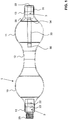
- Figure 1 shows an occluder for closing a body passage according to the invention in its original shape before use.
- the occluder comprises an occluding body 1, a first position control element 2 and a second position control element 3.
- the position control elements 2, 3 are a distal and a proximal end piece of the occluder.
- the occluding body 1 is a shell or balloon made of a flexible and fluid tight material without shape memory property.
- the balloon is made of PET (Polyethylenterephtalat), nylon or another elastic or inelastic, but flexible material.
- the balloon comprises a proximal chamber 10, a distal chamber 11 and a connecting channel 12 connecting these two chambers.
- the two chambers 10, 11 and the connecting channel 12 form one single cavity.
- the balloon is single-piece.
- the lines in the figures are only considered to show the shape of the balloon in a better way but they are no real lines, especially no dividing lines or seams.
- the proximal chamber 10 can have the same size and shape as the distal chamber 11. However the two chambers 10, 11 can have different sizes and shapes as well. The size and shape depend on the kind of defect the occluder is supposed to close.
- the connecting channel 12 has a smaller diameter than the two chambers 10, 11.
- Typical sizes of the diameter of the chambers 10, 11 are 5 to 50 mm, typically 15 mm and of the diameter of the connecting chamber 12 2 to 30 mm, typically 6 mm.
- Typical sizes of the length of the balloon are 30 to 150 mm.
- the thickness of the balloon wall is preferably overall the same and lies in the range of 0.01 to 0.15 mm.
- a proximal end of the balloon forms a first attachment region 13 and a distal end of the balloon forms a second attachment region 13.
- Both regions 13 are fixed, preferably welded, glued or pressed to a main body 21, 31, of the first and second position control element 2, 3 respectively.
- These connections are preferably fluid tight, in particular airtight.
- the balloon can additionally to welding and gluing or instead of these fixations also be fixed with rings which surround first and second position control element 2, 3 and which press the balloon material against the outer surface of these elements. These rings are not shown in the figures.
- the position control elements 2, 3 are preferably made of plastic, for example PEEK (polyetheretherketone).
- Their main bodies 21, 31 are preferably of a tubular shape with an outer surface for attachment to the attachment regions 13 of the balloon 1.
- the proximal first position control element 2 has a clearance hole or a passage 23, which is big enough to be penetrated by a distal control catheter 60 mentioned underneath. Its main body 21 ends at its proximal end in an external thread 20. In the distal end region, it has an internal tapering 22, which narrows the internal passage 23.
- This occluding device is preferably delivered over a catheter or a guide wire placed through the defect to be closed. Other ways of delivery are possible as well.
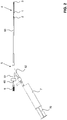
- Figure 2 shows the first way of delivery using a catheter delivery system.
- the occluding device bears here the reference number 4.
- the catheter delivery system comprises a ⁇ -connector 5 with a proximal control catheter 50 and two arms 51, 52.
- the proximal control catheter 50 comprises at its distal end an internal thread 54, which can engage the external thread 20 of the first position control element 2 and which therefore connects the rod 50 with this first element 2.
- the occluder 4 is fixed with his proximal end to the catheter delivery system.
- a distal control catheter 60 which extends through the first arm 51, penetrates the proximal control catheter 50 and ends on its proximal end in a handle 60 and on its distal end in an external thread 63 which can be connected to the internal thread 34 of the second position control element 3.
- the distal tip with the thread 63 can be a separate insert 61, which is connected with the distal control catheter 60.
- it can be glued or screwed.
- the distal tip is an integral part of the distal control catheter 60.
- the distal end of the occluder 4 is fixed to the catheter delivery system as well, but independently from the fixation of its proximal end.
- the occluder 4 is compressed in an elongate first shape, as can be seen in figure 2 and in more detail in figure 3 .
- the occluder 4 can be deflated as well, preferably by use of the syringe 7 mentioned below.
- the catheter delivery system comprises an evacuation device, here a syringe 7 as well.
- a syringe instead of a syringe, a small manual or electronic pressure pump can be used as well.
- This syringe 7 is connected to the second arm 52.
- the piston 70 of the syringe 7 By use of the piston 70 of the syringe 7, the balloon 1 of the occluder 4 can be inflated and deflated, the latter situation being shown in figures 2 and 3 .
- the outer diameter of the occluder 4 is in this state small enough to be delivered through a body channel, such as a vein or another vessel. Typical sizes for this minimized outer diameter are 1 to 3 mm.
- the two position control elements 1, 2 which are independently connected to the distal control catheter 60 and the proximal control catheter 50 respectively, a push and pull maneuver can be performed to rearrange the occluder and to ensure the correct sitting of the occluder in the defect.
- the first control element 2 can be pushed or pulled and at the same time or afterwards the second element 3 can be pulled and pushed in the other direction.
- the rearrangement preferably comprises centralization of the occluder in the defect and adapting the shape of the occluder in its third state to the anatomical structure.
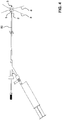
- Figure 6 shows this situation as well, wherein the engagements of the distal control catheter 60 and the proximal control catheter 50 with the two separate position control elements 2, 3 can be seen.
- the distal control catheter 60 can but does not have to be well guided in these last centimeters, since it is guided by the tapering 22 within the first position control element 2 and it is connected to the second position control element 3 at a short distance afterwards due to the shaft 30 extending within the balloon 1.
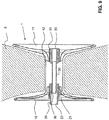
- Figure 9 shows the third and final state where the occluder is radially extended but longitudinally compressed.
- the shaft 30 of the second element 3 has snapped into the main body 21 of the first element 2 and is hold back by its noses 32 of the resilient catches 36, which engage with the tapering 22.
- the two position control elements 2, 3 form the two matching parts of a snap closure. This fixation ensures stability of the position and shape of the occluder within the defect.
- Other known kind of closures can be used instead of a snap closure.
- the closure has to close the interior of the balloon so that it is fluid tight. However the closure itself can still form an open passage through the occluder, as can be seen in figure 9 .
- the closure especially the snap closure, can preferably be opened again within the location. Therefore, the balloon can again be inflated and rearranged, as long as the balloon material is not grown together with the patient's tissue.
- the snap closure is preferably fluid-tight, so that the inner cavity of the occluder is now sealed against the environment.
- the removal of the contrast-agent has this cavity left with an underpressure or at least with no overpressure compared with the environment.
- the shaft 30 was part of the second element 3. However, it can also be part of the first, proximal element 2. Furthermore, other snap elements than this fixably holdable shaft can be used as well.
- the occluder allows rearrangement of the balloon within the defect and it enables to adapt the shape of the balloon to the patient's anatomy.
Landscapes
- Health & Medical Sciences (AREA)
- Surgery (AREA)
- Life Sciences & Earth Sciences (AREA)
- Medical Informatics (AREA)
- Animal Behavior & Ethology (AREA)
- Engineering & Computer Science (AREA)
- Biomedical Technology (AREA)
- Heart & Thoracic Surgery (AREA)
- Cardiology (AREA)
- Molecular Biology (AREA)
- Nuclear Medicine, Radiotherapy & Molecular Imaging (AREA)
- General Health & Medical Sciences (AREA)
- Public Health (AREA)
- Veterinary Medicine (AREA)
- Surgical Instruments (AREA)
- Media Introduction/Drainage Providing Device (AREA)
- Pipe Accessories (AREA)
Claims (15)
- Okkluder zum Verschliessen eines Körperdurchgangs, wobei die Vorrichtung einen verschliessenden Körper (1), ein erstes Positionskontrollelement (2) und ein zweites Positionskontrollelement (3) aufweist, wobei der verschliessende Körper (1) ein Ballon aus einem flexiblen und fluiddichten Material ohne Formgedächtniseigenschaften ist, wobei der Ballon (1) eine distale Kammer (11) und eine proximale Kammer (10) und einen diese zwei Kammern (10, 11) verbindenden Verbindungskanal (12) aufweist, wobei der verschliessende Körper (1) in eine erste longitudinale Form komprimierbar ist und wobei ein proximales Ende des verschliessenden Körpers am ersten Positionskontrollelement (2) angebracht ist und das distale Ende des verschliessenden Körpers (1) am zweiten Positionskontrollelement (3) angebracht ist, wobei das erste Positionskontrollelement (2) und das zweite Positionskontrollelement (3) zwei zusammenpassende Teile eines fluiddichten Verschlusses des Ballons sind, wobei der verschliessende Körper (1) angepasst ist, um durch Einführung eines Fluids in eine zweite aufgeblasene Form gebracht zu werden und um durch Entleeren des Fluids und durch Bringen der zwei Positionskontrollelemente (2, 3) in eine zusammengeschnappte Position in eine dritte radial ausgedehnte aber longitudinal komprimierte Form gebracht zu werden, dadurch gekennzeichnet, dass das erste oder das zweite Positionskontrollelement (2, 3) einen Schaft (30) aufweist und das andere dieser zwei Positionskontrollelemente (2, 3) einen Freiraum aufweist, in welcher der Schaft (30) fixiert haltbar ist, wobei das erste und das zweite Positionskontrollelement (2, 3) in der dritten Form einen offenen Durchgang durch den Ballon bilden, und dass der Innenraum des Ballons in seinem dritten, radial ausgedehnten aber longitudinal komprimierten Zustand frei von Versteifungsmitteln zur Versteifung des Ballons ist.
- Okkluder nach Anspruch 1, wobei der verschliessende Körper (1) ein einstückiger Ballon ist.
- Okkluder nach einem der Ansprüche 1 oder 2, wobei der Verschluss ein Schnappverschluss ist.
- Okkluder nach einem der Ansprüche 1 bis 3, wobei das erste Positionskontrollelement (2) ein äusseres Gewinde (20) aufweist, um es mit einem proximalen Kontrollkatheter (50) zu verbinden und einen Durchgang (23) um von einem distalen Kontrollkatheter (60) eines Katheterzustellsystems durchsetzt zu werden, wobei der distale Kontrollkatheter (60) den proximalen Kontrollkatheter (50) durchsetzt.
- Okkluder nach Anspruch 4, wobei das zweite Positionskontrollelement (3) ein internes Gewinde (34) aufweist, um es mit dem distalen Kontrollkatheter (60) zu verbinden.
- Okkluder nach Anspruch 1, wobei der Schaft (30) federnde Aufnahmen (36) aufweist, welche in das andere Positionskontrollelement (2, 3) einrasten.
- Okkluder nach einem der Ansprüche 1 und 6, wobei der Schaft (30) Teil des zweiten Positionskontrollelements (3) ist.
- Okkluder nach einem der Ansprüche 1 bis 7, wobei sich der Schaft (30) in den verschliessenden Körper (1) erstreckt.
- Okkluder nach einem der Ansprüche 1 bis 8, wobei das erste und das zweite Positionskontrollelement (2, 3) je einen rohrförmigen Hauptkörper (21, 31) mit einer äusseren Oberfläche aufweisen und wobei der verschliessende Körper (1) eine proximale und eine distale rohrförmige Verbindungsregion (13) aufweist, wobei diese Regionen (13) an der äusseren Oberfläche der Hauptkörper (21, 31) der Positionskontrollelemente (2, 3) befestigt sind.
- Okkluder nach Anspruch 9, wobei die Verbindungsregionen (13) mit den Hauptkörpern (21, 31) verschweisst, an diese angeklebt oder mit diesen verpresst sind.
- Okkluder nach einem der Ansprüche 1 bis 10, wobei der geschlossene Verschluss sich wieder öffnen lässt.
- Okkluder nach einem der Ansprüche 1 bis 11, wobei der Verbindungskanal (12) einen kleineren Durchmesser aufweist als die proximale und die distale Kammer (10, 11).
- Okkluder nach einem der Ansprüche 1 bis 12, wobei der verschliessende Körper (1) aus PET (Polyethylenterephtalat) oder Nylon gefertigt ist.
- Okkluder nach einem der Ansprüche 1 bis 13, wobei das erste und das zweite Positionskontrollelement (2, 3) aus Kunststoff gefertigt sind.
- Okkluder nach einem der Ansprüche 1 bis 14, wobei die Vorrichtung nichtmetallisch ist.
Priority Applications (1)
| Application Number | Priority Date | Filing Date | Title |
|---|---|---|---|
| EP07785098.0A EP2053977B1 (de) | 2006-08-22 | 2007-08-17 | Okklusionsanordnung |
Applications Claiming Priority (3)
| Application Number | Priority Date | Filing Date | Title |
|---|---|---|---|
| EP06405352A EP1891902A1 (de) | 2006-08-22 | 2006-08-22 | Okklusionsanordnung |
| EP07785098.0A EP2053977B1 (de) | 2006-08-22 | 2007-08-17 | Okklusionsanordnung |
| PCT/CH2007/000403 WO2008022479A1 (en) | 2006-08-22 | 2007-08-17 | Occluding device |
Publications (2)
| Publication Number | Publication Date |
|---|---|
| EP2053977A1 EP2053977A1 (de) | 2009-05-06 |
| EP2053977B1 true EP2053977B1 (de) | 2017-05-10 |
Family
ID=37667193
Family Applications (2)
| Application Number | Title | Priority Date | Filing Date |
|---|---|---|---|
| EP06405352A Withdrawn EP1891902A1 (de) | 2006-08-22 | 2006-08-22 | Okklusionsanordnung |
| EP07785098.0A Not-in-force EP2053977B1 (de) | 2006-08-22 | 2007-08-17 | Okklusionsanordnung |
Family Applications Before (1)
| Application Number | Title | Priority Date | Filing Date |
|---|---|---|---|
| EP06405352A Withdrawn EP1891902A1 (de) | 2006-08-22 | 2006-08-22 | Okklusionsanordnung |
Country Status (7)
| Country | Link |
|---|---|
| US (1) | US9017375B2 (de) |
| EP (2) | EP1891902A1 (de) |
| JP (1) | JP2010501213A (de) |
| CN (1) | CN101500494B (de) |
| ES (1) | ES2631905T3 (de) |
| RU (1) | RU2447841C2 (de) |
| WO (1) | WO2008022479A1 (de) |
Families Citing this family (49)
| Publication number | Priority date | Publication date | Assignee | Title |
|---|---|---|---|---|
| EP2307086B1 (de) * | 2008-07-03 | 2015-04-15 | Hotspur Technologies, Inc | Vorrichtung zur Behandlung von Obstruktionen in Körperlumen |
| US8197498B2 (en) * | 2008-11-06 | 2012-06-12 | Trinitas Ventures Ltd. | Gastric bypass devices and procedures |
| CH701394A2 (de) * | 2009-07-10 | 2011-01-14 | Carag Ag | Okkluder. |
| FR2955500B1 (fr) * | 2010-01-22 | 2012-04-20 | Sayed Nour | Dispositif cardio-vasculaire a usage unique pour intervention medico-chirurgicale |
| US9421059B2 (en) * | 2010-04-27 | 2016-08-23 | Minerva Surgical, Inc. | Device for endometrial ablation having an expandable seal for a cervical canal |
| CN102440809B (zh) * | 2010-09-30 | 2013-04-17 | 周沂林 | 一种封堵器介入输送装置 |
| ITVI20110040A1 (it) * | 2011-03-03 | 2012-09-04 | Paolo Magagna | Dispositivo di chiusura di tessuti perforati del corpo umano. |
| EP2524653A1 (de) * | 2011-05-17 | 2012-11-21 | Carag AG | Verschlusselement |
| WO2013112944A1 (en) | 2012-01-26 | 2013-08-01 | Endoshape, Inc. | Systems, devices, and methods for delivering a lumen occlusion device using distal and/or proximal control |
| US9913967B2 (en) | 2012-07-06 | 2018-03-13 | Michael Zhadkevich | Occluding catheter and dynamic method for prevention of stroke |
| US9498225B2 (en) * | 2012-07-06 | 2016-11-22 | Michael Zhadkevich | Occluding catheter and method for prevention of stroke |
| US11013515B2 (en) | 2012-07-06 | 2021-05-25 | Michael Zhadkevich | Occluding catheter with an optional common inflation and guideware channel and method of use |
| US11311365B2 (en) | 2012-07-06 | 2022-04-26 | Michael Zhadkevich | Catheter for prevention of stroke and method of use |
| US20140114346A1 (en) * | 2012-10-23 | 2014-04-24 | Medtronic, Inc. | Transapical Entry Point Closure Device |
| US20140163599A1 (en) * | 2012-12-06 | 2014-06-12 | Bandula Wijay | Lumen Occluding Stent, Delivery Catheter and Method |
| US9468443B2 (en) * | 2012-12-27 | 2016-10-18 | Cook Medical Technologies Llc | Occlusion balloon |
| EP3134010B1 (de) * | 2014-04-25 | 2020-04-22 | Flow Medtech, LLC | Verschlussvorrichtung für das linke herzohr |
| CN104116574A (zh) | 2014-07-04 | 2014-10-29 | 先健科技(深圳)有限公司 | 封堵器及封堵装置 |
| EP3193790A4 (de) | 2014-09-19 | 2018-10-03 | Flow Medtech, Inc. | System zur freisetzung einer verschlussvorrichtung für das linke herzohr |
| US10595840B2 (en) * | 2015-02-27 | 2020-03-24 | Surgical Innovations Llc | Wound closure apparatus and method |
| WO2017001998A1 (en) * | 2015-06-30 | 2017-01-05 | De Rezende Neto João Baptista | Cardiac injury device |
| RU2639858C2 (ru) * | 2015-12-09 | 2017-12-22 | Общество с ограниченной ответственностью "СП-Сфера" | Устройство для выполнения реканализации окклюзированного сосуда (варианты) |
| CN105997158B (zh) * | 2016-05-06 | 2018-10-12 | 广州新诚生物科技有限公司 | 一种心脏缺损封堵器 |
| WO2018053314A1 (en) | 2016-09-16 | 2018-03-22 | Greg Mirigian | Occlusive implants with fiber-based release structures |
| US10952740B2 (en) * | 2017-05-25 | 2021-03-23 | Terumo Corporation | Adhesive occlusion systems |
| EP3459469A1 (de) * | 2017-09-23 | 2019-03-27 | Universität Zürich | Medizinische okklusionsvorrichtung |
| US12402885B2 (en) | 2017-09-23 | 2025-09-02 | Universität Zürich | Medical occlusion device |
| CN109925013B (zh) * | 2017-12-19 | 2021-08-31 | 先健科技(深圳)有限公司 | 封堵器 |
| CN109965923B (zh) * | 2017-12-28 | 2021-07-06 | 深圳市先健呼吸科技有限公司 | 用于具有至少一个空腔的植入体的输送器 |
| WO2019144870A1 (zh) * | 2018-01-25 | 2019-08-01 | 杭州唯强医疗科技有限公司 | 主动脉夹层破口封堵装置 |
| CN109223071B (zh) * | 2018-10-30 | 2024-06-14 | 重庆医科大学附属第三医院(捷尔医院) | 微创手术室间隔缺损暴露装置及方法 |
| DE102019100531B4 (de) * | 2019-01-10 | 2021-08-19 | Qatna Medical GmbH | Okkludereinführsystem und Einführeinheit |
| DE102019202571A1 (de) * | 2019-02-26 | 2020-08-27 | Siemens Healthcare Gmbh | Präparieren und Abbilden einer röhrenförmigen Struktur |
| WO2021010229A1 (ja) * | 2019-07-18 | 2021-01-21 | グンゼ株式会社 | 医療用材料 |
| US11504003B2 (en) * | 2019-08-29 | 2022-11-22 | Uim Pressure Implant Inc. | Anchors and anchoring methods for implantable devices |
| CN114641242B (zh) * | 2019-09-26 | 2025-11-18 | 苏黎世大学 | 左心耳闭塞装置 |
| CN112998770B (zh) * | 2019-12-20 | 2023-05-02 | 先健科技(深圳)有限公司 | 封堵器及封堵系统 |
| US20210236102A1 (en) * | 2020-02-03 | 2021-08-05 | St. Jude Medical, Cardiology Division, Inc. | Occluder locking mechanisms |
| CN111166396A (zh) * | 2020-02-18 | 2020-05-19 | 中国人民解放军北部战区总医院 | 一种用于急性心肌梗死合并室间隔穿孔的球囊式封堵器 |
| US12564408B2 (en) | 2020-03-25 | 2026-03-03 | Universitat Zurich | Medical occluder delivery systems |
| CN112401948B (zh) * | 2020-11-24 | 2023-09-05 | 李建朝 | 一种心外手术用半球结构封堵器 |
| CN112642018B (zh) * | 2020-12-18 | 2023-05-23 | 河南科技大学第一附属医院 | 一种与静脉留置针配合的血糖检测装置及其检测方法 |
| CN115462845A (zh) * | 2021-06-10 | 2022-12-13 | 微创投资控股有限公司 | 室间隔穿孔用封堵器及治疗系统 |
| CN115462844A (zh) * | 2021-06-10 | 2022-12-13 | 微创投资控股有限公司 | 室间隔穿孔用封堵器及治疗系统 |
| CN114041835B (zh) * | 2021-11-19 | 2024-04-09 | 中国医学科学院北京协和医院 | 一种治疗先天性心脏病的可回收封堵器 |
| US20230172598A1 (en) * | 2021-12-02 | 2023-06-08 | Mayo Foundation For Medical Education And Research | Vascular closure devices and methods |
| WO2024147943A1 (en) * | 2023-01-03 | 2024-07-11 | Teleflex Life Sciences Llc | Bioabsorbable occlusion system |
| CN116570327B (zh) * | 2023-05-24 | 2026-02-06 | 中国人民解放军总医院第一医学中心 | 分离式室间孔封堵器 |
| CN119317095B (zh) * | 2024-12-16 | 2025-04-01 | 泰州锐意智能科技有限公司 | 一种打线机上下料设备 |
Citations (2)
| Publication number | Priority date | Publication date | Assignee | Title |
|---|---|---|---|---|
| US6251093B1 (en) * | 1991-07-16 | 2001-06-26 | Heartport, Inc. | Methods and apparatus for anchoring an occluding member |
| US20030070676A1 (en) * | 1999-08-05 | 2003-04-17 | Cooper Joel D. | Conduits having distal cage structure for maintaining collateral channels in tissue and related methods |
Family Cites Families (25)
| Publication number | Priority date | Publication date | Assignee | Title |
|---|---|---|---|---|
| US3874388A (en) * | 1973-02-12 | 1975-04-01 | Ochsner Med Found Alton | Shunt defect closure system |
| JPS5827935B2 (ja) * | 1975-03-31 | 1983-06-13 | アルトン オクスナ− メデイカル フアウンデ−シヨン | 短絡欠損閉鎖装置 |
| US4085757A (en) * | 1976-04-29 | 1978-04-25 | P Pevsner | Miniature balloon catheter method and apparatus |
| US4471779A (en) * | 1976-08-25 | 1984-09-18 | Becton, Dickinson And Company | Miniature balloon catheter |
| JPS5827935A (ja) | 1981-08-12 | 1983-02-18 | Nippon Steel Corp | ストリツプの電熱式熱処理炉 |
| US4441495A (en) * | 1982-08-16 | 1984-04-10 | Becton, Dickinson And Company | Detachable balloon catheter device and method of use |
| US4836204A (en) * | 1987-07-06 | 1989-06-06 | Landymore Roderick W | Method for effecting closure of a perforation in the septum of the heart |
| JP2514087Y2 (ja) * | 1990-05-25 | 1996-10-16 | 幸三 牧田 | 離脱式両端逆止弁付きバル―ン |
| WO1993013712A1 (en) * | 1992-01-21 | 1993-07-22 | Regents Of The University Of Minnesota | Septal defect closure device |
| SE510577C2 (sv) * | 1996-05-08 | 1999-06-07 | Carag Ag | Anordning vid implantat |
| US6949116B2 (en) * | 1996-05-08 | 2005-09-27 | Carag Ag | Device for plugging an opening such as in a wall of a hollow or tubular organ including biodegradable elements |
| US6488706B1 (en) * | 1996-05-08 | 2002-12-03 | Carag Ag | Device for plugging an opening such as in a wall of a hollow or tubular organ |
| US6375668B1 (en) * | 1999-06-02 | 2002-04-23 | Hanson S. Gifford | Devices and methods for treating vascular malformations |
| US6692494B1 (en) * | 1999-08-05 | 2004-02-17 | Broncus Technologies, Inc. | Methods and devices for creating collateral channels in the lungs |
| CN1256066C (zh) | 2000-11-07 | 2006-05-17 | 卡拉格股份公司 | 一种用于阻塞循环系统中的通道的植入体 |
| US6599299B2 (en) | 2001-06-26 | 2003-07-29 | Leonard S. Schultz | Device and method for body lumen occlusion |
| AU2003280278A1 (en) * | 2002-11-27 | 2004-06-18 | Carag Ag | An implant for occluding a passage |
| US20040254594A1 (en) * | 2003-01-24 | 2004-12-16 | Arthur Alfaro | Cardiac defect occlusion device |
| US7632291B2 (en) * | 2003-06-13 | 2009-12-15 | Trivascular2, Inc. | Inflatable implant |
| US7410480B2 (en) * | 2004-04-21 | 2008-08-12 | Acclarent, Inc. | Devices and methods for delivering therapeutic substances for the treatment of sinusitis and other disorders |
| US7842069B2 (en) * | 2004-05-07 | 2010-11-30 | Nmt Medical, Inc. | Inflatable occluder |
| US8257389B2 (en) * | 2004-05-07 | 2012-09-04 | W.L. Gore & Associates, Inc. | Catching mechanisms for tubular septal occluder |
| WO2006036837A2 (en) * | 2004-09-24 | 2006-04-06 | Nmt Medical, Inc. | Occluder device double securement system for delivery/recovery of such occluder device |
| US8870913B2 (en) * | 2006-03-31 | 2014-10-28 | W.L. Gore & Associates, Inc. | Catch system with locking cap for patent foramen ovale (PFO) occluder |
| US8551135B2 (en) * | 2006-03-31 | 2013-10-08 | W.L. Gore & Associates, Inc. | Screw catch mechanism for PFO occluder and method of use |
-
2006
- 2006-08-22 EP EP06405352A patent/EP1891902A1/de not_active Withdrawn
-
2007
- 2007-08-17 EP EP07785098.0A patent/EP2053977B1/de not_active Not-in-force
- 2007-08-17 RU RU2009108204/14A patent/RU2447841C2/ru not_active IP Right Cessation
- 2007-08-17 US US12/438,116 patent/US9017375B2/en not_active Expired - Fee Related
- 2007-08-17 JP JP2009524861A patent/JP2010501213A/ja active Pending
- 2007-08-17 ES ES07785098.0T patent/ES2631905T3/es active Active
- 2007-08-17 WO PCT/CH2007/000403 patent/WO2008022479A1/en not_active Ceased
- 2007-08-17 CN CN2007800301897A patent/CN101500494B/zh not_active Expired - Fee Related
Patent Citations (2)
| Publication number | Priority date | Publication date | Assignee | Title |
|---|---|---|---|---|
| US6251093B1 (en) * | 1991-07-16 | 2001-06-26 | Heartport, Inc. | Methods and apparatus for anchoring an occluding member |
| US20030070676A1 (en) * | 1999-08-05 | 2003-04-17 | Cooper Joel D. | Conduits having distal cage structure for maintaining collateral channels in tissue and related methods |
Also Published As
| Publication number | Publication date |
|---|---|
| US9017375B2 (en) | 2015-04-28 |
| WO2008022479A1 (en) | 2008-02-28 |
| CN101500494A (zh) | 2009-08-05 |
| RU2447841C2 (ru) | 2012-04-20 |
| RU2009108204A (ru) | 2010-09-27 |
| CN101500494B (zh) | 2012-01-04 |
| ES2631905T3 (es) | 2017-09-06 |
| JP2010501213A (ja) | 2010-01-21 |
| EP1891902A1 (de) | 2008-02-27 |
| US20100185233A1 (en) | 2010-07-22 |
| EP2053977A1 (de) | 2009-05-06 |
Similar Documents
| Publication | Publication Date | Title |
|---|---|---|
| EP2053977B1 (de) | Okklusionsanordnung | |
| US8292907B2 (en) | Balloon assisted occlusion device | |
| US7226466B2 (en) | Flexible delivery system | |
| JP3924033B2 (ja) | 気管壁に孔を形成する装置 | |
| EP0876793B1 (de) | Verschlusseinrichtung eines Septumschadens | |
| US8858584B2 (en) | Emergency transection device | |
| US20070083232A1 (en) | Vascular closure device | |
| CN111212607A (zh) | 医用封堵器装置 | |
| JP3804351B2 (ja) | バルーンカテーテル | |
| WO2008010738A2 (en) | Patent foramen ovale occluder with suture based anchor | |
| JPS58500644A (ja) | 二重バル−ンカテ−テル | |
| US20230255773A1 (en) | System and method for reshaping heart | |
| WO2015148821A1 (en) | Devices and methods for closure of transvascular or transcameral access ports | |
| US20230329722A1 (en) | Left atrial appendage occlusion methods and devices | |
| CN203576563U (zh) | 带锁定机构的封堵器 | |
| JPH0638972A (ja) | 套管針 | |
| JPH04673B2 (de) | ||
| CN208756061U (zh) | 一种旋转入鞘式腹主动脉阻断球囊装置 | |
| US20240423635A1 (en) | Left atrial appendage occlusion methods and devices | |
| CN108403178A (zh) | 一种用于血管内的医疗装置 | |
| JP2012533358A (ja) | 外科的コアリングシステムと使用するためのバルーンカテーテル | |
| US20130289339A1 (en) | Medical device and medical device assembly | |
| JP2002291754A (ja) | 剥離用装置 | |
| CN111631775A (zh) | 左心耳套扎关闭装置 | |
| JP3614259B2 (ja) | 医療用処置挿入具 |
Legal Events
| Date | Code | Title | Description |
|---|---|---|---|
| PUAI | Public reference made under article 153(3) epc to a published international application that has entered the european phase |
Free format text: ORIGINAL CODE: 0009012 |
|
| 17P | Request for examination filed |
Effective date: 20090220 |
|
| AK | Designated contracting states |
Kind code of ref document: A1 Designated state(s): AT BE BG CH CY CZ DE DK EE ES FI FR GB GR HU IE IS IT LI LT LU LV MC MT NL PL PT RO SE SI SK TR |
|
| AX | Request for extension of the european patent |
Extension state: AL BA HR MK RS |
|
| 17Q | First examination report despatched |
Effective date: 20100416 |
|
| DAX | Request for extension of the european patent (deleted) | ||
| GRAP | Despatch of communication of intention to grant a patent |
Free format text: ORIGINAL CODE: EPIDOSNIGR1 |
|
| STAA | Information on the status of an ep patent application or granted ep patent |
Free format text: STATUS: GRANT OF PATENT IS INTENDED |
|
| INTG | Intention to grant announced |
Effective date: 20161202 |
|
| GRAS | Grant fee paid |
Free format text: ORIGINAL CODE: EPIDOSNIGR3 |
|
| GRAA | (expected) grant |
Free format text: ORIGINAL CODE: 0009210 |
|
| STAA | Information on the status of an ep patent application or granted ep patent |
Free format text: STATUS: THE PATENT HAS BEEN GRANTED |
|
| AK | Designated contracting states |
Kind code of ref document: B1 Designated state(s): AT BE BG CH CY CZ DE DK EE ES FI FR GB GR HU IE IS IT LI LT LU LV MC MT NL PL PT RO SE SI SK TR |
|
| REG | Reference to a national code |
Ref country code: GB Ref legal event code: FG4D |
|
| REG | Reference to a national code |
Ref country code: AT Ref legal event code: REF Ref document number: 891461 Country of ref document: AT Kind code of ref document: T Effective date: 20170515 Ref country code: CH Ref legal event code: EP |
|
| REG | Reference to a national code |
Ref country code: IE Ref legal event code: FG4D |
|
| REG | Reference to a national code |
Ref country code: DE Ref legal event code: R096 Ref document number: 602007050950 Country of ref document: DE |
|
| REG | Reference to a national code |
Ref country code: CH Ref legal event code: NV Representative=s name: ISLER AND PEDRAZZINI AG, CH |
|
| REG | Reference to a national code |
Ref country code: FR Ref legal event code: PLFP Year of fee payment: 11 |
|
| REG | Reference to a national code |
Ref country code: ES Ref legal event code: FG2A Ref document number: 2631905 Country of ref document: ES Kind code of ref document: T3 Effective date: 20170906 |
|
| REG | Reference to a national code |
Ref country code: NL Ref legal event code: MP Effective date: 20170510 |
|
| REG | Reference to a national code |
Ref country code: LT Ref legal event code: MG4D |
|
| REG | Reference to a national code |
Ref country code: AT Ref legal event code: MK05 Ref document number: 891461 Country of ref document: AT Kind code of ref document: T Effective date: 20170510 |
|
| PG25 | Lapsed in a contracting state [announced via postgrant information from national office to epo] |
Ref country code: LT Free format text: LAPSE BECAUSE OF FAILURE TO SUBMIT A TRANSLATION OF THE DESCRIPTION OR TO PAY THE FEE WITHIN THE PRESCRIBED TIME-LIMIT Effective date: 20170510 Ref country code: FI Free format text: LAPSE BECAUSE OF FAILURE TO SUBMIT A TRANSLATION OF THE DESCRIPTION OR TO PAY THE FEE WITHIN THE PRESCRIBED TIME-LIMIT Effective date: 20170510 Ref country code: AT Free format text: LAPSE BECAUSE OF FAILURE TO SUBMIT A TRANSLATION OF THE DESCRIPTION OR TO PAY THE FEE WITHIN THE PRESCRIBED TIME-LIMIT Effective date: 20170510 Ref country code: GR Free format text: LAPSE BECAUSE OF FAILURE TO SUBMIT A TRANSLATION OF THE DESCRIPTION OR TO PAY THE FEE WITHIN THE PRESCRIBED TIME-LIMIT Effective date: 20170811 |
|
| PG25 | Lapsed in a contracting state [announced via postgrant information from national office to epo] |
Ref country code: IS Free format text: LAPSE BECAUSE OF FAILURE TO SUBMIT A TRANSLATION OF THE DESCRIPTION OR TO PAY THE FEE WITHIN THE PRESCRIBED TIME-LIMIT Effective date: 20170910 Ref country code: PL Free format text: LAPSE BECAUSE OF FAILURE TO SUBMIT A TRANSLATION OF THE DESCRIPTION OR TO PAY THE FEE WITHIN THE PRESCRIBED TIME-LIMIT Effective date: 20170510 Ref country code: BG Free format text: LAPSE BECAUSE OF FAILURE TO SUBMIT A TRANSLATION OF THE DESCRIPTION OR TO PAY THE FEE WITHIN THE PRESCRIBED TIME-LIMIT Effective date: 20170810 Ref country code: SE Free format text: LAPSE BECAUSE OF FAILURE TO SUBMIT A TRANSLATION OF THE DESCRIPTION OR TO PAY THE FEE WITHIN THE PRESCRIBED TIME-LIMIT Effective date: 20170510 Ref country code: NL Free format text: LAPSE BECAUSE OF FAILURE TO SUBMIT A TRANSLATION OF THE DESCRIPTION OR TO PAY THE FEE WITHIN THE PRESCRIBED TIME-LIMIT Effective date: 20170510 Ref country code: LV Free format text: LAPSE BECAUSE OF FAILURE TO SUBMIT A TRANSLATION OF THE DESCRIPTION OR TO PAY THE FEE WITHIN THE PRESCRIBED TIME-LIMIT Effective date: 20170510 |
|
| PG25 | Lapsed in a contracting state [announced via postgrant information from national office to epo] |
Ref country code: DK Free format text: LAPSE BECAUSE OF FAILURE TO SUBMIT A TRANSLATION OF THE DESCRIPTION OR TO PAY THE FEE WITHIN THE PRESCRIBED TIME-LIMIT Effective date: 20170510 Ref country code: EE Free format text: LAPSE BECAUSE OF FAILURE TO SUBMIT A TRANSLATION OF THE DESCRIPTION OR TO PAY THE FEE WITHIN THE PRESCRIBED TIME-LIMIT Effective date: 20170510 Ref country code: RO Free format text: LAPSE BECAUSE OF FAILURE TO SUBMIT A TRANSLATION OF THE DESCRIPTION OR TO PAY THE FEE WITHIN THE PRESCRIBED TIME-LIMIT Effective date: 20170510 Ref country code: SK Free format text: LAPSE BECAUSE OF FAILURE TO SUBMIT A TRANSLATION OF THE DESCRIPTION OR TO PAY THE FEE WITHIN THE PRESCRIBED TIME-LIMIT Effective date: 20170510 Ref country code: CZ Free format text: LAPSE BECAUSE OF FAILURE TO SUBMIT A TRANSLATION OF THE DESCRIPTION OR TO PAY THE FEE WITHIN THE PRESCRIBED TIME-LIMIT Effective date: 20170510 |
|
| REG | Reference to a national code |
Ref country code: DE Ref legal event code: R097 Ref document number: 602007050950 Country of ref document: DE |
|
| PLBE | No opposition filed within time limit |
Free format text: ORIGINAL CODE: 0009261 |
|
| STAA | Information on the status of an ep patent application or granted ep patent |
Free format text: STATUS: NO OPPOSITION FILED WITHIN TIME LIMIT |
|
| PG25 | Lapsed in a contracting state [announced via postgrant information from national office to epo] |
Ref country code: MC Free format text: LAPSE BECAUSE OF FAILURE TO SUBMIT A TRANSLATION OF THE DESCRIPTION OR TO PAY THE FEE WITHIN THE PRESCRIBED TIME-LIMIT Effective date: 20170510 |
|
| 26N | No opposition filed |
Effective date: 20180213 |
|
| REG | Reference to a national code |
Ref country code: IE Ref legal event code: MM4A |
|
| PG25 | Lapsed in a contracting state [announced via postgrant information from national office to epo] |
Ref country code: SI Free format text: LAPSE BECAUSE OF FAILURE TO SUBMIT A TRANSLATION OF THE DESCRIPTION OR TO PAY THE FEE WITHIN THE PRESCRIBED TIME-LIMIT Effective date: 20170510 |
|
| REG | Reference to a national code |
Ref country code: BE Ref legal event code: MM Effective date: 20170831 |
|
| PG25 | Lapsed in a contracting state [announced via postgrant information from national office to epo] |
Ref country code: LU Free format text: LAPSE BECAUSE OF NON-PAYMENT OF DUE FEES Effective date: 20170817 |
|
| PG25 | Lapsed in a contracting state [announced via postgrant information from national office to epo] |
Ref country code: IE Free format text: LAPSE BECAUSE OF NON-PAYMENT OF DUE FEES Effective date: 20170817 |
|
| REG | Reference to a national code |
Ref country code: FR Ref legal event code: PLFP Year of fee payment: 12 |
|
| PG25 | Lapsed in a contracting state [announced via postgrant information from national office to epo] |
Ref country code: BE Free format text: LAPSE BECAUSE OF NON-PAYMENT OF DUE FEES Effective date: 20170831 |
|
| PG25 | Lapsed in a contracting state [announced via postgrant information from national office to epo] |
Ref country code: MT Free format text: LAPSE BECAUSE OF NON-PAYMENT OF DUE FEES Effective date: 20170817 |
|
| PGFP | Annual fee paid to national office [announced via postgrant information from national office to epo] |
Ref country code: DE Payment date: 20180823 Year of fee payment: 12 Ref country code: IT Payment date: 20180823 Year of fee payment: 12 Ref country code: FR Payment date: 20180827 Year of fee payment: 12 Ref country code: ES Payment date: 20180921 Year of fee payment: 12 |
|
| PGFP | Annual fee paid to national office [announced via postgrant information from national office to epo] |
Ref country code: CH Payment date: 20180813 Year of fee payment: 12 Ref country code: TR Payment date: 20180809 Year of fee payment: 12 Ref country code: GB Payment date: 20180822 Year of fee payment: 12 |
|
| PG25 | Lapsed in a contracting state [announced via postgrant information from national office to epo] |
Ref country code: HU Free format text: LAPSE BECAUSE OF FAILURE TO SUBMIT A TRANSLATION OF THE DESCRIPTION OR TO PAY THE FEE WITHIN THE PRESCRIBED TIME-LIMIT; INVALID AB INITIO Effective date: 20070817 |
|
| PG25 | Lapsed in a contracting state [announced via postgrant information from national office to epo] |
Ref country code: CY Free format text: LAPSE BECAUSE OF NON-PAYMENT OF DUE FEES Effective date: 20170510 |
|
| REG | Reference to a national code |
Ref country code: DE Ref legal event code: R119 Ref document number: 602007050950 Country of ref document: DE |
|
| GBPC | Gb: european patent ceased through non-payment of renewal fee |
Effective date: 20190817 |
|
| PG25 | Lapsed in a contracting state [announced via postgrant information from national office to epo] |
Ref country code: PT Free format text: LAPSE BECAUSE OF FAILURE TO SUBMIT A TRANSLATION OF THE DESCRIPTION OR TO PAY THE FEE WITHIN THE PRESCRIBED TIME-LIMIT Effective date: 20170510 Ref country code: LI Free format text: LAPSE BECAUSE OF NON-PAYMENT OF DUE FEES Effective date: 20190831 Ref country code: CH Free format text: LAPSE BECAUSE OF NON-PAYMENT OF DUE FEES Effective date: 20190831 |
|
| PG25 | Lapsed in a contracting state [announced via postgrant information from national office to epo] |
Ref country code: DE Free format text: LAPSE BECAUSE OF NON-PAYMENT OF DUE FEES Effective date: 20200303 Ref country code: FR Free format text: LAPSE BECAUSE OF NON-PAYMENT OF DUE FEES Effective date: 20190831 |
|
| PG25 | Lapsed in a contracting state [announced via postgrant information from national office to epo] |
Ref country code: IT Free format text: LAPSE BECAUSE OF NON-PAYMENT OF DUE FEES Effective date: 20190817 Ref country code: GB Free format text: LAPSE BECAUSE OF NON-PAYMENT OF DUE FEES Effective date: 20190817 |
|
| REG | Reference to a national code |
Ref country code: ES Ref legal event code: FD2A Effective date: 20210107 |
|
| PG25 | Lapsed in a contracting state [announced via postgrant information from national office to epo] |
Ref country code: ES Free format text: LAPSE BECAUSE OF NON-PAYMENT OF DUE FEES Effective date: 20190818 |
|
| PG25 | Lapsed in a contracting state [announced via postgrant information from national office to epo] |
Ref country code: TR Free format text: LAPSE BECAUSE OF NON-PAYMENT OF DUE FEES Effective date: 20190817 |