EP2024088B1 - Mit einer ionischen flüssigkeit beschichteter poröser heterogener katalysator - Google Patents
Mit einer ionischen flüssigkeit beschichteter poröser heterogener katalysator Download PDFInfo
- Publication number
- EP2024088B1 EP2024088B1 EP07724525A EP07724525A EP2024088B1 EP 2024088 B1 EP2024088 B1 EP 2024088B1 EP 07724525 A EP07724525 A EP 07724525A EP 07724525 A EP07724525 A EP 07724525A EP 2024088 B1 EP2024088 B1 EP 2024088B1
- Authority
- EP
- European Patent Office
- Prior art keywords
- thickness
- catalyst
- ionic
- ionic liquid
- layers
- Prior art date
- Legal status (The legal status is an assumption and is not a legal conclusion. Google has not performed a legal analysis and makes no representation as to the accuracy of the status listed.)
- Active
Links
Images




Classifications
-
- B—PERFORMING OPERATIONS; TRANSPORTING
- B01—PHYSICAL OR CHEMICAL PROCESSES OR APPARATUS IN GENERAL
- B01J—CHEMICAL OR PHYSICAL PROCESSES, e.g. CATALYSIS OR COLLOID CHEMISTRY; THEIR RELEVANT APPARATUS
- B01J31/00—Catalysts comprising hydrides, coordination complexes or organic compounds
- B01J31/02—Catalysts comprising hydrides, coordination complexes or organic compounds containing organic compounds or metal hydrides
- B01J31/0277—Catalysts comprising hydrides, coordination complexes or organic compounds containing organic compounds or metal hydrides comprising ionic liquids, as components in catalyst systems or catalysts per se, the ionic liquid compounds being used in the molten state at the respective reaction temperature
- B01J31/0292—Catalysts comprising hydrides, coordination complexes or organic compounds containing organic compounds or metal hydrides comprising ionic liquids, as components in catalyst systems or catalysts per se, the ionic liquid compounds being used in the molten state at the respective reaction temperature immobilised on a substrate
- B01J31/0294—Catalysts comprising hydrides, coordination complexes or organic compounds containing organic compounds or metal hydrides comprising ionic liquids, as components in catalyst systems or catalysts per se, the ionic liquid compounds being used in the molten state at the respective reaction temperature immobilised on a substrate by polar or ionic interaction with the substrate, e.g. glass
-
- C—CHEMISTRY; METALLURGY
- C07—ORGANIC CHEMISTRY
- C07C—ACYCLIC OR CARBOCYCLIC COMPOUNDS
- C07C5/00—Preparation of hydrocarbons from hydrocarbons containing the same number of carbon atoms
- C07C5/02—Preparation of hydrocarbons from hydrocarbons containing the same number of carbon atoms by hydrogenation
- C07C5/03—Preparation of hydrocarbons from hydrocarbons containing the same number of carbon atoms by hydrogenation of non-aromatic carbon-to-carbon double bonds
-
- B—PERFORMING OPERATIONS; TRANSPORTING
- B01—PHYSICAL OR CHEMICAL PROCESSES OR APPARATUS IN GENERAL
- B01J—CHEMICAL OR PHYSICAL PROCESSES, e.g. CATALYSIS OR COLLOID CHEMISTRY; THEIR RELEVANT APPARATUS
- B01J2231/00—Catalytic reactions performed with catalysts classified in B01J31/00
- B01J2231/60—Reduction reactions, e.g. hydrogenation
- B01J2231/64—Reductions in general of organic substrates, e.g. hydride reductions or hydrogenations
- B01J2231/641—Hydrogenation of organic substrates, i.e. H2 or H-transfer hydrogenations, e.g. Fischer-Tropsch processes
- B01J2231/645—Hydrogenation of organic substrates, i.e. H2 or H-transfer hydrogenations, e.g. Fischer-Tropsch processes of C=C or C-C triple bonds
-
- B—PERFORMING OPERATIONS; TRANSPORTING
- B01—PHYSICAL OR CHEMICAL PROCESSES OR APPARATUS IN GENERAL
- B01J—CHEMICAL OR PHYSICAL PROCESSES, e.g. CATALYSIS OR COLLOID CHEMISTRY; THEIR RELEVANT APPARATUS
- B01J23/00—Catalysts comprising metals or metal oxides or hydroxides, not provided for in group B01J21/00
- B01J23/70—Catalysts comprising metals or metal oxides or hydroxides, not provided for in group B01J21/00 of the iron group metals or copper
- B01J23/74—Iron group metals
- B01J23/755—Nickel
-
- B—PERFORMING OPERATIONS; TRANSPORTING
- B01—PHYSICAL OR CHEMICAL PROCESSES OR APPARATUS IN GENERAL
- B01J—CHEMICAL OR PHYSICAL PROCESSES, e.g. CATALYSIS OR COLLOID CHEMISTRY; THEIR RELEVANT APPARATUS
- B01J35/00—Catalysts, in general, characterised by their form or physical properties
- B01J35/60—Catalysts, in general, characterised by their form or physical properties characterised by their surface properties or porosity
- B01J35/61—Surface area
- B01J35/613—10-100 m2/g
-
- B—PERFORMING OPERATIONS; TRANSPORTING
- B01—PHYSICAL OR CHEMICAL PROCESSES OR APPARATUS IN GENERAL
- B01J—CHEMICAL OR PHYSICAL PROCESSES, e.g. CATALYSIS OR COLLOID CHEMISTRY; THEIR RELEVANT APPARATUS
- B01J35/00—Catalysts, in general, characterised by their form or physical properties
- B01J35/60—Catalysts, in general, characterised by their form or physical properties characterised by their surface properties or porosity
- B01J35/61—Surface area
- B01J35/615—100-500 m2/g
-
- B—PERFORMING OPERATIONS; TRANSPORTING
- B01—PHYSICAL OR CHEMICAL PROCESSES OR APPARATUS IN GENERAL
- B01J—CHEMICAL OR PHYSICAL PROCESSES, e.g. CATALYSIS OR COLLOID CHEMISTRY; THEIR RELEVANT APPARATUS
- B01J37/00—Processes, in general, for preparing catalysts; Processes, in general, for activation of catalysts
- B01J37/02—Impregnation, coating or precipitation
- B01J37/0201—Impregnation
-
- B—PERFORMING OPERATIONS; TRANSPORTING
- B01—PHYSICAL OR CHEMICAL PROCESSES OR APPARATUS IN GENERAL
- B01J—CHEMICAL OR PHYSICAL PROCESSES, e.g. CATALYSIS OR COLLOID CHEMISTRY; THEIR RELEVANT APPARATUS
- B01J37/00—Processes, in general, for preparing catalysts; Processes, in general, for activation of catalysts
- B01J37/02—Impregnation, coating or precipitation
- B01J37/0215—Coating
-
- C—CHEMISTRY; METALLURGY
- C07—ORGANIC CHEMISTRY
- C07C—ACYCLIC OR CARBOCYCLIC COMPOUNDS
- C07C2523/00—Catalysts comprising metals or metal oxides or hydroxides, not provided for in group C07C2521/00
- C07C2523/70—Catalysts comprising metals or metal oxides or hydroxides, not provided for in group C07C2521/00 of the iron group metals or copper
- C07C2523/74—Iron group metals
- C07C2523/755—Nickel
Definitions
- the present invention relates to a porous heterogeneous transition metal catalyst.
- Selective hydrogenation reactions are of great importance, for example, in the processing of petroleum refining carbon cuts to synthetically valuable intermediates, such as in the selective hydrogenation of aromatic compounds to cycloolefins, in the hydrogenation of acetylene to ethylene, in the hydrogenation of butadiene to 1-butene and or 2-butene and in the hydrogenation of phenylacetylene to styrene.
- the catalysts used in selective hydrogenation reactions are often supported metal catalysts, for example supported nickel, palladium or platinum catalysts. Although these catalysts accelerate the desired hydrogenation reaction and also have a certain selectivity with regard to this, the proportion of undesired by-products is generally still relatively high, in particular at high conversion rates.
- the object of the present invention is therefore to provide a catalyst which catalyzes the hydrogenation of individual unsaturated bonds of polyunsaturated compounds with a relatively high selectivity.
- This object is achieved on the basis of a transition metal catalyst of the generic type in that the inner surface of the transition metal catalyst is coated with an ionic liquid (IL (ionic liquid)).
- IL ionic liquid
- the catalyst according to the invention has a relatively high selectivity at a relatively high conversion rate.
- the catalyst according to the invention can be produced in a simple process and thus inexpensively using readily available starting materials.
- the catalyst according to the invention also has the advantage that it can be used to catalyze reactions in the gaseous or liquid phase.
- the catalyst should preferably be subjected only to those reaction conditions which essentially do not cause any detachment of the IL coating.
- the catalyst according to the invention is a porous heterogeneous transition metal catalyst whose inner surface is coated with an ionic liquid.
- the porous heterogeneous transition metal catalyst itself is a preformed catalyst, that is, the catalyst of the present invention is prepared by using a fully-formed porous heterogeneous catalyst and coating it with the ionic liquid.
- the present invention is not limited to specific heterogeneous transition metal catalysts coated with an ionic liquid. Rather, all heterogeneous transition metal catalysts may be coated with an ionic liquid, ie, those which are selective in others Reactions can be used as the selective hydrogenation.
- Suitable catalysts include, for example, metals selected from the group consisting of nickel, cobalt, copper, iron, ruthenium, rhodium, iridium, palladium and platinum. If appropriate, the abovementioned metal catalysts may also be in the form of skeletal catalysts.
- the heterogeneous catalysts may be doped or undoped. Suitable doping metals can be selected from the elements of groups 3 to 12 of the Periodic Table of the Elements according to IUPAC nomenclature ( Handbook of Chemistry and Physics, 80th Edition, 1999-2000 ).
- the catalyst according to the invention comprises a supported metal catalyst
- the catalytically active metal is present in an amount of preferably 0.1 to 60% by weight, more preferably 1 to 50% by weight, in particular 2 to 10% by weight based on the total weight of the catalyst according to the invention.
- Ionic liquids are defined as Wasserscheid and Keim in "Angewandte Chemie” 2000, 112, pages 3926-3945 at relatively low temperature melting salts. Ionic liquids are therefore liquid even at relatively low temperatures. In addition, they are generally nonflammable and have no measurable vapor pressure.
- ionic liquid is understood as meaning salts which have a melting point or melting range which is below 200 ° C., preferably below 150 ° C. and particularly preferably below 100 ° C.
- the ionic liquids are preferably those which have a molecular weight of preferably at most 1000 g / mol, more preferably at most 500 g / mol.
- preferred ionic liquids are those whose cations are organic and whose anions are of organic or inorganic nature.
- Ionic liquids are formed from positive and negative ions, but are charge-neutral overall.
- the positive as well as the negative ions are predominantly monovalent, but multivalent anions and / or cations are also possible which have up to five, preferably up to four, more preferably up to three and particularly preferably up to two electrical charges.
- the charges within the respective ion can either be localized or delocalized.
- the present invention is not limited to catalysts whose inner surface is coated with a particular ionic liquid; all suitable ionic liquids may be used, which also means mixtures of different ionic liquids.
- the catalyst is a full catalyst or a supported heterogeneous catalyst.
- the catalyst according to the invention is formed as a powder or as a shaped body.
- the catalyst according to the invention can be used with high yields and selectivities in suspension processes.
- Typical particle sizes of such powders are 10 to 250 microns, but it can also be used particles much smaller than 1 micron, such as the use of carbon black as a catalyst support.
- Shaped bodies are preferably used, for example, in processes operated in a fixed bed.
- Preferred shaped bodies are spheres, cones, strands, hollow strands, star strands, solid cylinders, hollow cylinders, tablets, trilobes, chippings, etc. with characteristic diameters of 0.5 to 5 mm or else monoliths and similar structured packings (see Ullmann's Encyclopedia, Sixth Edition , 2000 Electronic Release, Chapter Fixed-Bed Reactors, Part 2: Catalyst Forms for Fixed-Bed Reactors).
- Preferred shaped articles therefore have a diameter or dimensions of from 1 mm to 2 cm, preferably from 2 mm to 1.8 cm, preferably from 4 mm to 1.5 cm and more preferably from 6 mm to 1.2 cm.
- the catalyst according to the invention is a full catalyst.
- the supported metal catalyst is preferably a supported transition metal catalyst, in particular a supported noble metal catalyst.
- the BET surface area of the catalyst without the IL coating is 10 to 300 m 2 / g, preferably 15 to 80 m 2 / g, particularly preferably 20 to 50 m 2 / g.
- the BET surface area is determined by the one-point method by adsorption of nitrogen according to DIN 66132.
- the BET surface area of the catalyst with the IL coating is 8 to 240 m 2 / g, preferably 12 to 64 m 2 / g, particularly preferably 16 to 40 m 2 / g .
- the integral pore volume of the catalyst (determined according to DIN 66133 (Hg porosimetry)) without the IL coating is greater than 100 mm 3 / g, preferably greater than 180 mm 3 / g.
- the integral pore volume of the catalyst with the IL coating is greater than 80 mm 3 / g, preferably greater than 144 mm 3 / g.
- a maximum of 10% of the pore volume of the catalyst without the IL coating is formed by pores having a radius of less than 10 nm, preferably not more than 8%, preferably not more than 6% and more preferably not more than 5%.
- At most 10% of the pore volume of the catalyst without the IL coating is formed by pores having a radius greater than 500 nm, preferably at most 8%, preferably at most 6% and particularly preferably at most 5%.
- the mean pore diameter of the catalyst without the IL coating is 10 to 100 nm.
- the mean pore diameter of the catalyst with the IL coating can be 5 to 100 nm.
- the catalyst according to the invention may be coated with any desired ionic liquid and correspondingly the cation may be of any desired nature.
- a cation are, for example, in general ammonium or phosphonium ions or such cations which contain at least one five- or six-membered heterocycle which has at least one phosphorus or one nitrogen atom and optionally an oxygen or sulfur atom.
- Particularly preferred are cations containing at least one five- or six-membered heterocycle having one, two or three nitrogen atoms and one sulfur or one oxygen atom.
- Very particular preference is given to cations which contain at least one five- or six-membered heterocycle which has one or two nitrogen atoms.
- the cation of the ionic liquid is selected from compounds of the following general formulas IL-1 to IL-23: wherein the radicals R 1 , R 2 , R 3 , R 4 , R 5 , R 6 , R 7 , R 8 , R 9 and R 10 may each independently be radicals selected from the group consisting of hydrogen, functional groups, aryl , Alkyl, aryloxy, alkyloxy, halogen, heteroatom and / or heterocycle substituted C 1 -C 18 alkyl, interrupted by one or more non-adjacent oxygen atoms and / or sulfur atoms and / or one or more substituted or unsubstituted imino C 2 -C 18 interrupted -Alkyl, C 6 -C 12 -aryl, C 5 -C 12 -cycloalkyl, a five- to six-membered oxygen, nitrogen and / or sulfur-containing heterocycle, wherein two of said radicals may be linked together to form an
- the term functional groups means the group of the following functional groups: aryl-, alkyl-, aryloxy-, alkyloxy-, halogen-, heteroatom- and / or heterocyclic-substituted C 1 -C 18 -alkyl, for example methyl, ethyl, propyl , Isopropyl, n-butyl, sec-butyl, tert-butyl, pentyl, hexyl, heptyl, octyl, 2-ethylhexyl, 2,4,4-trimethylpentyl, decyl, dodecyl, tetradecyl, heptadecyl, octadecyl, 1,1- Dimethylpropyl, 1,1-dimethylbutyl, 1,1,3,3-tetramethylbutyl, benzyl, 1-phenylethyl, 2-phenylethyl, alpha-alkyl
- radicals may together preferably be 1,3-propylene, 1,4-butylene, 2-oxa-1,3-propylene, 1-oxa-1,3-propylene, 2-oxa 1,3-propylene, 1-oxa-1,3-propenylene, 1-aza-1,3-propenylene, 1-C 1 -C 4 -alkyl-1-aza-1,3-propenylene, 1,4-buta-1,3-dienylene, 1-aza-1,4-buta-1,3-dienylene or 2-aza-1,4-buta-1,3-dienylene.
- the number of oxygen and / or sulfur atoms and / or imino groups in the preferred cations of the ionic liquid is not limited. In general, it is not more than 5 per residue, preferably not more than 4, in particular not more than 3. Furthermore, there is at least one carbon atom between two heteroatoms, more preferably at least two.
- Preferred imino groups may be, for example, imino, methylimino, iso-propylimino, n-butylimino or tert-butylimino.
- the term "functional groups” denotes the group of the following functional groups: carboxy, carboxamide, hydroxy, di (C 1 -C 4 -alkyl) amino, C 1 -C 4 -alkyloxycarbonyl, cyano, C 1 -C 4 -alkyloxy, by functional group, aryl, alkyl, aryloxy, alkyloxy, halogen, heteroatom and / or heterocycle-substituted C 6 -C 12 aryl, for example phenyl, tolyl, xylyl, alpha-naphthyl, beta-naphthyl , 4-diphenylyl, chlorophenyl, dichlorophenyl, trichlorophenyl, difluorophenyl, methylphenyl, dimethylphenyl, trimethylphenyl, ethylphenyl, diethylphenyl, iso-propylphenyl, tert-buty
- C 1 -C 18 -alkyloyl may be, for example, acetyl, propionyl, n-butyloyl, sec-butyloyl, tert-butyloyl, 2-ethylhexylcarbonyl, decanoyl, dodecanoyl, chloroacetyl, trichloroacetyl or trifluoroacetyl.
- C 1 -C 18 -Alkyloxycarbonyl may be, for example, methyloxycarbonyl, ethyloxycarbonyl, propyloxycarbonyl, isopropyloxycarbonyl, n-butyloxycarbonyl, sec-butyloxycarbonyl, tert-butyloxycarbonyl, hexyloxycarbonyl, 2-ethylhexyloxycarbonyl or benzyloxycarbonyl.
- C 5 -C 12 -cycloalkylcarbonyl may be, for example, cyclopentylcarbonyl, cyclohexylcarbonyl or cyclododecylcarbonyl.
- C 5 -C 12 -Aryloyl may be, for example, benzoyl, toluyl, xyloyl, alpha-naphthoyl, beta-naphthoyl, chlorobenzoyl, dichlorobenzoyl, trichlorobenzoyl or trimethylbenzoyl.
- R 1 , R 2 , R 3 , R 5 , R 6 , R 7 , R 8 , R 9 and R 10 are each independently of one another, hydrogen, methyl, ethyl, n-butyl, 2-hydroxyethyl, 2-cyanoethyl, 2- (methoxycarbonyl) -ethyl, 2-ethoxycarbonyl-ethyl, 2-n-butoxycarbonyl-ethyl, dimethylamino, diethylamino or chloro.
- R 4 is preferably methyl, ethyl, n-butyl, 2-hydroxyethyl, 2-cyanoethyl, 2-methoxycarbonyl-ethyl, 2-ethoxycarbonyl-ethyl, 2-n-butoxycarbonyl-ethyl, acetyl, propionyl, t-butyryl, methoxycarbonyl, Ethoxycarbonyl or n-butoxycarbonyl.
- ammonium ions are those in which independently of one another R 4 is acetyl, methyl, ethyl or n-butyl and R 1 , R 2 and R 3 are methyl, ethyl, n-butyl, 2-hydroxyethyl, benzyl or phenyl are selected.
- Particularly preferred phosphonium ions are those in which independently of one another R 4 is selected from among acetyl, methyl, ethyl or n-butyl and R 1 , R 2 and R 3 are phenyl, phenoxy, ethoxy and n-butoxy.
- Particularly preferred pyrrolidinium ions are those in which R 3 and R 4 are independently selected from acetyl, methyl, ethyl or n-butyl and all other radicals are hydrogen.
- Particularly preferred 1-pyrazolinium ions are those in which, independently of one another, all residues except for R 4 under Hydrogen or methyl and R 4 are selected from acetyl, methyl, ethyl or n-butyl.
- Particularly preferred 2-pyrazolinium ions are those in which independently of one another R 5 is selected from hydrogen, methyl, ethyl or phenyl, R 4 is acetyl, methyl, ethyl or n-butyl and the remaining radicals are selected from hydrogen or methyl ,
- Particularly preferred 3-pyrazolinium ions are those in which independently of one another R 3 and R 5 are hydrogen, methyl, ethyl or phenyl, R 4 is acetyl, methyl, ethyl or n-butyl and the remaining radicals are hydrogen or Methyl are selected.
- Particularly preferred 1H-pyrazolium ions are those in which, independently of one another, R 5 is hydrogen, methyl or ethyl, R 1 , R 2 and R 3 are hydrogen or methyl and R 4 is acetyl, methyl, ethyl or n- Butyl are selected.
- Particularly preferred 3H-pyrazolium ions are those in which, independently of one another, R 2 is hydrogen, methyl or ethyl, R 1 , R 3 and R 5 are hydrogen or methyl and R 4 is acetyl, methyl, ethyl or n- Butyl are selected.
- Particularly preferred 4H-pyrazolium ions are those in which, independently of one another, R 1 R 2 , R 3 and R 5 are selected from hydrogen or methyl and R 4 is selected from acetyl, methyl, ethyl or n-butyl.
- Particularly preferred imidazolinium ions are those in which, independently of one another, R 5 or R 6 is hydrogen, methyl or ethyl, R 4 is acetyl, methyl, ethyl or n-butyl and the remaining radicals are selected from hydrogen or methyl.
- Particularly preferred imidazolinium ions are those in which, independently of one another, R 5, R 6 or R 7 is hydrogen, methyl or ethyl, R 4 is acetyl, methyl, ethyl or n-butyl and the other radicals from hydrogen or methyl are selected.
- Particularly preferred imidazolinium ions are those in which, independently of one another, R 3 or R 7 is selected from hydrogen, methyl, ethyl, n-butyl or phenyl, R 4 is acetyl, methyl, ethyl or n-butyl and R 5 or R 6 are selected from hydrogen, methyl or ethyl and R 1 or R 2 are selected from hydrogen or methyl.
- Particularly preferred imidazolium ions are those in which, independently of one another, R 1 is selected from the group consisting of methyl, ethyl, n-propyl, n-butyl, n-pentyl, n-octyl, n-decyl, n- Dodecyl, 2-hydroxyethyl and 2-cyanoethyl, R 4 is acetyl, methyl, ethyl or n-butyl and the remaining radicals independently of one another from hydrogen, methyl or ethyl.
- Particularly preferred 1,2,4-triazolium ions are those in which independently of one another R 1 or R 2 or R 1 or R 3 is hydrogen, methyl, ethyl or phenyl, R 4 are selected from acetyl, methyl, ethyl or n-butyl and R 3 and R 2 are selected from hydrogen, methyl or phenyl.
- Particularly preferred 1,2,3-triazolium ions are those in which independently of one another R 3 or R 1 is hydrogen, methyl or ethyl, R 4 is acetyl, methyl, ethyl or n Butyl and R 1 or R 2 or R 2 or R 3 are selected from hydrogen or methyl or R 1 and R 2 or R 2 and R 3 is 1,4-buta-1,3-dienylene and all other radicals are hydrogen.
- Particularly preferred thiazolium ions (IL-18) or oxazolium ions (IL-19) are those in which independently of one another R 1 is hydrogen, methyl, ethyl or phenyl, R 4 is acetyl, methyl, ethyl or n-butyl and R 2 or R 3 3 are selected from hydrogen or methyl.
- Particularly preferred pyridinium ions are those in which one of the radicals R 1 , R 2 , R 3 , R 5 and R 6 is methyl, ethyl or chlorine, R 4 is acetyl, methyl, ethyl or n-butyl and all other radicals are hydrogen, or R 1 is dimethylamino, R 4 is acetyl, methyl, ethyl or n-butyl and all other radicals are hydrogen or R 4 is acetyl, methyl, ethyl or n-butyl and all other radicals are hydrogen or R 2 is carboxy or carboxamide, R 4 is acetyl, methyl, ethyl or n-butyl and all other radicals are hydrogen or R 2 and R 3 or R 2 and R 1 is 1,4-buta-1,3-dienylene, R 4 is acetyl, methyl, Ethyl or n-butyl and all other radicals are
- Particularly preferred pyrimidinium ions are those in which R 1 , R 4 and R 5 are hydrogen or methyl, R 4 is acetyl, methyl, ethyl or n-butyl and R 3 is hydrogen, methyl or ethyl, or R 2 and R 5 is methyl, R 1 is hydrogen and R 3 is hydrogen, methyl or ethyl and R 4 is acetyl, methyl, ethyl or n-butyl.
- Particularly preferred pyridazinium ions are those in which one of the radicals R 1 , R 2 , R 3 and R 5 is methyl or ethyl, R 4 is acetyl, methyl, ethyl or n-butyl and all other radicals are hydrogen or R 4 Acetyl, methyl, ethyl or n-butyl, and all other radicals are hydrogen.
- Particularly preferred pyrazinium ions are those in which R 1 , R 2 , R 3 and R 5 are all methyl and R 4 is acetyl, methyl, ethyl or n-butyl or R 4 is acetyl, methyl, ethyl or n-butyl and all other radicals are hydrogen.
- ammonium, phosphonium, pyridinium and imidazolium ions are particularly preferred.
- Very particularly preferred cations are 1,2-dimethylpyridinium, 1-methyl-2-ethylpyridinium, 1-methyl-2-ethyl-6-methylpyridinium, N-methylpyridinium, 1-butyl-2-methylpyridinium, 1-butyl-2- ethylpyridinium, 1-butyl-2-ethyl-6-methylpyridinium, N-butylpyridinium, 1-butyl-4-methylpyridinium, 1,3-dimethylimidazolium, 1,2,3-trimethylimidazolium, 1-n-butyl-3-methylimidazolium, 1,3,4,5-tetramethylimidazolium, 1,3,4-trimethylimidazolium, 2,3-dimethylimidazolium, 1-butyl-2,3-dimethylimidazolium, 3,4-dimethylimidazolium, 2-ethyl-3,4-dimethylimidazolium, 3-methyl-2-ethylim
- the anion of the ionic liquid can be of any nature.
- the anion of the ionic liquid is selected from the group consisting of F -, Cl -, Br -, I -, PF 6 -, BF 4 -, alkyl sulfate, preferably a C 1 to C 18 alkyl sulfate, ether sulfate , acetate, trifluoroacetate, triflate, sulfate, hydrogen sulfite, methylsulfate, ethylsulfate, sulfite, bisulfite, aluminum chlorides, preferably AlCl 4 -, Al 2 Cl 7 -, or Al 3 Cl 10 -, aluminum tribromide, nitrite, nitrate, metal complexes, for example, metal halides such as copper chloride CuCl 2 -, phosphates, phosphate, hydrogen phosphate, dihydrogen phosphate, carbon
- ether sulfates are present compounds of the general formula in which n is an integer from 1 to 8 and R is an alkyl radical from C 1 to C 18 .
- the IL coating has an average thickness which is equal to the thickness of a single ionic layer of the ionic liquid or which is greater than the thickness of a single ionic layer ionic liquid, preferably greater than the thickness of 1.1 ionic layers, preferably greater than the thickness of 1.2 ionic layers, more preferably greater than the thickness of 1.3 ionic layers, more preferably greater than the thickness of 1.4 ionic layers and further more preferably greater than the thickness of 1.5 ionic layers.
- an ionic layer is understood to be a single-layer layer of an anion / cation ion pair of the ionic liquid.
- the IL coating has an average thickness which is greater than the thickness of 1.6 ionic layers of the ionic liquid, preferably greater than the thickness of 1.7 ionic layers, preferably greater than the thickness of 1.8 Ion layers, more preferably greater than the thickness of 1.9 ionic layers, more preferably greater than the thickness of at least 2.0 ionic layers, and more preferably greater than the thickness of at least 2.1 ionic layers.
- the IL coating has an average thickness greater than the thickness of 2.2 ionic layers of the ionic liquid, preferably greater than the thickness of 2.3 ionic layers, preferably greater than the thickness of 2, 4 ionic layers, more preferably greater than the thickness of 2.5 ionic layers, more preferably greater than the thickness of at least 2.6 ionic layers, and even more preferably greater than the thickness of at least 2.7 ionic layers.
- the IL coating has an average thickness greater than the thickness of 2.8 ionic layers of the ionic liquid, preferably greater than the thickness of 2.9 ionic layers, preferably greater than the thickness of 3 , 0 ionic layers, more preferably greater than the thickness of 3.1 ionic layers, more preferably greater than the thickness of at least 3.2 ionic layers and more preferably, greater than the thickness of at least 3.3 ionic layers.
- the IL coating has an average thickness greater than the thickness of 3.4 ionic layers of the ionic liquid, preferably greater than the thickness of 3.5 ionic layers, preferably greater than the thickness of 3, 6 ionic layers, more preferably greater than the thickness of 3.7 ionic layers, more preferably greater than the thickness of at least 3.8 ionic layers, and even more preferably greater than the thickness of at least 3.9 ionic layers.
- the IL coating can have a very large thickness. However, if the layer thickness is increased even further above a certain layer thickness, this only leads to a decrease in the activity of the catalyst with constant selectivity.
- the IL coating it is preferred that the IL coating have an average thickness less than the thickness of 40 ionic layers of the ionic liquid, preferably less than the thickness of 38 ionic layers, preferably less than the thickness of 36 Ionic layers, more preferably less than the thickness of 34 ionic layers, more preferably less than the thickness of 32 ionic layers and more preferably less than the thickness of 30 ionic layers.
- the IL coating has an average thickness that is less than the thickness of 28 ionic layers of the ionic liquid, preferably less than the thickness of 26 ionic layers, preferably less than the thickness of 24 ionic layers, more preferably less as the thickness of 22 ionic layers, more preferably smaller than the thickness of 20 ionic layers and more preferably smaller than the thickness of 19 ionic layers.
- the IL coating has an average thickness which is smaller than the thickness of 18 ionic layers of the ionic liquid, preferably smaller than the thickness of 17 ionic layers, preferably smaller than the thickness of 16 ionic layers, more preferably smaller as the thickness of 15 ionic layers, more preferably smaller than the thickness of 14 ionic layers, and even more preferably smaller than the thickness of 13 ionic layers.
- the IL coating has an average thickness that is less than the thickness of 12 ionic layers of the ionic liquid, preferably less than the thickness of 11 ionic layers, preferably less than the thickness of 10 ionic layers, more preferably less than the thickness of 9.5 ionic layers, more preferably less than the thickness of 9 ionic layers, and more preferably less than the thickness of 8.8 ionic layers.
- the IL coating has an average thickness that is less than the thickness of 8.6 ionic layers of the ionic liquid, preferably less than the thickness of 8.4 ionic layers, preferably less than the thickness of 8 , 2 ionic layers, more preferably smaller than the thickness of 8 ionic layers, more preferably smaller than the thickness of 7.8 ionic layers, and even more preferably smaller than the thickness of 7.6 ionic layers.
- the IL coating has an average thickness which is smaller than the thickness of 7.4 ionic layers of the ionic liquid, preferably smaller than the thickness of 7.2 ionic layers, preferably smaller than the thickness of 7 , 0 ionic layers, more preferably smaller than the thickness of 6.8 ionic layers, especially preferably less than the thickness of 6.6 ionic layers and more preferably less than the thickness of 6.4 ionic layers.
- the IL coating has an average thickness that is less than the thickness of 6.2 ionic layers of the ionic liquid, preferably less than the thickness of 6 ionic layers, preferably less than the thickness of 5.8 ionic layers, more preferably less than the thickness of 5.6 ionic layers, more preferably less than the thickness of 5.4 ionic layers, and more preferably less than the thickness of 5.2 ionic layers.
- the IL coating has an average thickness that is less than the thickness of 5 ionic layers of the ionic liquid, preferably less than the thickness of 4.8 ionic layers, preferably less than the thickness of 4.6 Ion layers, more preferably smaller than the thickness of 4.4 ionic layers, more preferably smaller than the thickness of 4.2 ionic layers, and even more preferably smaller than the thickness of 4 ionic layers.
- the IL coating has an average thickness which is greater than the thickness of an ionic layer of the ionic liquid and which is less than the thickness of 10 ionic layers of the ionic liquid, preferably greater than the thickness of 1.1 ionic layers and smaller than the thickness of 9.8 ionic layers, preferably larger than the thickness of 1.2 ionic layers and smaller than the thickness of 9.6 ionic layers, more preferably larger than the thickness of 1.3 ionic layers and smaller than the thickness of 9.4 ionic layers, more preferably greater than the thickness of 1.4 ionic layers and less than the thickness of 9.2 ionic layers, more preferably greater than the thickness of 1.5 ionic layers and less than the thickness of 9 ionic layers and more preferably greater than the thickness of 1.6 ionic layers and less than the thickness of 8.8 ionic layers.
- the IL coating has an average thickness which is greater than the thickness of 1.7 ionic layers of the ionic liquid and which is smaller than the thickness of 8.6 ionic layers of the ionic liquid preferably greater than the thickness of 1.8 ionic layers and less than the thickness of 8.4 ionic layers, preferably greater than the thickness of 1.9 ionic layers and less than the thickness of 8.2 ionic layers, more preferably greater than the thickness of 2 ionic layers and smaller than the thickness of 8 ionic layers, more preferably greater than the thickness of 2.1 ionic layers and smaller than the thickness of 7.8 ionic layers, more preferably greater than the thickness of 2.2 ionic layers and smaller than the thickness of 7.6 ionic layers and more preferably greater than the thickness of 2.3 ionic layers and less than the thickness of 7.4 ionic layers.
- the IL coating has an average thickness which is greater than the thickness of 2.4 ionic layers of the ionic liquid and which is smaller than the thickness of 7.2 ionic layers of the ionic liquid preferably greater than the thickness of 2.5 ionic layers and less than the thickness of 7 ionic layers, preferably greater than the thickness of 2.6 ionic layers and less than the thickness of 6.8 ionic layers, more preferably greater than the thickness of 2, 7 ionic layers and less than the thickness of 6.6 ionic layers, more preferably greater than the thickness of 2.8 ionic layers and less than the thickness of 6.4 ionic layers, more preferably greater than the thickness of 2.9 ionic layers and less than the thickness of 6.2 ionic layers and especially preferably greater than the thickness of 3 ionic layers and less than the thickness of 6 ionic layers.
- the IL coating has an average thickness which is greater than the thickness of 3.1 ionic layers of the ionic liquid and which is less than the thickness of 5.8 ionic layers of the ionic liquid, preferably greater than the thickness of 3.2 ionic layers and less than the thickness of 5.6 ionic layers, preferably greater than the thickness of 3.3 ionic layers and less than the thickness of 5.4 ionic layers, more preferably greater than the thickness of 3.4 ionic layers and less than the thickness of 5.2 ionic layers, more preferably greater than the thickness of 3.5 ionic layers and less than the thickness of 5 ionic layers, more preferably greater than the thickness of 3.6 ionic layers and less than the thickness of 4 , 8 ionic layers and more preferably greater than the thickness of 3.7 ionic layers and less than the thickness of 4.6 ionic layers.
- the IL coating has an average thickness greater than / equal to the thickness of 1 ionic layer / s of the ionic liquid and less than the thickness of 10 ionic layers of the ionic liquid, preferably greater than the thickness of 2 ionic layers and less than the thickness of 9 ionic layers, preferably greater than the thickness of 3 ionic layers and less than the thickness of 8 ionic layers, more preferably greater than the thickness of 4 ionic layers and less than the thickness of 7 ionic layers, more preferably greater than the thickness of 5 ionic layers and less than the thickness of 6 ionic layers.
- the IL coating has an average thickness of 0.15 to 10 nm, preferably an average thickness of 0.16 to 9.5 nm, preferably a thickness of 0.17 to 9 nm, more preferably a thickness of 0.18 to 8.5 nm, particularly preferably a thickness of 0.19 to 8 nm and most preferably a thickness of 0.2 to 7.5 nm.
- the IL coating has an average thickness of 0.21 to 7 nm, preferably an average thickness of 0.22 to 6.5 nm, preferably a thickness of 0.23 to 6 nm, more preferably one Thickness of 0.24 to 5.5 nm, more preferably a thickness of 0.25 to 5 nm and most preferably a thickness of 0.26 to 4.5 nm.
- the IL coating has an average thickness of 0.27 to 4 nm, preferably an average thickness of 0.28 to 3.5 nm, preferably a thickness of 0.29 to 3 nm, more preferably a thickness of 0.3 to 2.5 nm, more preferably a thickness of 0.3 to 2 nm, and most preferably a thickness of 0.3 to 1.5 nm.
- the IL coating has an average thickness of 0.3 to 1.3 nm, preferably an average thickness of 0.3 to 1.2 nm, preferably a thickness of 0.3 to 1.1 nm, more preferably a thickness of 0.3 to 1 nm, more preferably a thickness of 0.3 to 0.8 nm, and most preferably a thickness of 0.3 to 0.6 nm.
- the IL coating has an average thickness of 0.17 to 1.7 nm, preferably a thickness of 0.34 to 1.53 nm, preferably a thickness of 0.51 to 1.36 nm, more preferably a thickness of 0.68 to 1.19 nm, and particularly preferably a thickness of 0.85 to 1.02 nm.
- a homogeneous catalyst is contained in the IL coating.
- the porous heterogeneous catalyst is a supported catalyst, wherein the catalyst support is prepared using a material selected from the group consisting of titanium oxide, silica, alumina, zirconia, magnesia, silicon carbide, magnesium silicate, Zinc oxide, zeolites and nanomaterials, such as Kohlenstoffnanotubes or carbon nanofibers.
- the abovementioned oxidic support materials can preferably be used, for example, in the form of mixed oxides or a defined composition, for example TiO 2 , SiO 2 , Al 2 O 3 , ZrO 2 , MgO, SiC 2 or ZnO. Furthermore, preference may be given to using carbon blacks, acetylene black, carbon, graphite, hydrotalcites or further carrier materials known per se to the person skilled in the art in various possible modifications.
- the support materials may preferably be doped with, for example, alkali metals or alkaline earth metals or else with phosphorus, halide and / or sulfate salts.
- the acid / base properties are modified by such dopants, which can have a positive effect on the catalytic properties.
- the aforesaid hydrogenation-active metals may be supported on the support by any suitable method, for example by impregnation, ion exchange, coprecipitation eg co-precipitation with the support, precipitation onto a supported support, ion exchange or chemical vapor deposition (CVD).
- porous heterogeneous catalyst is a catalyst according to the invention.
- the invention further relates to a catalyst obtainable by the above process with the steps a) to c).
- the gas used is a protective gas such as a noble gas or nitrogen.
- the gas is used to prevent decomposition of the ionic liquid by air components.
- the vacuum caused by the suction in the chamber is less than 800 mbar.
- the process is carried out at a pressure of 300 mbar to 500 mbar.
- droplets having a mean diameter of from 1 micron to 900 microns be formed.
- the invention further relates to a catalyst obtainable by the above process with the steps a) to f).
- the invention further relates to the use of the catalyst according to the invention for the selective hydrogenation of unsaturated polyunsaturated compounds, in particular for the hydrogenation of aromatic compounds to cycloolefins, for the hydrogenation of acetylene to ethylene, for the hydrogenation of diolefins in monoolefins, in particular for the hydrogenation of butadiene to 1- Butene and / or 2-butene, for the hydrogenation of phenylacetylene to styrene, for the hydrogenation of methylacetylene and propadiene to propene, for the hydrogenation of olefins and diolefins in aromatic streams without loss of aromatics or for the hydrogenation of cyclododecatriene to cyclododecene.
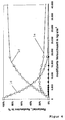
- Fig. 1 A graph of the determined by BET and Hg porosimetry measurements pore volume dependence on the pore diameter of a supported nickel catalyst without IL coating (curve 1a) as a comparative example, an ionic liquid-coated nickel catalyst according to the invention (curve 2a) and the inventive Catalyst (curve 3a) after it has been used in a hydrogenation reaction;
- Fig. 2 a graphical representation of the determined by BET and Hg porosimetry measurements dependence of the inner surface of the pore diameter of the supported nickel catalyst without IL coating (curve 1b), coated with an ionic liquid nickel catalyst (curve 2b) and the inventive catalyst (curve 3b after it has been used in a hydrogenation reaction;
- Fig. 1 A graph of the determined by BET and Hg porosimetry measurements pore volume dependence on the pore diameter of a supported nickel catalyst without IL coating (curve 1a) as a comparative example, an ionic liquid-coated nickel catalyst according to the invention (cur
- Fig. 5 Selectivity with respect to the cis-cyclooctene (curve 1g) and the cyclooctane (curve 1h) as a function of cyclooctadiene conversion in the hydrogenation of cyclooctadiene by means of the supported nickel catalyst without IL coating;
- Fig. 6 Residual amount of cyclooctadiene (curve 2d) and yield of cis-cyclooctene (curve 2e) and cyclooctane (curve 2f) as a function of the modified experimental time in the hydrogenation of cyclooctadiene by means of the ionic liquid-coated supported nickel catalyst; Fig.
- the thus-activated uncoated nickel catalyst (catalyst without IL coating) was used as a comparative example in the subsequent measurements and reactions.
- the pore system of the activated nickel catalyst without IL coating according to Example 1 and the inventive provided with an IL coating nickel catalyst according to Example 2 were characterized by BET and Hg porosimetry measurements.
- the Fig. 1 shows the dependence of the pore volume of the coated and the uncoated catalyst on the pore diameter.
- the curves 1a and 2a of the uncoated and the coated catalyst show that the pores of the coated catalyst are coated largely independently of their diameter with the ionic liquid having a substantially uniform thickness. From the data it could be determined that the IL coating occupies about 22 vol% of the original volume of the uncoated nickel catalyst.
- the Fig. 2 shows the dependence of the inner surface of the uncoated and the coated nickel catalyst on the pore diameter. Curves 1b and 2b of the uncoated or coated nickel catalyst show that the inner surface of the coated catalyst is reduced by about 45% as compared to the uncoated catalyst due to the IL coating. From this, an average thickness of the IL coating of about 0.6 nm can be calculated.
- the nickel catalyst loaded with the ionic liquid was dried in vacuo at a temperature of 110 ° C., and then its pore system was characterized by means of BET and Hg porosimetry measurements.
- the dependence of the pore volume on the pore diameter and the dependence of the inner surface of the pore diameter is determined by the curves 3a and 3b of FIGS. 1 or 2 shown.
- the decrease in the pore volume or the inner surface of the coated nickel catalyst is probably due to the fact that the pores with residues of the Solvent dodecane are occupied, which has a boiling point of 216 ° C.
- the curves of the selectivities with respect to cis-cyclooctene or cyclooctane of the reaction in question are shown by means of the curves 1g and 1h.
- the curve 1g shows a relatively rapid decrease in cis-cyclooctene selectivity with increasing cyclooctadiene conversion.
- the course of the proportions of cyclooctadiene, of cis-cyclooctene and of cyclooctane over the said hydrogenation reaction is shown by the curves denoted by the reference symbols 2d, 2e and 2f, respectively.
- the curve 2e has a maximum proportion of cis-cyclooctene of 65%, which corresponds to a selectivity to cis-cyclooctene of 72%.
- the course of the selectivities with respect to cis-cyclooctene and cyclooctane during the reaction in question is in the Fig. 7 represented by the curves occupied by the reference numerals 2g and 2h.
- the nickel catalyst coated with the ionic liquid according to the invention exhibits a comparatively slow decrease in the cis-cyclooctene selectivity with increasing cyclooctadiene conversion in the hydrogenation of cyclooctadiene.
Landscapes
- Chemical & Material Sciences (AREA)
- Organic Chemistry (AREA)
- Engineering & Computer Science (AREA)
- Materials Engineering (AREA)
- Chemical Kinetics & Catalysis (AREA)
- Catalysts (AREA)
- Organic Low-Molecular-Weight Compounds And Preparation Thereof (AREA)
- Low-Molecular Organic Synthesis Reactions Using Catalysts (AREA)
Abstract
Description
- Die vorliegende Erfindung betrifft einen porösen heterogenen Übergangsmetallkatalysator.
- Selektive Hydrierungsreaktionen sind beispielsweise bei der Verarbeitung von durch Erdölraffination gewonnenen Kohlenstoffschnitten zu synthetisch wertvollen Zwischenprodukten von großer Bedeutung, wie beispielsweise bei der selektiven Hydrierung von aromatischen Verbindungen zu Cycloolefinen, bei der Hydrierung von Acetylen zu Ethylen, bei der Hydrierung von Butadien zu 1-Buten und/oder 2-Buten und bei der Hydrierung von Phenylacetylen zu Styrol.
- Die bei selektiven Hydrierungsreaktionen eingesetzten Katalysatoren sind häufig geträgerte Metallkatalysatoren, beispielsweise geträgerte Nickel-, Palladium- oder Platinkatalysatoren. Diese Katalysatoren beschleunigen die gewünschte Hydrierungsreaktion und besitzen bezüglich dieser zwar auch eine gewisse Selektivität, der Anteil an unerwünschten Nebenprodukten ist insbesondere bei hohen Umsatzraten jedoch in der Regel immer noch verhältnismäßig hoch.
- In dem Journal "Green Chem, 2006, 8, 197-205" ist ein heterogener katalysator offenbart, bei dem Palladium in einer ionischen Flüssigkeit gelöst ist.
- Aufgabe der vorliegenden Erfindung ist es daher, einen Katalysator bereitzustellen, der mit einer verhältnismäßig hohen Selektivität die Hydrierung einzelner ungesättigter Bindungen mehrfach ungesättigter Verbindungen katalysiert.
- Diese Aufgabe wird ausgehend von einem Übergangsmetallkatalysator der gattungsgemäßen Art dadurch gelöst, dass die innere Oberfläche des Übergangsmetallkatalysators mit einer ionischen Flüssigkeit (IL (Ionic Liquid)) beschichtet ist.
- Der erfindungsgemäße Katalysator weist bei der Hydrierung einzelner ungesättigter Bindungen mehrfach ungesättigter Verbindungen eine verhältnismäßig hohe Selektivität auf bei relativ hoher Umsatzrate.
- Der erfindungsgemäße Katalysator kann unter Verwendung leicht zugänglicher Einsatzstoffe verfahrenstechnisch einfach und damit kostengünstig hergestellt werden.
- Der erfindungsgemäße Katalysator hat ferner den Vorteil, dass er zur Katalyse von Reaktionen in gasförmiger oder flüssiger Phase eingesetzt werden kann. Damit die hohe Selektivität des erfindungsgemäßen Katalysators möglichst lange gewährleistet ist, ist der Katalysator vorzugsweise aber nur solchen Reaktionsbedingungen zu unterwerfen, welche im Wesentlichen kein Ablösen der IL-Beschichtung bewirken.
- Wie bereits vorstehend ausgeführt, ist der erfindungsgemäße Katalysator ein poröser heterogener Übergangsmetallkatalysator, dessen innere Oberfläche mit einer ionischen Flüssigkeit beschichtet ist. Dabei ist der poröse heterogene Übergangsmetallkatalysator selbst ein präformierter Katalysator, d.h., dass der erfindungsgemäße Katalysator hergestellt wird, indem ein vollständig ausgebildeter poröser heterogener Katalysator eingesetzt und dieser mit der ionischen Flüssigkeit beschichtet wird.
- Die vorliegende Erfindung ist nicht auf spezielle heterogene Übergangsmetallkatalysatoren beschränkt, die mit einer ionischen Flüssigkeit beschichtet sind. Es können vielmehr sämtliche heterogenen Übergangsmetallkatalysatoren mit einer ionischen Flüssigkeit beschichtet sein, d.h. auch solche, welche in anderen selektiven Reaktionen als der selektiven Hydrierung eingesetzt werden. Geeignete Katalysatoren enthalten beispielsweise Metalle, die ausgewählt sind aus der Gruppe bestehend aus Nickel, Kobalt, Kupfer, Eisen, Ruthenium, Rhodium, Iridium, Palladium und Platin. Die zuvor genannten Metall-Katalysatoren können gegebenenfalls auch als Skelett-Katalysatoren ausgeführt sein. Die heterogenen Katalysatoren können dotiert oder undotiert sein. Geeignete Dotiermetalle können ausgewählt werden aus den Elementen der Gruppen 3 bis 12 des Periodensystems der Elemente gemäß IUPAC-Nomenklatur (Handbook of Chemistry and Physics, 80. Ausgabe, 1999-2000).
- Umfasst der erfindungsgemäße Katalysator einen geträgerten Metall-Katalysator, so ist das katalytisch aktive Metall in einer Menge von vorzugsweise 0,1 bis 60 Gew.-%, besonders bevorzugt 1 bis 50 Gew.-%, insbesondere 2 bis 10 Gew.-% vorhanden bezogen auf das Gesamtgewicht des erfindungsgemäßen Katalysators.
- Ionische Flüssigkeiten sind nach der Definition von Wasserscheid und Keim in "Angewandte Chemie" 2000, 112, Seiten 3926-3945 bei relativ niedriger Temperatur schmelzende Salze. Ionische Flüssigkeiten sind daher bereits bei relativ niedrigen Temperaturen flüssig. Darüber hinaus sind sie im Allgemeinen nicht brennbar und haben keinen messbaren Dampfdruck.
- Im Rahmen der vorliegenden Erfindung werden unter dem Begriff ionische Flüssigkeit Salze verstanden, die einen Schmelzpunkt oder Schmelzbereich aufweisen, der unterhalb von 200 °C liegt, vorzugsweise unterhalb von 150 °C und besonders bevorzugt unterhalb von 100 °C.
- Ferner sind bevorzugt die ionischen Flüssigkeiten solche, die eine Molmasse von vorzugsweise höchstens 1.000 g/mol aufweisen, besonders bevorzugt höchstens 500 g/mol.
- Ferner sind bevorzugte ionische Flüssigkeiten solche, deren Kationen organischer Natur sind und deren Anionen organischer oder anorganischer Natur sind.
- Ionische Flüssigkeiten werden aus positiven und negativen Ionen gebildet, sind jedoch insgesamt ladungsneutral. Die positiven wie auch die negativen Ionen sind überwiegend einwertig, möglich sind jedoch auch multivalente Anionen und/oder Kationen, die bis zu fünf, vorzugsweise bis zu vier, besonders bevorzugt bis zu drei und besonders bevorzugt bis zu zwei elektrische Ladungen aufweisen. Dabei können die Ladungen innerhalb des jeweiligen Ions entweder lokalisiert oder delokalisiert sein.
- Die vorliegende Erfindung ist nicht auf Katalysatoren beschränkt, deren innere Oberfläche mit einer bestimmten ionischen Flüssigkeit beschichtet ist; es können alle geeigneten ionischen Flüssigkeiten verwendet sein, worunter auch Gemische verschiedener ionischer Flüssigkeiten verstanden werden.
- Je nachdem welchem Einsatzzweck der erfindungsgemäße Katalysator dient, kann es bevorzugt sein, wenn der Katalysator ein Vollkatalysator oder ein geträgerter heterogener Katalysator ist.
- Gemäß einer bevorzugten Ausführungsform der Erfindung ist der erfindungsgemäße Katalysator als Pulver oder als Formkörper ausgebildet.
- Als Pulver kann der erfindungsgemäße Katalysator mit hohen Ausbeuten und Selektivitäten in Suspensionsverfahren eingesetzt werden. Typische Partikelgrößen solcher Pulver liegen bei 10 bis 250 Mikrometer, es können aber auch Partikel deutlich kleiner als 1 Mikrometer verwendet werden, etwa beim Einsatz von Ruß als Katalysatorträger.
- Formkörper kommen beispielsweise bei im Festbett betriebenen Prozessen bevorzugt zum Einsatz. Bevorzugte Formkörper sind Kugeln, Kegel, Stränge, Hohlstränge, Sternstränge, Vollzylinder, Hohlzylinder, Tabletten, Triloben, Splitt, etc. mit charakteristischen Durchmessern von 0,5 bis 5 mm oder auch Monolithe und ähnliche strukturierte Packungen (vgl. Ullmann's Encyclopedia, Sixth Edition, 2000 Electronic Release, Chapter Fixed-Bed Reactors, Par. 2: Catalyst Forms for Fixed-Bed Reactors).
- Es wurde festgestellt, dass mittels Beschichten eines heterogenen porösen Katalysators mit einer ionischen Flüssigkeit die Aktivität des Katalysators so stark abgesenkt werden kann, dass auch Formkörper mit einem Durchmesser von bis zu 2cm eingesetzt werden können, ohne nennenswerte Verluste hinsichtlich der Produktselektivität hinnehmen zu müssen. Bevorzugte Formkörper weisen daher einen Durchmesser oder Abmessungen von 1 mm bis 2 cm auf, vorzugsweise von 2 mm bis 1,8 cm, bevorzugt von 4 mm bis 1,5 cm und mehr bevorzugt von 6 mm bis 1,2 cm.
- Es kann ferner bevorzugt sein, dass der erfindungsgemäße Katalysator ein Vollkatalysator ist. Dabei handelt es sich bei dem geträgerten Metallkatalysator vorzugsweise um einen geträgerten Übergangsmetallkatalysator, insbesondere um einen geträgerten Edelmetallkatalysator.
- Es kann bevorzugt sein, dass die BET-Oberfläche des Katalysators ohne die IL-Beschichtung 10 bis 300 m2/g beträgt, vorzugsweise 15 bis 80 m2/g, besonders bevorzugt 20 bis 50 m2/g. Die BET-Oberfläche wird nach der Einpunkt-Methode durch Adsorption von Stickstoff nach DIN 66132 bestimmt.
- Ferner kann es bevorzugt sein, dass die BET-Oberfläche des Katalysators mit der IL-Beschichtung 8 bis 240 m2/g beträgt, vorzugsweise 12 bis 64 m2/g, besonders bevorzugt 16 bis 40 m2/g.
- Darüber hinaus kann es bevorzugt sein, dass das integrale Porenvolumen des Katalysators (bestimmt gemäß DIN 66133 (Hg-Porosimetrie)) ohne die IL-Beschichtung größer als 100 mm3/g ist, vorzugsweise größer als 180 mm3/g.
- Es kann auch bevorzugt sein, dass das integrale Porenvolumen des Katalysators mit der IL-Beschichtung größer als 80 mm3/g ist, vorzugsweise größer als 144 mm3/g.
- Entsprechend einer bevorzugten Ausführungsform des erfindungsgemäßen Katalysators sind maximal 10 % des Porenvolumens des Katalysators ohne die IL-Beschichtung von Poren mit einem Radius von kleiner 10 nm gebildet, vorzugsweise maximal 8 %, bevorzugt maximal 6 % und besonders bevorzugt maximal 5 %.
- Gemäß einer weiteren bevorzugten Ausführungsform des erfindungsgemäßen Katalysators sind maximal 10 % des Porenvolumens des Katalysators ohne die IL-Beschichtung von Poren mit einem Radius von größer als 500 nm gebildet, vorzugsweise maximal 8 %, bevorzugt maximal 6 % und besonders bevorzugt maximal 5 %.
- Bei einer weiteren bevorzugten Ausführungsform des erfindungsgemäßen Katalysators ist vorgesehen, dass der mittlere Porendurchmesser des Katalysators ohne die IL-Beschichtung 10 bis 100 nm beträgt.
- Darüber hinaus kann gemäß einer bevorzugten Weiterbildung des erfindungsgemäßen Katalysators der mittlere Porendurchmesser des Katalysators mit der IL-Beschichtung 5 bis 100 nm betragen.
- Grundsätzlich kann im Rahmen der vorliegenden Erfindung der erfindungsgemäße Katalysator mit einer beliebigen ionischen Flüssigkeit beschichtet sein und entsprechend das Kation beliebiger Natur sein. Bevorzugt als Kation sind allgemein beispielsweise Ammonium- oder Phosphoniumionen oder solche Kationen, die mindestens einen fünf- oder sechsgliedrigen Heterocyclus enthalten, der mindestens ein Phosphor- oder ein Stickstoffatom sowie gegebenenfalls ein Sauerstoff- oder Schwefelatom aufweist. Besonders bevorzugt sind Kationen, die mindestens einen fünf- oder sechsgliedrigen Heterocyclus enthalten, der ein, zwei oder drei Stickstoffatome und ein Schwefel- oder ein Sauerstoffatom aufweist. Ganz besonders bevorzugt sind Kationen, die mindestens einen fünf- oder sechsgliedrigen Heterocyclus enthalten, der ein oder zwei Stickstoffatome aufweist.
- Es kann bevorzugt sein, dass das Kation der ionischen Flüssigkeit ausgewählt ist aus Verbindungen der nachstehenden allgemeinen Formeln IL-1 bis IL-23:


wobei zwei der genannten Reste miteinander unter Ausbildung eines ungesättigten oder gesättigten Ringsegments verknüpft sein können, das gegebenenfalls durch ein oder mehrere Sauerstoff- und/oder Schwefelatome und/oder ein oder mehrere substituierte oder unsubstituierte Iminogruppen unterbrochen sein kann, wobei das Ringsegment durch funktionelle Gruppen, Aryl-, Alkyl-, Aryloxy-, Alkyloxy-, Halogen-, Heteroatom- und/oder Heterocyclus-Reste substituiert sein kann,
und wobei R4 darüber hinaus ausgewählt sein kann aus der Gruppe der Reste bestehend aus C1-C18-Alkyloyl, C1-C18-Alkyloxycarbonyl, C5-C12-Cycloalkylcarbonyl und C6-C12-Aryloyl, wobei die Mitglieder der genannten Gruppe jeweils durch einen oder mehrere funktionelle Gruppen, Aryl-, Alkyl-, Aryloxy-, Alkyloxy-, Halogen-, Heteroatome und/oder Heterocyclus-Reste substituiert sein können, wobei sich die Angaben C1-C18, C5-C12, bzw. C6-C12 auf die Alkylkette beziehen. - Darin bedeutet der Begriff funktionelle Gruppen die Gruppe der nachstehenden funktionellen Gruppen: Aryl-, Alkyl-, Aryloxy-, Alkyloxy-, Halogen-, Heteroatom- und/oder Heterocyclen-substituiertes C1-C18-Alkyl, beispielsweise Methyl, Ethyl, Propyl, Isopropyl, n-Butyl, sec-Butyl, tert.-Butyl, Pentyl, Hexyl, Heptyl, Octyl, 2-Etylhexyl, 2,4,4-Trimethylpentyl, Decyl, Dodecyl, Tetradecyl, Heptadecyl, Octadecyl, 1,1-Dimethylpropyl, 1,1-Dimethylbutyl, 1,1,3,3-Tetramethylbutyl, Benzyl, 1-Phenylethyl, 2-Phenylethyl, alpha-alpha-Dimethylbenzyl, Benzhydryl, p-Tolylmethyl, 1-(p-Butyl-phenyl)-ethyl, p-Chlorbenzyl, 2,4-Dichlorbenzyl, p-Methoxybenzyl, m-Ethoxybenzyl, 2-Cyanoethyl, 2-Cyanopropyl, 2-Methoxycarbonethyl, 2-Ethoxycarbonylethyl, 2-Butoxycarbonylpropyl, 1,2-Di-(methoxycarbonyl)-ethyl, 2-Methoxyethyl, 2-Ethoxyethyl, 2-Butoxyethyl, Diethoxymethyl, Diethoxyethyl, 1,3-Dioxolan-2-yl, 1,3-Dioxan-2-yl, 2-Methyl-1,3-dioxolan-2-yl, 4-Methyl-1,3-dioxolan-2-yl, 2-Isopropoxyethyl, 2-Butoxypropyl, 2-Octyloxyethyl, Chlormethyl, 2-Chlorethyl, Trichlormethyl, Trifluormethyl, 1,1-Dimethyl-2-chlorethyl, 2-Methoxyisopropyl, 2-Ethoxyethyl, Butylthiomethyl, 2-Dodecylthioethyl, 2-Phenylthioethyl, 2,2,2-Trifluorethyl, 2-Hydroxyethyl, 2-Hydroxypropyl, 3-Hydroxypropyl, 4-Hydroxybutyl, 6-Hydroxyhexyl, 2-Aminoethyl, 2-Aminopropyl, 3-Aminopropyl, 4-Aminobutyl, 6-Aminohexyl, 2-Methylaminoethyl, 2-Methylaminopropyl, 3-Methylaminopropyl, 4-Methylaminobutyl, 6-Methylaminohexyl, 2-Dimethylaminoethyl, 2-Dimethylaminopropyl, 3-Dimethylaminopropyl, 4-Dimethylaminobutyl, 6-Dimethylaminohexyl, 2-Hydroxy-2,2-dimethylethyl, 2-Phenoxyethyl, 2-Phenoxypropyl, 3-Phenoxypropyl, 4-Phenoxybutyl, 6-Phenoxyhexyl, 2-Methoxyethyl, 2-Methoxypropyl, 3-Methoxypropyl, 4-Methoxybutyl, 6-Methoxyhexyl, 2-Ethoxyethyl, 2-Ethoxypropyl, 3-Ethoxypropyl, 4-Ethoxybutyl oder 6-Ethoxyhexyl, durch ein oder mehrere nicht benachbarte Sauerstoff- und/oder Schwefelatome und/oder ein oder mehrere substituierte oder unsubstituierte Iminogruppen unterbrochenes C2-C18-Alkyl, beispielsweise 5-Hydroxy-3-oxa-pentyl, 8-Hydroxy-3,6-dioxa-octyl, 11-Hydroxy-3,6,9-trioxa-undecyl, 7-Hydroxy-4-oxa-heptyl, 11-Hydroxy-4,8-dioxa-undecyl, 15-Hydroxy-4,8,12-trioxa-pentadecyl, 9-Hydroxy-5-oxa-nonyl, 14-Hydroxy-5,10-oxa-tetradecyl, 5-Methoxy-3-oxa-pentyl, 8-Methoxy-3,6-dioxa-octyl, H-Methoxy-3,6,9-trioxa-undecyl, 7-Methoxy-4-oxa-heptyl, 11-Methoxy-4,8-dioxa-undecyl, 15-Methoxy-4,8,12-trioxa-pentadecyl, 9-Methoxy-5-oxa-nonyl, 14-Methoxy-5,10-oxa-tetradecyl, 5-Ethoxy-3-oxa-pentyl, 8-Ethoxy-3,6-dioxa-octyl, 11-Ethoxy-3,6,9-trioxa-undecyl, 7-Ethoxy-4-oxa-heptyl, 11-Ethoxy-4,8-dioxa-undecyl, 15-Ethoxy-4,8,12-trioxa-pentadecyl, 9-Ethoxy-5-oxa-nonyl und 14-Ethoxy-5,10-oxa-tetradecyl.
- Bilden zwei Reste miteinander einen Ring aus, so können diese Reste gemeinsam vorzugsweise bedeuten 1,3-Propylen, 1,4-Butylen, 2-Oxa-1,3-propylen, 1-Oxa-1,3-propylen, 2-Oxa-1,3-propylen, 1-Oxa-1,3-propenylen, 1-Aza-1,3-propenylen, 1-C1-C4-Alkyl-1-aza-1,3-propenylen, 1,4-Buta-1,3-dienylen, 1-Aza-1,4-buta-1,3-dienylen oder 2-Aza-1,4-buta-1,3-dienylen.
- Die Anzahl der Sauerstoff- und/oder Schwefelatome und/oder Iminogruppen in den bevorzugten Kationen der ionischen Flüssigkeit ist nicht beschränkt. Im Allgemeinen beträgt sie nicht mehr als 5 pro Rest, vorzugsweise nicht mehr als 4, insbesondere nicht mehr als 3. Weiterhin befindet sich zwischen zwei Heteroatomen mindestens ein Kohlenstoffatom, besonders bevorzugt mindestens zwei.
- Bevorzugte Iminogruppen können beispielsweise sein Imino, Methylimino, iso-Propylimino, n-Butylimino oder tert-Butylimino.
- Weiterhin bedeutet der Begriff funktionelle Gruppen die Gruppe der nachstehenden funktionellen Gruppen: Carboxy, Carboxamid, Hydroxy, Di-(C1-C4-Alkyl)amino, C1-C4-Alkyloxycarbonyl, Cyano, C1-C4-Alkyloxy, durch funktionelle Gruppen-, Aryl-, Alkyl-, Aryloxy-, Alkyloxy-, Halogen-, Heteroatome- und/oder Heterocyclen-substituiertes C6-C12-Aryl, beispielsweise Phenyl, Tolyl, Xylyl, alpha-Naphthyl, beta-Naphthyl, 4-Diphenylyl, Chlorphenyl, Dichlorphenyl, Trichlorphenyl, Difluorphenyl, Methylphenyl, Dimethylphenyl, Trimethylphenyl, Ethylphenyl, Diethylphenyl, iso-Propylphenyl, tert.-Butylphenyl, Dodecylphenyl, Methoxyphenyl, Dimethoxyphenyl, Ethoxyphenyl, Hexyloxyphenyl, Methylnaphthyl, Isopropylnaphthyl, Chlornaphthyl, Ethoxynaphthyl, 2,6-Dimethylphenyl, 2,4,6-Trimethylphenyl, 2,6-Diethoxyphenyl, 2,6-Dichlorphenyl, 4-Bromphenyl, 2- oder 4-Nitrophenyl, 2,4- oder 2,6-Dinitrophenyl, 4-Dimethylaminophenyl, 4-Acetylphenyl, Methoxyethylphenyl oder Ethoxyethylphenyl, durch funktionelle Gruppen-, Aryl-, Alkyl-, Aryloxy-, Alkyloxy-, Halogen-, Heteroatome- und/oder Heterocyclen- substituiertes C5-C12-Cycloalkyl, beispielsweise Cyclopentyl, Cyclohexyl, Cyclooctyl, Cyclododecyl, Methylcyclopentyl, Dimethylcyclopentyl, Methylcyclohexyl, Dimethylcyclohexyl, Diethylcyclohexyl, Butylcyclohexyl, Methoxycyclohexyl, Dimethoxycyclohexyl, Diethoxycyclohexyl, Butylthiocyclohexyl, Chlorcyclohexyl, Dichlorcyclohexyl oder Dichlorcyclopentyl, gesättigte oder ungesättigte bicyclische Systeme, z.B. Norbornyl oder Norbornenyl, ein fünf- bis sechsgliedriger, Sauerstoff-, Stickstoff- und/oder Schwefelatome aufweisender Heterocyclus, beispielsweise Furyl, Thiophenyl, Pyrryl, Pyridyl, Indolyl, Benzoxazolyl, Dioxolyl, Dioxyl, Benzimidazolyl, Benzthiazolyl, Dimethylpyridyl, Methylchinolyl, Dimethylpyrryl, Methoxyfuryl, Dimethoxypyridyl, Difluorpyridyl, Methylthiophenyl, Isopropylthiophenyl oder tert.-Butylthiophenyl, und ein C1-C4-Alkyl, beispielsweise Methyl, Ethyl, Propyl, Isopropyl, n-Butyl, sec-Butyl oder tert.-Butyl.
- C1-C18-Alkyloyl (Alkylcarbonyl) kann beispielsweise sein Acetyl, Propionyl, n-Butyloyl, sec-Butyloyl, tert.-Butyloyl, 2-Etylhexylcarbonyl, Decanoyl, Dodecanoyl, Chloracetyl, Trichloracetyl oder Trifluoracetyl.
- C1-C18-Alkyloxycarbonyl kann beispielsweise sein Methyloxycarbonyl, Ethyloxycarbonyl, Propyloxycarbonyl, Isopropyloxycarbonyl, n-Butyloxycarbonyl, sec-Butyloxycarbonyl, tert.-Butyloxycarbonyl, Hexyloxycarbonyl, 2-Etylhexyloxycarbonyl oder Benzyloxycarbonyl.
- C5-C12-Cycloalkylcarbonyl kann beispielsweise sein Cyclopentylcarbonyl, Cyclohexylcarbonyl oder Cyclododecylcarbonyl.
- C5-C12-Aryloyl (Arylcarbonyl) kann beispielsweise sein Benzoyl, Toluyl, Xyloyl, alpha-Naphthoyl, beta-Naphthoyl, Chlorbenzoyl, Dichlorbenzoyl, Trichlorbenzoyl oder Trimethylbenzoyl.
- Bevorzugt sind R1, R2, R3, R5, R6, R7, R8, R9 und R10 jeweils unabhängig voneinander, Wasserstoff, Methyl, Ethyl, n-Butyl, 2-Hydroxyethyl, 2-Cyanoethyl, 2-(Methoxycarbonyl)-ethyl, 2-Ethoxycarbonyl-ethyl, 2-n-Butoxycarbonyl-ethyl, Dimethylamino, Diethylamino oder Chlor.
- Bevorzugt ist R4 Methyl, Ethyl, n-Butyl, 2-Hydroxyethyl, 2-Cyanoethyl, 2-Methoxycarbonyl-ethyl, 2-Ethoxycarbonyl-ethyl, 2-n-Butoxycarbonyl-ethyl, Acetyl, Propionyl, t-Butyryl, Methoxycarbonyl, Ethoxycarbonyl oder n-Butoxycarbonyl.
- Besonders bevorzugte Ammoniumionen (IL-1) sind solche, bei denen unabhängig voneinander R4 unter Acetyl, Methyl, Ethyl oder n-Butyl und R1, R2 und R3 unter Methyl, Ethyl, n-Butyl, 2-Hydroxyethyl, Benzyl oder Phenyl ausgewählt sind.
- Besonders bevorzugte Phosphoniumionen (IL-2) sind solche, bei denen unabhängig voneinander R4 unter Acetyl, Methyl, Ethyl oder n-Butyl und R1, R2 und R3 unter Phenyl, Phenoxy, Ethoxy und n-Butoxy ausgewählt sind.
- Besonders bevorzugte Pyrrolidiniumionen (IL-3) sind solche, bei denen unabhängig voneinander R3 und R4 unter Acetyl, Methyl, Ethyl oder n-Butyl ausgewählt sind und alle anderen Reste Wasserstoff bedeuten.
- Besonders bevorzugte 1-Pyrazoliniumionen (IL-4) sind solche, bei denen unabhängig voneinander alle Reste bis auf R4 unter Wasserstoff oder Methyl und R4 unter Acetyl, Methyl, Ethyl oder n-Butyl ausgewählt sind.
- Besonders bevorzugte 2-Pyrazoliniumionen (IL-5) sind solche, bei denen unabhängig voneinander R5 unter Wasserstoff, Methyl, Ethyl oder Phenyl, R4 unter Acetyl, Methyl, Ethyl oder n-Butyl und die übrigen Reste unter Wasserstoff oder Methyl ausgewählt sind.
- Besonders bevorzugte 3-Pyrazoliniumionen (IL-6) sind solche, bei denen unabhängig voneinander R3 und R5 unter Wasserstoff, Methyl, Ethyl oder Phenyl, R4 unter Acetyl, Methyl, Ethyl oder n-Butyl und die verbleibenden Reste unter Wasserstoff oder Methyl ausgewählt sind.
- Besonders bevorzugte 1H-Pyrazoliumionen (IL-7) sind solche, bei denen unabhängig voneinander R5 unter Wasserstoff, Methyl oder Ethyl, R1, R2 und R3 unter Wasserstoff oder Methyl und R4 unter Acetyl, Methyl, Ethyl oder n-Butyl ausgewählt sind.
- Besonders bevorzugte 3H-Pyrazoliumionen (IL-8) sind solche, bei denen unabhängig voneinander R2 unter Wasserstoff, Methyl oder Ethyl, R1, R3 und R5 unter Wasserstoff oder Methyl und R4 unter Acetyl, Methyl, Ethyl oder n-Butyl ausgewählt sind.
- Besonders bevorzugte 4H-Pyrazoliumionen (IL-9) sind solche, bei denen unabhängig voneinander R1 R2, R3 und R5 unter Wasserstoff oder Methyl und R4 unter Acetyl, Methyl, Ethyl oder n-Butyl ausgewählt sind.
- Besonders bevorzugte Imidazoliniumionen (IL-10) sind solche, bei denen unabhängig voneinander R5 oder R6 unter Wasserstoff, Methyl oder Ethyl, R4 unter Acetyl, Methyl, Ethyl oder n-Butyl und die übrigen Reste unter Wasserstoff oder Methyl ausgewählt sind.
- Besonders bevorzugte Imidazoliniumionen (IL-11) sind solche, bei denen unabhängig voneinander R5, R6 oder R7 unter Wasserstoff, Methyl oder Ethyl, R4 unter Acetyl, Methyl, Ethyl oder n-Butyl und die übrigen Reste unter Wasserstoff oder Methyl ausgewählt sind.
- Besonders bevorzugte Imidazoliniumionen (IL-12) sind solche, bei denen unabhängig voneinander R3 oder R7 unter Wasserstoff, Methyl, Ethyl, n-Butyl oder Phenyl, R4 unter Acetyl, Methyl, Ethyl oder n-Butyl und R5 oder R6 unter Wasserstoff, Methyl oder Ethyl und R1 oder R2 unter Wasserstoff oder Methyl ausgewählt sind.
- Besonders bevorzugte Imidazoliumionen (IL-13) sind solche, bei denen unabhängig voneinander R1 ausgewählt ist aus der Gruppe bestehend aus Methyl, Ethyl, n-Propyl, n-Butyl, n-Pentyl, n-Octyl, n-Decyl, n-Dodecyl, 2-Hydroxyethyl und 2-Cyanoethyl, R4 aus Acetyl, Methyl, Ethyl oder n-Butyl und die übrigen Reste unabhängig voneinander aus Wasserstoff, Methyl oder Ethyl.
- Besonders bevorzugte 1,2,4-Triazoliumionen (IL-14) und (IL-15) sind solche, bei denen unabhängig voneinander R1 oder R2 bzw. R1 oder R3 unter Wasserstoff, Methyl, Ethyl oder Phenyl, R4 unter Acetyl, Methyl, Ethyl oder n-Butyl und R3 bzw. R2 unter Wasserstoff, Methyl oder Phenyl ausgewählt sind. Besonders bevorzugte 1,2,3-Triazoliumionen (IL-16) und (IL-17) sind solche, bei denen unabhängig voneinander R3 bzw. R1 unter Wasserstoff, Methyl oder Ethyl, R4 unter Acetyl, Methyl, Ethyl oder n-Butyl und R1 oder R2 bzw. R2 oder R3 unter Wasserstoff oder Methyl ausgewählt sind oder R1 und R2 bzw. R2 und R3 1,4-Buta-1,3-dienylen und alle anderen Reste Wasserstoff sind.
- Besonders bevorzugte Thiazoliumionen (IL-18) oder Oxazoliumionen (IL-19) sind solche, bei denen unabhängig voneinander R1 unter Wasserstoff, Methyl, Ethyl oder Phenyl, R4 unter Acetyl, Methyl, Ethyl oder n-Butyl und R2 oder R3 unter Wasserstoff oder Methyl ausgewählt sind.
- Besonders bevorzugte Pyridiniumionen (IL-20) sind solche, bei denen einer der Reste R1, R2, R3, R5 und R6 Methyl, Ethyl oder Chlor ist, R4 Acetyl, Methyl, Ethyl oder n-Butyl ist und alle anderen Reste Wasserstoff sind, oder R1 Dimethylamino, R4 Acetyl, Methyl, Ethyl oder n-Butyl und alle anderen Reste Wasserstoff sind oder R4 Acetyl, Methyl, Ethyl oder n-Butyl und alle anderen Reste Wasserstoff sind oder R2 Carboxy oder Carboxamid, R4 Acetyl, Methyl, Ethyl oder n-Butyl und alle anderen Reste Wasserstoff sind oder R2 und R3 oder R2 und R1 1,4-Buta-1,3-dienylen, R4 Acetyl, Methyl, Ethyl oder n-Butyl und alle anderen Reste Wasserstoff sind.
- Besonders bevorzugte Pyrimidiniumionen (IL-21) sind solche, bei denen R1, R4 und R5 Wasserstoff oder Methyl, R4 Acetyl, Methyl, Ethyl oder n-Butyl und R3 Wasserstoff, Methyl oder Ethyl sind, oder R2 und R5 Methyl, R1 Wasserstoff und R3 Wasserstoff, Methyl oder Ethyl und R4 Acetyl, Methyl, Ethyl oder n-Butyl sind.
- Besonders bevorzugte Pyridaziniumionen (IL-22) sind solche, bei denen einer der Reste R1, R2, R3 und R5 Methyl oder Ethyl, R4 Acetyl, Methyl, Ethyl oder n-Butyl und alle anderen Reste Wasserstoff oder R4 Acetyl, Methyl, Ethyl oder n-Butyl, und alle anderen Reste Wasserstoff sind.
- Besonders bevorzugte Pyraziniumionen (IL-23) sind solche, bei denen R1, R2, R3 und R5 alle Methyl und R4 Acetyl, Methyl, Ethyl oder n-Butyl oder R4 Acetyl, Methyl, Ethyl oder n-Butyl und alle anderen Reste Wasserstoff sind.
- Von den zuvor erwähnten Kationengruppen IL-1 bis IL-23 sind die genannten Ammonium-, Phosphonium-, Pyridinium- und Imidazoliumionen besonders bevorzugt.
- Ganz besonders bevorzugt sind als Kationen 1,2-Dimethylpyridinium, 1-Methyl-2-ethylpyridinium, 1-Methyl-2-ethyl-6-methylpyridinium, N-Methylpyridinium, 1-Butyl-2-methylpyridinium, 1-Butyl-2-ethylpyridinium, 1-Butyl-2-ethyl-6-methylpyridinium, N-Butylpyridinium, 1-Butyl-4-methylpyridinium, 1,3-Dimethylimidazolium, 1,2,3-Trimethylimidazolium, 1-n-Butyl-3-methylimidazolium, 1,3,4,5-Tetramethylimidazolium, 1,3,4-Trimethylimidazolium, 2,3-Dimethylimidazolium, 1-Butyl-2,3-dimethylimidazolium, 3,4-Dimethylimidazolium, 2-Ethyl-3,4-dimethylimidazolium, 3-Methyl-2-ethylimidazol, 3-Butyl-1-methylimidazolium, 3-Butyl-1-ethylimidazolium, 3-Butyl-1,2-dimeraylimidazolium, 1,3-Din-Butylimidazolium, 3-Butyl-1,4,5-Trimethylimidazolium, 3-Butyl-1,4-Dimethylimidazolium, 3-Butyl-2-methylimidazolium, 1,3-Dibutyl-2-methylimidazolium, 3-Butyl-4-methylimidazolium, 3-Butyl-2-ethyl-4-methylimidazolium und 3-Butyl-2-ethylimidazolium, 1-Methyl-3-Octylimidazolium, 1-Decyl-3-methylimidazolium.
- Insbesondere bevorzugt sind 1-Butyl-4-methylpyridinium, 1-n-Butyl-3-methylimidazolium und 1-n-Butyl-3-ethylimidazolium.
- Auch möglich sind Kationen, die von Diazabicyclononen oder Diazabicycloundecen abgeleitet werden.
- Analog den obigen Ausführungen kann das Anion der ionischen Flüssigkeit beliebiger Natur sein. Es ist jedoch bevorzugt, wenn das Anion der ionischen Flüssigkeit ausgewählt ist aus der Gruppe bestehend aus F-, Cl-, Br-, I-, PF6 -, BF4 -, Alkylsulfat, vorzugsweise ein C1 bis C18 Alkylsulfat, Ethersulfat, Acetat, Trifluoracetat, Triflat, Sulfat, Hydrogensulfit, Methylsulfat, Ethylsulfat, Sulfit, Hydrogensulfit, Aluminiumchloride, vorzugsweise AlCl4 -, Al2Cl7 - oder Al3Cl10 -, Aluminiumtribromid, Nitrit, Nitrat, Metallkomplexe, beispielsweise Metallhalogenide wie Kupferchlorid CuCl2 -, Phosphate, Phosphat, Hydrogenphosphat, Dihydrogenphosphat, Carbonat, Hydrogencarbonat, Sulfonat, Tosylat, Bis(trifluormethylsulfonyl)imid, Cyanid und Isocyanat.
- Unter Ethersulfate werden vorliegende Verbindungen der allgemeinen Formel

- Es wurde festgestellt, dass die vorteilhaften Effekte des erfindungsgemäßen Katalysators dann besonders deutlich eintreten, wenn die mittlere Dicke der IL-Beschichtung zumindest gleich der Dicke einer einzelnen Ionenlage der ionischen Flüssigkeit ist. Gemäß einer bevorzugten Ausführungsform des erfindungsgemäßen Katalysators weist die IL-Beschichtung eine mittlere Dicke auf, die gleich der Dicke einer einzelnen Ionenlage der ionischen Flüssigkeit ist oder die größer ist als die Dicke einer einzelnen Ionenlage der ionischen Flüssigkeit, vorzugsweise größer als die Dicke von 1,1 Ionenlagen, bevorzugt größer als die Dicke von 1,2 Ionenlagen, weiter bevorzugt größer als die Dicke von 1,3 Ionenlagen, besonders bevorzugt größer als die Dicke von 1,4 Ionenlagen und weiter besonders bevorzugt größer als die Dicke von 1,5 Ionenlagen. Dabei wird unter einer Ionenlage im Rahmen der vorliegenden Erfindung eine einlagige Schicht eines Anion/Kation-Ionenpaares der ionischen Flüssigkeit verstanden.
- Weiter bevorzugt ist, dass die IL-Beschichtung eine mittlere Dicke aufweist, die größer ist als die Dicke von 1,6 Ionenlagen der ionischen Flüssigkeit, vorzugsweise-größer als die Dicke von 1,7 Ionenlagen, bevorzugt größer als die Dicke von 1,8 Ionenlagen, weiter bevorzugt größer als die Dicke von 1,9 Ionenlagen, besonders bevorzugt größer als die Dicke von zumindest 2,0 Ionenlagen und weiter besonders bevorzugt größer als die Dicke von zumindest 2,1 Ionenlagen.
- Ferner kann es bevorzugt sein, dass die IL-Beschichtung eine mittlere Dicke aufweist, die größer ist als die Dicke von 2,2 Ionenlagen der ionischen Flüssigkeit, vorzugsweise größer als die Dicke von 2,3 Ionenlagen, bevorzugt größer als die Dicke von 2,4 Ionenlagen, weiter bevorzugt größer als die Dicke von 2,5 Ionenlagen, besonders bevorzugt größer als die Dicke von zumindest 2,6 Ionenlagen und weiter besonders bevorzugt größer als die Dicke von zumindest 2,7 Ionenlagen.
- Darüber hinaus kann es bevorzugt sein, dass die IL-Beschichtung eine mittlere Dicke aufweist, die größer ist als die Dicke von 2,8 Ionenlagen der ionischen Flüssigkeit, vorzugsweise größer als die Dicke von 2,9 Ionenlagen, bevorzugt größer als die Dicke von 3,0 Ionenlagen, weiter bevorzugt größer als die Dicke von 3,1 Ionenlagen, besonders bevorzugt größer als die Dicke von zumindest 3,2 Ionenlagen und weiter besonders bevorzugt größer als die Dicke von zumindest 3,3 Ionenlagen.
- Auch kann es bevorzugt sein, dass die IL-Beschichtung eine mittlere Dicke aufweist, die größer ist als die Dicke von 3,4 Ionenlagen der ionischen Flüssigkeit, vorzugsweise größer als die Dicke von 3,5 Ionenlagen, bevorzugt größer als die Dicke von 3,6 Ionenlagen, weiter bevorzugt größer als die Dicke von 3,7 Ionenlagen, besonders bevorzugt größer als die Dicke von zumindest 3,8 Ionenlagen und weiter besonders bevorzugt größer als die Dicke von zumindest 3,9 Ionenlagen.
- Grundsätzlich kann die IL-Beschichtung eine sehr große Dicke aufweisen. Wird ab einer bestimmten Schichtdicke aber die Schichtdicke noch weiter erhöht, so führt dies lediglich zu einer Abnahme der Aktivität des Katalysators bei gleich bleibender Selektivität. In einer anderen Ausführungsform des erfindungsgemäßen Katalysators ist es bevorzugt, dass die IL-Beschichtung eine mittlere Dicke aufweist, die kleiner ist als die Dicke von 40 Ionenlagen der ionischen Flüssigkeit, vorzugsweise kleiner als die Dicke von 38 Ionenlagen, bevorzugt kleiner als die Dicke von 36 Ionenlagen, weiter bevorzugt kleiner als die Dicke von 34 Ionenlagen, besonders bevorzugt kleiner als die Dicke von 32 Ionenlagen und weiter besonders bevorzugt kleiner als die Dicke von 30 Ionenlagen.
- Es kann auch bevorzugt sein, dass die IL-Beschichtung eine mittlere Dicke aufweist, die kleiner ist als die Dicke von 28 Ionenlagen der ionischen Flüssigkeit, vorzugsweise kleiner als die Dicke von 26 Ionenlagen, bevorzugt kleiner als die Dicke von 24 Ionenlagen, weiter bevorzugt kleiner als die Dicke von 22 Ionenlagen, besonders bevorzugt kleiner als die Dicke von 20 Ionenlagen und weiter besonders bevorzugt kleiner als die Dicke von 19 Ionenlagen.
- Auch kann bevorzugt vorgesehen sein, dass die IL-Beschichtung eine mittlere Dicke aufweist, die kleiner ist als die Dicke von 18 Ionenlagen der ionischen Flüssigkeit, vorzugsweise kleiner als die Dicke von 17 Ionenlagen, bevorzugt kleiner als die Dicke von 16 Ionenlagen, weiter bevorzugt kleiner als die Dicke von 15 Ionenlagen, besonders bevorzugt kleiner als die Dicke von 14 Ionenlagen und weiter besonders bevorzugt kleiner als die Dicke von 13 Ionenlagen.
- Ferner kann bevorzugt sein, dass die IL-Beschichtung eine mittlere Dicke aufweist, die kleiner ist als die Dicke von 12 Ionenlagen der ionischen Flüssigkeit, vorzugsweise kleiner als die Dicke von 11 Ionenlagen, bevorzugt kleiner als die Dicke von 10 Ionenlagen, weiter bevorzugt kleiner als die Dicke von 9,5 Ionenlagen, besonders bevorzugt kleiner als die Dicke von 9 Ionenlagen und weiter besonders bevorzugt kleiner als die Dicke von 8,8 Ionenlagen.
- Darüber hinaus kann es bevorzugt sein, dass die IL-Beschichtung eine mittlere Dicke aufweist, die kleiner ist als die Dicke von 8,6 Ionenlagen der ionischen Flüssigkeit, vorzugsweise kleiner als die Dicke von 8,4 Ionenlagen, bevorzugt kleiner als die Dicke von 8,2 Ionenlagen, weiter bevorzugt kleiner als die Dicke von 8 Ionenlagen, besonders bevorzugt kleiner als die Dicke von 7,8 Ionenlagen und weiter besonders bevorzugt kleiner als die Dicke von 7,6 Ionenlagen.
- Auch kann es bevorzugt vorgesehen sein, dass die IL-Beschichtung eine mittlere Dicke aufweist, die kleiner ist als die Dicke von 7,4 Ionenlagen der ionischen Flüssigkeit, vorzugsweise kleiner als die Dicke von 7,2 Ionenlagen, bevorzugt kleiner als die Dicke von 7,0 Ionenlagen, weiter bevorzugt kleiner als die Dicke von 6,8 Ionenlagen, besonders bevorzugt kleiner als die Dicke von 6,6 Ionenlagen und weiter besonders bevorzugt kleiner als die Dicke von 6,4 Ionenlagen.
- Ferner kann bevorzugt sein, dass die IL-Beschichtung eine mittlere Dicke aufweist, die kleiner ist als die Dicke von 6,2 Ionenlagen der ionischen Flüssigkeit, vorzugsweise kleiner als die Dicke von 6 Ionenlagen, bevorzugt kleiner als die Dicke von 5,8 Ionenlagen, weiter bevorzugt kleiner als die Dicke von 5,6 Ionenlagen, besonders bevorzugt kleiner als die Dicke von 5,4 Ionenlagen und weiter besonders bevorzugt kleiner als die Dicke von 5,2 Ionenlagen.
- Darüber hinaus kann es bevorzugt sein, dass die IL-Beschichtung eine mittlere Dicke aufweist, die kleiner ist als die Dicke von 5 Ionenlagen der ionischen Flüssigkeit, vorzugsweise kleiner als die Dicke von 4,8 Ionenlagen, bevorzugt kleiner als die Dicke von 4,6 Ionenlagen, weiter bevorzugt kleiner als die Dicke von 4,4 Ionenlagen, besonders bevorzugt kleiner als die Dicke von 4,2 Ionenlagen und weiter besonders bevorzugt kleiner als die Dicke von 4 Ionenlagen.
- Entsprechend einer weiteren bevorzugten Ausführungsform des erfindungsgemäßen Verfahrens weist die IL-Beschichtung eine mittlere Dicke auf, die größer ist als die Dicke von einer Ionenlage der ionischen Flüssigkeit und die kleiner ist als die Dicke von 10 Ionenlagen der ionischen Flüssigkeit, vorzugsweise größer als die Dicke von 1,1 Ionenlagen und kleiner als die Dicke von 9,8 Ionenlagen, bevorzugt größer als die Dicke von 1,2 Ionenlagen und kleiner als die Dicke von 9,6 Ionenlagen, weiter bevorzugt größer als die Dicke von 1,3 Ionenlagen und kleiner als die Dicke von 9,4 Ionenlagen, mehr bevorzugt größer als die Dicke von 1,4 Ionenlagen und kleiner als die Dicke von 9,2 Ionenlagen, weiter mehr bevorzugt größer als die Dicke von 1,5 Ionenlagen und kleiner als die Dicke von 9 Ionenlagen und besonders bevorzugt größer als die Dicke von 1,6 Ionenlagen und kleiner als die Dicke von 8,8 Ionenlagen.
- Gemäß einer anderen bevorzugten Ausführungsform des erfindungsgemäßen Katalysators ist vorgesehen, dass die IL-Beschichtung eine mittlere Dicke aufweist, die größer ist als die Dicke von 1,7 Ionenlagen der ionischen Flüssigkeit und die kleiner ist als die Dicke von 8,6 Ionenlagen der ionischen Flüssigkeit, vorzugsweise größer als die Dicke von 1,8 Ionenlagen und kleiner als die Dicke von 8,4 Ionenlagen, bevorzugt größer als die Dicke von 1,9 Ionenlagen und kleiner als die Dicke von 8,2 Ionenlagen, weiter bevorzugt größer als die Dicke von 2 Ionenlagen und kleiner als die Dicke von 8 Ionenlagen, mehr bevorzugt größer als die Dicke von 2,1 Ionenlagen und kleiner als die Dicke von 7,8 Ionenlagen, weiter mehr bevorzugt größer als die Dicke von 2,2 Ionenlagen und kleiner als die Dicke von 7,6 Ionenlagen und besonders bevorzugt größer als die Dicke von 2,3 Ionenlagen und kleiner als die Dicke von 7,4 Ionenlagen.
- Bei einer anderen bevorzugten Ausführungsform des erfindungsgemäßen Katalysators ist vorgesehen, dass die IL-Beschichtung eine mittlere Dicke aufweist, die größer ist als die Dicke von 2,4 Ionenlagen der ionischen Flüssigkeit und die kleiner ist als die Dicke von 7,2 Ionenlagen der ionischen Flüssigkeit, vorzugsweise größer als die Dicke von 2,5 Ionenlagen und kleiner als die Dicke von 7 Ionenlagen, bevorzugt größer als die Dicke von 2,6 Ionenlagen und kleiner als die Dicke von 6,8 Ionenlagen, weiter bevorzugt größer als die Dicke von 2,7 Ionenlagen und kleiner als die Dicke von 6,6 Ionenlagen, mehr bevorzugt größer als die Dicke von 2,8 Ionenlagen und kleiner als die Dicke von 6,4 Ionenlagen, weiter mehr bevorzugt größer als die Dicke von 2,9 Ionenlagen und kleiner als die Dicke von 6,2 Ionenlagen und besonders bevorzugt größer als die Dicke von 3 Ionenlagen und kleiner als die Dicke von 6 Ionenlagen.
- Es kann auch bevorzugt vorgesehen sein, dass die IL-Beschichtung eine mittlere Dicke aufweist, die größer ist als die Dicke von 3,1 Ionenlagen der ionischen Flüssigkeit und die kleiner ist als die Dicke von 5,8 Ionenlagen der ionischen Flüssigkeit, vorzugsweise größer als die Dicke von 3,2 Ionenlagen und kleiner als die Dicke von 5,6 Ionenlagen, bevorzugt größer als die Dicke von 3,3 Ionenlagen und kleiner als die Dicke von 5,4 Ionenlagen, weiter bevorzugt größer als die Dicke von 3,4 Ionenlagen und kleiner als die Dicke von 5,2 Ionenlagen, mehr bevorzugt größer als die Dicke von 3,5 Ionenlagen und kleiner als die Dicke von 5 Ionenlagen, weiter mehr bevorzugt größer als die Dicke von 3,6 Ionenlagen und kleiner als die Dicke von 4,8 Ionenlagen und besonders bevorzugt größer als die Dicke von 3,7 Ionenlagen und kleiner als die Dicke von 4,6 Ionenlagen.
- Besonders bevorzugt ist es, dass die IL-Beschichtung eine mittlere Dicke aufweist, die größer/gleich ist als/wie die Dicke von 1 Ionenlage/n der ionischen Flüssigkeit und die kleiner ist als die Dicke von 10 Ionenlagen der ionischen Flüssigkeit, vorzugsweise größer als die Dicke von 2 Ionenlagen und kleiner als die Dicke von 9 Ionenlagen, bevorzugt größer als die Dicke von 3 Ionenlagen und kleiner als die Dicke von 8 Ionenlagen, weiter bevorzugt größer als die Dicke von 4 Ionenlagen und kleiner als die Dicke von 7 Ionenlagen, mehr bevorzugt größer als die Dicke von 5 Ionenlagen und kleiner als die Dicke von 6 Ionenlagen.
- Gemäß einer anderen bevorzugten Ausführungsform des erfindungsgemäßen Katalysators ist vorgesehen, dass die IL-Beschichtung eine mittlere Dicke von 0,15 bis 10 nm aufweist, vorzugsweise eine mittlere Dicke von 0,16 bis 9,5 nm, bevorzugt eine Dicke von 0,17 bis 9 nm, weiter bevorzugt eine Dicke von 0,18 bis 8,5 nm, besonders bevorzugt eine Dicke von 0,19 bis 8 nm und am meisten bevorzugt eine Dicke von 0,2 bis 7,5 nm.
- Es kann bevorzugt ein, dass die IL-Beschichtung eine mittlere Dicke von 0,21 bis 7 nm aufweist, vorzugsweise eine mittlere Dicke von 0,22 bis 6,5 nm, bevorzugt eine Dicke von 0,23 bis 6 nm, weiter bevorzugt eine Dicke von 0,24 bis 5,5 nm, besonders bevorzugt eine Dicke von 0,25 bis 5 nm und am meisten bevorzugt eine Dicke von 0,26 bis 4,5 nm.
- Ferner kann es bevorzugt sein, dass die IL-Beschichtung eine mittlere Dicke von 0,27 bis 4 nm aufweist, vorzugsweise eine mittlere Dicke von 0,28 bis 3,5 nm, bevorzugt eine Dicke von 0,29 bis 3 nm, weiter bevorzugt eine Dicke von 0,3 bis 2,5 nm, besonders bevorzugt eine Dicke von 0,3 bis 2 nm und am meisten bevorzugt eine Dicke von 0,3 bis 1,5 nm.
- Auch kann es bevorzugt sein, dass die IL-Beschichtung eine mittlere Dicke von 0,3 bis 1,3 nm aufweist, vorzugsweise eine mittlere Dicke von 0,3 bis 1,2 nm, bevorzugt eine Dicke von 0,3 bis 1,1 nm, weiter bevorzugt eine Dicke von 0,3 bis 1 nm, besonders bevorzugt eine Dicke von 0,3 bis 0,8 nm und am meisten bevorzugt eine Dicke von 0,3 bis 0,6 nm.
- Gemäß einer anderen bevorzugten Ausführungsform des erfindungsgemäßen Katalysators ist vorgesehen, dass die IL-Beschichtung eine mittlere Dicke von 0,17 bis 1,7 nm aufweist, vorzugsweise eine Dicke von 0,34 bis 1,53 nm, bevorzugt eine Dicke von 0,51 bis 1,36 nm, weiter bevorzugt eine Dicke von 0,68 bis 1,19 nm und besonders bevorzugt eine Dicke von 0,85 bis 1,02 nm.
- Entsprechend einer weiteren bevorzugten Ausführungsform des erfindungsgemäßen Katalysators ist vorgesehen, dass in der IL-Beschichtung ein homogener Katalysator enthalten ist.
- Gemäß einer weiteren bevorzugten Ausführungsform des erfindungsgemäßen Katalysators ist vorgesehen, dass der poröse heterogene Katalysator ein geträgerter Katalysator ist, wobei der Katalysatorträger hergestellt ist unter Verwendung eines Materials ausgewählt aus der Gruppe bestehend aus Titanoxid, Siliciumoxid, Aluminiumoxid, Zirkoniumoxid, Magnesiumoxid, Siliciumcarbid, Magnesiumsilicat, Zinkoxid, Zeoliten und Nanomaterialien, wie beispielsweise Kohlenstoffnanotubes oder Kohlenstoffnanofasern.
- Die vorgenannten oxidischen Trägermaterialien können beispielsweise in Form von Mischoxiden oder definierter Zusammensetzung bevorzugt eingesetzt werden, beispielsweise TiO2, SiO2, Al2O3, ZrO2, MgO, SiC2 oder ZnO. Weiterhin können vorzugsweise Ruße, Acetylenschwarz, Kohle, Graphit, Hydrotalcite oder weitere, dem Fachmann an sich bekannte Trägermaterialien in verschiedenen möglichen Modifikationen eingesetzt sein. Die Trägermaterialien können vorzugsweise etwa mit Alkali- oder Erdalkalimetallen oder auch mit Phosphor-, Halogenid- und/oder Sulfatsalzen dotiert sein. Im Allgemeinen werden die Säure- /Baseeigenschaften durch solche Dotierungen modifiziert, was sich positiv auf die katalytischen Eigenschaften auswirken kann. Die zuvor genannten hydrieraktiven Metalle können durch jedes geeignete Verfahren auf dem Träger aufgebracht sein, beispielsweise durch Imprägnieren, Ionenaustausch, Coprezipitation, z.B. gemeinsame Fällung mit dem Träger, Fällung auf einen vorgelegten Träger, Ionenaustausch oder Chemical Vapour Deposition (CVD).
- Die Erfindung betrifft ferner ein Verfahren zur Herstellung eines porösen heterogenen übergangsmetallkatalysators, dessen innere Oberfläche mit einer ionischen Flüssigkeit beschichtet ist, umfassend die folgenden Schritte:
- a) das Lösen einer ionischen Flüssigkeit in einem geeigneten Lösemittel;
- b) das Inkontaktbringen eines porösen heterogenen übergangsmetallkatalysators mit dem die ionische Flüssigkeit enthaltenden Lösemittel gemäß Schritt a);
- c) das Entfernen des Lösemittels.
- Bevorzugt ist es, dass der poröse heterogene Katalysator ein Katalysator gemäß der Erfindung ist.
- Die Erfindung betrifft ferner einen Katalysator erhältlich durch das vorstehende Verfahren mit den Schritten a) bis c).
- Die Erfindung betrifft darüber hinaus ein Verfahren zur Herstellung eines porösen heterogenen übergangsmetallkatalysators, dessen innere Oberfläche mit einer ionischen Flüssigkeit beschichtet ist, umfassend die nachfolgenden Schritte:
- a) das Lösen einer ionischen Flüssigkeit in einem geeigneten Lösemittel;
- b) das Einbringen des übergangsmetallkatalysators in eine Kammer, in der eine durch eine Besaugung der Kammer bewirkte Strömung sowie ein Unterdruck herrscht;
- c) das Einleiten des die ionische Flüssigkeit enthaltenden Lösemittels in die Kammer;
- d) das Bilden eines Gemisches aus Gas und dem die ionische Flüssigkeit enthaltenden Lösemittel;
- e) das kontinuierliche Durchführen des Gemisches aus Schritt d) durch den Katalysator;
- f) das Entfernen des Lösemittels.
- Das eingesetzte Gas ist dabei ein Schutzgas wie beispielsweise ein Edelgas oder aber auch Stickstoff. Das Gas wird eingesetzt, um eine Zersetzung der ionischen Flüssigkeit durch Luftbestandteile zu verhindern.
- Bevorzugt ist es, dass der durch die Besaugung bewirkte Unterdruck in der Kammer kleiner ist als 800 mbar.
- Weiter ist es bevorzugt, dass das Verfahren bei einem Druck von 300 mbar bis 500 mbar durchgeführt wird.
- Auch kann es bevorzugt sein, dass beim Bilden des Gemisches aus Gas und dem die ionische Flüssigkeit enthaltenden Lösemittel Tropfen mit einem mittleren Durchmesser von 1 Mikrometer bis 900 Mikrometer gebildet werden.
- Die Erfindung betrifft ferner einen Katalysator erhältlich durch das vorstehende Verfahren mit den Schritten a) bis f).
- Die Erfindung betrifft ferner die Verwendung des erfindungsgemäßen Katalysators zur selektiven Hydrierung von ungesättigten Gruppen mehrfach ungesättigten Verbindungen, insbesondere zur Hydrierung von aromatischen Verbindungen zu Cycloolefinen, zur Hydrierung von Acetylen zu Ethylen, zur Hydrierung von Diolefinen in Monolefine, insbesondere zur Hydrierung von Butadien zu 1-Buten und/oder 2-Buten, zur Hydrierung von Phenylacetylen zu Styrol, zur Hydrierung von Methylacetylen und Propadien zu Propen, zur Hydrierung von Olefinen und Diolefinen in aromatischen Strömen ohne Verlust an Aromaten oder zur Hydrierung von Cyclododecatrien zu Cyclododecen.
- Die nachstehenden Beispiele dienen im Zusammenhang mit der Beschreibung der Zeichnung der Erläuterung der Erfindung.
- Es zeigen:
Fig. 1 :Eine graphische Darstellung der mittels BET- und Hg-Porosimetrie-Messungen ermittelten Abhängigkeit des Porenvolumens vom Porendurchmesser eines geträgerten Nickelkatalysators ohne IL-Beschichtung (Kurve 1a) als Vergleichsbeispiel, eines mit einer ionischen Flüssigkeit beschichteten Nickelkatalysators gemäß der Erfindung (Kurve 2a) und des erfindungsgemäßen Katalysators (Kurve 3a), nachdem dieser in einer Hydrierungsreaktion eingesetzt wurde; Fig. 2 :eine graphische Darstellung der mittels BET- und Hg-Porosimetrie-Messungen ermittelten Abhängigkeit der inneren Oberfläche vom Porendurchmesser des geträgerten Nickelkatalysators ohne IL-Beschichtung (Kurve 1b), des mit einer ionischen Flüssigkeit beschichteten Nickelkatalysators (Kurve 2b) und des erfindungsgemäßen Katalysators (Kurve 3b), nachdem dieser in einer Hydrierungsreaktion eingesetzt wurde; Fig. 3 :Abhängigkeit der Umsatzrate von der modifizierten Versuchszeit des Katalysators ohne IL-Beschichtung (Kurve 1c) und des erfindungsgemäßen Katalysators (Kurve 2c) bei der Umsetzung von Cyclooctadien mit Wasserstoff; Fig. 4 :Restanteil an Cyclooctadien (Kurve 1d) und Ausbeute an cis-Cycloocten (Kurve 1e) und Cyclooctan (Kurve 1f) in Abhängigkeit von der modifizierten Versuchszeit bei der Hydrierung von Cyclooctadien mittels des geträgerten Nickelkatalysators ohne IL-Beschichtung; Fig. 5 :Selektivität bezüglich des cis-Cyclooctens (Kurve 1g) und des Cyclooctans (Kurve 1h) in Abhängigkeit vom Cyclooctadien-Umsatz bei der Hydrierung von Cyclooctadien mittels des geträgerten Nickelkatalysators ohne IL-Beschichtung; Fig. 6 :Restanteil an Cyclooctadien (Kurve 2d) und Ausbeute an cis-Cycloocten (Kurve 2e) und Cyclooctan (Kurve 2f) in Abhängigkeit von der modifizierten Versuchszeit bei der Hydrierung von Cyclooctadien mittels des mit einer ionischen Flüssigkeit beschichteten geträgerten Nickelkatalysators; Fig. 7 :Selektivität bezüglich des cis-Cyclooctens (Kurve 2g) und des Cyclooctans (Kurve 2h) in Abhängigkeit vom Cyclooctadien-Umsatz bei der Hydrierung von Cyclooctadien mittels des mit einer ionischen Flüssigkeit beschichteten geträgerten Nickelkatalysators. - Ein geträgerter Nickelkatalysator der Firma Süd-Chemie AG mit der Bezeichnung G-33 RS, der im Handel in Form von Tabletten von 6 X 6 mm angeboten wird, wurde mittels einer Kugelmühle zu einem Pulver vermahlen. Von dem Mahlgut wurden die Partikel mit einem Durchmesser im Bereich von 125-250 Mikrometer abgetrennt und diese einer auf eine Temperatur von 300°C erwärmten, reduzierend wirkenden Wasserstoffatmosphäre zur Aktivierung des Nickelmetalls ausgesetzt.
- Der derartig aktivierte unbeschichtete Nickelkatalysator (Katalysator ohne IL-Beschichtung) wurde in den nachfolgenden Messungen und Reaktionen als Vergleichsbeispiel eingesetzt.
- Zur Herstellung des erfindungsgemäßen Katalysators wurden 0,8145 g des wie vorstehend unter Beispiel 1 hergestellten unbeschichteten aktivierten Nickelkatalysators in einer Lösung aus 100 ml CH2Cl2 und 0,05 g 1-Butyl-3-methyl-imidazolium-Octylsulfat als ionische Flüssigkeit unter einer Stickstoff-Schutzgasatmosphäre suspendiert und das Lösemittel CH2Cl2 unter Vakuum am Rotationsverdampfer abgedampft.
- Das Porensystem des aktivierten Nickelkatalysators ohne IL-Beschichtung gemäß Beispiel 1 und des erfindungsgemäßen, mit einer IL-Beschichtung versehenen Nickelkatalysators gemäß Beispiel 2 wurden mittels BET- und Hg-Porosimetrie-Messungen charakterisiert.
- Die
Fig. 1 zeigt die Abhängigkeit des Porenvolumens des beschichteten und des unbeschichteten Katalysators vom Porendurchmesser. Die Kurvenverläufe 1a und 2a des unbeschichteten bzw. des beschichteten Katalysators lassen erkennen, dass die Poren des beschichteten Katalysators weitgehend unabhängig von ihrem Durchmesser mit der ionischen Flüssigkeit mit im Wesentlichen gleichmäßiger Dicke beschichtet sind. Aus den Daten konnte ermittelt werden, dass die IL-Beschichtung ca. 22 Vol-% des ursprünglichen Volumens des unbeschichteten Nickelkatalysators einnimmt. - Die
Fig. 2 zeigt die Abhängigkeit der inneren Oberfläche des unbeschichteten und des beschichteten Nickelkatalysators vom Porendurchmesser. Den Kurvenverläufen 1b und 2b des unbeschichteten bzw. des beschichteten Nickelkatalysators lässt sich entnehmen, dass durch die IL-Beschichtung im Vergleich zum unbeschichteten Katalysator die innere Oberfläche des beschichteten Katalysators um etwa 45 % vermindert ist. Hieraus lässt sich eine mittlere Dicke der IL-Beschichtung von ca. 0,6 nm errechnen. - Um ein Maß für die Aktivität des unbeschichteten und des mit der ionischen Flüssigkeit beschichteten Nickelkatalysators zu ermitteln, wurden die beiden genannten Katalysatoren in die Umsetzung von Cyclooctadien mit Wasserstoff eingesetzt.
- Die Hydrierung von Cyclooctadien mittels des unbeschichteten Nickelkatalysators erfolgte unter den folgenden Reaktionsparametern:
- dkat = 125-250 Mikrometer
- m0 Cyclooctadien = 0, 178 g
- VDodecan = 150 ml
- T = 50°C
- pH2 = 50 bar
- n = 2000 l/min
- mKat = 0,1134.
- Die Hydrierung von Cyclooctadien mittels des mit der ionischen Flüssigkeit beschichteten Nickelkatalysators erfolgte unter den folgenden Reaktionsbedingungen:
- dKat = 125-250 Mikrometer
- m0 Cyclooctadien = 0,172 g
- VDodecan = 150 ml
- T = 50°C
- pH2 = 50 bar
- n = 2000 l/min
- mKat = 0, 8145.
- In der
Fig. 3 sind die Umsätze der Hydrierung von Cyclooctadien für den unbeladenen Nickelkatalysator (Kurve 1c) und den mit der ionischen Flüssigkeit beschichteten Nickelkatalysator (Kurve 2c) in Abhängigkeit von der modifizierten Versuchszeit dargestellt. - Den Kurvenverläufen ist zu entnehmen, dass die notwendige Versuchszeit für einen 50 %igen Umsatz an Cyclooctadien für den mit der ionischen Flüssigkeit beschichteten Nickelkatalysator ca. 5000 kg s m3 beträgt, während für den unbeschichteten Nickelkatalysator für den gleichen Umsatz eine Versuchszeit von ca. 15000 kg s m3 notwendig ist. Daraus folgt, dass die Reaktionsrate für den mit der ionischen Flüssigkeit beschichteten Nickelkatalysator um etwa den Faktor 3 langsamer ist.
- Nach der Reaktion wurde der mit der ionischen Flüssigkeit beladene Nickelkatalysator bei einer Temperatur von 110°C im Vakuum getrocknet und anschließend sein Porensystem mittels BET- und Hg-Porosimetrie-Messungen charakterisiert. Die Abhängigkeit des Porenvolumens vom Porendurchmesser und die Abhängigkeit der inneren Oberfläche vom Porendurchmesser ist durch die Kurvenverläufe 3a bzw. 3b der
Figuren 1 bzw. 2 dargestellt. Die Abnahme des Porenvolumens bzw. der inneren Oberfläche des beschichteten Nickelkatalysators ist vermutlich darauf zurückzuführen, dass die Poren mit Resten des Lösungsmittels Dodecan belegt sind, das einen Siedepunkt von 216°C hat. - Um die Selektivität des unbeschichteten Nickelkatalysators bezüglich Hydrierungsreaktion zu bestimmen, wurde der unbeladene Nickelkatalysator bei der Umsetzung von Cyclooctadien mit Wasserstoff eingesetzt. Die Hydrierung des Cyclooctadiens erfolgte unter den folgenden Reaktionsbedingungen:
- mkat = 0,11 g
- dkat = 125-250 Mikrometer
- m0 Cyclooctadien = 0,18 g
- VDodecan = 150 ml
- T = 50°C
- PH2 = 50 bar
- n = 2000 1/min
- C0 Cyclooctadien = 10,9 mol/m3
- C0 H2 = 194 mol/m3.
- In der
Fig. 4 ist der Verlauf des Restanteils an Cyclooctadien und der Ausbeuten an cis-Cycloocten und Cyclooctan durch die Kurven mit den Bezugszeichen 1d, 1e bzw. 1f dargestellt. Der Kurve 1e kann entnommen werden, dass der Anteil an cis-Cycloocten während der Hydrierungsreaktion einen maximalen Wert von ca. 20 % erreicht, was einer Selektivität bzgl. cis-Cycloocten von 26 % entspricht. - In der
Fig. 5 ist mittels der Kurven 1g und 1h der Verlauf der Selektivitäten bzgl. cis-Cycloocten bzw. Cyclooctan der in Rede stehenden Umsetzung dargestellt. Die Kurve 1g zeigt einen verhältnismäßig schnellen Abfall der cis-Cycloocten-Selektivität mit zunehmendem Cyclooctadien-Umsatz. - Um die Selektivität des mit der ionischen Flüssigkeit beschichteten Nickelkatalysators bzgl. Hydrierungsreaktionen zu ermitteln, wurde der beschichtete Nickelkatalysator bei der Hydrierung von Cyclooctadien unter den nachstehenden Reaktionsbedingungen eingesetzt:
- mkat = 0,81 g
- dkat = 125-250 Mikrometer
- m0 cyclooctadien = 0,17 g
- VDodecan = 150 ml
- T = 50°C
- pH2 = 50 bar
- n = 2000 l/min.
- Der Verlauf der Anteile an Cyclooctadien, an cis-Cycloocten und an Cyclooctan über die genannte Hydrierungsreaktion hinweg ist durch die mit den Bezugszeichen 2d, 2e bzw. 2f belegten Kurven dargestellt. Die Kurve 2e weist einen maximalen Anteil an cis-Cycloocten von 65 % auf, was einer Selektivität bezüglich cis-Cycloocten von 72 % entspricht. Der Verlauf der Selektivitäten bzgl. cis-Cycloocten und Cyclooctan während der in Rede stehenden Reaktion ist in der
Fig. 7 mittels der mit den Bezugszeichen 2g bzw. 2h belegten Kurven dargestellt. Im Vergleich zum unbeschichteten Nickelkatalysator zeigt der mit der ionischen Flüssigkeit beschichtete erfindungsgemäße Nickelkatalysator bei der Hydrierung von Cyclooctadien einen vergleichsweise langsamen Abfall der cis-Cycloocten-Selektivität mit zunehmendem Cyclooctadien-Umsatz.
Claims (13)
- Poröser heterogener geträgerter Übergangsmetallkatalysator, dadurch gekennzeichnet, dass die innere Oberfläche des Katalysators mit einer ionischen Flüssigkeit (IL) beschichtet ist.
- Katalysator nach Anspruch 1, dadurch gekennzeichnet, dass der Katalysator als Pulver oder als Formkörper ausgebildet ist.
- Katalysator nach einem der voranstehenden Ansprüche, dadurch gekennzeichnet, dass die BET-Oberfläche des Katalysators ohne die IL-Beschichtung 10 bis 300 m2/g beträgt, vorzugsweise 15 bis 80 m2/g, besonders bevorzugt 20 bis 50 m2/g.
- Katalysator nach einem der voranstehenden Ansprüche, dadurch gekennzeichnet, dass das integrale Porenvolumen des Katalysators ohne die IL-Beschichtung größer als 100 mm3/g ist, vorzugsweise größer als 180 mm3/g.
- Katalysator nach einem der voranstehenden Ansprüche, dadurch gekennzeichnet, dass das Kation der ionischen Flüssigkeit ausgewählt ist aus Verbindungen der nachstehenden allgemeinen Formeln IL-1 bis IL-23:


wobei zwei der genannten Reste miteinander unter Ausbildung eines ungesättigten oder gesättigten Ringsegments verknüpft sein können, das gegebenenfalls durch ein oder mehrere Sauerstoff- und/oder Schwefelatome und/oder ein oder mehrere substituierte oder unsubstituierte Iminogruppen unterbrochen sein kann, wobei das Ringsegment durch funktionelle Gruppen, Aryl-, Alkyl-, Aryloxy-, Alkyloxy-, Halogen-, Heteroatom- und/oder Heterocyclus-Reste substituiert sein kann,
und wobei R4 darüber hinaus ausgewählt sein kann aus der Gruppe der Reste bestehend aus C1-C18-Alkyloyl, C1-C18-Alkyloxycarbonyl, C5-C12-Cycloalkylcarbonyl und C6-C12-Aryloyl, wobei die Mitglieder der genannten Gruppe jeweils durch einen oder mehrere funktionelle Gruppen, Aryl-, Alkyl-, Aryloxy-, Alkyloxy-, Halogen-, Heteroatome und/oder Heterocyclus-Reste substituiert sein können, wobei sich die Angaben C1-C18, C5-C12, bzw. C6-C12 auf die Alkylkette beziehen. - Katalysator nach einem der voranstehenden Ansprüche, dadurch gekennzeichnet, dass das Anion der ionischen Flüssigkeit ausgewählt ist aus der Gruppe bestehend aus F-, Cl- ' Br-, I-, PF6 -, BF4 -, Alkylsulfat, vorzugsweise ein C1 bis C18 Alkylsulfat, Ethersulfat, Acetat, Trifluoracetat, Triflat, Sulfat, Hydrogensulfit, Methylsulfat, Ethylsulfat, Sulfit, Hydrogensulfit, Aluminiumchloride, vorzugsweise AlCl4 -, Al2Cl7 - oder Al3Cl10 -, Aluminiumtribromid, Nitrit, Nitrat, Metallkomplexe, beispielsweise Metallhalogenide wie Kupferchlorid CuCl2 -, Phosphate, Phosphat, Hydrogenphosphat, Dihydrogenphosphat, Carbonat, Hydrogencarbonat, Sulfonat, Tosylat, Bis(trifluormethylsulfonyl)imid, Cyanid und Isocyanat.
- Katalysator nach einem der voranstehenden Ansprüche, dadurch gekennzeichnet, dass die IL-Beschichtung eine mittlere Dicke aufweist, die größer ist als die Dicke von 1,7 Ionenlagen der ionischen Flüssigkeit und die kleiner ist als die Dicke von 8,6 Ionenlagen der ionischen Flüssigkeit, vorzugsweise größer als die Dicke von 1,8 Ionenlagen und kleiner als die Dicke von 8,4 Ionenlagen, bevorzugt größer als die Dicke von 1,9 Ionenlagen und kleiner als die Dicke von 8,2 Ionenlagen, weiter bevorzugt größer als die Dicke von 2 Ionenlagen und kleiner als die Dicke von 8 Ionenlagen, mehr bevorzugt größer als die Dicke von 2,1 Ionenlagen und kleiner als die Dicke von 7,8 Ionenlagen, weiter mehr bevorzugt größer als die Dicke von 2,2 Ionenlagen und kleiner als die Dicke von 7,6 Ionenlagen und besonders bevorzugt größer als die Dicke von 2,3 Ionenlagen und kleiner als die Dicke von 7,4 Ionenlagen.
- Katalysator nach einem der voranstehenden Ansprüche, dadurch gekennzeichnet, dass in der IL-Beschichtung ein homogener Katalysator enthalten ist.
- Katalysator nach einem der voranstehenden Ansprüche, dadurch gekennzeichnet, dass der poröse heterogene Katalysator ein geträgerter Katalysator ist, wobei der Katalysatorträger hergestellt ist unter Verwendung eines Materials ausgewählt aus der Gruppe bestehend aus Titanoxid, Siliciumoxid, Aluminiumoxid, Zirkoniumoxid, Magnesiumoxid, Siliciumcarbid, Magnesiumsilicat, Zinkoxid, Zeoliten und Nanomaterialien, wie beispielsweise Kohlenstoffnanotubes oder Kohlenstoffnanofasern.
- Verfahren zur Herstellung eines porösen heterogenen Übergangsmetallkatalysators, dessen innere Oberfläche mit einer ionischen Flüssigkeit beschichtet ist, umfassend die folgenden Schritte:a) das Lösen einer ionischen Flüssigkeit in einem geeigneten Lösemittel;b) das Inkontaktbringen eines porösen heterogenen geträgerten Übergangsmetallkatalysators mit dem die ionische Flüssigkeit enthaltenden Lösemittel gemäß Schritt a);c) das Entfernen des Lösemittels.
- Verfahren nach Anspruch 10, dadurch gekennzeichnet, dass der poröse heterogene Katalysator ein Katalysator nach einem der Ansprüche 1 bis 9 ist.
- Verfahren nach Anspruch 10, wobei das Inkontaktbringen des porösen heterogenen geträgerten Übergangsmetallkatalysators mit dem die ionische Flüssigkeit enthaltenden Lösemittel erfolgt durch:a) das Einbringen eines porösen heterogenen geträgerten Übergangsmetallkatalysators in eine Kammer, in der eine durch eine Besaugung der Kammer bewirkte Strömung sowie ein Unterdruck herrscht;b) das Einleiten des die ionische Flüssigkeit enthaltenden Lösemittels in die Kammer;c) das Bilden eines Gemisches aus Gas und dem die ionische Flüssigkeit enthaltenden Lösemittel;d) das kontinuierliche Durchführen des Gemisches aus Schritt c) durch den Katalysator;
- Verwendung eines Katalysators nach einem der Ansprüche 1 bis 9 zur selektiven Hydrierung von ungesättigten Gruppen mehrfach ungesättigter Verbindungen, insbesondere zur Hydrierung von aromatischen Verbindungen zu Cycloolefinen, zur Hydrierung von Acetylen zu Ethylen, zur Hydrierung von Diolefinen in Monolefine, insbesondere zur Hydrierung von Butadien zu 1-Buten und/oder 2-Buten, zur Hydrierung von Phenylacetylen zu Styrol, zur Hydrierung von Methylacetylen und Propadien zu Propen, zur Hydrierung von Olefinen und Diolefinen in aromatischen Strömen ohne Verlust an Aromaten oder zur Hydrierung von Cyclododecatrien zu Cyclododecen.
Applications Claiming Priority (2)
| Application Number | Priority Date | Filing Date | Title |
|---|---|---|---|
| DE102006019460A DE102006019460A1 (de) | 2006-04-26 | 2006-04-26 | Mit einer ionischen Flüssigkeit beschichteter poröser heterogener Katalysator |
| PCT/EP2007/003595 WO2007124896A1 (de) | 2006-04-26 | 2007-04-24 | Mit einer ionischen flüssigkeit beschichteter poröser heterogener katalysator |
Publications (3)
| Publication Number | Publication Date |
|---|---|
| EP2024088A1 EP2024088A1 (de) | 2009-02-18 |
| EP2024088B1 true EP2024088B1 (de) | 2012-07-04 |
| EP2024088B2 EP2024088B2 (de) | 2018-08-01 |
Family
ID=38256233
Family Applications (1)
| Application Number | Title | Priority Date | Filing Date |
|---|---|---|---|
| EP07724525.6A Active EP2024088B2 (de) | 2006-04-26 | 2007-04-24 | Mit einer ionischen flüssigkeit beschichteter poröser heterogener katalysator |
Country Status (5)
| Country | Link |
|---|---|
| US (1) | US8334232B2 (de) |
| EP (1) | EP2024088B2 (de) |
| JP (1) | JP5544454B2 (de) |
| DE (1) | DE102006019460A1 (de) |
| WO (1) | WO2007124896A1 (de) |
Families Citing this family (13)
| Publication number | Priority date | Publication date | Assignee | Title |
|---|---|---|---|---|
| DE102007017872A1 (de) * | 2007-04-13 | 2008-10-16 | Linde Ag | Verfahren zur Inertisierung eines sauerstoffempfindlichen Katalysators |
| US7913210B2 (en) | 2007-05-02 | 2011-03-22 | Cadence Design Systems, Inc. | Reducing critical cycle delay in an integrated circuit design through use of sequential slack |
| DE102009029284A1 (de) | 2009-09-08 | 2011-03-10 | Evonik Oxeno Gmbh | Verfahren zur Oligomerisierung von Olefinen |
| DE102009051462B4 (de) | 2009-10-30 | 2015-02-05 | Clariant International Ag | Verfahren zur Herstellung eines Kompositmaterials, Kompositmaterial und dessen Verwendung |
| US20110189589A1 (en) * | 2010-01-29 | 2011-08-04 | The Johns Hopkins University | Composite porous catalysts |
| US8540871B2 (en) | 2010-07-30 | 2013-09-24 | Chevron U.S.A. Inc. | Denitrification of a hydrocarbon feed |
| DE102010045840A1 (de) | 2010-09-21 | 2012-03-22 | Tu Darmstadt | Ein Katalysator zur Hydrierung von aromatischen Verbindungen zu Cycloolefinen |
| WO2012123472A1 (en) | 2011-03-15 | 2012-09-20 | Shell Internationale Research Maatschappij B.V. | Hydrogenation catalyst |
| US20130102819A1 (en) | 2011-10-19 | 2013-04-25 | Normen Szesni | Catalyst composition for selective hydrogenation with improved characteristics |
| EP2583751B1 (de) | 2011-10-19 | 2014-12-03 | Clariant Produkte (Deutschland) GmbH | Katalysatorzusammensetzung zur selektiven Hydrierung mit verbesserten Merkmalen |
| CN104815695B (zh) * | 2015-05-18 | 2017-03-08 | 浙江海洋学院 | 一种碳纳米管负载离子液体催化剂催化制备二异丁烯的方法 |
| CN115872853B (zh) * | 2023-01-06 | 2023-05-26 | 山东理工大学 | 利用催化-膜分离耦合催化剂制备丙烯酸的方法 |
| CN119040954B (zh) * | 2024-08-01 | 2025-09-30 | 浙江工业大学 | 一种离子液体改性类金属碳化物催化剂及其制备方法与应用 |
Family Cites Families (17)
| Publication number | Priority date | Publication date | Assignee | Title |
|---|---|---|---|---|
| DE3600274A1 (de) * | 1986-01-08 | 1987-07-09 | Basf Ag | Verfahren zur selektiven regenerierung von mediatoren und katalysator dafuer |
| US5089245A (en) * | 1990-04-09 | 1992-02-18 | Accel Catalysis, Inc. | Catalyst for supported molten salt catalytic dehydrogenation of methanol |
| EP0748654A1 (de) * | 1995-06-15 | 1996-12-18 | Institut Francais Du Petrole | Aliphatischer Alkylierungskatalysator mit einer aktiven Phase mit einer Kupferverbindung auf einem Träger |
| FR2735399B1 (fr) * | 1995-06-16 | 1997-07-25 | Inst Francais Du Petrole | Nouvelle composition catalytique a base de complexes de metaux de transition et procede pour l'hydrogenation des composes insatures |
| WO1999003163A1 (en) * | 1997-07-10 | 1999-01-21 | Akzo Nobel Inc. | Alkylation reaction using supported ionic liquid catalyst composition and catalyst composition |
| EP1120159A1 (de) * | 1999-11-05 | 2001-08-01 | Hölderich, W. F., Prof. | Geträgerte ionische Flüssigkeiten, Verfahren zur Herstellung und deren Verwendung |
| RU2264860C2 (ru) * | 1999-11-05 | 2005-11-27 | Джонсон Мэтью Плс | Иммобилизованные ионные жидкости |
| GB0112093D0 (en) † | 2001-05-18 | 2001-07-11 | Univ Belfast | Hydrogenation processes |
| US6673737B2 (en) * | 2001-05-30 | 2004-01-06 | Exxonmobil Research And Engineering Company | Ionic liquid compositions |
| KR100989299B1 (ko) * | 2002-04-05 | 2010-10-22 | 유니버시티 오브 사우스 앨라배마 | 관능화된 이온성 액체, 및 그의 사용 방법 |
| EP1402950A1 (de) * | 2002-09-25 | 2004-03-31 | Haldor Topsoe A/S | Katalysator und Verfahren zur Umsetzung von paraffinischen Kohlenwasserstoffen |
| US20050033102A1 (en) * | 2003-08-06 | 2005-02-10 | Randolph Bruce B. | Supported ionic liquid and the use thereof in the disproportionation of isopentane |
| TW200517375A (en) * | 2003-09-18 | 2005-06-01 | Sumitomo Chemical Co | A novel acidic ionic liquid and method of reaction using the same |
| US7212718B2 (en) * | 2003-11-12 | 2007-05-01 | Sumitomo Electric Industries, Ltd. | Apparatus and method for heat-treatment of optical fiber reinforcing member and optical fiber fusion splicing apparatus |
| DE10361071A1 (de) † | 2003-12-22 | 2005-07-14 | Basf Ag | Nitrilhydrierung in Gegenwart Ionischer Flüssigkeiten |
| JP4565927B2 (ja) * | 2004-01-30 | 2010-10-20 | 川研ファインケミカル株式会社 | 炭素−炭素結合を生成するHeck反応用パラジウム触媒 |
| EP1611951A1 (de) | 2004-06-17 | 2006-01-04 | Total Petrochemicals Research Feluy | Trägerung von mehrern Single-Site-Katalysatoren mit Hilfe von ionischen Flüssigkeiten zur Herstellung von Hybrid-Polymeren |
-
2006
- 2006-04-26 DE DE102006019460A patent/DE102006019460A1/de not_active Ceased
-
2007
- 2007-04-24 WO PCT/EP2007/003595 patent/WO2007124896A1/de not_active Ceased
- 2007-04-24 JP JP2009506968A patent/JP5544454B2/ja not_active Expired - Fee Related
- 2007-04-24 EP EP07724525.6A patent/EP2024088B2/de active Active
- 2007-04-24 US US12/298,246 patent/US8334232B2/en active Active
Also Published As
| Publication number | Publication date |
|---|---|
| JP5544454B2 (ja) | 2014-07-09 |
| EP2024088B2 (de) | 2018-08-01 |
| DE102006019460A1 (de) | 2007-10-31 |
| US20090264691A1 (en) | 2009-10-22 |
| US8334232B2 (en) | 2012-12-18 |
| WO2007124896A1 (de) | 2007-11-08 |
| EP2024088A1 (de) | 2009-02-18 |
| JP2009534181A (ja) | 2009-09-24 |
Similar Documents
| Publication | Publication Date | Title |
|---|---|---|
| EP2024088B2 (de) | Mit einer ionischen flüssigkeit beschichteter poröser heterogener katalysator | |
| EP1242181B1 (de) | Pd-ag trägerkatalysator zur selektivhydrierung von alkinen und dienen | |
| DE102011083116B4 (de) | Katalysator für die Hydrierung von ungesättigten Kohlenwasserstoffen, Herstellung und Anwendung davon | |
| DE69915610T2 (de) | Epoxidierungsverfahren | |
| DE69315466T2 (de) | Gruppe-VIII Metal und Gruppe-IIIA Metal an einem Träger enthaltender Katalysator | |
| EP0992284A2 (de) | Katalysator und Verfahren zur Selektivhydrierung ungesättigter Verbindungen in Kohlenwasserstoffströmen | |
| EP1735265B1 (de) | Nitrilhydrierung in gegenwart ionischer flüssigkeiten an heterogenen katalysatoren | |
| DE3402321C2 (de) | Katalysator, Verfahren zu seiner Herstellung und Verwendung desselben zur selektiven Hydrierung einer Kohlenwasserstoff-Beschickung | |
| WO2009050194A1 (de) | Verfahren zur isomerisierung von olefinen | |
| DE102009051462B4 (de) | Verfahren zur Herstellung eines Kompositmaterials, Kompositmaterial und dessen Verwendung | |
| DE1568542A1 (de) | Verfahren zur hydrierenden Behandlung von budadien- und n-Buten-1-haltigen C4-Kohlenwasserstoffen | |
| DE60035449T2 (de) | Katalysator mit guter Ereichbarkeit und mit Elementen der Grupen 8, 9 und 10, und seine Verwendung in einem Verfahren für die Dehydrierung von Paraffinen | |
| EP1915207B1 (de) | Mehrschichtkatalysator auf niobbasis zur katalytischen umsetzung von kohlenwasserstoffen | |
| DE60004682T2 (de) | Hydrierungskatalysatoren | |
| EP1255609B1 (de) | Katalysator für die hydrierung von ungesättigten kohlenwasserstoffen | |
| EP2516360B1 (de) | Isomerisierung von linearen alpha-olefinen | |
| EP1966111B1 (de) | Verfahren zur umsetzung eines aromatischen kohlenwasserstoffs in gegenwart von wasserstoff | |
| DE10020049A1 (de) | Herstellung eines Katalysators, der ein Metall aus der Gruppe VIII und ein zusätzliches Metall enthält, das als wasserlösliche organmetallische Verbindung eingeleitet wird, sowie seine Verwendung für die Kohlenwasserstoffumwandlung | |
| DE10319437A1 (de) | Verfahren zur Herstellung von Olefinen durch Metathese an einem Carbid oder Oxicarbid eines Nebengruppenmetalls | |
| DE2905806A1 (de) | Verfahren zur herstellung alkylsubstituierter aromatischer verbindungen | |
| DE1771600A1 (de) | Verfahren zur elektrolosen Abscheidung eines Metalls auf einem Substrat | |
| DD270442A3 (de) | Rieselphasenverfahren zur selektiven hydrierung stark ungesaettigter kohlenwasserstoffe | |
| DE2142917A1 (de) | ||
| DE2406024A1 (de) | Olefinisomerisierkatalysator und verfahren zu dessen herstellung sowie gebrauch | |
| DD261105B1 (de) | Katalysatorensystem fuer selektive rieselphasenhydrierprozesse |
Legal Events
| Date | Code | Title | Description |
|---|---|---|---|
| PUAI | Public reference made under article 153(3) epc to a published international application that has entered the european phase |
Free format text: ORIGINAL CODE: 0009012 |
|
| 17P | Request for examination filed |
Effective date: 20081120 |
|
| AK | Designated contracting states |
Kind code of ref document: A1 Designated state(s): AT BE BG CH CY CZ DE DK EE ES FI FR GB GR HU IE IS IT LI LT LU LV MC MT NL PL PT RO SE SI SK TR |
|
| AX | Request for extension of the european patent |
Extension state: AL BA HR MK RS |
|
| 17Q | First examination report despatched |
Effective date: 20090709 |
|
| GRAP | Despatch of communication of intention to grant a patent |
Free format text: ORIGINAL CODE: EPIDOSNIGR1 |
|
| RTI1 | Title (correction) |
Free format text: POROUS HETEROGENEOUS CATALYST COATED WITH AN IONIC FLUID |
|
| GRAS | Grant fee paid |
Free format text: ORIGINAL CODE: EPIDOSNIGR3 |
|
| GRAA | (expected) grant |
Free format text: ORIGINAL CODE: 0009210 |
|
| AK | Designated contracting states |
Kind code of ref document: B1 Designated state(s): AT BE BG CH CY CZ DE DK EE ES FI FR GB GR HU IE IS IT LI LT LU LV MC MT NL PL PT RO SE SI SK TR |
|
| DAX | Request for extension of the european patent (deleted) | ||
| REG | Reference to a national code |
Ref country code: GB Ref legal event code: FG4D Free format text: NOT ENGLISH |
|
| REG | Reference to a national code |
Ref country code: CH Ref legal event code: EP |
|
| REG | Reference to a national code |
Ref country code: AT Ref legal event code: REF Ref document number: 564929 Country of ref document: AT Kind code of ref document: T Effective date: 20120715 |
|
| REG | Reference to a national code |
Ref country code: IE Ref legal event code: FG4D Free format text: LANGUAGE OF EP DOCUMENT: GERMAN |
|
| REG | Reference to a national code |
Ref country code: DE Ref legal event code: R096 Ref document number: 502007010158 Country of ref document: DE Effective date: 20120830 |
|
| REG | Reference to a national code |
Ref country code: NL Ref legal event code: VDEP Effective date: 20120704 |
|
| REG | Reference to a national code |
Ref country code: DE Ref legal event code: R081 Ref document number: 502007010158 Country of ref document: DE Owner name: CLARIANT PRODUKTE (DEUTSCHLAND) GMBH, DE Free format text: FORMER OWNER: SUED-CHEMIE AG, 80333 MUENCHEN, DE Effective date: 20120928 |
|
| PG25 | Lapsed in a contracting state [announced via postgrant information from national office to epo] |
Ref country code: SI Free format text: LAPSE BECAUSE OF FAILURE TO SUBMIT A TRANSLATION OF THE DESCRIPTION OR TO PAY THE FEE WITHIN THE PRESCRIBED TIME-LIMIT Effective date: 20120704 |
|
| REG | Reference to a national code |
Ref country code: LT Ref legal event code: MG4D Effective date: 20120704 |
|
| PG25 | Lapsed in a contracting state [announced via postgrant information from national office to epo] |
Ref country code: CY Free format text: LAPSE BECAUSE OF FAILURE TO SUBMIT A TRANSLATION OF THE DESCRIPTION OR TO PAY THE FEE WITHIN THE PRESCRIBED TIME-LIMIT Effective date: 20120704 Ref country code: IS Free format text: LAPSE BECAUSE OF FAILURE TO SUBMIT A TRANSLATION OF THE DESCRIPTION OR TO PAY THE FEE WITHIN THE PRESCRIBED TIME-LIMIT Effective date: 20121104 Ref country code: FI Free format text: LAPSE BECAUSE OF FAILURE TO SUBMIT A TRANSLATION OF THE DESCRIPTION OR TO PAY THE FEE WITHIN THE PRESCRIBED TIME-LIMIT Effective date: 20120704 Ref country code: LT Free format text: LAPSE BECAUSE OF FAILURE TO SUBMIT A TRANSLATION OF THE DESCRIPTION OR TO PAY THE FEE WITHIN THE PRESCRIBED TIME-LIMIT Effective date: 20120704 |
|
| PG25 | Lapsed in a contracting state [announced via postgrant information from national office to epo] |
Ref country code: SE Free format text: LAPSE BECAUSE OF FAILURE TO SUBMIT A TRANSLATION OF THE DESCRIPTION OR TO PAY THE FEE WITHIN THE PRESCRIBED TIME-LIMIT Effective date: 20120704 Ref country code: PT Free format text: LAPSE BECAUSE OF FAILURE TO SUBMIT A TRANSLATION OF THE DESCRIPTION OR TO PAY THE FEE WITHIN THE PRESCRIBED TIME-LIMIT Effective date: 20121105 Ref country code: LV Free format text: LAPSE BECAUSE OF FAILURE TO SUBMIT A TRANSLATION OF THE DESCRIPTION OR TO PAY THE FEE WITHIN THE PRESCRIBED TIME-LIMIT Effective date: 20120704 Ref country code: GR Free format text: LAPSE BECAUSE OF FAILURE TO SUBMIT A TRANSLATION OF THE DESCRIPTION OR TO PAY THE FEE WITHIN THE PRESCRIBED TIME-LIMIT Effective date: 20121005 Ref country code: PL Free format text: LAPSE BECAUSE OF FAILURE TO SUBMIT A TRANSLATION OF THE DESCRIPTION OR TO PAY THE FEE WITHIN THE PRESCRIBED TIME-LIMIT Effective date: 20120704 |
|
| REG | Reference to a national code |
Ref country code: GB Ref legal event code: 732E Free format text: REGISTERED BETWEEN 20130207 AND 20130214 |
|
| PG25 | Lapsed in a contracting state [announced via postgrant information from national office to epo] |
Ref country code: NL Free format text: LAPSE BECAUSE OF FAILURE TO SUBMIT A TRANSLATION OF THE DESCRIPTION OR TO PAY THE FEE WITHIN THE PRESCRIBED TIME-LIMIT Effective date: 20120704 |
|
| PLBI | Opposition filed |
Free format text: ORIGINAL CODE: 0009260 |
|
| PG25 | Lapsed in a contracting state [announced via postgrant information from national office to epo] |
Ref country code: EE Free format text: LAPSE BECAUSE OF FAILURE TO SUBMIT A TRANSLATION OF THE DESCRIPTION OR TO PAY THE FEE WITHIN THE PRESCRIBED TIME-LIMIT Effective date: 20120704 Ref country code: CZ Free format text: LAPSE BECAUSE OF FAILURE TO SUBMIT A TRANSLATION OF THE DESCRIPTION OR TO PAY THE FEE WITHIN THE PRESCRIBED TIME-LIMIT Effective date: 20120704 Ref country code: RO Free format text: LAPSE BECAUSE OF FAILURE TO SUBMIT A TRANSLATION OF THE DESCRIPTION OR TO PAY THE FEE WITHIN THE PRESCRIBED TIME-LIMIT Effective date: 20120704 Ref country code: ES Free format text: LAPSE BECAUSE OF FAILURE TO SUBMIT A TRANSLATION OF THE DESCRIPTION OR TO PAY THE FEE WITHIN THE PRESCRIBED TIME-LIMIT Effective date: 20121015 Ref country code: DK Free format text: LAPSE BECAUSE OF FAILURE TO SUBMIT A TRANSLATION OF THE DESCRIPTION OR TO PAY THE FEE WITHIN THE PRESCRIBED TIME-LIMIT Effective date: 20120704 |
|
| 26 | Opposition filed |
Opponent name: EVONIK DEGUSSA GMBH Effective date: 20130321 |
|
| PLAX | Notice of opposition and request to file observation + time limit sent |
Free format text: ORIGINAL CODE: EPIDOSNOBS2 |
|
| PG25 | Lapsed in a contracting state [announced via postgrant information from national office to epo] |
Ref country code: IT Free format text: LAPSE BECAUSE OF FAILURE TO SUBMIT A TRANSLATION OF THE DESCRIPTION OR TO PAY THE FEE WITHIN THE PRESCRIBED TIME-LIMIT Effective date: 20120704 Ref country code: SK Free format text: LAPSE BECAUSE OF FAILURE TO SUBMIT A TRANSLATION OF THE DESCRIPTION OR TO PAY THE FEE WITHIN THE PRESCRIBED TIME-LIMIT Effective date: 20120704 |
|
| RAP2 | Party data changed (patent owner data changed or rights of a patent transferred) |
Owner name: CLARIANT PRODUKTE (DEUTSCHLAND) GMBH |
|
| REG | Reference to a national code |
Ref country code: DE Ref legal event code: R026 Ref document number: 502007010158 Country of ref document: DE Effective date: 20130321 |
|
| PG25 | Lapsed in a contracting state [announced via postgrant information from national office to epo] |
Ref country code: BG Free format text: LAPSE BECAUSE OF FAILURE TO SUBMIT A TRANSLATION OF THE DESCRIPTION OR TO PAY THE FEE WITHIN THE PRESCRIBED TIME-LIMIT Effective date: 20121004 |
|
| PLBB | Reply of patent proprietor to notice(s) of opposition received |
Free format text: ORIGINAL CODE: EPIDOSNOBS3 |
|
| BERE | Be: lapsed |
Owner name: SUD-CHEMIE A.G. Effective date: 20130430 |
|
| PLAB | Opposition data, opponent's data or that of the opponent's representative modified |
Free format text: ORIGINAL CODE: 0009299OPPO |
|
| PG25 | Lapsed in a contracting state [announced via postgrant information from national office to epo] |
Ref country code: MC Free format text: LAPSE BECAUSE OF FAILURE TO SUBMIT A TRANSLATION OF THE DESCRIPTION OR TO PAY THE FEE WITHIN THE PRESCRIBED TIME-LIMIT Effective date: 20120704 |
|
| REG | Reference to a national code |
Ref country code: CH Ref legal event code: PL |
|
| R26 | Opposition filed (corrected) |
Opponent name: EVONIK DEGUSSA GMBH Effective date: 20130321 |
|
| REG | Reference to a national code |
Ref country code: IE Ref legal event code: MM4A |
|
| PG25 | Lapsed in a contracting state [announced via postgrant information from national office to epo] |
Ref country code: CH Free format text: LAPSE BECAUSE OF NON-PAYMENT OF DUE FEES Effective date: 20130430 Ref country code: LI Free format text: LAPSE BECAUSE OF NON-PAYMENT OF DUE FEES Effective date: 20130430 Ref country code: BE Free format text: LAPSE BECAUSE OF NON-PAYMENT OF DUE FEES Effective date: 20130430 |
|
| REG | Reference to a national code |
Ref country code: FR Ref legal event code: ST Effective date: 20131231 |
|
| PG25 | Lapsed in a contracting state [announced via postgrant information from national office to epo] |
Ref country code: FR Free format text: LAPSE BECAUSE OF NON-PAYMENT OF DUE FEES Effective date: 20130430 |
|
| PG25 | Lapsed in a contracting state [announced via postgrant information from national office to epo] |
Ref country code: IE Free format text: LAPSE BECAUSE OF NON-PAYMENT OF DUE FEES Effective date: 20130424 |
|
| REG | Reference to a national code |
Ref country code: AT Ref legal event code: MM01 Ref document number: 564929 Country of ref document: AT Kind code of ref document: T Effective date: 20130424 |
|
| PG25 | Lapsed in a contracting state [announced via postgrant information from national office to epo] |
Ref country code: AT Free format text: LAPSE BECAUSE OF NON-PAYMENT OF DUE FEES Effective date: 20130424 |
|
| APBM | Appeal reference recorded |
Free format text: ORIGINAL CODE: EPIDOSNREFNO |
|
| APBP | Date of receipt of notice of appeal recorded |
Free format text: ORIGINAL CODE: EPIDOSNNOA2O |
|
| APAH | Appeal reference modified |
Free format text: ORIGINAL CODE: EPIDOSCREFNO |
|
| PLAB | Opposition data, opponent's data or that of the opponent's representative modified |
Free format text: ORIGINAL CODE: 0009299OPPO |
|
| APBQ | Date of receipt of statement of grounds of appeal recorded |
Free format text: ORIGINAL CODE: EPIDOSNNOA3O |
|
| R26 | Opposition filed (corrected) |
Opponent name: EVONIK DEGUSSA GMBH Effective date: 20130321 |
|
| PG25 | Lapsed in a contracting state [announced via postgrant information from national office to epo] |
Ref country code: MT Free format text: LAPSE BECAUSE OF FAILURE TO SUBMIT A TRANSLATION OF THE DESCRIPTION OR TO PAY THE FEE WITHIN THE PRESCRIBED TIME-LIMIT Effective date: 20120704 |
|
| PG25 | Lapsed in a contracting state [announced via postgrant information from national office to epo] |
Ref country code: TR Free format text: LAPSE BECAUSE OF FAILURE TO SUBMIT A TRANSLATION OF THE DESCRIPTION OR TO PAY THE FEE WITHIN THE PRESCRIBED TIME-LIMIT Effective date: 20120704 |
|
| PG25 | Lapsed in a contracting state [announced via postgrant information from national office to epo] |
Ref country code: HU Free format text: LAPSE BECAUSE OF FAILURE TO SUBMIT A TRANSLATION OF THE DESCRIPTION OR TO PAY THE FEE WITHIN THE PRESCRIBED TIME-LIMIT; INVALID AB INITIO Effective date: 20070424 Ref country code: LU Free format text: LAPSE BECAUSE OF NON-PAYMENT OF DUE FEES Effective date: 20130424 |
|
| APBU | Appeal procedure closed |
Free format text: ORIGINAL CODE: EPIDOSNNOA9O |
|
| PUAH | Patent maintained in amended form |
Free format text: ORIGINAL CODE: 0009272 |
|
| STAA | Information on the status of an ep patent application or granted ep patent |
Free format text: STATUS: PATENT MAINTAINED AS AMENDED |
|
| 27A | Patent maintained in amended form |
Effective date: 20180801 |
|
| AK | Designated contracting states |
Kind code of ref document: B2 Designated state(s): AT BE BG CH CY CZ DE DK EE ES FI FR GB GR HU IE IS IT LI LT LU LV MC MT NL PL PT RO SE SI SK TR |
|
| REG | Reference to a national code |
Ref country code: DE Ref legal event code: R102 Ref document number: 502007010158 Country of ref document: DE |
|
| REG | Reference to a national code |
Ref country code: DE Ref legal event code: R082 Ref document number: 502007010158 Country of ref document: DE Ref country code: DE Ref legal event code: R082 Ref document number: 502007010158 Country of ref document: DE Representative=s name: KUBA, STEFAN, LL.M., DE |
|
| REG | Reference to a national code |
Ref country code: DE Ref legal event code: R082 Ref document number: 502007010158 Country of ref document: DE Representative=s name: KUBA, STEFAN, LL.M., DE |
|
| P01 | Opt-out of the competence of the unified patent court (upc) registered |
Effective date: 20230512 |
|
| PGFP | Annual fee paid to national office [announced via postgrant information from national office to epo] |
Ref country code: GB Payment date: 20240423 Year of fee payment: 18 |
|
| PGFP | Annual fee paid to national office [announced via postgrant information from national office to epo] |
Ref country code: DE Payment date: 20250428 Year of fee payment: 19 |
|
| GBPC | Gb: european patent ceased through non-payment of renewal fee |
Effective date: 20250424 |
|
| PG25 | Lapsed in a contracting state [announced via postgrant information from national office to epo] |
Ref country code: GB Free format text: LAPSE BECAUSE OF NON-PAYMENT OF DUE FEES Effective date: 20250424 |