EP2017350A1 - Elektrochemischer Sensor mit kovalent gebundenem Enzym - Google Patents
Elektrochemischer Sensor mit kovalent gebundenem Enzym Download PDFInfo
- Publication number
- EP2017350A1 EP2017350A1 EP07014218A EP07014218A EP2017350A1 EP 2017350 A1 EP2017350 A1 EP 2017350A1 EP 07014218 A EP07014218 A EP 07014218A EP 07014218 A EP07014218 A EP 07014218A EP 2017350 A1 EP2017350 A1 EP 2017350A1
- Authority
- EP
- European Patent Office
- Prior art keywords
- electrochemical sensor
- sensor according
- enzyme
- electrocatalyst
- electrode
- Prior art date
- Legal status (The legal status is an assumption and is not a legal conclusion. Google has not performed a legal analysis and makes no representation as to the accuracy of the status listed.)
- Ceased
Links
- 102000004190 Enzymes Human genes 0.000 title claims description 105
- 108090000790 Enzymes Proteins 0.000 title claims description 105
- 239000012491 analyte Substances 0.000 claims abstract description 46
- 239000012530 fluid Substances 0.000 claims abstract description 21
- 238000000034 method Methods 0.000 claims abstract description 15
- 238000004519 manufacturing process Methods 0.000 claims abstract description 14
- 229940088598 enzyme Drugs 0.000 claims description 104
- 239000010411 electrocatalyst Substances 0.000 claims description 88
- 239000002245 particle Substances 0.000 claims description 54
- 238000005259 measurement Methods 0.000 claims description 24
- WQZGKKKJIJFFOK-GASJEMHNSA-N Glucose Natural products OC[C@H]1OC(O)[C@H](O)[C@@H](O)[C@@H]1O WQZGKKKJIJFFOK-GASJEMHNSA-N 0.000 claims description 21
- 238000000576 coating method Methods 0.000 claims description 21
- 239000008103 glucose Substances 0.000 claims description 21
- 239000011248 coating agent Substances 0.000 claims description 20
- 239000012528 membrane Substances 0.000 claims description 20
- 239000011159 matrix material Substances 0.000 claims description 18
- 108010015776 Glucose oxidase Proteins 0.000 claims description 15
- 239000004366 Glucose oxidase Substances 0.000 claims description 14
- 235000019420 glucose oxidase Nutrition 0.000 claims description 14
- 229940116332 glucose oxidase Drugs 0.000 claims description 14
- 239000003431 cross linking reagent Substances 0.000 claims description 13
- 230000000694 effects Effects 0.000 claims description 11
- 229920000642 polymer Polymers 0.000 claims description 10
- 239000000126 substance Substances 0.000 claims description 10
- 239000007772 electrode material Substances 0.000 claims description 9
- CIWBSHSKHKDKBQ-JLAZNSOCSA-N Ascorbic acid Chemical compound OC[C@H](O)[C@H]1OC(=O)C(O)=C1O CIWBSHSKHKDKBQ-JLAZNSOCSA-N 0.000 claims description 6
- PEDCQBHIVMGVHV-UHFFFAOYSA-N Glycerine Chemical compound OCC(O)CO PEDCQBHIVMGVHV-UHFFFAOYSA-N 0.000 claims description 6
- XSQUKJJJFZCRTK-UHFFFAOYSA-N Urea Chemical compound NC(N)=O XSQUKJJJFZCRTK-UHFFFAOYSA-N 0.000 claims description 6
- 229910044991 metal oxide Inorganic materials 0.000 claims description 6
- 150000004706 metal oxides Chemical group 0.000 claims description 6
- KZNICNPSHKQLFF-UHFFFAOYSA-N succinimide Chemical group O=C1CCC(=O)N1 KZNICNPSHKQLFF-UHFFFAOYSA-N 0.000 claims description 6
- LFQSCWFLJHTTHZ-UHFFFAOYSA-N Ethanol Chemical compound CCO LFQSCWFLJHTTHZ-UHFFFAOYSA-N 0.000 claims description 5
- 210000004369 blood Anatomy 0.000 claims description 5
- 239000008280 blood Substances 0.000 claims description 5
- ZWIBGKZDAWNIFC-UHFFFAOYSA-N disuccinimidyl suberate Chemical compound O=C1CCC(=O)N1OC(=O)CCCCCCC(=O)ON1C(=O)CCC1=O ZWIBGKZDAWNIFC-UHFFFAOYSA-N 0.000 claims description 5
- 238000001035 drying Methods 0.000 claims description 5
- 239000000203 mixture Substances 0.000 claims description 5
- HVYWMOMLDIMFJA-DPAQBDIFSA-N cholesterol Chemical compound C1C=C2C[C@@H](O)CC[C@]2(C)[C@@H]2[C@@H]1[C@@H]1CC[C@H]([C@H](C)CCCC(C)C)[C@@]1(C)CC2 HVYWMOMLDIMFJA-DPAQBDIFSA-N 0.000 claims description 4
- 239000004020 conductor Substances 0.000 claims description 4
- RWSXRVCMGQZWBV-WDSKDSINSA-N glutathione Chemical compound OC(=O)[C@@H](N)CCC(=O)N[C@@H](CS)C(=O)NCC(O)=O RWSXRVCMGQZWBV-WDSKDSINSA-N 0.000 claims description 4
- JVTAAEKCZFNVCJ-UHFFFAOYSA-N lactic acid Chemical compound CC(O)C(O)=O JVTAAEKCZFNVCJ-UHFFFAOYSA-N 0.000 claims description 4
- 238000002156 mixing Methods 0.000 claims description 4
- 210000002966 serum Anatomy 0.000 claims description 4
- FZHAPNGMFPVSLP-UHFFFAOYSA-N silanamine Chemical compound [SiH3]N FZHAPNGMFPVSLP-UHFFFAOYSA-N 0.000 claims description 4
- WYTZZXDRDKSJID-UHFFFAOYSA-N (3-aminopropyl)triethoxysilane Chemical compound CCO[Si](OCC)(OCC)CCCN WYTZZXDRDKSJID-UHFFFAOYSA-N 0.000 claims description 3
- 108090000854 Oxidoreductases Proteins 0.000 claims description 3
- 102000004316 Oxidoreductases Human genes 0.000 claims description 3
- 125000003277 amino group Chemical group 0.000 claims description 3
- 235000010323 ascorbic acid Nutrition 0.000 claims description 3
- 239000011668 ascorbic acid Substances 0.000 claims description 3
- 239000004202 carbamide Substances 0.000 claims description 3
- 125000003178 carboxy group Chemical group [H]OC(*)=O 0.000 claims description 3
- 210000002381 plasma Anatomy 0.000 claims description 3
- 238000012546 transfer Methods 0.000 claims description 3
- BJEPYKJPYRNKOW-REOHCLBHSA-N (S)-malic acid Chemical compound OC(=O)[C@@H](O)CC(O)=O BJEPYKJPYRNKOW-REOHCLBHSA-N 0.000 claims description 2
- -1 2-methacryloyloxyethyl Chemical group 0.000 claims description 2
- WHBMMWSBFZVSSR-UHFFFAOYSA-M 3-hydroxybutyrate Chemical compound CC(O)CC([O-])=O WHBMMWSBFZVSSR-UHFFFAOYSA-M 0.000 claims description 2
- 102000004008 5'-Nucleotidase Human genes 0.000 claims description 2
- QGZKDVFQNNGYKY-UHFFFAOYSA-O Ammonium Chemical compound [NH4+] QGZKDVFQNNGYKY-UHFFFAOYSA-O 0.000 claims description 2
- 229910002588 FeOOH Inorganic materials 0.000 claims description 2
- 108010024636 Glutathione Proteins 0.000 claims description 2
- XUJNEKJLAYXESH-REOHCLBHSA-N L-Cysteine Chemical compound SC[C@H](N)C(O)=O XUJNEKJLAYXESH-REOHCLBHSA-N 0.000 claims description 2
- LCTONWCANYUPML-UHFFFAOYSA-M Pyruvate Chemical compound CC(=O)C([O-])=O LCTONWCANYUPML-UHFFFAOYSA-M 0.000 claims description 2
- WHBMMWSBFZVSSR-UHFFFAOYSA-N R3HBA Natural products CC(O)CC(O)=O WHBMMWSBFZVSSR-UHFFFAOYSA-N 0.000 claims description 2
- BJEPYKJPYRNKOW-UHFFFAOYSA-N alpha-hydroxysuccinic acid Natural products OC(=O)C(O)CC(O)=O BJEPYKJPYRNKOW-UHFFFAOYSA-N 0.000 claims description 2
- 229960005070 ascorbic acid Drugs 0.000 claims description 2
- WQZGKKKJIJFFOK-VFUOTHLCSA-N beta-D-glucose Chemical compound OC[C@H]1O[C@@H](O)[C@H](O)[C@@H](O)[C@@H]1O WQZGKKKJIJFFOK-VFUOTHLCSA-N 0.000 claims description 2
- 210000001124 body fluid Anatomy 0.000 claims description 2
- 239000010839 body fluid Substances 0.000 claims description 2
- 235000013877 carbamide Nutrition 0.000 claims description 2
- YENOLDYITNSPMQ-UHFFFAOYSA-N carboxysilicon Chemical compound OC([Si])=O YENOLDYITNSPMQ-UHFFFAOYSA-N 0.000 claims description 2
- 235000012000 cholesterol Nutrition 0.000 claims description 2
- 235000018417 cysteine Nutrition 0.000 claims description 2
- XUJNEKJLAYXESH-UHFFFAOYSA-N cysteine Natural products SCC(N)C(O)=O XUJNEKJLAYXESH-UHFFFAOYSA-N 0.000 claims description 2
- 238000001514 detection method Methods 0.000 claims description 2
- 235000001727 glucose Nutrition 0.000 claims description 2
- 229960003180 glutathione Drugs 0.000 claims description 2
- 235000003969 glutathione Nutrition 0.000 claims description 2
- 235000011187 glycerol Nutrition 0.000 claims description 2
- 235000014655 lactic acid Nutrition 0.000 claims description 2
- 239000004310 lactic acid Substances 0.000 claims description 2
- 239000001630 malic acid Substances 0.000 claims description 2
- 235000011090 malic acid Nutrition 0.000 claims description 2
- 108090000765 processed proteins & peptides Proteins 0.000 claims description 2
- 102000004196 processed proteins & peptides Human genes 0.000 claims description 2
- 238000012545 processing Methods 0.000 claims description 2
- 108010043671 prostatic acid phosphatase Proteins 0.000 claims description 2
- YGSDEFSMJLZEOE-UHFFFAOYSA-M salicylate Chemical compound OC1=CC=CC=C1C([O-])=O YGSDEFSMJLZEOE-UHFFFAOYSA-M 0.000 claims description 2
- 229960001860 salicylate Drugs 0.000 claims description 2
- 229960002317 succinimide Drugs 0.000 claims description 2
- 150000003626 triacylglycerols Chemical class 0.000 claims description 2
- GXDMUOPCQNLBCZ-UHFFFAOYSA-N 3-(3-triethoxysilylpropyl)oxolane-2,5-dione Chemical compound CCO[Si](OCC)(OCC)CCCC1CC(=O)OC1=O GXDMUOPCQNLBCZ-UHFFFAOYSA-N 0.000 claims 1
- NUJOXMJBOLGQSY-UHFFFAOYSA-N manganese dioxide Chemical group O=[Mn]=O NUJOXMJBOLGQSY-UHFFFAOYSA-N 0.000 description 43
- MHAJPDPJQMAIIY-UHFFFAOYSA-N Hydrogen peroxide Chemical compound OO MHAJPDPJQMAIIY-UHFFFAOYSA-N 0.000 description 28
- QVGXLLKOCUKJST-UHFFFAOYSA-N atomic oxygen Chemical compound [O] QVGXLLKOCUKJST-UHFFFAOYSA-N 0.000 description 21
- 239000001301 oxygen Substances 0.000 description 21
- 229910052760 oxygen Inorganic materials 0.000 description 21
- YXFVVABEGXRONW-UHFFFAOYSA-N Toluene Chemical compound CC1=CC=CC=C1 YXFVVABEGXRONW-UHFFFAOYSA-N 0.000 description 15
- 239000003153 chemical reaction reagent Substances 0.000 description 14
- LMDZBCPBFSXMTL-UHFFFAOYSA-N 1-ethyl-3-(3-dimethylaminopropyl)carbodiimide Chemical compound CCN=C=NCCCN(C)C LMDZBCPBFSXMTL-UHFFFAOYSA-N 0.000 description 12
- 238000001727 in vivo Methods 0.000 description 12
- 239000007787 solid Substances 0.000 description 11
- 125000000524 functional group Chemical group 0.000 description 10
- 239000008057 potassium phosphate buffer Substances 0.000 description 9
- 210000001519 tissue Anatomy 0.000 description 9
- 230000008878 coupling Effects 0.000 description 8
- 238000010168 coupling process Methods 0.000 description 8
- 238000005859 coupling reaction Methods 0.000 description 8
- 230000002255 enzymatic effect Effects 0.000 description 8
- 239000000243 solution Substances 0.000 description 8
- 239000000758 substrate Substances 0.000 description 8
- OKTJSMMVPCPJKN-UHFFFAOYSA-N Carbon Chemical compound [C] OKTJSMMVPCPJKN-UHFFFAOYSA-N 0.000 description 7
- 238000006243 chemical reaction Methods 0.000 description 7
- 238000009792 diffusion process Methods 0.000 description 7
- SXRSQZLOMIGNAQ-UHFFFAOYSA-N Glutaraldehyde Chemical compound O=CCCCC=O SXRSQZLOMIGNAQ-UHFFFAOYSA-N 0.000 description 6
- 238000002360 preparation method Methods 0.000 description 6
- 230000000274 adsorptive effect Effects 0.000 description 5
- 239000011230 binding agent Substances 0.000 description 5
- 210000004027 cell Anatomy 0.000 description 5
- 229960000587 glutaral Drugs 0.000 description 5
- 206010033675 panniculitis Diseases 0.000 description 5
- 210000004003 subcutaneous fat Anatomy 0.000 description 5
- PCHJSUWPFVWCPO-UHFFFAOYSA-N gold Chemical compound [Au] PCHJSUWPFVWCPO-UHFFFAOYSA-N 0.000 description 4
- 229910002804 graphite Inorganic materials 0.000 description 4
- 239000010439 graphite Substances 0.000 description 4
- 230000003647 oxidation Effects 0.000 description 4
- 238000007254 oxidation reaction Methods 0.000 description 4
- BASFCYQUMIYNBI-UHFFFAOYSA-N platinum Chemical compound [Pt] BASFCYQUMIYNBI-UHFFFAOYSA-N 0.000 description 4
- CSCPPACGZOOCGX-UHFFFAOYSA-N Acetone Chemical compound CC(C)=O CSCPPACGZOOCGX-UHFFFAOYSA-N 0.000 description 3
- 230000003213 activating effect Effects 0.000 description 3
- 229910052799 carbon Inorganic materials 0.000 description 3
- 238000000502 dialysis Methods 0.000 description 3
- 229910052737 gold Inorganic materials 0.000 description 3
- 239000010931 gold Substances 0.000 description 3
- 239000000725 suspension Substances 0.000 description 3
- XLYOFNOQVPJJNP-UHFFFAOYSA-N water Substances O XLYOFNOQVPJJNP-UHFFFAOYSA-N 0.000 description 3
- FIKFLLIUPUVONI-UHFFFAOYSA-N 8-(2-phenylethyl)-1-oxa-3,8-diazaspiro[4.5]decan-2-one;hydrochloride Chemical compound Cl.O1C(=O)NCC11CCN(CCC=2C=CC=CC=2)CC1 FIKFLLIUPUVONI-UHFFFAOYSA-N 0.000 description 2
- 108010046256 Aryl-alcohol oxidase Proteins 0.000 description 2
- 108010089254 Cholesterol oxidase Proteins 0.000 description 2
- QOSSAOTZNIDXMA-UHFFFAOYSA-N Dicylcohexylcarbodiimide Chemical compound C1CCCCC1N=C=NC1CCCCC1 QOSSAOTZNIDXMA-UHFFFAOYSA-N 0.000 description 2
- 108010015133 Galactose oxidase Proteins 0.000 description 2
- 108010093096 Immobilized Enzymes Proteins 0.000 description 2
- NQTADLQHYWFPDB-UHFFFAOYSA-N N-Hydroxysuccinimide Chemical compound ON1C(=O)CCC1=O NQTADLQHYWFPDB-UHFFFAOYSA-N 0.000 description 2
- 108010046017 Pyridoxine 4-oxidase Proteins 0.000 description 2
- 229910021607 Silver chloride Inorganic materials 0.000 description 2
- 108030001000 Thiamine oxidases Proteins 0.000 description 2
- 229920004482 WACKER® Polymers 0.000 description 2
- 230000004913 activation Effects 0.000 description 2
- 238000004458 analytical method Methods 0.000 description 2
- 230000015572 biosynthetic process Effects 0.000 description 2
- 210000004204 blood vessel Anatomy 0.000 description 2
- 150000001718 carbodiimides Chemical class 0.000 description 2
- 239000003054 catalyst Substances 0.000 description 2
- 230000008859 change Effects 0.000 description 2
- MPMSMUBQXQALQI-UHFFFAOYSA-N cobalt phthalocyanine Chemical group [Co+2].C12=CC=CC=C2C(N=C2[N-]C(C3=CC=CC=C32)=N2)=NC1=NC([C]1C=CC=CC1=1)=NC=1N=C1[C]3C=CC=CC3=C2[N-]1 MPMSMUBQXQALQI-UHFFFAOYSA-N 0.000 description 2
- 239000000470 constituent Substances 0.000 description 2
- 238000004132 cross linking Methods 0.000 description 2
- 230000007423 decrease Effects 0.000 description 2
- 238000006073 displacement reaction Methods 0.000 description 2
- 239000003814 drug Substances 0.000 description 2
- 239000002003 electrode paste Substances 0.000 description 2
- 238000006911 enzymatic reaction Methods 0.000 description 2
- 238000004108 freeze drying Methods 0.000 description 2
- 238000007306 functionalization reaction Methods 0.000 description 2
- 108010054790 glycerol-3-phosphate oxidase Proteins 0.000 description 2
- 239000007943 implant Substances 0.000 description 2
- 238000002513 implantation Methods 0.000 description 2
- 230000002452 interceptive effect Effects 0.000 description 2
- 239000000463 material Substances 0.000 description 2
- 230000007246 mechanism Effects 0.000 description 2
- 229910000510 noble metal Inorganic materials 0.000 description 2
- 239000003960 organic solvent Substances 0.000 description 2
- 229910052697 platinum Inorganic materials 0.000 description 2
- 230000010287 polarization Effects 0.000 description 2
- 239000004814 polyurethane Substances 0.000 description 2
- 229920002635 polyurethane Polymers 0.000 description 2
- 108010001816 pyranose oxidase Proteins 0.000 description 2
- 230000002829 reductive effect Effects 0.000 description 2
- 229910052709 silver Inorganic materials 0.000 description 2
- 239000004332 silver Substances 0.000 description 2
- HKZLPVFGJNLROG-UHFFFAOYSA-M silver monochloride Chemical compound [Cl-].[Ag+] HKZLPVFGJNLROG-UHFFFAOYSA-M 0.000 description 2
- 238000001179 sorption measurement Methods 0.000 description 2
- 230000006641 stabilisation Effects 0.000 description 2
- 238000011105 stabilization Methods 0.000 description 2
- 238000003756 stirring Methods 0.000 description 2
- 239000006228 supernatant Substances 0.000 description 2
- 238000012360 testing method Methods 0.000 description 2
- 230000001052 transient effect Effects 0.000 description 2
- BDNKZNFMNDZQMI-UHFFFAOYSA-N 1,3-diisopropylcarbodiimide Chemical compound CC(C)N=C=NC(C)C BDNKZNFMNDZQMI-UHFFFAOYSA-N 0.000 description 1
- RYHBNJHYFVUHQT-UHFFFAOYSA-N 1,4-Dioxane Chemical compound C1COCCO1 RYHBNJHYFVUHQT-UHFFFAOYSA-N 0.000 description 1
- SJECZPVISLOESU-UHFFFAOYSA-N 3-trimethoxysilylpropan-1-amine Chemical compound CO[Si](OC)(OC)CCCN SJECZPVISLOESU-UHFFFAOYSA-N 0.000 description 1
- 108010025188 Alcohol oxidase Proteins 0.000 description 1
- XMWRBQBLMFGWIX-UHFFFAOYSA-N C60 fullerene Chemical class C12=C3C(C4=C56)=C7C8=C5C5=C9C%10=C6C6=C4C1=C1C4=C6C6=C%10C%10=C9C9=C%11C5=C8C5=C8C7=C3C3=C7C2=C1C1=C2C4=C6C4=C%10C6=C9C9=C%11C5=C5C8=C3C3=C7C1=C1C2=C4C6=C2C9=C5C3=C12 XMWRBQBLMFGWIX-UHFFFAOYSA-N 0.000 description 1
- 102000030523 Catechol oxidase Human genes 0.000 description 1
- 108010031396 Catechol oxidase Proteins 0.000 description 1
- 108010000659 Choline oxidase Proteins 0.000 description 1
- PHOQVHQSTUBQQK-SQOUGZDYSA-N D-glucono-1,5-lactone Chemical compound OC[C@H]1OC(=O)[C@H](O)[C@@H](O)[C@@H]1O PHOQVHQSTUBQQK-SQOUGZDYSA-N 0.000 description 1
- 108700033322 EC 1.1.3.14 Proteins 0.000 description 1
- 108700033762 EC 1.1.3.3 Proteins 0.000 description 1
- 229920000557 Nafion® Polymers 0.000 description 1
- 239000004695 Polyether sulfone Substances 0.000 description 1
- BLRPTPMANUNPDV-UHFFFAOYSA-N Silane Chemical compound [SiH4] BLRPTPMANUNPDV-UHFFFAOYSA-N 0.000 description 1
- 229910006404 SnO 2 Inorganic materials 0.000 description 1
- FMMSEFNIWDFLKK-UHFFFAOYSA-N [O].OO Chemical compound [O].OO FMMSEFNIWDFLKK-UHFFFAOYSA-N 0.000 description 1
- 239000002253 acid Substances 0.000 description 1
- 210000000577 adipose tissue Anatomy 0.000 description 1
- 150000001299 aldehydes Chemical class 0.000 description 1
- 239000007864 aqueous solution Substances 0.000 description 1
- 229940072107 ascorbate Drugs 0.000 description 1
- 230000008901 benefit Effects 0.000 description 1
- 150000004054 benzoquinones Chemical class 0.000 description 1
- 230000001588 bifunctional effect Effects 0.000 description 1
- 210000000941 bile Anatomy 0.000 description 1
- 238000012742 biochemical analysis Methods 0.000 description 1
- 230000005540 biological transmission Effects 0.000 description 1
- 230000000740 bleeding effect Effects 0.000 description 1
- 230000017531 blood circulation Effects 0.000 description 1
- 230000036760 body temperature Effects 0.000 description 1
- 238000009835 boiling Methods 0.000 description 1
- 239000000872 buffer Substances 0.000 description 1
- 230000015556 catabolic process Effects 0.000 description 1
- 230000003197 catalytic effect Effects 0.000 description 1
- 238000006555 catalytic reaction Methods 0.000 description 1
- 210000001175 cerebrospinal fluid Anatomy 0.000 description 1
- 238000004140 cleaning Methods 0.000 description 1
- GUTLYIVDDKVIGB-UHFFFAOYSA-N cobalt atom Chemical compound [Co] GUTLYIVDDKVIGB-UHFFFAOYSA-N 0.000 description 1
- XLJKHNWPARRRJB-UHFFFAOYSA-N cobalt(2+) Chemical compound [Co+2] XLJKHNWPARRRJB-UHFFFAOYSA-N 0.000 description 1
- 230000006957 competitive inhibition Effects 0.000 description 1
- 238000011109 contamination Methods 0.000 description 1
- 238000001816 cooling Methods 0.000 description 1
- ATDGTVJJHBUTRL-UHFFFAOYSA-N cyanogen bromide Chemical compound BrC#N ATDGTVJJHBUTRL-UHFFFAOYSA-N 0.000 description 1
- MGNCLNQXLYJVJD-UHFFFAOYSA-N cyanuric chloride Chemical compound ClC1=NC(Cl)=NC(Cl)=N1 MGNCLNQXLYJVJD-UHFFFAOYSA-N 0.000 description 1
- 230000006378 damage Effects 0.000 description 1
- 230000009849 deactivation Effects 0.000 description 1
- 238000006731 degradation reaction Methods 0.000 description 1
- 238000004925 denaturation Methods 0.000 description 1
- 230000036425 denaturation Effects 0.000 description 1
- 238000013461 design Methods 0.000 description 1
- 230000006866 deterioration Effects 0.000 description 1
- 206010012601 diabetes mellitus Diseases 0.000 description 1
- 229940028356 diethylene glycol monobutyl ether Drugs 0.000 description 1
- BGRWYRAHAFMIBJ-UHFFFAOYSA-N diisopropylcarbodiimide Natural products CC(C)NC(=O)NC(C)C BGRWYRAHAFMIBJ-UHFFFAOYSA-N 0.000 description 1
- 238000003618 dip coating Methods 0.000 description 1
- 229940079593 drug Drugs 0.000 description 1
- 239000003792 electrolyte Substances 0.000 description 1
- 238000005516 engineering process Methods 0.000 description 1
- 210000003722 extracellular fluid Anatomy 0.000 description 1
- 229910003472 fullerene Inorganic materials 0.000 description 1
- 230000000762 glandular Effects 0.000 description 1
- 235000012209 glucono delta-lactone Nutrition 0.000 description 1
- 239000000182 glucono-delta-lactone Substances 0.000 description 1
- 229960003681 gluconolactone Drugs 0.000 description 1
- 108010018734 hexose oxidase Proteins 0.000 description 1
- 150000002429 hydrazines Chemical class 0.000 description 1
- 230000007062 hydrolysis Effects 0.000 description 1
- 238000006460 hydrolysis reaction Methods 0.000 description 1
- 125000002887 hydroxy group Chemical group [H]O* 0.000 description 1
- 230000028993 immune response Effects 0.000 description 1
- 238000011065 in-situ storage Methods 0.000 description 1
- 239000003112 inhibitor Substances 0.000 description 1
- 230000003993 interaction Effects 0.000 description 1
- 150000002500 ions Chemical class 0.000 description 1
- 230000000670 limiting effect Effects 0.000 description 1
- 239000007788 liquid Substances 0.000 description 1
- 238000011068 loading method Methods 0.000 description 1
- 210000002751 lymph Anatomy 0.000 description 1
- 108010080601 malate oxidase Proteins 0.000 description 1
- 230000035772 mutation Effects 0.000 description 1
- 239000012299 nitrogen atmosphere Substances 0.000 description 1
- JCGNDDUYTRNOFT-UHFFFAOYSA-N oxolane-2,4-dione Chemical compound O=C1COC(=O)C1 JCGNDDUYTRNOFT-UHFFFAOYSA-N 0.000 description 1
- 230000036961 partial effect Effects 0.000 description 1
- 150000002978 peroxides Chemical class 0.000 description 1
- 229920000728 polyester Polymers 0.000 description 1
- 229920006393 polyether sulfone Polymers 0.000 description 1
- 230000008092 positive effect Effects 0.000 description 1
- 230000008569 process Effects 0.000 description 1
- 239000011541 reaction mixture Substances 0.000 description 1
- 238000006479 redox reaction Methods 0.000 description 1
- 230000009467 reduction Effects 0.000 description 1
- 230000008929 regeneration Effects 0.000 description 1
- 238000011069 regeneration method Methods 0.000 description 1
- 238000010405 reoxidation reaction Methods 0.000 description 1
- 239000011347 resin Substances 0.000 description 1
- 229920005989 resin Polymers 0.000 description 1
- 210000003296 saliva Anatomy 0.000 description 1
- 230000028327 secretion Effects 0.000 description 1
- 229910000077 silane Inorganic materials 0.000 description 1
- 150000004756 silanes Chemical class 0.000 description 1
- 239000002904 solvent Substances 0.000 description 1
- 238000005507 spraying Methods 0.000 description 1
- 239000007858 starting material Substances 0.000 description 1
- 210000004243 sweat Anatomy 0.000 description 1
- 230000001988 toxicity Effects 0.000 description 1
- 231100000419 toxicity Toxicity 0.000 description 1
- 229910052723 transition metal Inorganic materials 0.000 description 1
- 150000003624 transition metals Chemical class 0.000 description 1
- 230000007306 turnover Effects 0.000 description 1
- 210000002700 urine Anatomy 0.000 description 1
- 238000003466 welding Methods 0.000 description 1
Images
Classifications
-
- C—CHEMISTRY; METALLURGY
- C12—BIOCHEMISTRY; BEER; SPIRITS; WINE; VINEGAR; MICROBIOLOGY; ENZYMOLOGY; MUTATION OR GENETIC ENGINEERING
- C12Q—MEASURING OR TESTING PROCESSES INVOLVING ENZYMES, NUCLEIC ACIDS OR MICROORGANISMS; COMPOSITIONS OR TEST PAPERS THEREFOR; PROCESSES OF PREPARING SUCH COMPOSITIONS; CONDITION-RESPONSIVE CONTROL IN MICROBIOLOGICAL OR ENZYMOLOGICAL PROCESSES
- C12Q1/00—Measuring or testing processes involving enzymes, nucleic acids or microorganisms; Compositions therefor; Processes of preparing such compositions
- C12Q1/001—Enzyme electrodes
-
- G—PHYSICS
- G01—MEASURING; TESTING
- G01N—INVESTIGATING OR ANALYSING MATERIALS BY DETERMINING THEIR CHEMICAL OR PHYSICAL PROPERTIES
- G01N27/00—Investigating or analysing materials by the use of electric, electrochemical, or magnetic means
- G01N27/26—Investigating or analysing materials by the use of electric, electrochemical, or magnetic means by investigating electrochemical variables; by using electrolysis or electrophoresis
- G01N27/28—Electrolytic cell components
- G01N27/30—Electrodes, e.g. test electrodes; Half-cells
- G01N27/327—Biochemical electrodes, e.g. electrical or mechanical details for in vitro measurements
- G01N27/3271—Amperometric enzyme electrodes for analytes in body fluids, e.g. glucose in blood
- G01N27/3272—Test elements therefor, i.e. disposable laminated substrates with electrodes, reagent and channels
Definitions
- the present application relates to an electrochemical sensor, a method for its production and a method for determining an analyte in a fluid medium using the electrochemical sensor.
- Measuring systems for biochemical analysis are important components of clinically relevant analysis methods.
- the focus is on the measurement of analytes, which are determined directly or indirectly by means of enzymes.
- biosensors ie measurement systems equipped with biological components, which permit continuous or discontinuous repeated measurement of the analyte and can be used both ex vivo and in vivo .
- ex vivo biosensors are used in flow cells, while in vivo biosensors are preferably implanted in subcutaneous adipose tissue.
- transcutaneous implants which are introduced only for a short time in the tissue and are in direct contact with an on-skin measuring device, and full implants, which are used together with a measuring device operatively in the tissue.
- Electrochemical biosensors allow the measurement of an analyte by means of two or more electrodes, wherein at least one of the electrodes represents the working electrode, at which the analyte to be determined is reacted.
- Electrochemical biosensors comprising an enzyme as a biological component contain the enzyme in or on the working electrode, e.g.
- the analyte may serve as a substrate for the enzyme and may be altered (eg, oxidized) by it chemically.
- One Redox mediator transfers the electrons released during the reaction of the analyte to the conductive components of the working electrode, wherein the electrical measurement signal generated by the electron flow correlates with the concentration of the measured analyte.
- Suitable redox mediators are both naturally occurring and synthetic redox couples.
- synthetic redox mediators such as those of Feldman et al. [Diabetes Technology & Therapeutics 5 (2003), 769-779 ] are described, but not very suitable. This is due to the fact that a synthetic redox mediator can theoretically always cause an immune response of the body when the biosensor is introduced into the body. At least, however, the toxicity of these substances must be taken into account and, if necessary, checked, since redox mediators must in principle be able to diffuse freely through the electrode structure, with the result that they can also emerge from the electrode or transgress into the surrounding organism. In the case of ex vivo applications, this point is not relevant if it is ensured that there is no potential return of the analyte to enter the body.
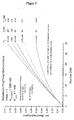
- FIG. 1 shows the kinetics of the enzymatic oxidation of glucose to glucono- ⁇ -lactone by means of glucose oxidase at different oxygen concentrations.
- the amount of analyte converted by the enzyme at a given oxygen concentration generally decreases as the concentration of glucose increases, which means that the curve does not exist in the physiologically relevant range despite the high binding constant of glucose oxidase for glucose (about 250 mM) -linear area lies.
- FIG. 1 shows that at higher concentrations of the analyte an approximately linear curve is obtained only at an oxygen concentration of about 1 mM.
- the in vivo concentration of dissolved oxygen in aqueous systems, and particularly in the subcutaneous adipose tissue interstitial fluid is significantly lower.
- water has an oxygen concentration of 0.21 mM at 37 ° C.
- the oxygen concentration to be expected for subcutaneous adipose tissue is only 0.1 mM or even lower, with the curves in each case being curved at physiological glucose concentrations. This deviation from the linear course leads to an undesired transient functional characteristic of in vivo biosensors.
- the linearity of the function curve can in principle be determined by using working electrodes with a cover membrane improve, which inhibits the diffusion of the analyte more than the diffusion of the co-substrate.
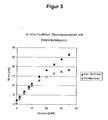
- FIG. 3 shows, inter alia, the function curve an enzymatic biosensor with a cover membrane made of polyurethane, which promotes a diffusion of oxygen more strongly than that of glucose (measurements marked as squares). This shows that the measurement signal of the sensor can be kept approximately linear by using a suitable cover membrane up to a glucose concentration of about 10 mM. At higher concentrations, the curve is increasingly curved.
- cover membranes in electrochemical sensors is also associated with certain problems.
- electrochemical sensors which serve to determine different analytes, typically also need to contain different cover membranes to provide differential diffusion of substrate and co-substrate.
- cover membranes typically also need to contain different cover membranes to provide differential diffusion of substrate and co-substrate.
- a high biocompatibility of the cover membranes must be ensured for in vivo applications, which entails considerable technical requirements and ultimately leads to increased production costs.
- some electrochemical biosensors additionally use an electrocatalyst, which is the transfer of electrons from the redox mediator to the conductive components of the working electrode favored.
- An example of such an electrocatalyst is cobalt phthalocyanine, which catalyzes the oxidation of hydrogen peroxide to oxygen [ Crouch et al., Biosensors and Bioelectronics 21 (2005), 712-718 ].
- the cobalt (II) cation of the cobalt phthalocyanine complex is first reduced from hydrogen peroxide to cobalt (I), before it is returned to the original bivalent state with the release of an electron at the anode.
- Electrocatalyst is manganese dioxide in the form of manganese dioxide [ Cui et al., Nanomedicine: Nanotechnology, Biology and Medicine 1 (2005), 130-135 ; Luo et al., Biosensors and Bioelectronics 19 (2004), 1295-1300 ].
- the mechanism of the catalytic oxidation of hydrogen peroxide on manganese dioxide is not understood in detail, the potential of a working electrode with manganese dioxide as an electrocatalyst is lowered by several 100 mV compared to a working electrode without manganese dioxide. As a result, the influence of interfering substances such as ascorbate or urea on the measurement signal is significantly reduced.
- electrocatalysts Another reason for the use of electrocatalysts is the damage of enzymes by excess hydrogen peroxide. If this substance is not decomposed sufficiently fast at the working electrode, denaturation of the enzyme may occur. To address this problem, it has been proposed in the literature to synthesize enzymes having resistance to hydrogen peroxide, for example by mutation [ US 2004/0137547 A1 ]. However, it is difficult to make such changes to an enzyme without negatively affecting other properties of the enzyme, such as its enzymatic specificity. Therefore, the use of electrocatalysts in reactions in which hydrogen peroxide is generated appears clearly superior to the above process, since electrocatalysts significantly increase the efficiency of the oxidation of hydrogen peroxide and thus prevent excesses of peroxide in or around the electrode matrix.
- the biosensors In the design of electrochemical biosensors various factors have to be considered. Thus, the biosensors must have a sufficient amount of enzyme in the working electrode to prevent enzyme limitation of the measurement [ Abel et al., Journal of Molecular Catalysis B: Enzymatic 7 (1999), 93-100 ]. Furthermore, the enzyme molecules should be localized throughout the measurement period of the biosensor in the structure of the working electrode, ie there should be no detachment and displacement of the enzyme in areas of the electrode, which are reached by the measuring medium Doretti et al., Biosensors and Bioelectronics 11 (1996), 363-373 ]. Finally, the enzyme in the working electrode of the biosensor should also be stable.
- US5,368,707 discloses biosensors comprising adsorptively bound enzyme working electrodes useful for determining micromolar levels of lead ions in liquids.
- the surface of the working electrode made of a conductive material is coated with colloidal gold, to the particles of which the corresponding enzyme, which in turn can be covalently bound to a redox mediator, is adsorbed.
- JP 10-68651 describes sensors for detecting analytes, such as glucose, which comprise electrodes with covalently bound enzyme.
- analytes such as glucose
- the surface of the electrode coated with SnO 2 as a conductive material is activated with a strong acid, functionalized with a coupling reagent and finally brought into contact with the enzyme.
- EP 0 247 850 A1 discloses biosensors for amperometric detection of an analyte.
- These sensors include immobilized enzyme electrodes immobilized or adsorbed on the surface of an electrically conductive support, the support being of a platinized porous layer of resin bonded carbon or graphite grains exists or contains such a layer.
- electrodes made of platinized graphite and a polymeric binder are first provided, and then brought into contact with the enzyme. The immobilization of the enzyme takes place either by adsorption to the electrode surface or by coupling to the polymeric binder using suitable reagents.
- Amperometric biosensors with electrodes comprising an enzyme immobilized or adsorbed on or in an electrically conductive, porous electrode material are also known in US Pat EP 0 603 154 A2 described.
- a catalyst or oxide of a transition metal of the fourth period, such as manganese dioxide, with graphite and a non-conductive polymeric binder is made into a paste, wherein the obtained after drying the paste porous electrode material in a second step with the Enzyme is brought into contact.
- Immobilization of the enzyme on or in the porous electrode material can take place by crosslinking by means of glutaraldehyde.
- EP 0 247 850 A1 and EP 0 603 154 A2 described electrochemical biosensors is that the immobilization of the enzyme takes place only on the prefabricated without enzyme electrode. This involves the problem that the coupling of the enzyme to the electrode components can not be controlled.
- glutaraldehyde is used as a crosslinking reagent, the enzyme not only uncontrollably binds to any reactive constituents of the electrode material, but also crosslinks with one another.
- this procedure causes contamination of the electrode with the reagents used, whereby the electrode must be thoroughly cleaned again, especially before use in an in vivo biosensor, which increases the production cost and thus the cost.
- US 4,938,860 discloses an electrode suitable for electrochemical sensors comprising a platinum coated film-formed anode and an enzyme layer bonded to the anode.
- the binding of the Enymtik to the platinized anode is preferably carried out using an aminosilane and a suitable crosslinking agent, such as glutaric dialdehyde.
- a disadvantage of in US 4,938,860 the described electrode is that due to the formation of the anode as a film provided only a small surface area for the enzymatic reaction of the analyte and platinum is used as a catalyst, a relatively expensive material.
- the object underlying the invention was therefore to provide an enzymatic electrochemical sensor for the determination of an analyte, in which the disadvantages of the prior art are at least partially eliminated.
- the sensor should ensure a targeted and permanent immobilization of the enzyme, have a high efficiency and thus achieve a high signal yield.
- the sensor should be easy and inexpensive to manufacture.
- an electrochemical biosensor for determining an analyte in a fluid medium comprising at least one working electrode and at least one reference electrode, wherein at least the working electrode comprises particles of an electrocatalyst in an electrode matrix, wherein an enzyme suitable for the determination of the analyte is covalently attached to the Particles of the electrocatalyst is bound.
- a metal oxide is preferably used as the electrocatalyst which is present in the electrode matrix of at least the working electrode.
- the metal oxide may be any metal oxide that has the ability to catalyze the reaction of a redox mediator used to determine the analyte.
- the electrocatalyst used is a metal oxide selected from the group consisting of MnO 2 , FeOOH, Fe 3 O 4 , Fe 2 O 3 , Cr 2 O 3 and V 2 O 5 , with MnO 2 being particularly preferred.
- the electrocatalyst also has a high affinity for oxygen.
- the electrocatalyst is provided according to the invention in particulate form, wherein the particle size can be varied according to the respective requirements.
- 90% of the electrocatalyst particles usually have a diameter of 0.1 .mu.m to 20 .mu.m, wherein a diameter of 0.5 .mu.m to 5 .mu.m has been found to be preferred.
- the particle size of the electrocatalyst should always be smaller than the layer thickness of the working electrode, which is in the range of 1 .mu.m to 50 .mu.m, preferably in the range of 5 .mu.m to 20 .mu.m.
- the controllability of the effective surface area of the electrocatalyst by means of the particle size is of crucial importance in particular for its functionalization with enzyme.
- a higher effective surface area of the electrocatalyst can also increase its enzyme loading and thus achieve higher enzyme activity, expressed in units per milligram of electrocatalyst, which is generally determined by the amount of electrocatalyst in the working electrode and its porosity and area.
- unit as used in the present application represents that amount of enzyme which is required to react under standard conditions 1 ⁇ mol substrate per minute.
- the enzyme-coated electrocatalyst particles used for the purposes of the present invention usually have an enzyme activity of about 0.01 U / mg to about 10 U / mg, wherein an enzyme activity of about 0.1 U / mg to about 10 U / mg has proven to be particularly advantageous.
- the electrochemical sensor according to the invention a selective covalent bonding of the enzyme to the particles of the electrocatalyst, wherein the enzyme particularly preferably has no covalent bonds to the other constituents of the electrode matrix.
- the covalent binding of the enzyme to the electrocatalyst has the advantage that the diffusion distance of the redox mediator is kept small to catalytically active sites of the electrode, whereby a high efficiency of the working electrode and thus a high signal efficiency of the electrochemical sensor is achieved.
- the redox mediator is also bound to it by adsorption, whereby, for example, in the case of the oxygen / hydrogen peroxide system, a locally high oxygen activity arises in the region of the surface of the electrocatalyst which drops towards the surrounding measuring medium.
- Covalent attachment of the enzyme to the electrocatalyst causes high localized activity of the regenerated redox mediator on the enzyme, which is reflected in higher linearity and stability of the generated measurement signal with respect to the concentration of analyte, for example FIG. 3 results (measurements marked as triangles).
- a temporary reduction in the concentration of the redox mediator in the environment eg. B. by a deterioration in blood flow of the tissue, not to a transient change of the measurement signal.
- the covalent coupling of the enzyme to the electrocatalyst ensures the constancy of the function, since a detachment of enzyme molecules under typical measuring conditions (physiological electrolyte concentration, physiological pH, body temperature) can be excluded.
- the electrochemical sensor according to the invention remains operable over a long period of time and operates virtually free from drift.
- the present invention provides in a preferred embodiment that the electrocatalyst particles have a functionalized surface, and in particular a surface functionalized with amino groups or / and carboxyl groups, to which the enzyme is bound.
- the functionalization of the surface can be carried out, for example, by coating the electrocatalyst particles with a suitable reagent, wherein functional groups are formed on the surface of the electrocatalyst particles, via which a covalent bond of the enzyme to the electrocatalyst particles can take place.
- Coating reagents which are used in the context of the present invention are substances which on the one hand covalent bond with the electrocatalyst, z. B. with hydroxy groups of the electrocatalyst, and on the other hand contain at least one functional group which serves for covalent bonding of the enzyme.
- the coating reagents are at least bifunctional, i. H. comprise at least two functional groups.
- the functional groups of the coating reagent for covalent bonding to the electrocatalyst and for covalent binding to the enzyme may be the same or different, but are preferably different.
- Preferred coating reagents are silanes which carry at least one suitable functional group via which the enzyme is covalently bonded to the coating reagent.
- the surface of the electrocatalyst particles is functionalized with an aminosilane which binds to the surface of the electrocatalyst particles to form silicon-oxygen bonds and simultaneously provides free amino groups for covalent attachment of the enzyme to the electrocatalyst particles.
- Suitable aminosilanes include, for example, 3-aminopropyltrimethoxysilane and 3-aminopropyltriethoxysilane, with 3-aminopropyltriethoxysilane being particularly preferred.
- the surface of the electrocatalyst particles may be functionalized with a carboxysilane which bonds to the surface of the electrocatalyst particles to form silicon-oxygen bonds and, optionally after hydrolysis, provides free carboxyl groups for covalent attachment of the enzyme to the electrocatalyst particles.
- a particularly suitable silane is hereby 3- (triethoxysilyl) -propylbernsteinklaanhydrid has been found that (Fa. Wacker) is commercially available as a 20 Geniosil ® GF.
- the enzyme can be covalently bonded to the functionalized surface of the electrocatalyst particles directly or via crosslinking reagents. In a preferred embodiment, the enzyme is bound directly to the functionalized surface of the electrocatalyst particles.
- the coupling of the enzyme to the functionalized surface of the electrocatalyst particles can be carried out in any manner and comprise a prior activation of functional groups on the functionalized surface of the electrocatalyst particles or / and of the enzyme. Activation of functional groups can be effected, for example, by reacting the functionalized electrocatalyst or / and the enzyme with a suitable activating reagent.
- Preferred activating reagents include carbodiimides such as dicyclohexylcarbodiimide (DCC), diisopropylcarbodiimide or 1-ethyl-3- (3-dimethylaminopropyl) carbodiimide (EDC), as well as combinations of carbodiimides and succinimides.
- An activating reagent particularly suitable for the purposes of the present invention comprises a combination of 1-ethyl-3- (3-dimethylaminopropyl) carbodiimide (EDC) and N-hydroxysuccinimide.
- the enzyme is linked via a cross-linking reagent to the functionalized surface of the electrocatalyst particles, wherein the cross-linking reagent has reactive groups which are covalently linked both to the functional Groups can react on the functionalized surface of the electrocatalyst particles as well as with the functional groups of the enzyme. Particular preference is given to reactive groups which allow crosslinking between the enzyme and the functional groups on the surface of the electrocatalyst particles.
- Suitable crosslinking reagents are any reagents which can fulfill the function described above, such as, for example, polyfunctional aldehydes, in particular dialdehydes, such as glutaric dialdehyde, benzoquinones, cyanogen bromide, hydrazines, succinimides, 2,4,6-trichloro-1,3,5-triazine, or combinations thereof.
- the crosslinking reagent used is a succinimide, more preferably a disuccinimide, and most preferably disuccinimidyl suberate (DSS).
- the electrode matrix of the working electrode may be prepared by mixing the covalently enzyme-coated electrocatalyst particles with other components of the electrode matrix, e.g. A conductive electrode material, and then drying the resulting mixture, wherein the electrode matrix usually contains the electrocatalyst in an amount of about 1% to about 50% by weight, preferably in an amount of about 5% to about 20% Wt.%, Contains.
- the electrode matrix is formed porous.
- the porosity of the electrode matrix can be controlled, inter alia, via the particle size of the electrocatalyst and other components, wherein a high porosity is associated with a larger effective surface of the electrode and thus a larger contact area to the measuring medium.
- the conductive electrode material which can be provided for the production of the electrode matrix for example in the form of a paste, preferably comprises conductive solid particles such as graphite and / or fullerenes in combination with a non-conductive binder, in particular a non-conductive polymeric binder, such as a perfluorinated polymer like Nafion.
- the enzyme immobilized on the electrocatalyst particles is preferably an oxidase, and in particular alcohol oxidase (1.1.3.13), aryl alcohol oxidase (EC 1.1.3.7), catechol oxidase (EC 1.1.3.14), cholesterol oxidase (EC 1.1.3.6 ), Choline oxidase (1.1.3.17), galactose oxidase (EC 1.1.3.9), glucose oxidase (EC 1.1.3.4), glycerol-3-phosphate oxidase (EC 1.1.3.21) hexose oxidase (EC 1.1 .3.5), malate oxidase (EC 1.1.3.3), pyranose oxidase (EC 1.1.3.10), pyridoxine 4-oxidase (EC 1.1.3.12) or thiamine oxidase (EC 1.1.3.23).
- the enzyme is glucose oxidase.
- the reference electrode of the electrochemical sensor according to the invention serves to adjust the polarization potential of the working electrode and may be made of any material which is suitable for the purposes of the present invention.
- a silver / silver chloride electrode is used as the reference electrode.
- the electrochemical sensor of the present invention may comprise at least one counterelectrode, which is preferably designed as a noble metal electrode, and in particular as a gold electrode.
- a counterelectrode formed as a noble metal electrode is coated with a suitable conductive material, such as a paste with conductive Feststoffpartikein, in particular carbon paste.
- the electrochemical sensor preferably contains two sections.
- the first section which can be brought into contact with the fluid medium containing the analyte, comprises the electrodes, ie working electrode, reference electrode and optionally counterelectrode.
- This section is preferably provided with a biocompatible coating.
- the biocompatible coating allows the analyte to enter the electrode matrix, but it is intended to prevent the escape of Prevent electrode components in the surrounding medium.
- a biocompatible coating is not absolutely necessary for many applications.
- biocompatible coating does not have an enzyme-blocking effect. Rather, in this context, a biocompatible coating can be selected, which provides optimal interaction with the surrounding tissue and / or blood or serum.
- biocompatible coatings can be done in different ways.
- a preferred method is to use prefabricated membranes which are applied to the electrochemical sensor.
- a fixation of the membrane on the sensor can in this case be carried out by means of any techniques, with bonding or laser welding being considered preferred.
- Prefabricated dialysis membranes have proved to be advantageous in this context, with dialysis membranes of polyethersulfone, as used, for example, in US Pat EP 1 710 011 A1 disclosed and are commercially available under the trade name Ultrason ® 6020 (BASF Fa.), are especially suitable.
- the biocompatible coating in situ by applying a solution of a suitable polymer to the electrochemical sensor and then drying it.
- the application of the polymer to the biosensor is preferably carried out by spraying, dip coating or dispersing a dilute solution of the polymer, but is not limited to these methods.
- the solvent used is preferably an organic solvent, in particular an organic solvent having a boiling point of ⁇ 100 ° C., for example ethanol, which contains an amount of from about 0.1% by weight to about 30% by weight, preferably an amount of about 0.5% by weight. % to about 15% by weight of polymer.
- Polymers suitable for such purposes include, in particular, polymers which have a zwitterionic structure and are a mimicry of cell surfaces, such as 2-methacryloyloxyethyl-phosphorylcholine-con-butyl-methacrylate (MPC-co-BMA).
- MPC-co-BMA 2-methacryloyloxyethyl-phosphorylcholine-con-butyl-methacrylate
- the biocompatible coatings obtained usually have a thickness of about 50 ⁇ m to about 500 ⁇ m, preferably from about 100 ⁇ m to about 250 ⁇ m.
- the second section of the electrochemical sensor lies in a region which is inaccessible to the fluid measuring medium and preferably comprises a measured value acquisition unit.
- the second section further comprises a voltage source, such as a battery or an accumulator, and an element which is selected from a wireless data transmission unit and a display for displaying the measured value.
- the second section may include an interface for a separate from the electrochemical sensor Meßwerter terminatesaku.
- the electrochemical sensor according to the invention is designed for multiple measurement, ie, the sensor allows a repeated measurement of the analyte to be determined.
- the invention accordingly provides that the electrochemical sensor is designed as a flow cell, through which a fluid containing the analyte is passed.
- the electrochemical sensor according to the invention may also be designed as a fully or partially implantable device which can be implanted, for example, in fatty tissue or in blood vessels.
- the electrochemical sensor according to the invention can be used for the determination of an analyte in a fluid medium, which can originate from any source.
- the electrochemical sensor is for determining an analyte in a body fluid, including, but not limited to, whole blood, plasma, serum, lymph, bile, cerebrospinal fluid, extracellular tissue fluid, urine, and glandular secretions such as saliva or sweat, with whole blood , Plasma, serum and extracellular tissue fluid are considered to be particularly preferred.
- the amount of sample required to carry out the analysis is usually from about 0.01 ⁇ l to about 100 ⁇ l, preferably from about 0.1 ⁇ l to about 2 ⁇ l.
- the analyte to be quantitatively and / or quantitatively may be any biological or chemical substance which can be detected by means of a redox reaction.
- the analyte is selected from the group consisting of malic acid, alcohol, ammonium, ascorbic acid, cholesterol, cysteine, glucose, glutathione, glycerol, urea, 3-hydroxybutyrate, lactic acid, 5'-nucleotidase, peptides, pyruvate, salicylate and triglycerides.
- the analyte to be determined by means of the electrochemical sensor according to the invention is glucose.
- particles of an electrocatalyst are preferably first reacted with a coating reagent, whereby the electrocatalyst particles are functionalized on their surface.
- a coating reagent for the purpose of producing the electrochemical sensors according to the invention, particles of an electrocatalyst, which is as defined above, are preferably first reacted with a coating reagent, whereby the electrocatalyst particles are functionalized on their surface.
- a crosslinking reagent and an enzyme covalently enzyme-coated electrocatalyst particles are obtained, which can be processed into an electrode matrix by mixing with further components as defined above.
- the production method according to the invention proves to be particularly advantageous, since the preparation of the enzyme-coated electrocatalyst can be carried out separately from the preparation of the electrode. Furthermore, with the covalently enzyme-coated electrocatalyst a defined starting material for the preparation of the electrode paste is available, which can be cleaned before introduction into the electrode paste, so that a subsequent cleaning of the finished electrode is eliminated.
- the electrochemical sensor according to the invention can be designed in any manner which enables contact between the electrochemical sensor and the fluid medium.
- the sensor can be designed as a flow cell through which the fluid medium containing the analyte flows.
- the sensor can also be designed as a diffusion sensor, wherein the contact between sensor and medium takes place by diffusion.
- the electrochemical sensor can be designed as a device which is intended for complete or partial implantation into the body of a patient, wherein the implantation can take place either in a blood vessel or in tissue, in particular in subcutaneous adipose tissue.
- a measurable signal is generated by the sensor.
- this signal is an electrical signal, such as electrical current, voltage, resistance, etc., which is evaluated or read using suitable means.
- the electrochemical sensor is an amperometric sensor.
- FIG. 1 shows the conversion of glucose plotted against the glucose concentration [mM] when using glucose oxidase as enzyme and oxygen / hydrogen peroxide as redox mediator depending on the oxygen concentration.
- K m app and V max app represent the enzyme kinetic constants for glucose calculated according to a Michaelis-Menten kinetics.
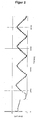
- FIG. 2 shows the measurement signal [nA] of an electrochemical sensor according to Present invention plotted against the time [sec] in the context of a 7-day measurement of the glucose concentration of a measuring solution in which the glucose concentration was periodically varied between 0 and 26 mM.
- the working electrode an electrode without cover membrane containing glucose oxidase-coated manganese dioxide as an electrocatalyst prepared according to Example 6 of the present application was used.
- FIG. 3 shows the measuring signal [nA] of two electrochemical sensors with immobilized enzyme plotted against the glucose concentration of a measuring solution [mM].
- the measurements marked as triangles show the functional curve of an electrochemical sensor according to the present invention in which glucose oxidase was covalently bound to the electrocatalyst of the working electrode and no cover membrane was used.
- the measurements marked as squares form the functional curve of a sensor of identical dimension, in which the enzyme was immobilized in the working electrode by means of a cover membrane consisting of polyurethane and was not bound to the electrocatalyst via a covalent bond.
- Example 2 Coupling of glucose oxidase to carboxy-functionalized manganese dioxide
- Example 4 Coupling of glucose oxidase to amino-functionalized manganese dioxide using glutaric dialdehyde as crosslinking reagent
- Example 3 The dried solid of Example 3 was washed once with 32 ml of 50 mM potassium phosphate buffer pH 7.4 and then in 16 ml of 50 mM Potassium phosphate buffer pH 7.4 recorded. 16 ml of a 10% strength glutardialdehyde solution (Sigma) were added to this suspension while stirring. After 1.5 h at 25 ° C, the reaction was stopped. The settled solid was washed 3 times with in each case 32 ml of 50 mM potassium phosphate buffer pH 7.4, suspended in 16 ml of the same buffer with stirring and with 16 ml of a solution of 0.5 mg / ml glucose oxidase (Roche) in 50 mM potassium phosphate buffer pH 7.4 offset.
- a 10% strength glutardialdehyde solution Sigma
- Example 5 Coupling of glucose oxidase to amino-functionalized manganese dioxide using disuccinimidyl suberate as crosslinking reagent
- the first step was a working electrode without cover membrane produced.
- glucose oxidase-functionalized manganese dioxide according to Example 5 was mixed with carbon polymer paste PE 401 (Acheson Co.) and diethylene glycol monobutyl ether, the mixture obtained was applied by dispensing technique to the gold surface of a polyester sensor strip, and dried at 25 ° C. in vacuo.
- the working electrode thus obtained was combined with a silver / silver chloride electrode as a reference electrode and a gold electrode as a counter electrode. The tracks were isolated.
- the electrochemical sensor obtained in Example 6 was immersed in a glucose solution in a flow-through chamber and measured for 7 days, whereby the concentration of the glucose solution was continuously varied between 0 and 26 mM.
- the Figures 2 and 3 show the results of this measurement.
Landscapes
- Chemical & Material Sciences (AREA)
- Life Sciences & Earth Sciences (AREA)
- Health & Medical Sciences (AREA)
- Organic Chemistry (AREA)
- Wood Science & Technology (AREA)
- Proteomics, Peptides & Aminoacids (AREA)
- Zoology (AREA)
- Engineering & Computer Science (AREA)
- Immunology (AREA)
- Biochemistry (AREA)
- General Health & Medical Sciences (AREA)
- Molecular Biology (AREA)
- Physics & Mathematics (AREA)
- Biophysics (AREA)
- Analytical Chemistry (AREA)
- General Engineering & Computer Science (AREA)
- Bioinformatics & Cheminformatics (AREA)
- Biotechnology (AREA)
- Microbiology (AREA)
- Genetics & Genomics (AREA)
- Hematology (AREA)
- Chemical Kinetics & Catalysis (AREA)
- Electrochemistry (AREA)
- General Physics & Mathematics (AREA)
- Pathology (AREA)
- Measuring Or Testing Involving Enzymes Or Micro-Organisms (AREA)
- Apparatus Associated With Microorganisms And Enzymes (AREA)
Priority Applications (9)
| Application Number | Priority Date | Filing Date | Title |
|---|---|---|---|
| EP07014218A EP2017350A1 (de) | 2007-07-19 | 2007-07-19 | Elektrochemischer Sensor mit kovalent gebundenem Enzym |
| DK08012856.4T DK2017352T3 (da) | 2007-07-19 | 2008-07-16 | Elektrokemisk sensor med covalent bundet enzym |
| EP08012856.4A EP2017352B1 (de) | 2007-07-19 | 2008-07-16 | Elektrochemischer Sensor mit kovalent gebundenem Enzym |
| PL08012856T PL2017352T3 (pl) | 2007-07-19 | 2008-07-16 | Sensor elektrochemiczny z kowalencyjnie związanym enzymem |
| CA002637997A CA2637997A1 (en) | 2007-07-19 | 2008-07-17 | Cm sensor with covalently bound enzyme |
| US12/175,578 US8871068B2 (en) | 2007-07-19 | 2008-07-18 | Continuous monitor sensor with covalently bound enzyme |
| JP2008187682A JP2009031283A (ja) | 2007-07-19 | 2008-07-18 | 共有結合性酵素を有するcmセンサ |
| CN2008102154314A CN101393159B (zh) | 2007-07-19 | 2008-07-18 | 具有共价结合酶的cm传感器 |
| HK09108577.5A HK1130898B (en) | 2007-07-19 | 2009-09-18 | Cm sensor with covalently bound enzyme |
Applications Claiming Priority (1)
| Application Number | Priority Date | Filing Date | Title |
|---|---|---|---|
| EP07014218A EP2017350A1 (de) | 2007-07-19 | 2007-07-19 | Elektrochemischer Sensor mit kovalent gebundenem Enzym |
Publications (1)
| Publication Number | Publication Date |
|---|---|
| EP2017350A1 true EP2017350A1 (de) | 2009-01-21 |
Family
ID=38616351
Family Applications (2)
| Application Number | Title | Priority Date | Filing Date |
|---|---|---|---|
| EP07014218A Ceased EP2017350A1 (de) | 2007-07-19 | 2007-07-19 | Elektrochemischer Sensor mit kovalent gebundenem Enzym |
| EP08012856.4A Not-in-force EP2017352B1 (de) | 2007-07-19 | 2008-07-16 | Elektrochemischer Sensor mit kovalent gebundenem Enzym |
Family Applications After (1)
| Application Number | Title | Priority Date | Filing Date |
|---|---|---|---|
| EP08012856.4A Not-in-force EP2017352B1 (de) | 2007-07-19 | 2008-07-16 | Elektrochemischer Sensor mit kovalent gebundenem Enzym |
Country Status (7)
| Country | Link |
|---|---|
| US (1) | US8871068B2 (da) |
| EP (2) | EP2017350A1 (da) |
| JP (1) | JP2009031283A (da) |
| CN (1) | CN101393159B (da) |
| CA (1) | CA2637997A1 (da) |
| DK (1) | DK2017352T3 (da) |
| PL (1) | PL2017352T3 (da) |
Families Citing this family (18)
| Publication number | Priority date | Publication date | Assignee | Title |
|---|---|---|---|---|
| WO2010085271A1 (en) * | 2009-01-23 | 2010-07-29 | Polymer Technology Systems, Inc. | Diagnostic multi-layer dry phase test strip with integrated biosensors |
| ES2390404T3 (es) | 2009-05-15 | 2012-11-12 | F.Hoffmann-La Roche Ag | Estabilización de enzima en sensores electroquímicos |
| JP5721703B2 (ja) * | 2009-06-05 | 2015-05-20 | メドトロニック ミニメド インコーポレイテッド | グルコース濃度を求めるための方法および測定デバイス |
| CN101738425B (zh) * | 2010-01-06 | 2013-03-13 | 天津科技大学 | 用于抗生素和心脏病标记物快速检测的适配子生物传感器的制作方法 |
| BR112014032559A2 (pt) * | 2012-06-25 | 2017-06-27 | Bioengineering Laboratories Llc | eletrodo de enzima |
| US9535027B2 (en) * | 2012-07-25 | 2017-01-03 | Abbott Diabetes Care Inc. | Analyte sensors and methods of using same |
| HUE059358T2 (hu) * | 2013-03-06 | 2022-11-28 | Hoffmann La Roche | Eljárás egy analit érzékelésére Mn2O3 katalizátorral rendelkezõ szenzor használatával |
| CN103263273A (zh) * | 2013-06-07 | 2013-08-28 | 苏州蔻美新材料有限公司 | 一种具有生物相容性的酶电极的制备工艺 |
| CN103285874B (zh) * | 2013-06-13 | 2015-03-25 | 江苏中核华纬工程设计研究有限公司 | 一种具有过氧化物酶性质的无机纳米复合催化剂及其催化分解tmb的应用 |
| CN104055526A (zh) * | 2013-12-05 | 2014-09-24 | 庞德兴 | 一种无源微创皮下生化参数检测芯片 |
| EP3552005A4 (en) * | 2016-12-09 | 2020-08-12 | Northeastern University | SUSTAINABLE ENZYME BIOCAPTER AND DROP-DEPOSIT IMMOBILIZATION PROCESS |
| HUE065552T2 (hu) * | 2017-02-17 | 2024-06-28 | Hoffmann La Roche | Folyamatos analitmonitorozó elektród keresztkötéses enzimmel |
| US11585809B2 (en) | 2017-03-03 | 2023-02-21 | Siemens Healthcare Diagnostics Inc. | Nanobead containing biosensors and methods of production and use thereof |
| KR102379684B1 (ko) * | 2017-05-04 | 2022-03-25 | 지멘스 헬쓰케어 다이아그노스틱스 인크. | 감소된 용해도를 갖는 효소로부터 생성된 바이오센서 및 이의 생성 및 사용 방법 |
| WO2019187586A1 (ja) * | 2018-03-30 | 2019-10-03 | Phcホールディングス株式会社 | フェナジン誘導体またはフェナジン誘導体を含有する高分子量レドックスポリマーを用いたセンサ |
| CN110170321B (zh) * | 2019-06-06 | 2022-04-05 | 上海纳米技术及应用国家工程研究中心有限公司 | 一种调节二氧化锰纳米酶催化活性的方法 |
| CN111443121A (zh) * | 2020-04-16 | 2020-07-24 | 安徽师范大学 | 一种电化学生物传感器电极的制备方法 |
| ES2915406B2 (es) * | 2020-12-21 | 2024-03-14 | Bioquochem S L | Metodo para medir una concentracion de un compuesto de analisis o una actividad enzimatica en una muestra compleja mediante la cuantificacion de peroxido de hidrogeno de forma selectiva |
Citations (5)
| Publication number | Priority date | Publication date | Assignee | Title |
|---|---|---|---|---|
| US4392933A (en) * | 1978-10-31 | 1983-07-12 | Matsushita Electric Industrial Co., Ltd. | Electrochemical measuring apparatus comprising enzyme electrode |
| US5476776A (en) * | 1989-07-19 | 1995-12-19 | University Of New Mexico | Immobilized enzymes for use in an electrochemical sensor |
| WO1999014315A1 (en) * | 1997-09-12 | 1999-03-25 | Abbott Laboratories | Interference free biosensor |
| WO2004011672A1 (en) * | 2002-07-26 | 2004-02-05 | Ntera Limited | Porous nanostructured film sensor |
| US20050189240A1 (en) * | 2004-02-26 | 2005-09-01 | Tamkang University | Method and chemical sensor for determining concentrations of hydrogen peroxide and its precusor in a solution |
Family Cites Families (21)
| Publication number | Priority date | Publication date | Assignee | Title |
|---|---|---|---|---|
| US4229536A (en) * | 1978-12-28 | 1980-10-21 | Uop Inc. | Process for preparing immobilized enzymes |
| US4938860A (en) | 1985-06-28 | 1990-07-03 | Miles Inc. | Electrode for electrochemical sensors |
| GB8612861D0 (en) | 1986-05-27 | 1986-07-02 | Cambridge Life Sciences | Immobilised enzyme biosensors |
| GB8817997D0 (en) * | 1988-07-28 | 1988-09-01 | Cambridge Life Sciences | Enzyme electrodes & improvements in manufacture thereof |
| US5593852A (en) * | 1993-12-02 | 1997-01-14 | Heller; Adam | Subcutaneous glucose electrode |
| JP3118015B2 (ja) * | 1991-05-17 | 2000-12-18 | アークレイ株式会社 | バイオセンサーおよびそれを用いた分離定量方法 |
| US5217594A (en) * | 1992-01-15 | 1993-06-08 | Enzyme Technology Research Group, Inc. | Convenient determination of trace lead in whole blood and other fluids |
| AT397513B (de) * | 1992-12-15 | 1994-04-25 | Avl Verbrennungskraft Messtech | Amperometrische enzymelektrode |
| JPH1068651A (ja) | 1996-08-26 | 1998-03-10 | Aisin Seiki Co Ltd | フロート式液面計 |
| US5998183A (en) * | 1997-07-07 | 1999-12-07 | Le Fevre; Gerard N. | Enzyme immobilization on a siliceous support with a polyaldehyde cross-linking agent |
| GB9717906D0 (en) * | 1997-08-23 | 1997-10-29 | Univ Manchester | Sensor Devices And Analytical Methods |
| US6175752B1 (en) * | 1998-04-30 | 2001-01-16 | Therasense, Inc. | Analyte monitoring device and methods of use |
| US6405066B1 (en) * | 2000-03-17 | 2002-06-11 | The Regents Of The University Of California | Implantable analyte sensor |
| TWI259849B (en) * | 2001-06-11 | 2006-08-11 | Sumitomo Electric Industries | Porous metal, metallic composite using it and method for manufacturing the same |
| US20040137547A1 (en) | 2001-12-28 | 2004-07-15 | Medtronic Minimed, Inc. | Method for formulating a glucose oxidase enzyme with a desired property or properties and a glucose oxidase enzyme with the desired property |
| CN1540332A (zh) * | 2003-04-22 | 2004-10-27 | 英科新创(厦门)科技有限公司 | 金属分散碳氧化酶传感器 |
| ES2341963T3 (es) * | 2003-09-30 | 2010-06-30 | F. Hoffmann-La Roche Ag | Detector con biocompatibilidad mejorada. |
| CN100339703C (zh) * | 2004-07-09 | 2007-09-26 | 广州科仁生物工程有限公司 | 用于检测黄曲霉毒素及杂色曲霉素的生物传感器电极及其制备方法 |
| CN1648649A (zh) * | 2005-01-31 | 2005-08-03 | 浙江大学 | 一种定向碳纳米管修饰的全血葡萄糖生物传感器 |
| EP1710011A1 (en) | 2005-04-07 | 2006-10-11 | Gambro Lundia AB | Filtration membrane |
| CN100359324C (zh) * | 2005-12-19 | 2008-01-02 | 北京化工大学 | 含剥层二氧化锰的生物传感器酶功能敏感膜及其制备方法 |
-
2007
- 2007-07-19 EP EP07014218A patent/EP2017350A1/de not_active Ceased
-
2008
- 2008-07-16 DK DK08012856.4T patent/DK2017352T3/da active
- 2008-07-16 EP EP08012856.4A patent/EP2017352B1/de not_active Not-in-force
- 2008-07-16 PL PL08012856T patent/PL2017352T3/pl unknown
- 2008-07-17 CA CA002637997A patent/CA2637997A1/en not_active Abandoned
- 2008-07-18 US US12/175,578 patent/US8871068B2/en not_active Expired - Fee Related
- 2008-07-18 CN CN2008102154314A patent/CN101393159B/zh not_active Expired - Fee Related
- 2008-07-18 JP JP2008187682A patent/JP2009031283A/ja active Pending
Patent Citations (5)
| Publication number | Priority date | Publication date | Assignee | Title |
|---|---|---|---|---|
| US4392933A (en) * | 1978-10-31 | 1983-07-12 | Matsushita Electric Industrial Co., Ltd. | Electrochemical measuring apparatus comprising enzyme electrode |
| US5476776A (en) * | 1989-07-19 | 1995-12-19 | University Of New Mexico | Immobilized enzymes for use in an electrochemical sensor |
| WO1999014315A1 (en) * | 1997-09-12 | 1999-03-25 | Abbott Laboratories | Interference free biosensor |
| WO2004011672A1 (en) * | 2002-07-26 | 2004-02-05 | Ntera Limited | Porous nanostructured film sensor |
| US20050189240A1 (en) * | 2004-02-26 | 2005-09-01 | Tamkang University | Method and chemical sensor for determining concentrations of hydrogen peroxide and its precusor in a solution |
Non-Patent Citations (1)
| Title |
|---|
| LUQUE G L ET AL: "Glucose biosensors based on the immobilization of copper oxide and glucose oxidase within a carbon paste matrix", 15 April 2005, TALANTA, ELSEVIER, AMSTERDAM, NL, PAGE(S) 467-471, ISSN: 0039-9140, XP004872770 * |
Also Published As
| Publication number | Publication date |
|---|---|
| CN101393159A (zh) | 2009-03-25 |
| US20090071846A1 (en) | 2009-03-19 |
| JP2009031283A (ja) | 2009-02-12 |
| DK2017352T3 (da) | 2014-12-01 |
| US8871068B2 (en) | 2014-10-28 |
| CA2637997A1 (en) | 2009-01-19 |
| EP2017352A1 (de) | 2009-01-21 |
| CN101393159B (zh) | 2013-05-29 |
| EP2017352B1 (de) | 2014-08-20 |
| HK1130898A1 (en) | 2010-01-08 |
| PL2017352T3 (pl) | 2015-02-27 |
Similar Documents
| Publication | Publication Date | Title |
|---|---|---|
| EP2017352B1 (de) | Elektrochemischer Sensor mit kovalent gebundenem Enzym | |
| DE68911299T3 (de) | Enzymelektrode und verfahren zur herstellung. | |
| DE69621814T2 (de) | Sojabohnen peroxidase elektrochemischer sensor | |
| DE69735127T2 (de) | Enzymsensor | |
| US11078513B2 (en) | Enzyme stabilization in electrochemical sensors | |
| Dhawan et al. | Recent developments in urea biosensors | |
| Yang et al. | Development of needle-type glucose sensor with high selectivity | |
| DE68920223T2 (de) | Enzymelektroden und ihre Herstellung. | |
| DE69104496T2 (de) | Elektrode, ausgestattet mit einer polymerbeschichtung mit einem daran gebundenen redoxenzym. | |
| EP0707064B1 (de) | Verfahren zur Immobilisierung biologischer Komponenten in einer Polymermatrix sowie Biosensoren unter Verwendung derartiger Immobilisate | |
| EP0470290A1 (de) | Elektrochemisch-enzymatischer Sensor | |
| Güler et al. | Fabrication of glucose bioelectrochemical sensor based on Au@ Pd core-shell supported by carboxylated graphene oxide | |
| DE3882078T2 (de) | Amperometrische Methode zur Titration von NADH (1,4-Dihydronicotinamid-adenine-dinucleotide) in Lösung. | |
| Jaffari et al. | Novel hexacyanoferrate (III)-modified carbon electrodes: application in miniaturized biosensors with potential for in vivo glucose sensing | |
| EP0603154B1 (de) | Amperometrische Enzymelektrode | |
| DE69331150T2 (de) | Peroxydase/goldkolloid/oxidase-biosensoren zur mediatorlosen glukosebestimmung | |
| Bianco | Protein modified-and membrane electrodes: strategies for the development of biomolecular sensors | |
| Atta et al. | Nanobiosensor for health care | |
| Dalkıran et al. | Electrochemical xanthine biosensor based on zinc oxide nanoparticles‒multiwalled carbon nanotubes‒1, 4-benzoquinone composite | |
| RU2846807C1 (ru) | Амперометрический биосенсор на основе ферментов оксидаз и наночастиц берлинской лазури для определения глюкозы или лактата в биологических жидкостях и способ его изготовления | |
| DE3736910A1 (de) | Sensor | |
| DE102022000897A1 (de) | Implantierbarer Biosensor | |
| HK1130898B (en) | Cm sensor with covalently bound enzyme | |
| Montes et al. | Customized in Situ Functionalization of Nanodiamonds with Nanoparticles for Tuned (Bio) Sensing Platforms | |
| HK1249766A1 (en) | Enzyme stabilization in cm sensors |
Legal Events
| Date | Code | Title | Description |
|---|---|---|---|
| PUAI | Public reference made under article 153(3) epc to a published international application that has entered the european phase |
Free format text: ORIGINAL CODE: 0009012 |
|
| AK | Designated contracting states |
Kind code of ref document: A1 Designated state(s): AT BE BG CH CY CZ DE DK EE ES FI FR GB GR HU IE IS IT LI LT LU LV MC MT NL PL PT RO SE SI SK TR |
|
| AX | Request for extension of the european patent |
Extension state: AL BA HR MK RS |
|
| STAA | Information on the status of an ep patent application or granted ep patent |
Free format text: STATUS: THE APPLICATION HAS BEEN REFUSED |
|
| 18R | Application refused |
Effective date: 20081120 |