EP2008567A1 - Steuerung für einen Geschirrspüler - Google Patents
Steuerung für einen Geschirrspüler Download PDFInfo
- Publication number
- EP2008567A1 EP2008567A1 EP08010411A EP08010411A EP2008567A1 EP 2008567 A1 EP2008567 A1 EP 2008567A1 EP 08010411 A EP08010411 A EP 08010411A EP 08010411 A EP08010411 A EP 08010411A EP 2008567 A1 EP2008567 A1 EP 2008567A1
- Authority
- EP
- European Patent Office
- Prior art keywords
- program
- degree
- display
- control according
- contamination
- Prior art date
- Legal status (The legal status is an assumption and is not a legal conclusion. Google has not performed a legal analysis and makes no representation as to the accuracy of the status listed.)
- Granted
Links
Images

Classifications
-
- A—HUMAN NECESSITIES
- A47—FURNITURE; DOMESTIC ARTICLES OR APPLIANCES; COFFEE MILLS; SPICE MILLS; SUCTION CLEANERS IN GENERAL
- A47L—DOMESTIC WASHING OR CLEANING; SUCTION CLEANERS IN GENERAL
- A47L15/00—Washing or rinsing machines for crockery or tableware
- A47L15/42—Details
- A47L15/4293—Arrangements for programme selection, e.g. control panels; Indication of the selected programme, programme progress or other parameters of the programme, e.g. by using display panels
-
- A—HUMAN NECESSITIES
- A47—FURNITURE; DOMESTIC ARTICLES OR APPLIANCES; COFFEE MILLS; SPICE MILLS; SUCTION CLEANERS IN GENERAL
- A47L—DOMESTIC WASHING OR CLEANING; SUCTION CLEANERS IN GENERAL
- A47L15/00—Washing or rinsing machines for crockery or tableware
- A47L15/0018—Controlling processes, i.e. processes to control the operation of the machine characterised by the purpose or target of the control
- A47L15/0021—Regulation of operational steps within the washing processes, e.g. optimisation or improvement of operational steps depending from the detergent nature or from the condition of the crockery
-
- A—HUMAN NECESSITIES
- A47—FURNITURE; DOMESTIC ARTICLES OR APPLIANCES; COFFEE MILLS; SPICE MILLS; SUCTION CLEANERS IN GENERAL
- A47L—DOMESTIC WASHING OR CLEANING; SUCTION CLEANERS IN GENERAL
- A47L2301/00—Manual input in controlling methods of washing or rinsing machines for crockery or tableware, i.e. information entered by a user
-
- A—HUMAN NECESSITIES
- A47—FURNITURE; DOMESTIC ARTICLES OR APPLIANCES; COFFEE MILLS; SPICE MILLS; SUCTION CLEANERS IN GENERAL
- A47L—DOMESTIC WASHING OR CLEANING; SUCTION CLEANERS IN GENERAL
- A47L2401/00—Automatic detection in controlling methods of washing or rinsing machines for crockery or tableware, e.g. information provided by sensors entered into controlling devices
- A47L2401/04—Crockery or tableware details, e.g. material, quantity, condition
-
- A—HUMAN NECESSITIES
- A47—FURNITURE; DOMESTIC ARTICLES OR APPLIANCES; COFFEE MILLS; SPICE MILLS; SUCTION CLEANERS IN GENERAL
- A47L—DOMESTIC WASHING OR CLEANING; SUCTION CLEANERS IN GENERAL
- A47L2501/00—Output in controlling method of washing or rinsing machines for crockery or tableware, i.e. quantities or components controlled, or actions performed by the controlling device executing the controlling method
- A47L2501/30—Regulation of machine operational steps within the washing process, e.g. performing an additional rinsing phase, shortening or stopping of the drying phase, washing at decreased noise operation conditions
Definitions
- the present invention relates to a controller for a dishwasher with an input device for selecting a wash program from a plurality of possible programs and with means for controlling program parameters, such as the duration and the temperature profile of individual program sections, wherein the input device comprises a control panel with at least one display means and input elements , wherein by means of at least one input element, a degree of contamination is selectable, and wherein by means of the input of a degree of contamination, a preselection of a basic program from a variety of possible programs takes place, which then depending on the degree of contamination further program options can be assigned.
- the DE 100 57 210 A1 discloses a method for automatically controlling the rinsing process in a dishwasher, wherein the user can predetermine the degree of soiling of the dishes. Then, the program control takes into account this operating instructions, the washing program and can optionally run depending on other sensor signals, the washing program automatically. It is problematic that the sensor signals for determining the other program parameters can sometimes only poorly indicate the current degree of soiling of the dishes. For example, a slight clouding of the rinse water can either speak for relatively clean dishes or for particularly stubborn dirt that has not yet solved the dishes. In this respect, the automatic sequence of a washing program is problematic.
- different program options are offered depending on the selected degree of contamination and the basic program set with it.
- the user no longer needs to make a selection from a variety of programs with associated program parameters, but can make a preselection by specifying a degree of contamination, which greatly simplifies the operation. Because the degree of contamination is visually recognizable by the user and he then only has to decide which priorities should be selected with regard to the other program options. Such a line of the operator is perceived as pleasant, with no need to sacrifice the comfort by providing a variety of possible wash programs.
- first input means for the selection of the degree of soiling and second input means for the program options are provided. Then the program design can be carried out with reasonable effort via the first and second input means.
- the degree of contamination can be subdivided into at least three areas, preferably even finer, into six or nine areas.
- the selection of the degree of contamination can be done using a plus button and a minus button.
- three input keys may be provided as second input means for the program options in order to make the operation as simple as possible.
- the operator can be assisted by a display which shows both the set degree of soiling and other parameters. In order to enable the variety of representations, advantageously, a multi-line LCD display is used.
- the degree of contamination is arranged as a bar chart in an upper line of the display.
- the program options should be displayed in a lower line of the display and the second input means should be located on the bottom of the display.
- an information key may be provided, by means of which technical information on the display flushing process can be displayed on the display.
- the set contamination level and thus the set basic program can be corrected during the program sequence by means of sensor-determined contamination data.
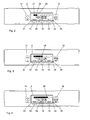
- control panel 1 of a dishwasher not shown is shown. It comprises a control panel 2, within which a display in the form of an LCD display 3 is arranged.
- the display 3 is framed on the sides and bottom by a plurality of input means in the form of keys 11-19. Display 3 and buttons 11 to 19 are arranged with one on the back of the panel, in the FIG. 1 not visible, but symbolized as a dashed box control 4 in conjunction.
- a minus button 11 is provided to the left of the display 3 and a plus button 12 to the right of the display 3. Between the keys 11 and 12 extends in the display 3, a display for representing a degree of contamination in the form of a bar chart 20.
- the diagram is a total of nine fields 21 to 29 divided, each three fields are combined to a color uniformly marked group.
- the left group (fields 21 to 23) symbolizes a low pollution, the middle group (fields 24 to 26) a medium pollution and the right group (fields 27 to 29) a heavy pollution.
- buttons 13 to 15 are provided below the display 3, by means of which further program options can be selected for the set program.
- An essential feature of the invention is that different program options are offered depending on the selected degree of contamination and the base program set with it and then can be selected.
- the control according to the invention selects from a multiplicity of possible program options a partial number, in the present case three, and offers this to the user for further selection. It is taken into account that for certain basic programs (soiling) only certain options make sense.
- the respectively meaningful and therefore selectable options are displayed in the lower line 30 of the display 3 in three areas 31 to 33.
- a button 16 is also provided with the function start code and a button 17 for starting the selected wash program.
- a button 18 for switching on and off the dishwasher in the control panel 2 is arranged.
- a key 19 can be actuated, by means of which the display is switched from the above-described display mode into a text display in which the user is shown supplementary information.
- the middle part 40 of the display 3 is used to display the remaining time, which may also contain other information and explanations.
- FIG. 2 the display 3 is shown in a state in which with the keys 11 and 12, a low degree of contamination from the left group, in the present case, field 22 has been set. It is thus selected a program that is adapted for this degree of pollution.
- This is a program whose sequence is controlled via a turbidity sensor (not shown) and which is varied as a function of the turbidity values measured with this sensor. It has three to five short rinses in the cleaning program section and a maximum temperature of 50 ° C.
- the program option "Schonen” is offered in the lower row 30 in the left area 31 and assigned to the key 13, in the middle area 32 the program option “fast” to key 14 and in the right area 33 the program option “Night” to key 15.
- the "Protect” option (key 13) is pressed, the temperature in the cleaning and rinse aid section is reduced, while the "fast” option (key 14) reduces the rinsing and drying times by up to 15 minutes and pressing the "Night" option (button 15) reduces the purge pressure by reducing the circulating pump speed and increases the duration of the cleaning program section.
- the user has selected a normal or average degree of contamination, namely the field 25 from the middle group.
- This is a Program whose sequence is also controlled by a turbidity sensor (not shown) and which is varied as a function of the turbidity values measured with this sensor. It has three to five medium-length rinses in the cleaning program section and a maximum temperature of 60 ° C.
- the lower line 30 offers the program options "Fast” (area 31), “Save” (area 32) and "Night” (area 33). The user can perform the appropriate program diversification by pressing the keys 13, 14 or 15.
- the rinsing and drying times are reduced by up to 30 minutes and the float temperature during cleaning and rinsing is increased.
- the Save option reduces energy consumption by reducing the float temperature during cleaning and rinsing. To compensate, the running times for cleaning and drying are extended.
- the option “night” button 15
- the purge pressure is reduced by reducing the circulating pump speed and increasing the duration of the cleaning program section and increasing the duration of the rinse program section.
- FIG. 4 the display is shown in a state in which the user has selected with box 28 a high degree of contamination from the right group.
- This is a program whose sequence is also controlled via a turbidity sensor (not shown) and which is varied as a function of the turbidity values measured with this sensor. It has three to five long rinses in the cleaning program section and a maximum temperature of 68 ° C. Accordingly, the program options “hygiene” (area 31), "intensive” (area 32) and “night” (area 33) are offered.
- the "Hygiene” option (button 13) When the "Hygiene” option (button 13) is activated, the float temperature during cleaning is raised to 69 ° C and held for at least ten minutes. Pressing the "Intensive” option (button 14) increases the flushing pressure.
- the "Night” option (button 15) is activated, the purge pressure is reduced as described above by reducing the circulating pump speed and increasing the duration of the cleaning program section.
- a rinsing process is carried out, wherein via the controller 4, the rinsing parameters such as the duration, intensity and the temperature profile of individual program sections are specified and then a rinse program with the individual program sections is performed.
- the parameters are dependent on sensors (not shown) (load, Fleet turbulence, etc.) and changed depending on the preselected program options.
- the set degree of contamination can serve for the interpretation of the values measured with a turbidity sensor (not shown). If, for example, a high level of contamination is set and only low turbidity values are measured, this can mean that there is persistent contamination that has not yet been removed. Accordingly, the controller 4 adjusts the purging duration and intensity.
Landscapes
- Washing And Drying Of Tableware (AREA)
- Magnetically Actuated Valves (AREA)
- Power Steering Mechanism (AREA)
- Steering Control In Accordance With Driving Conditions (AREA)
Abstract
Description
- Die vorliegende Erfindung betrifft eine Steuerung für einen Geschirrspüler mit einer Eingabeeinrichtung zur Auswahl eines Spülprogramms aus einer Vielzahl möglicher Programme und mit Mitteln zum Steuern von Programmparametern, wie der Dauer und des Temperaturprofils einzelner Programmabschnitte, wobei die Eingabeeinrichtung ein Bedienfeld mit mindestens einem Anzeigemittel und Eingabeelementen umfasst, wobei mittels mindestens eines Eingabeelements ein Verschmutzungsgrad auswählbar ist, und wobei mittels der Eingabe eines Verschmutzungsgrades eine Vorauswahl eines Basisprogramms aus einer Vielzahl möglicher Programme stattfindet, dem dann vom Verschmutzungsgrad abhängige weitere Programmoptionen zuordenbar sind.
- Die
DE 100 57 210 A1 offenbart ein Verfahren zur automatischen Steuerung des Spülprozesses in einer Geschirrspülmaschine, bei der der Benutzer den Verschmutzungsgrad des Geschirrs vorbestimmen kann. Dann übernimmt die Programmsteuerung unter Berücksichtigung dieser Bedienvorgabe das Spülprogramm und kann gegebenenfalls abhängig von weiteren Sensorsignalen das Spülprogramm automatisch ablaufen lassen. Dabei ist problematisch, dass die Sensorsignale zur Bestimmung der weiteren Programmparameter teilweise nur schlecht den aktuellen Verschmutzungsgrad des Geschirrs anzeigen können. Beispielsweise kann eine schwache Eintrübung des Spülwassers entweder für relativ sauberes Geschirr sprechen oder für besonders hartnäckigen Schmutz, der sich noch nicht vom Geschirr gelöst hat. Insofern ist der automatische Ablauf eines Spülprogramms problematisch. - Es gibt auch Steuerungen für Geschirrspüler, bei der aus einer Vielzahl möglicher Programme der Benutzer manuell ein geeignetes Spülprogramm auswählen kann. Da aber Programmparameter, wie Temperatur, Spüldauer, zusätzliche Teilprogramme wie Vorspülen, Reinigen, Klarspülen etc. ebenfalls mit in einem Programm bestimmt werden müssen, wird die Auswahl von einer Vielzahl von Programmen durch den Benutzer als kompliziert empfunden. Ein solches Bedienkonzept mit vielen Schaltern und Auswahlmöglichkeiten wird vom Kunden nicht akzeptiert.
- Es ist daher Aufgabe der vorliegenden Erfindung eine Steuerung für einen Geschirrspüler zu schaffen, die eine Vielzahl von möglichen Spülprogrammen mit diversen Programmparametern ausführen kann, aber leicht zu bedienen ist.
- Diese Aufgabe wird mit einer Steuerung mit den Merkmalen des Anspruches 1 gelöst. Vorteilhafte Ausgestaltungen und Weiterbildungen der Erfindung ergeben sich aus den nachfolgenden Unteransprüchen.
- Erfindungsgemäß werden in Abhängigkeit vom gewählten Verschmutzungsgrad und dem damit eingestellten Basisprogramm unterschiedliche Programmoptionen angeboten. Der Benutzer muss daher nicht mehr aus einer Vielzahl von Programmen mit zugehörigen Programmparametern eine Auswahl treffen, sondern kann durch die Vorgabe eines Verschmutzungsgrades eine Vorauswahl vornehmen, was die Bedienung erheblich vereinfacht. Denn der Verschmutzungsgrad ist vom Benutzer visuell erkennbar und er muss dann lediglich entscheiden, welche Prioritäten hinsichtlich der anderen Programmoptionen ausgewählt werden sollen. Eine solche Leitung des Bedieners wird als angenehm empfunden, wobei nicht auf den Komfort durch die Bereitstellung einer Vielzahl möglicher Spülprogramme verzichtet werden muss.
- Gemäß einer bevorzugten Ausgestaltung der Erfindung sind erste Eingabemittel für die Wahl des Verschmutzungsgrades und zweite Eingabemittel für die Programmoptionen vorgesehen. Dann kann über die ersten und zweiten Eingabemittel die Programmgestaltung mit zumutbarem Aufwand durchgeführt werden. Der Verschmutzungsgrad kann in mindestens drei Bereiche, vorzugsweise auch noch feiner in sechs oder neun Bereiche unterteilt sein. Die Auswahl des Verschmutzungsgrades kann dabei anhand einer Plustaste und einer Minustaste erfolgen. Ferner können drei Eingabetasten als zweite Eingabemittel für die Programmoptionen vorgesehen sein, um die Bedienung möglichst einfach zu gestalten. Der Bediener kann dabei über ein Display unterstützt werden, das sowohl den eingestellten Verschmutzungsgrad als auch weitere Parameter anzeigt. Um die Vielfalt der Darstellungen zu ermöglichen, wird in vorteilhafter Weise ein mehrzeiliges LCD-Display verwendet. Dabei ist es zur übersichtlichen Darstellung vorteilhaft, wenn der Verschmutzungsgrad als Balkendiagramm in einer oberen Zeile des Displays angeordnet ist. Die Programmoptionen sollten aus dem gleichen Grund in einer unteren Zeile des Displays angezeigt werden und die zweiten Eingabemittel auf der Unterseite des Displays angeordnet sein. Zusätzlich kann eine Informationstaste vorgesehen sein, mittels der auf dem Display technische Informationen zu dem eingestellten Spülvorgang anzeigbar sind.
- Um Fehleinstellungen zu vermeiden, ist der eingestellte Verschmutzungsgrad und damit das eingestellte Basisprogramm während des Programmablaufs durch sensorisch ermittelte Verschmutzungsdaten korrigierbar.
- Ein Ausführungsbeispiel der Erfindung ist in den Zeichnungen schematisch dargestellt und wird nachfolgend näher beschrieben. Es zeigt:
- Figur 1
- eine Blende eines Geschirrspülers für eine erfindungsgemäße Steuerung;
- Figur 2
- eine Ansicht der Blende für einen leichten Verschmutzungsgrad;
- Figur 3
- eine Ansicht der Blende für einen normalen Verschmutzungsgrad;
- Figur 4
- eine Ansicht der Blende für einen starken Verschmutzungsgrad;
- In
Figur 1 ist die Bedienblende 1 eines nicht weiter dargestellten Geschirrspülers gezeigt. Sie umfasst ein Bedienfeld 2, innerhalb dessen eine Anzeige in Form eines LCD-Displays 3 angeordnet ist. Das Display 3 wird auf den Seiten und unten von einer Vielzahl von Eingabemitteln in Form von Tasten 11 bis 19 umrahmt. Display 3 und Tasten 11 bis 19 stehen mit einer auf der Rückseite der Blende angeordneten, in derFigur 1 nicht sichtbaren, aber als gestrichelter Kasten symbolisierten Steuerung 4 in Verbindung. - Zur Auswahl des Verschmutzungsgrades des Geschirrs ist links vom Display 3 eine Minustaste 11 und rechts vom Display 3 eine Plustaste 12 vorgesehen. Zwischen den Tasten 11 und 12 erstreckt sich im Display 3 eine Anzeige zur Darstellung eines Verschmutzungsgrads in Form eines Balken-Diagramms 20. Das Diagramm ist insgesamt in neun Felder 21 bis 29 unterteilt, wobei jeweils drei Felder zu einer farblich einheitlich markierten Gruppe zusammengefasst sind. Die linke Gruppe (Felder 21 bis 23) symbolisiert eine geringe Verschmutzung, die mittlere Gruppe (Felder 24 bis 26) eine mittlere Verschmutzung und die rechte Gruppe (Felder 27 bis 29) eine starke Verschmutzung. Durch einmaliges Drücken der Plustaste 12 wird der Farbton des Felds 21 in einen dunkleren Ton geändert, mehrmaliges Drücken der Taste lässt den dunkleren Farbton nach rechts wandern, so dass der gewählte Verschmutzungsgrad gesteigert wird (siehe
Figuren 2 bis 4 ). Beim Drücken der Minustaste 11 wandert die Verdunkelung nach links, der Verschmutzungsgrad wird dadurch wieder verringert. - Abhängig vom eingestellten Verschmutzungsgrad wird dann eine Vorauswahl für ein daran angepasstes Basisprogramm getroffen.
- Unterhalb des Displays 3 sind drei Tasten 13 bis 15 vorgesehen, mittels derer zum eingestellten Programm weitere Programmoptionen gewählt werden können. Wesentliches Merkmal der Erfindung ist dabei, dass in Abhängigkeit vom gewählten Verschmutzungsgrad und dem damit eingestellten Basisprogramm unterschiedliche Programmoptionen angeboten werden und dann wählbar sind. Dabei wählt die erfindungsgemäße Steuerung aus einer Vielzahl von möglichen Programmoptionen eine Teilzahl, im vorliegenden Fall drei, aus und bietet diese dem Benutzer zur weiteren Auswahl an. Es wird berücksichtigt, dass für verschiedene Basisrogramme (Verschmutzungen) auch nur bestimmte Optionen sinnvoll sind. Die jeweils sinnvollen und deshalb wählbaren Optionen werden in der unteren Zeile 30 des Displays 3 in drei Bereichen 31 bis 33 angezeigt.
- Im Bedienfeld 2 ist ferner eine Taste 16 mit der Funktion Startvorwahl sowie eine Taste 17 für das Starten des gewählten Spülprogramms vorgesehen. Zudem ist eine Taste 18 zum Ein- und Ausschalten des Geschirrspülers im Bedienfeld 2 angeordnet. Um dem Benutzer bei Bedarf weitere Informationen zu den gewählten bzw. angezeigten Programmen zu geben, kann eine Taste 19 betätigt werden, mittels der das Display vom vorbeschriebenen Anzeigemodus in eine Textdarstellung umgeschaltet wird, in der dem Benutzer ergänzende Informationen angezeigt werden.
- Der Mittelteil 40 des Displays 3 dient zur Anzeige der Restlaufzeit, wobei dort auch andere Angaben und Erläuterungen enthalten sein können.
- In
Figur 2 ist das Display 3 in einem Zustand gezeigt, in dem mit den Tasten 11 bzw. 12 ein geringer Verschmutzungsgrad aus der linken Gruppe, im vorliegenden Fall Feld 22 eingestellt wurde. Es wird damit ein Programm ausgewählt, welches für diesen Verschmutzungsgrad angepasst ist. Dabei handelt es sich um ein Programm, dessen Ablauf über einen Trübungssensor (nicht dargestellt) gesteuert ist und welches in Abhängigkeit von den mit diesem Sensor gemessenen Trübungswerten variiert wird. Es besitzt drei bis fünf kurze Spülgänge im Reinigungs-Programmabschnitt und eine Maximaltemperatur von 50°C. Aufgrund der Vorauswahl des geringen Verschmutzungsgrades aus dieser Gruppe wird in der unteren Zeile 30 im linken Bereich 31 die Programmoption "Schonen" angeboten und der Taste 13 zugeordnet, im mittleren Bereich 32 die Programmoption "Schnell" zu Taste 14 und im rechten Bereich 33 die Programmoption "Nacht" zu Taste 15. Bei Betätigung der Option "Schonen" (Taste 13) wird die Temperatur im Reinigungs- und Klarspülprogrammabschnitt reduziert, bei Betätigung der Option "Schnell" (Taste 14) werden die Spül- und Trockenzeiten bis zu 15 min reduziert, und bei Betätigung der Option "Nacht" (Taste 15) wird der Spüldruck durch Verringerung der Umwälzpumpen-Drehzahl reduziert und die Dauer des Reinigungs-Programmabschnitts erhöht. Eine Veränderung des Verschmutzungsgrades innerhalb der linken Gruppe zu Feld 21 oder Feld 23 würde zwar keine Veränderung des Programmoptions-Angebot hervorrufen, es würde aber das Basisprogramm geändert, beispielsweise in Richtung längerer oder kürzerer Dauern des Reinigungs-Programmabschnitts und höhere Flottentemperaturen. Dabei kann es dahingestellt bleiben, ob als Basisprogramm die drei ähnlichen Programme einer gesamten Gruppe, die sich nur durch Laufzeiten unterscheiden, zusammengefasst werden, oder ob als Basisprogramm das jedem einstellbaren Verschmutzungsgrad zugeordnete individuelle Programm bezeichnet wird. Es ist auch denkbar, dass sich die Programme einer Gruppe alternativ oder zusätzlich durch andere Parameter unterscheiden. - Bei dem Display in
Figur 3 hat der Benutzer einen normalen bzw. mittleren Verschmutzungsgrad ausgewählt, nämlich das Feld 25 aus der mittleren Gruppe. Dabei handelt es sich um ein Programm, dessen Ablauf auch über einen Trübungssensor (nicht dargestellt) gesteuert ist und welches in Abhängigkeit von den mit diesem Sensor gemessenen Trübungswerten variiert wird. Es besitzt drei bis fünf mittellange Spülgänge im Reinigungs-Programmabschnitt und eine Maximaltemperatur von 60°C. Es werden in der unteren Zeile 30 die Programmoptionen "Schnell" (Bereich 31), "Sparen" (Bereich 32) und "Nacht" (Bereich 33) angeboten. Der Benutzer kann durch Drücken der Tasten 13, 14 oder 15 die entsprechende Programmdiversifizierung vornehmen. Bei Betätigung der Option "Schnell" (Taste 13) werden die Spül- und Trockenzeiten bis zu 30 min reduziert und die Flottentemperatur beim Reinigen und Klarspülen erhöht. Bei Betätigung der Option "Sparen" (Taste 14) wird der Energieverbrauch reduziert, indem die Flottentemperatur beim Reinigen und Klarspülen reduziert wird. Zum Ausgleich werden die Laufzeiten beim Reinigen und Trocknen verlängert. Bei Betätigung der Option "Nacht" (Taste 15) wird wie bereits oben beschrieben der Spüldruck durch Verringerung der Umwälzpumpen-Drehzahl reduziert und die Dauer des Reinigungs-Programmabschnitts erhöht, außerdem wird die Dauer des Klarspül-Programmabschnitts erhöht. - In
Figur 4 ist das Display in einem Zustand gezeigt, in dem der Benutzer mit Feld 28 einen starken Verschmutzungsgrad aus der rechten Gruppe ausgewählt hat. Dabei handelt es sich um ein Programm, dessen Ablauf auch über einen Trübungssensor (nicht dargestellt) gesteuert ist und welches in Abhängigkeit von den mit diesem Sensor gemessenen Trübungswerten variiert wird. Es besitzt drei bis fünf lange Spülgänge im Reinigungs-Programmabschnitt und eine Maximaltemperatur von 68°C. Entsprechend werden die Programmoptionen "Hygiene" (Bereich 31), "Intensiv" (Bereich 32) und "Nacht" (Bereich 33) angeboten. Bei Betätigung der Option "Hygiene" (Taste 13) wird die Flottentemperatur beim Reinigen auf 69°C erhöht und mindestens zehn Minuten gehalten. Bei Betätigung der Option "Intensiv" (Taste 14) wird der Spüldruck erhöht. Bei Betätigung der Option "Nacht" (Taste 15) wird wie bereits oben beschrieben der Spüldruck durch Verringerung der Umwälzpumpen-Drehzahl reduziert und die Dauer des Reinigungs-Programmabschnitts erhöht. - Die Wahl des Programms "Nacht" ist in allen Verschmutzungsgraden möglich, da der Benutzer möglicherweise ein Interesse daran hat, einen besonders leisen Spülbetrieb zu gewährleisten. Bei diesem Programm wird daher die Pumpenleistung auf ein niedriges Niveau abgesenkt und die Spüldauer entsprechend verlängert. Die übrigen Programmdiversifikationen, die sich durch die unterschiedlichen Verschmutzungsgrade ergeben, bleiben natürlich erhalten.
- Nach Auswahl des Programms wird ein Spülvorgang durchgeführt, wobei über die Steuerung 4 die Spülparameter wie die Dauer, Intensität und das Temperaturprofil einzelner Programmabschnitte vorgegeben werden und dann ein Spülprogramm mit den einzelnen Programmabschnitten durchgeführt wird. Die Parameter werden in Abhängigkeit von mit Sensoren (nicht dargestellt) ermittelten Daten (Beladung, Flottentrübung etc.) und in Abhängigkeit von den vorgewählten Programmoptionen verändert. Dabei kann der eingestellte Verschmutzungsgrad zur Interpretation der mit einem Trübungssensor (nicht dargestellt) gemessenen Werte dienen. Ist beispielsweise ein hoher Verschmutzungsgrad eingestellt und es werden nur geringe Trübungswerte gemessen, kann dies bedeuten, dass eine hartnäckige Verschmutzung vorliegt, die noch nicht abgelöst wurde. Dementsprechend passt die Steuerung 4 die Spüldauer und Intensität an.
- Außerdem ist mit der Wahl des Verschmutzungsgrads eine "Justierung" der Parameter durch den Benutzer möglich; eine Person, die selbst kleinste Schmutzrückstände bemängelt, wird tendenziell höhere Verschmutzungsgrade anwählen als ein Kunde, der auch mit weniger guten Spülergebnissen zufrieden ist.
Claims (11)
- Steuerung (4) für einen Geschirrspüler mit einer Eingabeeinrichtung zur Auswahl eines Spülprogramms aus einer Vielzahl möglicher Programme und mit Mitteln zum Steuern von Programmparametern, wie der Dauer und des Temperaturprofils einzelner Programmabschnitte, wobei die Eingabeeinrichtung ein Bedienfeld (2) mit mindestens einem Anzeigemittel (3) und Eingabeelementen (11 bis 19) umfasst, wobei mittels mindestens eines Eingabeelements (11, 12) ein Verschmutzungsgrad (21 bis 29) auswählbar ist, und wobei mittels der Eingabe eines Verschmutzungsgrades (21 bis 29) eine Vorauswahl eines Basisprogramms aus einer Vielzahl möglicher Programme stattfindet, dem dann vom Verschmutzungsgrad (21 bis 29) abhängige weitere Programmoptionen zuordenbar sind,
dadurch gekennzeichnet,
dass in Abhängigkeit vom gewählten Verschmutzungsgrad (21 bis 29) und dem damit eingestellten Basisprogramm unterschiedliche Programmoptionen angeboten werden. - Steuerung nach Anspruch 1,
dadurch gekennzeichnet,
dass erste Eingabemittel (11, 12) für die Wahl des Verschmutzungsgrades (21 bis 29) und zweite Eingabemittel (13 bis 15) für die Programmoptionen vorgesehen sind. - Steuerung nach Anspruch 1 oder 2,
dadurch gekennzeichnet,
dass der Verschmutzungsgrad (21 bis 29) in mindestens drei Bereiche, vorzugsweise in sechs oder neun Bereiche unterteilt ist. - Steuerung nach einem der Ansprüche 1 bis 3,
dadurch gekennzeichnet,
dass über eine Plustaste (12) und eine Minustaste (11) der eingestellte Verschmutzungsgrad (21 bis 29) veränderbar ist. - Steuerung nach einem der Ansprüche 1 bis 4,
dadurch gekennzeichnet,
dass drei Eingabetasten (13 bis 15) als zweite Eingabemittel für die Programmoptionen vorgesehen sind. - Steuerung nach einem der Ansprüche 1 bis 5,
dadurch gekennzeichnet,
dass ein Display (3) vorgesehen ist, in dem der eingestellte Verschmutzungsgrad und die mögliche Auswahl weiterer Parameter anzeigbar ist. - Steuerung nach Anspruch 6,
dadurch gekennzeichnet,
dass das Display (3) als mehrzeiliges LCD-Display ausgebildet ist. - Steuerung nach Anspruch 6 oder 7,
dadurch gekennzeichnet,
dass der Verschmutzungsgrad (21 bis 29) als Balkendiagramm (20) in einer oberen Zeile des Displays (3) angeordnet ist. - Steuerung nach einem der Ansprüche 6 bis 8,
dadurch gekennzeichnet,
dass die Programmoptionen (31 bis 33) in einer unteren Zeile (30) des Displays (3) angezeigt werden und die zweiten Eingabemittel (13 bis 15) auf der Unterseite des Displays (3) angeordnet sind. - Steuerung nach einem der Ansprüche 1 bis 9,
dadurch gekennzeichnet,
dass eine Informationstaste (19) vorgesehen ist, mittels der auf dem Display (3) technische Informationen zu dem eingestellten Spülvorgang anzeigbar sind. - Steuerung nach einem der Ansprüche 1 bis 10,
dadurch gekennzeichnet,
dass der eingestellte Verschmutzungsgrad (21 bis 29) und damit das eingestellte Basisprogramm während des Programmablaufs durch sensorisch ermittelte Verschmutzungsdaten korrigierbar ist.
Priority Applications (1)
| Application Number | Priority Date | Filing Date | Title |
|---|---|---|---|
| PL08010411T PL2008567T3 (pl) | 2007-06-25 | 2008-06-07 | Sterownik do zmywarki do naczyń |
Applications Claiming Priority (1)
| Application Number | Priority Date | Filing Date | Title |
|---|---|---|---|
| DE102007029502A DE102007029502B3 (de) | 2007-06-25 | 2007-06-25 | Steuerung für einen Geschirrspüler |
Publications (2)
| Publication Number | Publication Date |
|---|---|
| EP2008567A1 true EP2008567A1 (de) | 2008-12-31 |
| EP2008567B1 EP2008567B1 (de) | 2009-08-19 |
Family
ID=39768197
Family Applications (1)
| Application Number | Title | Priority Date | Filing Date |
|---|---|---|---|
| EP08010411A Not-in-force EP2008567B1 (de) | 2007-06-25 | 2008-06-07 | Steuerung für einen Geschirrspüler |
Country Status (6)
| Country | Link |
|---|---|
| US (1) | US20080314423A1 (de) |
| EP (1) | EP2008567B1 (de) |
| AT (1) | ATE439794T1 (de) |
| DE (2) | DE102007029502B3 (de) |
| ES (1) | ES2329314T3 (de) |
| PL (1) | PL2008567T3 (de) |
Families Citing this family (14)
| Publication number | Priority date | Publication date | Assignee | Title |
|---|---|---|---|---|
| DE102007052332A1 (de) * | 2007-10-31 | 2009-05-07 | Miele & Cie. Kg | Geschirrspüler mit einem Trübungssensor |
| DE102007062016B4 (de) * | 2007-12-21 | 2011-04-28 | BSH Bosch und Siemens Hausgeräte GmbH | Wäschepflegegerät |
| JP2012500685A (ja) * | 2008-08-27 | 2012-01-12 | ベーエスハー ボッシュ ウント ジーメンス ハウスゲレーテ ゲゼルシャフト ミット ベシュレンクテル ハフツング | 食器洗浄機を運転するための方法 |
| EP2181636B1 (de) * | 2008-10-31 | 2016-08-31 | Electrolux Home Products Corporation N.V. | Verfahren zum Betreiben eines Geschirrspülers |
| US20100139720A1 (en) * | 2008-12-09 | 2010-06-10 | Whirlpool Corporation | Dishwasher with carrousel interface |
| ES2743236T3 (es) * | 2008-12-17 | 2020-02-18 | Candy Spa | Máquina lavavajillas con nebulizador y procedimiento de tratamiento de vajillas |
| US8296889B2 (en) * | 2009-12-17 | 2012-10-30 | Whirlpoop Corporation | Laundry treatment appliance control system |
| US8713975B2 (en) * | 2009-12-17 | 2014-05-06 | Whirlpool Corporation | Laundry treating appliance control system |
| US9743820B2 (en) * | 2010-02-26 | 2017-08-29 | Whirlpool Corporation | User interface for dishwashing cycle optimization |
| DE102010039611A1 (de) | 2010-08-20 | 2012-02-23 | BSH Bosch und Siemens Hausgeräte GmbH | Geschirrspülmaschine mit einem manuell anpassbaren Spülprogramm |
| US10273619B2 (en) * | 2013-07-08 | 2019-04-30 | Whirlpool Corporation | Laundry treating appliance and method of operation for a laundry treating appliance |
| EP3188638A1 (de) * | 2014-09-03 | 2017-07-12 | Arçelik Anonim Sirketi | Geschirrspülmaschine mit verbessertem energie- und wasserverbrauch und entsprechendes verfahren |
| US11172805B2 (en) * | 2017-07-05 | 2021-11-16 | Electrolux Appliances Aktiebolag | Method and an appliance for washing and rinsing goods sensitive to temperature changes |
| KR20260107777A (ko) * | 2024-12-31 | 2026-07-07 | 삼성전자주식회사 | 에너지 절감 모드를 구비한 세척 장치 및 그 세척 방법 |
Citations (5)
| Publication number | Priority date | Publication date | Assignee | Title |
|---|---|---|---|---|
| US5960804A (en) * | 1995-04-12 | 1999-10-05 | Maytag Corporation | Cycle selection method and apparatus |
| DE19957248A1 (de) * | 1999-11-27 | 2001-05-31 | Aeg Hausgeraete Gmbh | Geschirrspülmaschine mit einer Programmsteuerung und Verfahren zum Steuern derselben |
| DE10057210A1 (de) | 2000-11-17 | 2002-05-23 | Miele & Cie | Verfahren zur automatischen Steuerung des Spülprozesses in einer Geschirrspülmaschine |
| DE10253017A1 (de) * | 2002-11-14 | 2004-06-03 | Whirlpool Corp., Benton Harbor | Verfahren zum Betreiben einer Geschirrspülmaschine mit einer zentralen Steuereinheit |
| WO2006087735A1 (en) * | 2005-02-15 | 2006-08-24 | Ifb Industries Ltd | An appliance to provide an optimum washing and drying with minimum external inputs |
Family Cites Families (7)
| Publication number | Priority date | Publication date | Assignee | Title |
|---|---|---|---|---|
| CH665547A5 (en) * | 1984-11-22 | 1988-05-31 | Electrolux Ag | Automatic dish-washer with at least three programs - has additional washing parameter selection buttons for increased flexibility |
| US5229753A (en) * | 1991-06-10 | 1993-07-20 | Berg Richard P | Warning device for a washing apparatus which advises whether its contents are clean or soiled |
| DE4422128A1 (de) * | 1994-06-24 | 1996-01-04 | Licentia Gmbh | Programmgesteuertes Haushaltsgerät |
| IT1279102B1 (it) * | 1995-02-01 | 1997-12-04 | Merloni Elettrodomestici Spa | Macchina di lavaggio con sistema di controllo elettronico a programmazione semplificata e relativo metodo di programmazione. |
| DE10156771A1 (de) * | 2001-11-19 | 2003-05-28 | Bsh Bosch Siemens Hausgeraete | Elektrisches Haushaltsgerät |
| US20050199267A1 (en) * | 2004-03-15 | 2005-09-15 | Oakes Kenton T. | Washing system using recycled cleaning liquid |
| EP1683902A1 (de) * | 2005-01-20 | 2006-07-26 | Electrolux Home Products Corporation N.V. | Maschine zum Waschen oder zum Trocknen von Wäsche mit verbesserter Steuervorrichtung |
-
2007
- 2007-06-25 DE DE102007029502A patent/DE102007029502B3/de not_active Expired - Fee Related
-
2008
- 2008-06-07 AT AT08010411T patent/ATE439794T1/de active
- 2008-06-07 ES ES08010411T patent/ES2329314T3/es active Active
- 2008-06-07 EP EP08010411A patent/EP2008567B1/de not_active Not-in-force
- 2008-06-07 DE DE502008000083T patent/DE502008000083D1/de active Active
- 2008-06-07 PL PL08010411T patent/PL2008567T3/pl unknown
- 2008-06-24 US US12/145,026 patent/US20080314423A1/en not_active Abandoned
Patent Citations (5)
| Publication number | Priority date | Publication date | Assignee | Title |
|---|---|---|---|---|
| US5960804A (en) * | 1995-04-12 | 1999-10-05 | Maytag Corporation | Cycle selection method and apparatus |
| DE19957248A1 (de) * | 1999-11-27 | 2001-05-31 | Aeg Hausgeraete Gmbh | Geschirrspülmaschine mit einer Programmsteuerung und Verfahren zum Steuern derselben |
| DE10057210A1 (de) | 2000-11-17 | 2002-05-23 | Miele & Cie | Verfahren zur automatischen Steuerung des Spülprozesses in einer Geschirrspülmaschine |
| DE10253017A1 (de) * | 2002-11-14 | 2004-06-03 | Whirlpool Corp., Benton Harbor | Verfahren zum Betreiben einer Geschirrspülmaschine mit einer zentralen Steuereinheit |
| WO2006087735A1 (en) * | 2005-02-15 | 2006-08-24 | Ifb Industries Ltd | An appliance to provide an optimum washing and drying with minimum external inputs |
Also Published As
| Publication number | Publication date |
|---|---|
| ES2329314T3 (es) | 2009-11-24 |
| DE102007029502B3 (de) | 2008-10-23 |
| DE502008000083D1 (de) | 2009-10-01 |
| ATE439794T1 (de) | 2009-09-15 |
| US20080314423A1 (en) | 2008-12-25 |
| EP2008567B1 (de) | 2009-08-19 |
| PL2008567T3 (pl) | 2010-01-29 |
Similar Documents
| Publication | Publication Date | Title |
|---|---|---|
| EP2008567B1 (de) | Steuerung für einen Geschirrspüler | |
| EP1458276B2 (de) | Vorrichtung zum ansteuern des spülvorgangs von spülgut in einer geschirrspülmaschine | |
| EP0943282B1 (de) | Geschirrspülmaschine | |
| EP2687923B1 (de) | Fahrerassistenzsystem für landwirtschaftliche Arbeitsmaschine | |
| DE102007062016A1 (de) | Wäschepflegegerät | |
| EP1458273B1 (de) | Vorrichtung und verfahren zum spülen von spülgut in einer geschirrspülmaschine | |
| DE10148453A1 (de) | Programmgesteuertes Haushaltgerät mit einer Anzeigeeinrichtung | |
| WO2007074022A1 (de) | Reinigungsprogramm für eine geschirrspülmaschine mit verkürzter laufzeit bei konstanter reinigungsleistung | |
| EP3160321B1 (de) | Wasserführendes haushaltsgerät | |
| EP2454408B1 (de) | Verfahren und bedienungseinrichtung zum auswählen und eingeben von waschprogrammen | |
| EP0976862B2 (de) | Verfahren und Vorrichtung zum Einstellen eines Betriebsprogramms eines programmgesteuerten Haushaltgeräts | |
| EP2207465B1 (de) | Geschirrspüler mit einem trübungssensor | |
| EP2252193A1 (de) | Geschirrspülmaschine | |
| DE60200222T2 (de) | Geschirrspülmaschine mit in zwei Teile teilbarem Spülbehälter | |
| EP3928668B1 (de) | Kaffeeautomat | |
| EP1362546B1 (de) | Verfahren zum Betreiben einer Geschirrspülmaschine und entsprechende Geschirrspülmaschine | |
| EP2865312B1 (de) | Geschirrspülmaschine und Verfahren zum Betreiben einer Geschirrspülmaschine | |
| DE102006011957A1 (de) | Geschirrspülmaschine und Steuerungsverfahren für eine solche | |
| DE19651296A1 (de) | Geschirrspülmaschine mit einer Steuereinrichtung | |
| DE19651297B4 (de) | Verfahren zum Betreiben einer Geschirrspülmaschine | |
| DE102005028335A1 (de) | Geschirrspülmaschine | |
| EP1699340B1 (de) | Geschirrspülmaschine mit zwischenpumpbetrieb | |
| DE102012217889A1 (de) | Verfahren und Einrichtung zum Einstellen und Anzeigen von Parametern und zugeordneten Wertangaben für eine Bedien- und Anzeigeeinrichtung in einer programmgesteuerten Haushaltmaschine | |
| EP1696779B1 (de) | Geschirrspülmaschine zur nutzung eines kombiproduktes und zugehöriges verfahren | |
| DE102011079921A1 (de) | Geschirrspülmaschine mit variabler Klarspültemperatur |
Legal Events
| Date | Code | Title | Description |
|---|---|---|---|
| PUAI | Public reference made under article 153(3) epc to a published international application that has entered the european phase |
Free format text: ORIGINAL CODE: 0009012 |
|
| 17P | Request for examination filed |
Effective date: 20081021 |
|
| AK | Designated contracting states |
Kind code of ref document: A1 Designated state(s): AT BE BG CH CY CZ DE DK EE ES FI FR GB GR HR HU IE IS IT LI LT LU LV MC MT NL NO PL PT RO SE SI SK TR |
|
| AX | Request for extension of the european patent |
Extension state: AL BA MK RS |
|
| GRAP | Despatch of communication of intention to grant a patent |
Free format text: ORIGINAL CODE: EPIDOSNIGR1 |
|
| GRAS | Grant fee paid |
Free format text: ORIGINAL CODE: EPIDOSNIGR3 |
|
| GRAA | (expected) grant |
Free format text: ORIGINAL CODE: 0009210 |
|
| AK | Designated contracting states |
Kind code of ref document: B1 Designated state(s): AT BE BG CH CY CZ DE DK EE ES FI FR GB GR HR HU IE IS IT LI LT LU LV MC MT NL NO PL PT RO SE SI SK TR |
|
| REG | Reference to a national code |
Ref country code: GB Ref legal event code: FG4D Free format text: NOT ENGLISH |
|
| REG | Reference to a national code |
Ref country code: CH Ref legal event code: EP |
|
| AKX | Designation fees paid |
Designated state(s): AT BE BG CH CY CZ DE DK EE ES FI FR GB GR HR HU IE IS IT LI LT LU LV MC MT NL NO PL PT RO SE SI SK TR |
|
| REG | Reference to a national code |
Ref country code: IE Ref legal event code: FG4D |
|
| REF | Corresponds to: |
Ref document number: 502008000083 Country of ref document: DE Date of ref document: 20091001 Kind code of ref document: P |
|
| REG | Reference to a national code |
Ref country code: DE Ref legal event code: R096 Ref document number: 502008000083 Country of ref document: DE Effective date: 20091001 |
|
| REG | Reference to a national code |
Ref country code: ES Ref legal event code: FG2A Ref document number: 2329314 Country of ref document: ES Kind code of ref document: T3 |
|
| LTIE | Lt: invalidation of european patent or patent extension |
Effective date: 20090819 |
|
| PG25 | Lapsed in a contracting state [announced via postgrant information from national office to epo] |
Ref country code: NO Free format text: LAPSE BECAUSE OF FAILURE TO SUBMIT A TRANSLATION OF THE DESCRIPTION OR TO PAY THE FEE WITHIN THE PRESCRIBED TIME-LIMIT Effective date: 20091119 Ref country code: IS Free format text: LAPSE BECAUSE OF FAILURE TO SUBMIT A TRANSLATION OF THE DESCRIPTION OR TO PAY THE FEE WITHIN THE PRESCRIBED TIME-LIMIT Effective date: 20091219 Ref country code: LT Free format text: LAPSE BECAUSE OF FAILURE TO SUBMIT A TRANSLATION OF THE DESCRIPTION OR TO PAY THE FEE WITHIN THE PRESCRIBED TIME-LIMIT Effective date: 20090819 Ref country code: SE Free format text: LAPSE BECAUSE OF FAILURE TO SUBMIT A TRANSLATION OF THE DESCRIPTION OR TO PAY THE FEE WITHIN THE PRESCRIBED TIME-LIMIT Effective date: 20090819 Ref country code: FI Free format text: LAPSE BECAUSE OF FAILURE TO SUBMIT A TRANSLATION OF THE DESCRIPTION OR TO PAY THE FEE WITHIN THE PRESCRIBED TIME-LIMIT Effective date: 20090819 |
|
| REG | Reference to a national code |
Ref country code: PL Ref legal event code: T3 |
|
| NLV1 | Nl: lapsed or annulled due to failure to fulfill the requirements of art. 29p and 29m of the patents act | ||
| PG25 | Lapsed in a contracting state [announced via postgrant information from national office to epo] |
Ref country code: NL Free format text: LAPSE BECAUSE OF FAILURE TO SUBMIT A TRANSLATION OF THE DESCRIPTION OR TO PAY THE FEE WITHIN THE PRESCRIBED TIME-LIMIT Effective date: 20090819 Ref country code: SI Free format text: LAPSE BECAUSE OF FAILURE TO SUBMIT A TRANSLATION OF THE DESCRIPTION OR TO PAY THE FEE WITHIN THE PRESCRIBED TIME-LIMIT Effective date: 20090819 Ref country code: HR Free format text: LAPSE BECAUSE OF FAILURE TO SUBMIT A TRANSLATION OF THE DESCRIPTION OR TO PAY THE FEE WITHIN THE PRESCRIBED TIME-LIMIT Effective date: 20090902 Ref country code: LV Free format text: LAPSE BECAUSE OF FAILURE TO SUBMIT A TRANSLATION OF THE DESCRIPTION OR TO PAY THE FEE WITHIN THE PRESCRIBED TIME-LIMIT Effective date: 20090819 |
|
| REG | Reference to a national code |
Ref country code: IE Ref legal event code: FD4D |
|
| PG25 | Lapsed in a contracting state [announced via postgrant information from national office to epo] |
Ref country code: CY Free format text: LAPSE BECAUSE OF FAILURE TO SUBMIT A TRANSLATION OF THE DESCRIPTION OR TO PAY THE FEE WITHIN THE PRESCRIBED TIME-LIMIT Effective date: 20090819 Ref country code: BG Free format text: LAPSE BECAUSE OF FAILURE TO SUBMIT A TRANSLATION OF THE DESCRIPTION OR TO PAY THE FEE WITHIN THE PRESCRIBED TIME-LIMIT Effective date: 20091119 |
|
| PG25 | Lapsed in a contracting state [announced via postgrant information from national office to epo] |
Ref country code: IE Free format text: LAPSE BECAUSE OF FAILURE TO SUBMIT A TRANSLATION OF THE DESCRIPTION OR TO PAY THE FEE WITHIN THE PRESCRIBED TIME-LIMIT Effective date: 20090819 Ref country code: DK Free format text: LAPSE BECAUSE OF FAILURE TO SUBMIT A TRANSLATION OF THE DESCRIPTION OR TO PAY THE FEE WITHIN THE PRESCRIBED TIME-LIMIT Effective date: 20090819 Ref country code: EE Free format text: LAPSE BECAUSE OF FAILURE TO SUBMIT A TRANSLATION OF THE DESCRIPTION OR TO PAY THE FEE WITHIN THE PRESCRIBED TIME-LIMIT Effective date: 20090819 Ref country code: CZ Free format text: LAPSE BECAUSE OF FAILURE TO SUBMIT A TRANSLATION OF THE DESCRIPTION OR TO PAY THE FEE WITHIN THE PRESCRIBED TIME-LIMIT Effective date: 20090819 Ref country code: RO Free format text: LAPSE BECAUSE OF FAILURE TO SUBMIT A TRANSLATION OF THE DESCRIPTION OR TO PAY THE FEE WITHIN THE PRESCRIBED TIME-LIMIT Effective date: 20090819 |
|
| PLBI | Opposition filed |
Free format text: ORIGINAL CODE: 0009260 |
|
| PG25 | Lapsed in a contracting state [announced via postgrant information from national office to epo] |
Ref country code: SK Free format text: LAPSE BECAUSE OF FAILURE TO SUBMIT A TRANSLATION OF THE DESCRIPTION OR TO PAY THE FEE WITHIN THE PRESCRIBED TIME-LIMIT Effective date: 20090819 |
|
| PLAX | Notice of opposition and request to file observation + time limit sent |
Free format text: ORIGINAL CODE: EPIDOSNOBS2 |
|
| 26 | Opposition filed |
Opponent name: AEG HAUSGERAETE GMBH Effective date: 20100519 |
|
| REG | Reference to a national code |
Ref country code: DE Ref legal event code: R084 Ref document number: 502008000083 Country of ref document: DE Effective date: 20090902 |
|
| REG | Reference to a national code |
Ref country code: DE Ref legal event code: R026 Ref document number: 502008000083 Country of ref document: DE Effective date: 20100519 |
|
| PLBB | Reply of patent proprietor to notice(s) of opposition received |
Free format text: ORIGINAL CODE: EPIDOSNOBS3 |
|
| PG25 | Lapsed in a contracting state [announced via postgrant information from national office to epo] |
Ref country code: GR Free format text: LAPSE BECAUSE OF FAILURE TO SUBMIT A TRANSLATION OF THE DESCRIPTION OR TO PAY THE FEE WITHIN THE PRESCRIBED TIME-LIMIT Effective date: 20091120 |
|
| BERE | Be: lapsed |
Owner name: MIELE & CIE. K.G. Effective date: 20100630 |
|
| PG25 | Lapsed in a contracting state [announced via postgrant information from national office to epo] |
Ref country code: MC Free format text: LAPSE BECAUSE OF NON-PAYMENT OF DUE FEES Effective date: 20100630 |
|
| PG25 | Lapsed in a contracting state [announced via postgrant information from national office to epo] |
Ref country code: MT Free format text: LAPSE BECAUSE OF FAILURE TO SUBMIT A TRANSLATION OF THE DESCRIPTION OR TO PAY THE FEE WITHIN THE PRESCRIBED TIME-LIMIT Effective date: 20090819 |
|
| PG25 | Lapsed in a contracting state [announced via postgrant information from national office to epo] |
Ref country code: BE Free format text: LAPSE BECAUSE OF NON-PAYMENT OF DUE FEES Effective date: 20100630 |
|
| PLCK | Communication despatched that opposition was rejected |
Free format text: ORIGINAL CODE: EPIDOSNREJ1 |
|
| PLBN | Opposition rejected |
Free format text: ORIGINAL CODE: 0009273 |
|
| STAA | Information on the status of an ep patent application or granted ep patent |
Free format text: STATUS: OPPOSITION REJECTED |
|
| 27O | Opposition rejected |
Effective date: 20111224 |
|
| REG | Reference to a national code |
Ref country code: DE Ref legal event code: R100 Ref document number: 502008000083 Country of ref document: DE Effective date: 20111224 |
|
| PG25 | Lapsed in a contracting state [announced via postgrant information from national office to epo] |
Ref country code: HU Free format text: LAPSE BECAUSE OF FAILURE TO SUBMIT A TRANSLATION OF THE DESCRIPTION OR TO PAY THE FEE WITHIN THE PRESCRIBED TIME-LIMIT Effective date: 20100220 Ref country code: LU Free format text: LAPSE BECAUSE OF NON-PAYMENT OF DUE FEES Effective date: 20100607 Ref country code: PT Free format text: LAPSE BECAUSE OF FAILURE TO SUBMIT A TRANSLATION OF THE DESCRIPTION OR TO PAY THE FEE WITHIN THE PRESCRIBED TIME-LIMIT Effective date: 20100119 |
|
| REG | Reference to a national code |
Ref country code: CH Ref legal event code: PL |
|
| REG | Reference to a national code |
Ref country code: CH Ref legal event code: PL |
|
| GBPC | Gb: european patent ceased through non-payment of renewal fee |
Effective date: 20120607 |
|
| PG25 | Lapsed in a contracting state [announced via postgrant information from national office to epo] |
Ref country code: GB Free format text: LAPSE BECAUSE OF NON-PAYMENT OF DUE FEES Effective date: 20120607 Ref country code: LI Free format text: LAPSE BECAUSE OF NON-PAYMENT OF DUE FEES Effective date: 20120630 Ref country code: CH Free format text: LAPSE BECAUSE OF NON-PAYMENT OF DUE FEES Effective date: 20120630 |
|
| PG25 | Lapsed in a contracting state [announced via postgrant information from national office to epo] |
Ref country code: HR Free format text: LAPSE BECAUSE OF FAILURE TO SUBMIT A TRANSLATION OF THE DESCRIPTION OR TO PAY THE FEE WITHIN THE PRESCRIBED TIME-LIMIT Effective date: 20090819 |
|
| REG | Reference to a national code |
Ref country code: AT Ref legal event code: MM01 Ref document number: 439794 Country of ref document: AT Kind code of ref document: T Effective date: 20130607 |
|
| PG25 | Lapsed in a contracting state [announced via postgrant information from national office to epo] |
Ref country code: AT Free format text: LAPSE BECAUSE OF NON-PAYMENT OF DUE FEES Effective date: 20130607 |
|
| REG | Reference to a national code |
Ref country code: FR Ref legal event code: PLFP Year of fee payment: 9 |
|
| REG | Reference to a national code |
Ref country code: FR Ref legal event code: PLFP Year of fee payment: 10 |
|
| REG | Reference to a national code |
Ref country code: FR Ref legal event code: PLFP Year of fee payment: 11 |
|
| PGFP | Annual fee paid to national office [announced via postgrant information from national office to epo] |
Ref country code: GR Payment date: 20190627 Year of fee payment: 16 |
|
| PGFP | Annual fee paid to national office [announced via postgrant information from national office to epo] |
Ref country code: IT Payment date: 20220622 Year of fee payment: 15 |
|
| PGFP | Annual fee paid to national office [announced via postgrant information from national office to epo] |
Ref country code: TR Payment date: 20220524 Year of fee payment: 15 |
|
| PGFP | Annual fee paid to national office [announced via postgrant information from national office to epo] |
Ref country code: FR Payment date: 20220623 Year of fee payment: 15 |
|
| PGFP | Annual fee paid to national office [announced via postgrant information from national office to epo] |
Ref country code: ES Payment date: 20220714 Year of fee payment: 15 |
|
| P01 | Opt-out of the competence of the unified patent court (upc) registered |
Effective date: 20230529 |
|
| PGFP | Annual fee paid to national office [announced via postgrant information from national office to epo] |
Ref country code: DE Payment date: 20230630 Year of fee payment: 16 |
|
| PG25 | Lapsed in a contracting state [announced via postgrant information from national office to epo] |
Ref country code: PL Free format text: LAPSE BECAUSE OF NON-PAYMENT OF DUE FEES Effective date: 20200607 |
|
| PG25 | Lapsed in a contracting state [announced via postgrant information from national office to epo] |
Ref country code: FR Free format text: LAPSE BECAUSE OF NON-PAYMENT OF DUE FEES Effective date: 20230630 |
|
| REG | Reference to a national code |
Ref country code: ES Ref legal event code: FD2A Effective date: 20240729 |
|
| PG25 | Lapsed in a contracting state [announced via postgrant information from national office to epo] |
Ref country code: IT Free format text: LAPSE BECAUSE OF NON-PAYMENT OF DUE FEES Effective date: 20230607 |
|
| PG25 | Lapsed in a contracting state [announced via postgrant information from national office to epo] |
Ref country code: ES Free format text: LAPSE BECAUSE OF NON-PAYMENT OF DUE FEES Effective date: 20230608 |
|
| PG25 | Lapsed in a contracting state [announced via postgrant information from national office to epo] |
Ref country code: ES Free format text: LAPSE BECAUSE OF NON-PAYMENT OF DUE FEES Effective date: 20230608 |
|
| REG | Reference to a national code |
Ref country code: DE Ref legal event code: R119 Ref document number: 502008000083 Country of ref document: DE |
|
| PG25 | Lapsed in a contracting state [announced via postgrant information from national office to epo] |
Ref country code: DE Free format text: LAPSE BECAUSE OF NON-PAYMENT OF DUE FEES Effective date: 20250101 |
|
| PG25 | Lapsed in a contracting state [announced via postgrant information from national office to epo] |
Ref country code: TR Free format text: LAPSE BECAUSE OF NON-PAYMENT OF DUE FEES Effective date: 20230607 |