EP1992003B1 - Überstromschaltvorrichtung - Google Patents
Überstromschaltvorrichtung Download PDFInfo
- Publication number
- EP1992003B1 EP1992003B1 EP06706014.5A EP06706014A EP1992003B1 EP 1992003 B1 EP1992003 B1 EP 1992003B1 EP 06706014 A EP06706014 A EP 06706014A EP 1992003 B1 EP1992003 B1 EP 1992003B1
- Authority
- EP
- European Patent Office
- Prior art keywords
- current
- state
- contact system
- switching apparatus
- contact
- Prior art date
- Legal status (The legal status is an assumption and is not a legal conclusion. Google has not performed a legal analysis and makes no representation as to the accuracy of the status listed.)
- Expired - Lifetime
Links
Images
Classifications
-
- H—ELECTRICITY
- H01—ELECTRIC ELEMENTS
- H01H—ELECTRIC SWITCHES; RELAYS; SELECTORS; EMERGENCY PROTECTIVE DEVICES
- H01H71/00—Details of the protective switches or relays covered by groups H01H73/00 - H01H83/00
- H01H71/10—Operating or release mechanisms
- H01H71/12—Automatic release mechanisms with or without manual release
- H01H71/42—Induction-motor, induced-current, or electrodynamic release mechanisms
- H01H71/43—Electrodynamic release mechanisms
-
- H—ELECTRICITY
- H01—ELECTRIC ELEMENTS
- H01H—ELECTRIC SWITCHES; RELAYS; SELECTORS; EMERGENCY PROTECTIVE DEVICES
- H01H79/00—Protective switches in which excess current causes the closing of contacts, e.g. for short-circuiting the apparatus to be protected
-
- H—ELECTRICITY
- H01—ELECTRIC ELEMENTS
- H01H—ELECTRIC SWITCHES; RELAYS; SELECTORS; EMERGENCY PROTECTIVE DEVICES
- H01H3/00—Mechanisms for operating contacts
- H01H3/22—Power arrangements internal to the switch for operating the driving mechanism
- H01H3/222—Power arrangements internal to the switch for operating the driving mechanism using electrodynamic repulsion
Definitions
- the invention relates to an overcurrent switching device for medium or high voltage applications with current detection means for transferring a contact system assigned to them when a threshold current is exceeded from a first state to a second state, wherein the lying in a first branch current detection means are arranged downstream via coupling means actuating means, which Actuating means for transferring the lying in a second branch circuit contact system are formed from the first to the second state.
- An overcurrent switching device of the type mentioned is for example from the DE 100 02 870 A1 known. Other similar devices are out DE 10 47 915 B and from EP 1 526 560 A2 known. The closest prior art is the DE 3629040 A1 which describes a low-voltage vacuum switch of comparable operating principle.
- a connection conductor has a deformable portion as current detection means.
- the deformable section is deformed when a threshold current is exceeded such that a contact system is transferred from a first state to a second state.
- the deformable portion is also used here to form the contact system by forming the contact system together with a contact part.
- Object of the present invention is to provide an overcurrent switching device that can be flexibly and precisely designed according to the particular requirements.
- An essential advantage of the overcurrent switching device is that in her the current detection means and the coupling and actuating means are assemblies or elements by themselves, and thus can be produced by itself and measured accordingly; This also applies to the contact system, because it forms a system for itself, act on the actuating means. All this allows a precise adjustment and a large adjustment range of the threshold current, in which the contact system from its first to its second state can be transferred.
- the contact system can advantageously be used flexibly in that the first state of the contact system can be the open state and the second state can be the closed state of the contact system or vice versa, so that an opening or a closing overcurrent switching device depends on the respective requirements in a simple manner is trained.
- the advantageous possibility is given to effect a switching operation in the second current branch in the event of an overcurrent in the first current branch.
- an electromagnetic force acts in an advantageous manner between the parallel conductors with opposite current conduction, so that the deformable portion is deformed when a threshold current is exceeded by this force and transferred from a normal position to a working position.
- the threshold current is simple and flexible adjustable over the deformability of the deformable section.
- the coupling means comprise a blocking element fixedly connected to the deformable section.
- a blocking element for example a retaining pin, is a simple way of coupling the current-detecting means with the actuating means.
- the actuating means comprise a spring-loaded actuator having such a configuration that, in a blocking element in the normal position of the deformable portion, the actuator is held in a cocked spring position and released in a working position of the deformable portion.
- a spring-loaded actuator having such a configuration that, in a blocking element in the normal position of the deformable portion, the actuator is held in a cocked spring position and released in a working position of the deformable portion.
- the actuator may be designed in different ways, e.g. as a pestle.
- the actuating member is a movable, by means of the spring tensionable carriage with a rigidly connected guide rod.
- a slide is particularly durable or releasable by the blocking element.
- the contact system is formed of a rigidly connected to the actuating means moving contact for forming a conductive connection between a first and a second mating contact.
- the mating contacts can both be configured as a fixed contacts.
- Such a contact system can be converted in a simple manner by the actuating means from its first in its second state.
- the invention further relates to a bridging device for an electronic module, as described in the aforementioned earlier international patent application PCT / DE2005 / 001147 can be removed, and has set itself the task of such a bridging device for an electronic module so educate that it has a flexible structure with precisely adjustable threshold current.
- the object according to the invention serves a bridging device for an electronic module with an overcurrent switching device in one of the embodiments described above, wherein the current detection means for transfer of their associated contact system when a threshold current in the electronics module from a first state in which the electronics module to a Circuit arrangement is connected, in a second state in which the electronic module is bridged in the circuit arrangement, are formed.
- This bridging device advantageously allows a flexible construction with precisely adjustable threshold current.
- the bridging device thus forms an advantageous application of the overcurrent switching device according to the invention and can be used, for example, advantageously for bridging an electronic module according to the German Offenlegungsschrift DE 101 03 031 A1 deploy.
- the contact system is conductively connected to terminals of the electronic module.
- the current detection means detect the current of the electronic module.
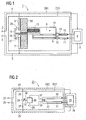
- FIG. 1 shows an overcurrent switching device ÜS1 a bridging device ÜB1 in an electronic module 1 with terminals 2 and 3, which via conductors 4 and 5 with a first mating contact 6 and a second mating contact 7, which are formed in the embodiment as the first fixed contact 6 and second fixed contact 7, and with a circuit unit 8 are connected.
- the circuit unit 8 comprises schematically illustrated electronic components 9, for example a plurality of switching elements such as IGBTs, diodes and an intermediate circuit capacitor of an inverter, which are connected to each other via current detection means in the form of connecting conductors 10, 11 and other connections not shown in the figures (compare the circuit unit of the above mentioned German Offenlegungsschrift DE 101 03 031 A1 ).
- the connecting conductors 10 and 11 are arranged in the circuit unit 8 such that an overcurrent occurring in the event of a fault flows through these connecting conductors 10 and 11.
- the connecting conductors 10 and 11 are designed as busbars and connected to one another at one end, so that a current flowing in the circuit unit 8 current through the busbars 10 and 11 is guided in opposite directions.
- the busbar 11 which is designed as a deformable busbar
- coupling means 12 and 13 in the form of a retaining pin 12 made of an insulating material as a blocking element 12 is fixed, which extends through a recess 13 in the busbar 10 therethrough.
- the coupling means 12, 13 are as actuating means 14, 15 and 18, a movable carriage 14, which is blocked by the retaining pin 12 and is biased by a spring 15 against an insulating body 16 of the electronic module, downstream.
- a recess 17 of the insulating body 16 extends through a guide rod 18 of the carriage 14, at the end of a moving contact 19 is arranged, which forms a contact system 20 together with the first fixed contact 6 and the second fixed contact 7.
- the Indian FIG. 1 shown state of the device corresponds to the normal Archzüstand the electronic module 1, in which usual operating currents flow within the electronic module 1.
- a fault for example by a Short circuit within the electronic module 1 or a wrong control of a switching element, can flow through the discharge of the capacitor of the circuit unit 8, a significantly higher current than the usual operating current in the electronic module.
- Due to the opposing leadership of the current through the busbars 10 and 11 is formed between these due to electromagnetic interaction, a force which pushes the busbars 10 and 11, while the deformable busbar 11 is deformed such that the fixed to the busbar 11 associated retaining pin 12 in the direction of the movement arrow A moves and releases the carriage 14.
- a short-circuit current in the electronic module 1 thus causes a closure of the contact system 20, so that between the terminals 2 and 3 of the electronic module 1 via the conductors 4 and 5 and the fixed contacts 6 and 7 and the moving contact 19, the remaining components of the electronic module 1 are bridged.
- a bridging of electronic modules in a circuit arrangement of a plurality of modules, for example in a series circuit, is particularly necessary if the functionality of the circuit arrangement is to be maintained in the event of failure of a single electronic module due to a malfunction.
- FIG. 2 shows a further embodiment of an overcurrent switching device ÜS2 a bridging device ÜB2 in an electronic module 21.
- Terminals'22 and 23 of the electronic module 21 are via conductors 24 and 25 with contacts 26 and 27 and connected to a circuit unit 28 with schematically represented electronic components 29, for example, figuratively not shown switching elements such as IGBTs, capacitors and diodes.
- Connecting conductors 30 and 31 and other connections not shown in the figures are provided for connecting the components 29.
- the connection conductors 30 and 31 are arranged in the circuit unit 28 such that an overcurrent occurring in the event of a fault flows through these connection conductors 30 and 31.
- the connecting conductors 30 and 31 are connected together at one end and together with a coil 32 current detection means 30, 31, 32.
- the coil 32 surrounds a portion of the connecting conductors 30, 31 and is via coupling means 33 and 34 in the form of connecting lines 33 and 34 coupled to actuating means 36 and 37.
- the actuating means 36, 37 comprise a control device 36 having a control connection 37 for controlling an electrical switch 38, which forms the contact system 39 with the contacts 26 and 27.
- FIG. 2 causes in case of failure of a semiconductor device driven by the capacitor of the circuit unit short-circuit current, an induction voltage in the coil 32, which is compared in the control device 36 with a threshold value. If the induction voltage is above the threshold value, then the switch 38 is closed via the control connection 37, so that the contact system 39 is closed off of the contacts 26, 27 and the switch 38, via the connection terminals 22, 23 and the conductors 24, 25 the remaining elements of the electronic module 21 are bridged. The switch 38 is thereby formed so that it after transferring to the second state, in the embodiment of the closed state, in remains in this state, even if after a decay of the short-circuit current, the induction voltage of the coil is no longer applied.
- a bridging of electronic modules in a circuit arrangement of several modules, for example a series circuit, is particularly necessary if the functionality of the series circuit is to be maintained in the event of failure of a single electronic module due to a malfunction.
- the switch 38 can be designed as a thyristor or as an electromagnet, wherein the control can be done either directly by the voltage induced in the coil 32 or depending on the desired precision, or via the control device 36, which can be configured for example as a simple trigger circuit.
Landscapes
- Emergency Protection Circuit Devices (AREA)
- Breakers (AREA)
Description
- Die Erfindung betrifft eine Überstromschaltvorrichtung für Mittel- oder Hochspannungsanwendungen mit Strom-Detektionsmitteln zur Überführung eines ihnen zugeordneten Kontaktsystems bei Überschreiten eines Schwellenstromes aus einem ersten Zustand in einen zweiten Zustand, wobei den in einem ersten Stromzweig liegenden Strom-Detektionsmitteln über Kopplungsmittel Betätigungsmittel nachgeordnet sind, welche Betätigungsmittel zur Überführung des in einem zweiten Stromzweig liegenden Kontaktsystems aus dem ersten in den zweiten Zustand ausgebildet sind.
- Eine Überstromschaltvorrichtung der eingangs genannten Art ist beispielsweise aus der
DE 100 02 870 A1 bekannt. Weitere ähnliche Vorrichtungen sind ausDE 10 47 915 B und ausEP 1 526 560 A2 bekannt. Als nächstliegender Stand der Technik wird dieDE 3629040 A1 angesehen, welche einen Niederspannungs-Vakuumschalter vergleich- baren Wirkprinzips beschreibt. - Aus der internationalen Patentanmeldung
PCT/DE 2005/001147 ist ein Elektronikmodul mit einer derartigen Überstromschaltvorrichtung bekannt. Bei dieser älteren Überstromschaltvorrichtung weist ein Verbindungsleiter einen deformierbaren Abschnitt als Strom-Detektionsmittel auf. Der deformierbare Abschnitt wird beim Überschreiten eines Schwellenstromes derart deformiert, dass ein Kontaktsystem aus einem ersten Zustand in einen zweiten Zustand überführt wird. Der deformierbare Abschnitt wird hier auch zur Bildung des Kontaktsystems verwendet, indem er zusammen mit einem Kontaktteil das Kontaktsystem bildet. - Aufgabe der vorliegenden Erfindung ist es, eine Überstromschaltvorrichtung auszubilden, die flexibel und präzise den jeweils gestellten Anforderungen entsprechend ausgestaltet werden kann.
- Erfindungsgemäß gelöst wird diese Aufgabe durch die Merkmale des Anspruchs 1.
- Ein wesentlicher Vorteil der erfindungsgemäßen Überstromschaltvorrichtung besteht darin, dass bei ihr die Strom-Detektionsmittel sowie die Kopplungs- und Betätigungsmittel Baugruppen bzw. Elemente für sich darstellen, und somit für sich herstellbar und entsprechend bemessbar sind; dies gilt auch hinsichtlich des Kontaktsystems, weil dieses ein System für sich bildet, auf das die Betätigungsmittel einwirken. Dies alles ermöglicht eine präzise Einstellung und einen großen Einstellbereich des Schwellenstromes, bei dem das Kontaktsystem aus seinem ersten in seinen zweiten Zustand überführbar ist. Dabei ist das Kontaktsystem in vorteilhafter Weise insofern flexibel einsetzbar, dass der erste Zustand des Kontaktsystems der offene Zustand und der zweite Zustand der geschlossene Zustand des Kontaktsystems sein können oder umgekehrt, so dass in einfacher Weise abhängig von der jeweiligen Anforderungen eine öffnende oder eine schließende Überstromschaltvorrichtung ausgebildet ist. Dabei ist außerdem die vorteilhafte Möglichkeit gegeben, bei einem Überstrom in dem ersten Stromzweig einen Schaltvorgang in dem zweiten Stromzweig zu bewirken.
- Bei einer derartigen Ausgestaltung wirkt in vorteilhafter Weise eine elektromagnetische Kraft zwischen den parallel verlaufenden Leitern mit gegensinniger Stromführung, so dass der deformierbare Abschnitt beim Überschreiten eines Schwellenstroms durch dieses Kraft deformiert und von einer Normalposition in eine Arbeitsposition überführt wird. Der Schwellenstrom ist dabei einfach und flexibel über die Deformierbarkeit des deformierbaren Abschnittes einstellbar.
- In weiterer Ausgestaltung der Erfindung umfassen die Kopplungsmittel ein mit dem deformierbaren Abschnitt fest verbundenes Blockierelement. Ein derartiges Blockierelement, beispielsweise ein Haltestift, ist eine einfache Möglichkeit zur Kopplung der Strom-Detektionsmittel mit den Betätigungsmitteln.
- In einer bevorzugten Ausführungsform umfassen die Betätigungsmittel ein federbelastbares Betätigungsorgan mit einer derartigen Ausbildung, dass bei einem Blockierelement in der Normalposition des deformierbaren Abschnittes das Betätigungsorgan in einer Position mit gespannter Feder gehalten und in einer Arbeitsposition des deformierbaren Abschnittes freigegeben ist. Ein derartiges Betätigungsorgan ist in einfacher Weise durch das Blockierelement freigebbar, wodurch ein schnelles Überführen des Kontaktsystems aus seinem ersten in seinen zweiten Zustand vorteilhafterweise ermöglicht ist.
- Das Betätigungsorgan kann in unterschiedlicher Weise ausgebildet sein, z.B. als Stößel. In besonders bevorzugter Ausgestaltung ist das Betätigungsorgan ein beweglicher, mittels der Feder spannbarer Schlitten mit einer starr verbundenen Führungsstange. Ein solcher Schlitten ist besonders vorteilhaft durch das Blockierelement haltbar oder freigebbar.
- In weiterer Ausgestaltung ist das Kontaktsystem aus einem mit den Betätigungsmitteln starr verbundenen Bewegkontakt zur Ausbildung einer leitenden Verbindung zwischen einem ersten und einem zweiten Gegenkontakt gebildet. Die Gegenkontakte können dabei beide als Festkontakte ausgebildet sein. Gegebenenfalls kann es auch vorteilhaft sein, einen Gegenkontakt als Festkontakt und den anderen Gegenkontakt als flexiblen Kontakt auszuführen, wobei der flexible Kontakt z.B. unter Verwendung einer flexiblen Anschlussleitung gewonnen sein kann. Ein derartiges Kontaktsystem ist in einfacher Weise durch die Betätigungsmittel aus seinem ersten in seinem zweiten Zustand überführbar.
- Die Erfindung betrifft ferner eine Überbrückungsvorrichtung für ein Elektronikmodul, wie sie der eingangs erwähnten älteren internationalen Patentanmeldung
PCT/DE 2005/001147 entnehmbar ist, und stellt sich die Aufgabe, eine solche huberbrückungsvorrichtung für ein Elektronikmodul so weiterzubilden, dass sie über einen flexiblen Aufbau bei präzise einstellbarem Schwellenstrom verfügt. - Zur Lösung der Aufgabe dient erfindungsgemäß eine Überbrückungsvorrichtung für ein Elektronikmodul mit einer Überstromschaltvorrichtung in einer der voranstehend beschriebenen Ausgestaltungen, wobei die Strom-Detektionsmitteln zur Überführung des ihnen zugeordneten Kontaktsystems bei Überschreiten eines Schwellenstromes in dem Elektronikmodul aus einem ersten Zustand, in welchem das Elektronikmodul an eine Schaltungsanordnung angeschlossen ist, in einen zweiten Zustand, in welchem das Elektronikmodul in der Schaltungsanordnung überbrückt ist, ausgebildet sind. Diese Überbrückungsvorrichtung ermöglicht in vorteilhafter Weise einen flexiblen Aufbau mit präzise einstellbarem Schwellenstrom. Die Überbrückungsvorrichtung bildet somit eine vorteilhafte Anwendung der erfindungsgemäßen Überstromschaltvorrichtung und lässt sich beispielsweise mit Vorteil zum Überbrücken eines Elektronikmoduls gemäß der deutschen Offenlegungsschrift
DE 101 03 031 A1 einsetzen. - In weiterer Ausgestaltung ist das Kontaktsystem mit Anschlussklemmen des Elektronikmoduls leitend verbunden. Dadurch ist in einfacher Weise die Überbrückung des Elektronikmoduls beim Überschreiten des Schwellenstromes durch Ausbildung einer leitenden Verbindung zwischen den Anschlussklemmen über das Kontaktsystem gewährleistet.
- In weiterer Ausgestaltung der Erfindung erfassen die Strom-Detektionsmittel den Strom des Elektronikmoduls.
- Die Erfindung wird im Folgenden anhand der Zeichnung und von Ausführungsbeispielen mit Bezug auf die beiliegenden Figuren näher erläutert. Es zeigen:
- Figur 1
- eine schematische Darstellung einer erfindungsgemäßen Überströmschaltvorrichtung in einer ersten Ausgestaltung einer Überbrückungsvorrichtung gemäß einer ersten Ausführungsform;
- Figur 2
- eine schematische Darstellung, einer Überstromschaltvorrichtung in einer zweiten Ausgestaltung einer Überbrückungsvorrichtung gemäß einer zweiten Ausführungsform.
-
Figur 1 zeigt eine Überstromschaltvorrichtung ÜS1 einer Überbrückungsvorrichtung ÜB1 in einem Elektronikmodul 1 mit Anschlussklemmen 2 und 3, welche über Leiter 4 und 5 mit einem ersten Gegenkontakt 6 und einem zweiten Gegenkontakt 7, welche im Ausführungsbeispiel als erster Festkontakt 6 und zweiter Festkontakt 7 ausgebildet sind, sowie mit einer Schaltungseinheit 8 verbunden sind. Die Schaltungseinheit 8 umfasst schematisch dargestellte elektronische Bauteile 9, beispielsweise mehrere Schaltelemente wie IGBTs, Dioden und einen Zwischenkreiskondensator eines Umrichters, welche über Strom-Detektionsmittel in Form von Verbindungsleitern 10, 11 sowie weitere figürlich nicht dargestellte Verbindungen miteinander verbunden sind (vergleiche die Schaltungseinheit der oben erwähnten deutschen OffenlegungsschriftDE 101 03 031 A1 ). Die Verbindungsleiter 10 und 11 sind dabei in der Schaltungseinheit 8 so angeordnet, dass ein in einem Fehlerfall auftretender Überstrom über diese Verbindungsleiter 10 und 11 fliesst. Die Verbindungsleiter 10 und 11 sind als Stromschienen ausgeführt und an einem Ende miteinander verbunden, so dass ein in der Schaltungseinheit 8 fließender Strom über die Stromschienen 10 und 11 gegensinnig geführt ist. Mit der Stromschiene 11, welche als deformierbare Stromschiene ausgebildet ist, sind Kopplungsmittel 12 und 13 in Form eines Haltestifts 12 aus einem isolierenden Material als Blockierelement 12 fest verbunden, welcher sich durch eine Aussparung 13 in der Stromschiene 10 durch diese hindurch erstreckt. Den Kopplungsmitteln 12, 13 sind als Betätigungsmittel 14, 15 und 18 ein beweglicher Schlitten 14, welcher durch den Haltestift 12 blockiert ist und mittels einer Feder 15 gegenüber einen Isolierkörper 16 des Elektronikmoduls vorgespannt ist, nachgeordnet. Durch eine Aussparung 17 des Isolierkörpers 16 hindurch erstreckt sich eine Führungsstange 18 des Schlittens 14, an deren Ende ein Bewegkontakt 19 angeordnet ist, welcher zusammen mit dem ersten Festkontakt 6 und dem zweiten Festkontakt 7 ein Kontaktsystem 20 ausbildet. - Der in der
Figur 1 dargestellte Zustand der Vorrichtung entspricht dem normalen Betriebszüstand des Elektronikmoduls 1, in welchem übliche Betriebsströme innerhalb des Elektronikmoduls 1 fließen. Bei einer Störung, beispielsweise durch einen Kurzschluss innerhalb des Elektronikmoduls 1 oder eine falsche Ansteuerung eines Schaltelementes, kann durch die Entladung des Kondensators der Schaltungseinheit 8 ein erheblich höherer Strom als der übliche Betriebsstrom in dem Elektronikmodul fließen. Durch die gegensinnige Führung des Stromes über die Stromschienen 10 und 11 entsteht zwischen diesen aufgrund elektromagnetischer Wechselwirkung eine Kraft, welche die Stromschienen 10 und 11 auseinanderdrückt und dabei die deformierbare Stromschiene 11 derart deformiert, dass sich der fest mit der Stromschiene 11 verbundene Haltestift 12 in Richtung des Bewegungspfeiles A bewegt und den Schlitten 14 freigibt. Über die von der Feder 15 ausgeübte Kraft bewegt sich der Schlitten in Richtung des Bewegungspfeiles B. Die Bewegung des Schlittens 14 ist dabei durch die Führungsstange 18 in der Aussparung 17 des Isolierkörpers 16 geführt und durch das Ausbilden eines geschlossenen Kontaktes zwischen dem Bewegkontakt 19 und den Festkontakten 6 und 7 begrenzt. Ein Kurzschlussstrom im Elektronikmodul 1 bewirkt somit ein Schließen des Kontaktsystems 20, so dass zwischen den Anschlussklemmen 2 und 3 des Elektronikmoduls 1 über die Leiter 4 und 5 sowie die Festkontakte 6 und 7 und den Bewegkontakt 19 die restlichen Bauteile des Elektronikmoduls 1 überbrückt sind. Eine Überbrückung von Elektronikmodulen in einer Schaltungsanordnung mehrerer Module, beispielsweise in einer Reihenschaltung, ist insbesondere notwendig, wenn die Funktionsfähigkeit der Schaltungsanordnung beim Ausfall eines einzelnen Elektronikmoduls aufgrund einer Fehlfunktion erhalten bleiben soll. -
Figur 2 zeigt ein weiteres Ausführungsbeispiel einer Überstromschaltvorrichtung ÜS2 einer Überbrückungsvorrichtung ÜB2 in einem Elektronikmodul 21. Anschlussklemmen'22 und 23 des Elektronikmoduls 21 sind über Leiter 24 und 25 mit Kontakten 26 und 27 sowie mit einer Schaltungseinheit 28 mit schematisch dargestellten elektronischen Bauteilen 29, beispielsweise figürlich nicht dargestellten Schaltelementen wie IGBTs, Kondensatoren und Dioden verbunden. Verbindungsleiter 30 und 31 sowie weitere figürlich nicht dargestellte Verbindungen sind zur Verbindung der Bauteile 29 vorgesehen. Die Verbindungsleiter 30 und 31 sind dabei in der Schaltungseinheit 28 so angeordnet, dass ein in einem Fehlerfall auftretender Überstrom über diese Verbindungsleiter 30 und 31 fliesst. Die Verbindungsleiter 30 und 31 sind an einem Ende miteinander verbunden und bilden zusammen mit einer Spule 32 Strom-Detektionsmittel 30, 31, 32. Die Spule 32 umgibt dabei einen Bereich der Verbindungsleiter 30, 31 und ist über Kopplungsmittel 33 und 34 in Form von Anschlussleitungen 33 und 34 mit Betätigungsmitteln 36 und 37 gekoppelt. Im Ausführungsbeispiel derFigur 2 umfassen die Betätigungsmittel 36, 37 eine Steuerungsvorrichtung 36 mit einer Steuerungsverbindung 37 zur Steuerung eines elektrischen Schalters 38, welcher mit den Kontakten 26 und 27 das Kontaktsystem 39 ausbildet. - In dem Ausführungsbeispiel der
Figur 2 bewirkt bei einem Ausfall eines Halbleiter-Bauteils ein durch den Kondensator der Schaltungseinheit getriebener Kurzschlussstrom eine Induktionsspannung in der Spule 32, welche in der Steuerungsvorrichtung 36 mit einem Schwellwert verglichen wird. Liegt die Induktionsspannung über dem Schwellwert, so wird über die Steuerungsverbindung 37 der Schalter 38 geschlossen, so dass das Kontaktsystem 39 aus den Kontakten 26, 27 sowie dem Schalter 38 geschlossen ist, wobei über die Anschlussklemmen 22, 23 sowie die Leiter 24, 25 die restlichen Elemente des Elektronikmoduls 21 überbrückt sind. Der Schalter 38 ist dabei'derart ausgebildet, dass er nach Überführen in den zweiten Zustand, im Ausführungsbeispiel der geschlossene Zustand, in diesem Zustand verbleibt, auch wenn nach einem Abklingen des Kurzschlussstromes die Induktionsspannung der Spule nicht mehr anliegt. Eine Überbrückung von Elektronikmodulen in einer Schaltungsanordnung mehrerer Module, beispielsweise einer Reihenschaltung, ist insbesondere notwendig, wenn die Funktionsfähigkeit der Reihenschaltung beim Ausfall eines einzelnen Elektronikmoduls aufgrund einer Fehlfunktion erhalten bleiben soll. Der Schalter 38 kann dabei als Thyristor oder als Elektromagnet ausgeführt sein, wobei die Ansteuerung je nach gewünschter Präzision entweder direkt durch die in der Spule 32 induzierte Spannung erfolgen kann oder über die Steuerrungsvorrichtung 36, welche beispielsweise als einfache Triggerschaltung ausgeführt sein kann. -
- ÜB1, ÜB2
- Überbrückungsvorrichtungen
- ÜS1, ÜS2
- Überstromschaltvorrichtungen
- 1
- Elektronikmodul
- 2, 3
- Anschlussklemmen
- 4, 5
- Leiter
- 6
- Erster Festkontakt
- 7
- Zweiter Festkontakt
- 8
- Schaltungseinheit
- 9
- elektronische Bauteile
- 10, 11
- Stromschienen
- 12
- Haltestift
- 13
- Durchführung
- 14
- Schlitten
- 15
- Feder
- 16
- Isolierkörper
- 17
- Durchführung
- 18
- Führungsstange
- 19
- Bewegkontakt
- 20
- Kontaktsystem
- 21
- Elektronikmodul
- 22, 23
- Anschlussklemmen
- 24, 25
- Leiter
- 26, 27
- Kontakte
- 28
- Schaltungseinheit
- 29
- Bauteile
- 30, 31
- Verbindungsleiter
- 32
- Spule
- 33, 34
- Anschlussleitungen
- 35
- elektrische Schaltvorrichtung
- 36
- Steuerungsvorrichtung
- 37
- Steuerungsverbindung
- 38
- Schaltkontakt
- 39
- Kontaktsystem
- A, B
- Bewegungspfeile
Claims (8)
- Überstromschaltvorrichtung für Mittel- oder Hochspannungsanwendungen mit Strom-Detektionsmitteln (10, 11) zur Überführung eines ihnen zugeordneten Kontaktsystems (20 ) bei Überschreiten eines Schwellenstromes aus einem ersten Zustand in einen zweiten Zustand, wobei den in einem ersten Stromzweig liegenden Strom-Detektionsmitteln (10, 11 ) über Kopplungsmittel (12, 13, 33, 34) Betätigungsmittel (14, 15, 18) nachgeordnet sind, welche Betätigungsmittel (14, 15, 18) zur Überführung des in einem zweiten Stromzweig liegenden Kontaktsystems (20) aus dem ersten in den zweiten Zustand ausgebildet sind,
wobei die Strom-Detektionsmittel (10, 11) zwei zueinander parallel verlaufende Stromschienenabschnitte (10, 11) umfassen, in denen der Strom gegensinnig geführt ist und von denen mindestens ein Abschnitt (11) deformierbar ist, wobei der deformierbare Abschnitt (11) durch Überschreiten des Schwellenstromes von einer Normalposition in eine Arbeitsposition überführbar ist. - Überstromschaltvorrichtung nach Anspruch 1, dadurch gekennzeichnet, dass die Kopplungsmittel (12, 13) ein mit dem deformierbaren Abschnitt (11) fest verbundenes Blockierelement (12) umfassen.
- Überstromschaltvorrichtung nach Anspruch 2, dadurch gekennzeichnet, dass die Betätigungsmittel (14, 15, 18) ein federbelastbares Betätigungsorgan (14) mit einer derartigen Ausbildung umfassen, dass bei einem Blockierelement (12) in der Normalposition des deformierbaren Abschnittes (11) das Betätigungsorgan (14) in einer Position mit gespannter Feder (15) gehalten und in einer Arbeitsposition des deformierbaren Abschnittes (11) freigegeben ist.
- Überstromschaltvorrichtung nach Anspruch 3,
dadurch gekennzeichnet, dass das Betätigungsorgan (14) ein beweglicher, mittels der Feder (15) spannbarer Schlitten (14) mit einer starr verbundenen Führungsstange (18) ist. - Überstromschaltvorrichtung nach einem der vorangehenden Ansprüche,
dadurch gekennzeichnet, dass das Kontaktsystem (20) aus einem mit den Betätigungsmitteln (14, 15, 18) starr verbundenen Bewegkontakt (19) zur Ausbildung einer leitenden Verbindung zwischen einem ersten und einem zweiten Gegenkontakt (6, 7) gebildet ist. - Überbrückungsvorrichtung für ein Elektronikmodul (1) mit einer Überstromschaltvorrichtung nach einem der vorangehenden Ansprüche, wobei die Strom-Detektionsmittel (10, 11
) zur Überführung des ihnen zugeordneten Kontaktsystems (20) bei Überschreiten eines Schwellenstromes in dem Elektronikmodul (1) aus einem ersten Zustand, in welchem das Elektronikmodul (1) an eine Schaltungsanordnung angeschlossen ist, in einen zweiten Zustand, in welchem das Elektronikmodul in der Schaltungsanordnung überbrückt ist, ausgebildet sind. - Überbrückungsvorrichtung nach Anspruch 6,
dadurch gekennzeichnet, dass das Kontaktsystem (20) mit Anschlussklemmen (2, 3) des Elektronikmoduls (1) leitend verbunden ist. - Überbrückungsvorrichtung nach Anspruch 6 oder 7,
dadurch gekennzeichnet, dass die Strom-Detektionsmittel (10, 11) den Strom des Elektronikmoduls (1) erfassen.
Applications Claiming Priority (1)
| Application Number | Priority Date | Filing Date | Title |
|---|---|---|---|
| PCT/DE2006/000345 WO2007095874A1 (de) | 2006-02-23 | 2006-02-23 | Überstromschaltvorrichtung |
Publications (2)
| Publication Number | Publication Date |
|---|---|
| EP1992003A1 EP1992003A1 (de) | 2008-11-19 |
| EP1992003B1 true EP1992003B1 (de) | 2013-11-27 |
Family
ID=37031076
Family Applications (1)
| Application Number | Title | Priority Date | Filing Date |
|---|---|---|---|
| EP06706014.5A Expired - Lifetime EP1992003B1 (de) | 2006-02-23 | 2006-02-23 | Überstromschaltvorrichtung |
Country Status (6)
| Country | Link |
|---|---|
| US (1) | US7936548B2 (de) |
| EP (1) | EP1992003B1 (de) |
| JP (1) | JP4942771B2 (de) |
| CA (1) | CA2643129C (de) |
| DE (1) | DE112006003862A5 (de) |
| WO (1) | WO2007095874A1 (de) |
Families Citing this family (3)
| Publication number | Priority date | Publication date | Assignee | Title |
|---|---|---|---|---|
| WO2012175112A1 (en) | 2011-06-21 | 2012-12-27 | Abb Technology Ag | Power semiconductor housing with contact mechanism |
| CN105793985B (zh) * | 2013-12-17 | 2019-02-12 | 西门子公司 | 用于高压直流转换器的电子保护模块 |
| DE102017129657A1 (de) * | 2017-07-10 | 2019-01-10 | Dehn + Söhne Gmbh + Co. Kg | Anordnung zur nicht-reversiblen Detektion und Anzeige von elektrischen Überströmen oder Stromgrenzwerten mittels eines vorkonfektionierten Leiters |
Citations (3)
| Publication number | Priority date | Publication date | Assignee | Title |
|---|---|---|---|---|
| DE1047915B (de) * | 1955-08-18 | 1958-12-31 | Siemens Ag | Hochspannungs-Schnellschalter mit Sperrmagnetausloesung, insbesondere UEberbrueckungsschalter zum Schutz von Reihenkondensatoren |
| DE10002870A1 (de) * | 2000-01-24 | 2001-08-23 | Abb Research Ltd | Vorrichtung zum Begrenzen eines Stromes |
| EP1526560A2 (de) * | 2003-10-25 | 2005-04-27 | ABB PATENT GmbH | Elektrischer Leitungsschutzschalter |
Family Cites Families (13)
| Publication number | Priority date | Publication date | Assignee | Title |
|---|---|---|---|---|
| US3215896A (en) * | 1962-10-04 | 1965-11-02 | Gen Electric | Fast response overload protection circuit |
| NO118930B (de) * | 1965-04-20 | 1970-03-02 | Ericsson Telefon Ab L M | |
| DE2360037A1 (de) * | 1973-12-01 | 1975-06-12 | Danfoss As | Sicherheitsschaltung fuer ein elektrisches geraet |
| FR2426973A1 (fr) * | 1978-05-23 | 1979-12-21 | Laprom Corp Nv | Disjoncteur de courant de fuite |
| JPS59156347A (ja) * | 1983-02-26 | 1984-09-05 | オ−ジ−技研株式会社 | 部分浴治療装置 |
| JPS60130012A (ja) * | 1983-12-16 | 1985-07-11 | 株式会社リコー | 安全装置 |
| DE3544650A1 (de) * | 1984-12-20 | 1986-06-26 | General Electric Co., Schenectady, N.Y. | Hochgeschwindigkeits-kontakttreiber fuer einen elektrischen schalter |
| US4667071A (en) * | 1985-08-30 | 1987-05-19 | General Electric Company | Low voltage vacuum circuit interrupter |
| EP0303698A4 (de) * | 1987-02-24 | 1990-03-27 | Vnii Pk I Avtomatizi | Strombegrenzender lastschalter. |
| FR2651915B1 (fr) * | 1989-09-13 | 1991-11-08 | Merlin Gerin | Disjoncteur statique ultra-rapide a isolement galvanique. |
| IT1303664B1 (it) * | 1998-12-24 | 2001-02-21 | Abb Ricerca Spa | Circuito elettronico di pilotaggio per attuatore bistabileattivato da piezoelettrici,particolarmente per dispositivi |
| JP3737372B2 (ja) * | 2001-02-26 | 2006-01-18 | 株式会社日立製作所 | 変流器入力型電源装置 |
| US6728085B2 (en) * | 2001-05-21 | 2004-04-27 | Eaton Corporation | Circuit breaker with shunt |
-
2006
- 2006-02-23 CA CA2643129A patent/CA2643129C/en not_active Expired - Fee Related
- 2006-02-23 DE DE112006003862T patent/DE112006003862A5/de not_active Withdrawn
- 2006-02-23 JP JP2008555603A patent/JP4942771B2/ja not_active Expired - Fee Related
- 2006-02-23 WO PCT/DE2006/000345 patent/WO2007095874A1/de not_active Ceased
- 2006-02-23 US US12/280,578 patent/US7936548B2/en not_active Expired - Fee Related
- 2006-02-23 EP EP06706014.5A patent/EP1992003B1/de not_active Expired - Lifetime
Patent Citations (3)
| Publication number | Priority date | Publication date | Assignee | Title |
|---|---|---|---|---|
| DE1047915B (de) * | 1955-08-18 | 1958-12-31 | Siemens Ag | Hochspannungs-Schnellschalter mit Sperrmagnetausloesung, insbesondere UEberbrueckungsschalter zum Schutz von Reihenkondensatoren |
| DE10002870A1 (de) * | 2000-01-24 | 2001-08-23 | Abb Research Ltd | Vorrichtung zum Begrenzen eines Stromes |
| EP1526560A2 (de) * | 2003-10-25 | 2005-04-27 | ABB PATENT GmbH | Elektrischer Leitungsschutzschalter |
Also Published As
| Publication number | Publication date |
|---|---|
| US20090257165A1 (en) | 2009-10-15 |
| CA2643129A1 (en) | 2007-08-30 |
| JP2009527878A (ja) | 2009-07-30 |
| JP4942771B2 (ja) | 2012-05-30 |
| US7936548B2 (en) | 2011-05-03 |
| EP1992003A1 (de) | 2008-11-19 |
| DE112006003862A5 (de) | 2009-01-29 |
| CA2643129C (en) | 2014-07-22 |
| WO2007095874A1 (de) | 2007-08-30 |
Similar Documents
| Publication | Publication Date | Title |
|---|---|---|
| EP2044603B1 (de) | Schalter für eine schaltanlage der energieversorgung und -verteilung | |
| WO2012034698A1 (de) | Einreihige not-aus-schalter-kontaktvorrichtung | |
| EP1917671A1 (de) | Isolierkörper für eine mittelspannungsschaltanlage | |
| EP3241226B1 (de) | Elektrische kurzschliessereinrichtung | |
| DE1929551A1 (de) | Hochspannungs-Trennschalter mit vorgeschalteten Widerstaenden | |
| EP4107767B1 (de) | Überspannungsschutzvorrichtung, überspannungsschutzbaugruppen mit einer solchen überspannungsschutzvorrichtung sowie verfahren zur montage einer überspannungsschutzbaugruppe | |
| EP3770935A1 (de) | Spannungsbegrenzungseinrichtung mit einem schaltgerät | |
| EP4018466B1 (de) | Baugruppe für einen hochspannungs-leistungsschalter und entsprechender hochspannungs-leistungsschalter | |
| EP3084794B1 (de) | Schaltgerät | |
| DE102012215528B4 (de) | Schalter, insbesondere Leistungsschalter für Niederspannungen | |
| DE102022117625B3 (de) | Anordnung mit einem Gehäuse und einer elektrisch leitenden Kontaktfeder sowie Leistungshalbleitermodul hiermit | |
| EP1992003A1 (de) | Überstromschaltvorrichtung | |
| DE102014205915A1 (de) | Übertragungskinematik | |
| EP3011575B1 (de) | Vorrichtung zur übertragung von kräften | |
| EP3770934B1 (de) | Schaltgerät und spannungsbegrenzungseinrichtung mit einem schaltgerät | |
| EP2919246A1 (de) | Rotorwellenmodul für eine Rotorwelle eines Kompaktleistungsschalters, Rotorwelle für einen Kompaktleistungsschalter, Kompaktleistungsschalter sowie Verfahren zur Herstellung eines Rotorwellenmoduls für eine Rotorwelle eines Kompaktleistungsschalters | |
| DE102012216974B4 (de) | Vorrichtung zur Übertragung von Kräften | |
| DE102006004401B3 (de) | Kontaktsystem für ein elektrisches Schaltgerät | |
| DE102024201745B3 (de) | Elektrische Schalteinheit mit Sicherungseinrichtung | |
| EP4298654B1 (de) | Schneller sicherheitsschalter und schnelles sicherheitsschaltersystem | |
| DE102020211951B4 (de) | Kurzschluss-Schalteinrichtung | |
| EP2140470A1 (de) | Baugruppe mit automatischer erweiterung eines überwachungskreises | |
| EP3659163B1 (de) | Modulsatz für den bau von leistungsschaltern | |
| DE102024132089A1 (de) | Abhebungen entgegenwirkende Kontaktanordnung | |
| EP2122790A1 (de) | Elektrische hochspannungsschaltanlage |
Legal Events
| Date | Code | Title | Description |
|---|---|---|---|
| PUAI | Public reference made under article 153(3) epc to a published international application that has entered the european phase |
Free format text: ORIGINAL CODE: 0009012 |
|
| 17P | Request for examination filed |
Effective date: 20080731 |
|
| AK | Designated contracting states |
Kind code of ref document: A1 Designated state(s): CH DE FR GB LI SE |
|
| DAX | Request for extension of the european patent (deleted) | ||
| RBV | Designated contracting states (corrected) |
Designated state(s): CH DE FR GB LI SE |
|
| 17Q | First examination report despatched |
Effective date: 20101208 |
|
| RAP1 | Party data changed (applicant data changed or rights of an application transferred) |
Owner name: SIEMENS AKTIENGESELLSCHAFT |
|
| GRAP | Despatch of communication of intention to grant a patent |
Free format text: ORIGINAL CODE: EPIDOSNIGR1 |
|
| INTG | Intention to grant announced |
Effective date: 20130507 |
|
| GRAS | Grant fee paid |
Free format text: ORIGINAL CODE: EPIDOSNIGR3 |
|
| GRAA | (expected) grant |
Free format text: ORIGINAL CODE: 0009210 |
|
| AK | Designated contracting states |
Kind code of ref document: B1 Designated state(s): CH DE FR GB LI SE |
|
| REG | Reference to a national code |
Ref country code: GB Ref legal event code: FG4D Free format text: NOT ENGLISH |
|
| REG | Reference to a national code |
Ref country code: CH Ref legal event code: EP Ref country code: CH Ref legal event code: NV Representative=s name: SIEMENS SCHWEIZ AG, CH |
|
| REG | Reference to a national code |
Ref country code: DE Ref legal event code: R096 Ref document number: 502006013381 Country of ref document: DE Effective date: 20140123 |
|
| REG | Reference to a national code |
Ref country code: SE Ref legal event code: TRGR |
|
| RAP2 | Party data changed (patent owner data changed or rights of a patent transferred) |
Owner name: SIEMENS AKTIENGESELLSCHAFT |
|
| REG | Reference to a national code |
Ref country code: DE Ref legal event code: R097 Ref document number: 502006013381 Country of ref document: DE |
|
| PLBE | No opposition filed within time limit |
Free format text: ORIGINAL CODE: 0009261 |
|
| STAA | Information on the status of an ep patent application or granted ep patent |
Free format text: STATUS: NO OPPOSITION FILED WITHIN TIME LIMIT |
|
| 26N | No opposition filed |
Effective date: 20140828 |
|
| REG | Reference to a national code |
Ref country code: DE Ref legal event code: R097 Ref document number: 502006013381 Country of ref document: DE Effective date: 20140828 |
|
| REG | Reference to a national code |
Ref country code: FR Ref legal event code: PLFP Year of fee payment: 11 |
|
| REG | Reference to a national code |
Ref country code: FR Ref legal event code: PLFP Year of fee payment: 12 |
|
| REG | Reference to a national code |
Ref country code: CH Ref legal event code: PCOW Free format text: NEW ADDRESS: WERNER-VON-SIEMENS-STRASSE 1, 80333 MUENCHEN (DE) |
|
| REG | Reference to a national code |
Ref country code: FR Ref legal event code: PLFP Year of fee payment: 13 |
|
| PGFP | Annual fee paid to national office [announced via postgrant information from national office to epo] |
Ref country code: DE Payment date: 20180419 Year of fee payment: 13 |
|
| REG | Reference to a national code |
Ref country code: DE Ref legal event code: R119 Ref document number: 502006013381 Country of ref document: DE |
|
| PG25 | Lapsed in a contracting state [announced via postgrant information from national office to epo] |
Ref country code: DE Free format text: LAPSE BECAUSE OF NON-PAYMENT OF DUE FEES Effective date: 20190903 |
|
| PGFP | Annual fee paid to national office [announced via postgrant information from national office to epo] |
Ref country code: FR Payment date: 20210215 Year of fee payment: 16 |
|
| PGFP | Annual fee paid to national office [announced via postgrant information from national office to epo] |
Ref country code: GB Payment date: 20210302 Year of fee payment: 16 Ref country code: SE Payment date: 20210208 Year of fee payment: 16 |
|
| PGFP | Annual fee paid to national office [announced via postgrant information from national office to epo] |
Ref country code: CH Payment date: 20210504 Year of fee payment: 16 |
|
| REG | Reference to a national code |
Ref country code: SE Ref legal event code: EUG |
|
| REG | Reference to a national code |
Ref country code: CH Ref legal event code: PL |
|
| GBPC | Gb: european patent ceased through non-payment of renewal fee |
Effective date: 20220223 |
|
| PG25 | Lapsed in a contracting state [announced via postgrant information from national office to epo] |
Ref country code: SE Free format text: LAPSE BECAUSE OF NON-PAYMENT OF DUE FEES Effective date: 20220224 |
|
| PG25 | Lapsed in a contracting state [announced via postgrant information from national office to epo] |
Ref country code: FR Free format text: LAPSE BECAUSE OF NON-PAYMENT OF DUE FEES Effective date: 20220228 |
|
| PG25 | Lapsed in a contracting state [announced via postgrant information from national office to epo] |
Ref country code: LI Free format text: LAPSE BECAUSE OF NON-PAYMENT OF DUE FEES Effective date: 20220228 Ref country code: GB Free format text: LAPSE BECAUSE OF NON-PAYMENT OF DUE FEES Effective date: 20220223 Ref country code: CH Free format text: LAPSE BECAUSE OF NON-PAYMENT OF DUE FEES Effective date: 20220228 |