EP1987117B1 - Lubricating oil composition - Google Patents
Lubricating oil composition Download PDFInfo
- Publication number
- EP1987117B1 EP1987117B1 EP07726446.3A EP07726446A EP1987117B1 EP 1987117 B1 EP1987117 B1 EP 1987117B1 EP 07726446 A EP07726446 A EP 07726446A EP 1987117 B1 EP1987117 B1 EP 1987117B1
- Authority
- EP
- European Patent Office
- Prior art keywords
- lubricating oil
- oil composition
- range
- integer
- compounds
- Prior art date
- Legal status (The legal status is an assumption and is not a legal conclusion. Google has not performed a legal analysis and makes no representation as to the accuracy of the status listed.)
- Active
Links
Images
Classifications
-
- C—CHEMISTRY; METALLURGY
- C10—PETROLEUM, GAS OR COKE INDUSTRIES; TECHNICAL GASES CONTAINING CARBON MONOXIDE; FUELS; LUBRICANTS; PEAT
- C10M—LUBRICATING COMPOSITIONS; USE OF CHEMICAL SUBSTANCES EITHER ALONE OR AS LUBRICATING INGREDIENTS IN A LUBRICATING COMPOSITION
- C10M161/00—Lubricating compositions characterised by the additive being a mixture of a macromolecular compound and a non-macromolecular compound, each of these compounds being essential
-
- C—CHEMISTRY; METALLURGY
- C10—PETROLEUM, GAS OR COKE INDUSTRIES; TECHNICAL GASES CONTAINING CARBON MONOXIDE; FUELS; LUBRICANTS; PEAT
- C10M—LUBRICATING COMPOSITIONS; USE OF CHEMICAL SUBSTANCES EITHER ALONE OR AS LUBRICATING INGREDIENTS IN A LUBRICATING COMPOSITION
- C10M169/00—Lubricating compositions characterised by containing as components a mixture of at least two types of ingredient selected from base-materials, thickeners or additives, covered by the preceding groups, each of these compounds being essential
- C10M169/04—Mixtures of base-materials and additives
-
- C—CHEMISTRY; METALLURGY
- C10—PETROLEUM, GAS OR COKE INDUSTRIES; TECHNICAL GASES CONTAINING CARBON MONOXIDE; FUELS; LUBRICANTS; PEAT
- C10M—LUBRICATING COMPOSITIONS; USE OF CHEMICAL SUBSTANCES EITHER ALONE OR AS LUBRICATING INGREDIENTS IN A LUBRICATING COMPOSITION
- C10M2205/00—Organic macromolecular hydrocarbon compounds or fractions, whether or not modified by oxidation as ingredients in lubricant compositions
- C10M2205/02—Organic macromolecular hydrocarbon compounds or fractions, whether or not modified by oxidation as ingredients in lubricant compositions containing acyclic monomers
- C10M2205/028—Organic macromolecular hydrocarbon compounds or fractions, whether or not modified by oxidation as ingredients in lubricant compositions containing acyclic monomers containing aliphatic monomers having more than four carbon atoms
- C10M2205/0285—Organic macromolecular hydrocarbon compounds or fractions, whether or not modified by oxidation as ingredients in lubricant compositions containing acyclic monomers containing aliphatic monomers having more than four carbon atoms used as base material
-
- C—CHEMISTRY; METALLURGY
- C10—PETROLEUM, GAS OR COKE INDUSTRIES; TECHNICAL GASES CONTAINING CARBON MONOXIDE; FUELS; LUBRICANTS; PEAT
- C10M—LUBRICATING COMPOSITIONS; USE OF CHEMICAL SUBSTANCES EITHER ALONE OR AS LUBRICATING INGREDIENTS IN A LUBRICATING COMPOSITION
- C10M2207/00—Organic non-macromolecular hydrocarbon compounds containing hydrogen, carbon and oxygen as ingredients in lubricant compositions
- C10M2207/28—Esters
- C10M2207/283—Esters of polyhydroxy compounds
-
- C—CHEMISTRY; METALLURGY
- C10—PETROLEUM, GAS OR COKE INDUSTRIES; TECHNICAL GASES CONTAINING CARBON MONOXIDE; FUELS; LUBRICANTS; PEAT
- C10M—LUBRICATING COMPOSITIONS; USE OF CHEMICAL SUBSTANCES EITHER ALONE OR AS LUBRICATING INGREDIENTS IN A LUBRICATING COMPOSITION
- C10M2207/00—Organic non-macromolecular hydrocarbon compounds containing hydrogen, carbon and oxygen as ingredients in lubricant compositions
- C10M2207/28—Esters
- C10M2207/287—Partial esters
- C10M2207/289—Partial esters containing free hydroxy groups
-
- C—CHEMISTRY; METALLURGY
- C10—PETROLEUM, GAS OR COKE INDUSTRIES; TECHNICAL GASES CONTAINING CARBON MONOXIDE; FUELS; LUBRICANTS; PEAT
- C10M—LUBRICATING COMPOSITIONS; USE OF CHEMICAL SUBSTANCES EITHER ALONE OR AS LUBRICATING INGREDIENTS IN A LUBRICATING COMPOSITION
- C10M2209/00—Organic macromolecular compounds containing oxygen as ingredients in lubricant compositions
- C10M2209/10—Macromolecular compoundss obtained otherwise than by reactions only involving carbon-to-carbon unsaturated bonds
- C10M2209/103—Polyethers, i.e. containing di- or higher polyoxyalkylene groups
- C10M2209/104—Polyethers, i.e. containing di- or higher polyoxyalkylene groups of alkylene oxides containing two carbon atoms only
-
- C—CHEMISTRY; METALLURGY
- C10—PETROLEUM, GAS OR COKE INDUSTRIES; TECHNICAL GASES CONTAINING CARBON MONOXIDE; FUELS; LUBRICANTS; PEAT
- C10M—LUBRICATING COMPOSITIONS; USE OF CHEMICAL SUBSTANCES EITHER ALONE OR AS LUBRICATING INGREDIENTS IN A LUBRICATING COMPOSITION
- C10M2209/00—Organic macromolecular compounds containing oxygen as ingredients in lubricant compositions
- C10M2209/10—Macromolecular compoundss obtained otherwise than by reactions only involving carbon-to-carbon unsaturated bonds
- C10M2209/103—Polyethers, i.e. containing di- or higher polyoxyalkylene groups
- C10M2209/106—Polyethers, i.e. containing di- or higher polyoxyalkylene groups of alkylene oxides containing four carbon atoms only
-
- C—CHEMISTRY; METALLURGY
- C10—PETROLEUM, GAS OR COKE INDUSTRIES; TECHNICAL GASES CONTAINING CARBON MONOXIDE; FUELS; LUBRICANTS; PEAT
- C10M—LUBRICATING COMPOSITIONS; USE OF CHEMICAL SUBSTANCES EITHER ALONE OR AS LUBRICATING INGREDIENTS IN A LUBRICATING COMPOSITION
- C10M2215/00—Organic non-macromolecular compounds containing nitrogen as ingredients in lubricant Compositions
- C10M2215/08—Amides [having hydrocarbon substituents containing less than thirty carbon atoms]
-
- C—CHEMISTRY; METALLURGY
- C10—PETROLEUM, GAS OR COKE INDUSTRIES; TECHNICAL GASES CONTAINING CARBON MONOXIDE; FUELS; LUBRICANTS; PEAT
- C10M—LUBRICATING COMPOSITIONS; USE OF CHEMICAL SUBSTANCES EITHER ALONE OR AS LUBRICATING INGREDIENTS IN A LUBRICATING COMPOSITION
- C10M2223/00—Organic non-macromolecular compounds containing phosphorus as ingredients in lubricant compositions
- C10M2223/02—Organic non-macromolecular compounds containing phosphorus as ingredients in lubricant compositions having no phosphorus-to-carbon bonds
- C10M2223/04—Phosphate esters
- C10M2223/045—Metal containing thio derivatives
-
- C—CHEMISTRY; METALLURGY
- C10—PETROLEUM, GAS OR COKE INDUSTRIES; TECHNICAL GASES CONTAINING CARBON MONOXIDE; FUELS; LUBRICANTS; PEAT
- C10N—INDEXING SCHEME ASSOCIATED WITH SUBCLASS C10M RELATING TO LUBRICATING COMPOSITIONS
- C10N2010/00—Metal present as such or in compounds
- C10N2010/04—Groups 2 or 12
-
- C—CHEMISTRY; METALLURGY
- C10—PETROLEUM, GAS OR COKE INDUSTRIES; TECHNICAL GASES CONTAINING CARBON MONOXIDE; FUELS; LUBRICANTS; PEAT
- C10N—INDEXING SCHEME ASSOCIATED WITH SUBCLASS C10M RELATING TO LUBRICATING COMPOSITIONS
- C10N2020/00—Specified physical or chemical properties or characteristics, i.e. function, of component of lubricating compositions
- C10N2020/01—Physico-chemical properties
- C10N2020/04—Molecular weight; Molecular weight distribution
-
- C—CHEMISTRY; METALLURGY
- C10—PETROLEUM, GAS OR COKE INDUSTRIES; TECHNICAL GASES CONTAINING CARBON MONOXIDE; FUELS; LUBRICANTS; PEAT
- C10N—INDEXING SCHEME ASSOCIATED WITH SUBCLASS C10M RELATING TO LUBRICATING COMPOSITIONS
- C10N2030/00—Specified physical or chemical properties which is improved by the additive characterising the lubricating composition, e.g. multifunctional additives
- C10N2030/06—Oiliness; Film-strength; Anti-wear; Resistance to extreme pressure
-
- C—CHEMISTRY; METALLURGY
- C10—PETROLEUM, GAS OR COKE INDUSTRIES; TECHNICAL GASES CONTAINING CARBON MONOXIDE; FUELS; LUBRICANTS; PEAT
- C10N—INDEXING SCHEME ASSOCIATED WITH SUBCLASS C10M RELATING TO LUBRICATING COMPOSITIONS
- C10N2030/00—Specified physical or chemical properties which is improved by the additive characterising the lubricating composition, e.g. multifunctional additives
- C10N2030/40—Low content or no content compositions
- C10N2030/42—Phosphor free or low phosphor content compositions
-
- C—CHEMISTRY; METALLURGY
- C10—PETROLEUM, GAS OR COKE INDUSTRIES; TECHNICAL GASES CONTAINING CARBON MONOXIDE; FUELS; LUBRICANTS; PEAT
- C10N—INDEXING SCHEME ASSOCIATED WITH SUBCLASS C10M RELATING TO LUBRICATING COMPOSITIONS
- C10N2030/00—Specified physical or chemical properties which is improved by the additive characterising the lubricating composition, e.g. multifunctional additives
- C10N2030/40—Low content or no content compositions
- C10N2030/43—Sulfur free or low sulfur content compositions
-
- C—CHEMISTRY; METALLURGY
- C10—PETROLEUM, GAS OR COKE INDUSTRIES; TECHNICAL GASES CONTAINING CARBON MONOXIDE; FUELS; LUBRICANTS; PEAT
- C10N—INDEXING SCHEME ASSOCIATED WITH SUBCLASS C10M RELATING TO LUBRICATING COMPOSITIONS
- C10N2030/00—Specified physical or chemical properties which is improved by the additive characterising the lubricating composition, e.g. multifunctional additives
- C10N2030/40—Low content or no content compositions
- C10N2030/45—Ash-less or low ash content
-
- C—CHEMISTRY; METALLURGY
- C10—PETROLEUM, GAS OR COKE INDUSTRIES; TECHNICAL GASES CONTAINING CARBON MONOXIDE; FUELS; LUBRICANTS; PEAT
- C10N—INDEXING SCHEME ASSOCIATED WITH SUBCLASS C10M RELATING TO LUBRICATING COMPOSITIONS
- C10N2040/00—Specified use or application for which the lubricating composition is intended
- C10N2040/25—Internal-combustion engines
Definitions
- the present invention relates to a lubricating oil composition, in particular to a lubricating oil composition which is suitable for lubricating internal combustion engines and which has improved friction reduction and fuel economy.
- Optimising lubricants through the use of high performance basestocks and novel additives represents a flexible solution to a growing challenge.
- Friction-reducing additives (which are also known as friction modifiers) are important lubricant components in reducing fuel consumption and various such additives are already known in the art.
- Friction modifiers can be conveniently divided into two categories, that is to say, metal-containing friction modifiers and ashless (organic) friction modifiers.
- Organo-molybdenum compounds are amongst the most common metal-containing friction modifiers. Typical organo-molybdenum compounds include molybdenum dithiocarbamates (MoDTC), molybdenum dithiophosphates (MoDTP), molybdenum amines, molybdenum alcoholates, and molybdenum alcohol-amides.
- MoDTC molybdenum dithiocarbamates
- MoDTP molybdenum dithiophosphates
- molybdenum amines molybdenum alcoholates
- molybdenum alcohol-amides molybdenum alcohol-amides.
- Ashless (organic) friction modifiers typically comprise esters of fatty acids and polyhydric alcohols, fatty acid amides, amines derived from fatty acids and organic dithiocarbamate or dithiophosphate compounds.
- WO-A-99/50377 discloses a lubricating oil composition which is said to have a significant increase in fuel economy due to the use therein of tri-nuclear molybdenum compounds in conjunction with oil soluble dithiocarbamates.
- EP-A-1041135 discloses the use of succinimide dispersants in conjunction with molybdenum dialkyldithiocarbamates to give improved friction reduction in diesel engines.
- US-B1-6562765 discloses a lubricating oil composition which is said to have a synergy between an oxymolybdenum nitrogen dispersant complex and an oxymolybdenum dithiocarbamate which leads to unexpectedly low friction coefficients.
- EP-A-1367116 , EP-A-0799883 , EP-A-0747464 , US-A-3933659 and EP-A-335701 disclose lubricating oil compositions comprising various combinations of ashless friction modifiers.
- WO-A-92/02602 describes lubricating oil compositions for internal combustion engines which comprise a blend of ashless friction modifiers which are said to have a synergistic effect on fuel economy.
- the blend disclosed in WO-A-92/02602 is a combination of (a) an amine/amide friction modifier prepared by reacting one or more acids with one or more polyamines and (b) an ester/alcohol friction modifier prepared by reacting one or more acids with one or more polyols.
- US-A-5114603 and US-A-4683069 describe lubricating oil compositions comprising mixtures of glycerol monooleate and glycerol dioleate in combination with other additives which were added for their conventional purpose.
- EP-A-0747464 describes a lubricating oil composition for automatic transmissions which comprises alkoxylated fatty amines as well as a mixture of two friction modifiers which are selected from a large list of possible compounds. Whilst said list includes glycerol esters, it is of note that there are no examples in EP-A-0747464 which comprise glycerol esters as friction modifiers.
- US-A-5286394 discloses a friction-reducing lubricating oil composition and a method for reducing the fuel consumption of an internal combustion engine.
- JP 2011 184566 discloses a lubricating oil composition taught as suitable for achieving cost-saving properties in an internal combustion engine.
- Said lubricating oil composition comprises a mineral oil-based base oil having kinematic viscosity of 3.5 to 4.0 mm2/s at 100°C, a viscosity index of not less than 130 and an aromatic content of less than 1.0 mass%, and contains therein (A) a poly- ⁇ -olefin having kinematic viscosity of 30 to 60 mm2/s at 100°C, (B) an ester compound, (C) an organic molybdenum compound by
- JP 2011 012213 teaches a fuel consumption saving type lubricating oil.
- Said lubricating oil having lubricating viscosity and the following additive component, wherein a sulfate ash content is 1.3 mass% or less, a sulfur content is 0.4 mass% or less, and a phosphorus content is 0.09 mass% or less.
- the additive components includes: (a) 0.01-0.3 mass% of a nitrogen-containing ashless dispersing agent (amount N), (b) a metal containing cleaning agent, (c) 0.035-0.075 mass% of molybdenum dithiocarbamate (amount Mo), (d) 0.05-0.09 mass% of phosphorus containing antifriction agent (amount P), (e) 0.1-7 mass% of an organic antioxidant, and (f) 0.5-20 mass% of a viscosity index improver, wherein (b) contains at least 0.08-0.3 mass% (amount of Ca) of an overbased metal-containing cleaning agent b1 (overbased Ca salicylate and/or overbased Ca sulfonate) and 0.02-0.12 mass% (amount of Ca) of low basic Ca sulfonate b2(amount of Ca), the content of each cleaning agent band cleaning agent bis selected so that the ratio Ca1/Ca2 (Ca1 is the amount of Ca derived from the cleaning agent b1
- JP 2011 214004 discloses a lubricating oil composition having a phosphorus content of up to 0.12 wt%, a sulfated ash content of up to 1.2 wt% comprising (a) a major amount of an oil of lubricating viscosity; (b) an alkali metal or alkaline earth metal alkyl salicylate lubricating oil detergent providing from 7-15 mmol salicylate soap per kilogram of lubricating oil composition; (c) one or more dispersants providing the lubricating oil composition with from at least 0.12 wt% to 0.20 wt% atomic nitrogen, based on the weight of the lubricating oil composition, and (d) a dispersant-viscosity modifier.
- JP 2006 328265 discloses a lubricating oil composition which comprises a lube base oil, (A) an organomolybdenum compound, (B) zinc dialkyldithiophosphate, (C) at least one member having a base number of 230mgKOH/g or above, selected from among calcium sulfonates, calcium phenates and magnesium sulfonates, and (D) a boron-containing ashless dispersant or a combination thereof with a boron-free ashless dispersant in prescribed proportions respectively and in which the P/Mo content ratio is 1.5 or above by mass, the CaMg/Mo mass ratio of the total content of Ca and Mg resulting from the component (C) to the content of Mo is 3 or above, and the mass ratio of B/N resulting from the component (D) is 0.5 or above.
- the lubricating oil composition is taught as attaining a high coefficient of static friction of a wet clutch and excellent friction characteristics of a power transmission mechanism
- the lubricating oil composition disclosed therein comprises a major amount of an oil having lubricating viscosity and a minor amount of a friction-modifying, polar and surface active organic compound selected from a long list of compounds including mono- and higher esters of polyols and aliphatic amides. Glycerol monooleate and oleamide (i.e. oleylamide) are mentioned as examples of such compounds.
- molybdenum friction modifiers typically outperform ashless friction modifiers in the boundary regime and there is a challenge to approach similar levels of friction modification using solely ashless friction modifiers.
- the present invention provides a lubricating oil composition
- a lubricating oil composition comprising: base oil; one or more glycerol esters selected from glycerol monooleate, and/or glycerol dioleate, optionally in combination with glycerol trioleate, wherein said one or more glycerol esters are present in a total amount in the range of from 0.05 to 5.0 wt.
- n is an integer in the range of from 1 to 20
- m is an integer in the range of from 75 to 200
- y is an integer in the range of from 2 to 6
- x is an integer in the range of from 200 to 600
- said one or more dispersant-viscosity index improver compounds are present in a total amount in the range of from 0.1 to 10 wt.
- TMP trimethylolpropane
- glycerol monooleate has two possible structures, that is to say structures (a) and (b) indicated below.
- CH 3 (CH 2 ) 7 CH CH(CH 2 ) 7 C(O)OCH 2 CH(OH)CH 2 OH (a)
- CH 3 (CH 2 ) 7 CH CH(CH 2 ) 7 C(O)OCH(CH 2 OH) 2 (b)
- Glycerol monooleate used in the lubricating oil composition of the present invention may be conveniently present as compound having structure (a), compound having structure (b) or mixtures thereof.
- glycerol dioleate also has two possible structures, that is to say structures (c) and (d) indicated below.
- Glycerol dioleate used in the lubricating oil composition of the present invention may be conveniently present as compound having structure (c), compound having structure (d), or mixtures thereof.
- glycerol monooleate may contain minor amounts of glycerol dioleate and glycerol trioleate.
- the one or more glycerol esters are present in a total amount in the range of from 0.05 to 5.0 wt. %, preferably in the range of from 0.5 to 3.0 wt. % and more preferably in the range of from 0.7 to 1.5 wt. %, based on the total weight of the lubricating oil composition.
- the one or more additional polyhydric alcohol esters are preferably present in a total amount in the range of from 0.1 to 1.0 wt. %, based on the total weight of the lubricating oil composition.
- TMP trimethylolpropane esters are selected from trimethylolpropane oleates and trimethylolpropane stearates.
- the one or more additional polyhydric alcohol esters, comprising trimethylolpropane (TMP) esters present in the lubricating oil composition of the present invention may be fully or partially esterified esters.
- Dispersant-viscosity index improver compounds are multi-functional compounds that in addition to acting as viscosity index improvers also exhibit dispersant behaviour.
- Such compounds may be conveniently prepared by conventional methods and may be generally prepared as described in the afore-mentioned reference.
- said compounds may also be prepared according to the methods described in EP-A-0730022 , EP-A-0730021 , US-A-3506574 and EP-A2-0750031 .
- Polyalkylene glycol-polymethacrylate copolymers for use as dispersant-viscosity index improver compounds in the present invention are compounds according to formula I, wherein n is an integer in the range of from 1 to 20, m is an integer in the range of from 75 to 200, y is an integer in the range of from 2 to 6 and x is an integer in the range of from 200 to 600. Preferably n is an integer in the range 10 to 20.
- Examples of most preferred dispersant-viscosity index improver compounds that may be conveniently employed in the present invention include polyethylene glycol-polymethacrylate co-polymers.
- Polyethylene glycol-polymethacrylate co-polymers which are especially preferred for use as dispersant-viscosity index improver compounds in the present invention include compounds according to formula II, wherein n is an integer in the range of from 1 to 20, preferably 10 to 20, m is an integer in the range of from 75 to 200 and x is an integer in the range of from 200 to 600.
- Preferred polyalkylene glycol-polymethacrylate copolymers dispersant-viscosity index improver compounds that may be conveniently used in the present invention include viscosity index improver which is available under the trade designation "VISCOPLEX 6-325" from RohMax.
- the one or more dispersant-viscosity index improver compounds are present in a total amount in the range of from 0.1 to 10 wt. %, preferably in the range of from 0.2 to 7 wt. % and more preferably in the range of from 0.5 to 4 wt. %, based on the total weight of the lubricating oil composition.
- the total amount of base oil incorporated in the lubricating oil composition of the present invention is preferably present in an amount in the range of from 60 to 92 wt. %, more preferably in an amount in the range of from 75 to 90 wt. % and most preferably in an amount in the range of from 75 to 88 wt. %, with respect to the total weight of the lubricating oil composition.
- base oil used in the present invention there are no particular limitations regarding the base oil used in the present invention, and various conventional known mineral oils and synthetic oils may be conveniently used.
- the base oil used in the present invention may conveniently comprise mixtures of one or more mineral oils and/or one or more synthetic oils.
- Mineral oils include liquid petroleum oils and solvent-treated or acid-treated mineral lubricating oil of the paraffinic, naphthenic, or mixed paraffinic/naphthenic type which may be further refined by hydrofinishing processes and/or dewaxing.
- Naphthenic base oils have low viscosity index (VI) (generally 40-80) and a low pour point.
- Such base oils are produced from feedstocks rich in naphthenes and low in wax content and are used mainly for lubricants in which colour and colour stability are important, and VI and oxidation stability are of secondary importance.
- Paraffinic base oils have higher VI (generally >95) and a high pour point. Said base oils are produced from feedstocks rich in paraffins, and are used for lubricants in which VI and oxidation stability are important.
- Fischer-Tropsch derived base oils may be conveniently used as the base oil in the lubricating oil composition of the present invention, for example, the Fischer-Tropsch derived base oils disclosed in EP-A-776959 , EP-A-668342 , WO-A-97/21788 , WO-00/15736 , WO-00/14188 , WO-00/14187 , WO-00/14183 , WO-00/14179 , WO-00/08115 , WO-99/41332 , EP-1029029 , WO-01/18156 and WO-01/57166 .
- the Fischer-Tropsch derived base oils disclosed in EP-A-776959 , EP-A-668342 , WO-A-97/21788 , WO-00/15736 , WO-00/14188 , WO-00/14187 , WO-00/14183 , WO-00/14179 , WO-00/08115 ,
- Synthetic processes enable molecules to be built from simpler substances or to have their structures modified to give the precise properties required.
- Synthetic oils include hydrocarbon oils such as olefin oligomers (PAOs), dibasic acid esters, polyol esters, and dewaxed waxy raffinate. Synthetic hydrocarbon base oils sold by the Shell Group under the designation "XHVI” (trade mark) may be conveniently used.
- PAOs olefin oligomers
- XHVI XHVI
- the base oil is constituted from mineral oils and/or synthetic oils which contain more than 80% wt of saturates, preferably more than 90 % wt., as measured according to ASTM D2007.
- the base oil contains less than 1.0 wt. %, preferably less than 0.1 wt. % of sulphur, calculated as elemental sulphur and measured according to ASTM D2622, ASTM D4294, ASTM D4927 or ASTM D3120.
- the viscosity index of base fluid is more than 80, more preferably more than 120, as measured according to ASTM D2270.
- the lubricating oil composition has a kinematic viscosity in the range of from 2 to 80 mm 2 /s at 100 °C, more preferably in the range of from 3 to 70 mm 2 /s, most preferably in the range of from 4 to 50 mm 2 /s.
- the total amount of phosphorus in the lubricating oil composition of the present invention is preferably in the range of from 0.04 to 0.1 wt. %, more preferably in the range of from 0.04 to 0.09 wt. % and most preferably in the range of from 0.045 to 0.09 wt. %, based on total weight of the lubricating oil composition.
- the lubricating oil composition of the present invention preferably has a sulphated ash content of not greater than 1.0 wt. %, more preferably not greater than 0.75 wt. % and most preferably not greater than 0.7 wt. %, based on the total weight of the lubricating oil composition.
- the lubricating oil composition of the present invention preferably has a sulphur content of not greater than 1.2 wt. %, more preferably not greater than 0.8 wt. % and most preferably not greater than 0.2 wt. %, based on the total weight of the lubricating oil composition.
- the lubricating oil composition of the present invention may further comprise additional additives such as anti-oxidants, anti-wear additives, detergents, dispersants, friction modifiers, viscosity index improvers, pour point depressants, corrosion inhibitors, defoaming agents and seal fix or seal compatibility agents.
- additional additives such as anti-oxidants, anti-wear additives, detergents, dispersants, friction modifiers, viscosity index improvers, pour point depressants, corrosion inhibitors, defoaming agents and seal fix or seal compatibility agents.
- Antioxidants that may be conveniently used include those selected from the group of aminic antioxidants and/or phenolic antioxidants.
- said antioxidants are present in an amount in the range of from 0.1 to 5.0 wt. %, more preferably in an amount in the range of from 0.3 to 3.0 wt. %, and most preferably in an amount of in the range of from 0.5 to 1.5 wt. %, based on the total weight of the lubricating oil composition.
- aminic antioxidants which may be conveniently used include alkylated diphenylamines, phenyl- ⁇ -naphthylamines, phenyl-p-naphthylamines and alkylated ⁇ -naphthylamines.
- Preferred aminic antioxidants include dialkyldiphenylamines such as p,p'-dioctyl-diphenylamine, p,p'-di- ⁇ -methylbenzyl-diphenylamine and N-p-butylphenyl-N-p'-octylphenylamine, monoalkyldiphenylamines such as mono-t-butyldiphenylamine and mono-octyldiphenylamine, bis(dialkylphenyl)amines such as di-(2,4-diethylphenyl)amine and di(2-ethyl-4-nonylphenyl)amine, alkylphenyl-1-naphthylamines such as octylphenyl-1-naphthylamine and n-t-dodecylphenyl-1-naphthylamine, 1-naphthylamine, arylnaph
- Preferred aminic antioxidants include those available under the following trade designations: "Sonoflex OD-3" (ex. Seiko Kagaku Co.), “Irganox L-57” (ex. Ciba Specialty Chemicals Co.) and phenothiazine (ex. Hodogaya Kagaku Co.).
- phenolic antioxidants which may be conveniently used include C7-C9 branched alkyl esters of 3,5-bis(1,1-dimethyl-ethyl)-4-hydroxy-benzenepropanoic acid, 2-t-butylphenol, 2-t-butyl-4-methylphenol, 2-t-butyl-5-methylphenol, 2,4-di-t-butylphenol, 2,4-dimethyl-6-t-butylphenol, 2-t-butyl-4-methoxyphenol, 3-t-butyl-4-methoxyphenol, 2,5-di-t-butylhydroquinone, 2,6-di-t-butyl-4-alkylphenols such as 2,6-di-t-butylphenol, 2,6-di-t-butyl-4-methylphenol and 2,6-di-t-butyl-4-ethylphenol, 2,6-di-t-butyl-4-alkoxyphenols such as 2,6-di-t-butyl
- Preferred phenolic antioxidants include those available under the following trade designations: "Irganox L-135" (ex. Ciba Specialty Chemicals Co.), “Yoshinox SS” (ex. Yoshitomi Seiyaku Co.), “Antage W-400” (ex. Kawaguchi Kagaku Co.), “Antage W-500” (ex. Kawaguchi Kagaku Co.), “Antage W-300” (ex. Kawaguchi Kagaku Co.), “Irganox L-109" (ex. Ciba Speciality Chemicals Co.), “Tominox 917” (ex. Yoshitomi Seiyaku Co.), “Irganox L-115" (ex.
- Ciba Speciality Chemicals Co. Ciba Speciality Chemicals Co.
- Sudilizer GA80 Ex. Sumitomo Kagaku
- Antage RC ex. Kawaguchi Kagaku Co.
- Irganox L-101 ex. Ciba Speciality Chemicals Co.
- Yoshinox 930 ex. Yoshitomi Seiyaku Co.
- the lubricating oil composition of the present invention may comprise mixtures of one or more phenolic antioxidants with one or more aminic antioxidants.
- the lubricating oil composition may comprise a single zinc dithiophosphate or a combination of two or more zinc dithiophosphates as anti-wear additives, the or each zinc dithiophosphate being selected from zinc dialkyl-, diaryl- or alkylaryl-dithiophosphates.
- Zinc dithiophosphate is a well known additive in the art and may be conveniently represented by general formula III, wherein R 1 to R 4 may be the same or different and are each a primary alkyl group containing from 1 to 20 carbon atoms preferably from 3 to 12 carbon atoms, a secondary alkyl group containing from 3 to 20 carbon atoms, preferably from 3 to 12 carbon atoms, an aryl group or an aryl group substituted with an alkyl group, said alkyl substituent containing from 1 to 20 carbon atoms preferably 3 to 18 carbon atoms.
- R 1 to R 4 may be the same or different and are each a primary alkyl group containing from 1 to 20 carbon atoms preferably from 3 to 12 carbon atoms, a secondary alkyl group containing from 3 to 20 carbon atoms, preferably from 3 to 12 carbon atoms, an aryl group or an aryl group substituted with an alkyl group, said alkyl substituent containing from 1 to 20 carbon atoms
- Zinc dithiophosphate compounds in which R 1 to R 4 are all different from each other can be used alone or in admixture with zinc dithiophosphate compounds in which R 1 to R 4 are all the same.
- the or each zinc dithiophosphate used in the present invention is a zinc dialkyl dithiophosphate.
- suitable zinc dithiophosphates which are commercially available include those available ex. Lubrizol Corporation under the trade designations “Lz 1097” and “Lz 1395", those available ex. Chevron Oronite under the trade designations “OLOA 267” and “OLOA 269R”, and that available ex. Afton Chemical under the trade designation “HITEC 7197”; zinc dithiophosphates such as those available ex. Lubrizol Corporation under the trade designations "Lz 677A”, “Lz 1095” and “Lz 1371", that available ex. Chevron Oronite under the trade designation “OLOA 262” and that available ex. Afton Chemical under the trade designation "HITEC 7169”; and zinc dithiophosphates such as those available ex. Lubrizol Corporation under the trade designations “Lz 1370” and “Lz 1373” and that available ex. Chevron Oronite under the trade designation "OLOA 260".
- the lubricating oil composition according to the present invention may generally comprise in the range of from 0.4 to 1.0 wt. % of zinc dithiophosphate, based on total weight of the lubricating oil composition.
- Additional or alternative anti-wear additives may be conveniently used in the lubricating oil composition of the present invention.
- Typical detergents that may be used in the lubricating oil composition of the present invention include one or more salicylate and/or phenate and/or sulphonate detergents.
- metal organic and inorganic base salts which are used as detergents can contribute to the sulphated ash content of a lubricating oil composition, in a preferred embodiment of the present invention, the amounts of such additives are minimised.
- salicylate detergents are preferred.
- the lubricating oil composition of the present invention may comprise one or more salicylate detergents.
- said detergents are preferably used in amounts in the range of 0.05 to 12.5 wt. %, more preferably from 1.0 to 9.0 wt. % and most preferably in the range of from 2.0 to 5.0 wt. %, based on the total weight of the lubricating oil composition.
- said detergents independently, have a TBN (total base number) value in the range of from 10 to 500 mg.KOH/g, more preferably in the range of from 30 to 350 mg.KOH/g and most preferably in the range of from 50 to 300 mg.KOH/g, as measured by ISO 3771.
- TBN total base number
- the lubricating oil compositions of the present invention may additionally contain an ash-free dispersant which is preferably admixed in an amount in the range of from 5 to 15 wt. %, based on the total weight of the lubricating oil composition.
- ash-free dispersants examples include the polyalkenyl succinimides and polyalkenyl succininic acid esters disclosed in Japanese Laid-Open Patent Application Nos. JP 53-050291 A , JP 56-120679 A , JP 53-056610 A and JP 58-171488 A .
- Preferred dispersants include borated succinimides.
- viscosity index improver improvers which may conveniently used in the lubricating oil composition of the present invention include the styrene-butadiene copolymers, styrene-isoprene stellate copolymers and the polymethacrylate copolymer and ethylene-propylene copolymers.
- Such viscosity index improver improvers may be conveniently employed in an amount in the range of from 1 to 20 wt. %, based on the total weight of the lubricating oil composition.
- Polymethacrylates may be conveniently employed in the lubricating oil compositions of the present invention as effective pour point depressants.
- compounds such as alkenyl succinic acid or ester moieties thereof, benzotriazole-based compounds and thiodiazole-based compounds may be conveniently used in the lubricating oil composition of the present invention as corrosion inhibitors.
- Compounds such as polysiloxanes, dimethyl polycyclohexane and polyacrylates may be conveniently used in the lubricating oil composition of the present invention as defoaming agents.
- seal fix or seal compatibility agents include, for example, commercially available aromatic esters.
- the lubricating oil compositions of the present invention may be conveniently prepared by admixing the one or more glycerol esters selected from glycerol monooleate and/or glycerol dioleate, optionally in combination with glycerol trioleate, one or more dispersant-viscosity index improver compounds and an additive amount of one or more additional polyhydric alcohol esters and, optionally, further additives that are usually present in lubricating oil compositions, for example as herein before described, with mineral and/or synthetic base oil.
- a method of lubricating an internal combustion engine comprising applying a lubricating oil composition as hereinbefore described thereto.
- the present invention further provides the use of a combination of one or more glycerol esters selected from glycerol monooleate and/or glycerol dioleate, optionally in combination with glycerol trioleate, one or more dispersant-viscosity index improver compounds and an additive amount of one or more additional polyhydric alcohol esters in a lubricating oil composition in order to improve fuel economy and/or friction reduction.
- Table 1 indicates the formulations that were tested.
- the formulations in Table 1 comprised conventional detergents, dispersants, antioxidants and zinc dithiophosphate additives, which were present as additive packages in diluent oil.
- the base oils used in said formulations were mixtures of polyalphaolefin base oils (PAO-4 available from BP Amoco under the trade designation “DURASYN 164" and PAO-5 available from Chevron Oronite under the trade designation "SYNFLUID 5").
- the conventional viscosity index improver that was used was an isoprene-styrene viscosity index (VI) improver available under the trade designation "INFINEUM SV300" from Infineum.
- VI isoprene-styrene viscosity index
- the dispersant-viscosity index (VI) improver that was used a polyethylene glycol-polymethacrylate (PEG-PMA) copolymer available under the trade designation "VISCOPLEX 6-325" from RohMax.
- PEG-PMA polyethylene glycol-polymethacrylate copolymer available under the trade designation "VISCOPLEX 6-325” from RohMax.
- the glycerol monooleate that was used was that available under the trade designation "RADIASURF 7149" from Oleon Chemicals. Said component is primarily glycerol monooleate with minor amounts of glycerol dioleate and glycerol trioleate.
- TMP trimethylol propane
- the oleylamide used was that available under the trade designation "UNISLIP 1757” from Uniqema.
- Friction measurements were carried out on a Mini-Traction Machine manufactured by PCS instruments.
- Friction coefficients were measured with the Mini-Traction Machine using the 'ball-on-disc' configuration.
- the ball specimen was a polished steel ball bearing, 19.05 mm in diameter.
- the disc specimen was a polished bearing steel disc, 46 mm in diameter and 6 mm thick.
- the ball specimen was secured concentrically on a motor driven shaft.
- the disc specimen was secured concentrically on another motor driven shaft.
- the ball was loaded against the disc to create a point contact area with minimum spin and skew components. At the point of contact, a slide to roll ratio of 100% was maintained by adjusting the surface speed of the ball and disc.
- Example 1 and Comparative Examples 1 to 3 were tested in the MTM test under low load conditions (0.82 GPa). Testing was carried out under a variety of temperature conditions (45 °C, 70 °C, 105 °C and 125 °C) and speeds (2000, 1000, 500, 100, 50 and 10 mm/s).
- Friction coefficients were measured and are described in Table 2. TABLE 2 MTM Test Conditions Ex. 1 Comp. Ex. 1 Comp. Ex. 2 Comp. Ex 3 Temp. (°C) Speed (mm/s) Friction Coefficient 125 2000 0.0180 0.0161 0.0215 0.0193 125 1000 0.0219 0.0170 0.0272 0.0282 125 500 0.0314 0.0224 0.0351 0.0469 125 100 0.0327 0.0591 0.0563 0.0892 125 50 0.0714 0.0713 0.0638 0.0981 125 10 0.0786 0.0808 0.0696 0.0938 105 2000 0.0196 0.0185 0.0245 0.0209 105 1000 0.0213 0.0197 0.0314 0.0277 105 500 0.0279 0.0242 0.0404 0.0445 105 100 0.0571 0.0551 0.0641 0.0906 105 50 0.0673 0.0689 0.0717 0.1022 105 10 0.0789 0.0808 0.0804 0.1026 70 2000 0.0250 0.0248 0.0271 0.0255 70 1000 0.0261 0.
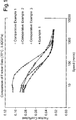
- Figure 1 represents graphically the results of Table 2 which were obtained under a low load of 0.82 GPa at 70°C for Example 1 and Comparative Examples 1 to 3. Such conditions are typical of those found in the valve train of an engine.
- Comparative Example 1 in Figure 1 shows the friction coefficients exhibited under low load conditions (0.82 GPa) by a lubricating oil composition comprising a conventional friction modifier combination of glycerol monooleate (GMO) and oleylamide with a standard viscosity index improver.
- GMO glycerol monooleate
- oleylamide oleylamide
- the lubricating oil composition of Comparative Example 3 comprises a combination of GMO and TMP monooleate with a standard viscosity index improver.
- Figure 1 shows that the lubricating oil composition of Comparative Example 3 exhibits much higher friction coefficients than the GMO/oleylamide/standard viscosity index improver combination of Comparative Example 1.
- the lubricating oil composition of Example 1 comprises a combination of GMO and TMP monooleate with a dispersant viscosity index improver.
- a GMO, TMP monooleate and dispersant viscosity index improver additive combination in Example 1 gives rise to a synergistic friction reduction. Indeed, the additive combination in Example 1 even outperforms the commonly used GMO/oleylamide friction modifier combination of Comparative Example 1.
Landscapes
- Chemical & Material Sciences (AREA)
- Chemical Kinetics & Catalysis (AREA)
- General Chemical & Material Sciences (AREA)
- Oil, Petroleum & Natural Gas (AREA)
- Organic Chemistry (AREA)
- Lubricants (AREA)
Priority Applications (1)
| Application Number | Priority Date | Filing Date | Title |
|---|---|---|---|
| EP07726446.3A EP1987117B1 (en) | 2006-02-21 | 2007-02-20 | Lubricating oil composition |
Applications Claiming Priority (3)
| Application Number | Priority Date | Filing Date | Title |
|---|---|---|---|
| EP06250923 | 2006-02-21 | ||
| PCT/EP2007/051625 WO2007096361A1 (en) | 2006-02-21 | 2007-02-20 | Lubricating oil composition |
| EP07726446.3A EP1987117B1 (en) | 2006-02-21 | 2007-02-20 | Lubricating oil composition |
Publications (2)
| Publication Number | Publication Date |
|---|---|
| EP1987117A1 EP1987117A1 (en) | 2008-11-05 |
| EP1987117B1 true EP1987117B1 (en) | 2017-12-20 |
Family
ID=36930389
Family Applications (1)
| Application Number | Title | Priority Date | Filing Date |
|---|---|---|---|
| EP07726446.3A Active EP1987117B1 (en) | 2006-02-21 | 2007-02-20 | Lubricating oil composition |
Country Status (9)
| Country | Link |
|---|---|
| US (1) | US7741258B2 (enExample) |
| EP (1) | EP1987117B1 (enExample) |
| JP (1) | JP5260322B2 (enExample) |
| KR (1) | KR20080094958A (enExample) |
| CN (1) | CN101384690B (enExample) |
| BR (1) | BRPI0707809B1 (enExample) |
| CA (1) | CA2643358A1 (enExample) |
| RU (1) | RU2451062C2 (enExample) |
| WO (1) | WO2007096361A1 (enExample) |
Families Citing this family (36)
| Publication number | Priority date | Publication date | Assignee | Title |
|---|---|---|---|---|
| KR101072023B1 (ko) | 2008-09-26 | 2011-10-10 | 엘지전자 주식회사 | 액체 저장 용기 및 그를 포함하는 의류 건조기 |
| EP2333036A1 (en) * | 2009-12-08 | 2011-06-15 | Shell Internationale Research Maatschappij B.V. | Lubricating composition comprising molybdenum compound and viscosity index improver |
| US20120196782A1 (en) * | 2011-01-28 | 2012-08-02 | Chevron U.S.A. Inc. | Rock Drill Oil |
| JP5959622B2 (ja) | 2011-05-04 | 2016-08-02 | ザ ルブリゾル コーポレイションThe Lubrizol Corporation | オートバイのエンジン用潤滑剤 |
| CN102229841A (zh) * | 2011-05-31 | 2011-11-02 | 北京嘉能陆伍新能源科技有限公司 | 生物液晶陶瓷合金润滑抗磨剂及其制备方法 |
| US20130165357A1 (en) * | 2011-12-22 | 2013-06-27 | Exxonmobil Research & Engineering Company | Lubricant compositions for SI-AL alloy surfaces and methods for using |
| JP6059529B2 (ja) * | 2012-12-26 | 2017-01-11 | 昭和シェル石油株式会社 | 内燃機関用潤滑油組成物 |
| FR3005474B1 (fr) * | 2013-05-07 | 2016-09-09 | Total Raffinage Marketing | Lubrifiant pour moteur marin |
| US9885004B2 (en) | 2013-12-23 | 2018-02-06 | Exxonmobil Research And Engineering Company | Method for improving engine fuel efficiency |
| US10190072B2 (en) | 2013-12-23 | 2019-01-29 | Exxonmobil Research And Engineering Company | Method for improving engine fuel efficiency |
| US20150175923A1 (en) * | 2013-12-23 | 2015-06-25 | Exxonmobil Research And Engineering Company | Method for improving engine fuel efficiency |
| CA2952066A1 (en) | 2014-06-18 | 2015-12-23 | The Lubrizol Corporation | Motorcycle engine lubricant |
| JP5941972B2 (ja) * | 2014-12-12 | 2016-06-29 | 出光興産株式会社 | 潤滑油組成物 |
| CA2977770C (en) | 2015-02-26 | 2024-02-20 | The Lubrizol Corporation | Aromatic tetrahedral borate compounds for lubricating compositions |
| CA2987635C (en) | 2015-06-12 | 2023-09-12 | The Lubrizol Corporation | Michael adduct amino esters as total base number boosters for marine diesel engine lubricating compositions |
| CA3007127A1 (en) | 2015-12-15 | 2017-06-22 | The Lubrizol Corporation | Sulfurized catecholate detergents for lubricating compositions |
| EP3472274B1 (en) | 2016-06-17 | 2024-08-07 | The Lubrizol Corporation | Lubricating compositions containing a polyisobutylene-substituted phenol |
| WO2017218654A1 (en) | 2016-06-17 | 2017-12-21 | The Lubrizol Corporation | Lubricating compositions |
| EP3472279A1 (en) | 2016-06-17 | 2019-04-24 | The Lubrizol Corporation | Lubricating compositions |
| SG11201810336RA (en) | 2016-06-17 | 2018-12-28 | Lubrizol Corp | Lubricating compositions |
| US10260019B2 (en) | 2016-06-30 | 2019-04-16 | The Lubrizol Corporation | Hydroxyaromatic succinimide detergents for lubricating compositions |
| JP7402683B2 (ja) | 2016-07-22 | 2023-12-21 | ザ ルブリゾル コーポレイション | 潤滑組成物のための脂肪族四面体ボレート化合物 |
| CN109790480A (zh) | 2016-09-12 | 2019-05-21 | 路博润公司 | 船用柴油发动机润滑组合物的总碱值增进剂 |
| WO2018125567A1 (en) | 2016-12-27 | 2018-07-05 | The Lubrizol Corporation | Lubricating composition with alkylated naphthylamine |
| US20190367833A1 (en) | 2016-12-27 | 2019-12-05 | The Lubrizol Corporation | Lubricating composition including n-alkylated dianiline |
| SG11202005407TA (en) | 2017-12-15 | 2020-07-29 | Lubrizol Corp | Alkylphenol detergents |
| CN108441292A (zh) * | 2018-02-28 | 2018-08-24 | 河南道骐汽车科技有限公司 | 一种长寿命环保型汽机油 |
| CN108251187A (zh) * | 2018-03-07 | 2018-07-06 | 苏州市黎光特种油品有限公司 | 一种船舶增压器用润滑油组合物及其制备方法 |
| WO2019245975A1 (en) * | 2018-06-17 | 2019-12-26 | Axsome Therapeutics, Inc. | Compositions for delivery of reboxetine |
| GB201817589D0 (en) * | 2018-10-29 | 2018-12-12 | Castrol Ltd | Lubricant compositions |
| CN109913299A (zh) * | 2019-03-22 | 2019-06-21 | 北京豪氏金洁碧润滑油有限公司 | 一种节能环保车用润滑油及其制备方法 |
| CN114096648A (zh) | 2019-06-24 | 2022-02-25 | 路博润公司 | 性能添加剂的连续声混合和包含性能添加剂的组合物 |
| EP4077601B1 (en) | 2019-12-18 | 2025-09-24 | The Lubrizol Corporation | Polymeric surfactant compound |
| DE102020111392A1 (de) * | 2020-04-27 | 2021-10-28 | Klüber Lubrication München Se & Co. Kg | Schmierstoffzusammensetzung und deren Verwendung |
| WO2024158648A1 (en) | 2023-01-24 | 2024-08-02 | The Lubrizol Corporation | Lubricating composition with phenolic antioxidant and low active sulfur |
| CN121548626A (zh) | 2023-07-27 | 2026-02-17 | 路博润公司 | 含有酚类抗氧化剂、水杨酸钙洗涤剂和低活性硫的润滑组合物 |
Family Cites Families (47)
| Publication number | Priority date | Publication date | Assignee | Title |
|---|---|---|---|---|
| US3506574A (en) * | 1967-03-20 | 1970-04-14 | Rohm & Haas | Lubricating oils and fuels containing graft copolymers |
| US3933659A (en) * | 1974-07-11 | 1976-01-20 | Chevron Research Company | Extended life functional fluid |
| FR2367780A1 (fr) | 1976-10-18 | 1978-05-12 | Shell Int Research | Copolymere sequence modifie utilisable comme additif dispersant et ameliorant l'indice de viscosi |
| GB1543359A (en) | 1976-10-28 | 1979-04-04 | Shell Int Research | Esterification of hydrocarbyl-substituted succinic anhydrides |
| US4282106A (en) * | 1979-10-05 | 1981-08-04 | Standard Oil Company (Indiana) | Low viscosity oils |
| GB2061958B (en) | 1979-10-24 | 1983-07-20 | Shell Int Research | Process for the preparation of polyalkenyl-substituted succinic anhydride |
| GB2097813B (en) * | 1981-05-06 | 1985-09-25 | Exxon Research Engineering Co | Glycerol esters in lubricating oils as fuel economy additives |
| US4683069A (en) * | 1981-05-06 | 1987-07-28 | Exxon Research & Engineering Co. | Glycerol esters as fuel economy additives |
| GB2115000B (en) | 1982-02-17 | 1985-02-06 | Shell Int Research | Lubricating oils and hydraulic fluids |
| US5114603A (en) * | 1988-02-08 | 1992-05-19 | Amoco Corporation | Friction reducing lubricating oil composition |
| CA1325420C (en) | 1988-03-31 | 1993-12-21 | Armgard Kohler Everett | Lubricating oil composition |
| US5286394A (en) * | 1989-06-27 | 1994-02-15 | Ethyl Corporation | Fuel economy and oxidation inhibition in lubricant compositions for internal combustion engines |
| CA2086757C (en) | 1990-07-31 | 2000-03-28 | Yasuhiko Yoneto | Synergystic blend of amine/amide and ester/alcohol friction modifying agents for improved fuel economy of an internal combustion engine |
| EP0668342B1 (en) | 1994-02-08 | 1999-08-04 | Shell Internationale Researchmaatschappij B.V. | Lubricating base oil preparation process |
| FR2726828A1 (fr) * | 1994-11-10 | 1996-05-15 | Rohm & Haas France | Additifs dispersants ameliorant l'indice de viscosite pour huiles lubrifiantes |
| US5512192A (en) | 1995-03-02 | 1996-04-30 | The Lubrizol Corporation | Dispersant-viscosity improvers for lubricating oil compositions |
| US5540851A (en) | 1995-03-02 | 1996-07-30 | The Lubrizol Corporation | Dispersant-viscosity improvers for lubricating oil compositions |
| US5858929A (en) | 1995-06-09 | 1999-01-12 | The Lubrizol Corporation | Composition for providing anti-shudder friction durability performance for automatic transmissions |
| US5969068A (en) | 1995-06-19 | 1999-10-19 | The Lubrizol Corporation | Dispersant-viscosity improvers for lubricating oil compositions |
| JP3935982B2 (ja) | 1995-10-19 | 2007-06-27 | 出光興産株式会社 | 油圧作動油組成物 |
| EP1365005B1 (en) | 1995-11-28 | 2005-10-19 | Shell Internationale Researchmaatschappij B.V. | Process for producing lubricating base oils |
| EP1389635A1 (en) | 1995-12-08 | 2004-02-18 | ExxonMobil Research and Engineering Company | Biodegradable high performance hydrocarbon base oils |
| DE69707714T2 (de) | 1996-12-13 | 2002-04-25 | Infineum Usa L.P., Linden | Organische molybdänkomplexe enthaltende schmierölzusammensetzungen |
| US5885942A (en) * | 1997-09-23 | 1999-03-23 | Nch Corporation | Multifunctional lubricant additive |
| US6090989A (en) | 1997-10-20 | 2000-07-18 | Mobil Oil Corporation | Isoparaffinic lube basestock compositions |
| AU2160799A (en) | 1997-12-12 | 1999-07-05 | Infineum Uk Ltd. | Method for the preparation of trinuclear molybdenum-sulfur compounds and their use as lubricant additives |
| US6059955A (en) | 1998-02-13 | 2000-05-09 | Exxon Research And Engineering Co. | Low viscosity lube basestock |
| US6143701A (en) | 1998-03-13 | 2000-11-07 | Exxon Chemical Patents Inc. | Lubricating oil having improved fuel economy retention properties |
| US5895779A (en) | 1998-03-31 | 1999-04-20 | Exxon Chemical Patents Inc | Lubricating oil having improved fuel economy retention properties |
| GB9813070D0 (en) | 1998-06-17 | 1998-08-19 | Exxon Chemical Patents Inc | Lubricant compositions |
| US6008164A (en) | 1998-08-04 | 1999-12-28 | Exxon Research And Engineering Company | Lubricant base oil having improved oxidative stability |
| US6475960B1 (en) | 1998-09-04 | 2002-11-05 | Exxonmobil Research And Engineering Co. | Premium synthetic lubricants |
| US6103099A (en) | 1998-09-04 | 2000-08-15 | Exxon Research And Engineering Company | Production of synthetic lubricant and lubricant base stock without dewaxing |
| US6080301A (en) | 1998-09-04 | 2000-06-27 | Exxonmobil Research And Engineering Company | Premium synthetic lubricant base stock having at least 95% non-cyclic isoparaffins |
| US6165949A (en) | 1998-09-04 | 2000-12-26 | Exxon Research And Engineering Company | Premium wear resistant lubricant |
| US6332974B1 (en) | 1998-09-11 | 2001-12-25 | Exxon Research And Engineering Co. | Wide-cut synthetic isoparaffinic lubricating oils |
| US6204224B1 (en) * | 1998-10-13 | 2001-03-20 | Baker Hughes Incorporated | Polyalkyl methacrylate copolymers for rheological modification and filtration control for ester and synthetic based drilling fluids |
| JP2000273480A (ja) | 1999-03-29 | 2000-10-03 | Asahi Denka Kogyo Kk | 潤滑性組成物 |
| FR2798136B1 (fr) | 1999-09-08 | 2001-11-16 | Total Raffinage Distribution | Nouvelle huile de base hydrocarbonee pour lubrifiants a indice de viscosite tres eleve |
| US6372696B1 (en) * | 1999-11-09 | 2002-04-16 | The Lubrizol Corporation | Traction fluid formulation |
| US7067049B1 (en) | 2000-02-04 | 2006-06-27 | Exxonmobil Oil Corporation | Formulated lubricant oils containing high-performance base oils derived from highly paraffinic hydrocarbons |
| US6331510B1 (en) * | 2001-02-13 | 2001-12-18 | The Lubrizol Corporation | Synthetic diesel engine lubricants containing dispersant-viscosity modifier and functionalized phenol detergent |
| US6803350B2 (en) | 2002-05-22 | 2004-10-12 | Chevron Oronite Company Llc | Lubricating compositions for friction material interfaces |
| US6562765B1 (en) * | 2002-07-11 | 2003-05-13 | Chevron Oronite Company Llc | Oil compositions having improved fuel economy employing synergistic organomolybdenum components and methods for their use |
| WO2004053033A1 (en) * | 2002-12-06 | 2004-06-24 | The Lubrizol Corporation | Molybdenum-containing lubricant for improved power or fuel economy |
| US20050148477A1 (en) * | 2004-01-05 | 2005-07-07 | The Lubrizol Corporation | Lubricating composition substantially free of ZDDP |
| JP4310286B2 (ja) * | 2004-03-31 | 2009-08-05 | 三菱重工業株式会社 | 潤滑油組成物 |
-
2007
- 2007-02-20 WO PCT/EP2007/051625 patent/WO2007096361A1/en not_active Ceased
- 2007-02-20 JP JP2008555781A patent/JP5260322B2/ja active Active
- 2007-02-20 BR BRPI0707809A patent/BRPI0707809B1/pt active IP Right Grant
- 2007-02-20 EP EP07726446.3A patent/EP1987117B1/en active Active
- 2007-02-20 RU RU2008137626/04A patent/RU2451062C2/ru active
- 2007-02-20 CN CN2007800060655A patent/CN101384690B/zh active Active
- 2007-02-20 CA CA002643358A patent/CA2643358A1/en not_active Abandoned
- 2007-02-20 KR KR1020087022814A patent/KR20080094958A/ko not_active Withdrawn
- 2007-02-21 US US11/677,386 patent/US7741258B2/en active Active
Also Published As
| Publication number | Publication date |
|---|---|
| CN101384690A (zh) | 2009-03-11 |
| CA2643358A1 (en) | 2007-08-30 |
| US7741258B2 (en) | 2010-06-22 |
| KR20080094958A (ko) | 2008-10-27 |
| BRPI0707809A2 (pt) | 2011-05-10 |
| RU2008137626A (ru) | 2010-03-27 |
| CN101384690B (zh) | 2011-05-18 |
| EP1987117A1 (en) | 2008-11-05 |
| RU2451062C2 (ru) | 2012-05-20 |
| US20080280795A1 (en) | 2008-11-13 |
| JP2009527613A (ja) | 2009-07-30 |
| BRPI0707809B1 (pt) | 2016-07-05 |
| WO2007096361A1 (en) | 2007-08-30 |
| JP5260322B2 (ja) | 2013-08-14 |
Similar Documents
| Publication | Publication Date | Title |
|---|---|---|
| US7741258B2 (en) | Lubricating oil composition | |
| EP1838821B1 (en) | Lubricating oil composition | |
| US20170275555A1 (en) | Lubricating composition | |
| EP1817396B1 (en) | Lubricating oil composition | |
| EP1788068A1 (en) | Lubricating oil composition | |
| EP3197986B1 (en) | Use of an ashless friction modifier | |
| WO2016032782A1 (en) | Methods for lubricating a diamond-like carbon coated surface, associated lubricating oil compositions and associated screening methods | |
| EP3336162A1 (en) | Lubricating composition | |
| WO2020007945A1 (en) | Lubricating composition | |
| WO2026093453A1 (en) | Antioxidant compositions containing phenolic antioxidants and alkyl alcohols for use in internal combustion engines | |
| US20140315770A1 (en) | Lubricating composition |
Legal Events
| Date | Code | Title | Description |
|---|---|---|---|
| PUAI | Public reference made under article 153(3) epc to a published international application that has entered the european phase |
Free format text: ORIGINAL CODE: 0009012 |
|
| 17P | Request for examination filed |
Effective date: 20080723 |
|
| AK | Designated contracting states |
Kind code of ref document: A1 Designated state(s): AT BE BG CH CY CZ DE DK EE ES FI FR GB GR HU IE IS IT LI LT LU LV MC NL PL PT RO SE SI SK TR |
|
| 17Q | First examination report despatched |
Effective date: 20090114 |
|
| DAX | Request for extension of the european patent (deleted) | ||
| STAA | Information on the status of an ep patent application or granted ep patent |
Free format text: STATUS: EXAMINATION IS IN PROGRESS |
|
| GRAP | Despatch of communication of intention to grant a patent |
Free format text: ORIGINAL CODE: EPIDOSNIGR1 |
|
| STAA | Information on the status of an ep patent application or granted ep patent |
Free format text: STATUS: GRANT OF PATENT IS INTENDED |
|
| INTG | Intention to grant announced |
Effective date: 20170817 |
|
| GRAS | Grant fee paid |
Free format text: ORIGINAL CODE: EPIDOSNIGR3 |
|
| GRAA | (expected) grant |
Free format text: ORIGINAL CODE: 0009210 |
|
| STAA | Information on the status of an ep patent application or granted ep patent |
Free format text: STATUS: THE PATENT HAS BEEN GRANTED |
|
| AK | Designated contracting states |
Kind code of ref document: B1 Designated state(s): AT BE BG CH CY CZ DE DK EE ES FI FR GB GR HU IE IS IT LI LT LU LV MC NL PL PT RO SE SI SK TR |
|
| REG | Reference to a national code |
Ref country code: GB Ref legal event code: FG4D |
|
| REG | Reference to a national code |
Ref country code: CH Ref legal event code: EP |
|
| REG | Reference to a national code |
Ref country code: IE Ref legal event code: FG4D |
|
| REG | Reference to a national code |
Ref country code: FR Ref legal event code: PLFP Year of fee payment: 12 |
|
| REG | Reference to a national code |
Ref country code: AT Ref legal event code: REF Ref document number: 956385 Country of ref document: AT Kind code of ref document: T Effective date: 20180115 |
|
| REG | Reference to a national code |
Ref country code: DE Ref legal event code: R096 Ref document number: 602007053459 Country of ref document: DE |
|
| RAP2 | Party data changed (patent owner data changed or rights of a patent transferred) |
Owner name: SHELL INTERNATIONALE RESEARCH MAATSCHAPPIJ B.V. |
|
| REG | Reference to a national code |
Ref country code: NL Ref legal event code: MP Effective date: 20171220 |
|
| PG25 | Lapsed in a contracting state [announced via postgrant information from national office to epo] |
Ref country code: FI Free format text: LAPSE BECAUSE OF FAILURE TO SUBMIT A TRANSLATION OF THE DESCRIPTION OR TO PAY THE FEE WITHIN THE PRESCRIBED TIME-LIMIT Effective date: 20171220 Ref country code: LT Free format text: LAPSE BECAUSE OF FAILURE TO SUBMIT A TRANSLATION OF THE DESCRIPTION OR TO PAY THE FEE WITHIN THE PRESCRIBED TIME-LIMIT Effective date: 20171220 Ref country code: SE Free format text: LAPSE BECAUSE OF FAILURE TO SUBMIT A TRANSLATION OF THE DESCRIPTION OR TO PAY THE FEE WITHIN THE PRESCRIBED TIME-LIMIT Effective date: 20171220 |
|
| REG | Reference to a national code |
Ref country code: LT Ref legal event code: MG4D |
|
| REG | Reference to a national code |
Ref country code: AT Ref legal event code: MK05 Ref document number: 956385 Country of ref document: AT Kind code of ref document: T Effective date: 20171220 |
|
| PG25 | Lapsed in a contracting state [announced via postgrant information from national office to epo] |
Ref country code: LV Free format text: LAPSE BECAUSE OF FAILURE TO SUBMIT A TRANSLATION OF THE DESCRIPTION OR TO PAY THE FEE WITHIN THE PRESCRIBED TIME-LIMIT Effective date: 20171220 Ref country code: GR Free format text: LAPSE BECAUSE OF FAILURE TO SUBMIT A TRANSLATION OF THE DESCRIPTION OR TO PAY THE FEE WITHIN THE PRESCRIBED TIME-LIMIT Effective date: 20180321 Ref country code: BG Free format text: LAPSE BECAUSE OF FAILURE TO SUBMIT A TRANSLATION OF THE DESCRIPTION OR TO PAY THE FEE WITHIN THE PRESCRIBED TIME-LIMIT Effective date: 20180320 |
|
| PG25 | Lapsed in a contracting state [announced via postgrant information from national office to epo] |
Ref country code: NL Free format text: LAPSE BECAUSE OF FAILURE TO SUBMIT A TRANSLATION OF THE DESCRIPTION OR TO PAY THE FEE WITHIN THE PRESCRIBED TIME-LIMIT Effective date: 20171220 |
|
| PG25 | Lapsed in a contracting state [announced via postgrant information from national office to epo] |
Ref country code: CY Free format text: LAPSE BECAUSE OF FAILURE TO SUBMIT A TRANSLATION OF THE DESCRIPTION OR TO PAY THE FEE WITHIN THE PRESCRIBED TIME-LIMIT Effective date: 20171220 Ref country code: EE Free format text: LAPSE BECAUSE OF FAILURE TO SUBMIT A TRANSLATION OF THE DESCRIPTION OR TO PAY THE FEE WITHIN THE PRESCRIBED TIME-LIMIT Effective date: 20171220 Ref country code: SK Free format text: LAPSE BECAUSE OF FAILURE TO SUBMIT A TRANSLATION OF THE DESCRIPTION OR TO PAY THE FEE WITHIN THE PRESCRIBED TIME-LIMIT Effective date: 20171220 Ref country code: ES Free format text: LAPSE BECAUSE OF FAILURE TO SUBMIT A TRANSLATION OF THE DESCRIPTION OR TO PAY THE FEE WITHIN THE PRESCRIBED TIME-LIMIT Effective date: 20171220 Ref country code: CZ Free format text: LAPSE BECAUSE OF FAILURE TO SUBMIT A TRANSLATION OF THE DESCRIPTION OR TO PAY THE FEE WITHIN THE PRESCRIBED TIME-LIMIT Effective date: 20171220 |
|
| PG25 | Lapsed in a contracting state [announced via postgrant information from national office to epo] |
Ref country code: AT Free format text: LAPSE BECAUSE OF FAILURE TO SUBMIT A TRANSLATION OF THE DESCRIPTION OR TO PAY THE FEE WITHIN THE PRESCRIBED TIME-LIMIT Effective date: 20171220 Ref country code: PL Free format text: LAPSE BECAUSE OF FAILURE TO SUBMIT A TRANSLATION OF THE DESCRIPTION OR TO PAY THE FEE WITHIN THE PRESCRIBED TIME-LIMIT Effective date: 20171220 Ref country code: IS Free format text: LAPSE BECAUSE OF FAILURE TO SUBMIT A TRANSLATION OF THE DESCRIPTION OR TO PAY THE FEE WITHIN THE PRESCRIBED TIME-LIMIT Effective date: 20180420 Ref country code: RO Free format text: LAPSE BECAUSE OF FAILURE TO SUBMIT A TRANSLATION OF THE DESCRIPTION OR TO PAY THE FEE WITHIN THE PRESCRIBED TIME-LIMIT Effective date: 20171220 Ref country code: IT Free format text: LAPSE BECAUSE OF FAILURE TO SUBMIT A TRANSLATION OF THE DESCRIPTION OR TO PAY THE FEE WITHIN THE PRESCRIBED TIME-LIMIT Effective date: 20171220 |
|
| REG | Reference to a national code |
Ref country code: CH Ref legal event code: PL |
|
| REG | Reference to a national code |
Ref country code: DE Ref legal event code: R097 Ref document number: 602007053459 Country of ref document: DE |
|
| PG25 | Lapsed in a contracting state [announced via postgrant information from national office to epo] |
Ref country code: MC Free format text: LAPSE BECAUSE OF FAILURE TO SUBMIT A TRANSLATION OF THE DESCRIPTION OR TO PAY THE FEE WITHIN THE PRESCRIBED TIME-LIMIT Effective date: 20171220 |
|
| PLBE | No opposition filed within time limit |
Free format text: ORIGINAL CODE: 0009261 |
|
| STAA | Information on the status of an ep patent application or granted ep patent |
Free format text: STATUS: NO OPPOSITION FILED WITHIN TIME LIMIT |
|
| 26N | No opposition filed |
Effective date: 20180921 |
|
| REG | Reference to a national code |
Ref country code: IE Ref legal event code: MM4A |
|
| REG | Reference to a national code |
Ref country code: BE Ref legal event code: MM Effective date: 20180228 |
|
| PG25 | Lapsed in a contracting state [announced via postgrant information from national office to epo] |
Ref country code: LU Free format text: LAPSE BECAUSE OF NON-PAYMENT OF DUE FEES Effective date: 20180220 Ref country code: CH Free format text: LAPSE BECAUSE OF NON-PAYMENT OF DUE FEES Effective date: 20180228 Ref country code: LI Free format text: LAPSE BECAUSE OF NON-PAYMENT OF DUE FEES Effective date: 20180228 Ref country code: DK Free format text: LAPSE BECAUSE OF FAILURE TO SUBMIT A TRANSLATION OF THE DESCRIPTION OR TO PAY THE FEE WITHIN THE PRESCRIBED TIME-LIMIT Effective date: 20171220 |
|
| PG25 | Lapsed in a contracting state [announced via postgrant information from national office to epo] |
Ref country code: IE Free format text: LAPSE BECAUSE OF NON-PAYMENT OF DUE FEES Effective date: 20180220 |
|
| PG25 | Lapsed in a contracting state [announced via postgrant information from national office to epo] |
Ref country code: SI Free format text: LAPSE BECAUSE OF FAILURE TO SUBMIT A TRANSLATION OF THE DESCRIPTION OR TO PAY THE FEE WITHIN THE PRESCRIBED TIME-LIMIT Effective date: 20171220 Ref country code: BE Free format text: LAPSE BECAUSE OF NON-PAYMENT OF DUE FEES Effective date: 20180228 |
|
| PG25 | Lapsed in a contracting state [announced via postgrant information from national office to epo] |
Ref country code: TR Free format text: LAPSE BECAUSE OF FAILURE TO SUBMIT A TRANSLATION OF THE DESCRIPTION OR TO PAY THE FEE WITHIN THE PRESCRIBED TIME-LIMIT Effective date: 20171220 |
|
| PG25 | Lapsed in a contracting state [announced via postgrant information from national office to epo] |
Ref country code: PT Free format text: LAPSE BECAUSE OF FAILURE TO SUBMIT A TRANSLATION OF THE DESCRIPTION OR TO PAY THE FEE WITHIN THE PRESCRIBED TIME-LIMIT Effective date: 20171220 Ref country code: HU Free format text: LAPSE BECAUSE OF FAILURE TO SUBMIT A TRANSLATION OF THE DESCRIPTION OR TO PAY THE FEE WITHIN THE PRESCRIBED TIME-LIMIT; INVALID AB INITIO Effective date: 20070220 |
|
| PGFP | Annual fee paid to national office [announced via postgrant information from national office to epo] |
Ref country code: FR Payment date: 20251208 Year of fee payment: 20 |
|
| PGFP | Annual fee paid to national office [announced via postgrant information from national office to epo] |
Ref country code: GB Payment date: 20260106 Year of fee payment: 20 |
|
| PGFP | Annual fee paid to national office [announced via postgrant information from national office to epo] |
Ref country code: DE Payment date: 20251224 Year of fee payment: 20 |