EP1979374B1 - Schablonenfixierte peptidomimetika - Google Patents
Schablonenfixierte peptidomimetika Download PDFInfo
- Publication number
- EP1979374B1 EP1979374B1 EP07700115A EP07700115A EP1979374B1 EP 1979374 B1 EP1979374 B1 EP 1979374B1 EP 07700115 A EP07700115 A EP 07700115A EP 07700115 A EP07700115 A EP 07700115A EP 1979374 B1 EP1979374 B1 EP 1979374B1
- Authority
- EP
- European Patent Office
- Prior art keywords
- dab
- amino acid
- trp
- product
- lys
- Prior art date
- Legal status (The legal status is an assumption and is not a legal conclusion. Google has not performed a legal analysis and makes no representation as to the accuracy of the status listed.)
- Active
Links
Classifications
-
- C—CHEMISTRY; METALLURGY
- C07—ORGANIC CHEMISTRY
- C07K—PEPTIDES
- C07K7/00—Peptides having 5 to 20 amino acids in a fully defined sequence; Derivatives thereof
- C07K7/64—Cyclic peptides containing only normal peptide links
-
- C—CHEMISTRY; METALLURGY
- C07—ORGANIC CHEMISTRY
- C07K—PEPTIDES
- C07K17/00—Carrier-bound or immobilised peptides; Preparation thereof
-
- A—HUMAN NECESSITIES
- A01—AGRICULTURE; FORESTRY; ANIMAL HUSBANDRY; HUNTING; TRAPPING; FISHING
- A01N—PRESERVATION OF BODIES OF HUMANS OR ANIMALS OR PLANTS OR PARTS THEREOF; BIOCIDES, e.g. AS DISINFECTANTS, AS PESTICIDES OR AS HERBICIDES; PEST REPELLANTS OR ATTRACTANTS; PLANT GROWTH REGULATORS
- A01N43/00—Biocides, pest repellants or attractants, or plant growth regulators containing heterocyclic compounds
- A01N43/34—Biocides, pest repellants or attractants, or plant growth regulators containing heterocyclic compounds having rings with one nitrogen atom as the only ring hetero atom
- A01N43/36—Biocides, pest repellants or attractants, or plant growth regulators containing heterocyclic compounds having rings with one nitrogen atom as the only ring hetero atom five-membered rings
-
- A—HUMAN NECESSITIES
- A61—MEDICAL OR VETERINARY SCIENCE; HYGIENE
- A61K—PREPARATIONS FOR MEDICAL, DENTAL OR TOILETRY PURPOSES
- A61K38/00—Medicinal preparations containing peptides
- A61K38/04—Peptides having up to 20 amino acids in a fully defined sequence; Derivatives thereof
-
- A—HUMAN NECESSITIES
- A61—MEDICAL OR VETERINARY SCIENCE; HYGIENE
- A61K—PREPARATIONS FOR MEDICAL, DENTAL OR TOILETRY PURPOSES
- A61K38/00—Medicinal preparations containing peptides
- A61K38/04—Peptides having up to 20 amino acids in a fully defined sequence; Derivatives thereof
- A61K38/08—Peptides having 5 to 11 amino acids
-
- A—HUMAN NECESSITIES
- A61—MEDICAL OR VETERINARY SCIENCE; HYGIENE
- A61K—PREPARATIONS FOR MEDICAL, DENTAL OR TOILETRY PURPOSES
- A61K38/00—Medicinal preparations containing peptides
- A61K38/04—Peptides having up to 20 amino acids in a fully defined sequence; Derivatives thereof
- A61K38/10—Peptides having 12 to 20 amino acids
-
- A—HUMAN NECESSITIES
- A61—MEDICAL OR VETERINARY SCIENCE; HYGIENE
- A61K—PREPARATIONS FOR MEDICAL, DENTAL OR TOILETRY PURPOSES
- A61K38/00—Medicinal preparations containing peptides
- A61K38/04—Peptides having up to 20 amino acids in a fully defined sequence; Derivatives thereof
- A61K38/12—Cyclic peptides, e.g. bacitracins; Polymyxins; Gramicidins S, C; Tyrocidins A, B or C
-
- A—HUMAN NECESSITIES
- A61—MEDICAL OR VETERINARY SCIENCE; HYGIENE
- A61P—SPECIFIC THERAPEUTIC ACTIVITY OF CHEMICAL COMPOUNDS OR MEDICINAL PREPARATIONS
- A61P1/00—Drugs for disorders of the alimentary tract or the digestive system
-
- A—HUMAN NECESSITIES
- A61—MEDICAL OR VETERINARY SCIENCE; HYGIENE
- A61P—SPECIFIC THERAPEUTIC ACTIVITY OF CHEMICAL COMPOUNDS OR MEDICINAL PREPARATIONS
- A61P1/00—Drugs for disorders of the alimentary tract or the digestive system
- A61P1/12—Antidiarrhoeals
-
- A—HUMAN NECESSITIES
- A61—MEDICAL OR VETERINARY SCIENCE; HYGIENE
- A61P—SPECIFIC THERAPEUTIC ACTIVITY OF CHEMICAL COMPOUNDS OR MEDICINAL PREPARATIONS
- A61P11/00—Drugs for disorders of the respiratory system
-
- A—HUMAN NECESSITIES
- A61—MEDICAL OR VETERINARY SCIENCE; HYGIENE
- A61P—SPECIFIC THERAPEUTIC ACTIVITY OF CHEMICAL COMPOUNDS OR MEDICINAL PREPARATIONS
- A61P11/00—Drugs for disorders of the respiratory system
- A61P11/06—Antiasthmatics
-
- A—HUMAN NECESSITIES
- A61—MEDICAL OR VETERINARY SCIENCE; HYGIENE
- A61P—SPECIFIC THERAPEUTIC ACTIVITY OF CHEMICAL COMPOUNDS OR MEDICINAL PREPARATIONS
- A61P13/00—Drugs for disorders of the urinary system
-
- A—HUMAN NECESSITIES
- A61—MEDICAL OR VETERINARY SCIENCE; HYGIENE
- A61P—SPECIFIC THERAPEUTIC ACTIVITY OF CHEMICAL COMPOUNDS OR MEDICINAL PREPARATIONS
- A61P17/00—Drugs for dermatological disorders
-
- A—HUMAN NECESSITIES
- A61—MEDICAL OR VETERINARY SCIENCE; HYGIENE
- A61P—SPECIFIC THERAPEUTIC ACTIVITY OF CHEMICAL COMPOUNDS OR MEDICINAL PREPARATIONS
- A61P17/00—Drugs for dermatological disorders
- A61P17/02—Drugs for dermatological disorders for treating wounds, ulcers, burns, scars, keloids, or the like
-
- A—HUMAN NECESSITIES
- A61—MEDICAL OR VETERINARY SCIENCE; HYGIENE
- A61P—SPECIFIC THERAPEUTIC ACTIVITY OF CHEMICAL COMPOUNDS OR MEDICINAL PREPARATIONS
- A61P19/00—Drugs for skeletal disorders
-
- A—HUMAN NECESSITIES
- A61—MEDICAL OR VETERINARY SCIENCE; HYGIENE
- A61P—SPECIFIC THERAPEUTIC ACTIVITY OF CHEMICAL COMPOUNDS OR MEDICINAL PREPARATIONS
- A61P25/00—Drugs for disorders of the nervous system
-
- A—HUMAN NECESSITIES
- A61—MEDICAL OR VETERINARY SCIENCE; HYGIENE
- A61P—SPECIFIC THERAPEUTIC ACTIVITY OF CHEMICAL COMPOUNDS OR MEDICINAL PREPARATIONS
- A61P25/00—Drugs for disorders of the nervous system
- A61P25/28—Drugs for disorders of the nervous system for treating neurodegenerative disorders of the central nervous system, e.g. nootropic agents, cognition enhancers, drugs for treating Alzheimer's disease or other forms of dementia
-
- A—HUMAN NECESSITIES
- A61—MEDICAL OR VETERINARY SCIENCE; HYGIENE
- A61P—SPECIFIC THERAPEUTIC ACTIVITY OF CHEMICAL COMPOUNDS OR MEDICINAL PREPARATIONS
- A61P27/00—Drugs for disorders of the senses
- A61P27/02—Ophthalmic agents
-
- A—HUMAN NECESSITIES
- A61—MEDICAL OR VETERINARY SCIENCE; HYGIENE
- A61P—SPECIFIC THERAPEUTIC ACTIVITY OF CHEMICAL COMPOUNDS OR MEDICINAL PREPARATIONS
- A61P27/00—Drugs for disorders of the senses
- A61P27/16—Otologicals
-
- A—HUMAN NECESSITIES
- A61—MEDICAL OR VETERINARY SCIENCE; HYGIENE
- A61P—SPECIFIC THERAPEUTIC ACTIVITY OF CHEMICAL COMPOUNDS OR MEDICINAL PREPARATIONS
- A61P29/00—Non-central analgesic, antipyretic or antiinflammatory agents, e.g. antirheumatic agents; Non-steroidal antiinflammatory drugs [NSAID]
-
- A—HUMAN NECESSITIES
- A61—MEDICAL OR VETERINARY SCIENCE; HYGIENE
- A61P—SPECIFIC THERAPEUTIC ACTIVITY OF CHEMICAL COMPOUNDS OR MEDICINAL PREPARATIONS
- A61P31/00—Antiinfectives, i.e. antibiotics, antiseptics, chemotherapeutics
-
- A—HUMAN NECESSITIES
- A61—MEDICAL OR VETERINARY SCIENCE; HYGIENE
- A61P—SPECIFIC THERAPEUTIC ACTIVITY OF CHEMICAL COMPOUNDS OR MEDICINAL PREPARATIONS
- A61P31/00—Antiinfectives, i.e. antibiotics, antiseptics, chemotherapeutics
- A61P31/04—Antibacterial agents
-
- A—HUMAN NECESSITIES
- A61—MEDICAL OR VETERINARY SCIENCE; HYGIENE
- A61P—SPECIFIC THERAPEUTIC ACTIVITY OF CHEMICAL COMPOUNDS OR MEDICINAL PREPARATIONS
- A61P31/00—Antiinfectives, i.e. antibiotics, antiseptics, chemotherapeutics
- A61P31/12—Antivirals
- A61P31/14—Antivirals for RNA viruses
- A61P31/18—Antivirals for RNA viruses for HIV
-
- A—HUMAN NECESSITIES
- A61—MEDICAL OR VETERINARY SCIENCE; HYGIENE
- A61P—SPECIFIC THERAPEUTIC ACTIVITY OF CHEMICAL COMPOUNDS OR MEDICINAL PREPARATIONS
- A61P35/00—Antineoplastic agents
-
- A—HUMAN NECESSITIES
- A61—MEDICAL OR VETERINARY SCIENCE; HYGIENE
- A61P—SPECIFIC THERAPEUTIC ACTIVITY OF CHEMICAL COMPOUNDS OR MEDICINAL PREPARATIONS
- A61P37/00—Drugs for immunological or allergic disorders
- A61P37/02—Immunomodulators
- A61P37/04—Immunostimulants
-
- A—HUMAN NECESSITIES
- A61—MEDICAL OR VETERINARY SCIENCE; HYGIENE
- A61P—SPECIFIC THERAPEUTIC ACTIVITY OF CHEMICAL COMPOUNDS OR MEDICINAL PREPARATIONS
- A61P9/00—Drugs for disorders of the cardiovascular system
-
- C—CHEMISTRY; METALLURGY
- C07—ORGANIC CHEMISTRY
- C07K—PEPTIDES
- C07K1/00—General methods for the preparation of peptides, i.e. processes for the organic chemical preparation of peptides or proteins of any length
- C07K1/10—General methods for the preparation of peptides, i.e. processes for the organic chemical preparation of peptides or proteins of any length using coupling agents
-
- C—CHEMISTRY; METALLURGY
- C07—ORGANIC CHEMISTRY
- C07K—PEPTIDES
- C07K14/00—Peptides having more than 20 amino acids; Gastrins; Somatostatins; Melanotropins; Derivatives thereof
-
- C—CHEMISTRY; METALLURGY
- C07—ORGANIC CHEMISTRY
- C07K—PEPTIDES
- C07K14/00—Peptides having more than 20 amino acids; Gastrins; Somatostatins; Melanotropins; Derivatives thereof
- C07K14/001—Peptides having more than 20 amino acids; Gastrins; Somatostatins; Melanotropins; Derivatives thereof by chemical synthesis
-
- C—CHEMISTRY; METALLURGY
- C07—ORGANIC CHEMISTRY
- C07K—PEPTIDES
- C07K7/00—Peptides having 5 to 20 amino acids in a fully defined sequence; Derivatives thereof
- C07K7/04—Linear peptides containing only normal peptide links
- C07K7/06—Linear peptides containing only normal peptide links having 5 to 11 amino acids
-
- C—CHEMISTRY; METALLURGY
- C07—ORGANIC CHEMISTRY
- C07K—PEPTIDES
- C07K7/00—Peptides having 5 to 20 amino acids in a fully defined sequence; Derivatives thereof
- C07K7/04—Linear peptides containing only normal peptide links
- C07K7/08—Linear peptides containing only normal peptide links having 12 to 20 amino acids
-
- A—HUMAN NECESSITIES
- A61—MEDICAL OR VETERINARY SCIENCE; HYGIENE
- A61K—PREPARATIONS FOR MEDICAL, DENTAL OR TOILETRY PURPOSES
- A61K38/00—Medicinal preparations containing peptides
Definitions
- the present invention provides template-fixed ⁇ -hairpin peptidomimetics incorporating a template-fixed chain of 12 ⁇ -amino acid residues which, depending on their positions in the chain, are as defined herein below. These template-fixed ⁇ -hairpin mimetics have a selective antimicrobial activity.
- the present invention provides efficient synthetic processes by which these compounds can, if desired, be made in parallel library-format. These ⁇ -hairpin peptidomimetics show improved efficacy, bioavailability, half-life and most importantly a significantly enhanced ratio between antibacterial activity on the one hand, and hemolysis of red blood cells on the other.
- cationic peptides such as protegrin 1 ( A. Aumelas, M. Mangoni, C. Roumestand, L. Chiche, E. Despaux, G. Grassy, B. Calas, A. Chavanieu, A. Eur. J. Biochem. 1996, 237, 575-583 ; R. L. Fahrner, T. Dieckmann, S. S.
- Gramicidin S is a backbone-cyclic peptide with a well defined ⁇ -hairpin structure ( S. E. Hull, R. Karlsson, P. Main, M. M. Woolfson, E. J. Dodson, Nature 1978, 275, 206-275 ) that displays potent antimicrobial activity against gram-positive and gram-negative bacteria ( L. H. Kondejewski, S. W. Farmer, D. S. Wishart, R. E. Hancock, R. S. Hodges, Int. J. Peptide Prot. Res. 1996, 47, 460-466 ).
- the high hemolytic activity of gramicidin S has, however, hindered its widespread use as an antibiotic.
- RTD-1 A new cyclic antimicrobial peptide RTD-1 was reported recently from primate leukocytes ( Y.-Q. Tang, J. Yuan, G. ⁇ sapay, K. ⁇ sapay, D. Tran, C. J. Miller, A. J. Oellette, M. E. Selsted, Science 1999, 286, 498-502 .
- This peptide contains three disulfide bridges, which act to constrain the cyclic peptide backbone into a hairpin geometry. Cleavage of the three disulfide bonds leads to a significant loss of antimicrobial activity.
- Analogues of protegrins J. P. Tam, C. Wu, J.-L. Yang, Eur. J. Biochem.
- protegrin analogues such as IB367 ( J. Chen, T. J. Falla, H. J. Liu, M. A. Hurst, C. A. Fujii, D. A. Mosca, J. R. Embree, D. J. Loury, P. A. Radel, C. C. Chang, L. Gu, J. C. Fiddes, Biopolymers 2000, 55, 88-98 ; C. Chang, L. Gu, J.
- Protegrin 1 exhibits potent and similar activity against gram-positive and gram-negative bacteria as well as fungi in both low- and high-salt assays. This broad antimicrobial activity combined with a rapid mode of action, and their ability to kill bacteria resistant to other classes of antibiotics, make them attractive targets for development of clinically useful antibiotics.
- the activity against gram-positive bacteria is typically higher than against gram-negative bacteria.
- protegrin 1 also exhibits a high hemolytic activity against human red blood cells, and hence a low selectivity towards microbial cells.
- protegrin 1 may exist in two different states as it interacts with membranes, and these states are strongly influenced by lipid composition.
- Studies of cyclic protegrin analogues J.-P. Tam, C. Wu, J.-L. Yang, Eur. J. Biochem. 2000, 267, 3289-3300 ) have revealed, that an increase in the conformational rigidity, resulting from backbone cyclization and multiple disulfide bridges, may confer membranolytic selectivity that dissociates antimicrobial activity from hemolytic activity, at least in the series of compounds studied.
- Protegrin 1 is an 18 residues linear peptide, with an amidated carboxyl terminus and two disulfide bridges.
- Tachyplesin I contains 17 residues, also has an amidated carboxyl terminus and contains two disulfide bridges.
- Recently described backbone-cyclic protegrin and tachyplesin analogues typically contain 18 residues and up to three disulfide bridges ( J. P. Tam, C. Wu, J.-L. Yang, Eur. J. Biochem. 2000, 267, 3289-3300 ; J. P. Tam, Y.-A. Lu, J.-L. Yang, Biochemistry 2000, 39, 7159-7169 ; N. Sitaram, R. Nagaraij, Biochem. Biophys. Res. Comm. 2000, 267, 783-790 ).
- Cathelicidin a 37-residue linear helical-type cationic peptide, and analogues are currently under investigation as inhaled therapeutic agents for cystic fibrosis(CF) lung disease ( L. Saiman, S. Tabibi, T. D. Starner, P. San Gabriel, P. L. Winokur, H. P. Jia, P. B. McGray, Jr., B. F. Tack, Antimicrob. Agents and Chemother. 2001, 45, 2838-2844 ; R. E. W. Hancock, R. Lehrer, Trends Biotechnol. 1998, 16, 82-88 ). Over 80% of CF patients become chronically infected with pseudomonas aeruginosa ( C. A.
- a new strategy is introduced to stabilize ⁇ -hairpin conformations in backbone-cyclic cationic peptide mimetics exhibiting selective antimicrobial activity. This involves transplanting the cationic and hydrophobic hairpin sequence onto a template, whose function is to restrain the peptide loop backbone into a hairpin geometry.
- Antibacterial template - fixed peptidomimetics and methods for their synthesis have been described in International Patent applications WO-A-02/070547 and WO-A-2004/018503 but these molecules do not exhibit high plasma stability selectivity and particularly high potency. Further antibacterial template-fixed peptidomimetics have been described in WO-A-2004/033489 .
- the methods described herein allow the synthesis and screening of large hairpin mimetic libraries, which in turn considerably facilitates structure-activity studies, and hence the discovery of new molecules with potent selective antimicrobial and very low hemolytic activity to human red blood cells.
- the present strategy allows to synthesize ⁇ -hairpin peptidomimetics with novel selectivities towards various multi-drug resistant pseudomonas- strains.
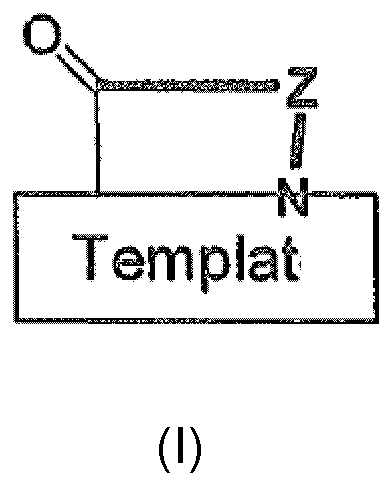
- the ⁇ -hairpin peptidomimetics of the present invention are compounds of the general formula wherein is D Pro- L Pro or L Pro- D Pro, and Z is a chain of 12 ⁇ -amino acid residues, the positions of said amino acid residues in said chain being counted starting from the N-terminal amino acid, whereby these amino acid residues are, in positions P1 to P12 of the chain,
- ⁇ -hairpin peptidomimetics can be prepared by a process which comprises
- the peptidomimetics of the present invention can be prepared by
- the peptidomimetics of the present invention can also be enantiomers of the compounds of formula I. These enantiomers can be prepared by a modification of the above processes in which enantiomers of all chiral starting materials are used.
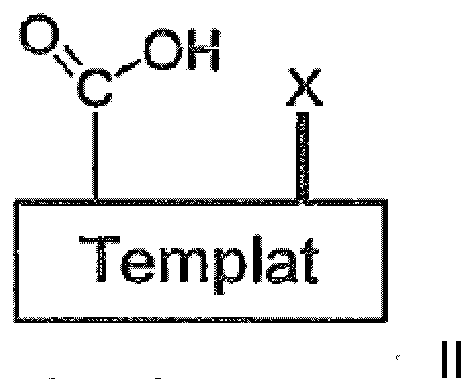
- the template (a) through (p) constitute a building block which has an N-terminus and a C-terminus oriented in space in such a way that the distance between those two groups may lie between 4.0-5.5A.
- a peptide chain Z is linked to the C-terminus and the N-terminus of the template via the corresponding N- and C-termini so that the template and the chain form a cyclic structure as depicted in formula I.
- the template will induce the H-bond network necessary for the formation of a ⁇ -hairpin conformation in the peptide chain Z.
- template and peptide chain form a ⁇ -hairpin mimetic.
- the ⁇ -hairpin conformation is highly relevant for the anti-bacterial activity of the ⁇ -hairpin mimetics of the present invention.
- the ⁇ -hairpin stabilizing conformational properties of the template play a key role not only for the selective antibacterial activity but also for the synthetic processes defined hereinabove, as incorporation of the templates at the beginning or near the middle of the linear protected peptide precursors enhances cyclization yields significantly.
- Preferred amino acids residues in the chain Z are derived from natural ⁇ -amino acids.
- amino acids which, or the residues of which, are suitable for the purposes of the present invention, the abbreviations corresponding to generally adopted usual practice:
- Three letter code one letter code Ala L-Alanine A Asn L-Asparagine N Asp L-Aspartic acid
- D Glu L-Glutamic acid
- E Gln L-Glutamine
- Ile L-Isoleucine I Lys L-Lysine K Pro L-Proline P Thr L-Threonine T Trp L-Tryptophan W Tyr L-Tyrosine Y Val L-Valine V
- the peptidic chain Z within the ⁇ -hairpin mimetics of the invention comprises 12 amino acid residues.
- the positions P1 to P12 of each amino acid residue in the chain Z are unequivocally defined as follows: P1 represents the first amino acid in the chain Z that is coupled with its N-terminus to the C-terminus of the template and P12 represents the last amino acid in the chain Z that is coupled with its C-terminus to the N-terminus of the template.
- Particularly preferred ⁇ -hairpin peptidomimetics of the invention include those described in Examples 1, 2, 6, 16,19, 22,24,25, 28, 29, 32, 35, 40, 41,49, 50.
- the processes of the invention can advantageously be carried out as parallel array syntheses to yield libraries of template-fixed ⁇ -hairpin peptidomimetics of the above general formula I.
- Such parallel syntheses allow one to obtain arrays of numerous (normally 24 to 192, typically 96) compounds of general formula I in high yields and defined purities, minimizing the formation of dimeric and polymeric by-products.
- the proper choice of the functionalized solid-support (i.e. solid support plus linker molecule), templates and site of cyclization play thereby key roles.
- the functionalized solid support is conveniently derived from polystyrene crosslinked with, preferably 1-5%, divinylbenzene; polystyrene coated with polyethyleneglycol spacers (Tentagel R ); and polyacrylamide resins (see also Obrecht, D.; Villalgordo, J.-M, “Solid-Supported Combinatorial and Parallel Synthesis of Small-Molecular-Weight Compound Libraries", Tetrahedron Organic Chemistry Series, Vol. 17, Pergamon, Elsevier Science, 1998 ).
- the solid support is functionalized by means of a linker, i.e. a bifunctional spacer molecule which contains on one end an anchoring group for attachment to the solid support and on the other end a selectively cleavable functional group used for the subsequent chemical transformations and cleavage procedures.
- a linker i.e. a bifunctional spacer molecule which contains on one end an anchoring group for attachment to the solid support and on the other end a selectively cleavable functional group used for the subsequent chemical transformations and cleavage procedures.
- linker i.e. a bifunctional spacer molecule which contains on one end an anchoring group for attachment to the solid support and on the other end a selectively cleavable functional group used for the subsequent chemical transformations and cleavage procedures.
- Type 1 linkers are designed to release the amide group under acidic conditions ( Rink H, Tetrahedron Lett.1987, 28, 3783-3790 ).
- Linkers of this kind form amides of the carboxyl group of the amino acids; examples of resins functionalized by such linker structures include 4-[(((2,4-dimethoxyphenyl)Fmoc-aminomethyl)phenoxyacetamido) aminomethyl] PS resin, 4-[(((2,4-dimethoxyphenyl)Fmoc-aminomethyl)phenoxyacetamido) aminomethyl] -4-methylbenzydrylamine PS resin (Rink amide MBHA PS Resin), and 4-[(((2,4-dimethoxyphenyl)Fmoc-aminomethyl)phenoxyacetamido) aminomethyl] benzhydrylamine PS-resin (Rink amide BHA PS resin).
- the support is derived from polystyrene crosslinked with, most preferably 1-5%, divinylbenzene and functionalized by means of the 4- (((2,4-dimethoxyphenyl)Fmoc-aminomethyl)phenoxyacetamido) linker.
- Type 2 linkers are designed to eventually release the carboxyl group under acidic conditions.
- Linkers of this kind form acid-labile esters with the carboxyl group of the amino acids, usually acid-labile benzyl, benzhydryl and trityl esters; examples of such linker structures include 2-methoxy-4-hydroxymethylphenoxy (Sasrin R linker), 4-(2,4-dimethoxyphenyl-hydroxymethyl)-phenoxy (Rink linker), 4-(4-hydroxymethyl-3-methoxyphenoxy)butyric acid (HMPB linker), trityl and 2-chlorotrityl.
- the support is derived from polystyrene crosslinked with, most preferably 1-5%, divinylbenzene and functionalized by means of the 2-chlorotrityl linker.
- reaction vessels normally 24 to 192, typically 96
- 25 to 1000 mg preferably 100 mg
- of the appropriate functionalized solid support preferably 1 to 3% cross-linked polystyrene or Tentagel resin.
- the solvent to be used must be capable of swelling the resin and includes, but is not limited to, dichloromethane (DCM), dimethylformamide (DMF), N-methylpyrrolidone (NMP), dioxane, toluene, tetrahydrofuran (THF), ethanol (EtOH), trifluoroethanol (TFE), isopropylalcohol and the like.
- Solvent mixtures containing as at least one component a polar solvent e. g. 20% TFE/DCM, 35% THF/NMP
- Suitable protecting groups for amino acids and, respectively, for their residues are, for example, - for the amino group (as is present e. g. also in the side-chain of lysine)
- Trt triphenymethyl or trityl - for the carboxyl group (as is present e. g.
- the 9-fluorenylmethoxycarbonyl- (Fmoc)-protected amino acid derivatives are preferably used as the building blocks for the construction of the template-fixed ⁇ -hairpin loop mimetics of formula I.
- For the deprotection, i. e. cleaving off of the Fmoc group 20% piperidine in DMF or 2% DBU/2% piperidine in DMF can be used.
- the quantity of the reactant i. e. of the amino acid derivative, is usually 1 to 20 equivalents based on the milliequivalents per gram (meq/g) loading of the functionalized solid support (typically 0.1 to 2.85 meq/g for polystyrene resins) originally weighed into the reaction tube. Additional equivalents of reactants can be used, if required, to drive the reaction to completion in a reasonable time.
- the reaction tubes, in combination with the holder block and the manifold, are reinserted into the reservoir block and the apparatus is fastened together. Gas flow through the manifold is initiated to provide a controlled environment, for example, nitrogen, argon, air and the like. The gas flow may also be heated or chilled prior to flow through the manifold.
- Heating or cooling of the reaction wells is achieved by heating the reaction block or cooling externally with isopropanol/dry ice and the like to bring about the desired synthetic reactions. Agitation is achieved by shaking or magnetic stirring (within the reaction tube).
- the preferred workstations are Labsource's Combi-chem station and MultiSyn Tech's-Syro synthesizer.
- Amide bond formation requires the activation of the ⁇ -carboxyl group for the acylation step.
- this activation is being carried out by means of the commonly used carbodiimides such as dicyclohexylcarbodiimide (DCC, Sheehan & Hess, J. Am. Chem. Soc. 1955, 77, 1067-1068 ) or diisopropylcarbodiimide (DIC, Sarantakis et al Biochem. Biophys. Res. Commun.1976, 73, 336-342 ), the resulting dicyclohexylurea and diisopropylurea is insoluble and, respectively, soluble in the solvents generally used.
- DCC dicyclohexylcarbodiimide
- DIC Diisopropylcarbodiimide
- 1-hydroxybenzotriazole In a variation of the carbodiimide method 1-hydroxybenzotriazole (HOBt, König & Geiger, Chem. Ber 1970,103, 788-798 ) is included as an additive to the coupling mixture. HOBt prevents dehydration, suppresses racemization of the activated amino acids and acts as a catalyst to improve the sluggish coupling reactions.
- Certain phosphonium reagents have been used as direct coupling reagents, such as benzotriazol-1-yl-oxy-tris-(dimethylamino)-phosphonium hexafluorophosphate (BOP, Castro et al., Tetrahedron Lett.
- DPPA diphenoxyphosphoryl azide
- TATU O-(7-aza-benzotriazol-1-yl)-N,N,N',N'-tetramethyluronium tetrafluoroborate
- HATU O-(7-azabenzotriazol-1-yl)-N,N,N',N'-tetramethyluronium hexafluorophosphate
- HOAt Carpino et al., Tetrahedron Lett. 1994, 35, 2279-2281
- Both of the above washing procedures are repeated up to about 50 times (preferably about 10 times), monitoring the efficiency of reagent, solvent and by-product removal by methods such as TLC, GC, or inspection of the washings.
- Detachment of the fully protected linear peptide from the solid support is achieved by immersion of the reaction tubes, in combination with the holder block and manifold, in reaction wells containing a solution of the cleavage reagent (preferably 3 to 5 ml). Gas flow, temperature control, agitation and reaction monitoring are implemented as described above and as desired to effect the detachment reaction.
- the reaction tubes, in combination with the holder block and manifold are disassembled from the reservoir block and raised above the solution level but below the upper lip of the reaction wells, and gas pressure is applied through the manifold inlet (while closing the outlet) to efficiently expel the final product solution into the reservoir wells.
- the resin remaining in the reaction tubes is then washed 2 to 5 times as above with 3 to 5 ml of an appropriate solvent to extract (wash out) as much of the detached product as possible.
- the product solutions thus obtained are combined, taking care to avoid cross-mixing.
- the individual solutions/extracts are then manipulated as needed to isolate the final compounds. Typical manipulations include, but are not limited to, evaporation, concentration, liquid/liquid extraction, acidification, basification, neutralization or additional reactions in solution.
- the solvent is removed by evaporation, the fully protected cyclic peptide derivative is dissolved in a solvent which is not miscible with water, such as DCM, and the solution is extracted with water or a mixture of water-miscible solvents, in order to remove any excess of the coupling reagent.
- a solvent which is not miscible with water such as DCM
- the fully protected peptide derivative is treated with 95% TFA, 2.5% H 2 O, 2.5% TIS or another combination of scavengers for effecting the cleavage of protecting groups.
- the cleavage reaction time is commonly 30 minutes to 12 hours, preferably about 2.5 hours.
- the volatiles are evaporated to dryness and the crude peptide is dissolved in 20% AcOH in water and extracted with isopropyl ether or other solvents which are suitable therefor.
- the aqueous layer is collected and evaporated to dryness, and the fully deprotected cyclic peptide derivative of formula I is obtained as end-product.
- this peptide derivative can be used directly for biological assays, or it has to be further purified, for example by preparative HPLC.
- the detachment, cyclisation and complete deprotection of the fully protected peptide from the solid support can be achieved manually in glass vessels.
- the ⁇ -hairpin peptidomimetics of the invention can be used in a wide range of applications in order to inhibit the growth of or to kill microorganisms.
- they can be used to selectively inhibit the growth of or to kill microorganisms such as Pseudomonas aeruginosa.
- ⁇ -hairpin peptidomimetics of the invention can also be used to treat or prevent diseases related to microbial infection in plants and animals.
- the ⁇ -hairpin peptidomimetics can be added to the desired material singly, as mixtures of several ⁇ -hairpin peptidomimetics or in combination with other antimicrobial agents.
- the ⁇ -hairpin peptidomimetics may be administered per se or may be applied as an appropriate formulation together with carriers, diluents or excipients well known in the art.
- infections related to respiratory diseases such as cystic fibrosis, emphysema and asthma
- infections related to skin or soft tissue diseases such as surgical wounds, traumatic wounds and burn wounds
- infections related to gastrointestinal diseases such as epidemic diarrhea, necrotizing enterocolitis and typhlitis
- infections related to eye diseases such as keratitis and endophthalmitis
- infections related to ear diseases such as otitis, infections related to CNS diseases such as brain abscess and meningitis
- infections related to bone diseases such as osteochondritis and osteomyelitis
- infections related to cardiovascular diseases such as endocartitis and pericarditis
- gastrourinal diseases such as epididymitis, prostatitis and urethritis
- the ⁇ -hairpin peptidomimetics can be administered singly, as mixtures of several ⁇ -hairpin peptidomimetics, in combination with other antimicrobial or antibiotic agents, or anti cancer agents
- compositions comprising ⁇ -hairpin peptidomimetics of the invention may be manufactured by means of conventional mixing, dissolving, granulating, coated tablet-making, levigating, emulsifying, encapsulating, entrapping or lyophilizing processes.
- Pharmaceutical compositions may be formulated in conventional manner using one or more physiologically acceptable carriers, diluents, excipients or auxiliaries which facilitate processing of the active ⁇ -hairpin peptidomimetics into preparations which can be used pharmaceutically. Proper formulation depends upon the method of administration chosen.
- ⁇ -hairpin peptidomimetics of the invention may be formulated as solutions, gels, ointments, creams, suspensions, etc. as are well-known in the art.
- Systemic formulations include those designed for administration by injection, e.g. subcutaneous, intravenous, intramuscular, intrathecal or intraperitoneal injection, as well as those designed for transdermal, transmucosal, oral or pulmomary administration.
- the ⁇ -hairpin peptidomimetics of the invention may be formulated in adequate solutions, preferably in physiologically compatible buffers such as Hink's solution, Ringer's solution, or physiological saline buffer.
- the solution may contain formulatory agents such as suspending, stabilizing and/or dispersing agents.
- the ⁇ -hairpin peptidomimetics of the invention may be in powder form for combination with a suitable vehicle, e.g., sterile pyrogen-free water, before use.
- penetrants appropriate to the barrier to be permeated are used in the formulation as known in the art.
- the compounds can be readily formulated by combining the active ⁇ -hairpin peptidomimetics of the invention with pharmaceutically acceptable carriers well known in the art.
- Such carriers enable the ⁇ -hairpin peptidomimetics of the invention to be formulated as tablets, pills, dragees, capsules, liquids, gels, syrups, slurries, suspensions etc., for oral ingestion of a patient to be treated.
- suitable excipients include fillers such as sugars, such as lactose, sucrose, mannitol and sorbitol; cellulose preparations such as maize starch, wheat starch, rice starch, potato starch, gelatin, gum tragacanth, methyl cellulose, hydroxypropylmethyl cellulose, sodium carboxymethylcellulose, and/or polyvinylpyrrolidone (PVP); granulating agents; and binding agents.
- desintegrating agents may be added, such as cross-linked polyvinylpyrrolidones, agar, or alginic acid or a salt thereof, such as sodium alginate.
- solid dosage forms may be sugar-coated or enteric-coated using standard techniques.
- suitable carriers, excipients or diluents include water, glycols, oils, alcohols, etc.
- flavoring agents, preservatives, coloring agents and the like may be added.
- the composition may take the form of tablets, lozenges, etc. formulated as usual.
- the ⁇ -hairpin peptidomimetics of the invention are conveniently delivered in form of an aeorosol spray from pressurized packs or a nebulizer, with the use of a suitable propellant, e.g. dichlorodifluoromethane, trichlorofluromethane, carbon dioxide or another suitable gas.
- a suitable propellant e.g. dichlorodifluoromethane, trichlorofluromethane, carbon dioxide or another suitable gas.
- the dose unit may be determined by providing a valve to deliver a metered amount.
- Capsules and cartridges of e.g. gelatin for use in an inhaler or insufflator may be formulated containing a powder mix of the ⁇ -hairpin peptidomimetics of the invention and a suitable powder base such as lactose or starch.
- the compounds may also be formulated in rectal or vaginal compositions such as suppositories together with appropriate suppository bases such as cocoa butter or other glycerides.
- the ⁇ -hairpin peptidomimetics of the invention may also be formulated as depot preparations. Such long acting formulations may be administered by implantation (e.g. subcutaneously or intramuscularly) or by intramuscular injection.
- the ⁇ -hairpin peptidomimetics of the invention may be formulated with suitable polymeric or hydrophobic materials (e.g. as an emulsion in an acceptable oil) or ion exchange resins, or as sparingly soluble salts.
- ⁇ -hairpin peptidomimetics of the invention may be delivered using a sustained-release system, such as semipermeable matrices of solid polymers containing the therapeutic agent.
- sustained-release materials have been established and are well known by those skilled in the art. Sustained-release capsules may, depending on their chemical nature, release the compounds for a few weeks up to over 100 days. Depending on the chemical nature and the biological stability of the therapeutic agent, additional strategies for protein stabilization may be employed.
- ⁇ -hairpin pepdidomimetics of the invention may contain charged residues, they may be included in any of the above-described formulations as such or as pharmaceutically acceptable salts.
- Pharmaceutically acceptable salts tend to be more soluble in aqueous and other protic solvents than are the corresponding free base forms.
- ⁇ -hairpin peptidomimetics of the invention will generally be used in an amount effective to achieve the intended purpose. It is to be understood that the amount used will depend on a particular application.
- an antimicrobially effective amount of a ⁇ -hairpin peptidomimetic of the invention, or a composition thereof is applied or added to the material to be desinfected or preserved.
- antimicrobially effective amount is meant an amount of a ⁇ -hairpin peptidomimetic of the invention, or a composition thereof, that inhibits the growth of, or is lethal to, a target microbe population. While the antimicrobially effective amount will depend on a particular application, for use as desinfectants or preservatives the ⁇ -hairpin peptidomimetics of the invention, or compositions thereof, are usually added or applied to the material to be desinfected or preserved in relatively low amounts.
- the ⁇ -hairpin peptidomimetics of the invention comprise less than about 5% by weight of a desinfectant solution or material to be preserved, preferably less than 1% by weight and more preferably less than 0.1% by weight.
- a desinfectant solution or material to be preserved preferably less than 1% by weight and more preferably less than 0.1% by weight.
- An ordinary skilled expert will be able to determine antimicrobially effective amounts of particular ⁇ -hairpin pepdidomimetics of the invention for particular applications without undue experimentation using, for example, the in vitro assays provided in the examples.
- the ⁇ -hairpin pepidomimetics of the invention, or compositions thereof are administered or applied in a therapeutically effective amount.
- therapeutically effective amount is meant an amount effective in ameliorating the symptoms of, or in ameliorating, treating or preventing microbial infections or diseases related thereto. Determination of a therapeutically effective amount is well within the capacities of those skilled in the art, especially in view of the detailed disclosure provided herein.
- a therapeutically effective dose can be determined using, for example, the in vitro assays provided in the examples.
- the treatment may be applied while the infection is visible, or even when it is not visible.
- An ordinary skilled expert will be able to determine therapeutically effective amounts to treat topical infections without undue experimentation.
- a therapeutically effective dose can be estimated initially from in vitro assays.
- a dose can be formulated in animal models to achieve a circulating ⁇ -hairpin peptidomimetic concentration range that includes the IC 50 as determined in the cell culture (i.e. the concentration of a test compound that is lethal to 50% of a cell culture), the MIC, as determined in cell culture (i.e. the concentration of a test compound that is lethal to 100% of a cell culture).
- IC 50 as determined in the cell culture
- the MIC as determined in cell culture
- Such information can be used to more accurately determine useful doses in humans.
- Initial dosages can also be determined from in vivo data, e.g. animal models, using techniques that are well known in the art. One having ordinary skills in the art could readily optimize administration to humans based on animal data.
- Dosage amount for applications as antimicrobial agents may be adjusted individually to provide plasma levels of the ⁇ -hairpin peptidomimetics of the invention which are sufficient to maintain the therapeutic effect.
- Therapeutically effective serum levels may be achieved by administering multiple doses each day.
- the effective local concentration of the ⁇ -hairpin peptidomimetics of the invention may not be related to plasma concentration.
- One having the skills in the art will be able to optimize therapeutically effective local dosages without undue experimentation.
- the amount of ⁇ -hairpin peptidomimetics administered will, of course, be dependent on the subject being treated, on the subject's weight, the severity of the affliction, the manner of administration and the judgement of the prescribing physician.
- the antimicrobial therapy may be repeated intermittently while infections are detectable or even when they are not detectable.
- the therapy may be provided alone or in combination with other drugs, such as for example antibiotics or other antimicrobial agents.
- a therapeutically effective dose of the ⁇ -hairpin peptidomimetics described herein will provide therapeutic benefit without causing substantial toxicity.
- Hemolysis of red blood cells is often employed for assessment of toxicity of related compounds such as protegrin or tachyplesin. Values are given as %-lysis of red blood cells observed at a concentration of 100 ⁇ g/ml. Typical values determined for cationic peptides such as protegrin and tachyplesin range between 30-40% with average MIC-values of 1-5 ⁇ g/ml over a wide range of pathogens. Normally, ⁇ -hairpin peptidomimetics of the invention will show hemolysis in a range of 0.5-10%, often in a range of 1-5%, at activity levels comparable to those mentioned above for protegrin and tachyplesin. Thus preferred compounds exhibit low MIC-values and low %-hemolysis of red blood cells observed at a concentration of 100 ⁇ g/ml.
- Toxicity of the ⁇ -hairpin peptidomimetics of the invention herein can be determined by standard pharmaceutical procedures in cell cultures or experimental animals, e.g., by determining the LD 50 (the dose lethal to 50% of the population) or the LD 100 (the dose lethal to 100% of the population).
- the dose ratio between toxic and therapeutic effect is the therapeutic index. Compounds which exhibit high therapeutic indices are preferred.
- the data obtained from these cell culture assays and animal studies can be used in formulating a dosage range that is not toxic for use in humans.
- the dosage of the ⁇ -hairpin peptidomimetics of the invention lies preferably within a range of circulating concentrations that include the effective dose with little or no toxicity.
- the dosage may vary within the range depending upon the dosage form employed and the route of administration utilized.
- the exact formulation, route of administration and dose can be chosen by the individual physician in view of the patient's condition (see, e.g. Fingl et al. 1975, In : The Pharmacological Basis of Therapeutics, Ch.1, p.1 ).
- the resin was shaken (CH 2 Cl 2 /MeOH/DIEA : 17/2/1), 30 ml for 30 min; then washed in the following order with CH 2 Cl 2 (1x), DMF (1x), CH 2 Cl 2 (1x), MeOH (1x), CH 2 Cl 2 (1x), MeOH (1x), CH 2 Cl 2 (2x), Et 2 O (2x) and dried under vacuum for 6 hours. Loading was typically 0.6-0.7 mMol/g.
- the following preloaded resin was prepared: Fmoc-Pro-2-chlorotritylresin.
- the synthesis was carried out using a Syro-peptide synthesizer (Multisyntech) using 24 to 96 reaction vessels. In each vessel were placed 60 mg (weight of the resin before loading) of the above resin.
- the following reaction cycles were programmed and carried out: Step Reagent Time 1 CH 2 Cl 2 , wash and swell (manual) 3 x 1 min. 2 DMF, wash and swell 1 x 5 min 3 40 % piperidine/DMF 2 x 5 min. 4 DMF, wash 5 x 2 min. 5 5 equiv. Fmoc amino acid/DMF + 5 eq. HCTU + 5 eq. DIEA 2 x 60 min. 6 DMF, wash 4 x 2 min. 7 CH 2 Cl 2 , wash (at the end of the synthesis) 3 x 2 min.
- Steps 3 to 6 are repeated to add each amino-acid.
- Method 1 Analytical HPLC retention times (RT, in minutes) were determined using an Jupiter Proteo column ( 90A , 150 x 2.0 mm, cod 00F4396-B0- Phenomenex ) with the following solvents A (H 2 O + 0.1% TFA) and B (CH 3 CN + 0.1% TFA) and the gradient: 0 min: 95%A, 5%B; 20 min: 40%A 60%B; 21-23 min: 0%A, 100%B; 23.1-30 min: 95% A, 5%B.
- Aquity UPLC BEH C18 column (1.7 ⁇ m, 100 x 2.1 mm, cod. 186002352 - Waters) with the following solvents A (H 2 O + 0.1% TFA) and B (CH 3 CN + 0.085% TFA) and the gradient: 0 min: 95%A, 5%B; 0.2 min: 95%A 5%B; 4 min: 35%A, 65%B; 4.2 min: 5% A, 95%B; 4.25 min: 95%A, 5%B; 4.9 min: 95%A, 5%B.
- the resin was suspended in 1 ml (0.39 mMol) of 1% TFA in CH 2 Cl 2 (v/v) for 3 minutes and filtered, and the filtrate was neutralized with 1ml (1.17 mMol, 3eq.) of 20% DIEA in CH 2 Cl 2 (v/v). This procedure was repeated twice to ensure completion of the cleavage.
- the resin was washed with 2ml of CH 2 Cl 2 .
- the CH 2 Cl 2 layer was evaporated to dryness.
- the fully protected linear peptide was solubilised in 8 ml of dry DMF. Then 2 eq. of HATU in dry DMF (1ml) and 4 eq. of DIPEA in dry DMF (1 ml) were added to the peptide, followed by stirring for 16 h. The volatiles were evaporated to dryness. The crude cyclic peptide was dissolved in 7 ml of CH 2 Cl 2 and extracted with 10% acetonitrile in water (4.5 ml) three times. The CH 2 Cl 2 layer was evaporated to dryness. To fully deprotect the peptide, 3 ml of cleavage cocktail TFA:TIS:H 2 O (95:2.5:2.5) were added, and the mixture was stirred for 2.5 h.
- Examples 1-50 are shown in Table 1.
- the peptides were synthesized starting with the amino acid L-Pro which was grafted to the resin.
- Starting resin was Fmoc-Pro-2-chlorotrityl resin, which was prepared as described above.
- the linear peptides were synthesized on solid support according to the procedure described above in the following sequence: Resin-Pro- D Pro-P12-P11-P10-P9-P8-P7-P6-P5-P4-P3-P2-P1.
- Ex. 1-50 were cleaved from the resin, cyclized, deprotected and purified as indicated by preparative reverse phase LC-MS.
- HPLC-retention times were determined using the analytical methods as described above. Examples 1 to 39 were analysed with method 1, for Examples 40-50 method 2 was used :
- Ex. 1 (8.87), Ex. 2 (9.26), Ex. 3 (9.34), Ex. 4 (9.45), Ex. 5 (9.48), Ex. 6 (9.44), Ex. 7 (10.11), Ex. 8 (9.99), Ex. 9 (10.22), Ex. 10 (9.76), Ex. 11 (10.56), Ex. 12 (11.37), Eg. 13 (9.13), Ex. 14 (9.34), Ex. 15 (8.80), Ex. 16 (9.23); Ex. 17 (9.65), Ex. 18 (9.18), Ex. 19 (8.37), Ex. 20 (8.86), Ex. 21 (8.78), Ex. 22 (9.32), Ex. 23 (9.58), Ex. 24 (9.27), Ex. 25 (9.31), Ex. 26 (9.24), Ex. 27 (9.23), Ex.
- Lyophilized peptides were weighed on a Microbalance (Mettler MT5) and dissolved in sterile water to a final concentration of 1 mg/ml unless stated otherwise. Stock solutions were kept at +4°C, light protected.
- the selective antimicrobial activities of the peptides were determined in 96-well plates (Nunclon polystyrene) by the standard NCCLS broth microdilution method (see ref 1, below) with slight modifications. Innocula of the microorganisms were diluted into Mueller-Hinton (MH) broth + 0.02% BSA and compared with a 0.5 Mcfarland standard to give appr. 10 6 colony forming units (CFU)/ml. Aliquots (50 ⁇ l) of inoculate were added to 50 ⁇ l of MH broth + 0.02% BSA containing the peptide in serial two-fold dilutions.
- the following microorganisms were used to determine antibiotic selectivity of the peptides: Escherichia coli (ATCC 25922), Pseudomonas aeruginosa (P. aeruginosa ATCC 27853, P8191900, P1021903, P1021913, IMP 1 Livermore 3140).
- Antimicrobial activities of the peptides were expressed as the minimal inhibitory concentration (MIC) in ⁇ g/ml at which no visible growth was observed after 18-20 hours of incubation at 37°C.
- cytotoxicity of the peptides to HELA cells (Acc57) and COS-7 cells (CRL-1651) was determined using the MTT reduction assay [see ref. 2 and 3, below]. Briefly the method was as follows: HELA cells and COS-7 cells were seeded at 7.0x10 3 and, respectively, 4.5x10 3 cells per well and grown in 96-well microtiter plates for 24 hours at 37°C at 5% CO 2 . At this point, time zero (Tz) was determined by MTT reduction (see below). The supernatant of the remaining wells was discarded, and fresh medium and the peptides in serial dilutions of 12.5, 25 and 50 ⁇ M were dispensed into the wells.
- Each peptide concentration was assayed in triplicate. Incubation of the cells was continued for 48 hours at 37°C at 5% CO 2 . Wells were then washed once with phosphate buffered saline (PBS) and subsequently 100 ⁇ l MTT reagent (0.5 mg/ml in medium RPMI1640 and, respectively, DMEM) were added to the wells. This was incubated at 37°C for 2 hours and subsequently the medium was aspirated and 100 ⁇ l isopropanol were added to each well. The absorbance at 595 nm of the solubilized product was measured (OD 595 peptide). For each concentration averages were calculated from triplicates. The percentage of growth was calculated as follows: (OD 595 peptide-OD 595 Tz-OD 595 Empty well) / (OD 595 Tz-OD 595 Empty well) x 100% and was plotted for each peptide concentration.
- PBS phosphate buffered saline
- the peptides were tested for their hemolytic activity against human red blood cells (hRBC). Fresh hRBC were washed three times with phosphate buffered saline (PBS) by centrifugation for 10 min at 2000 x g. Peptides at a concentration of 100 ⁇ M were incubated with 20% v/v hRBC for 1 hour at 37°C. The final erythrocyte concentration was approximately 0.9x10 9 cells per ml. A value of 0% and, respectively,. 100% cell lysis was determined by incubation of the hRBC in the presence of PBS alone and, respectively, 0.1% Triton X-100 in H 2 O.
- PBS phosphate buffered saline
- the filtrates in the receiver PP plate were analysed by LC/MS as follows: Column: Jupiter C18 (Phenomenex), mobile phases: (A) 0.1% formic acid in water and (B) acetonitrile, gradient: 5%-100% (B) in 2 minutes, electrospray ionization, MRM detection (triple quadrupole). The peak areas were determined and triplicate values were averaged. The binding was expressed in percent of the (filtered and not-filtered time point 0 min) control 1 and 2 by: 100-(100 x T 60 /T 0 ). The average from these values was then calculated.
- the plate containing eluates was introduced into the concentrator system and taken to dryness.
- the residues were dissolved in 100 ⁇ L of formic acid 0.1%/acetonitrile, 95/5 (v/v) and analysed in the HPLC/MS on a reverse phase analytical column (Jupiter C18, 50 x 2.0 mm, 5 ⁇ m, Phenomenex), using gradient elution (mobile phases A: 0.1% formic acid in water, B: Acetonitrile; from 5%B to 100%B in 2 min.).
- Samples coming from animal treatments were pooled in order to obtain an appropriate volume for the extraction. If the total volume obtained was less than 0.2 ml the appropriate amount of "blank" mouse plasma was added in order to keep the matrix identical to the calibration curve. Samples were than spiked with IS and processed as described for the calibration curve.
- the area under the curve AUC was calculated by the linear trapezoidal rule.
- Elimination half-life was calculated by the linear regression on at least three data points during the elimination phase.
- the time intervals selected for the half-life determinations were evaluated by the correlation coefficient (r 2 ), which should be at least above 0.85 and most optimally above 0.96.
- r 2 correlation coefficient
- the initial concentration at t zero was determined by extrapolation of the curve through the first two time points.
- bioavailability after i.p. administration was calculated from the normalised AUCinf_D_obs ration after s.c. versus i.v. administration.
- mice Groups of 6 CD-1 (Crl.) derived male mice weighing 24 ⁇ 2 g were used. The mice were each inoculated intravenously (IV) with an LD90-100 of Pseudomonas aeruginosa (ATCC 27853) (9 x 10⁶ CFU/0.5ml/mouse) in brain heart infusion broth without 5% mucin. Compound at doses of 5, 2.5, 1, 0.5, 0.25 and 0.1 mg/kg, vehicle (0.9% NaCl, 10 ml/kg) was administered subcutaneously (SC) to test animals at 1hour after bacterial inoculation. Also, an additional group was treated twice with compound at a dose of 5mg/kg at 1 and 6 hours after bacterial inoculation.
- SC subcutaneously
- aeruginosa IMP1 Livermore 3140 Average MIC Cytotoxicity GI 50 Hela cells Hemolysis at 100 ⁇ g/ml 1 0.03 0.07 0.07 0.13 0.18 0.10 30 0.5 2 0.04 0.10 0.16 0.18 0.24 0.15 50 0.3 3 0.09 0.30 0.30 0.31 2.0 0.6 34 0.6 4 0.75 1.50 1.50 2.50 >2.0 >1 40 0.6 5 0.08 0.30 0.21 0.21 0.75 0.31 50 0.6 6 0.05 0.10 0.09 0.16 0.24 0.13 50 0.2 7 0.13 0.50 1.50 0.65 >2 >1 13 0.8 8 0.05 0.18 0.18 0.31 0.43 0.23 50 0 9 0.21 0.75 1.50 0.75 >2 >1 50 0.7 10 0.05 0.18 0.13 0.37 0.43 0.23 50 0 11 0.30 1.00 2.00 0.75 >2 >1 50 0.5 12 0.40 1.00 2.00 0.75 >2 >1 50 0.7 13 0.21 0.30 0.40 0.31 0.75 0.40 50 0.4 14 0.21 0.40 0.31 0.65
- Ex. 1 After intravenous administration of Ex. 1 at a dose level of 1 mg/kg body weight, Ex. 1 followed intravenous kinetic characteristics. After PK analysis, Ex. 1 showed an extrapolated C initial of 2174 ng/ml and a C max observed of 1268 ng/ml at 5 min. Plasma levels rapidly decreased to 575 and 177 ng/ml at 15 min and 1 hour respectively. From 0.5 to 2 h plasma levels decreased with an elimination half-life of 0.53 h to 10.6 ng/ml at 3 h. The AUCINF_obs amounted to 679.5 ng.h/ml.
- Ex. 1 After subcutaneous administration of Ex. 1 at a dose level of 5 mg/kg body weight, plasma levels of Ex. 1 increased the first 0.5-1 h and showed a C max of 2333 ng/ml. From 0.5 to 8 h plasma levels decreased with an elimination half-life of 0.95 h to 7.3 ng/ml at 8 h. The AUCINF_obs amounted to 4016.5 ng.h/ml.
Landscapes
- Health & Medical Sciences (AREA)
- Chemical & Material Sciences (AREA)
- Life Sciences & Earth Sciences (AREA)
- Organic Chemistry (AREA)
- General Health & Medical Sciences (AREA)
- Medicinal Chemistry (AREA)
- Pharmacology & Pharmacy (AREA)
- Veterinary Medicine (AREA)
- Public Health (AREA)
- Animal Behavior & Ethology (AREA)
- Proteomics, Peptides & Aminoacids (AREA)
- Engineering & Computer Science (AREA)
- Chemical Kinetics & Catalysis (AREA)
- General Chemical & Material Sciences (AREA)
- Bioinformatics & Cheminformatics (AREA)
- Nuclear Medicine, Radiotherapy & Molecular Imaging (AREA)
- Molecular Biology (AREA)
- Biochemistry (AREA)
- Biophysics (AREA)
- Genetics & Genomics (AREA)
- Gastroenterology & Hepatology (AREA)
- Immunology (AREA)
- Epidemiology (AREA)
- Neurology (AREA)
- Communicable Diseases (AREA)
- Oncology (AREA)
- Biomedical Technology (AREA)
- Pulmonology (AREA)
- Neurosurgery (AREA)
- Dermatology (AREA)
- Virology (AREA)
- Environmental Sciences (AREA)
- Wood Science & Technology (AREA)
- Dentistry (AREA)
- Plant Pathology (AREA)
- Zoology (AREA)
- Analytical Chemistry (AREA)
- Pest Control & Pesticides (AREA)
- Agronomy & Crop Science (AREA)
- Ophthalmology & Optometry (AREA)
Claims (29)
- Verbindungen der allgemeinen Formel
 - P1: Ala, Cit, Thr, Asp, Glu;- P2: Trp, Tyr;- P3: Ile, Val, Nle, Chg, Cha;- P4: Dab, Lys, Gln;- P5: Lys, Dab, Orn;- P6: Dab, DDab, Lys;- P7: His, Lys, Gln, Dab;- P8: Tyr, Trp, Ser;- P9: Dab, Lys;- P10: Dab, Lys;- P11: Ala, Abu, Thr, Gly, Pro, Hse, Ile, Nva, DAla, DVal, Aib, Nle, Chg, Cha, Gln, Asp, Glu, Cpa, t-BuG, Leu, Val, Asn; und- P12: Dab, Lys, Gln, Ser;und deren pharmazeutisch verwendbare Salze.
 - Eine Verbindung der Formel I gemäss Anspruch 1, wobei die Aminosäurereste in den Positionen 1-12 wie folgt sind:- P1: Thr;- P2: Trp;- P3: Ile;- P4: Dab;- P5: Lys;- P6: Dab;- P7: Dab;- P8: Trp;- P9: Dab;- P10: Dab;- P11: Ala; und- P12: Dab.
- Eine Verbindung der Formel I gemäss Anspruch 1, wobei die Aminosäurereste in den Positionen 1-12 wie folgt sind:- P1: Thr;- P2: Trp;- P3: Ile;- P4: Dab;- P5: Lys;- P6: Dab;- P7: Dab;- P8: Trp;- P9: Dab;- P10: Dab;- P11: Gly; und- P12: Dab.
- Eine Verbindung der Formel I gemäss Anspruch 1, wobei die Aminosäurereste in den Positionen 1-12 wie folgt sind:- P1: Thr;- P2: Trp;- P3: Ile;- P4: Dab;- P5: Lys;- P6: Dab;- P7: Dab;- P8: Trp;- P9: Dab;- P10: Dab;- P11: Abu; und- P12: Dab.
- Eine Verbindung der Formel I gemäss Anspruch 1, wobei die Aminosäurereste in den Positionen 1-12 wie folgt sind:- P1: Thr;- P2: Trp;- P3: Ile;- P4: Dab;- P5: Lys;- P6: Dab;- P7: Dab;- P8: Trp;- P9: Dab;- P10: Dab;- P11: Thr; und- P12: Dab.
- Eine Verbindung der Formel I gemäss Anspruch 1, wobei die Aminosäurereste in den Positionen 1-12 wie folgt sind:- P1: Thr;- P2: Tyr;- P3: Ile;- P4: Dab;- P5: Lys;- P6: Dab;- P7: Dab;- P8: Trp;- P9: Dab;- P10: Dab;- P11: Ala; und- P12: Dab.
- Eine Verbindung der Formel I gemäss Anspruch 1, wobei die Aminosäurereste in den Positionen 1-12 wie folgt sind:- P1: Ala;- P2: Trp;- P3: Ile;- P4: Dab;- P5: Lys;- P6: Dab;- P7: Dab;- P8: Trp;- P9: Dab;- P10: Dab;- P11: Ala; und- P12: Dab.
- Eine Verbindung der Formel I gemäss Anspruch 1, wobei die Aminosäurereste in den Positionen 1-12 wie folgt sind:- P1: Thr;- P2: Trp;- P3: Ile;- P4: Lys;- P5: Lys;- P6: Dab;- P7: Dab;- P8: Trp;- P9: Dab;- P10: Dab;- P11: Ala; und- P12: Dab.
- Eine Verbindung der Formel I gemäss Anspruch 1, wobei die Aminosäurereste in den Positionen 1-12 wie folgt sind:- P1: Thr;- P2: Trp;- P3: Ile;- P4: Dab;- P5: Lys;- P6: Lys;- P7: Dab;- P8: Trp;- P9: Dab;- P10: Dab;- P11: Ala; und- P12: Dab.
- Eine Verbindung der Formel I gemäss Anspruch 1, wobei die Aminosäurereste in den Positionen 1-12 wie folgt sind:- P1: Thr;- P2: Trp;- P3: Ile;- P4: Dab;- P5: Lys;- P6: Dab;- P7: Dab;- P8: Trp;- P9: Dab;- P10: Dab;- P11: Ala; und- P12: Lys.
- Eine Verbindung der Formel I gemäss Anspruch 1, wobei die Aminosäurereste in den Positionen 1-12 wie folgt sind:- P1: Thr;- P2: Trp;- P3: Ile;- P4: Gln;- P5: Lys;- P6: Dab;- P7: Dab;- P8: Trp;- P9: Dab;- P10: Dab;- P11: Ala; und- P12: Dab.
- Eine Verbindung der Formel I gemäss Anspruch 1, wobei die Aminosäurereste in den Positionen 1-12 wie folgt sind:- P1: Thr;- P2: Trp;- P3: Val;- P4: Dab;- P5: Lys;- P6: Dab;- P7: Dab;- P8: Trp;- P9: Dab;- P10: Dab;- P11: Ala; und- P12: Dab.
- Eine Verbindung der Formel I gemäss Anspruch 1, wobei die Aminosäurereste in den Positionen 1-12 wie folgt sind:- P1: Thr;- P2: Trp;- P3: Ile;- P4: Dab;- P5: Lys;- P6: Dab;- P7: Dab;- P8: Trp;- P9: Dab;- P10: Dab;- P11: Hse; und- P12: Dab.
- Eine Verbindung der Formel I gemäss Anspruch 1, wobei die Aminosäurereste in den Positionen 1-12 wie folgt sind:- P1: Thr;- P2: Trp;- P3: Ile;- P4: Gln;- P5: Lys;- P6: Dab;- P7: Dab;- P8: Trp;- P9: Dab;- P10: Dab;- P11: Ala; und- P12: Gln.
- Eine Verbindung der Formel I gemäss Anspruch 1, wobei die Aminosäurereste in den Positionen 1 - 12 wie folgt sind:- P1: Glu;- P2: Trp;- P3: Ile;- P4: Dab;- P5: Lys;- P6: DDab;- P7: Dab;- P8: Trp;- P9: Dab;- P10: Dab;- P11: Ala; und- P12: Gln.
- Eine Verbindung der Formel I gemäss Anspruch 1, wobei die Aminosäurereste in den Positionen 1 - 12 wie folgt sind:- P1: Thr;- P2: Trp;- P3: Ile;- P4: Dab;- P5: Orn;- P6: DDab;- P7: Dab;- P8: Trp;- P9: Dab;- P10: Dab;- P11: Ala; und- P12: Ser.
- Eine Verbindung der Formel I gemäss Anspruch 1, wobei die Aminosäurereste in den Positionen 1 - 12 wie folgt sind:- P1: Glu;- P2: Trp;- P3: Ile;- P4: Gln;- P5: Lys;- P6: Dab;- P7: Dab;- P8: Ser;- P9: Dab;- P10: Dab;- P11: Ala; und- P12: Ser.
- Enantiomere der Verbindungen der Formel I, wie in Anspruch 1 definiert.
- Verbindungen gemäss einem der Ansprüche 1 bis 18 zur Verwendung als therapeutisch wirksame Substanzen.
- Verbindungen gemäss Anspruch 18 mit selektiver antimikrobieller Aktivität, insbesondere gegen Pseudomonas aeruginosa.
- Eine pharmazeutische Zusammensetzung, eine Verbindung gemäss einem der Ansprüche 1 bis 18 und einen pharmazeutisch inerten Träger enthaltend.
- Zusammensetzungen gemäss Anspruch 21 in einer Form, die sich zur oralen, topischen, transdermalen, injizierten, bukkalen, transmukosalen, pulmonalen oder inhalativen Verabreichung eignet.
- Zusammensetzungen gemäss Anspruch 21 oder 22 in Form von Tabletten, Dragees, Kapseln, Lösungen, Flüssigkeiten, Gelen, Pflastern, Cremes, Salben, Sirupen, Aufschlämmungen, Suspensionen, eines Sprays, Verneblers oder von Zäpfchen.
- Die Verwendung von Verbindungen gemäss einem der Ansprüche 1 bis 18 für die Herstellung eines Medikaments zur Behandlung oder Verbeugung von Infektionen oder Erkrankungen, die mit solchen Infektionen in Verbindung stehen.
- Die Verwendung gemäss Anspruch 24, wobei die Infektionen mit Erkrankungen der Atemwege, wie zystische Fibrose, Emphysem und Asthma, in Verbindung stehen; mit Erkrankungen der Haut oder von Weichgewebe, wie chirurgische Wunden, traumatische Wunden oder Brandwunden, in Verbindung stehen; mit Magen-Darm-Erkrankungen, wie epidemischer Durchfall, nekrotisierende Enterokolitis oder Blinddarmentzündung, in Verbindung stehen; mit Erkrankungen der Augen, wie Keratitis oder Endophthalmitis, in Verbindung stehen; mit Erkrankungen der Ohren, wie Otitis, in Verbindung stehen; mit Erkrankungen des ZNS, wie Hirnabszess oder Hirnhautentzündung, in Verbindung stehen; mit Erkrankungen der Knochen, wie Osteochondritis oder Osteomyelitis, in Verbindung stehen; mit kardiovaskulären Erkrankungen, wie Endokarditis oder Perikarditis, in Verbindung stehen; mit gastrourinalen Erkrankungen, wie Epididymitis, Prostatitis oder Urethritis, in Verbindung stehen; mit Krebs in Verbindung stehen oder mit HIV in Verbindung stehen.
- Die Verwendung von Verbindungen gemäss einem der Ansprüche 1 bis 18 als Desinfektionsmittel oder Konservierungsmittel für Lebensmittel, Kosmetika, Medikamente und andere nährstoffhaltige Materialien.
- Ein Verfahren für die Herstellung von Verbindungen gemäss einem der Ansprüche 1-17, wobei das Verfahren folgendes umfasst:(a) Koppeln eines in geeigneter Weise funktionalisierten festen Trägers mit einem in geeigneter Weise N-geschützten Derivat derjenigen Aminosäure, die in dem gewünschten Endprodukt in Position 5, 6 oder 7 ist, wobei eine beliebige funktionelle Gruppe, die in dem N-geschützten Aminosäurederivat vorhanden sein kann, ebenfalls in geeigneter Weise geschützt ist;(b) Entfernen der N-Schutzgruppe von dem derart erhaltenen Produkt;(c) Koppeln des derart erhaltenen Produkts mit einem in geeigneter Weise N-geschützten Derivat derjenigen Aminosäure, die in dem gewünschten Endprodukt eine Position näher an dem N-terminalen Aminosäurerest ist, wobei jede beliebige funktionelle Gruppe, die in dem N-geschützten Aminosäurederivat vorhanden sein kann, ebenfalls in geeigneter Weise geschützt ist;(d) Entfernen der N-Schutzgruppe von dem derart erhaltenen Produkt;(e) Wiederholen der Schritte (c) und (d), bis der N-terminale Aminosäurerest eingeführt worden ist;(f) Koppeln des derart erhaltenen Produkts mit einer Verbindung der allgemeinen Formel

 (fa) Koppeln des in Schritt (e) erhaltenen Produkts mit einem in geeigneter Weise N-geschützten Derivat von LPro oder DPro;(fb) Entfernen der N-Schutzgruppe von dem derart erhaltenen Produkt; und(fc) Koppeln des derart erhaltenen Produkts mit einem in geeigneter Weise N-geschützten Derivat von LPro oder DPro;(g) Entfernen der N-Schutzgruppe von dem in Schritt (f) oder (fc) erhaltenen Produkt;(h) Koppeln des derart erhaltenen Produkts mit einem in geeigneter Weise N-geschützten Derivat derjenigen Aminosäure, die in dem gewünschten Endprodukt in Position 12 ist, wobei jede beliebige funktionelle Gruppe, die in dem N-geschützten Aminosäurederivat vorhanden sein kann, ebenfalls in geeigneter Weise geschützt ist;(i) Entfernen der N-Schutzgruppe von dem derart erhaltenen Produkt;(j) Koppeln des derart erhaltenen Produkts mit einem in geeigneter Weise N-geschützten Derivat derjenigen Aminosäure, die in dem gewünschten Endprodukt eine Position weiter weg von Position 12 ist, wobei jede beliebige funktionelle Gruppe, die in dem N-geschützten Aminosäurederivat vorhanden sein kann, ebenfalls in geeigneter Weise geschützt ist;(k) Entfernen der N-Schutzgruppe von dem derart erhaltenen Produkt;(l) Wiederholen der Schritte (j) und (k), bis sämtliche Aminosäurereste eingeführt worden sind;(m) falls gewünscht, selektives Entschützen einer oder mehrerer geschützter funktioneller Gruppe(n), die in dem Molekül vorhanden ist(sind), und geeignetes Ersetzen der derart erzeugten reaktiven Gruppe(n);(n) Abspalten des derart erhaltenen Produkts von dem festen Träger;(o) Zyklisierung des von dem festen Träger abgespaltenen Produkts;(p) Entfernen beliebiger Schutzgruppen, die an funktionellen Gruppen beliebiger Elemente der Kette von Aminosäureresten vorhanden sind, und, falls gewünscht, beliebiger Schutzgruppe(n), die in dem Molekül zusätzlich vorhanden sein können; und(q) falls gewünscht, Umwandeln des derart erhaltenen Produkts zu einem pharmazeutisch verwendbaren Salz oder Umwandeln eines derart erhaltenen pharmazeutisch verwendbaren oder nicht verwendbaren Salzes zu der entsprechenden freien Verbindung der Formel I oder zu einem anderen, pharmazeutisch verwendbaren, Salz.
 - Ein Verfahren für die Herstellung von Verbindungen gemäss einem der Ansprüche 1-17, wobei das Verfahren folgendes umfasst:(a') Koppeln eines in geeigneter Weise funktionalisierten festen Trägers mit einer Verbindung der allgemeinen Formel
 (a'a) Koppeln des in geeigneter Weise funktionalisierten festen Trägers mit einem in geeigneter Weise N-geschützten Derivat von LPro oder DPro;(a'b) Entfernen der N-Schutzgruppe von dem derart erhaltenen Produkt; und(a'c) Koppeln des derart erhaltenen Produkts mit einem in geeigneter Weise N-geschützten Derivat von LPro oder DPro;(b') Entfernen der N-Schutzgruppe von dem in Schritt (a') oder (a'c) erhaltenen Produkt;(c') Koppeln des derart erhaltenen Produkts mit einem in geeigneter Weise N-geschützten Derivat derjenigen Aminosäure, die in dem gewünschten Endprodukt in Position 12 ist, wobei jede beliebige funktionelle Gruppe, die in dem N-geschützten Aminosäurederivat vorhanden sein kann, ebenfalls in geeigneter Weise geschützt ist;(d') Entfernen der N-Schutzgruppe von dem derart erhaltenen Produkt;(e') Koppeln des derart erhaltenen Produkts mit einem in geeigneter Weise N-geschützten Derivat derjenigen Aminosäure, die in dem gewünschten Endprodukt eine Position weiter weg von Position 12 ist, wobei jede beliebige funktionelle Gruppe, die in dem N-geschützten Aminosäurederivat vorhanden sein kann, ebenfalls in geeigneter Weise geschützt ist;(f') Entfernen der N-Schutzgruppe von dem derart erhaltenen Produkt;(g') Wiederholen der Schritte (e') und (f'), bis sämtliche Aminosäurereste eingeführt worden sind;(h') falls gewünscht, selektives Entschützen einer oder mehrerer geschützter funktioneller Gruppe(n), die in dem Molekül vorhanden ist(sind), und geeignetes Ersetzen der derart erzeugten reaktiven Gruppe(n);(i') Abspalten des derart erhaltenen Produkts von dem festen Träger;(j') Zyklisierung des von dem festen Träger abgespaltenen Produkts;(k') Entfernen beliebiger Schutzgruppen, die an funktionellen Gruppen beliebiger Elemente der Kette von Aminosäureresten vorhanden sind, und, falls gewünscht, beliebiger Schutzgruppe(n), die in dem Molekül zusätzlich vorhanden sein können; und(l') falls gewünscht, Umwandeln des derart erhaltenen Produkts zu einem pharmazeutisch verwendbaren Salz oder Umwandeln eines derart erhaltenen pharmazeutisch verwendbaren oder nicht verwendbaren Salzes zu der entsprechenden freien Verbindung der Formel I oder zu einem anderen, pharmazeutisch verwendbaren, Salz.
 - Eine Modifikation des Verfahrens gemäss Anspruch 27 oder 28 für die Herstellung von Verbindungen gemäss Anspruch 18, bei dem Enantiomere sämtlicher chiraler Edukte verwendet werden.
Priority Applications (3)
| Application Number | Priority Date | Filing Date | Title |
|---|---|---|---|
| SI200730882T SI1979374T1 (sl) | 2006-01-16 | 2007-01-15 | Matriäśno fiksirani peptidomimetiki |
| PL07700115T PL1979374T3 (pl) | 2006-01-16 | 2007-01-15 | Peptydomimetyki związane z matrycą |
| CY20121100294T CY1117252T1 (el) | 2006-01-16 | 2012-03-20 | Πεπτιδομιμητικα προσδεδεμενα σε μια μητρα |
Applications Claiming Priority (2)
| Application Number | Priority Date | Filing Date | Title |
|---|---|---|---|
| PCT/CH2006/000036 WO2007079597A1 (en) | 2006-01-16 | 2006-01-16 | Template - fixed peptidomimetics with antimicrobial activity |
| PCT/CH2007/000017 WO2007079605A2 (en) | 2006-01-16 | 2007-01-15 | Template-fixed peptidomimetics with antimicrobial activity |
Publications (2)
| Publication Number | Publication Date |
|---|---|
| EP1979374A2 EP1979374A2 (de) | 2008-10-15 |
| EP1979374B1 true EP1979374B1 (de) | 2011-12-21 |
Family
ID=36992526
Family Applications (1)
| Application Number | Title | Priority Date | Filing Date |
|---|---|---|---|
| EP07700115A Active EP1979374B1 (de) | 2006-01-16 | 2007-01-15 | Schablonenfixierte peptidomimetika |
Country Status (20)
| Country | Link |
|---|---|
| US (5) | US8685922B2 (de) |
| EP (1) | EP1979374B1 (de) |
| JP (1) | JP5237826B2 (de) |
| KR (1) | KR101352829B1 (de) |
| CN (2) | CN102796179B (de) |
| AT (1) | ATE538131T1 (de) |
| AU (1) | AU2007204547B2 (de) |
| CA (1) | CA2637377C (de) |
| CY (1) | CY1117252T1 (de) |
| DK (1) | DK1979374T3 (de) |
| EA (1) | EA015991B1 (de) |
| ES (1) | ES2381846T3 (de) |
| IL (1) | IL192816A (de) |
| NO (1) | NO341875B1 (de) |
| NZ (1) | NZ570245A (de) |
| PL (1) | PL1979374T3 (de) |
| PT (1) | PT1979374E (de) |
| SI (1) | SI1979374T1 (de) |
| WO (2) | WO2007079597A1 (de) |
| ZA (1) | ZA200806564B (de) |
Families Citing this family (23)
| Publication number | Priority date | Publication date | Assignee | Title |
|---|---|---|---|---|
| CA2915175C (en) * | 2005-02-17 | 2019-04-09 | Universitat Zurich | Template-fixed beta-hairpin peptidomimetics with protease inhibitory activity |
| WO2007079597A1 (en) | 2006-01-16 | 2007-07-19 | Polyphor Ltd. | Template - fixed peptidomimetics with antimicrobial activity |
| ES2425575T3 (es) | 2007-01-29 | 2013-10-16 | Polyphor Ltd. | Peptidomiméticos fijados a una matriz |
| KR101479148B1 (ko) | 2007-02-28 | 2015-01-05 | 폴리포 리미티드 | 주형 고정된 펩타이드 모방체 |
| CA2733117C (en) * | 2008-08-08 | 2016-03-22 | Polyphor Ag | Template-fixed peptidomimetics |
| US8895499B2 (en) | 2010-08-05 | 2014-11-25 | Polyphor Ag | β-hairpin peptidomimetics |
| US8541556B1 (en) | 2012-03-02 | 2013-09-24 | Empire Technology Development Llc | Lignin derivatives and uses thereof |
| WO2014003753A1 (en) | 2012-06-28 | 2014-01-03 | Empire Technology Development Llc | Lignin derivatives having polycations and uses thereof |
| PL2882771T3 (pl) * | 2012-08-08 | 2018-01-31 | Polyphor Ag | Kombinacje z cylkicznym peptydem |
| US9775877B2 (en) * | 2012-08-08 | 2017-10-03 | Polyphor Ag | Combinations with a backbone-cyclized peptide |
| BR112015010375B1 (pt) * | 2012-11-08 | 2023-03-28 | Phi Pharma Sa | Molécula ou composto, conjugado de bam, composição farmacêutica, e, uso de uma molécula ou composto |
| BR112015024939A2 (pt) * | 2013-03-30 | 2017-07-18 | Polyphor Ag | composto, diastereoisômero ou epímero de um composto, composição farmacêutica, uso de um composto, processo para a preparação de um composto, e, método para tratamento de uma infecção |
| BR112015024871A2 (pt) * | 2013-03-30 | 2017-07-18 | Polyphor Ag | composto, diastereoisômero ou epímero, composição farmacêutica, uso de um composto, e, método para tratamento de uma infecção |
| CN104478993B (zh) * | 2013-06-20 | 2017-10-10 | 重庆理工大学 | 一种非蛋白氨基酸抗菌肽及其应用 |
| CN104371002B (zh) * | 2013-06-20 | 2017-10-10 | 重庆理工大学 | 一种非蛋白氨基酸抗菌肽及其应用 |
| CN103319568B (zh) * | 2013-06-20 | 2015-01-21 | 重庆理工大学 | 一种非蛋白氨基酸抗菌肽及其应用 |
| CN115093463A (zh) * | 2014-09-30 | 2022-09-23 | 波利弗尔股份公司 | β-发夹肽模拟物 |
| WO2016050360A1 (en) * | 2014-09-30 | 2016-04-07 | Polyphor Ag | Beta-hairpin peptidomimetics |
| EA201791948A1 (ru) | 2015-03-23 | 2018-04-30 | Полифор Аг | Бета-шпилечные пептидомиметики |
| WO2019091601A1 (en) | 2017-11-10 | 2019-05-16 | Polyphor Ag | Beta-hairpin peptidomimetics |
| CN112457314A (zh) * | 2020-11-19 | 2021-03-09 | 烟台大学 | 手性吲哚并吲哚里西啶类化合物及其制备方法 |
| US20240100121A1 (en) | 2020-11-23 | 2024-03-28 | Spexis Ag | Compositions of a beta-hairpin peptidomimetic and aerosol dosage forms thereof |
| CN112876537B (zh) * | 2021-01-29 | 2022-01-04 | 西南科技大学 | 一种从纵条纹炭角菌中富集纯化环肽Xylastriamide A的方法 |
Family Cites Families (26)
| Publication number | Priority date | Publication date | Assignee | Title |
|---|---|---|---|---|
| US4698327A (en) * | 1985-04-25 | 1987-10-06 | Eli Lilly And Company | Novel glycopeptide derivatives |
| US5916872A (en) | 1996-07-24 | 1999-06-29 | Intrabiotics Pharmaceuticals, Inc. | Cyclic peptides having broad spectrum antimicrobial activity |
| BR9917475B1 (pt) | 1999-08-30 | 2013-07-23 | processo para a manufatura de compostos, e, modificação do processo. | |
| WO2002070547A1 (en) | 2001-02-23 | 2002-09-12 | Polyphor Ltd. | Template-fixed peptidomimetics with antimicrobial activity |
| CN101157924A (zh) * | 2001-12-11 | 2008-04-09 | 人体基因组科学有限公司 | 嗜中性白细胞因子α |
| BRPI0215855B1 (pt) * | 2002-08-20 | 2016-12-13 | Polyphor Ltd | peptídeos cíclicos ligados à matriz com ação antimicrobiana |
| EP1549670B1 (de) * | 2002-10-02 | 2008-04-30 | Polyphor Ltd. | Matrizenfixierte peptidomimetika mit antimikrobieller wirkung |
| US7855179B2 (en) | 2002-10-02 | 2010-12-21 | Polyphor Ltd. | Template-fixed peptidomimetics with antimicrobial activity |
| AU2003232253A1 (en) | 2003-05-02 | 2004-11-23 | Polyphor Ag | Template-fixed beta-hairpin peptidomimetics with cxcr4 antagonizing activity |
| EP1622930B9 (de) * | 2003-05-02 | 2009-10-14 | Polyphor AG | Matrizenfixierte peptidmimetika als medikamente gegen hiv und krebs |
| WO2005047503A1 (en) * | 2003-11-15 | 2005-05-26 | Polyphor Ltd. | Template fixed βετα-hairpin loop mimetics and their use in phage display |
| CA2915175C (en) * | 2005-02-17 | 2019-04-09 | Universitat Zurich | Template-fixed beta-hairpin peptidomimetics with protease inhibitory activity |
| US9073973B2 (en) | 2005-05-02 | 2015-07-07 | Polyphor Ltd. | Dye conjugates of template-fixed peptidomimetics |
| WO2007079597A1 (en) | 2006-01-16 | 2007-07-19 | Polyphor Ltd. | Template - fixed peptidomimetics with antimicrobial activity |
| ES2425575T3 (es) | 2007-01-29 | 2013-10-16 | Polyphor Ltd. | Peptidomiméticos fijados a una matriz |
| KR101479148B1 (ko) | 2007-02-28 | 2015-01-05 | 폴리포 리미티드 | 주형 고정된 펩타이드 모방체 |
| CA2733117C (en) | 2008-08-08 | 2016-03-22 | Polyphor Ag | Template-fixed peptidomimetics |
| WO2010060479A1 (en) | 2008-11-26 | 2010-06-03 | Polyphor Ag | Template-fixed beta-hairpin peptidomimetics with cxcr4 antagonizing activity |
| EP2427476B1 (de) | 2009-05-07 | 2018-08-08 | Polyphor Ag | Beta-hairpin peptidomimetika mit crcx4 antagonistischer aktivität |
| SG177521A1 (en) | 2009-08-05 | 2012-02-28 | Polyphor Ag | Conformationally constrained, fully synthetic macrocyclic compounds |
| WO2011060832A1 (en) | 2009-11-20 | 2011-05-26 | Polyphor Ag | Template-fixed peptidomimetics with ccr10 antagonistic activity |
| US8716242B2 (en) | 2009-12-04 | 2014-05-06 | Polyphor Ag | β-hairpin peptidomimetics |
| WO2011095218A1 (en) | 2010-02-05 | 2011-08-11 | Polyphor Ag | Template-fixed pep tidomime tics with cxcr7 modulating activity |
| WO2011095220A1 (en) | 2010-02-05 | 2011-08-11 | Polyphor Ag | Template - fixed peptidomimetics with cxcr7 modulating activity |
| US8895499B2 (en) | 2010-08-05 | 2014-11-25 | Polyphor Ag | β-hairpin peptidomimetics |
| CN103703018B (zh) | 2011-06-07 | 2016-10-26 | 波利弗尔股份公司 | 作为CXC4拮抗剂的β-发夹肽模拟物 |
-
2006
- 2006-01-16 WO PCT/CH2006/000036 patent/WO2007079597A1/en not_active Ceased
-
2007
- 2007-01-15 ES ES07700115T patent/ES2381846T3/es active Active
- 2007-01-15 EP EP07700115A patent/EP1979374B1/de active Active
- 2007-01-15 CA CA2637377A patent/CA2637377C/en active Active
- 2007-01-15 SI SI200730882T patent/SI1979374T1/sl unknown
- 2007-01-15 PL PL07700115T patent/PL1979374T3/pl unknown
- 2007-01-15 DK DK07700115.4T patent/DK1979374T3/da active
- 2007-01-15 AT AT07700115T patent/ATE538131T1/de active
- 2007-01-15 NZ NZ570245A patent/NZ570245A/en unknown
- 2007-01-15 US US12/161,065 patent/US8685922B2/en active Active
- 2007-01-15 CN CN201210245582.0A patent/CN102796179B/zh not_active Expired - Fee Related
- 2007-01-15 WO PCT/CH2007/000017 patent/WO2007079605A2/en not_active Ceased
- 2007-01-15 AU AU2007204547A patent/AU2007204547B2/en not_active Ceased
- 2007-01-15 CN CN2007800080521A patent/CN101395173B/zh not_active Expired - Fee Related
- 2007-01-15 JP JP2008549738A patent/JP5237826B2/ja not_active Expired - Fee Related
- 2007-01-15 PT PT07700115T patent/PT1979374E/pt unknown
- 2007-01-15 KR KR1020087020026A patent/KR101352829B1/ko not_active Expired - Fee Related
- 2007-01-15 EA EA200801710A patent/EA015991B1/ru unknown
-
2008
- 2008-07-15 IL IL192816A patent/IL192816A/en active IP Right Grant
- 2008-07-28 ZA ZA200806564A patent/ZA200806564B/xx unknown
- 2008-08-12 NO NO20083485A patent/NO341875B1/no unknown
-
2012
- 2012-03-20 CY CY20121100294T patent/CY1117252T1/el unknown
-
2013
- 2013-11-07 US US14/074,251 patent/US9521846B2/en active Active
-
2014
- 2014-02-07 US US14/175,160 patent/US9538752B2/en not_active Expired - Fee Related
- 2014-02-07 US US14/175,193 patent/US9596852B2/en not_active Expired - Fee Related
-
2016
- 2016-12-28 US US15/392,586 patent/US10730912B2/en not_active Expired - Fee Related
Also Published As
Similar Documents
| Publication | Publication Date | Title |
|---|---|---|
| EP1979374B1 (de) | Schablonenfixierte peptidomimetika | |
| EP1363934B1 (de) | Template-fixierte peptidomimetika mit antimikrobieller aktivität | |
| US9518092B2 (en) | Template-fixed beta-hairpin peptidomimetics with CXCR4 antagonizing activity | |
| EP1532164B1 (de) | Template-fixierte peptidmimetika mit antibakterieller wirkung | |
| US8895499B2 (en) | β-hairpin peptidomimetics | |
| EP2978771B1 (de) | Beta-hairpin-peptidmimetika | |
| US7855179B2 (en) | Template-fixed peptidomimetics with antimicrobial activity | |
| EP1549670B1 (de) | Matrizenfixierte peptidomimetika mit antimikrobieller wirkung | |
| EP3201218B1 (de) | Beta-hairpin-peptidmimetika | |
| HK1175478B (en) | Template-fixed peptidomimetics with antimicrobial activity | |
| BRPI0707144B1 (pt) | Compostos e sais farmaceuticamente aceitáveis dos mesmos, composição farmacêutica, uso dos compostos, e, processo para a manufatura de compostos | |
| HK1127957B (en) | Template-fixed peptidomimetics with antimicrobial activity | |
| HK1081561B (en) | Template-fixed peptidomimetics with antibacterial activity |
Legal Events
| Date | Code | Title | Description |
|---|---|---|---|
| PUAI | Public reference made under article 153(3) epc to a published international application that has entered the european phase |
Free format text: ORIGINAL CODE: 0009012 |
|
| 17P | Request for examination filed |
Effective date: 20080818 |
|
| AK | Designated contracting states |
Kind code of ref document: A2 Designated state(s): AT BE BG CH CY CZ DE DK EE ES FI FR GB GR HU IE IS IT LI LT LU LV MC NL PL PT RO SE SI SK TR |
|
| RIN1 | Information on inventor provided before grant (corrected) |
Inventor name: VRIJBLOED, WIM Inventor name: SRINIVAS, NITYAKALYANI Inventor name: GOMBERT, FRANK Inventor name: OBRECHT, DANIEL Inventor name: DIAS, RICARDO Inventor name: ROBINSON, JOHN, ANTHONY Inventor name: DEMARCO, STEVE, J. |
|
| RIN1 | Information on inventor provided before grant (corrected) |
Inventor name: GOMBERT, FRANK Inventor name: DEMARCO, STEVE, J. Inventor name: VRIJBLOED, WIM Inventor name: OBRECHT, DANIEL Inventor name: DIAS, RICARDO Inventor name: SRINIVAS, NITYAKALYANI Inventor name: ROBINSON, JOHN, ANTHONY |
|
| 17Q | First examination report despatched |
Effective date: 20090122 |
|
| GRAP | Despatch of communication of intention to grant a patent |
Free format text: ORIGINAL CODE: EPIDOSNIGR1 |
|
| DAX | Request for extension of the european patent (deleted) | ||
| GRAS | Grant fee paid |
Free format text: ORIGINAL CODE: EPIDOSNIGR3 |
|
| GRAA | (expected) grant |
Free format text: ORIGINAL CODE: 0009210 |
|
| RIN1 | Information on inventor provided before grant (corrected) |
Inventor name: SRINIVAS, NITYAKALYANI Inventor name: GOMBERT, FRANK Inventor name: OBRECHT, DANIEL Inventor name: VRIJBLOED, WIM Inventor name: ROBINSON, JOHN, ANTHONY Inventor name: DEMARCO, STEVE, J. Inventor name: DIAS, RICARDO |
|
| AK | Designated contracting states |
Kind code of ref document: B1 Designated state(s): AT BE BG CH CY CZ DE DK EE ES FI FR GB GR HU IE IS IT LI LT LU LV MC NL PL PT RO SE SI SK TR |
|
| REG | Reference to a national code |
Ref country code: GB Ref legal event code: FG4D |
|
| REG | Reference to a national code |
Ref country code: CH Ref legal event code: EP |
|
| REG | Reference to a national code |
Ref country code: AT Ref legal event code: REF Ref document number: 538131 Country of ref document: AT Kind code of ref document: T Effective date: 20120115 |
|
| REG | Reference to a national code |
Ref country code: IE Ref legal event code: FG4D |
|
| REG | Reference to a national code |
Ref country code: DE Ref legal event code: R096 Ref document number: 602007019485 Country of ref document: DE Effective date: 20120308 |
|
| REG | Reference to a national code |
Ref country code: PT Ref legal event code: SC4A Free format text: AVAILABILITY OF NATIONAL TRANSLATION Effective date: 20120319 |
|
| REG | Reference to a national code |
Ref country code: NL Ref legal event code: T3 |
|
| REG | Reference to a national code |
Ref country code: SE Ref legal event code: TRGR Ref country code: DK Ref legal event code: T3 |
|
| REG | Reference to a national code |
Ref country code: RO Ref legal event code: EPE |
|
| REG | Reference to a national code |
Ref country code: CH Ref legal event code: NV Representative=s name: BRAUNPAT BRAUN EDER AG |
|
| REG | Reference to a national code |
Ref country code: GR Ref legal event code: EP Ref document number: 20120400665 Country of ref document: GR Effective date: 20120417 |
|
| REG | Reference to a national code |
Ref country code: ES Ref legal event code: FG2A Ref document number: 2381846 Country of ref document: ES Kind code of ref document: T3 Effective date: 20120601 |
|
| REG | Reference to a national code |
Ref country code: PL Ref legal event code: T3 |
|
| REG | Reference to a national code |
Ref country code: SK Ref legal event code: T3 Ref document number: E 11676 Country of ref document: SK |
|
| PG25 | Lapsed in a contracting state [announced via postgrant information from national office to epo] |
Ref country code: MC Free format text: LAPSE BECAUSE OF NON-PAYMENT OF DUE FEES Effective date: 20120131 |
|
| REG | Reference to a national code |
Ref country code: EE Ref legal event code: FG4A Ref document number: E006964 Country of ref document: EE Effective date: 20120410 |
|
| PLBE | No opposition filed within time limit |
Free format text: ORIGINAL CODE: 0009261 |
|
| STAA | Information on the status of an ep patent application or granted ep patent |
Free format text: STATUS: NO OPPOSITION FILED WITHIN TIME LIMIT |
|
| 26N | No opposition filed |
Effective date: 20120924 |
|
| REG | Reference to a national code |
Ref country code: HU Ref legal event code: AG4A Ref document number: E014467 Country of ref document: HU |
|
| PG25 | Lapsed in a contracting state [announced via postgrant information from national office to epo] |
Ref country code: IT Free format text: LAPSE BECAUSE OF NON-PAYMENT OF DUE FEES Effective date: 20120115 |
|
| REG | Reference to a national code |
Ref country code: DE Ref legal event code: R097 Ref document number: 602007019485 Country of ref document: DE Effective date: 20120924 |
|
| REG | Reference to a national code |
Ref country code: DE Ref legal event code: R082 Ref document number: 602007019485 Country of ref document: DE Representative=s name: GRAMM, LINS & PARTNER PATENT- UND RECHTSANWAEL, DE |
|
| REG | Reference to a national code |
Ref country code: FR Ref legal event code: PLFP Year of fee payment: 10 |
|
| PG25 | Lapsed in a contracting state [announced via postgrant information from national office to epo] |
Ref country code: IS Free format text: THE PATENT HAS BEEN ANNULLED BY A DECISION OF A NATIONAL AUTHORITY Effective date: 20121022 |
|
| REG | Reference to a national code |
Ref country code: FR Ref legal event code: PLFP Year of fee payment: 11 |
|
| REG | Reference to a national code |
Ref country code: FR Ref legal event code: PLFP Year of fee payment: 12 |
|
| REG | Reference to a national code |
Ref country code: CH Ref legal event code: PCAR Free format text: NEW ADDRESS: HOLEESTRASSE 87, 4054 BASEL (CH) |
|
| PG25 | Lapsed in a contracting state [announced via postgrant information from national office to epo] |
Ref country code: IS Free format text: LAPSE BECAUSE OF FAILURE TO SUBMIT A TRANSLATION OF THE DESCRIPTION OR TO PAY THE FEE WITHIN THE PRESCRIBED TIME-LIMIT Effective date: 20180801 |
|
| PGFP | Annual fee paid to national office [announced via postgrant information from national office to epo] |
Ref country code: RO Payment date: 20230105 Year of fee payment: 17 Ref country code: LU Payment date: 20230123 Year of fee payment: 17 Ref country code: LT Payment date: 20230109 Year of fee payment: 17 Ref country code: IE Payment date: 20230119 Year of fee payment: 17 Ref country code: FR Payment date: 20230124 Year of fee payment: 17 Ref country code: FI Payment date: 20230120 Year of fee payment: 17 Ref country code: ES Payment date: 20230330 Year of fee payment: 17 Ref country code: DK Payment date: 20230123 Year of fee payment: 17 Ref country code: CZ Payment date: 20230106 Year of fee payment: 17 Ref country code: CH Payment date: 20230131 Year of fee payment: 17 Ref country code: BG Payment date: 20230123 Year of fee payment: 17 Ref country code: AT Payment date: 20230120 Year of fee payment: 17 |
|
| PGFP | Annual fee paid to national office [announced via postgrant information from national office to epo] |
Ref country code: TR Payment date: 20230113 Year of fee payment: 17 Ref country code: SK Payment date: 20230110 Year of fee payment: 17 Ref country code: SI Payment date: 20230105 Year of fee payment: 17 Ref country code: SE Payment date: 20230119 Year of fee payment: 17 Ref country code: PT Payment date: 20230105 Year of fee payment: 17 Ref country code: PL Payment date: 20230110 Year of fee payment: 17 Ref country code: LV Payment date: 20230115 Year of fee payment: 17 Ref country code: HU Payment date: 20230123 Year of fee payment: 17 Ref country code: GR Payment date: 20230123 Year of fee payment: 17 Ref country code: GB Payment date: 20230119 Year of fee payment: 17 Ref country code: EE Payment date: 20230113 Year of fee payment: 17 Ref country code: DE Payment date: 20230123 Year of fee payment: 17 Ref country code: CY Payment date: 20230109 Year of fee payment: 17 Ref country code: BE Payment date: 20230119 Year of fee payment: 17 |
|
| PGFP | Annual fee paid to national office [announced via postgrant information from national office to epo] |
Ref country code: NL Payment date: 20230119 Year of fee payment: 17 |
|
| P01 | Opt-out of the competence of the unified patent court (upc) registered |
Effective date: 20230707 |
|
| REG | Reference to a national code |
Ref country code: DE Ref legal event code: R119 Ref document number: 602007019485 Country of ref document: DE |
|
| REG | Reference to a national code |
Ref country code: LT Ref legal event code: MM4D Effective date: 20240115 |
|
| REG | Reference to a national code |
Ref country code: EE Ref legal event code: MM4A Ref document number: E006964 Country of ref document: EE Effective date: 20240131 |
|
| REG | Reference to a national code |
Ref country code: DK Ref legal event code: EBP Effective date: 20240131 |
|
| REG | Reference to a national code |
Ref country code: SK Ref legal event code: MM4A Ref document number: E 11676 Country of ref document: SK Effective date: 20240115 |
|
| REG | Reference to a national code |
Ref country code: CH Ref legal event code: PL |
|
| REG | Reference to a national code |
Ref country code: SE Ref legal event code: EUG |
|
| REG | Reference to a national code |
Ref country code: NL Ref legal event code: MM Effective date: 20240201 |
|
| REG | Reference to a national code |
Ref country code: AT Ref legal event code: MM01 Ref document number: 538131 Country of ref document: AT Kind code of ref document: T Effective date: 20240115 |
|
| PG25 | Lapsed in a contracting state [announced via postgrant information from national office to epo] |
Ref country code: LU Free format text: LAPSE BECAUSE OF NON-PAYMENT OF DUE FEES Effective date: 20240115 |
|
| GBPC | Gb: european patent ceased through non-payment of renewal fee |
Effective date: 20240115 |
|
| PG25 | Lapsed in a contracting state [announced via postgrant information from national office to epo] |
Ref country code: LU Free format text: LAPSE BECAUSE OF NON-PAYMENT OF DUE FEES Effective date: 20240115 |
|
| PG25 | Lapsed in a contracting state [announced via postgrant information from national office to epo] |
Ref country code: BG Free format text: LAPSE BECAUSE OF NON-PAYMENT OF DUE FEES Effective date: 20240115 |
|
| PG25 | Lapsed in a contracting state [announced via postgrant information from national office to epo] |
Ref country code: FI Free format text: LAPSE BECAUSE OF NON-PAYMENT OF DUE FEES Effective date: 20240115 Ref country code: DE Free format text: LAPSE BECAUSE OF NON-PAYMENT OF DUE FEES Effective date: 20240801 Ref country code: LT Free format text: LAPSE BECAUSE OF NON-PAYMENT OF DUE FEES Effective date: 20240115 |
|
| PG25 | Lapsed in a contracting state [announced via postgrant information from national office to epo] |
Ref country code: GR Free format text: LAPSE BECAUSE OF NON-PAYMENT OF DUE FEES Effective date: 20240802 |
|
| PG25 | Lapsed in a contracting state [announced via postgrant information from national office to epo] |
Ref country code: PT Free format text: LAPSE BECAUSE OF NON-PAYMENT OF DUE FEES Effective date: 20240715 Ref country code: GB Free format text: LAPSE BECAUSE OF NON-PAYMENT OF DUE FEES Effective date: 20240115 |
|
| PG25 | Lapsed in a contracting state [announced via postgrant information from national office to epo] |
Ref country code: BE Free format text: LAPSE BECAUSE OF NON-PAYMENT OF DUE FEES Effective date: 20240131 |
|
| PG25 | Lapsed in a contracting state [announced via postgrant information from national office to epo] |
Ref country code: FR Free format text: LAPSE BECAUSE OF NON-PAYMENT OF DUE FEES Effective date: 20240131 |
|
| PG25 | Lapsed in a contracting state [announced via postgrant information from national office to epo] |
Ref country code: NL Free format text: LAPSE BECAUSE OF NON-PAYMENT OF DUE FEES Effective date: 20240201 |
|
| PG25 | Lapsed in a contracting state [announced via postgrant information from national office to epo] |
Ref country code: CH Free format text: LAPSE BECAUSE OF NON-PAYMENT OF DUE FEES Effective date: 20240131 |
|
| PG25 | Lapsed in a contracting state [announced via postgrant information from national office to epo] |
Ref country code: EE Free format text: LAPSE BECAUSE OF NON-PAYMENT OF DUE FEES Effective date: 20240131 Ref country code: CZ Free format text: LAPSE BECAUSE OF NON-PAYMENT OF DUE FEES Effective date: 20240115 |
|
| PG25 | Lapsed in a contracting state [announced via postgrant information from national office to epo] |
Ref country code: AT Free format text: LAPSE BECAUSE OF NON-PAYMENT OF DUE FEES Effective date: 20240115 |
|
| PG25 | Lapsed in a contracting state [announced via postgrant information from national office to epo] |
Ref country code: CY Free format text: LAPSE BECAUSE OF NON-PAYMENT OF DUE FEES Effective date: 20240115 |
|
| PG25 | Lapsed in a contracting state [announced via postgrant information from national office to epo] |
Ref country code: SI Free format text: LAPSE BECAUSE OF NON-PAYMENT OF DUE FEES Effective date: 20240116 Ref country code: SK Free format text: LAPSE BECAUSE OF NON-PAYMENT OF DUE FEES Effective date: 20240115 Ref country code: HU Free format text: LAPSE BECAUSE OF NON-PAYMENT OF DUE FEES Effective date: 20240116 |
|
| PG25 | Lapsed in a contracting state [announced via postgrant information from national office to epo] |
Ref country code: LV Free format text: LAPSE BECAUSE OF NON-PAYMENT OF DUE FEES Effective date: 20240115 |
|
| REG | Reference to a national code |
Ref country code: SI Ref legal event code: KO00 Effective date: 20240930 |
|
| PG25 | Lapsed in a contracting state [announced via postgrant information from national office to epo] |
Ref country code: SK Free format text: LAPSE BECAUSE OF NON-PAYMENT OF DUE FEES Effective date: 20240115 Ref country code: SI Free format text: LAPSE BECAUSE OF NON-PAYMENT OF DUE FEES Effective date: 20240116 Ref country code: RO Free format text: LAPSE BECAUSE OF NON-PAYMENT OF DUE FEES Effective date: 20240115 Ref country code: PT Free format text: LAPSE BECAUSE OF NON-PAYMENT OF DUE FEES Effective date: 20240715 Ref country code: NL Free format text: LAPSE BECAUSE OF NON-PAYMENT OF DUE FEES Effective date: 20240201 Ref country code: LV Free format text: LAPSE BECAUSE OF NON-PAYMENT OF DUE FEES Effective date: 20240115 Ref country code: LT Free format text: LAPSE BECAUSE OF NON-PAYMENT OF DUE FEES Effective date: 20240115 Ref country code: HU Free format text: LAPSE BECAUSE OF NON-PAYMENT OF DUE FEES Effective date: 20240116 Ref country code: GR Free format text: LAPSE BECAUSE OF NON-PAYMENT OF DUE FEES Effective date: 20240802 Ref country code: GB Free format text: LAPSE BECAUSE OF NON-PAYMENT OF DUE FEES Effective date: 20240115 Ref country code: FR Free format text: LAPSE BECAUSE OF NON-PAYMENT OF DUE FEES Effective date: 20240131 Ref country code: FI Free format text: LAPSE BECAUSE OF NON-PAYMENT OF DUE FEES Effective date: 20240115 Ref country code: EE Free format text: LAPSE BECAUSE OF NON-PAYMENT OF DUE FEES Effective date: 20240131 Ref country code: DE Free format text: LAPSE BECAUSE OF NON-PAYMENT OF DUE FEES Effective date: 20240801 Ref country code: CZ Free format text: LAPSE BECAUSE OF NON-PAYMENT OF DUE FEES Effective date: 20240115 Ref country code: CY Free format text: LAPSE BECAUSE OF NON-PAYMENT OF DUE FEES Effective date: 20240115 Ref country code: CH Free format text: LAPSE BECAUSE OF NON-PAYMENT OF DUE FEES Effective date: 20240131 Ref country code: BG Free format text: LAPSE BECAUSE OF NON-PAYMENT OF DUE FEES Effective date: 20240115 Ref country code: BE Free format text: LAPSE BECAUSE OF NON-PAYMENT OF DUE FEES Effective date: 20240131 Ref country code: AT Free format text: LAPSE BECAUSE OF NON-PAYMENT OF DUE FEES Effective date: 20240115 |
|
| REG | Reference to a national code |
Ref country code: BE Ref legal event code: MM Effective date: 20240131 |
|
| PG25 | Lapsed in a contracting state [announced via postgrant information from national office to epo] |
Ref country code: DK Free format text: LAPSE BECAUSE OF NON-PAYMENT OF DUE FEES Effective date: 20240131 |
|
| PG25 | Lapsed in a contracting state [announced via postgrant information from national office to epo] |
Ref country code: IE Free format text: LAPSE BECAUSE OF NON-PAYMENT OF DUE FEES Effective date: 20240115 |
|
| PG25 | Lapsed in a contracting state [announced via postgrant information from national office to epo] |
Ref country code: IE Free format text: LAPSE BECAUSE OF NON-PAYMENT OF DUE FEES Effective date: 20240115 Ref country code: DK Free format text: LAPSE BECAUSE OF NON-PAYMENT OF DUE FEES Effective date: 20240131 |
|
| REG | Reference to a national code |
Ref country code: ES Ref legal event code: FD2A Effective date: 20250227 |
|
| PG25 | Lapsed in a contracting state [announced via postgrant information from national office to epo] |
Ref country code: ES Free format text: LAPSE BECAUSE OF NON-PAYMENT OF DUE FEES Effective date: 20240116 |
|
| PG25 | Lapsed in a contracting state [announced via postgrant information from national office to epo] |
Ref country code: PL Free format text: LAPSE BECAUSE OF NON-PAYMENT OF DUE FEES Effective date: 20240115 |
|
| PG25 | Lapsed in a contracting state [announced via postgrant information from national office to epo] |
Ref country code: SE Free format text: LAPSE BECAUSE OF NON-PAYMENT OF DUE FEES Effective date: 20240116 |