EP1963852B1 - Optochemical sensor and method of making the same - Google Patents
Optochemical sensor and method of making the same Download PDFInfo
- Publication number
- EP1963852B1 EP1963852B1 EP06838998.0A EP06838998A EP1963852B1 EP 1963852 B1 EP1963852 B1 EP 1963852B1 EP 06838998 A EP06838998 A EP 06838998A EP 1963852 B1 EP1963852 B1 EP 1963852B1
- Authority
- EP
- European Patent Office
- Prior art keywords
- reflective
- layer
- semi
- detection layer
- metallic layer
- Prior art date
- Legal status (The legal status is an assumption and is not a legal conclusion. Google has not performed a legal analysis and makes no representation as to the accuracy of the status listed.)
- Not-in-force
Links
- 238000004519 manufacturing process Methods 0.000 title claims description 3
- 229920000642 polymer Polymers 0.000 claims description 50
- 238000001514 detection method Methods 0.000 claims description 41
- 239000000758 substrate Substances 0.000 claims description 28
- 239000000463 material Substances 0.000 claims description 26
- 238000000034 method Methods 0.000 claims description 22
- KDLHZDBZIXYQEI-UHFFFAOYSA-N Palladium Chemical compound [Pd] KDLHZDBZIXYQEI-UHFFFAOYSA-N 0.000 claims description 19
- 239000011148 porous material Substances 0.000 claims description 18
- 229910052751 metal Inorganic materials 0.000 claims description 16
- 239000002184 metal Substances 0.000 claims description 16
- 238000010438 heat treatment Methods 0.000 claims description 12
- 238000001179 sorption measurement Methods 0.000 claims description 9
- 239000007789 gas Substances 0.000 claims description 8
- 229910052763 palladium Inorganic materials 0.000 claims description 8
- 238000000151 deposition Methods 0.000 claims description 4
- 230000001788 irregular Effects 0.000 claims description 4
- MYMOFIZGZYHOMD-UHFFFAOYSA-N Dioxygen Chemical compound O=O MYMOFIZGZYHOMD-UHFFFAOYSA-N 0.000 claims description 3
- 229910001882 dioxygen Inorganic materials 0.000 claims description 3
- 239000012528 membrane Substances 0.000 claims description 3
- YXFVVABEGXRONW-UHFFFAOYSA-N Toluene Chemical compound CC1=CC=CC=C1 YXFVVABEGXRONW-UHFFFAOYSA-N 0.000 description 42
- 230000000052 comparative effect Effects 0.000 description 29
- 230000008859 change Effects 0.000 description 19
- 239000012491 analyte Substances 0.000 description 17
- 230000004044 response Effects 0.000 description 17
- 239000010408 film Substances 0.000 description 15
- 238000000429 assembly Methods 0.000 description 14
- 230000000712 assembly Effects 0.000 description 14
- 229910052782 aluminium Inorganic materials 0.000 description 13
- XAGFODPZIPBFFR-UHFFFAOYSA-N aluminium Chemical compound [Al] XAGFODPZIPBFFR-UHFFFAOYSA-N 0.000 description 13
- WYURNTSHIVDZCO-UHFFFAOYSA-N Tetrahydrofuran Chemical compound C1CCOC1 WYURNTSHIVDZCO-UHFFFAOYSA-N 0.000 description 12
- 230000003287 optical effect Effects 0.000 description 12
- 238000000576 coating method Methods 0.000 description 8
- 239000010931 gold Substances 0.000 description 8
- 238000004528 spin coating Methods 0.000 description 8
- 239000011248 coating agent Substances 0.000 description 7
- 239000011521 glass Substances 0.000 description 7
- PXHVJJICTQNCMI-UHFFFAOYSA-N Nickel Chemical compound [Ni] PXHVJJICTQNCMI-UHFFFAOYSA-N 0.000 description 6
- 238000000985 reflectance spectrum Methods 0.000 description 6
- 239000012855 volatile organic compound Substances 0.000 description 6
- -1 for example Chemical class 0.000 description 5
- MVPPADPHJFYWMZ-UHFFFAOYSA-N chlorobenzene Chemical compound ClC1=CC=CC=C1 MVPPADPHJFYWMZ-UHFFFAOYSA-N 0.000 description 4
- PCHJSUWPFVWCPO-UHFFFAOYSA-N gold Chemical compound [Au] PCHJSUWPFVWCPO-UHFFFAOYSA-N 0.000 description 4
- 229910052737 gold Inorganic materials 0.000 description 4
- 229910052710 silicon Inorganic materials 0.000 description 4
- 239000010703 silicon Substances 0.000 description 4
- 239000002904 solvent Substances 0.000 description 4
- VYZAMTAEIAYCRO-UHFFFAOYSA-N Chromium Chemical compound [Cr] VYZAMTAEIAYCRO-UHFFFAOYSA-N 0.000 description 3
- OKKJLVBELUTLKV-UHFFFAOYSA-N Methanol Chemical compound OC OKKJLVBELUTLKV-UHFFFAOYSA-N 0.000 description 3
- XUIMIQQOPSSXEZ-UHFFFAOYSA-N Silicon Chemical compound [Si] XUIMIQQOPSSXEZ-UHFFFAOYSA-N 0.000 description 3
- 238000004458 analytical method Methods 0.000 description 3
- 229910052804 chromium Inorganic materials 0.000 description 3
- 239000011651 chromium Substances 0.000 description 3
- 229910010272 inorganic material Inorganic materials 0.000 description 3
- 239000011147 inorganic material Substances 0.000 description 3
- 150000002739 metals Chemical class 0.000 description 3
- 229910052759 nickel Inorganic materials 0.000 description 3
- 239000007787 solid Substances 0.000 description 3
- 239000000126 substance Substances 0.000 description 3
- 239000010936 titanium Substances 0.000 description 3
- POFMQEVZKZVAPQ-UHFFFAOYSA-N 1,1,1',1'-tetramethyl-3,3'-spirobi[2h-indene]-5,5',6,6'-tetrol Chemical compound C12=CC(O)=C(O)C=C2C(C)(C)CC11C2=CC(O)=C(O)C=C2C(C)(C)C1 POFMQEVZKZVAPQ-UHFFFAOYSA-N 0.000 description 2
- PCRSJGWFEMHHEW-UHFFFAOYSA-N 2,3,5,6-tetrafluorobenzene-1,4-dicarbonitrile Chemical compound FC1=C(F)C(C#N)=C(F)C(F)=C1C#N PCRSJGWFEMHHEW-UHFFFAOYSA-N 0.000 description 2
- IJGRMHOSHXDMSA-UHFFFAOYSA-N Atomic nitrogen Chemical compound N#N IJGRMHOSHXDMSA-UHFFFAOYSA-N 0.000 description 2
- BQCADISMDOOEFD-UHFFFAOYSA-N Silver Chemical compound [Ag] BQCADISMDOOEFD-UHFFFAOYSA-N 0.000 description 2
- RTAQQCXQSZGOHL-UHFFFAOYSA-N Titanium Chemical compound [Ti] RTAQQCXQSZGOHL-UHFFFAOYSA-N 0.000 description 2
- 150000004945 aromatic hydrocarbons Chemical class 0.000 description 2
- 239000003153 chemical reaction reagent Substances 0.000 description 2
- 238000005229 chemical vapour deposition Methods 0.000 description 2
- 230000008021 deposition Effects 0.000 description 2
- 238000000635 electron micrograph Methods 0.000 description 2
- 230000007246 mechanism Effects 0.000 description 2
- 229910044991 metal oxide Inorganic materials 0.000 description 2
- 150000004706 metal oxides Chemical class 0.000 description 2
- 238000012544 monitoring process Methods 0.000 description 2
- BASFCYQUMIYNBI-UHFFFAOYSA-N platinum Chemical compound [Pt] BASFCYQUMIYNBI-UHFFFAOYSA-N 0.000 description 2
- BWHMMNNQKKPAPP-UHFFFAOYSA-L potassium carbonate Chemical compound [K+].[K+].[O-]C([O-])=O BWHMMNNQKKPAPP-UHFFFAOYSA-L 0.000 description 2
- 238000001055 reflectance spectroscopy Methods 0.000 description 2
- 238000001878 scanning electron micrograph Methods 0.000 description 2
- 229910052709 silver Inorganic materials 0.000 description 2
- 239000004332 silver Substances 0.000 description 2
- 229910052719 titanium Inorganic materials 0.000 description 2
- OGIDPMRJRNCKJF-UHFFFAOYSA-N titanium oxide Inorganic materials [Ti]=O OGIDPMRJRNCKJF-UHFFFAOYSA-N 0.000 description 2
- PNEYBMLMFCGWSK-UHFFFAOYSA-N Alumina Chemical class [O-2].[O-2].[O-2].[Al+3].[Al+3] PNEYBMLMFCGWSK-UHFFFAOYSA-N 0.000 description 1
- UJEYFQZVCCWWIN-NHCUHLMSSA-N C[C@]([C@@H]1O)(C=C(C=CC=C2)C2=C1c(c(cccc1)c1cc1O)c1O)O Chemical compound C[C@]([C@@H]1O)(C=C(C=CC=C2)C2=C1c(c(cccc1)c1cc1O)c1O)O UJEYFQZVCCWWIN-NHCUHLMSSA-N 0.000 description 1
- OKTJSMMVPCPJKN-UHFFFAOYSA-N Carbon Chemical compound [C] OKTJSMMVPCPJKN-UHFFFAOYSA-N 0.000 description 1
- RYGMFSIKBFXOCR-UHFFFAOYSA-N Copper Chemical compound [Cu] RYGMFSIKBFXOCR-UHFFFAOYSA-N 0.000 description 1
- ZMXDDKWLCZADIW-UHFFFAOYSA-N N,N-dimethylformamide Substances CN(C)C=O ZMXDDKWLCZADIW-UHFFFAOYSA-N 0.000 description 1
- 229910018487 Ni—Cr Inorganic materials 0.000 description 1
- DHXVGJBLRPWPCS-UHFFFAOYSA-N Tetrahydropyran Chemical compound C1CCOCC1 DHXVGJBLRPWPCS-UHFFFAOYSA-N 0.000 description 1
- GWEVSGVZZGPLCZ-UHFFFAOYSA-N Titan oxide Chemical compound O=[Ti]=O GWEVSGVZZGPLCZ-UHFFFAOYSA-N 0.000 description 1
- NRTOMJZYCJJWKI-UHFFFAOYSA-N Titanium nitride Chemical compound [Ti]#N NRTOMJZYCJJWKI-UHFFFAOYSA-N 0.000 description 1
- WGLPBDUCMAPZCE-UHFFFAOYSA-N Trioxochromium Chemical compound O=[Cr](=O)=O WGLPBDUCMAPZCE-UHFFFAOYSA-N 0.000 description 1
- 230000002411 adverse Effects 0.000 description 1
- 230000004075 alteration Effects 0.000 description 1
- 229910052799 carbon Inorganic materials 0.000 description 1
- 239000000919 ceramic Substances 0.000 description 1
- VNNRSPGTAMTISX-UHFFFAOYSA-N chromium nickel Chemical compound [Cr].[Ni] VNNRSPGTAMTISX-UHFFFAOYSA-N 0.000 description 1
- 229910000423 chromium oxide Inorganic materials 0.000 description 1
- 238000004891 communication Methods 0.000 description 1
- 150000001875 compounds Chemical class 0.000 description 1
- 238000009833 condensation Methods 0.000 description 1
- 230000005494 condensation Effects 0.000 description 1
- 238000007796 conventional method Methods 0.000 description 1
- 229910052802 copper Inorganic materials 0.000 description 1
- 239000010949 copper Substances 0.000 description 1
- ZWAJLVLEBYIOTI-UHFFFAOYSA-N cyclohexene oxide Chemical compound C1CCCC2OC21 ZWAJLVLEBYIOTI-UHFFFAOYSA-N 0.000 description 1
- FWFSEYBSWVRWGL-UHFFFAOYSA-N cyclohexene oxide Natural products O=C1CCCC=C1 FWFSEYBSWVRWGL-UHFFFAOYSA-N 0.000 description 1
- 238000000354 decomposition reaction Methods 0.000 description 1
- UXGNZZKBCMGWAZ-UHFFFAOYSA-N dimethylformamide dmf Chemical compound CN(C)C=O.CN(C)C=O UXGNZZKBCMGWAZ-UHFFFAOYSA-N 0.000 description 1
- 238000003618 dip coating Methods 0.000 description 1
- 238000009826 distribution Methods 0.000 description 1
- 230000005670 electromagnetic radiation Effects 0.000 description 1
- 238000001704 evaporation Methods 0.000 description 1
- 230000008020 evaporation Effects 0.000 description 1
- 239000000835 fiber Substances 0.000 description 1
- 239000011888 foil Substances 0.000 description 1
- QUCZBHXJAUTYHE-UHFFFAOYSA-N gold Chemical compound [Au].[Au] QUCZBHXJAUTYHE-UHFFFAOYSA-N 0.000 description 1
- BBKFSSMUWOMYPI-UHFFFAOYSA-N gold palladium Chemical compound [Pd].[Au] BBKFSSMUWOMYPI-UHFFFAOYSA-N 0.000 description 1
- 229910052741 iridium Inorganic materials 0.000 description 1
- GKOZUEZYRPOHIO-UHFFFAOYSA-N iridium atom Chemical compound [Ir] GKOZUEZYRPOHIO-UHFFFAOYSA-N 0.000 description 1
- 239000007788 liquid Substances 0.000 description 1
- 238000005259 measurement Methods 0.000 description 1
- QSHDDOUJBYECFT-UHFFFAOYSA-N mercury Chemical compound [Hg] QSHDDOUJBYECFT-UHFFFAOYSA-N 0.000 description 1
- 229910052753 mercury Inorganic materials 0.000 description 1
- 238000001465 metallisation Methods 0.000 description 1
- 239000012229 microporous material Substances 0.000 description 1
- 239000000203 mixture Substances 0.000 description 1
- 238000012986 modification Methods 0.000 description 1
- 230000004048 modification Effects 0.000 description 1
- 239000000178 monomer Substances 0.000 description 1
- 150000004767 nitrides Chemical class 0.000 description 1
- 229910052757 nitrogen Inorganic materials 0.000 description 1
- 229920000620 organic polymer Polymers 0.000 description 1
- 239000003960 organic solvent Substances 0.000 description 1
- 229910052762 osmium Inorganic materials 0.000 description 1
- SYQBFIAQOQZEGI-UHFFFAOYSA-N osmium atom Chemical compound [Os] SYQBFIAQOQZEGI-UHFFFAOYSA-N 0.000 description 1
- SOQBVABWOPYFQZ-UHFFFAOYSA-N oxygen(2-);titanium(4+) Chemical class [O-2].[O-2].[Ti+4] SOQBVABWOPYFQZ-UHFFFAOYSA-N 0.000 description 1
- RVTZCBVAJQQJTK-UHFFFAOYSA-N oxygen(2-);zirconium(4+) Chemical class [O-2].[O-2].[Zr+4] RVTZCBVAJQQJTK-UHFFFAOYSA-N 0.000 description 1
- 238000012856 packing Methods 0.000 description 1
- 230000035699 permeability Effects 0.000 description 1
- 229910052697 platinum Inorganic materials 0.000 description 1
- 239000013316 polymer of intrinsic microporosity Substances 0.000 description 1
- 229910000027 potassium carbonate Inorganic materials 0.000 description 1
- 238000002360 preparation method Methods 0.000 description 1
- 230000008569 process Effects 0.000 description 1
- 238000012545 processing Methods 0.000 description 1
- 230000005855 radiation Effects 0.000 description 1
- 230000035484 reaction time Effects 0.000 description 1
- 238000002310 reflectometry Methods 0.000 description 1
- 229910052703 rhodium Inorganic materials 0.000 description 1
- 239000010948 rhodium Substances 0.000 description 1
- MHOVAHRLVXNVSD-UHFFFAOYSA-N rhodium atom Chemical compound [Rh] MHOVAHRLVXNVSD-UHFFFAOYSA-N 0.000 description 1
- 239000011540 sensing material Substances 0.000 description 1
- 230000035945 sensitivity Effects 0.000 description 1
- LIVNPJMFVYWSIS-UHFFFAOYSA-N silicon monoxide Chemical class [Si-]#[O+] LIVNPJMFVYWSIS-UHFFFAOYSA-N 0.000 description 1
- 229910052814 silicon oxide Inorganic materials 0.000 description 1
- 230000003595 spectral effect Effects 0.000 description 1
- 238000004544 sputter deposition Methods 0.000 description 1
- 238000007155 step growth polymerization reaction Methods 0.000 description 1
- 238000010998 test method Methods 0.000 description 1
- YLQBMQCUIZJEEH-UHFFFAOYSA-N tetrahydrofuran Natural products C=1C=COC=1 YLQBMQCUIZJEEH-UHFFFAOYSA-N 0.000 description 1
- WHRNULOCNSKMGB-UHFFFAOYSA-N tetrahydrofuran thf Chemical compound C1CCOC1.C1CCOC1 WHRNULOCNSKMGB-UHFFFAOYSA-N 0.000 description 1
- 239000010409 thin film Substances 0.000 description 1
- 229910001887 tin oxide Inorganic materials 0.000 description 1
- QHGNHLZPVBIIPX-UHFFFAOYSA-N tin(ii) oxide Chemical class [Sn]=O QHGNHLZPVBIIPX-UHFFFAOYSA-N 0.000 description 1
- 238000001771 vacuum deposition Methods 0.000 description 1
- 239000010457 zeolite Substances 0.000 description 1
- 229910001928 zirconium oxide Inorganic materials 0.000 description 1
Images
Classifications
-
- G—PHYSICS
- G01—MEASURING; TESTING
- G01N—INVESTIGATING OR ANALYSING MATERIALS BY DETERMINING THEIR CHEMICAL OR PHYSICAL PROPERTIES
- G01N21/00—Investigating or analysing materials by the use of optical means, i.e. using sub-millimetre waves, infrared, visible or ultraviolet light
- G01N21/75—Systems in which material is subjected to a chemical reaction, the progress or the result of the reaction being investigated
- G01N21/77—Systems in which material is subjected to a chemical reaction, the progress or the result of the reaction being investigated by observing the effect on a chemical indicator
- G01N21/78—Systems in which material is subjected to a chemical reaction, the progress or the result of the reaction being investigated by observing the effect on a chemical indicator producing a change of colour
- G01N21/783—Systems in which material is subjected to a chemical reaction, the progress or the result of the reaction being investigated by observing the effect on a chemical indicator producing a change of colour for analysing gases
-
- G—PHYSICS
- G01—MEASURING; TESTING
- G01N—INVESTIGATING OR ANALYSING MATERIALS BY DETERMINING THEIR CHEMICAL OR PHYSICAL PROPERTIES
- G01N21/00—Investigating or analysing materials by the use of optical means, i.e. using sub-millimetre waves, infrared, visible or ultraviolet light
- G01N21/75—Systems in which material is subjected to a chemical reaction, the progress or the result of the reaction being investigated
- G01N21/77—Systems in which material is subjected to a chemical reaction, the progress or the result of the reaction being investigated by observing the effect on a chemical indicator
- G01N2021/7769—Measurement method of reaction-produced change in sensor
- G01N2021/7779—Measurement method of reaction-produced change in sensor interferometric
Definitions
- VOC volatile organic compound
- the response time of such sensors depends, at least in part, on the rate at which a VOC may be absorbed into, or adsorbed onto the surfaces of, the sensor material.
- Materials that are known to be useful as sensing materials in optochemical sensors include those known variously in the art as “polymers of intrinsic microporosity” or as “intrinsically microporous polymers.” Intrinsically microporous polymers are typically characterized by poor packing efficiency, giving a structure in the solid state that has a large pore volume. Volatile compounds can typically be sorbed within these pores, making such materials of interest in sensor applications.
- the present invention provides a method of making an optochemical sensor, the method comprising:
- heating the detection layer and semi-reflective metallic layer at a temperature sufficient to cause the cracks to widen also causes the at least one intrinsically microporous polymer to form protrusions that extend from the detection layer through the metallic layer.
- the method typically increases the permeability of the outermost layer, allowing example VOCs to be more readily sorbed by the detection layer, thereby making it advantageous for use in sensors.
- the present invention provides an optochemical sensor comprising:
- microporous is intended to broadly encompass materials which may also be described as “nanoporous”.
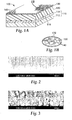
- optochemical sensor 100 comprises reflective substrate 110 having major reflective surface 116.
- reflective substrate 110 comprises optional base 112 having optional reflective layer 114 thereon.
- Detection layer 120 comprises an intrinsically microporous polymer disposed on at least a portion of surface 116.
- Semi-reflective metallic layer 130 which comprises palladium metal, is disposed on at least a portion of layer 120, and has a network of fine cracks 140 therein.
- Protrusions 170 (shown in Fig. 1B ) extend from detection layer 120 through semi-reflective metallic layer 130.
- the reflective substrate may be any substrate that has a reflective surface.
- the reflective substrate may be a unitary body, and may be relatively thick or thin. Examples of unitary reflective substrates include reflective metal foils or sheets.
- the reflective substrate may comprise a base having a reflective layer thereon.
- the base may comprise any suitable material capable of providing support for the optional reflective layer. It may be flexible or nonflexible.
- the base material can be tailored to the application. Typically, it is suitable to use in a vacuum deposition process.
- Exemplary bases include polymeric films, glass, ceramics, and metal.
- the base material may be made permeable to analyte by being designed to contain an array of holes through which analyte can pass. Further, the base material may be a woven or nonwoven material, a mesh, or a filter membrane through which analyte can pass.
- the reflective substrate may comprise any material that can form a reflective layer.
- the material is fully reflective at a thickness of 20 to 200 nm, although other thicknesses may also be used.
- thinner layers of material can typically be used to make the reflective layer semi-reflective.
- Exemplary suitable materials include metals and semi-metals such as aluminum, chromium, gold, nickel, titanium, palladium, platinum, silicon, and silver. Combinations of metals and/or semi-metals may also be used (for example, such as gold-palladium or nickel-chromium).
- Other suitable materials that may be included in the reflective substrate include reflective metal oxides such as, for example, chromium oxide and titanium oxide.
- the reflective substrate is typically made to be more reflective than the semi-reflective layer, sometimes it is desirable to have the reflectivity of the reflective layer and semi-reflective layer be the same; for example, so a response to the presence of an analyte can be seen from either side of the sensor film.
- the reflective substrate may also be etched or perforated to create holes or other open areas through which analyte can penetrate into the detection layer, although this is not a requirement.
- the optional reflective layer is at least 90 percent reflective (that is, at least 10 percent transmissive), and in some embodiments, 99 percent reflective (that is, 1 percent transmissive). In other exemplary embodiments of the present invention, the optional reflective layer is a semi-reflective layer, wherein the reflective layer is at least 20 percent reflective, such as 20 to 90 percent reflective, or 30 to 70 percent reflective.
- the detection layer may optionally comprise two or more sublayers.
- One or more of the optional sublayers may be discontinuous or patterned.
- the optional sublayers may comprise different polymeric materials and may adsorb different analytes and/or may have different degrees of sensitivity to one or more analytes.
- the optional sublayers may have a variety of configurations; for example, they may be stacked or may be side by side.
- At least one optional sublayer may comprise inorganic materials such as, for example, transparent and metal oxides, nitrides, and oxynitrides of appropriate thickness for producing color by optical interference.
- suitable inorganic materials include, silicon oxides, silicon nitrides, silicon oxynitrides, aluminum oxides, titanium oxides, titanium nitride, titanium oxynitride, tin oxides, zirconium oxides, and combinations thereof.
- Other inorganic materials, such as zeolites, are also suitable for use in sublayer(s).
- Optional sublayer(s) may be microporous, porous or nonporous.
- Further materials that may be included in at least one optional sublayer include amorphous random covalent network thin films as disclosed in U. S. Appln. No. 11/275,277 (Attorney Case No. 61197US002) entitled “PLASMA DEPOSITED MICROPOROUS ANALYTE DETECTION LAYER", filed December 21, 2005.
- the physical thickness of the detection layer is in a range of from 150 to 1200 nanometers, for example, in a range of from 500 to 900 nanometers, although thinner and thicker detection layers may also be used.
- the thickness of the detection layer may be patterned. This may be desirable when the sensor is designed so that the presence of an analyte causes a change in the refractive index of the detection layer, thereby making a pattern disappear (for example, when one portion changes optical thickness to be the same optical thickness as an adjacent portion) or appear (for example, when a portion undergoes an optical thickness change so as to have a different optical thickness than an adjacent portion).
- the detection layer may further comprise additional polymer components; for example, a homogeneous or heterogeneous blend with at least one of the components being an intrinsically microporous polymer.
- intrinsically microporous polymer means an organic polymer that has microporosity due to its molecular structure rather than from processing or a templated preparation. Further, intrinsically microporous polymers have a free volume of at least 10 percent; for example, at least 15 percent or even at least 30 percent.
- free volume refers to the volume of a polymer not actually occupied by molecules of the polymer. Free volume that is accessible by gaseous species may be readily determined by various known methods including, for example, gas adsorption techniques coupled with Brunauer-Emmett-Teller (BET), Barrett-Joyner-Halenda (BJH), or Horvath-Kawazoe analysis. For example, details concerning gas adsorption techniques are reported by S. J. Gregg and K. S. W. Sing in "Adsorption, Surface Area, and Porosity", 2nd Edition, Academic Press: London (1982 ).
- useful intrinsically microporous polymers whether taken alone or as a combination thereof, have a total accessible pore volume as measured by gas adsorption of at least 0.1 cc/g (0.1 milliliters per gram), for example, at least 0.2 cc/g (0.2 milliliters per gram) or even at least 0.5 cc/g (0.5 milliliters per gram), although values outside of the range may also be used. Further, it is found that useful results are obtained from those intrinsically microporous polymers that have at least 25 percent of the total pore volume as measured by gas adsorption from pores with average diameters in a range of from 0.3 nanometer to 20 nanometers, although distributions of pore sizes outside may also by used.
- Such polymers can be synthesized, for example, by a step-growth polymerization where a bis-catechol such as, for example, A1 (5,5',6,6'-tetrahydroxy-3,3,3',3'-tetramethyl-1,1'-spirobisindane) is allowed to react with a fluorinated arene such as, for example, B1 (tetrafluoroterephthalonitrile) under basic conditions. Due to the rigidity and contorted nature of the backbone of the resulting polymers, these polymers are unable to pack tightly in the solid state and thus have at least 10 percent free volume and are intrinsically microporous.
- a bis-catechol such as, for example, A1 (5,5',6,6'-tetrahydroxy-3,3,3',3'-tetramethyl-1,1'-spirobisindane)
- a fluorinated arene such as, for example, B1 (tetrafluoroterephthalonitrile)
- Intrinsically microporous polymers are typically soluble in organic solvents such as, for example, tetrahydrofuran and can thus be cast as films from solution (for example, by spin-coating, dip coating, or bar coating).
- organic solvents such as, for example, tetrahydrofuran
- the characteristics (accessible thicknesses, optical clarity, and/or appearance) of films made from solutions of these polymers may vary markedly depending on the solvent or solvent system used to cast the film.
- intrinsically microporous polymers of higher molecular weights may need to be cast from relatively unusual solvents (for example, cyclohexene oxide or tetrahydropyran) to generate films with desirable properties for use in optochemical sensors as described herein.
- the detection layer may be applied to the reflective substrate by any other suitable method.
- the detection layer and/or intrinsically microporous polymers may be crosslinked if desired, for example, by high-energy radiation.
- the reflective and semi-reflective layers may be formed on the detection layer by standard vapor coating techniques such as evaporation, sputtering, chemical vapor deposition (CVD), plasma deposition, flame deposition, or any other technique provided that the technique selected to make the semi-reflective layer results in a substantially continuous semi-reflective layer that has a network of fine cracks.
- the reflective and semi-reflective layers may be made using the same or different techniques.
- heat treatment of intrinsically microporous polymers can dramatically improve their performance in optochemical sensors, for example, as described herein.
- the semi-reflective metallic layer comprises palladium either as a pure metal or in combination with one or more additional metals or semi-metals such as, for example, copper, mercury, silicon, aluminum, rhodium, iridium, nickel, chromium, osmium, gold, or silver.
- the semi-reflective metallic layer forms a permeable, substantially continuous layer that has a different index of refraction than the detection layer.
- the semi-reflective metallic layer may have any thickness as long as it remains semi-reflective and has a network of fine cracks. Typically, these properties are achieved at a thickness of from 3 to 10 nanometers, although other thickness may also be used. Desired thicknesses will typically depend on the material used to form the layer, the material onto which the layer is deposited, the analyte to be detected, and the medium that will carry the analyte.
- the optochemical sensor may comprise additional layers between any of the previously described elements, as long as any additional layers do not significantly and adversely affect the optics of the sensor.
- Exemplary additional layers include tie layers and structural layers.
- Optochemical sensors according to the present invention may be fabricated generally according to the procedures set forth in U. S. Publ. Pat. Appln. No. 2004/0184948 A1 (Rakow et al. ), with the additional step of heating the detection layer and semi-reflective metallic layer in the presence of molecular oxygen at a temperature sufficient to cause the cracks to widen.
- heating in an oven at a temperature in a range of from 200 to 225 °C for a period of at least 30 minutes is effective, although other temperatures and durations may also be used.
- polymer decomposition may occur to a large degree and become a problem.
- Optochemical sensors according to the present invention are useful for calculating or estimating the concentration of an analyte, for example, from a response observed from the sensor when it is exposed to the analyte.
- the analyte may be, for example, a gas (for example, organic vapor) or a liquid.
- Sensor responses are typically colorimetric in nature (for example, as an observed color change) although other responses may also be useful.
- the optochemical sensors may be used in a system comprising the sensor, a light source, and, optionally, a means of monitoring the sensor for a change of color or a change in spectral peak position or intensity.
- Sensors of the present invention may typically be conveniently monitored by reflectance spectroscopy.
- the light source could be a natural or artificial light source.
- the monitoring could be done in a variety of ways. It could be done visually, with a photodetector, or by other suitable means.
- Two or more optochemical sensors may be combined to form an array.
- the array may be in any suitable configuration.
- an array may comprise two or more sensors side by side, or sensors may be attached to, or constructed on, opposite sides of a substrate.
- the sensors may be of the same type or may be different.
- the analyte is detected by a change in optical thickness of the detection layer upon exposure to the analyte.
- changes are typically observable in the visible light range and can often be detected by the unaided human eye.
- sensors can be designed such that a change in optical thickness can be detected when subjected to other light sources such as UV, infrared, or near infrared.
- detection mechanisms can also be used. Examples of suitable detection mechanisms include spectrophotometers, fiber optic spectrophotometers, and photo-detectors, for example, charge coupled devices (ccd), digital cameras, etc.
- Total pore volume was measured by nitrogen adsorption using a gas adsorption analyzer available under the trade designation "QUANTACHROME AUTOSORB 1C” (Quantachrome Instruments, Boynton Beach, Florida) operated according to the manufacturer's directions using a 75 point micro pore analysis.
- QUANTACHROME AUTOSORB 1C Quantachrome Instruments, Boynton Beach, Florida
- NM means not measured
- Total pore volume refers to pores with average diameter of less than 370 nanometers.
- UV/VIS reflectance spectroscopy of the heated samples showed that samples heated at 250 °C showed a loss of defined peaks in the UV/VIS reflectance spectrum, while samples heated at 200°C showed large shifts in the reflectance wavelength maxima.
- Fig. 2 is an electron micrograph of a replicate of Example 1, prior to heating, taken at a magnification of 60,000x.
- Fig. 3 is an electron micrograph of a replicate of Example 1, after heating, taken at a magnification of 60,000x.
- Example 1 The multilayered film sample of Example 1 was tested for response to low concentrations of toluene vapor. A red shift in reflectance peak wavelength maximum of 5 nanometers was observed at 50 parts per million (ppm) of toluene vapor, and a red shift in reflectance peak wavelength maximum of approximately 50 nm was observed at 2000 ppm concentration.
- Example 5 was repeated except that the multilayer film of Comparative Example 1 was used instead of the multilayer film of Example 1. No shift position of the reflectance peak wavelength maximum was observed for this film at concentrations of 2000 ppm of toluene vapor and below.
- Two multilayer film assemblies were prepared. Glass slides containing a 100-nanometer thick layer of aluminum were used as the base substrates.
- the polymer from Preparative Example P3 was dissolved in THF to give a 5 percent by weight solution that was spin coated onto the aluminum at 1000 rpm. After spin coating, a 5-nm thick Al layer was evaporatively deposited onto the polymer in both assemblies. Both coated assemblies were characterized by a yellow-red hue after metal coating.
- Comparative Example C5 was heated in a belt furnace for 30 minutes at 200 °C, which did not result in a change in the yellow-red hue.
- Comparative Example C6 was not heat processed. Comparative Examples C5 and C6 were tested for their response to low concentrations of toluene vapor; neither sensor showed a change in reflectance spectrum response for concentrations as high as 2000 ppm of toluene vapor.
- Two multilayer film assemblies were prepared. Glass slides containing a 100 nanometer thick layer of aluminum were used as the base substrates.
- the polymer from Preparative Example P5 was dissolved in chlorobenzene to give a 4 percent by weight solution that was spin coated onto the substrates at 3000 rpm. After spin coating, a palladium layer was sputter coated (5 nm approximate thickness) onto the polymer layer in both assemblies. The coated assemblies were characterized by a blue-green color after Pd metallization.
- Example 6 was heated in a belt furnace for 30 minutes at 200 °C, which resulted in a color change to give a yellow-green hue. Comparative Example C11 was not heat processed.
- Example 6 and Comparative Example C11 were tested for their responses to concentrations of toluene vapor.
- Example 6 gave an observable response in its visible reflectance spectrum at 2000 ppm of toluene vapor, while Comparative Example C11 gave no response up to 2000 ppm of toluene vapor.
Landscapes
- Physics & Mathematics (AREA)
- Chemical & Material Sciences (AREA)
- Life Sciences & Earth Sciences (AREA)
- Chemical Kinetics & Catalysis (AREA)
- Plasma & Fusion (AREA)
- Health & Medical Sciences (AREA)
- Engineering & Computer Science (AREA)
- Analytical Chemistry (AREA)
- Biochemistry (AREA)
- General Health & Medical Sciences (AREA)
- General Physics & Mathematics (AREA)
- Immunology (AREA)
- Pathology (AREA)
- Investigating Or Analysing Materials By The Use Of Chemical Reactions (AREA)
- Investigating Or Analyzing Non-Biological Materials By The Use Of Chemical Means (AREA)
Applications Claiming Priority (2)
| Application Number | Priority Date | Filing Date | Title |
|---|---|---|---|
| US11/275,268 US7556774B2 (en) | 2005-12-21 | 2005-12-21 | Optochemical sensor and method of making the same |
| PCT/US2006/046386 WO2007075273A1 (en) | 2005-12-21 | 2006-12-05 | Optochemical sensor and method of making the same |
Publications (3)
| Publication Number | Publication Date |
|---|---|
| EP1963852A1 EP1963852A1 (en) | 2008-09-03 |
| EP1963852A4 EP1963852A4 (en) | 2017-09-06 |
| EP1963852B1 true EP1963852B1 (en) | 2018-09-19 |
Family
ID=38173726
Family Applications (1)
| Application Number | Title | Priority Date | Filing Date |
|---|---|---|---|
| EP06838998.0A Not-in-force EP1963852B1 (en) | 2005-12-21 | 2006-12-05 | Optochemical sensor and method of making the same |
Country Status (5)
| Country | Link |
|---|---|
| US (1) | US7556774B2 (enExample) |
| EP (1) | EP1963852B1 (enExample) |
| JP (1) | JP4861431B2 (enExample) |
| CN (1) | CN101331399B (enExample) |
| WO (1) | WO2007075273A1 (enExample) |
Families Citing this family (48)
| Publication number | Priority date | Publication date | Assignee | Title |
|---|---|---|---|---|
| US7704751B2 (en) * | 2006-09-18 | 2010-04-27 | 3M Innovative Properties Company | Polymeric fluorescent chemical sensor |
| CA2690368A1 (en) * | 2007-06-25 | 2008-12-31 | Qinetiq Limited | Heater suitable for use in a preconcentrator device |
| US8137979B2 (en) * | 2007-06-25 | 2012-03-20 | Qinetiq Limited | Preconcentrator device |
| JP2010540966A (ja) * | 2007-10-05 | 2010-12-24 | スリーエム イノベイティブ プロパティズ カンパニー | ミクロ孔質ポリマーを含む有機化学センサー、及び使用方法 |
| EP2208058B1 (en) * | 2007-10-05 | 2018-07-11 | 3M Innovative Properties Company | Organic chemical sensor comprising plasma-deposited microporous layer, and method of making and using |
| KR101821936B1 (ko) * | 2008-12-23 | 2018-01-24 | 쓰리엠 이노베이티브 프로퍼티즈 컴파니 | 미세다공성 유기실리케이트 재료를 갖는 유기 화학적 센서 |
| KR200474377Y1 (ko) * | 2009-01-29 | 2014-09-12 | 쓰리엠 이노베이티브 프로퍼티즈 컴파니 | 유기 분석물의 광학적 검출을 위한 모니터 |
| AU2010235022B2 (en) | 2009-03-30 | 2013-08-22 | 3M Innovative Properties Company | Optoelectronic methods and devices for detection of analytes |
| US8225782B2 (en) * | 2009-05-22 | 2012-07-24 | 3M Innovative Properties Company | Filter cartridge having location-registered view window for end-of-service-life-indicator (ESLI) |
| KR20120016286A (ko) * | 2009-05-22 | 2012-02-23 | 쓰리엠 이노베이티브 프로퍼티즈 컴파니 | 다층 비색 센서 어레이 |
| US8365723B2 (en) * | 2009-05-22 | 2013-02-05 | 3M Innovative Properties Company | Filter cartridge having cone of visibility for end-of-service-life-indicator (ESLI) |
| US8336543B2 (en) * | 2009-05-22 | 2012-12-25 | 3M Innovative Properties Company | Filter cartridge having cover for masking service life indicator |
| BRPI1009623A2 (pt) | 2009-05-22 | 2016-06-28 | 3M Innovative Properties Co | elemento de detecção opticamente interrogável e método para fabricação de elemento de detecção |
| US8955515B2 (en) * | 2009-10-23 | 2015-02-17 | 3M Innovative Properties Company | Patterned chemical sensor having inert occluding layer |
| WO2011123403A1 (en) | 2010-04-02 | 2011-10-06 | 3M Innovative Properties Company | Filter systems including optical analyte sensors and optical readers |
| WO2011123411A1 (en) | 2010-04-02 | 2011-10-06 | 3M Innovative Properties Company | Filter systems including patterned optical analyte sensors and optical readers |
| EP2553437A4 (en) | 2010-04-02 | 2017-12-06 | 3M Innovative Properties Company | Alignment registration feature for analyte sensor optical reader |
| JP5800897B2 (ja) | 2010-06-15 | 2015-10-28 | スリーエム イノベイティブ プロパティズ カンパニー | 可変静電容量センサ及びその作製方法 |
| GB201015401D0 (en) | 2010-09-15 | 2010-10-27 | Univ Cardiff | Polymers, their method of manufacture and use thereof |
| GB201015397D0 (en) | 2010-09-15 | 2010-10-27 | Univ Cardiff | Polymerisation method |
| JP5932806B2 (ja) | 2010-09-30 | 2016-06-08 | スリーエム イノベイティブ プロパティズ カンパニー | センサー素子、その製造方法、及びそれを含むセンサー装置 |
| CN103154712B (zh) | 2010-09-30 | 2015-11-25 | 3M创新有限公司 | 传感器元件及其制备方法和包括所述传感器元件的传感器装置 |
| PL2622322T3 (pl) | 2010-10-01 | 2018-09-28 | 3M Innovative Properties Company | Sposób korelowania urządzenia monitorującego z końcem żywotności wkładu filtra |
| BR112013007516A2 (pt) | 2010-10-01 | 2020-10-06 | 3M Innovative Properties Company | monitor portátil para indicação de final de vida útil |
| CN103443616B (zh) * | 2011-03-28 | 2017-05-31 | 3M创新有限公司 | 包含掩蔽层粘合剂的传感器 |
| US9429537B2 (en) | 2011-04-13 | 2016-08-30 | 3M Innovative Properties Company | Method of detecting volatile organic compounds |
| CN103477216A (zh) | 2011-04-13 | 2013-12-25 | 3M创新有限公司 | 包括具有集成加热的传感器元件的蒸气传感器 |
| CN103492872B (zh) | 2011-04-13 | 2016-04-06 | 3M创新有限公司 | 使用吸收性传感器元件的方法 |
| CN103620387B (zh) * | 2011-06-16 | 2017-02-15 | 3M创新有限公司 | 表面等离子体共振传感器元件和包括其的传感器 |
| LU91841B1 (en) * | 2011-07-15 | 2013-01-16 | Ct De Rech Public Gabriel Lippmann | Method for forming gas sensing layers |
| EP2776498B1 (en) * | 2011-11-09 | 2018-12-26 | 3M Innovative Properties Company | Curing compositions for fluoropolymers |
| KR102027606B1 (ko) | 2011-12-12 | 2019-10-01 | 쓰리엠 이노베이티브 프로퍼티즈 캄파니 | 층상 필터 카트리지용 사용 수명 종료 표시 시스템 |
| JP6038950B2 (ja) | 2011-12-13 | 2016-12-07 | スリーエム イノベイティブ プロパティズ カンパニー | 気体媒質内の未知の有機化合物の同定及び定量測定方法 |
| JP6289454B2 (ja) * | 2012-06-25 | 2018-03-07 | スリーエム イノベイティブ プロパティズ カンパニー | センサー素子、その製造方法、及びその使用方法 |
| JP6214663B2 (ja) * | 2012-09-25 | 2017-10-18 | スリーエム イノベイティブ プロパティズ カンパニー | 重合性スピロビスインダンモノマー及びそれから調製されたポリマー |
| US9751038B2 (en) | 2013-03-15 | 2017-09-05 | 3M Innovative Properties Company | End of service life indicating systems for layered filter cartridges |
| KR102215926B1 (ko) * | 2019-06-28 | 2021-02-17 | 한국생산기술연구원 | 미세 균열이 형성된 스트레인 게이지의 제작방법 |
| US11881093B2 (en) | 2020-08-20 | 2024-01-23 | Denso International America, Inc. | Systems and methods for identifying smoking in vehicles |
| US11760170B2 (en) | 2020-08-20 | 2023-09-19 | Denso International America, Inc. | Olfaction sensor preservation systems and methods |
| US11813926B2 (en) | 2020-08-20 | 2023-11-14 | Denso International America, Inc. | Binding agent and olfaction sensor |
| US11932080B2 (en) | 2020-08-20 | 2024-03-19 | Denso International America, Inc. | Diagnostic and recirculation control systems and methods |
| US12377711B2 (en) | 2020-08-20 | 2025-08-05 | Denso International America, Inc. | Vehicle feature control systems and methods based on smoking |
| US12017506B2 (en) | 2020-08-20 | 2024-06-25 | Denso International America, Inc. | Passenger cabin air control systems and methods |
| US11636870B2 (en) | 2020-08-20 | 2023-04-25 | Denso International America, Inc. | Smoking cessation systems and methods |
| US11760169B2 (en) | 2020-08-20 | 2023-09-19 | Denso International America, Inc. | Particulate control systems and methods for olfaction sensors |
| US12269315B2 (en) | 2020-08-20 | 2025-04-08 | Denso International America, Inc. | Systems and methods for measuring and managing odor brought into rental vehicles |
| US12251991B2 (en) | 2020-08-20 | 2025-03-18 | Denso International America, Inc. | Humidity control for olfaction sensors |
| US11828210B2 (en) | 2020-08-20 | 2023-11-28 | Denso International America, Inc. | Diagnostic systems and methods of vehicles using olfaction |
Family Cites Families (18)
| Publication number | Priority date | Publication date | Assignee | Title |
|---|---|---|---|---|
| US4678904A (en) | 1984-07-06 | 1987-07-07 | Technology Dynamics, Inc. | Optical measuring device using a spectral modulation sensor having an optically resonant structure |
| AT384802B (de) | 1986-05-28 | 1988-01-11 | Avl Verbrennungskraft Messtech | Verfahren zur herstellung von traegermaterialien fuer optische sensoren |
| US5015843A (en) | 1990-02-15 | 1991-05-14 | Polysense, Inc. | Fiber optic chemical sensors based on polymer swelling |
| JP2665640B2 (ja) * | 1991-07-22 | 1997-10-22 | 富士写真フイルム株式会社 | 乾式分析要素を用いた測定方法及び乾式分析要素 |
| AT403746B (de) | 1994-04-12 | 1998-05-25 | Avl Verbrennungskraft Messtech | Optochemischer sensor sowie verfahren zu seiner herstellung |
| JPH08184560A (ja) | 1994-12-28 | 1996-07-16 | Hoechst Japan Ltd | 有機溶剤蒸気を検出するための光センサ装置 |
| DE19545414C2 (de) | 1995-12-06 | 2002-11-14 | Inst Physikalische Hochtech Ev | Optisches Sensorelement |
| US6180318B1 (en) | 1999-05-19 | 2001-01-30 | 3M Innovative Properties Company | Method of imaging an article |
| JP3469540B2 (ja) | 2000-08-09 | 2003-11-25 | サンクス株式会社 | 光学式センサ |
| US6396616B1 (en) | 2000-10-10 | 2002-05-28 | 3M Innovative Properties Company | Direct laser imaging system |
| JP2002168790A (ja) * | 2000-11-29 | 2002-06-14 | Sony Corp | 還元性大気汚染物質の検出具、その濃度測定具、その検出方法および、その濃度測定方法 |
| US6878419B2 (en) | 2001-12-14 | 2005-04-12 | 3M Innovative Properties Co. | Plasma treatment of porous materials |
| JP2004026547A (ja) | 2002-06-24 | 2004-01-29 | Nippon Sheet Glass Co Ltd | 断熱合わせガラス |
| US7449146B2 (en) | 2002-09-30 | 2008-11-11 | 3M Innovative Properties Company | Colorimetric sensor |
| US20040062682A1 (en) | 2002-09-30 | 2004-04-01 | Rakow Neal Anthony | Colorimetric sensor |
| GB0317557D0 (en) | 2003-07-26 | 2003-08-27 | Univ Manchester | Microporous polymer material |
| JP4543164B2 (ja) * | 2003-11-06 | 2010-09-15 | 独立行政法人産業技術総合研究所 | 物質の収着により色が変化する構造性変色材 |
| US7033667B2 (en) | 2003-12-18 | 2006-04-25 | 3M Innovative Properties Company | Printed circuits on shrink film |
-
2005
- 2005-12-21 US US11/275,268 patent/US7556774B2/en not_active Expired - Fee Related
-
2006
- 2006-12-05 JP JP2008547266A patent/JP4861431B2/ja not_active Expired - Fee Related
- 2006-12-05 CN CN2006800476897A patent/CN101331399B/zh not_active Expired - Fee Related
- 2006-12-05 EP EP06838998.0A patent/EP1963852B1/en not_active Not-in-force
- 2006-12-05 WO PCT/US2006/046386 patent/WO2007075273A1/en not_active Ceased
Non-Patent Citations (1)
| Title |
|---|
| None * |
Also Published As
| Publication number | Publication date |
|---|---|
| EP1963852A1 (en) | 2008-09-03 |
| WO2007075273A1 (en) | 2007-07-05 |
| CN101331399A (zh) | 2008-12-24 |
| US20070140907A1 (en) | 2007-06-21 |
| JP4861431B2 (ja) | 2012-01-25 |
| US7556774B2 (en) | 2009-07-07 |
| CN101331399B (zh) | 2012-09-05 |
| EP1963852A4 (en) | 2017-09-06 |
| JP2009521675A (ja) | 2009-06-04 |
Similar Documents
| Publication | Publication Date | Title |
|---|---|---|
| US7556774B2 (en) | Optochemical sensor and method of making the same | |
| CN102460119B (zh) | 多层比色传感器 | |
| EP2074423B1 (en) | Method of forming a permeable nanoparticle reflector | |
| EP2697635B1 (en) | Method of detecting volatile organic compounds | |
| US8293340B2 (en) | Plasma deposited microporous analyte detection layer | |
| EP1728067B1 (en) | Colorimetric sensor | |
| EP2791667B1 (en) | Method for identification and quantitative determination of an unknown organic compound in a gaseous medium | |
| EP2111481A1 (en) | Plasma deposited microporous carbon material | |
| US8647884B2 (en) | Organic chemical sensor with microporous organosilicate material | |
| JP5460113B2 (ja) | 局在表面プラズモン共鳴測定基板及び局在表面プラズモン共鳴センサ | |
| AU2012201892B2 (en) | Permeable nanoparticle reflector |
Legal Events
| Date | Code | Title | Description |
|---|---|---|---|
| PUAI | Public reference made under article 153(3) epc to a published international application that has entered the european phase |
Free format text: ORIGINAL CODE: 0009012 |
|
| 17P | Request for examination filed |
Effective date: 20080618 |
|
| AK | Designated contracting states |
Kind code of ref document: A1 Designated state(s): AT BE BG CH CY CZ DE DK EE ES FI FR GB GR HU IE IS IT LI LT LU LV MC NL PL PT RO SE SI SK TR |
|
| DAX | Request for extension of the european patent (deleted) | ||
| RA4 | Supplementary search report drawn up and despatched (corrected) |
Effective date: 20170807 |
|
| RIC1 | Information provided on ipc code assigned before grant |
Ipc: G01N 33/52 20060101AFI20170801BHEP Ipc: G01N 21/78 20060101ALI20170801BHEP Ipc: G01N 21/77 20060101ALI20170801BHEP |
|
| REG | Reference to a national code |
Ref country code: DE Ref legal event code: R079 Ref document number: 602006056392 Country of ref document: DE Free format text: PREVIOUS MAIN CLASS: G01N0033520000 Ipc: G01N0021780000 |
|
| GRAP | Despatch of communication of intention to grant a patent |
Free format text: ORIGINAL CODE: EPIDOSNIGR1 |
|
| STAA | Information on the status of an ep patent application or granted ep patent |
Free format text: STATUS: GRANT OF PATENT IS INTENDED |
|
| RIC1 | Information provided on ipc code assigned before grant |
Ipc: G01N 33/52 20060101AFI20180305BHEP Ipc: G01N 21/78 20060101ALI20180305BHEP Ipc: G01N 21/77 20060101ALI20180305BHEP |
|
| RIC1 | Information provided on ipc code assigned before grant |
Ipc: G01N 21/77 20060101ALN20180309BHEP Ipc: G01N 21/78 20060101AFI20180309BHEP |
|
| INTG | Intention to grant announced |
Effective date: 20180326 |
|
| GRAS | Grant fee paid |
Free format text: ORIGINAL CODE: EPIDOSNIGR3 |
|
| GRAA | (expected) grant |
Free format text: ORIGINAL CODE: 0009210 |
|
| STAA | Information on the status of an ep patent application or granted ep patent |
Free format text: STATUS: THE PATENT HAS BEEN GRANTED |
|
| AK | Designated contracting states |
Kind code of ref document: B1 Designated state(s): AT BE BG CH CY CZ DE DK EE ES FI FR GB GR HU IE IS IT LI LT LU LV MC NL PL PT RO SE SI SK TR |
|
| REG | Reference to a national code |
Ref country code: GB Ref legal event code: FG4D |
|
| REG | Reference to a national code |
Ref country code: CH Ref legal event code: EP |
|
| REG | Reference to a national code |
Ref country code: AT Ref legal event code: REF Ref document number: 1043821 Country of ref document: AT Kind code of ref document: T Effective date: 20181015 |
|
| REG | Reference to a national code |
Ref country code: IE Ref legal event code: FG4D |
|
| REG | Reference to a national code |
Ref country code: DE Ref legal event code: R096 Ref document number: 602006056392 Country of ref document: DE |
|
| REG | Reference to a national code |
Ref country code: NL Ref legal event code: MP Effective date: 20180919 |
|
| PG25 | Lapsed in a contracting state [announced via postgrant information from national office to epo] |
Ref country code: LT Free format text: LAPSE BECAUSE OF FAILURE TO SUBMIT A TRANSLATION OF THE DESCRIPTION OR TO PAY THE FEE WITHIN THE PRESCRIBED TIME-LIMIT Effective date: 20180919 Ref country code: GR Free format text: LAPSE BECAUSE OF FAILURE TO SUBMIT A TRANSLATION OF THE DESCRIPTION OR TO PAY THE FEE WITHIN THE PRESCRIBED TIME-LIMIT Effective date: 20181220 Ref country code: FI Free format text: LAPSE BECAUSE OF FAILURE TO SUBMIT A TRANSLATION OF THE DESCRIPTION OR TO PAY THE FEE WITHIN THE PRESCRIBED TIME-LIMIT Effective date: 20180919 Ref country code: SE Free format text: LAPSE BECAUSE OF FAILURE TO SUBMIT A TRANSLATION OF THE DESCRIPTION OR TO PAY THE FEE WITHIN THE PRESCRIBED TIME-LIMIT Effective date: 20180919 Ref country code: BG Free format text: LAPSE BECAUSE OF FAILURE TO SUBMIT A TRANSLATION OF THE DESCRIPTION OR TO PAY THE FEE WITHIN THE PRESCRIBED TIME-LIMIT Effective date: 20181219 |
|
| REG | Reference to a national code |
Ref country code: LT Ref legal event code: MG4D |
|
| PG25 | Lapsed in a contracting state [announced via postgrant information from national office to epo] |
Ref country code: LV Free format text: LAPSE BECAUSE OF FAILURE TO SUBMIT A TRANSLATION OF THE DESCRIPTION OR TO PAY THE FEE WITHIN THE PRESCRIBED TIME-LIMIT Effective date: 20180919 |
|
| REG | Reference to a national code |
Ref country code: AT Ref legal event code: MK05 Ref document number: 1043821 Country of ref document: AT Kind code of ref document: T Effective date: 20180919 |
|
| PG25 | Lapsed in a contracting state [announced via postgrant information from national office to epo] |
Ref country code: IT Free format text: LAPSE BECAUSE OF FAILURE TO SUBMIT A TRANSLATION OF THE DESCRIPTION OR TO PAY THE FEE WITHIN THE PRESCRIBED TIME-LIMIT Effective date: 20180919 Ref country code: ES Free format text: LAPSE BECAUSE OF FAILURE TO SUBMIT A TRANSLATION OF THE DESCRIPTION OR TO PAY THE FEE WITHIN THE PRESCRIBED TIME-LIMIT Effective date: 20180919 Ref country code: CZ Free format text: LAPSE BECAUSE OF FAILURE TO SUBMIT A TRANSLATION OF THE DESCRIPTION OR TO PAY THE FEE WITHIN THE PRESCRIBED TIME-LIMIT Effective date: 20180919 Ref country code: RO Free format text: LAPSE BECAUSE OF FAILURE TO SUBMIT A TRANSLATION OF THE DESCRIPTION OR TO PAY THE FEE WITHIN THE PRESCRIBED TIME-LIMIT Effective date: 20180919 Ref country code: AT Free format text: LAPSE BECAUSE OF FAILURE TO SUBMIT A TRANSLATION OF THE DESCRIPTION OR TO PAY THE FEE WITHIN THE PRESCRIBED TIME-LIMIT Effective date: 20180919 Ref country code: NL Free format text: LAPSE BECAUSE OF FAILURE TO SUBMIT A TRANSLATION OF THE DESCRIPTION OR TO PAY THE FEE WITHIN THE PRESCRIBED TIME-LIMIT Effective date: 20180919 Ref country code: IS Free format text: LAPSE BECAUSE OF FAILURE TO SUBMIT A TRANSLATION OF THE DESCRIPTION OR TO PAY THE FEE WITHIN THE PRESCRIBED TIME-LIMIT Effective date: 20190119 Ref country code: PL Free format text: LAPSE BECAUSE OF FAILURE TO SUBMIT A TRANSLATION OF THE DESCRIPTION OR TO PAY THE FEE WITHIN THE PRESCRIBED TIME-LIMIT Effective date: 20180919 Ref country code: EE Free format text: LAPSE BECAUSE OF FAILURE TO SUBMIT A TRANSLATION OF THE DESCRIPTION OR TO PAY THE FEE WITHIN THE PRESCRIBED TIME-LIMIT Effective date: 20180919 |
|
| PG25 | Lapsed in a contracting state [announced via postgrant information from national office to epo] |
Ref country code: SK Free format text: LAPSE BECAUSE OF FAILURE TO SUBMIT A TRANSLATION OF THE DESCRIPTION OR TO PAY THE FEE WITHIN THE PRESCRIBED TIME-LIMIT Effective date: 20180919 Ref country code: PT Free format text: LAPSE BECAUSE OF FAILURE TO SUBMIT A TRANSLATION OF THE DESCRIPTION OR TO PAY THE FEE WITHIN THE PRESCRIBED TIME-LIMIT Effective date: 20190119 |
|
| REG | Reference to a national code |
Ref country code: DE Ref legal event code: R097 Ref document number: 602006056392 Country of ref document: DE |
|
| PLBE | No opposition filed within time limit |
Free format text: ORIGINAL CODE: 0009261 |
|
| STAA | Information on the status of an ep patent application or granted ep patent |
Free format text: STATUS: NO OPPOSITION FILED WITHIN TIME LIMIT |
|
| PG25 | Lapsed in a contracting state [announced via postgrant information from national office to epo] |
Ref country code: DK Free format text: LAPSE BECAUSE OF FAILURE TO SUBMIT A TRANSLATION OF THE DESCRIPTION OR TO PAY THE FEE WITHIN THE PRESCRIBED TIME-LIMIT Effective date: 20180919 |
|
| REG | Reference to a national code |
Ref country code: CH Ref legal event code: PL |
|
| 26N | No opposition filed |
Effective date: 20190620 |
|
| GBPC | Gb: european patent ceased through non-payment of renewal fee |
Effective date: 20181219 |
|
| PG25 | Lapsed in a contracting state [announced via postgrant information from national office to epo] |
Ref country code: LU Free format text: LAPSE BECAUSE OF NON-PAYMENT OF DUE FEES Effective date: 20181205 Ref country code: MC Free format text: LAPSE BECAUSE OF FAILURE TO SUBMIT A TRANSLATION OF THE DESCRIPTION OR TO PAY THE FEE WITHIN THE PRESCRIBED TIME-LIMIT Effective date: 20180919 |
|
| REG | Reference to a national code |
Ref country code: IE Ref legal event code: MM4A |
|
| REG | Reference to a national code |
Ref country code: BE Ref legal event code: MM Effective date: 20181231 |
|
| PG25 | Lapsed in a contracting state [announced via postgrant information from national office to epo] |
Ref country code: IE Free format text: LAPSE BECAUSE OF NON-PAYMENT OF DUE FEES Effective date: 20181205 Ref country code: SI Free format text: LAPSE BECAUSE OF FAILURE TO SUBMIT A TRANSLATION OF THE DESCRIPTION OR TO PAY THE FEE WITHIN THE PRESCRIBED TIME-LIMIT Effective date: 20180919 Ref country code: FR Free format text: LAPSE BECAUSE OF NON-PAYMENT OF DUE FEES Effective date: 20181231 |
|
| PG25 | Lapsed in a contracting state [announced via postgrant information from national office to epo] |
Ref country code: BE Free format text: LAPSE BECAUSE OF NON-PAYMENT OF DUE FEES Effective date: 20181231 |
|
| PG25 | Lapsed in a contracting state [announced via postgrant information from national office to epo] |
Ref country code: GB Free format text: LAPSE BECAUSE OF NON-PAYMENT OF DUE FEES Effective date: 20181219 Ref country code: CH Free format text: LAPSE BECAUSE OF NON-PAYMENT OF DUE FEES Effective date: 20181231 Ref country code: LI Free format text: LAPSE BECAUSE OF NON-PAYMENT OF DUE FEES Effective date: 20181231 |
|
| PGFP | Annual fee paid to national office [announced via postgrant information from national office to epo] |
Ref country code: DE Payment date: 20191119 Year of fee payment: 14 |
|
| PG25 | Lapsed in a contracting state [announced via postgrant information from national office to epo] |
Ref country code: TR Free format text: LAPSE BECAUSE OF FAILURE TO SUBMIT A TRANSLATION OF THE DESCRIPTION OR TO PAY THE FEE WITHIN THE PRESCRIBED TIME-LIMIT Effective date: 20180919 |
|
| PG25 | Lapsed in a contracting state [announced via postgrant information from national office to epo] |
Ref country code: HU Free format text: LAPSE BECAUSE OF FAILURE TO SUBMIT A TRANSLATION OF THE DESCRIPTION OR TO PAY THE FEE WITHIN THE PRESCRIBED TIME-LIMIT; INVALID AB INITIO Effective date: 20061205 Ref country code: CY Free format text: LAPSE BECAUSE OF FAILURE TO SUBMIT A TRANSLATION OF THE DESCRIPTION OR TO PAY THE FEE WITHIN THE PRESCRIBED TIME-LIMIT Effective date: 20180919 |
|
| REG | Reference to a national code |
Ref country code: DE Ref legal event code: R119 Ref document number: 602006056392 Country of ref document: DE |
|
| PG25 | Lapsed in a contracting state [announced via postgrant information from national office to epo] |
Ref country code: DE Free format text: LAPSE BECAUSE OF NON-PAYMENT OF DUE FEES Effective date: 20210701 |