EP1957630B2 - Verbesserte herstellung von glykoproteinen unter verwendung von mangan - Google Patents
Verbesserte herstellung von glykoproteinen unter verwendung von mangan Download PDFInfo
- Publication number
- EP1957630B2 EP1957630B2 EP06847508.6A EP06847508A EP1957630B2 EP 1957630 B2 EP1957630 B2 EP 1957630B2 EP 06847508 A EP06847508 A EP 06847508A EP 1957630 B2 EP1957630 B2 EP 1957630B2
- Authority
- EP
- European Patent Office
- Prior art keywords
- manganese
- erythropoiesis
- culture medium
- stimulating
- erythropoietic
- Prior art date
- Legal status (The legal status is an assumption and is not a legal conclusion. Google has not performed a legal analysis and makes no representation as to the accuracy of the status listed.)
- Active
Links
Images



Classifications
-
- C—CHEMISTRY; METALLURGY
- C07—ORGANIC CHEMISTRY
- C07K—PEPTIDES
- C07K14/00—Peptides having more than 20 amino acids; Gastrins; Somatostatins; Melanotropins; Derivatives thereof
- C07K14/435—Peptides having more than 20 amino acids; Gastrins; Somatostatins; Melanotropins; Derivatives thereof from animals; from humans
- C07K14/475—Growth factors; Growth regulators
- C07K14/505—Erythropoietin [EPO]
-
- C—CHEMISTRY; METALLURGY
- C07—ORGANIC CHEMISTRY
- C07K—PEPTIDES
- C07K14/00—Peptides having more than 20 amino acids; Gastrins; Somatostatins; Melanotropins; Derivatives thereof
- C07K14/435—Peptides having more than 20 amino acids; Gastrins; Somatostatins; Melanotropins; Derivatives thereof from animals; from humans
- C07K14/575—Hormones
-
- C—CHEMISTRY; METALLURGY
- C12—BIOCHEMISTRY; BEER; SPIRITS; WINE; VINEGAR; MICROBIOLOGY; ENZYMOLOGY; MUTATION OR GENETIC ENGINEERING
- C12N—MICROORGANISMS OR ENZYMES; COMPOSITIONS THEREOF; PROPAGATING, PRESERVING, OR MAINTAINING MICROORGANISMS; MUTATION OR GENETIC ENGINEERING; CULTURE MEDIA
- C12N5/00—Undifferentiated human, animal or plant cells, e.g. cell lines; Tissues; Cultivation or maintenance thereof; Culture media therefor
- C12N5/0018—Culture media for cell or tissue culture
-
- C—CHEMISTRY; METALLURGY
- C12—BIOCHEMISTRY; BEER; SPIRITS; WINE; VINEGAR; MICROBIOLOGY; ENZYMOLOGY; MUTATION OR GENETIC ENGINEERING
- C12P—FERMENTATION OR ENZYME-USING PROCESSES TO SYNTHESISE A DESIRED CHEMICAL COMPOUND OR COMPOSITION OR TO SEPARATE OPTICAL ISOMERS FROM A RACEMIC MIXTURE
- C12P21/00—Preparation of peptides or proteins
- C12P21/005—Glycopeptides, glycoproteins
-
- C—CHEMISTRY; METALLURGY
- C12—BIOCHEMISTRY; BEER; SPIRITS; WINE; VINEGAR; MICROBIOLOGY; ENZYMOLOGY; MUTATION OR GENETIC ENGINEERING
- C12N—MICROORGANISMS OR ENZYMES; COMPOSITIONS THEREOF; PROPAGATING, PRESERVING, OR MAINTAINING MICROORGANISMS; MUTATION OR GENETIC ENGINEERING; CULTURE MEDIA
- C12N2500/00—Specific components of cell culture medium
- C12N2500/05—Inorganic components
- C12N2500/10—Metals; Metal chelators
- C12N2500/20—Transition metals
-
- C—CHEMISTRY; METALLURGY
- C12—BIOCHEMISTRY; BEER; SPIRITS; WINE; VINEGAR; MICROBIOLOGY; ENZYMOLOGY; MUTATION OR GENETIC ENGINEERING
- C12N—MICROORGANISMS OR ENZYMES; COMPOSITIONS THEREOF; PROPAGATING, PRESERVING, OR MAINTAINING MICROORGANISMS; MUTATION OR GENETIC ENGINEERING; CULTURE MEDIA
- C12N2500/00—Specific components of cell culture medium
- C12N2500/30—Organic components
- C12N2500/32—Amino acids
-
- C—CHEMISTRY; METALLURGY
- C12—BIOCHEMISTRY; BEER; SPIRITS; WINE; VINEGAR; MICROBIOLOGY; ENZYMOLOGY; MUTATION OR GENETIC ENGINEERING
- C12N—MICROORGANISMS OR ENZYMES; COMPOSITIONS THEREOF; PROPAGATING, PRESERVING, OR MAINTAINING MICROORGANISMS; MUTATION OR GENETIC ENGINEERING; CULTURE MEDIA
- C12N2510/00—Genetically modified cells
- C12N2510/02—Cells for production
Definitions
- the invention relates to cell culturing methods and media containing manganese that improve glycosylation or sialylation of glycoproteins, including erythropoietin and analogs or derivatives thereof.
- Erythropoietin is a glycoprotein hormone that is normally synthesized and secreted by peritubular cells in the kidney and functions as the principle homeostatic regulator of red blood cell production.
- Recombinant human erythropoietin rHuEPO
- rHuEPO Recombinant human erythropoietin
- Pharmaceutical biosynthesis of glycoproteins such as EPO is complicated by the need for both high levels of expression and appropriate posttranslational processing, which involves the addition ofN-linked and O-linked branched oligosaccharide chains. Strnad ( 2010, Biotechnol Progress, 26(3):653-663 ) reports that parameters such as the shaking rate and working volume can affect the glycosylation of EPO produced by CHO cells.
- N-linked carbohydrates In glycoproteins, sugars are attached either to the amide nitrogen atom in the side chain of asparagine (termed an N-linkage) or to the oxygen atom in the side chain of serine or threonine (termed an O-linkage).
- the process for forming N-linked carbohydrates begins with the addition of 14 monosaccharides to a lipid-linked dichol in the endoplasmic reticulum (ER). After its formation, this carbohydrate complex is then transferred to the protein by the oligosaccharyltransferase (OST) complex in a process termed "core glycosylation" in the ER.
- OST oligosaccharyltransferase
- oligosaccharyltransferase (OST) complex is a multi-protein unit comprised of ribophorin I, II, OST48 and DAD1 ( Kelleher and Gilmore 1997 PNAS 94(10):4994-4999 ; Kelleher et al. 2003 Molecular Cell 12(1):101-111 ; Kelleher et al. 1992 Cell 69(1):55-65 ).
- the polypeptides are transported to the Golgi complex, where the O-linked sugar chains are added and the N-linked sugar chains are modified in many different ways.
- the original 14-saccharide N-linked complex may be trimmed through removal of mannose (Man) residues and elongated through addition of N- acetylglucosamine (GlcNac) and/or fucose (Fuc) residues.
- the various forms of N-linked carbohydrates have in common a pentasaccharide core consisting of three mannose and two N-acetylglucosamine residues.
- Sialic acid is a generic name for a family of about 30 naturally occurring acidic monosaccharides that are frequently the terminal sugars of carbohydrates found on glycoproteins and glycolipids. Sialylation of recombinant glycoproteins is very important and may impart many significant properties to the glycoprotein including charge, immunogenicity, resistance to protease degradation, plasma clearance rate, and bioactivity.
- the final complex carbohydrate units can take on many forms, some of which have two, three or four branches (termed biantennary, triantennary or tetraantennary).
- An exemplary N-linked biantennary structure is shown below:
- a number of enzymes involved in glycosylation utilize divalent cations as co-factors.
- numerous enzymes involved in the dolichol-linked oligosaccharide synthesis require divalent cations as co-factors for activity ( Couto et al. 1984 J. Biol. Chem. 259(1):378-382 ; Jensen and Schutzbach 1981 J. Biol. Chem. 256(24):12899-12904 ; Sharma et al. 1982 European Journal of Biochemistry 126(2):319-25 ).
- the enzyme which catalyses the addition of O-linked carbohydrate to the polypeptide also requires a divalent cation for activity ( Sugiura et al. 1982 J. Biol. Chem.
- Manganese (Mn++) is a required co-factor for the enzyme ⁇ -galactoside- ⁇ -1,3,-galactosyltransferase, which catalyzes the addition of terminal galactose to elongating N-acetylglucosamine sugars ( Witsell et al. 1990 J. Biol. Chem. 265(26):15731-7 ). It was previously reported that manganese at a concentration of 0.1 mM or 1 mM partially reversed the reduction in N-linked and O-linked occupancy of erythropoietin caused by A23187, a compound which depletes divalent cations ( Kaufman et al.
- EP 1 085 083 A1 discloses a growth medium for culturing an animal cell in order to obtain a protein produced by said cell. While the medium may among others contain manganese sulphate, the authors do not comment on the concentration of said manganese sulphate.
- WO 98/08934 A1 discloses a growth medium for culturing host cells for the production of proteins which is said to contain manganese salts, such as MnCl 2 in a concentration of below 0.01 ⁇ M.
- rHuEPO has previously been shown to contain three N-linked and one O-linked branched carbohydrate structures that are highly sialylated ( Takeuchi et al. 1988 J. Biol. Chem. 263(8):3657-3663 ). De-sialylated EPO is virtually inactive to induce erythropoiesis in vivo due to the rapid clearance of this modified protein by the hepatocyte asialo glycoprotein receptor ( Ashwell and Harford 1982 Annual Review of Biochemistry 51(1):531-554 ; Goochee et al. 1991 Bio/Technology. 9(12):1347-55 ). Also Yoon et al.
- Darbepoetin alfa is a novel glycosylation analog of recombinant human erythropoietin (rHuEPO) that contains two additional N-linked glycosylation sites.
- rHuEPO recombinant human erythropoietin
- Darbepoetin has decreased receptor-binding activity but exhibits a three-fold longer serum half-life and increased in vivo activity as a result of this increased persistence in circulation.
- the in vivo activity of EPO analogs has been demonstrated to correlate with the number of N-linked carbohydrates.
- rHuEPO produced in CHO cells can exhibit a variable extent of glycosylation and sialylation.
- PNAS 86(20):7819-22 Zanette et al., 2003 Journal of Biotechnology 101(3):275-287 .
- EPO sialylation is an important factor in in vivo bioactivity
- consistency in glycosylation and higher levels of sialylation of rHuEPO and its analogs are desirable qualities when producing recombinant protein for therapeutic uses.
- culture media and culturing methods that improve the glycosylation or sialylation of glycoproteins produced in cell cultures.
- the invention provides culture media comprising CHO host cells and a non-toxic amount of manganese effective to increase the sialylation of a glycoprotein composition produced by such host cells.
- the invention provides culture media comprising CHO host cells producing erythropoiesis stimulating glycoproteins and manganese at a concentration from about 0.4 to about 40 ⁇ M, wherein the erythropoiesis-stimulating glycoproteins comprise (a) the amino acid sequence of SEQ ID NO:3 (erythropoietin) or erythropoietic fragments thereof; or (b) the amino acid sequence of SEQ ID NO:2 (darbepoetin) or erythropoietic fragments thereof.
- the host cells secrete an erythropoietic composition.
- the manganese is at a concentration of from about 0.4 to about 10 ⁇ M.
- the invention provides methods for producing an erythropoietic composition comprising sialylated erythropoiesis-stimulating glycoproteins, comprising the steps of: growing a manganese-responsive CHO host cell which produces an erythropoiesis stimulating glycoprotein in a culture medium containing an amount of manganese effective to increase the sialylation of said erythropoietic composition produced by said manganese-responsive host cell, wherein the concentration of manganese in said culture medium ranges from about 0.4 to about 40 ⁇ M, and wherein the erythropoiesis-stimulating glycoproteins comprise (a) the amino acid sequence of SEQ ID NO:3 (erythropoietin) or erythropoietic fragments thereof; (b) the amino acid sequence of SEQ ID NO:2 (darbepoetin) or erythropoietic fragments thereof.
- the method further comprises the step of recovering an erythropoietic composition wherein less than about 5% of the erythropoiesis-stimulating molecules are lower sialylated.
- the amount of manganese is effective to increase the percentage of highly sialylated erythropoiesis-stimulating molecules.
- the amount of manganese is effective to increase the percentage of erythropoiesis-stimulating molecules which are glycosylated at potential O-linked glycosylation sites.
- the amount of manganese is effective to increase the percentage of galactose among the sugars attached to erythropoiesis-stimulating molecules.
- culture medium is essentially serum-free.
- the manganese is at a concentration of from about 0.4 to about 10 ⁇ M. In a further embodiment, the manganese is at a concentration of from about 0.4 to about 4 ⁇ M.
- the culture medium further comprises one or more supplementary amino acids selected from the group consisting of asparagine, aspartic acid, cysteine, cystine, isoleucine, leucine, tryptophan, or valine.
- the host cells are grown in roller bottles.
- the manganese is added after a rapid cell growth phase.
- the rapid cell growth phase lasts for a period ranging between about 2 and 20 days.
- the manganese is added after two harvest cycles.
- the first harvest cycle is about 8 days and the second harvest cycle is about 7 days long.
- the invention provides culture media and cell culture methods that improve the sialylation of glycoproteins, particularly erythropoiesis-stimulating molecules such as erythropoietin of SEQ ID NO: 3, or analogs, variants, or derivatives thereof, including darbepoetin of SEQ ID NO: 2.
- Recombinant glycoproteins produced in CHO cells can exhibit variable glycosylation and sialylation. Highly sialylated forms of glycoprotein molecules can be separated from lower sialylated (including non-sialylated) forms of such molecules via anion exchange chromatography. Sialic acids, being acidic and thus negatively charged, are captured on the column, so that highly sialylated molecules are retained on the column while lower sialylated forms flow through. The amount of glycoprotein in each fraction (retained on column vs. flow through fraction) can be determined and compared to the starting amount of glycoprotein loaded from the cell culture media.
- Manganese decreases the amount of lower sialylated glycoprotein produced (and increases the amount of highly sialylated glycoprotein recovered), increases the number of potential O-linked glycosylation sites that are occupied by sugar chains, increases the number of potential N-linked glycosylation sites that are occupied by sugar chains, increases the terminal galactosylation of sugar chains, and increases terminal sialylation of sugar chains.
- Manganese did not appear to alter the degree of branching of the sugar chains (e.g. one, two, three or four branches). Manganese also reverses the reduction in sialylation observed when the culture medium is periodically supplemented with amino acids depleted during cell culture, e.g. asparagine, aspartic acid, cysteine, cystine, isoleucine, leucine, tryptophan, and valine.
- amino acids depleted during cell culture e.g. asparagine, aspartic acid, cysteine, cystine, isoleucine, leucine, tryptophan, and valine.
- erythropoietic composition as used. herein means a collection of erythropoiesis stimulating molecules that contain glycosylation sites, and among which at least some of the molecules carry a sugar chain comprising at least one terminal sialic residue (i.e. such molecules are "sialylated”).
- glycoprotein composition as used herein means a collection of glycoprotein molecules, among which at least some of the molecules are sialylated.
- erythropoiesis-stimulating molecules includes human erythropoietin (SEQ ID NO.: 3) or a biologically active variant, derivative, or analog thereof, including a chemically modified derivative of such protein or analog. Amino acids 1 through 165 of SEQ ID NO: 3 constitute the mature protein. Another exemplary erythropoiesis-stimulating molecule is darbepoetin (SEQ ID NO: 2). Amino acids 1 through 165 of SEQ ID NO: 2 constitute the mature protein.
- erythropoietin SEQ ID NO.: 3
- darbepoetin SEQ ID NO: 2
- erythropoietin SEQ ID NO. 3
- darbepoetin SEQ ID NO: 2
- Darbepoetin is a hyperglycosylated erythropoietin analog having five changes in the amino acid sequence of rHuEPO which provide for two additional carbohydrate chains. More specifically, darbepoetin contains two additional N-linked carbohydrate chains at amino acid residues 30 and 88 of SEQ ID. NO: 2.
- analogs refers to an amino acid sequence that has insertions, deletions or substitutions relative to the parent sequence, while still substantially maintaining the biological activity of the parent sequence, as determined using biological assays known to one of skill in the art.
- Variants include naturally occurring allelic variants, splice variants, or polymorphic forms of the parent sequence.
- derivatives of naturally occurring, variant or analog polypeptides include those which have been chemically modified, for example, to attach water soluble polymers (e.g., polyethylene glycol), radionuclides, or other diagnostic or targeting or therapeutic moieties, any of which can be attached directly or indirectly through linkers.
- erythropoietic activity means activity to stimulate erythropoiesis as demonstrated in an in vivo assay, for example, the exhypoxic polycythermic mouse assay. See, e.g., Cotes and Bangham, Nature, 191:1065 (1961 ).
- manganese-responsive host cell means a host cell which produces a glycoprotein and which responds to added manganese in its culture medium by increasing sialylation, either by increasing the percentage of sialylated glycoprotein molecules produced or by increasing the degree of sialylation (i.e. the number of sialic acids per molecule) of the glycoprotein molecules produced.
- manganese-responsive host cells include host cells that respond to added manganese by increasing the percentage of highly sialylated erythropoiesis-stimulating molecules recovered after anion exchange chromatography carried out as described below.
- manganese-responsive host cells may include host cells growing anchored to a solid surface, e.g. in roller bottles. Any manganese-responsive host cells described herein may be used according to the invention.
- the invention provides a culture medium comprising an amount of manganese effective to increase the sialylation of a glycoprotein composition produced by cells grown in this culture medium.
- said amount of manganese is non-toxic to the cells, i.e ., does not reduce cell viability, cell growth or protein production.
- the invention provides a culture medium comprising an amount of manganese effective to increase the sialylation of an erythropoietic composition produced by cells grown in this culture medium.
- the amount of manganese in the culture media of the invention may be greater than the "trace element" amount present in standard media compositions, e.g., greater than 0.001 ⁇ M. While the quality of erythropoietic compositions is clearly improved by the addition of 40 ⁇ M manganese to host cell cultures, in some cases the yield of protein secreted into the media is substantially reduced, indicating a toxic effect of such a concentration of manganese.
- the concentration of manganese in the culture medium i.e. the final concentration after the manganese-supplemented medium is added to the host cells in culture
- the concentration of manganese in the culture medium added to the cells may be adjusted to achieve the desired final concentration of manganese in the culture system. For example, with batch processes involving complete removal and replacement of culture medium, replacement culture medium containing 4 ⁇ M Mn 2+ is added to the cells to achieve a final culture medium at 4 ⁇ M Mn 2+ . Alternatively, when continuous perfusion processes are used, the concentration of manganese in the added media will need to be higher to achieve a final culture medium at the desired Mn 2+ concentration within a range. Adjustment of the concentration can be easily carried out by one of ordinary skill in the art.
- the culture medium can also include any other necessary or desirable ingredients known in the art, such as carbohydrates, including glucose, essential and/or non-essential amino acids, lipids and lipid precursors, nucleic acid precursors, vitamins, inorganic salts, trace elements including rare metals, and/or cell growth factors.
- the culture medium may be chemically defined or may include serum, plant hydrolysates, or other derived substances.
- the culture medium may be essentially or entirely serum-free or animal-component free. Essentially serum-free means that the medium lacks any serum or contains an insignificant amount of serum.
- the culture medium may also include supplementary amino acids depleted during cell culture, e.g. asparagine, aspartic acid, cysteine, cystine, isoleucine, leucine, tryptophan, and valine.
- the amino acid supplementation may be in the initial growth medium and/or in medium added during or after the rapid growth phase.
- the medium may include lipids and/or lipid precursors such as choline, ethanolamine, or phosphoethanolamine, cholesterol, fatty acids such as oleic acid, linoleic acid, linolenic acid, methyl esters, D-alpha-tocopherol, e.g. in acetate form, stearic acid; myristic acid, palmitic acid, palmitoleic acid; or arachidonic acid.
- lipids and/or lipid precursors such as choline, ethanolamine, or phosphoethanolamine, cholesterol, fatty acids such as oleic acid, linoleic acid, linolenic acid, methyl esters, D-alpha-tocopherol, e.g. in acetate form, stearic acid; myristic acid, palmitic acid, palmitoleic acid; or arachidonic acid.
- lipids and/or lipid precursors such as choline, ethanolamine, or phosphoethanol
- the medium may include an iron supplement comprising iron and a synthetic transport molecule to which the iron binds.
- the medium may include inorganic compounds or trace elements, supplied as appropriate salts, such as sodium, calcium, potassium, magnesium, copper, iron, zinc, selenium, molybdenum, vanadium, manganese, nickel, silicon, tin, aluminum, barium, cadmium, chromium, cobalt, germanium, potassium, silver, rubidium, zirconium, fluoride, bromide, iodide and chloride.
- trace elements supplied as sodium, calcium, potassium, magnesium, copper, iron, zinc, selenium, molybdenum, vanadium, manganese, nickel, silicon, tin, aluminum, barium, cadmium, chromium, cobalt, germanium, potassium, silver, rubidium, zirconium, fluoride, bromide, iodide and chloride.
- the medium may also optionally include a nonionic surfactant or surface-active agent to protect the cells from the mixing or aeration.
- the culture medium may also comprise buffers such as sodium bicarbonate, monobasic and dibasic phosphates, HEPES and/or Tris.
- the media is DMEM/F-12 media (Gibco) containing 5% serum.
- DMEM includes the following inorganic salts: Calcium Chloride, Cupric sulfate Ferric-Nitrate or Sulfate, Potassium Chloride, Magnesium Sulfate or Chloride, Sodium Chloride, Sodium Dihydrogen Phosphate, Sodium Bicarbonate, Zinc sulfate; the following amino acids L-Alanine, L-Arginine, L-Asparagine, L-Aspartic acid, L-Cysteine, L-Glutamic acid, L-Glutamine, Glycine, L-Histidine, L-Isoleucine, L-Leucine, L-Lysine, L-Methionine, L-Phenylalanine, L-Proline, L-Serine, L-Threonine, L-Tryptophan, L-Tyrosine, L-Valine; the following
- the culture medium may also comprise inducers of protein production, such as sodium butyrate, or caffeine.
- inducers include, but are not limited to, the following compounds: N-Acetyl-L-cysteine, Actinomycin D, 7-Amino-, Bafilamycin A1, Streptomyces griseus, Calphostin C, Cladosporium cladosporioides, Camptothecin, Camptotheca acuminata, CAPE, 2-Chloro-2'-deoxyadenosine, 2-Chloro-2'-deoxyadenosine 5'-Triphosphate, Tetralithium Salt, Cycloheximide, Cyclophosphamide Monohydrate, Cyclosporine, Trichoderma polysporum, Daunorubicin, Hydrochloride, Dexamethasone, Doxorubicin, Hydrochloride, (-)-Epigallocatechin Gallate, Etoposide, Etoposide Phosphate, ET-18-OC
- the culture medium optionally excludes A23187 or other compounds which deplete divalent cations.
- the invention also provides methods for producing a glycoprotein composition, such as an erythropoietic composition, which may include culturing a manganese-responsive host cell in any of the culture media described herein. Such methods may further include the step of recovering the glycoprotein composition, e.g. the erythropoietic composition, from the host cells or culture medium. Manganese may be included in the initial culture medium during the initial growth phase or may be added at later stages.
- Manganese may have a greater effect when added after a rapid growth phase during which maximum or near maximum host cell growth is achieved, for example, a period longer than 2, 3, 4, 5, 7, 10, 15 or 22 days, or up to 22, 25, 30, 35, 40, 45, 50, or 55 days and may have an even greater effect after prolonged cell growth, e.g. after two harvest cycles.
- the medium can be harvested periodically, so that the same host cells can be used through several harvest cycles.
- host cells producing erythropoiesis-stimulating molecules are incubated in three discrete batch harvest cycles. For each cycle, medium is harvested and replaced with fresh medium.
- the first cycle may be, e.g., 8 days; the second cycle, e.g., 7 days; and the third- cycle, e.g., 5 days in duration.
- yeast cells any host cells known in the art to produce glycosylated proteins may be used, including yeast cells, plant cells, plants, insect cells, and mammalian cells.
- yeast cells include Pichia, e.g. P. pastoris, and Saccharomyces e.g. S. cerevisiae, as well as Schizosaccharomyces pombe, Kluyveromyces, K. Zactis, K. fragilis, K. bulgaricus, K. wickeramii, K. waltii, K. drosophilarum, K. thernotolerans, and K. marxianus; K.
- Trichoderma reesia Neurospora crassa, Schwanniomyces, Schwanniomyces occidentalis, Neurospora, Penicillium, Totypocladium, Aspergillus, A. nidulans, A. niger, Hansenula, Candida, Kloeckera, Torulopsis, and Rhodotorula.
- Exemplary insect cells include Autographa californica and Spodoptera frugiperda, and Drosophila.
- Exemplary mammalian cells include varieties of CHO, BHK, HEK-293, NS0, YB2/3, SP2/0, and human cells such as PER-C6 or HT1080, as well as VERO, HeLa, COS, MDCK, NIH3T3, Jurkat, Saos, PC-12, HCT 116, L929, Ltk-WI38, CV1, TM4, W138, Hep G2, MMT, a leukemic cell line, embryonic stem cell or fertilized egg cell.
- a variety of culture systems are known in the art, including T-flasks, spinner and shaker flasks, roller bottles and stirred-tank bioreactors.
- Roller bottle cultivation is generally carried out by seeding cells into roller bottles that are partially filled (e.g., to 10-30% of capacity) with medium and slowly rotated, allowing cells to attach to the sides of the bottles and grow to confluency.
- the cell medium is harvested by decanting the supernatant, which is replaced with fresh medium.
- Anchorage-dependent cells can also be cultivated on microcarrier, e.g. polymeric spheres, that are maintained in suspension in stirred-tank bioreactors. Alternatively, cells can be grown in single-cell suspension.
- Culture medium may be added in a batch process, e.g. where culture medium is added once to the cells in a single batch, or in a fed batch process in which small batches of culture medium are periodically added: Medium can be harvested at the end of culture or several times during culture. Continuously perfused production processes are also known in the art, and involve continuous feeding of fresh medium into the culture, while the same volume is continuously withdrawn from the reactor. Perfused cultures generally achieve higher cell densities than batch cultures and can be maintained for weeks or months with repeated harvests.
- NGNA N-glycolylneuraminic acid
- an increase or improvement in sialylation can be determined by anion exchange chromatography according to Elliott et al., Biochemistry, 33(37):11237-45 (1994 ). More highly sialylated proteins are expected to be more negatively charged and bind more strongly to the column, while less sialylated and asialoproteins flow through or are easily eluted.
- the amount of glycoprotein molecules in each of the two fractions can be determined, e.g., by ELISA, and compared to the starting amount of such molecules loaded from the cell culture media.
- Exemplary ELISA kits are sold commercially and include R & D Systems, IVD Human EPO EIA kit.
- Chromatography is carried out as follows. To eliminate cells and debris, medium in which mammalian cells that produce an erythropoiesis-stimulating molecule, or other glycoprotein, have been cultured is centrifuged at about 1000 rpm and filtered through a 0.45 micron filter. This material is then subjected to anion exchange chromatography in order to prepurify a fraction containing primarily the four to seven most highly sialylated species of the glycoprotein molecules.
- a strong ion exchange resin may be used, such as, for example, TRICORN TM Mono-Q 5/50 GL (Amersham, part # 7-5166-01) or other strong anion exchange resins, particularly those that have the quaternary amine -CH 2 -N + -(CH 3 ) 3 as the functional group of the resin.
- TRICORN TM Mono-Q 5/50 GL Amersham, part # 7-5166-01
- other strong anion exchange resins particularly those that have the quaternary amine -CH 2 -N + -(CH 3 ) 3 as the functional group of the resin.
- each N-glycan site can have up to four branches (since pentaantennary species are rare) and that each O-glycan site can have up to two branches.
- the buffers used to elute the glycoprotein molecules from the anion exchange column are designed to: (1) elute from the column most or all protein molecules belonging to species that are less sialylated than a group of species consisting of approximately the top third most highly sialylated species (for erythropoietin, the "highly sialylated” species are those having 9-14 sialic acid residues per protein molecule, and for darbepoetin the "highly sialylated” species are those having 17-22 sialic acid residues per protein molecule); (2) then elute protein molecules belonging to the four to seven most highly sialylated species, and (3) finally remove more highly charged species from the column, which may include glycoforms bearing sulfated N-glycans.
- the exact composition of the wash and elution buffers can be adjusted according to the theoretical maximum number of sialic acid residues on the glycoprotein molecule.
- One of skill in the art can make such adjustments based on routine empirical optimization of column parameters and assaying the material coming off the column on analytical isoeleotric focusing gels.
- Analytical polyacrylamide isoelectric focusing gels that can separate different charged forms of erythropoiesis-stimulating molecules bearing different numbers of sialic acid residues can also be performed essentially as described in the Amersham-Pharmacia Guide to Isoelectric Focusing (APB, RW 5/5/98) in 6 M urea using commercially available ampholytes (pH 3 to 5 for human erythropoietin or pH 2 to 4 for darbepoetin). Other pH ranges for ampholytes may be appropriate for other erythropoiesis-stimulating molecules with substantially different numbers of sialic acid residues.
- the extent of sialylation is estimated by determining the percent of total erythropoetic protein loaded onto an anion exchange column that elutes in a fraction containing mostly highly sialylated species of erythropoietin having 9 to 14 sialic acid residues per protein molecule.
- the extent of sialylation is estimated by' determining the percent of total erythropoetic protein loaded onto an anion exchange column that elutes in a fraction containing mostly highly sialylated species of darbepoetin having 18 to 22 sialic acid residues per protein molecule.
- An increase in the percentage of erythropoiesis-stimulating molecules recovered from the pool retained on the resin indicates an increase in sialylation, whether through increasing the percentage of sialylated molecules produced or through increasing their degree of sialylation.
- the actual glycan structure can be determined by any techniques known in the art, including enzymatic digestion of carbohydrate, lectin immunoblotting, 1D and 2D 1H-NMR spectroscopy, mass spectroscopy techniques including electrospray ionization tandem mass spectrometry (ESI MS) or matrix assisted laser desorption ionization time-of-flight mass spectrometry (MALDI-TOF MS), and/or fluorescent labeling of enzymatically released N-glycans followed by resolution by HPLC and comparison to known N-glycan control samples.
- ESI MS electrospray ionization tandem mass spectrometry
- MALDI-TOF MS matrix assisted laser desorption ionization time-of-flight mass spectrometry
- An exemplary technique, described in the examples below, for determining the amount of glycoprotein with an occupied O-glycosylation site involves N-Glycanase digestion to remove the N-linked carbohydrates followed by reverse phase-HPLC to separate the glycoprotein composition into two peaks. Peak identification as occupied O-site or unoccupied O-site can be confirmed by mass spectrometry.
- N-site branching and sialylation including the percentage of sialylated molecules produced and the degree of sialylation of the sialyated molecules, can be determined by analyzing the glycoproteins for structural content by N-glycan mapping and enzymatic sequencing, e.g. by digestion with N-Glycanase and neuraminidase, coupled with MALDI-TOF mass spectrometry for size determination of the released sugars.
- N-glycan mapping and enzymatic sequencing e.g. by digestion with N-Glycanase and neuraminidase, coupled with MALDI-TOF mass spectrometry for size determination of the released sugars.
- the percent of the sugars attached to the erythropoiesis-stimulating molecules that are galactose can be determined, e.g., by neuraminidase plus galactosidase digestion followed by HPLC separation or MALDI-TOF mass spectrometry for size determination of the released sugars.
- An exemplary technique is described in the examples below.
- This example describes a cell culture method for production of recombinant human erythropoietin (rHuEPO, SEQ ID NO: 3) or darbepoetin (SEQ ID NO: 2).
- rHuEPO human erythropoietin
- SEQ ID NO: 2 darbepoetin
- a DHFR minus CHO cell line was stably transfected with a genomic DNA sequence containing the human erythropoietin gene ( Lin U.S. Patent 4,703,008 ) or a cDNA sequence encoding darbepoetin gene (SEQ ID NO: 1).
- Roller bottles 850cm 2
- Example 2 200 ⁇ l of harvested media produced according to Example 1 was analyzed for the amount of rHuEPO or darbepoetin produced, using reverse phase HPLC. Samples were separated on a polymer PLRPS (4.6 mm x 150 mm; 1000 ⁇ (Polymer Laboratories) under reverse phase conditions (linear AB gradient from 30% - 55% B over 17 minutes; buffer A: 0.1% TFA in H 2 O, buffer B: 0.1% TFA in 90% CH 3 CN (Sigma)). The retention time for rHuEPO or darbepoetin within the culture media was compared with a purified rHuEPO or darbepoetin standard (Amgen Inc.). Waters Millennium Software was used to manually integrate the rHuEPO or darbepoetin peak areas to ensure consistent integration. Integrated peak areas of unknown samples were quantitated by comparison to a known standard curve.
- CHO cells producing rHuEPO were grown as described in Example 1 with and without added 4 ⁇ M MnCl 2 . Conditioned media collected after the third harvest cycle was analyzed for percent recovery of highly sialylated forms of rHuEPO. CHO cells producing darbepoetin were grown as described in Example 1 with and without added 4 ⁇ M MnCl 2 . Conditioned media collected after each of the three harvest cycles was analyzed.
- the total amount of rHuEPO in one or both fractions was measured using an ELISA kit obtained from R&D Systems (Quantikine IVD Human EPO EIA kit), following the manufacturer's recommended procedure, and compared to the total amount of rHuEPO in the harvest media loaded onto the column. Dilutions of 1:1,000,000 and 1:500,000 of each flow-through sample were made prior to analysis in order to fall within the standard curve of the assay. A highly sialylated fraction of darbepoetin was separated using similar methods as described above to isolate the isoforms with 17-22 sialic acid residues and measured using RP-HPLC.
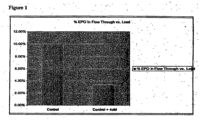
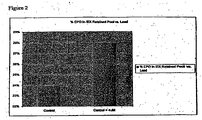
- Figures 1 and 2 Results of a representative experiment for rHuEPO are shown in Figures 1 and 2 .
- Figure 1 displays the amount of rHuEPO in the flow through fraction as a percentage of the amount loaded onto the column and shows that the addition of 4 ⁇ M manganese reduced the lower sialylated fraction of EPO compared to control, from 10.01% to 3.39%.
- Figure 2 displays the amount of rHuEPO in the IEX-retained fraction as a percentage of the amount loaded onto the column and shows that the addition of 4 ⁇ M manganese increased the percent recoverable EPO in the highly sialylated fraction compared to control, from 24% to 28%.
- Figure 3 displays data from each harvest cycle and shows that the addition of 4 ⁇ M manganese increased the percent recoverable darbepoetin in the highly sialylated fraction compared to control, from 32.8% to 36.3% after the third harvest.
- CHO cells producing rHuEPO were grown as described in Example 1 with and without added 4 ⁇ M MgCl 2 . Un-fractionated culture media collected after the third harvest cycle was analyzed for percent O-site occupancy of rHuEPO.
- CHO cells producing darbepoetin were grown as described in Example 1 with and without added 4 ⁇ M MgCl 2 . Conditioned media collected after each of the three harvest cycles was analyzed.
- CHO cells producing darbepoetin were also grown as described in Example I with 0.4, 1, 4, 10 and 40 ⁇ M MgCl 2 and media from the third harvest cycle was analyzed.
- the percentage of O-linked sites occupied with glycosylation was quantified by first removing N-linked structures by N-Glycanase (Sigma) digestion of the cell culture media, followed by reverse phase HPLC chromatography. Specifically, 5 U ofN-Glycanase (Sigma) was added to 10 ⁇ L of concentrated (1:60) culture media samples and digested at 37 °C for three hours. The samples were then analyzed by reverse phase chromatography using a Zorbax C-8 column (150 mm x 2.1 mm (VWR) using a linear AB gradient from 35% - 60% B over 30 minutes (buffer A: 0.1% TFA in H 2 O, buffer B: 0.1% TFA in 90% CH 3 CN (Sigma)). The resulting chromatogram separates rHuEPO into two peaks; the first peak corresponds to the occupied O-site rHuEPO peptide while the smaller, second peak corresponds to the unoccupied O-site rHuEPO peptide.
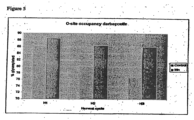
- Figures 5 and 6 Results of representative experiments for darbepoetin are displayed in Figures 5 and 6 .
- Figure 5 shows data from each harvest cycle and demonstrates that the addition of 4 ⁇ M manganese increased the darbepoetin O-site occupancy compared to control, from 76.8% to 86% after the third harvest.
- Figure 6 displays data from the third harvest cycle for darbepoetin and shows that O-site occupancy increased with increasing concentrations of manganese.
- 40 ⁇ M manganese adversely affected levels of protein production, resulting in a total relative decrease of 17% in the mg of darbepoetin produced over the three harvest cycles combined.
- 10 ⁇ M manganese did not appear to substantially affect protein production.
- the lower sialylated fractions are analyzed for structural content by N-glycan mapping and enzymatic sequencing coupled with MALDI-TOF mass spectrometry for size determination.
- N-glycan mapping and enzymatic sequencing coupled with MALDI-TOF mass spectrometry for size determination.
- the procedure calls for the N-glycans to be enzymatically released with 1 U/mL N-Glycanase (Sigma), then desalted and deproteinated using PGC chromatography (VWR).
- VWR PGC chromatography
- the free N-glycans are labeled at the reducing terminus with a fluorescent tag 2-aminobenzamide (2AB)by reductive amination (Sigma).
- a second cleanup procedure is performed utilizing paper chromatography (VWR).
- the 2AB N-glycan pools are mapped on a Dionex PA1 column with fluorescence detection (excitation 330 nm, emission 420 nm) using a sodium acetate gradient of 50-150 mM at 1.67 mM/min with sodium hydroxide (Sigma) at 50 mM isocratic.
- the 2AB N-glycan pools are desialylated using 1 U/mL A. ureafaciens neuraminidase with and without 0.5 U/mL B. testes galactosidase. All digests are performed at 37 °C for 18h.
- the matrix is saturated 2,5-dihydroxy benzoic acid in 70% acetonitrile, 0.05% TFA (Sigma) and mixed at a 1:1 ratio with the 2AB N-glycan pool on the probe.
- the MALD settings are as follows: Accelerating voltage: 20,000 V; Grid voltage: 94 %; Guide wire: 0.05 %; Extraction delay time: 75 nsec; Laser intensity: 2300; Mass range: 500-5000.
- rHuEPO N-linked occupancy of rHuEPO
- 10 ⁇ g of a rHuEPO standard Amgen Inc.
- N-Glycanase Sigma
- 0.1 ⁇ g of total rHuEPO collected from harvest media is loaded and separated by SDS-PAGE (Novex, Invitrogen) and then transferred to PVDF. Blots are probed with a monoclonal antibody to rHuEPO.
- Enriched Medium consisted of serum-free 1:1 DMEM/F-12 media supplemented with 1% amino acid stock (2.25 g/L asparagine; 1.99 g/L aspartic acid; 1.76 g/L cysteine; 3.13 g/L cystine; 2.21 g/L glutamic acid; 5.45 g/L isoleucine; 5.91 g/L leucine; 0.90 g/L tryptophan; and 5.29 g/L valine).
- Cells were cultured in either Standard Media or in Enriched Media, which was used throughout the entire twenty-one day culture process. After the third harvest cycle, media was collected and rHuEPO in the harvested media was quantitated by reversed phase HPLC.
- CHO cells cultured in Enriched Media showed a modest increase of 12% in rHuEPO production compared to control cells cultured in Standard Media.
- the Enriched Media improved rHuEPO protein production, the amount of lower sialylated material was increased two-fold, leading to an overall decrease in highly sialylated rHuEPO as compared to control cultures.
- the change in the amount of rHuEPO found in the lower sialylated pool was due to a lower degree of sialylation of the individual carbohydrates rather than a lower degree of carbohydrate branching.
- the structures of N-linked carbohydrates found on rHuEPO in the lower sialylated fractions were analyzed by MALDI-TOF. Results are displayed below in Table 1 below.
- the lower sialylated fraction was digested with either neuraminidase, or neuraminidase and galactosidase.
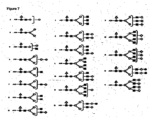
- Masses representing highly branched carbohydrate structures were analyzed and compared between the control cultures grown in Standard Media and the cultures grown in the presence of Enriched Media. Masses representing highly branched carbohydrate structures ( Figure 7 ; structures M - T) were observed. Amino acid supplementation in the Enriched Media resulted in a mass corresponding to a highly branched structure that is missing all of its terminal galactose ( Figure 7 , structure L).
- rHuEPO was cultured according to Example 1 in Enriched Media alone or Enriched Media plus 0.4, 4 and 40 ⁇ M MnCl 2 .
- the Enriched Media has no effect on rHuEPO glycosylation.
- restoration of these depleted pools eventually caused defects in both oligosaccharide occupancy and sialylation, after the third harvest cycle.
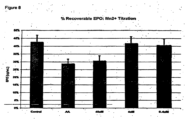
- Figure 8 shows that culturing host cells in Enriched Media (supplemented with amino acids) reduced the percent of recoverable highly sialylated rHuEPO (43%, control vs. 29%, with amino acid supplementation).
- Figure 8 also shows that adding manganese to the Enriched Media at 40, 4 and 0.4 ⁇ M improved percent recovery (31% at 40 ⁇ M, 42% at 4 ⁇ M, 41% at 0.4 ⁇ M).
- Figure 9 shows that culturing host cells in Enriched Media (supplemented with amino acids) increased the percent of lower sialylated rHuEPO forms obtained (7.3%, control vs. 13%, with amino acid supplementation).
- Figure 9 also shows that adding manganese to Enriched Media greatly reduced the percent of lower sialylated rHuEPO produced at all concentrations of Mn 2+ (1.6% at 40 ⁇ M, 2.1 % at 4 ⁇ M, and 2.4% at 0.4 ⁇ M).
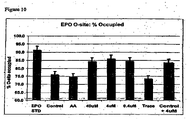
- Figure 10 shows that culturing host cells in Enriched Media (supplemented with amino acids) reduces the percentage of O-site occupancy by sugar chains (76.2% control vs. 74.8% with amino acid supplementation).
- Figure 10 also shows that adding manganese to Enriched Media increased the percentage occupancy of O-sites (84.4% at 40 ⁇ Mm, 86.1% at 4 ⁇ M, 84.6% at 0.4 ⁇ M).
Landscapes
- Health & Medical Sciences (AREA)
- Life Sciences & Earth Sciences (AREA)
- Chemical & Material Sciences (AREA)
- Organic Chemistry (AREA)
- Engineering & Computer Science (AREA)
- Zoology (AREA)
- Genetics & Genomics (AREA)
- Wood Science & Technology (AREA)
- Biotechnology (AREA)
- General Health & Medical Sciences (AREA)
- Biochemistry (AREA)
- Bioinformatics & Cheminformatics (AREA)
- Biomedical Technology (AREA)
- Molecular Biology (AREA)
- General Engineering & Computer Science (AREA)
- Microbiology (AREA)
- Gastroenterology & Hepatology (AREA)
- Medicinal Chemistry (AREA)
- Biophysics (AREA)
- Proteomics, Peptides & Aminoacids (AREA)
- Toxicology (AREA)
- General Chemical & Material Sciences (AREA)
- Chemical Kinetics & Catalysis (AREA)
- Cell Biology (AREA)
- Endocrinology (AREA)
- Preparation Of Compounds By Using Micro-Organisms (AREA)
- Peptides Or Proteins (AREA)
- Micro-Organisms Or Cultivation Processes Thereof (AREA)
Claims (19)
- Verfahren zur Herstellung einer erythropoetischen Zusammensetzung, die sialylierte Erythropoese-stimulierende Glykoproteine umfasst, bei dem man eine auf Mangan reagierende CHO-Wirtszelle, welche ein Erythropoese-stimulierendes Glykoprotein produziert, in einem Kulturmedium anzüchtet, das eine Menge an Mangan enthält, welche eine Erhöhung der Sialylierung der von der auf Mangan reagierenden CHO-Wirtszelle produzierten erythropoetischen Zusammensetzung bewirkt, wobei die Konzentration an Mangan in dem Kulturmedium von etwa 0,4 bis etwa 40 µM beträgt, und wobei die Erythropoese-stimulierenden Glykoproteine(a) die Aminosäuresequenz von SEQ ID NO:3 (Erythropoetin) oder erythropoetische Fragmente davon; oder(b) die Aminosäuresequenz von SEQ ID NO:2 (Darbepoetin) oder erythropoetische Fragmente davonumfassen.
- Verfahren gemäß Anspruch 1, das ferner den Schritt der Gewinnung einer erythropoetischen Zusammensetzung umfasst, wobei weniger als etwa 5% der Erythropoese-stimulierenden Moleküle geringfügig sialyliert sind.
- Verfahren gemäß Anspruch 1, bei dem die Menge an Mangan eine Erhöhung des prozentualen Anteils an stark sialylierten Erythropoese-stimulierenden Molekülen bewirkt.
- Verfahren gemäß Anspruch 1, bei dem die Menge an Mangan eine Erhöhung des prozentualen Anteils an Erythropoese-stimulierenden Molekülen bewirkt, die an mögliche O-gebundenen Glykosylierungsstellen glykosyliert sind.
- Verfahren gemäß Anspruch 1, bei dem die Menge an Mangan eine Erhöhung des prozentualen Anteils an Galaktose bei den Zuckern bewirkt, die an die Erythropoese-stimulierenden Moleküle gebunden sind.
- Verfahren nach einem der Ansprüche 1-5, bei dem das Kulturmedium im Wesentlichen frei von Serum ist.
- Verfahren gemäß einem der Ansprüche 1-6, bei dem das Mangan in einer Konzentration von etwa 0,4 bis etwa 10 µM vorliegt.
- Verfahren gemäß einem der Ansprüche 1-6, bei dem das Mangan in einer Konzentration von etwa 0,4 bis etwa 4 µM vorliegt.
- Verfahren gemäß einem der Ansprüche 1-8, bei dem das Kulturmedium ferner eine oder mehrere supplementierende Aminosäuren umfasst, die ausgewählt sind aus der Gruppe bestehend aus Asparagin, Asparaginsäure, Cystein, Cystin, Isoleucin, Leucin, Tryptophan oder Valin.
- Verfahren gemäß einem der Ansprüche 1-9, bei dem die Wirtszellen in Kulturflaschen gezüchtet werden.
- Verfahren gemäß einem der Ansprüche 1-10, bei dem das Mangan nach einer Phase des schnellen Zellwachstums zugegeben wird.
- Verfahren gemäß Anspruch 11, bei dem die Phase des schnellen Zellwachstums einen Zeitraum zwischen etwa 2 und 20 Tagen andauert.
- Verfahren gemäß Anspruch 12, bei dem das Mangan nach zwei Ernte-Zyklen zugegeben wird.
- Verfahren gemäß Anspruch 13, bei dem der erste Ernte-Zyklus etwa 8 Tage und der zweite Ernte-Zyklus etwa 7 Tage dauert.
- Verfahren gemäß Anspruch 1, das ferner den Schritt der Gewinnung der erythropoetischen Zusammensetzung, welche die sialylierten Erythropoese-stimulierenden Glykoproteine umfasst, aus den Wirtszellen und dem Kulturmedium umfasst.
- Verfahren gemäß Anspruch 1, das ferner den Schritt der Gewinnung der erythropoetischen Zusammensetzung, welche die stark sialylierten Erythropoese-stimulierenden Glykoproteine umfasst, aus den Wirtszellen und dem Kulturmedium umfasst.
- Kulturmedium, das CHO-Wirtszellen, welche Erythropoese-stimulierende Glykoproteine produzieren, und Mangan in einer Konzentration von etwa 0,4 bis etwa 40 µM umfasst, wobei die Erythropoese-stimulierenden Glykoproteine(a) die Aminosäuresequenz von SEQ ID NO:3 (Erythropoetin) oder erythropoetische Fragmente davon; oder(b) die Aminosäuresequenz von SEQ ID NO:2 (Darbepoetin) oder erythropoetische Fragmente davonumfassen.
- Kulturmedium gemäß Anspruch 17, wobei die Wirtszellen eine erythropoetische Zusammensetzung sekretieren.
- Kulturmedium gemäß Anspruch 17, wobei das Mangan in einer Konzentration von etwa 0,4 bis etwa 10 µM vorliegt.
Priority Applications (4)
| Application Number | Priority Date | Filing Date | Title |
|---|---|---|---|
| EP15198171.9A EP3026109B1 (de) | 2005-12-08 | 2006-12-06 | Verbesserte herstellung von glykoproteinen unter verwendung von mangan |
| SI200632055T SI1957630T2 (sl) | 2005-12-08 | 2006-12-06 | Izboljšana proizvodnja glikoproteinov z uporabo mangana |
| EP12160158A EP2495308A1 (de) | 2005-12-08 | 2006-12-06 | Verbesserte Herstellung von Glykoproteinen unter Verwendung von Mangan |
| EP22159008.6A EP4155385A1 (de) | 2005-12-08 | 2006-12-06 | Verbesserte herstellung von glykoproteinen unter verwendung von mangan |
Applications Claiming Priority (2)
| Application Number | Priority Date | Filing Date | Title |
|---|---|---|---|
| US74888005P | 2005-12-08 | 2005-12-08 | |
| PCT/US2006/046609 WO2007070315A2 (en) | 2005-12-08 | 2006-12-06 | Improved production of glycoproteins using manganese |
Related Child Applications (6)
| Application Number | Title | Priority Date | Filing Date |
|---|---|---|---|
| EP22159008.6A Division EP4155385A1 (de) | 2005-12-08 | 2006-12-06 | Verbesserte herstellung von glykoproteinen unter verwendung von mangan |
| EP22159008.6A Division-Into EP4155385A1 (de) | 2005-12-08 | 2006-12-06 | Verbesserte herstellung von glykoproteinen unter verwendung von mangan |
| EP15198171.9A Division EP3026109B1 (de) | 2005-12-08 | 2006-12-06 | Verbesserte herstellung von glykoproteinen unter verwendung von mangan |
| EP15198171.9A Division-Into EP3026109B1 (de) | 2005-12-08 | 2006-12-06 | Verbesserte herstellung von glykoproteinen unter verwendung von mangan |
| EP12160158A Division EP2495308A1 (de) | 2005-12-08 | 2006-12-06 | Verbesserte Herstellung von Glykoproteinen unter Verwendung von Mangan |
| EP12160158A Division-Into EP2495308A1 (de) | 2005-12-08 | 2006-12-06 | Verbesserte Herstellung von Glykoproteinen unter Verwendung von Mangan |
Publications (3)
| Publication Number | Publication Date |
|---|---|
| EP1957630A2 EP1957630A2 (de) | 2008-08-20 |
| EP1957630B1 EP1957630B1 (de) | 2016-02-17 |
| EP1957630B2 true EP1957630B2 (de) | 2023-03-29 |
Family
ID=38051866
Family Applications (4)
| Application Number | Title | Priority Date | Filing Date |
|---|---|---|---|
| EP22159008.6A Pending EP4155385A1 (de) | 2005-12-08 | 2006-12-06 | Verbesserte herstellung von glykoproteinen unter verwendung von mangan |
| EP12160158A Withdrawn EP2495308A1 (de) | 2005-12-08 | 2006-12-06 | Verbesserte Herstellung von Glykoproteinen unter Verwendung von Mangan |
| EP15198171.9A Active EP3026109B1 (de) | 2005-12-08 | 2006-12-06 | Verbesserte herstellung von glykoproteinen unter verwendung von mangan |
| EP06847508.6A Active EP1957630B2 (de) | 2005-12-08 | 2006-12-06 | Verbesserte herstellung von glykoproteinen unter verwendung von mangan |
Family Applications Before (3)
| Application Number | Title | Priority Date | Filing Date |
|---|---|---|---|
| EP22159008.6A Pending EP4155385A1 (de) | 2005-12-08 | 2006-12-06 | Verbesserte herstellung von glykoproteinen unter verwendung von mangan |
| EP12160158A Withdrawn EP2495308A1 (de) | 2005-12-08 | 2006-12-06 | Verbesserte Herstellung von Glykoproteinen unter Verwendung von Mangan |
| EP15198171.9A Active EP3026109B1 (de) | 2005-12-08 | 2006-12-06 | Verbesserte herstellung von glykoproteinen unter verwendung von mangan |
Country Status (7)
| Country | Link |
|---|---|
| US (7) | US7972810B2 (de) |
| EP (4) | EP4155385A1 (de) |
| AU (1) | AU2006324163B2 (de) |
| CA (1) | CA2630811C (de) |
| ES (2) | ES2913277T3 (de) |
| SI (1) | SI1957630T2 (de) |
| WO (1) | WO2007070315A2 (de) |
Families Citing this family (42)
| Publication number | Priority date | Publication date | Assignee | Title |
|---|---|---|---|---|
| EP4155385A1 (de) | 2005-12-08 | 2023-03-29 | Amgen Inc. | Verbesserte herstellung von glykoproteinen unter verwendung von mangan |
| AU2016244316B2 (en) * | 2006-07-13 | 2018-07-12 | Wyeth Llc | Production of glycoproteins |
| DK2041270T3 (da) * | 2006-07-13 | 2014-01-27 | Wyeth Llc | Fremstilling af glycoproteiner |
| US8911964B2 (en) | 2006-09-13 | 2014-12-16 | Abbvie Inc. | Fed-batch method of making human anti-TNF-alpha antibody |
| NZ597334A (en) | 2006-09-13 | 2014-02-28 | Abbott Lab | Cell culture improvements |
| AU2009347206C1 (en) | 2008-10-20 | 2016-12-08 | Abbvie Inc. | Isolation and purification of antibodies using Protein A affinity chromatography |
| MX2011004201A (es) | 2008-10-20 | 2011-05-24 | Abbott Lab | Desactivacion viral durante purificacion de anticuerpos. |
| EP2456871B1 (de) * | 2009-07-24 | 2016-09-07 | Dr. Reddy's Laboratories, Ltd. | Herstellung erythropoese-stimulierender proteine mithilfe von metallionen |
| WO2011024025A1 (en) * | 2009-08-28 | 2011-03-03 | Avesthagen Limited | An erythropoietin analogue and a method thereof |
| WO2011024024A1 (en) * | 2009-08-28 | 2011-03-03 | Avesthagen Limited | A process for recovering darbepoeitin alfa isoforms |
| EP2325296A1 (de) | 2009-11-20 | 2011-05-25 | LEK Pharmaceuticals d.d. | Herstellung von Glykoproteinen mit niedrigem N-Glykolylneuraminsäure-Gehalt (Neu5Gc-Gehalt) |
| EP2702077A2 (de) | 2011-04-27 | 2014-03-05 | AbbVie Inc. | Verfahren zur steuerung des galactosylierungsprofil von rekombinant exprimierten proteinen |
| US10059770B2 (en) | 2012-01-30 | 2018-08-28 | Dr. Reddy's Laboratories Limited | Process of modulating man5 and/or afucosylation content of a glycoprotein composition |
| US9334319B2 (en) | 2012-04-20 | 2016-05-10 | Abbvie Inc. | Low acidic species compositions |
| US9067990B2 (en) | 2013-03-14 | 2015-06-30 | Abbvie, Inc. | Protein purification using displacement chromatography |
| US9181572B2 (en) | 2012-04-20 | 2015-11-10 | Abbvie, Inc. | Methods to modulate lysine variant distribution |
| US9249182B2 (en) | 2012-05-24 | 2016-02-02 | Abbvie, Inc. | Purification of antibodies using hydrophobic interaction chromatography |
| US9512214B2 (en) | 2012-09-02 | 2016-12-06 | Abbvie, Inc. | Methods to control protein heterogeneity |
| KR20150043523A (ko) | 2012-09-02 | 2015-04-22 | 애브비 인코포레이티드 | 단백질 불균일성의 제어 방법 |
| WO2014143205A1 (en) | 2013-03-12 | 2014-09-18 | Abbvie Inc. | Human antibodies that bind human tnf-alpha and methods of preparing the same |
| US9017687B1 (en) | 2013-10-18 | 2015-04-28 | Abbvie, Inc. | Low acidic species compositions and methods for producing and using the same using displacement chromatography |
| US9217168B2 (en) | 2013-03-14 | 2015-12-22 | Momenta Pharmaceuticals, Inc. | Methods of cell culture |
| US8921526B2 (en) | 2013-03-14 | 2014-12-30 | Abbvie, Inc. | Mutated anti-TNFα antibodies and methods of their use |
| US9499614B2 (en) | 2013-03-14 | 2016-11-22 | Abbvie Inc. | Methods for modulating protein glycosylation profiles of recombinant protein therapeutics using monosaccharides and oligosaccharides |
| JP6689189B2 (ja) * | 2013-03-26 | 2020-04-28 | コヒラス・バイオサイエンシズ・インコーポレイテッド | タンパク質産生方法 |
| EP4282975A3 (de) | 2013-07-23 | 2024-02-28 | Biocon Limited | Verfahren zur steuerung von fucosylierungspegeln in proteinen |
| WO2015051293A2 (en) | 2013-10-04 | 2015-04-09 | Abbvie, Inc. | Use of metal ions for modulation of protein glycosylation profiles of recombinant proteins |
| US9181337B2 (en) | 2013-10-18 | 2015-11-10 | Abbvie, Inc. | Modulated lysine variant species compositions and methods for producing and using the same |
| US8946395B1 (en) | 2013-10-18 | 2015-02-03 | Abbvie Inc. | Purification of proteins using hydrophobic interaction chromatography |
| US9085618B2 (en) | 2013-10-18 | 2015-07-21 | Abbvie, Inc. | Low acidic species compositions and methods for producing and using the same |
| US20150139988A1 (en) | 2013-11-15 | 2015-05-21 | Abbvie, Inc. | Glycoengineered binding protein compositions |
| RU2642285C1 (ru) * | 2014-01-29 | 2018-01-24 | ЭлДжи КЕМ, ЛТД. | Способ получения целевого антитела с модулированным галактозилированием (варианты) и способ модулирования галактозилирования целевого антитела (варианты) путем оптимизации культуральной среды |
| HRP20200100T1 (hr) * | 2014-02-27 | 2020-04-03 | F. Hoffmann - La Roche Ag | Modulacija rasta i glikozilacije stanica u rekombinantnoj proizvodnji glikoproteina |
| WO2015140700A1 (en) * | 2014-03-19 | 2015-09-24 | Dr. Reddy's Laboratories Limited | Cell culture process |
| KR101660580B1 (ko) * | 2014-04-02 | 2016-09-28 | 프레스티지 바이오파마 피티이. 엘티디. | 항체의 당 함량 조절을 통한 항체의 제조 방법 |
| US20170226552A1 (en) * | 2014-07-03 | 2017-08-10 | Abbvie Inc. | Methods for modulating protein glycosylation profiles of recombinant protein therapeutics using cobalt |
| US20160130324A1 (en) | 2014-10-31 | 2016-05-12 | Shire Human Genetic Therapies, Inc. | C1 Inhibitor Fusion Proteins and Uses Thereof |
| CN107109455B (zh) | 2014-12-01 | 2022-02-18 | 美国安进公司 | 用于操控糖蛋白的聚糖含量水平的方法 |
| KR102007930B1 (ko) | 2014-12-31 | 2019-08-06 | 주식회사 엘지화학 | 재조합 당단백질의 글리코실화 조절 방법 |
| US10844416B2 (en) * | 2015-06-01 | 2020-11-24 | Biogen Ma Inc. | Manganese supplementation for control of glycosylation in mammalian cell culture process |
| MA43270A (fr) | 2015-11-19 | 2021-06-02 | Takeda Pharmaceuticals Co | Inhibiteur de la c1 estérase humaine recombinante et ses utilisations |
| US10519479B1 (en) * | 2016-03-15 | 2019-12-31 | Ares Trading S.A. | Methods for modifying glycosylation using manganese |
Citations (10)
| Publication number | Priority date | Publication date | Assignee | Title |
|---|---|---|---|---|
| WO1985002610A1 (en) † | 1983-12-13 | 1985-06-20 | Kirin-Amgen, Inc. | Production of erythropoietin |
| US4667016A (en) † | 1985-06-20 | 1987-05-19 | Kirin-Amgen, Inc. | Erythropoietin purification |
| US4703008A (en) † | 1983-12-13 | 1987-10-27 | Kiren-Amgen, Inc. | DNA sequences encoding erythropoietin |
| WO1995005465A1 (en) † | 1993-08-17 | 1995-02-23 | Amgen Inc. | Erythropoietin analogs |
| WO1996019573A1 (en) † | 1994-12-19 | 1996-06-27 | Cangene Corporation | Recombinant dna molecules and expression vectors for erythropoietin |
| WO2000065070A2 (en) † | 1999-04-26 | 2000-11-02 | Genentech, Inc. | Cell culture process for glycoproteins |
| EP1085083A1 (de) † | 1998-06-01 | 2001-03-21 | Chugai Seiyaku Kabushiki Kaisha | Medien zur kultivierung von tierischen zellen und verfahren zur herstellung eines proteins durch deren verwendung |
| WO2001081405A2 (en) † | 2000-04-21 | 2001-11-01 | Amgen Inc. | Methods and compositions for the prevention and treatment of anemia |
| EP1298217A1 (de) † | 2000-07-05 | 2003-04-02 | Mitsubishi Pharma Corporation | Verfahren zur Herstellung eines Glykoproteins |
| WO2005121173A1 (de) † | 2004-06-08 | 2005-12-22 | Bioceuticals Arzneimittel Ag | Verfahren zur reinigung von erythropoietin |
Family Cites Families (15)
| Publication number | Priority date | Publication date | Assignee | Title |
|---|---|---|---|---|
| KR100263845B1 (ko) | 1989-10-13 | 2000-08-16 | 스튜어트 엘.왓트 | 에리트로포이에틴 동형체와 그의 제조방법 및 그를 포함하는제약학적 조성물 |
| DE4115722A1 (de) | 1991-05-14 | 1992-11-19 | Boehringer Mannheim Gmbh | Serumfreies medium zur kultivierung von saeugerzellen |
| US5663304A (en) * | 1993-08-20 | 1997-09-02 | Genentech, Inc. | Refolding of misfolded insulin-like growth factor-I |
| US5459031A (en) | 1993-11-05 | 1995-10-17 | Amgen Inc. | Methods for controlling sialic acid derivatives in recombinant glycoproteins |
| IL118201A (en) | 1995-05-11 | 2004-12-15 | Roche Diagnostics Gmbh | Preparation comprising a protein with human erythropoietin activity which is free of serum and non-recombinant mammalian protein and process for the preparation thereof |
| AU4330597A (en) * | 1996-08-30 | 1998-03-19 | Life Technologies, Inc. | Serum-free mammalian cell culture medium, and uses thereof |
| US7033774B2 (en) * | 1997-04-21 | 2006-04-25 | Glycozyme, Inc. | Determination of recombinant glycosylated proteins and peptides in biological fluids |
| DE69726571T2 (de) | 1997-09-01 | 2004-11-04 | Aventis Pharma Deutschland Gmbh | Rekombinantes humanes Erythropoietin mit vorteilhaftem Glykosylierungsmuster |
| HK1040944B (en) | 1998-10-23 | 2007-09-07 | Amgen Inc. | Methods and compositions for the prevention and treatment of anemia |
| US7304150B1 (en) * | 1998-10-23 | 2007-12-04 | Amgen Inc. | Methods and compositions for the prevention and treatment of anemia |
| FR2823220B1 (fr) | 2001-04-04 | 2003-12-12 | Genodyssee | Nouveaux polynucleotides et polypeptides de l'erythropoietine (epo) |
| DE102004007658B4 (de) | 2004-02-17 | 2008-12-18 | Bioceuticals Arzneimittel Ag | Verfahren zur Herstellung von rekombinanten Proteinen in eukaryontischen Wirtszellen |
| DE102005050580A1 (de) | 2005-10-21 | 2007-04-26 | Siegfried Biologics Gmbh | Verfahren zur Charakterisierung der Qualität von Sialoglycoproteinen über eine Isoformenzahl I und dessen Verwendung |
| EP4155385A1 (de) | 2005-12-08 | 2023-03-29 | Amgen Inc. | Verbesserte herstellung von glykoproteinen unter verwendung von mangan |
| WO2009004560A2 (en) | 2007-07-04 | 2009-01-08 | Koninklijke Philips Electronics N.V. | A method for forming a patterned layer on a substrate |
-
2006
- 2006-12-06 EP EP22159008.6A patent/EP4155385A1/de active Pending
- 2006-12-06 ES ES15198171T patent/ES2913277T3/es active Active
- 2006-12-06 AU AU2006324163A patent/AU2006324163B2/en active Active
- 2006-12-06 US US11/634,506 patent/US7972810B2/en active Active
- 2006-12-06 EP EP12160158A patent/EP2495308A1/de not_active Withdrawn
- 2006-12-06 ES ES06847508T patent/ES2564790T5/es active Active
- 2006-12-06 SI SI200632055T patent/SI1957630T2/sl unknown
- 2006-12-06 EP EP15198171.9A patent/EP3026109B1/de active Active
- 2006-12-06 EP EP06847508.6A patent/EP1957630B2/de active Active
- 2006-12-06 CA CA2630811A patent/CA2630811C/en active Active
- 2006-12-06 WO PCT/US2006/046609 patent/WO2007070315A2/en not_active Ceased
-
2011
- 2011-05-20 US US13/112,940 patent/US8617878B2/en active Active
-
2013
- 2013-11-22 US US14/087,747 patent/US9273110B2/en active Active
-
2016
- 2016-01-22 US US15/004,716 patent/US20160222075A1/en not_active Abandoned
-
2017
- 2017-08-22 US US15/683,521 patent/US20170355741A1/en not_active Abandoned
-
2020
- 2020-07-24 US US16/947,265 patent/US20210047381A1/en not_active Abandoned
-
2022
- 2022-08-31 US US17/823,883 patent/US12351613B2/en active Active
Patent Citations (11)
| Publication number | Priority date | Publication date | Assignee | Title |
|---|---|---|---|---|
| WO1985002610A1 (en) † | 1983-12-13 | 1985-06-20 | Kirin-Amgen, Inc. | Production of erythropoietin |
| EP0148605A2 (de) † | 1983-12-13 | 1985-07-17 | Kirin-Amgen, Inc. | Herstellung von Erythropoietin |
| US4703008A (en) † | 1983-12-13 | 1987-10-27 | Kiren-Amgen, Inc. | DNA sequences encoding erythropoietin |
| US4667016A (en) † | 1985-06-20 | 1987-05-19 | Kirin-Amgen, Inc. | Erythropoietin purification |
| WO1995005465A1 (en) † | 1993-08-17 | 1995-02-23 | Amgen Inc. | Erythropoietin analogs |
| WO1996019573A1 (en) † | 1994-12-19 | 1996-06-27 | Cangene Corporation | Recombinant dna molecules and expression vectors for erythropoietin |
| EP1085083A1 (de) † | 1998-06-01 | 2001-03-21 | Chugai Seiyaku Kabushiki Kaisha | Medien zur kultivierung von tierischen zellen und verfahren zur herstellung eines proteins durch deren verwendung |
| WO2000065070A2 (en) † | 1999-04-26 | 2000-11-02 | Genentech, Inc. | Cell culture process for glycoproteins |
| WO2001081405A2 (en) † | 2000-04-21 | 2001-11-01 | Amgen Inc. | Methods and compositions for the prevention and treatment of anemia |
| EP1298217A1 (de) † | 2000-07-05 | 2003-04-02 | Mitsubishi Pharma Corporation | Verfahren zur Herstellung eines Glykoproteins |
| WO2005121173A1 (de) † | 2004-06-08 | 2005-12-22 | Bioceuticals Arzneimittel Ag | Verfahren zur reinigung von erythropoietin |
Non-Patent Citations (16)
| Title |
|---|
| BioConcept. Cell Culture Catalogue 2004 † |
| BioConcept. Cell Culture Catalogue 2015 † |
| Burgener et al.. Chapter 3: Medium Development in "Cell culture technology for pharmaceutical and cell based therapies"Eds. Ozturk and Hu, Taylor Francis; pp. 41-79, 2006 † |
| Crowell et al.. Biotechnology and Bioengineering, Vol. 96, No.3, pp. 538-549, August 25, 2006 † |
| Declaration of BioConcept † |
| Declaration of EPFL concerning the availability of D2I † |
| Excerpt of 'In Vitro Cytotoxicology. Frank A. Barile,Ph D (1994) 2004 † |
| Excerpt of 'Production of Biologicals from Animal Cells in Culture' (1991), Ed. by: R. E. Spier, J. B Griffiths and B.Mcignier, Jager, pp. 155-166, 1991 † |
| KAUFMAN ET AL.: "Depletion of manganese within the secretory pathway inhibits O-linked glycosylation in mammalian cells", BIOCHEMISTRY, vol. 33, no. 33, 23 August 1994 (1994-08-23), pages 9813 - 9819, XP002457774 † |
| Lai et al., J. Biol. Chem. Vol. 261, No. 7, pp 3116-3121, 1986 † |
| Ling el al.. Experimental Cell Research Vol. 52, pp. 469-489, 1968 † |
| PhD-thesis of Stefan Nahrgang, THESE NO 2608 (2002) INFLUENCE OF CELL-LINE AND PROCESSCONDITIONS ON THE GLYCOSYLATION OF RECOMBINANT PROTEINS † |
| RAJU ET AL.: "Glycoengineering of Therapeutic Glycoproteins: In Vitro Galactosylation and Sialylation of Glycoproteins with Terminal N-Acetylglucosamine and Galactose Residues", BIOCHEMISTRY, vol. 40, no. 30, 2001, pages 8868 - 8878, XP008153602 † |
| Rayner et al. A simple and effective method for the removal of trace metal cations from a mammalian culture medium supplemented with 10% fetal calf serum. BioMetals 8 188-192 1995 † |
| SIGEL ET AL: "Metal lons in Biological Systems", vol. 37, 2000, ISBN: 0824702883, article CROWLEY ET AL.: "Chapetr 8 - Enzymes and Proteins Containing 2000 Manganese: An Overview", pages: 209 - 278, XP055335086 † |
| Test report of BioConccpt's "MAM PF2" medium † |
Also Published As
| Publication number | Publication date |
|---|---|
| US20170355741A1 (en) | 2017-12-14 |
| EP1957630A2 (de) | 2008-08-20 |
| EP3026109B1 (de) | 2022-03-09 |
| EP4155385A1 (de) | 2023-03-29 |
| EP2495308A1 (de) | 2012-09-05 |
| CA2630811A1 (en) | 2007-06-21 |
| US8617878B2 (en) | 2013-12-31 |
| US12351613B2 (en) | 2025-07-08 |
| ES2564790T3 (es) | 2016-03-29 |
| US20210047381A1 (en) | 2021-02-18 |
| AU2006324163B2 (en) | 2013-05-02 |
| US9273110B2 (en) | 2016-03-01 |
| EP3026109A1 (de) | 2016-06-01 |
| US7972810B2 (en) | 2011-07-05 |
| US20160222075A1 (en) | 2016-08-04 |
| AU2006324163A1 (en) | 2007-06-21 |
| SI1957630T2 (sl) | 2023-07-31 |
| WO2007070315A3 (en) | 2007-12-27 |
| US20220402986A1 (en) | 2022-12-22 |
| US20110287483A1 (en) | 2011-11-24 |
| US20140088294A1 (en) | 2014-03-27 |
| CA2630811C (en) | 2016-05-31 |
| EP1957630B1 (de) | 2016-02-17 |
| ES2913277T3 (es) | 2022-06-01 |
| WO2007070315A2 (en) | 2007-06-21 |
| SI1957630T1 (sl) | 2016-06-30 |
| US20070161084A1 (en) | 2007-07-12 |
| ES2564790T5 (es) | 2023-08-25 |
Similar Documents
| Publication | Publication Date | Title |
|---|---|---|
| US12351613B2 (en) | Production of glycoproteins using manganese | |
| Crowell et al. | Amino acid and manganese supplementation modulates the glycosylation state of erythropoietin in a CHO culture system | |
| JP4384400B2 (ja) | 適当にグリコシル化されたポリペプチドの製造方法 | |
| KR20100017211A (ko) | 세포 배양에서 낮은 온도 및/또는 낮은 pH의 사용 | |
| JP2020509744A (ja) | 糖タンパク質製造プロセス | |
| EP3377093B1 (de) | Rekombinanter menschlicher c1-esterase-inhibitor und verwendungen davon | |
| CN115427562A (zh) | 制备重组玻尿酸酶的方法 | |
| JP2003238593A (ja) | 高い比活性を有するエリスロポエチン | |
| JP2026034442A (ja) | スペソリマブを産生するための方法 | |
| CN114606217A (zh) | 重组糖蛋白及其用途 | |
| AU2013203840A1 (en) | Improved Production of Glycoproteins Using Manganese | |
| JPWO2020252082A5 (de) | ||
| EP3009447B1 (de) | Herstellung von erythropoesestimulierendem protein unter verwendung von metallionen | |
| TWI803946B (zh) | 製造重組玻尿酸酶的方法 | |
| RU2801121C2 (ru) | Производство щелочных фосфатаз | |
| CN121712803A (zh) | 控制抗体糖基化谱的方法 | |
| EA049171B1 (ru) | Способ производства спесолимаба | |
| HK1261383A1 (en) | Recombinant human c1 esterase inhibitor and uses thereof |
Legal Events
| Date | Code | Title | Description |
|---|---|---|---|
| PUAI | Public reference made under article 153(3) epc to a published international application that has entered the european phase |
Free format text: ORIGINAL CODE: 0009012 |
|
| 17P | Request for examination filed |
Effective date: 20080606 |
|
| AK | Designated contracting states |
Kind code of ref document: A2 Designated state(s): AT BE BG CH CY CZ DE DK EE ES FI FR GB GR HU IE IS IT LI LT LU LV MC NL PL PT RO SE SI SK TR |
|
| 17Q | First examination report despatched |
Effective date: 20100408 |
|
| DAX | Request for extension of the european patent (deleted) | ||
| RIC1 | Information provided on ipc code assigned before grant |
Ipc: C12N 5/02 20060101AFI20141209BHEP Ipc: C07K 14/505 20060101ALI20141209BHEP |
|
| GRAP | Despatch of communication of intention to grant a patent |
Free format text: ORIGINAL CODE: EPIDOSNIGR1 |
|
| INTG | Intention to grant announced |
Effective date: 20150127 |
|
| GRAP | Despatch of communication of intention to grant a patent |
Free format text: ORIGINAL CODE: EPIDOSNIGR1 |
|
| INTG | Intention to grant announced |
Effective date: 20150625 |
|
| GRAS | Grant fee paid |
Free format text: ORIGINAL CODE: EPIDOSNIGR3 |
|
| GRAA | (expected) grant |
Free format text: ORIGINAL CODE: 0009210 |
|
| AK | Designated contracting states |
Kind code of ref document: B1 Designated state(s): AT BE BG CH CY CZ DE DK EE ES FI FR GB GR HU IE IS IT LI LT LU LV MC NL PL PT RO SE SI SK TR |
|
| REG | Reference to a national code |
Ref country code: GB Ref legal event code: FG4D |
|
| REG | Reference to a national code |
Ref country code: CH Ref legal event code: EP |
|
| REG | Reference to a national code |
Ref country code: IE Ref legal event code: FG4D |
|
| REG | Reference to a national code |
Ref country code: AT Ref legal event code: REF Ref document number: 775684 Country of ref document: AT Kind code of ref document: T Effective date: 20160315 |
|
| REG | Reference to a national code |
Ref country code: ES Ref legal event code: FG2A Ref document number: 2564790 Country of ref document: ES Kind code of ref document: T3 Effective date: 20160329 |
|
| REG | Reference to a national code |
Ref country code: DE Ref legal event code: R096 Ref document number: 602006047992 Country of ref document: DE |
|
| REG | Reference to a national code |
Ref country code: CH Ref legal event code: NV Representative=s name: E. BLUM AND CO. AG PATENT- UND MARKENANWAELTE , CH |
|
| REG | Reference to a national code |
Ref country code: NL Ref legal event code: MP Effective date: 20160217 |
|
| REG | Reference to a national code |
Ref country code: LT Ref legal event code: MG4D |
|
| REG | Reference to a national code |
Ref country code: AT Ref legal event code: MK05 Ref document number: 775684 Country of ref document: AT Kind code of ref document: T Effective date: 20160217 |
|
| PG25 | Lapsed in a contracting state [announced via postgrant information from national office to epo] |
Ref country code: FI Free format text: LAPSE BECAUSE OF FAILURE TO SUBMIT A TRANSLATION OF THE DESCRIPTION OR TO PAY THE FEE WITHIN THE PRESCRIBED TIME-LIMIT Effective date: 20160217 Ref country code: GR Free format text: LAPSE BECAUSE OF FAILURE TO SUBMIT A TRANSLATION OF THE DESCRIPTION OR TO PAY THE FEE WITHIN THE PRESCRIBED TIME-LIMIT Effective date: 20160518 |
|
| PG25 | Lapsed in a contracting state [announced via postgrant information from national office to epo] |
Ref country code: NL Free format text: LAPSE BECAUSE OF FAILURE TO SUBMIT A TRANSLATION OF THE DESCRIPTION OR TO PAY THE FEE WITHIN THE PRESCRIBED TIME-LIMIT Effective date: 20160217 Ref country code: LT Free format text: LAPSE BECAUSE OF FAILURE TO SUBMIT A TRANSLATION OF THE DESCRIPTION OR TO PAY THE FEE WITHIN THE PRESCRIBED TIME-LIMIT Effective date: 20160217 Ref country code: PT Free format text: LAPSE BECAUSE OF FAILURE TO SUBMIT A TRANSLATION OF THE DESCRIPTION OR TO PAY THE FEE WITHIN THE PRESCRIBED TIME-LIMIT Effective date: 20160617 Ref country code: LV Free format text: LAPSE BECAUSE OF FAILURE TO SUBMIT A TRANSLATION OF THE DESCRIPTION OR TO PAY THE FEE WITHIN THE PRESCRIBED TIME-LIMIT Effective date: 20160217 Ref country code: AT Free format text: LAPSE BECAUSE OF FAILURE TO SUBMIT A TRANSLATION OF THE DESCRIPTION OR TO PAY THE FEE WITHIN THE PRESCRIBED TIME-LIMIT Effective date: 20160217 Ref country code: SE Free format text: LAPSE BECAUSE OF FAILURE TO SUBMIT A TRANSLATION OF THE DESCRIPTION OR TO PAY THE FEE WITHIN THE PRESCRIBED TIME-LIMIT Effective date: 20160217 Ref country code: PL Free format text: LAPSE BECAUSE OF FAILURE TO SUBMIT A TRANSLATION OF THE DESCRIPTION OR TO PAY THE FEE WITHIN THE PRESCRIBED TIME-LIMIT Effective date: 20160217 |
|
| PG25 | Lapsed in a contracting state [announced via postgrant information from national office to epo] |
Ref country code: EE Free format text: LAPSE BECAUSE OF FAILURE TO SUBMIT A TRANSLATION OF THE DESCRIPTION OR TO PAY THE FEE WITHIN THE PRESCRIBED TIME-LIMIT Effective date: 20160217 Ref country code: DK Free format text: LAPSE BECAUSE OF FAILURE TO SUBMIT A TRANSLATION OF THE DESCRIPTION OR TO PAY THE FEE WITHIN THE PRESCRIBED TIME-LIMIT Effective date: 20160217 |
|
| REG | Reference to a national code |
Ref country code: FR Ref legal event code: PLFP Year of fee payment: 11 |
|
| REG | Reference to a national code |
Ref country code: DE Ref legal event code: R026 Ref document number: 602006047992 Country of ref document: DE |
|
| PLBI | Opposition filed |
Free format text: ORIGINAL CODE: 0009260 |
|
| PG25 | Lapsed in a contracting state [announced via postgrant information from national office to epo] |
Ref country code: SK Free format text: LAPSE BECAUSE OF FAILURE TO SUBMIT A TRANSLATION OF THE DESCRIPTION OR TO PAY THE FEE WITHIN THE PRESCRIBED TIME-LIMIT Effective date: 20160217 Ref country code: RO Free format text: LAPSE BECAUSE OF FAILURE TO SUBMIT A TRANSLATION OF THE DESCRIPTION OR TO PAY THE FEE WITHIN THE PRESCRIBED TIME-LIMIT Effective date: 20160217 Ref country code: CZ Free format text: LAPSE BECAUSE OF FAILURE TO SUBMIT A TRANSLATION OF THE DESCRIPTION OR TO PAY THE FEE WITHIN THE PRESCRIBED TIME-LIMIT Effective date: 20160217 |
|
| PLAX | Notice of opposition and request to file observation + time limit sent |
Free format text: ORIGINAL CODE: EPIDOSNOBS2 |
|
| 26 | Opposition filed |
Opponent name: POTTER CLARKSON LLP Effective date: 20161117 |
|
| PG25 | Lapsed in a contracting state [announced via postgrant information from national office to epo] |
Ref country code: BE Free format text: LAPSE BECAUSE OF FAILURE TO SUBMIT A TRANSLATION OF THE DESCRIPTION OR TO PAY THE FEE WITHIN THE PRESCRIBED TIME-LIMIT Effective date: 20160217 |
|
| PG25 | Lapsed in a contracting state [announced via postgrant information from national office to epo] |
Ref country code: BG Free format text: LAPSE BECAUSE OF FAILURE TO SUBMIT A TRANSLATION OF THE DESCRIPTION OR TO PAY THE FEE WITHIN THE PRESCRIBED TIME-LIMIT Effective date: 20160517 |
|
| TPAC | Observations filed by third parties |
Free format text: ORIGINAL CODE: EPIDOSNTIPA |
|
| PG25 | Lapsed in a contracting state [announced via postgrant information from national office to epo] |
Ref country code: MC Free format text: LAPSE BECAUSE OF FAILURE TO SUBMIT A TRANSLATION OF THE DESCRIPTION OR TO PAY THE FEE WITHIN THE PRESCRIBED TIME-LIMIT Effective date: 20160217 |
|
| PG25 | Lapsed in a contracting state [announced via postgrant information from national office to epo] |
Ref country code: LU Free format text: LAPSE BECAUSE OF NON-PAYMENT OF DUE FEES Effective date: 20161206 |
|
| REG | Reference to a national code |
Ref country code: FR Ref legal event code: PLFP Year of fee payment: 12 |
|
| PG25 | Lapsed in a contracting state [announced via postgrant information from national office to epo] |
Ref country code: HU Free format text: LAPSE BECAUSE OF FAILURE TO SUBMIT A TRANSLATION OF THE DESCRIPTION OR TO PAY THE FEE WITHIN THE PRESCRIBED TIME-LIMIT; INVALID AB INITIO Effective date: 20061206 Ref country code: CY Free format text: LAPSE BECAUSE OF FAILURE TO SUBMIT A TRANSLATION OF THE DESCRIPTION OR TO PAY THE FEE WITHIN THE PRESCRIBED TIME-LIMIT Effective date: 20160217 |
|
| PG25 | Lapsed in a contracting state [announced via postgrant information from national office to epo] |
Ref country code: TR Free format text: LAPSE BECAUSE OF FAILURE TO SUBMIT A TRANSLATION OF THE DESCRIPTION OR TO PAY THE FEE WITHIN THE PRESCRIBED TIME-LIMIT Effective date: 20160217 Ref country code: IS Free format text: LAPSE BECAUSE OF FAILURE TO SUBMIT A TRANSLATION OF THE DESCRIPTION OR TO PAY THE FEE WITHIN THE PRESCRIBED TIME-LIMIT Effective date: 20160217 |
|
| APAH | Appeal reference modified |
Free format text: ORIGINAL CODE: EPIDOSCREFNO |
|
| APBM | Appeal reference recorded |
Free format text: ORIGINAL CODE: EPIDOSNREFNO |
|
| APBP | Date of receipt of notice of appeal recorded |
Free format text: ORIGINAL CODE: EPIDOSNNOA2O |
|
| APBM | Appeal reference recorded |
Free format text: ORIGINAL CODE: EPIDOSNREFNO |
|
| APBP | Date of receipt of notice of appeal recorded |
Free format text: ORIGINAL CODE: EPIDOSNNOA2O |
|
| APBA | Date of receipt of statement of grounds of appeal deleted |
Free format text: ORIGINAL CODE: EPIDOSDNOA3O |
|
| APBQ | Date of receipt of statement of grounds of appeal recorded |
Free format text: ORIGINAL CODE: EPIDOSNNOA3O |
|
| APBU | Appeal procedure closed |
Free format text: ORIGINAL CODE: EPIDOSNNOA9O |
|
| APAN | Information on closure of appeal procedure modified |
Free format text: ORIGINAL CODE: EPIDOSCNOA9O |
|
| PUAH | Patent maintained in amended form |
Free format text: ORIGINAL CODE: 0009272 |
|
| STAA | Information on the status of an ep patent application or granted ep patent |
Free format text: STATUS: PATENT MAINTAINED AS AMENDED |
|
| 27A | Patent maintained in amended form |
Effective date: 20230329 |
|
| AK | Designated contracting states |
Kind code of ref document: B2 Designated state(s): AT BE BG CH CY CZ DE DK EE ES FI FR GB GR HU IE IS IT LI LT LU LV MC NL PL PT RO SE SI SK TR |
|
| REG | Reference to a national code |
Ref country code: DE Ref legal event code: R102 Ref document number: 602006047992 Country of ref document: DE |
|
| P01 | Opt-out of the competence of the unified patent court (upc) registered |
Effective date: 20230503 |
|
| REG | Reference to a national code |
Ref country code: ES Ref legal event code: DC2A Ref document number: 2564790 Country of ref document: ES Kind code of ref document: T5 Effective date: 20230825 |
|
| PGFP | Annual fee paid to national office [announced via postgrant information from national office to epo] |
Ref country code: ES Payment date: 20250102 Year of fee payment: 19 |
|
| PGFP | Annual fee paid to national office [announced via postgrant information from national office to epo] |
Ref country code: CH Payment date: 20250101 Year of fee payment: 19 |
|
| REG | Reference to a national code |
Ref country code: CH Ref legal event code: U11 Free format text: ST27 STATUS EVENT CODE: U-0-0-U10-U11 (AS PROVIDED BY THE NATIONAL OFFICE) Effective date: 20260101 |
|
| PGFP | Annual fee paid to national office [announced via postgrant information from national office to epo] |
Ref country code: DE Payment date: 20251126 Year of fee payment: 20 |
|
| PGFP | Annual fee paid to national office [announced via postgrant information from national office to epo] |
Ref country code: GB Payment date: 20251120 Year of fee payment: 20 |
|
| PGFP | Annual fee paid to national office [announced via postgrant information from national office to epo] |
Ref country code: IT Payment date: 20251119 Year of fee payment: 20 |
|
| PGFP | Annual fee paid to national office [announced via postgrant information from national office to epo] |
Ref country code: FR Payment date: 20251120 Year of fee payment: 20 |
|
| PGFP | Annual fee paid to national office [announced via postgrant information from national office to epo] |
Ref country code: IE Payment date: 20251121 Year of fee payment: 20 |
|
| PGFP | Annual fee paid to national office [announced via postgrant information from national office to epo] |
Ref country code: SI Payment date: 20251125 Year of fee payment: 20 |