EP1950697A1 - Etikettenlesegerät - Google Patents
Etikettenlesegerät Download PDFInfo
- Publication number
- EP1950697A1 EP1950697A1 EP07121703A EP07121703A EP1950697A1 EP 1950697 A1 EP1950697 A1 EP 1950697A1 EP 07121703 A EP07121703 A EP 07121703A EP 07121703 A EP07121703 A EP 07121703A EP 1950697 A1 EP1950697 A1 EP 1950697A1
- Authority
- EP
- European Patent Office
- Prior art keywords
- goods
- tag
- attached
- tags
- mounting
- Prior art date
- Legal status (The legal status is an assumption and is not a legal conclusion. Google has not performed a legal analysis and makes no representation as to the accuracy of the status listed.)
- Withdrawn
Links
Images




Classifications
-
- G—PHYSICS
- G06—COMPUTING OR CALCULATING; COUNTING
- G06Q—INFORMATION AND COMMUNICATION TECHNOLOGY [ICT] SPECIALLY ADAPTED FOR ADMINISTRATIVE, COMMERCIAL, FINANCIAL, MANAGERIAL OR SUPERVISORY PURPOSES; SYSTEMS OR METHODS SPECIALLY ADAPTED FOR ADMINISTRATIVE, COMMERCIAL, FINANCIAL, MANAGERIAL OR SUPERVISORY PURPOSES, NOT OTHERWISE PROVIDED FOR
- G06Q10/00—Administration; Management
- G06Q10/06—Resources, workflows, human or project management; Enterprise or organisation planning; Enterprise or organisation modelling
-
- G—PHYSICS
- G06—COMPUTING OR CALCULATING; COUNTING
- G06K—GRAPHICAL DATA READING; PRESENTATION OF DATA; RECORD CARRIERS; HANDLING RECORD CARRIERS
- G06K17/00—Methods or arrangements for effecting co-operative working between equipments covered by two or more of main groups G06K1/00 - G06K15/00, e.g. automatic card files incorporating conveying and reading operations
-
- H—ELECTRICITY
- H04—ELECTRIC COMMUNICATION TECHNIQUE
- H04B—TRANSMISSION
- H04B5/00—Near-field transmission systems, e.g. inductive or capacitive transmission systems
- H04B5/40—Near-field transmission systems, e.g. inductive or capacitive transmission systems characterised by components specially adapted for near-field transmission
- H04B5/48—Transceivers
Definitions
- the present invention relates to a bulk reader of RFID tags.
- RFID tags it is possible to read or write a number of RFID tags within an accessible range successively in bulk. At that time, only the tags that could be recognized by the reader/writer are accessed, and thus, the presence or absence of the tags that could not be recognized cannot be determined.
- tags that are unrecognizable due to the orientation and position of the tag or due to a defect in the tag. Determination of the presence or absence of such unrecognizable tags is essential to improving the accuracy of bulk access.
- the tag reader is a tag reader for detecting the number of goods via a tag attached to the goods and counting the number of tags read by a reader/writer, and has determination means for determining whether reading of the tag has been properly conducted or not by comparing the quantity of goods mounted on a goods mounting means to which a tag having quantity information relating to the quantity of mounted goods is attached and the quantity information of the tag attached to the goods mounting means.
- Fig. 1 is a block diagram of an RFID system according to the embodiments of the present invention.
- An RFID control unit 12 is connected to an upper-level system 10 such as an application for managing overall workflow in a place of business.
- the RFID control unit 12 executes a series of processes in accordance with the embodiments of the present invention.
- a display device or an audio device 11 is connected to the RFID control unit 12, and when the RFID control unit 12 detects an error, an operator is notified of the error occurrence .
- a reader/writer 13 is connected to the RFID control unit 12, radio waves are transmitted to a tag 16 via an antenna 14, and the information of the tag 16 is read.
- the tag 16 is attached to each piece of the goods etc. mounted on a palette 15.
- the goods mounted on the palette 15 are counted as a single unit and they move down the operation process.
- the reader/writer 13 reads the information of the tag attached to the goods on the palette 15.
- the tag information is read, the information of the tag attached to all the goods on the palette 15 and the information of the tag attached to the palette 15 are read successively.
- Such a manner of accessing a number of tags in units of palettes etc. successively as just described above is referred to as bulk access.
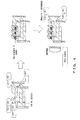
- Fig. 2 is a diagram explaining a first embodiment of the present invention.
- a tag is placed on a carrier (or a palette or the like) used in a bulk access operation of the tags attached to goods.
- the quantity of the tags attached to the goods on the carrier is recognized by accessing the tag on the carrier and reading the written information (indicating the number of goods that should be mounted on the carrier or the palette or the like) .
- the normality of the bulk access can be evaluated (in other words, the presence or absence of an unrecognized tag is determined).
- a tag is placed on the palette.
- the quantity of the mounted goods is written on the tag on the palette (other information such as a carrier ID is also stored).
- the quantity information written on the tag attached to the carrier is read.
- the accessed quantity of tags attached to goods is counted. The above two kinds of information are compared. In the comparison processing, the decision is made as below.
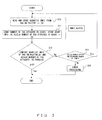
- Fig. 3 is a flowchart of the bulk access processing performed by a reader/writer of the first embodiment of the present invention.
- step S10 first, quantity information is read from the tag on the palette, and the quantity information of the tag on the palette is stored.
- step S11 the number of tags attached to the goods is counted, and the count information is stored as an accessed number of tags attached to the goods.
- the processing in steps S10 and S11 is performed in bulk access in units of palettes.
- step S12 the quantity information of the tags on the palette is compared with the accessed number of tags attached to the goods, and whether the two are equal or not is determined. If the determination in step S12 is Yes, the processing is recognized as normal and is terminated. If the determination in step S12 is No, then whether the accessed number is within the predetermined number or not is determined in step S13.
- step S12 When the processing is determined to be abnormal in the determination of step S12, a notification to instruct the operator to cause the palette to pass in front of the antenna is issued, and the number of times that the palette passes in front of the antenna is referred to as the number of times accessed.
- the processing in step S13 determines whether the number of times that the palette passes in front of the antenna is within the predetermined number of times or not. If the determination in step S13 is Yes, an instruction is issued to have the operator restore the palette and cause the palette to pass in front of the antenna again, and the processing returns to step S10. If the determination in step S13 is No, it is determined to be abnormal, and in step S14, the operator is notified of the error and the processing is terminated.
- Fig. 4 is a diagram explaining the second embodiment of the present invention.
- tags are placed in (plural) positions on the carrier where goods are to be mounted.
- quantity information is stored in each of the tags in ascending order, starting from zero and incremented upward by one in each tag; the number placed at the first position in which goods are not mounted is the number of goods stored.
- the tags on the carrier are blocked in sequence (blocked by the goods themselves or by providing to the carrier a mechanism to block the tags at the mounting) .
- the mounting of the goods on the carrier is performed in the order from the tag with the smallest quantity information.
- the quantity information written on the tag on the carrier is read, and the smallest piece of the quantity information is set as a reference.
- the quantity of accessed tags attached to the goods is counted. The above two kinds of information are compared with each other. As a result of the reference, the determination is made as below.
- Reference quantity information Accessed number of tags attached to goods
- the determination is made that the situation is normal. If the accessed number of tags attached to the goods is 2 or less, it is determined that there are tags that could not be detected. If the accessed number of tags attached to the goods is 4 or above, the determination is made that the situation is abnormal (possibility of reading tags other than those on the carrier).
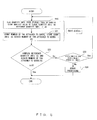
- Fig. 5 is a flowchart of the bulk access processing that the reader/writer in the second embodiment performs.
- step S20 the quantity information is read from plural tags on the carrier, and the smallest value of the plural quantity information is stored as reference quantity information.
- step S21 the number of tags attached to the goods is counted, and the count information is stored as the accessed number of tags attached to the goods. Processing in step S20 and step S21 is performed in the bulk access.
- step 522 the reference quantity information is compared with the accessed number of tags attached to the goods, and whether the two are equal or not is determined. When the determination in step S22 is Yes, the processing is terminated. When the determination in step S22 is No, whether the number of times accessed is within the predetermined number of times or not is determined in step S23. When the determination in step S23 is Yes, the processing goes back to step S20, and when the determination in step S23 is No, the error processing is performed in step S24, and the processing is terminated.
- Fig. 6 is a diagram explaining the third embodiment of the present invention.
- tags are placed on (plural) positions on the carrier where goods are to be mounted.
- information of mountable quantity on the carrier is stored in each of the tags.
- the tags on the carrier are blocked in sequence (blocked by the goods themselves or by providing to the carrier a mechanism to block the tags at the mounting).
- the order of the mounting on the carrier is not specified in particular.
- Quantity information >Accessed number of tags attached to goods+Accessed number of tags on carrier
- Quantity information ⁇ Accessed number of tags attached to goods+Accessed number of tags on carrier
- Fig. 7 is a flowchart of the bulk access processing that the reader/writer of the third embodiment performs.
- step S30 the quantity information is read from a tag on the carrier, and the quantity information of the tags on the carrier is stored.
- step S31 the number of tags attached to the goods is counted, and the count information is stored as the accessed number of tags attached to the goods.
- step S32 the number of tags on the carrier is counted, and (the count information-1) is stored as the accessed number of tags on the carrier. Processing in step S30 and step S32 is performed in thebulkaccess.
- step S34 determines whether the number of times accessed is within the predetermined number of times or not.
- the determination in step S34 is Yes, the processing goes back to step S30, and the access to the tags is made again.
- step S34 is No, the error processing is performed in step S35, and the processing is terminated.
Landscapes
- Engineering & Computer Science (AREA)
- Business, Economics & Management (AREA)
- Human Resources & Organizations (AREA)
- Economics (AREA)
- Strategic Management (AREA)
- Entrepreneurship & Innovation (AREA)
- General Physics & Mathematics (AREA)
- Theoretical Computer Science (AREA)
- Physics & Mathematics (AREA)
- Development Economics (AREA)
- Game Theory and Decision Science (AREA)
- Educational Administration (AREA)
- Marketing (AREA)
- Operations Research (AREA)
- Quality & Reliability (AREA)
- Tourism & Hospitality (AREA)
- General Business, Economics & Management (AREA)
- Computer Networks & Wireless Communication (AREA)
- Signal Processing (AREA)
- Cash Registers Or Receiving Machines (AREA)
- Warehouses Or Storage Devices (AREA)
- General Factory Administration (AREA)
Applications Claiming Priority (1)
| Application Number | Priority Date | Filing Date | Title |
|---|---|---|---|
| JP2007014337A JP4963237B2 (ja) | 2007-01-24 | 2007-01-24 | タグ読み取り装置 |
Publications (1)
| Publication Number | Publication Date |
|---|---|
| EP1950697A1 true EP1950697A1 (de) | 2008-07-30 |
Family
ID=39469392
Family Applications (1)
| Application Number | Title | Priority Date | Filing Date |
|---|---|---|---|
| EP07121703A Withdrawn EP1950697A1 (de) | 2007-01-24 | 2007-11-28 | Etikettenlesegerät |
Country Status (6)
| Country | Link |
|---|---|
| US (2) | US20080174433A1 (de) |
| EP (1) | EP1950697A1 (de) |
| JP (1) | JP4963237B2 (de) |
| KR (2) | KR100951423B1 (de) |
| CN (1) | CN101231689A (de) |
| TW (1) | TWI360082B (de) |
Families Citing this family (18)
| Publication number | Priority date | Publication date | Assignee | Title |
|---|---|---|---|---|
| JP5201008B2 (ja) * | 2009-03-05 | 2013-06-05 | 日本電気株式会社 | ラック収容機器管理システム及びラック収容機器管理方法 |
| JP2010237927A (ja) * | 2009-03-31 | 2010-10-21 | Denso Wave Inc | Rfidタグ読取装置 |
| JP5304447B2 (ja) * | 2009-05-29 | 2013-10-02 | ブラザー工業株式会社 | Rfタグを内蔵したプレート及び通信システム |
| US8740076B2 (en) | 2012-07-11 | 2014-06-03 | Linksmart Technologies Pvt. Ltd. | Label for enabling verification of an object |
| US9323967B2 (en) | 2012-06-22 | 2016-04-26 | Daegu Gyeongbuk Institute Of Science And Technology | Method and system of pallet packing, and method for providing data of pallet packing |
| KR101530423B1 (ko) * | 2012-06-22 | 2015-06-22 | 재단법인대구경북과학기술원 | 팔레트 패킹 방법 및 시스템, 및 팔레트 패킹 정보 제공 방법 |
| KR101409062B1 (ko) * | 2012-09-21 | 2014-06-18 | 엘에스산전 주식회사 | 근거리 통신 모듈을 포함하는 태그 리딩 장치, 근거리 통신 태그 리딩 장치와 연동하는 이동 단말기 및 그 동작 방법 |
| CN104050429A (zh) * | 2013-03-15 | 2014-09-17 | 苏州得尔达国际物流有限公司 | 智能识别系统 |
| CN103258219B (zh) * | 2013-04-08 | 2015-10-28 | 浙江中烟工业有限责任公司 | 一种人工添加卷烟滤棒的计数方法 |
| CN103473669B (zh) * | 2013-09-30 | 2016-06-01 | 上海交通大学 | 基于rfid的混合装配生产线物料供应系统和方法 |
| CN106269541A (zh) * | 2016-08-23 | 2017-01-04 | 顺丰速运有限公司 | 用于分拣系统的分拣方法及分拣系统 |
| CN106779524A (zh) * | 2016-11-10 | 2017-05-31 | 深圳市海云天科技股份有限公司 | 一种清点货物箱内货物的方法及装置 |
| CN106548220B (zh) * | 2016-11-25 | 2019-03-15 | 江苏中路信息科技有限公司 | 一种混合料运输车装料顺序的检测装置及方法 |
| JP7123653B2 (ja) * | 2018-06-20 | 2022-08-23 | トッパン・フォームズ株式会社 | Rfidタグ用フィルタリング装置 |
| JP7096429B2 (ja) * | 2018-09-26 | 2022-07-05 | ブリヂストン ヨーロッパ エヌブイ/エスエイ | トランスポンダを備える空気入りタイヤを取り扱うためのフォークリフト |
| JP7280481B2 (ja) * | 2019-03-14 | 2023-05-24 | 株式会社デンソーウェーブ | 管理システム |
| CN110980099B (zh) * | 2019-11-29 | 2021-08-24 | 广汽丰田汽车有限公司 | 部品出入库运搬方法、系统及计算机可读存储介质 |
| CN113932530B (zh) * | 2021-06-21 | 2023-04-11 | 海信冰箱有限公司 | 一种冰箱及冰箱的控制方法 |
Citations (1)
| Publication number | Priority date | Publication date | Assignee | Title |
|---|---|---|---|---|
| WO2006070461A1 (ja) * | 2004-12-28 | 2006-07-06 | Fujitsu Limited | 情報読取装置、情報読取方法および情報読取プログラム |
Family Cites Families (17)
| Publication number | Priority date | Publication date | Assignee | Title |
|---|---|---|---|---|
| JPH10324405A (ja) | 1997-05-26 | 1998-12-08 | Denso Corp | 商品配送システム |
| JP2002037413A (ja) * | 2000-07-19 | 2002-02-06 | Leading Information Technology Institute | 物流システム |
| US6943678B2 (en) * | 2000-01-24 | 2005-09-13 | Nextreme, L.L.C. | Thermoformed apparatus having a communications device |
| JP2004091088A (ja) | 2002-08-30 | 2004-03-25 | Sato Corp | 配送管理システムおよび配送管理方法 |
| JP3927892B2 (ja) * | 2002-09-26 | 2007-06-13 | 東芝テック株式会社 | 査数対査方法 |
| TWI277007B (en) | 2003-07-23 | 2007-03-21 | Ind Tech Res Inst | Method of applying RFID system to medicine management |
| US7865398B2 (en) * | 2003-09-30 | 2011-01-04 | Microsoft Corporation | Radio frequency identification tag on picking container and display of picklist to order filler |
| JP4402434B2 (ja) * | 2003-11-26 | 2010-01-20 | 三菱電機株式会社 | 差異物品検出装置 |
| WO2005073901A1 (ja) * | 2004-01-29 | 2005-08-11 | Brother Kogyo Kabushiki Kaisha | 物品管理装置、物品管理システム、物品管理方法、及び無線タグ作成装置 |
| JP4487576B2 (ja) | 2004-01-29 | 2010-06-23 | ブラザー工業株式会社 | 物品管理装置、物品管理システム及び物品管理方法 |
| JP4364705B2 (ja) * | 2004-04-02 | 2009-11-18 | 東芝テック株式会社 | 物品管理システム、物品管理装置及びサーバ |
| JP2006160324A (ja) | 2004-12-08 | 2006-06-22 | Toray Syst Center:Kk | 梱包体、物流管理方法および物流管理システム |
| JP4677241B2 (ja) * | 2005-01-31 | 2011-04-27 | 富士通株式会社 | 情報読取装置、情報読取システムおよびrfidタグ |
| US20070040682A1 (en) * | 2005-08-22 | 2007-02-22 | Mark Iv Industries Corp. | RFID inventory control system |
| US7348886B2 (en) * | 2006-01-17 | 2008-03-25 | International Business Machines Corporation | System and method to track inventory using RFID tags |
| TWM301920U (en) | 2006-06-15 | 2006-12-01 | United Fiber Optic Comm Inc | Electronic UHF omni-direction container lock without power supply |
| TWI325122B (en) * | 2006-12-04 | 2010-05-21 | Ind Tech Res Inst | Method and system for reading and identifying rfid tag |
-
2007
- 2007-01-24 JP JP2007014337A patent/JP4963237B2/ja not_active Expired - Fee Related
- 2007-11-07 TW TW096142016A patent/TWI360082B/zh not_active IP Right Cessation
- 2007-11-28 KR KR1020070122048A patent/KR100951423B1/ko not_active Expired - Fee Related
- 2007-11-28 EP EP07121703A patent/EP1950697A1/de not_active Withdrawn
- 2007-11-30 US US11/947,854 patent/US20080174433A1/en not_active Abandoned
- 2007-12-06 CN CNA2007101970791A patent/CN101231689A/zh active Pending
-
2009
- 2009-12-28 KR KR1020090131966A patent/KR100957762B1/ko not_active Expired - Fee Related
-
2010
- 2010-12-23 US US12/977,174 patent/US8138920B2/en not_active Expired - Fee Related
Patent Citations (1)
| Publication number | Priority date | Publication date | Assignee | Title |
|---|---|---|---|---|
| WO2006070461A1 (ja) * | 2004-12-28 | 2006-07-06 | Fujitsu Limited | 情報読取装置、情報読取方法および情報読取プログラム |
Also Published As
| Publication number | Publication date |
|---|---|
| JP2008179450A (ja) | 2008-08-07 |
| US20080174433A1 (en) | 2008-07-24 |
| KR20080069900A (ko) | 2008-07-29 |
| KR100951423B1 (ko) | 2010-04-07 |
| JP4963237B2 (ja) | 2012-06-27 |
| US20110260868A1 (en) | 2011-10-27 |
| TWI360082B (en) | 2012-03-11 |
| TW200832235A (en) | 2008-08-01 |
| KR20100021396A (ko) | 2010-02-24 |
| KR100957762B1 (ko) | 2010-05-13 |
| CN101231689A (zh) | 2008-07-30 |
| US8138920B2 (en) | 2012-03-20 |
Similar Documents
| Publication | Publication Date | Title |
|---|---|---|
| US8138920B2 (en) | Tag reader | |
| US8639384B2 (en) | Systems and methods for receiving shipment parcels | |
| CN104627591A (zh) | 智能仓储出库风险控制系统 | |
| CN110599670B (zh) | 钞箱纸币数量的异常检测方法、系统、服务器和金融设备 | |
| US10892836B2 (en) | Automated RFID tag profiling at application | |
| US7436306B2 (en) | Method and system for checking completeness in a package | |
| US8009058B2 (en) | Tracking location and usage of a mechanical sub assembly (MSA) within an automated storage library utilizing a unique identifier associated with location coordinates of the MSA | |
| US7331527B2 (en) | Exception reduction and event reordering in an item tracking system | |
| CN112837008A (zh) | 条码读取方法、装置、设备及存储介质 | |
| JP6450576B2 (ja) | 図書保管管理システムの図書点検装置、図書点検方法、及びプログラム | |
| CN116894451A (zh) | 一种rfid智能物联仓库盘点方法、装置及系统 | |
| US11941477B2 (en) | Systems and methods for improved RFID counting | |
| US7813974B1 (en) | Method and apparatus for duplicate shipment detection | |
| US20050225078A1 (en) | Method for identification and registration of received items before storage in a factory stock | |
| CN117196470A (zh) | 智能业务库的物品承重监控方法及装置、计算机存储介质 | |
| JP2016085756A (ja) | 情報読取装置及びプログラム | |
| JP5239203B2 (ja) | Icタグによる物品管理方法 | |
| CN112486823B (zh) | 错误码的校验方法、装置、电子设备及可读存储介质 | |
| CN115660540A (zh) | 货物跟踪方法、装置、计算机设备和存储介质 | |
| CN105825357B (zh) | 基于物联网的托盘数据处理方法及装置 | |
| CN110568399B (zh) | 一种周转箱入库系统 | |
| CN107958535B (zh) | 一种纸币信息的获取方法、获取装置及终端设备 | |
| CN114067341B (zh) | 异常操作运单的识别方法、装置、电子设备及存储介质 | |
| JP2006027748A (ja) | 貸出物管理装置 | |
| CN120048037A (zh) | 一种异常数据处理方法及装置、系统、存储介质 |
Legal Events
| Date | Code | Title | Description |
|---|---|---|---|
| PUAI | Public reference made under article 153(3) epc to a published international application that has entered the european phase |
Free format text: ORIGINAL CODE: 0009012 |
|
| AK | Designated contracting states |
Kind code of ref document: A1 Designated state(s): AT BE BG CH CY CZ DE DK EE ES FI FR GB GR HU IE IS IT LI LT LU LV MC MT NL PL PT RO SE SI SK TR |
|
| AX | Request for extension of the european patent |
Extension state: AL BA HR MK RS |
|
| 17P | Request for examination filed |
Effective date: 20080930 |
|
| AKX | Designation fees paid |
Designated state(s): DE FR GB |
|
| RIN1 | Information on inventor provided before grant (corrected) |
Inventor name: FUCHIDA, HIDEHIKOC/O FUJITSU LIMITED |
|
| STAA | Information on the status of an ep patent application or granted ep patent |
Free format text: STATUS: THE APPLICATION HAS BEEN WITHDRAWN |
|
| 18W | Application withdrawn |
Effective date: 20130528 |