EP1946508B1 - Verfahren und Vorrichtungen zur Verwendung flexibler Bandbreite in OFDMA basierenden kognitiven Funksystemen - Google Patents
Verfahren und Vorrichtungen zur Verwendung flexibler Bandbreite in OFDMA basierenden kognitiven Funksystemen Download PDFInfo
- Publication number
- EP1946508B1 EP1946508B1 EP06812487A EP06812487A EP1946508B1 EP 1946508 B1 EP1946508 B1 EP 1946508B1 EP 06812487 A EP06812487 A EP 06812487A EP 06812487 A EP06812487 A EP 06812487A EP 1946508 B1 EP1946508 B1 EP 1946508B1
- Authority
- EP
- European Patent Office
- Prior art keywords
- band
- bandwidth
- ofdma
- broadcast channel
- bands
- Prior art date
- Legal status (The legal status is an assumption and is not a legal conclusion. Google has not performed a legal analysis and makes no representation as to the accuracy of the status listed.)
- Not-in-force
Links
Images





Classifications
-
- H—ELECTRICITY
- H04—ELECTRIC COMMUNICATION TECHNIQUE
- H04W—WIRELESS COMMUNICATION NETWORKS
- H04W16/00—Network planning, e.g. coverage or traffic planning tools; Network deployment, e.g. resource partitioning or cells structures
- H04W16/14—Spectrum sharing arrangements between different networks
-
- H—ELECTRICITY
- H04—ELECTRIC COMMUNICATION TECHNIQUE
- H04L—TRANSMISSION OF DIGITAL INFORMATION, e.g. TELEGRAPHIC COMMUNICATION
- H04L5/00—Arrangements affording multiple use of the transmission path
- H04L5/003—Arrangements for allocating sub-channels of the transmission path
- H04L5/0044—Allocation of payload; Allocation of data channels, e.g. PDSCH or PUSCH
-
- H—ELECTRICITY
- H04—ELECTRIC COMMUNICATION TECHNIQUE
- H04L—TRANSMISSION OF DIGITAL INFORMATION, e.g. TELEGRAPHIC COMMUNICATION
- H04L27/00—Modulated-carrier systems
- H04L27/26—Systems using multi-frequency codes
- H04L27/2601—Multicarrier modulation systems
- H04L27/2602—Signal structure
- H04L27/26025—Numerology, i.e. varying one or more of symbol duration, subcarrier spacing, Fourier transform size, sampling rate or down-clocking
-
- H—ELECTRICITY
- H04—ELECTRIC COMMUNICATION TECHNIQUE
- H04L—TRANSMISSION OF DIGITAL INFORMATION, e.g. TELEGRAPHIC COMMUNICATION
- H04L27/00—Modulated-carrier systems
- H04L27/26—Systems using multi-frequency codes
- H04L27/2601—Multicarrier modulation systems
- H04L27/2614—Peak power aspects
-
- H—ELECTRICITY
- H04—ELECTRIC COMMUNICATION TECHNIQUE
- H04L—TRANSMISSION OF DIGITAL INFORMATION, e.g. TELEGRAPHIC COMMUNICATION
- H04L5/00—Arrangements affording multiple use of the transmission path
- H04L5/0001—Arrangements for dividing the transmission path
- H04L5/0003—Two-dimensional division
- H04L5/0005—Time-frequency
- H04L5/0007—Time-frequency the frequencies being orthogonal, e.g. OFDM(A) or DMT
-
- H—ELECTRICITY
- H04—ELECTRIC COMMUNICATION TECHNIQUE
- H04L—TRANSMISSION OF DIGITAL INFORMATION, e.g. TELEGRAPHIC COMMUNICATION
- H04L5/00—Arrangements affording multiple use of the transmission path
- H04L5/003—Arrangements for allocating sub-channels of the transmission path
- H04L5/0037—Inter-user or inter-terminal allocation
-
- H—ELECTRICITY
- H04—ELECTRIC COMMUNICATION TECHNIQUE
- H04L—TRANSMISSION OF DIGITAL INFORMATION, e.g. TELEGRAPHIC COMMUNICATION
- H04L5/00—Arrangements affording multiple use of the transmission path
- H04L5/003—Arrangements for allocating sub-channels of the transmission path
- H04L5/0053—Allocation of signalling, i.e. of overhead other than pilot signals
-
- H—ELECTRICITY
- H04—ELECTRIC COMMUNICATION TECHNIQUE
- H04L—TRANSMISSION OF DIGITAL INFORMATION, e.g. TELEGRAPHIC COMMUNICATION
- H04L5/00—Arrangements affording multiple use of the transmission path
- H04L5/003—Arrangements for allocating sub-channels of the transmission path
- H04L5/0058—Allocation criteria
- H04L5/0064—Rate requirement of the data, e.g. scalable bandwidth, data priority
-
- H—ELECTRICITY
- H04—ELECTRIC COMMUNICATION TECHNIQUE
- H04L—TRANSMISSION OF DIGITAL INFORMATION, e.g. TELEGRAPHIC COMMUNICATION
- H04L5/00—Arrangements affording multiple use of the transmission path
- H04L5/0091—Signalling for the administration of the divided path, e.g. signalling of configuration information
- H04L5/0094—Indication of how sub-channels of the path are allocated
-
- H—ELECTRICITY
- H04—ELECTRIC COMMUNICATION TECHNIQUE
- H04W—WIRELESS COMMUNICATION NETWORKS
- H04W72/00—Local resource management
- H04W72/04—Wireless resource allocation
- H04W72/044—Wireless resource allocation based on the type of the allocated resource
- H04W72/0453—Resources in frequency domain, e.g. a carrier in FDMA
Definitions
- the present invention relates to an orthogonal frequency division multiple access (OFDMA)-based cognitive radio system and a method therefor, and more particularly, to an OFDMA-based cognitive radio system effectively using a fractional band or an e mpty band corresponding to a bundle of fractional bands and a method therefor.
- OFDMA orthogonal frequency division multiple access
- primary and secondary users refer to communication systems operated by different services or businesses.
- Primary use rs correspond to incumbent users (IUs)
- secondary users correspond to users of co gnitive radio systems.
- the IEEE802.22 standard desires to provide data, voice(VoIP) and audio/video services in frequency bands used in televisions (TVs) (e.g., a band from 54 MHz to 698 MHz corresponding to U.S. TV channels 2 through 51 or an international band from 41 MHz to 910 MHz) using times and spaces, which are not used by primary users of televi sions (TVs) or radio devices.
- TVs televisions
- CPE customer premises equipment
- a BS and CPE of a secondary user must know about the current state of a ch annel.
- the BS and CPE of the secondary user must scan a band fro m 41 MHz to 910 MHz in order to monitor the use state of the channel, wherein the ban d is a current TV channel.
- the channel can be changed to another channel whe n a primary user desires to use the channel while the secondary user is using the chann el.
- the IEEE802.22 system uses a plurality of broadcast channel bands each havin g a bandwidth of 6, 7, or 8 MHz within the band from 41 MHz to 910 MHz allocated to a TV broadcast.
- a BS and CPE of the IEEE802.22 system use a currently unu sed broadcast channel band of the plurality of broadcast channel bands.
- the IEEE802.22 system accesses each broadcast channel band.
- a fraction of a broadcast channel band is referred to as a fractional band to describe a method and a system for using a flexible bandwidth in a cognitive radio system.
- a system of a secondary user may not use mo st of the broadcast channel band except for the fraction of the bandwidth.
- a system of a primary user uses a fractio n of a bandwidth of a broadcast channel
- a system of a secondary user may not use mo st of the broadcast channel band except for the fraction of the bandwidth.
- a 200 kHz narrowband radio device uses a broadcast channel band having a band width of 6 MHz
- systems of secondary users may not use a bandwidth of 5.8 MHz of th e broadcast channel band.
- a band having bandwidths of 200 kHz and 5.8 MHz corresponds to the above-described fractional band.
- the efficiency of a cognitive radio system depends on whether a currently unuse d channel is effectively detected so as to appropriately select a service suitable for the c urrently unused channel and provide the service to a secondary user. In other words, t he efficiency of the cognitive radio system depends on how much a confined channel b andwidth is effectively used.
- a ba andwidth of 5.8 MHz corresponding to 96.6% of a broadcast channel bandwidth of 6 MH z is not used and is thus inefficient.
- JONDRAL F K ET AL "Spectrum pooling: an innovative strategy for the enhancement of spectrum efficiency"
- IEEE COMMUNICATIONS MAGAZINE, IEEE SERVICE CENTER, PISCATAWAY, US, vol. 41, no. 3, 1 March 2004, pages S8-S14 relates to the technique of spectrum pooling for enhancing spectrum efficiency by overlapping a new mobile radio system on an existing one without requiring any changes to the actual licensed system.
- Timo Weiss ET AL "efficient signalling of spectral resources in spectrum pooling systems", Proceedings of the 10th Symposium on Communication and Vehicular Technology, 1 November 2003, pages 1-6, Eindhoven, The Netherlands, Retrieved from the Internet: URL:http://www.teco.edu/ ⁇ krohn/efficient_signaling.pdf , discloses a method for signalling spectral resources in spectrum pooling systems which allows a maximum number of mobile terminals to conduct spectral measurements providing the best possible diversity gain for the detection of spectral accesses of the licensed user.
- the present invention provides a method for effectively using a fractional band of a broadcast channel band in a flexible bandwidth orthogonal frequency division multipl e access (OFDMA)-based cognitive radio system, and a base station (BS) and a subscr iber station using the same.
- OFDMA orthogonal frequency division multipl e access
- the method includes a method of allocating a flexible bandwidth, a method of co nstituting OFDMA parameters, and a method of detecting the allocated flexible bandwid th.
- a base station (BS) of an orthogonal frequency division multiple access (OFDMA)-based cognitive radi o system including: a band allocator allocating a channel band of unused channel band s having a bandwidth that is a natural number times a bandwidth resolution to CPE (cus tomer premises equipment), wherein the bandwidth resolution is a predetermined band width smaller than a bandwidth of a broadcast channel band; and a transmitter transmitt ing an OFDMA-based signal comprising band allocation information indicating informati on regarding the allocated channel band.
- CPE cus tomer premises equipment
- a CPE of an OFDMA-based cognitive radio system including: a receiver receiving an OFDMA-ba sed signal comprising band allocation information indicating information regarding a cha nnel band allocated from a BS; and a band allocation information detector detecting the band allocation information based on the received OFDMA-based signal, wherein the allocated channel band is a channel band of unused channel bands having a bandwidth that is a natural number times a bandwidth resolution, wherein the bandwidth resolutio n is a predetermined bandwidth smaller than a bandwidth of a broadcast channel band.
- a metho d of using a flexible bandwidth through a BS in an OFDMA-based cognitive radio syste m including: allocating a channel band of unused channel bands having a bandwidth th at is a natural number times a bandwidth resolution to CPE, wherein the bandwidth res olution is a predetermined bandwidth smaller than a bandwidth of a broadcast channel band; and transmitting an OFDMA-based signal comprising band allocation information indicating information regarding the allocated channel band.
- a metho d of using a flexible bandwidth through CPE in an OFDMA-based cognitive radio syste m including: allocating a channel band of unused channel bands having a bandwidth th at is a natural number times a bandwidth resolution to CPE, wherein the bandwidth res olution is a predetermined bandwidth smaller than a bandwidth of a broadcast channel band; and transmitting an OFDMA-based signal comprising band allocation information indicating information regarding the allocated channel band.
- a comput er-readable recording medium having embodied thereon a computer program for execu ting the method of using the flexible bandwidth through the BS in the OFDMA-based co gnitive radio system.
- compute r-readable recording medium having embodied thereon a computer program for executi ng the method of using the flexible bandwidth through the CPE in the OFDMA-based co gnitive radio system.
- fractional bands and an empty band including a bundle of fractional bandwidths can be flexibly and efficiently used. Also, maximize d spectrum efficiency and a flexible data speed can be achieved at a lower complexity i n a cognitive radio system having confined frequency resources.
- the present invention provides technology for flexibly using a bandwidth by a ba se station (BS) and customer premises equipment (CPE) of a secondary user in a multi -FA (Frequency Assignment) system.
- the technology is a method of using an empty fr actional band besides bonded channel bands in an orthogonal frequency division multip le access (OFDMA)-based cognitive radio system so as to maximize use efficiency of a spectrum.
- a fractional band may be used by itself or may be bonded to a broadcast c hannel band.
- technology suggested for use in a cognitive radio system frequent ly generating a fractional band may be used to maximize use efficiency of a spectrum.
- an IEEE802.22 wireless regional area network (W RAN) system may be described as an example to provide a service to a cognitive radio user as a secondary user, wherein the broadcast channel bandwidths 6, 7, and 8 MHz are not used as broadcast frequency bands in very high frequency (VHF)/ultra high freq uency (UHF) bands.
- VHF very high frequency
- UHF ultra high freq uency
- FIGS. 1A through 1E illustrate channel bands flexibly used by a base station (B S) and customer premises equipment (CPE) of an OFDMA-based cognitive radio syste m according to an embodiment of the present invention.
- broadcast channel ban ds are 6 MHz.
- reference numerals 102, 106, 120, 126, 140, 144, 150, 165, and 172 denote channel bands which are being used
- reference nu merals 100, 104, 108, 110, 122, 124, 142, 146, 148, 163, and 174 denote channel ban ds which are not currently being used.
- the channel bands102, 106, 120, 126, 140, 14 4, 150, 165, and 172 are shadowed and currently being used by CPE of a primary user or CPE of a secondary user belonging to an OFDMA-based cognitive radio system of th e present invention.
- Information illustrated in FIGS. 1A through 1E may be obtained b ased on a result of sensing a spectrum using a system of the secondary user, i.e., the OFDMA-based cognitive radio system of an embodiment of the present invention.
- FIG. 1A illustrates a method of allocating empty fractional bands to the seconda ry user.
- bandwidths 3 MHz and 1 MHz of empty fractional bands 104 and 108 of each broadcast channel band having a bandwidth of 6 MHz are allocat ed to the secondary user so as to be able to flexibly use bandwidths.
- the existing cognitive radio system may not use the rest of the channel bandwidth.
- an empty fractional band can be effectively used without affecting an allowed system of a primary user. A reduction in interference between adjacent channels will b e described later with reference to FIGS. 1D and 1E .
- FIG. 1B illustrates a method of allocating a bundle of a plurality of empty broadc ast channel bands.
- two broadcast channel bands 122 and 124 ( each having a bandwidth of 6 MHz) are bonded to form a channel band 130 having a b andwidth of 12 MHz, and the channel band 130 is allocated to the secondary user so as to be able to flexibly use a bandwidth. If several empty channel bands are bonded an d used, a high-speed data service may be provided to a secondary user.
- FIG. 1C illustrates a method of binding fractional bands and a broadcast channe I band and allocating the bonded band to a secondary user.
- a fractional band 146 is b onded with a broadcast channel band 148 having a bandwidth of 9 MHz, and then alloc ated to a secondary user so as to be able to flexibly use a bandwidth.
- Fractional band s 142 and 146 may be bonded together and then allocated to the secondary user.
- the fractional bands 142 and 146 may be bonded with the broadcast channel band 148 so as to form a channel band 160, and the channel band 160 is allocated to the secondary user.
- the fractional bands 142 and 146 and the broadcast channel band 148 may be allocate d and bonded using various methods.
- FIG. 1D illustrates a method of reducing the interference with the adjacent incu mbent user.
- a narrowband incumbent user (IU) in a narrowband 165 is positioned in a broadcast channel band 164, which is partially being occupied by narrowband incumb ent user (IU) in a narrowband 165
- a system of a secondary user uses only the fraction al band 163 of the broadcast channel band 162 in consideration of a guard band for red ucing interference with the adjacent narrowband IU in a narrowband 165.
- the system of the secondary user cannot use an entire fraction of the broadcast channel band 162 due to a concern about the interference with the adjacent narrowband IU in a narrowba nd 165.
- the fractional band 163 may be effectively used without interfering with the adjacent narrowband IU in a narrowband 165.
- FIG. 1E illustrates a method of using a fractional bandwidth of an explicit signali ng channel for switching a channel.
- a secondary user uses an entire fraction of a broadcast channel band 170, a narrowband IU appears in a narr owband 172.
- the secondary user must empty the broadcast channel band 170, w hich is being used for the narrowband IU and then move to another broadcast channel band (not shown) which is not being used.
- a channel move time is less tha n or equal to 2 seconds.
- first and second messages must be exc hanged between a BS and CPE of the secondary user.
- the first message is to r equest to change channel A to channel B
- the second message is to response the f act that channel A has been changed into channel B according to the first message.
- the explicit channel switching information such as first and second messa ges must be exchanged during the channel move time.
- the exp licit channel switching information is exchanged through the broadcast channel band 17 0 during the channel move time.
- t he explicit channel switching information is exchanged through only a fractional band 17 4 of the broadcast channel band 170.
- interference affecting the narrowband IU such as a part 74 device appearing in the broadcast channel band 170 is more reduced than in the existing method.
- a method of flexibly using an empty channel band in the OFDMA-based cognitive radio system may be classified into two methods.
- a broadcast channel band or a fraction of the broad cast channel band is allocated as a channel band for the CPE of a secondary user.
- broadcast channel bands or a plurality of fractions of a broadcast c hannel band are bonded to form a channel band, and the channel band is allocated as a channel band for the CPE of a secondary user.
- various channel bands can be flexibly used depending on bandwidths of fractional bands and positions of frequency phases in a broadcast channel band.
- various cha nnel bands can be flexibly used depending on bandwidths of fractional bands, positions of frequency phases in a broadcast channel band, and the number of bonded channel bands.
- a unit of a minimum bandwidth of a fractio nal band is referred to as a bandwidth resolution.
- the bandwidth resolu tion indicates a minimum bandwidth used in the OFDMA-based cognitive radio system of the present invention. If the bandwidth resolution is 1 MHz, and four broadcast cha nnel bands each having a bandwidth of 6 MHz are used, the OFDMA-based cognitive r adio system of an embodiment of the present invention may allocate various channel b ands having bandwidths 1 MHz, 2MHz, through to 23MHz, and 24MHz and various freq uency positions of the bandwidths to a secondary user.
- FIG. 2 illustrates a relationship between the number of bonded channel bands a nd the size of Fourier Transform (FT) when an OFDMA-based cognitive radio system of an embodiment of the present invention uses a bundle of four broadcast channel band s.
- FT is generally a Fast Fourier Transform (FFT) which is advantageous in ter ms of realization complexity but the FT is not necessarily limited to an FFT.
- FFT Fast Fourier Transform
- DFT Discrete Fourier Transform
- the size of the FFT may be w ithin a range between 1 K and 8K.
- an FF T size of 2K may be used to maintain a fixed interval of sub-carriers. If the basic FFT size is 2K, an FFT size of 4K may be used to maintain a fixed interval of sub-carriers.
- the basi c FFT size is defined as an FFT size which is used for single broadcast channel band.
- an FFT is performed once on a plurality of bonded channel bands.
- the FFT may be performed several times.
- the FF T may be performed four times on a channel band formed of a bundle of four broadcast channels at the FFT size of 2K or two times at the FFT size of 4K.
- null sub-carriers must be included between bonded chann el bands.
- the FFT may be inefficient in terms of the use of a spectrum.
- a meth od of controlling several outputs of the FFT may be complicated. For this reason, the method of performing the FFT once in order to flexibly use a channel bandwidth has be en described with reference to FIG. 2 . However, it will be understood by those of ordin ary skill in the art that a method of performing an FFT several times may be applied.
- a fractiona I band of a broadcast channel band is use.
- a partial FFT may be easily performed on t he fractional band.
- only a fraction of an output of t he FFT may be selectively output in order to support a fractional band.
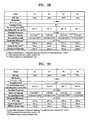
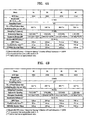
- FIGS. 3A through 3C illustrate OFDMA parameters that are necessary for flexibl y using empty fractional bands, with respect to FFT sizes of 1K, 2K, 4K, and 8K, accord ing to embodiments of the present invention.
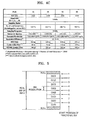
- FIGS. 4A through 4C illustrate OFDMA parameters that are necessary for flexibl y using empty fractional bands, with respect to FFT sizes of 1K, 2K, 4K, and 6K, accord ing to another embodiments of the present invention.
- a sampling factor is fixed while a sampling fre quency varies in each of broadcast channel band bandwidths of 6, 7, and 8 MHz.
- the sampling factor varies while the sampling frequency is fixed in each of the broadcast channel bandwidths of 6, 7, and 8 MHz.
- i t is assumed that the ratio of a guard interval time to an FFT time is 1:4.
- OFDMA parameters for the broadcast channel bandwidth of 6 MHz will now be described with reference to FIG. 3A .
- the sampling factor suitable for a bandwidth of t he broadcast channel band is selected so as to determine the sampling frequency. If t he sampling factor is 8/7, the sampling frequency is constantly maintained at 48/7 MHz regardless of the FFT size and a fractional bandwidth.
- sub-carrier spacing is res pectively 6.696 kHz, 3.348 kHz, 1.674 kHz, and 0.837 kHz with respect to the FFT siz e of 1K, 2K, 4K, and 8K as shown in FIG. 3A .
- a number of sub-carriers used in a fract ional band having a bandwidth k times a bandwidth resolution is defined as140* k , 280* k , 560* k , and 1120* k with respect to a basic FFT size of 1K, 2K, 4K, and 8K, wherein the number of sub-carriers is proportional to a bandwidth of a fractional band.
- the basic FFT size is 1K, 2K, 4K, and 8K
- the number of used sub-carriers within the bandwidth resolution is defined as 140, 280, 560, and 1120. If the bandwidth of t he fractional band is k times the bandwidth resolution, the constant is multiplied by k so that the number of used sub-carriers in the fractional band is proportional to the bandwi dth of the fractional band.
- the sampling factor is 8/7.
- the number o f used sub-carriers within the bandwidth resolution corresponding to the FFT size of 1K, 2K, 4K, or 8K is defined as the constant of 120, 240, 480, or 960 in the embodiment ill ustrated in FIG. 3B but as the constant of 105, 210, 420, or 840 in the embodiment illus trated in FIG. 3C , so that the number of used sub-carriers within the broadcast channel bandwidth is equal to that illustrated in FIG. 3A .
- the numb er of used sub-carriers within the broadcast channel band is kept constant regardless of the bandwidth of the broadcast channel band.
- such a constant is sele cted so that the total number of used sub-carriers is equal at bandwidths of 6, 7, and 8 MHz of a broadcast channel band.
- the total number of used sub-carriers is 840, 1680 , 3360, or 6720 at a basic FFT size of 1K, 2K, 4K, or 8K, respectively, regardless of the bandwidth of the broadcast channel band.
- the OFDMA parameters as defined above are characterized in that the total nu mber of used sub-carriers is maintained constant regardless of the bandwidth of a broa dcast channel band for equally applying a sub-channel allocation rule.
- the OFDMA p arameters according to the embodiments illustrated in FIGS. 3A through 3C are charact erized in that a sampling frequency varies with a bandwidth of a broadcast channel ban d while a number of used sub-carriers is equal so as to maintain use efficiency of a ban d constant.
- a sampling frequency must vary in a nation using a different type of channel bandwidth.
- an identical sub-channel constitution method may be ap plied in all nations.
- the OFDMA parameters according to an embodiment illustrated in FIGS. 4A thr ough 4C are characterized in that a sampling frequency does not vary regardless of a b andwidth of a broadcast channel band while the number of used sub-carriers varies wit h the bandwidth of the broadcast channel band in order to maintain use efficiency of a b and constant.
- a cognitive radio system using an identical sampling frequency m ay be used in a nation using broadcast channel bands having different bandwidths.
- a sub-channel constitution method must vary.
- the OFDMA parameters defin ed above are set so that intervals of sub-carriers are maintained constant regardless of the bandwidth of the broadcast channel band at an identical FFT size in order to mainta in a robustness of frequency offset constant regardless of the bandwidth of the broadca st channel band.
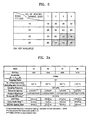
- FIG. 5 illustrates a start position of a fractional band based on the largest broad cast channel bandwidth of 8 MHz. It is assumed that a bandwidth resolution is 1 MHz.
- reference numerals 500, 510, through to 570 denote bands. Two bands, which are not adjacent to each other, e.g., the bands 510 and 560, are bonded and then allocated to a secondary user. For convenience, it will be described that onl y adjacent bands are bonded and then allocated to the secondary user. In other word s, positions of available fractional bands may be adjacent to each other or may be sepa rated from each other. For convenience, if fractional bands are adjacent to each other at all times, 8 kinds of bandwidths of an available fractional band exist.
- a real bandwidth illustrated in FIG. 5 is about 9.142 MHz, and a real bandw idth resolution for a bandwidth resolution of 1 MHz is 0.937 MHz. Since a sampling fa ctor is 8/7, a used sub-carrier is defined to substantially occupy a band 9.142 MHz, whic h is slightly greater than the broadcast channel bandwidth of 8 MHz and satisfies a 93.7 % use efficiency of a band. Thus, a fractional bandwidth occupied by the used sub-ca rrier is 0.937 MHz of 1 MHz.
- the fractional band has 8 kinds of bandwidths 1, 2, 3, 4, 5, 6, 7, and 8 MHz and 8 kinds of start positions 0, 1, 2, 3, 4, 5, 6, and 7 as il lustrated in FIG. 5 . Therefore, combinations between the bandwidth and a frequency position (start position in the present embodiment) of the fractional band may be as ma ny as 64. However, when the bandwidth of the fractional band is 8 MHz, the start posit ion of the fraction band may be 1 as illustrated in FIG. 5 . When the bandwidth of the fr actional band is 7 MHz, the start position is 1 and 2 as illustrated in FIG. 5 . Thus, only 36 kinds of methods may be substantially adopted.
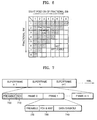
- FIG. 6 illustrates a various fractional bandwidth modes, with respect to fractional bandwidth and start position of a fractional band illustrated in FIG. 5 .
- a channel band having a bandwidth that is a natural number times a bandwidth resoluti on belonging to the broadcast channel band is allocated to a secondary user.
- 36 kinds of fractional bandwidth modes using methods obtained by allocating only adj acent channel bands are expressed using fractional bandwidths and start positions of fr actional bandwidths.
- a shadowed part denotes 36 fractional bandwidth modes which may be used by the OFDMA-based cognitive radio system of an embodiment of the pre sent invention under the above-described conditions.
- a horizontal axis denotes t he start position of each of the fractional bandwidth modes
- a vertical axis denotes a fractional bandwidth of each of the fractional bandwidth modes.
- FIG. 7 illustrates a downlink frame structure which can be applied to an OFDMA -based signal used in an OFDMA-based cognitive radio system according to an embodi ment of the present invention.
- the downlink frame illustrated in FIG. 7 includes super frames and frames.
- the super frame includes a preamble 700, a super frame control header (SCH) 710, and m frames.
- Each of the m frames includes at least one data sy mbol 740, a preamble having at least one symbol, and a symbol 730 corresponding to a frame control header (FCH) and message (MAP).
- FCH frame control header
- MAP message
- User CPE belonging to the OFDMA-based cognitive radio system of an embodi ment of the present invention must effectively detect a method of using a bandwidth, w herein the method is changed during power on of the OFDM-based cognitive radio syst em or communications.
- the CPE must detect fractional bandwidth mod e information of a currently allocated channel band from 36 fractional bandwidth modes as illustrated in FIGS. 5 and 6 .
- the OFDMA-based cognitive radio system of an embodiment of the present inv ention includes band allocation information regarding the allocated channel band in the preamble 700 or 720 of an OFDMA-based signal and then transmits the band allocation information to the CPE or includes the band allocation information in the preamble 700 or 720 and a control header and then transmits the band allocation information to the CPE.
- the CPE receives the OFDMA signal including the band allocation information t o detect information regarding the allocated channel band.
- the control he ader corresponds to the SCH 710 and the FCH 730 in an embodiment of the present in vention.
- the band allocation information includes fractional bandwidth mode information. If the OFDMA-based cognitive radio system allocates a bundle of channel s, the band allocation information may also include channel bonding information.
- the fractional bandwidth mode information may include bandwidth information and band po sition information.
- the bandwidth information and the band position information may b e respectively the fractional bandwidth and the start position of the fractional bandwidth illustrated in FIG. 6 .
- the channel bonding information refers to information regard ing a plurality of broadcast channel bands bonded and allocated to a secondary user.
- the band allocation information basically includes bandwidth information of a fr actional band of each broadcast channel band and frequency position information of th e fractional band. If a plurality of a whole or a fraction of broadcast channel bands are bonded and used as the allocated channel band, the band allocation information must i nclude channel bonding information regarding a method of bonding the broadcast chan nel bands.
- FIG. 8 illustrates a method of inserting 36 kinds of fractional bandwidth mode inf ormation illustrated in FIG. 6 into a preamble.
- Contents in the first column on the left denote indices corresponding to fractiona I bandwidth modes
- the second and third column of contents denote fractional bandwidt hs and start positions of fractional bandwidth
- the last column of contents denote pr eamble sequences corresponding to the fractional bandwidth modes on a one-to-one b asis.
- the preamble sequences illustrated in FIG. 8 are pseudo noise (PN) sequences but are not limited to this.
- the fractional bandwidth modes respectively correspond to the indices including values from "0" to "35,” and the indices correspond to fractional bandwidths and start p ositions of the fractional bandwidths on a one-to-one basis.
- the fractional bandwidths correspond to the above-described bandwidth information
- the start po sitions correspond to the above-described position information.
- a BS of the OFDMA-based cognitive radio system of an embodiment of the pres ent invention inserts a preamble sequence specifying a fractional bandwidth mode into t he preamble 700 or 720 so as to insert information regarding a channel band allocated to the secondary user into an OFDMA-based signal.
- CPE detects the preamble seque nce or a preamble sequence index from the preamble 700 or 720 inserted into the OFD MA-based signal and then a channel band (in detail, bandwidth information, position inf ormation) currently allocated thereto based on the detection result.
- the OFDMA-based cognitive radio system allocates different preamble sequences to different flexible bandwidth using methods on a one-to-one basis.
- a pre amble sequence may be designed to minimize a peak-to-average power ratio (PAPR).
- PAPR peak-to-average power ratio
- the BS may generate the preamble sequence using various methods, i.e., a me thod of storing a preamble sequence in a memory in advance and then reading the pre amble sequence, a method of generating a preamble sequence using a generator polyn omial, etc.
- a PAPR is superior, but all of the preamble sequenc es must be stored in the memory.
- a memory storing preamble se quences is not required, and preamble sequences can be easily generated whenever n ecessary.
- Equation 1 is an 11 th -order gen erator polynomial.
- g x x 11 + x 2 + 1
- a maximum order of the generator polynomial illustrated in Equation 1 is 11, an d a period of the generator polynomial is 2047.
- the BS uses 36 of 2047 in the a bove-described embodiment.
- FIGS. 9A through 9C illustrate methods of inserting channel bonding information into a preamble, in regard to a method of bonding a plurality of channels.
- elements and nulls of a preamble sequence are inserted into sub-carriers of the pr eamble at fixed periods in order to obtain a repetition characteristic of the preamble.
- C PE detects a flexible bandwidth information using method having the repetition characte ristic.
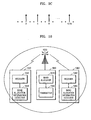
- FIG. 9A illustrates a method of inserting an element of a preamble sequence int o each sub-carrier at every three sub-carrier interval starting from a zero th sub-carrier ac cording to an embodiment of the present invention.
- FIG. 9B illustrates a method of ins erting an element of a preamble sequence into each sub-carrier at every three sub-carri er interval starting from a first sub-carrier according to an embodiment of the present in vention.
- FIG. 9C illustrates a method of inserting an element of a preamble sequence into each sub-carrier at every three sub-carrier staring from a second sub-carrier accord ing to an embodiment of the present invention. Nulls are inserted into sub-carriers into which elements of the preamble sequence are not inserted.
- a BS inserts a preamble sequence into the preamble 70 0 or 720 of an OFDMA-based signal using the method illustrated in FIG. 9A . If the cha nnel band allocated to the user CPE includes two broadcast channel bands, the BS ins erts a preamble sequence into the preamble 700 or 720 of the OFDMA-based signal usi ng the method illustrated in FIG. 9B .
- the BS inserts a preamble sequence into the pream ble 700 or 720 of the OFDMA-based signal using the method illustrated in FIG. 9C .
- the user CPE detects preamble sequence insertion patterns as illustrated in FIGS. 9A through 9C from the preamble of the OFDMA-based signal in order to detect whethe r the channel band allocated thereto includes what number of a whole or a fraction of br oadcast channel bands.
- FIGS. 9A through 9C illustrate preamble sequence insertion patterns
- FIG. 8 illustrates the contents of inserted preamble sequences.
- Band all ocation information regarding allocated channel bands as illustrated in FIGS. 1A throug h 1C may be included by using combinations of the preamble sequence insertion patter ns and the contents of the preambles.
- an FFT size is 2K
- the modulation method is BPSK.
- the number of bits of a preamble is equal to the number of sub-carriers illustrated in FIGS. 3A through 3C , i.e., 1680.
- FIG. 10 illustrates an OFDMA-based cognitive radio system using a flexible ban dwidth according to an embodiment of the present invention.
- the OFDMA-based cognitive radio system includes a BS 1000, a first user CPE 1050, and a second CPE 1060. It is assumed that a flexible channel has been allocated to the fir st CPE 1050 and used, and a channel band is to be allocated to the second user CPE 1060.
- the BS 1000 includes an apparatus 1040 using a flexible bandwidth.
- the app aratus 1040 includes a band allocator 1010 and a transmitter 1020.
- the first and seco nd user CPEs 1050 and 1060 include receivers 1052 and 1062 and band allocation info rmation detectors 1054 and 1064, respectively.
- the receivers 1052 and 1062 receive an OFDMA-based signal, and the band all ocation information detectors 1054 and 1064 detect band allocation information from th e received OFDMA-based signal.
- the band allocation information may include fractional bandwidth mode information and channel bonding information, w hich will be described later.
- the band allocator 1010 allocates all fractions or fractions of unused bands to C PE. Unused bands 100, 104, 108, 110, 122, 124, 142, 146, 148, 163, and 174 are illu strated in FIGS. 1A through 1E . Used bands 102, 106, 120, 126, 140, 144, 150, 165, and 172 illustrated in FIGS. 1A through 1E are used by an IU (not shown) or the first us er CPE 1050.
- the band allocator 1010 allocates a broadcast channel band or a fraction of the broadcast channel band as a channel band for the second user CPE 1060 or allocates a channel band formed by bonding broadcast channel bands or a plurality of fractions o f the broadcast channel bands as a channel band for the second user CPE 1060.
- the transmitter 1020 transmits an OFDMA-based signal including the band alloc ation information regarding the allocated channel band. If the allocated channel band i ncludes a plurality of bonded channel bands, the transmitter 1020 may perform an FT o nce or a plurality of times in order to generate the OFDMA-based signal or may perform a partial FFT in order to support fractional bands.
- the OFDMA-based signal may be generated using the OFDMA parameters illus trated in FIGS. 3A through 3C and FIGS. 4A through 4C .
- the transmitt er 1020 may set OFDMA parameters so that the total number of used sub-carriers withi n a broadcast channel band using an identical FFT size is constant regardless of a ban dwidth of the broadcast channel band as illustrated in FIGS. 3A through 3C , so as to ge nerate the OFDMA-based signal.
- the transmitter 1020 may set OFDMA parameters so that intervals of sub-carriers of a broadcast channel band using an identi cal FFT size are constant regardless of a size of a bandwidth of the broadcast channel band as illustrated in FIGS.
- An example of a method of setting OFDMA parameters so that the total number of used sub-carriers within a broadcast channel band is constant regardless of a bandwidt h of the broadcast channel band may include a method of using an identical sampling f actor regardless of a bandwidth of a broadcast channel band and an FFT size and setti ng the total number of used sub-carriers within a bandwidth resolution to be proportiona I to the FFT size so as to generate an OFDMA-based signal.
- An example of a method of setting OFDMA parameters so that intervals between sub-carriers are equal regardle ss of the size of a bandwidth of a broadcast channel band using an identical FFT size m ay include a method of setting a sampling factor to be inversely proportional to the band width of the broadcast channel band.
- the transmitter 1020 must transmit the band allocation information regarding th e allocated channel band to the second user CPE 1060.
- Examples of a method of tra nsmitting the band allocation information may include a method of transmitting the band allocation method using a preamble inserted into the OFDMA-based signal and a meth od of transmitting the band allocation information using a preamble and control header i ncluded in the OFDMA-based signal.
- the band allocation information may include fractional bandwidth mode information and channel bonding information.
- the second user CPE 1060 detects the fractional bandwidth mode infor mation of the allocated channel band based on the preamble of the OFDMA-based sign al. In this case, this is applied to the above-described two transmission methods.
- the transmitter 1020 inserts a preamble sequence corresponding to fractional bandwidth mode information of the two or more broadcast c hannel bands into a preamble of the OFDMA-based signal corresponding to the two or more broadcast channel bands to which the allocated channel band belongs.
- the preamble sequence includes channel bonding information indicating a method of bonding two or more channel bands.
- An example of a method of inserting channel bonding information into the preamble sequence may include a method of carrying ele ments of the preamble sequence in sub-carriers of the preamble of the OFDMA-based signal at predetermined intervals of sub-carriers with the positions of the sub-carriers va rying as illustrated in FIGS. 9A through 9C .
- the second user CPE 1060 m ay detect a preamble sequence included in a received signal corresponding to the prea mble of the OFDMA-based signal, detect fractional bandwidth mode information of the allocated channel band based on the detected preamble sequence, detect the positions of the sub-carriers carrying the elements of the preamble sequence from the preamble of the OFDMA-based signal, and detect channel bonding information based on the det ected results.
- This method corresponds to the former of the two above-described tran smission methods.
- the transmitter 1020 inserts a preamble sequence corresponding to fractional bandwidth mode information of each of the two or more bro adcast channel bands into a preamble of the OFDMA-based signal corresponding to ea ch of the two or more broadcast channel bands to which the allocated channel bands b elongs and inserts channel bonding information indicating a method of bonding two or more channel bands into the SCH 710 or the FCH 730 of the OFDMA-based signal.
- the second user CPE 1060 may detect the preamble sequence included in t he OFDMA-based signal, detect the fractional bandwidth mode information of the alloca ted channel band based on the detected preamble sequence, and detect channel bondi ng information based on the SCH 710 or the FCH 730 included in the OFDMA-based si gnal. This method corresponds to the latter of the two above-described transmission methods.
- the second user CPE 1060 may calculate a correlation value between a pream ble sequence detected from a previous preamble and the OFDMA-based signal in a cur rent preamble position, use previously detected band allocation information as current b and allocation information if the correlation value is greater than a predetermined thresh old value, and calculate all correlation values between the OFDMA-based signal in the current preamble position and other preamble sequences if the correlation value is smal ler than the predetermined threshold value, so as to efficiently detect information regard ing the allocated channel band.
- An example of a period for calculating a correlation va lue of a preamble for detecting band allocation information may include a super frame ti me interval.
- the correlation value may be calculated at each preamble perio d at which a preamble sequence is inserted.
- the method of computing the perio d is not limited.
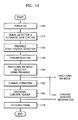
- FIG. 11 is a flowchart of a method of detecting a method of using a flexible band width by means of the second user CPE 1060 illustrated in FIG. 10 , according to an em bodiment of the present invention.
- the secon d user CPE 1060 is powered on by a user.
- the second user CPE 1060 performs signal detection and a utomatic gain control.
- the second CPE 1060 detects a start position of a preamble from an OFDMA-based signal having a downlink frame structure as illustrated in FIG. 7 .
- the preamble is a super frame preamble or a frame preamble.
- the second CPE 1060 performs synchronization based on t he detection result in operation S1120.
- the second user CPE 1060 detects fractional bandwidth mo de information using the preamble included in the OFDMA-based signal.
- the s econd user CPE 1060 may also detect channel bonding information.
- the second user CPE 1060 performs channel estimation. I n operation S1160, the second user CPE 1060 decodes an SCH or an FCH. If the BS 1000 uses the latter of the two above-described transmission methods, the second us er CPE 1060 may detect the channel bonding information in operation S1160.
- the second user CPE 1060 restores or decodes a frame usi ng the fractional bandwidth mode information and the channel bonding information.
- FIG. 12 is a flowchart of a method of computing correlation values of received pr eambles in order to detect a method of using a flexible bandwidth according to an embo diment of the present invention.
- a method of using a flexi ble bandwidth using a received signal (received preamble) corresponding to a preamble using a method illustrated in FIG. 8 is detected. If a preamble sequence insertion pat tern as illustrated in FIG. 9A, 9B , or 9C is used together, a correlation value may be cal culated with positions of sub-carriers that are changed.
- the received preamble used for calculating the correlation value may be a recei ved signal corresponding to a super frame preamble or a received signal corresponding to a frame preamble.
- a correlation value may be calculated in each super frame, in each frame, in every pl urality of super frames, or in every plurality of frames.
- the correlation value will be calcul ated in each super frame.
- operations S1200, S1210, S1220, and S1230 are perform ed in order to detect a method of using a flexible bandwidth of a first stage, and operati ons S1240, S1250, and S1260 are performed in order to detect a detection process of a second stage using the detection result of the first stage.
- CPE is powered on.
- a correlation valu e between a received preamble of a currently received super frame and each preamb le sequence is calculated.
- a method of using a flexible bandwidth corresponding to a preamble sequence having a greater correlation value than a threshold value or the largest correlation value corresponds to a method of using an initial flexible bandwidt h.
- the former method i.e., the method of detecting the preamble sequ ence having a correlation value greater than the threshold value is illustrated in the pr esent embodiment.
- a method of using a flexible bandwidth correspondin g to a preamble sequence used for computing the currently correlation value is deter mined as a method of using an initial flexible bandwidth in operation S1230. If the c urrently calculated correlation value is smaller than or equal to the threshold value in operation S1220, the process returns to operation S1210 in order to calculate a correl ation value of another preamble sequence which is not used for calculating a correlati on value.
- the method of using the initial flexible bandwidth is detected by performing oper ations S1200, S1210, S1220, and S1230.
- the detection result in operations S1200, S 1210, S1220, and S1230 is applied to the next super frames.
- a correlation value between a received preamble of a curre nt super frame and a preamble sequence detected from a previous super frame is com puted. If it is determined that the correlation value is greater than a threshold value in operation S1250, it is determined in operation S1260 that a method of using a flexible b andwidth of the current super frame is equal to a method of using a flexible bandwidth o f the previous super frame. If the correlation value is smaller than the threshold value i n operation S1250, the process returns to operation S1210 in order to obtain correlation values of all preamble sequences so as to detect a new method of using a flexible ban dwidth. This method may contribute to reducing the time required for confirming the m ethod for a time for which a method of using a flexible bandwidth is maintained equal.
- FIG. 13 illustrates an example of the detection method illustrated in FIG. 12 .
- preamble indices corresponding to continuous preambles are 0, 0, ..., 0, 17, 17, ..., 17, 31, 31, ..., 31, 25, 25, ...
- correlation values between a received preamble and a Il preamble sequences are calculated at the first stage (in operations S1200, S1210, S1 220, and S1230), and only a correlation value with a preamble sequence detected imm ediately previously is calculated at the second stage (in operations 1240, 1250, and 126 0).
- a correlation value is smaller than a threshold value when a band allocation metho d is changed.
- correlation values with all preamble sequences must be calculate d again to detect a new band allocation method.
- FIG. 14 is a flowchart of a method of using a flexible bandwidth in an OFDMA-ba sed cognitive radio system according to an embodiment of the present invention.
- the method includes operations serially processed in the OFDMA-base d cognitive radio system illustrated in FIG. 10 .
- the omitted contents may be applied to the method of using the flexible bandwid th according to the present embodiment.
- the band allocator 1010 allocates a channel band from amo ng unused channel bands for the second user CPE 1060.
- the band alloc ator 1010 may allocate a broadcast channel band or a fraction of the broadcast channel band as a channel band for the second user CPE 1060 or allocate a channel band for med by bonding broadcast channel bands or a plurality of fractions of a broadcast chan nel band as a channel band for the second user CPE 1060.
- the transmitter 1020 transmits an OFDMA-based signal incl uding information regarding the allocated channel band.
- a method of including the inf ormation regarding the allocated channel band in the OFDMA-based signal, an FT met hod, and a method of setting OFDMA parameters are the same as those described abo ve. Thus, detailed descriptions thereof will be omitted.
- the second user CPE 1060 detects fractional bandwidth mo de information of the allocated channel band based on the received OFDMA-based sig nal.
- a method of detecting the fractional bandwidth mode information is the same as t hat described above and thus a detailed description thereof will be omitted.
- the invention can also be embodied as computer readable codes on a comput er readable recording medium.
- the computer readable recording medium is any data storage device that can store data which can be thereafter read by a computer system.
- Examples of the computer readable recording medium include read-only memory (R OM), random-access memory (RAM), CD-ROMs, magnetic tapes, floppy disks, optical data storage devices, and carrier waves (such as data transmission through the Internet ).
- the computer readable recording medium can also be distributed over network cou pled computer systems so that the computer readable code is stored and executed in a distributed fashion. Also, functional programs, codes, and code segments for accompl ishing the present invention can be easily construed by programmers skilled in the art to which the present invention pertains.
Landscapes
- Engineering & Computer Science (AREA)
- Signal Processing (AREA)
- Computer Networks & Wireless Communication (AREA)
- Physics & Mathematics (AREA)
- Mathematical Physics (AREA)
- Mobile Radio Communication Systems (AREA)
Claims (31)
- Basisstation BS (1000) eines Orthogonal Frequency Division Multiple Access OFDMA-basierten kognitiven Funksystems, umfassend:einen Bandzuweiser (1010) zum Zuweisen eines Kanalbandes von nicht verwendeten Kanalbändern, welche eine Bandbreite aufweisen, die eine natürliche Zahl mal einer Bandbreitenauflösung ist, an eine Ausrüstung in Kunden-Räumlichkeiten CPE (1050, 1060), wobei die Bandbreitenauflösung eine vorbestimmte Bandbreite schmaler als eine Bandbreite eines Broadcastkanalbands ist; undeinen Sender (1020) zum Senden eines OFDMA-basierten Signals, welches Bandzuweisungsinformation umfasst, die Information betreffend das zugewiesene Band angibt,dadurch gekennzeichnet, dass,falls das zugewiesene Kanalband durch Verbinden von allen Teilen oder Teilen von zwei oder mehr Broadcastkanalbändern gebildet ist, der Sender (1020) dazu ausgelegt ist, eine Präambelsequenz, welche Modeinformation der gestückelten Bandbreite von jedem der zwei oder mehr Broadcastkanalbänder entspricht, als ein Einfügemuster, welches einem Verfahren des Verbindens von zwei oder mehr Kanalbändern entspricht, in eine Präambel des OFDMA-basieren Signals einzufügen, welches jedem der zwei oder mehr Broadcastkanalbänder entspricht, zu welchen das zugewiesene Kanalband gehört, undder Sender (1020) ferner dazu ausgelegt ist, Positionen von Unterträgern, welche Elemente der Präambelsequenz tragen, abhängig vom Verfahren des Verbindens der zwei oder mehr Broadcastkanalbänder derart zu ändern, dass die Elemente der Präambelsequenz in Unterträgern der Präambel des OFDMA-basierten Signals an vorbestimmten Intervallen der Unterträger getragen werden und Nullen in anderen Unterträgern getragen werden.
- Basisstation BS (1000) eines Orthogonal Frequency Division Multiple Access OFDMA-basierten kognitiven Funksystems, umfassend:einen Bandzuweiser (1010) zum Zuweisen eines Kanalbandes von nicht verwendeten Kanalbändern, welche eine Bandbreite aufweisen, die eine natürliche Zahl mal einer Bandbreitenauflösung ist, an eine Ausrüstung in Kunden-Räumlichkeiten CPE (1050, 1060), wobei die Bandbreitenauflösung eine vorbestimmte Bandbreite schmaler als eine Bandbreite eines Broadcastkanalbands ist; undeinen Sender (1020) zum Senden eines OFDMA-basierten Signals, welches Bandzuweisungsinformation umfasst, die Information betreffend das zugewiesene Band angibt,dadurch gekennzeichnet, dass,falls das zugewiesene Kanalband durch Verbinden von allen Teilen oder Teilen von zwei oder mehr Broadcastkanalbändern gebildet ist, der Sender (1020) dazu ausgelegt ist, eine Präambelsequenz, welche Modeinformation der gestückelten Bandbreite von jedem der zwei oder mehr Broadcastkanalbändern entspricht, in eine Präambel des OFDMA-basierten Signals, welches jedem der zwei oder mehr Broadcastkanalbänder entspricht, zu welchen das zugewiesene Kanalband gehört, einzufügen und Kanalverbindungsinformation, welche ein Verfahren zum Verbinden von zwei oder mehr Broadcastkanalbändern angibt, in einen Steuerkopf des OFDMA-basierten Signals einzufügen.
- BS (1000) nach Anspruch 1 oder 2, wobei der Bandzuweiser (1010) dazu ausgelegt ist, ein Broadcastkanalband oder ein Teil des Broadcastkanalbands als ein Broadcastkanalband für die CPE (1050, 1060) zuzuweisen oder ein Kanalband, welches durch Verbinden von Braodcastkanalbändern oder einer Mehrzahl von Teilen eines Broadcastkanalbands gebildet ist, als ein Kanalband für die CPE (1050, 1060) zuzuweisen.
- BS (1000) nach Anspruch 1 oder 2, wobei, falls das zugewiesene Kanalband durch Verbinden einer Mehrzahl von Kanalbändern gebildet ist, der Sender (1020) dazu ausgelegt ist, eine umgekehrte schnelle Fourier-Transformation IFFT einmal durchzuführen, um das OFDMA-basierte Signal zu erzeugen.
- BS (1000) nach Anspruch 1 oder 2, wobei, falls das zugewiesene Kanalband durch Verbinden einer Mehrzahl von Kanalbändern gebildet ist, der Sender (1020) dazu ausgelegt ist, eine IFFT mehrmals wiederholt durchzuführen, um das OFDMA-basierte Signal zu erzeugen.
- BS (1000) nach Anspruch 1 oder 2, wobei der Sender (1020) dazu ausgelegt ist, OFDMA-Parameter derart festzulegen, dass eine Gesamtzahl von verwendeten Unterträgern in einem Broadcastkanalband, welches eine identische FFT-Größe aufweist, ungeachtet einer Bandbreite des Broadcastkanalbands konstant bleibt, um das OFDMA-basierte Signal zu erzeugen.
- BS (1000) nach Anspruch 6, wobei der Sender (1020) dazu ausgelegt ist, einen Samplingfaktor zu verwenden, welcher ungeachtet einer Bandbreite eines Broadcastbandes und einer FFT-Größe konstant bleibt, und eine Gesamtzahl von verwendeten Unterträgern innerhalb einer Bandbreitenauflösung so festzulegen, dass sie proportional zur FFT-Größe ist.
- BS (1000) nach Anspruch 1 oder 2, wobei der Sender (1020) dazu ausgelegt ist, OFDMA-Parameter derart festzulegen, dass Intervalle von Unterträgern innerhalb eines Broadcastkanals, welches eine identische FFT-Größe aufweist, ungeachtet einer Bandbreite des Broadcastkanalbands zueinander gleich sind, um das OFDMA-basierte Signal zu erzeugen.
- BS (1000) nach Anspruch 8, wobei der Sender (1020) dazu ausgelegt ist, einen Samplingfaktor derart festzulegen, dass er zu einer Bandbreite eines Broadcastkanalbands proportional ist.
- BS (1000) nach Anspruch 1 oder 2, wobei die Präambelsequenz eine Sequenz ist, welche dazu ausgestaltet ist, ein Peak-zu-Durchschnitt-Energieverhältnis PAPR zu minimieren.
- Ausrüstung in Kunden-Räumlichkeiten CPE (1050, 1060) eines Orthogonal Frequency Division Multiple Access OFDMA-basierten kognitiven Funksystems, umfassend:einen Empfänger (1052, 1062) zum Empfangen eines OFDMA-basieren Signals, welches Bandzuweisungsinformation umfasst, welche Information betreffend ein Kanalband angibt, welches von einer Basisstation BS (1000) zugewiesen ist;einen Bandzuweisungsinformationsdetektor (1054, 1064) zum Erfassen der Bandzuweisungsinformation basierend auf dem empfangenen OFDMA-basierten Signal,wobei das zugewiesene Kanalband ein Kanalband von nicht verwendeten Kanalbändern ist, welche eine Bandbreite aufweisen, die eine natürliche Zahl mal einer Bandbreitenauflösung ist,wobei die Bandbreitenauflösung eine vorbestimmte Bandbreite schmaler als eine Bandbreite eines Broadcastkanalbandes ist,dadurch gekennzeichnet, dassdas zugewiesene Kanalband durch Verbinden aller Teile oder Teile von zwei oder mehr Broadcastkanatbändern gebildet ist;eine Präambelsequenz, welche Modeinformation der gestückelten Bandbreite von jedem der zwei oder mehr Broadcastkanalbänder entspricht, als ein Einfügemuster, welches einem Verfahren zum Verbinden von zwei oder mehr Broadcastkanalbändern entspricht, in eine Präambel von jedem der zwei oder mehr Broadcastkanalbänder, zu welchen das zugewiesene Kanalband des OFDMA-basierten Signals gehört, eingefügt ist;Positionen von Unterträgern, welche Elemente der Präambelsequenz tragen, abhängig von dem Verfahren des Verbindens der zwei oder mehr Broadcastkanalbänder derart geändert sind, dass die Elemente der Präambelsequenz in Unterträgern der Präambel des OFDMA-basierten Signals an vorbestimmten Intervallen von Unterträgern getragen sind und Nullen in anderen Unterträgern getragen sind; undder Bandbreitenzuweisungsinformationsdetektor (1054, 1064) dazu ausgelegt ist, eine Präambelsequenz von jedem der zwei oder mehr Broadcastkanalbänder von dem empfangenen OFDMA-basierten Signal zu erfassen, um die Modeinformation der gestückelten Bandbreite von jedem der zwei oder mehr Broadcastkanalbänder zu erfassen, und Kanalverbindungsinformation, welche das Verfahren zum Verbinden der zwei oder mehr Broadcastkanalbänder angibt, basierend auf dem Einfügemuster der erfassten Präambelsequenz zu erfassen.
- Ausrüstung in Kunden-Räumlichkeiten CPE (1050, 1060) eines Orthogonal Frequency Division Multiple Access OFDMA-basierten kognitiven Funksystems, umfassend:einen Empfänger (1052, 1062) zum Empfangen eines OFDMA-basierten Signals, welches Bandzuweisungsinformation umfasst, welche Information betreffend ein Kanalband angibt, welches von einer Basisstation BS (1000) zugewiesen ist;einen Bandzuweisungsinformationsdetektor (1054, 1064) zum Erfassen der Bandzuweisungsinformation basierend auf dem empfangenen OFDMA-basierten Signal,wobei das zugewiesene Kanalband ein Kanalband von nicht verwendeten Kanalbändern ist, welche eine Bandbreite aufweisen, die eine natürliche Zahl mal einer Bandbreitenauflösung ist,wobei die Bandbreitenauflösung eine vorbestimmte Bandbreite schmaler als eine Bandbreite eines Broadcastkanalbands ist,dadurch gekennzeichnet, dassdas zugewiesene Kanalband durch Verbinden aller Teile oder Teile von zwei oder mehr Broadcastkanalbändern gebildet ist;eine Präambel von jedem der zwei oder mehr Broadcastkanalbänder, zu welchen das zugewiesene Kanalband des OFDMA-basierten Signals gehört, eine Präambelsequenz umfasst, welche Modeinformation der gestückelten Bandbreite von jedem der zwei oder mehr Broadcastkanalbänder entspricht, wobei die Modeinformation der gestückelten Bandbreite Bandbreiteninformation und Bandpositionsinformation des zugewiesenen Kanalbandes umfasst;ein Steuerkopf des OFDMA-basierten Signals Kanalverbindungsinformation umfasst, welche ein Verfahren zum Verbinden der zwei oder mehr Broadcastkanalbänder angibt; undder Bandzuweisungsinformationsdetektor (1054, 1064) dazu ausgelegt ist, eine Präambelsequenz von jedem der zwei oder mehr Broadcastkanalbänder von dem empfangenen OFDMA-basierten Signal zu erfassen, um die Modeinformation der gestückelten Bandbreite von jedem der zwei oder mehr Broadcastkanalbänder zu erfassen, und die Kanalverbindungsinformation basierend auf dem Steuerkopf, der in dem OFDMA-basierten Signal enthalten ist, zu erfassen.
- CPE (1050, 1060) nach Anspruch 11 oder 12, wobei das zugewiesene Kanalband ein Broadcastkanalband, ein Teil des Broadcastkanalbands oder ein Kanalband ist, welches durch Verbinden von Broadcastkanalbändern oder einer Mehrzahl von Teilen eines Broadcastkanalbands gebildet ist.
- CPE (1050, 1060) nach Anspruch 11 oder 12, wobei der Bandzuweisungsinformationsdetektor (1054, 1064) dazu ausgelegt ist, einen Korrelationswert zwischen einer Präambelsequenz, welche von einer vorher empfangenen Präambel und einer aktuell empfangenen Präambel erfasst ist, zu berechnen, vorherige Bandzuweisungsinformation als aktuelle Bandzuweisungsinformation zu verwunden, falls der Korrelationswert größer als ein vorbestimmter Schwellenwert ist, und Korrelationswerte zwischen den aktuell empfangenen Präambeln und anderen Präambelsequenzen zu berechnen, um die Bandzuweisungsinformation zu erfassen, falls der Korrelationswert kleiner als der vorbestimmte Schwellenwert ist.
- CPE (1050, 1060) nach Anspruch 11 oder 12, wobei der Bandzuweisungsinformationsdetektor (1054, 1064) dazu ausgelegt ist, die Bandzuweisungsinformation zu jedem Superframe-Zeitintervall oder jedem Frame-Zeitintervall zu erfassen.
- Verfahren zum Verwenden einer flexiblen Bandbreite durch eine Basisstation BS (1000) in einem Orthogonal Frequency Division Multiple Access OFDMA-basierten kognitiven Funksystem, umfassend:Zuweisen eines Kanalbands von nicht verwendeten Kanalbändern, welche eine Bandbreite aufweisen, die eine natürliche Zahl mal einer Bandbreitenauflösung ist, an eine Ausrüstung in Kunden-Räumlichkeiten CPE (1050, 1060), wobei die Bandbreitenauflösung eine vorbestimmte Bandbreite schmaler als eine Bandbreite eines Broadcastkanalbands ist; undSenden eines OFDMA-basierten Signals, welches Bandzuweisungsinformation umfasst, die Information betreffend das zugewiesene Band angibt,dadurch gekennzeichnet, dass,falls das zugewiesene Kanalband durch Verbinden von allen Teilen oder Teilen von zwei oder mehr Broadcastkanalbändern gebildet ist, eine Präambelsequenz, welche Modeinformation der gestückelten Bandbreite von jedem der zwei oder mehr Broadcastkanalbänder entspricht, als ein Einfügemuster, weiches einem Verfahren des Verbindens von zwei oder mehr Kanalbändern entspricht, in eine Präambel des OFDMA-basierten Signals eingefügt wird, welches jedem der zwei oder mehr Broadcastkanalbänder entspricht, zu welchen das zugewiesene Kanalband gehört, wobei die Modeinformation der gestückelten Bandbreite Bandbreiteninformation und Bandpositionsinformation des zugewiesenen Kanalbands umfasst, undwobei Positionen von den Unterträgern, welche Elemente der Präambelsequenz tragen, abhängig vom Verfahren des Verbindens der zwei oder mehr Broadcastkanalbänder derart geändert werden, dass die Elemente der Präambelsequenz in Unterträgern der Präambel des OFDMA-basierten Signals an
vorbestimmten Intervallen der Unterträger getragen werden und Nullen in anderen Unterträgern getragen werden. - Verfahren zum Verwenden einer flexiblen Bandbreite durch eine Basisstation BS (1000) in einem Orthogonal Frequency Division Multiple Access OFDMA-basierten kognitiven Funksystem, umfassend:Zuweisen eines Kanalbands von nicht verwendeten Kanalbändern, welche eine Bandbreite aufweisen, die eine natürliche Zahl mal einer Bandbreitenauflösung ist, an eine Ausrüstung in Kunden-Räumlichkeiten CPE (1050, 1060), wobei die andbreitenauflösung eine vorbestimmte Bandbreite schmaler als eine Bandbreite eines Broadcastkanalbands ist; undSenden eines OFDMA-basierten Signals, welches Bandzuweisungsinformation umfasst, die Information betreffend das zugewiesene Band angibt,dadurch gekennzeichnet, dass,falls das zugewiesene Kanalband durch Verbinden von allen Teilen oder Teilen von zwei oder mehr Broadcastkanalbändern gebildet ist, eine Präambelsequenz, welche Modeinformation der gestückelten Bandbreite von jedem der zwei oder mehr Broadcastkanalbänder entspricht, in eine Präambel des OFDMA-basierten Signals, welches jedem der zwei oder mehr Broadcastkanalbänder entspricht, zu welchen das zugewiesene Kanalband gehört, eingefügt wird und Kanalverbindungsinformation, welche ein Verfahren zum Verbinden von zwei oder mehr Broadcastkanatbändern angibt, in einen Steuerkopf des OFDMA-basierten Signals eingefügt wird, wobei die Modeinformation der gestückelten Bandbreite Bandbreiteninformation und Bandpositionsinformation des zugewiesenen Kanalbands umfasst.
- Verfahren nach Anspruch 16 oder 17, wobei ein Broadcastkanalband oder ein Teil des Broadcastkanalbands als ein Kanalband für die CPE (1050, 1060) zugewiesen wird oder ein Kanalband, welches durch Verbinden von Broadcastkanalbändern oder einer Mehrzahl von Teilen eines Broadcastkanalbands gebildet wird, als ein Kanalband für die CPE (1050, 1060) zugewiesen wird.
- Verfahren nach Anspruch 16 oder 17, wobei, falls das zugewiesene Kanalband durch Verbinden einer Mehrzahl von Kanalbändern gebildet wird, eine umgekehrte schnelle Fourier-Transformation IFFT einmal durchgeführt wird, um das OFDMA-basierte Signal zu erzeugen.
- Verfahren nach Anspruch 16 oder 17, wobei, falls das zugewiesene Kanalband durch Verbinden einer Mehrzahl von Kanalbändern gebildet ist, eine IFFT mehrmals wiederholt durchgeführt wird, um das OFDMA-basierte Signal zu erzeugen.
- Verfahren nach Anspruch 16 oder 17, wobei OFDMA-Parameter derart festgelegt werden, dass eine Gesamtzahl von verwendeten Unterträgern in einem Broadcastkanalband, welches eine identische FFT-Größe aufweist, ungeachtet einer Bandbreite des Broadcastkanalbands konstant bleibt, um das OFDMA-basierte Signal zu erzeugen.
- Verfahren nach Anspruch 16 oder 17, wobei ein Samplingfaktor, welcher ungeachtet einer Bandbreite eines Broadcastbands und einer FFT-Größe konstant bleibt, verwendet wird und eine Gesamtzahl von verwendeten Unterträgern innerhalb einer Bandbreitenauflösung so festgelegt wird, dass sie proportional zur FFT-Größe ist.
- Verfahren nach Anspruch 16 oder 17, wobei OFDMA-Parameter derart festgelegt werden, dass Intervalle von Unterträgern innerhalb eines Broadcastkanals, welches eine identische FFT-Größe aufweist, ungeachtet einer Bandbreite des Broadcastkanalbands zueinander gleich sind, um das OFDMA-basierte Signal zu erzeugen.
- Verfahren nach Anspruch 23, wobei ein Samplingfaktor derart festgelegt wird, dass er zu einer Bandbreite eines Broadcastkanalbands proportional ist.
- Verfahren nach Anspruch 16 oder 17, wobei die Präambelsequenz eine Sequenz ist, welche dazu ausgelegt ist, ein PAPR zu minimieren.
- Verfahren zum Verwenden einer flexiblen Bandbreite in einer Ausrüstung in Kunden-Räumlichkeiten CPE (1050, 1060) eines Orthogonal Frequency Division Multiple Access OFDMA-basierten kognitiven Funksystems, umfassend:Empfangen eines OFDMA-basierten Signals, welches Bandzuweisungsinformation umfasst, welche Information betreffend ein Kanalband angibt, welches von einer Basisstation BS (1000) zugewiesen wird; undErfassen der Bandzuweisungsinformation basierend auf dem empfangenen OFDMA-basierten Signal,wobei das zugewiesene Kanalband ein Kanalband von nicht verwendeten Kanalbändern ist, welche eine Bandbreite aufweisen, die eine natürliche Zahl mal einer Bandbreitenauflösung ist, wobei die Bandbreitenauflösung eine vorbestimmte Bandbreite schmaler als eine Bandbreite eines Broadcastkanalbands ist,dadurch gekennzeichnet, dassdas zugewiesene Kanalband durch Verbinden aller Teile oder Teile von zwei oder mehr Broadcastkanalbändern gebildet wird;eine Präambelsequenz, welche Modeinformation der gestückelten Bandbreite von jedem der zwei oder mehr Broadcastkanalbänder entspricht, als ein Einfügemuster, welches einem Verfahren zum Verbinden von zwei oder mehr Broadcastkanalbändern entspricht, in eine Präambel von jedem der zwei oder mehr Broadcastkanalbänder, zu welchen das zugewiesene Kanalband des OFDMA-basierten Signals gehört, eingefügt wird;Positionen von Unterträgern, welche Elemente der Präambelsequenz tragen, abhängig von dem Verfahren des Verbindens der zwei oder mehr Broadcastkanalbänder derart geändert wird, dass die Elemente der Präambelsequenz in Unterträgern der Präambel des OFDMA-basierten Signals an vorbestimmten Intervallen von Unterträgern getragen werden und Nullen in anderen Unterträgern getragen werden; undeine Präambelsequenz von jedem der zwei oder mehr Broadcastkanalbänder von dem empfangenen OFDMA-basierten Signal erfasst wird, um die Modeinformation der gestückelten Bandbreite von jedem der zwei oder mehr Broadcastkanalbänder zu erfassen, und wobei Kanalverbindungsinformation, welche das Verfahren zum Verbinden der zwei oder mehr Broadcastkanalbänder angibt, basierend auf dem Einfügemuster der erfassten Präambelsequenz erfasst wird.
- Verfahren zum Verwenden einer flexiblen Bandbreite in einer Ausrüstung in Kunden-Räumlichkeiten CPE (1050, 1060) eines Orthogonal Frequency Division Multiple Access OFDMA-basierten kognitiven Funksystems, umfassend:Empfangen eines OFDMA-basierten Signals, welches Bandzuweisungsinformation umfasst, welche Information betreffend ein Kanalband angibt, welches von einer Basisstation BS (1000) zugewiesen wird; undErfassen der Bandzuweisungsinformation basierend auf dem empfangenen OFDMA-basierten Signal,wobei das zugewiesene Kanalband ein Kanalband von nicht verwendeten Kanalbändern ist, weiche eine Bandbreite aufweisen, die eine natürliche Zahl mal einer Bandbreitenauflösung ist, wobei die Bandbreitenauflösung eine vorbestimmte Bandbreite schmaler als eine Bandbreite eines Broadcastkanalbands ist,dadurch gekennzeichnet, dassdas zugewiesene Kanalband durch Verbinden aller Teile oder Teile von zwei oder mehr Broadcastkanalbändern gebildet wird;eine Präambel von jedem der zwei oder mehr Broadcastkanalbänder, zu welchen das zugewiesene Kanalband des OFDMA-basierten Signals gehört, eine Präambelsequenz umfasst, welche Modeinformation der gestückelten Bandbreite von jedem der zwei oder mehr Broadcastkanalbänder entspricht, wobei die Modeinformation der gestückelten Bandbreite Bandbreiteninformation und Bandpositionsinformation des zugewiesenen Kanalbandes umfasst;ein Steuerkopf des OFDMA-basierten Signals Kanalverbindungsinformation umfasst, welche ein Verfahren zum Verbinden der zwei oder mehr Broadcastkanalbänder angibt; undeine Präambelsequenz von jedem der zwei oder mehr Broadcastkanalbänder von dem empfangenen OFDMA-basierten Signal erfasst wird, um die Modeinformation der gestückelten Bandbreite von jedem der zwei oder mehr Broadcastkanalbänder zu erfassen, und wobei die Kanalverbindungsinformation basierend auf dem Steuerkopf, der in dem OFDMA-basierten Signal enthalten ist, erfasst wird.
- Verfahren nach Anspruch 26 oder 27, wobei das zugewiesene Kanalband ein Broadcastkanalband, ein Teil des Broadcastkanalbands oder ein Kanalband ist, welches durch Verbinden von Broadcastkanalbändern oder einer Mehrzahl von Teilen eines Broadcastkanalbands gebildet wird.
- Verfahren nach Anspruch 26 oder 27, wobei ein Korrelationswert zwischen einer Präambelsequenz, welche von einer vorher empfangenen Präambel und einer aktuell empfangenen Präambel erfasst wird, berechnet wird, vorherige Bandzuweisungsinformation als aktuelle Bandzuweisungsinformation verwendet wird, falls der Korrelationswert größer als ein vorbestimmter Schwellenwert ist, und Korrelationswerte zwischen den aktuell empfangenen Präambeln und anderen Präambelsequenzen berechnet werden, um die Bandzuweisungsinformation zu erfassen, falls der Korrelationswert kleiner als der vorbestimmte Schwellenwert ist.
- Verfahren nach Anspruch 26 oder 27, wobei die Bandzuweisungsinformation zu jedem Superframe-Zeitintervall oder jedem Frame-Zeitintervall erfasst wird.
- Computerlesbares Aufzeichnungsmedium, auf welchem ein Computerprogramm zum Ausführen des Verfahrens nach einem der Ansprüche 16 bis 30 verkörpert ist.
Applications Claiming Priority (5)
| Application Number | Priority Date | Filing Date | Title |
|---|---|---|---|
| US73414605P | 2005-11-07 | 2005-11-07 | |
| US73728905P | 2005-11-16 | 2005-11-16 | |
| US77705106P | 2006-02-27 | 2006-02-27 | |
| PCT/KR2006/004651 WO2007052995A1 (en) | 2005-11-07 | 2006-11-07 | Method for using flexible bandwidth in ofdma-based cognitive radio system, base station and subscriber station using the same |
| KR1020060109433A KR100825742B1 (ko) | 2005-11-07 | 2006-11-07 | 직교 주파수 분할 다중 접속 기반의 인지 무선 시스템에서유연한 대역폭을 사용하는 방법, 이를 이용하는 기지국 및단말 |
Publications (3)
| Publication Number | Publication Date |
|---|---|
| EP1946508A1 EP1946508A1 (de) | 2008-07-23 |
| EP1946508A4 EP1946508A4 (de) | 2011-10-12 |
| EP1946508B1 true EP1946508B1 (de) | 2013-03-27 |
Family
ID=38273222
Family Applications (1)
| Application Number | Title | Priority Date | Filing Date |
|---|---|---|---|
| EP06812487A Not-in-force EP1946508B1 (de) | 2005-11-07 | 2006-11-07 | Verfahren und Vorrichtungen zur Verwendung flexibler Bandbreite in OFDMA basierenden kognitiven Funksystemen |
Country Status (6)
| Country | Link |
|---|---|
| US (1) | US8477799B2 (de) |
| EP (1) | EP1946508B1 (de) |
| KR (1) | KR100825742B1 (de) |
| CN (1) | CN101356789B (de) |
| CA (1) | CA2628861C (de) |
| WO (1) | WO2007052995A1 (de) |
Families Citing this family (56)
| Publication number | Priority date | Publication date | Assignee | Title |
|---|---|---|---|---|
| WO2006105010A1 (en) | 2005-03-25 | 2006-10-05 | Neocific, Inc. | Methods and apparatus for cellular broadcasting and communication system |
| US8155098B2 (en) | 2005-06-09 | 2012-04-10 | Neocific, Inc. | Methods and apparatus for power efficient broadcasting and communication systems |
| KR101298641B1 (ko) * | 2006-11-10 | 2013-08-21 | 삼성전자주식회사 | Ofdm 통신 장치 및 방법 |
| US7876786B2 (en) | 2006-12-01 | 2011-01-25 | Microsoft Corporation | Dynamic time-spectrum block allocation for cognitive radio networks |
| US8879573B2 (en) | 2006-12-01 | 2014-11-04 | Microsoft Corporation | Media access control (MAC) protocol for cognitive wireless networks |
| US8130699B2 (en) | 2007-03-07 | 2012-03-06 | Wi-Lan, Inc. | Multi-band channel aggregation |
| US9647347B2 (en) * | 2007-05-21 | 2017-05-09 | Spatial Digital Systems, Inc. | Method and apparatus for channel bonding using multiple-beam antennas |
| US8102756B2 (en) * | 2007-07-25 | 2012-01-24 | Qualcomm Incorporated | Method and apparatus for initial acquisition of signaling parameters for a wireless communications network |
| KR20090015283A (ko) * | 2007-08-08 | 2009-02-12 | 삼성전자주식회사 | 우선 사용자를 탐색하면서 데이터를 전송하는 장치 및 방법 |
| KR100906807B1 (ko) * | 2007-08-24 | 2009-07-09 | 한국전자통신연구원 | 인지 무선 시스템의 대역폭 제공 장치 및 그 방법 |
| KR101366534B1 (ko) | 2007-11-06 | 2014-02-25 | 삼성전자주식회사 | 파일럿 신호를 이용한 주파수 스펙트럼 센싱 방법 및 상기방법을 채용하는 인지 무선 시스템 |
| KR101472058B1 (ko) | 2008-01-29 | 2014-12-16 | 삼성전자주식회사 | 채널 대역폭을 적응적으로 제어하는 통신 장치 및 통신방법 |
| EP2253115B1 (de) * | 2008-02-13 | 2013-04-03 | Telespazio S.p.A. | Bandeffizientes verfahren und system zum senden/empfangen eines kommunikationskanals unter verwendung eines kanalbands |
| KR20090089647A (ko) * | 2008-02-19 | 2009-08-24 | 삼성전자주식회사 | 무선 네트워크상에서 채널을 교환하는 장치 및 방법 |
| KR101422852B1 (ko) * | 2008-02-26 | 2014-07-25 | 엘지전자 주식회사 | 무선통신 시스템에서 제어정보 할당방법 |
| US7821914B2 (en) * | 2008-03-31 | 2010-10-26 | Entropic Communications, Inc. | Method of generation and set of implementation efficient preambles for OFDM systems |
| US8982996B2 (en) | 2008-06-10 | 2015-03-17 | Samsung Electronics Co., Ltd. | Cognitive radio communication system using multiple input multiple output communication scheme |
| CN102106106B (zh) * | 2008-07-10 | 2014-06-04 | 新加坡科技研究局 | 用于判断在所接收的信号中是否存在传输信号的方法、装置和计算机可读介质 |
| KR20100044696A (ko) | 2008-10-22 | 2010-04-30 | 엘지전자 주식회사 | 무선통신 시스템에서 자원유닛 맵핑방법 |
| WO2010047537A2 (en) * | 2008-10-22 | 2010-04-29 | Lg Electronics Inc. | Method and apparatus of subchannelization in wireless communication system |
| WO2010047539A2 (en) | 2008-10-22 | 2010-04-29 | Lg Electronics Inc. | Method and apparatus for mapping resource unit in wireless communication system |
| US8204020B2 (en) | 2008-10-22 | 2012-06-19 | Lg Electronics Inc. | Method and apparatus for mapping resource unit in wireless communication system |
| JP5345205B2 (ja) * | 2008-11-18 | 2013-11-20 | エルジー エレクトロニクス インコーポレイティド | 無線移動通信システムで放送チャネルを割り当てる方法及び装置 |
| EP2200244B1 (de) | 2008-12-18 | 2019-02-20 | Vodafone Holding GmbH | Verfahren und Vorrichtung zur Übertragung über orthogonales Mehrträgerfrequenzteilungs-Multiplexing |
| KR101067934B1 (ko) * | 2008-12-19 | 2011-09-26 | 한국전자통신연구원 | Tv 대역의 주파수 공유를 위한 파일럿 신호 송신 시스템,수신 시스템 및 그 방법 |
| WO2010079868A1 (en) * | 2009-01-09 | 2010-07-15 | Lg Electronics Inc. | Apparatus for transmitting and receiving a signal and method of transmitting and receiving a signal |
| US9667383B2 (en) | 2009-01-22 | 2017-05-30 | Lg Electronics Inc. | Apparatus for transmitting and receiving a signal and method of transmitting and receiving a signal |
| KR101664428B1 (ko) * | 2009-02-12 | 2016-10-10 | 엘지전자 주식회사 | 신호 송수신 장치 및 방법 |
| WO2010101328A1 (en) * | 2009-03-03 | 2010-09-10 | Lg Electronics Inc. | Apparatus for transmitting and receiving a signal and method of transmitting and receiving a signal |
| US8811903B2 (en) | 2009-05-28 | 2014-08-19 | Microsoft Corporation | Spectrum assignment for networks over white spaces and other portions of the spectrum |
| US8638652B2 (en) * | 2009-05-29 | 2014-01-28 | Zte (Usa) Inc. | Signal transmission with fixed subcarrier spacing within OFDMA communication systems |
| US8340157B2 (en) * | 2009-07-28 | 2012-12-25 | Interlite Aktiebolag | Methods and devices for wireless communication in wireless communication systems |
| CN102036401B (zh) * | 2009-09-30 | 2013-11-06 | 华为技术有限公司 | 多载波信道配置方法、装置以及通信系统 |
| US8582551B2 (en) * | 2010-05-26 | 2013-11-12 | Intel Corporation | Device, system and method of wireless communication over non-contiguous channels |
| WO2012050838A1 (en) | 2010-09-28 | 2012-04-19 | Neocific, Inc. | Methods and apparatus for flexible use of frequency bands |
| CN103067925B (zh) * | 2011-10-21 | 2017-10-17 | 中兴通讯股份有限公司 | 一种认知无线电系统前导码格式的重配方法及系统 |
| US9516531B2 (en) * | 2011-11-07 | 2016-12-06 | Qualcomm Incorporated | Assistance information for flexible bandwidth carrier mobility methods, systems, and devices |
| US20130114433A1 (en) * | 2011-11-07 | 2013-05-09 | Qualcomm Incorporated | Scaling for fractional systems in wireless communication |
| US9848339B2 (en) | 2011-11-07 | 2017-12-19 | Qualcomm Incorporated | Voice service solutions for flexible bandwidth systems |
| US20130114571A1 (en) | 2011-11-07 | 2013-05-09 | Qualcomm Incorporated | Coordinated forward link blanking and power boosting for flexible bandwidth systems |
| WO2013165484A1 (en) * | 2012-05-01 | 2013-11-07 | Src, Inc. | Nc-ofdm for a cognitive radio |
| US9660792B2 (en) | 2012-06-30 | 2017-05-23 | Cable Television Laboratories, Inc. | Multi-carrier transmission |
| US9743401B2 (en) | 2012-10-22 | 2017-08-22 | Lg Electronics Inc. | Method, user equipment and base station for configuring radio frame for offsetting Doppler effect |
| US9516626B2 (en) * | 2013-02-11 | 2016-12-06 | Qualcomm Incorporated | High data rate broadcast channel systems, devices, and methods |
| KR20140112745A (ko) * | 2013-03-14 | 2014-09-24 | 한국전자통신연구원 | 직교 주파수 분할 다중 전송 방법 및 장치 |
| KR20240053671A (ko) | 2014-08-07 | 2024-04-24 | 코히런트 로직스 인크. | 멀티-파티션 라디오 프레임 |
| MX356392B (es) * | 2014-08-07 | 2018-05-28 | One Media Llc | Configuracion dinamica de cuadro de datos de transporte fisico de multiplexion de division de frecuencia ortogonal flexible. |
| JP6475505B2 (ja) * | 2015-02-13 | 2019-02-27 | パナソニック株式会社 | Ofdm送信装置及びofdm送信方法 |
| KR101889798B1 (ko) * | 2015-03-24 | 2018-08-20 | 엘지전자 주식회사 | 방송 신호 송수신 장치 및 방법 |
| US10219274B2 (en) * | 2015-04-23 | 2019-02-26 | Marvell World Trade Ltd. | Channel bonding operations in wireless communications |
| US9735996B2 (en) | 2015-11-25 | 2017-08-15 | Electronics And Telecommunications Research Institute | Fully parallel fast fourier transformer |
| US10594465B2 (en) * | 2016-02-22 | 2020-03-17 | Huawei Technologies Co., Ltd. | System and method for flexible channelization |
| US20180227734A1 (en) * | 2017-02-07 | 2018-08-09 | Electronics And Telecommunications Research Institute | Method and apparatus for proximity communications using channel aggregation |
| JP2020022118A (ja) * | 2018-08-02 | 2020-02-06 | ソニーセミコンダクタソリューションズ株式会社 | 受信装置、通信システム、および、受信装置の制御方法 |
| TWI724502B (zh) | 2019-08-20 | 2021-04-11 | 中磊電子股份有限公司 | 主控基地台及資源分配指示方法 |
| CN112788752B (zh) * | 2019-11-07 | 2022-09-02 | 华为技术有限公司 | 一种通信方法及装置 |
Family Cites Families (15)
| Publication number | Priority date | Publication date | Assignee | Title |
|---|---|---|---|---|
| JP2002518907A (ja) * | 1998-06-10 | 2002-06-25 | テレフオンアクチーボラゲット エル エム エリクソン(パブル) | 無線通信システムを介して送信されるテキスト情報サービスのチャネル化及び符号化 |
| US6720866B1 (en) | 1999-03-30 | 2004-04-13 | Microchip Technology Incorporated | Radio frequency identification tag device with sensor input |
| US7253717B2 (en) | 2000-11-29 | 2007-08-07 | Mobile Technics Llc | Method and system for communicating with and tracking RFID transponders |
| KR100375350B1 (ko) * | 2001-03-26 | 2003-03-08 | 삼성전자주식회사 | 직교 주파수 분할 다중 접속에 기반한 데이타 통신 장치및 방법 |
| US7137000B2 (en) | 2001-08-24 | 2006-11-14 | Zih Corp. | Method and apparatus for article authentication |
| US7548506B2 (en) * | 2001-10-17 | 2009-06-16 | Nortel Networks Limited | System access and synchronization methods for MIMO OFDM communications systems and physical layer packet and preamble design |
| US7317756B2 (en) * | 2001-12-06 | 2008-01-08 | Pulse-Link, Inc. | Ultra-wideband communication apparatus and methods |
| US7333001B2 (en) | 2002-11-23 | 2008-02-19 | Kathleen Lane | Secure personal RFID documents and method of use |
| KR100456480B1 (ko) | 2002-12-23 | 2004-11-09 | 한국전자통신연구원 | 직교주파수 다중분할 통신에서의 부반송파 할당 시스템 및방법, 그 프로그램이 저장된 기록매체 |
| US7212637B2 (en) | 2003-03-11 | 2007-05-01 | Rimage Corporation | Cartridge validation with radio frequency identification |
| KR100566274B1 (ko) | 2003-11-20 | 2006-03-30 | 삼성전자주식회사 | 직교주파수분할다중 시스템에서 부반송파 할당 장치 및방법 |
| US7706350B2 (en) * | 2004-03-19 | 2010-04-27 | Qualcomm Incorporated | Methods and apparatus for flexible spectrum allocation in communication systems |
| US7620018B2 (en) * | 2005-02-02 | 2009-11-17 | Samsung Electronics Co., Ltd. | Apparatus and method for a multi-channel orthogonal frequency division multiplexing wireless network |
| US7574214B2 (en) * | 2005-05-25 | 2009-08-11 | Intel Corporation | Device, system and method of multiple access transmission |
| WO2007000744A1 (en) * | 2005-06-28 | 2007-01-04 | Koninklijke Philips Electronics, N.V. | A handshaking method and apparatus for ofdm systems with unknown sub-channel availability |
-
2006
- 2006-11-07 CA CA2628861A patent/CA2628861C/en active Active
- 2006-11-07 CN CN2006800506341A patent/CN101356789B/zh not_active Expired - Fee Related
- 2006-11-07 US US12/092,722 patent/US8477799B2/en active Active
- 2006-11-07 KR KR1020060109433A patent/KR100825742B1/ko active Active
- 2006-11-07 EP EP06812487A patent/EP1946508B1/de not_active Not-in-force
- 2006-11-07 WO PCT/KR2006/004651 patent/WO2007052995A1/en not_active Ceased
Also Published As
| Publication number | Publication date |
|---|---|
| US20090135713A1 (en) | 2009-05-28 |
| WO2007052995A1 (en) | 2007-05-10 |
| CA2628861C (en) | 2012-03-20 |
| EP1946508A1 (de) | 2008-07-23 |
| EP1946508A4 (de) | 2011-10-12 |
| CN101356789B (zh) | 2011-10-12 |
| CN101356789A (zh) | 2009-01-28 |
| KR100825742B1 (ko) | 2008-04-29 |
| US8477799B2 (en) | 2013-07-02 |
| CA2628861A1 (en) | 2007-05-10 |
| KR20070049091A (ko) | 2007-05-10 |
Similar Documents
| Publication | Publication Date | Title |
|---|---|---|
| EP1946508B1 (de) | Verfahren und Vorrichtungen zur Verwendung flexibler Bandbreite in OFDMA basierenden kognitiven Funksystemen | |
| EP3211808B1 (de) | Verfahren zum senden und empfangen von signalen mittels mehrbandfunkfrequenzen | |
| KR100860663B1 (ko) | 직교 주파수 분할 다중 접속 방식의 이동 통신 시스템에서자원 할당 장치 및 방법 | |
| KR100913089B1 (ko) | 다중 반송파 시스템에 적용되는 파일럿 신호 전송 방법 | |
| US9992001B2 (en) | Interference measurement pilot tones | |
| US7925295B2 (en) | Handling communication interference in wireless systems | |
| US8310997B2 (en) | Apparatus and method for dynamic channel allocation in multiple channel wireless communication system | |
| US20120099552A1 (en) | Wireless transmission system having reduced interference | |
| CN101282188B (zh) | 无线基站、移动站、无线通信系统以及无线通信方法 | |
| KR20100102712A (ko) | 심볼 통신 방법 | |
| KR20090075668A (ko) | 인접한 tv 대역들 결합, 서브캐리어 할당, 데이터 버스트정의, 및 ieee 802.22 wran 통신 시스템들에 관한물리 층에서의 확산 ofdma | |
| KR100963513B1 (ko) | 광대역 무선통신시스템의 프레임 구성 장치 및 방법 | |
| JP7079062B2 (ja) | 無線送信装置、無線受信装置、および通信方法 | |
| EP2023561A1 (de) | Drahtlose Basisstation, Mobilstation, Funkkommunikationssystem und Funkkommunikationsverfahren | |
| KR20080067316A (ko) | Ofdma 시스템의 혼합 버스트 할당 방법 및 장치 | |
| KR100967314B1 (ko) | 무선 기지국, 이동국, 무선 통신 시스템, 및 무선 통신방법 | |
| EP1978691B1 (de) | Drahtlose Basisstation, Mobilstation, Funkkommunikationssystem und Funkkommunikationsverfahren | |
| KR101402249B1 (ko) | 광대역 무선통신 시스템에서 버스트 할당 장치 및 방법 | |
| US8423020B2 (en) | Communication method, mobile station apparatus and wireless base station apparatus | |
| KR20080064716A (ko) | 스케일러블 대역폭을 위한 랜덤 액세스 채널 할당 방법,랜덤 액세스 방법 및 그 장치 |
Legal Events
| Date | Code | Title | Description |
|---|---|---|---|
| PUAI | Public reference made under article 153(3) epc to a published international application that has entered the european phase |
Free format text: ORIGINAL CODE: 0009012 |
|
| 17P | Request for examination filed |
Effective date: 20080505 |
|
| AK | Designated contracting states |
Kind code of ref document: A1 Designated state(s): AT BE BG CH CY CZ DE DK EE ES FI FR GB GR HU IE IS IT LI LT LU LV MC NL PL PT RO SE SI SK TR |
|
| A4 | Supplementary search report drawn up and despatched |
Effective date: 20110914 |
|
| RIC1 | Information provided on ipc code assigned before grant |
Ipc: H04L 27/26 20060101AFI20110908BHEP |
|
| 17Q | First examination report despatched |
Effective date: 20120503 |
|
| DAX | Request for extension of the european patent (deleted) | ||
| REG | Reference to a national code |
Ref country code: DE Ref legal event code: R079 Ref document number: 602006035345 Country of ref document: DE Free format text: PREVIOUS MAIN CLASS: H04L0027260000 Ipc: H04L0005000000 |
|
| RIC1 | Information provided on ipc code assigned before grant |
Ipc: H04L 5/00 20060101AFI20120829BHEP |
|
| GRAP | Despatch of communication of intention to grant a patent |
Free format text: ORIGINAL CODE: EPIDOSNIGR1 |
|
| GRAS | Grant fee paid |
Free format text: ORIGINAL CODE: EPIDOSNIGR3 |
|
| GRAA | (expected) grant |
Free format text: ORIGINAL CODE: 0009210 |
|
| AK | Designated contracting states |
Kind code of ref document: B1 Designated state(s): AT BE BG CH CY CZ DE DK EE ES FI FR GB GR HU IE IS IT LI LT LU LV MC NL PL PT RO SE SI SK TR |
|
| REG | Reference to a national code |
Ref country code: GB Ref legal event code: FG4D |
|
| REG | Reference to a national code |
Ref country code: CH Ref legal event code: EP |
|
| REG | Reference to a national code |
Ref country code: AT Ref legal event code: REF Ref document number: 603997 Country of ref document: AT Kind code of ref document: T Effective date: 20130415 |
|
| REG | Reference to a national code |
Ref country code: IE Ref legal event code: FG4D |
|
| REG | Reference to a national code |
Ref country code: DE Ref legal event code: R096 Ref document number: 602006035345 Country of ref document: DE Effective date: 20130516 |
|
| PG25 | Lapsed in a contracting state [announced via postgrant information from national office to epo] |
Ref country code: SE Free format text: LAPSE BECAUSE OF FAILURE TO SUBMIT A TRANSLATION OF THE DESCRIPTION OR TO PAY THE FEE WITHIN THE PRESCRIBED TIME-LIMIT Effective date: 20130327 Ref country code: LT Free format text: LAPSE BECAUSE OF FAILURE TO SUBMIT A TRANSLATION OF THE DESCRIPTION OR TO PAY THE FEE WITHIN THE PRESCRIBED TIME-LIMIT Effective date: 20130327 Ref country code: BG Free format text: LAPSE BECAUSE OF FAILURE TO SUBMIT A TRANSLATION OF THE DESCRIPTION OR TO PAY THE FEE WITHIN THE PRESCRIBED TIME-LIMIT Effective date: 20130627 |
|
| REG | Reference to a national code |
Ref country code: AT Ref legal event code: MK05 Ref document number: 603997 Country of ref document: AT Kind code of ref document: T Effective date: 20130327 |
|
| REG | Reference to a national code |
Ref country code: LT Ref legal event code: MG4D |
|
| PG25 | Lapsed in a contracting state [announced via postgrant information from national office to epo] |
Ref country code: FI Free format text: LAPSE BECAUSE OF FAILURE TO SUBMIT A TRANSLATION OF THE DESCRIPTION OR TO PAY THE FEE WITHIN THE PRESCRIBED TIME-LIMIT Effective date: 20130327 Ref country code: SI Free format text: LAPSE BECAUSE OF FAILURE TO SUBMIT A TRANSLATION OF THE DESCRIPTION OR TO PAY THE FEE WITHIN THE PRESCRIBED TIME-LIMIT Effective date: 20130327 Ref country code: LV Free format text: LAPSE BECAUSE OF FAILURE TO SUBMIT A TRANSLATION OF THE DESCRIPTION OR TO PAY THE FEE WITHIN THE PRESCRIBED TIME-LIMIT Effective date: 20130327 Ref country code: GR Free format text: LAPSE BECAUSE OF FAILURE TO SUBMIT A TRANSLATION OF THE DESCRIPTION OR TO PAY THE FEE WITHIN THE PRESCRIBED TIME-LIMIT Effective date: 20130628 |
|
| REG | Reference to a national code |
Ref country code: NL Ref legal event code: VDEP Effective date: 20130327 |
|
| PG25 | Lapsed in a contracting state [announced via postgrant information from national office to epo] |
Ref country code: BE Free format text: LAPSE BECAUSE OF FAILURE TO SUBMIT A TRANSLATION OF THE DESCRIPTION OR TO PAY THE FEE WITHIN THE PRESCRIBED TIME-LIMIT Effective date: 20130327 |
|
| PG25 | Lapsed in a contracting state [announced via postgrant information from national office to epo] |
Ref country code: ES Free format text: LAPSE BECAUSE OF FAILURE TO SUBMIT A TRANSLATION OF THE DESCRIPTION OR TO PAY THE FEE WITHIN THE PRESCRIBED TIME-LIMIT Effective date: 20130708 Ref country code: AT Free format text: LAPSE BECAUSE OF FAILURE TO SUBMIT A TRANSLATION OF THE DESCRIPTION OR TO PAY THE FEE WITHIN THE PRESCRIBED TIME-LIMIT Effective date: 20130327 Ref country code: CZ Free format text: LAPSE BECAUSE OF FAILURE TO SUBMIT A TRANSLATION OF THE DESCRIPTION OR TO PAY THE FEE WITHIN THE PRESCRIBED TIME-LIMIT Effective date: 20130327 Ref country code: EE Free format text: LAPSE BECAUSE OF FAILURE TO SUBMIT A TRANSLATION OF THE DESCRIPTION OR TO PAY THE FEE WITHIN THE PRESCRIBED TIME-LIMIT Effective date: 20130327 Ref country code: SK Free format text: LAPSE BECAUSE OF FAILURE TO SUBMIT A TRANSLATION OF THE DESCRIPTION OR TO PAY THE FEE WITHIN THE PRESCRIBED TIME-LIMIT Effective date: 20130327 Ref country code: IS Free format text: LAPSE BECAUSE OF FAILURE TO SUBMIT A TRANSLATION OF THE DESCRIPTION OR TO PAY THE FEE WITHIN THE PRESCRIBED TIME-LIMIT Effective date: 20130727 Ref country code: RO Free format text: LAPSE BECAUSE OF FAILURE TO SUBMIT A TRANSLATION OF THE DESCRIPTION OR TO PAY THE FEE WITHIN THE PRESCRIBED TIME-LIMIT Effective date: 20130327 Ref country code: PT Free format text: LAPSE BECAUSE OF FAILURE TO SUBMIT A TRANSLATION OF THE DESCRIPTION OR TO PAY THE FEE WITHIN THE PRESCRIBED TIME-LIMIT Effective date: 20130729 Ref country code: NL Free format text: LAPSE BECAUSE OF FAILURE TO SUBMIT A TRANSLATION OF THE DESCRIPTION OR TO PAY THE FEE WITHIN THE PRESCRIBED TIME-LIMIT Effective date: 20130327 |
|
| PG25 | Lapsed in a contracting state [announced via postgrant information from national office to epo] |
Ref country code: CY Free format text: LAPSE BECAUSE OF FAILURE TO SUBMIT A TRANSLATION OF THE DESCRIPTION OR TO PAY THE FEE WITHIN THE PRESCRIBED TIME-LIMIT Effective date: 20130327 Ref country code: PL Free format text: LAPSE BECAUSE OF FAILURE TO SUBMIT A TRANSLATION OF THE DESCRIPTION OR TO PAY THE FEE WITHIN THE PRESCRIBED TIME-LIMIT Effective date: 20130327 |
|
| PG25 | Lapsed in a contracting state [announced via postgrant information from national office to epo] |
Ref country code: DK Free format text: LAPSE BECAUSE OF FAILURE TO SUBMIT A TRANSLATION OF THE DESCRIPTION OR TO PAY THE FEE WITHIN THE PRESCRIBED TIME-LIMIT Effective date: 20130327 |
|
| PLBE | No opposition filed within time limit |
Free format text: ORIGINAL CODE: 0009261 |
|
| STAA | Information on the status of an ep patent application or granted ep patent |
Free format text: STATUS: NO OPPOSITION FILED WITHIN TIME LIMIT |
|
| PG25 | Lapsed in a contracting state [announced via postgrant information from national office to epo] |
Ref country code: IT Free format text: LAPSE BECAUSE OF FAILURE TO SUBMIT A TRANSLATION OF THE DESCRIPTION OR TO PAY THE FEE WITHIN THE PRESCRIBED TIME-LIMIT Effective date: 20130327 |
|
| 26N | No opposition filed |
Effective date: 20140103 |
|
| REG | Reference to a national code |
Ref country code: DE Ref legal event code: R097 Ref document number: 602006035345 Country of ref document: DE Effective date: 20140103 |
|
| REG | Reference to a national code |
Ref country code: CH Ref legal event code: PL |
|
| PG25 | Lapsed in a contracting state [announced via postgrant information from national office to epo] |
Ref country code: MC Free format text: LAPSE BECAUSE OF FAILURE TO SUBMIT A TRANSLATION OF THE DESCRIPTION OR TO PAY THE FEE WITHIN THE PRESCRIBED TIME-LIMIT Effective date: 20130327 Ref country code: LI Free format text: LAPSE BECAUSE OF NON-PAYMENT OF DUE FEES Effective date: 20131130 Ref country code: CH Free format text: LAPSE BECAUSE OF NON-PAYMENT OF DUE FEES Effective date: 20131130 |
|
| REG | Reference to a national code |
Ref country code: IE Ref legal event code: MM4A |
|
| PG25 | Lapsed in a contracting state [announced via postgrant information from national office to epo] |
Ref country code: IE Free format text: LAPSE BECAUSE OF NON-PAYMENT OF DUE FEES Effective date: 20131107 |
|
| PG25 | Lapsed in a contracting state [announced via postgrant information from national office to epo] |
Ref country code: TR Free format text: LAPSE BECAUSE OF FAILURE TO SUBMIT A TRANSLATION OF THE DESCRIPTION OR TO PAY THE FEE WITHIN THE PRESCRIBED TIME-LIMIT Effective date: 20130327 |
|
| PG25 | Lapsed in a contracting state [announced via postgrant information from national office to epo] |
Ref country code: HU Free format text: LAPSE BECAUSE OF FAILURE TO SUBMIT A TRANSLATION OF THE DESCRIPTION OR TO PAY THE FEE WITHIN THE PRESCRIBED TIME-LIMIT; INVALID AB INITIO Effective date: 20061107 Ref country code: LU Free format text: LAPSE BECAUSE OF NON-PAYMENT OF DUE FEES Effective date: 20131107 |
|
| REG | Reference to a national code |
Ref country code: FR Ref legal event code: PLFP Year of fee payment: 10 |
|
| REG | Reference to a national code |
Ref country code: FR Ref legal event code: PLFP Year of fee payment: 11 |
|
| REG | Reference to a national code |
Ref country code: FR Ref legal event code: PLFP Year of fee payment: 12 |
|
| REG | Reference to a national code |
Ref country code: FR Ref legal event code: PLFP Year of fee payment: 13 |
|
| PGFP | Annual fee paid to national office [announced via postgrant information from national office to epo] |
Ref country code: FR Payment date: 20221020 Year of fee payment: 17 |
|
| PGFP | Annual fee paid to national office [announced via postgrant information from national office to epo] |
Ref country code: GB Payment date: 20221020 Year of fee payment: 17 Ref country code: DE Payment date: 20220617 Year of fee payment: 17 |
|
| P01 | Opt-out of the competence of the unified patent court (upc) registered |
Effective date: 20230625 |
|
| REG | Reference to a national code |
Ref country code: DE Ref legal event code: R119 Ref document number: 602006035345 Country of ref document: DE |
|
| GBPC | Gb: european patent ceased through non-payment of renewal fee |
Effective date: 20231107 |
|
| PG25 | Lapsed in a contracting state [announced via postgrant information from national office to epo] |
Ref country code: DE Free format text: LAPSE BECAUSE OF NON-PAYMENT OF DUE FEES Effective date: 20240601 |
|
| PG25 | Lapsed in a contracting state [announced via postgrant information from national office to epo] |
Ref country code: GB Free format text: LAPSE BECAUSE OF NON-PAYMENT OF DUE FEES Effective date: 20231107 |
|
| PG25 | Lapsed in a contracting state [announced via postgrant information from national office to epo] |
Ref country code: FR Free format text: LAPSE BECAUSE OF NON-PAYMENT OF DUE FEES Effective date: 20231130 |
|
| PG25 | Lapsed in a contracting state [announced via postgrant information from national office to epo] |
Ref country code: GB Free format text: LAPSE BECAUSE OF NON-PAYMENT OF DUE FEES Effective date: 20231107 Ref country code: FR Free format text: LAPSE BECAUSE OF NON-PAYMENT OF DUE FEES Effective date: 20231130 Ref country code: DE Free format text: LAPSE BECAUSE OF NON-PAYMENT OF DUE FEES Effective date: 20240601 |