EP1900290A1 - Desinfektion, Entfärbung und Reinigung von Weizenkörnern und/oder daraus gewonnenen Mehlen vor, während und nach dem Mahlen - Google Patents
Desinfektion, Entfärbung und Reinigung von Weizenkörnern und/oder daraus gewonnenen Mehlen vor, während und nach dem Mahlen Download PDFInfo
- Publication number
- EP1900290A1 EP1900290A1 EP07114349A EP07114349A EP1900290A1 EP 1900290 A1 EP1900290 A1 EP 1900290A1 EP 07114349 A EP07114349 A EP 07114349A EP 07114349 A EP07114349 A EP 07114349A EP 1900290 A1 EP1900290 A1 EP 1900290A1
- Authority
- EP
- European Patent Office
- Prior art keywords
- water
- acid
- wheat
- milling
- cleaning
- Prior art date
- Legal status (The legal status is an assumption and is not a legal conclusion. Google has not performed a legal analysis and makes no representation as to the accuracy of the status listed.)
- Withdrawn
Links
Images


Classifications
-
- B—PERFORMING OPERATIONS; TRANSPORTING
- B02—CRUSHING, PULVERISING, OR DISINTEGRATING; PREPARATORY TREATMENT OF GRAIN FOR MILLING
- B02B—PREPARING GRAIN FOR MILLING; REFINING GRANULAR FRUIT TO COMMERCIAL PRODUCTS BY WORKING THE SURFACE
- B02B1/00—Preparing grain for milling or like processes
- B02B1/04—Wet treatment, e.g. washing, wetting, softening
-
- A—HUMAN NECESSITIES
- A21—BAKING; EDIBLE DOUGHS
- A21D—TREATMENT OF FLOUR OR DOUGH FOR BAKING, e.g. BY ADDITION OF MATERIALS; BAKING; BAKERY PRODUCTS
- A21D6/00—Other treatment of flour or dough before baking, e.g. cooling, irradiating or heating
-
- A—HUMAN NECESSITIES
- A23—FOODS OR FOODSTUFFS; TREATMENT THEREOF, NOT COVERED BY OTHER CLASSES
- A23B—PRESERVATION OF FOODS, FOODSTUFFS OR NON-ALCOHOLIC BEVERAGES; CHEMICAL RIPENING OF FRUIT OR VEGETABLES
- A23B9/00—Preservation of edible seeds, e.g. cereals
- A23B9/16—Preserving with chemicals
- A23B9/24—Preserving with chemicals in the form of liquids or solids
-
- A—HUMAN NECESSITIES
- A23—FOODS OR FOODSTUFFS; TREATMENT THEREOF, NOT COVERED BY OTHER CLASSES
- A23L—FOODS, FOODSTUFFS OR NON-ALCOHOLIC BEVERAGES, NOT OTHERWISE PROVIDED FOR; PREPARATION OR TREATMENT THEREOF
- A23L7/00—Cereal-derived products; Malt products; Preparation or treatment thereof
- A23L7/10—Cereal-derived products
- A23L7/198—Dry unshaped finely divided cereal products, not provided for in groups A23L7/117 - A23L7/196 and A23L29/00, e.g. meal, flour, powder, dried cereal creams or extracts
Definitions
- Mills need to generate benefits in order to assure their corporative existence. Despite the fact that mills should satisfy their clients by regularly offering quality flours, they also need to reduce flour elaboration costs without affecting quality thereof.
- wheat producers prefer a higher profitability through the yield per hectare than through wheat segregation and/or improvement of the quality thereof.
- Sold wheat includes dry matter, water and impurities.
- Impurities are considered negative elements with a certain difficulty to be eliminated, and with a variable recovery value.
- mineral impurities as dust have no value
- vegetal impurities may have a value which approximates that of milling by-products.
- Patent application WO2004056203 (Purac Biochem B.V.) describes controlled acidification of food products by means of lactic acid or glycolic acid derivatives or oligomers.
- panification products the only known fact consists of the action against bread filamentation by adding vinegar to bread dough.
- the present invention relates to a procedure for the disinfection, discoloring and cleaning of wheat grains, and/or of resulting flours, before, during or after milling thereof.
- Said traditional activities consist of dry sieving of impurities from the wheat to be milled.
- the process according to the invention adds to wheat cleaning and/or humectation water adequate organic acids, preferably food grade acetic acid, with the following purposes: disinfection and sanitization of clean wheat due to whitening of this wheat hull by organic acids present in the cleaning water, if any, and in the pre-milling humectation water, extraction variables being thence modified.
- adequate organic acids preferably food grade acetic acid
- the present invention refers to a cleaning, discoloration and disinfection of wheat grains and/or resulting flours thereof, which procedure comprises the application to wheat grain, before, during or after milling, according to the traditional sifting and grinding modes of each milling plant, and/or to flours thereof, of at least one adequate organic or food grade acid mixed with the cleaning or moisturizing water thereof in a proportion from 2% to 25% acid with respect to water to be used.
- an aspirator that is, an apparatus that, by means of an air current from a blower separates lighter particles, such as dust and aborted or parasited grains.
- the trieur or selecting machine separates grains according to their size; this machine consists of a rotary barrel provided with blades and a series of different size holes communicated with channels which separate the so selected grains. Operation thereof is supplemented by shaking sieves and magnetic separators.
- Some mills also include wheat flushing with water with the purpose of settling heavy impurities (stones), this is followed by centrifugation and drying with hot air in order to "condition" wheat at the humidity required for milling.
- Embryo is also separated in this stage because its tissue is rich in fat and thence it is prone to staling flour. Scourers separate those particles already loosened by hulling machines and clean grain surface.
- the solution comprised of water and the above mentioned acids will act disinfecting wheat hulls, this being an important factor as it will surely improve the sales price of the bran hull and it will also be free of fungi, spores and bacteria.
- Said solution will also bleach the outer side of the hull (which will turn into a light golden color) and through a logical humidity transmission, it will penetrate the grain and bleach the inner side of the hull. This will later allow a deeper scraping of hull than with the traditional method, a larger quantity of flour and lower quantity of by-products being obtained.
- Wheat exterior exhibits a groove or slot which is sometimes difficult to scour, it being whiter and more aseptic, though, it will not add impurities to extracted flours.
- the acid solution will continue acting and through the process advance itself, it will bleach and disinfect with much more intensity the area separating the internal hull portion from flour in the exterior.
- This discoloring action will generate from then on more whiteness for all of the flours produced by the milling process.
- the solution may approach the center of the grain. As the solution advances, it will eliminate mites, disinfect and bleach resulting flours and the result will be extraction percentages of flours exhibiting more zeros, particularly 0000 and 00000 Real, without affecting quality, specially darker color and with pekar, and the ashes percentages of 000 flours. It may also be applied on sprouted grains, as well as those infested by fusariosis and/or showing a higher ash concentration.
- inventive process substantially modifies and improves:
- the present invention intends to protect at least one of the following features:
- the invention relates to a process for the disinfection, discoloration and cleaning of wheat grains and/or flours resulting therefrom before, during or after milling thereof.
- Said traditional operation consists of the dry sieving of impurities from the wheat which is to be milled.
- This novel process according to the invention adds to wheat cleaning and/or humectation water adequate organic acids, preferably food grade acetic acid, with the following purposes:
- the basis for the utilization of the organic acid known as food grade acetic acid in the above process comprises:
- Acetic acid and salts thereof are very efficient as acidifiers and preservatives and are widely used as such. Only Acetobacter sp., certain lactic bacteria and some molds and yeasts exhibit certain resistance to this compound.
- acetic acid Due to their solubility, flavor and low toxicity, short chain organic acids such as the acetic acid may be used as preservatives or acidifiers.
- Organic acids are mainly used as mycostatic agents. However, at high concentrations, such acids are very efficient against several microorganisms (including viruses).
- organic acids are generally compatible with the use of other preservatives or preservation systems and, in fact, many combinations exhibit a synergical effect. For example, they show a higher efficiency as microbial inhibitors as the storage temperature decreases and higher efficiency as microbicides as temperature rises.
- the (glacial) acetic acid is classified under Preservatives and Acidity Regulators. Its maximum dose is limited by the Good Manufacturing Practices, that is to say, it is left to the criterion and responsibility of the manufacturer. In order for an organic acid to be authorized as preservative, it must be previously shown that it represents a direct or indirect beneficial effect for consumers. That is to say, it should maintain the nutritive value, increase supply thereof, improve its domestic life and substantially reduce its cost or otherwise result more convenient for consumers.
- the E 260 acetic acid in its vinegar form, consists essentially of a dilution of this acid in water, plus wine aromas and those produced by acidification. A large proportion of the presently used product is obtained by chemical synthesis. It is relatively efficient as preservative, except for a specific application in bakery and confectionery, i.e. avoidance of an alteration known as "ropy bread".
- Said acid is also efficient against certain molds.
- the preserving action of acetic acid is an added effect in the case of those products which acidity or typical aroma is desirable or characteristic, as in pickles, brine and savouries.
- Acetate is an essential actor in many metabolic reactions of the organism. When ingested with the diet it is absorbed and used for energetic purposes or in the creation of organic constituents.
- final concentration of organic acid should be from a minimum 0.15% to a maximum 0.36%.
- This low percentage represents a fifth of the required percentage of acetic acid used, for instance, in the elaboration of a popular food such as a vinegar pickle.
- acidity percentage as measured in acetic acid exhibited by most alcohol vinegars is similar to that to be used in the process previous to wheat milling, and so use of diluted acetic acid may be replaced by alcohol vinegar in concentrations comprised from 4% to 12%, as measured in acetic acid.
- preservative 223, sodium metabisulfite, at concentrations lower than 0.02% as regards vinegar, will act synergically improving wheat hull bleaching process.
- an embodiment of the invention consists of the use in cereal milling of this form of diluted acetic acid known as "alcohol vinegar or white vinegar" and of authorized preservatives thereof: 224 potassium metabisulfite; 223 sodium metabisulfite; 222 Sodium bisulfite; 221 sodium sulfite and 220 dioxide sulphur.
- acetic acid produces a synergy which boosts both organic acids, and thus another embodiment of the invention consists of the application to cereals, in the described process, of the combination of these two acids, jointly or independently.
- lactic acid is present in a proportion comprised from 2% to 25% acid based on the water to be used.
- Another variant is to add ordinary table salt to the organic acid(s) employed.
- This incorporation of a new element, 100% natural, enhances acids action when water contains table salt in a proportion from 3% to 25%, preferably from 5% to 10% sodium based on the quantity of water used.
- a further variant is to add malic and/or citric acid.
- Cereals preservation Seeds are composed of living cells and during storage thereof breathing continues with utilization of oxygen and formation of CO 2 and heat. At low temperature levels, respiration rates are low, but all grains have a critical humidity level above which respiration rates quickly increase, producing heating of grain and the resulting damage, wherein they dry before storage.
- critical level is comprised from 14 to 15% humidity, at which point fungi present on grains and bran begin growing. Breathing thereof is added to that of seeds and CO 2 and heat production is accelerated, and thus grains heating.
- Application of above mentioned acids during grain ensilage will act the same way as before milling of cleaned and scoured wheat. The only difference will be that hull bleaching will not be so intense.
- an embodiment of the invention is to use, during ensilage or in any moment before entering into mill, a combination of these two acids, together or otherwise, or alcohol or white vinegar and preservatives thereof.
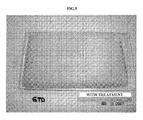
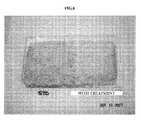
- the first test consisted of taking small quantities of flours from different wheats and immerse all of them in liquids for 1 minute, controls with natural water and test samples in different acidulated waters of different acidities and several organic acids.
- Test A 005 Control Seeds Bread wheat Water added 2.50% From distribution system 99% acetic acid on water 0% NO Glacial Atanor (TM) Lactic acid in water 0% NO Merck (TM) 5% alcohol vinegar 0% NO Inchaurraga (TM) color very similar to dry Result wheat Aspect, inmediate No variation Aspect, 24 - 36 hs No variation Aspect, 10 days No variation Aroma, immediate No variation Aroma, 24 - 36 hs No variation Aroma, 1 week Neutral Aroma, 15 days Neutral Flavor Similar to dry wheat Fungi 30 days NO Mites 30 days NO Mites 60 days NO Mites 90 days NO Mites 300 days YES
- Test A009 which was similar in that wheat to be milled was immersed, was carried out with water acidulated with 5% AC 260 acetic. It did not absorb so much liquid; weight increase amounted to 12.5% more.
- Acidulated solution exhibited an important bleaching effect when compared to standard solution with all of the tested flours.
- the purpose of this test was to check bleaching action of the acidulated water treatment (2% acetic acid + 2% lactic acid) for wheat conditioning. Milling was carried out with an Agromatic experimental mill which only produces low extraction flours; in order to attain a higher extraction one, by-product was sieved. Pekar tests were performed in order to check treatment effect.
- the object of the test was to verify bleaching action of the treatment with acidulated water and commercial vinegar as regards wheat conditioning with different resting periods.
- Milling was performed by means of a Buhler experimental mill which allows the obtention of flours or fractions which are similar to those obtained with an industrial mill.
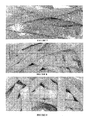
- Acidulated water utilization for wheat conditioning shows a bleaching effect on flours produced via experimental milling, which fact is remarkable as regards pasta elaboration.
- the object of the test was to verify the reduction of microbiologic counts upon treatment with acidulated water (2% acetic acid + 2% lactic acid) during wheat conditioning.
- Milling was performed in an 200 ton/24 hs industrial mill, wherein non-treated and treated commercial flours were obtained.
- Acidulated solution (pH 2): acetic acid (2.5%) + lactic acid (2.5%) W/V.
- a first 50% dilution was prepared in order to facilitate handling of acids.
- MYFA wetting equipment added water or acidulated solution, as the case required, through a dosing pump, in order to achieve a final humidity of 16%.
- Treatment produces a reduction of microbiological counts without substantial modification of industrial milling flours acidity.
Landscapes
- Life Sciences & Earth Sciences (AREA)
- Engineering & Computer Science (AREA)
- Food Science & Technology (AREA)
- Chemical & Material Sciences (AREA)
- Polymers & Plastics (AREA)
- General Chemical & Material Sciences (AREA)
- Nutrition Science (AREA)
- Chemical Kinetics & Catalysis (AREA)
- Health & Medical Sciences (AREA)
- Wood Science & Technology (AREA)
- Zoology (AREA)
- Cereal-Derived Products (AREA)
- Agricultural Chemicals And Associated Chemicals (AREA)
- Detergent Compositions (AREA)
- Noodles (AREA)
- Adjustment And Processing Of Grains (AREA)
Applications Claiming Priority (2)
| Application Number | Priority Date | Filing Date | Title |
|---|---|---|---|
| ARP060103555 AR054915A1 (es) | 2006-08-15 | 2006-08-15 | Procedimiento de desinfeccion, decoloracion y limpieza de granos de trigo antes, durante o despues de la molienda y/o de sus harinas resultantes |
| ARP070103407 AR062183A1 (es) | 2007-08-02 | 2007-08-02 | Procedimiento de desinfeccion, decoloracion y limpieza de granos de trigo antes, durante o despues de la molienda y/o de sus harinas resultantes |
Publications (1)
| Publication Number | Publication Date |
|---|---|
| EP1900290A1 true EP1900290A1 (de) | 2008-03-19 |
Family
ID=38772296
Family Applications (1)
| Application Number | Title | Priority Date | Filing Date |
|---|---|---|---|
| EP07114349A Withdrawn EP1900290A1 (de) | 2006-08-15 | 2007-08-14 | Desinfektion, Entfärbung und Reinigung von Weizenkörnern und/oder daraus gewonnenen Mehlen vor, während und nach dem Mahlen |
Country Status (8)
| Country | Link |
|---|---|
| US (1) | US20080044528A1 (de) |
| EP (1) | EP1900290A1 (de) |
| AU (1) | AU2007205799A1 (de) |
| BR (1) | BRPI0705756A (de) |
| CA (1) | CA2597316A1 (de) |
| CL (1) | CL2007002364A1 (de) |
| MX (1) | MX2007009826A (de) |
| UY (1) | UY30541A1 (de) |
Cited By (4)
| Publication number | Priority date | Publication date | Assignee | Title |
|---|---|---|---|---|
| EP2510807A1 (de) * | 2011-04-16 | 2012-10-17 | Deutsche Tiernahrung Cremer GmbH & Co. KG | Verfahren zur Herstellung von Lebens- und/oder Futtermittelprodukten |
| WO2012142399A3 (en) * | 2011-04-14 | 2013-03-14 | Kraft Foods Global Brands Llc | Method for producing stabilized whole wheat flour |
| CN104874432A (zh) * | 2015-05-04 | 2015-09-02 | 苏州科谷米业有限公司 | 麦粉的加工方法 |
| CN104941715A (zh) * | 2015-06-30 | 2015-09-30 | 青岛帅睿宏业食品股份有限公司 | 一种面粉加工工艺 |
Families Citing this family (1)
| Publication number | Priority date | Publication date | Assignee | Title |
|---|---|---|---|---|
| AU2018257890A1 (en) * | 2017-04-24 | 2019-10-24 | General Mills, Inc. | Method for disinfecting and tempering grain |
Citations (6)
| Publication number | Priority date | Publication date | Assignee | Title |
|---|---|---|---|---|
| GB300568A (en) * | 1927-05-12 | 1928-11-12 | Noury & Van Der Lande S Handel | A process for manufacturing a flour improver and products treated therewith |
| GB645124A (en) * | 1946-02-15 | 1950-10-25 | Erich Gustav Huzenlaub | Improvements in processes for the treatment of grain |
| US3503753A (en) * | 1966-07-07 | 1970-03-31 | Peavey Co | Color stabilization in wheat products |
| US3962475A (en) * | 1974-05-03 | 1976-06-08 | Forest Joseph G | Method for preserving high moisture content agricultural grains |
| GB2002222A (en) * | 1977-08-13 | 1979-02-21 | Calpis Food Ind Co Ltd | Process for treating wheat flour and treated wheat flour |
| EP0394584A2 (de) * | 1989-04-24 | 1990-10-31 | Borden, Inc. | Verfahren zur Herstellung von Teigwaren |
Family Cites Families (1)
| Publication number | Priority date | Publication date | Assignee | Title |
|---|---|---|---|---|
| US2085421A (en) * | 1933-11-13 | 1937-06-29 | Cerobrex Ltd | Treating and stabilizing wheat germ |
-
2007
- 2007-08-13 AU AU2007205799A patent/AU2007205799A1/en not_active Abandoned
- 2007-08-14 CL CL200702364A patent/CL2007002364A1/es unknown
- 2007-08-14 EP EP07114349A patent/EP1900290A1/de not_active Withdrawn
- 2007-08-14 UY UY30541A patent/UY30541A1/es not_active Application Discontinuation
- 2007-08-14 US US11/838,712 patent/US20080044528A1/en not_active Abandoned
- 2007-08-14 MX MX2007009826A patent/MX2007009826A/es not_active Application Discontinuation
- 2007-08-14 CA CA002597316A patent/CA2597316A1/en not_active Abandoned
- 2007-08-15 BR BRPI0705756-3A patent/BRPI0705756A/pt not_active Application Discontinuation
Patent Citations (6)
| Publication number | Priority date | Publication date | Assignee | Title |
|---|---|---|---|---|
| GB300568A (en) * | 1927-05-12 | 1928-11-12 | Noury & Van Der Lande S Handel | A process for manufacturing a flour improver and products treated therewith |
| GB645124A (en) * | 1946-02-15 | 1950-10-25 | Erich Gustav Huzenlaub | Improvements in processes for the treatment of grain |
| US3503753A (en) * | 1966-07-07 | 1970-03-31 | Peavey Co | Color stabilization in wheat products |
| US3962475A (en) * | 1974-05-03 | 1976-06-08 | Forest Joseph G | Method for preserving high moisture content agricultural grains |
| GB2002222A (en) * | 1977-08-13 | 1979-02-21 | Calpis Food Ind Co Ltd | Process for treating wheat flour and treated wheat flour |
| EP0394584A2 (de) * | 1989-04-24 | 1990-10-31 | Borden, Inc. | Verfahren zur Herstellung von Teigwaren |
Cited By (9)
| Publication number | Priority date | Publication date | Assignee | Title |
|---|---|---|---|---|
| WO2012142399A3 (en) * | 2011-04-14 | 2013-03-14 | Kraft Foods Global Brands Llc | Method for producing stabilized whole wheat flour |
| CN103702566A (zh) * | 2011-04-14 | 2014-04-02 | 洲际大品牌有限责任公司 | 用于生产稳定化的全小麦面粉的方法 |
| JP2014510544A (ja) * | 2011-04-14 | 2014-05-01 | インターコンチネンタル グレート ブランヅ リミテッド ライアビリティ カンパニー | 安定化全粒小麦粉の製造方法 |
| AU2012242674B2 (en) * | 2011-04-14 | 2015-05-28 | Intercontinental Great Brands Llc | Method for producing stabilized whole wheat flour |
| US10212958B2 (en) | 2011-04-14 | 2019-02-26 | Intercontinental Great Brands Llc | Method for producing stabilized whole wheat flour |
| US12082602B2 (en) | 2011-04-14 | 2024-09-10 | Intercontinental Great Brands Llc | Method for producing stabilized whole wheat flour |
| EP2510807A1 (de) * | 2011-04-16 | 2012-10-17 | Deutsche Tiernahrung Cremer GmbH & Co. KG | Verfahren zur Herstellung von Lebens- und/oder Futtermittelprodukten |
| CN104874432A (zh) * | 2015-05-04 | 2015-09-02 | 苏州科谷米业有限公司 | 麦粉的加工方法 |
| CN104941715A (zh) * | 2015-06-30 | 2015-09-30 | 青岛帅睿宏业食品股份有限公司 | 一种面粉加工工艺 |
Also Published As
| Publication number | Publication date |
|---|---|
| CA2597316A1 (en) | 2008-02-15 |
| CL2007002364A1 (es) | 2008-04-04 |
| US20080044528A1 (en) | 2008-02-21 |
| AU2007205799A1 (en) | 2008-03-06 |
| UY30541A1 (es) | 2008-02-29 |
| BRPI0705756A (pt) | 2008-05-20 |
| MX2007009826A (es) | 2009-04-15 |
Similar Documents
| Publication | Publication Date | Title |
|---|---|---|
| US8147889B2 (en) | Method for treating raw and processed grains and starches | |
| Onyekwere et al. | Industrialization of ogi fermentation | |
| İbanoǧlu | Influence of tempering with ozonated water on the selected properties of wheat flour | |
| CA2384361C (en) | Bleached grain and grain products and methods of preparation | |
| DE60028938T2 (de) | Addukt mit einer Säurelösung von schwerlöslichen Gruppe lla-Komplexen | |
| EP1900290A1 (de) | Desinfektion, Entfärbung und Reinigung von Weizenkörnern und/oder daraus gewonnenen Mehlen vor, während und nach dem Mahlen | |
| US8053010B2 (en) | Bran and bran containing products of improved flavor and methods of preparation | |
| KR101227366B1 (ko) | 친환경사과 식초의 제조 방법 및 상기 방법에 의해 제조된 친환경사과 식초 | |
| KR20000021494A (ko) | 허브사과잼의 제조방법 | |
| WO2024218355A1 (de) | Back-vorprodukt | |
| CA2675281C (en) | Method for treating raw and processed grains and starches | |
| CN102669752A (zh) | 一种控制花生酱中黄曲霉生产工艺 | |
| KR102677806B1 (ko) | 가바의 함량이 증진된 효소가바쌀 조성물 및 이를 이용한 면류의 제조방법 | |
| KR101249891B1 (ko) | 당귀 추출액 및 매실 염절임액을 함유하는 불고기 소스 조성물 | |
| JPS5998657A (ja) | 穀粒の加熱処理による品質改良法 | |
| RU2627560C1 (ru) | Способ производства основы для изготовления теста из цельного гидролизованного пророщенного зерна пшеницы и состав тестовой заготовки, полученный указанным способом | |
| Kumari | Cereals | |
| KR102088098B1 (ko) | 비가열 파인애플 발효식초의 제조방법 | |
| Poudel et al. | Impact of postharvest operations on Rice grain quality: a review | |
| KR102879422B1 (ko) | 개선된 신선도 및 식감을 제공하는 배추 김치 및 이의 제조 방법 | |
| CN106722446B (zh) | 一种胭脂萝卜复配蔬菜粉及其制备方法 | |
| KR101040247B1 (ko) | 곡물의 가공장치 및 그를 이용한 가공방법 | |
| RU2422205C2 (ru) | Способ подготовки зерна пшеницы к помолу и обработки зерна консервантом от картофельной болезни и плесени | |
| KR101535635B1 (ko) | 매실 피클의 제조방법 | |
| Viola et al. | Reuse of Almond By-Products: Scale-Up Production of Functional Almond Skin Added Semolina Sourdough Breads |
Legal Events
| Date | Code | Title | Description |
|---|---|---|---|
| PUAI | Public reference made under article 153(3) epc to a published international application that has entered the european phase |
Free format text: ORIGINAL CODE: 0009012 |
|
| AK | Designated contracting states |
Kind code of ref document: A1 Designated state(s): AT BE BG CH CY CZ DE DK EE ES FI FR GB GR HU IE IS IT LI LT LU LV MC MT NL PL PT RO SE SI SK TR |
|
| AX | Request for extension of the european patent |
Extension state: AL BA HR MK YU |
|
| AKX | Designation fees paid | ||
| REG | Reference to a national code |
Ref country code: DE Ref legal event code: 8566 |
|
| STAA | Information on the status of an ep patent application or granted ep patent |
Free format text: STATUS: THE APPLICATION IS DEEMED TO BE WITHDRAWN |
|
| 18D | Application deemed to be withdrawn |
Effective date: 20080920 |