EP1897548B2 - T cell regulation - Google Patents
T cell regulation Download PDFInfo
- Publication number
- EP1897548B2 EP1897548B2 EP07021595.9A EP07021595A EP1897548B2 EP 1897548 B2 EP1897548 B2 EP 1897548B2 EP 07021595 A EP07021595 A EP 07021595A EP 1897548 B2 EP1897548 B2 EP 1897548B2
- Authority
- EP
- European Patent Office
- Prior art keywords
- cells
- lag
- cell
- mice
- treg
- Prior art date
- Legal status (The legal status is an assumption and is not a legal conclusion. Google has not performed a legal analysis and makes no representation as to the accuracy of the status listed.)
- Expired - Lifetime
Links
Images




Classifications
-
- C—CHEMISTRY; METALLURGY
- C07—ORGANIC CHEMISTRY
- C07K—PEPTIDES
- C07K16/00—Immunoglobulins [IG], e.g. monoclonal or polyclonal antibodies
- C07K16/18—Immunoglobulins [IG], e.g. monoclonal or polyclonal antibodies against material from animals or humans
- C07K16/28—Immunoglobulins [IG], e.g. monoclonal or polyclonal antibodies against material from animals or humans against receptors, cell surface antigens or cell surface determinants
- C07K16/2803—Immunoglobulins [IG], e.g. monoclonal or polyclonal antibodies against material from animals or humans against receptors, cell surface antigens or cell surface determinants against the immunoglobulin superfamily
-
- A—HUMAN NECESSITIES
- A01—AGRICULTURE; FORESTRY; ANIMAL HUSBANDRY; HUNTING; TRAPPING; FISHING
- A01K—ANIMAL HUSBANDRY; AVICULTURE; APICULTURE; PISCICULTURE; FISHING; REARING OR BREEDING ANIMALS, NOT OTHERWISE PROVIDED FOR; NEW BREEDS OF ANIMALS
- A01K67/00—Rearing or breeding animals, not otherwise provided for; New or modified breeds of animals
- A01K67/027—New or modified breeds of vertebrates
- A01K67/0271—Chimeric vertebrates, e.g. comprising exogenous cells
-
- A—HUMAN NECESSITIES
- A01—AGRICULTURE; FORESTRY; ANIMAL HUSBANDRY; HUNTING; TRAPPING; FISHING
- A01K—ANIMAL HUSBANDRY; AVICULTURE; APICULTURE; PISCICULTURE; FISHING; REARING OR BREEDING ANIMALS, NOT OTHERWISE PROVIDED FOR; NEW BREEDS OF ANIMALS
- A01K67/00—Rearing or breeding animals, not otherwise provided for; New or modified breeds of animals
- A01K67/027—New or modified breeds of vertebrates
- A01K67/0275—Genetically modified vertebrates, e.g. transgenic
- A01K67/0276—Knock-out vertebrates
-
- A—HUMAN NECESSITIES
- A61—MEDICAL OR VETERINARY SCIENCE; HYGIENE
- A61K—PREPARATIONS FOR MEDICAL, DENTAL OR TOILETRY PURPOSES
- A61K39/00—Medicinal preparations containing antigens or antibodies
- A61K39/395—Antibodies; Immunoglobulins; Immune serum, e.g. antilymphocytic serum
- A61K39/39533—Antibodies; Immunoglobulins; Immune serum, e.g. antilymphocytic serum against materials from animals
- A61K39/3955—Antibodies; Immunoglobulins; Immune serum, e.g. antilymphocytic serum against materials from animals against proteinaceous materials, e.g. enzymes, hormones, lymphokines
-
- A—HUMAN NECESSITIES
- A61—MEDICAL OR VETERINARY SCIENCE; HYGIENE
- A61K—PREPARATIONS FOR MEDICAL, DENTAL OR TOILETRY PURPOSES
- A61K39/00—Medicinal preparations containing antigens or antibodies
- A61K39/395—Antibodies; Immunoglobulins; Immune serum, e.g. antilymphocytic serum
- A61K39/39533—Antibodies; Immunoglobulins; Immune serum, e.g. antilymphocytic serum against materials from animals
- A61K39/39558—Antibodies; Immunoglobulins; Immune serum, e.g. antilymphocytic serum against materials from animals against tumor tissues, cells, antigens
-
- A—HUMAN NECESSITIES
- A61—MEDICAL OR VETERINARY SCIENCE; HYGIENE
- A61K—PREPARATIONS FOR MEDICAL, DENTAL OR TOILETRY PURPOSES
- A61K40/00—Cellular immunotherapy
- A61K40/10—Cellular immunotherapy characterised by the cell type used
- A61K40/11—T-cells, e.g. tumour infiltrating lymphocytes [TIL] or regulatory T [Treg] cells; Lymphokine-activated killer [LAK] cells
-
- A—HUMAN NECESSITIES
- A61—MEDICAL OR VETERINARY SCIENCE; HYGIENE
- A61K—PREPARATIONS FOR MEDICAL, DENTAL OR TOILETRY PURPOSES
- A61K40/00—Cellular immunotherapy
- A61K40/20—Cellular immunotherapy characterised by the effect or the function of the cells
- A61K40/22—Immunosuppressive or immunotolerising
-
- A—HUMAN NECESSITIES
- A61—MEDICAL OR VETERINARY SCIENCE; HYGIENE
- A61K—PREPARATIONS FOR MEDICAL, DENTAL OR TOILETRY PURPOSES
- A61K40/00—Cellular immunotherapy
- A61K40/30—Cellular immunotherapy characterised by the recombinant expression of specific molecules in the cells of the immune system
- A61K40/32—T-cell receptors [TCR]
-
- A—HUMAN NECESSITIES
- A61—MEDICAL OR VETERINARY SCIENCE; HYGIENE
- A61K—PREPARATIONS FOR MEDICAL, DENTAL OR TOILETRY PURPOSES
- A61K40/00—Cellular immunotherapy
- A61K40/40—Cellular immunotherapy characterised by antigens that are targeted or presented by cells of the immune system
- A61K40/41—Vertebrate antigens
- A61K40/42—Cancer antigens
-
- A—HUMAN NECESSITIES
- A61—MEDICAL OR VETERINARY SCIENCE; HYGIENE
- A61K—PREPARATIONS FOR MEDICAL, DENTAL OR TOILETRY PURPOSES
- A61K40/00—Cellular immunotherapy
- A61K40/40—Cellular immunotherapy characterised by antigens that are targeted or presented by cells of the immune system
- A61K40/46—Viral antigens
-
- A—HUMAN NECESSITIES
- A61—MEDICAL OR VETERINARY SCIENCE; HYGIENE
- A61P—SPECIFIC THERAPEUTIC ACTIVITY OF CHEMICAL COMPOUNDS OR MEDICINAL PREPARATIONS
- A61P11/00—Drugs for disorders of the respiratory system
- A61P11/06—Antiasthmatics
-
- A—HUMAN NECESSITIES
- A61—MEDICAL OR VETERINARY SCIENCE; HYGIENE
- A61P—SPECIFIC THERAPEUTIC ACTIVITY OF CHEMICAL COMPOUNDS OR MEDICINAL PREPARATIONS
- A61P25/00—Drugs for disorders of the nervous system
-
- A—HUMAN NECESSITIES
- A61—MEDICAL OR VETERINARY SCIENCE; HYGIENE
- A61P—SPECIFIC THERAPEUTIC ACTIVITY OF CHEMICAL COMPOUNDS OR MEDICINAL PREPARATIONS
- A61P25/00—Drugs for disorders of the nervous system
- A61P25/02—Drugs for disorders of the nervous system for peripheral neuropathies
-
- A—HUMAN NECESSITIES
- A61—MEDICAL OR VETERINARY SCIENCE; HYGIENE
- A61P—SPECIFIC THERAPEUTIC ACTIVITY OF CHEMICAL COMPOUNDS OR MEDICINAL PREPARATIONS
- A61P25/00—Drugs for disorders of the nervous system
- A61P25/28—Drugs for disorders of the nervous system for treating neurodegenerative disorders of the central nervous system, e.g. nootropic agents, cognition enhancers, drugs for treating Alzheimer's disease or other forms of dementia
-
- A—HUMAN NECESSITIES
- A61—MEDICAL OR VETERINARY SCIENCE; HYGIENE
- A61P—SPECIFIC THERAPEUTIC ACTIVITY OF CHEMICAL COMPOUNDS OR MEDICINAL PREPARATIONS
- A61P31/00—Antiinfectives, i.e. antibiotics, antiseptics, chemotherapeutics
-
- A—HUMAN NECESSITIES
- A61—MEDICAL OR VETERINARY SCIENCE; HYGIENE
- A61P—SPECIFIC THERAPEUTIC ACTIVITY OF CHEMICAL COMPOUNDS OR MEDICINAL PREPARATIONS
- A61P31/00—Antiinfectives, i.e. antibiotics, antiseptics, chemotherapeutics
- A61P31/04—Antibacterial agents
-
- A—HUMAN NECESSITIES
- A61—MEDICAL OR VETERINARY SCIENCE; HYGIENE
- A61P—SPECIFIC THERAPEUTIC ACTIVITY OF CHEMICAL COMPOUNDS OR MEDICINAL PREPARATIONS
- A61P31/00—Antiinfectives, i.e. antibiotics, antiseptics, chemotherapeutics
- A61P31/12—Antivirals
-
- A—HUMAN NECESSITIES
- A61—MEDICAL OR VETERINARY SCIENCE; HYGIENE
- A61P—SPECIFIC THERAPEUTIC ACTIVITY OF CHEMICAL COMPOUNDS OR MEDICINAL PREPARATIONS
- A61P31/00—Antiinfectives, i.e. antibiotics, antiseptics, chemotherapeutics
- A61P31/12—Antivirals
- A61P31/14—Antivirals for RNA viruses
- A61P31/18—Antivirals for RNA viruses for HIV
-
- A—HUMAN NECESSITIES
- A61—MEDICAL OR VETERINARY SCIENCE; HYGIENE
- A61P—SPECIFIC THERAPEUTIC ACTIVITY OF CHEMICAL COMPOUNDS OR MEDICINAL PREPARATIONS
- A61P35/00—Antineoplastic agents
-
- A—HUMAN NECESSITIES
- A61—MEDICAL OR VETERINARY SCIENCE; HYGIENE
- A61P—SPECIFIC THERAPEUTIC ACTIVITY OF CHEMICAL COMPOUNDS OR MEDICINAL PREPARATIONS
- A61P37/00—Drugs for immunological or allergic disorders
- A61P37/02—Immunomodulators
-
- A—HUMAN NECESSITIES
- A61—MEDICAL OR VETERINARY SCIENCE; HYGIENE
- A61P—SPECIFIC THERAPEUTIC ACTIVITY OF CHEMICAL COMPOUNDS OR MEDICINAL PREPARATIONS
- A61P37/00—Drugs for immunological or allergic disorders
- A61P37/02—Immunomodulators
- A61P37/04—Immunostimulants
-
- A—HUMAN NECESSITIES
- A61—MEDICAL OR VETERINARY SCIENCE; HYGIENE
- A61P—SPECIFIC THERAPEUTIC ACTIVITY OF CHEMICAL COMPOUNDS OR MEDICINAL PREPARATIONS
- A61P37/00—Drugs for immunological or allergic disorders
- A61P37/02—Immunomodulators
- A61P37/06—Immunosuppressants, e.g. drugs for graft rejection
-
- A—HUMAN NECESSITIES
- A61—MEDICAL OR VETERINARY SCIENCE; HYGIENE
- A61P—SPECIFIC THERAPEUTIC ACTIVITY OF CHEMICAL COMPOUNDS OR MEDICINAL PREPARATIONS
- A61P37/00—Drugs for immunological or allergic disorders
- A61P37/08—Antiallergic agents
-
- A—HUMAN NECESSITIES
- A61—MEDICAL OR VETERINARY SCIENCE; HYGIENE
- A61P—SPECIFIC THERAPEUTIC ACTIVITY OF CHEMICAL COMPOUNDS OR MEDICINAL PREPARATIONS
- A61P43/00—Drugs for specific purposes, not provided for in groups A61P1/00-A61P41/00
-
- C—CHEMISTRY; METALLURGY
- C07—ORGANIC CHEMISTRY
- C07K—PEPTIDES
- C07K14/00—Peptides having more than 20 amino acids; Gastrins; Somatostatins; Melanotropins; Derivatives thereof
- C07K14/435—Peptides having more than 20 amino acids; Gastrins; Somatostatins; Melanotropins; Derivatives thereof from animals; from humans
- C07K14/705—Receptors; Cell surface antigens; Cell surface determinants
- C07K14/70503—Immunoglobulin superfamily
-
- C—CHEMISTRY; METALLURGY
- C07—ORGANIC CHEMISTRY
- C07K—PEPTIDES
- C07K16/00—Immunoglobulins [IG], e.g. monoclonal or polyclonal antibodies
- C07K16/18—Immunoglobulins [IG], e.g. monoclonal or polyclonal antibodies against material from animals or humans
-
- C—CHEMISTRY; METALLURGY
- C07—ORGANIC CHEMISTRY
- C07K—PEPTIDES
- C07K16/00—Immunoglobulins [IG], e.g. monoclonal or polyclonal antibodies
- C07K16/42—Immunoglobulins [IG], e.g. monoclonal or polyclonal antibodies against immunoglobulins
-
- C—CHEMISTRY; METALLURGY
- C12—BIOCHEMISTRY; BEER; SPIRITS; WINE; VINEGAR; MICROBIOLOGY; ENZYMOLOGY; MUTATION OR GENETIC ENGINEERING
- C12N—MICROORGANISMS OR ENZYMES; COMPOSITIONS THEREOF; PROPAGATING, PRESERVING, OR MAINTAINING MICROORGANISMS; MUTATION OR GENETIC ENGINEERING; CULTURE MEDIA
- C12N5/00—Undifferentiated human, animal or plant cells, e.g. cell lines; Tissues; Cultivation or maintenance thereof; Culture media therefor
- C12N5/06—Animal cells or tissues; Human cells or tissues
- C12N5/0602—Vertebrate cells
- C12N5/0634—Cells from the blood or the immune system
- C12N5/0636—T lymphocytes
-
- A—HUMAN NECESSITIES
- A01—AGRICULTURE; FORESTRY; ANIMAL HUSBANDRY; HUNTING; TRAPPING; FISHING
- A01K—ANIMAL HUSBANDRY; AVICULTURE; APICULTURE; PISCICULTURE; FISHING; REARING OR BREEDING ANIMALS, NOT OTHERWISE PROVIDED FOR; NEW BREEDS OF ANIMALS
- A01K2267/00—Animals characterised by purpose
- A01K2267/03—Animal model, e.g. for test or diseases
- A01K2267/035—Animal model for multifactorial diseases
- A01K2267/0381—Animal model for diseases of the hematopoietic system
-
- A—HUMAN NECESSITIES
- A61—MEDICAL OR VETERINARY SCIENCE; HYGIENE
- A61K—PREPARATIONS FOR MEDICAL, DENTAL OR TOILETRY PURPOSES
- A61K35/00—Medicinal preparations containing materials or reaction products thereof with undetermined constitution
- A61K35/12—Materials from mammals; Compositions comprising non-specified tissues or cells; Compositions comprising non-embryonic stem cells; Genetically modified cells
- A61K2035/122—Materials from mammals; Compositions comprising non-specified tissues or cells; Compositions comprising non-embryonic stem cells; Genetically modified cells for inducing tolerance or supression of immune responses
-
- A—HUMAN NECESSITIES
- A61—MEDICAL OR VETERINARY SCIENCE; HYGIENE
- A61K—PREPARATIONS FOR MEDICAL, DENTAL OR TOILETRY PURPOSES
- A61K39/00—Medicinal preparations containing antigens or antibodies
- A61K2039/505—Medicinal preparations containing antigens or antibodies comprising antibodies
-
- A—HUMAN NECESSITIES
- A61—MEDICAL OR VETERINARY SCIENCE; HYGIENE
- A61K—PREPARATIONS FOR MEDICAL, DENTAL OR TOILETRY PURPOSES
- A61K39/00—Medicinal preparations containing antigens or antibodies
- A61K2039/505—Medicinal preparations containing antigens or antibodies comprising antibodies
- A61K2039/507—Comprising a combination of two or more separate antibodies
-
- A—HUMAN NECESSITIES
- A61—MEDICAL OR VETERINARY SCIENCE; HYGIENE
- A61K—PREPARATIONS FOR MEDICAL, DENTAL OR TOILETRY PURPOSES
- A61K39/00—Medicinal preparations containing antigens or antibodies
- A61K2039/555—Medicinal preparations containing antigens or antibodies characterised by a specific combination antigen/adjuvant
- A61K2039/55511—Organic adjuvants
- A61K2039/55516—Proteins; Peptides
-
- A—HUMAN NECESSITIES
- A61—MEDICAL OR VETERINARY SCIENCE; HYGIENE
- A61K—PREPARATIONS FOR MEDICAL, DENTAL OR TOILETRY PURPOSES
- A61K39/00—Medicinal preparations containing antigens or antibodies
- A61K2039/58—Medicinal preparations containing antigens or antibodies raising an immune response against a target which is not the antigen used for immunisation
- A61K2039/585—Medicinal preparations containing antigens or antibodies raising an immune response against a target which is not the antigen used for immunisation wherein the target is cancer
-
- A—HUMAN NECESSITIES
- A61—MEDICAL OR VETERINARY SCIENCE; HYGIENE
- A61K—PREPARATIONS FOR MEDICAL, DENTAL OR TOILETRY PURPOSES
- A61K39/00—Medicinal preparations containing antigens or antibodies
- A61K2039/80—Vaccine for a specifically defined cancer
-
- A—HUMAN NECESSITIES
- A61—MEDICAL OR VETERINARY SCIENCE; HYGIENE
- A61K—PREPARATIONS FOR MEDICAL, DENTAL OR TOILETRY PURPOSES
- A61K2239/00—Indexing codes associated with cellular immunotherapy of group A61K40/00
- A61K2239/38—Indexing codes associated with cellular immunotherapy of group A61K40/00 characterised by the dose, timing or administration schedule
-
- C—CHEMISTRY; METALLURGY
- C12—BIOCHEMISTRY; BEER; SPIRITS; WINE; VINEGAR; MICROBIOLOGY; ENZYMOLOGY; MUTATION OR GENETIC ENGINEERING
- C12N—MICROORGANISMS OR ENZYMES; COMPOSITIONS THEREOF; PROPAGATING, PRESERVING, OR MAINTAINING MICROORGANISMS; MUTATION OR GENETIC ENGINEERING; CULTURE MEDIA
- C12N2501/00—Active agents used in cell culture processes, e.g. differentation
- C12N2501/50—Cell markers; Cell surface determinants
- C12N2501/599—Cell markers; Cell surface determinants with CD designations not provided for elsewhere
-
- C—CHEMISTRY; METALLURGY
- C12—BIOCHEMISTRY; BEER; SPIRITS; WINE; VINEGAR; MICROBIOLOGY; ENZYMOLOGY; MUTATION OR GENETIC ENGINEERING
- C12N—MICROORGANISMS OR ENZYMES; COMPOSITIONS THEREOF; PROPAGATING, PRESERVING, OR MAINTAINING MICROORGANISMS; MUTATION OR GENETIC ENGINEERING; CULTURE MEDIA
- C12N2510/00—Genetically modified cells
-
- C—CHEMISTRY; METALLURGY
- C12—BIOCHEMISTRY; BEER; SPIRITS; WINE; VINEGAR; MICROBIOLOGY; ENZYMOLOGY; MUTATION OR GENETIC ENGINEERING
- C12N—MICROORGANISMS OR ENZYMES; COMPOSITIONS THEREOF; PROPAGATING, PRESERVING, OR MAINTAINING MICROORGANISMS; MUTATION OR GENETIC ENGINEERING; CULTURE MEDIA
- C12N2799/00—Uses of viruses
- C12N2799/02—Uses of viruses as vector
- C12N2799/021—Uses of viruses as vector for the expression of a heterologous nucleic acid
- C12N2799/027—Uses of viruses as vector for the expression of a heterologous nucleic acid where the vector is derived from a retrovirus
-
- Y—GENERAL TAGGING OF NEW TECHNOLOGICAL DEVELOPMENTS; GENERAL TAGGING OF CROSS-SECTIONAL TECHNOLOGIES SPANNING OVER SEVERAL SECTIONS OF THE IPC; TECHNICAL SUBJECTS COVERED BY FORMER USPC CROSS-REFERENCE ART COLLECTIONS [XRACs] AND DIGESTS
- Y02—TECHNOLOGIES OR APPLICATIONS FOR MITIGATION OR ADAPTATION AGAINST CLIMATE CHANGE
- Y02A—TECHNOLOGIES FOR ADAPTATION TO CLIMATE CHANGE
- Y02A50/00—TECHNOLOGIES FOR ADAPTATION TO CLIMATE CHANGE in human health protection, e.g. against extreme weather
- Y02A50/30—Against vector-borne diseases, e.g. mosquito-borne, fly-borne, tick-borne or waterborne diseases whose impact is exacerbated by climate change
Definitions
- the invention relates to therapeutic methods.
- a variety of diseases are characterized by the development of progressive immunosuppression in a patient.
- the presence of an impaired immune response in patients with malignancies has been particularly well documented.
- Cancer patients and tumor-bearing mice have been shown to have a variety of altered immune functions such as a decrease in delayed type hypersensitivity, a decrease in lytic function and proliferative response of lymphocytes.
- Many other diseases or interventions are also characterized by the development of an impaired immune response.
- T lymphocytes are critical in the development of all cell-mediated immune reactions. Helper T-cells control and modulate the development of immune responses. Cytotoxic T-cells (killer T-cells) are effector cells which play an important role in immune reactions against intracellular parasites and viruses by means of lysing infected target cells. Cytotoxic T-cells have also been implicated in protecting the body from developing cancers through an immune surveillance mechanism. Regulatory T cells block the induction and/or activity of T helper cells. T-cells do not generally recognize free antigen, but recognize it on the surface of other cells. These other cells may be specialized antigen-presenting cells capable of stimulating T cell division or may be virally-infected cells within the body that become a target for cytotoxic T-cells.
- Cytotoxic T-cells usually recognize antigen in association with class I Major Histocompatibility Complex (MHC) products which are expressed on all nucleated cells. Helper T-cells, and most T-cells which proliferate in response to antigen in vitro, recognize antigen in association with class II MHC products. Class II products are expressed costly on antigen-presenting cells and on some lymphocytes. T-cells can be also divided into two major subpopulations on the basis of their cell membrane glycoproteins as defined with monoclonal antibodies.
- MHC Major Histocompatibility Complex
- the CD4+ subset which expresses a 62 kD glycoprotein usually recognizes antigen in the context of class II antigens, whereas the CD8+ subset expresses a 76 Kd glycoprotein and is restricted to recognizing antigen in the context of Class I MHC.
- lymphocyte, blood and other cell infusions are provided to immunodeficient patients in certain settings.
- accelerating and enhancing the reconstitution of a healthy T-cell population could provide significant increased benefit and efficacy to such patients.
- T-cell mediated autoimmune and inflammatory diseases are characterized by deleterious T-cell activity in which T-cells which recognize self antigens proliferate and attack cells which express such antigens.
- Other examples include the occurrence of graft rejection mediated by host T-cells and graft vs. host disease.
- immunosuppressive therapies available to treat these conditions include administration of immunosuppressive compounds such as cyclosporine A, FK506 and rapamycin.
- these therapies are not completely effective and are associated with significant adverse side effects such as nephrotoxicity, hepatotoxicity, hypertension, hirsutism, and neurotoxicity.
- additional therapies which can more effectively suppress T-cell activity with fewer side effects are needed to treat these conditions.
- Lymphocyte homeostasis is a central biological process that is tightly regulated. Tanchot, C. et al., Semin.Immunol. 9: 331-337 (1997 ); Marrack, P. et al., Nat.Immunol. 1: 107-111 (2000 ); C. D. Surh, C.D. and Sprent, J., Microbes. Infect. 4: 51-56 (2002 ); Jameson, S.C., Nat.Rev.Immunol. 2: 547-556 (2002 ). While the molecular control of this process is poorly understood, molecules involved in mediating two signaling pathways are thought to be essential.
- MHC self major histocompatibility
- T cell receptor (TCR) expression is required for the continued survival of naive T cell. Polic, B. et al., Proc.Natl.Acad.Sci. 98: 8744-8749 (2001 ); Labrecque, N. et al., Immunity 15: 71-82 (2001 ). Second, cytokines that signal via the common gamma ( ⁇ c) chain are critical for na ⁇ ve T cell survival and homeostasis, particularly interleukin-7 (IL-7). Schluns, K.S. et al., Nat.Immunol.
- IL-7 interleukin-7
- LAG-3 is particularly interesting due to its close relationship with CD4.
- LAG-3 has a similar genomic organization to CD4 and resides at the same chromosomal location.
- LAG-3 is expressed on activated CD4 + and CD ⁇ + ⁇ T lymphocytes and a subset of ⁇ T cells and NK cells.
- LAG-3 has been discussed as a potential regulator of T-cell and DC responses ( Triebel, Trends in Immunology, 24:619-622, 2003 ).
- LAG-3 is a CD4-related, activation-induced cell surface molecule that binds to MHC class II with high affinity.
- LAG-3 deficient mice have twice as many CD4 + and CD8 + T cells than wild type controls.
- LAG-3 deficient T cells show enhanced homeostatic expansion in lymphopenic hosts, which is dependent on LAG-3 ligation of MHC class II molecules. This was abrogated by ectopic expression of wild type LAG-3 but not by a signaling defective mutant. This deregulation of T cell homeostasis results in the expansion of multiple cell types.
- Our data suggest that LAG-3 negatively regulates CD4 + and CD8 + T cell homeostasis, and present LAG-3 as a therapeutic target for accelerating T cell engraftment following bone marrow transplantation.
- CD223 also known as lymphocyte antigen gene-3 or LAG-3, is a CD4-related activation-induced cell surface protein that binds to MHC class II molecules with high affinity.
- Baixeras E. et al., J. Exp. Med. 176: 327 (1992 ). See Triebel, F., "Lag-3(CD223)", Protein Reviews on the Web (PROW) 3:15-18(2002 ) at the URL address: http file type, www host server, domain name ncbi.nlm.gov, directory PROW, subdirectory guide, document name 165481751_g.htm.; Triebel, F. et al., "LAG-3, a novel lymphocyte activation gene closely related to CD4", J.
- a representative murine DNA and amino acid sequence for CD223 is set forth as SEQ ID NOS: 1 and 2, respectively. See also GenBank Accession Code X9113.
- a representative human DNA and amino acid sequence for CD223 is set forth as SEQ ID NOS: 3 and 4, respectively. See also GenBank Accession Number X51985. These sequences are derived from single individuals. It is expected that allelic variants exist in the population which differ at less than about 5% of the positions. Such allelic variants are included within the meaning of CD223 of murine or human origin.
- Regulatory T-cells are a subgroup of T-cells that function by inhibiting effector T-cells. Regulatory T-cells are CD223 + and are typically also CD4 + CD25 + . Regulatory T-cells play a central role in balancing autoimmune tolerance and immune responsiveness. Such cells can be isolated from CD223- cells using antibodies and separation techniques known in the art. These include but are not limited to immunoaffinity chromatography, FACS, immunoprecipitation, etc.
- the CD223 + cells can be administered to autoimmune disease, allergy, or asthma patients. In the case of an autoimmune disease patient the cells can be pre-activated with auto-antigen. CD223 - cells can be similarly transferred to cancer patients, bacterial or viral infection patients, or AIDS patients.
- a comparative analysis of gene expression arrays from antigen specific CD4+ T cells differentiating to either an effector/memory or a regulatory phenotype revealed Treg-specific expression of LAG-3, a CD4 homologue that binds MHC class II.
- LAG-3high CD4+ T cells display in vitro suppressor activity and antibodies to LAG-3 inhibit the suppression both in vitro and in vivo.
- CD223 is a regulatory T-cell specific cell surface molecule that regulates the function of regulatory T-cells.
- the function of a regulatory T-cell may be enhanced by enhancing or increasing CD223 activity, or by increasing the number of CD223+ cells in a T-cell population. Enhancing the function of regulatory T-cells in an organism may be used to limit the immune T-cell response in those circumstances where such a response is undesirable, such as when a subject suffers from autoimmune disease.
- the function of a regulatory T-cell may be inhibited by inhibiting CD223 activity or by decreasing the number of CD223+ cells in a T-cell population. Inhibiting the function of regulatory T-cells in an organism may be used to enhance the immune T-cell response in those circumstances where such a response is desirable, such as in a patient suffering from cancer, chronic infection, or a bone marrow transplant recipient.
- an anti-tumor vaccine When treating a cancer patient with an inhibitory agent that binds to CD223 protein or mRNA, one may optionally co-administer an anti-tumor vaccine. Such vaccines may be directed to isolated antigens or to groups of antigens or to whole tumor cells. It may be desirable to administer the inhibitory agent with chemotherapeutic agents. Treatment with multiple agents need not be done using a mixture of agents but may be done using separate pharmaceutical preparations. The preparations need not be delivered at the same exact time, but may be coordinated to be delivered to a patient during the same period of treatment, i.e., within a week or a month or each other. Thus a composition comprising two active ingredients may be constituted in the body of the patient.
- any suitable anti-tumor treatment can be coordinated with the treatments of the present invention targeted to CD223.
- other anti-infection agents can be coordinated with the treatment of the present invention targeted to CD223.
- agents may be small molecule drugs, vaccines, antibodies, etc.
- CD223 + cells in a T-cell population can be modified by using an antibody or other agent that selectively binds to CD223.
- CD223 + cells represent an enriched population of regulatory T-cells that can be introduced back into the original source of the T-cells or into another compatible host to enhance regulatory T-cell function.
- the CD223- cells represent a population of T-cells deficient in regulatory T-cell activity that can be reintroduced into the original source of the T-cells or another compatible host to inhibit or reduce regulatory T-cell function while retaining general T-cell activity.
- any desired means for either increasing or decreasing (modulating) CD223 activity can be contemplated. This includes directly modulating the function of CD223 protein, modulating CD223 signal transduction, and modulating expression of CD223 in T-cells by modulating either transcription or translation or both. Those means which selectively modulate CD223 activity may be preferred over nonselective modulators. Also, those inhibitory means which create a transient CD223 deficiency in a population of T-cells which then return to normal levels of CD223 activity may be preferred for treating a temporary T-cell deficiency. The transiently deficient T-cells may be used to reconstitute a diminished T-cell population with T-cells that will be genetically normal with respect to CD223.
- Modulation of CD223 activity can be performed on cells in vitro or in whole animals, in vivo. Cells which are treated in vitro can be administered to a patient, either the original source of the cells or au unrelated individual.
- CD223 antibodies or small molecule inhibitors can be used.
- Antibodies or antibody fragments that are useful for this purpose will be those that can bind to CD223 and block its ability to function.
- Such antibodies may be polyclonal antibodies, monoclonal antibodies (see, e.g. Workman, C. J. et al., "Phenotypic analysis of the murine CD4-related glycoprotein, CD223 (LAG-3)", Eur. J. Immunol. 32:2255-2263 (2002 )), chimeric antibodies, humanized antibodies, single-chain antibodies, soluble MHC class II molecules, antibody fragments, etc.
- Antibodies generated against CD223 polypeptides can be obtained by direct injection of the CD223 polypeptides into an animal or by administering CD223 polypeptides to an animal, preferably a nonhuman. The antibody so obtained will then bind the CD223 polypeptides itself. In this manner, even a sequence encoding only a fragment of the CD223 polypeptide can be used to generate antibodies binding the whole native CD223 polypeptide.
- any technique which provides antibodies produced by continuous cell line cultures can be used. Examples include the hybridoma technique ( Kohler and Milstein, 1975, Nature, 256:495-497 ), the trioma technique, the human B-cell hybridoma technique ( Kozbor et al., 1983, Immunology Today 4:72 ), and the EBV-hybridoma technique to produce human monoclonal antibodies ( Cole, et al., 1985, in Monoclonal Antibodies and Cancer Therapy, Alan R. Liss, Inc., pp. 77-96 ).
- any agent which increases the level of CD223 or the activity of existing CD223 in the T-cell may be used. Such agents may be identified using the screening assays described below.
- Expression vectors encoding CD223 can also be administered to increase the gene dosage.
- the expression vectors can be plasmid vectors or viral vectors, as are known in the art. Any vector can be chosen by the practitioner for particularly desirable properties.
- compositions comprising a mixture of antibodies which specifically bind to CD223; and an anti-cancer vaccine can be made in vitro .
- the composition is made under conditions which render it suitable for use as a pharmaceutical composition.
- Pharmaceutical compositions may be sterile and pyrogen-free.
- the components of the composition can also be administered separately to a patient within a period of time such that they are both within the patient's body at the same time. Such a time-separated administration leads to formation of the mixture of antibodies and vaccine within the patient's body. If the antibody and vaccine are to be administered in a time-separated fashion, they may be supplied together in a kit. Within the kit the components may be separately packaged or contained.
- kits Other components such as excipients, carriers, other immune modulators or adjuvants, instructions for administration of the antibody and the vaccine, and injection devices can be supplied in the kit as well. Instructions can be in a written, video, or audio form, can be contained on paper, an electronic medium, or even as a reference to another source, such as a website or reference manual.
- Anti-CD223 antibodies can be used to increase the magnitude of anti-cancer response of the cancer patient to the anti-cancer vaccine. It can also be used to increase the number of responders in a population of cancer patients. Thus the antibodies can be used to overcome immune suppression found in patients refractory to anti-cancer vaccines.
- the anti-cancer vaccines can be any that are known in the art, including, but not limited to whole tumor cell vaccines, isolated tumor antigens or polypeptides comprising one or more epitopes of tumor antigens.
- Expression of CD223 in T-cells can be modulated at the transcriptional or translational level. Agents which are capable of such modulation can be identified using the screening assays described below.
- CD223 mRNA Translation of CD223 mRNA can be inhibited by using ribozymes, antisense molecules, small interference RNA (siRNA; See Elbashir, S. M. et al., "Duplexes of 21-nuclcotide RNAs mediate RNA interference in cultured mammalian cells", Nature 411:494-498 (2001 )) or small molecule inhibitors of this process which target CD223 mRNA.
- Antisense technology can be used to control gene expression through triple-helix formation or antisense DNA or RNA, both of which methods are based on binding of a polynucleotide to DNA or RNA.
- the 5' coding portion of the polynucleotide sequence which codes for the mature polypeptides described herein, is used to design an antisense RNA oligonucleotide of from about 10 to 40 base pairs in length.
- a DNA oligonucleotide is designed to be complementary to a region of the gene involved in transcription (triple helix-see Lee et al., Nucl. Acids Res., 6:3073 (1979 ); Cooney et al, Science, 241:456 (1988 ); and Dervan et al., Science, 251: 1360 (1991 )), thereby preventing transcription and the production of CD223.
- the antisense RNA oligonucleotide hybridizes to the mRNA in vivo and blocks translation of the mRNA molecule into the CD223 polypeptide ( Antisense-Okano, J. Neurochem., 56:560 (1991 ); Oligodeoxynucleotides as Antisense Inhibitors of Gene Expression, CRC Press, Boca Raton, Fla (1988 )).
- the oligonucleotides described above can also be delivered to cells by antisense expression constructs such that the antisense RNA or DNA may be expressed in vivo to inhibit production of CD223. Such constructs are well known in the art.
- Antisense constructs, antisense oligonucleotides, RNA interference constructs or siRNA duplex RNA molecules can be used to interfere with expression of CD223.
- at least 15, 17, 19, or 21 nucleotides of the complement of CD223 mRNA sequence are sufficient for an antisense molecule.
- at least 19, 21, 22, or 23 nucleotides of CD223 are sufficient for an RNA interference molecule.
- an RNA interference molecule will have a 2 nucleotide 3' overhang. If the RNA interference molecule is expressed in a cell from a construct, for example from a hairpin molecule or from an inverted repeat of the desired CD223 sequence, then the endogenous cellular machinery will create the overhangs.
- siRNA molecules can be prepared by chemical synthesis, in vitro transcription, or digestion of long dsRNA by Rnase III or Dicer. These can be introduced into cells by transfection, electroporation, or other methods known in the art. See Hannon, GJ, 2002, RNA Interference, Nature 418: 244-251 ; Bernstein E et al., 2002, The rest is silence. RNA 7: 1509-1521 ; Hutvagner G et al., RNAi: Nature abhors a double-strand. Curr. Opin. Genetics & Development 12: 225-232 ; Brummelkamp, 2002, A system for stable expression of short interfering RNAs in mammalian cells.
- Short hairpin RNAs induce sequence-specific silencing in mammalian cells. Genes & Dev. 16:948-958 ; Paul CP, Good PD, Winer I, and Engelke DR. (2002). Effective expression of small interfering RNA in human cells. Nature Biotechnol. 20:505-508 ; Sui G, Soohoo C, Affar E-B, Gay F, Shi Y, Forrester WC, and Shi Y. (2002). A DNA vector-based RNAi technology to suppress gene expression in mammalian cells. Proc. Natl. Acad. Sci USA 99(6):5515-5520 ; Yu J-Y, DeRuiter SL, and Turner DL. (2002). RNA interference by expression of short-interfering RNAs and hairpin RNAs in mammalian cells. Proc, Natl. Acad. Sci. USA 99(9):6047-6052 .
- additional modulators of CD223 activity can be identified using two-hybrid screens, conventional biochemical approaches, and cell-based screening techniques, such as screening candidate molecules for an ability to bind to CD223 or screening for compounds which inhibit CD223 activity in cell culture.
- the inventors have identified a hen egg lysozyme (HEL), 48-62-specific, H-2A k -restricted murine CD4 + T cell hybridoma 3A9 that does not express CD223, even after activation. Ectopic expression of wild type, but not signaling defective, CD223 significantly reduced the IL-2 response of this T cell hybridoma to its specific peptide.
- This provides a simple in vitro assay system to screen for CD223 activity modulators.
- This latter method may identify agents that directly interact with and modulate CD223, as well as agents that indirectly modulate CD223 activity by affecting a step in the CD223 signal transduction pathway.
- Cell-based assays employing cells which express CD223 can employ cells which are isolated from mammals and which naturally express CD223. Alternatively, cells which have been genetically engineered to express CD223 can be used. Preferably the genetically engineered cells are T-cells.
- CD223 activity by modulating CD223 gene expression can be identified in cell based screening assays by measuring amounts of CD223 protein in the cells in the presence and absence of candidate agents.
- CD223 protein can be detected and measured, for example, by flow cytometry using anti-CD223 specific monoclonal antibodies.
- CD223 mRNA can also be detected and measured using techniques known in the art, including but not limited to Northern blot, RT-PCR, and array hybridization.
- One particularly useful target sequence for identifying CD223 modulators is the amino acid motif KIEELE (SEQ ID NO: 5) in the CD223 cytoplasmic domain which is essential for CD223 function in vitro and in vivo. Screening assays for agents which bind this motif will identify candidate CD223 modulators whose activity as an inhibitor or activator of CD223 can be further characterized through further testing, such as in cell based assays.
- This motif can be contained with in a polypeptide which consists of 50 or fewer contiguous amino acid residues of CD223. Alternatively, the motif can be contained within a fusion protein which comprises a portion of CD223 and all or a portion of a second (non-CD223) protein.
- the second protein may be a natural protein or can be a synthetic polypeptide, for example containing a Histidine tag, or other useful polypeptide feature.
- Protein-protein binding assays are well known in the art and any of a variety of techniques and formats can be used.
- CD223 can be post-translationally processed to yield a soluble form of the protein.
- the soluble form comprises at least amino acid residues 1 to 431 of murine CD223, and at least amino acid residues 1 to 440 of human CD223.
- the cytoplasmic tail is missing in each case. All or part of the transmembrane domain is missing as well.
- This soluble form modulates responses of MHC class II-restricted/CD4+ T cells.
- the soluble form may be useful for administration to autoimmune disease patients, allergy patients, asthma patients, or cancer patients, for example. Administration of the soluble form may be by any of convenient means, including infusion, topical, or intravenous administration.
- CD223 inhibitors may be administered to an organism to increase the number of T-cells in the organism. This method may be useful for treating organisms suffering from conditions resulting in a low T-cell population. Such conditions include diseases resulting from immunodeficiency such as AIDS, as well as disorders involving unwanted cellular invasion or growth, such as invasion of the body by foreign microorganisms (bacteria or viruses) or tumor growth or cancer.
- diseases resulting from immunodeficiency such as AIDS
- disorders involving unwanted cellular invasion or growth such as invasion of the body by foreign microorganisms (bacteria or viruses) or tumor growth or cancer.
- T-cell deficiency is also an expected hazard for patients receiving a stem cell transfer following myoablation.
- the T-cells of such patients are compromised and deliberately targeted for destruction so that they can be replaced with healthy, donor T-cells.
- the process of reconstituting a healthy T-cell population from a stem cell transfer can take several months, during which time the patient is very susceptible to opportunistic infections which can be life threatening.
- T-cell division is enhanced and the process of T-cell reconstitution can be accelerated and the period of T-cell deficiency can be reduced.
- CD223 inhibitors may also be useful when administered in combination with conventional therapeutics to treat T-cell proliferation sensitive disorders.
- a tumor which is a T-cell proliferation sensitive disorder
- a chemotherapeutic agent which functions by killing rapidly dividing cells.
- the CD223 inhibitors described herein when administered in conjunction with a chemotherapeutic agent enhance the tumoricidal effect of the chemotherapeutic agent by stimulating T-cell proliferation to enhance the immunological rejection of the tumor cells.
- CD223 activators or expression enhancers may be administered to an organism to decrease the number of T-cells in the organism and thereby decrease deleterious T-cell activity.
- This method may be useful for treating organisms suffering from conditions resulting in an abnormally high T-cell population or deleterious T-cell activity, for example graft rejection mediated by host T-cells, graft vs. host disease and T-cell mediated autoimmune and inflammatory diseases such as rheumatoid arthritis, type I diabetes, muscular sclerosis, etc.
- the methods may be applied to any organism, which contains T-cells that express CD223. This includes, but is not limited to, any mammal and particularly includes humans and mice.
- the effective amount of CD223 modulator used will vary with the particular modulator being used, the particular condition being treated, the age and physical condition of the subject being treated, the severity of the condition, the duration of the treatment, the nature of the concurrent therapy (if any), the specific route of administration and similar factors within the knowledge and expertise of the health practitioner.
- an effective amount can depend upon the degree to which an individual has abnormally depressed levels of T cells.
- the pharmaceutical preparations described herein may be applied in pharmaceutically-acceptable amounts and in pharmaceutically-acceptably compositions.
- Such preparations may routinely contain salt, buffering agents, preservatives, compatible carriers, and optionally other therapeutic agents.
- the salts should be pharmaceutically acceptable, but non-pharmaceutically acceptable salts may conveniently be used to prepare pharmaceutically-acceptable salts thereof.
- Such pharmacologically and pharmaceutically-acceptable salts include, but are not limited to, those prepared from the following acids: hydrochloric, hydrobromic, sulfuric, nitric, phosphoric, maleic, acetic, salicylic, citric, formic, malonic, succinic, and the like.
- pharmaceutically-acceptable salts can be prepared as alkaline metal or alkaline earth salts, such as sodium, potassium or calcium salts.
- CD223 modulators may be combined, optionally, with a pharmaceutically-acceptable carrier.
- pharmaceutically-acceptable carrier means one or more compatible solid or liquid filler, diluents or encapsulating substances which are suitable for administration into a human.
- carrier denotes an organic or inorganic ingredient, natural or synthetic, with which the active ingredient is combined to facilitate the application.
- the components of the pharmaceutical compositions also are capable of being co-mingled with the molecules described herein, and with each other, in a manner such that there is no interaction which would substantially impair the desired pharmaceutical efficacy.
- the pharmaceutical compositions may contain suitable buffering agents, including: acetic acid in a salt; citric acid in a salt; boric acid in a salt; and phosphoric acid in a salt.
- suitable buffering agents including: acetic acid in a salt; citric acid in a salt; boric acid in a salt; and phosphoric acid in a salt.
- suitable preservatives such as: benzalkonium chloride; chlorobutanol; parabens and thimerosal.
- compositions suitable for parenteral administration conveniently comprise a sterile aqueous preparation of the anti-inflammatory agent, which is preferably isotonic with the blood of the recipient.
- This aqueous preparation may be formulated according to known methods using suitable dispersing or wetting agents and suspending agents.
- the sterile injectable preparation also may be a sterile injectable solution or suspension in a non-toxic parenterally-acceptable diluent or solvent, for example, as a solution in 1,3-butane diol.
- acceptable vehicles and solvents that may be employed are water, Ringer's solution, and isotonic sodium chloride solution.
- sterile, fixed oils are conventionally employed as a solvent or suspending medium.
- any bland fixed oil may be employed including synthetic mono-or di-glycerides.
- fatty acids such as oleic acid may be used in the preparation of injectables.
- Carrier formulation suitable for oral, subcutaneous, intravenous, intramuscular, etc. administrations can be found in Remington's Pharmaceutical Sciences; Mack Publishing Co., Easton, Pa .
- a variety of administration routes are available. The particular mode selected will depend, of course, upon the particular drug selected, the severity of the condition being treated and the dosage required for therapeutic efficacy.
- the methods described herein, generally speaking, may be practiced using any mode of administration that is medically acceptable, meaning any mode that produces effective levels of the active compounds without causing clinically unacceptable adverse effects.
- modes of administration include oral, rectal, topical, nasal, interdermal, or parenteral routes.
- parenteral includes subcutaneous, intravenous, intramuscular, or infusion. Intravenous or intramuscular routes are not particularly suitable for long-term therapy and prophylaxis. They could, however, be preferred in emergency situations. Oral administration will be preferred because of the convenience to the patient as well as the dosing schedule.
- compositions may conveniently be presented in unit dosage form and may be prepared by any of the methods well-known in the art of pharmacy. All methods include the step of bringing the active agent into association with a carrier which constitutes one or more accessory ingredients. In general, the compositions are prepared by uniformly and intimately bringing the active agent into association with a liquid carrier, a finely divided solid carrier, or both, and then, if necessary, shaping the product.
- compositions suitable for oral administration may be presented as discrete units, such as capsules, tablets, lozenges, each containing a predetermined amount of the active agent.
- Other compositions include suspensions in aqueous liquids or non-aqueous liquids such as a syrup, elixir or an emulsion.
- Other delivery systems can include time-release, delayed release or sustained release delivery systems. Such systems can avoid repeated administrations of the active agent, increasing convenience to the subject and the physician.
- Many types of release delivery systems are available and known to those of ordinary skill in the art. They include polymer base systems such as poly(lactide-glycolide), copolyoxalates, polycaprolactones, polyesteramides, polyorthoesters, polyhydroxybutyric acid, and polyanhydrides. Microcapsules of the foregoing polymers containing drugs are described in, for example, U.S. Pat. No. 5,075,109 .
- Delivery systems also include non-polymer systems that are: lipids including sterols such as cholesterol, cholesterol esters and fatty acids or neutral fats such as mono-di-and tri-glycerides; hydrogel release systems; sylastic systems; peptide based systems; wax coatings; compressed tablets using conventional binders and excipients; partially fused implants; and the like.
- lipids including sterols such as cholesterol, cholesterol esters and fatty acids or neutral fats such as mono-di-and tri-glycerides
- hydrogel release systems such as cholesterol, cholesterol esters and fatty acids or neutral fats such as mono-di-and tri-glycerides
- sylastic systems such as cholesterol, cholesterol esters and fatty acids or neutral fats such as mono-di-and tri-glycerides
- peptide based systems such as mono-di-and tri-glycerides
- wax coatings such as those described in U.S. Pat. Nos.
- Long-term sustained release means that the implant is constructed and arranged to deliver therapeutic levels of the active ingredient for at least 30 days, and preferably 60 days.
- Long-term sustained release implants are well-known to those of ordinary skill in the art and include some of the release systems described above.
- LAG-3 (CD223) negatively regulates CD4 + and CD8 + T cell homeostasis, supporting its identification as a novel therapeutic target for accelerating T cell engraftment following bone marrow transplantation.
- Wild type C57BL/6 mice have a constant number of ⁇ + T cells from 4 to 52 weeks of age. As previously reported, young 4 week old LAG-3 -/- mice have normal T cell numbers. Miyazaki, T, et al., Science 272: 405-408 (1996 ). In contrast, the number of ⁇ + T-cells in LAG-3 -/- mice steadily increases from 3 months of age to numbers ⁇ 2-fold higher than wild type mice. This difference is highly significant given the tight homeostatic regulation of ⁇ + T cell number evidenced by the very low standard deviation. Both CD4+ and CD8+ cells were increased in LAG-3 -/- mice but the CD4:CD8 ratio was unchanged.
- LAG-3 -/- mice transgenic for the OT-II TCR had an increased number CD4 + V ⁇ 2 + T cells compared with wild type control OT-II transgenic mice, except that these differences were evident at 5 weeks of age.
- LAG-3 -/- and wild type OVA transgenic T cells were transferred into mice lacking both MHC class I and class II molecules ( ⁇ 2m -/- x H-2A ⁇ b-/- ).
- the data clearly show that the enhanced expansion of LAG-3 -/- T cells is abrogated in the absence of MHC class II molecules, demonstrating the importance of this interaction.
- LAG-3 -/- mice or adoptive recipients of LAG-3 -/- T cells have increased numbers of cells that are normally negative for LAG-3, such as B cells and macrophages. This supports the idea that an alteration in the homeostatic control of T cells, due to the absence of LAG-3, directly alters the control of other leukocyte cell types.
- B cells were co-transferred with either LAG-3 -/- or wild-type T cells into RAG -/- mice.
- LAG-3 expression on homeostatic expansion in lymphopenic mice is not limited to na ⁇ ve T cells. Transfer of antigen-experienced 'memory' OT-II T cells also resulted in a substantially accelerated expansion of LAG-3 -/- T cells compared with the wild-type control cells [7.2-fold]. It was important to verify that LAG-3 was directly responsible for this 'deregulated' T cells expansion and not a closely linked gene that was disrupted by the original targeting strategy. Thus, LAG-3 -/- OT-II T cells were transduced with murine stem cell virus (MSCV)-based retrovirus that contained either wild-type LAG-3 or a signaling defective mutant, LAG-3. ⁇ K M . Workman, C.J.
- MSCV murine stem cell virus
- the vector also contained an internal ribosomal entry site (IRES) and green fluorescent protein (GFP) cassette to facilitate analysis of transduced cells.
- IRS internal ribosomal entry site
- GFP green fluorescent protein
- LAG-3 negatively regulates homeostatic expansion of T cells. They also support the idea that T cells may contribute to the homeostasis. of many cell types. Despite the clear effect that the absence of LAG-3 had on T cells numbers in knockout mice and the expansion of T cells in lymphopenic mice, it was remarkable that only a very small percentage of T cells expressed LAG-3. Interestingly, ectopic expression of LAG-3 on all T cells did not have a greater effect on homeostatic expansion than the low-level, transient expression of LAG-3 seen on wild-type cells. This suggests that the threshold for LAG-3 signaling may be very low, and that there may be other factors that limit the effect of LAG-3 signaling. Identifying the downstream signaling molecules(s) that interact with LAG-3 and determining the mechanism by which LAG-3 regulates homeostatic expansion will clearly be an important focus of future research.
- This example provides the experimental methods and materials for example 1.
- mice The following mice were used: LAG-3 -/- [obtained from Yueh-Hsiu Chen, Stanford University, Palo Alto, CA, with permission from Christophe Benoist and Diane Mathis, Joslin Diabetes Center, Boston, MA; Miyazaki, T. et al., Science 272: 405-408 (1996 )]; C57BL/6J [Jackson Labs, Bar Harbor, ME]; B6.PL- Thy1 a /Cy (Thy1.1 congenic) [Jackson Labs]; RAG-1 -/- [Jackson Labs, Bar Harbor, ME; Mombaerts, P.
- MHC class II -/- [provided by Peter Doherty, St. Jude Children's Research Hospital, Memphis, TN; Grusby, M.J. et al., Science 253:1417-1420 (1991 )]; MHC class I -/- /II -/- [Taconic, Germantown, NY; Grusby, M.J.
- LAG-3 -/- mice Genome-wide microsatellite analysis demonstrated that 97% of the 88 genetic markers tested for the LAG-3 -/- mice were derived from B6 mice (Charles River Laboratories, Troy, NY). LAG-3 -/- , MHC class II -/- , OT-I.LAG-3 -/- and OT-II.LAG-3 -/- colonies were maintained in the St. Jude Animal Resource Center. All animal experiments were performed in an AAALAC-accredited, SPF facility following national, state and institutional guidelines. Animal protocols were approved by the St. Jude IACUC.
- LAG-3 constructs and retroviral transduction LAG-3 constructs were produced using recombinant PCR as described ( Vignali, D.A.A. and K. M. Vignali, J.Immunol. 162: 1431-1439 (1999 )).
- the LAG-3.WT and LAG-3. ⁇ K M LAG-3 with a deletion of the conserved KIEELE motif in the cytoplasmic tail have been described ( Workman, C.J. et al., J.Immunol. 169: 5392-5395 (2002 )).
- LAG-3 constructs were cloned into a murine stem cell virus (MSCV)-based retroviral vector, which contained an internal ribosomal entry site (IRES) and green fluorescent protein (GFP), and retrovirus produced as described ( Persons, D.A. et al., Blood 90: 1777-1786 (1997 ); Persons, D.A. et al., Blood Cells Mol Dis. 24: 167-182 (1998 )).
- Retroviral producer cell lines were generated by repeatedly transducing GPE+86 cells (7-10) times until a viral titer of greater then 10 5 /ml after 24 hr was obtained ( Markowitz, D. et al., J Virol. 62: 1120-1124(1988 )).
- Flow cytometry Single cell suspensions were made from spleens and RBC lysed with Gey's solution. Splenocytes were first stained with Fc Block, anti-CD16/CD32 (2.4G2) (BD PharMingen, San Diego, CA) for 10 min on ice.
- the cells were then stained for the following cell surface markers using various conjugated antibodies from BD PharMingen: ⁇ + TCR (H-57-597), V ⁇ 2 (B20.1), ⁇ TCR (GL3), CD4 (RM4-4), CD8a (53-6.7), CD45R/B220 (RA3-6B2), CD11 b/Mac1 (M1/70), Gr-1 (RB6-8C5), CD44 (IM7), CD25/IL2R (7D4), CD69 (H1.2F3) and CD244.2/NK cells (2B4).
- LAG-3 expression was assessed with a biotinylated rat anti-LAG-3 mAb (C9B7W, IgG1 ⁇ ; Workman, C.J.
- Bromodeoxyuridine incorporation At 5, 16, 28, and 52 weeks of age, LAG-3 +/+ , LAG-3 -/- , OTII.LAG-3 +/+ and OTII.LAG-3 -/- mice were given BrdU (Sigma, St. Louis, MO) in their drinking water for 8 days (0.8mg/ml). The mice were then sacrificed by CO 2 inhalation and the spleens removed. Staining for BrdU incorporation was performed as described ( Flynn, K.J. et al., Proc. Natl. Acad. Sci. U.S.A 96: 8597-8602 (1999 )).
- the LAG-3 -/- and LAG-3 +/+ splenocytes were stained for TCR ⁇ , CD4, CD8 and B220 expression.
- the OTII.LAG-3 +/+ and OTII.LAG-3 -/- Splenocytes were stained for V ⁇ 2 and CD4 expression (PharMingen).
- the cells were then fixed with 1.2ml ice-cold 95% ethanol for 30 min on ice.
- the cells were washed and permeabilized with PBS + 1% paraformaldehyde + 0.01% Tween 20 for 1 h at room temperature.
- the cells were then washed and incubated with 50KU of DNase (stigma) in 0.15M NaCl + 4.2mM MgCl 2 pH 5.0 for 10 min at 37°C.
- BrdU was detected by the addition of anti-BrdU-FITC (Becton Dickinson) for 30 min at RT and then analyzed by flow cytometry.
- T cells and/or B cells from splenocytes were either positively sorted by FACS or negatively sorted by magnetic bead cell sorting (MACS).
- FACS purifications splenocytes were stained for TCR ⁇ , CD4 and CD8 expression and sorted by positive selection on a MoFlow (Cytomation, Ft. Collins, CO).
- MACS purification splenocytes were stained with PE-coupled anti-B220, anti-Gr1, anti-Mac1, anti-TBR119 (erythrocytes), anti-CD244.2 (NK cells) and anti-CD8 (for negative purification of OTII transgenic T cells).
- T cells were then incubated with magnetic beads coupled with anti-PE antibody (Miltenyi Biotech, Auburn, CA) and then negatively sorted on an autoMACS (Miltenyi Biotech, Auburn, CA) to 90-95% purity.
- T cells were labeled with carboxyfluorescein diacetate succinimidyl ester (CFSE).
- CFSE carboxyfluorescein diacetate succinimidyl ester
- the purified CFSE labeled or unlabeled T cells (5x10 6 or 1x10 7 ) and in some cases B cells (5x10 6 ) were injected i.v. into RAG-1 -/- or They1.1 + (B6.PL) mice.
- Retroviral transduction of normal T cells Spleens from OTII.LAG-3 +/+ and OTII.LAG3 -/- mice were removed and single cell suspensions made at 2:5x10 6 cell/ml.
- the splenocytes were activated with OVA 326-339 peptide [10 ⁇ M] in culture for two days.
- the activated splenocytes were then incubated on a monolayer of GFP alone, LAG-3.WT/GFP or LAG-3. ⁇ K M /GFP retroviral producer cells for 2 days in the presence of polybrene.
- the cells were allowed to rest for 10 days and then sorted for V ⁇ 2 + /CD4 + /GFP + expression by FACS.
- mice were allowed to rest for two additional days and then 5x10 6 cells were injected into RAG -/- mice via the tail vein. Fifteen days post-transfer, the mice were sacrificed by CO 2 inhalation and the spleens removed. The splenocytes were stained and analyzed by flow cytometry.
- TCR T cell receptor
- clone 6.5 a model antigen - hemagglutinin
- Vac-HA recombinant HA-expressing vaccinia virus
- adoptively transferred HA specific 6.5 CD4+ T cells differentiate into effector/memory cells upon encounter with HA.
- the effector/memory response is characterized by a typical expansion/contraction phase and the development of memory markers.
- these effector/memory cells When removed from the adoptively transferred animal, these effector/memory cells are hyper-responsive to HA in vitro relative to naive 6.5 CD4+ T cells as assayed by antigen-specific proliferative response and ⁇ -interferon production. This memory response persists for months after adoptive transfer.
- adoptive transfer of 6.5 CD4+ T cells into C3-HA transgenic mice, that express HA in multiple epithelial tissues results in tolerance (Adler et al., 2000; Adler et al., 1998). Similar to the effector/memory response, there is a rapid expansion/activation phase characterized by proliferation and expression of effector cytokines, such as ⁇ -interferon.
- the total HA-specific T cell pool contracts and residual 6.5 cells fail to produce ⁇ -interferon or proliferate in vitro upon antigen stimulation 4-7 days after adoptive transfer (Adler et al., 2000; Huang et al., 2003).
- the extinction of the capacity to produce lymphokines such as IL-2 and ⁇ -interferon and proliferate in response to antigen represents the standard operational definition of the anergic phenotype.
- the intensity of the initial in vivo effector phase in C3-HA mice that precedes tolerance induction is proportional to the number of 6.5 CD4+ T cells adoptively transferred as well as the expression level of HA antigen in the recipient mice.
- C3-HA low mice tolerate the transfer of 2.5 X 10 6 6.5 CD4+ T cells quite well, but C3-HA high mice, which have 1000 fold higher HA expression than C3-HA low mice, die within 4-7 days after transfer of 2.5 X 10 6 6.5 CD4+ T cells ( Fig. 1A ).
- the cause of death is lethal pulmonary vasculitis due to infiltration of transgenic 6.5 CD4+ T cells in the lung, where HA expression is the highest.
- T effector cells Suppression of lethal pneumonitis is accompanied by an accumulation of the initial input (Treg) 6.5 T cells in the lungs and a drastic reduction in the number of infiltrating T effector cells from the second infusion. Instead of accumulating in the lungs, as occurs in the absence of Treg cells, the T effector cells accumulate in the splenic peri-arteriolar lymphatic sheath ( Fig. 1B ). Further evidence that the anergic cells demonstrate Treg function comes from the finding that they inhibit the activation of cytotoxic HA-specific CD8+ T cells in vivo (data not shown).
- Example 4 - LAG-3 is differentially expressed on induced Treg cells
- Thy1.1(+)Thy1.2(-) congenic 6.5 T cells were purified from Thy1.1(-)Thy1.2(+) Vac-HA infected wild-type (effector/memory) or C3HA high (anergic/Treg) recipients using a sequential isolation procedure involving MACS Column depletion of CD8+ T cells, B cells and Thy 1.2(+) T cells followed by flow cytometric sorting to >95% purity. This protocol avoids the use of TCR-specific or CD4 coreceptor specific antibodies that could potentially alter TCR or CD4 dependent gene expression patterns.
- Genes that were differentially expressed between anergic/Treg populations and effector/memory populations were rank ordered according to an algorithm that summed their differential expression from days 0-4.
- a surprisingly large number of genes were selectively activated in anergic/Treg populations even at these early time points post adoptive Transfer. Many of these genes represented ESTs with no known function.
- LAG-3 was among the most differentially expressed in anergic/Treg populations relative to effector/memory populations.
- LAG-3 expression After a minimal initial increase in the effector/memory cells, LAG-3 expression returns to baseline by 20 days post adoptive transfer. In striking contrast, LAG-3 expression increases 20-50 fold over the first 5 days among anergic/Treg cell populations and remains high over the subsequent 4-week analysis ( Fig. 2A ). In contrast, levels of FoxP3, GITR and CTLA-4 showed modest increases (1.5-4 fold) that were similar in both effector/memory cells and the induced anergic/Treg cells over the first 4-5 days (data not shown).
- IL-10 is commonly associated with differentiation and function of Treg (Moore et al., 2001), we analyzed the endogenous levels of IL-10 mRNA and their correlation to the levels of LAG-3 mRNA in CD4+ T cell subsets from C3-HA high transgenic mice (anergic/Treg 6.5 CD4+ T cells). Analysis of multiple samples of anergic/Treg populations over many experiments revealed correlation between LAG-3 mRNA level and IL-10 mRNA level with a correlation coefficient (R 2 ) of 0.87 ( Fig. 2C ).
- Example 5 - LAG-3 is required for maximal Treg function
- LAG-3 and CD25 on populations of anergic/Treg 6.5 CD4+ T cells was analyzed coordinately using anti-LAG-3 and anti-CD25 monoclonal antibodies. Although similar proportions of effector/memory and anergic/Treg cells express CD25 (data not shown), LAG-3 and CD25 expression on anergic/Treg cells was not completely concordant ( Fig. 3A ). We therefore sorted the cells into LAG-3 high CD25 high , LAG-3 high CD25 low , LAG-3 low CD25 high , and LAG-3 low CD25 low populations and analyzed their regulatory activity in a standard in vitro suppression assay.
- anti-LAG-3 antibodies could block the ability of LAG-3 expressing cells to suppress the in vitro proliferative responses of naive HA-specific T cells.
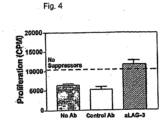
- Anti-LAG-3 antibodies at the concentration of 2 ⁇ g/ml inhibit suppression by Treg 6.5 CD4+ T cells in the in vitro assay system ( Figure 4 ). Over the 2-day assay period, anti-LAG-3 antibodies did not affect proliferative responses of 6.5 T cells stimulated in the absence of Treg, confirming that the effect of anti-LAG-3 antibodies was indeed on the Treg cells and not the effector cells (data not shown).
- the ability of anti-LAG-3 antibodies to block in vitro suppression by Treg cells demonstrates that LAG-3 is not simply a Treg selective marker, but is a molecule that modulates Treg activity.
- Example 6 - LAG-3 is required for induced Treg activity in vivo
- Example 7 - LAG-3 is expressed by natural Treg cells and is required for suppressor activity
- GFP+ 6.5 CD4+ T cells transduced with the MSCV-GFP vector while high levels of LAG-3 staining were observed on GFP+ 6.5 cells transduced with the MSCV-LAG-3/GFP and MSCV-LAG-3.Y73F ⁇ CY/GFP vectors.
- GFP+ cells from each group were sorted and mixed at different ratios with APC, HA 110-120 peptide and-na ⁇ ve 6.5 CD4+CD25- cells in a proliferation assay.
- 6.5 cells expressing wild type LAG-3 potently suppressed proliferation of na ⁇ ve 6.5 cells while no suppression was observed with control GFP transduced 6.5 cells or 6.5 cells expressing the non-functional LAG-3.Y73F ⁇ CY mutant.
- Total proliferation was in fact somewhat increased in these two latter groups, since GFP and LAG-3.Y73F ⁇ CY transduced 6.5 cells themselves proliferate in addition to the naive 6.5 cells in the assay.
- wild type LAG-3 transduced T cells themselves demonstrated a significant reduction in proliferative responses apart from inhibiting proliferation of the non-transduced 6.5 cells.
- LAG-3 transduction did not induce other genes associated with Tregs, including Foxp3, CD25, CD103 and GITR (data not shown). This result, together with the lack of significant differential expression of these genes between 6.5 T cells differentiating to effector/memory vs anergic/Treg phenotypes, suggests that LAG-3 may mediate a distinct pathway of regulatory T cell function independent of the Foxp3 pathway.
- LAG-3 as a cell surface molecule selectively upregulated on Treg cells that may be directly involved in mediating Treg function. Given the many systems in which both natural and induced Treg activity has been defined, it remains to be determined whether LAG-3 is a "universal" Treg marker or selectively marks only certain Treg subsets. Our results suggest that in addition to induced CD4+ Treg cells, LAG-3 plays at least some role in mediating suppression by natural CD4+CD25+ Treg cells. Furthermore, other experimental data demonstrate a role for LAG-3 in the regulation of homeostatic lymphocyte expansion by natural Treg (Workman and Vignali, accompanying paper).
- LAG-3 expression is significantly greater among CD4+CD25+ T cells from wildtype mice suggests that it may play a role in the function of natural, as well as induced, Tregs.
- the combination of LAG-3 and CD25 may define Treg subsets with the most potent suppressive activity.
- LAG-3 is a "lineage marker" for Treg as it is expressed at variable levels that correlate with the magnitude of regulatory activity in in vitro assays.
- Treg represent a stable lineage or differentiation state capable of promoting tolerance in a non-cell autonomous fashion (von Boehmer, 2003). Different mechanisms have been identified for Treg function in different systems (reviewed in Shevach, 2002).
- LAG-3 high cells produce increased amounts of IL-10 and display enhanced in vitro suppressor activity but the role of IL-10 in mediating suppressive function in our system remains to be determined.
- Antibodies to LAG-3 inhibit the suppressor activity of Treg cells both in vitro and in vivo.
- LAG-3 is a Treg specific receptor or coreceptor that modulates the suppressor activity of this T cell subset.
- LAG-3 knockout mice would display multi-system autoimmunity (i.e., similar to Foxp3 knockout or scurfy mice), which has not been reported in these mice.
- LAG-3 knockout mice there are clearly regulatory T cell defects displayed by LAG-3 knockout mice, such as a defect in regulating cellular homeostasis (Workman and Vignali, accompanying paper).
- CD25 the "gold standard" Treg marker
- CD4+CD25+ cells are enriched in Treg activity is not because CD25 is specific to Treg function, but rather because Treg cells are chronically stimulated by continuous encounter with self-antigen in the periphery.
- TNF receptor super-family member 18 molecule also called GITR
- GITR TNF receptor super-family member 18 molecule
- GITR is equivalently up-regulated on activated T cells and therefore is apparently no more selective as a marker for Treg cells than is CD25 (McHugh et al., 2002; Shimizu et al., 2002).
- CD4+CD25- cell populations can suppress certain immune functions (Annacker et al., 2001; mayou et al., 2002; Curotto de Lafaille et al., 2001; Graca et al., 2002; Shimizu and Moriizumi, 2003; Stephens and Mason, 2000).
- CD25 high LAG-3 high cells exhibit the greatest suppressive activity suggests that antibodies against both of these cell surface molecules may be used coordinately to manipulate Treg activity.
- Treg cells suppress the reactivity of CD4+ and CD8+ effector cells through direct T-T interactions or through DC intermediaries.
- LAG-3 a MHC class II binding molecule
- the C3-HA transgenic mice have been previously described (Adler et al., 2000; Adler et al., 1998).
- the hemagglutinin (HA) gene derived from the influenza virus A/PR/8/34 (Mount Sinai strain) has been placed under the control of the rat C3(1) promoter.
- Two founder lines were established in the B10.D2 genetic background. These two founder lines, C3-HA high and C3-HA low , which contain 30-50 and 3 transgene copies respectively, express the C3-HA, hybrid mRNA in the same set of non-lymphoid tissues including the lung and prostate.
- the TCR transgenic mouse line 6.5 that expresses a TCR recognizing an I-E d -restricted HA epitope ( 110 SFERFEIFPKE 120 ; SEQ ID NO: 7) (generously provided by Dr. Harald von Boehmer, Harvard University, Boston, MA), was back-crossed 9 generations onto the B 10.D2 genetic background.
- the other TCR transgenic mouse line Clone-4 that expresses a TCR recognizing a K d -restricted HA epitope ( 518 IYSTVASSL 526 ; SEQ ID NO: 8) (generously provided by Dr.
- Thy 1.1 was used as a surrogate marker.
- Thy 1.1 + CD8 + T cells express the HA-specific clonotypic TCR as nearly all of the mature CD8 + T cells in the Clone-4 mice directly recognize, the K d -restricted HA epitope (Morgan et al., 1996).
- mice used for experiments were between the age of 8 to 24 weeks. All experiments involving the use of mice were performed in accordance with protocols approved by the Animal Care and Use Committee of the Johns Hopkins University School of Medicine.
- Clonotypic CD4 + or CD8 + T cells were prepared from pooled spleens and lymph nodes of 6.5 or Clone-4 transgenic mice. Clonotypic percentage was determined by flow cytometry analysis. The activation marker CD44 was analyzed to ensure that these clonotypic cells were not activated in donor mice and were naive in phenotype. After washing 3 times with HBSS, an appropriate number of cells were resuspended in 0.2 ml of HBSS for i.v. injection through the tail vein.
- Tissues were harvested from mice three days after adoptive transfer. Tissue was fixed in ImmunoHistoFix (A Phase sprI, Belgium) for 3 days at 4°C and then embedded in ImmunoHistoWax (A Phase sprI, Belgium). Serial sections were stained using biotin-labeled anti-Thy1.1 mAb (PharMingen, San Diego, CA). The Vectastain ABC kit (Vector, Burlingame, CA) and NovaRed (Vector) were used for development. Sections were counterstained with hematoxylin QS (Vector). Sections were analyzed using a Nikon Eclipse E800. Final image processing was performed using Adobe PhotoShop (Mountain View, CA).
- the clonotypic percentage of 6.5 CD4+ T cells in the spleens of recipient mice is only 0.2% ⁇ 5%. Deliberate enrichment and purification is mandatory to obtain enough clonotypic CD4+ T cells for further studies, such as for Affymetrix gene chip analysis. Donor 6.5 T cells were crossed onto a Thy1.1(+)Thy1.2(-) background which allowed for a two step enrichment and purification procedure after adoptive transfer into Thy1.1(-)/Thy1.2(+) recipients.
- CD4+ T cells were first enriched by using biotinylated anti-D8 (Ly-2, 53-6.7), anti-B220 (RA3-6B2), and anti-Thyl.2 (30-H12) antibodies (all purchased from BD Biosciences PharMingen, San Diego, CA) and MACS streptavidin microbeads and MACS LS separation column (Miltenyi Biotech, Auburn, CA) to deplete CD8+ T cells, B cells and the recipient T cells (Thy1.2+).
- CD4+ T cells and CD8+ T cells are the only populations bearing Thy1.1, and because CD8+ T cells had been depleted during enrichment, sorting for Thy1.1(+) cells using FACSVantage SE cell sorter (BD Biosciences) resulted in highly purified 6.5 CD4+ T cells (95%). This technique avoids the use of TCR-specific or CD4 coreceptor specific antibodies that could potentially alter TCR or CD4 dependent gene expression patterns.
- Sorted cells were sheared with Qiashredder columns (Qiagen, Valencia CA), followed by total RNA isolation using the RNeasy kit (Qiagen).
- cDNA was synthesized using the Superscript Choice kit (Gibco/BRL) and an HPLC purified T7-DT primer (Proligo, Boulder, CO).
- Biotinylated cRNA probe was prepared using the ENZO BioArray RNA transcript kit (Affymetrix, Santa Clara, CA).
- Murine gene chips U174A, B and C were hybridized and analyzed according to standard Affymetrix protocols.
- mRNA prepared from purified naive 6.5 clonotypic CD4 + T cells and anergic/Treg and effector/memory 6.5 clonotypic CD4 + T cells on various days after adoptive transfer was analyzed by Affymetrix gene chips.
- the differential expression of genes between anergy/Treg induction and effector/memory induction was ranked by "distance". The distance was defined as the sum of the absolute differences of expression between anergic T cells and effector/memory T cells on day 2 (
- Anti-LAG-3 C9B7W, from PharMingen
- Anti-CD25 7D4, from PharMingen
- anti-GITR polyclonal antibody purchased from R&D Systems.
- splenocytes from 6.5+/-Thy1.1+/- transgenic mice were isolated and enriched for CD4+ using a CD4+ negative selection isolation kit (Miltenyi Biotec).
- Splenocytes and inguinal and axillary lymph nodes were harvested five days later and prepared into a single cell suspension.
- RBCs were lysed with ACK lysis buffer.
- Wild type BALB/c mice were used for out natural Treg assays. 5 X 10 4 flow cytometry sorted CD4+CD25- T cells (Responders) and 5 x 10 4 3000-rad irradiated BALB/c splenocytes (Antigen Presenting Cells) were mixed with different numbers of flow cytometry sorted CD4+CD25+ suppressor T cells and incubated in round bottom 96-well tissue culture plates with 0.5 ⁇ g/ml of anti-CD3 antibody in 200 ⁇ l of CTL media. Forty-eight to 72 hours later, cultures were pulsed with 1 ⁇ Ci 3 H-thymidine and incubated an additional 16 hours before harvest with a Packard Micromate cell harvester. Determination of the amount of incorporated radioactive counts was performed with a Packard Matrix 96 direct beta counter (Packard Biosciences, Meriden, CT).
- the sorted 6.5 CD4+ T cells were immediately used for RNA extraction using Trizol reagent (Invitrogen, Carlsbad, CA). Reverse transcription was performed with the Superscript First Strand Synthesis System (Invitrogen, Carlsbad, CA). cDNA levels were analyzed by real-time quantitative PCR with the Taqman system. (Applied Biosystems, Foster City, CA). Each sample was assayed in duplicates or triplicates for the target gene together with 18S rRNA as the internal reference in 25 ⁇ l final reaction volume, using the Taqman Universal PCR Master Mix and the ABI Prism 7700 Sequence Detection system. Pre-made reaction reagents (PDARs) were purchased from Applied Biosystems for detection of IL-10 and IL-2.
- PDARs reaction reagents
- Primer pair and probe sets were designed using Primer Express software and then synthesized by Applied Biosystems for LAG-3, CD25, GITR and IFN- ⁇ . Primer and probe set used for Foxp3 was quoted from literature ( S4 ).
- Primers and probe sets used are: LAG-3 Primer 5'-ACA TCA ACC AGA CAG TGG CCA-3'(SEQ ID NO: 9)/Primer 5'-GCA TCC CCT GGT GAA GGT C-3'(SEQ ID NO: 10)/Probe 5'-6FAM-CCC ACT CCC ATC CCG GCC C-TAMRA-3'(SEQ ID NO: 11); CD25 Primer 5'-TGT ATG ACC CAC CCG AGG TC-3'(SEQ ID NO: 12)/Primer 5'-TTA GGA TGG TGC CGT TCT TGT-3' (SEQ ID NO: 13)/Probe 5'-6FAM-CCA ATG CCA CAT TCA AAG CCC TCT CC-TAMRA-3'(SEQ ID NO: 14); GITR Primer 5'-TCC GGT GTG TTG CCT GTG-3'(SEQ ID NO: 15)/Primer 5'-CAA AGT CTG CAG TGA CCG
- LAG-3 constructs and retroviral producer cell lines.
- LAG-3 constructs were produced using recombinant PCR as described (Vignali and Vignali, 1999). The LAG-3.WT and the functionally null mutant LAG-3.Y73F. ⁇ CY (cytoplasmic tailless LAG-3 with a point mutation that greatly reduces the ability of LAG-3 to bind MHC class II) have been described (Workman et al., 2002a). LAG-3 constructs were cloned into a murine stem cell virus (MSCV)-based retroviral vector, which contained an internal ribosomal entry site (IRES) and green fluorescent protein (GFP), and retrovirus was produced as described (Persons et al., 1997; Persons et al., 1998). Retroviral producer cell lines were generated by repeatedly transducing GPE+86 cells ( ⁇ 7-10 times) until a viral titer of greater than 10 5 /ml after 24 h was obtained (Markowitz et al., 1988).
- MSCV murine stem cell virus
- IVS internal
- Splenocytes from 6.5 mice were stained with biotin labeled anti-B220, anti-Gr1, anti-Mac1, anti-TER119, anti-CD49b, anti-CD8 and anti-CD25 antibody (PharMingen, San Diego, CA). The cells were then incubated with magnetic beads coupled with streptavidin and negatively sorted on an autoMACS (Miltenyi Biotech, Auburn CA) to 90-95% purity of CD4 + /CD25 - T cells. The purified 6.5 CD4 + /CD25 - T cells were activated by plate bound anti-CD3 (2C11) and anti-CD28 (35.71).
- the activated T cells (4x10 5 cells/ml) were spin transduced (90min, 3000 rpm) with viral supernatant from vector alone, LAG-3.WT/GFP or LAG-3.Y73F. ⁇ CY/GFP retroviral GPE+86 producer cell lines described above plus IL-2 and polybrene (6 ⁇ g/ml). The cells were allowed to rest for 10 days and then sorted on the top ⁇ 30-35% GFP + /Thy1.2 + T cells.
- the purified GFP + T cells were cultured (2 fold dilutions starting at 2.5x10 4 ) with 2.5x10 4 CD4 + /CD25 - 6.5 T cells (purified by negative AutoMACS), 5x10 4 irradiated (3000rads) splenocytes, and 5 ⁇ g/ml HA110-120 in a 96-well round bottom plate.
- the cells were cultured for 72 h and pulsed with [ 3 H]thymidine 1 ⁇ Ci/well (Du Pont, Wilmington, DE) the last 7-8 h of culture.
- CD223 is cleaved from the cell surface and released in a soluble form (sLAG-3). It is generated in significant amounts by activated T cells in vitro (5 ⁇ g/ml) and is also found in the serum of mice (80 ng/ml). It is likely generated by a cell surface protease.
- sLAG-3 by Western blot. The cleavage occurs in the transmembrane region (e.g., amino acids 442-466 in SEQ ID NO: 2) or in the connector region (e.g., amino acids 432-441 in SEQ ID NO: 2) immediately preceding it amino-terminally.
- LAG-3 is not only required for maximal regulatory T cells (Treg) function but is also sufficient. In other words, expression of LAG-3 alone is sufficient to convert cells from activated effector T cells into regulatory T cells.
Landscapes
- Health & Medical Sciences (AREA)
- Life Sciences & Earth Sciences (AREA)
- Chemical & Material Sciences (AREA)
- General Health & Medical Sciences (AREA)
- Organic Chemistry (AREA)
- Animal Behavior & Ethology (AREA)
- Immunology (AREA)
- Veterinary Medicine (AREA)
- Public Health (AREA)
- Medicinal Chemistry (AREA)
- Engineering & Computer Science (AREA)
- Bioinformatics & Cheminformatics (AREA)
- Pharmacology & Pharmacy (AREA)
- Nuclear Medicine, Radiotherapy & Molecular Imaging (AREA)
- General Chemical & Material Sciences (AREA)
- Chemical Kinetics & Catalysis (AREA)
- Epidemiology (AREA)
- Biomedical Technology (AREA)
- Genetics & Genomics (AREA)
- Zoology (AREA)
- Biochemistry (AREA)
- Environmental Sciences (AREA)
- Molecular Biology (AREA)
- Proteomics, Peptides & Aminoacids (AREA)
- Biophysics (AREA)
- Cell Biology (AREA)
- Biotechnology (AREA)
- Oncology (AREA)
- Microbiology (AREA)
- Wood Science & Technology (AREA)
- Animal Husbandry (AREA)
- Biodiversity & Conservation Biology (AREA)
- Communicable Diseases (AREA)
- Neurosurgery (AREA)
- Neurology (AREA)
- Virology (AREA)
- Pulmonology (AREA)
- Mycology (AREA)
- Gastroenterology & Hepatology (AREA)
- General Engineering & Computer Science (AREA)
Priority Applications (5)
| Application Number | Priority Date | Filing Date | Title |
|---|---|---|---|
| SI200432110T SI1897548T2 (sl) | 2003-02-28 | 2004-03-01 | Regulacija celic T |
| EP18177034.8A EP3427741A3 (en) | 2003-02-28 | 2004-03-01 | T cell regulation |
| EP20130179162 EP2659893A3 (en) | 2003-02-28 | 2004-03-01 | T cell regulation |
| PL07021595.9T PL1897548T5 (pl) | 2003-02-28 | 2004-03-01 | Regulacja komórek T |
| CY20131101011T CY1114755T1 (el) | 2003-02-28 | 2013-11-14 | Ρυθμιση των τ κυτταρων |
Applications Claiming Priority (5)
| Application Number | Priority Date | Filing Date | Title |
|---|---|---|---|
| US45103903P | 2003-02-28 | 2003-02-28 | |
| US48214303P | 2003-06-24 | 2003-06-24 | |
| US53170403P | 2003-12-22 | 2003-12-22 | |
| PCT/US2004/006133 WO2004078928A2 (en) | 2003-02-28 | 2004-03-01 | T cell regulation |
| EP04716126A EP1596871A4 (en) | 2003-02-28 | 2004-03-01 | T-CELL REGULATION |
Related Parent Applications (2)
| Application Number | Title | Priority Date | Filing Date |
|---|---|---|---|
| EP04716126A Division EP1596871A4 (en) | 2003-02-28 | 2004-03-01 | T-CELL REGULATION |
| EP04716126.0 Division | 2004-03-01 |
Related Child Applications (4)
| Application Number | Title | Priority Date | Filing Date |
|---|---|---|---|
| EP18177034.8A Division-Into EP3427741A3 (en) | 2003-02-28 | 2004-03-01 | T cell regulation |
| EP18177034.8A Division EP3427741A3 (en) | 2003-02-28 | 2004-03-01 | T cell regulation |
| EP20130179162 Division-Into EP2659893A3 (en) | 2003-02-28 | 2004-03-01 | T cell regulation |
| EP20130179162 Division EP2659893A3 (en) | 2003-02-28 | 2004-03-01 | T cell regulation |
Publications (3)
| Publication Number | Publication Date |
|---|---|
| EP1897548A1 EP1897548A1 (en) | 2008-03-12 |
| EP1897548B1 EP1897548B1 (en) | 2013-08-14 |
| EP1897548B2 true EP1897548B2 (en) | 2024-05-22 |
Family
ID=32966451
Family Applications (4)
| Application Number | Title | Priority Date | Filing Date |
|---|---|---|---|
| EP07021595.9A Expired - Lifetime EP1897548B2 (en) | 2003-02-28 | 2004-03-01 | T cell regulation |
| EP18177034.8A Withdrawn EP3427741A3 (en) | 2003-02-28 | 2004-03-01 | T cell regulation |
| EP04716126A Withdrawn EP1596871A4 (en) | 2003-02-28 | 2004-03-01 | T-CELL REGULATION |
| EP20130179162 Withdrawn EP2659893A3 (en) | 2003-02-28 | 2004-03-01 | T cell regulation |
Family Applications After (3)
| Application Number | Title | Priority Date | Filing Date |
|---|---|---|---|
| EP18177034.8A Withdrawn EP3427741A3 (en) | 2003-02-28 | 2004-03-01 | T cell regulation |
| EP04716126A Withdrawn EP1596871A4 (en) | 2003-02-28 | 2004-03-01 | T-CELL REGULATION |
| EP20130179162 Withdrawn EP2659893A3 (en) | 2003-02-28 | 2004-03-01 | T cell regulation |
Country Status (13)
| Country | Link |
|---|---|
| US (8) | US20060240024A1 (enExample) |
| EP (4) | EP1897548B2 (enExample) |
| JP (7) | JP2006523226A (enExample) |
| AU (1) | AU2004217526B2 (enExample) |
| CA (1) | CA2517287C (enExample) |
| CY (1) | CY1114755T1 (enExample) |
| DK (1) | DK1897548T4 (enExample) |
| ES (1) | ES2439580T5 (enExample) |
| FI (1) | FI1897548T4 (enExample) |
| PL (1) | PL1897548T5 (enExample) |
| PT (1) | PT1897548E (enExample) |
| SI (1) | SI1897548T2 (enExample) |
| WO (1) | WO2004078928A2 (enExample) |
Cited By (3)
| Publication number | Priority date | Publication date | Assignee | Title |
|---|---|---|---|---|
| WO2024192033A1 (en) | 2023-03-13 | 2024-09-19 | Regeneron Pharmaceuticals, Inc. | Combination of pd-1 inhibitors and lag-3 inhibitors for enhanced efficacy in treating melanoma |
| WO2025106736A2 (en) | 2023-11-15 | 2025-05-22 | Regeneron Pharmaceuticals, Inc. | Combination of pd-1 inhibitors and lag-3 inhibitors for enhanced efficacy in treating lung cancer |
| WO2026035866A1 (en) | 2024-08-07 | 2026-02-12 | Iovance Biotherapeutics, Inc. | Treatment of cancer patients with tumor infiltrating lymphocyte therapies in combination with a lag-3 inhibitor and a pd-1 inhibitor |
Families Citing this family (84)
| Publication number | Priority date | Publication date | Assignee | Title |
|---|---|---|---|---|
| US20060240024A1 (en) | 2003-02-28 | 2006-10-26 | The Johns Hopkins University | T cell regulation |
| WO2006044864A2 (en) * | 2004-10-19 | 2006-04-27 | Duke University | Vaccine adjuvant |
| PL1928492T3 (pl) * | 2005-09-01 | 2011-09-30 | Celgene Corp | Immunologiczne zastosowania związków immunomodulujących do szczepionki i przeciwzakaźnego leczenia choroby |
| US20090317407A1 (en) * | 2006-05-02 | 2009-12-24 | Lacelle Michael G | Augmentation of immune response to cancer vaccine |
| WO2008126940A1 (ja) * | 2007-04-10 | 2008-10-23 | The University Of Tokyo | 新規t細胞 |
| EP1987839A1 (en) * | 2007-04-30 | 2008-11-05 | I.N.S.E.R.M. Institut National de la Sante et de la Recherche Medicale | Cytotoxic anti-LAG-3 monoclonal antibody and its use in the treatment or prevention of organ transplant rejection and autoimmune disease |
| US9244059B2 (en) | 2007-04-30 | 2016-01-26 | Immutep Parc Club Orsay | Cytotoxic anti-LAG-3 monoclonal antibody and its use in the treatment or prevention of organ transplant rejection and autoimmune disease |
| US20110059471A1 (en) * | 2008-03-14 | 2011-03-10 | Medinet Co., Ltd. | Antibody having an immune-enhancement function |
| EP2267118A4 (en) * | 2008-03-27 | 2013-08-28 | Takara Bio Inc | METHOD FOR PRODUCING A TRANSFICED CELL |
| AR072999A1 (es) * | 2008-08-11 | 2010-10-06 | Medarex Inc | Anticuerpos humanos que se unen al gen 3 de activacion linfocitaria (lag-3) y los usos de estos |
| WO2010062966A2 (en) * | 2008-11-26 | 2010-06-03 | The General Hospital Corporation | Methods for inducing mixed chimerism |
| RU2657440C2 (ru) | 2011-06-30 | 2018-06-13 | Джензим Корпорейшн | Ингибиторы т-клеточной активации |
| WO2013063504A1 (en) * | 2011-10-26 | 2013-05-02 | H. Lee Moffitt Cancer Center & Research Institute, Inc. | Platinum compounds that inhibit constitutive stat3 signaling and induce cell cycle arrest and apoptosis of malignant cells |
| AR091649A1 (es) | 2012-07-02 | 2015-02-18 | Bristol Myers Squibb Co | Optimizacion de anticuerpos que se fijan al gen de activacion de linfocitos 3 (lag-3) y sus usos |
| JP2016507520A (ja) | 2013-01-23 | 2016-03-10 | ザ ボード オブ トラスティーズ オブ ザ レランド スタンフォード ジュニア ユニバーシティー | 安定化されたb型肝炎コアポリペプチド |
| RS60538B1 (sr) | 2013-03-15 | 2020-08-31 | Glaxosmithkline Ip Dev Ltd | Anti-lag-3 vezujući proteini |
| ES2935257T3 (es) | 2013-03-15 | 2023-03-03 | Univ Chicago | Métodos y composiciones relacionadas con la actividad de las células T |
| RS64268B1 (sr) | 2013-09-20 | 2023-07-31 | Bristol Myers Squibb Co | Kombinacija anti-lag-3 antitela i anti-pd-1 antitela za lečenje tumora |
| EP3049442A4 (en) * | 2013-09-26 | 2017-06-28 | Costim Pharmaceuticals Inc. | Methods for treating hematologic cancers |
| US20170035864A1 (en) * | 2013-12-09 | 2017-02-09 | Bullet Biotechnology, Inc. | SPECIFIC VIRUS-LIKE PARTICLE-CpG OLIGONUCLEOTIDE VACCINES AND USES THEREOF |
| UA122479C2 (uk) | 2014-01-24 | 2020-11-25 | Дана-Фарбер Кенсер Інстітьют, Інк. | Виділена молекула антитіла, яка зв’язується з людським білком програмованої смерті-1 (pd-1) |
| PL3099717T3 (pl) | 2014-01-31 | 2019-10-31 | Novartis Ag | Cząsteczki przeciwciała dla TIM-3 i ich zastosowanie |
| US20170165364A1 (en) * | 2014-02-21 | 2017-06-15 | Idac Theranostics, Inc. | Therapeutic agent for solid cancer |
| EA201691765A1 (ru) | 2014-03-14 | 2016-12-30 | Новартис Аг | Молекулы антител против lag-3 и их применения |
| LT3148579T (lt) | 2014-05-28 | 2021-05-25 | Agenus Inc. | Anti-gitr antikūnai ir jų panaudojimo būdai |
| TWI693232B (zh) | 2014-06-26 | 2020-05-11 | 美商宏觀基因股份有限公司 | 與pd-1和lag-3具有免疫反應性的共價結合的雙抗體和其使用方法 |
| JO3663B1 (ar) * | 2014-08-19 | 2020-08-27 | Merck Sharp & Dohme | الأجسام المضادة لمضاد lag3 وأجزاء ربط الأنتيجين |
| EP3191126B1 (en) | 2014-09-13 | 2020-05-13 | Novartis AG | Combination therapies of alk inhibitors |
| CA2964155A1 (en) | 2014-10-10 | 2016-04-14 | Idera Pharmaceuticals, Inc. | Treatment of cancer using tlr9 agonist with checkpoint inhibitors |
| SG11201702401RA (en) | 2014-10-14 | 2017-04-27 | Novartis Ag | Antibody molecules to pd-l1 and uses thereof |
| MA41463A (fr) * | 2015-02-03 | 2017-12-12 | Anaptysbio Inc | Anticorps dirigés contre le gène d'activation 3 des lymphocytes (lag-3) |
| TWI702290B (zh) * | 2015-04-07 | 2020-08-21 | 富禾生醫股份有限公司 | 經修飾之自然殺手t細胞、醫藥組合物及其用途 |
| EA039293B1 (ru) * | 2015-06-05 | 2021-12-30 | Мерк Шарп И Доум Корп. | Антитела против lag3 и антигенсвязывающие фрагменты |
| TWI773646B (zh) | 2015-06-08 | 2022-08-11 | 美商宏觀基因股份有限公司 | 結合lag-3的分子和其使用方法 |
| WO2017004252A1 (en) | 2015-06-30 | 2017-01-05 | The Arizona Board Of Regents On Behalf Of The University Of Arizona | Redirected cells with mhc chimeric receptors and methods of use in immunotherapy |
| US12577289B2 (en) | 2015-06-30 | 2026-03-17 | Arizona Board Of Regents On Behalf Of The University Of Arizona | Surrogate co-receptors for t cells and methods of use |
| MX2018000447A (es) | 2015-07-15 | 2018-08-15 | Pieris Pharmaceuticals Gmbh | Novedosas proteinas especificas para lag-3. |
| US20180340025A1 (en) | 2015-07-29 | 2018-11-29 | Novartis Ag | Combination therapies comprising antibody molecules to lag-3 |
| PE20231958A1 (es) | 2015-07-30 | 2023-12-06 | Macrogenics Inc | Moleculas de union a pd-1 y metodos de uso de las mismas |
| AU2016303497A1 (en) * | 2015-07-31 | 2018-03-01 | Tarveda Therapeutics, Inc. | Compositions and methods for immuno-oncology therapies |
| RU2760582C2 (ru) | 2015-09-02 | 2021-11-29 | Иммутеп С.А.С. | Анти-LAG-3 антитела |
| MA43028B1 (fr) | 2015-10-02 | 2021-09-30 | Hoffmann La Roche | Anticorps bispécifiques pour pd1 et tim3 |
| TWI756187B (zh) | 2015-10-09 | 2022-03-01 | 美商再生元醫藥公司 | 抗lag3抗體及其用途 |
| CN108366548B (zh) | 2015-11-20 | 2021-10-08 | 瑞泽恩制药公司 | 具有人源化淋巴细胞活化基因3的非人动物 |
| WO2017096179A1 (en) | 2015-12-02 | 2017-06-08 | Agenus Inc. | Antibodies and methods of use thereof |
| CN108367069B (zh) | 2015-12-14 | 2022-08-23 | 宏观基因有限公司 | 对于pd-1和ctla-4具有免疫反应性的双特异性分子及其使用方法 |
| BR112018012352A2 (pt) | 2015-12-16 | 2018-12-11 | Merck Sharp & Dohme Corp. | anticorpos anti-lag3 e fragmentos de ligação ao antígeno |
| CN108495651A (zh) | 2015-12-17 | 2018-09-04 | 诺华股份有限公司 | 抗pd-1的抗体分子及其用途 |
| BR112018068461A2 (pt) | 2016-03-15 | 2019-01-22 | Mersana Therapeutics Inc | conjugado, composição farmacêutica, métodos para preparação de um conjugado e para alívio de um sintoma de um câncer. |
| KR102379464B1 (ko) | 2016-06-20 | 2022-03-29 | 키맵 리미티드 | 항-pd-l1 항체 |
| US11155617B2 (en) | 2016-06-23 | 2021-10-26 | Jiangsu Hengrui Medicine Co., Ltd. | LAG-3 antibody, antigen-binding fragment thereof, and pharmaceutical application thereof |
| EP3478321A4 (en) | 2016-06-30 | 2020-04-22 | Oncorus, Inc. | PSEUDOTYPIZED ONCOLYTIC VIRAL ADMINISTRATION OF THERAPEUTIC POLYPEPTIDES |
| EA039718B1 (ru) * | 2016-07-21 | 2022-03-03 | Регенерон Фармасьютикалз, Инк. | Антитела к lag3 и их применения |
| MY190805A (en) * | 2016-09-08 | 2022-05-12 | Daiichi Sankyo Co Ltd | Antibody for treating autoimmune diseases |
| KR20230133934A (ko) | 2016-10-11 | 2023-09-19 | 아게누스 인코포레이티드 | 항-lag-3 항체 및 이의 사용 방법 |
| CN108070613B (zh) | 2016-11-11 | 2020-03-13 | 百奥赛图江苏基因生物技术有限公司 | 人源化基因改造动物模型的制备方法及应用 |
| WO2018086583A1 (en) * | 2016-11-11 | 2018-05-17 | Beijing Biocytogen Co., Ltd | Genetically modified non-human animal with human or chimeric lag-3 |
| US11135307B2 (en) | 2016-11-23 | 2021-10-05 | Mersana Therapeutics, Inc. | Peptide-containing linkers for antibody-drug conjugates |
| JP7225116B2 (ja) | 2017-01-18 | 2023-02-20 | ピエリス ファーマシューティカルズ ゲーエムベーハー | Lag-3に対する結合親和性を有するリポカリンムテイン |
| BR112019016336A2 (pt) | 2017-02-10 | 2020-03-31 | Regeneron Pharmaceuticals, Inc. | Conjugado de anticorpo radiorrotulado, método para imageamento de um tecido que expressa lag3 e para tratar um tumor, e, composto. |
| TW201834697A (zh) | 2017-02-28 | 2018-10-01 | 美商梅爾莎納醫療公司 | Her2標靶抗體-藥物結合物之組合療法 |
| KR102461885B1 (ko) | 2017-04-03 | 2022-11-03 | 에프. 호프만-라 로슈 아게 | 항-pd-1 항체와 돌연변이 il-2 또는 il-15의 면역접합체 |
| UA128387C2 (uk) | 2017-04-05 | 2024-07-03 | Ф. Хоффманн-Ля Рош Аг | Антитіло до lag3 |
| CA3052532A1 (en) | 2017-04-05 | 2018-10-11 | F. Hoffmann-La Roche Ag | Bispecific antibodies specifically binding to pd1 and lag3 |
| JP7301002B2 (ja) | 2017-05-30 | 2023-06-30 | ブリストル-マイヤーズ スクイブ カンパニー | 抗lag-3抗体または抗lag-3抗体および抗pd-1もしくは抗pd-l1抗体を含む組成物 |
| WO2018222718A1 (en) | 2017-05-30 | 2018-12-06 | Bristol-Myers Squibb Company | Treatment of lag-3 positive tumors |
| AU2018283319B2 (en) * | 2017-06-16 | 2023-11-09 | Mayo Foundation For Medical Education And Research | Materials and methods for increasing immune responses |
| JP6896989B2 (ja) * | 2017-07-13 | 2021-06-30 | ナンジン リーズ バイオラブズ カンパニー リミテッド | 抗体結合lag−3及びその使用 |
| US11638760B2 (en) | 2017-11-27 | 2023-05-02 | Mersana Therapeutics, Inc. | Pyrrolobenzodiazepine antibody conjugates |
| CN111757757A (zh) | 2017-12-21 | 2020-10-09 | 梅尔莎纳医疗公司 | 吡咯并苯并二氮呯抗体共轭物 |
| EP3714901A4 (en) * | 2017-12-22 | 2022-03-02 | Jiangsu Hengrui Medicine Co., Ltd. | ANTI-LAG-3 ANTIBODY PHARMACEUTICAL COMPOSITION AND USE THEREOF |
| WO2019133847A1 (en) | 2017-12-29 | 2019-07-04 | Oncorus, Inc. | Oncolytic viral delivery of therapeutic polypeptides |
| JP2021511793A (ja) | 2018-01-31 | 2021-05-13 | エフ・ホフマン−ラ・ロシュ・アクチェンゲゼルシャフト | Lag3に結合する抗原結合部位を含む二重特異性抗体 |
| CA3117050A1 (en) | 2018-10-29 | 2020-05-07 | Mersana Therapeutics, Inc. | Cysteine engineered antibody-drug conjugates with peptide-containing linkers |
| WO2020125763A1 (en) | 2018-12-20 | 2020-06-25 | Biocytogen Jiangsu Co., Ltd. | Genetically modified non-human animal with human or chimeric lag3 |
| CN109666699B (zh) * | 2018-12-29 | 2023-02-28 | 杭州科兴生物科技有限公司 | 一种基于lag-3/mhc ii阻断功能及其生物效应的药物快速筛选方法 |
| US20220214333A1 (en) * | 2019-04-16 | 2022-07-07 | Regents Of The University Of Minnesota | Biomarker for transplantation tolerance induced by apoptotic donor leukocytes |
| CA3136568A1 (en) | 2019-05-13 | 2020-11-19 | Regeneron Pharmaceuticals, Inc. | Combination of pd-1 inhibitors and lag-3 inhibitors for enhanced efficacy in treating cancer |
| CN111415707B (zh) * | 2020-03-10 | 2023-04-25 | 四川大学 | 临床个体化肿瘤新抗原的预测方法 |
| CN111808192B (zh) * | 2020-06-05 | 2022-02-15 | 北京天广实生物技术股份有限公司 | 结合lag3的抗体及其用途 |
| CA3196496A1 (en) | 2020-10-23 | 2022-04-28 | Laurence David TOMS | Lag-3 antagonist therapy for lung cancer |
| JP2022176672A (ja) * | 2021-05-17 | 2022-11-30 | 国立大学法人北海道大学 | ペプチド及び医薬用組成物 |
| WO2022245816A1 (en) * | 2021-05-18 | 2022-11-24 | Pelican Therapeutics, Inc. | Treatment of autoimmune inflammatory diseases with tnfrsf25-binding agents |
| WO2025202213A1 (en) | 2024-03-26 | 2025-10-02 | Institut National de la Santé et de la Recherche Médicale | Lipid nanoparticle loaded with antitumoral agent and functionnalized to target immosuppressive cells |
Citations (2)
| Publication number | Priority date | Publication date | Assignee | Title |
|---|---|---|---|---|
| WO1995030750A2 (fr) † | 1994-05-06 | 1995-11-16 | Institut Gustave Roussy | Fractions polypeptidiques solubles de la proteine lag-3; procede de production; composition therapeutique; anticorps anti-idiotype |
| WO1998023748A1 (en) † | 1996-11-29 | 1998-06-04 | Applied Research Systems Ars Holding N.V. | Methods for preventing graft rejection in transplantation and for producing a universal gene therapy host cell using lymphocyte activation (lag-3) |
Family Cites Families (28)
| Publication number | Priority date | Publication date | Assignee | Title |
|---|---|---|---|---|
| US3854480A (en) | 1969-04-01 | 1974-12-17 | Alza Corp | Drug-delivery system |
| US3832253A (en) | 1973-03-21 | 1974-08-27 | Baxter Laboratories Inc | Method of making an inflatable balloon catheter |
| US4667014A (en) | 1983-03-07 | 1987-05-19 | Syntex (U.S.A.) Inc. | Nonapeptide and decapeptide analogs of LHRH, useful as LHRH antagonists |
| US4452775A (en) | 1982-12-03 | 1984-06-05 | Syntex (U.S.A.) Inc. | Cholesterol matrix delivery system for sustained release of macromolecules |
| CA1200416A (en) | 1983-05-13 | 1986-02-11 | Societe Des Produits Nestle S.A. | Food process |
| US4658957A (en) * | 1985-01-28 | 1987-04-21 | Abbott Laboratories | Utility tray |
| US4946778A (en) | 1987-09-21 | 1990-08-07 | Genex Corporation | Single polypeptide chain binding molecules |
| US5075109A (en) | 1986-10-24 | 1991-12-24 | Southern Research Institute | Method of potentiating an immune response |
| FR2656800B1 (fr) * | 1990-01-08 | 1992-05-15 | Roussy Inst Gustave | Nouvelles proteines produits par les lymphocytes humains, sequence d'adn codant pour ces proteines et applications pharmaceutiques et biologiques. |
| US5976877A (en) * | 1990-01-08 | 1999-11-02 | Institut National De La Sante Et De La Recherche Medicale (Inserm) | Proteins produced by human lymphocytes DNA sequence encoding these proteins and their pharmaceutical and biological uses |
| JPH04167172A (ja) | 1990-10-31 | 1992-06-15 | Nec Corp | ベクトルプロセッサ |
| PT843557E (pt) * | 1995-07-21 | 2003-03-31 | Applied Research Systems | Metodos para detectar indentificar isolar e etiquetar e abordar selectivamente linfocitos th1 por intermedio da proteina lag-3 |
| WO1997032970A1 (en) | 1996-03-04 | 1997-09-12 | Targeted Genetics Corporation | Modified rapid expansion methods ('modified-rem') for in vitro propagation of t lymphocytes |
| DE69739951D1 (de) * | 1996-03-04 | 2010-09-16 | Calyx Bio Ventures Inc | Modifizierte schnellvermehrungsmethode ('modified-rem') zur in vitro vermehrung von t-lymphozyten |
| US6482925B1 (en) * | 1996-11-28 | 2002-11-19 | Applied Research Systems Ars Holding N.V. | Mutants of the LAG-3 proteins and nucleotides encoding LAG-3 mutants |
| CN1196786C (zh) * | 1996-11-29 | 2005-04-13 | 应用研究系统Ars股份公司 | 抗移植排斥细胞及其用途 |
| EP0900841A1 (en) * | 1997-06-18 | 1999-03-10 | Institut National De La Sante Et De La Recherche Medicale (Inserm) | LAG-3 splice variants |
| EP0893507A1 (en) * | 1997-07-25 | 1999-01-27 | Institut Gustave Roussy | Use of MHC class II ligands (CD4 and LAG-3) as adjuvant for vaccination and of LAG-3 in cancer treatment |
| JPH1164707A (ja) * | 1997-08-13 | 1999-03-05 | Fuji Photo Optical Co Ltd | ズームレンズ鏡筒 |
| US6432925B1 (en) * | 1998-04-16 | 2002-08-13 | John Wayne Cancer Institute | RNA cancer vaccine and methods for its use |
| GB0007088D0 (en) * | 2000-03-23 | 2000-05-17 | Torsana A S | Detection of immunological memory determining the position of loci of pathologyand therapeutic t-cell conjugates |
| EP1539805A4 (en) | 2001-05-15 | 2005-11-16 | Agensys Inc | NUCLEIC ACIDS SUITABLE FOR THE TREATMENT AND DETECTION OF CANCER AND CORRESPONDING PROTEINS NAMED 101P3A11 OR PHOR-1 |
| JP2005500025A (ja) * | 2001-05-29 | 2005-01-06 | サーナ・セラピューティクス・インコーポレイテッド | 女性生殖疾病及び状態の核酸に基づく調節 |
| ES2305257T3 (es) * | 2001-06-12 | 2008-11-01 | Bayer Cropscience Ag | Plantas transgenicas que sintetizan almidon rico en amilosa. |
| WO2003010180A1 (en) * | 2001-07-23 | 2003-02-06 | The Board Of Trustees Of The Leland Stanford Junior University | Methods and compositions for rnai mediated inhibition of gene expression in mammals |
| US20060240024A1 (en) | 2003-02-28 | 2006-10-26 | The Johns Hopkins University | T cell regulation |
| MXPA05014155A (es) | 2003-06-27 | 2006-05-25 | Abgenix Inc | Anticuerpos dirigidos a los mutantes de delecion de receptor de factor de crecimiento epidermico y sus usos. |
| TWI468417B (zh) * | 2007-11-30 | 2015-01-11 | Genentech Inc | 抗-vegf抗體 |
-
2004
- 2004-03-01 US US10/547,371 patent/US20060240024A1/en not_active Abandoned
- 2004-03-01 EP EP07021595.9A patent/EP1897548B2/en not_active Expired - Lifetime
- 2004-03-01 AU AU2004217526A patent/AU2004217526B2/en not_active Expired
- 2004-03-01 EP EP18177034.8A patent/EP3427741A3/en not_active Withdrawn
- 2004-03-01 CA CA2517287A patent/CA2517287C/en not_active Expired - Lifetime
- 2004-03-01 PT PT70215959T patent/PT1897548E/pt unknown
- 2004-03-01 ES ES07021595T patent/ES2439580T5/es not_active Expired - Lifetime
- 2004-03-01 DK DK07021595.9T patent/DK1897548T4/da active
- 2004-03-01 FI FIEP07021595.9T patent/FI1897548T4/fi active
- 2004-03-01 EP EP04716126A patent/EP1596871A4/en not_active Withdrawn
- 2004-03-01 SI SI200432110T patent/SI1897548T2/sl unknown
- 2004-03-01 JP JP2006508934A patent/JP2006523226A/ja not_active Withdrawn
- 2004-03-01 PL PL07021595.9T patent/PL1897548T5/pl unknown
- 2004-03-01 EP EP20130179162 patent/EP2659893A3/en not_active Withdrawn
- 2004-03-01 WO PCT/US2004/006133 patent/WO2004078928A2/en not_active Ceased
-
2009
- 2009-10-22 US US12/578,887 patent/US8551481B2/en not_active Expired - Fee Related
-
2010
- 2010-11-12 JP JP2010253326A patent/JP2011116755A/ja not_active Withdrawn
-
2012
- 2012-11-16 US US13/679,485 patent/US9005629B2/en not_active Expired - Lifetime
-
2013
- 2013-10-18 JP JP2013217056A patent/JP2014058523A/ja not_active Withdrawn
- 2013-11-14 CY CY20131101011T patent/CY1114755T1/el unknown
- 2013-12-13 US US14/105,293 patent/US20140127226A1/en not_active Abandoned
-
2015
- 2015-12-18 US US14/973,806 patent/US10787513B2/en active Active
-
2016
- 2016-04-13 JP JP2016080113A patent/JP2016169216A/ja not_active Withdrawn
-
2017
- 2017-07-24 JP JP2017142742A patent/JP6758259B2/ja not_active Expired - Lifetime
-
2018
- 2018-03-30 US US15/942,168 patent/US10934354B2/en not_active Expired - Fee Related
-
2019
- 2019-04-05 JP JP2019072698A patent/JP2019135247A/ja not_active Withdrawn
-
2021
- 2021-01-22 US US17/155,228 patent/US20210230275A1/en not_active Abandoned
- 2021-12-28 JP JP2021214040A patent/JP2022034067A/ja active Pending
-
2023
- 2023-06-06 US US18/206,552 patent/US20240174747A1/en not_active Abandoned
Patent Citations (2)
| Publication number | Priority date | Publication date | Assignee | Title |
|---|---|---|---|---|
| WO1995030750A2 (fr) † | 1994-05-06 | 1995-11-16 | Institut Gustave Roussy | Fractions polypeptidiques solubles de la proteine lag-3; procede de production; composition therapeutique; anticorps anti-idiotype |
| WO1998023748A1 (en) † | 1996-11-29 | 1998-06-04 | Applied Research Systems Ars Holding N.V. | Methods for preventing graft rejection in transplantation and for producing a universal gene therapy host cell using lymphocyte activation (lag-3) |
Non-Patent Citations (1)
| Title |
|---|
| Triebel, Trends in Immunology Vol. 24 No. 12 December 2003 † |
Cited By (3)
| Publication number | Priority date | Publication date | Assignee | Title |
|---|---|---|---|---|
| WO2024192033A1 (en) | 2023-03-13 | 2024-09-19 | Regeneron Pharmaceuticals, Inc. | Combination of pd-1 inhibitors and lag-3 inhibitors for enhanced efficacy in treating melanoma |
| WO2025106736A2 (en) | 2023-11-15 | 2025-05-22 | Regeneron Pharmaceuticals, Inc. | Combination of pd-1 inhibitors and lag-3 inhibitors for enhanced efficacy in treating lung cancer |
| WO2026035866A1 (en) | 2024-08-07 | 2026-02-12 | Iovance Biotherapeutics, Inc. | Treatment of cancer patients with tumor infiltrating lymphocyte therapies in combination with a lag-3 inhibitor and a pd-1 inhibitor |
Also Published As
Similar Documents
| Publication | Publication Date | Title |
|---|---|---|
| US20240174747A1 (en) | T cell regulation | |
| JP2021121208A (ja) | 改変t細胞に関する方法および組成物 | |
| Borges et al. | Overexpression of PD-1 on T cells promotes tolerance in cardiac transplantation via ICOS-dependent mechanisms | |
| US20250011425A1 (en) | Compositions and methods for improved t cells | |
| US10759863B2 (en) | Modulation of γδ T cells | |
| Lieberman et al. | Endogenous CD28 drives CAR T cell responses in multiple myeloma | |
| HK1114339B (en) | T cell regulation | |
| Ellestad | Mechanisms underlying lymphopenia-driven autoimmunity in the setting of co-inhibitory molecule deficiency | |
| Cimons | The Impact of Lineage-Specifying Transcription Factor Overexpression on Car T Cell Function | |
| US20210048429A1 (en) | Plzf+ regulatory cd8 t cells for control of inflammation | |
| Kaartinen | In Vitro Cell Expansion and CTLA4 in Advanced T-Cell Therapies | |
| Fan | Enhancing T cell immunity in tumor immunotherapy | |
| Zheng | Two-signal requirement for the development of T lymphocytes | |
| Brodeur | Regulation of Type II Responses in Lung Fibrosis and Systemic Autoimmunity: A Dissertation |
Legal Events
| Date | Code | Title | Description |
|---|---|---|---|
| PUAI | Public reference made under article 153(3) epc to a published international application that has entered the european phase |
Free format text: ORIGINAL CODE: 0009012 |
|
| AC | Divisional application: reference to earlier application |
Ref document number: 1596871 Country of ref document: EP Kind code of ref document: P |
|
| AK | Designated contracting states |
Kind code of ref document: A1 Designated state(s): AT BE BG CH CY CZ DE DK EE ES FI FR GB GR HU IE IT LI LU MC NL PL PT RO SE SI SK TR |
|
| RIN1 | Information on inventor provided before grant (corrected) |
Inventor name: HUANG, CHUNG-TAI Inventor name: DRAKE, CHARLES Inventor name: POWELL, JONATHAN Inventor name: VIGNALI, DARIO A. Inventor name: PARDOLL, DREW M. Inventor name: WORKMAN, CREG J. |
|
| 17P | Request for examination filed |
Effective date: 20080901 |
|
| REG | Reference to a national code |
Ref country code: HK Ref legal event code: DE Ref document number: 1114339 Country of ref document: HK |
|
| AKX | Designation fees paid |
Designated state(s): AT BE BG CH CY CZ DE DK EE ES FI FR GB GR HU IE IT LI LU MC NL PL PT RO SE SI SK TR |
|
| 17Q | First examination report despatched |
Effective date: 20081229 |
|
| REG | Reference to a national code |
Ref country code: DE Ref legal event code: R079 Ref document number: 602004043063 Country of ref document: DE Free format text: PREVIOUS MAIN CLASS: A61K0031700000 Ipc: C12N0015630000 |
|
| RIC1 | Information provided on ipc code assigned before grant |
Ipc: C12N 15/63 20060101AFI20130103BHEP Ipc: C12N 5/0783 20100101ALI20130103BHEP Ipc: A01N 43/04 20060101ALI20130103BHEP Ipc: C07K 16/28 20060101ALI20130103BHEP Ipc: C12N 5/074 20100101ALI20130103BHEP Ipc: A61K 39/00 20060101ALI20130103BHEP Ipc: A61K 31/70 20060101ALI20130103BHEP Ipc: A61K 39/395 20060101ALI20130103BHEP Ipc: C07K 16/00 20060101ALI20130103BHEP Ipc: C12P 21/08 20060101ALI20130103BHEP Ipc: G01N 33/53 20060101ALI20130103BHEP Ipc: C07K 14/705 20060101ALI20130103BHEP Ipc: A61K 39/38 20060101ALI20130103BHEP Ipc: C12N 5/071 20100101ALI20130103BHEP |
|
| GRAP | Despatch of communication of intention to grant a patent |
Free format text: ORIGINAL CODE: EPIDOSNIGR1 |
|
| GRAS | Grant fee paid |
Free format text: ORIGINAL CODE: EPIDOSNIGR3 |
|
| GRAA | (expected) grant |
Free format text: ORIGINAL CODE: 0009210 |
|
| AC | Divisional application: reference to earlier application |
Ref document number: 1596871 Country of ref document: EP Kind code of ref document: P |
|
| AK | Designated contracting states |
Kind code of ref document: B1 Designated state(s): AT BE BG CH CY CZ DE DK EE ES FI FR GB GR HU IE IT LI LU MC NL PL PT RO SE SI SK TR |
|
| REG | Reference to a national code |
Ref country code: GB Ref legal event code: FG4D |
|
| REG | Reference to a national code |
Ref country code: AT Ref legal event code: REF Ref document number: 626904 Country of ref document: AT Kind code of ref document: T Effective date: 20130815 Ref country code: CH Ref legal event code: EP |
|
| RIN2 | Information on inventor provided after grant (corrected) |
Inventor name: HUANG, CHUNG-TAI Inventor name: VIGNALI, DARIO A. Inventor name: POWELL, JONATHAN Inventor name: PARDOLL, DREW M. Inventor name: DRAKE, CHARLES Inventor name: WORKMAN, CREG J. |
|
| REG | Reference to a national code |
Ref country code: IE Ref legal event code: FG4D |
|
| REG | Reference to a national code |
Ref country code: DE Ref legal event code: R096 Ref document number: 602004043063 Country of ref document: DE Effective date: 20131010 |
|
| REG | Reference to a national code |
Ref country code: RO Ref legal event code: EPE |
|
| REG | Reference to a national code |
Ref country code: DK Ref legal event code: T3 Effective date: 20131112 |
|
| REG | Reference to a national code |
Ref country code: PT Ref legal event code: SC4A Free format text: AVAILABILITY OF NATIONAL TRANSLATION Effective date: 20131112 |
|
| REG | Reference to a national code |
Ref country code: HK Ref legal event code: GR Ref document number: 1114339 Country of ref document: HK |
|
| REG | Reference to a national code |
Ref country code: CH Ref legal event code: NV Representative=s name: SCHNEIDER FELDMANN AG PATENT- UND MARKENANWAEL, CH |
|
| REG | Reference to a national code |
Ref country code: SE Ref legal event code: TRGR |
|
| REG | Reference to a national code |
Ref country code: NL Ref legal event code: T3 |
|
| REG | Reference to a national code |
Ref country code: ES Ref legal event code: FG2A Ref document number: 2439580 Country of ref document: ES Kind code of ref document: T3 Effective date: 20140123 |
|
| REG | Reference to a national code |
Ref country code: GR Ref legal event code: EP Ref document number: 20130402419 Country of ref document: GR Effective date: 20140102 |
|
| REG | Reference to a national code |
Ref country code: SK Ref legal event code: T3 Ref document number: E 15329 Country of ref document: SK |
|
| REG | Reference to a national code |
Ref country code: EE Ref legal event code: FG4A Ref document number: E008972 Country of ref document: EE Effective date: 20131111 |
|
| PLBI | Opposition filed |
Free format text: ORIGINAL CODE: 0009260 |
|
| 26 | Opposition filed |
Opponent name: 4-ANTIBODY AG Effective date: 20140512 |
|
| PLAX | Notice of opposition and request to file observation + time limit sent |
Free format text: ORIGINAL CODE: EPIDOSNOBS2 |
|
| REG | Reference to a national code |
Ref country code: DE Ref legal event code: R026 Ref document number: 602004043063 Country of ref document: DE Effective date: 20140512 |
|
| REG | Reference to a national code |
Ref country code: HU Ref legal event code: AG4A Ref document number: E020232 Country of ref document: HU |
|
| PLAF | Information modified related to communication of a notice of opposition and request to file observations + time limit |
Free format text: ORIGINAL CODE: EPIDOSCOBS2 |
|
| PLBB | Reply of patent proprietor to notice(s) of opposition received |
Free format text: ORIGINAL CODE: EPIDOSNOBS3 |
|
| REG | Reference to a national code |
Ref country code: FR Ref legal event code: PLFP Year of fee payment: 12 |
|
| RDAF | Communication despatched that patent is revoked |
Free format text: ORIGINAL CODE: EPIDOSNREV1 |
|
| REG | Reference to a national code |
Ref country code: FR Ref legal event code: PLFP Year of fee payment: 13 |
|
| APBM | Appeal reference recorded |
Free format text: ORIGINAL CODE: EPIDOSNREFNO |
|
| APBP | Date of receipt of notice of appeal recorded |
Free format text: ORIGINAL CODE: EPIDOSNNOA2O |
|
| APAH | Appeal reference modified |
Free format text: ORIGINAL CODE: EPIDOSCREFNO |
|
| APBQ | Date of receipt of statement of grounds of appeal recorded |
Free format text: ORIGINAL CODE: EPIDOSNNOA3O |
|
| REG | Reference to a national code |
Ref country code: FR Ref legal event code: PLFP Year of fee payment: 14 |
|
| REG | Reference to a national code |
Ref country code: FR Ref legal event code: PLFP Year of fee payment: 15 |
|
| APAH | Appeal reference modified |
Free format text: ORIGINAL CODE: EPIDOSCREFNO |
|
| REG | Reference to a national code |
Ref country code: CH Ref legal event code: PFA Owner name: THE JOHNS HOPKINS UNIVERSITY, US Free format text: FORMER OWNER: THE JOHNS HOPKINS UNIVERSITY, US |
|
| APBU | Appeal procedure closed |
Free format text: ORIGINAL CODE: EPIDOSNNOA9O |
|
| PLAY | Examination report in opposition despatched + time limit |
Free format text: ORIGINAL CODE: EPIDOSNORE2 |
|
| PLBC | Reply to examination report in opposition received |
Free format text: ORIGINAL CODE: EPIDOSNORE3 |
|
| PLAY | Examination report in opposition despatched + time limit |
Free format text: ORIGINAL CODE: EPIDOSNORE2 |
|
| PGFP | Annual fee paid to national office [announced via postgrant information from national office to epo] |
Ref country code: RO Payment date: 20230227 Year of fee payment: 20 Ref country code: MC Payment date: 20230222 Year of fee payment: 20 Ref country code: LU Payment date: 20230327 Year of fee payment: 20 Ref country code: IE Payment date: 20230327 Year of fee payment: 20 Ref country code: FR Payment date: 20230328 Year of fee payment: 20 Ref country code: FI Payment date: 20230327 Year of fee payment: 20 Ref country code: DK Payment date: 20230329 Year of fee payment: 20 Ref country code: CZ Payment date: 20230223 Year of fee payment: 20 Ref country code: BG Payment date: 20230322 Year of fee payment: 20 Ref country code: AT Payment date: 20230221 Year of fee payment: 20 |
|
| PGFP | Annual fee paid to national office [announced via postgrant information from national office to epo] |
Ref country code: TR Payment date: 20230221 Year of fee payment: 20 Ref country code: SK Payment date: 20230220 Year of fee payment: 20 Ref country code: SI Payment date: 20230221 Year of fee payment: 20 Ref country code: SE Payment date: 20230315 Year of fee payment: 20 Ref country code: PT Payment date: 20230220 Year of fee payment: 20 Ref country code: IT Payment date: 20230321 Year of fee payment: 20 Ref country code: HU Payment date: 20230303 Year of fee payment: 20 Ref country code: GR Payment date: 20230331 Year of fee payment: 20 Ref country code: GB Payment date: 20230327 Year of fee payment: 20 Ref country code: EE Payment date: 20230220 Year of fee payment: 20 Ref country code: DE Payment date: 20230329 Year of fee payment: 20 Ref country code: CY Payment date: 20230222 Year of fee payment: 20 Ref country code: BE Payment date: 20230327 Year of fee payment: 20 |
|
| PGFP | Annual fee paid to national office [announced via postgrant information from national office to epo] |
Ref country code: NL Payment date: 20230326 Year of fee payment: 20 |
|
| P01 | Opt-out of the competence of the unified patent court (upc) registered |
Effective date: 20230601 |
|
| PGFP | Annual fee paid to national office [announced via postgrant information from national office to epo] |
Ref country code: ES Payment date: 20230403 Year of fee payment: 20 Ref country code: CH Payment date: 20230402 Year of fee payment: 20 |
|
| PGFP | Annual fee paid to national office [announced via postgrant information from national office to epo] |
Ref country code: PL Payment date: 20230228 Year of fee payment: 20 |
|
| REG | Reference to a national code |
Ref country code: CH Ref legal event code: PK Free format text: BERICHTIGUNGEN |
|
| RIC2 | Information provided on ipc code assigned after grant |
Ipc: A61P 37/06 20060101ALI20230830BHEP Ipc: A61P 31/04 20060101ALI20230830BHEP Ipc: A61P 25/28 20060101ALI20230830BHEP Ipc: A61P 11/06 20060101ALI20230830BHEP Ipc: A61K 35/12 20060101ALI20230830BHEP Ipc: C12N 5/071 20100101ALI20230830BHEP Ipc: C12N 5/074 20100101ALI20230830BHEP Ipc: C12N 5/0783 20100101ALI20230830BHEP Ipc: C07K 16/28 20060101ALI20230830BHEP Ipc: C07K 14/705 20060101ALI20230830BHEP Ipc: C12P 21/08 20060101ALI20230830BHEP Ipc: C07K 16/00 20060101ALI20230830BHEP Ipc: A01N 43/04 20060101ALI20230830BHEP Ipc: G01N 33/53 20060101ALI20230830BHEP Ipc: A61K 39/395 20060101ALI20230830BHEP Ipc: A61K 39/38 20060101ALI20230830BHEP Ipc: A61K 39/00 20060101ALI20230830BHEP Ipc: A61K 31/70 20060101ALI20230830BHEP Ipc: C12N 15/63 20060101ALI20230830BHEP Ipc: A01K 67/027 20060101AFI20230830BHEP |
|
| REG | Reference to a national code |
Ref country code: DE Ref legal event code: R071 Ref document number: 602004043063 Country of ref document: DE |
|
| REG | Reference to a national code |
Ref country code: DK Ref legal event code: EUP Expiry date: 20240301 |
|
| REG | Reference to a national code |
Ref country code: NL Ref legal event code: MK Effective date: 20240229 |
|
| REG | Reference to a national code |
Ref country code: CH Ref legal event code: PL |
|
| REG | Reference to a national code |
Ref country code: BE Ref legal event code: MK Effective date: 20240301 |
|
| REG | Reference to a national code |
Ref country code: GB Ref legal event code: PE20 Expiry date: 20240229 |
|
| REG | Reference to a national code |
Ref country code: ES Ref legal event code: FD2A Effective date: 20240326 |
|
| REG | Reference to a national code |
Ref country code: IE Ref legal event code: MK9A Ref country code: SK Ref legal event code: MK4A Ref document number: E 15329 Country of ref document: SK Expiry date: 20240301 |
|
| REG | Reference to a national code |
Ref country code: AT Ref legal event code: MK07 Ref document number: 626904 Country of ref document: AT Kind code of ref document: T Effective date: 20240301 |
|
| PG25 | Lapsed in a contracting state [announced via postgrant information from national office to epo] |
Ref country code: ES Free format text: LAPSE BECAUSE OF EXPIRATION OF PROTECTION Effective date: 20240302 Ref country code: IE Free format text: LAPSE BECAUSE OF EXPIRATION OF PROTECTION Effective date: 20240301 |
|
| PUAH | Patent maintained in amended form |
Free format text: ORIGINAL CODE: 0009272 |
|
| STAA | Information on the status of an ep patent application or granted ep patent |
Free format text: STATUS: PATENT MAINTAINED AS AMENDED |
|
| PG25 | Lapsed in a contracting state [announced via postgrant information from national office to epo] |
Ref country code: IE Free format text: LAPSE BECAUSE OF EXPIRATION OF PROTECTION Effective date: 20240301 Ref country code: ES Free format text: LAPSE BECAUSE OF EXPIRATION OF PROTECTION Effective date: 20240302 Ref country code: CZ Free format text: LAPSE BECAUSE OF EXPIRATION OF PROTECTION Effective date: 20240301 Ref country code: GB Free format text: LAPSE BECAUSE OF EXPIRATION OF PROTECTION Effective date: 20240229 Ref country code: SK Free format text: LAPSE BECAUSE OF EXPIRATION OF PROTECTION Effective date: 20240301 Ref country code: PT Free format text: LAPSE BECAUSE OF EXPIRATION OF PROTECTION Effective date: 20240312 |
|
| REG | Reference to a national code |
Ref country code: SE Ref legal event code: EUG |
|
| PG25 | Lapsed in a contracting state [announced via postgrant information from national office to epo] |
Ref country code: SI Free format text: LAPSE BECAUSE OF EXPIRATION OF PROTECTION Effective date: 20240302 |
|
| 27A | Patent maintained in amended form |
Effective date: 20240522 |
|
| AK | Designated contracting states |
Kind code of ref document: B2 Designated state(s): AT BE BG CH CY CZ DE DK EE ES FI FR GB GR HU IE IT LI LU MC NL PL PT RO SE SI SK TR |
|
| REG | Reference to a national code |
Ref country code: DE Ref legal event code: R102 Ref document number: 602004043063 Country of ref document: DE |
|
| PG25 | Lapsed in a contracting state [announced via postgrant information from national office to epo] |
Ref country code: SI Free format text: LAPSE BECAUSE OF EXPIRATION OF PROTECTION Effective date: 20240302 |
|
| REG | Reference to a national code |
Ref country code: ES Ref legal event code: FD2A Effective date: 20240805 |
|
| REG | Reference to a national code |
Ref country code: SE Ref legal event code: RPEO |
|
| REG | Reference to a national code |
Ref country code: DK Ref legal event code: T4 Effective date: 20240822 |
|
| REG | Reference to a national code |
Ref country code: SK Ref legal event code: T5 Ref document number: E 15329 Country of ref document: SK |
|
| REG | Reference to a national code |
Ref country code: EE Ref legal event code: LD4A Ref document number: E008972 Country of ref document: EE |
|
| REG | Reference to a national code |
Ref country code: ES Ref legal event code: DC2A Ref document number: 2439580 Country of ref document: ES Kind code of ref document: T5 Effective date: 20250123 |
|
| REG | Reference to a national code |
Ref country code: AT Ref legal event code: UEP Ref document number: 626904 Country of ref document: AT Kind code of ref document: T Effective date: 20240522 |