EP1871908B1 - Suszeptibilitatsgen fur myokardinfarkt und akutes korobarsyndrom - Google Patents
Suszeptibilitatsgen fur myokardinfarkt und akutes korobarsyndrom Download PDFInfo
- Publication number
- EP1871908B1 EP1871908B1 EP06749075A EP06749075A EP1871908B1 EP 1871908 B1 EP1871908 B1 EP 1871908B1 EP 06749075 A EP06749075 A EP 06749075A EP 06749075 A EP06749075 A EP 06749075A EP 1871908 B1 EP1871908 B1 EP 1871908B1
- Authority
- EP
- European Patent Office
- Prior art keywords
- allele
- seq
- haplotype
- leukotriene
- nucleic acid
- Prior art date
- Legal status (The legal status is an assumption and is not a legal conclusion. Google has not performed a legal analysis and makes no representation as to the accuracy of the status listed.)
- Expired - Lifetime
Links
- 0 *I*C#CBN(C(N)=O)O Chemical compound *I*C#CBN(C(N)=O)O 0.000 description 2
Images




Classifications
-
- C—CHEMISTRY; METALLURGY
- C12—BIOCHEMISTRY; BEER; SPIRITS; WINE; VINEGAR; MICROBIOLOGY; ENZYMOLOGY; MUTATION OR GENETIC ENGINEERING
- C12Q—MEASURING OR TESTING PROCESSES INVOLVING ENZYMES, NUCLEIC ACIDS OR MICROORGANISMS; COMPOSITIONS OR TEST PAPERS THEREFOR; PROCESSES OF PREPARING SUCH COMPOSITIONS; CONDITION-RESPONSIVE CONTROL IN MICROBIOLOGICAL OR ENZYMOLOGICAL PROCESSES
- C12Q1/00—Measuring or testing processes involving enzymes, nucleic acids or microorganisms; Compositions therefor; Processes of preparing such compositions
- C12Q1/68—Measuring or testing processes involving enzymes, nucleic acids or microorganisms; Compositions therefor; Processes of preparing such compositions involving nucleic acids
- C12Q1/6876—Nucleic acid products used in the analysis of nucleic acids, e.g. primers or probes
- C12Q1/6883—Nucleic acid products used in the analysis of nucleic acids, e.g. primers or probes for diseases caused by alterations of genetic material
-
- C—CHEMISTRY; METALLURGY
- C12—BIOCHEMISTRY; BEER; SPIRITS; WINE; VINEGAR; MICROBIOLOGY; ENZYMOLOGY; MUTATION OR GENETIC ENGINEERING
- C12Q—MEASURING OR TESTING PROCESSES INVOLVING ENZYMES, NUCLEIC ACIDS OR MICROORGANISMS; COMPOSITIONS OR TEST PAPERS THEREFOR; PROCESSES OF PREPARING SUCH COMPOSITIONS; CONDITION-RESPONSIVE CONTROL IN MICROBIOLOGICAL OR ENZYMOLOGICAL PROCESSES
- C12Q2600/00—Oligonucleotides characterized by their use
- C12Q2600/156—Polymorphic or mutational markers
-
- C—CHEMISTRY; METALLURGY
- C12—BIOCHEMISTRY; BEER; SPIRITS; WINE; VINEGAR; MICROBIOLOGY; ENZYMOLOGY; MUTATION OR GENETIC ENGINEERING
- C12Q—MEASURING OR TESTING PROCESSES INVOLVING ENZYMES, NUCLEIC ACIDS OR MICROORGANISMS; COMPOSITIONS OR TEST PAPERS THEREFOR; PROCESSES OF PREPARING SUCH COMPOSITIONS; CONDITION-RESPONSIVE CONTROL IN MICROBIOLOGICAL OR ENZYMOLOGICAL PROCESSES
- C12Q2600/00—Oligonucleotides characterized by their use
- C12Q2600/158—Expression markers
-
- C—CHEMISTRY; METALLURGY
- C12—BIOCHEMISTRY; BEER; SPIRITS; WINE; VINEGAR; MICROBIOLOGY; ENZYMOLOGY; MUTATION OR GENETIC ENGINEERING
- C12Q—MEASURING OR TESTING PROCESSES INVOLVING ENZYMES, NUCLEIC ACIDS OR MICROORGANISMS; COMPOSITIONS OR TEST PAPERS THEREFOR; PROCESSES OF PREPARING SUCH COMPOSITIONS; CONDITION-RESPONSIVE CONTROL IN MICROBIOLOGICAL OR ENZYMOLOGICAL PROCESSES
- C12Q2600/00—Oligonucleotides characterized by their use
- C12Q2600/172—Haplotypes
Definitions
- MI Myocardial infarction
- ACS Acute Coronary Syndrome
- NSTEMI non-ST-elevation myocardial infarction
- ST-elevation myocardial infarction ST-elevation myocardial infarction
- Myocardial infarction generally occurs when there is an abrupt decrease in coronary blood flow following a thrombotic occlusion of a coronary artery previously damaged by atherosclerosis. In most cases, infarction occurs when an atherosclerotic plaque fissures, ruptures or ulcerates and when conditions favor thrombogenesis. In rare cases, infarction may be due to coronary artery occlusion caused by coronary emboli, congenital abnormalities, coronary spasm, and a wide variety of systemic, particularly inflammatory diseases. Medical risk factors for MI include cigarette smoking, diabetes, hypertension and serum total cholesterol levels > 200 mg/dL, elevated serum LDL cholesterol, and low serum HDL cholesterol. Event rates in individuals without a prior history of cardiovascular disease are about 1%. In individuals who have had a first MI or ACS, the risk of a repeat MI within the next year is 10-14%, despite maximal medical management including angioplasty and stent placement.
- Cardiovascular disease is one of the primary causes of death among African Americans and over 4 in every 10 non-Hispanic black adults have CVD, including myocardial infarction, stroke and congestive heart failure (American Heart Association, 2005 statistics).
- Race-based therapeutics are emerging to treat populations of human patients that are at a high risk based on their race.
- BiDil isosorbide dinitrate hydralazine hydrochloride
- US Patent No. 6,465,463 purports to describe methods of reducing mortality associated with heart failure in black patients comprising administering to these patients hydralazine compounds in combination with isosorbide dinitrate or isosorbide mononitrate.
- Atherosclerosis can affect vascular beds in many large and medium arteries.
- Myocardial infarction and unstable angina (acute coronary syndrome (ACS)) stem from coronary artery atherosclerosis, while ischemic stroke most frequently is a consequence of carotid or cerebral artery atherosclerosis.
- Limb ischemia caused by peripheral arterial occlusive disease (PAOD) may occur as a consequence of iliac, femoral and popliteal artery atherosclerosis.
- PAOD peripheral arterial occlusive disease
- the atherosclerotic diseases remain common despite the wide-spread use of medications that inhibit thrombosis (aspirin) or treat medical risk factors such as elevated cholesterol levels in blood (statins), diabetes, or hypertension (diuretics and anti-hypertensives).
- Atherosclerotic disease is initiated by the accumulation of lipids within the artery wall, and in particular, the accumulation of low-density lipoprotein (LDL) cholesterol.
- LDL low-density lipoprotein
- the trapped LDL becomes oxidized and internalized by macrophages. This causes the formation of atherosclerotic lesions containing accumulations of cholesterol-engorged macrophages, referred to as "foam cells".
- smooth muscle cells proliferate and grow into the artery wall forming a "fibrous cap" of extracellular matrix enclosing a lipid-rich, necrotic core.
- fibrous atherosclerotic plaques are relatively stable.
- Such fibrous lesions cause extensive remodeling of the arterial wall, outwardly displacing the external, elastic membrane, without reduction in luminal diameter or serious impact on delivery of oxygen to the heart. Accordingly, patients can develop large, fibrous atherosclerotic lesions without luminal narrowing until late in the disease process.
- the coronary arterial lumen can become gradually narrowed over time and in some cases compromise blood flow to the heart, especially under high demand states such as exercise. This can result in reversible ischemia causing chest pain relieved by rest called stable angina.
- the culprit lesions associated with myocardial infarction and unstable angina are characterized by a thin fibrous cap, a large lipid core, and infiltration of inflammatory cells such as T-Iymphocytes and monocyte/macrophages.
- Non-invasive imaging techniques have shown that most MI's occur at sites with low- or intermediate- grade stenoses, indicating that coronary artery occlusion is due most frequently to rupture of culprit lesions with consequent formation of a thrombus or blood clot and not solely due to luminal narrowing by stenosis.
- Plaque rupture may be due to erosion or uneven thinning of the fibrous cap, usually at the margins of the lesion where macrophages enter, accumulate, and become activated by a local inflammatory process. Thinning of the fibrous cap may result from degradation of the extracellular matrix by proteases released from activated macrophages. These changes producing plaque instability and risk of MI may be augmented by production of tissue-factor procoagulant and other factors increasing the likelihood of thrombosis.
- the culprit lesion showing rupture or erosion with local thrombosis typically is treated by angioplasty or by balloon dilation and placement of a stent to maintain luminal patency.
- Patients experiencing ACS are at high risk for a second coronary event due to the multi-vessel nature of coronary artery disease with event rates approaching 10-14% within 12 months after the first incident.
- the emerging view of MI is as an inflammatory disease of the arterial vessel wall on preexisting chronic atherosclerotic lesions, sometimes triggering rupture of culprit lesions and leading to local thrombosis and subsequent myocardial infarction.
- the process that triggers and sustains arterial wall inflammation leading to plaque instability is unknown, however, it results in the release into the circulation of tumor necrosis factor alpha and interleukin-6.
- These and other cytokines or biological mediators released from the damaged vessel wall stimulate an inflammatory response in the liver causing elevation in several non-specific general inflammatory markers including C-reactive protein.
- CRP C-reactive protein
- serum amyloid A appear to predict risk for MI, perhaps as surrogates for vessel wall inflammation.
- Genetic risk is conferred by subtle differences in genes among individuals in a population. Genes differ between individuals most frequently due to single nucleotide polymorphisms (SNP), although other variations are also important. SNP are located on average every 1000 base pairs in the human genome. Accordingly, a typical human gene containing 250,000 base pairs may contain 250 different SNP. Only a minor number of SNP are located in exons and alter the amino acid sequence of the protein encoded by the gene. Most SNP have no effect on gene function, while others may alter transcription, splicing, translation, or stability of the mRNA encoded by the gene. Additional genetic polymorphism in the human genome is caused by insertion, deletion, translocation, or inversion of either short or long stretches of DNA. Genetic polymorphisms conferring disease risk may therefore directly alter the amino acid sequence of proteins, may increase the amount of protein produced from the gene, or may decrease the amount of protein produced by the gene.
- SNP single nucleotide polymorphisms
- genetic testing for such risk factors is becoming important for clinical medicine. Examples are apolipoprotein E testing to identify genetic carriers of the apoE4 polymorphism in dementia patients for the differential diagnosis of Alzheimer's disease, and of Factor V Leiden testing for predisposition to deep venous thrombosis. More importantly, in the treatment of cancer, diagnosis of genetic variants in tumor cells is used for the selection of the most appropriate treatment regime for the individual patient. In breast cancer, genetic variation in estrogen receptor expression or heregulin type 2 (Her2) receptor tyrosine kinase expression determine if anti-estrogenic drugs (tamoxifen) or anti-Her2 antibody (Herceptin) will be incorporated into the treatment plan.
- Her2 heregulin type 2
- CML chronic myeloid leukemia
- CRP C-reactive protein
- sVCAM soluble vascular cell adhesion molecules
- sICAM soluble intervascular adhesion molecules
- E-selectin matrix metalloprotease type-1, matrix metalloprotease type-2, matrix metalloprotease type-3, and matrix metalloprotease type-9. Elevation in one more of these serum inflammatory markers is not specific to coronary heart disease but also occurs with age or in association with cerebrovascular disease, peripheral vascular disease, non-insulin dependent diabetes, osteoarthritis, bacterial infection, and sepsis.
- Serum C-reactive protein is viewed as a convenient and sensitive marker of systemic inflammation.
- CRP is measured in serum samples using commercially available enzyme-linked immunosorbent assays (EIA). Consistent across multiple published studies is the finding of a correlation between increased risk for coronary artery disease with increased serum CRP. For example, in the Women's Health Study, CRP was measured in 27,939 apparently healthy American women. The cut-off points for quintiles of scrum CRP in women were: less than or equal to 0.49, more than 0.49 to 1.08, more than 1.08 to 2.09, more than 2.09 to 4.19, and more than 4.19 mg CRP per liter, see Ridker, P.M. et al., New England. J.
- Serum CRP in women also has been measured in conjunction with lipid markers such as levels of serum low density lipoprotein-cholesterol (LDL-C).
- LDL-C serum low density lipoprotein-cholesterol
- serum CRP and LDL-C are minimally correlated, screening for both serum markers provided better prognostic indication than either alone.
- women with serum CRP above median values (more than 1.52 mg CRP per liter) and also serum LDL-C above median values (more than 123.7 mg LDL-C per deciliter) were at highest risk for coronary heart disease.
- Elevated CRP or other serum inflammatory markers is also prognostic for increased risk of a second myocardial infarct in patients with a previous myocardial infarct ( Retterstol, L. et al., Atlzeroscler., 160: 433-440 (2002 )).
- CRP is produced in the liver, there is no a priori mechanistic explanation for why elevation in CRP and other serum inflammatory markers should be prognostic for coronary artery disease.
- one or more of the following factors were speculated to account for the correlation observed: (1) intrinsic inflammation and tissue damage within arterial lesions, (2) prior infection by Helicobacter pylori or by Chlamydia pneumoniae, (3) release of peptide cytokines including interleukin-6, or (4) activation of the complement system.
- the end products of the leukotriene pathway are potent inflammatory lipid mediators derived from arachidonic acid. They can potentially contribute to development of atherosclerosis and destabilization of atherosclerotic plaques through lipid oxidation and/or proinflammatory effects.
- LTC4, LTD4, and LTE4 are known to induce vasoconstriction.
- Allen et al., Circulation, 97:2406-2413 (1998 ) described a novel mechanism in which atherosclerosis is associated with the appearance of a leukotriene receptor(s) capable of inducing hyperactivity of human epicardial coronary arteries in response to LTC4 and LTD4.
- LTB4 is a strong proinflammatory agent.
- MI myocardial infarction
- This gene herein after referred to as the MI gene, comprises nucleic acid that encodes 5-lipoxygenase activating protein (ALOX5AP or FLAP) herein after referred to as FLAP.
- ALOX5AP or FLAP 5-lipoxygenase activating protein
- FLAP 5-lipoxygenase activating protein
- the gene has also been shown to play a role in stroke and PAOD.
- a gene on chromosome 12q23 has been identified as playing a major role in myocardial infarction (MI).
- the gene comprises nucleic acid that encodes leukotriene A4 hydrolase, herein after referred to as LTA4H.
- One aspect of the invention includes materials and methods for identifying or diagnosing a person or screening for increased risk (susceptibility) to MI or other conditions based on FLAP and/or LTA4H markers that can be assayed from their DNA or RNA.
- the invention is a method of screening a human subject for susceptibility or elevated risk for MI or other adverse cardiovascular events by assaying nucleic acid from the subject for one or more polymorphisms, markers, haplotypes, alleles or genotypes, and assaying or predicting the presence or absence of the susceptibility or elevated risk from the presence or absence or identity of the polymorphisms, markers, haplotypes, etc. that are assayed.
- Numerous FLAP and LTA4H embodiments are described below in greater detail.
- the description also pertains to methods of treatment (prophylactic and/or therapeutic) for certain diseases and conditions (e.g., Mix ACS, atherosclerosis, stroke, PAOD) associated with FLAP or with other members of the leukotriene pathway (e.g., biosynthetic enzymes or proteins such as FLAP, arachidonate 4-lipoxygenase (5-LO), leukotriene C4 synthase (LTC4S), leukotriene A4 hydrolase (LTA4H), leukotriene B4 12-hydroxydehydrogenase (LTB4DH)); receptors and/or binding agents of the enzymes; and receptors for the leukotrienes LTA4, LTB4, LTC4, LTD4, LTE4, Cys LT1, Cys LT2, including leukotriene B4 receptor 1 (BLTI), leukotriene B4 receptor 2 (BLT2), cysteinyl leukotriene receptor 1 (CysLTR1), cysteinyl leukotriene receptor 2 (
- the methods include the following: methods of treatment for myocardial infarction or susceptibility to myocardial infarction; methods of phophylaxis therapy for myocardial infarction; methods of treatment for transient ischemic attack, transient monocular blindness or stroke, or susceptibility to stroke; methods of treatment for claudication, PAOD or susceptibility to PAOD; methods of treatment for acute coronary syndrome (e.g ., unstable angina, non-ST-elevation myocardial infarction (NSTEMI) or ST-elevation myocardial infarction (STEMn); methods for reducing risk of MI, stroke or PAOD in persons with asymptomatic ankle/brachial index less than 0.9; methods for decreasing risk of , a second myocardial infarction or stroke; methods of treatment for atherosclerosis, such as for patients requiring treatment (e.g.
- angioplasty, stents, revascularization procedure to restore blood flow in arteries (e.g ., coronary, carotid, and/or femoral arteries); methods of treatment for asymptomatic ankle/brachial index of less than 0.9; and/or methods for decreasing leukotriene synthesis ( e.g ., for treatment of myocardial infarction, stroke or PAOD).
- arteries e.g ., coronary, carotid, and/or femoral arteries
- methods of treatment for asymptomatic ankle/brachial index of less than 0.9 e.g ., for treatment of myocardial infarction, stroke or PAOD.
- the description provides for methods of prophylaxis therapy for myocardial infarction (MI). These methods comprise selecting a human subject susceptible to MI, administering to the subject a composition comprising a therapeutically effective amount of an MI therapeutic agent that inhibits leukotriene synthesis in vivo, wherein the MI therapeutic agent inhibits leukotriene synthesis by inhibiting the activity of at least one protein selected from 5-Lipoxygenase activating protein (FLAP) and 5-lipoxygenase (5-LO).
- FLAP 5-Lipoxygenase activating protein
- 5-LO 5-lipoxygenase
- the MI therapeutic agent inhibits leukotriene synthesis by inhibiting the activity of at least one protein selected from 5-Lipoxygenase activating protein (FLAP) and 5-lipoxygenase (5-LO).
- the methods also (optionally) comprise monitoring at least one inflammatory maker, sucha as myeloperoxidase (MPO) or Creative protein (CRP) in the subject before and during the prophylaxis treatement, wherein the MI therapeutic agent is administered in an amount effective to reduce the inflammatory in a subject.
- MPO myeloperoxidase
- CPP Creative protein
- the methods also (optionally) comprise monitoring myeloperoxidase level before and during the prophylaxis treatement, wherein the MI therapeutic agent is administered in an amount effective to reduce MPO levels in a subject.
- These methods may further comprise monitoring at least one additional or alternative inflammatory marker, such as C-reactive protein, in the human subject before and during the prophylaxis therapy.
- a leukotriene synthesis inhibitor is administered to an individual in a therapeutically effective amount.
- the leukotriene synthesis inhibitor can be an agent that inhibits or antagonizes a member of the leukotriene synthesis pathway (e.g ., FLAP, 5-LO, LTC4S, LTA4H, and LTB4DH).
- the leukotriene synthesis inhibitor can be an agent that inhibits or antagonizes FLAP polypeptide activity (e.g ., a FLAP inhibitor) and/or FLAP nucleic acid expression, as described herein ( e.g ., a FLAP nucleic acid antagonist).
- the leukotriene synthesis inhibitor is an agent that inhibits or antagonizes polypeptide activity and/or nucleic acid expression of another member of the leukotriene biosynthetic pathway (e.g ., LTC4S, LTA4H) or that increases breakdown of leukotrienes (e.g., LTB4DH).
- the agent alters activity and/or nucleic acid expression of FLAP or of 5-LO.
- Preferred agents include those set forth in the Agent Table I herein.
- preferred agents can be: 1-((4-chlorophenyl)methyl)-3-((1,1-dimethylethyl)thio)-alpha,alpha-dimethyl-5-(2-quinolinylmethoxy)-1H-Indole-2-propanoic acid otherwise known as MK-0591, (R)-(+)-alpha-cyclopentyl-4-(2-quinolinylmethoxy)-Benzeneacetic acid otherwise known as BAY-x-1005, 3-(3-(1,1-dimethylethylthio-S-(quinoline-2-ylmethoxy)-1-(4-chloromethylphenyl)indole-2-yl)-2,2-dimethylpropionaldehyde oxime-0-2-acetic acid otherwise known as A-81834, optically pure enantiomers, salts, chemical derivatives, and analogues; or can be zileuton, atreleuton, 6-((3-((
- the agent alters metabolism or activity of a leukotriene (e.g ., LTA4, LTB4, LTC4, LTD4, LTE4, Cys LT1, Cys LT2), such as leukotriene antagonists or antibodies to leukotrienes, as well as agents which alter activity of a leukotriene receptor (e.g ., BLT1, BLT2, CysLTRl, and CysLTR2).
- a leukotriene e.g ., LTA4, LTB4, LTC4, LTD4, LTE4, Cys LT1, Cys LT2
- a leukotriene antagonists or antibodies to leukotrienes e.g ., BLT1, BLT2, CysLTRl, and CysLTR2
- the agent alters activity and/or nucleic acid expression of LTA4H.
- Preferred agents include those set forth in the Agent Table II and in the Additional LTA4H Agent List herein.
- preferred agents can be: ethyl-l-[2-[4-(phenylmethyl)phenoxy]ethyl]-4-piperidine-carboxylate, otherwise known as SC-56938; [4-[5-(3-Phenyl-propyl)thiophen-2-yl]butoxy]acetic acid, otherwise known as RP64966; (R)-S-[[4-(dimethylamino)phenyl]methyl]-N-(3-mercapto-2methyl-1-oxopropyl-L-cycteine, otherwise known as SA6541; optically pure enantiomers, salts, chemical derivatives, and analogues.
- Example 10 demonstrate that in patients with the at-risk FLAP and LTA 4 haplotypes, a FLAP inhibitor (DG-031 also known as Bay-X-1005) had a highly significant and dose-dependent effect at the cellular, whole bood and urinary metabolite level including a 26% reduction in leukotriene B 4 production by activated neutrophils, a 13% reduction of myeloperoxidase in whole blood, and a 27% increase in urinary leukotriene E 4 . Furthermore, there was evidence of a persistent effect, following discontinuation of the FLAP inhibitor, on high senstivity C-reactive protein and serum amyloid A. This reduction in CRP and serum amyloid A was observed on top of the beneficial effects that may have been acheived by statins taken by 85% of the study subjects.
- DG-031 also known as Bay-X-1005
- compositions comprising a leukotriene synthesis inhbitor and a statin.
- the invention also includes the use of a leukotriene synthesis inhibitor and a statin for the manufacture of a medicament for reducing CRP levels in a human subject.
- Such compositions are intended for human administration, and preferably further comprise a (at least one) pharmaceutically acceptable diluent, adjuvant, excipient, or carrier. Materials and methods for formulation and coformulation are well known, and many are described herein in greater detail.
- formulation of the composition into convenient unit dose formulations, such as pills or capsules for oral administration, including sustained release formulations, is specifically contemplated.
- compositions may comprises a leukotriene synthesis inhibitor that inhibits the activity of a member of the leukotriene synthesis pathway such as 5-lipoxygenase, 5-lipoxygenase activating protein (FLAP), leutokriene C4 synthase, leukriene A4 hydrolase, arachidonate 4-lipoxygenase, leukotriene B4 12-hydroxydehydrogenase, leukotriene A4 receptor, leukotriene B4 receptor, leukotriene C4 receptor, leukotriene D4 receptor, leukotriene E4 receptor, leukotriene B4 receptor 1, leukotriene B4 receptor 2, cysteinyl leukotriene receptor 1 and cysteinyl leukotriene receptor 2.
- a leukotriene synthesis inhibitor that inhibits the activity of a member of the leukotriene synthesis pathway such as 5-lipoxygenase, 5-lipoxygenase activating protein (FLAP), leutokriene
- any LT inhibitor is suitable for practice of the invention, and several LT inhibitors are described herein.
- an LT inhibitor that is specific for a member of the LT synthesis pathway is preferred.
- Exemplary inhibitors include both small molecules, biological inhibitors of proteins, (e.g., antibody substances, peptides), and biological inhibitors that operate at the nucleic acid level (e.g., antisense nucleic acids and interfering RNA nucleic acids and zinc finger proteins).
- Agent Table I Preferred agents that inhibit the activity of a member of the leukotriene pathway are listed in the Agent Table I herein, including the following agents: 1-((4-chlorophenyl)methyl)-3-((1,1-dimethylethyl)thio)-alpha,alpha-dimethyl-5-(2-quinolinylmethoxy)- 1H-Indole-2-propanoic acid, (R)-(+)-alpha-cyclopentyl-4-(2-quinolinylmethoxy)-Benzeneacetic acid, 3-(3-(1,1-dimethylethylthio-5-(quinoline-2-ylmethoxy)-1-(4-chloromethylphenyl)indole-2-yl)-2,2-dimethylpropionaldehyde oxime-O-2-acetic acid, zileuton, atreleuton, 6-((3-fluoro-5-(tetrahydro-4-methoxy-2
- the LT inhibitor is an inhibitor of FLAP.
- BAY X1005 also known as DG-031
- related compounds described in Mohrs et al. U.S. Patent No. 4,970,215 .
- the LT inhibitor is a LTA4H inhibitor.
- Other preferred agents include those set forth in the Agent Table II and the LTA4H Agent list set out herein. Additional preferred agents include those described in Penning et al., Med Chem. 2002 45(16):3482-90 , Penning, Curr-Pharm Des. 2001, 7(3):163-79 and Penning et al., J Med Chem. 2000 43(4):721-35 .
- Target Compound ID Chemical Name Patent / Reference LTA4H Inhibitor SC-57461A 3-[methyl[3-[4-(phenylinethyl)phenoxy] -propyl]amino]propionic acid Penning, T.D. et.al. Bioorg Med. Chem. Letters (2003), 13, 1137-1139 . ibid, ( 2002), 12, 3383-3386 LTA4H Inhibitor SC-56938 Ethyl-1-[2-[4-(phenylmethyl)phenoxy] ethyl]-4-piperidine-carboxylate Penning, T.D. et.al. Bioorg Med. Chem. Letters (2003), 13, 1137-1139 .
- LTB4 Receptor Antagonist CP 195543 2-[(3S,4R)-3,4-dihydro-4-hydroxy-3-(phenylmethyl)-2H-1-benzopyran-7 -yl]-4-(trifluoromethyl)benzoic acid Process: WO 98/11085 1998 , priority US 60/26372 1996 ; J. Pharamacology and Expert.
- LTB4 Receptor Antagonist Ebselen 2-Phenyl-benzo[d]isoselenazol-3-one Journal of Cerebral Blood Flow and Metabolism 1995, July 2-6 (S 162 ); Drugs of the Future 1995,20:10 (1057 ) LTB4 Receptor Antagonist LTB 019; CGS-25019C 4-[5-(4-Carbamimidoyl-phenoxy)-pentyloxy]-N,N-diisopropyl-3-methoxy-benzamide maleate ACS Meeting 1994,207th:San Diego (MEDI003); International Congress of the Inflammation Research Association 1994, 7th:White Haven (Abs W23) LTB4 Receptor Antagonist LY 210073 5-(2-Carboxy-ethyl)-6-[6-(4-methoxy-phenyl)-hex-5-enyloxy]-9-oxo-9H-xanthene-2-carbox
- compositions comprise a statin
- methods of the invention comprise administration of a statin.
- statin should be understood to refer to any of the class of inhibitors of 3-hydroxy-3-methylglutarlcoenzyme A (HMG-CoA) reductase, the enzyme that converts HMG-CoA to the cholesterol precursor mevalonic acid. Numerous compounds with high specificity for this enzyme have been developed and approved for human therapy.
- HMG-CoA 3-hydroxy-3-methylglutarlcoenzyme A
- Compositions may comprise a statin that is listed in Agent Table III herein, such as rovuvastatin (also known visastatin), fluvastatin, atorvastatin, lovastatin (also known as mevolin), simvastatin, pravastatin, pitavastatin, mevastatin, crevastatin, ML-236A, ML-236B, MBV-530A and MB-530B.
- rovuvastatin also known visastatin
- fluvastatin also known visastatin
- atorvastatin also known as mevolin
- simvastatin also known as mevolin
- simvastatin also known as mevolin
- pravastatin also known as mevolin
- pitavastatin mevastatin
- mevastatin crevastatin
- ML-236A crevastatin
- MBV-530A and MB-530B MBV-530A and MB-530B.
- references to agents should be understood to include pharmaceutically acceptable salts, acids, bases, esters, pro-drugs, metabolites, and other common formulation variants of the agents.
- compositions and methods of the invention provide tools for reducing serum CRP.
- Reductions in CRP can be measured on a concentration basis, where compositions and methods that achieve CRP below 3.0 mg/L are preferred; with still more preferred targets of 2.75 mg/L, 2.5 mg/L, 2.25 mg/L, 2.0 mg/L,1.75 mg/L, 1.5 mg/L, 1.25 mg/L, 1.0 mg/L, 0.75 mg/L, and 0.5 mg/L.
- Reductions in CRP also can be measured on a percentage basis, where clinical effectiveness is evaluated as a percentage reduction in CRP in a patient compared to no drug therapy or compared to single drug therapy.
- compositions and methods that reduce CRP anywhere from 10%-90% or more are contemplated, e.g., reductions of 10%, 20%, 25%, 30%, 40%, 50%, 60%, 65%, 70%, 75%, 80%, or any target in between these values.
- Reductions in CRP can also be measured relative to quartile or quintile distribution of CRP in the normal population (i.e., from 4 th quartile to 3 rd quartile or from 3 rd quartile to 2 nd quartile).
- upper quartiles, having serum CRP greater than about 2.0 mg/L defines a population to target for treatment according to the invention to reduce CRP an/or redule risk of MI or other adverse events.
- the description also includes methods of reducing MPO and method of monitoring MPO levels.
- Reductions in MPO can be measured on a concentration basis, where compositions and methods that reduce MPO level relative to the quartile distribution of MPO in the normal population (i.e., from 4 th quartile to 3 rd or from 3 rd to 2 nd ) are preferred.
- Reductions in MPO also can be measured on a percentage basis, where clinical effectiveness is evaluated as a percentage reduction in MPO in a patient compared to no drug therapy or compared to single drug therapy.
- compositions and methods that reduce MPO anywhere from 10%-90% or more are contemplated, e.g., reductions of 10%, 20%, 25%, 30%, 40%, 50%, 60%, 65%, 70%, 75%, 80%, or any target in between these values.
- Soluble CD40 ligand is a marker of inflammation as well as a marker for pro-thrombotic and pro-atherogenic processes. Elevated levels of sCD40L are associated with increased cardiovascular risk, including a heightened risk of death in patients with acute coronary syndromes ( Varo et al. Circulation108:1049-1052, 2003 and Schonbeck et al. Circ Res 89:1092-1103, 2001 ). Patients having an increased risk of ACS, such as MI, have levels of sCD40L that are greater than the 75th percentile, particularly patients in the 90-99th percentile are at a great risk. In addition, patients having an increased risk of ACS, including MI, have levels of sCD40L that are in the third or forth quartile.
- the description also contemplates methods of reducing serum sCD40L levels and method of monitoring serum sCD40L levels.
- Reductions in sCD40L can be measured on a concentration basis, where compositions and methods that reduce sCD40L levels relative to the quartile distribution of sCD40L in the normal population ( i.e ., from 4 th quartile to 3 rd or from 3 rd to 2 nd ) are preferred.
- Reductions in sCD40L also can be measured on a percentage basis, where clinical effectiveness is evaluated as a percentage reduction in sCD40L in a patient compared to no drug therapy or compared to single drug therapy.
- compositions and methods that reduce sCD40L anywhere from 10%-90% or more are contemplated, e.g ., reductions of 10%, 20%, 25%, 30%, 40%, 50%, 60%, 65%, 70%, 75%, 80%, or any target in between these values.
- Adminsitration of leukotriene synthesis inhibitors, such as the molecules described herein, is specificially contemplated in amounts effective to achieve the desired reduction in sCD40 lignad. Repeated measurements to monitor and maintain the sCD40L reduction and adjust dosing is specifically contemplated.
- the composition includes the leukotriene synthesis inhibitor in an amount effective to reduce serum C-reactive protein (CRP) in a human subject.
- the composition of the invention includes the statin in an amount effective to reduce serum low density lipoprotein cholesterol (LDL) and reduce serum CRP in a human subject.
- LDL serum low density lipoprotein cholesterol
- compositions comprise a leukotriene synthesis inhibitor in an amount effective to reduce serum CRP in a human subject and a statin.
- compositions comprise a statin in an amout effective to reduce serum LDL-C in a human subject and a leukotriene synthesis inhibitor.
- the invention also encompasses compositions comprising a leukotriene synthesis inhbitor and a statin in amounts effective to synergistically reduce CRP in a human subject.
- the leukotriene inhibitor and the statin are included in the composition of the invention in amounts effective to synergistically reduce serum C-reactive protein in a human subject.
- doses of 50-750 mg per day for adult human patients are contemplated.
- statin Dosing for clinically approved statins have been developed and published by the manufacturers.
- statin is coformulated with the LT inhibitor in a pill or capsule for administrations 1-4 times per day.
- compositions comprising a leukotriene synthesis inhibitor and a statin is administered to a human subject exhibiting one or more risk factors for MI, ACS, stroke or PAOD, wherein the composition is administered in an amount effective to reduce at least one risk factor for MI, ACS, stroke or PAOD.
- the risk factor is elevated serum LDL-C or an elevated inflammatory marker such as CRP or serum amyloid A.
- LDL-C and CRP are both reduced clinically significant amounts, where a clinically significant amount is an amount that correlates with a statistically significant measurable reduction in risk for an adverse cardiovascular event, when analyzed in a population, e.g., in a clinical study.
- the invention is a method of reducing C reactive protein (CRP) in a human subject, comprising administering to a human in need of treatment to reduce CRP a composition of the invention containing the LT inhibitor and the statin as described above, in an amount effective to reduce serum C reactive protein in the human subject.
- CRP C reactive protein
- the identification of a human in need of treatment for CRP reduction can be based on a variety of factors described herein, including genetic factors, CRP measurements, measurements of other inflammatory markers, and measurements of non-genetic and non-inflammatory markers for risk of MI.
- the method includes selecting for the administering step a human subject at risk for a disease or condition selected from the group consisting of myocardial infarction, acute coronary syndrome, stroke, or peripheral arterial occlusive disease.
- a human subject at risk for MI, ACS, stroke or PAOD and administering to the subject a composition comprising a leukotriene synthesis inhibitor and a statin wherein the composition is in an amount effective to reduce serum CRP in a human subject.
- the method may further comprise the step of measuring serum CRP in the human subject to monitor therapeutic efficacy of the composition, wherein a decrease in serum CRP following the administering of the composition indicates therapeutic efficacy.
- the monitoring of risk factors and/or toxicity is used to adjust dose or dosing.
- dose or dosing of a statin or a leukotriene synthesis inhibitor is increased if serum CRP and/or LDL and/or serum or urinary leukotriene measurements do not decrease to a target level, such as a level equivalent to the bottom 50 percentile, 40 percentile, 30 percentile, 20 percentile, 10 percentile, 1 percentile of a population, or other target percentile in between these exemplary targets.
- monitoring also can be used to adjust dosing to achieve a target level of serum CRP, or to achieve a target percentage reduction in CRP for a particular human subject.
- the monitoring may involve parameters in addition to CRP.
- a benefit of the statin for many human subjects will be the reduction in serum LDL, and methods of the invention include administering the composition of the invention in an amount effective to reduce serum LDL and serum leukotrienes in the human subject.
- serum LDL may be monitored.
- Other markers described herein, including serum amyloid A nad myeloperoxidase, may be monitored.
- the individual or human subject selected for treatment is an individual who has at least one risk factor, such as an at-risk haplotype for myocardial infarction, stroke or PAOD; an at-risk haplotype in the FLAP gene; a polymorphism in a FLAP nucleic acid; an at-risk polymorphism in the 5-LO gene promoter.
- the invention provides for methods of selecting a human subject susceptible to MI comprising determining a FLAP genotype or haplotype of a human subject, and selecting for treatment a human subject with a FLAP genotype or haplotype that correlates with an increased risk of MI.
- the methods of the invention include selecting a human subject with the presence of at least one at-risk haplotype within or near the FLAP gene such as a haplotype shown in Table 14; a haplotype shown in Table 15; a haplotype shown in Table 21; haplotype B4; haplotype B5; haplotype B6; haplotype A4; haplotype A5; haplotype HapB, haplotype HapCl, haplotype HapC2, haplotype HapC3, haplotype HapC4-A and haplotype HapC4-B.
- a haplotype shown in Table 14 a haplotype shown in Table 15
- a haplotype shown in Table 21 haplotype B4; haplotype B5; haplotype B6; haplotype A4; haplotype A5; haplotype HapB, haplotype HapCl, haplotype HapC2, haplotype HapC3, haplotype HapC4-A and haplotype HapC4-B.
- the methods also include selecting a human subject for treatment, wherein the presence in said subject of a haplotype comprising marker SG13S106 (SNP DGOOAAHII) (SEQ ID NO: 1, position 176579), allele G, identifies the subject as having a susceptibility to MI; the presence of a haplotype comprised of markers SG13S99 (DGOOAAFIU), allele T (SEQ ID NO: 1, position 138551); SG13S377 (DGOOAAJFF) (SEQ ID NO: 1, position 169965), allele G; SG13S106 [SNP DG00AAHII] (SEQ ID NO: 1, position 176579), allele G; SG13S32 (SEQ ID NO: 1, position 198547), allele A; and SG13S35 (SEQ ID NO: 1, position 206117), allele G identifies the subject as having a susceptibility to MI; the presence in said subject of a haplotype comprised of markers: SG13S375 (SEQ ID
- Another embodiment provides for a method of selecting a human subject susceptible to MI comprising analyzing nucleic acid of a human subject for the presenece or absence of at least one FLAP polymorphism that correlates with a susceptibility to MI.
- FLAP polymorphisms that that correlate to susceptibility to MI inlcude SG13S377 (SEQ ID NO: 1, position 169965), allele A; SG13S114 (SEQ ID NO: 1, position 178096), allele A; SG13S41 (SEQ ID NO: 1, position 202045), allele A; and SG13S35 (SEQ ID NO: 1, position 206117), allele G.
- Additional FLAP polymorphisms that that correlate to a susceptibility to MI include SG13S375 (SEQ ID NO: 1, position 164874), allele T, SG13S25 (SEQ ID NO: 1, position 165553), allele G; SG13S32 (SEQ ID NO: 1, position 176579), allele A; and SG13S106 (SEQ ID NO: 1, position 198547), allele G or A.
- the methods may further comprise selecting a subject with the presence of at least one FLAP polymorphism and with the presence of elevated CRP, sCD40L or MPO.
- An another embodiment provides for methods of prophylaxis therapy for myocardial infarction (MI) comprising analyzing nucleic acid of a human subject for the presence and absence of a FLAP haplotype, wherein the haplotype is comprised of markers: SG13S377 (SEQ ID NO: 1, position 169965), allele A; SG13S114 (SEQ ID NO: 1, position 178096), allele A; SG13S41 (SEQ ID NO: 1, position 202045), allele A; and SG13S35 (SEQ ID NO: 1, position 206117), allele G, and selecting for treatment a human subject having nucleic acid with the presence of the FLAP haplotype.
- MI myocardial infarction
- This method futher comprises administering to the subject a composition comprising a therapeutically effective amount of an MI therapeutic agent that inhibits leukotriene synthesis in vivo, wherein the MI therapeutic agent inhibits leukotriene synthesis by inhibiting the activity of at least one protein selected from 5-Lipoxygenase activating protein (FLAP) and 5-lipoxygenase (5-LO).
- FLAP 5-Lipoxygenase activating protein
- 5-LO 5-lipoxygenase
- One embodiment provides for methods of decreasing risk of a subsequent myocardial infarction in an individual who has had at least one myocardial infarction, comprising administering a therapeutically effective amount of an MI therapeutic agent to the individual, wherein the MI therapeutic agent inhibits leukotriene synthesis by inhibiting the activity of at least one protein selected from 5-Lipoxygenase activating protein (FLAP) and 5-lipoxygenase (5-LO) and monitoring myeloperoxidase (MPO) in the individual before and during administration of the therapeutic agent, wherein the therapeutic agent is administered in an amount effective to reduce the leukotriene level in a subject.
- FLAP 5-Lipoxygenase activating protein
- 5-LO 5-lipoxygenase
- MPO myeloperoxidase
- Another embodiment provides for methods of screening a human subject for susceptibility for MI comprising analyzing nucleic acid of a human subject for the presence and absence of the FLAP haplotype comprised of markers: SG13S377 (SEQ ID NO: 1, position 169965), allele A; SG13S114 (SEQ ID NO: 1, position 178096), allele A; SG13S41 (SEQ ID NO: 1, position 202045), allele A; and SG13S35 (SEQ ID NO: 1, position 206117), allele G, and identifying the subject as having a susceptibility to MI, wherein the presence of the FLAP haplotype correlates with an increased risk of MI.
- the invention provides methods of screening a human subject for susceptibility to MI comprising analyzing nucleic acid of a human subject for the presence or absence of the LTA4H haplotype comprised of markers: DG12S1664, SG12S16, SG12S17, SG12S18, SG12S21, SG12S22, SG12S23, SG12S24, SG12S25, SG12S26, DG12S1666, SG12S100, SG12S28, and SG12S144, with alleles 0, C, A, T, G, G, T, T, A, T, 0, and T, T, and A, respectively.
- allelic frequency of a shorter version of this haplotype including markers DG12S1664, SG12S26, DG12S1666, and SG12S144, with alleles 0, T, 0, and A, respectively, is 51 % in male MI patients and 43% in controls (carried by 76 % of male patients and 67% of controls). Allelic frequency of this haplotype is higher, or 56%, in a subgroup of patients that have had more than one MI.
- Table 42 shows the results of the haplotype association analysis using 1560 unrelated MI patients and 953 unrelated population controls.
- PAOD peripheral arterial occlusive disease
- the significantly associated haplotype is comprised of the following consecutive markers; SG12S438, DG12S1664, SG12S16, SG12S21, SG12S23, SG12S25, SG12S26, DG12S1666, SG12S100, SG12S28, SG12S143,SG12S144, SG12S221, SG12S222, SG12S223, SG12S225, SG12S226, SG12S233, SG12S237, and DG12S1668 with alleles C, 0, C, G, T, A, T, 0, T, T, T, A, G, C, C, G, G, C,T, and O.
- the invention includes methods of screening a human subject for susceptibility to MI comprising analyzing nucleic acid of a human subject for the presence or absence of the HapK haplotype comprised of the following markers: SG12S16, SG12S21, SG12S23, SG12S25, SG12S26, SG12S100, SG12S28, SG12S143, SG12S144, SG12S221 with alleles C, G, T, A, T, T, T, C, G and G, respectively.
- the invention also provides methods of screening a human subject for susceptibility to MI comprising analyzing nucleic acid of a human subject for the presence or absence of the HapL haplotype comprised of the following markers: SG12S16, SG12S21, SG12S23, SG12S25, SG12S26, SG12S100, SG12S28, SG12S143, SG12S144, SG12S221 with alleles C, G, T, A, T, T, T, T, A and G, respectively.
- the invention also provides methods of screening a human subject for susceptibility to MI comprising analyzing nucleic acid of a human subject for the presence or absence of the HapQ haplotype comprised of the following markers SG12S16, SG12S21, SG12S23, SG12S25, SG12S26, SG12S100, SG12S28, SG12S143, SG12S144, SG12S221 with alleles C, G, T, G, T, C, T, T, A and G, respectively.
- exemplary surrogate markers or subsets/markersfor HapK with predictive values include marker SG12S551 having allele T or SG12S540 having allele A or marker rs2540477 having allele C and marker rs2660896 having allele T or marker SG12S540 (re2540500) having allele A and marker rs10735340 having allele A.
- An example of an useful HapK surrogate haplotype is SG12S607 having allele A, SG12S736 having allele T, SG12S25 having allele A, and SG12S100 having allele T.
- Another example of an useful HapK surroagate haplotype is SG12S25 having allele A, SG12S100 having allele T. SG12S143 having allele C, SG12S221 having allele G and SG12S145 having allele G.
- an example of useful surrogate for the HapL haplotype is marker SG12S25 having allele A.
- Useful HapK surrogates include all single markers or haplotypes that show a D' of 0.8 or greater or an R 2 of 0.7 or greater to HapK.
- the invention provides for methods of assessing a susceptibility to myocardial infarction (MI) or acute coronary syndrome (ACS) in a human individual, comprising screening nucleic acid of the individual for at least one polymorphism in a LTA4H nucleic acid that correlates with increased occurrence of myocardial infarction or ACS in a human population, wherein the presence of the at least one polymorphism identifies the individual as having elevated susceptibility to MI or ACS, and wherein the absence of the at least one polymorphism in the nucleic acid identifies the individual as not having the elevated susceptibility.
- MI myocardial infarction
- ACS acute coronary syndrome
- Such polymorphisms include allele T at marker SG12S551 or allele A at marker SG12S540 or allele C at marker SG12S588 (rs2540477) and allele T at marker SG12S547 (rs2660896) or allele A at marker SG12S540 (rs2540500) and allele A at marker SG12S590 (rs10735340).
- kits for detecting HapK or a surrogate haplotype of HapK in a human subject comprises at least one oligonucleotide for amplification of human nucleic acid corresponding to each marker selected from the group consisting of SG12S 16 having allele C, SG12S21 having allele G, SG12S23 having allele T, SG12S25 having allele A, SG12S26 having allele T, SG12S100 having allele T, SG12S28 having allele T, SG12S143 having allele C, SG12S144 having allele G, SG12S221 having allele G.
- Example 21 demonstrates that the frequency of the LTA4H haplotype, HapK, is rare in black African American subjects but confers a surprisingly great relative risk for MI.
- the description also provides for methods of prophylaxis therapy for myocardial infarction (MI) in a human comprising selecting a human subject having a race that includes black African ancestry, and administering to the subject a composition comprising a therapeutically effective amount of an MI therapeutic agent that inhibits leukotriene synthesis in vivo.
- MI myocardial infarction
- Black African ancestry may be determined by self reporting as African-Americans, Afro-Americans, Black Americans, being a member of the black race or being a member of the negro race. For example, African Americans or Black Americans are those persons living in North America and having origins in any of the black racial groups of Africa. For example, self-reported persons of black African ancestry may have at least one parent of black African ancestry or at least one grandparent of black African ancestry.
- Human subjects having a race that includes black African ancestry may also be determined by genetic analysis. Genetic analysis of ancestry may be carried out using unlinked micro satellite markers such as those set out in Smith et al. Am J Hum Genet 74 ,1001-13 (2004). Particularly, African ancestry may be determined using the unlinked microsatellite markers set out in Table 54 herein and described in Example 21. A person's alleles for each tested marker are identified and using standard computational techniques, compared to the allelic frequencies of each marker in different races. The use of increasing numbers of these markers generally provides an increasing arsenal of information to assess probable racial origin/mixture.
- the selecting of human subjects of black African ancestry comprises analyzing nucleic acid from the human subject to determine a racial genotype comprised of at least 8 microsatellite markers set forth in Table 54, and selecting for therapy a subject with a genotype that correlates with the race.
- the racial genotype is comprised of alleles of the markers D1S466, D3S1583, D3S4011, D4S3014, D6S1037, D9S1777, D20S113 and D22S1172, that correlate with African and European ancestry.
- the methods comprise selecting a human subject having both a race that includes black African ancestry and at least one additional genetic, family or medical history risk factor of cardiovascular disease.
- the additional family or medical history risk factor may be a race that includes European ancestry, whereby the subject has mixed African and European ancestry.
- An exemplary subject having a race including a mixed African and European ancestry may have at least one parent or grandparent of African ancestry and at least one parent or grandparent of European ancestry.
- European ancestry may be determined by self reporting as European ancestor(s) (from a country in Europe), European American, white or Caucasian. European ancestry may also be determined by genetic analysis using unlinked microsatellite markers as described in Example 21 and set out in Table 54.
- the additional risk factor comprises a genetic variation that correlates with susceptibility to MI, in at least one gene selected from 5-lipoxygenase activating protein (FLAP) and leukotriene A4 hydrolase (LTA4H).
- the selecting step comprises determining a FLAP genotype or haplotype of a human subject, and selecting for therapy a human subject with the race and with a FLAP genotype that correlates with susceptibility to MI.
- the FLAP genotype or haplotype that correlates with susceptibity of MI is HapA or HapB or the haplotypes provided in Table 5, Table 7 and Table 34.
- the selecting step comprises determining a LTA4H genotype or haplotype of a human subject, and selecting for therapy a human subject with the race and with a LTA4H genotype that correlates with susceptibility to MI.
- the LTA4H genotype or haplotype that correlates with susceptibility to MI is HapK, HapL or HapQ or the haplotypes provided in Table 47, 51 or 57.
- the selected human subject may be determined to have a LTA4H haplotype comprising markers SG12S25 having allele A, SG12S26 having allele T, SG12S143 having allele C, SG12S144 having allele G and SG12S221 having allele G.
- the selected human subject may also be determined to have a LTA4H haplotype comprising markers SG12S25 having allele A, SG12S26 having allele T, SG12S100 having allele T, SG12S28 having allele T, SG12S143 having allele C, SG12S144 having allele G and SG12S221 having allele G.
- selected human subject may also be determined to have a LTA4H haplotype comprising markers SG12S16 having allele C, SG12S21 having allele G, SG12S23 having allele T, SG12S25 having allele A, SG12S26 having allele T, SG12S100 having allele T, SG12S28 having allele T, SG12S143. having allele C, SG12S144 having allele G and SG12S221 having allele G.
- a surrogate haplotype is a haplotype that correlates with the original haplotype, but may be defined by different markers.
- a perfect surrogate haplotype is one that will identify exactly the same individuals as the original haplotype. For example, all subjects that carry the original haplotype will also carry the the surrogate haplotype and all that carry the surrogate also carry the original haplotype.
- a perfect surrogate will have a correlation coefficient (R 2 ) of 1.
- Surrogate haplotypes may not be perfect, for example if the frequency of the surrogate is different than that of original haplotype then it is likely that all subjects that carry the original haplotype will also carry the surrogate haplotype but not all that carry the surrogate will carry the original (if the surrogate is more frequent than the original haplotype). In this case the R 2 is less than 1.
- the selected human subject may be determined to have a HapK surrogate haplotype.
- the selected human subject may be determined to have a LTA4H genotype comprising marker SG12S551 having allele T, or SG12S540 having allele A.
- the selected human subject may be determined to have the HapK surrogate haplotype comprising marker rs2540477 having allele C and marker rs2660896 having allele T.
- the selected human subject may be determined to have the HapK surrogate haplotype comprising marker SG12S540 (re2540500) having allele A and marker rs10735340 having allele A.
- the selected human subject may be determined to have a HapK surrogate haplotype that include all single markers or haplotypes that show a D' of 0.8 or greater or an R 2 of 0.7 or greater to HapK.
- a HapK surrogate haplotype that include all single markers or haplotypes that show a D' of 0.8 or greater or an R 2 of 0.7 or greater to HapK. Examples of useful HapK surrogate haplotypes are set out in Table 57.
- the invention also contemplates methods of selecting human subjects that comprise any combination of surrogate markers for HapA, HapB, HapC, HapK, HapL or HapQ
- These surrogates may be a single marker or a combination of more than one markers.
- Useful surrogates for any one of these haplotypes include all single markers or haplotypes that show a D' of 0.8 or greater or an R 2 of 0.7 or greater to any of the 6 risk haplotypes listed above.
- An exemplary HapL surrogate haplotype is marker SG12S25 having allele A.
- the selecting of human subjects comprises analyzing nucleic acid of a human subject for the presence or absence of at least one FLAP polymorphism or LTA4H polymorphism that correlates with a susceptibility to myocardial infarction, and selecting for therapy a human subject with the race and with the at least one polymorphism that correlates with susceptibility to MI.
- the FLAP polymorphic markers that correlate with MI include those SNPs set out in Table 5, Table 7 and Table 34 and those SNPs within the HapA or HapB FLAP haplotype.
- the LTA4H polymorphic markers that correlate with MI include those SNPs set out in Table 47 or 51 and those SNPs within the HapK, HapL and HapQ LTA4H haplotype.
- the individuals or human subjects selected for treatment in any of the methods may have at least one family or medical history risk factor such as diabetes; hypertension; hypercholesterolemia; elevated triglycerides; elevated 1p(a); obesity; ankle/brachial index (ABI) less than 0.9; a past or current smoker; transient ischemic attack; transient monocular blindness; carotid endarterectomy; asymptomatic carotid stenosis; claudicatioin; limb ischemia leading to gangrene, ulceration or amputation; a vascular or peripheral artery revascularization graft; increased serum LDL cholesterol and/or decreased HDL cholesterol; serum total cholesterol >200 mg/dl, increased leukotrienes synthesis; and/or at least one previous myocardial infarction, ACS, stable angina, previous transient ischemic attack, transient monocular blindness, or stroke, asymptomatic carotid stenosis or carotid endarterectomy, atherosclerosis
- the individuals or human subjects selected for treatment in any of the methods may have an elevated inflammatory marker, e.g., a marker such as an end product of the leukotriene pathway, such as LTB4, C-reactive protein (CRP), serum sCD40L, serum amyloid A, fibrinogen, a leukotriene, a leukotriene metabolite, interleukin-6, tissue necrosis factor-alpha, a soluble vascular cell adhesion molecule (sVCAM), a soluble intervascular adhesion molecule (sICAM), E-selectin, matrix metalloprotease type-1, matrix metalloprotease type-2, matrix metalloprotease type-3, matrix metalloprotease type-9, myeloperoxidase (MPO), and N-tyrosine).
- a marker such as an end product of the leukotriene pathway, such as LTB4, C-reactive protein (CRP), serum sCD40L, serum amyloid A, fibrinogen, a
- individuals or human subjects selected for treatment in any of the methods have an elevated CRP level in excess of 3.0 mg/L
- the invention contemplates selecting human subjects for treatment that have greater than 2.75 mg/L, greater than 2.5 mg/L or greater than 2.25 mg/L, greater than 2.0 mg/L.
- the invention also contemplates selecting human subjects for treatment that have a median CRP level, e.g . CRP level greater than 1.75mg/L or greater than 1.5 mg/L.
- individuals or human subjects selected for treatment in any of the methods of the invention have an elevated serum sCD40L level in excess of 1.4 ng/ml.
- the invention contemplates selecting human subjects for treatment that have greater than 1.5 ng/ml, greater than 2.0 ng/ml, greater than 2.5 ng/ml, greater than 3.0 ng/ml, greater than 3.5 ng/ml, greater than 4.0 ng/ml, greater than 4.5 ng/ml or greater than 5.0 ng/ml.
- a particular embodiment provides for methods of prophylaxis for myocardial infarction (MI) comprising administering to a subject in need of prophylaxis for myocardial infraction a composition comprising a therapeutically effective amount of an MI therapeutic agent that inhibits leukotriene synthesis in vivo , and monitoring myeloperoxidase (MPO) level in the human subject before and during the prophylaxis treatment, wherein the MI therapeutic agent is administered in an amount effective to reduce the MPO level in a subject.
- MI myocardial infarction
- Another embodiment provides for methods of prophylaxis for myocardial infarction (MI) comprising administering to a subject in need of prophylaxis for myocardial infraction a composition comprising a therapeutically effective amount of an MI therapeutic agent that inhibits leukotriene synthesis in vivo, and monitoring soluble CD40 ligand (CD40L) level in the serum of the human subject before and during the prophylaxis treatment, wherein the MI therapeutic agent is administered in an amount effective to reduce the sCD40L level in a subject.
- MI myocardial infarction
- the description also provides for methods of screening a human subject for risk of developing myocardial infarction, comprising contacting a blood sample from the human subject with a calcium ionophore to stimulate production of a leukotriene; and measuring production of a leukotriene in the blood sample after the contacting step, wherein elevated leukotriene production compared to a control correlates with increased risk of developing myocardial infarction (MI).
- MI myocardial infarction
- the control in these methods may be a human of the same sex as the subject selected for treatment or may be a human age matched to the subject selected for treatment.
- the invention is a method of reducing C reactive protein (CRP) in a human subject, comprising: selecting a human subject that receives statin therapy to reduce serum LDL, wherein the statin therapy optionally reduces serum CRP in the human subject; and administering to the human subject a leukotriene synthesis antagonist, in an amount effective to further reduce CRP in the human subject.
- CRP C reactive protein
- Still another embodiment is a method of reducing C reactive protein (CRP) in a human subject, comprising: identifying a human subject in need of treatment to reduce serum CRP; administering to the human subject a composition comprising a statin; and administering to the human subject a composition comprising a leukotriene synthesis inhibitor, wherein the statin and the leukotrience synthesis inhibitor are administered in amounts effective to reduce serum CRP in the human subject.
- the statin and the LT inhibitor can be simultaneously administered as a single composition, as described above; can be simultaneously administered as separate compositions; or can be sequentially administered.
- the daily administration regimen may include simultaneous administration at some times and separate administration at other times, e.g., if one agent is administered twice daily and another three times daily.
- the individual or human subject selected for treatment using any of the preceding methods of the invention is an individual who has at least one risk factor, such as an at-risk haplotype for myocardial infarction, stroke or PAOD; an at-risk haplotype in the FLAP gene; a polymorphism in a FLAP nucleic acid; an at-risk polymorphism in the 5-LO gene promoter, diabetes; hypertension; hypercholesterolemia; elevated triglycerides; elevated lp(a); obesity; ankle/brachial index (ABI) less than 0.9; a past or current smoker; transient ischemic attack; transient monocular blindness; carotid endarterectomy; asymptomatic carotid stenosis; claudicatioin; limb ischemia leading to gangrene, ulceration or amputation; a vascular or peripheral artery revascularization graft; an elevated inflammatory marker (e.g., a marker such as C-reactive protein (CRP),
- the description additionally pertains to methods of assessing an individual for an increased risk of MI, ACS, atherosclerosis, stroke, or PAOD, by assessing or monitoring a level of a leukotriene metabolite (e.g., LTE4, LTD4, LTB4) in the individual (e.g., in a sample of blood, serum, plasma or urine).
- a leukotriene metabolite e.g., LTE4, LTD4, LTB4
- An individual or human subject selected for treatment may have an elevated measurement of a leukotriene or leukotriene metabolite, such as LTC4, LTD4, LTB4 and LTE4.
- the level of leukotrienes and leukotriene metabolites may be measured in serum, plasma, blood or urine in the individual.
- An increased level of leukotriene metabolite is indicative of an increased risk.
- the description further pertains to methods of assessing response to treatment with a leukotriene synthesis inhibitor, by assessing or monitoring a level of a leukotriene or leukotriene metabolite in the individual before treatment, and comparing the level to a level of the leukotriene or leukotriene metabolite assessed during or after treatment.
- a level that is significantly lower during or after treatment, than before treatment, is indicative of efficacy of the treatment with the leukotriene synthesis inhibitor.
- the level of leukotriene may be monitored in serum, plasma, blood or urine collected from the subject before, during and after treatment.
- a first test sample from the individual e.g., a sample comprising neutrophils
- a level oaf production of the leukotriene or leukotriene metabolite in the second test sample that is significantly lower than the level in the first test sample, is indicative of efficacy of the treatment, for example, the treatment or therapeutic agent reduces the leukotriene level in the subject to the medial level of leukotrienes in human subjects in the general population or lower than that medial level.
- assessing response to treatment with a leukotriene synthesis inhibitor by assessing or monitoring a level of an inflammatory marker in the individual before treatment, and during or after treatment.
- a level of the inflammatory marker during or after treatment that is significantly lower than the level of inflammatory marker before treatment, is indicative of efficacy of the treatment.
- compositions of the present invention comprising a statin
- total cholesterol, LDL-C and/or triglycerides may be assessed from measurements of risk factor markers in the serum of a human subject administered the composition.
- a level of serum total cholesterol, LDL-C and/or triglycerides during or after treatment, that is significantly lower than the level of total cholesterol, LDL-C and/or triglycerides before treatment is indicative of the efficacy of the treatment.
- the description also pertains to use of leukotriene synthesis inhibitors for the manufacture of a medicament for the treatment of MI, ACS, stroke, PAOD, and/or atherosclerosis, as described herein, as well as for the manufacture of a medicament for the reduction of leukotriene synthesis.
- the selecting of a human subject shall be construed to be restricted to selecting based on testing of a biological sample that has previously been removed from a human body and/or based on information obtained from a medical history, patient interview, or other activity that is not practiced on the human body; and (2) the administering of a composition to a human subject shall be restricted to prescribing a controlled substance that a human subject will self-administer by any technique (e.g., orally, inhalation, topical application, injection, insertion, etc.).
- any technique e.g., orally, inhalation, topical application, injection, insertion, etc.
- the invention provides methods of diagnosising susceptibility to myocardial infarction in a human subject comprising: screening for black African ancestry in the human subject, and screening for an LTA4H genotype or haplotype in a nucleic acid of the human subject, wherein the presence of the a black African ancestry and the genotype or haplotype in the nucleic acid is indicative of a susceptibility to cardiovascular disease.
- the screening for black African ancestry may be determined by any of the techniques described herein, such as patient self-reporting African ancestory or identification of African ancestory by genetic testing.
- the at-risk haplotype is determined by any technique described herein, and is any at-risk haplotype described herein such as a HapK genotype or haplotype.
- the method of diagnosing comprises screening for a-LTA4H haplotype comprising markers SG12S25 having allele A, SG12S26 having allele T, SG12S143 having allele C, SG12S144 having allele G and SG12S221 having allele G.
- the LTA4H haplotype screened for may also comprise markers SG12S25 having allele A, SG12S26 having allele T, SG12S100 having allele T, SG12S28 having allele T, SG12S143 having allele C, SG12S144 having allele G and SG12S221 having allele G.
- the LTA4H haplotype screened for may comprise markers SG12S16 having allele C, SG12S21 having allele G, SG12S23 having allele T, SG12S25 having allele A, SG12S26 having allele T, SG12S100 having allele T, SG12S28 having allele T, SG12S143 having allele C, SG12S144 having allele G and SG12S221 having allele G.
- the invention provides methods of assessing a susceptibility to myocardial infarction (MI) or acute coronary syndrome (ACS) in a human individual, comprising screening a biological sample that comprises nucleic acid of the individual for at least one polymorphism in a LTA4H nucleic acid or an LTA4H haplotype, that correlates with increased occurrence of myocardial infarction or ACS in a human population, wherein the at least one polymorphism or haplotype is slected fromt eh group consisting ofHapK, surrogate haplotype of HapK, HapL, and surrogate haplotype of HapL; wherein the presence of the at least one polymorphism or haplotype identifies the individual as having elevated susceptibility to MI or ACS, and wherein the absence of the at least one polymorphism in the nucleic acid identifies the individual as not having the elevated susceptibility.
- MI myocardial infarction
- ACS acute coronary syndrome
- the screening step may comprise comprises subjecting said nucleic acid to at least one of (a) enzymatic amplification of nucleic acid from the individual; (b) electrophoretic analysis; (c) restriction fragment length polymorphism analysis; (d) nucleotide sequence analysis; and (e) nucleic acid hybridization analysis.
- the preceding method of assessing a susceptibility to myocardial infarction (MI) or acute coronary syndrome (ACS) in a human individual may further comprise screening a biological sample that comprises nucleic acid of the individual for at least one polymorphism in a 5-lipoxygenase activating protein (FLAP) nucleic acid, or a FLAP haplotype, that correlates with increased occurrence of myocardial infarction in a human population, wherein the presence of the at least one FLAP polymorphism or at least one FLAP haplotype identifies the individual as having elevated susceptibility to MI or ACS.
- FLAP 5-lipoxygenase activating protein
- the invention provides for any of the preceding method of assessing a susceptibility to myocardial infarction (MI) or acute coronary syndrome (ACS) in a human individual may further comprise determining if the individual has a race that includes black African ancestry, wherein the presence of the at least one polymorphism or haplotype and a race that includes black African ancestry identifes the individual as having elevated susceptibility to MI or ACS.
- MI myocardial infarction
- ACS acute coronary syndrome
- the invention provides for any of the preceding methods of assessing a susceptibility to myocardial infarction (MI) or acute coronary syndrome (ACS) in a human individual
- the LTA4H polymorphism or haplotype may comprise any of the following: a halplotype having SG12S16 having allele C, SG12S21 having allele G, SG12S23 having allele T, SG12S25 having allele A, SG12S26 having allele T, SG12S100 having allele T, SG12S28 having allele T, SG12S143 having allele T, SG12S144 having allele A and SG12S221 having allele G, a haplotype having SG12S25 having allele A, SG12S26 having allele T, SG12S143 having allele C, SG12S144 having allele G and SG12S221 having allele G, the haplotype having SG12S100 having allele T and SG12S28 having allele T,
- the invention also provides for any of the preceding methods of assessing a susceptibility to myocardial infarction (MI) or acute coronary syndrome (ACS) in a human individual wherein the LTA4H polymorphism or haplotype is a HapK surrogate or a HapL surrogate having a D' of at least 0.8 or an R 2 of at least 0.7 relative to HapK or Hap.
- Exemplary surrogate haplotypes are set out in Table 57.
- the invention provides for an isolated probe comprising a labeled oligonucleotide that hybridizes to a fragment of the LTA4H nucleic acid sequence of SEQ ID NO: 718 or 719, wherein the fragment comprises a SNP defined in Table 40 and wherein the oligonucleotide is 8-500 base pairs in length.
- kits for assessing the presence of a LTA4H haplotype in a human subject comprising a pair of oligonucleotide primers that hybridize to opposite strands of the LTA4H nucleic acid of SEQ ID NO: 718 or 719, wherein the primers are designed to selectively amplify a fragment of the LTA4H nucleic acid of SEQ ID NO: 718 or 719 by polymerase chain reaction, wherein the fragment is at least 20 base pairs and comprises a SNP defined in Table 40.
- the kits also may optionally comprise a package insert providing instructions to detect the LTA4H haplotype.
- the instructions may include nucleotide sequence information of the amplicon generated by the primers using PCR, including the location of the polymorphic site and information correlating polymorphisms to susceptibility for MI.
- Subsets of any of the SNPs provided in Table 40 are useful as a group for defining haplotypes that correlate with risk for MI or ACS in a human subject.
- primers that amplify one or more of these SNPs and oligonucleotides that detect one or more of these SNPs are useful in diagnostic assays and kits for assessing susceptibility to MI or ACS.
- the description contemplates primers and oligonucleotides that amplify or detect all possible subsets of SNPs presented herein, e.g . in Table 40.
- Preferred primers and oligonucleotides amplify or detect the subset of SNPs set out in Table 57.
- a method of determining racial ancestry of a human individual comprising assaying or analyzing nucleic acid of a human individual to determine a racial genotype comprised of one or more microsatellite marker(s) selected from the group consisting of D1S493, D1S2866, D1S2630, D1S466, D1S2847, D2S166, D6S405 D6S446, DG8S156, D8S1719, D8S1831, D8S1746, D9S1839, D9S1777, D10S1698, D11S4130, D11S1321 D11S4206, D11S1320, D12S1723, D13S152, D14S741, D16S404, D17S745, D17S1799, D18S464, D19S534, D19S113, D20S878, and D21S1884; wherein racial ancestry is determined from alleles of the one or
- the description also includes methods of assessing risk for a disease with race-dependent risks in a human individual comprising analyzing nucleic acid of a human individual to determine a racial genotype comprised of one or more microsatellite marker(s) selected from the group consisting of D1S493, D1S2866, D1S2630, D1S466, D1S2847, D2S166, D6S405 D6S446, DG8S156, D8S1719, D8S1831, D8S1746, D9S1839, D9S1777, D10S1698, D11S4130, D11S1321 D11S4206, D11S1320, D12S1723, D13S152, D14S741, D16S404, D17S745, D17S1799, D18S464, D19S534, D19S113, D20S878, and D21S1884; wherein racial ancestry is determined from alleles of the one or more micro
- ethnicity panel of markers described herein have shown that ethnicity is a quantifiable trait.
- the applications of such an ethnicity panel extends beyond its utility for determining degree of ancestry in the context of HapK and MI risk.
- self-report is not entirely reliable. Therefore, there are several scenarios where the ethnicity panel of markers described herein (using some or all of our markers beyond those previously reported) can be useful.
- the determination of racial or ethnic ancestry using the panel of genetic markers may assess susceptibility or risk for certain diseases.
- Many diseases have race-dependent incidences or risks. For example, hypertension is more common in African-Americans than in Caucasians.
- ethnicity or race is taken into account when defining a given individual's risk for a disease. However; that depends on self-reporting by the individual of his/her ethnicity.
- Using an ethnicity panel of markers may improve reliability of risk assessments for any given disease that shows race-dependent risks.
- the determination of racial or ethnic ancestry using the panel of genetic markers will allow for the matching of the genetic backgrounds of case and control groups in case-controlled clinical studies.
- a traditional case-control association study with any protein, RNA, DNA or analyte marker it is valuable if the genetic backgrounds of the case and control groups be matched.
- Using an racial panel may improve reliability of matching case and control group beyond what can be achieved through self reporting of race. This would have the benefit of decreasing chance of finding false-positive associations and would lead to more accurate determination of the magnitude of risk of markers that showed true association.
- Difference in ethnic or racial ancestry may also be considered as a risk marker (genetic, RNA, protein, other analyte). Therefore, the determination of race or ancestry using the panel of genetic markers may be useful to condition that risk in any given subject based on his/her relative ethnic makeup. In addition, analysis of case-control studies based on an ethnicity panel may lead to discoveries that certain markers ((genetic, RNA, protein, other analyte) may show race -dependent risks. Use of an ethnicity panel may improve the sensitivity of finding ethnic differences in risk, especially when compared to self-reporting.
- kits for detemining the race or anecstry using the panel of genetic markers described herein comprise at least one oligonucleotide for amplification of human nucleic acid corresponding to each microsatellite marker selected from the group consisting of D1S493, D1S2866, D152630, D1S466, D1S2847, D2S166, D6S405 D6S446, DG8S156, D8S1719, D8S1831, D8S1746, D9S1839, D9S1777, D10S1698, D11S4130, D11S1321 D11S4206, D11S1320, D12S1723, D13S152, D14S741, D16S404, D17S745, D17S1799, D18S464, D19S534, D19S113, D20S878, and D21S1884.
- the candidate MI locus on chromosome 13q12-13 was then finely mapped with microsatellite markers.
- Patients with myocardial infarction and controls were initially genotyped with microsatellite markers with an average spacing between markers of less than 100 kb over the 12Mb candidate region.
- Initial haplotype association analysis that included all genotyped microsatellite markers across the MI candidate locus, resulted in several extended haplotypes composed of 4 and 5 microsatellite markers that were significantly associated with female MI (see, e.g ., Tables 14 and 15 below).
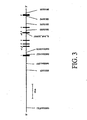
- a region common to all these extended haplotypes is defined by markers DG13S166 and D13S1238. This region includes only one gene, the FLAP nucleic acid sequence.
- Table 9 shows two haplotypes that are representative of these female MI risk haplotypes which are referred to herein as the female MI "at risk” haplotypes.
- the relative risk for male MI patients that had the female MI-"at risk” haplotype was increased (see, e.g ., Table 9 ), indicating that the female MI-"at risk” haplotype also increased the risk of having an MI in males.
- haplotypes involving only SNP markers that associate with MI additional SNPs were identified by sequencing the FLAP gene and the region flanking the gene.
- a and B Two correlated series of SNP haplotypes have been observed in excess in patients, denoted as A and B in Table 7 .
- the length of the haplotypes varies between 33 and 69 kb, and the haplotypes cover one or two blocks of linkage disequilibrium.
- Both series of haplotypes (HapA and HapB) contain the common allele G of the SNP SG13S25.
- HapC2 identified in the analysis of the North American cohort (see Example 13), also contains the allele G of the SNP SG13S25. All haplotypes in the A series contain the SNP SG13S114, while all haplotypes in the B series contain the SNP SG13S106. In the B series, the haplotypes B4, B5, and B6 have a relative risk (RR) greater than 2 and with allelic frequencies above 10%. The haplotypes in the A series have slightly lower RR and lower p-values, but higher frequency (15-16%). The haplotypes in series B and A are strongly correlated, i.e ., the haplotypes in B define a subset of the haplotypes in A.
- haplotypes in series B are more specific than A.
- haplotypes in series A are more sensitive, i.e ., they capture more individuals with the putative mutation, as is observed in the population attributable risk which is less for B than for A.
- these haplotypes show similar risk ratios and allelic frequencies for early-onset patients (defined as onset of first MI before the age of 55) and for both genders.
- risk factors such as hypertension, high cholesterol, smoking and diabetes
- HapC is defined by the T allele of marker SG13S375.
- HapC2 is defined by allele T of the SNPs SG13S375 and allele G of the SNP SG13S25.
- HapC3 is defined by allele T of the SNPs SG13S375 and allele G of the SNP SG13S25 and allele A of SNP SG13S32.
- HapC4-A is defined by allele G of the SNP SG13S106 in addition to allele T of the SNPs SG13S375, allele G of the SNP SG13S25 and allele A of SNP SG13S32.
- HapC4-B is defined by allele A of the SNP SG13S106 in addition to allele T of the SNPs SG13S375, allele G of the SNP SG13S25 and allele A of SNP SG13S32.
- HapC4-A correlates with HapA and HapB.
- HapK is defined by allele C of the SNPs SG12S16, allele G of the SNPs SG12S21, allele T of the SNPs SG12S23, allele A of the SNPs SG12S25, allele T of the SNPs SG12S26, allele T of the SNPs SG12S100, allele T of the SNPs SG12S28, allele C of the SNPs SG12S143, allele G of the SNPs SG12S144, and allele G of the SNPs SG12S221.
- essentially the HapK association to MI can be obtained by analyzing the following 5 SNPs: allele A of the SNPs SG12S25, allele T of the SNPs SG12S26, allele C of the SNPs SG12S143, allele G of the SNPs SG12S144, and allele G of the SNPs SG12S221.
- the HapK association to MI can be obtained analyzing the following 7 SNPs: allele A of the SNPs SG12S25, allele T of the SNPs SG12S26, allele T of the SNPs SG12S100, allele T of the SNPs SG12S28, allele C of the SNPs SG12S143, allele G of the SNPs SG12S144, and allele G of the SNPs SG12S221.
- the addition of these two SNPs to the 5 SNPs that define HapK adds additional information to improve accuracy of determination of the carrier status of a tested individual for this haplotype.
- HapL is defined by allele C of the SNPs SG12S16, allele G of the SNPs SG12S21, allele T of the SNPs SG12S23, allele A of the SNPs SG12S25, allele T of the SNPs SG12S26, allele T of the SNPs SG12S100, allele T of the SNPs SG12S28, allele T of the SNPs SG12S143, allele A of the SNPs SG12S144, and allele G of the SNPs SG12S221.
- HapQ is defined by allele C of the SNPs SG12S16, allele G of the SNPs SG12S21, allele T of the SNPs SG12S23, allele G of the SNPs SG12S25, allele T of the SNPs SG12S26, allele C of the SNPs SG12S100, allele T of the SNPs SG12S28, allele T of the SNPs SG12S143, allele A of the SNPs SG12S144, and allele G of the SNPs SG12S221.
- haplotype A4 increases the risk of having a stroke to a similar extent as it increases the risk of having an MI.
- Table 37 demonstrates that HapA is associated with risk of stroke in a Scottish chort (Example 14). Although not as significantly, haplotype A4 also confers risk of developing PAOD.
- the FLAP nucleic acid encodes a 5-lipoxygenase activating protein, which, in combination with 5-lipoxygenase (5-LO), is required for leukotriene synthesis.
- FLAP acts coordinately with 5-LO to catalyze the first step in the synthesis of leukotrienes from arachidonic acid. It catalyzes the conversion of arachidonic acid to 5(S)-hydroperoxy-6-trans-8,11,14-cis-eicosatetraenoic acid (5-HPETE), and further to the allylic epoxide 5 (S)-trans7,9 trans 11,14-cis-eicosatetraenoic acid (leukotriene A4, LTA4).
- the leukotrienes are a family of highly potent biological mediators of inflammatory processes produced primarily by bone marrow derived leukocytes such as monocytes, macrophages, and neurophils. Both FLAP and 5-LO are detected within atherosclerosis lesions ( Proc Natl Acad Sci USA. 2003 Feb 4;100(3):1238-43 .), indicating that the vessel itself can be a source of leukotrienes. It was found at first that the MI-risk FLAP haplotype was associated with higher serum leukotriene levels. Increased production of leukotriene in individuals with pre-existing atherosclerosis lesions may lead to plaque instability or friability of the fibrous cap leading to local thrombotic events.
- Inhibitors of FLAP function impede translocation of 5-LO from the cytoplasm to the cell membrane and inhibit activation of 5-LO and thereby decrease leukotriene synthesis.
- treatment refers hot only to ameliorating symptoms associated with the disease or condition, but also preventing or delaying the onset of the disease or condition; preventing or delaying the occurrence of a second episode of the disease or condition; and/or also lessening the severity or frequency of symptoms of the disease or condition.
- treatment also refers to a minimization or reversal of the development of plaques. Methods are additionally available for assessing an individual's risk for MI, ACS, stroke or PAOD.
- the individual to be treated is an individual who is susceptible (at increased risk) for MI, ACS, stroke or PAOD, such as an individual who is in one of the representative target populations described herein.
- an individual who is at risk for MI, ACS, stroke or PAOD is an individual who has an at-risk haplotype in FLAP, as described herein.
- a haplotype associated with a susceptibility to myocardial infarction, ACS, stroke or PAOD comprises markers SG13S99, SG13S25, SG13S377, SG13S106, SG13S32 and SG13S35 at the 13q12-13 locus.
- a haplotype associated with a susceptibility to myocardial infarction, ACS, stroke or PAOD comprises markers SG13S99, SG13S25, SG13S106, SG13S30 and SG13S42 at the 13q12 locus.
- a haplotype associated with a susceptibility to myocardial infarction, ACS, stroke or PAOD comprises markers SG13S25, SG13S106, SG13S30 and SG13S42 at the 13q12-13 locus.
- a haplotype associated with a susceptibility to myocardial infarction, ACS, stroke or PAOD comprises markers SG13S99, SG13S25, SG13S114, SG13S89 and SG13S32 at the 13q12-13 locus.
- a haplotype associated with a susceptibility to myocardial infarction, ACS, stroke or PAOD comprises markers SG13S2S, SG13S114, SG13S89 and SG13S32 at the 13q12-13 locus.
- a haplotype associated with a susceptibility to myocardial infarction, ACS, stroke or PAOD comprises marker SG13S375 at the 13q12-13 locus.
- a haplotype associated with a susceptibility to myocardial infarction, ACS, stroke or PAOD comprises markers SG13S25 and SG13S375 at the 13q12-13 locus.
- a haplotype associated with a susceptibility to myocardial infarction, ACS, stroke or PAOD comprises markers SG13S25, SG13S375 and SG13S32 at the 13q12-13 locus.
- a haplotype associated with a susceptibility to myocardial infarction, ACS, stroke or PAOD comprises markers SG13S25, SG13S375, SG13S32 and SG13S106 at the 13q12-13 locus.
- haplotypes associated with a susceptibility to myocardial infarction, ACS, stroke or PAOD include the haplotypes shown in Tables 5, 7, 8, 9, 1014,15,17 and 19, as well as haplotypes comprising markers shown in Table 13.
- Increased risk for MI, ACS, stroke or PAOD in individuals with a FLAP at-risk haplotype is logically conferred by increased production of leukotrienes in the arterial vessel wall or in bone-marrow derived inflammatory cells within the blood and/or arterial vessel wall. It is shown herein that FLAP at-risk haplotypes are associated with higher production of LTB4 ex vivo. It is further shown herein that serum leukotriene levels (specifically, leukotriene E4) correlate with serum CRP levels in myocardial infarction patients. FLAP genetic variation may drive high leukotriene levels (within the blood vessel and/or systemically), which in turn may drive higher CRP levels which has been shown as a risk factor for MI.
- individuals with a FLAP at-risk haplotype are likely to have elevated serum CRP as well as other serum inflammatory markers.
- the level of serum CRP or other serum inflammatory markers can be used as a surrogate for the level of arterial wall inflammation initiated by lipid deposition and atherogenesis conferred by the presence of the at-risk FLAP haplotype.
- an individual who is at risk for MI, ACS, stroke or PAOD is an individual who has a polymorphism in a FLAP gene, in which the presence of the polymorphism is indicative of a susceptibility to MI, ACS, stroke or PAOD.
- the term "gene,” as used herein, refers to not only the sequence of nucleic acids encoding a polypeptide, but also the promoter regions, transcription enhancement elements, splice donor/acceptor sites, and other non-transcribed nucleic acid elements. Representative polymorphisms include those presented in Table 13 , below.
- an individual who is at risk for MI, ACS, stroke or PAOD is an individual who has an at-risk polymorphism in the 5-LO gene in the promoter region, as described herein.
- an individual who is at risk for MI or ACS is an individual who has an at-risk haplotype in LTA4H, as described herein.
- the haplotype can comprise alleles 0, T, 0, and A, of markers DG12S1664, SG12S26, DG12S1666, and SG12S144, respectively, at the 12q23 locus.
- This LTA4H "at-risk" haplotype is detected in over 76 % of male patients who have previously had an MI, conferring an increased relative risk of 1.4 fold and in 72% of female MI patients with a relative risk of 1.2.
- an individual who is at risk for MI or ACS is an individual who has a polymorphism in an LTA4H gene, in which the presence of the polymorphism is indicative of a susceptibility to MI or ACS.
- the term "gene,” as used herein, refers to not only the sequence of nucleic acids encoding a polypeptide, but also the promoter regions, transcription enhancement elements, splice donor/acceptor sites, and other non-transcribed nucleic acid elements.
- Representative polymorphisms include those presented in Table 40 .
- certain variants in the FLAP gene and other members of the leukotriene biosynthetic and response pathway may indicate one's increased risk for MI and ACS.
- Other representatibe at-risk haplotypes are shown in Table 41 and Table 42 . Additional "at-risk" haplotypes can be determined using linkage disequilibrium and/or haplotype blocks.
- an individual who is at risk for MI, ACS, stroke or PAOD is an individual who has an elevated inflammatory marker.
- An "elevated inflammatory marker,” as used herein, is the presence of an amount of an inflammatory marker that is greater, by an amount that is statistically significant, than the amount that is typically found in control individual(s) or by comparison of disease risk in a population associated with the lowest band of measurement (e.g ., below the mean or median, the lowest quartile or the lowest quintile) compared to higher bands of measurement ( e.g ., above the mean or median, the second, third or fourth quartile; the second, third, fourth or fifth quintile).
- An "inflammatory marker” refers to a molecule that is indicative of the presence of inflammation in an individual, for example, C-reactive protein (CRP), serum amyloid A, fibrinogen, leukotriene levels (e.g ., leukotriene B4, leukotriene C4), leukotriene metabolites (e.g ., leukotriene E4), interleukin-6, tissue necrosis factor-alpha, soluble vasculare cell adhesion molecules (sVCAM), soluble intervascular adhesion molecules (sICAM), E-selectin, matrix metalloprotease type-1, matrix metalloprotease type-2, matrix metalloprotease type-3, matrix metalloprotease type-9, myeloperoxidase (MPO), N-tyrosine) or other markers (see, e.g ., Doggen, C.J.M.
- CRP C-reactive protein
- fibrinogen e.g ., fibrinogen, leukotriene levels (e.
- the presence of such inflammatory markers can be measured in serum or urine.
- an individual who is at risk for MI, ACS, stroke or PAOD is an individual who has increased LDL cholesterol and/or decreased HDL cholesterol levels.
- the American Heart Association indicates that an LDL cholesterol level of less than 100 mg/dL is optimal; from 100-129 mg/dL is near/above optimal; from 130-159 mg/dL is borderline high; from 160-189 is high; and from 190 and up is very high. Therefore, an individual who is at risk for MI, ACS, stroke or PAOD because of an increased LDL cholesterol level is, for example, an individual who has more than 100 mg/dL cholesterol, such as an individual who has a near/above optimal level, a borderline high level, a high level or a very high level.
- an HDL cholesterol level of less than 40 mg/dL is a major risk factor for heart disease; and an HDL cholesterol level of 60 mg/dL or more is protective against heart disease.
- an individual who is at risk for MI, ACS, stroke or PAOD because of a decreased HDL cholesterol level is, for example, an individual who has less than 60 mg/dL HDL cholesterol, such as an individual who has less than 40 mg/dL HDL cholesterol.
- an individual who is at risk for MI, ACS, stroke or PAOD is an individual who has increased leukotriene synthesis.
- Increased leukotriene synthesis indicates an amount of production of leukotrienes that is greater, by an amount that is statistically significant, than the amount of production of leukotrienes that is typically found in control individual(s) or by comparison of leukotriene production in a population associated with the lowest band of measurement (e.g ., below the mean or median, the lowest quartile or the lowest quintile) compared to higher bands of measurement ( e.g ., above the mean or median, the second, third or fourth quartile; the second, third, fourth or fifth quintile).
- the FLAP at-risk haplotypes correlate with increased serum leukotriene synthesis levels, and with increased production of leukotrienes ex vivo .
- An individual can be assessed for the presence of increased leukotriene synthesis by a variety of methods. For example, an individual can be assessed for an increased risk of MI, ACS, stroke, PAOD or atherosclerosis, by assessing the level of a leukotriene metabolite (e.g ., LTE4) in a sample (e.g ., serum, plasma or urine) from the individual. Samples containing blood, cells, or tissue can also be obtained from an individual and used to assess leukotriene or leukotriene metabolite production ex vivo under appropriate assay conditions.
- a leukotriene metabolite e.g ., LTE4
- An increased level of leukotriene metabolites, and/or an increased level of leukotriene production ex vivo is indicative of increased production of leukotrienes in the individual, and of an increased risk of MI, ACS, stroke, PAOD or atherosclerosis.
- an individual who is at risk for MI, ACS, or stroke is an individual who has already experienced at least one MI, ACS event or stroke, or who has stable angina, and is therefore at risk for a second MI, ACS event or stroke.
- an individual who is at risk for MI, ACS, stroke or PAOD is an individual who has atherosclerosis or who requires treatment (e.g ., angioplasty, stents, revascularization procedure) to restore blood flow in arteries.
- an individual who is at risk for MI, stroke or PAOD is an individual having asymptomatic ankle/brachial index of less than 0.9;
- an individual who is at risk for stroke is an individual who has had one or more transient ischemic attacks; who has had transient monocular blindness; has had a carotid endarterectomy; or has asymptomatic carotid stenosis;
- an individual who is at risk for PAOD is an individual who has (or had) claudication, limb ischemia leading to gangrene, ulceration or amputation, or has had a revascularization procedure.
- an individual who is at risk for MI, ACS, stroke or PAOD is an individual who has diabetes; hypertension; hypercholesterolemia; elevated triglycerides (e.g., > 200 mg/dl); elevated 1p(a); obesity; ankle/brachial index (ABI) less than 0.9; and/or is a past or current smoker.
- Individuals at risk for MI, ACS, stroke or PAOD may fall into more than one of these representative target populations.
- an individual may have experienced at least one MI, ACS event, transient ischemic attack, transient monocular blindness, or stroke, and may also have an increased level of an inflammatory marker.
- the term "individual in a target population" refers to an individual who is at risk for MI, ACS, stroke or PAOD who falls into at least one of the representative target populations described above.
- haplotype refers to a combination of genetic markers ("alleles"), such as those set forth in Table 13.
- the haplotype can comprise one or more alleles (e.g., a haplotype containing a single SNP), two or more alleles, three or more alleles, four or more alleles, or five or more alleles.
- the genetic markers are particular "alleles” at "polymorphic sites” associated with FLAP.
- a nucleotide position at which more than one sequence is possible in a population is referred to herein as a "polymorphic site”.
- a polymorphic site is a single nucleotide in length
- the site is referred to as a single nucleotide polymorphism ("SNP").
- SNP single nucleotide polymorphism
- Polymorphic sites can allow for differences in sequences based on substitutions, insertions or deletions. Each version of the sequence with respect to the polymorphic site is referred to herein as an "allele" of the polymorphic site.
- the SNP allows for both an adenine allele and a thymine allele.
- a reference sequence is referred to for a particular sequence. Alleles that differ from the reference are referred to as “variant” alleles.
- the reference FLAP sequence is described herein by SEQ ID NO: 1.
- variant FLAP refers to a sequence that differs from SEQ ID NO: 1, but is otherwise substantially similar.
- the genetic markers that make up the haplotypes described herein are FLAP variants.
- Additional variants can include changes that affect a polypeptide, e.g ., the FLAP polypeptide.
- sequence differences when compared to a reference nucleotide sequence, can include the insertion or deletion of a single nucleotide, or of more than one nucleotide, resulting in a frame shift; the change of at least one nucleotide, resulting in a change in the encoded amino acid; the change of at least one nucleotide, resulting in the generation of a premature stop codon; the deletion of several nucleotides, resulting in a deletion of one or more amino acids encoded by the nucleotides; the insertion of one or several nucleotides, such as by unequal recombination or gene conversion, resulting in an interruption of the coding sequence of a reading frame; duplication of all or a part of a sequence; transposition; or a rearrangement of a nucleotide sequence, as described in detail above.
- Such sequence changes alter the polypeptide encoded by a FLAP nucleic acid.
- the change in the nucleic acid sequence causes a frame shift
- the frame shift can result in a change in the encoded amino, acids, and/or can result in the generation of a premature stop codon, causing generation of a truncated polypeptide.
- a polymorphism associated with a susceptibility to MI, ACS, stroke or PAOD can be a synonymous change in one or more nucleotides ( i.e ., a change that does not result in a change in the amino acid sequence).
- polymorphism can, for example, alter splice sites, affect the stability or transport of mRNA, or otherwise affect the transcription or translation of the polypeptide.
- the polypeptide encoded by the reference nucleotide sequence is the "reference" polypeptide with a particular reference amino acid sequence, and polypeptides encoded by variant alleles are referred to as "variant" polypeptides with variant amino acid sequences.
- Haplotypes are a combination of genetic markers, e.g ., particular alleles at polymorphic sites.
- the haplotypes described herein e.g ., having markers such as those shown in Table 13, are found more frequently in individuals with MI, ACS, stroke or PAOD than in individuals without MI, ACS, stroke or PAOD. Therefore, these haplotypes have predictive value for detecting a susceptibility to MI, ACS, stroke or PAOD in an individual.
- the haplotypes described herein are in some cases a combination of various genetic markers, e.g ., SNPs and microsatellites. Therefore, detecting haplotypes can be accomplished by methods known in the art for detecting sequences at polymorphic sites, such as the methods described above.
- an individual who is at risk for MI, ACS, stroke or PAOD is an individual in whom an at-risk haplotype is identified.
- the at-risk haplotype is one that confers a significant risk of MI, ACS, stroke or PAOD.
- significance associated with a haplotype is measured by an odds ratio.
- the significance is measured by a percentage.
- a significant risk is measured as an odds ratio of at least about 1.2, including by not limited to: 1.2, 1.3, 1.4, 1.5, 1.6, 1.7, 1.8, and 1.9.
- an odds ratio of at least 1.2 is significant.
- an odds ratio of at least about 1.5 is significant.
- a significant increase in risk is at least about 1.7 is significant. In a further embodiment, a significant increase in risk is at least about 20%, including but not limited to about 25%, 30%, 35%, 40%, 45%, 50%, 55%, 60%, 65%, 70%, 75%, 80%, 85%, 90%, 95%, and 98%. In a further embodiment, a significant increase in risk is at least about 50%. In yet another embodiment, an at-risk haplotype has a p value ⁇ 0.05. It is understood however, that identifying whether a risk is medically significant may also depend on a variety of factors, including the specific disease, the haplotype, and often, environmental factors.
- An at-risk haplotype in, or comprising portions of, the FLAP gene in one where the haplotype is more frequently present in an individual at risk for MI, ACS, stroke or PAOD (affected), compared to the frequency of its presence in a healthy individual (control), and wherein the presence of the haplotype is indicative of susceptibility to MI, ACS, stroke or PAOD.
- a simple test for correlation would be a Fisher-exact test on a two by two table. Given a cohort of chromosomes the two by two table is constructed out of the number of chromosomes that include both of the haplotypes, one of the haplotype but not the other and neither of the haplotypes.
- an at-risk haplotype is an at-risk haplotype within or near FLAP that significantly correlates with a haplotype such as a halotype shown in Table 14; a haplotype shown in Table 15; a haplotype shown in Table 19; haplotype B4; haplotype B5; haplotype B6; haplotype A4; haplotype A5; or haplotype HapB.
- a haplotype such as a halotype shown in Table 14; a haplotype shown in Table 15; a haplotype shown in Table 19; haplotype B4; haplotype B5; haplotype B6; haplotype A4; haplotype A5; or haplotype HapB.
- an at-risk haplotype comprises an at-risk haplotype within or near FLAP that significantly correlates with susceptibility to myocardial infarction or stroke.
- a haplotype associated with a susceptibility to myocardial infarction, ACS, stroke or PAOD comprises markers SG13S99, SG13S25, SG13S377, SG13S106, SG13S32 and SG13S35 at the 13q12-13 locus.
- a haplotype associated with a susceptibility to myocardial infarction, ACS, stroke or PAOD comprises markers SG13S99, SG13S25, SG13S106, SG13S30 and SG13S42 at the 13q12-13 locus.
- a haplotype associated with a susceptibility to myocardial infarction, ACS, stroke or PAOD comprises markers SG13S25, SG13S106, SG13S30 and SG13S42 at the 13q12-13 locus.
- a haplotype associated with a susceptibility to myocardial infarction, ACS, stroke or PAOD comprises markers SG13S99, SG13S25, SG13S114, SG13S89 and SG13S32 at the 13q12-13 locus.
- a haplotype associated with a susceptibility to myocardial infarction, ACS, stroke or PAOD comprises marker SG13S375 at the 13q12-13 locus.
- a haplotype associated with a susceptibility to myocardial infarction, ACS, stroke or PAOD comprises markers SG13S25 and SG13S375 at the 13q12-13 locus.
- a haplotype associated with a susceptibility to myocardial infarction, ACS, stroke or PAOD comprises markers SG13S25, SG13S375 and SG13S32 at the 13q12-13 locus.
- a haplotype associated with a susceptibility to myocardial infarction, ACS, stroke or PAOD comprises markers SG13S25, SG13S375, SG13S32 and SG13S106.
- the at-risk haplotype is selected from the group consisting of: haplotype B4, B5, B6, A4, A5, C1, C2, C3, C4-A and C4-B.
- the at-risk haplotype can also comprise a combination of the markers in the haplotypes B4, B5, B6, A4, A5, C1, C2, C3, C4-A and/or C4-B.
- the at-risk haplotype can be haplotype HapB.
- the at-risk haplotype comprises a polymorphism shown in Table 13.
- the method comprises assessing in an individual the presence or frequency of SNPs and/or microsatellites in, comprising portions of, the FLAP gene, wherein an excess or higher frequency of the SNPs and/or microsatellites compared to a healthy control individual is indicative that the individual is susceptible to MI, ACS, stroke or PAOD.
- an at-risk haplotype can include microsatellite markers and/or SNPs such as those set forth in Table 13. The presence of the haplotype is indicative of a susceptibility to MI, ACS, stroke or PAOD, and therefore is indicative of an individual who falls within a target population for the treatment methods described herein.
- Haplotype analysis involves defining a candidate susceptibility locus using LOD scores. The defined regions are then ultra-fine mapped with microsatellite markers with an average spacing between markers of less than 100 kb. All usable microsatellite markers that are found in public databases and mapped within that region can be used. In addition, microsatellite markers identified within the deCODE genetics sequence assembly of the human genome can be used. The frequencies of haplotypes in the patient and the control groups can be estimated using an expectation-maximization algorithm ( Dempster A. et al., 1977. J. R. Stat. Soc. B, 39:1-389 ). An implementation of this algorithm that can handle missing genotypes and uncertainty with the phase can be used.
- At-risk-haplotypes in the 1-lod drop, for example, association of all possible combinations of genotyped markers is studied, provided those markers span a practical region.
- the combined patient and control groups can be randomly divided into two sets, equal in size to the original group of patients and controls.
- the haplotype analysis is then repeated and the most significant p-value registered is determined.
- This randomization scheme can be repeated, for example, over 100 times to construct an empirical distribution of p-values.
- a p-value of ⁇ 0.05 is indicative of an at-risk haplotype.
- haplotype analysis involves defining a candidate susceptibility locus based on "haplotype blocks.” It has been reported that portions of the human genome can be broken into series of discrete haplotype blocks containing a few common haplotypes; for these blocks, linkage disequilibrium data provided little evidence indicating recombination (see, e.g ., Wall., J.D. and Pritchard, J.K.; Nature Reviews Genetics 4:587-597 (2003 ); Daly, M. et al., Nature Genet. 29:229-232 (2001 ); Gabriel, S.B. et al., Science 296:2225-2229 (2002 ); Patil, N.
- blocks can be defined as regions of DNA that have limited haplotype diversity (see, e.g ., Daly, M. et al., Nature Genet. 29:229-232 (2001 ); Patil, N. et al., Science 294:1719-1723 (2001 ); Dawson, E. et al., Nature 418:544-548 (2002 ); Zhang, K. et al., Proc. Natl. Acad Sci. USA 99:7335-7339 (2002 )), or as regions between transition zones having extensive historical recombination, identified using linkage disequilibrium (see, e.g., Gabriel, S.B.
- haplotype block includes blocks defined by either characteristic.
- Haplotype blocks can be used readily to map associations between phenotype and haplotype status.
- the main haplotypes can be identified in each haplotype block, and then a set of "tagging" SNPs or markers (the smallest set of SNPs or markers needed to distinguish among the haplotypes) can then be identified.
- These tagging SNPs or markers can then be used in assessment of samples from groups of individuals, in order to identify association between phenotype and haplotype. If desired, neighboring haplotype blocks can be assessed concurrently, as there may also exist linkage disequilibrium among the haplotype blocks.
- haplotypes e.g., HapA, HapB, HapC, HapL, HapK, HapQ
- these haplotypes have predictive value for detecting MI, ACS, stoke or PAOD, or a susceptibility to MI, ACS, stoke or PAOD, in an individual.
- haplotype blocks comprising certain tagging markers, can be found more frequently in individuals with MI, ACS, stoke or PAOD than in individuals without MI, ACS, stoke or PAOD.
- these "at-risk" tagging markers within the haplotype blocks also have predictive value for detecting MI, ACS, stoke or PAOD, or a susceptibility to MI, ACS, stoke or PAOD, in an individual.
- "At-risk” tagging markers within the haplotype or LD blocks can also include other markers that distinguish among the haplotypes, as these similarly have predictive value for detecting MI, ACS, stoke or PAOD or a susceptibility to MI, ACS, stoke or PAOD.
- haplotypes and tagging markers described herein are, in some cases, a combination of various genetic markers, e.g., SNPs and microsatellites. Therefore, detecting haplotypes can be accomplished by methods known in the art and/or described herein for detecting sequences at polymorphic sites. Furthermore, correlation between certain haplotypes or sets of tagging markers and disease phenotype can be verified using standard techniques. A representative example of a simple test for correlation would be a Fisher-exact test on a two by two table.
- the present disclosure encompasses methods of treatment (prophylactic and/or therapeutic, as described above) for MI, ACS, stroke or PAOD in individuals, such as individuals in the target populations described above, as well as for other diseases and conditions associated with FLAP or with other members of the leukotriene pathway (e.g ., for atherosclerosis).
- leukotriene pathway include polypeptides (e.g , enzymes, receptors) and other molecules that are associated with production of leukotrienes: for example, proteins or enzymes such as FLAP, 5-LO, other leukotriene biosynthetic enzymes (e.g ., leukotriene C4 synthase, leukotriene A4 hydrolase); receptors or binding agents of the enzymes; leukotrienes such as LTA4, LTB4, LTC4, LTD4, LTE4; and receptors of leukotrienes (e.g ., leukotriene B4 receptor 1 (BLT1), leukotriene B4 receptor 2 (BLT2), cysteinyl leukotriene receptor 1 (CysLTR1), cysteinyl leukotriene receptor 2 (CysLTR2)).
- BLT1 leukotriene B4 receptor 1
- BLT2 leukotriene B4 receptor 2
- cysteinyl leukotriene receptor 1 C
- the description relates to methods of treatment for myocardial infarction or susceptibility to myocardial infarction (for example, for individuals in an at-risk population such as those described above); as well as methods of treatment for acute coronary syndrome (e.g ., unstable angina, non-ST-elevation myocardial infarction (NSTEMI) or ST-elevation myocardial infarction (STEMI)); methods for reducing risk of MI, stroke or PAOD in persons with asymptomatic ankle/brachial index less than 0.9; for decreasing risk of a second myocardial infarction; for stroke or susceptibility to stroke; for transient ischemic attack; for transient monocular blindness; for decreasing risk of a second stroke; for PAOD or susceptibility to PAOD; for ABI less than 0.9; for claudication or limb ischemia; for atherosclerosis, such as for patients requiring treatment (e.g ., angioplasty, stents, revascularization procedure
- the description additionally pertains to use of one or more leukotriene synthesis inhibitors, as described herein, for the manufacture of a medicament for the treatment of MI, ACS, stroke, PAOD and/or atherosclerosis, e.g ., using the methods described herein.
- the invention also provides for the use of one or more leukotriene synthesis inhibitors, as described herein, for the manufacture of a medicament for reducing the risk for MI, ACS, PAOD, stroke and/or artherosclerosis using the methods described herein.
- These medicaments may comprise a leukotriene synthesis inhibitor alone or in combination with a statin, as described herein.
- a leukotriene synthesis inhibitor is used.
- a “leukotriene synthesis inhibitor” is an agent that inhibits FLAP polypeptide activity and/or FLAP nucleic acid expression, as described herein ( e.g ., a nucleic acid antagonist).
- a leukotriene synthesis inhibitor is an agent that inhibits polypeptide activity and/or nucleic acid expression of another member of the leukotriene biosynthetic pathway (e.g ., 5-LO; LTC4S; LTA4H; LTB4DH).
- a leukotriene synthesis inhibitor is an agent that alters activity or metabolism of a leukotriene (e.g ., an antagonist of a leukotriene; an antagonist of a leukotriene receptor).
- the leukotriene synthesis inhibitor alters activity and/or nucleic acid expression of FLAP or of 5-LO, or alters interaction between FLAP and 5-LO.
- Leukotriene synthesis inhibitors can alter polypeptide activity or nucleic acid expression of a member of the leukotriene pathway by a variety of means, such as, for example, by catalytically degrading, downregulating or interfering with the expression, transcription or translation of a nucleic acid encoding the member of the leukotriene pathway; by altering posttranslational processing of the polypeptide; by altering transcription of splicing variants; or by interfering with polypeptide activity ( e.g ., by binding to the polypeptide, or by binding to another polypeptide that interacts with that member of the leukotriene pathway, such as a FLAP binding agent as described herein or some other binding agent of a member of the leukotriene pathway; by altering interaction among two or more members of the leukotriene pathway ( e.g ., interaction between FLAP and 5-LO); or by antagonizing activity of a member of the leukotriene pathway.
- means such as, for
- Representative leukotriene synthesis inhibitors include the following: agents that inhibit activity of a member of the leukotriene biosynthetic pathway (e.g ., FLAP, 5-LO), LTC4S, LTA4H, such as the agents presented in the Agent Tables I and II herein; agents that inhibit activity of receptors of members of the leukotriene pathway, such as FLAP receptors, LTA4 receptors, LTB4 receptors (e.g.
- BLOT1, BLT2 LTC4 receptors, LTD4 receptors, LTE4 receptors, Cys LT1 receptors, Cys LT2 receptors, 5-LO receptors; BLT1; BLT2; CysLTR1; CysLTR2; agents that bind to the members of the leukotriene pathway, such as FLAP binding agents (e.g ., 5-LO) or agents that bind to receptors of members of the leukotriene pathway (e.g.
- leukotriene receptor antagonists agents that bind to a leukotriene (e.g ., to LTA4, LTB4, LTC4, LTD4, LTE4, Cys LT1, Cys LT2); agents that increase breakdown of leukotrienes (e.g., LTB4DH); or other agents that otherwise affect ( e.g ., increase or decrease) activity of the leukotriene; antibodies to leukotrienes; antisense nucleic acids or small double-stranded interfering RNA, to nucleic acids encoding FLAP, 5-LO, LTA4H, or a leukotriene synthetase or other member of the leukotriene pathway, or fragments or derivatives thereof, including antisense nucleic acids to nucleic acids encoding the FLAP, 5-LO or leukotriene synthetase polypeptides, and vectors comprising such antisense nucleic acids (e.g ., nucleic acid, c
- a member of the leukotriene pathway such as FLAP, 5-LO or LTA4H nucleic acid expression or polypeptide activity, or that regulate transcription of FLAP splicing variants, 5-LO splicing variants or LTA4H splicing variants(
- More than one leukotriene synthesis inhibitor can be used concurrently, if desired.
- the therapy is designed to alter activity of a FLAP polypeptide, a 5-LO polypeptide, or another member of the leukotriene pathway in an individual, such as by inhibiting or antagonizing activity.
- a leukotriene synthesis inhibitor can be administered in order to decrease synthesis of leukotrienes within the individual, or to downregulate or decrease the expression or availability of the FLAP nucleic acid or specific splicing variants of the FLAP nucleic acid. Downregulation or decreasing expression or availability of a native FLAP nucleic acid or of a particular splicing variant could minimize the expression or activity of a defective nucleic acid or the particular splicing variant and thereby minimize the impact of the defective nucleic acid or the particular splicing variant.
- a leukotriene synthesis inhibitor can be administered in order to downregulate or decrease the expression or availability of the nucleic acid encoding 5-LO or specific splicing variants of the nucleic acid encoding 5-LO.
- the leukotriene synthesis inhibitor(s) are administered in a therapeutically effective amount (i.e ., an amount that is sufficient to treat the disease or condition, such as by ameliorating symptoms associated with the disease or condition, preventing or delaying the onset of the disease or condition, and/or also lessening the severity or frequency of symptoms of the disease or condition).
- a therapeutically effective amount i.e ., an amount that is sufficient to treat the disease or condition, such as by ameliorating symptoms associated with the disease or condition, preventing or delaying the onset of the disease or condition, and/or also lessening the severity or frequency of symptoms of the disease or condition.
- the amount which will be therapeutically effective in the treatment of a particular individual's disease or condition will depend on the symptoms and severity of the disease, and can be determined by standard clinical techniques.
- in vitro or in vivo assays may optionally be employed to help identify optimal dosage ranges.
- Effective doses may be extrapolated from dose-response curves derived from in vitro or animal model test systems.
- the leukotriene synthesis inhibitor agent is an agent that inhibits activity of FLAP and/or of 5-LO.
- Preferred agents include the following, as set forth in Agent Table I below:
- the agents set forth in the Agent Table III can be used for prophylactic and/or therapeutic treatment for diseases and conditions associated with FLAP or with other members of the leukotriene pathways, or with increased leukotriene synthesis.
- they can be used for treatment for myocardial infarction or susceptibility to myocardial infarction, such as for individuals in an at-risk population as described above, ( e.g ., based on identified risk factors such as elevated cholesterol, elevated C-reactive protein, and/or genotype); for individuals suffering from acute coronary syndrome, such as unstable angina, non-ST-elevation myocardial infarction (NSTEMI) or ST-elevation myocardial infarction (STEMI); methods for reducing risk of MI, stroke or PAOD in persons with asymptomatic ankle/brachial index less than 0.9; for decreasing risk of a subsequent myocardial infarction, such as in individuals who have already had one or more myocardial infarctions; for stroke or susceptibility
- the leukotriene synthesis inhibitor is an inhibitor of FLAP such as 1-((4-chlorophenyl)methyl)-3-((1,1-dimethylethyl)thio)-alpha,alpha-dimethyl-5-(2-quinolinylmethoxy)-1H-Indole-2-propanoic acid otherwise known as MK-0591, (R)-(+)-alpha-cyclopentyl-4-(2-quinolinylmethoxy)-Benzeneacetic acid otherwise known as BAY-x-1005, 3-(3-(1,1-dimethylethylthio-5-(quinoline-2-ylmethoxy)-1-(4-chloromethylphenyl)indole-2-yl)-2,2-dimethylpropionaldehyde oxime-0-2-acetic acid otherwise known as A-81834, their optically pure enantiomers, salts, chemical derivatives, analogues, or other compounds inhibiting FLAP
- FLAP
- the leukotriene synthesis inhibitor is an inhibitor of 5LO such as zileuton, atreleuton, 6-((3-fluoro-5-(tetrahydro-4-methoxy-2H-pyran-4yl)phenoxy)methyl)-1-methyl-2(1H)-quinlolinone otherwise known as ZD-2138, 1-((4-chlorophenyl)methyl)-3-((1,1dimethylethyl)thio)-alpha,alpha-dimethyl-5-(2-quinolinylmethoxy)-1H-Indole-2-propanoic acid otherwise known as MK-886, 4-(3-(4-(2-Methyl-imidazol-1-yl)-phenylsulfanyl)-phenyl)-tetrahydro-pyran-4-carboxylic acid amide otherwise known as CJ-13610, their optically pure enantiomers, salts, chemical derivatives, analogues or other compounds
- M is selected from the group consisting of hydrogen, a pharmaceutically acceptable cation, and a pharmaceutically acceptable metabolically cleavable group
- B is a straight or branched divalent alkylene group of from one to twelve carbon atoms
- Z is thiazolyl, optionally substituted with alkyl of from one to six carbon atoms or haloalkyl of from one to six carbon atoms
- the compound is a compound or pharmaceutically acceptable salt thereof having the name (R)-N- ⁇ 3-[-5-(4-fluorophenylmethyl)thiazo-2-yl]-1methyl-2-propynyl ⁇ -N-hydroxyurea. See U.S. Patent No. 4,615,596 , incorporated herein by reference.
- the compound is represented by the following formula: or a pharmaceutically acceptable salt thereof, wherein A is selected from the group consisting of straight or branched divalent alkylene of from one to twelve carbon atoms and divalent cycloalkylene of from three to eight carbon atoms; R 1 is selected from the group consisting of hydrogen, alkylthio of from one to six carbon atoms, phenylthio, optionally substituted with alkyl of from one to six carbon atoms, alkoxy of from one to six carbon atoms, or-halogen, phenylalkylthio in which the alkyl portion contains from one to six carbon atoms, and the phenyl group is optionally substituted with alkyl of from one to six carbon atoms, alkoxy of from one to six carbon atoms, or halogen, R 2 is selected from the group consisting of - COOB wherein B is selected from hydrogen, a pharmaceutically acceptable cation, or a metabolically cleavable group, -COO
- the compound can be represented by the formula: or a pharmaceutically acceptable salt thereof, wherein M is selected from the group consisting of hydrogen, and a pharmaceutically acceptable cation; B is a straight or branched divalent alkylene group of from one to twelve carbon atoms; Z is selected from the group consisting of: (a) furyl, optionally substituted with alkyl of from one to six carbon atoms, or haloalkyl of from one to six carbon atoms, and (b) thienyl, optionally substituted with alkyl of from one to six carbon atoms, or haloalkyl of from one to six carbon atoms; and L is alkylene of from 1-6 carbon atoms; A is phenyl optionally substituted with alkyl of from one to six carbon atoms, haloalkyl of from one to six carbon atoms, hydroxyalkyl of from one to six carbon atoms, alkoxy of from one to twelve carbon atoms, alkoxyalkoxyl in which
- the compound is a compound or a pharmaceutically acceptable salt thereof selected from the group consisting of: N- ⁇ 3-(5-(4-fluorophenylmethyl)fur-2-yl)-3-butyn-2-yl ⁇ -N-hydroxyurea; N- ⁇ 3-(5-(4-fluorophenylmethyl)-2-thienyl)-1-methyl-2-propynyl ⁇ -N-hydroxyurea; (R)-N- ⁇ 3-(5-(4-fluorophenylmethyl)-2-thienyl)-1-methyl-2-propynyl ⁇ -N-hydroxyurea; and (R)-N- ⁇ 3-(5-(4-chlorophenylmethyl)-2-thienyl)-1-methyl-2-propynyl ⁇ -N-hydroxyurea; (S)-N- ⁇ 3-[5-(4-fluorophenylmethyl)-2-thienyl]-1-methyl-2-propynyl ⁇ -N-hydroxyurea; (
- the compound can be represented by the formula: or a pharmaceutically acceptable salt thereof, wherein A is selected from the group consisting of straight or branched divalent alkylene of one to twelve carbon atoms, straight or branched divalent alkenylene of two to twelve carbon atoms, and divalent cycloalkylene of three to eight carbon atoms; R 1 is alkylthio of one to six carbon atoms; R 6 is selected from the group consisting of hydrogen and alkyl of one to six carbon atoms; R 7 is selected from the group consisting of (carboxyl)alkyl in which the alkyl portion is of one to six carbon atoms, (alkoxycarbonyl)alkyl in which the alkoxycarbonyl portion is of two to six carbon atoms and the alkyl portion is of one to six carbon atoms, (aminocarbonyl)alkyl in which the alkyl portion is of one to six carbon atoms, ((alkylamino)carbonyl)alkyl in which
- the compound is selected from the group consisting of: 3-(3-1,1-dimethylethylthio)-5-(quinolin-2-ylmethoxy-1-(4-chlorophenylmethyl)-indol-2-yl)-2,2-dimethylpropionaldehyde oxime-O-2 acetic acid; 3-(3-(1,1-dimethylethylthio)-5-(quinolin-2-ylmethoxy)-1-(4-chloro-phenylmethyl) indol-2-yl)-2,2-dimethylpropionaldehyde oxime-O-2-(3-methyl)butyric acid; 3-(3-(1,1-dimethylethylthio)-5-(6,7-dichloroquinolin-2-ylmethoxy)-1-(4-chlorophenylmethyl) indol-2-yl)-2,2-dimethylpropionaldehyde oxime-O-2-
- the compound can be represented by the formula: Q 1 -X-Ar-Q 2 or pharmaceutically acceptable salts thereof, wherein Q is a 9-, 10- or 11-membered bicyclic heterocyclic moiety containing one or two nitrogen heteroatoms and optionally containing a further heteroatom selected from nitrogen, oxygen and sulphur, and Q may optionally bear up to four substituents selected from halogeno, hydroxy, cyano, formyl, oxo, thioxo, (1-4C)alkyl, (3-4C)alkenyl, (3-4C)alkynyl, (1-4C)alkoxy, fluoro-(1-4C)alkyl, hydroxy-(1-4C)alkyl, (2-5C)alkanoyl, phenyl, benzoyl and benzyl, and wherein said phenyl, benzoyl and benzyl substituents may optionally bear one or two substituents selected from halogeno, (1-4C)allcyl and (
- the compound is selected from the group consisting of: (2S,4R)-4-[5-fluoro-3-(1-methyl-2-oxo-1,2,3,4-tetrahydroquinolin-6-ylthio)phenyl]-4-hydroxy-2-ethyltetrahydropyran, (2S,4R)-4-[5-fluoro-3-(1-methyl-2-oxo-1,2,3,4-tetrahydroquinolin-6-ylsulphonyl)phenyl]-4-hydroxy-2-methyltetrahydropyran, (2S,4R)-4-hydroxy-2-methyl-4-[2-(1-methyl-2-oxo-1,2,3,4-tetrahydroquinolin-6-ylthio)thiazol-5-yl]tetrahydropyran, (2S,4R)-4-hydroxy-2-methyl-4-[2-(1-methyl-2-oxo-1,2,3,4-tetrahydroquinolin-6-yls), 2-(
- the compound can be represented by the formula: wherein Q is a 10-membered bicyclic heterocyclic moiety containing one or two nitrogen heteroatoms which bears one or two thioxo substituents, and which heterocyclic moiety may optionally bear one, two or three further substituents selected from halogeno, hydroxy, cyano, amino, (1-4C)alkyl, (1-4C)alkoxy, fluoro-(1-4C)alkyl, (1-4C)alkylamino, di-[(1-4C)alkyl]amino, amino-(1-4C)alkyl, (1-4C)alkylamino-(1-4C)alkyl, di-[(1-4C)alkyl]amino-(1-4C)alkyl, phenyl and phenyl-(1-4C)alkyl, and wherein said phenyl or phenyl-(1-4C)alkyl substituent may optionally bear a substituent selected from halogeno, (1-4C)alkyl
- the compound is selected from the group consisting of: 4-(5-fluoro-3-(1-methyl-2-thioxo-1,2-dihydroquinolin-6-ylmethoxy)phenyl]-4-ethoxytetrahydropyran and 4-(5-fluoro-3-(1-methyl-2-thioxo-1,2,3,4-tetrahydroquinolin-6-lmethoxy)phenyl]-4-methoxytetrahydropyran, 4-(5-fluoro-3-(1-methyl-2-thioxo-1,2,3,4-tetrahydroquinolin-6-ylthio)phenyl]-4-methoxytetrahydropyran and pharmaceutically-acceptable salt thereof. See EP 466452 B1 , incorporated herein by reference.
- the compound can be a substituted 4-(quinolin-2-61-methoxy)phenylacetic acid derivative represented by the following formula: or pharmaceutically acceptable salt thereof , wherein R 1 represents a group of the formula: -OR 2 or
- R 2 and R 3 are identical or different and represent hydrogen, lower alkyl, phenyl,'benzyl or a group of the formula:
- R 4 represents hydrogen, lower alkyl, phenyl or benzyl, which can optionally be substituted by hydroxyl, carboxyl, lower alkoxycarbonyl, lower alkylthio, heteroaryl or carbamoyl
- R 5 represents hydrogen, lower alkyl, phenyl or benzyl
- R 6 represents a group of the formula -COR 5 or -CO 2 R 5
- R 7 represents hydrogen, lower alkyl or phenyl
- Y represents a group of the formula: wherein R 8 represents hydrogen, lower alkyl or phenyl and n denotes a number of 0 to 5, Z represents norbornyl, or represents a group of the formula: wherein R 9 and R 10 are identical or different and denote hydrogen, lower alkyl or phenyl, or R 9 and R 10 can together form a saturated carbocyclic ring having up to 6 carbon atoms and m denotes a number from 1 to 6, and A and B are identical or different and denote
- the compounds are selected from the group consisting of: 2-[4-(quinolin-2-yl-methoxy)phenyl]-2-cyclopentylacetic acid, 2-[4-(quinolin-2-yl-methoxy)phenyl]-2-cyclohexylacetic acid, and 2-[4-(quinolin-2-yl-methoxy)phenyl]-2-cycloheptylacetic acid, (+)-enantiomer of 2-[4-(quinolin-2-yl-methoxy)phenyl]-2-cyclopentylacetic acid, (-)-enantiomer of 2-[4-(quinolin-2-yl-methoxy)phenyl]-2-cyclopentylacetic acid and pharmaceutically acceptable salts thereof. See U.S. Patent No. 4,970,215 , incorporated herein by reference.
- the compound can be represented by the formula: wherein R, R, R, R and R are independently hydrogen, halogen, lower alkyl, lower alkenyl, lower alkynyl, -CF3, -CN, -NO2, -N3, -C(OH)RR, -CO2R, -SR, -S(O)R, -S(O)2R, -S(O)2NRR,-OR,-NRR, -C(O)R or -(CH2)tR; R is hydrogen, -CH3, -CF3, -C(O)H, X-R or X-R; R and R are independently: alkyl, - (CH2)uPh(R)2 or -(CH2)uTh(R)2; R is -CF3 or R; R is hydrogen or X-R; each R is independently hydrogen or lower alkyl, or two R's on same carbon atom are joined to form a cycloalkyl ring of 3 to 6 carbon
- alkyl refers to a monovalent group derived from a straight or branched chain saturated hydrocarbon by the removal of a single hydrogen atom. Alkyl groups are exemplified by methyl, ethyl, n- and iso-propyl, n-, sec-, iso- and tert-butyl, and the like.
- hydroxyalkyl represents an alkyl group, as defined above, substituted by one to three hydroxyl groups with the proviso that no more than one hydroxy group may be attached to a single carbon atom of the alkyl group.
- alkylamino refers to a group having the structure -NHR' wherein R' is alkyl, as previously defined, examples of alkylamino include methylamino, ethylamino, isopropylamino and the like.
- alkylarninocarbonyl refers to an alkylamino group, as previously defined, attached to the parent molecular moiety through a carbonyl group. Examples of alkylarninocarbonyl include methylamino-carbonyl, ethylaminocarbonyl, iso-propylaminocarbonyl and the like.
- alkylthio refers to an alkyl group, as defined above, attached to the parent molecular moiety through a sulfur atom and includes such examples as methylthio, ethylthio, propylthio, n-, sec- and tert-butylthio and the like.
- alkanoyl represents an alkyl group, as defined above, attached to the parent molecular moiety through a carbonyl group. Alkanoyl groups are exemplified by formyl, acetyl, propionyl, butanoyl and the like.
- alkanoylamino refers to an alkanoyl group, as previously defined, attached to the parent molecular moiety through a nitrogen atom. Examples of alkanoylamino include formamido, acetamido, and the like.
- N-alkanoyl-N-alkylamino refers to an alkanoyl group, as previously defined, attached to the parent molecular moiety through an aminoalkyl group. Examples of N-alkanoyl-N-alkylamino include N-methylformamido, N-methyl-acetamido, and the like.
- alkoxy or "alkoxyl” denote an alkyl group, as defined above, attached to the parent molecular moiety through an oxygen atom.
- Representative alkoxy groups include methoxyl, ethoxyl, propoxyl, butoxyl, and the like.
- alkoxyalkoxyl refers to an alkyl group, as defined above, attached through an oxygen to an alkyl group, as defined above, attached in turn through an oxygen to the parent molecular moiety.
- alkoxyalkoxyl include methoxymethoxyl, methoxyethyoxyl, ethoxyethoxyl and the like.
- alkoxyalkyl refers to an alkoxy group, as defined above, attached through an alkylene group to the parent molecular moiety.
- alkoxycarbonyl represents an ester group; i.e ., an alkoxy group, attached to the parent molecular moiety through a carbonyl group such as methoxycarbonyl, ethoxycarbonyl, and the like.
- alkenyl denotes a monovalent group derived from a hydrocarbon containing at least one carbon-carbon double bond by the removal of a single hydrogen atom. Alkenyl groups include, for example, ethenyl, propenyl, butenyl, 1-methyl-2-buten-1-yl and the like.
- alkylene denotes a divalent group derived from a straight or branched chain saturated hydrocarbon by the removal of two hydrogen atoms, for example methylene, 1,2-ethylene, 1,1-ethylene, 1,3-propylene, 2,2-dimethylpropylene, and the like.
- cycloalkylene refers to a divalent group derived from a saturated carbocyclic hydrocarbon by the removal of two hydrogen atoms, for example cyclopentylene, cyclohexylene, and the like.
- cycloalkyl denotes a monovalent group derived from a monocyclic or bicyclic saturated carbocyclic ring compound by the removal of a single hydrogen atom. Examples include cyclopropyl, cyclobutyl, cyclopentyl, cyclohexyl, bicyclo[2.2.1]heptanyl, and bicyclo[2.2.2]octanyl.
- alkenylene refers to a divalent group derived by the removal of two hydrogen atoms from a straight or branched chain acyclic hydrocarbon group containing a carbon-carbon triple bond.
- alkynylene examples include -CH ⁇ CH-, -CH ⁇ CH-CH 2 -, -CH ⁇ CH-CH(CH 3 )-, and the like.
- carbocyclic aryl denotes a monovalent carbocyclic ring group derived by the removal of a single hydrogen atom from a monocyclic, or bicyclic fused or non-fused ring system obeying the "4n+2 p electron" or Huckel aromaticity rule.
- carbocyclic aryl groups examples include phenyl, 1- and 2-naphthyl, biphenylyl, fluorenyl, and the like.
- the term "(carbocyclic aryl)alkyl” refers to a carbocyclic aryl ring group as defined above, attached to the parent molecular moiety through an alkylene group.
- Representative (carbocyclic aryl)alkyl groups include phenylmethyl, phenylethyl, phenylpropyl, 1-naphthylmethyl, and the like.
- carbocyclicarylalkoxy refers to a carbocyclicaryl alkyl group, as defined above, attached to the parent molecular moiety through an oxygen atom.
- carbocyclic aryloxyalkyl refers to a carbocyclic aryl group, as defined above, attached to the parent molecular moiety through an oxygen atom and thence through an alkylene group. Such groups are exemplified by phenoxymethyl, 1- and 2-naphthyloxymethyl, phenoxyethyl and the like.
- (carbocyclic aryl)alkoxyalkyl denotes a carbocyclic aryl group as defined above, attached to the parent molecular moiety through an alkoxyalkyl group.
- Representative (carbocyclic aryl)alkoxyalkyl groups include phenylmethoxymethyl, phenylethoxymethyl, 1- and 2-naphthylmethoxyethyl, and the like.
- Carbocyclic arylthioalkyl represents a carbocyclic aryl group as defined above, attached to the parent molecular moeity through a sulfur atom and thence through an alklyene group and are typified by phenylthiomethyl, 1- and 2-naphthylthioethyl and the like.
- dialkylamino refers to a group having the structure -NR'R" wherein R' and R" are independently selected from alkyl, as previously defined. Additionally, R' and R" taken together may optionally be -(CH 2 ) kk -- where kk is an integer of from 2 to 6.
- dialkylamino examples include, dimethylamino, diethylaminocarbonyl, methylethylamino, piperidino, and the like.
- halo or halogen denotes fluorine, chlorine, bromine or iodine.
- haloalkyl denotes an alkyl group, as defined above, having one, two, or three halogen atoms attached thereto and is exemplified by such groups as chloromethyl, bromoethyl, trifluoromethyl, and the like.
- hydroxyalkyl represents an alkyl group, as defined above, substituted by one to three hydroxyl groups with the proviso that no more than one hydroxy group may be attached to a single carbon atom of the alkyl group.
- phenoxy refers to a phenyl group attached to the parent molecular moiety through an oxygen atom.
- phenylthio refers to a phenyl group attached to the parent molecular moiety through a sulfur atom.
- pyridyloxy refers to a pyridyl group attached to the parent molecular moiety through an oxygen atom.
- heteroaryl or “heterocyclic aryl” as used herein refers to substituted or unsubstituted 5- or 6-membered ring aromatic groups containing one oxygen atom, one, two, three, or four nitrogen atoms, one nitrogen and one sulfur atom, or one nitrogen and one oxygen atom.
- heteroaryl also includes bi-or tricyclic groups in which the aromatic heterocyclic ring is fused to one or two benzene rings.
- heteroaryl groups are pyridyl, thienyl, indolyl, pyrazinyl, isoquinolyl, pyrrolyl, pyrimidyl, benzothienyl, furyl, benzo[b]furyl, imidazolyl, thiazolyl, carbazolyl, and the like.
- heteroarylalkyl denotes a heteroaryl group, as defined above, attached to the parent molecular moiety through an alkylene group.
- heteroaryloxy denotes a heteroaryl group, as defined above, attached to the parent molecular moiety through an oxygen atom.
- heteroarylalkoxy denotes a heteroarylalkyl group, as defined above, attached to the parent molecular moiety through an oxygen atom:
- the present description encompasses compositions and methods for reducing risk factors for MI, ACS, stroke, and/or PAOD.
- the method of reducing risk factors comprise administering a composition comprising a leukotriene synthesis inhibitor, described in detail herein alone, or in combination with a statin, to an individuals at risk for any of these conditions.
- Individuals at risk include the target population described herein, especially individuals with elevated CRP, and those at risk for other diseases and conditions associated with FLAP and/or other members of the leukotriene pathway.
- methods of reducing plasma CRP levels or plasma serum amyloid A levels comprising administering an effective amount of leukotriene inhibitor alone or in combination with a statin.
- Statins are competitive inhibitors of 3-hydroxy-3-methylglutarlcoenzyme A (HMG-CoA) reductase, the enzyme that converts HMG-CoA to the cholesterol precursor mevalonic acid.
- HMG-CoA reductase the enzyme that converts HMG-CoA to the cholesterol precursor mevalonic acid.
- statins Upon binding to the active site of HMG-CoA reducatase, statins alter the conformation of the enzyme, thereby preventing it from attaining a functional structure.
- the conformational change of the HMG-CoA reducatase active site makes statin drugs very effective and specific. Inhibition of HMG-CoA reducatase reduces intracellular cholesterol synthesis in hepatocytes.
- statins inhibit hepatic synthesis of apolipoprotein B-100, which results in a decrease in the synthesis and secretion of triglyercide rich lipoproteins. Additional beneficial effects of statins on lipid biosynthesis include inhibition of LDL oxidation, and inhibition of the expression of scavenger receptors. Statins also reduce the accumulation of esterified cholesterol into macrophages, increase endothelial cell nitric oxide synthesis, reduce inflammatory processes, increase the stability of artherosclerotic plaques, and restore platelet activity and the coagulation process.
- statins Because of their beneficial effects and high specificity, statins have become some of the most prescribed medicines in the Western industrialized world.
- the statin is one of the following agents: rovuvastatin, fluvastatin, atorvastatin, lovastatin, simvastatin, pravastatin or pitavastatin. These agents are described in detail in the Statin Agent Table III below.
- Mevastatin and related compounds are disclosed in U. S. Patent No. 3,983,140 .
- Lovastatin (mevinolin) and related compounds are disclosed in U. S. Patent No. 4,231,938 .
- Keto analogs of mevinolin (lovastatin) are disclosed in European Patent Application No. 0,142,146 A2
- quinoline and pyridine derivatives are disclosed in U. S. Patent No. 5,506,219 and 5,691,322 .
- Pravastatin and related compounds are disclosed in U. S. Patent No. 4,346,227 .
- Simvastatin and related compounds are disclosed in U. S. Patent Nos. 4,448,784 and 4,450,171 .
- Fluvastatin and related compounds are disclosed in U. S. Patent No. 5,354,772 .
- Cerivastatin and related compounds are disclosed in U. S. Patent Nos. 5,006,530 and 5,177,080 .
- Atorvastatin and related compounds are disclosed in U. S. Patent Nos. 4,681,893 ; 5,273,995 ; 5,385,929 and 5,686,104 .
- HMG CoA reductase molecules are described in U. S. Patent Nos. 5,753,675 ; 4,613,610 ; 4,686,237 ; 4,647,576 ; and 4,499,289 ; and British patent no. GB 2205837 .
- statins or other agents identified herein describe how to make and use the statins/agents, as well as biochemically active homologs thereof, salts, pro-drugs, metabolites, and the like. Such patents are incorporated herein by reference in their entirety. Dosings for the statins also have been described in patent and trade literature (e.g ., Physician's Desk Reference 2004, incorporated herein by reference) and by the manufacturers and clinical practitioners that prescribe them. Combination therapy using statin dosings similar to what is used when prescribing statins alone, or less, is specifically contemplated.
- Compositions comprising a leukotriene synthesis inhibitor alone or in combination with a statin may comprises a leukotriene synthesis inhibitor in an amount effective to reduce a risk factor such as CRP or serum amyloid A.
- Effective daily doses of the leukotriene synthesis inhibitors are between .01 mg and 100g, more preferably 0.1 mg to 1 g, and all individual doses within these ranges are specifically contemplated.
- Exemplary single adult doses include 10 mg, 25 mg, 50 mg, 75 mg, 100 mg, 150 mg, 200 mg, 250 mg, 300 mg, 350 mg, 400 mg, 500 mg and 750 mg, , from one to four times daily.
- compositions may comprise a statin in an amount effective to reduce total serum cholesterol, serum LDL, and/or serum CRP.
- Effective daily doses are between .01 mg and 100 g, more preferably 0.1 mg to 1g, and all individual doses within these ranges are specifically contemplated.
- Exemplary individual doses include 5 mg, 10 mg, 15mg, 20 mg, 30 mg, 40 mg 50 mg, 60 mg, and 80 mg, 100 mg, 150 mg, 200 mg, 250 mg, and 500 mg, from one to four times daily.
- the invention provides compositions, unit doses, and methods of treatment where a leukotriene synthesis inhibitor and a statin are included or administered in amounts that synergistically act to reduce serum CRP levels.
- Synergistically effective amounts are amounts that either (a) achieve a greater percentage reduction in CRP than is achieved in an average patient using either type of agent alone, at a safe and effective amount, or (b) reduces CRP a comparable amount to single agent therapy, with fewer side effects; or (c) reduces CRP a comparable amount to single agent therapy, and also reduces at least one other cardiovascular risk factor more effectively than single agent therapy alone.
- a composition comprises a leukotriene synthesis inhibitor and a statin for simultaneous administration, e.g ., in one dose.
- a composition in tablet, pill, or capsule form, including sustained release formulations, are specifically contemplated.
- a unit dose comprising a single dose of the leukotriene synthesis inhibitor and a single dose of the statin, packaged together but not in admixture, is contemplated.
- methods involve administering a composition comprising a leukotriene inhibitor and a composition comprising a statin at the same or different times, e.g ., administering the leukotriene synthesis inhibitor before or after administration of a composition comprising a statin.
- compositions for and methods of administering the agents to an individual continuously e.g ., through a patch or i.v.
- one to twelve times a day, once a day, every other day, twice a week, weekly, or monthly for one or more weeks, months, or years, or for the entire life of a patient, depending on the level of risk for the individual is specifically contemplated, to manage serum CRP and other cardiovascular risk factor levels. It is contemplated that these compositions will be used for treatment and lifestyle management plans for primary or secondary MI, ACS, stroke, or PAOD prevention.
- a nucleic acid of the invention in another embodiment, can be used in "antisense" therapy, in which a nucleic acid (e.g ., an oligonucleotide) which specifically hybridizes to the mRNA and/or genomic DNA of a nucleic acid is administered or generated in situ.
- a nucleic acid e.g ., an oligonucleotide
- the antisense nucleic acid that specifically hybridizes to the mRNA and/or DNA inhibits expression of the polypeptide encoded by that mRNA and/or DNA, e.g. , by inhibiting translation and/or transcription. Binding of the antisense nucleic acid can be by conventional base pair complementarity, or, for example, in the case of binding to DNA duplexes, through specific interaction in the major groove of the double helix.
- An antisense construct can be delivered, for example, as an expression plasmid as described above.
- the plasmid When the plasmid is transcribed in the cell, it produces RNA that is complementary to a portion of the mRNA and/or DNA that encodes the polypeptide for the member of the leukotriene pathway (e.g ., FLAP or 5-LO).
- the antisense construct can be an oligonucleotide probe that is generated ex vivo and introduced into cells; it then inhibits expression by hybridizing with the mRNA and/or genomic DNA of the polypeptide.
- the oligonucleotide probes are modified oligonucleotides that are resistant to endogenous nucleases, e.g ., exonucleases and/or endonucleases, thereby rendering them stable in vivo.
- Exemplary nucleic acid molecules for use as antisense oligonucleotides are phosphoramidate, phosphothioate and methylphosphonate analogs of DNA (see also U.S. Pat. Nos. 5,176,996 , 5,264,564 and 5,256,775 ). Additionally, general approaches to constructing oligomers useful in antisense therapy are also described, for example, by Van der Krol et al.
- oligodeoxyribonucleotides derived from the translation initiation site are preferred.
- oligonucleotides are designed that are complementary to mRNA encoding the polypeptide.
- the antisense oligonucleotides bind to mRNA transcripts and prevent translation. Absolute complementarity, although preferred, is not required.
- a sequence "complementary" to a portion of an RNA, as referred to herein, indicates that a sequence has sufficient complementarity to be able to hybridize with the RNA, forming a stable duplex; in the case of double-stranded antisense nucleic acids, a single strand of the duplex DNA may thus be tested, or triplex formation may be assayed.
- the ability to hybridize will depend on both the degree of complementarity and the length of the antisense nucleic acid, as described in detail above. Generally, the longer the hybridizing nucleic acid, the more base mismatches with an RNA it may contain and still form a stable duplex (or triplex, as the case may be). One skilled in the art can ascertain a tolerable degree of mismatch by use of standard procedures.
- the oligonucleotides used in antisense therapy can be DNA, RNA, or chimeric mixtures or derivatives or modified versions thereof, single-stranded or double-stranded.
- the oligonucleotides can be modified at the base moiety, sugar moiety, or phosphate backbone, for example, to.improve stability of the molecule, hybridization, etc.
- the oligonucleotides can include other appended groups such as peptides ( e.g . for targeting host cell receptors in vivo ), or agents facilitating transport across the cell membrane (see, e.g ., Letsinger et al., Proc. Natl. Acad. Sci.
- the oligonucleotide may be conjugated to another molecule (e.g ., a peptide, hybridization triggered crosslinking agent, transport agent, hybridization-triggered cleavage agent).
- another molecule e.g ., a peptide, hybridization triggered crosslinking agent, transport agent, hybridization-triggered cleavage agent.
- the antisense molecules are delivered to cells that express the member of the leukotriene pathway in vivo.
- a number of methods can be used for delivering antisense DNA or RNA to cells; e.g ., antisense molecules can be injected directly into the tissue site, or modified antisense molecules, designed to target the desired cells (e.g ., antisense linked to peptides or antibodies that specifically bind receptors or antigens expressed on the target cell surface) can be administered systematically.
- a recombinant DNA construct is utilized in which the antisense oligonucleotide is placed under the control of a strong promoter (e.g ., pol III or pol II).
- RNAs that will form complementary base pairs with the endogenous transcripts and thereby prevent translation of the mRNA.
- a vector can be introduced in vivo such that it is taken up by a cell and directs the transcription of an antisense RNA.
- Such a vector can remain episomal or become chromosomally integrated, as long as it can be transcribed to produce the desired antisense RNA.
- Such vectors can be constructed by recombinant DNA technology methods standard in the art and described above.
- a plasmid, cosmid, YAC or viral vector can be used to prepare the recombinant DNA construct that can be introduced directly into the tissue site.
- viral vectors can be used which selectively infect the desired tissue, in which case administration may be accomplished by another route ( e.g ., systemically).
- RNA interference small double-stranded interfering RNA
- RNAi is a post-transcription process, in which double-stranded RNA is introduced, and sequence-specific gene silencing results, though catalytic degradation of the targeted mRNA. See, e.g ., Elbashir, S.M. et al., Nature 411:494-498 (2001 ); Lee, N.S., Nature Biotech. 19:500-505 (2002 ); Lee, S-K. et al., Nature Medicine 8(7):681-686 (2002 ).
- RNAi is used routinely to investigate gene function in a high throughput fashion or to modulate gene expression in human diseases ( Chi et al., PNAS,100 (11):6343-6346 (2003 )).
- Introduction of long double standed RNA leads to sequence-specific degradation of homologous gene transcripts.
- the long double stranded RNA is metabolized to small 21-23 nucleotide siRNA (small interfering RNA).
- siRNA binds to protein complex RISC (RNA-induced silencing complex) with dual function helicase.
- the helicase has RNAas activity and is able to unwind the RNA.
- the unwound si RNA allows an antisense strand to bind to a target.
- exogenous RNAi chemically synthesized or recombinantly produced can also be used.
- non-intronic portions of the FLAP gene such as corresponding mRNA portions of SEQ ID NO.1, or portions of SEQ ID NO: 3
- target regions of the FLAP gene that are accessible for RNAi are targeted and silenced.
- Endogenous expression of a member of the leukotriene pathway can also be reduced by inactivating or "knocking out” the gene or its promoter using targeted homologous recombination (e.g ., see Smithies et al., Nature 317:230-234 (1985 ); Thomas & Capecchi, Cell 51:503-512 (1987 ); Thompson et al., Cell 5:313-321 (1989 )).
- a member of the leukotriene pathway e.g ., FLAP, 5-LO
- an altered, non-functional gene of a member of the leukotriene pathway (or a completely unrelated DNA sequence) flanked by DNA homologous to the endogenous gene (either the coding regions or regulatory regions of the gene) can be used, with or without a selectable marker and/or a negative selectable marker, to transfect cells that express the gene in vivo. Insertion of the DNA construct, via targeted homologous recombination, results in inactivation of the gene.
- the recombinant DNA constructs can be directly administered or targeted to the required site in vivo using appropriate vectors, as described above.
- targeted homologous recombination can be used to insert a DNA construct comprising a non-altered functional gene, or the complement thereof, or a portion thereof, in place of a gene in the cell, as described above.
- targeted homologous recombination can be used to insert a DNA construct comprising a nucleic acid that encodes a polypeptide variant that differs from that present in the cell.
- endogenous expression of a member of the leukotriene pathway can be reduced by targeting deoxyribonucleotide sequences complementary to the regulatory region of the member of the leukotriene pathway (i.e ., the promoter and/or enhancers) to form triple helical structures that prevent transcription of the gene in target cells in the body.
- deoxyribonucleotide sequences complementary to the regulatory region of the member of the leukotriene pathway i.e ., the promoter and/or enhancers
- the antisense constructs described herein by antagonizing the normal biological activity of one of the members of the leukotriene pathway, can be used in the manipulation of tissue, e.g ., tissue differentiation, both in vivo and for ex vivo tissue cultures.
- tissue e.g ., tissue differentiation
- the anti-sense techniques e.g ., microinjection of antisense molecules, or transfection with plasmids whose transcripts are anti-sense with regard to a nucleic acid RNA or nucleic acid sequence
- Such techniques can be utilized in cell culture, but can also be used in the creation of transgenic animals.
- the therapeutic agents as described herein can be delivered in a composition, as described above, or by themselves. They can be administered systemically, or can be targeted to a particular tissue.
- the therapeutic agents can be produced by a variety of means, including chemical synthesis; recombinant production; in vivo production (e.g ., a transgenic animal, such as U.S. Pat. No. 4,873,316 to Meade et al. ), for example, and can be isolated using standard means such as those described herein.
- a combination of any of the above methods of treatment e.g ., administration of non-altered polypeptide in conjunction with antisense therapy targeting altered mRNA for a member of the leukotriene pathway; administration of a first splicing variant in conjunction with antisense therapy targeting a second splicing variant
- administration of non-altered polypeptide in conjunction with antisense therapy targeting altered mRNA for a member of the leukotriene pathway e.g ., administration of non-altered polypeptide in conjunction with antisense therapy targeting altered mRNA for a member of the leukotriene pathway; administration of a first splicing variant in conjunction with antisense therapy targeting a second splicing variant
- the description additionally pertains to use of such therapeutic agents, as described herein, for the manufacture of a medicament for the treatment of MI, ACS, stroke, PAOD and/or atherosclerosis, e.g., using the methods described herein.
- the current description also pertains to methods of monitoring the response of an individual, such as an individual in one of the target populations described above, to treatment with a leukotriene synthesis inhibitor.
- an assessment of the level of inflammatory markers of the individual both before, and during, treatment with the leukotriene synthesis inhibitor will indicate whether the treatment has successfully decreased production of leukotrienes in the arterial vessel wall or in bone-marrow derived inflammatory cells.
- an individual who is a member of a target population as described above e.g ., an individual at risk for MI, ACS, stroke or PAOD, such as an individual who is at-risk due to a FLAP haplotype
- Blood, serum, plasma or urinary leukotrienes e.g ., leukotriene E4, cysteinyl leukotriene 1
- ex vivo production of leukotrienes e.g ., in blood samples stimulated with a calcium ionophore to produce leukotrienes
- leukotriene metabolites can be measured before, and during or after treatment with the leukotriene synthesis inhibitor.
- the leukotriene or leukotriene metabolite level before treatment is compared with the leukotriene or leukotriene metabolite level during or after treatment.
- the efficacy of treatment is indicated by a decrease in leukotriene production: a level of leukotriene or leukotriene metabolite during or after treatment that is significantly lower than the level of leukotriene or leukotriene metabolite before treatment, is indicative of efficacy.
- a level that is lower during or after treatment can be shown, for example, by decreased serum or urinary leukotrienes, or decreased ex vivo production of leukotrienes, or decreased leukotriene metabolites.
- a level that is "significantly lower”, as used herein, is a level that is less than the amount that is typically found in control individual(s), or is less in a comparison of disease risk in a population associated with the other bands of measurement (e.g ., the mean or median, the highest quartile or the highest quintile) compared to lower bands of measurement (e.g ., the mean or median, the other quartiles; the other quintiles).
- the level of a leukotriene or leukotriene metabolite is assessed in an individual before treatment with a leukotriene synthesis inhibitor; and during or after treatment with the leukotriene synthesis inhibitor, and the levels are compared.
- production of a leukotriene or a leukotriene metabolite is stimulated in a first test sample from the individual, using a calcium ionophore, before treatment with a leukotriene synthesis inhibitor, and is also stimulated in a second test sample from the individual, using a calcium ionophore, during or after treatment with the leukotriene synthesis inhibitor, and the level of production in the first test sample is compared with with the level of production of the leukotriene or leukotriene metabolite in the second test sample.
- a level of the leukotriene or leukotriene metabolite in the second test sample that is significantly lower than the level of the leukotriene or leukotriene metabolite in the first test sample, is indicative of efficacy of treatment with the leukotriene synthesis inhibitor.
- an individual who is a member of a target population of individuals at risk for MI, ACS, stroke or PAOD can be assessed for response to treatment with a leukotriene synthesis inhibitor, by examining levels of inflammatory markers in the individual.
- levels of an inflammatory marker in an appropriate test sample e.g ., serum, plasma or urine
- the level of the inflammatory marker before treatment is compared with the level of the inflammatory marker during or after treatment.
- the efficacy of treatment is indicated by a decrease in the level of the inflammatory marker, that is, a level of the inflammatory marker during or after treatment that is significantly lower ( e.g ., significantly lower), than the level of inflammatory marker before treatment, is indicative of efficacy.
- Representative inflammatory markers include: C-reactive protein (CRP), serum amyloid A, fibrinogen, serum sCD40L, a leukotriene (e.g.
- the marker is CRP, sCD40L or MPO.
- the efficacy of treatment of a leukotriene synthesis inhibitor may be monitored by measuring at-risk biomarkers in plasma, serum or urine.
- Clinical assays are available for the following biomarkers: CRP, serum amyloid A, IL-1 ⁇ , IL-6, IL-8, IL-10, TNF- ⁇ , sCD40L, E-selectin, P-selectin and intracellular adhesion molecule-1, vascular cell ashesion molecule-1.
- the relative risk of a cardiovascular event predicted by CRP levels is low risk has less thatn 1 mg/L, average is 1.0-3.0 mg/L and high risk patients have greater than 3.0 mg/L.
- optimal therapeutic effect of a leukotriene synthesis inhibitor alone or in combination with a statin is reducing CRP level to 2.0 mg/L or lower.
- the efficacy of treatment of a statin is monitored by measuring the level of total serum cholesterol, serum LDL and/or serum triglycerides.
- a level of serum total cholesterol, LDL-C and/or triglycerides during or after treatment, which is significantly lower than the level of total cholesterol, LDL-C and/or triglycerides before treatment is indicative of the efficacy of the treatment.
- "high risk patients” have an LDL level of 130 mg/D1 or higher and optimally the statin treatment will reduce the LDL level to less than 100 mg/dL.
- “Moderately-high risk patients” are those individuals with two or more risk factors for coronary heart disease with a 10-20% risk of heart attack within ten years.
- statin treatment will keep the LDL level under 129 mg/dL. More recent studies show an additional benefit on morbidity and mortality when statin therapy decreased serum LDL-C to less than 70 mg/dL.
- statin therapy may reduce CRP.
- CRP is an additional parameter that may be monitored in connection with statin therapy.
- the present description additionally pertains to methods for assessing an individual (e.g ., an individual who is in a target population as described herein, such as an individual who is at risk for MI, ACS, stroke or PAOD), for an increased risk of MI, ACS, atherosclerosis, stroke, transient ischemic attack, transient monocular blindness, asymptomatic carotid stenosis, PAOD, claudication, or limb ischemia.
- the methods comprise assessing the level of a leukotriene metabolite (e.g ., LTE4, LTD4, LTB4) in the individual, wherein an increased level of leukotriene metabolite is indicative of an increased risk.
- a leukotriene metabolite e.g ., LTE4, LTD4, LTB4
- the level can be measured in any appropriate tissue or fluid sample, such as blood, serum, plasma, or urine.
- the sample comprises neutrophils.
- the level of the leukotriene metabolite can be measured by standard methods, such as the methods described herein. For example, in one embodiment, production of a leukotriene metabolite is stimulated in a first test sample from the individual, using a calcium ionophore. The level of production is compared with a control level.
- the control level is a level that is typically found in control individual(s), such as individual who are not at risk for MI, ACS, stroke or PAOD; alternatively, a control level is the level that is found by comparison of disease risk in a population associated with the lowest band of measurement (e.g ., below the mean or median, the lowest quartile or the lowest quintile) compared to higher bands of measurement ( e.g ., above the mean or median, the second, third or fourth quartile; the second, third, fourth or fifth quintile).
- a level of production of the leukotriene metabolite that is significantly greater than the control level is indicative of an increased risk. Individuals at increased risk are candidates for treatments described herein.
- compositions comprising agents described herein, for example, an agent that is a leukotriene synthesis inhibitor as described herein.
- a leukotriene synthesis inhibitor can be formulated with a physiologically acceptable carrier or excipient to prepare a pharmaceutical composition.
- the carrier and composition can be sterile. The formulation should suit the mode of administration.
- compositions comprising a leukotriene synthesis inhibit, as set out in Agent Table I, and a statin, as set out in the Agent Table III.
- the leukotriene synthesis inhibitor and the statin may be coformulated with a physiological acceptable carrier or expedient to prepare a pharmaceutical composition.
- This composition may be formulation to deliver the leukotriene synthesis inhibitor and statin in a single dose.
- the processes for the isolation and purification of statins and other HMG-CoA reductase inhibitors include different combinations of extraction, chromatography, lactonization and crystallization methods. Examples of formulations for statins, statin derivatives and statin salts are found in the following, U.S. Patent Nos.
- Suitable pharmaceutically acceptable carriers include but are not limited to water, salt solutions (e.g ., NaCl), saline, buffered saline, alcohols, glycerol, ethanol, gum arabic, vegetable oils, benzyl alcohols, polyethylene glycols, gelatin, carbohydrates such as lactose, amylose or starch, dextrose, magnesium stearate, talc, silicic acid, viscous paraffin, perfume oil, fatty acid esters, hydroxymethylcellulose, polyvinyl pyrolidone, etc., as well as combinations thereof.
- the pharmaceutical preparations can, if desired, be mixed with auxiliary agents, e.g ., lubricants, preservatives, stabilizers, wetting agents, emulsifiers, salts for influencing osmotic pressure, buffers, coloring, flavoring and/or aromatic substances and the like which do not deleteriously react with the active agents.
- auxiliary agents e.g ., lubricants, preservatives, stabilizers, wetting agents, emulsifiers, salts for influencing osmotic pressure, buffers, coloring, flavoring and/or aromatic substances and the like which do not deleteriously react with the active agents.
- the composition can also contain minor amounts of wetting or emulsifying agents, or pH buffering agents.
- the composition can be a liquid solution, suspension, emulsion, tablet, pill, capsule, sustained release formulation, or powder.
- the composition can be formulated as a suppository, with traditional binders and carriers such as triglycerides.
- Oral formulation can include standard carriers such as pharmaceutical grades of mannitol, lactose, starch, magnesium stearate, polyvinyl pyrollidone, sodium saccharine, cellulose, magnesium carbonate, etc.
- compositions of this invention include, but are not limited to, intradermal, intramuscular, intraperitoneal, intraocular, intravenous, subcutaneous, topical, oral and intranasal.
- Other suitable methods of introduction can also include gene therapy (as described below), rechargeable or biodegradable devices, particle acceleration devices ("gene guns”) and slow release polymeric devices.
- the pharmaceutical compositions of this invention can also be administered as part of a combinatorial therapy with other agents.
- compositions for intravenous administration typically are solutions in sterile isotonic aqueous buffer.
- the composition may also include a solubilizing agent and a local anesthetic to ease pain at the site of the injection.
- the ingredients are supplied either separately or mixed together in unit dosage form, for example, as a dry lyophilized powder or water free concentrate in a hermetically sealed container such as an ampule or sachette indicating the quantity of active agent.
- the composition is to be administered by infusion, it can be dispensed with an infusion bottle containing sterile pharmaceutical grade water, saline or dextrose/water.
- an ampule of sterile water for injection or saline can be provided so that the ingredients may be mixed prior to administration.
- nonsprayable forms viscous to semi-solid or solid forms comprising a carrier compatible with topical application and having a dynamic viscosity preferably greater than water
- Suitable formulations include but are not limited to solutions, suspensions, emulsions, creams, ointments, powders, enemas, lotions, sols, liniments, salves, aerosols, etc., which are, if desired, sterilized or mixed with auxiliary agents, e.g ., preservatives, stabilizers, wetting agents, buffers or salts for influencing osmotic pressure, etc.
- auxiliary agents e.g ., preservatives, stabilizers, wetting agents, buffers or salts for influencing osmotic pressure, etc.
- the agent may be incorporated into a cosmetic formulation.
- sprayable aerosol preparations wherein the active ingredient, preferably in combination with a solid or liquid inert carrier material, is packaged in a squeeze bottle or in admixture with a pressurized volatile, normally gaseous propellant, e.g ., pressurized air.
- a pressurized volatile, normally gaseous propellant e.g ., pressurized air.
- Agents described herein can be formulated as neutral or salt forms.
- Pharmaceutically acceptable salts include those formed with free amino groups such as those derived from hydrochloric, phosphoric, acetic, oxalic, tartaric acids, etc., and those formed with free carboxyl groups such as those derived from sodium, potassium, ammonium, calcium, ferric hydroxides, isopropylamine, triethylamine, 2-ethylamino ethanol, histidine, procaine, etc.
- the agents are administered in a therapeutically effective amount.
- the amount of agents which will be therapeutically effective in the treatment of a particular disorder or condition will depend on the nature of the disorder or condition, and can be determined by standard clinical techniques.
- in vitro or in vivo assays may optionally be employed to help identify optimal dosage ranges.
- the precise dose to be employed in the formulation will also depend on the route of administration, and the seriousness of the symptoms, and should be decided according to the judgment of a practitioner and each patient's circumstances. Effective doses may be extrapolated from dose-response curves derived from in vitro or animal model test systems.
- the description also provides a pharmaceutical pack or kit comprising one or more containers filled with one or more of the ingredients of the pharmaceutical compositions of the invention.
- Optionally associated with such container(s) can be a notice in the form prescribed by a governmental agency regulating the manufacture, use or sale of pharmaceuticals or biological products, which notice reflects approval by the agency of manufacture, use of sale for human administration.
- the pack or kit can be labeled with information regarding mode of administration, sequence of drug administration ( e.g ., separately, sequentially or concurrently), or the like.
- the pack or kit may also include means for reminding the patient to take the therapy.
- the pack or kit can be a single unit dosage of the combination therapy or it can be a plurality of unit dosages.
- a pack or kit may contain a single dose for delivery of both a leukotriene synthesis inhibitor and a statin concurrently, or contain two or more doses wherein one dose is to deliver a leukotriene synthesis inhibitor and one dose is to deliver a statin either in parallel or one following the other.
- unit dosage is intended to mean a dosage that is dependent on the individual pharmacodynamics of each agent and administered in FDA approved dosages in standard time courses.
- FLAP nucleic acid refers to an isolated nucleic acid molecule encoding FLAP polypeptide.
- the FLAP nucleic acid molecules of the present invention can be RNA, for example, mRNA, or DNA, such as cDNA and genomic DNA.
- DNA molecules can be double-stranded or single-stranded; single stranded RNA or DNA can be either the coding, or sense strand or the non-coding, or antisense strand.
- the nucleic acid molecule can include all or a portion of the coding sequence of the gene or nucleic acid and can further comprise additional non-coding sequences such as introns and non-coding 3' and 5' sequences (including regulatory sequences, for example, as well as promoters, transcription enhancement elements, splice donor/acceptor sites, etc.).
- a FLAP nucleic acid can consist of SEQ ID NOs: 1 or 3 or the complement thereof, or to a portion or fragment of such an isolated nucleic acid molecule (e.g ., cDNA or the nucleic acid) that encodes FLAP polypeptide (e.g ., a polypeptide such as SEQ ID NO: 2).
- the isolated nucleic acid molecule comprises a nucleic acid molecule selected from the group consisting of SEQ ID NOs: 1 or 3, or their complement thereof.
- LTA4H nucleic acid refers to an isolated nucleic acid molecule encoding LTA4H polypeptide.
- the LTA4H nucleic acid molecules of the present invention can be RNA, for example, mRNA, or DNA, such as cDNA and genomic DNA.
- DNA molecules can be double-stranded or single-stranded; single stranded RNA or DNA can be either the coding, or sense strand or the non-coding, or antisense strand.
- the nucleic acid molecule can include all or a portion of the coding sequence of the gene or nucleic acid and can further comprise additional non-coding sequences such as introns and non-coding 3' and 5' sequences (including regulatory sequences, for example, as well as promoters, transcription enhancement elements, splice donor/acceptor sites, etc.).
- an LTA4H nucleic acid can consist of SEQ ID NOs: 718 or 719 or the complement thereof, or to a portion or fragment of such an isolated nucleic acid molecule (e.g ., cDNA or the nucleic acid) that encodes LTA4H polypeptide (e.g ., a polypeptide such as SEQ ID NO: 720).
- the isolated nucleic acid molecule comprises a nucleic acid molecule selected from the group consisting of SEQ ID NOs: 718 or 719, or their complement thereof.
- nucleic acid molecules can be fused to a marker sequence, for example, a sequence that encodes a polypeptide to assist in isolation or purification of the polypeptide.
- a marker sequence for example, a sequence that encodes a polypeptide to assist in isolation or purification of the polypeptide.
- sequences include, but are not limited to, those that encode a glutathione-S-transferase (GST) fusion protein and those that encode a hemagglutinin A (HA) polypeptide marker from influenza.
- GST glutathione-S-transferase
- HA hemagglutinin A
- an "isolated" nucleic acid molecule is one that is separated from nucleic acids that normally flank the gene or nucleic acid sequence (as in genomic sequences) and/or has been completely or partially purified from other transcribed sequences (e.g ., as in an RNA library).
- an isolated nucleic acid of the invention may be substantially isolated with respect to the complex cellular milieu in which it naturally occurs, or culture medium when produced by recombinant techniques, or chemical precursors or other chemicals when chemically synthesized.
- the isolated material will form part of a composition (for example, a crude extract containing other substances), buffer system or reagent mix.
- an isolated nucleic acid molecule comprises at least about 50, 80 or 90% (on a molar basis) of all macromolecular species present.
- genomic DNA the term “isolated” also can refer to nucleic acid molecules that are separated from the chromosome with which the genomic DNA is naturally associated.
- the isolated nucleic acid molecule can contain less than about 5 kb, including but not limited to 4 kb, 3 kb, 2 kb, 1 kb, 0.5 kb or 0.1 kb ofnucleotides which flank the nucleic acid molecule in the genomic DNA of the cell from which the nucleic acid molecule is derived.
- nucleic acid molecule can be fused to other coding or regulatory sequences and still be considered isolated.
- recombinant DNA contained in a vector is included in the definition of "isolated” as used herein.
- isolated nucleic acid molecules include recombinant DNA molecules in heterologous host cells, as well as partially or substantially purified DNA molecules in solution.
- isolated nucleic acid molecules also encompass in vivo and in vitro RNA transcripts of the DNA molecules of the present invention.
- An isolated nucleic acid molecule or nucleic acid sequence can include a nucleic acid molecule or nucleic acid sequence that is synthesized chemically or by recombinant means.
- isolated DNA contained in a vector is included in the definition of "isolated” as used herein.
- isolated nucleotide sequences include recombinant DNA molecules in heterologous organisms, as well as partially or substantially purified DNA molecules in solution.
- RNA transcripts of the DNA molecules of the present invention are also encompassed by “isolated" nucleotide sequences.
- Such isolated nucleotide sequences are useful in the manufacture of the encoded polypeptide, as probes for isolating homologous sequences (e.g ., from other mammalian species), for gene mapping (e.g ., by in situ hybridization with chromosomes), or for detecting expression of the nucleic acid in tissue (e.g ., human tissue), such as by Northern blot analysis.
- homologous sequences e.g ., from other mammalian species
- gene mapping e.g ., by in situ hybridization with chromosomes
- tissue e.g ., human tissue
- the present description also pertains to nucleic acid molecules which are not necessarily found in nature but which encode a FLAP polypeptide (e.g ., a polypeptide having an amino acid sequence comprising an amino acid sequence of SEQ ID NOs: 2), or another splicing variant of a FLAP polypeptide or polymorphic variant thereof.
- a FLAP polypeptide e.g ., a polypeptide having an amino acid sequence comprising an amino acid sequence of SEQ ID NOs: 2
- DNA molecules that comprise a sequence that is different from the naturally occurring nucleic acid sequence but which, due to the degeneracy of the genetic code, encode a FLAP polypeptide of the present invention are also the subjects of this invention. It also encompasses nucleotide sequences encoding portions (fragments), or encoding variant polypeptides such as analogues or derivatives of a FLAP polypeptide.
- nucleotide sequences are fragments that comprise one or more polymorphic microsatellite markers.
- nucleotide sequences are fragments that comprise one or more single nucleotide polymorphisms in a FLAP nucleic acid (e.g., the single nucleotide polymorphisms set forth in Table 13, below).
- the present description also pertains to nucleic acid molecules which are not necessarily found in nature but which encode a LTA4H polypeptide (e.g ., a polypeptide having an amino acid sequence comprising an amino acid sequence of SEQ ID NO: 720), or another splicing variant of a LTA4H polypeptide or polymorphic variant thereof.
- LTA4H polypeptide e.g ., a polypeptide having an amino acid sequence comprising an amino acid sequence of SEQ ID NO: 720
- DNA molecules that comprise a. sequence that is different from the naturally occurring nucleic acid sequence but which, due to the degeneracy of the genetic code, encode a LTA4H polypeptide of the present invention are also the subjects of this invention.
- nucleotide sequences encoding portions (fragments), or encoding variant polypeptides such as analogues or derivatives of a LTA4H polypeptide.
- variants can be naturally occurring, such as in the case of allelic variation or single nucleotide polymorphisms, or non-naturally-occurring, such as those induced by various mutagens and mutagenic processes.
- Intended variations include, but are not limited to, addition, deletion and substitution of one or more nucleotides that can result in conservative or non-conservative amino acid changes, including additions and deletions.
- nucleotide (and/or resultant amino acid) changes are silent or conserved; that is, they do not alter the characteristics or activity of a LTA4H polypeptide.
- nucleotide sequences are fragments that comprise one or more polymorphic microsatellite markers.
- nucleotide sequences are fragments that comprise one or more single nucleotide polymorphisms in a LTA4H nucleic acid (e.g ., the single nucleotide polymorphisms set forth in Table 37, below).
- nucleic acid molecules can include, for example, labeling, methylation, internucleotide modifications such as uncharged linkages (e.g ., methyl phosphonates, phosphotriesters, phosphoamidates, carbamates), charged linkages (e.g ., phosphorothioates, phosphorodithioates), pendent moieties ( e.g ., polypeptides), intercalators ( e.g ., acridine, psoralen), chelators, alkylators, and modified linkages (e.g ., alpha anomeric nucleic acids).
- synthetic molecules that mimic nucleic acid molecules in the ability to bind to a designated sequence via hydrogen bonding and other chemical interactions. Such molecules include, for example, those in which peptide linkages substitute for phosphate linkages in the backbone of the molecule.
- nucleic acid molecules that hybridize under high stringency hybridization conditions, such as for selective hybridization, to a nucleic acid sequence described herein (e.g ., nucleic acid molecules which specifically hybridize to a nucleic acid sequence encoding polypeptides described herein, and, optionally, have an activity of the polypeptide).
- a nucleic acid sequence described herein e.g ., nucleic acid molecules which specifically hybridize to a nucleic acid sequence encoding polypeptides described herein, and, optionally, have an activity of the polypeptide.
- One embodiment includes variants described herein which hybridize under high stringency hybridization conditions (e.g ., for selective hybridization) to a nucleic acid sequence comprising a nucleic acid sequence selected from the group consisting of SEQ ID NOs: 1, 3, 718 and 719 or the complement thereof.
- variants described herein which hybridize under high stringency hybridization conditions (e.g ., for selective hybridization) to a nucleic acid sequence encoding an amino acid sequence of SEQ ID NO: 2, SEQ ID NO: 720 or a polymorphic variant thereof.
- the variant that hybridizes under high stringency hybridizations has an activity of a FLAP.
- the variant that hybridizes under high stringency hybridizations has an activity of a LTA4H.
- nucleic acid molecules can be detected and/or isolated by specific hybridization (e.g. , under high stringency conditions).
- Specific hybridization refers to the ability of a first nucleic acid to hybridize to a second nucleic acid in a manner such that the first nucleic acid does not hybridize to any nucleic acid other than to the second nucleic acid ( e.g ., when the first nucleic acid has a higher similarity to the second nucleic acid than to any other nucleic acid in a sample wherein the hybridization is to be performed).
- “Stringency conditions” for hybridization is a term of art which refers to the incubation and wash conditions, e.g ., conditions of temperature and buffer concentration, which permit hybridization of a particular nucleic acid to a second nucleic acid; the first nucleic acid may be perfectly ( i.e., 100%) complementary to the second, or the first and second may share some degree of complementarity that is less than perfect ( e.g ., 70%, 75%, 85%, 95%). For example, certain high stringency conditions can be used which distinguish perfectly complementary nucleic acids from those of less complementarity.
- the exact conditions which determine the stringency of hybridization depend not only on ionic strength (e.g ., 0.2X SSC, 0.1X SSC), temperature (e.g ., room temperature, 42°C, 68°C) and the concentration of destabilizing agents such as formamide or denaturing agents such as SDS, but also on factors such as the length of the nucleic acid sequence, base composition, percent mismatch between hybridizing sequences and the frequency of occurrence of subsets of that sequence within other non-identical sequences.
- equivalent conditions can be determined by varying one or more of these parameters while maintaining a similar degree of identity or similarity between the two nucleic acid molecules.
- conditions are used such that sequences at least about 60%, at least about 70%, at least about 80%, at least about 90% or at least about 95% or more identical to each other remain hybridized to one another.
- hybridization conditions from a level of stringency at which no hybridization occurs to a level at which hybridization is first observed, conditions which will allow a given sequence to hybridize (e.g., selectively) with the most similar sequences in the sample can be determined.
- washing conditions are described in Krause, M.H. and S.A. Aaronson, Methods in Enzymology 200: 546-556 (1991 ), and in, Ausubel, et al., "Current Protocols in Molecular Biology", John Wiley & Sons, (1998 ), which describes the determination of washing conditions for moderate or low stringency conditions. Washing is the step in which conditions are usually set so as to determine a minimum level of complementarity of the hybrids. Generally, starting from the lowest temperature at which only homologous hybridization occurs, each °C by which the final wash temperature is reduced (holding SSC concentration constant) allows an increase by 1% in the maximum extent of mismatching among the sequences that hybridize. Generally, doubling the concentration of SSC results in an increase in T m of -17°C. Using these guidelines, the washing temperature can be determined empirically for high, moderate or low stringency, depending on the level of mismatch sought.
- a low stringency wash can comprise washing in a solution containing 0.2X SSC/0.1% SDS for 10 minutes at room temperature;
- a moderate stringency wash can comprise washing in a prewarmed solution (42°C) solution containing 0.2X SSC/0.1% SDS for 15 minutes at 42°C;
- a high stringency wash can comprise washing in prewarmed (68°C) solution containing 0.1X SSC/0.1%SDS for 15 minutes at 68°C.
- washes can be performed repeatedly or sequentially to obtain a desired result as known in the art. Equivalent conditions can be determined by varying one or more of the parameters given as an example, as known in the art, while maintaining a similar degree of identity or similarity between the target nucleic acid molecule and the primer or probe used.
- nucleic acid or amino acid “homology” is equivalent to nucleic acid or amino acid "identity".
- the length of a sequence aligned for comparison purposes is at least 30%, for example, at least 40%, in certain embodiments at least 60%, and in other embodiments at least 70%, 80%, 90% or 95% of the length of the reference sequence.
- the actual comparison of the two sequences can be accomplished.by well-known methods, for example, using a mathematical algorithm. A preferred, non-limiting example of such a mathematical algorithm is described in Karlin et al., Proc. Natl. Acad. Sci. USA 90:5873-5877 (1993 ).
- NBLAST nucleic Acids Res. 25:389-3402 (1997 ).
- BLAST XBLAST
- a mathematical algorithm utilized for the comparison of sequences is the algorithm of Myers and Miller, CABIOS 4(1): 11-17 (1988 ). Such an algorithm is incorporated into the ALIGN program (version 2.0) which is part of the GCG sequence alignment software package (Accelrys, Cambridge, UK). When utilizing the ALIGN program for comparing amino acid sequences, a PAM120 weight residue table, a gap length penalty of 12, and a gap penalty of 4 can be used. Additional algorithms for sequence analysis are' known in the art and include ADVANCE and ADAM as described in Torellis and Robotti, Comput. Appl. Biosci. 10:3-5 (1994 ); and FASTA described in Pearson and Lipman, Proc. Natl. Acad. Sci. USA 85:2444-8 (1988 ).
- the percent identity between two amino acid sequences can be accomplished using the GAP program in the GCG software package using either a BLOSUM63 matrix or a PAM250 matrix, and a gap weight of 12, 10, 8, 6, or 4 and a length weight of 2, 3, or 4.
- the percent identity between two nucleic acid sequences can be accomplished using the GAP program in the GCG software package using a gap weight of 50 and a length weight of 3.
- the present description also provides isolated nucleic acid molecules that contain a fragment or portion that hybridizes under highly stringent conditions to a nucleic acid sequence comprising SEQ ID NO: 1, 3, 718 or 719 or the complement of SEQ ID NO: 1, 3, 718 or 719, and also provides isolated nucleic acid molecules that contain a fragment or portion that hybridizes under highly stringent conditions to a nucleic acid sequence encoding an amino acid sequence or polymorphic variant thereof.
- the nucleic acid fragments are at least about 15, for example, at least about 18, 20, 23 or 25 nucleotides, and can be 30, 40, 50, 100, 200 or more nucleotides in length. Longer fragments, for example, 30 or more nucleotides in length, encoding antigenic polypeptides described herein are particularly useful, such as for the generation of antibodies as described below.
- the nucleic acid fragments are used as probes or primers in assays such as those described herein.
- Probes or “primers,” are oligonucleotides that hybridize in a base-specific manner to a complementary strand of nucleic acid molecules.
- probes and primers include polypeptide nucleic acids, as described in Nielsen et al., (Science 254:1497-1500 (1991 )).
- a probe or primer comprises a region of nucleic acid that hybridizes to at least about 15, for example about 20-25, and in certain embodiments about 40, 50 or 75, consecutive nucleotides of a nucleic acid of the invention, such as a nucleic acid comprising a contiguous nucleic acid sequence of SEQ ID NOs: 1, 3, 718 or 719 or the complement of SEQ ID Nos: 1, 3, 718 or 719 or a nucleic acid sequence encoding an amino acid sequence of SEQ ID NO: 2 or 720 or polymorphic variant thereof.
- a probe or primer comprises 100 or fewer nucleotides, in certain embodiments, from 6 to 50 nucleotides, for example, from 12 to 30 nucleotides.
- the probe or primer is at least 70% identical to the contiguous,nucleic acid sequence or to the complement of the contiguous nucleotide sequence, for example, at least 80% identical, in certain embodiments at least 90% identical, and in other embodiments at least 95% identical, or even capable of selectively hybridizing to the contiguous nucleic acid sequence or to the complement of the contiguous nucleotide sequence.
- the probe or primer further comprises a label, e.g ., radioisotope, fluorescent compound, enzyme, or enzyme co-factor. '
- Particularly useful probes and primers of the invention are those which hybridize to marker locations (e.g . in the FLAP gene) and those that permit amplication (e.g . using PCR) of a small DNA fragment that include a marker or SNP of interest, especially markers or SNPs that form haplotypes of the invention such as those listed in Table5, Table 7, Table 34, Table 40, Table 47, Table 51 or Table 57. Kits containing one or two or three or more of such probes and primers are contemplated as aspects of the invention.
- nucleic acid molecules of the invention such as those described above can be identified and isolated using standard molecular biology techniques and the sequence information provided herein.
- nucleic acid molecules can be amplified and isolated using the polymerase chain reaction and synthetic oligonucleotide primers based on one or more of SEQ ID NOs: 1, 3, 718 or 719 or the complement thereof, or designed based on nucleotides based on sequences encoding one or more of the amino acid sequences provided herein. See generally PCR Technology: Principles and Applications for DNA Amplification (ed. H.A. Erlich, Freeman Press, NY, NY, 1992 ); PCR Protocols: A Guide to Methods and Applications (Eds.
- nucleic acid molecules can be amplified using cDNA, mRNA or genomic DNA as a template, cloned into an appropriate vector and characterized by DNA sequence analysis.
- LCR ligase chain reaction
- NASBA nucleic acid based sequence amplification
- the latter two amplification methods involve isothermal reactions based on isothermal transcription, which produce both single stranded RNA (ssRNA) and double stranded DNA (dsDNA) as the amplification products in a ratio of about 30 or 100 to 1, respectively.
- ssRNA single stranded RNA
- dsDNA double stranded DNA
- the amplified DNA can be labeled, for example, radiolabeled, and used as a probe for screening a cDNA library derived from human cells, mRNA in zap express, ZIPLOX or other suitable vector.
- Corresponding clones can be isolated, DNA can obtained following in vivo excision, and the cloned insert can be sequenced in either or both orientations by art recognized methods to identify the correct reading frame encoding a polypeptide of the appropriate molecular weight.
- the direct analysis of the nucleic acid molecules of the present invention can be accomplished using well-known methods that are commercially available.
- polypeptide and the DNA encoding the polypeptide can be isolated, sequenced and further characterized.
- Antisense nucleic acid molecules can be designed using the nucleotide sequences of SEQ ID NOs: 1,3,718 or 719 and/or the complement of one or more of SEQ ID NOs: 1 or 3 and/or a portion of one or more of SEQ ID NOs: 1, 3, 718 or 719 or the complement of one or more of SEQ ID NOs: 1, 3, 718 or 719 and/or a sequence encoding the amino acid sequences of SEQ ID NOs: 2 or encoding a portion of one or more of SEQ ID NOs: 1, 3, 718 or 719 or their complement. They can be constructed using chemical synthesis and enzymatic ligation reactions using procedures known in the art.
- an antisense nucleic acid molecule e.g ., an antisense oligonucleotide
- an antisense oligonucleotide can be chemically synthesized using naturally occurring nucleotides or variously modified nucleotides designed to increase the biological stability of the molecules or to increase the physical stability of the duplex formed between the antisense and sense nucleic acids, e.g ., phosphorothioate derivatives and acridine substituted nucleotides can be used.
- the antisense nucleic acid molecule can be produced biologically using an expression vector into which a nucleic acid molecule has been subcloned in an antisense orientation (i.e ., RNA transcribed from the inserted nucleic acid molecule will be of an antisense orientation to a target nucleic acid of interest).
- the nucleic acid sequences can also be used to compare with endogenous DNA sequences in patients to identify one or more of the disorders related to FLAP, and as probes, such as to hybridize and discover related DNA sequences or to subtract out known sequences from a sample.
- the nucleic acid sequences can further be used to derive primers for genetic fingerprinting, to raise anti-polypeptide antibodies using DNA immunization techniques, and as an antigen to raise anti-DNA antibodies or elicit immune responses.
- Portions or fragments of the nucleotide sequences identified herein (and the corresponding complete gene sequences) can be used in numerous ways as polynucleotide reagents.
- these sequences can be used to: (i) map their respective genes on a chromosome; and, thus, locate gene regions or nucleic acid regions associated with genetic disease; (ii) identify an individual from a minute biological sample (tissue typing); and (iii) aid in forensic identification of a biological sample.
- the nucleotide sequences of the invention can be used to identify and express recombinant polypeptides for analysis, characterization or therapeutic use, or as markers for tissues in which the corresponding polypeptide is expressed, either constitutively, during tissue differentiation, or in diseased states.
- the nucleic acid sequences can additionally be used as reagents in the screening and/or diagnostic assays described herein, and can also be included as components of kits (e.g ., reagent kits) for use in the screening and/or diagnostic assays described herein.
- kits e.g ., reagent kits
- nucleic acid constructs containing a nucleic acid molecule of SEQ ID NOs: 1, 3, 718 or 719 or the complement thereof (or a portion thereof).
- the constructs comprise a vector ( e.g ., an expression vector) into which a sequence of the invention has been inserted in a sense or antisense orientation.
- vector refers to a nucleic acid molecule capable of transporting another nucleic acid to which it has been linked.
- vector refers to a circular double stranded DNA loop into which additional DNA segments can be ligated.
- viral vector Another type of vector is a viral vector, wherein additional DNA segments can be ligated into the viral genome.
- Certain vectors are capable of autonomous replication in a host cell into which they are introduced (e.g ., bacterial vectors having a bacterial origin of replication and episomal mammalian vectors).
- Other vectors e.g ., non-episomal mammalian vectors
- certain vectors such as expression vectors, are capable of directing the expression of genes or nucleic acids to which they are operably linked.
- expression vectors of utility in recombinant DNA techniques are often in the form of plasmids.
- the invention is intended to include such other forms of expression vectors, such as viral vectors ( e.g ., replication defective retroviruses, adenoviruses and adeno-associated viruses) that serve equivalent functions.
- Preferred recombinant expression vectors comprise a nucleic acid molecule of the invention in a form suitable for expression of the nucleic acid molecule in a host cell.
- the recombinant expression vectors include one or more regulatory sequences, selected on the basis of the host cells to be used for expression, which is operably linked to the nucleic acid sequence to be expressed.
- "operably linked” or "operatively linked” is intended to mean that the nucleic acid sequence of interest is linked to the regulatory sequence(s) in a manner which allows for expression of the nucleic acid sequence (e.g., in an in vitro transcription/translation system or in a host cell when the' vector is introduced into the host cell).
- regulatory sequence is intended to include promoters, enhancers and other expression control elements (e.g ., polyadenylation signals). Such regulatory sequences are described, for example, in Goeddel, “Gene Expression Technology", Methods in Enzymology 185, Academic Press, San Diego, CA (1990 ). Regulatory sequences include those which direct constitutive expression of a nucleic acid sequence in many types of host cell and those which direct expression of the nucleic acid sequence only in certain host cells (e.g ., tissue-specific regulatory sequences). It will be appreciated by those skilled in the art that the design of the expression vector can depend on such factors as the choice of the host cell to be transformed and the level of expression of polypeptide desired.
- the expression vectors of the invention can be introduced into host cells to thereby produce polypeptides, including fusion polypeptides, encoded by nucleic acid molecules as described herein.
- the recombinant expression vectors of the invention can be designed for expression of a polypeptide of the invention in prokaryotic or eukaryotic cells, e.g ., bacterial cells such as E. coli, insect cells (using baculovirus expression vectors), yeast cells or mammalian cells. Suitable host cells are discussed further in Goeddel, supra.
- the recombinant expression vector can be transcribed and translated in vitro, for example using T7 promoter regulatory sequences and T7 polymerase.
- host cell and "recombinant host cell” are used interchangeably herein. It is understood that such terms refer not only to the particular subject cell but also to the progeny or potential progeny of such a cell. Because certain modifications may occur in succeeding generations due to either mutation or environmental influences, such progeny may not, in fact, be identical to the parent cell, but are still included within the scope of the term as used herein.
- a host cell can be any prokaryotic or eukaryotic cell.
- a nucleic acid molecule of the invention can be expressed in bacterial cells (e.g ., E . coli ), insect cells, yeast or mammalian cells (such as Chinese hamster ovary cells (CHO) or COS cells).
- bacterial cells e.g ., E . coli
- insect cells e.g., E . coli
- yeast or mammalian cells such as Chinese hamster ovary cells (CHO) or COS cells.
- Other suitable host cells are known to those skilled in the art.
- Vector DNA can be introduced into prokaryotic or eukaryotic cells via conventional transformation or transfection techniques.
- transformation and “transfection” are intended to refer to a variety of art-recognized techniques for introducing a foreign nucleic acid molecule (e.g ., DNA) into a host cell, including calcium phosphate or calcium chloride co-precipitation, DEAE-dextran-mediated transfection, lipofection, or electroporation. Suitable methods for transforming or transfecting host cells can be found in Sambrook, et al. ( supra ), and other laboratory manuals.
- a gene or nucleic acid that encodes a selectable marker is generally introduced into the host cells along with the gene or nucleic acid of interest.
- selectable markers include those that confer resistance to drugs, such as G418, hygromycin and methotrexate.
- Nucleic acid molecules encoding a selectable marker can be introduced into a host cell on the same vector as the nucleic acid molecule of the invention or can be introduced on a separate vector. Cells stably transfected with the introduced nucleic acid molecule can be identified by drug selection (e.g ., cells that have incorporated the selectable marker gene or nucleic acid will survive, while the other cells die).
- a host cell such as a prokaryotic host cell or eukaryotic host cell in culture can be used to produce ( i.e ., express) a polypeptide of the invention.
- the invention further provides methods for producing a polypeptide using the host cells of the invention.
- the method comprises culturing the host cell of invention (into which a recombinant expression vector encoding a polypeptide of the invention has been introduced) in a suitable medium such that the polypeptide is produced.
- the method further comprises isolating the polypeptide from the medium or the host cell.
- a host cell of the invention is a fertilized oocyte or an embryonic stem cell into which a nucleic acid molecule of the invention has been introduced (e.g ., an exogenous FLAP nucleic acid, or an exogenous nucleic acid encoding a FLAP polypeptide).
- a nucleic acid molecule of the invention e.g ., an exogenous FLAP nucleic acid, or an exogenous nucleic acid encoding a FLAP polypeptide.
- Such host cells can then be used to create non-human transgenic animals in which exogenous nucleotide sequences have been introduced into the genome or homologous recombinant animals in which endogenous nucleotide sequences have been altered.
- transgenic animal is a non-human animal, preferably a mammal, more preferably a rodent such as a rat or mouse, in which one or more of the cells of the animal include a transgene.
- rodent such as a rat or mouse
- transgenic animals include non-human primates, sheep, dogs, cows, goats, chickens and amphibians.
- a transgene is exogenous DNA which is integrated into the genome of a cell from which a transgenic animal develops and which remains in the genome of the mature animal, thereby directing the expression of an encoded gene product in one or more cell types or tissues of the transgenic animal.
- a "homologous recombinant animal” is a non-human animal, preferably a mammal, more preferably a mouse, in which an endogenous gene has been altered by homologous recombination between the endogenous gene and an exogenous DNA molecule introduced into a cell of the animal, e.g ., an embryonic cell of the animal, prior to development of the animal.
- Clones of the non-human transgenic animals described herein can also be produced according to the methods described in Wilmut et al., Nature 385:810-813 (1997 ) and PCT Publication Nos. WO 97/07668 and WO 97/07669 .
- FLAP polypeptides encoded by FLAP nucleic acids
- FLAP polypeptides and fragments and variants thereof, as well as polypeptides encoded by nucleotide sequences described herein ( e.g ., other splicing variants).
- LTA4H polypeptides and fragments and variants thereof, as well as polypeptides encoded by nucleotide sequences described herein ( e.g ., other splicing variants)
- polypeptide refers to a polymer of amino acids, and not to a specific length; thus, peptides, oligopeptides and proteins are included within the definition of a polypeptide.
- a polypeptide is said to be “isolated” or “purified” when it is substantially free of cellular material when it is isolated from recombinant and non-recombinant cells, or free of chemical precursors or other chemicals when it is chemically synthesized.
- a polypeptide can be joined to another polypeptide with which it is not normally associated in a cell ( e . g ., in a "fusion protein") and still be “isolated” or “purified.”
- Polyclonal and/or monoclonal antibodies that specifically bind one form of the polypeptide or nucleic acid product e.g ., a polypeptide encoded by a nucleic acid having a SNP as set forth in Table 13
- Antibodies are also provided which bind a portion of either polypeptide encoded by nucleic acids of the invention (e.g., SEQ ID NO: 1 or SEQ ID NO: 3 or SEQ ID NO: 718 or SEQ ID NO: 719, or the complement thereof), or to a polypeptide encoded by nucleic acids of the invention that contain a polymorphic site or sites.
- the invention also provides antibodies to the polypeptides and polypeptide fragments of the invention, or a portion thereof, or having an amino acid sequence encoded by a nucleic acid molecule comprising all or a portion of SEQ ID NOs: 1, 3, 718 or 719, or the complement thereof, or another variant or portion thereof.
- a detailed discussion of the methods, to make the antibodies of the invention is provided in International Application No. PCT/US03/32556, filed on October 16, 2003 , which is incorporated by reference herein in its entirety..
- nucleic acids, probes, primers, polypeptides and antibodies described herein can be used in methods of diagnosis of a susceptibility to MI, ACS, stroke or PAOD, or to another disease or condition associated with an MI gene, such as FLAP or LTA4H, as well as in kits useful for diagnosis of a susceptibility to MI, ACS, stroke or PAOD, or to another disease or condition associated with FLAP or LTA4H.
- the kit useful for diagnosis of susceptibility to MI, ACS, stroke or PAOD, or to another disease or condition associated with FLAP or LTA4H comprises primers as described herein, wherein the primers contain one or more of the SNPs identified in Table 13 or Table 37.
- diagnosis of susceptibility to MI, ACS, stroke or PAOD is made by detecting a polymorphism in a FLAP or LTA4H nucleic acid as described herein.
- the polymorphism can be an alteration in a FLAP or LTA4H nucleic acid, such as the insertion or deletion of a single nucleotide, or of more than one nucleotide, resulting in a frame shift alteration; the change of at least one nucleotide, resulting in a change in the encoded amino acid; the change of at least one nucleotide, resulting in the generation of a premature stop codon; the deletion of several nucleotides, resulting in a deletion of one or more amino acids encoded by the nucleotides; the insertion of one or several nucleotides, such as by unequal recombination or gene conversion, resulting in an interruption of the coding sequence of the gene or nucleic acid; duplication of all or a part of the gene or nucleic acid; transposition of all or a part of the gene or nucleic acid; or rearrangement of all or a part of the gene or nucleic acid.
- More than one such alteration may be present in a single gene or nucleic acid.
- sequence changes cause an alteration in the polypeptide encoded by a FLAP or LTA4H nucleic acid.
- the alteration is a frame shift alteration
- the frame shift can result in a change in the encoded amino acids, and/or can result in the generation of a premature stop codon, causing generation of a truncated polypeptide.
- a polymorphism associated with a disease or condition associated with a FLAP or LTA4H nucleic acid or a susceptibility to a disease or condition associated with a FLAP or LTA4H nucleic acid can be a synonymous alteration in one or more nucleotides (i.e ., an alteration that does not result in a change in the polypeptide encoded by a FLAP nucleic acid or LTA4H nucleic acid).
- Such a polymorphism may alter splicing sites, affect the stability or transport of mRNA, or otherwise affect the transcription or translation of the nucleic acid.
- a FLAP nucleic acid or a LTA4H nucleic acid that has any of the alteration described above is referred to herein as an "altered nucleic acid.” .
- hybridization methods such as Southern analysis, Northern analysis, or in situ hybridizations, can be used (see Current Protocols in Molecular Biology, Ausubel, F. et al., eds., John Wiley & Sons, including all supplements through 1999 ).
- a biological sample from a test subject (a "test sample") of genomic DNA, RNA, or cDNA, is obtained from an individual suspected of having, being susceptible to or predisposed for, or carrying a defect for, a susceptibility to a disease or condition associated with a FLAP nucleic acid or a disease or condition associated with a LTA4H nucleic acid (the "test individual").
- the individual can be an adult, child, or fetus.
- the test sample can be from any source which contains genomic DNA, such as a blood sample, sample of amniotic fluid, sample of cerebrospinal fluid, or tissue sample from skin, muscle, buccal or conjunctival mucosa, placenta, gastrointestinal tract or other organs.
- a test sample of DNA from fetal cells or tissue can be obtained by appropriate methods, such as by amniocentesis or chorionic villus sampling.
- the DNA, RNA, or cDNA sample is then examined to determine whether a polymorphism in an MI nucleic acid is present, and/or to determine which splicing variant(s) encoded by the FLAP or LTA4H is present.
- nucleic acid probe can be a DNA probe or an RNA probe; the nucleic acid probe can contain at least one polymorphism in a FLAP nucleic acid, LTA4H nucleic acid or contains a nucleic acid encoding a particular splicing variant of a FLAP nucleic acid or a particular splicing variant of a LTA4H nucleic acid.
- the probe can be any of the nucleic acid molecules described above ( e.g ., the nucleic acid, a fragment, a vector comprising the nucleic acid, a probe or primer, etc.).
- the test sample containing a FLAP nucleic acid is contacted with at least one nucleic acid probe to form a hybridization sample.
- a preferred probe for detecting mRNA or genomic DNA is a labeled nucleic acid probe capable of hybridizing to mRNA or genomic DNA sequences described herein.
- the nucleic acid probe can be, for example, a full-length nucleic acid molecule, or a portion thereof, such as an oligonucleotide of at least 15, 30, 50, 100, 250 or 500 nucleotides in length and sufficient to specifically hybridize under stringent conditions to appropriate mRNA or genomic DNA.
- the nucleic acid probe can be all or a portion of one of SEQ ID NOs: 1, 3, 718 or 719 or the complement thereof or a portion thereof; or can be a nucleic acid encoding all or a portion of one of SEQ ID NO: 2 or 720.
- Other suitable probes for use in the diagnostic assays of the invention are described above (see e.g ., probes and primers discussed under the heading, "Nucleic Acids of the Invention").
- hybridization sample is maintained under conditions that are sufficient to allow specific hybridization of the nucleic acid probe to a FLAP nucleic acid or a LTA4H nucleic acid.
- Specific hybridization indicates exact hybridization (e.g ., with no mismatches). Specific hybridization can be performed under high stringency conditions or moderate stringency conditions, for example, as described above. In a particularly preferred embodiment, the hybridization conditions for specific hybridization are high stringency.
- Specific hybridization if present, is then detected using standard methods. If specific hybridization occurs between the nucleic acid probe and FLAP nucleic acid in the test sample, then the FLAP has the polymorphism, or is the splicing variant, that is present in the nucleic acid probe. More than one nucleic acid probe can also be used concurrently in this method. Specific hybridization of any one of the nucleic acid probes is indicative of a polymorphism in the FLAP nucleic acid, or of the presence of a particular splicing variant encoding the FLAP nucleic acid, and is therefore diagnostic for a susceptibility to a disease or condition associated with FLAP (e.g ., MI, ACS, stroke or PAOD).
- a disease or condition associated with FLAP e.g ., MI, ACS, stroke or PAOD
- the LTA4H has the polymorphism, or is the splicing variant, that is present in the nucleic acid probe. More than one nucleic acid probe can also be used concurrently in this method. Specific hybridization of any one of the nucleic acid probes is indicative of a polymorphism in the LTA4H nucleic acid, or of the presence of a particular splicing variant encoding the LTA4H nucleic acid, and is therefore diagnostic for a susceptibility to a disease or condition associated with LTA4H ( e . g ., MI, ACS, stroke or PAOD).
- a disease or condition associated with LTA4H e . g ., MI, ACS, stroke or PAOD
- RNA is obtained from the individual by appropriate means.
- Specific hybridization of a nucleic acid probe, as described above, to RNA from the individual is indicative of a polymorphism in a FLAP nucleic acid, or of the presence of a particular splicing variant encoded by a FLAP nucleic acid, a polymorphism in a LTA4H nucleic acid, or of the presence of a particular splicing variant encoded by a LTA4H nucleic acid and is therefore diagnostic for susceptibility to a disease or condition associated with FLAP or LTA4H (e.g ., MI, ACS, stroke or PAOD).
- a disease or condition associated with FLAP or LTA4H e.g ., MI, ACS, stroke or PAOD
- nucleic acid probes For representative examples of use of nucleic acid probes, see, for example, U.S. Patents No. 5,288,611 and 4,851,330 .
- PNA peptide nucleic acid
- a nucleic acid probe can be used instead of a nucleic acid probe in the hybridization methods described above.
- PNA is a DNA mimic having a peptide-like, inorganic backbone, such as N-(2-aminoethyl)glycine units, with an organic base (A, G, C, T or U) attached to the glycine nitrogen via a methylene carbonyl linker (see, for example, Nielsen, P.E. et al., Bioconjugate Chemistry 5, American Chemical Society, p. 1 (1994 ).
- the PNA probe can be designed to specifically hybridize to a nucleic acid having a polymorphism associated with a susceptibility to a disease or condition associated with FLAP (e.g., MI). Hybridization of the PNA probe to a FLAP nucleic acid as described herein is diagnostic for the susceptibility to the disease or condition.
- FLAP a disease or condition associated with FLAP
- mutation analysis by restriction digestion can be used to detect an altered nucleic acid, or nucleic acids containing a polymorphism(s), if the mutation or polymorphism in the nucleic acid results in the creation or elimination of a restriction site.
- a test sample containing genomic DNA is obtained from the individual.
- Polymerase chain reaction (PCR) can be used to amplify a FLAP nucleic acid or a LTA4H nucleic acid (and, if necessary, the flanking sequences) in the test sample of genomic DNA from the test individual.
- RFLP analysis is conducted as described (see Current Protocols in Molecular Biology , supra ) .
- the digestion pattern of the relevant DNA fragment indicates the presence or absence of the alteration or polymorphism in the FLAP nucleic acid or LTA4H nucleic acid, and therefore indicates the presence or absence of the susceptibility to a disease or condition associated with FLAP or LTA4H (e.g ., MI, ACS, stroke or PAOD).
- a disease or condition associated with FLAP or LTA4H e.g ., MI, ACS, stroke or PAOD.
- Sequence analysis can also be used to detect specific polymorphisms in the FLAP nucleic acid.
- a test sample of DNA or RNA is obtained from the test individual.
- PCR or other appropriate methods can be used to amplify the nucleic acid, and/or its flanking sequences, if desired.
- the sequence of a FLAP nucleic acid, or a fragment of the nucleic acid, or cDNA, or fragment of the cDNA, or mRNA, or fragment of the mRNA, is determined, using standard methods.
- the sequence of the nucleic acid, nucleic acid fragment, cDNA, cDNA fragment, mRNA, or mRNA fragment is compared with the known nucleic acid sequence of the nucleic acid, cDNA (e.g ., one or more of SEQ ID NOs: 1, 3, 718 or 719and/or the complement of SEQ ID NO: 1, 3, 718 or 719), or a nucleic acid sequence encoding SEQ ID NO: 2, SEQ ID NO: 720 or a fragment thereof) or mRNA, as appropriate.
- the presence of a polymorphism in the FLAP or LTA4H indicates that the individual has a susceptibility to a disease associated with FLAP or LTA4H (e.g ., MI, ACS, stroke or PAOD).
- Allele-specific oligonucleotides can also be used to detect the presence of polymorphism(s) in the FLAP nucleic acid or the LTA4H nucleic acid, through the use of dot-blot hybridization of amplified oligonucleotides with allele-specific oligonucleotide (ASO) probes (see, for example, Saiki, R. et al., Nature 324:163-166 (1986 )).
- ASO allele-specific oligonucleotide
- an “allele-specific oligonucleotide” (also referred to herein as an “allele-specific oligonucleotide probe”) is an oligonucleotide of approximately 10-50 base pairs, for example, approximately 15-30 base pairs, that specifically hybridizes to a FLAP nucleic acid, and that contains a polymorphism associated with a susceptibility to a disease or condition associated with FLAP or LTA4H (e.g ., MI, ACS, stroke or PAOD).
- An allele-specific oligonucleotide probe that is specific for particular polymorphisms in a FLAP or LTA4H nucleic acid can be prepared, using standard methods (see Current Protocols in Molecular Biology , supra ).
- a test sample of DNA is obtained from the individual.
- PCR can be used to amplify all or a fragment of a FLAP nucleic acid or LTA4H nucleic acid, and their flanking sequences.
- the DNA containing the amplified FLAP or LTA4H nucleic acid (or fragment of the nucleic acid) is dot-blotted, using standard methods (see Current Protocols in Molecular Biology , supra ), and the blot is contacted with the oligonucleotide probe. The presence of specific hybridization of the probe to the amplified FLAP or LTA4H is then detected.
- Specific hybridization of an allele-specific oligonucleotide probe to DNA from the individual is indicative of a polymorphism in the FLAP or a polymorphism in the LTA4H and is therefore indicative of a susceptibility to a disease or condition associated with FLAP or LTA4H respectively ( e.g ., MI, ACS, stroke or PAOD).
- a disease or condition associated with FLAP or LTA4H e.g ., MI, ACS, stroke or PAOD.
- An allele-specific primer hybridizes to a site on target DNA overlapping a polymorphism and only primes amplification of an allelic form to which the primer exhibits perfect complementarity. See Gibbs, Nucleic Acid Res. 17, 2427-2448 (1989 ). This primer is used in conjunction with a second primer which hybridizes at a distal site. Amplification proceeds from the two primers, resulting in a detectable product which indicates the particular allelic form is present. A control is usually performed with a second pair of primers, one of which shows a single base mismatch at the polymorphic site and the other of which exhibits perfect complementarity to a distal site. The single-base mismatch prevents amplification and no detectable product is formed.
- the method works best when the mismatch is included in the 3'-most position of the oligonucleotide aligned with the polymorphism because this position is most destabilizing to elongation from the primer (see, e.g ., WO 93/22456 ).
- LNAs locked nucleic acids
- oxy-LNA O-methylene
- thio-LNA S-methylene
- amino-LNA amino methylene
- oxy-LNA nonamers have been shown to have melting temperatures of 64°C and 74 ° C when in complex with complementary DNA or RNA, respectively, as oposed to 28 ° C for both DNA and RNA for the corresponding DNA nonamer.
- Substantial increases in T m are also obtained when LNA monomers are used in combination with standard DNA or RNA monomers.
- the T m could be increased considerably.
- arrays of oligonucleotide probes that are complementary to target nucleic acid sequence segments from an individual can be used to identify polymorphisms in a FLAP nucleic acid or a LTA4H nucleic acid
- an oligonucleotide array can be used.
- Oligonucleotide arrays typically comprise a plurality of different oligonucleotide probes that are coupled to a surface of a substrate in different known locations. These oligonucleotide arrays, also described as "GenechipsTM,” have been generally described in the art, for example, U.S. Pat. No. 5,143,854 and PCT patent publication Nos.
- WO 90/15070 and WO 92/10092 These arrays can generally be produced using mechanical synthesis methods or light directed synthesis methods that incorporate a combination of photolithographic methods and solid phase oligonucleotide synthesis methods. See Fodor et al., Science 251:767-777 (1991 ); Pirrung et al., U.S. Pat. 5,143,854 ; (see also PCT Application WO 90/15070 ); Fodor et al., PCT Publication WO 92/10092 ; and U.S. Pat. 5,424,186 . Techniques for the synthesis of these arrays using mechanical synthesis methods are described in, e.g ., U.S. Pat. 5,384,261 . In another example, linear arrays can be utilized.
- a nucleic acid of interest is hybridized with the array and scanned for polymorphisms.
- Hybridization and scanning are generally carried out by methods described herein and also in, e.g ., published PCT Application Nos. WO 92/10092 and WO 95/11995 , and U.S. Pat. No. 5,424,186 .
- a target nucleic acid sequence that includes one or more previously identified polymorphic markers is amplified using well-known amplification techniques, e.g ., PCR. Typically, this involves the use of primer sequences that are complementary to the two strands of the target sequence both upstream and downstream from the polymorphism.
- Asymmetric PCR techniques may also be used.
- Amplified target generally incorporating a label, is then hybridized with the array under appropriate conditions.
- the array Upon completion of hybridization and washing of the array, the array is scanned to determine the position on the array to which the target sequence hybridizes.
- the hybridization data obtained from the scan is typically in the form of fluorescence intensities as a function of location on the array.
- a probe, containing a polymorphism can be coupled to a solid surface and PCR amplicons are then added to hybridize to these probes.
- detection of a single polymorphism arrays can include multiple detection blocks, and thus be capable of analyzing multiple, specific polymorphisms. It will generally be understood that detection blocks may be grouped within a single array or in multiple, separate arrays so that varying, optimal conditions may be used during the hybridization of the target to the array. For example, it may often be desirable to provide for the detection of those polymorphisms that fall within G-C rich stretches of a genomic sequence, separately from those falling in A-T rich segments. This allows for the separate optimization of hybridization conditions for each situation.
- oligonucleotide arrays for detection of polymorphisms can be found, for example, in U.S. Patents Nos. 5,858,659 and 5,837,832 .
- Other methods of nucleic acid analysis can be used to detect polymorphisms in a nucleic acid described herein, or variants encoded by a nucleic acid described herein. Representative methods include direct manual sequencing ( Church and Gilbert, Proc. Natl. Acad. Sci. USA 81:1991-1995 (1988 ); Sanger et al., Proc. Natl. Acad. Sci., USA 74:5463-5467 (1977 ); Beavis et al. U.S. Pat. No.
- CMC chemical mismatch cleavage
- RNase protection assays Myers, R.M. et al., Science 230:1242 (1985 )
- polypeptides which recognize nucleotide mismatches such as E. coli mutS protein
- allele-specific PCR for example.
- diagnosis of a susceptibility to a disease or condition associated with FLAP or LTA4H can also be made by expression analysis by quantitative PCR (kinetic thermal cycling).
- This technique utilizing TaqMan ® can be used to allow the identification of polymorphisms and whether a patient is homozygous or heterozygous. The technique can assess the presence of an alteration in the expression or composition of the polypeptide encoded by a FLAP nucleic acid or splicing variants encoded by a FLAP nucleic acid.
- the technique can likewise assess the presence of an alteration in the expression or composition of the polypeptide encoded by a LTA4H nucleic acid or splicing variants encoded by a LTA4H nucleic acid. Further, the expression of the variants can be quantified as physically or functionally different.
- diagnosis of a susceptibility to MI, ACS, stroke or PAOD can also be made by examining expression and/or composition of a FLAP polypeptide, by a variety of methods, including enzyme linked immunosorbent assays (ELISAs), Western blots, immunoprecipitations and immunofluorescence.
- ELISAs enzyme linked immunosorbent assays
- a test sample from an individual is assessed for the presence of an alteration in the expression and/or an alteration in composition of the polypeptide encoded by a FLAP nucleic acid, or a polypeptide encoded by a LTA4H nucleic acid or for the presence of a particular variant encoded by a FLAP or LTA4H nucleic acid.
- An alteration in expression of a polypeptide encoded by a FLAP or LTA4H nucleic acid can be, for example, an alteration in the quantitative polypeptide expression (i.e ., the amount of polypeptide produced); an alteration in the composition of a polypeptide encoded by a FLAP or LTA4H nucleic acid is an alteration in the qualitative polypeptide expression ( e.g ., expression of an altered FLAP polypeptide, LTA4H polypeptide or of a different splicing variant).
- diagnosis of a susceptibility to a disease or condition associated with FLAP is made by detecting a particular splicing variant encoded by that FLAP variant, or a particular pattern of splicing variants.
- diagnosis of a susceptibility to a disease or condition associated with LTA4H is made by detecting a particular splicing variant encoded by that LTA4H variant, or a particular pattern of splicing variants.
- An "alteration" in the polypeptide expression or composition refers to an alteration in expression or composition in a test sample, as compared with the expression or composition of polypeptide by a FLAP or LTA4H nucleic acid in a control sample.
- a control sample is a sample that corresponds to the test sample ( e.g ., is from the same type of cells), and is from an individual who is not affected by the disease or a susceptibility to a disease or condition associated with a FLAP or LTA4H nucleic acid.
- An alteration in the expression or composition of the polypeptide in the test sample, as compared with the control sample, is indicative of a susceptibility to a disease or condition associated with FLAP or LTA4H (e.g ., MI, ACS, stroke or PAOD).
- a susceptibility to a disease or condition associated with FLAP or LTA4H e.g ., MI, ACS, stroke or PAOD.
- the presence of one or more different splicing variants in the test sample, or the presence of significantly different amounts of different splicing variants in the test sample, as compared with the control sample is indicative of a susceptibility to a disease or condition associated with a FLAP or LTA4H nucleic acid.
- Various means of examining expression or composition of the polypeptide encoded by a FLAP or LTA4H nucleic acid can be used, including: spectroscopy, colorimetry, electrophoresis, isoelectric focusing and immunoassays (e.g ., David et al., U.S. Pat. 4,376,110 ) such as immunoblotting (see also Current Protocols in Molecular Biology , particularly Chapter 10).
- an antibody capable of binding to the polypeptide e.g ., as described above
- an antibody with a detectable label can be used.
- Antibodies can be polyclonal, or more preferably, monoclonal.
- an intact antibody, or a fragment thereof can be used.
- labeled with regard to the probe or antibody, is intended to encompass direct labeling of the probe or antibody by coupling ( i.e ., physically linking) a detectable substance to the probe or antibody, as well as indirect labeling of the probe or antibody by reactivity with another reagent that is directly labeled.
- indirect labeling include detection of a primary antibody using a fluorescently labeled secondary antibody and end-labeling of a DNA probe with biotin such that it can be detected with fluorescently labeled streptavidin.
- an antibody that specifically binds to a polypeptide encoded by a non-altered nucleic acid or an antibody that specifically binds to a particular splicing variant encoded by a nucleic acid, can be used to identify the presence in a test sample of a particular splicing variant or of a polypeptide encoded by a polymorphic or altered FLAP or altered LTA4H, or the absence in a test sample of a particular splicing variant or of a polypeptide encoded by a non-polymorphic or non-altered nucleic acid.
- the presence of a polypeptide encoded by a polymorphic or altered nucleic acid, or the absence of a polypeptide encoded by a non-polymorphic or non-altered nucleic acid, is diagnostic for a susceptibility to a disease or condition associated with FLAP or LTA4H, as is the presence (or absence) of particular splicing variants encoded by the FLAP nucleic acid or the LTA4H nucleic acid.
- the level or amount of polypeptide encoded by a FLAP nucleic acid in a test sample is compared with the level or amount of the polypeptide encoded by the FLAP in a control sample.
- a level or amount of the polypeptide in the test sample that is higher or lower than the level or amount of the polypeptide in the control sample, such that the difference is statistically significant is indicative of an alteration in the expression of the polypeptide encoded by the FLAP, and is diagnostic for a susceptibility to a disease or condition associated with that FLAP.
- composition of the polypeptide encoded by a FLAP nucleic acid in a test sample is compared with the composition of the polypeptide encoded by the FLAP in a control sample (e.g ., the presence of different splicing variants).
- a difference in the composition of the polypeptide in the test sample, as compared with the composition of the polypeptide in the control sample is diagnostic for a susceptibility to a disease or condition associated with that FLAP.
- both the level or amount and the composition of the polypeptide can be assessed in the test sample and in the control sample.
- a difference in the amount or level of the polypeptide in the test sample, compared to the control sample; a difference in composition in the test sample, compared to the control sample; or both a difference in the amount or level, and a difference in the composition, is indicative of a susceptibility to a disease or condition associated with FLAP ( e.g ., MI).
- the invention further pertains to a method for the diagnosis and identification of susceptibility to myocardial infarction, ACS, stroke or PAOD in an individual, by identifying an at-risk haplotype in FLAP or by identifying an at-risk haplotype in LTA4H.
- the at-risk haplotype is one which confers a significant risk of MI, ACS, stroke or PAOD.
- significance associated with a haplotype is measured by an odds ratio.
- the significance is measured by a percentage.
- a significant risk is measured as an odds ratio of at least about 1.2, including by not limited to: 1.2, 1.3, 1.4, 1.5, 1.6,1.7, 1.8, and 1.9.
- an odds ratio of at least 1.2 is significant. In a further embodiment, an odds ratio of at least about 1.5 is significant. In a further embodiment, a significant increase in risk is at least about 1.7 is significant. In a further embodiment, a significant increase in risk is at least about 20%, including but not limited to about 25%, 30%, 35%, 40%, 45%, 50%, 55%, 60%, 65%, 70%, 75%, 80%, 85%, 90%, 95, and 98%. In a further embodiment, a significant increase in risk is at least about 50%. In yet another embodiment, an at-risk haplotype has a p value ⁇ 0.05. It is understood however, that identifying whether a risk is medically significant may also depend on a variety of factors, including the specific disease, the haplotype, and often, environmental factors.
- the invention also pertains to methods of diagnosing a susceptibility to myocardial infarction, ACS, stroke or PAOD in an individual, comprising screening for an at-risk haplotype in the FLAP nucleic acid that is more frequently present in an individual susceptible to myocardial infarction (affected) or by screening for an at-risk haplotype in LTA4H, compared to the frequency of its presence in a healthy individual (control), wherein the presence of the haplotype is indicative of susceptibility to myocardial infarction.
- Standard techniques for genotyping for the presence of SNPs and/or microsatellite markers that are associated with myocardial infarction, ACS, stroke or PAOD can be used, such as fluorescent based techniques ( Chen, et al., Genome Res. 9, 492 (1999 ), PCR, LCR, Nested PCR and other techniques for nucleic acid amplification.
- the method comprises assessing in an individual the presence or frequency of SNPs and/or microsatellites in the FLAP nucleic acid that are associated with myocardial infarction, ACS, stroke or PAOD, wherein an excess or higher frequency of the SNPs and/or microsatellites compared to a healthy control individual is indicative that the individual is susceptible to myocardial infarction, ACS, stroke or PAOD.
- SNPs that comprise haplotypes that can be used as screening tools. See also Tables 13 and 37 that sets forth SNPs and markers for use as screening tools.
- the at-risk haplotype is characterized by the presence of polymorphism(s) represented in Table 13.
- Table 13 polymorphism(s) represented in Table 13.
- SNP can be a "C” or a "T”
- SG13S25 where the SNP can be a "G” or an "A”
- SG13S377 where the SNP can be a "G” or an "A”
- SG13S106 where the SNP can be a "G” or an "A”
- SG13S114 where the SNP can be a "T” or an "A”
- SG13S89 where the SNP can be a "G” or an "A”
- SG13S30 where the SNP can be a "G” or a "T”
- SG13S32 where the SNP can be a "C” or an "A”
- SG13S42 where the SNP can be a "G” or an "A”
- SG13S35 where the SNP
- Kits useful in the methods of diagnosis comprise components useful in any of the methods described herein, including for example, hybridization probes or primers as described herein ( e.g ., labeled probes or primers), reagents for detection of labeled molecules, restriction enzymes ( e.g ., for RFLP analysis), allele-specific oligonucleotides, antibodies which bind to altered or to non-altered (native) FLAP polypeptide or a non-altered (native) LTA4H polypeptide, means for amplification of nucleic acids comprising a FLAP or LTA4H, or means for analyzing the nucleic acid sequence of a nucleic acid described herein, or for analyzing the amino acid sequence of a polypeptide as described herein, etc.
- hybridization probes or primers as described herein e.g ., labeled probes or primers
- reagents for detection of labeled molecules e.g ., restriction enzymes (e.g
- a kit for diagnosing susceptibility to MI, ACS, stroke or PAOD can comprise primers for nucleic acid amplification of a region in the FLAP nucleic acid or LTA4H nucleic acid comprising an at-risk haplotype that is more frequently present in an individual having MI, ACS, stroke or PAOD or susceptible to MI, ACS, stroke or PAOD.
- the primers can be designed using portions of the nucleic acids flanking SNPs that are indicative of MI.
- the primers are designed to amplify regions of the LTA4H nucleic acid associated with an at-risk haplotype for MI, as shown in Table 41 or Table 42 , or more particularly the haplotype defined by the microsatellite markers and SNPs at the locus on chromosome 12q23.
- the primers are designed to amplify regions of the FLAP nucleic acid associated with an at-risk haplotype for MI, ACS, stroke or PAOD, as shown in Table 7 , or more particularly the haplotype defined by the following SNP markers:
- a haplotype associated with a susceptibility to myocardial infarction, ACS, stroke or PAOD comprises markers SG13S99, SG13S25, SG13S377, SG13S106, SG13S32 and SG13S35 at the 13q12-13 locus.
- the presence of the alleles T, G, G, G, A and G at SG13S99, SG13S25, SG13S377, SG13S106, SG13S32 and SG13S35, respectively is diagnostic of susceptibility to myocardial infarction, ACS, stroke or PAOD.
- a haplotype associated with a susceptibility to myocardial infarction, ACS, stroke or PAOD comprises markers SG13S99, SG13S25, SG13S106, SG13S30 and SG13S42 at the 13q12-13 locus.
- the presence of the alleles T, G, G, G and A at SG13S99, SG13S25, SG13S106, SG13S30 and SG13S42, respectively (the B5 haplotype), is diagnostic of susceptibility to myocardial infarction, ACS, stroke or PAOD.
- a haplotype associated with a susceptibility to myocardial infarction, ACS, stroke or PAOD comprises markers SG13S25, SG13S106, SG13S30 and SG13S42 at the 13q12-13 locus.
- the presence of the alleles G, G, G and A at SG13S25, SG13S106, SG13S30 and SG13S42, respectively is diagnostic of susceptibility to myocardial infarction, ACS, stroke or PAOD.
- a haplotype associated with a susceptibility to myocardial infarction, ACS, stroke or PAOD comprises markers SG13S99, SG13S25, SG13S114, SG13S89 and SG13S32 at the 13q12-13 locus.
- the presence of the alleles T, G, T, G and A at SG13S99, SG13S25, SG13S114, SG13S89 and SG13S32, respectively (the A5 haplotype), is diagnostic of susceptibility to myocardial infarction, ACS, stroke or PAOD.
- a haplotype associated with a susceptibility to myocardial infarction, ACS, stroke or PAOD comprises markers SG13S25, SG13S114, SG13S89 and SG13S32 at the 13q12-12 locus.
- the presence of the alleles G, T, G and A at SG13S25, SG13S114, SG13S89 and SG13S32, respectively is diagnostic of susceptibility to myocardial infarction, ACS, stroke or PAOD.
- a haplotype associated with a susceptibility to myocardial infarction, ACS, stroke or PAOD comprises marker SG13S375 at the 13q12-13 locus.
- the presence of T at SG13S375, (the HapCl haplotype) is diagnostic of susceptibility to to myocardial infarction, ACS, stroke or PAOD.
- a haplotype associated with a susceptibility to myocardial infarction, ACS, stroke or PAOD comprises markers SG13S25 and SG13S375 at the 13q12-13 locus.
- the presence of T and G at SG13S375 and SG13S25, respectively (the HapC2 haplotype) is diagnostic of susceptibility to to myocardial infarction, ACS, stroke or PAOD.
- a haplotype associated with a susceptibility to myocardial infarction, ACS, stroke or PAOD comprises markers SG13S25, SG13S375 and SG13S32 at the 13q12-13 locus.
- the presence of T, G and A at SG13S375, SG13S25 and SG13S32, respectively is diagnostic of susceptibility to to myocardial infarction, ACS, stroke or PAOD.
- a haplotype associated with a susceptibility to myocardial infarction, ACS, stroke or PAOD comprises markers SG13S25, SG13S375, SG13S32 and SG13S106 at the 13q12-13 locus.
- the presence of T, G, A and G at SG13S375, SG13S25, SG13S32 and SG13S106, respectively (the HapC4-A) haplotype) is diagnostic of susceptibility to to myocardial infarction, ACS, stroke or PAOD.
- the presence of T, G, A and A at SG13S375, SG13S25, SG13S32 and SG13S106, respectively (the HapC4-B) haplotype is diagnostic of susceptibility to to myocardial infarction, ACS, stroke or PAOD.
- the description provides methods (also referred to herein as “screening assays”) for identifying the presence of a nucleotide that hybridizes to a nucleic acid of the invention, as well as for identifying the presence of a polypeptide encoded by a nucleic acid of the invention.
- the presence (or absence) of a nucleic acid molecule of interest e.g ., a nucleic acid that has significant homology with a nucleic acid of the invention
- a nucleic acid comprising a nucleic acid of the invention e.g ., a nucleic acid having the sequence of one of SEQ ID NOs: 1, 3, 718 or 719 or the complement thereof, or a nucleic acid encoding an amino acid having the sequence of SEQ ID NO: 2, SEQ ID NO: 720, or a fragment or variant of such nucleic acids
- a nucleic acid comprising a nucleic acid of the invention e.g ., a nucleic acid having the sequence of one of SEQ ID NOs: 1, 3, 718 or 719 or the complement thereof, or a nucleic acid encoding an amino acid having the sequence of SEQ ID NO: 2, SEQ ID NO: 720, or a fragment or variant of such nucleic acids
- high stringency conditions are conditions appropriate for selective hybridization.
- a sample containing a nucleic acid molecule of interest is contacted with a nucleic acid containing a contiguous nucleic acid sequence (e.g ., a primer or a probe as described above) that is at least partially complementary to a part of the nucleic acid molecule of interest (e.g ., a FLAP nucleic acid or a LTA4H nucleic acid), and the contacted sample is assessed for the presence or absence of hybridization.
- the nucleic acid containing a contiguous nucleic acid sequence is completely complementary to a part of the nucleic acid molecule of interest.
- all or a portion of the nucleic acid of interest can be subjected to amplification prior to performing the hybridization.
- the presence (or absence) of a polypeptide of interest, such as a polypeptide of the invention or a fragment or variant thereof, in , a sample can be assessed by contacting the sample with an antibody that specifically hybridizes to the polypeptide of interest (e.g ., an antibody such as those described above), and then assessing the sample for the presence (or absence) of binding of the antibody to the polypeptide of interest.
- an antibody that specifically hybridizes to the polypeptide of interest e.g ., an antibody such as those described above
- agents e.g ., fusion proteins, polypeptides, peptidomimetics, prodrugs, receptors, binding agents, antibodies, small molecules or other drugs, or ribozymes which alter ( e.g ., increase or decrease) the activity of the polypeptides described herein, or which otherwise interact with the polypeptides herein.
- such agents can be agents which bind to polypeptides described herein (e.g ., binding agent for members of the leukotriene pathway, such as FLAP binding agents or LTA4H binding agents); which have a stimulatory or inhibitory effect on, for example, activity of polypeptides of the invention; or which change ( e.g ., enhance or inhibit) the ability of the polypeptides of the invention to interact with members of the leukotriene pathway binding agents (e.g ., receptors or other binding agents); or which alter posttranslational processing of the leukotriene pathway member polypeptide, such as a FLAP polypeptide or a LTA4H polypeptide (e.g ., agents that alter proteolytic processing to direct the polypeptide from where it is normally synthesized to another location in the cell, such as the cell surface; agents that alter proteolytic processing such that more polypeptide is released from the cell, etc.)
- polypeptides described herein e.g ., binding agent for members of the
- test agents can be obtained using any of the numerous approaches in combinatorial library methods known in the art, including: biological libraries; spatially addressable parallel solid phase or solution phase libraries; synthetic library methods requiring deconvolution; the "one-bead one-compound” library method; and synthetic library methods using affinity chromatography selection.
- biological libraries include: biological libraries; spatially addressable parallel solid phase or solution phase libraries; synthetic library methods requiring deconvolution; the "one-bead one-compound” library method; and synthetic library methods using affinity chromatography selection.
- the biological library approach is limited to polypeptide libraries, while the other four approaches are applicable to polypeptide, non-peptide oligomer or small molecule libraries of compounds ( Lam, K.S., Anticancer Drug Des. 12:145 (1997 )).
- a cell, cell lysate, or solution containing or expressing a the polypeptide e.g ., SEQ ID NO: 2, SEQ ID NO; 720 or another splicing variant thereof such as a nucleic acid comprising a SNP as shown in Table 13 or 37), or a fragment or derivative thereof (as described above)
- a polypeptide e.g ., SEQ ID NO: 2, SEQ ID NO; 720 or another splicing variant thereof such as a nucleic acid comprising a SNP as shown in Table 13 or 37
- the polypeptide can be contacted directly with the agent to be tested.
- the level (amount) of polypeptide activity is assessed (e.g ., the level (amount) of polypeptide activity is measured, either directly or indirectly), and is compared with the level of activity in a control (i.e ., the level of activity of the FLAP or LTA4H polypeptide or active fragment or derivative thereof in the absence of the agent to be tested). If the level of the activity in the presence of the agent differs, by an amount that is statistically significant, from the level of the activity in the absence of the agent, then the agent is an agent that alters the activity of the polypeptide. An increase in the level of polypeptide activity in the presence of the agent relative to the activity in the absence of the agent, indicates that the agent is an agent that enhances the activity.
- the level of activity of a polypeptide or derivative or fragment thereof in the presence of the agent to be tested is compared with a control level that has previously been established. A statistically significant difference in the level of the activity in the presence of the agent from the control level indicates that the agent alters polypeptide activity.
- the present invention also relates to an assay for identifying agents which alter the expression of a FLAP nucleic acid or a LTA4H nucleic acid (e.g ., antisense nucleic acids, fusion proteins, polypeptides, peptidomimetics, prodrugs, receptors, binding agents, antibodies, small molecules or other drugs, or ribozymes; which alter ( e.g ., increase or decrease) expression (e.g ., transcription or translation) of the nucleic acid or which otherwise interact with the nucleic acids described herein, as well as agents identifiable by the assays.
- agents which alter the expression of a FLAP nucleic acid or a LTA4H nucleic acid e.g ., antisense nucleic acids, fusion proteins, polypeptides, peptidomimetics, prodrugs, receptors, binding agents, antibodies, small molecules or other drugs, or ribozymes; which alter ( e.g ., increase or decrease) expression (e.g
- a solution containing a nucleic acid encoding a FLAP polypeptide e.g ., a FLAP nucleic acid
- a nucleic acid encoding a LTA4H polypeptide e.g ., a LTA4H nucleic acid
- the solution can comprise, for example, cells containing the nucleic acid or cell lysate containing the nucleic acid; alternatively, the solution can be another solution that comprises elements necessary for transcription/translation of the nucleic acid. Cells not suspended in solution can also be employed, if desired.
- the level and/or pattern of FLAP or LTA4H expression (e.g ., the level and/or pattern of mRNA or of protein expressed, such as the level and/or pattern of different splicing variants) is assessed, and is compared with the level and/or pattern of expression in a control ( i.e ., the level and/or pattern of the FLAP expression or LTA4H exression in the absence of the agent to be tested).
- the agent is an agent that alters the expression of the FLAP nucleic acid or alters the expressiono f the LTA4H nucleic acid Enhancement of FLAP expression or LTA4H expression indicates that the agent is an activator of FLAP or LTA4H activity. Similarly, inhibition of FLAP expression or LTA4H expression indicates that the agent is a repressor of FLAP or LTA4H activity.
- the level and/or pattern of FLAP polypeptide(s) or LTA4H polypeptide(s) is compared with a control level and/or pattern that have previously been established.
- a level and/or pattern in the presence of the agent that differs from the control level and/or pattern by an amount or in a manner that is statistically significant indicates that the agent alters FLAP or LTA4H expression.
- agents which alter the expression of a FLAP nucleic acid or a LTA4H nucleic acid or which otherwise interact with the nucleic acids described herein can be identified using a cell, cell lysate, or solution containing a nucleic acid encoding the promoter region of the FLAP or LTA4H nucleic acid operably linked to a reporter gene.
- the level of expression of the reporter gene e.g ., the level of mRNA or of protein expressed
- a control i.e ., the level of the expression of the reporter gene in the absence of the agent to be tested.
- the agent is an agent that alters the expression of the FLAP or LTA4H nucleic acid, as indicated by its ability to alter expression of a nucleic acid that is operably linked to the FLAP or LTA4H nucleic acid promoter.
- Enhancement of the expression of the reporter indicates that the agent is an activator of expression of the gene of interest.
- inhibition of the expression of the reporter indicates that the agent is a repressor of expression of the gene of interest.
- the level of expression of the reporter in the presence of the test agent is compared with a control level that has previously been established. A level in the presence of the agent that differs from the control level by an amount or in a manner that is statistically significant indicates that the agent alters expression.
- Agents which alter the amounts of different splicing variants encoded by a FLAP nucleic acid or a LTA4H nucleic acid e.g ., an agent which enhances expression of a first splicing variant, and which inhibits expression of a second splicing variant
- agents which stimulate activity of a first splicing variant and inhibit activity of a second splicing variant can easily be identified using these methods described above.
- assays can be used to assess the impact of a test agent on the activity of a polypeptide relative to a FLAP binding agent.
- a cell that expresses a compound that interacts with a FLAP nucleic acid (herein referred to as a "FLAP binding agent", which can be a polypeptide or other molecule that interacts with a FLAP nucleic acid, such as a receptor, or another molecule, such as 5-LO) is contacted with a FLAP in the presence of a test agent, and the ability of the test agent to alter the interaction between the FLAP and the FLAP binding agent is determined.
- a cell lysate or a solution containing the FLAP binding agent can be used.
- An agent which binds to the FLAP or the FLAP binding agent can alter the interaction by interfering with, or enhancing the ability of the FLAP to bind to, associate with, or otherwise, interact with the FLAP binding agent.
- assays can be used to assess the impact of a test agent on the activity of a polypeptide relative to a LTA4H binding agent.
- a cell that expresses a compound that interacts with a LTA4H nucleic acid (herein referred to as a "LTA4H binding agent", which can be a polypeptide or other molecule that interacts with a LTA4H nucleic acid, such as a receptor, or another molecule) is contacted with a LTA4H in the presence of a test agent, and the ability of the test agent to alter the interaction between the LTA4H and the LTA4H binding agent is determined.
- a cell lysate or a solution containing the LTA4H binding agent can be used.
- An agent which binds to the LTA4H or the LTA4H binding agent can alter the interaction by interfering with, or enhancing the ability of the LTA4H to bind to, associate with, or otherwise interact with the LTA4H binding agent.
- Determining the ability of the test agent to bind to a nucleic acid or a nucleic acid binding agent can be accomplished, for example, by coupling the test agent with a radioisotope or enzymatic label such that binding of the test agent to the polypeptide can be determined by detecting the labeled with 125 I, 35 S, 14 C or 3 H, either directly or indirectly, and the radioisotope detected by direct counting of radioemmission or by scintillation counting.
- test agents can be enzymatically labeled with, for example, horseradish peroxidase, alkaline phosphatase, or luciferase, and the enzymatic label detected by determination of conversion of an appropriate substrate to product.
- a microphysiometer can be used to detect the interaction of a test agent with a polypeptide or a polypeptide binding agent without the labeling of either the test agent, the polypeptide, or the polypeptide binding agent. McConnell, H.M. et al., Science 257:1906-1912 (1992 ).
- a "microphysiometer” e.g ., CytosensorTM
- LAPS light-addressable potentiometric sensor
- these receptors can be used to screen for compounds that are agonists for use in treating a disease or condition associated with FLAP or LTA4H or a susceptibility to a disease or condition associated with FLAP or LTA4H, or antagonists for studying a susceptibility to a disease or condition associated with FLAP (e.g ., MI, ACS, stroke or PAOD).
- Drugs can be designed to regulate FLAP activation, that in turn can be used to regulate signaling pathways and transcription events of genes downstream or of proteins or polypeptides interacting with FLAP ( e.g ., 5-LO).
- assays can be used to identify polypeptides that interact with one or more polypeptides, as described herein.
- a yeast two-hybrid system such as that described by Fields and Song ( Fields, S. and Song, O., Nature 340:245-246 (1989 )) can be used to identify polypeptides that interact with one or more FLAP polypeptides.
- vectors are constructed based on the flexibility of a transcription factor that has two functional domains (a DNA binding domain and a transcription activation domain).
- transcriptional activation can be achieved, and transcription of specific markers (e.g ., nutritional markers such as His and Ade, or color markers such as lacZ) can be used to identify the presence of interaction and transcriptional activation.
- specific markers e.g ., nutritional markers such as His and Ade, or color markers such as lacZ
- a first vector which includes a nucleic acid encoding a DNA binding domain and also a FLAP or LTA4H polypeptide of the invention, splicing variant, or fragment or derivative thereof
- a second vector is used which includes a nucleic acid encoding a transcription activation domain and also a nucleic acid encoding a polypeptide which potentially may interact with the FLAP or LTA4H polypeptide, splicing variant, or fragment or derivative thereof (e.g ., a FLAP polypeptide binding agent or receptor, or a LTA4H polypeptide binding agent or receptor).
- yeast containing the first vector and the second vector under appropriate conditions (e.g ., mating conditions such as used in the MatchmakerTM system from Clontech (Palo Alto, California, USA)) allows identification of colonies that express the markers of interest. These colonies can be examined to identify the polypeptide(s) that interact with the polypeptide of interest or fragment or derivative thereof.
- polypeptides may be useful as agents that alter the activity or expression of a FLAP polypeptide or alter the activity or expression of a LTA4H polypeptide, as described above.
- binding agent to the polypeptide, or interaction of the polypeptide with a binding agent in the presence and absence of a test agent, can be accomplished in any vessel suitable for containing the reactants. Examples of such vessels include microtitre plates, test tubes, and micro-centrifuge tubes.
- a fusion protein e.g ., a glutathione-S-transferase fusion protein
- a fusion protein which adds a domain that allows a FLAP or LTA4H nucleic acid or a FLAP or LTA4H binding agent to be bound to a matrix or other solid support.
- modulators of expression of nucleic acid molecules of the invention are identified in a method wherein a cell, cell lysate, or solution containing a nucleic acid encoding a FLAP polypeptide or a LTA4H polypeptide is contacted with a test agent and the expression of appropriate mRNA or polypeptide (e.g ., splicing variant(s)) in the cell, cell lysate, or solution, is determined.
- the level of expression of appropriate mRNA or polypeptide(s) in the presence of the test agent is compared to the level of expression of mRNA or polypeptide(s) in the absence of the test agent.
- the test agent can then be identified as a modulator of expression based on this comparison.
- the test agent when expression of mRNA or polypeptide is greater (statistically significantly greater) in the presence of the test agent than in its absence, the test agent is identified as a stimulator or enhancer of the mRNA or polypeptide expression.
- the test agent when expression of the mRNA or polypeptide is less (statistically significantly less) in the presence of the test agent than in its absence, the test agent is identified as an inhibitor of the mRNA or polypeptide expression.
- the level of mRNA or polypeptide expression in the cells can be determined by methods described herein for detecting mRNA or polypeptide.
- Yet another embodiment provides methods for identifying agents (e.g ., fusion proteins, polypeptides, peptidomimetics, prodrugs, receptors, binding agents, antibodies, small molecules or other drugs, or ribozymes) which alter (e.g ., increase or decrease) the activity of a member of leukotriene pathway binding agent, such as a FLAP binding agent (e.g ., 5-LO) or a LTA4H binding agent, as described herein.
- a member of leukotriene pathway binding agent such as a FLAP binding agent (e.g ., 5-LO) or a LTA4H binding agent, as described herein.
- such agents can be agents which have a stimulatory or inhibitory effect on, for example, the activity of a member of leukotriene pathway binding agent, such as a FLAP binding agent or a LTA4H binding agnet; which change ( e.g ., enhance or inhibit) the ability a member of leukotriene pathway binding agents, ( e.g ., receptors or other binding agents) to interact with the polypeptides of the invention; or which alter posttranslational processing of the member of leukotriene pathway binding agent, (e.g ., agents that alter proteolytic processing to direct the member of the leukotriene pathway binding agent from where it is normally synthesized to another location in the cell, such as the cell surface; agents that alter proteolytic processing such that more active binding agent is released from the cell, etc.).
- a member of leukotriene pathway binding agent such as a FLAP binding agent or a LTA4H binding agnet
- which change e.g ., enhance or inhibit
- test agents can be obtained using any of the numerous approaches in combinatorial library methods known in the art, including: biological libraries; spatially addressable parallel solid phase or solution phase libraries; synthetic library methods requiring deconvolution; the "one-bead one-compound” library method; and synthetic library methods using affinity chromatography selection.
- biological libraries include: biological libraries; spatially addressable parallel solid phase or solution phase libraries; synthetic library methods requiring deconvolution; the "one-bead one-compound” library method; and synthetic library methods using affinity chromatography selection.
- the biological library approach is limited to polypeptide libraries, while the other four approaches are applicable to polypeptide, non-peptide oligomer or small molecule libraries of compounds ( Lam, K.S. Anticancer Drug Des., 12:145 (1997 )).
- a cell, cell lysate, or solution containing or expressing a binding agent e.g ., 5-LO, or a leukotriene pathway member receptor, or other binding agent
- a binding agent e.g ., 5-LO, or a leukotriene pathway member receptor, or other binding agent
- a fragment e.g ., an enzymatically active fragment
- the binding agent or fragment or derivative thereof
- the level (amount) of binding agent activity is assessed (either directly or indirectly), and is compared with the level of activity in a control (i.e ., the level of activity in the absence of the agent to be tested). If the level of the activity in the presence of the agent differs, by an amount that is statistically significant, from the level of the activity in the absence of the agent, then the agent is an agent that alters the activity of the member of the leukotriene pathway.
- An increase in the level of the activity relative to a control indicates that the agent is an agent that enhances (is an agonist of) the activity.
- a decrease in the level of activity relative to a control indicates that the agent is an agent that inhibits (is an antagonist of) the activity.
- the level of activity in the presence of the agent to be tested is compared with a control level that has previously been established.
- a level of the activity in the presence of the agent that differs from the control level by an amount that is statistically significant indicates that the agent alters the activity.
- an agent identified as described herein in an appropriate animal model.
- an agent identified as described herein e.g ., a test agent that is a modulating agent, an antisense nucleic acid molecule, a specific antibody, or a polypeptide-binding agent
- an agent identified as described herein can be used in an animal model to determine the efficacy, toxicity, or side effects of treatment with such an agent.
- an agent identified as described herein can be used in an animal model to determine the mechanism of action of such an agent.
- an agent identified as described herein can be used to alter activity of a polypeptide encoded by a FLAP nucleic acid or a LTA4H nucleic acid, or to alter expression of a FLAP nucleic acid or LTA4H nucleic acid, by contacting the polypeptide or the nucleic acid (or contacting a cell comprising the polypeptide or the nucleic acid) with the agent identified as described herein.
- the 7.6 Mb region that corresponds to a drop of one in LOD score in the female MI linkage analysis contains 40 known genes ( Table 2 ).
- Table 2 Genes residing within the one LOD drop region of the chromosome 13q12-13 linkage peak.
- RNA polymerase (RNA) I polypeptide D, 16kDa GSH1 GS homeobox 1 IPF1 insulin promoter factor 1, homeodomain transcription factor CDX2 caudal type homeo box transcription factor 2 FLT3 fms-related tyrosine kinase 3 LOC255967 hypothetical protein LOC255967 FLT1 fms-related tyrosine kinase 1 (vascular endothelial growth factor/vascular permeability factor receptor) C13orf12 chromosome 13 open reading frame 12 LOC283537 hypothetical protein LOC283537 KIAA0774 KIAA0774 protein solute carrier family 7 (cationic amino acid transport)
- the initial association analysis was performed when the average spacing between microsatellite markers was approximately 100 kb. This analysis revealed several extended haplotypes composed of 4 and 5 microsatellite markers that were significantly associated with female MI (see FIGs 1 and 2 , and Tables 13 and 14). A region common to all these extended haplotypes, is defined by markers DG13S166 and D13S1238. This region included only one gene, the FLAP nucleic acid sequence. The two marker haplotype involving alleles 0 and -2 for markers DG13S166 and D13S1238, respectively, was found in excess in patients.
- the haplotype association analysis using increased density of markers again pointed towards the FLAP gene. This analysis strongly suggested that a 300 kb region was involved in the susceptibility of myocardial infarction.
- the haplotype that showed association to all MI with the lowest P value (0.00009) covered a region that contains 2 known genes, including the gene encoding arachidonate 5-lipoxygenase-activating protein (FLAP) and a gene with an unknown function called highly charged protein.
- FLAP arachidonate 5-lipoxygenase-activating protein
- the FLAP gene was sequenced in 93 patients and 93 controls.
- the sequenced region covers 60 kb containing the FLAP gene, including the 5 known exons and introns and the 26 kb region 5' to the first exon and 7 kb region 3' to the fifth exon.
- 144 SNPs were identified, of those 96 were excluded from further analysis either because of low minor allele frequency or they were completely correlated with other SNPs and thus redundant. Only one SNP was identified within a coding sequence (exon 2). This SNP did not lead to amino acid substitution.
- the locations of these SNPs in the NCBI human genome assembly, build 34, are listed in Table 3.
- Table 3 Locations of all genotyped SNPs in NCBI build 34 of the human genome assembly SNP name Build34 start SG13S381 29083350 SG13S366 29083518 SG13S1 29086224 SG13S2 29087473 SG13S367 29088090 SG13S10 29088473 SG13S3 29089044 SG13S368 29089886 SG13S4 29090997 SG13S5 29091307 SG13S90 29091780 SG13S6 29092536 SG13S371 29093964 SG13S372 29094259 SG13S373 29096688 SG13S375 29096874 SG13S376 29096962 SG13S25 29097553 SG13S377 29101965 SG13S100 29104271 SG13S95 29106329 SG13S191 29107830 SG13S106 29108579 SG13S114 29110096
- the linkage disequilibrium (LD) block structure defined by the 48 SNPs that were selected for further genotyping is shown in FIG. 6 .
- a strong LD was detected across the FLAP region, although it appears that at least one recombination may have occurred dividing the region into two strongly correlated LD blocks.
- RR Nominally significant SNP association with corresponding number of patients (# Pat.) and controls (#Ctrl). RR refers to relative risk.
- the A4 haplotype frequency in the control cohort is 0.095.
- PAR population attributable risk
- Table 6 the A4 haplotype was observed in higher frequency in male patients (carrier frequency 30.9%) than in female patients (carrier frequency 25.7%). All the other haplotypes that were significantly associated with an adjusted P value less than 0.05, were highly correlated with the A4 haplotype and should be considered variants of that haplotype ( Table 5 ).
- Table 6 shows the results of the haplotype A4 association study using 779 MI patients, 702 stroke patients, 577 PAOD patients and 628 controls.
- haplotypes B4, B5, and B6 Two correlated series of SNP haplotypes were observed in excess in patients, denoted as A and B in Table 7 .
- the length of the haplotypes varies between 33 and 69 Kb, and the haplotypes cover one or two blocks of linkage disequilibrium.
- Both series of haplotypes contain the common allele G of the SNP SG13S25.
- All haplotypes in the A series contain the SNP SG13S114, while all haplotypes in the B series contain the SNP SG13S106.
- the haplotypes B4, B5, and B6 have a relative risk (RR) greater than 2 and with allelic frequencies above 10%.
- haplotypes in A series have slightly lower RR and lower p-values, but higher frequency (15-16%).
- the haplotypes in series B and A are strongly correlated, i.e. the haplotypes in B define a subset of the haplotypes in A.
- haplotypes B are more specific than A.
- Haplotypes A are however more sensitive, i.e. they capture more individuals with the putative mutation, as is observed in the population attributable risk which is less for B than for A.
- haplotypes show similar risk ratios and allelic frequency for early-onset patients (defined as onset of first MI before the age of 55) and for both gender.
- risk factors such as hypertension, high cholesterol, smoking and diabetes
- haplotype association analysis that include 437 female MI patients, 1049 male MI patients, and 811 controls that had been genotyped with several SNPs and 3 microsatellite markers. These markers were all located within 300 kb region encompassing the FLAP gene. In a case-control study of the MI patients using these data, several haplotypes were found, that were significantly over-represented in the female MI patients compared to controls (see Table 8). All these haplotypes were highly correlated with each other.
- Table 9 shows two haplotypes that are representative of these female MI risk haplotypes. The relative risk of these haplotypes were 2.4 and 4, and they were carried by 23% and 13% of female MI patients, respectively. Table 10 shows that these same haplotypes were also over-represented in male MI patients compared to controls, although with lower relative risk. It should be noted that after typing and analysing more SNPs in the FLAP region these female MI "at risk" haplotypes could no longer be considered significant after adjusting for multiple testing.
- Table 11 The marker map for chromosome 13 used in the linkage analysis.
- Table 13 shows the exons with positions that encode the FLAP protein, markers, polymorphisms and SNPs identified within the genomic sequence by the methods described herein.
- Table 13 NCBI build34; start on chr. 13 (bp) NCBI build34; stop on chr.
- Length length of haplotype in Mb.
- P-val p-value.
- RR Relative risk.
- N af Number of patients.
- P al allelic frequency of haplotype.
- P ca carrier frequency of haplotype.
- N ct number of controls.
- Alleles alleles in the haplotype.
- Markers markers in the haplotype.
- a family of mutations in the G-C rich transcription factor binding region of the 5-LO gene has previously been identified. These mutations consist of deletion of one, deletion of two, or addition of one zinc finger (Sp1/Egr-1) binding sites in the region 176 to 147 bp upstream from the ATG translation start site where there are normally 5 Sp1 binding motifs in tandem. These naturally occurring mutations in the human 5-LO gene promoter have been shown to modify transcription factor binding and reporter gene transcription. The capacity of the mutant forms of DNA to promote transcription of CAT reporter constructs have been shown to be significantly less than that of the wild type DNA ( J. Clin. Invest. Volume 99, Number 5, March 1997, 1130-1137).
- this promoter polymorphism consisting of variable number of tandem Sp1/Egr-1 binding sites, was genotyped in 1112 MI patients, 748 patients with PAOD, and 541 stroke patients.
- the association of the FLAP haplotype with MI is best explained by increased expression and/or increased function of the FLAP gene.
- those individuals that have a "at risk" FLAP haplotypes have either, or both, increased amount of FLAP, or more active FLAP. This would lead to increased production of leukotrienes in these individuals.
- LTE4 a downstream leukotriene metabolite
- Table 17 shows that the female MI "at risk” haplotype was more associated with female MI patients who have high LTE4 levels (top 50th percentile), than with female MI patients who have low levels of LTE4 (bottom 50th percentile).
- haplotype analysis comparing female MI patients with high levels of LTE4 with female patients with low levels, showed that those with high levels had increased prevalence of the "at risk” haplotype by 1.6 fold (see Table 18). Although the association did not rise to the level of statistical significance, the results show clearly that the "at risk” haplotypes are enriched in the MI patient group that has high levels of LTE4.
- the carrier frequency of the "at risk” haplotypes are 12% and 20%, respectively, in the whole female MI group, but go up to 15% and 24%, respectively, in the female MI group that has high levels of LTE4.
- the carrier frequency of the "at risk” haplotypes decrease to 8% and 18%, respectively, in the group of female MI that has low levels of LTE4 (Note carrier frequencies are twice the disease allele frequency times 1 minus the disease allele frequency plus the square of the disease allele frequency).
- LTE4 may simply reflect the leukotriene synthesis rate of the leukotriene synthetic pathway upstream of the key leukotriene metabolite involved in MI risk.
- leukotriene B4 is probably more likely than leukotriene E4 to be involved in the inflammatory aspects of MI plaques but since B4 has a short half life, it is difficult to measure reliably in serum samples, while E4 has long term stability.
- Example 4 Elevated LTE4 Correlated With Elevated C-Reactive Protein (CRP)
- Example 6 Elevated Serum LTE-4 Levels In MI Patients Versus Controls
- the end products of the leukotriene pathway are potent inflammatory lipid mediators that can potentially contribute to development of atherosclerosis and destabilization of atherosclerotic plaques through lipid oxidation and/or proinflammatory effects.
- Examples one through five show that: 1) MI correlates with genetic variation at FLAP; 2) MI correlates with high expression promoter polymorphism at 5-LO; 3) C-reactive protein levels correlate with serum leukotriene E4; and 4) Patients with MI-risk FLAP haplotypes have higher levels of serum leukotriene E4 and CRP. Based on these data, it was hypothesized that serum leukotriene E4 levels correlate with MI risk.
- LTE4 a downstream leukotriene metabolite
- the LTE4 levels for the patients were higher than that fbr the controls using a one-sided Wilcoxon rank-sum test. The p-value of the difference was 0.0092, thus confirming our hypothesis. Therefore, elevated leukotriene E4 represents a risk factor for MI.
- Serum or plasma LTE4 levels may be used to profile the MI risk for individuals to aid in deciding which treatment and lifestyle management plan is best for primary or secondary MI prevention. In the same way other leukotriene metabolites may be used to risk profile for MI.
- Example 7 Increased LTB4 Production In Activated Neutrophils From MI Patients
- a principal bioactive product of one of the two branches of the 5-LO pathway is LTB4.
- LTB4 production in isolated blood neutrophils was measured before and after stimulation in vitro with the calcium ionophore, ionomycin as described in detail in International Application No. PCT/US2005/03312 (Publication No. W02005/075022 ) incorporated herein by reference in its entirety. No difference was detected between the LTB4 production in resting neutrophils from MI patients or controls (results not shown).
- Results are shown for two time points: 15 and 30 minutes.
- the results for males and females and for MI male and female carriers and non-carriers of the at-risk haplotype HapA are shown separately.
- Two-sided p values corresponding to a standard two-sample test of the difference in the mean values between the MI patients, their various sub-cohorts and the controls are shown.
- Example 8 Haplotypes Associated With MI Also Confer Risk Of Stroke And PAOD.
- the 'at risk' haplotype can be defined by the following 4 SNPs: SG13S25 with allele G, SG13S114 with allele T, SG13S89 with allele G, and SG13S32 with allele A.
- Table 21 shows that the haplotype A4 increases the risk of having a stroke to a similar extent as it increases the risk of having an MI.
- the 'at risk' haplotype also confers risk of having PAOD.
- the patient cohorts used in the association analysis shown in Table 21 may include first and second degree relatives.
- HapB is defined by the following SNPs: SG13S377, SG13S114, SG13S41 and SG13S35 (that have the following alleles A, A, A and G, respectively.
- SNPs SNPs
- SG13S377 SNPs
- SG13S114 SNPs
- SG13S41 SNPs
- SG13S35 that have the following alleles A, A, A and G, respectively.
- n 728 British controls
- n the frequency of HapB in the control cohort is 0.040.
- Number of patients (n) haplotype frequency in patients (Frq. pat.), relative risk (RR) and population attributed risk (PAR).
- haplotype HapB This was called haplotype HapB.
- the haplotype frequency of HapB is 7.5% in the MI patient cohort (carrier frequency 14.4%), compared to 4.0% (carrier frequency 7.8%) in controls, conferring a relative risk of 1.95 (Table 23).
- the two at-risk haplotypes A4 and HapB appear to be mutually exclusive with no instance where the same chromosome carries both haplotypes.
- a total of 530 control subjects were recruited in each hospital from adult visitors to patients with non-cardiovascular disease on general medical, surgical, orthopaedic and obstetric wards to provide subjects likely to be representative of the source population from which the subjects originated. Subjects who reported a history of coronary heart disease were excluded.
- the third cohort 203 subjects were recruited retrospectively from the registries of 3 coronary care units in Leicester. All had suffered an MI according to WHO criteria before the age of 50 years. At the time of participation, patients were at least 3 months from the acute event.
- the control cohort comprised 180 subjects with no personal or family history of premature coronary heart disease, matched for age, sex, and current smoking status with the cases. Control subjects were recruited from 3 primary care practices located within the same geographical area. In all cohorts subjects were white of Northern European origin.
- the at-risk haplotype of the FLAP gene has increased frequency in all subgroups of stroke, including ischemic, TIA, and hemorrhagic stroke.
- the A4 haplotype confers significantly higher risk of MI and stroke than it does of PAOD. This could be explained by differences in the pathogenesis of these diseases. Unlike PAOD patients who have ischemic legs because of atherosclerotic lesions that are responsible for gradually diminishing blood flow to the legs, the MI and stroke patients have suffered acute events, with disruption of the vessel wall suddenly decreasing blood flow to regions of the heart and the brain.
- MI correlates with genetic variation at FLAP
- MI correlates with high expression promoter polymorphism at 5-LO
- patients with female MI at-risk FLAP haplotypes have higher levels of serum LTE4
- LTE4 levels correlate with CRP levels in serum
- patients with MI at-risk FLAP haplotypes have elevated CRP.
- isolated neutrophils from MI patients produce more LTB4 when stimulated with ionomycin compared to controls.
- these results show that increased leukotriene synthesis is a risk factor for MI, and that this risk is driven in part by variants in FLAP and 5-LO genes and are captured in part by measurement of levels of serum LTE4 and CRP.
- the SNP haplotype in the FLAP gene that confers risk to MI also confers risk of stroke and/or PAOD.
- Table 24 Basepair position of microsatellite markers (start and stop of the amplimersin NCBI sequence assembly build 34 andprimer sequences (forward and reverse). Marker name forward primer reverse primer basepair start position basepair stop position DG13S2393 CCTTTGCTTTGTTCCTATTTCTTT (SEQ ID NO. 4) TCCCATTGCCCAGAGTTAAT (SEQ ID NO. 5) 22831401 22831787 DG13S2070 TCCTCATGTCTTCACCTAGAAGC (SEQ ID NO.6) CCACTCATGAGGGAGCTGTT (SEQ ID NO. 7) 23020439 23020651 DG13S2071 TGTCACAGGCACACACTCTCT (SEQ ID NO.
- TGCAACACCTGGTTCACAAT (SEQ ID NO. 71) 26378401 26378521 DG13S68 TTTGCGAGTCCTTGTGGAGT (SEQ ID NO. 72) ACAGTCCGCTCCCTCCTAAT (SEQ ID NO. 73) 26511587 26511825 DG13S69 ATGCTTGGCCCTCAGTTT (SEQ ID NO. 74) TTGGCAACCCAAGCTAATATG (SEQ ID NO. 75) 26518188 26518483 D13S1250 CTCCACAGTGACAGTGAGG (SEQ ID NO. 76) GAGAGGTTCCAATCCC (SEQ ID NO.
- CAGACACCACAACACACATT (SEQ ID NO. 99) 27540983 27541093 D13S1486 TGGTTTAAAAACCTCATGCC (SEQ ID NO. 100) ATCCCAAACTCTGTACTTATGTAG G (SEQ ID NO. 101) 27623349 27623496 DG13S1495 CCTTGGCTGTTGTGACTGGT (SEQ ID NO. 102) CACTCAGGTGGGAGGATCAC (SEQ ID NO. 103) 27668199 27668471 DG13S1845 CACTTTGCCAGTAGCCTTGA (SEQ ID NO. 104) TTGGGAAAGTTAACCCAGAGA (SEQ ID NO.
- CAATCTTTGGCTTTGGGTTT (SEQ ID NO. 141) 29042766 29042948 D13S289 CTGGTTGAGCGGCATT (SEQ ID NO. 142) TGCAGCCTGGATGACA (SEQ ID NO. 143) 29063702 29063949 DG13S166 CCTATGGAAGCATAGGGAAGAA (SEQ ID NO. 144) CCCACTTCTGAGTCTCCTGAT ID NO. 145) 29064359 29064753 DG13S3156 GGGAAATGGAGCTGCTGTTA (SEQ ID NO. 146) GAGTGGGTGAGTGCAAGGAT (SEQ ID NO. 147) 29111037 29111416 D13S1238 CTCTCAGCAGGCATCCA (SEQ ID NO.
- GCCAACGTAATTGACACCA (SEQ ID NO. 149) 29144427 29144579 DG13S2605 TGAAAGGAAGGTCCCTGAGTT (SEQ ID NO. 150) CCCTGCTTTGCACAAGTTATC (SEQ ID NO.151) 29145896 29146055 DG13S163 CACATGAGGCTGTATGTGGA (SEQ ID NO. 152) TGTGCAGGAATGAGAAGTCG (SEQ ID NO. 153) 29177152 29177313 D13S290 CCTTAGGCCCCATAATCT (SEQ ID NO. 154) CAAATTCCTCAATTGCAAAAT (SEQ ID NO.
- TTGGCCACTAAGGTCCAGAT (SEQ ID NO. 177) 29941956 29942120 DG13S96 CCTTTGAGGCTGGATCTGTT (SEQ ID NO. 178) TTTCCTTATCATTCATTCCCTCA (SEQ ID NO. 179) 30166433 30166650 D13S260 AGATATTGTCTCCGTTCCATGA (SEQ ID NO. 180) CCCAGATATAAGGACCTGGCTA (SEQ ID NO. 181) 30234833 30234997 DG13S17 TTTAAGCCCTGTGGAATGTATTT (SEQ ID NO. 182) GACATTGCAGGTCAAGTAGGG (SEQ ID NO.
- CCAGGTACAACATTCTCCTGAT (SEQ ID NO. 233) 32451203 32451315 D13S1293 TGCAGGTGGGAGTCAA (SEQ ID NO. 234) AAATAACAAGAAGTGACCTTCCT A (SEQ ID NO. 235) 32536337 32536467 DG13S1S18 AAAGGATGCATTCGGTTAGAG (SEQ ID NO. 236) ACTGTCCTGTGCCTGTGCTT (SEQ ID NO. 237) 32588965 32589321 D13S620 GTCCACCTAATGGCTCATTC (SEQ ID NO. 238) CAAGAAGCACTCATGTTTGTG (SEQ ID NO.
- GGTTAAACTCTACTTAGTCCTGAT GC SEQ ID NO. 289) 33996100 33996249 DG13S1925 GAACTCTGCAGGCACCTCTT (SEQ ID NO. 290) CCTGAAGCGCTTGTACTGAA (SEQ ID NO. 291) 34079148 34079570 DG13S360 TTGGCTTCTCGCTCTTTCTT (SEQ ID NO. 292) AGCCATCAGTCACATGCAAA (SEQ ID NO. 293) 34138872 34139221 DG13S1522 AGATCTCCAGGGCAGAGGAC (SEQ ID NO. 294) CCTTCCTCCCTCCTTCTCTCTC (SEQ ID NO.
- TGGGTCATTCTGGACATTCA (SEQ ID NO. 331) 35791215 35791467 DG13S388 GCAAATGAGGCTGGTAAGGT (SEQ ID NO. 332) TGCACTGTGGTAGAGGGAAA (SEQ ID NO. 333) 35817061 35817320 DG13S1442 CAACATACTCCTATGCCTAGAAA GAAA (SEQ ID NO. 334) CTCACCAGGCAGAAACAGGT (SEQ ID NO. 335) 35842967 35843335 DG13S1045 CCCAATGGCATGCTTCACT (SEQ ID NO. 336) GGTTCTCCCAGCATTGGTT (SEQ ID NO.
- GTCGGGCACTACGTTTATCT (SEQ ID NO. 359) 36830331 36830519 DG13S1553 TGGGTGAAGATGCTACCTGA (SEQ ID NO. 360) CCCTTCTTCCTTTCCCTCTC (SEQ ID NO. 361) 36898814 36899040 DG13S411 TGCCAGGTCTGAGTTGTAAGC (SEQ ID NO. 362) CAGCATGAGACCCTGTCAAA (SEQ ID NO. 363) 36908058 36908265 DG13S1870 GAAAGAAAGAAAGAAGAA AGAAA (SEQ ID NO. 364) AATCACCAAACCTGGAAGCA (SEQ ID NO.
- GGGATCCTCTGCATTTCTCTAA (SEQ ID NO. 379) 37125983 37126184 DG13S2607 TTTGCCAAATCAACCTTCAG (SEQ ID NO. 380) CCTGCTTCACACCTCTGACC (SEQ ID NO. 381) 37317455 37317831 DG13S1898 ACTCACACACAACCACCACA (SEQ ID NO. 382) GCTACTGGTGGGTCGTAAGC (SEQ ID NO. 383) 37318932 37319055 D13S1288 TTCAGAGACCATCACGGC (SEQ ID NO. 384) CTGGAAAAATCAGTTGAATCCTA GC (SEQ ID NO.
- TTTGAATTGAGTTGCTGTTCG (SEQ ID NO. 435) 38676957 38677248 DG13S1865 TGTACACCACCAACCATTCTG (SEQ ID NO. 436) GGGAAGAAAGGCAAATAGCA (SEQ ID NO. 437) 38684800 38684904 DG13S2354 GGATTGGCAATTAGCAGGTC (SEQ ID NO. 438) GCCTGGTCAAAGATAACAGACG (SEQ ID NO. 439) 38773862 38774026 DG13S2534 CCTGATTAAGCTGGCCTTTG (SEQ ID NO. 440) ATCCTTCTGGGACCCTCATC (SEQ ID NO.
- GGATTTATCCTTGCCCTGCT (SEQ ID NO. 449) 38840399 38840584 DG13S447 CTATCATCCATCCATCCTATTTG (SEQ ID NO. 450) TTAGGGCAGCTACCTGGAAA (SEQ ID NO. 451) 38840751 38840928 DI3S1233 AGGACTANAGATGAATGCTC (SEQ ID NO. 452) GACATGACTCCATGTTTGGT (SEQ ID NO. 453) 38875108 38875292 DG13S2320 CCTCACCTTGCAATTTCCTG (SEQ ID NO. 454) CTGACTTGCCTGTTGGCATA (SEQ ID NO.
- CTCATTGTGGCTTTCTGTGC (SEQ ID NO. 491) 40737337 40737570 DG13S198 GTACCCACACCTCACCAAGC (SEQ ID NO. 492) CGTAGCTCACATTCCCAACA (SEQ ID NO. 493) 40811813 40812059 DG13S215 GGCGAGTGAAAGAGAGGACA (SEQ ID NO. 494) GGGTGGTAATTCCCAGATGA (SEQ ID NO. 495) 40871695 40871992 DG13S221 TCTGCAACAGCCAGAATCAA (SEQ ID NO. 496) TGTCTGTTGGCAACTTTCTGTC (SEQ ID NO.
- Example 10 Randomized, Placebo-Controlled, Crossover Clinical Trial Demonstrates Inhibition Of FLAP Reduced Biomarkers Of Risk Of Myocardial Infarction.
- the experiments described in Example 7 showed that MI patients make more LTB 4 than do controls. Hence, it appears that the at-risk variant upregulates the leukotriene pathway.
- a clinical trial was carried out to demonstrate that patients with the genetic variation in FLAP that predisposes to MI could benefit from inhibiting FLAP, with the FLAP inhibitor DG-031. In the short term study, changes in levels of biomarkers that are associated with risk of MI were scored as evidence of changes in the risk of MI.
- the LTA 4 hydrolase gene also shows significant association to MI in Iceland and baseline mRNA expression of the LTA 4 hydrolase gene is greater in MI patients than in control subjects; that is subjects with at-risk variants in either the FLAP or LTA 4 hydrolase genes are at increased risk of sustaining MI.
- carriers of either the FLAP or LTA 4 hydrolase at-risk haplotypes were recruited and their haplotypes were confirmed by analysis of DNA from blood sample collected in the study.
- SNP markers Nine Single Nucleotide Polymorphism (SNP) markers were genotyped to define the at-risk haplotypes. These SP markers are set out in Table 25 below and are described in detail in Example 1. SNPs genotyping within the FLAP and LTA 4 hydrolase genes was performed using SNP-based Taqman platform (ABI) as described in Helgadottir et al., 2004 Mar;36(3):233-9. The haplotypes carried by each individual were estimated using the program NEMO (version 1.01) and 902 in-house population controls, as described in Gretarsdottir et al., Nat Genet 35:131-8, 2003 . Table 25 Genotypes used to derive FLAP and LTA 4 hydrolase at-risk haplotypes.
- ABSI SNP-based Taqman platform
- the recruits were asked for permission for the use of their medical and genetic information already collected at deCODE genetics (Reykjavik, Iceland) for the clinical trial. Of over 900 patients identified as eligible by clinical and genotypic criteria, 640 returned their signed consent providing permission to use their genetic and medical data.
- the genotypes for the FLAP and LTA 4 hydrolase genes were subsequently reconfirmed, and those who were carriers of variants in the FLAP and/or LTA 4 hydrolase genes were judged eligible for the study if they also met the other inclusion criteria and none of the exclusion criteria set out in Table 26.
- the baseline characteristics of the patients participating in the study are set out in Table 27. All patients who participated gave informed consent and the protocol was approved by the National Bioethics Committee in Iceland. Table 26 Study eligibility criteria.
- Inclusion criteria Age 40 to 75. Carrier of the FLAP and/or the LTA 4 hydrolase haplotype Documented CAD with previous history of MI Women of childbearing potential must have a negative urine pregnancy test at visit 1 and are required to use 2 adequate barrier methods of contraception throughout the study. Understanding of the study procedures and agreement to participate in the study by giving written informed consent. Exclusion criteria Confirmed diagnosis of congestive heart failure (CHF). Any experimental treatment within 2 months of screening or planned for the following 3 months. Acute CV event (such as ACS, MI or stroke) within 1 month prior to enrolment. Elevated CPK above 3 fold upper normal limit (UNL). Other liver function tests and kidney function tests above 1.5 fold upper normal limit.
- CHF congestive heart failure
- Immunocompromised subjects including subjects known to be HIV positive or with maliqnant disease and/or on chronic immunosuppressive therapy. Subjects known to have positive serology results for HBsAg, HCV Ab. Treatment with Immunosuppressive cytotoxic drugs or corticosteroids within 6 weeks or during conduct of study. Major surgery within 6 weeks prior to enrolment. Any other major intercurrent illness and other condition, which, in the investigator's judgement, will interfere with the subject's participation in this study. Subjects not willing to return for follow-up or with known history of non-compliance. Patients who consume more than 2 alcoholic drinks/day or ⁇ 10 drinks/week, or history of alcohol abuse within the past 2 years.
- the 750 mg/day dose was well tolerated in previous phase I-III human studies ( Dahlen et al., Thorax 1997; 52:342-7 ; Hamilton et al., Thorax 1997; 52:348-54 ), conducted on healthy volunteers and patients with asthma as a part of the drug development program for Bayer x 1005 (now DG-031). All patients received 3 tablets per day. Treatment periods, 4 weeks in duration each, were separated by a 2-week washout period. The placebo tablets were identical in shape, color, form and taste to the active tablets except that they contained no active drug ingredients. Treatment with DG-031 or placebo was in addition to the subject's standard care, including all medications and treatment plan as prescribed by the subject's cardiologist prior to enrollment.
- v6 from the BA group includes the drug effect after two weeks which cancels the drug effect at visit 3 from the AB group.
- [(v7 - v2) + (v4 - v2)] was used to estimate the effect at visit 7.
- the two higher dose AB groups were used for all visits. All 3 BA groups are used for visits 3, 4 and 5 since they had all received the same treatment until visit 5, but only the two higher dose BA groups are used for visits 6 and 7.
- the recruitment target included 180 subjects with randomization into 3 different dose-level groups as described above.
- Randomization of study patients was stratified according to sex. For both strata, a permuted block design with block size 12 was used to assign patients into each of the six sequences of the study. All biomarkers were transformed using a shifted log transform (transformed value is natural log of original value plus a shifting constant for each assay). Missing data were filled in using a simple last observation carried forward (LOCF) scheme, in cases where no previous measurement existed, next observation was carried back. Statistical outliers for data sets were brought in based on IQR distance from median.
- LOCF last observation carried forward
- the ELISA and mass spectrometry assays were used to measure the levels of the MI at risk biomarkers and are summarized in Table 28.
- LTB 4 and MPO were also measured in whole blood preparations ex vivo following ionomycin-activation of leukocytes, using ELISA and mass spectrometry. Both dose- and time-dependent stimulations were performed to determine the maximum LTB 4 and MPO output of the cells. Correction was made for white blood cell count, as the amount of these mediators produced relates to the number of cells in a fixed volume. On the log scale the adjustment was based on a linear model, with coefficients determined empirically at time of blind review.
- Baseline values for the biomarker variables prior to treatment are shown in Table 29.
- 10 variables were considered in the pooled set of subjects on 500 mg and 750 mg arms and the data is set out in Table 30.
- Table 29 Summary statistics of baseline biomarker values.
- a test for carry-over effects from the treatment phase to the placebo phase was performed as a two-sample t-test on the differences between visit 2 and 5 for patients on drug and placebo, respectively.
- the cohort taking drug consists of patients on 500 mg/day and 750 mg/day treatment and the placebo cohort includes patients on placebo from all 3 tracks.
- Figure 9 shows the estimated mean effects on CRP and SAA for the subjects receiving the two higher drug doses in the first period. Note that measurements from subjects receiving the placebo first also contribute to these estimates to cancel out potential seasonal effects. For visits 3 (after 2 weeks on therapy) and 4 (after 4 weeks on therapy), this constitutes the treatment effect, whereas the carry-over effects appear between visits 5 to 7.
- DG031 is a safe and well tolerated drug that can, at least in part, correct a biochemical defect that confers a relative risk of acute cardiovascular events that is similar to or greater than the risk conferred by the top quintile of LDL cholesterol.
- the data suggest that DG-031 reduces serum levels of CRP and SAA by approximately 25%, suggesting that this will cause reduction in the risk of acute cardiovascular events.
- a randomized, placebo-controlled crossover-clinical trial, as described in Example 10, is carried out to investigate the effect of compositions comprising a leukotriene synthesis inhibitor and a statin on the levels of biomarkers of risk of MI.
- the participants for the study optionally are carriers of variants in the FLAP and/or LTA 4 hydrolase genes set out in Table 25.
- One group of participants receives a leukotriene synthesis inhibitor alone, such as DG031.
- Another group of participants receives a statin alone.
- a third group of participants receives a composition comprising both a leukotriene synthesis inhibitor and a statin.
- the forth group of participants receives a placebo.
- Each participant receives the treatment for at least two months and the levels of biomarkers set out in Table 28 are monitored in each participant for at least three months. It is expected that the group receiving a leukotriene synthesis inhibitor alone will have a 25% decrease in CRP levels and the group receiving a statin alone will also have a 25% decrease in CRP levels. More substantial decrease in CRP from combination therapy is evidence that the combination therapy is beneficial. In view of the data from the clinical trial described in Example 10, wherein almost all (about. 85%) of the participants were on statin therapy, it is expected that the group receiving the combination therapy will exhibit a 50% decrease in CRP levels.
- Example 12 Association of variants in the gene encoding ALOXSAPIFLAP to MI in a North American Population
- Example 1 a variant in the gene encoding 5-Lipoxygenase activating protein ( ALOX5AP / FLAP ) confers risk to both MI and stroke in Iceland.
- ALOX5AP / FLAP 5-Lipoxygenase activating protein
- HapB Another SNP-based haplotype within ALOX5AP, HapB, showed significant association to MI in British cohorts as described in Example 9.
- HapA and HapB and MI in a North American (“Cleveland”) cohort was analyzed.
- the Cleveland cohort enrolled patients at the Cleveland Clinic Heart Center through the Genebank program which is a registry of data in conjunction with biological samples for individuals undergoing coronary catheterization.
- the diagnostic criteria for MI were based on at least two of the following: prolonged chest pain, ECG patterns consistent with acute MI or significant elevation of cardiac enzymes.
- Subjects from the Genebank registry who were without significant luminal stenosis ( ⁇ 50% stenosis), as assessed with coronary angiography, and were without previous history of CAD, were selected as controls for the current study.
- the study group included 680 MI patients (627 European Americans and 53 African Americans) and 903 controls (792 European Americans and 111 African Americans). Ethnicity information was self-reported.
- the ALOX5AP haplotype HapA is also associated to MI in a North-American population.
- the SNPs defining HapA (SG13S25, SG13S114, SG13S89, and SG13S32) and HapB (SG13S377, SG13S114, SG13S41 and SG13S35) were genotyped in 696 MI patients (553 males and 143 females) and 698 controls (314 males and 384 females).
- the majority of the study subjects were Caucasians and approximately 10% were African American. Information on the ethnicity at an individual level was not available.
- the SNP haplotype analysis was done using the program NEMO ( Gretarsdottir et al., Nat Genet 35:131-8, 2003 ).
- NEMO handles missing genotypes and uncertainty with phase through a likelihood procedure, using the expectation-maximization algorithm as a computational tool to estimate haplotype frequencies.
- For the at-risk haplotypes we calculated the relative risk (RR) assuming a multiplicative model ( Falk& Rubinstein P Ann Hum Genet 51 (Pt 3):227-33, 1987 : Terwilliger & Ott Hum Hered. 42:337-46, 1992 ) in which the risk of the two alleles of haplotypes a person carries multiply.
- the results of the haplotype association analysis for HapA and HapB are shown in Table 32 .
- the estimated frequency of HapA was significantly greater in the patient group than in the control group.
- the relative risk of MI in the total group was 1.29 and a P -value for the association was 0.014.
- HapA was overrepresented in patients who had experienced an MI relatively early in life (males before the age of 55 and females before the age of 65).
- Emory cohort 1 This analysis was repeated in three additional North American cohorts from Philadelphia and two from Atlanta (referred to Emory cohort 1 and Emory cohort 2).
- Emory cohort 2 A comparison of the data from European Americans and African Americans is provided as Table 33 below.
- the Philadelphia cohort was made up of participants enrolled at the University of Pennsylvania Medical Center through the PENN CATH study program which studies the association of biochemical and genetic factors to coronary artery disease (CAD) in subjects undergoing cardiac catheterization. A total of 3850 subjects have participated. For the purpose of the current study, 833 individuals were selected (728 European Americans and 105 African Americans) that were diagnosed with MI based on criteria for acute MI in terms of elevations of cardiac enzymes and electrocardiographic changes, or a self-reported history of MI. To use as controls, 557 individuals (430 European Americans and 127 African Americans) were selected who on coronary angiography showed no evidence of CAD (luminal stenosis less than 10%). Ethnicity information was self-reported.
- CAD coronary artery disease
- the Emory 1 cohort was made up of participants enrolled at the Emory University Hospital, the Emory Clinic and Grady Memorial Hospitals through its Emory Genebank study and Clinical Registry in Neurology (CRIN).
- the Emory Genebank studies the association of biochemical and genetic factors with CAD in subjects undergoing cardiac catheterization. For the purpose of the current study those subjects who had a self-reported history of MI (236 European Americans and 39 African Americans) were selected and used as a patient group. Control subjects (553 European Americans, and 149 African Americans) were selected from a group of individuals with non-vascular neurological diseases (mainly Parkinson's and Alzheimer's diseases) recruited from CRIN, their spouses, unrelated friends and community volunteers. These subjects were matched for age, and ethnicity to the patient population. Controls were excluded if they had a known history of MI. Information on ethnicity was self-reported.
- non-vascular neurological diseases mainly Parkinson's and Alzheimer's diseases
- the Emory 2 cohort was made up of participants enrolled at the Emory University Hospital. This cohort included 370 MI patients (298 European Americans and 72 African Americans) and 444 controls (296 European Americans and 148 African Americans) that were recruited through the Genetic Attributes and Thrombosis Epidemiology (GATE) study. Controls were excluded if they had a known history of MI or stroke.
- GATE Genetic Attributes and Thrombosis Epidemiology
- HapB has previously been shown to confer risk of MI in an English cohort (see Example 9). A slight excess of HapB was observed in the total patient group (8.1%) compared to all controls (7.4 %), but it was not significant ( Table 32 ).
- Emory cohort 1 and Emory cohort 2 Analysis of HapB was also repeated in three additional North American cohorts from Philadelphia and two from Atlanta (referred to Emory cohort 1 and Emory cohort 2).
- Emory cohort 1 and Emory cohort 2 A comparison of the data from European Americans and African Americans is provided as Table 34 below.
- the combined data for European-Americans (Caucasians) within the North American cohorts (Cleveland, Philadelphia and Atlanta), indicated that the allelic/haplotype frequence of HapB was 7.4% in patients and 6.2% in controls ( P 0.03).
- the relative risk of MI in the total North American patients of European ancestry was 1.22.
- Example 13 Additional ALOX5AP/FLAP Haplotype Associated with MI in a North American Population
- HapC1 is the T allele of marker SG13S375.
- HapC2 has T allele of marker SG13S375 and the G allele of SG13S25.
- HapC3 adds allele A of SG13S32 plus T allele of marker SG13S375 and the G allele of SG13S25.
- the addition of the fourth SNP or SG13S106 splits HapC3 into two parts, or HapC4-A and HapC4-B. Allele G of SNP SG13S25, which is in HapC2, HapC3, HapC4-A and HapC4-B is also a characteristic ofHapA.
- HapC1, HapC2, HapC3 and HapC4-A and HapC4-B in different populations are shown in the Table 35.
- HapC1, HapC2, and HapC3 are over-represented in the patient groups in all populations tested.
- the HapC4-A part of HapC3 seems to be the one that captures all of the risk conferred by HapC3.
- HapC4-A and HapA are correlated with HapA, meaning the chromosomes that carry HapC also tend to carry HapA.
- the correlation between HapC4-A and HapA is defined by a correlation coefficient (R2) of 0.52; the linkage disequilibrium (D') of 0.77 and the P-value (measure of significance) of 6.4 x 10-312.
- HapC is also correlated with HapB, although HapA and HapB are negatively correlated.
- the correlation between HapC4-A and HapB haplotypes is defined by a correlation coefficient (R2) of 0.08; the linkage disequilibrium (D') of 0.05 and the P-value of 2.2 x 10-39.
- Emory Cohort 1 and Emory Cohort 2 Analysis of HapC4A was repeated in four additional North American cohorts from Philadelphia and from Atlanta (referred to as Emory Cohort 1 and Emory Cohort 2).
- Emory Cohort 2 A comparison of the data from European Americans and African Americans is provided as Table 36 below.
- the combined data for European-Americans (Caucasians) in the North American cohorts (Cleveland, Philadelphia and Atlanta), indicated that the allelic/haplotype frequence of HapC4A was 17.99% in patients and 17.1% in controls ( P 0.18).
- the relative risk of MI in the total North American patients of European ancestry was 1.06.
- the relative risk of MI in the total of African Americans was 1.25. Even though the frequency of HapC4A was less in the African American members of the cohort, the relative risk was higher. The results from this analysis indicate that African Americans are an especially promising target population for the anti-leukotriene therapies described herein. At risk individuals of black African origin that exhibits HapC4A or other risk factors described herein are specifically contemplated for prophylaxis therapy according to the invention described herein.
- Example 14 Association of variants in the gene encoding ALOX5AP/FLAP to Stroke in a Scottish Population
- HapA and HapB haplotypes were carried out in a Scottish cohort as described in Example 1 and 9.
- the SNPs defining HapA (SG13S25, SG13S114, SG13S89, and SG13S32) and HapB (SG13S377, SG13S114, SG13S41 and SG13S35) were genotyped in 450 Scottish stroke patients and 710 controls.
- the patient and control cohorts have been described previously ( MacLeod et al., Neurology 53:418-20, 1999 ; Meiklejohn et al., Stroke 32:57-62, 2001 ; Duthie et al., Am J Clin. Nutr.
- the SNP haplotype analysis was done using the program NEMO ( Gretarsdottir et al., Nat Genet 35:131-8, 2003 ).
- NEMO handles missing genotypes and uncertainty with phase through a likelihood procedure, using the expectation-maximization algorithm as a computational tool to estimate haplotype frequencies.
- the two haplotypes tested had previously been shown to confer risk of MI and stroke in an Icelandic cohort, and MI in an English cohort, the reported P -values are one-sided.
- For the at-risk haplotypes we calculated the relative risk (RR) assuming a multiplicative model ( Falk& Rubinstein P Ann Hum Genet 51 (Pt 3):227-33, 1987 : Terwilliger & Ott Hum Hered. 42:337-46, 1992 ) in which the risk of the two alleles of haplotypes a person carries multiply.
- the results of the haplotype association analysis for HapA and HapB are shown in Table 37 .
- the haplotype frequencies of HapA in the Scottish stroke and control populations were higher than in the corresponding Icelandic populations.
- the estimated frequency of HapA was significantly greater in Scottish stroke patients than in Scottish controls.
- P 0.007
- HapA HapB Frequency RR P -value Frequency RR P -value Scotland Controls (710) 0.142 0.058 Ischemic stroke (450) a 0.184 1.36 0.007 0.068 1.20 NS Males (253) 0.183 1.35 0.023 0.092 1.65 0.016 Females (181) 0.179 1.34 0.044 0.035 0.58 NS Iceland Controls (624) 0.095 0.07 Ischemic stroke (632) 0.147 1.63 0.00013 0.073 1.09 NS Males (335) 0.155 1.75 0.0002 0.086 1.31 NS Females (297) 0.138 1.51 0.0079 0.058 0.86 NS
- HapA the risk haplotype of ALOX5AP
- HapB was not associated with ischemic stroke in the Scottish cohort.
- HapB was overrepresented in male patients.
- MI myocardial infarction
- This registry is a part of the World Health Organization MONICA Project (The World Health Organization MONICA Project (monitoring trends and determinants in cardiovascular disease): a major international collaboration. WHO MONICA Project Principal Investigators. J Clin. Epidemiol. 1988; 41:105-14 ). Diagnosis of all patients in the registry follow strict diagnostic rules based on symptoms, electrocardiograms, cardiac enzymes, and necropsy findings.
- a genome-wide scan was performed using a framework map of 1000 microsatellite markers, using protocols described elsewhere ( Gretarsdottir S., et al. Am. J. Hum. Genet., 70: 593-603, 2002 )).
- the marker order and positions were obtained from deCODE genetic's high resolution genetic map ( Kong A, et al., Nat. genet., 31: 241-247 (2002 )). All markers used in the linkage analysis are publicly available microsatellite markers.
- the population-based allele frequencies were constructed from a cohort of more than 30,000 Icelanders who have participated in genetic studies of various disease projects.
- a candidate susceptibility locus was defined as the region under the LOD score curve where the score was one lower than the highest lod score ((peak lod score -1) ⁇ one lod drop). This region (approx. 12Mb) was finemapped with microsatellite markers with an average spacing between markers of approximately 1.5 cM.
- a large case-control analysis was initially carried out using over 560 male MI patients and 338 female MI patients and 480 population-based controls in an effort to find the MI gene within the linkage peak on chromosome 12 found in genome-wide linkage analysis.
- LTA4H leukotriene biosynthetic pathway
- an effort was made to identify microsatellite markers positioned close to, or within, the LTA4H gene.
- Three microsatellite markers were identified within the deCODE genetics modified assembly of the public UCSC human genome sequence assembly and they were subsequently genotyped.
- SNPs were identified within the LTA4H gene by sequencing 93 patients.
- Table 38 shows the results of the first step of the linkage analysis; multipoint non-parametric LOD scores for a framework marker map on chromosome 12. A LOD score suggestive of linkage of 1.95 was found at marker D12S2081. This linkage peak was one of the highest peaks found for the earlier onset MI phenotype.
- Table 39 shows the results of the second step of the linkage analysis; multipoint non-parametric LOD scores for the families after adding 20 fine mapping markers to the candidate region. The inclusion of additional microsatellite markers increased the information on sharing by decent from 0.8 to 0.9, around the markers that gave the highest LOD scores. The lodscore in this locus increased to 2.01 and the peak marker was D12S348 at centimorgin distance 110.6. Thus the locus remained suggestive for linkage suggesting that a gene conferring risk for MI was within the 10 million bases defined by the width of the linkage peak.
- LTA4H One of the genes close to the peak marker at this linkage peak (that is, the marker with the highest sharing or lodscore) was LTA4H.
- Our previous genetic work with FLAP showed that the leukotriene biosynthetic pathway plays a major role in MI risk. Since LTA4H encodes a major member of the leukotriene biosynthetic pathway converting Leukotriene A to Leukotriene B, we chose to test it for association to MI in a case-control study using 894 MI patients and 462 population-based controls.
- the genomic sequence of the LTA4H gene is set out as SEQ ID NO: 718.
- the sequence of the LTA4H mRNA is set out as SEQ ID NO: 719.
- the sequence of the LTA4H polypeptide is set out as SEQ ID NO: 720.
- Table 40 shows SNPs that were found by sequencing the LTA4H gene in Icelandic and African American cohorts.
- One of the SNPs, LTA4H_31334, is in the coding region.
- the polymorphism, A ⁇ G, does not change the amino acid sequence in the protein.
- the rest of the SNPs were outside the coding exons of LTA4H and were within introns or flanking regions of LTA4H.
- Table 41 shows results from the initial haplotype association analysis using 894 MI patients and 462 controls that were typed with 3 microsatellite markers and 12 SNPs.
- the following markers show a significant association with MI in males: DG12S1664, SG12S16, SG12S17, SG12S18, SG12S21, SG12S22, SG12S23, SG12S24, SG12S25, SG12S26, DG12S1666, SG12S100, SG12S28, and SG12S144, with alleles 0, C, A, T, G, G, T, T, A, T, 0, and T, T, and A, respectively.
- allelic frequency of a shorter version of this haplotype including markers DG12S1664, SG12S26, DG12S1666, and SG12S144, with alleles 0, T, 0, and A, respectively, is 51% in male MI patients and 43% in controls (carried by 76 % of male patients and 67% of controls). Allelic frequency of this haplotype is higher, or 56%, in a subgroup of patients that have had more than one MI (see Table 39 ).
- Table 42 shows the results of the haplotype association analysis using 1560 unrelated MI patients and 953 unrelated population controls.
- PAOD peripheral arterial occlusive disease
- the significantly associated haplotype is comprised of the following consecutive markers; SG12S438, DG12S1664, SG12S16, SG12S21, SG12S23, SG12S25, SG12S26, DG12S1666, SG12S100, SG12S28, SG12S143,SG12S144, SG12S221, SG12S222, SG12S223, SG12S225, SG12S226, SG12S233, SG12S237, and DG12S1668 with alleles C, 0, C, G, T, A, T, 0, T, T, T, A, G, C, C, G, G, C,T,and 0. Also shown in Table 42 is a shorter version of the consecutive haplotype and a haplotype that shows a significant protection against MI involving more than one clinically evident cardiovascular complication.
- All embodiments of the invention in relation to FLAP genetic discoveries including but not limited to genetic and protein materials, genetic testing materials and methods, and testing and therapy are also applicable in the context of LTA4H genetic discoveries, and are repeated here by reference.
- Agents that target any point in the leukotriene biosynthesis pathway are contemplated and expected to be useful in therapy or prophylaxis for subjects with any of the genetic predispositions identified herein.
- FLAP inhibitors are specifically contemplated for therapy of subjects at risk due to a LTA4H genotype.
- Table 38 The marker map for chromosome 12 and LOD scores in the first step of the linkage analysis.
- the LTA4H gene encodes a protein that is required for leukotriene B4 synthesis.
- the leukotrienes are potent inflammatory lipid mediators derived from arachidonic acid. Given that our data shows that LTA4H shows significant association to MI, it may contribute to development of atherosclerosis in coronary arteries and/or to the destabilization of existing coronary atherosclerotic plaques through lipid oxidation and/or proinflammatory effects.
- Dashwood and coworkers have studied expression of the enzymes that control the formation of leukotrienes in coronary arteries. They showed that cells showing positive antibody binding to 5-LO, FLAP (5-lipoxygenase activating protein), and leukotriene A4 hydrolase were present in the coronary arteries and had a similar distribution to macrophages. ( Dashwood, et al., Circulation 1998 June 23;97(24):2406-13 ). Thus, LTA4H and other members of the leukotriene pathway are expressed within cell types found in atherosclerotic lesions that form the basis for the final event of myocardial infarction.
- LTA4H data complements data presented above on the gene that encodes FLAP, which works with 5-LO to produce Leukotriene A4; that is, it is upstream of LTA4H. We found that variants in the FLAP gene more than double the risk of MI. LTA4H represents the second member of the leukotriene biosynthetic pathway that we have been the first to show confers substantially higher risk for MI.
- LTA4H is a disease gene for MI comes from Aiello and coworkers. They have shown that leukotriene B4 receptor antagonism reduces monocytic foam cells in mice, suggesting that LTB4 has a role in the pathogenesis of atherosclerosis in mice. ( Aiello, et al., Arteriosclerosis, Thrombosis and Vascular Biology. 2002;22:443 .)
- Leukotriene B4 branch of the leukotriene pathway (as opposed to the other main end products of the leukotriene biosynthetic pathway: leukotriene C4, leukotriene D4, and leukotriene E4) may be more specifically involved in MI risk. If so, then medicants acting on this branch or blocking the effects of LTB4 may be more effective in preventing/treating MI than those acting on the other branches of the pathway or that block the effects of LTC4, LTD4, or LTE4.
- our current data do not exclude these other branches of the leukotriene pathway; the data do suggest that at least the LTB4 side of the leukotriene pathway is important for MI. All medicaments that act on any branch of the pathway are contemplated herein for MI prophylaxis or therapy.
- Mutations and /or polymorphisms within or near the LTA4H nucleic acid, and other members of the same pathway may be used as a diagnostic test to predict those at risk for MI and ACS as well as those who might benefit from medicants directed against members of the leukotriene pathway. Therefore, there may be other members of the leukotriene pathway that may be valuable therapeutic targets for myocardial infarction in addition to LTA4H and FLAP.
- EXAMPLE 16 mRNA expression of the LTA4 hydrolase gene in white blood cells of MI patients vs control
- mRNA expression was compared in white blood cells from patients with history of myocardial infarction (MI) and in age and sex matched controls without MI.
- the leucocyte population was separated into: 1) neutrophils and 2) peripheral blood mononuclear cells prior to RNA extraction using standardized methods as previously described ( Helgadottir et al, Nature Genetics, 2004 ; Hakonarson et al, J Immunol, 2001 ).
- Table 43 PCR Parameters RT Reaction TaqMan RT Buffer 1X MgCl2 5.5 mM dNTP 0:5mM per dNTP 25°C 10' Random Hexamers 2.5uM 48°C 30' Rnase Inhibitor 0.4U/uL 95°C 5' MultiScribe Reverse Transcriptase 1.25U/uL RNA 2ng/uL 50uL Reaction Volume PCR Reaction TaqMan Universal Master Mix 1X 95°C 10' TaqManAssay (20X) 1X 40 cycles: cDNA 2ng/ul (original RNA) 95°C 15" 10uL Reaction Volume 60°C 60" All PCR reactions run in duplicates.
- LTA4 hydrolase gene Relative to cells isolated from control subjects, mRNA expression of LTA4 hydrolase gene is significantly enhanced in both PBM cells and granulocytes isolated from patients with MI. These data further confirmed the role of this gene in MI.
- the study cohort included 1496 unrelated Icelandic subjects with MI (1096 males, 400 females, and 432 with early onset MI), and 867 unrelated population controls (xx males, xx females). Early onset was defined for subjects having their MI before the age of 55 for males and 65 for females. Of the 1425 patients 345 were diagnosed with more than one atherosclerotic complication (including 157 with MI and stroke but without PAOD, 148 with MI and PAOD but without stroke, and 40 with all three diseases). The recruitment of the cohort has previously been described 2 . In brief, MI patients were recruited from a registry that includes all MIs diagnosed before the age of 75 in Iceland from 1981-2002.
- the stroke diagnosis was confirmed by neurologists after examining the patients and/or reviewing their medical and radiological records.
- the PAOD diagnosis was confirmed by angiography showing severe atherosclerosis, and the majority (85%) has undergone angioplasty and/or vascular surgery.
- the patients and controls came from the same study cohort that was ascertained among individuals who underwent a coronary angiography in the cardiac catheterization laboratory of the University of Pennsylvania. Apart from history of MI, the diagnosis was confirmed by angiography. (Input from collaborators)
- the patient group included 731 Caucasians, 103 African Americans, and 73 subjects of other or unknown ethnicity (including 4 Native Americans, 7 Hispanics, 9 of other (undefined) ethnicity and 51 of unknown ethnicity).
- the control group included 434 Caucasians, 128 African Americans, and 86 individuals of other or unknown ethnicity (including 5 Asians, 14 Hispanics, 11 of other (undefined) ethnicity, and 62 of unknown ethnicity).
- Table 45 SNP allelic association to MI Shown are the genotyped SNPs including public names if available (variation shown in brackets), and the frequency of the underlined allele, in Caucasian, and African American cohorts, and in a cohort of unknown or other ethnicity. Each column represents an individual cohort. The ethnicity of the cohort is indicated, followed by a letter for the place from which the cohort came. The letters I identifies the cohort from Iceland, the letter P identifies the cohort from Philadelphia and the letter C identifies the cohorts from Cleveland. Also shown is the number (n) of subjects genotyped, the relative risk (RR) and the P-value for the association with MI. The P-values are two sided and are obtained with a likelihood ratio test.
- RR relative risk
- EXAMPLE 18 A replication study of SNPs in LTA4H gene in US cohorts
- the putative association of HapK to MI was assessed in independent study cohorts from Philadelphia and Cleveland.
- the cohort from Philadelphia included 901 subjects who had suffered a MI and 738 controls, who had undergone coronary angiography and had no evidence of coronary artery disease.
- the ethnicity of the individuals from Philadelphia was self-reported.
- the cohort from Cleveland included 696 MI patients and 698 controls.
- Table 45 (above) shows the frequency of all genotyped SNPs in the US and Icelandic cohorts. The frequency of the SNPs is quite similar in the three Caucasian groups on one hand and in the two African American cohorts on the other hand. However, as expected the frequency of many of the SNPs differs between the two ethnic groups.
- Table 46 the nominally significant association of SNP SG12S100 to MI in the Icelandic cohort does not hold up in the US Caucasians. However, the association of this SNP to MI is replicated in both African American groups.
- Table 45 three SNPs, SG12S143 (rs2540482), SG12S144 (rs2660845), and SG12S23 (rs6538697) show single marker association to MI in Caucasians from Philadelphia, with respective P -values 0.0023, 0.011 and 0.04.
- Table 47 (above) shows the frequency of all observed haplotypes in the US and Icelandic cohorts.
- LD maps for US Caucasians and African Americans are shown in a Table 47.
- Association of HapK to MI in the Caucasian cohort from Cleveland was not observed (Table 48). However, we observed that the frequency of HapK in the subgroup of MI patients that also had history of other atherosclerotic manifestations is greater than in the total MI group (Table 48).
- the haplotype diversity in the LTA4H region in the African American cohorts is quite different from that in the Caucasian cohorts ( Table 47 ).
- the allelic frequency of the most common haplotype (HapL) in Caucasians is ⁇ 40% and 48% in the US and Icelandic cohorts respectively.
- the frequency of HapL in the African American controls is only 14-15%.
- the allelic frequency of the most common haplotype in African Americans, that we call HapQ is 20%, but the frequency of HapQ in the Caucasian cohorts is ten times less.
- the haplotype diversity in the cohort including individuals of other or unknown ethnicity appears to be much closer to the diversity in Caucasians ( Table 47 ).
- Table 49 shows two haplotypes that in addition to HapK show association to MI in the African American cohorts.
- Similar frequency of HapL was observed in the African American cohort from Cleveland or 19.6% and 14.0% in patients and controls respectively, with RR 1.51, but the sample size is small and the P -value was not significant in this cohort.
- Table 49 Haplotypes associated with MI in African Americans Cohorts (n) Haplotype Frequency RR P Patients Controls Philadelphia African Americans (103/128) HapL 0.235 0.148 1.77 0.025 HapQ 0.119 0.202 0.53 0.034 Cleveland African Americans (57/90) HapL 0.196 0.14 1.51 NS HapQ 0.116 0.206 0.51 NS African American cohorts combined (160/213) HapL 1.62 0.019 HapQ 0.51 0.0047
- Table 50 Shown in Table 50 are the genotyped SNPs (variation shown in brackets) and the frequency of the underlined allele, in the Icelandic, and the European and African American cohorts. Also shown is the number (n) of subjects genotyped, the relative risk (RR) and the P-value for the association with MI. The P-values are two sided and are obtained with a likelihood ratio test. A public name for SNP SG12S16 is not available. The basepair position on chromosome 12 for this SNPs in the human genome assembly build 34 (National Center for Biotechnology Information (NCBI)) is 94896055.
- NCBI National Center for Biotechnology Information
- Table 51 shows are all observed haplotypes with frequency greater than 1% in the population controls for each indicated cohort, and the allelic frequency (Frq) in patients and controls (Ctrl). Also shown is the relative risk (RR) and the two sided P-value for the association to MI.
- the SNPs defining the haplotypes are SG12S16, rs2660880, rs6538697, rs1978331, rs17677715, rs2247570, rs2660898, rs2540482, rs2660845, and rs2540475, respectively.
- HapK is colored red. All SNPs are reported on the plus strand.
- Table 52 shows the frequency of HapK in patients and controls, with the corresponding numbers (n) of subjects (patients/controls), the relative risk (RR), and the P-values, in the Icelandic and American cohorts.
- the results are shown for European Americans and African Americans, defined by their self reported ethnicity (sre).
- results are shown for those who have a genetically detected ancestry (gda) of at least 20% European and African, respectively.
- results adjusted for admixed ancestry in each self-reported group are shown.
- MI and additional CVD refer to those MI patients who also have either peripheral vascular disease or who have suffered a stroke. Previous history of stroke or peripheral vascular disease was not available for the subjects from Philadelphia.
- EXAMPLE 21 HapK identifies ethnic-specific higher risk of myocardial infarction
- the results displayed in Table 53 describe the association ofHapK to MI in combined groups of self-reported European and African Americans respectively, from Philadelphia, Cleveland, and Atlanta.
- the haplotype frequencies, the resulting relative risk (RR), and the P-values are shown, first, without any population adjustment, second, adjusting for different cohort or population frequencies (coh adj), and third, adjusting for the admixture of African and European ancestries within each ethnic group (admix adj). All P-values are one-sided.
- PAR is the population attributable risk. For the severe phenotype MI and additional CVD, the data for only the Cleveland and Atlanta cohorts were combined, as this information was not available for the subjects from Philadelphia.
- a set of 75 unlinked microsatellite markers was used to genetically estimate ancestry of the study cohorts from all thee US cohorts, 364 Icelanders and the 90 Nigerian Yorubans used in the HapMap project (The International HapMap Project. Nature 426, 789-96, 2003 )
- the unlinked microsatellite markers were selected from about 2000 microsatellites genotyped in a previously described multi-ethnic cohort of 35 European Americans, 88 African Americans, 34 Chinese, and 29 Mexican Americans (Smith et al. Am JHum Genet 74 , 1001-13,2004).
- the microsatellite markers used in this analysis are set out in Table 54.
- the selected set of microsatellite markers showed the most significant differences between the European Americans, African Americans, and Asians, and also had good quality and yield.
- the markers were tested in 364 Icelanders, 35 European Americans and 88 African Americans.
- the markers in bold were used by Tang et al. (Am. J. Him. Glen. 76: 268-75, 2005 ) to determine ethnicity and are described at the Marshfield Clinic Research Foundation web site (Screening Set 8).
- the allele numbers set out in Table 54 refer to microsatellite alleles.
- the CEPH sample (Centre d'Etudes du Polymorphisme Humain, genomics repository) was used as a reference, the lower allele of each microsatellite in this sample is set at 0 and all other alleles in other samples are numbered according in relation to this reference.
- allele1 is 1 bp longer than the lower allele in the CEPH sample
- allele 2 is 2 bp longer than the lower allele in the CEPH sample
- allele 3 is 3 bp longer than the lower allele in the CEPH sample
- allele 4 is 4 bp longer than the lower allele in the CEPH sample.
- Allele -1 is 1 bp shorter than the lower allele in the CEPH sample
- allele -2 is 2 bp shorter than the lower allele in the CEPH sample
- Table 54 Microsatellite markers used for the evaluation of the European and African ancestry Chrom Marker Allele frq. Icelanders frq, Eur. Am. frq. Affr.Am.
- the data includes group estimates of European ancestry obtained by applying a weighted least-squares (WLS) estimator ( Long et al. Genetics 127, 417-28, 1991 ) to a subset of the microsatellite alleles that exhibited the greatest differences in frequency between European and African populations (in accordance with the teachings in Parra et al. Am J Hum Genet 63, 1839-51, 1998 ).
- WLS weighted least-squares
- Deviation Median 25-75 percentile range Yoruban Nigerians African N/A N/A 0.036 0.024 0.03 0.019-0.043 Iceland European N/A N/A 0.991 0.015 0.994 0.990-0.996 All American Eur. Am. Patients 0.98 (0.0083) 0.965 0.083 0.991 0.977-0.995 All American Eur. Am. Controls 0.979 (0.0079) 0.969 0.07 0.992 0.979-0.995 Philadelphia Eur. Am. Patients 0.974 (0.0101) 0.955 0.101 0.99 0.971-0.995 Philadelphia Eur. Am. Controls 0.969 (0.009) 0.959 0.09 0.991 0.969-0.995 Cleveland Eur. Am.
- African American MI patients have, on average, a slightly greater European ancestry than the African American controls in the Philadelphia and Atlanta cohorts ( Table 55 ) .
- This difference can largely be accounted for by a handful of individuals who are reported as African Americans, but have a relatively high European ancestry.
- Potentially misclassified individuals were corrected for by excluding from the study self-reported African Americans with ⁇ 20% African genetic ancestry according to the Structure results (seven patients and four controls). The result was a notable reduction in the difference between patients (20%) and controls (19.2%).
- Tables 52 and 53 show that controlling for ancestry, whether by excluding potentially misclassified individuals or by using individual European ancestry estimates as covariate ( Pritchard et al. Am J Hum Genet 67, 170-81, 2000 ), referred to as admixture adjustment, has a negligible effect on the RR and statistical significance of HapK's association to MI in African Americans. Thus, the higher RR of HapK in African Americans is not simply a consequence of differences in European ancestry between patients and controls.
- the LTA4H gene resides within a single linkage disequilibrium (LD) block in both European and African populations and is the only known gene within that block.
- LD linkage disequilibrium
- To identify a single causal variant captured by HapK a 75 kb region encompassing the LD block containing LTA4H in a number of pooled DNA samples of Icelandic patients and controls (some of which contained only HapK carriers) was sequenced.
- the correlation of HapK with other SNPs in the HapMap database (Phase I, version 16c.1) was examined.
- the observed association of MI to HapK could be the result of association to a causal variant in the neighbourhood of LTA4H but outside the LD block.
- This scenario might explain the high RR observed in the recently admixed African Americans, potentially boosted by strong admixture-derived LD, and the modest RR in the non-admixed groups of European Americans and Icelanders.
- the kind of admixture found in African Americans which was examined by creating a 4:1 mixture of haplotypes from the Yoruban and CEPH HapMap samples, is not expected to produce a correlation between HapK and any known SNP outside of the LTA4H LD block with R 2 > 0.25.
- Table 56 displays the allelic frequencies of markers flanking the LTA4H gene with very significant differences between European American and African American population controls, characterized by the "P-values 1."
- the "P-vaules 2" measure the differences between African American patients and African American controls adjusted for cohort and ancestry, all non-significant.
- the markers used in this analysis of DG 12S1668 are "forward primer” - GCAGTTTAAGCTGTATGTAT ATGAGG (SEQ ID NO: 727), and “reverse primer” - TGAAAGCCATCACTGTAAGGA (SEQ ID NO: 728).
- the markers used in the analysis of DG12S1664 are: "forward primer” - GGAAGGAGGACACTTCTGGA (SEQ ID NO: 729) and "reverse primer” - GCTGTGAATGGCTAAACTTGG (SEQ ID NO: 730). As shown in Table 56, the location of the primers are the basepair position on chromosome 12 in the human genome assembly build 34 (National Center for Biotechnology Infomration (NCBI)).
- ancestry is a quantifiable trait, particularly in heterogeneous or recently admixed populations such as African Americans, which needs to be assessed in order to reliably interpret interactions between ancestry, genes, and environment in the pathogenesis of disease ( Reiner et al. Am J Hum Genet 76, 463-77, 2005 ; Barnholtz-Sloan et al., Cancer Epidemiol Biomarkers Prev 14, 1545-51, 2005 ; Hoggart et al. Am J Hum Genet 72, 1492-1504, 2003 ).
- FIG. 57 An example of an useful HapK surrogate haplotype is SG12S607 having allele A, SG12S736 having allele T, SG12S25 having allele A, and SG12S100 having allele T.
- Another example of an useful HapK surroagate haplotype is SG12S25 having allele A, SG12S100 having allele T.
- an example of useful surrogate for the HapL haplotype is marker SG12S25 having allele A.
- the surrogates are identified by the allele at each SNP position in the NCBI build 34 (set out in Table 40 above) and Table 40 provides the identity of the allelic variation (major and minor alleles) for each SNP.
- the allele preceeds its SNP location.
- an allele is identified as "X" which indicates both alleles of the SNP help to define HapK carrier status of individuals, i.e ., the SNP with an X provide additional information on the phase of the haplotype.
- the phase of the haplotype indicates whether the SNPs that make up the haplotype are on the same copy of the chromosome or gene.
- Useful HapK surrogates include all single markers or haplotypes that show a D' of 0.8 or greater or an R 2 of 0.7 or greater to HapK.
Landscapes
- Chemical & Material Sciences (AREA)
- Life Sciences & Earth Sciences (AREA)
- Health & Medical Sciences (AREA)
- Proteomics, Peptides & Aminoacids (AREA)
- Organic Chemistry (AREA)
- Genetics & Genomics (AREA)
- Zoology (AREA)
- Analytical Chemistry (AREA)
- Wood Science & Technology (AREA)
- Engineering & Computer Science (AREA)
- Microbiology (AREA)
- Biochemistry (AREA)
- Biotechnology (AREA)
- Molecular Biology (AREA)
- Biophysics (AREA)
- Physics & Mathematics (AREA)
- Pathology (AREA)
- Immunology (AREA)
- Bioinformatics & Cheminformatics (AREA)
- General Engineering & Computer Science (AREA)
- General Health & Medical Sciences (AREA)
- Medicines That Contain Protein Lipid Enzymes And Other Medicines (AREA)
- Measuring Or Testing Involving Enzymes Or Micro-Organisms (AREA)
- Pharmaceuticals Containing Other Organic And Inorganic Compounds (AREA)
Claims (7)
- Verfahren zum Beurteilen einer Prädisposition für Myokardinfarkt (MI) oder akutes Koronarsyndrom (ACS) in einem menschlichen Individuum, wobei das Verfahren einen Schritt des Screenings einer biologischen Probe, welche Nukleinsäure des Individuums umfasst, auf einen Haplotyp der Leukotrien-A4-Hydrolase (LTA4H), welcher mit einem vermehrten Auftreten von Myokardinfarkt in einer menschlichen Population korreliert, umfasst,
wobei der Haplotyp ausgewählt ist aus der Gruppe bestehend aus HapK, Surrogat-Haplotypen von HapK mit einem Kopplungsungleichgewicht (D') von mindestens 0,8 oder einem Korrelationskoeffizienten (R2) von mindestens 0,7 in Bezug auf HapK, HapL und Surrogat-Haplotypen von HapL mit einem Kopplungsungleichgewicht (D') von mindestens 0,8 oder einem Korrelationskoeffizienten (R2) von mindestens 0,7 in Bezug auf HapL,
wobei der HapK-Haplotyp definiert ist als Allel C von SG12S16 an Position 26056 von SEQ ID Nr. 718, Allel G von SG12S21 an Position 33721 von SEQ ID Nr. 718, Allel T von SG12S23 an Position 36079 von SEQ ID Nr. 718, Allel A von SG12S25 an Position 41670 von SEQ ID Nr. 718, Allel T von SG12S26 an Position 46920 von SEQ ID Nr. 718, Allel T von SG12S100 an Position 54846 von SEQ ID Nr. 718, Allel T von SG12S28 an Position 58466 von SEQ ID Nr. 718, Allel C von SG12S143 an Position 67349 von SEQ ID Nr. 718, Allel G von SG12S144 an Position 71022 von SEQ ID Nr. 718 und Allel G von SG12S221 an Position 73762 von SEQ ID Nr. 718,
wobei der HapL-Haplotyp definiert ist als Allel C von SG12S16 an Position 26056 von SEQ ID Nr. 718, Allel G von SG12S21 an Position 33721 von SEQ ID Nr. 718, Allel T von SG12S23 an Position 36079 von SEQ ID Nr. 718, Allel A von SG12S25 an Position 41670 von SEQ ID Nr. 718, Allel T von SG12S26 an Position 46920 von SEQ ID Nr. 718, Allel T von SG12S100 an Position 54846 von SEQ ID Nr. 718, Allel T von SG12S28 an Position 58466 von SEQ ID Nr. 718, Allel T von SG12S143 an Position 67349 von SEQ ID Nr. 718, Allel A von SG12S144 an Position 71022 von SEQ ID Nr. 718 und Allel G von SG12S221 an Position 73762 von SEQ ID Nr. 718,
wobei das Vorliegen des LTA4H-Haplotyps in der Nukleinsäure bedeutet, dass das Individuum eine erhöhte Prädisposition für MI oder ACS hat, und
wobei das Fehlen des LTA4H-Haplotyps in der Nukleinsäure bedeutet, dass das Individuum die erhöhte Prädisposition nicht hat. - Verfahren gemäß Anspruch 1, ferner umfassend das Screening einer biologischen Probe, welche Nukleinsäure des Individuums umfasst, auf einen Haplotyp des 5-Lipoxygenase-aktivierenden Proteins (FLAP), welcher mit einem vermehrten Auftreten von Myokardinfarkt in einer menschlichen Population korreliert, wobei der FLAP-Haplotyp SG13S25 an Position 16553 von SEQ ID Nr. 1 mit Allel G, SG13S114 an Position 178096 von SEQ ID Nr. 1 mit Allel T, SG13S89 an Position 192441 von SEQ ID Nr. 1 mit Allel G und SG13S32 an Position 198547 von SEQ ID Nr. 1 mit Allel A umfasst,
wobei das Vorliegen von mindestens einem FLAP-Haplotyp bedeutet, dass das Individuum eine erhöhte Prädisposition für MI oder ACS hat. - Verfahren gemäß Anspruch 1 oder 2, ferner umfassend das Bestimmen, ob das Individuum eine Rasse hat, die schwarzafrikanische Abstammung beinhaltet, wobei das Vorliegen des Haplotyps und einer Rasse, die schwarzafrikanische Abstammung beinhaltet, bedeutet, dass das Individuum eine erhöhte Prädisposition für MI oder ACS hat.
- Verfahren nach einem der Ansprüche 1-3, wobei der (die) Schritt(e) des Screenings umfasst (umfassen), dass besagte Nukleinsäure mindestens einem Verfahren unterzogen wird, das ausgewählt ist aus der Gruppe bestehend aus: (a) enzymatische Amplifikation von Nukleinsäure aus dem Individuum, (b) elektrophoretische Analyse, (c) Analyse des Restriktionsfragmentlängenpolymorphismus, (d) Analyse der Nukleotidsequenz und (e) Analyse der Nukleinsäurehybridisierung.
- Verfahren nach einem der Ansprüche 1-4, wobei der LTA4H-Haplotyp HapL ist und SG12S16 an Position 26056 von SEQ ID Nr. 718 mit Allel C, SG12S21 an Position 33721 von SEQ ID Nr. 718 mit Allel G, SG12S23 an Position 36079 von SEQ ID Nr. 718 mit Allel T, SG12S25 an Position 41670 von SEQ ID Nr. 718 mit Allel A, SG12S26 an Position 46920 von SEQ ID Nr. 718 mit Allel T, SG12S100 an Position 54846 von SEQ ID Nr. 718 mit Allel T, SG12S28 an Position 58466 von SEQ ID Nr. 718 mit Allel T, SG12S143 an Position 67349 von SEQ ID Nr. 718 mit Allel T, SG12S144 an Position 71022 von SEQ ID Nr. 718 mit Allel A und SG12S221 an Position 73762 von SEQ ID Nr. 718 mit Allel G umfasst.
- Verfahren gemäß einem der Ansprüche 1-4, wobei der LTA4H-Polymorphismus oder-Haplotyp ein HapK-Surrogat oder ein HapL-Surrogat mit einem D' von mindestens 0,8 oder einem R2 von mindestens 0,7 in Bezug auf HapK oder HapL ist.
- Verfahren nach einem der Ansprüche 1-4, wobei der LTA4H-Haplotyp HapK ist und die Marker SG12S16 an Position 26056 von SEQ ID Nr. 718 mit Allel C, SG12S21 an Position 33721 von SEQ ID Nr. 718 mit Allel G, SG12S23 an Position 36079 von SEQ ID Nr. 718 mit Allel T, SG12S25 an Position 41670 von SEQ ID Nr. 718 mit Allel A, SG12S26 an Position 46920 von SEQ ID Nr. 718 mit Allel T, SG12S100 an Position 54846 von SEQ ID Nr. 718 mit Allel T, SG12S28 an Position 58466 von SEQ ID Nr. 718 mit Allel T, SG12S143 an Position 67349 von SEQ ID Nr. 718 mit Allel C, SG12S144 an Position 71022 von SEQ ID Nr. 718 mit Allel G und SG12S221 an Position 73762 von SEQ ID Nr. 718 mit Allel G umfasst.
Applications Claiming Priority (3)
| Application Number | Priority Date | Filing Date | Title |
|---|---|---|---|
| US11/096,191 US20060019269A1 (en) | 2002-10-17 | 2005-03-30 | Susceptibility gene for myocardial infarction, stroke, and PAOD, methods of treatment |
| US11/270,804 US8158362B2 (en) | 2005-03-30 | 2005-11-09 | Methods of diagnosing susceptibility to myocardial infarction and screening for an LTA4H haplotype |
| PCT/US2006/012073 WO2006105439A2 (en) | 2005-03-30 | 2006-03-30 | Susceptibility gene for myocardial infarction, stroke. and paod; methods of treatment |
Publications (2)
| Publication Number | Publication Date |
|---|---|
| EP1871908A2 EP1871908A2 (de) | 2008-01-02 |
| EP1871908B1 true EP1871908B1 (de) | 2011-12-28 |
Family
ID=37054194
Family Applications (1)
| Application Number | Title | Priority Date | Filing Date |
|---|---|---|---|
| EP06749075A Expired - Lifetime EP1871908B1 (de) | 2005-03-30 | 2006-03-30 | Suszeptibilitatsgen fur myokardinfarkt und akutes korobarsyndrom |
Country Status (4)
| Country | Link |
|---|---|
| US (1) | US8158362B2 (de) |
| EP (1) | EP1871908B1 (de) |
| CA (1) | CA2602265A1 (de) |
| WO (1) | WO2006105439A2 (de) |
Families Citing this family (17)
| Publication number | Priority date | Publication date | Assignee | Title |
|---|---|---|---|---|
| US8399666B2 (en) | 2005-11-04 | 2013-03-19 | Panmira Pharmaceuticals, Llc | 5-lipoxygenase-activating protein (FLAP) inhibitors |
| US7977359B2 (en) | 2005-11-04 | 2011-07-12 | Amira Pharmaceuticals, Inc. | 5-lipdxygenase-activating protein (FLAP) inhibitors |
| GB2431927B (en) | 2005-11-04 | 2010-03-17 | Amira Pharmaceuticals Inc | 5-Lipoxygenase-activating protein (FLAP) inhibitors |
| WO2008137465A1 (en) | 2007-05-01 | 2008-11-13 | The Regents Of The University Of California | Methods for diagnosing ischemia |
| WO2009002746A1 (en) * | 2007-06-22 | 2008-12-31 | Decode Genetics Ehf. | Dosing schedules of leukotriene synthesis inhibitors for human therapy |
| JP5791500B2 (ja) | 2008-05-23 | 2015-10-07 | パンミラ ファーマシューティカルズ,エルエルシー. | 5−リポキシゲナーゼ活性化タンパク質阻害剤 |
| CA2724896A1 (en) * | 2008-07-07 | 2010-01-14 | University Of Florida Research Foundation, Inc. | Methods and kits for detecting risk factors for development of jaw osteonecrosis and methods of treatment thereof |
| US8546431B2 (en) | 2008-10-01 | 2013-10-01 | Panmira Pharmaceuticals, Llc | 5-lipoxygenase-activating protein (FLAP) inhibitors |
| WO2012009547A2 (en) * | 2010-07-14 | 2012-01-19 | The Regents Of The University Of California | Biomarkers for diagnosis of transient ischemic attacks |
| EP2593567B1 (de) | 2010-07-15 | 2016-04-20 | The Regents of The University of California | Biomarker zur diagnose von schlaganfällen und ihren ursachen |
| WO2012121978A2 (en) | 2011-03-04 | 2012-09-13 | The Regents Of The University Of California | Biomarkers for the diagnosis of lacunar stroke |
| US8708906B1 (en) * | 2011-09-07 | 2014-04-29 | Allen J. Orehek | Method for the prevention of dementia and Alzheimer's disease |
| CN103163295B (zh) * | 2011-12-08 | 2015-11-18 | 吴宗贵 | 一种用于急性冠脉综合征的液相芯片试剂盒以其制备方法 |
| US9410204B2 (en) | 2012-01-07 | 2016-08-09 | The Regents Of The University Of California | Biomarkers for diagnosing ischemia |
| JP5896241B2 (ja) * | 2013-01-23 | 2016-03-30 | 株式会社豊田自動織機 | リチウムイオン二次電池用正極とその製造方法及びリチウムイオン二次電池 |
| TN2016000127A1 (en) | 2013-12-20 | 2017-10-06 | Novartis Ag | Heteroaryl butanoic acid derivatives as lta4h inhibitors. |
| ES2878405T3 (es) | 2014-02-04 | 2021-11-18 | Bioscience Pharma Partners Llc | Uso de inhibidores de flap para reducir la lesión mediada por neuroinflamación en el sistema nervioso central |
Family Cites Families (107)
| Publication number | Priority date | Publication date | Assignee | Title |
|---|---|---|---|---|
| JPS5612114B2 (de) * | 1974-06-07 | 1981-03-18 | ||
| US4231938A (en) * | 1979-06-15 | 1980-11-04 | Merck & Co., Inc. | Hypocholesteremic fermentation products and process of preparation |
| ES493726A0 (es) | 1979-07-27 | 1981-06-16 | Sankyo Co | Un procedimiento para la preparacion de sales y esteres, de monacolina k utiles como agentes antitlipercolesteremicos. |
| JPS56142236A (en) | 1980-04-08 | 1981-11-06 | Sankyo Co Ltd | Ml-236a and mb-530a derivative |
| MX7065E (es) * | 1980-06-06 | 1987-04-10 | Sankyo Co | Un procedimiento microbiologico para preparar derivados de ml-236b |
| US4376110A (en) * | 1980-08-04 | 1983-03-08 | Hybritech, Incorporated | Immunometric assays using monoclonal antibodies |
| US4450171A (en) * | 1980-08-05 | 1984-05-22 | Merck & Co., Inc. | Antihypercholesterolemic compounds |
| JPS57185275A (en) | 1981-05-07 | 1982-11-15 | Sankyo Co Ltd | Tetrahydro-dum-4 and tetrahydro-isodum-4 and their derivatives |
| US4873191A (en) * | 1981-06-12 | 1989-10-10 | Ohio University | Genetic transformation of zygotes |
| US4448784A (en) * | 1982-04-12 | 1984-05-15 | Hoechst-Roussel Pharmaceuticals, Inc. | 1-(Aminoalkylphenyl and aminoalkylbenzyl)-indoles and indolines and analgesic method of use thereof |
| US4870009A (en) * | 1982-11-22 | 1989-09-26 | The Salk Institute For Biological Studies | Method of obtaining gene product through the generation of transgenic animals |
| US5354772A (en) * | 1982-11-22 | 1994-10-11 | Sandoz Pharm. Corp. | Indole analogs of mevalonolactone and derivatives thereof |
| US4499289A (en) * | 1982-12-03 | 1985-02-12 | G. D. Searle & Co. | Octahydronapthalenes |
| CA1327360C (en) | 1983-11-14 | 1994-03-01 | William F. Hoffman | Oxo-analogs of mevinolin-like antihypercholesterolemic agents |
| US4613610A (en) * | 1984-06-22 | 1986-09-23 | Sandoz Pharmaceuticals Corp. | Cholesterol biosynthesis inhibiting pyrazole analogs of mevalonolactone and its derivatives |
| US4736866B1 (en) * | 1984-06-22 | 1988-04-12 | Transgenic non-human mammals | |
| US4686237A (en) * | 1984-07-24 | 1987-08-11 | Sandoz Pharmaceuticals Corp. | Erythro-(E)-7-[3'-C1-3 alkyl-1'-(3",5"-dimethylphenyl)naphth-2'-yl]-3,5-dihydroxyhept-6-enoic acids and derivatives thereof |
| US4647576A (en) * | 1984-09-24 | 1987-03-03 | Warner-Lambert Company | Trans-6-[2-(substitutedpyrrol-1-yl)alkyl]-pyran-2-one inhibitors of cholesterol synthesis |
| US4683202A (en) * | 1985-03-28 | 1987-07-28 | Cetus Corporation | Process for amplifying nucleic acid sequences |
| AU598775B2 (en) | 1985-10-25 | 1990-07-05 | Sandoz Ag | Heterocyclic analogs of mevalonolactone |
| FR2596393B1 (fr) | 1986-04-01 | 1988-06-03 | Sanofi Sa | Derives de l'acide hydroxy-3 dihydroxyoxophosphorio-4 butanoique, leur procede de preparation, leur application comme medicament et les compositions les renfermant |
| US4681893A (en) * | 1986-05-30 | 1987-07-21 | Warner-Lambert Company | Trans-6-[2-(3- or 4-carboxamido-substituted pyrrol-1-yl)alkyl]-4-hydroxypyran-2-one inhibitors of cholesterol synthesis |
| CA1320490C (en) | 1987-01-12 | 1993-07-20 | Darrel M. Gapinski | Anti-inflammatory agents |
| DK277488A (da) | 1987-05-22 | 1988-11-23 | Squibb & Sons Inc | Phosporholdige hmg-coa-reduktaseinhibitorer, deres anvendelse og fremstilling samt mellemprodukter ved fremstillingen |
| JP2569746B2 (ja) * | 1987-08-20 | 1997-01-08 | 日産化学工業株式会社 | キノリン系メバロノラクトン類 |
| US6166031A (en) * | 1987-10-19 | 2000-12-26 | Pfizer Inc, | Substituted tetralins, chromans and related compounds in the treatment of asthma |
| US5059609A (en) * | 1987-10-19 | 1991-10-22 | Pfizer Inc. | Substituted tetralins, chromans and related compounds in the treatment of asthma, arthritis and related diseases |
| US4997848A (en) * | 1987-10-27 | 1991-03-05 | Sankyo Company, Limited | Octahydronaphthalene oxime derivatives for cholesterol synthesis inhibition |
| NO177005C (no) * | 1988-01-20 | 1995-07-05 | Bayer Ag | Analogifremgangsmåte for fremstilling av substituerte pyridiner, samt mellomprodukter til bruk ved fremstillingen |
| US5030447A (en) * | 1988-03-31 | 1991-07-09 | E. R. Squibb & Sons, Inc. | Pharmaceutical compositions having good stability |
| US5180589A (en) * | 1988-03-31 | 1993-01-19 | E. R. Squibb & Sons, Inc. | Pravastatin pharmaceuatical compositions having good stability |
| DE3900261A1 (de) * | 1988-05-31 | 1989-12-07 | Bayer Ag | Substituierte 4-(chinolin-2-yl-methoxy) phenyl-essigsaeure-derivate |
| US5506219A (en) * | 1988-08-29 | 1996-04-09 | E. R. Squibb & Sons, Inc. | Pyridine anchors for HMG-CoA reductase inhibitors |
| DE68914225D1 (de) | 1988-09-21 | 1994-05-05 | Searle & Co | 3-Oxiranbenzoesäuren und Derivate. |
| US5753675A (en) * | 1989-03-03 | 1998-05-19 | Novartis Pharmaceuticals Corporation | Quinoline analogs of mevalonolactone and derivatives thereof |
| WO1990012010A1 (en) * | 1989-04-07 | 1990-10-18 | Pfizer Inc. | Substituted chromans in the treatment of asthma, arthritis and related diseases |
| US5143854A (en) * | 1989-06-07 | 1992-09-01 | Affymax Technologies N.V. | Large scale photolithographic solid phase synthesis of polypeptides and receptor binding screening thereof |
| CA2019335C (en) | 1989-06-27 | 2000-08-01 | Mitoshi Konno | Phenylalkan (en)oic acids |
| FI94339C (fi) * | 1989-07-21 | 1995-08-25 | Warner Lambert Co | Menetelmä farmaseuttisesti käyttökelpoisen /R-(R*,R*)/-2-(4-fluorifenyyli)- , -dihydroksi-5-(1-metyylietyyli)-3-fenyyli-4-/(fenyyliamino)karbonyyli/-1H-pyrroli-1-heptaanihapon ja sen farmaseuttisesti hyväksyttävien suolojen valmistamiseksi |
| NZ234883A (en) | 1989-08-22 | 1995-01-27 | Merck Frosst Canada Inc | Quinolin-2-ylmethoxy indole derivatives, preparation and pharmaceutical compositions thereof |
| US5019573A (en) | 1989-09-19 | 1991-05-28 | Euroceltique, S.A. | Substituted dibenzofurans and methods of using same |
| US5126971A (en) * | 1989-12-22 | 1992-06-30 | Magnex Corporation | Thin film magnetic core memory and method of making same |
| US4996230A (en) * | 1990-02-16 | 1991-02-26 | Eli Lilly And Company | Leukotriene antagonists |
| US5288644A (en) * | 1990-04-04 | 1994-02-22 | The Rockefeller University | Instrument and method for the sequencing of genome |
| US5622985A (en) * | 1990-06-11 | 1997-04-22 | Bristol-Myers Squibb Company | Method for preventing a second heart attack employing an HMG CoA reductase inhibitor |
| GB9113137D0 (en) | 1990-07-13 | 1991-08-07 | Ici Plc | Thioxo heterocycles |
| US5177080A (en) * | 1990-12-14 | 1993-01-05 | Bayer Aktiengesellschaft | Substituted pyridyl-dihydroxy-heptenoic acid and its salts |
| DE4139751A1 (de) | 1991-12-03 | 1993-06-09 | Bayer Ag, 5090 Leverkusen, De | Thiazolyl substituierte chinolylmethoxyphenylessigsaeurederivate |
| DE4112533A1 (de) * | 1991-04-17 | 1992-10-22 | Bayer Ag | Verfahren zur herstellung von enantiomerenreinen substituierten (chinolin-2-yl-methoxy)phenyl-essigsaeuren |
| DE4118014A1 (de) | 1991-06-01 | 1992-12-03 | Rhone Poulenc Rorer Gmbh | (4-((omega)-arylalkyl)-2-thienyl)alkansaeuren, ihre salze und/oder ihre derivate |
| DE4118173A1 (de) | 1991-06-03 | 1992-12-10 | Rhone Poulenc Rorer Gmbh | (5-((omega)arylalkyl)-3-thienyl)alkansaeuren, ihre salze und/oder ihre derivate |
| EP0518819B1 (de) | 1991-06-11 | 1995-08-02 | Ciba-Geigy Ag | Amidino-Verbindungen, ihre Herstellung und Verwendung als Arzneimittel |
| JP2648897B2 (ja) * | 1991-07-01 | 1997-09-03 | 塩野義製薬株式会社 | ピリミジン誘導体 |
| DE4127842A1 (de) | 1991-08-22 | 1993-02-25 | Rhone Poulenc Rorer Gmbh | 5-((omega)-arylalky)-2-thienyl alkansaeuren, ihre salze und/oder ihre derivate |
| HU9203780D0 (en) * | 1991-12-12 | 1993-03-29 | Sandoz Ag | Stabilized pharmaceutical products of hmg-coa reductase inhibitor and method for producing them |
| DE4228201A1 (de) * | 1992-08-25 | 1994-03-03 | Schering Ag | Neue Leukotrien-B¶4¶-Antagonisten, Verfahren zu ihrer Herstellung und ihre Verwendung als Arzneimittel |
| US5641789A (en) * | 1992-10-21 | 1997-06-24 | Pfizer Inc. | Sulfonamide derivatives of benzenefused hydroxy substituted cycloalkyl and heterocyclic ring compounds |
| US5288751A (en) * | 1992-11-06 | 1994-02-22 | Abbott Laboratories | [(Substituted) phenyalkyl]furylalkynyl-and [substituted) phenyalkyl] thienylalkynyl-N-hydroxyurea inhibitors or leukotriene biosynthesis |
| US5288743A (en) * | 1992-11-20 | 1994-02-22 | Abbott Laboratories | Indole carboxylate derivatives which inhibit leukotriene biosynthesis |
| ES2133158T3 (es) * | 1993-01-19 | 1999-09-01 | Warner Lambert Co | Formulacion ci-981 oral, estable y proceso de preparacion del mismo. |
| JP3227922B2 (ja) | 1993-01-20 | 2001-11-12 | 富士電機株式会社 | 自動販売機 |
| AP9400632A0 (en) | 1993-04-29 | 1995-10-07 | Zeneca Ltd | Ether derivatives. |
| US5547931A (en) * | 1994-02-23 | 1996-08-20 | Immtech International Inc. | Methods of stimulatory thrombocytopoiesis using modified C-reactive protein |
| US5385929A (en) * | 1994-05-04 | 1995-01-31 | Warner-Lambert Company | [(Hydroxyphenylamino) carbonyl] pyrroles |
| DE69508875T2 (de) | 1994-09-20 | 1999-09-16 | Ono Pharmaceutical Co. Ltd., Osaka | Amidinophenol-Derivate als Protease-hemmende Verbindungen |
| US5549879A (en) * | 1994-09-23 | 1996-08-27 | Eastman Kodak Company | Process for pulse flow double-jet precipitation |
| US6506876B1 (en) * | 1994-10-11 | 2003-01-14 | G.D. Searle & Co. | LTA4 hydrolase inhibitor pharmaceutical compositions and methods of use |
| CA2202623A1 (en) * | 1994-10-14 | 1996-04-25 | Hitoshi Nagaoka | Azole derivative |
| US5527827A (en) * | 1994-10-27 | 1996-06-18 | Merck Frosst Canada, Inc. | Bisarylcarbinol cinnamic acids as inhibitors of leukotriene biosynthesis |
| US5549150A (en) * | 1994-12-15 | 1996-08-27 | Williams; Fred G. | Glass porch enclosure |
| US5576338A (en) * | 1995-02-15 | 1996-11-19 | Merck Frosst Canada, Inc. | Bis (biaryl) compounds as inhibitors of leukotriene biosynthesis |
| DE69632338T2 (de) | 1995-03-07 | 2005-05-12 | Santen Pharmaceutical Co., Ltd | Neue aminosäurederivate, die eine n, n-dialkylaminophenylgruppe haben |
| US6342510B1 (en) * | 1995-06-12 | 2002-01-29 | G. D. Searle & Co. | Treatment of inflammation and inflammation-related disorders with a combination of a cyclooxygenase-2 inhibitors and a leukotriene B4 receptor antagonist |
| US5700816A (en) * | 1995-06-12 | 1997-12-23 | Isakson; Peter C. | Treatment of inflammation and inflammation-related disorders with a combination of a cyclooxygenase-2 inhibitor and a leukotriene A4 hydrolase inhibitor |
| BR9609872A (pt) * | 1995-07-17 | 1999-03-23 | Warner Lambert Co | Hemi sal de cálcio de ácido (R-(R*R*)]-2-(4-fluorfenil-)-beta delta-diidróxi-5-(1-metiletil)-3-fenil-4- [(fenilamino) carbonil]-1H- pirrol-1heptanóico (atorvasta-tina)c ristalino |
| US5763653A (en) * | 1997-03-13 | 1998-06-09 | Ranbaxy Laboratories, Ltd. | Key intermediates in the manufacture of simvastatin |
| US6046235A (en) | 1996-09-05 | 2000-04-04 | Santen Pharmaceutical Co., Ltd. | Sulfur-containing amino acid derivatives |
| US5763646A (en) * | 1997-03-13 | 1998-06-09 | Ranbaxy Laboratories, Ltd. | Process for manufacturing simvastatin from lovastatin or mevinolinic acid |
| WO1998043630A1 (en) * | 1997-04-02 | 1998-10-08 | Brigham And Women's Hospital, Inc. | Means of ascertaining an individual's risk profile for atherosclerotic disease |
| US6544730B1 (en) * | 1997-10-27 | 2003-04-08 | Prescott Deininger | High density polymorphic genetic locus |
| SI9800046A (sl) * | 1998-02-18 | 1999-08-31 | LEK, tovarna farmacevtskih in kemi�nih izdelkov, d.d. | Postopek za pridobivanje inhibitorjev HMG-CoA reduktaze visoke čistosti |
| DE69933661T3 (de) * | 1998-04-15 | 2012-01-26 | Merck Serono Biodevelopment | Genomische sequenz des 5-lipoxygenase-aktivierenden proteins (flap), polymorphische marker und ihre anwendung in der diagnose von asthma |
| SI20070A (sl) * | 1998-09-18 | 2000-04-30 | LEK, tovarna farmacevtskih in kemi�nih izdelkov, d.d. | Nove soli inhibitorjev HMG-CoA reduktaze |
| GB9900339D0 (en) * | 1999-01-09 | 1999-02-24 | Zeneca Ltd | Chemical compounds |
| AU7365900A (en) * | 1999-09-08 | 2001-04-10 | Nitromed, Inc. | Methods of treating and preventing congestive heart failure with hydralazine compounds and isosorbide dinitrate or isosorbide mononitrate |
| GB0001621D0 (en) * | 2000-01-26 | 2000-03-15 | Astrazeneca Ab | Pharmaceutical compositions |
| DE10007203A1 (de) * | 2000-02-17 | 2001-08-23 | Asta Medica Ag | Neue Kombination nichtsedierender Antihistaminika mit Substanzen, die die Leukotrienwirkung beeinflussen, zur Behandlung der Rhinitis/Konjunktivitis |
| MXPA02010763A (es) * | 2000-06-14 | 2003-03-10 | Warner Lambert Co | Heterociclicos biciclos-6,5 fusionados. |
| MXPA02011750A (es) * | 2000-06-14 | 2003-03-27 | Warner Lambert Co | Bencenos 1,2,4-trisubstituidos como inhibidores de 15-lipoxigenasa. |
| US6521747B2 (en) * | 2000-08-28 | 2003-02-18 | Genaissance Pharmaceuticals, Inc. | Haplotypes of the AGTR1 gene |
| US7034000B2 (en) * | 2000-10-27 | 2006-04-25 | The Brigham And Women's Hospital, Inc. | Peptides derived from the human amyloid precursor protein |
| WO2002055065A2 (en) * | 2001-01-16 | 2002-07-18 | Boehringer Ingelheim Pharma Gmbh & Co. Kg | Use of an ltb4 antagonist for the treatment and/or prevention of diseases caused by increased expression of mucin genes |
| AU2002240286A1 (en) * | 2001-02-08 | 2002-08-19 | Millennium Pharmaceuticals, Inc. | Detection of polymorphisms in the human 5-lipoxygenase gene |
| CA2337571C (en) | 2001-02-20 | 2009-12-22 | Asta Medica Aktiengesellschaft | Antihistamine leukotriene combinations |
| WO2004028341A2 (en) * | 2001-03-19 | 2004-04-08 | Decode Genetics Ehf. | Susceptibility gene for human stroke; methods of treatment |
| US20030194721A1 (en) * | 2001-09-19 | 2003-10-16 | Incyte Genomics, Inc. | Genes expressed in treated foam cells |
| CA2465261A1 (en) * | 2001-10-24 | 2003-05-01 | The Regents Of The University Of California | Identification of 5-lipoxygenase as a major gene contributing to atherosclerosis |
| JP2003238407A (ja) | 2002-02-13 | 2003-08-27 | Nissan Chem Ind Ltd | ロイコトリエン産生抑制剤 |
| US6803379B2 (en) * | 2002-06-04 | 2004-10-12 | Jose A. Fernandez-Pol | Pharmacological agents and methods of treatment that inactivate pathogenic prokaryotic and eukaryotic cells and viruses by attacking highly conserved domains in structural metalloprotein and metalloenzyme targets |
| EP1579010A4 (de) | 2002-10-17 | 2010-07-21 | Decode Genetics Ehf | Myokardinfarkt-suszeptibilitätsgen;behandlungsverfahren |
| AU2003290527A1 (en) * | 2002-10-17 | 2004-05-04 | Decode Genetics Ehf. | Susceptibility gene for myocardial infarction |
| AU2002346496A1 (en) | 2002-11-25 | 2004-06-18 | Gary Tsaur | Sealed container |
| DE10257785A1 (de) | 2002-12-11 | 2004-07-01 | Bayer Healthcare Ag | Isophthalsäurederivate |
| ES2226549B1 (es) | 2002-12-18 | 2006-07-16 | One Way Liver Genomics, S.L. | Metodo para el diagnostico de esteatohepatitis no alcoholica (nash) mediante el empleo de marcadores moleculares. |
| US20050027886A1 (en) * | 2003-07-03 | 2005-02-03 | Intermec Ip Corp. | Method and system for transforming non-web service enabled providers of functional services |
| DE10342212A1 (de) | 2003-09-12 | 2005-04-07 | Beiersdorf Ag | Verwendung von Licocalchon A oder eines Licocalchon A enthaltenden Extraktes aus Radix Glycyrrhizae inflatae gegen Hautalterung |
| CA2539276A1 (en) * | 2003-09-17 | 2005-03-31 | Decode Genetics Ehf. | Methods of preventing or treating recurrence of myocardial infarction |
-
2005
- 2005-11-09 US US11/270,804 patent/US8158362B2/en not_active Expired - Fee Related
-
2006
- 2006-03-30 WO PCT/US2006/012073 patent/WO2006105439A2/en not_active Ceased
- 2006-03-30 CA CA002602265A patent/CA2602265A1/en not_active Abandoned
- 2006-03-30 EP EP06749075A patent/EP1871908B1/de not_active Expired - Lifetime
Also Published As
| Publication number | Publication date |
|---|---|
| US8158362B2 (en) | 2012-04-17 |
| US20070280917A1 (en) | 2007-12-06 |
| WO2006105439A3 (en) | 2007-06-14 |
| CA2602265A1 (en) | 2006-10-05 |
| EP1871908A2 (de) | 2008-01-02 |
| WO2006105439A2 (en) | 2006-10-05 |
Similar Documents
| Publication | Publication Date | Title |
|---|---|---|
| JP5649263B2 (ja) | 心臓血管障害および薬物応答に関連した遺伝子多型、それらの検出方法および用途 | |
| CA2882487C (en) | Genetic polymorphisms associated with stroke, methods of detection and uses thereof | |
| JP5301987B2 (ja) | 2型糖尿病のリスクの診断マーカーとしてのtcf7l2遺伝子中の遺伝子変異体 | |
| EP3660508B1 (de) | Mit dem ansprechen auf statine und herz-kreislauf-erkrankungen assoziierte genetische polymorphismen | |
| US8158362B2 (en) | Methods of diagnosing susceptibility to myocardial infarction and screening for an LTA4H haplotype | |
| US20080146540A1 (en) | Methods of diagnosis and treatment for asthma, allergic rhinitis and other respiratory diseases based on haplotype association | |
| US20060019269A1 (en) | Susceptibility gene for myocardial infarction, stroke, and PAOD, methods of treatment | |
| EP2310525A1 (de) | Mit herz-kreislauf-erkrankungen assoziierte genetische polymorphismen, nachweisverfahren und ihre verwendung | |
| US20050287551A1 (en) | Susceptibility gene for human stroke; methods of treatment | |
| US20050272051A1 (en) | Methods of preventing or treating recurrence of myocardial infarction | |
| AU2004257748A1 (en) | Method of diagnosis and treatment for asthma based on haplotype association | |
| US7851486B2 (en) | Susceptibility gene for myocardial infarction, stroke, and PAOD; methods of treatment | |
| EP1745147A2 (de) | Koronare herzkrankheiten-assoziierte genetische polymorphismen und verfahren zu deren detektion als auch verwendung | |
| US20050282855A1 (en) | Susceptibility gene for myocardial infarction, stroke, and PAOD; methods of treatment | |
| EP1718284A2 (de) | Anfälligkeitsgen für myokardinfarkt, schlaganfall und paod, behandlungsmethoden | |
| US20100216863A1 (en) | Susceptibility Gene for Myocardial Infarction, Stroke, and PAOD; Methods of Treatment | |
| US20050196784A1 (en) | Human Type II diabetes gene - Kv channel-interacting protein (KChIP1) located on chromosome 5 | |
| US20080293750A1 (en) | Susceptibility Gene for Myocardial Infarction, Stroke, Paod and Methods of Treatment | |
| MXPA06008516A (es) | Susceptibilidad genetica para infarto al miocardio, apoplejia y paod; metodos de tratamiento. |
Legal Events
| Date | Code | Title | Description |
|---|---|---|---|
| PUAI | Public reference made under article 153(3) epc to a published international application that has entered the european phase |
Free format text: ORIGINAL CODE: 0009012 |
|
| 17P | Request for examination filed |
Effective date: 20071030 |
|
| AK | Designated contracting states |
Kind code of ref document: A2 Designated state(s): AT BE BG CH CY CZ DE DK EE ES FI FR GB GR HU IE IS IT LI LT LU LV MC NL PL PT RO SE SI SK TR |
|
| AX | Request for extension of the european patent |
Extension state: AL BA HR MK YU |
|
| RIN1 | Information on inventor provided before grant (corrected) |
Inventor name: GULCHER, JEFFREY, R. Inventor name: HELGADOTTIR, ANNA Inventor name: HAKONARSON, HAKON Inventor name: GURNEY, MARK, E. |
|
| DAX | Request for extension of the european patent (deleted) | ||
| 17Q | First examination report despatched |
Effective date: 20081006 |
|
| GRAP | Despatch of communication of intention to grant a patent |
Free format text: ORIGINAL CODE: EPIDOSNIGR1 |
|
| RTI1 | Title (correction) |
Free format text: SUSCEPTIBILITY GENE FOR MYOCARDIAL INFARCTION AND ACUTE CORONARY SYNDROME. |
|
| RIN1 | Information on inventor provided before grant (corrected) |
Inventor name: GURNEY, MARK, E. Inventor name: GULCHER, JEFFREY, R. Inventor name: HAKONARSON, HAKON Inventor name: HELGADOTTIR, ANNA |
|
| RTI1 | Title (correction) |
Free format text: SUSCEPTIBILITY GENE FOR MYOCARDIAL INFARCTION AND ACUTE CORONARY SYNDROME |
|
| GRAS | Grant fee paid |
Free format text: ORIGINAL CODE: EPIDOSNIGR3 |
|
| GRAA | (expected) grant |
Free format text: ORIGINAL CODE: 0009210 |
|
| AK | Designated contracting states |
Kind code of ref document: B1 Designated state(s): AT BE BG CH CY CZ DE DK EE ES FI FR GB GR HU IE IS IT LI LT LU LV MC NL PL PT RO SE SI SK TR |
|
| REG | Reference to a national code |
Ref country code: GB Ref legal event code: FG4D |
|
| REG | Reference to a national code |
Ref country code: CH Ref legal event code: EP |
|
| REG | Reference to a national code |
Ref country code: AT Ref legal event code: REF Ref document number: 539168 Country of ref document: AT Kind code of ref document: T Effective date: 20120115 |
|
| REG | Reference to a national code |
Ref country code: IE Ref legal event code: FG4D |
|
| REG | Reference to a national code |
Ref country code: DE Ref legal event code: R096 Ref document number: 602006026708 Country of ref document: DE Effective date: 20120308 |
|
| REG | Reference to a national code |
Ref country code: NL Ref legal event code: VDEP Effective date: 20111228 |
|
| PG25 | Lapsed in a contracting state [announced via postgrant information from national office to epo] |
Ref country code: LT Free format text: LAPSE BECAUSE OF FAILURE TO SUBMIT A TRANSLATION OF THE DESCRIPTION OR TO PAY THE FEE WITHIN THE PRESCRIBED TIME-LIMIT Effective date: 20111228 |
|
| LTIE | Lt: invalidation of european patent or patent extension |
Effective date: 20111228 |
|
| PG25 | Lapsed in a contracting state [announced via postgrant information from national office to epo] |
Ref country code: SE Free format text: LAPSE BECAUSE OF FAILURE TO SUBMIT A TRANSLATION OF THE DESCRIPTION OR TO PAY THE FEE WITHIN THE PRESCRIBED TIME-LIMIT Effective date: 20111228 Ref country code: SI Free format text: LAPSE BECAUSE OF FAILURE TO SUBMIT A TRANSLATION OF THE DESCRIPTION OR TO PAY THE FEE WITHIN THE PRESCRIBED TIME-LIMIT Effective date: 20111228 Ref country code: GR Free format text: LAPSE BECAUSE OF FAILURE TO SUBMIT A TRANSLATION OF THE DESCRIPTION OR TO PAY THE FEE WITHIN THE PRESCRIBED TIME-LIMIT Effective date: 20120329 Ref country code: LV Free format text: LAPSE BECAUSE OF FAILURE TO SUBMIT A TRANSLATION OF THE DESCRIPTION OR TO PAY THE FEE WITHIN THE PRESCRIBED TIME-LIMIT Effective date: 20111228 |
|
| PG25 | Lapsed in a contracting state [announced via postgrant information from national office to epo] |
Ref country code: BE Free format text: LAPSE BECAUSE OF FAILURE TO SUBMIT A TRANSLATION OF THE DESCRIPTION OR TO PAY THE FEE WITHIN THE PRESCRIBED TIME-LIMIT Effective date: 20111228 Ref country code: CY Free format text: LAPSE BECAUSE OF FAILURE TO SUBMIT A TRANSLATION OF THE DESCRIPTION OR TO PAY THE FEE WITHIN THE PRESCRIBED TIME-LIMIT Effective date: 20111228 |
|
| PG25 | Lapsed in a contracting state [announced via postgrant information from national office to epo] |
Ref country code: NL Free format text: LAPSE BECAUSE OF FAILURE TO SUBMIT A TRANSLATION OF THE DESCRIPTION OR TO PAY THE FEE WITHIN THE PRESCRIBED TIME-LIMIT Effective date: 20111228 Ref country code: EE Free format text: LAPSE BECAUSE OF FAILURE TO SUBMIT A TRANSLATION OF THE DESCRIPTION OR TO PAY THE FEE WITHIN THE PRESCRIBED TIME-LIMIT Effective date: 20111228 Ref country code: BG Free format text: LAPSE BECAUSE OF FAILURE TO SUBMIT A TRANSLATION OF THE DESCRIPTION OR TO PAY THE FEE WITHIN THE PRESCRIBED TIME-LIMIT Effective date: 20120328 Ref country code: SK Free format text: LAPSE BECAUSE OF FAILURE TO SUBMIT A TRANSLATION OF THE DESCRIPTION OR TO PAY THE FEE WITHIN THE PRESCRIBED TIME-LIMIT Effective date: 20111228 Ref country code: CZ Free format text: LAPSE BECAUSE OF FAILURE TO SUBMIT A TRANSLATION OF THE DESCRIPTION OR TO PAY THE FEE WITHIN THE PRESCRIBED TIME-LIMIT Effective date: 20111228 Ref country code: IS Free format text: LAPSE BECAUSE OF FAILURE TO SUBMIT A TRANSLATION OF THE DESCRIPTION OR TO PAY THE FEE WITHIN THE PRESCRIBED TIME-LIMIT Effective date: 20120428 |
|
| PG25 | Lapsed in a contracting state [announced via postgrant information from national office to epo] |
Ref country code: RO Free format text: LAPSE BECAUSE OF FAILURE TO SUBMIT A TRANSLATION OF THE DESCRIPTION OR TO PAY THE FEE WITHIN THE PRESCRIBED TIME-LIMIT Effective date: 20111228 Ref country code: PL Free format text: LAPSE BECAUSE OF FAILURE TO SUBMIT A TRANSLATION OF THE DESCRIPTION OR TO PAY THE FEE WITHIN THE PRESCRIBED TIME-LIMIT Effective date: 20111228 Ref country code: PT Free format text: LAPSE BECAUSE OF FAILURE TO SUBMIT A TRANSLATION OF THE DESCRIPTION OR TO PAY THE FEE WITHIN THE PRESCRIBED TIME-LIMIT Effective date: 20120430 |
|
| REG | Reference to a national code |
Ref country code: AT Ref legal event code: MK05 Ref document number: 539168 Country of ref document: AT Kind code of ref document: T Effective date: 20111228 |
|
| PG25 | Lapsed in a contracting state [announced via postgrant information from national office to epo] |
Ref country code: MC Free format text: LAPSE BECAUSE OF NON-PAYMENT OF DUE FEES Effective date: 20120331 Ref country code: DK Free format text: LAPSE BECAUSE OF FAILURE TO SUBMIT A TRANSLATION OF THE DESCRIPTION OR TO PAY THE FEE WITHIN THE PRESCRIBED TIME-LIMIT Effective date: 20111228 |
|
| REG | Reference to a national code |
Ref country code: CH Ref legal event code: PL |
|
| PLBE | No opposition filed within time limit |
Free format text: ORIGINAL CODE: 0009261 |
|
| STAA | Information on the status of an ep patent application or granted ep patent |
Free format text: STATUS: NO OPPOSITION FILED WITHIN TIME LIMIT |
|
| PG25 | Lapsed in a contracting state [announced via postgrant information from national office to epo] |
Ref country code: IT Free format text: LAPSE BECAUSE OF FAILURE TO SUBMIT A TRANSLATION OF THE DESCRIPTION OR TO PAY THE FEE WITHIN THE PRESCRIBED TIME-LIMIT Effective date: 20111228 |
|
| 26N | No opposition filed |
Effective date: 20121001 |
|
| REG | Reference to a national code |
Ref country code: IE Ref legal event code: MM4A |
|
| REG | Reference to a national code |
Ref country code: DE Ref legal event code: R097 Ref document number: 602006026708 Country of ref document: DE Effective date: 20121001 |
|
| PG25 | Lapsed in a contracting state [announced via postgrant information from national office to epo] |
Ref country code: AT Free format text: LAPSE BECAUSE OF FAILURE TO SUBMIT A TRANSLATION OF THE DESCRIPTION OR TO PAY THE FEE WITHIN THE PRESCRIBED TIME-LIMIT Effective date: 20111228 Ref country code: LI Free format text: LAPSE BECAUSE OF NON-PAYMENT OF DUE FEES Effective date: 20120331 Ref country code: IE Free format text: LAPSE BECAUSE OF NON-PAYMENT OF DUE FEES Effective date: 20120330 Ref country code: CH Free format text: LAPSE BECAUSE OF NON-PAYMENT OF DUE FEES Effective date: 20120331 |
|
| PG25 | Lapsed in a contracting state [announced via postgrant information from national office to epo] |
Ref country code: ES Free format text: LAPSE BECAUSE OF FAILURE TO SUBMIT A TRANSLATION OF THE DESCRIPTION OR TO PAY THE FEE WITHIN THE PRESCRIBED TIME-LIMIT Effective date: 20120408 |
|
| PGFP | Annual fee paid to national office [announced via postgrant information from national office to epo] |
Ref country code: GB Payment date: 20130327 Year of fee payment: 8 Ref country code: FR Payment date: 20130325 Year of fee payment: 8 Ref country code: DE Payment date: 20130327 Year of fee payment: 8 |
|
| PG25 | Lapsed in a contracting state [announced via postgrant information from national office to epo] |
Ref country code: FI Free format text: LAPSE BECAUSE OF FAILURE TO SUBMIT A TRANSLATION OF THE DESCRIPTION OR TO PAY THE FEE WITHIN THE PRESCRIBED TIME-LIMIT Effective date: 20111228 |
|
| PG25 | Lapsed in a contracting state [announced via postgrant information from national office to epo] |
Ref country code: TR Free format text: LAPSE BECAUSE OF FAILURE TO SUBMIT A TRANSLATION OF THE DESCRIPTION OR TO PAY THE FEE WITHIN THE PRESCRIBED TIME-LIMIT Effective date: 20111228 |
|
| PG25 | Lapsed in a contracting state [announced via postgrant information from national office to epo] |
Ref country code: LU Free format text: LAPSE BECAUSE OF NON-PAYMENT OF DUE FEES Effective date: 20120330 |
|
| PG25 | Lapsed in a contracting state [announced via postgrant information from national office to epo] |
Ref country code: HU Free format text: LAPSE BECAUSE OF FAILURE TO SUBMIT A TRANSLATION OF THE DESCRIPTION OR TO PAY THE FEE WITHIN THE PRESCRIBED TIME-LIMIT Effective date: 20060330 |
|
| REG | Reference to a national code |
Ref country code: DE Ref legal event code: R119 Ref document number: 602006026708 Country of ref document: DE |
|
| GBPC | Gb: european patent ceased through non-payment of renewal fee |
Effective date: 20140330 |
|
| REG | Reference to a national code |
Ref country code: FR Ref legal event code: ST Effective date: 20141128 |
|
| REG | Reference to a national code |
Ref country code: DE Ref legal event code: R119 Ref document number: 602006026708 Country of ref document: DE Effective date: 20141001 |
|
| PG25 | Lapsed in a contracting state [announced via postgrant information from national office to epo] |
Ref country code: DE Free format text: LAPSE BECAUSE OF NON-PAYMENT OF DUE FEES Effective date: 20141001 Ref country code: FR Free format text: LAPSE BECAUSE OF NON-PAYMENT OF DUE FEES Effective date: 20140331 Ref country code: GB Free format text: LAPSE BECAUSE OF NON-PAYMENT OF DUE FEES Effective date: 20140330 |