EP1799663B1 - Modulatoren der HCV-Replikation - Google Patents
Modulatoren der HCV-Replikation Download PDFInfo
- Publication number
- EP1799663B1 EP1799663B1 EP05794179A EP05794179A EP1799663B1 EP 1799663 B1 EP1799663 B1 EP 1799663B1 EP 05794179 A EP05794179 A EP 05794179A EP 05794179 A EP05794179 A EP 05794179A EP 1799663 B1 EP1799663 B1 EP 1799663B1
- Authority
- EP
- European Patent Office
- Prior art keywords
- phenyl
- alkyl
- aryl
- piperazine
- amino
- Prior art date
- Legal status (The legal status is an assumption and is not a legal conclusion. Google has not performed a legal analysis and makes no representation as to the accuracy of the status listed.)
- Expired - Lifetime
Links
- 0 *c(cc1)ccc1N1CCNCC1 Chemical compound *c(cc1)ccc1N1CCNCC1 0.000 description 6
- NJEPAJVOOIYEPM-UHFFFAOYSA-N CC(Oc(cc1)ccc1NC(c(cc1)ccc1N1CCNCC1)=O)=O Chemical compound CC(Oc(cc1)ccc1NC(c(cc1)ccc1N1CCNCC1)=O)=O NJEPAJVOOIYEPM-UHFFFAOYSA-N 0.000 description 1
- HUEPADWXXGLLSW-UHFFFAOYSA-N CCCNCC=C Chemical compound CCCNCC=C HUEPADWXXGLLSW-UHFFFAOYSA-N 0.000 description 1
- LZXXNPOYQCLXRS-UHFFFAOYSA-N COC(c(cc1)ccc1N)=O Chemical compound COC(c(cc1)ccc1N)=O LZXXNPOYQCLXRS-UHFFFAOYSA-N 0.000 description 1
- ALSANCFERZLASV-UHFFFAOYSA-N Cc(cc(cc1)OCC(O)=O)c1NC(c(cc1)ccc1N1CCNCC1)=O Chemical compound Cc(cc(cc1)OCC(O)=O)c1NC(c(cc1)ccc1N1CCNCC1)=O ALSANCFERZLASV-UHFFFAOYSA-N 0.000 description 1
- PLIKAWJENQZMHA-UHFFFAOYSA-N Nc(cc1)ccc1O Chemical compound Nc(cc1)ccc1O PLIKAWJENQZMHA-UHFFFAOYSA-N 0.000 description 1
- RVOJTCZRIKWHDX-UHFFFAOYSA-N O=C(C1CCCCC1)Cl Chemical compound O=C(C1CCCCC1)Cl RVOJTCZRIKWHDX-UHFFFAOYSA-N 0.000 description 1
- IOCNVYFRJLUUML-UHFFFAOYSA-N Oc(cc1)ccc1NC(c(cc1)ccc1N(CC1)CCN1C(C1CCCCC1)=O)=O Chemical compound Oc(cc1)ccc1NC(c(cc1)ccc1N(CC1)CCN1C(C1CCCCC1)=O)=O IOCNVYFRJLUUML-UHFFFAOYSA-N 0.000 description 1
Images

Classifications
-
- C—CHEMISTRY; METALLURGY
- C07—ORGANIC CHEMISTRY
- C07D—HETEROCYCLIC COMPOUNDS
- C07D295/00—Heterocyclic compounds containing polymethylene-imine rings with at least five ring members, 3-azabicyclo [3.2.2] nonane, piperazine, morpholine or thiomorpholine rings, having only hydrogen atoms directly attached to the ring carbon atoms
- C07D295/16—Heterocyclic compounds containing polymethylene-imine rings with at least five ring members, 3-azabicyclo [3.2.2] nonane, piperazine, morpholine or thiomorpholine rings, having only hydrogen atoms directly attached to the ring carbon atoms acylated on ring nitrogen atoms
- C07D295/18—Heterocyclic compounds containing polymethylene-imine rings with at least five ring members, 3-azabicyclo [3.2.2] nonane, piperazine, morpholine or thiomorpholine rings, having only hydrogen atoms directly attached to the ring carbon atoms acylated on ring nitrogen atoms by radicals derived from carboxylic acids, or sulfur or nitrogen analogues thereof
- C07D295/182—Radicals derived from carboxylic acids
- C07D295/185—Radicals derived from carboxylic acids from aliphatic carboxylic acids
-
- A—HUMAN NECESSITIES
- A61—MEDICAL OR VETERINARY SCIENCE; HYGIENE
- A61P—SPECIFIC THERAPEUTIC ACTIVITY OF CHEMICAL COMPOUNDS OR MEDICINAL PREPARATIONS
- A61P31/00—Antiinfectives, i.e. antibiotics, antiseptics, chemotherapeutics
-
- A—HUMAN NECESSITIES
- A61—MEDICAL OR VETERINARY SCIENCE; HYGIENE
- A61P—SPECIFIC THERAPEUTIC ACTIVITY OF CHEMICAL COMPOUNDS OR MEDICINAL PREPARATIONS
- A61P31/00—Antiinfectives, i.e. antibiotics, antiseptics, chemotherapeutics
- A61P31/12—Antivirals
-
- A—HUMAN NECESSITIES
- A61—MEDICAL OR VETERINARY SCIENCE; HYGIENE
- A61P—SPECIFIC THERAPEUTIC ACTIVITY OF CHEMICAL COMPOUNDS OR MEDICINAL PREPARATIONS
- A61P31/00—Antiinfectives, i.e. antibiotics, antiseptics, chemotherapeutics
- A61P31/12—Antivirals
- A61P31/14—Antivirals for RNA viruses
-
- C—CHEMISTRY; METALLURGY
- C07—ORGANIC CHEMISTRY
- C07D—HETEROCYCLIC COMPOUNDS
- C07D277/00—Heterocyclic compounds containing 1,3-thiazole or hydrogenated 1,3-thiazole rings
- C07D277/60—Heterocyclic compounds containing 1,3-thiazole or hydrogenated 1,3-thiazole rings condensed with carbocyclic rings or ring systems
- C07D277/62—Benzothiazoles
-
- C—CHEMISTRY; METALLURGY
- C07—ORGANIC CHEMISTRY
- C07D—HETEROCYCLIC COMPOUNDS
- C07D295/00—Heterocyclic compounds containing polymethylene-imine rings with at least five ring members, 3-azabicyclo [3.2.2] nonane, piperazine, morpholine or thiomorpholine rings, having only hydrogen atoms directly attached to the ring carbon atoms
- C07D295/04—Heterocyclic compounds containing polymethylene-imine rings with at least five ring members, 3-azabicyclo [3.2.2] nonane, piperazine, morpholine or thiomorpholine rings, having only hydrogen atoms directly attached to the ring carbon atoms with substituted hydrocarbon radicals attached to ring nitrogen atoms
- C07D295/14—Heterocyclic compounds containing polymethylene-imine rings with at least five ring members, 3-azabicyclo [3.2.2] nonane, piperazine, morpholine or thiomorpholine rings, having only hydrogen atoms directly attached to the ring carbon atoms with substituted hydrocarbon radicals attached to ring nitrogen atoms substituted by carbon atoms having three bonds to hetero atoms with at the most one bond to halogen, e.g. ester or nitrile radicals
- C07D295/155—Heterocyclic compounds containing polymethylene-imine rings with at least five ring members, 3-azabicyclo [3.2.2] nonane, piperazine, morpholine or thiomorpholine rings, having only hydrogen atoms directly attached to the ring carbon atoms with substituted hydrocarbon radicals attached to ring nitrogen atoms substituted by carbon atoms having three bonds to hetero atoms with at the most one bond to halogen, e.g. ester or nitrile radicals with the ring nitrogen atoms and the carbon atoms with three bonds to hetero atoms separated by carbocyclic rings or by carbon chains interrupted by carbocyclic rings
Definitions
- the present invention discloses the use of certain compounds which can act as modulators of viral replication and/or virus production, especially of the hepatitis C virus (HCV), in a cell based system.
- HCV hepatitis C virus
- HCV Hepatitis C virus
- HCV infects human and chimpanzees, but does not infect small animals such as mice and rats. Similarly, HCV does not efficiently propagate in any cultivated cells or tissues.
- HCV cell culture system where the viral RNA self-replicates in the transfected cells efficiently, and illustrate the ability of a bicistronic HCV subgenomic replicon to replicate in a hepatoma cell line.
- An HCV replicon is an RNA molecule able to autonomously replicate in a cultured cell and produce detectable levels of one or more HCV proteins.
- HCV replicons can thus be used to produce a cell culture replication system providing detectable levels of HCV RNA and HCV protein. In order to replicate efficiently, however, the majority of the available replicons require the presence of adaptive mutations (see for example, Lohmann et al., J Virol 77, 3007-3019, 2003 ).
- Adaptive mutations are mutations in HCV RNA that enhance the ability of an HCV replicon to be maintained and expressed in a host cells. Examples of adaptive mutations can be found in US6630343 B1 ; WO2002059321 A2 ; WO0189364 A2 ; Bartenschlager et al., Antiviral Res. 60, 91-102, 2003 , and references therein.
- phenylpiperazine and phenylpiperidine derivatives can be used to support replication of HCV RNA in cell culture without the need to introduce adaptive mutations.
- Such cell culture system is a better mimic of in vivo replication and is useful in supporting replication of naturally occurring HCV sequences and assisting the establishment of HCV viral infection assays in cultured cells and test animals.
- a compound of formula (I), or a suitable salt thereof to modulate the replication of HCV RNA and/or viral production of HCV in a cell, a tissue or an organism.
- Disclosed is a method for modulating the replication of HCV RNA and/or viral production of HCV in a cell, a tissue or an organism comprising administering to the cell, the tissue or the organism a compound of formula (I), or a suitable salt thereof.
- references herein to "modulation" and the like of replication of HCV RNA or viral production of HCV is intended to include the inhibition and enhancement of HCV RNA replication or HCV production.
- a compound of formula (I), or a suitable salt thereof to enhance HCV RNA replication and/or viral production of HCV in a cell.
- a method of enhancing HCV RNA replication and/or viral production of HCV in a cultured cell by treating the cell with a compound of formula (I) or a suitable salt thereof.
- the present invention provides a cell culture obtainable by treatment with a compound of formula (I) or a suitable salt thereof.
- HCV RNA can be introduced into a cell by transfection of HCV RNA or by inoculating the cell with HCV virus obtained from infected individuals or produced in cell culture.
- Enhancing HCV RNA replication in a cell with the compounds of the present invention brings about at least one of the following: an increase in maintenance of HCV RNA replication, an increase in the rate of HCV RNA replication, an increase in HCV RNA expression, an increase in HCV protein expression, and an increase in virus production.
- Enhancing replication and expression of HCV RNA in a cell culture system using the compounds of the present invention has a variety of different uses, including being used to study HCV replication and expression, to study HCV and host cell interactions, to produce HCV RNA, to produce HCV proteins, to assist in establishing HCV viral infection in cell culture and to provide a system for measuring the ability of a compound to modulate one or more HCV activities.
- Disclosed is a method of screening a compound for its effect on HCV replication which comprises administration of the compound to a HCV cell culture that has been treated with a compound of formula (I) or a suitable salt thereof.
- the compounds described in this invention can be used to produce a cell culture providing detectable levels of HCV RNA and HCV protein in the absence of adaptive mutations that are specific for given cell culture conditions, cell lines or HCV viral isolates. Moreover, the compounds described in the present invention can be exploited to enable replication, in cultivated cells, of HCV RNA with naturally occurring sequences representing different isolates and genotypes.
- the present invention provides the use of a compound of formula (I) or a suitable salt thereof in the production of a cell culture which has detectable levels of HCV RNA and HCV protein in the absence of adaptive mutations in the HCV RNA.
- the present invention provides a method of producing a cell culture which has detectable levels of HCV RNA in the absence of adaptive mutations in the HCV RNA by:
- the present invention provides a method for producing a cell culture which has detectable levels of HCV protein in the absence of adaptive mutations in the HCV RNA by:
- the present invention provides a method of producing a cell culture which has detectable levels of virus production in the absence of adaptive mutations by:
- the compounds disclosed in this invention can also be used in combination with selected adaptive mutations present in HCV variants in order to assist the establishment of detectable HCV RNA replication and HCV protein expression in cultivated cells.
- the present invention provides the use of a compound of formula (I) or a suitable salt thereof in the production of a cell culture which has detectable levels of HCV RNA and HCV protein in the presence of selected adaptive mutations in those cells.
- the present invention provides a method of producing a cell culture which has detectable levels of HCV RNA in the presence of selected adaptive mutations in those cells by:
- the present invention provides a method of producing a cell culture which has detectable levels of HCV protein in the presence of selected adaptive mutations in those cells by:
- the present invention provides a method of producing a cell culture which has detectable levels of virus production in the presence of adaptive mutations by:
- Cell systems suitable for use in the present invention include, but are not restricted to, primary human cells, for example hepatocytes, T-cells, B-cells and foreskin fibroblasts, as well as continuous human cell lines, for example HuH7, HepG2, HUT78, HeLa, 293, HPB-MA, MT-2, MT-2C, and other HTLV-1 and HTLVII infected T-cell lines, Namalawa, Daudi, EBV-transformed LCLs.
- cell lines of other species especially those that are permissive for replication of flaviviruses or pestiviruses, for example SW-13, Vero, BHK-21, COS, PK-15, MBCK, MDCK, Hepal-6, etc., can be used.
- Preferred cell systems are hepatoma cell lines such as Huh -7, Hep3B, HepG2 and HeLa.
- HCV RNA replication and/or HCV virus production in cell cultures can be adapted to modulate HCV RNA replication, HCV virus infection and/or HCV virus production in test animals.
- Test animals suitable for use in the present invention include mammals such as rodents.
- Preferred test animals are rodents such as rats and mice.
- replicating HCV RNA can be evaluated by conventional methods such as, for example, RT-PCR, quantitative RT-PCR, Northern blotting, or by measuring the activity and/or expression of an HCV protein or protein encoded by reporter gene engineered into the HCV RNA.
- HCV protein expression can be evaluated by conventional methods such as, for example, ELISA assays, Western Immunoblots, or radioactive protein labeling followed by immunoprecipitation assays.
- HCV viral particles secreted in the cell medium can be evaluated by conventional methods, such as, for example, real-time reverse transcription PCR amplification (TaqMan), b-DNA, or by utilizing the cell medium to infect naive cells or laboratory animals.
- TaqMan real-time reverse transcription PCR amplification
- b-DNA amplification of HCV viral particles secreted in the cell medium
- the compound of formula (I) is defined as: wherein X and Y are independently CH or N, with the proviso that X and Y are not both CH; R 1 is C(O)OR 4 , C(O)NR 5 R 6 , C(O)R 7 or S(O) 2 R 8 ; R 2 is C(O)NR 9 R 10 R 3 is absent or selected from halogen, hydroxy, C 1-6 alkyl and C 1-6 alkoxy; R 5 and R 9 are each independently hydrogen, C 1-6 alkyl or C 3-8 cycloalkyl; R 4 , R 6 , R 7 and R 8 are each independently selected from C 1-6 alkyl, C 2-6 alkenyl, C 2-6 alkynyl, (CH 2 ) 0-3 C 3-8 cycloalkyl, C 1-6 alkoxy, (CH 2 ) 0-3 aryl, (CH) 2 aryl, (CH 2 ) 0-3 Oaryl, (CH 2 ) 0-3 heteroaryl and
- a preferred sub-class of the compound of formula (I) is the compound of formula (II): wherein R 1 and R 2 are as defined in relation to formula (I), and R 3 is absent or selected from hydroxy, C 1-6 alkyl and C 1-6 alkoxy.
- X and Y are both N.
- R 1 is C(O)OR 4 , C(O)NR 5 R 6 or C(O)R 7 , where R 4 , R 5 , R 6 and R 7 are as previously defined. More preferably, R 1 is C(O)OR 4 .
- R 4 , R 6 and R 7 are each independently selected from C 1-6 alkyl, aryl and benzyl, optionally substituted by one or two substituents chosen from fluorine, chlorine, bromine, CN, methyl, methoxy and CF 3 .
- R 4 is C 1-6 alkyl, most preferably C 1-4 alkyl, especially ethyl, s-butyl and t-butyl. More preferably, R 6 is benzyl, optionally substituted by fluorine, chlorine or methyl.
- R 7 is (CH 2 ) 0-2 C 5-6 cycloalkyl, (CH 2 ) 0-2 aryl or (CH) 2 aryl where the aryl group, especially when phenyl, is optionally substituted by CN or CF 3 .
- R 5 is hydrogen
- R 2 is C(O)NR 9 R 10 where R 9 and R 10 are as previously defined.
- R 9 is hydrogen or methyl. Most preferably, R 9 is hydrogen.
- R 10 is (CH 2 ) 0-3 phenyl or heteroaryl, optionally substituted by halogen, hydroxy, CN, CF 3 , C 1-4 alkyl, C 2-4 alkenyl, C(O)R 13 , C(O)OR 13 or (CH) 2 phenyl, where R 13 is as hereinbefore defined, and where the optional substituent is further optionally substituted by hydroxy or halogen. More preferably, R 10 is phenyl, -CH 2 CH 2 phenyl or benzothiazolyl, optionally substituted by halogen, hydroxy, CN, CF 3 or
- R 10 is phenyl or -CH 2 CH 2 phenyl, preferably R 10 is substituted, most preferably monosubstituted, more preferably at the 4-position.
- R 3 is absent or hydroxy.
- R 3 is hydroxy, preferably it is attached at a position adjacent to the R 2 substituent.
- R 3 is absent.
- R 4 is as defined in relation to formula (I)
- R 15 may be absent or is halogen, CN, CF 3 , C 1-4 alkyl, C 2-4 alkenyl, OR 13 , C(O)R 13 , C(O)OR 13 , aryl, (CH) 2 aryl, (CH) 2 C(O)OR 13 or NR 13 R 14 , optionally substituted by halogen or hydroxy, where R 13 and R 14 are as defmed in relation to formula (I).
- R 4 is C 1-6 alkyl, C 2-6 alkenyl or (CH 2 ) 0-3 aryl, optionally substituted by one or two substituents selected from halogen, C 1-4 alkyl, C 1-4 alkoxy and -CH 2 NHC(O)OC 1-4 alkyl. More preferably, R 4 is ethyl, butyl, pentyl, propenyl, phenyl, benzyl or (CH 2 )naphthyl. Most preferably, R 4 is butyl, particularly t-butyl, or benzyl.
- R 4 is benzyl, it is optionally substituted by one or two substituents selected from chlorine, bromine, methyl, methoxy and -CH 2 NHC(O)OCH 3 .
- R 15 is halogen, CN, CF 3 , C 2-4 alkenyl, phenyl, hydroxy, OAc, OBn, C(O)C 1-4 alkyl, C(O)phenyl, C(O)OC 1-4 alkyl, (CH) 2 C(O)OC 1-4 alkyl, N(C 1-4 alkyl) 2 or More preferably, R 15 is bromine, iodine, CF 3 , vinyl, hydroxy, C(O)CH 3 , C(O)OCH 3 , (CH 2 )C(O)OCH 3 , NMe 2 or Most preferably, R 15 is bromine, CF 3 , hydroxy or especially hydroxy.
- R 15 is present, it is preferably at the 3- or 4-position of the phenyl ring, particularly the 4-position.
- alkyl or "alkoxy" as a group or part of a group means that the group is straight or branched.
- suitable alkyl groups include methyl, ethyl, n-propyl, i-propyl, n-butyl, s-butyl and t-butyl.
- suitable alkoxy groups include methoxy, ethoxy, n-propoxy, i-propoxy, n-butoxy, s-butoxy and t-butoxy.
- cycloalkyl groups referred to herein may represent, for example, cyclopropyl, cyclobutyl, cyclopentyl or cyclohexyl.
- alkenyl and alkynyl as a group or part of a group means that the group is straight or branched.
- suitable alkenyl groups include vinyl and allyl.
- Suitable alkynyl groups are ethynyl and propargyl.
- halogen means fluorine, chlorine, bromine and iodine. Preferred halogens are fluorine and chlorine.
- aryl as a group or part of a group means a carbocyclic aromatic ring.
- suitable aryl groups include phenyl and naphthyl.
- heteroaryl as a group or part of a group means a 5- to 10-membered heteroaromatic ring system containing 1 to 4 heteroatoms selected from N, O and S.
- groups include pyrrolyl, furanyl, thienyl, pyridyl, pyrazolyl, imidazolyl, oxazolyl, isoxazolyl, thiazolyl, isothiazolyl, pyrazinyl, pyrimidinyl, pyridazinyl, triazolyl, oxadiazolyl, thiadiazolyl, triazinyl, tetrazolyl, indolyl, benzimidazolyl, benzothienyl, benzothiazolyl and quinolinyl.
- substituents may be present.
- Optional substituents may be attached to the compounds or groups which they substitute in a variety of ways, either directly or through a connecting group of which the following are examples: amine, amide, ester, ether, thioether, sulfonamide, sulfamide, sulfoxide, urea, thiourea and urethane.
- an optional substituent may itself be substituted by another substituent, the latter being connected directly to the former or through a connecting group such as those exemplified above.
- the present invention provides the use of a compound of formula (I) or a pharmaceutically acceptable salt thereof in the manufacture of a medicament for the treatment of HCV infection.
- the present invention provides a method of treating or preventing a subject suffering from HCV infection by administering an effective amount of a compound of formula (I) or a pharmaceutically acceptable salt thereof.
- the salts of the compounds of formula (I) will be non-toxic pharmaceutically acceptable salts.
- Other salts may, however, be useful in the preparation of the compounds according to the invention or of their non-toxic pharmaceutically acceptable salts.
- Suitable pharmaceutically acceptable salts of the compounds of this invention include acid addition salts which may, for example, be formed by mixing a solution of the compound according to the invention with a solution of a pharmaceutically acceptable acid such as hydrochloric acid, fumaric acid, p-toluenesulfonic acid, maleic acid, succinic acid, acetic acid, citric acid, tartaric acid, carbonic acid, phosphoric acid or sulfuric acid.
- a pharmaceutically acceptable acid such as hydrochloric acid, fumaric acid, p-toluenesulfonic acid, maleic acid, succinic acid, acetic acid, citric acid, tartaric acid, carbonic acid, phosphoric acid or sulfuric acid.
- Salts of amine groups may also comprise quaternary ammonium salts in which the amino nitrogen atom carries a suitable organic group such as an alkyl, alkenyl, alkynyl or aralkyl moiety.
- suitable pharmaceutically acceptable salts thereof may include metal salts such as alkali metal salts, e.g. sodium or potassium salts; and alkaline earth metal salts, e.g. calcium or magnesium salts.
- Suitable salts of the compounds of the present invention include not only the pharmaceutically acceptable salts thereof as hereinbefore described, but also any common salts or quaternary ammonium salts formed, e.g., from inorganic and organic acids.
- Suitable salts include those derived from inorganic acids such as hydrochloric, hydrobromic, sulfuric, sulfamic, phosphoric, nitric and the like: and the salts prepared from organic acids such as acetic, propionic, succinic, glycolic, stearic, malic, tartaric, citric, ascorbic, mapoic, sulfanilic, 2-acetoxybenzoic, fumaric, toluenesulfonic, methane-sulfonic, ethane disulfonic, oxalic, isethionic, trifluoroacetic.
- the salts may be formed by conventional means, such as by reacting the free base form of the product with one or more equivalents of the appropriate acid in a solvent or medium in which the salt is insoluble, or in a solvent such as water which is removed in vacuo or by freeze drying or by exchanging the anions of an existing salt for another anion on a suitable ion exchange resin.
- prodrugs of the compounds of formula (I) above.
- prodrugs will be functional derivatives of the compounds of formula (I) which are readily convertible in vivo into the required compound of formula (I).
- Conventional procedures for the selection and preparation of suitable prodrug derivatives are described, for example, in " Design of Prodrugs", ed. H. Bundgaard, Elsevier, 1985 .
- a prodrug may be a pharmacologically inactive derivative of a biologically active substance (the "parent drug” or “parent molecule”) that requires transformation within the body in order to release the active drug, and that has improved delivery properties over the parent drug molecule.
- the transformation in vivo may be, for example, as the result of some metabolic process, such as chemical or enzymatic hydrolysis of a carboxylic, phosphoric or sulfate ester, or reduction or oxidation of a susceptible functionality.
- the present invention discloses solvates of the compounds of formula (I) and salts thereof, for example, hydrates.
- the present invention also discloses any enantiomers, diastereomers, geometric isomers and tautomers of the compounds of formula (I). It is to be understood that all such isomers and mixtures thereof are encompassed within the scope of the invention.
- a method of inhibiting replication of HCV RNA and/or of treating or preventing an illness due to hepatitis C virus the method involving administering to a human or animal (preferably mammalian) subject suffering from the condition a therapeutically or prophylactically effective amount of the pharmaceutical composition described above or of a compound of formula (I), or a pharmaceutically acceptable salt thereof.
- Effective amount means an amount sufficient to cause a benefit to the subject or at least to cause a change in the subject's condition.
- a compound of formula (I), or a pharmaceutically acceptable salt thereof for the manufacture of a medicament for the treatment or prevention of infection by hepatitis C virus, in combination with one or more other agents for the treatment of viral infections such as an antiviral agent, and/or an immunomodulatory agent such as ⁇ -, ⁇ - or ⁇ -interferon, particularly ⁇ -interferon.
- Suitable antiviral agents include ribavirin and inhibitors of hepatitis C virus (HCV) replicative enzymes, such as inhibitors of metalloprotease (NS2-3), serine protease (NS3), helicase (NS3) and RNA-dependent RNA polymerase (NS5B).
- a further aspect of the invention provides a pharmaceutical composition
- a pharmaceutical composition comprising a compound of formula (I) or a pharmaceutically acceptable salt thereof, in association with a pharmaceutically acceptable carrier.
- the composition may be in any suitable form, depending on the intended method of administration. It may for example be in the form of a tablet, capsule or liquid for oral administration, or of a solution or suspension for administration parenterally.
- compositions by admixing at least one compound of formula (I), or a pharmaceutically acceptable salt thereof, with one or more pharmaceutically acceptable adjuvants, diluents or carriers and/or with one or more other therapeutically or prophylactically active agents.
- a further aspect of the invention provides a compound of formula (I) or a pharmaceutically acceptable salt thereof for use in therapy, such as the treatment or prevention of infection by hepatitis C virus.
- a further aspect of the invention provides a compound of formula (I) or a pharmaceutically acceptable salt thereof, with the proviso that the compound of formula (I) is not:
- the dosage rate at which the compound is administered will depend on a variety of factors including the activity of the specific compound employed, the metabolic stability and length of action of that compound, the age of the patient, body weight, general health, sex, diet, mode and time of administration, rate of excretion, drug combination, the severity of the particular condition and the host undergoing therapy.
- suitable dosage levels may be of the order of 0.02 to 5 or 10 g per day, with oral dosages two to five times higher.
- administration of from 10 to 50 mg of the compound per kg of body weight from one to three times per day may be in order. Appropriate values are selectable by routine testing.
- the compound may be administered alone or in combination with other treatments, either simultaneously or sequentially.
- it may be administered in combination with effective amounts of antiviral agents, immunomodulators, anti-infectives or vaccines known to those of ordinary skill in the art. It may be administered by any suitable route, including orally, intravenously, cutaneously and subcutaneously. It may be administered directly to a suitable site or in a manner in which it targets a particular site, such as a certain type of cell. Suitable targeting methods are already known.
- the present invention provides a process for the preparation of a compound of formula (I).
- compounds of formula (I) may be prepared by the reaction of a compound of formula (II) with a compound of formula (III): where R 1 , R 3 , X, Y, R 9 and R 10 are as defined for formula (I).
- the reaction is conveniently performed in the presence of a suitable solvent, such as NMP or DMF, in the presence of a coupling reagent, such as Py-BOP.
- Compounds of formula (I) may also be prepared by the reaction of a compound of formula (IV) with a compound of formula (V): where R 1 , R 3 , X, Y, R 9 and R 10 are as defined for formula (I).
- the reaction is conveniently performed in the presence of a suitable solvent, such as NMP, in the presence of a coupling reagent, such as Py-BOP.
- Methyl 4-aminobenzoate was heated at reflux with bis(2-chloroethyl)amine hydrochloride salt in n-butanol for 7 days.
- the resultant arylpiperazine product precipitated upon cooling to room temperature and could be readily isolated by filtration.
- base mediated hydrolysis of the ester functionality afforded the free acid ready for coupling with diverse amines.
- Amide bond formation was mediated by the peptide coupling reagent Py-BOP in DMF in the presence of organic base. Final products were typically isolated either via direct phase column chromatography or reverse phase HPLC.
- Amide coupling of key carboxylic acid intermediate was effected via formation of the corresponding acid chloride: reaction of the carboxylic acid with a 1:1 stock solution of thionyl chloride:benzotriazole in CH 2 Cl 2 and filtering off the resultant benzotriazole hydrochloride afforded a stock solution of the acid chloride. Reaction with amines in CH 2 Cl 2 in the presence of N-methylmorpholine yielded the desired amide. Final products were typically isolated either via direct phase column chromatography or reverse phase HPLC.
- urethanes were prepared through reaction of the secondary amine with the appropriate chloroformate in the presence of an organic base. Excess chloroformate reagent was trapped with a scavenger resin, permitting O-acetate protected intermediates to be isolate by simple filtration and evaporation of volatiles. Base mediated hydrolysis of the acetate protecting group followed by acidification yielded the target molecule, which typically could be isolated in sufficient purity either via simple filtration and washing or by reverse phase HPLC.
- the amide fragment was prepared using methyl 4-bromobenzoate as starting material.
- the methyl ester was hydrolysed with NaOH and the resulting free acid was coupled with 4-aminophenol in DMF, using pyBOP as coupling agent in the presence of N -methylmorpholine. Protection of the hydroxyl group was effected with TBDMSCI in the presence of imidazole. This fragment was then used in the palladium mediated N -arylation of amines. Following work-up and chromatography, the desired O-de-silylated material was isolated directly, without the need for a separate deprotection step.
- tert -Butyl 4-(4-nitrophenyl)piperazine-1-carboxylate was obtained by nucleophilic aromatic substitution of the fluoro substituent in 4-fluoro-nitrobenzene with tert -butyl-1-piperazine in DMF at 50 °C overnight. Following catalytic hydrogenation to reduce the nitro group and afford the corresponding aniline, the amide bond formation was performed using Py-BOP in DMF in the presence of organic base. The final product was isolated via direct phase column chromatography (60% EtOAc in petroleum ether).
- a compound of formula (I) where R 2 is C(O)NHR 10 , and R 10 is phenyl substituted with bromine may be transformed into a compound of formula (I) where R 2 is C(O)NHR 10 and R 10 is phenyl substituted with acrylate by palladium mediated cross-coupling methodology in a suitable solvent, such as acetonitrile, in the presence of phosphine ligands such as P( o -tolyl) 3 and an organic base such as triethylamine.
- a suitable solvent such as acetonitrile
- the desired product can be separated therefrom at an appropriate stage by conventional methods such as preparative HPLC; or column chromatography utilising, for example, silica and/or alumina in conjunction with an appropriate solvent system.
- any of the above synthetic sequences it may be necessary and/or desirable to protect sensitive or reactive groups on any of the molecules concerned. This may be achieved by means of conventional protecting groups, such as those described in Protective Groups in Organic Chemistry, ed. J.F.W. McOmie, Plenum Press, 1973 ; and T.W. Greene & P.G.M. Wuts, Protective Groups in Organic Synthesis, John Wiley & Sons, 3rd edition, 1999 .
- the protecting groups may be removed at a convenient subsequent stage using methods known from the art.
- Inhibitory effect of compounds of formula I on HCV replicons The effect of compounds of formula I on replication of adapted HCV replicons was estimated by using cell lines transiently or stably transfected with HCV replicons. HCV replication and the effect of compounds were measured by using several different methods including Cell-ELISA, beta-lactamase, Northern blot, and in situ RNAse protection assays as described in the methods section. Compounds of formula I had an inhibitory effect on replication of HCV replicons containing adaptive mutations with IC 50 values in the range from less than 0.1 ⁇ M to about 2 ⁇ M.
- compound (Ib) inhibited with comparable potency also replication of an adapted full length HCV genome.
- compound (Ib) also inhibited with comparable potencies HCV replicons derived from the Con1 isolate in human HeLa cells and in the mouse hepatoma cell line Hepa1-6, indicating that its effect was independent of the species and the tissue of origin of the host cells.
- Compound (Ib) stimulated replication also of non-adapted full length Con1 genomes, albeit at a lesser extent than that observed with the corresponding replicons.
- compound (Ib) also activated replication of non-adapted replicons derived from the BK isolate of HCV.
- Other compounds of formula I also activated replication of the pHCVNeo17.wt replicon.
- only a subset of the inhibitory compounds showed a measurable activation, suggesting that the two activities could be dissociated (Table 9).
- Resistant cell clones were phenotypically similar to parental cells, expressed comparable levels of viral RNA and proteins and exhibited reduced susceptibility to compound (Ib) and to other compounds of formula I, with IC 50 values at least ten times higher than those measured with parental cells (Table 10). These clones were still sensitive to inhibition by interferon-alpha as well as by several inhibitors of the NS5B polymerase and NS3/4A protease, demonstrating that resistance was specific for compounds of formula I (Table 10).
- replicon cDNAs were rescued from resistant clones 10AB3 and 10AB11 by RT-PCR amplification and sequenced.
- resistant replicons contained several different amino acid substitutions in NS5A (Table 11). The role of these mutations was investigated by segregating them in replicon vectors containing none, one or both adaptive mutations present in the parental replicon (E1202G and K@2039) and testing the resulting replicons in transient transfection assays (Table 8).
- Adapted replicons containing replacement of alanine 92 of NS5A with valine corresponding to residue 2064 of the HCV polyprotein, and designated A92V or A2064V
- replacement of tyrosine 93 of NSSA with histidine corresponding to residue 2065 of the HCV polyprotein, and designated Y93H or Y2065H
- replacement of arginine 157 of NS5A with tryptophane corresponding to residue 2129 of the HCV polyprotein, and designated R2129W or R157W
- the IC 50 values measured for these replicons were similar to those observed in the corresponding resistant clones, indicating that each of these three substitutions could by itself confer resistance to compound (Ib).
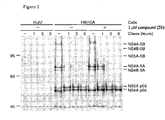
- NS5A protein As reported previously, in the absence of inhibitor, mature NS5A protein was released from the viral polyprotein in a time-dependent fashion and appeared first as a 56 kDa form (p56) that was progressively converted to higher molecular mass forms, including the prominent 58 kDa hyperphosphorylated form (p58). In the presence of compound (Ib), the rate and the extent of conversion of the p56 into p58 were reduced, indicating that the compound affected the biogenesis of NS5A possibly by decreasing the extent of hyperphosphorylation.
- Huh-7 cells were kindly provided by Dr. Ralf Bartenschlager (U. of Heidelberg, Germany). SL1 and MH1 cells were kindly provided from Dr. Christoph Seeger (Fox Chase Cancer Center, Philadelphia, PA; USA). HBI10A and other replicon containing cell lines were derived from Huh-7 cells as described in WO2002059321 A2 ; Housingla et al., Virology 293, 31-43, 2002 ; and Trozzi et al., J Virol 77, 3669-3679, 2003 .
- cDNA fragments were cloned in the desired expression vectors by standard DNA protocols or by PCR amplification of the area of interest, using synthetic oligonucleotides with the appropriate restriction sites. Plasmid DNA was prepared from overnight culture in Luria Bertani broth using Qiagen columns according to instructions. The sequences of all plasmids were verified by automated sequencing.
- Plasmids pHCVNeo17.wt, pHCVNeo17.B (here designated pHCVNeo17.m10), pBK-SI, pBK-RMSI, pFL.wt and pFL.B (here designated pFL.m10) have been already described by Trozzi et al. J. Virol. 2003, 77:3669-79 , by Grobler et al J. Biol. Chem. 2003 278(19):16741-46 and by Pacini et al.Anal Biochem. 2004, 331:46-59 .
- Plasmids designated with the pHCVbla prefix were derived from the corresponding pHCVNeo plasmids by replacing the neomycin phosphotransferase ( neo ) gene with the ⁇ -lactamase ( bla ) gene as described in WO2003089672 A1 and in Murray et al., J Virol 77, 2928-2935, 2003 .
- RNA transcription and RNA transfection were performed as described in WO2002059321 A2 ; Housingla et al., Virology 293, 31-43, 2002 ; and Trozzi et al., J Virol 77, 3669-3679, 2003 . Briefly, Plasmids were digested with the ScaI or XbaI endonucleases (New England Biolabs) and transcribed in vitro with the T7 Megascript kit (Ambion). Transcription mixtures were treated with DNase I (0.1 U/ml) for 30 minutes at 37°C to completely remove template DNA, extracted according to the procedure of Chomczynski ( Chomczynski et al., 1987. Anal. Biochem. 162, 156-159 ), and resuspended with RNase-free phosphate buffered saline. RNA transfection was performed by electroporation.
- Replicon RNAs (2-10 ⁇ g of total cellular RNA) were retro-transcribed using oligonucleotide HCVG34 (5'- ACATGATCTGCAGAGAGGCCAGT-3') and the Superscript II reverse transcriptase (Gibco, BRL) according to manufacturer instructions, and subsequently digested with 2 U/ml Ribonuclease H (Gibco BRL).
- the cDNA regions spanning from the EMCV IRES to the HCV 3' end were amplified by PCR using oligonucleotides HCVG39 (5'-GACASGCTGTGATAWATGTCTCCCCC- 3') and CITE3 (5'-TGGCTCTCCTCAAGCGTATTC- 3') and the LA Taq DNA polymerase (Takara).
- Amplified cDNAs were either sequenced directly or digested with the appropriate restriction endonucleases (New England Biolabs) and cloned into plasmids pHCVNeo17.wt, pHCVNeo17.m5 or pHCVNeo17.m10 digested with the same endonucleases.
- the presence of the desired DNA insert was ascertained by restriction digestion, and the nucleotide sequence ofNS region of each plasmid was determined by automated sequencing. Nucleotide sequences and deduced amino acids sequences were aligned using the Vector NTI software.
- Huh-7 and HBI10A cells were seeded in 6-well plates at a density of 4 x 10 5 cells/well.
- cells were incubated in methionine/cysteine-free DMEM supplemented with 1% dialyzed FCS for 1 h, labeled for 30' with the same medium containing 200 ⁇ Ci/ml of ( 35 S) protein labeling mix (Du-Pont NEN) and then either lysed or chased for various times (1-3-6 hours) in complete medium supplemented with a 10-fold excess of methionine/cysteine.
- Beta-lactamase gene reporter assay (BLA -assay). The effect of the test compounds on viral replication and the replication proficiency of the mutant replicons was estimated by monitoring expression the Beta-lactamase enzyme according to Murray et al., J Virol 77, 2928-35, 2003 . Beta-lactamase activity was measured with a fluorescence plate reader that quantitates the amount of green (530 nm) or blue (460 nm) fluorescence emitted by cells stimulated with light of 405 nm.
- Reagents were usually obtained directly from commercial suppliers (and used as supplied) but a limited number of compounds from in-house corporate collections were utilised. In the latter case the reagents are readily accessible using routine synthetic steps that are either reported in the scientific literature or are known to those skilled in the art.
- Mass spectral (MS) data were obtained on a Perkin Elmer API 100, or Waters MicroMass ZQ, operating in negative (ES - ) or positive (ES + ) ionization mode and results are reported as the ratio of mass over charge ( m / z ) for the parent ion only.
- Preparative scale HPLC separations were carried out on a Waters Delta Prep 4000 separation module, equipped with a Waters 486 absorption detector or on a Gilson preparative system. In all cases compounds were eluted with linear gradients of water and acetonitrile both containing 0.1% TFA using flow rates between 15 and 25 mL/min.
- Step 1 tert -butyl 4-[4-(chlorocarbonyl)phenyl]piperazine-1-carboxylate
- a stock solution of SOCl 2 -benzotriazole in dry DCM was prepared by making up volume of a viscous clear solution of thionyl chloride (1eq) and benzotriazole (1 eq) with dry DCM (1.5 M) - cf, Synlett 1999, 1763 . 1.25 eq of this stock solution was added to a solution of 4-(4- tert- butoxycarbonyl)piperazin-1-yl)benzoic acid (1 eq) (prepared as described in published International patent application WO98/00134 ) in dry DCM (0.05 M). With the addition, a precipitate formed that was indicative of acyl chloride formation. The reaction was left at RT for 10 min before being filtered through a pad of anhydrous sodium sulfate.
- Step 2 tert -butyl 4-[4-(aryl/alkylaminocarbonyl)phenyl]piperazine-1-carboxylate formation
- Step 1 tert -butyl 4-[4-(1- ⁇ [4-(acetyloxy)phenyl]amino ⁇ vinyl)phenyl]piperazine-1-carboxylate
- Step 2 4-[4-( ⁇ [4-(acetyloxy)phenyl]amino ⁇ carbonyl)phenyl]piperazin-1-ium trifluoroacetate
- Step 3 isobutyl 4-(4- ⁇ [(4-hydroxyphenyl)amino]carbonyl ⁇ phenyl)piperazine-1-carboxylate
- Step 2 4-bromo- N -(4-hydroxyphenyl)benzamide
- Step 3 4-bromo- N -(4- ⁇ [ tert -butyl(dimethyl)silyl]oxy ⁇ phenyl)benzamide
- Step 4 1-[(benzyloxy)carbonyl]piperidine-4-carboxylic acid
- Step 5 1-benzyl 4- tert -butyl piperidine-1,4-dicarboxylate
- Step 7 tert -butyl 1-(4- ⁇ [(4-hydroxyphenyl)amino]carbonyl ⁇ phenyl)piperidine-4-carboxylate
- Step 1 tert -butyl 4-(4-nitrophenyl)piperazine-1-carboxylate
- Step 2 tert -butyl 4-(4-aminophenyl)piperazine-1-carboxylate
- Step 3 tert -butyl 4- ⁇ 4-[(4-hydroxybenzoyl)amino]phenyl ⁇ piperazine-1-carboxylate
Landscapes
- Chemical & Material Sciences (AREA)
- Organic Chemistry (AREA)
- Health & Medical Sciences (AREA)
- Life Sciences & Earth Sciences (AREA)
- Animal Behavior & Ethology (AREA)
- Veterinary Medicine (AREA)
- Chemical Kinetics & Catalysis (AREA)
- General Chemical & Material Sciences (AREA)
- Medicinal Chemistry (AREA)
- Nuclear Medicine, Radiotherapy & Molecular Imaging (AREA)
- Communicable Diseases (AREA)
- Pharmacology & Pharmacy (AREA)
- Virology (AREA)
- General Health & Medical Sciences (AREA)
- Public Health (AREA)
- Oncology (AREA)
- Molecular Biology (AREA)
- Pharmaceuticals Containing Other Organic And Inorganic Compounds (AREA)
- Indole Compounds (AREA)
- Investigating Or Analysing Biological Materials (AREA)
- Measuring Or Testing Involving Enzymes Or Micro-Organisms (AREA)
- Micro-Organisms Or Cultivation Processes Thereof (AREA)
- Thiazole And Isothizaole Compounds (AREA)
- Plural Heterocyclic Compounds (AREA)
- Medicines That Contain Protein Lipid Enzymes And Other Medicines (AREA)
Claims (15)
- Verwendung einer Verbindung der Formel (I):

X und Y unabhängig CH oder N sind, mit der Maßgabe, dass X und Y nicht beide CH sind,
R1C(O)OR4, C(O)NR5R6, C(O)R7 oder S(O)2R8 ist,
R2C(O)NR9R10 ist,
R3 fehlt oder ausgewählt ist aus Halogen, Hydroxy, C1-6-Alkyl und C1-6-Alkoxy,
R5 und R9 jeweils unabhängig Wasserstoff, C1-6-Alkyl oder C3-8-Cycloalkyl sind,
R4, R6, R7 und R8 jeweils unabhängig ausgewählt sind aus C1-6-Alkyl, C2-6-Alkenyl, C2-6-Alkinyl,
(CH2)0-3C3-8-Cycloalkyl, C1-6-Alkoxy, (CH2)0-3-Aryl, (CH)2-Aryl, (CH2)0-3O-Aryl, (CH2)0-3-Heteroaryl und (CH2)0-3O-Heteroaryl,
gegebenenfalls substituiert durch Hydroxy, Halogen, CN, CF3, C1-4-Alkyl, C1-4-Alkoxy, (CH2)0-3-NR11C(O)OR12, (CH2)0-3-Aryl oder (CH2)0-3-Heteroaryl,
wobei R11 und R12 jeweils unabhängig Wasserstoff oder C1-6-Alkyl sind,
R10 (CH2)0-3-Aryl oder (CH2)0-3-Heteroaryl ist, gegebenenfalls substituiert durch Halogen, CN, CF3, C1-4-Alkyl, C2-4-Alkenyl, OR13, C(O)R13, C(O)OR13, Aryl, (CH2)-Aryl, (CH)2C(O)OR13 oder NR13R14
wobei R13 und R14 jeweils unabhängig Wasserstoff, C1-4-Alkyl oder (CH2)0-3-Aryl sind,
und wobei der optionale Substituent ferner gegebenenfalls substituiert ist durch Hydroxy oder Halogen,
und R10 ferner an einen 5- oder 6-gliedrigen Ring kondensiert sein kann, wobei der Ring teilweise oder vollständig ungesättigt sein kann,
und wobei der Ring ein oder zwei N-Atome enthalten kann, wobei der Ring gegebenenfalls substituiert ist durch Hydroxy, Halogen, C1-4-Alkyl, C1-4-Alkoxy, C(O)R15 und C(O)OR15,
wobei R15 C1-4-Alkyl oder Aryl ist,
mit der Maßgabe, dass die Verbindung der Formel (I) nicht ist:tert-Butyl-4-(4-{[(4-hydroxyphenyl)amino]carbonyl}phenyl)piperazin-1-carboxylat,tert-Butyl-4-(4-{[(4-bromphenyl)amino]carbonyl}phenyl)piperazin-1-carboxylat,tert-Butyl-4-(4-{[(3-bromphenyl)amino]carbonyl}phenyl)piperazin-1-carboxylat,tert-Butyl-4-{4-[({3-[(1E)-3-methoxy-3-oxoprop-1-en-1-yl]phenyl}amino)carbonyl]phenyl}piperazin-1-carboxylat,tert-Butyl-4-4-[(4-hydroxybenzoyl)amino]phenyl}piperazin-1-carboxylat odertert-Butyl-4-{4-[(4-aminobenzoyl)amino]phenyl}piperazin-1-carboxylat,oder eines pharmazeutisch annehmbaren Salzes davon bei der Herstellung eines Medikaments zur Behandlung einer HCV-Infektion. - Verbindung der Formel (I) oder ein pharmazeutisch annehmbares Salz davon:

X und Y unabhängig CH oder N sind, mit der Maßgabe, dass X und Y nicht beide CH sind,
R1C(O)OR4, C(O)NR5R6, C(O)R7 oder S(O)2R8 ist,
R2 C(O)NR9R10 ist,
R3 fehlt oder ausgewählt ist aus Halogen, Hydroxy, C1-6-Alkyl und C1-6-Alkoxy,
R5 und R9 jeweils unabhängig Wasserstoff, C1-6-Alkyl oder C3-8-Cycloalkyl sind,
R4, R6, R7 und R8 jeweils unabhängig ausgewählt sind aus C1-6-Alkyl, C2-6-Alkenyl, C2-6-Alkinyl, (CH2)0-3C3-8-Cycloalkyl, C1-6-Alkoxy, (CH2)0-3-Aryl, (CH)2-Aryl, (CH2)0-3O-Aryl, (CH2)0-3-Heteroaryl und (CH2)0-3O-Heteroaryl,
gegebenenfalls substituiert durch Hydroxy, Halogen, CN, CF3, C1-4-Alkyl, C1-4-Alkoxy, (CH2)0-3-NR11C(O)OR12, (CH2)0-3-Aryl oder (CH2)0-3-Heteroaryl,
wobei R11 und R12 jeweils unabhängig Wasserstoff oder C1-6-Alkyl sind,
R10 (CH2)0-3-Aryl oder (CH2)0-3-Heteroaryl ist, gegebenenfalls substituiert durch Halogen, CN, CF3, C1-4-Alkyl, C2-4-Alkenyl, OR13, C(O)R13, C(O)OR13, Aryl, (CH2)-Aryl, (CH)2C(O)OR13 oder NR13R14,
wobei R13 und R14 jeweils unabhängig Wasserstoff, C1-4-Alkyl oder (CH2)0-3-Aryl sind,
und wobei der optionale Substituent ferner gegebenenfalls substituiert ist durch Hydroxy oder Halogen,
und R10 ferner an einen 5- oder 6-gliedrigen Ring kondensiert sein kann, wobei der Ring teilweise oder vollständig ungesättigt sein kann,
und wobei der Ring ein oder zwei N-Atome enthalten kann, wobei der Ring gegebenenfalls substituiert ist durch Hydroxy, Halogen, C1-4-Alkyl, C1-4-Alkoxy, C(O)R15 und C(O)OR15,
wobei R15 C1-4-Alkyl oder Aryl ist,
mit der Maßgabe, dass die Verbindung der Formel (I) nicht ist:tert-Butyl-4-(4-{[(4-hydroxyphenyl)amino]carbonyl}phenyl)piperazin-1-carboxylat,tert-Butyl-4-(4-{[(4-bromphenyl)amino]carbonyl}phenyl)piperazin-1-carboxylat,tert-Butyl-4-(4-{[(3-bromphenyl)amino]carbonyl}phenyl)piperazin-1-carboxylat,tert-Butyl-4-{4-[({3-[(1E)-3-methoxy-3-oxoprop-1-en-1-yl]phenyl}amino)carbonyl]phenyl}piperazin-1-carboxylat,tert-Butyl-4-{4-[(4-hydroxybenzoyl)amino]phenyl}piperazin-1-carboxylat odertert-Butyl-4-{4-[(4-aminobenzoyl)amino]phenyl}piperazin-1-carboxylat,zur Modulierung der HCV-RNA-Replikation und/oder zur viralen Erzeugung von HCV in einer Zelle,einem Gewebe oder einem Organismus. - Eine Zellkultur, erhältlich durch Behandeln mit einer Verbindung der Formel (I) oder einem pharmazeutisch annehmbaren Salz davon:

X und Y unabhängig CH oder N sind, mit der Maßgabe, dass X und Y nicht beide CH sind,
R1C(O)OR4, C(O)NR5R6, C(O)R7 oder S(O)2R8 ist,
R2C(O)NR9R10 ist,
R3 fehlt oder ausgewählt ist aus Halogen, Hydroxy, C1-6-Alkyl und C1-6-Alkoxy,
R5 und R9 jeweils unabhängig Wasserstoff, C1-6-Alkyl oder C3-8-Cycloalkyl sind,
R4, R6, R7 und R8 jeweils unabhängig ausgewählt sind aus C1-6-Alkyl, C2-6-Alkenyl, C2-6-Alkinyl, (CH2)0-3C3-8-Cycloalkyl, C1-6-Alkoxy, (CH2)0-3-Aryl, (CH)2-Aryl, (CH2)0-3O-Aryl, (CH2)0-3-Heteroaryl und (CH2)0-3O-Heteroaryl,
gegebenenfalls substituiert durch Hydroxy, Halogen, CN, CF3, C1-4-Alkyl, C1-4-Alkoxy, (CH2)0-3-NR11C(O)OR12, (CH2)0-3-Aryl oder (CH2)0-3-Heteroaryl,
wobei R11 und R12 jeweils unabhängig Wasserstoff oder C1-6-Alkyl sind,
R10 (CH2)0-3-Aryl oder (CH2)0-3-Heteroaryl ist, gegebenenfalls substituiert durch Halogen, CN, CF3, C1-4-Alkyl, C2-4-Alkenyl, OR13, C(O)R13, C(O)OR13, Aryl, (CH2)-Aryl, (CH)2C(O)OR13 oder NR13R14,
wobei R13 und R14 jeweils unabhängig Wasserstoff, C1-4-Alkyl oder (CH2)0-3-Aryl sind,
und wobei der optionale Substituent ferner gegebenenfalls substituiert ist durch Hydroxy oder Halogen,
und R10 ferner an einen 5- oder 6-gliedrigen Ring kondensiert sein kann, wobei der Ring teilweise oder vollständig ungesättigt sein kann,
und wobei der Ring ein oder zwei N-Atome enthalten kann, wobei der Ring gegebenenfalls substituiert ist durch Hydroxy, Halogen, C1-4-Alkyl, C1-4-Alkoxy, C(O)R15 und C(O)OR15,
wobei R15 C1-4-Alkyl oder Aryl ist,
mit der Maßgabe, dass die Verbindung der Formel (I) nicht ist:tert-Butyl-4-(4-{[(4-hydroxyphenyl)amino]carbonyl}phenyl)piperazin-1-carboxylat,tert-Butyl-4-(4-{[(4-bromphenyl)amino]carbonyl}phenyl)piperazin-1-carboxylat,tert-Butyl-4-(4-{[(3-bromphenyl)amino]carbonyl}phenyl)piperazin-1-carboxylat,tert-Butyl-4-{4-[({3-[(1E)-3-methoxy-3-oxoprop-1-en-1-yl]phenyl}amino)carbonyl]phenyl}piperazin-1-carboxylat,tert-Butyl-4-4-[(4-hydroxybenzoyl)amino]phenyl}piperazin-1-carboxylat odertert-Butyl-4-{4-[(4-aminobenzoyl)amino]phenyl}piperazin-1-carboxylat. - Ein Verfahren zum Screenen einer Verbindung auf ihre Wirkung auf die HCV-Replikation, umfassend die Verabreichung der Verbindung an eine HCV-Zellkultur, die mit einer Verbindung der Formel (I) oder einem pharmazeutisch annehmbaren Salz davon behandelt wurde:

X und Y unabhängig CH oder N sind, mit der Maßgabe, dass X und Y nicht beide CH sind,
R1C(O)OR4, C(O)NR5R6, C(O)R7 oder S(O)2R8 ist,
R2C(O)NR9R10 ist,
R3 fehlt oder ausgewählt ist aus Halogen, Hydroxy, C1-6-Alkyl und C1-6-Alkoxy,
R5 und R9 jeweils unabhängig Wasserstoff, C1-6-Alkyl oder C3-8-Cycloalkyl sind,
R4, R6, R7 und R8 jeweils unabhängig ausgewählt sind aus C1-6-Alkyl, C2-6-Alkenyl, C2-6-Alkinyl,
(CH2)0-3C3-8-Cycloalkyl, C1-6-Alkoxy, (CH2)0-3-Aryl, (CH)2-Aryl, (CH2)0-3O-Aryl, (CH2)0-3-Heteroaryl und (CH2)0-3O-Heteroaryl,
gegebenenfalls substituiert durch Hydroxy, Halogen, CN, CF3, C1-4-Alkyl, C1-4-Alkoxy, (CH2)0-3-NR11C(O)OR12, (CH2)0-3-Aryl oder (CH2)0-3-Heteroaryl,
wobei R11 und R12 jeweils unabhängig Wasserstoff oder C1-6-Alkyl sind,
R10 (CH2)0-3-Aryl oder (CH2)0-3-Heteroaryl ist, gegebenenfalls substituiert durch Halogen, CN, CF3, C1-4-Alkyl, C2-4-Alkenyl, OR13, C(O)R13, C(O)OR13, Aryl, (CH2)-Aryl, (CH)2C(O)OR oder NR13R14,
wobei R13 und R14 jeweils unabhängig Wasserstoff, C1-4-Alkyl oder (CH2)0-3-Aryl sind,
und wobei der optionale Substituent ferner gegebenenfalls substituiert ist durch Hydroxy oder Halogen,
und R10 ferner an einen 5- oder 6-gliedrigen Ring kondensiert sein kann, wobei der Ring teilweise oder vollständig ungesättigt sein kann,
und wobei der Ring ein oder zwei N-Atome enthalten kann, wobei der Ring gegebenenfalls substituiert ist durch Hydroxy, Halogen, C1-4-Alkyl, C1-4-Alkoxy, C(O)R15 und C(O)OR15,
wobei R15 C1-4-Alkyl oder Aryl ist,
mit der Maßgabe, dass die Verbindung der Formel (I) nicht ist:tert-Butyl-4-(4-{[(4-hydroxyphenyl)amino]carbonyl}phenyl)piperazin-1-carboxylat,tert-Butyl-4-(4-{[(4-bromphenyl)amino]carbonyl}phenyl)piperazin-1-carboxylat,tert-Butyl-4-(4-{[(3-bromphenyl)amino]carbonyl}phenyl)piperazin-1-carboxylat,tert-Butyl-4-{4-[({3-[(1E)-3-methoxy-3-oxoprop-1-en-1-yl]phenyl}amino)carbonyl]phenyl}piperazin-1-carboxylat,tert-Butyl-4-{4-[(4-hydroxybenzoyl)amino]phenyl}piperazin-1-carboxylat odertert-Butyl-4-{4-[(4-aminobenzoyl)amino]phenyl}piperazin-1-carboxylat. - Ein Verfahren zur Erzeugung einer Zellkultur, die nachweisbare Mengen an HCV RNA in Abwesenheit adaptiver Mutationen in der HCV RNA enthält, durch:a) Kontaktieren einer Zelle in Gewebekultur mit HCV RNA oder HCV-Virus, die/der keine adaptiven Mutationen trägt,b) Behandeln der Zelle mit einer wie in Anspruch 3 definierten Verbindung oder einem geeigneten Salz davon,c) Untersuchen der behandelten Zelle auf HCV-RNA-Replikation.
- Ein Verfahren zur Erzeugung einer wie in Anspruch 3 definierten Zellkultur, die nachweisbare Mengen an HCV-Protein in Abwesenheit adaptiver Mutationen in der HCV RNA enthält, durch:a) Kontaktieren einer Zelle in Gewebekultur mit HCV RNA oder HCV-Virus, die/der keine adaptiven Mutationen trägt,b) Behandeln der Zelle mit einer wie in Anspruch 3 definierten Verbindung oder einem geeigneten Salz davon,c) Untersuchen der behandelten Zelle auf HCV-Protein-Expression.
- Ein Verfahren zur Erzeugung einer wie in Anspruch 3 definierten Zellkultur mit nachweisbaren Virusproduktionslevels in Abwesenheit adaptiver Mutationen durch:a) Kontaktieren einer Zelle in Gewebekultur mit HCV RNA oder HCV-Virus, die/der keine adaptiven Mutationen trägt,b) Behandeln der Zelle mit einer wie in Anspruch 3 definierten Verbindung oder einem geeigneten Salz davon,c) Untersuchen der Menge an abgesonderten Viruspartikeln in dem Zellmedium.
- Ein Verfahren zur Erzeugung einer Zellkultur, die nachweisbare Mengen an HCV-RNA in Gegenwart ausgewählter adaptiver Mutationen in diesen Zellen enthält, durch:a) Kontaktieren einer Zelle in Gewebekultur mit HCV RNA oder HCV-Virus, die/der selektive adaptive Mutationen trägt,b) Behandeln der Zelle mit einer wie in Anspruch 3 definierten Verbindung oder einem geeigneten Salz davon,c) Untersuchen der behandelten Zelle auf HCV-RNA-Replikation.
- Ein Verfahren zur Erzeugung einer Zellkultur, die nachweisbare Mengen an HCV-Protein in Gegenwart ausgewählter adaptiver Mutationen in diesen Zellen enthält, durch:a) Kontaktieren einer Zelle in Gewebekultur mit HCV RNA oder HCV-Virus, die/der adaptiven Mutationen trägt,b) Behandeln der Zelle mit einer wie in Anspruch 3 definierten Verbindung oder einem geeigneten Salz davon,c) Untersuchen der behandelten Zelle auf HCV-Protein-Expression.
- Ein Verfahren zur Erzeugung einer Zellkultur mit nachweisbaren Virusproduktionslevels in Gegenwart adaptiver Mutationen durch:a) Kontaktieren einer Zelle in Gewebekultur mit HCV RNA oder HCV-Virus, die/der adaptiven Mutationen trägt,b) Behandeln der Zelle mit einer wie in Anspruch 3 definierten Verbindung oder einem geeigneten Salz davon,c) Untersuchen der Menge an abgesonderten Viruspartikeln in dem Zellmedium.
- Eine Verbindung der Formel (Ii):

R1 C(O)OR4, C(O)NR5R6, C(O)R7 oder S(O)2R8 ist,
R2 C(O)NR9R10 ist,
R3 fehlt oder ausgewählt ist aus Hydroxy, C1-6-Alkyl und C1-6-Alkoxy,
R5 und R9 jeweils unabhängig Wasserstoff, C1-6-Alkyl oder C3-8-Cycloalkyl sind,
R4, R6, R7 und R8 jeweils unabhängig ausgewählt sind aus C1-6-Alkyl, C2-6-Alkenyl, C2-6-Alkinyl,
(CH2)0-3C3-8-Cycloalkyl, C1-6-Alkoxy, (CH2)0-3-Aryl, (CH)2-Aryl, (CH2)0-3O-Aryl, (CH2)0-3-Heteroaryl und (CH2)0-3O-Heteroaryl,
gegebenenfalls substituiert durch Hydroxy, Halogen, CN, CF3, C1-4-Alkyl, C1-4-Alkoxy, (CH2)0-3-NR11C(O)OR12, (CH2)0-3-Aryl oder (CH2)0-3-Heteroaryl,
wobei R11 und R12 jeweils unabhängig Wasserstoff oder C1-6-Alkyl sind,
R10 (CH2)0-3-Aryl oder (CH2)0-3-Heteroaryl ist, gegebenenfalls substituiert durch Halogen, CN, CF3, C1-4-Alkyl, C2-4-Alkenyl, OR13, C(O)R13, C(O)OR13, Aryl, (CH2)-Aryl, (CH)2C(O)OR13 oder NR13R14,
wobei R13 und R14 jeweils unabhängig Wasserstoff, C1-4-Alkyl oder (CH2)0-3-Aryl sind,
und wobei der optionale Substituent ferner gegebenenfalls substituiert ist durch Hydroxy oder Halogen,
und R10 ferner an einen 5- oder 6-gliedrigen Ring kondensiert sein kann, wobei der Ring teilweise oder vollständig ungesättigt sein kann,
und wobei der Ring ein oder zwei N-Atome enthalten kann, wobei der Ring gegebenenfalls substituiert ist durch Hydroxy, Halogen, C1-4-Alkyl, C1-4-Alkoxy, C(O)R15 und C(O)OR15,
wobei R15 C1-4-Alkyl oder Aryl ist,
mit der Maßgabe, dass die Verbindung der Formel (I) nicht ist:tert-Butyl-4-(4-{[(4-hydroxyphenyl)amino]carbonyl}phenyl)piperazin-1-carboxylat,tert-Butyl-4-(4-{[(4-bromphenyl)amino]carbonyl}phenyl)piperazin-1-carboxylat,tert-Butyl-4-(4-{[(3-bromphenyl)amino]carbonyl}phenyl)piperazin-1-carboxylat,tert-Butyl-4-{4-[({3-[(1E)-3-methoxy-3-oxoprop-1-en-1-yl]phenyl}amino)carbonyl]phenyl}piperazin-1-carboxylat. - Eine Verbindung der Formel (Ia) oder ein pharmazeutisch annehmbares Salz davon:

mit der Maßgabe, dass die Verbindung der Formel (Ii) nicht ist:tert-Butyl-4-(4-{[(4-hydroxyphenyl)amino]carbonyl}phenyl)piperazin-1-carboxylat,tert-Butyl-4-(4-{[(4-bromphenyl)amino]carbonyl]phenyl)piperazin-1-carboxylat,tert-Butyl-4-(4-{[(3-bromphenyl)amino]carbonyl}phenyl)piperazin-1-carboxylat odertert-Butyl-4-{4-[({3-[(1E)-3-methoxy-3-oxoprop-1-en-1-yl]phenyl}amino)carbonyl]phenyl}piperazin-1-carboxylat. - Eine pharmazeutische Zusammensetzung, die eine wie in Anspruch 11 oder 12 beanspruchte Verbindung oder ein pharmazeutisch annehmbares Salz davon in Verbindung mit einem pharmazeutisch annehmbaren Träger umfasst.
- Eine wie in Anspruch 11 oder 12 beanspruchte Verbindung oder ein pharmazeutisch annehmbares Salz davon zur Verwendung bei der Therapie.
- Die Verwendung einer wie in Anspruch 11 oder 12 beanspruchten Verbindung oder eines pharmazeutisch annehmbaren Salzes davon bei der Herstellung eines Medikaments zur Behandlung einer HCV-Infektion.
Applications Claiming Priority (2)
| Application Number | Priority Date | Filing Date | Title |
|---|---|---|---|
| GBGB0421908.5A GB0421908D0 (en) | 2004-10-01 | 2004-10-01 | New uses |
| PCT/GB2005/050170 WO2006038039A1 (en) | 2004-10-01 | 2005-09-29 | Modulators of hcv replication |
Publications (2)
| Publication Number | Publication Date |
|---|---|
| EP1799663A1 EP1799663A1 (de) | 2007-06-27 |
| EP1799663B1 true EP1799663B1 (de) | 2012-08-01 |
Family
ID=33427956
Family Applications (1)
| Application Number | Title | Priority Date | Filing Date |
|---|---|---|---|
| EP05794179A Expired - Lifetime EP1799663B1 (de) | 2004-10-01 | 2005-09-29 | Modulatoren der HCV-Replikation |
Country Status (8)
| Country | Link |
|---|---|
| US (1) | US8012982B2 (de) |
| EP (1) | EP1799663B1 (de) |
| JP (1) | JP5222558B2 (de) |
| CN (1) | CN101035777B (de) |
| AU (1) | AU2005291029B2 (de) |
| CA (1) | CA2582760C (de) |
| GB (1) | GB0421908D0 (de) |
| WO (1) | WO2006038039A1 (de) |
Families Citing this family (22)
| Publication number | Priority date | Publication date | Assignee | Title |
|---|---|---|---|---|
| CN102702194A (zh) | 2005-12-21 | 2012-10-03 | 雅培制药有限公司 | 抗病毒化合物 |
| US7915411B2 (en) | 2005-12-21 | 2011-03-29 | Abbott Laboratories | Anti-viral compounds |
| US7910595B2 (en) | 2005-12-21 | 2011-03-22 | Abbott Laboratories | Anti-viral compounds |
| US8236950B2 (en) | 2006-12-20 | 2012-08-07 | Abbott Laboratories | Anti-viral compounds |
| AU2008258560C1 (en) | 2007-06-08 | 2014-04-10 | Janssen Pharmaceutica N.V. | Piperidine/piperazine derivatives |
| WO2008148840A1 (en) | 2007-06-08 | 2008-12-11 | Janssen Pharmaceutica N.V. | Piperidine/piperazine derivatives |
| PE20090362A1 (es) * | 2007-06-08 | 2009-04-04 | Janssen Pharmaceutica Nv | Derivados de piperidina/piperazina como moduladores de dgat |
| JO2972B1 (en) | 2007-06-08 | 2016-03-15 | جانسين فارماسوتيكا ان. في | Piperidine / piperazine derivatives |
| AU2008281877A1 (en) * | 2007-08-02 | 2009-02-05 | F. Hoffmann-La Roche Ag | The use of benzamide derivatives for the treatment of CNS disorders |
| PE20140572A1 (es) | 2008-06-05 | 2014-05-16 | Janssen Pharmaceutica Nv | Combinaciones de drogas que comprenden un inhibidor de dgat y un agonista de ppar |
| WO2011014487A1 (en) | 2009-07-30 | 2011-02-03 | Merck Sharp & Dohme Corp. | Hepatitis c virus ns3 protease inhibitors |
| US8825607B2 (en) * | 2011-01-13 | 2014-09-02 | Neal King Rieffanaugh, Jr. | Formulaic conjoined project effort instance display method and search system process thereof |
| US8921372B2 (en) * | 2010-11-04 | 2014-12-30 | Theravance Biopharma R&D Ip, Llc | Inhibitors of hepatitis C virus |
| WO2013030750A1 (en) | 2011-09-01 | 2013-03-07 | Lupin Limited | Antiviral compounds |
| AP2014007595A0 (en) * | 2011-09-30 | 2014-04-30 | Kineta Inc | Anti-viral compounds |
| KR20140091036A (ko) | 2011-11-03 | 2014-07-18 | 세라밴스 인코포레이티드 | 단편 [2-[4-(바이페닐-4-일)-1h-이미다조-2-일]피롤리딘-1-카르보닐메틸]아민을 포함하는 간상 c형 간염 바이러스 억제제 |
| IN2014MN01547A (de) | 2012-02-10 | 2015-05-08 | Lupin Ltd | |
| JP5976224B2 (ja) * | 2012-08-31 | 2016-08-23 | ノバドラッグ, エルエルシー | ウイルス性疾患を処置するためのヘテロシクリルカルボキサミド |
| CN108623591B (zh) * | 2017-03-24 | 2021-08-17 | 中国海洋大学 | 一种哌尼诺安化合物的用途 |
| ES2744304B2 (es) * | 2018-08-24 | 2020-06-22 | Consejo Superior Investigacion | Compuestos inhibidores de LRRK2 y su uso para el tratamiento de enfermedades neurodegenerativas |
| KR102694819B1 (ko) * | 2021-01-29 | 2024-08-14 | 한국화학연구원 | 벤조티아졸 및 벤즈이미다졸 유도체, 약제학적으로 허용 가능한 염, 이의 제조방법 및 이를 유효성분으로 함유하는 약제학적 조성물 |
| CN115322143B (zh) * | 2022-07-21 | 2023-07-14 | 安徽德诺医药股份有限公司 | 一种4-哌啶甲酸叔丁酯盐酸盐的制备方法 |
Family Cites Families (26)
| Publication number | Priority date | Publication date | Assignee | Title |
|---|---|---|---|---|
| US4960776A (en) | 1987-01-28 | 1990-10-02 | A. H. Robins Company, Inc. | 4-aryl-N-(alkylaminoalkyl, heterocyclicamino and heterocyclicamino)alkyl)-1-piperazinecarboxamides |
| US6069143A (en) | 1994-12-20 | 2000-05-30 | Smithkline Beecham Corporation | Fibrinogen receptor antagonists |
| AU712082B2 (en) | 1996-02-28 | 1999-10-28 | Merck & Co., Inc. | Fibrinogen receptor antagonists |
| US5780480A (en) | 1996-02-28 | 1998-07-14 | Merck & Co., Inc. | Fibrinogen receptor antagonists |
| JP2000514427A (ja) * | 1996-06-28 | 2000-10-31 | メルク エンド カンパニー インコーポレーテッド | フィブリノーゲンレセプター拮抗薬プロドラッグ |
| CA2258093A1 (en) * | 1996-06-28 | 1998-01-08 | Mark E. Duggan | Fibrinogen receptor antagonists |
| US5854245A (en) | 1996-06-28 | 1998-12-29 | Merck & Co., Inc. | Fibrinogen receptor antagonists |
| EP0912513A1 (de) | 1996-06-28 | 1999-05-06 | Merck & Co., Inc. | Vorschriften zu fibrinogen rezeptor antagonisten |
| WO2001089364A2 (en) | 2000-05-23 | 2001-11-29 | Washington University | Hcv variants |
| US6096340A (en) | 1997-11-14 | 2000-08-01 | Andrx Pharmaceuticals, Inc. | Omeprazole formulation |
| EP1057818A4 (de) | 1998-01-30 | 2003-01-29 | Meiji Seika Kaisha | Phenylpiperazinderivate als integrin alpha v beta 3 antagonisten |
| JP2003176273A (ja) * | 1999-02-10 | 2003-06-24 | Mitsubishi Pharma Corp | アミド化合物およびその医薬としての用途 |
| KR100659007B1 (ko) | 1999-02-10 | 2007-02-28 | 미츠비시 웰파마 가부시키가이샤 | 아미드 화합물 및 그 의약으로서의 용도 |
| DE19915178A1 (de) | 1999-04-03 | 2000-10-05 | Univ Mainz Johannes Gutenberg | Hepatitis C Virus Zellkultursystem |
| MXPA02010651A (es) * | 2000-04-28 | 2003-03-10 | Sankyo Co | Moduladores de receptor activado de proliferador de peroxisoma-gamma. |
| JO2654B1 (en) * | 2000-09-04 | 2012-06-17 | شركة جانسين فارماسوتيكا ان. في | Multiple aryl caroxa amides are useful as lipid - lowering agents |
| EP2050822B1 (de) | 2001-01-23 | 2013-07-31 | Istituto Di Ricerche Di Biologia Molecolare P. Angeletti S.P.A. | Hepatitis C-Virus-Replicone und repliconerweiterte Zellen |
| GB0129013D0 (en) * | 2001-12-04 | 2002-01-23 | Glaxo Group Ltd | Compounds |
| GB0129015D0 (en) * | 2001-12-04 | 2002-01-23 | Glaxo Group Ltd | Compounds |
| WO2003070174A2 (en) * | 2002-02-15 | 2003-08-28 | Sympore Gmbh | Conjugates of biologically active compounds, methods for their preparation and use, formulation and pharmaceutical applications thereof |
| AU2003218737B2 (en) | 2002-03-13 | 2008-04-10 | Janssen Pharmaceutica N.V. | Inhibitors of histone deacetylase |
| ATE395343T1 (de) * | 2002-03-13 | 2008-05-15 | Janssen Pharmaceutica Nv | Sulfonylderivate als histone-deacetylase- inhibitoren |
| CA2481171A1 (en) | 2002-04-16 | 2003-10-30 | Merck & Co., Inc. | Hepatitis c virus assay systems |
| WO2004039795A2 (en) | 2002-10-29 | 2004-05-13 | Fujisawa Pharmaceutical Co., Ltd. | Amide compounds for the treatment of hyperlipidemia |
| JP2004203871A (ja) * | 2002-12-13 | 2004-07-22 | Yamanouchi Pharmaceut Co Ltd | 医薬組成物 |
| FR2854158B1 (fr) * | 2003-04-25 | 2006-11-17 | Sanofi Synthelabo | Derives de 2-acylamino-4-phenylethiazole, leur preparation et leur application en therapeutique |
-
2004
- 2004-10-01 GB GBGB0421908.5A patent/GB0421908D0/en not_active Ceased
-
2005
- 2005-09-29 EP EP05794179A patent/EP1799663B1/de not_active Expired - Lifetime
- 2005-09-29 AU AU2005291029A patent/AU2005291029B2/en not_active Ceased
- 2005-09-29 WO PCT/GB2005/050170 patent/WO2006038039A1/en not_active Ceased
- 2005-09-29 JP JP2007534098A patent/JP5222558B2/ja not_active Expired - Fee Related
- 2005-09-29 US US11/664,580 patent/US8012982B2/en not_active Expired - Fee Related
- 2005-09-29 CN CN2005800335165A patent/CN101035777B/zh not_active Expired - Fee Related
- 2005-09-29 CA CA2582760A patent/CA2582760C/en not_active Expired - Fee Related
Also Published As
| Publication number | Publication date |
|---|---|
| JP5222558B2 (ja) | 2013-06-26 |
| EP1799663A1 (de) | 2007-06-27 |
| WO2006038039A1 (en) | 2006-04-13 |
| AU2005291029B2 (en) | 2011-11-17 |
| CN101035777B (zh) | 2013-01-02 |
| US20090069344A1 (en) | 2009-03-12 |
| JP2008516897A (ja) | 2008-05-22 |
| AU2005291029A1 (en) | 2006-04-13 |
| US8012982B2 (en) | 2011-09-06 |
| CA2582760C (en) | 2013-05-28 |
| GB0421908D0 (en) | 2004-11-03 |
| CA2582760A1 (en) | 2006-04-13 |
| CN101035777A (zh) | 2007-09-12 |
Similar Documents
| Publication | Publication Date | Title |
|---|---|---|
| US8012982B2 (en) | Modulators of HCV replication | |
| CN102245599B (zh) | 作为病毒复制抑制剂的新的4-氨基-4-氧代丁酰基肽 | |
| US7923004B2 (en) | 4-ethynyl pyrazole derivative compounds and methods for treatment of HCV | |
| EP1957461B1 (de) | Bisamid-hemmer der hedgehog-signalisierung | |
| Jin et al. | Chemical genetics-based discovery of indole derivatives as HCV NS5B polymerase inhibitors | |
| IL250389A (en) | Aliphans, Cyclops, Tropans, Tropans, Heteropranies and Converted Haloxanes Used to Treat HCV Infections | |
| JP2008540537A (ja) | チアゾール化合物および使用方法 | |
| TW200817374A (en) | Acyclic, pyridazinone-derived hepatitis C serine protease inhibitors | |
| TW200529823A (en) | Novel compounds as inhibitors of hepatitis C virus NS3 serine protease | |
| CA2557322A1 (en) | Inhibitors of hepatitis c virus ns3 protease | |
| TWI313266B (en) | Thiazoline derivatives and pharmaceutical composition containing the same | |
| TW200815482A (en) | Macrocyclic oximyl hepatitis C protease inhibitors | |
| WO2007082554A1 (en) | Modulators of hcv replication | |
| US20130338169A1 (en) | Methods of use of inhibitors of the 11-beta-hydroxysteroid dehydrogenase type 1 enzyme | |
| AU2005336552B2 (en) | 5,6-dimethylthieno(2,3-di) pyrimidine derivatives, the preparation method thereof and the pharmaceutical composition comprising the same for anti-virus | |
| KR100490893B1 (ko) | 2-메톡시-1,3,5-트리아진 유도체, 그 제조방법 및 이를 포함하는 항바이러스용 약학적 조성물 | |
| WO2017121188A1 (zh) | 一种丙型肝炎病毒抑制剂、药物组合物及其应用 | |
| KR101567558B1 (ko) | C형 간염 바이러스의 게놈 복제의 선택적 저해 활성을 갖는 인돌계 화합물, 이의 제조방법 및 이를 유효성분으로 함유하는 c형 간염의 예방 또는 치료용 약학적 조성물 | |
| US20080139596A1 (en) | Modulators of Hcv Replication | |
| WO2004009543A2 (en) | 1-carbonyl-4-cyano-pyrrolidine-2-carboxylic acid derivatives as hepatitis c virus inhibitors | |
| JP2024519979A (ja) | 抗ウイルス剤としての新規アザインドール誘導体 | |
| HK40082325A (en) | Inhibitors of cysteine proteases and use thereof | |
| KR20120048223A (ko) | 2-페닐-4-[3-(치환된-설포닐)아닐리노]퀴나졸린 유도체, 이의 약학적으로 허용가능한 염, 이의 제조방법 및 이를 유효성분으로 함유하는 c형 간염의 예방 또는 치료용 약학적 조성물 | |
| WO2004108068A2 (en) | 4-[4-(4-morpholino)anilino]pyrimidine derivatives, method for preparing thereof and antiviral pharmaceutical composition comprising the same | |
| WO2017206688A1 (zh) | 一种取代的吡咯烷化合物及药物组合物及其应用 |
Legal Events
| Date | Code | Title | Description |
|---|---|---|---|
| PUAI | Public reference made under article 153(3) epc to a published international application that has entered the european phase |
Free format text: ORIGINAL CODE: 0009012 |
|
| 17P | Request for examination filed |
Effective date: 20070502 |
|
| AK | Designated contracting states |
Kind code of ref document: A1 Designated state(s): AT BE BG CH CY CZ DE DK EE ES FI FR GB GR HU IE IS IT LI LT LU LV MC NL PL PT RO SE SI SK TR |
|
| DAX | Request for extension of the european patent (deleted) | ||
| 17Q | First examination report despatched |
Effective date: 20080310 |
|
| GRAP | Despatch of communication of intention to grant a patent |
Free format text: ORIGINAL CODE: EPIDOSNIGR1 |
|
| RTI1 | Title (correction) |
Free format text: MODULATORS OF HCV REPLICATION |
|
| GRAS | Grant fee paid |
Free format text: ORIGINAL CODE: EPIDOSNIGR3 |
|
| GRAA | (expected) grant |
Free format text: ORIGINAL CODE: 0009210 |
|
| AK | Designated contracting states |
Kind code of ref document: B1 Designated state(s): AT BE BG CH CY CZ DE DK EE ES FI FR GB GR HU IE IS IT LI LT LU LV MC NL PL PT RO SE SI SK TR |
|
| REG | Reference to a national code |
Ref country code: GB Ref legal event code: FG4D |
|
| RAP1 | Party data changed (applicant data changed or rights of an application transferred) |
Owner name: ISTITUTO DI RICERCHE DI BIOLOGIA MOLECOLARE P. ANG |
|
| REG | Reference to a national code |
Ref country code: CH Ref legal event code: EP Ref country code: AT Ref legal event code: REF Ref document number: 568620 Country of ref document: AT Kind code of ref document: T Effective date: 20120815 |
|
| REG | Reference to a national code |
Ref country code: IE Ref legal event code: FG4D |
|
| REG | Reference to a national code |
Ref country code: CH Ref legal event code: NV Representative=s name: RITSCHER & PARTNER AG |
|
| REG | Reference to a national code |
Ref country code: DE Ref legal event code: R096 Ref document number: 602005035430 Country of ref document: DE Effective date: 20120927 |
|
| REG | Reference to a national code |
Ref country code: NL Ref legal event code: T3 |
|
| REG | Reference to a national code |
Ref country code: NL Ref legal event code: T3 |
|
| REG | Reference to a national code |
Ref country code: AT Ref legal event code: MK05 Ref document number: 568620 Country of ref document: AT Kind code of ref document: T Effective date: 20120801 |
|
| REG | Reference to a national code |
Ref country code: LT Ref legal event code: MG4D Effective date: 20120801 |
|
| PG25 | Lapsed in a contracting state [announced via postgrant information from national office to epo] |
Ref country code: LT Free format text: LAPSE BECAUSE OF FAILURE TO SUBMIT A TRANSLATION OF THE DESCRIPTION OR TO PAY THE FEE WITHIN THE PRESCRIBED TIME-LIMIT Effective date: 20120801 Ref country code: AT Free format text: LAPSE BECAUSE OF FAILURE TO SUBMIT A TRANSLATION OF THE DESCRIPTION OR TO PAY THE FEE WITHIN THE PRESCRIBED TIME-LIMIT Effective date: 20120801 Ref country code: IS Free format text: LAPSE BECAUSE OF FAILURE TO SUBMIT A TRANSLATION OF THE DESCRIPTION OR TO PAY THE FEE WITHIN THE PRESCRIBED TIME-LIMIT Effective date: 20121201 Ref country code: CY Free format text: LAPSE BECAUSE OF FAILURE TO SUBMIT A TRANSLATION OF THE DESCRIPTION OR TO PAY THE FEE WITHIN THE PRESCRIBED TIME-LIMIT Effective date: 20120801 Ref country code: FI Free format text: LAPSE BECAUSE OF FAILURE TO SUBMIT A TRANSLATION OF THE DESCRIPTION OR TO PAY THE FEE WITHIN THE PRESCRIBED TIME-LIMIT Effective date: 20120801 |
|
| PGFP | Annual fee paid to national office [announced via postgrant information from national office to epo] |
Ref country code: CH Payment date: 20121025 Year of fee payment: 8 |
|
| PG25 | Lapsed in a contracting state [announced via postgrant information from national office to epo] |
Ref country code: PL Free format text: LAPSE BECAUSE OF FAILURE TO SUBMIT A TRANSLATION OF THE DESCRIPTION OR TO PAY THE FEE WITHIN THE PRESCRIBED TIME-LIMIT Effective date: 20120801 Ref country code: SI Free format text: LAPSE BECAUSE OF FAILURE TO SUBMIT A TRANSLATION OF THE DESCRIPTION OR TO PAY THE FEE WITHIN THE PRESCRIBED TIME-LIMIT Effective date: 20120801 Ref country code: SE Free format text: LAPSE BECAUSE OF FAILURE TO SUBMIT A TRANSLATION OF THE DESCRIPTION OR TO PAY THE FEE WITHIN THE PRESCRIBED TIME-LIMIT Effective date: 20120801 Ref country code: LV Free format text: LAPSE BECAUSE OF FAILURE TO SUBMIT A TRANSLATION OF THE DESCRIPTION OR TO PAY THE FEE WITHIN THE PRESCRIBED TIME-LIMIT Effective date: 20120801 Ref country code: GR Free format text: LAPSE BECAUSE OF FAILURE TO SUBMIT A TRANSLATION OF THE DESCRIPTION OR TO PAY THE FEE WITHIN THE PRESCRIBED TIME-LIMIT Effective date: 20121102 Ref country code: BE Free format text: LAPSE BECAUSE OF FAILURE TO SUBMIT A TRANSLATION OF THE DESCRIPTION OR TO PAY THE FEE WITHIN THE PRESCRIBED TIME-LIMIT Effective date: 20120801 Ref country code: PT Free format text: LAPSE BECAUSE OF FAILURE TO SUBMIT A TRANSLATION OF THE DESCRIPTION OR TO PAY THE FEE WITHIN THE PRESCRIBED TIME-LIMIT Effective date: 20121203 |
|
| PGFP | Annual fee paid to national office [announced via postgrant information from national office to epo] |
Ref country code: NL Payment date: 20121029 Year of fee payment: 8 |
|
| PG25 | Lapsed in a contracting state [announced via postgrant information from national office to epo] |
Ref country code: ES Free format text: LAPSE BECAUSE OF FAILURE TO SUBMIT A TRANSLATION OF THE DESCRIPTION OR TO PAY THE FEE WITHIN THE PRESCRIBED TIME-LIMIT Effective date: 20121112 Ref country code: RO Free format text: LAPSE BECAUSE OF FAILURE TO SUBMIT A TRANSLATION OF THE DESCRIPTION OR TO PAY THE FEE WITHIN THE PRESCRIBED TIME-LIMIT Effective date: 20120801 Ref country code: EE Free format text: LAPSE BECAUSE OF FAILURE TO SUBMIT A TRANSLATION OF THE DESCRIPTION OR TO PAY THE FEE WITHIN THE PRESCRIBED TIME-LIMIT Effective date: 20120801 Ref country code: CZ Free format text: LAPSE BECAUSE OF FAILURE TO SUBMIT A TRANSLATION OF THE DESCRIPTION OR TO PAY THE FEE WITHIN THE PRESCRIBED TIME-LIMIT Effective date: 20120801 Ref country code: MC Free format text: LAPSE BECAUSE OF NON-PAYMENT OF DUE FEES Effective date: 20120930 Ref country code: DK Free format text: LAPSE BECAUSE OF FAILURE TO SUBMIT A TRANSLATION OF THE DESCRIPTION OR TO PAY THE FEE WITHIN THE PRESCRIBED TIME-LIMIT Effective date: 20120801 |
|
| PG25 | Lapsed in a contracting state [announced via postgrant information from national office to epo] |
Ref country code: SK Free format text: LAPSE BECAUSE OF FAILURE TO SUBMIT A TRANSLATION OF THE DESCRIPTION OR TO PAY THE FEE WITHIN THE PRESCRIBED TIME-LIMIT Effective date: 20120801 Ref country code: IT Free format text: LAPSE BECAUSE OF FAILURE TO SUBMIT A TRANSLATION OF THE DESCRIPTION OR TO PAY THE FEE WITHIN THE PRESCRIBED TIME-LIMIT Effective date: 20120801 |
|
| PLBE | No opposition filed within time limit |
Free format text: ORIGINAL CODE: 0009261 |
|
| STAA | Information on the status of an ep patent application or granted ep patent |
Free format text: STATUS: NO OPPOSITION FILED WITHIN TIME LIMIT |
|
| REG | Reference to a national code |
Ref country code: IE Ref legal event code: MM4A |
|
| 26N | No opposition filed |
Effective date: 20130503 |
|
| PG25 | Lapsed in a contracting state [announced via postgrant information from national office to epo] |
Ref country code: IE Free format text: LAPSE BECAUSE OF NON-PAYMENT OF DUE FEES Effective date: 20120929 Ref country code: BG Free format text: LAPSE BECAUSE OF FAILURE TO SUBMIT A TRANSLATION OF THE DESCRIPTION OR TO PAY THE FEE WITHIN THE PRESCRIBED TIME-LIMIT Effective date: 20121101 |
|
| REG | Reference to a national code |
Ref country code: DE Ref legal event code: R097 Ref document number: 602005035430 Country of ref document: DE Effective date: 20130503 |
|
| PGFP | Annual fee paid to national office [announced via postgrant information from national office to epo] |
Ref country code: FR Payment date: 20130826 Year of fee payment: 9 Ref country code: GB Payment date: 20130827 Year of fee payment: 9 |
|
| REG | Reference to a national code |
Ref country code: CH Ref legal event code: PFA Owner name: ISTITUTO DI RICERCHE DI BIOLOGIA MOLECOLARE P., IT Free format text: FORMER OWNER: ISTITUTO DI RICERCHE DI BIOLOGIA MOLECOLARE P. ANGELETTI S.R.L., IT |
|
| PGFP | Annual fee paid to national office [announced via postgrant information from national office to epo] |
Ref country code: DE Payment date: 20130930 Year of fee payment: 9 |
|
| REG | Reference to a national code |
Ref country code: NL Ref legal event code: V1 Effective date: 20140401 |
|
| PG25 | Lapsed in a contracting state [announced via postgrant information from national office to epo] |
Ref country code: TR Free format text: LAPSE BECAUSE OF FAILURE TO SUBMIT A TRANSLATION OF THE DESCRIPTION OR TO PAY THE FEE WITHIN THE PRESCRIBED TIME-LIMIT Effective date: 20120801 |
|
| REG | Reference to a national code |
Ref country code: CH Ref legal event code: PL |
|
| PG25 | Lapsed in a contracting state [announced via postgrant information from national office to epo] |
Ref country code: LU Free format text: LAPSE BECAUSE OF NON-PAYMENT OF DUE FEES Effective date: 20120929 |
|
| PG25 | Lapsed in a contracting state [announced via postgrant information from national office to epo] |
Ref country code: HU Free format text: LAPSE BECAUSE OF FAILURE TO SUBMIT A TRANSLATION OF THE DESCRIPTION OR TO PAY THE FEE WITHIN THE PRESCRIBED TIME-LIMIT Effective date: 20050929 Ref country code: LI Free format text: LAPSE BECAUSE OF NON-PAYMENT OF DUE FEES Effective date: 20130930 Ref country code: CH Free format text: LAPSE BECAUSE OF NON-PAYMENT OF DUE FEES Effective date: 20130930 |
|
| PG25 | Lapsed in a contracting state [announced via postgrant information from national office to epo] |
Ref country code: NL Free format text: LAPSE BECAUSE OF NON-PAYMENT OF DUE FEES Effective date: 20140401 |
|
| REG | Reference to a national code |
Ref country code: DE Ref legal event code: R119 Ref document number: 602005035430 Country of ref document: DE |
|
| GBPC | Gb: european patent ceased through non-payment of renewal fee |
Effective date: 20140929 |
|
| REG | Reference to a national code |
Ref country code: DE Ref legal event code: R119 Ref document number: 602005035430 Country of ref document: DE Effective date: 20150401 |
|
| REG | Reference to a national code |
Ref country code: FR Ref legal event code: ST Effective date: 20150529 |
|
| PG25 | Lapsed in a contracting state [announced via postgrant information from national office to epo] |
Ref country code: GB Free format text: LAPSE BECAUSE OF NON-PAYMENT OF DUE FEES Effective date: 20140929 Ref country code: DE Free format text: LAPSE BECAUSE OF NON-PAYMENT OF DUE FEES Effective date: 20150401 |
|
| PG25 | Lapsed in a contracting state [announced via postgrant information from national office to epo] |
Ref country code: FR Free format text: LAPSE BECAUSE OF NON-PAYMENT OF DUE FEES Effective date: 20140930 |