EP1689460B1 - Composite biomaterials comprising calcium phosphate materials, collagen and glycosaminoglycans - Google Patents
Composite biomaterials comprising calcium phosphate materials, collagen and glycosaminoglycans Download PDFInfo
- Publication number
- EP1689460B1 EP1689460B1 EP04791593A EP04791593A EP1689460B1 EP 1689460 B1 EP1689460 B1 EP 1689460B1 EP 04791593 A EP04791593 A EP 04791593A EP 04791593 A EP04791593 A EP 04791593A EP 1689460 B1 EP1689460 B1 EP 1689460B1
- Authority
- EP
- European Patent Office
- Prior art keywords
- collagen
- brushite
- calcium
- glycosaminoglycans
- solution
- Prior art date
- Legal status (The legal status is an assumption and is not a legal conclusion. Google has not performed a legal analysis and makes no representation as to the accuracy of the status listed.)
- Expired - Lifetime
Links
Images




Classifications
-
- A—HUMAN NECESSITIES
- A61—MEDICAL OR VETERINARY SCIENCE; HYGIENE
- A61F—FILTERS IMPLANTABLE INTO BLOOD VESSELS; PROSTHESES; DEVICES PROVIDING PATENCY TO, OR PREVENTING COLLAPSING OF, TUBULAR STRUCTURES OF THE BODY, e.g. STENTS; ORTHOPAEDIC, NURSING OR CONTRACEPTIVE DEVICES; FOMENTATION; TREATMENT OR PROTECTION OF EYES OR EARS; BANDAGES, DRESSINGS OR ABSORBENT PADS; FIRST-AID KITS
- A61F2/00—Filters implantable into blood vessels; Prostheses, i.e. artificial substitutes or replacements for parts of the body; Appliances for connecting them with the body; Devices providing patency to, or preventing collapsing of, tubular structures of the body, e.g. stents
- A61F2/02—Prostheses implantable into the body
- A61F2/28—Bones
-
- A—HUMAN NECESSITIES
- A61—MEDICAL OR VETERINARY SCIENCE; HYGIENE
- A61L—METHODS OR APPARATUS FOR STERILISING MATERIALS OR OBJECTS IN GENERAL; DISINFECTION, STERILISATION OR DEODORISATION OF AIR; CHEMICAL ASPECTS OF BANDAGES, DRESSINGS, ABSORBENT PADS OR SURGICAL ARTICLES; MATERIALS FOR BANDAGES, DRESSINGS, ABSORBENT PADS OR SURGICAL ARTICLES
- A61L27/00—Materials for grafts or prostheses or for coating grafts or prostheses
- A61L27/28—Materials for coating prostheses
-
- A—HUMAN NECESSITIES
- A61—MEDICAL OR VETERINARY SCIENCE; HYGIENE
- A61C—DENTISTRY; APPARATUS OR METHODS FOR ORAL OR DENTAL HYGIENE
- A61C8/00—Means to be fixed to the jaw-bone for consolidating natural teeth or for fixing dental prostheses thereon; Dental implants; Implanting tools
-
- A—HUMAN NECESSITIES
- A61—MEDICAL OR VETERINARY SCIENCE; HYGIENE
- A61L—METHODS OR APPARATUS FOR STERILISING MATERIALS OR OBJECTS IN GENERAL; DISINFECTION, STERILISATION OR DEODORISATION OF AIR; CHEMICAL ASPECTS OF BANDAGES, DRESSINGS, ABSORBENT PADS OR SURGICAL ARTICLES; MATERIALS FOR BANDAGES, DRESSINGS, ABSORBENT PADS OR SURGICAL ARTICLES
- A61L24/00—Surgical adhesives or cements; Adhesives for colostomy devices
-
- A—HUMAN NECESSITIES
- A61—MEDICAL OR VETERINARY SCIENCE; HYGIENE
- A61L—METHODS OR APPARATUS FOR STERILISING MATERIALS OR OBJECTS IN GENERAL; DISINFECTION, STERILISATION OR DEODORISATION OF AIR; CHEMICAL ASPECTS OF BANDAGES, DRESSINGS, ABSORBENT PADS OR SURGICAL ARTICLES; MATERIALS FOR BANDAGES, DRESSINGS, ABSORBENT PADS OR SURGICAL ARTICLES
- A61L24/00—Surgical adhesives or cements; Adhesives for colostomy devices
- A61L24/0047—Composite materials, i.e. containing one material dispersed in a matrix of the same or different material
- A61L24/0073—Composite materials, i.e. containing one material dispersed in a matrix of the same or different material with a macromolecular matrix
- A61L24/0084—Composite materials, i.e. containing one material dispersed in a matrix of the same or different material with a macromolecular matrix containing fillers of phosphorus-containing inorganic compounds, e.g. apatite
-
- A—HUMAN NECESSITIES
- A61—MEDICAL OR VETERINARY SCIENCE; HYGIENE
- A61L—METHODS OR APPARATUS FOR STERILISING MATERIALS OR OBJECTS IN GENERAL; DISINFECTION, STERILISATION OR DEODORISATION OF AIR; CHEMICAL ASPECTS OF BANDAGES, DRESSINGS, ABSORBENT PADS OR SURGICAL ARTICLES; MATERIALS FOR BANDAGES, DRESSINGS, ABSORBENT PADS OR SURGICAL ARTICLES
- A61L27/00—Materials for grafts or prostheses or for coating grafts or prostheses
-
- A—HUMAN NECESSITIES
- A61—MEDICAL OR VETERINARY SCIENCE; HYGIENE
- A61L—METHODS OR APPARATUS FOR STERILISING MATERIALS OR OBJECTS IN GENERAL; DISINFECTION, STERILISATION OR DEODORISATION OF AIR; CHEMICAL ASPECTS OF BANDAGES, DRESSINGS, ABSORBENT PADS OR SURGICAL ARTICLES; MATERIALS FOR BANDAGES, DRESSINGS, ABSORBENT PADS OR SURGICAL ARTICLES
- A61L27/00—Materials for grafts or prostheses or for coating grafts or prostheses
- A61L27/40—Composite materials, i.e. containing one material dispersed in a matrix of the same or different material
-
- A—HUMAN NECESSITIES
- A61—MEDICAL OR VETERINARY SCIENCE; HYGIENE
- A61L—METHODS OR APPARATUS FOR STERILISING MATERIALS OR OBJECTS IN GENERAL; DISINFECTION, STERILISATION OR DEODORISATION OF AIR; CHEMICAL ASPECTS OF BANDAGES, DRESSINGS, ABSORBENT PADS OR SURGICAL ARTICLES; MATERIALS FOR BANDAGES, DRESSINGS, ABSORBENT PADS OR SURGICAL ARTICLES
- A61L27/00—Materials for grafts or prostheses or for coating grafts or prostheses
- A61L27/40—Composite materials, i.e. containing one material dispersed in a matrix of the same or different material
- A61L27/44—Composite materials, i.e. containing one material dispersed in a matrix of the same or different material having a macromolecular matrix
- A61L27/46—Composite materials, i.e. containing one material dispersed in a matrix of the same or different material having a macromolecular matrix with phosphorus-containing inorganic fillers
-
- A—HUMAN NECESSITIES
- A61—MEDICAL OR VETERINARY SCIENCE; HYGIENE
- A61C—DENTISTRY; APPARATUS OR METHODS FOR ORAL OR DENTAL HYGIENE
- A61C8/00—Means to be fixed to the jaw-bone for consolidating natural teeth or for fixing dental prostheses thereon; Dental implants; Implanting tools
- A61C8/0003—Not used, see subgroups
- A61C8/0004—Consolidating natural teeth
- A61C8/0006—Periodontal tissue or bone regeneration
Definitions
- the present invention relates to the field of synthetic bone, dental materials and regeneration scaffolds for biomedical applications and, in particular, to synthetic bone, dental materials and regeneration scaffolds and their precursors comprising a triple co-precipitate comprising collagen, a calcium phosphate material and one or more glycosaminoglycans.
- Natural bone is a biocomposite of collagen, non-collagenous organic phases including glycosaminoglycans, and calcium phosphate. Its complex hierarchical structure leads to exceptional mechanical properties including high stiffness, strength, and fracture toughness, which in turn enable bones to withstand the physiological stresses to which they are subjected on a daily basis.
- the challenge faced by researchers in the field is to make a synthetic material that has a composition and structure that will allow natural bone growth in and around the synthetic material in the human or animal body.
- Hydroxyapatite is the calcium phosphate most commonly used as constituent in bone substitute materials. It is, however, a relatively insoluble material when compared to other forms of calcium phosphate materials such as brushite, tricalcium phosphate and octacalcium phosphate.
- the relatively low solubility of apatite can be a disadvantage when producing a biomaterial as the rate of resorption of the material in the body is particularly slow.
- Calcium phosphates such as hydroxyapatite are mechanically stiff materials. However, they are relatively brittle when compared to natural bone. Collagen is a mechanically tough material, but has relatively low stiffness when compared to natural bone. Materials comprising copolymers of collagen and glycosaminoglycans are both tougher and stiffer than collagen alone, but still have relatively low stiffness when compared to natural bone.”
- the present invention seeks to address at least some of the problems associated with the prior art.
- the present invention provides a process for the production of a composite material comprising collagen, brushite and one or more glycosaminoglycans, said process comprising the steps of
- triple co-precipitate encompasses precipitation of the three compounds where the compounds have been precipitated at substantially the same time from the same solution/dispersion. It is to be distinguished from a material formed from the mechanical mixing of the components, particularly where these components have been precipitated separately, for instance in different solutions.
- the microstructure of a co-precipitate is substantially different from a material formed from the mechanical mixing of its components.
- the solution preferably has a pH of from 2.5 to 6.5, more preferably from 2.5 to 5.5. More preferably, the solution has a pH of from 3.0 to 4.5. Still more preferably, the solution has a pH of from 3.8 to 4.2. Most preferably, the solution has a pH of around 4.
- the calcium source is preferably selected from one or more of calcium nitrate, calcium acetate, calcium chloride, calcium carbonate, calcium alkoxide, calcium hydroxide, calcium silicate, calcium sulphate, calcium gluconate and the calcium salt of heparin.
- a calcium salt of heparin may be derived from the porcine intestinal mucosa. Suitable calcium salts are commercially available from Sigma-Aldrich Inc.
- the phosphorus source is preferably selected from one or more of ammonium-dihydrogen phosphate, diammonium hydrogen phosphate, phosphoric acid, disodium hydrogen orthophosphate 2-hydrate (Na 2 HPO 4 .2H 2 O, sometimes termed GPR Sorensen's salt) and trimethyl phosphate, alkali metal salts (e.g Na or K) of phosphate, alkaline earth salts (e.g. Mg or Ca) of phosphate.
- ammonium-dihydrogen phosphate diammonium hydrogen phosphate
- phosphoric acid disodium hydrogen orthophosphate 2-hydrate (Na 2 HPO 4 .2H 2 O, sometimes termed GPR Sorensen's salt) and trimethyl phosphate
- alkali metal salts e.g Na or K
- alkaline earth salts e.g. Mg or Ca
- Glycosaminoglycans are a family of macromolecules containing long unbranched polysaccharides containing a repeating disaccharide unit.
- the one or more glycosaminoglycans are selected from chondroitin sulphate, dermatin sulphate, heparin, heparin sulphate, keratin sulphate and hyaluronic acid.
- Chondroitin sulphate may be chondroitin-4-sulphate or chondroitin-6-sulphate, both of which are available from Sigma-Aldrich Inc.
- the chondroitin-6-sulphate may be derived from shark cartilage.
- Hyaluronic acid may be derived from human umbilical chord.
- Heparin may be derived from porcine intestinal mucosa.
- the solution has a temperature of from 4.0 to 50°C. More preferably, the solution has a temperature of from 15 to 40°C.
- the solution may be at room temperature, that is from 20 to 30°C, with a temperature of from 20 to 27°C being preferred. Most preferably, the temperature is around 25°C.
- the concentration of calcium ions in the aqueous solution is typically from 0.00025 to 1 moldm -3 and preferably from 0.001 to 1 moldm -3 .
- the concentration of calcium ions in the aqueous solution is more preferably from 0.05 to 0.5 moldm -3 (for example from 0.08 to 0.25 moldm -3 ) and most preferably from 0.1 to 0.5 moldm -3 .
- the concentration of calcium ions in the aqueous solution is more preferably from 0.01 to 0.3 moldm -3 and most preferably from 0.05 to 0.18 moldm -3 .
- the solution comprises phosphate ions and the concentration of phosphate ions in solution is typically from 0.00025 to 1 moldm -3 and preferably from 0.001 to 1 M.
- the concentration of phosphate ions in solution is more preferably 0.05 to 0.5 moldm -3 , still more preferably 0.1 to 0.5 M, for example 0.1 to 0.35 moldm -3 .
- the concentration of phosphate ions in solution is more preferably from 0.01 to 0.3 moldm -3 , still more preferably 0.05 to 0.18 M.
- the ratio of collagen to the total amount of one or more glycosaminoglycans in the solution prior to precipitation is from 8:1 to 30:1 by weight. More preferably, the ratio of collagen to the total amount of one or more glycosaminoglycans is from 10:1 to 12:1, and most preferably the ratio is from 11:1 to 23:2.
- the ratio of collagen to brushite in the triple co-precipitate is from 10:1 to 1:100 by weight, more preferably from 5:1 to 1:20, still more preferably from 3:2 to 1:10, most preferably from 3:2 to 1:4.
- the concentration of collagen in the solution prior to precipitation is typically from 1 to 20 g/L, more preferably from 1 to 10g/L.
- the concentration of collagen in the solution is more preferably from 1 to 10 g/L, still more preferably from 1.5 to 2.5 g/L, and most preferably 1.5 to 2.0 g/L.
- the concentration of collagen in the solution prior to precipitation is preferably from 5 to 20 g/L, more preferably from 5 to 12 g/L, and most preferably from 9 to 10.5 g/L.
- the total concentration of the one or more glycosaminoglycans in the solution prior to precipitation is typically from 0.01 to 1.5 g/L, more preferably from 0.01 to 1 g/L.
- the total concentration of the one or more glycosaminoglycans in the solution is more preferably from 0.03 to 1.25 g/L, still more preferably from 0.125 to 0.25 g/L, and most preferably from 0.13 to 0.182 g/L.
- the total concentration of the one or more glycosaminoglycans in the solution is more preferably from 0.15 to 1.5 g/L, still more preferably from 0.41 to 1.2 g/L, and most preferably from 0.78 to 0.96 g/L.
- the solution comprises calcium ions and the ratio of collagen to the calcium ions is typically from 1:40 to 500:1 by weight.
- the ratio of collagen to the calcium ions is more preferably from 1:40 to 250:1, still more preferably 1:13 to 5:4, and most preferably 1:13 to 1:2.
- the ratio of collagen to the calcium ions is more preferably from 1:8 to 500:1, still more preferably 5:12 to 30:1, and most preferably 5:5 to 5:1.
- Precipitation may be effected by combining the collagen, the calcium source, the phosphorous source and one or more glycosaminoglycans in an acidic aqueous solution and either allowing the solution to stand until precipitation occurs, agitating the solution, titration using basic titrants such as ammonia, addition of a nucleating agent such as pre-fabricated brushite, varying the rate of addition of the calcium source, and any combination of these techniques.
- the process may have a further step of converting at least some of the brushite in the composite material to octacalcium phosphate by hydrolysation.
- biomaterial encompasses a material that is biocompatible with a human or animal body.
- the composite material preferably comprises or consists essentially of a triple co-precipitate comprising collagen, brushite and one or more glycosaminoglycans.
- the triple co-precipitate may be formed by a process as herein described in relation to the first aspect of the present invention.
- the step of hydrolysation (hydrolysis) of brushite to octacalcium phosphate comprises contacting the triple co-precipitate with an aqueous solution, said aqueous solution being at or above the pH at which octacalcium phosphate becomes thermodynamically more stable than brushite.
- this aqueous solution has a pH of from 6 to 8. More preferably, this aqueous solution has a pH of from 6.3 to 7. Most preferably, this aqueous solution has pH of about 6.65.
- the aqueous solution may comprise, for example, deionised water whose pH is controlled with a titrant, a buffer solution, a solution saturated with respect to another calcium-containing compound and/or phosphorus-containing compound.
- a preferred aqueous solution comprises acetic acid titrated to the desired pH using ammonia.
- the step of hydrolysation of brushite to octacalcium phosphate is preformed at a temperature of from 20 to 50°C, more preferably from 30 to 40°C, still more preferably from 36 to 38 °C, most preferably around 37 °C.
- the step of hydrolysation of brushite to octacalcium phosphate is preformed for a time of from 12 to 144 hours, more preferably from 18 to 72 hours, most preferably from 24 to 48 hours.
- the process may include converting at least some of the brushite in the composite material to apatite by hydrolysation.
- Apatite is a class of minerals comprising calcium and phosphate and has the general formula: Ca 5 (PO 4 ) 3 (X), wherein X may be an ion that is typically OH - , F - and Cl - , as well as other ions known to those skilled in the art.
- Apatite also includes substituted apatites such as silicon-substituted apatites.
- Apatite includes hydroxyapatite, which is a specific example of an apatite. The hydroxyapatite may also be substituted with silicon.
- the composite material preferably comprises or consists essentially of a triple co-precipitate comprising collagen, brushite and one or more glycosaminoglycans.
- the triple co-precipitate may be formed according to the process as herein described in relation to the first aspect of the present invention.
- the step of hydrolysation (hydrolysis) of brushite to apatite comprises contacting the triple co-precipitate with an aqueous solution, said aqueous solution being at or above the pH at which apatite becomes thermodynamically more stable than brushite.
- the aqueous solution has a pH of from 6.65 to 9, more preferably from 7 to 8.5, still more preferably from 7.2 to 8.5.
- the aqueous solution may comprise, for example, deionised water whose pH is controlled with a titrant, a buffer solution, a solution saturated with respect to another calcium-containing compound and/or phosphorus-containing compound.
- the step of hydrolysation of brushite to apatite is performed at a temperature of 20 to 50°C, more preferably from 30 to 40°C, still more preferably from 36 to 38 °C, most preferably around 37 °C.
- the step of hydrolysation of brushite to apatite is performed for a time of from 12 to 288 hours, more preferably from 18 to 72 hours, most preferably from 24 to 48 hours.
- Methods of increasing the rate of conversion of brushite to octacalcium phosphate and/or apatite include (i) increasing the temperature, (ii) the brushite concentration in solution, and/or (iii) the agitation speed.
- a biomaterial according to the present invention comprising both apatite and octacalcium phosphate.
- the processes may be combined to produce a material comprising both octacalcium phosphate and apatite.
- the brushite in the triple co-precipitate may first be converted to octacalcium phosphate and then the octacalcium phosphate may be partially converted to apatite. Total, or near total (i.e. at least 98%), conversion of brushite or octacalcium phosphate to apatite typically occurs by hydrolysation at a pH of 8.0 or more for a period of about 12 hours. Partial conversion of the brushite and/or apatite in the material may therefore be effected by hydrolysation for a period of less than 12 hours.
- the step of hydrolysation of octacalcium phosphate to apatite is carried out at a pH of from 6.65 to 10, more preferably from 7.2 to 10, still more preferably from 8 to 9.
- the step of hydrolysation of octacalcium phosphate to apatite is performed at a temperature of from 20 to 50°C, more preferably from 30 to 40°C, still more preferably from 36 to 38°C, most preferably around 37°C.
- the step of hydrolysation of octacalcium phosphate to apatite is performed for a time of from 2 to 144 hours, more preferably from 12 to 96 hours, most preferably from 24 to 72 hours.
- the conversion of brushite to octacalcium phosphate and/or apatite is preferably conducted at a temperature of from 30 to 40 degrees centigrade. More preferably, the conversion is conducted at a temperature of from 36 to 38 degrees centigrade. Most preferably, the conversion is conducted at a temperature of about 37 degrees centigrade.
- the processes of the present invention further comprise the step of crosslinking the one or more glycosaminoglycans and the collagen in the triple co-precipitate.
- triple co-precipitate this includes the triple co-precipitate comprising collagen, brushite and one or more glycosaminoglycans and derivatives of the co-precipitate.
- Derivatives include the co-precipitate wherein at least some of the brushite has been converted to octacalcium phosphate and/or apatite, and the co-precipitate that has been shaped or moulded, or subjected to any further chemical or mechanical processing.
- Crosslinking may be achieved using any of the conventional techniques.
- the brushite is converted to octacalcium phosphate and/or apatite, the glycosaminoglycan and collagen are crosslinked prior to the conversion of the brushite to octacalcium phosphate and/or apatite.
- This crosslinking may be effected by subjecting the triple co-precipitate to one or more of gamma radiation, ultraviolet radiation, a dehyrdothermal treatment, non-enzymatic glycation with a simple sugar such as glucose, mannose, ribose and sucrose, contacting the triple co-precipitate with one or more of glutaraldehyde, ethyl dimethylaminopropyl carbodiimide and/or nordihydroguariaretic acid, or any combination of these methods. These methods are conventional in the art.
- the glycosaminoglycan and collagen are crosslinked subsequent to the conversion of the brushite to octacalcium phosphate and/or apatite.
- the crosslinking subsequent to the conversion of the brushite to apatite/octacalcium phosphate may be effected by one or more of the methods mentioned above or a dehydrothermal treatment, or any combination of these methods.
- a dehydrothermal treatment includes subjecting a substrate to a low pressure atmosphere at a raised temperature. The temperature in the dehydrothermal treatment may be of from 95°C to 135°C.
- the temperature may preferably be of from 100°C to 110°C, and most preferably of from 105°C to 110°C, if completion of the dehydrothermal treatment is desired in typically 18 to 36 hours.
- the temperature may preferably be of from 120°C to 135°C, and most preferably of from 125°C to 135°C, if completion of the dehydrothermal treatment is desired in typically 4 to 8 hours.
- the collagen and the glycosaminoglycan are crosslinked both prior to and subsequent to conversion of the brushite to octacalcium phosphate and/or apatite.
- the processes of the present invention may comprise the step of shaping the composite biomaterial into a structure suitable for use as a bone or dental substitute. Such a step may occur after formation of the triple co-precipitate, but prior to any conversion of the brushite or crosslinking of the collagen and glycosaminoglycan that may occur.
- the step of shaping the biomaterial may occur subsequent to either the conversion of the brushite to apatite and/or octacalcium phosphate or crosslinking of the collagen and the glycosaminoglycan.
- the composite material is shaped using a technique selected from (i) filtration and/or low temperature drying, (ii) freeze drying, (iii) injection moulding and (iv) cold pressing.
- Filtration and/or low temperature drying wherein the temperature is from 15°C to 40°C, most preferably of from 35°C to 40°C, typically results in a dense granular form of material. Freeze drying typically results in an open porous form.
- Injection moulding results in a wide variety of shapes/morphologies of a material depending on the shape of the dye used.
- Cold pressing typically results in a dense pellet form.
- the invention further provides a precursor material suitable for transforming into a synthetic biomaterial, said precursor material comprising a composite material comprising collagen, brushite and one or more glycosaminoglycans.
- the composite material comprises or consists essentially of a triple co-precipitate comprising collagen, brushite and one or more glycosaminoglycans.
- the triple co-precipitate may be produced according to the process of the first aspect of the present invention.
- the present invention also provides a composite biomaterial comprising collagen, brushite and one or more glycosaminoglycans, which biomaterial is obtainable by a process according to the present invention as herein described.
- the present invention also provides a composite biomaterial comprising collagen, octacalcium phosphate and one or more glycosaminoglycans, which biomaterial is obtainable by a process according to the present invention.
- the present invention also provides a composite biomaterial comprising collagen, apatite and one or more glycosaminoglycans, which biomaterial is obtainable by a process according to the present invention.
- the present invention also provides a composite biomaterial comprising a triple co-precipitate of collagen, one or more glycosaminoglycans and brushite.
- the material may be a composite material
- the present invention also provides a biomaterial comprising particles of one or more calcium phosphate materials, collagen and one or more glycosaminoglycans, wherein said collagen and said one or more glycosaminoglycans are crosslinked and form a matrix, said particles of calcium phosphate material are dispersed in said matrix, and said calcium phosphate material is selected from one or more of brushite, octacalcium phosphate and/or apatite.
- the collagen and the one or more glycosaminoglycans have preferably been crosslinked.
- the collagen is preferably present in the material in an amount of from 5 to 90 (dry) wt%, more preferably from 15 to 60 (dry) wt%, %, more preferably from 20 to 40 (dry) wt%.
- the one or more glycosaminoglycans are present in the material in an amount of from 0.01 to 12 (dry) wt%, more preferably from 1 to 5.5 (dry) wt %, most preferably from 1.8 to 2.3 (dry) wt %.
- the ratio of collagen to brushite is 10:1 to 1:100 by weight (dry), more preferably 5:1 to 1:20 by weight (dry), most preferably 3:2 to 1:10 by weight (dry), for example 3:2 to 1:4 by weight (dry).
- the ratio of collagen to octacalcium phosphate is 10:1 to 1:100 by weight (dry), more preferably 5:1 to 1:20 by weight (dry), most preferably 3:2 to 1:10 by weight (dry).
- the ratio of collagen to the total amount of one or more glycosaminoglycans is from 8:1 to 30:1 by weight (dry), more preferably from 10:1 to 30:1 by weight (dry), still more preferably 10:1 to 12:1 by weight (dry), and most preferably 11:1 to 23:2 by weight (dry).
- the composite biomaterial according to the present invention may be used as a substitute bone or dental material.
- the present invention also provides a synthetic bone material, bone implant, bone graft, bone substitute, bone scaffold, filler, coating or cement comprising a composite biomaterial of the present invention.
- coating includes any coating comprising the biomaterial or precursor of the present invention.
- the coating may be applied to the external or internal surfaces of prosthetic members, bones, or any substrate intended for use in the human or animal body, which includes particulate materials.
- the composition of the present invention may be used for both in-vivo and ex-vivo repair of both mineralized biological material, including but not limited to bone and dental materials.
- the biomaterials of the present invention may be used in the growth of allografts and autografts.
- the biomaterial according to the present invention comprising octacalcium phosphate may by free or essentially free of any of the precursor brushite phase.
- This biomaterial may comprise less than 2% by weight of brushite in total amount of calcium phosphate materials in the biomaterial.
- the calcium phosphate material may comprise or consist essentially of phase pure octacalcium phosphate or apatite.
- phase pure this means preferably containing at least 98%, more preferably at least 99%, and most preferably, at least 99.5% of the desired phase (as measured by x-ray diffraction).
- the biomaterial may comprise a mixture of octacalcium phosphate and apatite, depending on the desired properties of the biomaterial.
- the material of the present invention comprising brushite may be used either as a precursor material for making a biomaterial, or may be suitable in itself for use as a biomaterial.
- the processes according to the present invention may be preformed using the following sequential method, which may be applied in whole or in part, to produce biocomposites of collagen, one or more glycosaminoglycan and one or more calcium phosphate constituents.
- the following description is provided by way of example and is applicable to any aspect of the processes according to the present invention.
- This step is performed to initiate simultaneous formation, via precipitation from solution, of the three (or more) constituents of the composite, and to control the ratio of the three (or more) respective phases.
- Control of the compositional properties of the composite may be achieved by varying one or more of the pH, temperature, ageing time, calcium ion concentration, phosphorous ion concentration, collagen concentration and GAG concentration.
- the pH may be maintained constant (using, for example, buffers, pH-stat titration or other methods) or be allowed to vary.
- the possible secondary (contaminant) phases include other acidic calcium phosphates (e.g.
- reactant addition e.g. ammonium phosphate, ammonium nitrate.
- Additives to aid crosslinking e.g. glucose, ribose
- to enhance in-vivo response e.g. growth factors, gene transcription factors, silicon, natriuretic peptides
- This step may be performed to produce the desired architecture of the final composite form, with particular emphasis on control of pore architecture.
- techniques include filtration and low-temperature drying (resulting in a dense granular form), freeze drying (resulting in an open porous form), injection moulding (resulting in a wide range of shapes depending on the type of dye) and cold pressing (resulting in a dense pellet form).
- This step may be performed to preferably ensure that, when placed in a solution of elevated pH, the GAG content of the composite does not elude rapidly, and, furthermore, to enhance the mechanical and degradation properties of the composite.
- techniques include low-temperature physical techniques (e.g. gamma irradiation, ultraviolet radiation, dehydrothermal treatment), chemical techniques (e.g. non-enzymatic glycation with a simple sugar, glutaraldehyde, ethyl dimethylaminopropyl carbodiimide, nordihydroguariaretic acid), or combination methods (e.g. simultaneous non-enzymatic glycation and gamma-irradiation).
- low-temperature physical techniques e.g. gamma irradiation, ultraviolet radiation, dehydrothermal treatment
- chemical techniques e.g. non-enzymatic glycation with a simple sugar, glutaraldehyde, ethyl dimethylaminopropyl carbod
- step IV primary crosslinking is advantageously performed at a temperature below about 37°C to prevent conversion of the brushite phase to its dehydrated form, monetite, which is a calcium phosphate that does not readily hydrolyse to octacalcium phosphate.
- This step may be performed to partially or fully hydrolyse the CaP phase from brushite (phase with high solubility at physiological pH) to octacalcium phosphate and/or apatite (phases with lower solubility at physiological pH), and to substantially remove any soluble contaminant phases (e.g. ammonium nitrate, calcium hydrogen phosphate).
- the selected pH is advantageously maintained constant at about 6.65 (using a buffer, pH stat, or other method), and the temperature at about 37°C for around 24-48 hours.
- additives to aid in crosslinking e.g. glucose, ribose
- to enhance in-vivo response e.g. growth factors, gene transcription factors, silicon, natriuretic peptides
- Step IV additives to aid in crosslinking
- additives to aid in crosslinking e.g. glucose, ribose
- enhance in-vivo response e.g. growth factors, gene transcription factors, silicon, natriuretic peptide
- This step may be performed to further tailor the mechanical and degradation properties of the composite. Any or all of the crosslinking procedures listed in Step III above may be used to effect secondary crosslinking.
- Example 1 is an example of the synthesis method described above, executed via application of steps I through III only.
- Triple co-precipitation is carried out at room temperature (20-25°C), at a pH of about 3.2 (maintained by titration with ammonia).
- co-precipitates are dried at 37°C and crosslinked via a dehydrothermal treatment. Neither hydrolytic conversion of the CaP nor secondary crosslinking is performed in this example.
- Triple co-precipitates are crosslinked via dehydrothermal treatment (DHT) at 105°C, under a vacuum of 50 mTorr, for 48 hours.
- DHT dehydrothermal treatment
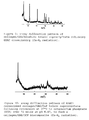
- Figure 3 shows the x-ray diffraction pattern of the triple co-precipitate following DHT and indicates that the brushite phase has converted to its dehydrated form monetite.
- Example 2 is an example of the synthesis method described above, executed via application of steps I through IV only.
- Triple co-precipitation is carried out at room temperature, and a pH of 4.0.
- pH control is effected by careful control of the calcium hydroxide and calcium nitrate concentrations - an approach that also enables control of the mass ratio of brushite to collagen plus GAG in the triple coprecipitate.
- the resulting triple co-precipitates are then frozen to -20°C, placed under vacuum and then heated to induce sublimation of unbound water (i.e. ice).
- Primary crosslinking is performed using a 1-ethyl 3-(3-dimethyl aminopropyl) carbodiimide treatment.
- the resulting dried triple coprecipitate is then converted to octacalcium phosphate via hydrolysis at a pH of 6.67 at about 37°C.
- secondary crosslinking is not performed.
- Example 3 is an example of the synthesis method described above, executed via application of steps I through V inclusive.
- Triple co-precipitation is carried out at room temperature, and a pH of about 4.5.
- pH control is effected by careful control of the calcium hydroxide and calcium nitrate concentrations, without the use of titrants.
- the resulting co-precipitates are then frozen to -20°C, placed under vacuum and then heated to induce sublimation of unbound water (i.e. ice).
- Primary crosslinking is performed using a 1-ethyl 3-(3-dimethyl aminopropyl) carbodiimide treatment.
- the resulting dried coprecipitate is then converted to apatite at pH 8.50, at 37°C. Secondary crosslinking performed using gamma irradiation.
- FIG. 16 shows the x-ray diffraction pattern following gamma irradiation (EDAC-crosslinked collagen/GAG/Ap triple co-precipitates after secondary crosslinking via gamma irradiation).
- the slurry was allowed to dry at 37°C in air for 5 days, and the remaining triple co-precipitate rinsed with deionised water, and subsequently dried again at 37°C for an additional 24 hours.
- Figure 17 shows the x-ray diffraction pattern of the composite immediately following triple co-precipitation and drying (Steps I and II). This pattern confirms the major phase present to be brushite.
- Figure 18 shows an SEM micrograph of the structure of co-precipitate granules following primary crosslinking (Step III). It is worthy to note the microstructurally homogeneous nature of the granules.
- Step IV The progression of hydrolysis to octacalcium phosphate (Step IV) is illustrated in the XRD Pattern of Figure 19 . Progressive decreases in the intensity of the brushite peak at 12.5°, and increases of the major octacalcium phosphate(OCP) peak at 4.5° indicate the conversion of the inorganic phase to OCP over a period of 48 hours.
- FIG. 20 A TEM image of the composite is shown in Figure 20 . A random distribution of 10-20nm low aspect-ratio calcium phosphate crystals dispersed in a collagen/GAG matrix is evident.
- the composite biomaterials of the present invention may be used as a bioresorbable material. Following implantation, it is expected that a device fabricated from the material would resorb completely, leaving behind only healthy, regenerated tissue, with no remaining trace of the implant itself.
Landscapes
- Health & Medical Sciences (AREA)
- Chemical & Material Sciences (AREA)
- Veterinary Medicine (AREA)
- Animal Behavior & Ethology (AREA)
- Public Health (AREA)
- General Health & Medical Sciences (AREA)
- Life Sciences & Earth Sciences (AREA)
- Epidemiology (AREA)
- Oral & Maxillofacial Surgery (AREA)
- Transplantation (AREA)
- Dermatology (AREA)
- Medicinal Chemistry (AREA)
- Engineering & Computer Science (AREA)
- Composite Materials (AREA)
- Materials Engineering (AREA)
- Inorganic Chemistry (AREA)
- Surgery (AREA)
- Orthopedic Medicine & Surgery (AREA)
- Cardiology (AREA)
- Biomedical Technology (AREA)
- Heart & Thoracic Surgery (AREA)
- Vascular Medicine (AREA)
- Dentistry (AREA)
- Materials For Medical Uses (AREA)
- Dental Preparations (AREA)
- Curing Cements, Concrete, And Artificial Stone (AREA)
- Peptides Or Proteins (AREA)
Priority Applications (1)
| Application Number | Priority Date | Filing Date | Title |
|---|---|---|---|
| PL04791593T PL1689460T3 (pl) | 2003-10-28 | 2004-10-28 | Biomateriały kompozytowe zawierające materiały fosforanu wapnia, kolagen i glikozoaminoglikany |
Applications Claiming Priority (2)
| Application Number | Priority Date | Filing Date | Title |
|---|---|---|---|
| GB0325161A GB2407580B (en) | 2003-10-28 | 2003-10-28 | Biomaterial |
| PCT/GB2004/004550 WO2005051447A1 (en) | 2003-10-28 | 2004-10-28 | Composite biomaterials comprising calcium phospate materials, collagen and glycosaminoglycans |
Publications (2)
| Publication Number | Publication Date |
|---|---|
| EP1689460A1 EP1689460A1 (en) | 2006-08-16 |
| EP1689460B1 true EP1689460B1 (en) | 2012-10-10 |
Family
ID=29725523
Family Applications (1)
| Application Number | Title | Priority Date | Filing Date |
|---|---|---|---|
| EP04791593A Expired - Lifetime EP1689460B1 (en) | 2003-10-28 | 2004-10-28 | Composite biomaterials comprising calcium phosphate materials, collagen and glycosaminoglycans |
Country Status (12)
| Country | Link |
|---|---|
| US (1) | US7780994B2 (pl) |
| EP (1) | EP1689460B1 (pl) |
| JP (2) | JP4981451B2 (pl) |
| KR (1) | KR101332647B1 (pl) |
| CN (2) | CN100427151C (pl) |
| AU (1) | AU2004292384B2 (pl) |
| CA (1) | CA2543587A1 (pl) |
| ES (1) | ES2397141T3 (pl) |
| GB (1) | GB2407580B (pl) |
| NO (1) | NO20062373L (pl) |
| PL (1) | PL1689460T3 (pl) |
| WO (1) | WO2005051447A1 (pl) |
Families Citing this family (41)
| Publication number | Priority date | Publication date | Assignee | Title |
|---|---|---|---|---|
| US20040081704A1 (en) | 1998-02-13 | 2004-04-29 | Centerpulse Biologics Inc. | Implantable putty material |
| US20020114795A1 (en) | 2000-12-22 | 2002-08-22 | Thorne Kevin J. | Composition and process for bone growth and repair |
| US7166133B2 (en) | 2002-06-13 | 2007-01-23 | Kensey Nash Corporation | Devices and methods for treating defects in the tissue of a living being |
| US7744651B2 (en) | 2002-09-18 | 2010-06-29 | Warsaw Orthopedic, Inc | Compositions and methods for treating intervertebral discs with collagen-based materials |
| US20040054414A1 (en) | 2002-09-18 | 2004-03-18 | Trieu Hai H. | Collagen-based materials and methods for augmenting intervertebral discs |
| CN100394989C (zh) | 2002-11-15 | 2008-06-18 | 华沙整形外科股份有限公司 | 包含微粒状基于胶原材料的组合物的制药应用和包含所述组合物的滑膜关节 |
| GB2407580B (en) * | 2003-10-28 | 2009-02-25 | Univ Cambridge Tech | Biomaterial |
| GB2424223C (en) | 2005-03-07 | 2011-02-02 | Massachusetts Inst Technology | Biomaterial. |
| US8399619B2 (en) | 2006-06-30 | 2013-03-19 | Warsaw Orthopedic, Inc. | Injectable collagen material |
| US8118779B2 (en) | 2006-06-30 | 2012-02-21 | Warsaw Orthopedic, Inc. | Collagen delivery device |
| GB2440721A (en) | 2006-08-11 | 2008-02-13 | Univ Cambridge Tech | Composite biomaterial formed by cooling a fluid composition on a porous solid and removing solidified crystals of the liquid carrier |
| US7718616B2 (en) | 2006-12-21 | 2010-05-18 | Zimmer Orthobiologics, Inc. | Bone growth particles and osteoinductive composition thereof |
| WO2009056804A2 (en) * | 2007-10-29 | 2009-05-07 | Orthomimetics Ltd | Elastic composite biomaterial |
| GB2457756A (en) | 2008-01-09 | 2009-09-02 | Univ Aberdeen | Bioceramic calcium phosphosilicate compositions |
| JP5478872B2 (ja) * | 2008-11-05 | 2014-04-23 | 国立大学法人東北大学 | 人工骨材 |
| WO2010084481A1 (en) | 2009-01-23 | 2010-07-29 | Royal College Of Surgeons In Ireland | Layered scaffold suitable for osteochondral repair |
| JP2012519556A (ja) * | 2009-03-05 | 2012-08-30 | バイオミメティック セラピューティクス, インコーポレイテッド | 骨軟骨欠損を治療するための血小板由来増殖因子組成物および方法 |
| US8568590B2 (en) * | 2009-05-07 | 2013-10-29 | Phillip Barak | Phosphate recovery from acid phase anaerobic digesters |
| GB201003656D0 (en) | 2010-03-05 | 2010-04-21 | Tigenix Ltd | Fabrication process |
| KR20110117382A (ko) * | 2010-04-21 | 2011-10-27 | 주식회사 메가젠임플란트 | 표면에 콜라겐이 결합된 이상인산칼슘 골대체재의 제조방법 및 그 방법에 의해 제조된 골대체재 |
| AU2011329054B2 (en) | 2010-11-15 | 2015-05-28 | Zimmer Orthobiologics, Inc. | Bone void fillers |
| US8551525B2 (en) | 2010-12-23 | 2013-10-08 | Biostructures, Llc | Bone graft materials and methods |
| WO2012089276A1 (en) | 2010-12-31 | 2012-07-05 | Ahmet Cuneyt Tas | Preparation method of brushite and octacalcium phosphate granules |
| WO2012093939A1 (en) * | 2011-01-05 | 2012-07-12 | Vereniging Voor Christelijk Hoger Onderwijs, Wetenschappelijk Onderzoek En Patiëntenzorg | Particles comprising calcium phosphate and use thereof |
| EP2529764A1 (de) | 2011-05-31 | 2012-12-05 | Curasan AG | Biologisch degradierbares kompositmaterial |
| CN102416200B (zh) * | 2011-12-02 | 2013-09-11 | 四川大学 | 一种构建胶原基生物大分子/羟基磷灰石微球复合支架材料的制备方法 |
| US10207027B2 (en) | 2012-06-11 | 2019-02-19 | Globus Medical, Inc. | Bioactive bone graft substitutes |
| WO2014060443A2 (en) | 2012-10-15 | 2014-04-24 | Royal College Of Surgeons In Ireland | A composite scaffold for use as a tissue engineering implant |
| CN102872481A (zh) * | 2012-10-22 | 2013-01-16 | 天津市赛宁生物工程技术有限公司 | 可重建生物骨板 |
| PL3212204T3 (pl) | 2014-10-28 | 2019-11-29 | Biovotec As | Mikronizowane cząstki błony skorupki jaja i ich zastosowanie dla pobudzania gojenia ran |
| PL3225259T3 (pl) * | 2014-11-27 | 2021-08-02 | Toyobo Co., Ltd. | Porowaty kompozyt, materiał do regeneracji kości i sposób produkcji porowatego kompozytu |
| US11234747B2 (en) * | 2015-02-25 | 2022-02-01 | National University Corporation Tokyo Medical And Dental University | Medical device, device structures for dentistry, for head and neck surgery and for orthopedic surgery, and method for bonding medical device to bone |
| US11045578B2 (en) | 2015-06-24 | 2021-06-29 | Biovotec As | Tissue engineering scaffolds comprising particulate egg shell membrane |
| CN104921956A (zh) * | 2015-06-24 | 2015-09-23 | 苏州乔纳森新材料科技有限公司 | 一种牙齿修复材料及其制备方法 |
| GB201519923D0 (en) | 2015-11-11 | 2015-12-23 | Biovotec Dac And Biovotec As | Dry biocompatible disintegrateable films for delivering particulate egg shell membrane to a wound |
| JP6995437B2 (ja) * | 2017-11-10 | 2022-02-04 | 多木化学株式会社 | コラーゲン-コンドロイチン硫酸のゲル材料 |
| CN108815576A (zh) * | 2018-07-06 | 2018-11-16 | 宣城南巡智能科技有限公司 | 一种复合型骨基质材料及其制备工艺 |
| DE102019211781A1 (de) * | 2019-08-06 | 2021-02-11 | Gebr. Brasseler Gmbh & Co. Kg | Zubereitung und Fertigmischung zur Verwendung in medizinischen oder dentalen Anwendungen, medizinisches oder dentales Produkt sowie dessen Verwendung und seine Herstellung |
| CN111249523B (zh) * | 2020-03-10 | 2021-07-13 | 四川大学 | 仿骨复合材料支架及其制备方法 |
| CN112121233A (zh) * | 2020-07-17 | 2020-12-25 | 上海摩漾生物科技有限公司 | 酪蛋白钙磷微球胶原蛋白填充剂及其制备方法以及酪蛋白钙磷微球的制备方法 |
| US20260027259A1 (en) * | 2024-07-26 | 2026-01-29 | Miach Orthopaedics, Inc. | Injectable collagen implants and compositions and related systems, and methods of preparation and use thereof |
Family Cites Families (12)
| Publication number | Priority date | Publication date | Assignee | Title |
|---|---|---|---|---|
| FR2585576B1 (fr) * | 1985-07-30 | 1992-01-03 | Bioetica Sa | Produit de remplacement de la matrice osseuse favorisant l'osteogenese |
| JPS63229058A (ja) * | 1987-03-17 | 1988-09-22 | 大鳥 泰雅 | 骨形成材料の製法 |
| US5034059A (en) * | 1989-02-17 | 1991-07-23 | Norian Corporation | Composition comprising octacalcium phosphate crystals and polypeptide |
| US5320844A (en) * | 1992-03-12 | 1994-06-14 | Liu Sung Tsuen | Composite materials for hard tissue replacement |
| US5532217A (en) * | 1992-04-24 | 1996-07-02 | Silver; Frederick H. | Process for the mineralization of collagen fibers, product produced thereby and use thereof to repair bone |
| EP0842670A1 (en) * | 1996-11-13 | 1998-05-20 | Katsunari Nishihara | Biomedical materials |
| US6432710B1 (en) * | 1998-05-22 | 2002-08-13 | Isolagen Technologies, Inc. | Compositions for regenerating tissue that has deteriorated, and methods for using such compositions |
| WO2000016822A1 (en) * | 1998-09-21 | 2000-03-30 | The Brigham And Women's Hospital, Inc. | Compositions and methods for tissue repair |
| WO2001041824A1 (en) * | 1999-12-09 | 2001-06-14 | Dr.H.C. Robert Mathys Stiftung | Brushite hydraulic cement stabilized with a magnesium salt |
| JP3916516B2 (ja) * | 2002-06-10 | 2007-05-16 | 独立行政法人科学技術振興機構 | 硬組織−軟組織界面再生用足場材料 |
| CN1403165A (zh) * | 2002-09-26 | 2003-03-19 | 东南大学 | 用于硬组织修复的活性组合物及其制备方法 |
| GB2407580B (en) * | 2003-10-28 | 2009-02-25 | Univ Cambridge Tech | Biomaterial |
-
2003
- 2003-10-28 GB GB0325161A patent/GB2407580B/en not_active Expired - Fee Related
-
2004
- 2004-10-28 KR KR1020067010357A patent/KR101332647B1/ko not_active Expired - Fee Related
- 2004-10-28 PL PL04791593T patent/PL1689460T3/pl unknown
- 2004-10-28 CN CNB2004800321261A patent/CN100427151C/zh not_active Expired - Fee Related
- 2004-10-28 WO PCT/GB2004/004550 patent/WO2005051447A1/en not_active Ceased
- 2004-10-28 CA CA002543587A patent/CA2543587A1/en not_active Abandoned
- 2004-10-28 JP JP2006537412A patent/JP4981451B2/ja not_active Expired - Fee Related
- 2004-10-28 US US10/595,587 patent/US7780994B2/en active Active
- 2004-10-28 EP EP04791593A patent/EP1689460B1/en not_active Expired - Lifetime
- 2004-10-28 ES ES04791593T patent/ES2397141T3/es not_active Expired - Lifetime
- 2004-10-28 CN CN200810169017.4A patent/CN101391117B/zh not_active Expired - Fee Related
- 2004-10-28 AU AU2004292384A patent/AU2004292384B2/en not_active Ceased
-
2006
- 2006-05-24 NO NO20062373A patent/NO20062373L/no not_active Application Discontinuation
-
2012
- 2012-02-02 JP JP2012020970A patent/JP2012110739A/ja active Pending
Also Published As
| Publication number | Publication date |
|---|---|
| CA2543587A1 (en) | 2005-06-09 |
| US20070134285A1 (en) | 2007-06-14 |
| US7780994B2 (en) | 2010-08-24 |
| NO20062373L (no) | 2006-05-24 |
| AU2004292384A1 (en) | 2005-06-09 |
| CN100427151C (zh) | 2008-10-22 |
| CN101391117B (zh) | 2014-02-26 |
| AU2004292384B2 (en) | 2011-03-03 |
| JP4981451B2 (ja) | 2012-07-18 |
| JP2012110739A (ja) | 2012-06-14 |
| PL1689460T3 (pl) | 2013-03-29 |
| EP1689460A1 (en) | 2006-08-16 |
| GB0325161D0 (en) | 2003-12-03 |
| CN1874797A (zh) | 2006-12-06 |
| WO2005051447A1 (en) | 2005-06-09 |
| GB2407580B (en) | 2009-02-25 |
| KR101332647B1 (ko) | 2013-12-03 |
| GB2407580A (en) | 2005-05-04 |
| JP2007512038A (ja) | 2007-05-17 |
| CN101391117A (zh) | 2009-03-25 |
| ES2397141T3 (es) | 2013-03-05 |
| KR20070031846A (ko) | 2007-03-20 |
Similar Documents
| Publication | Publication Date | Title |
|---|---|---|
| EP1689460B1 (en) | Composite biomaterials comprising calcium phosphate materials, collagen and glycosaminoglycans | |
| US10926000B2 (en) | Deposition-conversion method for tunable calcium phosphate coatings on substrates and apparatus prepared thereof | |
| CA2220306C (en) | Bone substitution material and a method of its manufacture | |
| US10806827B2 (en) | Controlled and tunable precipitation of biomimetic apatites via in situ mineralization of an organic polymeric matrix | |
| CN1265846C (zh) | 一种基于磷酸钙/硫酸钙的骨移植组合物 | |
| EP1855734A2 (en) | Biomaterial | |
| MXPA05014103A (es) | Material sustituido de hueso para uso medico y metodo para producir el mismo. | |
| Drouet et al. | Calcium phosphate surface tailoring technologies for drug delivering and tissue engineering | |
| EP2167150B1 (en) | Porous composite material, preparation process thereof and use to realize tissue engineering devices | |
| AU2011202671A1 (en) | Composite biomaterials comprising calcium phospate materials, collagen and glycosaminoglycans | |
| WO2007135392A1 (en) | Process for preparing hydroxylapatite | |
| Gautam et al. | 2 Calcium Phosphate | |
| Gautam et al. | Calcium Phosphate: Synthesis and Applications | |
| Chanes-Cuevas et al. | Calcium Phosphate and Bioactive Glasses | |
| Lv et al. | Calcium‐Phosphate‐Based Ceramics for Biomedical Applications | |
| Gunn et al. | Sodium alginate bioresorbable membrane and octacalcium phosphate biomaterial for guided bone regeneration | |
| Kamakura et al. | Fluoridated Ca-deficient apatite formed via octacalcium phosphate enhances bone regeneration | |
| GB2541897A (en) | Amorphous inorganic polyphosphate-calcium-phosphate particles inducing bone formation |
Legal Events
| Date | Code | Title | Description |
|---|---|---|---|
| PUAI | Public reference made under article 153(3) epc to a published international application that has entered the european phase |
Free format text: ORIGINAL CODE: 0009012 |
|
| 17P | Request for examination filed |
Effective date: 20060524 |
|
| AK | Designated contracting states |
Kind code of ref document: A1 Designated state(s): AT BE BG CH CY CZ DE DK EE ES FI FR GB GR HU IE IT LI LU MC NL PL PT RO SE SI SK TR |
|
| DAX | Request for extension of the european patent (deleted) | ||
| RAP1 | Party data changed (applicant data changed or rights of an application transferred) |
Owner name: CAMBRIDGE ENTERPRISE LIMITED |
|
| 111L | Licence recorded |
Free format text: 0101 ORTHOMIMETICS LIMITED Effective date: 20081217 |
|
| 17Q | First examination report despatched |
Effective date: 20090529 |
|
| GRAP | Despatch of communication of intention to grant a patent |
Free format text: ORIGINAL CODE: EPIDOSNIGR1 |
|
| RIN1 | Information on inventor provided before grant (corrected) |
Inventor name: LYNN, ANDREWC/O DEPARTMENT OF MATERIALS SCIENCE Inventor name: BONFIELD, WILLIAMC/O DEPARTMENT OF MATERIALS Inventor name: CAMERON, RUTH C/O DEPARTMENT OF MATERIALS SCIENCE Inventor name: BEST, SERENAC/O DEPARTMENT OF MATERIALS SCIENCE |
|
| GRAS | Grant fee paid |
Free format text: ORIGINAL CODE: EPIDOSNIGR3 |
|
| GRAA | (expected) grant |
Free format text: ORIGINAL CODE: 0009210 |
|
| 111L | Licence recorded |
Designated state(s): AT BE BG CH CY CZ DE DK EE ES FI FR GB GR HU IE IT LU MC NL PL PT RO SE SI SK TR Free format text: EXCLUSIVE LICENSE Name of requester: ORTHOMIMETICS LIMITED, GB Effective date: 20081217 |
|
| AK | Designated contracting states |
Kind code of ref document: B1 Designated state(s): AT BE BG CH CY CZ DE DK EE ES FI FR GB GR HU IE IT LI LU MC NL PL PT RO SE SI SK TR |
|
| REG | Reference to a national code |
Ref country code: GB Ref legal event code: FG4D |
|
| REG | Reference to a national code |
Ref country code: CH Ref legal event code: PK Free format text: ERGAENZUNG LIZENZEINTRAG: AUSSCHLIESSLICHE LIZENZ Ref country code: AT Ref legal event code: REF Ref document number: 578653 Country of ref document: AT Kind code of ref document: T Effective date: 20121015 Ref country code: CH Ref legal event code: EP |
|
| REG | Reference to a national code |
Ref country code: IE Ref legal event code: FG4D |
|
| REG | Reference to a national code |
Ref country code: DE Ref legal event code: R096 Ref document number: 602004039638 Country of ref document: DE Effective date: 20121206 |
|
| PGFP | Annual fee paid to national office [announced via postgrant information from national office to epo] |
Ref country code: IE Payment date: 20121228 Year of fee payment: 9 |
|
| PG25 | Lapsed in a contracting state [announced via postgrant information from national office to epo] |
Ref country code: SI Free format text: LAPSE BECAUSE OF FAILURE TO SUBMIT A TRANSLATION OF THE DESCRIPTION OR TO PAY THE FEE WITHIN THE PRESCRIBED TIME-LIMIT Effective date: 20121010 |
|
| PGFP | Annual fee paid to national office [announced via postgrant information from national office to epo] |
Ref country code: ES Payment date: 20121227 Year of fee payment: 9 |
|
| REG | Reference to a national code |
Ref country code: ES Ref legal event code: FG2A Ref document number: 2397141 Country of ref document: ES Kind code of ref document: T3 Effective date: 20130305 |
|
| REG | Reference to a national code |
Ref country code: NL Ref legal event code: VDEP Effective date: 20121010 |
|
| REG | Reference to a national code |
Ref country code: AT Ref legal event code: MK05 Ref document number: 578653 Country of ref document: AT Kind code of ref document: T Effective date: 20121010 |
|
| REG | Reference to a national code |
Ref country code: PL Ref legal event code: T3 Ref country code: GR Ref legal event code: EP Ref document number: 20130400034 Country of ref document: GR Effective date: 20130225 |
|
| PG25 | Lapsed in a contracting state [announced via postgrant information from national office to epo] |
Ref country code: NL Free format text: LAPSE BECAUSE OF FAILURE TO SUBMIT A TRANSLATION OF THE DESCRIPTION OR TO PAY THE FEE WITHIN THE PRESCRIBED TIME-LIMIT Effective date: 20121010 Ref country code: SE Free format text: LAPSE BECAUSE OF FAILURE TO SUBMIT A TRANSLATION OF THE DESCRIPTION OR TO PAY THE FEE WITHIN THE PRESCRIBED TIME-LIMIT Effective date: 20121010 Ref country code: FI Free format text: LAPSE BECAUSE OF FAILURE TO SUBMIT A TRANSLATION OF THE DESCRIPTION OR TO PAY THE FEE WITHIN THE PRESCRIBED TIME-LIMIT Effective date: 20121010 |
|
| PGFP | Annual fee paid to national office [announced via postgrant information from national office to epo] |
Ref country code: FR Payment date: 20130205 Year of fee payment: 9 Ref country code: DE Payment date: 20121228 Year of fee payment: 9 |
|
| PG25 | Lapsed in a contracting state [announced via postgrant information from national office to epo] |
Ref country code: MC Free format text: LAPSE BECAUSE OF NON-PAYMENT OF DUE FEES Effective date: 20121031 Ref country code: PT Free format text: LAPSE BECAUSE OF FAILURE TO SUBMIT A TRANSLATION OF THE DESCRIPTION OR TO PAY THE FEE WITHIN THE PRESCRIBED TIME-LIMIT Effective date: 20130211 Ref country code: BE Free format text: LAPSE BECAUSE OF FAILURE TO SUBMIT A TRANSLATION OF THE DESCRIPTION OR TO PAY THE FEE WITHIN THE PRESCRIBED TIME-LIMIT Effective date: 20121010 Ref country code: CY Free format text: LAPSE BECAUSE OF FAILURE TO SUBMIT A TRANSLATION OF THE DESCRIPTION OR TO PAY THE FEE WITHIN THE PRESCRIBED TIME-LIMIT Effective date: 20121010 |
|
| PGFP | Annual fee paid to national office [announced via postgrant information from national office to epo] |
Ref country code: GR Payment date: 20130117 Year of fee payment: 9 |
|
| REG | Reference to a national code |
Ref country code: CH Ref legal event code: PL |
|
| PG25 | Lapsed in a contracting state [announced via postgrant information from national office to epo] |
Ref country code: AT Free format text: LAPSE BECAUSE OF FAILURE TO SUBMIT A TRANSLATION OF THE DESCRIPTION OR TO PAY THE FEE WITHIN THE PRESCRIBED TIME-LIMIT Effective date: 20121010 |
|
| PG25 | Lapsed in a contracting state [announced via postgrant information from national office to epo] |
Ref country code: CZ Free format text: LAPSE BECAUSE OF FAILURE TO SUBMIT A TRANSLATION OF THE DESCRIPTION OR TO PAY THE FEE WITHIN THE PRESCRIBED TIME-LIMIT Effective date: 20121010 Ref country code: SK Free format text: LAPSE BECAUSE OF FAILURE TO SUBMIT A TRANSLATION OF THE DESCRIPTION OR TO PAY THE FEE WITHIN THE PRESCRIBED TIME-LIMIT Effective date: 20121010 Ref country code: BG Free format text: LAPSE BECAUSE OF FAILURE TO SUBMIT A TRANSLATION OF THE DESCRIPTION OR TO PAY THE FEE WITHIN THE PRESCRIBED TIME-LIMIT Effective date: 20130110 Ref country code: DK Free format text: LAPSE BECAUSE OF FAILURE TO SUBMIT A TRANSLATION OF THE DESCRIPTION OR TO PAY THE FEE WITHIN THE PRESCRIBED TIME-LIMIT Effective date: 20121010 Ref country code: CH Free format text: LAPSE BECAUSE OF NON-PAYMENT OF DUE FEES Effective date: 20121031 Ref country code: LI Free format text: LAPSE BECAUSE OF NON-PAYMENT OF DUE FEES Effective date: 20121031 Ref country code: EE Free format text: LAPSE BECAUSE OF FAILURE TO SUBMIT A TRANSLATION OF THE DESCRIPTION OR TO PAY THE FEE WITHIN THE PRESCRIBED TIME-LIMIT Effective date: 20121010 |
|
| PLBE | No opposition filed within time limit |
Free format text: ORIGINAL CODE: 0009261 |
|
| STAA | Information on the status of an ep patent application or granted ep patent |
Free format text: STATUS: NO OPPOSITION FILED WITHIN TIME LIMIT |
|
| PG25 | Lapsed in a contracting state [announced via postgrant information from national office to epo] |
Ref country code: RO Free format text: LAPSE BECAUSE OF FAILURE TO SUBMIT A TRANSLATION OF THE DESCRIPTION OR TO PAY THE FEE WITHIN THE PRESCRIBED TIME-LIMIT Effective date: 20121010 |
|
| 26N | No opposition filed |
Effective date: 20130711 |
|
| REG | Reference to a national code |
Ref country code: DE Ref legal event code: R097 Ref document number: 602004039638 Country of ref document: DE Effective date: 20130711 |
|
| PG25 | Lapsed in a contracting state [announced via postgrant information from national office to epo] |
Ref country code: LU Free format text: LAPSE BECAUSE OF NON-PAYMENT OF DUE FEES Effective date: 20121028 |
|
| REG | Reference to a national code |
Ref country code: GR Ref legal event code: ML Ref document number: 20130400034 Country of ref document: GR Effective date: 20140505 |
|
| REG | Reference to a national code |
Ref country code: IE Ref legal event code: MM4A |
|
| PG25 | Lapsed in a contracting state [announced via postgrant information from national office to epo] |
Ref country code: HU Free format text: LAPSE BECAUSE OF FAILURE TO SUBMIT A TRANSLATION OF THE DESCRIPTION OR TO PAY THE FEE WITHIN THE PRESCRIBED TIME-LIMIT Effective date: 20041028 |
|
| REG | Reference to a national code |
Ref country code: FR Ref legal event code: ST Effective date: 20140630 |
|
| REG | Reference to a national code |
Ref country code: DE Ref legal event code: R119 Ref document number: 602004039638 Country of ref document: DE Effective date: 20140501 |
|
| PG25 | Lapsed in a contracting state [announced via postgrant information from national office to epo] |
Ref country code: DE Free format text: LAPSE BECAUSE OF NON-PAYMENT OF DUE FEES Effective date: 20140501 Ref country code: FR Free format text: LAPSE BECAUSE OF NON-PAYMENT OF DUE FEES Effective date: 20131031 Ref country code: IT Free format text: LAPSE BECAUSE OF NON-PAYMENT OF DUE FEES Effective date: 20131028 Ref country code: GR Free format text: LAPSE BECAUSE OF NON-PAYMENT OF DUE FEES Effective date: 20140505 |
|
| PG25 | Lapsed in a contracting state [announced via postgrant information from national office to epo] |
Ref country code: IE Free format text: LAPSE BECAUSE OF NON-PAYMENT OF DUE FEES Effective date: 20131028 |
|
| REG | Reference to a national code |
Ref country code: ES Ref legal event code: FD2A Effective date: 20150529 |
|
| PG25 | Lapsed in a contracting state [announced via postgrant information from national office to epo] |
Ref country code: ES Free format text: LAPSE BECAUSE OF NON-PAYMENT OF DUE FEES Effective date: 20131029 |
|
| PGFP | Annual fee paid to national office [announced via postgrant information from national office to epo] |
Ref country code: TR Payment date: 20201026 Year of fee payment: 17 |
|
| PGFP | Annual fee paid to national office [announced via postgrant information from national office to epo] |
Ref country code: PL Payment date: 20201023 Year of fee payment: 17 |
|
| PGFP | Annual fee paid to national office [announced via postgrant information from national office to epo] |
Ref country code: GB Payment date: 20221028 Year of fee payment: 19 |
|
| PG25 | Lapsed in a contracting state [announced via postgrant information from national office to epo] |
Ref country code: PL Free format text: LAPSE BECAUSE OF NON-PAYMENT OF DUE FEES Effective date: 20211028 |
|
| GBPC | Gb: european patent ceased through non-payment of renewal fee |
Effective date: 20231028 |
|
| PG25 | Lapsed in a contracting state [announced via postgrant information from national office to epo] |
Ref country code: GB Free format text: LAPSE BECAUSE OF NON-PAYMENT OF DUE FEES Effective date: 20231028 |
|
| PG25 | Lapsed in a contracting state [announced via postgrant information from national office to epo] |
Ref country code: GB Free format text: LAPSE BECAUSE OF NON-PAYMENT OF DUE FEES Effective date: 20231028 |