EP1608382B1 - Process for the staining of sperm - Google Patents
Process for the staining of sperm Download PDFInfo
- Publication number
- EP1608382B1 EP1608382B1 EP04758585A EP04758585A EP1608382B1 EP 1608382 B1 EP1608382 B1 EP 1608382B1 EP 04758585 A EP04758585 A EP 04758585A EP 04758585 A EP04758585 A EP 04758585A EP 1608382 B1 EP1608382 B1 EP 1608382B1
- Authority
- EP
- European Patent Office
- Prior art keywords
- sperm
- dye
- concentration
- staining mixture
- staining
- Prior art date
- Legal status (The legal status is an assumption and is not a legal conclusion. Google has not performed a legal analysis and makes no representation as to the accuracy of the status listed.)
- Expired - Lifetime
Links
Images

















Classifications
-
- C—CHEMISTRY; METALLURGY
- C12—BIOCHEMISTRY; BEER; SPIRITS; WINE; VINEGAR; MICROBIOLOGY; ENZYMOLOGY; MUTATION OR GENETIC ENGINEERING
- C12N—MICROORGANISMS OR ENZYMES; COMPOSITIONS THEREOF; PROPAGATING, PRESERVING, OR MAINTAINING MICROORGANISMS; MUTATION OR GENETIC ENGINEERING; CULTURE MEDIA
- C12N5/00—Undifferentiated human, animal or plant cells, e.g. cell lines; Tissues; Cultivation or maintenance thereof; Culture media therefor
- C12N5/06—Animal cells or tissues; Human cells or tissues
- C12N5/0602—Vertebrate cells
- C12N5/0608—Germ cells
- C12N5/0612—Germ cells sorting of gametes, e.g. according to sex or motility
-
- A—HUMAN NECESSITIES
- A61—MEDICAL OR VETERINARY SCIENCE; HYGIENE
- A61P—SPECIFIC THERAPEUTIC ACTIVITY OF CHEMICAL COMPOUNDS OR MEDICINAL PREPARATIONS
- A61P15/00—Drugs for genital or sexual disorders; Contraceptives
Definitions
- the present invention generally relates to a staining process to enable sperm separation for the purpose of producing gender enriched sperm.
- Johnson et al. (U.S. Patent No. 5,135,759 ) describe the separation of intact X and Y chromosome-bearing sperm populations according to DNA content using a flow cytometer/cell sorter into X and Y chromosome-bearing sperm enriched populations.
- the sperm is combined with a DNA selective dye at a temperature of 30 to 39 °C for a period of 1 hour (39 °C) to 1.5 hours (30 °C) .
- a flow cytometer is then used to measure the amount of fluorescent light given off when the sperm passes through a laser beam.
- the X chromosome-bearing sperm contains more DNA than the Y chromosome-bearing sperm, approximately 3 to 5% depending upon the species, the X chromosome-bearing sperm yields a greater intensity of fluorescent light than the Y chromosome-bearing sperm.
- Droplets containing single sperm of a predetermined fluorescent intensity are given a charge and electrostatically deflected into collection vessels. The collected, gender enriched sperm population, is then used for microinjection or artificial insemination.
- Seidel et al. (WO 02/43574 ) also describe separation of sperm into gender enriched populations of X and Y chromosome-bearing cells using flow cytometry. Seidel et al. describe staining the cells at a temperature between 30°C and 40°C.
- Didion et al. (WO 02/41906 ) describe staining sperm cells at temperatures of about 17°C to 30°C. According to Didion et al., these staining temperatures avoided certain effects which may result from staining at greater temperatures, such as reduced sperm viability and efficiency. Furthermore, it was believed that the lower temperature staining provided advantageous effects on sperm orientation during sorting.
- the present invention is directed to a process for staining sperm cells.
- the process comprises forming a staining mixture containing intact viable sperm cells and a DNA selective fluorescent dye, and subjecting the staining mixture to a temperature of at least about 40°C, without significantly impacting viability of the stained cells.
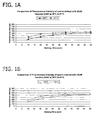
- FIGURES 1A - 1D graphically depict the results of the study carried out in Example 1 wherein fluorescence intensity of sperm is measured for sperm stained at varying concentrations of Hoechst 33342 dye at 39°C and 41°C.
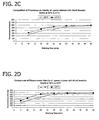
- FIGURES 2A - 2D graphically depict the results of the study carried out in Example 2 wherein fluorescence intensity of sperm is measured for sperm stained at varying concentrations of Hoechst 33342 dye at 39°C and 41°C.
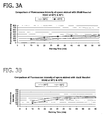
- FIGURES 3A - 3D graphically depict the results of the study carried out in Example 3 wherein fluorescence intensity of sperm is measured for sperm stained at varying concentrations of Hoechst 33342 dye at 39°C and 43°C.
- FIGURES 4A and 4B graphically depict the results of the study carried out in Example 4 wherein fluorescence intensity of sperm is measured for sperm stained at varying concentrations, of Hoechst 33342 dye at 39°C and 43°C.
- FIGURES 5A and 5B graphically depict the results of the study carried out in Example 5 wherein fluorescence intensity of sperm is measured for sperm stained at varying concentrations of Hoechst 33342 dye at 39°C and 45°C.
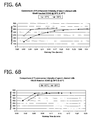
- FIGURES 6A and 6B graphically depict the results of the study carried out in Example 6 wherein fluorescence intensity of sperm is measured for sperm stained at varying concentrations of Hoechst 33342 dye at 39°C and 47°C.
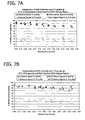
- FIGURES 7A and' 7B graphically depict the results of the study carried out in Example 7 wherein percent motility and percent progressive motility of sperm are measured for sperm unstained or stained with 60 ⁇ M Hoechst 33342 dye at 41°C and 43°C.
- FIGURES 8A and 8B graphically depict the results of the study carried out in Example 8 wherein percent motility and percent progressive motility of sperm are measured for sperm unstained or stained with 60 ⁇ M Hoechst 33342 dye at 39°C and 45°C.
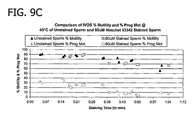
- FIGURES 9A - 9C graphically depict the results of the study carried out in Example 9 wherein percent motility and percent progressive motility of sperm are measured for sperm unstained or stained with 80 ⁇ M Hoechst 33342 dye at 41°C, 43°C, and 45°C.
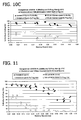
- FIGURES 10A - 10C graphically depict the results of the study carried out in Example 10 wherein percent motility and percent progressive motility of sperm are measured for sperm unstained or stained with 100 ⁇ M Hoechst 33342 dye at 41°C, 43°C, and 45°C.
- FIGURE 11 graphically depicts the results of the study carried out in Example 11 wherein percent motility and percent progressive motility of sperm are measured for sperm unstained or stained with 100 ⁇ M Hoechst 33342 dye at 47°C.
- FIGURE 12 graphically depicts the results of the study carried out in Example 12 wherein percent motility and percent progressive motility of sperm are measured for sperm unstained or stained with 100 ⁇ M Hoechst 33342 dye at 49°C.
- FIGURES 13A and 13B graphically depict the results of the study carried out in Example 13 wherein percent motility and percent progressive motility of sperm are measured for sperm unstained, stained with 125 ⁇ M Hoechst 33342 dye, or stained with 150 ⁇ M Hoechst 33342 dye at 43°C.
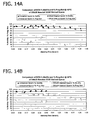
- FIGURES 14A and 14B graphically depict the results of the study carried out in Example 14 wherein percent motility and percent progressive motility of sperm are measured for sperm unstained, stained with 200 ⁇ M Hoechst 33342 dye, or stained with 250 ⁇ M Hoechst 33342 dye at 43°C.
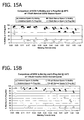
- FIGURES 15A and 15B graphically depict the results of the study carried out in Example 15 wherein percent motility and percent progressive motility of sperm are measured for sperm unstained, stained with 125 ⁇ M Hoechst 33342 dye, or stained with 150 ⁇ M Hoechst 33342 dye at 45°C.
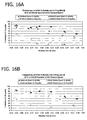
- FIGURES 16A - 16C graphically depict the results of the study carried out in Example 16 wherein percent motility and percent progressive motility of sperm are measured for sperm unstained, stained with 200 ⁇ M Hoechst 33342, stained with 250 ⁇ M Hoechst 33342, or stained with 350 ⁇ M Hoechst 33342 at 45°C.
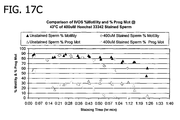
- FIGURES 17A - 17C graphically depict the results of the study carried out in Example 17 wherein percent motility and percent progressive motility of sperm are measured for sperm unstained, stained with 300 ⁇ M Hoechst 33342, stained with 350 ⁇ M Hoechst 33342, or stained with 400 ⁇ M Hoechst 33342 at 43°C.
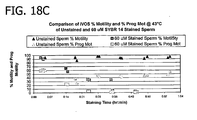
- FIGURES 18A - 18C graphically depict the results of the study carried out in Example 18 wherein percent motility and percent progressive motility of sperm are measured for sperm unstained, stained with 0.6 ⁇ M SYBR 14, stained with 6.0 ⁇ M SYBR 14, or stained with 60 ⁇ M SYBR at 43°C.
- FIGURES 19A - 19B graphically depict the results of the study carried out in Example 19 wherein fluorescence intensity of sperm is measured for sperm stained with 100 ⁇ M bisbenzimide-BODIPY conjugate (BBC) or 6 ⁇ M SYBR 14 at 39°C and 45°C.
- BBC bisbenzimide-BODIPY conjugate
- SYBR 14 6 ⁇ M SYBR 14 at 39°C and 45°C.
- FIGURE 20 graphically depicts the results of the study carried out in Example 20 wherein percent progressive motility of sperm is measured for sperm stained with 400 ⁇ M Hoechst 33342 dye at 41°C in either a TCA buffer or a TCA buffer containing 10mM pyruvate.
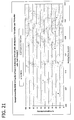
- FIGURE 21 graphically depicts the results of the study carried out in Example 21 wherein percent progressive motility of sperm is measured for sperm stained with 400 ⁇ M Hoechst 33342 dye at 41°C in either a TCA buffer or a TCA buffer containing 10 ⁇ M vitamin K.
- FIGURE 22 graphically depicts the results of the study carried out in Example 22 wherein percent progressive motility of sperm is measured for sperm stained with 400 ⁇ M Hoechst 33342 dye at 41°C in either a TCA buffer or a TCA buffer containing 100 ⁇ M vitamin K.
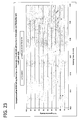
- FIGURE 23 graphically depicts the results of the study carried out in Example 23 wherein percent progressive motility of sperm is measured for sperm stained with 400 ⁇ M Hoechst 33342 dye at 41°C in either a TCA buffer or a TCA buffer containing 1mM lipoic acid.
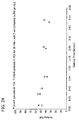
- FIGURE 24 graphically depicts the results of the study carried out in Example 24 wherein percent progressive motility of sperm cells is measured for sperm cells stained with 300 ⁇ M Hoechst 33342 dye at 41°C in TCA containing 10mM pyruvate and then diluted 1 to 3 with either TCA containing 10mM pyruvate or a carbonate-based inhibitor at pH 6.2.
- FIGURE 25 graphically depicts the results of the study carried out in Example 24 wherein percent progressive motility of sperm cells is measured for sperm cells stained with 300 ⁇ M Hoechst 33342 dye at 41°C in (1) TCA containing 10mM pyruvate and diluted 1 to 3 with the same or (2) a carbonate-based buffer at pH 7.3 and diluted 1 to 3 with carbonate-based inhibitor at pH 6.2.
- FIGURE 26 graphically depicts the results of the study carried out in Example 24 wherein percent progressive motility of sperm cells is measured for sperm cells stained with 300 ⁇ M Hoechst 33342 dye at 41°C in TCA containing 10mM pyruvate or a carbonate-based inhibitor at pH 6.2.
- sperm cells can be stained with a dye for use in flow cytometry processes at elevated temperatures, i.e ., at temperatures in excess of 40°C, in less time than is required to stain the cells at lesser temperatures without significant impact upon sperm cell viability.
- the sperm cells are exposed to the dye at a temperature of at least 41°C.
- the sperm cells are exposed to the dye at a temperature of at least 42°C.
- the sperm cells are exposed to the dye at a temperature of at least 43°C.
- the sperm cells are exposed to the dye at a temperature of at least 44°C.
- the sperm cells are exposed to the dye at a temperature of at least 45°C. In general, however, exposing the sperm cells to a temperature substantially in excess of 45°C for any significant period of time may deleteriously affect the viability of the cells.
- the sperm cells are exposed to the dye at a temperature of at least 41°C but not in excess of 50°C. In another embodiment, the sperm cells are exposed to the dye at a temperature of at least 41°C but not in excess of 48°C. In another embodiment, the sperm cells are exposed to the dye at a temperature of at least 41°C but not in excess of 47°C.
- the sperm cells are exposed to the dye at a temperature of at least 42°C but not in excess of 47°C.
- the sperm cells are exposed to the dye at a temperature of at least 43°C but not in excess of 45°C.
- the process of the present invention may be used to stain intact, viable bovine, porcine, equine, or other mammalian sperm cells, derived from a freshly obtained semen sample or from a thawed cryopreserved semen sample.
- Various methods of collection of viable sperm are known and include, for example, an artificial vagina method or a gloved hand method.
- a typical bovine semen sample will contain about 0.5 to about 5 billion sperm cells per milliliter depending upon species and the particular animal within the species.
- sperm cells are stained in accordance with one aspect of the present invention by forming a staining mixture which comprises sperm cells and a DNA selective dye.
- a staining mixture which comprises sperm cells and a DNA selective dye.
- Sperm cells are somewhat sensitive to significant changes in osmotic pressure and pH. To minimize impact upon sperm viability, therefore, it is generally preferred that the staining mixture be formed with these considerations in mind. Consistent with these considerations, the staining mixture may be formed in a variety of manners.
- neat semen is combined with the DNA selective dye.
- dye in the form of a neat solid, including a free-flowing powder, or a liquid composition may be combined with neat semen.
- an unbuffered liquid in which the dye is dissolved or dispersed may be combined with neat semen.
- neat semen is combined with a buffered liquid in which the dye is dissolved or dispersed to form the staining mixture.
- the buffer will aid in the avoidance of any significant change in osmotic pressure or pH relative to neat semen sufficient to materially adversely affect their viability as a consequence of the formation of the mixture.
- a sperm source is combined with a buffer to form a sperm suspension and the sperm suspension is thereafter combined with the dye to form the staining mixture.
- Suspending the sperm cells in a buffered liquid prior to contact with the dye can advantageously protect the sperm cells from significant changes in pH and osmotic pressure which would otherwise result from the addition of the dye.
- the sperm source may be neat semen.
- the sperm source may be a sperm-containing semen derivative obtained by centrifugation or the use of other means to separate semen into fractions.
- the DNA selective dye is combined with a buffer, or is included as part of a buffer recipe, thereby forming a buffered dye solution.
- dye in the form of a neat solid, including a free-flowing powder, or a liquid composition may be combined with the buffer, or any constituents of the buffer recipe prior to the combination thereof, to form a buffered dye solution, which may then be combined with neat semen or a sperm suspension.
- a variety of biological buffers may be used, individually or in combination, to protect the sperm cells from significant changes in pH and osmotic pressure. Typically, these buffers will be in a concentration of about 0.001M to about 1.0M and at a pH between about 4.5 to about 8.5.
- Common biological buffers include, for example, phosphates, diphosphates, citrates, acetates, and lactates. Such buffers may also contain a nutrient source, such as for example sugar, and/or an antibiotic, such as streptomycin.
- Preferred buffers include TCA, TEST, sodium citrate, TL, and HEPES.
- the semen sample is diluted with one or more of the buffer solutions described in Table I.
- the semen sample is diluted with a TCA#1 buffer solution having the composition described in Table I.
- the semen sample is diluted with a TCA#2 buffer solution having the composition described in Table I.
- the semen sample is diluted with a TEST buffer solution having the composition described in Table I.
- the semen sample is diluted with a sodium citrate buffer solution having the composition described in Table I.
- the semen sample is diluted with a TL buffer solution having the composition described in Table I.
- the semen sample is diluted with a HEPES buffer solution having the composition described in Table I.
- the sperm cells may be diluted with a buffer solution comprising 0.204g NaHCO 3 0.433g KHCO 3 , and 0.473g C 6 H 8 O 7 ⁇ H 2 O per 25mL of purified water (0.097 moles/L of NaHCO 3 , 0.173 moles/L of KHCO 3 , 0.090 moles/L C 6 H 8 O 7 ⁇ H 2 O in water) to form a sperm suspension.
- a buffer solution comprising 0.204g NaHCO 3 0.433g KHCO 3 , and 0.473g C 6 H 8 O 7 ⁇ H 2 O per 25mL of purified water (0.097 moles/L of NaHCO 3 , 0.173 moles/L of KHCO 3 , 0.090 moles/L C 6 H 8 O 7 ⁇ H 2 O in water) to form a sperm suspension.
- buffer is added to achieve a sperm suspension that contains less than the concentration of sperm in a neat semen sample.
- buffer is added to achieve a sperm suspension that contains from about 1 X 10 6 sperm/ml to about 5 X 10 9 sperm/ml.
- buffer is added to achieve a sperm suspension that contains less than about 200 X 10 6 sperm/ml.
- buffer is added to achieve a sperm suspension that contains from about 1 X 10 6 sperm/ml to about 200 X 10 6 sperm/ml. In still another embodiment, buffer is added to achieve a sperm suspension that contains from about 20 X 10 6 sperm/ml to about 200 X 10 6 In another embodiment, buffer is added to achieve a sperm suspension that contains from about 30 X 10 6 sperm/ml to about 175 X 10 6 sperm/ml. In still another embodiment, buffer is added to achieve a sperm suspension that contains from about 50 X 10 6 sperm/ml to about 150 X 10 6 .
- buffer is added to achieve a sperm suspension that contains from about 100 X 10 6 sperm/ml to about 150 X 10 6 sperm/ml In still another embodiment, buffer is added to achieve a sperm suspension that contains about 150 X 10 6 sperm/ml.
- the concentration of the dye in the staining mixture is selected to bind a sufficient amount of dye to the DNA to enable X and Y chromosome-bearing sperm to be sorted into gender enriched populations.
- the dye concentration is preferably sufficient to provide quantitative staining of the sperm cells in a reasonably short period without meaningfully impacting cell viability.
- Factors influencing the desired concentration for a particular application include the nature of the dye, the concentration of sperm in the staining mixture, the pH of the staining mixture, the length of time permitted for uptake of the dye by the sperm cells, and the temperature during this uptake period.
- the concentration of dye in the staining mixture will typically be at any of a range of concentrations, generally between about 0.1 ⁇ M and about 1000 ⁇ M.
- the concentration of the dye may be maintained at a "relatively low" concentration range, i.e ., a concentration of about 0.1 ⁇ M to about 250 ⁇ M; within this embodiment, the concentration is preferably from about 100 ⁇ M to about 200 ⁇ M, more preferably about 100 ⁇ M, still more preferably about 200 ⁇ M, and even still more preferably about 150 ⁇ M.
- the concentration of the dye may be maintained within an "intermediate" concentration range, i.e ., a concentration of about 250 ⁇ M to about 700 ⁇ M; within this embodiment, the concentration is preferably from about 300 ⁇ M to about 700 ⁇ M, more preferably about 300 ⁇ M, still more preferably about 400 ⁇ M, and even still more preferably about 600 ⁇ M.
- the concentration of the dye may be maintained within a "relatively high" concentration range, i.e ., a concentration of about 700 ⁇ M to about 1000 ⁇ M ; within this embodiment, the concentration is preferably from about 800 ⁇ M to about 1000 ⁇ M, more preferably about 800 ⁇ M, still more preferably about 900 ⁇ M, and even still more preferably about 1000 ⁇ M. Accordingly, in one embodiment, the dye concentration is about 100 ⁇ M to about 200 ⁇ M. In another embodiment, the dye concentration is about 10 ⁇ M to about 100 ⁇ M. In another embodiment, the dye concentration is about 20 ⁇ M to about 80 ⁇ M. In still another embodiment, the dye concentration in the staining mixture is about 20 ⁇ M to about 60 ⁇ M.
- the pH of the staining mixture is preferably maintained in the range of about 6.0 to about 8.0. More preferably, the pH of the staining mixture is maintained in the range of about 7.1 to about 7.6. Still more preferably, the pH of the staining mixture is maintained at about 7.3 to 7.4. Still more preferably, the pH of the staining mixture is maintained at about 7.35.
- Certain dyes are capable of permeating the sperm cells and specifically binding the DNA without further intervention to increase the permeability of the cells. With other dyes, however, it may be desirable to treat the sperm prior to staining to increase the rate of permeation without unacceptably reducing viability or motility. Any suitable method known to those skilled in the art may be used. Such methods include electroporation, the use of cell-permeation-enhancing solutions, e.g., mild surfactants, or chemical shock. Where it is desired or advantageous to use other or more stringent techniques, such treatments can include the use of liposomes or many of the techniques which are used by those skilled in the art to introduce stains, dyes, genes, or vectors into living cells.
- the uptake period will be between about 1 and about 160 minutes. In one embodiment, the uptake period is less than 90 minutes. In another embodiment, the uptake period is less than 60 minutes. In another embodiment, the uptake period is less than 40 minutes. In another embodiment, the uptake period is less than 25 minutes. As previously noted, the uptake period is somewhat dependent upon a range of other parameters, including the uptake temperature, the nature of the dye and the concentration of the dye. In certain embodiments, the uptake period is about 2 to about 25 minutes. In other embodiments, the uptake period is about 5 to 20 minutes. In still other embodiments, the uptake period is about 2 to about 10 minutes. In another embodiment, the uptake period is less than about 2 minutes.
- the staining mixture may be subjected to an elevated temperature of the present invention for the entire uptake period or for a fraction thereof.
- the staining mixture may be maintained at a temperature in excess of 40°C for at least 1%, 5%, 10%, 20% or even a greater percentage of the uptake period.
- the temperature of the staining mixture is increased during the uptake period.
- the temperature of the staining mixture is decreased during the uptake period.
- the rate of temperature change is controlled to preferably avoid any significant negative impact upon sperm cell viability.
- the uptake period is sufficient for the dye to bind to the DNA such that X and Y chromosome-bearing sperm cells can be sorted based upon the differing and measurable fluorescence intensity between the X and Y chromosome-bearing sperm.
- the degree of staining is sufficient to permit the X and Y chromosome bearing sperm to be differentially sorted based upon their respective fluorescence into X and Y populations of at least about 60% purity.
- the degree of staining is preferably sufficient to permit the X and Y chromosome bearing sperm to be differentially sorted based upon their respective fluorescence into X and Y chromosome bearing sperm populations of at least about 70% purity, more preferably at least about 80% purity, even more preferably at least about 85% purity, and still more preferably at least about 90% purity.
- the dyes of the present invention fluoresce.
- the dye is one which fluoresces upon excitation with ultraviolet radiation.
- Such dyes include, for example, bisbenzimides such as Hoechst 33342 and Hoechst 33258, each of which is commercially available from Sigma-Aldrich (St. Louis, MO).
- Hoechst 33342 has a low toxicity, is sufficiently cell permeable, is specific for DNA, has a fluorescence that is dramatically enhanced after binding to DNA, and displays a linear relationship between the intensity of the fluorescence and the amount of DNA present in a given cell or sample.
- the dye is one which fluoresces upon excitation with visible light.
- dyes include, for example, the visible light excitable dye, SYBR-14, commercially available from Molecular Probes, Inc. (Eugene, OR) and the bisbenzimide-BODIPY ® conjugate 6- ⁇ [3-((2Z)-2- ⁇ [1-(difluoroboryl)-3,5-dimethyl-1 H -pyrrol-2-yl]methylene ⁇ -2 H -pyrrol-5-yl)propanoyl]amino ⁇ - N -[3-(methyl ⁇ 3-[( ⁇ 4- [6-(4-methylpiperazin-1-yl)-1 H , 3' H -2,5'-bibenzimidazol-2'-yl]phenoxy ⁇ acetyl)amino]propyl ⁇ amino)propyl]hexanamide (“BBC”)described in WO 02/41906 .
- BBC bisbenzimide-BODIPY ® conjugate
- the dye may be modified by conjugation to another moiety.
- the bisbenzimide bisbenzimidazole
- the bisbenzimide can be modified by addition of a fluorophore that results in a fluorescence response by the conjugate to excitation by visible light.
- these conjugate molecules resemble the bisbenzimide molecule in that binding to DNA enhances their fluorescence, and represent an improvement over the bisbenzimide molecule in that the conjugates fluoresce in response to visible light
- fluorophores are visible-light-excitable dipyrrometheneboron difluoride derivatives.
- Dipyrrometheneboron difluoride dyes are membrane permeant 'fluorescent compounds available from Molecular Probes Inc. under the BODIPYO trademark as described in, for example, US Patent Nos. 5,338,854 and 4, 774, 339 , herein incorporated by reference.
- Preparation of an exemplary bisbenzimide-dipyrrometheneboron difluoride conjugate is described WO 02/41906 .
- Other fluorophores of the class described in the preceding paragraph such as, for example, fluoroscein and its derivatives may also be used.
- fluorophore-modified dyes may be prepared by modifying or functionalizing the conjugate DNA stains with otherwise suitable properties so that they have sufficient cell permeability in the desired pH and temperature ranges.
- chemical modifications can be made to enhance appropriate cell permeability by (1) changing the pKa of the DNA dye, (2) adding an ionic permeability-enhancing group, either cationic or anionic, attached through an appropriate linker, or (3) adding nonionic permeability-enhancing groups such as ethylene glycol or polyethylene glycol moieties.
- the bisbenzimide and visible wavelength fluorophore can be connected in many different ways.
- WO 02/41906 illustrates one way they can be connected; however, persons skilled in the art can readily select many other fluorophores and methods of connection. Supplies and consultation services to assist in such selection are readily available to those skilled in the art from commercial entities in the business of making and selling the fluorophores such as, for example, Molecular Probes Inc., (Eugene, OR).
- the chemical entity linking the bisbenzimide to the visible wavelength fluorophore will be selected to not result in significant negative effects upon viability, permeability, stability, uptake, cell storage, flow cytometry, formulation, or fluorescence properties.
- the chemical functionality of the linking entity will be selected to enhance properties such as stability, permeability, viability, uptake, cell storage, flow cytometry, formulation, or fluorescence properties.
- the methods disclosed herein may be applied either to sperm recently obtained from the particular source (i.e ., obtained from bovine, porcine, or other mammalian source within minutes or hours before staining) or to sperm that have been cryopreserved and subsequently thawed. In either instance, the results of the cytometric sorting may be improved by the addition of a quencher to the staining solution to reduce the fluorescence of dead sperm.
- Various quenchers, as well as the use of the same, are well known in the art, as is demonstrated with respect to propidium iodide ( Garner et al., Bio.
- the sperm cells are combined with both a dye and a quencher to form a staining mixture.
- the sperm cells are combined with Hoechst 33342 and FD&C #40.
- the sperm cells are combined with SYBR-14 and propidium iodide. While quenchers are useful when sorting thawed cryopreserved sperm samples, it is to be understood that their use is not solely limited to such, and that they may be used advantageously on samples of recently obtained sperm.
- additives may be included in the staining mixture to enhance the viability or motility of the sperm; these additives may be provided as part of the sperm source, the dye source, or separately to the staining mixture.
- additives include energy sources, antibiotics, compositions which regulate oxidation/reduction reactions intracellularly or extracellularly, motility inhibitors, and seminal plasma.
- motility inhibitors cause the cells in the staining mixture to emulate sperm cells of the epididymis of a mammal, such as for example a bull, by simulating the fluid environment of the epididymis or epididymal tract of the mammal; thus for example, the inhibitor(s) inhibit the metabolic activity and/or the motility of the sperm.
- the inhibitor may be any of a range of compositions having a depressive effect upon sperm motility.
- relatively high concentrations of potassium ions in the staining mixture tend to depress sperm motility.
- it is preferred that the staining mixture contain a source of potassium ions and that the potassium concentration in the staining mixture be at least about 0.05 moles/L.
- the potassium concentration is at least about 0.05 moles/L to about 0.5 moles/L. Still more preferably, the potassium concentration is at least about 0.1 moles/L to about 0.3 moles/L. Most preferably, the potassium concentration is at about 0.173 moles/L.
- Such staining mixtures will typically, but not necessarily, also contain a source of sodium ions.
- the molar ratio of potassium to sodium is greater than 1:1, respectively.
- the molar ratio of potassium to sodium is at least about 1.25:1. Still more preferably, the molar ratio of potassium to sodium is at least about 1.5:1. Still more preferably, the molar ratio of potassium to sodium is at least about 1.75:1. Still more preferably, the molar ratio of potassium to sodium is at least about 1.78:1.
- the molar ration of potassium to sodium is at least about 2:1.
- the staining mixture may additionally comprise an ion or source of carbon dioxide capable of down-regulating uptake of carbohydrate.
- the source of carbon dioxide may be, for example, one or more carbonates.
- the staining mixture comprises NaHCO 3 and KHCO 3 , thereby providing a source potassium and sodium ions as well as a partial pressure of carbon dioxide.
- the staining mixture comprises NaHCO 3 and KHCO 3 in an aqueous solution, preferably NaHCO 3 , KHCO 3 , and C 6 H 8 O 7 ⁇ H 2 O in water; by way of further example, the staining mixture may be formed using an inhibitory buffer comprising 0.097 moles/L of NaHCO 3 , 0.173 moles/L of KHCO 3 , 0.090 moles/L C 6 H 8 O 7 ⁇ H 2 O in water as disclosed in Salisbury & Graves, J. Reprod. Fertil., 6:351-359 (1963) . The sperm cells will generally remain quiescent as long as they are exposed to the motility inhibitor(s).
- compositions which regulates oxidation/reduction reactions intracellularly or extracellularly include, for example, pyruvate, vitamin K, lipoic acid, glutathione, flavins, quinones, superoxide dismutase (SOD), and SOD mimics.
- SOD superoxide dismutase
- a composition may be present in a concentration sufficient to effect the protective effect without detrimentally affecting sperm health. Exemplary concentration ranges include from about 10 ⁇ M to about 50mM depending upon such factors as the particular composition being used or the concentration of sperm in the staining mixture.
- pyruvate when included in the composition, it may be present in the staining mixture in a concentration from about 0.5 ⁇ M to about 50mM, preferably from about 1mM to about 40mM, more preferably from about 2.5mM to about 25mM, still more preferably from about 10mM to about 20mM, even still more preferably at about 15mM, and most preferably at about 10mM.
- vitamin K is included in the composition, it may be present in the staining mixture in a concentration from about 1 ⁇ M to about 100 ⁇ M, preferably from about 10 ⁇ M to about 100 ⁇ M, more preferably from about 50 ⁇ M to about 100 ⁇ M, and most preferably at about 100 ⁇ M.
- lipoic acid may be present in the staining mixture in a concentration from about 0.1mM to about 1mM, preferably from about 0.5mM to about 1mM, more preferably about 0.5mM, and most preferably about 1mM.
- the staining mixture may comprise any one of the above listed embodiments of the composition or any combination thereof in the above listed concentrations.
- the staining mixture may comprise a composition which regulates oxidation/reduction reactions intracellularly or extracellularly comprising pyruvate in a concentration of about 10mM and vitamin K in a concentration of about 100 ⁇ M.
- the staining mixture may comprise a composition comprising pyruvate in a concentration of about 10mM and lipoic acid in a concentration of about 1mM.
- a staining mixture comprising a composition comprising pyruvate in a concentration of about 10mM, vitamin K in a concentration of about 100 ⁇ M, and lipoic acid in a concentration of about 1mM.
- the sperm may be prepared for sorting and then sorted according to any known means that allows for separation based upon fluorescence.
- Commonly used and well known methods include flow cytometry systems, as exemplified by and described in U.S. Patent Nos. 5,135,759 , 5,985,216 , 6,071,689 , 6,149,867 , and 6,263,745 , as well as WO 99/33956 and WO 01/37655 .
- the stained cells may be combined with a sheath fluid or otherwise prepared for sorting while being maintained at an elevated temperature of the present invention.
- the stained cells are cooled from the elevated temperature at which dye uptake occurs to a lesser temperature, e.g., room temperature, at which later processing steps are to be carried out; to enable the desired degree of separation in this embodiment, however, it is generally preferred that no significant amount of dye uptake occurs at temperatures less than the elevated temperatures of the present invention.
- a lesser temperature e.g., room temperature
- Example 2 Sperm samples were obtained and prepared in the same manner as in Example 1 with the exception of the dye concentrations of Hoechst 33342 used to stain the sperm. Table 2 lists the concentrations used in Example 2. The suspensions were maintained in 41°C and 39°C water baths. Sample aliquots of 500 ⁇ L were removed periodically from each sample and analyzed by flow cytometry to determine the Fluorescence Intensity.
- Example 3 Tube # Temperature (°C) Target concentration of Hoechst ( ⁇ m) ⁇ L 10mM Hoechst 33342 to be added to 5mL of sperm suspension 1 39°C 60 ⁇ M 30 ⁇ L 2 43°C 60 ⁇ M 30 ⁇ L 3 39°C 40 ⁇ M 20 ⁇ L 4 43°C 40 ⁇ M 20 ⁇ L 5 39°C 30 ⁇ M 15 ⁇ L 6 43°C 30 ⁇ M 15 ⁇ L 7 39°C 20 ⁇ M 10 ⁇ L 8 43°C 20 ⁇ M 10 ⁇ L
- Example 4 Tube # Temperature (°C) Target concentration of Hoechst ( ⁇ M) ⁇ L 10mM Hoechst 33342 to be added to 5mL of sperm suspension 1 39°C 80 ⁇ M 40 ⁇ L 2 43°C 80 ⁇ M 40 ⁇ L 3 39°C 100 ⁇ M 50 ⁇ L 4 43°C 100 ⁇ M 50 ⁇ L
- Example 5 Tube # Temperature (°C) Target concentration of Hoechst ( ⁇ M) ⁇ L 10mM Hoechst 33342 to be added to 5mL of sperm suspension 5 39°C 80 ⁇ M 40 ⁇ L 6 45°C 80 ⁇ M 40 ⁇ L 7 39°C 100 ⁇ M 50 ⁇ L 8 45°C 100 ⁇ M 50 ⁇ L
- Example 6 Tube # Temperature (°C) Target concentration of Hoechst ( ⁇ M) ⁇ L 10mM Hoechst 33342 to be added to 5mL of sperm suspension 1 39°C 60 ⁇ M 30 ⁇ L 2 47°C 60 ⁇ M 30 ⁇ L 3 39°C 150 ⁇ M 75 ⁇ L 4 43°C 150 ⁇ M 75 ⁇ L
- Example 7 Tube # Temperature (°C) Target concentration of SYBR 14 ( ⁇ M) ⁇ L 1mM SYBR 14 to be added to 5mL of sperm suspension 1 39°C 6 ⁇ M 30 ⁇ L 2 45°C 6 ⁇ M 30 ⁇ L BBC ⁇ L 10mM BBC 3 39°C 100 ⁇ M 50 ⁇ L 4 45°C 100 ⁇ M 50 ⁇ L
- 1mL of 150 X 10 6 sperm/ml suspension was prepared by removing an aliquot of the carbonate sperm suspension centrifuging the sperm suspension at 500 X g for 5 minutes, removing the supernatant and re-suspending the pellet in 41°C TCA buffer pH 7.3.
- An additional 1mL of 150 X 10 6 sperm/ml was prepared by suspending an aliquot of semen in 41°C TCA buffer containing 10mM pyruvate at pH 7.3. To the sperm suspensions, aliquots of a 10mM Hoechst solution in water were added to yield the dye concentration of 400 ⁇ M Hoechst.
- the sperm suspensions were maintained in a 41°C water bath for the duration of the staining period.
- Sperm suspensions were analyzed by removing a 50 ⁇ L aliquot from the staining sperm suspension, adding 200 ⁇ L of the same buffer at the same temperature and analyzing by IVOS to measure % progressive motility (% Prog Mot). Results of the IVOS analysis are summarized in Figure 20.
- sperm suspensions To the sperm suspensions, aliquots of a 10mM Hoechst solution in water were added to yield a concentration of 300 ⁇ M Hoechst. The sperm suspensions were maintained in a 41°C water bath for 30 minutes, and then diluted to 150 X 10 6 sperm/ml with 10 mM pyruvate in TCA or a carbonate-based inhibitor at pH 6.2 as specifically indicated in each figure to dilute to a concentration typical for sorting.
Landscapes
- Health & Medical Sciences (AREA)
- Engineering & Computer Science (AREA)
- Life Sciences & Earth Sciences (AREA)
- Biomedical Technology (AREA)
- Bioinformatics & Cheminformatics (AREA)
- Organic Chemistry (AREA)
- Chemical & Material Sciences (AREA)
- Genetics & Genomics (AREA)
- Wood Science & Technology (AREA)
- Zoology (AREA)
- Biotechnology (AREA)
- General Health & Medical Sciences (AREA)
- Cell Biology (AREA)
- Microbiology (AREA)
- Biochemistry (AREA)
- General Engineering & Computer Science (AREA)
- Developmental Biology & Embryology (AREA)
- General Chemical & Material Sciences (AREA)
- Animal Behavior & Ethology (AREA)
- Chemical Kinetics & Catalysis (AREA)
- Endocrinology (AREA)
- Medicinal Chemistry (AREA)
- Nuclear Medicine, Radiotherapy & Molecular Imaging (AREA)
- Pharmacology & Pharmacy (AREA)
- Reproductive Health (AREA)
- Public Health (AREA)
- Veterinary Medicine (AREA)
- Investigating Or Analysing Biological Materials (AREA)
- Micro-Organisms Or Cultivation Processes Thereof (AREA)
- Medicines Containing Material From Animals Or Micro-Organisms (AREA)
- Investigating Or Analysing Materials By The Use Of Chemical Reactions (AREA)
- Measuring Or Testing Involving Enzymes Or Micro-Organisms (AREA)
- Agricultural Chemicals And Associated Chemicals (AREA)
Priority Applications (1)
| Application Number | Priority Date | Filing Date | Title |
|---|---|---|---|
| PL04758585T PL1608382T3 (pl) | 2003-03-28 | 2004-03-29 | Sposób barwienia spermy |
Applications Claiming Priority (3)
| Application Number | Priority Date | Filing Date | Title |
|---|---|---|---|
| US45873103P | 2003-03-28 | 2003-03-28 | |
| US458731P | 2003-03-28 | ||
| PCT/US2004/009903 WO2004087177A1 (en) | 2003-03-28 | 2004-03-29 | Process for the staining of sperm |
Publications (2)
| Publication Number | Publication Date |
|---|---|
| EP1608382A1 EP1608382A1 (en) | 2005-12-28 |
| EP1608382B1 true EP1608382B1 (en) | 2007-08-15 |
Family
ID=33131822
Family Applications (1)
| Application Number | Title | Priority Date | Filing Date |
|---|---|---|---|
| EP04758585A Expired - Lifetime EP1608382B1 (en) | 2003-03-28 | 2004-03-29 | Process for the staining of sperm |
Country Status (14)
| Country | Link |
|---|---|
| US (1) | US7335507B2 (https=) |
| EP (1) | EP1608382B1 (https=) |
| JP (1) | JP2006525019A (https=) |
| CN (1) | CN100379429C (https=) |
| AT (1) | ATE369867T1 (https=) |
| AU (1) | AU2004226343B2 (https=) |
| BR (1) | BRPI0408852A (https=) |
| CA (1) | CA2519989A1 (https=) |
| DE (1) | DE602004008241T2 (https=) |
| MX (1) | MXPA05010478A (https=) |
| NZ (1) | NZ542688A (https=) |
| PL (1) | PL1608382T3 (https=) |
| WO (1) | WO2004087177A1 (https=) |
| ZA (1) | ZA200507823B (https=) |
Cited By (2)
| Publication number | Priority date | Publication date | Assignee | Title |
|---|---|---|---|---|
| US9433195B2 (en) | 2012-06-06 | 2016-09-06 | Inguran, Llc | Methods for increasing genetic progress in a line or breed of swine using sex-selected sperm cells |
| US9888990B2 (en) | 2012-06-06 | 2018-02-13 | Inguran, Llc | Methods for use of sex sorted semen to improve genetic management in swine |
Families Citing this family (39)
| Publication number | Priority date | Publication date | Assignee | Title |
|---|---|---|---|---|
| EP2264427B1 (en) | 1997-01-31 | 2017-05-03 | Xy, Llc | Optical apparatus with focussing reflector for converging radiation onto a flow of particles, and related method of analysis |
| US6071689A (en) | 1997-12-31 | 2000-06-06 | Xy, Inc. | System for improving yield of sexed embryos in mammals |
| US6149867A (en) * | 1997-12-31 | 2000-11-21 | Xy, Inc. | Sheath fluids and collection systems for sex-specific cytometer sorting of sperm |
| PT1917974E (pt) | 1998-07-30 | 2011-02-22 | Xy Llc | Sistema de inseminação artificial não cirúrgica em equinos |
| US7208265B1 (en) | 1999-11-24 | 2007-04-24 | Xy, Inc. | Method of cryopreserving selected sperm cells |
| IL152714A (en) | 2000-05-09 | 2014-03-31 | Xy Llc | High-purity spermatozoa populations carrying chromosome-x and chromosome-y |
| CN1633259A (zh) * | 2000-06-12 | 2005-06-29 | Xy公司 | 利用分离的带x-染色体和带y-染色体的精子群的综合兽群管理系统 |
| US20040031071A1 (en) * | 2000-10-05 | 2004-02-12 | Xy, Inc. | System of hysteroscopic insemination of mares |
| WO2002043486A1 (en) | 2000-11-29 | 2002-06-06 | Xy, Inc. | System for in-vitro fertilization with spermatozoa separated into x-chromosome and y-chromosome bearing populations |
| US7713687B2 (en) | 2000-11-29 | 2010-05-11 | Xy, Inc. | System to separate frozen-thawed spermatozoa into x-chromosome bearing and y-chromosome bearing populations |
| US8486618B2 (en) | 2002-08-01 | 2013-07-16 | Xy, Llc | Heterogeneous inseminate system |
| JP4595067B2 (ja) | 2002-08-01 | 2010-12-08 | エックスワイ,エルエルシー | 低圧精子細胞分離システム |
| CA2534394C (en) | 2002-08-15 | 2013-01-08 | Xy, Inc. | High resolution flow cytometer |
| US7169548B2 (en) * | 2002-09-13 | 2007-01-30 | Xy, Inc. | Sperm cell processing and preservation systems |
| BRPI0408857B1 (pt) | 2003-03-28 | 2018-09-11 | Inguran Llc | aparelho, métodos e processos para separar partículas e para prover esperma de animal separado por sexo |
| WO2004087177A1 (en) | 2003-03-28 | 2004-10-14 | Monsanto Technology Llc | Process for the staining of sperm |
| ES2541121T3 (es) | 2003-05-15 | 2015-07-16 | Xy, Llc | Clasificación eficiente de células haploides por sistemas de citometría de flujo |
| DK2801363T3 (en) * | 2004-03-29 | 2018-05-28 | Inguran Llc | PROCEDURE FOR STORING SORTED SPERMATOZOES |
| DE602005018907D1 (de) * | 2004-03-29 | 2010-03-04 | Inguran Llc | Verwendung einer oxidations-/reduktionsreaktionen intrazellulär und/oder extrazellulär regulierenden zusammensetzung in einem anfärbe- oder sortierungsverfahren für spermatozoen |
| CA2574499C (en) * | 2004-07-22 | 2016-11-29 | Monsanto Technology Llc | Process for enriching a population of sperm cells |
| US7355696B2 (en) * | 2005-02-01 | 2008-04-08 | Arryx, Inc | Method and apparatus for sorting cells |
| US7618770B2 (en) | 2005-07-29 | 2009-11-17 | Xy, Inc. | Methods and apparatus for reducing protein content in sperm cell extenders |
| KR100949923B1 (ko) * | 2008-04-21 | 2010-03-30 | 중앙대학교 산학협력단 | 번식능력이 불량한 수퇘지 선별법 |
| US20110236923A1 (en) * | 2010-03-23 | 2011-09-29 | Genetics & Ivf Institute | Method for staining and sorting of a small volume of sperm |
| CA2794934A1 (en) * | 2010-04-01 | 2011-10-06 | Inguran, Llc | Methods and systems for reducing dna fragmentation in a processed sperm sample |
| CN101793641B (zh) * | 2010-04-14 | 2011-09-28 | 内蒙古蒙牛繁育生物技术股份有限公司 | 一种用于奶牛精子分离的荧光染色方法 |
| CN102095675B (zh) * | 2010-11-23 | 2012-05-23 | 内蒙古赛科星繁育生物技术股份有限公司 | 混合奶牛性控冻精产品鉴定和检测方法 |
| US9781919B2 (en) | 2011-06-01 | 2017-10-10 | Inguran, Llc | Compositions and methods for improving the quality of processed sperm |
| WO2012167151A1 (en) | 2011-06-01 | 2012-12-06 | Inguran, Llc | Compositions and methods for improving the quality of processed sperm |
| US9140688B2 (en) | 2011-09-30 | 2015-09-22 | Inguran, Llc | Sperm staining and sorting methods |
| US10620213B2 (en) | 2012-10-05 | 2020-04-14 | Inguran, Llc | High pressure sperm sorting and flow cytometer methods |
| CA2886782C (en) | 2012-10-05 | 2020-03-10 | Inguran, Llc | High efficiency methods of sex sorting sperm |
| CN103335934A (zh) * | 2013-06-28 | 2013-10-02 | 浙江星博生物科技有限公司 | 一种基于流式细胞术的精子活率检测试剂 |
| CN103344543B (zh) * | 2013-06-28 | 2016-07-06 | 浙江星博生物科技股份有限公司 | 一种基于流式细胞术的精子线粒体膜电位检测试剂 |
| CN103555662B (zh) * | 2013-10-31 | 2015-09-16 | 大连金弘基种畜有限公司 | 将四溴化1,1,2,2-四-[4-(2-三乙基乙氧基胺基)]苯乙烯应用于精子分离 |
| CN104749144A (zh) * | 2013-12-31 | 2015-07-01 | 深圳迈瑞生物医疗电子股份有限公司 | 血细胞检测试剂及血细胞处理方法和识别方法 |
| US11413358B2 (en) | 2018-04-09 | 2022-08-16 | Inguran, Llc | Sperm nuclei and methods of their manufacture and use |
| US10603075B1 (en) | 2018-11-30 | 2020-03-31 | Ohana Biosciences, Inc. | Compositions and methods for enhancing sperm function |
| CN116348063A (zh) * | 2020-10-15 | 2023-06-27 | Abs全球公司 | 猪的选性精液和其使用方法 |
Family Cites Families (29)
| Publication number | Priority date | Publication date | Assignee | Title |
|---|---|---|---|---|
| US3005756A (en) | 1958-11-14 | 1961-10-24 | Noland L Van Demark | Diluter containing carbon dioxide for preserving semen |
| US4474875A (en) | 1969-04-10 | 1984-10-02 | Wallace Shrimpton | Method and means for controlling the sex of mammalian offspring and product therefor |
| US3791384A (en) | 1971-07-15 | 1974-02-12 | Schaumann H | Artificial insemination of sows |
| US4267268A (en) | 1979-03-12 | 1981-05-12 | Nelson Jr Robert A | Spermatozoa extenders |
| US4362246A (en) | 1980-07-14 | 1982-12-07 | Adair Edwin Lloyd | Method of treating collected mammal semen and separating sperm into X Y components |
| GB2145112B (en) | 1983-04-27 | 1987-02-18 | Milk Marketing Board | Sorting living spermatozoa |
| CA2055494C (en) * | 1989-05-10 | 2000-01-18 | Lawrence Arthur Johnson | Method to preselect the sex of offspring |
| US5658751A (en) | 1993-04-13 | 1997-08-19 | Molecular Probes, Inc. | Substituted unsymmetrical cyanine dyes with selected permeability |
| US5798276A (en) | 1995-06-07 | 1998-08-25 | Molecular Probes, Inc. | Reactive derivatives of sulforhodamine 101 with enhanced hydrolytic stability |
| US6040139A (en) | 1995-09-19 | 2000-03-21 | Bova; G. Steven | Laser cell purification system |
| AU722176B2 (en) | 1995-11-09 | 2000-07-27 | Medical Research Council | Use of CYB medium for the transportation and storage of sperm |
| US5985216A (en) | 1997-07-24 | 1999-11-16 | The United States Of America, As Represented By The Secretary Of Agriculture | Flow cytometry nozzle for high efficiency cell sorting |
| CA2304197C (en) | 1997-09-22 | 2009-02-03 | University Of Guelph | Reduction of sperm sensitivity to chilling |
| US6071689A (en) | 1997-12-31 | 2000-06-06 | Xy, Inc. | System for improving yield of sexed embryos in mammals |
| US6149867A (en) | 1997-12-31 | 2000-11-21 | Xy, Inc. | Sheath fluids and collection systems for sex-specific cytometer sorting of sperm |
| US6642018B1 (en) | 1998-03-27 | 2003-11-04 | Oncosis Llc | Method for inducing a response in one or more targeted cells |
| US6309815B1 (en) | 1998-08-07 | 2001-10-30 | University Of Kansas Medical Center | Composition and method for preparation, storage and activation of large populations of immotile sperm |
| AU3146800A (en) | 1999-03-05 | 2000-09-28 | De Danske Kvaegavlsforeninger | Determination of sperm concentration and viability for artificial insemination |
| FR2793495B1 (fr) | 1999-05-14 | 2001-08-10 | Imv Technologies | Dilueur pour la cryoconservation de spermatozoides de bovins |
| US7208265B1 (en) | 1999-11-24 | 2007-04-24 | Xy, Inc. | Method of cryopreserving selected sperm cells |
| US6263745B1 (en) | 1999-12-03 | 2001-07-24 | Xy, Inc. | Flow cytometer nozzle and flow cytometer sample handling methods |
| IT1317724B1 (it) | 2000-01-14 | 2003-07-15 | Istituto Sperimentale Italiano | Procedimento per la produzione di embrioni non umani di sessopredeterminato ad alto valore genetico. |
| IL152714A (en) | 2000-05-09 | 2014-03-31 | Xy Llc | High-purity spermatozoa populations carrying chromosome-x and chromosome-y |
| WO2002019594A2 (en) | 2000-08-02 | 2002-03-07 | Arizona Board Of Regents, Acting On Behalf Of Arizona State University | Scanning fluorescence lifetime microscope: directed evolution |
| CA2454340A1 (en) | 2000-11-22 | 2002-05-30 | Pharmacia Corporation | Methods and apparatus for producing gender enriched sperm |
| WO2002043486A1 (en) | 2000-11-29 | 2002-06-06 | Xy, Inc. | System for in-vitro fertilization with spermatozoa separated into x-chromosome and y-chromosome bearing populations |
| WO2002077011A2 (en) * | 2001-03-12 | 2002-10-03 | The State Of Oregon Acting By And Through The State Board Of Higher Education On Behalf Of The University Of Oregon | Oxidation-reduction sensitive green fluorescent protein variants |
| WO2004087177A1 (en) | 2003-03-28 | 2004-10-14 | Monsanto Technology Llc | Process for the staining of sperm |
| BRPI0408857B1 (pt) | 2003-03-28 | 2018-09-11 | Inguran Llc | aparelho, métodos e processos para separar partículas e para prover esperma de animal separado por sexo |
-
2004
- 2004-03-29 WO PCT/US2004/009903 patent/WO2004087177A1/en not_active Ceased
- 2004-03-29 PL PL04758585T patent/PL1608382T3/pl unknown
- 2004-03-29 DE DE602004008241T patent/DE602004008241T2/de not_active Expired - Lifetime
- 2004-03-29 EP EP04758585A patent/EP1608382B1/en not_active Expired - Lifetime
- 2004-03-29 MX MXPA05010478A patent/MXPA05010478A/es active IP Right Grant
- 2004-03-29 CN CNB200480014519XA patent/CN100379429C/zh not_active Expired - Lifetime
- 2004-03-29 CA CA002519989A patent/CA2519989A1/en not_active Abandoned
- 2004-03-29 AT AT04758585T patent/ATE369867T1/de not_active IP Right Cessation
- 2004-03-29 BR BRPI0408852-2A patent/BRPI0408852A/pt not_active IP Right Cessation
- 2004-03-29 NZ NZ542688A patent/NZ542688A/en not_active IP Right Cessation
- 2004-03-29 US US10/811,593 patent/US7335507B2/en not_active Expired - Lifetime
- 2004-03-29 AU AU2004226343A patent/AU2004226343B2/en not_active Ceased
- 2004-03-29 JP JP2006509532A patent/JP2006525019A/ja not_active Withdrawn
-
2005
- 2005-09-27 ZA ZA200507823A patent/ZA200507823B/en unknown
Non-Patent Citations (1)
| Title |
|---|
| None * |
Cited By (8)
| Publication number | Priority date | Publication date | Assignee | Title |
|---|---|---|---|---|
| US9433195B2 (en) | 2012-06-06 | 2016-09-06 | Inguran, Llc | Methods for increasing genetic progress in a line or breed of swine using sex-selected sperm cells |
| US9888990B2 (en) | 2012-06-06 | 2018-02-13 | Inguran, Llc | Methods for use of sex sorted semen to improve genetic management in swine |
| US10188082B2 (en) | 2012-06-06 | 2019-01-29 | Inguran, Llc | Methods for increasing genetic progress in a line or breed of swine using sex-selected sperm cells |
| US10219883B2 (en) | 2012-06-06 | 2019-03-05 | Inguran, Llc | Methods for use of sex sorted semen to improve genetic management in swine |
| US10543070B2 (en) | 2012-06-06 | 2020-01-28 | Inguran, Llc | Methods for use of sex sorted semen to improve genetic management in swine |
| US10542734B2 (en) | 2012-06-06 | 2020-01-28 | Inguran, Llc | Methods for increasing genetic progress in a line or breed of swine using sex-selected sperm cells |
| US11653635B2 (en) | 2012-06-06 | 2023-05-23 | Inguran, Llc | Methods for increasing genetic progress in a line or breed of swine using sex-selected sperm cells |
| US12121547B2 (en) | 2012-06-06 | 2024-10-22 | Inguran, Llc | Methods for use of sex sorted semen to improve genetic management in swine |
Also Published As
| Publication number | Publication date |
|---|---|
| EP1608382A1 (en) | 2005-12-28 |
| AU2004226343A1 (en) | 2004-10-14 |
| ZA200507823B (en) | 2008-03-26 |
| BRPI0408852A (pt) | 2006-04-04 |
| US7335507B2 (en) | 2008-02-26 |
| US20050003472A1 (en) | 2005-01-06 |
| ATE369867T1 (de) | 2007-09-15 |
| CA2519989A1 (en) | 2004-10-14 |
| CN1795004A (zh) | 2006-06-28 |
| MXPA05010478A (es) | 2005-12-15 |
| JP2006525019A (ja) | 2006-11-09 |
| PL1608382T3 (pl) | 2008-03-31 |
| CN100379429C (zh) | 2008-04-09 |
| NZ542688A (en) | 2008-06-30 |
| DE602004008241D1 (de) | 2007-09-27 |
| DE602004008241T2 (de) | 2008-05-08 |
| WO2004087177A1 (en) | 2004-10-14 |
| AU2004226343B2 (en) | 2008-10-09 |
Similar Documents
| Publication | Publication Date | Title |
|---|---|---|
| EP1608382B1 (en) | Process for the staining of sperm | |
| EP1730523B1 (en) | Use of a composition which regulates oxidation/reduction reactions intracellularly and/or extracellularly in a staining or sorting process of spermatozoa | |
| EP2151243B1 (en) | Sperm suspensions for sorting into X or Y chromosome-bearing enriched populations | |
| WO2002041906A2 (en) | Methods and apparatus for producing gender enriched sperm | |
| EP2269617A1 (en) | Process for enriching a population of sperm cells | |
| EP3570853B1 (en) | Sperm processing method, apparatus and related media compositions | |
| US20110236923A1 (en) | Method for staining and sorting of a small volume of sperm | |
| CN101014700B (zh) | 用于分选带有x或y染色体富集群的精子悬浮液 |
Legal Events
| Date | Code | Title | Description |
|---|---|---|---|
| PUAI | Public reference made under article 153(3) epc to a published international application that has entered the european phase |
Free format text: ORIGINAL CODE: 0009012 |
|
| 17P | Request for examination filed |
Effective date: 20051004 |
|
| AK | Designated contracting states |
Kind code of ref document: A1 Designated state(s): AT BE BG CH CY CZ DE DK EE ES FI FR GB GR HU IE IT LI LU MC NL PL PT RO SE SI SK TR |
|
| AX | Request for extension of the european patent |
Extension state: AL LT LV MK |
|
| GRAP | Despatch of communication of intention to grant a patent |
Free format text: ORIGINAL CODE: EPIDOSNIGR1 |
|
| GRAS | Grant fee paid |
Free format text: ORIGINAL CODE: EPIDOSNIGR3 |
|
| GRAA | (expected) grant |
Free format text: ORIGINAL CODE: 0009210 |
|
| AK | Designated contracting states |
Kind code of ref document: B1 Designated state(s): AT BE BG CH CY CZ DE DK EE ES FI FR GB GR HU IE IT LI LU MC NL PL PT RO SE SI SK TR |
|
| AX | Request for extension of the european patent |
Extension state: AL LT LV MK |
|
| REG | Reference to a national code |
Ref country code: GB Ref legal event code: FG4D |
|
| REG | Reference to a national code |
Ref country code: CH Ref legal event code: EP |
|
| REG | Reference to a national code |
Ref country code: IE Ref legal event code: FG4D |
|
| REF | Corresponds to: |
Ref document number: 602004008241 Country of ref document: DE Date of ref document: 20070927 Kind code of ref document: P |
|
| ET | Fr: translation filed | ||
| LTIE | Lt: invalidation of european patent or patent extension |
Effective date: 20070815 |
|
| PG25 | Lapsed in a contracting state [announced via postgrant information from national office to epo] |
Ref country code: FI Free format text: LAPSE BECAUSE OF FAILURE TO SUBMIT A TRANSLATION OF THE DESCRIPTION OR TO PAY THE FEE WITHIN THE PRESCRIBED TIME-LIMIT Effective date: 20070815 Ref country code: ES Free format text: LAPSE BECAUSE OF FAILURE TO SUBMIT A TRANSLATION OF THE DESCRIPTION OR TO PAY THE FEE WITHIN THE PRESCRIBED TIME-LIMIT Effective date: 20071126 Ref country code: BG Free format text: LAPSE BECAUSE OF FAILURE TO SUBMIT A TRANSLATION OF THE DESCRIPTION OR TO PAY THE FEE WITHIN THE PRESCRIBED TIME-LIMIT Effective date: 20071115 |
|
| PG25 | Lapsed in a contracting state [announced via postgrant information from national office to epo] |
Ref country code: CH Free format text: LAPSE BECAUSE OF FAILURE TO SUBMIT A TRANSLATION OF THE DESCRIPTION OR TO PAY THE FEE WITHIN THE PRESCRIBED TIME-LIMIT Effective date: 20070815 Ref country code: LI Free format text: LAPSE BECAUSE OF FAILURE TO SUBMIT A TRANSLATION OF THE DESCRIPTION OR TO PAY THE FEE WITHIN THE PRESCRIBED TIME-LIMIT Effective date: 20070815 Ref country code: AT Free format text: LAPSE BECAUSE OF FAILURE TO SUBMIT A TRANSLATION OF THE DESCRIPTION OR TO PAY THE FEE WITHIN THE PRESCRIBED TIME-LIMIT Effective date: 20070815 |
|
| REG | Reference to a national code |
Ref country code: CH Ref legal event code: PL |
|
| RAP2 | Party data changed (patent owner data changed or rights of a patent transferred) |
Owner name: INGURAN, LLC |
|
| PG25 | Lapsed in a contracting state [announced via postgrant information from national office to epo] |
Ref country code: BE Free format text: LAPSE BECAUSE OF FAILURE TO SUBMIT A TRANSLATION OF THE DESCRIPTION OR TO PAY THE FEE WITHIN THE PRESCRIBED TIME-LIMIT Effective date: 20070815 |
|
| REG | Reference to a national code |
Ref country code: PL Ref legal event code: T3 |
|
| PG25 | Lapsed in a contracting state [announced via postgrant information from national office to epo] |
Ref country code: GR Free format text: LAPSE BECAUSE OF FAILURE TO SUBMIT A TRANSLATION OF THE DESCRIPTION OR TO PAY THE FEE WITHIN THE PRESCRIBED TIME-LIMIT Effective date: 20071116 Ref country code: DK Free format text: LAPSE BECAUSE OF FAILURE TO SUBMIT A TRANSLATION OF THE DESCRIPTION OR TO PAY THE FEE WITHIN THE PRESCRIBED TIME-LIMIT Effective date: 20070815 |
|
| REG | Reference to a national code |
Ref country code: GB Ref legal event code: 732E |
|
| NLT2 | Nl: modifications (of names), taken from the european patent patent bulletin |
Owner name: INGURAN, LLC Effective date: 20080319 |
|
| PG25 | Lapsed in a contracting state [announced via postgrant information from national office to epo] |
Ref country code: PT Free format text: LAPSE BECAUSE OF FAILURE TO SUBMIT A TRANSLATION OF THE DESCRIPTION OR TO PAY THE FEE WITHIN THE PRESCRIBED TIME-LIMIT Effective date: 20080115 Ref country code: CZ Free format text: LAPSE BECAUSE OF FAILURE TO SUBMIT A TRANSLATION OF THE DESCRIPTION OR TO PAY THE FEE WITHIN THE PRESCRIBED TIME-LIMIT Effective date: 20070815 Ref country code: SK Free format text: LAPSE BECAUSE OF FAILURE TO SUBMIT A TRANSLATION OF THE DESCRIPTION OR TO PAY THE FEE WITHIN THE PRESCRIBED TIME-LIMIT Effective date: 20070815 |
|
| PLBE | No opposition filed within time limit |
Free format text: ORIGINAL CODE: 0009261 |
|
| STAA | Information on the status of an ep patent application or granted ep patent |
Free format text: STATUS: NO OPPOSITION FILED WITHIN TIME LIMIT |
|
| PG25 | Lapsed in a contracting state [announced via postgrant information from national office to epo] |
Ref country code: RO Free format text: LAPSE BECAUSE OF FAILURE TO SUBMIT A TRANSLATION OF THE DESCRIPTION OR TO PAY THE FEE WITHIN THE PRESCRIBED TIME-LIMIT Effective date: 20070815 Ref country code: SE Free format text: LAPSE BECAUSE OF FAILURE TO SUBMIT A TRANSLATION OF THE DESCRIPTION OR TO PAY THE FEE WITHIN THE PRESCRIBED TIME-LIMIT Effective date: 20071115 |
|
| 26N | No opposition filed |
Effective date: 20080516 |
|
| NLS | Nl: assignments of ep-patents |
Owner name: INGURAN, LLC Effective date: 20080610 |
|
| REG | Reference to a national code |
Ref country code: FR Ref legal event code: TP |
|
| PG25 | Lapsed in a contracting state [announced via postgrant information from national office to epo] |
Ref country code: MC Free format text: LAPSE BECAUSE OF NON-PAYMENT OF DUE FEES Effective date: 20080331 |
|
| PG25 | Lapsed in a contracting state [announced via postgrant information from national office to epo] |
Ref country code: IE Free format text: LAPSE BECAUSE OF NON-PAYMENT OF DUE FEES Effective date: 20080331 Ref country code: EE Free format text: LAPSE BECAUSE OF FAILURE TO SUBMIT A TRANSLATION OF THE DESCRIPTION OR TO PAY THE FEE WITHIN THE PRESCRIBED TIME-LIMIT Effective date: 20070815 |
|
| PG25 | Lapsed in a contracting state [announced via postgrant information from national office to epo] |
Ref country code: SI Free format text: LAPSE BECAUSE OF FAILURE TO SUBMIT A TRANSLATION OF THE DESCRIPTION OR TO PAY THE FEE WITHIN THE PRESCRIBED TIME-LIMIT Effective date: 20070815 |
|
| PG25 | Lapsed in a contracting state [announced via postgrant information from national office to epo] |
Ref country code: CY Free format text: LAPSE BECAUSE OF FAILURE TO SUBMIT A TRANSLATION OF THE DESCRIPTION OR TO PAY THE FEE WITHIN THE PRESCRIBED TIME-LIMIT Effective date: 20070815 |
|
| PG25 | Lapsed in a contracting state [announced via postgrant information from national office to epo] |
Ref country code: HU Free format text: LAPSE BECAUSE OF FAILURE TO SUBMIT A TRANSLATION OF THE DESCRIPTION OR TO PAY THE FEE WITHIN THE PRESCRIBED TIME-LIMIT Effective date: 20080216 Ref country code: LU Free format text: LAPSE BECAUSE OF NON-PAYMENT OF DUE FEES Effective date: 20080329 |
|
| PG25 | Lapsed in a contracting state [announced via postgrant information from national office to epo] |
Ref country code: TR Free format text: LAPSE BECAUSE OF FAILURE TO SUBMIT A TRANSLATION OF THE DESCRIPTION OR TO PAY THE FEE WITHIN THE PRESCRIBED TIME-LIMIT Effective date: 20070815 |
|
| REG | Reference to a national code |
Ref country code: FR Ref legal event code: PLFP Year of fee payment: 13 |
|
| REG | Reference to a national code |
Ref country code: FR Ref legal event code: PLFP Year of fee payment: 14 |
|
| REG | Reference to a national code |
Ref country code: FR Ref legal event code: PLFP Year of fee payment: 15 |
|
| PGFP | Annual fee paid to national office [announced via postgrant information from national office to epo] |
Ref country code: NL Payment date: 20190326 Year of fee payment: 16 |
|
| PGFP | Annual fee paid to national office [announced via postgrant information from national office to epo] |
Ref country code: PL Payment date: 20200304 Year of fee payment: 17 |
|
| REG | Reference to a national code |
Ref country code: NL Ref legal event code: MM Effective date: 20200401 |
|
| PG25 | Lapsed in a contracting state [announced via postgrant information from national office to epo] |
Ref country code: NL Free format text: LAPSE BECAUSE OF NON-PAYMENT OF DUE FEES Effective date: 20200401 |
|
| PG25 | Lapsed in a contracting state [announced via postgrant information from national office to epo] |
Ref country code: PL Free format text: LAPSE BECAUSE OF NON-PAYMENT OF DUE FEES Effective date: 20210329 |
|
| PGFP | Annual fee paid to national office [announced via postgrant information from national office to epo] |
Ref country code: FR Payment date: 20230327 Year of fee payment: 20 |
|
| PGFP | Annual fee paid to national office [announced via postgrant information from national office to epo] |
Ref country code: IT Payment date: 20230321 Year of fee payment: 20 Ref country code: GB Payment date: 20230327 Year of fee payment: 20 Ref country code: DE Payment date: 20230329 Year of fee payment: 20 |
|
| P01 | Opt-out of the competence of the unified patent court (upc) registered |
Effective date: 20230811 |
|
| REG | Reference to a national code |
Ref country code: DE Ref legal event code: R071 Ref document number: 602004008241 Country of ref document: DE |
|
| REG | Reference to a national code |
Ref country code: GB Ref legal event code: PE20 Expiry date: 20240328 |
|
| PG25 | Lapsed in a contracting state [announced via postgrant information from national office to epo] |
Ref country code: GB Free format text: LAPSE BECAUSE OF EXPIRATION OF PROTECTION Effective date: 20240328 |