EP1602719B1 - Steuerung der Transglutaminase-katalysierten Proteinmodifizierung mittels selektiver irreversibler Transglutaminase-Inhibitoren - Google Patents
Steuerung der Transglutaminase-katalysierten Proteinmodifizierung mittels selektiver irreversibler Transglutaminase-Inhibitoren Download PDFInfo
- Publication number
- EP1602719B1 EP1602719B1 EP05009832A EP05009832A EP1602719B1 EP 1602719 B1 EP1602719 B1 EP 1602719B1 EP 05009832 A EP05009832 A EP 05009832A EP 05009832 A EP05009832 A EP 05009832A EP 1602719 B1 EP1602719 B1 EP 1602719B1
- Authority
- EP
- European Patent Office
- Prior art keywords
- transglutaminase
- protein
- benzyloxycarbonyl
- reaction
- inhibitor
- Prior art date
- Legal status (The legal status is an assumption and is not a legal conclusion. Google has not performed a legal analysis and makes no representation as to the accuracy of the status listed.)
- Expired - Lifetime
Links
- 108060008539 Transglutaminase Proteins 0.000 title claims description 108
- 102000003601 transglutaminase Human genes 0.000 title claims description 108
- 230000002427 irreversible effect Effects 0.000 title claims description 18
- 230000009145 protein modification Effects 0.000 title claims description 14
- 239000003112 inhibitor Substances 0.000 title description 98
- 102000004169 proteins and genes Human genes 0.000 claims description 149
- 108090000623 proteins and genes Proteins 0.000 claims description 149
- 238000002372 labelling Methods 0.000 claims description 69
- 238000000034 method Methods 0.000 claims description 50
- 239000000975 dye Substances 0.000 claims description 45
- 239000000758 substrate Substances 0.000 claims description 36
- DHMQDGOQFOQNFH-UHFFFAOYSA-N Glycine Chemical compound NCC(O)=O DHMQDGOQFOQNFH-UHFFFAOYSA-N 0.000 claims description 29
- 239000004471 Glycine Substances 0.000 claims description 12
- 102000004190 Enzymes Human genes 0.000 claims description 11
- 108090000790 Enzymes Proteins 0.000 claims description 11
- 229940088598 enzyme Drugs 0.000 claims description 11
- 229940098113 Transglutaminase inhibitor Drugs 0.000 claims description 9
- KQSSATDQUYCRGS-UHFFFAOYSA-N methyl glycinate Chemical compound COC(=O)CN KQSSATDQUYCRGS-UHFFFAOYSA-N 0.000 claims description 8
- 229940024606 amino acid Drugs 0.000 claims description 7
- 150000001413 amino acids Chemical class 0.000 claims description 7
- 230000001580 bacterial effect Effects 0.000 claims description 7
- YBJHBAHKTGYVGT-ZKWXMUAHSA-N (+)-Biotin Chemical compound N1C(=O)N[C@@H]2[C@H](CCCCC(=O)O)SC[C@@H]21 YBJHBAHKTGYVGT-ZKWXMUAHSA-N 0.000 claims description 6
- OFBQJSOFQDEBGM-UHFFFAOYSA-N Pentane Chemical class CCCCC OFBQJSOFQDEBGM-UHFFFAOYSA-N 0.000 claims description 6
- 150000001875 compounds Chemical class 0.000 claims description 6
- 101000666165 Cavia cutleri Protein-glutamine gamma-glutamyltransferase 2 Proteins 0.000 claims description 5
- 150000003862 amino acid derivatives Chemical class 0.000 claims description 5
- 239000007850 fluorescent dye Substances 0.000 claims description 5
- 125000002924 primary amino group Chemical group [H]N([H])* 0.000 claims description 5
- 125000006239 protecting group Chemical group 0.000 claims description 4
- 101000666171 Homo sapiens Protein-glutamine gamma-glutamyltransferase 2 Proteins 0.000 claims description 3
- 241001495137 Streptomyces mobaraensis Species 0.000 claims description 3
- 229960002685 biotin Drugs 0.000 claims description 3
- 235000020958 biotin Nutrition 0.000 claims description 3
- 239000011616 biotin Substances 0.000 claims description 3
- 230000008878 coupling Effects 0.000 claims description 3
- 238000010168 coupling process Methods 0.000 claims description 3
- 238000005859 coupling reaction Methods 0.000 claims description 3
- 230000000087 stabilizing effect Effects 0.000 claims description 3
- BZNMOMVDHWVUIJ-IUFWLTQMSA-N 3-O-benzyl 1-O-methyl (2S)-2-amino-2-[[1-[(2S)-2-amino-6-diazo-5-oxohexanoyl]cyclohexa-2,4-dien-1-yl]methyl]propanedioate Chemical compound COC([C@@](N)(CC1(CC=CC=C1)C([C@@H](N)CCC(C=[N+]=[N-])=O)=O)C(=O)OCC1=CC=CC=C1)=O BZNMOMVDHWVUIJ-IUFWLTQMSA-N 0.000 claims description 2
- 229920000881 Modified starch Polymers 0.000 claims description 2
- 229920002472 Starch Polymers 0.000 claims description 2
- 125000000539 amino acid group Chemical group 0.000 claims description 2
- 125000001584 benzyloxycarbonyl group Chemical group C(=O)(OCC1=CC=CC=C1)* 0.000 claims description 2
- 239000003114 blood coagulation factor Substances 0.000 claims description 2
- VSDUZFOSJDMAFZ-VIFPVBQESA-N methyl L-phenylalaninate Chemical compound COC(=O)[C@@H](N)CC1=CC=CC=C1 VSDUZFOSJDMAFZ-VIFPVBQESA-N 0.000 claims description 2
- 238000006011 modification reaction Methods 0.000 claims description 2
- 235000019426 modified starch Nutrition 0.000 claims description 2
- 125000001151 peptidyl group Chemical group 0.000 claims description 2
- UYWQUFXKFGHYNT-UHFFFAOYSA-N phenylmethyl ester of formic acid Natural products O=COCC1=CC=CC=C1 UYWQUFXKFGHYNT-UHFFFAOYSA-N 0.000 claims description 2
- 230000002285 radioactive effect Effects 0.000 claims description 2
- 235000019698 starch Nutrition 0.000 claims description 2
- 239000008107 starch Substances 0.000 claims description 2
- 108010073324 Glutaminase Proteins 0.000 claims 1
- 102000009127 Glutaminase Human genes 0.000 claims 1
- 239000003054 catalyst Substances 0.000 claims 1
- 229940012444 factor xiii Drugs 0.000 claims 1
- 235000018102 proteins Nutrition 0.000 description 121
- 238000006243 chemical reaction Methods 0.000 description 113
- 239000000499 gel Substances 0.000 description 36
- 239000000047 product Substances 0.000 description 31
- OKKJLVBELUTLKV-UHFFFAOYSA-N Methanol Chemical compound OC OKKJLVBELUTLKV-UHFFFAOYSA-N 0.000 description 27
- PEDCQBHIVMGVHV-UHFFFAOYSA-N Glycerine Chemical compound OCC(O)CO PEDCQBHIVMGVHV-UHFFFAOYSA-N 0.000 description 24
- 238000000926 separation method Methods 0.000 description 24
- IAZDPXIOMUYVGZ-UHFFFAOYSA-N Dimethylsulphoxide Chemical compound CS(C)=O IAZDPXIOMUYVGZ-UHFFFAOYSA-N 0.000 description 21
- 239000000523 sample Substances 0.000 description 21
- -1 acyloxymethyl ketones Chemical class 0.000 description 20
- 238000004132 cross linking Methods 0.000 description 20
- 230000005764 inhibitory process Effects 0.000 description 20
- 239000000243 solution Substances 0.000 description 20
- 239000007853 buffer solution Substances 0.000 description 19
- YMWUJEATGCHHMB-UHFFFAOYSA-N Dichloromethane Chemical compound ClCCl YMWUJEATGCHHMB-UHFFFAOYSA-N 0.000 description 18
- 239000003550 marker Substances 0.000 description 18
- 238000002415 sodium dodecyl sulfate polyacrylamide gel electrophoresis Methods 0.000 description 18
- 238000002073 fluorescence micrograph Methods 0.000 description 16
- RWSXRVCMGQZWBV-WDSKDSINSA-N glutathione Chemical compound OC(=O)[C@@H](N)CCC(=O)N[C@@H](CS)C(=O)NCC(O)=O RWSXRVCMGQZWBV-WDSKDSINSA-N 0.000 description 16
- 238000013459 approach Methods 0.000 description 15
- 150000003842 bromide salts Chemical class 0.000 description 15
- 239000003480 eluent Substances 0.000 description 15
- 239000011734 sodium Substances 0.000 description 15
- ZDXPYRJPNDTMRX-VKHMYHEASA-N L-glutamine Chemical compound OC(=O)[C@@H](N)CCC(N)=O ZDXPYRJPNDTMRX-VKHMYHEASA-N 0.000 description 14
- ZDXPYRJPNDTMRX-UHFFFAOYSA-N glutamine Natural products OC(=O)C(N)CCC(N)=O ZDXPYRJPNDTMRX-UHFFFAOYSA-N 0.000 description 14
- 230000004048 modification Effects 0.000 description 14
- 238000012986 modification Methods 0.000 description 14
- 108090000765 processed proteins & peptides Proteins 0.000 description 14
- CSCPPACGZOOCGX-UHFFFAOYSA-N Acetone Chemical class CC(C)=O CSCPPACGZOOCGX-UHFFFAOYSA-N 0.000 description 13
- 230000015572 biosynthetic process Effects 0.000 description 13
- RTZKZFJDLAIYFH-UHFFFAOYSA-N Diethyl ether Chemical compound CCOCC RTZKZFJDLAIYFH-UHFFFAOYSA-N 0.000 description 12
- 238000005227 gel permeation chromatography Methods 0.000 description 12
- QTBSBXVTEAMEQO-UHFFFAOYSA-N Acetic acid Chemical compound CC(O)=O QTBSBXVTEAMEQO-UHFFFAOYSA-N 0.000 description 11
- 238000006555 catalytic reaction Methods 0.000 description 11
- 239000002904 solvent Substances 0.000 description 11
- QKNYBSVHEMOAJP-UHFFFAOYSA-N 2-amino-2-(hydroxymethyl)propane-1,3-diol;hydron;chloride Chemical compound Cl.OCC(N)(CO)CO QKNYBSVHEMOAJP-UHFFFAOYSA-N 0.000 description 10
- PZEJVHJJSBKTSS-ITJSPEIASA-N Boc-DON-Gln-Ile-Val-OMe Chemical compound COC(=O)[C@H](C(C)C)NC(=O)[C@H]([C@@H](C)CC)NC(=O)[C@H](CCC(N)=O)NC(=O)[C@H](CCC(=O)C=[N+]=[N-])NC(=O)OC(C)(C)C PZEJVHJJSBKTSS-ITJSPEIASA-N 0.000 description 10
- 238000004587 chromatography analysis Methods 0.000 description 10
- 238000011156 evaluation Methods 0.000 description 10
- 230000005284 excitation Effects 0.000 description 10
- 230000008569 process Effects 0.000 description 10
- 230000035484 reaction time Effects 0.000 description 10
- 238000003756 stirring Methods 0.000 description 10
- 239000000126 substance Substances 0.000 description 10
- 238000003786 synthesis reaction Methods 0.000 description 10
- AXAVXPMQTGXXJZ-UHFFFAOYSA-N 2-aminoacetic acid;2-amino-2-(hydroxymethyl)propane-1,3-diol Chemical compound NCC(O)=O.OCC(N)(CO)CO AXAVXPMQTGXXJZ-UHFFFAOYSA-N 0.000 description 9
- QMMFVYPAHWMCMS-UHFFFAOYSA-N Dimethyl sulfide Chemical compound CSC QMMFVYPAHWMCMS-UHFFFAOYSA-N 0.000 description 9
- XEKOWRVHYACXOJ-UHFFFAOYSA-N Ethyl acetate Chemical compound CCOC(C)=O XEKOWRVHYACXOJ-UHFFFAOYSA-N 0.000 description 9
- 210000004027 cell Anatomy 0.000 description 9
- 238000001962 electrophoresis Methods 0.000 description 9
- 238000002330 electrospray ionisation mass spectrometry Methods 0.000 description 9
- 239000012634 fragment Substances 0.000 description 9
- 125000003588 lysine group Chemical group [H]N([H])C([H])([H])C([H])([H])C([H])([H])C([H])([H])C([H])(N([H])[H])C(*)=O 0.000 description 9
- 125000000956 methoxy group Chemical group [H]C([H])([H])O* 0.000 description 9
- 229920002401 polyacrylamide Polymers 0.000 description 9
- 238000012360 testing method Methods 0.000 description 9
- 238000012800 visualization Methods 0.000 description 9
- YXHKONLOYHBTNS-UHFFFAOYSA-N Diazomethane Chemical compound C=[N+]=[N-] YXHKONLOYHBTNS-UHFFFAOYSA-N 0.000 description 8
- 108010024636 Glutathione Proteins 0.000 description 8
- VYPSYNLAJGMNEJ-UHFFFAOYSA-N Silicium dioxide Chemical compound O=[Si]=O VYPSYNLAJGMNEJ-UHFFFAOYSA-N 0.000 description 8
- 230000000694 effects Effects 0.000 description 8
- 229960003180 glutathione Drugs 0.000 description 8
- MLEBFEHOJICQQS-UHFFFAOYSA-N monodansylcadaverine Chemical compound C1=CC=C2C(N(C)C)=CC=CC2=C1S(=O)(=O)NCCCCCN MLEBFEHOJICQQS-UHFFFAOYSA-N 0.000 description 8
- 239000000741 silica gel Substances 0.000 description 8
- 229910002027 silica gel Inorganic materials 0.000 description 8
- 108010049190 N,N-dimethylcasein Proteins 0.000 description 7
- 239000012300 argon atmosphere Substances 0.000 description 7
- 235000018977 lysine Nutrition 0.000 description 7
- 239000000203 mixture Substances 0.000 description 7
- XUJNEKJLAYXESH-REOHCLBHSA-N L-Cysteine Chemical group SC[C@H](N)C(O)=O XUJNEKJLAYXESH-REOHCLBHSA-N 0.000 description 6
- 235000001014 amino acid Nutrition 0.000 description 6
- 239000000872 buffer Substances 0.000 description 6
- 235000018417 cysteine Nutrition 0.000 description 6
- 238000002474 experimental method Methods 0.000 description 6
- 125000000404 glutamine group Chemical group N[C@@H](CCC(N)=O)C(=O)* 0.000 description 6
- 238000000746 purification Methods 0.000 description 6
- YOETUEMZNOLGDB-UHFFFAOYSA-N 2-methylpropyl carbonochloridate Chemical compound CC(C)COC(Cl)=O YOETUEMZNOLGDB-UHFFFAOYSA-N 0.000 description 5
- 108010076119 Caseins Proteins 0.000 description 5
- 102000011632 Caseins Human genes 0.000 description 5
- KDXKERNSBIXSRK-UHFFFAOYSA-N Lysine Natural products NCCCCC(N)C(O)=O KDXKERNSBIXSRK-UHFFFAOYSA-N 0.000 description 5
- 239000004472 Lysine Substances 0.000 description 5
- JGFZNNIVVJXRND-UHFFFAOYSA-N N,N-Diisopropylethylamine (DIPEA) Chemical compound CCN(C(C)C)C(C)C JGFZNNIVVJXRND-UHFFFAOYSA-N 0.000 description 5
- 125000003647 acryloyl group Chemical group O=C([*])C([H])=C([H])[H] 0.000 description 5
- 150000001412 amines Chemical class 0.000 description 5
- 230000008901 benefit Effects 0.000 description 5
- 230000003197 catalytic effect Effects 0.000 description 5
- XUJNEKJLAYXESH-UHFFFAOYSA-N cysteine Natural products SCC(N)C(O)=O XUJNEKJLAYXESH-UHFFFAOYSA-N 0.000 description 5
- 125000000524 functional group Chemical group 0.000 description 5
- 239000012535 impurity Substances 0.000 description 5
- 238000002360 preparation method Methods 0.000 description 5
- 239000012460 protein solution Substances 0.000 description 5
- 238000004007 reversed phase HPLC Methods 0.000 description 5
- XLYOFNOQVPJJNP-UHFFFAOYSA-N water Substances O XLYOFNOQVPJJNP-UHFFFAOYSA-N 0.000 description 5
- 108010070675 Glutathione transferase Proteins 0.000 description 4
- 102100029100 Hematopoietic prostaglandin D synthase Human genes 0.000 description 4
- 229960000583 acetic acid Drugs 0.000 description 4
- 238000004458 analytical method Methods 0.000 description 4
- VHRGRCVQAFMJIZ-UHFFFAOYSA-N cadaverine Chemical compound NCCCCCN VHRGRCVQAFMJIZ-UHFFFAOYSA-N 0.000 description 4
- 102000004196 processed proteins & peptides Human genes 0.000 description 4
- 241000894007 species Species 0.000 description 4
- 238000010561 standard procedure Methods 0.000 description 4
- WEVYAHXRMPXWCK-UHFFFAOYSA-N Acetonitrile Chemical compound CC#N WEVYAHXRMPXWCK-UHFFFAOYSA-N 0.000 description 3
- 108010000196 Factor XIIIa Proteins 0.000 description 3
- CPELXLSAUQHCOX-UHFFFAOYSA-N Hydrogen bromide Chemical compound Br CPELXLSAUQHCOX-UHFFFAOYSA-N 0.000 description 3
- 239000002202 Polyethylene glycol Substances 0.000 description 3
- HEMHJVSKTPXQMS-UHFFFAOYSA-M Sodium hydroxide Chemical compound [OH-].[Na+] HEMHJVSKTPXQMS-UHFFFAOYSA-M 0.000 description 3
- 125000003178 carboxy group Chemical group [H]OC(*)=O 0.000 description 3
- 150000001732 carboxylic acid derivatives Chemical class 0.000 description 3
- 239000005018 casein Substances 0.000 description 3
- 235000021240 caseins Nutrition 0.000 description 3
- 238000006911 enzymatic reaction Methods 0.000 description 3
- 238000010348 incorporation Methods 0.000 description 3
- 230000000670 limiting effect Effects 0.000 description 3
- 238000004519 manufacturing process Methods 0.000 description 3
- 239000012074 organic phase Substances 0.000 description 3
- 229920001223 polyethylene glycol Polymers 0.000 description 3
- 150000003141 primary amines Chemical class 0.000 description 3
- HRPVXLWXLXDGHG-UHFFFAOYSA-N Acrylamide Chemical compound NC(=O)C=C HRPVXLWXLXDGHG-UHFFFAOYSA-N 0.000 description 2
- IJGRMHOSHXDMSA-UHFFFAOYSA-N Atomic nitrogen Chemical compound N#N IJGRMHOSHXDMSA-UHFFFAOYSA-N 0.000 description 2
- 108091003079 Bovine Serum Albumin Proteins 0.000 description 2
- 102000008186 Collagen Human genes 0.000 description 2
- 108010035532 Collagen Proteins 0.000 description 2
- WHUUTDBJXJRKMK-UHFFFAOYSA-N Glutamic acid Natural products OC(=O)C(N)CCC(O)=O WHUUTDBJXJRKMK-UHFFFAOYSA-N 0.000 description 2
- 102100030386 Granzyme A Human genes 0.000 description 2
- 241000282412 Homo Species 0.000 description 2
- 101001009599 Homo sapiens Granzyme A Proteins 0.000 description 2
- 101000852815 Homo sapiens Insulin receptor Proteins 0.000 description 2
- 238000005481 NMR spectroscopy Methods 0.000 description 2
- 101710141454 Nucleoprotein Proteins 0.000 description 2
- 239000007983 Tris buffer Substances 0.000 description 2
- 125000003118 aryl group Chemical group 0.000 description 2
- NUHCTOLBWMJMLX-UHFFFAOYSA-N bromothymol blue Chemical compound BrC1=C(O)C(C(C)C)=CC(C2(C3=CC=CC=C3S(=O)(=O)O2)C=2C(=C(Br)C(O)=C(C(C)C)C=2)C)=C1C NUHCTOLBWMJMLX-UHFFFAOYSA-N 0.000 description 2
- 238000005119 centrifugation Methods 0.000 description 2
- 238000007385 chemical modification Methods 0.000 description 2
- 230000000052 comparative effect Effects 0.000 description 2
- 239000012043 crude product Substances 0.000 description 2
- 125000001295 dansyl group Chemical group [H]C1=C([H])C(N(C([H])([H])[H])C([H])([H])[H])=C2C([H])=C([H])C([H])=C(C2=C1[H])S(*)(=O)=O 0.000 description 2
- 238000009826 distribution Methods 0.000 description 2
- 238000011067 equilibration Methods 0.000 description 2
- 230000002068 genetic effect Effects 0.000 description 2
- 235000013922 glutamic acid Nutrition 0.000 description 2
- 239000004220 glutamic acid Substances 0.000 description 2
- 102000047882 human INSR Human genes 0.000 description 2
- 238000011534 incubation Methods 0.000 description 2
- 229920002521 macromolecule Polymers 0.000 description 2
- 238000005259 measurement Methods 0.000 description 2
- 102000035118 modified proteins Human genes 0.000 description 2
- 108091005573 modified proteins Proteins 0.000 description 2
- 239000002244 precipitate Substances 0.000 description 2
- 238000011160 research Methods 0.000 description 2
- 239000007787 solid Substances 0.000 description 2
- 239000011550 stock solution Substances 0.000 description 2
- 238000003860 storage Methods 0.000 description 2
- 150000003568 thioethers Chemical class 0.000 description 2
- LENZDBCJOHFCAS-UHFFFAOYSA-N tris Chemical compound OCC(N)(CO)CO LENZDBCJOHFCAS-UHFFFAOYSA-N 0.000 description 2
- LQQKDSXCDXHLLF-UHFFFAOYSA-N 1,3-dibromopropan-2-one Chemical compound BrCC(=O)CBr LQQKDSXCDXHLLF-UHFFFAOYSA-N 0.000 description 1
- HBOMLICNUCNMMY-KJFJCRTCSA-N 1-[(4s,5s)-4-azido-5-(hydroxymethyl)oxolan-2-yl]-5-methylpyrimidine-2,4-dione Chemical compound O=C1NC(=O)C(C)=CN1C1O[C@H](CO)[C@@H](N=[N+]=[N-])C1 HBOMLICNUCNMMY-KJFJCRTCSA-N 0.000 description 1
- 238000005160 1H NMR spectroscopy Methods 0.000 description 1
- VGIRNWJSIRVFRT-UHFFFAOYSA-N 2',7'-difluorofluorescein Chemical compound OC(=O)C1=CC=CC=C1C1=C2C=C(F)C(=O)C=C2OC2=CC(O)=C(F)C=C21 VGIRNWJSIRVFRT-UHFFFAOYSA-N 0.000 description 1
- 150000003923 2,5-pyrrolediones Chemical class 0.000 description 1
- 125000000981 3-amino-3-oxopropyl group Chemical group [H]C([*])([H])C([H])([H])C(=O)N([H])[H] 0.000 description 1
- BMYNFMYTOJXKLE-UHFFFAOYSA-N 3-azaniumyl-2-hydroxypropanoate Chemical compound NCC(O)C(O)=O BMYNFMYTOJXKLE-UHFFFAOYSA-N 0.000 description 1
- ZYJSTSMEUKNCEV-UHFFFAOYSA-N 3-diazo-1-diazonioprop-1-en-2-olate Chemical class [N-]=[N+]=CC(=O)C=[N+]=[N-] ZYJSTSMEUKNCEV-UHFFFAOYSA-N 0.000 description 1
- ZPLCXHWYPWVJDL-UHFFFAOYSA-N 4-[(4-hydroxyphenyl)methyl]-1,3-oxazolidin-2-one Chemical compound C1=CC(O)=CC=C1CC1NC(=O)OC1 ZPLCXHWYPWVJDL-UHFFFAOYSA-N 0.000 description 1
- CCSGGWGTGOLEHK-OBJOEFQTSA-N 5-[(3as,4s,6ar)-2-oxo-1,3,3a,4,6,6a-hexahydrothieno[3,4-d]imidazol-4-yl]-n-(5-aminopentyl)pentanamide Chemical compound N1C(=O)N[C@@H]2[C@H](CCCCC(=O)NCCCCCN)SC[C@@H]21 CCSGGWGTGOLEHK-OBJOEFQTSA-N 0.000 description 1
- 239000012099 Alexa Fluor family Substances 0.000 description 1
- 238000012935 Averaging Methods 0.000 description 1
- 108010039209 Blood Coagulation Factors Proteins 0.000 description 1
- 102000015081 Blood Coagulation Factors Human genes 0.000 description 1
- 0 C*(C)C(CCC(C*)=O)C(NN(C)C)=O Chemical compound C*(C)C(CCC(C*)=O)C(NN(C)C)=O 0.000 description 1
- LXGOMEBCIDAMAD-XHLMSTEBSA-N COC(=O)[C@@](CC1(CC=CC=C1)C(=O)[C@H](CCC(=O)O)N)(C(=O)OCC2=CC=CC=C2)N Chemical compound COC(=O)[C@@](CC1(CC=CC=C1)C(=O)[C@H](CCC(=O)O)N)(C(=O)OCC2=CC=CC=C2)N LXGOMEBCIDAMAD-XHLMSTEBSA-N 0.000 description 1
- 208000015943 Coeliac disease Diseases 0.000 description 1
- 108010062580 Concanavalin A Proteins 0.000 description 1
- LVNMAAGSAUGNIC-BQBZGAKWSA-N Cys-His Chemical compound SC[C@H](N)C(=O)N[C@H](C(O)=O)CC1=CNC=N1 LVNMAAGSAUGNIC-BQBZGAKWSA-N 0.000 description 1
- 229920002307 Dextran Polymers 0.000 description 1
- 108010016626 Dipeptides Proteins 0.000 description 1
- LFQSCWFLJHTTHZ-UHFFFAOYSA-N Ethanol Chemical compound CCO LFQSCWFLJHTTHZ-UHFFFAOYSA-N 0.000 description 1
- 108010071289 Factor XIII Proteins 0.000 description 1
- 241000233866 Fungi Species 0.000 description 1
- 101710123874 Protein-glutamine gamma-glutamyltransferase Proteins 0.000 description 1
- 102000007056 Recombinant Fusion Proteins Human genes 0.000 description 1
- 108010008281 Recombinant Fusion Proteins Proteins 0.000 description 1
- 240000004808 Saccharomyces cerevisiae Species 0.000 description 1
- 108090000190 Thrombin Proteins 0.000 description 1
- 241000251539 Vertebrata <Metazoa> Species 0.000 description 1
- 230000004913 activation Effects 0.000 description 1
- NMPVEAUIHMEAQP-UHFFFAOYSA-N alpha-bromo-acetaldehyde Natural products BrCC=O NMPVEAUIHMEAQP-UHFFFAOYSA-N 0.000 description 1
- 150000008064 anhydrides Chemical class 0.000 description 1
- 150000001450 anions Chemical class 0.000 description 1
- 238000003556 assay Methods 0.000 description 1
- 230000031018 biological processes and functions Effects 0.000 description 1
- 150000001615 biotins Chemical class 0.000 description 1
- 229940019700 blood coagulation factors Drugs 0.000 description 1
- 229940098773 bovine serum albumin Drugs 0.000 description 1
- GDTBXPJZTBHREO-UHFFFAOYSA-N bromine Substances BrBr GDTBXPJZTBHREO-UHFFFAOYSA-N 0.000 description 1
- 229910052794 bromium Inorganic materials 0.000 description 1
- 125000001246 bromo group Chemical group Br* 0.000 description 1
- 210000004899 c-terminal region Anatomy 0.000 description 1
- 150000007942 carboxylates Chemical class 0.000 description 1
- 150000001735 carboxylic acids Chemical class 0.000 description 1
- BECPQYXYKAMYBN-UHFFFAOYSA-N casein, tech. Chemical compound NCCCCC(C(O)=O)N=C(O)C(CC(O)=O)N=C(O)C(CCC(O)=N)N=C(O)C(CC(C)C)N=C(O)C(CCC(O)=O)N=C(O)C(CC(O)=O)N=C(O)C(CCC(O)=O)N=C(O)C(C(C)O)N=C(O)C(CCC(O)=N)N=C(O)C(CCC(O)=N)N=C(O)C(CCC(O)=N)N=C(O)C(CCC(O)=O)N=C(O)C(CCC(O)=O)N=C(O)C(COP(O)(O)=O)N=C(O)C(CCC(O)=N)N=C(O)C(N)CC1=CC=CC=C1 BECPQYXYKAMYBN-UHFFFAOYSA-N 0.000 description 1
- 230000008859 change Effects 0.000 description 1
- 238000012512 characterization method Methods 0.000 description 1
- 239000007795 chemical reaction product Substances 0.000 description 1
- 239000003153 chemical reaction reagent Substances 0.000 description 1
- 238000004140 cleaning Methods 0.000 description 1
- 229940105784 coagulation factor xiii Drugs 0.000 description 1
- 229920001436 collagen Polymers 0.000 description 1
- 230000002860 competitive effect Effects 0.000 description 1
- ATDGTVJJHBUTRL-UHFFFAOYSA-N cyanogen bromide Chemical compound BrC#N ATDGTVJJHBUTRL-UHFFFAOYSA-N 0.000 description 1
- 150000001945 cysteines Chemical group 0.000 description 1
- 230000007423 decrease Effects 0.000 description 1
- 230000036425 denaturation Effects 0.000 description 1
- 238000004925 denaturation Methods 0.000 description 1
- 238000001212 derivatisation Methods 0.000 description 1
- 238000001514 detection method Methods 0.000 description 1
- 238000002405 diagnostic procedure Methods 0.000 description 1
- 229940079593 drug Drugs 0.000 description 1
- 239000003814 drug Substances 0.000 description 1
- 238000007876 drug discovery Methods 0.000 description 1
- 238000001035 drying Methods 0.000 description 1
- 150000002148 esters Chemical class 0.000 description 1
- 238000001215 fluorescent labelling Methods 0.000 description 1
- 230000004927 fusion Effects 0.000 description 1
- 238000007429 general method Methods 0.000 description 1
- 239000012362 glacial acetic acid Substances 0.000 description 1
- 108010016102 glutamine transport proteins Proteins 0.000 description 1
- 230000007062 hydrolysis Effects 0.000 description 1
- 238000006460 hydrolysis reaction Methods 0.000 description 1
- 230000001771 impaired effect Effects 0.000 description 1
- 230000002401 inhibitory effect Effects 0.000 description 1
- 230000003993 interaction Effects 0.000 description 1
- 230000002452 interceptive effect Effects 0.000 description 1
- 239000000543 intermediate Substances 0.000 description 1
- PGLTVOMIXTUURA-UHFFFAOYSA-N iodoacetamide Chemical class NC(=O)CI PGLTVOMIXTUURA-UHFFFAOYSA-N 0.000 description 1
- 230000007774 longterm Effects 0.000 description 1
- 238000012423 maintenance Methods 0.000 description 1
- 239000000463 material Substances 0.000 description 1
- 230000000813 microbial effect Effects 0.000 description 1
- 239000003068 molecular probe Substances 0.000 description 1
- 229910052757 nitrogen Inorganic materials 0.000 description 1
- 238000010534 nucleophilic substitution reaction Methods 0.000 description 1
- 229920001184 polypeptide Polymers 0.000 description 1
- 238000003506 protein modification method Methods 0.000 description 1
- 230000033998 protein modification process Effects 0.000 description 1
- GPTFURBXHJWNHR-UHFFFAOYSA-N protopine acetate Natural products C1=C2C(=O)CC3=CC=C4OCOC4=C3CN(C)CCC2=CC2=C1OCO2 GPTFURBXHJWNHR-UHFFFAOYSA-N 0.000 description 1
- 239000000376 reactant Substances 0.000 description 1
- 239000011541 reaction mixture Substances 0.000 description 1
- 239000012048 reactive intermediate Substances 0.000 description 1
- 230000002441 reversible effect Effects 0.000 description 1
- 238000012552 review Methods 0.000 description 1
- 210000002966 serum Anatomy 0.000 description 1
- 230000002226 simultaneous effect Effects 0.000 description 1
- 150000003384 small molecules Chemical class 0.000 description 1
- 230000006641 stabilisation Effects 0.000 description 1
- 238000011105 stabilization Methods 0.000 description 1
- 238000006467 substitution reaction Methods 0.000 description 1
- 229910052717 sulfur Inorganic materials 0.000 description 1
- 125000004434 sulfur atom Chemical group 0.000 description 1
- 125000005931 tert-butyloxycarbonyl group Chemical group [H]C([H])([H])C(OC(*)=O)(C([H])([H])[H])C([H])([H])[H] 0.000 description 1
- 238000010257 thawing Methods 0.000 description 1
- 150000007944 thiolates Chemical class 0.000 description 1
- 150000003573 thiols Chemical class 0.000 description 1
- 229960004072 thrombin Drugs 0.000 description 1
- 238000010518 undesired secondary reaction Methods 0.000 description 1
- 238000012795 verification Methods 0.000 description 1
- 235000021249 α-casein Nutrition 0.000 description 1
Images





Classifications
-
- C—CHEMISTRY; METALLURGY
- C12—BIOCHEMISTRY; BEER; SPIRITS; WINE; VINEGAR; MICROBIOLOGY; ENZYMOLOGY; MUTATION OR GENETIC ENGINEERING
- C12P—FERMENTATION OR ENZYME-USING PROCESSES TO SYNTHESISE A DESIRED CHEMICAL COMPOUND OR COMPOSITION OR TO SEPARATE OPTICAL ISOMERS FROM A RACEMIC MIXTURE
- C12P21/00—Preparation of peptides or proteins
- C12P21/02—Preparation of peptides or proteins having a known sequence of two or more amino acids, e.g. glutathione
-
- C—CHEMISTRY; METALLURGY
- C07—ORGANIC CHEMISTRY
- C07K—PEPTIDES
- C07K5/00—Peptides containing up to four amino acids in a fully defined sequence; Derivatives thereof
- C07K5/04—Peptides containing up to four amino acids in a fully defined sequence; Derivatives thereof containing only normal peptide links
- C07K5/06—Dipeptides
- C07K5/06008—Dipeptides with the first amino acid being neutral
- C07K5/06017—Dipeptides with the first amino acid being neutral and aliphatic
- C07K5/0606—Dipeptides with the first amino acid being neutral and aliphatic the side chain containing heteroatoms not provided for by C07K5/06086 - C07K5/06139, e.g. Ser, Met, Cys, Thr
-
- C—CHEMISTRY; METALLURGY
- C07—ORGANIC CHEMISTRY
- C07K—PEPTIDES
- C07K5/00—Peptides containing up to four amino acids in a fully defined sequence; Derivatives thereof
- C07K5/04—Peptides containing up to four amino acids in a fully defined sequence; Derivatives thereof containing only normal peptide links
- C07K5/06—Dipeptides
- C07K5/06086—Dipeptides with the first amino acid being basic
-
- C—CHEMISTRY; METALLURGY
- C07—ORGANIC CHEMISTRY
- C07K—PEPTIDES
- C07K5/00—Peptides containing up to four amino acids in a fully defined sequence; Derivatives thereof
- C07K5/04—Peptides containing up to four amino acids in a fully defined sequence; Derivatives thereof containing only normal peptide links
- C07K5/10—Tetrapeptides
- C07K5/1002—Tetrapeptides with the first amino acid being neutral
- C07K5/1005—Tetrapeptides with the first amino acid being neutral and aliphatic
- C07K5/1013—Tetrapeptides with the first amino acid being neutral and aliphatic the side chain containing O or S as heteroatoms, e.g. Cys, Ser
-
- C—CHEMISTRY; METALLURGY
- C07—ORGANIC CHEMISTRY
- C07K—PEPTIDES
- C07K5/00—Peptides containing up to four amino acids in a fully defined sequence; Derivatives thereof
- C07K5/04—Peptides containing up to four amino acids in a fully defined sequence; Derivatives thereof containing only normal peptide links
- C07K5/10—Tetrapeptides
- C07K5/1019—Tetrapeptides with the first amino acid being basic
-
- C—CHEMISTRY; METALLURGY
- C07—ORGANIC CHEMISTRY
- C07K—PEPTIDES
- C07K7/00—Peptides having 5 to 20 amino acids in a fully defined sequence; Derivatives thereof
- C07K7/04—Linear peptides containing only normal peptide links
- C07K7/06—Linear peptides containing only normal peptide links having 5 to 11 amino acids
-
- C—CHEMISTRY; METALLURGY
- C12—BIOCHEMISTRY; BEER; SPIRITS; WINE; VINEGAR; MICROBIOLOGY; ENZYMOLOGY; MUTATION OR GENETIC ENGINEERING
- C12N—MICROORGANISMS OR ENZYMES; COMPOSITIONS THEREOF; PROPAGATING, PRESERVING, OR MAINTAINING MICROORGANISMS; MUTATION OR GENETIC ENGINEERING; CULTURE MEDIA
- C12N9/00—Enzymes; Proenzymes; Compositions thereof; Processes for preparing, activating, inhibiting, separating or purifying enzymes
- C12N9/96—Stabilising an enzyme by forming an adduct or a composition; Forming enzyme conjugates
-
- C—CHEMISTRY; METALLURGY
- C12—BIOCHEMISTRY; BEER; SPIRITS; WINE; VINEGAR; MICROBIOLOGY; ENZYMOLOGY; MUTATION OR GENETIC ENGINEERING
- C12P—FERMENTATION OR ENZYME-USING PROCESSES TO SYNTHESISE A DESIRED CHEMICAL COMPOUND OR COMPOSITION OR TO SEPARATE OPTICAL ISOMERS FROM A RACEMIC MIXTURE
- C12P21/00—Preparation of peptides or proteins
-
- Y—GENERAL TAGGING OF NEW TECHNOLOGICAL DEVELOPMENTS; GENERAL TAGGING OF CROSS-SECTIONAL TECHNOLOGIES SPANNING OVER SEVERAL SECTIONS OF THE IPC; TECHNICAL SUBJECTS COVERED BY FORMER USPC CROSS-REFERENCE ART COLLECTIONS [XRACs] AND DIGESTS
- Y02—TECHNOLOGIES OR APPLICATIONS FOR MITIGATION OR ADAPTATION AGAINST CLIMATE CHANGE
- Y02P—CLIMATE CHANGE MITIGATION TECHNOLOGIES IN THE PRODUCTION OR PROCESSING OF GOODS
- Y02P20/00—Technologies relating to chemical industry
- Y02P20/50—Improvements relating to the production of bulk chemicals
- Y02P20/55—Design of synthesis routes, e.g. reducing the use of auxiliary or protecting groups
Definitions
- the present invention relates to a method for transglutaminase-catalyzed protein modification, which is controlled by selective irreversible transglutaminase inhibitors, as well as novel inhibitors of the transglutaminases used and methods for their preparation.
- a very common type of protein modification is the labeling of proteins with marker substances.
- An overview of the most common methods can be found, for example, Lundblad RL, Techniques in Protein Modification , CRC Press, 1995, and Hermanson GT, Bioconjugate Techniques, Academic Press, 1996.
- This type of modification of proteins has high biological, medical and pharmaceutical research Relevance, since the elucidation of molecular processes in which these proteins are involved, only by their labeling is possible. Also diagnostic methods work with such labeled proteins.
- the introduction of the marker molecules is realized via reactive groups which react with functional groups on the protein. The implementation of such modifications, despite their wide application in industry and research, is not trivial if a high-quality protein product is to be produced. Top quality refers in this case to the yield, the setting of a desired degree of modification, the solubility of the product and possibly even the maintenance of functionality.
- Protein modifications, in particular labels, are most frequently performed chemically. This refers to the direct reaction of a protein with a reaction partner, in particular a dye or other marker molecule (eg with biotin, a biotin derivative, a radioactive marker, a fluorescent or non-fluorescent dye, etc.) which contains a functional group which can react with functional amino acids of the protein. In many cases these are so-called active esters of carboxylic acids which react with accessible lysine residues of the protein. However, other functional groups are also used, such as maleimides or iodoacetamides, which react with free cysteine residues of the protein.
- a reaction partner in particular a dye or other marker molecule (eg with biotin, a biotin derivative, a radioactive marker, a fluorescent or non-fluorescent dye, etc.) which contains a functional group which can react with functional amino acids of the protein. In many cases these are so-called active esters of carboxylic acids which react with accessible lysine residue
- transglutaminases An alternative to chemical modification is the use of enzymes, in particular the use of transglutaminases. It has long been known in the literature that the biological reaction of transglutaminases, cross-linking of proteins (see FIG. 1A), can also be used to enzymatically modify proteins. For example, a protein having accessible glutamine side chains is modified with marker molecules containing a primary amine ( Figure 1B). The preparation of conjugates of various proteins under transglutaminase catalysis has also been described in the literature (Bechthold U., J. Biochem (Tokyo), Feb. 2000; 127 (2): 239-45).
- a protein has no accessible lysine or glutamine residues, ie if it is not a substrate of transglutaminases in its natural form, it can be detected by molecular genetic methods
- Methods are made a slightly modified protein by specifically introducing a binding site for transglutaminases.
- US Pat. No. 6,322,996 describes a method in which a target protein is fused with a peptide sequence containing a glutamine. As a result, the protein becomes a substrate for transglutaminase, which according to the inventors allows a specific modification.
- An important motive is to modify pharmaceutical proteins by amine derivatives of polyethylene glycol. The objective is the modification of properties such as the serum half-life and the solubility of the protein.
- Patent publication EP1151299 describes the fusion of a protein with the sequence Gln-Ser-Lys-Val in order to convert proteins which in their native form have no accessible glutamine into a transglutaminase substrate.
- different marker molecules for proteins are called, which contain as common characteristic a lysinanaloge primary amino group.
- Other patents which describe the use of glutamine-containing proteins and low molecular weight amine donors in transglutaminase-catalyzed labeling reactions: US Pat. No. 6,010,871 and US Pat. No. 6,607,740.
- Glutathione S-transferase is labeled with guinea pig liver transglutaminase with fluoresceincadaverin after expression with an N- or C-terminal tag, respectively.
- GST Glutathione S-transferase
- the protein shown is compared with a chemically labeled GST for its properties.
- the activity of GST is markedly increased in the transglutaminase-labeled protein.
- Another unsolved problem of the published methods is the fate of active transglutaminase in the finished protein product. This leads to undesired secondary reactions, in particular crosslinking of the protein product. Unspecific denaturation of the transglutaminase (eg by heat or pH) is not possible because of the simultaneous effects on the target protein; a separation of the transglutaminase or a low molecular weight reactant, for. As a marker molecule, with the usual separation methods can not usually be fast enough and also affects the yield of protein product.
- the object of the present invention is to provide for the first time a transglutaminase-catalyzed protein modification process which is suitable for the controlled production of specific protein products.
- the catalytic reaction can be terminated very quickly and completely at a desired time, which makes possible the use of the known transglutaminase-catalyzed reaction between proteins and peptides or amines for the production of highly specifically modified, in particular labeled, proteins power. Since the reaction rate of various glutamine or lysine residues in a protein differs at least slightly in most cases, a largely uniform product can be obtained by rapidly stopping the reaction. To stop the reaction, transglutaminase inhibitors are needed, which react selectively and irreversibly with the cysteine in the active center of the transglutaminases.
- transglutaminase inhibitors are suitable for use in the present process according to the invention, which inhibit the respectively employed transglutaminase (s) sufficiently rapidly and completely.
- inhibitors of the following formula I are used.
- X is a leaving group for nucleophilic substitution, preferably N 2 , S + (CH 3 ) 2 , RCOO or RS
- Xaa 1 and Xaa 2 may be the same or different and each an amino protecting group, an amino acid or an amino acid derivative or a peptidyl moiety with 2-8, preferably 6-8, amino acid residues or derivatives of amino acids.
- RCOO means a carboxyl group, preferably an aromatic carboxyl group
- the resulting inhibitors are called acyloxymethyl ketones.
- R-S represents a thioether, preferably a thioether, whose sulfur atom is bonded to an aromatic or resonance-stabilized group. Examples of such inhibitors are thioimidazolium methyl ketones.
- the amino acid derivatives include, in particular, amino acids whose free primary amino group, if present, is protected with a customary protecting group, particularly preferably tert-butyloxycarbonyl or benzyloxycarbonyl, or their free carboxyl group, if present, with an alcohol, e.g. As a lower alkanol, esterified.
- a customary protecting group particularly preferably tert-butyloxycarbonyl or benzyloxycarbonyl
- an alcohol e.g. As a lower alkanol, esterified.
- Alternative or additional derivatizations of the amino acids are possible, provided that the inhibitory activity of the resulting compounds is not impaired.
- the inhibitors of the above formula I exchange the thiolate of the cysteine in the active center of the transglutaminase for the respective leaving group X in an irreversible reaction step (see FIG. 10).
- a general method for producing suitable transglutaminase inhibitors involves replacing the substrate glutamine in a peptide known as transglutaminase substrate with glutamic acid converted into a methyl ketone in the gamma position. This is preferably done by a three-step procedure starting from a peptide in which the gamma position of the target glutamic acid is unprotected as a single functional group.
- the activation of this carboxylic acid takes place as a mixed anhydride by preferably Isobutylchloroformate. By adding diazomethane, the carboxylic acid is converted into a methyl ketone.
- transglutaminase inhibitors of the formula I are N ° -benzyloxycarbonyl-L- (6-diazo-5-oxonorleucinyl) glycine (Z-DON-Gly-OH), N ⁇ -benzyloxycarbonyl-L- (6-dimethylsulfonium-5 -oxonorleucinyl) glycine methyl ester (Z-SON-Gly-OMe), N ⁇ -benzyloxycarbonyl-L- (6-cliazo-5-oxonorfeucinyl) -phenyl-alanine methyl ester (Z-DON-Phe-OMe), N ⁇ -benzyloxycarbonyl-L- (6 -dimethylsulfonium-5-oxonorfeucinyl) phenyl fumarine methyl ester (Z-SON-Phe-OMe), N ⁇ -tert-butyloxycarbonyl
- the inhibitors of the formula I described here are irreversible because a covalent bond with the cysteine of the active center is formed (FIG. 1D).
- the inhibitors are selective in that the cysteine molecules, which do not form the active site of an enzyme with a Cys-His diad, do not react with the inhibitor to a pH of 8.
- Suitable selective irreversible transglutaminase inhibitors are N ⁇ -benzyloxycarbonyl-L-serinyl- (O-chloroacetyl) glycine (Z-Ser (OAcCl) -Gly-OH (de Macedo et al., Bioorg. & Med.
- any transglutaminase can be used for the method described, since all members of the enzyme family basically catalyze the same reaction.
- bacterial transglutaminases and transglutaminases from vertebrates, particularly humans. At the moment 9 transglutaminases are described in humans.
- Homologs of the known transglutaminases could be isolated by known methods from other species, eg from fungi and yeast.
- inhibitors of recombinant human transglutaminase 2 guinea pig liver transglutaminase, human factor XIIIa and microbial transglutaminase from Streptomyces mobaraensis are described and tested in detail.
- transglutaminases with different substrate specificity are used. These transglutaminases can be used sequentially or simultaneously. When using several transglutaminases they can be inhibited simultaneously or in timed order. In this way, e.g. two different labels or other modifications are selectively introduced.
- the interaction of the divergent substrate specificity of various transglutaminases and the ability to rapidly and completely inhibit each of these transglutaminases allows for the routine production of high quality modified proteins with a precisely adjustable degree of labeling or modification in a controlled technical process.
- the protein modification method of the invention is a labeling method.
- the protein is thereby reacted with a marker molecule which, in addition to the detectable function, contains a further functional group which can react with a functional amino acid of the protein.
- the marker molecule must be a substrate for a transglutaminase and contain either a reactive primary amino group or a glutamine residue.
- the marker molecules may be, for.
- the detectable marker function can, for. A dye, fluorescent dye, chemiluminescent dye, enzyme label, redox label, immuno label, biotin label, isotope label, spin label or any other known marker function.
- Suitable marker molecules are known in the art and may be prepared by known methods or purchased commercially. Some examples of commercially available substances are: dansylcadaverine, fluoresceincadaverine, 5-aminoeosine, biotinylcadaverine, tetramethylrhodaminecarboverine, and "Oregon Green” and "Alexa Fluor” cadaverine (manufacturer: Molecular Probes, see, for example, the catalog of this manufacturer for further examples ).
- protein modification may also involve coupling of the protein with an unlabelled reactive or stabilizing moiety.
- Some non-limiting examples of such moieties are PEG (polyethylene glycol) and derivatives thereof, dextran and derivatives thereof, and starch and starch derivatives. Since the modification, in particular stabilization, of proteins with such groups often depends on the exact position of the modification in the protein, the reaction procedure under selective controlled transglutaminase catalysis can offer special advantages over the usual chemical modification.
- the protein to be modified does not contain reactive lysine or glutamine residues for the transglutaminase-catalyzed modification reaction, then suitable residues can be introduced by methods known in the art. For example, by molecular genetic methods targeted a slightly altered protein can be produced, which contains a binding site for transglutaminases. Alternatively, the target protein may be fused to a peptide sequence containing such a binding site to thereby become a substrate for transglutaminase.
- FIGURE DESCRIPTION
- FIG. 1A Transglutaminase-catalyzed crosslinking of proteins
- FIG. 1B Transgutaminase-catalyzed coupling of proteins with marker molecules .
- FIG Fig. 1C Labeling of lysine residues of a protein with detectable peptide derivatives
- Fig. 1D covalent binding of a transglutaminase inhibitor to the cysteine of the active site of the transglutaminase
- Fig. 1E Scheme of the preparation of a transglutaminase inhibitor of the formula I.
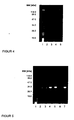
- Lane 9 15 min., Before PD-10 column Lane 10: 15 min., After PD-10 column 3 fluorescence image of the electrophoretically separated products after transglutaminase-catalyzed labeling of a protein and termination of the labeling reaction by an inhibitor under the conditions of Example 2 Lane 1: Prestained protein molecular weight markers Lane 2: unlabelled protein Lane 3: 10 min., Directly after addition of inhibitor Lane 4: 10 min., After addition of inhibitor + 30 min.
- Lane 5 10 min., After PD-10 column 4 fluorescence image of the electrophoretically separated products after transglutaminase-catalyzed labeling of a protein and termination of the labeling reaction by an inhibitor under the conditions of Example 3 Lane 1: Prestained protein molecular weight markers Lane 2: 5 min., Directly after addition of inhibitor Lane 3: 5 min, after addition of inhibitor + 30 min.
- Lane 4 5 min., Before PD-10 column Lane 5: 5 min., After PD-10 column 5 fluorescence image of the electrophoretically separated products after transglutaminase-catalyzed labeling of a protein and termination of the labeling reaction by an inhibitor under the conditions of Example 4 Lane 1: Prestained protein molecular weight markers Lane 2: 2 min., Directly after addition of inhibitor Lane 3: 2 min, after addition of inhibitor + 30 min. RT Lane 4: 5 min., Directly after addition of inhibitor Lane 5: 5 min, after addition of inhibitor + 30 min.
- RT Lane 6 1 min., Before PD-10 column Lane 7: 1 min., After PD-10 column 6 shows fluorescence uptake of the electrophoretically separated products after transglutaminase-catalyzed labeling of a protein and termination of the labeling reaction by an inhibitor under the conditions of Example 5
- Lane 1 2 min., Directly after addition of inhibitor Lane 2: 2 min, after addition of inhibitor + 30 min.
- RT Lane 3 Prestained protein molecular weight markers
- Lane 4 5 min., Directly after addition of inhibitor Lane 5: 5 min, after addition of inhibitor + 30 min.
- RT Lane 6 10 min., Directly after addition of inhibitor Lane 7: 10 min., After addition of inhibitor + 30 min.
- RT 7 shows fluorescence uptake of the electrophoretically separated products after transglutaminase-catalyzed labeling of a protein and termination of the labeling reaction by an inhibitor under the conditions of Example 6
- Lane 1 Prestained protein molecular weight markers
- Lane 2 5 min., Directly after inhibitor addition or directly after PD-10 column
- Lane 3 after 30 min.
- RT Lane 4 after 1 h RT Lane 5: after 2 h RT Lane 6: after 4 h RT Fig.
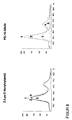
- Example 9 shows fluorescence spectrograms of the products after transglutaminase-catalyzed fluorescent labeling of a protein and termination of the labeling reaction by an inhibitor under the conditions of Example 8 10 fluorescence image of the electrophoretically separated products after labeling of a protein with different transglutaminases and termination of the labeling reactions by an inhibitor under the conditions of Example 9
- Lane 1 4 h, labeled with His 6 -rhTG2
- Lane 2 Prestained protein molecular weight markers
- Lane 3 4 h, labeled with hFaktor XIIIa
- Lane 1 Prestained protein molecular weight markers
- Lane 2 BTGase, 60 min.
- Lane 3 BTGase, 30 min.
- Lane 4 - Lane 5: gpTGase, 60 min.
- Lane 6 gpTGase, 30 min.
- Lane 7 - Lane 8: hFXIIIa, 60 min.
- Lane 9 hFXIIIa, 30 min. Fig.
- N ⁇ -tert.-benzyloxycarbonyl-L-pyroglutaminyl-L-alaninyl-L-glutamyl-L-glutaminyl-L-isoleucinyl-L-valine methyl ester (0.061 mmol) prepared by standard methods of peptide chemistry are dissolved in 700 ⁇ l of DMSO and diluted with 2.5 ml of THF abs .
- 52 ⁇ l of diisopropylethylamine (0.306 mmol) and 41.9 ⁇ l of isobutyl chloroformate (0.306 mmol) are added successively under an argon atmosphere.
- This generally applicable method for the rapid separation of small molecules from macromolecules such as proteins is based on the principle of gel permeation chromatography and can be regarded as the most advantageous method for the reaction control according to the prior art.
- Other methods by which the further catalytic labeling reaction could be terminated are less suitable or not generally applicable (eg thermal, nonspecific chemical or affinity chromatographic methods).
- Gel permeation chromatography was performed as quickly as technically feasible. For this purpose, 2.5 ml of the reaction volume is applied to the preconditioned PD-10 column and the solution is completely introduced into the separating material. Subsequently, the protein is eluted with 3.5 ml of buffer. The low molecular weight substances remain on the column. The entire process requires a minimum of 3 minutes.
- transglutaminase can continue to act on the target protein.
- the transglutaminase used remains in active form in the protein solution obtained and can crosslink both intracellularly and intermolecularly proteins functioning as both glutamine and lysine donor thereby generating higher or non-functional protein species in the product along with the target protein.
- this inhibitor was also separated by gel permeation chromatography after the respective time indicated, the reaction mixture was allowed to stand at room temperature.
- the transglutaminases receive their Activity, whereby the strictly irreversible nature of the inhibition is experimentally proven.
- transglutaminase-catalyzed labeling reactions with various proteins and various inhibitors are carried out and it has been shown that these reactions can be controlled with the inhibitors according to the invention.
- reaction termination no. 1 the reaction is stopped by addition of the inhibitor Boc-SON-Gln-Ile-Val-OH (reaction termination no. 1).
- reaction termination no. 1 the inhibitor Boc-SON-Gln-Ile-Val-OH
- a sample is taken and characterized by SDS-PAGE.
- Another sample is allowed to stand for an additional 20 minutes at RT after addition of the inhibitor, before the separation of non-covalently bound inhibitor and free dye via gel permeation chromatography, and then stored for 60 min. At RT. From this solution, a second SDS-PAGE sample is taken.
- the separation of the unbound dye by gel permeation chromatography is carried out as an alternative method after 15 minutes reaction time. Again, SDS-PAGE samples are taken for review just before and after separation of the free dye.
- polyacrylamide gel Separating gel 12.5%, collection gel 5.0% Buffer system: Tris-glycine Application amount: ⁇ 1.5 ⁇ g / lane Electrophoresis System: BioRad Mini-PROTEAN ® 3 cell visualization: Video documentation system LTF, fluorescence image UV excitation at 280-350 nm
- a protein was used which does not carry any free lysine residues on the surface due to chemical changes.
- transglutaminase can not induce intra- or intermolecular crosslinking.
- the pure labeling reaction or the increasing degree of labeling of the target protein can be well recognized.
- the amount of multiply labeled N, N-dimethylcasein (target protein) increases significantly.
- a defined degree of marking (DOL) can not be achieved by this method.
- a desired DOL can be set very accurately.
- Another catalytic reaction does not take place after addition of the inhibitor. In the presence of a large excess of unbound dye, no increase in bound dye is apparent.
- the reactions are carried out analogously to those described in Example 1. Only the reaction times and molarities were adapted to the system used.
- ⁇ -casein was used as the target protein.
- This protein is accepted by all available transglutaminases as both glutamine and lysine donors. As a result, intra- or intermolecular crosslinking reactions are possible.
- a glutamine-containing dye substrate is used.
- the fate of active transglutaminase together with the target protein in the product after gel permeation chromatography can be clearly seen from high molecular weight impurities.
- the target protein is further modified. Without the use of inhibitors according to the invention, a lower product is obtained. Depending on the nature of the use of the labeled target protein, this active transglutaminase may also have interfering effects when using the product.
- polyacrylamide gel Separating gel 12.5%, collection gel 5.0% Buffer system: Tris-glycine Application amount: ⁇ 1.5 ⁇ g / lane Electrophoresis System: BioRad Mini-PROTEAN ® 3 cell visualization: Video documentation system LTF, fluorescence image UV excitation at 280-350 nm
- reaction is stopped by the inhibitor Z-DON-Gly-OH after 5 minutes (reaction termination No. 1). Immediately after stopping, a sample is taken and characterized by SDS-PAGE. To check the complete and irreversible inhibition, the inhibitor is separated by gel permeation chromatography and the protein solution after renewed addition of unbound dye for 30 min. Stored at RT.
- the free dye is separated in a second batch after 15 minutes on a PD-10 column (reaction termination no. 2). Samples are taken for analysis by SDS-PAGE immediately before and after separation of the free dye.
- polyacrylamide gel Separating gel 12.5%, collection gel 5.0% Buffer system: Tris-glycine Application amount: ⁇ 1.5 ⁇ g / lane Electrophoresis System: BioRad Mini-PROTEAN ® 3 cell visualization: Video documentation system LTF, fluorescence image UV excitation at 280-350 nm
- the fluorescence uptake of the gel is shown in FIG. 4.
- the reaction After addition of the inhibitor, the reaction is stopped. Even after separation of the inhibitor and standing at RT for 30 minutes in the presence of newly added unbound dye, no further labeling of the target protein occurs. In contrast, when the reaction is terminated by gel permeation chromatography, an additional labeling of the target protein can be recognized.
- a recombinant protein carrying an additional binding site that does not exist in the natural protein is labeled.
- This binding site can carry up to three labels and reacts very fast.
- reaction termination No. 1 the reaction is stopped by addition of Z-SON-Phe-OMe after 2 and 5 minutes in two labeling reactions (reaction termination No. 1). Immediately after inhibition, an SDS-PAGE sample is taken. To check the complete inhibition, the stopped labeling mixture is kept at RT for 30 min. Subsequently, a second SDS-PAGE sample is taken.
- polyacrylamide gel Separating gel 12.5%, collection gel 5.0% Buffer system: Tris-glycine Application amount: ⁇ 1.0 ⁇ g / lane Electrophoresis System: BioRad Mini-PROTEAN ® 3 cell visualization: Video documentation system LTF, fluorescence image UV excitation at 280-350 nm
- polyacrylamide gel Separating gel 12.5%, collection gel 5.0% Buffer system: Tris-glycine Application amount: ⁇ 2.8 ⁇ g / lane Electrophoresis System: BioRad Mini-PROTEAN ® 3 cell visualization: Video documentation system LTF, fluorescence image UV excitation at 280-350 nm
- hIRS1-p30-N-K-tag rec. Human insulin receptor substrate 1-p30 fragment with N-terminal K-tag
- c 0.35 mg / ml i.A.
- reaction termination No. 1 the reaction with the inhibitor Z-DON-Phe-OMe is stopped after 5 minutes (reaction termination No. 1).
- reaction termination No. 1 a sample is taken for SDS-PAGE analysis.
- dye and inhibitor are separated by gel permeation chromatography.
- the resulting protein solution is stored at RT and after 30 min, 1 h, 2 h and 4 h further samples are characterized by SDS-PAGE.
- the free dye is separated after 5 minutes on a PD-10 column (reaction termination no. 2). Characterization by SDS-PAGE is carried out directly after the separation of the free dye, and after storage at RT for 30 min., 1 h, 2 h and 4 h.
- polyacrylamide gel Separating gel 12.5%, collection gel 5.0% Buffer system: Tris-glycine Application amount: ⁇ 2.8 ⁇ g / lane Electrophoresis System: BioRad Mini-PROTEAN ® 3 cell visualization: Video documentation system LTF, fluorescence image UV excitation at 280-350 nm
- the fluorescence uptake of the gel is shown in FIG. 7.
- hIRS1-p30-N-K is both a K and a Q substrate for the bacterial transglutaminase. Therefore, in addition to the intended labeling reaction, cross-linking reactions of two or more hIRS1-p30-N-K molecules (intermolecular crosslinking) or within one molecule (intramolecular crosslinking) can occur under transglutaminase catalysis.
- reaction termination no. 1 the reaction is stopped after 5 minutes with the inhibitor Z-Lys (acryloyl) -Gly-OH. (Reaction termination no. 1). Immediately after stopping by inhibitor addition, a sample is taken and characterized by RP-HPLC. To check for complete inhibition, store the label at RT. Additional samples are taken after 30 minutes or 60 minutes and also characterized by RP-HPLC.
- Z-Lys (acryloylamide) -Gly-OH completely inactivates guinea pig liver transglutaminase. There are no further labeling and cross-linking reactions. In the inhibition-driven approach, small amounts of protein precipitate after storage for 10 days at -20 ° C (chromatogram # 5). However, no further enzymatic reactions take place.
- the transglutaminases used in each case must be inhibited very rapidly and completely. Indirectly, this can be deduced from the composition of the target proteins obtained. Direct detection is possible by online measurement of transglutaminase activity.
- a method is frequently used in the prior art, in which the increase in the observable fluorescence, by the incorporation of Monodansylcadaverin in N, N-Dimethylcasein, is detected. (Lorand L., Lockridge M., Campell K., Myhrman R., Bruner-Lorand J., Analytical Biochemistry, 44, 1971, 221-231).
- polyacrylamide gel Separating gel 12.5%, collection gel 5.0% Buffer system: Tris-glycine Application amount: ⁇ 50 ⁇ g / lane Electrophoresis System: BioRad Mini-PROTEAN ® 3 cell visualization: Video documentation system LTF, fluorescence image UV excitation at 280-350 nm
- the substrate specificities of the various transglutaminases can be detected by the different polypeptide fragments recognized as substrate.
- the glutamine residues on the peptides are labeled.
- the fluorescent band pattern is significantly different. His 6 -rhTG2 and h geometry Xllla accept mainly two fragments (His 6 -rhTG2: lane 1, double band below 34 kDa, hfactor Xllla: lane 2, 34 and 19 kD). All other collagen fragments are labeled very weakly or not at all. In contrast, such a preferred labeling of one fragment over the other by the bacterial TGase (lane 4) is not recognizable. All 7 fragments between 19 and 59 kDa show approximately the same fluorescence intensity.
- transglutaminases make it possible to control the course of the reaction by targeted selection of the most suitable transglutaminase in such a way that the target protein is only labeled in a few places.
- polyacrylamide gel Separating gel 12.5%, collection gel 5.0% Buffer system: Tris-glycine Application amount: ⁇ 20 ⁇ g / lane Electrophoresis System: BioRad Mini-PROTEAN ® 3 cell visualization: Video documentation system LTF, fluorescence image UV excitation at 280-350 nm
- the fluorescence uptake of the gel is shown in FIG. 11.
- Protein Protein A c 0.63 mg / ml i.A. ( ⁇ 14 ⁇ M) molar ratio Protein: dye ⁇ 1: 300 buffer system 100 mM Tris-HCl pH 8 10 mM CaCl 2 10 mM glutathione 5% (v / v) glycerol Labelreagenz Z-Gln-Gly-CAD DNS 4.4 mM transglutaminases BTGase ⁇ 0.25 U / ml GpTGase ⁇ 0.25 U / ml His 6 -rhTG2 ⁇ 0.25 U / ml H Factor XIIIa ⁇ 0.25 U / ml reaction time 30 and 60 min.
- polyacrylamide gel Separating gel 12.5%, collection gel 5.0% Buffer system: Tris-glycine Application amount: ⁇ 3 ⁇ g / lane Electrophoresis System: BioRad Mini-PROTEAN ® 3 cell visualization: Video documentation system LTF, fluorescence image UV excitation at 280-350 nm
- the fluorescence uptake of the gel is shown in FIG. 12.
Landscapes
- Chemical & Material Sciences (AREA)
- Organic Chemistry (AREA)
- Life Sciences & Earth Sciences (AREA)
- Health & Medical Sciences (AREA)
- Genetics & Genomics (AREA)
- General Health & Medical Sciences (AREA)
- Molecular Biology (AREA)
- Biochemistry (AREA)
- Wood Science & Technology (AREA)
- Medicinal Chemistry (AREA)
- Proteomics, Peptides & Aminoacids (AREA)
- Engineering & Computer Science (AREA)
- Zoology (AREA)
- Biophysics (AREA)
- Bioinformatics & Cheminformatics (AREA)
- Microbiology (AREA)
- Biotechnology (AREA)
- General Engineering & Computer Science (AREA)
- General Chemical & Material Sciences (AREA)
- Chemical Kinetics & Catalysis (AREA)
- Biomedical Technology (AREA)
- Peptides Or Proteins (AREA)
Description
- Die vorliegende Erfindung betrifft ein Verfahren zur Transglutaminase-katalysierten Proteinmodifizierung, welches durch selektive irreversible Transglutaminase-Inhibitoren gesteuert wird, sowie neue Inhibitoren der verwendeten Transglutaminasen und Verfahren zu deren Herstellung.
- Eine sehr häufig praktizierte Art der Proteinmodifizierung ist die Markierung von Proteinen mit Markersubstanzen. Eine Übersicht über die gängigsten Methoden findet sich beispielsweise bei Lundblad R.L., Techniques in Proteinmodification, CRC Press, 1995, sowie Hermanson G.T., Bioconjugate Techniques, Academic Press, 1996. Diese Art der Modifizierung von Proteinen besitzt in der biologischen, medizinischen und pharmazeutischen Forschung hohe Relevanz, da die Aufklärung von molekularen Vorgängen, an denen diese Proteine beteiligt sind, erst durch ihre Markierung möglich wird. Auch diagnostische Verfahren arbeiten mit solchen markierten Proteinen. Das Einbringen der Markermoleküle wird dabei über reaktive Gruppen realisiert, die mit funktionellen Gruppen am Protein reagieren. Die Durchführung solcher Modifikationen ist ungeachtet ihrer breiten Anwendung in Industrie und Forschung nicht trivial, wenn ein hochwertiges Proteinprodukt hergestellt werden soll. Hochwertig bezieht sich in diesem Fall auf die Ausbeute, die Einstellung eines gewünschten Modifizierungsgrades, die Löslichkeit des Produktes sowie unter Umständen sogar den Erhalt der Funktionalität.
- Proteinmodifizierungen, insbesondere Markierungen, werden am häufigsten chemisch durchgeführt. Darunter versteht man die direkte Umsetzung eines Proteins mit einem Reaktionspartner, insbesondere einem Farbstoff oder einem anderen Markermolekül (z. B. mit Biotin, einem Biotinderivat, einem radioaktiven Marker, einem Fluoreszenz- oder Nichtfluoreszenzfarbstoff etc.), der eine funktionelle Gruppe enthält, die mit funktionellen Aminosäuren des Proteins reagieren kann. In vielen Fällen handelt es sich dabei um sogenannte Aktivester von Carbonsäuren, die mit zugänglichen Lysinresten des Proteins reagieren. Zum Einsatz kommen aber auch andere funktionelle Gruppen, wie zum Beispiel Maleinimide oder lodacetamide, die mit freien Cysteinresten des Proteins in Reaktion treten.
- In der Regel sind diese chemischen Reaktionen schwer zu steuern, d. h. da ein Protein über eine Vielzahl von beispielsweise Lysinen verfügt, werden sehr inhomogene Reaktionsprodukte erhalten. Die Verteilung von Markermolekülen, welche die Proteinmoleküle nach einer solchen Reaktion tragen, kann von null (unmodifiziertes Protein) bis ca. vierzig Markermolekühlen pro Proteinmolekül reichen. Als direkte Folge dieser Inhomogenität ist es grundsätzlich nicht möglich, die Menge der Proteine in den Anwendungen über das Markersignal direkt zu quantifizieren. Zusätzlich verändern sich die Eigenschaften wie zum Beispiel die Löslichkeit eines Proteins durch die zusätzlichen Gruppen. Bei einer breiten Produktverteilung erhält man so auch ein in seinen molekularen Eigenschaften stark variierendes Produktgemisch.
- Eine Alternative zu der chemischen Modifizierung bietet die Verwendung von Enzymen, insbesondere die Verwendung von Transglutaminasen. In der Literatur ist seit langem bekannt, dass die biologische Reaktion der Transglutaminasen, Quervernetzung von Proteinen (siehe Fig. 1A), auch genutzt werden kann, um Proteine enzymatisch zu modifizieren. Dabei wird beispielsweise ein Protein, welches zugängliche Glutaminseitenketten aufweist, mit Markermolekülen modifiziert, die ein primäres Amin enthalten (Fig. 1B). Auch die Darstellung von Konjugaten aus verschiedenen Proteinen unter Transglutaminasekatalyse ist in der Literatur beschrieben (Bechthold U., J. Biochem (Tokio), Feb. 2000; 127(2):239-45).
- Nur wenige Publikationen beschäftigen sich mit der umgekehrten Reaktionsführung, d. h. mit der Markierung von Lysinresten unter Verwendung von Peptidderivaten (Fig. 1C). Pasternack und Mitarbeiter beschreiben den Einbau eines N-terminal geschützten Dipeptidderivates, das mit dem Dansylrest verknüpft ist (Pasternack et al., Anal. Biochem., 1997, 54-60). Verschiedene Autoren beschreiben die Nutzung eines Biotin-tragenden, glutaminhaltigen Hexapetids zum Auffinden von reaktiven Lysinresten in Proteinen (Groenen et al., J. Biol. Chem., 1994, Ruoppolo et al.; Protein Science, 12, 2003, 1290-1297; Orrü et al., J. Biol. Chem., 278, 2003, 31766-31773). Ziel dieser Arbeiten ist es, ein vereinfachtes analytisches Verfahren zur Identifizierung von Substratproteinen in komplexen biologischen Matrices zu erreichen. Die gesteuerte Modifizierung der Proteine ist mit den dort beschriebenen Verfahren nicht möglich. Für industrielle Zwecke ist es jedoch erfordertich, ein steuerbares Verfahren zu entwickeln, um definierte Modifizierungsgrade zu realisieren. Weitere Veröffentlichungen, die in diesem Zusammenhang zu erwähnen sind: Lorand L. et al., Proc. Natl. Acad. Sci USA, 1991, 88, 82-83 sowie Lorand L. et al., Proc. Natl. Acad. Sci USA, 1992, 89, 11161-63.
- Weist ein Protein keine zugänglichen Lysin- oder Glutaminreste auf, d. h. ist es in seiner natürlichen Form kein Substrat von Transglutaminasen, so kann durch molekulargenetische Methoden ein geringfügig verändertes Protein hergestellt werden, indem gezielt eine Bindungsstelle für Transglutaminasen eingeführt wird. Das US-Patent 6,322,996 beschreibt ein Verfahren, bei dem ein Zielprotein mit einer Peptid-Sequenz, die ein Glutamin enthält, fusioniert wird. Dadurch wird das Protein zu einem Substrat für Transglutaminase, was nach Angaben der Erfinder eine spezifische Modifizierung ermöglicht. Ein wesentliches Motiv ist es dort, pharmazeutische Proteine durch Aminderivate von Polyethylenglycol zu modifizieren. Zielsetzung ist die Veränderung von Eigenschaften wie der Serumhalbwertszeit und der Löslichkeit des Proteins. In der Patentveröffentlichung EP1151299 wird die Fusion eines Proteins mit der Sequenz Gln-Ser-Lys-Val beschrieben, um Proteine, die in ihrer nativen Form kein zugängliches Glutamin aufweisen, in ein Transglutaminasesubstrat zu überführen. Als Anwendungen werden hier verschiedene Markermoleküle für Proteine genannt, die als gemeinsames Merkmal eine lysinanaloge primäre Aminogruppe enthalten. Weitere Patentschriften, die die Verwendung glutaminhaltiger Proteine und niedermolekularer Amindonoren in transglutaminase-katalysierten Labelingreaktionen beschreiben sind: US 6,010,871 sowie US 6,607,740.
- In einer jüngst erschienenen Veröffentlichung weisen die Autoren die besonderen Vorteile der Transglutaminase-katalysierten Markierung eines Proteins nach. Glutathion-S-transferase (GST) wird, nach Expression mit einem N- bzw. C-terminalen Tag, durch Meerschweinchenlebertransglutaminase mit Fluoresceincadaverin markiert. Das so dargestellte Protein wird mit einer chemisch gelabelten GST hinsichtlich seiner Eigenschaften verglichen. Insbesondere die Aktivität der GST ist bei dem durch Transglutaminase markierten Protein deutlich erhöht. (Taki et al., Protein Engineering, Desing & Selection, 2004 17 (2), 119-26.) Eine Steuerung des Prozesses ist in diesem Spezialfall nicht erforderlich, da nur die zusätzlich in das Protein eingebrachten Tag-Sequenzen von der eingesetzten Transglutaminase als Substrat akzeptiert werden. Die Vorteile, die ein selektiv markiertes Protein gegenüber einem nach dem verbreiteten Stand der Technik (chemisches Labeling) markierten Protein hat, werden in dieser Publikation dennoch deutlich.
- Die oben genannten Publikationen beschreiben zwar die Durchführung der eigentlichen Transglutaminase-katalysierten Reaktionen, dies geschieht dort jedoch in einem ungesteuerten Prozess. Weist aber ein Protein mehrere Glutamin- oder Lysinfunktionalitäten auf, denen eine Reaktion mit Transglutaminase möglich ist, so erhält man in einem ungesteuerten Prozess in der Regel wiederum ein Gemisch von Produkten mit unterschiedlichem Markierungsgrad.
- Ein weiteres ungelöstes Problem der publizierten Verfahren ist der Verbleib aktiver Transglutaminase im fertigen Proteinprodukt. Diese führt zu unerwünschten Folgereaktionen, insbesondere Vernetzung des Proteinprodukts. Eine unspezifische Denaturierung der Transglutaminase (z. B. durch Hitze oder pH-Wert) ist wegen der gleichzeitigen Auswirkungen auf das Zielprotein nicht möglich; eine Abtrennung der Transglutaminase oder eines niedermolekularen Reaktionspartners, z. B. eines Markermoleküls, mit den üblichen Trennungsverfahren kann in der Regel nicht schnell genug erfolgen und beeinträchtigt auch die Ausbeute an Proteinprodukt.
- Hausch et al., CHEMISTRY AND BIOLOGY, Bd. 10, 2003, 225-321, Pliura et al., , JOURNAL OF ENZYME INHIBITION, NEW YORK, NY, US, Bd. 6, Nr. 3, 1992, 181-194, und US4970297 offenbaren jeweils Transglutaminase-Inhibitoren, die eine irreversible und selektive Inhibition ermöglichen. Es werden unterschiedliche chemische Substanzlasten offenbart.
- In Anbetracht der geschilderten Nachteile des Standes der Technik, besteht die Aufgabe der vorliegenden Erfindung in der erstmaligen Bereitstellung eines Transglutaminase-katalysierten Proteinmodifizierungsverfahrens, welches zur kontrollierten Herstellung von spezifischen Proteinprodukten geeignet ist.
- Diese Aufgabe wird erfindungsgemäß gelöst durch ein Verfahren zur Transglutaminase-katalysierten Proteinmodifizierung, welches durch einen selektiven irreversiblen Transglutaminase-Inhibitor gesteuert wird. Die Ausführungsformen können den Ansprüchen 1-12 entnommen werden.
- Durch die Verwendung eines selektiven Transglutaminase-Inhibitors kann die katalytische Reaktion sehr schnell und vollständig zu einem gewünschten Zeitpunkt beendet werden, was den Einsatz der bekannten Transglutaminase-katalysierten Reaktion zwischen Proteinen und Peptiden bzw. Aminen zur Herstellung hochspezifisch modifizierter, insbesondere markierter, Proteine erst möglich macht. Da die Reaktionsgeschwindigkeit verschiedener Glutamin- bzw. Lysinreste in einem Protein sich in den meisten Fällen zumindest leicht unterscheidet, kann durch ein schnelles Abstoppen der Reaktion ein weitgehend einheitliches Produkt erhalten werden. Für das Abstoppen der Reaktion werden Transglutaminase-Inhibitoren benötigt, die selektiv und irreversibel mit dem Cystein im Aktivzentrum der Transglutaminasen reagieren. Aufgrund der Inaktivität gegenüber "Nicht-Aktivzentrumscysteinen" ist eine unerwünschte Modifikation des Zielproteins mit dem Inhibitormolekül ausgeschlossen. Der streng irreversible Charakter der Transglutaminase-Inhibition lässt nur vollständig inaktives Enzym zurück. Als weiterer Vorteil der Erfindung wird das Zielprotein somit nicht mit aktivem Fremdprotein kontaminiert.
- Für den Einsatz in dem vorliegenden erfindungsgemäßen Verfahren sind grundsätzlich alle selektiven irreversiblen Transglutaminase-Inhibitoren geeignet, welche die jeweils eingesetzte(n) Transglutaminase(n) hinreichend schnell und vollständig hemmen.
- In einer bevorzugten Ausführungsform werden Inhibitoren der folgenden Formel I verwendet.

- In der obigen Formel I bedeutet RCOO eine Carboxylgruppe, vorzugsweise eine aromatische Carboxylgruppe, und die resultierenden Inhibitoren werden als Acyloxymethylketone bezeichnet. R-S bedeutet einen Thioether, vorzugsweise einen Thioether, dessen Schwefelatom an eine aromatische oder resonanzstabilisierte Gruppe gebunden ist. Beispiele solcher Inhibitoren sind Thioimidazoliummethylketone.
- Die Aminosäurederivate schließen insbesondere Aminosäuren ein, deren freie primäre Aminogruppe, falls vorhanden, mit einer üblichen Schutzgruppe, besonders bevorzugt tert.-Butyloxycarbonyl oder Benzyloxycarbonyl, geschützt ist oder deren freie Carboxylgruppe, falls vorhanden, mit einem Alkohol, z. B. einem niederen Alkanol, verestert ist. Alternative oder zusätzliche Derivatisierungen der Aminosäuren sind möglich, sofern die inhibitorische Aktivität der resultierenden Verbindungen nicht beeinträchtigt wird.
- Die Inhibitoren der obigen Formel I tauschen in einem irreversiblen Reaktionsschritt das Thiolat des Cysteins im aktiven Zentrum der Transglutaminase gegen die jeweilige Austrittsgruppe X aus (siehe Fig. 10).
- Ein allgemeines Verfahren zur Herstellung geeigneter Transglutaminase-Inhibitoren, insbesondere der Formel I, beinhaltet, dass in einem als Transglutaminasesubstrat bekannten Peptid das Substratglutamin durch eine in Gammaposition in ein Methylketon umgewandelte Glutaminsäure ersetzt wird. Bevorzugt geschieht dies durch ein dreistufiges Verfahren ausgehend von einem Peptid, in dem die Gammaposition der Ziel-Glutaminsäure als einzige funktionelle Gruppe ungeschützt vorliegt. Die Aktivierung dieser Carbonsäure erfolgt dabei als Mischanhydrid durch vorzugsweise Isobutylchloroformiat. Durch Zusatz von Diazomethan wird die Carbonsäure in ein Methylketon überführt. Aus diesem Diazomethylketon (X=N2), welches bereits selbst einen erfindungsgemäßen Inhibitor darstellt, kann durch Umsetzung mit z.B. Bromwasserstoffsäure in Essigsäure ein reaktives Intermediat dargestellt werden (Brommethylketon, X= Br). Substitution des Broms durch Carboxylate, Thiole oder andere Anionen liefert Methylketone unterschiedlicher Aktivität. (in Fig. 1 E schematisch dargestellt).
- Spezielle Beispiele geeigneter Transglutaminase-Inhibitoren der Formel I sind N°-Benzyloxycarbonyl-L-(6-diazo-5-oxonorleucinyl)glycin (Z-DON-Gly-OH), Nα-Benzyloxycarbonyl-L-(6-dimethylsulfonium-5-oxonorleucinyl)glycinmethylester (Z-SON-Gly-OMe), Nα-Benzyloxycarbonyl-L-(6-cliazo-5-oxonorfeucinyl)phenytalaninmethylester (Z-DON-Phe-OMe), Nα-Benzyloxycarbonyl-L-(6-dimethylsulfonium-5-oxonorfeucinyl)phenyfalaninmethylester (Z-SON-Phe-OMe), Nα-tert.-Butyloxycarbonyl-L-(6-diazo-5-oxonorleucinyl)-glutaminyl-L-isoleucinyl-L-valinmethylester (Boc-DON-Gln-Ile-Val-OMe), Nα-tert.-Butyloxycarbonyl-L-(6-dimethylsulfonium-5-oxonorleucinyl)-L-glutaminyl-L-isoleucinyl-L-valinmethylester (Boc-SON-Gln-Ile-Vat-OMe), Nα-tert. -Butyloxycarbonyl-L-pyroglutaminyl-L -alaninyl-L-(6-diazo-5-oxonorleucinyl)-L-glutaminyl-L-isoleucinyl-L-valinmethylester (Boc-Pyr-Ala-DON-Gln-Ile-Val-OMe).
- Die oben genannten Inhibitoren sind neu und detaillierte Verfahren zu ihrer Herstellung werden im illustrierenden Abschnitt SYNTHESEBEISPIELE beschrieben. Ein weiteres Beispiel eines geeigneten Inhibitors, Ac-Prolinyl-glutaminyl-prolinyl-(6-diazo-5-oxonorleucinyl)-leucinyl-prolinyl-phenylalaninyl-NH2, (Ac-ProGlnPro-DON-LeuProPhe-NH2) wurde bereits in der Literatur (Hausch et al., Chemistry and Biology, Bd. 10, 2003, 225-321) beschrieben und als mögliches Medikament gegen Zöliakie genannt, jedoch nicht zur Steuerung einer Transglutaminase-katalysierten Proteinmodifizierung verwendet oder vorgeschlagen
- Die hier beschriebenen Inhibitoren der Formel I wirken irreversibel, da eine kovalente Bindung mit dem Cystein des Aktivzentrums ausgebildet wird (Fig. 1D). Die Inhibitoren sind insoweit selektiv, als die Cysteinmoleküle, die nicht das Aktivzentrum eines Enzyms mit einer Cys-His-Diade bilden, bis zu einem pH-Wert von 8 nicht mit dem Inhibitor reagieren.
- Weitere, jedoch nicht beschränkende, Beispiele geeigneter selektiver irreversibler Transglutaminase-Inhibitoren, welche nicht von der Formel I umfasst werden, sind Nα-Benzyloxycarbonyl-L-serinyl-(O-chloracetyl)glycin (Z-Ser(OAcCl)-Gly-OH) (de Macedo et al., Bioorg. & Med. Chem., 10, 2002, 355-360), Nα-Benzyloxycarbonyl-L-lysinyl(ε-acryloyl)glycin (Z-Lys(Acryloyl)-Gly-OH) (de Macedo et al., Bioorg. & Med. Chem., 10, 2002, 355-360) und N-(Nα-Benzyloxycarbonyl-L-phenylalaninyl)-(4-amino-2-oxo-dimethylsulfonium)pentan-Bromidsalz (Z-Phe-NH-(CH2)3-CO-S+(CH3)2Br-) (Pliura et al., J. Enzyme Inhibition, 6, 1992, 181-194) und verwandte Verbindungen. Keiner dieser aus der Literatur bekannten Inhibitoren wurde bisher zur Steuerung einer Transglutaminase-katalysierten Proteinmodifizierung verwendet oder vorgeschlagen.
- Im Prinzip kann jede Transglutaminase für das beschriebene Verfahren genutzt werden, denn alle Mitglieder der Enzymfamilie katalysieren grundsätzlich dieselbe Reaktion. Derzeit bevorzugt sind bakterielle Transglutaminasen und Transglutaminasen aus Vertebraten, insbesondere des Menschen. Im Moment sind 9 Transglutaminasen beim Menschen beschrieben. Homologe der bekannten Transglutaminasen könnten nach bekannten Verfahren aus anderen Spezies, z.B. aus Pilzen und Hefe, isoliert werden. Im vorliegenden Patent werden beispielhaft Inhibitoren für rekombinante humane Transglutaminase 2, Meerschweinchenleber-Transglutaminase, humanen Faktor Xllla und mikrobielle Transglutaminase aus streptomyces mobaraensis näher beschrieben und getestet.
- In einer speziellen Ausführungsform des erfindungsgemäßen Verfahrens werden mehrere Transglutaminasen mit unterschiedlicher Substratspezifität verwendet. Diese Transglutaminasen können nacheinander oder gleichzeitig eingesetzt werden. Bei der Verwendung mehrerer Transglutaminasen können diese gleichzeitig oder in zeitlich abgestimmter Reihenfolge inhibiert werden. Auf diese Weise können z.B. zwei unterschiedliche Label oder andere Modifizierungen selektiv eingebracht werden. Das Zusammenwirken der divergenten Substratspezifität verschiedener Transglutaminasen und der Möglichkeit, jede dieser Transglutaminasen schnell und vollständig zu inhibieren, ermöglicht die routinemäßige Produktion hochwertig modifizierter Proteine mit einem genau einstellbaren Markierungs- bzw Modifizierungsgrad in einem geregelten technischen Prozess.
- In einem speziellen Aspekt der vorliegenden Erfindung ist das erfindungsgemäße Verfahren zur Proteinmodifizierung ein Markierungsverfahren. Wie bereits in der Einleitung angesprochen, wird das Protein dabei mit einem Markermolekül umgesetzt, das neben der nachweisbaren Funktion eine weitere funktionelle Gruppe enthält, die mit einer funktionellen Aminosäure des Proteins reagieren kann. Nachdem das erfindungsgemäße Verfahren Transglutaminase-katalysiert ist, muss das Markermolekül ein Substrat für eine Transglutaminase sein und entweder eine reaktionsfähige primäre Aminogruppe oder einen Glutaminrest enthalten. Bei den Markermolekülen kann es sich z. B. um Peptide handeln, die ein oder mehrere Lysine enthalten, um niedermolekulare Markermoleküle, die mit einem primären Amin (häufig Cadaverin) versehen sind, um Makromoleküle, die ein geeignetes primäres Amin enthalten, oder sogar um monoklonale Antikörper.
- Die nachweisbare Marker-Funktion kann z. B. ein Farbstoff, Fluoreszenzfarbstoff, Chemolumineszenzfarbstoff, Enzymlabel, Redoxlabel, Immunlabel, Biotin-Label, Isotopenlabel, Spinlabel oder irgendeine andere bekannte Marker-Funktion sein.
- Geeignete Markermoleküle sind im Stand der Technik bekannt und können nach bekannten Verfahren hergestellt oder im Handel bezogen werden. Einige Beispiele für kommerziell erhältliche Substanzen sind: Dansylcadaverin, Fluoresceincadaverin, 5-Aminoeosin, Biotinylcadaverin, Tetramethylrhodamincadaverin sowie "Oregon Green"- und "Alexa Fluor"-Cadaverin (Hersteller: Molecular Probes, siehe z. B. den Katalog dieses Herstellers für weitere Beispiele).
- Die Proteinmodifizierung kann jedoch auch die Kopplung des Proteins mit einer nicht-markierten reaktiven oder stabilisierenden Gruppierung beinhalten. Einige, nicht beschränkende, Beispiele für solche Gruppierungen sind PEG (Polyethylenglycol) und Derivate davon, Dextran und Derivate davon sowie Stärke und Stärkederivate. Da es bei der Modifizierung, insbesondere Stabilisierung, von Proteinen mit solchen Gruppierungen oft auf die genaue Position der Modifikation im Protein ankommt, kann hier die Reaktionsführung unter selektiver gesteuerter Transglutaminasekatalyse spezielle Vorteile gegenüber der üblichen chemischen Modifizierung bieten.
- Falls das zu modifizierende Protein keine reaktionsfähigen Lysin- oder Glutaminreste für die Transglutaminase-katalysierte Modifizierungsreaktion enthält, so können durch im Stand der Technik bekannte Verfahren geeignete Reste eingeführt werden. Beispielsweise kann durch molekulargenetische Methoden gezielt ein geringfügig verändertes Protein hergestellt werden, das eine Bindungsstelle für Transglutaminasen enthält. Alternativ kann das Zielprotein auch mit einer Peptidsequenz, die eine solche Bindungsstelle enthält, fusioniert werden, um dadurch zu einem Substrat für Transglutaminase zu werden.
-
Fig. 1A Transglutaminase-katalysierte Vernetzung von Proteinen
Fig. 1B Transgutaminase-katalysierte Kopplung von Proteinen mit Markermolekülen
Fig. 1C Markierung von Lysinresten eines Proteins mit nachweisbaren Peptidderivaten
Fig. 1D kovalente Bindung eines Transglutaminase-Inhibitors an das Cystein des aktiven Zentrums der Transglutaminase
Fig. 1E Schema der Herstellung eines Transglutaminase-Inhibitors der Formel I
Fig. 2 Fluoreszenzaufnahme der elektrophoretisch aufgetrennten Produkte nach Transglutaminase-katalysierter Markierung eines Proteins und Beendigung der Markierungsreaktion durch einen Inhibitor unter den Bedingungen von Beispiel 1Spurbelegung: Spur 1: Prestained Proteinmolekulargewichtsmarker Spur 2: unmarkiertes Protein Spur 3: 2 Min., direkt nach Inhibitorzugabe Spur 4: 2 Min., nach Inhibitorabtrennung + 60 Min. RT Spur 5: 10 Min., direkt nach Inhibitorzugabe Spur 6: 10 Min., nach Inhibitorabtrennung + 60 Min. RT Spur 7: 20 Min., direkt nach Inhibitorzugabe Spur 8: 20 Min., nach Inhibitorabtrennung + 60 Min. RT Spur 9: 15 Min., vor PD-10-Säule Spur 10: 15 Min., nach PD-10-Säule
Fig. 3 Fluoreszenzaufnahme der elektrophoretisch aufgetrennten Produkte nach Transglutaminase-katalysierter Markierung eines Proteins und Beendigung der Markierungsreaktion durch einen Inhibitor unter den Bedingungen von Beispiel 2Spurbelegung: Spur 1: Prestained Proteinmolekulargewichtsmarker Spur 2: unmarkiertes Protein Spur 3: 10 Min., direkt nach Inhibitorzugabe Spur 4: 10 Min., nach Inhibitorzugabe + 30 Min. RT Spur 5: 10 Min., nach PD-10-Säule
Fig. 4 Fluoreszenzaufnahme der elektrophoretisch aufgetrennten Produkte nach Transglutaminase-katalysierter Markierung eines Proteins und Beendigung der Markierungsreaktion durch einen Inhibitor unter den Bedingungen von Beispiel 3Spurbelegung: Spur 1: Prestained Proteinmolekulargewichtsmarker Spur 2: 5 Min., direkt nach Inhibitorzugabe Spur 3: 5 Min., nach Inhibitorzugabe + 30 Min. RT nach Abtrennung des Inhibitors Spur 4: 5 Min., vor PD-10-Säule Spur 5: 5 Min., nach PD-10-Säule
Fig. 5 Fluoreszenzaufnahme der elektrophoretisch aufgetrennten Produkte nach Transglutaminase-katalysierter Markierung eines Proteins und Beendigung der Markierungsreaktion durch einen Inhibitor unter den Bedingungen von Beispiel 4Spurbelegung: Spur 1: Prestained Proteinmolekulargewichtsmarker Spur 2: 2 Min., direkt nach Inhibitorzugabe Spur 3: 2 Min., nach Inhibitorzugabe + 30 Min. RT Spur 4: 5 Min., direkt nach Inhibitorzugabe Spur 5: 5 Min., nach Inhibitorzugabe + 30 Min. RT Spur 6: 1 Min., vor PD-10-Säule Spur 7: 1 Min., nach PD-10-Säule
Fig. 6 Fluoreszenzaufnahme der elektrophoretisch aufgetrennten Produkte nach Transglutaminase-katalysierter Markierung eines Proteins und Beendigung der Markierungsreaktion durch einen Inhibitor unter den Bedingungen von Beispiel 5Spurbelegung: Spur 1: 2 Min., direkt nach Inhibitorzugabe Spur 2: 2 Min., nach Inhibitorzugabe + 30 Min. RT Spur 3: Prestained Proteinmolekulargewichtsmarker Spur 4: 5 Min., direkt nach Inhibitorzugabe Spur 5: 5 Min., nach Inhibitorzugabe + 30 Min. RT Spur 6: 10 Min., direkt nach Inhibitorzugabe Spur 7: 10 Min., nach Inhibitorzugabe + 30 Min. RT
Fig. 7 Fluoreszenzaufnahme der elektrophoretisch aufgetrennten Produkte nach Transglutaminase-katalysierter Markierung eines Proteins und Beendigung der Markierungsreaktion durch einen Inhibitor unter den Bedingungen von Beispiel 6Spurbelegung: Spur 1: Prestained Proteinmolekulargewichtsmarker Spur 2: 5 Min., direkt nach Inhibitorzugabe bzw. direkt nach PD-10 Säule Spur 3: nach 30 Min. RT Spur 4: nach 1 h RT Spur 5: nach 2 h RT Spur 6: nach 4 h RT
Fig. 8 RP-HPLC-Chromatogramme der aufgetrennten Produkte nach Transglutaminasekatalysierter Markierung eines Proteins und Beendigung der Markierungsreaktion durch einen Inhibitor bzw. Abtrennung der TG durch eine PD-10-Säule unter den Bedingungen von Beispiel 7Nr.1: hLeptin, 25 µg Nr.2: 5 Min., direkt nach Inhibitorzugabe bzw. direkt nach PD-10 Säule Nr.3: 5 Min. + 30 Min. RT Nr.4: 5 Min. + 60 Min. RT Nr.5: 5 Min. +10 Tage -20°C und eine Stunde RT
Fig. 9 Fluoreszenzspektrogramme der Produkte nach Transglutaminase-katalysierter Fluoreszenzmarkierung eines Proteins und Beendigung der Markierungsreaktion durch einen Inhibitor unter den Bedingungen von Beispiel 8
Fig. 10 Fluoreszenzaufnahme der elektrophoretisch aufgetrennten Produkte nach Markierung eines Proteins mit verschiedenen Transglutaminasen und Beendigung der Markierungsreaktionen durch einen Inhibitor unter den Bedingungen von Beispiel 9Spurbelegung: Spur 1: 4 h, mit His6-rhTG2 markiert Spur 2: Prestained Proteinmolekulargewichtsmarker Spur 3: 4 h, mit hFaktor XIIIa markiert Spur 4: 4 h, mit bTGase markiert
Fig. 11 Fluoreszenzaufnahme der elektrophoretisch aufgetrennten Produkte nach Markierung eines Proteins mit verschiedenen Transglutaminasen und Beendigung der Markierungsreaktionen durch einen Inhibitor unter den Bedingungen von Beispiel 10Spurbelegung: Spur 1: Prestained Proteinmolekulargewichtsmarker Spur 2: bTGase, 60 Min. Spur 3: bTGase, 30 Min. Spur 4: - Spur 5: gpTGase, 60 Min. Spur 6: gpTGase, 30 Min. Spur 7: - Spur 8: hFXIIIa, 60 Min. Spur 9: hFXIIIa, 30 Min.
Fig. 12 Fluoreszenzaufnahme der elektrophoretisch aufgetrennten Produkte nach Markierung eines Proteins mit verschiedenen Transglutaminasen und Beendigung der Markierungsreaktionen durch einen Inhibitor unter den Bedingungen von Beispiel 11Spurbelegung: Spur 1: bTGase-Labeling, 4 h Spur 2: gpTGase-Labeling, 4 h Spur 3: His6-rhTG2 -Labeling, 4 h Spur 4: hFaktor XIIIa-Labeling, 4 h Spur 5: Prestained Proteinmolekulargewichtsmarker - 400 mg Nα-Benzyloxycarbonyl-L-glutamyl-glycinmethylester (1,135 mmol), nach Standardmethoden der Peptidchemie hergestellt, werden in 15 ml THFabs gelöst und auf -20 °C gekühlt. Unter Argonatmosphäre werden 778 µl Isobutylchlorformiat zugesetzt (5,67 mmol). Nach 5 Min. wird dieser Lösung eine frisch hergestellte Lösung aus Diazomethan in Diethylether zugesetzt (aus 5,6 g Diazald und 36 ml Diethylether) zugesetzt. Innerhalb von 12 Stunden wird allmählich auf Raumtemperatur aufgetaut und danach für weitere 8 Stunden bei Raumtemperatur gerührt. Überschüssiges Diazomethan wird im Stickstoffstrom entfernt und das Lösungsmittel im Vakuum entfernt. Die Reinigung erfolgt durch Chromatographie an Kieselgel (Säule: 2,3 x 28 cm, Laufmittel: Dichlormethan/Methanol = 98/2, Rf = 0,25).
Ausbeute: 363 mg (85 % d. Th.)
500-MHz-1H-NMR-cosy (DMSOd6): δ[ppm] = 8,34 (t, 1H), 7,45 (d, 1H), 7,31-7,38 (m, 5H), 6,00 (br.s., 1H), 5,03 (dd, 2H), 4,03 (m, 1 H), 3,89 (dd, 1 H), 3,79 (dd, 1 H), 3,63 (s, 3H), 2,39 (m, 2H), 1,90-1,94 (m, 1H), 1,75-1,79 (m, 1H)
ESI-MS: 399,0 [M+Na]+, 371,1 [M-N2+Na]+ - 50 mg Nα-Benzyloxycarbonyl-L-(6-diazo-5-oxonorleucinyl)glycinmethylester (0,133 mmol) werden in 5 ml Methanol gelöst und bei 0 °C mit 200 µl wässriger NaOH (1 M)-Lösung versetzt (0,2 mmol). Nach einer Stunde wird das Eisbad entfernt und über Nacht bei Raumtemperatur weiter gerührt. Die Lösung wird mit wässriger KHSO4-Lösung (0,5 M) neutralisiert und das Lösungsmittel im Vakuum entfernt. Die Reinigung erfolgt durch Chromatographie an Kieselgel (Säule: 1,7 x 16 cm, Laufmittel: Dichlormethan/Methanol Stufengradient 80/20 auf 1/1, Rf = 0,25).
Ausbeute: 24 mg (49,8 % d. Th.)
500-MHz-1H-NMR-cosy (DMSOd6): δ[ppm] = 7,66-7,67 (m, 2H), 7,38-7,51 (m, 5H), 6,18 (br.s., 1H), 5,15 (dd, 2H), 4,10 (m, 1 H), 2,49 (m, 2 H), 2,00-2,13 (m, 1 H), 1,80-1,93 (m, 1H)
ESI-MS: 385,1 [M+Na]+, 357,2 [M-N2+Na]+ - 50 mg Nα-Benzyloxycarbonyl-L-(6-diazo-5-oxonorleucinyl)glycinmethylester (0,133 mmol) werden in 10 ml THFabs gelöst. Nach Zusatz katalytischer Mengen Bromthymolblau wird unter Argonatmosphäre bei 0 °C 3,3 % HBr in Essigsäure zugetropft, bis der Indikator nach violett umschlägt. Sofort werden 50 ml Wasser zugesetzt und das Produkt zweimal mit je 25 ml Ethylacetat extrahiert. Die organische Phase wird mit Wasser gewaschen, bis die Farblosigkeit der Waschlösung die vollständige Entfernung des Indikators anzeigt und danach mit Na2SO4 getrocknet. Nach Entfernen des Lösungsmittels im Vakuum und Trocknen im Hochvakuum erhält man 58 mg Nα-Benzyloxycarbonyl-L-(6-brom-5-oxonorleucinyl)glycinmethylester als leicht gelben Feststoff. Zur weiteren Umsetzung zur Titelverbindung wird die Substanz in 2 ml Aceton gelöst und mit 500 µl Dimethylsulfid (9,5 mmol) versetzt. Nach Rühren für 48 Stunden wird das Lösungsmittel im Vakuum entfernt und die erhaltene braune Substanz durch Chromatographie an Kieselgel gereinigt. (Säule: 3,2 x 3 cm, Laufmittel: Dichlormethan/Methanol 80/20, Rf = 0,08)
Ausbeute: 14 mg (21%)
ESI-MS: 411,1 [M]+ - Eine Lösung aus 400 mg Nα-Benzyloxycarbonyl-L-glutamyl-phenylalaninmethylester, nach Standardmethoden der Peptidchemie hergestellt, (0,904 mmol) in 20 ml THF wird auf -20 °C gekühlt und unter Argonatmosphäre mit 770 µl Ethyldiisopropylamin (4,5 mmol) und anschließend mit 619 µl Isobutylchlorformiat versetzt (4,5 mmol). Nach fünf Minuten wird eine frisch hergestellte Diazomethanlösung (4 g Diazald / 20 ml Diethylether) zugesetzt und bei 0°C für eine Stunde und nachfolgend für 12 Stunden bei Raumtemperatur gerührt. Das Lösungsmittel wird im Vakuum entfernt und das Rohprodukt durch Chromatographie an Kieselgel gereinigt ((Säule: 2,3 x 40 cm, Laufmittel: Dichlormethan/Methanol 98/2, Rf = 0,16).
Ausbeute: 298 mg (68%)
ESI-MS: 489,3 [M+Na]+, 461,3 [M-N2+Na]+ - 100 mg Nα-Benzyloxycarbonyl-L-(6-diazo-5-oxonorleucinyl)phenylalaninmethylester (0,207 mmol) werden in 5 ml THFabs gelöst. Nach Zusatz katalytischer Mengen Bromthymolblau wird unter Argonatmosphäre bei 0 °C 3,3 % HBr in Essigsäure zugetropft, bis der Indikator nach violett umschlägt. Sofort werden 30 ml Wasser zugesetzt und das Produkt zweimal mit je 20 ml Ethylacetat extrahiert. Die organische Phase wird mit Wasser gewaschen, bis die Farblosigkeit der Waschlösung die vollständige Entfernung des Indikators anzeigt, und danach mit Na2SO4 getrocknet. Nach Entfernen des Lösungsmittels im Vakuum wird ohne weitere Reinigung die Umsetzung zur Titelverbindung durch Lösen der Substanz in 2 ml Aceton und Zusatz von 760 µl Dimethylsulfid (10,3 mmol) durchgeführt. Nach Rühren für 48 Stunden wird das Lösungsmittel im Vakuum entfernt und die erhaltene braune Substanz durch Chromatographie an Kieselgel gereinigt. (Säule: 3,2 x 2,5 cm, Laufmittel: Methanol, Rf = 0,04)
Ausbeute: 54 mg (45%)
ESI-MS: 501,1 [M]+ - 884 mg Nα-tert.-Butyloxycarbonyl-L-glutamyl-L-glutaminyl-L-isoleucinyl-L-valinmethylester, nach Standardmethoden der Peptidchemie hergestellt, (1,47 mmol) werden in 6 ml DMSO gelöst und mit 54 ml THFabs verdünnt. Bei -20 °C werden unter Argonatmosphäre nacheinander 1,25 ml Diisopropylethylamin (7,35 mmol) und 1,01 ml Isobutylchlorformiat (95%ig) zugesetzt. Nach fünf Minuten Rühren bei -20 °C versetzt man die aktivierte Carbonsäure mit 32 mmol frisch hergestellter Diazomethanlösung in 50 ml Diethylether und rührt bei 0 °C für eine Stunde und nachfolgend für 12 Stunden bei Raumtemperatur unter Argonathmosphäre. Das Lösungsmittel wird im Vakuum entfernt und das Rohprodukt durch Chromatographie an Kieselgel gereinigt (Säule: 3,0 x 39,5 cm, Laufmittel: Dichlormethan/Methanol 93,5/6,5, Rf = 0,13).
Ausbeute: 480 mg (52 %)
ESI-MS: 648,4 {M+Na]+, 620,4 [M-N2+Na]+, 606,4 [M-(CH2N2)+Na]+, 624,3 [M-H]-, 582,3 [M-(CH2N2)]-, 550,3 [M-t-BuOH]-
500-MHz-1H-NMR-cosy (DMSOd6): δ[ppm] = 8,15 (d, 1H), 7,93 (d, 1H), 7,82 (d, 1H), 7,20 (s, 1H), 6,95 (d, 1H), 6,95 (d, 1H), 6,75 (s, 1H), 6,03 (br.s., 1H), 4,33-4,25 (m, 2H), 4,13 (dd, 1H), 3,61 (s, 3H), 3,90 (m, 1H), 2,38-2,28 (m, 2H), 2,13-2,0 (m, 3H), 1,90-1,79 (m, 2H), 1,76-1,65 (m, 3H), 1,45-1,37 (m, 1H), 1,38 (s, 9H), 0,91-0,77 (m, 12H). - 100 mg Nα-tert.-Butyloxycarbonyl-L-(6-diazo-5-oxonorleucinyl)-L-glutaminyl-L-isoleucinyl-L-valinmethylester (0,16 mmol) werden in 50 ml THFabs gelöst und nach Zusatz einer katalytischen Menge Bromthymolblau auf -10°C gekühlt. Tropfenweise wird eine Lösung von 3 % HBr in Eisessig zugesetzt, bis der Indikator nach violett wechselt. Durch Zusatz von 20 ml 3 %iger NaHCO3-Lösung wird die Reaktion abgestoppt und die Lösung sofort mit 100 ml Ethylacetat versetzt. Die organische Phase wird mit Wasser gewaschen, bis die Farblosigkeit der Waschlösung die vollständige Entfernung des Indikators anzeigt und danach mit Na2SO4 getrocknet. Nach Entfernen des Lösungsmittels im Vakuum erfolgt die Umsetzung zur Titelverbindung ohne weitere Reinigung. Dazu wird die erhaltene Substanz in 30 ml Aceton gelöst und nachfolgend 500 µl Dimethylsulfid zugesetzt. Nach Rühren für 48 Stunden wird das Lösungsmittel im Vakuum entfernt und die erhaltene braune Substanz durch Chromatographie an Kieselgel gereinigt. (Säule: 5 x 3 cm, Laufmittel: Methanol, Rf = 0,04)
Ausbeute: 44 mg (37% d. Th.)
ESI-MS: 682,4 [M-H+Na]+, 660,4 [M] - 50 mg Nα-tert.-Benzyloxycarbonyl-L-pyroglutaminyl-L-alaninyl-L-glutamyl-L-glutaminyl-L-isoleucinyl-L-valinmethylester (0,061 mmol), nach Standardverfahren der Peptidchemie hergestellt, werden in 700 µl DMSO gelöst und mit 2,5 ml THFabs verdünnt. Bei -20 °C werden unter Argonatmosphäre nacheinander 52 µl Diisopropylethylamin (0,306 mmol) und 41,9 µl Isobutylchloroformiat (0,306 mmol) zugegeben. Nach 5 Min. Rühren bei -20 °C werden 7 ml frisch hergestellte Diazomethanlösung (~1,7 mmol) zugesetzt und bei 0°C weitergerührt. Über Nacht lässt man die Lösung allmählich auf Raumtemperatur kommen. Nach Entfernung des Lösungsmittels im Vakuum wird der erhaltene Feststoff durch Chromatographie an Kieselgel gereinigt. (Säule: 2,3 x 27,5 cm, Laufmittel: Dichlormethan/-Methanol 85/15, Rf = 0,51).
Ausbeute: 20mg (39%)
ESI-MS: 864,4 [M+Na]+, 836,5 [M-N2+Na]+ - Alle nachfolgend beschriebenen Experimente wurden nach dem gleichen Standardprotokoll durchgeführt. Dabei werden das jeweilige Zielprotein und das farbstofftragende amin- oder glutaminhaltige Substrat in einem geeigneten Puffer vorgelegt und für 5 Min. auf 37°C temperiert. Anschließend wird durch Zugabe von Transglutaminase die Reaktion gestartet. Nach variierenden Inkubationszeiten, durch die jeweils verschiedene Markierungsgrade erreicht werden, wird durch Zugabe eines Inhibitors die Transglutaminase vollständig und irreversibel inaktiviert (Reaktionsabbruch 1). In Kontrollexperimenten wird die Markierungsreaktion durch Abtrennung des ungebundenen, farbstofftragenden Substrates unterbrochen (Reaktionsabbruch 2). Die Abtrennung des ungebundenen Farbstoffes erfolgt unter Normaldruck über eine PD-10-Säule (Amersham Biosciences). Dieses allgemein einsetzbare Verfahren zur schnellen Abtrennung kleiner Moleküle von Makromolekülen wie Proteinen basiert auf dem Prinzip der Gelpermeationschromatographie und kann als das vorteilhafteste Verfahren zur Reaktionskontrolle nach dem Stand der Technik angesehen werden. Andere Verfahren, mit denen die weitere katalytische Markierungsreaktion abgebrochen werden könnte, sind weniger geeignet oder nicht allgemein einsetzbar (z. B. thermische, unspezifische chemische oder affinitätschromatographische Methoden). Die Gelpermeationschromatographie wurde jeweils so schnell wie technisch machbar durchgeführt. Dazu wird auf die vorkonditionierte PD-10-Säule 2,5 ml des Reaktionsvolumens aufgetragen und die Lösung vollständig in das Trennmaterial eingebracht. Anschließend wird das Protein mit 3,5 ml Puffer eluiert. Die niedermolekularen Substanzen verbleiben auf der Säule. Der Gesamtprozess benötigt eine Zeitspanne von mindestens 3 Minuten. Während dieser Zeit kann Transglutaminase weiter auf das Zielprotein einwirken. Außerdem bleibt die eingesetzte Transglutaminase in aktiver Form in der erhaltenen Proteinlösung zurück und kann Proteine, die sowohl als Glutamin als auch als Lysindonor fungieren, sowohl intra- als auch intermolekular vernetzen und dadurch höhere bzw. nicht funktionelle Proteinspezies zusammen mit dem Zielprotein im Produkt generieren.
- In allen Beispielen, in denen die katalytische Reaktion durch Zugabe der Inhibitoren abgebrochen wird, wurde dieser Inhibitor nach der jeweils angegebenen Zeit, die der Reaktionsansatz bei Raumtemperatur stehen gelassen wurde, ebenfalls durch Gelpermeationschromatographie abgetrennt. Die Transglutaminasen erhalten hierbei ihre Aktivität nicht zurück, wodurch der streng irreversible Charakter der Inhibition experimentell belegt wird.
-
RT Raumtemperatur SDS-PAGE Natriumdodecylsulfat-Polyacrylamid-Gelelektrophorese DOL Markierungsgrad ("degree of labeling") -
His6rhTG2 rekombinante humane Transglutaminase 2, His6-tag-N-terminal bTGase bakterielle Transglutaminase aus Streptomyces mobaraensis E.C. 2.3.3.13 hFaktor XIIIa humaner Blutgerinnungsfaktor XIII (Thrombin-aktiviert) GpTGase Meerschweinchenlebertransglutaminase -
Nα-Benzyloxycarbonyl-L-(6-diazo-5-oxonorleucinyl)glycin (1) Z-DON-Gly-OH Nα-Benzyloxycarbonyl-L-(6-dimethylsulfonium-5-oxonorleucinyl)glycinmethylester (Bromidsalz) (2) Z-SON-Gly-OMe Nα-Benzyloxycarbonyl-L-(6-diazo-5-oxonorleucinyl)-L-phenylalaninmethylester (3) Z-DON-Phe-OMe Nα-Benzyloxycarbonyl-L-(6-dimethylsulfonium-5-oxonorleucinyl)-phenylalaninmethylester (Bromidsalz) (4) Z-SON-Phe-OMe Nα-tert.-Butyloxycarbonyl-L-(6-diazo-5-oxonorleucinyl)-L-glutaminyl-L-isoleucinyl-L-valinmethylester (5) Boc-DON-Gln-Ile-Val-OMe Nα-tert.-Butyloxycarbonyl-L-(6-dimethylsulfonium-5-oxonorleucinyl)-L-glutaminyl-L-isoleucinyl-L-valinmethylester (6) Boc-SON-Gln-Ile-Val-OMe Nα-tert.-Benzyloxycarbonyl-L-pyroglutaMin.y-L-Alaninyl-L-(6-diazo-5-oxonorleucinyl)-L-glutaMin.yl-L-isoleucinyl-L-valinmethylester (7) Boc-Pyr-Ala-DON-Gln-Ile-Val-OMe Nα-Benzyloxycarbonyl-L-serinyl(O-chloracetyl)glycin Z-Ser(OAcCl)-Gly-OH Nα-Benzyloxycarbonyl-L-lysinyl(ε-acryloyl)glycin Z-Lys(Acryloyl)-Gly-OH N-(Nα-Benzyloxycarbonyl-L-phenylalaninyl)-(4-amino-2-oxo-dimethylsulfonium)pentan, Bromidsalz Z-Phe-NH-(CH2)3-CO-S+(CH3)2B- Verwendete Substrate: N-(Nα-Benzyloxycarbonyl-L-glutaminyl-glycyl)-5-N-(5'-N',N'-dimethylamino-1'-naphthalinsulfonyl)diamidopentan Z-Gln-Gly-CAD-DNS N-(Nα-Benzyloxycarbonyl -L-glutaminyl-glycyl)-5-N-(N,NN', N'-Tetramethylrhodaminyl)-diamidopentan Z-Gln-Gly-DAH-TAMRA - In den folgenden 5 Beispielen werden Transglutaminase-katalysierte Markierungsreaktionen mit verschiedenen Proteinen und verschiedenen Inhibitoren durchgeführt und gezeigt, dass diese Reaktionen mit den erfindungsgemäßen Inhibitoren steuerbar sind.
-
Protein N,N-Dimethylcasein ≈8 µM (c= 0,2 mg/ml i.A.) Molverhältnis Protein: Farbstoff 1:50 Puffersystem 100 mM Tris-HCl pH 8 10 mM CaCl2 10 mM Glutathion 5 % (v/v) Glycerin Labelreagenz Monodansylcadaverin 400 µM Transglutaminase His6-rhTG2 (~ 0,25 U/ml) Temperatur 37°C Schütteln 650 upm Reaktionsabbruch 1 Boc-SON-Gln-Ile-Val-OMe (6) 0,5 mM Reaktionsabbruch 2 PD-10 Amersham Biosciences - In drei von vier identischen Ansätzen werden nach 2, 10 und 20 Minuten Reaktionszeit die Reaktion durch Zugabe des Inhibitors Boc-SON-Gln-Ile-Val-OH abgestoppt (Reaktionsabbruch Nr.1). Unmittelbar nach dem Abbruch der katalytischen Reaktion wird eine Probe entnommen und durch SDS-PAGE charakterisiert. Eine weitere Probe wird nach Zugabe des Inhibitors zusätzlich 20 Minuten bei RT stehen gelassen, bevor die Abtrennung von nicht kovalent gebundenem Inhibitor und freiem Farbstoff über eine Gelpermeationschromatographie erfolgt, und anschließend für 60 Min. bei RT aufbewahrt. Aus dieser Lösung wird eine zweite SDS-PAGE-Probe entnommen.
- Die Abtrennung des ungebundenen Farbstoffes durch Gelpermeationschromatographie wird als Alternativverfahren nach 15 Minuten Reaktionszeit durchgeführt. Auch hier werden direkt vor und nach der Abtrennung des freien Farbstoffes SDS-PAGE-Proben zur Überprüfung entnommen.
-
Polyacrylamidgel: Trenngel 12,5 %ig, Sammelgel 5,0 %ig Puffersystem: Tris-Glycin Auftragsmenge: ~ 1,5 µg / Spur Elektrophorese-System: BioRad Mini-PROTEAN® 3 cell Visualisierung: Videodokumentationsanlage LTF, Fluoreszenzaufnahme UV-Anregung bei 280-350 nm - Die Fluoreszenzaufnahme des Gels ist in Fig. 2 gezeigt.
- Im vorliegenden Beispiel wurde ein Protein verwendet, welches durch chemische Veränderung keine freien Lysinreste an der Oberfläche trägt. Es kann also durch Transglutaminase keine intra- oder intermolekulare Vernetzung eintreten. In diesem stark vereinfachten Fall kann somit die reine Markierungsreaktion bzw. der zunehmende Markierungsgrad des Zielproteins gut erkannt werden. Mit längerer Reaktionszeit nimmt die Menge an mehrfach markiertem N,N-Dimethylcasein (Zielprotein) deutlich zu. Im Verlaufe des Prozesses der Abtrennung des ungebundenen Farbstoffes durch Gelpermeationschromatographie ist eine erkennbare Zunahme an gebundenem Fluoreszenzlabel festzustellen. Ein definierter Markierungsgrad (DOL) ist durch dieses Verfahren nicht realisierbar. Im Gegensatz dazu kann durch das sehr schnelle Abstoppen der Reaktion durch einen erfindungsgemäßen Inhibitor ein gewünschter DOL sehr genau eingestellt werden. Eine weitere katalytische Reaktion findet nach Zugabe des Inhibitors nicht statt. In Gegenwart eines großen Überschusses an ungebundenem Farbstoff ist keine Zunahme von gebundenem Farbstoff erkennbar.
-
Protein α-Casein ≈8 µM (c= 0,2 mg/ml i.A.) Molverhältnis Protein: Farbstoff 1:25 Puffersystem 100 mM Tris-HCl pH 8 10 mM CaCl2 10 mM Glutathion 5 % (v/v) Glycerin Labelreagenz Z-Gln-Gly-CAD-DNS 200 µM Transglutaminase His6-rhTG2 ~ 0,25 U/ml Temperatur 37°C Schütteln 650 upm Reaktionsabbruch 1 Boc-DON-Gln-Ile-Val-OMe (5) 0,5 mM Reaktionsabbruch 2 PD-10 Amersham Biosciences - Die Durchführung der Reaktionen erfolgt analog der in Beispiel 1 beschriebenen. Nur die Reaktionszeiten und Molaritäten wurden dem verwendeten System angepasst. Im vorliegenden Beispiel wurde α-Casein als Zielprotein eingesetzt. Dieses Protein wird von allen zur Verfügung stehenden Transglutaminasen sowohl als Glutamin- als auch als Lysindonor akzeptiert. Dadurch sind intra- oder intermolekulare Vernetzungsreaktionen möglich. Im gewählten Beispiel wird ein glutaminhaltiges Farbstoffsubstrat eingesetzt. Der Verbleib aktiver Transglutaminase zusammen mit dem Zielprotein im Produkt nach Gelpermationschromatographie ist anhand von hochmolekularen Verunreinigungen deutlich zu erkennen. Das Zielprotein wird weiter modifiziert. Man erhält ohne Einsatz erfindungsgemäßer Inhibitoren ein niederwertiges Produkt. Je nach Art des Einsatzes des markierten Zielproteins kann diese aktive Transglutaminase darüber hinaus störende Effekte bei der Verwendung des Produktes haben.
-
Polyacrylamidgel: Trenngel 12,5 %ig, Sammelgel 5,0 %ig Puffersystem: Tris-Glycin Auftragsmenge: ∼ 1,5 µg / Spur Elektrophorese-System: BioRad Mini-PROTEAN® 3 cell Visualisierung: Videodokumentationsanlage LTF, Fluoreszenzaufnahme UV-Anregung bei 280-350 nm - Die Fluoreszenzaufnahme des Gels ist in Fig. 3 gezeigt.
- Die Bildung höhermolekularer Proteinspezies ist in beiden Reaktionsabbruchverfahren erkennbar. Insbesondere nach Abtrennung des ungebundenen Farbstoffes durch Gelpermeationschromatographie tritt dieser Effekt jedoch stark auf. Die Ursache dafür liegt in der Entfernung des Konkurrenzsubstrates (Z-Gln-Gly-CAD-DNS). Die hohe Konzentration dieses Farbstoffsubstrates unterdrückt im eigentlichen Markierungsansatz die Bildung dieser hochmolekularen Proteinspezies dadurch, dass es mit den Glutaminresten des Zielproteins um die Bindungsstelle für Glutamin an der Transglutaminase konkurriert. Entfällt diese Konkurrenz durch Entfernung des ungebundenen Farbstoffsubstrates, so tritt die Quervernetzung in den Vordergrund, da aktive Transglutaminase zusammen mit dem Zielprotein im Produkt zurückbleibt. Die Qualität des Zielproteins nimmt dadurch stark ab. Nach irreversibler Inhibierung der Transglutaminase findet keine weitere Modifizierung des Zielproteins statt.
-
Protein BSA (Bovines Serumalbumin) ≈12 µM (c= 0,8 mg/ml i.A.) Molverhältnis Protein : Farbstoff 1:50 Puffersystem Tris-HCl pH 8 50 mM Labelreagenz Z-Gln-Gly-CAD-DNS 600 µM Transglutaminase BTGase 1.0 U/ml (~ 1,0 µM) Temperatur 37°C Schütteln 650 upm Reaktionsabbruch 1 Z-DON-Gly-OH (1) 0,5 mM Reaktionsabbruch 2 PD-10 Amersham Biosciences - In einem von zwei identischen Markierungsansätzen wird nach 5 Minuten die Reaktion durch den Inhibitor Z-DON-Gly-OH abgestoppt (Reaktionsabbruch Nr.1). Direkt nach dem Abstoppen wird eine Probe entnommen und durch SDS-PAGE charakterisiert. Zur Überprüfung der vollständigen und irreversiblen Inhibition wird der Inhibitor durch Gelpermationschromatographie abgetrennt und die Proteinlösung nach erneuter Zugabe von ungebundenem Farbstoff für 30 Min. bei RT aufbewahrt.
- Als Kontrollreaktion wird in einem zweiten Ansatz nach 15 Minuten der freie Farbstoff über eine PD-10-Säule abgetrennt (Reaktionsabbruch Nr. 2). Es werden direkt vor und nach der Abtrennung des freien Farbstoffes Proben zur Analyse durch SDS-PAGE entnommen.
-
Polyacrylamidgel: Trenngel 12,5 %ig, Sammelgel 5,0 %ig Puffersystem: Tris-Glycin Auftragsmenge: ~ 1,5 µg / Spur Elektrophorese-System: BioRad Mini-PROTEAN® 3 cell Visualisierung: Videodokumentationsanlage LTF, Fluoreszenzaufnahme UV-Anregung bei 280-350 nm - Die Fluoreszenzaufnahme des Gels ist in Fig. 4 gezeigt.
- Nach Zugabe des Inhibitors wird die Reaktion gestoppt. Auch nach Abtrennung des Inhibitors und 30-minütigem Stehen lassen bei RT in Gegenwart von neu zugesetztem ungebundenen Farbstoff tritt kein weiteres Labeling des Zielproteins auf. Demgegenüber ist bei Reaktionsabbruch durch Gelpermeationschromatographie ein zusätzliches Labeling des Zielproteins erkennbar.
-
Protein RConA-C-K (rek. Concanavalin A-C-terminalen-K-tag)) ≈20 µM (c= 0,5 mg/ml i.A.) Molverhältnis Protein : Farbstoff 1:10 Puffersystem Tris-HCl pH 8 50 mM Labelreagenz Z-Gln-Gly-DAH-TAMRA 200 µM Transglutaminase BTGase 0,01 U/ml (~ 0,01 µM) Temperatur 37°C Schütteln 650 upm Reaktionsabbruch 1 Z-SON-Phe-OMe (4) 1,0 mM Reaktionsabbruch 2 PD-10 Amersham Biosciences - In diesem Beispiel wird ein rekombinantes Protein, welches eine zusätzliche Bindungsstelle trägt, die im natürlichen Protein nicht existiert, markiert. Diese Bindungsstelle kann bis zu drei Label tragen und reagiert sehr schnell.
- Es werden drei identische Markierungsansätze präpariert. Nach 1 Minute wird in einem Ansatz der freie Farbstoff über eine PD-10-Säule abgetrennt (Reaktionsabbruch Nr. 2) und direkt vor und nach der Abtrennung des freien Farbstoffes SDS-PAGE-Proben zur Überprüfung entnommen.
- Im Vergleichsexperiment wird bei zwei Markierungsansätzen nach 2 und 5 Minuten die Reaktion durch Zusatz von Z-SON-Phe-OMe abgestoppt (Reaktionsabbruch Nr. 1). Sofort nach der Inhibierung wird eine SDS-PAGE-Probe entnommen. Zur Überprüfung der vollständigen Inhibierung wird der abgestoppte Markierungsansatz für 30 Min. bei RT aufbewahrt. Anschließend wird eine zweite SDS-PAGE-Probe entnommen.
-
Polyacrylamidgel: Trenngel 12,5 %ig, Sammelgel 5,0 %ig Puffersystem: Tris-Glycin Auftragsmenge: ~ 1,0 µg / Spur Elektrophorese-System: BioRad Mini-PROTEAN® 3 cell Visualisierung: Videodokumentationsanlage LTF, Fluoreszenzaufnahme UV-Anregung bei 280-350 nm - Die Fluoreszenzaufnahme des Gels ist in Fig. 5 gezeigt.
- Es findet nach Inhibitorzugabe keine weitere Markierungsreaktion mehr statt. Bei der Abtrennung des freien Farbstoffes durch eine Chromatographie an einer PD-10-Säule ist eine fortlaufende enzymatische Reaktion erkennbar. Da das rekombinante Concanavalin A durch die Einführung einer spezifischen Transglutaminasebindungsstelle ein sehr gutes Substrat für die bakterielle Transglutaminase ist, verläuft die enzymatische Reaktion trotz sehr geringer Transglutaminaseaktivität im Markierungsansatz sehr schnell. Im vorliegenden Beispiel ist es besonders wichtig, die Transglutaminase sehr schnell und vollständig zu inhibieren. Eine Reaktionssteuerung kann weder durch geringe Transglutaminaseaktivität noch durch eine Begrenzung der Reaktionszeit alleine erreicht werden. Im Fall der Abtrennung des freien Farbstoffes mittels einer PD-10-Säule ist erkennbar, dass die Zeitdauer dieser Reinigungsoperation im Vergleich zur eigentlichen Reaktionsdauer zu lang ist, um ein einheitliches Produkt zu erhalten. Die Reaktionskontrolle muss durch einen sehr schnell wirksamen Inhibitor der Transglutaminase erfolgen.
-
Protein Rekombinantes hiRS1-p30 (rek. Humaninsulin-Rezeptor Substrat 1-p30 Fragment) ≈12,5 µM (c= 0,35 mg/ml i.A.) Molverhältnis Protein : Farbstoff 1:80 Puffersystem Tris-HCl pH 7 50 mM Labelreagenz Z-Gln-Gly-CAD-DNS 1000 µM Transglutaminase BTGase 0,25 U/ml (- 0,25 µM) Temperatur 37°C Schütteln - Reaktionsabbruch 1 Z-Ser(OacCl)-Gly-OH 0,5 mM - In diesem Beispiel eines relevanten Targets der Pharmaforschung können die Vorteile einer Reaktionssteuerung durch selektive, irreversible Transglutaminase-Inhibitoren zusammengefasst werden.
- Es werden drei identische Markierungsansätze durchgeführt. Nach jeweils 2, 5 und 10 Minuten werden die Reaktionen durch Zugabe des Inhibitors Z-Ser(OAcCl)-Gly-OH abgestoppt (Reaktionsabbruch Nr. 1). Direkt danach wird jeweils eine Probe entnommen und über SDS-PAGE analysiert. Zum Nachweis der vollständigen Inhibierung wird der abgestoppte Labelansatz für 30 Min. bei RT aufbewahrt. Anschließend wird eine zweite SDS-PAGE-Probe entnommen.
-
Polyacrylamidgel: Trenngel 12,5%ig, Sammelgel 5,0%ig Puffersystem: Tris-Glycin Auftragsmenge: ~ 2,8 µg / Spur Elektrophorese-System: BioRad Mini-PROTEAN® 3 cell Visualisierung: Videodokumentationsanlage LTF, Fluoreszenzaufnahme UV-Anregung bei 280-350 nm - Die Fluoreszenzaufnahme des Gels ist in Fig. 6 gezeigt.
- Durch Abstoppen mit einem Inhibitor bei bestimmten Inkubationszeiten können definierte Markierungsgrade eingestellt werden. Es finden nach Inhibitorzugabe keine weiteren Markierungsreaktionen mehr statt. Wird eine Reaktionszeit von fünf Minuten überschritten, so nimmt der Anteil an fluoreszenzmarkierten Verunreinigungen und höheren Proteinaggregaten, die zusammen mit dem Zielprotein erhalten werden, deutlich zu. Die Qualität des erhaltenen Produktes ist hinsichtlich enthaltener Proteinverunreinigungen im erfindungsgemäßen Verfahren der Prozessführung hoch. Dafür ist es jedoch erforderlich, einen Inhibitor einzusetzen, der schnell und selektiv Transglutaminase inhibiert.
- Die folgenden Beispiele zeigen die vollständige und irreversible Inhibierung von Transglutaminasen durch den Einsatz erfindungsgemäßer Inhibitoren.
-
Protein Rekombinantes hIRS1-p30-N-K-tag (rek. Humaninsulin-Rezeptor Substrat 1-p30 Fragment mit N-terminalem K-tag) ≈12,5 µM (c= 0,35 mg/ml i.A.) Molverhältnis Protein : Farbstoff 1:80 Puffersystem Tris-HCl pH 7 50 mM Labelreagenz Z-Gln-Gly-CAD-DNS 1000 µM Transglutaminase BTGase 0,1 U/ml (~0,1µM) Temperatur 37°C Schütteln - Reaktionsabbruch 1 Z-DON-Phe-OMe(3) 1 mM Reaktionsabbruch 2 PD-10 Amersham Biosciences - In einem von zwei identischen Markierungsansätzen wird nach 5 Minuten die Reaktion mit dem Inhibitor Z-DON-Phe-OMe abgestoppt (Reaktionsabbruch Nr. 1). Direkt nach dem Abstoppen durch Inhibierung wird eine Probe für die SDS-PAGE-Analytik entnommen. Zur Überprüfung der vollständigen Inhibierung werden Farbstoff und Inhibitor durch Gelpermeationschromatographie abgetrennt. Die erhaltene Proteinlösung wird bei RT aufbewahrt, und nach 30 Min., 1 h, 2 h und 4 h werden weitere Proben durch SDS-PAGE charakterisiert.
- Als Kontrollexperiment wird nach 5 Minuten der freie Farbstoff über eine PD-10-Säule abgetrennt (Reaktionsabbruch Nr. 2). Charakterisierung durch SDS-PAGE erfolgt direkt nach der Abtrennung des freien Farbstoffes, sowie nach Lagerung bei RT für 30 Min., 1 h, 2 h und 4 h.
-
Polyacrylamidgel: Trenngel 12,5 %ig, Sammelgel 5,0 %ig Puffersystem: Tris-Glycin Auftragsmenge: ~ 2,8 µg / Spur Elektrophorese-System: BioRad Mini-PROTEAN® 3 cell Visualisierung: Videodokumentationsanlage LTF, Fluoreszenzaufnahme UV-Anregung bei 280-350 nm - Die Fluoreszenzaufnahme des Gels ist in Fig. 7 gezeigt.
- Die vollständige und irreversible Inhibition der Transglutaminase kann eindeutig gezeigt werden. Nach Abtrennung von Farbstoff und Inhibitor findet keine weitere Modifikation des Zielproteins statt. Rekombinantes hIRS1-p30-N-K ist sowohl ein K- als auch ein Q-Substrat für die bakterielle Transglutaminase. Daher können zusätzlich zur beabsichtigten Markierungsreaktion Quervernetzungsreaktionen von zwei oder mehreren hIRS1-p30-N-K-Molekülen (intermolekulare Quervernetzung) oder innerhalb eines Moleküls (intramolekulare Vernetzung) unter Transglutaminasekatalyse ablaufen. Verbleibt aktive Transglutaminase zusammen mit dem Zielprotein im Produkt, so wird das zunächst nur wenig verunreinigte Protein mit zunehmender Dauer durch intra- und intermolekulare Vernetzung des Proteins kontaminiert. Solche Modifikationen können erheblichen Einfluss auf die Eigenschaften des Proteins haben.
- Die eigentliche Markierungsreaktion kann zwar mit der Abtrennung des freien Farbstoffes abgestoppt werden, aber die Quervernetzung zwischen Proteinmolekülen wird durch aktive Transglutaminase weiter katalysiert. Die Reaktion der Quervernetzung wird bei diesem Protein bevorzugt. Im Verlaufe der eigentlichen Markierungsreaktion kann dies durch ein sehr großes Molverhältnis von Protein zu Farbstoff (1:80) kontrolliert werden. Wird das Konkurrenzsubstrat Z-Gln-Gly-CAD-DNS (durch PD-10-Säule) entfernt, läuft die Reaktion der Quervernetzung im verstärkten Maße ab. Bereits in der Probe direkt nach der Reinigung durch Gelpermeationschromatographie (Spur 2) sieht man, dass ein geringer Anteil von Di-, Tri- und Tetrameren entstanden ist. In den nachfolgenden Proben (Spur 3-6), die bei RT aufbewahrt wurden, wurde das bereits markierte Protein weitgehend intra- und intermolekular vernetzt.
-
Protein Rekombinantes hLeptin ≈20 µM (c= 0,31 mg/ml i.A.) Molverhältnis Protein : Farbstoff 1:25 Puffersystem 100 mM Tris-HCl pH 8 10 mM CaCl2 10 mM Glutathion 5 % (v/v) Glycerin Labelreagenz Z-Gln-Gly-CAD-DNS 500 µM Transglutaminase GpTGase 0,25 U/ml (~ 0,25 µM) Temperatur 37°C Schütteln - Reaktionsabbruch 1 Z-Lys(Acryloyl)-Gly-OH 0,5 mM Reaktionsabbruch 2 PD-10 Amersham Biosciences - Bei einem von zwei identischen Markierungsansätzen wird die Reaktion nach 5 Minuten mit dem Inhibitor Z-Lys(Acryloyl)-Gly-OH abgebrochen. (Reaktionsabbruch Nr. 1). Direkt nach Abstoppen durch Inhibitorzugabe wird eine Probe entnommen und durch RP-HPLC charakterisiert. Zur Überprüfung der vollständigen Inhibierung wird der Markierungsansatz bei RT aufbewahrt. Es werden weitere Proben nach 30 Min. bzw. 60 Min. entnommen und ebenfalls durch RP-HPLC charakterisiert.
- Als Kontrollexperiment wird in einem zweiten Ansatz nach 5 Minuten ungebundenes Farbstoffsubstrat über eine PD-10-Säule abgetrennt (Reaktionsabbruch Nr. 2). Es wird direkt nach der Abtrennung des freien Farbstoffes eine Probe zur Reaktionskontrolle durch RP-HPLC entnommen. Die Proteinlösung wird bei RT gelagert. Weitere Proben werden nach 30 Min. bzw. 60 Min. entnommen und charakterisiert. In beiden Verfahrenswegen wird zur Überprüfung der Langzeitstabilität ein Aliquot der erhaltenen Proteinlösung zehn Tage bei -20 °C gelagert und nach dem Auftauen für eine Stunde bei RT gelagert.
-
RP-HPLC: Gerät: Äkta™ basic 10, Amersham Biosciences Säule: POROS 10R2, 4,6 x 250 mm Eluent A: 0,1 % (v/v) TFA in bidest.-H2O Eluent B: 80 % (v/v) Acetonitril in 0,1 % (v/v) TFA Flussrate: 2 ml/Min. Wellenlänge 1: 214 nm (λmax. von Peptidbindungen) UV-Averaging Time: 0,32 s Drucklimit: 17 Mpa Startkonzentration Eluent A: 100 % Startkonzentration Eluent B: 0 % Säulenäquilibrierung: 5 CV Loopspülung: 1,0 ml Säulenspülung: 1 Min.. Gradient: 0 - 100% B in 30 Min.. Säulenreinigung: 10 CV Eluent B (100 %) Reäquilibrierung: 10 CV Eluent A (100 %) Probenvolumen: 100 µl Probenmenge: 26 µg Probenvorbereitung: 100 µl Probe + 20 µl Eluent B Zentrifugation: 10 Min., RT, 18.000 x g ESI-MS: Externe Analytik MPI, München - Die Chromatogramme sind in Fig. 8 gezeigt.
- Z-Lys(Acryloylamid)-Gly-OH inaktiviert Meerschweinchenlebertransglutaminase vollständig. Es finden keine weitere Labeling- und Quervernetzungsreaktionen statt. In dem durch Inhibierung gesteuerten Ansatz fallen nach der Lagerung für 10 Tage bei -20°C geringe Mengen an Protein aus (Chromatogramm Nr. 5). Es finden aber keine weiteren enzymatischen Reaktionen mehr statt.
- Bei der Abtrennung des freien Farbstoffes durch eine PD-10-Säule sieht man, dass die katalytische Reaktion nach Abtrennung des Labelreagenzes weiterläuft. Da das rekombinante hLeptin sowohl ein Lysin- als auch ein Glutamin-Substrat für die GpTGase ist, können statt der beabsichtigten Markierungsreaktion noch zusätzlich Quervernetzungen von zwei oder mehreren hLeptin-Molekülen (intermolekulare Quervernetzung) auftreten. Die eigentliche Markierungsreaktion kann zwar durch die Abtrennung des freien Farbstoffes abgestoppt werden, aber die Quervernetzung zwischen Proteinmolekülen findet weiterhin statt. Fällt das Konkurrenzsubstrat Z-Gln-Gly-CAD-DNS (durch PD-10-Säule) weg, läuft die Reaktion der Quervernetzung in verstärktem Maße ab. Es bilden sich hochmolekulare, quervernetzte Proteinaggregate, die während des Zentrifugierens ausfallen. Bei der Probe, die bei -20°C gelagert wurde, ist kein Protein mehr nachweisbar.
- Durch den Einsatz der erfindungsgemäßen Inhibitoren müssen die jeweils verwendeten Transglutaminasen sehr schnell und vollständig inhibiert werden. Indirekt kann dies aus der Zusammensetzung der erhaltenen Zielproteine geschlossen werden. Ein direkter Nachweis gelingt durch Online-Messung der Transglutaminaseaktivität. Hierfür wird nach dem Stand der Technik häufig ein Verfahren eingesetzt, bei dem die Steigerung der beobachtbaren Fluoreszenz, durch den Einbau von Monodansylcadaverin in N, N-Dimethylcasein, detektiert wird. (Lorand L., Lockridge M., Campell K., Myhrman R., Bruner-Lorand J., Analytical Biochemistry, 44, 1971, 221-231). Die durch den Einbau in das Protein beobachtbare Fluoreszenzsteigerung endet, sobald Transglutaminase kein weiteres Monodansylcadaverin in N, N-Dimethylcasein einbaut. Dieser Aktivitätsassay wurde in der Literatur beschrieben, um Inhibitoren von Transglutaminase zu charakterisieren (z. B. Pliura, D. H., Bonaventura B.J., Pauls H.W., Killackey J.F., Krantz A.; J. Enzyme Inhibition; 6, 1992, 181-194).
-
- 50 mM Tris/HCl, pH 7, 10 mM Glutathion, 25 µM Monodansylcadaverin, 2,5 % DMSO, 7 µM N,N-Dimethylcasein, 10 mM CaCl2, 5 % Glycerin
- Stammlösung Inhibitoren: 5 mM in 20% DMSO / 80% Puffer
- Enzymlösung: 0,9 mg/ml Transglutaminase in 1 ml Puffer B mit folgender Zusammensetzung (50 mM Tris/HCl, pH 7, 10 mM Glutathion, 10 mM CaCl2, 5 % Glycerin)
- Fluoreszenzspektrophotometer: Cary Eclipse, Varian; Software: Cary Eclipse,
- Excitationswellenlänge: 332 nm, Emissionswellenlänge: 500 nm, Detektorverstärkung: 600 Volt
- 1060 µl Puffer A werden auf 37°C temperiert. Zu dieser Lösung werden 20 µl der Enzymlösung in Puffer B zugesetzt und der Anstieg der Fluoreszenz beobachtet. In einer Vergleichsprobe wird der lineare Anstieg der Fluoreszenz über mindestens 20 Minuten nach Zusatz von 20 µl Puffer B (ohne Inhibitor) gezeigt. In den Messungen werden nach jeweils drei Minuten linearen Anstieges 120 µl Inhibitorstammlösung zugesetzt (Konzentration des Inhibitors im Ansatz: 500 µM). Zu beobachten ist der sofortige Abbruch des Fluoreszenzanstieges nach Zugabe des Inhibitors.
- Die Fluoreszenzspektrogramme sind in Fig. 9 gezeigt.
- Die folgenden Beispiele zeigen die Substratspezifität verschiedener Transglutaminasen.
-
Protein Collagen Typl-Fragmente (BrCN-Hydrolyse) c= 6,0 mg/ml i.A. Molverhältnis Protein : Farbstoff - Puffersystem 100 mM Tris-HCl pH 8 10 mM CaCl2 10 mM Glutathion 5 % (v/v) Glycerin Labelreagenz Monodansylcadaverin 1,2 mM Transglutaminasen BTGase ~0,25 U/ml His6-rhTG2 ~0,25 U/ml Hfaktor Xllla ~0,25 U/ml Reaktionszeit 4 h Temperatur 37°C Rühren 550 upm Reaktionsabbruch 1 Z-SON-Phe-OMe (4) 1 mM (bTGase-Ansatz) Z-Phe-NH-(CH2)3-CO-S+(CH3)2Br- 1 mM (His6-rhTG2-Ansatz) Boc-pE-A-DON-QIV-OMe (7) 1 mM (hFaktor XIIIa-Ansatz) - Drei Markierungsansätze mit drei verschiedenen Transglutaminasen werden unter ansonsten identischen Bedingungen durchgeführt. Nach 4 Stunden wird bei jedem Markierungsansatz die Reaktion mit dem entsprechenden Inhibitor abgestoppt (Reaktionsabbruch Nr. 1). Direkt nach der Inhibition wird eine Probe entnommen und durch SDS-PAGE charakterisiert.
-
Polyacrylamidgel: Trenngel 12,5 %ig, Sammelgel 5,0 %ig Puffersystem: Tris-Glycin Auftragsmenge: ∼ 50 µg / Spur Elektrophorese-System: BioRad Mini-PROTEAN® 3 cell Visualisierung: Videodokumentationsanlage LTF, Fluoreszenzaufnahme UV-Anregung bei 280-350 nm - Die Fluoreszenzaufnahme des Gels ist in Fig. 10 gezeigt.
- Die Substratspezifitäten der verschiedenen Transglutaminasen können anhand der unterschiedlichen Polypeptidfragmente, die als Substrat erkannt wurden, nachgewiesen werden. In diesem Beispiel werden die Glutaminreste an den Peptiden markiert. Das fluoreszierende Bandenmuster ist deutlich abweichend. His6-rhTG2 bzw. hfaktor Xllla akzeptieren hauptsächlich zwei Fragmente (His6-rhTG2: Spur 1, Doppelbande unterhalb 34 kDa; hfaktor Xllla: Spur 2, 34 und 19 kD). Alle anderen Collagenfragmente werden nur sehr schwach oder gar nicht markiert. Demgegenüber ist eine solche bevorzugte Markierung eines Fragments gegenüber den anderen durch die bakterielle TGase (Spur 4) nicht erkennbar. Alle 7 Fragmente zwischen 19 und 59 kDa zeigen in etwa die gleiche Fluoreszenzintensität.
- Diese unterschiedliche Spezifität verschiedener Transglutaminasen ermöglicht es, den Reaktionsverlauf durch gezielte Auswahl der am besten geeigneten Transglutaminase derart zu steuern, dass das Zielprotein nur an wenigen Stellen markiert wird.
-
Protein N,N-Dimethylcasein c= 2,5 mg/ml i.A. Molverhältnis Protein : Farbstoff ~ 1:5 Puffersystem 100 mM Tris-HCl pH 8 10 mM CaCl2 10 mM Glutathion 5 % (v/v) Glycerin Labelreagenz Monodansylcadaverin 0,6 mM Transglutaminasen BTGase ~0,25 U/ml GpTGase ~ 0,25 U/ml His6-rhTG2 ~ 0,25 U/ml Reaktionszeit 30 und 60 Min. Temperatur 37°C Rühren 650 upm Reaktionsabbruch 1 Z-DON-Gly-OH (1) 1 mM (bTGase-Ansatz) Boc-SON-QIV-OMe (6) 1 mM (hFXIIIa) Z-Lys(Acryloyl)-Gly-OH 1 mM (gpTGase-Ansatz) - Von den drei Labelansätzen mit den verschiedenen Transglutaminasen werden jeweils nach 30 und 60 Minuten Proben entnommen und die Reaktion mit dem entsprechenden Inhibitor abgestoppt (Reaktionsabbruch Nr. 1). Direkt nach dem Reaktionsabbruch wird eine Probe für SDS-PAGE-Analytik entnommen.
-
Polyacrylamidgel: Trenngel 12,5 %ig, Sammelgel 5,0 %ig Puffersystem: Tris-Glycin Auftragsmenge: ∼ 20 µg / Spur Elektrophorese-System: BioRad Mini-PROTEAN® 3 cell Visualisierung: Videodokumentationsanlage LTF, Fluoreszenzaufnahme UV-Anregung bei 280-350 nm - Die Fluoreszenzaufnahme des Gels ist in Fig. 11 gezeigt.
- Wie auch in Beispiel 9 werden Glutaminreste des Proteins markiert. Die Substratspezifitäten zwischen den verschiedenen Transglutaminasen sind bei N,N-Dimethylcasein aber noch stärker ausgeprägt. Während bTGase relativ unspezifisch und mehrfach reagiert, ist die Substratspezifität im Fall der Meerschweinchenlebertransglutaminase höher. Es werden weniger Dansylmoleküle in das Protein eingebaut, und die im kommerziell erhältlichen N,N-Dimethylcasein enthaltenen Verunreinigungen werden nur in untergeordnetem Maß als Substrat erkannt. Humaner Blutgerinnungsfaktor Xllla erkennt N,N-Dimethylcasein als Substrat. Durch die geringere Affinität wird Casein unter ansonsten identischen Bedingungen deutlich geringer markiert. Fragmente bzw. andere Verunreinigungen werden durch FXllla nicht markiert.
-
Protein Protein A c= 0,63 mg/ml i.A. (~14 µM) Molverhältnis Protein : Farbstoff ~1:300 Puffersystem 100 mM Tris-HCl pH 8 10 mM CaCl2 10 mM Glutathion 5 % (v/v) Glycerin Labelreagenz Z-Gln-Gly-CAD-DNS 4,4 mM Transglutaminasen BTGase ∼0,25 U/ml GpTGase ∼ 0,25 U/ml His6-rhTG2 ∼ 0,25 U/ml Hfaktor XIIIa ∼ 0,25.U/ml Reaktionszeit 30 und 60 Min. Temperatur 37°C Rühren 650 upm Reaktionsabbruch 1 Z-DON-Gly-OH (1) 1 mM (bTGase) Boc-SON-QIV-OMe (6) 1 mM (His6-rhTG2) Z-Lys(Acryloylamid)-Gly-OH 1 mM (gpTGase) Boc-pE-A-DON-QIV-OMe (7) 1 mM (hFaktor XIIIa) - Es werden vier Labelansätze mit den verschiedenen Transglutaminasen präpariert. Nach 4 Stunden werden die Reaktionen mit den entsprechenden Inhibitoren abgestoppt (Reaktionsabbruch Nr.1, s.o.). Direkt nach dem Abstoppen mittels Inhibierung wird eine SDS-PAGE-Probe entnommen.
-
Polyacrylamidgel: Trenngel 12,5 %ig, Sammelgel 5,0 %ig Puffersystem: Tris-Glycin Auftragsmenge: ~ 3 µg / Spur Elektrophorese-System: BioRad Mini-PROTEAN® 3 cell Visualisierung: Videodokumentationsanlage LTF, Fluoreszenzaufnahme UV-Anregung bei 280-350 nm - Die Fluoreszenzaufnahme des Gels ist in Fig. 12 gezeigt.
- Deutlich zu erkennen ist, dass das fluoreszierende Bandenmuster sehr unterschiedlich ist. Quervernetzung und Labeling sind stets Konkurrenzreaktionen, wenn das Zielprotein, wie im vorliegenden Fall, sowohl Glutamin- als auch Amin-Donor für die eingesetzte Transglutaminase ist. Intermolekulare Quervernetzungsreaktionen führen zur Ausbildung hochmolekularer Aggregate. Diese sind unter Katalyse mit bTGase dominierend. Unter dem katalytischen Einfluss von hFXIIIa sind keine solchen Quervernetzungen detektierbar. Das bedeutet, hFaktor XIIIa akzeptiert unter diesen Reaktionsbedingungen keine Glutamine von Protein A. His6-rhTG2-MalE und GpTGase liegen in den Substratspezifitäten dazwischen.
- Da viele Proteine von sehr substratspezifischen Transglutaminasen nicht erkannt werden, kann in diesen Fällen durch den Einsatz weniger spezifischer Transglutaminasen ein selektives Reaktionsmuster erreicht werden.
Claims (12)
- Verfahren zur Transglutaminase-katalysierten spezifischen Proteinmodifizierung, welches durch mindestens einen selektiven irreversiblen Transglutaminase-Inhibitor gesteuert wird.
- Verfahren nach Anspruch 1, dadurch gekennzeichnet, dass die als Katalysator eingesetzte Transglutaminase durch die Zugabe von mindestens einem selektiven irreversiblen Transglutaminase-Inhibitor schnell und vollständig inhibiert wird.
- Verfahren nach Anspruch 1 oder 2, dadurch gekennzeichnet, dass mehrere Proteinmodifizierungsreaktionen, welche durch Transglutaminasen mit unterschiedlicher Substratspezifität katalysiert werden, nacheinander oder gleichzeitig durchgeführt werden.
- Verfahren nach einem der Ansprüche 1-3, dadurch gekennzeichnet, dass es sich bei der Proteinmodifizierung um eine Markierung handelt.
- Verfahren nach Anspruch 4, dadurch gekennzeichnet, dass es sich bei der Markierung um eine Markierung mit einem Farbstoff, Fluoreszenzlabel, Chemolumineszenzlabel, radioaktiven Label, Enzymlabel, Redoxlabel, Immunlabel, Biotin-Label, Spinlabel handelt.
- Verfahren nach einem der Ansprüche 1-3, dadurch gekennzeichnet, dass die Proteinmodifizierung die Kopplung des Proteins mit einer nicht-markierten reaktiven oder stabilisierenden Gruppierung umfaßt.
- Verfahren nach Anspruch 6, dadurch gekennzeichnet, dass die stabilisierende Gruppierung aus PEG und Derivaten davon, Dextran und Derivaten davon sowie Stärke und Stärkederivaten ausgewählt ist.
- Verfahren nach einem der Ansprüche 1-7, dadurch gekennzeichnet, dass der oder die Transglutaminase-Inhibitor(en) aus der Gruppe von Verbindungen der Formel I

oder aus Nα-Benzyloxycarbonyl-L-serinyl-(O-chloracetyl)glycin, Nα-Benzyloxycarbonyl-L-lysinyl(ε-acryloyl)glycin und N-(Nα-Benzyloxycarbonyl-L-phenylalaninyl)-(4-amino-2-oxo-dimethylsulfonium)pentan-Salz ausgewählt ist bzw. sind. - Verfahren nach Anspruch 8, dadurch gekenzeichnet, daß die Aminosäurederivate eine N-terminale tert.-Butyloxycarbonyl- oder Benzyloxycarbonylschutzgruppe umfassen.
- Verfahren nach Anspruch 8 oder 9, dadurch gekennzeichnet, dass der oder die Transglutaminase-Inhibitor(en) aus Nα-Benzyloxycarbonyl-L-(6-diazo-5-oxonorleucinyl)glycin, Nα-Benzyloxycarbonyl-L-(6-dimethylsulfonium-5-oxonorleucinyl)glycinmethylester, Nα-Benzyloxycarbonyl-L-(6-diazo-5-oxonorleucinyl)phenylalaninmethylester, Nα-Benzyloxycarbonyl-L-(6-dimethylsulfonium-5-oxonorleucinyl)phenylalaninmethylester, Nα-tert.-Butyloxycarbonyl-L-(6-diazo-5-oxonorleucinyl)-glutaminyl-L-isoleucinyl-L-valinmethylester, Nα-tert.-Butyloxycarbonyl-L-pyroglutaminyl-L-alaninyl-L-(6-diazo-5-oxonorleucinyl)-L-glutaminyl-L-isoleucinyl-L-valinmethylester, Nα-tert.-Butyloxycarbonyl-L-(6-dimethylsulfonium-5-oxonorleucinyl)-L-glutaminyl-L-isoleucinyl-L-valinmethylester, Nα-Benzyloxycarbonyl-L-serinyl(O-chloracetyl)glycin, Nα-Benzyloxycarbonyl-L-lysinyl(s-acryloyl)glycin und N-(Nα-Benzyloxycarbonyl-L-phenylalaninyl)-(4-amino-2-oxo-dimethylsulfonium)pentan-Salz ausgewählt ist bzw. sind.
- Verfahren nach einem der Ansprüche 1-9, dadurch gekennzeichnet, dass die Transglutaminase(n) aus bakteriellen Transglutaminasen und Vertebraten-Glutamiasen, insbesondere Säuger-Transglutaminasen, ausgewählt ist bzw. sind.
- Verfahren nach Anspruch 11, dadurch gekennzeichnet, dass die Transglutaminase(n) aus bakterieller Transglutaminase aus Streptomyces mobaraensis (E.C: 2.3.313), humaner Transglutaminase 2, humanem Blutgerinnungsfaktor XIII und Meerschweinchenlebertransglutaminase ausgewählt ist bzw. sind.
Priority Applications (1)
| Application Number | Priority Date | Filing Date | Title |
|---|---|---|---|
| EP05009832A EP1602719B1 (de) | 2004-05-28 | 2005-05-04 | Steuerung der Transglutaminase-katalysierten Proteinmodifizierung mittels selektiver irreversibler Transglutaminase-Inhibitoren |
Applications Claiming Priority (3)
| Application Number | Priority Date | Filing Date | Title |
|---|---|---|---|
| EP04012758A EP1600504A1 (de) | 2004-05-28 | 2004-05-28 | Steuerung der Transglutaminase-katalysierten Proteinmodifizierung mittels selektiver irreversibler Transglutaminase-Inhibitoren |
| EP04012758 | 2004-05-28 | ||
| EP05009832A EP1602719B1 (de) | 2004-05-28 | 2005-05-04 | Steuerung der Transglutaminase-katalysierten Proteinmodifizierung mittels selektiver irreversibler Transglutaminase-Inhibitoren |
Publications (2)
| Publication Number | Publication Date |
|---|---|
| EP1602719A1 EP1602719A1 (de) | 2005-12-07 |
| EP1602719B1 true EP1602719B1 (de) | 2007-06-06 |
Family
ID=35456037
Family Applications (1)
| Application Number | Title | Priority Date | Filing Date |
|---|---|---|---|
| EP05009832A Expired - Lifetime EP1602719B1 (de) | 2004-05-28 | 2005-05-04 | Steuerung der Transglutaminase-katalysierten Proteinmodifizierung mittels selektiver irreversibler Transglutaminase-Inhibitoren |
Country Status (1)
| Country | Link |
|---|---|
| EP (1) | EP1602719B1 (de) |
Family Cites Families (3)
| Publication number | Priority date | Publication date | Assignee | Title |
|---|---|---|---|---|
| US4970297A (en) * | 1987-03-13 | 1990-11-13 | Syntex (U.S.A.) Inc. | Transglutaminase inhibitors |
| DE10054687A1 (de) * | 2000-11-03 | 2002-05-16 | N Zyme Biotec Gmbh | Inhibitoren von Transglutaminasen |
| AU2003234597A1 (en) * | 2002-05-14 | 2003-12-02 | The Board Of Trustees Of The Leland Stanford Junior University | Drug therapy for celiac sprue |
-
2005
- 2005-05-04 EP EP05009832A patent/EP1602719B1/de not_active Expired - Lifetime
Also Published As
| Publication number | Publication date |
|---|---|
| EP1602719A1 (de) | 2005-12-07 |
Similar Documents
| Publication | Publication Date | Title |
|---|---|---|
| Lundblad | Techniques in protein modification | |
| DE3782010T2 (de) | Vom calcitonin-gen abgeleitete peptidderivate. | |
| DE102005009099A1 (de) | Proteinbindende Camptothecin-Peptid-Derivate und diese enthaltende Arzneimittel | |
| EP2046813B1 (de) | Proteinbindende methotrexat-derivate und diese enthaltende arzneimittel | |
| DE60315271T2 (de) | Neue polypeptidgerüste und deren anwendung | |
| DE4201181A1 (de) | Verfahren zur stabilisierung von proteinen | |
| DE2840636C2 (de) | ||
| DE69604759T2 (de) | N alpha-2-(4-nitrophenylsulfonyl)ethoxycarbonyl-aminosäuren | |
| DE68923746T2 (de) | Protein-Derivate und Verfahren zu ihrer Herstellung. | |
| DE69018275T2 (de) | Peptide, deren Verwendung als Hemmer gegen Entwicklung von t-Lymphocyten und Wirksamkeit von Makrophagen und Verfahren zu deren Herstellung. | |
| EP1781807B1 (de) | Fluoreszenzbasierende kinetische bestimmung der aktivität von transglutaminasen | |
| DE19942624A1 (de) | Verfahren zur Herstellung von zyklischen Peptidomimetika | |
| EP0228625B1 (de) | Peptid-Derivate mit inhibitorischer Wirkung auf hydroxylierende Enzyme, Verfahren zu ihrer Herstellung, diese enthaltende Mittel und ihre Verwendung | |
| DE69922245T2 (de) | Biologisch wirksame konjugate mit einem reporterrest und verfahren zu dessen nachweis | |
| EP1600504A1 (de) | Steuerung der Transglutaminase-katalysierten Proteinmodifizierung mittels selektiver irreversibler Transglutaminase-Inhibitoren | |
| EP1602719A1 (de) | Steuerung der Transglutaminase-katalysierten Proteinmodifizierung mittels selektiver irreversibler Transglutaminase-Inhibitoren | |
| DE69229356T2 (de) | NEUE VERBESSERUNGEN hinsichtlich der RADIOMARKIERUNG von PROTEINEn | |
| McLean et al. | Radical‐mediated acyl thiol‐ene reaction for rapid synthesis of biomolecular thioester derivatives | |
| US11149058B2 (en) | Multi-functional chemical agents, and the method for protein modification | |
| DE2706490A1 (de) | Neue carbonsaeureester | |
| EP1192458B1 (de) | Optischer sensor für kaliumionen | |
| EP0401657A1 (de) | Verfahren zur C-terminalen Modifizierung von Proteinen | |
| CN112898172A (zh) | 可被羧肽酶酶解的双亲和功能团化合物的合成方法 | |
| EP0320840A2 (de) | Peptide, Verfahren zu ihrer Herstellung, ihre Verwendung zur Gewinnung von Antikörpern sowie deren Verwendung zur Blockierung der PAI-1-Aktivität menschlichen Blutes | |
| DE69320961T2 (de) | Glutathion analoge und paraloge Serien aus Glutathion imitierenden Stoffen |
Legal Events
| Date | Code | Title | Description |
|---|---|---|---|
| PUAI | Public reference made under article 153(3) epc to a published international application that has entered the european phase |
Free format text: ORIGINAL CODE: 0009012 |
|
| AK | Designated contracting states |
Kind code of ref document: A1 Designated state(s): AT BE BG CH CY CZ DE DK EE ES FI FR GB GR HU IE IS IT LI LT LU MC NL PL PT RO SE SI SK TR |
|
| AX | Request for extension of the european patent |
Extension state: AL BA HR LV MK YU |
|
| 17P | Request for examination filed |
Effective date: 20060607 |
|
| AKX | Designation fees paid |
Designated state(s): AT BE BG CH CY CZ DE DK EE ES FI FR GB GR HU IE IS IT LI LT LU MC NL PL PT RO SE SI SK TR |
|
| 17Q | First examination report despatched |
Effective date: 20060816 |
|
| GRAP | Despatch of communication of intention to grant a patent |
Free format text: ORIGINAL CODE: EPIDOSNIGR1 |
|
| GRAS | Grant fee paid |
Free format text: ORIGINAL CODE: EPIDOSNIGR3 |
|
| GRAA | (expected) grant |
Free format text: ORIGINAL CODE: 0009210 |
|
| AK | Designated contracting states |
Kind code of ref document: B1 Designated state(s): AT BE BG CH CY CZ DE DK EE ES FI FR GB GR HU IE IS IT LI LT LU MC NL PL PT RO SE SI SK TR |
|
| PG25 | Lapsed in a contracting state [announced via postgrant information from national office to epo] |
Ref country code: FI Free format text: LAPSE BECAUSE OF FAILURE TO SUBMIT A TRANSLATION OF THE DESCRIPTION OR TO PAY THE FEE WITHIN THE PRESCRIBED TIME-LIMIT Effective date: 20070606 |
|
| REG | Reference to a national code |
Ref country code: GB Ref legal event code: FG4D Free format text: NOT ENGLISH |
|
| REG | Reference to a national code |
Ref country code: CH Ref legal event code: EP |
|
| REG | Reference to a national code |
Ref country code: IE Ref legal event code: FG4D Free format text: LANGUAGE OF EP DOCUMENT: GERMAN |
|
| REF | Corresponds to: |
Ref document number: 502005000803 Country of ref document: DE Date of ref document: 20070719 Kind code of ref document: P |
|
| PG25 | Lapsed in a contracting state [announced via postgrant information from national office to epo] |
Ref country code: SE Free format text: LAPSE BECAUSE OF FAILURE TO SUBMIT A TRANSLATION OF THE DESCRIPTION OR TO PAY THE FEE WITHIN THE PRESCRIBED TIME-LIMIT Effective date: 20070906 |
|
| GBT | Gb: translation of ep patent filed (gb section 77(6)(a)/1977) |
Effective date: 20070822 |
|
| PG25 | Lapsed in a contracting state [announced via postgrant information from national office to epo] |
Ref country code: ES Free format text: LAPSE BECAUSE OF FAILURE TO SUBMIT A TRANSLATION OF THE DESCRIPTION OR TO PAY THE FEE WITHIN THE PRESCRIBED TIME-LIMIT Effective date: 20070917 |
|
| ET | Fr: translation filed | ||
| PG25 | Lapsed in a contracting state [announced via postgrant information from national office to epo] |
Ref country code: PL Free format text: LAPSE BECAUSE OF FAILURE TO SUBMIT A TRANSLATION OF THE DESCRIPTION OR TO PAY THE FEE WITHIN THE PRESCRIBED TIME-LIMIT Effective date: 20070606 |
|
| NLV1 | Nl: lapsed or annulled due to failure to fulfill the requirements of art. 29p and 29m of the patents act | ||
| REG | Reference to a national code |
Ref country code: IE Ref legal event code: FD4D |
|
| PG25 | Lapsed in a contracting state [announced via postgrant information from national office to epo] |
Ref country code: BG Free format text: LAPSE BECAUSE OF FAILURE TO SUBMIT A TRANSLATION OF THE DESCRIPTION OR TO PAY THE FEE WITHIN THE PRESCRIBED TIME-LIMIT Effective date: 20070906 Ref country code: NL Free format text: LAPSE BECAUSE OF FAILURE TO SUBMIT A TRANSLATION OF THE DESCRIPTION OR TO PAY THE FEE WITHIN THE PRESCRIBED TIME-LIMIT Effective date: 20070606 Ref country code: SI Free format text: LAPSE BECAUSE OF FAILURE TO SUBMIT A TRANSLATION OF THE DESCRIPTION OR TO PAY THE FEE WITHIN THE PRESCRIBED TIME-LIMIT Effective date: 20070606 Ref country code: IS Free format text: LAPSE BECAUSE OF FAILURE TO SUBMIT A TRANSLATION OF THE DESCRIPTION OR TO PAY THE FEE WITHIN THE PRESCRIBED TIME-LIMIT Effective date: 20071006 Ref country code: PT Free format text: LAPSE BECAUSE OF FAILURE TO SUBMIT A TRANSLATION OF THE DESCRIPTION OR TO PAY THE FEE WITHIN THE PRESCRIBED TIME-LIMIT Effective date: 20071106 Ref country code: IE Free format text: LAPSE BECAUSE OF FAILURE TO SUBMIT A TRANSLATION OF THE DESCRIPTION OR TO PAY THE FEE WITHIN THE PRESCRIBED TIME-LIMIT Effective date: 20070606 Ref country code: CZ Free format text: LAPSE BECAUSE OF FAILURE TO SUBMIT A TRANSLATION OF THE DESCRIPTION OR TO PAY THE FEE WITHIN THE PRESCRIBED TIME-LIMIT Effective date: 20070606 |
|
| PG25 | Lapsed in a contracting state [announced via postgrant information from national office to epo] |
Ref country code: SK Free format text: LAPSE BECAUSE OF FAILURE TO SUBMIT A TRANSLATION OF THE DESCRIPTION OR TO PAY THE FEE WITHIN THE PRESCRIBED TIME-LIMIT Effective date: 20070606 Ref country code: LT Free format text: LAPSE BECAUSE OF FAILURE TO SUBMIT A TRANSLATION OF THE DESCRIPTION OR TO PAY THE FEE WITHIN THE PRESCRIBED TIME-LIMIT Effective date: 20070606 |
|
| PLBE | No opposition filed within time limit |
Free format text: ORIGINAL CODE: 0009261 |
|
| STAA | Information on the status of an ep patent application or granted ep patent |
Free format text: STATUS: NO OPPOSITION FILED WITHIN TIME LIMIT |
|
| PG25 | Lapsed in a contracting state [announced via postgrant information from national office to epo] |
Ref country code: IT Free format text: LAPSE BECAUSE OF FAILURE TO SUBMIT A TRANSLATION OF THE DESCRIPTION OR TO PAY THE FEE WITHIN THE PRESCRIBED TIME-LIMIT Effective date: 20070606 Ref country code: GR Free format text: LAPSE BECAUSE OF FAILURE TO SUBMIT A TRANSLATION OF THE DESCRIPTION OR TO PAY THE FEE WITHIN THE PRESCRIBED TIME-LIMIT Effective date: 20070907 Ref country code: DK Free format text: LAPSE BECAUSE OF FAILURE TO SUBMIT A TRANSLATION OF THE DESCRIPTION OR TO PAY THE FEE WITHIN THE PRESCRIBED TIME-LIMIT Effective date: 20070606 |
|
| 26N | No opposition filed |
Effective date: 20080307 |
|
| PG25 | Lapsed in a contracting state [announced via postgrant information from national office to epo] |
Ref country code: RO Free format text: LAPSE BECAUSE OF FAILURE TO SUBMIT A TRANSLATION OF THE DESCRIPTION OR TO PAY THE FEE WITHIN THE PRESCRIBED TIME-LIMIT Effective date: 20070606 |
|
| REG | Reference to a national code |
Ref country code: CH Ref legal event code: PUE Owner name: ZEDIRA GMBH Free format text: N-ZYME BIOTEC GMBH#RIEDSTRASSE 7#64295 DARMSTADT (DE) -TRANSFER TO- ZEDIRA GMBH#ROESSLERSTRASSE 83#64293 DARMSTADT (DE) |
|
| BERE | Be: lapsed |
Owner name: N-ZYME BIOTEC G.M.B.H. Effective date: 20080531 |
|
| REG | Reference to a national code |
Ref country code: GB Ref legal event code: 732E |
|
| PG25 | Lapsed in a contracting state [announced via postgrant information from national office to epo] |
Ref country code: MC Free format text: LAPSE BECAUSE OF NON-PAYMENT OF DUE FEES Effective date: 20080531 |
|
| PG25 | Lapsed in a contracting state [announced via postgrant information from national office to epo] |
Ref country code: EE Free format text: LAPSE BECAUSE OF FAILURE TO SUBMIT A TRANSLATION OF THE DESCRIPTION OR TO PAY THE FEE WITHIN THE PRESCRIBED TIME-LIMIT Effective date: 20070606 |
|
| PG25 | Lapsed in a contracting state [announced via postgrant information from national office to epo] |
Ref country code: BE Free format text: LAPSE BECAUSE OF NON-PAYMENT OF DUE FEES Effective date: 20080531 |
|
| REG | Reference to a national code |
Ref country code: FR Ref legal event code: TP |
|
| PG25 | Lapsed in a contracting state [announced via postgrant information from national office to epo] |
Ref country code: CY Free format text: LAPSE BECAUSE OF FAILURE TO SUBMIT A TRANSLATION OF THE DESCRIPTION OR TO PAY THE FEE WITHIN THE PRESCRIBED TIME-LIMIT Effective date: 20070606 |
|
| PG25 | Lapsed in a contracting state [announced via postgrant information from national office to epo] |
Ref country code: AT Free format text: LAPSE BECAUSE OF NON-PAYMENT OF DUE FEES Effective date: 20080504 |
|
| PG25 | Lapsed in a contracting state [announced via postgrant information from national office to epo] |
Ref country code: LU Free format text: LAPSE BECAUSE OF NON-PAYMENT OF DUE FEES Effective date: 20080504 Ref country code: HU Free format text: LAPSE BECAUSE OF FAILURE TO SUBMIT A TRANSLATION OF THE DESCRIPTION OR TO PAY THE FEE WITHIN THE PRESCRIBED TIME-LIMIT Effective date: 20071207 |
|
| PG25 | Lapsed in a contracting state [announced via postgrant information from national office to epo] |
Ref country code: TR Free format text: LAPSE BECAUSE OF FAILURE TO SUBMIT A TRANSLATION OF THE DESCRIPTION OR TO PAY THE FEE WITHIN THE PRESCRIBED TIME-LIMIT Effective date: 20070606 |
|
| REG | Reference to a national code |
Ref country code: FR Ref legal event code: PLFP Year of fee payment: 12 |
|
| REG | Reference to a national code |
Ref country code: FR Ref legal event code: PLFP Year of fee payment: 13 |
|
| PGFP | Annual fee paid to national office [announced via postgrant information from national office to epo] |
Ref country code: FR Payment date: 20170522 Year of fee payment: 13 Ref country code: DE Payment date: 20170421 Year of fee payment: 13 Ref country code: CH Payment date: 20170523 Year of fee payment: 13 Ref country code: GB Payment date: 20170524 Year of fee payment: 13 |
|
| REG | Reference to a national code |
Ref country code: DE Ref legal event code: R119 Ref document number: 502005000803 Country of ref document: DE |
|
| REG | Reference to a national code |
Ref country code: CH Ref legal event code: PL |
|
| GBPC | Gb: european patent ceased through non-payment of renewal fee |
Effective date: 20180504 |
|
| PG25 | Lapsed in a contracting state [announced via postgrant information from national office to epo] |
Ref country code: CH Free format text: LAPSE BECAUSE OF NON-PAYMENT OF DUE FEES Effective date: 20180531 Ref country code: LI Free format text: LAPSE BECAUSE OF NON-PAYMENT OF DUE FEES Effective date: 20180531 |
|
| PG25 | Lapsed in a contracting state [announced via postgrant information from national office to epo] |
Ref country code: GB Free format text: LAPSE BECAUSE OF NON-PAYMENT OF DUE FEES Effective date: 20180504 Ref country code: DE Free format text: LAPSE BECAUSE OF NON-PAYMENT OF DUE FEES Effective date: 20181201 Ref country code: FR Free format text: LAPSE BECAUSE OF NON-PAYMENT OF DUE FEES Effective date: 20180531 |