EP1598356A1 - Verfahren zur herstellung von irinotecanhydrochlorid-polymorphen - Google Patents
Verfahren zur herstellung von irinotecanhydrochlorid-polymorphen Download PDFInfo
- Publication number
- EP1598356A1 EP1598356A1 EP04714012A EP04714012A EP1598356A1 EP 1598356 A1 EP1598356 A1 EP 1598356A1 EP 04714012 A EP04714012 A EP 04714012A EP 04714012 A EP04714012 A EP 04714012A EP 1598356 A1 EP1598356 A1 EP 1598356A1
- Authority
- EP
- European Patent Office
- Prior art keywords
- irinotecan hydrochloride
- type crystals
- crystals
- irinotecan
- preparing
- Prior art date
- Legal status (The legal status is an assumption and is not a legal conclusion. Google has not performed a legal analysis and makes no representation as to the accuracy of the status listed.)
- Withdrawn
Links
Images



Classifications
-
- C—CHEMISTRY; METALLURGY
- C07—ORGANIC CHEMISTRY
- C07D—HETEROCYCLIC COMPOUNDS
- C07D491/00—Heterocyclic compounds containing in the condensed ring system both one or more rings having oxygen atoms as the only ring hetero atoms and one or more rings having nitrogen atoms as the only ring hetero atoms, not provided for by groups C07D451/00 - C07D459/00, C07D463/00, C07D477/00 or C07D489/00
- C07D491/22—Heterocyclic compounds containing in the condensed ring system both one or more rings having oxygen atoms as the only ring hetero atoms and one or more rings having nitrogen atoms as the only ring hetero atoms, not provided for by groups C07D451/00 - C07D459/00, C07D463/00, C07D477/00 or C07D489/00 in which the condensed system contains four or more hetero rings
-
- A—HUMAN NECESSITIES
- A61—MEDICAL OR VETERINARY SCIENCE; HYGIENE
- A61K—PREPARATIONS FOR MEDICAL, DENTAL OR TOILETRY PURPOSES
- A61K31/00—Medicinal preparations containing organic active ingredients
- A61K31/33—Heterocyclic compounds
- A61K31/395—Heterocyclic compounds having nitrogen as a ring hetero atom, e.g. guanethidine or rifamycins
- A61K31/435—Heterocyclic compounds having nitrogen as a ring hetero atom, e.g. guanethidine or rifamycins having six-membered rings with one nitrogen as the only ring hetero atom
- A61K31/47—Quinolines; Isoquinolines
- A61K31/4738—Quinolines; Isoquinolines ortho- or peri-condensed with heterocyclic ring systems
- A61K31/4745—Quinolines; Isoquinolines ortho- or peri-condensed with heterocyclic ring systems condensed with ring systems having nitrogen as a ring hetero atom, e.g. phenantrolines
-
- A—HUMAN NECESSITIES
- A61—MEDICAL OR VETERINARY SCIENCE; HYGIENE
- A61P—SPECIFIC THERAPEUTIC ACTIVITY OF CHEMICAL COMPOUNDS OR MEDICINAL PREPARATIONS
- A61P35/00—Antineoplastic agents
Definitions
- the present invention relates to a method for preparing c-type crystals of irinotecan hydrochloride excellent in the solubility in water and reduced in the content of impurities.
- Camptothecin is an alkaloid contained in the leaf or bark of Camptotheca acumination originated from China.
- CPT is a substance having excellent antitumor property; however, hardly soluble in water. Therefore, a semi-synthetic derivative of CPT, namely, irinotecan hydrochloride (7-ethyl-10-[4-(1-piperidino)-1-piperidino]carbonyloxycam ptothecin hydrochloride (hereinafter sometimes referred to as "CPT-11”) has been developed as a medicament (Japanese Patent Publication No. 3-4077).
- Irinotecan hydrochloride retaining high antitumor properties of CPT and mitigated in toxicity, has been widely used as an antitumor agent.
- irinotecan hydrochloride When metabolized within the body, irinotecan hydrochloride is said to convert into 7-ethyl-10-hydroxycamptothecin (SN-38) (Japanese Patent Publication No. 62-47193), thereby giving rise to antitumor activity.
- Irinotecan hydrochloride is administered to a patient primarily by intravenous injection. At present, therefore, irinotecan hydrochloride is sold and used in the form of an isotonic preparation treated with sorbitol or saline.
- irinotecan hydrochloride is sold and used in the form of an isotonic preparation treated with sorbitol or saline.
- various attempts have been made to produce a preparation.
- JP-A-1995-277981 reports a sustained release preparation, which is formed by adding a camptothecin derivative in a copolymer of collagen and 2-hydroxyethyl methacrylate.
- JP-A-1998-17472 reports a sustained release preparation formed by adding camptothecin or its derivative to a carrier formed of a polylactic acid-glycolic acid copolymer.
- amorphous irinotecan hydrochloride and crystalline irinotecan hydrochloride have been used.
- the amorphous irinotecan hydrochloride has a problem in that the water content varies depending upon humidity change during formation of a preparation, varying dissolution conditions.
- the crystalline irinote can hydrochloride is present in the form of trihydrates; however, it is hardly solved in water without raising temperature. In the circumstances, it has been desired to develop a method for preparing a novel crystalline polymorphic irinotecan hydrochloride which is excellent in water solubility and reduced in the content of impurities.
- an object of the present invention is to provide a method for preparing a novel crystalline polymorphic irinotecan hydrochloride which is excellent in the solubility in water and is reduced in the content of impurities.
- the present inventors paid attention to crystalline polymorphism, a phenomenon where substances having the same chemical structure show different physical properties such as different melting points and solubilities.
- crystalline polymorphism a phenomenon where substances having the same chemical structure show different physical properties such as different melting points and solubilities.
- a novel crystalline polymorphic (c-type crystals) irinotecan hydrochloride more excellent in water solubility than conventional irinotecan hydrochloride crystallized from water, and low in impurity content, can be obtained by mixing irinotecan with a predetermined solvent, adding hydrochloric acid to the mixture and crystallizing irinotecan hydrochloride. Based on the finding, the present invention was accomplished.
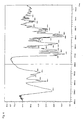
- a method for preparing c-type crystals of irinotecan hydrochloride having diffraction peaks (2 ⁇ ) at 9.15°, 10.00°, 11.80°, 12.20°, 13.00° and 13.40° in the powder X-ray diffractometry characterized by mixing irinotecan with one or more solvents selected from the group consisting of acetone, acetonitrile and tetrahydrofuran, adding hydrochloric acid, and collecting the formed crystals.
- the preparation method of the present invention is easily performed.
- the c-type crystalline irinotecan hydrochloride prepared by the invention is excellent in water solubility, extremely reduced in the content of impurities such as decomposed matter and prepared without subjecting to a temperature raising operation, and thus extremely useful as a basic ingredient of an irinote can hydrochloride preparation.
- Irinotecan (7-ethyl-10-[4-(1-piperidino)-1-piperidino]carbonyloxycam ptothecin) to be used in the present invention can be prepared by a method disclosed in Japanese Patent Publication No. 3-4077.
- the solvent to be mixed with irinotecan use may be made of a solvent mixture of one or two types or more selected from the group consisting of acetone, acetonitrile and tetrahydrofuran. Furthermore, the solvent to be used in the present invention is preferably present in the anhydrous form.
- the mixing ratio (by weight) of irinotecan to a solvent is not particularly limited; however, in view of the yield of c-type crystals, the mixing ratio of a solvent relative to irinotecan being one part is preferably 30 to 1000 parts by weight, 50 to 600 parts by weight, particularly 70 to 500 parts by weight.
- auxiliary agent for filtration such as medicinal carbon, activated carbon, Celite, or silica gel. This is because impurities are easily removed from the raw material during filtration.
- hydrochloric acid is added to produce irinotecan hydrochloride.
- irinotecan is dissolved in the solvent.
- the addition amount of hydrochloric acid should be an equivalent mole relative to irinotecan; however, in view of the yield of c-type crystals, 1. 0 to 2.0 times by mole, 1.0 to 1.8 times by mole, particularly 1.0 to 1.5 times by mole is preferable.
- the addition temperature is not particularly limited; however, a temperature of 5 to 30°C, in particular, 12 to 25°C is preferable.
- c-type crystals may be added as a seed crystals in order to facilitate crystallization of the c-type crystals of irinotecan hydrochloride.
- the crystallization conditions are not particularly limited; however, it is preferable that the mixture is stirred at 5 to 30 °C, further at 10 to 25°C for 2 to 200 hours, and further for 10 to 120 hours.
- the c-type crystals of irinotecan hydrochloride thus formed can be collected by means of filtration or centrifugation.
- the c-type crystals of irinotecan hydrochloride thus collected may be subjected to a moisture absorption process performed by a customary method using a saturated aqueous sodium chloride solution or a saturated aqueous ammonium nitrate solution.
- the irinotecan hydrochloride thus obtained is c-type crystals, which is more excellent in water solubility than the b-type crystals crystallized from a supersaturated aqueous solution of irinotecan hydrochloride.
- the water solubility of the b-type crystals at pH3.5 is 11.4 mg/mL, whereas that of the c-type crystals is 100 mg/mL or more.
- the c-type crystals has diffraction peaks (2 ⁇ ) at 9.15°, 10.00°, 11.80°, 12.80°, 13.00° and 13.40°
- the b-type crystals has diffraction peaks (2 ⁇ ) at 7.60°, 8.30°, 9.55°, 11.00° and 12.40°, in the powder X-ray diffractometry.
- the c-type crystals differs from the b-type crystals and therefore, the c-type crystals is a novel crystals polymorphism.
- the c-type crystals has an infrared absorption spectrum (v) having peaks at 1757, 1712 and 1667 cm -1 .
- the c-type crystals differs from the b-type crystals having peaks at 1748, 1688 and 1663 cm -1 .
- the c-type crystals is irinotecan hydrochloride sesquihydrates. Note that a peak (2 ⁇ ) obtained in the powder X-diffractometry has an error of ⁇ 0.2, whereas the infrared absorption spectrum has an error of about ⁇ 5 cm -1 .
- the c-type crystals of irinotecan hydrochloride formed by the preparation method of the present invention can be used as an antitumor agent in the same manner as in b-type crystals of irinotecan hydrochloride formed by a conventional method and administered by various methods including injections such as intravenous injection, subcutaneous injection, and intramuscular injection, and oral administration. In particular, intravenous administration (injection) and oral administration are preferable.
- the dose varies depending upon the therapeutic purpose; however, a dose of 5 to 400 mg/adult per day, in particular, 20 to 200 mg/adult per day, is preferable. In the case of oral administration, a dose of 50 to 2,000 mg/adult, in particular, 100 to 1,000 mg/adult per day, is preferable.
- a preparation is preferably formed such that it can be suitably absorbed from the gastrointestinal tract.
- examples of such a form include tablets, powders, capsules, or soft capsules, and peroral liquid preparations such as an aqueous suspension solution, solution, and syrup.
- peroral liquid preparations such as an aqueous suspension solution, solution, and syrup.
- an ample of a predetermined dose is preferable.
- a preservative or the like may be used.
- Irinotecan was suspended in acetonitrile or acetone in accordance with the amounts shown in Table 1 and dissolved by adding, 6 mol/L hydrochloric acid. To each mixture solution, 1 mg of c-type crystals separately prepared was added and the solution was stirred at 22°C for 25 to 46 hours. The formed crystals were obtained by filtration, dried under reduced pressure, and subjected to a moisture absorption process performed by a saturated aqueous sodium chloride solution method until the crystals showed constant weight (about 80 hours). In this manner, the crystals of irinotecan hydrochloride were obtained.
- Table 1 shows the results of the preparations.
- thermoanalysis differential scanning calorimetry
- the moisture content of the crystals was measured by the Karl Fischer method. As a result, the moisture content of No.3 was 3.96%. Therefore, it turned out that the crystals above were obtained in the form of sesquihydrates (calculation value: 4.15%).
- the irinotecan hydrochloride prepared in Example 1 was measured for water solubility and stability over time.
- irinotecan hydrochloride b-type crystals was formed as a comparative product in accordance with the following method.
- irinotecan Ten grams of irinotecan was suspended in about 100 mL of purified water. About 10 mL of diluted hydrochloric acid (the Japanese Pharmacopoeia) was added dropwise to the suspension solution while stirring. Then, irinotecan was dissolved by raising temperature of the suspension solution. After the resultant solution was filtered, a seed crystals was added to the filtrate, whichwas stirred at room temperature for about 50 hours to form crystals. The resultant crystals were subjected to suction filtration and a filtrated product was dried under reduced pressure. A dried product was allowed to stand still in a humidifier to humidify in accordance with a saturated aqueous sodium chloride solution method.
- diluted hydrochloric acid the Japanese Pharmacopoeia
- b- or c-type crystals were weighed out, suspended in a preparation solution, and shaken at 22°C for 30minutes (130r/min). The mixture was filtered by a membrane filter (0.45 ⁇ m). To 1 ml of the filtrate, the preparation solution was added up to 200 mL. 10 ⁇ l was aliquoted and analyzed by liquid chromatography. The dissolution amount was obtained on the basis of a calibration curve previously prepared.
- preparation solution used herein was prepared by dissolving 45 g of D-sorbitol in an appropriate amount of distilled water for injection, adding 900mg of lactic acid, adjusting pH of the solution at about 3.5, and adding distilled water for injection up to 1000 mL.
- the c-type crystals of No. 3 according to the present invention was dissolved upon adding the preparation solution and provided a dissolution amount of 100 mg/mL or more, meaning that they are extremely easily dissolved in water, whereas, the b-type crystals (a comparative product) exhibited a dissolution amount of 11.4 mg/mL. Accordingly, it was demonstrated that the c-type crystals prepared by the method according to the present invention is extremely excellent in water solubility compared to the b-type crystals.
- the b- or c-type crystals was dissolved in a preparation solution to a concentration of 30 mg/mL and filtered by a membrane filter (0.22 ⁇ m). The filtrate was aliquoted and allowed to stand still at 22°C in the dark.
- the c-type crystals (No. 3) prepared by the method of the present invention was dissolved at room temperature by shaking for 1 to 2 minutes, whereas, the b-type crystals was not dissolved until the solution was heated to about 70°C and shaken for several minutes.
- the filtrates of c-type andb-type crystals were both stable in 3 months or more. Neither color-tone change (yellowing change) nor precipitation was observed.
- the c-type crystals (Example 1, No. 3) was placed in lightproof airtight containers (screw-top brown vial shielded by a Parafilm) and stored in a laboratory (about 15°C) and a refrigerator (about 5 to 10°C) and thereafter subjected to infrared absorption spectrum analysis, thermoanalysis, and Karl Fischer analysis for measuring a moisture content. As a result, no change was observed in comparison with the state before storage.
- the yield of the c-type crystals was 85.6% in the case where medicinal carbon was added and 100% in the case where no medicinal carbon was added.
- the c-type crystals prepared by the method of the present invention and the b-type crystals prepared as a comparative product in Example 2 were subjected to a purity test in accordance with the following method.
- the total content of analogous substances (%) (the peak areas of substances except for irinotecan hydrochloride in the sample solution)/(the peak area of irinotecan hydrochloride in the standard solution)
- the content of each analogous substance (%) (the peak area of each analogous substance in the sample solution) / (the peak area of irinotecan hydrochloride in the standard solution).
- analogous substances contained in irinotecan hydrochloride were determined as follows.
- a substance showing retention time (RT) of 6.4 minutes was determined as 7-ethyl-10-hydroxycamptothecin, a substance of 10.1 minutes as a decomposed product (X2) and a substance of 16.1 minutes as a decomposed product (X1).
- the b-type crystals of irinotecan hydrochloride contained decomposed products (X1 and X2) in an amount of 0.17 % by weight, whereas, the c-type crystals of irinotecan hydrochloride prepared by the method of the present invention had the decomposed products in an amount as low as 0.03 to 0.04 % by weight, suggesting that the purity of the c-type crystals according to the present invention is high. (weight %) Retaining time (minute) c-type crystals b-type crystals Example 1 No.3 Example 3 using carbon 6.4 0.03 0.01 0.01 10.0 0.03 0.03 0.12 16.1 ⁇ 0.005 0.01 0.05 (Analogous substances) 0.23 0.22 0.36
Landscapes
- Chemical & Material Sciences (AREA)
- Organic Chemistry (AREA)
- Health & Medical Sciences (AREA)
- Life Sciences & Earth Sciences (AREA)
- General Health & Medical Sciences (AREA)
- Veterinary Medicine (AREA)
- Public Health (AREA)
- Pharmacology & Pharmacy (AREA)
- Medicinal Chemistry (AREA)
- Animal Behavior & Ethology (AREA)
- Chemical Kinetics & Catalysis (AREA)
- General Chemical & Material Sciences (AREA)
- Nuclear Medicine, Radiotherapy & Molecular Imaging (AREA)
- Epidemiology (AREA)
- Pharmaceuticals Containing Other Organic And Inorganic Compounds (AREA)
- Organic Low-Molecular-Weight Compounds And Preparation Thereof (AREA)
- Nitrogen Condensed Heterocyclic Rings (AREA)
- Steroid Compounds (AREA)
Applications Claiming Priority (3)
| Application Number | Priority Date | Filing Date | Title |
|---|---|---|---|
| JP2003046908 | 2003-02-25 | ||
| JP2003046908 | 2003-02-25 | ||
| PCT/JP2004/002126 WO2004076460A1 (ja) | 2003-02-25 | 2004-02-24 | イリノテカン塩酸塩の結晶多形の製造方法 |
Publications (2)
| Publication Number | Publication Date |
|---|---|
| EP1598356A1 true EP1598356A1 (de) | 2005-11-23 |
| EP1598356A4 EP1598356A4 (de) | 2008-07-02 |
Family
ID=32923248
Family Applications (1)
| Application Number | Title | Priority Date | Filing Date |
|---|---|---|---|
| EP04714012A Withdrawn EP1598356A4 (de) | 2003-02-25 | 2004-02-24 | Verfahren zur herstellung von irinotecanhydrochlorid-polymorphen |
Country Status (12)
| Country | Link |
|---|---|
| US (1) | US7488825B2 (de) |
| EP (1) | EP1598356A4 (de) |
| JP (1) | JP4566128B2 (de) |
| KR (1) | KR101095382B1 (de) |
| CN (1) | CN100418970C (de) |
| AU (1) | AU2004215560B2 (de) |
| BR (1) | BRPI0407791A (de) |
| CA (1) | CA2516643C (de) |
| IL (1) | IL170350A (de) |
| NZ (1) | NZ541990A (de) |
| TW (1) | TW200508239A (de) |
| WO (1) | WO2004076460A1 (de) |
Families Citing this family (10)
| Publication number | Priority date | Publication date | Assignee | Title |
|---|---|---|---|---|
| US20060046993A1 (en) * | 2004-09-01 | 2006-03-02 | Pharmacia Italia S.P.A. | Crystalline polymorphic form of irinotecan hydrochloride |
| JP4829120B2 (ja) * | 2004-10-01 | 2011-12-07 | 株式会社ヤクルト本社 | イリノテカン酸付加塩 |
| AU2006292328B2 (en) | 2005-09-20 | 2012-12-20 | Scinopharm Singapore Pte, Ltd. | Novel crystal forms of irinotecan hydrochloride |
| CN101318964B (zh) * | 2007-06-07 | 2010-12-15 | 上海迪赛诺医药发展有限公司 | 盐酸伊立替康新晶型及其制备方法 |
| US7572803B2 (en) * | 2007-10-25 | 2009-08-11 | The Christus Stehlin Foundation For Cancer Research | Hydrated crystalline esters of camptothecin |
| IT1391757B1 (it) * | 2008-11-11 | 2012-01-27 | Antibioticos Spa | Irinotecan cloridrato cristallino e metodi per la sua preparazione |
| CN102311443B (zh) * | 2011-08-24 | 2014-07-16 | 上海北卡医药技术有限公司 | 盐酸伊立替康的新晶型及其制备方法 |
| CN102617584B (zh) * | 2012-03-14 | 2013-10-16 | 海南锦瑞制药股份有限公司 | 一种盐酸伊立替康化合物及其药物组合物 |
| US10919905B2 (en) * | 2019-05-16 | 2021-02-16 | Scinopharm Taiwan, Ltd. | Polymorphism for irinotecan free base |
| CN111100135A (zh) * | 2019-10-24 | 2020-05-05 | 连云港杰瑞药业有限公司 | 一种盐酸伊立替康的精制方法 |
Family Cites Families (5)
| Publication number | Priority date | Publication date | Assignee | Title |
|---|---|---|---|---|
| JPS6247193A (ja) | 1985-08-26 | 1987-02-28 | 内橋エステック株式会社 | 電子部品のはんだ付方法 |
| JPH034077A (ja) | 1989-05-30 | 1991-01-10 | Nissho Corp | 逆止弁 |
| JPH07277981A (ja) | 1994-04-12 | 1995-10-24 | Yakult Honsha Co Ltd | 徐放性抗腫瘍製剤 |
| JPH1017472A (ja) | 1996-07-04 | 1998-01-20 | Yakult Honsha Co Ltd | 徐放性抗腫瘍製剤 |
| PL372318A1 (en) * | 2002-03-01 | 2005-07-11 | Pharmacia Italia S.P.A. | Crystalline polymorphic form of irinotecan hydrochloride |
-
2004
- 2004-02-24 AU AU2004215560A patent/AU2004215560B2/en not_active Ceased
- 2004-02-24 NZ NZ541990A patent/NZ541990A/en not_active IP Right Cessation
- 2004-02-24 WO PCT/JP2004/002126 patent/WO2004076460A1/ja not_active Ceased
- 2004-02-24 EP EP04714012A patent/EP1598356A4/de not_active Withdrawn
- 2004-02-24 US US10/546,687 patent/US7488825B2/en not_active Expired - Fee Related
- 2004-02-24 KR KR1020057014560A patent/KR101095382B1/ko not_active Expired - Fee Related
- 2004-02-24 CA CA2516643A patent/CA2516643C/en not_active Expired - Fee Related
- 2004-02-24 CN CNB2004800047816A patent/CN100418970C/zh not_active Expired - Fee Related
- 2004-02-24 BR BRPI0407791-1A patent/BRPI0407791A/pt not_active IP Right Cessation
- 2004-02-24 JP JP2005502882A patent/JP4566128B2/ja not_active Expired - Fee Related
- 2004-02-25 TW TW093104774A patent/TW200508239A/zh not_active IP Right Cessation
-
2005
- 2005-08-18 IL IL170350A patent/IL170350A/en not_active IP Right Cessation
Non-Patent Citations (2)
| Title |
|---|
| No further relevant documents disclosed * |
| See also references of WO2004076460A1 * |
Also Published As
| Publication number | Publication date |
|---|---|
| CA2516643C (en) | 2011-04-19 |
| JP4566128B2 (ja) | 2010-10-20 |
| BRPI0407791A (pt) | 2006-02-14 |
| CA2516643A1 (en) | 2004-09-10 |
| WO2004076460A1 (ja) | 2004-09-10 |
| US7488825B2 (en) | 2009-02-10 |
| KR101095382B1 (ko) | 2011-12-16 |
| TWI326684B (de) | 2010-07-01 |
| CN100418970C (zh) | 2008-09-17 |
| NZ541990A (en) | 2009-04-30 |
| TW200508239A (en) | 2005-03-01 |
| EP1598356A4 (de) | 2008-07-02 |
| AU2004215560A1 (en) | 2004-09-10 |
| JPWO2004076460A1 (ja) | 2006-06-01 |
| US20060234904A1 (en) | 2006-10-19 |
| IL170350A (en) | 2010-11-30 |
| AU2004215560B2 (en) | 2009-09-24 |
| KR20050100661A (ko) | 2005-10-19 |
| CN1751048A (zh) | 2006-03-22 |
Similar Documents
| Publication | Publication Date | Title |
|---|---|---|
| US7572804B2 (en) | Macrolides | |
| US7488825B2 (en) | Method for preparing polymorphism of irinotecan hydrochloride | |
| CN118434732A (zh) | Tolebrutinib的晶型及其制备方法和用途 | |
| KR101150504B1 (ko) | 이리노테칸 염산염의 신규의 결정형 | |
| CN102617584B (zh) | 一种盐酸伊立替康化合物及其药物组合物 | |
| US20220153704A1 (en) | Crystal form e of bulleyaconitine a, preparation method therefor and application thereof | |
| CN114276358B (zh) | 羟考酮盐酸盐的多晶型物及其制备方法和用途 | |
| US6884805B2 (en) | Polymorph forms of N-(2,3-dimethyl-5,6,7,8-tetrahydrofuro[2,3-B]quinolin-4-YL)-2-(2-oxopyrrolidin-1-YL)acetamide | |
| EP1798235A1 (de) | Säureadditionssalz von irinotecan | |
| CN107043405B (zh) | 多环杂环化合物的晶型、其制备方法、应用及组合物 | |
| AU2003200370B2 (en) | Stabilization of macrolides | |
| KR950011413B1 (ko) | 신규한 17-피발로일옥시메틸-3-메톡시모르피난 유도체 | |
| CN116283957A (zh) | 唑吡坦水合物及其制备方法 | |
| CN110790735A (zh) | 一种达格列净新晶型n及其制备方法 | |
| GB2063864A (en) | X-ray amorphous physiologically acceptable acid addition salts of ergot alkaloids and dihydroergot alkaloids, and their use in therapy | |
| KR20040024521A (ko) | 2-아미노-6-(4-메톡시페닐티오)-9-[2-(포스포노메톡시)에틸]푸린 비스(2,2,2-트리플루오로에틸) 에스테르의 결정 | |
| MXPA01005720A (en) | Macrolides |
Legal Events
| Date | Code | Title | Description |
|---|---|---|---|
| PUAI | Public reference made under article 153(3) epc to a published international application that has entered the european phase |
Free format text: ORIGINAL CODE: 0009012 |
|
| 17P | Request for examination filed |
Effective date: 20050822 |
|
| AK | Designated contracting states |
Kind code of ref document: A1 Designated state(s): AT BE BG CH CY CZ DE DK EE ES FI FR GB GR HU IE IT LI LU MC NL PT RO SE SI SK TR |
|
| AX | Request for extension of the european patent |
Extension state: AL LT LV MK |
|
| DAX | Request for extension of the european patent (deleted) | ||
| A4 | Supplementary search report drawn up and despatched |
Effective date: 20080602 |
|
| 17Q | First examination report despatched |
Effective date: 20090420 |
|
| STAA | Information on the status of an ep patent application or granted ep patent |
Free format text: STATUS: THE APPLICATION IS DEEMED TO BE WITHDRAWN |
|
| 18D | Application deemed to be withdrawn |
Effective date: 20150901 |